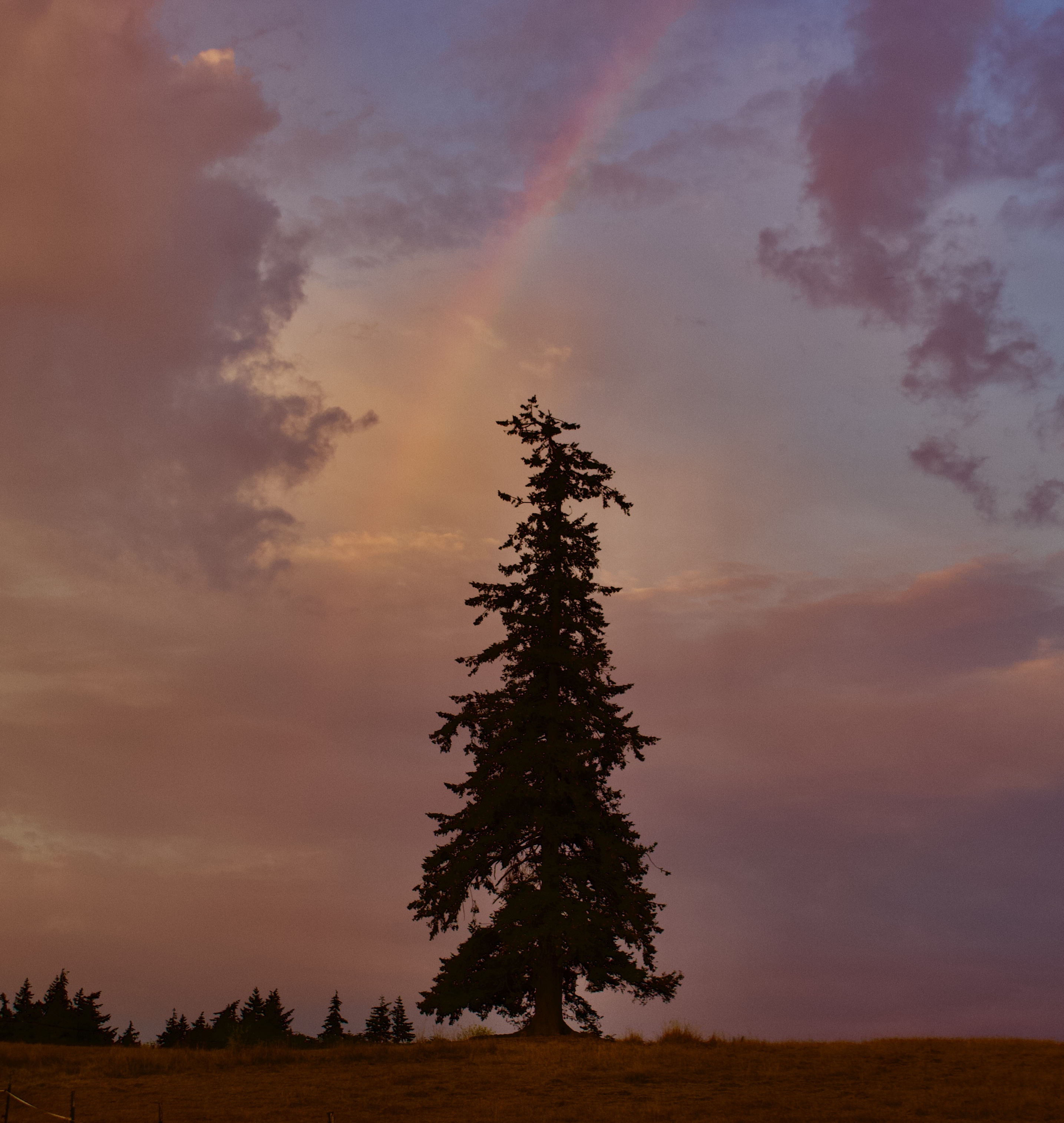
Who loves the rain And loves his home, And looks on life with quiet eyes, Him will I follow through the storm; And at his hearth-fire keep me warm; Nor hell nor heaven shall that soul surprise, Who loves the rain, And loves his home, And looks on life with quiet eyes. ~Frances Shaw, “Who loves the rain” from Look To the Rainbow of Grace
Now more than ever you can be generous toward each day that comes, young, to disappear forever, and yet remain unaging in the mind. Every day you have less reason not to give yourself away. ~Wendell Berry from “There is no going back”
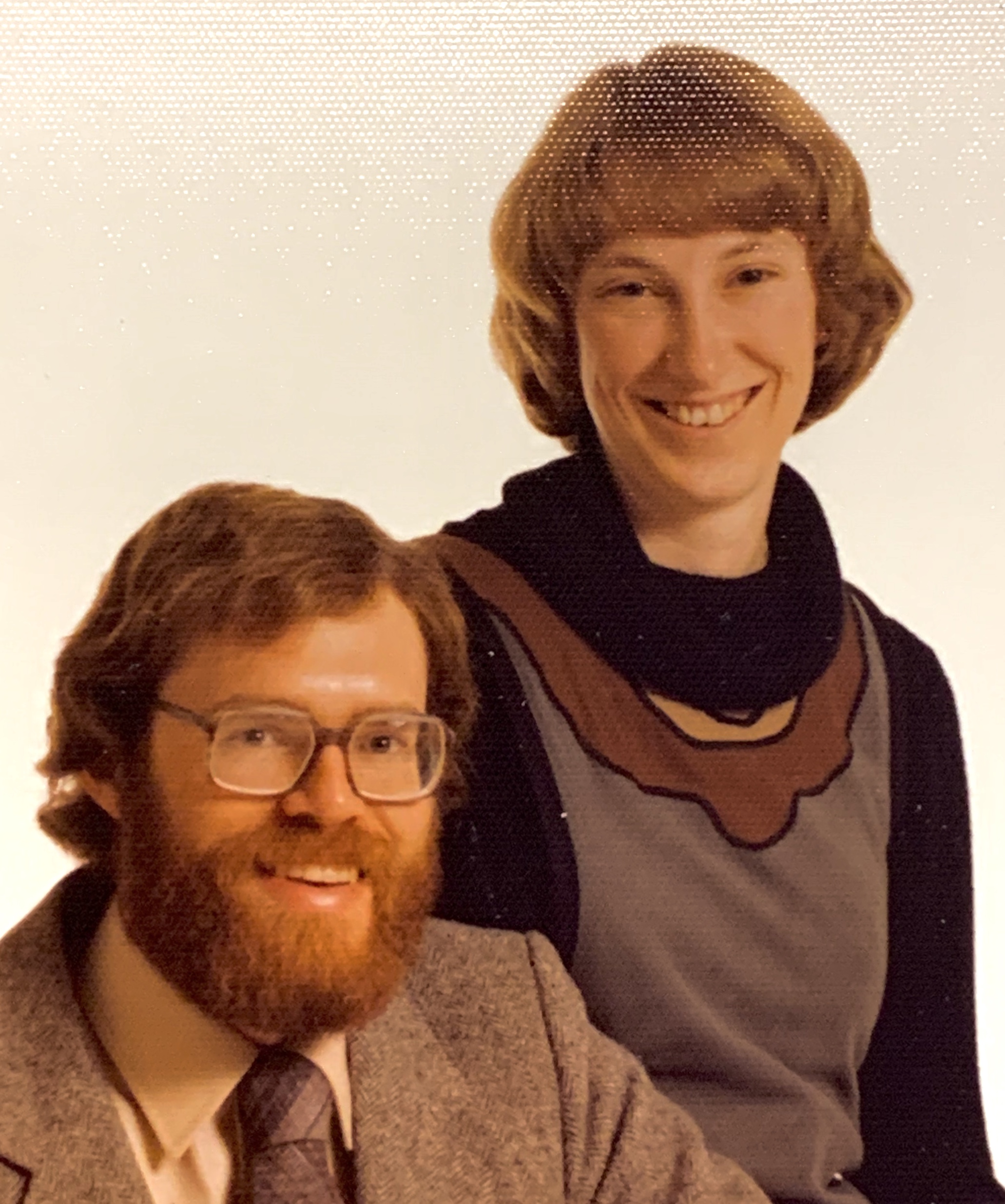
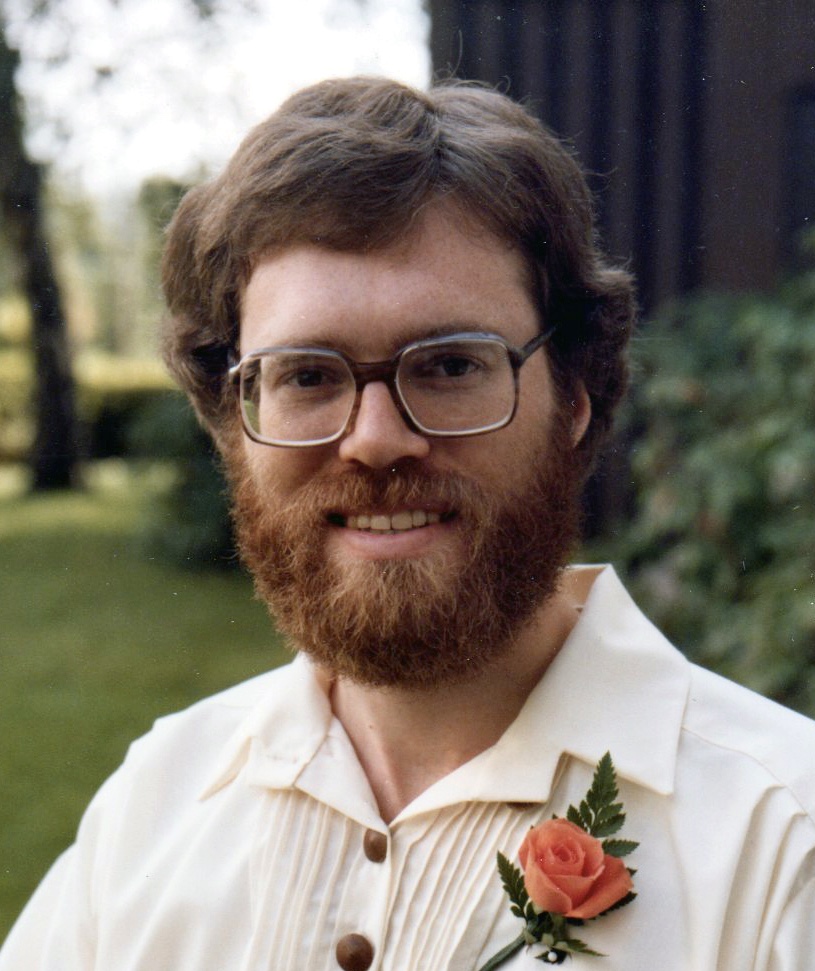
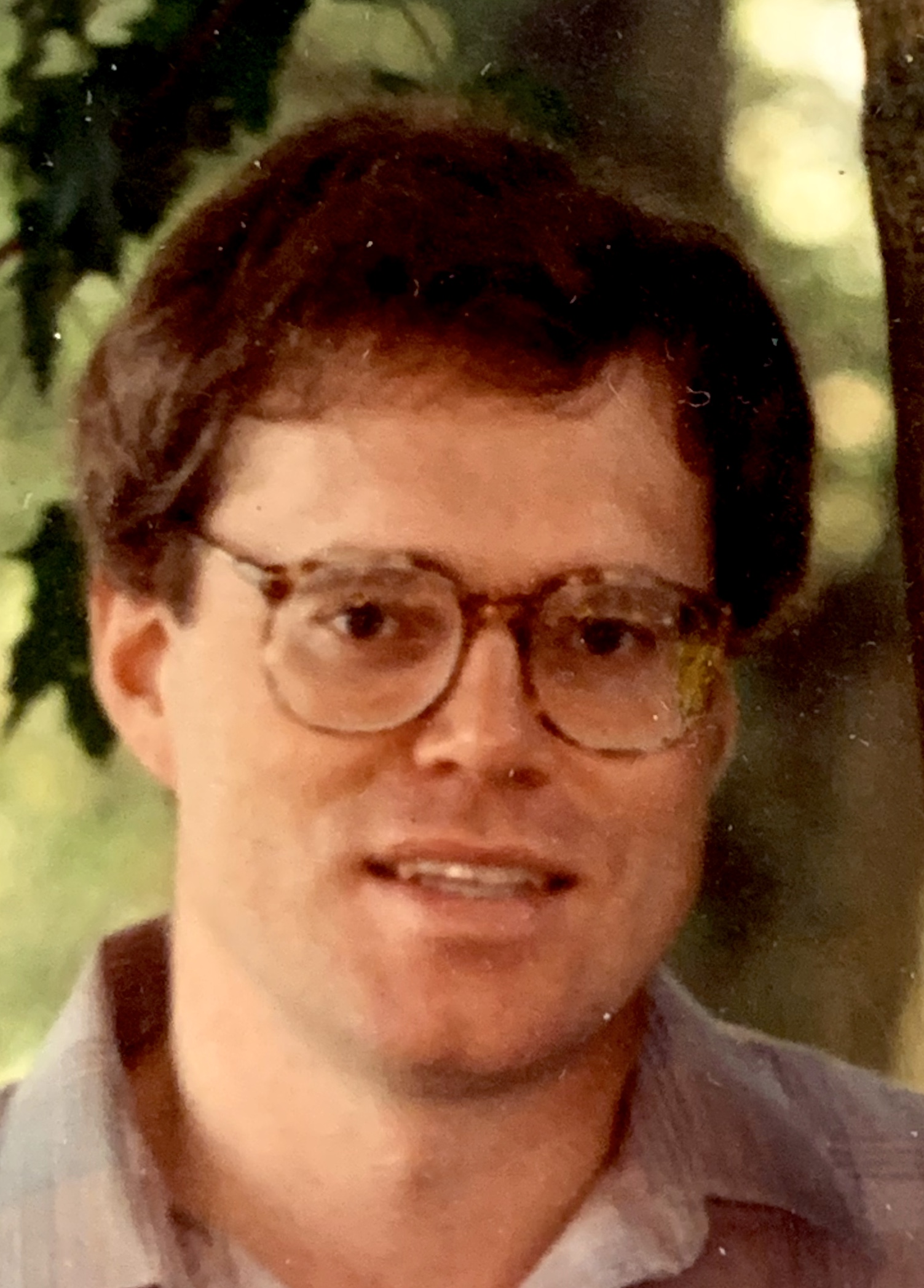
Thinking out loud on this day you were born, I thank God yet again for bringing you to earth so we could meet, raise three amazing children, and walk this journey together with pulse and breath and dreams.
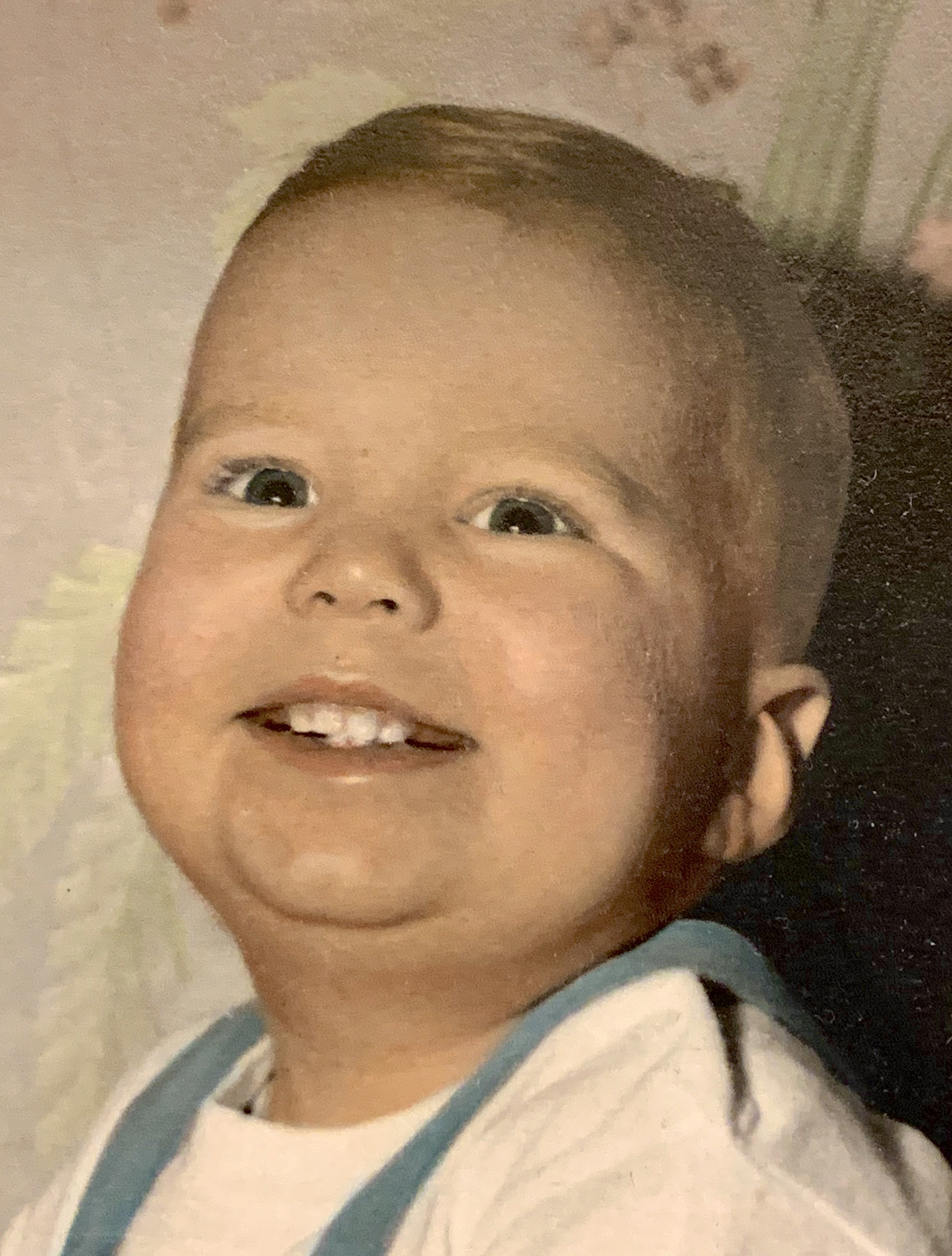
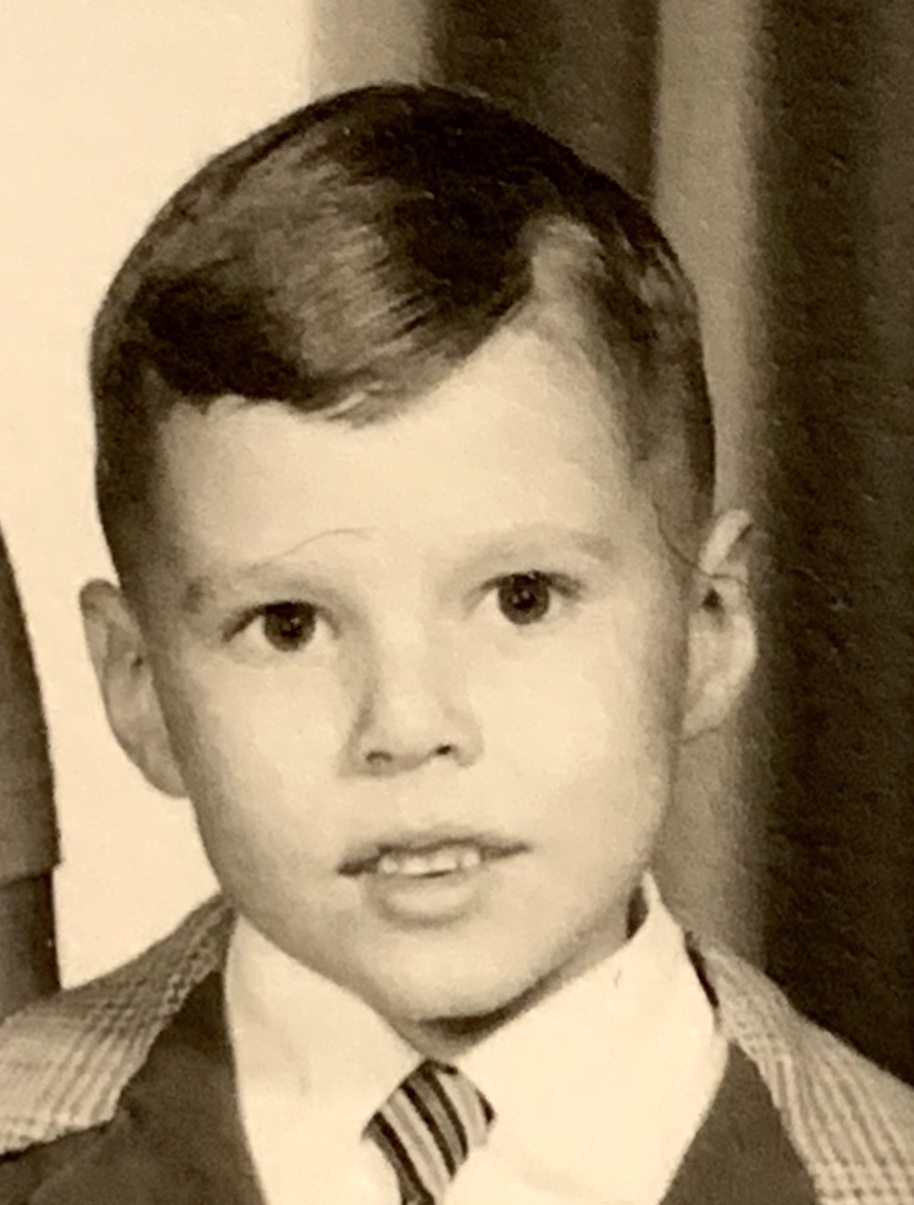
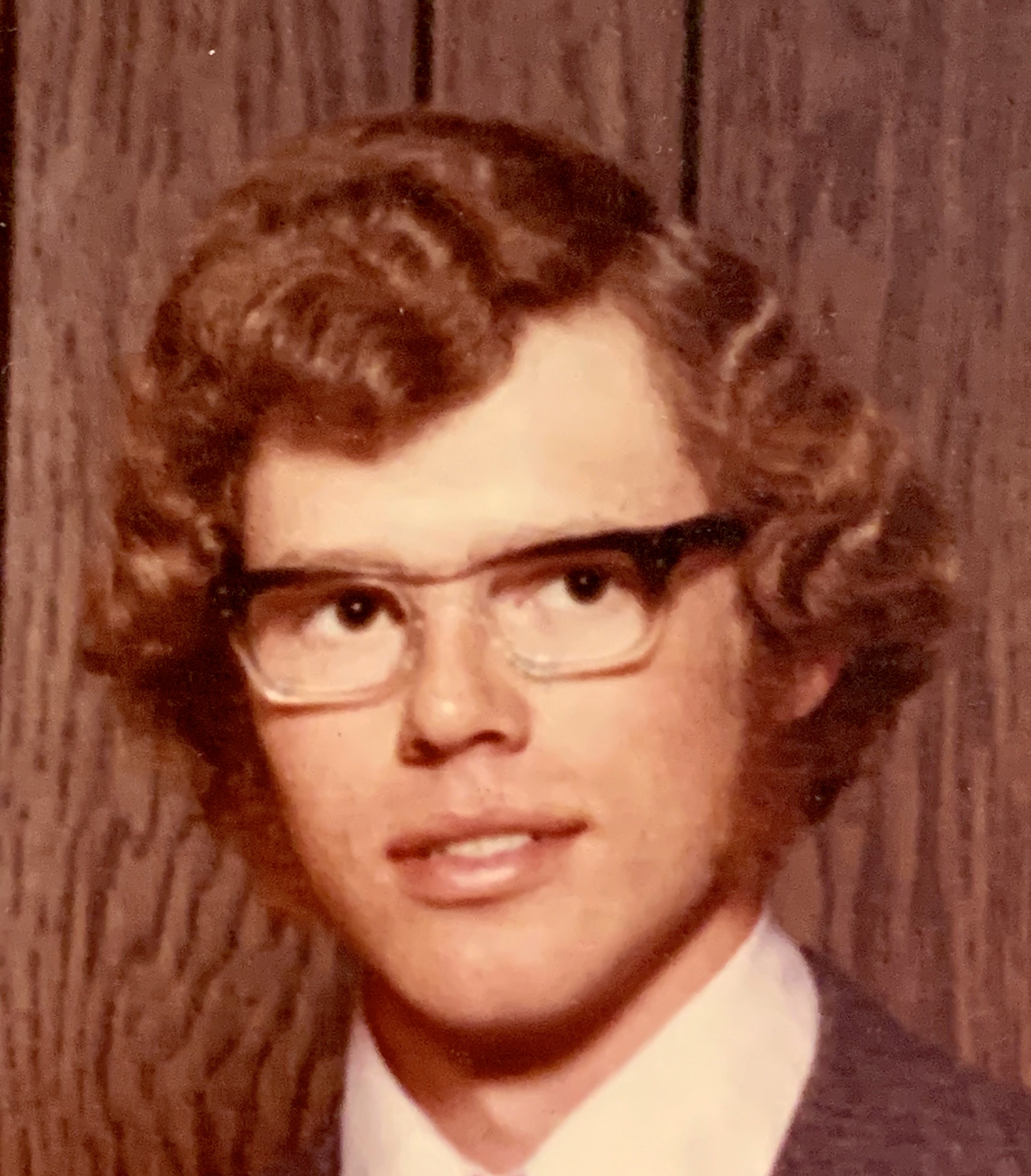
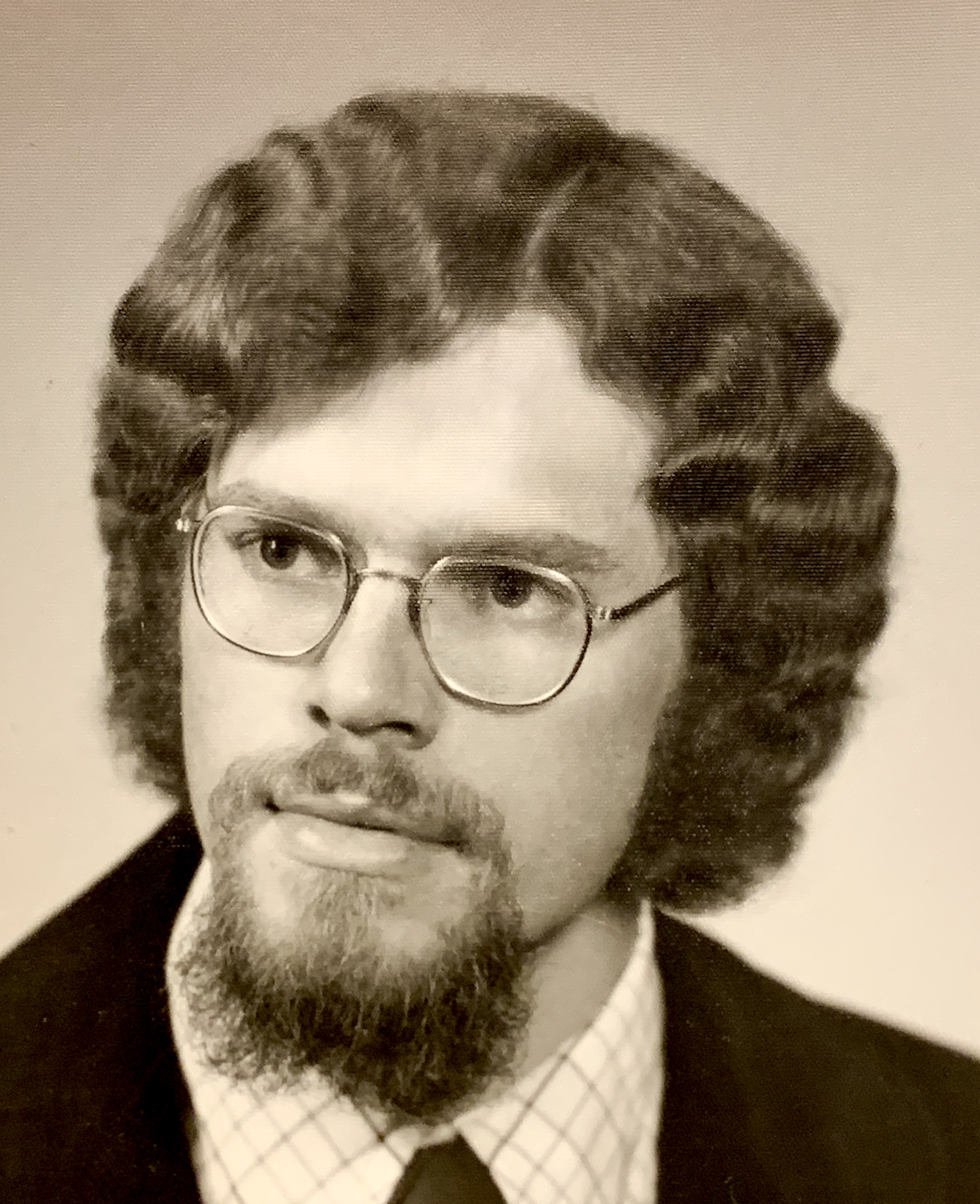
The boy you were became the man you are: so blessed by God, needed by your family, church and community.
You give yourself away every day with such grace, loved by your children and grandchildren.
It was your quiet brown eyes I trusted first and just knew I’d follow you anywhere and I have.
In this journey together, we inhabit each other, however long may be the road we travel; you have become the air I breathe, refreshing, renewing, restoring~~ you are that necessary to me, and that beloved.
One-Time
Monthly
Yearly
Make a one-time or recurring donation to support daily Barnstorming posts
(I wrote this 15 years ago on July 6 and have updated it with an addendum)
I remember childhood summers as 3 months of full-out celebration– long lazy days stretching into nights that didn’t seem to really darken until 11 PM and bright birdsong mornings starting out at 4:30 AM. Not only were there the brief family vacations at the beach or to visit cousins, but there was the Fourth of July, Daily Vacation Bible School, the county fair, family reunions, and of course and most importantly, my July birthday. Yes, there were mundane chores to be done, a garden to tend, a barn to clean, berries to pick, a lawn to mow and all that stuff, but my memories of summer are mostly about fluff and frolic.
So where are the summer parties now? Who is out there celebrating without me? Nothing seems to be spontaneous as it was when I was a child. Instead, most grown-ups have to go to work most days in the summer.
I’m finding myself in the midst of my 55th summer and I have to create celebrations if they are going to happen in my life. Without that perspective, the bird song at 4:30 AM can feel more irritant than blessing and the long days often mean I fall asleep nodding over a book at 9 PM. I want to treasure every, every minute of this precious time yet they flow through my fingers like so much water, faster and faster.
I realize there will be very few “family” summers left as I watch my children grow into adults and spread their wings. They will be on to new adventures in future summers. So each family ritual and experience together takes on special meaning and needs to be appreciated and remembered.
So….for this summer my family has crammed as much in as we can in celebration of the season:
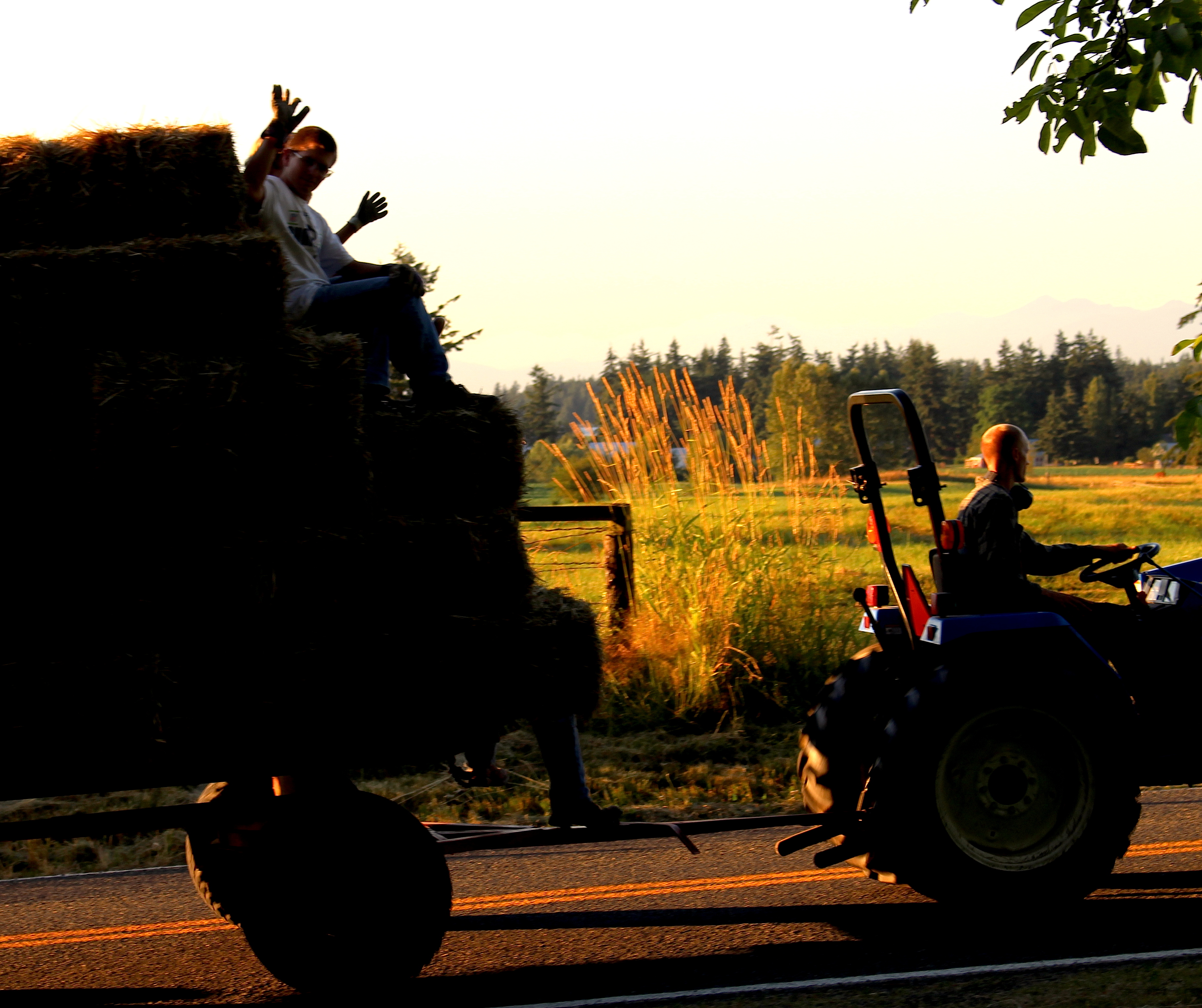
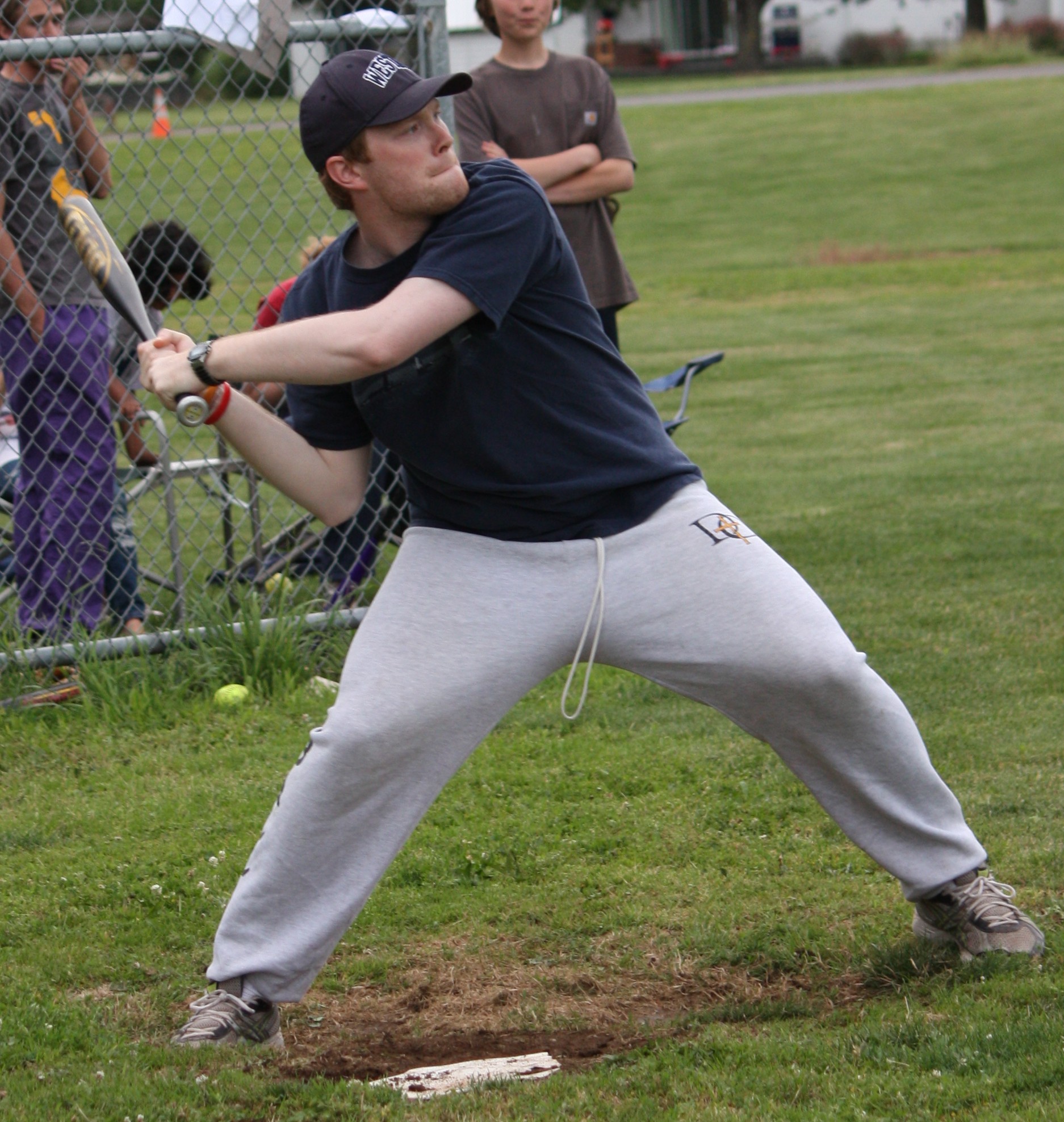
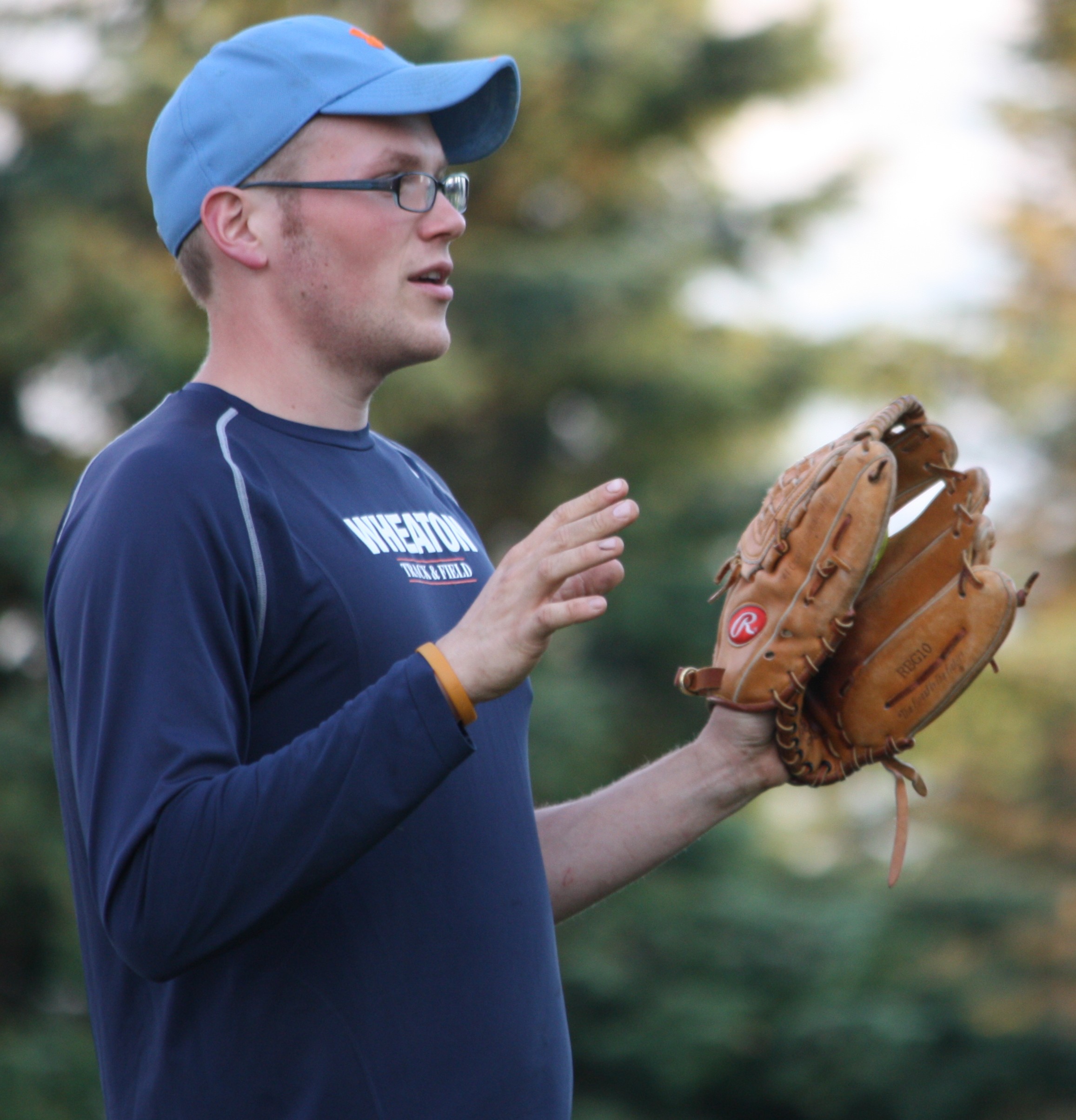
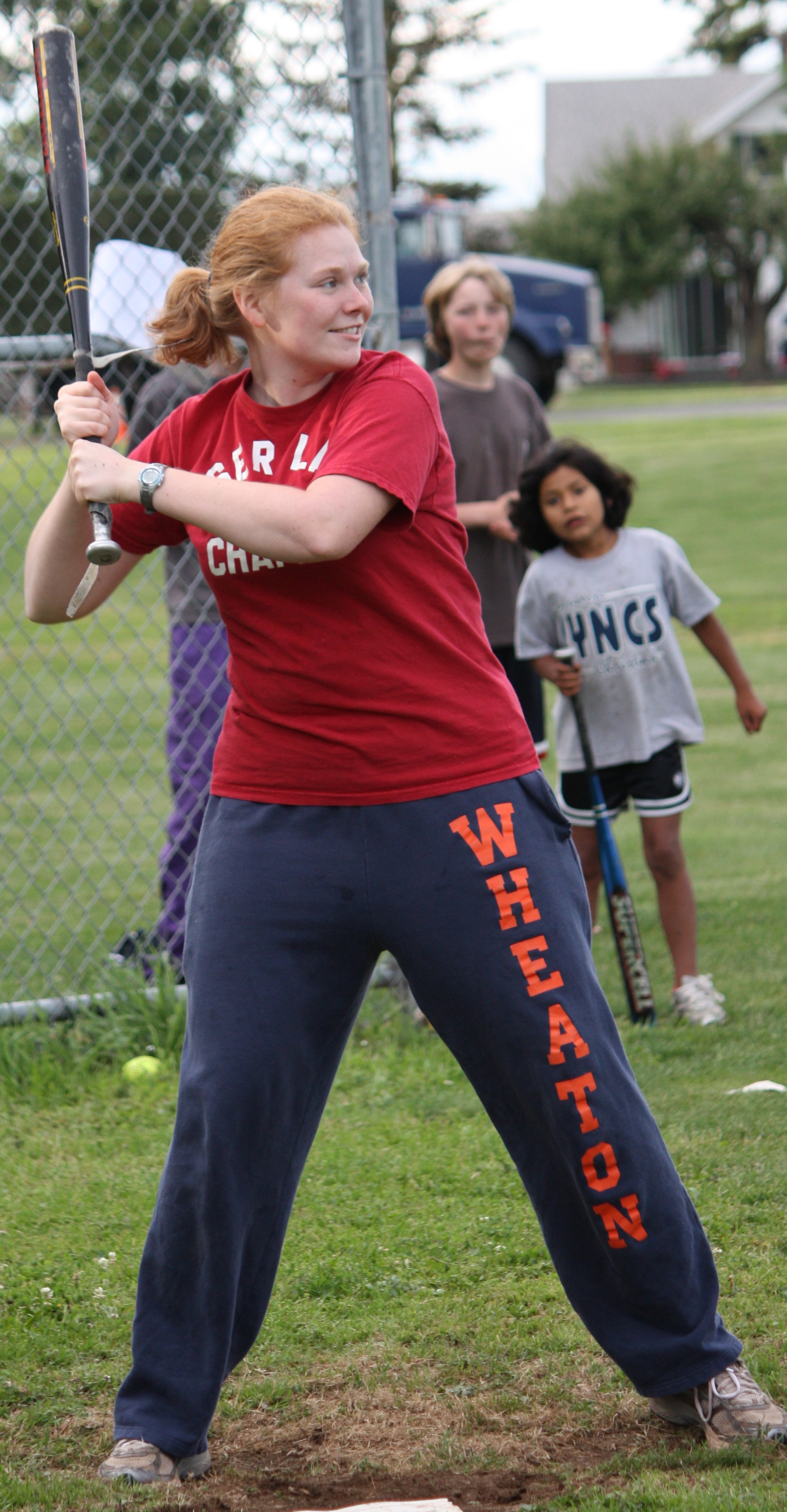
We just spent some time in the hayfields bringing in the bales with friends–our little crew of seven–sweating and itchy and exhausted, but the sight and smell of several hundred hay bales, grown on our own land, harvested without being rained on and piled in the barn is sweet indeed. Weekly we are out on the softball field in church league, yelling encouragement and high-fiving each other, hooting at the good hits and the bad, the great catches and the near misses, and getting dirty and sprained, and as happy to lose as to win. We had a wonderful July 4 barbeque with good friends culminating in the fireworks show on our farm’s hill overlooking miles of valley around us, appreciating everyone else’s backyard displays as well as our own.
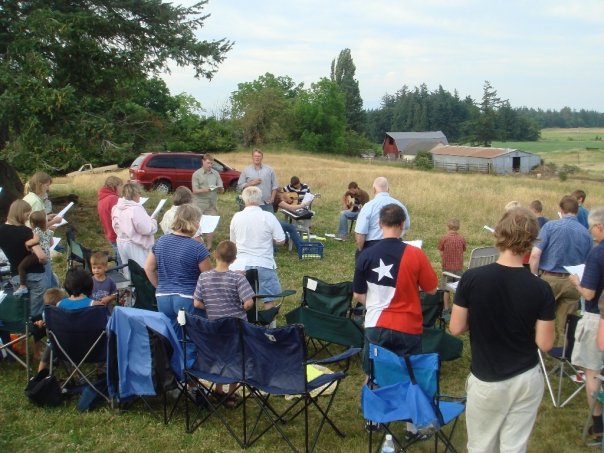
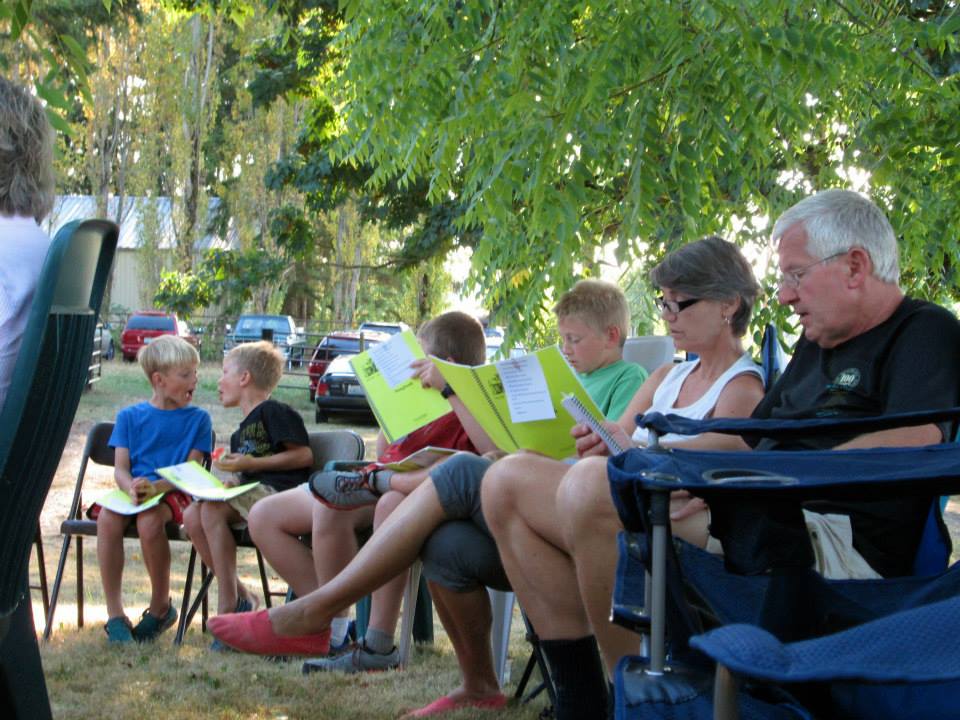
We are now able to sing hymns in church in four part harmony, and last night our children helped lead the singing last night in an evening “campfire church” for over fifty fellow worshipers on our hill. In a couple weeks, we’ll take to the beach for three days of playing in the sand, roasting hot dogs. reading good books, and playing board games. We’ll try to make the trek down to Seattle by train to spend the day watching the Mariners play (and likely lose).
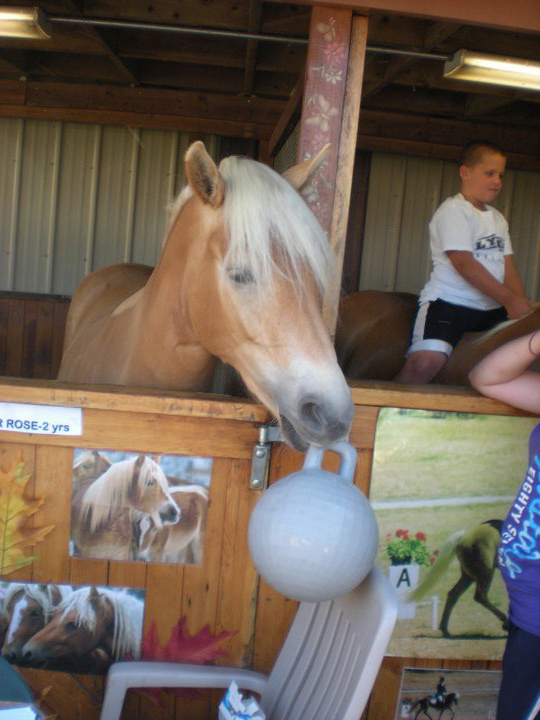
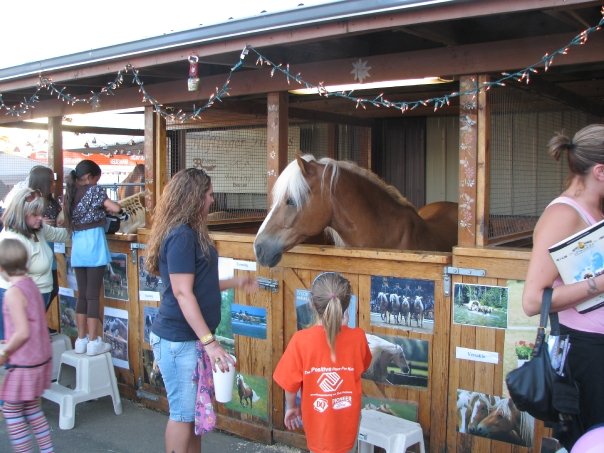
One change after seventeen years of hosting a display of our horses at the Lynden Fair: due to “off the farm” work and school schedules, we can’t muster the necessary round-the-clock crew of being there for our little part of small town agricultural pursuits.
Yet the real party happens right here every day in small ways without any special planning. It doesn’t require money or special food or traveling beyond our own soil. It is the smiles and good laughs we share together, and the hugs for kids taller than I am. It’s adult conversations with the new adults in our family–no longer adolescents.
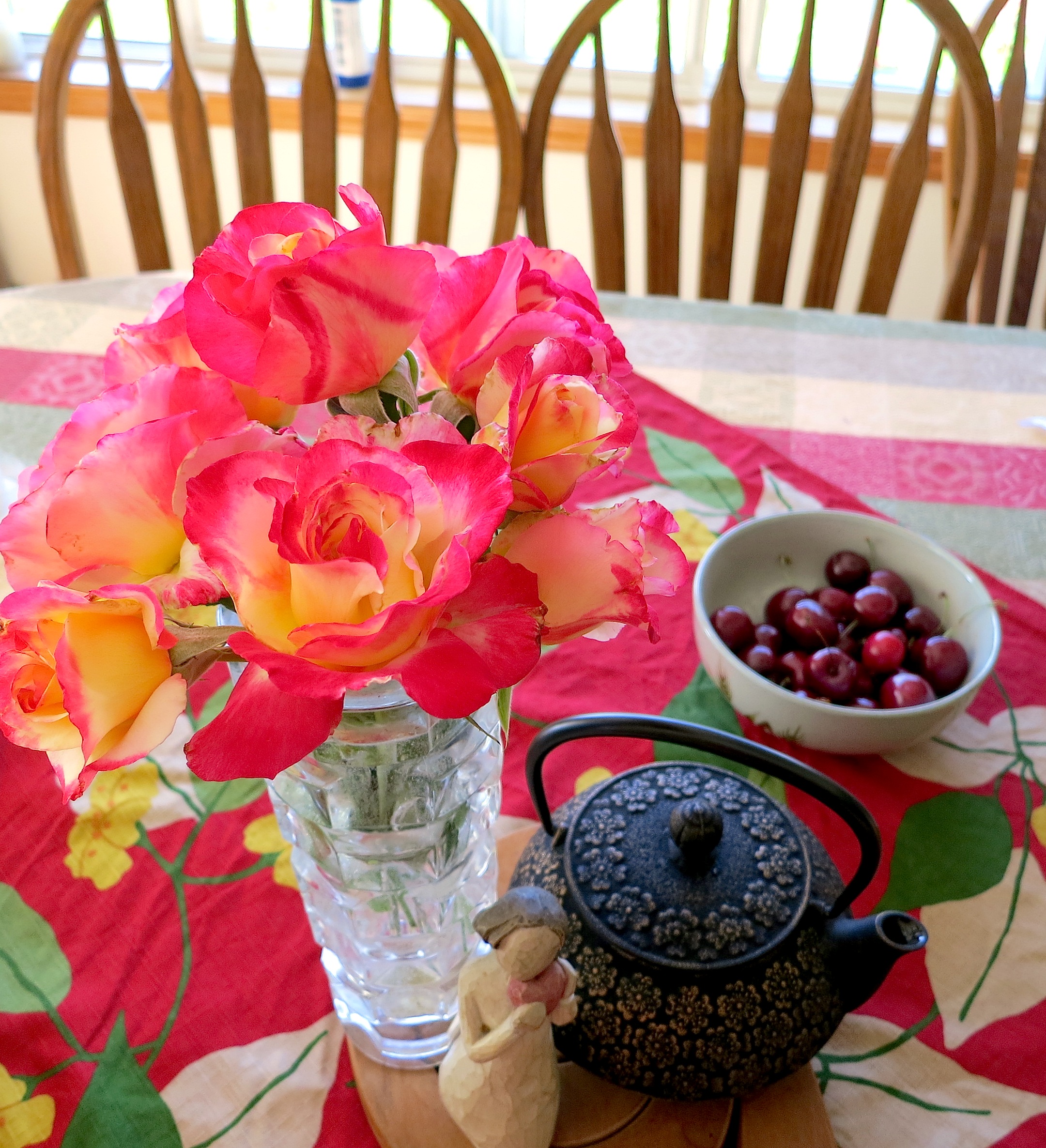
It’s finding delight in fresh cherries from our own trees, currants and berries from our own bushes, greens from the garden, flowers for the table from the yard.
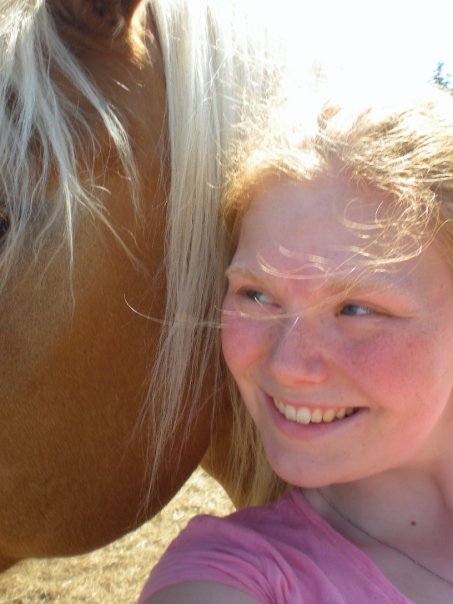
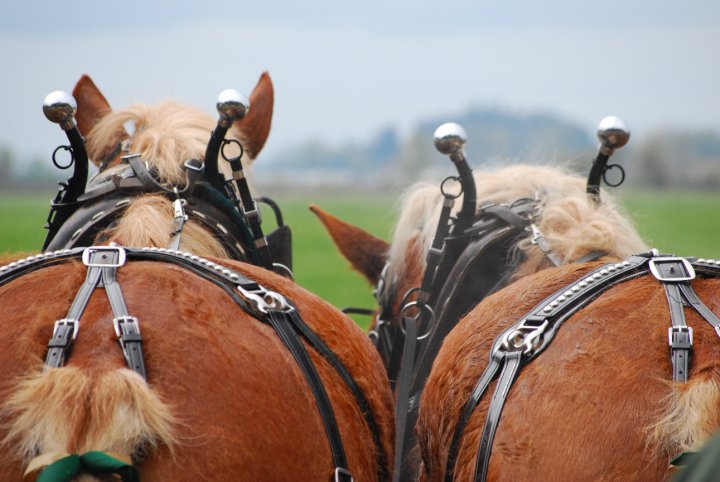
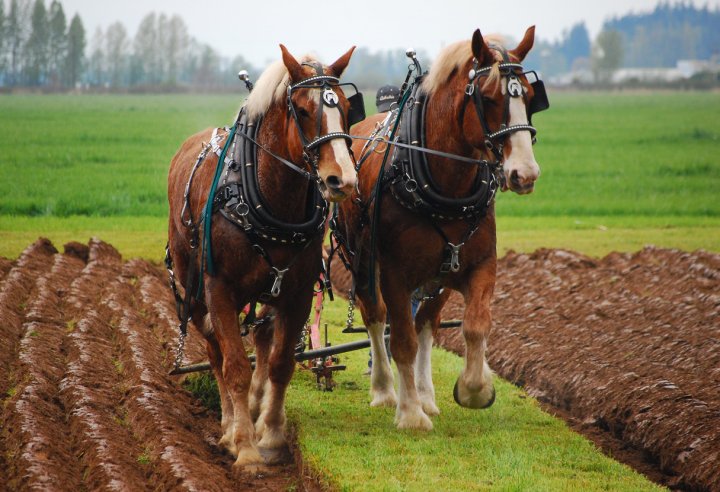
It is the Haflingers in the field that come right up to us to enjoy rubs and scratches and follow us like puppies. It is babysitting for neighborhood toddlers who remind us of the old days of having small children, and who give us a glimpse of future grandparenthood. It is good friends coming from far away to ride our horses and learn farm skills.
It is an early morning walk in the woods or a late evening stroll over the hills. It is daily contact with aging parents who no longer hear well or feel well but nevertheless share of themselves in the ways they are able. It is the awesome power of an evening sunset filled with hope and the calming promise of a new day somewhere else in this world of ours.
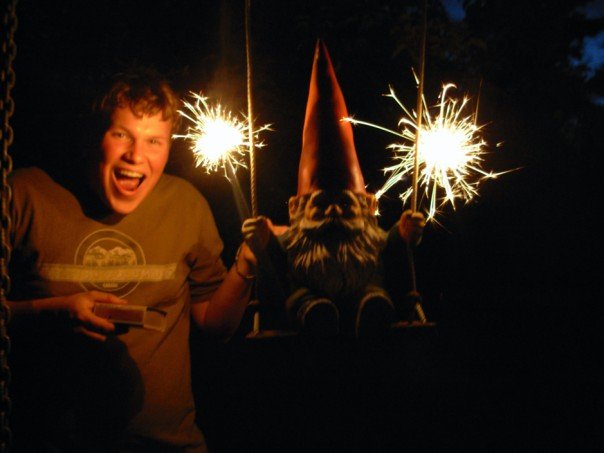
Some days may not look or feel like there’s a summer party happening, but that is only because I haven’t searched hard enough. The party is here, sparklers and all, even if only in my own mind.
Addendum: Fifteen years have passed since this was written and I’m glad I can look back and be reminded how full of life those family summers were. We seldom have the full-meal-deal of everyone together at one time, and since our parents have passed on to eternal summers in heaven, we have now the blessings of six grandchildren. Freckles abound!
We still can make a party happen, if only in our own minds.
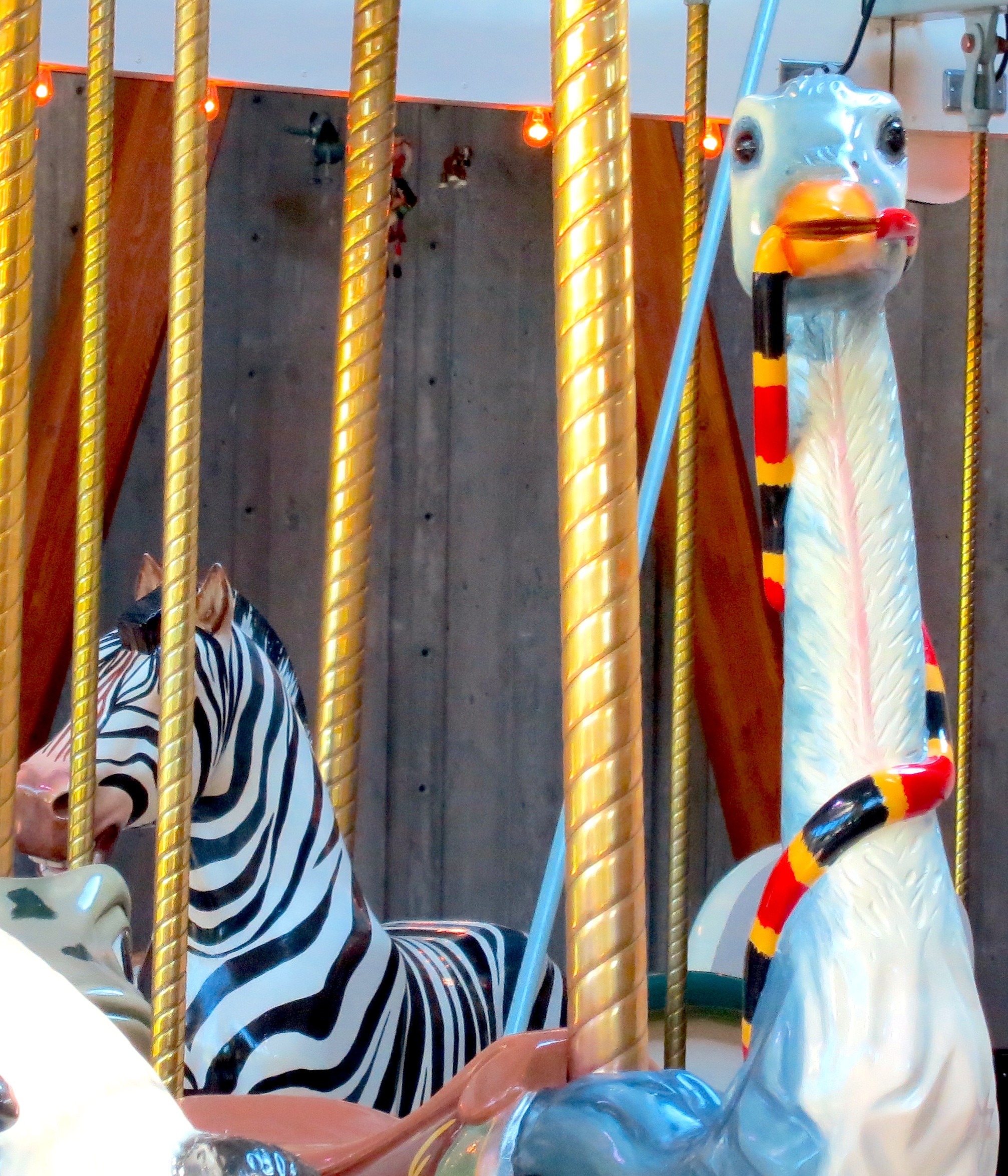
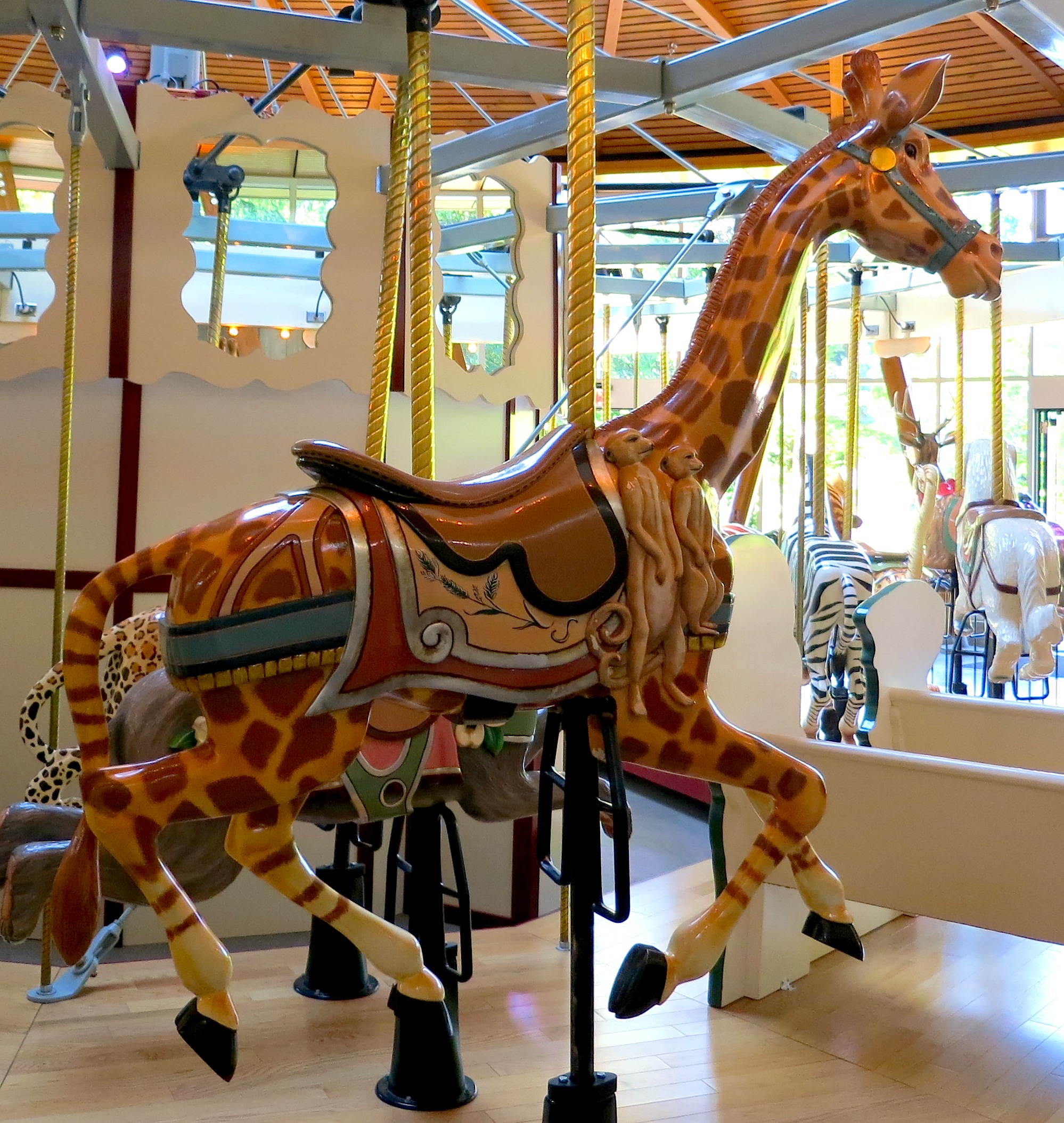
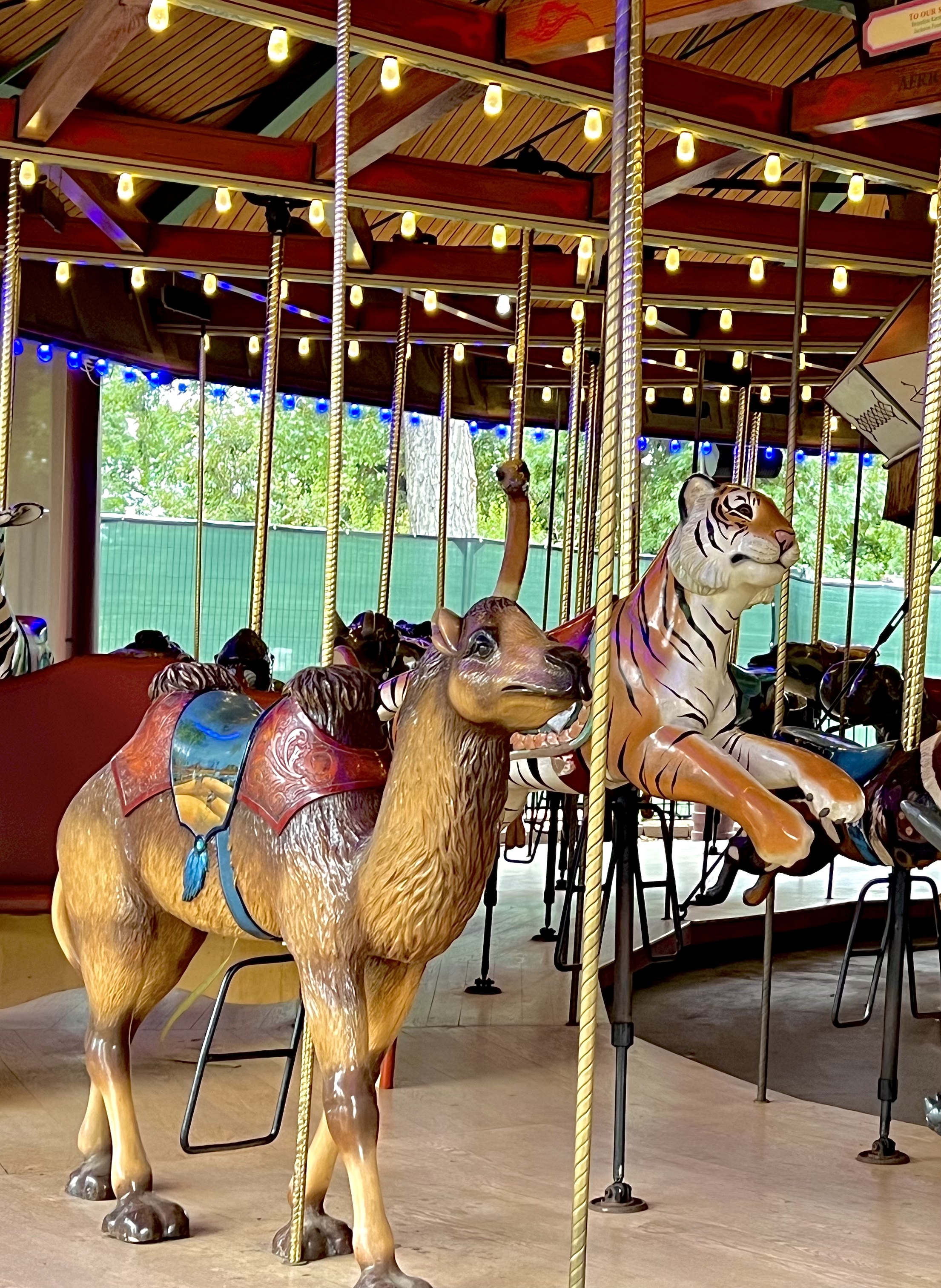
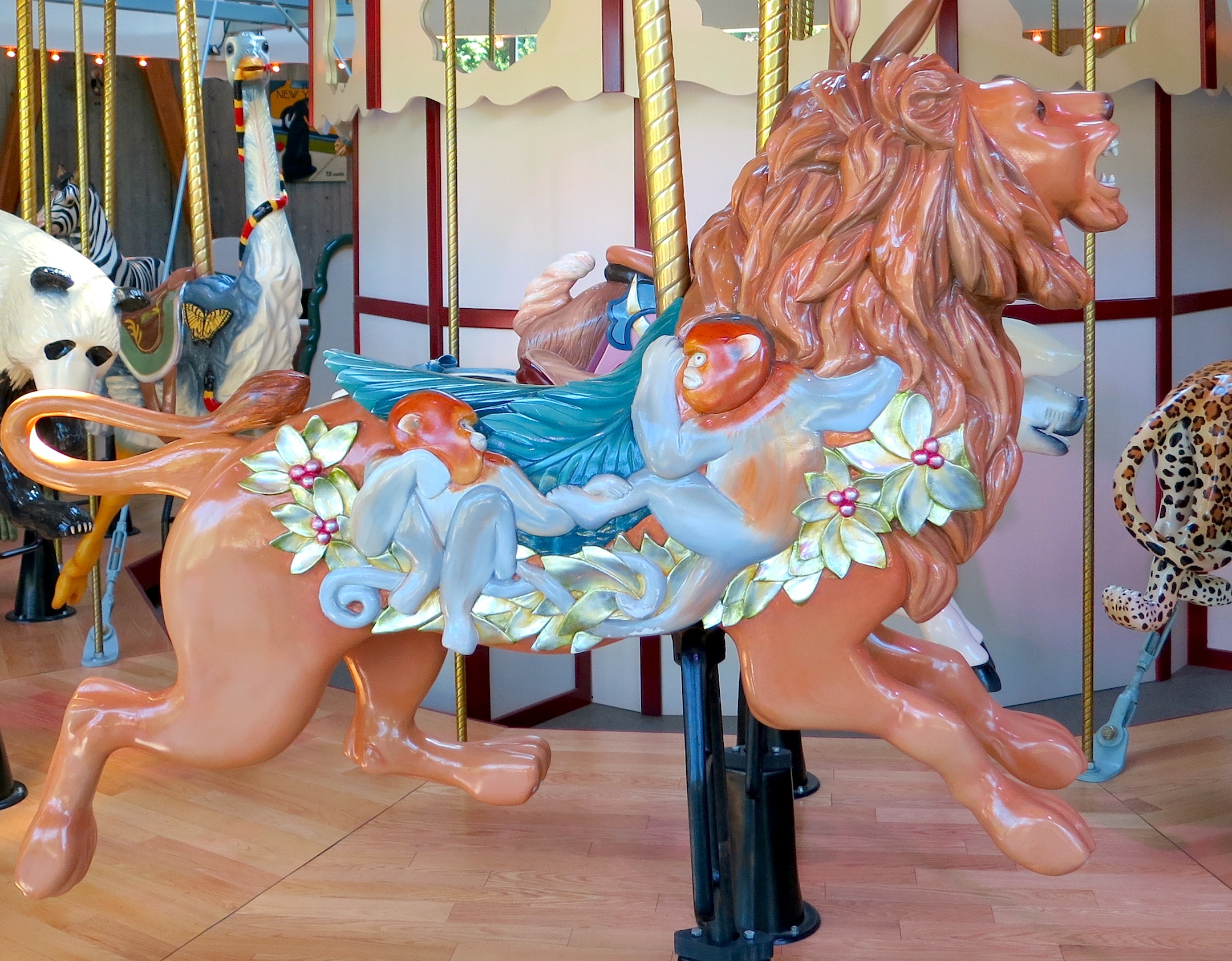
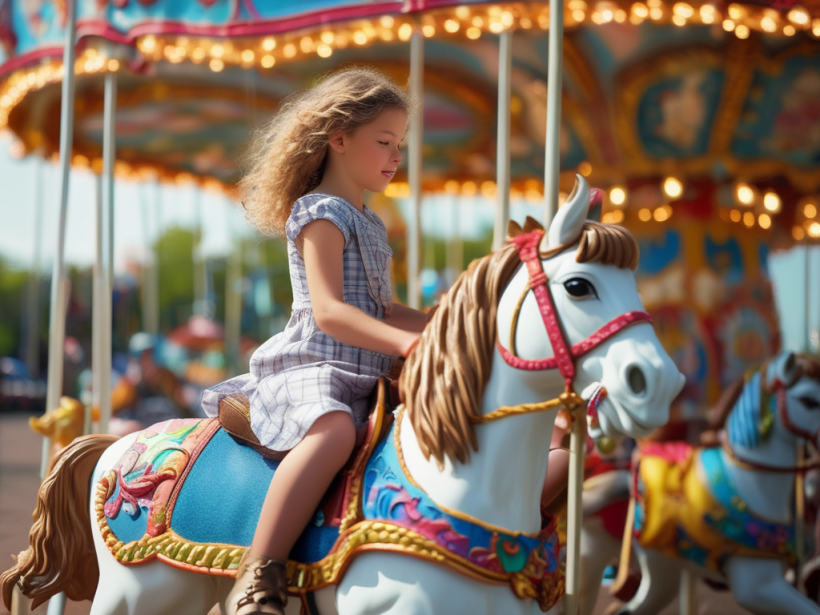
AI image created for this post
One-Time
Monthly
Yearly
Make a one-time or recurring donation to support daily Barnstorming posts
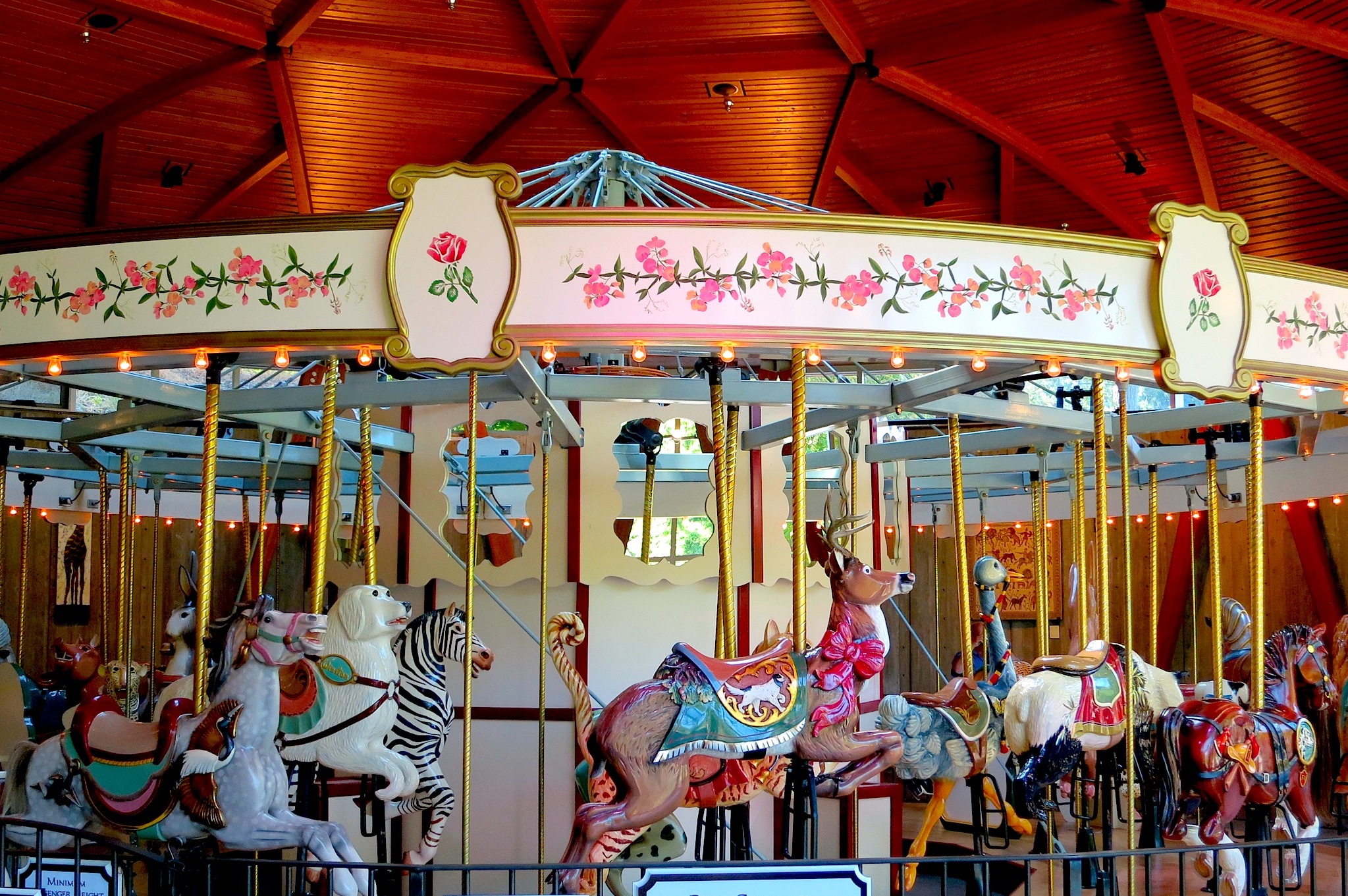
And the seasons they go round and round And the painted ponies go up and down We’re captive on the carousel of time We can’t return, we can only look behind From where we came And go round and round and round In the circle game… ~Joni Mitchell “The Circle Game”
those lovely horses, that galloped me, moving the world, piston push and pull, into the past—dream to where? there, when the clouds swayed by then trees, as a tire swing swung me under—rope groan. now, the brass beam, holds my bent face, calliope cadence—O where have I been? ~Rick Maxson “Carousel at Seventy”
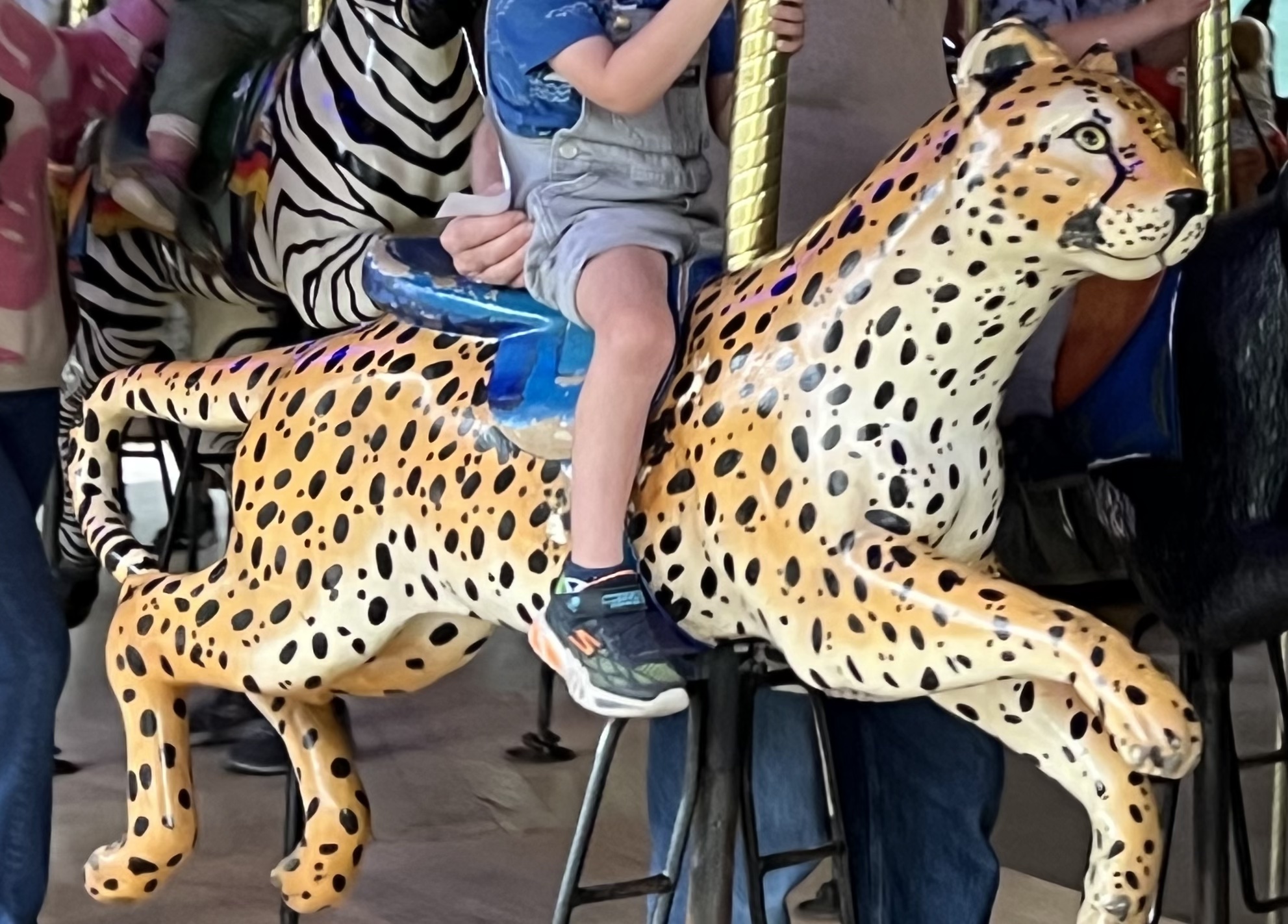
On thin golden poles gliding up, sliding down, a kingdom of horses goes spinning around.
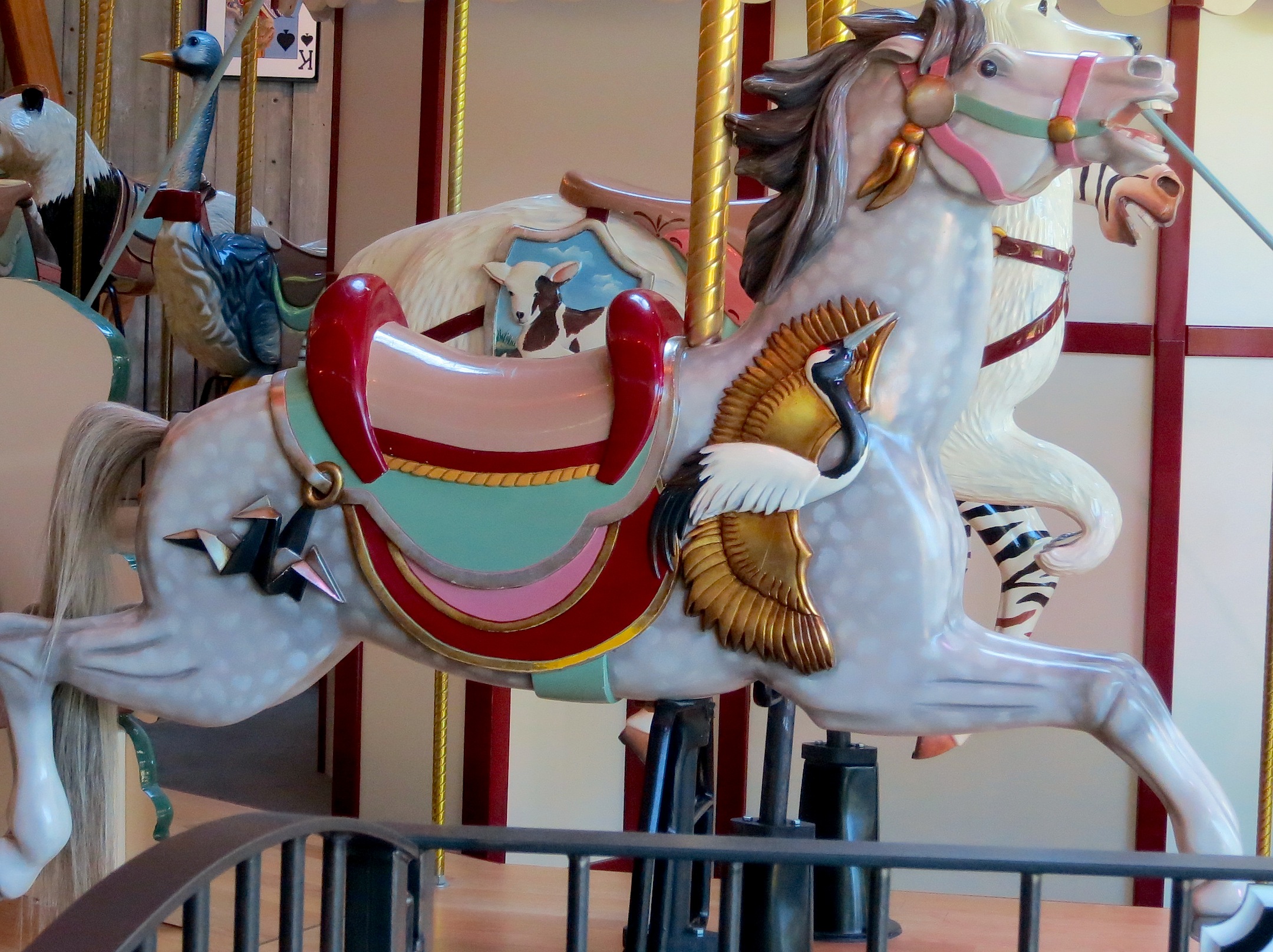
Jumper, Brown Beauty, Dark Thunder, Sir Snow, a medley of ponies parade in a row.
Settled in saddles, their riders hold on to reins of soft leather while circling along
on chestnut or charcoal, on sleek Arctic white, on silver they gallop in place day and night.
Such spinning is magic, (to dream as you sail) with lavender saddle and ebony tail,
whirling to music in moonlight, spellbound, galloping, galloping, merrily go round. ~Rebecca Kai Dotlich “Carousel”
Under its canopy, in the shade it casts, turns a world with painted horses, all from a land that lingers a while before it disappears. Some, it’s true, are harnessed to a wagon, but all have valor in their eyes. A fierce red lion leaps among them, and here comes ’round a snow-white elephant.
Even a stag appears, straight from the forest, except for the saddle he wears, and, buckled on it, a small boy in blue.
And a boy in white rides the lion, gripping it with small clenched hands, while the lion flashes teeth and tongue.
And here comes ’round a snow-white elephant.
And riding past on charging horses come girls, bright-eyed, almost too old now for this children’s play. With the horses rising under them, they are looking up and off to what awaits. ~Rainer Maria Rilke from “Jardin de Luxembourg”
A fewJuly memories:
Sixty-five years ago, I was a five year old having her first ride on the historic carousel at Woodland Park Zoo before we moved from Stanwood to Olympia. Fifty-four years ago — a teenager working in a nursing home as a nurses’ aide after three days of training. Forty-nine years ago – returned home early from my studies in Tanzania after four chimpanzee researcher friends were held hostage for ransom and eventually released Forty-three years ago — deep in the guts of a hospital working forty hour long shifts, thinking about the man I was soon to marry Thirty-four years ago — my husband and I picking up bales of hay in our own farm field, two young children in tow after accepting a new position doctoring at the local university Twenty-seven years ago — raising three children and completed farm house remodel, supporting three parents with health issues, raising Haflinger horses, helping design a new clinic building at work, playing piano and teaching Sunday School at church Twenty-whatever years ago – life spinning faster, blurring with work at home, on the farm, at clinic, at church. I begin writing to grab and hang on to what I can. Sixteen years ago — one son about to move to Japan to teach and the other son to teach at Pine Ridge in South Dakota, daughter at home with a new driver’s license working with migrant children, a mother slowly bidding goodbye to life at a local care center, farming less about horse raising and more about gardening, maintaining and preserving. Ten years ago — two sons married, daughter working as a camp counselor so our first summer without children at home. Perfect time to raise a new puppy! Five years ago – A two year old granddaughter and two new grandsons! Daughter teaching, engaged to be married. Two years ago – completed forty-two years of non-stop doctoring so I bid it goodbye. Now – Three more grandsons! Two retired grandparents! Big garden on the farm but we’re slowing down.
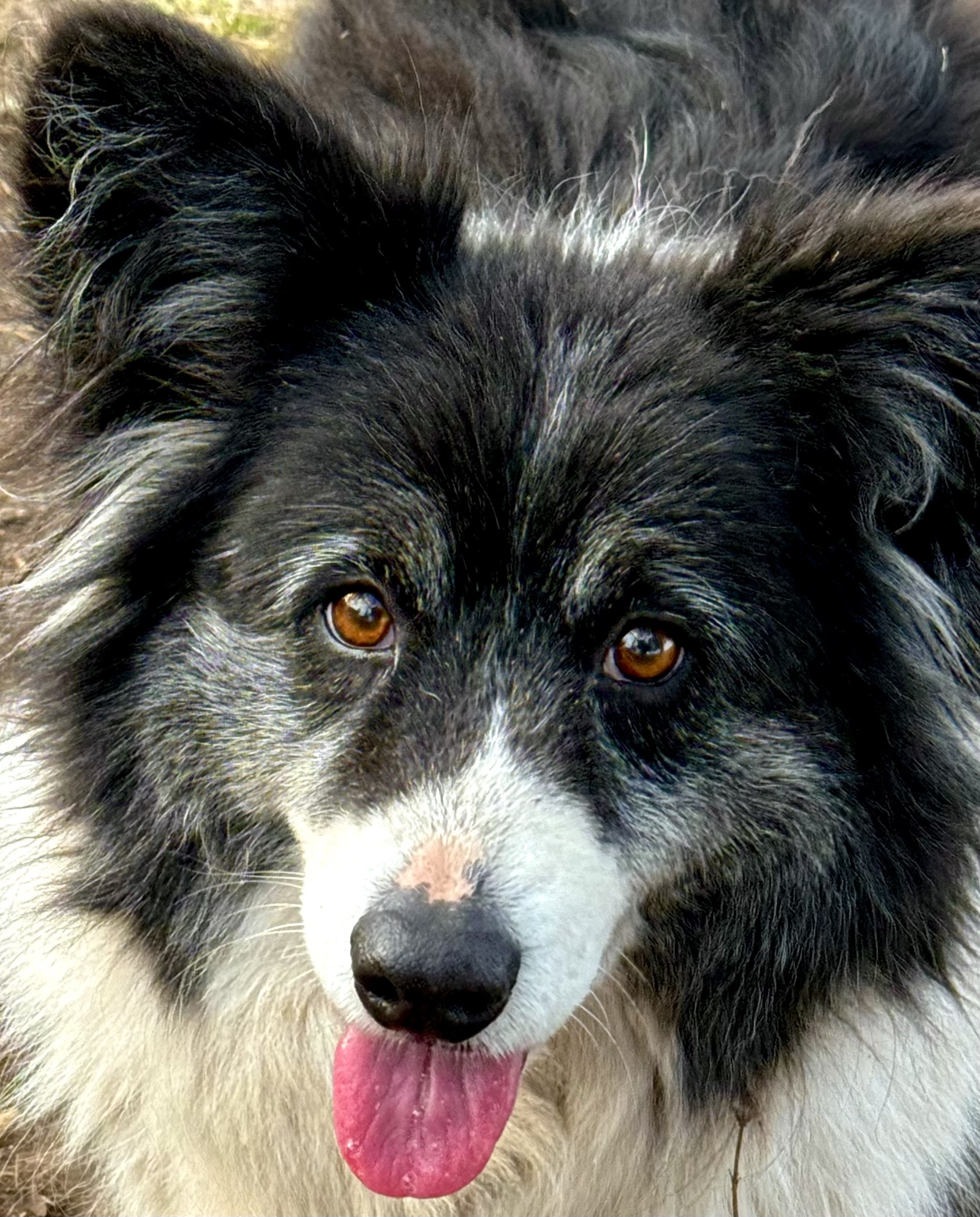
The puppy’s face and our hair are turning white…
O where have I been? We can only look behind from where we came and await what is ahead.
The decades pass, round and round – there is comfort knowing that through the ups and downs of daily life, we still hang on. If we slip and fall, there is Someone ready to catch us.
Looking behind you, where have you been? What awaits you where you are heading?
AI image created for this post
One-Time
Monthly
Yearly
Make a one-time or recurring donation to support daily Barnstorming posts
On the green hill with the river beyond it long ago and my father there and my grandmother standing in her faded clothes wrinkled high-laced black shoes in the spring grass among the few gravestones inside their low fence by the small white wooden church the clear panes of its windows letting the scene through from the windows on the other side of the empty room and a view of the trees over there my grandmother hardly turned her head staring like a cloud at the empty air not looking at the green glass gravestone with the name on it of the man to whom she had been married and who had been my father’s father she went on saying nothing her eyes wandering above the trees that hid the river from where we were a place where she had stood with him one time when they were young and the bell kept ringing ~W. S. Merwin “Widnoon” from The Moon Before Morning
I remember my grandfather as a somber quiet man who used to slowly rock in a wooden chair that now happens to sit empty here in our home.
For most of his life, my Grandpa drank heavily but he wasn’t just any drunk. He was a mean drunk. Surly, cursing, prone to throwing things and people, especially at home.
Grandma used to say he learned to drink in the logging camps and I suspect that is true. He started working as a logger before he was fully grown, dropping out of school, leaving home around age sixteen and heading up to the hills where real money could be made. He learned more than how to cut down huge old growth Douglas Fir trees, skid them down the hills using a team of horses, and then roll them onto waiting wagons to be hauled to the mills. He learned how to live with a group of men who surfaced once or twice a month from the hills to take a bath, bootleg booze during prohibition and maybe go to church with their womenfolk.
Mostly the loggers taught him how to curse and drink.
He headed home to the farm with muscles and attitude a few years later, and started the process of felling trees, creating a “stump farm” that was a challenge to work because huge stumps dotted the fields and hills. He slowly worked at blasting them out of the ground so the land could be tilled. It proved more than he had strength and motivation to do, so his fields were never very fruitful, mostly growing hay for his own animals. He went to work in the local saw mill to make ends meet.
He cleaned up some when he met my grandmother, who at eighteen was seven years younger, and eager to escape her role as chief cook and bottle washer for her widowed father and younger brother. She was devout, lively and full of energy and talked constantly while he, especially when sober, preferred to let others do the talking. It was an unusual match but he liked her cooking and she was ready to escape the drudgery of her father’s household and be wooed.
They settled on the stump farm and began raising a family, trying to eke out what living they could from the land, from the sporadic work he found at the saw mill, and every Sunday, took the wagon a mile down the road to the Bible Church where they both sang with gusto.
He still drank when he had the money, blowing his pay in the local tavern, and stumbling in the back door roaring and burping, falling into bed with his shoes on. Grandma was a teetotaler and yelled into his ruddy face about the wrath of God anytime he drank, their four children hiding when the dishes started to fly, and when he would whip off his belt to hit anyone who looked sideways at him.
When their eldest daughter took sick and died of lymphoma at age eight despite the little doctoring that was available, Grandpa got sober for awhile. He saw it as punishment from God, or at least that is what Grandma told him through her sobs as she struggled to cope with her loss.
Over the years, he relapsed many times, losing fingers in his work at the mill, and losing the respect of his wife, his children and the people in the community. Grandma took the kids for several months to cook in a boarding house in a neighboring town, simply to be able to feed her family while Grandpa squandered what he had on drink. Reconciled over and over again, Grandma would come back to him, sending their only son to fetch him from the tavern for the night. My Dad would bicycle to that dark and smoky place, stand Grandpa up and guide him staggering out to their truck for the weaving drive home on country roads. On more than one occasion, Grandpa, belligerent as ever, would resist leaving and throw a punch at his boy, usually missing by a mile.
But once the boy grew taller and strong enough to fight back, managing to knock Grandpa to the ground in self-defense, the punching and resistance stopped. The boozing didn’t.
Grandpa sobered up for good while his boy fought in the war overseas in the forties, striking a bargain with God that his boy would come home safe to work the farm as long as Grandpa left alcohol alone. It stuck and he stayed sober. His boy came home. Grandpa saw it as a promise kept and became an elder in his Bible Church, taught Sunday School and gave his extra cash to the church rather than the tavern. He and Grandma donated a house on their property to the church for a parsonage.
Some twelve years later, sitting in a Christmas Sunday School program one Christmas Eve, Grandpa leaned toward Grandma and she saw his face broken out in sweat, his face ashen.
“It’s hot in here, I need air, “ he said and collapsed in her lap. He was gone, just like that. He left the rest of his family behind while he sat in church, sober as can be, on the day before Christmas.
There is no question in my mind he knew he was forgiven. He headed home one more time, not weaving or swerving but traveling straight and narrow.
AI image created for this postAI image created for this post
One-Time
Monthly
Yearly
Make a one-time or recurring donation to support daily Barnstorming posts
Little soul, you and I will become the memory of a memory of a memory. A horse released of the traces forgets the weight of the wagon. ~Jane Hirshfield “Harness”
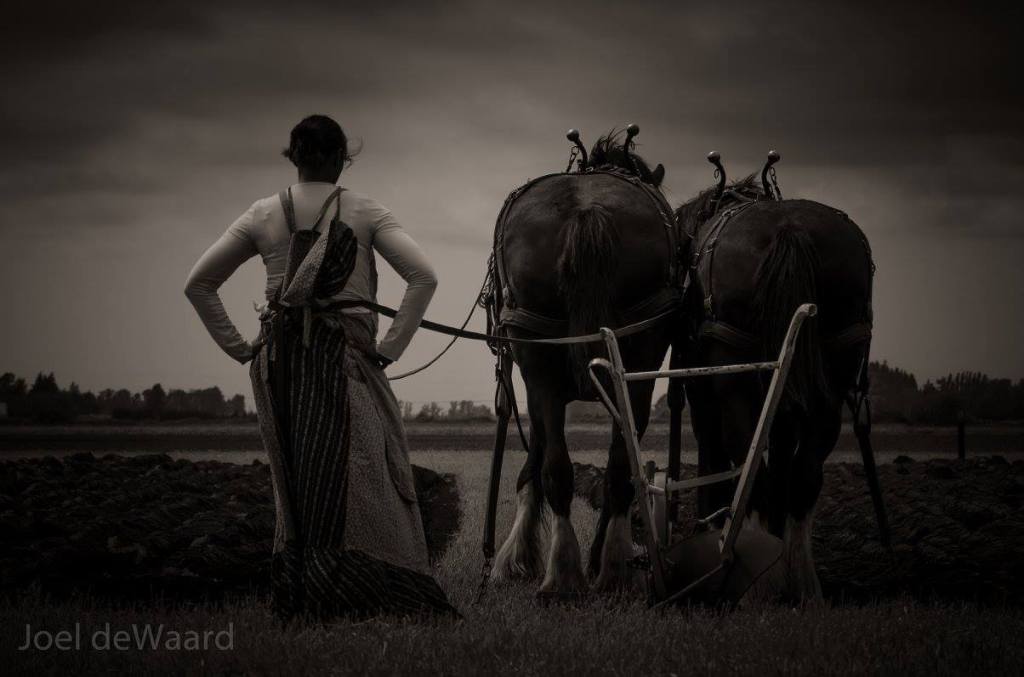
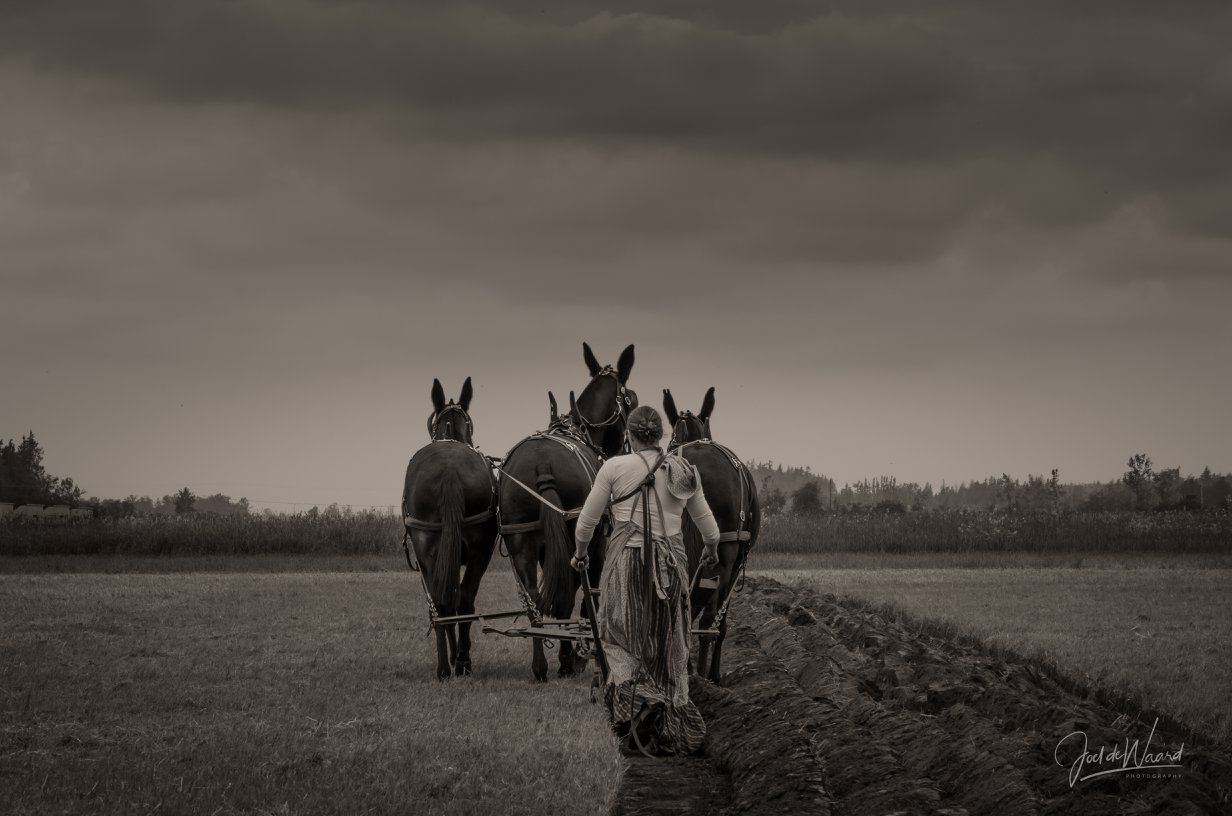
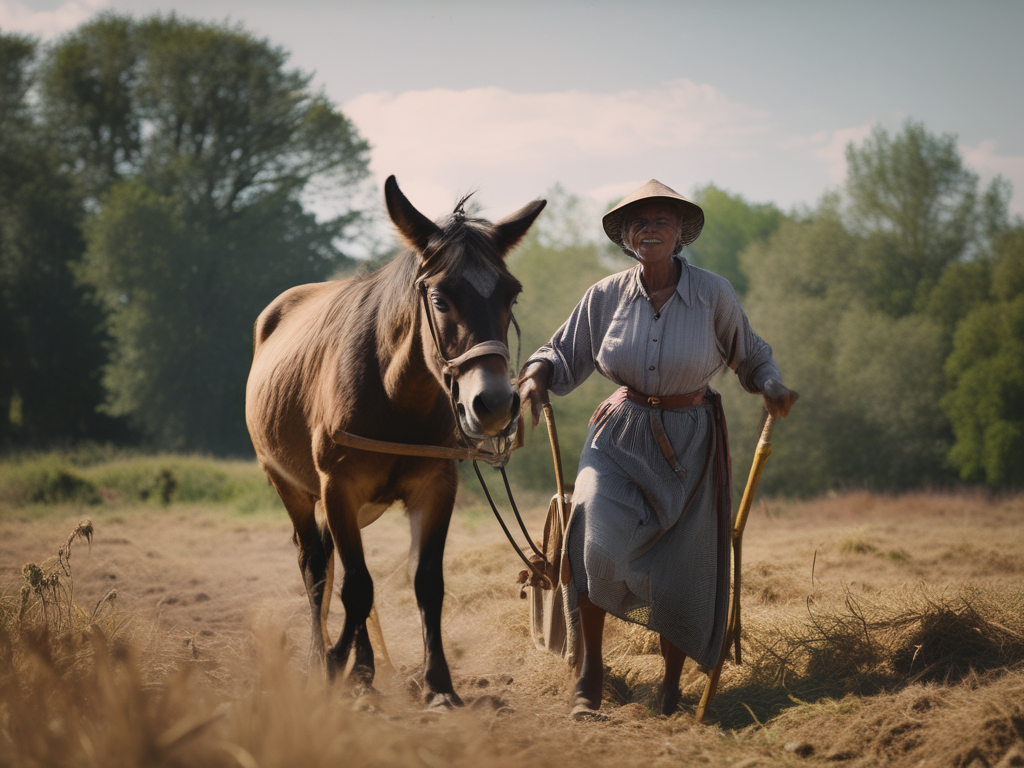
My grandmothers were strong. They followed plows and bent to toil. They moved through fields sowing seed. They touched earth and grain grew. They were full of sturdiness and singing. My grandmothers were strong.
My grandmothers are full of memories Smelling of soap and onions and wet clay With veins rolling roughly over quick hands They have many clean words to say. My grandmothers were strong. Why am I not as they? ~Margaret Walker “Lineage”
So many years of shouldering huge burdens while waiting for freedom from the harness: grandmothers, grandfathers, parents, children struggling through every ounce of sweat, every sore muscle, every drop of blood, every tear.
How can one forget the weight of the plow as it turns over the earth where someday all will rest as dust?
The soil of strong hearts is well-tilled, yielding to the plowshare, furrowed deep and straight by the hard pull of the traces.
Although black hearts and minds are still tread upon yet do they bloom; even when turned inside out yet do they flourish.
Plow deep our hearts this day, oh Lord, to celebrate freedom declared for all God’s children.
May we never forget the strength it took to hold on… to plow, sow, grow, gather and harvest that freedom, the steady pull on the traces in order to raise up strong children and grandchildren evermore and everywhere.
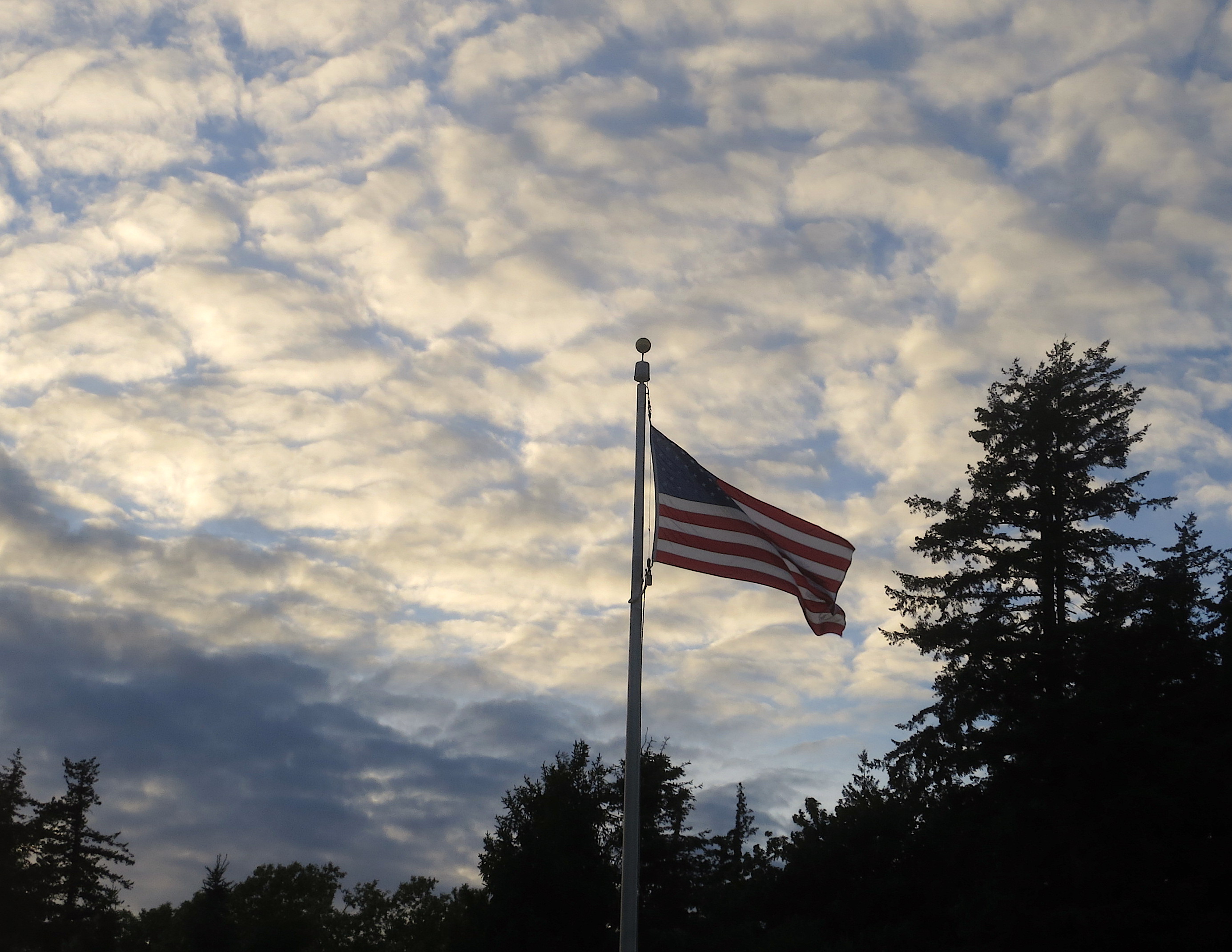
I am what you make me; nothing more. I swing before your eyes as a bright gleam of color, a symbol of yourself. ~Franklin K. Lane, Secretary of the Interior, 1914 Flag Day address
Sometimes, as a child, when I was bored, I’d grab a step ladder, pull it into our hallway, climb half way up and carefully lift the plywood hatch that was the portal to our dark attic. It took some effort to climb up into the attic from the ladder, juggling a flashlight at the same time, but once seated safely on the beams above our ceiling, being careful not to put my foot through the carpet of insulation, I could explore what was stowed and normally inaccessible to me.
All the usual attic-type things were put up there: Christmas ornaments and lights, baby cribs and high chairs, lamps and toys no longer used. Secrets to my parents’ past were stored away there too. It was difficult imagining them as young children growing up on opposite sides of the state of Washington, in very different circumstances, or as attractive college students who met at a dance, or as young marrieds unencumbered by the daily responsibilities of a family. The attic held those images and memories like a three dimensional photo album.
My father’s dark green Marine Corps cargo trunk was up there, the one that followed him from Officer Training in Quantico, Virginia, to beach and mountain battles on Tarawa, Tinian and Saipan in the South Pacific, and three years later back home again. It had his name and rank stenciled on the side in dark black lettering. The buckles were stiff but could be opened with effort, and in the dark attic, there was always the thrill of unlatching the lid, and shining the flashlight across the contents. His Marine Corps dress uniform lay inside underneath his stiff brimmed cap. There were books about protocol, and a photo album which contained pictures of “his men” that he led in his battalion, and the collection of photos my mother sent of herself as she worked as a teacher of high school students back home.
Most fascinating was a folded Japanese flag inside a small drawstring bag, made of thin white see-through cloth with the bold red sun in the middle. Surrounding the red sun were the delicate inked characters of many Japanese hands as if painted by artists, each wishing a soldier well in his fight for the empire. Yet there it was, a symbol of that soldier’s demise, itself buried in an American attic, being gently and curiously held by an American daughter of a Marine Corps captain. It would occur to me in the 1960s that some of the people who wrote on this flag might still be living, and certainly members of the soldier’s family would still be living. I asked my father once about how he obtained the flag, and he, protecting both me and himself, waved me away, saying he couldn’t remember. I know better now. He knew but could not possibly tell me the truth.
These flags, charms of good luck for the departing Japanese soldier as he left his neighborhood or village for war, are called Hinomaru Yosegaki (日の丸寄せ書き). Tens of thousands of these flags came home with American soldiers; it is clear they were not the talisman hoped for. A few of these flags are now finding their way back to their home country, to the original villages, to descendants of the lost soldiers. So now has this flag.
Eighty years ago doesn’t seem that long, a mere drop in the river of time. There are more than mere mementos that have flowed from the broken dam of WWII, flooding subsequent generations of Americans, Japanese, Europeans with memories that are now lost as the oldest surviving soldiers pass, scores of them daily, taking their stories of pain and loss and heroism with them. My father could never talk with a person of Asian descent, Japanese or not, without being visibly uneasy. As a child, I saw and felt this from him, but heard little from his mouth.
When he was twenty two years old, pressed flat against the rocks of Tarawa, trying to melt into the ground to become invisible to the bullets whizzing overhead, he could not have conceived that sixty-five years later his twenty two year old grandson would disembark from a jumbo jet at Narita in Tokyo, making his way to an international school to teach Japanese children. My father would have been shocked that his grandson would settle happily into a culture so foreign, so seemingly threatening, so apparently abhorrent. Yet this irony is the direct result of the horrors of that too-long horrible bloody war of devastation: Americans and Japanese, despite so many differences, have become the strongest of allies, happily exchanging the grandchildren of those bitterly warring soldiers back and forth across the Pacific. It too was my privilege to care for Japanese exchange students daily in my University health clinic, peering intently into their open faces and never once seeing the enemy that my father feared.
Now all these decades later, our son taught for 13 years in Tokyo, with deep admiration and appreciation for each of his students, some of whom were great-grandchildren of WWII Japanese soldiers. He married a granddaughter of those my father fought. Their two children are the perfect amalgam of once warring, yet now peaceful, cultures; a symbol of blended and blending peoples overcoming the hatred of past generations, creating a new world.
Our son and daughter-in-law, having now settled their family in the States, are adapting to a different language, culture and flag. I pray our son – having devoted part of his life as teacher and missionary to the land of the rising sun – has redeemed his grandfather, the soldier-warrior of the past century.
(U.S. Air Force photo by Staff Sgt. Peter Reft)
One-Time
Monthly
Yearly
Make a one-time or recurring donation to support daily Barnstorming posts
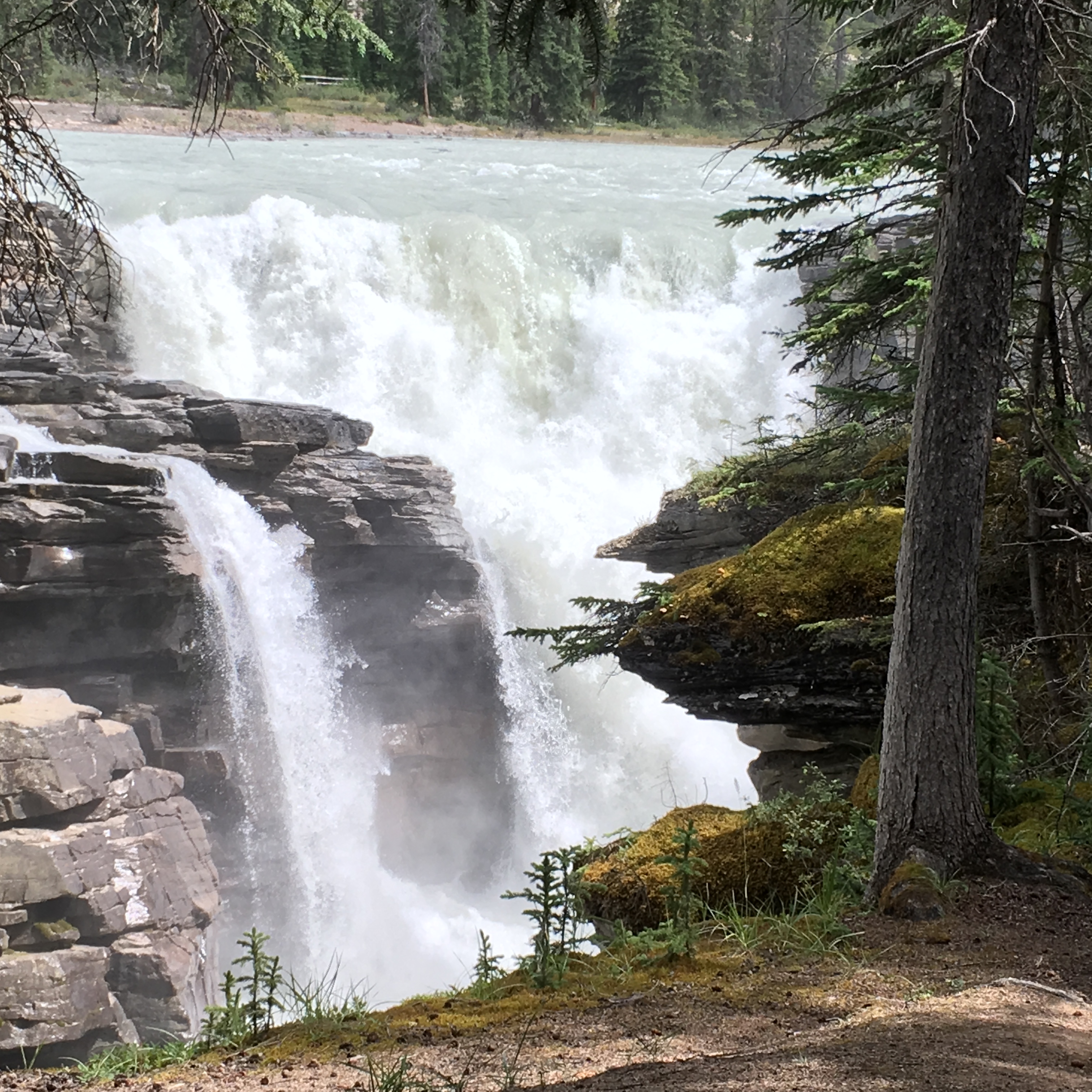
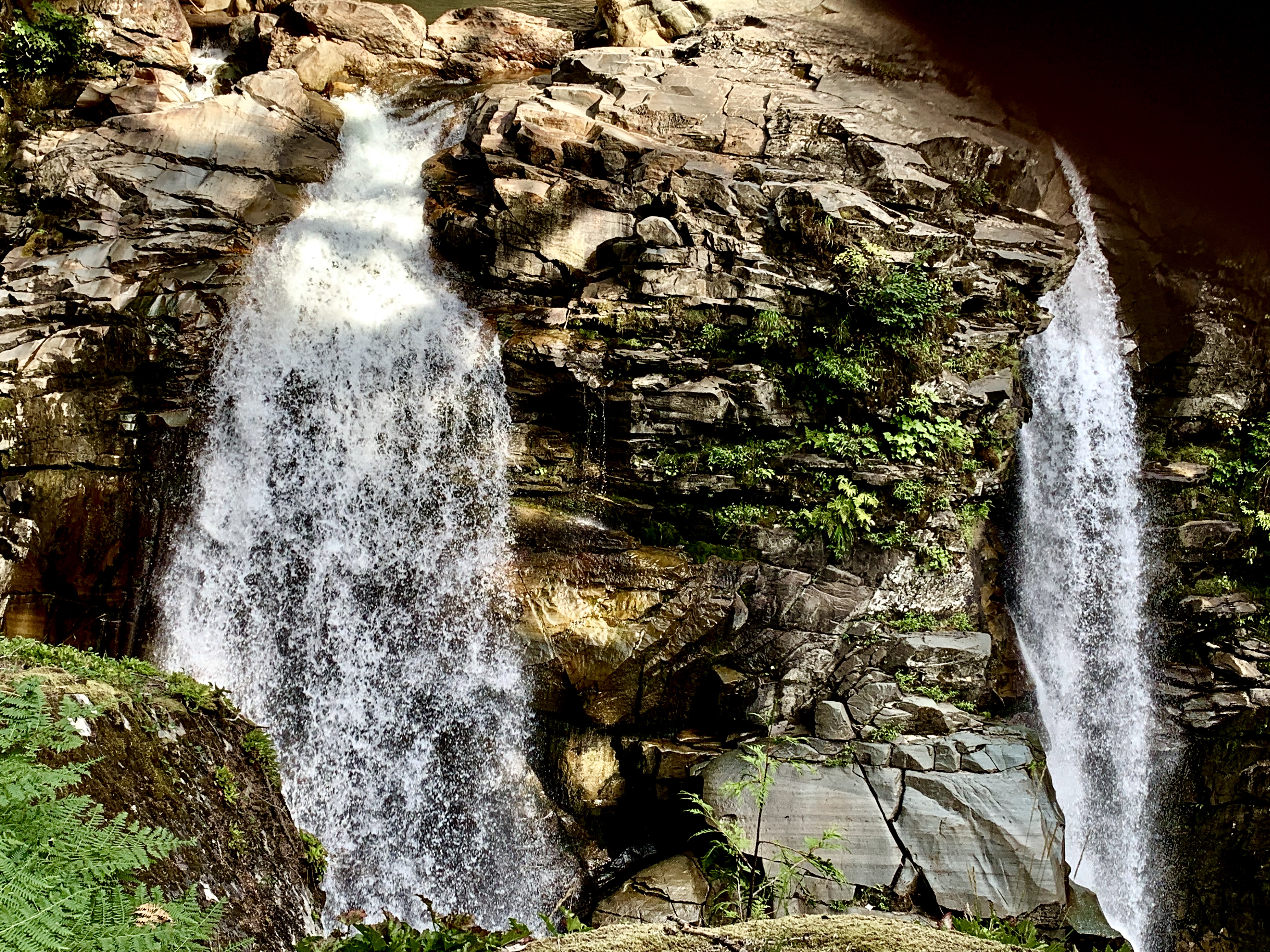
What does it feel like to be alive? Living, you stand under a waterfall… It is time pounding at you, time. Knowing you are alive is watching on every side your generation’s short time falling away as fast as rivers drop through air, and feeling it hit.
I had hopes for my rough edges. I wanted to use them as a can opener, to cut myself a hole in the world’s surface, and exit through it. ~Annie Dillard from An American Childhood
I saw a mom take her raincoat off and give it to her young daughter when a storm took over the afternoon. My god, I thought, my whole life I’ve been under her raincoat thinking it was somehow a marvel that I never got wet. ~Ada Limón from “The Raincoat”
Mothering can be like standing under a waterfall, impacted breathless by the incredible 24/7 responsibility of birthing and raising children. And a mother does whatever she must to protect her children from also getting soaked in the barrage of each drop of time, knowing they too can feel overwhelmed by the rapid passage of life.
As I tried my best to keep my children covered and dry until it was their turn to raise kids and stand under the same waterfall, my own rough edges have been impacted, smoothed and soothed by the flow of time.
I’m well aware rough edges still surface, unbidden and unwarranted, ready to cut a hole in the world for an escape hatch from troubles. So my children and grandchildren polish me even as I still try to protect them from inevitable downpours.
No longer is my reach enough nor must it be.
Life keeps pounding away, but oh so gentler on grandmothers. I know it is still ruffing and buffing me — each drop of time passing over me becomes a mixed blessing.
Each moment so precious, never to come again, yet leaving me forever and wonderfully changed.
One-Time
Monthly
Yearly
Make a one-time or recurring donation to support daily Barnstorming posts
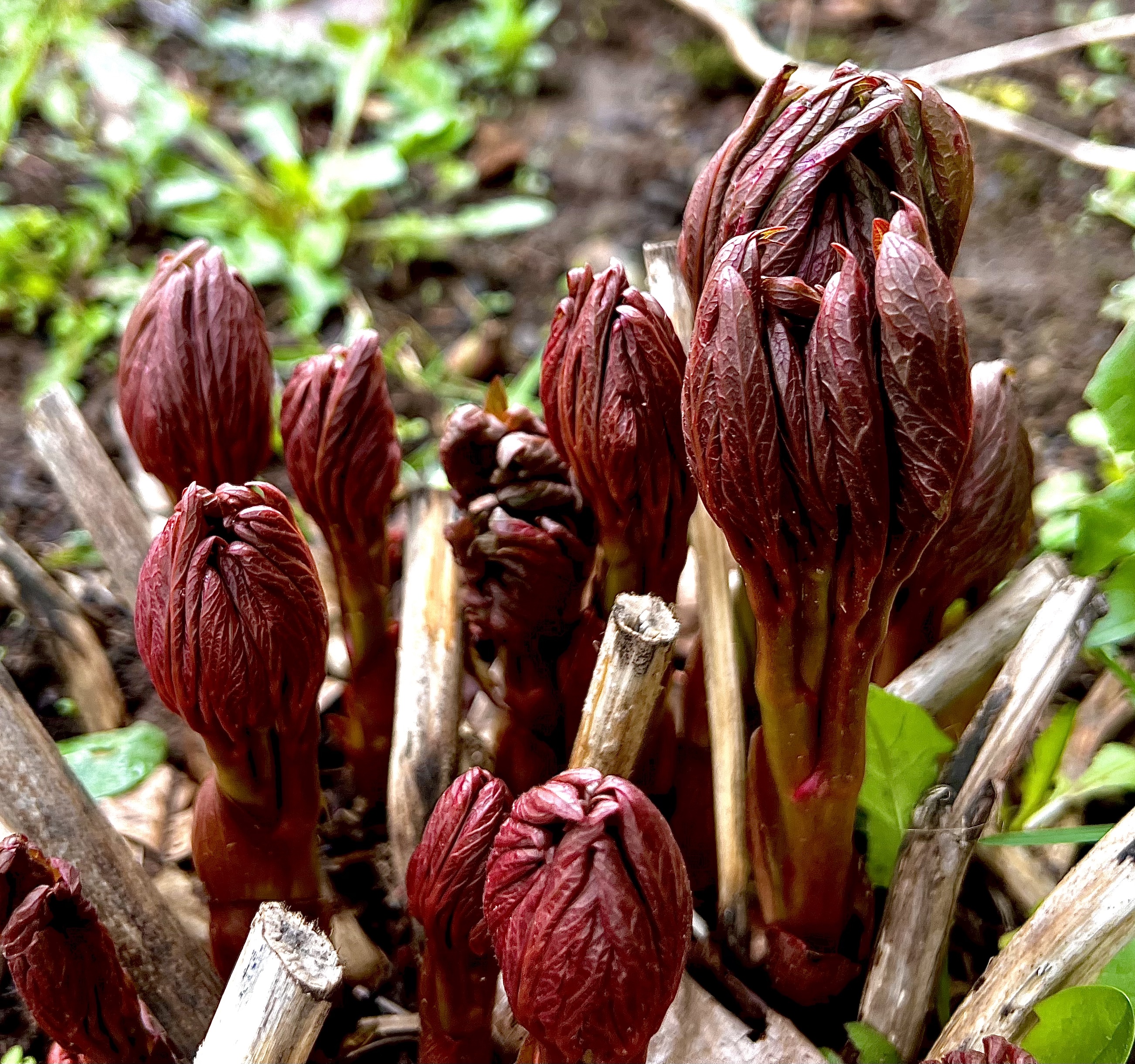
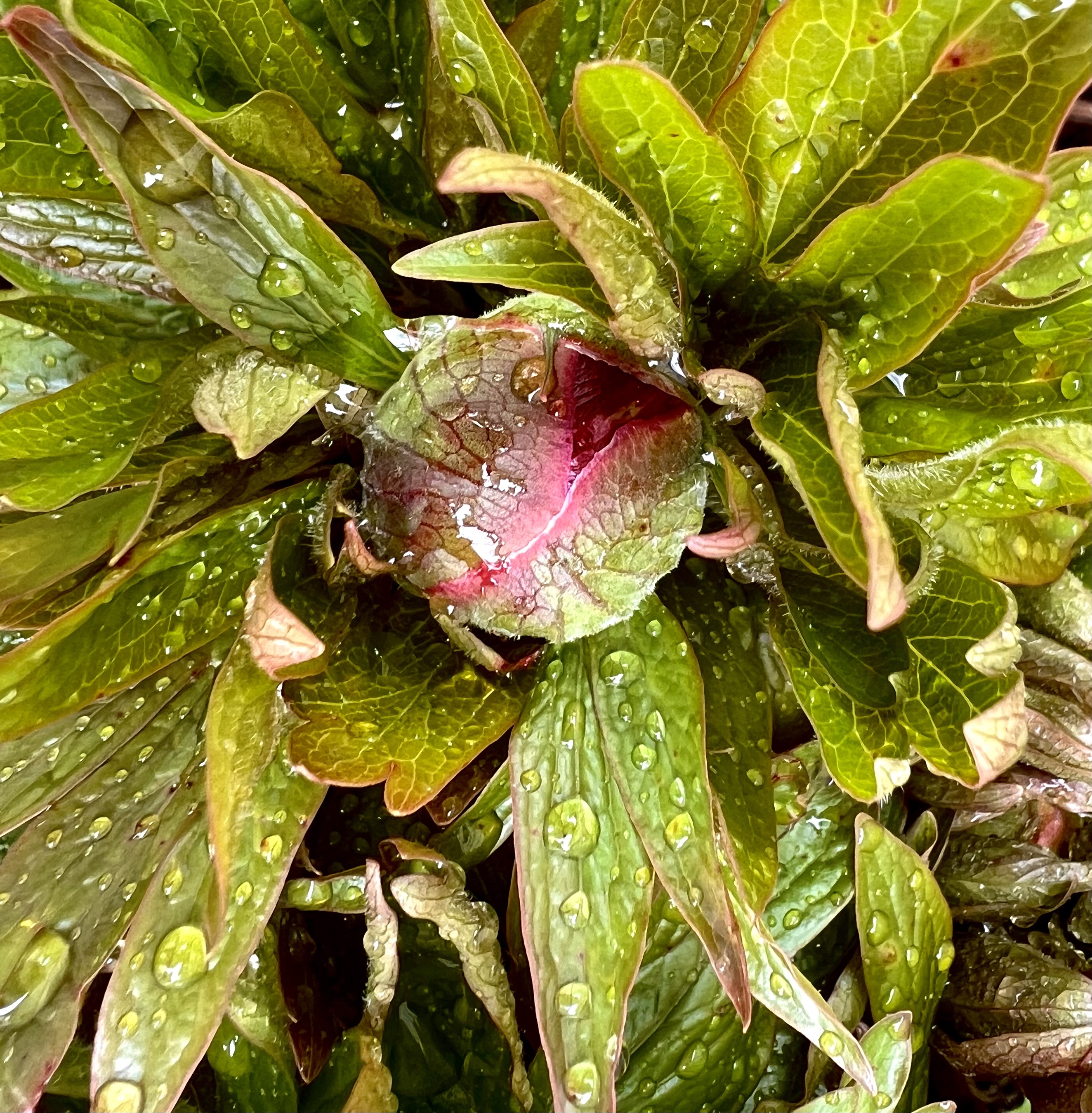
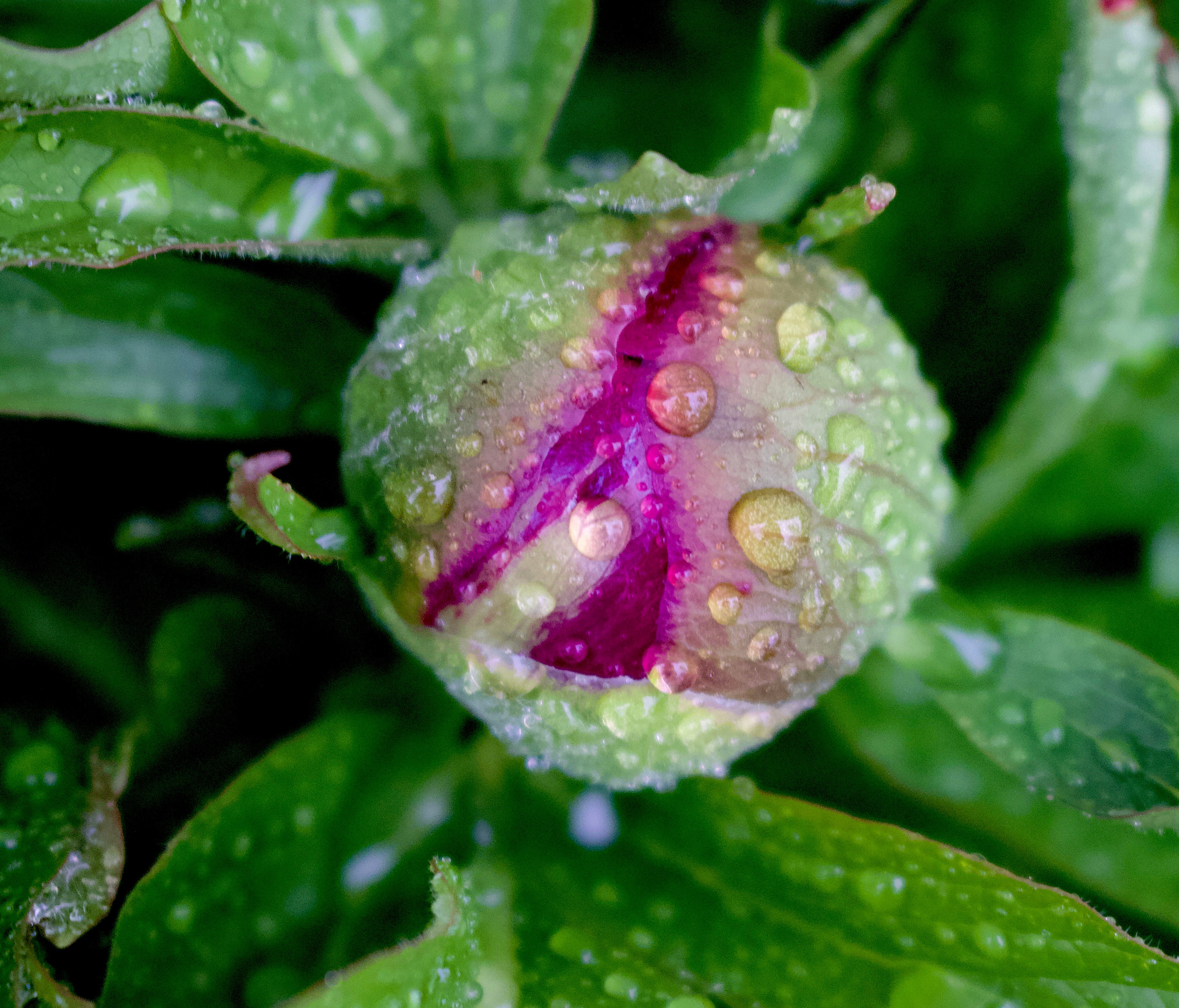
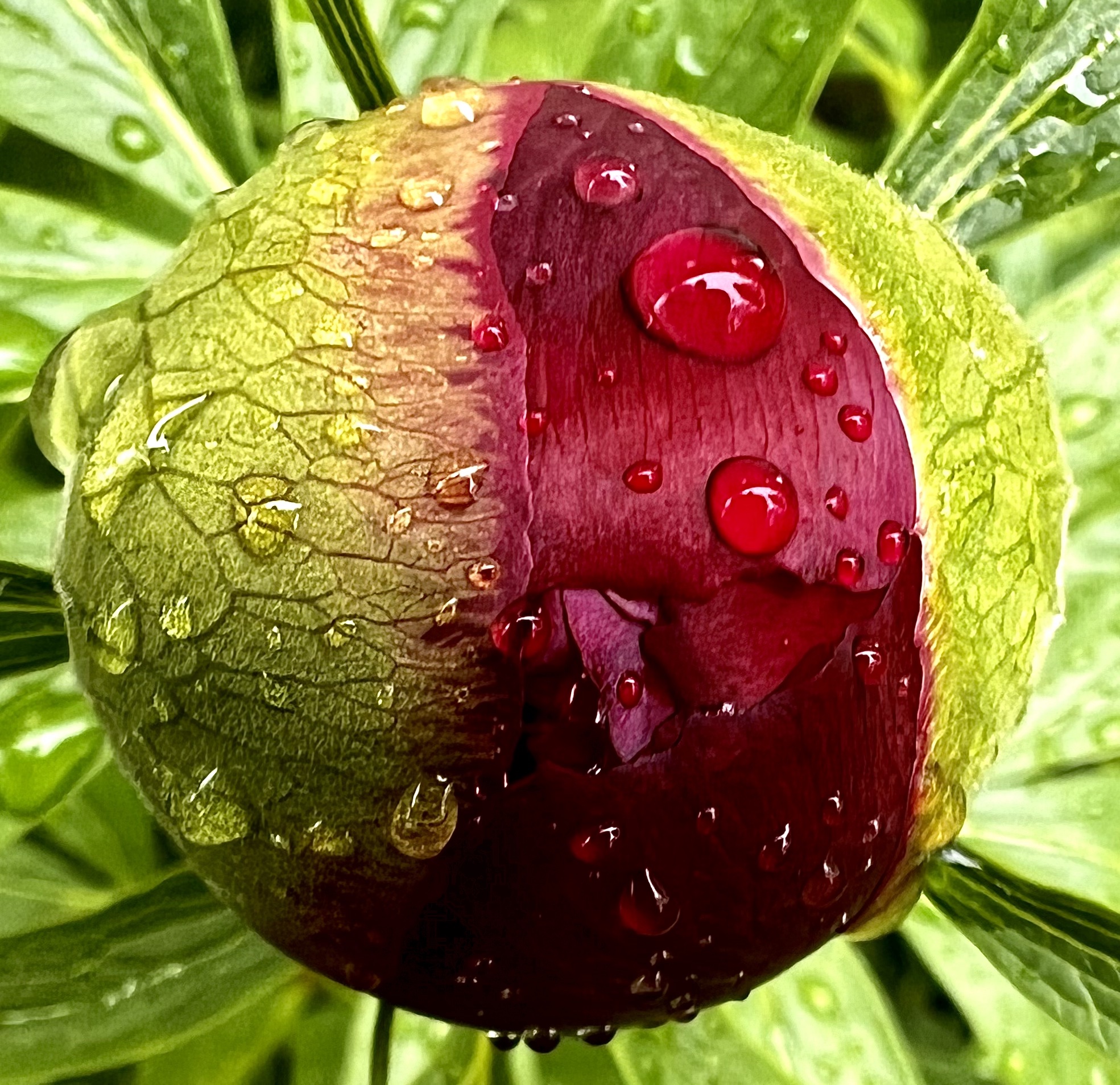
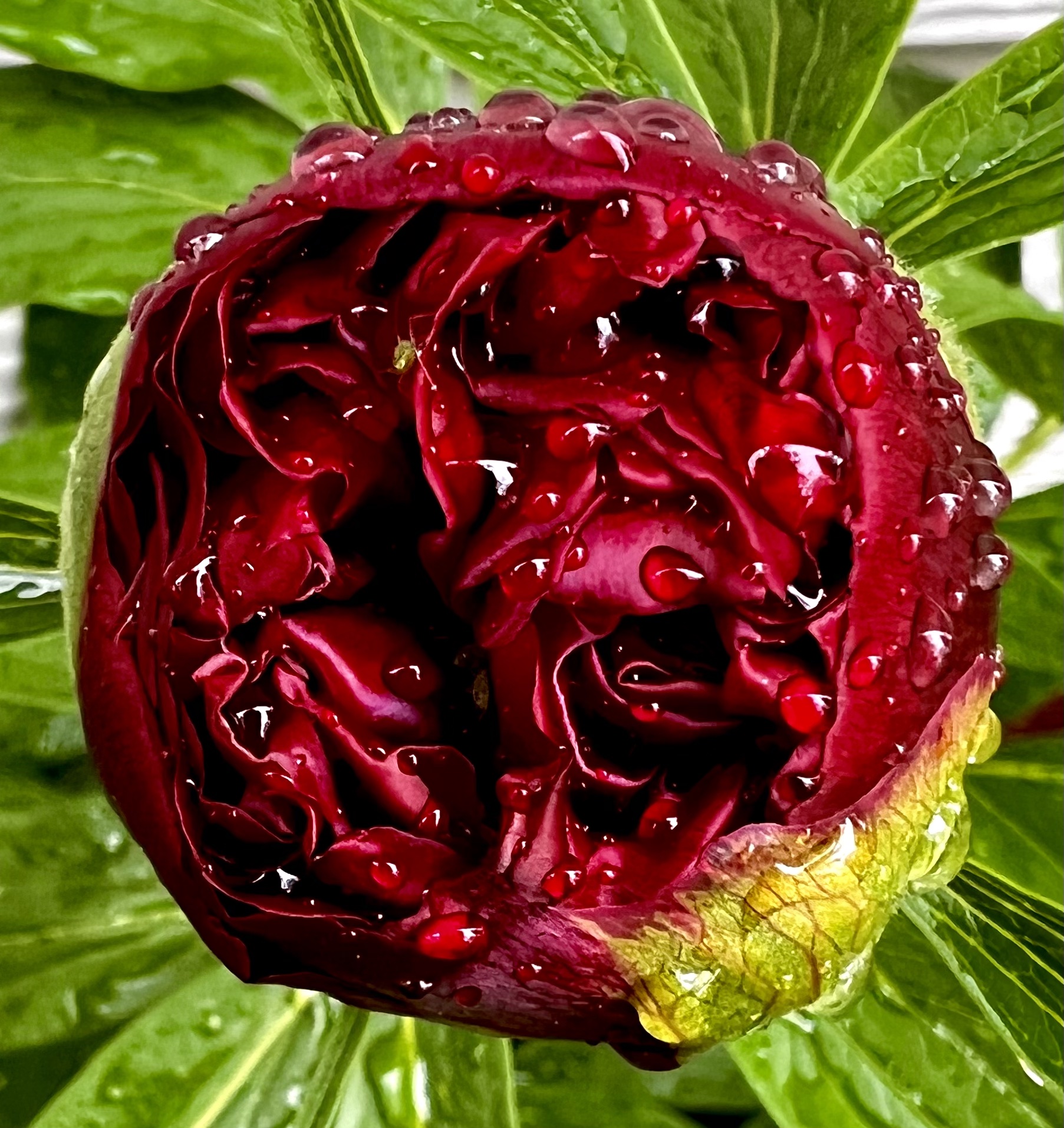
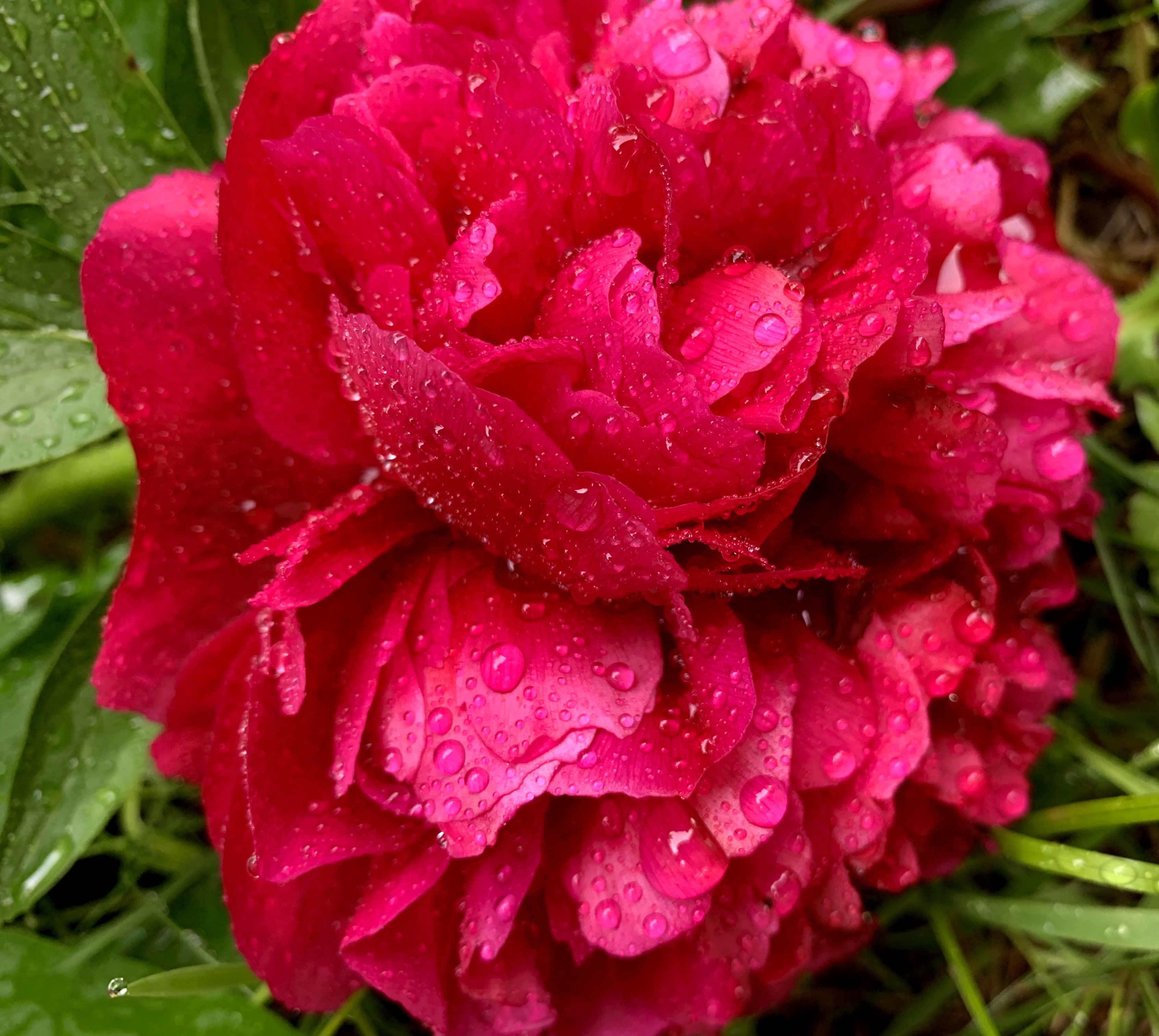
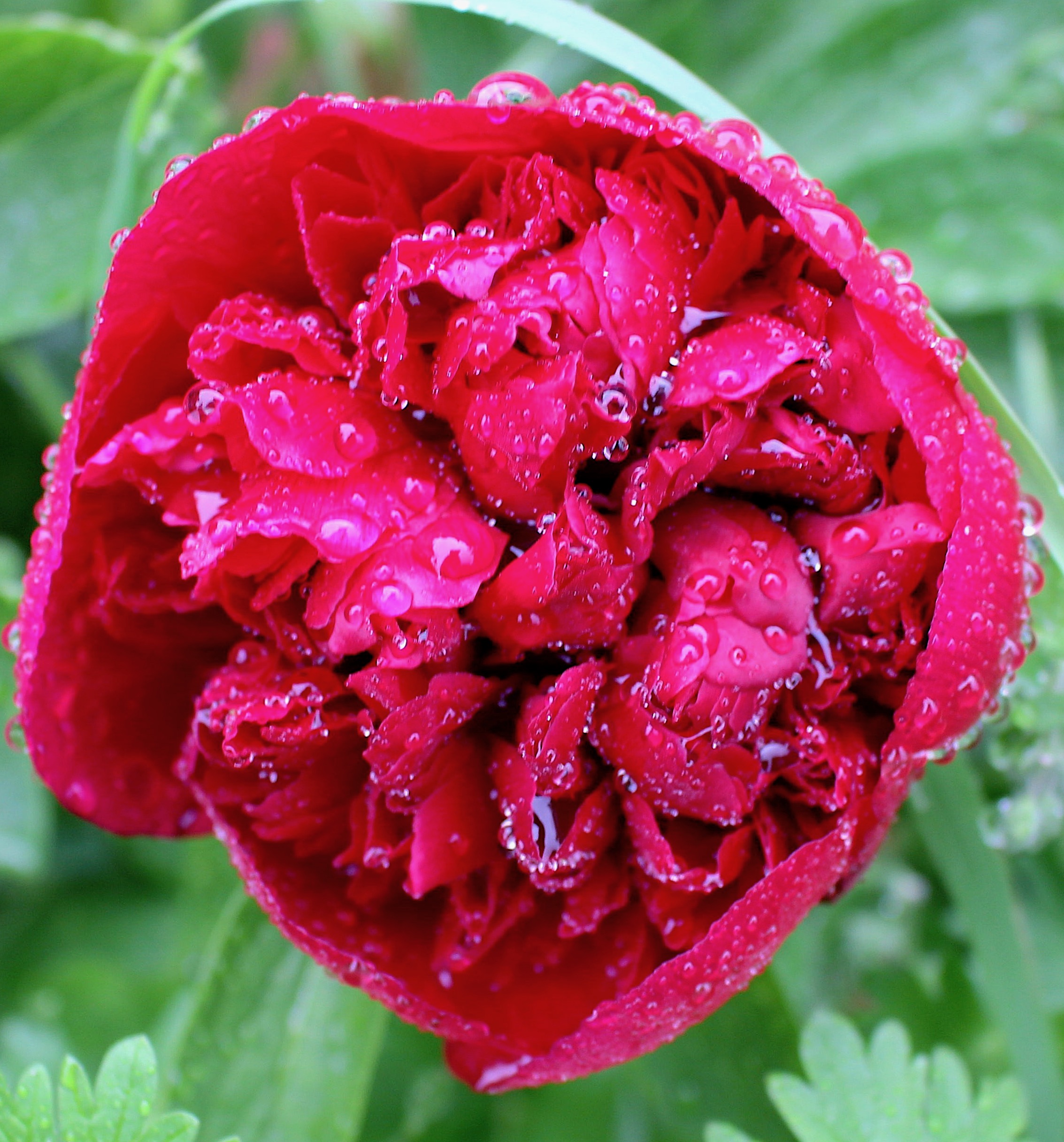
This morning the green fists of the peonies are getting ready to break my heart as the sun rises, as the sun strokes them with his old, buttery fingers
and they open — pools of lace, white and pink —
and all day under the shifty wind, as in a dance to the great wedding,
the flowers bend their bright bodies, and tip their fragrance to the air, and rise, their red stems holding
all that dampness and recklessness gladly and lightly, and there it is again — beauty the brave, the exemplary,
blazing open. Do you love this world? Do you cherish your humble and silky life? Do you adore the green grass, with its terror beneath?
Do you also hurry, half-dressed and barefoot, into the garden, and softly, and exclaiming of their dearness, fill your arms with the white and pink flowers,
with their honeyed heaviness, their lush trembling, their eagerness to be wild and perfect for a moment, before they are nothing, forever? ~Mary Oliver fromNew And Selected Poems
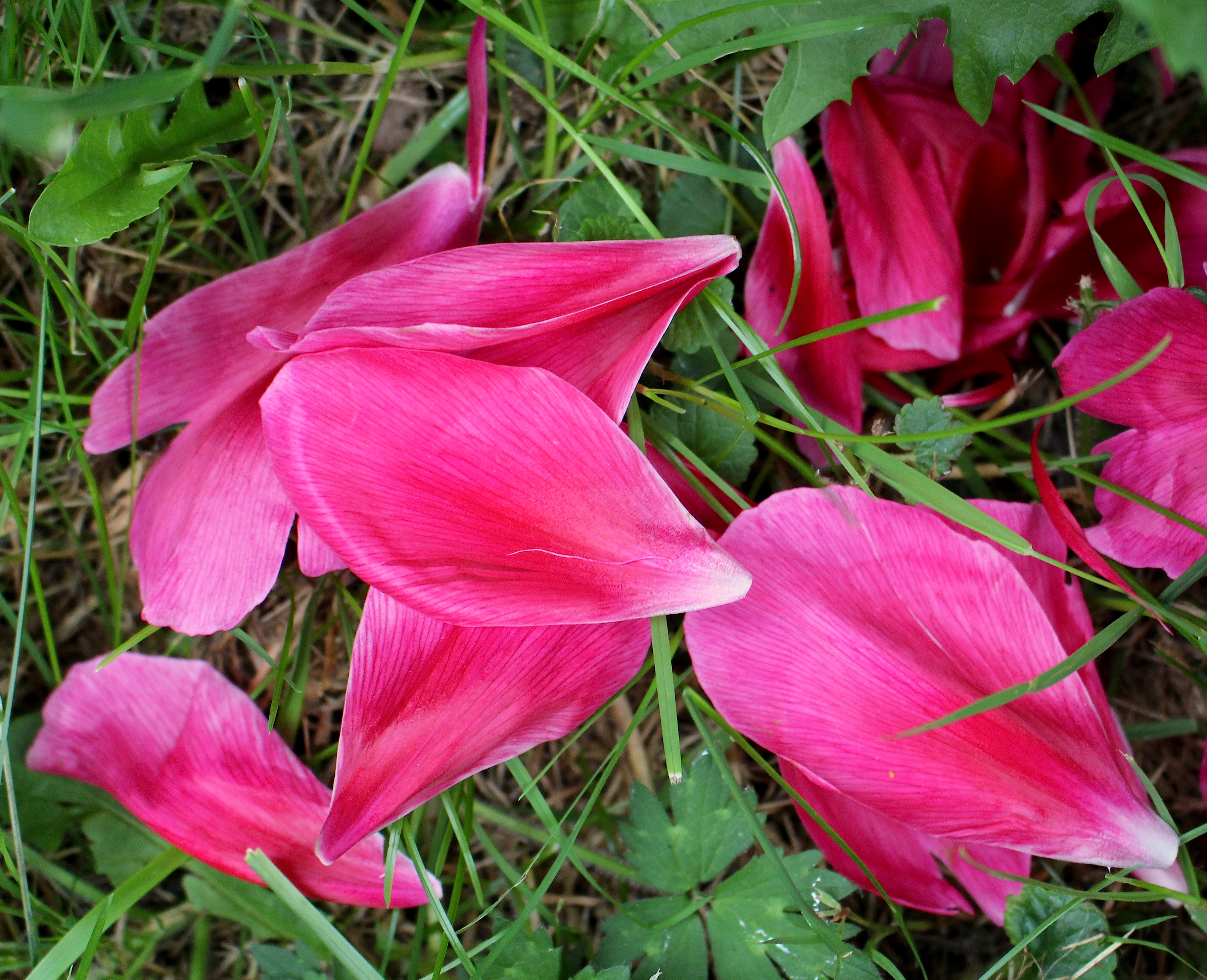
The peonies, too heavy with their beauty, slump to the ground. I had hoped they would live forever but ever so slowly day by day they’re becoming the soil of their birth with a faint tang of deliquescence around them. Next June they’ll somehow remember to come alive again, a little trick we have or have not learned. ~Jim Harrison “Peonies” from In Search of Small Gods
Later this month, I will bring our peonies to the graves of those from whom I came, to lay one after another exuberant floral head upon each headstone, a moment of connection between those in the ground and me standing above, acknowledging its thin space when one more humble and silky life shatters, its petals slowly scatter, lush and trembling, to the wind.
One-Time
Monthly
Yearly
Make a one-time or recurring donation to support daily Barnstorming posts
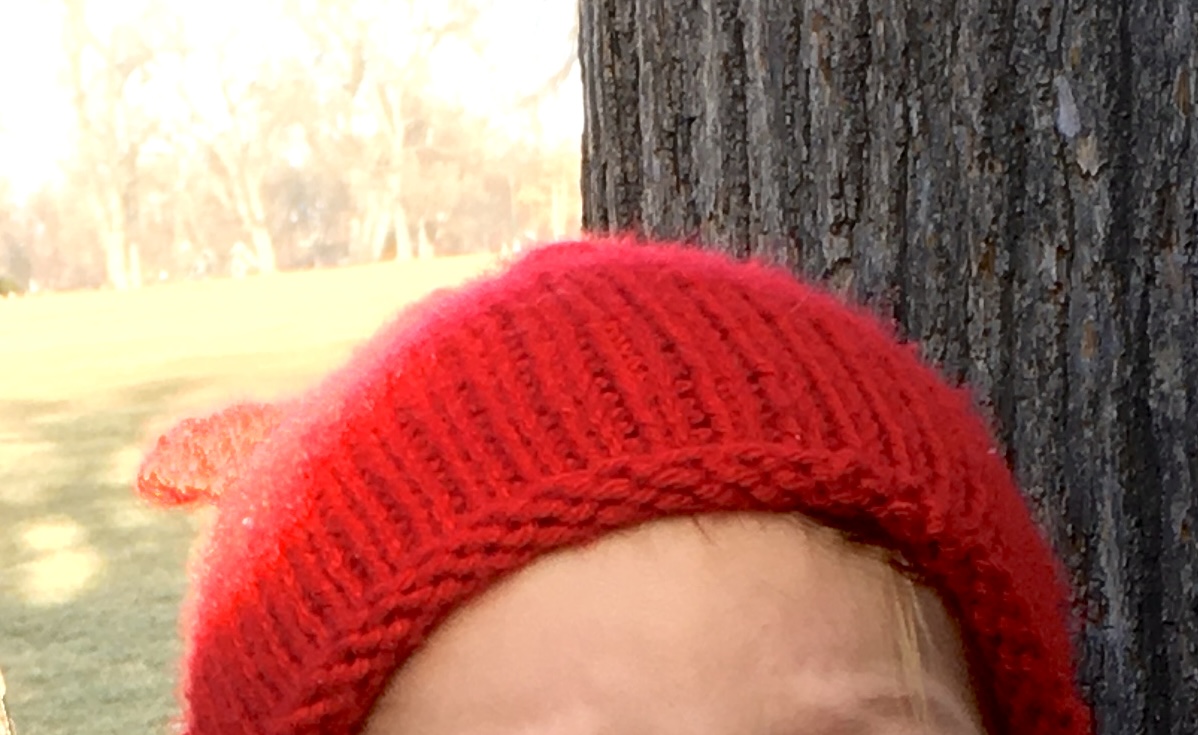
It started before Christmas. Now our son officially walks to school alone. Semi-alone, it’s accurate to say: I or his father track him on his way. He walks up on the east side of West End, we on the west side. Glances can extend (and do) across the street; not eye contact. Already ties are feeling and not fact. Straus Park is where these parallel paths part; he goes alone from there. The watcher’s heart stretches, elastic in its love and fear, toward him as we see him disappear, striding briskly. Where two weeks ago, holding a hand, he’d dawdle, dreamy, slow, he now is hustled forward by the pull of something far more powerful than school.
The mornings we turn back to are no more than forty minutes longer than before, but they feel vastly different–flimsy, strange, wavering in the eddies of this change, empty, unanchored, perilously light since the red hat vanished from our sight. ~Rachel Hadas “The Red Hat”
You can kiss your family and friends good-bye and put miles between you, but at the same time you carry them with you in your heart, your mind, your stomach, because you do not just live in a world but a world lives in you. ~ Frederick Buechner
As a child, I lived just outside of city limits in a semi-rural area, only a half mile from my elementary school on a country road. By first grade, I was allowed to walk to school and home again, then when I was older, with my younger brother in tow. I don’t remember my parents watching me as I made the journey, but I do remember some practice walks on a weekend, to reinforce how to safely cross the roads and where to walk alongside the drainage ditch.
I don’t remember ever being worried about what might happen to me outside of my parents’ presence, and nothing scary ever did happen. I’m sure my parents were worried, but both as children had walked to their rural schools on their own – it simply was how things happened in the 20’s and 30’s.
For children growing up now, it feels different.
Our three children grew up on a farm seven miles from town, so rode a school bus or were taken to school by a parent or grandparent. They didn’t have that early independence that I did. Our grandchildren, especially those living in large cities, are even more protected. It didn’t hamper their desire to explore the world – they have traveled all over.
The difference is the anxiety of the parent, watching that child disappear around a corner on foot, or bike or eventually in a car. It is that empty feeling of letting go before one is ready, but when you know you must.
The heart stretches to encompass one’s child out in the world, out of sight, no longer anchored at home. After all, we are that elastic and that resilient.
One-Time
Monthly
Yearly
Make a one-time or recurring donation to support daily Barnstorming posts
Opening the book at a bright window above a wide pasture after five years I find I am still standing on a stone bridge looking down with my mother at dusk into a river hearing the current as hers in her lifetime
now it comes to me that that was the day she told me of seeing my father alive for the last time and he waved her back from the door as she was leaving took her hand for a while and said nothing
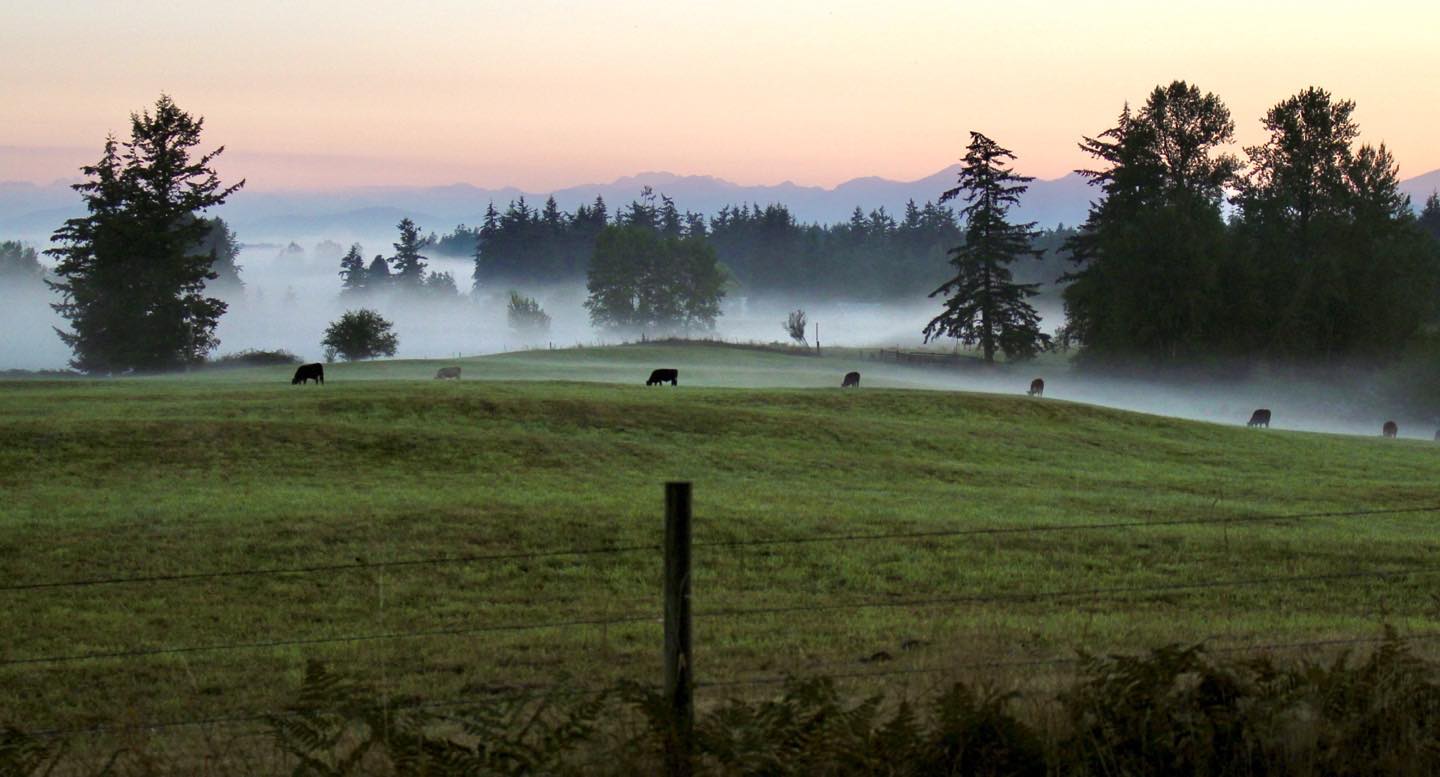
at some signal in a band of sunlight all the black cows flow down the pasture together to turn uphill and stand as the dark rain touches them. ~W.S. Merwin “Sun and Rain” from Flower & Hand.
All day the stars watch from long ago my mother said I am going now when you are alone you will be all right whether or not you know you will know look at the old house in the dawn rain all the flowers are forms of water the sun reminds them through a white cloud touches the patchwork spread on the hill the washed colors of the afterlife that lived there long before you were born see how they wake without a question even though the whole world is burning ~W. S. Merwin “Rain Light”from The Shadow of Sirius
We want so much to leave a legacy for our children that will carry them through their lives, long after we are gone. Then they pass that on to their children, and on and on, like the strands of DNA we leave behind in our descendants.
But words and rituals of faith and covenant can be lost so quickly from one generation to the next. Our DNA passed down is a given, but nothing surpasses the teaching about the eternal love of God and His purpose for His people.
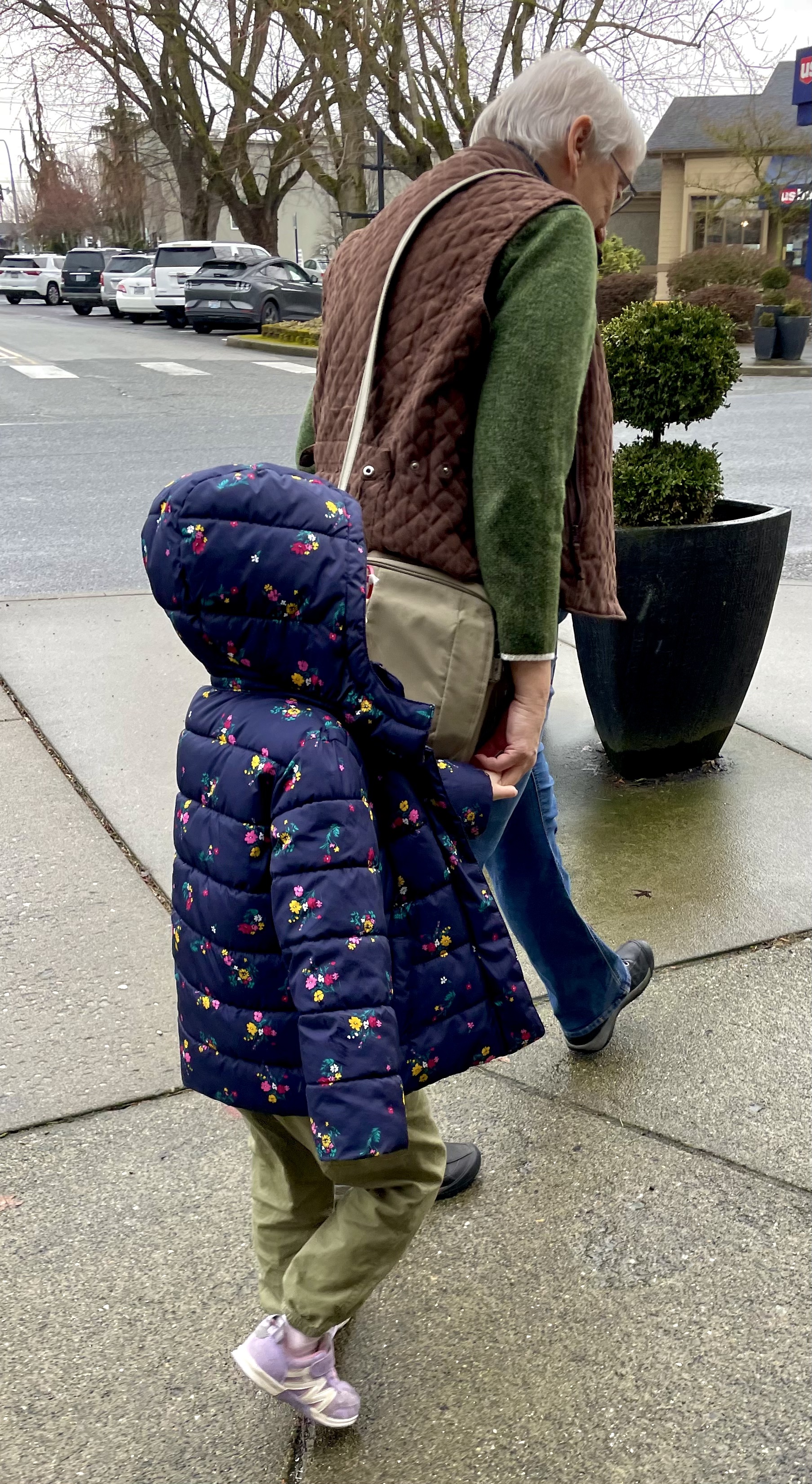
This day, three of our young grandsons are baptized by their church, ushering them into a life in fulfillment of God’s promise within them. As children, they may not yet fully understand how this manifests in their lives, but with the love and guidance of their church, parents, extended family and godparents, they will know His Love as they witness it in His people.
The washing with water from God’s creation, like rain from heaven, gives me hope for the future.
Though the world may be burning, Jesus is right alongside us through it all – I know our children and grandchildren will be all right.



























 Barnstorming