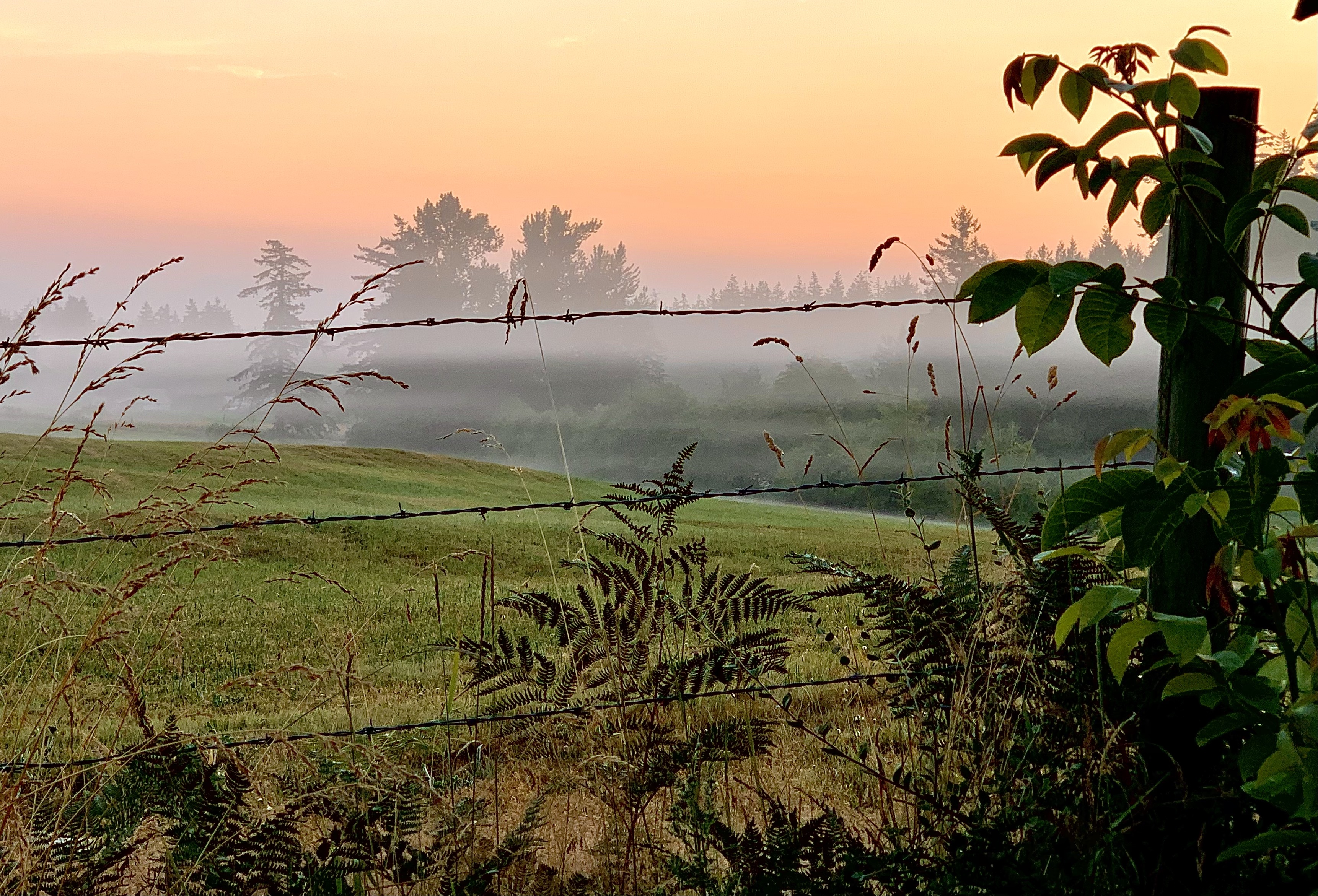
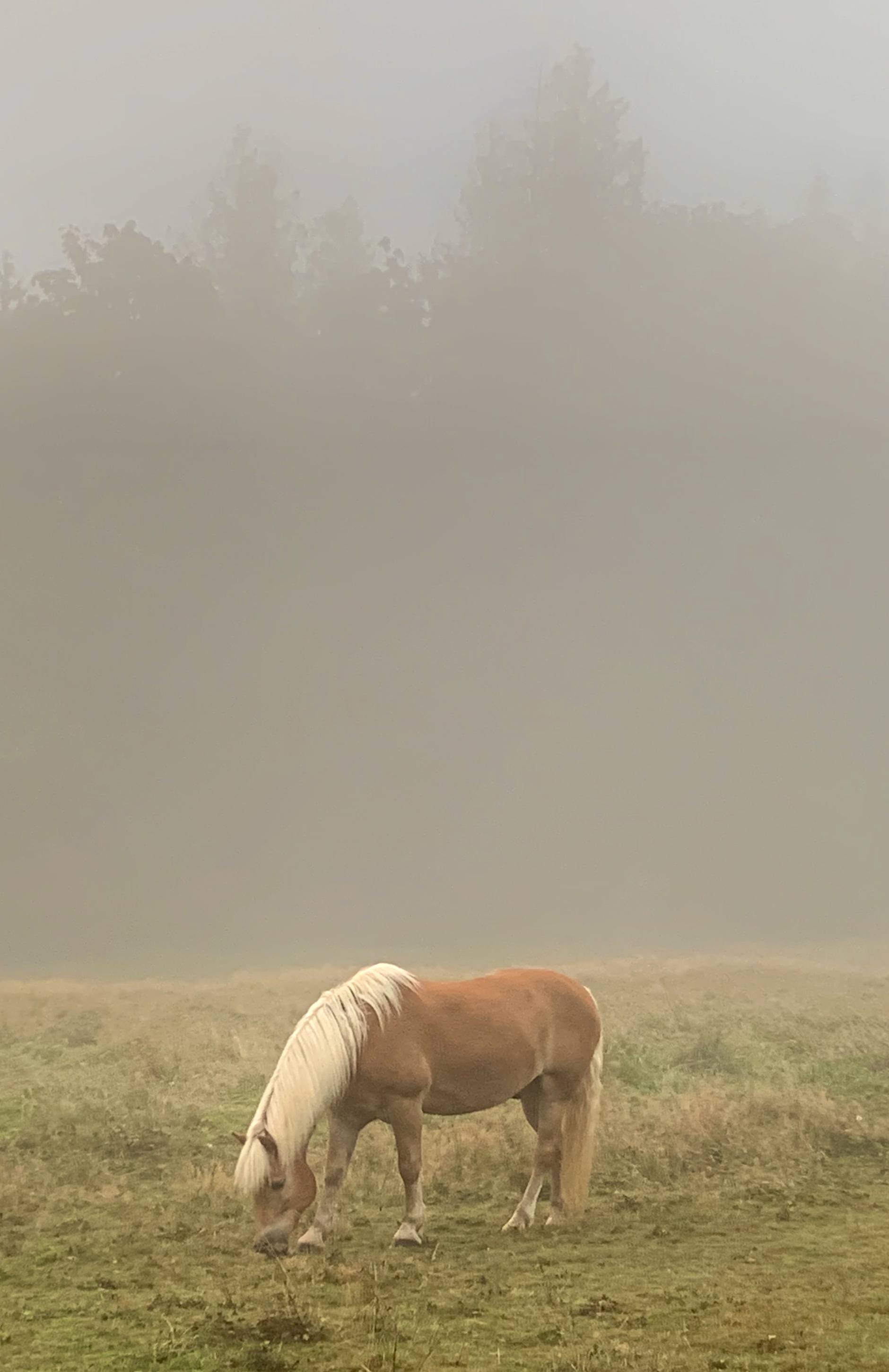
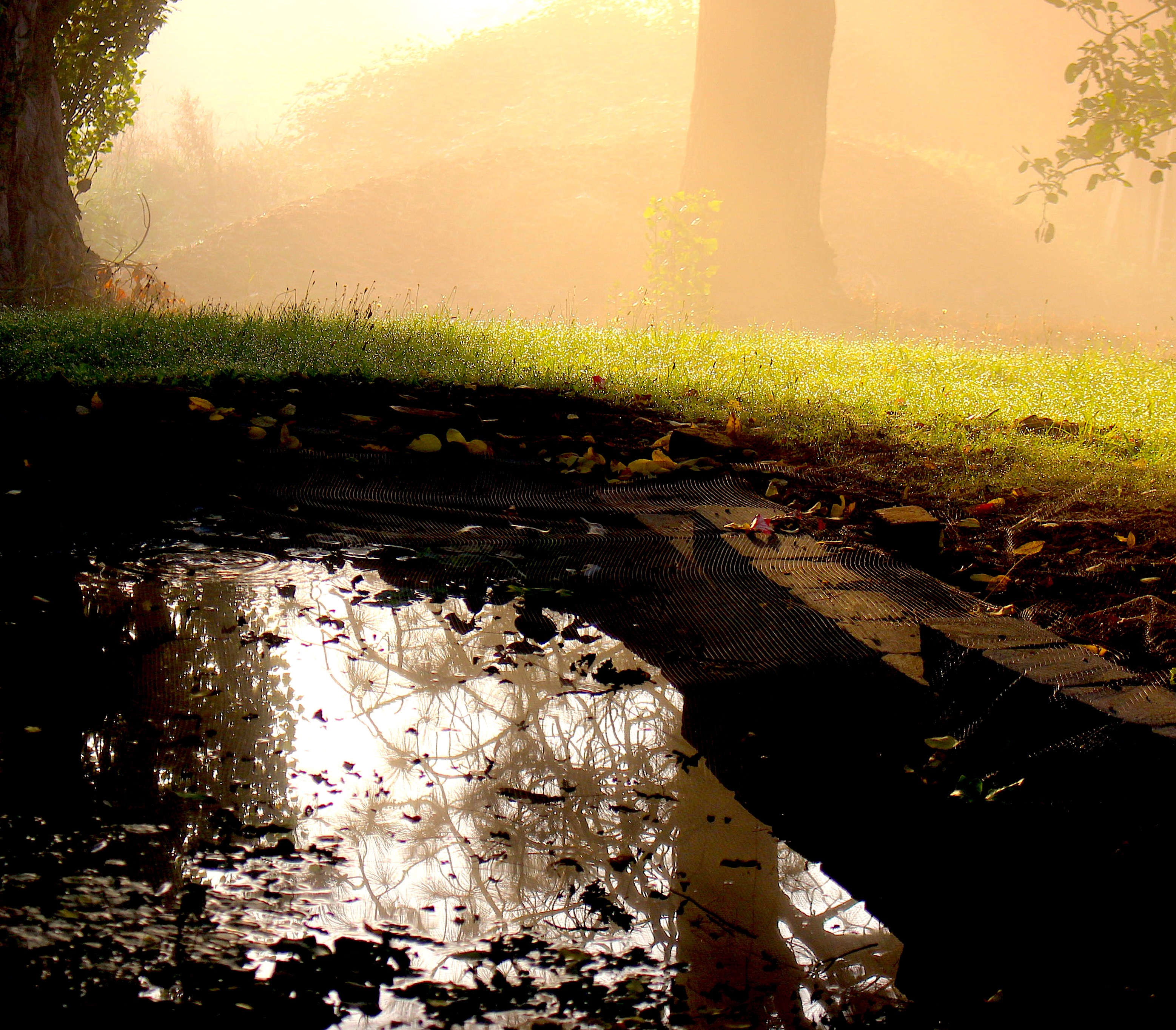
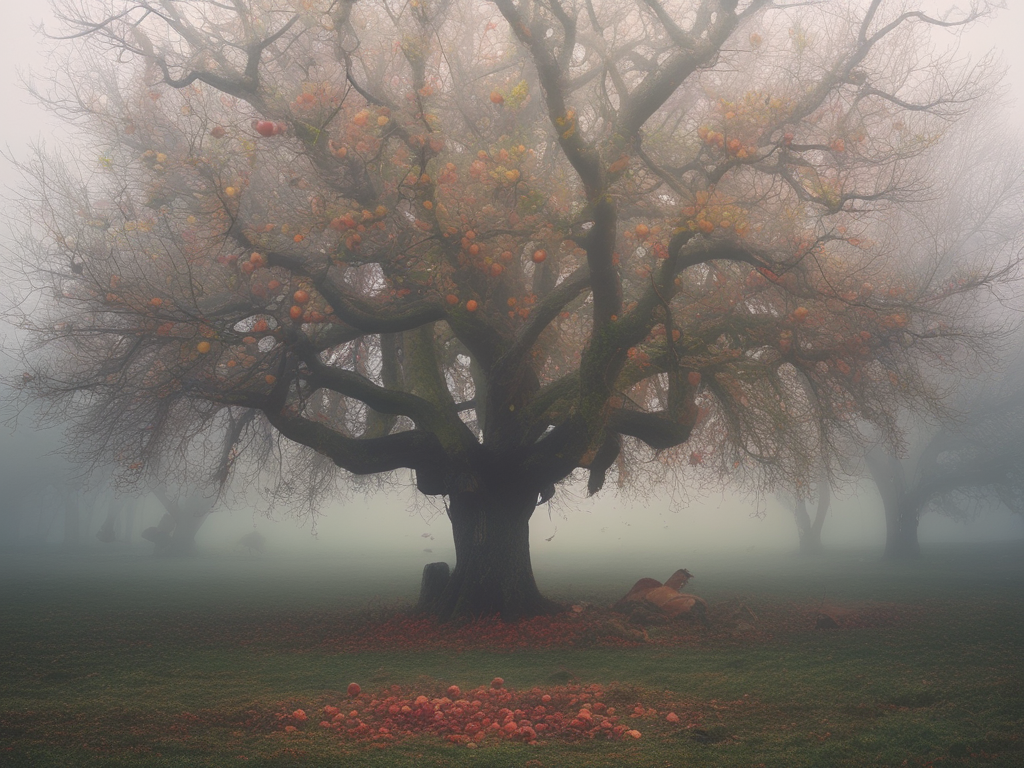
On the second day of fog, she goes to meet it sits on the broad root of a broken down apple tree, remembers being a child in such fog, searching for fairy houses. She hears movement in the grass, keeps very still while the veil of haze rises to treetops bronzed by the burn of the sun. Slowly horses and deer appear all around her, they graze close together, nosing fallen apples, until she forgets this is still a fallen world. ~Lonnie Hull DuPont, “On the Second Day of Fog” from She Calls the Moon by Its Name
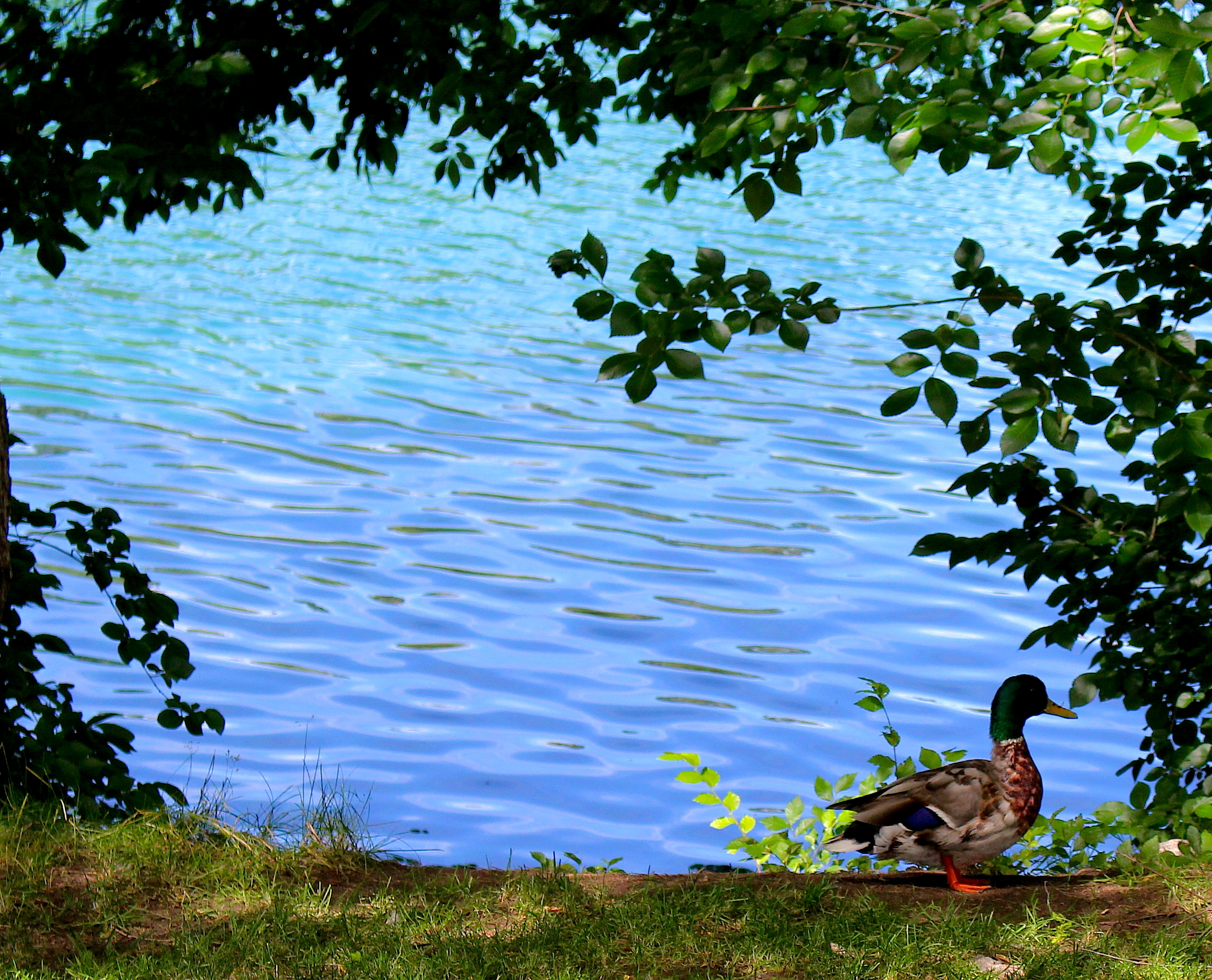
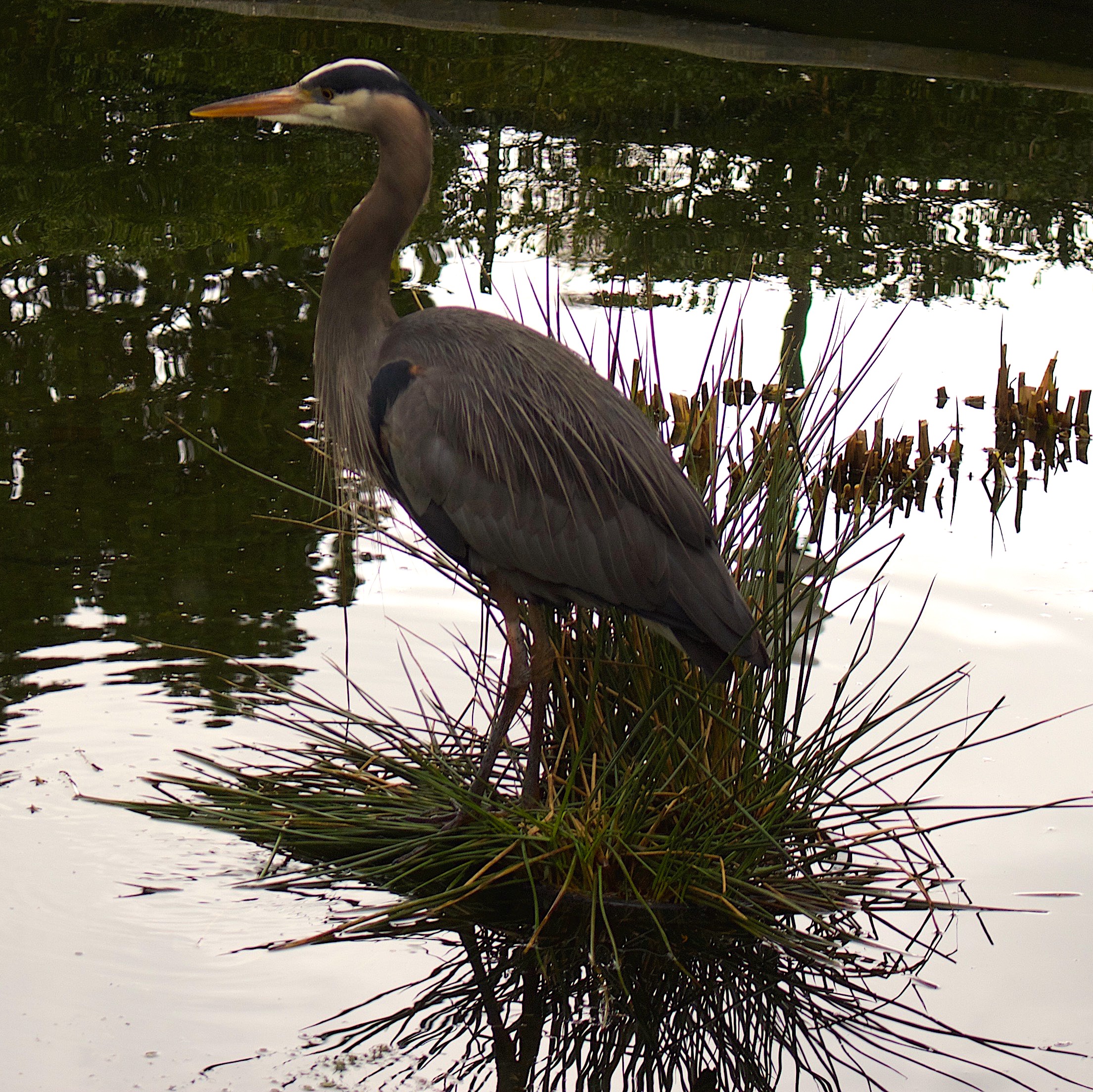
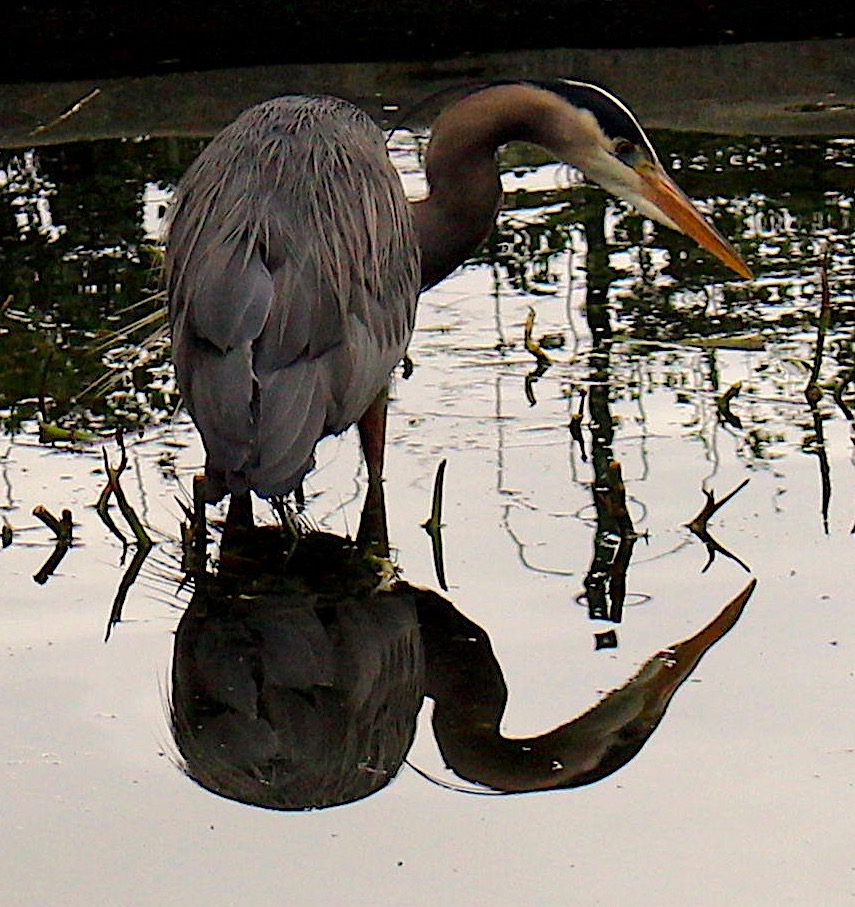
When despair for the world grows in me and I wake in the night at the least sound in fear of what my life and my children’s lives may be, I go and lie down where the wood drake rests in his beauty on the water, and the great heron feeds. I come into the peace of wild things who do not tax their lives with forethought of grief. I come into the presence of still water. And I feel above me the day-blind stars waiting with their light. For a time I rest in the grace of the world, and am free. ~Wendell Berry “The Peace of Wild Things“
When our grandchildren come to visit, I watch as yet another generation rediscovers the mystery of what we know about the joys and sorrows of this fallen but redeemed world.
I am reminded there is light beyond the fearsome darkness, there is peace amid the chaos, there is a smile behind the tears, there is stillness within the noisiness there is rest despite the restlessness, there is grace – ah, there is grace as inevitably the old gives way to the new.
One-Time
Monthly
Yearly
Make a one-time or recurring donation to support daily Barnstorming posts
He took her by the hand and said to her, “Talitha koum!” (which means “Little girl, I say to you, get up!”). Immediately the girl stood up and began to walk around (she was twelve years old). At this they were completely astonished. Mark 5:41-43
Little girl. Old girl. Old boy. Old boys and girls with high blood pressure and arthritis, and young boys and girls with tattoos and body piercing.
You who believe, and you who sometimes believe and sometimes don’t believe much of anything, and you who would give almost anything to believe if only you could.
You happy ones and you who can hardly remember what it was like once to be happy. You who know where you’re going and how to get there and you who much of the time aren’t sure you’re getting anywhere.
“Get up,” he says, all of you – all of you! – and the power that is in him is the power to give life not just to the dead like the child, but to those who are only partly alive, which is to say to people like you and me who much of the time live with our lives closed to the wild beauty and miracle of things, including the wild beauty and miracle of every day we live and even of ourselves. ~Frederick Buechner from Secrets in the Dark
I worried a lot. Will the garden grow, will the rivers flow in the right direction, will the earth turn as it was taught, and if not how shall I correct it?
Was I right, was I wrong, will I be forgiven, can I do better?
Will I ever be able to sing, even the sparrows can do it and I am, well, hopeless.
Is my eyesight fading or am I just imagining it, am I going to get rheumatism, lockjaw, dementia?
Finally I saw that worrying had come to nothing. And I gave it up. And took my old body and went out into the morning, and sang. ~Mary Oliver “I Worried” from Swan: Poems and Prose Poems
Christ said to the dead girl, “Get up.” And she did.
He also tells us to get up, get moving – despite everything that holds us back.
I know there are times when I feel immobilized from tiredness, worry, hopelessness, fear. I hear His reminder: get up and go anyway.
God has given us a world of wild beauty and miraculous things; time to get up and take our place in it.
AI image created for this post
One-Time
Monthly
Yearly
Make a one-time or recurring donation to support daily Barnstorming posts
Ask the questions that have no answers. Invest in the millenium. Plant sequoias. Say that your main crop is the forest that you did not plant, that you will not live to harvest. Practice resurrection. ~Wendell Berry from “Manifesto: The Mad Farmer Liberation Front”
If I have to pick a side, let me side with the bees, with summer blossoms and winter snowdrifts. Let me side with the children I know and the ones I don’t, with the late-shift nurse and his aching back, with the grandmother digging in her garden. Let me side with the earth in all her sighing, the stars in all their singing, with stray dogs and street artists, with orphans and widows. Like Berry, let me say everything was for love of the forest I will never see, the harvest I will never reap. I pledge my allegiance to the world to come. ~Jen Rose Yokel “Choosing Sides”
photo by Danyale Tamminga photo by Nate Lovegren
We are each here in this life for such a short time…
What we leave behind is a shadow of the gifts we received at birth – given the chance, we can renew and rebuild this struggling earth. Listening to the sighs of a world in distress, I try to plant words and living things to last beyond my time here.
Every day we choose sides. Standing alone in our choices, we wonder how we will ever connect to one another.
I want to wrap my arms around anyone who needs a hug right now.
I know I do. Maybe you do too.
Starry Night – Van Gogh
photo by Sara LenssenAI image created for this post
One-Time
Monthly
Yearly
Make a one-time or recurring donation to support daily Barnstorming posts
Some things are very dear to me— Such things as flowers bathed by rain Or patterns traced upon the sea Or crocuses where snow has lain … the iridescence of a gem, The moon’s cool opalescent light, Azaleas and the scent of them, And honeysuckles in the night. And many sounds are also dear— Like winds that sing among the trees Or crickets calling from the weir Or Negroes humming melodies. But dearer far than all surmise Are sudden tear-drops in your eyes. ~Gwendolyn Brooks “Sonnet 2”
We human beings do real harm. History could make a stone weep. ~Marilynne Robinson from Gilead
I am an easy cryer. It takes very little to tip me over the edge: a hymn, a poem, simply witnessing a child’s joy. Suddenly my eyes fill up. I blame this on my paternal grandmother who was in tears much of her time when visiting our family, crying happy, crying sad, crying frustrated and angry tears.
Somehow after her visit, she was always smiling, so I think her weeping was cathartic emptying of her stress.
My greatest trigger to weep myself is watching someone else tear up. I think my grandmother left behind some powerful empathy genes.
I had to desensitize my response to tears to be effective as a physician/healer. Witnessing tears in the exam room is a normal part of the job: patients are anxious, ill, in pain or simply need to decompress in safety. I learned early on to be unobtrusive and not interrupt, letting the flow of tears be part of how the patient was trying to communicate. It was a struggle when my inclination was to cry right along with them. But I needed to be the rock in the room, solid and steady. I could understand their tears as yet another symptom of a clinical presentation, allowing me to observe without being clouded by my own emotional response.
Sometimes that worked. Sometimes not. At times overwhelmed, I wept at births, I wept at deaths, I wept at the sharing of bad news.
Now, liberated from the exam room, I freely weep at the state of the world, or when I read of disaster and tragedy, and especially when I witness intentional harm and meanness in others. I’m no longer a barely responsive stone, but more like an over-filled sponge being squeezed – everything builds up until I can hold it no more. Reading headlines in the news is sometimes more than I can bear.
I cry myself dry.
And that is okay. Once emptied out, I can be filled again by so much that is good and precious in this life.
That is worth weeping over.
AI image created for this post
Detail from “Descent from the Cross” by Rogier van der Weyden
One-Time
Monthly
Yearly
Make a one-time or recurring donation to support daily Barnstorming posts
A poem begins as a lump in the throat, a sense of wrong, a homesickness, a lovesickness. ~Robert Frostin a letter to Louis Untermeyer
What isyour malady?
Asks the form at the community acupuncture clinic. My pen hovers—so many to choose from: the thyroid, the gut, the face. I find myself writing instead:
Homesickness.
I hand in my form. I wonder if the doctor with the needles will laugh at me, but he says instead:
I am homesick too.
And then he puts needles in my ears and my ankles and I fall asleep. Around me, strangers sleep needled dreams, under warm blankets.
And I think: at home in the world. The endless desire to be at home in the world. ~Sarah Ruhl “On Homesickness”
Spending time away from home has always been difficult for me. I was hopelessly homesick as a child whenever I stayed overnight with a friend or even with my grandma. Going to college two states away was a complete ordeal – it took me much longer than typical to let go of home and finally settle into a new life away from all that was familiar. I really did feel sick clinging too tightly to home base, unwilling to launch, barely able to wave good-bye.
Even now, as I travel away from the farm for a week for this or that, I sometimes get the lump-in-the-throat feeling that I remember keenly from my childhood years — knowing I am out of my element, stretching my comfort zone, not feeling at home away from home.
Will I ever grow out of this now that I’m nearly seventy or will it only get worse? Will I ever embrace a lovesickness for the rest of the world?
I keep trying – but the return trip is still the sweetest remedy for this sickness.
There’s no place like home…
One-Time
Monthly
Yearly
Make a one-time or recurring donation to support daily Barnstorming posts
I pray because I can’t help myself. I pray because I’m helpless. I pray because the need flows out of me all the time — waking and sleeping. It doesn’t change God — it changes me. ~attributed to C.S. Lewis in “Shadowlands”
A recovering Faye with her sister Merry
Last week, on May 1, I found a surprise hanging on our front door – a little May Day basket full of little perennial blooms, along with a cheery message and a rainbow sticker. It hung from the door handle as a symbol of spring renewal, as well as a bit of a mystery – the flowers came with no hint of who had left them.
So I did a little sleuthing (actually A LOT of sleuthing) and found out they were delivered by our nearby neighbor Faye, who turned 11 just last week. She has a very special history some of you may remember:
Nine years ago, on this Barnstorming blog, I wrote about our little neighbor, two year old Faye, sickened by E.Coli 0157 infection/toxin to the point of becoming critically ill with Hemolytic Uremic Syndrome (plummeting cell counts and renal failure requiring dialysis to keep her alive). My original post about her illness is found here. I asked for your prayers on her (and others’) behalf.
At the worst point of her hospitalization at Seattle Children’s, when the doctors were sounding very worried on her behalf, Faye’s mother Danyale, in the midst of her helplessness, wrote to our Wiser Lake Chapel Pastor Bert Hitchcock with a plea for prayers from our church.
Here is how Pastor Bert responded to Danyale and her husband Jesse who remained at home, caring for their four other children:
“I understand that Faye (and everyone dealing with her) is fighting for her life. And that’s the way I am praying: that God in his merciful power, would deliver her, even if her condition looks hopeless.
If you were able to be in church this morning, you might hear my sense of urgency, for I have chosen this benediction, with which to close the service — and I give it to you right now, from the mouth of our Lord:
Jesus said: “Do not be afraid, Danyale! I am the First and the Last. I am the Living One. I died, but look – I am alive forever and ever! And I hold the keys of death and the grave.
Neither you nor I know how this will turn out — the possibilities are terrifying. But we do know who holds the keys of life and health and death; He is the Life-giver, who heals all our diseases — nothing can rip our lives (or little Faye’s life) out of His hands. And, when He does allow these bodies to give out, He promises to give us glorious new life, safe forever in His presence. These are not pious platitudes; these are the rock-hard promises of the one who loves us more than life, and who is absolutely in control of what is happening today.
Safe in the arms of Jesus, Safe on His gentle breast; There by His love o’ershaded, Sweetly my soul shall rest.
I’m praying for you all; and your Chapel Family will be praying this morning, as we gather in the Lord’s presence.
Love you, and yours, Danyale, Pastor Bert Hitchcock
That week, Faye’s renal failure reversed itself. She was able to return home with normal kidney function and improved cell counts, having also survived a bout with pneumonia.
Here is what her mother wrote to share with you all once she came home:
“Dear Friends and readers of Barnstorming,
Some of you we know, but so many of you we do not. Whichever the case, Emily tells me you have prayed for our little girl, Faye, throughout her sickness and into her recovery. What can parents say when people–many of whom we may never be privileged to meet in this life–have come alongside us to beseech the Lord for our daughter’s life and pray for her healing? Thank you. Thank you!
Faye is doing so well; stronger every day, more and more herself! It is wonderful to see.
This week we head back down to Seattle Children’s for a check up–we’ll get to say hello to the good folks who saw her through her sickness. A special stop will be made on the dialysis unit to see Nurse Kathy, a favorite of Faye’s. We anticipate a good report!
Thanks again for your love and support, far and wide. Truly astounding. Danyale and Jesse, for Faye, too
—————————————
Now Faye is a delightful, healthy eleven year old girl who secretly blessed me with a basket of May Day flowers. She doesn’t remember the crisis that nearly took her from us nine years ago, but she does know about God’s rainbow promises. And she certainly knows about the power of prayer in the face of helplessness.
As Pastor Bert said: our faith in an unchanging and steadfast God who loves and holds us, can change us – forever.
It started before Christmas. Now our son officially walks to school alone. Semi-alone, it’s accurate to say: I or his father track him on his way. He walks up on the east side of West End, we on the west side. Glances can extend (and do) across the street; not eye contact. Already ties are feeling and not fact. Straus Park is where these parallel paths part; he goes alone from there. The watcher’s heart stretches, elastic in its love and fear, toward him as we see him disappear, striding briskly. Where two weeks ago, holding a hand, he’d dawdle, dreamy, slow, he now is hustled forward by the pull of something far more powerful than school.
The mornings we turn back to are no more than forty minutes longer than before, but they feel vastly different–flimsy, strange, wavering in the eddies of this change, empty, unanchored, perilously light since the red hat vanished from our sight. ~Rachel Hadas “The Red Hat”
You can kiss your family and friends good-bye and put miles between you, but at the same time you carry them with you in your heart, your mind, your stomach, because you do not just live in a world but a world lives in you. ~ Frederick Buechner
As a child, I lived just outside of city limits in a semi-rural area, only a half mile from my elementary school on a country road. By first grade, I was allowed to walk to school and home again, then when I was older, with my younger brother in tow. I don’t remember my parents watching me as I made the journey, but I do remember some practice walks on a weekend, to reinforce how to safely cross the roads and where to walk alongside the drainage ditch.
I don’t remember ever being worried about what might happen to me outside of my parents’ presence, and nothing scary ever did happen. I’m sure my parents were worried, but both as children had walked to their rural schools on their own – it simply was how things happened in the 20’s and 30’s.
For children growing up now, it feels different.
Our three children grew up on a farm seven miles from town, so rode a school bus or were taken to school by a parent or grandparent. They didn’t have that early independence that I did. Our grandchildren, especially those living in large cities, are even more protected. It didn’t hamper their desire to explore the world – they have traveled all over.
The difference is the anxiety of the parent, watching that child disappear around a corner on foot, or bike or eventually in a car. It is that empty feeling of letting go before one is ready, but when you know you must.
The heart stretches to encompass one’s child out in the world, out of sight, no longer anchored at home. After all, we are that elastic and that resilient.
One-Time
Monthly
Yearly
Make a one-time or recurring donation to support daily Barnstorming posts
What words or harder gift does the light require of me carving from the dark this difficult tree?
What place or farther peace do I almost see emerging from the night and heart of me?
The sky whitens, goes on and on. Fields wrinkle into rows of cotton, go on and on. Night like a fling of crows disperses and is gone.
What song, what home, what calm or one clarity can I not quite come to, never quite see: this field, this sky, this tree. ~Christian Wiman, “Hard Night”
Some days, although we cannot pray, a prayer utters itself. So, a woman will lift her head from the sieve of her hands and stare at the minims sung by a tree, a sudden gift.
Some nights, although we are faithless, the truth enters our hearts, that small familiar pain; then a man will stand stock-still, hearing his youth in the distant Latin chanting of a train.
Pray for us now. Grade 1 piano scales console the lodger looking out across a Midlands town. Then dusk, and someone calls a child’s name as though they named their loss.
Darkness outside. Inside, the radio’s prayer — Rockall. Malin. Dogger. Finisterre. ~Carol Ann Duffy “Prayer”
photo by Bob Tjoelker
As a child falling asleep, I prayed to God with moans and groans echoing in my ears.
Growing up on a small farm located about two miles from a bay in Puget Sound, I found myself praying for safety on foggy nights as fog horns moaned in the distance. Scattered throughout the inlet, the horns called out mournful groans of warning to passing freighter ships. The resonant lowing of the horns carried miles over the surrounding landscape due to countless water particles in the fog transmitting sound waves so effectively. The louder the foghorn moan heard on our farm, the thicker and more hazardous the mist in the air. Those horns would make me unspeakably sad for reasons I could only articulate to God. Thus I prayed for the ships, and I prayed for my own shaky navigation through life.
Navigating blind in a fog necessitates taking unpredictable risks. The future can seem a murky mess. I cannot see what lies ahead: I navigate by my wits, by my best guess, but particularly by listening for the low-throated warnings coming from the rocky shores and shallows of those who have gone ahead of me.
I am easily lost in the fog of my fears – disconnected, afloat and circling aimlessly, searching for a touch point of purpose and direction. The isolation I sometimes feel may simply be my own self-absorbed state of mind, sucking me in deep until I’m soaked, dripping and shivering from the smothering gray. If only I trust the fog horn warnings and reassurances from the Word of God, I could charge into the future undaunted.
He is in the pea soup alongside me, awaiting the Sun’s dissipation of the fog. Now I know, nearly seventy years into this voyage, the fog eventually clears. The journey continues on beyond these shores.
Even so, I will keep praying with the resonant voices of wisdom and caution from shore, like the nightly tradition of the BBC radio shipping forecasts that calm so many to sleep to this day. Even a Finisterre (the end of the land) prayer holds us in safety as we find our way home.
Instead of echoing the anxious moans and groans of my childhood prayers, may my voice be heard singing an anthem of hope and promise.
One-Time
Monthly
Yearly
Make a one-time or recurring donation to support daily Barnstorming posts
Tell us of a bypassed heart beating in 12C, how the woman holds a stranger’s hand to the battery sewn in beneath her collarbone, and says feel this. Tell us of the man’s ear listening across the aisle, hugging itself, a fist long since blistered by blaze. Outside, morning sun buckling up. Inside, twitching bonesacks of bat, birdsong erupting as light cracks the far jungle canopy. Ten thousand feet below ours, a grey cat tongues the morning’s butter left out to soft. Last night we broke open the sweet folds around two paper fortunes. One said variety. One said caution. The woman in 12C would hold that her heart needs its hidden spark, but the man shows how some live the rest of their lives with half a face remembering its before expression. Who was it that said our souls know one another by smell, like horses? ~Jenny Browne “Love Letter to a Stranger”
I spent part of last weekend in airports and airplanes among strangers. As an introvert who prefers to read and stay securely in my shell, I don’t often initiate conversation with the people next to me other than the necessary “excuse me” or “thanks” when appropriate. It is always a wonder to me when seat partners across from me or in front of me will find out all about each other’s lives, destinations and feelings about the state of the world. I wrote about this recently, sharing one of Billy Collins’ poems.
I am far more private and cautious – (ironic words to be written by a blogger of 14 years with over 20,000 followers). Even so, I’m struck by the affinity I feel for my fellow passengers as we embark on a trip by air – so different from each of us independently traveling down a highway in our individual vehicles. In an airplane, our fates are lashed together. What happens to one will happen to all.
Because we are bound together – sometimes randomly, sometimes not – I do believe that we might find kindred and sympathetic souls in a mysterious way when we are thrust among strangers. We are created for connection, whether by smell or sight or spirit.
And perhaps, scrolling through the internet, you have run across Barnstorming not expecting a connection to happen.
One never knows how we may become bound together.
One-Time
Monthly
Yearly
Make a one-time or recurring donation to support daily Barnstorming posts
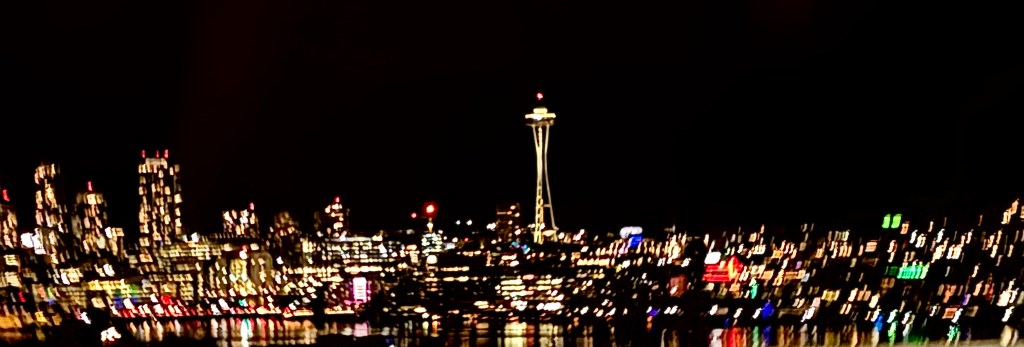
Tonight his airplane comes in from the West, and he rises from his seat, a suitcoat slung over his arm. The flight attendant smiles and says, “Have a nice visit,” and he nods as if he has done this all before, as if his entire life hasn’t been 170 acres of corn and oats, as if a plow isn’t dragging behind him through the sand and clay, as if his head isn’t nestling in the warm flank of a Holstein cow.
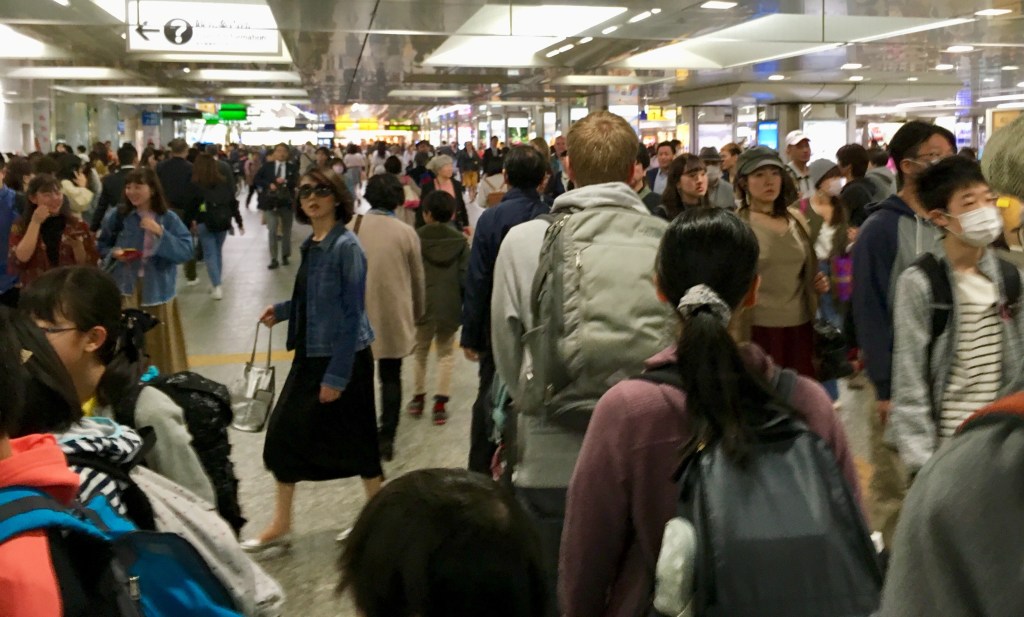
Only his hands tell the truth: fingers thick as ropes, nails flat and broken in the trough of endless chores. He steps into the city warily, breathing metal and exhaust, bewildered by the stampede of humanity circling around him. I want to ask him something familiar, something about tractors and wagons, but he is taken by the neon night, crossing carefully against the light. ~Joyce Sutphen “My Father Comes to the City” from Straight Out of View.
Photo by Abby Mobley
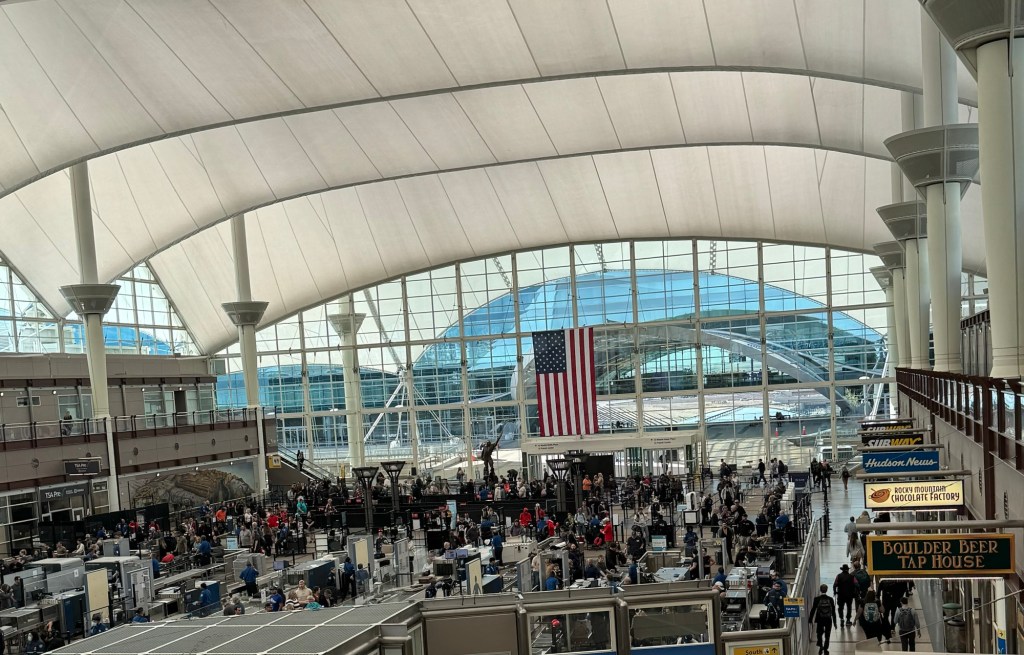
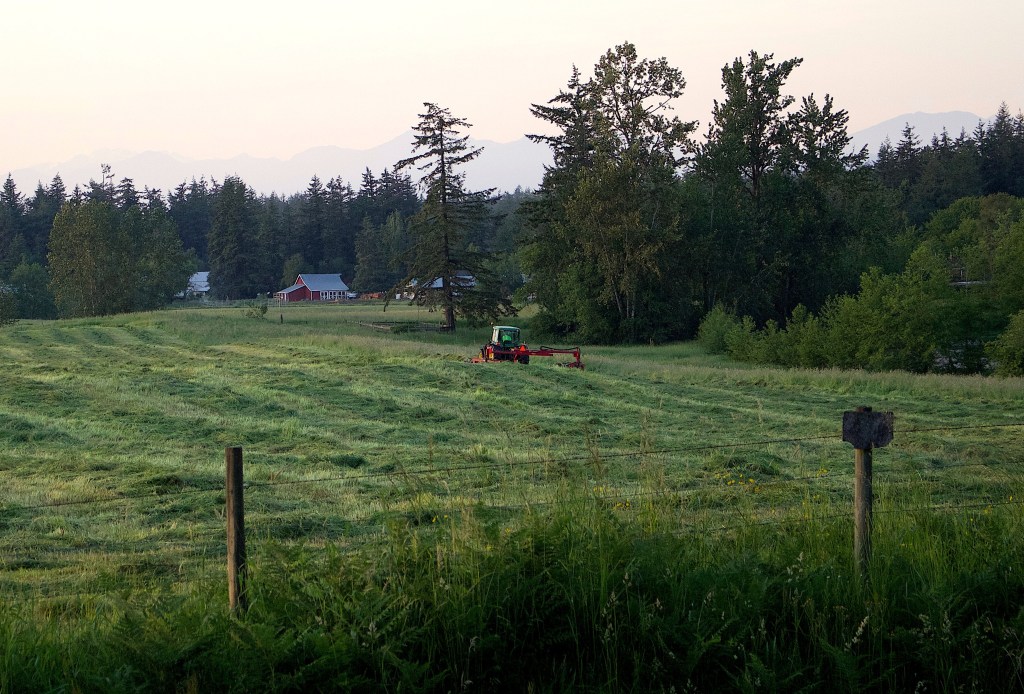
I’ve lived a mostly quiet farm life over the last four years – minimized air travel and avoided big cities, as I was never fond of either even before COVID. Flying recently to visit family reminded me how challenging it is for me to get used to large crowds again, navigating unfamiliar urban highways and sitting with a hundred people in a winged metal tube 35,000 feet in the air.
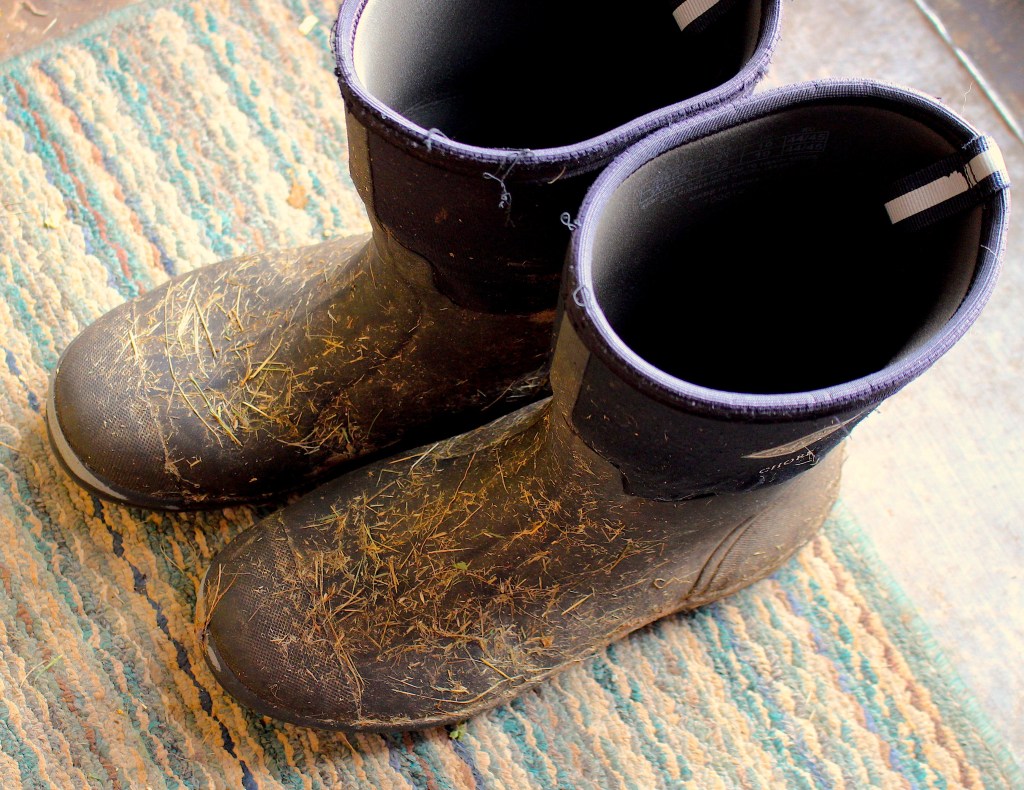
But even farmers have to leave home once in a while. We shake the mud off our boots and brush the hayseeds from our hair, and try to act and be presentable in civilized society.
But my nervousness remains, knowing I’m out of my comfort zone, continually yearning for the wide open spaces of home.
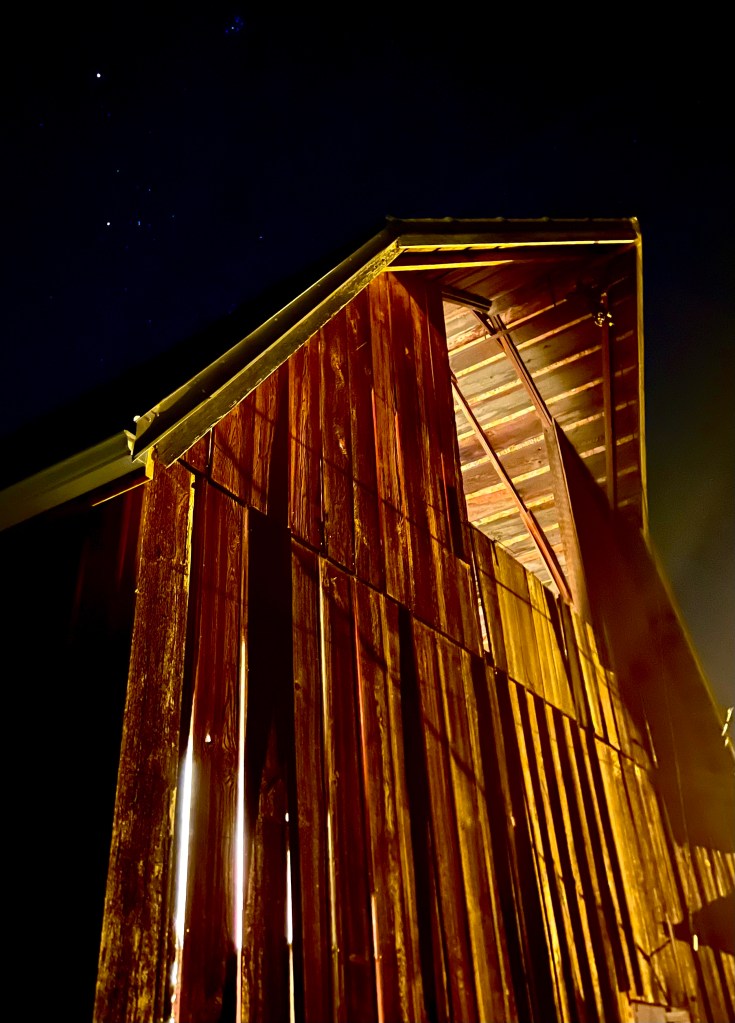
Travel will take some getting used to again, but there is a world to be explored out there. It’s time to see how the city’s neon night compares with one illuminating barn light on the farm.
























 Barnstorming