All We Know of God

It hovers in dark corners 
before the lights are turned on,   
it shakes sleep from its eyes   
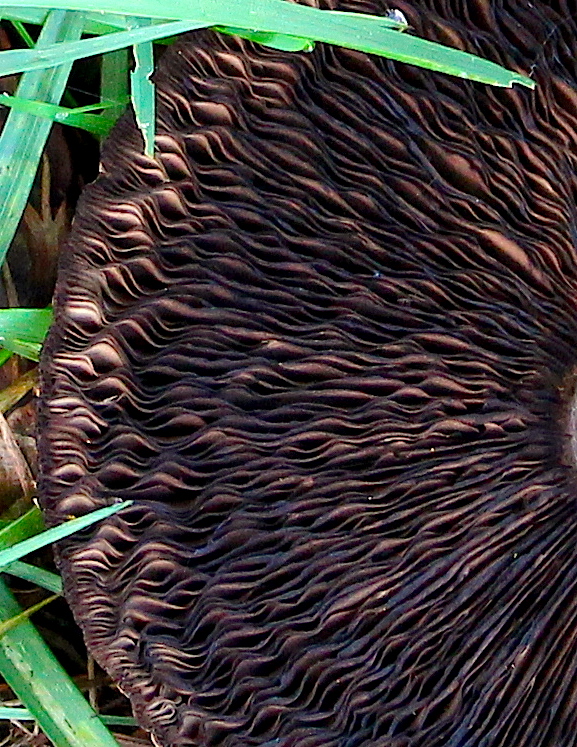
and drops from mushroom gills,   
it explodes in the starry heads   
of dandelions turned sages,   
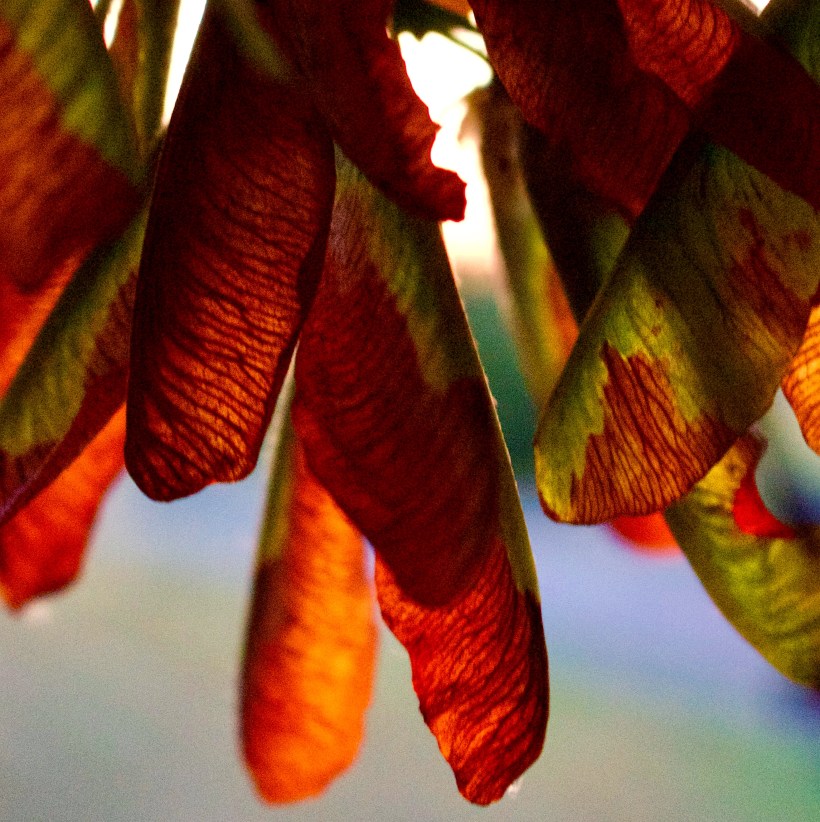
it sticks to the wings of green angels   
that sail from the tops of maples.     
It sprouts in each occluded eye   
of the many-eyed potato,   
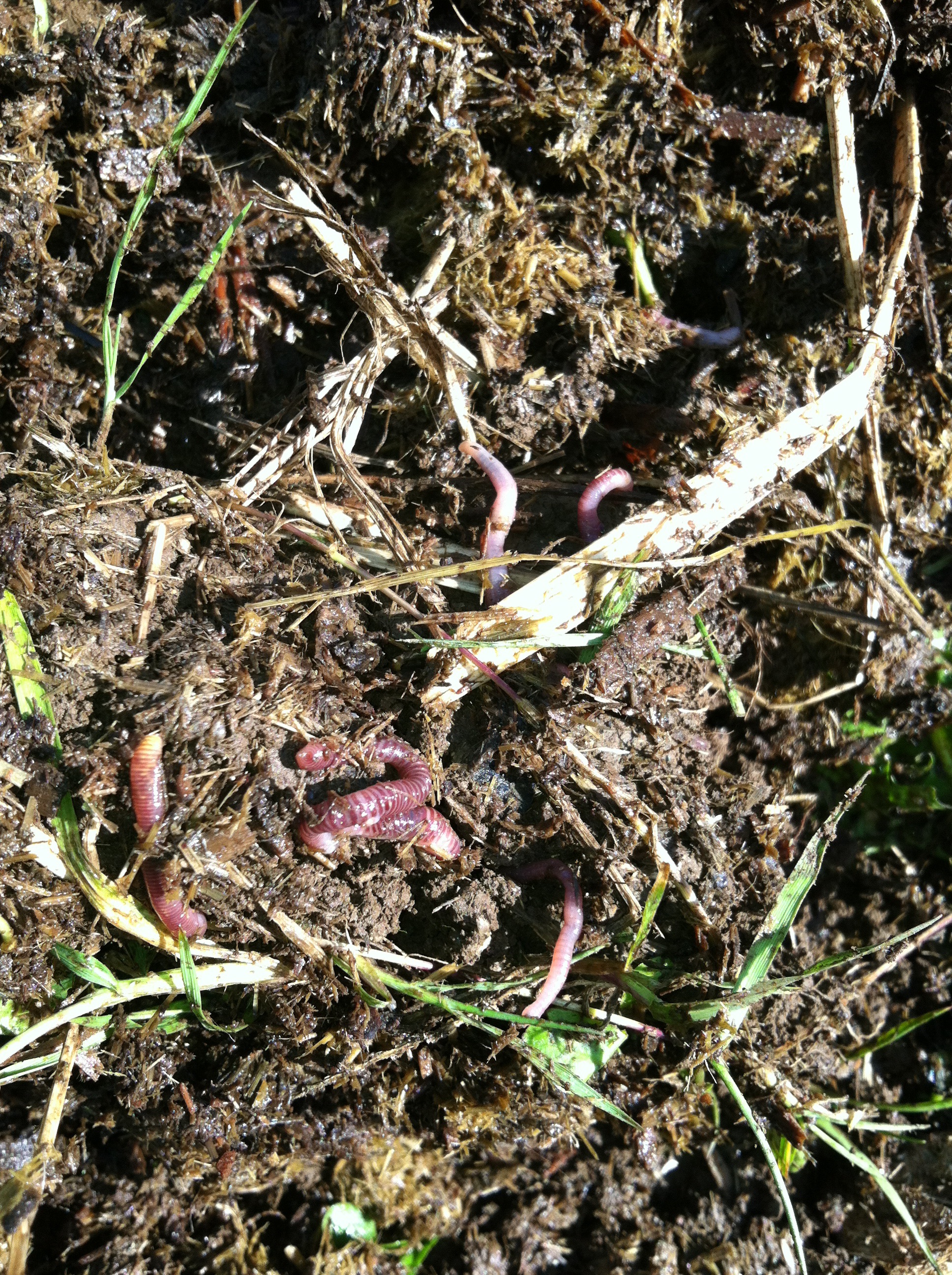
it lives in each earthworm segment   
surviving cruelty,   
it is the motion that runs the tail of a dog,   
it is the mouth that inflates the lungs   
of the child that has just been born.     
It is the singular gift   
we cannot destroy in ourselves,   
the argument that refutes death,   
the genius that invents the future,   
all we know of God.     
It is the serum which makes us swear   
not to betray one another;   
it is in this poem, trying to speak
~ Lisel Mueller “Hope” from Alive Together

As long as there is one upright man, as long as there is one compassionate woman, the contagion may spread and the scene is not desolate. Hope is the thing that is left to us, in a bad time. I shall get up Sunday morning and wind the clock, as a contribution to order and steadfastness.

Sailors have an expression about the weather: they say, the weather is a great bluffer. I guess the same is true of our human society — things can look dark, then a break shows in the clouds, and all is changed, sometimes rather suddenly. It is quite obvious that the human race has made a queer mess of life on this planet. But as a people we probably harbor seeds of goodness that have lain for a long time waiting to sprout when the conditions are right. Man’s curiosity, his relentlessness, his inventiveness, his ingenuity have led him into deep trouble. We can only hope that these same traits will enable him to claw his way out.

Hang on to your hat. Hang on to your hope. And wind the clock, for tomorrow is another day.

Sincerely,
E. B. White ~from Letters of Note: Correspondence Deserving of a Wider Audience 

We can’t claw our way out of
the mess we’ve made of things;
it takes Someone
to dig us out of the hole,
brush us off,
clean us up,
and breathe fresh breath into our nostrils.
We can only hope
hope will be more contagious
than any pandemic virus.
We can only hope
and grab hold and put down roots
when His hand reaches down
to plant us firmly the dirt.
The Back Pew

There’s coffee and pie
with a widow from the church.
Why do you sit
in the back pew? she asks.
I’m close enough, I say.
Can I sit back there with you?
I’ve always sat there, I tell her,
with my same two friends,
and their clicking oxygen pumps.
One sat next to me for years,
called herself my church girlfriend,
who metastasized, telling me she was
tired of waiting to die.
Now, there’s just my 88-year-old friend,
his pump echoing in the sanctuary,
and there’s that empty
space between us.
I’d like to invite the widow to sit there,
but I miss my dead friend’s laugh,
her loving stories about her husband,
and how we were always
glad to see one another.
I tell the widow all this.
What if I just sat there? she asks.
It’s a free country, I tell her,
and she smiles.
~Bruce Pemberton “Autumn 2017” from Third Wednesday, (Vol. XI, no. 2, 2018)

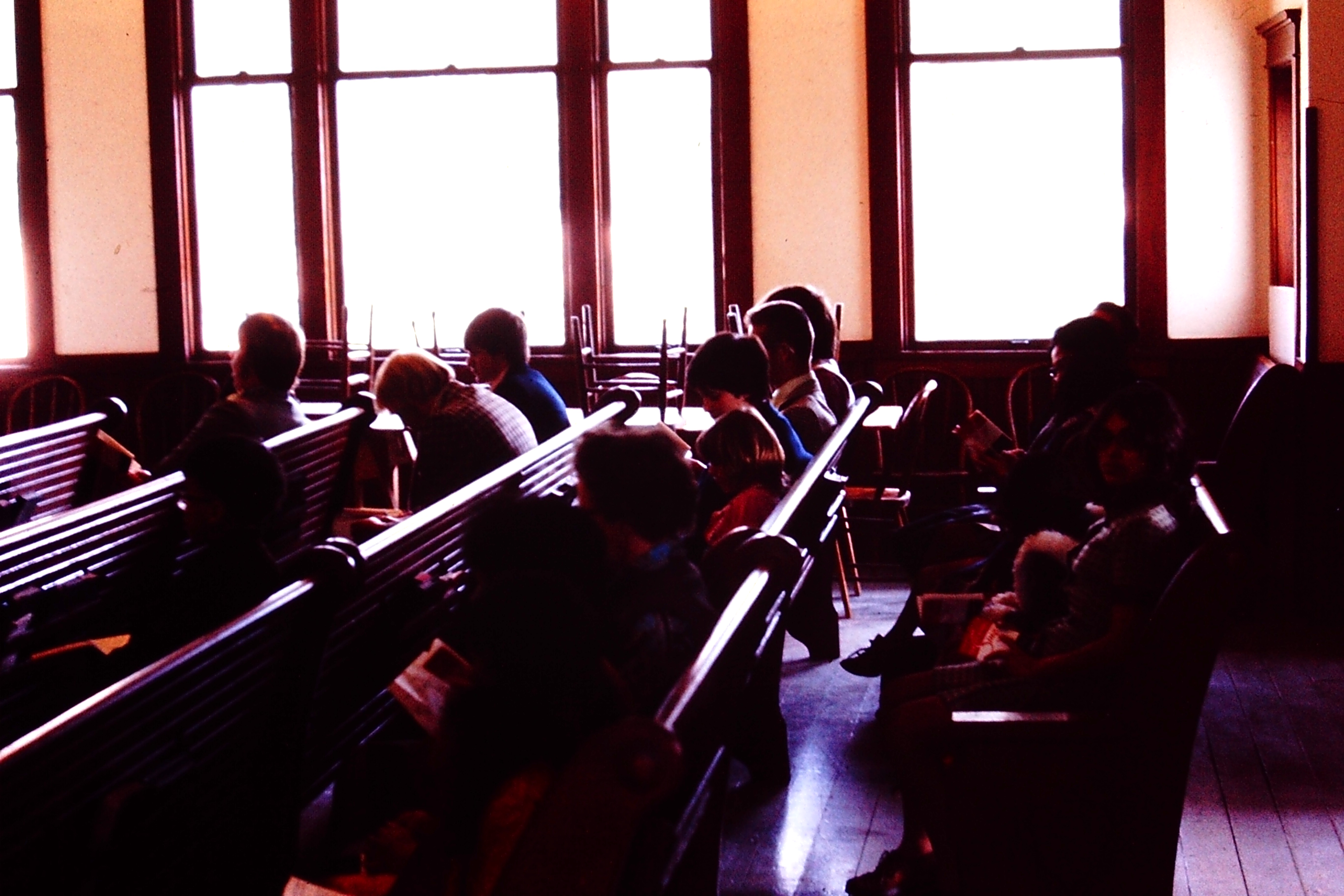
We used to occupy the back pew with our young family, figuring a wiggly child would be less disruptive if we stayed in the back. Our children would sing loud, draw pictures on index cards, take notes on the sermon and sometimes fall asleep under the bench. As they got older, we slowly made our way to the middle benches, and even sat in the very front when we walked into church late.

Sometimes we go sit in the back again for old times sake and find the most interesting group holding down those pews.

There is a fellow over ninety years old who still drives himself to church and he prefers the back because he can see everyone else who is in church without having to turn around. He decided the back was the place to be after seeing a 16 year old girl who always sat in the back pew bring her baby daughter to church for the first time, and how she was the center of a swarm of church ladies who came to oooh and aaah over the baby at the conclusion of the worship service. He told me he knew there was special grace and acceptance in that back bench.

It’s a loving and safe place to be. Everyone should try it sometime.

photo by Barb Hoelle

The Sun at Noon

He brought light out of darkness,
not out of a lesser light,
and he can bring thee summer out of winter,
though thou hast no spring.
Though in the ways of fortune, understanding, or conscience
thou hast been benighted till now,
wintered and frozen,
clouded and eclipsed,
damped and benumbed,
smothered and stupefied,
now God comes to thee,
not as the dawning of the day,
not as the bud of the spring,
but as the sun at noon.
~John Donne from John Donne: The Major Works

I get caught by autumn advancing too fast to winter,
damped and benumbed,
smothered and stupified
stuck in place, frozen to the spot.
Only God can come,
like a winter sun dim at noon,
almost invisible, but there,
reminding us of His promises,
dressing us in His beauty,
drying our wings,
wringing the darkness
to free the reluctant light.

Through a Broken Heart

Why shouldn’t we go through heartbreaks?
Through those doorways God is opening up ways of fellowship with His Son. Most of us fall and collapse at the first grip of pain; we sit down on the threshold of God’s purpose and die away of self-pity…

But God will not.
He comes with the grip of the pierced hand of His Son and says,
“Enter into fellowship with Me, arise and shine.” If through a broken heart God can bring His purposes to pass in the world,
then thank Him for breaking your heart.
~Oswald Chambers from “Ye are not your own” from My Utmost for the Highest

The great mystery of God’s love is that we are not asked to live as if we are not hurting, as if we are not broken. In fact, we are invited to recognize our brokenness as a brokenness in which we can come in touch with the unique way that God loves us. The great invitation is to live your brokenness under the blessing. I cannot take people’s brokenness away and people cannot take my brokenness away.  But how do you live in your brokenness? Do you live your brokenness under the blessing or under the curse? The great call of Jesus is to put your brokenness under the blessing.
~Henri Nouwen from a Lecture at Scarritt-Bennett Center

There is a God shaped vacuum in the heart of every man which cannot be filled by any created thing, but only by God, the Creator, made known through Jesus.
~ Blaise Pascal 

Everyone is created with a hole in their heart that has no murmur, doesn’t show up on scans or xrays nor is it visible in surgery.  Yet we feel it, absolutely know it is there, and are constantly reminded of being incomplete.  Billions of dollars and millions of hours are spent trying to fill that empty spot in every imaginable and unimaginable way. 

Nothing we try fills it wholly.  Nothing we find fits it perfectly.  Nothing on earth can ever be sufficient.
We are born wanting, yearning and searching; we exist hungry, thirsty and needy.
Created with a hankering heart for God, we discover only He fits, fills and is sufficient.  Only a beating heart like ours can know our hollow heart’s emptiness.  His bleeding stops us from hemorrhaging all we have in futile pursuits.

The mystery of the vacuum is this:
how our desperation resolves
and misery comforted
by being made complete and whole
through His woundedness.

How is it possible that
through His pierced limbs and broken heart,
it is we who are made holy,
our emptiness filled forever.

The Ordinary Stuff of Earth Manifest

Passing down this story of Christ’s life, death, resurrection and ascension is not merely, or mainly, an exercise in cognition. Nor is it a divinely inspired game of telephone, where we simply whisper a message to the next generation through the ages.

Inevitably the story comes to us through ordinary people over dinner tables, at work, in songs, through worship, conflict, failure, repentance, ritual, liturgy, art, work and family. Christianity is something we believe, but it is also a practice. Central to our practice is what Christians call sacraments, where the mysteries of faith are manifest through the ordinary stuff of earth—water and skin, bread and teeth.

~Tish Harrison Warren from “True Story”

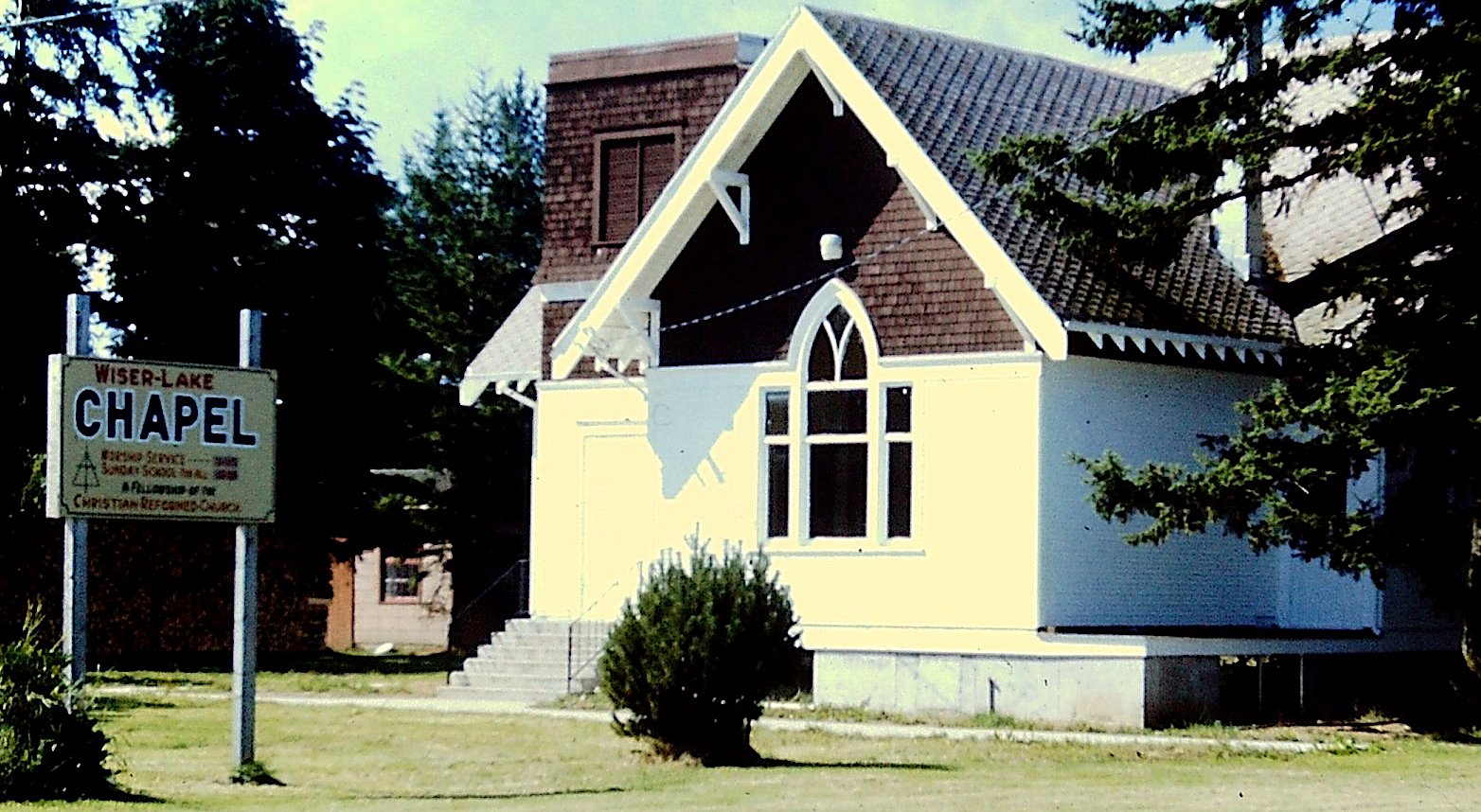
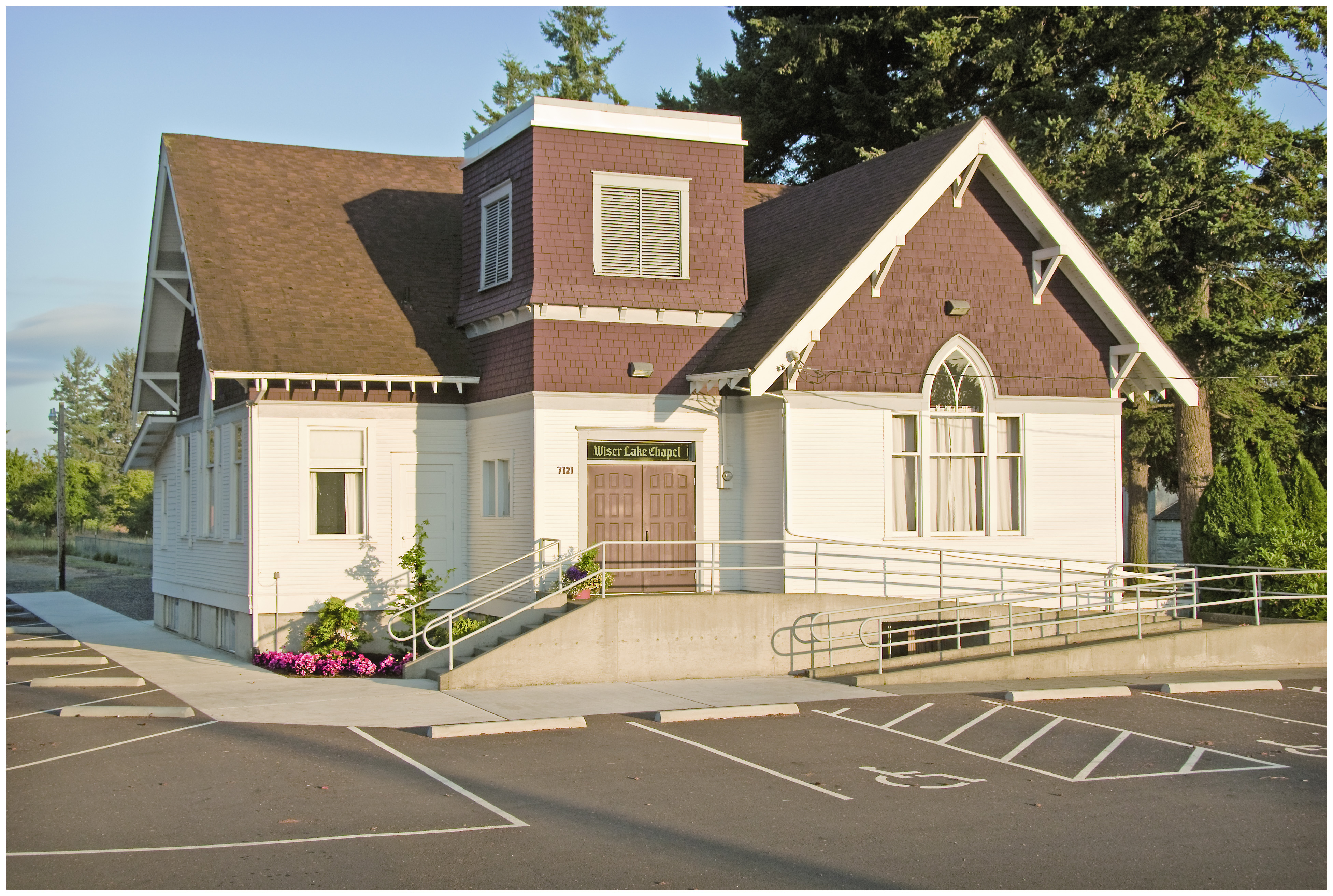
photo of Wiser Lake Chapel by Barbara Hoelle

schizomeno—meaning in Greek “ripped open.” It occurs twice in the Gospels: once when the temple veil is torn the day of Christ’s crucifixion. The other is when “the heavens opened” upon Christ’s baptism. But they didn’t just “open.” They were ripped open. God broke into history with a voice and an act of salvation unlike any other. 

To study the Bible with people of faith is to see it not only as an object of academic or antiquarian interest but also as a living word, a source of intellectual challenge, inspiration, comfort, uncomfortable ambiguities, and endless insights for people who gather in willingness to accept what seems to be God’s invitation: Wrestle with this. Healthy churches wrestle, working out their salvation over coffee and concordances, knowing there is nothing pat or simple about the living Word, but that it invites us into subtle, supple, resilient relationship with the Word made flesh who dwells, still, among us.
~Marilyn McEntyre from “Choosing Church”

Ripped open to allow access – that is what God has done to enter into this ordinary stuff of earth, and giving us access to Him.

I enter the church sanctuary every Sunday to be reminded of this wrestling match we have with ourselves, with each other, with the every day ordinary stuff, with the living Word of God. None of this is easy and it isn’t meant to be. We must work for understanding and struggle for contentment.

I keep going back – gladly, knowing my guilt, eager to be transformed – not only because I choose to be in church, but because He chose to invite me there.

Our Ordinary Unmysterious Lives

Definite beliefs are what make the radical mystery
those moments when we suddenly know there is a God
about whom we “know” absolutely nothing –
accessible to us and our ordinary, unmysterious lives.

And more crucially:

definite beliefs enable us to withstand the storms of suffering

that come into every life, and that tend to destroy
any spiritual disposition that does not have deep roots.

~Christian Wiman from My Bright Abyss

photo of Wiser Lake Chapel sanctuary by Barb Hoelle

Does anyone have the foggiest idea
of what sort of power we so blithely invoke?
Or, as I suspect, does no one believe a word of it?
The churches are children playing on the floor with their chemistry sets,
mixing up a batch of TNT to kill a Sunday morning.
It is madness to wear ladies’ straw hats and velvet hats to church;
we should all be wearing crash helmets.
Ushers should issue life preservers and signal flares;
they should lash us to our pews.

~Annie Dillard from Teaching a Stone to Talk

Unexpected God,
your advent alarms us.
Wake us from drowsy worship,
from the sleep that neglects love,
and the sedative of misdirected frenzy.
Awaken us now to your coming,
and bend our angers into your peace.
Amen.
~Revised Common Lectionary First Sunday of Advent

We are only a few weeks away from the beginning of Advent, a time when I am very guilty of blithely invoking the gentle story of Christmas Eve’s silent night, the sleeping infant away in a manger, the devoted parents hovering, the humble shepherds peering in the stable door.

The reality, I’m confident, was far different.

There was nothing gentle about a teenage mother giving birth in a stable, laying her baby in a feed trough–I’m sure there were times when Mary could have used a life preserver.
There was nothing gentle about the heavenly host appearing to the shepherds, shouting and singing the glories and leaving them “sore afraid.” The shepherds needed crash helmets.
There was nothing gentle about Herod’s response to the news that a Messiah had been born–he swept overboard a legion of male children whose parents undoubtedly begged for mercy, clinging to their children about to be murdered.
There was nothing gentle about a family’s flight to Egypt to flee that fate for their only Son.
There was nothing gentle about the life Jesus eventually led during his ministry:  itinerant and homeless, tempted and fasting in the wilderness for forty days,  owning nothing, rejected by his own people, betrayed by his disciples,  sentenced to death by acclamation before Pilate, tortured and hung on a cross until he took his last breath.

Yet he understood the power that originally brought him to earth and would return him to heaven, and back again someday. 
No signal flares needed there.

When I hear skeptics scoff at Christianity as a “crutch for the weak”, they underestimate the courage it takes to walk into church each week as a desperate person who will never ever save oneself.   We cling to the life preserver found in the Word, lashed to our seats and hanging on.  It is only because of grace that we survive the tempests of temptation, guilt and self-doubt to let go of our own anger in order to confront the reality of the radical mystery of God.

It is not for the faint of heart, this finding a “definite belief” within our ordinary unmysterious lives and giving it deep roots to thrive. It is reasonable and necessary to be “sore afraid” and “bend our anger” into His peace.

And not forget our crash helmets.

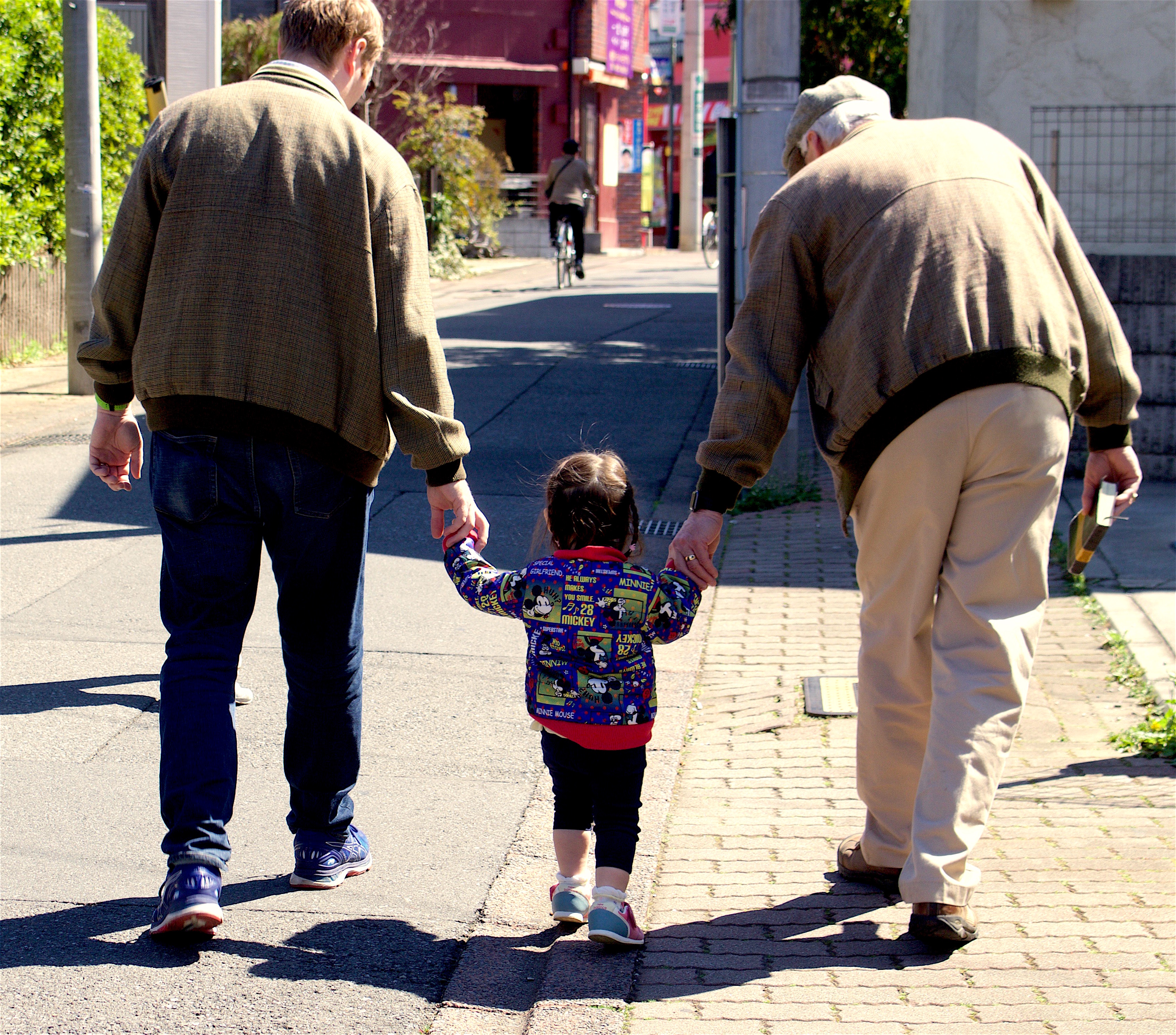
walking to church in Tokyo


A World of Crowded Cups to Fill

sphere of pillowed sky
one faceless gathering of blue.
..

… I’m tethered, and devoted
to your raw and lonely bloom

my lavish need to drink
your world of crowded cups to fill.
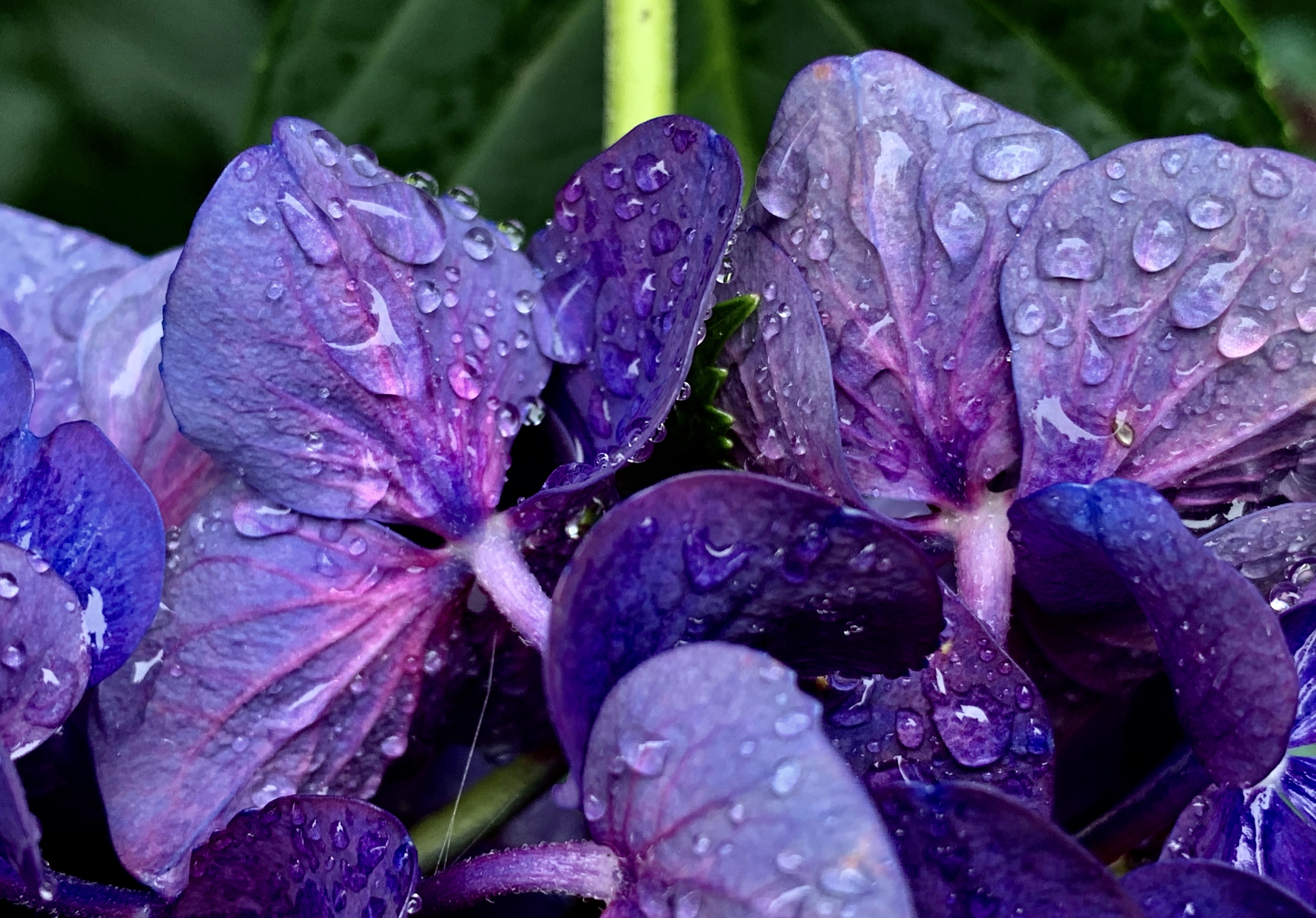
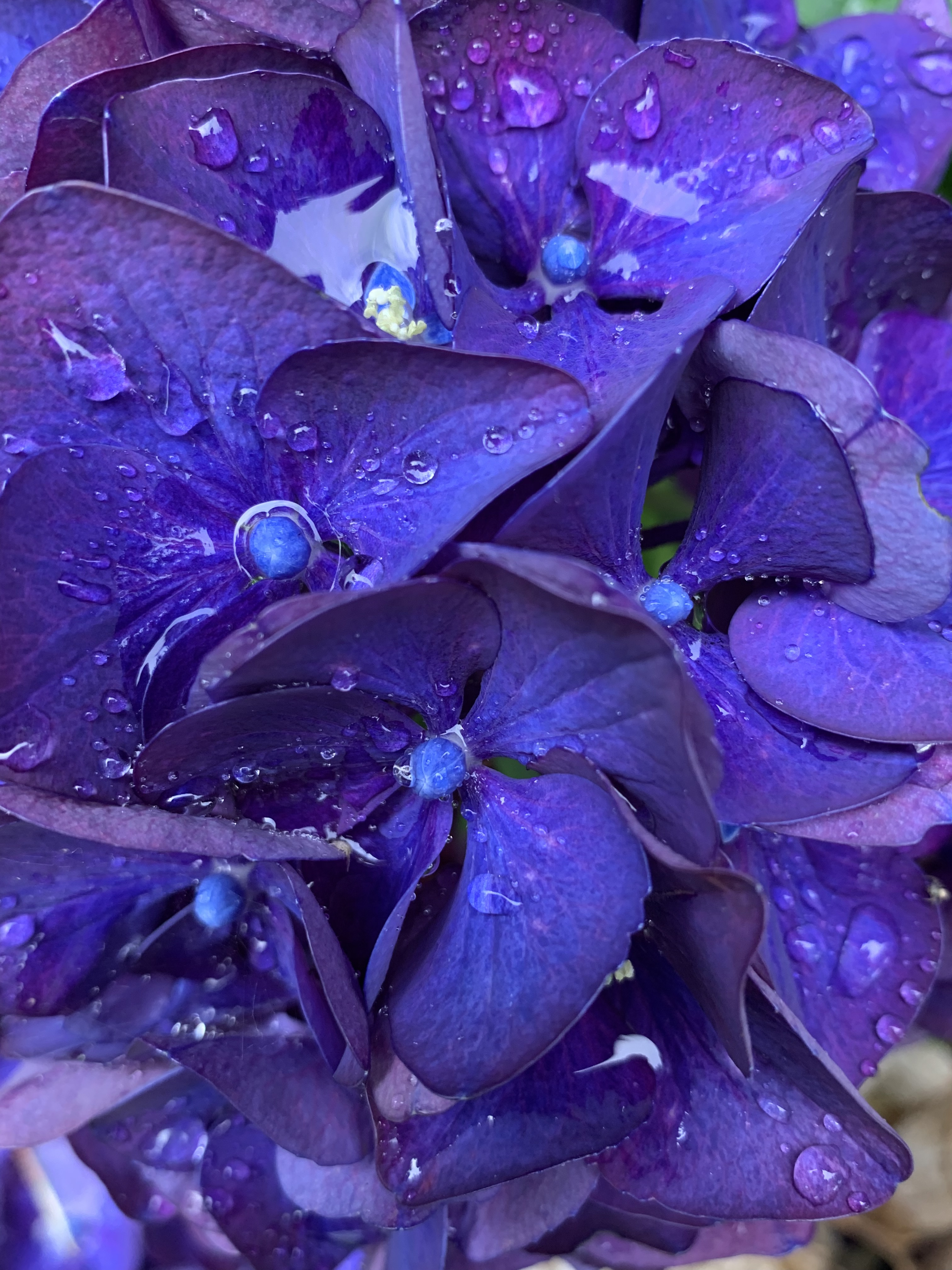
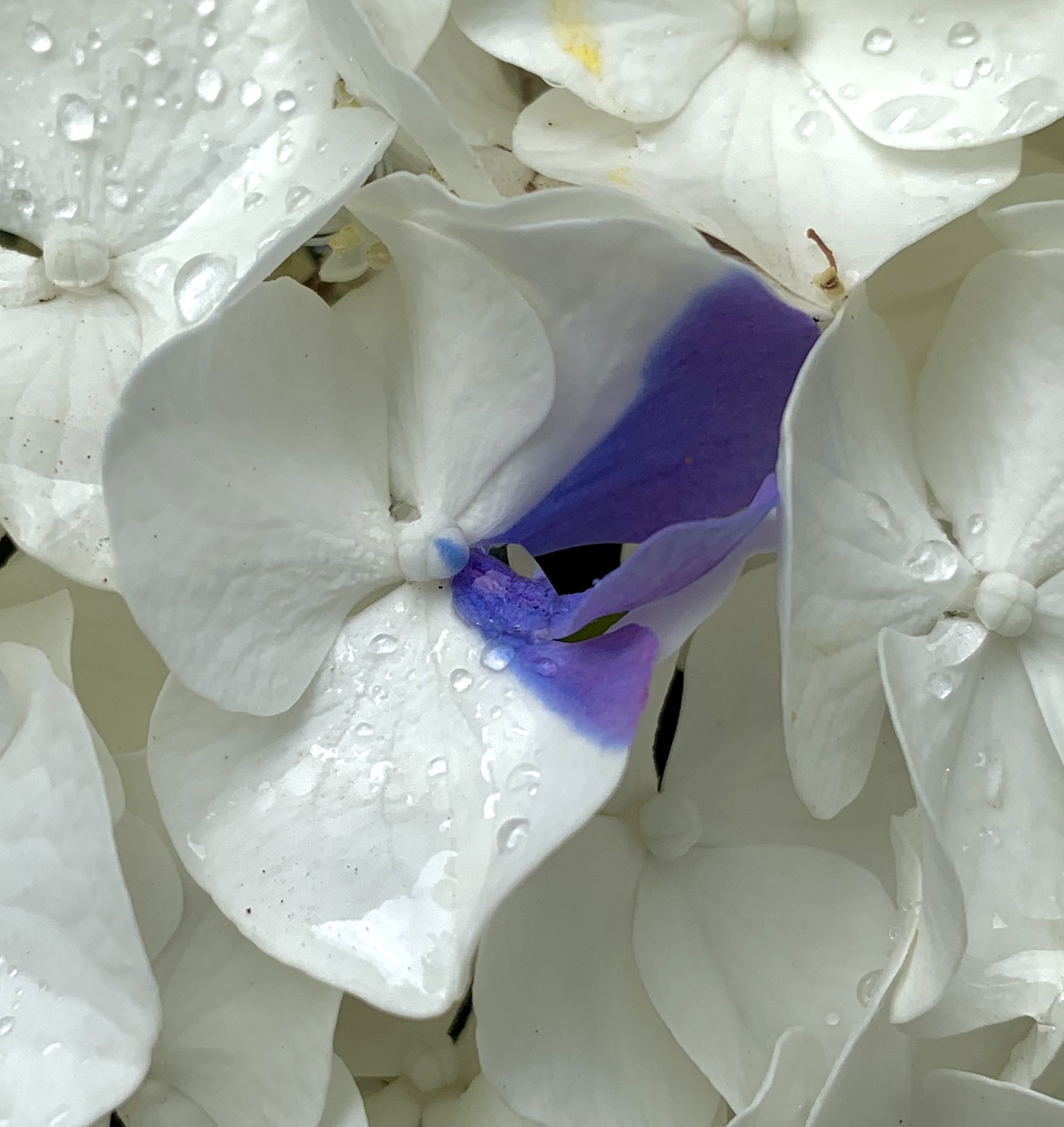
~Tara Bray “hydrangea” from Image Journal

Like in old cans of paint the last green hue,
these leaves are sere and rough and dull-complected
behind the blossom clusters in which blue
is not so much displayed as it’s reflected;

They do reflect it imprecise and teary,
as though they’d rather have it go away,
and just like faded, once blue stationery,
they’re tinged with yellow, violet and gray;

As in an often laundered children’s smock,
cast off, its usefulness now all but over,
one senses running down a small life’s clock.

Yet suddenly the blue revives, it seems,
and in among these clusters one discovers
a tender blue rejoicing in the green.
~Rainer Maria Rilke “Blue Hydrangea” Translation by Bernhard Frank

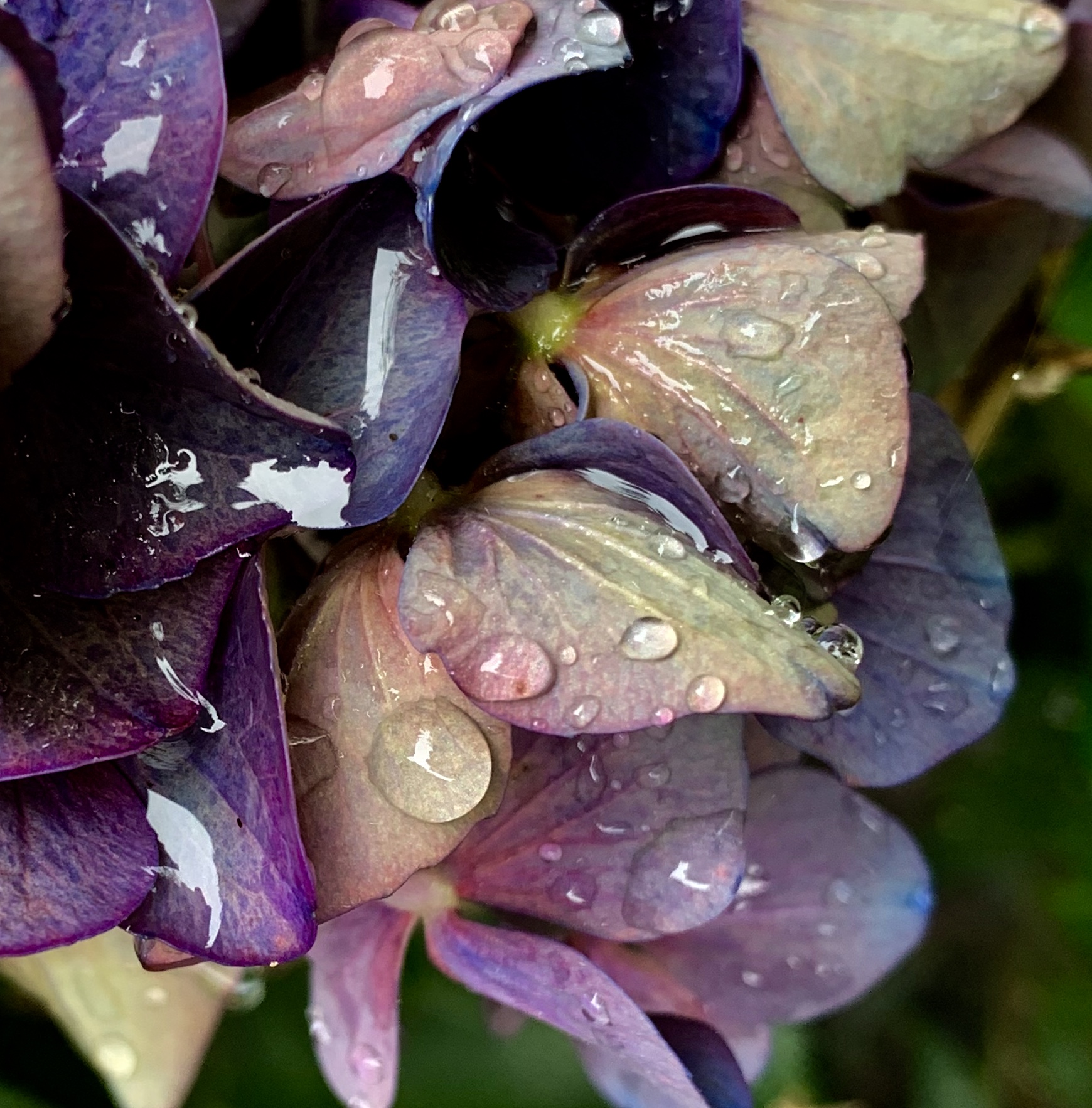
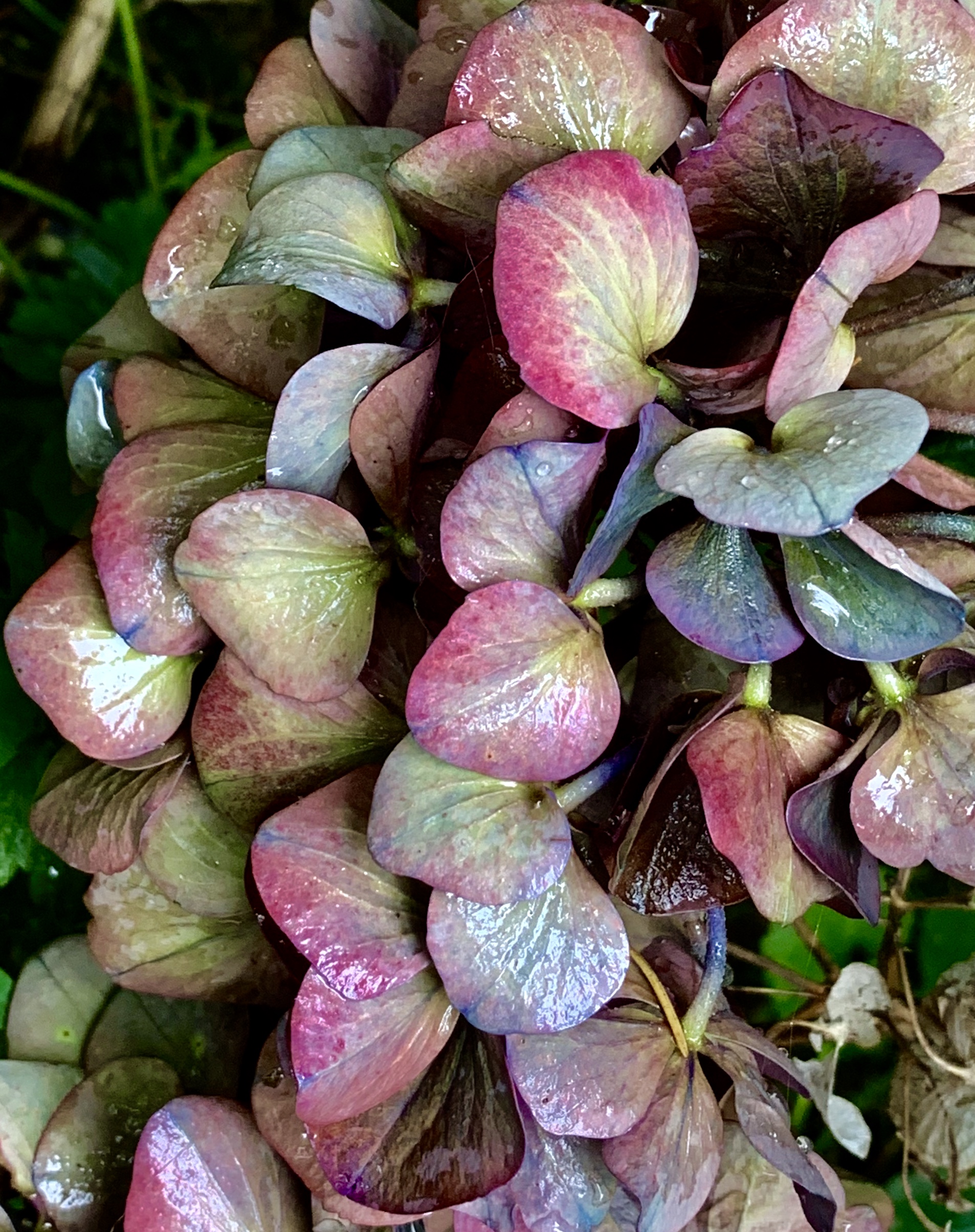
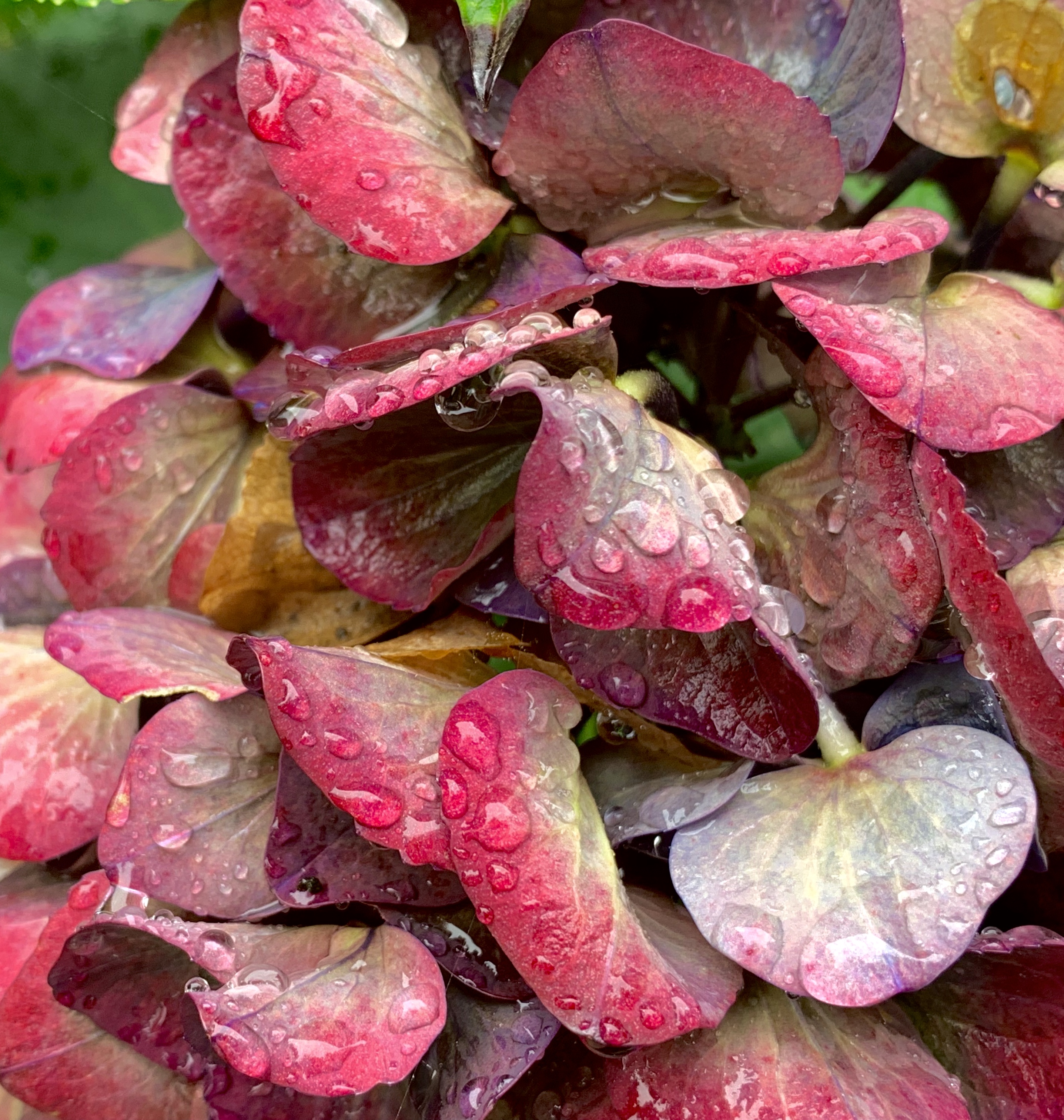
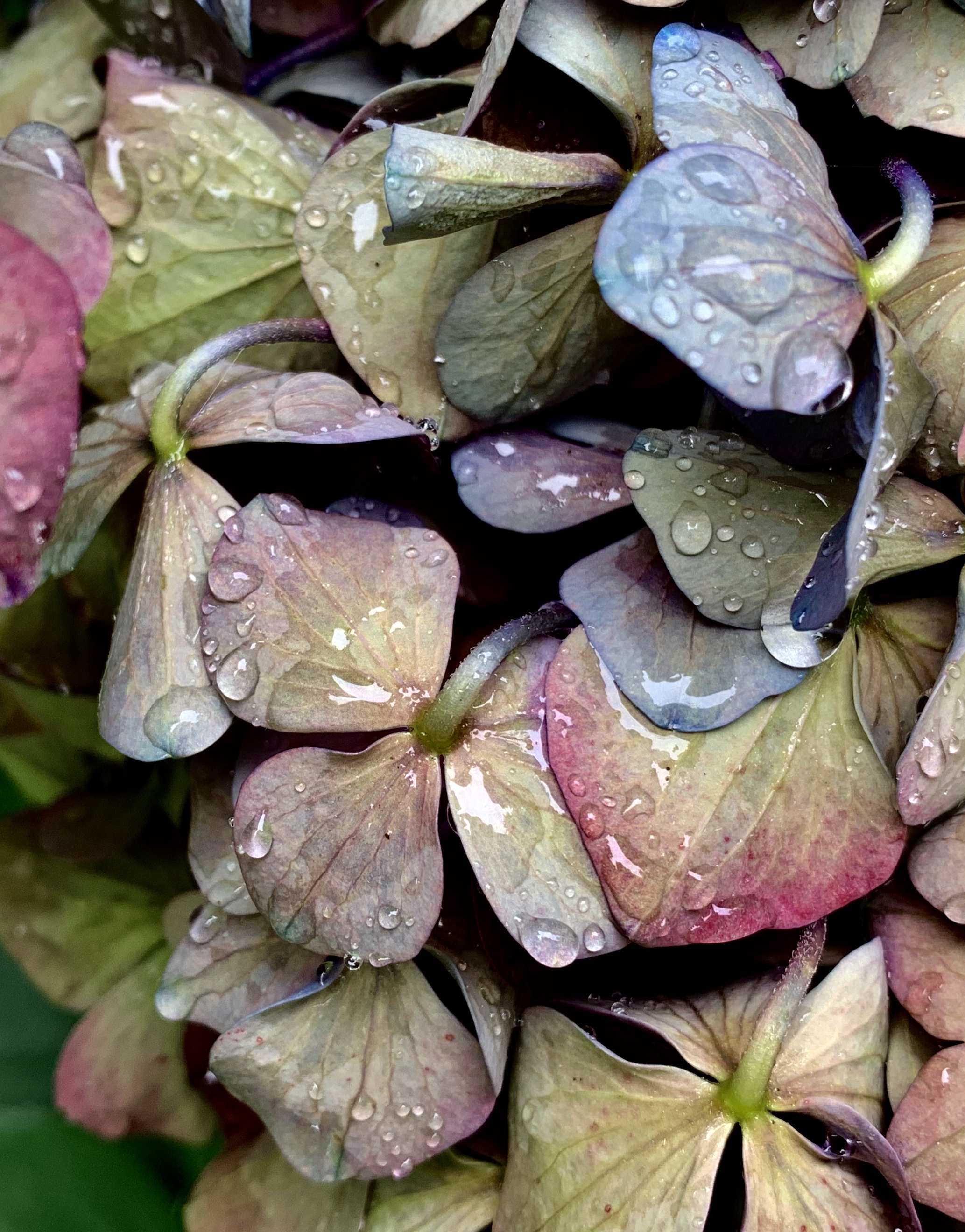
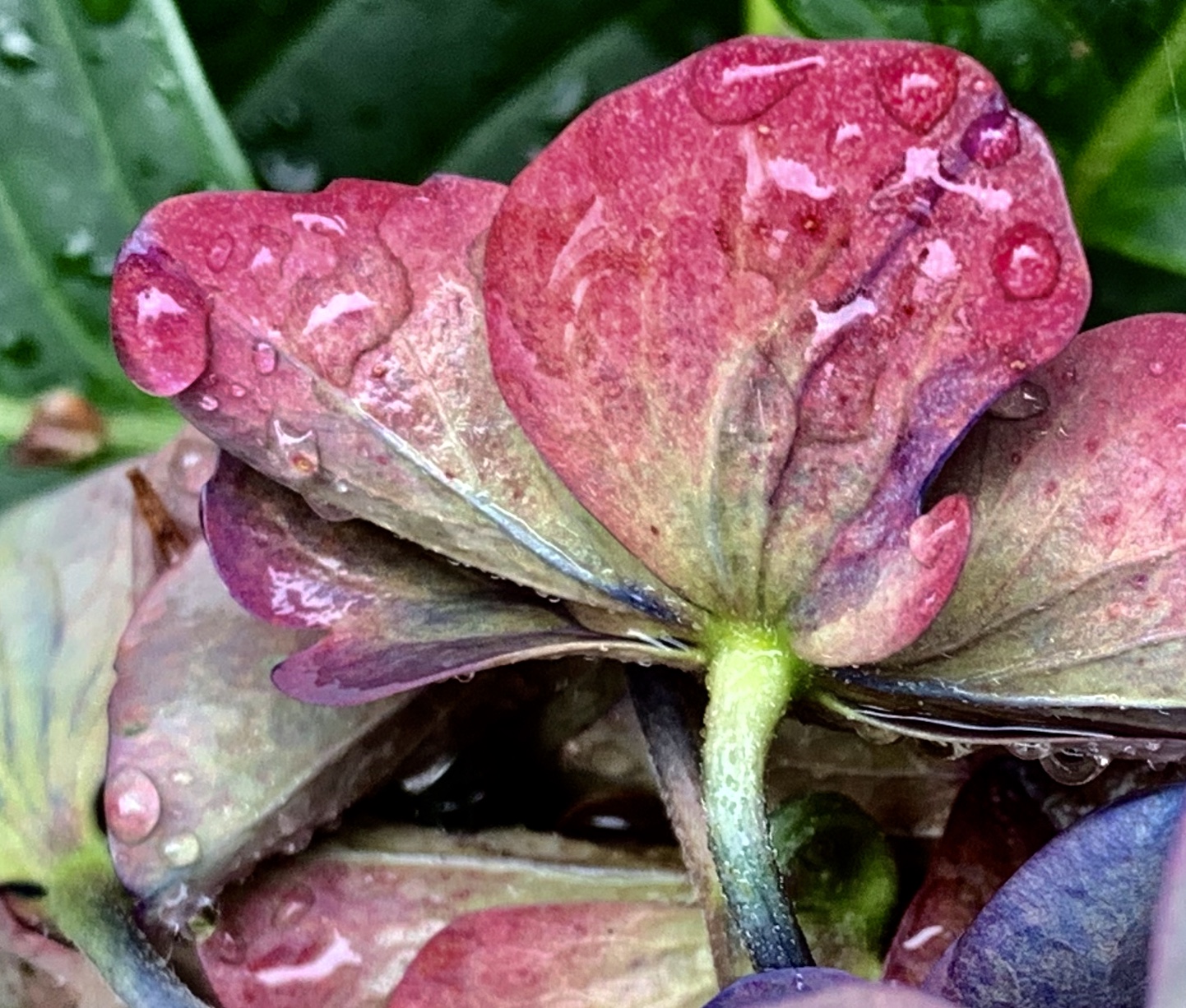
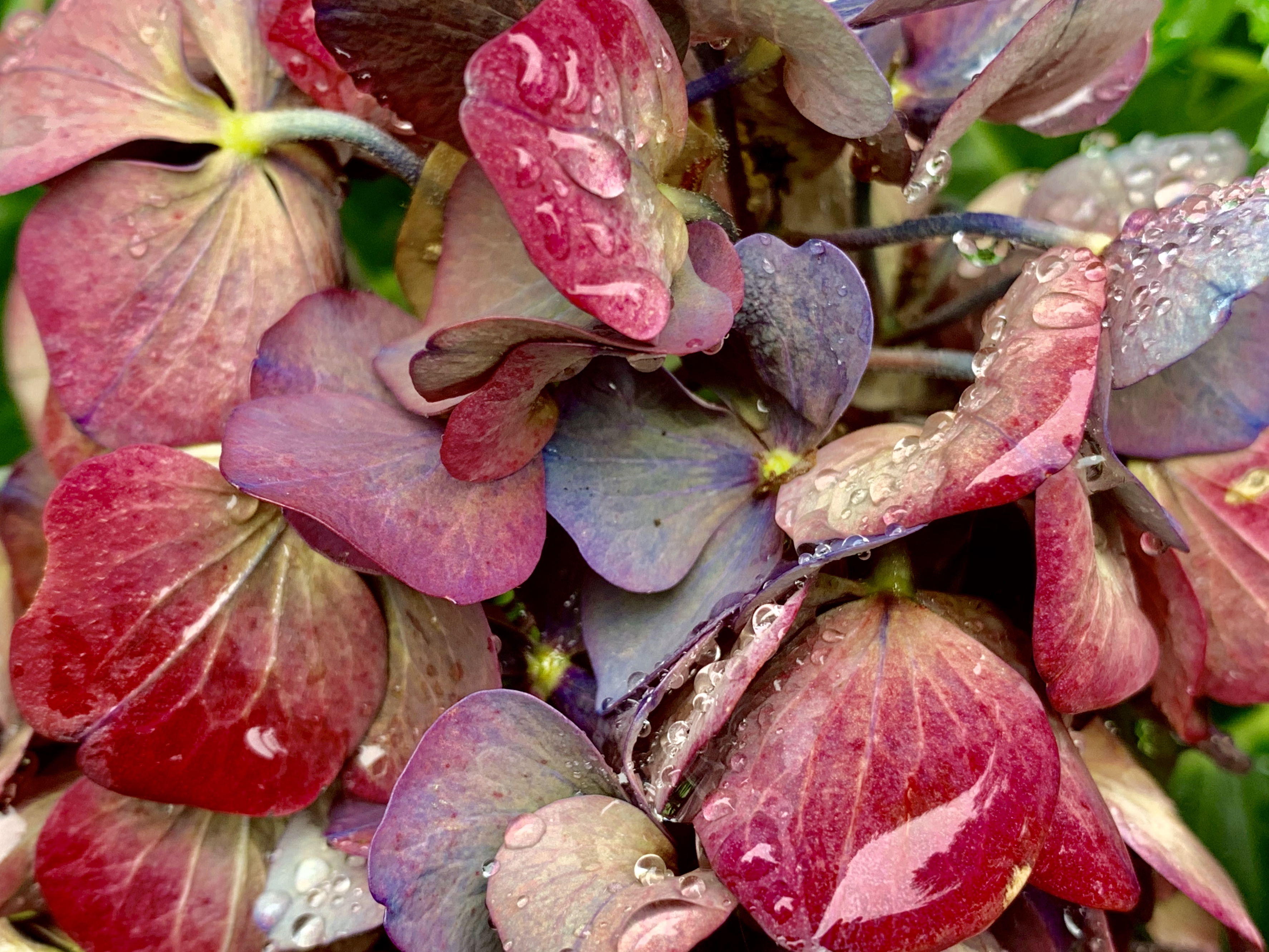
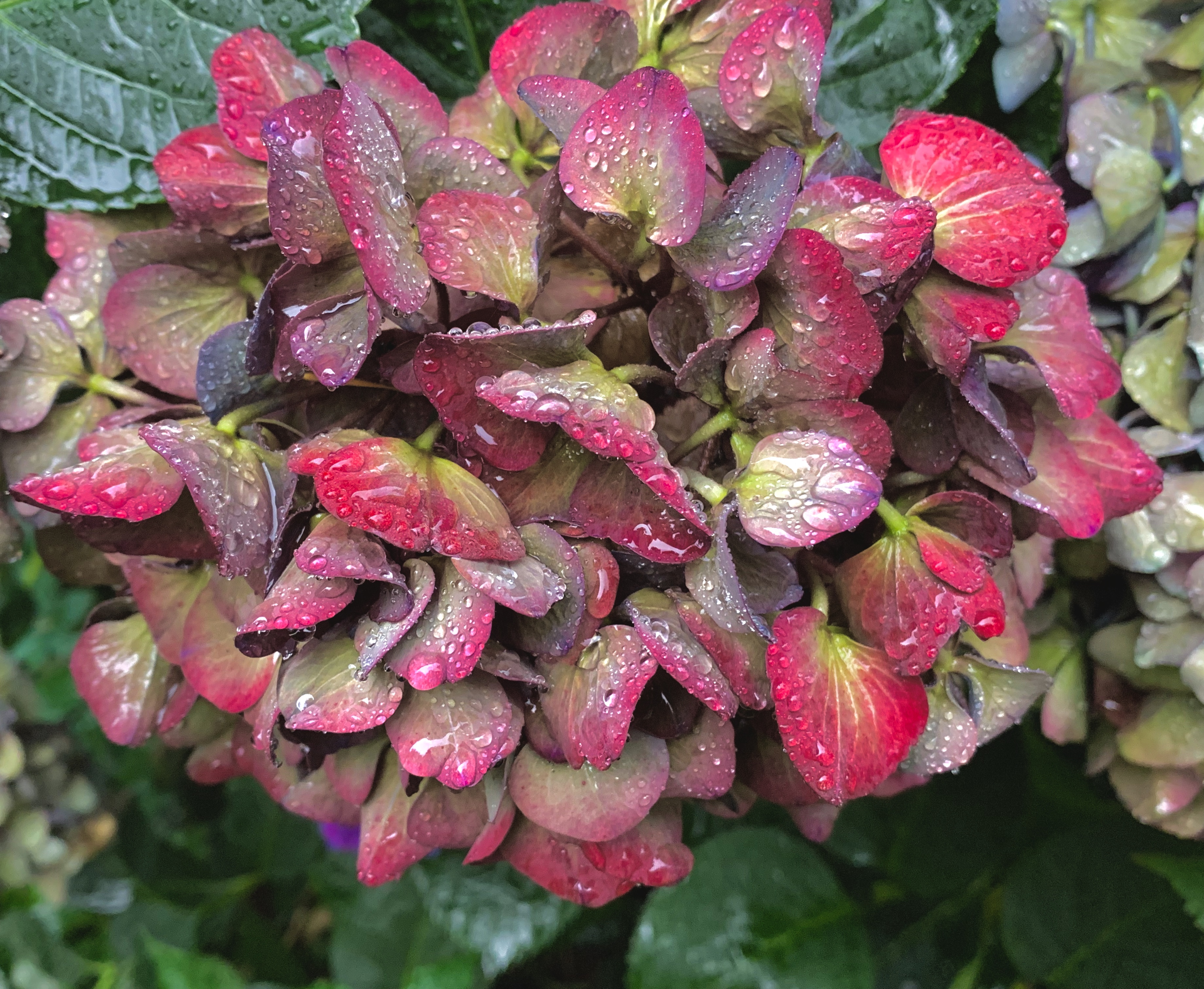
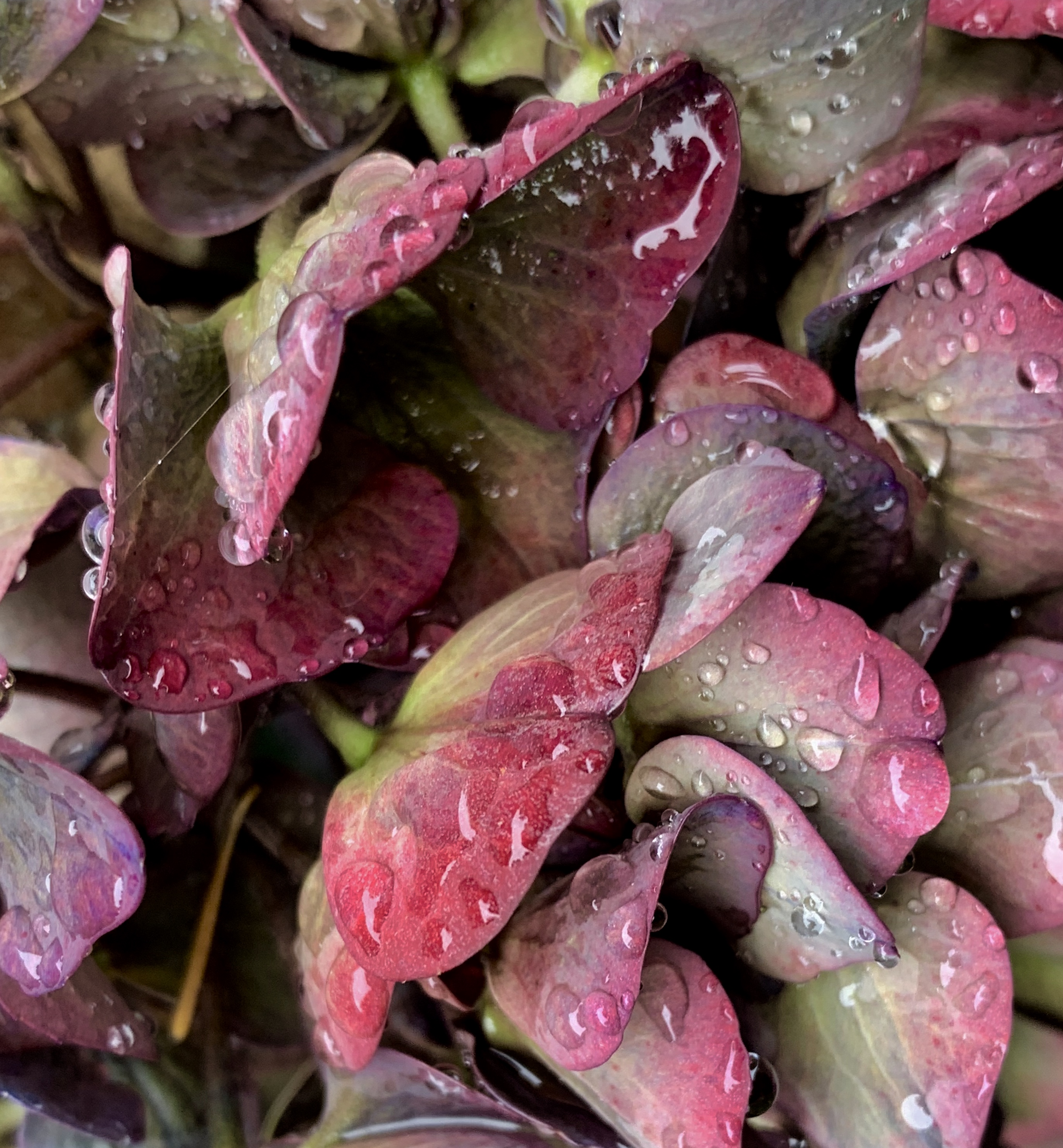
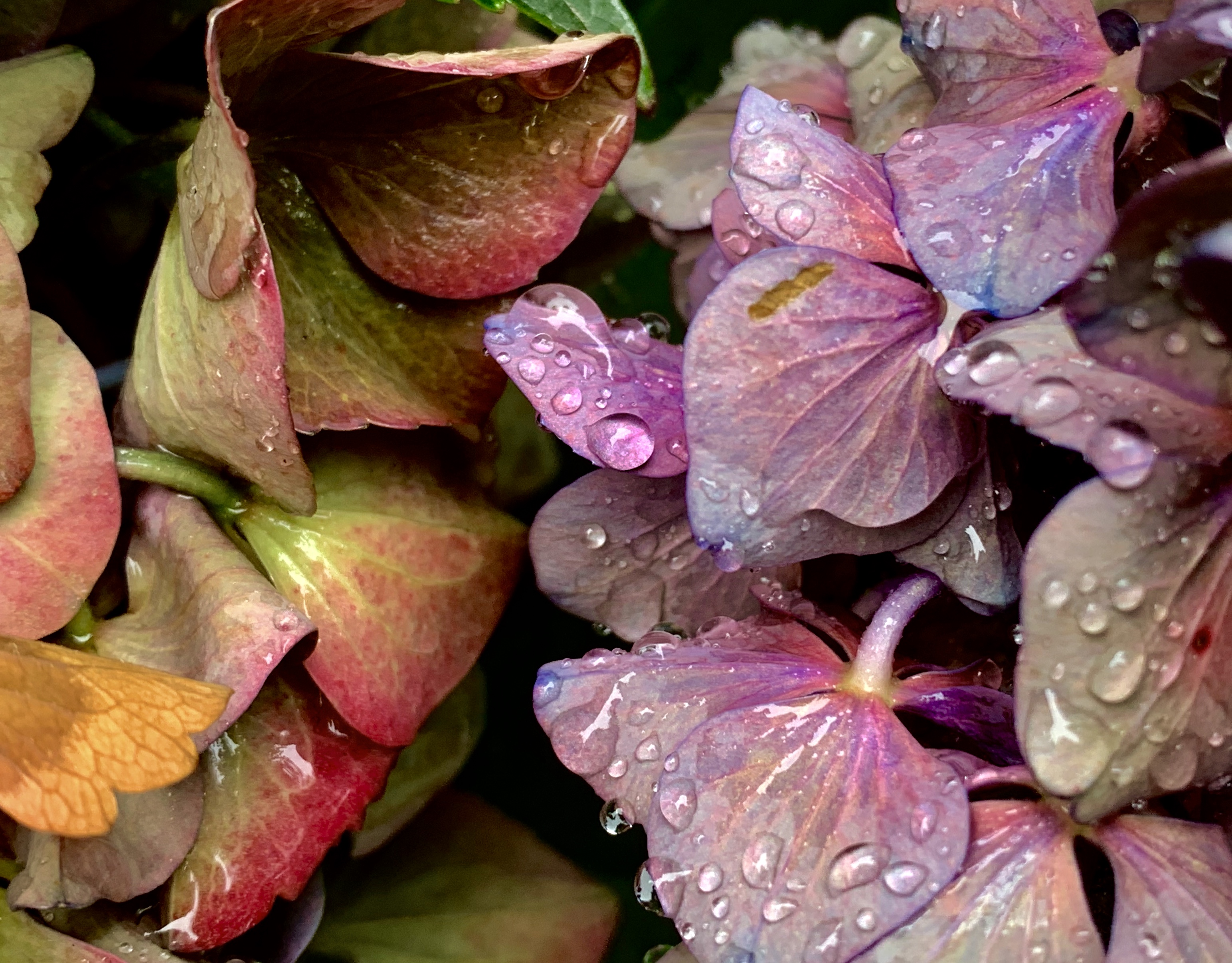
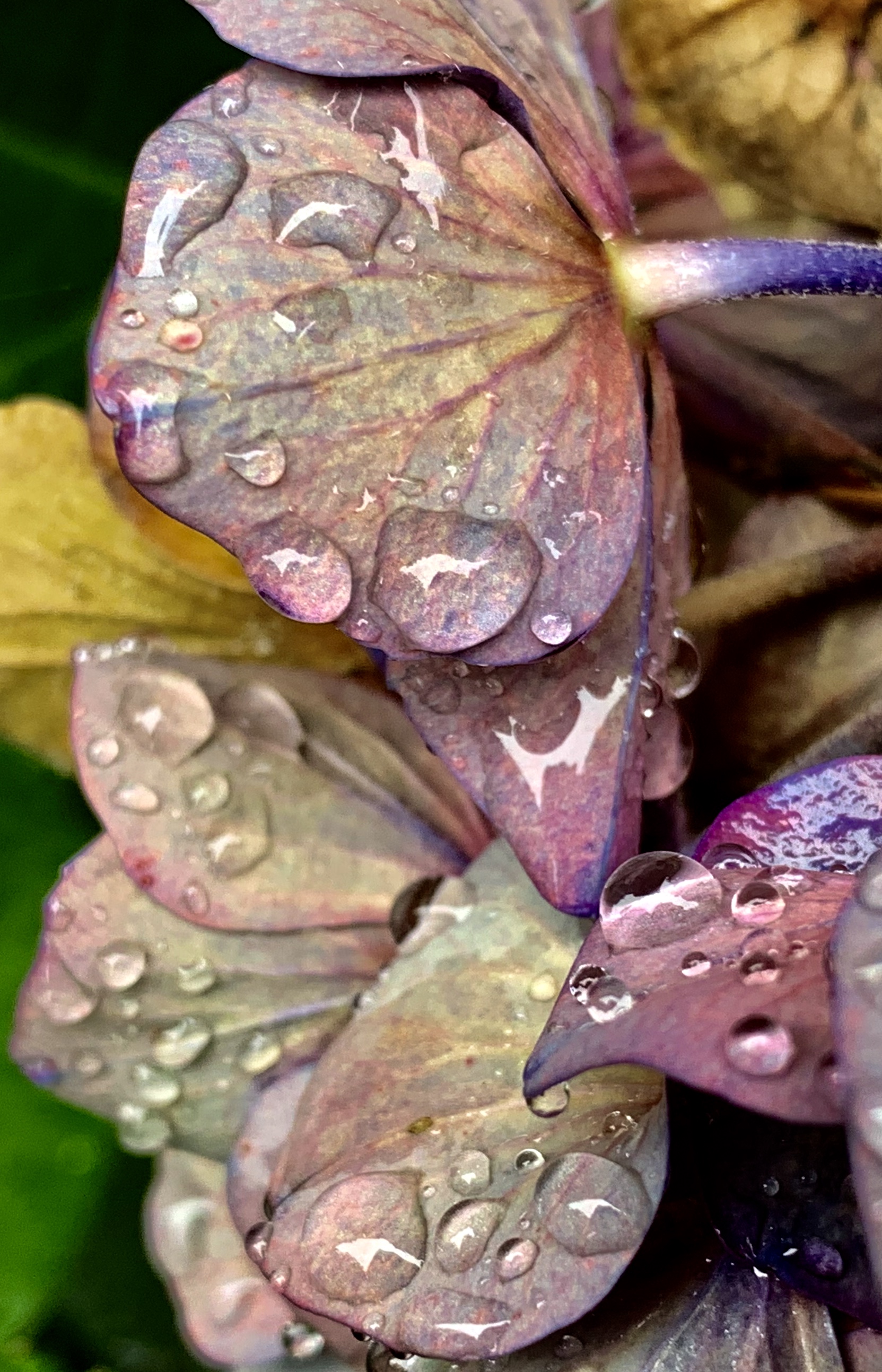
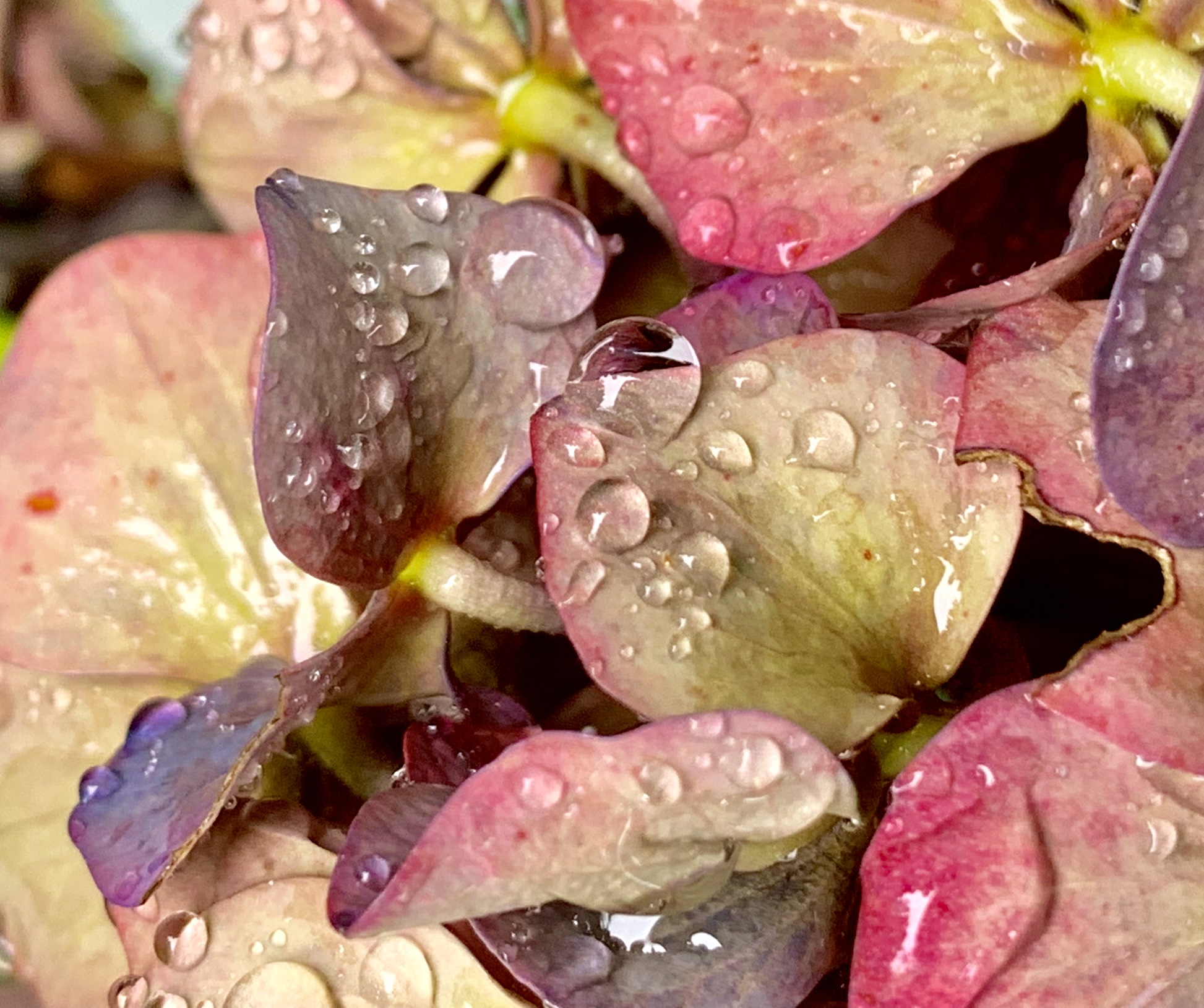
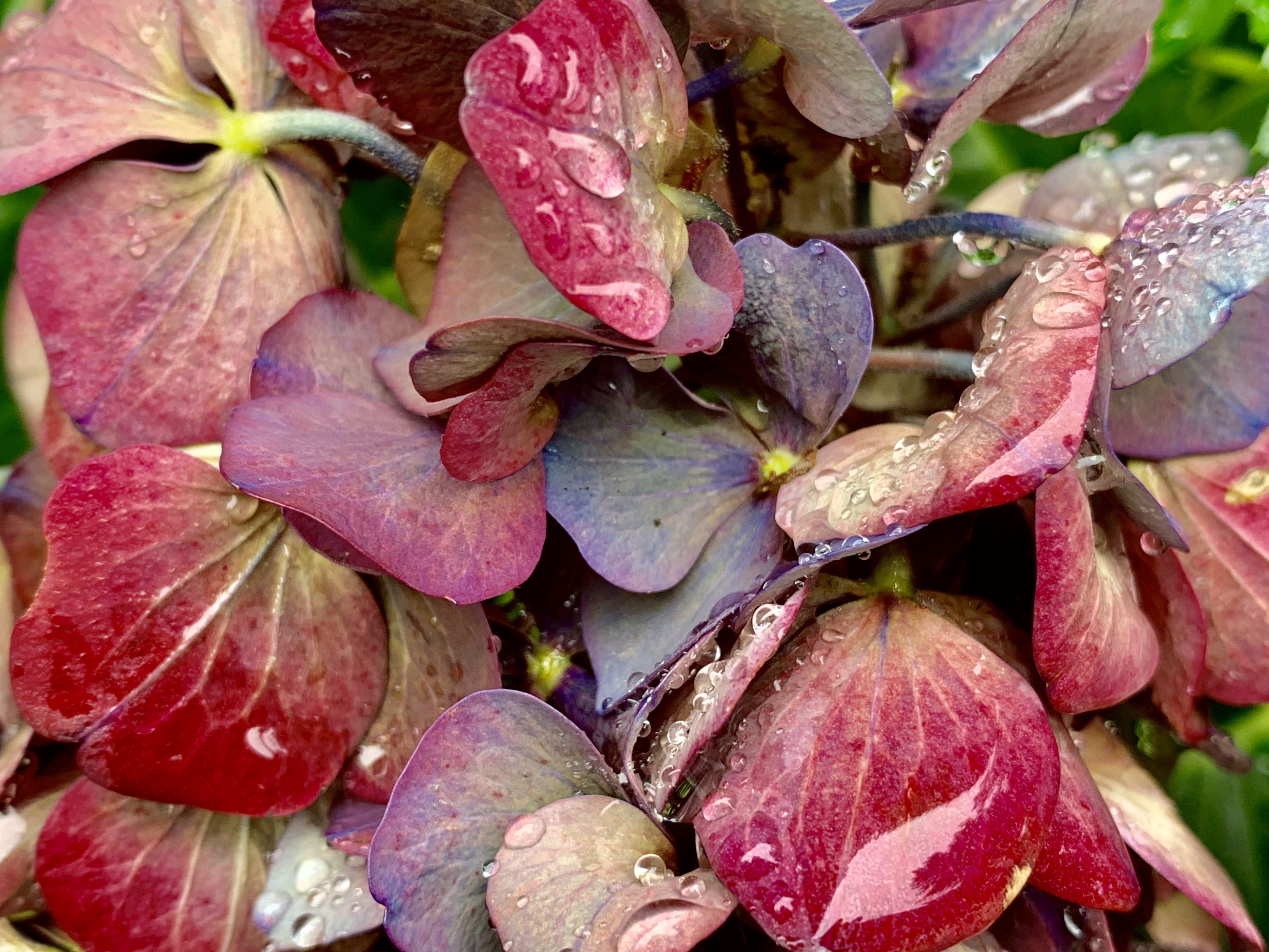
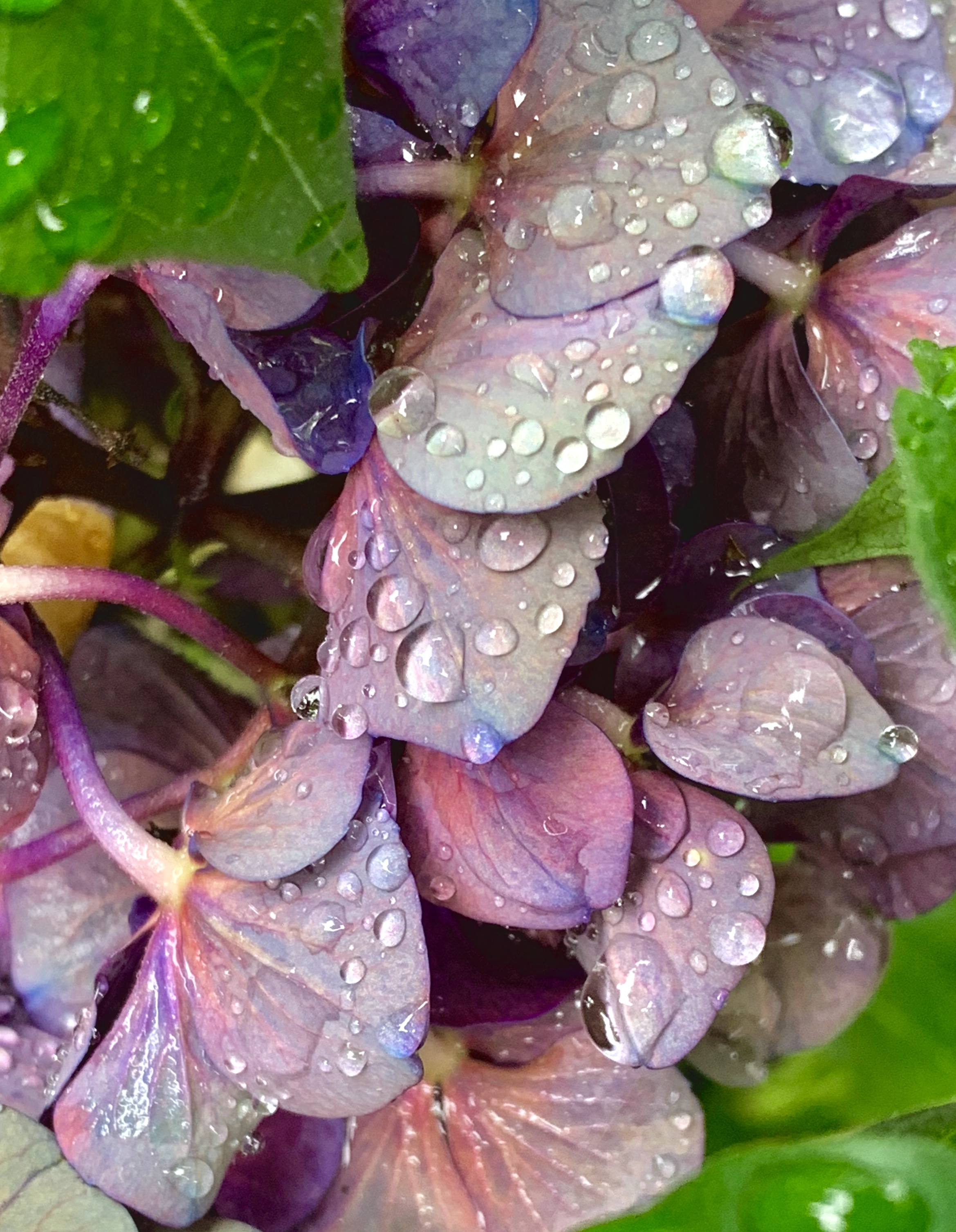
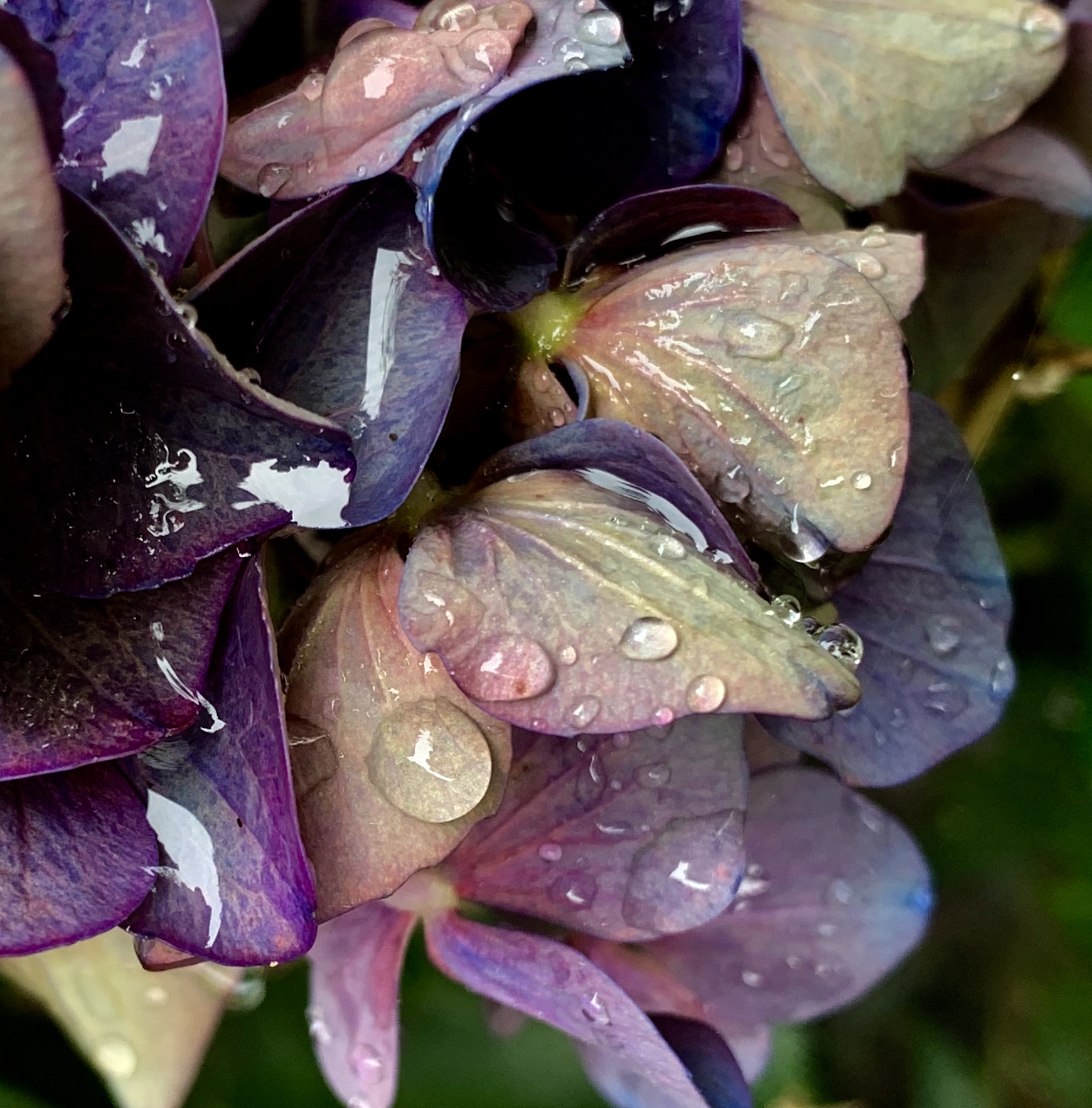
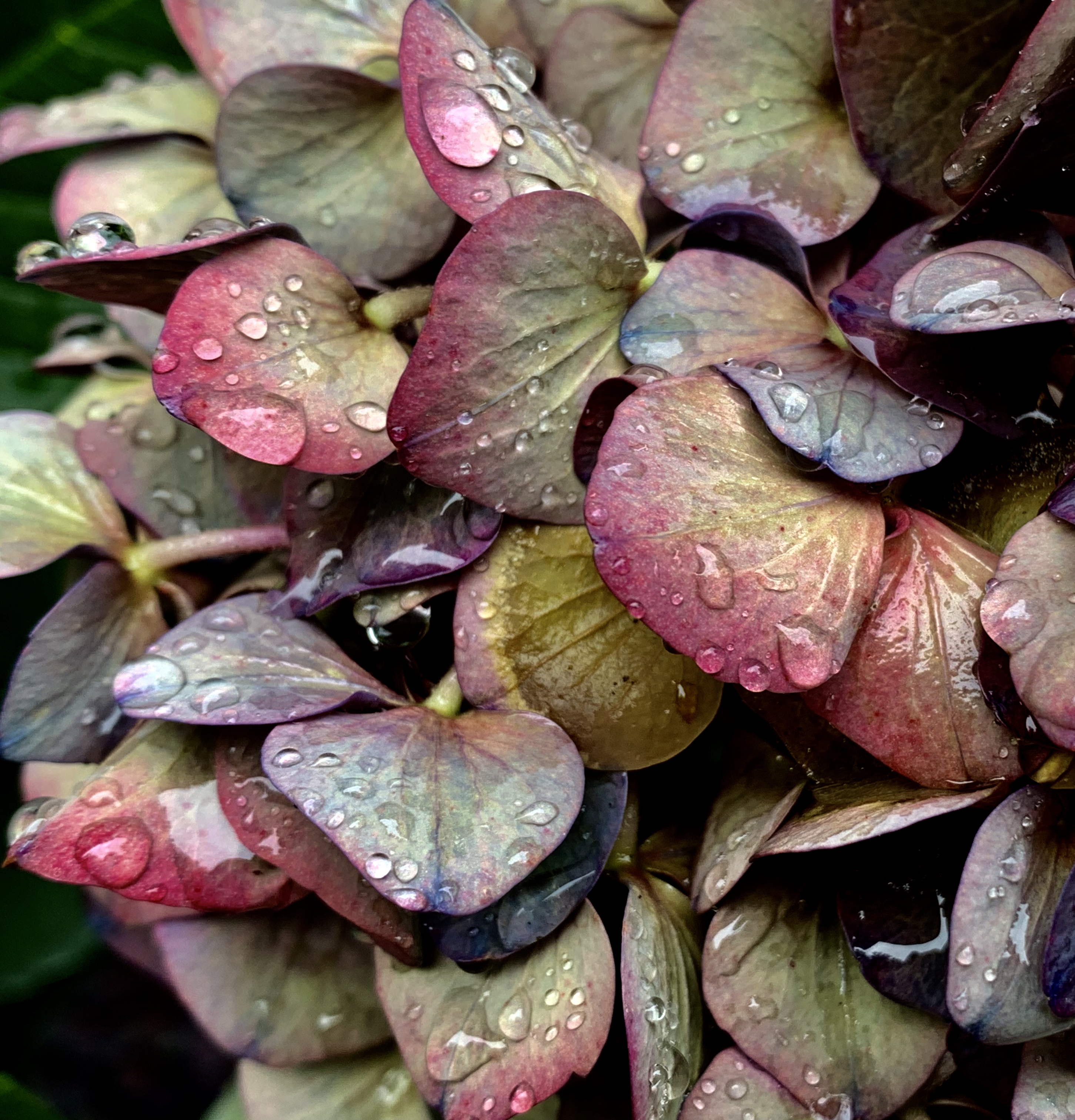
Dwelling within a mosaic of dying colors,
these petals fold and collapse
under the weight of the sky’s tears.

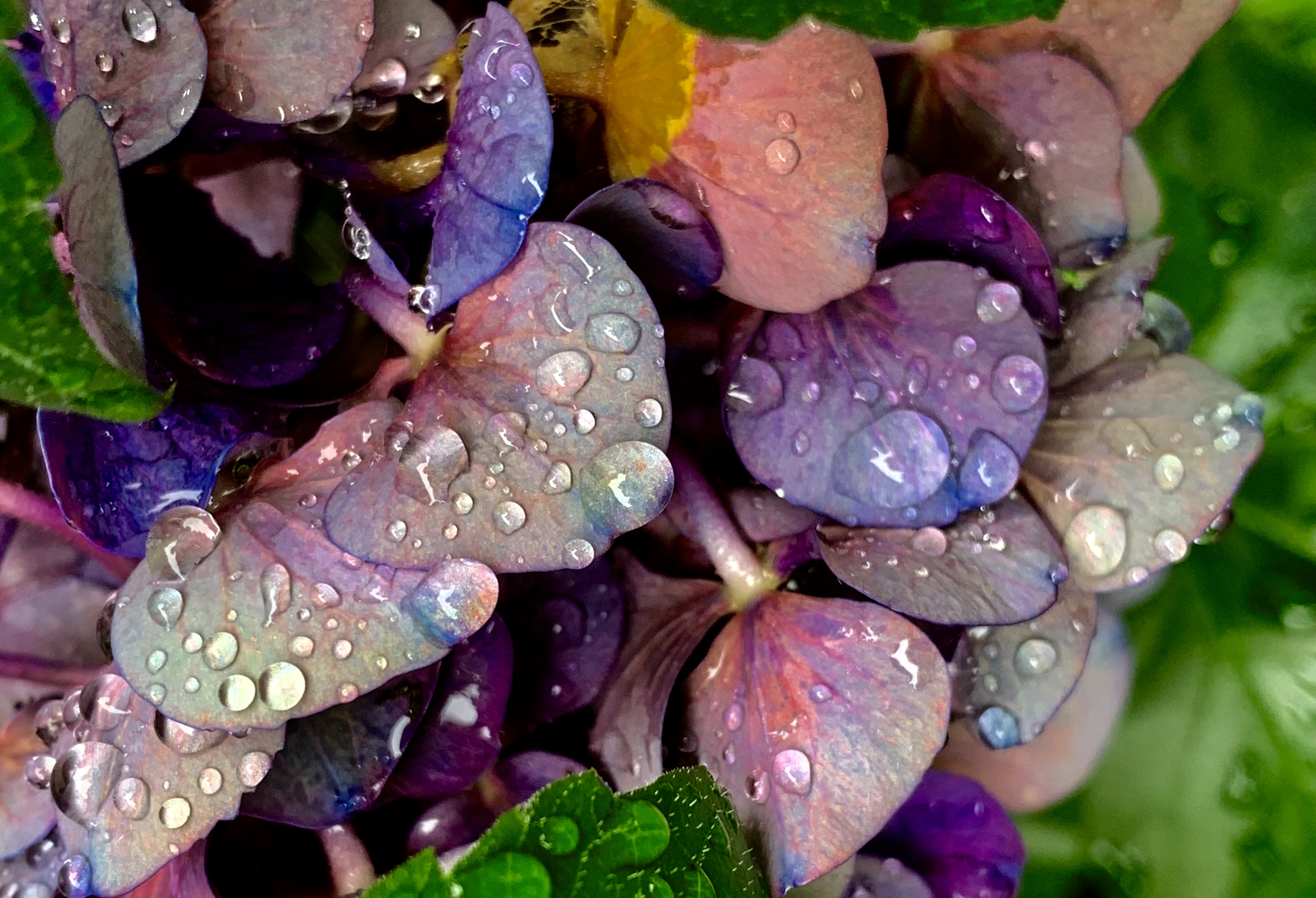
This hydrangea bears a rainbow of hues,
once-vibrant promises of blue
now fading to rusts and grays.

I know what this is like:
the running out of the clock,
feeling the limits of vitality.

Withering and drying,
I’m drawn, thirsty for the beauty,
to this waning artist’s palette.

To quench my thirst:
from an open cup, an invitation,
an everlasting visual sacrament.

Our Chance to Choose

We may ignore, but we can nowhere evade, the presence of God.
The world is crowded with Him.
He walks everywhere incognito.
And the incognito is not always easy to penetrate.
The real labor is to remember to attend.

In fact to come awake.
Still more to remain awake.
~C.S. Lewis from “Letters to Malcolm: Chiefly on Prayer”

God is going to invade, all right:
but what is the good of saying you are on his side then,
when you see the whole natural universe
melting away like a dream and something else –
something it never entered your head to conceive –
comes crashing in;
something so beautiful to some of us and so terrible to others
that none of us will have any choice left?

For this time it will be God without disguise;
something so overwhelming that it will strike
either irresistible love
or irresistible horror
into every creature.
It will be too late then to choose your side.

There is no use saying you choose to lie down
when it has become impossible to stand up.
That will not be the time for choosing:
it will be the time when we discover
which side we really have chosen,
whether we realized it before or not.
Now, today, this moment, is our chance to choose the right side.
~C.S. Lewis from
Mere Christianity

The older I get, the more I recognize the need to be alert and awake to the presence of God in the crowded world around me. It doesn’t come naturally. We humans have an attention deficit, choosing to focus inwardly on self and ignoring the rest. If it isn’t for me, or like me, or about me, it somehow is not worthy of my consideration.

We wear blinders, asleep, unaware we must choose an incognito God;
we think His invisible immensity must be obvious, like a lightning flash.

And so – He has come and walked among us in plain sight.
No longer incognito.
The time to choose has come.

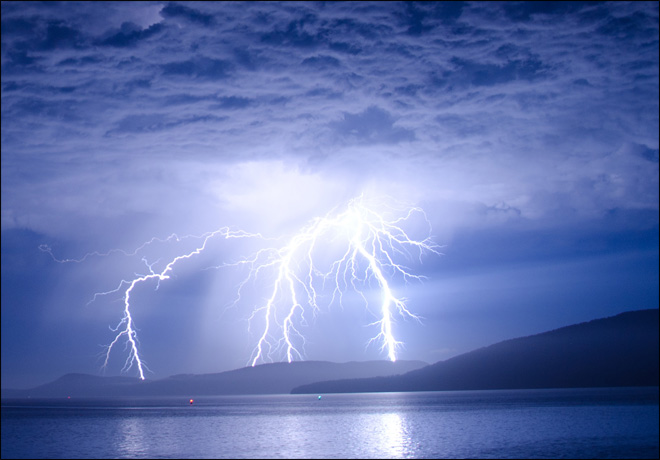
photo of lightning over Anacortes, Washington from Komonews.com

Holding My Feet to the Fire

God is the fire my feet are held to.
~Charles Wright, from “Ars Poetica II” in Appalachia

If we think we’re going to get off easy in this life
because we do what we’re told to do:
keeping the Sabbath
and our noses clean,
saying what we ought to say
when we should say it
and keeping our mouths shut when
it is best to say nothing at all.

If we think our good deeds
and relative lack of bad deeds will save us,
we have another think coming
and a lot of explaining to do.

We walk through fire
because nothing about God’s glory
is easy. We are hidden in the cleft because He is too much for our eyes to behold.
We remove our sandals
to feel the hot coals of holy ground.
He burns without being consumed
so our hearts are scorched in His presence.

Yet His feet are blistered too.
He knows exactly how this feels.


Sabbath Morning

The Old Church leans nearby a well worn road 
upon a hill that has no grass or tree 
The winds from off the prairie now unload 
the dust they bring around it fitfully 
The path that leads up to the open door 
is worn and grayed by many toiling feet 
of us who listen to the Bible lore 
and once again the old time hymns repeat.
And every Sabbath Morning we are still 
returning to the altar standing there; 
a hush, a prayer, a pause, and voices 
fill the Master’s House with a triumphant air.
The old church leans awry and looks quite odd,
But it is beautiful to us, and God.

~Stephen Paulus “The Old Church”

…when I experienced the warm, unpretentious reception of those who have nothing to boast about, and experienced a loving embrace from people who didn’t ask any questions, I began to discover that a true spiritual homecoming means a return to the poor in spirit to whom the kingdom of heaven belongs.
~Henri Nouwen from The Return of the Prodigal Son

Our family had driven past the boxy building countless times hurrying on our way to other places, barely giving it a second glance. It had a classic design, but showed its age with peeling paint,  a few missing shingles, an old fashioned square flat roofed belfry, and arched windows. The hand lettered sign spelling out “Wiser Lake Chapel” by the road constituted a humble invitation of sorts, simply by listing the times of the services.

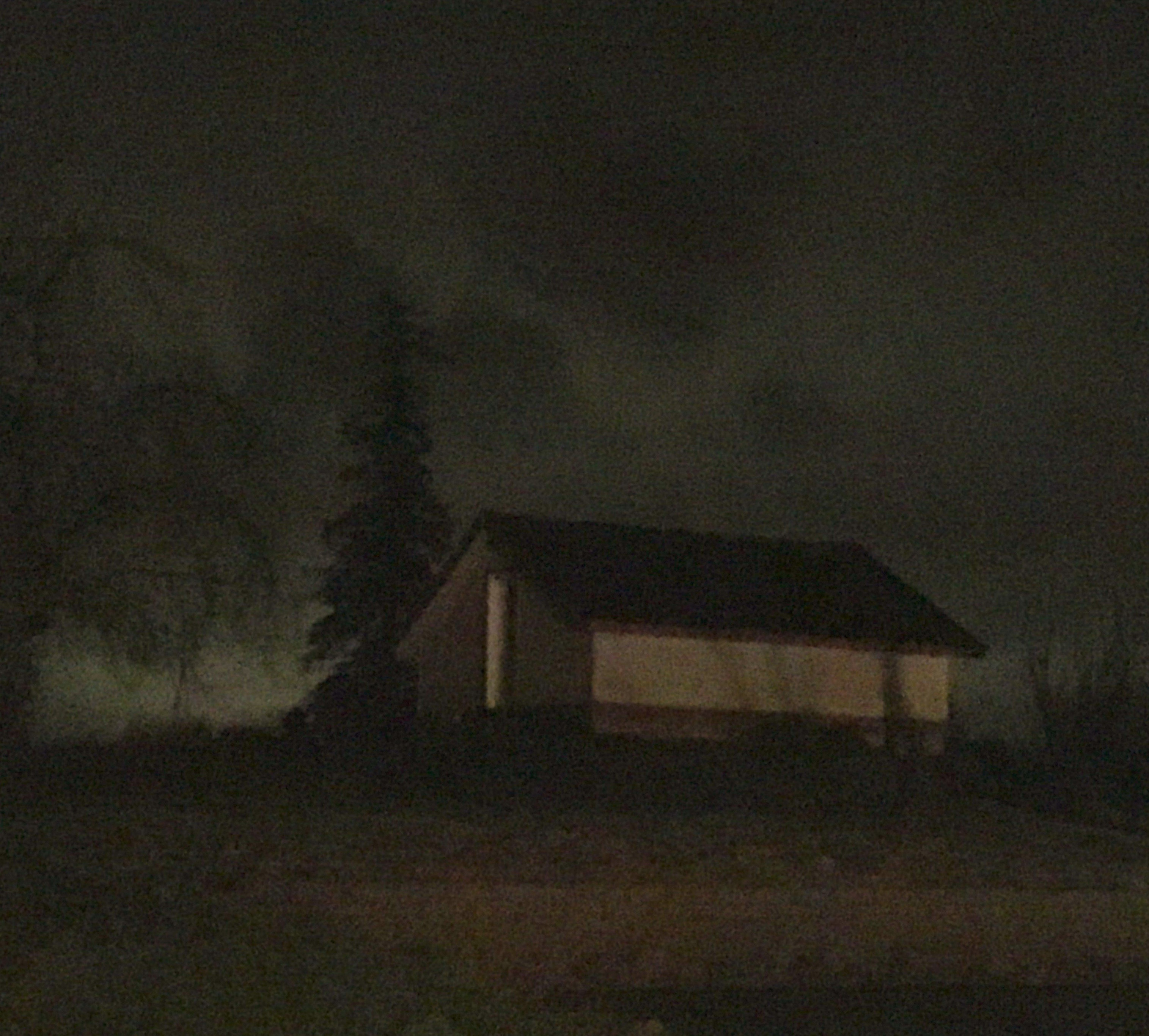
On a blustery December Sunday evening in 1990, we had no place else to be for a change.  Instead of driving past, we stopped, welcomed by the yellow glow pouring from the windows and an almost full parking lot. Our young family climbed the steps to the big double doors, and inside were immediately greeted by a large balding man with a huge grin and encompassing handshake. He pointed us to one of the few open spots still available in the old wooden pews.

The sanctuary was a warm and open space with a high lofted ceiling, dark wood trim accents matching the ancient pews, and a plain wooden cross above the pulpit in front. There was a pungent smell from fir bough garlands strung along high wainscoting, and a circle of candles standing lit on a small altar table. Apple pie was baking in the kitchen oven, blending with the aroma of good coffee and hot cocoa.

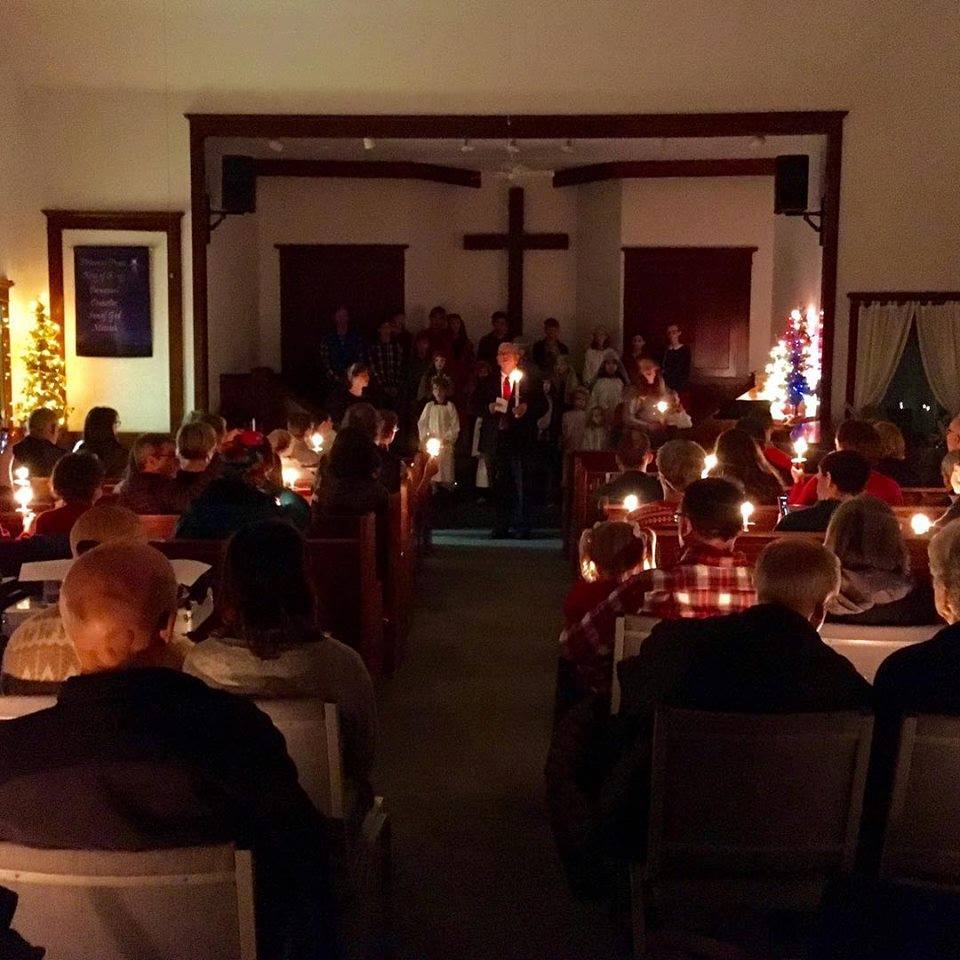
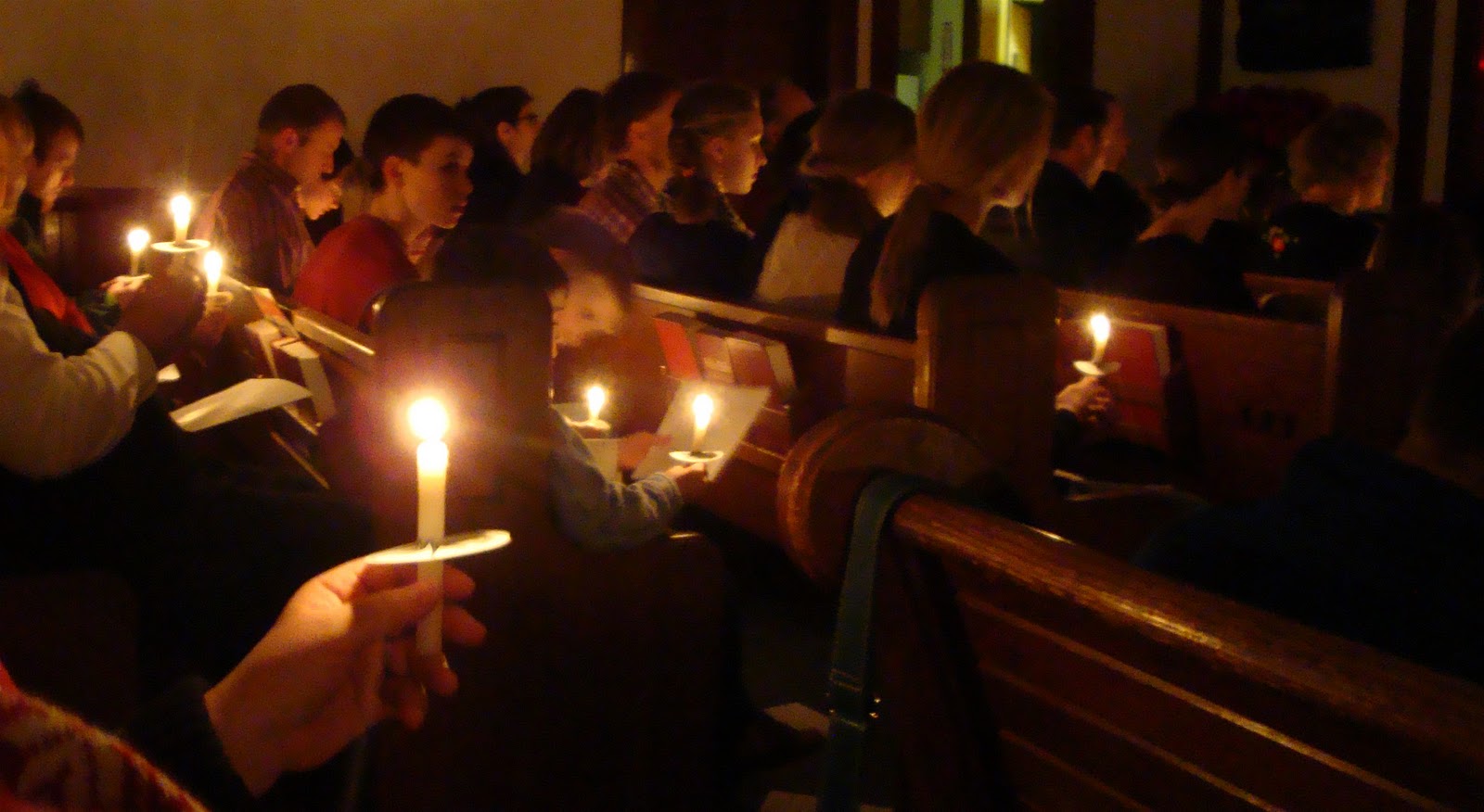
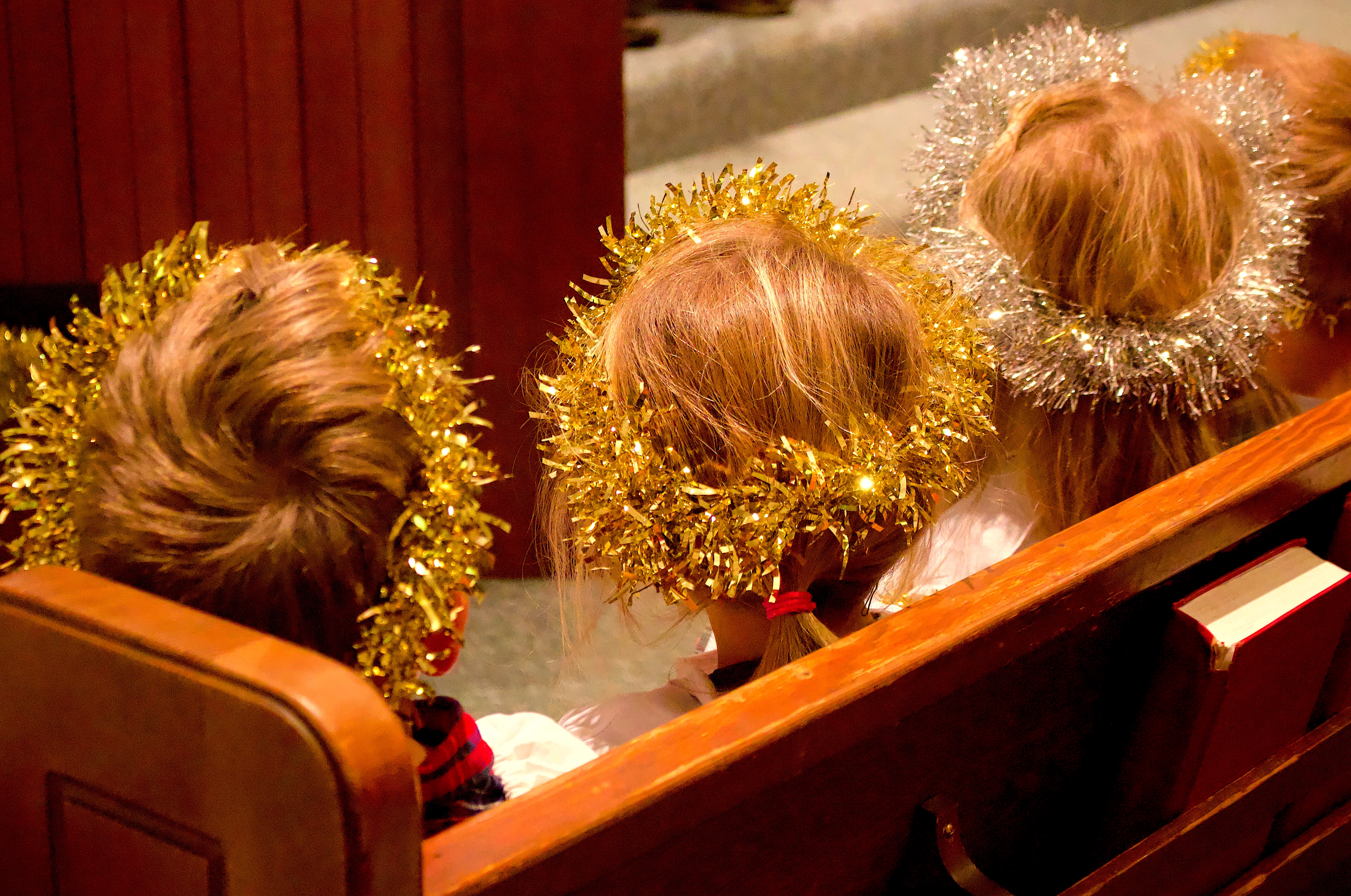
The service was a Sunday School Christmas program, with thirty some children of all ages and skin colors standing up front in bathrobes and white sheet angel gowns, wearing gold foil halos, tinfoil crowns and dish towels wrapped with string around their heads. They were prompted by their teachers through carols and readings of the Christmas story. The final song was Silent Night, sung by candle light, with each child and member of the congregation holding a lit candle. There was a moment of excitement when one girl’s long hair briefly caught fire, but after that was quickly extinguished, the evening ended in darkness, with the soft glow of candlelight illuminating faces of the young and old, some in tears streaming over their smiles.

It felt like home. We had found our church.

We’ve never left and every Sabbath day finds us back there.

Over the past 103 years, this old building has seen a few thousand people come and go, has had peeling paint and missing shingles, a basement that flooded when the rain comes down hard, toilets that didn’t always flush, and though it smells heavenly on potluck days, there are times when it can be just a bit out of sorts and musty. It really isn’t anything to boast about.

It is humble and unpretentious yet envelops its people in its loving and imperfect embrace, with warmth, character and a uniqueness that is unforgettable.

It really is not so different from the folks who have gathered there over the years.

We know we belong,
such as we are,
just as we are,
blessed by God with a place to join together.