Reconsidering the Meaning of Flag Day

I am what you make me; nothing more. I swing before your eyes as a bright gleam of color, a symbol of yourself.
~Franklin K. Lane, Secretary of the Interior, 1914 Flag Day address

Sometimes, as a child,  when I was bored, I’d grab a step ladder, pull it into our hallway, climb half way up and carefully lift the plywood hatch that was the portal to our unlit attic.  It took some effort to climb up into the attic from the ladder, juggling a flashlight at the same time, but once seated safely on the beams above our ceiling, being careful not to put my foot through the carpet of insulation, I could explore what was stowed and normally inaccessible to me.

All the usual attic-type things were put up there:  Christmas ornaments and lights,  baby cribs and high chairs,  lamps and toys no longer used.  Secrets to my parents’ past were stored away there too.  It was difficult imagining them as young children growing up on opposite sides of the state of Washington, in very different circumstances, or as attractive college students who met at a dance, or as young marrieds unencumbered by the daily responsibilities of a family.  The attic held those images and memories like a three dimensional photo album.

My father’s dark green Marine Corps cargo trunk was up there, the one that followed him from Officer Training in Quantico, Virginia, to beach and mountain battles on Tarawa, Tinian and Saipan in the South Pacific, and three years later back home again.  It had his name and rank stenciled on the side in dark black lettering.  The buckles were stiff but could be opened with effort, and in the dark attic, there was always the thrill of unlatching the lid, and shining the flashlight across the contents.  His Marine Corps dress uniform lay inside underneath his stiff brimmed cap.  There were books about protocol, and a photo album which contained pictures of “his men” that he led in his battalion, and the collection of photos my mother sent of herself as she worked as a teacher of high school students back home.

Most fascinating was a folded Japanese flag inside a small drawstring bag, made of thin white see-through cloth with the bold red sun in the middle.  Surrounding the red sun were the delicate inked characters of many Japanese hands as if painted by artists, each wishing a soldier well in his fight for the empire.  Yet there it was, a symbol of that soldier’s demise, itself buried in an American attic, being gently and curiously held by an American daughter of a Marine Corps captain.  It would occur to me in the 1960s that some of the people who wrote on this flag might still be living, and certainly members of the soldier’s family would still be living.  I asked my father once about how he obtained the flag, and he, protecting both me and himself, waved me away, saying he couldn’t remember.  I know better now.  He knew but could not possibly tell me the truth.

These flags, charms of good luck for the departing Japanese soldier as he left his neighborhood or village for war, are called Hinomaru Yosegaki (日の丸寄せ書き).  Tens of thousands of these flags came home with American soldiers; it is clear they were not the talisman hoped for.  A few of these flags are now finding their way back to their home country, to the original villages, to descendants of the lost soldiers.  So now has this flag.

Eighty years ago doesn’t seem that long, a mere drop in the river of time.  There is more than mere mementos that have flowed from the broken dam of WWII, flooding subsequent generations of Americans, Japanese, Europeans with memories that are now lost as the oldest surviving soldiers in their 90’s pass, scores of them daily, taking their stories of pain and loss and heroism with them.   My father could never talk with a person of Asian descent, Japanese or not, without being visibly uneasy. As a child, I saw and felt this from him, but heard little from his mouth.

When he was twenty two years old,  pressed flat against the rocks of Tarawa, trying to melt into the ground to become invisible to the bullets whizzing overhead, he could not have conceived that sixty five years later his twenty two year old grandson would disembark from a jumbo jet at Narita in Tokyo, making his way to an international school to teach Japanese children.  My father would have been shocked that his grandson would settle happily into a culture so foreign, so seemingly threatening, so apparently abhorrent. Yet this irony is the direct result of the horrors of that too-long horrible bloody war of devastation: Americans and Japanese, despite so many differences, have become the strongest of allies, happily exchanging the grandchildren of those bitterly warring soldiers back and forth across the Pacific.  It too was my privilege to care for Japanese exchange students daily in my University health clinic, peering intently into their open faces and never once seeing the enemy that my father feared.

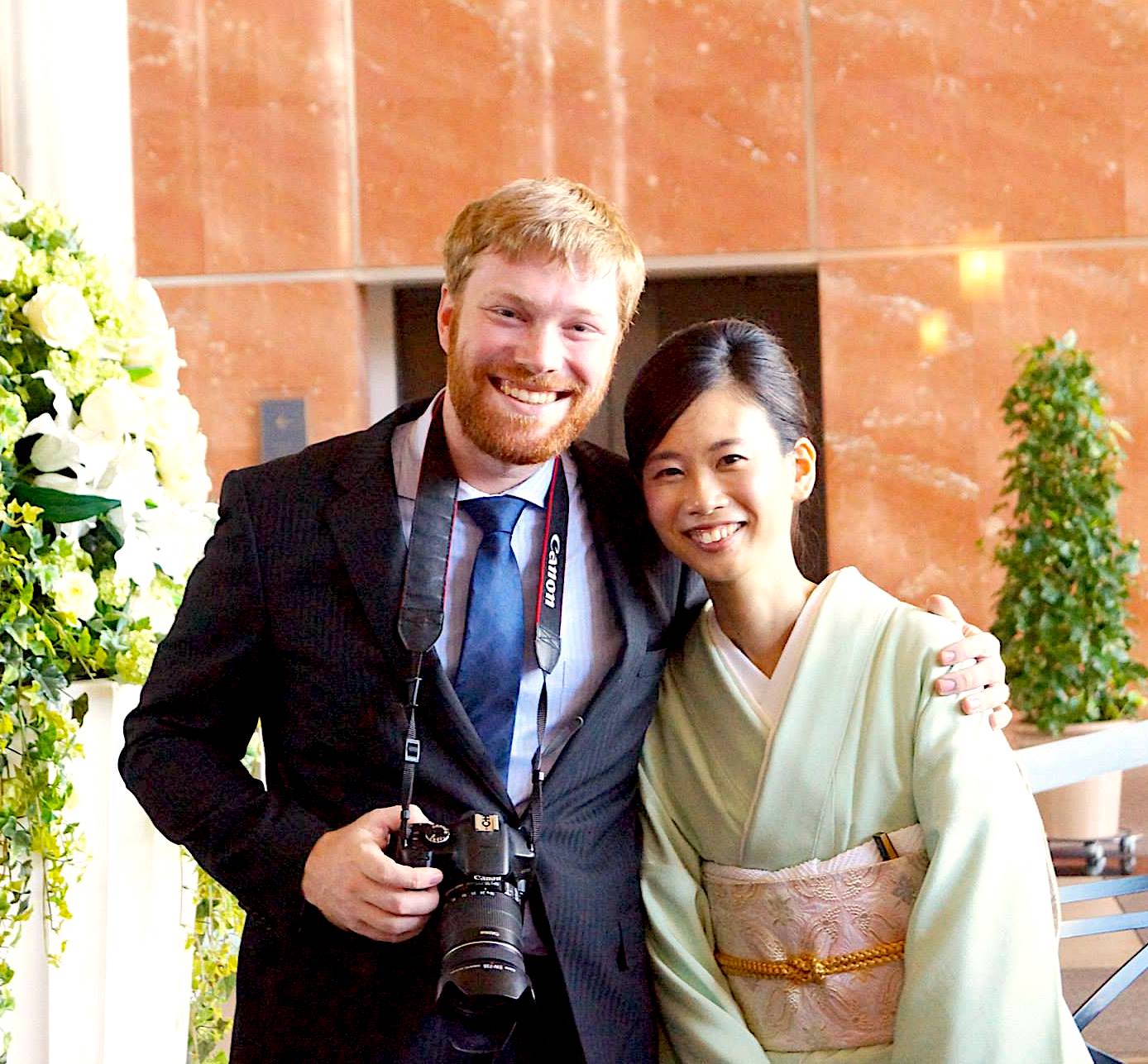
Now all these decades later, our son taught for 13 years in Tokyo, with deep admiration and appreciation for each of his students, some of whom were great-grandchildren of WWII Japanese soldiers. He married a granddaughter of those my father fought. Their two children are the perfect amalgam of once warring, yet now peaceful, cultures; a symbol of blended and blending peoples overcoming the hatred of past generations, creating a new world.

Our son and daughter-in-law, having settled their family in the States, are adapting to a different language, culture and flag. I pray our son having devoted part of his life as teacher and missionary to the land of the rising sun has redeemed his grandfather, the soldier-warrior of the past century.

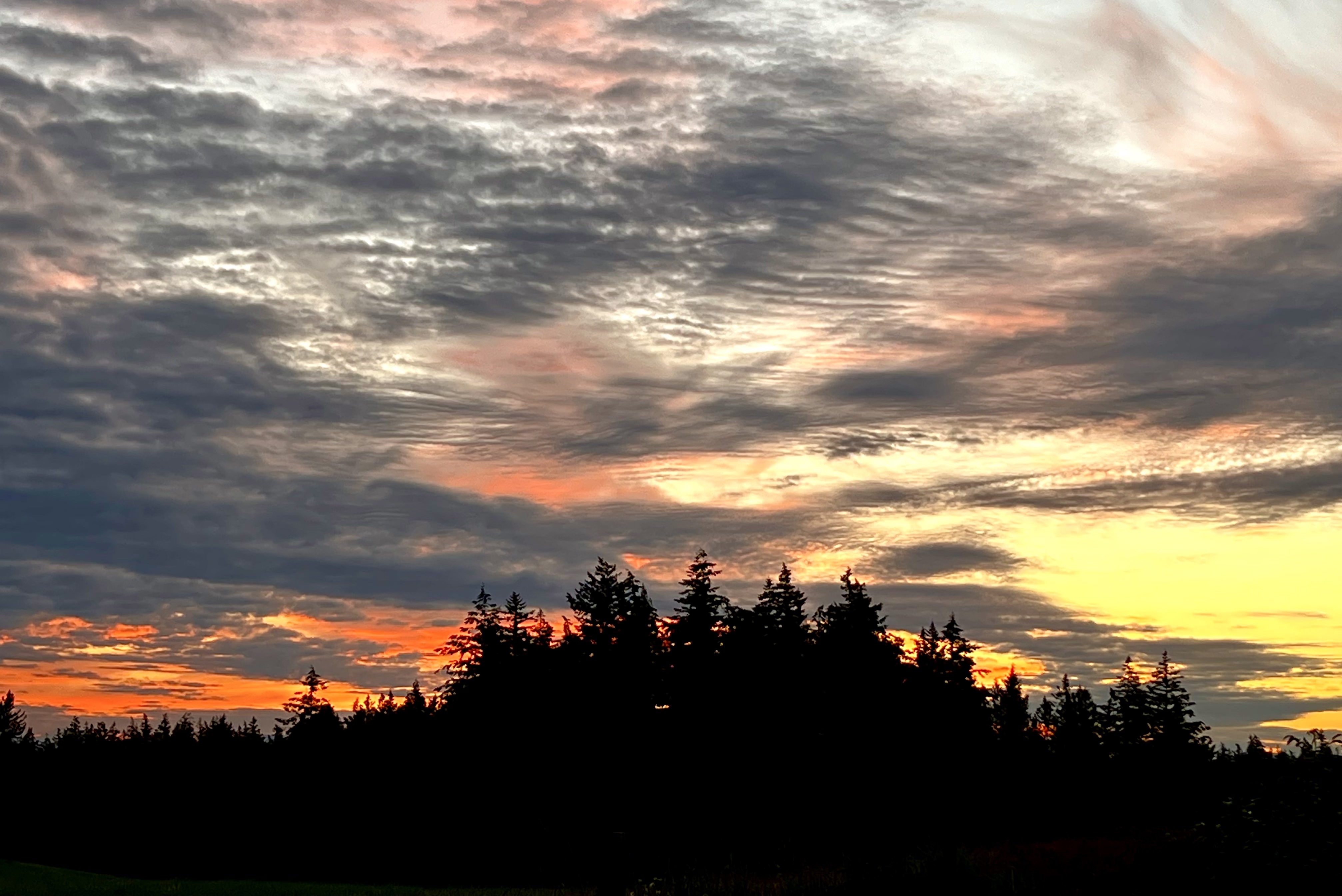
(U.S. Air Force photo by Staff Sgt. Peter Reft)
One-Time
Monthly
Yearly

Make a one-time or recurring donation to support daily Barnstorming posts

Make a monthly donation

Make a yearly donation

Choose an amount

¤10.00
¤25.00
¤50.00
¤5.00
¤15.00
¤100.00
¤5.00
¤15.00
¤100.00

Or enter a custom amount

¤

Your contribution is appreciated.

Your contribution is appreciated.

Your contribution is appreciated.

DonateDonate monthlyDonate yearly
Broken, But Not Shattered

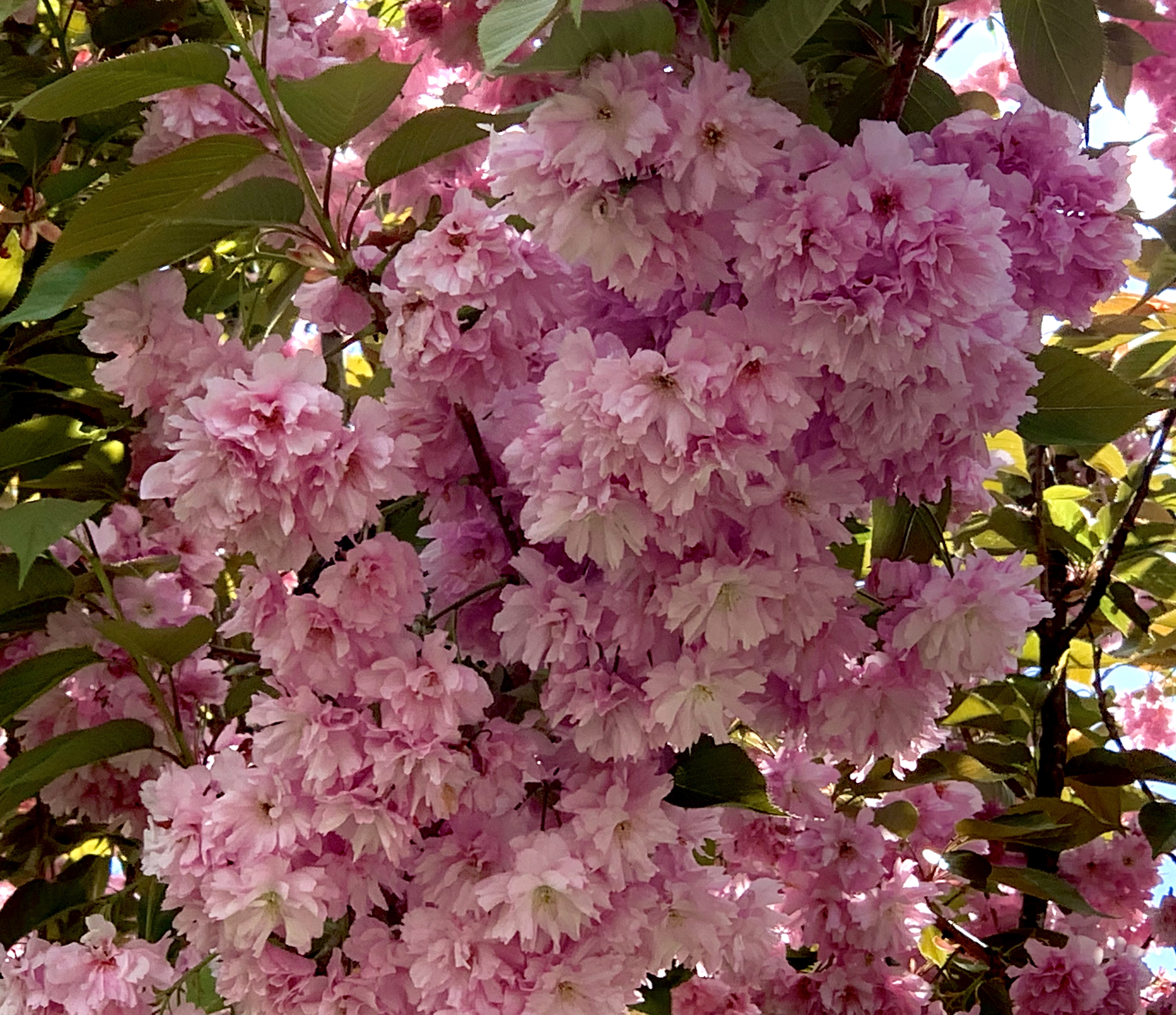
Under a cherry tree
I found a robin’s egg,
broken, but not shattered.

I had been thinking of you,
and was kneeling in the grass
among fallen blossoms

when I saw it: a blue scrap,
a delicate toy, as light
as confetti

It didn’t seem real,
but nature will do such things
from time to time.

I looked inside:
it was glistening, hollow,
a perfect shell

except for the missing crown,
which made it possible
to look inside.

What had been there
is gone now
and lives in my heart

where, periodically,
it opens up its wings,
tearing me apart.
~Phyllis Levin “End of April”

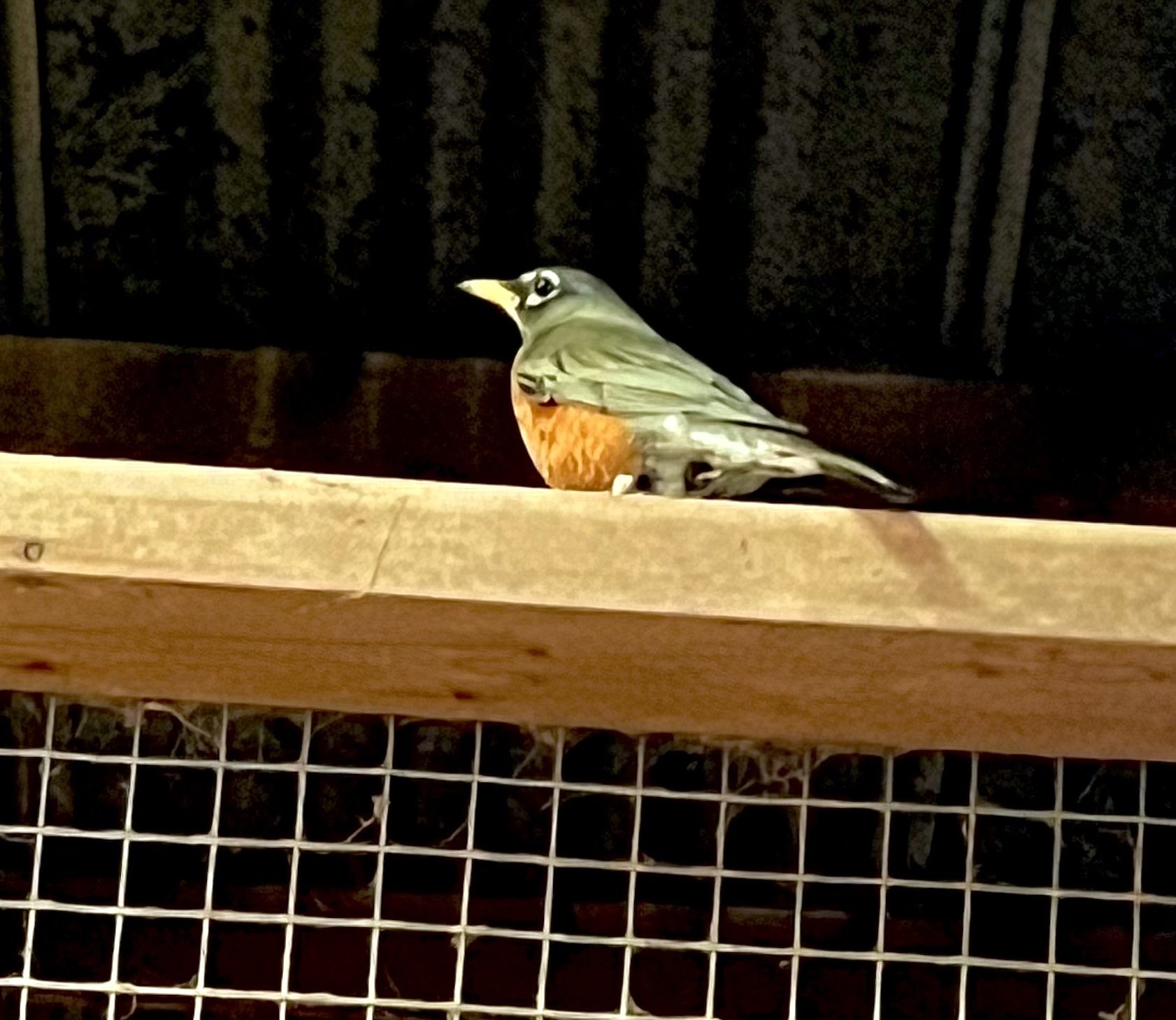
photo by Josh Scholten

The great mystery of God’s love is that we are not asked to live as if we are not hurting, as if we are not broken. In fact, we are invited to recognize our brokenness as a brokenness in which we can come in touch with the unique way that God loves us. The great call of Jesus is to put your brokenness under the blessing.
~Henri Nouwen from a Lecture at Scarritt-Bennett Center

Some say you’re lucky
If nothing shatters it.

But then you wouldn’t
Understand poems or songs.
You’d never know
Beauty comes from loss.

It’s deep inside every person:
A tear tinier
Than a pearl or thorn.

It’s one of the places
Where the beloved is born.
~Gregory Orr from Concerning the Book That Is the Body of the Beloved

Every day, as the sun goes down,
I pause, feeling a bit or a lot broken, remembering how often
I messed up that day, in big and small ways.

I’ve been cracked open, my mistakes leaking and illuminated,
weighing down my heart, impossible to forget,
ready to take wings as I pray for mercy.

With forgiveness, there follows peacefulness.
Broken, but not shattered.
Cracked, but glistening clean.

One-Time
Monthly
Yearly

Make a one-time or recurring donation to support daily Barnstorming posts

Make a monthly donation

Make a yearly donation

Choose an amount

¤10.00
¤25.00
¤50.00
¤5.00
¤15.00
¤100.00
¤5.00
¤15.00
¤100.00

Or enter a custom amount

¤

Your contribution is deeply appreciated.

Your contribution is appreciated.

Your contribution is appreciated.

DonateDonate monthlyDonate yearly

Fixing Eyes on the Unseen – An Ache Nothing Can Satisfy

At the alder-darkened brink
Where the stream slows to a lucid jet
I lean to the water, dinting its top with sweat,
And see, before I can drink,

A startled inchling trout
Of spotted near-transparency,
Trawling a shadow solider than he.
He swerves now, darting out

To where, in a flicked slew
Of sparks and glittering silt, he weaves
Through stream-bed rocks, disturbing foundered leaves,
And butts then out of view

Beneath a sliding glass
Crazed by the skimming of a brace
Of burnished dragon-flies across its face,
In which deep cloudlets pass

And a white precipice
Of mirrored birch-trees plunges down
Toward where the azures of the zenith drown.
How shall I drink all this?

Joy’s trick is to supply
Dry lips with what can cool and slake,
Leaving them dumbstruck also with an ache
Nothing can satisfy.

~Richard Wilbur “Hamlen Brook”

Weeping may tarry for the night,
    but joy comes with the morning.

Psalm 30:5

When despair for the world grows in me
and I wake in the night at the least sound
in fear of what my life and my children’s lives may be,
I go and lie down where the wood drake
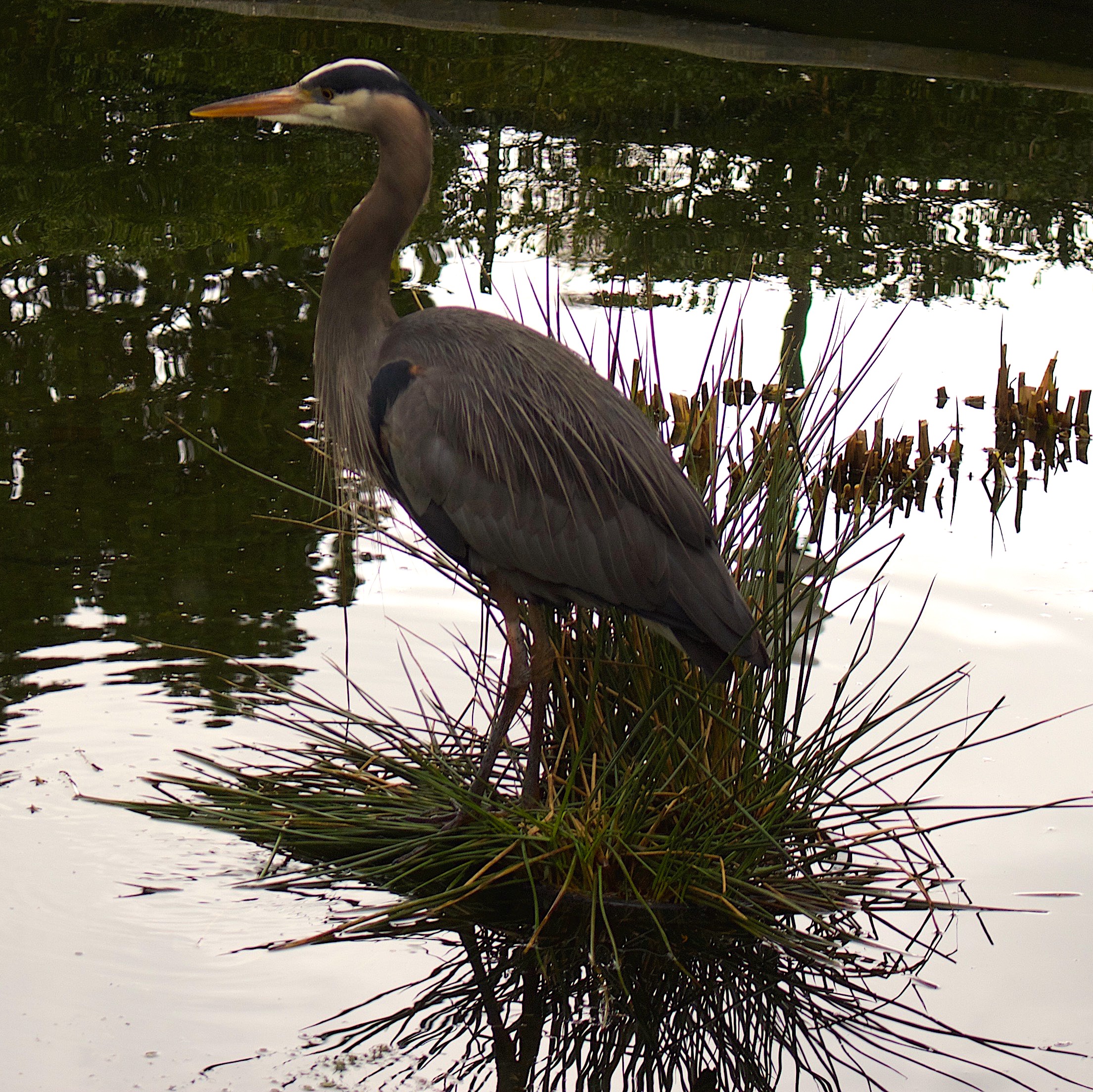
rests in his beauty on the water, and the great heron feeds.
I come into the peace of wild things
who do not tax their lives with forethought
of grief. I come into the presence of still water.
And I feel above me the day-blind stars
waiting with their light. For a time
I rest in the grace of the world, and am free.

~Wendell Berry “The Peace of Wild Things”

I too thirst for stillness – for peace and lack of worry. If only for a few minutes, I want to stand outside my own thoughts and concerns to absorb the beauty of this world. At times, the loveliness around me makes me ache, knowing there is much more than this, just out of reach.

Dumbstruck at the thought.

I know what I see here is temporary; it pales in comparison to what remains unseen and eternal. The best is yet to come. The best is forever.

Joy comes in the morning.

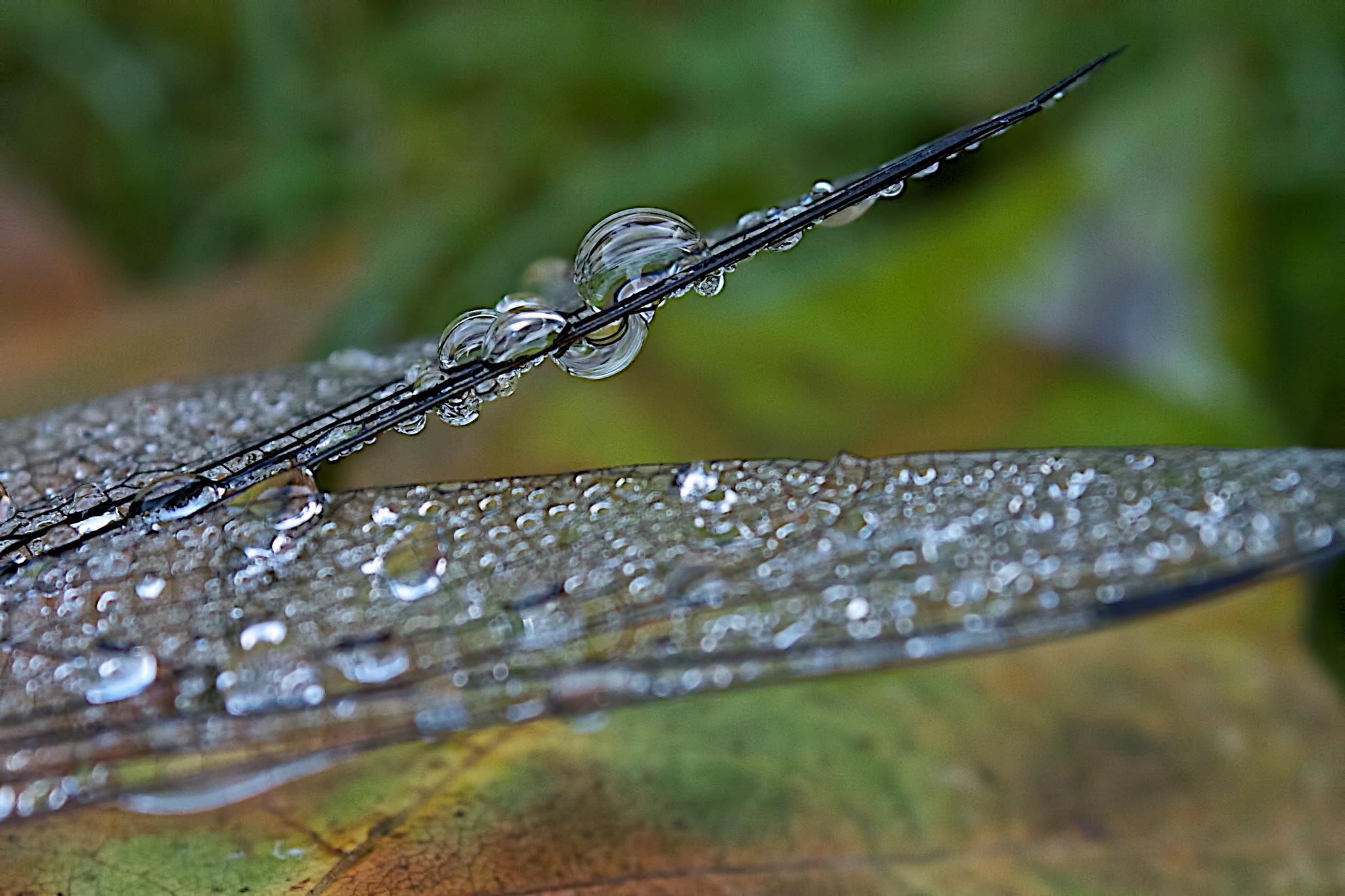
dragonfly wings photo by Josh Scholten

This year’s Barnstorming Lenten theme is taken from 2 Corinthians 4: 18:
So we fix our eyes not on what is seen, but on what is unseen, since what is seen is temporary, but what is unseen is eternal.

Fixing Eyes on the Unseen – Free to Move in Darkness

Holding the arms of his helper, the blind
Piano tuner comes to our piano.
He hesitates at first, but once he finds
The keyboard, his hands glide over the slow
Keys, ringing changes finer than the eye
Can see. The dusty wires he touches, row
On row, quiver like bowstrings as he
Twists them one notch tighter. He runs his
Finger along a wire, touches the dry
Rust to his tongue, breaks into a pure bliss
And tells us, “One year more of damp weather
Would have done you in, but I’ve saved it this
Time. Would one of you play now, please? I hear
It better at a distance.” My wife plays
Stardust. The blind man stands and smiles in her
Direction, then disappears into the blaze
Of new October. Now the afternoon,
The long afternoon that blurs in a haze
Of music…Chopin nocturnes, Clair de lune,
All the old familiar, unfamiliar
Music-lesson pieces, Papa’s Haydn’s
Dead and gone, gently down the stream
…Hours later,
After the last car has doused its beams,
Has cooled down and stopped its ticking, I hear
Our cat, with the grace of animals free
To move in darkness, strike one key only,
And a single lucid drop of water stars my dream.

~Gibbons Ruark “The Visitor”

When I was a child
I once sat sobbing on the floor
Beside my mother’s piano
As she played and sang
For there was in her singing
A shy yet solemn glory
My smallness could not hold

And when I was asked
Why I was crying
I had no words for it
I only shook my head
And went on crying

Why is it that music
At its most beautiful
Opens a wound in us
An ache a desolation
Deep as a homesickness
For some far-off
And half-forgotten country

I’ve never understood
Why this is so

But there’s an ancient legend
From the other side of the world
That gives away the secret
Of this mysterious sorrow

For centuries on centuries
We have been wandering
But we were made for Paradise
As deer for the forest

And when music comes to us
With its heavenly beauty
It brings us desolation
For when we hear it
We half remember
That lost native country

We dimly remember the fields
Their fragrant windswept clover
The birdsongs in the orchards
The wild white violets in the moss
By the transparent streams

And shining at the heart of it
Is the longed-for beauty
Of the One who waits for us
Who will always wait for us
In those radiant meadows

Yet also came to live with us
And wanders where we wander.
~Anne Porter “Music” from Living Things

photo by Lea Gibson
photo from The Olympian

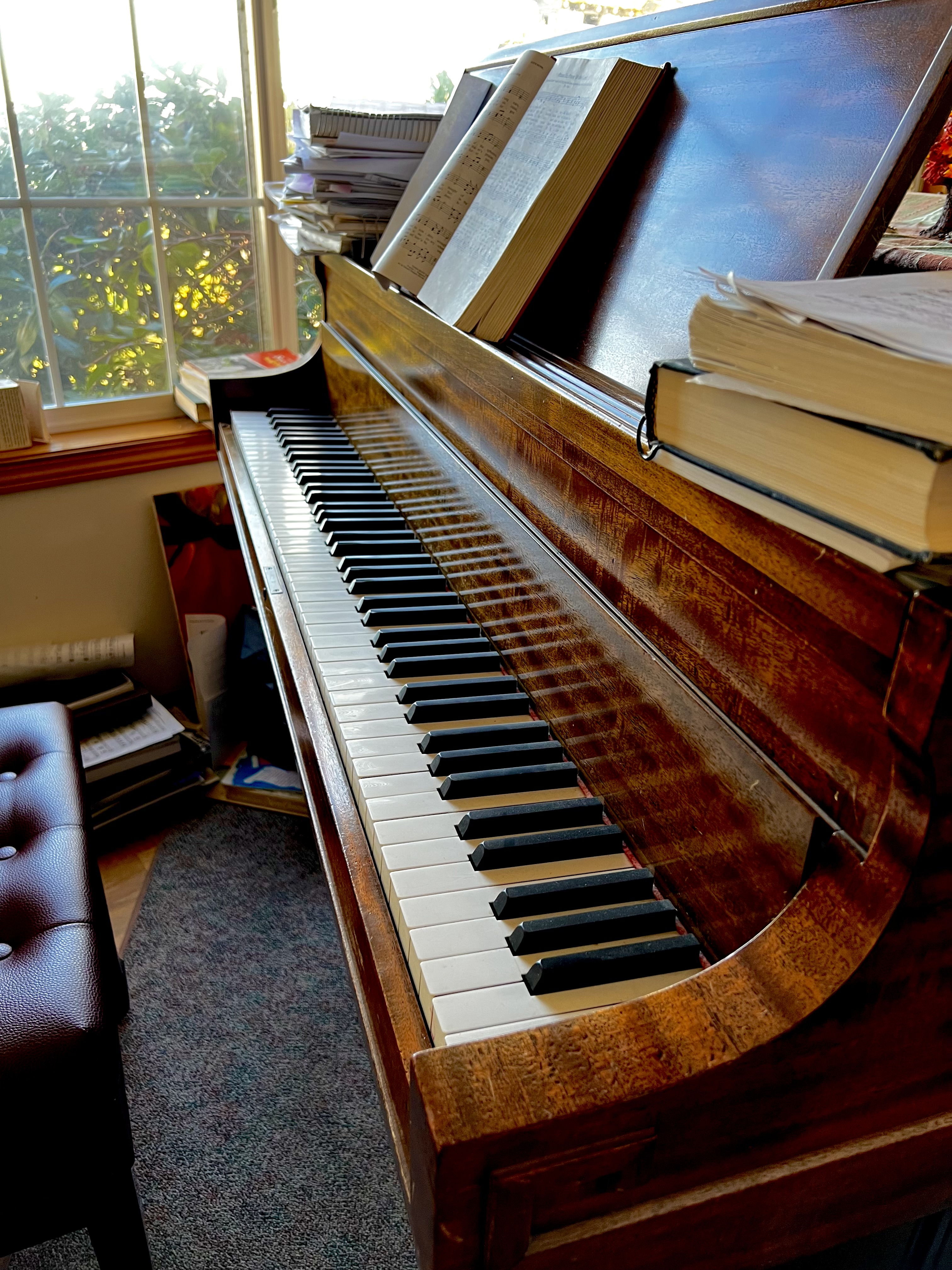
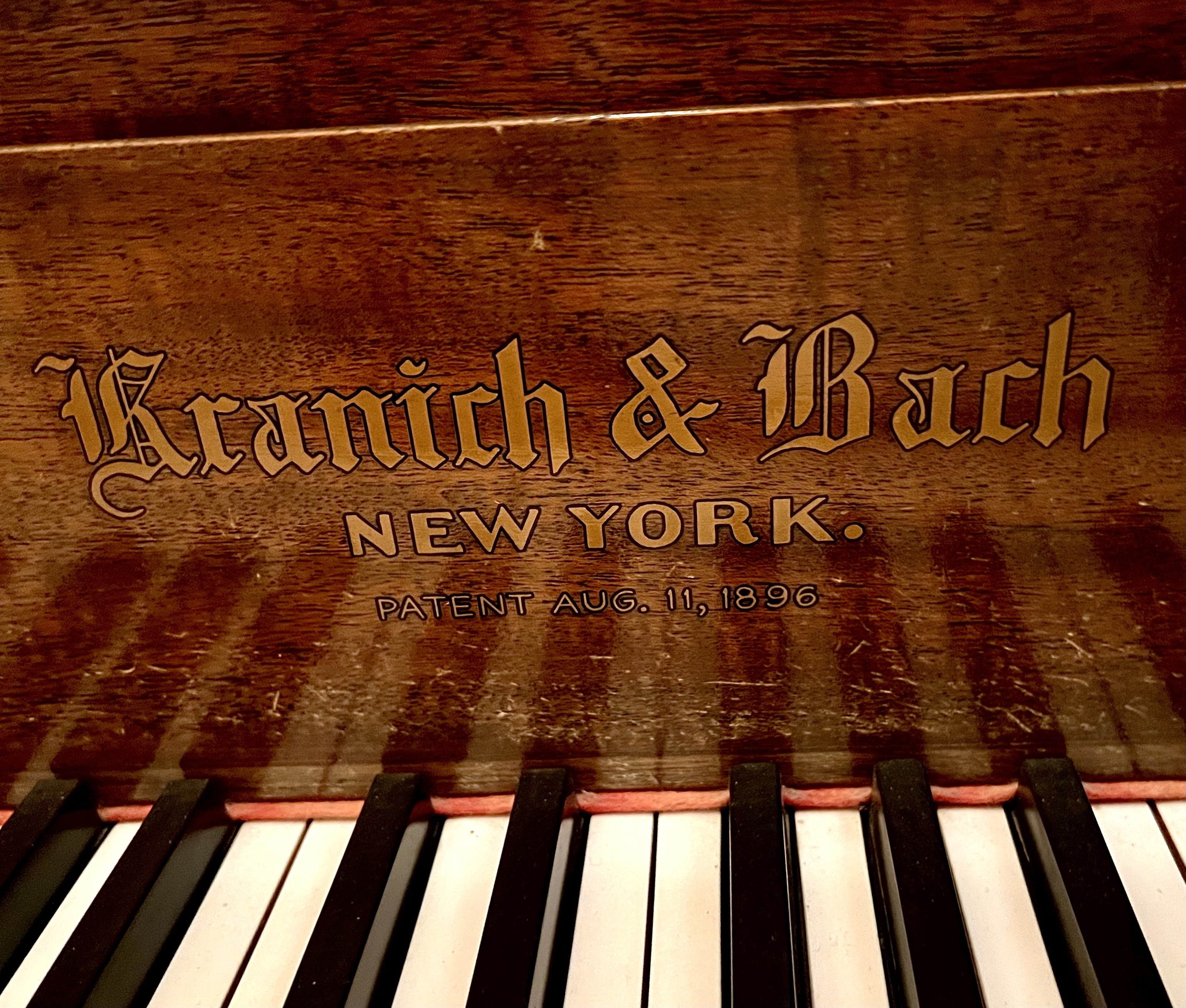
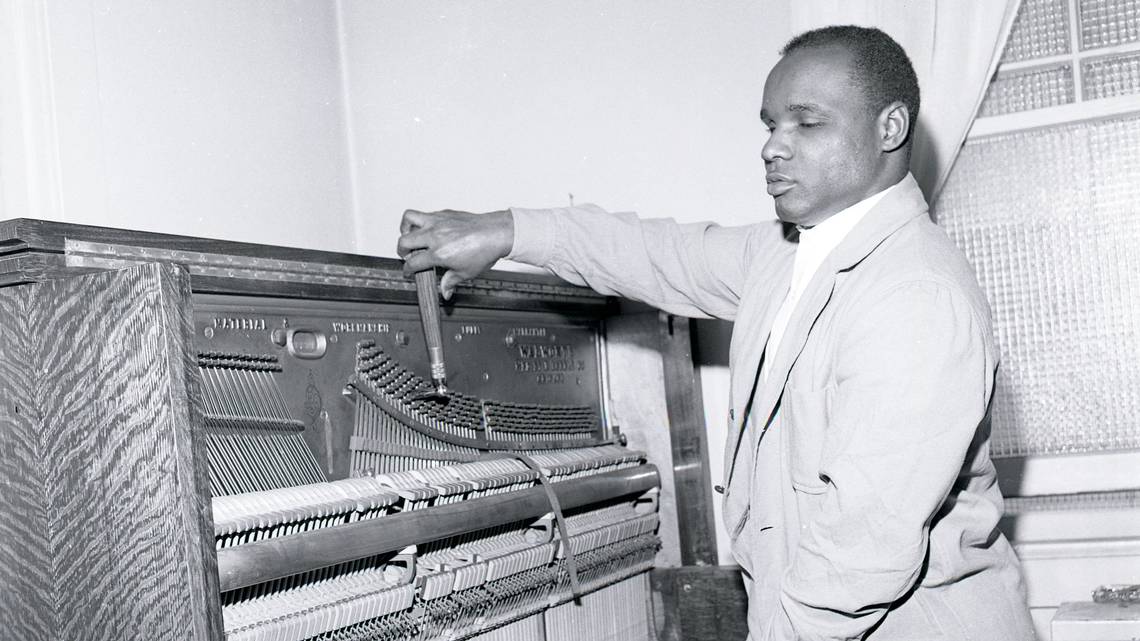
I learned today that John Grace recently died at age 92; John was the blind piano tuner who tended and tuned our family’s old Kranich & Bach baby grand through the 60’s and 70’s until it moved with me to Seattle. When I saw his photo online in The Olympian newspaper, it took me back sixty years to his annual visits to our home, accompanied by a friend who drove him to his jobs, who guided him up the sidewalk to our front door and then waited for him to finish his work.

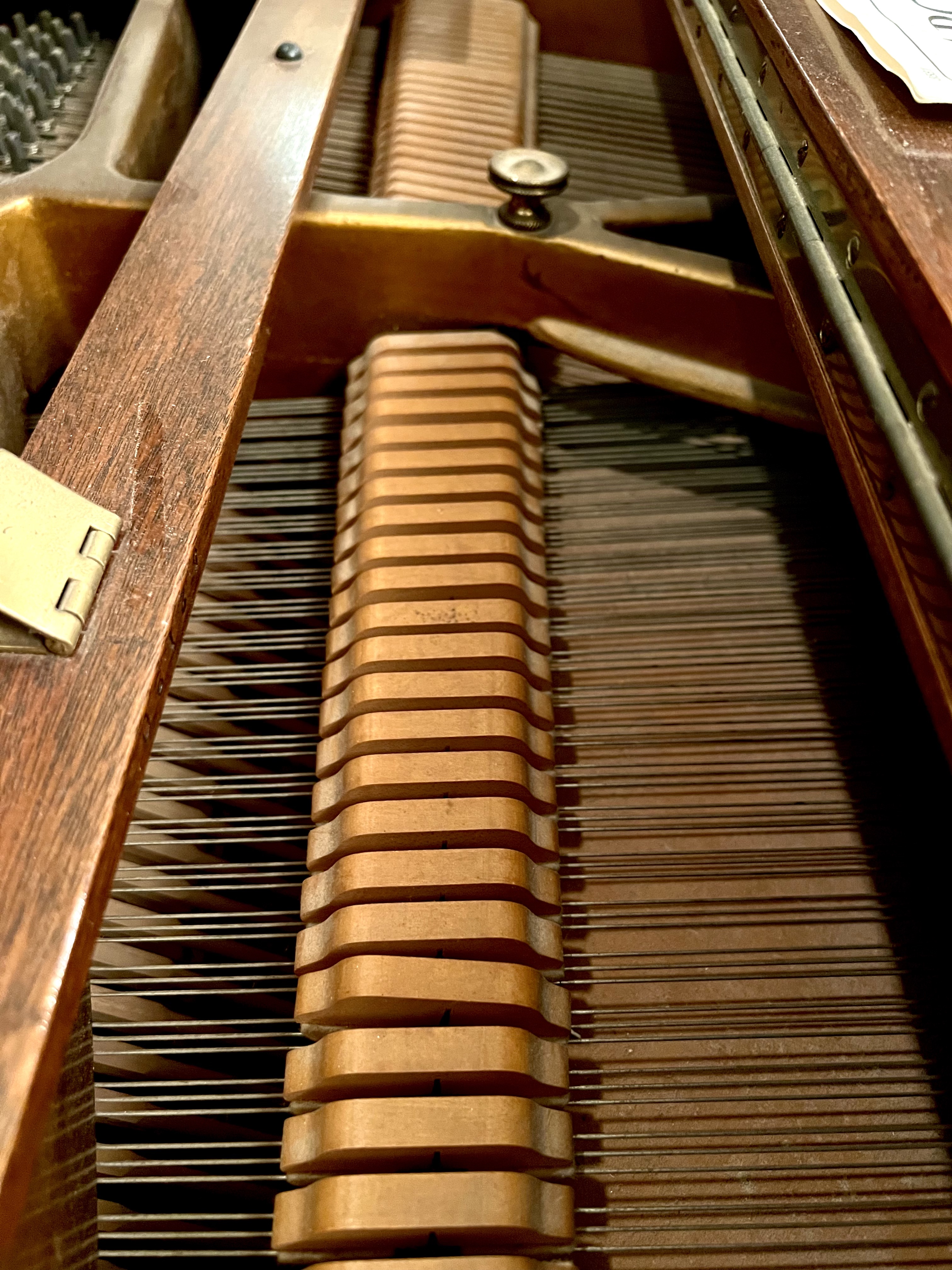
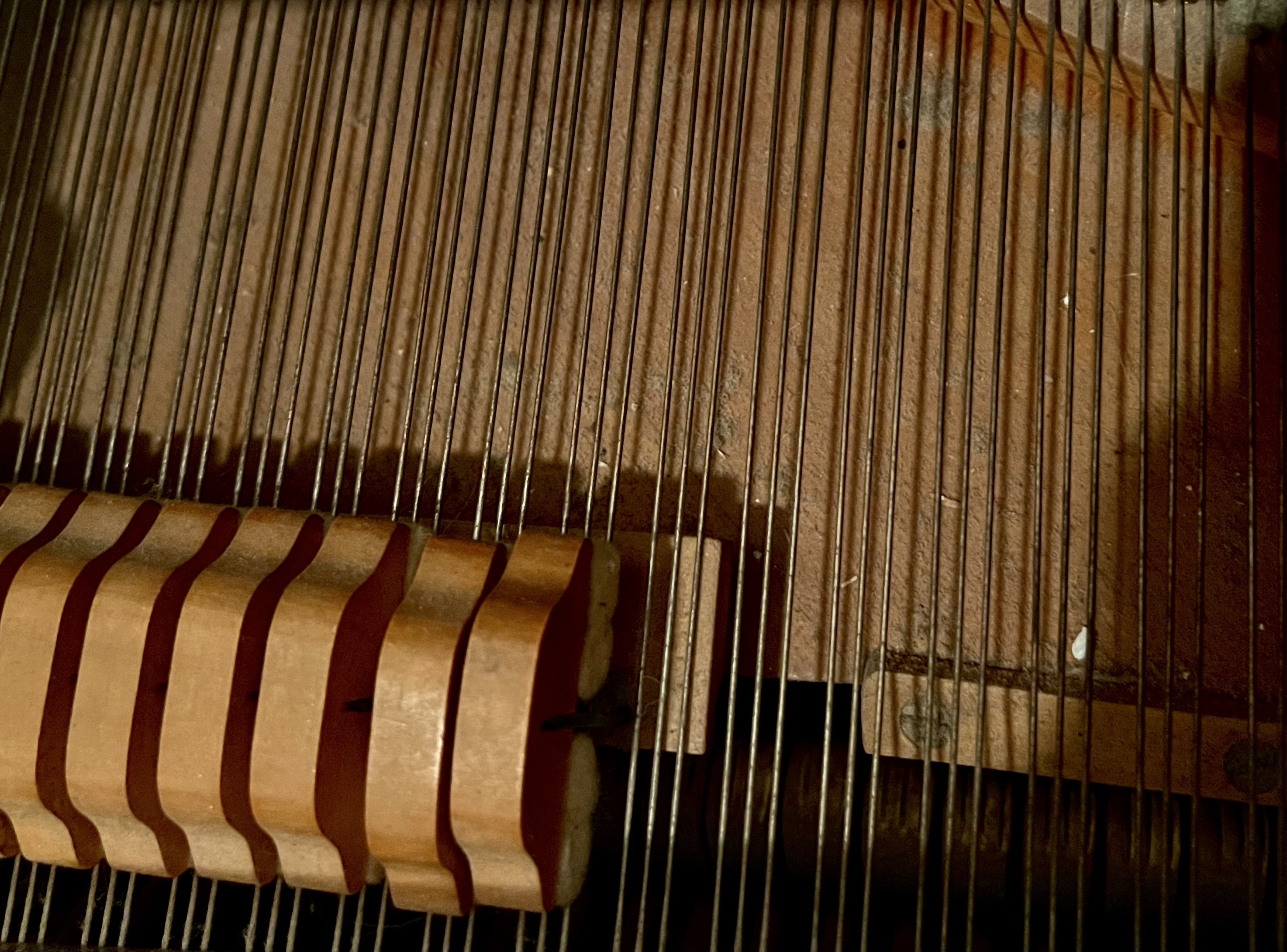
I was the 8 year old reason my great Aunt Marian had given us her beloved piano when she downsized from her huge Bellingham house into an apartment. I was fascinated watching John make the old strings sing harmonically again. He seemed right at home working on the innards of our piano, but appeared to truly enjoy ours, always ending his tuning session by sitting down on the bench and playing a familiar old hymn, smiling a broad smile.

There was no doubt his unseeing eyes made him a great piano tuner. He was fixed on the unseen, undistracted by what was unimportant to his job. He could “feel” the right pitch, not just hear it. He could sense the wire tension without seeing it. He touched the keys and wood with reverence, not distracted by the blemishes and bleaching in the mahogany, or the chips in the ivory.

I learned something about music from John, without him saying much of anything. He built a successful business in our town during a time you could count the black citizens on one hand. He spoke very little while he worked so I never asked him questions although I wish I had. It was as if he somehow transcended our troubled world through his art and skill. Though blind, when he was with a piano, he could move freely in the darkness, hearing and feeling what I could not. Perhaps it was because he was visited by a beauty and peacefulness we all long for, seen and unseen.

It occurs to me now, sixty years after observing him work, John Grace was just a step ahead in recognizing the voice of Jesus in our midst through the music he made possible.

Though he was blind, there is no doubt in my mind – he could see.

Yea when this flesh and heart shall fail
And mortal life shall cease.
I shall possess within the veil,
A life of joy and peace.

articles about John Grace:

https://www.thurstontalk.com/2014/08/27/olympia-piano-tuner-john-grace/

https://amp.theolympian.com/news/local/article272572635.html

photo by Josh Scholten

This year’s Barnstorming Lenten theme is taken from 2 Corinthians 4: 18:
So we fix our eyes not on what is seen, but on what is unseen, since what is seen is temporary, but what is unseen is eternal.

A New Definition of Greatness

…if I respond to hate with a reciprocal hate I do nothing but intensify the cleavage in broken community. I can only close the gap in broken community by meeting hate with love. If I meet hate with hate, I become depersonalized, because creation is so designed that my personality can only be fulfilled in the context of community.
Booker T. Washington was right: “Let no man pull you so low as to make you hate him.”

~Martin Luther King, Jr.

As nightfall does not come at once, neither does oppression.
In both instances, there is a twilight when everything remains seemingly unchanged.
And it is in such twilight that we all must be most aware of change in the air
– however slight – lest we become unwitting victims of the darkness.
~William O. Douglas
from The Douglas Letters

Be careful whom you choose to hate.
The small and the vulnerable own a protection great enough,
if you could but see it,
to melt you into jelly.

~Leif Enger from Peace Like a River

We have a new definition of greatness:
it means that everybody can be great, because everybody can serve. 
You don’t have to have a college degree to serve. 
You don’t have to make your subject and your verb agree to serve. 
You don’t have to know about Plato and Aristotle to serve. 
You don’t have to know Einstein’s theory of relativity to serve. 
You don’t have to know the second theory of thermodynamics in physics to serve. 
You only need a heart full of grace, a soul generated by love. 
And you can be that servant.
~Martin Luther King, Jr.  in a February 1968 sermon:  “The Drum Major Instinct” from A Knock At Midnight: Inspiration from the Great Sermons of Reverend Martin Luther King, Jr.

Dr. King’s words and wisdom in his sermons spoken over sixty years ago continue to inform us of our shortcomings as we flounder in flaws and brokenness. To often we resist considering others before ourselves, to serve one another out of humility, grace and love.

Today we unite in shared tears:
shed for continued strife and disagreements,
shed for the injustice that results in senseless emotional and physical violence,
shed for our inability to hold up one another as a holy in God’s eyes.

We weep together as the light dawns today, knowing, as Dr. King knew, a new day will come when the Lord God wipes the tears away from the remarkable and beautiful faces of all people — as all are created in His image.

Dawn on our Darkness: Fleeing the Wrath, Shouldering the Load

We think of him as safe beneath the steeple,
Or cosy in a crib beside the font,
But he is with a million displaced people
On the long road of weariness and want.
For even as we sing our final carol
His family is up and on that road,
Fleeing the wrath of someone else’s quarrel,
Glancing behind and shouldering their load.
Whilst Herod rages still from his dark tower
Christ clings to Mary, fingers tightly curled,
The lambs are slaughtered by the men of power,
And death squads spread their curse across the world.
But every Herod dies, and comes alone
To stand before the Lamb upon the throne.

~Malcolm Guite “Refugee”

Photo by Pixabay on Pexels.com

We kill at every step, not only in wars, riots, and executions. We kill when we close our eyes to poverty, suffering, and shame. In the same way all disrespect for life, all hard heartedness, all indifference, and all contempt is nothing else than killing. With just a little witty skepticism we can kill a good deal of the future in a young person. Life is waiting everywhere, the future is flowering every­where, but we only see a small part of it and step on much of it with our feet.
~Hermann Hesse, from Vivos Voco, 1919

For centuries, too many people have had to make the choice of living (and likely dying) oppressed in the midst of conflict and war or they attempt their escape to an uncertain fate on the other side of a border, a fence, or a turbulent sea. Some are given no options and are sold into slavery, taken where their captors wish, or have been rounded up and forced to live far from their ancestral homes.

Some of us descend from people who made the difficult decision to escape war, or hunger, or oppression, or extreme poverty. We live and thrive by the grace and mercy of God to these ancestors.

This God was a refugee Himself, fleeing from a king who sought Him dead. This God knows what it is like to be hated and pursued. He knows the wrath and cruelty of His fellow man.

This God has a name, He has a face and a voice and it is He who ultimately holds our fate in His hands.

This God is not forgotten nor has He forgotten us. He will return to forever banish the darkness surrounding us.

This year’s Advent theme “Dawn on our Darkness” is taken from this 19th century Christmas hymn:

Brightest and best of the sons of the morning,
dawn on our darkness and lend us your aid.
Star of the east, the horizon adorning,
guide where our infant Redeemer is laid.
~Reginald Heber -from “Brightest and Best”

One-Time
Monthly
Yearly

Make a one-time or recurring donation to support daily Barnstorming posts

Make a monthly donation

Make a yearly donation

Choose an amount

¤10.00
¤20.00
¤50.00
¤5.00
¤15.00
¤100.00
¤5.00
¤15.00
¤100.00

Or enter a custom amount

¤

Your contribution is deeply appreciated.

Your contribution is appreciated.

Your contribution is appreciated.

DonateDonate monthlyDonate yearly

Dawn on our Darkness: It Might Have Been Otherwise

I got out of bed
on two strong legs.
It might have been
otherwise. I ate
cereal, sweet
milk, ripe, flawless
peach. It might
have been otherwise.
I took the dog uphill
to the birch wood.
All morning I did
the work I love.
At noon I lay down
with my mate. It might
have been otherwise.
We ate dinner together
at a table with silver
candlesticks. It might
have been otherwise.
I slept in a bed
in a room with paintings
on the walls, and
planned another day
just like this day.
But one day, I know,
it will be otherwise.
~Jane Kenyon “Otherwise”

I watched her cooking, from my chair.
She pressed her lips
Together, reached for kitchenware,
And tasted sauce from her fingertips.

“It’s ready now. Come on,” she said.
“You light the candle.”
We ate, and talked, and went to bed,
And slept. It was a miracle.

~Donald Hall from “Summer Kitchen” in The Selected Poems of Donald Hall.

I tend to get complacent in my daily routines, confident in the knowledge that tomorrow will be very much like yesterday. The distinct blessings of an ordinary day are lost in the rush of moving forward to whatever comes next so that I lose touch with what miracles are happening in the here and now.

The reality is there is nothing ordinary about the events of this day or any other –
it might have been otherwise and some day it will be otherwise.

Advent is an opportunity to stop the rushing, take a look around and actually revel in the quiet moments of daily work, chats, walks, meals, and sleep. Even the current constant of someone in the family being sick with one or more viruses, interrupting plans and schedules, can’t interrupt how remarkable it is to just be here together.

We are granted peace despite the stress of illness.

Jane Kenyon wrote much of her best poetry with the knowledge she was dying of leukemia. Her work reminds me that I don’t need a terminal diagnosis to appreciate the blessings of each ordinary moment. Her poet husband, Donald Hall, wrote verse from his perspective of cherishing the time he had left with his wife, living as if each day were his last day with her.

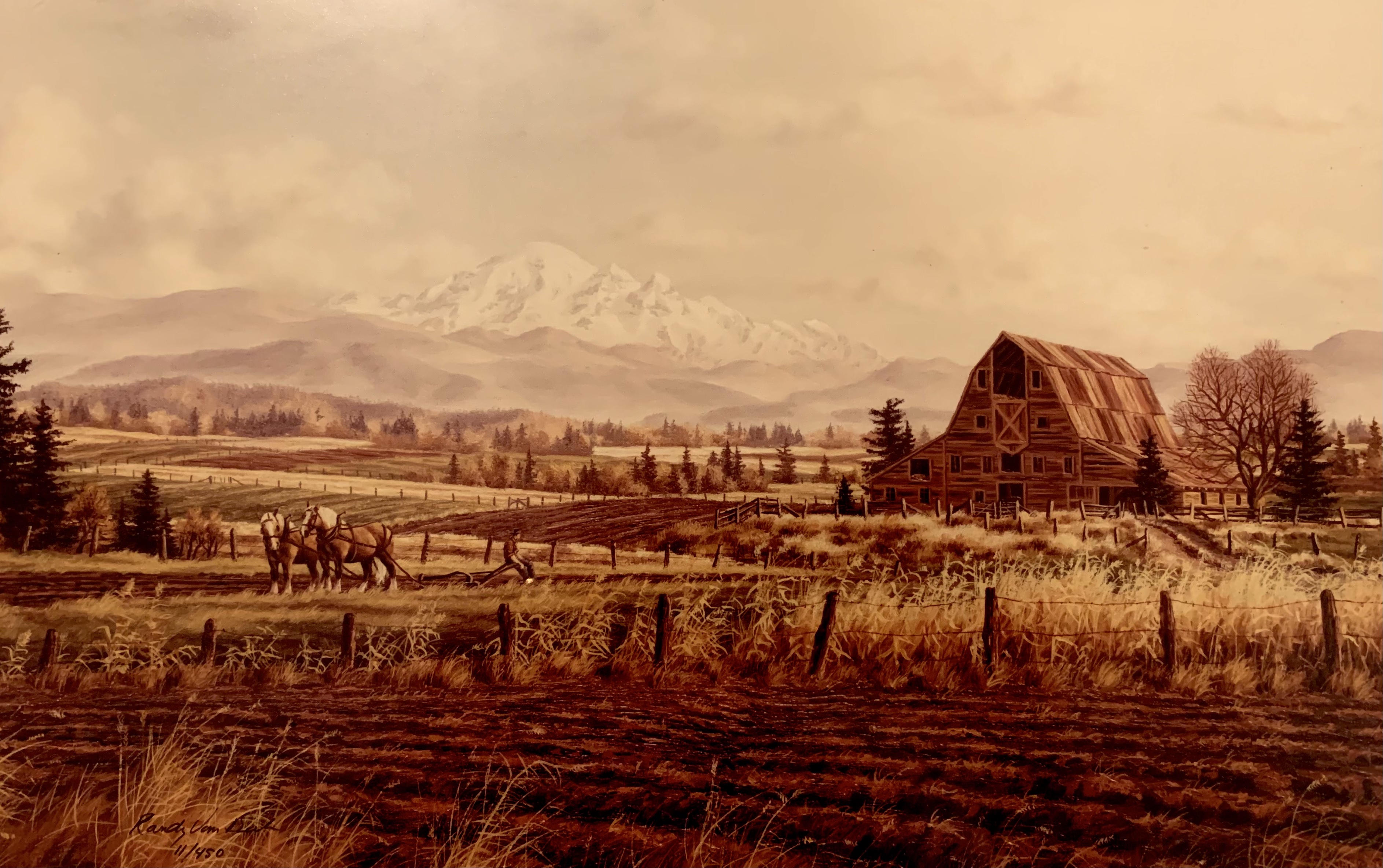
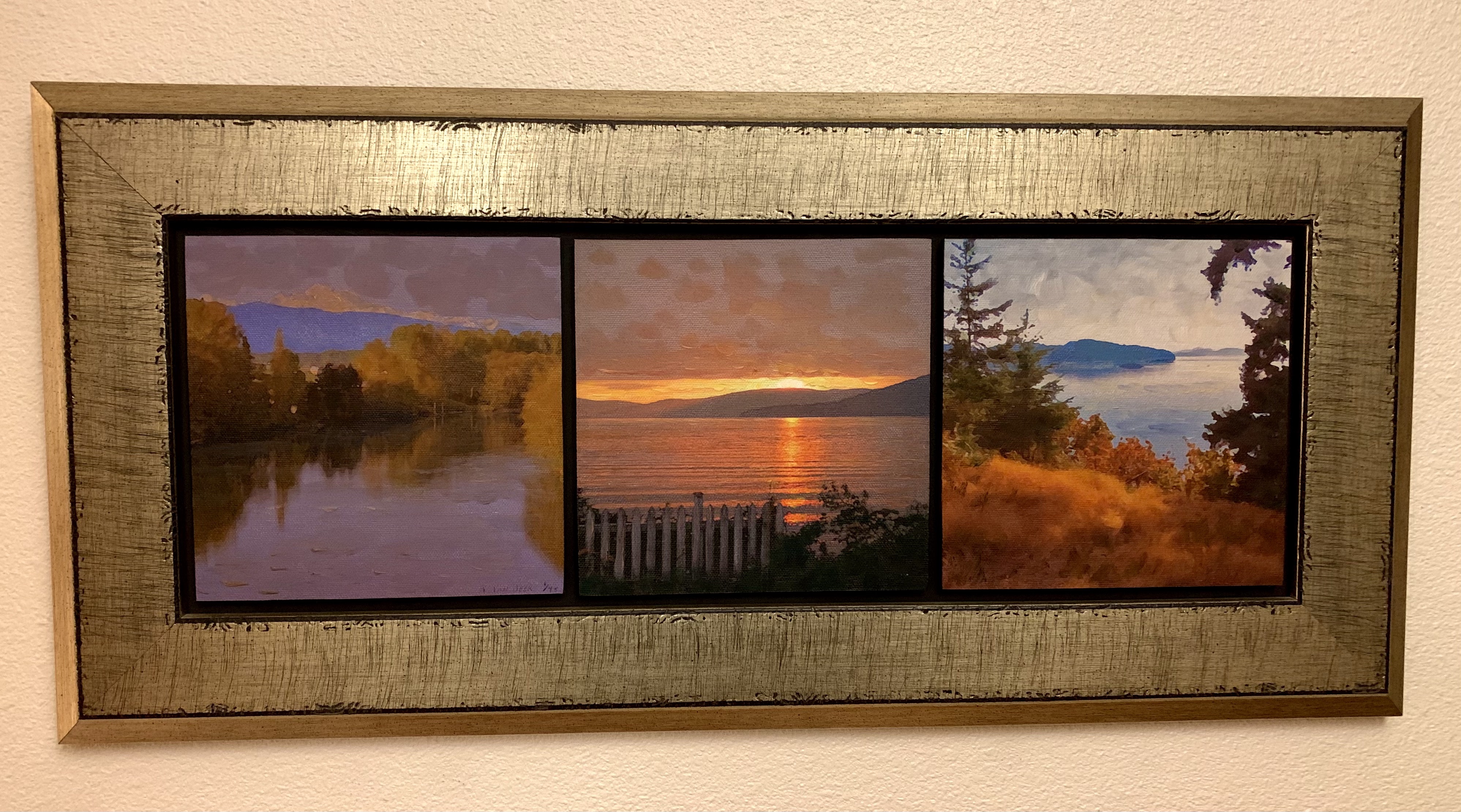
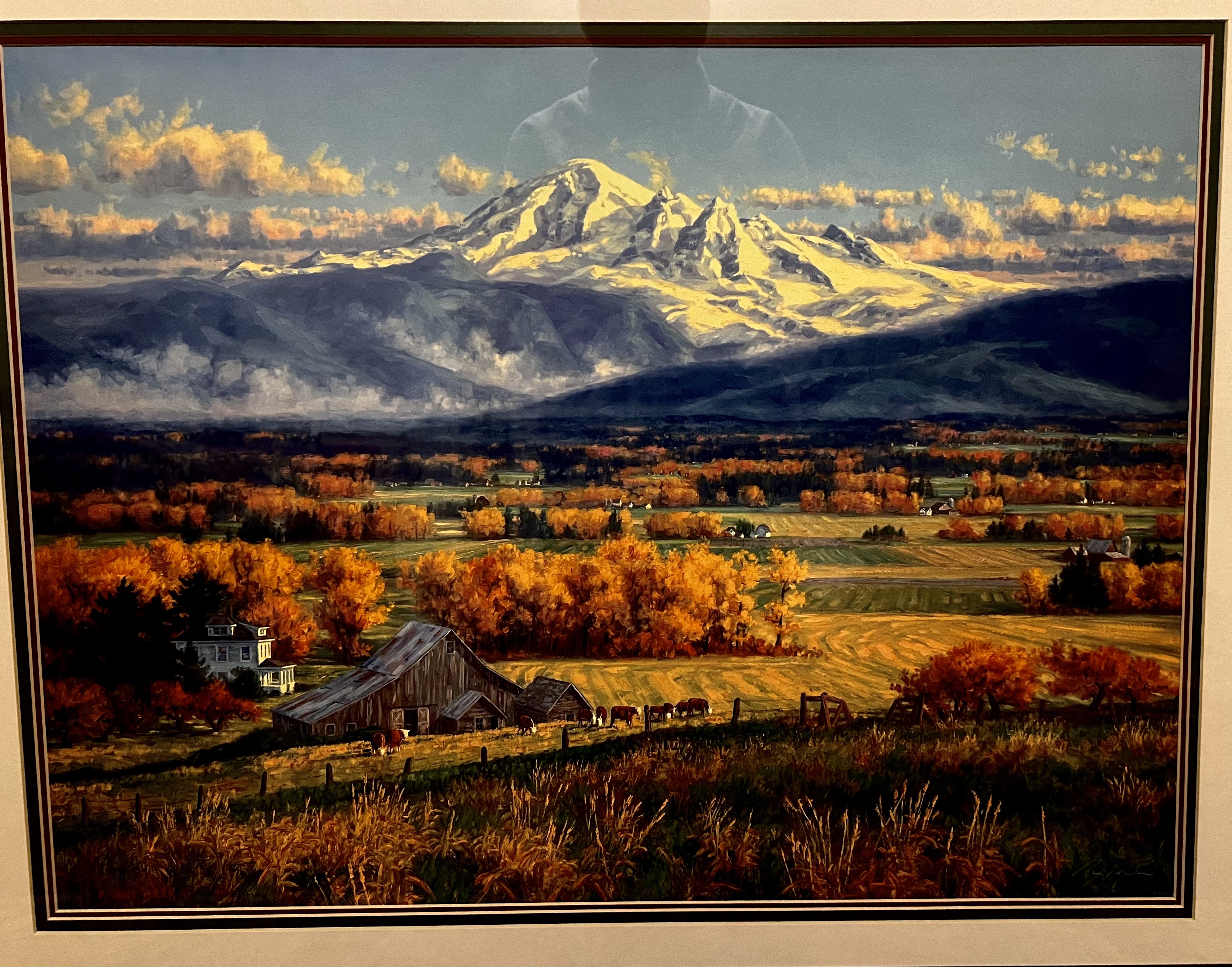
Like Jane’s “paintings on the walls,” on foggy gray days like today, I can gaze at our landscape paintings by local artist Randy Van Beek depicting an idealized serenity that I only sometimes feel. They depict the blessings just outside my windows.

I simply need to pay attention.

Christ came to earth to remind us to dwell richly in the experience of these moments, those sweet peaches and cream of daily life, while they are happening. God knows, the little miracles are a foretaste of the heaven which is to come.

This year’s Advent theme “Dawn on our Darkness” is taken from this 19th century Christmas hymn:

Brightest and best of the sons of the morning,
dawn on our darkness and lend us your aid.
Star of the east, the horizon adorning,
guide where our infant Redeemer is laid.
~Reginald Heber -from “Brightest and Best”

One-Time
Monthly
Yearly

Make a one-time or recurring donation to support daily Barnstorming posts

Make a monthly donation

Make a yearly donation

Choose an amount

¤10.00
¤20.00
¤50.00
¤5.00
¤15.00
¤100.00
¤5.00
¤15.00
¤100.00

Or enter a custom amount

¤

Your contribution is deeply appreciated.

Your contribution is appreciated.

Your contribution is appreciated.

DonateDonate monthlyDonate yearly
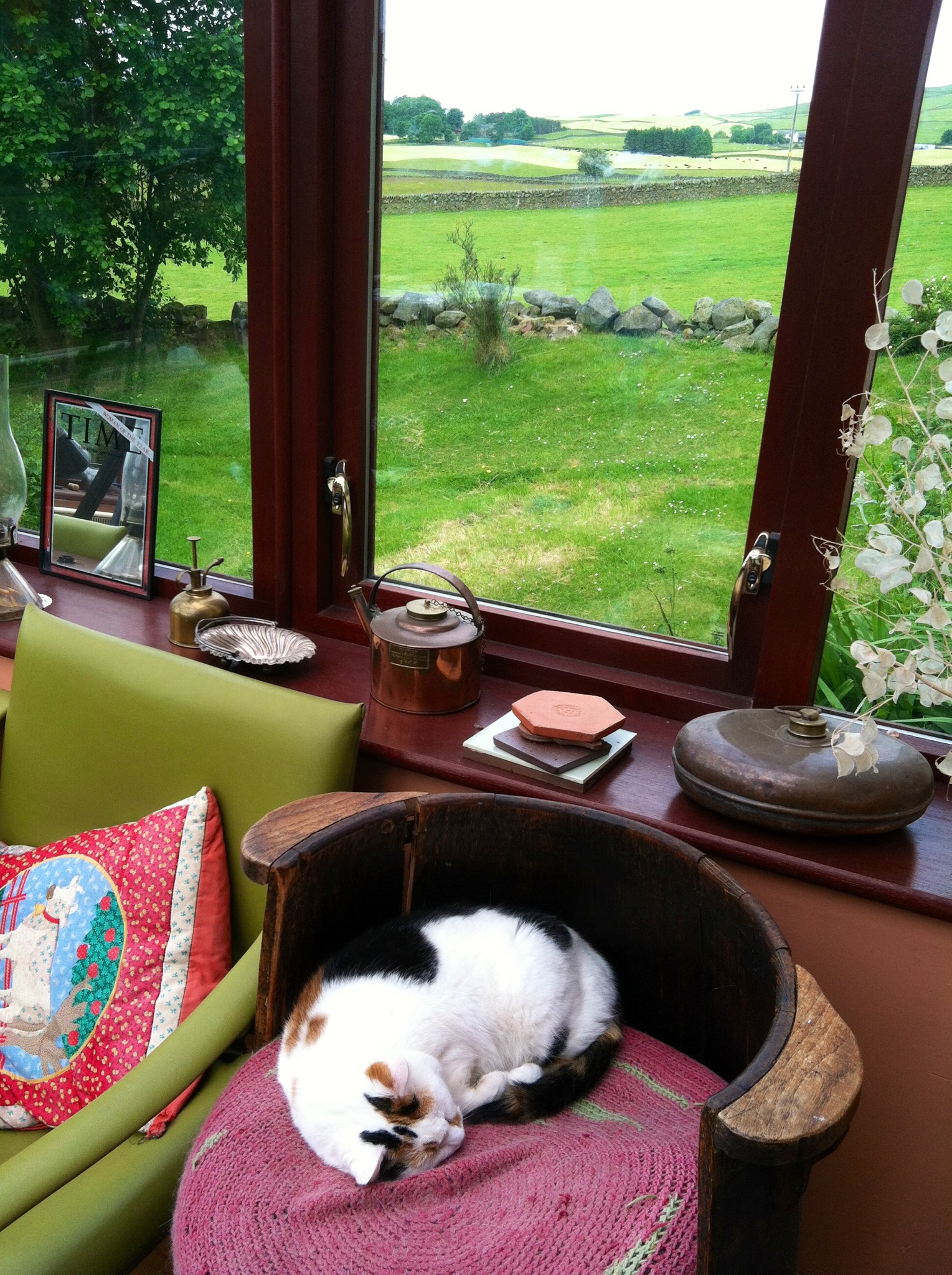
Just Closing My Eyes For a Bit

I count it as a certainty that in paradise, everyone naps. 
~Tom Hodgkinson

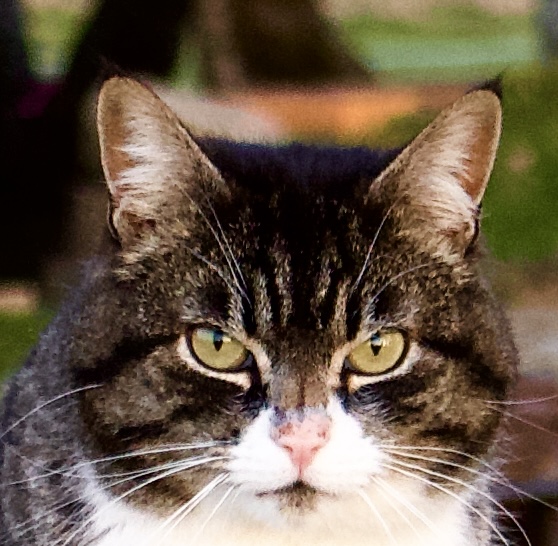
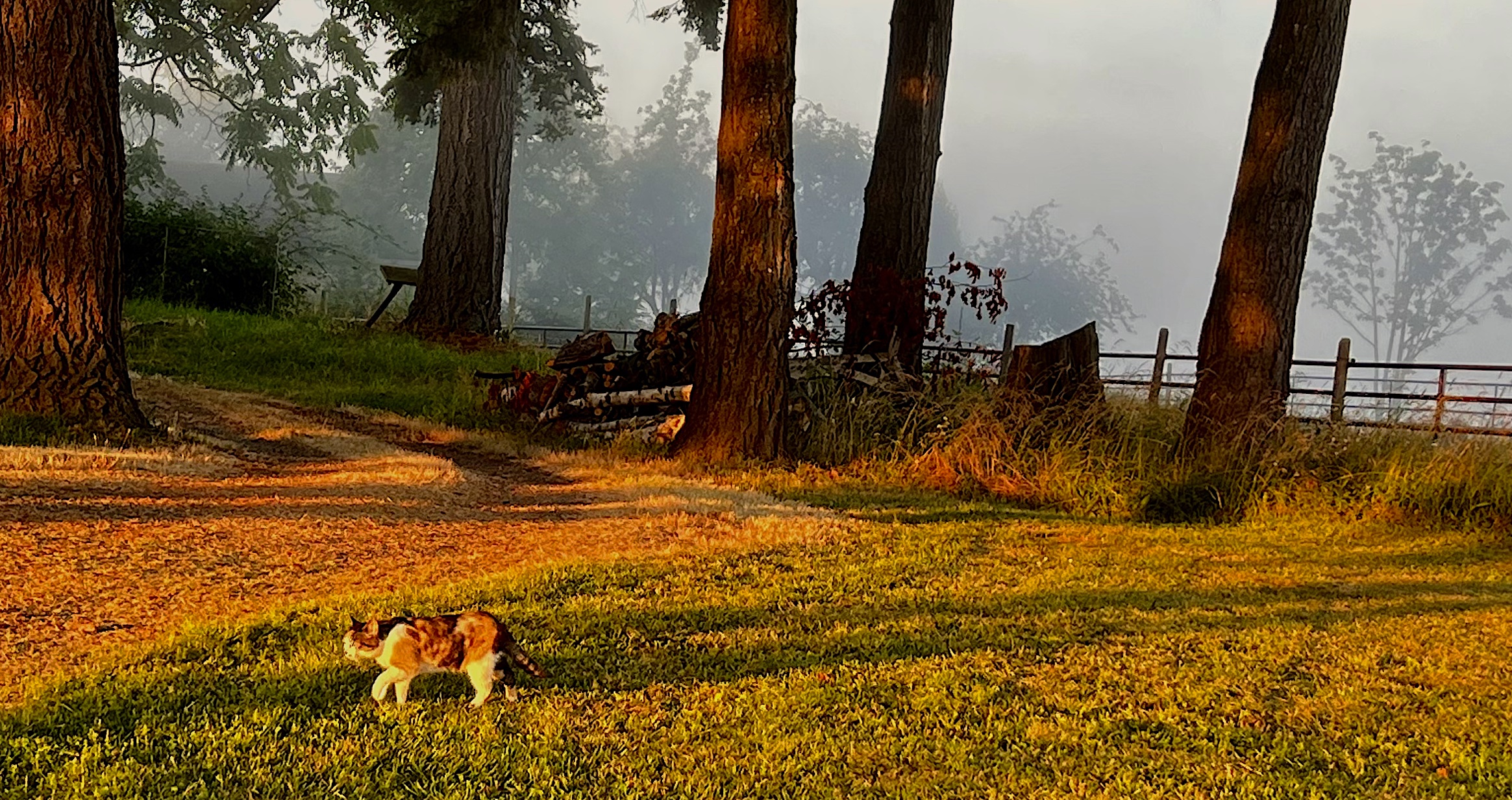
Like a graceful vase, a cat, even when motionless, seems to flow. 
~George F. Will

A slight breeze stirs tree branches
so shadow patterns play on the curtains
like candlelight in a drafty room.

The harvest is over, corn
stubble and weeds in the field. The sky is

soft blue, a few clouds in the distance.

I will close my eyes, nap for
a while. Perhaps when I wake all will seem
the same. Sleep plays tricks in many ways.
~Matthew Spireng “Late August, Lying Down to Nap at Noon”

I believe the world would be a better place if we all could stop in the middle of the day and just rest our eyes for awhile — to look at the inside of our eyelids for a few minutes, to pause, to pray, to purr with contentment…

perchance to dream.   Aye, there’s the rub.

Perhaps, we might wake with a new perspective and an improved attitude. Works like a charm for our grandchildren.

And for me as well…

One-Time
Monthly
Yearly

Make a one-time or recurring donation to support daily Barnstorming posts

Make a monthly donation

Make a yearly donation

Choose an amount

¤5.00
¤10.00
¤20.00
¤5.00
¤15.00
¤100.00
¤5.00
¤15.00
¤100.00

Or enter a custom amount

¤

Your contribution is deeply appreciated.

Your contribution is appreciated.

Your contribution is appreciated.

DonateDonate monthlyDonate yearly
The Shadow of the Mercy of Light

How long does it take to make the woods?
As long as it takes to make the world.
The woods is present as the world is, the presence
of all its past, and of all its time to come.
It is always finished, it is always being made, the act
of its making forever greater than the act of its destruction.
It is a part of eternity, for its end and beginning
belong to the end and beginning of all things,
the beginning lost in the end, the end in the beginning.

What is the way to the woods, how do you go there?
By climbing up through the six days’ field,
kept in all the body’s years, the body’s
sorrow, weariness, and joy. By passing through
the narrow gate on the far side of that field
where the pasture grass of the body’s life gives way
to the high, original standing of the trees.
By coming into the shadow, the shadow
of the grace of the strait way’s ending,
the shadow of the mercy of light.

Why must the gate be narrow?
Because you cannot pass beyond it burdened.
To come in among these trees you must leave behind
the six days’ world, all of it, all of its plans and hopes.
You must come without weapon or tool, alone,
expecting nothing, remembering nothing,
into the ease of sight, the brotherhood of eye and leaf.
~Wendell Berry, “Sabbath 1985 V”

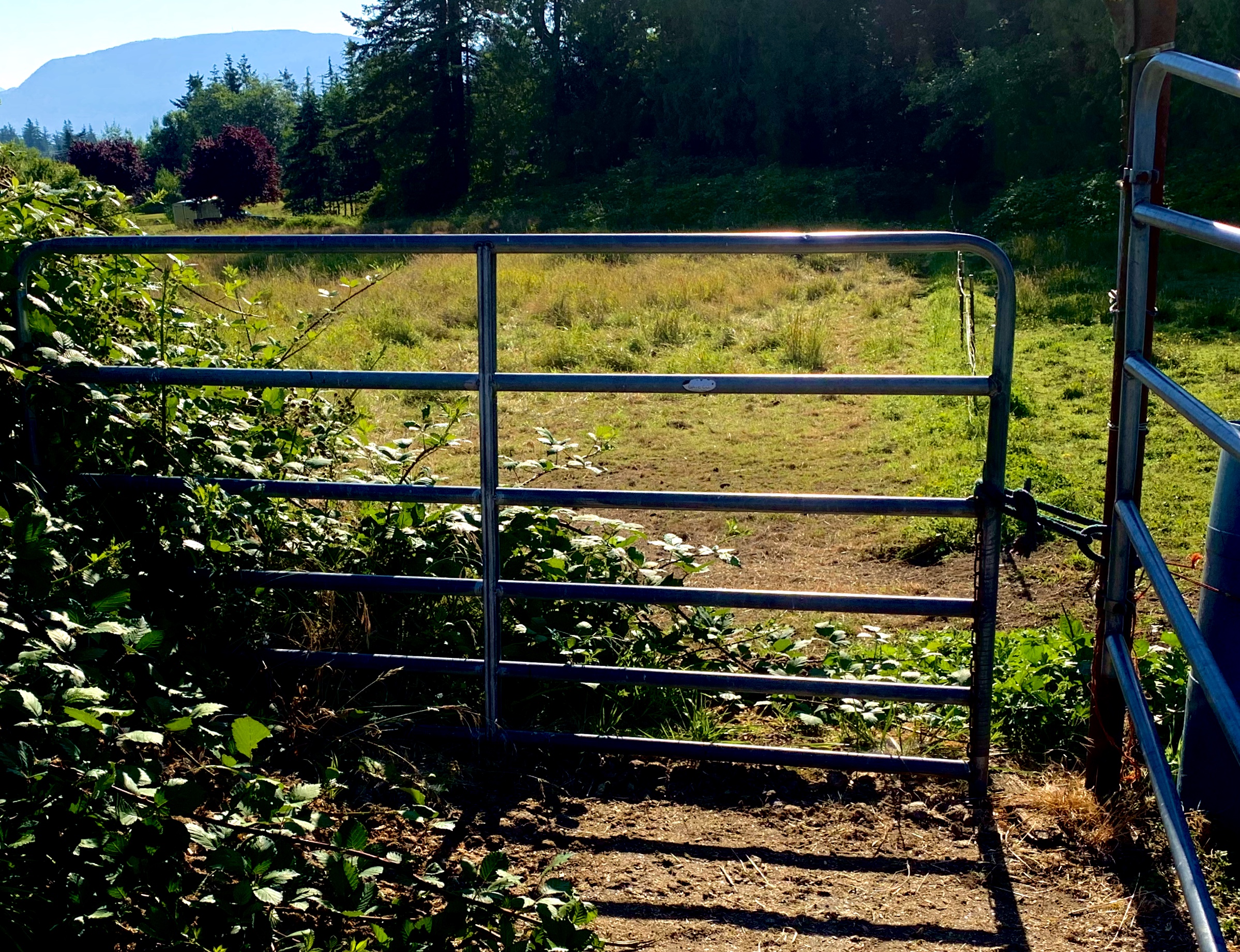
We who live in the six day world, walking the six day path to the narrow gate forget too quickly about the seventh day Sabbath. The meaning of our existence is not defined by how much we accomplish in the week, or how capable we are at carrying our burdens.

We are invited to walk through the narrow way, where worries and heavy loads cannot fit the opening.

Passing through shadow is part of reaching the light. The mercy of the shadow is — then we know light exists.

Light beyond shadow, Joy beyond tears,
Love that is greater when darkest our fears;
deeper the Peace when the storm is around,
nearer the Hope to the lost who is found.
Light of the world, ever shining, shining!

Hope in our pain and our dying. in our darkness,
there is Light, in our crying, there is Love,
in the noise of life imparting Peace that passes understanding.

Light beyond shadow, Joy beyond tears,
Love that is greater when darkest our fears;
deeper the Peace when the storm is around,
nearer the Hope to the lost who is found.
-Paul Wigmore

One-Time
Monthly
Yearly

Make a one-time or recurring donation to support daily Barnstorming posts

Make a monthly donation

Make a yearly donation

Choose an amount

¤5.00
¤10.00
¤20.00
¤5.00
¤15.00
¤100.00
¤5.00
¤15.00
¤100.00

Or enter a custom amount

¤

Your contribution is deeply appreciated.

Your contribution is appreciated.

Your contribution is appreciated.

DonateDonate monthlyDonate yearly
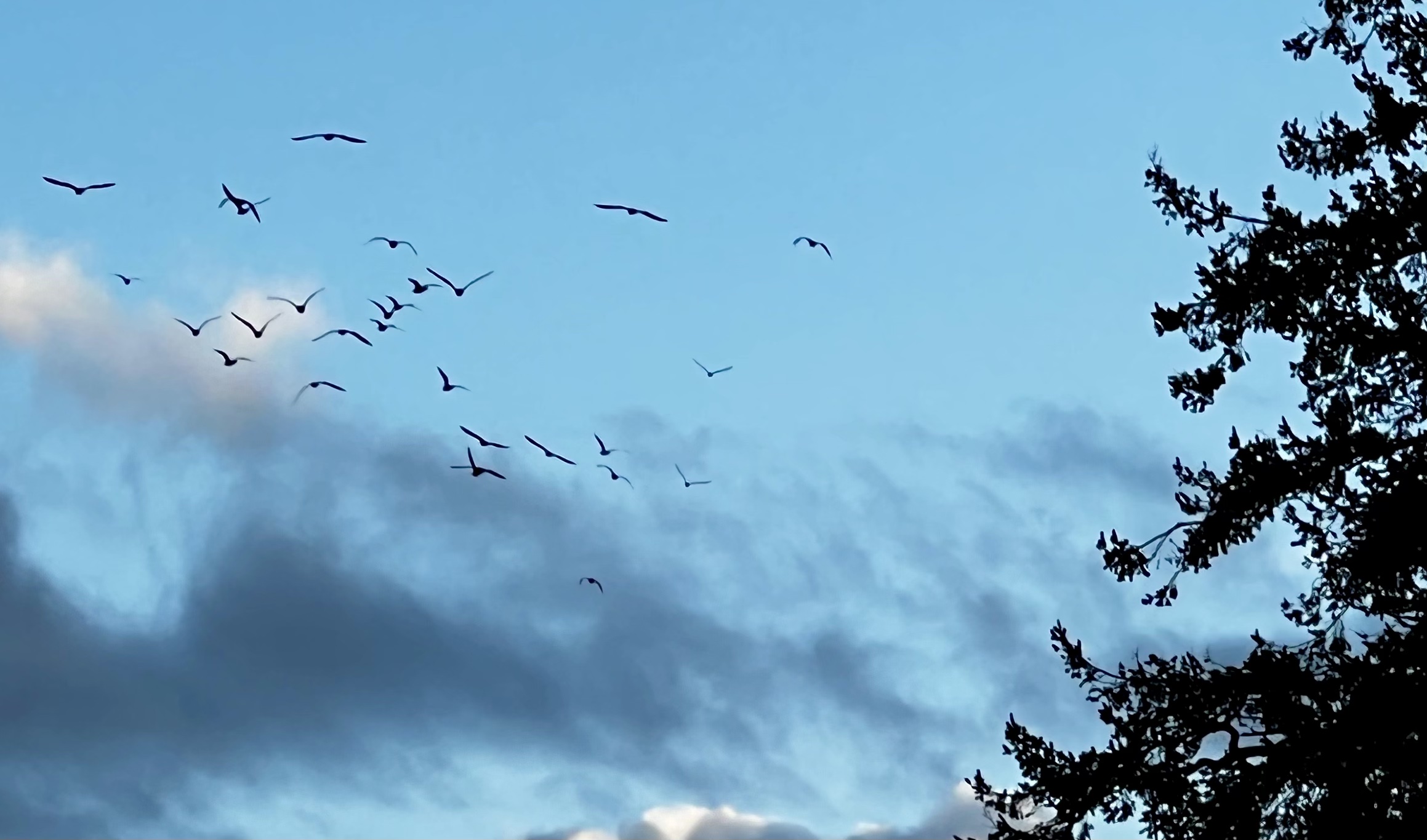
Astonished

It’s an early summer day, going to be a hot one.
I’m away from home, I’m working; the sky is solidly blue
with just a chalk smear of clouds. So why this melancholy?
Why these blues? Nothing I’ve done seems to matter; I
could leave tomorrow and no one would notice, that’s how
invisible I feel. But look, there’s a pair of cardinals
on the weathered table, pecking at sunflower seeds
which I’ve brought from home. They don’t seem
particularly grateful. Neither does the sky, no matter
how I transcribe it. I wanted to do more in this life,
not the elusive prizes, but poems that astonish. A big flashy jay
lands on the table, scattering seeds and smaller birds.
They regroup, continue to hunt and peck on the lawn.
~Barbara Crooker, “Melancholia” from Some Glad Morning

When despair for the world grows in me
and I wake in the night at the least sound
in fear of what my life and my children’s lives may be,
I go and lie down where the wood drake
rests in his beauty on the water, and the green heron feeds.

I come into the peace of wild things
who do not tax their lives with forethought
of grief. I come into the presence of still water.
And I feel above me the day-blind stars
waiting with their light. For a time
I rest in the grace of the world, and am free.
~Wendell Berry “The Peace of Wild Things” from The Selected Poems of Wendell Berry

I lay awake last night worrying over our son and his family’s ten hour overnight flight from Tokyo. Our two young grandchildren arrive today after 30 months of pandemic separation – to them, we are just faces on a screen.

We go soon to collect them from half-way around the world where they said a sorrowful sayonara to grandparents and family there, arriving here to a new life, new language, new everything, with their worldly belongings in suitcases.

From the largest city in the world to our little corner of the middle of nowhere.

I will watch them discover for themselves
the joys and sorrows of this world.
When I look through their eyes,
I will be reminded there is light beyond the darkness I fear,
there is peace amid the chaos,
there is a smile behind the tears,
there is stillness within the noisiness
there is rest despite my restlessness,
there is grace as old gives way to new.

I do not need to do anything astonishing myself.
Astonishing happens all around me.

I need only notice and cherish it.

One-Time
Monthly
Yearly

Make a one-time donation

Make a monthly donation

Make a yearly donation
Choose an amount

$5.00
$15.00
$100.00
$5.00
$15.00
$100.00
$5.00
$15.00
$100.00

Or enter a custom amount

$

Your contribution is appreciated.

Your contribution is appreciated.

Your contribution is appreciated.

DonateDonate monthlyDonate yearly