Some days, words simply don’t come. I am stilled and plain – silent in darkness. God is in the depth of these empty hours. He is there – waiting alongside me.
Advent 2023 theme …because of the tender mercy of our God, whereby the sunrise shall visit us from on high to give light to those who sit in darkness and in the shadow of death, to guide our feet into the way of peace. Luke 1: 78-79 from Zechariah’s Song
One-Time
Monthly
Yearly
Make a one-time or recurring donation to support daily ad-free Barnstorming posts
The night after she returned from the hospital the uneven rumbly liquid breathing of one soon
to go under kept me at the surface of thoughts I couldn’t escape. Clonazepam, Lorazepam,
not even Ambien could pull or sink me. And in the morning, sure enough, we couldn’t coax or shake her awake
except for a few seconds when someone or thing wrenched her eyes open and let her answer no
to every question in a scornful voice we’d never heard before before pulling her down to that rocky undertow.
Through the morning and afternoon every breath, a grunt, a rattling that soaked the bedclothes and pillows in sweat.
Then at 3 pm, she returned—recognizing her two daughters speaking her own name and the name of the president.
The hospice nurse put a line through the word “Comatose” scrawled at the top of her chart and for the next few hours
a light or absence seemed to emanate from her almost emptied irises. No sentences. No speech as the white
nimbus of hair, thick and lively around her head nodded yes to sitting up and getting dressed—
to sweet potatoes and Jeopardy! as though part of her remained in that rheumy underwater place
that took her breath away and wiped out the syntax of explanation and inquiry, leaving only
no I won’t and certainly not and don’t ever wake me up again. ~Lisa Sewell “The Land of Nod”
Vigil at my mother’s bedside
Where do your dreams take you? At times you wake in your childhood home of Rolling wheat fields, boundless days of freedom. Other naps take you to your student and teaching days Grammar and drama, speech and essays. Yesterday you were a young mother again Juggling babies, farm and your wistful dreams.
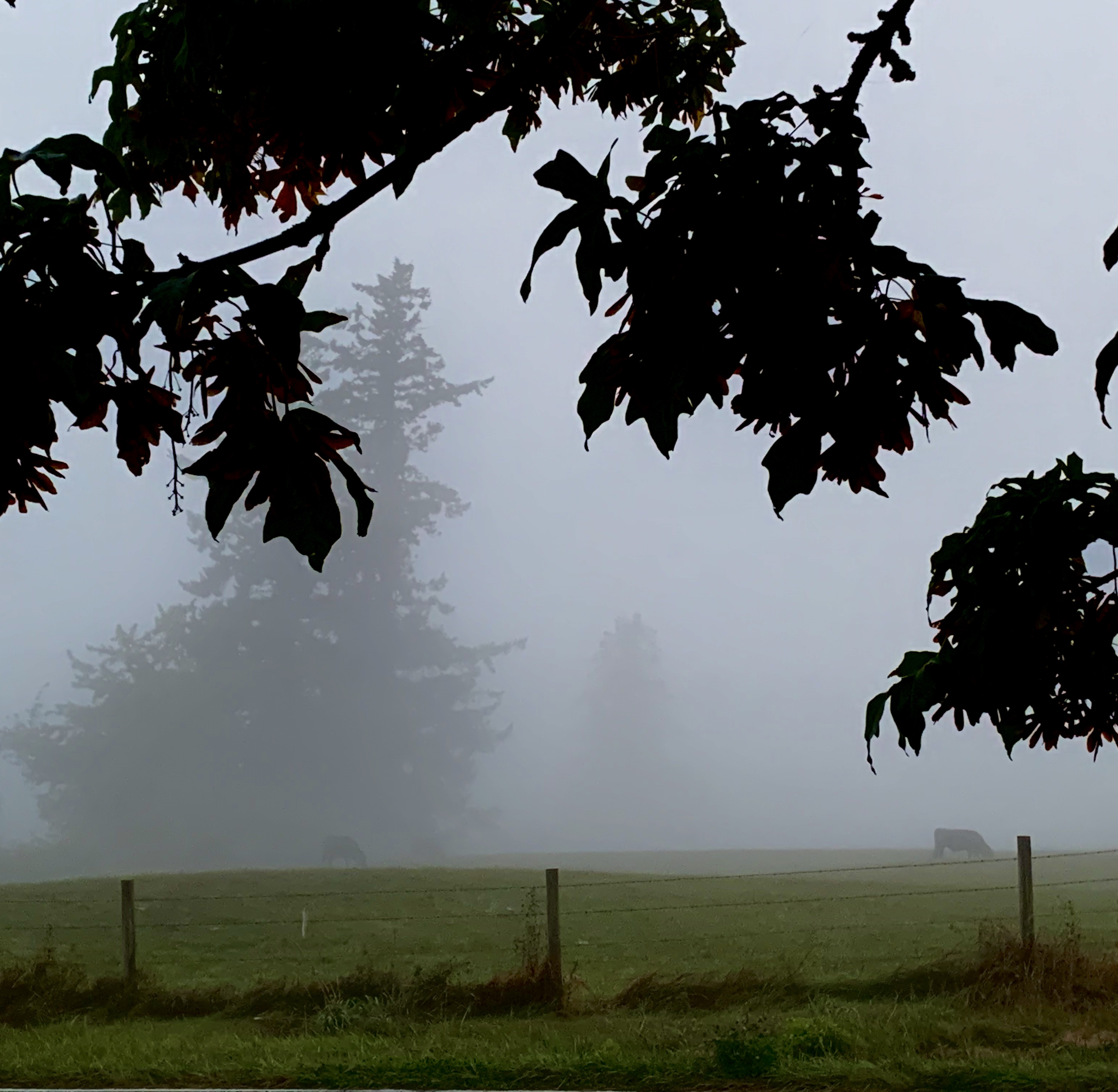
Today you looked about your empty nest Disguised as hospital bed, Wondering aloud about Children grown, flown. You still control through worry and tell me: It’s foggy out there Travel safe through the dark Call me when you get there Take time to eat Sleep sound, ready to wake fresh tomorrow
I dress you as you dressed me I clean you as you cleaned me I love you as you loved me You try my patience as I tried yours. I wonder if I have the strength to Mother my mother For as long as she needs.
When I tell you the truth of where you are Your brow furrows as it used to do When I disappointed you~ This cannot be A bed in a room in a sterile place Waiting Waiting for death, Waiting for heaven, Waiting for the light
And I tell you: It’s foggy Travel safe through the darkness Eat something, please eat Sleep sound, ready to wake fresh tomorrow Call me when you get there.
Advent 2023 theme …because of the tender mercy of our God, whereby the sunrise shall visit us from on high to give light to those who sit in darkness and in the shadow of death, to guide our feet into the way of peace. Luke 1: 78-79 from Zechariah’s Song
Wake, Awake for Night is Flying Let the shadows be forsaken, The time has come for us to waken, And to the Day our lives entrust. Search the sky for heaven’s portal: The clouds shall rain the Light Immortal, And earth will soon bud forth the Just.
Of one pearl each shining portal, where, dwelling with the choir immortal, we gather ’round Your dazzling light. No eye has seen, no ear has yet been trained to hear what joy is ours! ~Philipp Nicolai
One-Time
Monthly
Yearly
Make a one-time or recurring donation to support daily ad-free Barnstorming posts
In October of the year, he counts potatoes dug from the brown field, counting the seed, counting the cellar’s portion out, and bags the rest on the cart’s floor.
He packs wool sheared in April, honey in combs, linen, leather tanned from deerhide, and vinegar in a barrel hooped by hand at the forge’s fire.
He walks by his ox’s head, ten days to Portsmouth Market, and sells potatoes, and the bag that carried potatoes, flaxseed, birch brooms, maple sugar, goose feathers, yarn.
When the cart is empty he sells the cart. When the cart is sold he sells the ox, harness and yoke, and walks home, his pockets heavy with the year’s coin for salt and taxes,
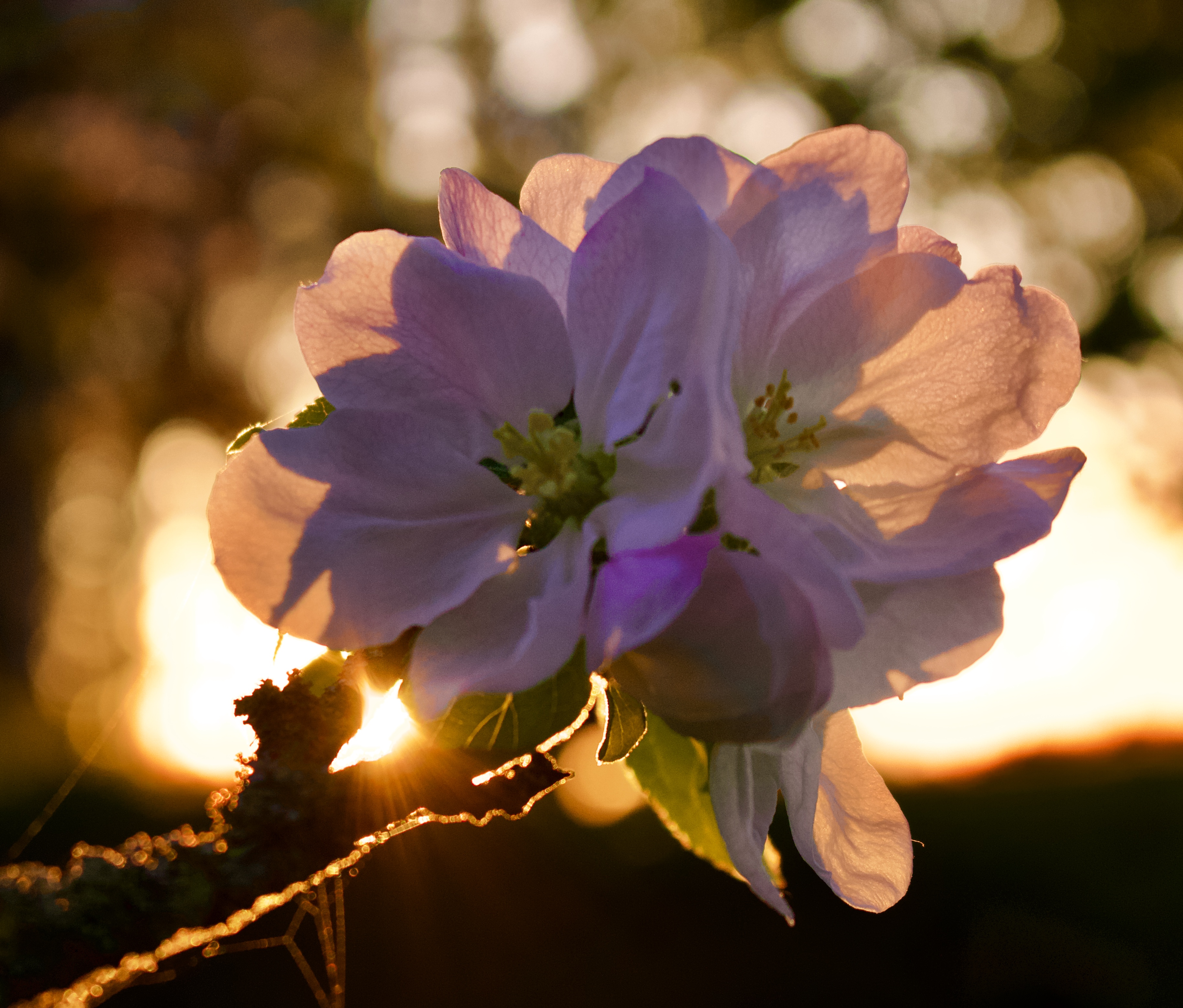
and at home by fire’s light in November cold stitches new harness for next year’s ox in the barn, and he carved a new yoke and sawed planks for a new cart and split shingles all winter, while his wife made flax into linen all winter, and his daughter embroidered linen all winter, and his son carved Indian brooms from birch all winter, and everybody made candles, and in March they tapped the sugar maple trees and boiled the sap down, and in April they sheared the sheep, spun yarn, and wove and knitted, and in May they planted potatoes, turnips, and cabbages, while apple blossoms bloomed and fell, while bees woke up, starting to make new honey, and geese squawked in the barnyard, dropping feathers as soft as clouds. ~Donald Hall “The Oxcart Man”
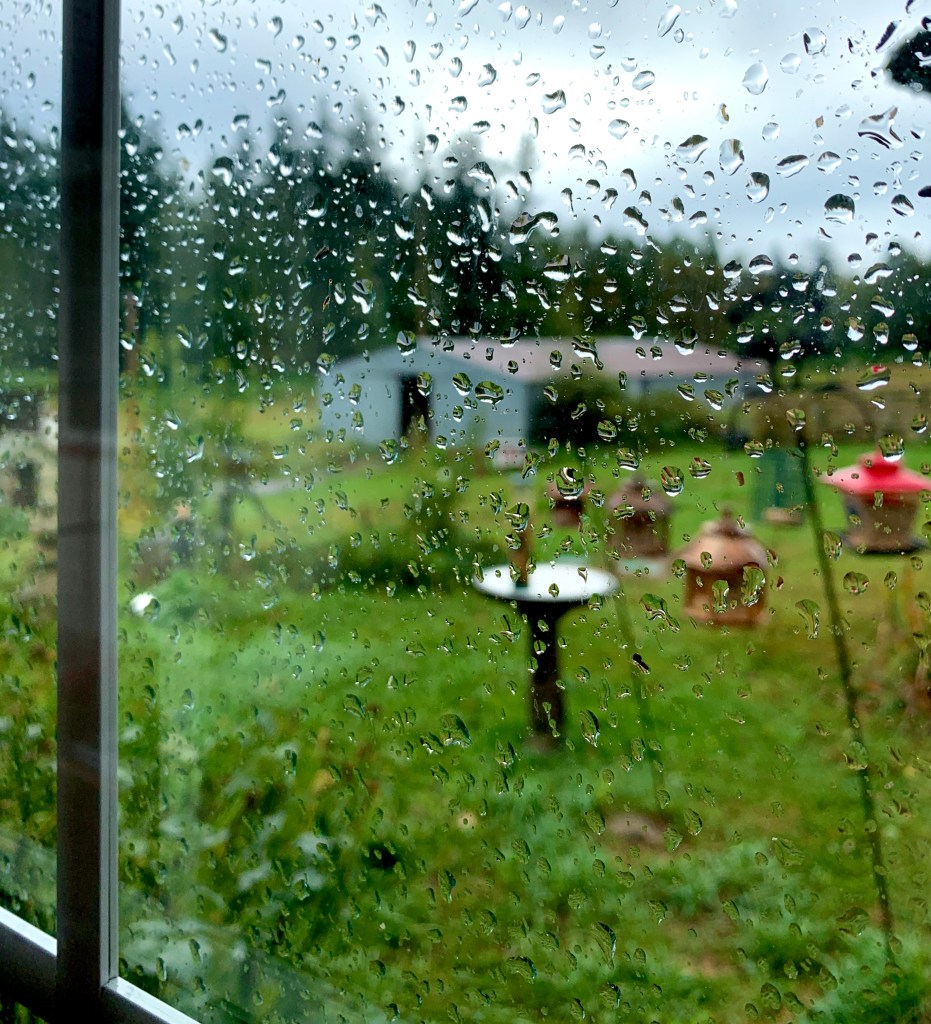
Come inside now. Stand beside the warming stove. Watch out through the windows as a cold rain tears down the last leaves.
The larder full of dried herbs, hot peppers, chutneys, jellies, jams, dill pickles, pickled relishes, pickled beets.
The freezer full of frozen greens— chard and spinach, collards, kale— green beans, basil, red sauces, applesauce, and smoked meats.
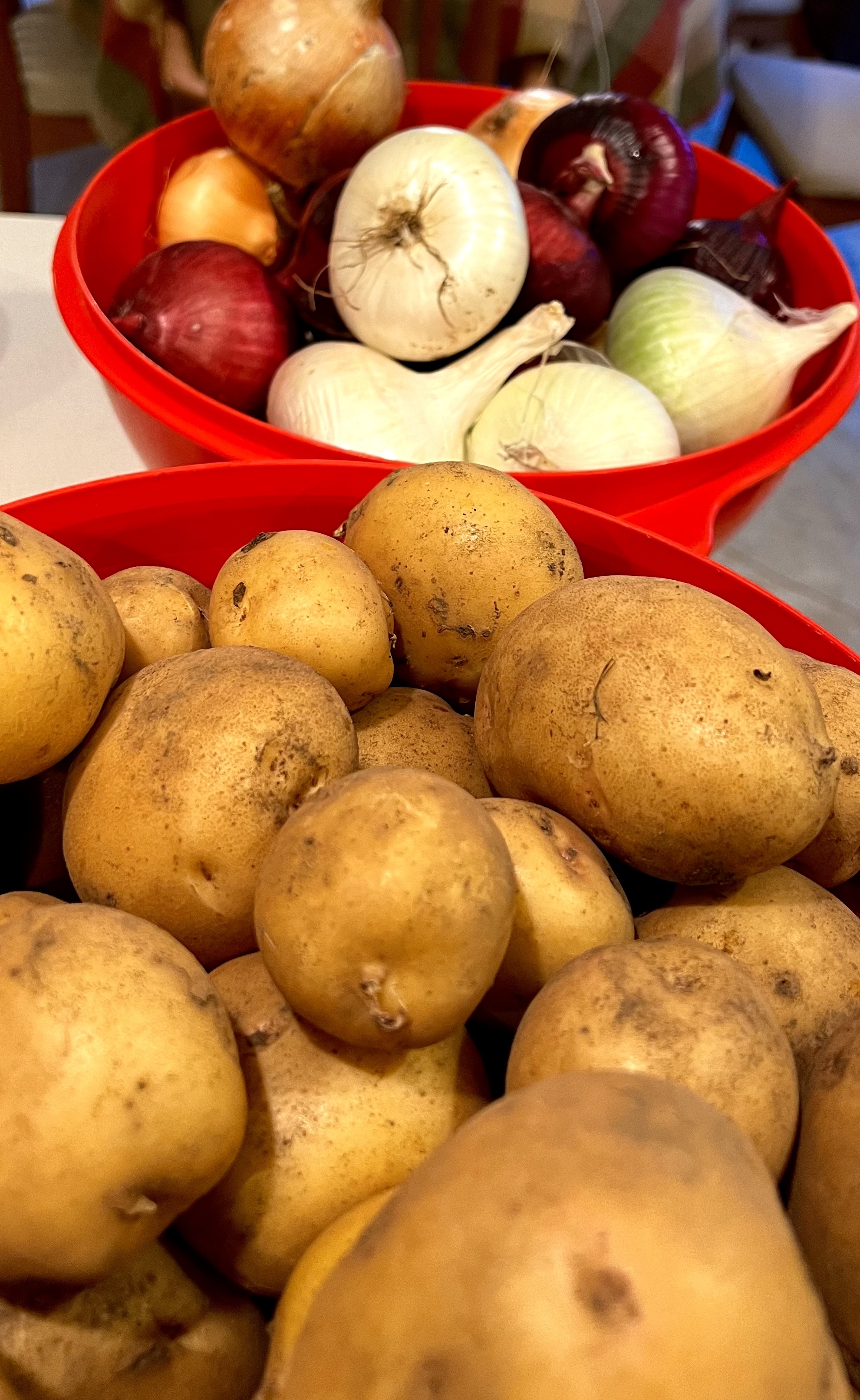
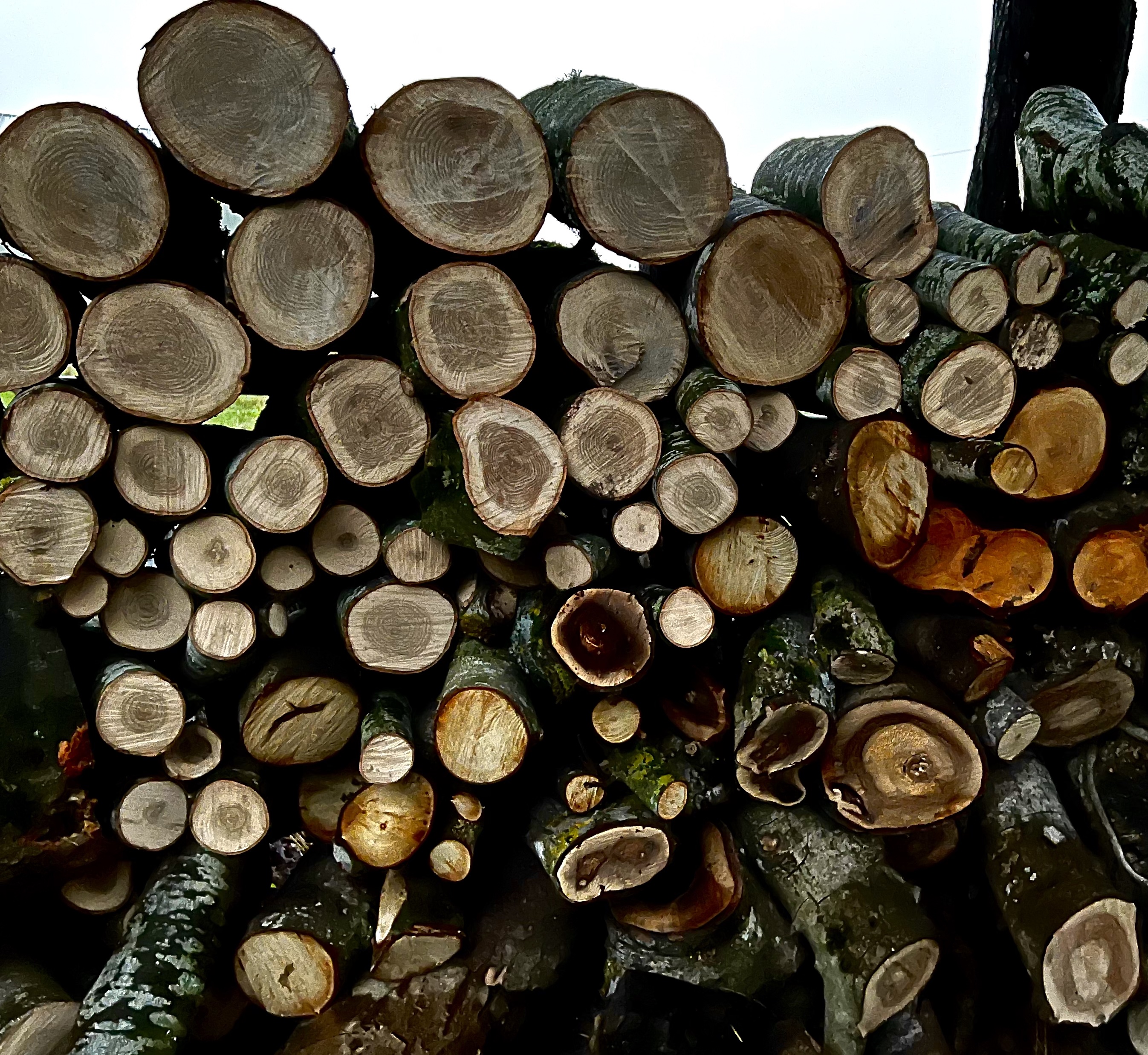
The woodshed dry and full of wood, winter squashes stashed away. Down cellar: potatoes, carrots, crock of sauerkraut.
Come inside now. Stand beside the warming stove. Listen. Wait. ~David Budbill “Come Inside Now” from Happy Life
Nothing would sleep in that cellar, dank as a ditch, Bulbs broke out of boxes hunting for chinks in the dark, Shoots dangled and drooped, Lolling obscenely from mildewed crates, Hung down long yellow evil necks, like tropical snakes. And what a congress of stinks! Roots ripe as old bait, Pulpy stems, rank, silo-rich, Leaf-mold, manure, lime, piled against slippery planks. Nothing would give up life: Even the dirt kept breathing a small breath. ~Theodore Roetke “Root Cellar”from The Collected Poems
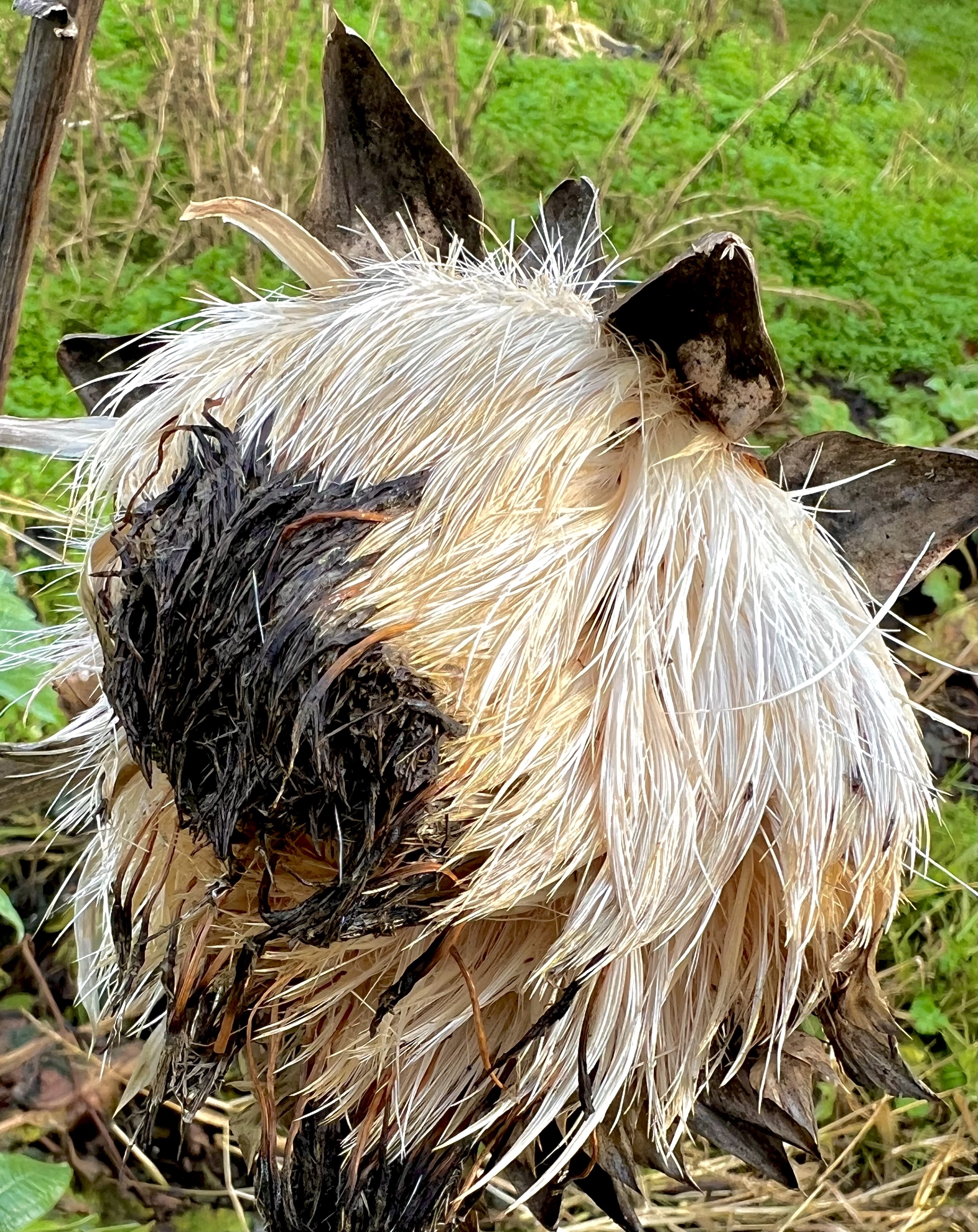
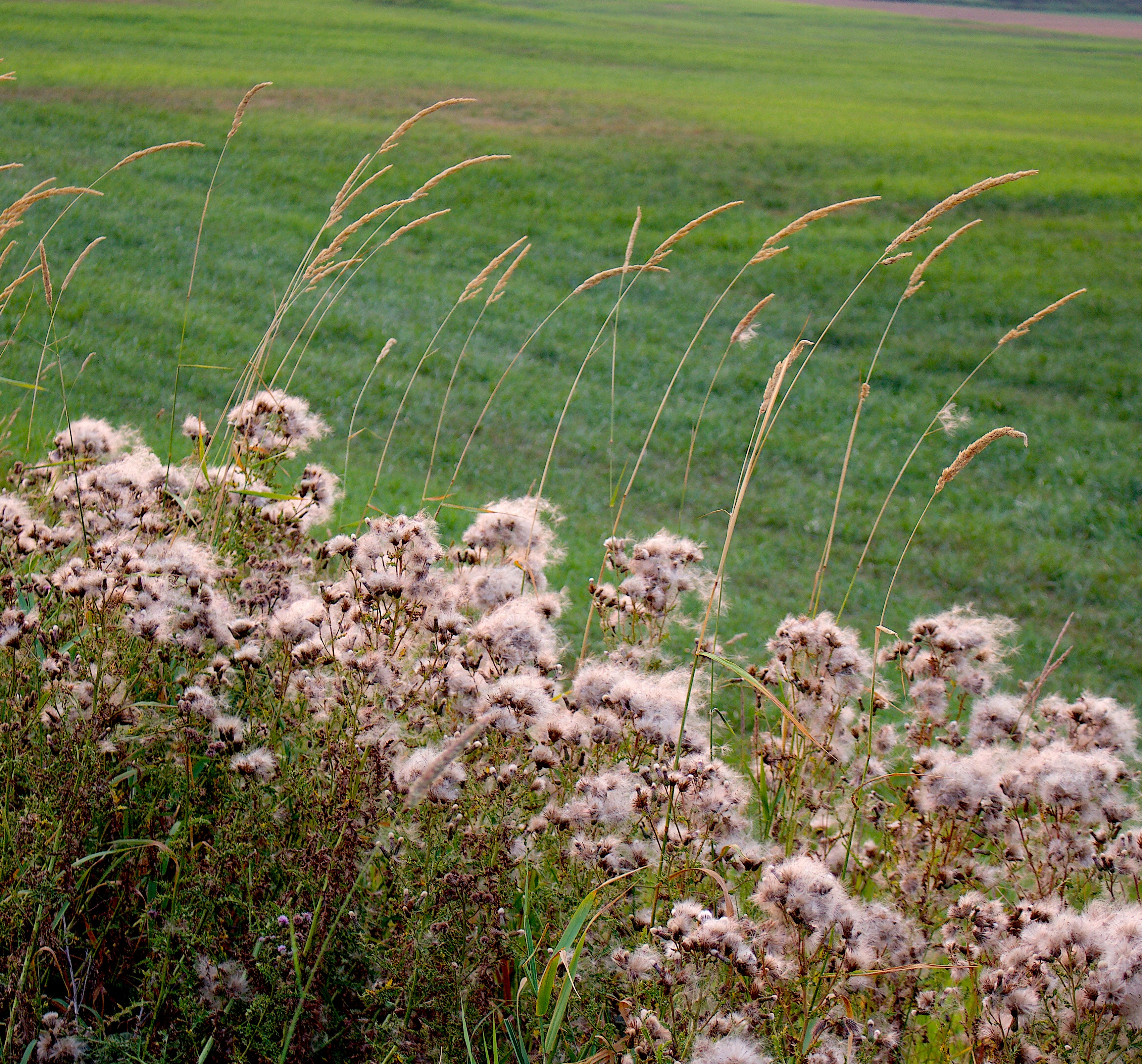
Even in the cold wet chill of November, our garden continues breathing, guarded by the furry fellow on a stalk below until a heavy windstorm topples him over.
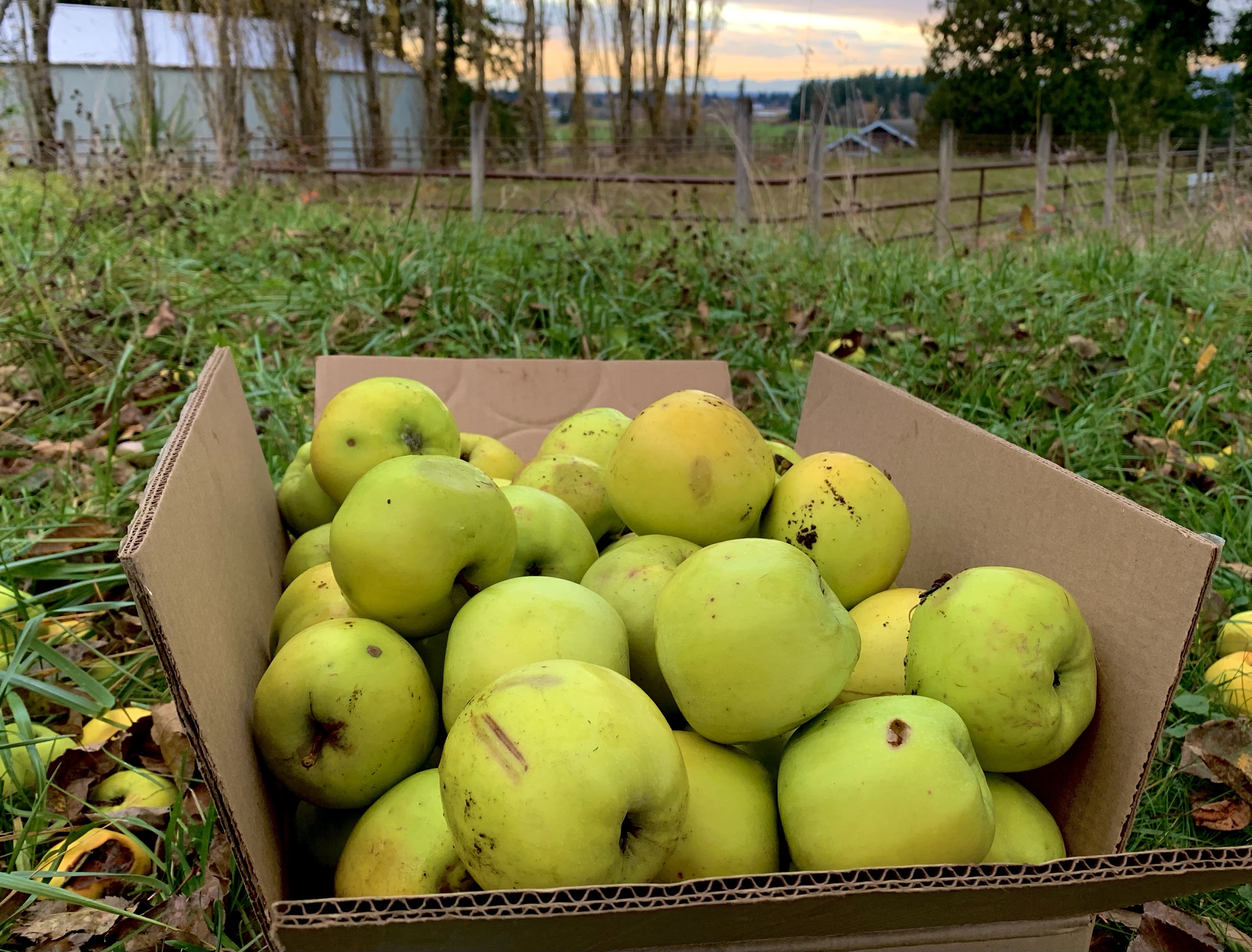
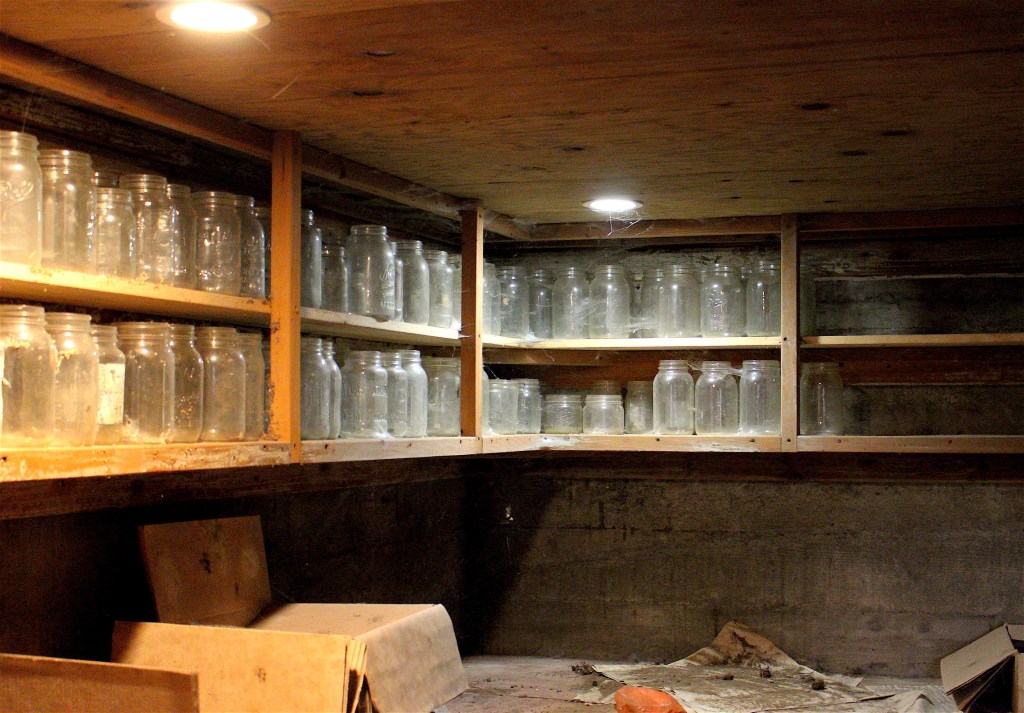
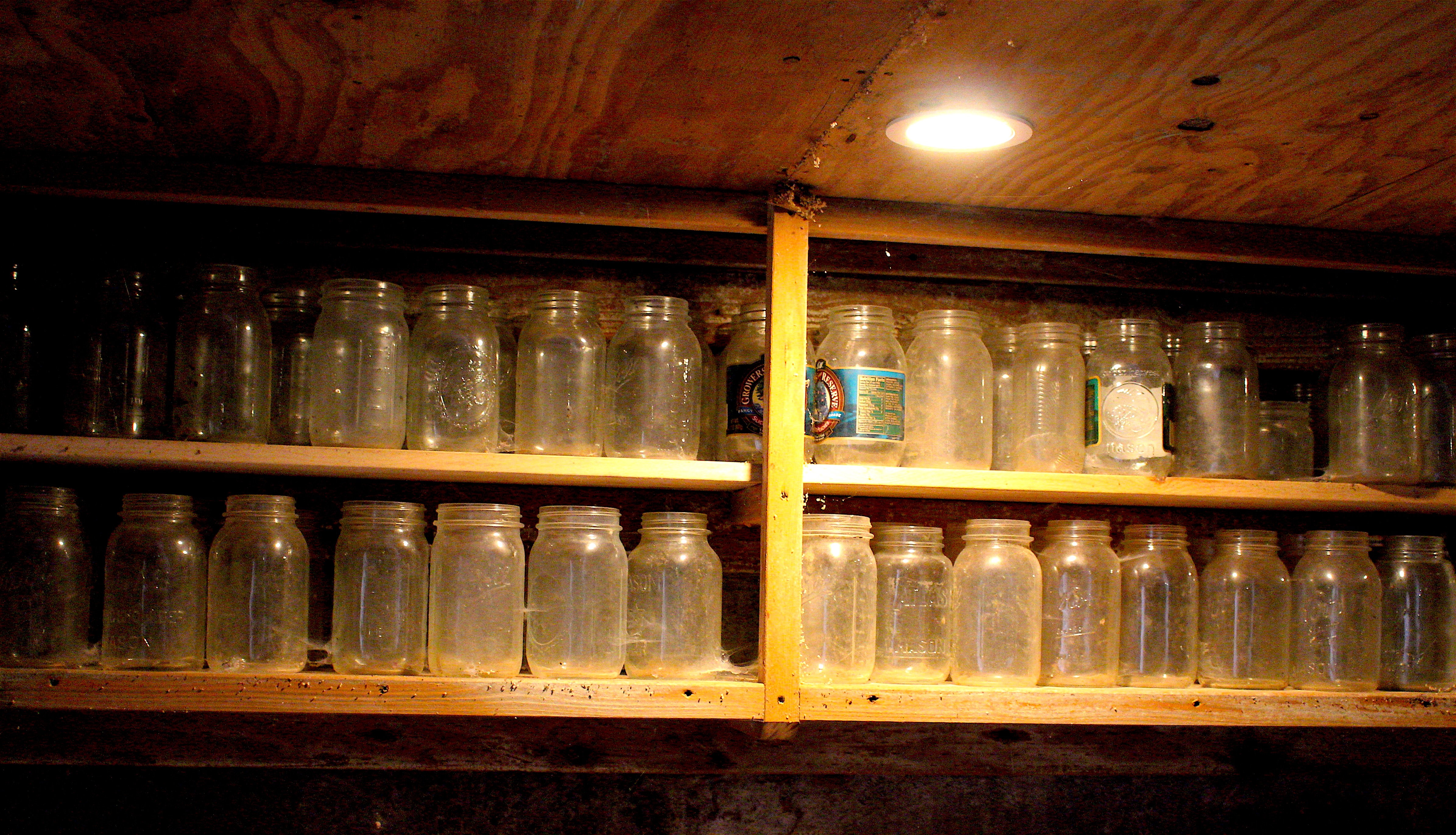
When I descend the steps into our root cellar, I find a still life of empty jars, no longer in use for produce to be preserved until spring. I no longer preserve produce through canning, as I used to. Instead we dry and freeze fruits and vegetables for storage. The cellar, though not as full as in years past, remains a place of quiet fecundity with its rich and earthy smells – a reminder of how things were done before the conveniences of today. We still keep apples, potatoes and onions in safe-keeping below ground – some of this farm’s orchard and garden harvest has been stored fresh in the cellar, year after year, for decades.
Until the last century, all of a farm family’s energy and effort was to preserve and store what was necessary to survive another year. Today, in too many places in the world, simple survival remains a family’s necessary and noble goal.
Surrounded by the relative comfort and privilege of a bountiful garden, orchard and woodpile, I never want to forget that.
Come inside. Warm up by the fire. Listen. Wait. Pray for lasting peace.
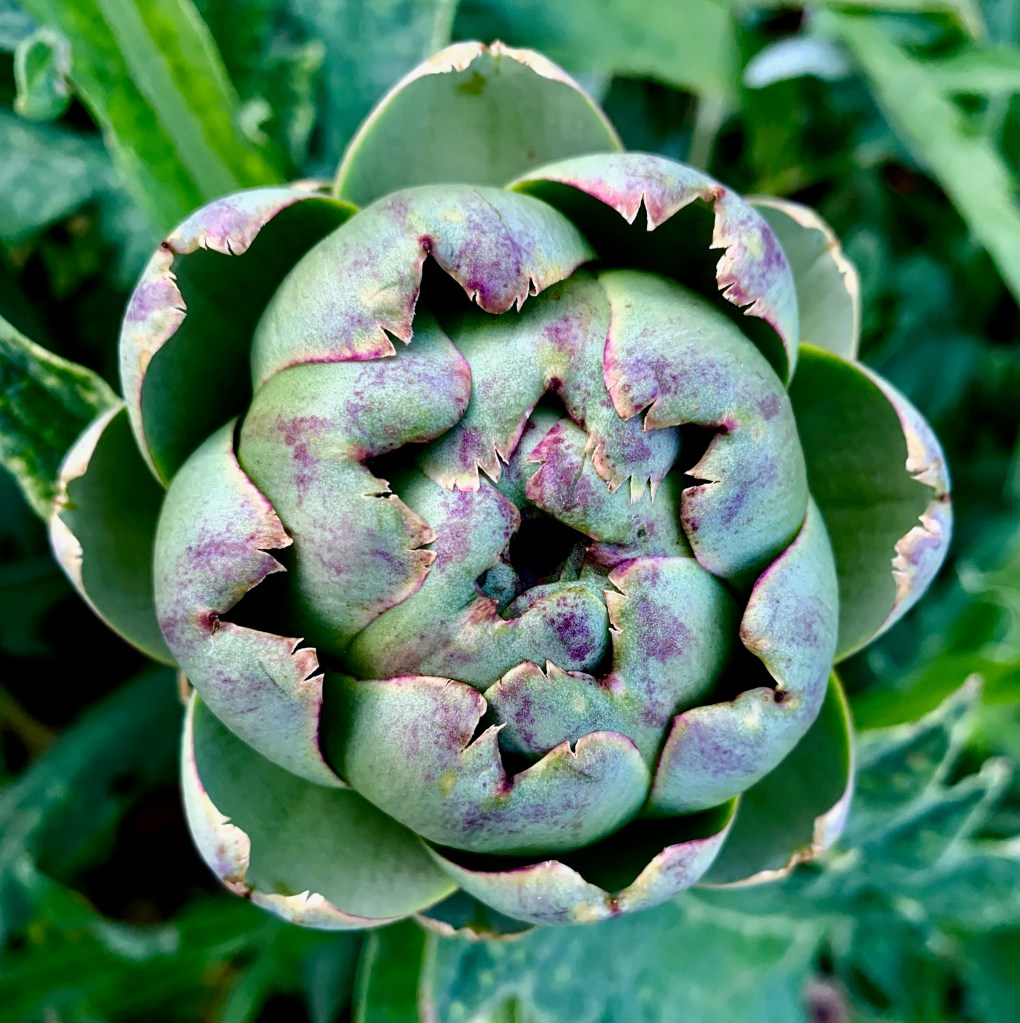
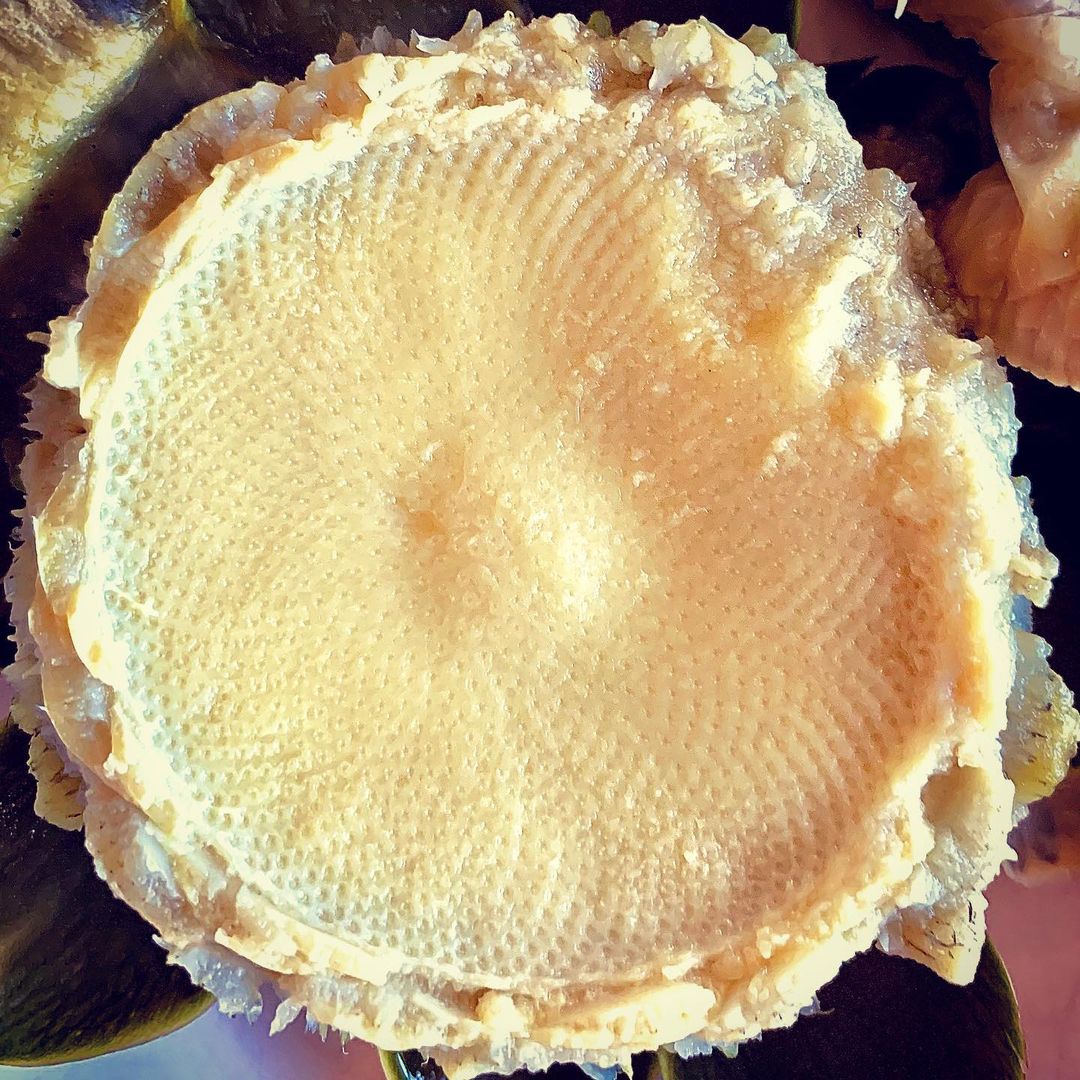
My artichoke “pup”
One-Time
Monthly
Yearly
Make a one-time or recurring donation to support daily Barnstorming posts
Against the rubber tongues of cows and the hoeing hands of men Thistles spike the summer air And crackle open under a blue-black pressure.
Every one a revengeful burst Of resurrection, a grasped fistful Of splintered weapons and Icelandic frost thrust up
From the underground stain of a decayed Viking. They are like pale hair and the gutturals of dialects. Every one manages a plume of blood.
Then they grow grey, like men. Mown down, it is a feud. Their sons appear, Stiff with weapons, fighting back over the same ground. ~Ted Hughes “Thistles”
Sheep will not eat it nor horses nor cattle unless they are starving. Unchecked, it will sprawl over pasture and meadow choking the sweet grass defeating the clover until you are driven to take arms against it but if unthinking you grasp it barehanded you will need tweezers to pick out the stickers.
Outlawed in most Northern states of the Union still it jumps borders. Its taproot runs deeper than underground rivers and once it’s been severed by breadknife or shovel —two popular methods employed by the desperate— the bits that remain will spring up like dragons’ teeth a field full of soldiers their spines at the ready.
Bright little bursts of chrome yellow explode from the thistle in autumn when goldfinches gorge on the seeds of its flower. The ones left uneaten dry up and pop open and parachutes carry their procreant power to disparate venues in each hemisphere which is why there will always be thistle next year. ~Maxine Kumin “Why There Will Always Be Thistle Next Year” from The Long Marriage
This upstart thistle Is young and touchy; it is All barb and bristle,
Threatening to wield Its green, jagged armament Against the whole field.
Butterflies will dare Nonetheless to lay their eggs In that angle where
The leaf meets the stem, So that ants or browsing cows Cannot trouble them.
Summer will grow old As will the thistle, letting A clenched bloom unfold
To which the small hum Of bee wings and the flash of Goldfinch wings will come,
Till its purple crown Blanches, and the breezes strew The whole field with down. ~Richard Wilbur “A Pasture Poem” from Anterooms
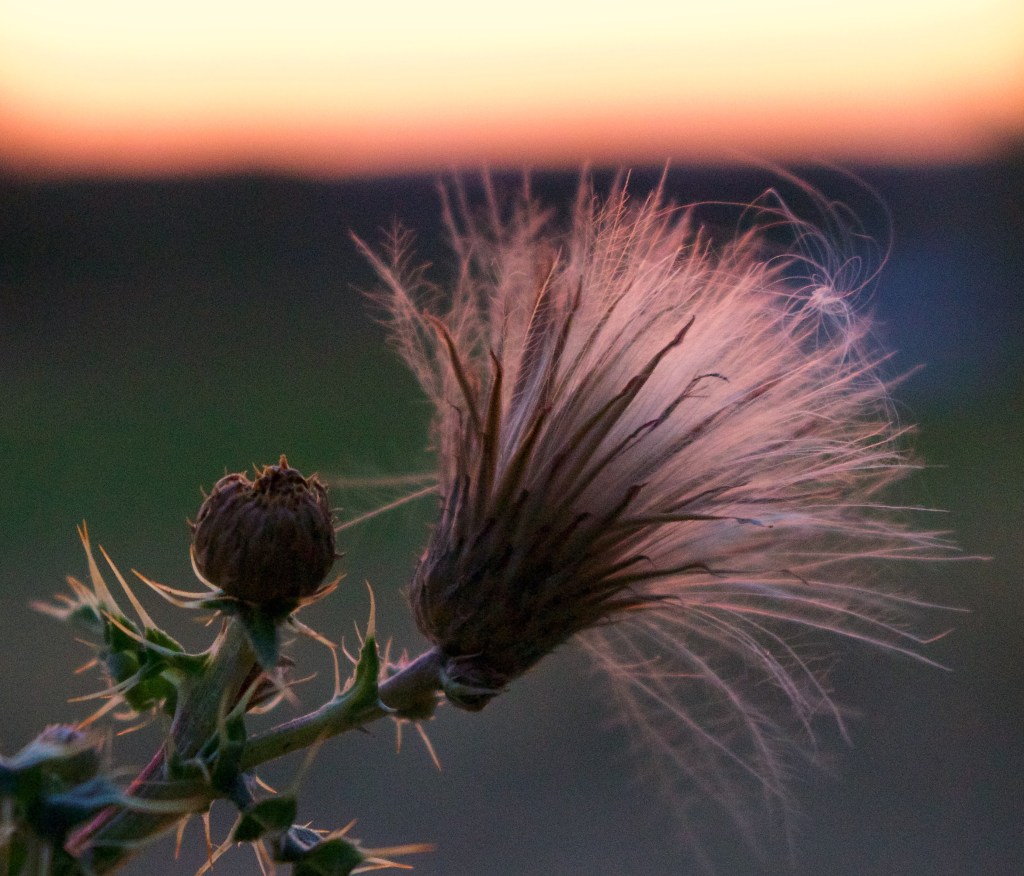
Like the thistle that dots our pastures, I have a tendency at times to be bristly, barbed and sharp. Perhaps it is only my desire for self-protection in a threatening world. Having spiky thorns may keep me from being “eaten”, but they won’t deter the approach of the hungry goldfinch, butterfly or bee.
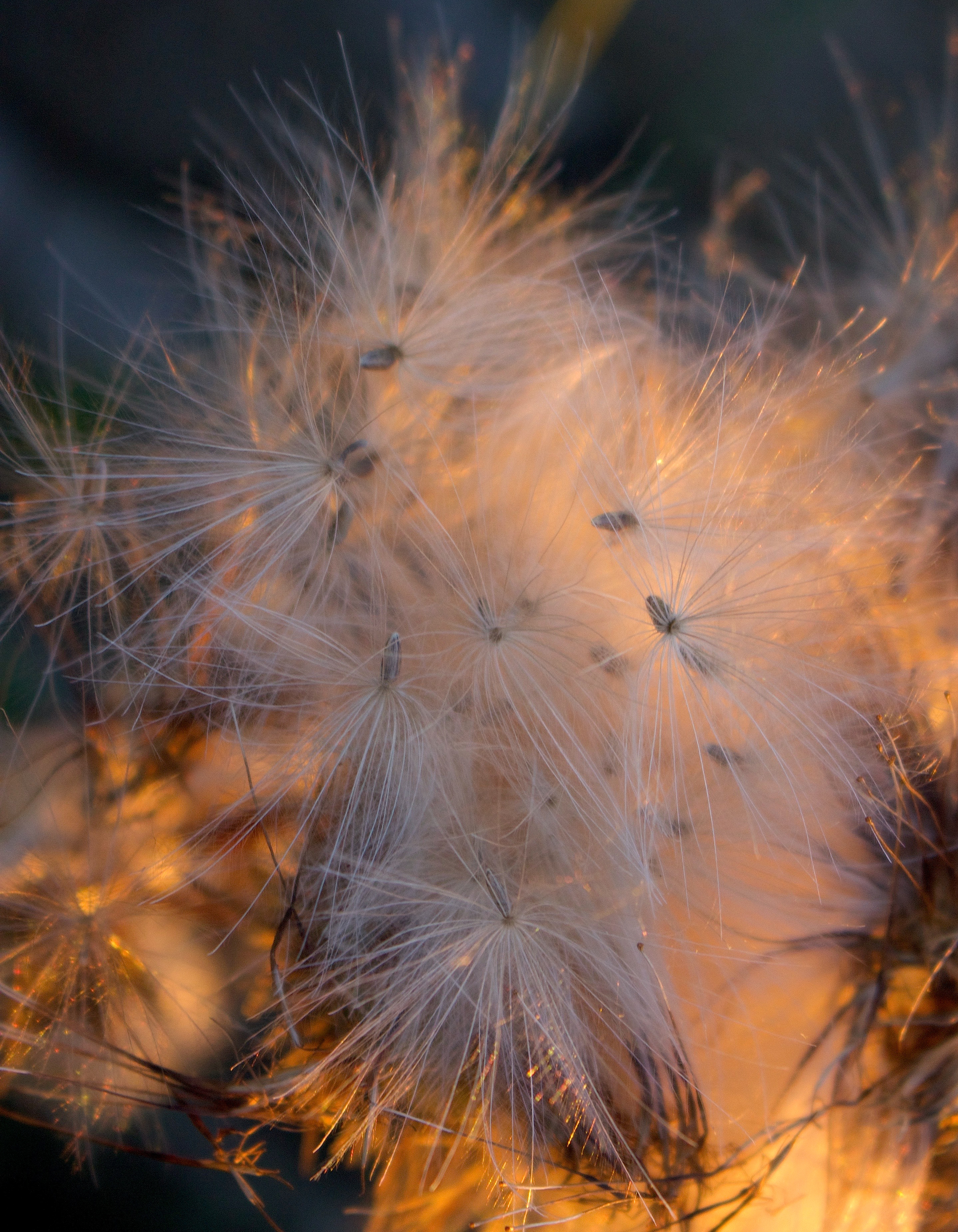
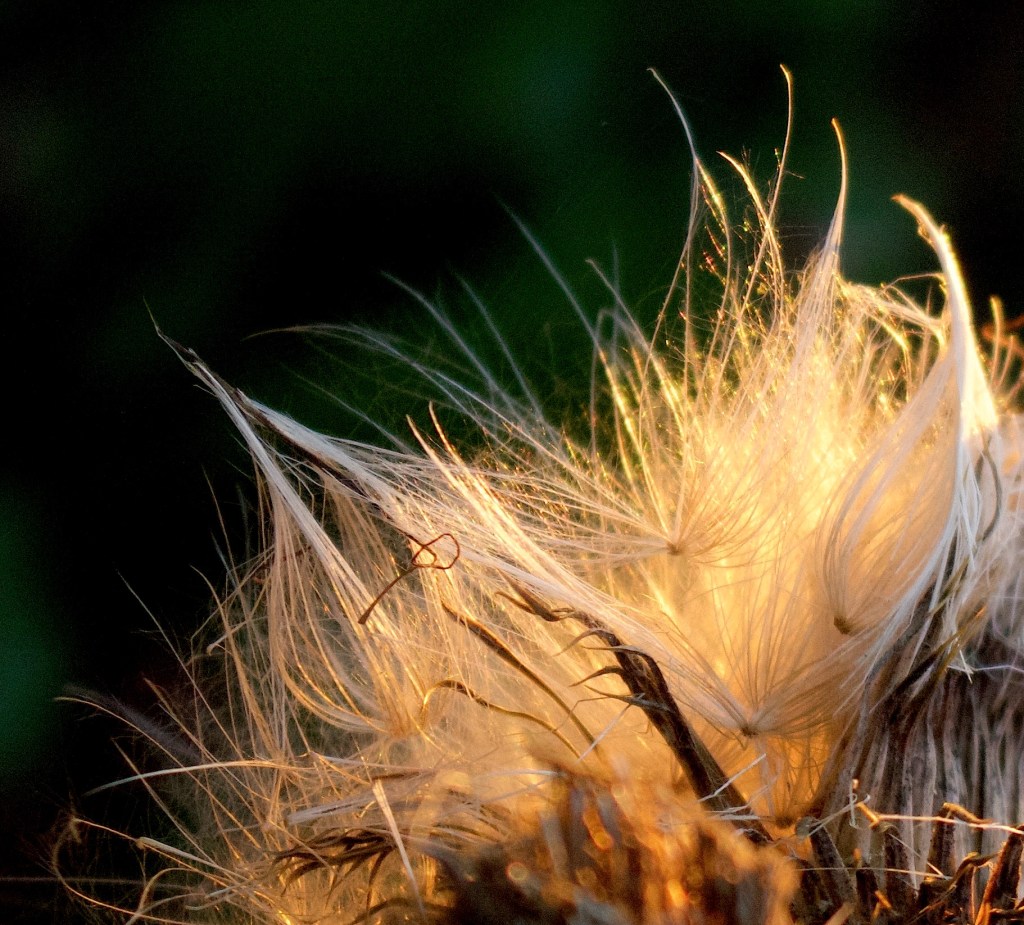
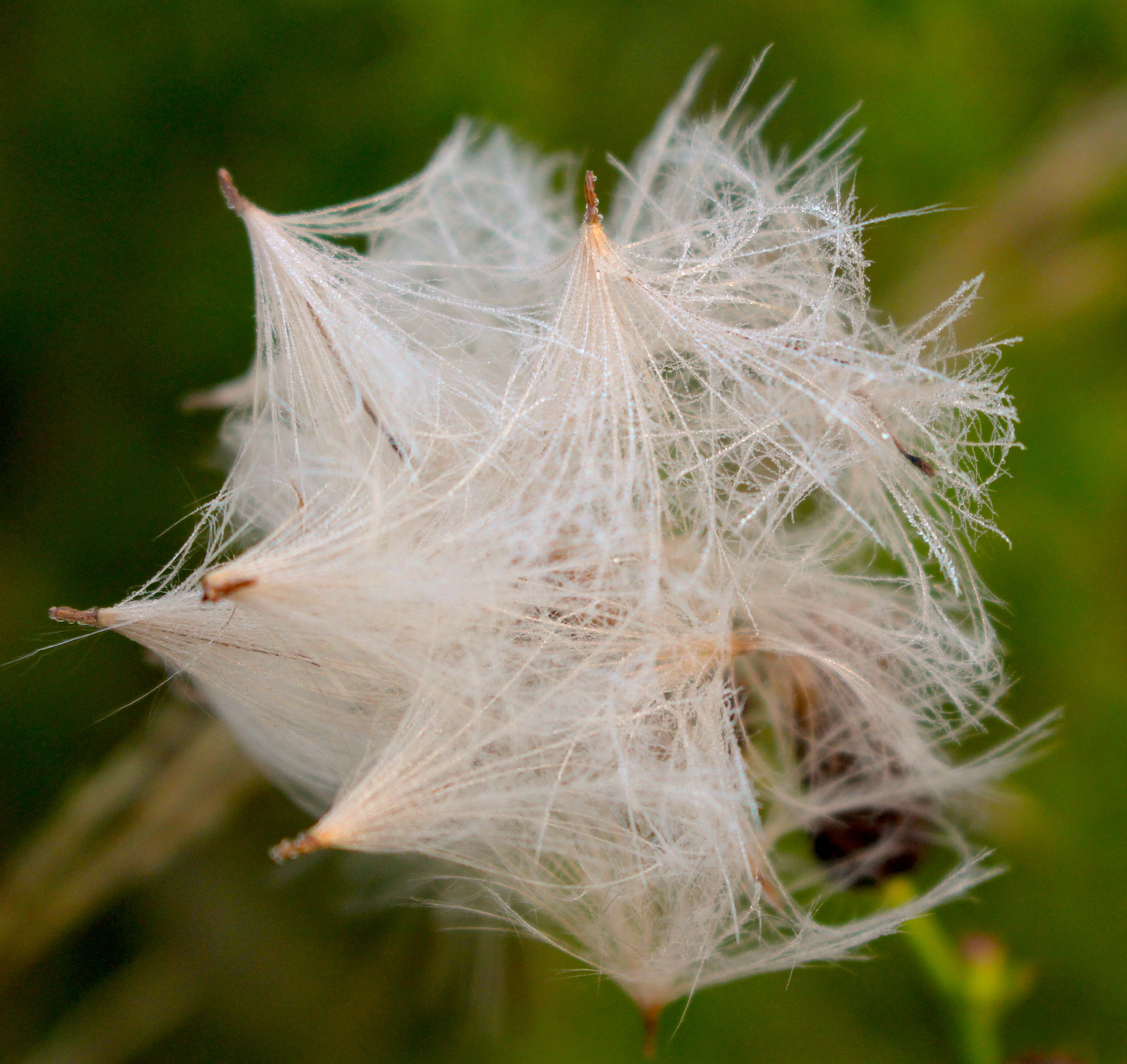
I’ve softened over time (in more ways than one!) by forces outside of myself. The autumn thistle may bristle but its thistledown envelops the pasture as surely as God’s grace envelops me.
With the breezes, the softest thistle seed spreads afar rather than remaining stock-still in self-defense. I find as I wrap up my seventh decade, I too am adrift, seeking out previously unexplored nooks and crannies in which to land.
“For a time I rest in the grace of the world, and am free.” ~Wendell Berry from The Peace of Wild Things
That is how grace and redemption works, both on thistles and bristly people: our self-protective sharp edges shine with a delicate downiness, spreading beauty instead of bristles.
Everyone is in need of such a transformation. The worldly dilemma with thistle and people is that downy seeds grow up to wield yet more barbs and thorny weapons. The entire pasture becomes a battlefield.
Lord, please make me an instrument of your peace…
One-Time
Monthly
Yearly
Make a one-time or recurring donation to support daily Barnstorming posts
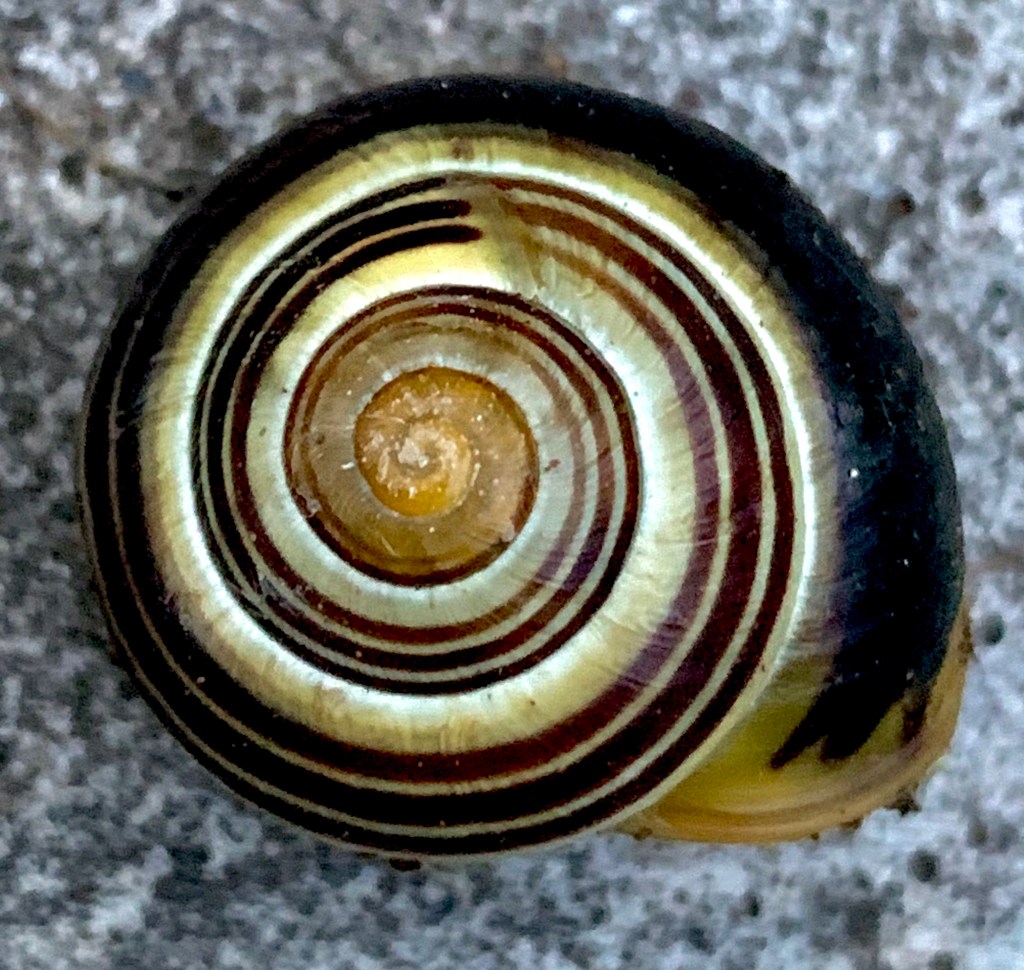
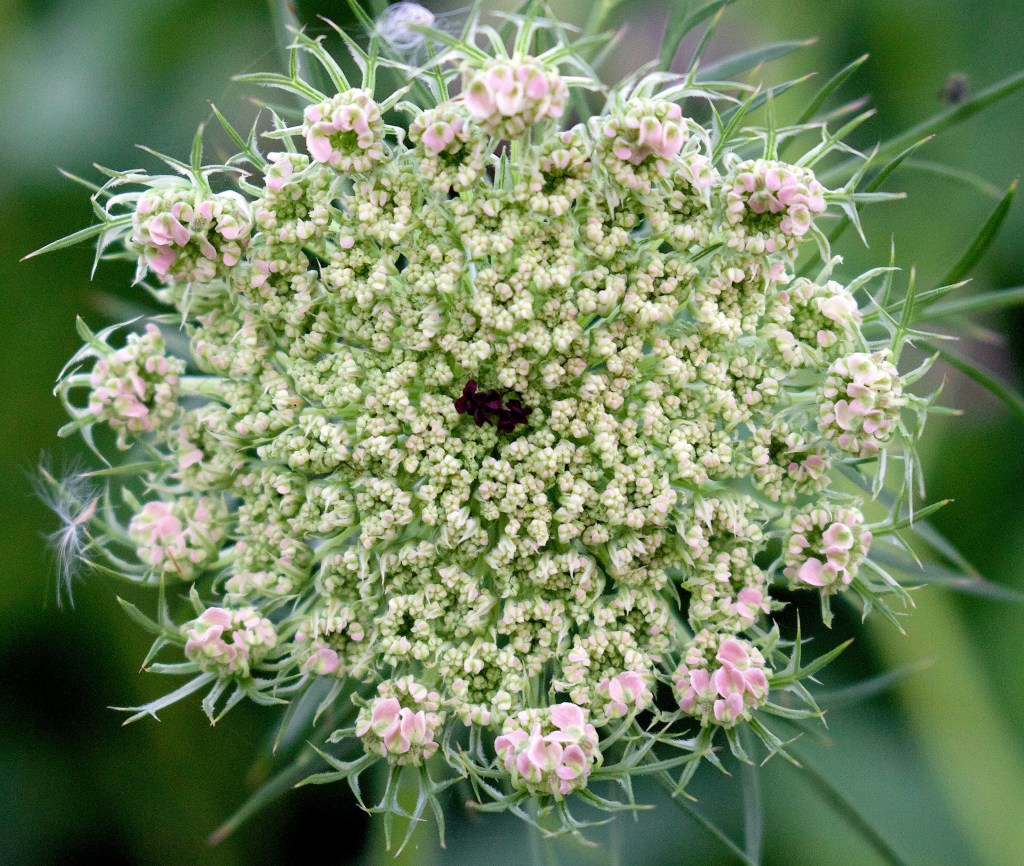
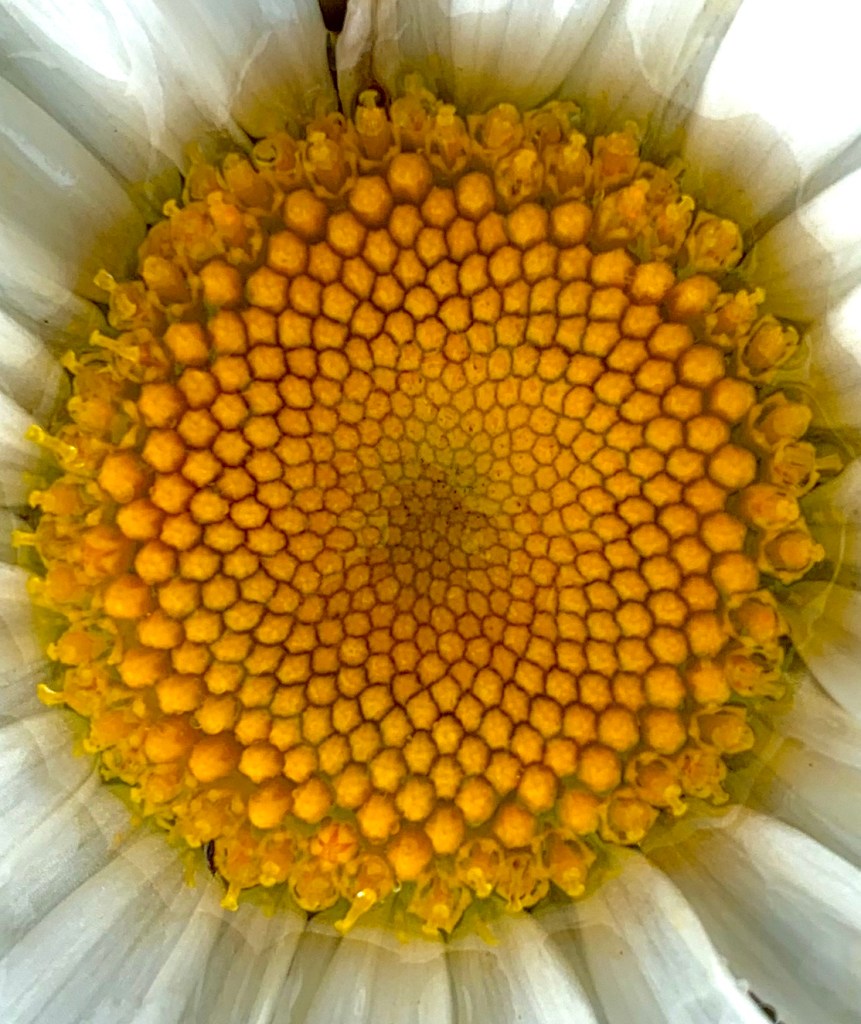
When, in the science museum, I arrive at the overview of our galaxy, with its tiny arrow pointing to You are here (which really ought to be We are here), and see that the two to four hundred billion stars of our local cluster are drifting or chasing or dreaming after each other in circles within milky circles, I can’t help but think of those ancient paintings and rock engravings, discovered all over our celestial body, of that one line which begins at whatever point it can, then curls outward, or inward, toward nothing anyone can define—the oldest shape revered by Aborigine and Celt, by mathematician and engineer and Burning Man reveler alike, and even accorded a place of honor among the mess of thoughts on my desk, as a nifty paper clip of copper.
But it’s already there in the florets of the sunflower crisscrossing with the precision of a logarithm, and in the pin-wheel shape of the Nautilus shell, and in the coiling neurons of the cochlea that let us tell Art Tatum from a three year old’s improvisation.
Call it what you will—“God’s fingerprint,” “the soul unfolding through time,” “the passageway into the Self”— I can’t help but admire, even fear, something as mundane as a flush of the toilet, when its swirling is a variation on our sidereal drift, our existential pain.
And then there’s that famous falcon, “turning and turning in a widening gyre,” a portentous symbol of our own circling into some dread, some pernicious chaos we thought we had just escaped, one town burning a decade behind us, a millennium before that, and into next week, next year, next whenever.
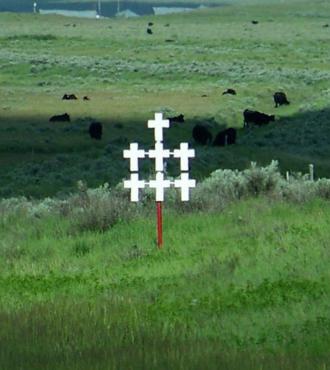
And when the two of us took that winding road an infinity of others had wound down before us and would wind down again, our spirits hushed by the crosses and bouquets at each dead man’s curve and just burning in the dry heat to touch each other, wasn’t that a wondrous and terrible turning? ~Thomas Centolella “Why I’m in Awe of the Spiral”
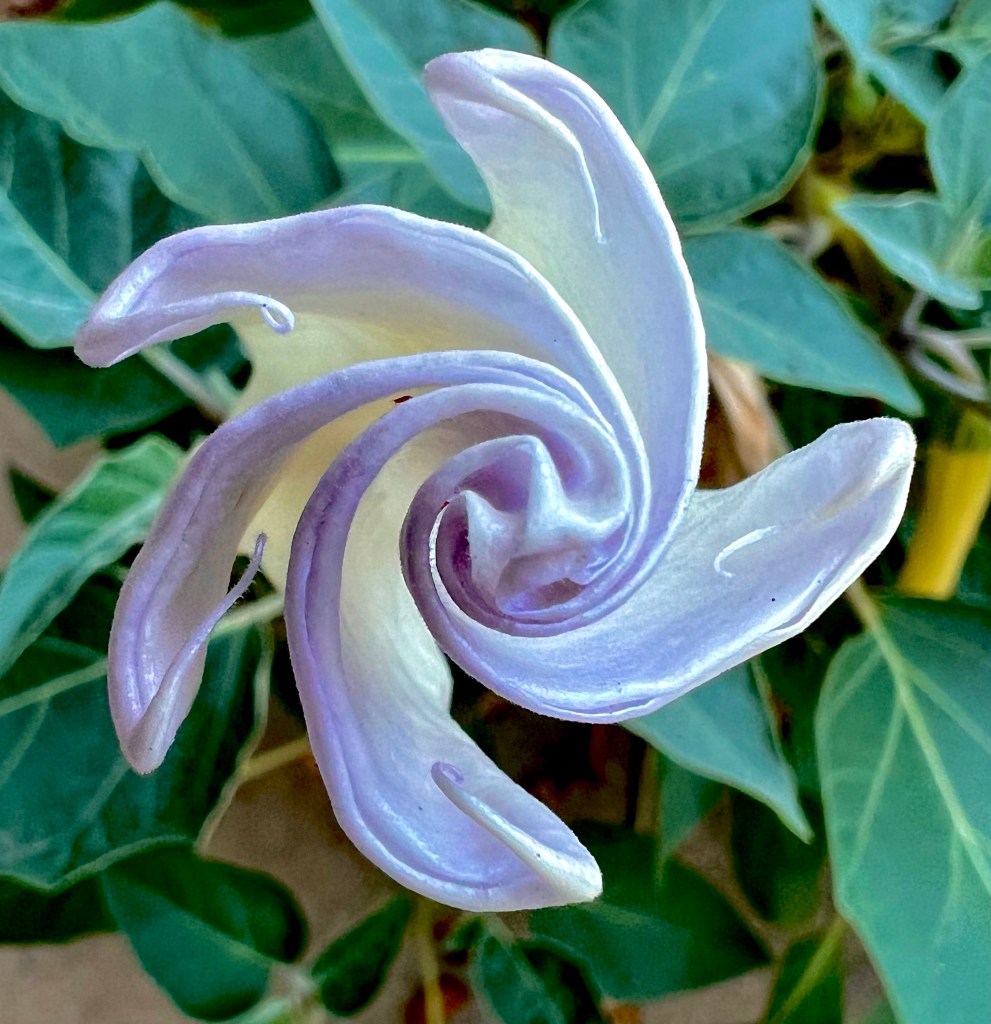
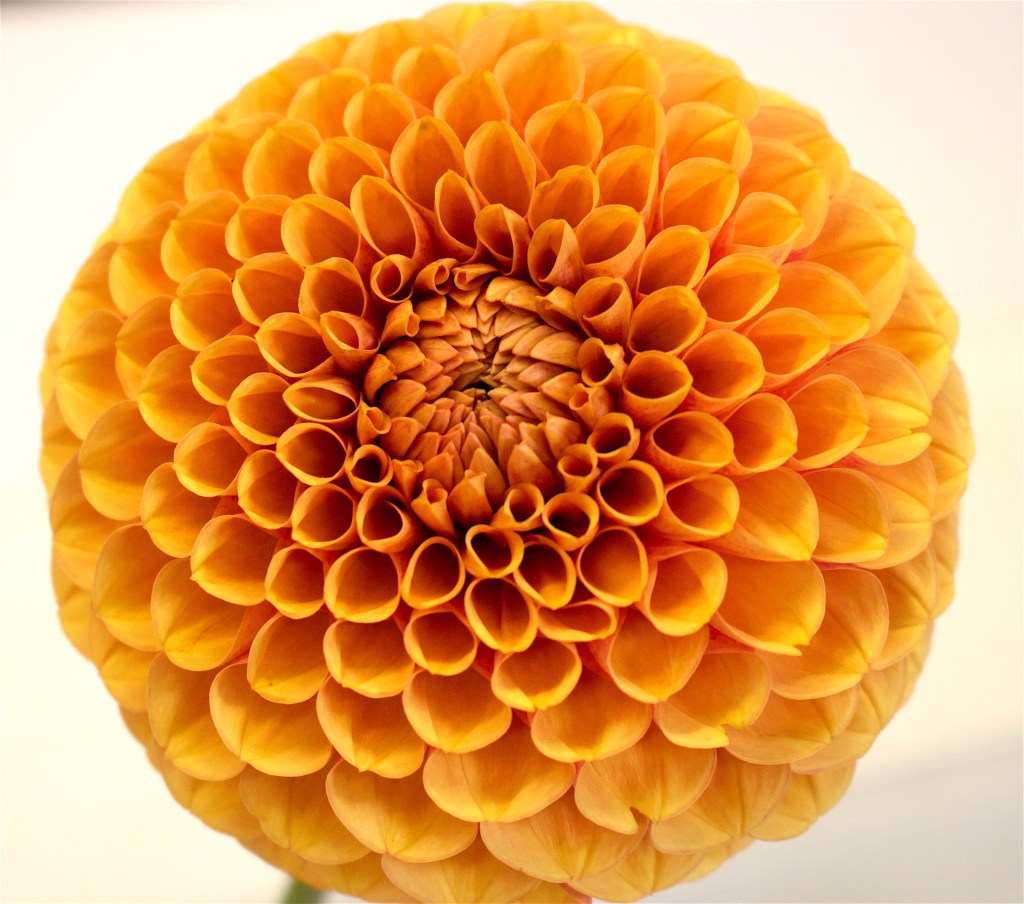
photo by Kate Steensma
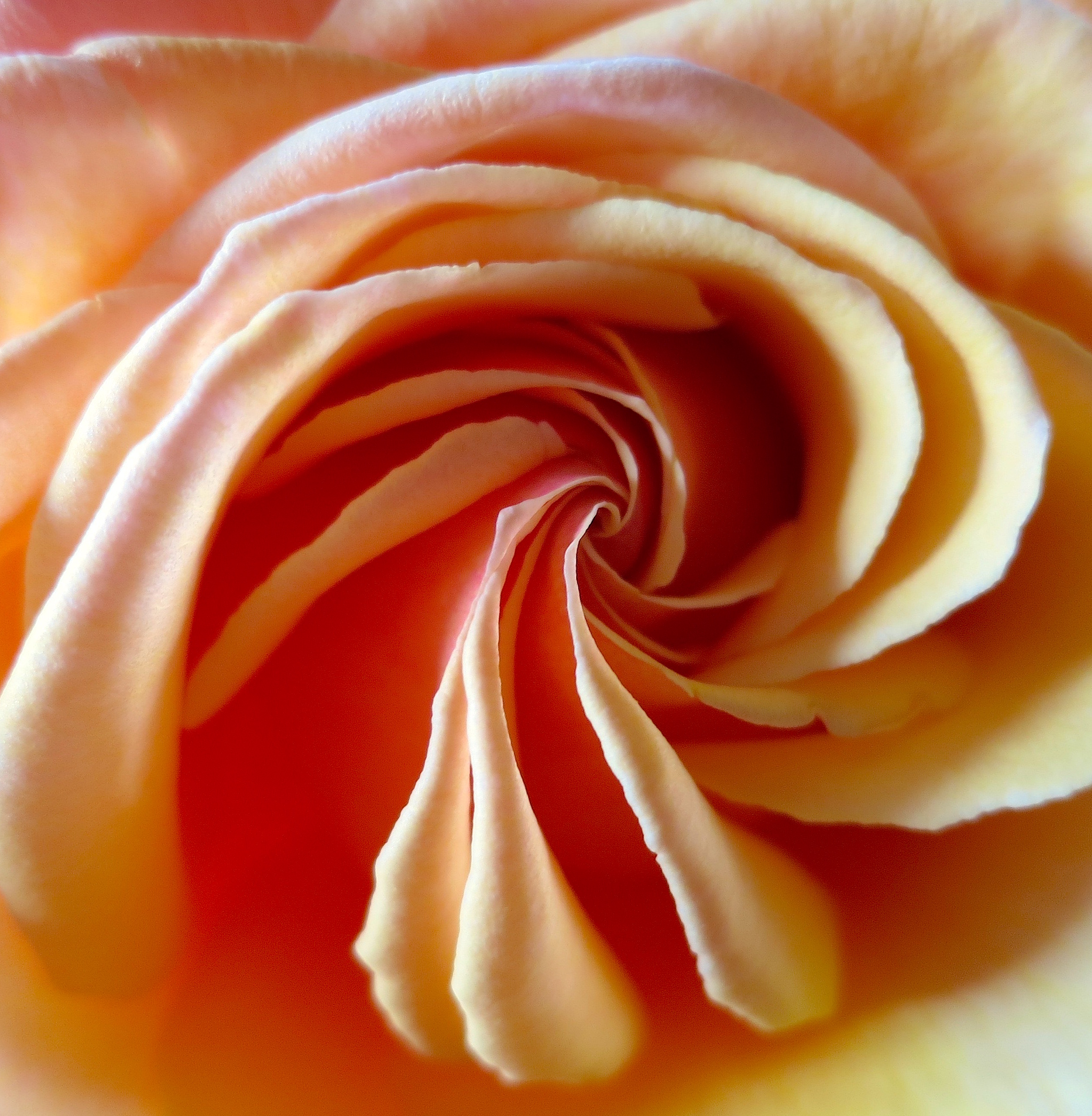
Photo by Kate Steensma
Turning and turning in the widening gyre The falcon cannot hear the falconer; Things fall apart; the centre cannot hold; Mere anarchy is loosed upon the world, The blood-dimmed tide is loosed, and everywhere The ceremony of innocence is drowned The best lack all conviction, while the worst Are full of passionate intensity.
Surely some revelation is at hand; Surely the Second Coming is at hand. The Second Coming! Hardly are those words out When a vast image out of Spiritus Mundi Troubles my sight: somewhere in sands of the desert A shape with lion body and the head of a man, A gaze blank and pitiless as the sun, Is moving its slow thighs, while all about it Reel shadows of the indignant desert birds. The darkness drops again; but now I know That twenty centuries of stony sleep Were vexed to nightmare by a rocking cradle, And what rough beast, its hour come round at last, Slouches towards Bethlehem to be born? ~William Butler Yeats “The Second Coming”
I look for the way things will turn out spiralling from a center, the shape things will take to come forth in
so that the birch tree white touched black at branches will stand out wind-glittering totally its apparent self:
I look for the forms things want to come as
from what black wells of possibility, how a thing will unfold:
not the shape on paper, though that, too, but the uninterfering means on paper:
not so much looking for the shape as being available to any shape that may be summoning itself through me from the self not mine but ours. ~A. R. Ammons, “Poetics” from A Coast of Trees
Our very origin as a unique organism is a process of unfolding and spiraling: from our very first doubling after conception expanding to a complexity of trillions of cells powering our every thought and movement.
Now I look everywhere in my backyard world for beginnings and endings, wanting to understand where I fit and where I am in the unfolding process of this spiraling life. As I grow older, I find myself more peripheral than central, just as I am meant to be – I have more perspective now having spun out from the vortex.
I can see where I came from, and have a sense of where I am headed.
We unfurl slowly, surely, gently, in the Hands of our Creator God. He knows how each of us began as He was there from the beginning, forming the very center of us. He remains at the core of our being, as our unfolding lasts forever.
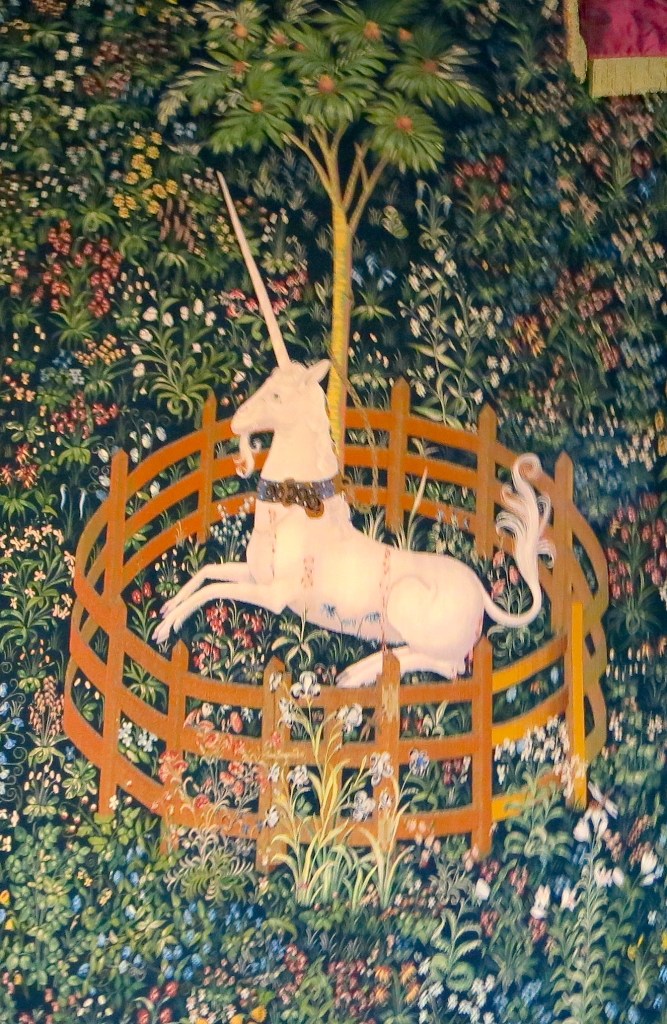
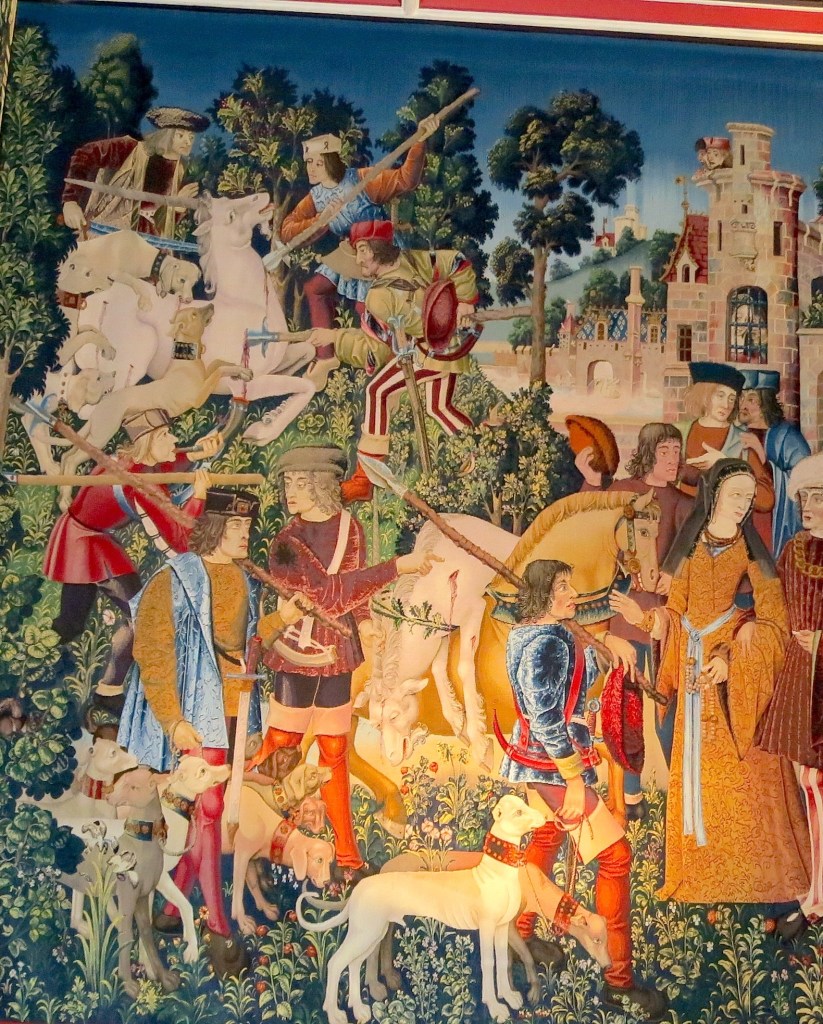
My uncle in East Germany points to the unicorn in the painting and explains it is now extinct. We correct him, say such a creature never existed. He does not argue, but we know he does not believe us. He is certain power and gentleness must have gone hand in hand once. A prisoner of war even after the war was over, my uncle needs to believe in something that could not be captured except by love, whose single luminous horn redeemed the murderous forest and, dipped into foul water, would turn it pure. This world, this terrible world we live in, is not the only possible one, his eighty-year-old eyes insist, dry wells that fill so easily now. ~Lisel Mueller “The Exhibit”
This is the animal that never was. Not knowing that, they loved it anyway; its bearing, its stride, its high, clear whinny, right down to the still light of its gaze.
It never was. And yet such was their love the beast arose, where they had cleared the space; and in the stable of its nothingness it shook its white mane out and stamped its hoof.
And so they fed it, not with hay or corn but with the chance that it might come to pass. All this gave the creature such a power
its brow put out a horn; one single horn. It grew inside a young girl’s looking glass, then one day walked out and passed into her. ~Rainer Maria Rilke “Unicorn”
I sometimes feel the need for magical thinking to help restore goodness in the sad ways of this world. We have fouled our own nest, destroying each other and the extravagant garden we were given.
Hope for restoration feels almost mythical and the stuff of legends.
Power and gentleness do come together in the story of our redemption. We are delivered into a new world by the sacrifice of the most pure and generous Spirit.
Our dry well is filled by a love that quenches all our thirst, promising that our belief in goodness is not myth or legend, but real and true.
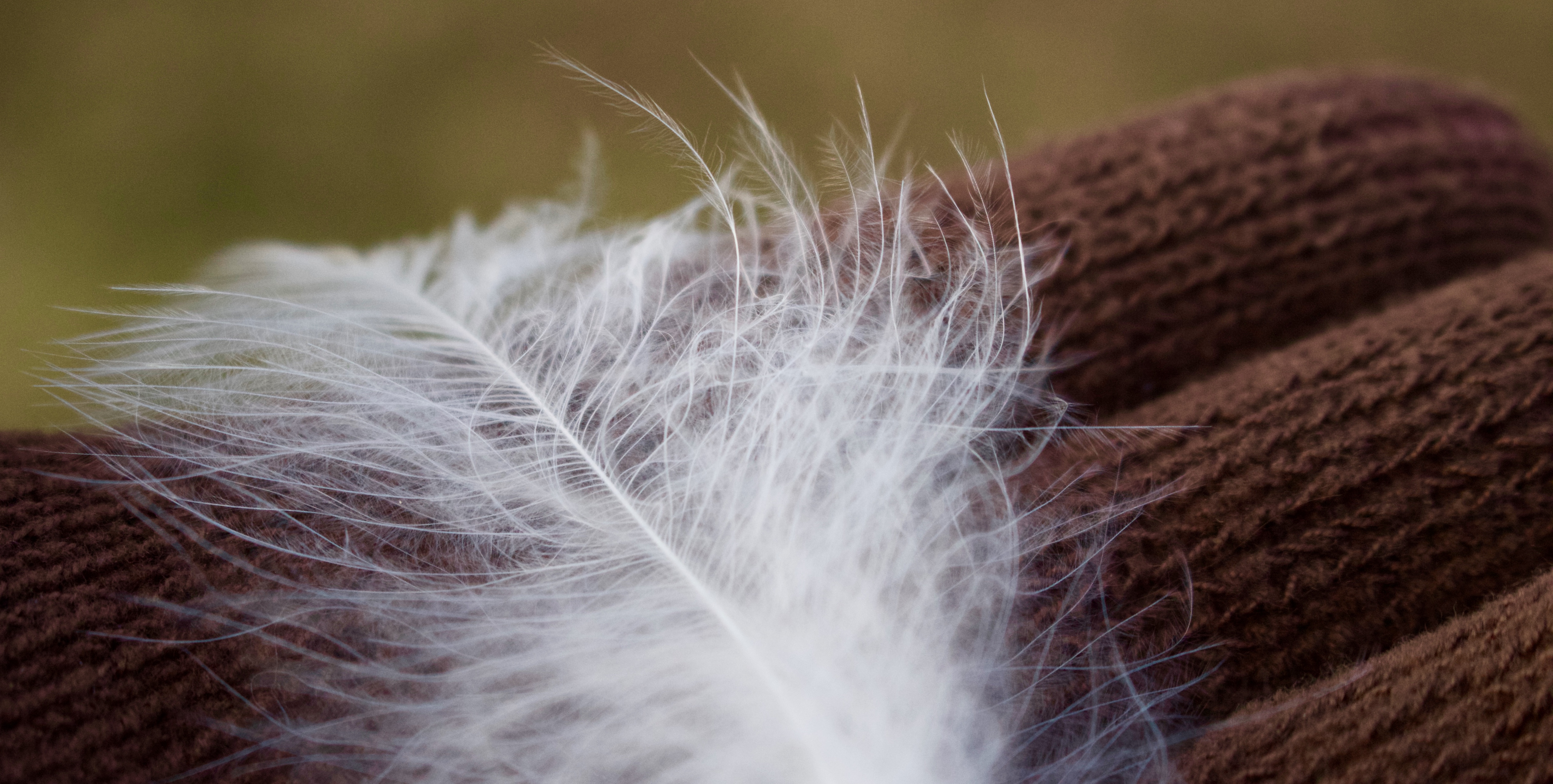
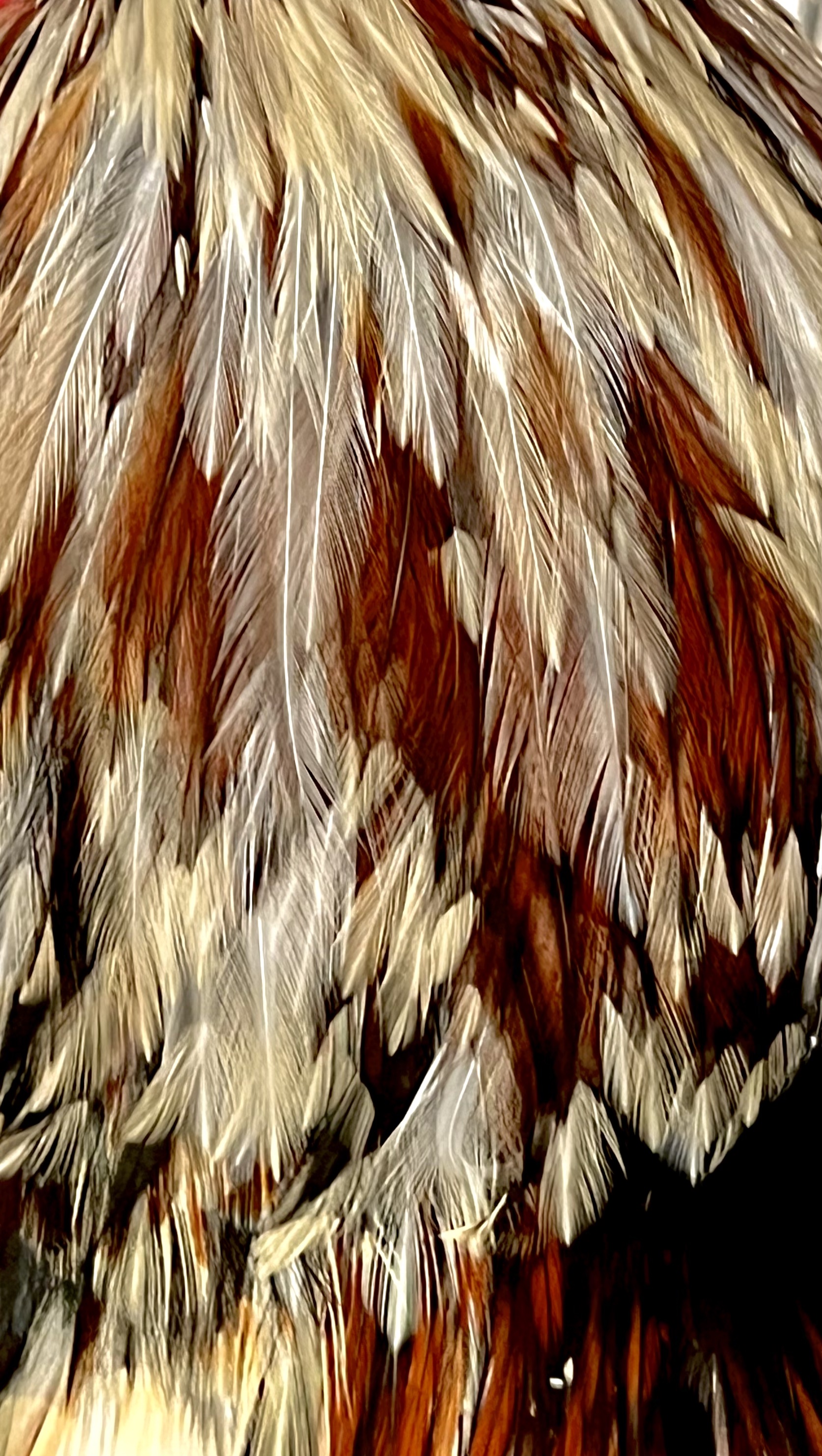
…I’m taking the day off. Quiet as a feather. I hardly move though really I’m traveling a terrific distance.
Stillness. One of the doors into the temple. ~Mary Oliver from “Today” from A Thousand Mornings
Some days warrant stillness. On this Sabbath day of rest, I seek to be quiet as a feather, silently in place, listening.
Maybe, to hear each other breathe again. Surely, to hear the Word and breath of God.
A funny thing about feathers: alone, each one is merely fluff and air. Together — feathers become lift and power, with strength and will to soar beyond the tether of gravity’s pull on our flawed humanity to return back to dust.
As quiet as a feather, joined and united, one overlapping another, we can rise above and fly as far as life and breath can take us.
May peace be still.
One-Time
Monthly
Yearly
Make a one-time or recurring donation to support daily Barnstorming posts
The essence of America, that which really unites us, is not ethnicity, or nationality or religion. It is an idea, and what an idea it is—that you can come from humble circumstances and do great things.That it doesn’t matter where you came from but where you are going. ~Condoleezza Rice
We have been preserved, these many years, in peace and prosperity. We have grown in numbers, wealth and power, as no other nation has ever grown. But we have forgotten God. We have forgotten the gracious hand which preserved us in peace, and multiplied and enriched and strengthened us; and we have vainly imagined, in the deceitfulness of our hearts, that all these blessings were produced by some superior wisdom and virtue of our own. Intoxicated with unbroken success, we have become too self sufficient to feel the necessity of redeeming and preserving Grace, too proud to pray to the God that made us! ~Abraham Lincolnfrom Proclamation 97 – Appointing a Day of National Humiliation, Fasting and Prayer (March 1863)
Perhaps Independence Day should actually become a day of National Humiliation, Fasting and Prayer, as Lincoln proclaimed in March 1863. Goodness knows, after all we’ve been through as a nation, the U.S.A. still struggles with understanding who we are and how to live out the brilliant idea that began our government nearly 250 years ago.
Even for those coming from the most humble of backgrounds, it is possible for any person to do great things here. The key is to never forget the blessings bestowed upon us by the courage and perseverance of our forebears. So much blood has been shed to bring us the freedoms we take for granted.
Today is a day to be grateful and prayerful, not proud. Let us not forget amid the cacophony of fireworks, the overabundant picnic food and unending parades – we the people must vow together that our unity be strengthened by single-minded commitment to peace and harmony rather than be destroyed by division and conflict.
Our God does not abandon the humble in spirit. Let us not forget such a God.
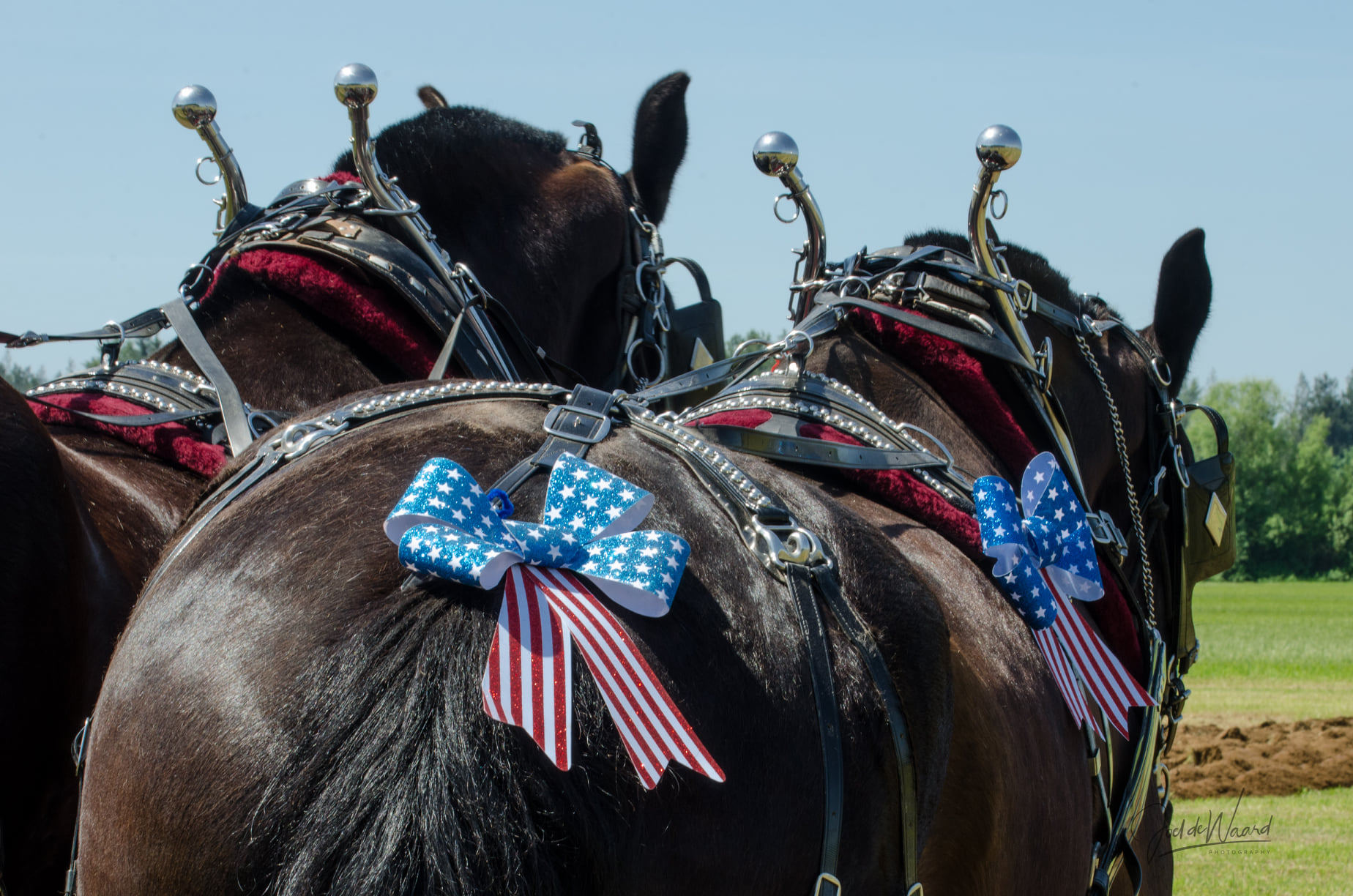
photo by Joel DeWaard
One-Time
Monthly
Yearly
Make a one-time or recurring donation to support daily Barnstorming posts
In science we have been reading only the notes to a poem: in Christianity we find the poem itself. ~C.S. Lewis from Miracles
Science doesn’t love us despite our weakness, nor grasp and console the hand and the heart of the dying, it won’t ever become sacrifice for our sin, nor offer us everlasting forgiveness and grace.
Science dips just below the surface to discover depths of a Word that formed all that exists. Science reaches out to the cosmos to comprehend our limits within the infinite.
We see only a shimmering reflection, a mere fermata in the opus of creation as we pause to consider the profundity of His ultimate Work in our souls.
One-Time
Monthly
Yearly
Make a one-time or recurring donation to support daily Barnstorming posts
I am what you make me; nothing more. I swing before your eyes as a bright gleam of color, a symbol of yourself. ~Franklin K. Lane, Secretary of the Interior, 1914 Flag Day address
Sometimes, as a child, when I was bored, I’d grab a step ladder, pull it into our hallway, climb half way up and carefully lift the plywood hatch that was the portal to our unlit attic. It took some effort to climb up into the attic from the ladder, juggling a flashlight at the same time, but once seated safely on the beams above our ceiling, being careful not to put my foot through the carpet of insulation, I could explore what was stowed and normally inaccessible to me.
All the usual attic-type things were put up there: Christmas ornaments and lights, baby cribs and high chairs, lamps and toys no longer used. Secrets to my parents’ past were stored away there too. It was difficult imagining them as young children growing up on opposite sides of the state of Washington, in very different circumstances, or as attractive college students who met at a dance, or as young marrieds unencumbered by the daily responsibilities of a family. The attic held those images and memories like a three dimensional photo album.
My father’s dark green Marine Corps cargo trunk was up there, the one that followed him from Officer Training in Quantico, Virginia, to beach and mountain battles on Tarawa, Tinian and Saipan in the South Pacific, and three years later back home again. It had his name and rank stenciled on the side in dark black lettering. The buckles were stiff but could be opened with effort, and in the dark attic, there was always the thrill of unlatching the lid, and shining the flashlight across the contents. His Marine Corps dress uniform lay inside underneath his stiff brimmed cap. There were books about protocol, and a photo album which contained pictures of “his men” that he led in his battalion, and the collection of photos my mother sent of herself as she worked as a teacher of high school students back home.
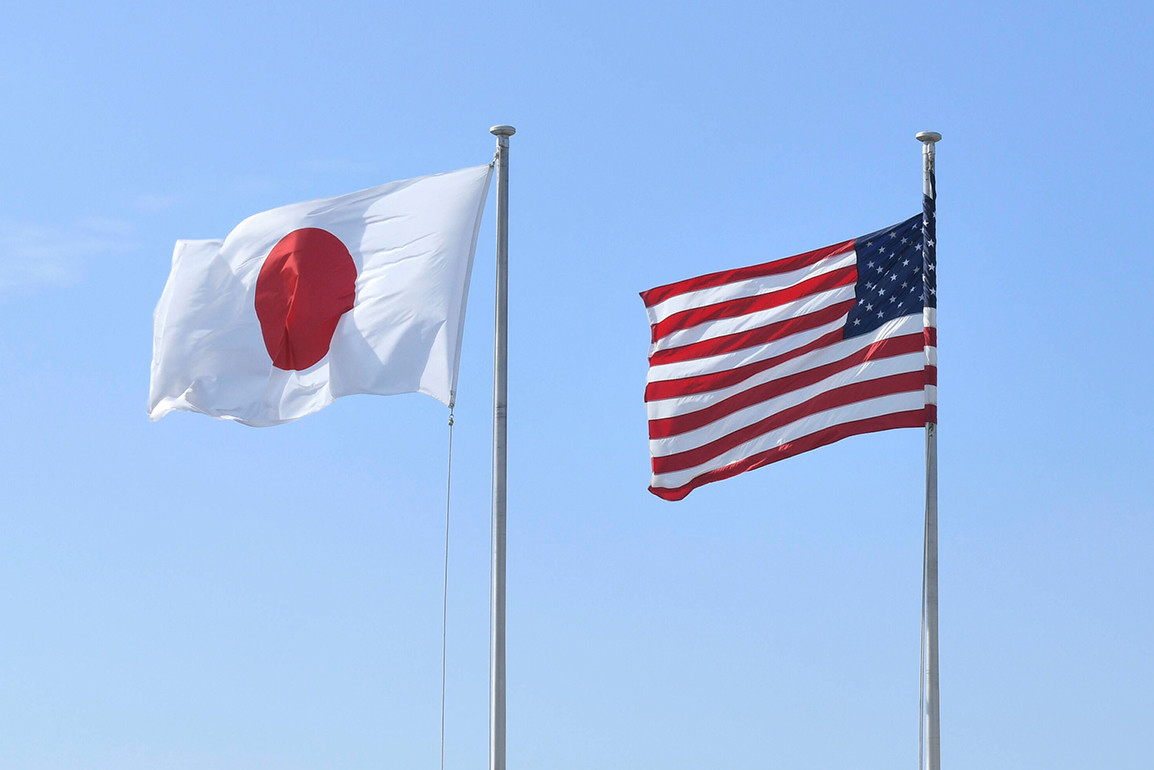
Most fascinating was a folded Japanese flag inside a small drawstring bag, made of thin white see-through cloth with the bold red sun in the middle. Surrounding the red sun were the delicate inked characters of many Japanese hands as if painted by artists, each wishing a soldier well in his fight for the empire. Yet there it was, a symbol of that soldier’s demise, itself buried in an American attic, being gently and curiously held by an American daughter of a Marine Corps captain. It would occur to me in the 1960s that some of the people who wrote on this flag might still be living, and certainly members of the soldier’s family would still be living. I asked my father once about how he obtained the flag, and he, protecting both me and himself, waved me away, saying he couldn’t remember. I know better now. He knew but could not possibly tell me the truth.
These flags, charms of good luck for the departing Japanese soldier as he left his neighborhood or village for war, are called Hinomaru Yosegaki (日の丸寄せ書き). Tens of thousands of these flags came home with American soldiers; it is clear they were not the talisman hoped for. A few of these flags are now finding their way back to their home country, to the original villages, to descendants of the lost soldiers. So now has this flag.
Eighty years ago doesn’t seem that long, a mere drop in the river of time. There is more than mere mementos that have flowed from the broken dam of WWII, flooding subsequent generations of Americans, Japanese, Europeans with memories that are now lost as the oldest surviving soldiers in their 90’s pass, scores of them daily, taking their stories of pain and loss and heroism with them. My father could never talk with a person of Asian descent, Japanese or not, without being visibly uneasy. As a child, I saw and felt this from him, but heard little from his mouth.
When he was twenty two years old, pressed flat against the rocks of Tarawa, trying to melt into the ground to become invisible to the bullets whizzing overhead, he could not have conceived that sixty five years later his twenty two year old grandson would disembark from a jumbo jet at Narita in Tokyo, making his way to an international school to teach Japanese children. My father would have been shocked that his grandson would settle happily into a culture so foreign, so seemingly threatening, so apparently abhorrent. Yet this irony is the direct result of the horrors of that too-long horrible bloody war of devastation: Americans and Japanese, despite so many differences, have become the strongest of allies, happily exchanging the grandchildren of those bitterly warring soldiers back and forth across the Pacific. It too was my privilege to care for Japanese exchange students daily in my University health clinic, peering intently into their open faces and never once seeing the enemy that my father feared.
Now all these decades later, our son taught for 13 years in Tokyo, with deep admiration and appreciation for each of his students, some of whom were great-grandchildren of WWII Japanese soldiers. He married a granddaughter of those my father fought. Their two children are the perfect amalgam of once warring, yet now peaceful, cultures; a symbol of blended and blending peoples overcoming the hatred of past generations, creating a new world.
Our son and daughter-in-law, having settled their family in the States, are adapting to a different language, culture and flag. I pray our son having devoted part of his life as teacher and missionary to the land of the rising sun has redeemed his grandfather, the soldier-warrior of the past century.
(U.S. Air Force photo by Staff Sgt. Peter Reft)
One-Time
Monthly
Yearly
Make a one-time or recurring donation to support daily Barnstorming posts





























 Barnstorming