Sometimes I feel discouraged and think my work’s in vain, but then the holy spirit revives my soul again. ~ African-AmericanSpiritual “There is a Balm in Gilead”
Since my people are crushed, I am crushed; I mourn, and horror grips me. Is there no balm in Gilead? Is there no physician there? Why then is there no healing for the wound of my people? Jeremiah 8:21-22
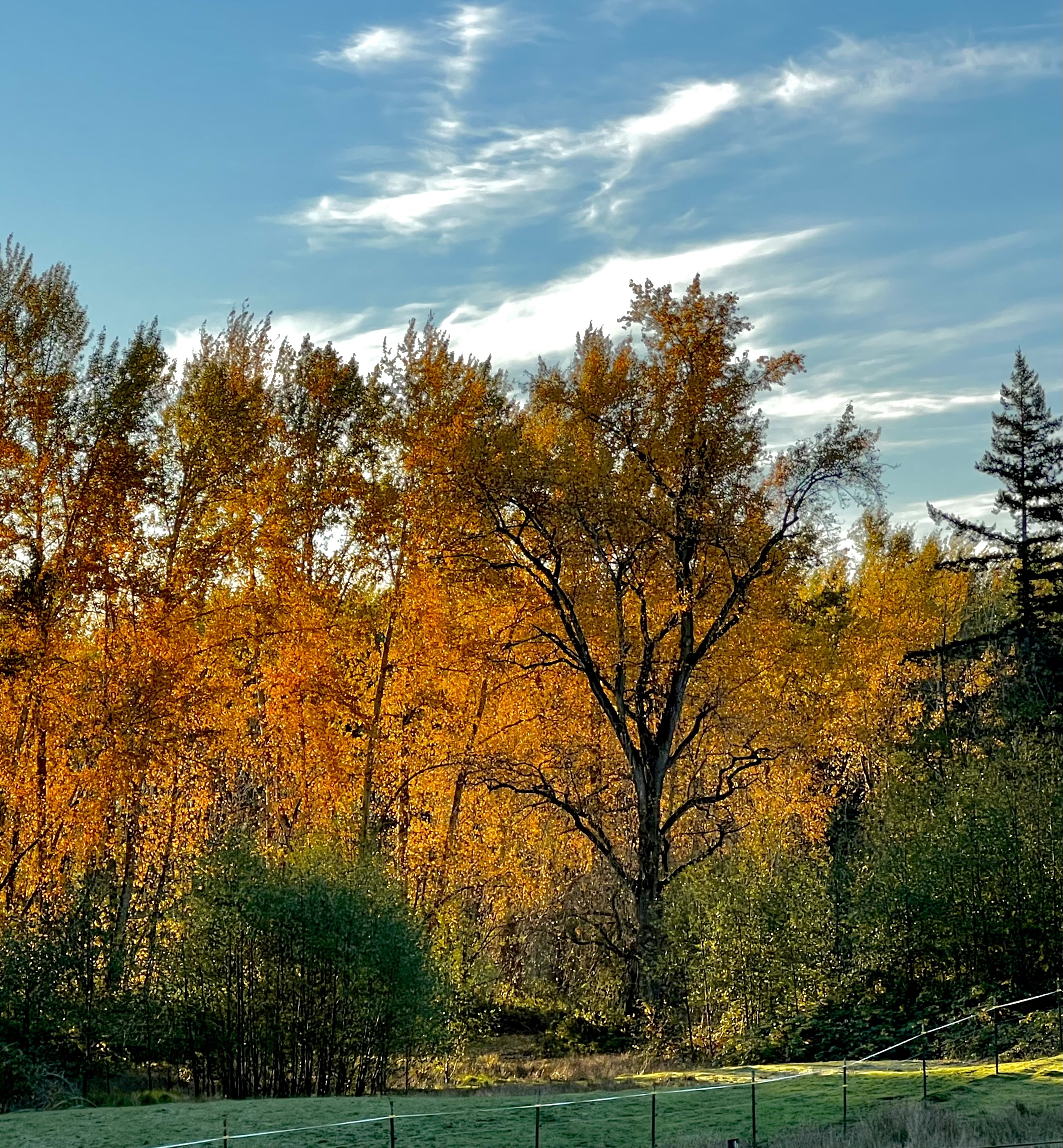
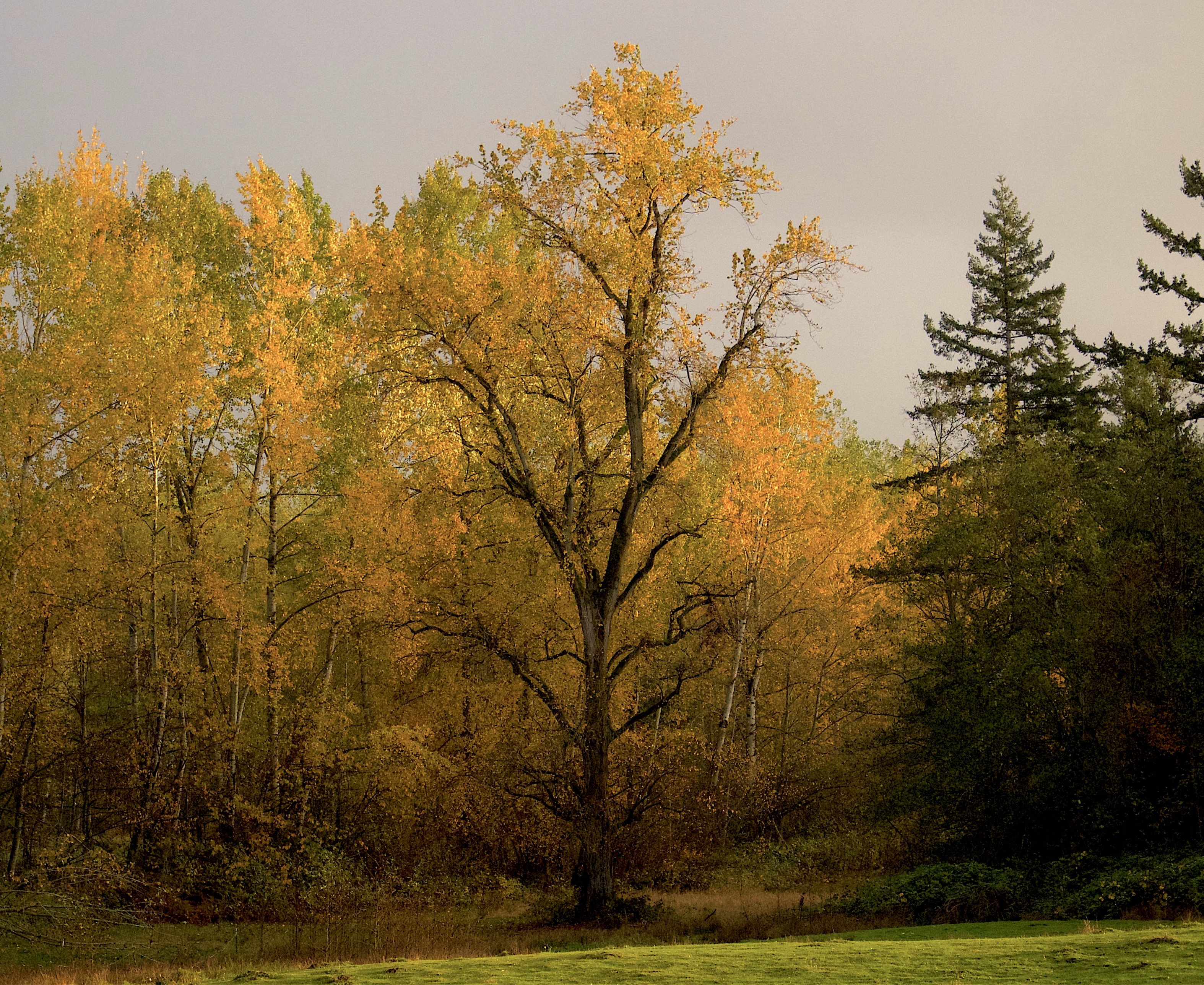
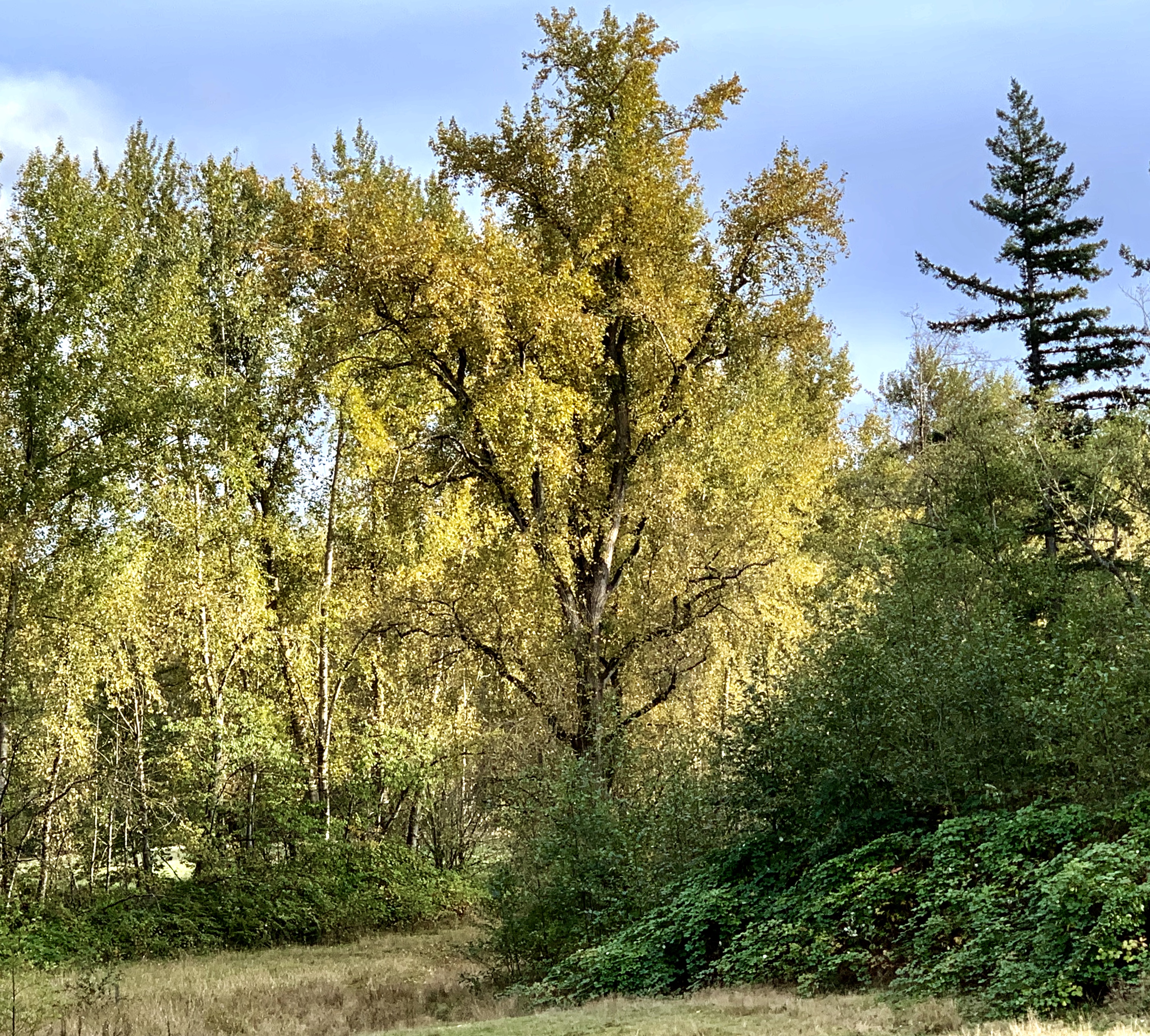
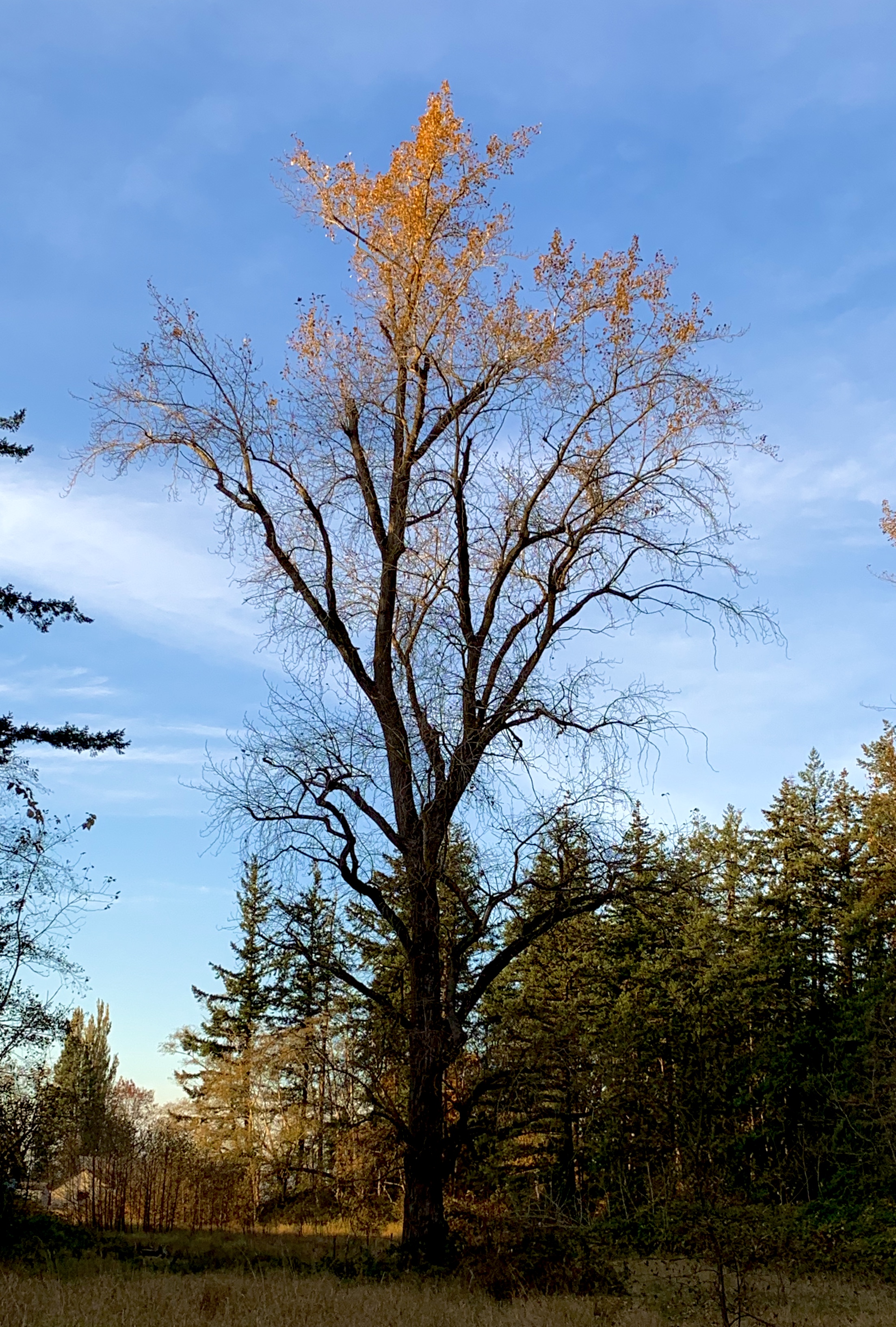
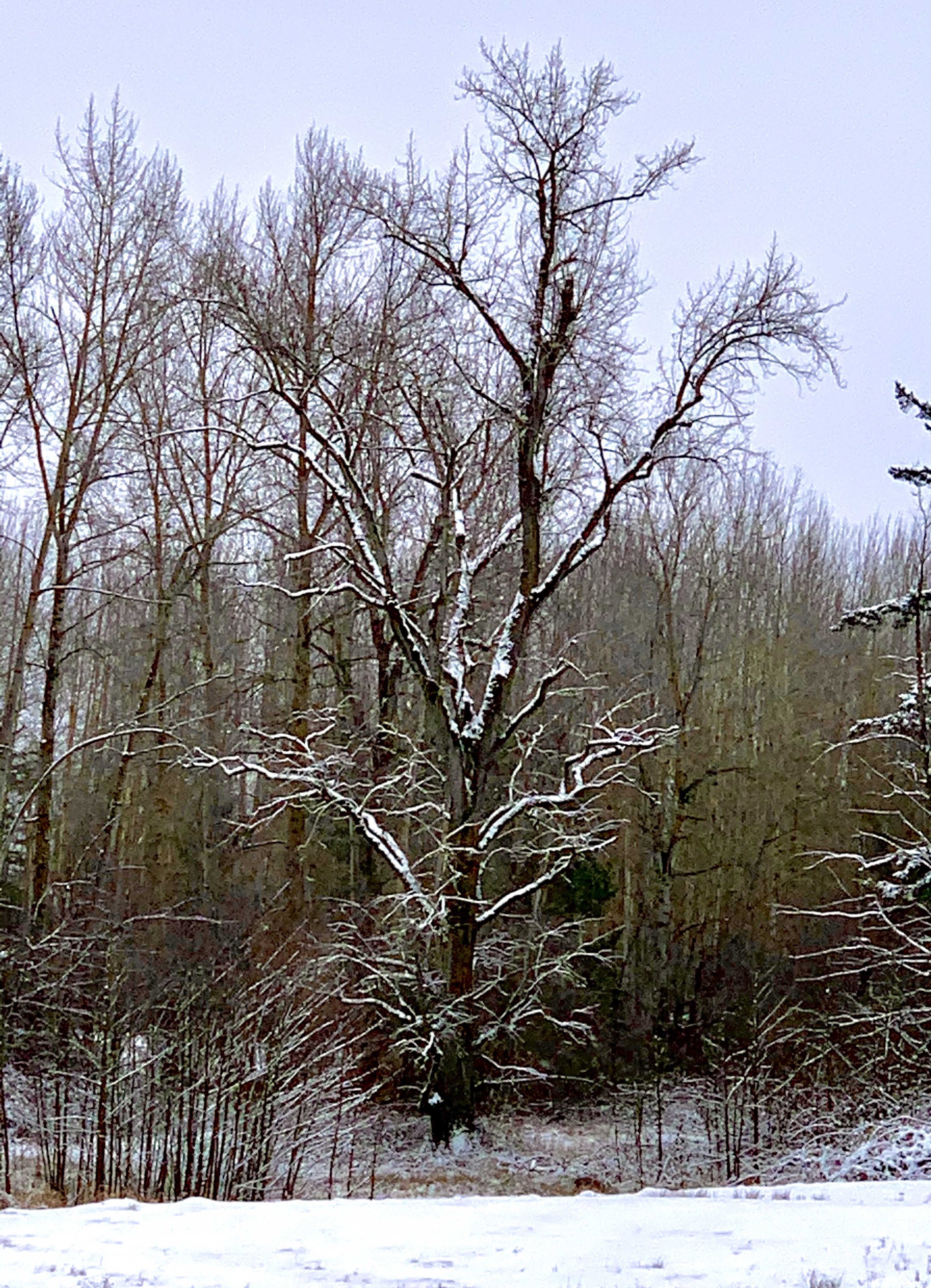
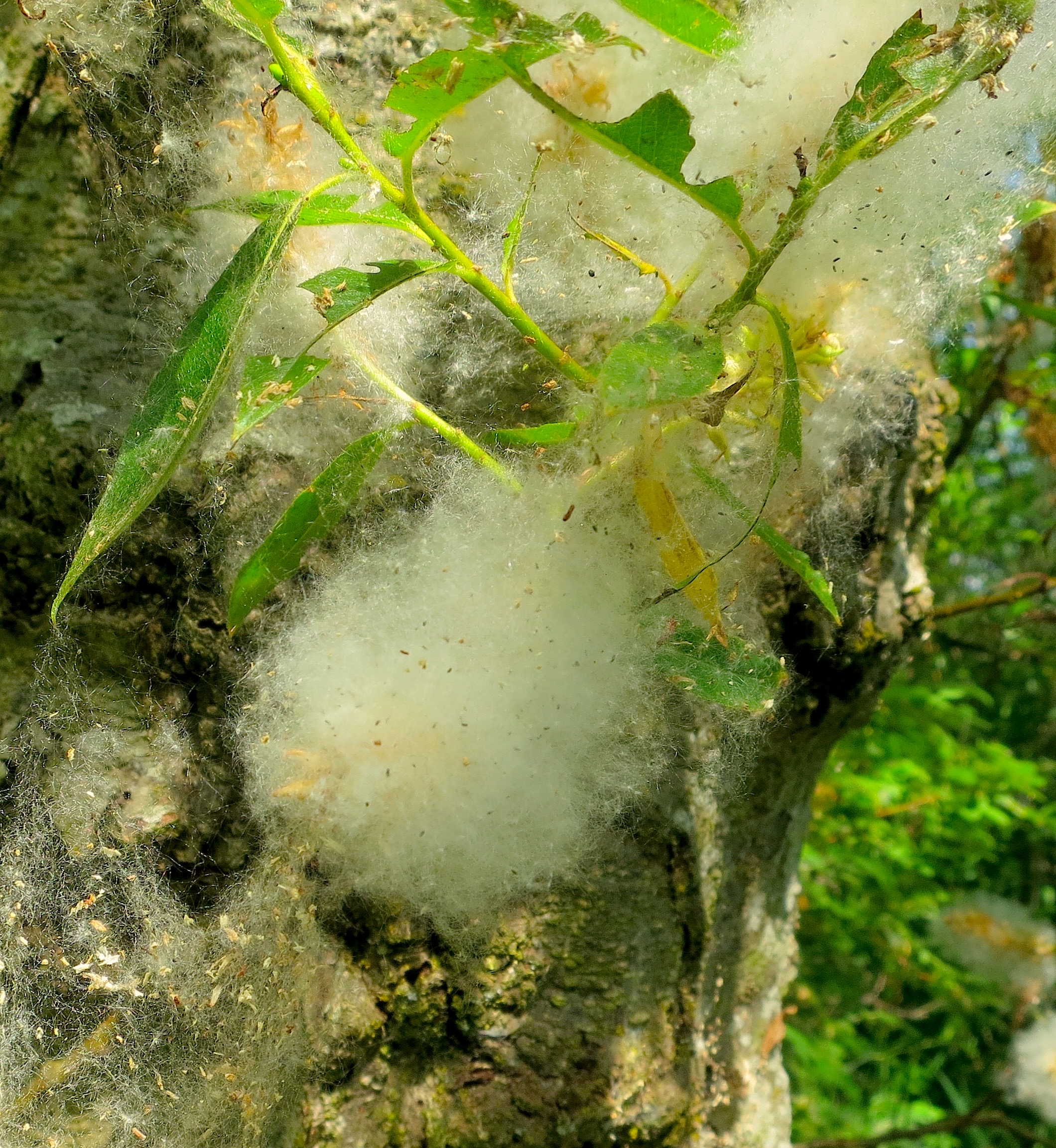
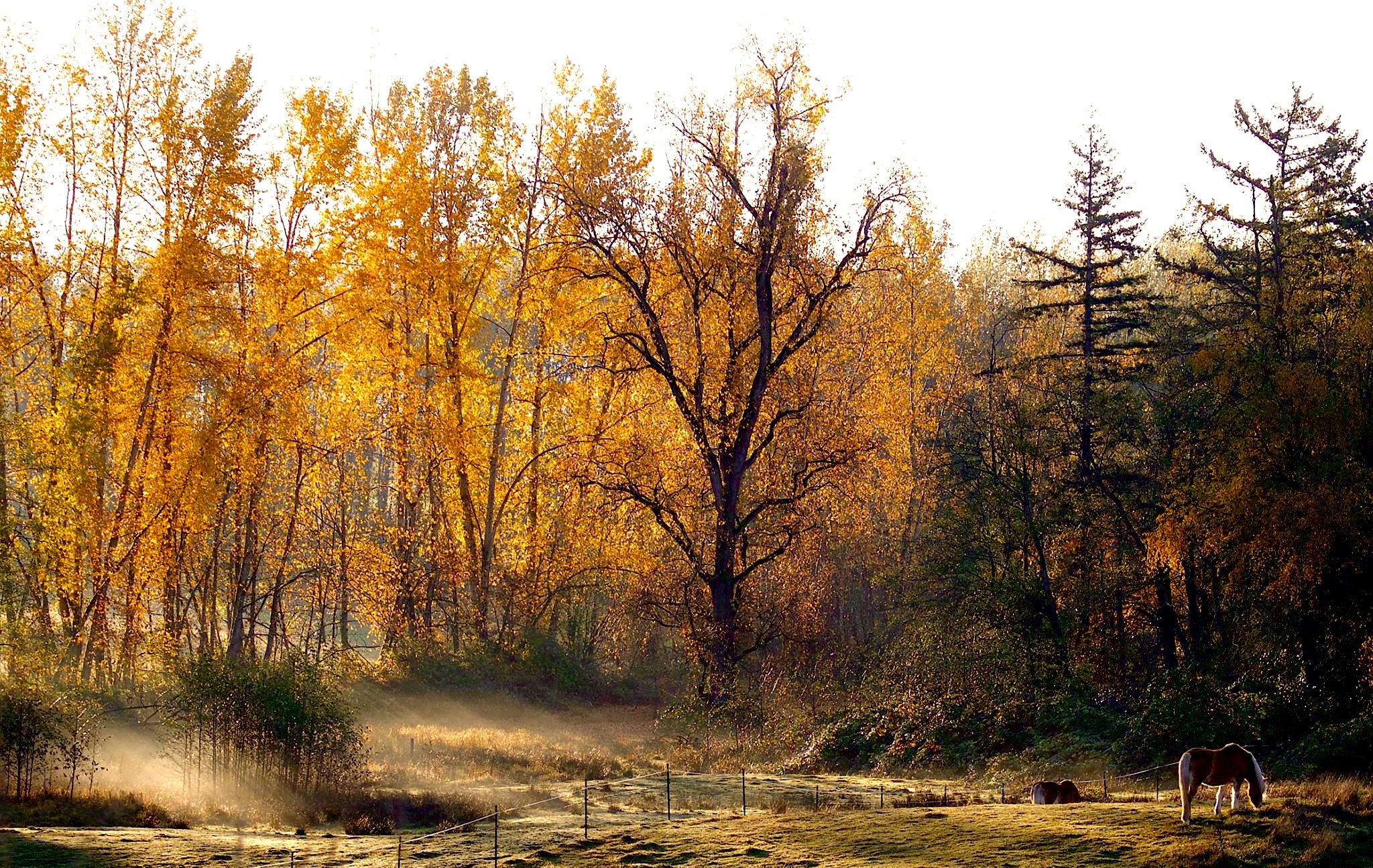
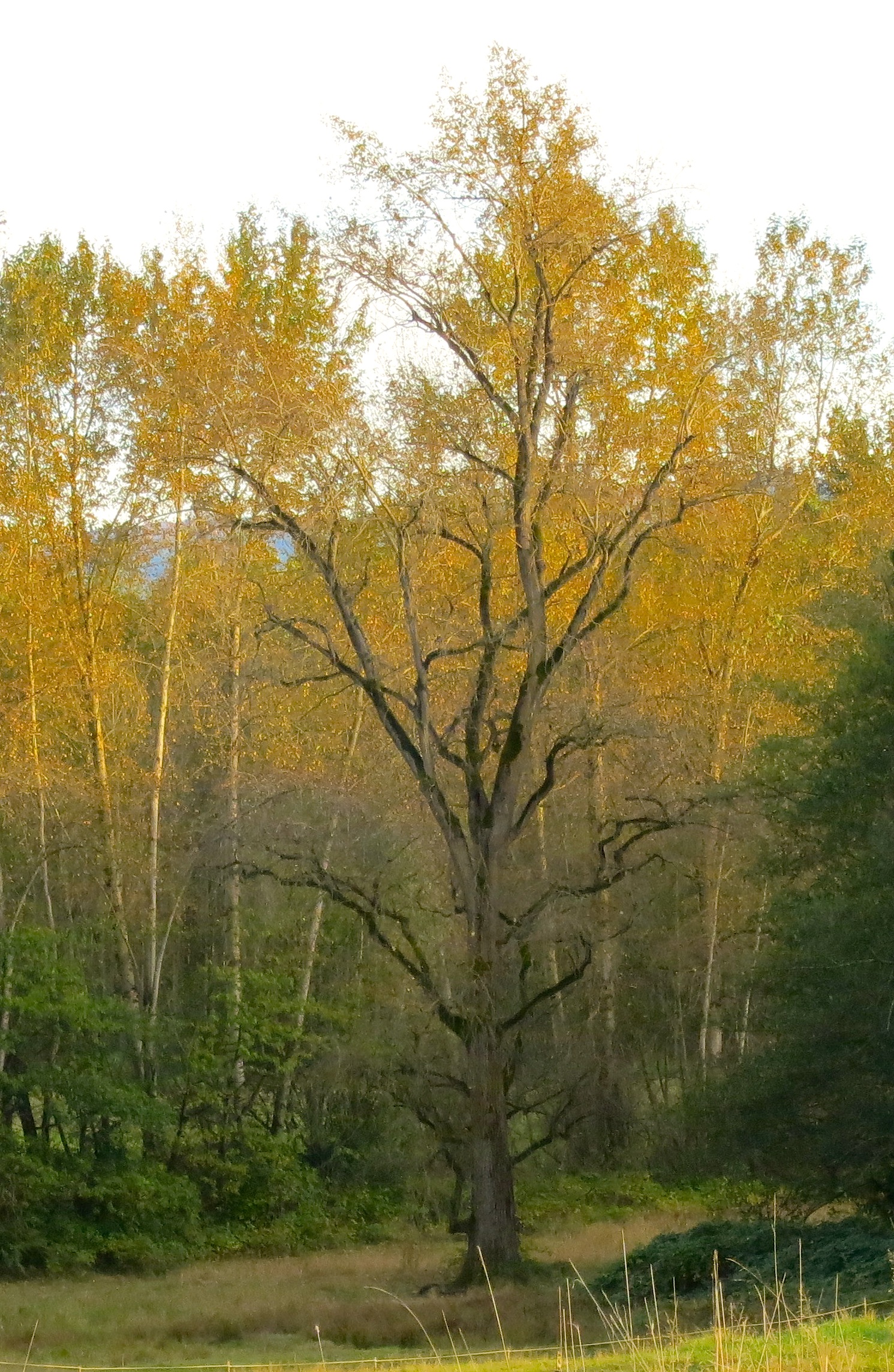
We never have tried harvesting any of the cottonwood resin, but I’ve found the presence of this grand tree in the field seems balm enough when I find myself discouraged. The tall tree adapts so dramatically over the course of the seasons, remaining a fixture of stability and beauty whether golden in the autumn, blowing cottony seeds in the spring, bare with snow in the winter or flourishing with summer leaves. It is steadfast and reassuring.
Discouragement is so familiar to us, a constant pandemic companion, and certainly is rampant over the past week with images of war filling our screens. No tree resin is capable of fighting a virus or stopping a war but the balm of Gilead in Jeremiah has the power of the Holy Spirit, able to heal our sin sick souls.
The love of our Savior is the balm for us, the wounded. We will become whole again.
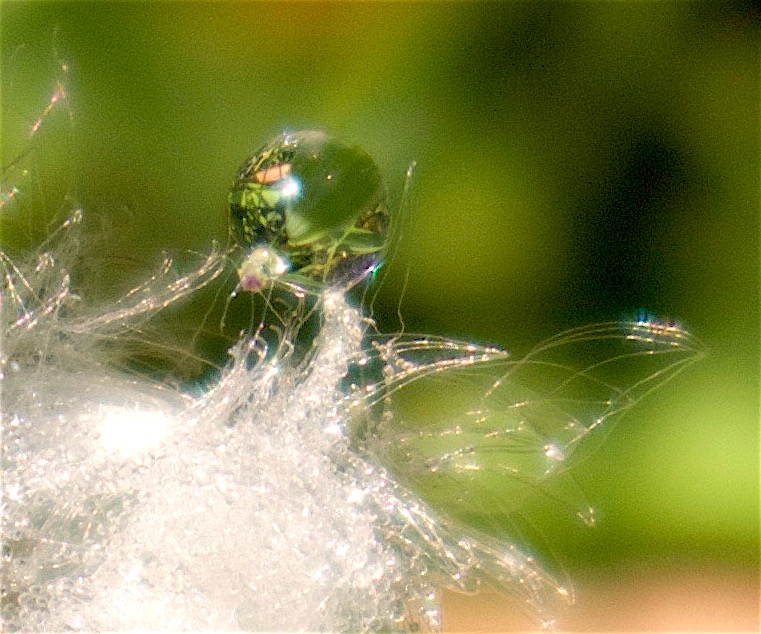
cottonwood seedscottonwood seed
This year’s Lenten theme for Barnstorming is a daily selection from songs and hymns about Christ’s profound sacrifice on our behalf.
If we remain silent about Him, the stones themselves will shout out and start to sing (Luke 19:40).
In His name, may we sing…
There is a balm in Gilead to make the wounded whole. There is a balm in Gilead to heal the sin sick soul.
Sometimes I feel discouraged and think my works in vain, but then the holy spirit revives my soul again.
There is a balm in Gilead to make the wounded whole. There is a balm in Gilead to heal the sin sick soul.
Don’t ever feel discouraged for Jesus is your friend and if you lack for knowledge he’ll ne’er refuse to lend.
One-Time
Monthly
Yearly
Make a one-time or recurring donation to support daily Barnstorming posts
Who was the guilty? Who brought this upon you? It is my treason, Lord, that has undone you. ’Twas I, Lord Jesus, I it was denied you; I crucified you. ~Oh Holy Jesus, How Have YouOffended?
Ah, when to the heart of man Was it ever less than a treason To go with the drift of things, To yield with a grace to reason, And bow and accept the end Of a love or a season? ~Robert Frost from “Reluctance”
We share in the guilt, you and I, turning away from Love freely given.
We are the treasonous souls who betrayed a suffering dying Savior, allowing Him to take on Himself the punishment we deserved ourselves.
It is we who abandoned Him as He loved us to death.
Still now, even knowing His sacrifice, we accept the drift of things in our daily lives, setting aside our responsibility to care for one another.
We yield when there is pressure threatening to knock us over. We bow and falter when our or others’ burdens become too much.
It just feels easier to not get involved.
Over this past week we are witnessing the profound cost of love: the citizens of Ukraine will not accept, yield or bow to evil. They are willingly becoming sacrifices by resisting enormous forces bent on their destruction. Ukraine is teaching the world what it means to stand up to a bully — to take the shots for what is right and good and pure, not assuming someone else will do it for them.
Anything less would be acting treasonous to Love: loving the heart of man and revering the face of God.
This year’s Lenten theme for Barnstorming is a daily selection from songs and hymns about Christ’s profound sacrifice on our behalf.
If we remain silent about Him, the stones themselves will shout out and start to sing (Luke 19:40).
In His name, may we sing…
Ah, holy Jesus, how hast thou offended, That we to judge thee have in hate pretended? By foes derided, by thine own rejected, O most afflicted!
Who was the guilty? Who brought this upon thee? Alas, my treason, Jesus, hath undone thee! Twas I, Lord Jesus, I it was denied thee; I crucified thee.
Lo, the Good Shepherd for the sheep is offered; The slave hath sinned, and the Son hath suffered. For our atonement, while we nothing heeded, God interceded.
For me, kind Jesus, was thy incarnation, Thy mortal sorrow, and thy life’s oblation; Thy death of anguish and thy bitter passion, For my salvation.
Therefore, kind Jesus, since I cannot pay thee, I do adore thee, and will ever pray thee, Think on thy pity and thy love unswerving, Not my deserving.
One-Time
Monthly
Yearly
Make a one-time or recurring donation to support daily Barnstorming posts
A stable lamp is lighted Whose glow shall wake the sky The stars shall bend their voices And every stone shall cry And every stone shall cry And straw like gold will shine A barn shall harbour heaven A stall become a shrine
This child through David’s city Will ride in triumph by The palm shall strew its branches And every stone shall cry And every stone shall cry Though heavy, dull and dumb And lie within the roadway To pave the Kingdom come
Yet He shall be forsaken And yielded up to die The sky shall groan and darken And every stone shall cry And every stone shall cry For thorny hearts of men God’s blood upon the spearhead God’s love refused again
But now as at the ending The low is lifted high The stars will bend their voices And every stone shall cry And every stone shall cry In praises of the child By whose descent among us The worlds are reconciled ~Richard Wilbur“A Christmas Hymn”
Castlerigg Stone Circle in Cumbria
Feeling heavy, dull and dumb, I am convinced I’m no better than a simple rock, inconsequential and immobile, trod upon and paved over, forgettable and forgotten.
I could believe there exists no pulse in my stony heart, incapable of love if I turn away from God who has come to walk beside me on this humble ground .
Yet the especially the low are lifted high by His descent– every stone, even the dumb and lifeless, shall cry out in community with Him, even the silent will find a voice to praise.
Even my own voice, meager and anemic, shall be heard.
I am no longer forgotten. In fact, never have been forgotten. So hard to reconcile: as the stones have known Him all along, then so should I.
So must I.
One-Time
Monthly
Yearly
Make a one-time or recurring donation to support daily Barnstorming posts
Please forgive me for forgetting. I wanted to go outside and look for you. I was told this was impossible.
I was instructed to stay indoors. But my words for you need sun. My heart needs air.
I love you Spring. I miss your warmth. Come unlock my door. ~Ethelbert Miller “Beloved”
I love you, Spring. But where are you? Nearly a week of chill winds and freezing temperatures put me back inside the house wanting to hide under the covers. Water buckets in the barn were frozen again, walkways were slick with ice, once friendly breezes threatened to knock me over with their force. This is not the Spring promised.
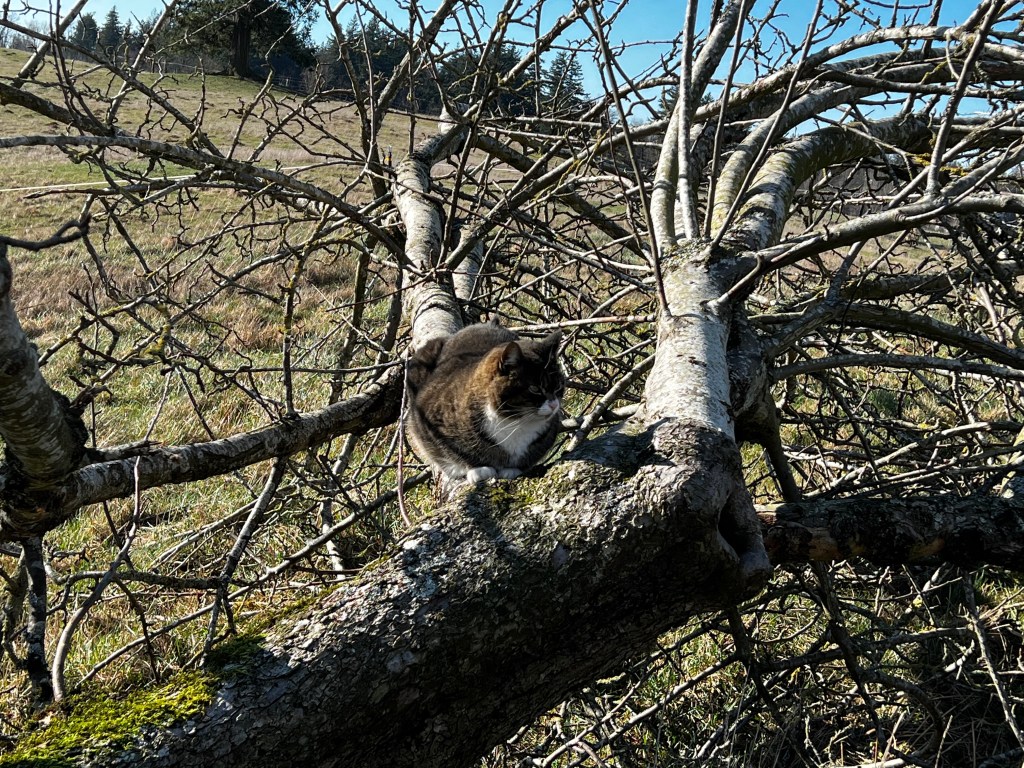
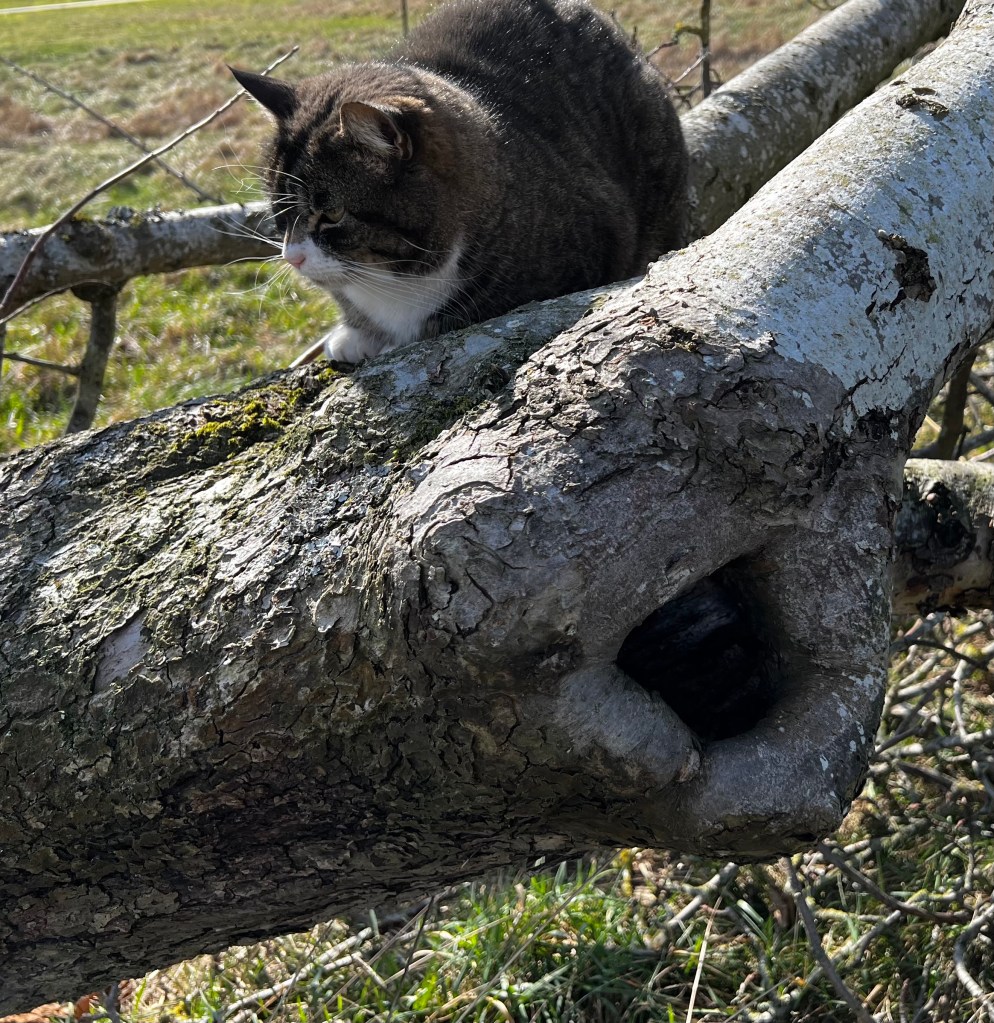
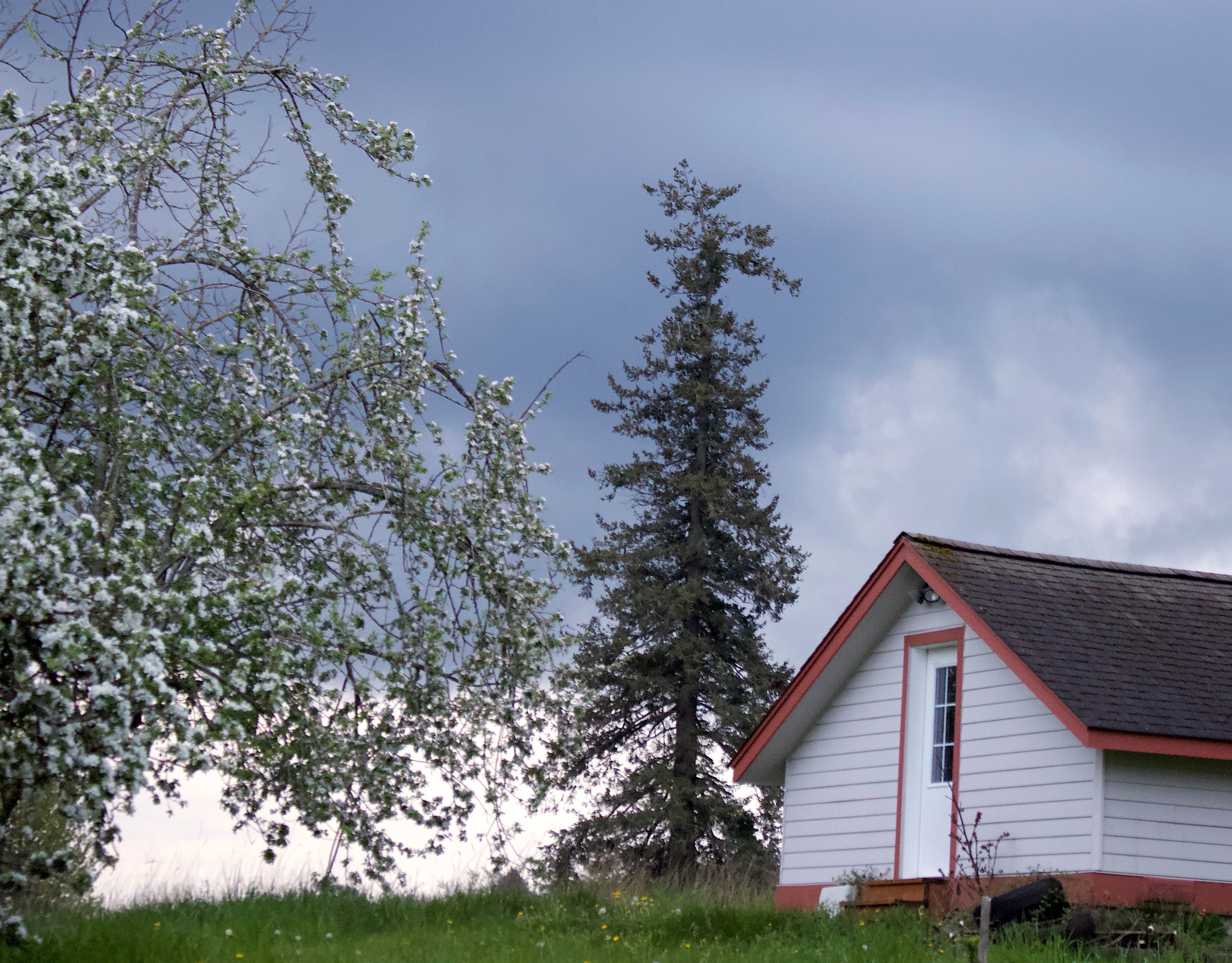
Come unlock my door, Spring. When our old apple tree toppled over in the northeast blow earlier this week, I identified a bit too much. The wind took advantage of a hollowed out rotten core the tree had been hiding for years. What might I be hiding inside that makes me just as vulnerable to forces knocking on me, even though I bear fruit as usual?
Please forgive me for forgetting: this world is at war with evil – families hiding in basements, subways filling with refugees, apartment buildings bombed. Now is when we are most fragile, exposed and wounded. Our lumpy exteriors are on full display waiting for spring to renew and cover us up.
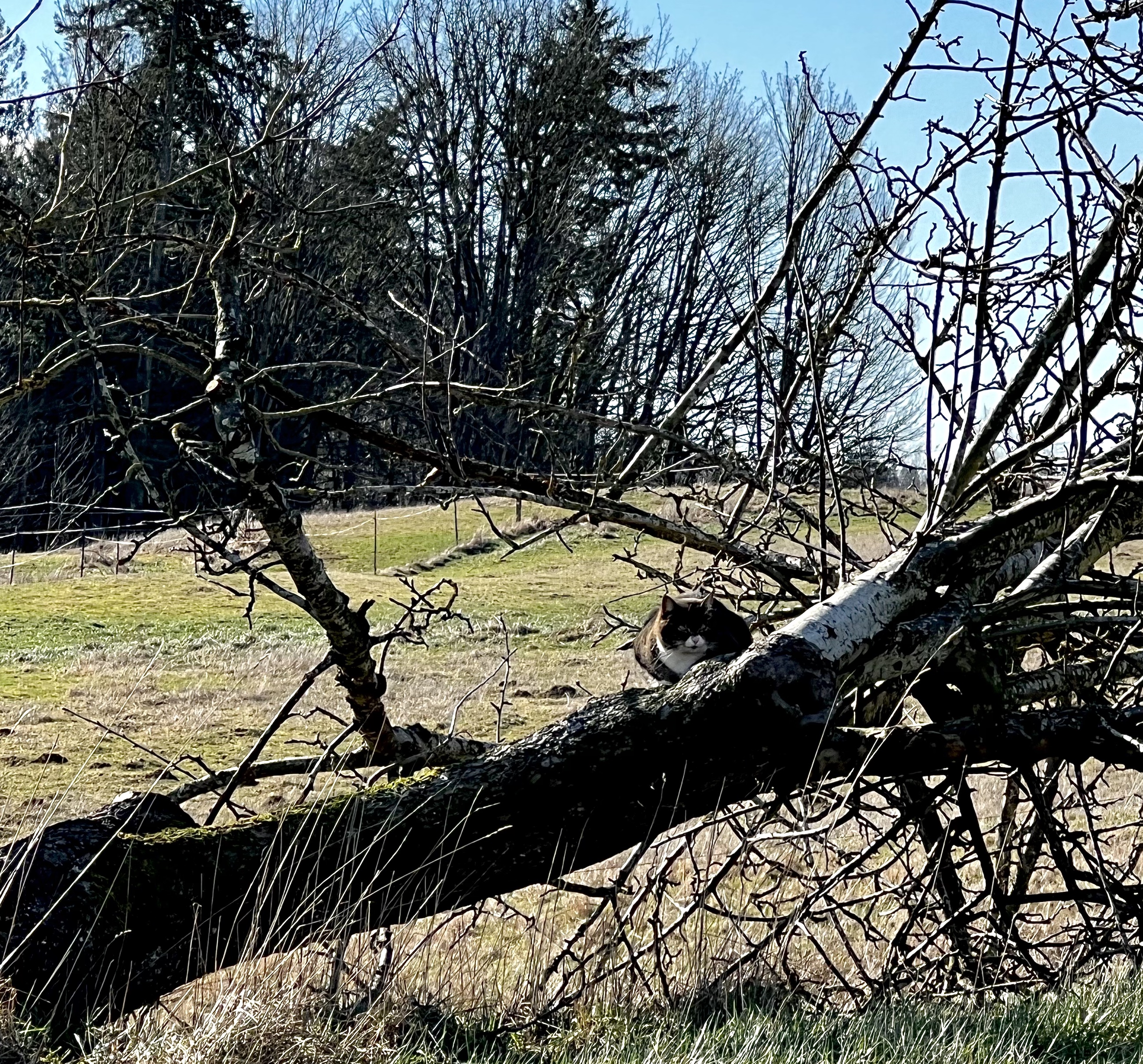
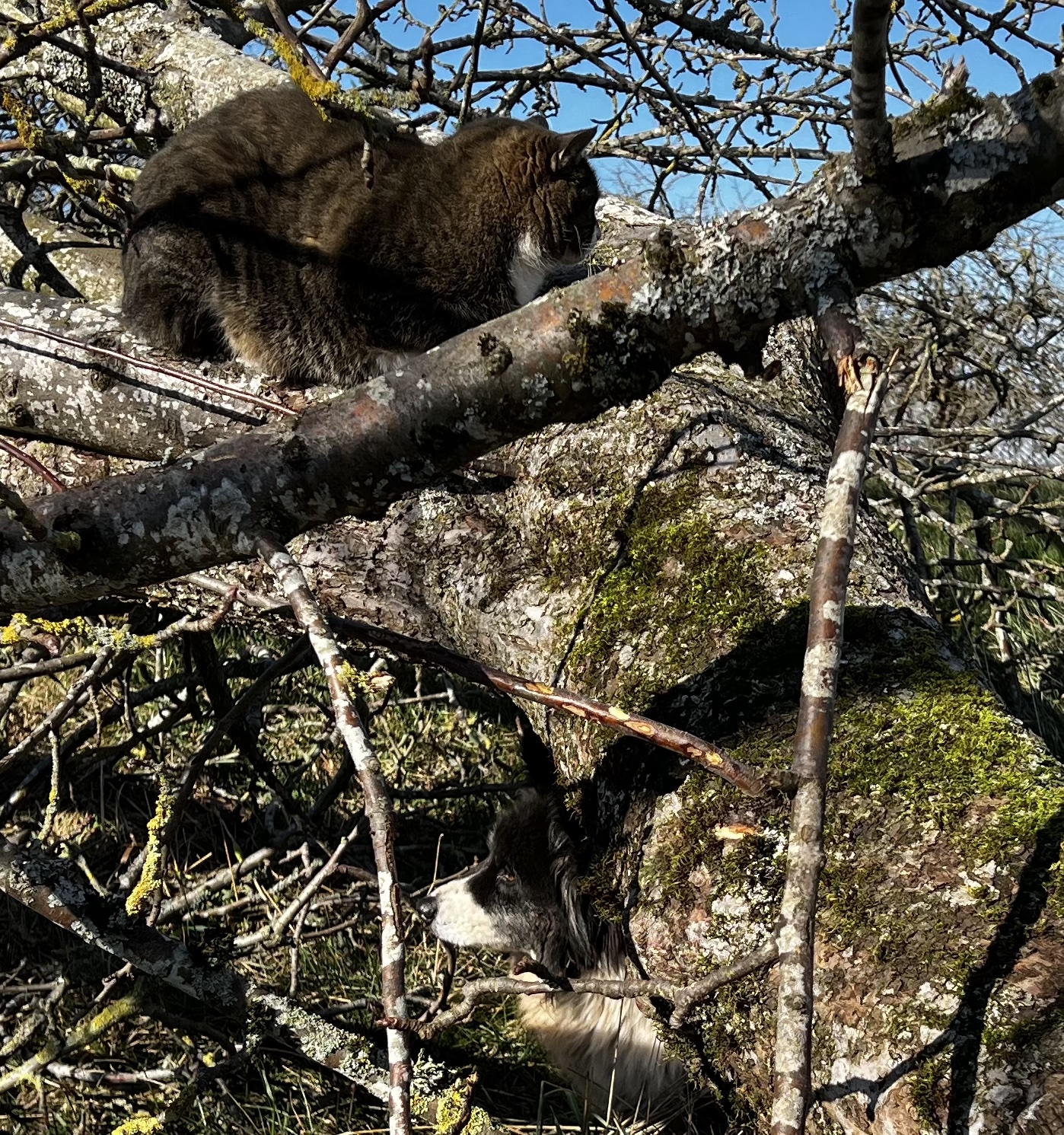
I wanted to go look for you: Our farm cat decided the old apple tree lying on its side was a new perfect perch to keep surveillance for curious (and irritating) farm dogs without having to climb up high. There he sat on the fallen trunk, far enough above a corgi dog’s head to be essentially invisible although Homer could absolutely smell there was a cat with threatening claws nearby … somewhere. Just where that cat could be remained a mystery to a dog who is distinctly height-challenged.
Like my cat, I wait now in late winter — seeking the sun for my words and fresh air for my heart. And like my dog, I sense something potentially threatening is near, but because of my own limitations of perception, I have no idea just how close.
I was told this was impossible: may we weather the storms together may there be peace and warmth for all people may we find harmony as winter melts into spring.
cat hiding in plain sight, Homer too short to figure it out
This is my song, O God of all the nations, A song of peace for lands afar and mine. This is my home, the country where my heart is, Here are my hopes, my dreams, my holy shrine. But other hearts in other lands are beating, With hopes and dreams as true and high as mine. My country’s skies are bluer than the ocean, And sunlight beams on cloverleaf and pine. But other lands have sunlight too, and clover, And skies are everywhere as blue as mine. This is my song, O God of all the nations, A song of peace for their land and for mine. So let us raise this melody together, Beneath the stars that guide us through the night; If we choose love, each storm we’ll learn to weather, Until true peace and harmony we find, This is our song, a hymn we raise together; A dream of peace, uniting humankind. ~Lloyd Stone and Blake Morgan
One-Time
Monthly
Yearly
Make a one-time or recurring donation to support Barnstorming
when my father had been dead a week I woke with his voice in my ear I sat up in bed and held my breath and stared at the pale closed door
white apples and the taste of stone
if he called again I would put on my coat and galoshes ~Donald Hall “White Apples”
She skimmed the yellow water like a moth, Trailing her feet across the shallow stream; She saw the berries, paused and sampled them Where a slight spider cleaned his narrow tooth. Light in the air, she fluttered up the path, So delicate to shun the leaves and damp, Like some young wife, holding a slender lamp To find her stray child, or the moon, or both. Even before she reached the empty house, She beat her wings ever so lightly, rose, Followed a bee where apples blew like snow; And then, forgetting what she wanted there, Too full of blossom and green light to care, She hurried to the ground, and slipped below. ~James Wright “My Grandmother’s Ghost from Above the River: The Complete Poems
I saw my grandma’s ghost once.
She was my only grandparent I actually knew and who actually knew me — the others were lost before I was born or too young to realize what I had lost.
She had lived a hard life: losing her mother when she was 12, taking over the household duties for her father and younger brother while leaving school forever. She married too young to an abusive alcoholic, lost her first child to lymphoma at age 8 before treatment was possible and took her three remaining children to safety away from their father for a year to live above a seedy restaurant where she cooked seven days a week to make ends meet.
But there was grace too. The marriage somehow got patched together after Grandpa found God and sobriety – after his sudden death sitting in church, Grandma’s faith never wavered. Her garden soil yielded beautiful flowers she planted and nurtured and picked to sell, her children and grandchildren welcomed her many open armed visits and hugs.
She was busy planning her first overseas trip of a lifetime at age 72 when we noticed her eyes looked yellow. Only two weeks later she was bed-bound in unrelenting pain due to pancreatic cancer, gazing heaven-ward instead of Europe-bound. Her dreams had been dashed so quickly, she barely realized her itinerary and destination had changed.
I was 16 at the time, too absorbed in my own teenage cares and concerns to really notice how quickly she was fading and failing like a wilted flower. Instead I was picking fights with my stressed parents, worrying over taking my driver’s license driving test, distracted by all the typical social pressures of high school life.
Her funeral was unbearable as I had never really said goodbye – only one brief hospital visit when she was hardly recognizable in her anguish and jaundice. I didn’t even get to hold her hand.
Soon after she had been lowered into the ground next to her husband and young daughter, she came back to me in a dream.
I was asleep when my bedroom door opened into the dark, wakening me as the bright hallway light pushed its way via a shimmering beam to my bed. Grandma Kittie stood in my bedroom doorway, backlit by the light surrounding her silhouette. She silently stood there, just looking at me.
Startled, I sat up in my bed and said to her, “Grandma, why are you here? You died and we buried you!”
She nodded and smiled. And then she said to me:
“I want you to know I’m okay and always will be. You will be too.”
She gave a little wave, turned and left, closing the door behind her. I woke suddenly with a gasp in my darkened bedroom and knew I had just been visited.
She hadn’t come to say goodbye or to tell me she loved me — that I knew already.
She had come to shine with her light blossoming around her, mending my broken heart by planting it with peace.
Grandma Kittie and Grandpa Leslie in their courting days
You’re in a better place I’ve heard a thousand times And at least a thousand times I’ve rejoiced for you
But the reason why I’m broken The reason why I cry Is how long must I wait to be with you
I close my eyes and I see your face If home’s where my heart is then I’m out of place Lord, won’t you give me strength To make it through somehow I’ve never been more homesick than now
Help me Lord cause I don’t understand your ways The reason why I wonder if I’ll ever know But, even if you showed me The hurt would be the same Cause I’m still here so far away from home
In Christ, there are no goodbyes And in Christ, there is no end
So I’ll hold onto Jesus With all that I have To see you again To see you again
And I close my eyes and I see your face If home’s where my heart is then I’m out of place Lord, won’t you give me strength To make it through somehow
Won’t you give me strength To make it through somehow Won’t you give me strength To make it through somehow I’ve never been more homesick than now ~Millard Bart Marshall
One-Time
Monthly
Yearly
Make a one-time or recurring donation to support Barnstorming
Instructions for living a life: Pay attention. Be astonished. Tell about it. ~Mary Oliver
If your everyday life seems poor to you,do not accuse it; accuse yourself, tell yourself you are not poet enough to summon up its riches; since for the creatorthere is no poverty and no poor or unimportant place. ― Rainer Maria Rilkefrom Letters to a Young Poet
When it’s over, I want to say all my life I was a bride married to amazement. I was the bridegroom, taking the world into my arms.
When it’s over, I don’t want to wonder if I have made of my life something particular, and real.
I don’t want to find myself sighing and frightened, or full of argument.
As a child, I would sometimes spend long rainy afternoons languishing on the couch, complaining to my mother how boring my life was.
Her typical response was to remind me my boredom said more about me than about life; I became the accused, rather than the accuser, failing to summon up life’s riches.
Thus convicted, my sentence followed: she would promptly give me chores to do. I learned not to voice my complaints about how boring life seemed, because it always meant being put to work. I decided to live a life of nearly too much work and activity, missing much I could have slowed down to notice.
Some things haven’t changed, even sixty-some years later. Whenever I am tempted to feel frustrated or pitiful or bored, I need to remember what that says about me. If I’m not poet enough to recognize the Creator’s brilliance in every slant of light or every molecule, then it is my poverty I’m accusing, not His.
So – back to the work of paying attention and being astonished. There is the rest of my life to be lived and nearly always something to say about it.
Night has come: for one whole day again I’ve loved you so much, stirring hills. It’s beautiful to see. But: to feel in the lining of closed eyelids the sweetness of having seen … ~Rainer Maria Rilke
Even After All this time The sun never says to the earth,
“You owe Me.”
Look What happens With a love like that, It lights the Whole Sky. ~Daniel Ladinsky, from “The Gift”
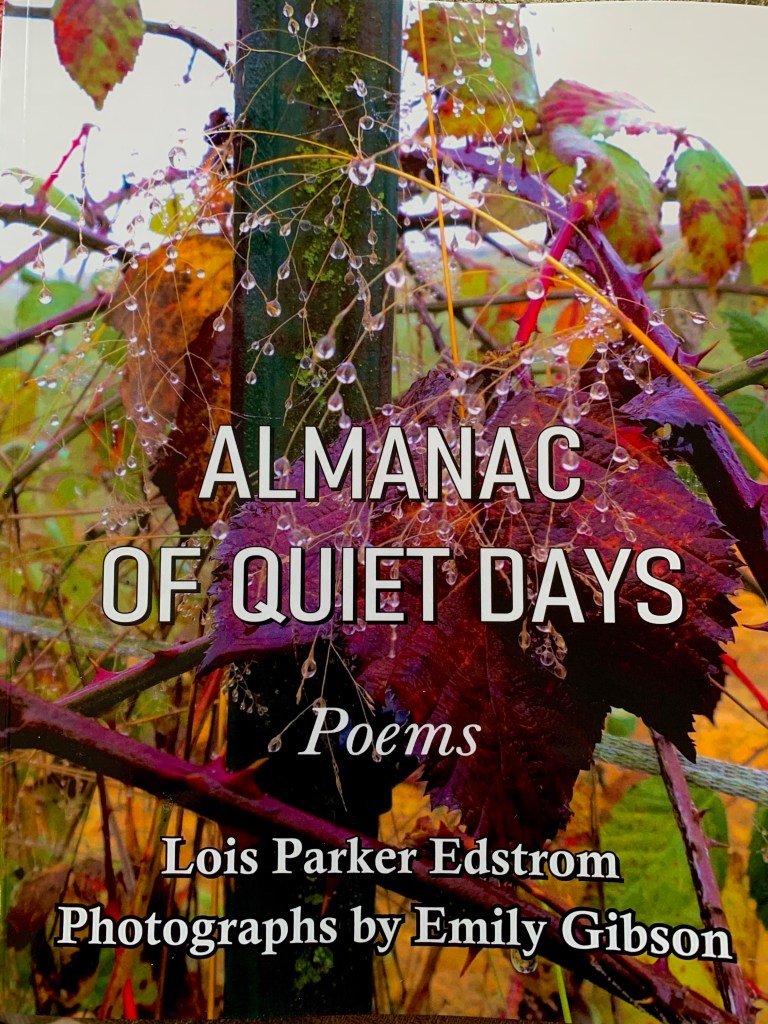
A book of astonishment in words and photography, available to order here:
One-Time
Monthly
Yearly
Make a one-time or recurring donation to support Barnstorming
I loved you before I was born. It doesn’t make sense, I know.
I saw your eyes before I had eyes to see. And I’ve lived longing for your ever look ever since. That longing entered time as this body. And the longing grew as this body waxed. And the longing grows as the body wanes. The longing will outlive this body.
I loved you before I was born. It doesn’t make sense, I know.
Long before eternity, I caught a glimpse of your neck and shoulders, your ankles and toes. And I’ve been lonely for you from that instant. That loneliness appeared on earth as this body. And my share of time has been nothing but your name outrunning my ever saying it clearly. Your face fleeing my ever kissing it firmly once on the mouth.
In longing, I am most myself, rapt, my lamp mortal, my light hidden and singing.
I should have recognized you at first, but didn’t.
Once I looked you in the eyes, I knew that I had loved you from before I was born. It didn’t make sense to me but nevertheless I knew. Our longing in loneliness finally brought us face to face.
I handed you my heart and you handed me yours, to keep forever. And there they remain with utmost tenderness, our longings still being written.
…we all suffer. For we all prize and love; and in this present existence of ours, prizing and loving yield suffering. Love in our world is suffering love. Some do not suffer much, though, for they do not love much. Suffering is for the loving. This, said Jesus, is the command of the Holy One: “You shall love your neighbor as yourself.” In commanding us to love, God invites us to suffer.
Over there, you are of no help. What I need to hear from you is that you recognize how painful it is. I need to hear from you that you are with me in my desperation. To comfort me, you have to come close. Come sit beside me on my mourning bench. ~Nicholas Wolterstorff from Lament for a Son
Spring 1980
I wondered if 8:30 AM was too early to call my friend and mentor Margy. As a sleep-deprived fourth year medical student, I selfishly needed to hear her voice. I wanted to know how she was doing; she was not sleeping well either these days. She was wearing a new halo brace—a metal contraption that wrapped around her head like a scaffolding to secure her degenerating cervical spine from collapsing from metastatic breast cancer growth in her bones. When she was fitted into the brace, she named the two large screw-like fasteners anchored into her frontal skull her “Frankenstein bolts”. I had reassured her that with a proper white veil draped around the metal halo, she would be more suited to be Frankenstein’s bride.
Each patient I had seen the previous 24 hours while working in the Emergency Room benefited from the interviewing skills Margy had taught each one of us medical students. She reminded us that each patient had an important story to tell, and no matter how pressured our time, we needed to ask questions that gave permission for that story to be told. As a former nun now married with two teenage children, Margy had become our de facto counselor, and insisted physicians-in-training remember the soul thriving inside the broken and hurting body.
“Just let the patient know with certainty, through your eyes, your body language, your words, that you want to hear what they have to say. You can heal so much hurt simply by sitting beside them and caring enough to listen…”
Now with her recent diagnosis of metastatic cancer, Margy herself had become the broken vessel who needed the glue of a good listener. She continued to teach, often from her bed at home and I regularly visited, in need of her wisdom and she still needed her students.
That night I had felt uneasy about her all during my ER shift and felt compelled to visit her and her husband and daughter that day, maybe help out by cleaning their house, fixing them a meal or taking her for a drive as a diversion.
Her phone rang only once after I dialed her number. There was a long pause; I could hear a clearing of her throat. A deep dam of tears welled behind a muffled “Hello?” Something was deeply wrong.
Her voice shattered like glass into fragments, strangling on words that struggled to form. She sobbed out the words that their college son, Gordon, was dead. Earlier that morning, a police officer had knocked loudly on their door, awakening her and her husband with the news of a tragic highway accident.
I sat in stunned silence, listening to her sobs, completely unequipped to know how to respond. None of this made sense although I knew her son was on college spring break, heading to Mexico for a missions trip.
She paused and took in a shuddering breath.
“Gordy died as they were driving through the night. He was sleeping in the camper as they drove. They think he sleepwalked right out of the back of the moving camper, fell onto the highway and was hit by another car.“
I felt strangled by her words and could only imagine how difficult it was for her to keep breathing enough to say them.
“They’ll bring him home to us, won’t they? I need to know I can see him again. I need to tell him how much I love him.”
I assured Margy she would see him again, both in his broken body and, some day yet to be determined, whole.
Up until then, I knew in my head this life was full of sorrow, but I had been spared the full heart impact of grief until I witnessed such intensity of an acute unbelievable loss – how loving one so deeply meant suffering immeasurably.
I understood, for the first but surely not the last time, how it is the only way to love.
During the remaining few months of Margy’s life as she waited to join her son, she continued to teach me about how to come close in to the suffering and grief of others, and also how to sit together, even in silence, on that too-often lonesome mourning bench.
…for the Jude Veltkamp family who lost their teenage son, grandson, nephew, brother this week to a relentless cancer.
But our God is even more relentless in His love and comfort for His mourning children…
I knew this life was full of sorrow But still I believed That good times would follow That the evil would falter And true hearts would rise True hearts would rise That simple dream ended On the night that you died
And even the sound of a whistle fading Brings back the longing And stirs up the aching Peaceful companion that grounded my soul You grounded my soul The world spins without meaning Now that you’re gone
Sometimes I still think I will see you in New York And we will meet on the platform of the train And with your great leaning stride You’ll cross back to my side And my old life Will be my life again
You were quiet as a winter sky Where planets turn And the North Star rides My sweet brother, so reasoned, so calm My brother, my own The world spins without meaning Now that you’re gone ~Fernando Ortega
January’s drop-down menu leaves everything to the imagination: splotch the ice, splice the light, remake the spirit…
Just get on with it, doing what you have to do with the gray palette that lies to hand. The sun’s coming soon.
A future, then, of warmth and runoff, and old faces surprised to see us. A cache of love, I’d call it, opened up, vernal, refreshed. ~Sidney Burris “Runoff”
When I reach the end of January in all its grayest pallor, it is hard to imagine another six weeks of winter ahead. It can feel like nature offers only a few options, take your pick: a soupy foggy morning, a drizzly mid-day, a crisp northeast wind, an unexpected snow flurry, a soggy evening.
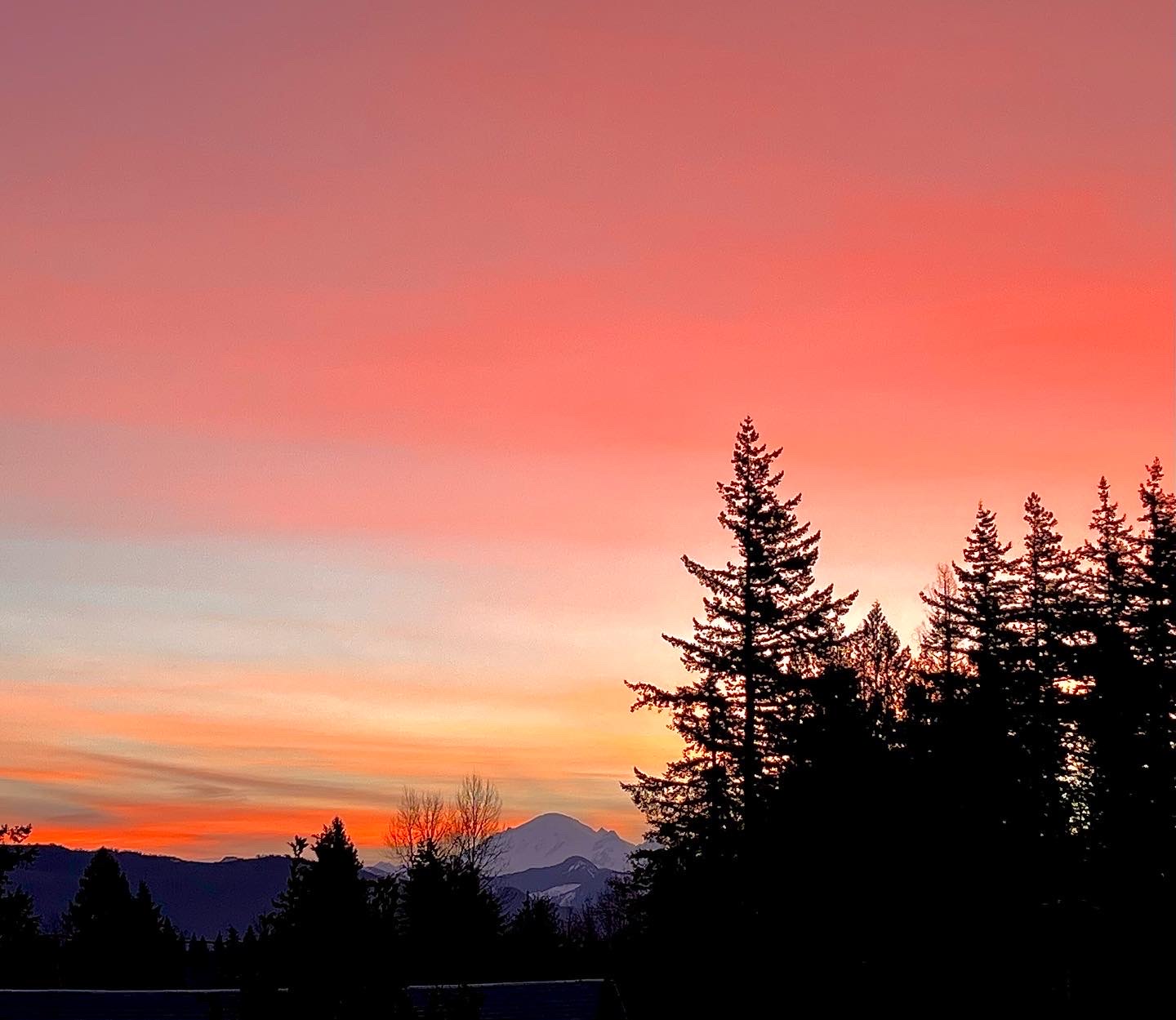
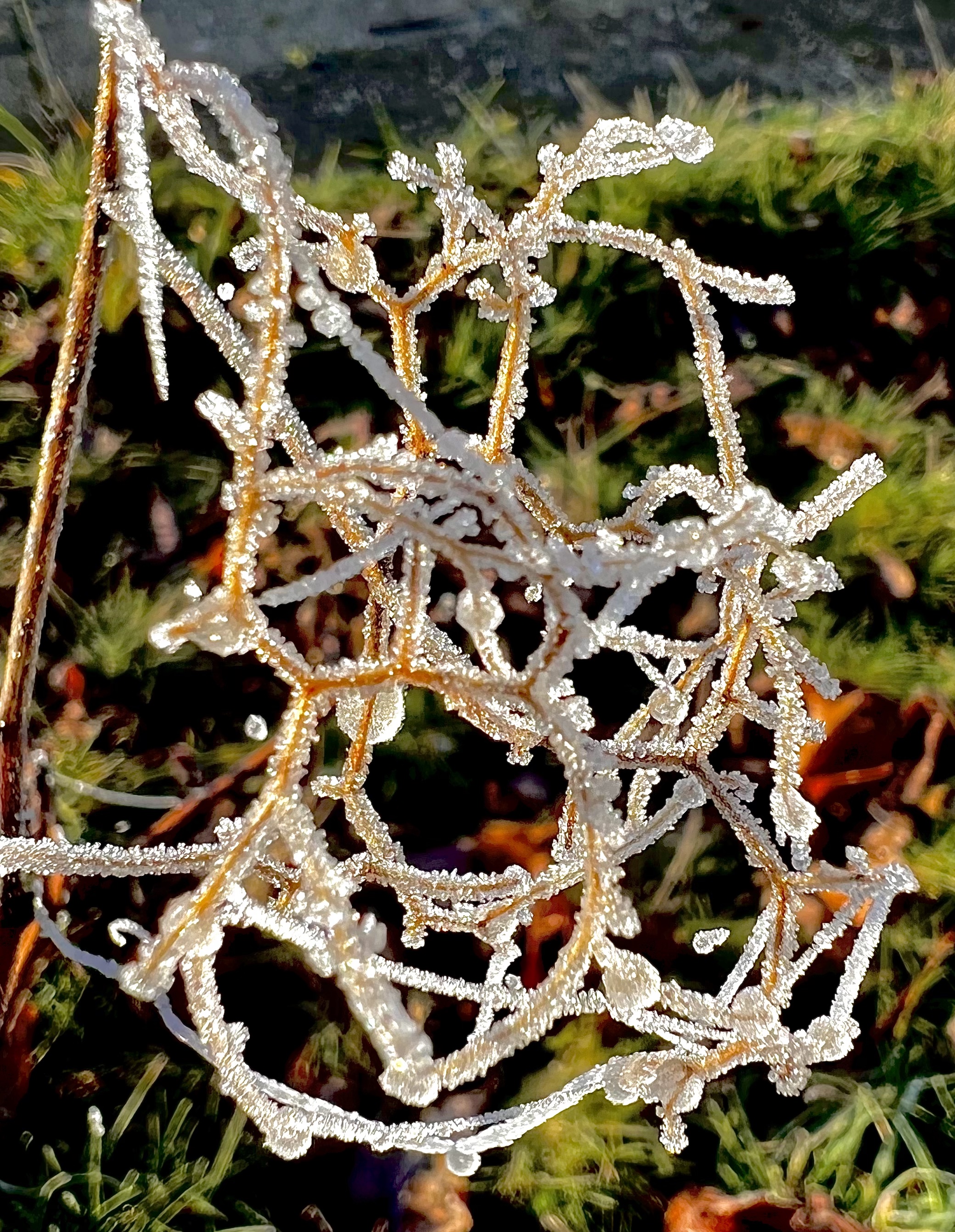
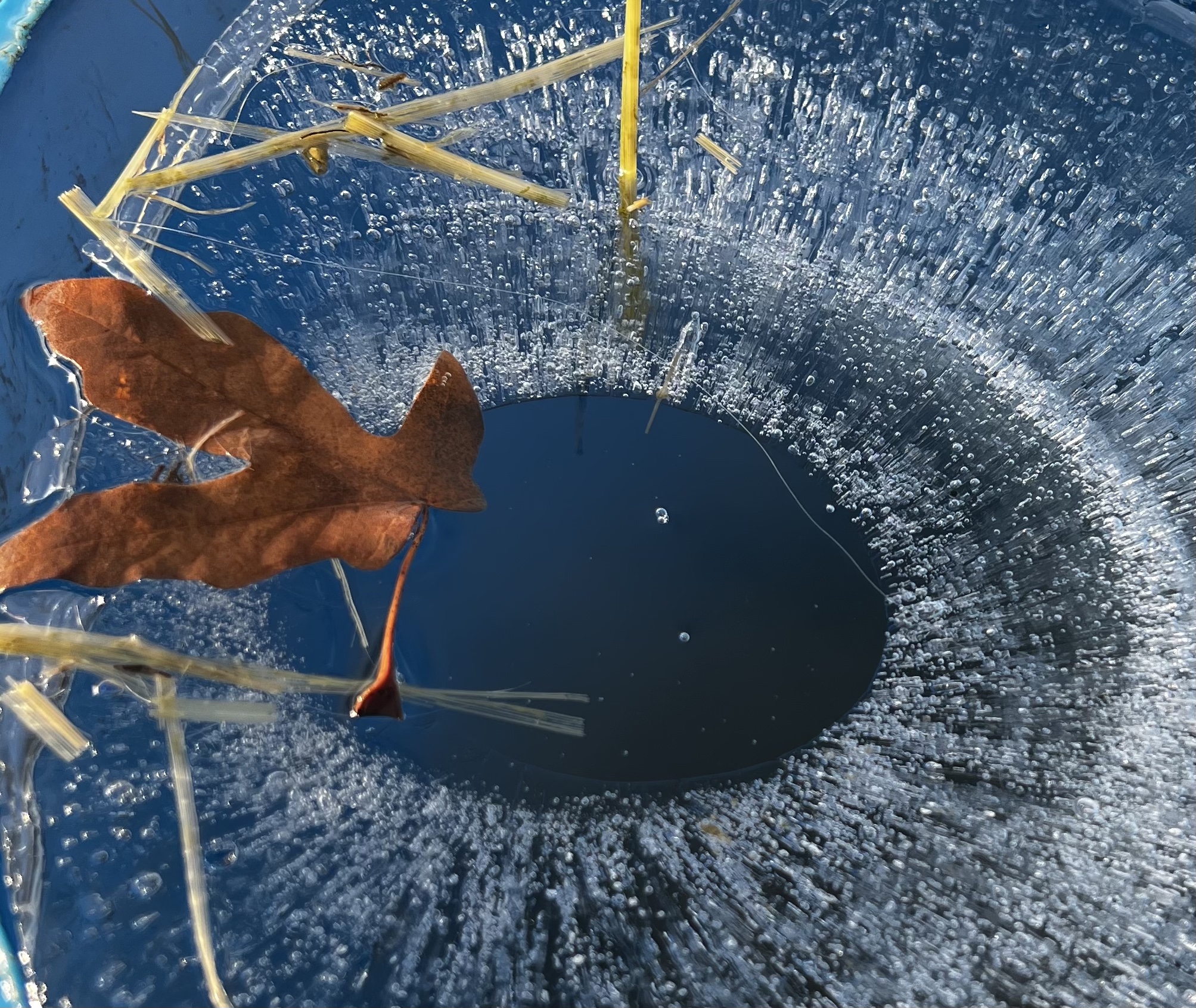
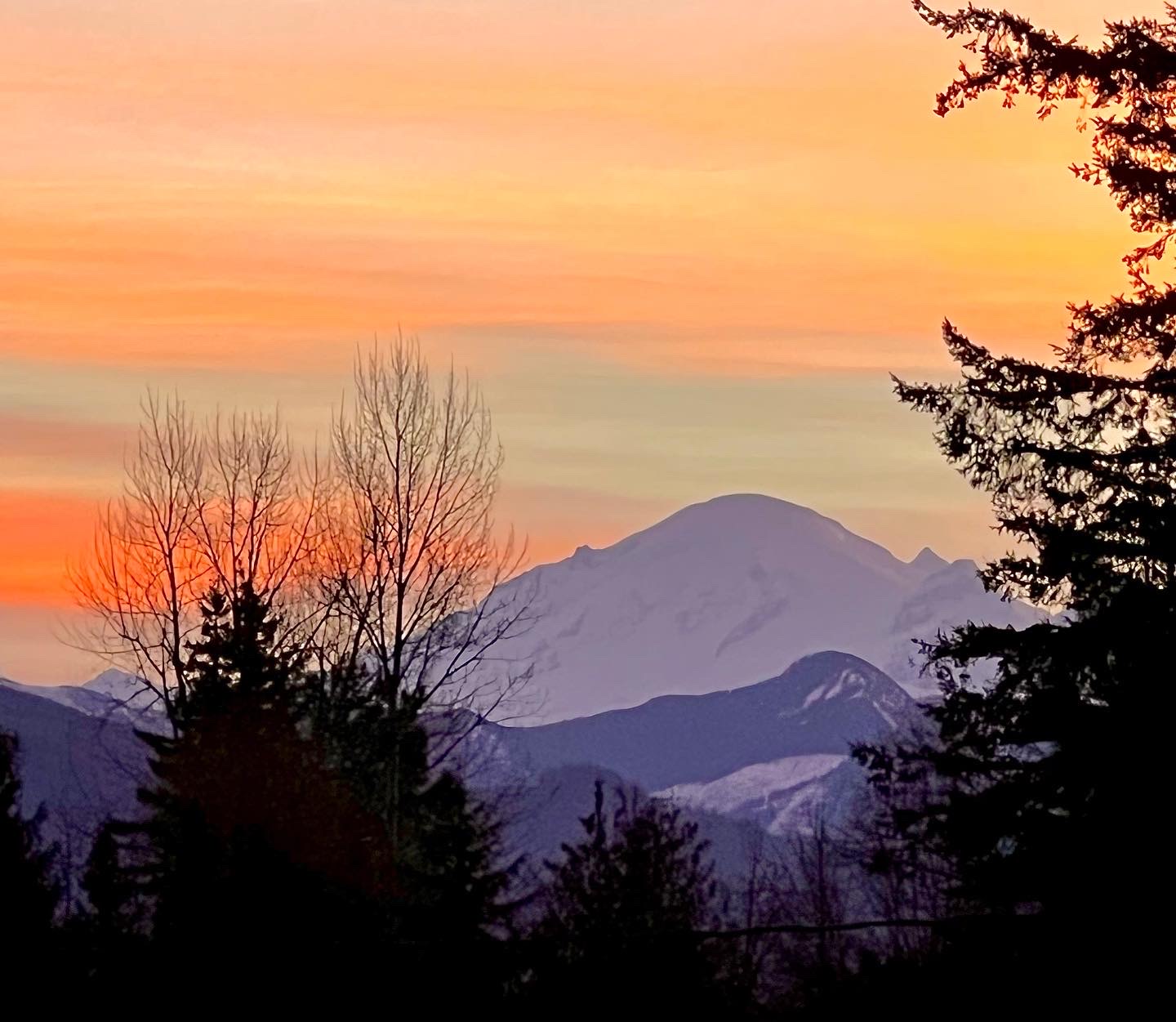
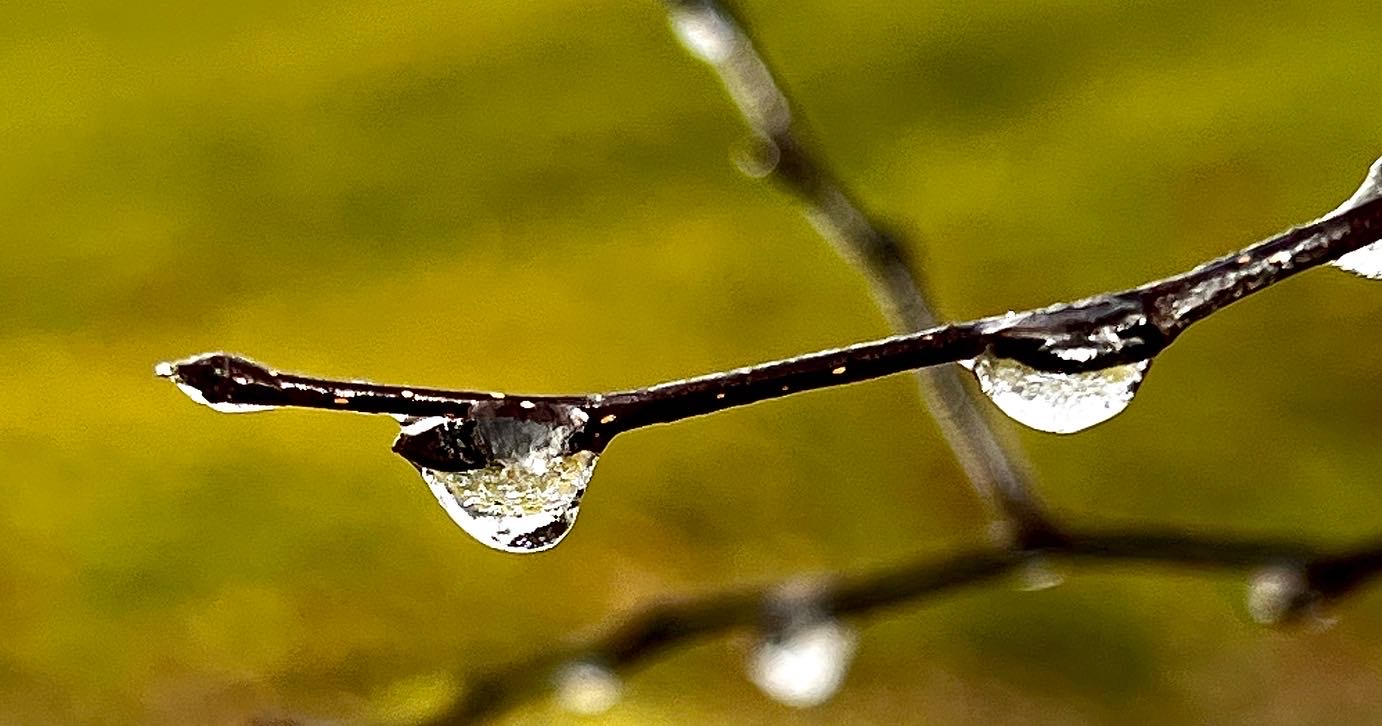
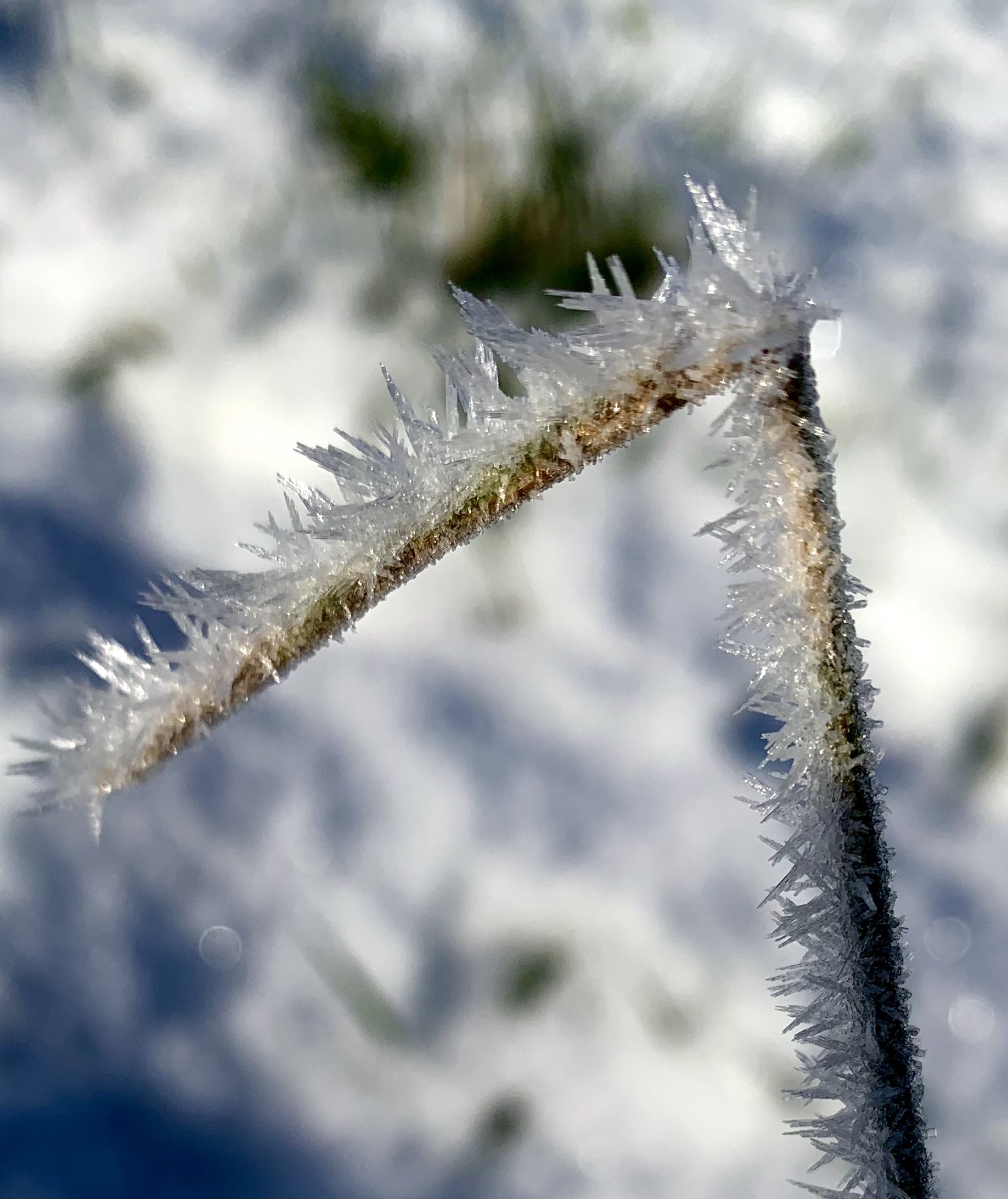
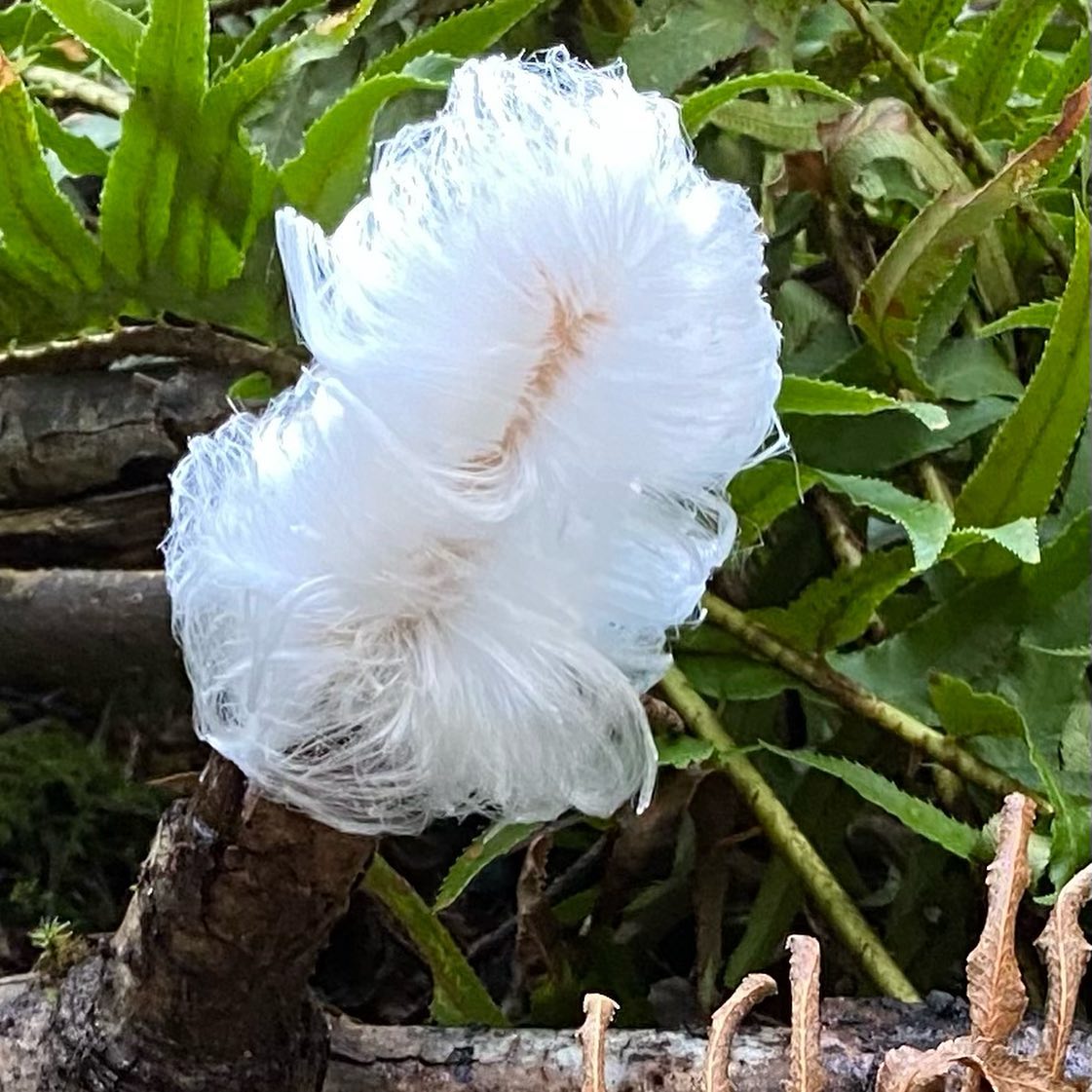
Every once in awhile the January drop-down menu will add a special surprise: icy spikes on grass blades, frozen droplets on birch branches, hair ice on wood, crystallized weeds like jewelry in the sun, a pink flannel blanket sunrise, an ocean-of-orange sunset.
Then I realize January’s gray palette is merely preparation for what has been hidden from me the whole time. There is Love cached away, and as it is revealed, it will not let me go.
photo of hair ice in King County, Washington taken by Laura Reifel
O Love that will not let me go, I rest my weary soul in thee; I give thee back the life I owe, That in thy ocean depths its flow May richer, fuller be.
O Joy that seeks me through pain, I cannot close my heart to thee; I trace the rainbow through the rain, And feel the promise is not vain, That morn shall tearless be. ~George Matheson
(“O Love” was inspired by the words of Scottish minister, George Matheson in 1882. Blinded at the age of nineteen, his fiancé called off their engagement and his sister cared for him as he endured new challenges. Years later, on the eve of his sister’s wedding, he faced the painful reminder of his own heartache and loss as he penned the words to this hymn.) from ElaineHagenborg.com
One-Time
Monthly
Yearly
Make a one-time or recurring donation to Barnstorming
All afternoon by the window, sunlight— that great soft hand on my head. I could hardly move. And the sun spoke. It said, There now. Maybe your heart is wiser than you think.
Afternoon slowly rolled into evening. I will listen for that voice all the days of my life. ~Annie Lighthart, “The Blessing” from Pax
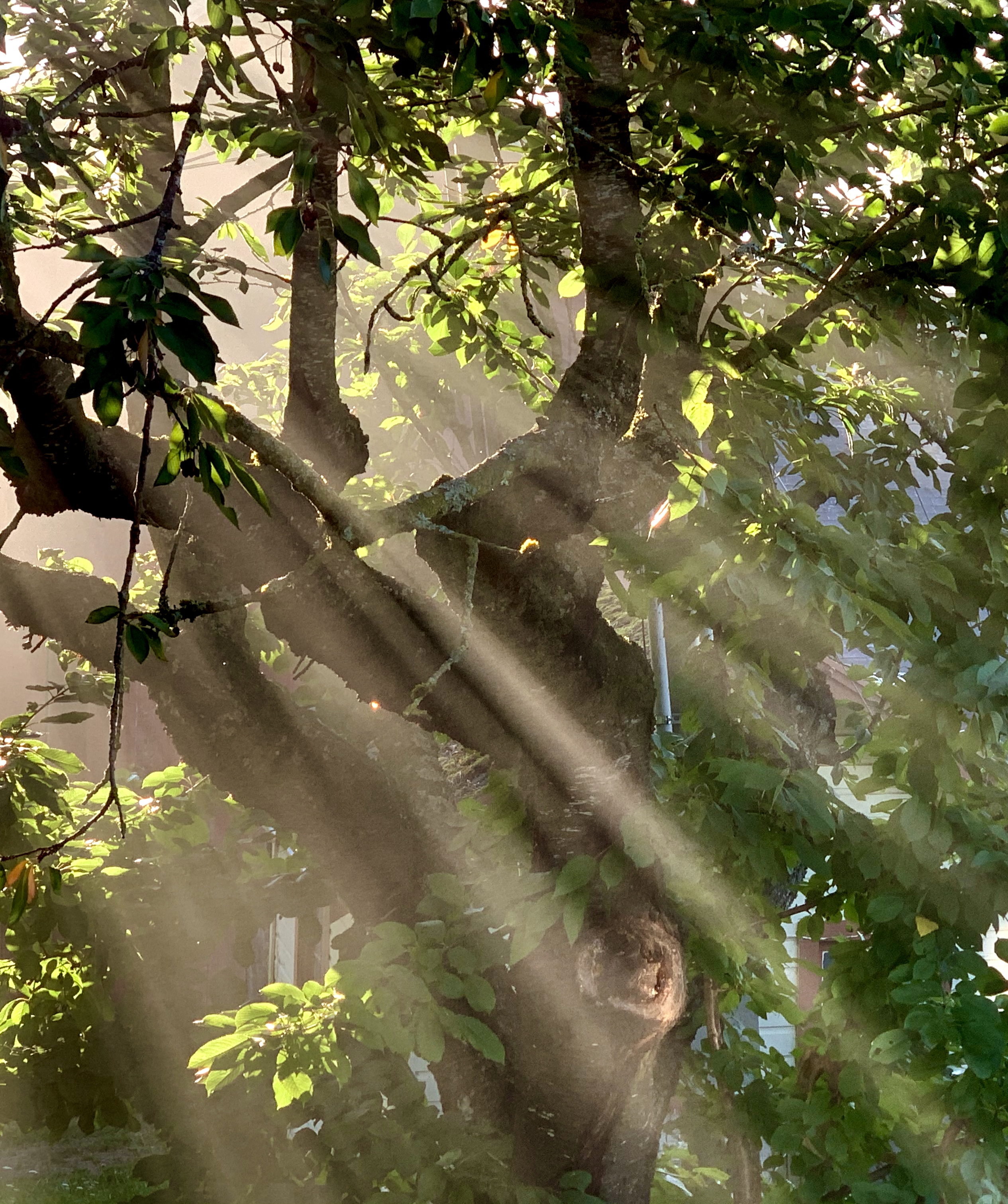
I seek His hand on my head when I need reassurance – that glowing warm sensation as sunbeams soak through my scalp and calm my overwrought neurons. I can’t help but close my eyelids and bathe in the feeling that all things are made new, myself included, and everything is going to be okay.
Even as the sun fades with the passage of hours in the day, the warmth within me remains. I remember the touch, I remember the wisdom, I remember the encouragement, I promise I won’t forget.
I’ll keep listening for His voice and know His hand rests on my head.
One-Time
Monthly
Yearly
Make a one-time or recurring donation to support Barnstorming



































 Barnstorming