And so you have a life that you are living only now, now and now and now, gone before you can speak of it, and you must be thankful for living day by day, moment by moment … a life in the breath and pulse and living light of the present… ~Wendell Berry from Hannah Coulter
Astonishing material and revelation appear in our lives all the time. Let it be. Unto us, so much is given. We just have to be open for business. ~Anne Lamott from Help Thanks Wow: Three Essential Prayers
…writing was one way to let something of lasting value emerge from the pains and fears of my little, quickly passing life. Each time life required me to take a new step into unknown spiritual territory, I felt a deep, inner urge to tell my story to others– Perhaps as a need for companionship but maybe, too, out of an awareness that my deepest vocation is to be a witness to the glimpses of God I have been allowed to catch. ~Henri Nouwen from Reaching Out
…there is something illicit, it seems, about wasted time, the empty hours of contemplation when a thought unfurls, figures of speech budding and blossoming, articulation drifting like spent petals onto the dark table we all once gathered around to talk and talk, letting time get the better of us. _Just taking our time_, as we say. That is, letting time take us. ~Patricia Hampl from Blue Arabesque: A Search for the Sublime
I would recognize myself in my patients, one after another after another. They sat at the edge of their seat, struggling to hold back a flood from brimming eyes, fingers gripping the arms of the chair, legs jiggling. Each moment, each breath, each rapid heart beat overwhelmed by panic-filled questions: will there be another breath? must there be another breath? Must this life go on like this in fear of what the next moment will bring?
The only thing more frightening than the unknown is the fear that the next moment could be worse than the last. Sadly, this is a tragic waste of precious time, a lack of recognition of a moment just passed that will never be retrieved and relived.
There is only fear of the next and the next so that the now and now and now is lost forever.
Worry and angst is more contagious than the flu. I washed my hands of it throughout the clinic day. I wished a simple vaccination could protect us all from unnamed fears.
I wanted to say to them as well as myself: Stop to rest within this moment in time. Stop and stop and stop. Stop fearing the gift of each breath.
Simply be.
I wanted to say: this moment in time is yours alone. Don’t let time take it from you; instead, take time for weeping and sharing and breath and pulse and light. Shout for joy in it. Celebrate it. Be thankful for tears that flow and stop holding them back.
Just be, as uncomfortable as it is – and be blessed– in the now and now and now.
Be swept along on the current of time; now winter bare-branched, to be soon unfurling, budding, eventually blossoming.
Time takes us there. So let’s take time.
One-Time
Monthly
Yearly
Make a one-time or recurring donation to support daily Barnstorming posts
The children have gone to bed. We are so tired we could fold ourselves neatly behind our eyes and sleep mid-word, sleep standing warm among the creatures in the barn, lean together and sleep, forgetting each other completely in the velvet, the forgiveness of sleep.
Then the one small cry: one strike of the match-head of sound: one child’s voice: and the hundred names of love are lit as we rise and walk down the hall.
One hundred nights we wake like this, wake out of our nowhere to kneel by small beds in darkness. One hundred flowers open in our hands, a name for love written in each one. ~Annie Lighthart,“The Hundred Names of Love” from Iron String
I thought I had forgotten how to wake to the sound of a baby’s cry or a child’s voice calling out in the night.
I thought I wouldn’t remember how to gently open their bedroom door, entering their darkness from my own darkness, sorting out what was distressing them, sensing how to soothe them back to slumber, wondering if I might sing or pray the words they needed to hear, bringing a blossoming peace and stillness to their night.
When our son’s family arrived three years ago from thousands of miles away, staying with us until they could settle in their own place, I was reminded my nights were never meant to be mine alone.
As a child myself, I had such frequent night-wakenings that I’m sure my mother despaired that I would ever sleep through the night. She would come when I called, sitting beside my bed, rubbing my back until I forgot what woke me in the first place. She was patient and caring despite her own weariness, sleep problems and worriedness. She loved me and forgave me for needing her presence in the night; her nights were never her own.
So I too responded with compassion when my own children called out in the night. As part of my doctoring life, I woke regularly to phone calls from the ER or hospital and from patients during forty-two years of medical practice; I listened and tried my best to answer anxious questions with gentle understanding.
And when a grandchild sleeps here overnight, I’m on call again, remembering the sweetness of someone responding in the dark; the fears of the night need the promise of the Lord staying with us until the new day comes, usually only a few hours away.
Little child, be not afraid Though rain pounds harshly against the glass Like an unwanted stranger, there is no danger I am here tonight
Little child, be not afraid Though thunder explodes and lightning flash Illuminates your tear-stained face I am here tonight
And someday you’ll know That nature is so The same rain that draws you near me Falls on rivers and land On forests and sand Makes the beautiful world that you’ll see In the morning
Little child, be not afraid Though storm clouds mask your beloved moon And its candlelight beams, still keep pleasant dreams I am here tonight
Little child, be not afraid Though wind makes creatures of our trees And their branches to hands, they’re not real, understand And I am here tonight
And someday you’ll know That nature is so The same rain that draws you near me Falls on rivers and land On forests and sand Makes the beautiful world that you’ll see In the morning
For you know, once even I was a Little child, and I was afraid But a gentle someone always came To dry all my tears, trade sweet sleep for fears And to give a kiss goodnight
Well now I am grown And these years have shown That rain’s a part of how life goes But it’s dark and it’s late So I’ll hold you and wait ‘Til your frightened eyes do close
And I hope that you’ll know That nature is so The same rain that draws you near me Falls on rivers and land On forests and sand Makes the beautiful world that you’ll see In the morning
Everything’s fine in the morning The rain’ll be gone in the morning But I’ll still be here in the morning
One-Time
Monthly
Yearly
Make a one-time or recurring donation to support daily Barnstorming posts
I have left my wife at the airport, flying out to help our daughter whose baby will not eat. And I am driving on to Kent to hear some poets read tonight.
I don’t know what to do with myself when she leaves me like this. An old friend has decided to end our friendship. Another is breaking it off with his wife.
I don’t know what to say to any of this-Life’s hard. And I say it aloud to myself, Living is hard, and drive further into the darkness, my headlights only going so far.
I sense my own tense breath, this fear we call stress, making it something else, hiding from all that is real.
As I glide past Twin Lakes, flat bodies of water under stars, I hold the wheel gently, slowing my body to the road, and know again that this is just living, not a trauma nor dying, but a lingering pain reminding us that we are alive. ~Larry Smith “Following the Road” from A River Remains
The grace of God means something like: Here is your life. You might never have been, but you are because the party wouldn’t have been complete without you. Here is the world. Beautiful and terrible things will happen. Don’t be afraid. I am with you. Nothing can ever separate us. It’s for you I created the universe. I love you. There’s only one catch. Like any other gift, the gift of grace can be yours only if you’ll reach out and take it. Maybe being able to reach out and take it is a gift too. ~Frederich Buechner from Wishful Thinking
You get out of bed, wash and dress; eat breakfast, say goodbye and go away never maybe, to return for all you know, to work, talk, lust, pray, dawdle and do, and at the end of the day, if your luck holds, you come home again, home again. Then night again. Bed. The little death of sleep, sleep of death. Morning, afternoon, evening— the hours of the day, of any day, of your day and my day. The alphabet of grace. If there is a God who speaks anywhere, surely he speaks here: through waking up and working, through going away and coming back again, through people you read and books you meet, through falling asleep in the dark. Life is grace. Sleep is forgiveness. The night absolves. Darkness wipes the slate clean, not spotless to be sure, but clean enough for another day’s chalking. ~Frederich Buechner from “The Alphabet of Grace
Our six year old grandson, hoping to calm his older sister’s melt-down: “Life is life – it’ll be okay tomorrow…“
So tomorrow – move forward to leave a mark on a new day after tonight’s erasing rest.
No matter what took place this day, no matter the misgivings, no matter what should have been left unsaid, no matter how hard the heart, no matter the lingering pain, there is another day to make it right.
Forgiveness finds a foothold in the dark, when eyelids close, thoughts quietly open, voices hush in prayers of praise, petition and gratitude.
And so now simply sleep on it knowing his grace abounds in blameless dreams.
Morning will come awash in new light, another chance freely given.
One-Time
Monthly
Yearly
Make a one-time or recurring donation to support daily Barnstorming posts
~Lustravit lampade terras~ (He has illumined the world with a lamp) The weather and my mood have little connection. I have my foggy and my fine days within me; my prosperity or misfortune has little to do with the matter. – Blaise Pascal from “Miscellaneous Writings”
And so you have a life that you are living only now, now and now and now, gone before you can speak of it, and you must be thankful for living day by day, moment by moment … a life in the breath and pulse and living light of the present… ~Wendell Berry from Hannah Coulter
Early morning, everything damp all through. Cars go by. A ripping sound of tires through water. For two days the air Has smelled like salamanders. The little lake on the edge of town hidden in fog, Its cattails and island gone. All through the gloom of the dark week Bright leaves have been dropping From black trees Until heaps of color lie piled everywhere In the falling rain. ~Tom Hennen “Wet Autumn” from Darkness Sticks to Everything.
An absolute patience. Trees stand up to their knees in fog. The fog slowly flows uphill. White cobwebs, the grass leaning where deer have looked for apples. The woods from brook to where the top of the hill looks over the fog, send up not one bird. So absolute, it is no other than happiness itself, a breathing too quiet to hear. – Denise Levertov “The Breathing“
Worry and anger and angst can be more contagious than the flu.
I want to mask up and wash my hands of it throughout the day. There should be a vaccination against the fear of reading headlines.
I want to say to myself: Stop now, this moment in time. Stop and stop and stop.
Stop needing to be numb to all discomfort. Stop resenting the gift of each breath. Just stop. Instead, simply be still, in this moment
I want to say to myself: this moment, foggy or fine, is yours alone, this moment of weeping and sharing and breath and pulse and light.
Shout for joy in it. Celebrate it. I am alive in it, even in worry.
Be thankful for tears that flow over grateful lips just as rain clears the fog. Stop holding them back.
Just be– be blessed in both the fine and the foggy days– in the now and now and now.
One-Time
Monthly
Yearly
Make a one-time or recurring donation to support daily Barnstorming posts
A second crop of hay lies cut and turned. Five gleaming crows search and peck between the rows. They make a low, companionable squawk, and like midwives and undertakers possess a weird authority.
Crickets leap from the stubble, parting before me like the Red Sea. The garden sprawls and spoils.
Cloud shadows rush over drying hay, fences, dusty lane, and railroad ravine. The first yellowing fronds of goldenrod brighten the margins of the woods.
Schoolbooks, carpools, pleated skirts; water, silver-still, and a vee of geese.
*
The cicada’s dry monotony breaks over me. The days are bright and free, bright and free.
Then why did I cry today for an hour, with my whole body, the way babies cry?
*
A white, indifferent morning sky, and a crow, hectoring from its nest high in the hemlock, a nest as big as a laundry basket …
In my childhood I stood under a dripping oak, while autumnal fog eddied around my feet, waiting for the school bus with a dread that took my breath away.
The damp dirt road gave off this same complex organic scent. I had the new books—words, numbers, and operations with numbers I did not comprehend—and crayons, unspoiled by use, in a blue canvas satchel with red leather straps.
Spruce, inadequate, and alien I stood at the side of the road. It was the only life I had. ~Jane Kenyon from “Three Songs at the End of Summer”
Yesterday, my son taught me the sign for lockdown— different than locking a door, or the shutdown we invented at the start of the pandemic. Little fistfuls of locks swept quickly between us, a sign designed especially for school.
My son spent his first years a different kind of locked up—an orphanage in Bangkok, where he didn’t speak and they couldn’t sign. He came home, age four, silent. We thought being here could open doors. It has, of course. He’s learned so much at the deaf school; the speech therapist calls it a Language Explosion. I keep lists of the words he’s gathered: vanilla, buckle, castle, stay. And lockdown. He absorbs it like the rest. Now the schools he builds with Magna-Tiles have lockdowns. I worry in trying to give him keys, we’ve only changed the locks.
To lock down a deaf school, we use a special strobe. When it flashes, we flip switches and sign through darkness. The children know to stay beneath the windows. Every five minutes a robot texts: “Shelter in place is still in effect. Please await further instructions.” Then we pull the fire alarm, a tactical move to unsettle the shooter. Hearing people can’t think with noise like that. A piercing thing we don’t detect, to cover the sounds we make, the sounds we don’t know we’re making. ~Sara Nović “Lockdown at the School for the Deaf”
The first day back to school now isn’t always the day after Labor Day as it was when I was growing up. Some students have been in classes for a couple weeks already, others started a few days ago to ease into the transition more gently.
Some return to the routine this morning – school buses roar past our farm brimming with eager young faces and stuffed back packs amid a combination of excitement and anxiety.
I remember well that foreboding that accompanied a return to school — the strict schedule, the inflexible rules and the often harsh adjustment of social hierarchies and friend groups. Even as a good learner and obedient student, I was a square peg being pushed into a round hole when I returned to the classroom. The students who struggled academically and who pushed against the boundaries of rules must have felt even more so. We all felt alien and inadequate to the immense task before us to fit in with one another, allow teachers to structure and open our minds to new thoughts, and to become something and someone more than who we were before.
Growth is so very hard, our stretching so painful, the tug and pull of friendships stressful. And for the last two decades, there is the additional fear of lockdowns and active shooters.
I worked with students on an academic calendar for over 30 years, yet though I’m now retired, I still don’t sleep well in anticipation of all this day means.
So I take a deep breath on a foggy post-Labor Day morning and am immediately taken back to the anxieties and fears of a skinny little girl in a new home-made corduroy jumper and saddle shoes, waiting for the schoolbus on our drippy wooded country road.
She is still me — just buried deeply in the fog of who I became after all those years of schooling, hidden somewhere under all the piled-on layers of learning and growing and hurting and stretching — I do remember her well.
Like every student starting a new adventure today, we could all use a hug.
Lo! I am come to autumn, When all the leaves are gold; Grey hairs and golden leaves cry out The year and I are old.
In youth I sought the prince of men, Captain in cosmic wars, Our Titan, even the weeds would show Defiant, to the stars.
But now a great thing in the street Seems any human nod, Where shift in strange democracy The million masks of God.
In youth I sought the golden flower Hidden in wood or wold, But I am come to autumn, When all the leaves are gold. ~G.K. Chesterton “Gold Leaves”
One-Time
Monthly
Yearly
Make a one-time or recurring donation to support daily Barnstorming posts
“They’re benign,” the radiologist says, pointing to specks on the x ray that look like dust motes stopped cold in their dance. His words take my spine like flame. I suddenly love the radiologist, the nurse, my paper gown, the vapid print on the dressing room wall. I pull on my radiant clothes. I step out into the Hanging Gardens, the Taj Mahal, the Niagara Falls of the parking lot. ~Jo McDougall, “Mammogram” from In the Home of the Famous Dead: Collected Poems
Outside the house the wind is howling and the trees are creaking horribly. This is an old story with its old beginning, as I lay me down to sleep. But when I wake up, sunlight has taken over the room. You have already made the coffee and the radio brings us music from a confident age. In the paper bad news is set in distant places. Whatever was bound to happen in my story did not happen. But I know there are rules that cannot be broken. Perhaps a name was changed. A small mistake. Perhaps a woman I do not know is facing the day with the heavy heart that, by all rights, should have been mine. ~Lisel Mueller “In November”
It does not escape me, especially on call-back mammogram days when I’m asked to return for a “closer look” at something that wasn’t there before.
which turns out to be a 1 cm. nonspecific solid something, maybe getting smaller over the past ten days.
Maybe a bruise. Maybe not. Check again in a month. A brief reprieve that some in the dressing cubicles around me don’t get.
I wake every day knowing: an earthquake happens somewhere else, a war is leaving people homeless and lifeless, a tornado levels a town, a drunk driver destroys a family, a fire leaves a house in ashes, a famine causes children to starve, a flood ravages a town, a devastating diagnosis darkens someone’s remaining days.
No mistake has been made, yet I wake knowing recently it was my turn to hear bad news, my heart was heavy, yet it still beats, still breaks, still bleeds, still believes in the radiance of each new day I’m given. I was reminded again today.
One-Time
Monthly
Yearly
Make a one-time or recurring donation to support daily Barnstorming posts
…you mustn’t be frightened … if a sadness rises in front of you, larger than any you have ever seen; if an anxiety, like light and cloud-shadows, moves over your hands and over everything you do. You must realize that something is happening to you, that life has not forgotten you, that it holds you in its hand and will not let you fall. Why do you want to shut out of your life any uneasiness, any misery, any depression, since after all you don’t know what work these conditions are doing inside you? ~Rainer Maria Rilke from Letters to a Young Poet
…difficulties are magnified out of all proportion simply by fear and anxiety. From the moment we wake until we fall asleep we must commend other people wholly and unreservedly to God and leave them in his hands, and transform our anxiety for them into prayers on their behalf: With sorrow and with grief… God will not be distracted. ~Dietrich Bonhoeffer in Letters from Prison
During my decades as a primary care physician for a university health center, my clinic days were often filled with young adults who were so consumed by anxiety they were immobilized in their ability to move forward through life’s inevitable obstacles and difficulties. They were so stuck in overwhelming feelings, they couldn’t sleep or eat or think clearly. They tended to self-medicate, self-injure and self-hate. Unable to nurture themselves or others, they withered like a flower without roots deep enough to reach the vast reservoir untapped beneath them. In epidemic numbers, some decide to die, even before life really has fully begun for them.
My role was to help find healing solutions, whether it was counseling therapy, a break from school, or a medicine that may give some form of relief.
My heart knows the ultimate answer is not as simple as choosing the right prescription – light and cloud shadows differ for each person – it can feel like the sun is blocked forever, all that is left is rain and snow and gray.
I too have known anxiety and how it can distort every thought.
We who are anxious can depend upon a Creator who is not distracted from His care for us even if we have turned away in our worry and sorrow, unable to look past our own eyelashes.
Like a thirsty withering plant, we need to reach higher and deeper: asking for help and support, working through solutions with those helpers, acknowledging there exists a healing power greater than ourselves.
So we are called to pray for ourselves and for others. Self compassion and caring for others can disable anxiety and fear by transforming it to growth, gratitude and grace.
No longer withering, we just might bloom.
AI image created for this post
One-Time
Monthly
Yearly
Make a one-time or recurring donation to support daily Barnstorming posts
The second before the sun went out we saw a wall of dark shadow come speeding at us. We no sooner saw it than it was upon us, like thunder. It roared up the valley. It slammed our hill and knocked us out. It was the monstrous swift shadow cone of the moon. I have since read that this wave of shadow moves 1,800 miles an hour. Language can give no sense of this sort of speed—1,800 miles an hour. It was 195 miles wide. No end was in sight—you saw only the edge. It rolled at you across the land at 1,800 miles an hour, hauling darkness like plague behind it. Seeing it, and knowing it was coming straight for you, was like feeling a slug of anesthetic shoot up your arm. If you think very fast, you may have time to think, “Soon it will hit my brain.” You can feel the deadness race up your arm; you can feel the appalling, inhuman speed of your own blood. We saw the wall of shadow coming, and screamed before it hit.
This was the universe about which we have read so much and never before felt: the universe as a clockwork of loose spheres flung at stupefying, unauthorized speeds. How could anything moving so fast not crash, not veer from its orbit amok like a car out of control on a turn?
Less than two minutes later, when the sun emerged, the trailing edge of the shadow cone sped away. It coursed down our hill and raced eastward over the plain, faster than the eye could believe; it swept over the plain and dropped over the planet’s rim in a twinkling. It had clobbered us, and now it roared away. We blinked in the light. It was as though an enormous, loping god in the sky had reached down and slapped the Earth’s face.
When the sun appeared as a blinding bead on the ring’s side, the eclipse was over. The black lens cover appeared again, back-lighted, and slid away. At once the yellow light made the sky blue again; the black lid dissolved and vanished. The real world began there. I remember now: We all hurried away.
We never looked back. It was a general vamoose … but enough is enough. One turns at last even from glory itself with a sigh of relief. From the depths of mystery, and even from the heights of splendor, we bounce back and hurry for the latitudes of home. ~Annie Dillard from her essay “Total Eclipse” in The Atlantic about the February 1979 eclipse in Washington State
From my six week psychiatric inpatient rotation at a Veteran’s Hospital—late winter 1979
Sixty eight year old male catatonic with depression
He lies still, so very still under the sheet, eyes closed; the only clue that he is living is the slight rise and fall of his chest. His face is skull- like framing his sunken eyes, his facial bones standing out like shelves above the hollows of his cheeks, his hands lie skeletal next to an emaciated body. He looks as if he is dying of cancer but without the smell of decay. He rouses a little when touched, not at all when spoken to. His eyes open only when it is demanded of him, and he focuses with difficulty. His tongue is thick and dry, his whispered words mostly indecipherable, heard best by bending down low to the bed, holding an ear almost to his cracked lips.
He has stopped feeding himself, not caring about hunger pangs, not salivating at enticing aromas or enjoying the taste of beloved coffee. His meals are fed through a beige rubber tube running through a hole in his abdominal wall emptying into his stomach, dripping a yeasty smelling concoction of thick white fluid full of calories. He ‘eats’ without tasting and without caring. His sedating antidepressant pills are crushed, pushed through the tube, oozing into him, deepening his sleep, but are designed to eventually wake him from his deep debilitating melancholy.
After two weeks of treatment and nutrition, his cheeks start to fill in, and his eyes are closed less often. He watches people as they move around the room and he responds a little faster to questions and starts to look us in the eye. He asks for coffee, then pudding and eventually he asks for steak. By the third week he is sitting up in a chair, reading the paper.
After a month, he walks out of the hospital, 15 pounds heavier than when he was wheeled in. His lips, no longer dried and cracking, have begun to smile again.
Thirty two year old male rescued by the Coast Guard at 3 AM in the middle of the bay
As he shouts, his eyes dart, his voice breaks, his head tosses back and forth, his back arches and then collapses as he lies tethered to the gurney with leather restraints. He writhes constantly, his arm and leg muscles flexing against the wrist and ankle bracelets.
“The angels are waiting!! They’re calling me to come!! Can’t you hear them? What’s wrong with you? I’m Jesus Christ, King of Kings!! Lord of Lords!! If you don’t let me return to them, I can’t stop the destruction!”
He finally falls asleep by mid-morning after being given enough antipsychotic medication to kill a horse. He sleeps uninterrupted for nine hours. Then suddenly his eyes fly open, and he looks startled.
He glares at me. “Where am I? How did I get here?”
“You are hospitalized in the VA psych ward after being picked up by the Coast Guard after swimming out into the bay in the middle of the night. You said you were trying to reach the angels.”
He turns his head away, his fists relaxing in the restraints, and begins to weep uncontrollably, the tears streaming down his face.
“Forgive them, Father, for they know not what they do.”
Twenty two year old male with auditory and visual hallucinations
He seems serene, much more comfortable in his own skin when compared to the others on the ward. Walking up and down the long hallways alone, he is always in deep conversation. He takes turns talking, but more often is listening, nodding, almost conspiratorial.
During a one-on-one session, he looks at me briefly, but his attention continues to be diverted, first watching an invisible something or someone enter the room, move from the door to the middle of the room, until finally, his eyes lock on an empty chair to my left. I ask him what he sees next to me.
“Jesus wants you to know He loves you.”
It takes all my will power not to turn and look at the empty chair.
Fifty four year old male with chronic paranoid schizophrenia
He has been disabled with psychiatric illness for thirty years, having his first psychotic break while serving in World War II. His only time living outside of institutions has been spent sharing a home with his mother who is now in her eighties. This hospitalization was precipitated by his increasing delusion that his mother is the devil and the voices in his head commanded that he kill her. He had become increasingly agitated and angry, had threatened her with a knife, so she called the police, pleading with them not to arrest him, but to bring him to the hospital for medication adjustment.
His eyes have taken on the glassy staring look of the overmedicated psychotic, and he sits in the day room much of the day sleeping in a chair, drool dripping off his lower lip. When awake he answers questions calmly and appropriately with no indication of the delusions or agitation that led to his hospitalization. His mother visits him almost daily, bringing him his favorite foods from home which he gratefully accepts and eats with enthusiasm. By the second week, he is able to take short passes to go home with her, spending a lunch time together and then returning to the ward for dinner and overnight. By the third week, he is ready for discharge, his mother gratefully thanking the doctors for the improvement she sees in her son. I watch them walk down the long hallway together to be let through the locked doors to freedom.
Two days later, a headline in the local paper:
“Veteran Beheads Elderly Mother”
Forty five year old male — bipolar disorder with psychotic features
He has been on the ward for almost a year, his unique high pitched laughter heard easily from behind closed doors, his eyes intense in his effort to conceal his struggles. Trying to follow his line of thinking is challenging, as he talks quickly, with frequent brilliant off topic tangents, and at times he lapses into a “word salad” of almost nonsensical sentences. Every day as I meet with him I become more confused about what is going on with him, and am unclear what is expected of me in my interactions with him. He senses my discomfort and tries to ease my concern.
“Listen, this is not your problem to fix but I’m bipolar and regularly hear command voices and have intrusive thoughts. My medication keeps me under good control. But just tell me if you think I’m not making sense because I don’t always recognize it in myself.”
During my rotation, his tenuous tether to sanity is close to breaking. He starts to listen more intently to the voices in his head, becoming frightened and anxious, often mumbling and murmuring under his breath as he goes about his day.
On a particular morning, all the patients are more anxious than usual, pacing and wringing their hands as the light outdoors slowly fades, with noon being transformed to an oddly shadowy dusk. The street lights turn on automatically and cars are driving with headlights shining. We stand at the windows in the hospital, watching the city become dark as night in the middle of the day. The unstable patients are sure the world is ending and extra doses of medication are dispensed as needed while the light slowly returns to the streets outside. Within an hour the sunlight is back, and all the patients are napping soundly.
The psychiatrist locks himself in his office and doesn’t respond to knocks on the door or calls on his desk phone.
Stressed by the recent homicide by one of his discharged patients, and identifying with his patients due to his own mental illness, he is overwhelmed by the eclipse. The nurses call the hospital administrator who comes to the ward with two security guards. They unlock the door and lead the psychiatrist off the ward. We watch him leave, knowing he won’t be back.
It is as if the light had left and only his shadow remains.
AI image created for this post
Lyrics: Measure me, sky! Tell me I reach by a song Nearer the stars; I have been little so long.
Weigh me, high wind! What will your wild scales record? Profit of pain, Joy by the weight of a word.
Horizon, reach out! Catch at my hands, stretch me taut, Rim of the world: Widen my eyes by a thought.
Sky, be my depth, Wind, be my width and my height, World, my heart’s span; Loveliness, wings for my flight. ~Leonora Speyer
One-Time
Monthly
Yearly
Make a one-time or recurring donation to support daily Barnstorming posts
‘Verily Thou art a God that hidest Thyself.’ is. xlv. 15.
God, though to Thee our psalm we raise No answering voice comes from the skies; To Thee the trembling sinner prays But no forgiving voice replies; Our prayer seems lost in desert ways, Our hymn in the vast silence dies.
We see the glories of the earth But not the hand that wrought them all: Night to a myriad worlds gives birth, Yet like a lighted empty hall Where stands no host or door or hearth Vacant creation’s lamps appal.
We guess; we clothe Thee, unseen King, With attributes we deem are meet; Each in his own imagining Sets up a shadow in Thy seat; Yet know not how our gifts to bring, Where seek thee with unsandalled feet.
And still th’unbroken silence broods While ages and while aeons run, As erst upon chaotic floods The Spirit hovered ere the sun Had called the seasons’ changeful moods And life’s first germs from death had won.
And still th’abysses infinite Surround the peak from which we gaze. Deep calls to deep and blackest night Giddies the soul with blinding daze That dares to cast its searching sight On being’s dread and vacant maze.
And Thou art silent, whilst Thy world Contends about its many creeds And hosts confront with flags unfurled And zeal is flushed and pity bleeds And truth is heard, with tears impearled, A moaning voice among the reeds.
My hand upon my lips I lay; The breast’s desponding sob I quell; I move along life’s tomb-decked way And listen to the passing bell Summoning men from speechless day To death’s more silent, darker spell.
Oh! till Thou givest that sense beyond, To shew Thee that Thou art, and near, Let patience with her chastening wand Dispel the doubt and dry the tear; And lead me child-like by the hand; If still in darkness not in fear.
Speak! whisper to my watching heart One word—as when a mother speaks Soft, when she sees her infant start, Till dimpled joy steals o’er its cheeks. Then, to behold Thee as Thou art, I’ll wait till morn eternal breaks. ~Gerard Manley Hopkins “Nondum (Not Yet)”
There is great darkness right now in our country’s leadership, spilling shadows over the rest of the world.
Each day brings a new proclamation of presumed earthly power, exacting great cost to those who are most vulnerable and powerless.
Though it may seem God is silent, He is not.
God broods, as do parents who protect their offspring. He hears the cries of His people who are harmed and helpless. He will respond, and His children understand we are still in the “not yet” of His kingdom on earth, and we wait for His return to set all things right.
This year’s Lenten theme:
…where you go I will go… Ruth 1:16
AI image created for this post
One-Time
Monthly
Yearly
Make a one-time or recurring donation to support daily Barnstorming posts
The main thing is this– when you get up in the morning you must take your heart in your two hands. You must do this every morning. Then talk softly to your heart, don’t yell. Say anything but be respectful. Say–maybe say, Heart, little heart, beat softly but never forget your job, the blood. You can whisper also, Remember, remember. ~Grace Paley from “The Art of Growing Older” in Just As I Thought
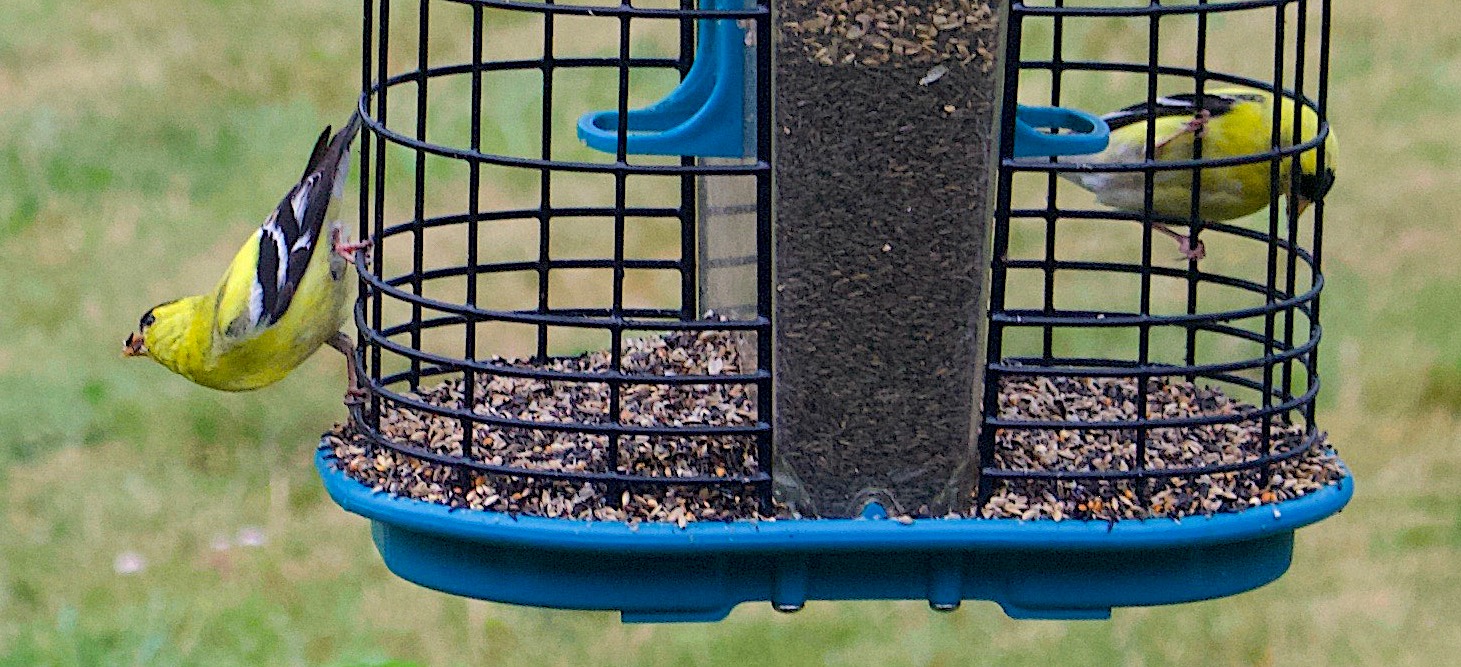
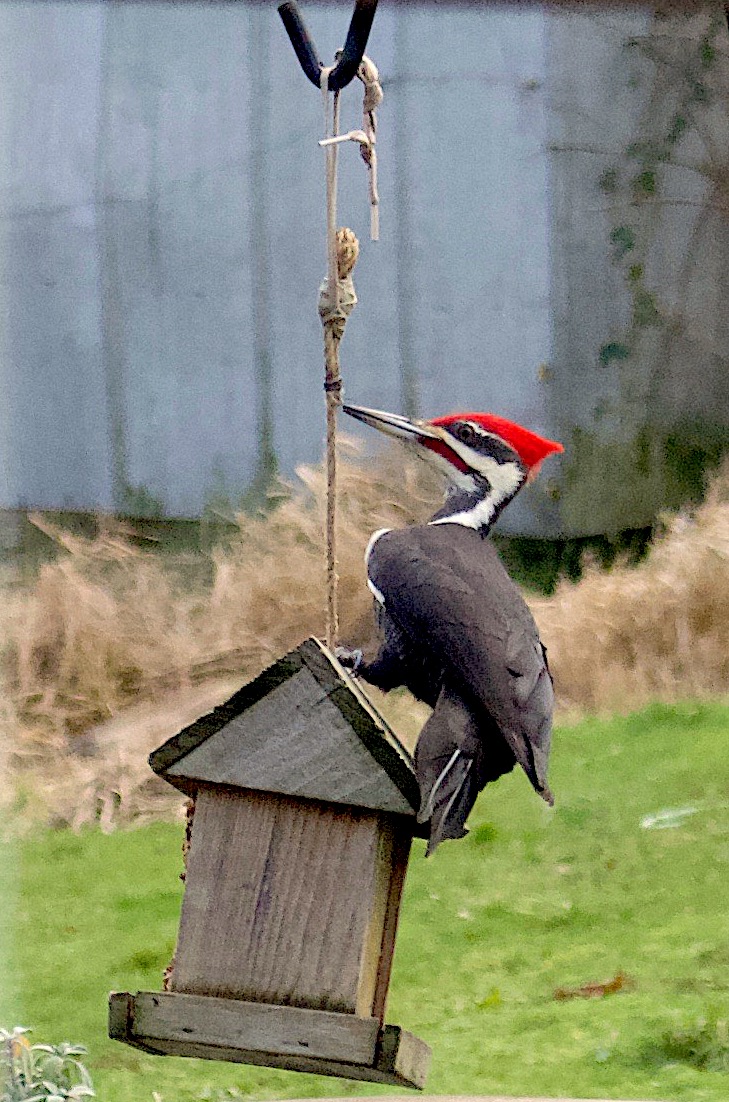
Approaching seventy, she learns to live, at last. She realizes she has not accomplished half of what she struggled for, that she surrendered too many battles and seldom celebrated those she won. Approaching seventy, she learns to live without ambition: a calm lake face, not a train bound for success and glory. For the first time, she relaxes her hands on the controls, leans back to watch the coming end. Asked, she’d tell you her life is made out of the things she didn’t do, as much as the things she did do. Did she sing a love song? Approaching seventy, she learns to live without wanting much more than the light in the catbird window seat where, watching the voracious fist-sized tweets, she hums along. ~Marilyn Nelson “Bird Feeder”
I’ve been learning in retirement to let go by relaxing my grip on the controls on the runaway train of ambition. This is a change for someone driven for decades to succeed in various professional and personal roles.
I’m aware who I am is defined both by what I haven’t gotten done and what I managed to do. And now, at seventy years old, I hope I still have some time to explore some of those things I left undone.
Except I haven’t been as robust and healthy as I wish to be. For the past month, during very chilly weather and after a prolonged bout of bronchitis, I found I couldn’t tolerate the cold air outside or in the barn while I did daily chores. My chest strangely hurt.
I finally took myself to a cardiologist who was concerned with a number of risk factors in my family and my own history and arranged testing, which I flunked yesterday.
I ended up with two stents to open blockages in my main coronary artery, plus a night in the hospital. I spent the night thinking about blessings and what needs to happen in my life now:
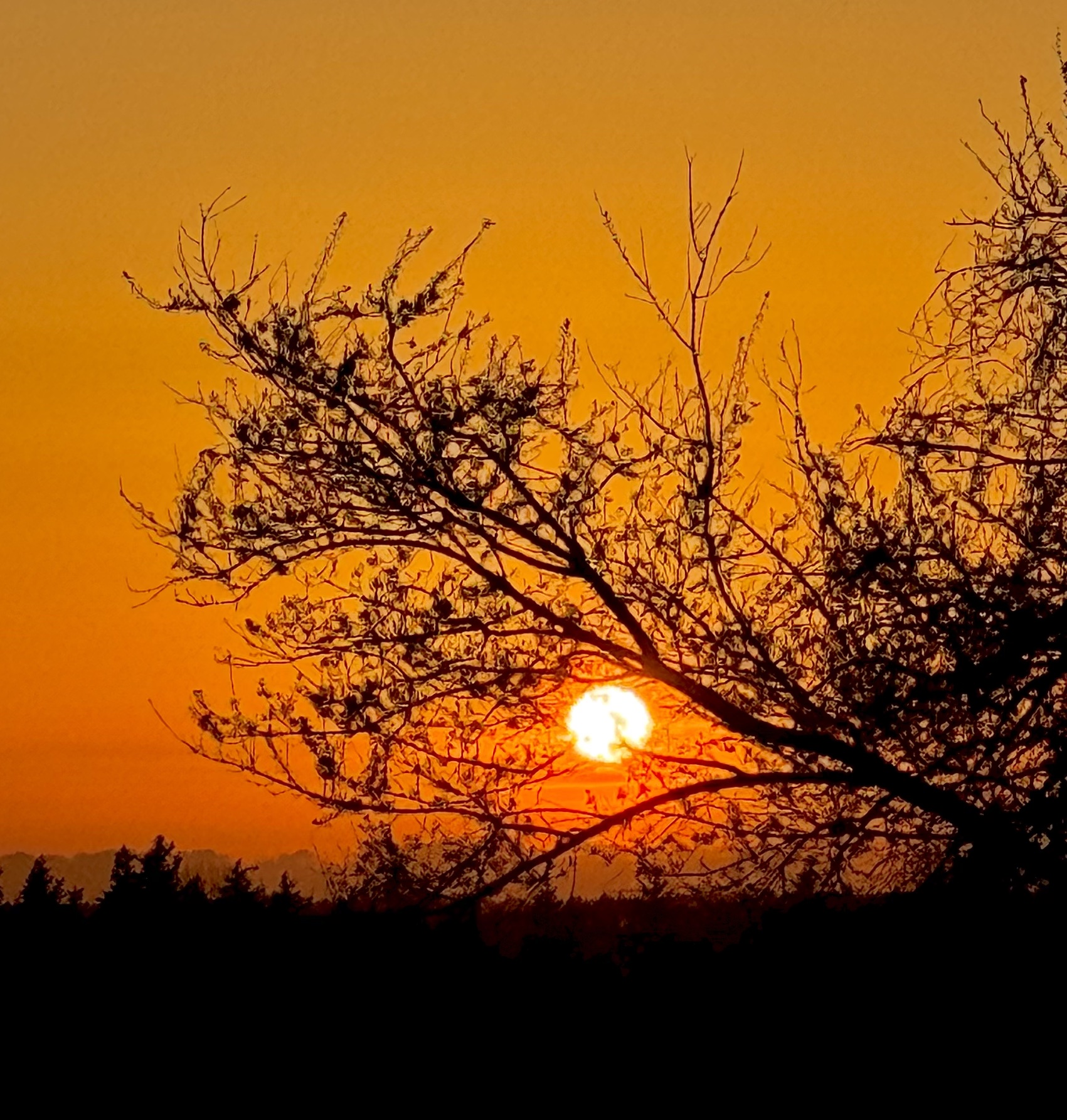
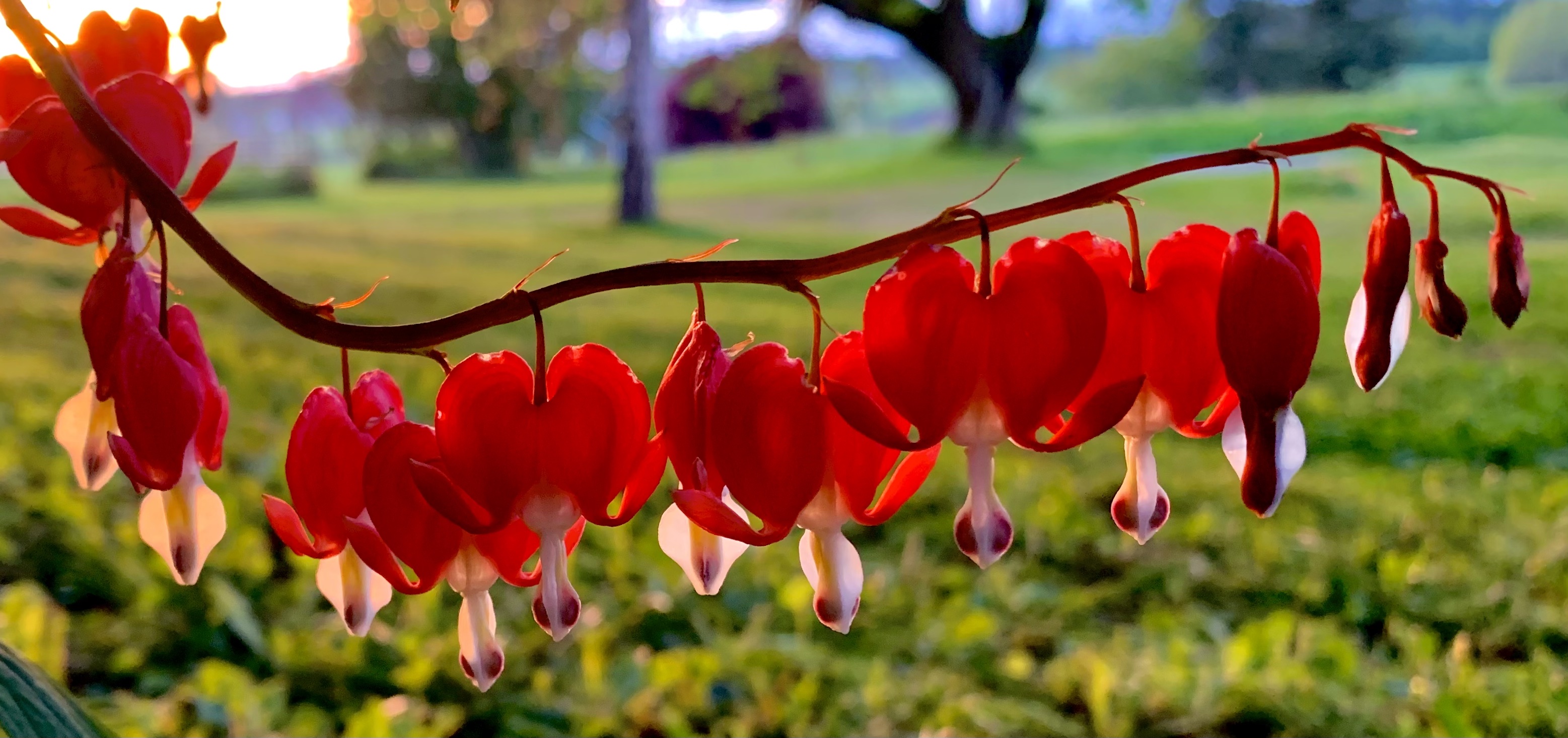
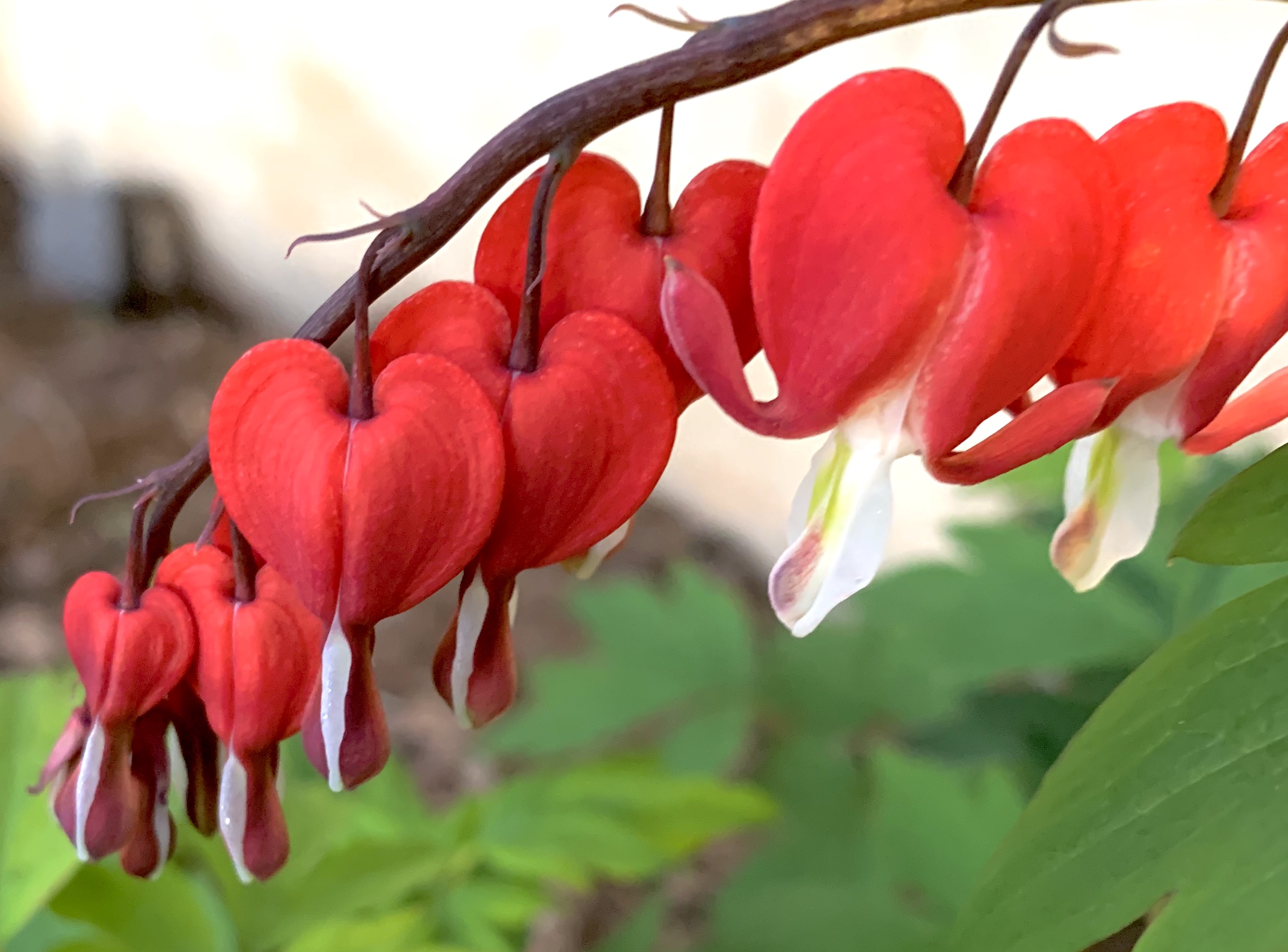
Reflecting with gratitude on being alive by the grace of our Lord. Holding my heart gently and treating it well. Humming as I go. Just sitting when I wish but walking when I must. Watching out the window for the real twitters and tweeters in this crazy noisy world. Loving up those around me.
It’s sweet to remember why I’m here. I’ve been given a new chance to enjoy every moment.
So after a lifetime of getting mostly A’s, flunking isn’t always bad.



























 Barnstorming