On the day when The weight deadens On your shoulders And you stumble, May the clay dance To balance you.
And when your eyes freeze behind the grey window and the ghost of loss gets into you, may a flock of colours, Indigo, red, green And azure blue, Come to awaken in you A meadow of delight.
May the nourishment of the earth be yours, May the clarity of light be yours, May the fluency of the ocean be yours, May the protection of the ancestors be yours.
And so may a slow Wind work these words Of love around you, An invisible cloak To mind your life. ~John O’Donohue from “Beannacht“
We all will stumble, bearing the bruises and scars of our fall. We all waken to gray days when there appears no point in getting up. We all can be sucked into the darkest thoughts, tunneling ever more deeply.
In those moments, those days, those months, may we be wrapped tightly in love’s cloak of invisibility, hiding us from a darkness that can swallow us no longer.
We are led onto a brightening path of light and color, filled with contentment and encouragement, our failing feet steadied. The gray is absorbed into an ever-changing kaleidoscope, the way to go illuminated with hope.
May our brokenness be forever healed by words of blessing.
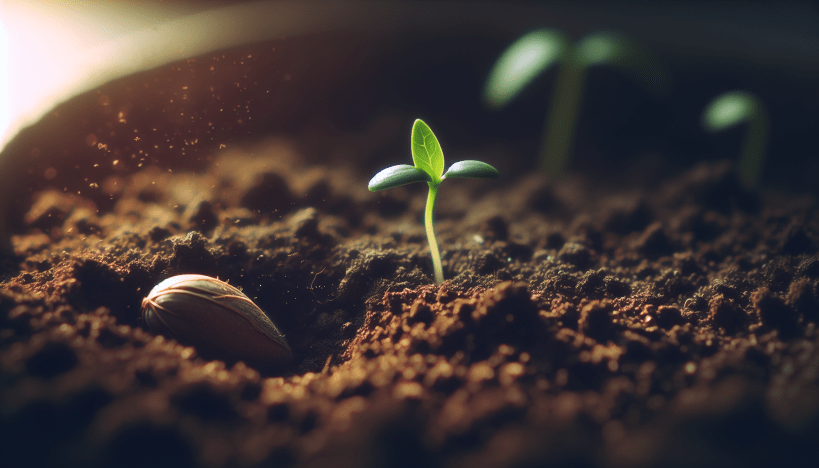
AI image created for this postAI image created for this postAI image created for this postAI image created for this post
To enrich the earth I have sowed clover and grass to grow and die. I have plowed in the seeds of winter grains and of various legumes, their growth to be plowed in to enrich the earth. I have stirred into the ground the offal and the decay of the growth of past seasons and so mended the earth and made its yield increase. All this serves the dark. I am slowly falling into the fund of things. And yet to serve the earth, not knowing what I serve, gives a wideness and a delight to the air, and my days do not wholly pass. It is the mind’s service, for when the will fails so do the hands and one lives at the expense of life. After death, willing or not, the body serves, entering the earth. And so what was heaviest and most mute is at last raised up into song. ~Wendell Berry “Enriching the Earth” from Collected Poems
It was the face of spring, it was the face of summer, it was the warmness of clover breath. Pomegranate glowed in her lips, and the noon sky in her eyes. And all of this, this breath-warmness and plum-tenderness was held forever… ~Ray Bradbury from Dandelion Wine
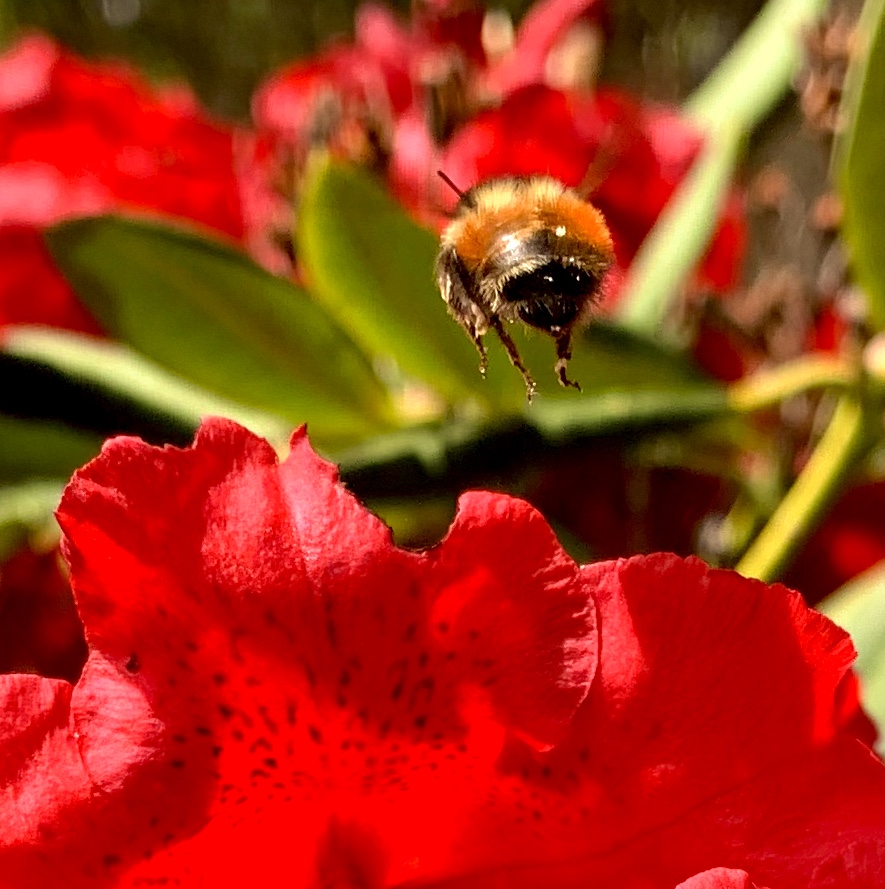
To make a prairie it takes a clover and one bee, One clover, and a bee, And revery. The revery alone will do, If bees are few. Emily Dickinson
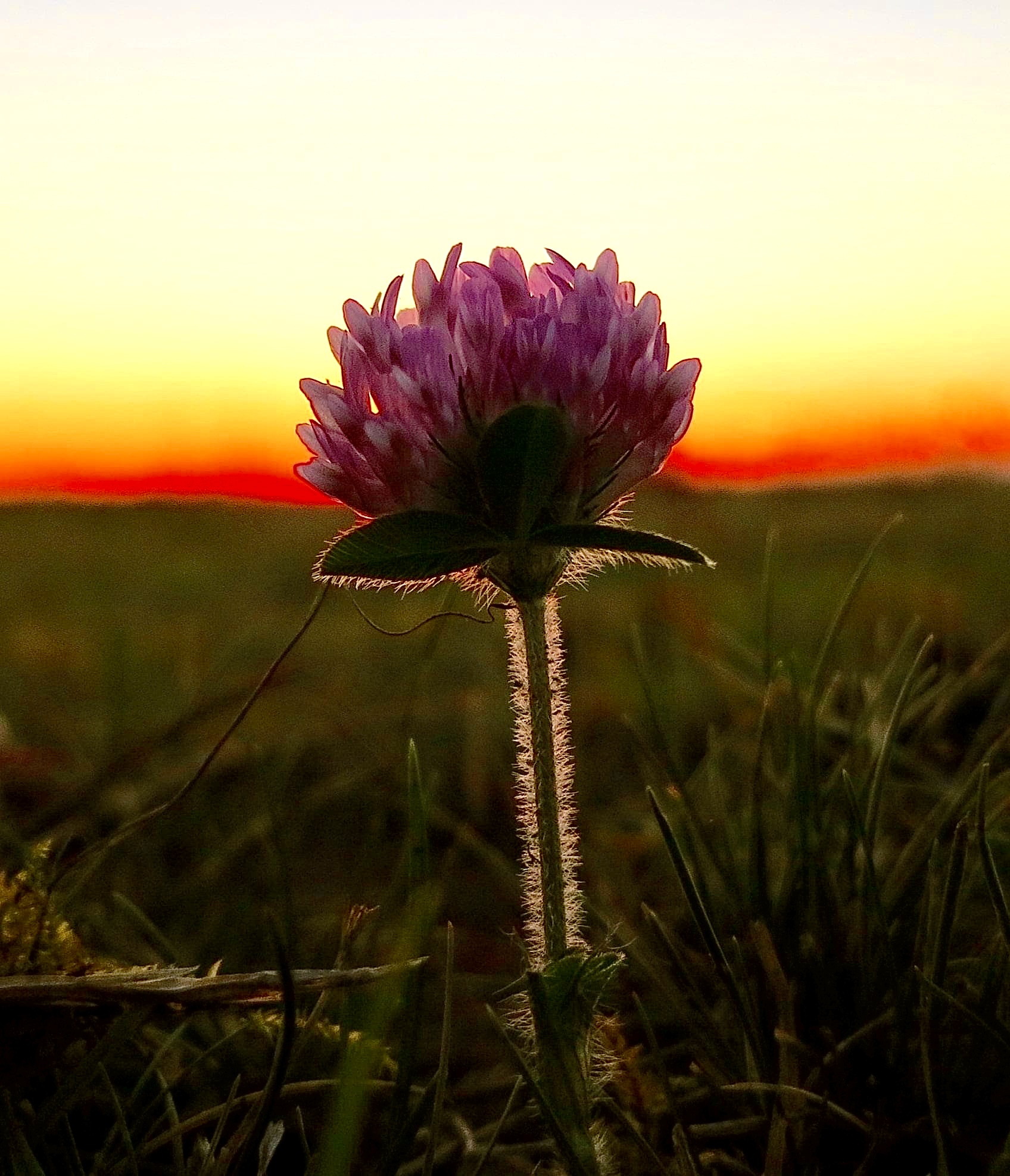
Every autumn my father, an agriculture teacher by training, brought home gunny sacks of grass seed from the feed and seed store. He would start up his 1954 Farmall Cub tractor, proceed to disc and harrow an acre of bare ground in our field, and then fill the seeder, distributing seed on the soil for his annual agronomy cover crop over winter growing experiment. The little sprouts would wait to appear in the warming spring weather, an initial green haziness spread over the brown dirt, almost like damp green mold. Within days they would form a plush and inviting velveteen green cushion, substantial enough for a little wiggle of blades in the breezes. A few weeks later the cover would be a full fledged head of waving green hair, the wind blowing it wantonly, bending the stems to its will. It was botanical pasture magic, renewable and marvelous, only to be mowed and stubble turned over with the plow back into the soil as nutrition for the summer planting to come. It was the sacrificial nature of cover crops to be briefly beautiful on top of the ground, but the foundational nurture once underground.
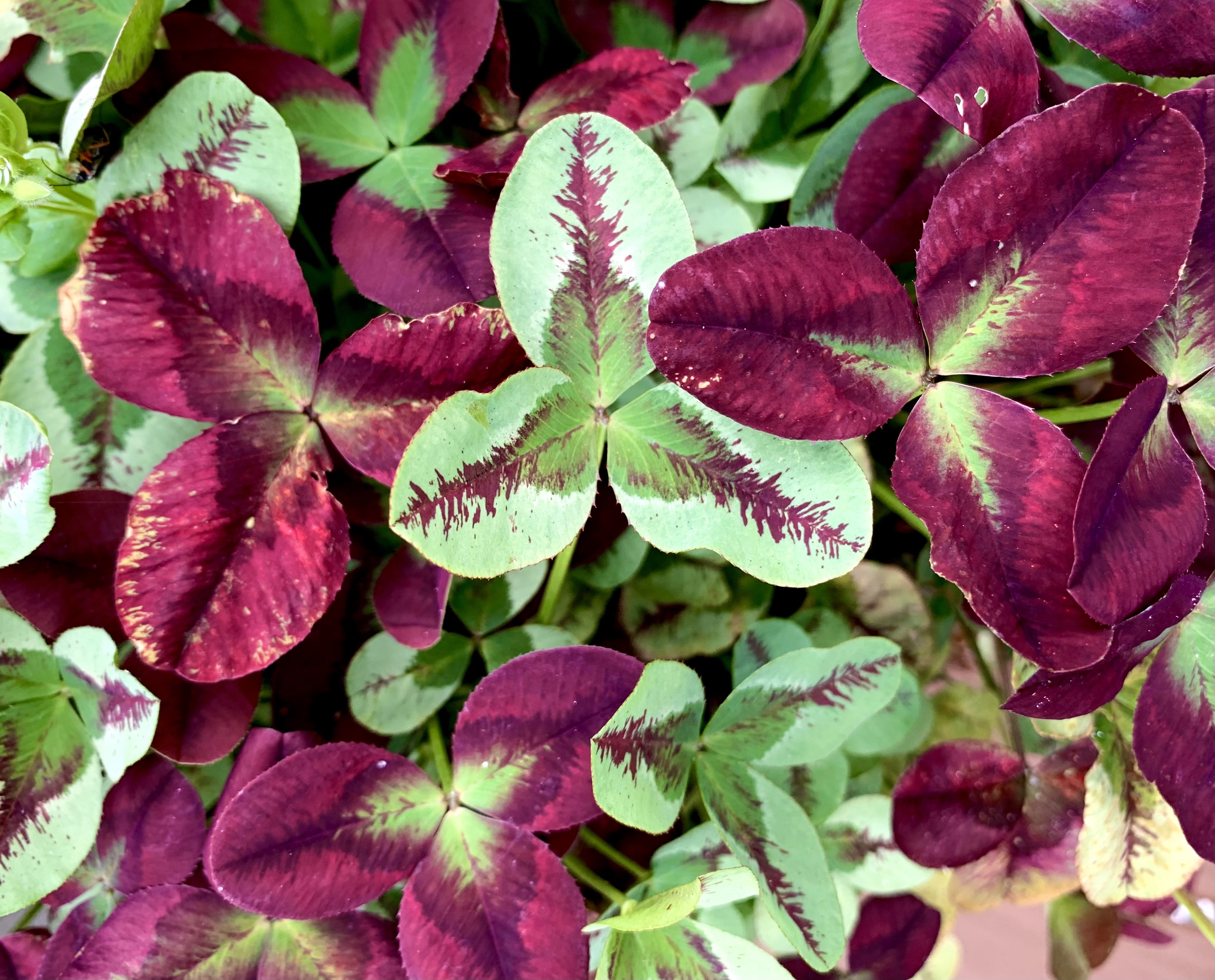
One spring the expected grassy carpet growth didn’t look quite the same after germination–the sprouts were little round leaves, not sharp edged blades. Instead of identical uniform upright stems, the field was producing curly chaotic ovoid and spherical shapes and sizes. Clover didn’t abide by the same rules as grasses. It had a mind of its own with a burgeoning and bumpy napped surface that didn’t bend with breezes, all its effort invested instead in producing blossoms.
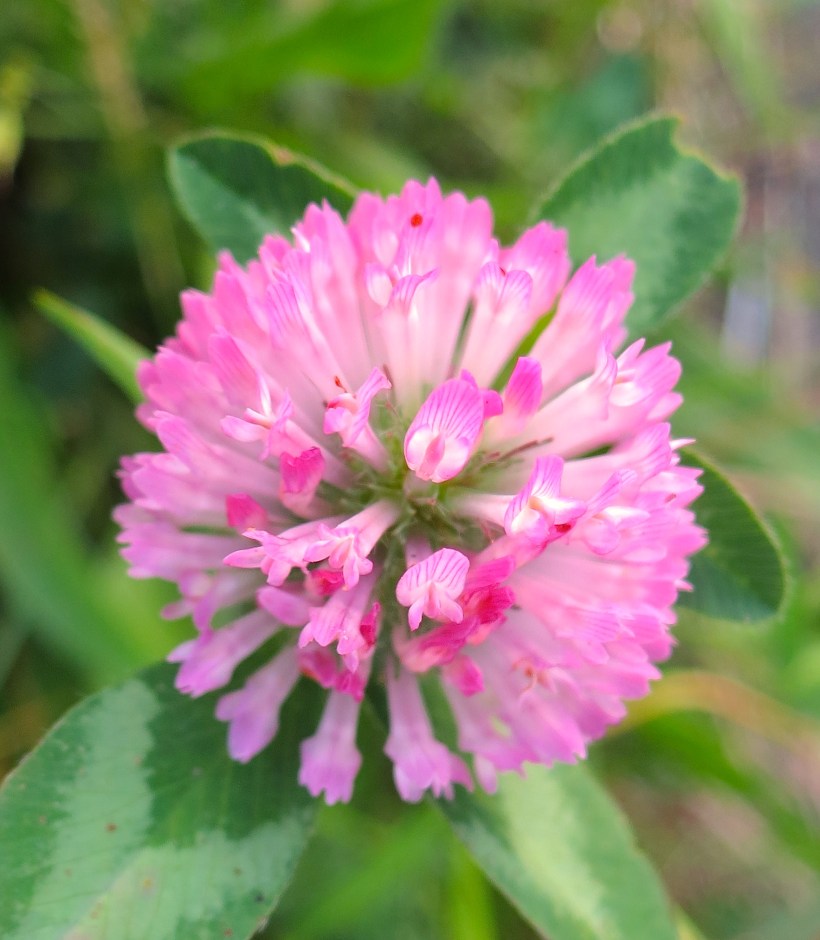
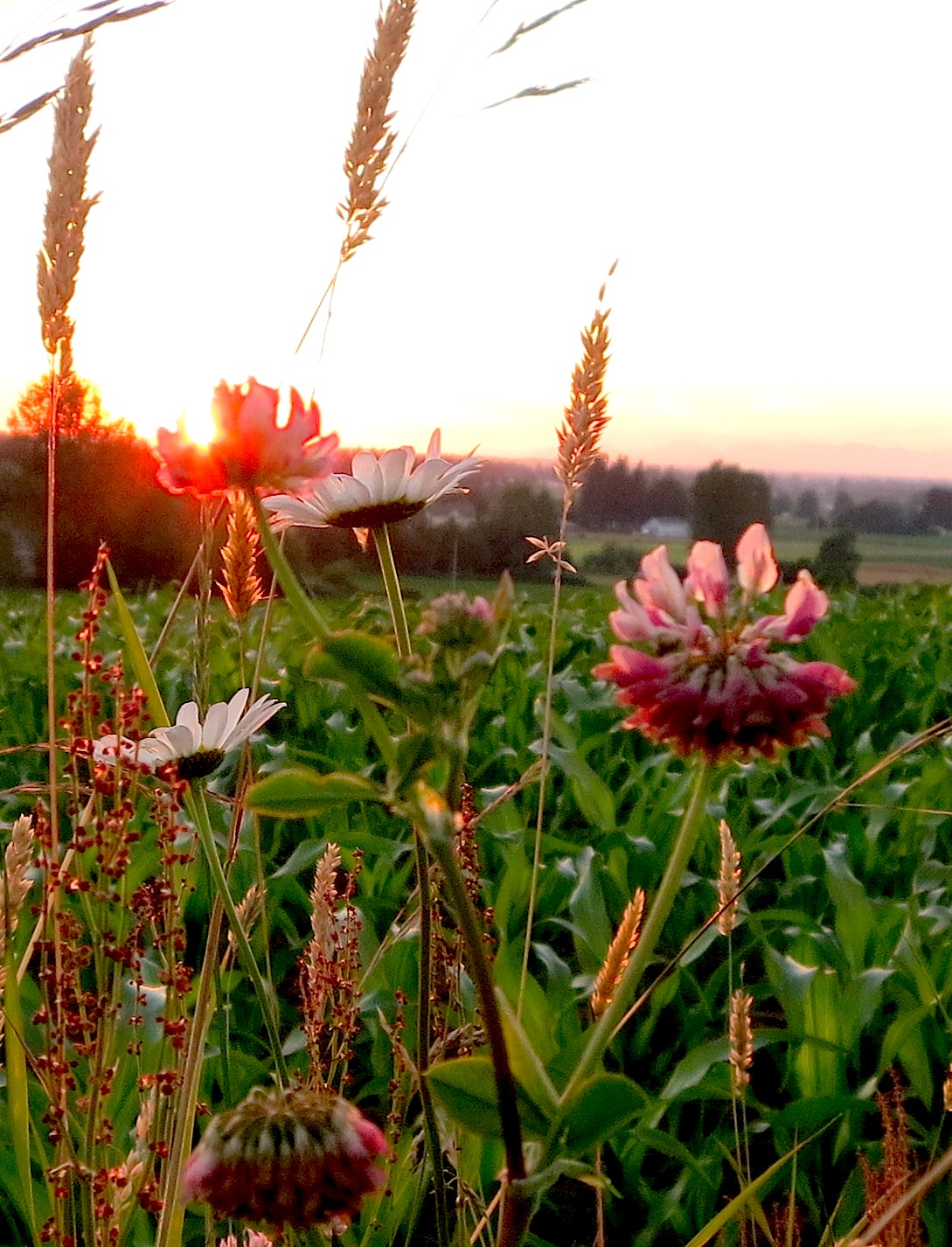
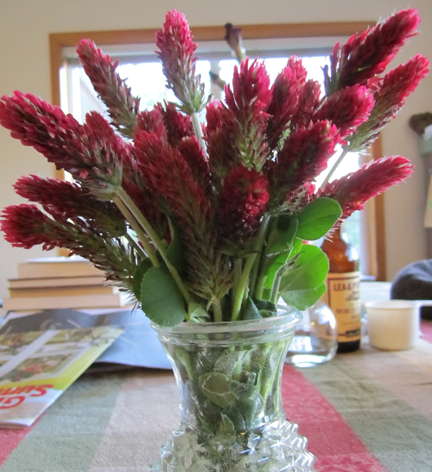
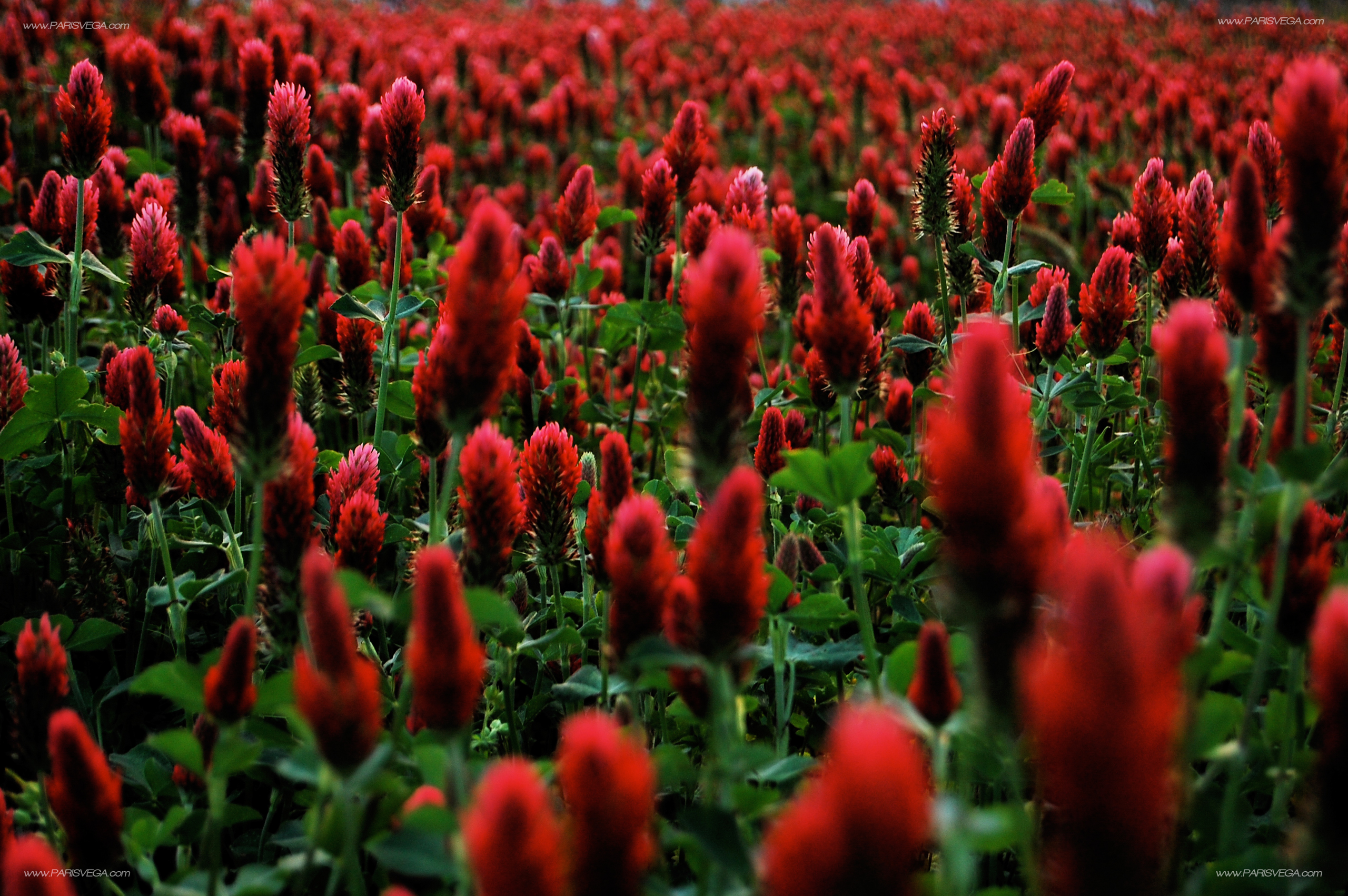
A hint of pink one morning was so subtle it was almost hallucinatory. Within a day it was unmistakeably reddening and real. Within a week the green sea flowed with bobbing crimson heads. We had never seen such vibrancy spring from our soil before. It exuded scented clover breath, the fragrance calling honey bees far and near. True reverie.
The field of crimson dreams and sated honey bees lasted several weeks before my father headed back out on the Farmall to turn it under with the plow, burying the fading blossoms into the ground. Their sacrifice bled red into the soil, their fragrant breath halted, their memory barely recognizable in the next summer crop germination. Yet the crimson heads were there, feeding the growth of the next generation, deepening the green as it reached to the sun.
Such a sweet thing, alive a thousand summers hence in the soil.
What a beautiful feeling.
Crimson and clover, over and over.
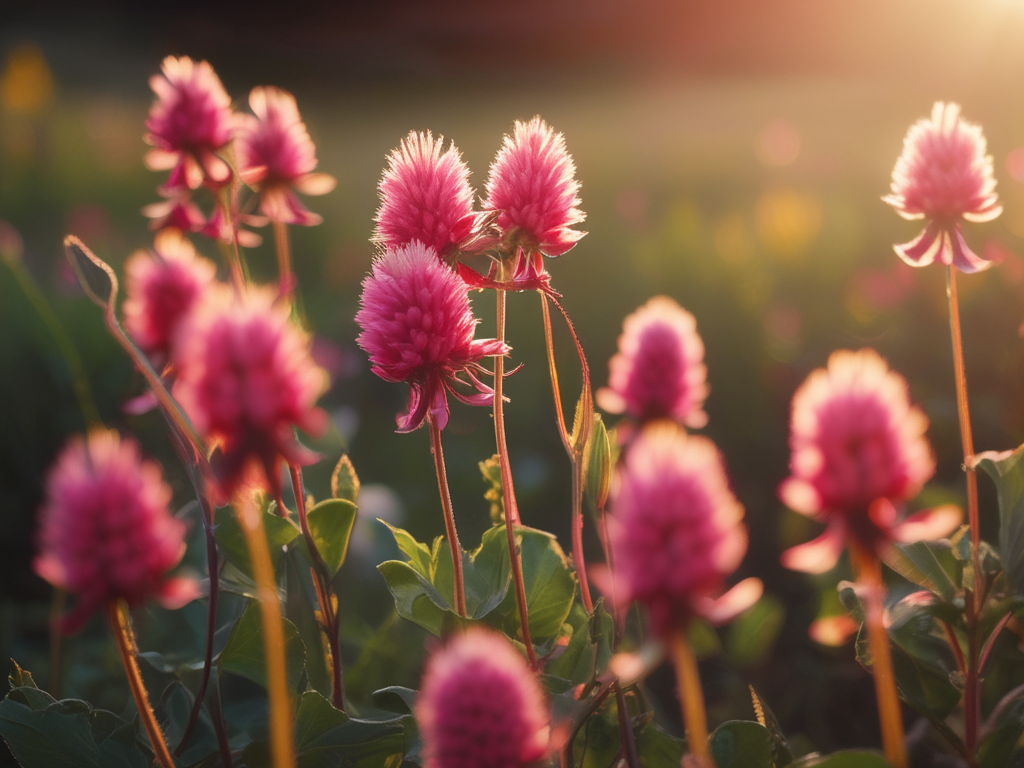
AI image created for this post
One-Time
Monthly
Yearly
Make a one-time or recurring donation to support daily Barnstorming posts
True gardeners cannot bear a glove Between the sure touch and the tender root, Must let their hands grow knotted as they move With a rough sensitivity about Under the earth, between the rock and shoot, Never to bruise or wound the hidden fruit. And so I watched my mother’s hands grow scarred, She who could heal the wounded plant or friend With the same vulnerable yet rigorous love; I minded once to see her beauty gnarled, But now her truth is given me to live, As I learn for myself we must be hard To move among the tender with an open hand, And to stay sensitive up to the end Pay with some toughness for a gentle world. ~May Sarton “An Observation”
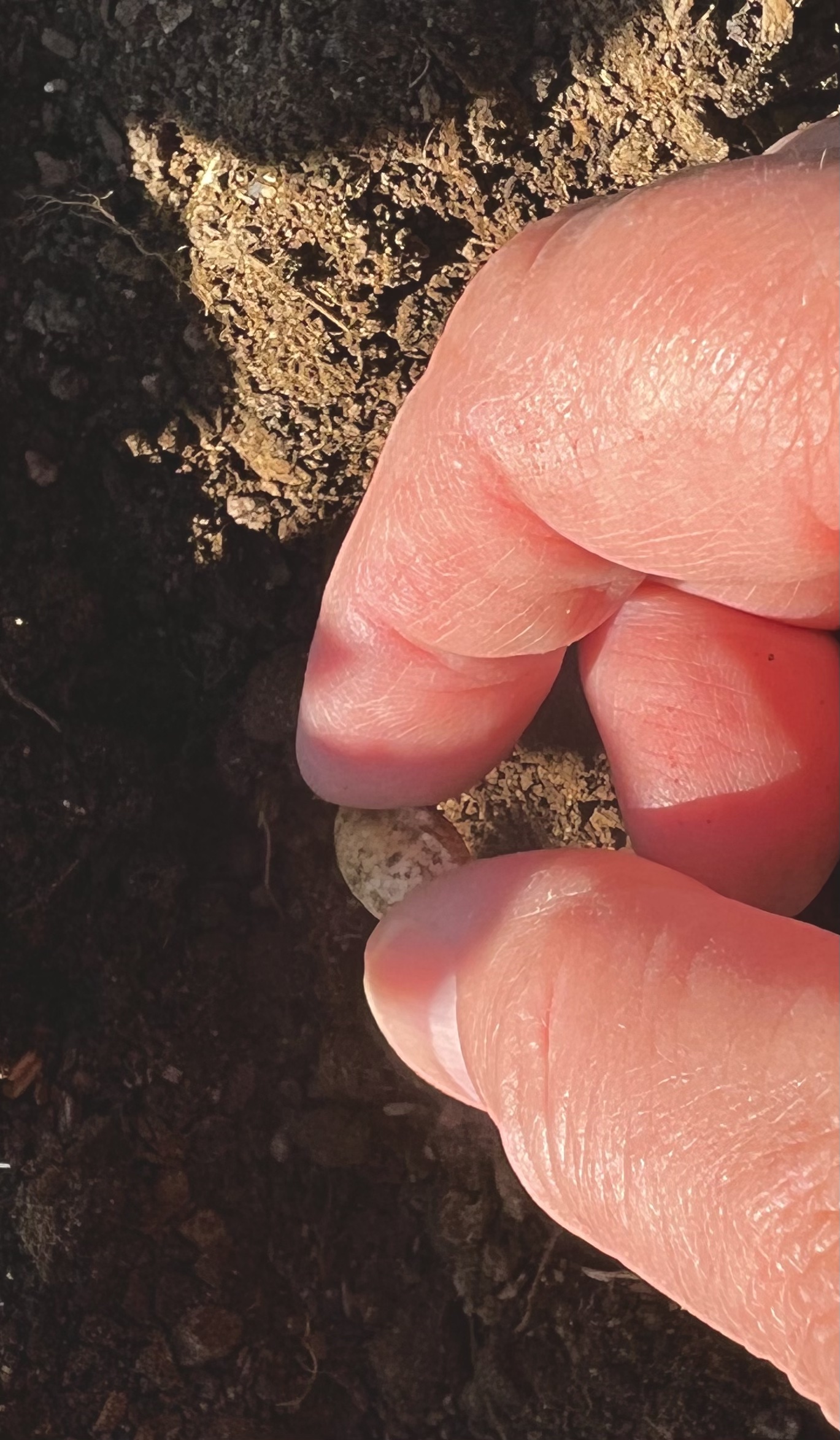
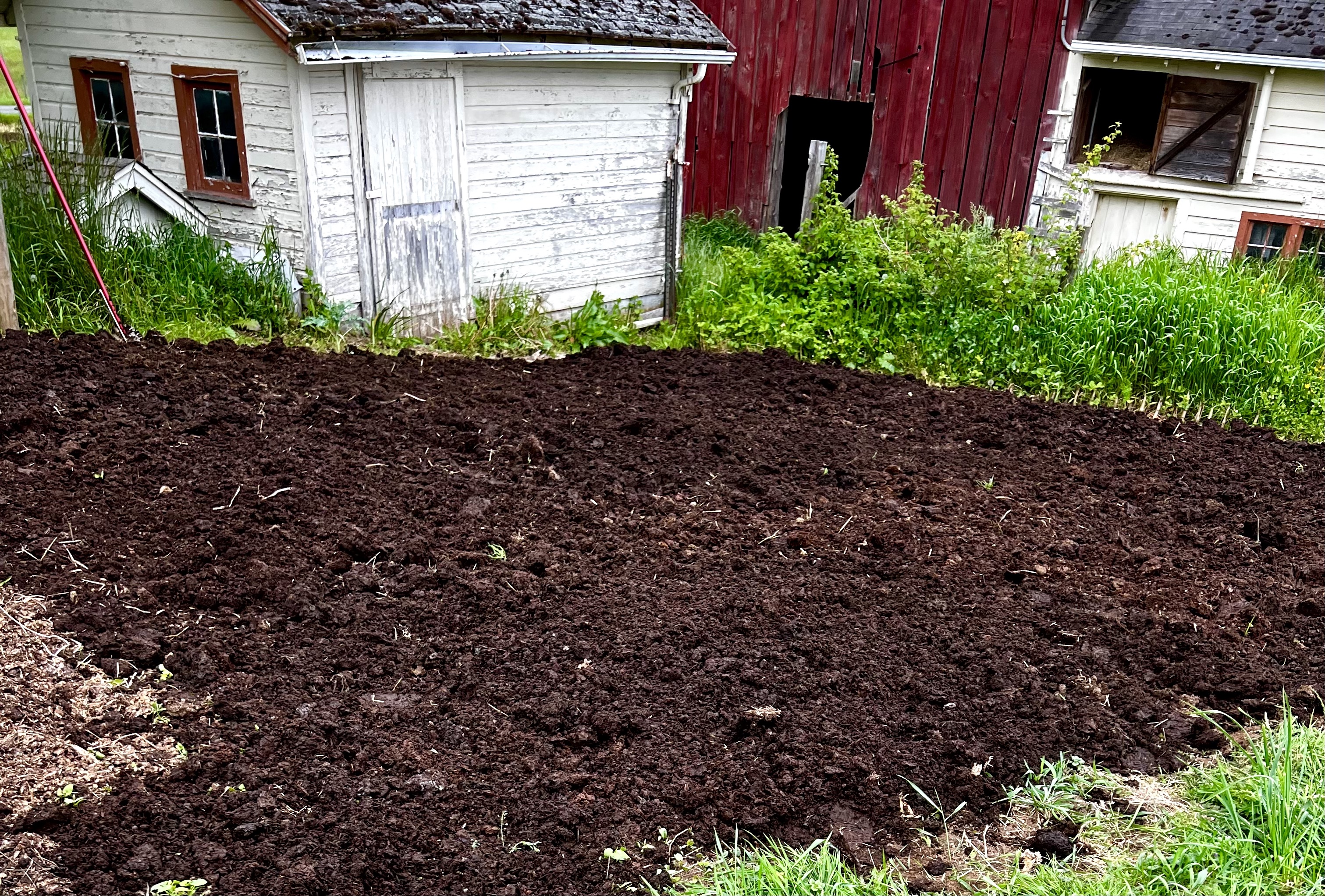
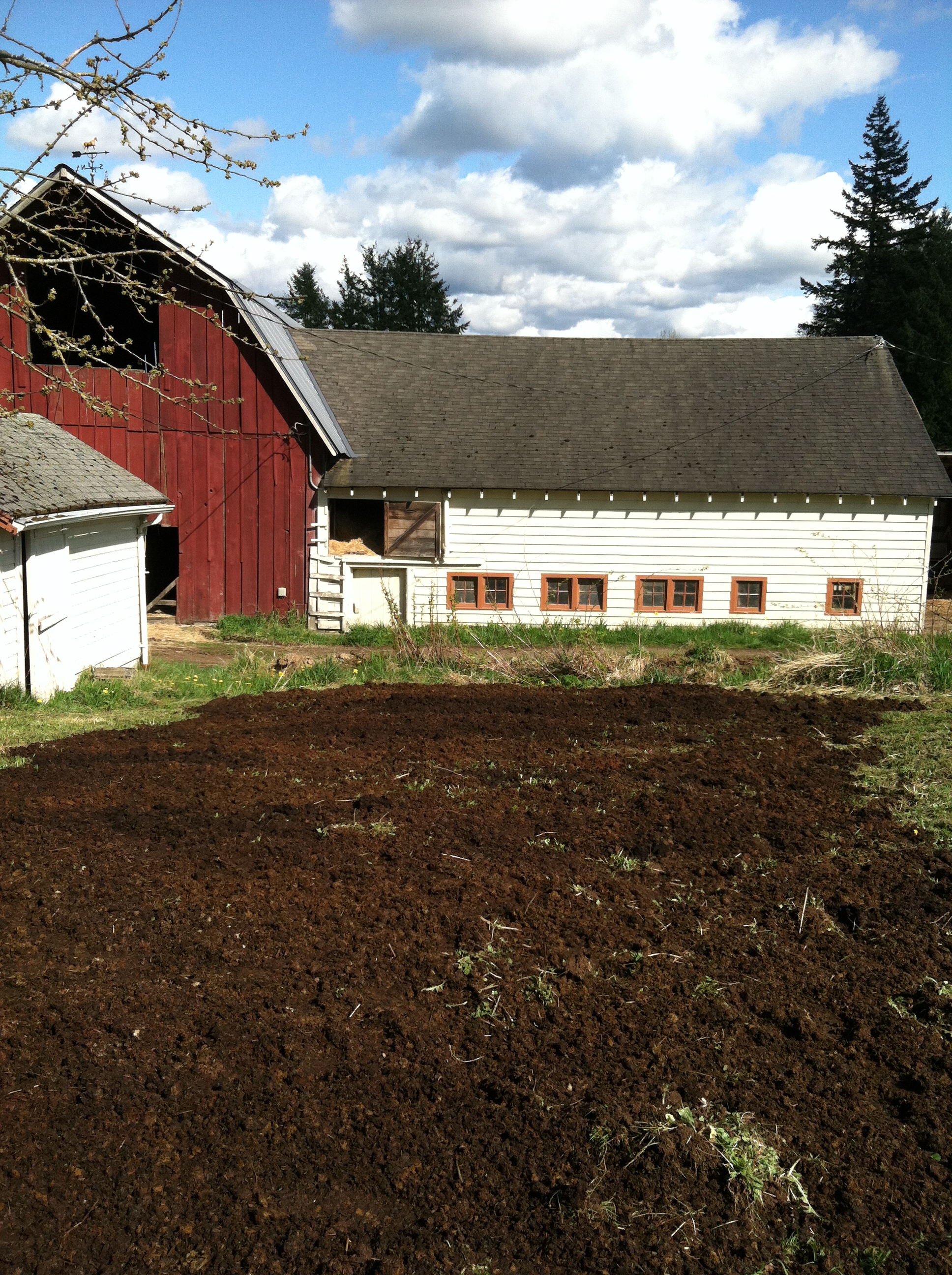
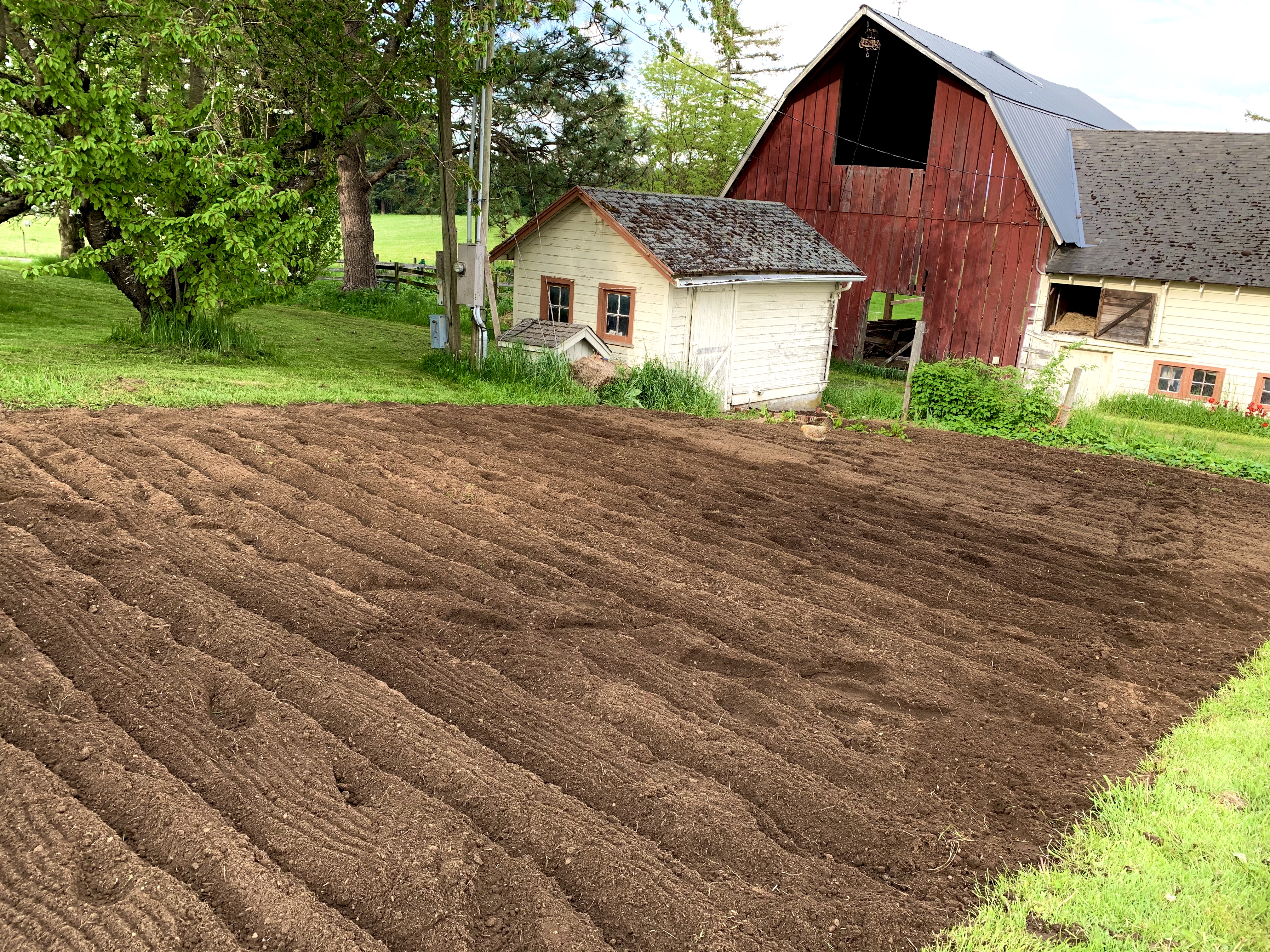
I’m reminded every spring, as my husband’s hands prepare the soil in the garden for that season’s planting, how challenging is the job of the gardener. His hands must fight the chaos of weeds and rocks to prepare a gentle bed for each seed.
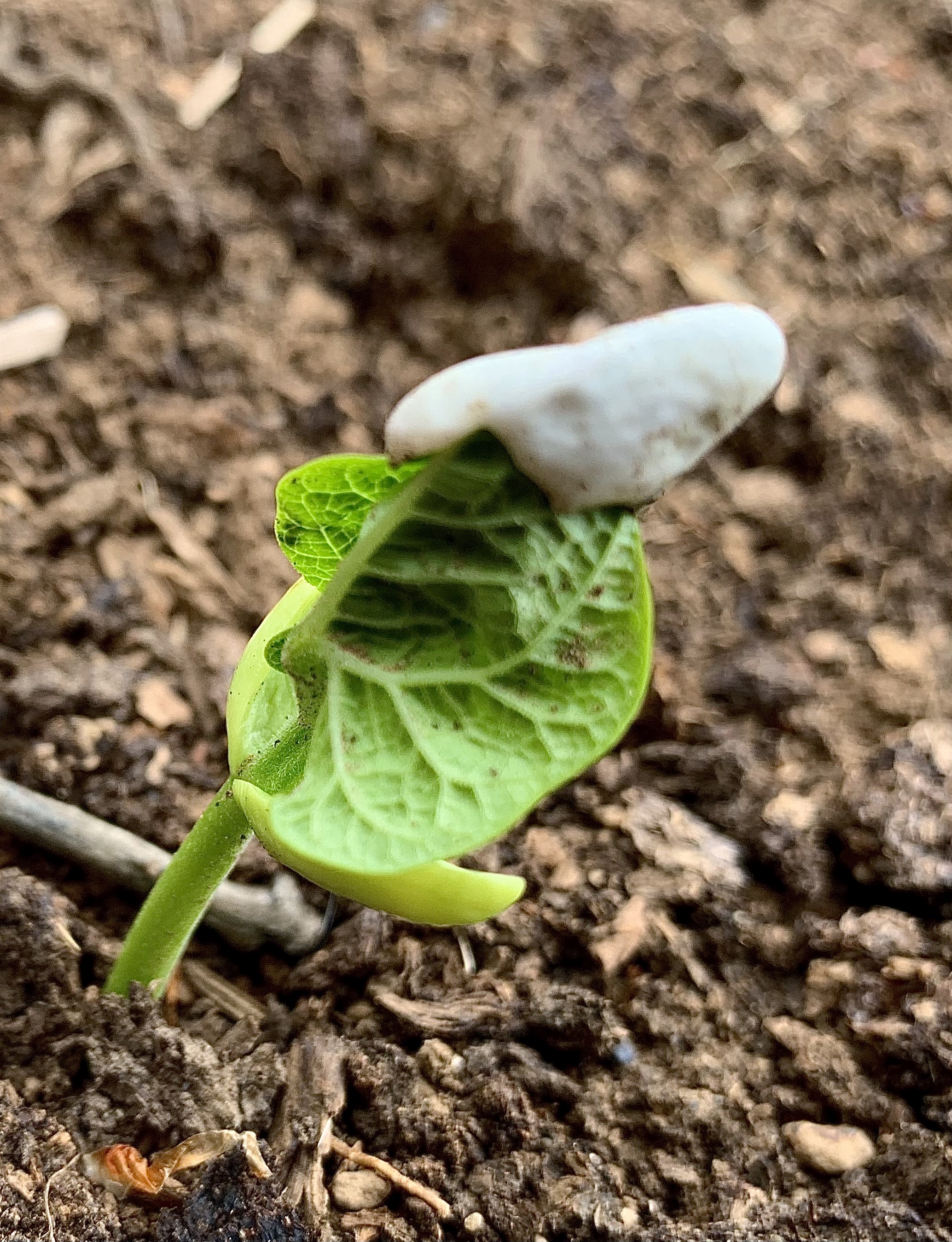
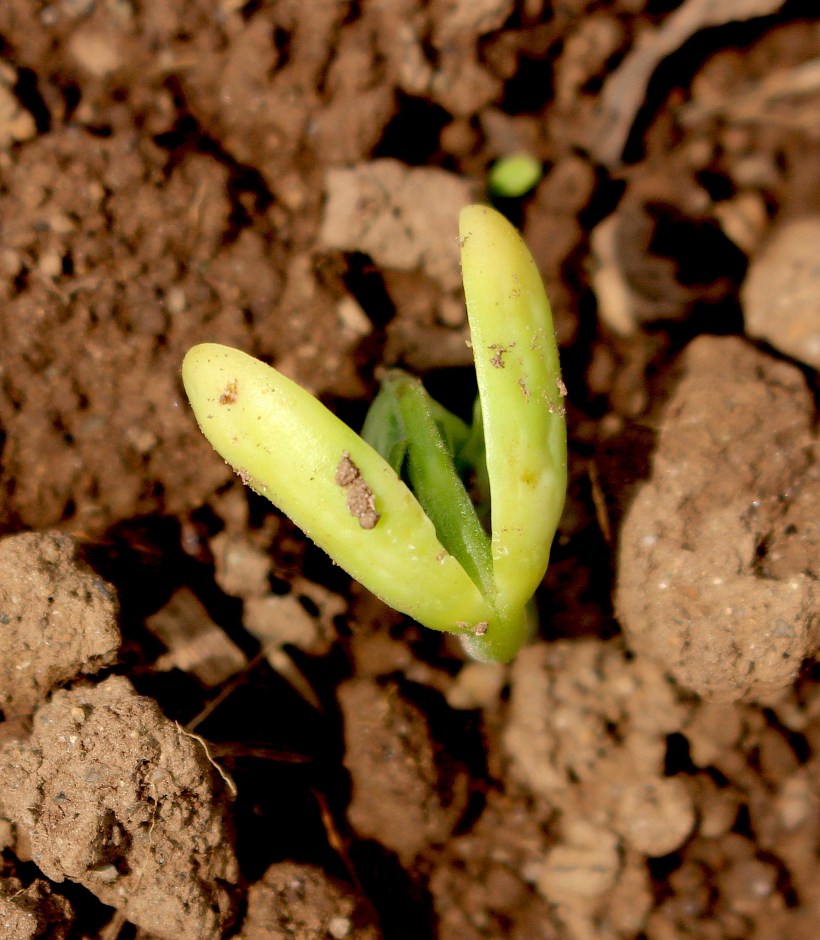
A seed is a plain, unadorned and ordinary thing, a little boring even, practically forgotten once it is placed in the ground. Yet the ordinariness is only the outer dress; the extraordinary is contained inside, and within days a tender shoot braves all to come to the surface, bowed and humble. It establishes a tenacious root that ensures survival, grabbing hold in even the most inhospitable ground.
So it is with Jesus whose ordinary origins belied his holiness and majesty. Both hardy root and tender shoot, he reaches up to the heavens while his feet tread the soil, both at once. His toughness paid for our chance at a more gentle world.
And thanks to Him, we are fed.
For he grew up before him like a young plant, and like a root out of dry ground; Isaiah 53:2a
AI image created for this post
One-Time
Monthly
Yearly
Make a one-time or recurring donation to support daily Barnstorming posts
I was enjoying everything: the rain, the path wherever it was taking me, the earth roots beginning to stir. I didn’t intend to start thinking about God, it just happened. How God, or the gods, are invisible, quite understandable But holiness is visible, entirely. It’s wonderful to walk along like that, thought not the usual intention to reach an answer but merely drifting. Like clouds that only seem weightless. but of course are not. Are really important. I mean, terribly important. Not decoration by any means. By next week the violets will be blooming.
Anyway, this was my delicious walk in the rain. What was it actually about?
Think about what it is that music is trying to say. It was something like that. ~Mary Oliver “Drifting”from Blue Horses
Wet things smell stronger, and I suppose his main regret is that he can sniff just one at a time. In a frenzy of delight he runs way up the sandy road— scored by freshets after five days of rain. Every pebble gleams, every leaf.
When I whistle he halts abruptly and steps in a circle, swings his extravagant tail. Then he rolls and rubs his muzzle in a particular place, while the drizzle falls without cease, and Queen Anne’s lace and Goldenrod bend low.
The top of the logging road stands open and light. Another day, before hunting starts, we’ll see how far it goes, leaving word first at home. The footing is ambiguous.
Soaked and muddy, the dog drops, panting, and looks up with what amounts to a grin. It’s so good to be uphill with him, nicely winded, and looking down on the pond.
A sound commences in my left ear like the sound of the sea in a shell; a downward, vertiginous drag comes with it. Time to head home. I wait until we’re nearly out to the main road to put him back on the leash, and he —the designated optimist— imagines to the end that he is free. ~Jane Kenyon “After an Illness, Walking the Dog”
This morning’s drizzly walk and every surface is baptized with gentle, loving sprinkles from God. It reminds us how visible is our holiness; His covering grace makes us free.
AI image created for this post
One-Time
Monthly
Yearly
Make a one-time or recurring donation to support daily Barnstorming posts
Unless the eye catch fire, Then God will not be seen. Unless the ear catch fire Then God will not be heard. Unless the tongue catch fire Then God will not be named. Unless the heart catch fire, Then God will not be loved. Unless the mind catch fire, Then God will not be known. ~William Blake from “Pentecost”
The cows munched or stirred or were still. I was at home and lonely, both in good measure. Until the sudden angel affrighted me––light effacing my feeble beam, a forest of torches, feathers of flame, sparks upflying: but the cows as before were calm, and nothing was burning, nothing but I, as that hand of fire touched my lips and scorched by tongue and pulled by voice into the ring of the dance. ~Denise Levertov from “Caedmon” inBreathing the Water
Come, Holy Spirit, bending or not bending the grasses, appearing or not above our heads in a tongue of flame, at hay harvest or when they plough in the orchards or when snow covers crippled firs… ~Czeslaw Milosz from “Veni Creator” inSelected and Last Poems
The world is charged with the grandeur of God. It will flame out, like shining from shook foil; It gathers to a greatness, like the ooze of oil Crushed.
And for all this, nature is never spent; There lives the dearest freshness deep down things; And though the last lights off the black West went Oh, morning, at the brown brink eastward, springs— Because the Holy Ghost over the bent World broods with warm breast and with ah! bright wings. ~Gerard Manley Hopkins from “God’s Grandeur”
I will show wonders in the heavens above and signs on the earth below, blood and fire and billows of smoke. The sun will be turned to darkness and the moon to blood before the coming of the great and glorious day of the Lord. And everyone who calls on the name of the Lord will be saved. ~Acts 2:19-21 The Holy Spirit Comes At Pentecost
Today, when we feel we are without hope, when faith feels frail, when love seems distant…
We wait, stilled, for the moment we are lit afire~ the Living God chose us to be seen, heard, named, loved, known.
God forever burning in our hearts in this moment and for a lifetime.
There is an ancient conversation going on between mosses and rocks, poetry to be sure. About light and shadow and the drift of continents. This is what has been called the “dialect of moss on stone – an interface of immensity and minuteness, of past and present, softness and hardness, stillness and vibrancy…“
Learning to see mosses is more like listening than looking. A cursory glance will not do it. Mosses are not elevator music; they are the intertwined threads of a Beethoven quartet. ~Robin Kimmerer from Gathering Moss: A Natural and Cultural History of Mosses
Most lie low, flourishing with damp, harvesting sunlight, no commotion, moss mouse-silent, even through wind and hail, stoic through motors roaring fumes, through fat-clawed bears grubbing.
They can soothe the knife-edges of stones with frothy leaf by leaf of gray-green life, and burned-ground mosses cover destruction, charred stumps, trees felled and blackened. Cosmopolitan mosses likewise salve sidewalk cracks, crumbling walls.
They root in thin alpine air, on sedentary sand dunes, cling to cliff seeps beneath spilling springs. For rest, they make mats on streamside banks, for pleasure produce silky tufts, wavy brooms of themselves in woodlands for beauty, red roof moss for whim, elf cap, hair cap, sphagnum for nurturing.
No fossil record of note, no bone history, so lenient they possess only those memories remembered.
I believe they could comfort the world with their ministries. That is my hope, even though this world be a jagged rock, even though this rock be an icy berg of blue or a mirage of summer misunderstood (moss balm for misunderstanding), even though this world be blind and awry and adrift, scattering souls like spores through the deep of a starlit sea. ~Pattiann Rogers “The Moss Method”
To loosen with all ten fingers held wide and limber And lift up a patch, dark-green, the kind for lining cemetery baskets, Thick and cushiony, like an old-fashioned doormat, The crumbling small hollow sticks on the underside mixed with roots, And wintergreen berries and leaves still stuck to the top, — That was moss-gathering. But something always went out of me when I dug loose those carpets Of green, or plunged to my elbows in the spongy yellowish moss of the marshes: And afterwards I always felt mean, jogging back over the logging road, As if I had broken the natural order of things in that swampland; Disturbed some rhythm, old and of vast importance, By pulling off flesh from the living planet; As if I had committed, against the whole scheme of life, a desecration. ~Theodore Roethke, “Moss-Gathering” from Collected Poems
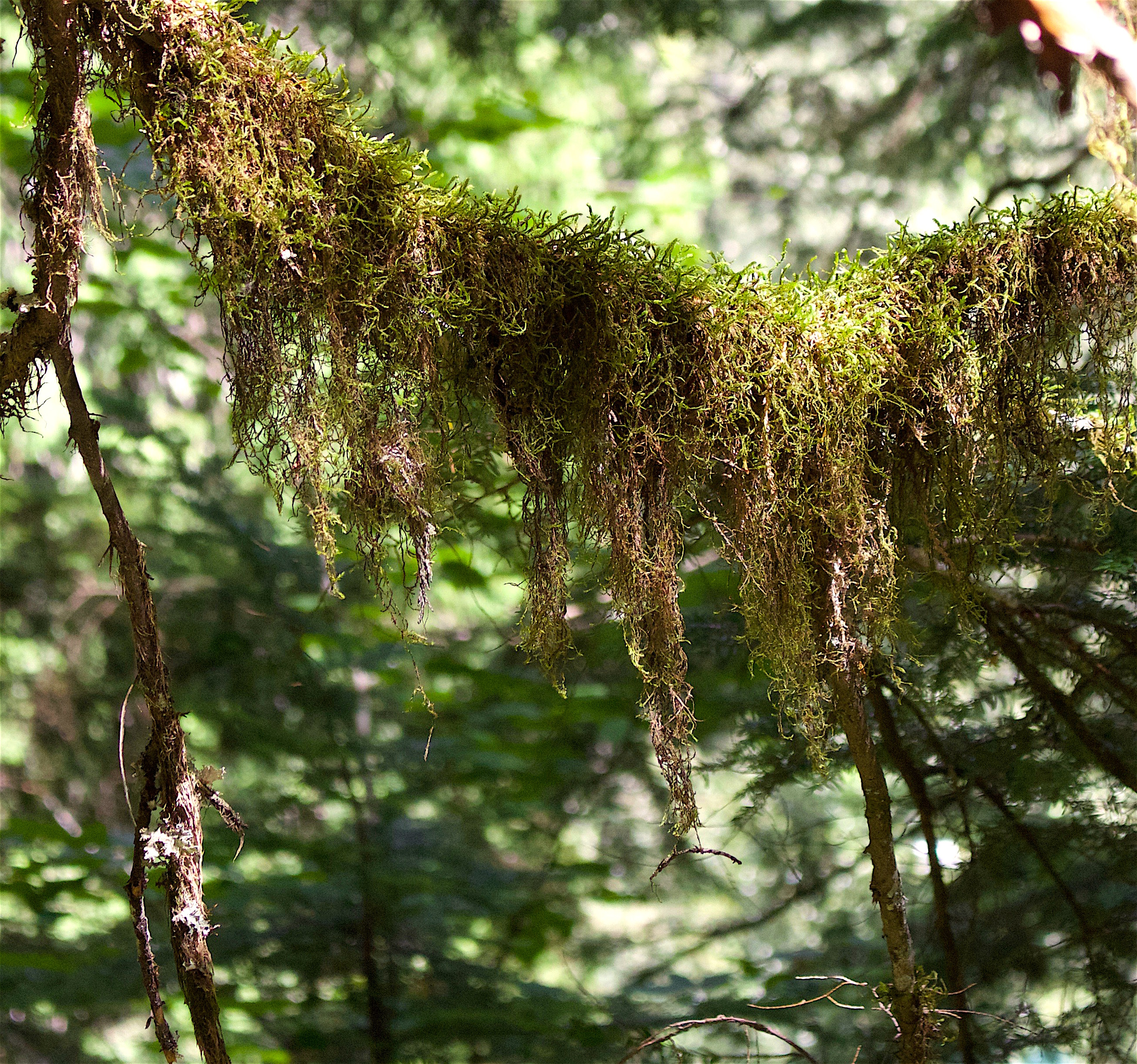
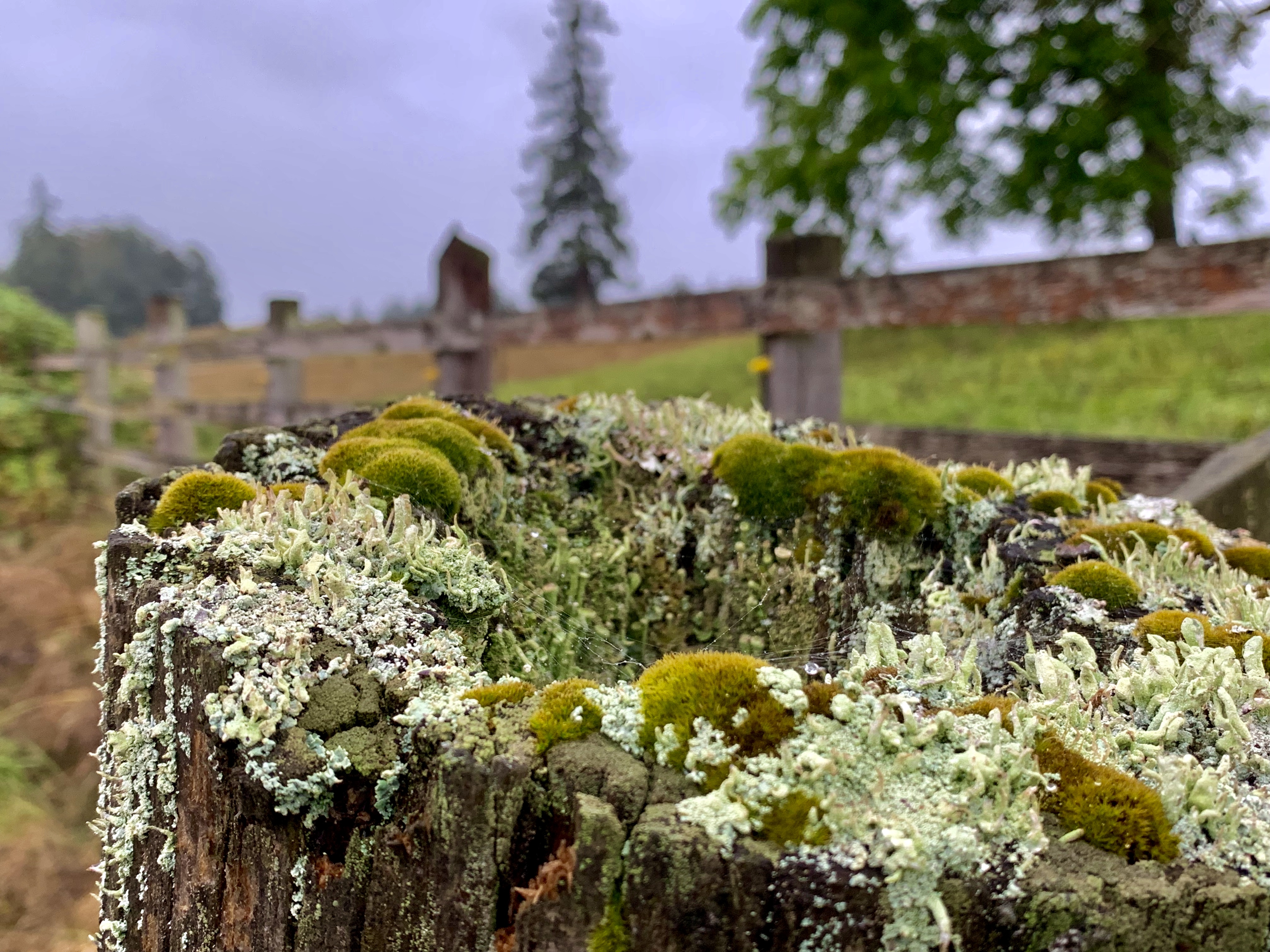
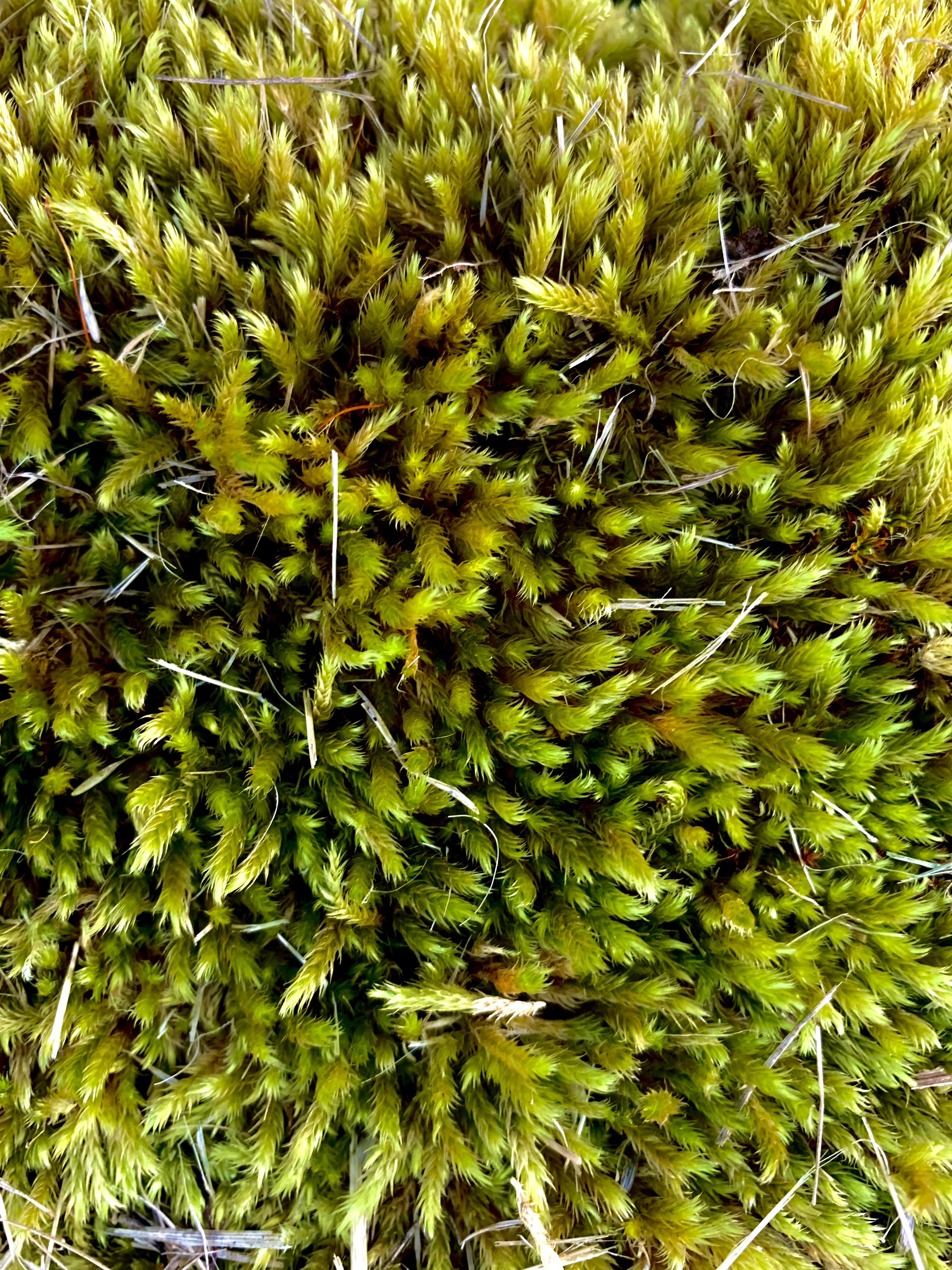
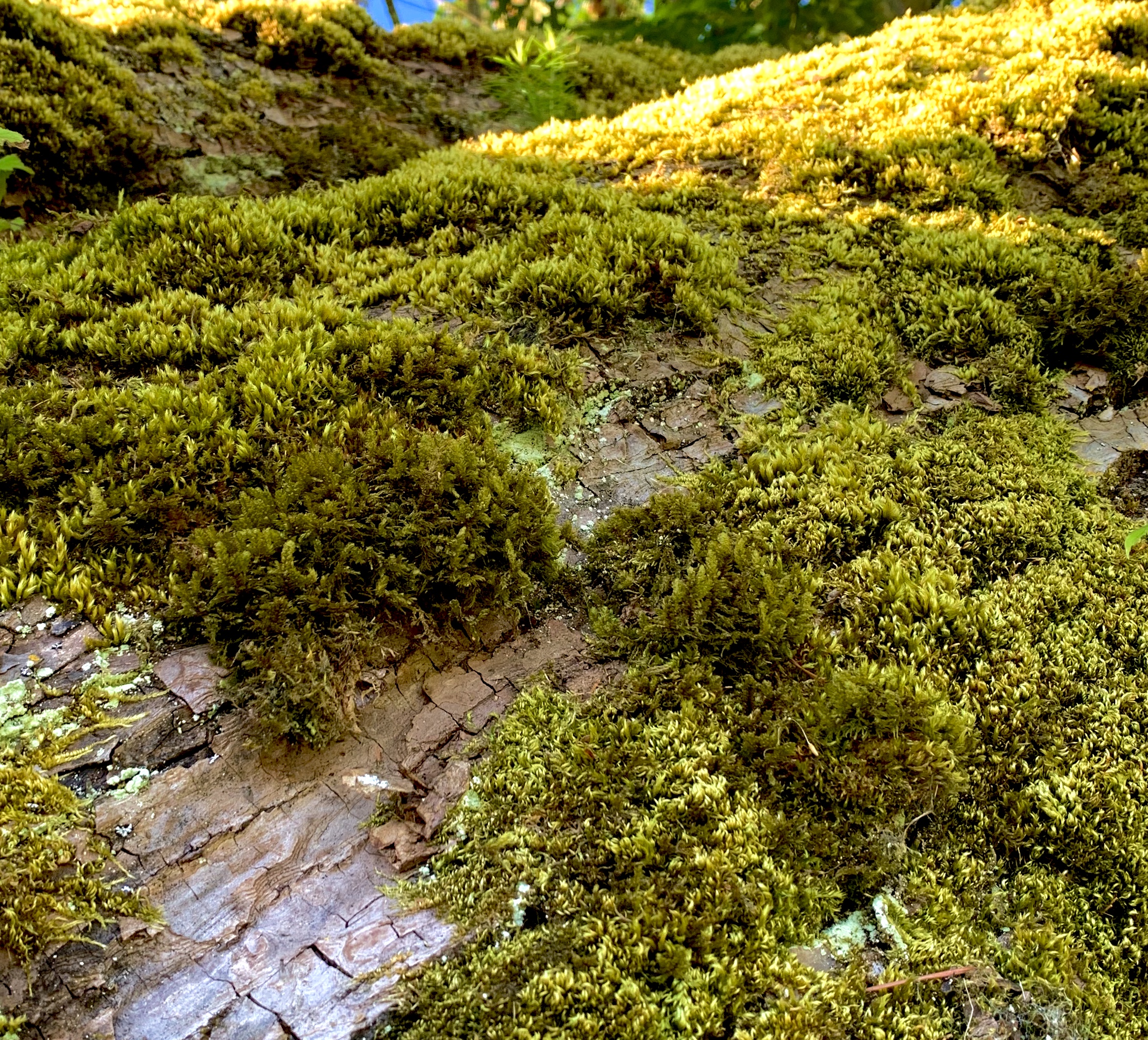
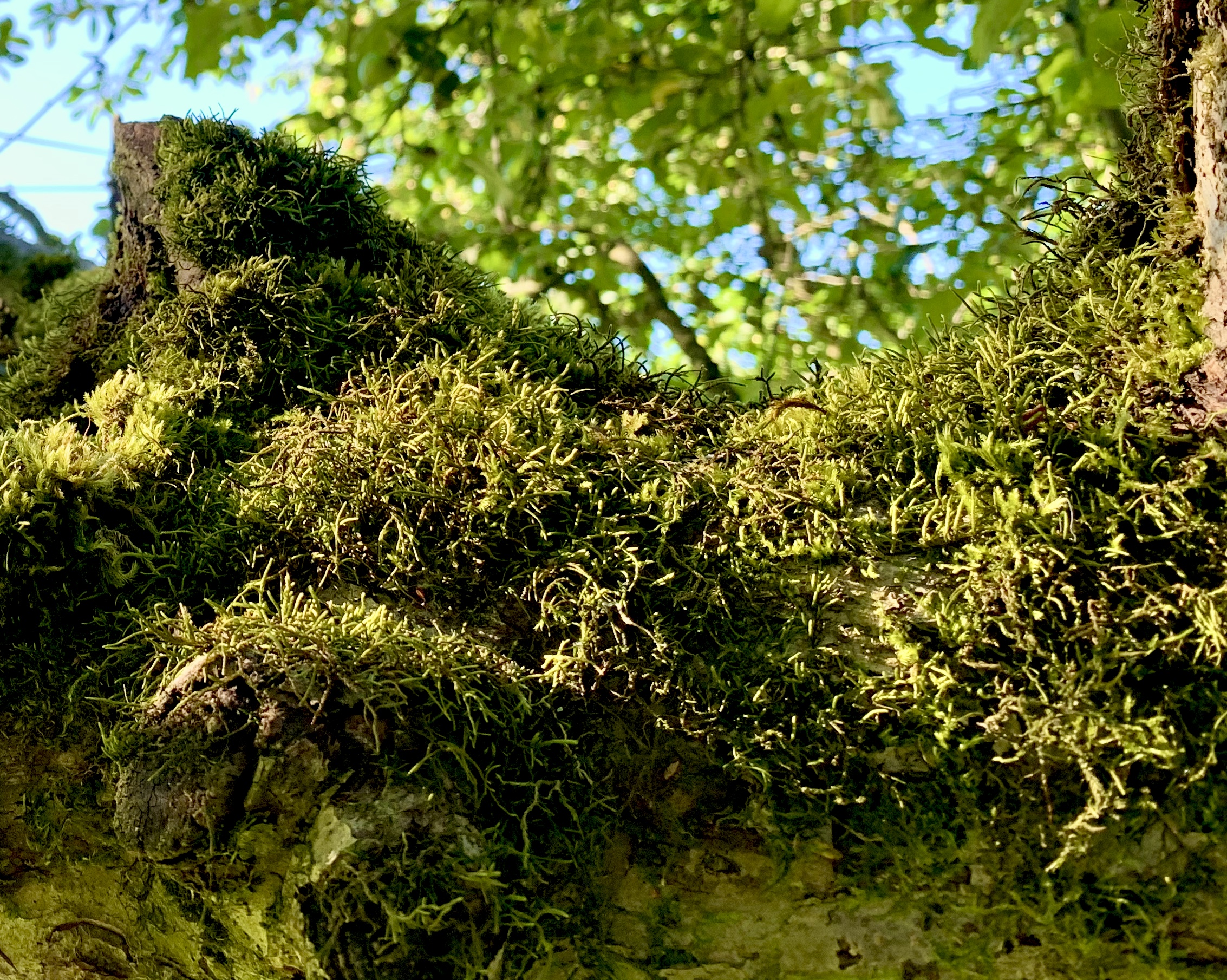
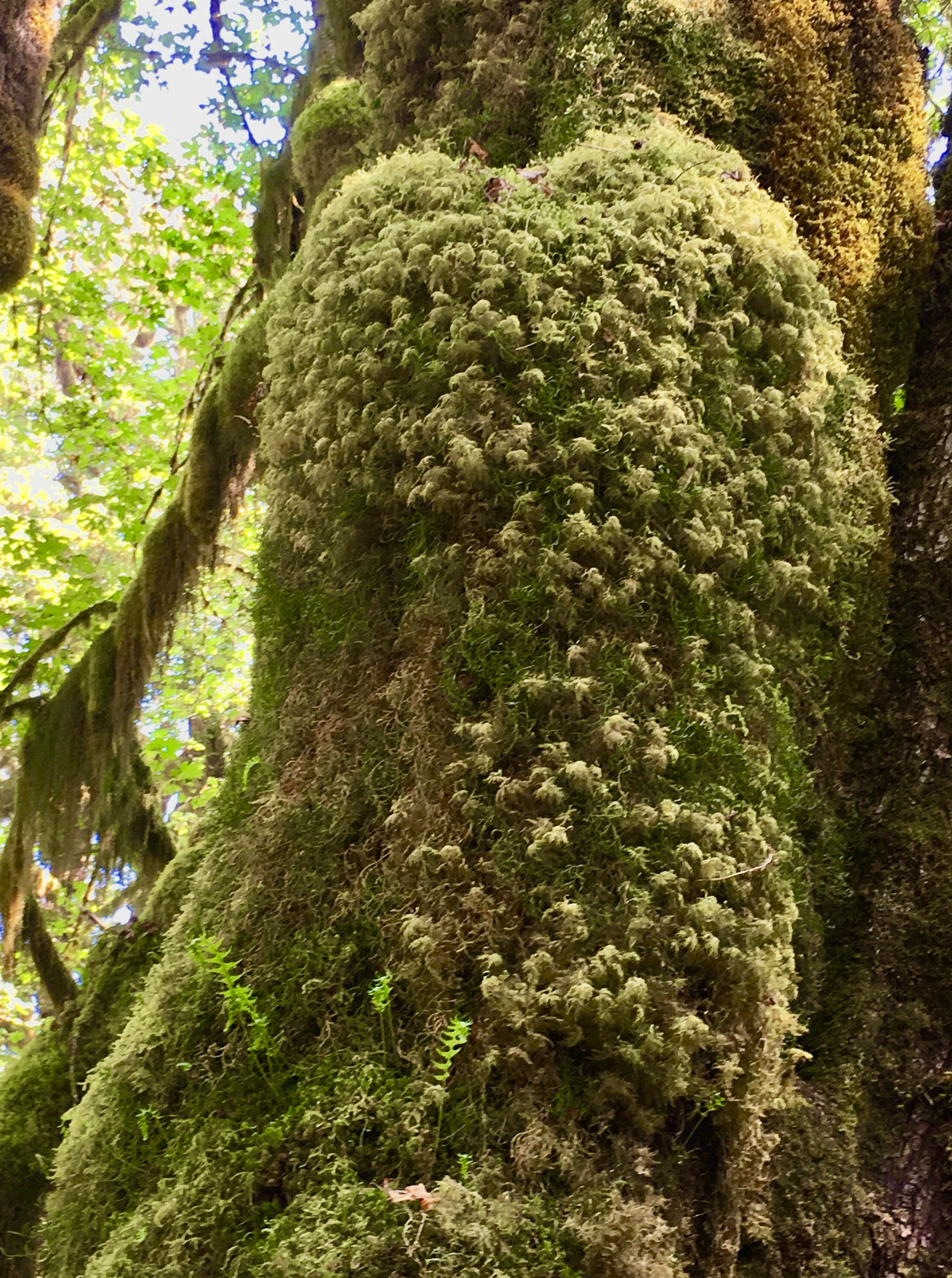
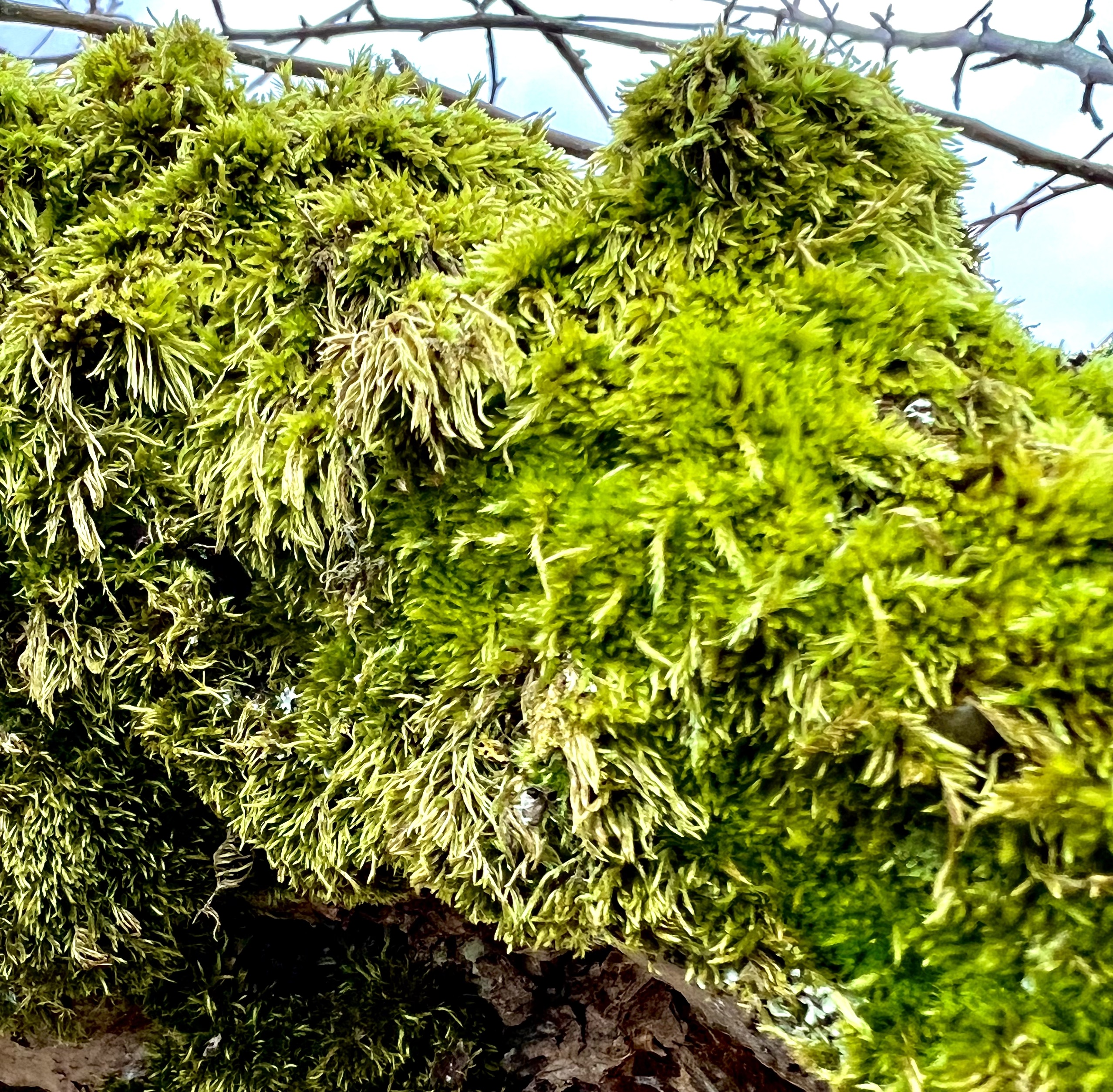
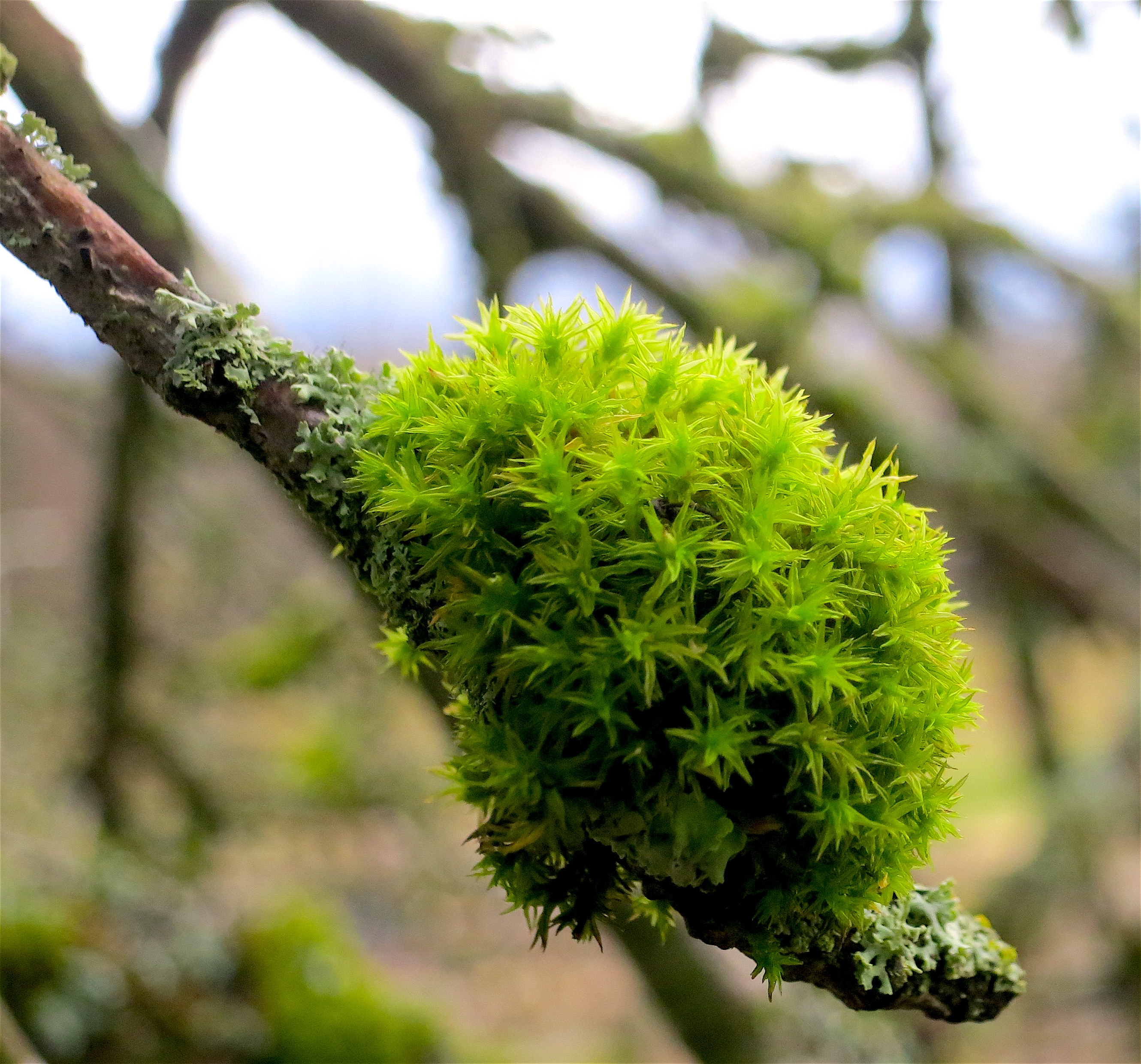
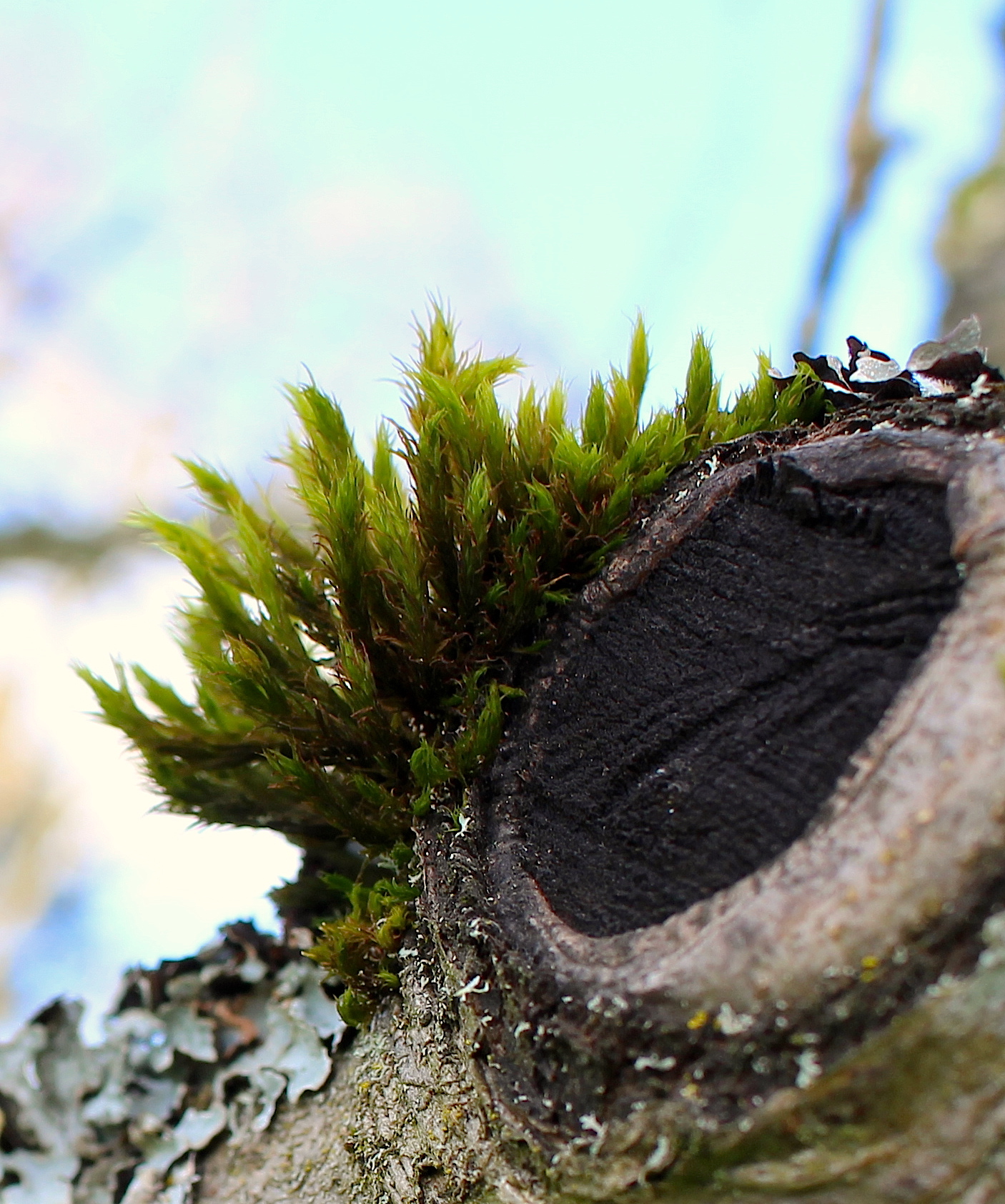
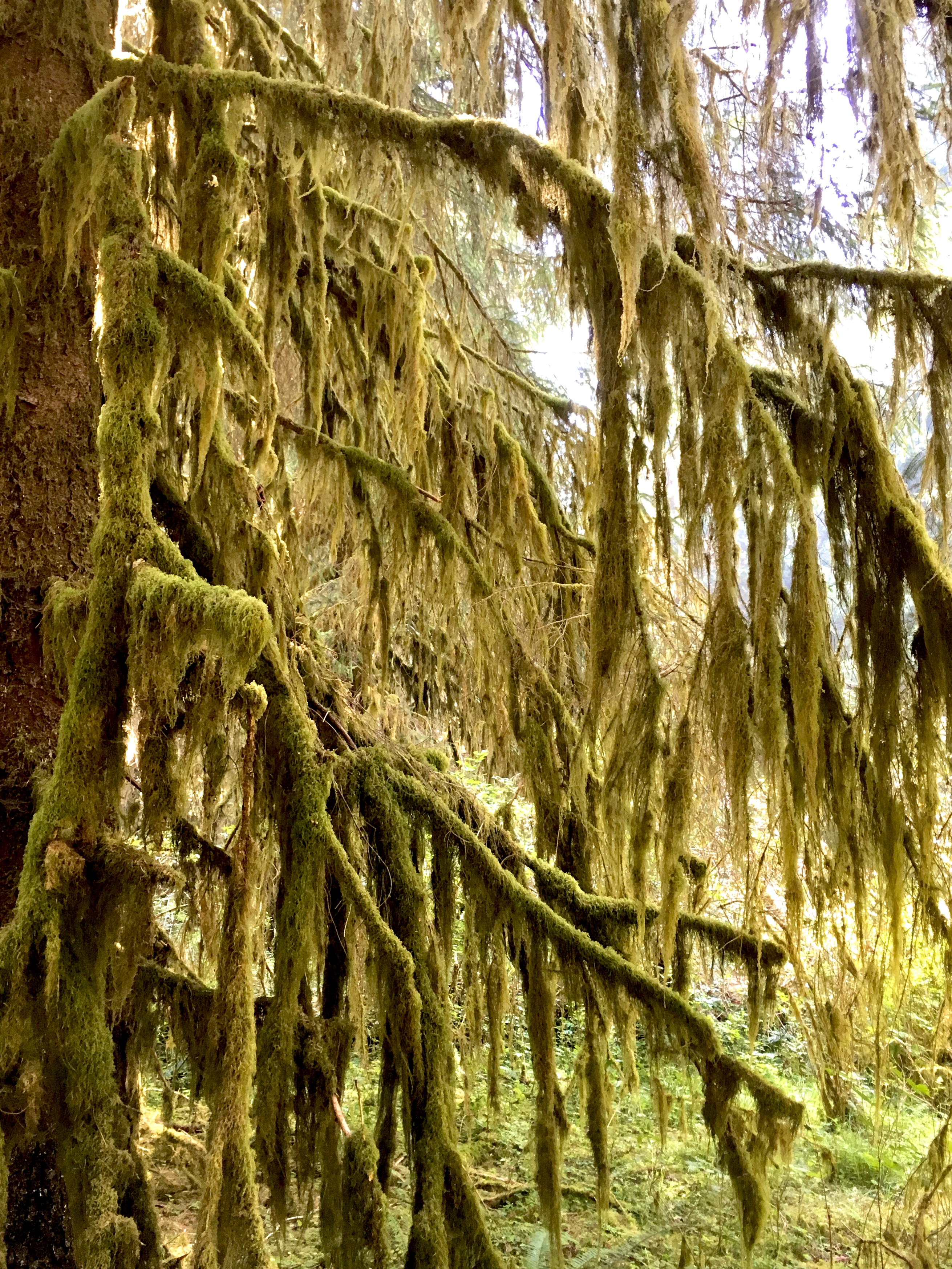
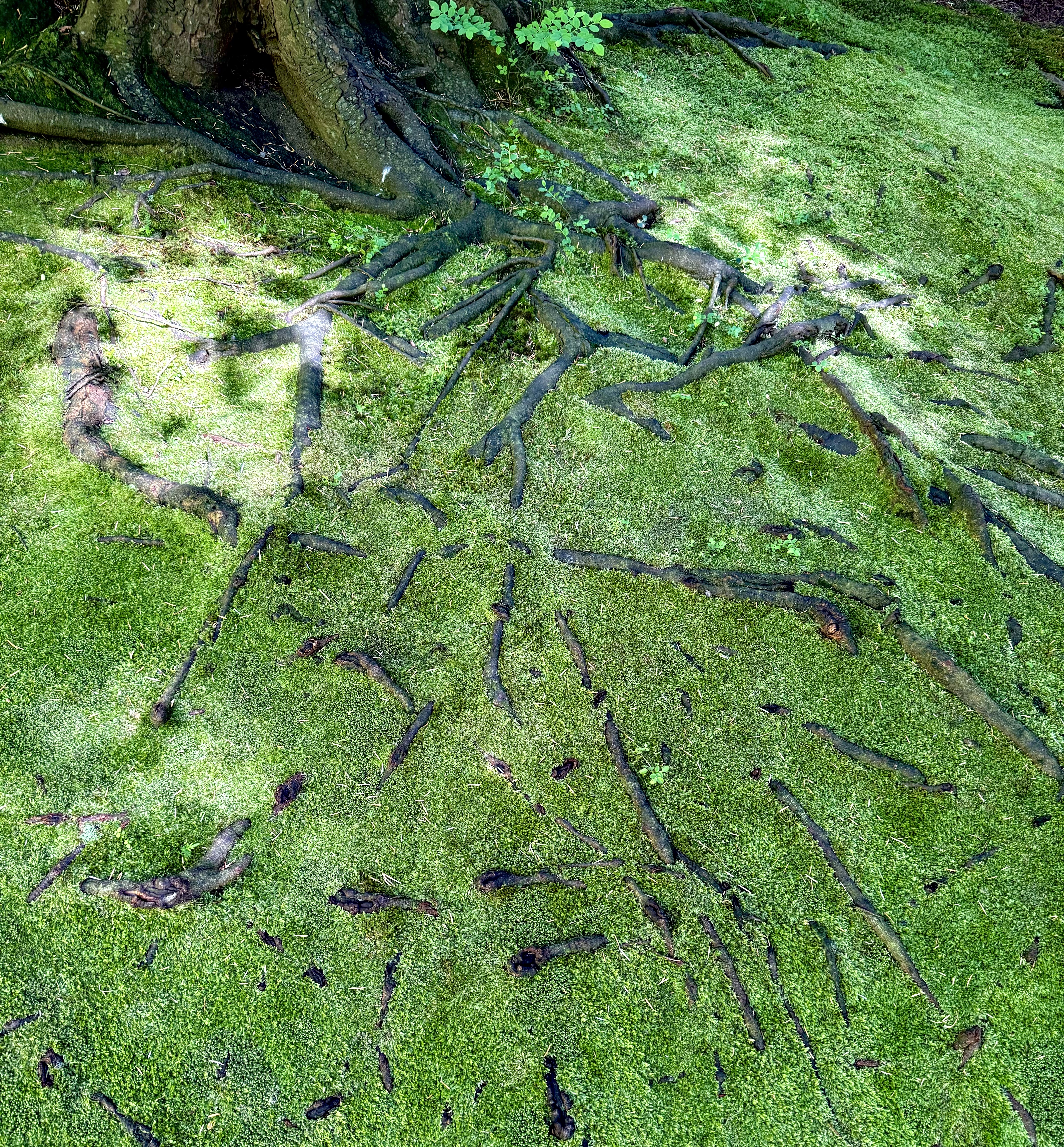
In this part of the world, mosses are everywhere. They are so much a part of the green backdrop, they are an invisible part of the scenery. Our lawn is simply moss carpet in some spots, and some shingles on roofs sprout verdant fuzz.
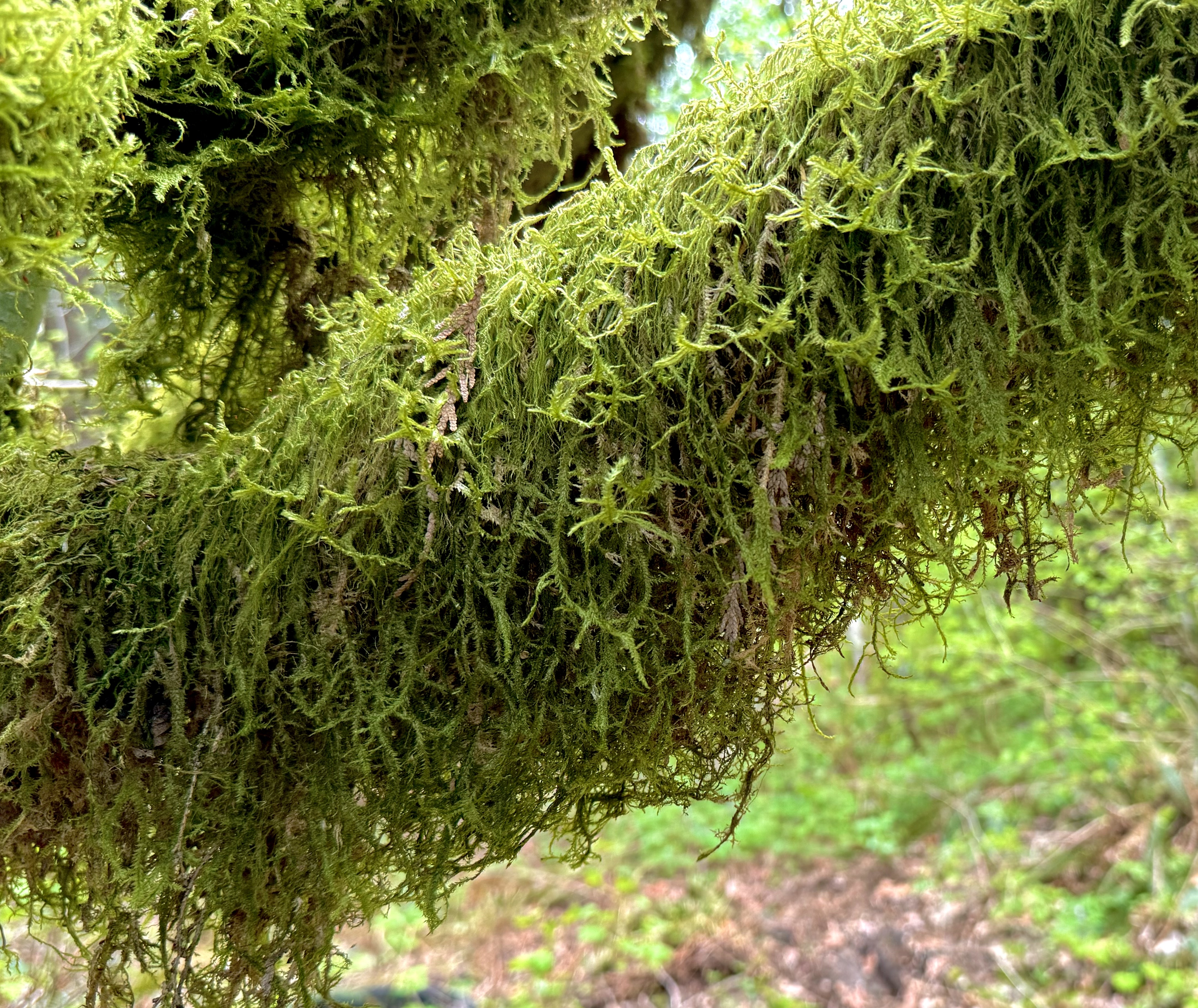
Trees and rocks are festooned with moss: draped, painted and garlanded. Moss rugs make bare-foot tree climbing a more comfy adventure with branches forming hairy armpits and cushiony crotches.
Moss softens sharp edges, forgives abrasive surfaces, heals the wounds and gaps and cracks. It becomes balm-like therapy for a struggling world which keeps baring its teeth in anger and misunderstanding.
I say let it grow: green, gentle, generous and grace-filled. We all can use more of that.
One-Time
Monthly
Yearly
Make a one-time or recurring donation to support daily Barnstorming posts
But when Aurora, daughter of the dawn, With rosy lustre purpled o’er the lawn. ~Homer from the Odyssey
Aurora is the effort Of the Celestial Face Unconsciousness of Perfectness To simulate, to Us. ~Emily Dickinson
…for the sun stopped shining. And the curtain of the temple was torn in two. Luke 23:45
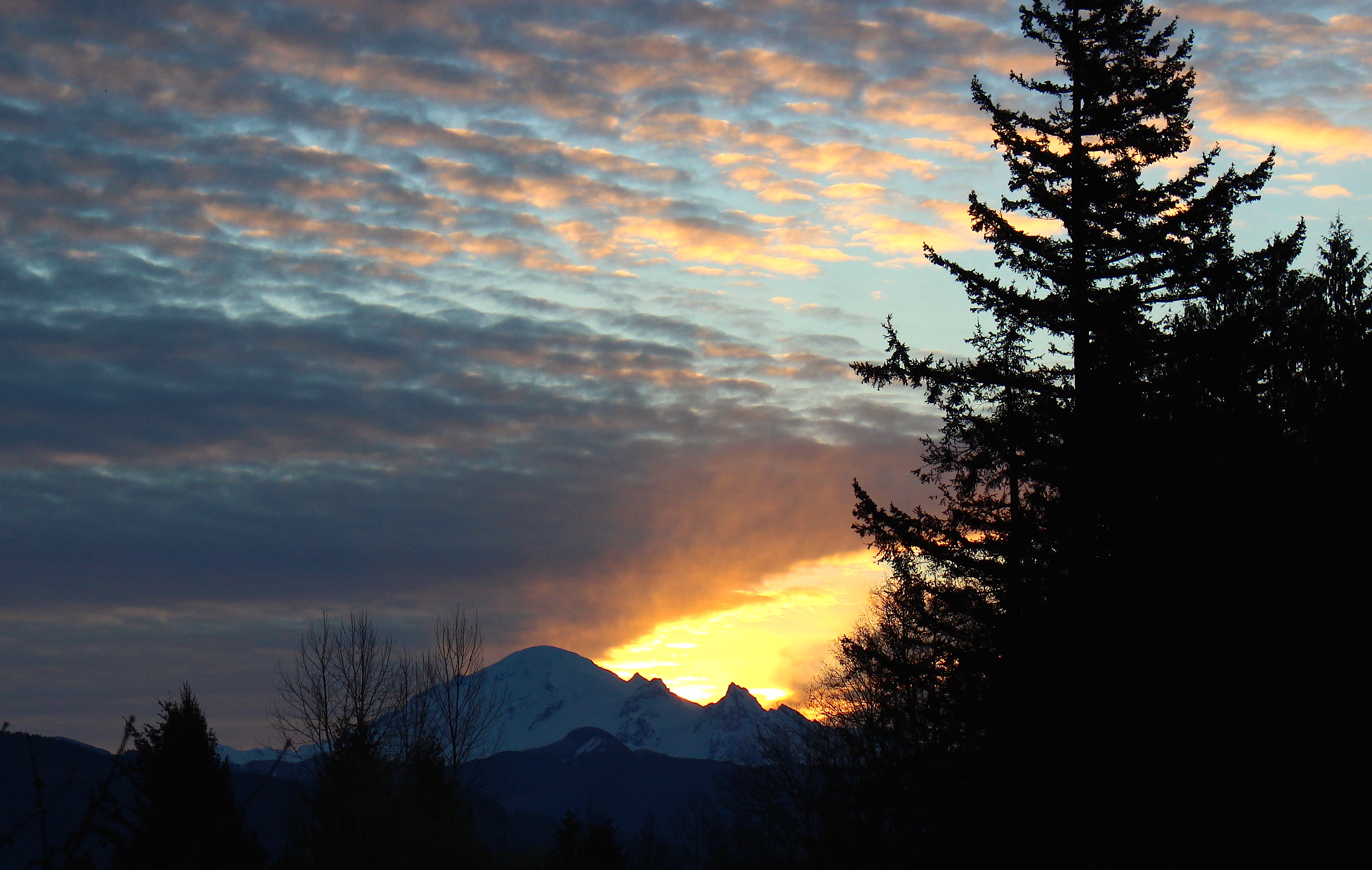
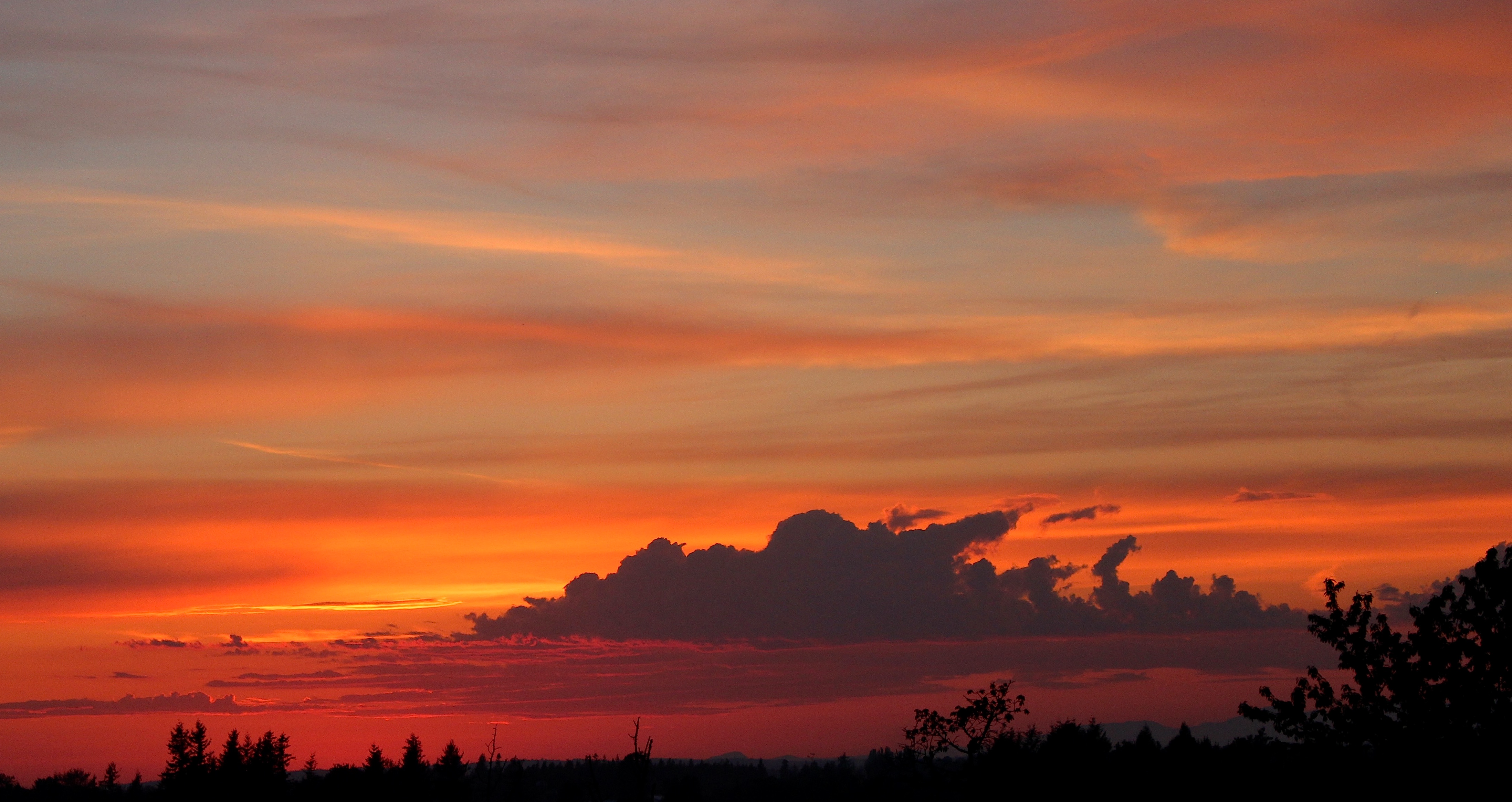
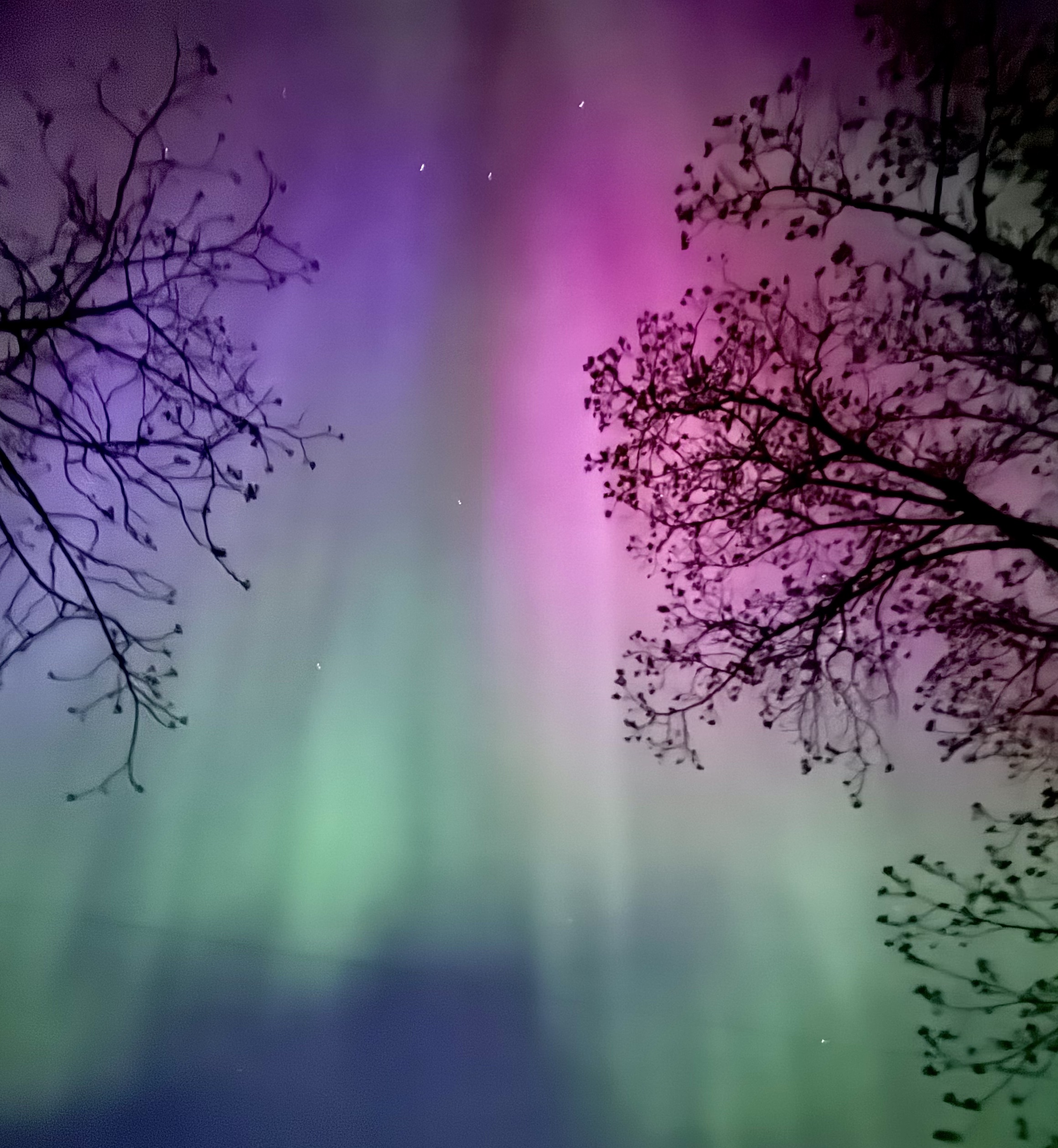
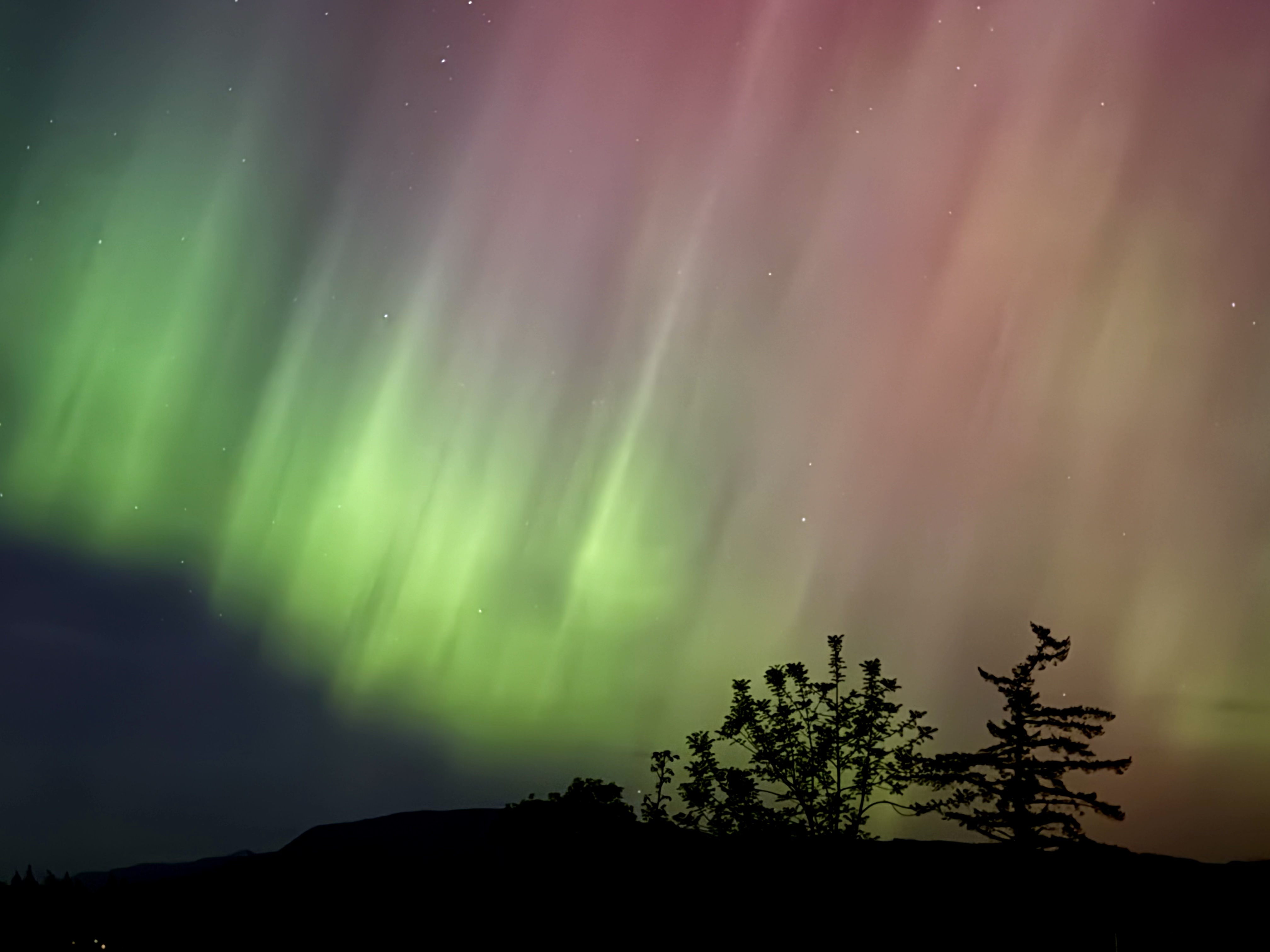
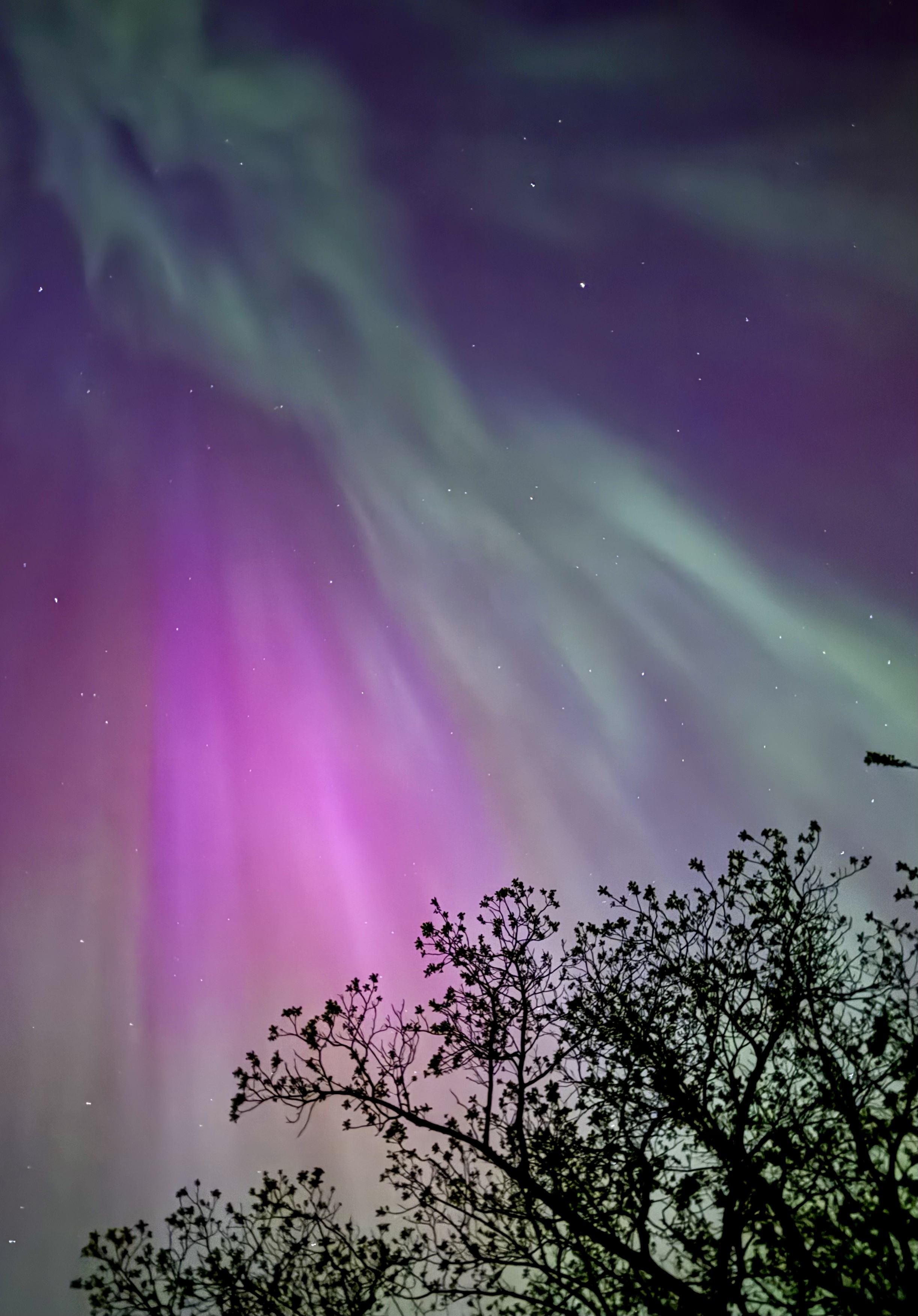
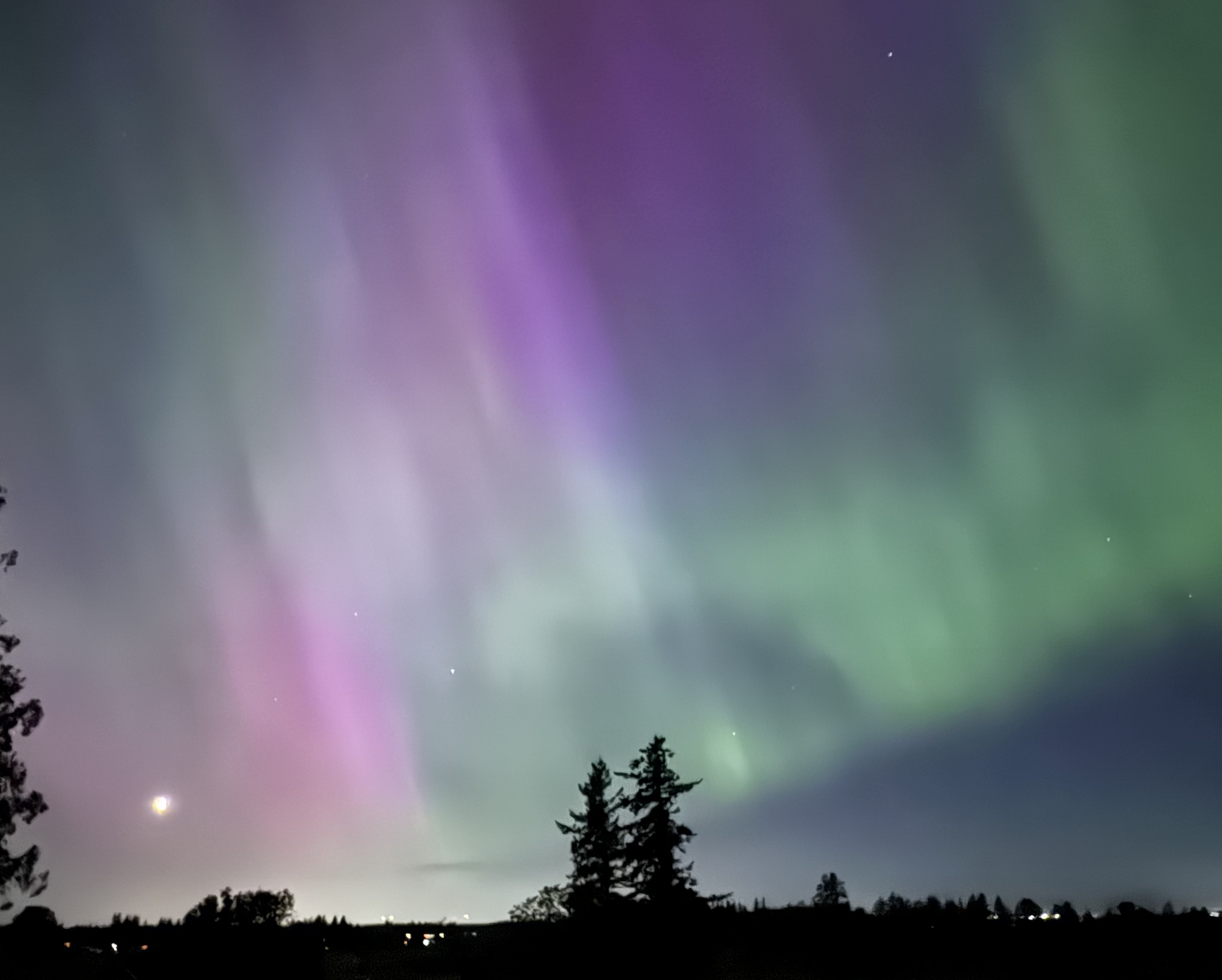
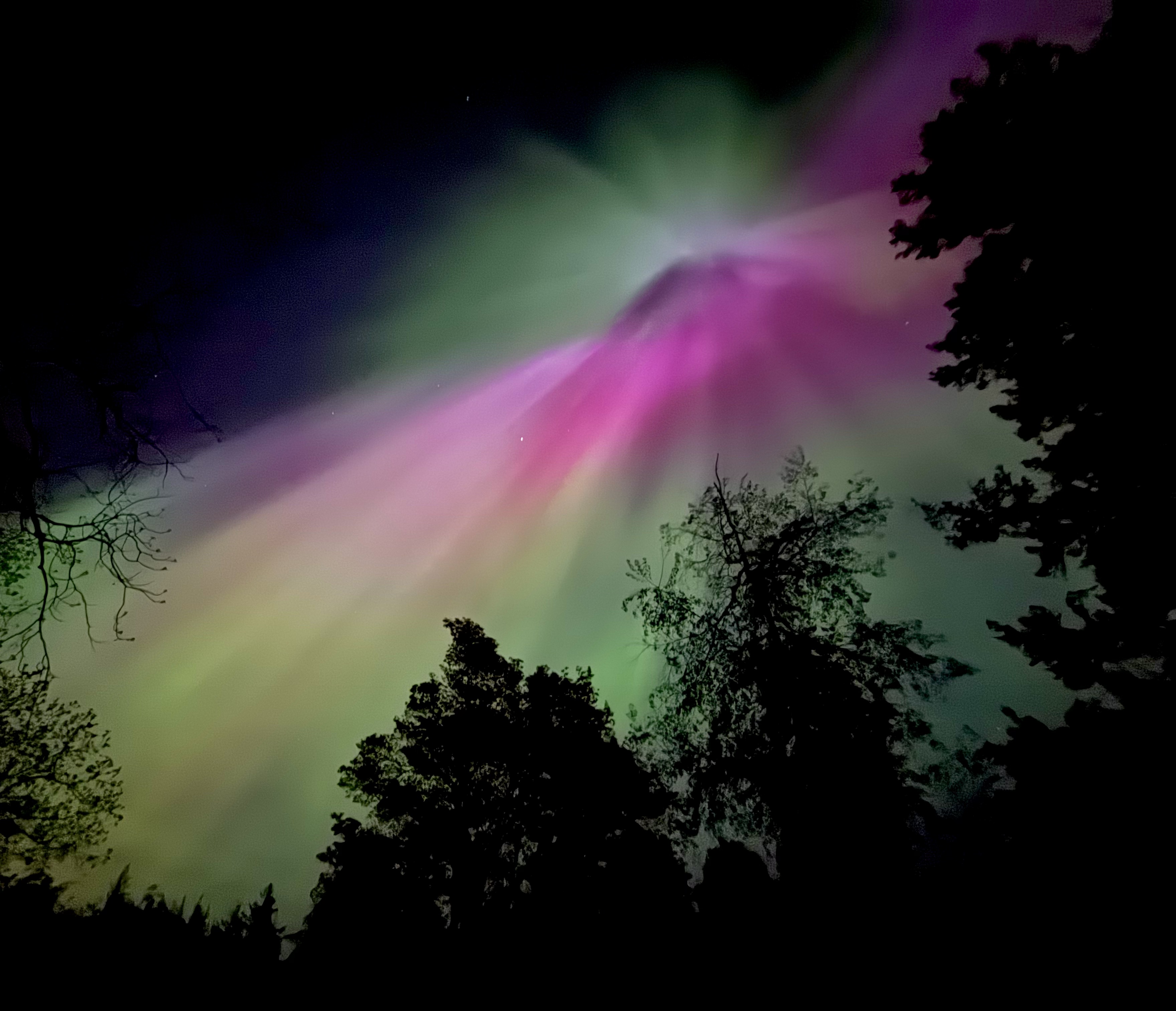
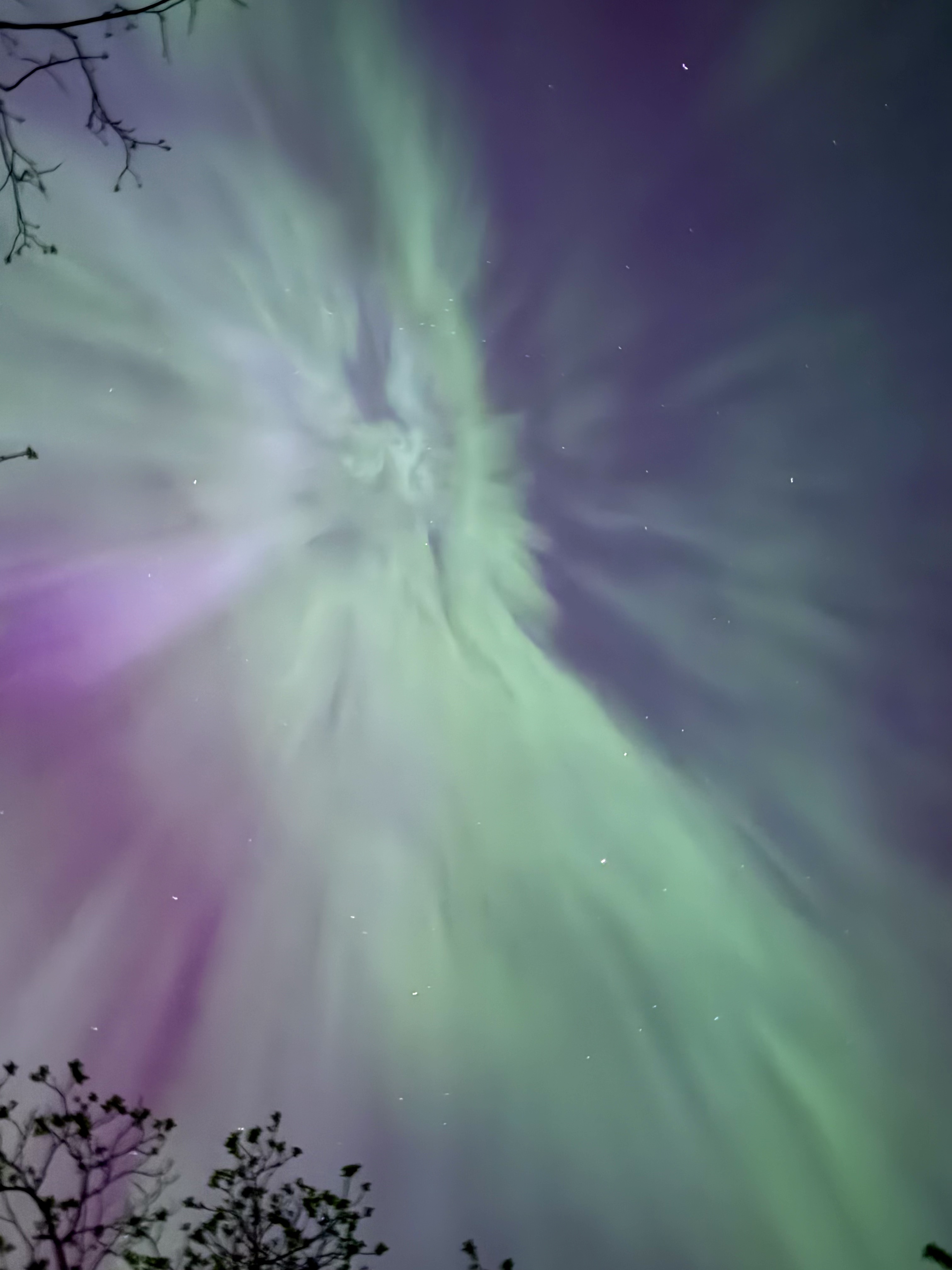
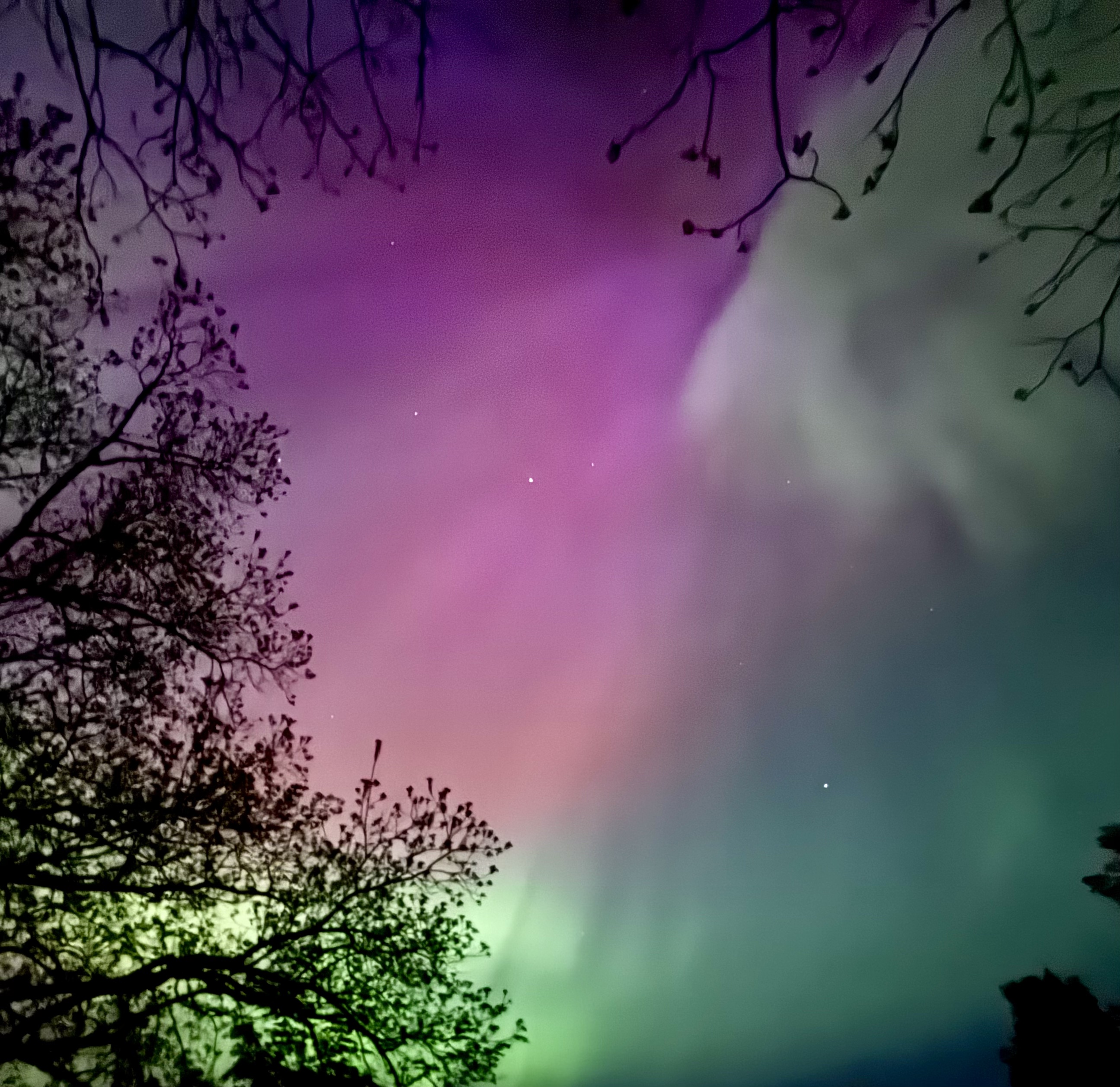
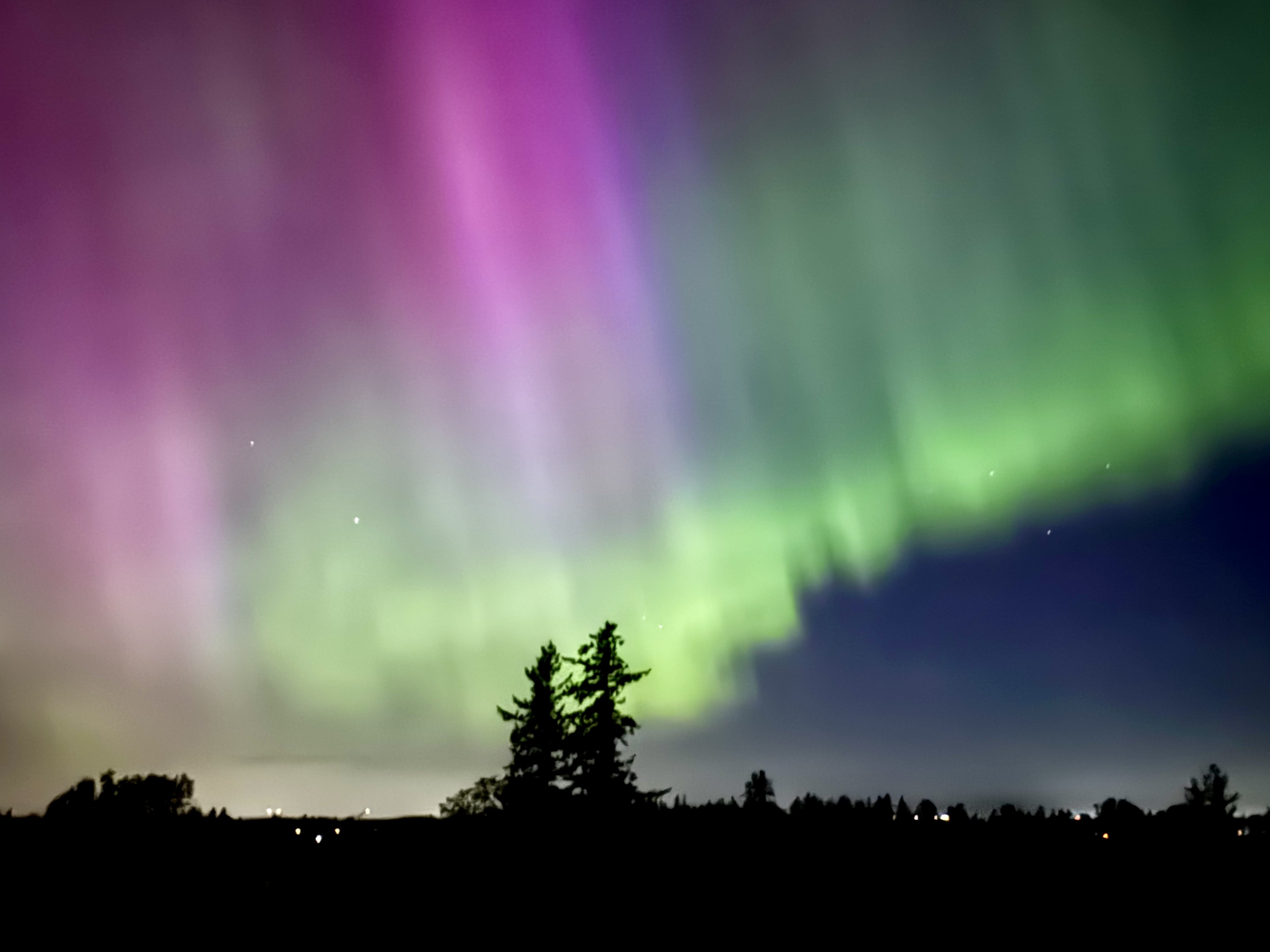
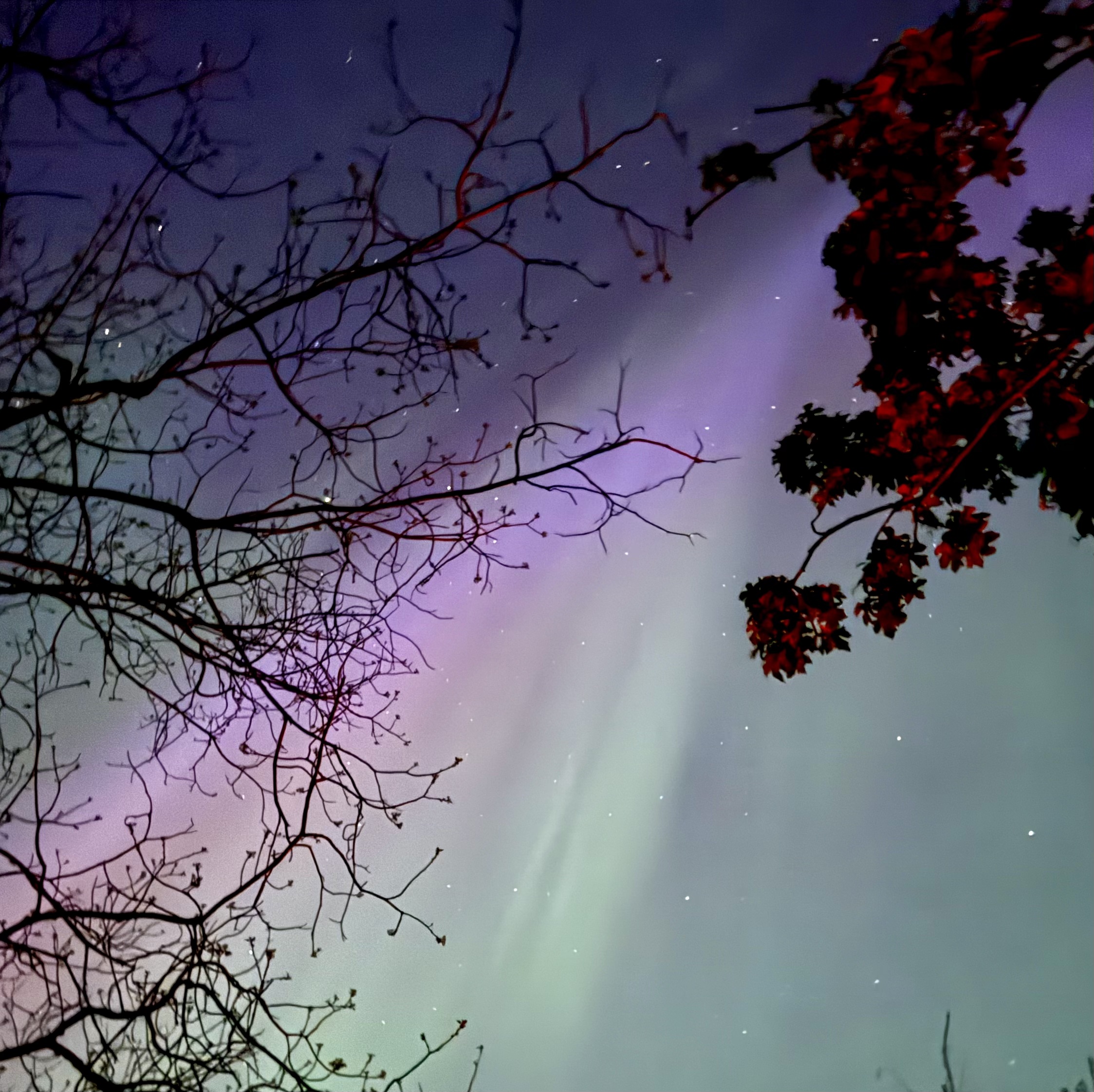
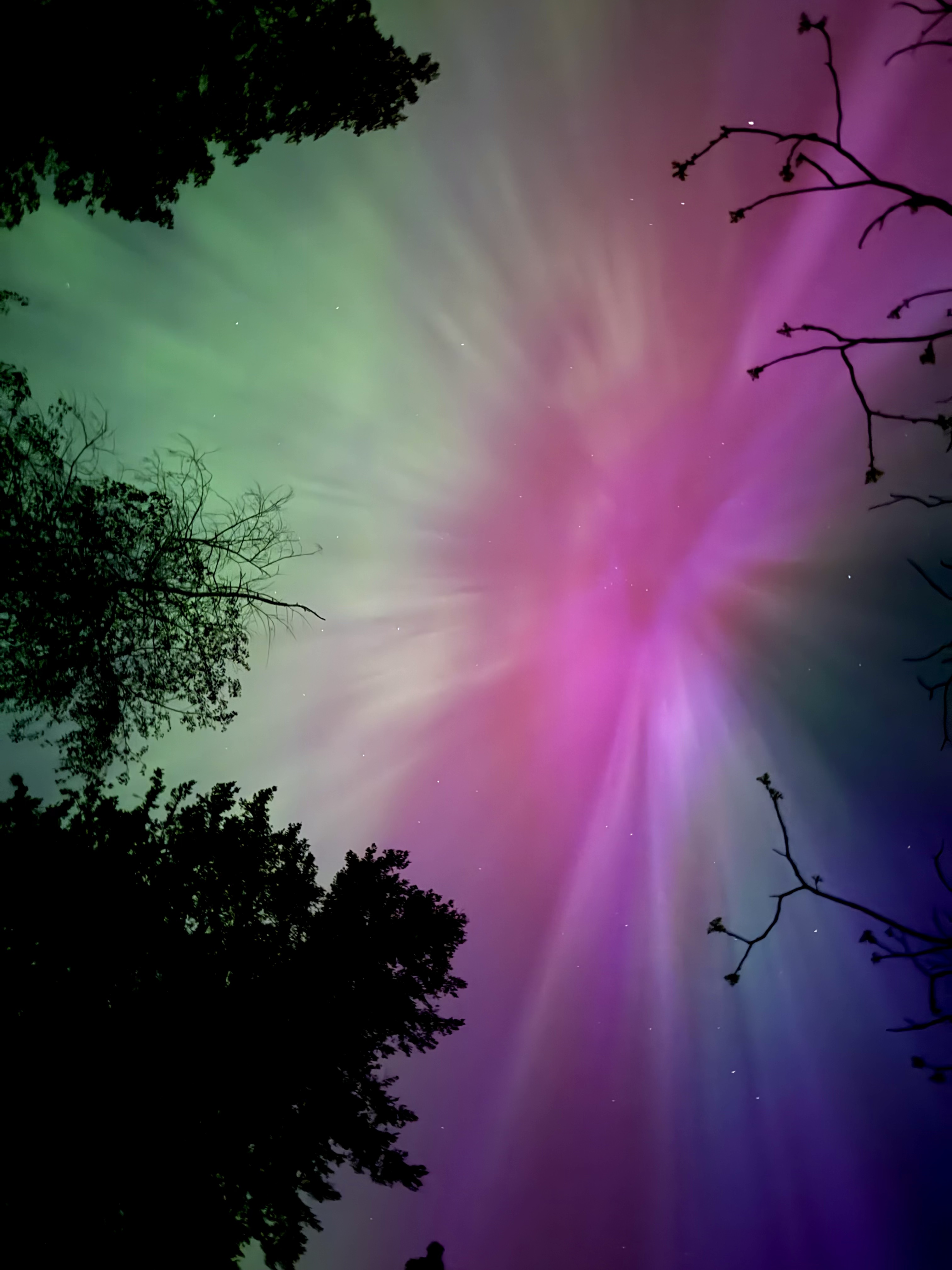
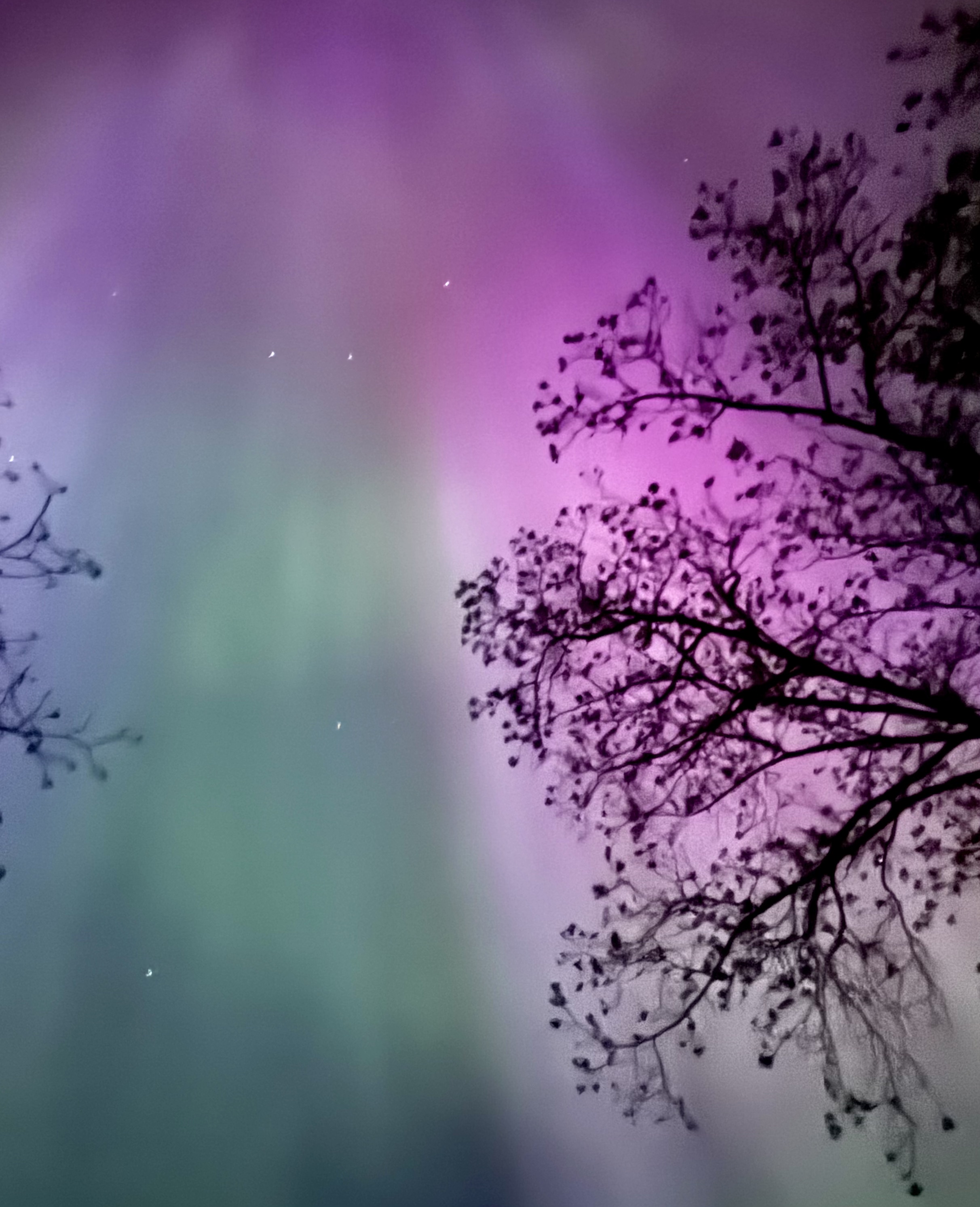
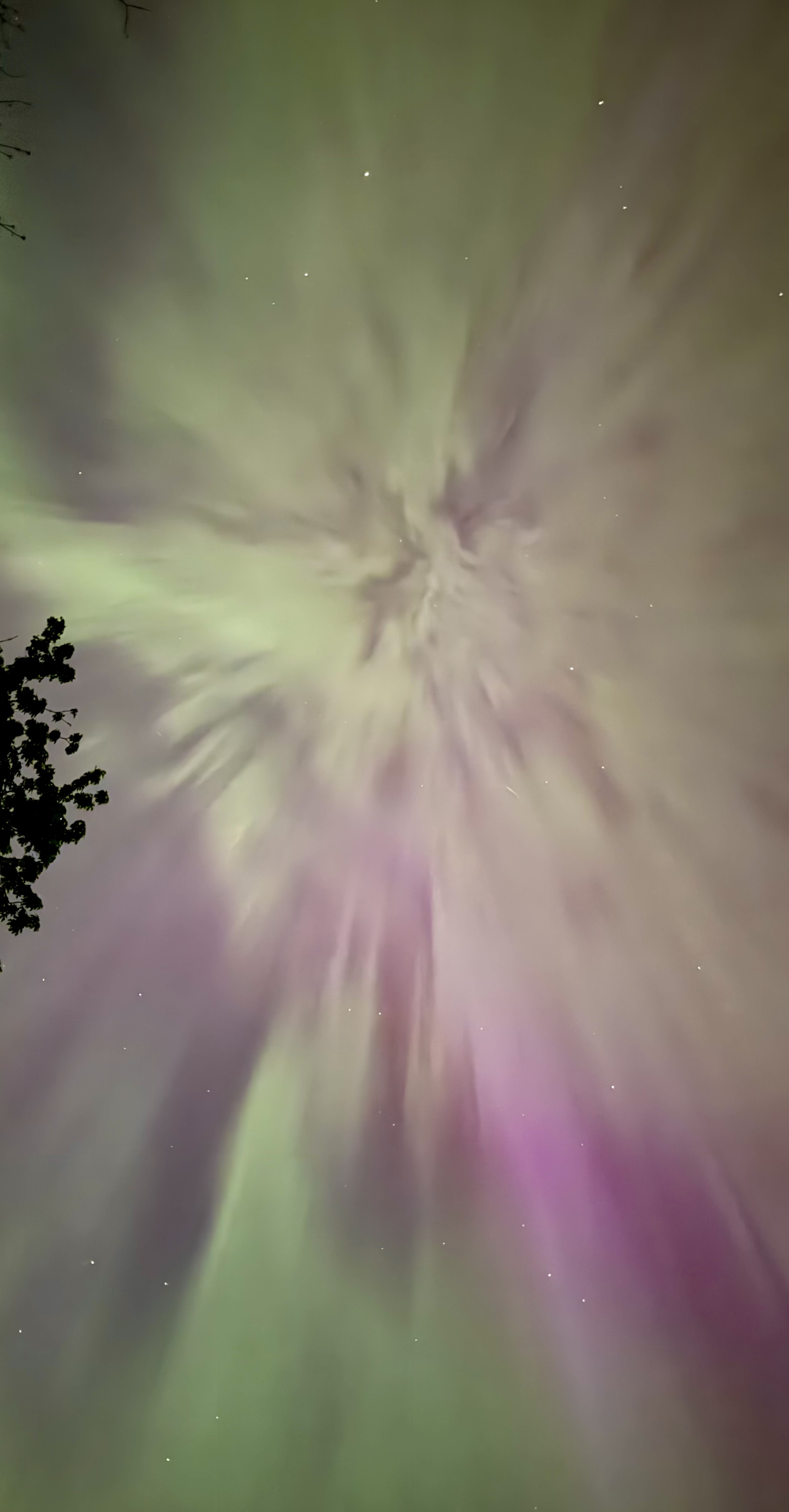
It felt appropriate to whoop and holler when the lights began to shimmer and shift above us.
Yet as the colors deepened and danced, what struck me most was the sense of how the heavens and earth had found a “thin place” where the space between God and us had narrowed and we were being summoned to communion with Him.
Just as the curtain barring us from the holy of holies in the temple was torn in two at Christ’s moment of death, the curtain between heaven and earth was pulled apart last night.
We are no longer separated from God. He bids us to join Him and see His face.
One-Time
Monthly
Yearly
Make a one-time or recurring donation to support daily Barnstorming posts
A hundred thousand birds salute the day:– One solitary bird salutes the night: Its mellow grieving wiles our grief away, And tunes our weary watches to delight; It seems to sing the thoughts we cannot say, To know and sing them, and to set them right; Until we feel once more that May is May, And hope some buds may bloom without a blight. This solitary bird outweighs, outvies, The hundred thousand merry-making birds Whose innocent warblings yet might make us wise Would we but follow when they bid us rise, Would we but set their notes of praise to words And launch our hearts up with them to the skies. ~Christina Rossetti “A Hundred Thousand Birds”
photo by Harry Rodenberger
Birds afloat in air’s current, sacred breath? No, not breath of God, it seems, but God the air enveloping the whole globe of being. It’s we who breathe, in, out, in, the sacred, leaves astir, our wings rising, ruffled—but only saints take flight… But storm or still, numb or poised in attention, we inhale, exhale, inhale, encompassed, encompassed. ~Denise Levertov from “In Whom We Live and Move and Have Our Being”from The Stream and the Sapphire
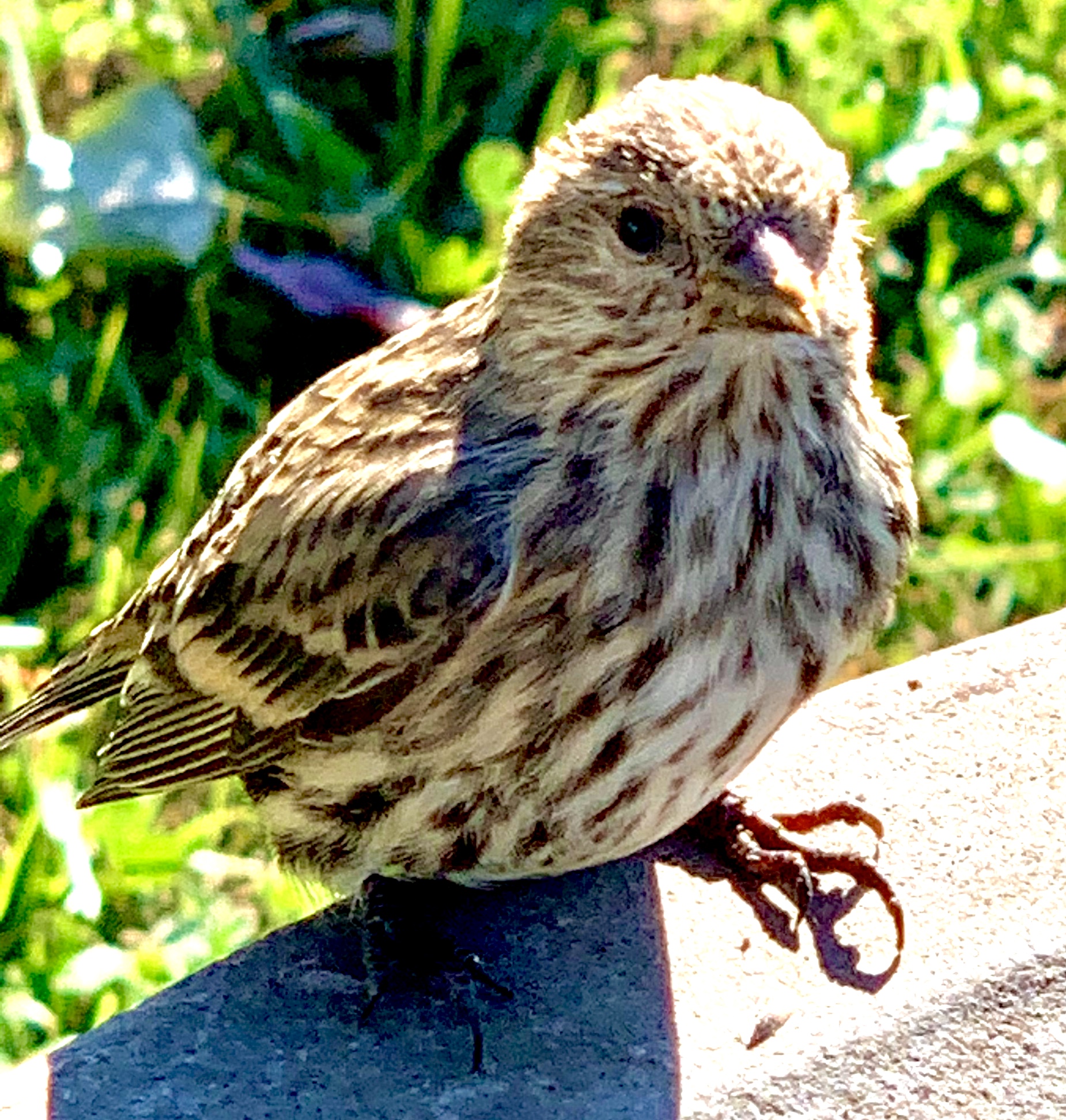
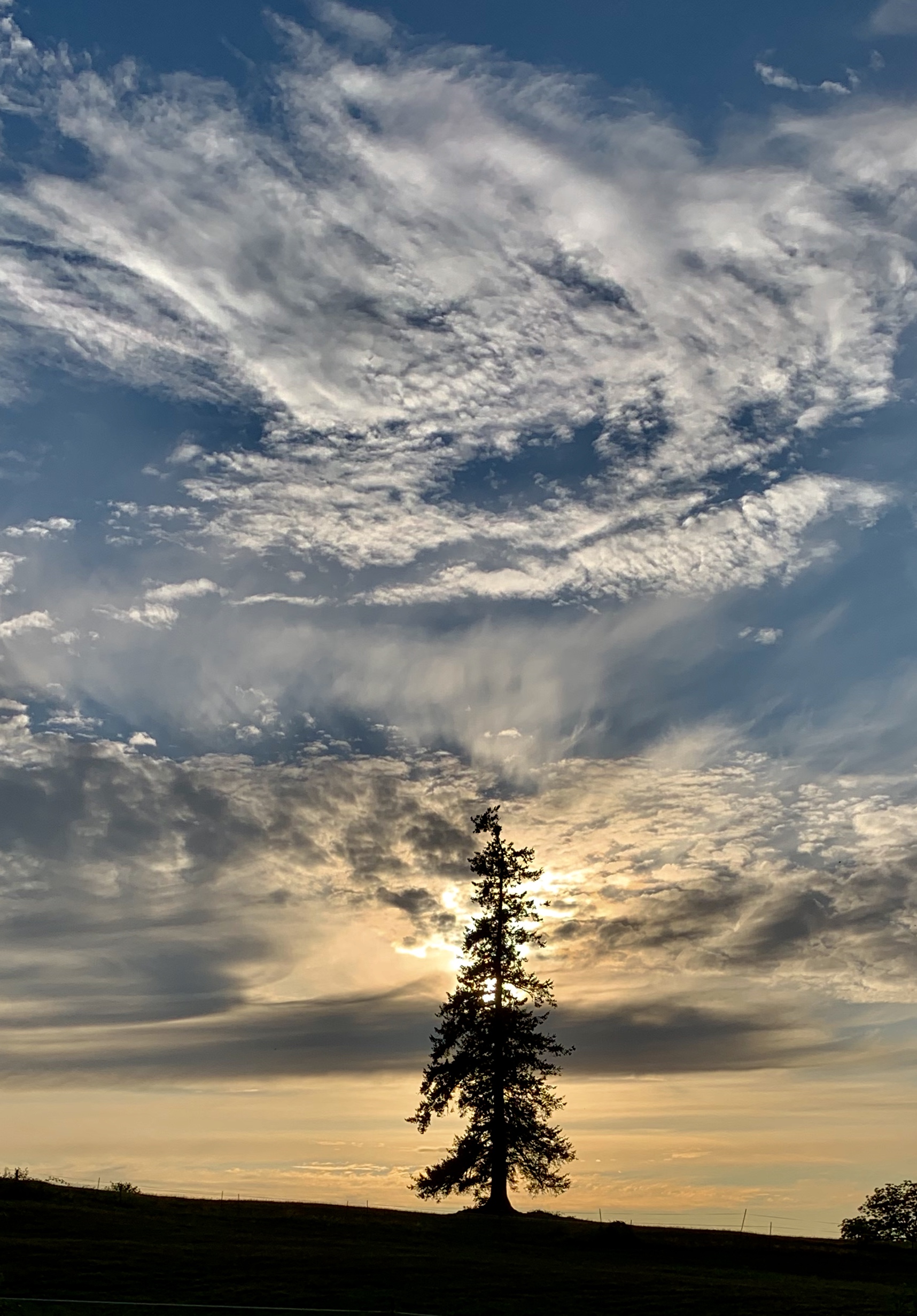
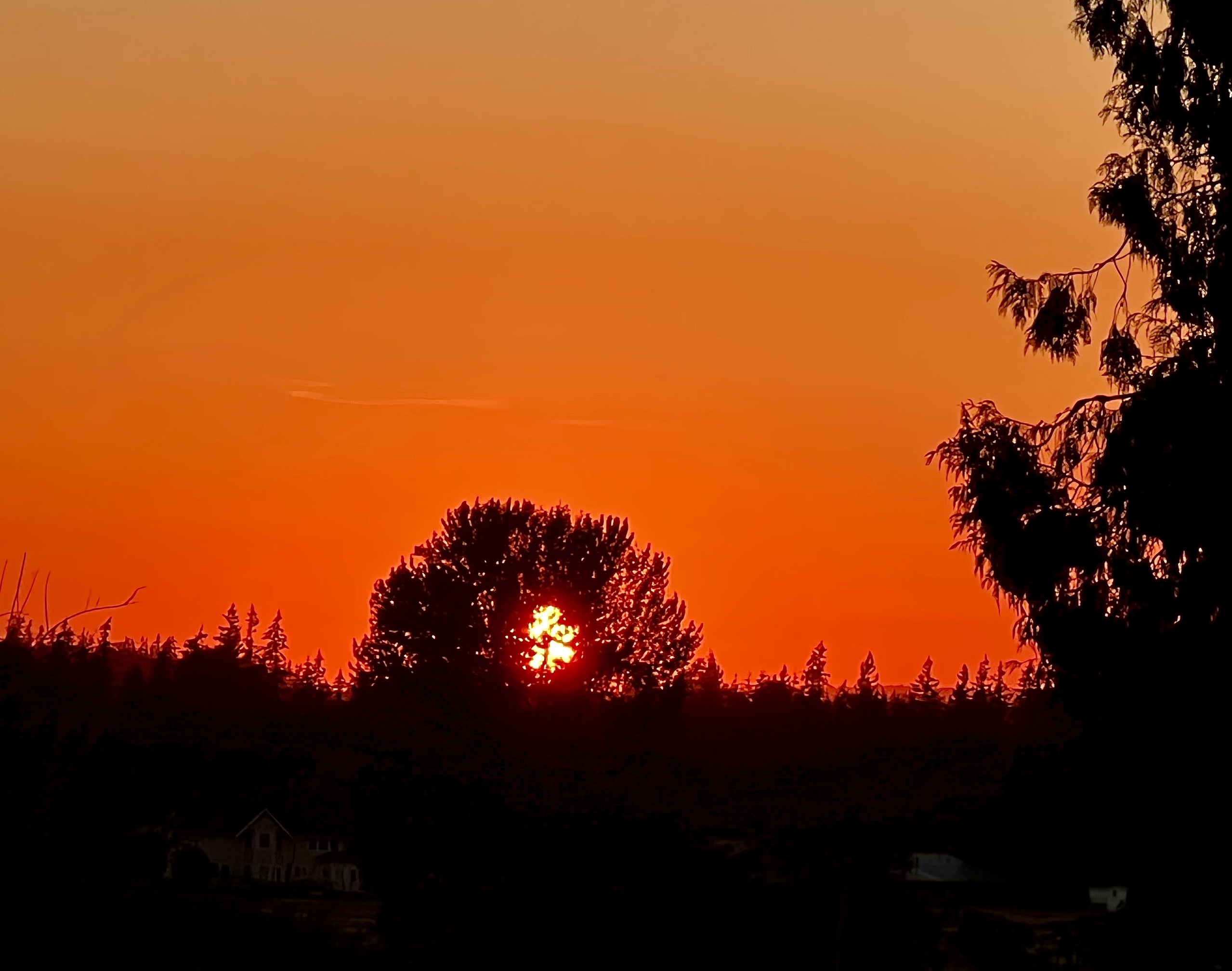
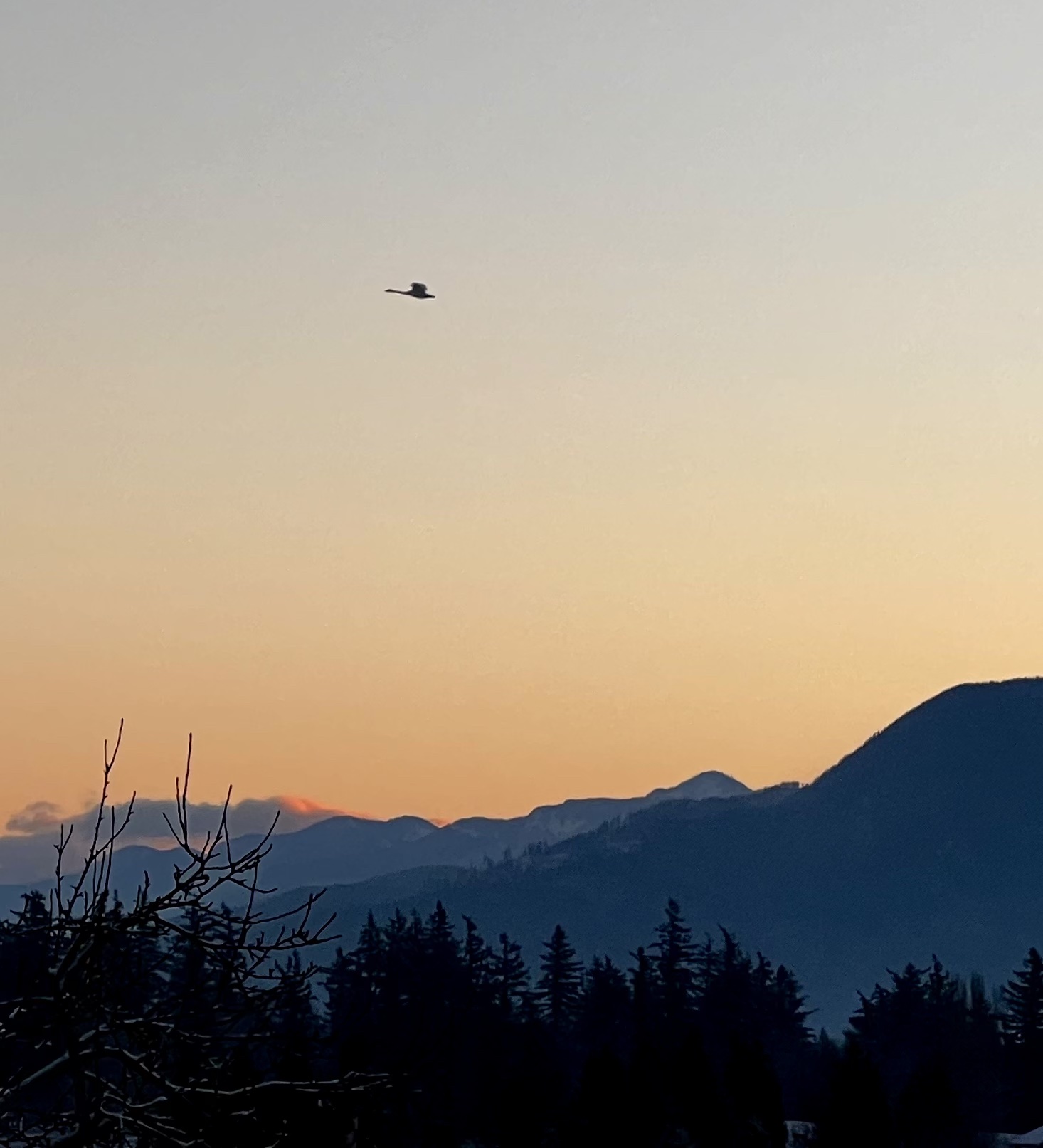
As if reluctant to let go the setting sun last night, one lone bird still sang a twilight song, long after the others fell asleep, their heads tucked neatly under their wings.
This lone bird had not yet finished with the day, breathing in and out its plaintive melody, articulating my thoughts I could not say.
And before a hint of light this May morning, I am swept from my dreams by a full chorus singing from the same perch, no longer a lone voice, but hundreds.
My day is launched by the warbling songs, but I cannot forget twilight’s one reluctant bird who fought the impending darkness using only its voice.
I too fight back the darkness with what I write here, if I can keep it at bay: inhaling, exhaling, encompassed in Breath. I want to sing out light to Light and live light in Light.
No darkness here.
I hear a bird chirping, up in the sky I’d like to be free like that spread my wings so high I see the river flowing water running by I’d like to be that river, see what I might find
I feel the wind a blowin’, slowly changing time I’d like to be that wind, I’d swirl and the shape sky I smell the flowers blooming, opening for spring I’d like to be those flowers, open to everything
I feel the seasons change, the leaves, the snow and sun I’d like to be those seasons, made up and undone I taste the living earth, the seeds that grow within I’d like to be that earth, a home where life begins
I see the moon a risin’, reaching into night I’d like to be that moon, a knowing glowing light I know the silence as the world begins to wake I’d like to be that silence as the morning breaks
He doesn’t know the world at all Who stays in his nest and doesn’t go out. He doesn’t know what birds know best Nor what I sing about, Nor what I sing about, Nor what sing about: That the world is full of loveliness.
When dew-drops sparkle in the grass And earth is aflood with morning light. light A blackbird sings upon a bush To greet the dawning after night, the dawning after night, the dawning after night. Then I know how fine it is to live.
Hey, try to open your heart to beauty; Go to the woods someday And weave a wreath of memory there. Then if tears obscure your way You’ll know how wonderful it is To be alive. ~Paul Read
Let us not with one stone kill one bird, much less two. Let us never put a cat in a bag nor skin them, regardless of how many ways there are to do so. And let us never take the bull, especially by his gorgeous horns. What I mean is
we could watch our tongues or keep silent. What I mean is we could scrub the violence from our speech. And if we find truth in a horse’s mouth, let us bless her
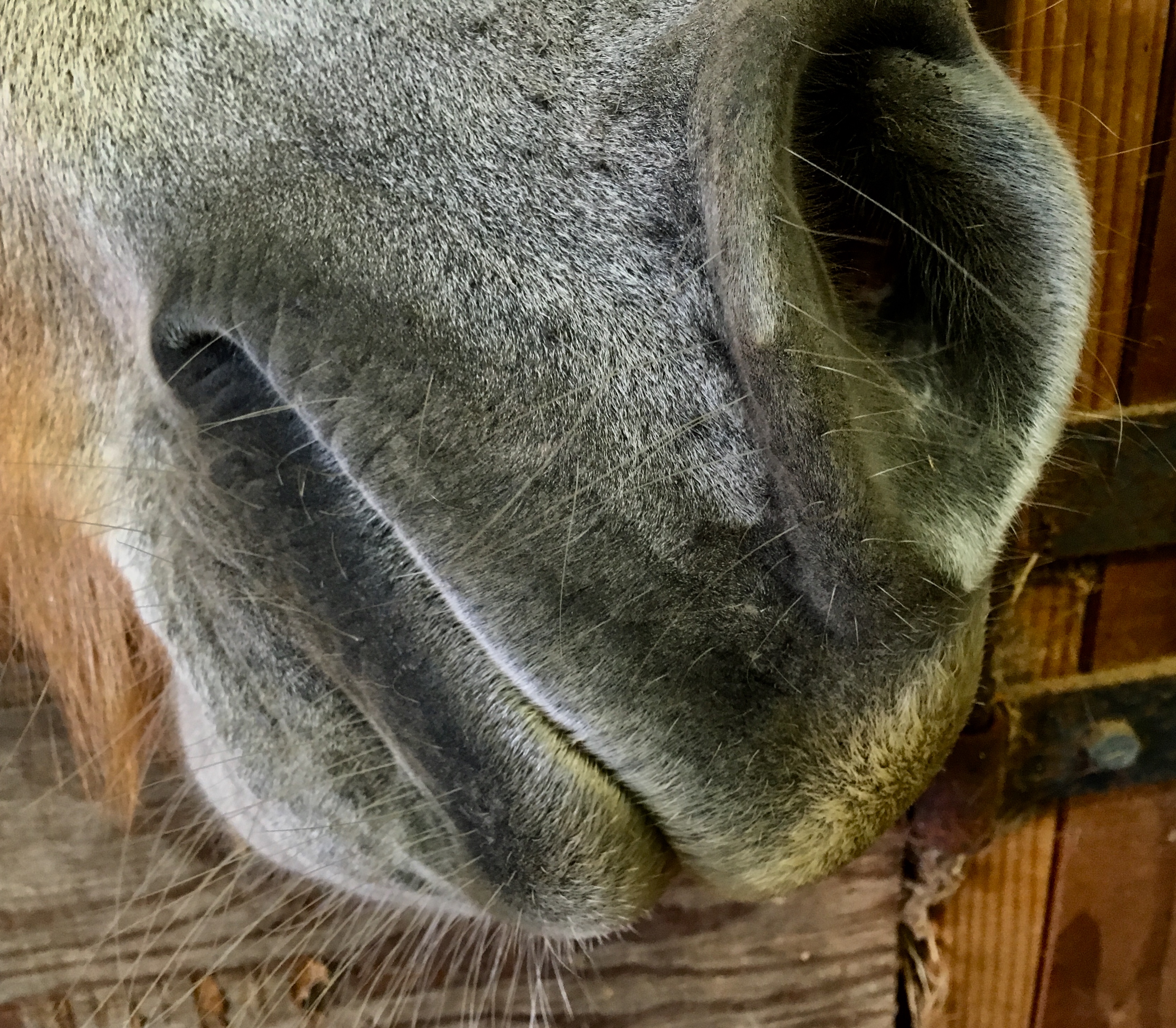
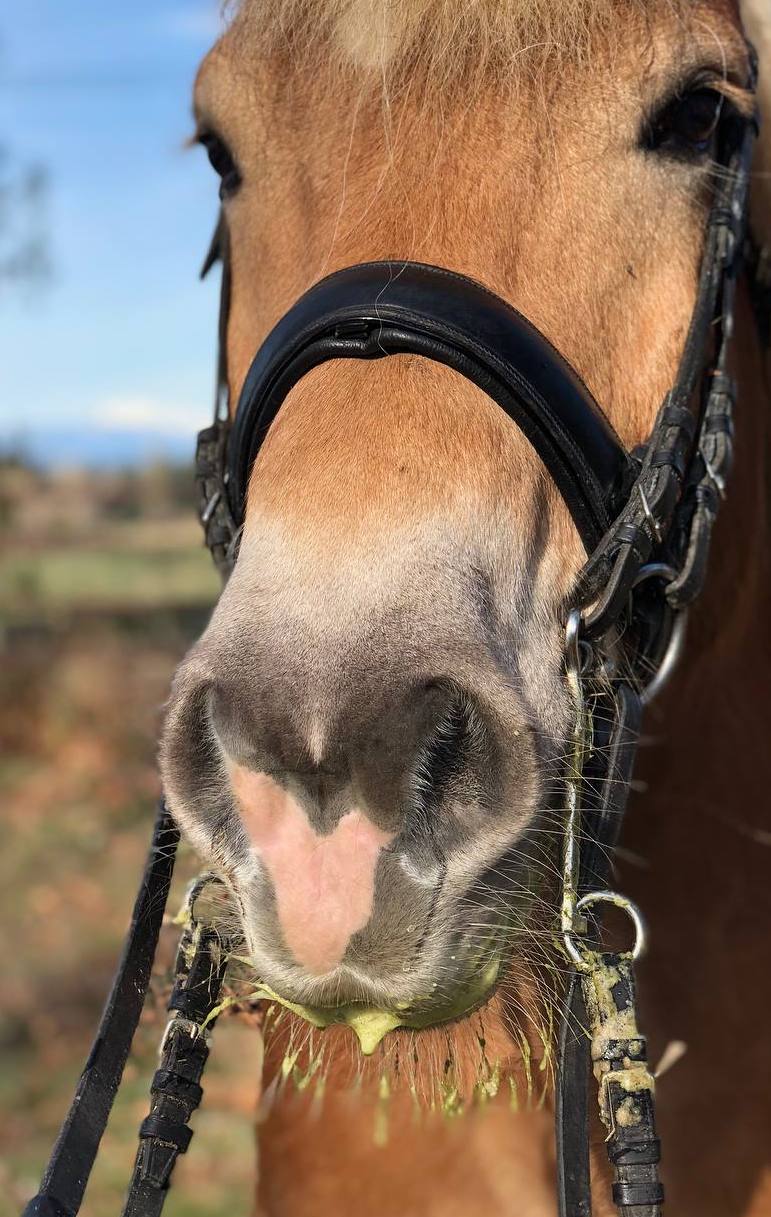
ground-down molars, no matter how old she is, especially if she was given as a gift. Again, let’s open her mouth——that of the horse, I mean——let us touch that interdental space where no teeth grow, where the cold bit was made to grip. Touch her there, gently now, touch that gentle
empty between her incisors and molars, rub her aching, vulnerable gums. Don’t worry: doing so calms her. Besides, she’s old now; she’s what we call broken; she won’t bite. She’s lived through two thirteen-year emergences of cicadas
and thought their rising a god infestation, thought each insect roiling up an iteration of the many names of god, because god to her is the grasses so what comes up from grass is god. She would not say it that way. Nor would she
say the word cicada——words are hindrances to what can be spoken through the body, are what she tolerates when straddled, giddy-up on one side then whoa on the other. After, it’s all good girl, Mable, good girl, before the saddle sweat is rinsed cool with water from the hose and a carrot is offered flat from the palm. Yes, words being
generally useless she listens instead to the confused rooster stuttering when the sun burns overhead, when it’s warm enough for those time-keepers to tunnel up from the dark and fill their wings to make them stiff and capable of flight. To her, it is the sound
of winter-coming in her mane or the sound of winter-leaving in her mane—— yes, that sound——a liquid shushing like the blood-fill of stallion desire she knew once but crisper, a dry crinkle of fall leaves. Yes, that sound, as they fill their new wings then lumber to the canopy to demand come here, come here, come here, now come.
If this is a parable you don’t understand, then, dear human, stop listening for words. Listen instead for mane, wind, wings, wind, mane, wings, wings, wings. The lesson here is of the mare and of the insects, even of the rooster puffed and strutting past. Because now, now there is only one thing worth hearing, and it is the plea of every living being in that field we call ours, is the two-word commandment trilling from the trees: let live, let live, let live. Can you hear it? Please, they say. Please. Let us live. ~Nickole Brown “Parable”
When a governor writes about her decision to shoot her wayward dog and stinky goat, our reaction is about the injustice perpetrated on the dog more than her decision to play god with any animal she has responsibility for. I feel a twinge of guilt at the accusation. Who among us can throw stones?
God is clear we are meant to be caretakers of His Creation. Yet I still swat flies and trap mice – there is no pleasure in doing so, so I still ask for forgiveness for my lack of charity and decision to make my own existence more comfortable at the expense of another living thing.
I admit I fail Creation in myriad ways.
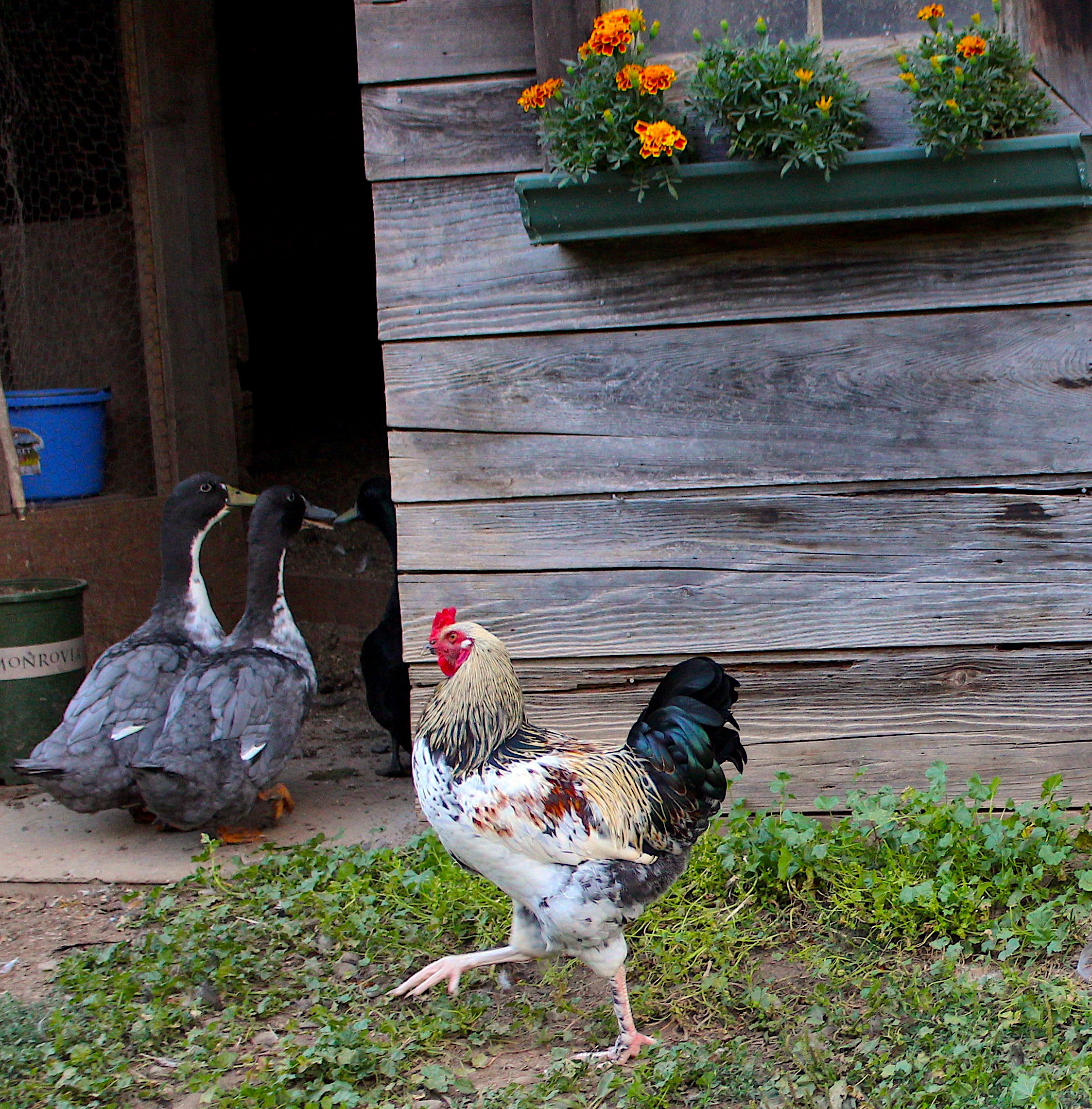
I have owned animals whose behavior brought me to my knees, sometimes literally with my face in the muck. I have wept over the loss of a deformed stillbirth foal and a pond of koi frozen in a bitter winter storm. The stories abound of my helplessness in the face of sadness and loss and frustration but I never wanted to become executioner.
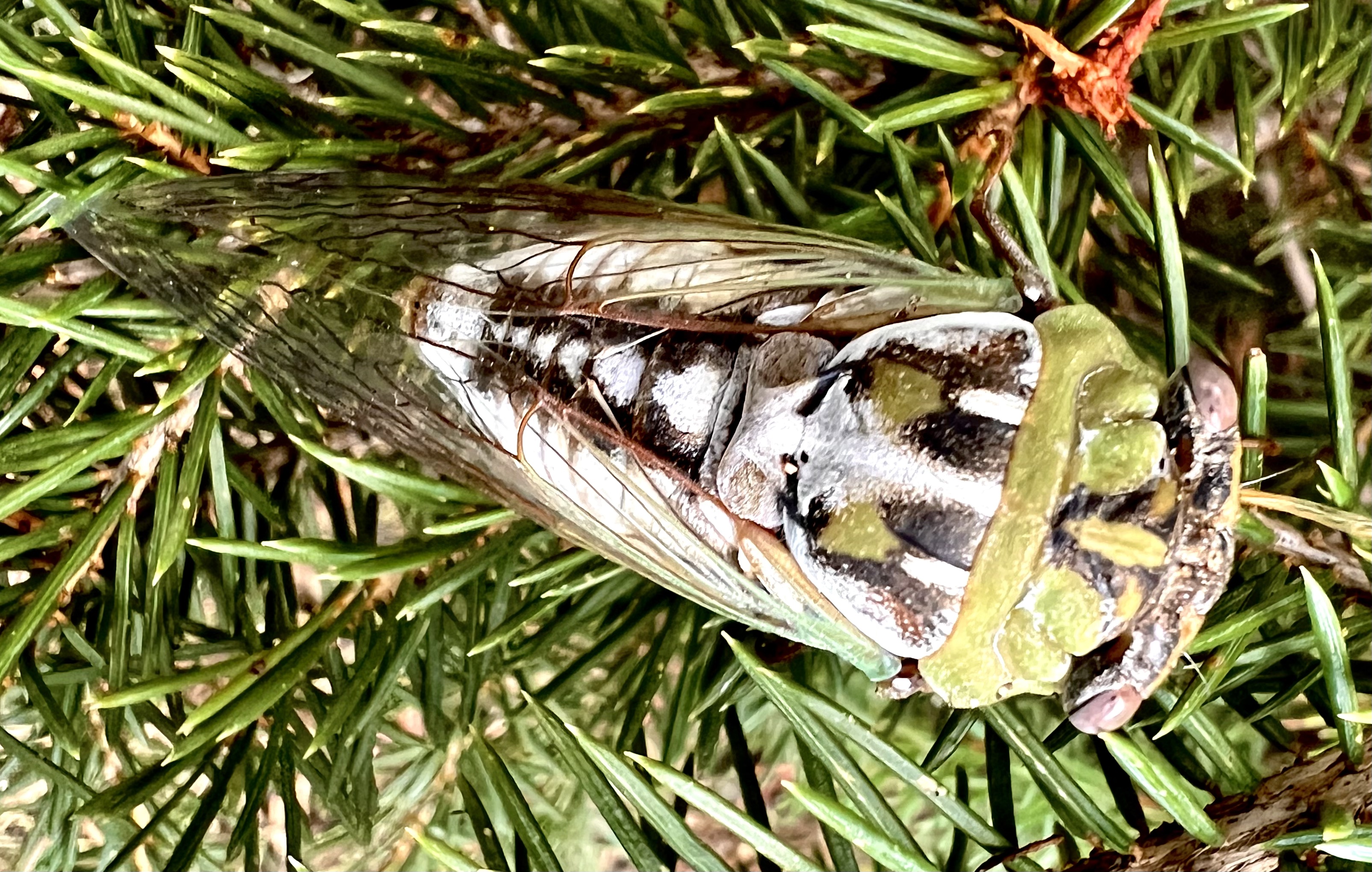
I don’t live with cycles of cicada population booms but have experienced their overwhelming din and understood we are mere witnesses and not in control. We are not “little g” gods on this earth. We are its stewards.
Here in the time between snow and the bud of the rhododendron, we watch the robins, look into
the gray, and narrow our view to the patches of wild grasses coming green. The pile of ashes
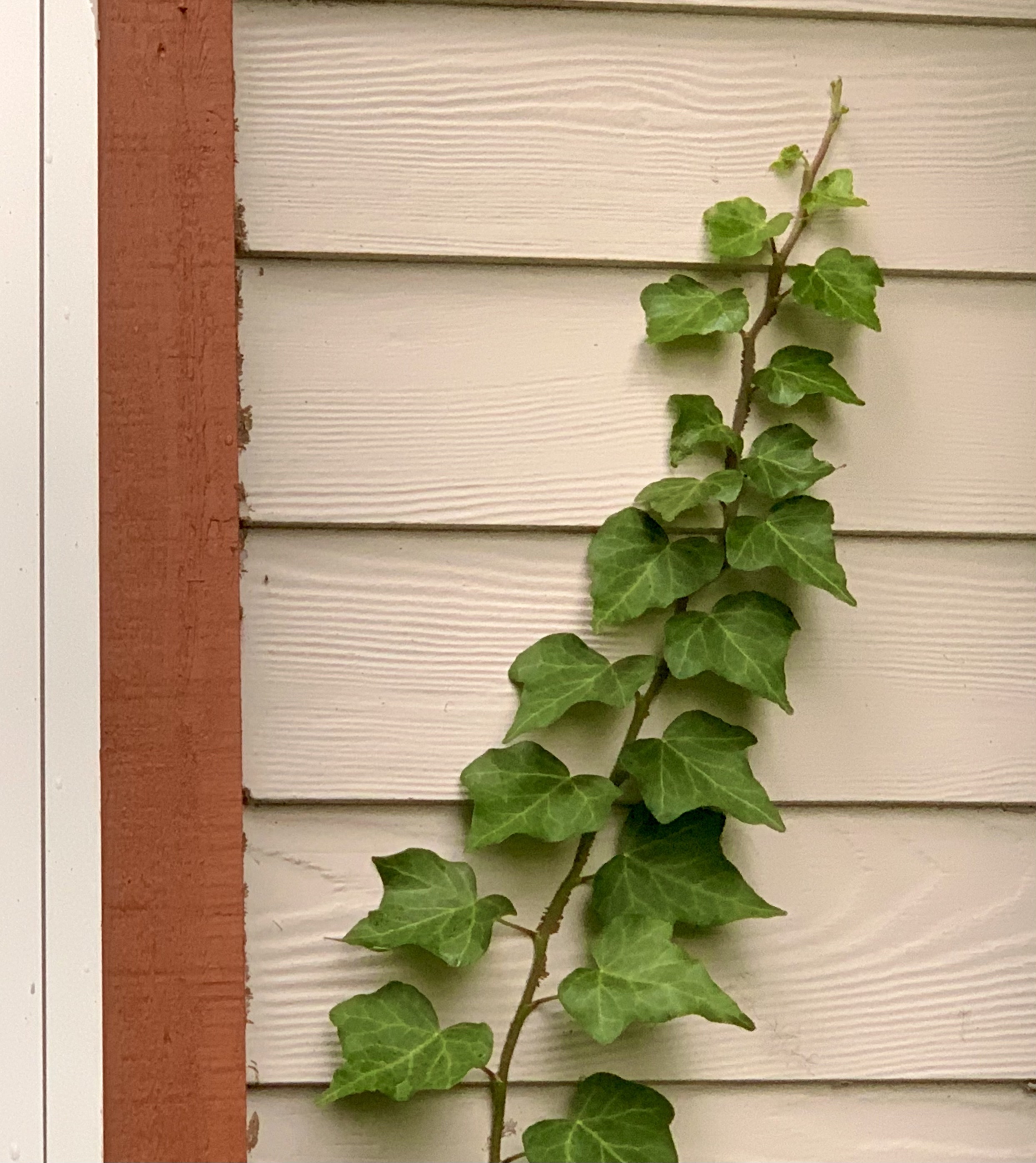
in the fireplace, haphazard sticks on the paths and gardens, leaves tangled in the ivy and periwinkle
lie in wait against our will. This drawing near of renewal, of stems and blossoms, the hesitant return
of the anarchy of mud and seed says not yet to the blood’s crawl. When the deer along the stream
look back at us, we know again we have left them. We pull a blanket over us when we sleep.
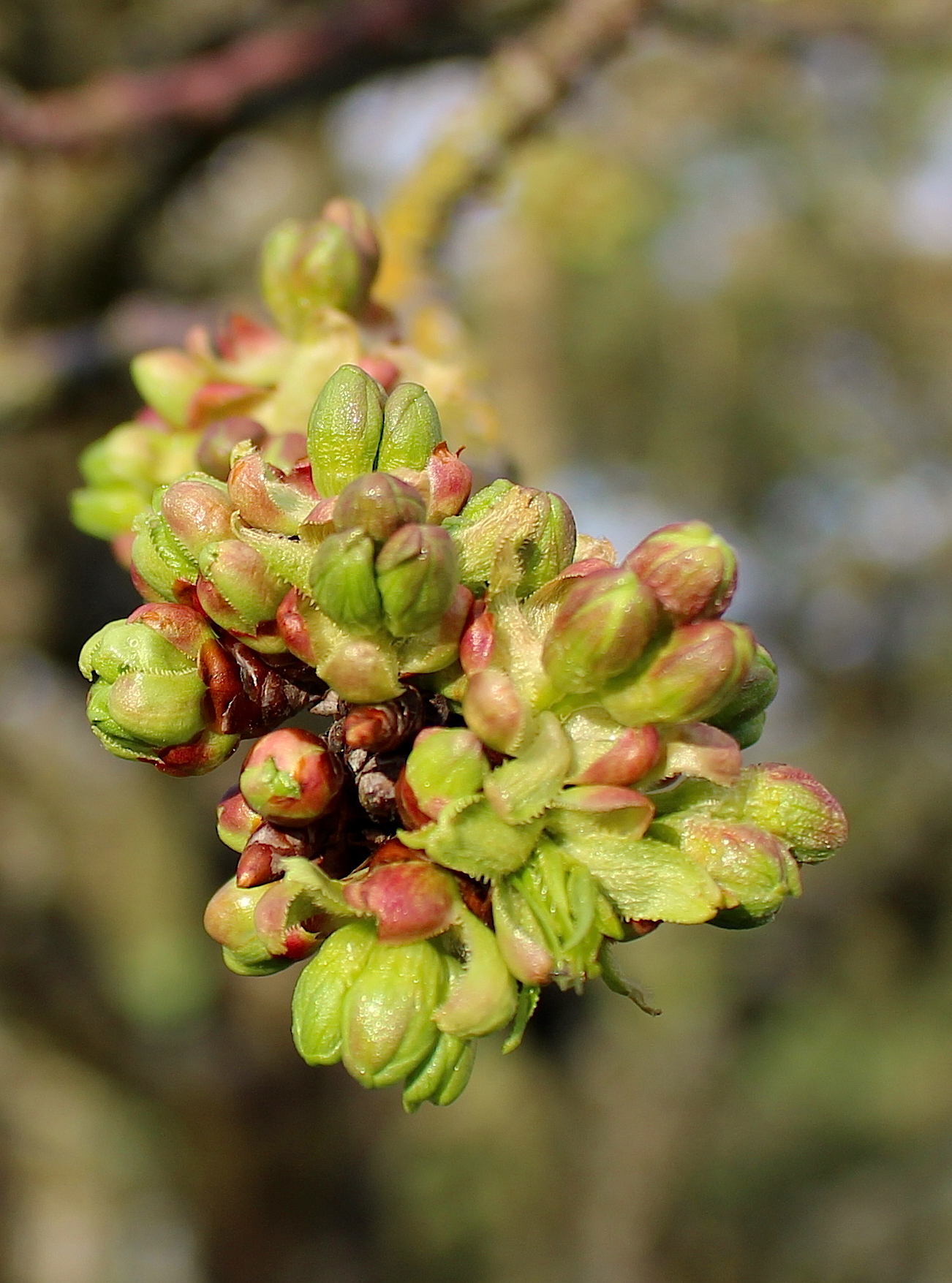
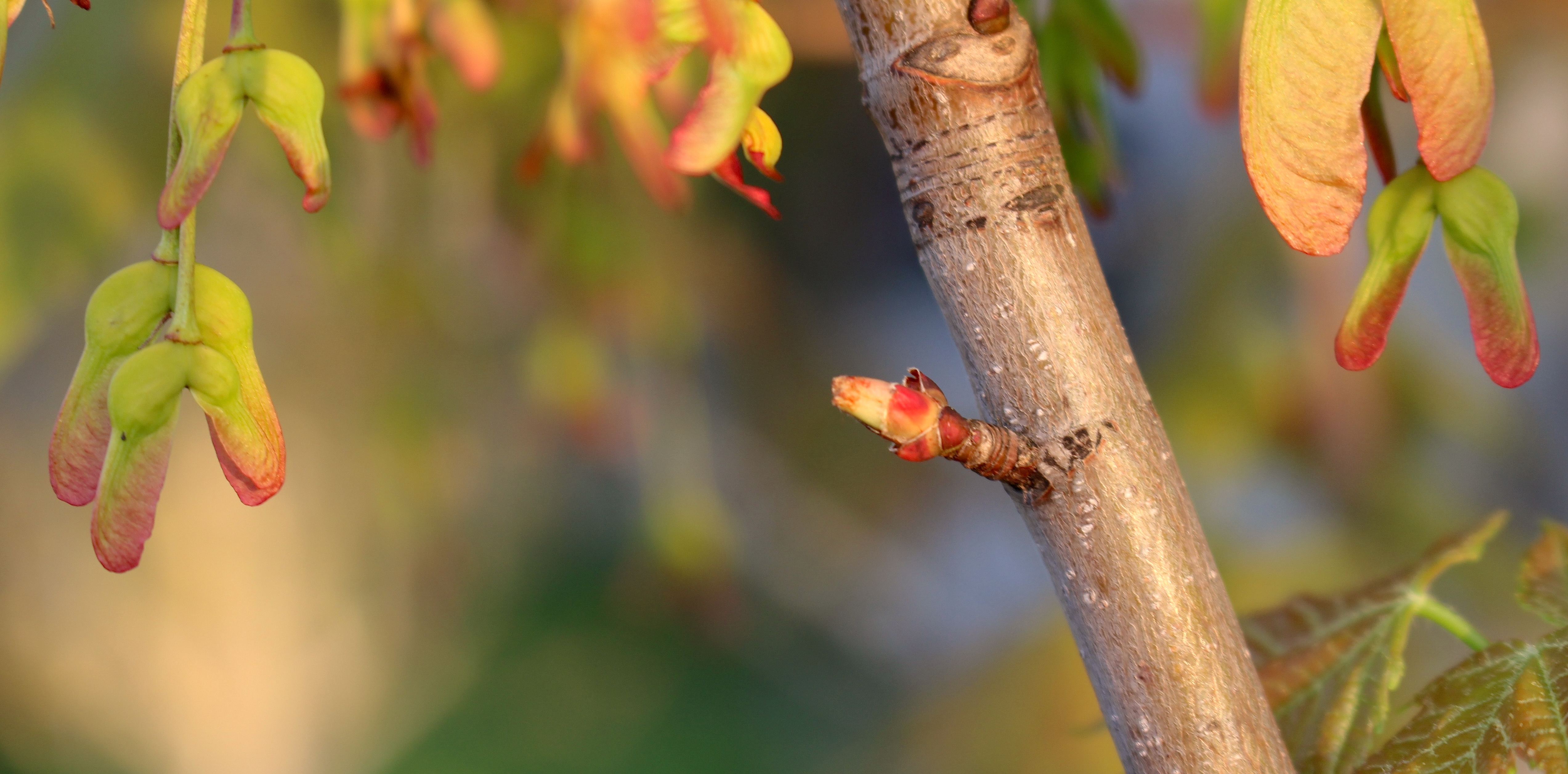
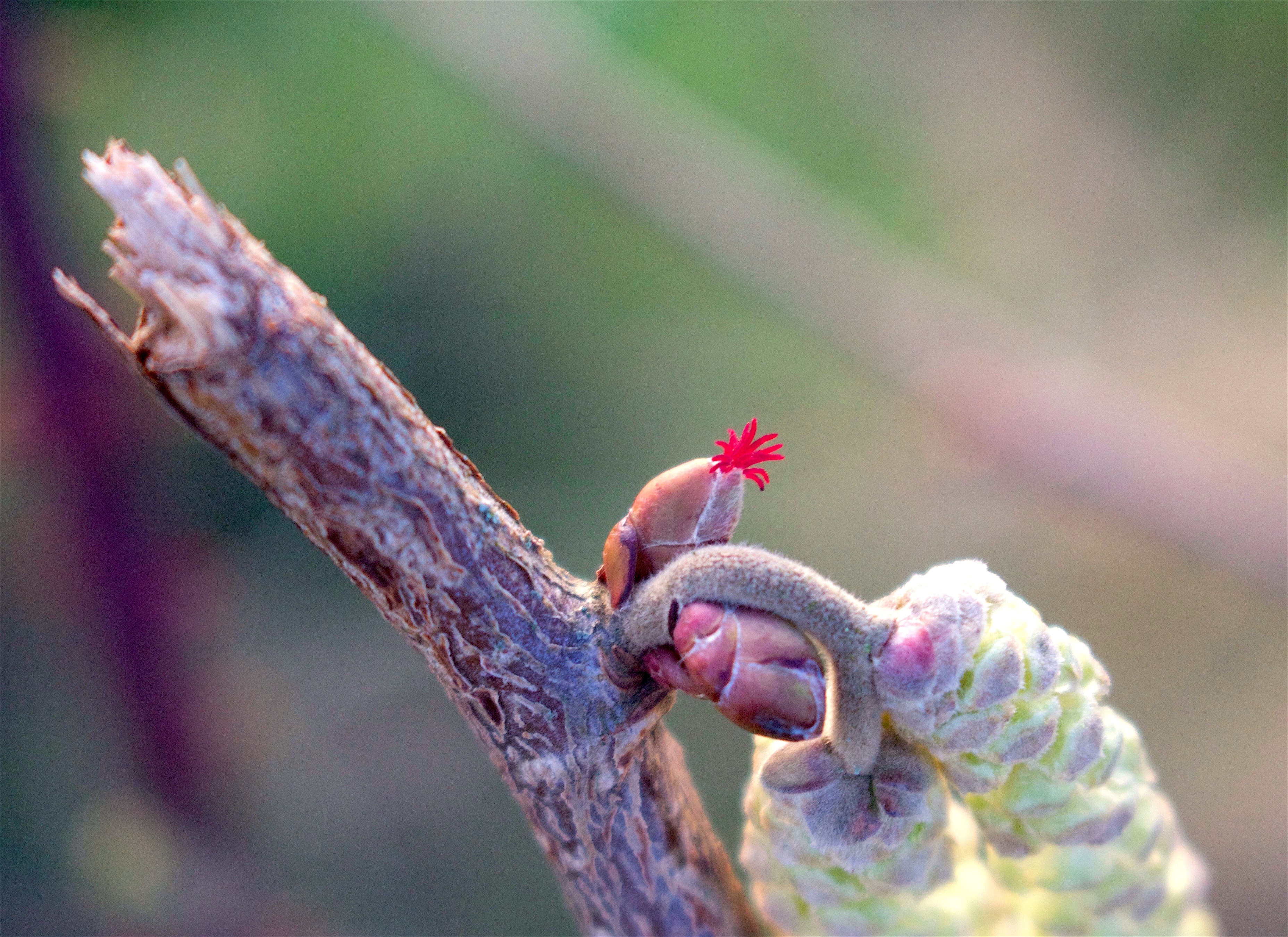
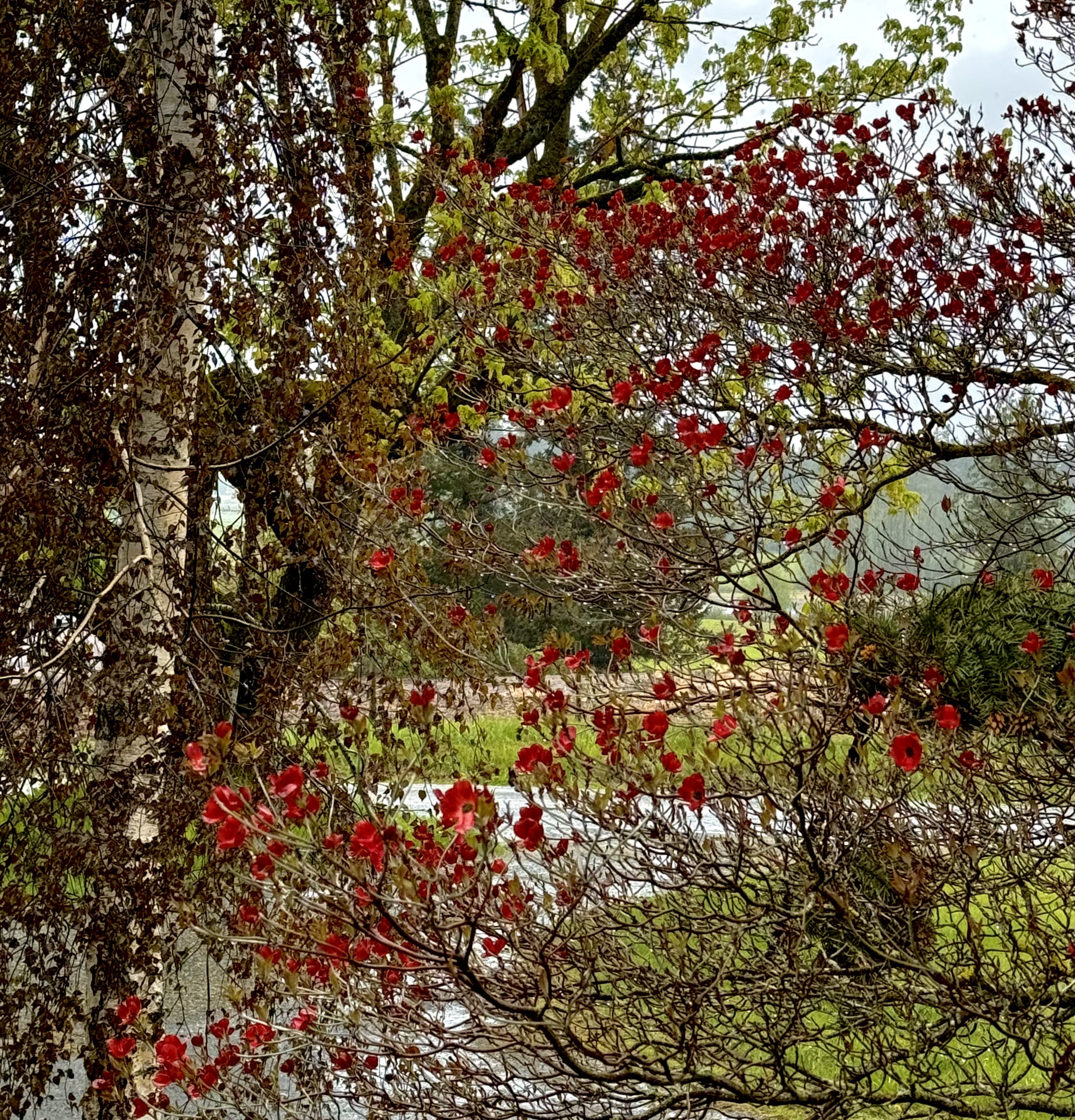
As if living in a prayer, we say amen to the late arrival of red, the stun of green, the muted yellow
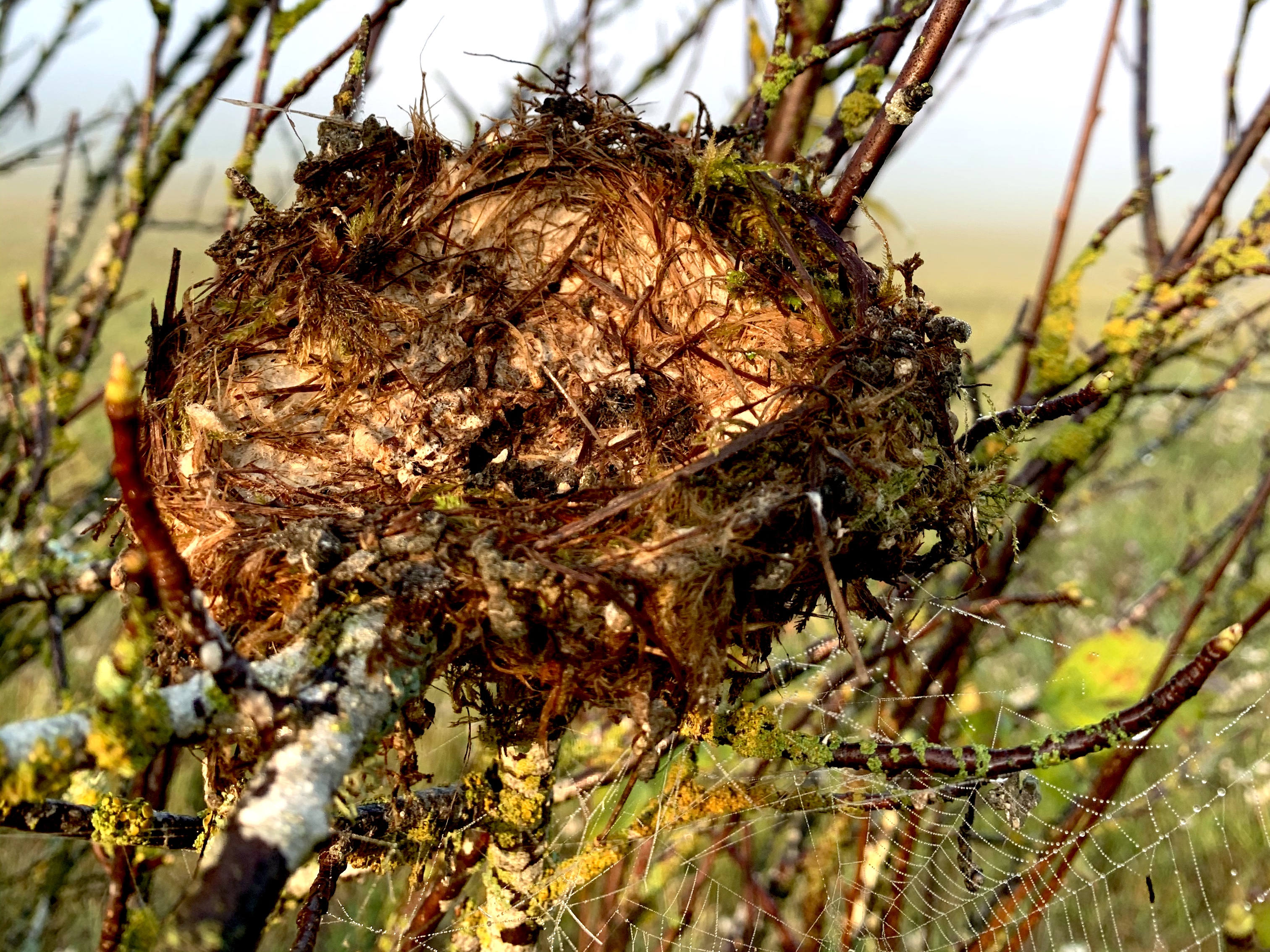
at the end of every twig. We will lift up our eyes unto the trees hoping to discover a gnarled nest within
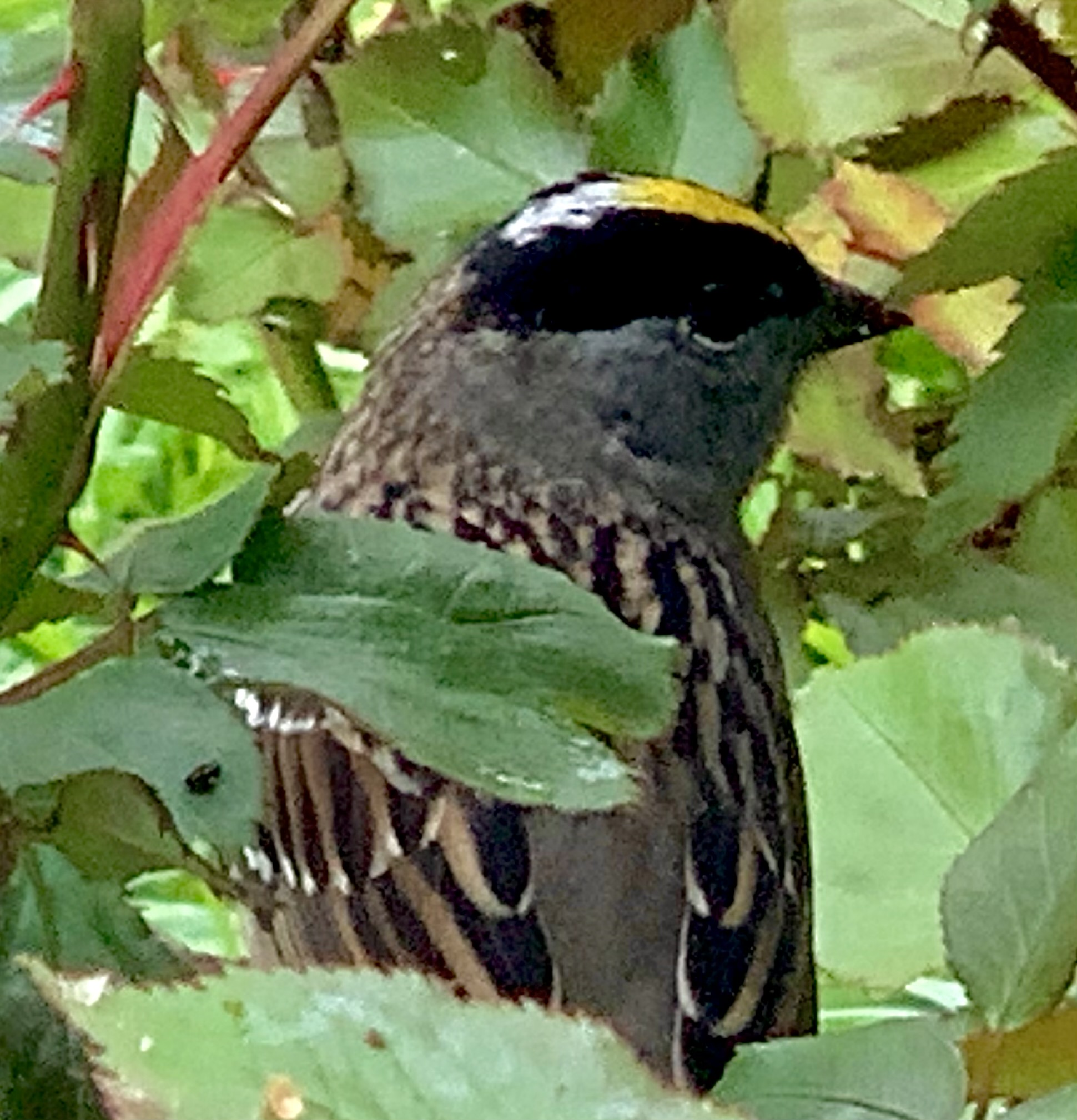
the branches’ negative space. And we will watch for a fox sparrow rustling in the dead leaves underneath. ~Jack Ridl “Here in the Time Between” from Practicing to Walk Like a Heron
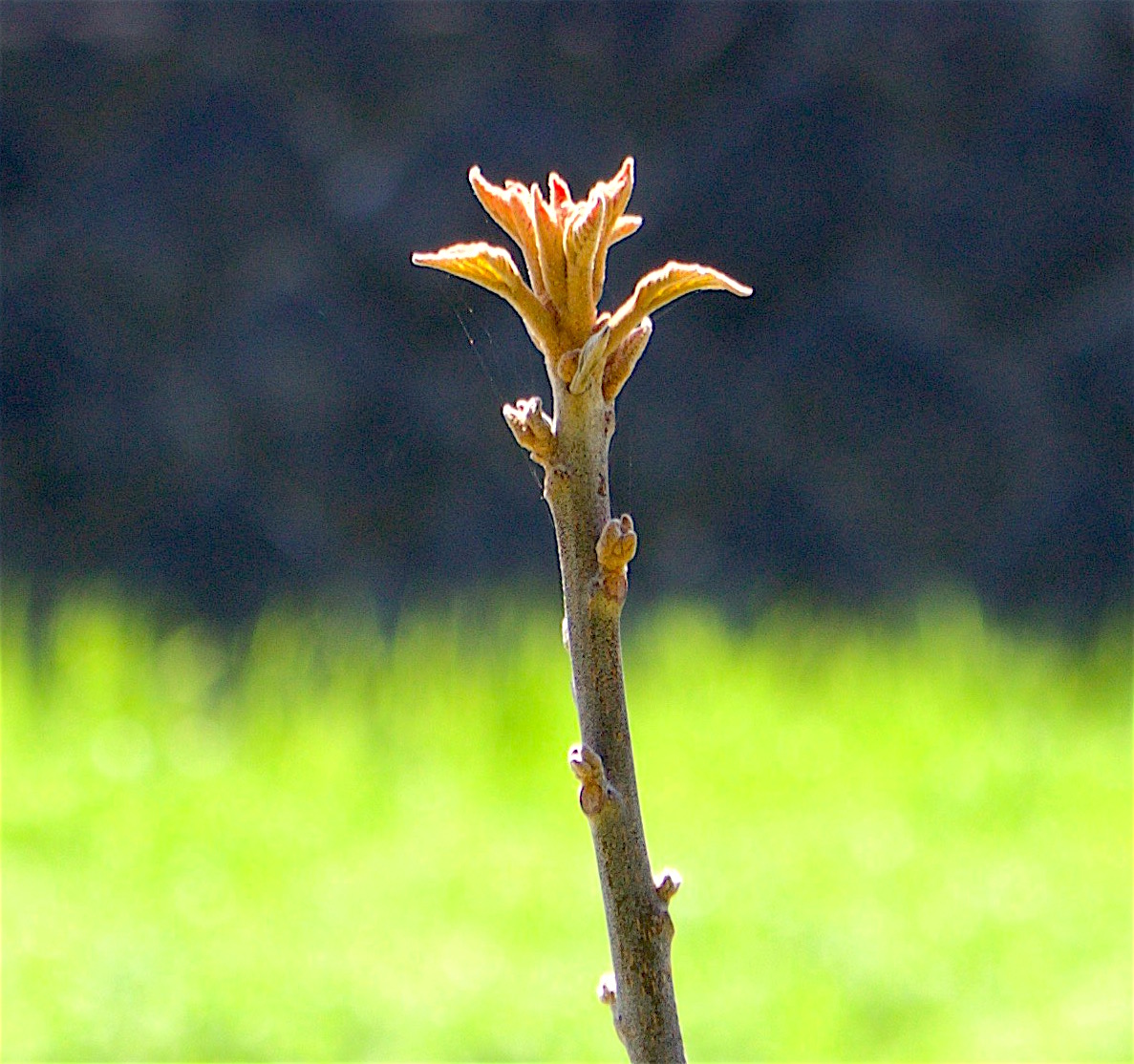
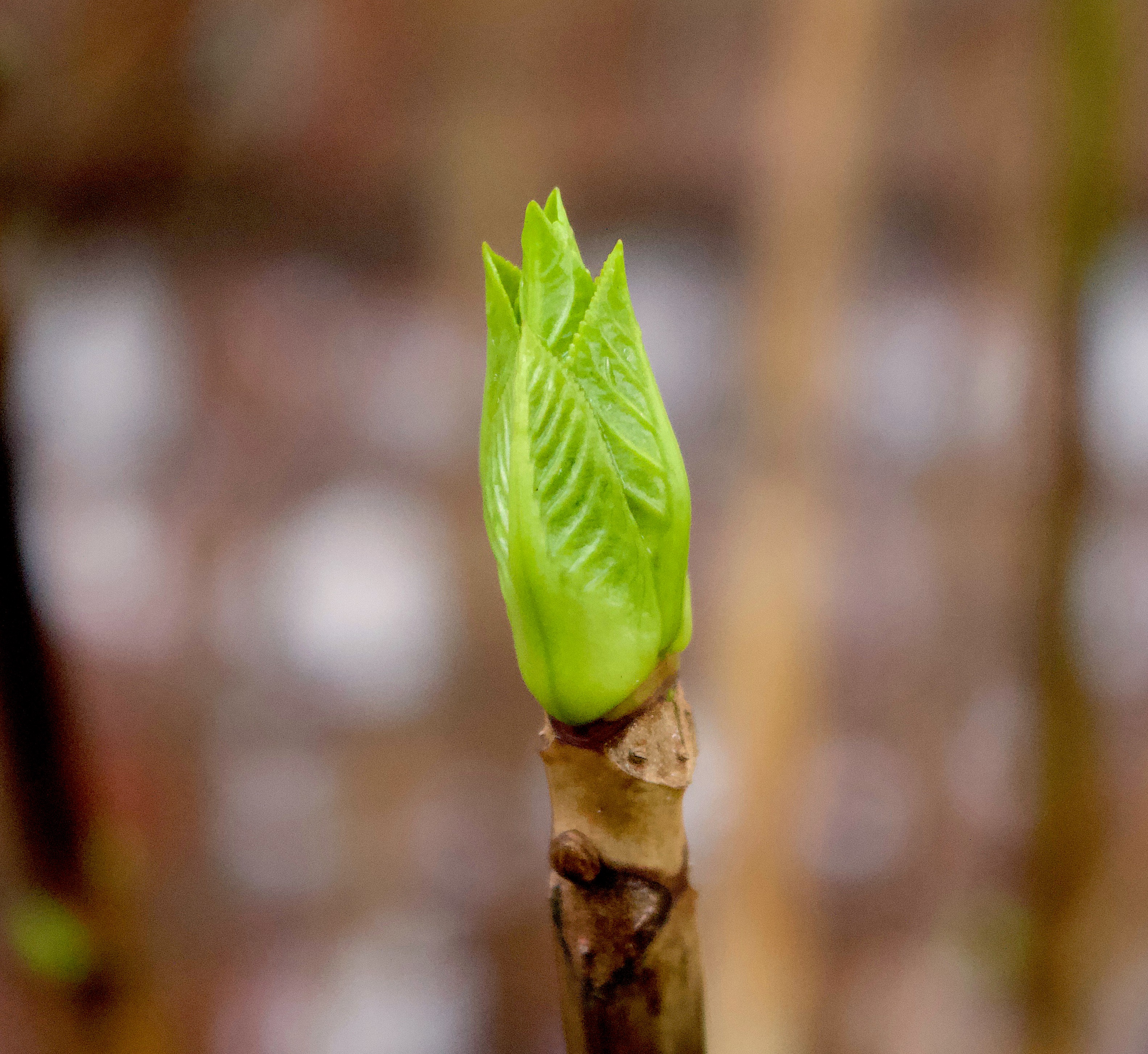
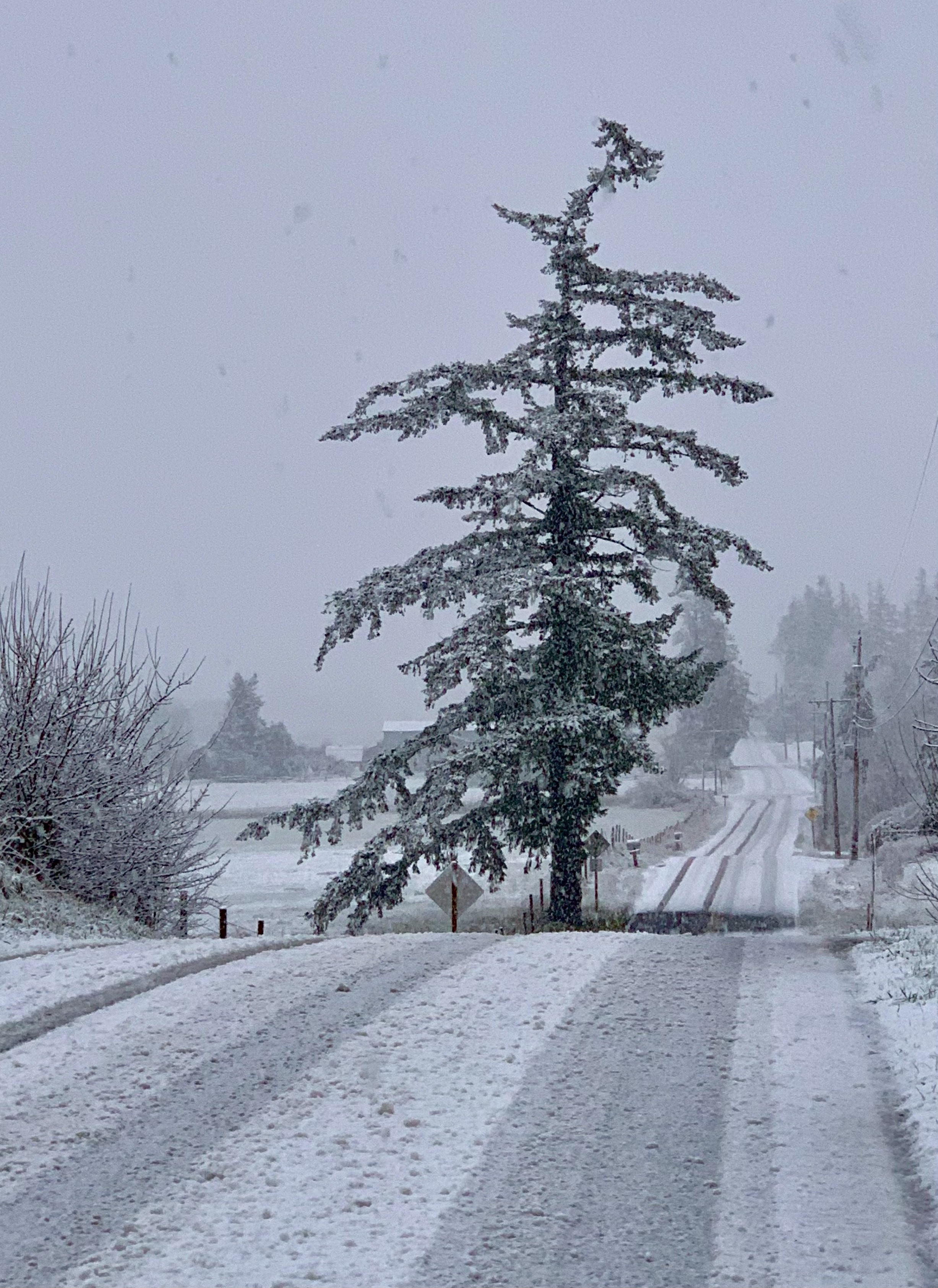
We live in an in-between time: we see the coming glory of spring and rebirth yet winter’s mud and ice still grasps at us.
We want to crawl back under the blankets, hoping to wake again on a brighter day.
Praying to emerge from the mud of in-between and not-yet, we are ready to bud and blossom and wholly bloom.
One-Time
Monthly
Yearly
Make a one-time or recurring donation to support daily Barnstorming posts


































 Barnstorming