…And when the sun rises we are afraid it might not remain when the sun sets we are afraid it might not rise in the morning when our stomachs are full we are afraid of indigestion when our stomachs are empty we are afraid we may never eat again when we are loved we are afraid love will vanish when we are alone we are afraid love will never return and when we speak we are afraid our words will not be heard nor welcomed but when we are silent we are still afraid
So it is better to speak remembering we were never meant to survive. ~Audre Lorde from “A Litany for Survival”
We are all here so briefly, just trying to survive.
Although designed to live forever, we are fallen, running the clock out as long as we can.
Just one day more, we say. Give us just one more.
From the first, there has been struggle – the pain of our birth, the cry of our laboring mother, then feeding and protection of our children, keeping them safe from the bombs of war and the ravages of disease, followed by weakening of our frail aging bodies.
If there is a reason for all this (and there is): life’s struggles redeem us.
Heaven knows, each life means something to God, each death echoes His sorrow.
We fear we fail to make a difference in such a short time. So we speak. Hear our voices. Just one day more, Lord. Please – one day more.
Tomorrow we’ll discover What our God in Heaven has in store One more dawn One more day One day more… ~from Les Miserable
AI image created for this post
One-Time
Monthly
Yearly
Make a one-time or recurring donation to support daily Barnstorming posts
Remember the tree house? I suppose that was less us than perhaps the music at church, or the car—my bad, bad cars. But remember anyway.
There were the grass fires we saw when I was young. You don’t know this yet, but I’ve written about them, the smell of smoke and vanilla.
The business trips you took us on. The short stories said while waiting at the post office. How you tried to convince us that camping was fun; it was
in retrospect. The tree house, hung from an ageless pine, provided a new perspective on everything I saw from ground- level, our whole backyard. ~David K. Wheeler “Father’s Day” from Contingency Plans
To every man His treehouse, A green splice in the humping years, Spartan with narrow cot And prickly door.
To every man His twilight flash Of luminous recall of tiptoe years in leaf-stung flight;
To every man His house below And his house above— With perilous stairs Between. ~James Emmanuel from “The Treehouse”
photo by Dan Gibson
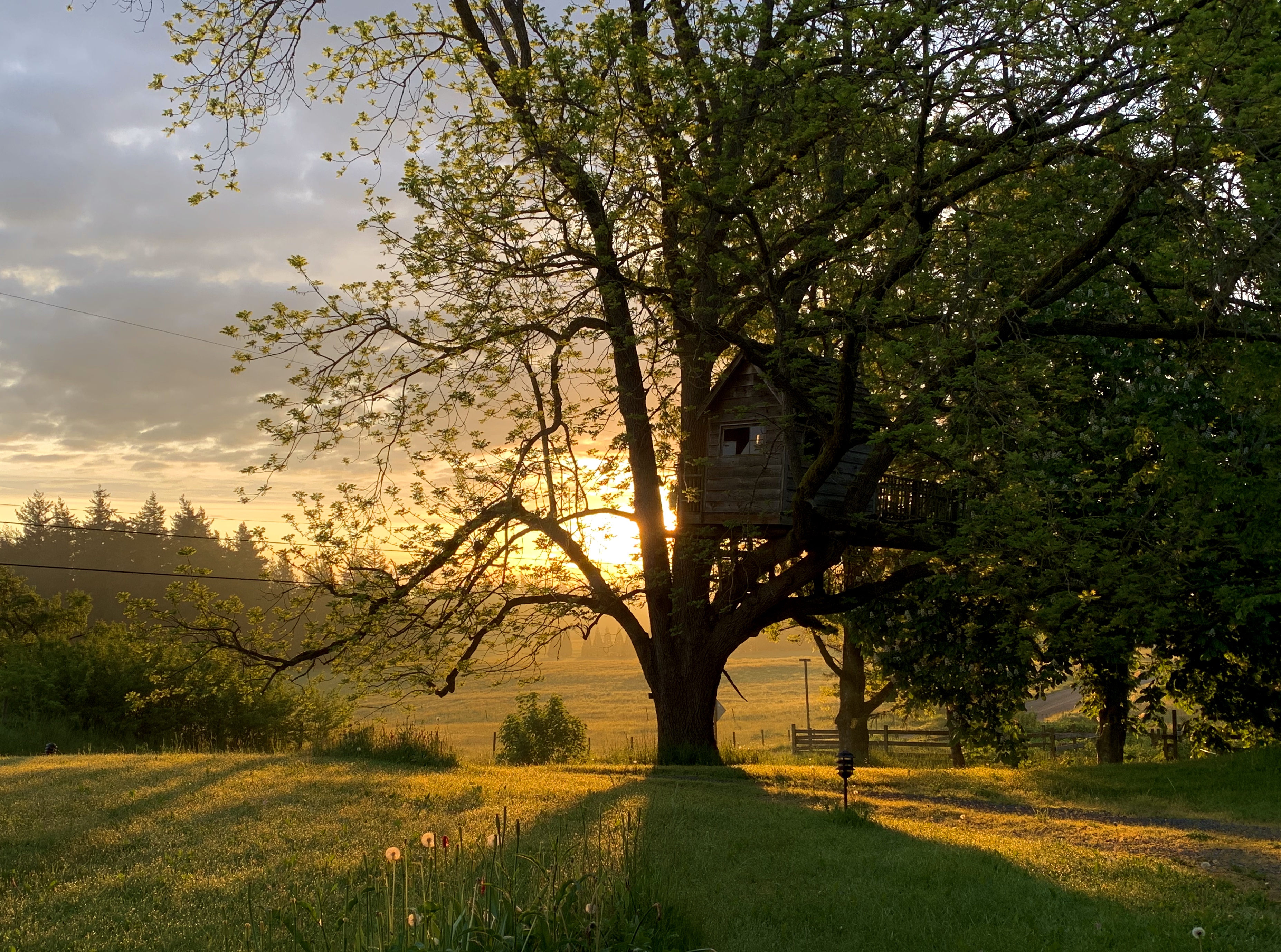
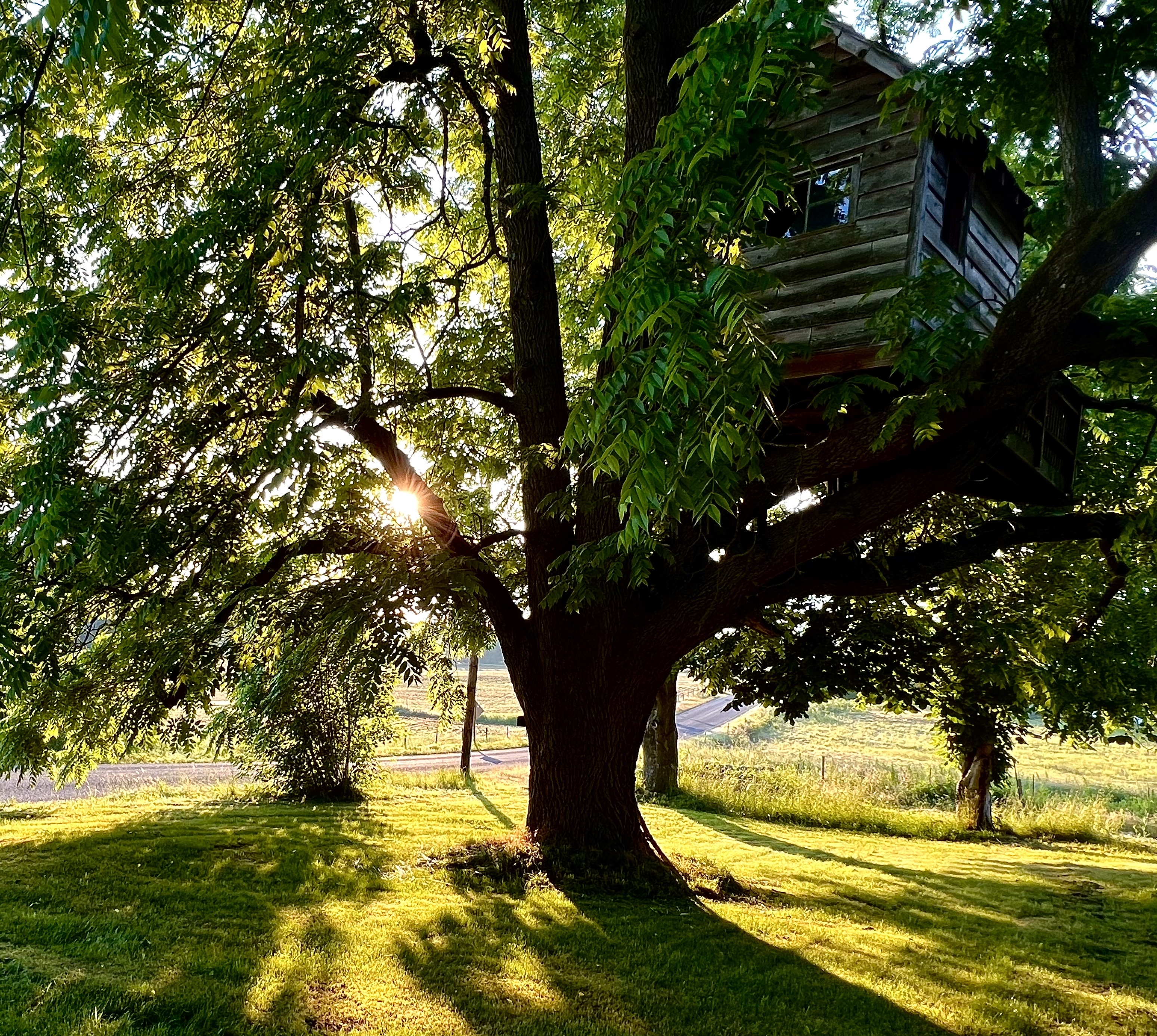
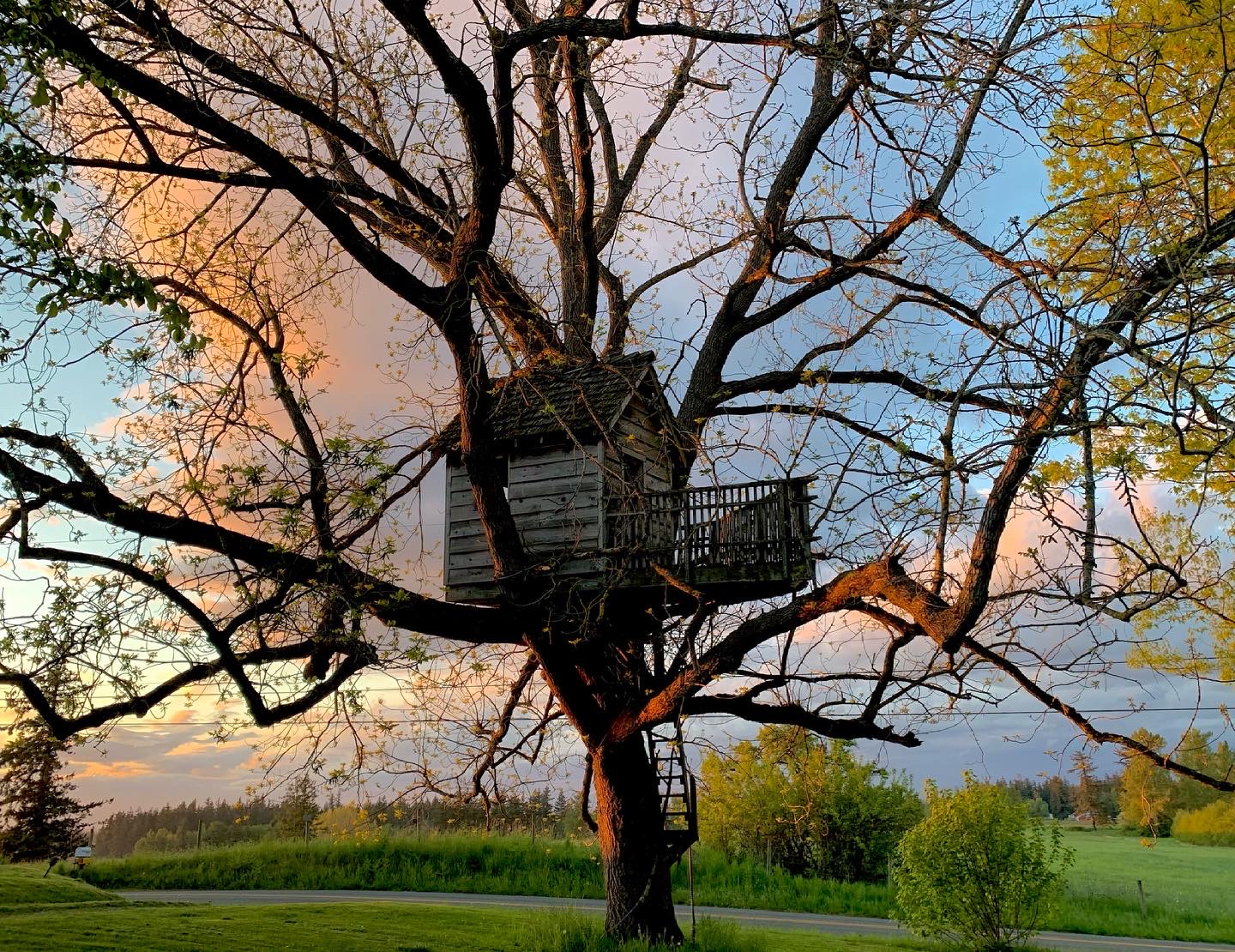
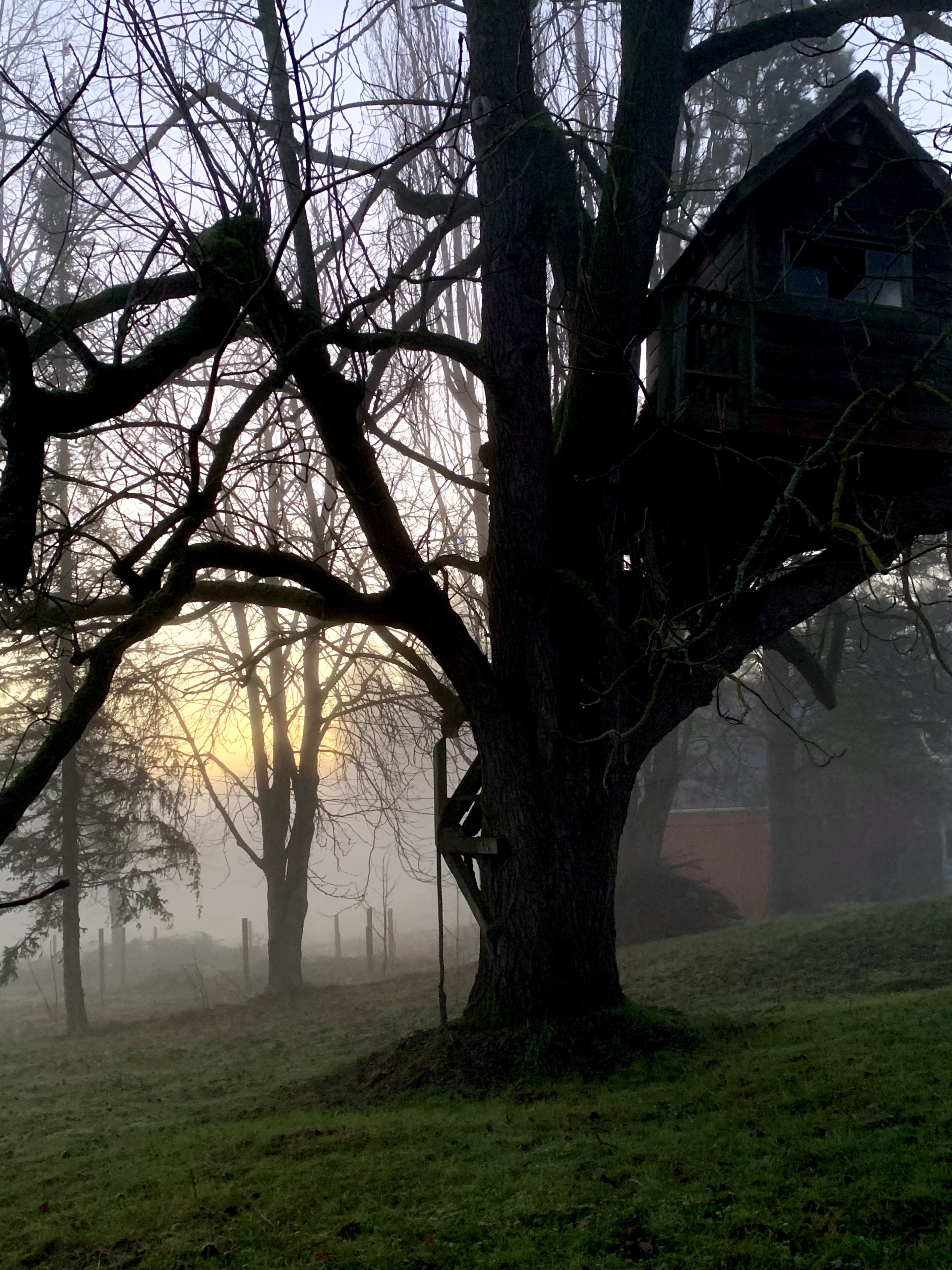
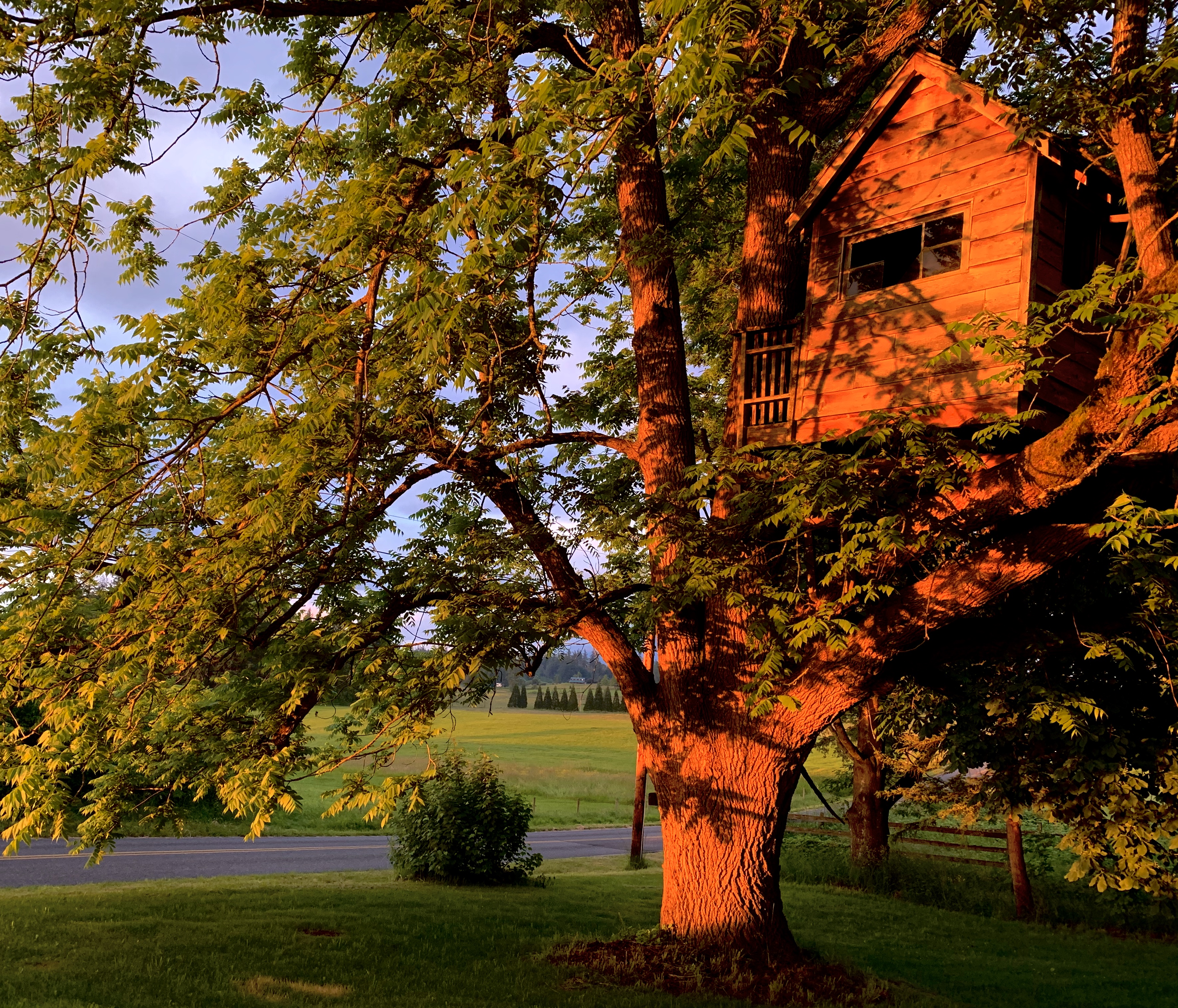
My father’s treehouse dream is thirty years old this summer, lonesome and empty in our front yard, a constant reminder of his own abandoned Swiss Family Robinson dreams. Over the years, it has been the setting for a local children’s TV show, laser tag wars, sleep overs and tea parties, even briefly my writer’s retreat with a deck side view of the Cascades to the east, the Canadian Coastal Range to the north and Puget Sound to the west.
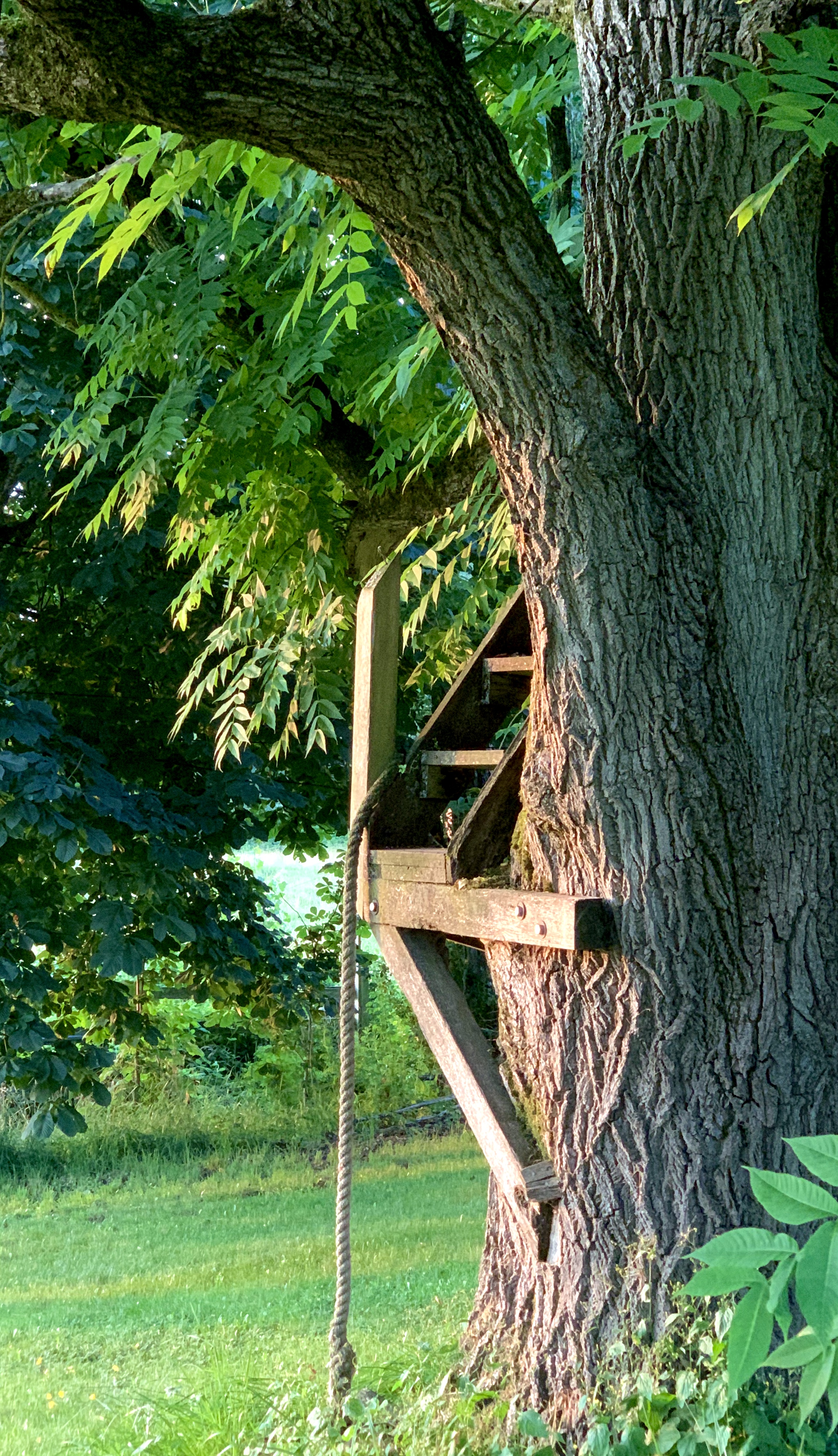
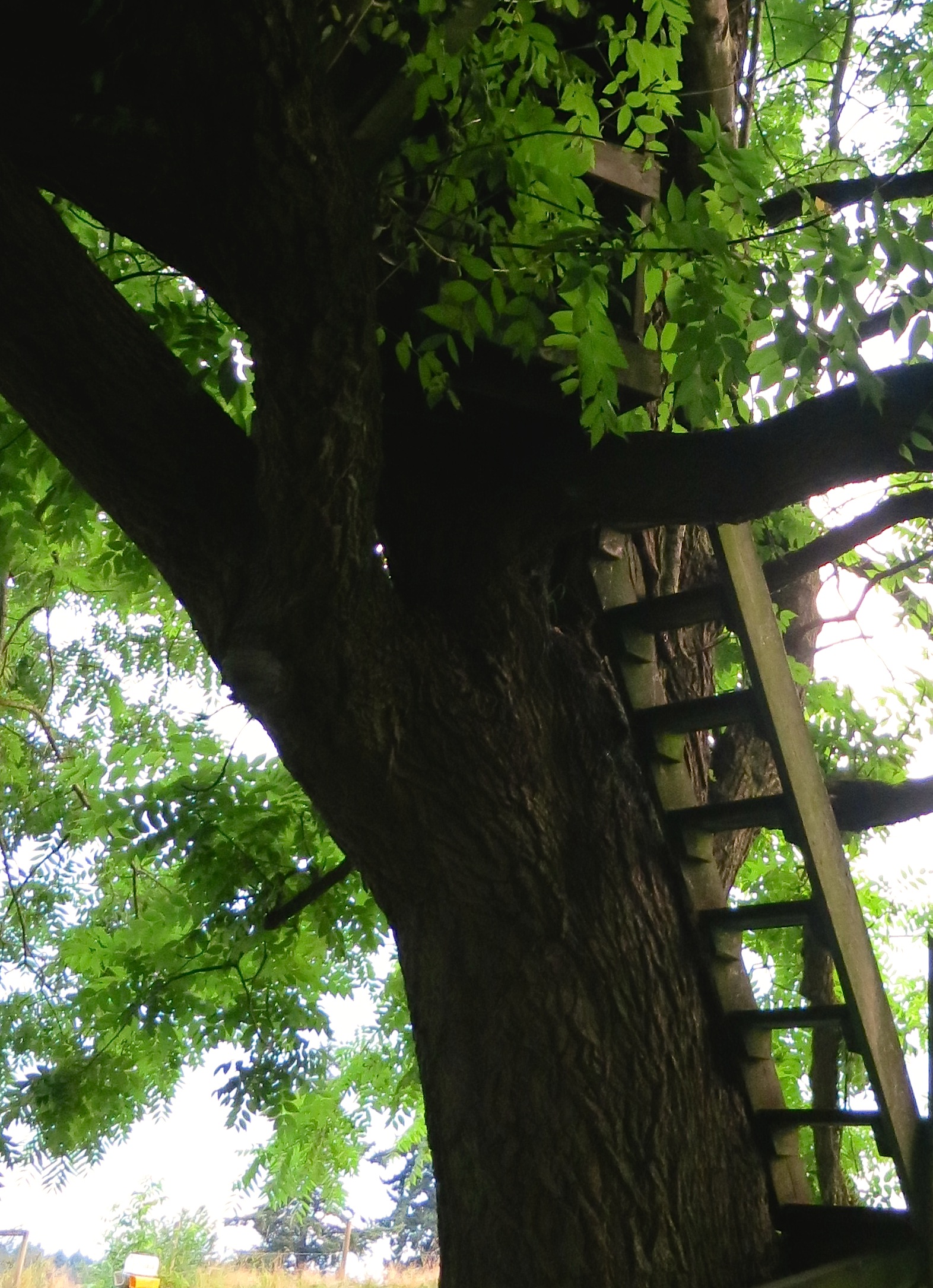
Now it is a sad shell no longer considered safe, as the support branches in our 110+ year old walnut tree are weakening with age and time. It is on our long list of farm restoration projects, but other falling down buildings must be prioritized first.
My father’s treehouse idea began in February 1995 when our sons were 8 and 6 years old and our daughter just 2. We had plenty of recycled lumber on our old farm and a perfect front yard walnut tree. Dad, retired from his desk job and having recently survived a lymphoma diagnosis and treatment, had many previous daunting building projects to his credit, and a few in his mind that he was yet to get to. He was eager to see what he could construct for his grandkids by spring time. He doodled out some sketches of what might work in the tree, and contemplated the physics of a 73 year old man scaling a tree vs. building on the ground and hoisting it up mostly completed. I got more nervous the more I thought about it and hoped we could consider a project less risky, and hoping the weather wouldn’t clear enough for construction to start any time soon.
The weather cleared as simultaneously my father’s health faded. His cancer relapsed and he was sidelined with a series of doctor’s appointments, hospitalizations and treatment courses. He hung on to that hope of getting the treehouse going by summer, still thinking it through in his mind, still evaluating what he would need to buy to supplement the materials already gathered and piled beneath the tree. In the mean time he lost physical strength day by day.
His dream needed to proceed as he fought his battle, so I borrowed library books on treehouses, and hired two college age brothers who lived down the road to get things started. I figured if my dad got well enough to build again, at least the risky stuff could be already done by the young guys. These brothers took their job very seriously. They pored over the books, took my dad’s plans, worked through the details and started in. They shinnied up the tree, put up pulleys on the high branches and placed the beams, hoisting them by pulling on the ropes with their car bumper. It was working great until the car bumper came off.
I kept my dad updated long distance with photos and stories. It was a diversion for him, but the far off look in his eye told me he wasn’t going to be building anything in this world ever again. He was gone by July. The treehouse was done a month later. It was everything my dad had hoped for, and more. It had a deck, a protective railing, a trap door, a staircase. We had an open tree celebration and had 15 neighbors up there at once. I’m sure dad was sipping lemonade with us as well, enjoying the view.
Now all these years later, the treehouse is tilting on its foundation as the main weight bearing branch is weakening. We’ve declared it condemned, not wanting to risk an accident. As I look out my front window, it remains a daily reminder of past dreams fulfilled and unfulfilled. Much like my father’s body, the old walnut tree is weakening, hanging on by the roots, but its muscle strength is failing. It will, some winter, come down in one of our frequent fierce windstorms, just as its nearby partner did decades ago.
The treehouse dream branched out in another way. One of the construction team brothers decided to try building his own as a place to live in his woods, using a Douglas Fir tree as the center support and creating an octagonal two story home, 30 feet off the ground. He worked on it for two years and moved in, later marrying someone who decided a treehouse was just fine with her, and for 25+ years, they’ve been raising five children there. Those treehouse kids have worked for me on our farm, a full circle feeling for me. This next generation is carrying on a Swiss Family Robinson dream that began in my father’s mind and our front yard.
I still have a whole list full of dreams myself, some realized and some deferred by time, resources and the limits of my imagination. I feel the clock ticking too, knowing that the years and the seasons slip by me faster and faster. I passed the age my father was when he first learned he had cancer. It would be a blessing to me to see others live out the dreams I have held so close.
Like my father, I will some day teeter in the wind like our old tree, barely hanging on. When ready to fall to the ground, I’ll reach out with my branches and hand off my dreams too. The time will have come to let them go.
Thank you, Dad, for handing me yours.
AI image created for this post
One-Time
Monthly
Yearly
Make a one-time or recurring donation to support daily Barnstorming posts
There are no creatures you cannot love. A frog calling at God From the moon-filled ditch As you stand on the country road in the June night. The sound is enough to make the stars weep With happiness. In the morning the landscape green Is lifted off the ground by the scent of grass. The day is carried across its hours Without any effort by the shining insects That are living their secret lives. The space between the prairie horizons Makes us ache with its beauty. Cottonwood leaves click in an ancient tongue To the farthest cold dark in the universe. The cottonwood also talks to you Of breeze and speckled sunlight. You are at home in these great empty places along with red-wing blackbirds and sloughs. You are comfortable in this spot so full of grace and being that it sparkles like jewels spilled on water. ~Tom Hennen “From a Country Overlooked”, from Darkness Sticks to Everything
There are some God’s creatures I struggle to love – fleas, chiggers, mosquitoes, ticks, slugs, yellow jackets among them. Also poisonous snakes, spiders and scorpions come to mind. And then there are pathogenic bacteria, parasites and viruses…
It is not their fault I struggle to find their value – only God knows why He made them as He did.
What I have learned over 7 decades is to try to look for beauty wherever I am.
To listen to the breezes and the birds, to look for how the light plays with leaves and water and how it is all created to help us feel at home for the time we are here.
Yet, this is an imperfect world where beauty doesn’t provide shelter to those with their basic needs unfulfilled – where there is no comfort, no safety, no hope.
God, deliver us from being too comfortable when others suffer. Help us feel Your love to pass on to those in need. Help us to know how to make a difference for them. We know that makes a difference to You.
AI image created for this post
One-Time
Monthly
Yearly
Make a one-time or recurring donation to support daily Barnstorming posts
For to come upon warblers in early May was to forget time and death.—Theodore Roethke
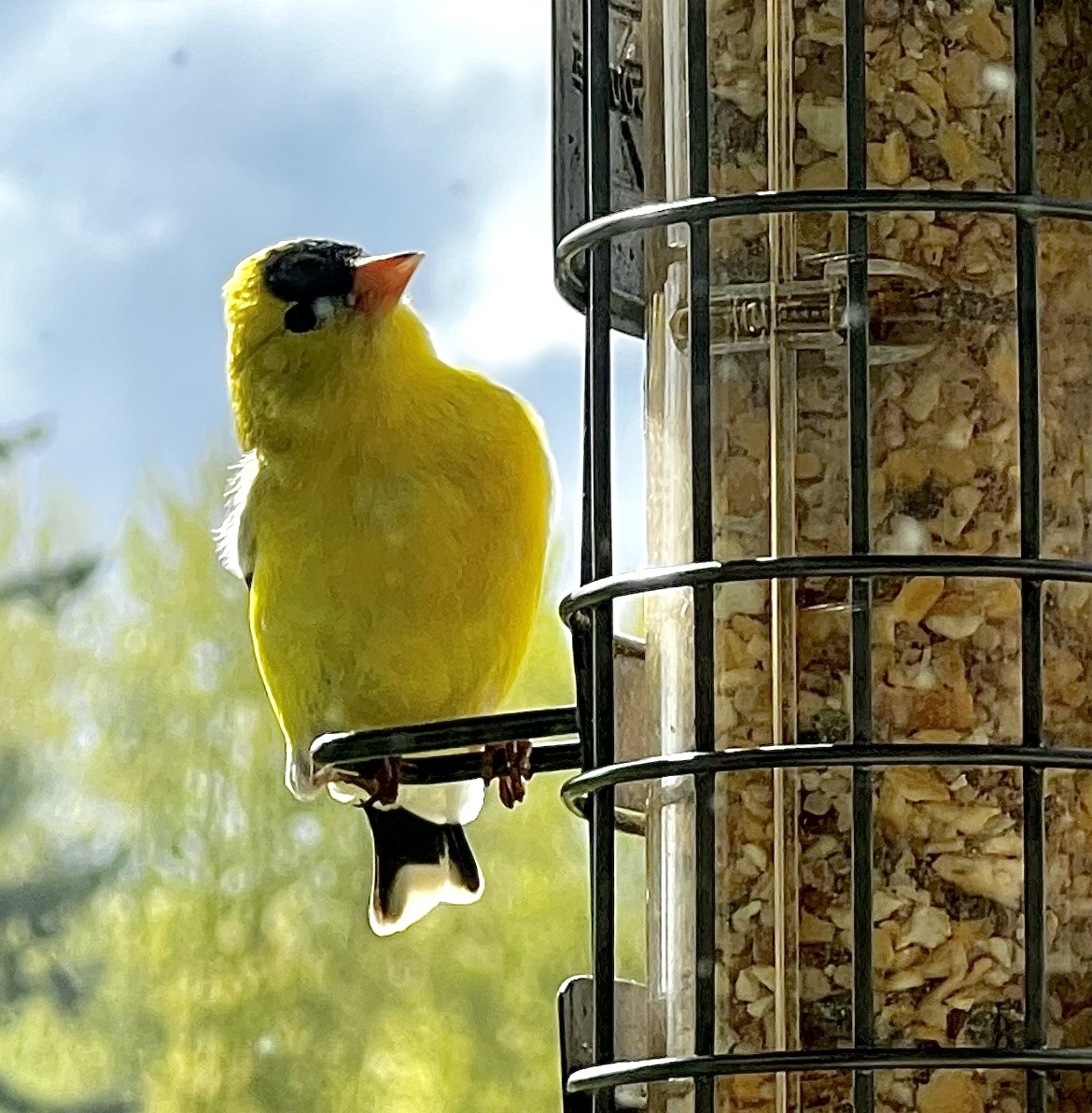
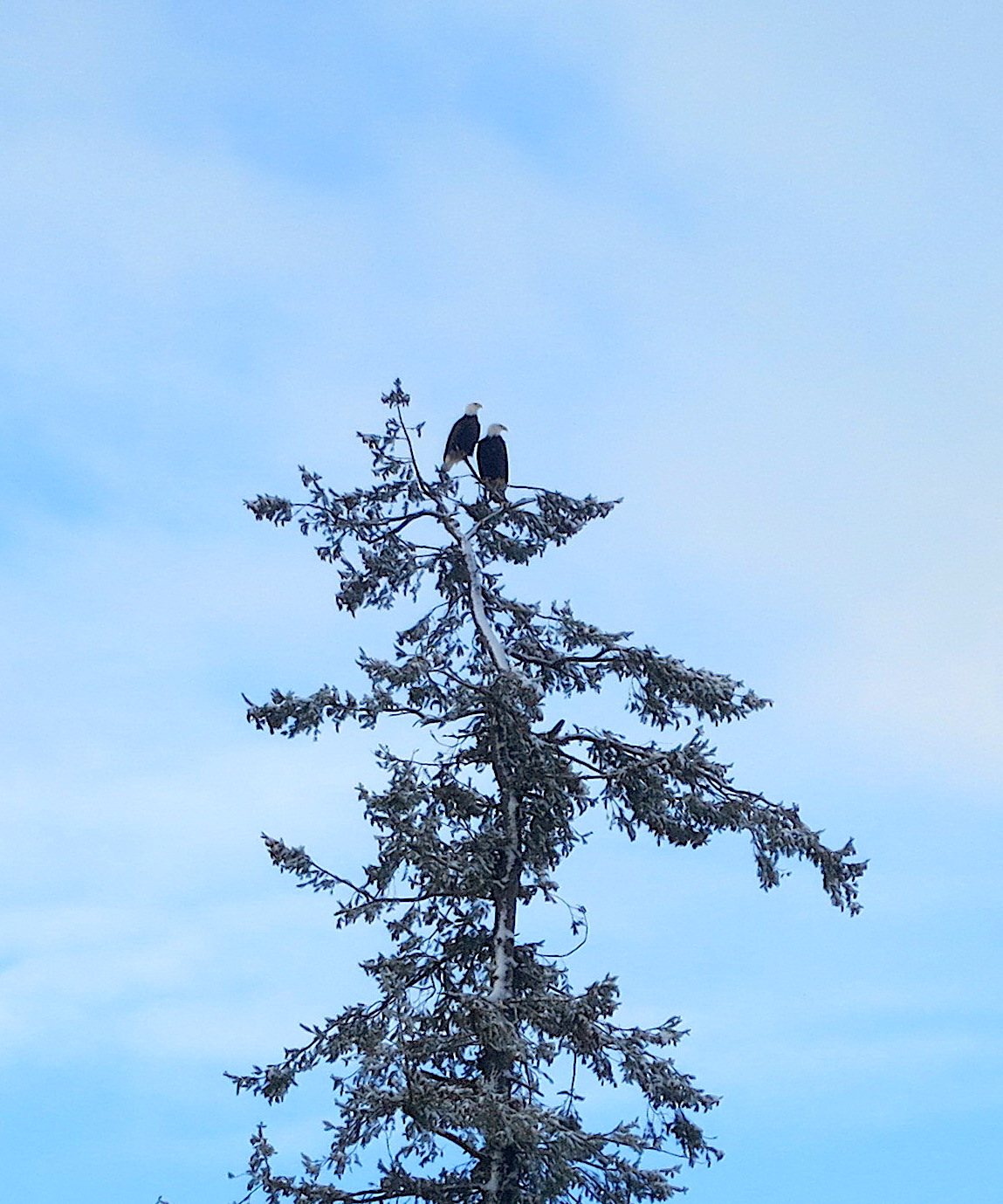
Every poem of death should start with my mother’s love for birds. Finches and waxwings her favorites, though she wasn’t one to quibble; an eagle dragging a carp across the sky would do.
There are worse things than being dead. You might be swallowed by the daily minutia of the great mundane, to be spit up years later wondering where your life has gone.
But loving something can save you: the way finches stack a feeder, meddle in each other’s business until a woodpecker crashes in, littering surrounding shrubs with wings.
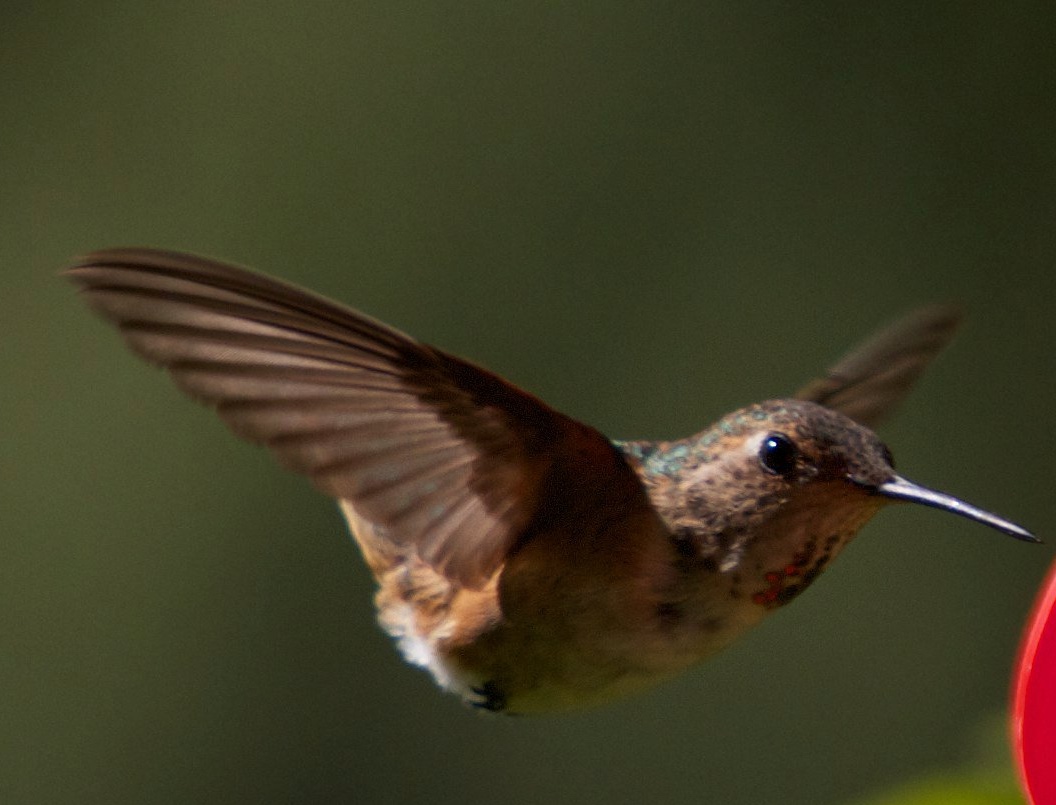
Last summer my wife found a hummingbird on Mount Pisgah. Its emerald wings trembled as its feet tried to grasp her fingers. A ranger said that their lives are so short anyway. What a curious reply, I thought, but later reconsidered. Perhaps any time being a hummingbird is enough. ~Bill Brown “With the Help of Birds”
That long-ago morning at Ruth’s farm when I hid in the wisteria and watched hummingbirds. I thought the ruby or gold that gleamed on their throats was the honeyed blood of flowers. They would stick their piercing beaks into a crown of petals until their heads disappeared. The blossoms blurred into wings, and the breathing I heard was the thin, moving stems of wisteria. That night, my face pressed against the window, I looked out into the dark where the moon drowned in the willows by the pond. My heart, bloodstone, turned. That long night, the farm, those jeweled birds, all these gone years. The horses standing quiet and huge in the moon-crossing blackness. ~Joseph Stroud “First Song”
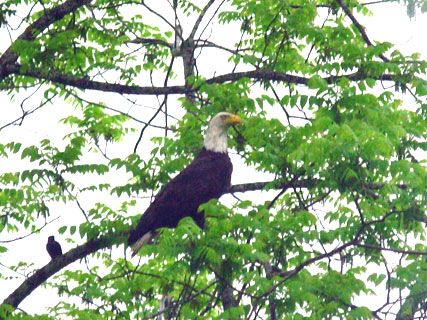
Birds are everywhere this time of year – I keep my phone handy with the Merlin App open from Cornell Lab, so I know who I’m hearing. From the robins and sparrows, to warblers and thrushes, along with the chittering bald eagles nesting by the pond across the road, it is quite a symphony to witness in the early morning and at sunset.
The app even tries to identify a woodpecker’s rapping and a hummingbird’s buzz.
There was a time not long ago when I was too busy with daily details to pay much attention to the awesome variety of creatures around me.
Once it hit me what I was missing, I started watching, listening and being part of all this life rather than wondering too late where life had gone.
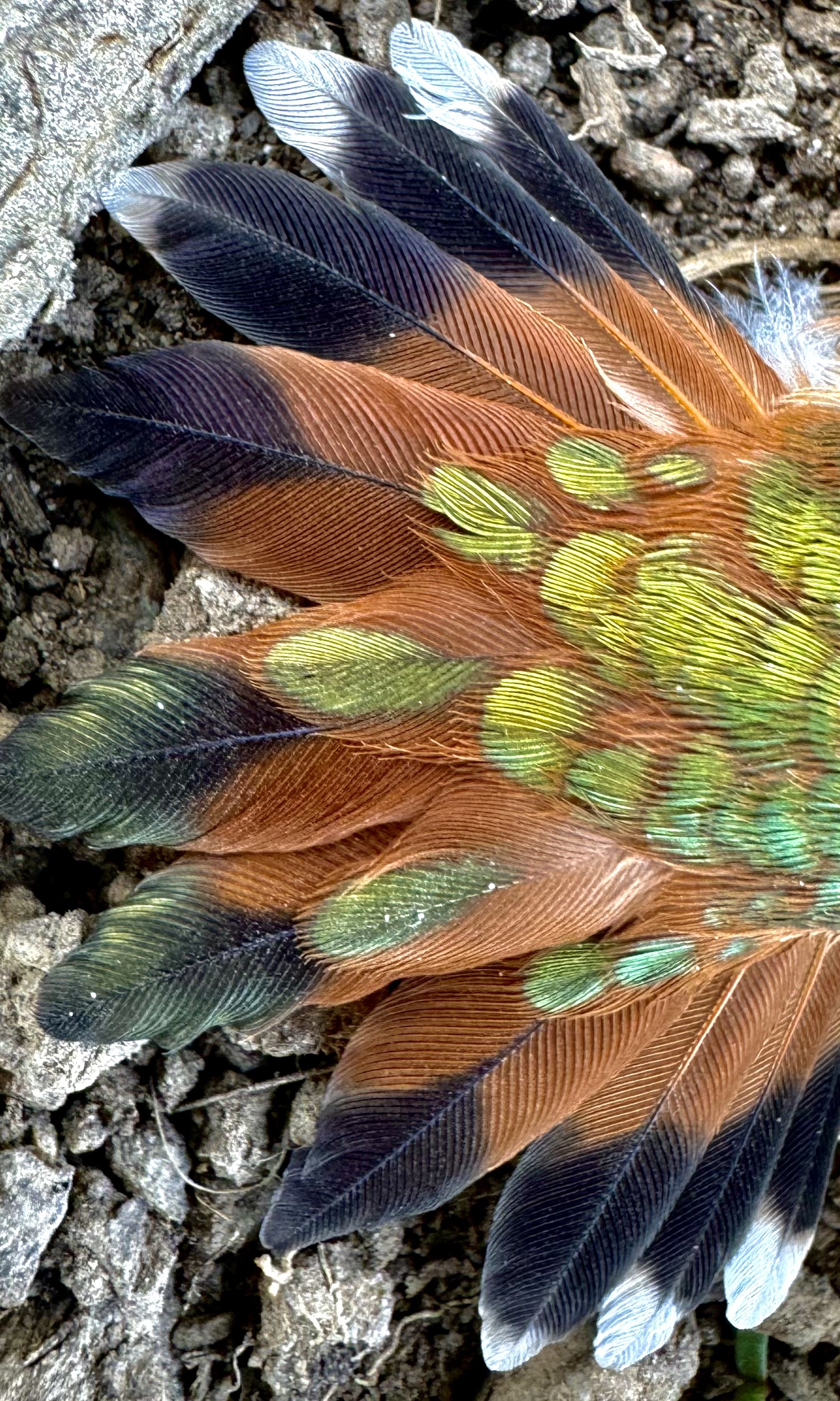
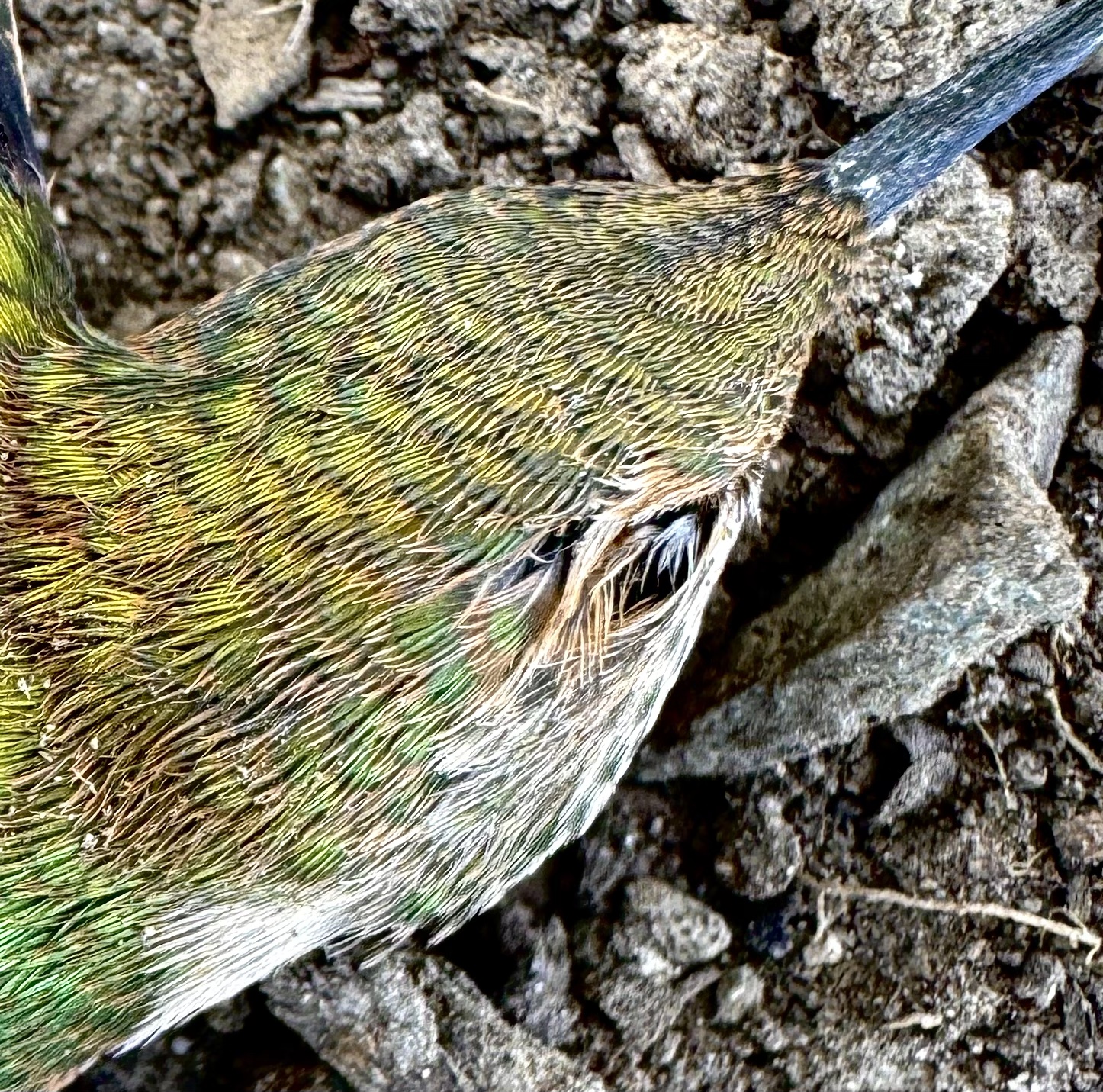
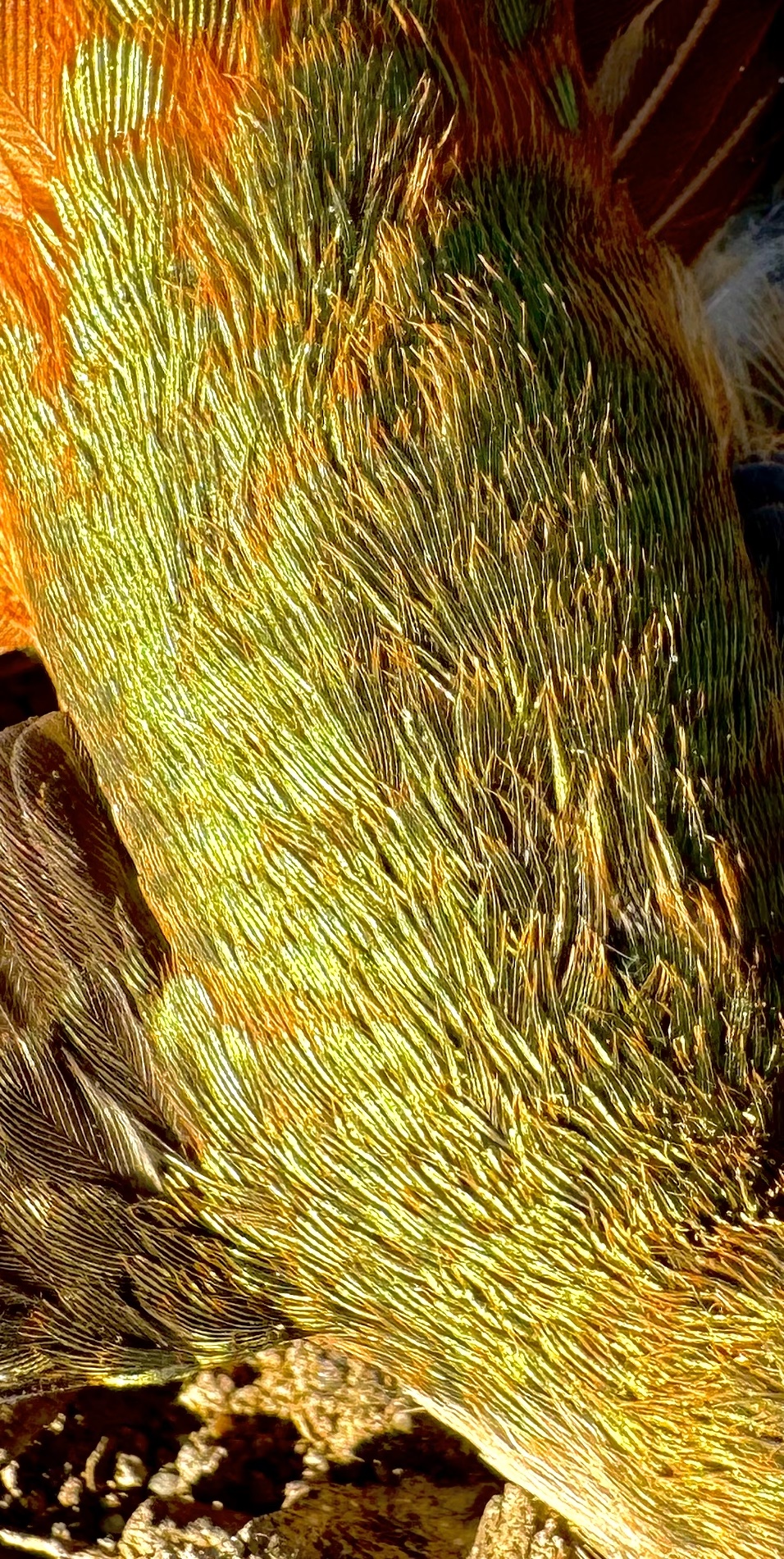
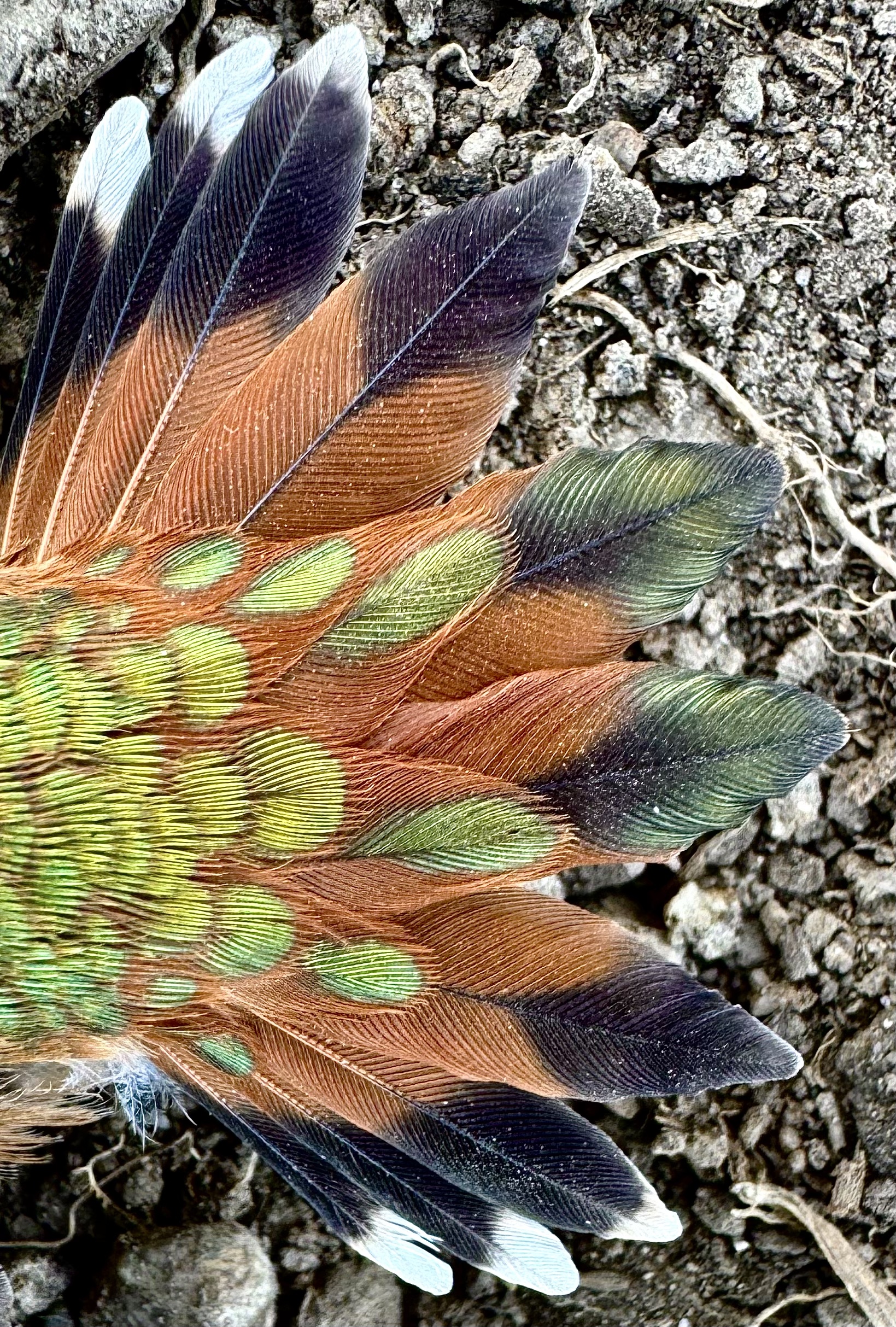
How sobering one day to find a hummingbird dead in the dirt, once a dear little bird of motor and constant motion, lying stilled and silenced as if simply dropped from the sky, a wee bit of fluff and stardust.
Then a friend pointed out a hummingbird nest high in a tree. And so it is the way of things…
We are here and gone. Beauty hatched, grown and flown, then grounded. …but not forgotten.
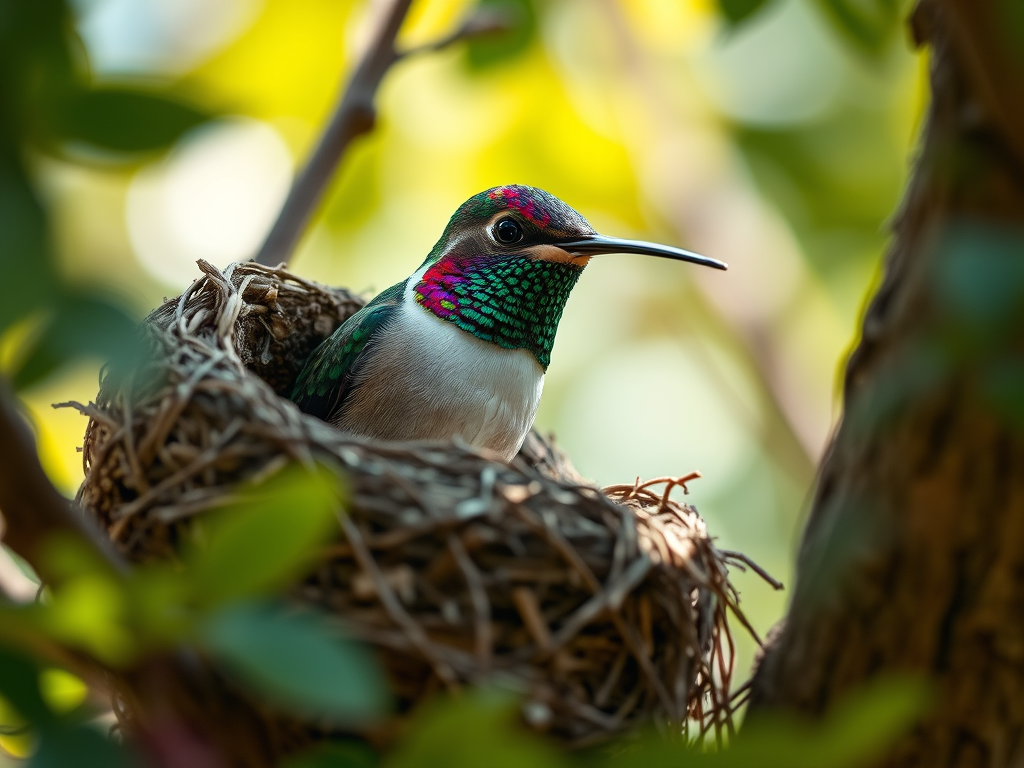
AI image created for this post
One-Time
Monthly
Yearly
Make a one-time or recurring donation to support daily Barnstorming posts
The sunlight now lay over the valley perfectly still. I went over to the graveyard beside the church and found them under the old cedars… I am finding it a little hard to say that I felt them resting there, but I did…
I saw that, for me, this country would always be populated with presences and absences, presences of absences, the living and the dead. The world as it is would always be a reminder of the world that was, and of the world that is to come. ~Wendell Berry in Jayber Crow
In great deeds, something abides. On great fields, something stays. Forms change and pass; bodies disappear; but spirits linger, to consecrate ground for the vision-place of souls. And reverent men and women from afar, and generations that know us not and that we know not of, heart-drawn to see where and by whom great things were suffered and done for them, shall come to this deathless field, to ponder and dream; and lo! the shadow of a mighty presence shall wrap them in its bosom, and the power of the vision pass into their souls. This is the great reward of service. To live, far out and on, in the life of others; this is the mystery of the Christ, –to give life’s best for such high sake that it shall be found again unto life eternal. ~Major-General Joshua Chamberlain, Gettysburg, Pennsylvania 1889
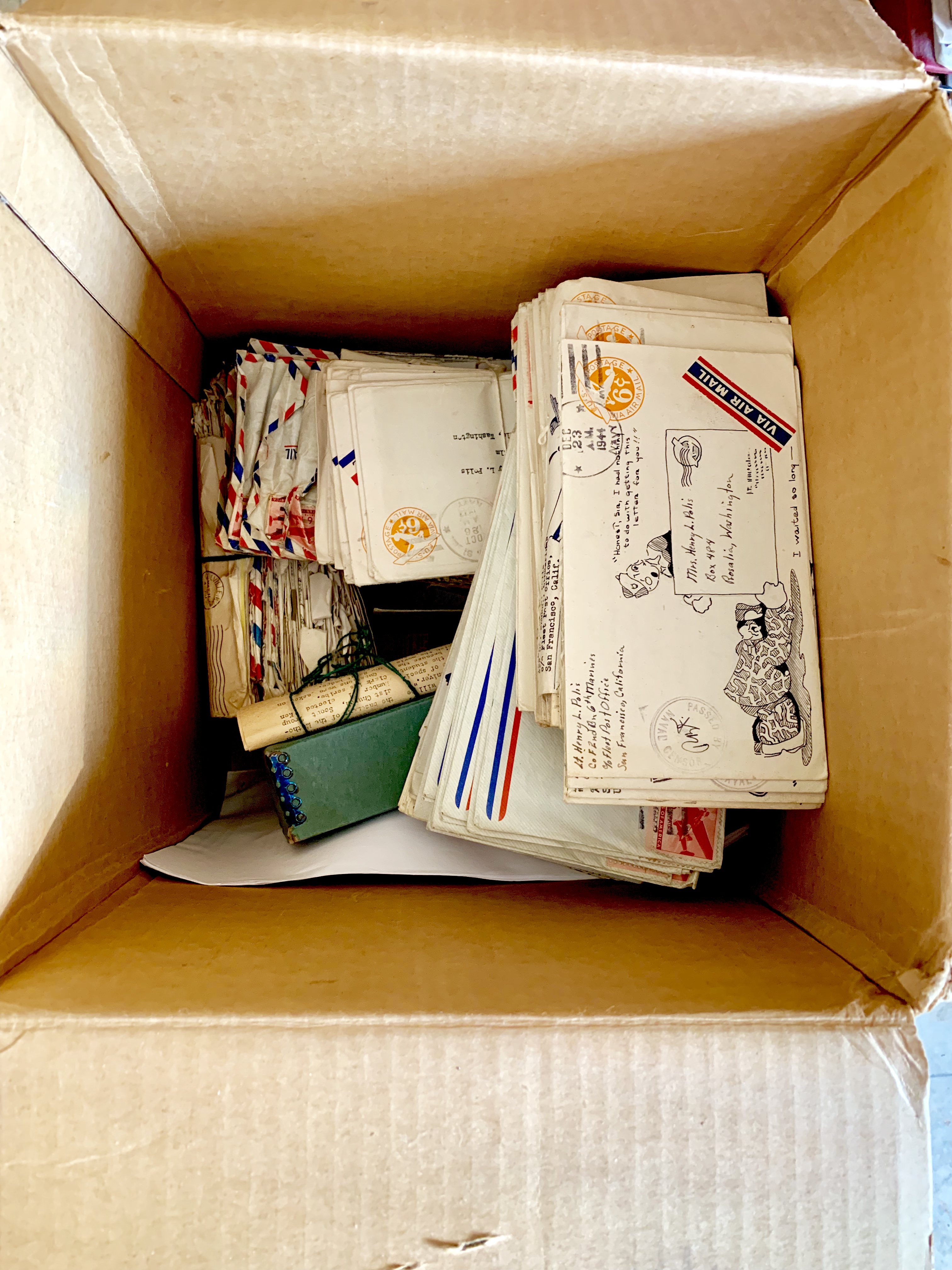
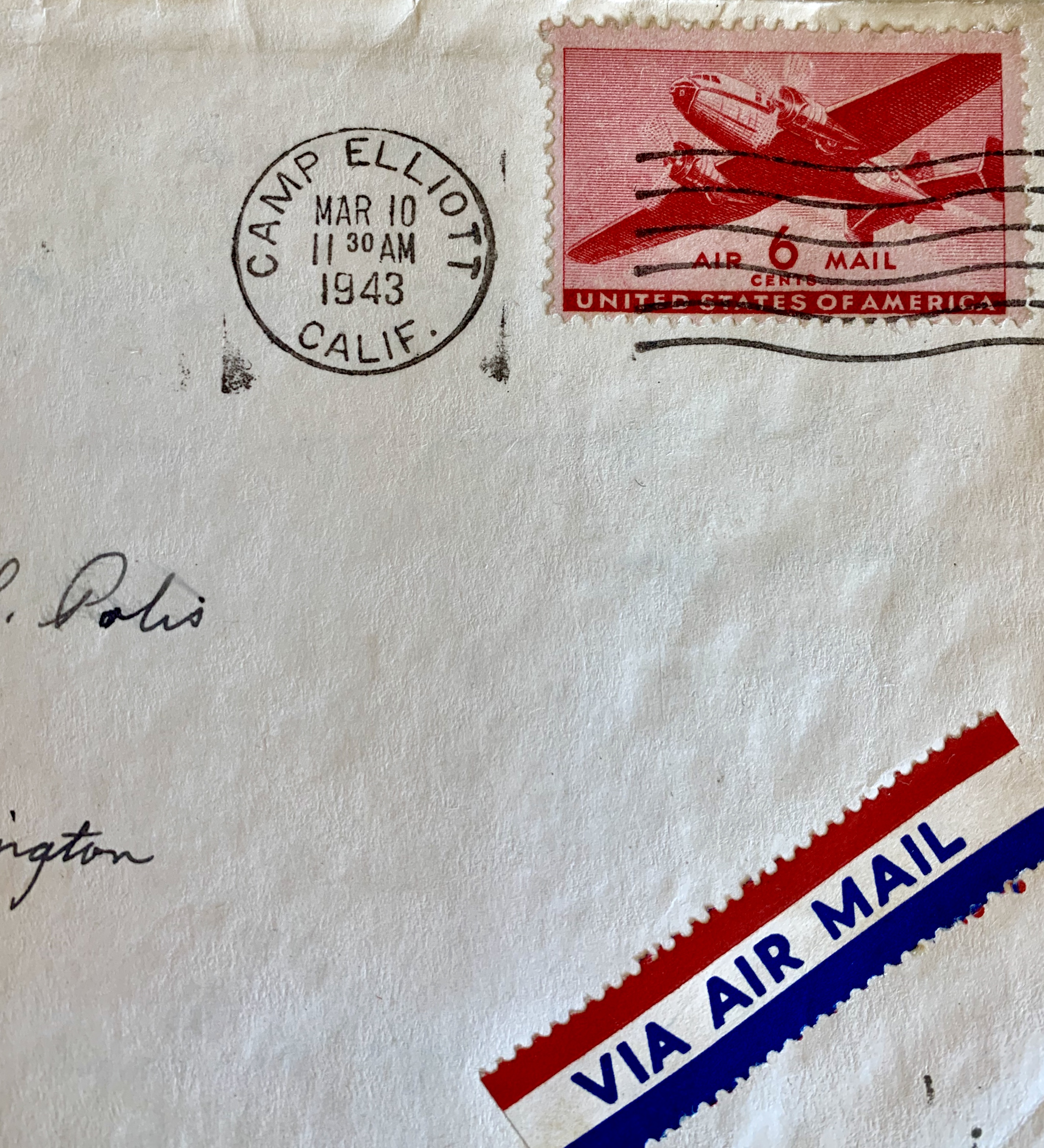
A box of over 700 letters, exchanged between my parents from late 1941 to mid-1945, sat unopened for six decades.
I started reading. I felt them resting in those inked words.
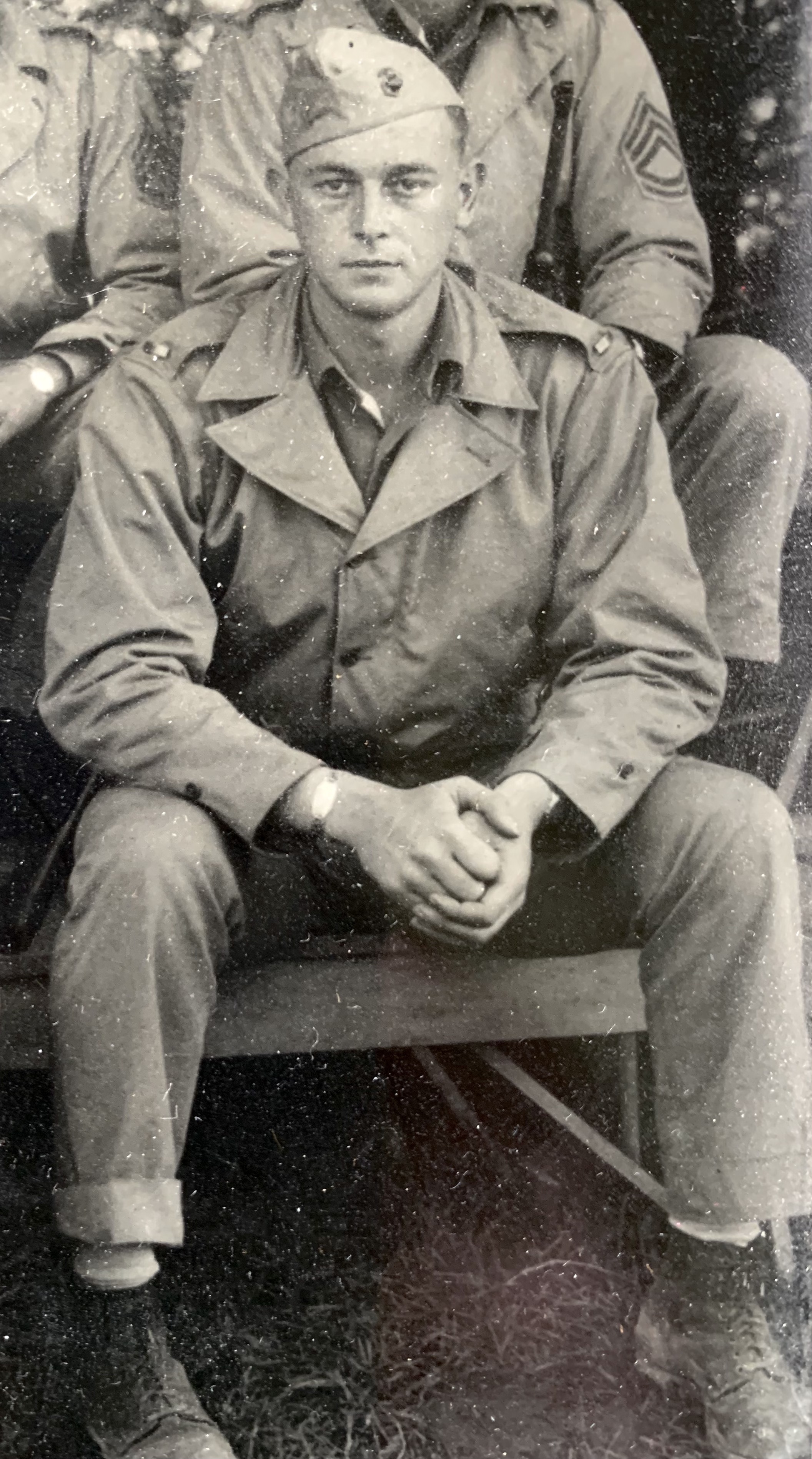
My parents barely knew each other before marrying quickly on Christmas Eve 1942 – the haste due to the uncertain future for a newly trained Second Lieutenant in the Marine Corps. They only had a few weeks together before she returned home to her rural teaching position and he readied himself to be shipped out for the island battles to come.
They had no idea they would not see each other for another 30+ months or even see each other again at all. They had no idea their marriage would fall apart 35 years later and they would reunite a decade after the divorce for five more years together before Dad died of cancer at age 73.
A presence of absence: the letters do contain the long-gone but still-familiar voices of my parents, but they are the words and worries of youngsters of 20 and 21, barely prepared for the horrors to come from war and interminable waiting. When he was fighting battles on Tarawa, Saipan, and Tinian, no letters or news would be received for a month or more, otherwise they tried to write each other daily, though with minimal news to share due to military censorship. They speak mostly of their desire for a normal life together rather than a routine centered on mailbox, pen and paper and waiting – lots and lots of waiting.
I’m not sure what I hoped to find in these letters. Perhaps I hoped for flowery romantic whisperings and the poetry of longing and loneliness. Instead I am reading plain spoken words from two people who somehow made it through those awful years to make my sister and brother and myself possible.
Our inheritance is contained in this musty box of words bereft of poetry. But decades later my heart is moved by these letters – I carefully refold them back into their envelopes and replace them gently back in order. A six cent airmail stamp – in fact hundreds and hundreds of them – was a worthwhile investment in the future, not only for themselves and their family to come, but for generations of U.S. citizens who tend to take their freedom for granted.
Thank you, Dad and Mom, for the early years together you gave up to make today possible for us and the generations to follow.
I hear the mountain birds The sound of rivers singing A song I’ve often heard It flows through me now So clear and so loud I stand where I am And forever I’m dreaming of home I feel so alone, I’m dreaming of home
It’s carried in the air The breeze of early morning I see the land so fair My heart opens wide There’s sadness inside I stand where I am And forever I’m dreaming of home I feel so alone, I’m dreaming of home
This is no foreign sky I see no foreign light But far away am I From some peaceful land I’m longing to stand A hand in my hand …forever I’m dreaming of home I feel so alone, I’m dreaming of home ~Lori Barth and Philippe Rombi “I’m Dreaming of Home”
AI image created for this post
One-Time
Monthly
Yearly
Make a one-time or recurring donation to support daily Barnstorming posts
I am not resigned to the shutting away of loving hearts in the hard ground. So it is, and so it will be, for so it has been, time out of mind: Into the darkness they go, the wise and the lovely. Crowned With lilies and with laurel they go; but I am not resigned.
Lovers and thinkers, into the earth with you. Be one with the dull, the indiscriminate dust. A fragment of what you felt, of what you knew, A formula, a phrase remains,—but the best is lost.
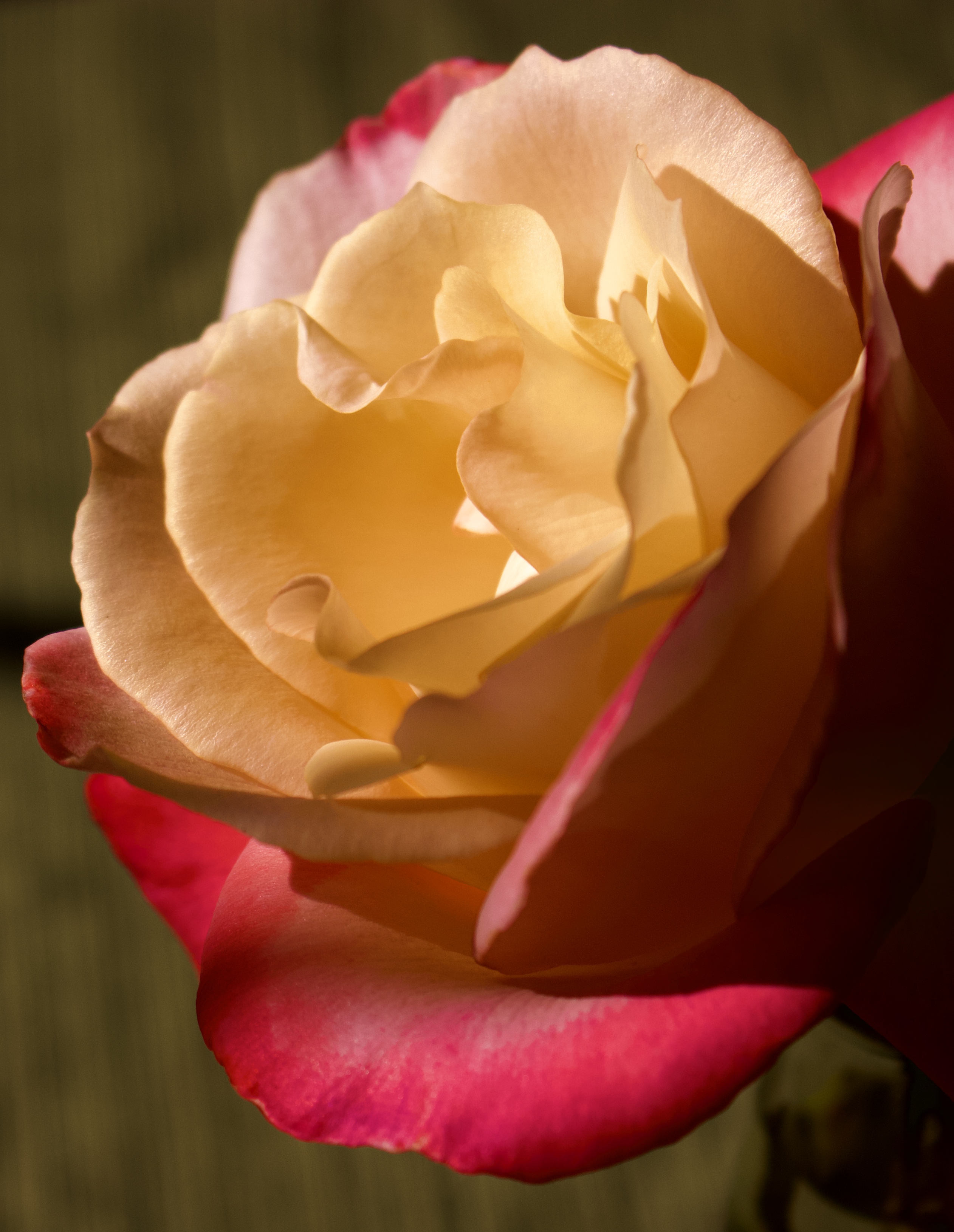
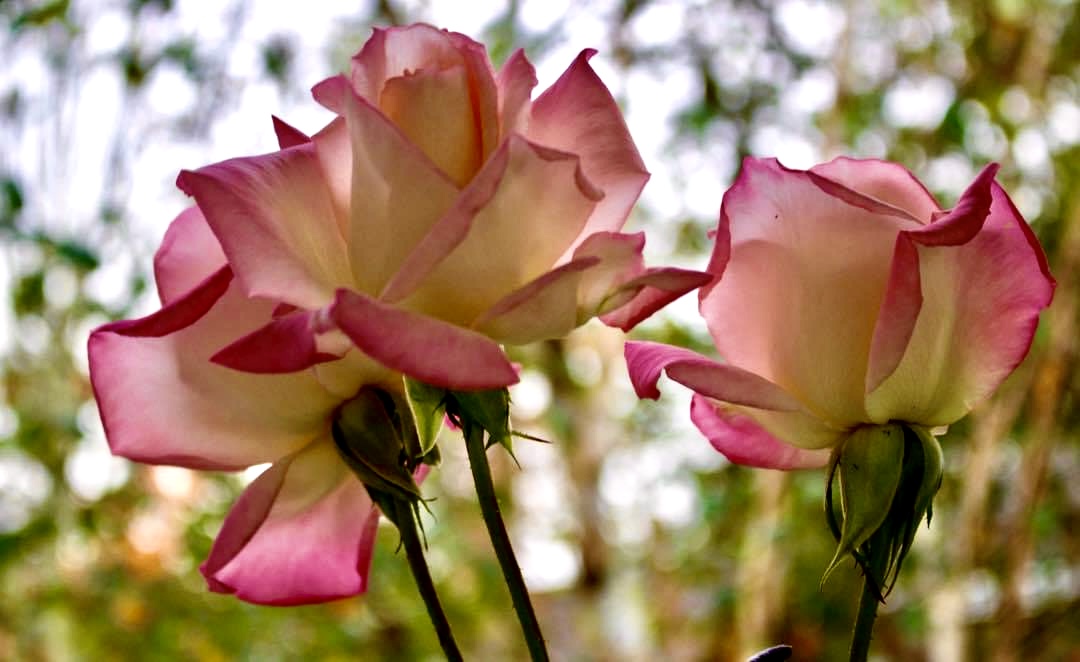
The answers quick and keen, the honest look, the laughter, the love,— They are gone. They are gone to feed the roses. Elegant and curled Is the blossom. Fragrant is the blossom. I know. But I do not approve. More precious was the light in your eyes than all the roses in the world.
Down, down, down into the darkness of the grave Gently they go, the beautiful, the tender, the kind; Quietly they go, the intelligent, the witty, the brave. I know. But I do not approve. And I am not resigned. ~Edna St. Vincent Millay “Dirge Without Music”
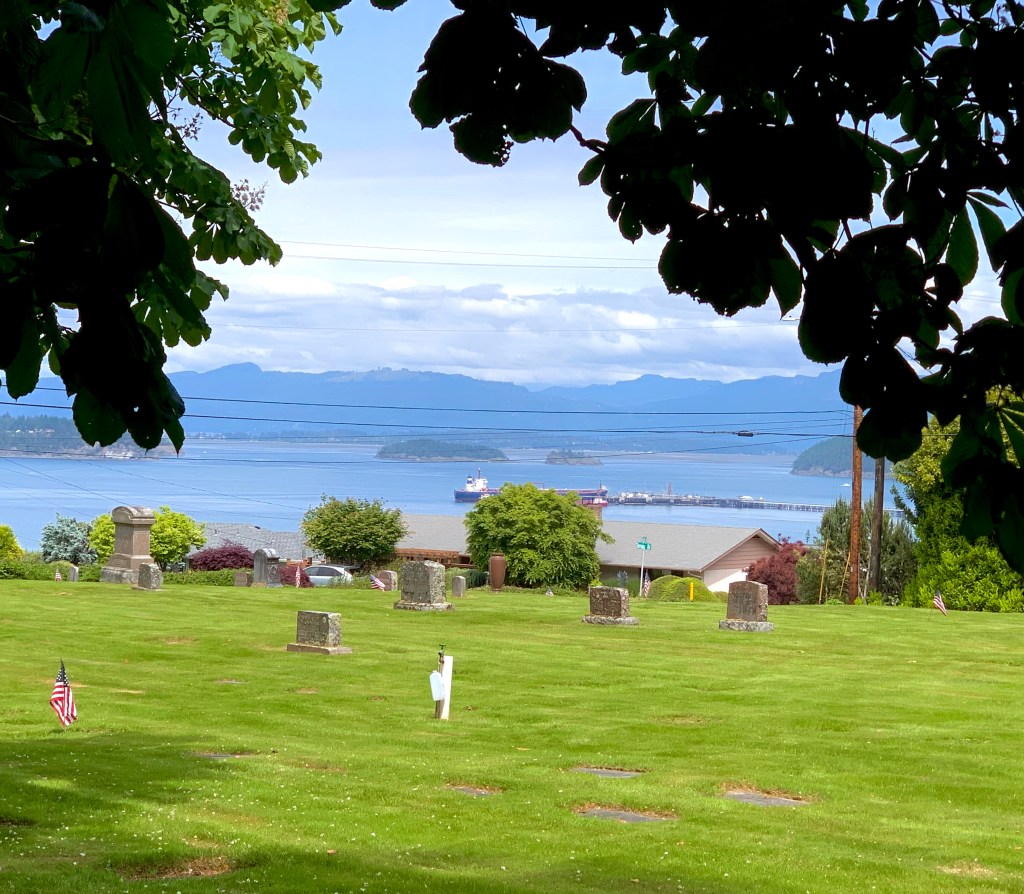
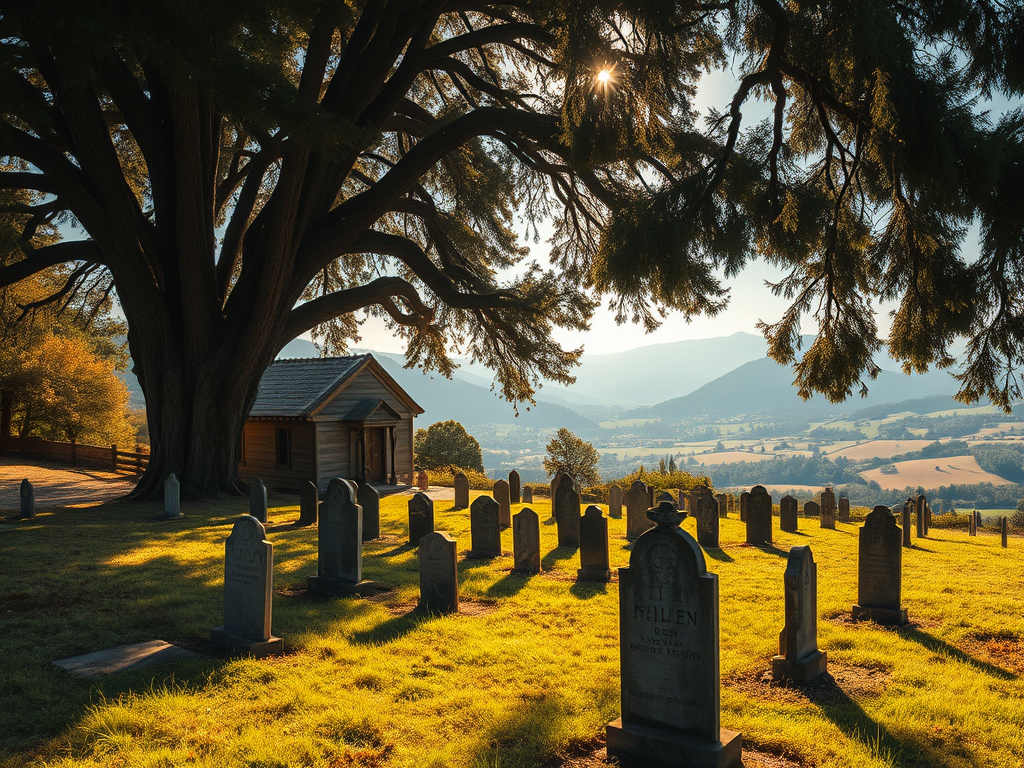
Each Memorial Day weekend without fail, we gather with family, have lunch, reminisce, and trek to a cemetery high above Puget Sound to catch up with our relatives who lie there, still.
Some for over 110 years, some for barely more than a decade, some we knew and loved and miss every day, others not so much as they are unknown to us except on genealogy charts, names and dates and stones and stories:
the red-haired great-grandmother who died too young, the aunt who was eight when lymphoma took her, the grandmother who dreamed of world travel too late, the great-grandfather Yukon river boat captain, the grandfather logger and stump farmer, the great aunt unmarried school teacher who hid an oil well, the two in-laws who forever lie next to each other but could not co-exist in the same room while they lived and breathed.
Yet we know each of these (as we know ourselves and others)
could be tender and kind, though flawed and broken, had been beautiful and strong, though wrinkled and frail, was hopeful and faithful, though too soon in the ground.
We know this about them as we know it about ourselves: someday we too will feed roses, the light in our eyes transformed into elegant swirls emitting the fragrant scent of heaven.
No one asks if we approve. Nor am I resigned to this though I know: So it is, so it has been, so it will be for me someday.
AI image created for this post
One-Time
Monthly
Yearly
Make a one-time or recurring donation to support daily Barnstorming posts
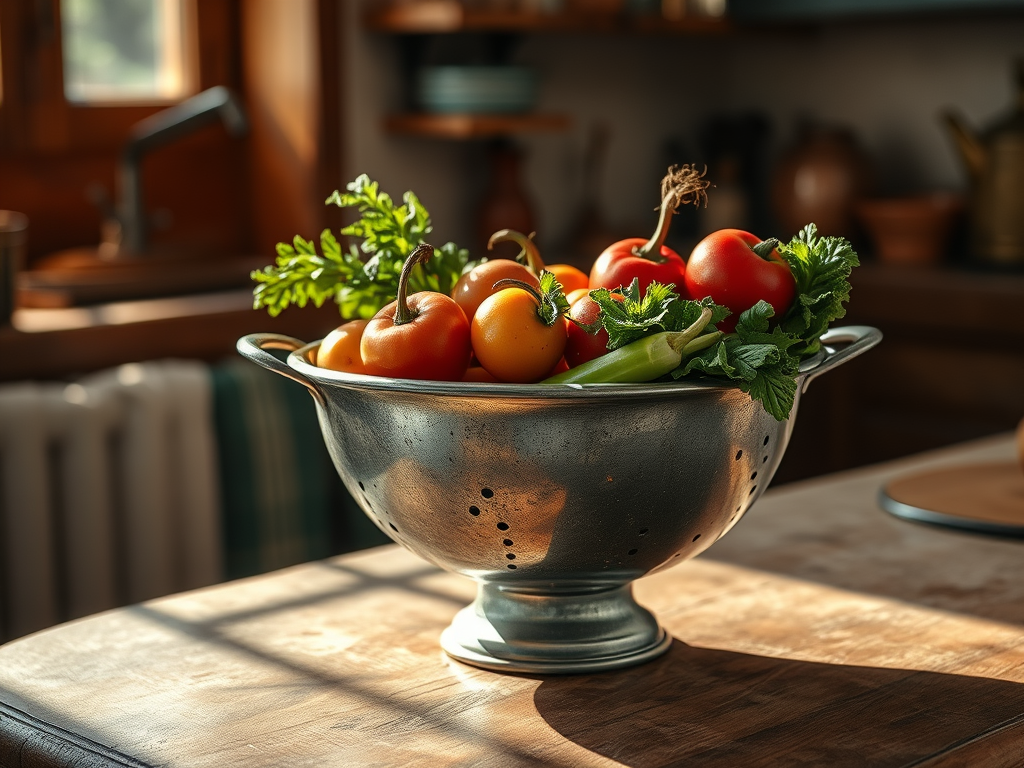
Holes in the shape of stars punched in gray tin, dented, cheap, beaten by each of her children with a wooden spoon.
Noodle catcher, spaghetti stopper, pouring cloudy rain into the sink, swirling counter clockwise down the drain, starch slime on the backside, caught in the piercings.
Scrubbed for sixty years, packed and unpacked, the baby’s helmet during the cold war, a sinking ship in the bathtub, little boat of holes.
Dirt scooped in with a plastic shovel, sifted to make cakes and castles. Wrestled from each other’s hands, its tin feet bent and re-bent.
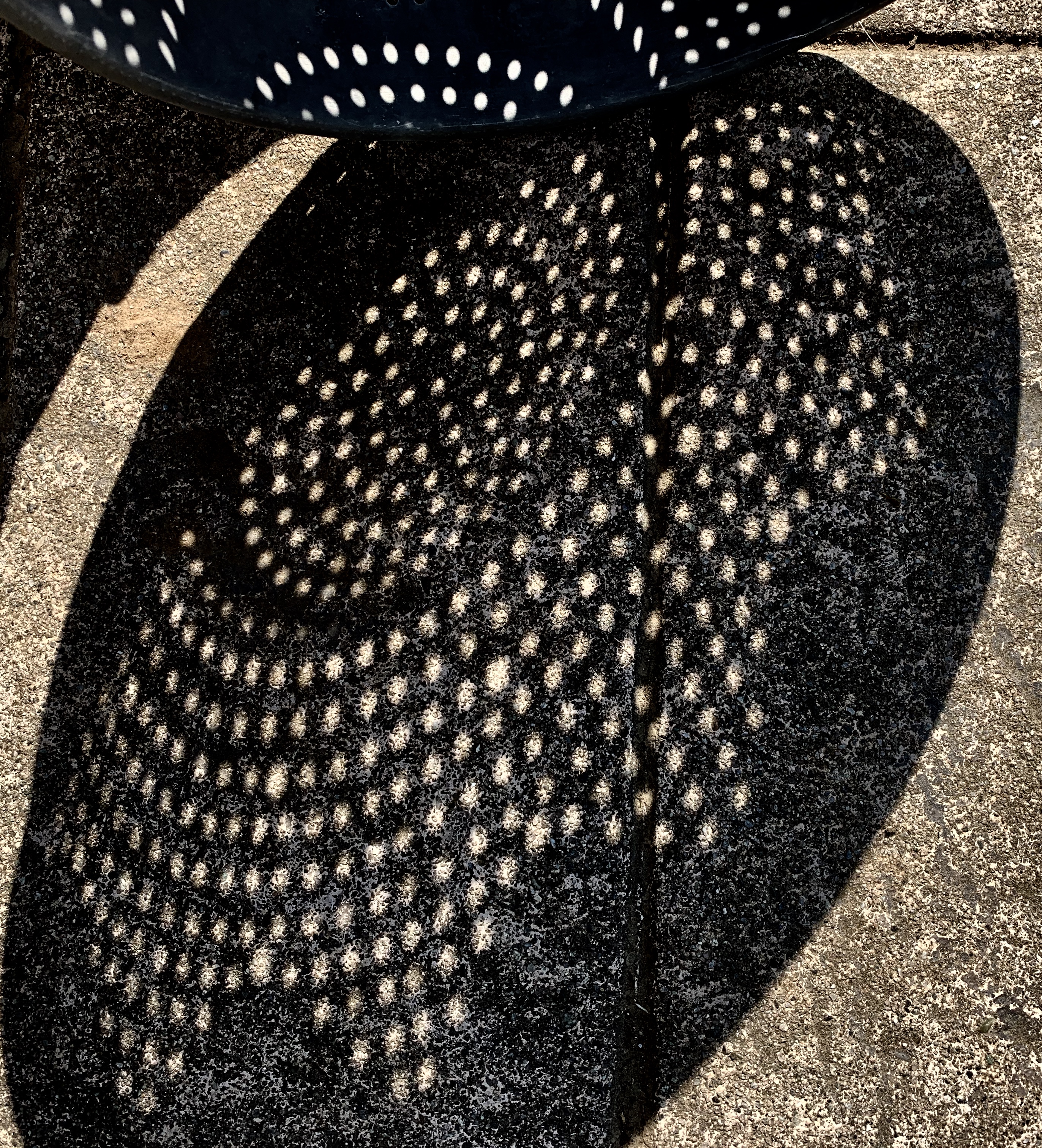
Bowl daylight fell through onto freckled faces, noon stars on the pavement, the universe we circled aiming jagged stones, rung bells it caught and held. ~Dorianne Laux “My Mother’s Colander”
Many of my mother’s kitchen things, some over eighty years old, are still packed away in boxes that I haven’t had the emotional wherewithal to open. They sit waiting for me to sort and purge and save and weep.
It is as if I haven’t wanted to say goodbye after her death at age 88, now seventeen years ago.
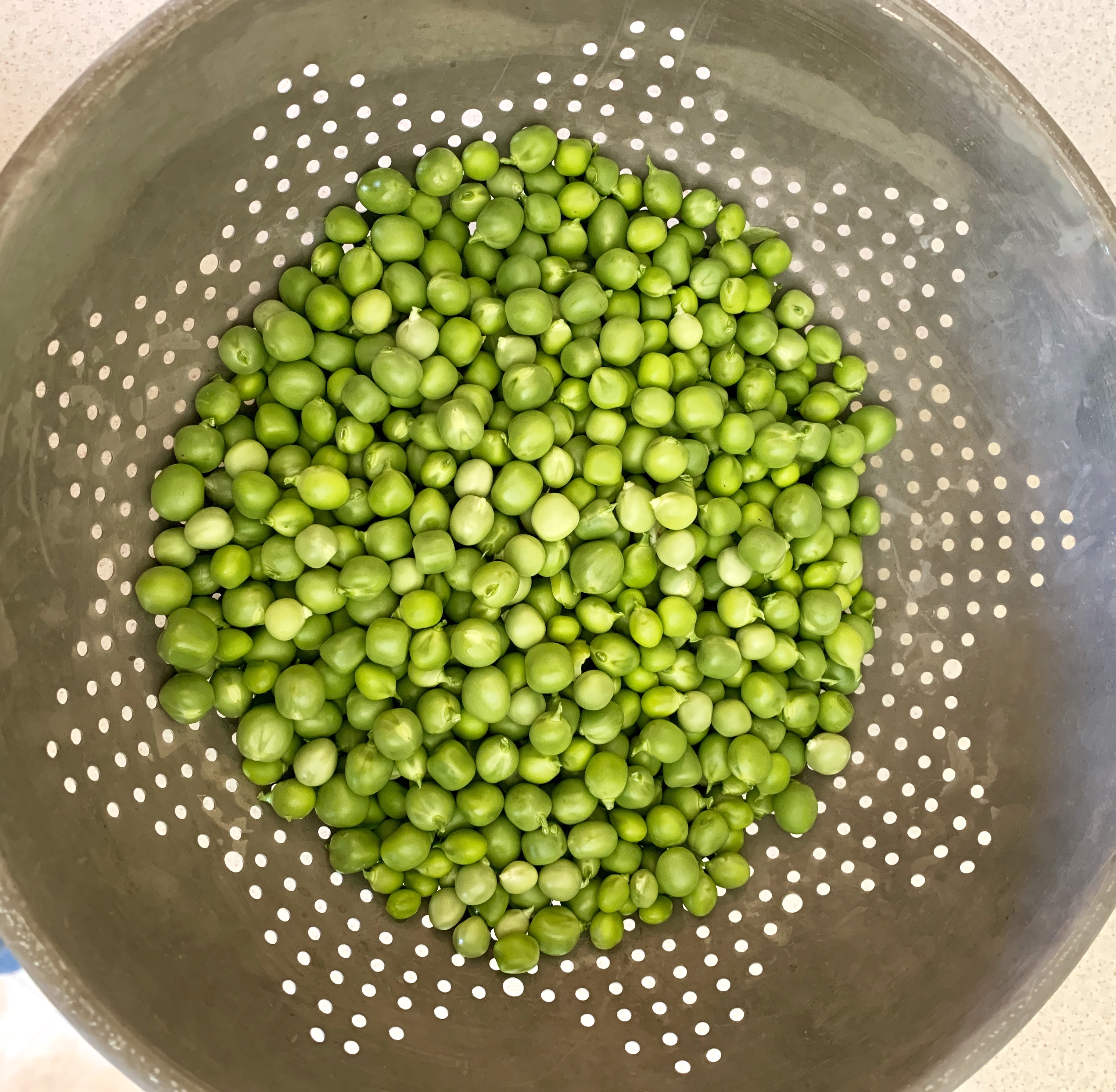
This particular kitchen item- her old dented metal colander – found its way to me when I moved into my first apartment some 49 years ago. She had purchased a bright green plastic colander at a Tupperware party so she felt the old metal one was somehow outdated, overworked and plain, and ready for retirement.
It had held hundreds of pounds of rinsed garden vegetables during my childhood, had drained umpteen pasta noodles, had served as a sifter in our sandbox, and a helmet for many a pretend rocket launch to infinity and beyond.
Dented and battered, it still works fine, thank you very much, for all intended and some unintended purposes. It does make me wonder what other treasures may surprise me as I begin to open and sort my mother’s boxes. Her things have remained in suspended animation, waiting to be rediscovered.
I know there will be tons of tupperware, carefully saved yogurt containers with lids, and quite likely a hoard of pickle jars. As a child of the depression, she saved anything that could be potentially used again.
Perhaps these items have waited patiently to be touched lovingly and with distinct purpose as they once were, and be remembered for the part they played in one woman’s long sacrificial and faith-filled life.
Maybe, just maybe, it will feel like I’ve unpacked Mom once again and maybe this time it can be both a hello and a goodbye.
To infinity and beyond…
AI image created for this post
One-Time
Monthly
Yearly
Make a one-time or recurring donation to support daily Barnstorming posts
And the secret garden bloomed and bloomed and every morning revealed new miracles.
In the robin’s nest there were Eggs and the robin’s mate sat upon them keeping them warm with her feathery little breast and careful wings.
….in the garden there was nothing which was not quite like themselves, nothing which did not understand the wonderfulness of what was happening to them, the immense, tender, terrible, heart-breaking beauty and solemnity of Eggs.
If there had been one person in that garden who had not known through all his or her innermost being that if an Egg were taken away or hurt the whole world would whirl round and crash through space and come to an end—
if there had been even one who did not feel it and act accordingly there could have been no happiness even in that golden springtime air.
But they all knew it and felt it and the robin and his mate knew they knew it. ~Frances Hodgson Burnett from The Secret Garden
Some say you’re lucky If nothing shatters it.
But then you wouldn’t Understand poems or songs. You’d never know Beauty comes from loss.
It’s deep inside every person: A tear tinier Than a pearl or thorn.
We all start out in the secret garden of a fallopian tube as an egg pierced to become so much more… – each tiny part of the least of us – – whether brain, heart, lungs or liver – wonderfully made, even if discarded or fallen from the nest.
The act of creation of something so sacred is immense, tender, terrible, beautiful, heart-breaking, and so very solemn and joyful.
The act of harming one tiny part of creation hurts the whole world; we risk whirling round and crashing through space and coming to an end.
If there is even one who does not feel it and act accordingly, there can be no happiness.
But they all knew it and felt it and they knew they knew it.
And what is born broken is beloved nevertheless.
photo by Josh ScholtenAI image created for this post
One-Time
Monthly
Yearly
Make a one-time or recurring donation to support daily Barnstorming posts
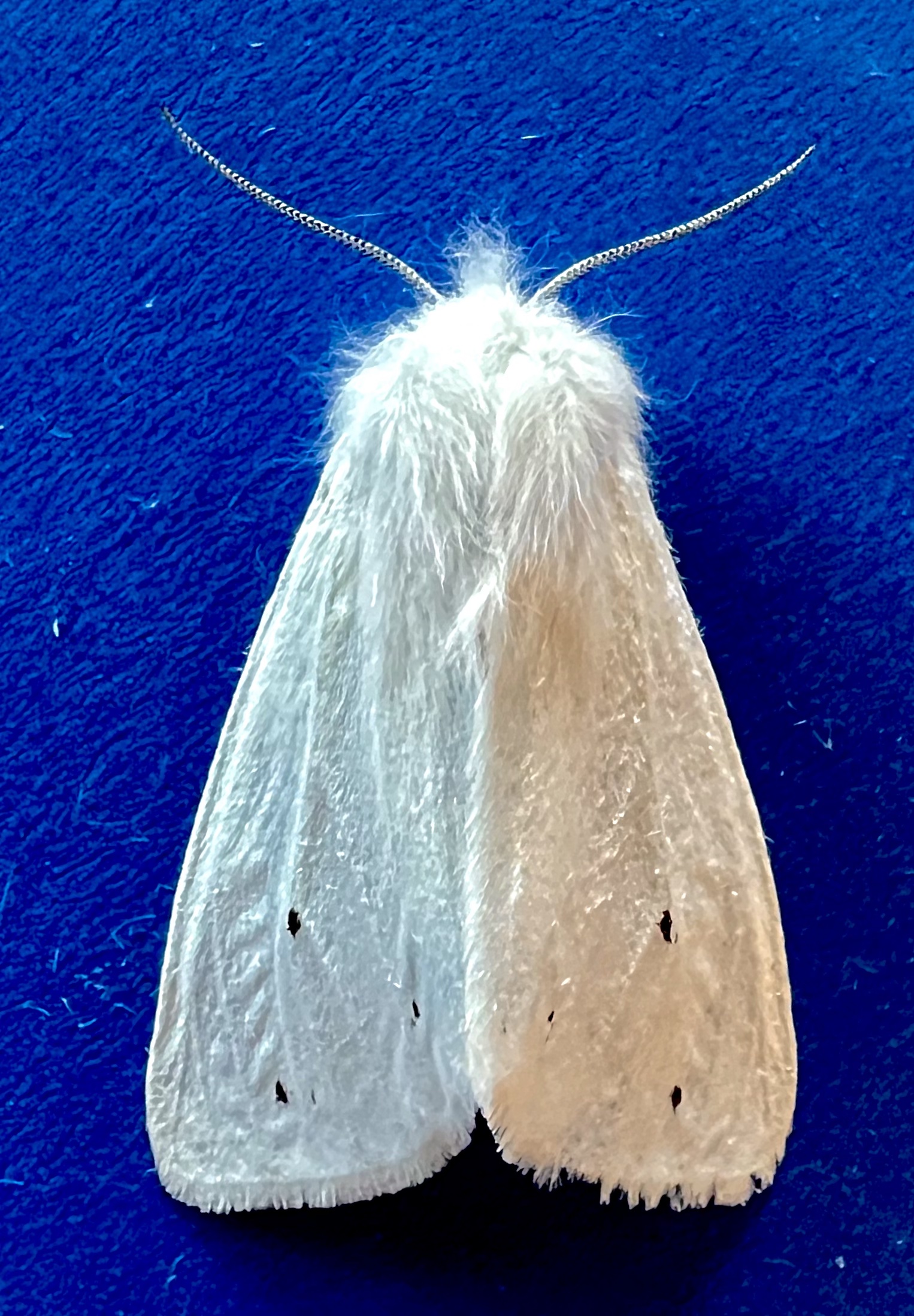
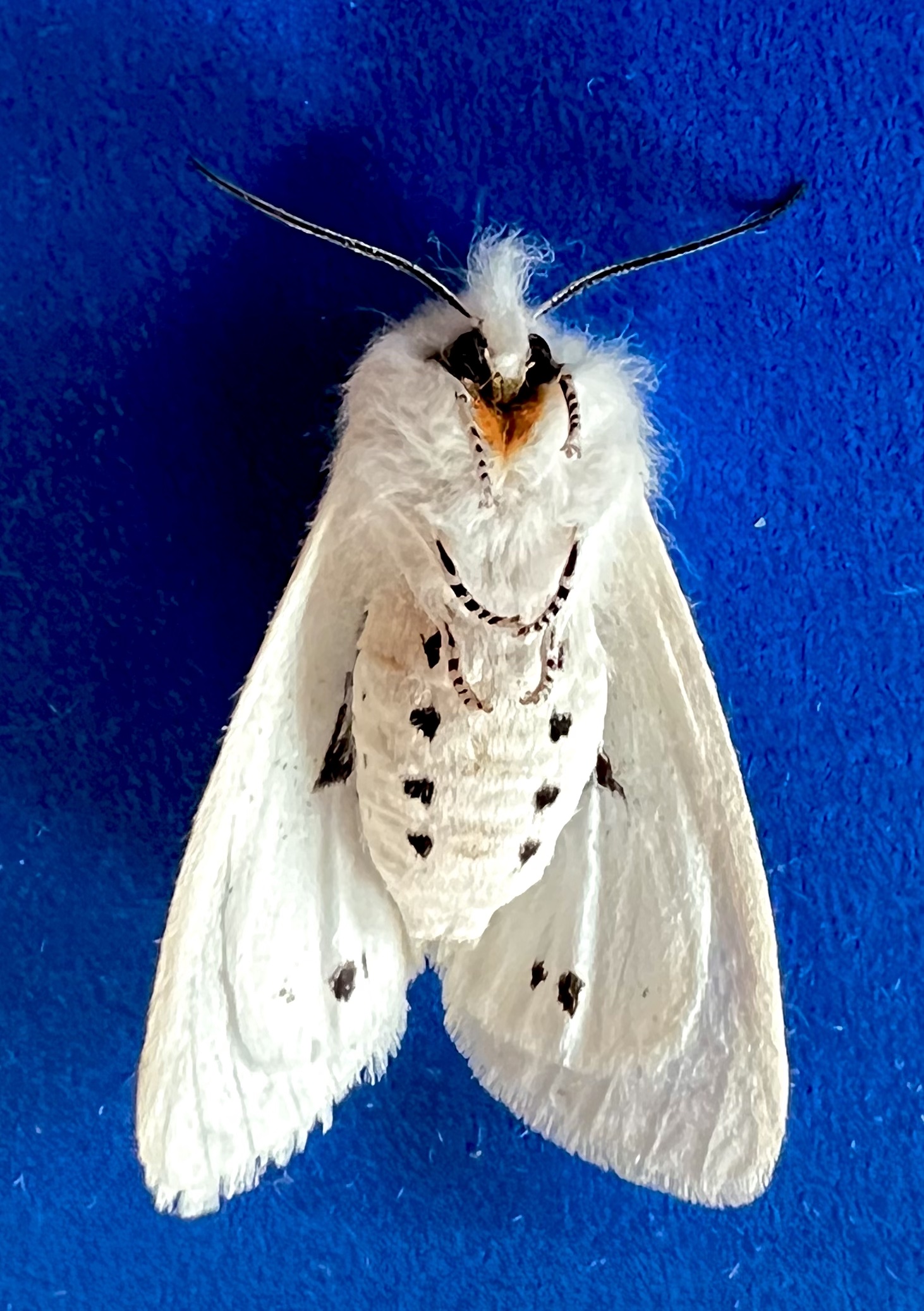
i was talking to a moth the other evening he was trying to break into an electric light bulb and fry himself on the wires
why do you fellows pull this stunt i asked him because it is the conventional thing for moths or why if that had been an uncovered candle instead of an electric light bulb you would now be a small unsightly cinder have you no sense
plenty of it he answered but at times we get tired of using it we get bored with the routine and crave beauty and excitement fire is beautiful and we know that if we get too close it will kill us but what does that matter it is better to be happy for a moment and be burned up with beauty than to live a long time and be bored all the while so we wad all our life up into one little roll and then we shoot the roll that is what life is for it is better to be a part of beauty for one instant and then cease to exist than to exist forever and never be a part of beauty our attitude toward life is come easy go easy we are like human beings used to be before they became too civilized to enjoy themselves
and before i could argue him out of his philosophy he went and immolated himself on a patent cigar lighter i do not agree with him myself i would rather have half the happiness and twice the longevity but at the same time i wish there was something i wanted as badly as he wanted to fry himself
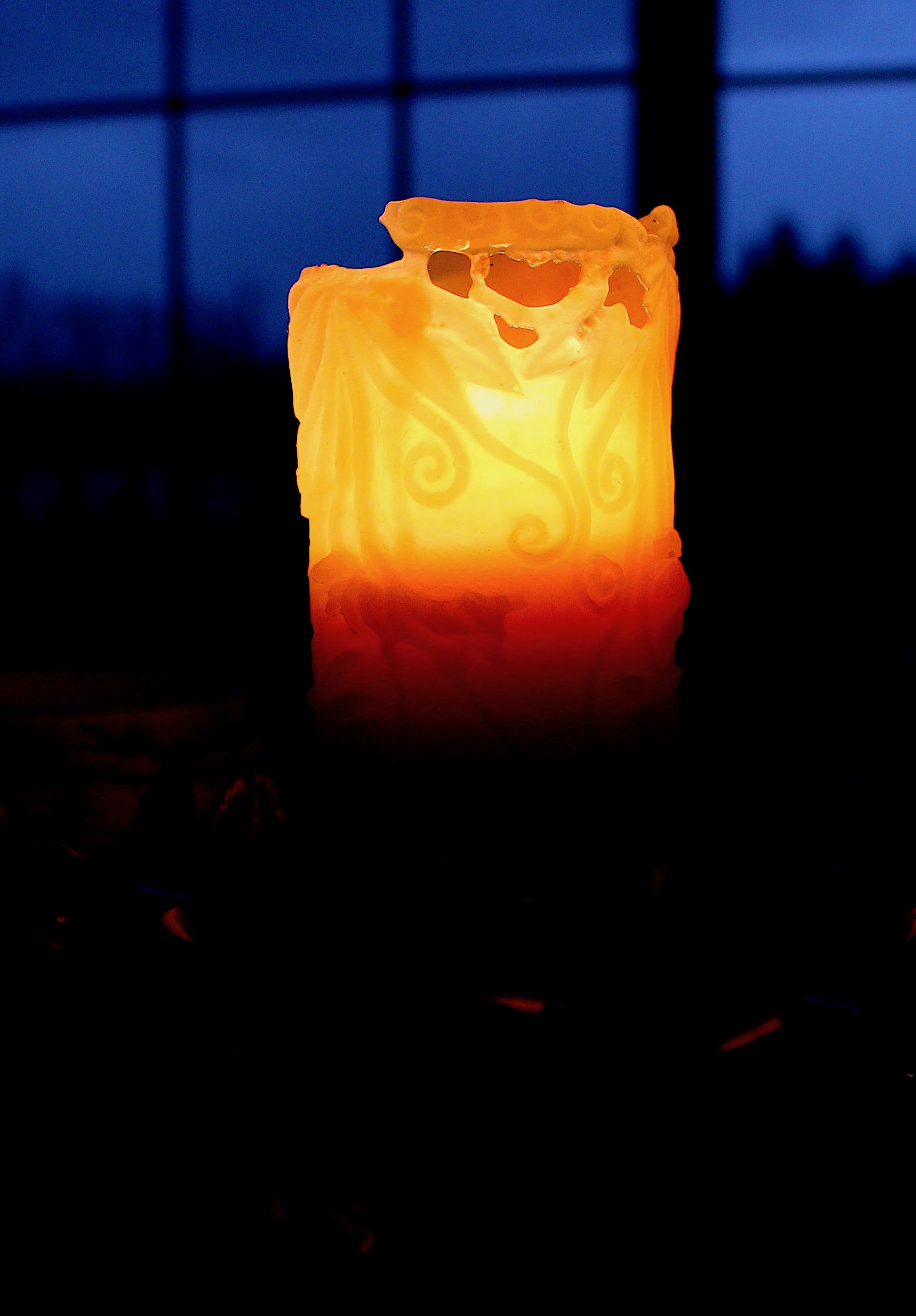
One night a moth flew into the candle, was caught, burned dry, and held. I must have been staring at the candle, or maybe I looked up when a shadow crossed my page; at any rate, I saw it all…
Her moving wings ignited like tissue paper…
And then this moth essence, this spectacular skeleton, began to act as a wick. She kept burning. The wax rose in the moth’s body from her soaking abdomen to her thorax to the jagged hole where her head should be, and widened into flame, a saffron-yellow flame that robed her to the ground like any immolating monk. That candle had two wicks, two flames of identical height, side by side. The moth’s head was fire. She burned for two hours, until I blew her out. ~Annie Dillard from “The Death of the Moth” from Holy the Firm
The struggle was over.
The insignificant little creature now knew death. As I looked at the dead moth, this minute wayside triumph of so great a force over so mean an antagonist filled me with wonder. Just as life had been strange a few minutes before, so death was now as strange.
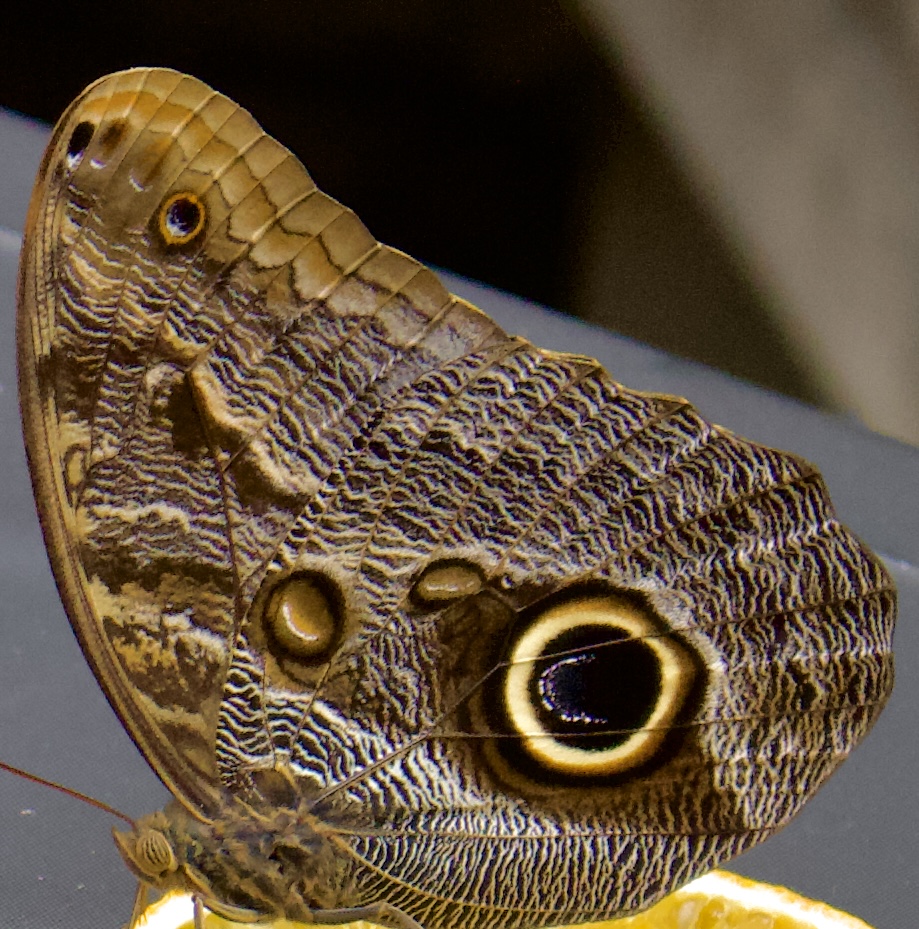
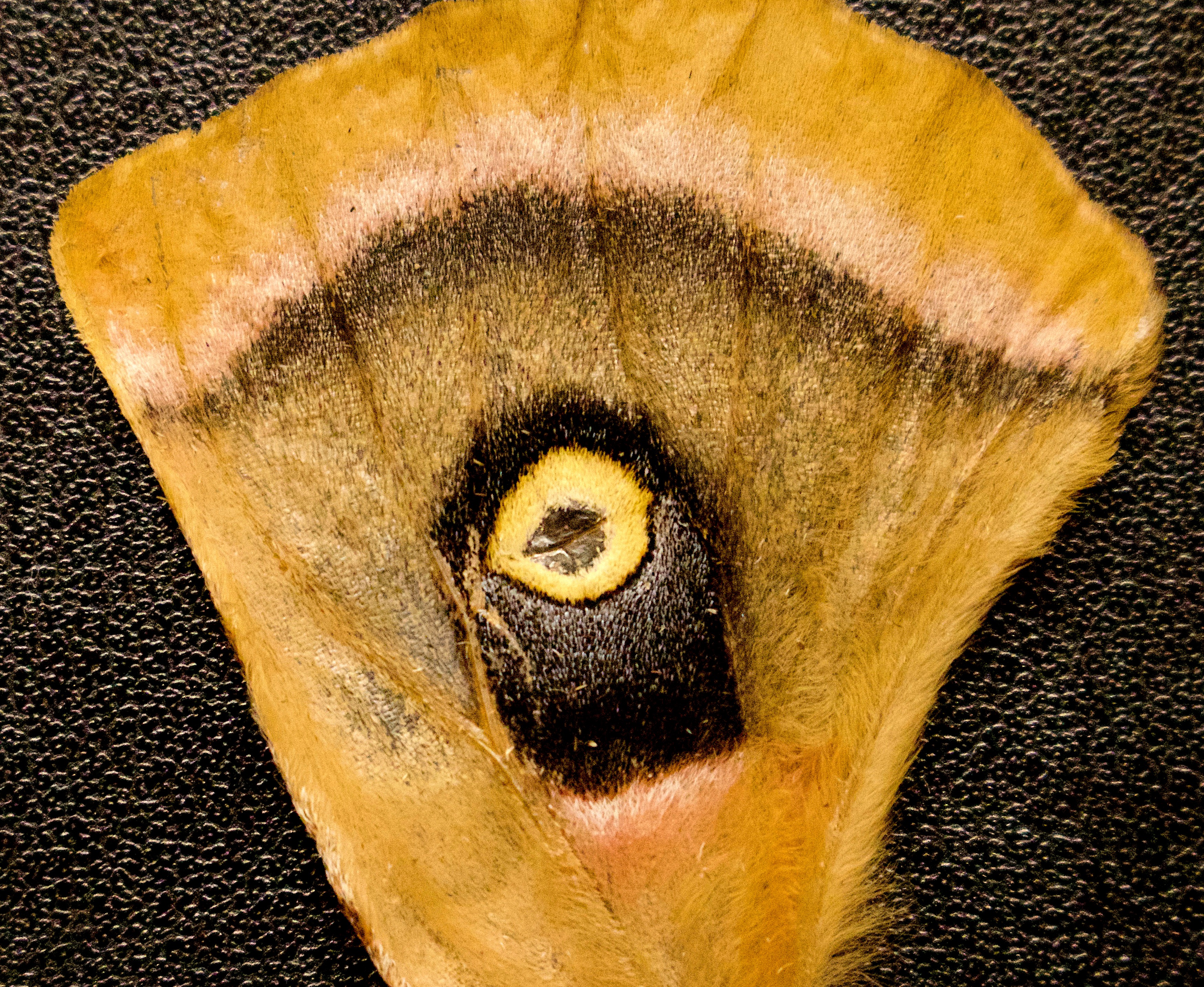
The moth having righted himself now lay most decently and uncomplainingly composed. O yes, he seemed to say, death is stronger than I am. ~Virginia Woolf from “The Death of a Moth”
I too would take half the happiness and twice the longevity over one moment of ecstasy.
But I admire the blind passion of a tiny creature who will beat itself senseless on a light bulb, or fly into a flame to become cinders, or struggle so hard to live upright rather than upside down, that it dies in the struggle.
Why are famous poets and essayists fascinated by the tiny deaths they witness on their front porches, in their kitchens or at their writing desk?
Death is never tiny at all. Nevertheless, death is ceasing to be, after a unique and intentional creation, whether a moth, a mother, or ourselves.
We live today. Look for a moment of beauty to enjoy. Let’s be sensible about what we want so badly. As one tiny part of matter, we matter. And when we die, it is never a tiny death.
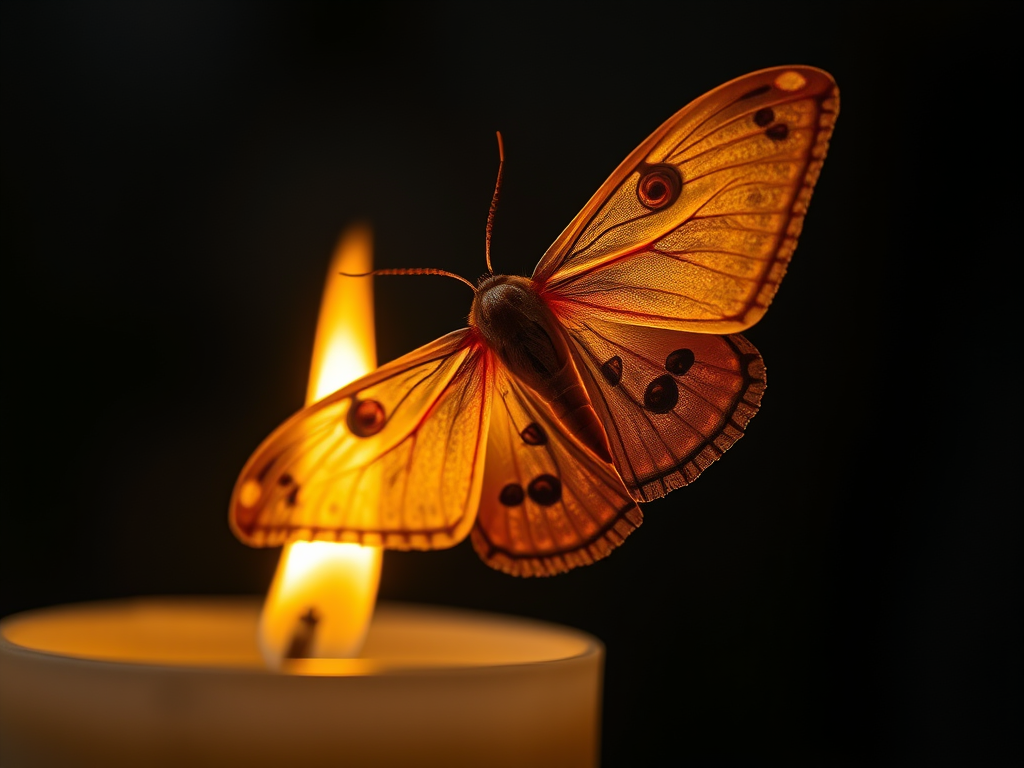
AI image created for this post
Lyrics: A day may come that asks of us all we have to give: a day we never would have sought and yet we have to live. If it should be our destiny to live in such a day, let our faith and love be worthy of the ones who showed the way. The ones we now call heroes The ones we say their memory will not die – they were no different in their day than you or I. They were no different in their day. than you or I. ~Grahame Davies
One-Time
Monthly
Yearly
Make a one-time or recurring donation to support daily Barnstorming posts
Before the second summit party began the ascent of the princess of mountains, an ominous black cloud settled slowly around the summit block, persuading us to take a rest day, but morale was good. The next day at seven in the evening, my daughter Devi was on her last pitch, and it took her until midnight to haul up over the final lip. A long day.
Two days later, a blizzard kept us in our tents, but the next morning, Devi was stricken, saying calmly, “She is calling me. I am going to die,” before she fell into unconsciousness. I tried to revive her, mouth-to-mouth, but felt her lips grow cold against mine. We had lost her. My daughter was gone. I and the other climbers wept.
Her fiancé Andy and I bundled her in her sleeping bag and slipped her off the precipice of the North- East face. I said we had committed her to the deep. She had been the driving force behind this expedition, as she was inexorably drawn to her namesake. The Bliss-Giving Goddess had claimed her own. An excerpt from her last diary is inscribed on a stone placed in a high-altitude meadow of Patai:
“I stand on a windswept ridge at night with the stars bright above and I am no longer alone but I waver and merge with all the shadows that surround me. I am part of the whole and I am content.” ~Eleanor Swanson, Last Light on the West Face of Nanda Devifrom Non Finito
Nanda Devi peak, courtesy of Stanford Alpine Club
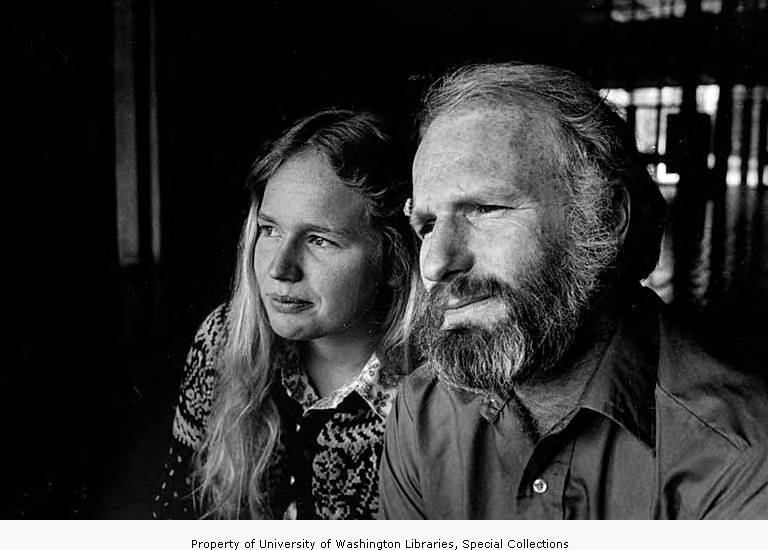
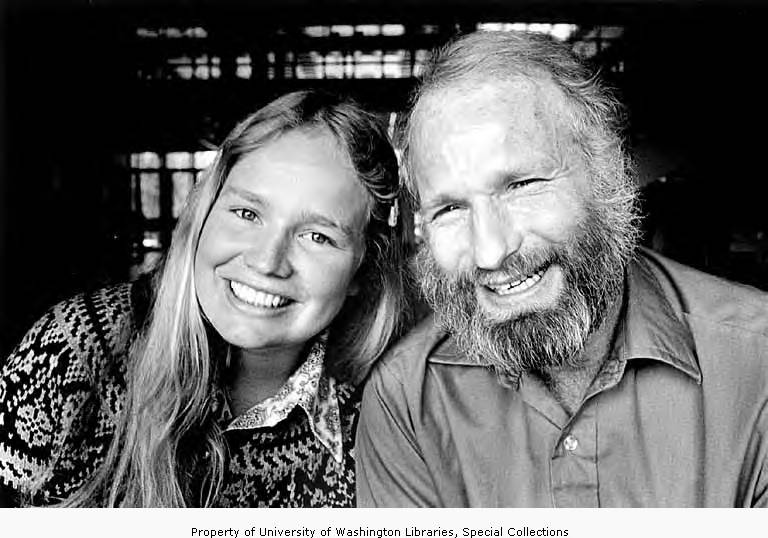
The ripple effect from Nanda Devi Unsoeld’s arrival as a new junior in Olympia High School in 1970 reached me within minutes, as I felt the impact of her presence on campus immediately. One of my friends elbowed me, pointing out a new girl being escorted down the hall by the assistant principal. Students stared at the wake she left behind: Devi had wildly flowing wavy long blonde hair, a friendly smile and bold curious eyes greeting everyone she met.
From the neck up, she fit right in with the standard appearance at the time: as the younger sisters of the 60’s generation of free thinking flower children, we tried to emulate them in our dress and style, going braless and choosing bright colors and usually skirts that were too short and tight. There was the pretense we didn’t really care how we looked, but of course we did care very much, with hours spent daily preparing the “casual carefree” look that would perfectly express our freedom from fashion trends amid our feminist longings.
Practicing careful nonconformity perfectly fit our peers’ expectations and aggravated our parents.
But Devi never looked like she cared what anyone else thought of her. The high school girls honestly weren’t sure what to make of her, speculating together whether she was “for real” and viewed her somewhat suspiciously, as if she was putting on an act.
The high school boys were mesmerized.
She preferred baggy torn khaki shorts or peasant skirts with uneven hems, loose fitting faded T shirts and ripped tennis shoes without shoelaces. Her bare legs were covered with long blonde hair, as were her armpits which she showed off while wearing tank tops. She pulled whole cucumbers from her backpack in class and ate them like cobs of corn, rind and all. She smelled like she had been camping without a shower for three days, but then riding her bike to school from her home 11 miles away in all kinds of weather accounted for that. One memorable day she arrived a bit late to school, pushing her bike through 6 inches of snow in soaking tennis shoes, wearing her usual broad smile of satisfaction.
As a daughter of two Peace Corps workers who had just moved back to the U.S. after years of service in Nepal, Devi had lived very little of her life in the United States. Her father Willi Unsoeld, one of the first American climbers to reach the summit of Mt. Everest up the difficult west face, had recently accepted a professorship in comparative religion at new local Evergreen College. He moved his wife and family back to the northwest to be near his beloved snowy peaks, suddenly immersing four children in an affluent culture that seemed foreign and wasteful.
Devi recycled before there was a word for it simply by never buying anything new and never throwing anything useful away, involved herself in social justice issues before anyone had coined the phrase, and was an activist behind the scenes more often than a leader, facilitating and encouraging others to speak out at anti-war rallies, organizing sit-ins for world hunger and volunteering in the local soup kitchen. She mentored adolescent peers to get beyond their self-consciousness and self-absorption to explore the world beyond the security of high school walls.
Regretfully, few of us followed her lead. We preferred the relative security and camaraderie of hanging out at the local drive-in to taking a shift at the local 24-hour crisis line. We showed up for our graduation ceremony in caps and gowns while the rumor was that Devi stood at the top of Mt. Rainier with her father that day.
I never saw Devi after high school but heard of her plans in 1976 to climb with an expedition to the summit of Nanda Devi, the peak in India for which she was named. She never returned, dying in her father’s arms as she suffered severe abdominal pain and irreversible high altitude sickness just below the summit. She lies forever buried in the ice on that faraway peak in India.
Her father died in an avalanche only a few years later, as he led an expedition of Evergreen students on a climb on Mt. Rainier, only 60 miles from home. Her mother, Jolene, later served in Congress from our district in Washington state.
Had Devi lived these last 50 years, I have no doubt she would have led our generation with her combination of charismatic boldness and excitement about each day’s new adventure. She lived without pretense, without hiding behind a mask of fad and fashion and conformity and without any desire for wealth or comfort.
I wish I had learned what she had to teach me when she sat beside me in class, encouraging me by her example to become someone more than the dictates of societal expectations. I secretly admired the freedom she embodied in not being concerned in the least about fitting in. Instead, I still mourn her loss all these years later, having to be content with the legacy she has now left behind on a snowy mountain peak that called her by name.
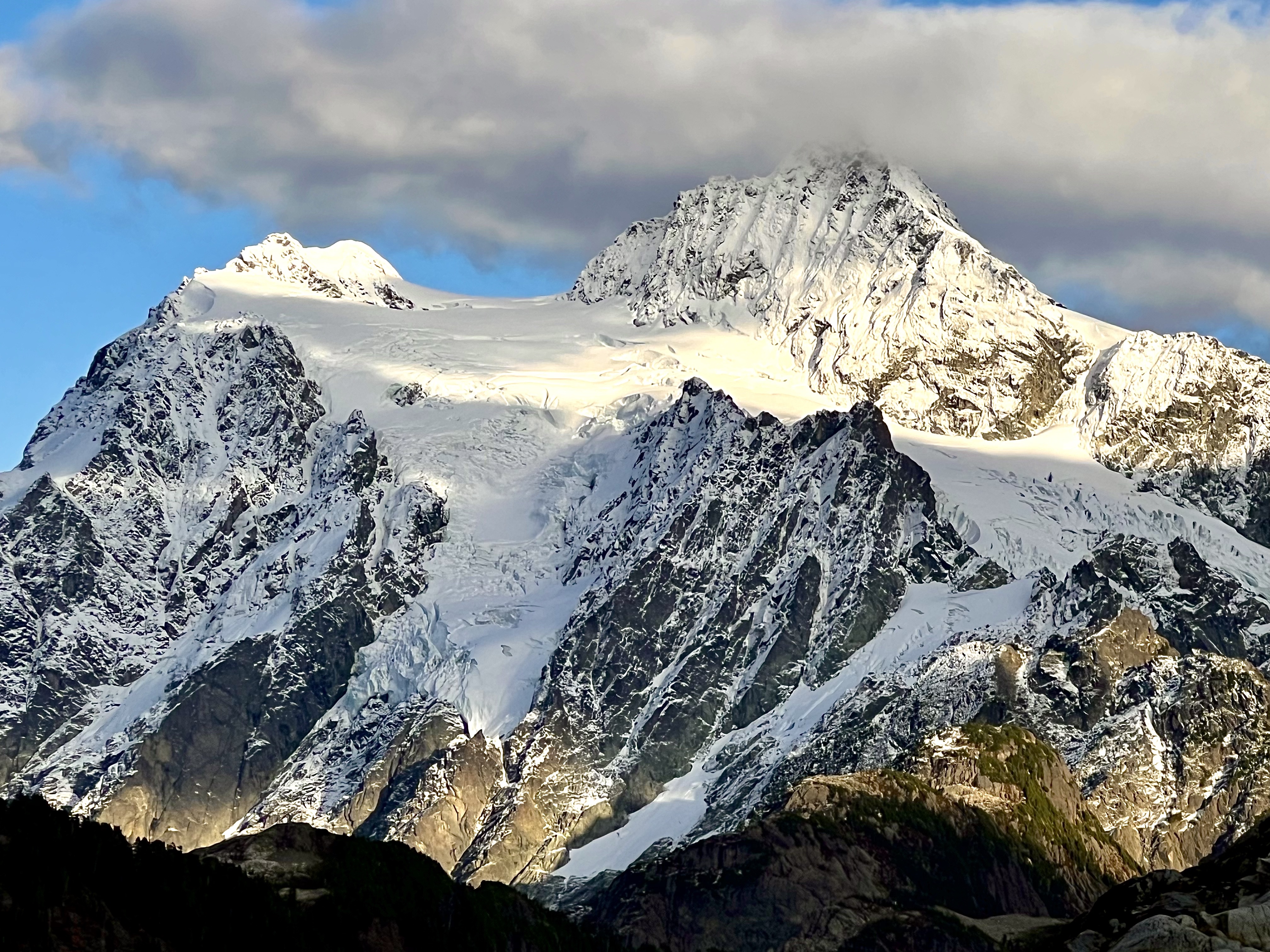
Mt. Shuksan, Washington state
One-Time
Monthly
Yearly
Make a one-time or recurring donation to support daily Barnstorming posts

























 Barnstorming