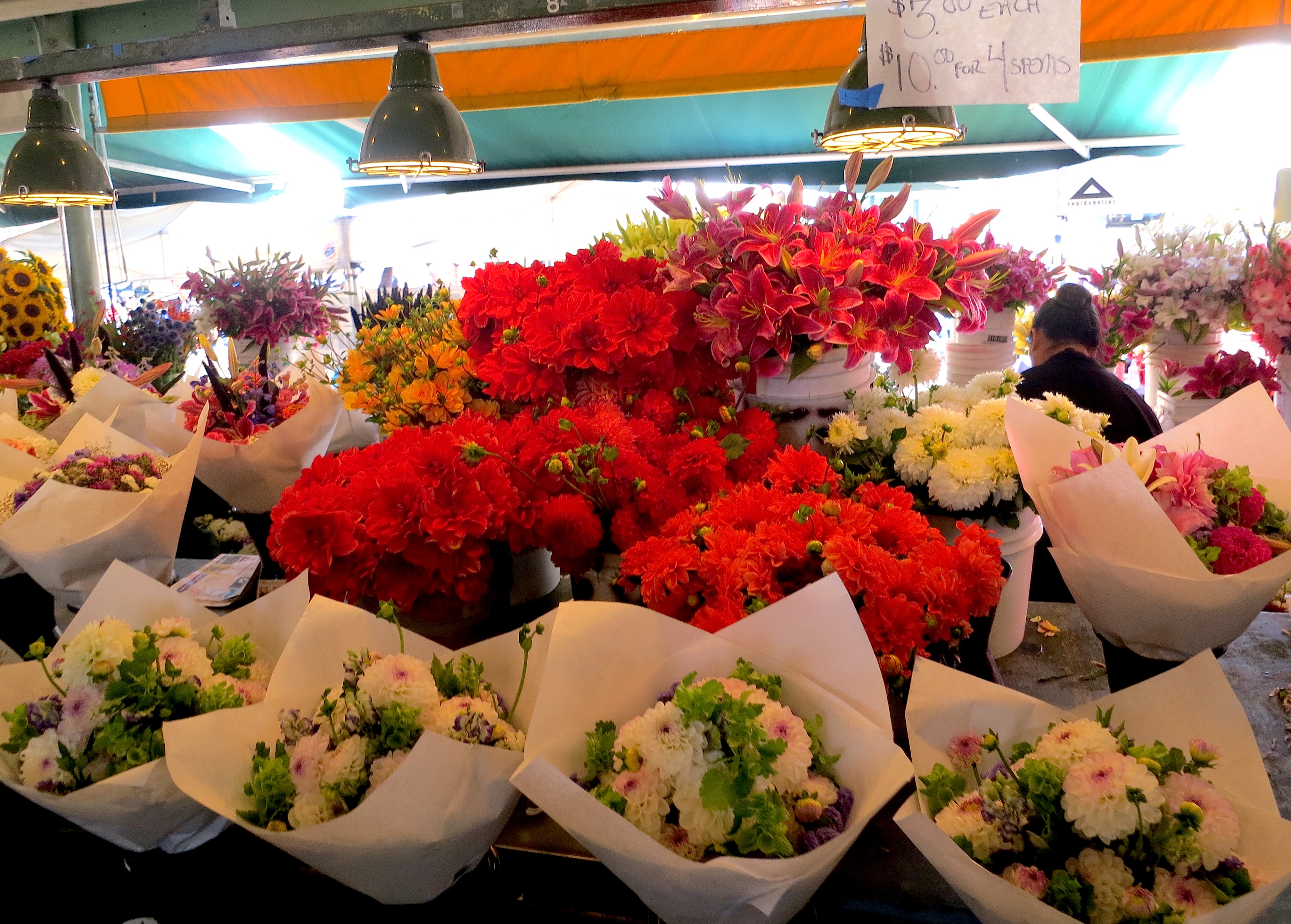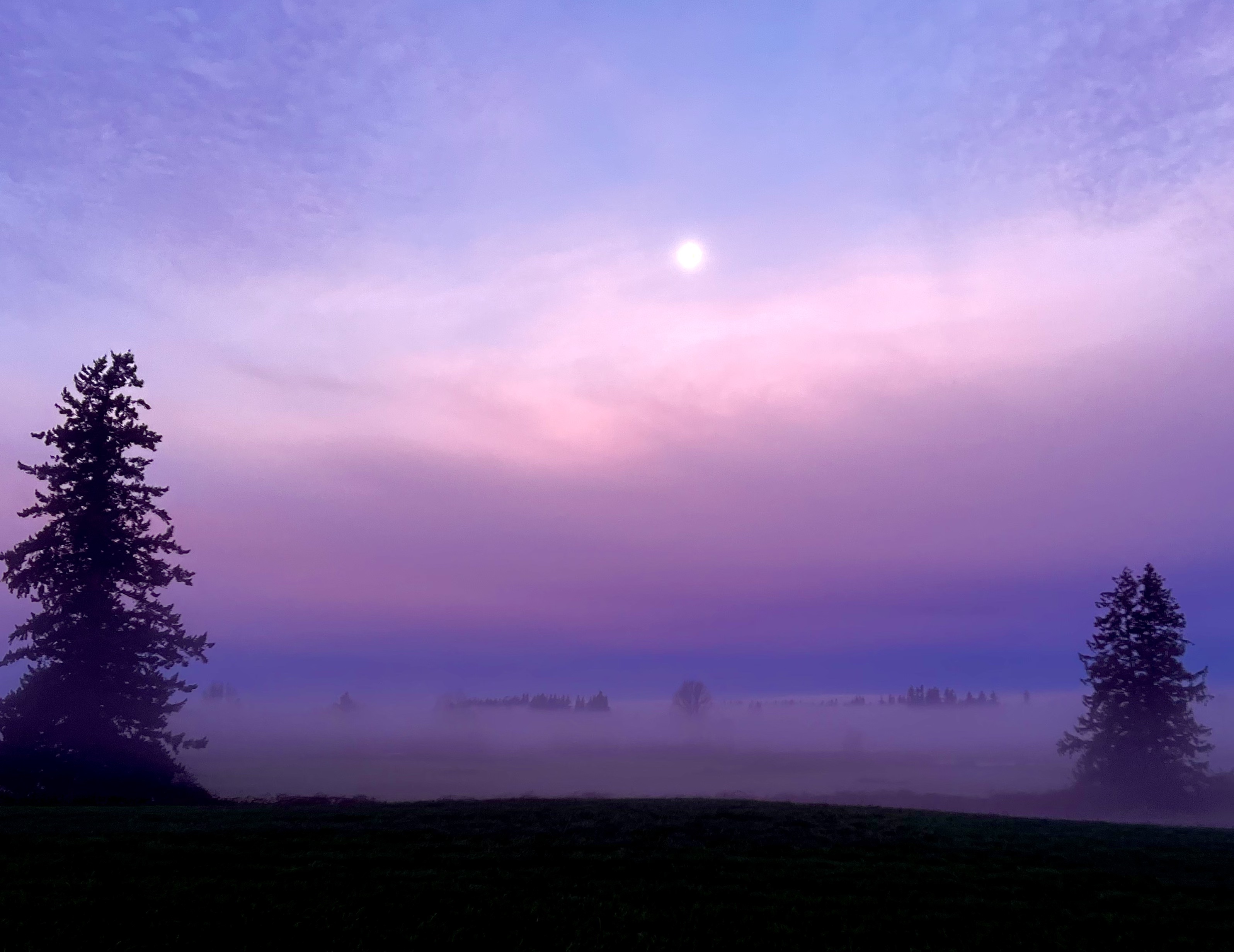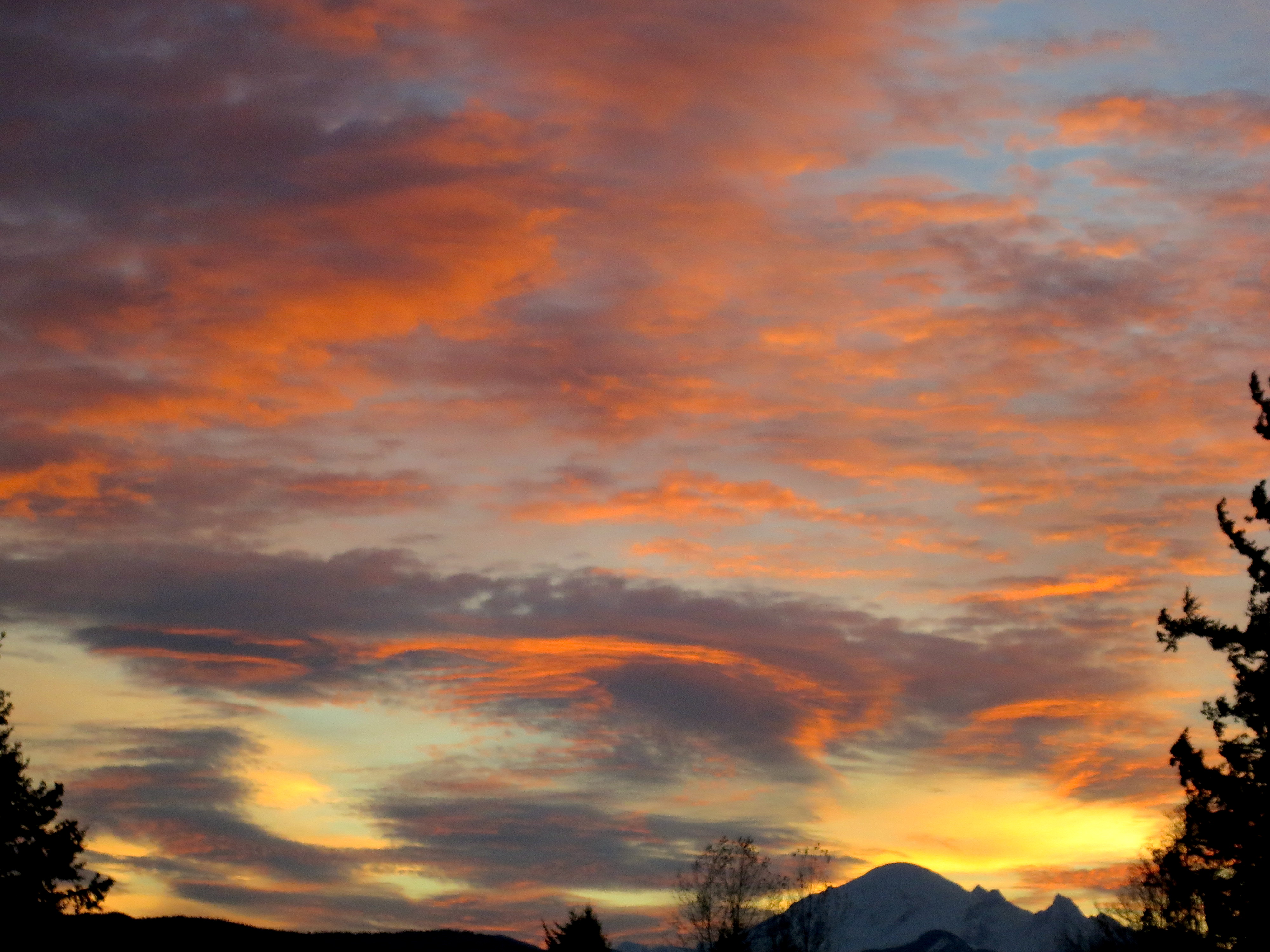
Did I Find Everything I Was Looking For?

Did you find everything you were
looking for?
 Julie, the magenta-haired

checkout girl, asks, and no, I think,
I didn’t find inner peace, or answers to

several questions I’ve been mulling,
like are we headed for nuclear war and

does the rest of the world think America
has gone bonkers and also, by the way,

I could not find the tofu bacon, and
the chocolate sorbet shelf was empty

(I did find canned pumpkin in aisle four)
but I am silent and smile at Julie who

seems to know what I’m thinking anyway
so I hold back and muse on the view

of the bay this morning when we walked
the dog and the parsnip soup we’ll

make for dinner and realize that total
fulfillment probably jades the senses and

the bagger asks if I’d like help today
carrying my groceries out to the car.

~Thomas R. Moore, “Finding Everything” from Red Stone Fragments
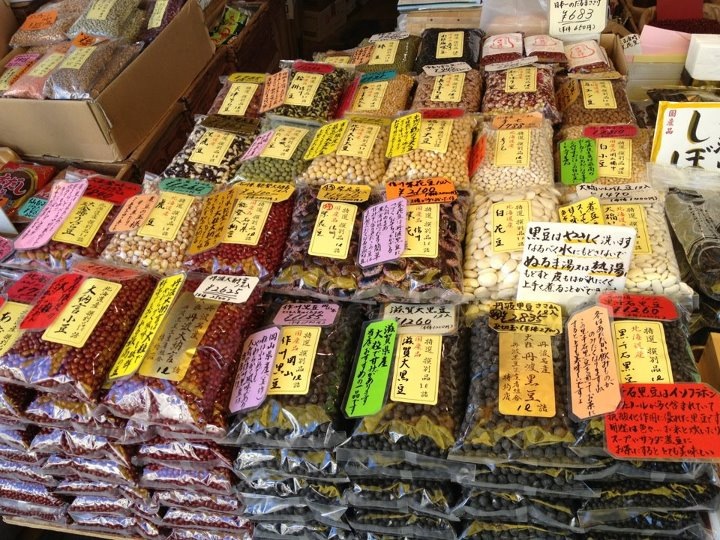
He was a new old man behind the counter, skinny, brown and eager.
He greeted me like a long-lost daughter,
as if we both came from the same world,
someplace warmer and more gracious…

…his face lit up as if I were his prodigal daughter returning,
coming back to the freezer bins in front of the register
which were still and always filled
with the same old Cable Car ice cream sandwiches and cheap frozen greens.
Back to the knobs of beef and packages of hotdogs,
these familiar shelves strung with potato chips and corn chips…


I lumbered to the case and bought my precious bottled water
and he returned my change, beaming
as if I were the bright new buds on the just-bursting-open cherry trees,
as if I were everything beautiful struggling to grow,
and he was blessing me as he handed me my dime
over the counter and the plastic tub of red licorice whips.
This old man who didn’t speak English
beamed out love to me in the iron week after my mother’s death
so that when I emerged from his store
    my whole cock-eyed life  –
    what a beautiful failure ! –
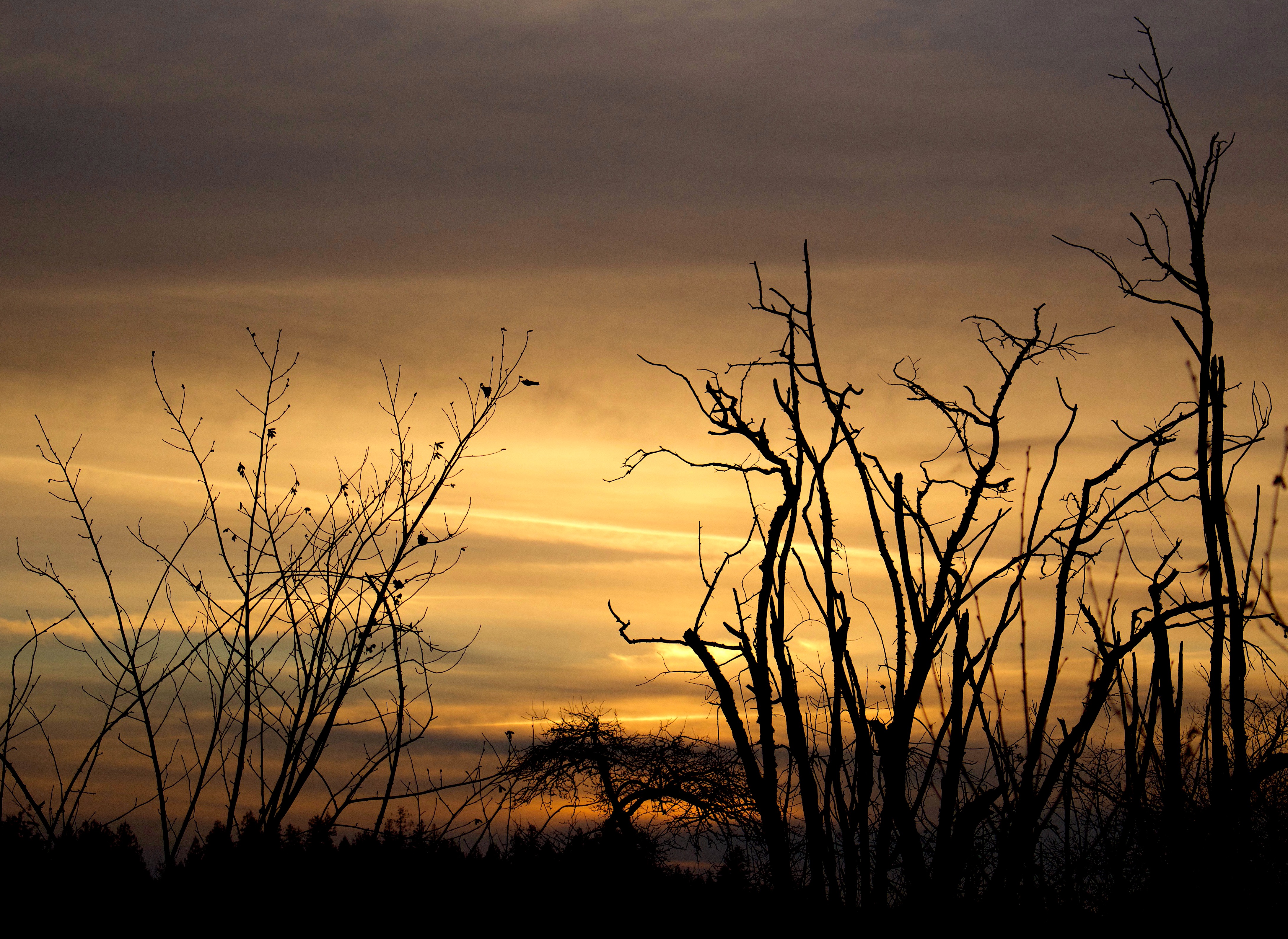
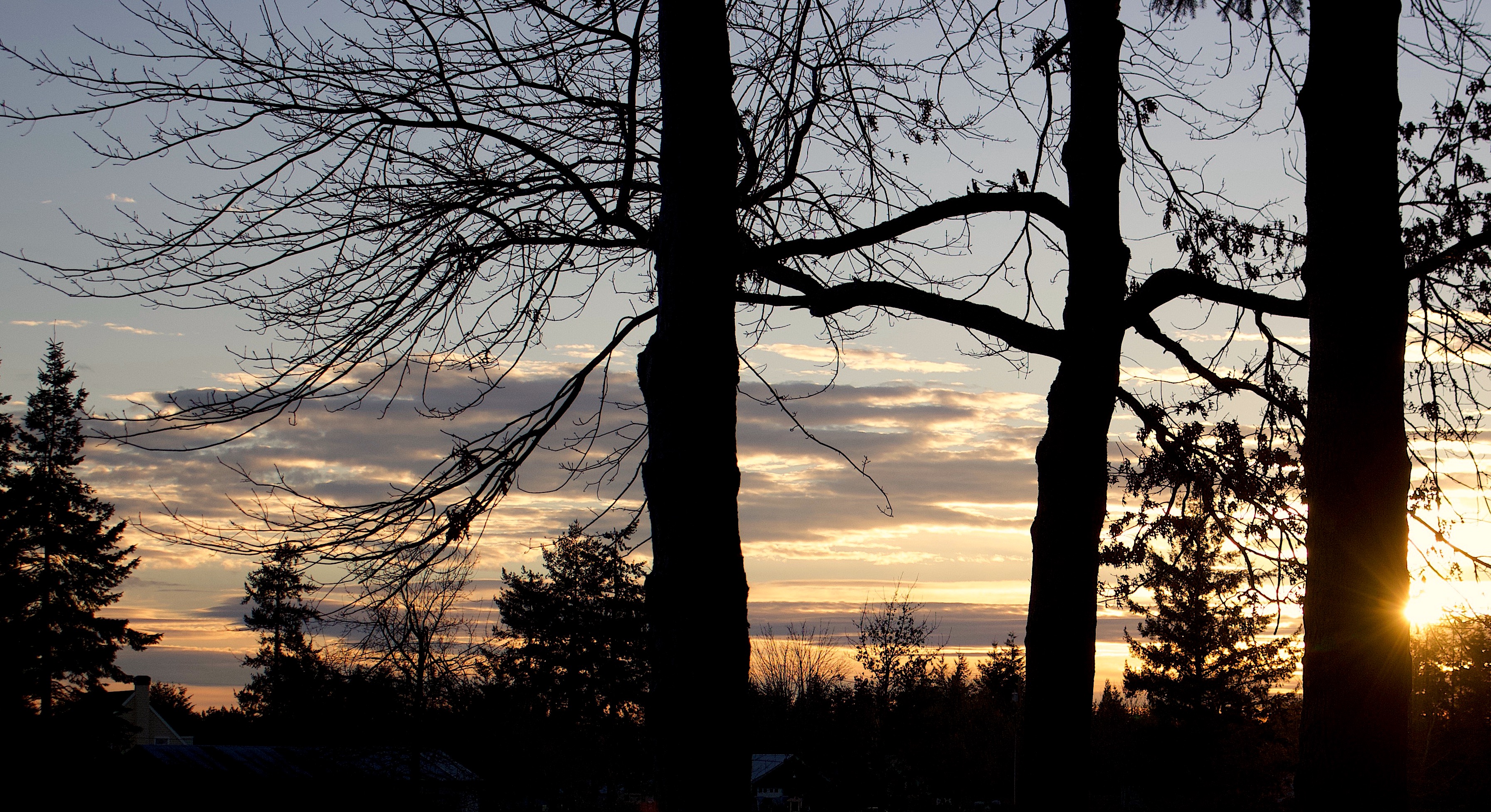
glowed gold like a sunset after rain.
~Alison Luterman from “At the Corner Store”

During these two years of COVID-time precautions, grocery shopping has been an extra ordeal for both the shoppers and the store workers. We remain hidden behind our masks – both the ones mandated by state regulations to be covering our faces, as well as the ones we usually hide behind while out and about in polite society.

This week as I shopped in one of our local grocery stores, I witnessed a particularly poignant scene. As I waited my six foot distance in the check out line, the older man ahead of me was greeted by the young cashier with the standard “Did you find everything you were looking for?” He looked at her from behind his mask and his eyes were obviously smiling as she scanned his groceries. He responded with:
“I looked for world peace on your shelves, but it must have been sold out…”

She stopped scanning and looked directly at him for the first time, trying to discern if she misunderstood him or if he was mocking her or what. “Did you try Aisle 4?” she replied and they both laughed. They continued in light-hearted conversation as she continued scanning and once he had paid for his order and packed up his cart, he looked at her again.

“Thank for so much for coming to work today – I am so grateful for what you do.” He wheeled away his groceries and she stood, stunned, watching him go.

As I came up next, I looked at her watering eyes as she tried to compose herself and I said to her: “I’ll bet you don’t hear that often enough, do you?” She pulled herself together and shook her head, trying to make sense of the gift of words he had bestowed on her.

“No – like never,” she said as she scanned my groceries. “How could he possibly have known that I almost didn’t come to work today because it has been so stressful to be here? People are usually polite, but lately more and more have been so mean and refusing to put on their masks when I ask them to. No one seems to care about how others are feeling any more.”

She brushed away a tear and I paid for my groceries, and told her:

“I hope the rest of your work day is as great as that last customer. You’ve given me everything I was looking for today…”

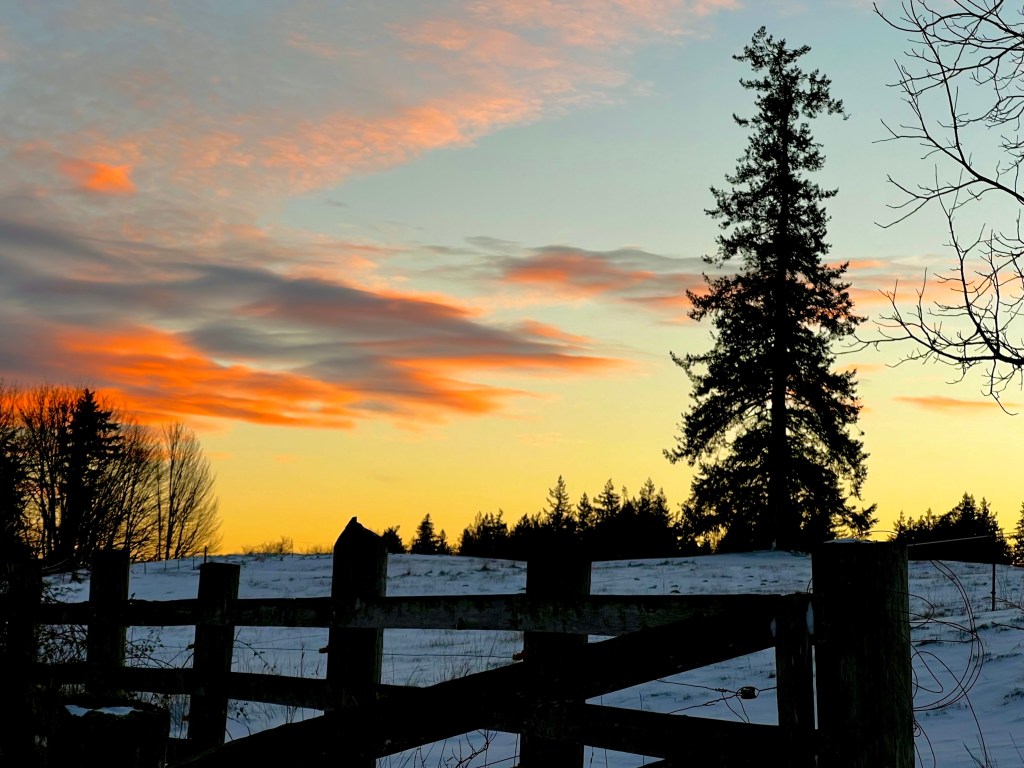
And I emerged from the store feeling like I had scored a pot of gold like a sunset after rain.

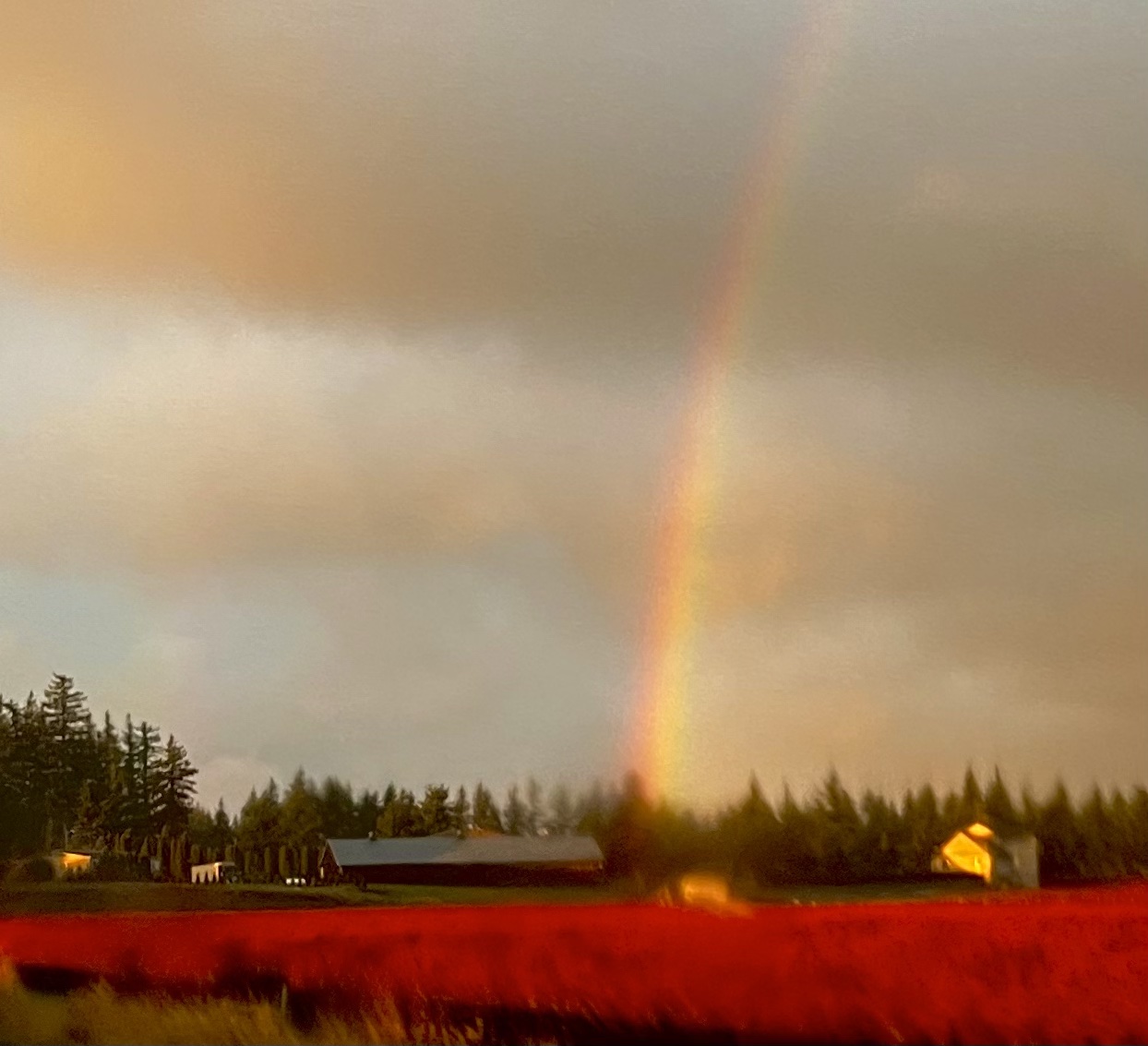
last night’s rainbow through a windshield in pouring rain at 50mph

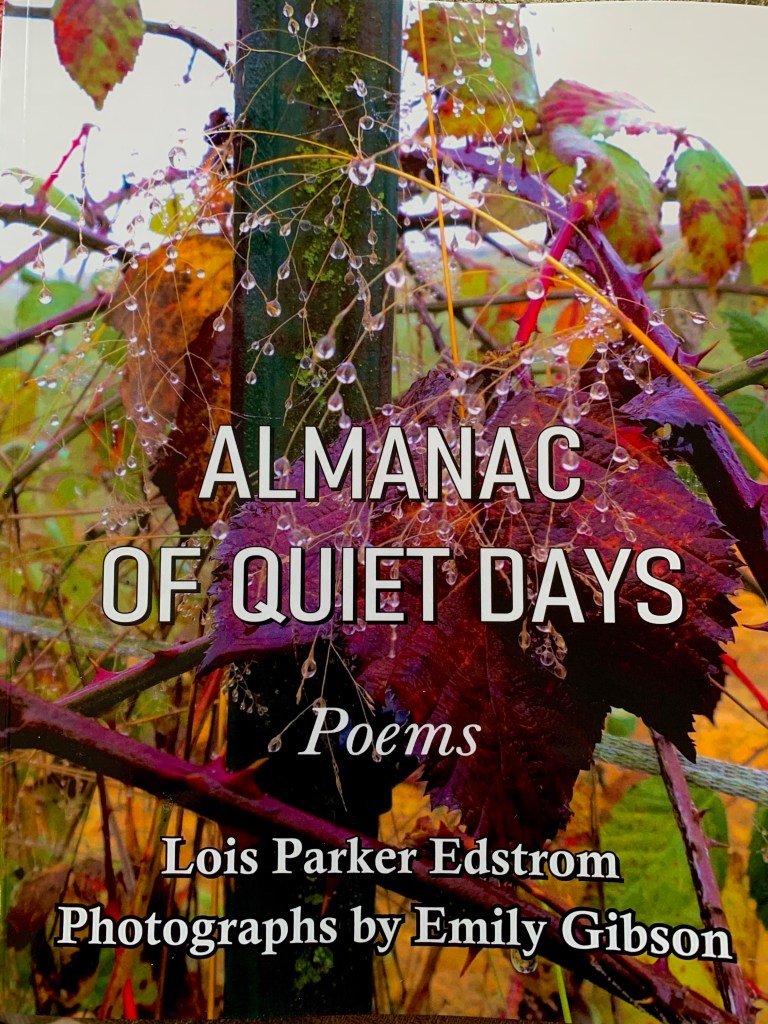
Try finding everything you are looking for in a book of beauty in words and photographs, available to order here:
One-Time
Monthly
Yearly

Make a one-time or recurring donation to support Barnstorming

Make a monthly donation

Make a yearly donation

Choose an amount

¤5.00
¤10.00
¤20.00
¤5.00
¤15.00
¤100.00
¤5.00
¤15.00
¤100.00

Or enter a custom amount

¤

Your contribution is deeply appreciated.

Your contribution is appreciated.

Your contribution is appreciated.

DonateDonate monthlyDonate yearly

Kneeling for Courage

You want to know how I spend my time?
I walk the front lawn, pretending
to be weeding. You ought to know
I’m never weeding, on my knees, pulling
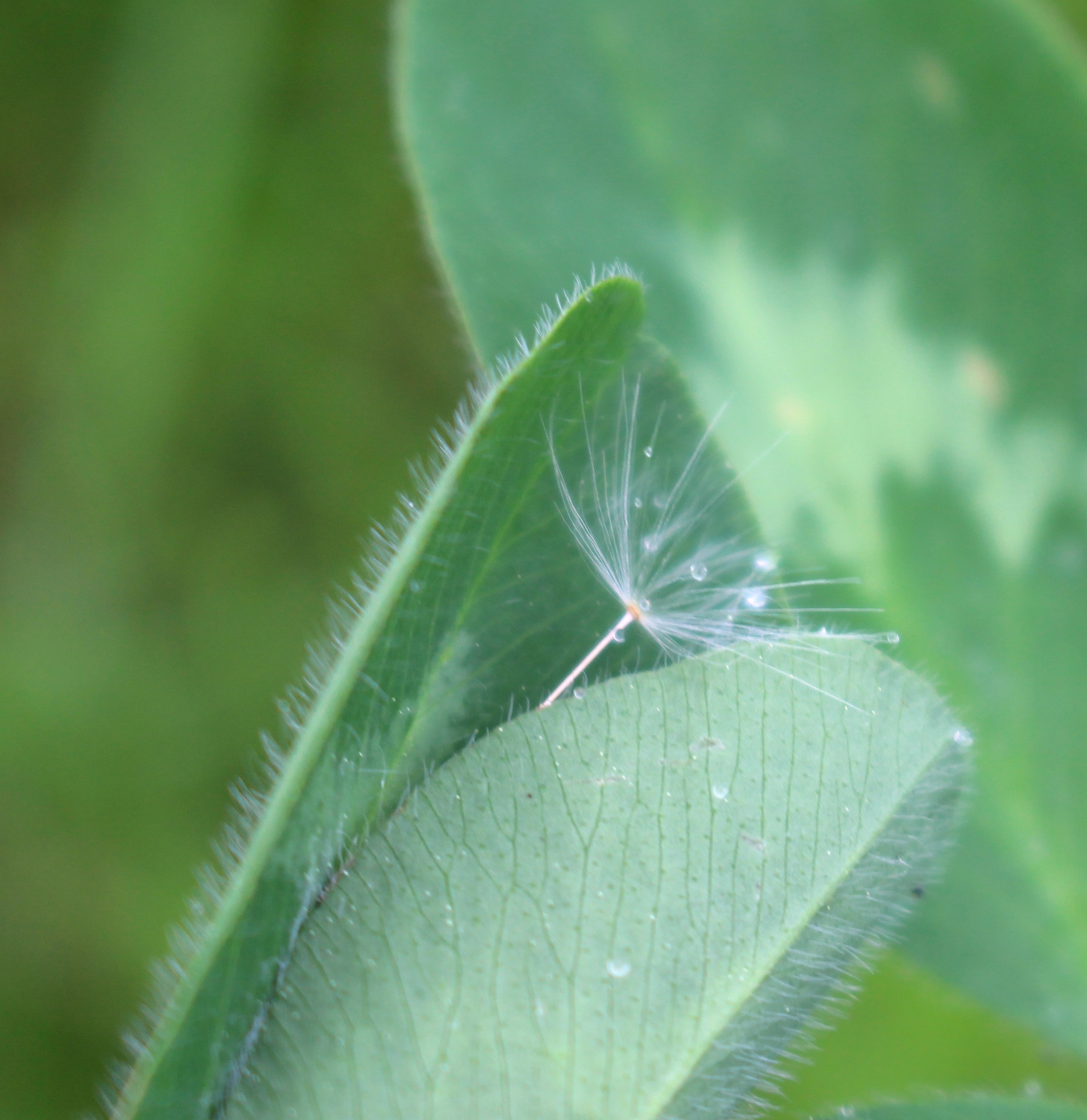
clumps of clover from the flower beds: in fact
I’m looking for courage, for some evidence
my life will change, though
it takes forever, checking
each clump for the symbolic
leaf, and soon the summer is ending, already
the leaves turning, always the sick trees
going first, the dying turning
brilliant yellow, while a few dark birds perform
their curfew of music. You want to see my hands?
As empty now as at the first note.
Or was the point always
to continue without a sign?
~Louise Glück  “Matins V”

I have never been a brave person. In fact, I can be as fearful of the headlines of world events as the next person – a downright lily-livered chicken-heart. People like me may engage in lots of magical thinking, hoping I just might change through hard work and a large measure of good luck.

But what has luck got to do with it? Nothing whatsoever.

The reality is, many people work hard and still face insurmountable struggles that regularly force them to their knees. Courage is asking God for the grit to keep going no matter what confronts you because that is exactly what He did for us: even when his knees hurt from kneeling, his voice was hoarse with prayer, his eyes full of tears, his efforts unacknowledged and unappreciated, his heart broken.

Even when I come up empty-handed, I take courage and take heart. His heart.

Take heart, my friend, we’ll go together
This uncertain road that lies ahead
Our faithful God has always gone before us
And He will lead the way once again

Take heart, my friend, we can walk together
And if our burdens become too great
We can hold up and help one other
In God’s love and God’s grace

Take heart my friend, the Lord is with us
As He has been all the days of our lives
Our assurance every morning
Our defender in the night

If we should falter when trouble surrounds us
When the wind and the waves are wild and high
We will look away to Him who ruled the waters
Who spoke His peace into the angry tide

He is our comfort, our sustainer
He is our help in time of need
When we wander, He is our Shepherd
He who watches over us never sleeps

Take heart my friend the Lord is with us
As He has been all the days of our lives
Our assurance every morning
Our defender in the night

One-Time
Monthly
Yearly

Make a one-time or recurring donation to support Barnstorming

Make a monthly donation

Make a yearly donation

Choose an amount

¤5.00
¤10.00
¤20.00
¤5.00
¤15.00
¤100.00
¤5.00
¤15.00
¤100.00

Or enter a custom amount

¤

Your contribution is deeply appreciated.

Your contribution is appreciated.

Your contribution is appreciated.

DonateDonate monthlyDonate yearly
Too Many Dwindled Dawns

Morning without you is a dwindled dawn.
~Emily Dickinson in a letter to a friend April 1885

Over the years, the most common search term bringing new readers to my Barnstorming blog is “dwindled dawn.”

I have written about Emily Dickinson’s “dwindles” on a number of occasions before when I miss having a house full of our three children, now spread far with families of their own. Even so, I had not really been diagnosed with a serious case myself until the last two years of COVID-time.

I am clearly not the only one. “Dwindles” have spread across the globe during the COVID pandemic more quickly than the virus.

There really isn’t a pill or other therapy that works well for dwindling. One of the most effective treatments is breaking bread with friends and family all in the same room, at the same table, lingering over conversation or singing together in harmony, because there really is nothing more vital for us to do.

Just being together is the ultimate cure.

Maybe experiencing friend and family deficiency will help us understand how crucial we are to one another. Sadly, due to the pandemic, too many are now gone forever, lost to further gatherings together. It is high time to replenish the reservoir before we all dwindle away to nothing.

So if you are visiting these words for the first time because you too searched for “dwindled dawn” — welcome to Barnstorming. We can stave off the dwindles by joining together in our shared isolation.

Because mornings without you all diminishes me.
I just want you to know.

One-Time
Monthly
Yearly

Make a one-time or recurring donation to support Barnstorming

Make a monthly donation

Make a yearly donation

Choose an amount

¤5.00
¤10.00
¤20.00
¤5.00
¤15.00
¤100.00
¤5.00
¤15.00
¤100.00

Or enter a custom amount

¤

Your contribution is deeply appreciated.

Your contribution is appreciated.

Your contribution is appreciated.

DonateDonate monthlyDonate yearly
An Inescapable Network of Mutuality

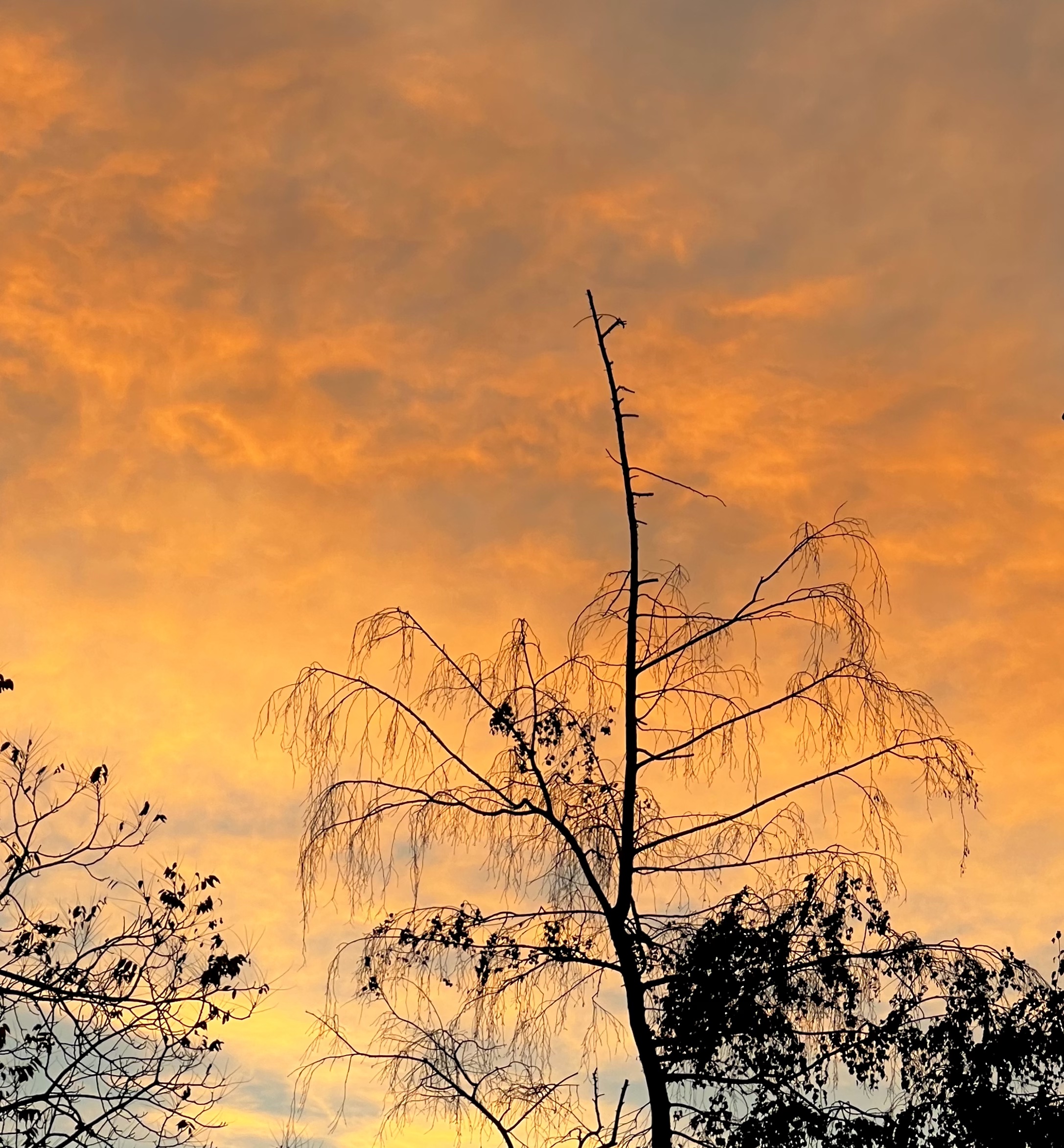
As nightfall does not come at once, neither does oppression.
In both instances, there is a twilight

when everything remains seemingly unchanged.
And it is in such twilight that we all must be most aware

of change in the air – however slight –
lest we become unwitting victims of the darkness.
~William O. Douglas
in a 1976 letter to Young Lawyers of the Washington State Bar Association

Through our scientific and technological genius, we have made of this world a neighborhood and yet we have not had the ethical commitment to make of it a brotherhood.

We must all learn to live together as brothers or we will all perish together as fools. We are tied together in the single garment of destiny, caught in an inescapable network of mutuality. And whatever affects one directly affects all indirectly.

This is the way God’s universe is made;
this is the way it is structured.

John Donne caught it years ago and placed it in graphic terms:
“No man is an island entire of itself.
Every man is a piece of the continent, a part of the main.”
And he goes on toward the end to say,
“Any man’s death diminishes me because I am involved in mankind;
therefore send not to know for whom the bell tolls;
it tolls for thee.”


We must see this, believe this, and live by it…
~Martin Luther King Jr. from a sermon in A Knock At Midnight

Do you know why this world is as bad as it is?
It is because people think only about their own business,
and won’t trouble themselves to stand up for the oppressed,
nor bring the wrong-doers to light.
My doctrine is this,
that if we see cruelty or wrong that we have the power to stop,
and do nothing, we make ourselves sharers in the guilt.
~Anna Sewell from Black Beauty

Dr. King’s words and wisdom still inform us of our shortcomings.

We flounder in brokenness
despite our shared global neighborhood,
despite an inescapable mutuality and commitment to brotherhood.

We still stand apart from one another;
even as the bell tolls, we suffer divisiveness
from a lack of humility, grace and love.

Perhaps today, for a day, for a week, for a year,
we can unite in our shared tears:
shed for continued strife and disagreement,
shed for injustice that results in senseless killings,
shed for our inability to hold up one another
as brothers and sisters holy in God’s eyes.

We weep together as the light dawns on this day,
knowing as Dr. King knew:
a new day will come when the Lord God wipes tears away
from all faces and all colors —
a brotherhood created exactly as He intends.

To Break Your Heart

Here is a story
to break your heart.
Are you willing?
This winter
the loons came to our harbor
and died, one by one,
of nothing we could see.
A friend told me
of one on the shore
that lifted its head and opened
the elegant beak and cried out
in the long, sweet savoring of its life
which, if you have heard it,
you know is a sacred thing.,
and for which, if you have not heard it,
you had better hurry to where
they still sing.
And, believe me, tell no one
just where that is.
The next morning
this loon, speckled
and iridescent and with a plan
to fly home
to some hidden lake,
was dead on the shore.
I tell you this
to break your heart,
by which I mean only
that it break open and never close again
to the rest of the world.
~Mary Oliver “Lead” from New and Selected Poems

Why shouldn’t we go through heartbreaks?

…if through a broken heart
God can bring His purposes to pass in the world,
then thank Him for breaking your heart.
~Oswald Chambers from “Ye are not your own” from My Utmost for the Highest

These last two years have seen an epidemic of heart-break.

Due to hospital visitor restrictions, thousands of loved ones have died of COVID without family by their side, deprived of the solace of hearing familiar voices and being touched by familiar hands. A weary and over-worked health care team can only do so much in their efforts to comfort and console when so many patients are losing their battle with the virus at the same time. Although nurses and doctors have always been witnesses to the cries of the dying and the weeping of the grief-stricken, that is usually together at the bedside.

An iPad screen isn’t the same for those saying good-bye forever.

For all the advances of our modern society – through technology and communication and the development of medical miracles – people still die and others still grieve and weep over their loss. We’re not used to dying happening with such frequency to those who have no business dying in the first place. We assume death rates exceeding birth rates happens only in third world countries beset with drought or plague.

Not any more.

So my heart is tender – for those lost, for those left behind, for those trying their best to save lives when they are weary and ill themselves, for the irony of hundreds of thousands of unnecessary deaths when the preventive measures available to us all are so clear-cut.

If anything, a breaking heart is an open invitation for the solace of a God who himself had no business dying in the first place, but did. He cried out in a long, sweet savoring of his life and ours, saving us in the process.

One-Time
Monthly
Yearly

Make a one-time or recurring donation to Barnstorming

Make a monthly donation

Make a yearly donation

Choose an amount

¤5.00
¤10.00
¤20.00
¤5.00
¤15.00
¤100.00
¤5.00
¤15.00
¤100.00

Or enter a custom amount

¤

Your contribution is deeply appreciated.

Your contribution is appreciated.

Your contribution is appreciated.

DonateDonate monthlyDonate yearly
Unclench Your Fists

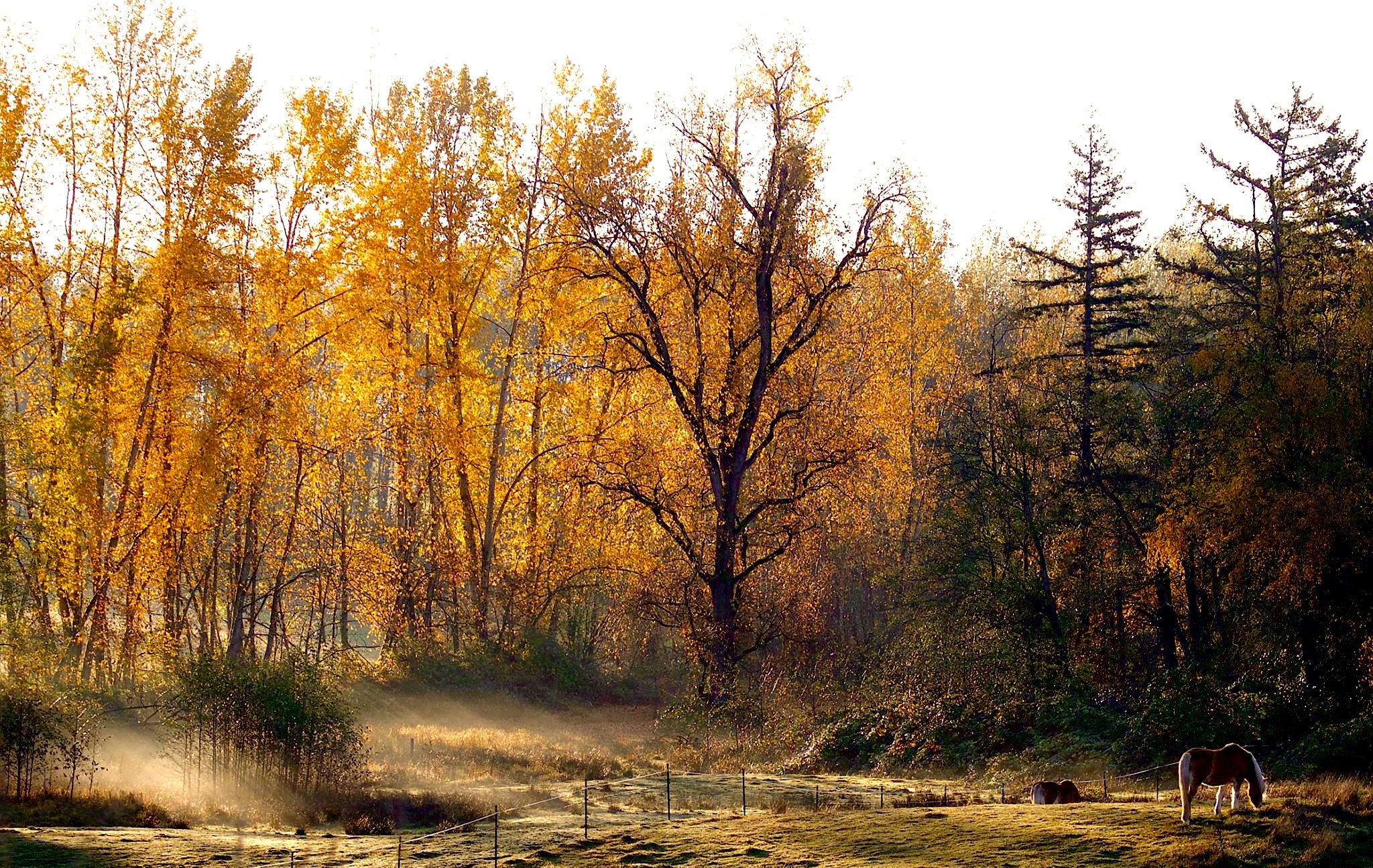
Unclench your fists
Hold out your hands.
Take mine.
Let us hold each other.
Thus is his Glory Manifest.
~Madeleine L’Engle “Epiphany”

Journeying God,
pitch your tent with mine
so that I may not become deterred
by hardship, strangeness, doubt.
Show me the movement I must make

toward a wealth not dependent on possessions
toward a wisdom not based on books
toward a strength not bolstered by might
toward a God not confined to heaven

but scandalously earthed, poor, unrecognized…

Help me find myself
as I walk in others’ shoes
.

~Kate Compston, from A Poem for Epiphany From Bread of Tomorrow: Prayers for the Church Year

Imagine the Lord, for the first time, from darkness, and stranded
Immensely in distance, recognizing Himself in the Son
Of Man: His homelessness plain to him now in a homeless one.

~Joseph Brodsky from “Nativity Poem” (translated by Seamus Heaney)

‘A cold coming we had of it,
Just the worst time of the year
For a journey, and such a long journey:
The ways deep and the weather sharp,
The very dead of winter.’

A hard time we had of it.
At the end we preferred to travel all night,
Sleeping in snatches,
With the voices singing in our ears, saying
That this was all folly.

…And arrived at evening, not a moment too soon
Finding the place; it was (you may say) satisfactory.

All this was a long time ago, I remember,
And I would do it again, but set down
This set down
This: were we lead all that way for
Birth or Death? There was a Birth, certainly,
We had evidence and no doubt. I have seen birth and death,
But had thought they were different; this Birth was
Hard and bitter agony for us, like Death, our death.
We returned to our places, these Kingdoms,
But no longer at ease here, in the old dispensation,
With an alien people clutching their gods.
I should be glad of another death.

~T.S.Eliot from “Journey of the Magi”

In journeyings often,
in perils of waters,
in perils of robbers,
in perils by mine own countrymen,
in perils by the heathen,
in perils in the city,
in perils in the wilderness,
in perils in the sea,
in perils among false brethren;
In weariness and painfulness,
in watchings often,
in hunger and thirst,
in fastings often,
in cold and nakedness.
2 Corinthians 11:26-27


Oh, when we are journeying through the murky night

and the dark woods of affliction and sorrow,
it is something to find here and there a spray broken,
or a leafy stem bent down with the tread of His foot
and the brush of His hand as He passed;
and to remember that the path He trod He has hallowed,
and thus to find lingering fragrance
and hidden strength in the remembrance of Him
as “in all points tempted like as we are,”
bearing grief for us,
bearing grief with us,
bearing grief like us.
~Alexander MacLaren from Sermons Preached in Manchester: First series

We are called to journey into the unfamiliar;
some go no further than the backyard,
some to the ends of the earth,
some to the moon and back.

The journey is not about the miles covered;
it is an internal trek we all must make
on the crooked road of our hearts,
by relaxing our clenched fists,
taking the offered hand and being led
to that straight path back to God.

Much of the journey is perilous.
We may become both sacrament and sacrifice.

He has been down that road before us,
knowing the temptations, and bearing the grief we face.

There is but one map available and one map maker.
This road leads home and home is where He patiently waits for us.

January 6, the traditional day of celebrating “Epiphany” as the manifestation of God on earth in the form of His incarnate Son, calls us to deeper scrutiny of our earthly journey —
away from our anger, our shame and our resultant homelessness,
to the restoration of our souls, resting in the sacrifice of Christ Himself.

1. On this day earth shall ring
with the song children sing
Praising the young King,
who was born to save us
And the maiden who
brought Him forth to save us.

2. His the doom, ours the mirth,
when he came to earth,
Bethlehem saw his birth,
ox and ass beside him,
He came to vanquish
the Prince of Darkness.

3. God’s bright star o’er his head,
Wise men come seeking Him,
They kneel and lay their gifts
beside Him and adore Him,
They offer gifts of gold,
frankincense, and myrrh

One-Time
Monthly
Yearly

Make a one-time or recurring donation to support Barnstorming

Make a monthly donation

Make a yearly donation

Choose an amount

¤5.00
¤10.00
¤20.00
¤5.00
¤15.00
¤100.00
¤5.00
¤15.00
¤100.00

Or enter a custom amount

¤

Your contribution is deeply appreciated.

Your contribution is appreciated.

Your contribution is appreciated.

DonateDonate monthlyDonate yearly


The Tenacity of Nature

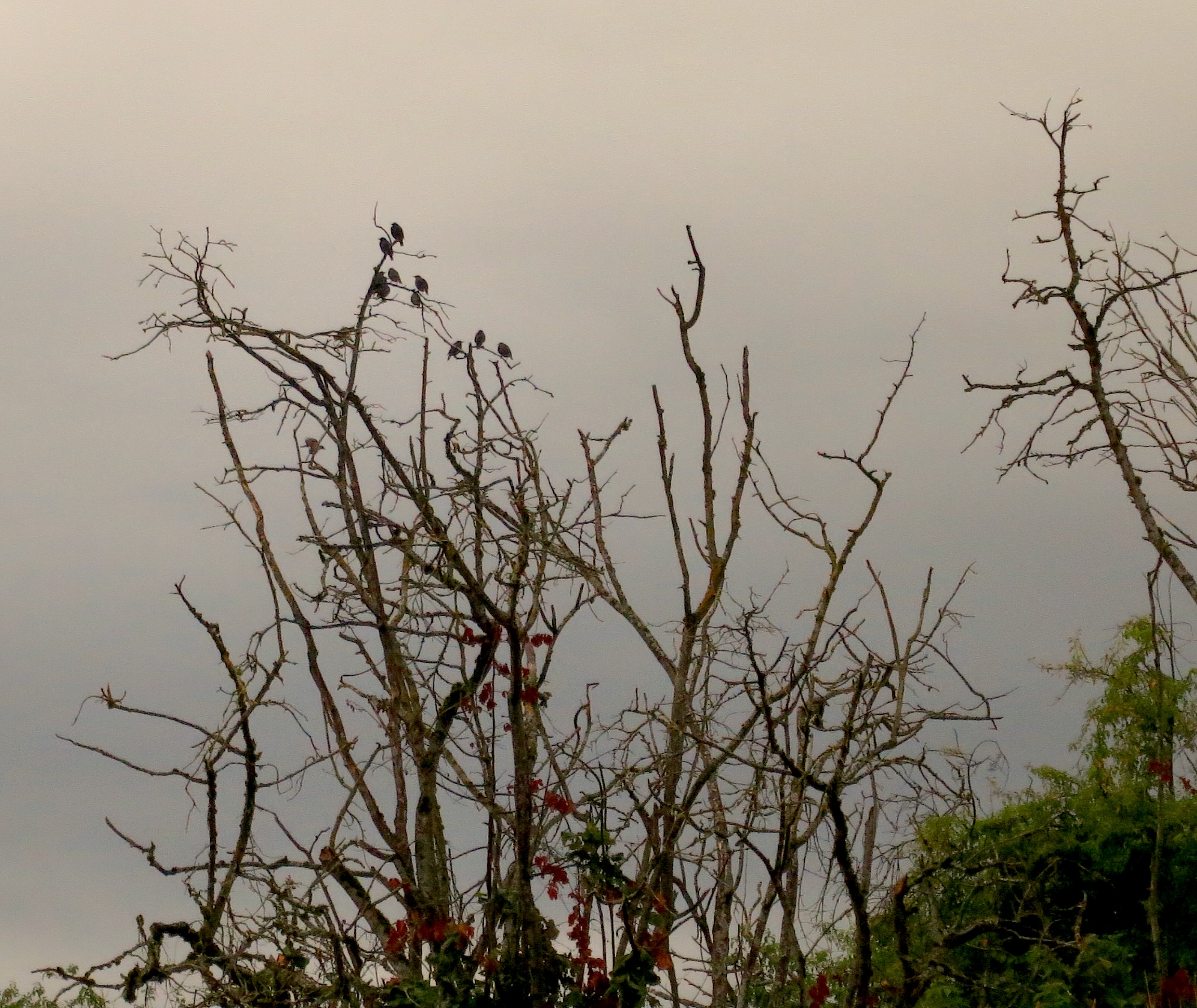
By the road to the contagious hospital
under the surge of the blue
mottled clouds driven from the
northeast — a cold wind. Beyond, the
waste of broad, muddy fields
brown with dried weeds, standing and fallen

patches of standing water
the scattering of tall trees

All along the road the reddish
purplish, forked, upstanding, twiggy
stuff of bushes and small trees
with dead, brown leaves under them
leafless vines —

Lifeless in appearance, sluggish
dazed spring approaches —

They enter the new world naked,
cold, uncertain of all
save that they enter. All about them
the cold, familiar wind —

Now the grass, tomorrow
the stiff curl of wildcarrot leaf

One by one objects are defined —
It quickens: clarity, outline of leaf

But now the stark dignity of
entrance — Still, the profound change
has come upon them: rooted they
grip down and begin to awaken
~William Carlos Williams “Spring and All”

I ask your doctor
of infectious disease if she’s
read Williams   he cured
sick babies I tell her and
begin describing spring
and all   she’s looking at the wall
now the floor   now your chart
now the door   never
heard of him she says
but I can’t stop explaining
how important this is
I need to know your doctor
believes in the tenacity of nature
to endure   I’m past his heart
attack   his strokes   and now as if
etching the tombstone myself   I find
I can’t remember the date
he died or even
the year   of what now
are we the pure products   and what
does that even mean   pure   isn’t it
obvious   we are each our own culture
alive with the virus that’s waiting
to unmake us
~Brian Russell, “The Year of What Now”

It is the third January of a pandemic
of a virus far more tenacious than
we have proven to be,
it continues to unmake us,
able to mutate spike proteins seemingly overnight
while too many of us stubbornly
remain unchanged by this,
clinging to our “faith over fear”
and “my body, my choice”
and “lions, not sheep”
and “never comply” —
because self-determination must trump
compassion for the unfortunate fate of vulnerable millions.

We defend the freedom to choose
to be vectors of a contagion
that may not sicken us yet fills
clinics, hospitals and morgues.

William Carlos Williams, the early 20th century physician,
would be astonished at the clinical tools we have now
to fight this scourge.
William Carlos Williams, last centuries’ imagist poet,
would recognize our deadly erosion of cooperation
when faced with a worthy viral opponent.

So what happens now?

Starting with this third pandemic winter,
with our souls in another deep freeze,
covered in snow and ice and bitter wind chill,
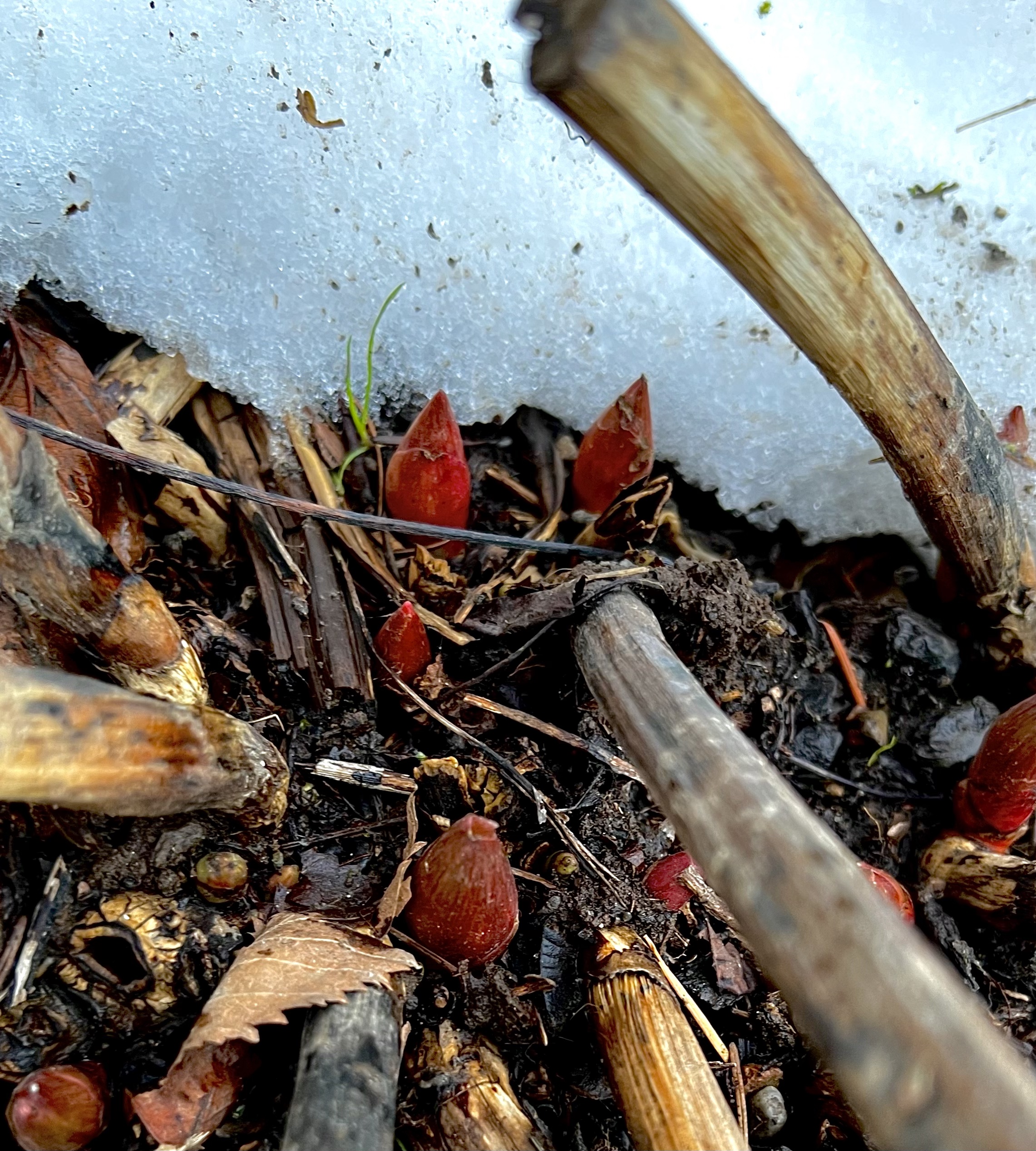
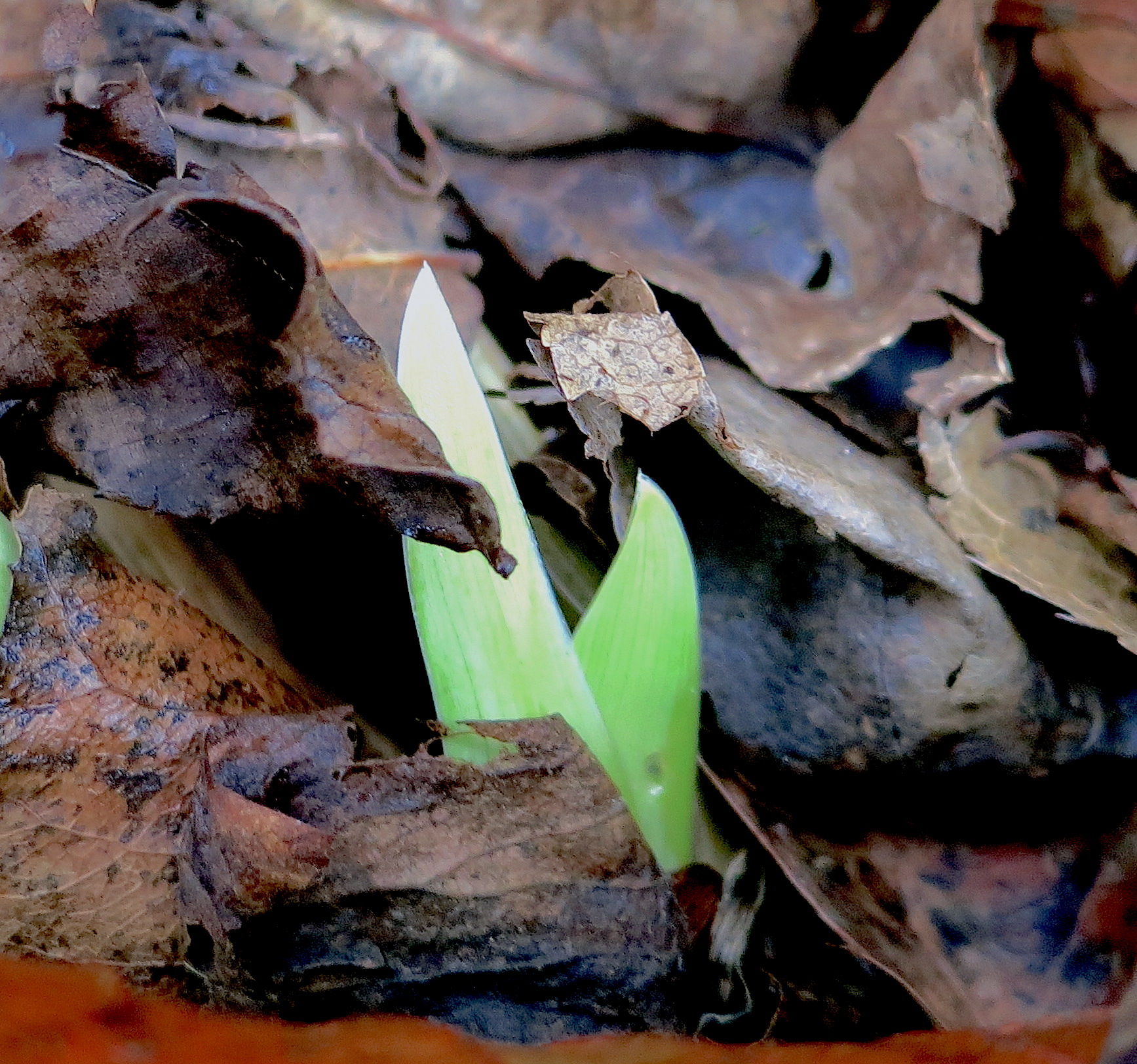
a tenuous hope of restoration could awaken –
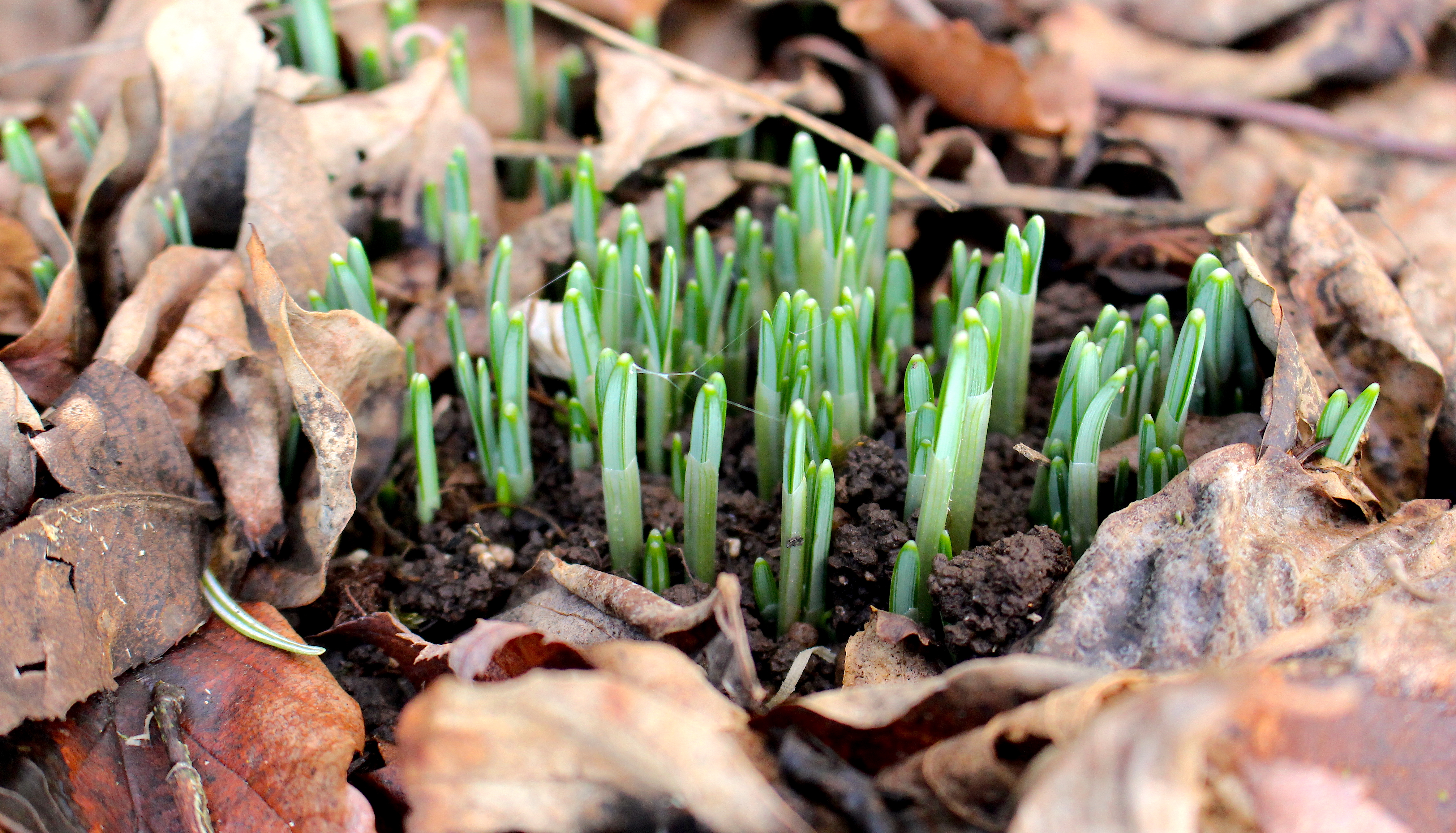
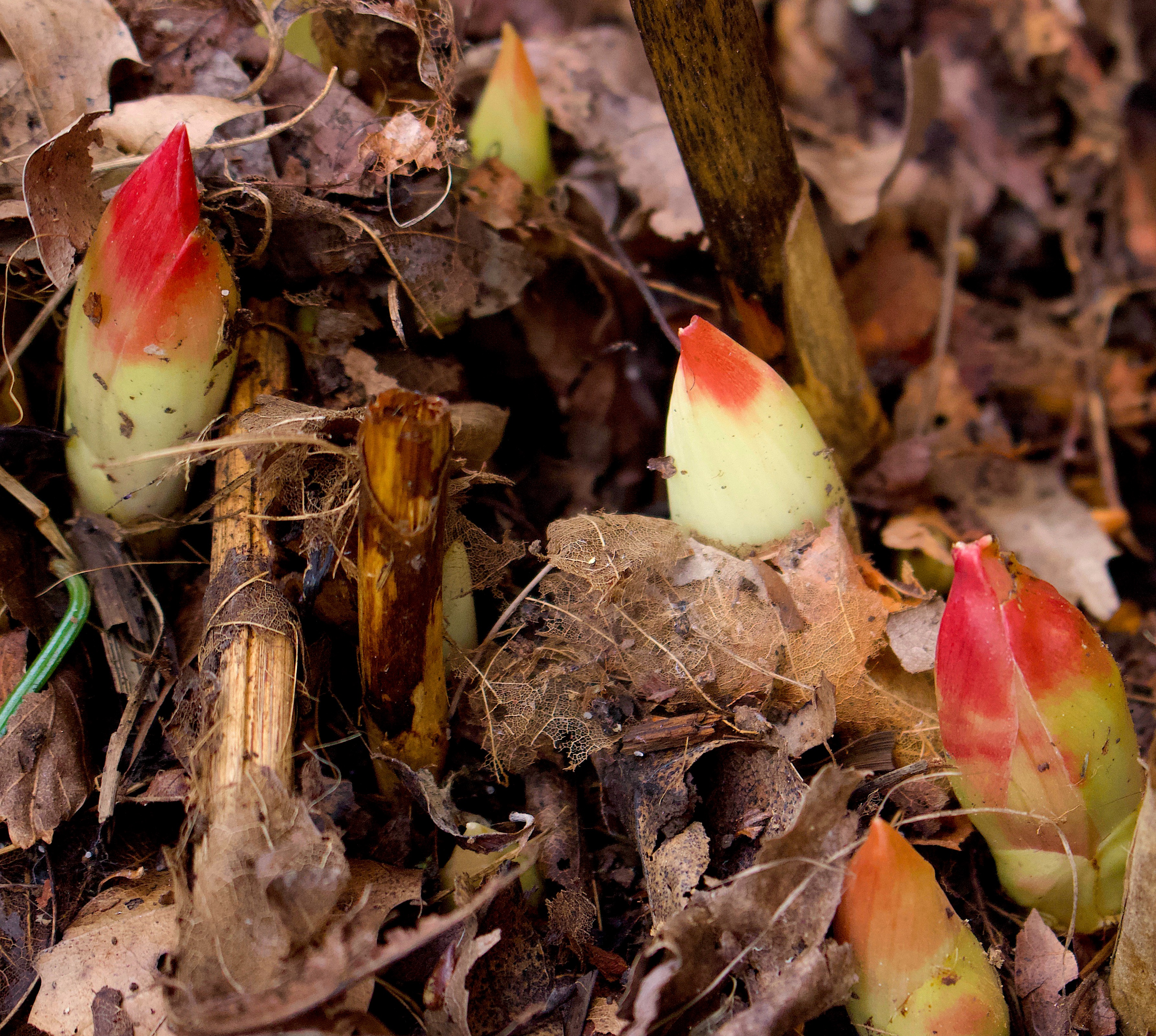
tender buds swelling,
bulbs breaking through soil,
being called forth from long burial
in a dark and cold and heartless earth.

Like a mother who holds
the mystery of her quickening belly,
knowing we nurture other lives with our own body,
we too can be hopeful and marveling
at who we are created to be.

She, and we, know soon and very soon
there will be spring.

One-Time
Monthly
Yearly

Make a one-time or recurring donation to support Barnstorming

Make a monthly donation

Make a yearly donation

Choose an amount

¤5.00
¤10.00
¤20.00
¤5.00
¤15.00
¤100.00
¤5.00
¤15.00
¤100.00

Or enter a custom amount

¤

Your contribution is deeply appreciated.

Your contribution is appreciated.

Your contribution is appreciated.

DonateDonate monthlyDonate yearly
Mending the Fraying Tapestry of Time

Now winter downs the dying of the year,   
And night is all a settlement of snow;
From the soft street the rooms of houses show   
A gathered light, a shapen atmosphere,   
Like frozen-over lakes whose ice is thin   
And still allows some stirring down within.

These sudden ends of time must give us pause.
We fray into the future, rarely wrought
Save in the tapestries of afterthought.
More time, more time.

The New-year bells are wrangling with the snow.
~Richard Wilbur from “Year’s End”

Ring out, wild bells, to the wild sky,
The flying cloud, the frosty light:
The year is dying in the night;
Ring out, wild bells, and let him die.

Ring out the old, ring in the new,
Ring, happy bells, across the snow:
The year is going, let him go;
Ring out the false, ring in the true.

Ring out the grief that saps the mind
For those that here we see no more;
Ring out the feud of rich and poor,
Ring in redress to all mankind.

Ring out a slowly dying cause,
And ancient forms of party strife;
Ring in the nobler modes of life,
With sweeter manners, purer laws.

Ring out the want, the care, the sin,
The faithless coldness of the times;
Ring out, ring out my mournful rhymes,
But ring the fuller minstrel in.

Ring out false pride in place and blood,
The civic slander and the spite;
Ring in the love of truth and right,
Ring in the common love of good.

Ring out old shapes of foul disease;
Ring out the narrowing lust of gold;
Ring out the thousand wars of old,
Ring in the thousand years of peace.

Ring in the valiant man and free,
The larger heart, the kindlier hand;
Ring out the darkness of the land,
Ring in the Christ that is to be.
~Lord Alfred Tennyson “Ring Out, Wild Bells”

I know there are still communities where the New Year begins at midnight with church bells ringing, just as in days of old.

Here in the frontier of the rural Pacific Northwest, all we can hear from our farm are gun shots, bottle rockets and (what sounds like) explosions of cannon fire and mortar shells.

So much for larger hearts and kindlier hands.

Even without being able to hear wild bells ringing out the old and ringing in the new, I want to begin the new year with singing in harmony, mending the frays in the tapestry of time, behaving with good manners and care for those around me, and abandoning a thousand years of war to find a thousand years of peace.

Let the darkness make room for the Light
that was and is and will ever be.

Amen and hallelujah!

I will sing with the spirit
Hallelujah, hallelujah

And I will sing with the understanding also
Hallelujah, hallelujah

I will sing (I will sing)
With the spirit (sing hallelujah)
I will sing with the spirit
Hallelujah, hallelujah

One-Time
Monthly
Yearly

Make a one-time or recurring donation to Barnstorming

Make a monthly donation

Make a yearly donation

Choose an amount

¤5.00
¤10.00
¤20.00
¤5.00
¤15.00
¤100.00
¤5.00
¤15.00
¤100.00

Or enter a custom amount

¤

Your contribution is deeply appreciated.

Your contribution is appreciated.

Your contribution is appreciated.

DonateDonate monthlyDonate yearly
There is No Center Any Longer

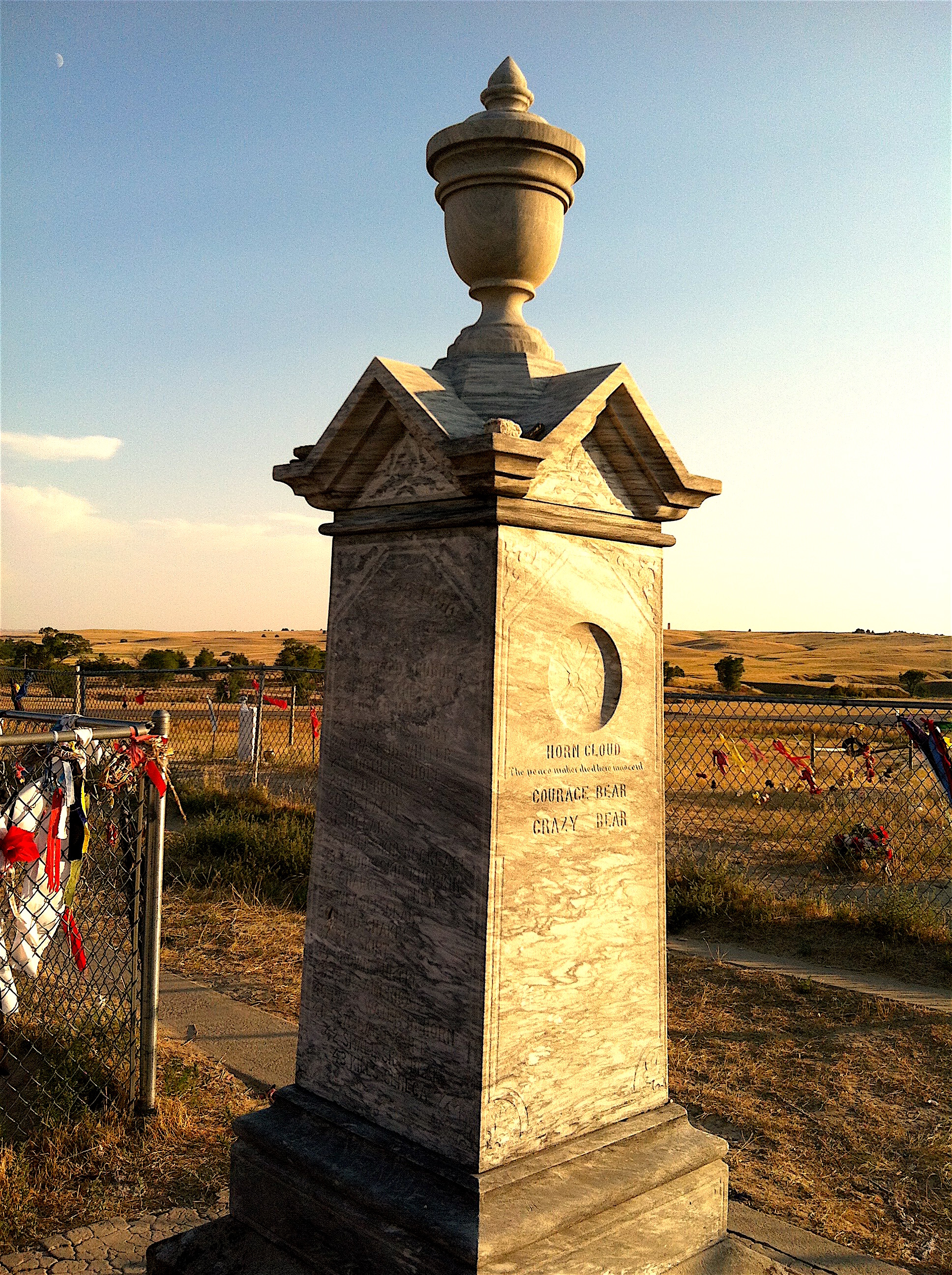
The mass gravesite at Wounded Knee, Pine Ridge Reservation, South Dakota
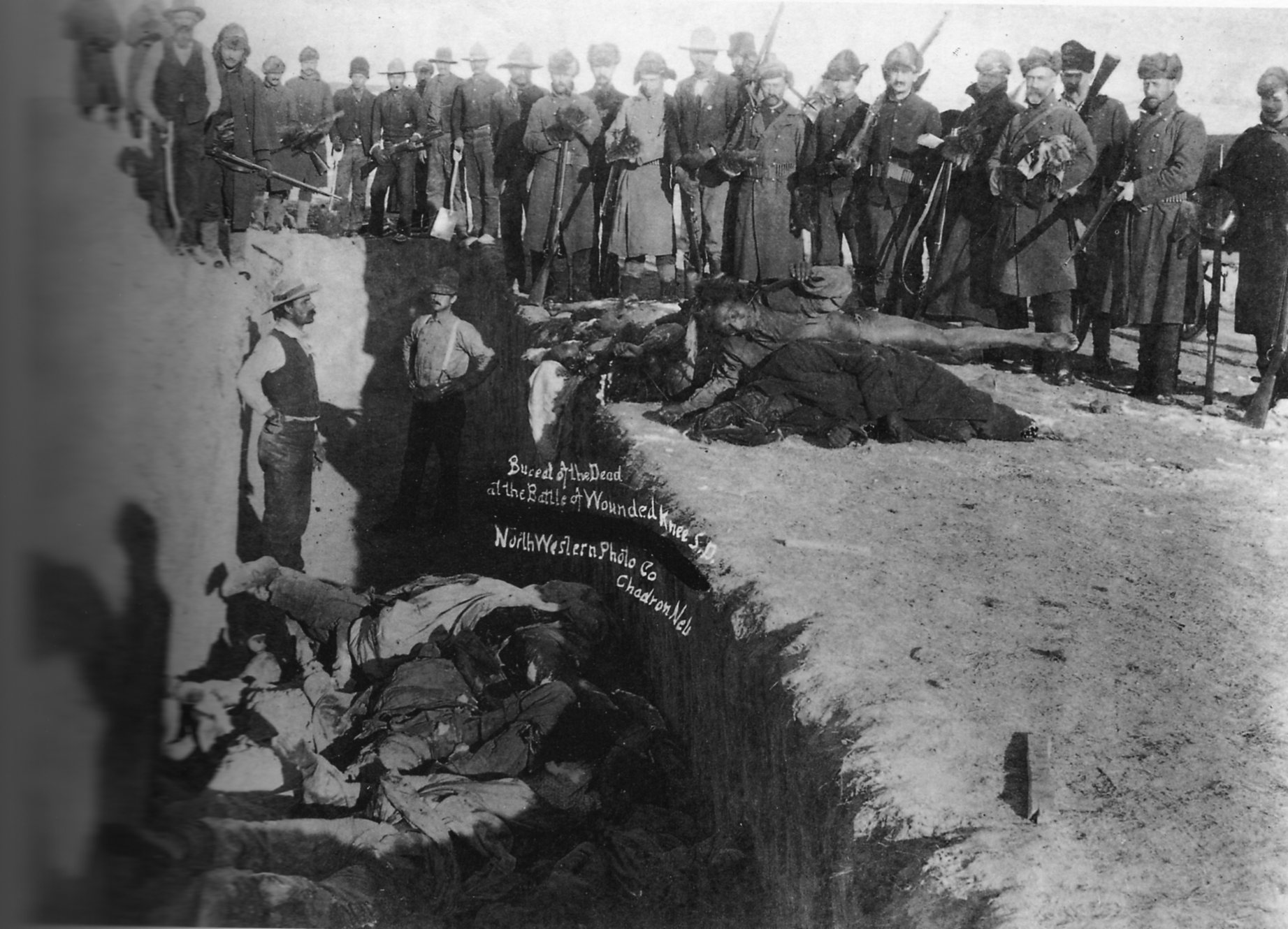
Burial of the dead in the mass gravesite at Wounded Knee

Big Foot, a great Chief of the Sioux often said,
“I will stand in peace till my last day comes.”
He did many good and brave deeds

for the white man and the red man.
Many innocent women and children who knew no wrong died here.
~Inscription on the Wounded Knee Monument

I did not know then how much was ended. When I look back now from this high hill of my old age, I can still see the butchered women and children lying heaped and scattered all along the crooked gulch as plain as when I saw them with eyes still young. And I can see that something else died there in the bloody mud, and was buried in the blizzard. A people’s dream died there. It was a beautiful dream. And I, to whom so great a vision was given in my youth, — you see me now a pitiful old man who has done nothing, for the nation’s hoop is broken and scattered. There is no center any longer, and the sacred tree is dead.
~Black Elk, (wounded trying to rescue his people after the Wounded Knee Massacre)  from Black Elk Speaks

From today’s The Writer’s Almanac:

December 29 is the anniversary of the massacre at Wounded Knee, which took place in South Dakota in 1890. Twenty-three years earlier the local tribes had signed a treaty with the United States government that guaranteed them the rights to the land around the Black Hills, which was sacred land. The treaty said that not only could no one move there, but they couldn’t even travel through without the consent of the Indians.

But in the 1870s gold was discovered in the Black Hills and the treaty was broken. People from the Sioux tribe were forced onto a reservation with a promise of more food and supplies, which never came. Then in 1889 a native prophet named Wovoka, from the Paiute tribe in Nevada, had a vision of a ceremony that would renew the earth, return the buffalo, and cause the white men to leave and return the land that belonged to the Indians. This ceremony was called the Ghost Dance. People traveled across the plains to hear Wovoka speak, including emissaries from the Sioux tribe, and they brought back his teachings. The Ghost Dance, performed in special brightly colored shirts, spread through the villages on the Sioux reservation and it scared the white Indian agents. They considered the ceremony a battle cry, dangerous and antagonistic. So one of them wired Washington to say that he was afraid and wanted to arrest the leaders and he was given permission to arrest Chief Sitting Bull, who was killed in the attempt. The next on the wanted list was Sitting Bull’s half-brother, Chief Big Foot, known to his own people as Spotted Elk. Some members of Sitting Bull’s tribe made their way to Big Foot and when he found out what had happened he decided to lead them along with the rest of his people to Pine Ridge Reservation for protection. But it was winter, 40 degrees below zero, and he contracted pneumonia on the way.

Big Foot was sick, he was flying a white flag, and he was a peaceful man. He was one of the leaders who had actually renounced the Ghost Dance. But the Army didn’t make distinctions. They intercepted Big Foot’s band and ordered them into the camp on the banks of the Wounded Knee Creek. Big Foot went peacefully.

The next morning federal soldiers began confiscating their weapons and a scuffle broke out between a soldier and an Indian. The federal soldiers opened fire, killing almost 300 men, women, and children, including Big Foot. Even though it wasn’t really a battle, the massacre at Wounded Knee is considered the end of the Indian Wars, a blanket term to refer to the fighting between the Native Americans and the federal government, which had lasted 350 years.

One of the people wounded but not killed during the massacre was the famous medicine man Black Elk, author of Black Elk Speaks (1932). Speaking about Wounded Knee, he said:

“I did not know then how much was ended. When I look back now from this high hill of my old age, I can still see the butchered women and children lying heaped and scattered all along the crooked gulch as plain as when I saw them with eyes still young. And I can see that something else died there in the bloody mud, and was buried in the blizzard. A people’s dream died there. It was a beautiful dream.”

Like most twentieth century American children, I grew up with a sanitized understanding of American and Native history.  I had only a superficial knowledge of what happened at Wounded Knee, a low hill that rises above a creek bed on the South Dakota Pine Ridge Reservation, gleaned primarily from the 71 day symbolic standoff in 1973 between members of the Oglala Sioux and the American Indian Movement and the FBI, resulting in several shooting deaths.

Nine years ago, when our son was teaching math at Little Wound High School on the Pine Ridge Reservation, we visited the site of this last major battle between the white man and Native people, which broke the spirit of the tribes’ striving to maintain their nomadic life as free people. This brutal massacre of nearly 300 Lakota men, women and children by the Seventh Regiment of the U.S. Army Cavalry took place in December 1890.

The dead lay where they fell for four days due to a severe blizzard. When the frozen corpses were finally gathered up by the Army, a deep mass grave was dug at the top of the hill, the bodies buried stacked one on top of another. The massive grave is now marked by a humble memorial monument surrounded by a chain link fence, adjacent to a small church, circled by more recent Lakota gravesites.

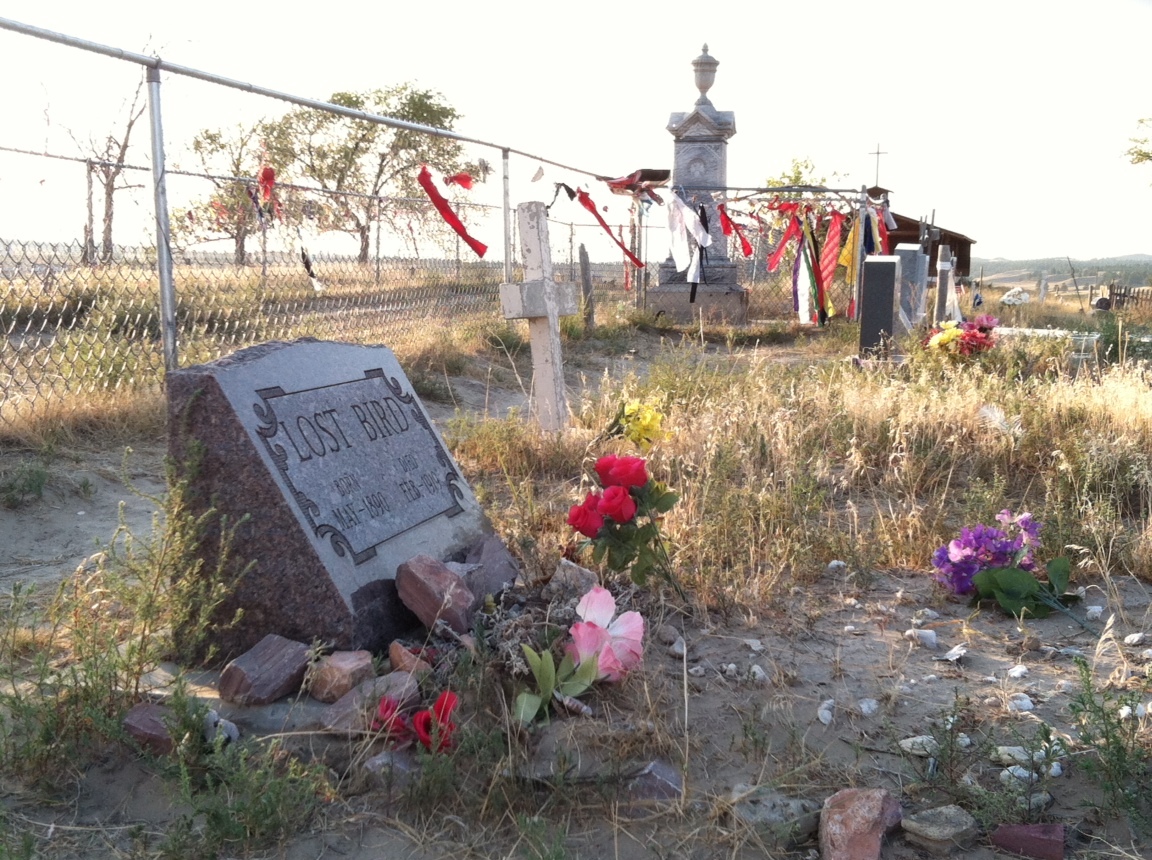
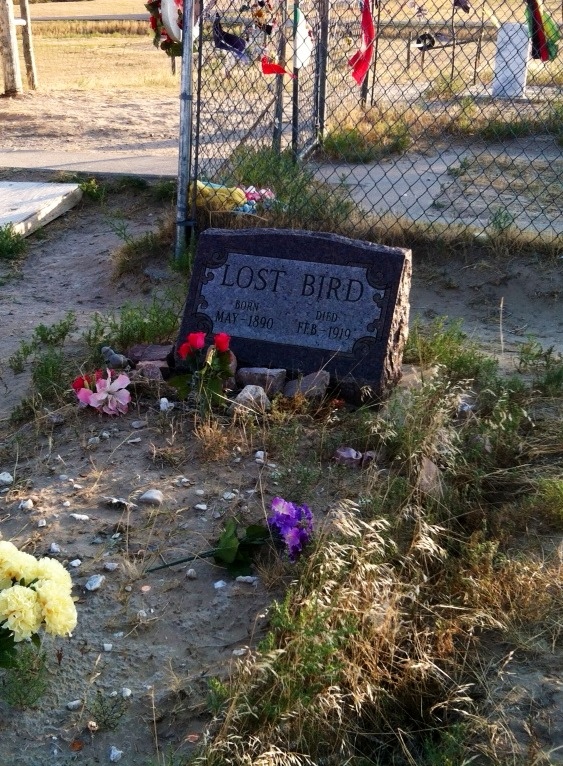
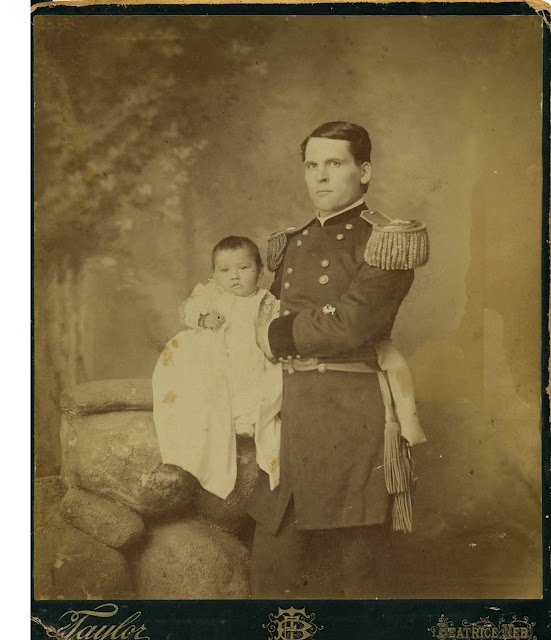
Four infants survived the four days of blizzard conditions wrapped in their dead mothers’ robes. One baby girl, only a few months old, was named “Lost Bird” after the massacre, bartered for and adopted by an Army Colonel as an interesting Indian “relic.” Rather than this adoption giving her a new chance, she died at age 29, having endured much illness, prejudice in white society, as well as estrangement from her native community and culture. Her story has been told in a book by Renee Sansom Flood, who helped to locate and move her remains back to Wounded Knee, where in death she is now back with her people.

There is unspeakable desolation and sadness on that lonely hill of graves. It is a regrettable part of our history that descendants of immigrants to American soil need to understand: by coming to the “New World” for opportunity, or refuge from oppression elsewhere, we made refugees of the people already here.

As Black Elk wrote, the dreams of a great people have been scattered and lack a center. He was not only speaking of his own tribe, but was presciently speaking of our current divisiveness – due to extremism, we lack “a center” in our current governmental discourse.

We must never allow hope to be buried at Wounded Knee nor must we ever forget what it means to no longer be safe in one’s own homeland.

Lost Bird after her adoption

One-Time
Monthly
Yearly

Make a one-time or recurring donation to Barnstorming

Make a monthly donation

Make a yearly donation

Choose an amount

¤5.00
¤10.00
¤20.00
¤5.00
¤15.00
¤100.00
¤5.00
¤15.00
¤100.00

Or enter a custom amount

¤

Your contribution is deeply appreciated.

Your contribution is appreciated.

Your contribution is appreciated.

DonateDonate monthlyDonate yearly

The Beginning Shall Remind Us of the End: No Room At All

For outlandish creatures like us,
on our way to a heart, a brain, and courage,
Bethlehem is not the end of our journey but only the beginning – not home but the place through which we must pass
if ever we are to reach home at last.
~Frederick Buechner from The Magnificent Defeat

Into this world, this demented inn,
in which there is absolutely no room for him at all,
Christ has come uninvited.
But because he cannot be at home in it –
because he is out of place in it, and yet must be in it –
his place is with those others who do not belong,
who are rejected because they are regarded as weak…
With those for whom there is no room,
Christ is present in this world.
He is mysteriously present in those for whom
there seems to be nothing but the world at its worst.
~Thomas Merton from Watch for the Light

As a physician, I’ve provided care to many homeless people, but I’ve never known homelessness myself.  However, I have been room-less and those experiences were enough to acquaint me with the dilemma for Joseph and Mary searching for a place to sleep in Bethlehem.

It was my ninth birthday, July 26, 1963, and my family was driving to Washington D.C. for a few days of sightseeing. We had planned to spend the night in a motel somewhere in eastern Ohio or western Pennsylvania but my father, ever the determined traveler, felt we should push on closer to our destination. By the time 11 PM rolled around, we were all tired and not just a little cranky so we started looking for vacancy signs at road-side motels. Most were posted no vacancy by that time of night, and many simply had shut off their lights. We stopped at a few with vacancy still lit, but all they had available would never accommodate a family of five.

We kept driving east, and though I was hungry for sleep, I became ever more anxious that we really would never find a place to lay our heads. My eyes grew wider and I was more awake than ever, having never stayed up beyond 1 AM before and certainly, I’d never had the experience of being awake all night long. It still goes down in my annals as my longest birthday on record.

By 2 AM we arrived in Harrisburg, Pennsylvania and my dad had reached his driving limit and my mom had declared we were not traveling another mile. We headed downtown where the brick Harrisburg Hotel stood some 10 stories high, an old structure in a questionable area of town, but the lights were on and there were signs of life inside.

They did have a room that gave us two saggy double beds to share for eight dollars, with sheets and blankets with dubious laundering history, a bare light bulb that turned on with a chain and a bathroom down the hall. I’m surprised my mother even considered laying down on that bed, but she did. I don’t remember getting much sleep that night, but it was a place to rest, and the sirens and shouts out on the street did make for interesting background noise.

Some 12 years later, I had another experience of finding no room to lay my head after arriving late at night in Dar es Salaam in Tanzania, with supposed reservations at the local YMCA for myself and my three student friends traveling together on our way to Gombe to study wild chimpanzees. We landed at the airport after midnight after a day long flight from Brussels, managed to make it through customs intact and find a taxi, only to arrive at the Y to find it dark and locked. It took some loud knocking to rouse anyone and with our poor Swahili, we were able to explain our dilemma–we were supposed to have two rooms reserved for the four of us. He said clearly “no room, all rooms taken”.

The host was plainly perplexed at what to do with four Americans in the middle of the night. He decided to parse us out one each to occupied rooms and hope that the occupants were willing to share. He looked at me, a skinny white girl with short hair and decided I was some kind of strange looking guy, and tried to stick me in a room with a rather intoxicated French man and I said absolutely not. Instead my female traveling partner and I ended up sharing a cot (sort of) in a room with a German couple who allowed us into their room, which I thought was an amazing act of generosity at 2 AM in the morning. I didn’t sleep a wink, amazed at the magical sounds and smells of my first dawn in Africa, hearing the morning prayers coming from the mosque across the street, only a few hours later.

So I can relate in a small way to what it must have felt like over 2000 years ago to have traveled over hard roads to arrive in a dirty little town temporarily crammed with too many people, and find there were no rooms anywhere to be had. And to have doors shut abruptly on a young woman in obvious full term pregnancy is another matter altogether. They must have felt a growing sense of panic that there would be no safe and clean place to rest and possibly deliver this Child.

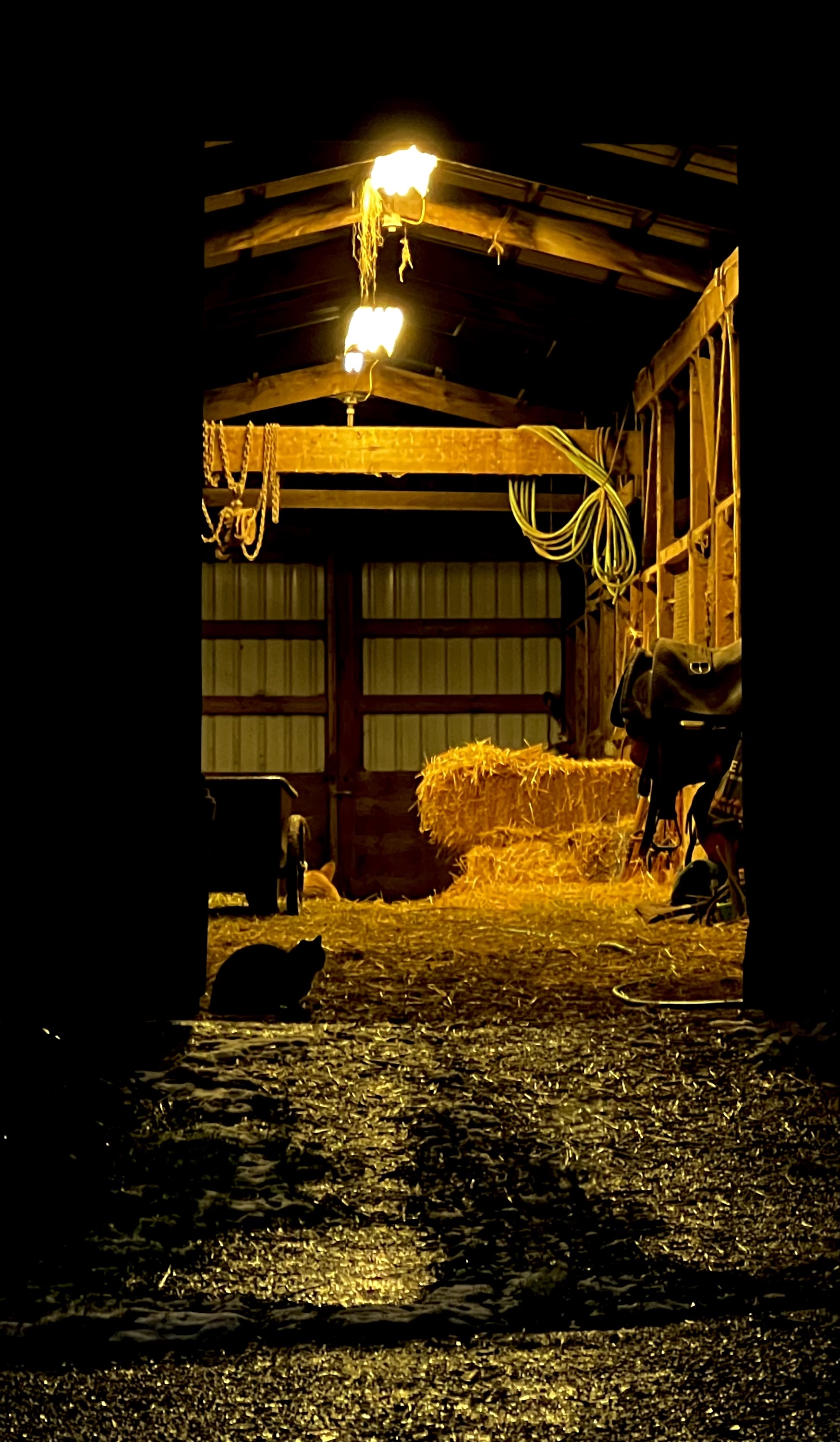
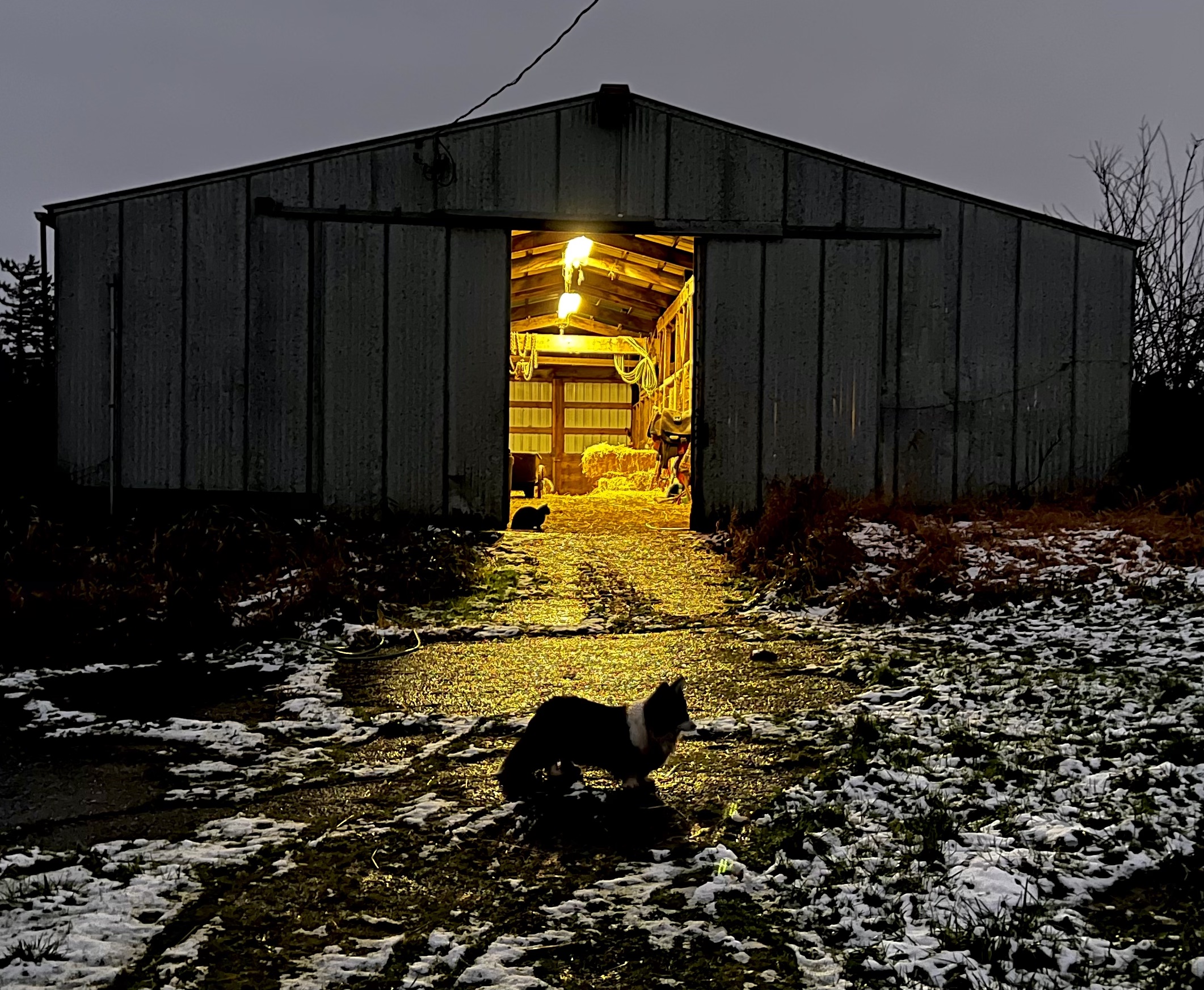
Then there came the offer of an animals’ dwelling, with fodder for bedding and some minimal shelter. A stable and its stone manger became sanctuary for the weary and burdened. We are all invited in to rest there, and I never enter a barn without somehow acknowledging that fact and feeling welcomed.

There are so many ways we continue to refuse access and shut the doors in the faces of those two (plus One) weary travelers, forcing them to look elsewhere to stay. We say “no room” dozens of times every day, not realizing who and what we are shutting out.

With all the material distractions of our age, it is small wonder we pay no attention to who is waiting patiently outside the back door of our lives, where it is inhospitable and cold and dank. Few of us would invite our special company into the barn first and foremost. Yet these travelers don’t seek an invitation to come in the front door, with fancy meals and feather beds and fresh flowers on the cupboard. It is the dark and manure strewn parts of our lives where they are needed most. That is where He was born to dwell amid our messiness, and that is where He remains, in the humblest parts of our being, the parts we do not want to show off, and indeed, most often want to hide.

And that is, of course, a place where there is always plenty of room.

This year’s Barnstorming Advent theme “… the Beginning shall remind us of the End” is taken from the final lines in T.S. Eliot’s poem “The Cultivation of Christmas Trees”

Jesus, Jesus, rest your head.
You has got a manger bed.
All the evil folk on earth
Sleep in feathers at their birth.
Jesus, Jesus, rest your head.
You has got a manger bed.

1. Have you heard about our Jesus?
Have you heard about his fate?
How his mammy went to the stable
On that Christmas Eve so late?
Winds were blowing, cows were lowing,
Stars were glowing, glowing, glowing. Refrain

2. To the manger came the Wise Men.
Bringing from hin and yon,
For the mother and the father,
And the blessed little Son.
Milkmaids left their fields and flocks
And sat beside the ass and ox. Refrain

One-Time
Monthly
Yearly

Make a one-time or recurring donation to support Barnstorming

Make a monthly donation

Make a yearly donation
Choose an amount

¤5.00
¤10.00
¤20.00
¤5.00
¤15.00
¤100.00
¤5.00
¤15.00
¤100.00

Or enter a custom amount

¤

Your contribution is deeply appreciated.
Your contribution is appreciated.

Your contribution is appreciated.

DonateDonate monthlyDonate yearly