Our toes, our noses Take hold on the loam, Acquire the air.
Nobody sees us, Stops us, betrays us; The small grains make room.
Soft fists insist on Heaving the needles, The leafy bedding,
Even the paving. Our hammers, our rams, Earless and eyeless,
Perfectly voiceless, Widen the crannies, Shoulder through holes. We
Diet on water, On crumbs of shadow, Bland-mannered, asking
Little or nothing. So many of us! So many of us!
We are shelves, we are Tables, we are meek, We are edible,
Nudgers and shovers In spite of ourselves Our kind multiplies
We shall by morning Inherit the earth. Our foot’s in the door. ~Sylvia Plath from “Mushroom”
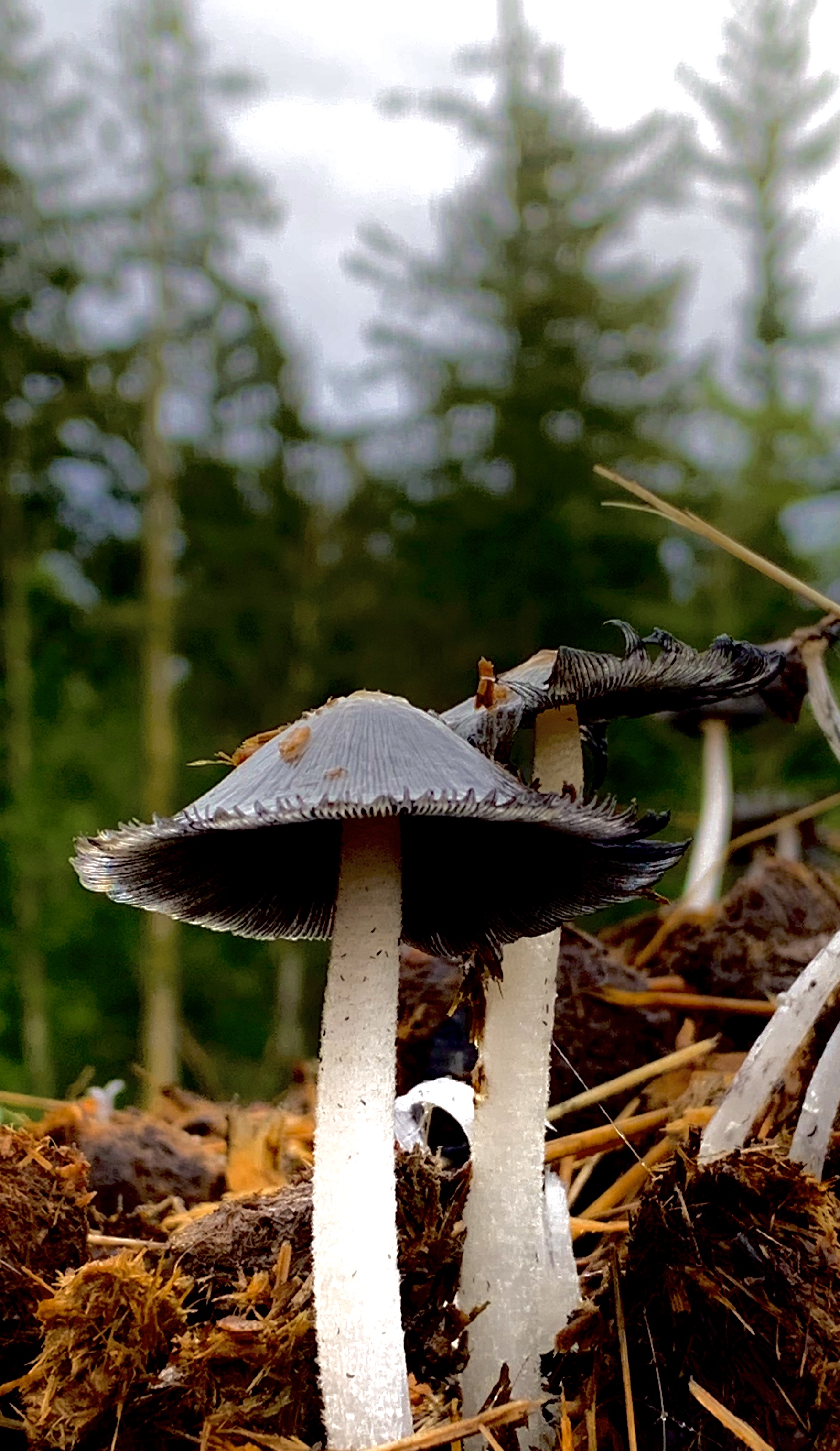
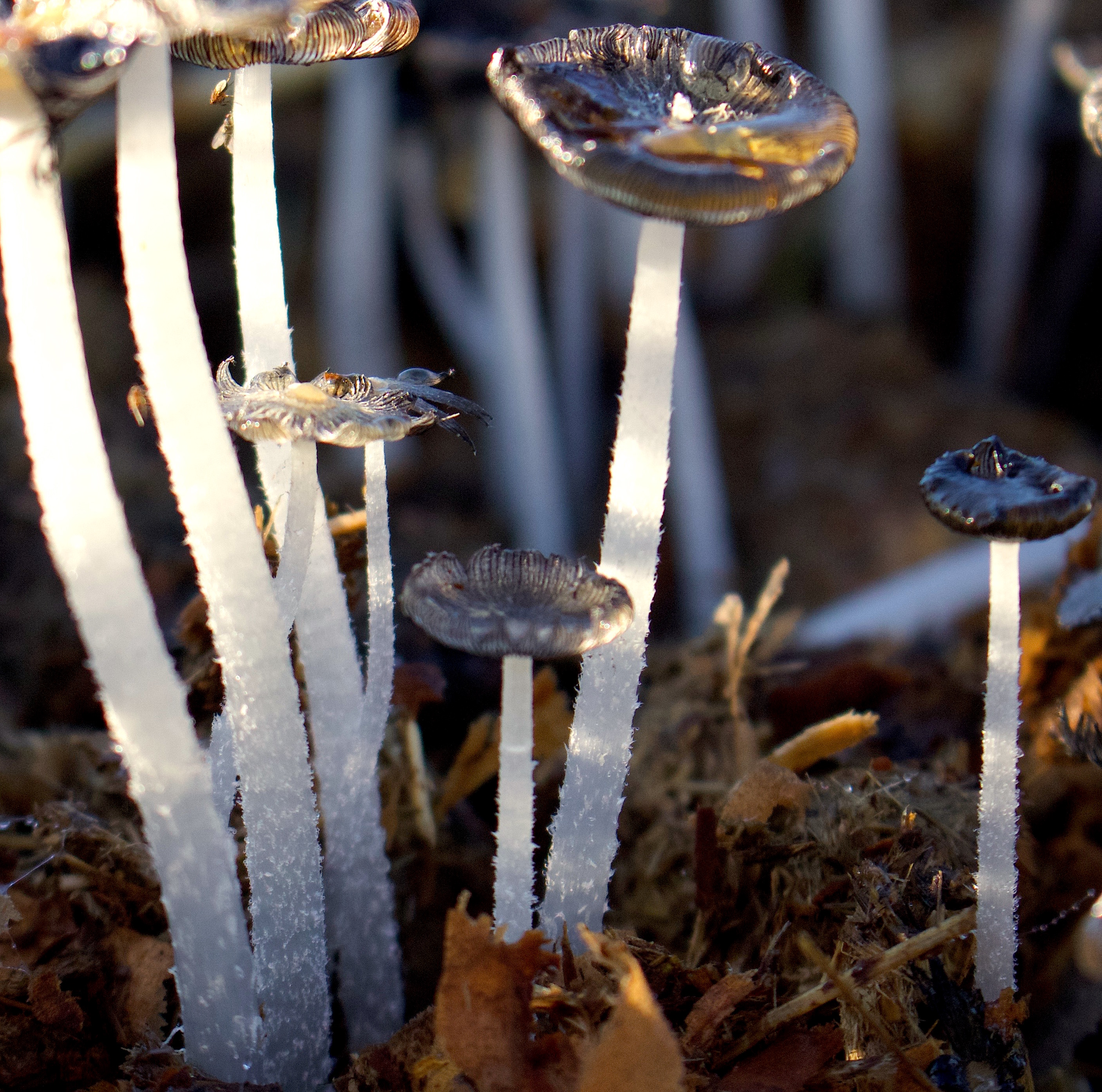
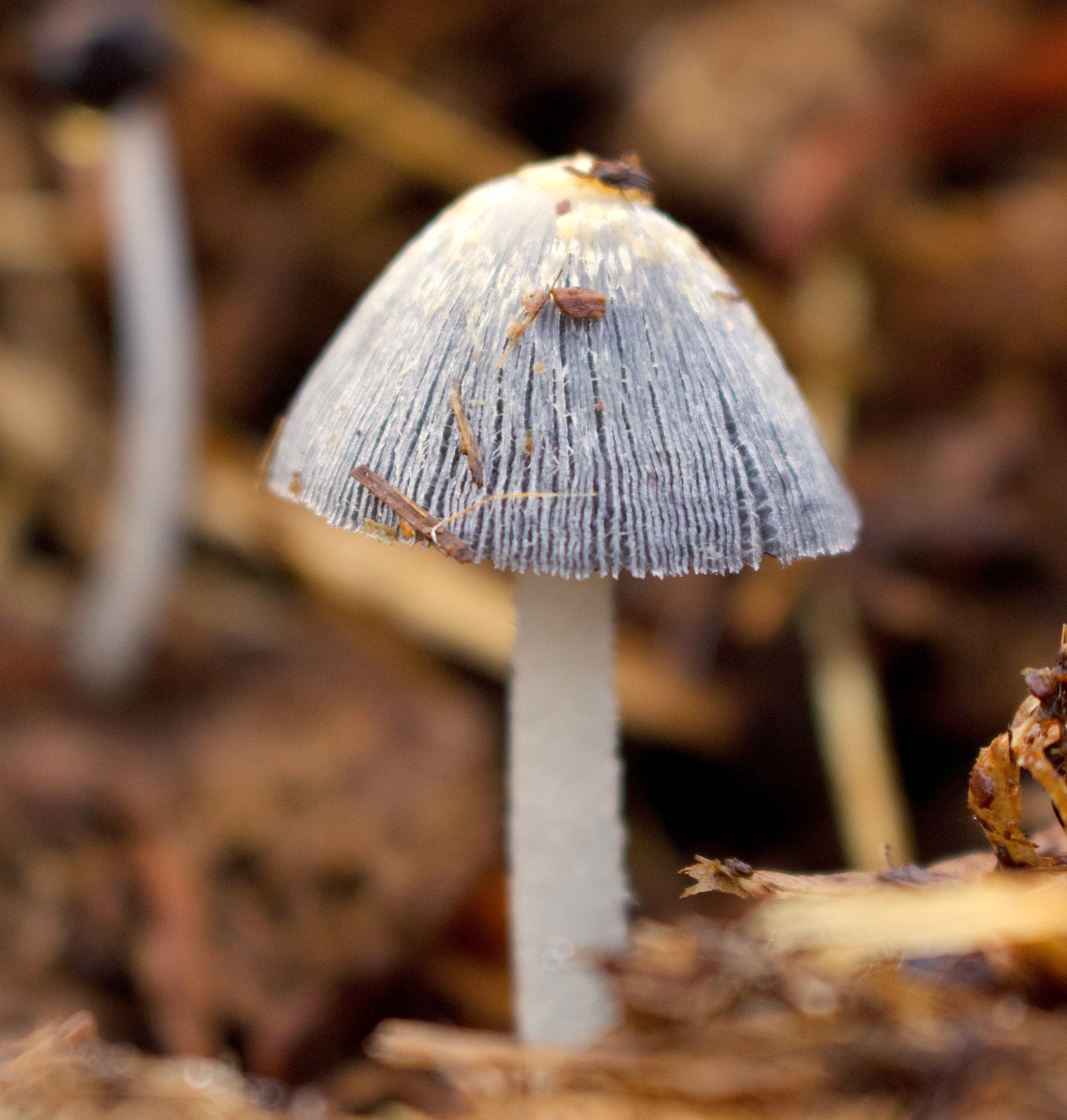
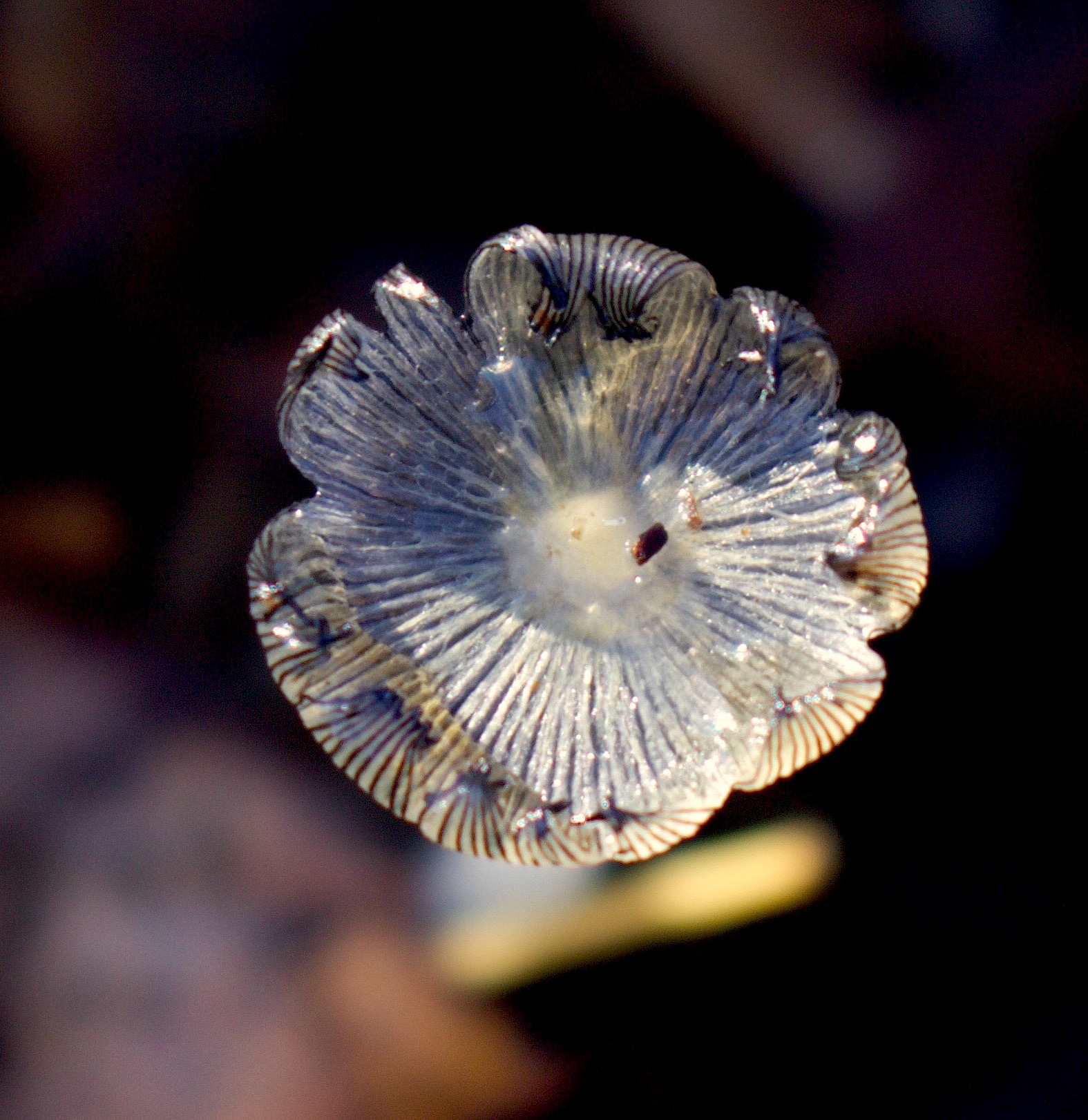
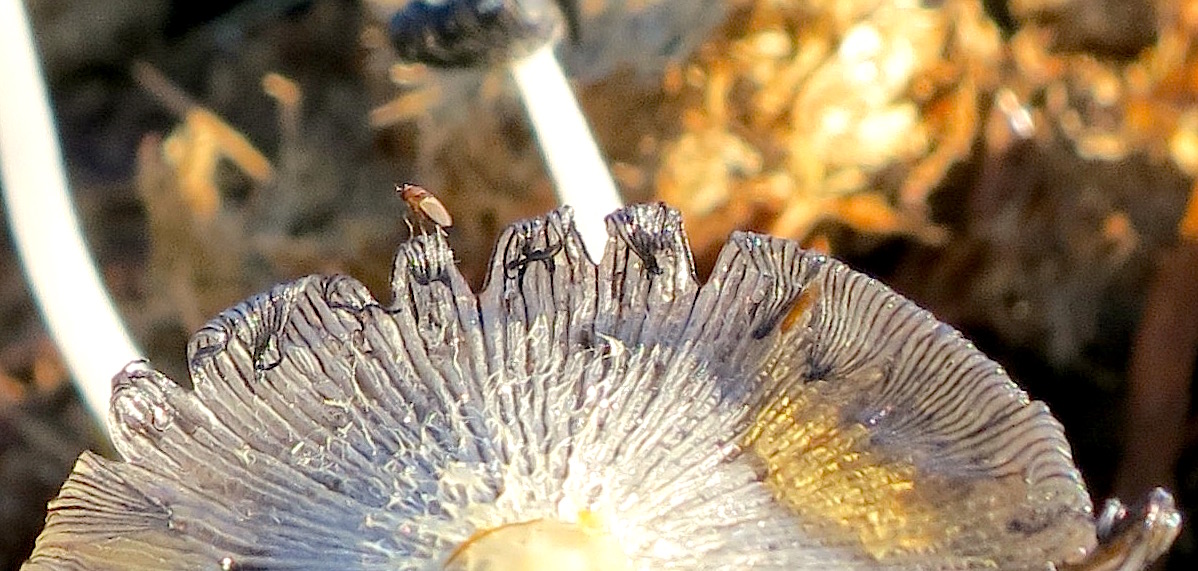
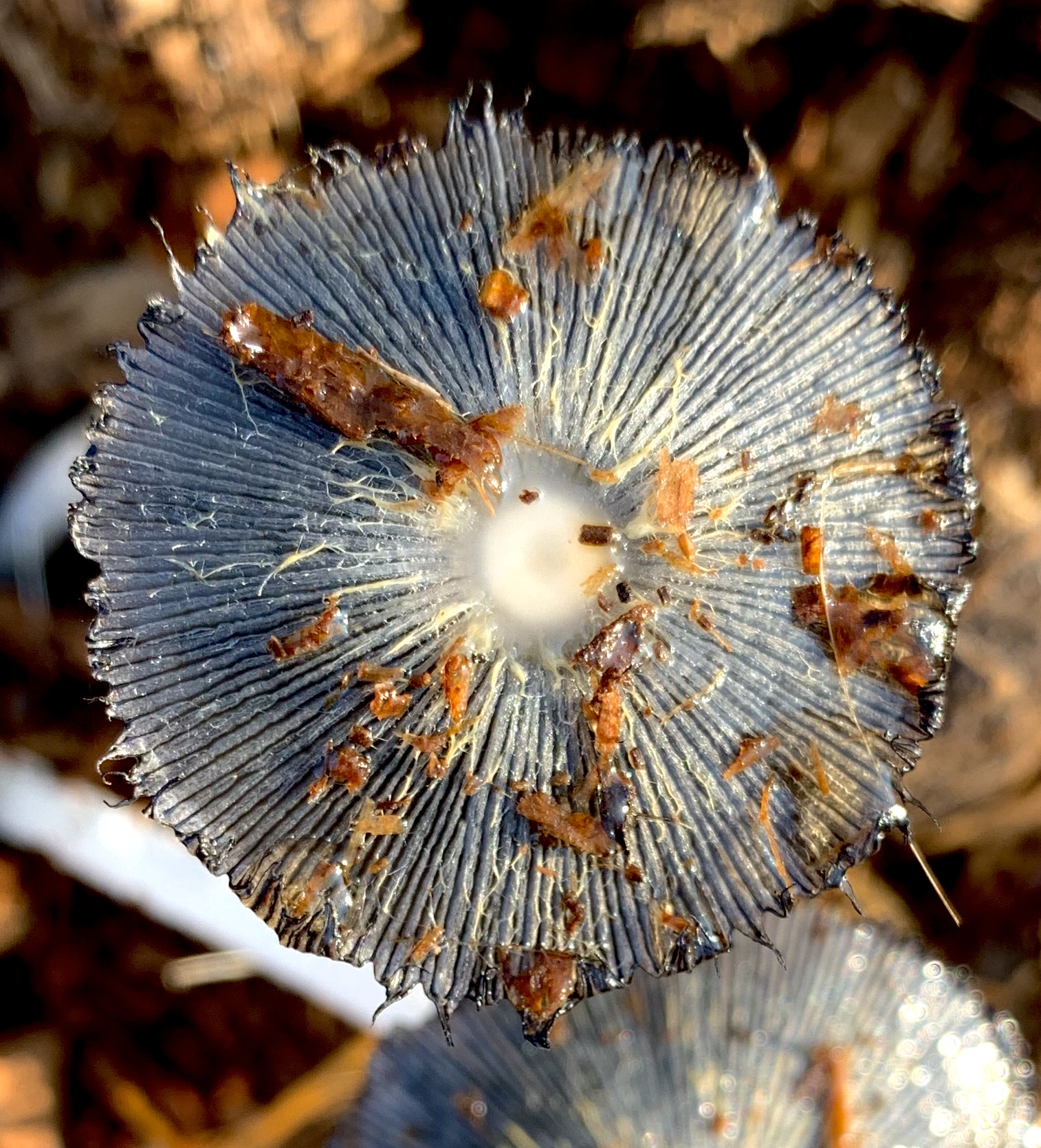
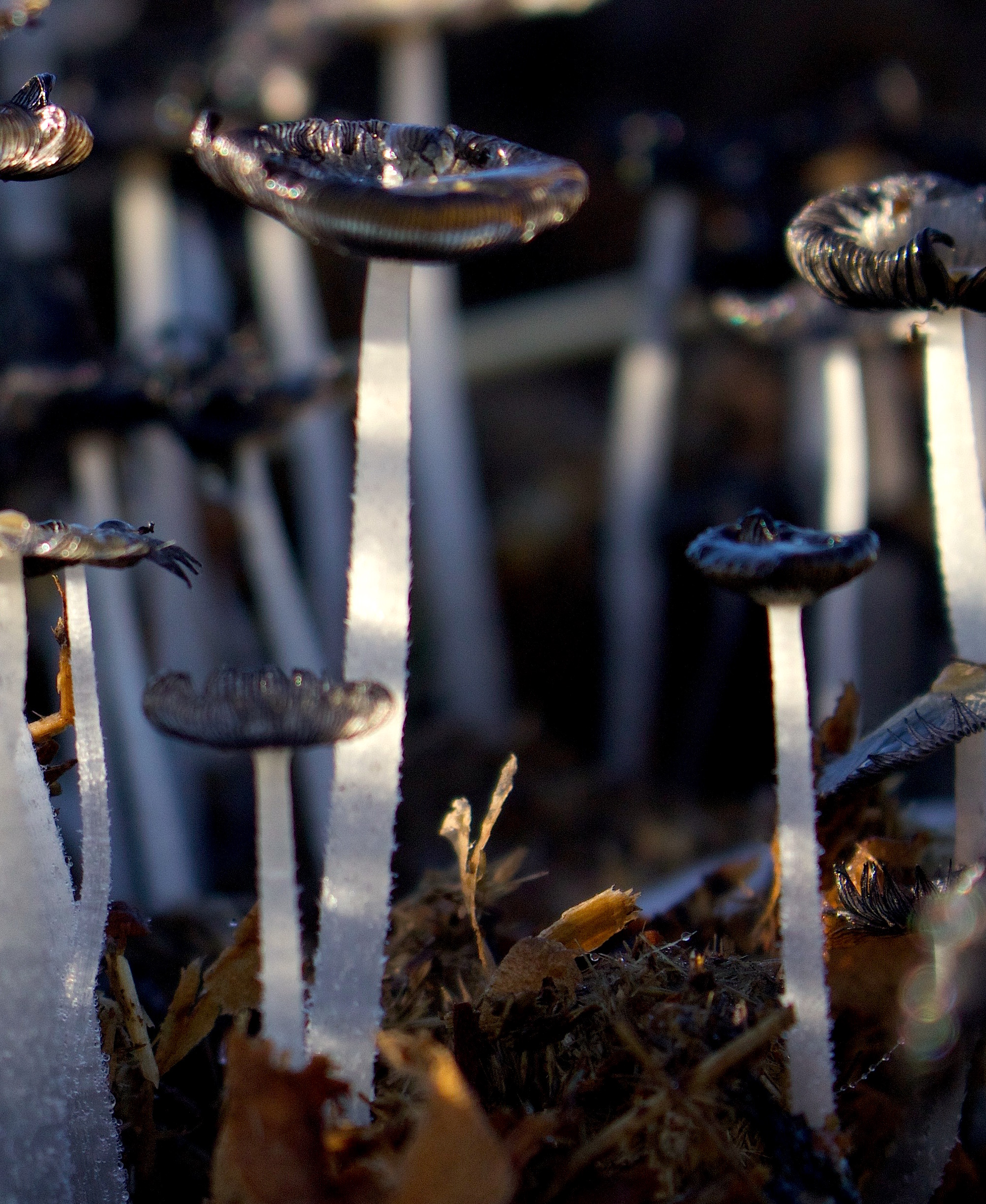
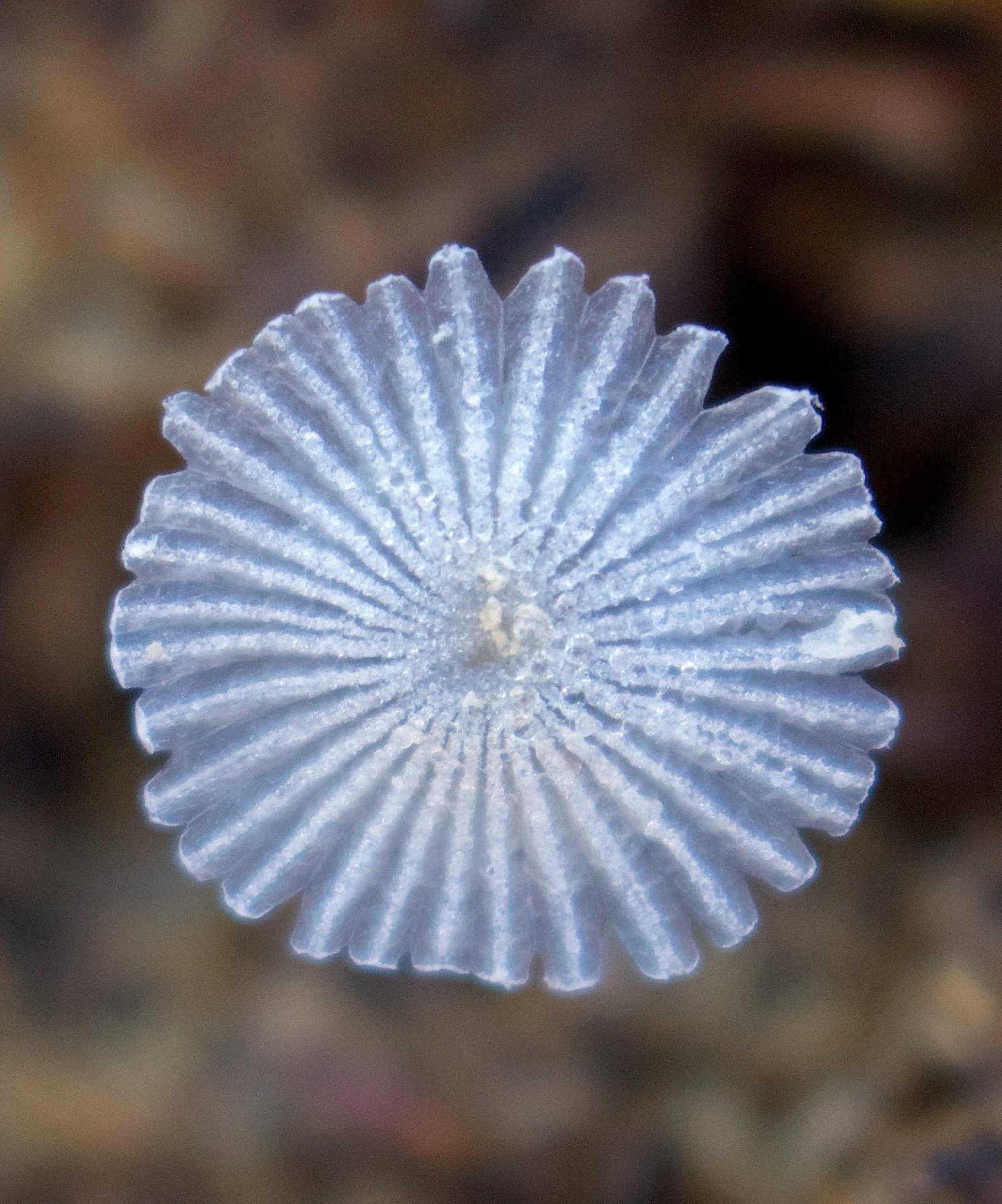
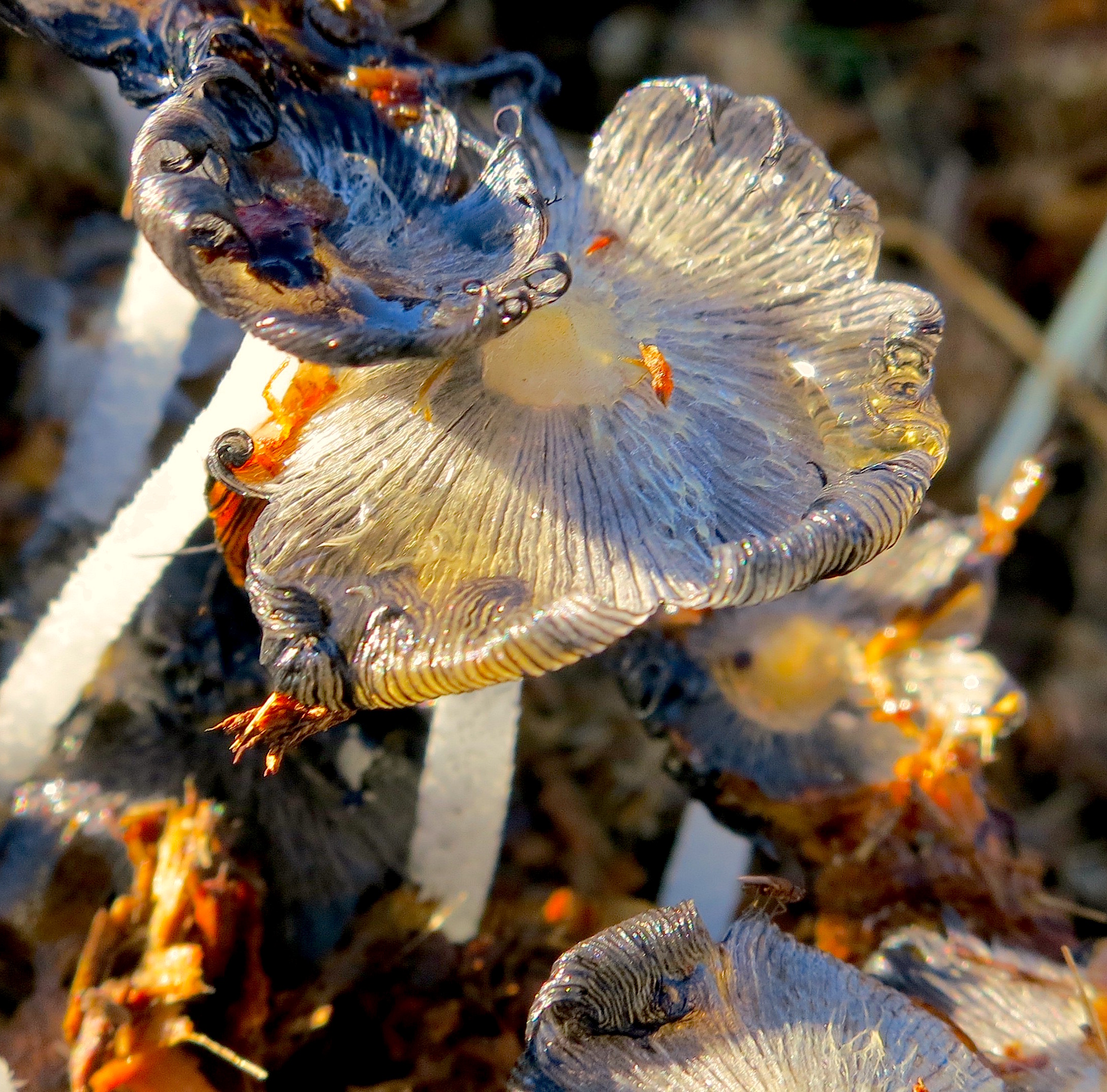
This overnight overture into the light, a parturition of “ink caps” after a shower. As if seed had been sprinkled on the manure pile, they sprout three inch stalks still stretching at dawn, topped by dew-catching caps and umbrellas.
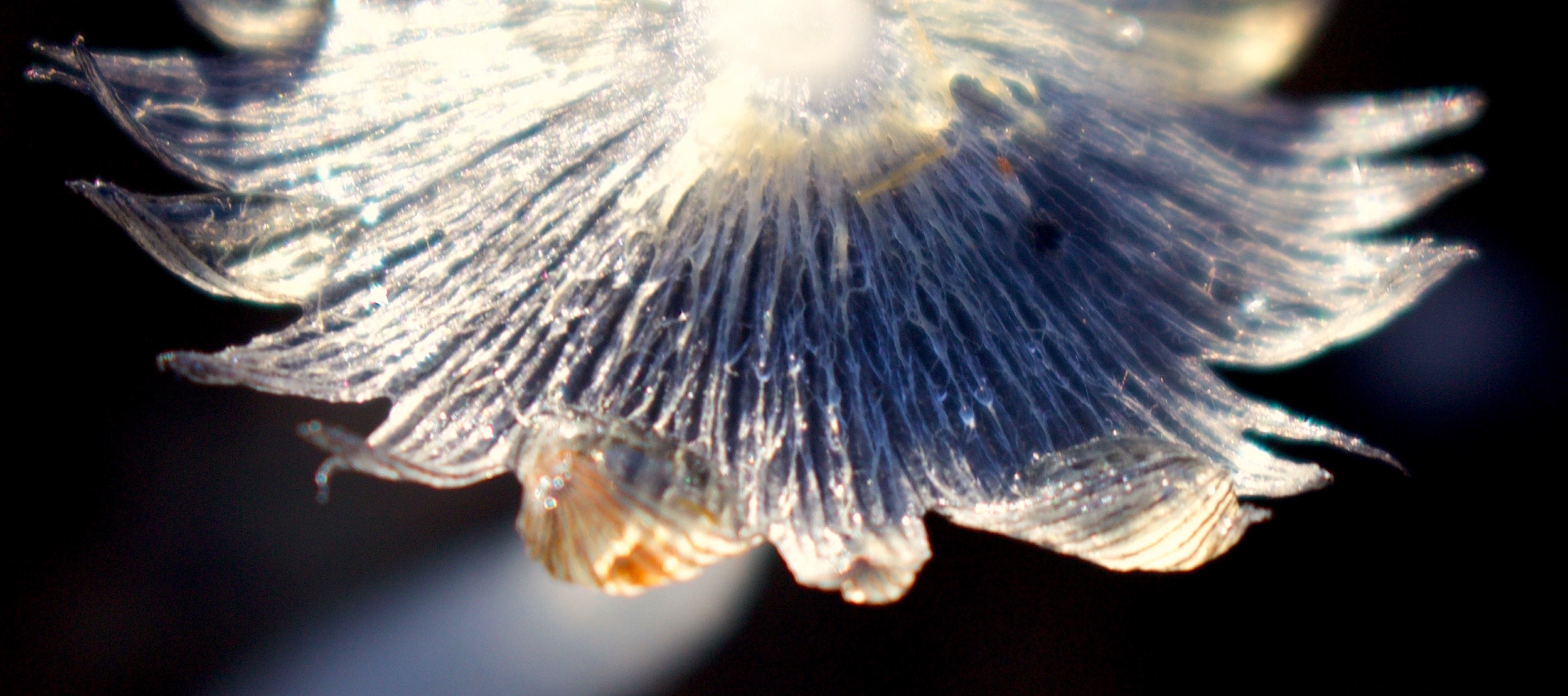
Nearly translucent as glass, already curling at the edges in the morning light, by noon melting into ooze by evening complete deliquescence, withered and curling back into the humus which birthed them hours before.
It shall be repeated again and again, this birth from unworthy soil, this brief and shining life in the sun, this folding, curling and collapse to die back to dust and dung.
Inedible, yet so Chrisincredible, they rise beautiful and worthy as is the way of things that never give up once a foot’s in the door.
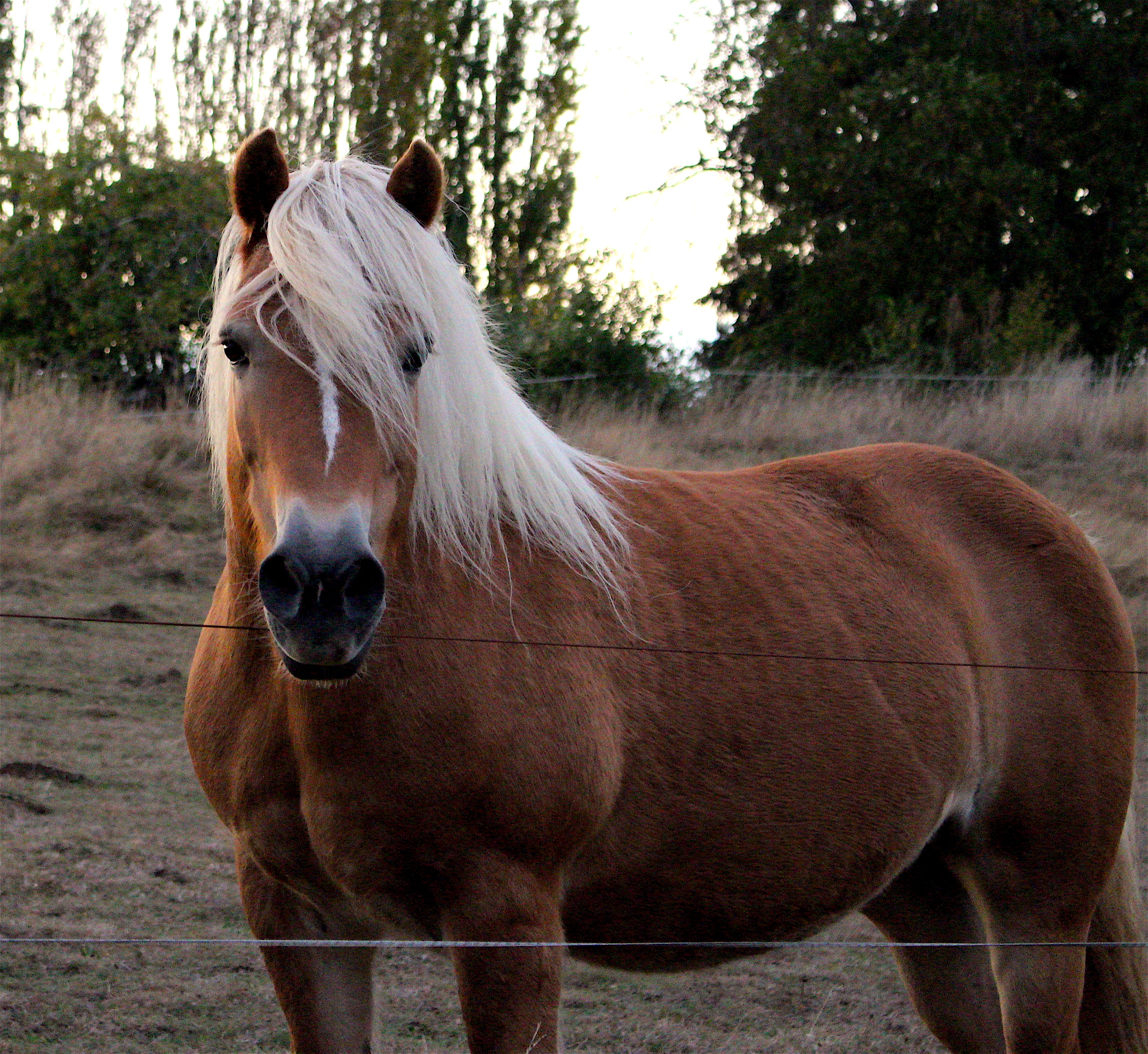
There is nothing better for the inside of a man than the outside of a horse… ~Long time equestrian wisdom attributed to many famous riders
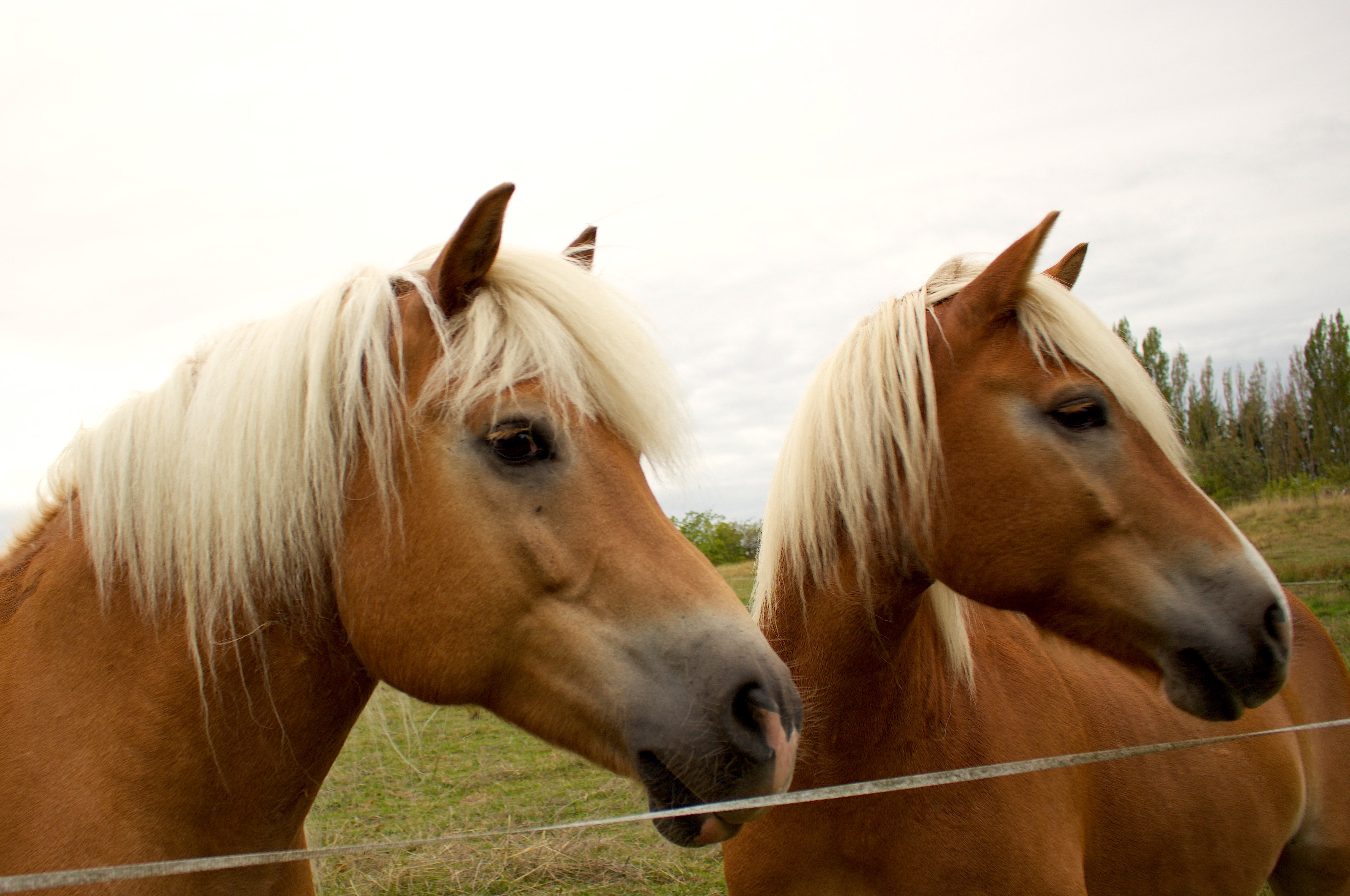
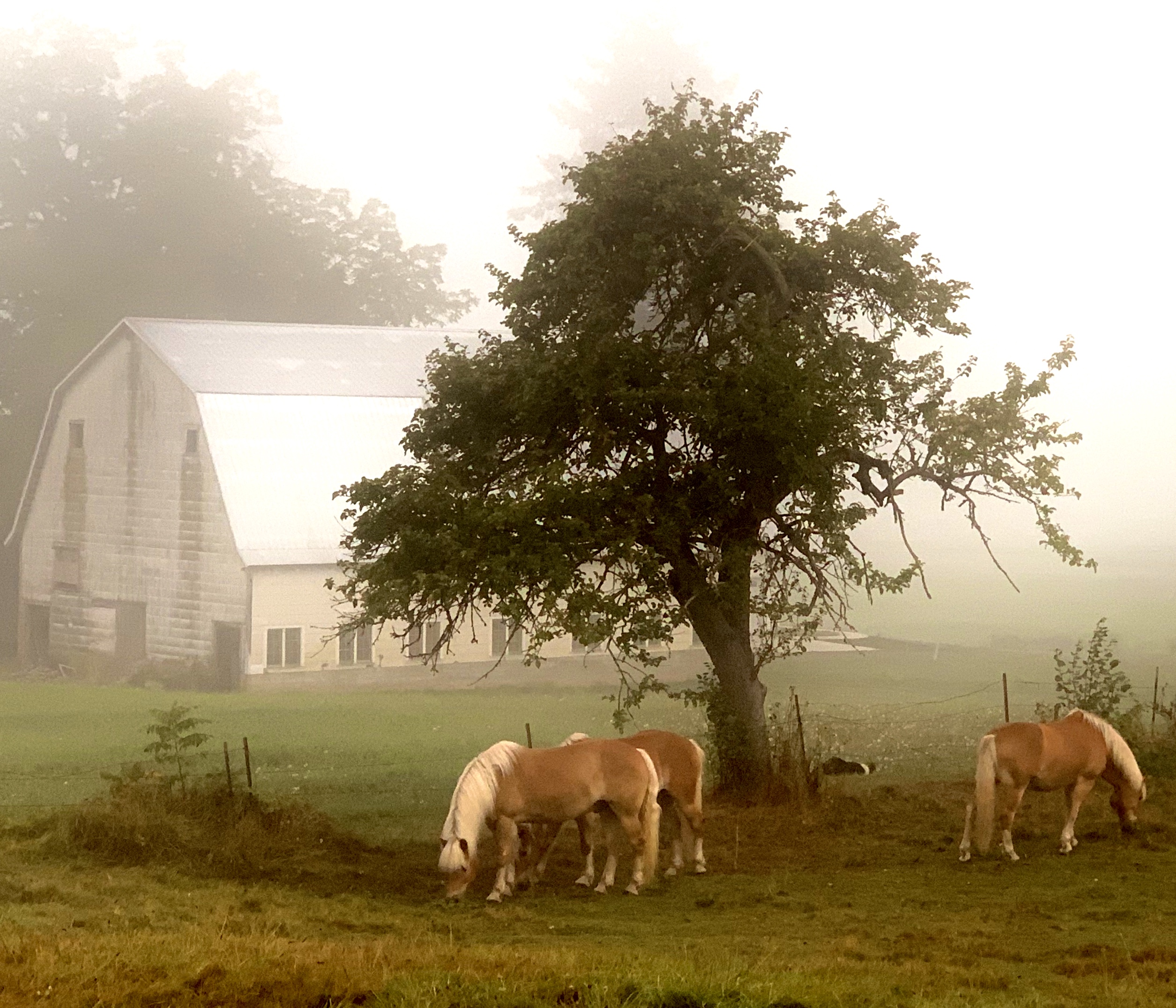
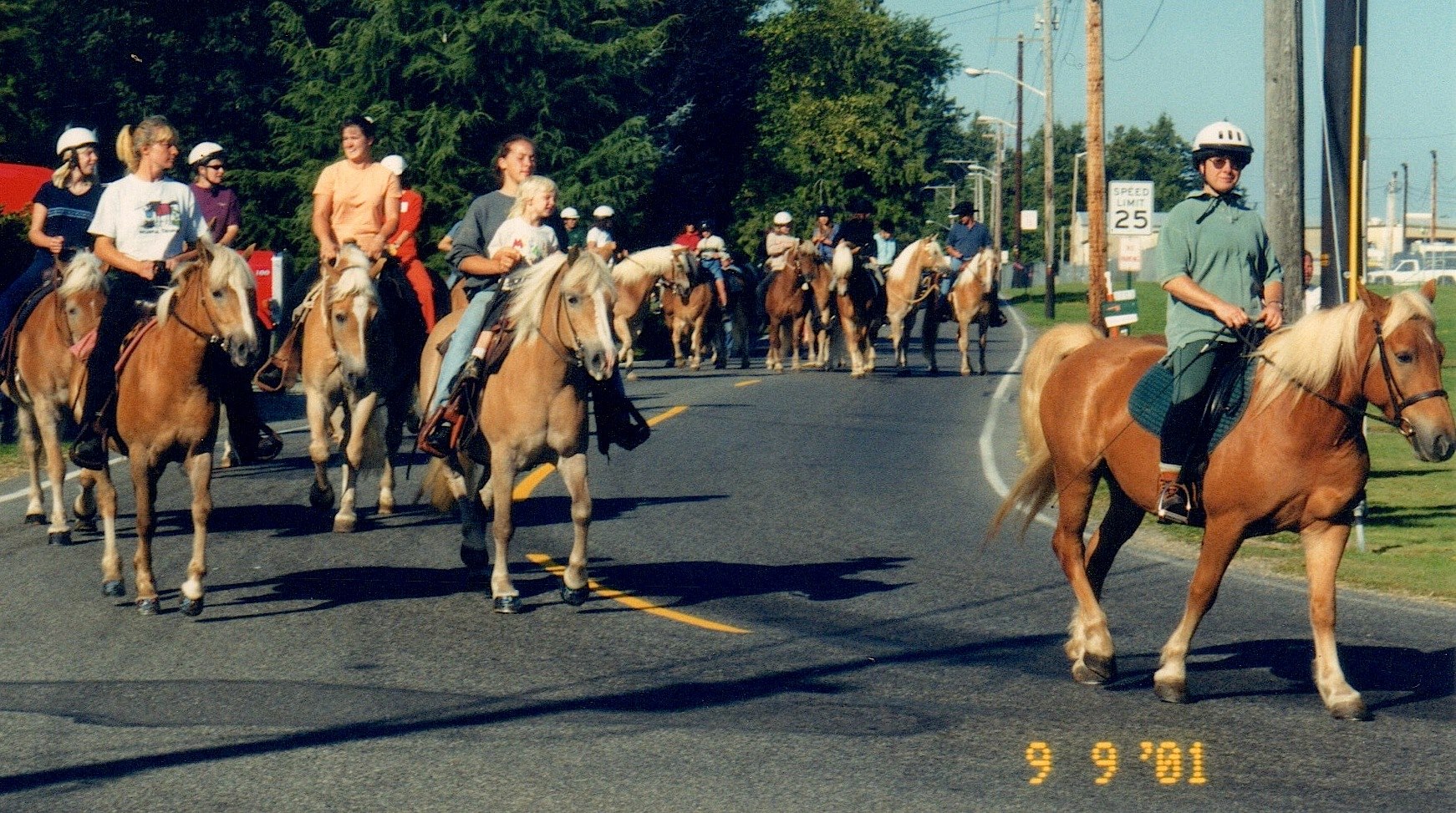
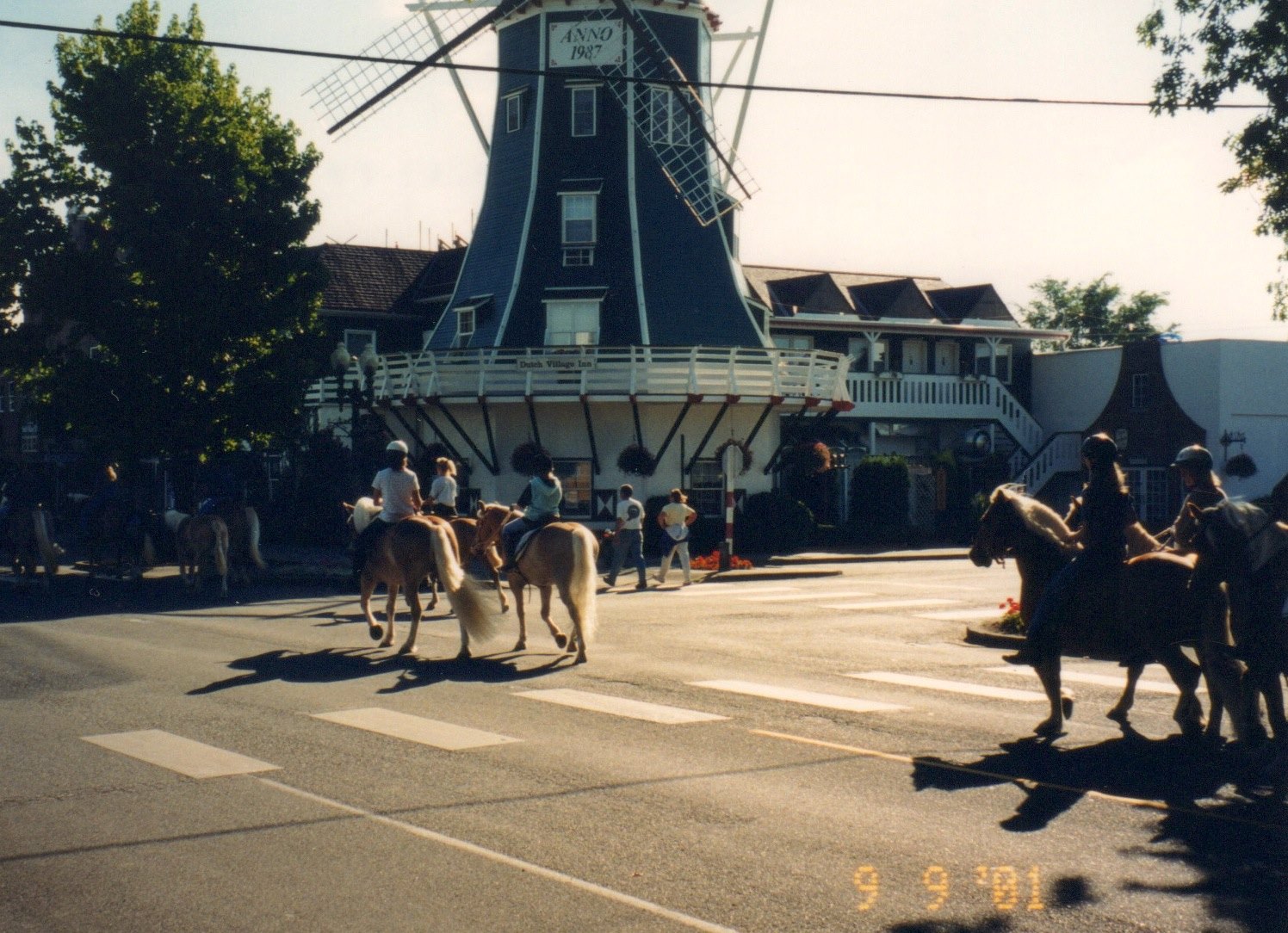
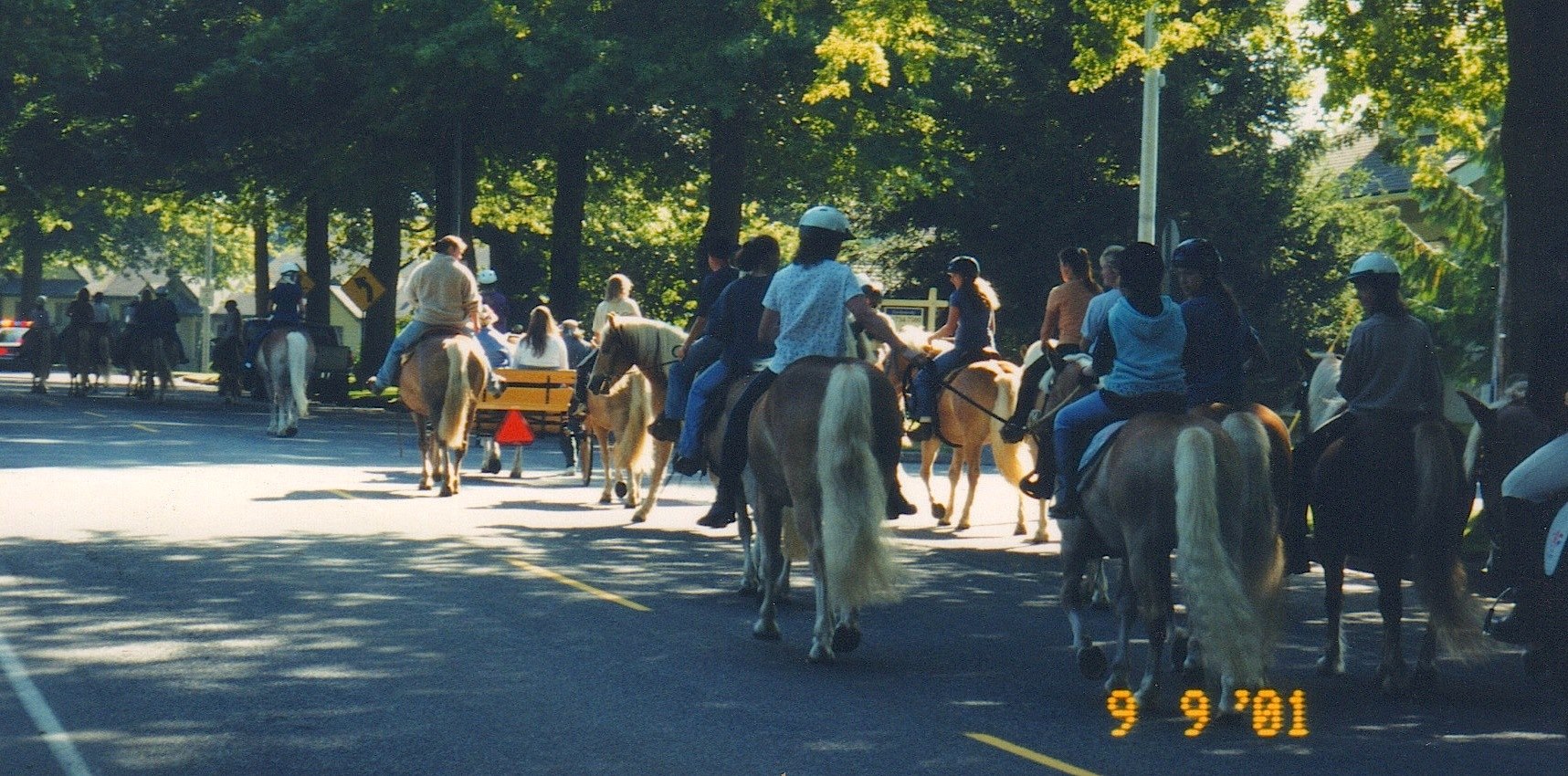
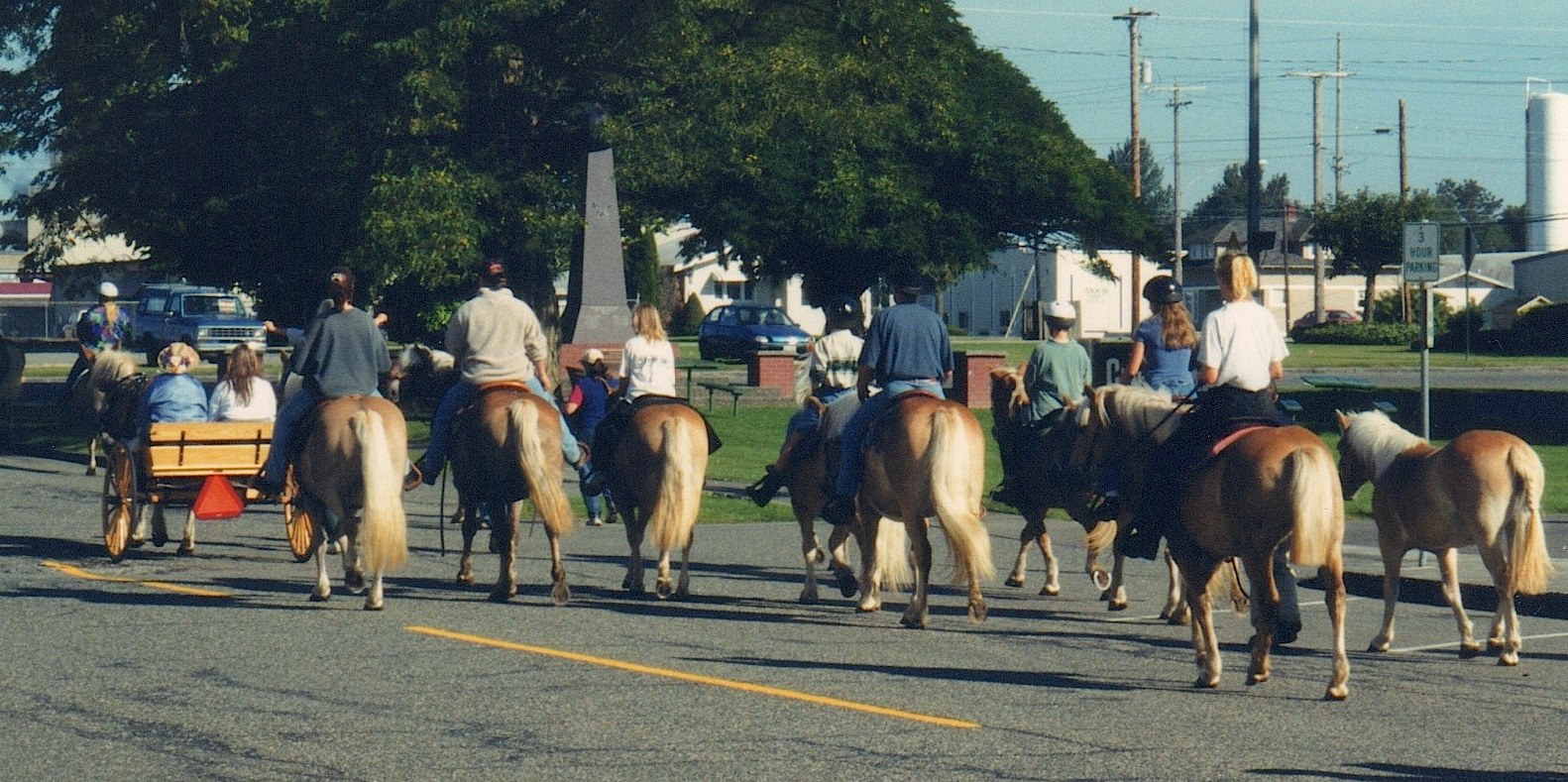
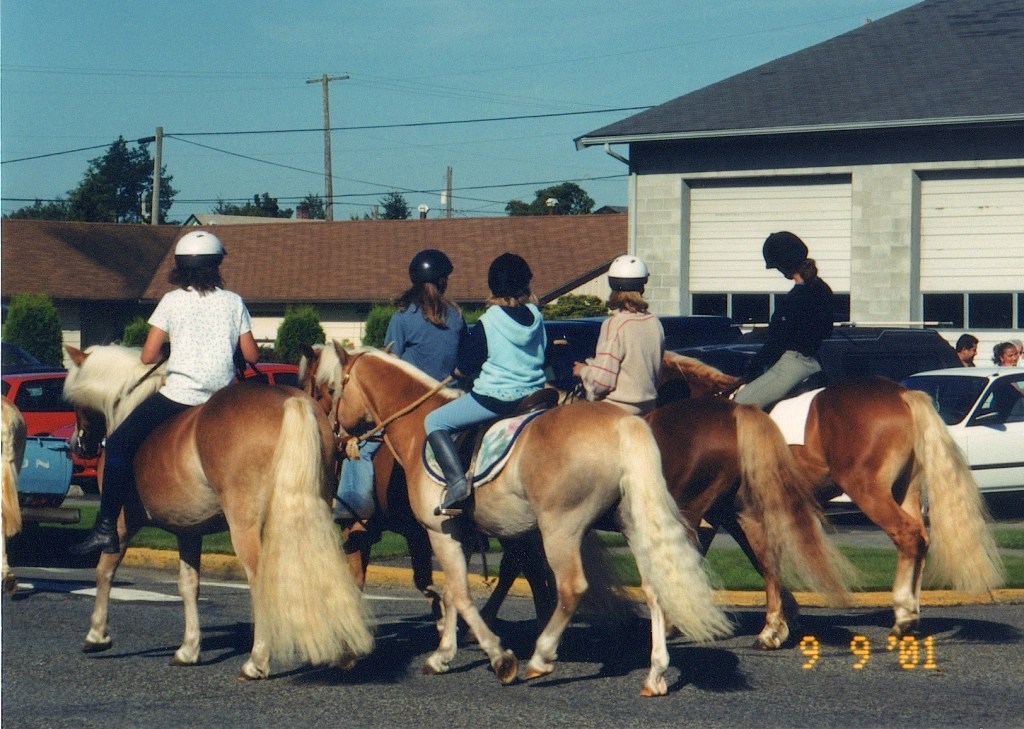
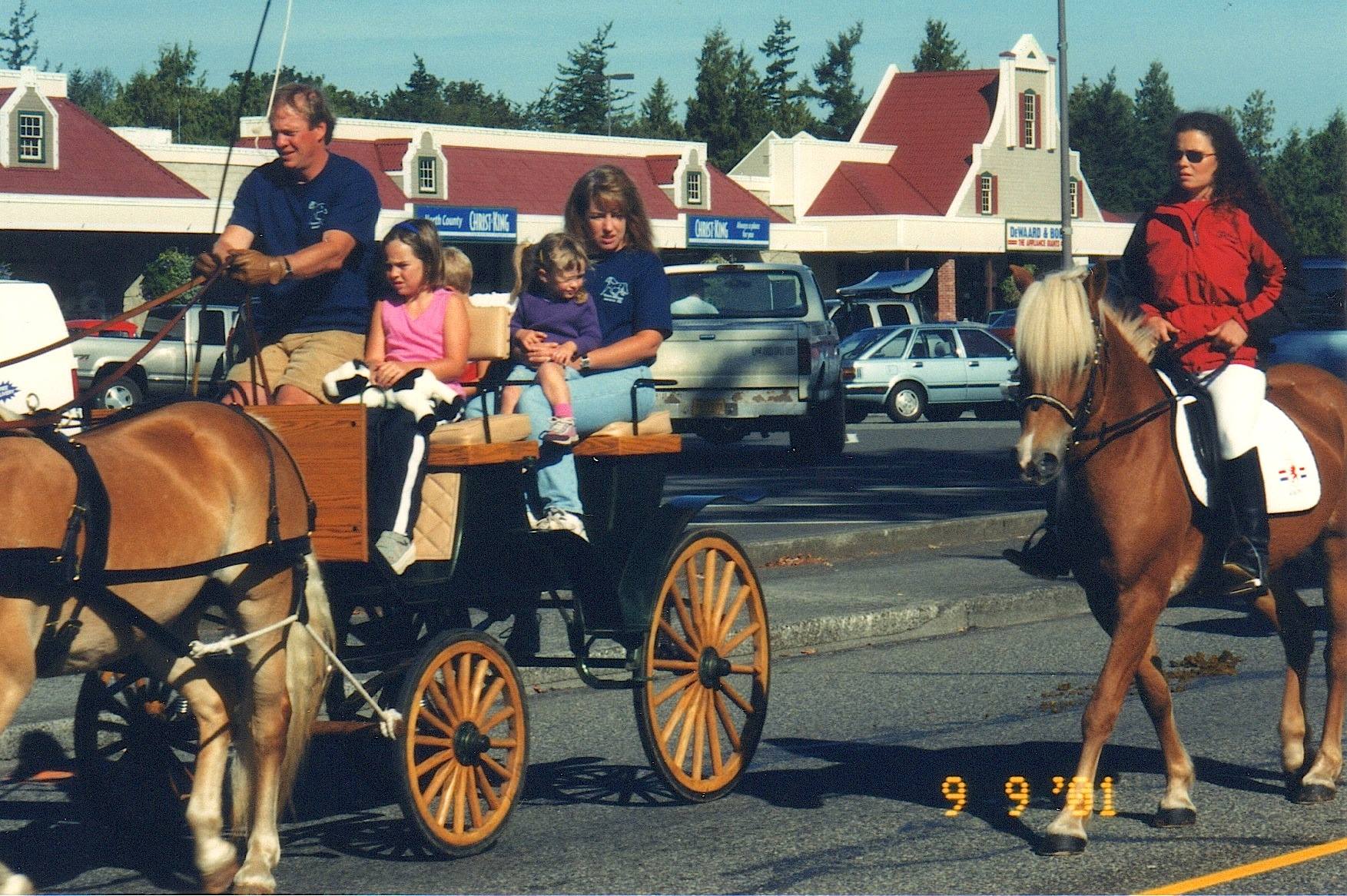
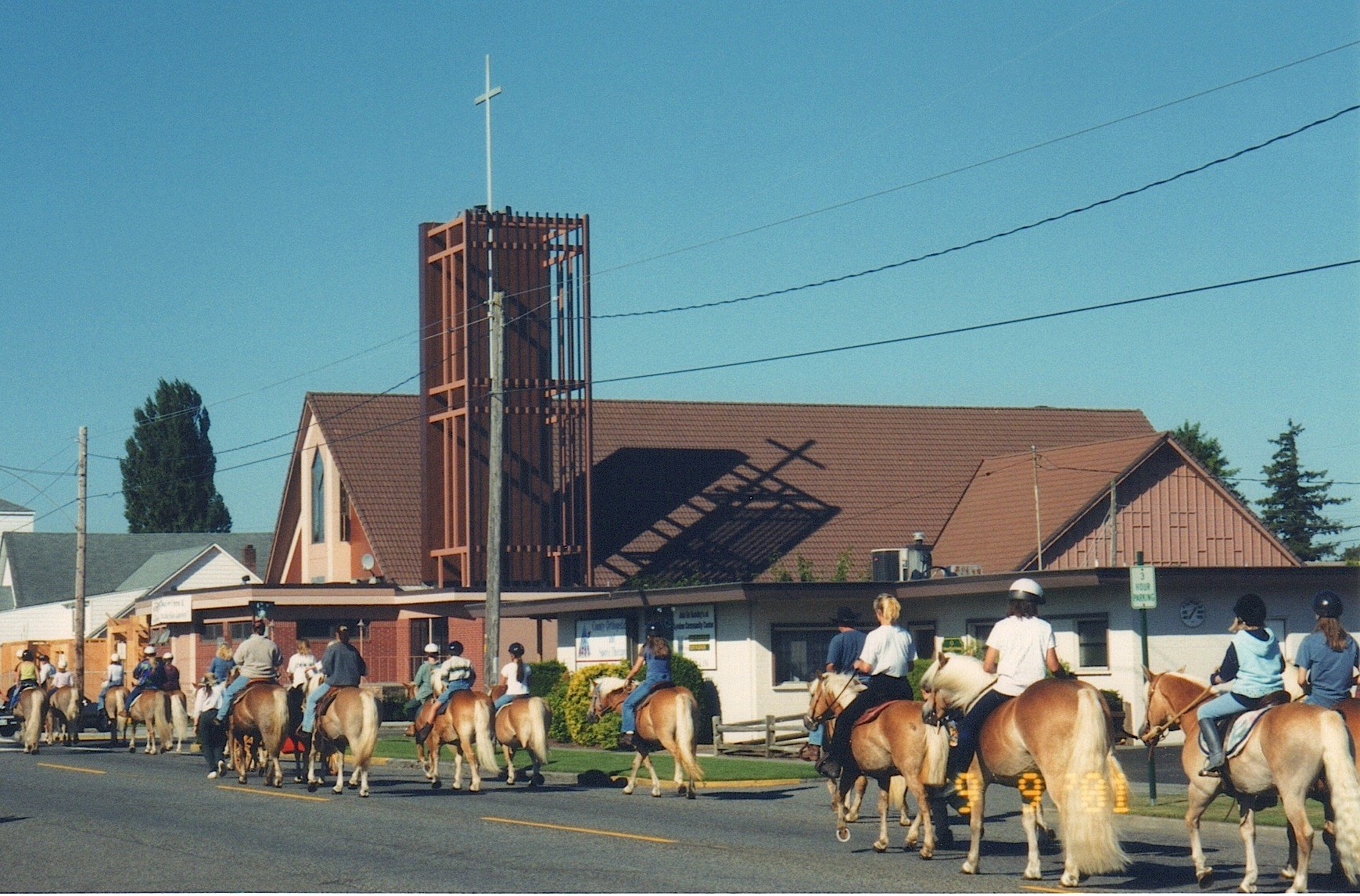
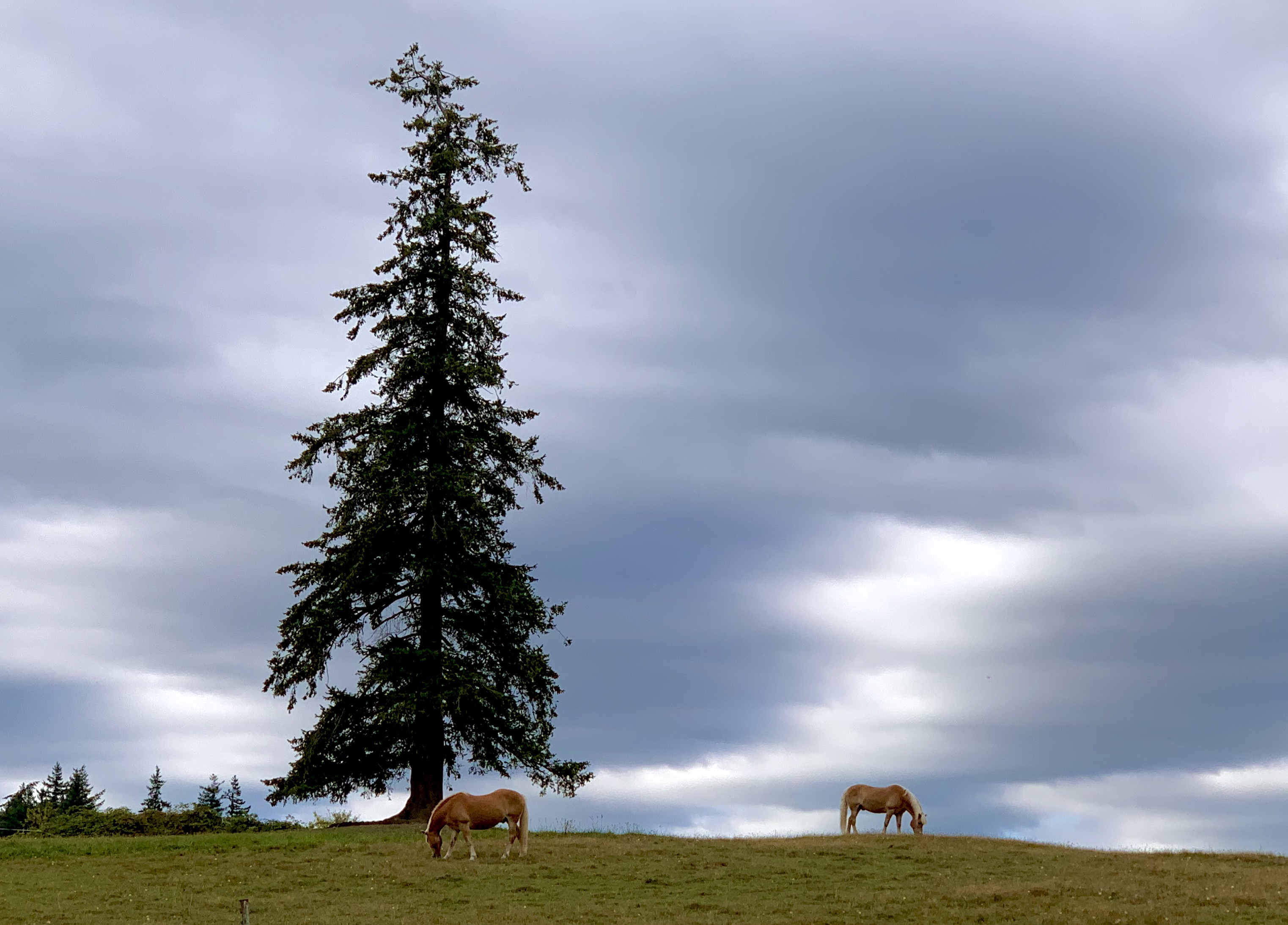
Nineteen years ago today in 2001, two days before the world changed forever, I helped organize a gathering of Haflinger horse owners from western Canada and the United States in our nearby town of Lynden, Washington. We received permission to have a Haflinger parade on a quiet Sunday morning while the townspeople were all in church. We wanted to be sure we would not interfere with traffic coming to town and leaving after worship services.
It was a remarkable morning of over ninety Haflingers – riding, driving, walking their horses, enjoying the quiet peace of a Sabbath morning in a friendly little town.
After September 11, 2001, nothing has felt quiet or calm in the same way ever again.
This is to remember the day we spent together, in the insides of us enjoying the outsides of our horses.
I don’t know if you ever saw a doubt. In fact, I doubt you did. They’re shape shifting little shadows and they’re more than often hid.
You could hear them on the whirling winds, that whistled through the farm. You could feel them in your stomach or brush the goosebumps of your arm.
You’d hear them giggling in the corners, in the darkness of the night. They’re the wobble in the voice that claims that things will be all right.
And the little doubts got larger, until they no longer hid in holes. They now lived out amongst them and they slipped into their souls.
I know good times are coming back. I know the sun will rise. I know the hard earth soon will soften, and plants will bloom before our eyes.
There will be colour in the meadows and the river will unfreeze. But if we’re to move beyond this moment then these fiendish doubts must leave.
We need hopeful stories more than ever, we should tell them till we’re blue. We should tell them till we look outside and see that they’ve come true.
And the doubts that wreak such havoc, they were nowhere to be seen. And the fear they’d brought forth with them felt so much like a dream.
So remember, little sister, take courage with you when you sleep. For tomorrow we might all need it, for the little doubts that creep. ~Tomos Roberts from “Doubts that Creep”
These days doubt is more epidemic than the COVID virus.
No one trusts anyone to tell the truth any longer and truth itself is up for grabs. Experts are suspect, while government agencies and their spokespersons surely must be part of a larger conspiracy.
It’s an “every man for himself” attitude with everyone doing what is right in their own eyes.
You can see where doubts leave us: we end up in a wintry forsaken place that looks, feels and frankly, is hopeless.
The most recent weeks have been difficult as most students start school at home again rather than in classrooms and no one is happy about it. Churches have been meeting online or outside and will need to make a difficult transition to limited indoor worship services that won’t feel familiar. Businesses continue to suffer the effects of people having less income to spend, and unwillingness to spend on anything but essentials.
A pandemic virus wreaks havoc with society but stories sowing doubts and mistrust are far more damaging. Rather than working together for solutions, we as a society have become more divided and divisive than ever.
When I speak with those whose well-being I care deeply about, yet who don’t trust my opinion or any medical opinion for that matter, my voice wobbles with concern. If I, as a caring friend and physician for forty years can’t be trusted, then whom will they trust?
A virus doesn’t give a rip what our politics are – it is an equal-opportunity opportunist seeking which cell to invade next. “Going viral” is yet another real life lesson in exponential multiplication, whether a packet of RNA or a social media meme or youtube link sowing mistrust and discord as it is shared millions of times and spreads with our help and consent.
We can’t allow creeping doubts to metastasize into a hopelessness cancer that is terminal.
We need hopeful stories, now more than ever. We need to take courage with us when we lay ourselves down to sleep, and dream the dreams of a better day on the horizon. We need truth that is not up for grabs to the highest bidder but is steadfast, transparent and … true.
Until then, we all should keep our masks on to stop the spread and protect others. It surely can’t hurt.
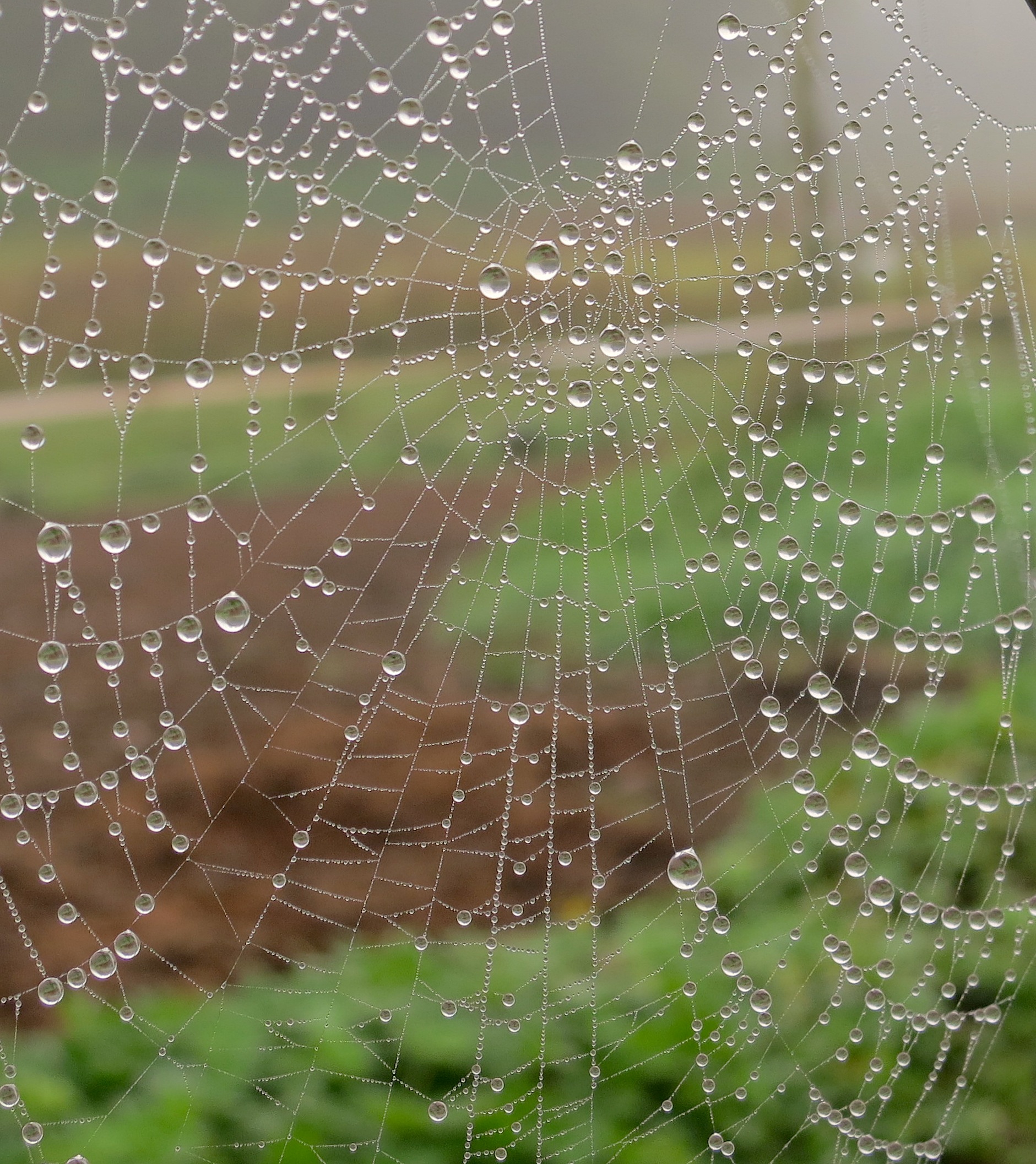
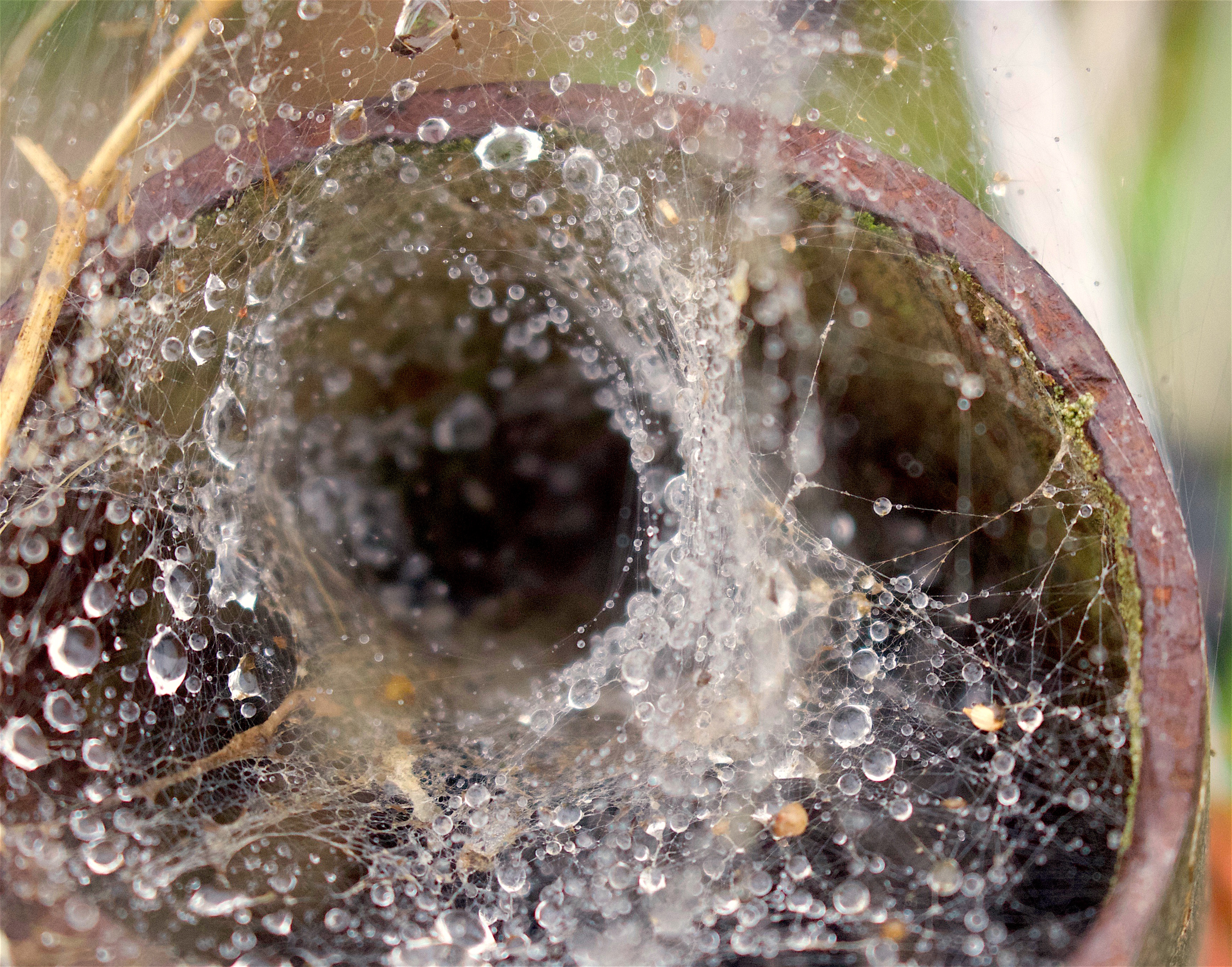
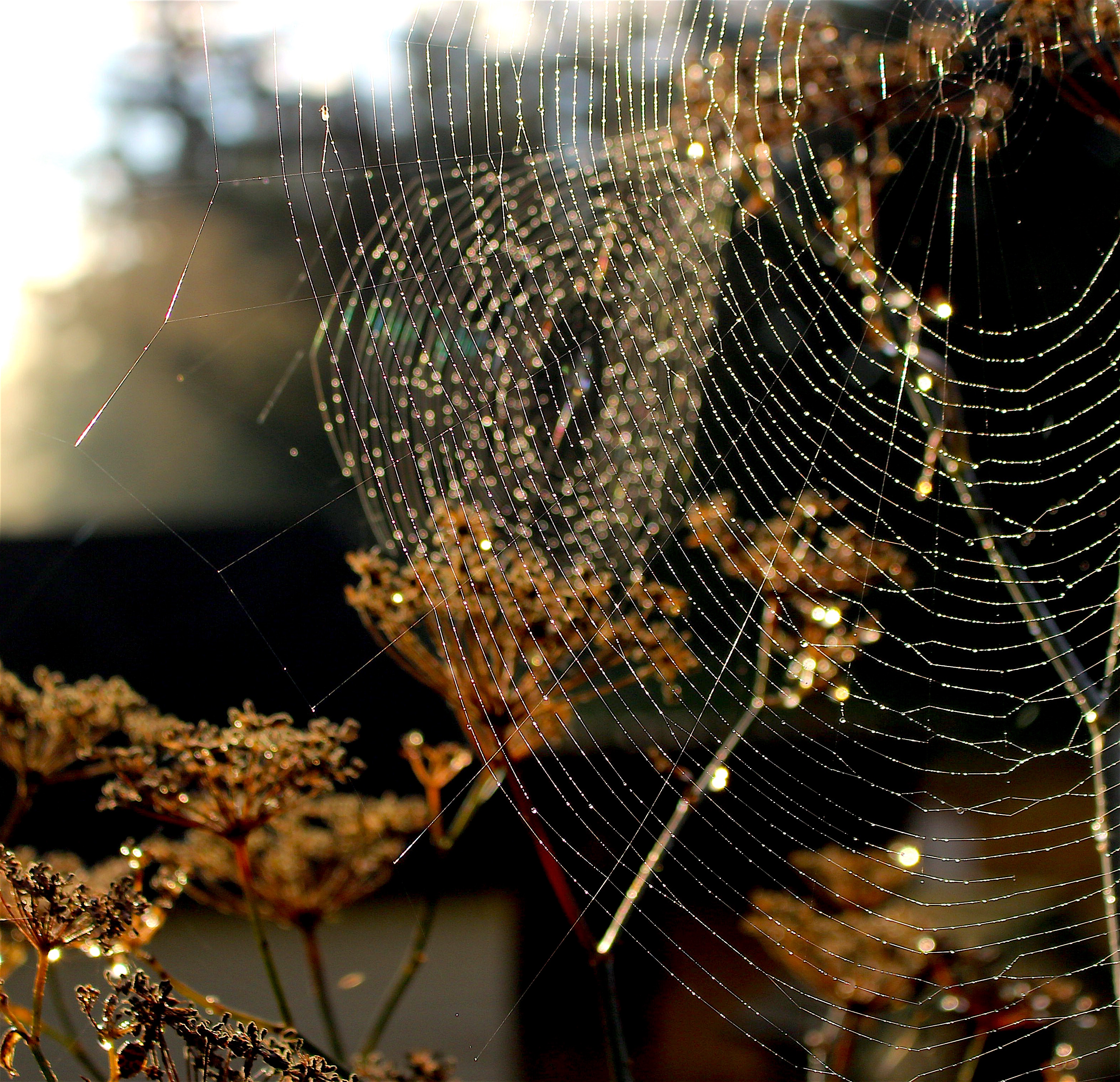
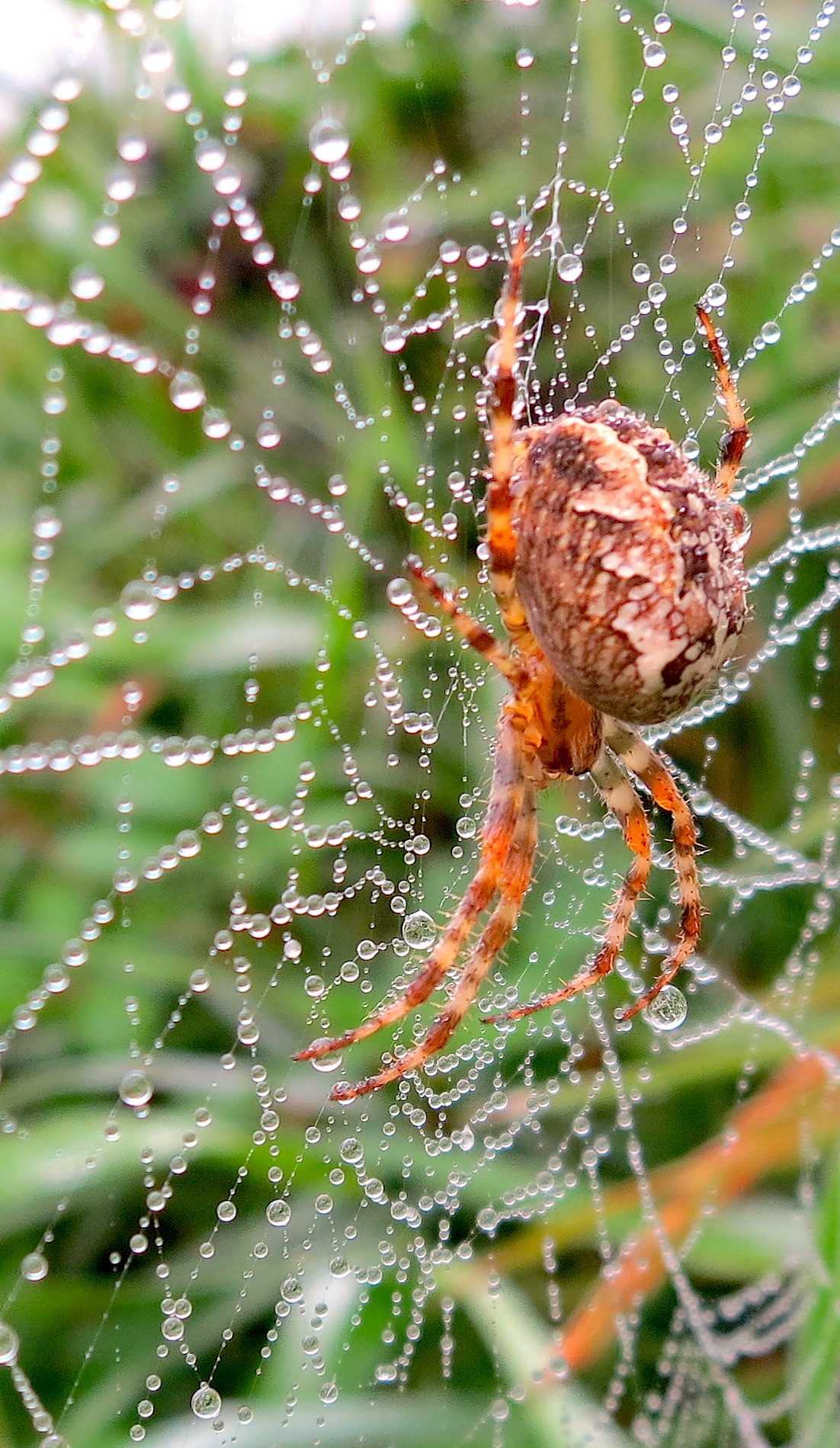
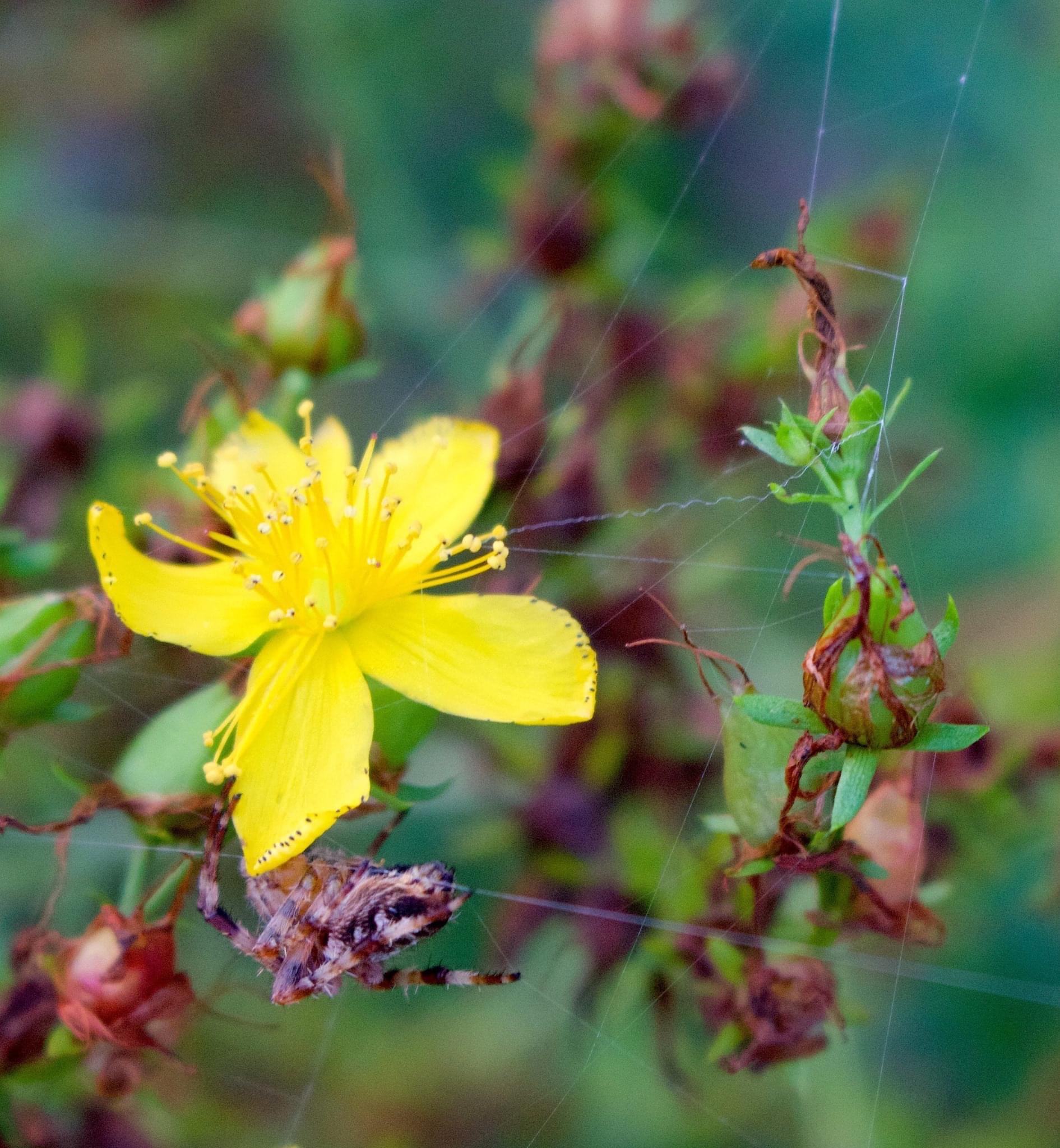
Silk-thin silver strings woven cleverly into a lair, An intricate entwining of divinest thread… Like strands of magic worked upon the air, The spider spins his enchanted web – His home so eerily, spiraling spreads.
His gossamer so rigid, yet lighter than mist, And like an eight-legged sorcerer – a wizard blest, His lace, like a spell, he conjures and knits; I witnessed such wild ingenuity wrought and finessed, Watching the spider weave a dream from his web. ~Jonathan Platt“A Spider’s Web”
Not everyone is taking a holiday today on Labor Day. Some are busier than ever, creating a masterpiece nightly, then waiting in hope for that labor to be rewarded.
I too spin elaborate dreams at night: some remembered, some bare fragments, some shattered, some potentially yield a meal.
We work because we are hungry. We work because someone we love is hungry and needs feeding.
Yet the best work is the work of weaving dreams ~out of thin air and gossamer strands~ where nothing existed before, not as a trap or lure or lair but as a work of beauty- a gift as welcome as a breath of fresh air.
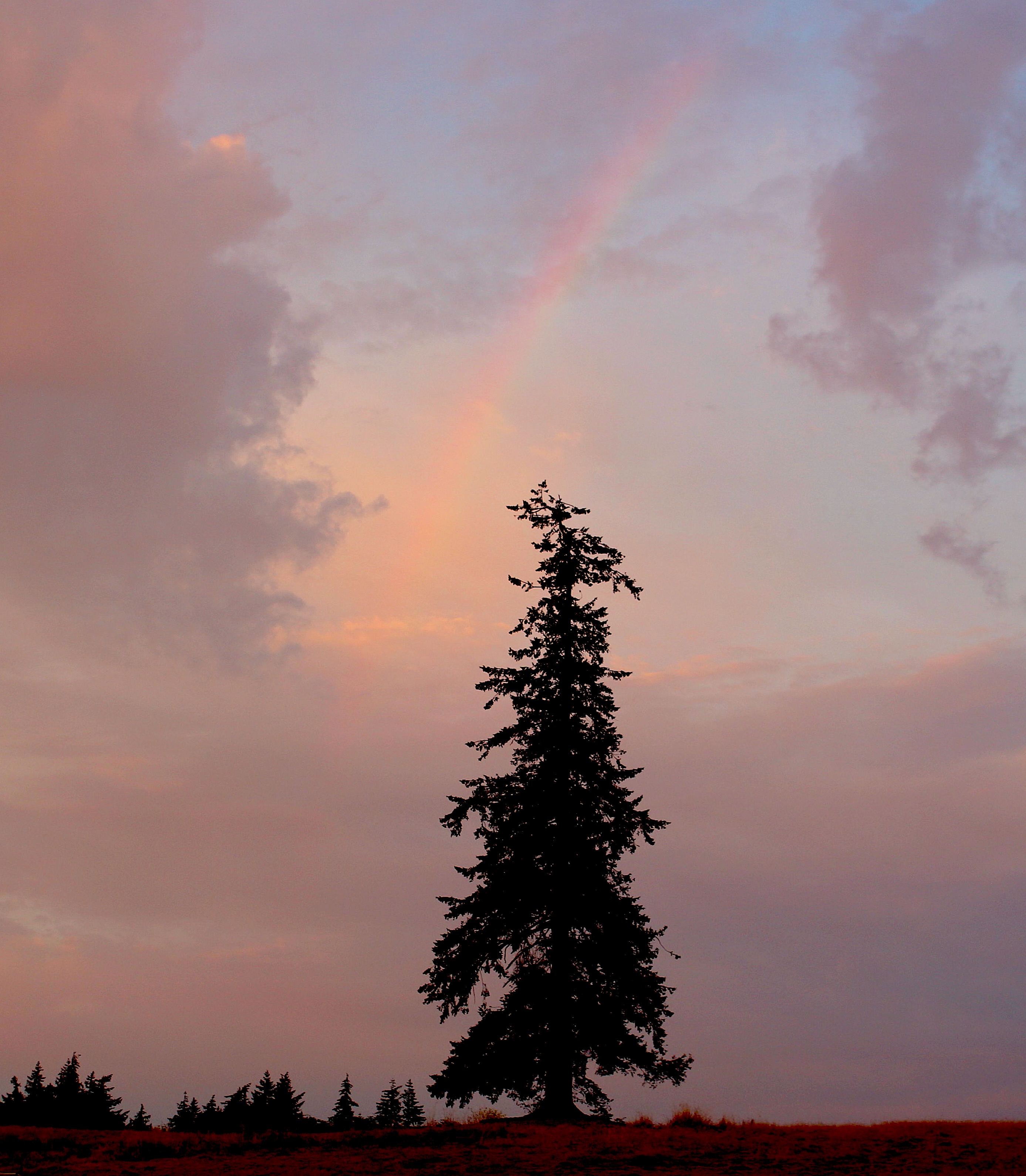
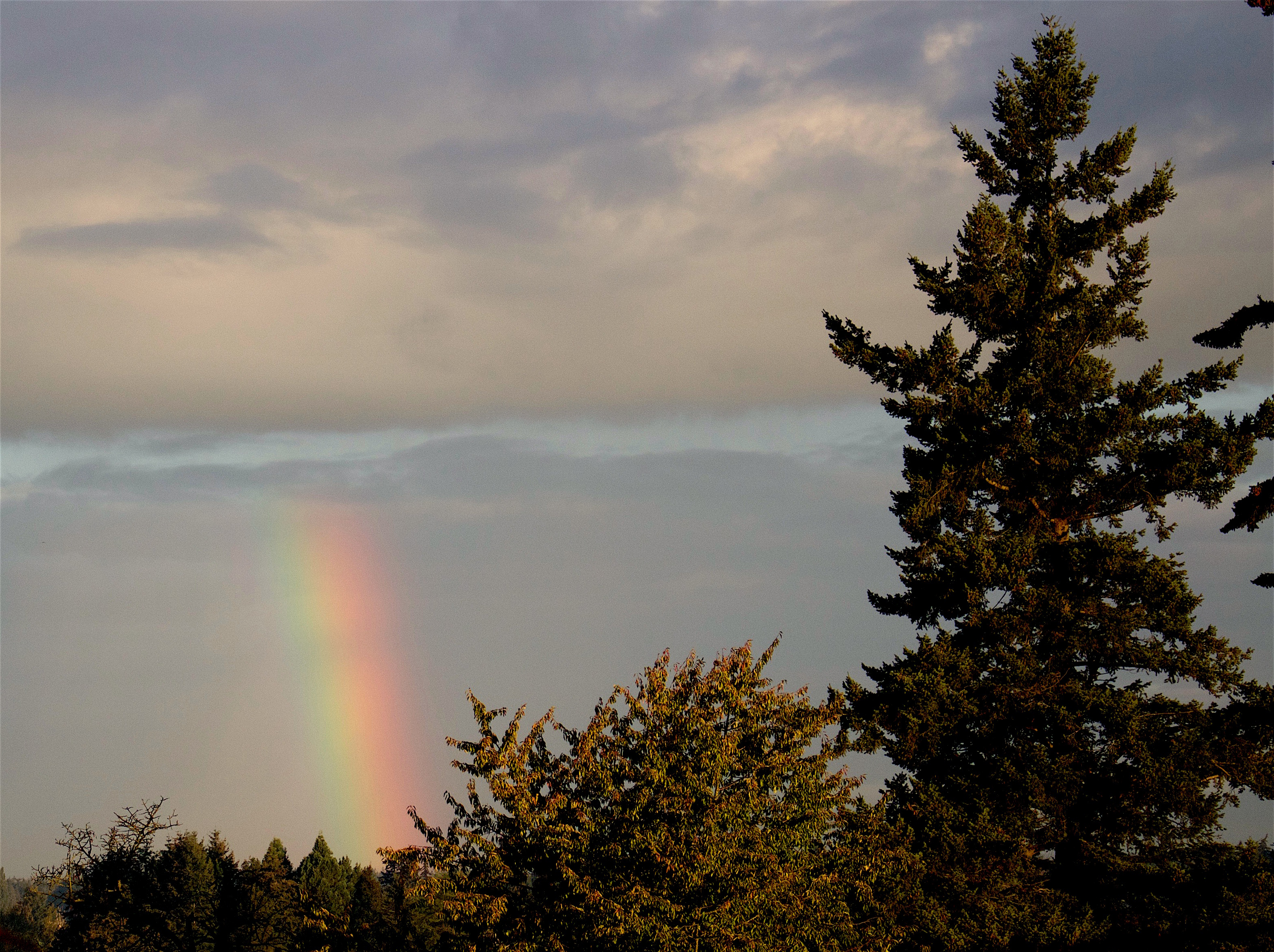
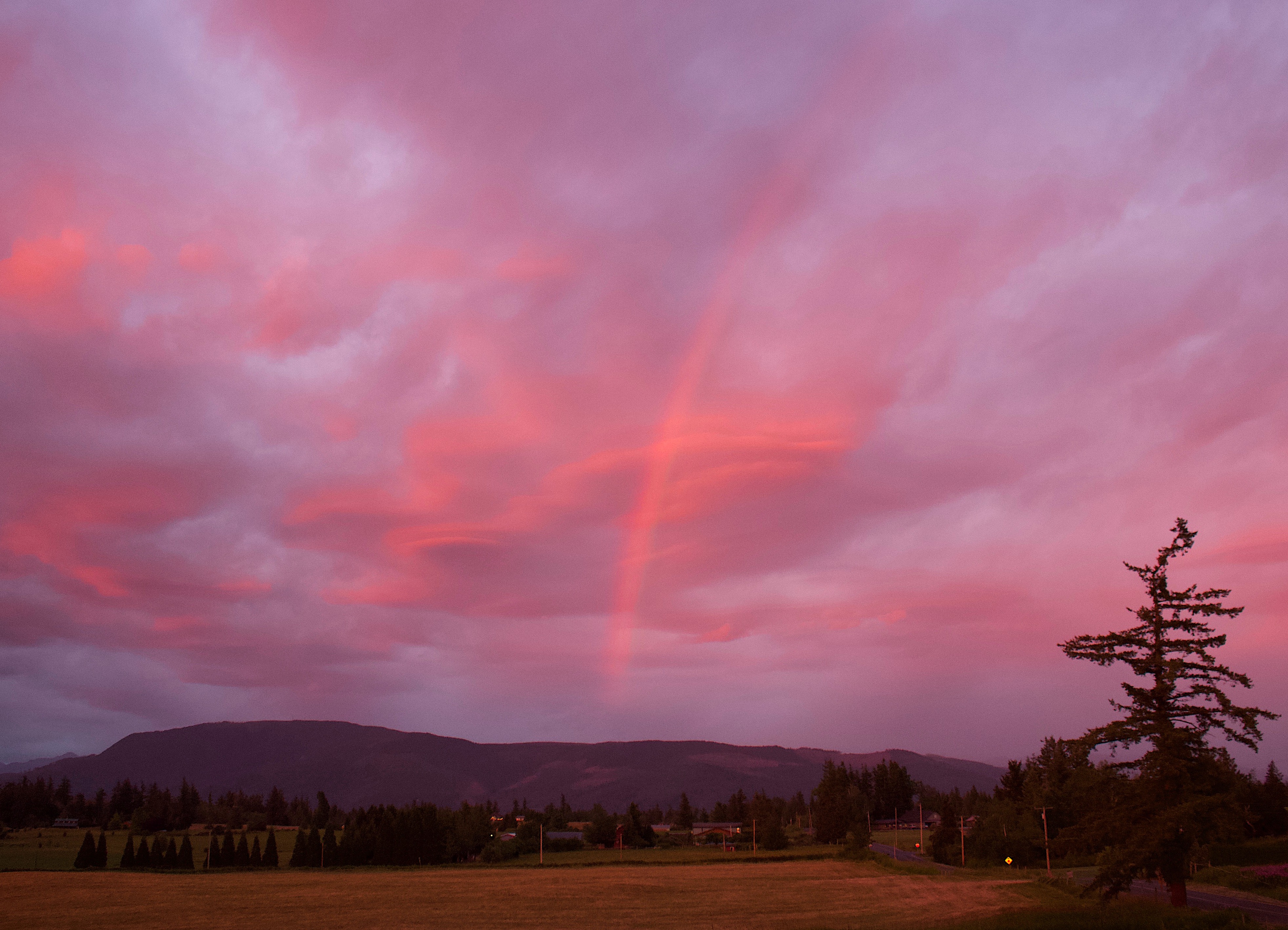
God put the rainbow in the clouds, not just in the sky…. It is wise to realize we already have rainbows in our clouds, or we wouldn’t be here. If the rainbow is in the clouds, then in the worst of times, there is the possibility of seeing hope…. We can say, ‘I can be a rainbow in the clouds for someone yet to be.’ That may be our calling. ~Maya Angelou (Harrisburg Forum, November 30, 2001)
Be thou the rainbow in the storms of life. The evening beam that smiles the clouds away, and tints tomorrow with prophetic ray. ~Lord Byron
Painting the indescribable with words necessitates subtlety, sound and rhythm. The best word color portraits I know are by Gerard Manley Hopkins who described what he saw using startling combinations: “crimson-cresseted”, “couple-colour”, “rose-moles”, “fresh-firecoal”, “adazzle, dim”, “dapple-dawn-drawn”, “blue-bleak embers”, “gash gold-vermillion”.
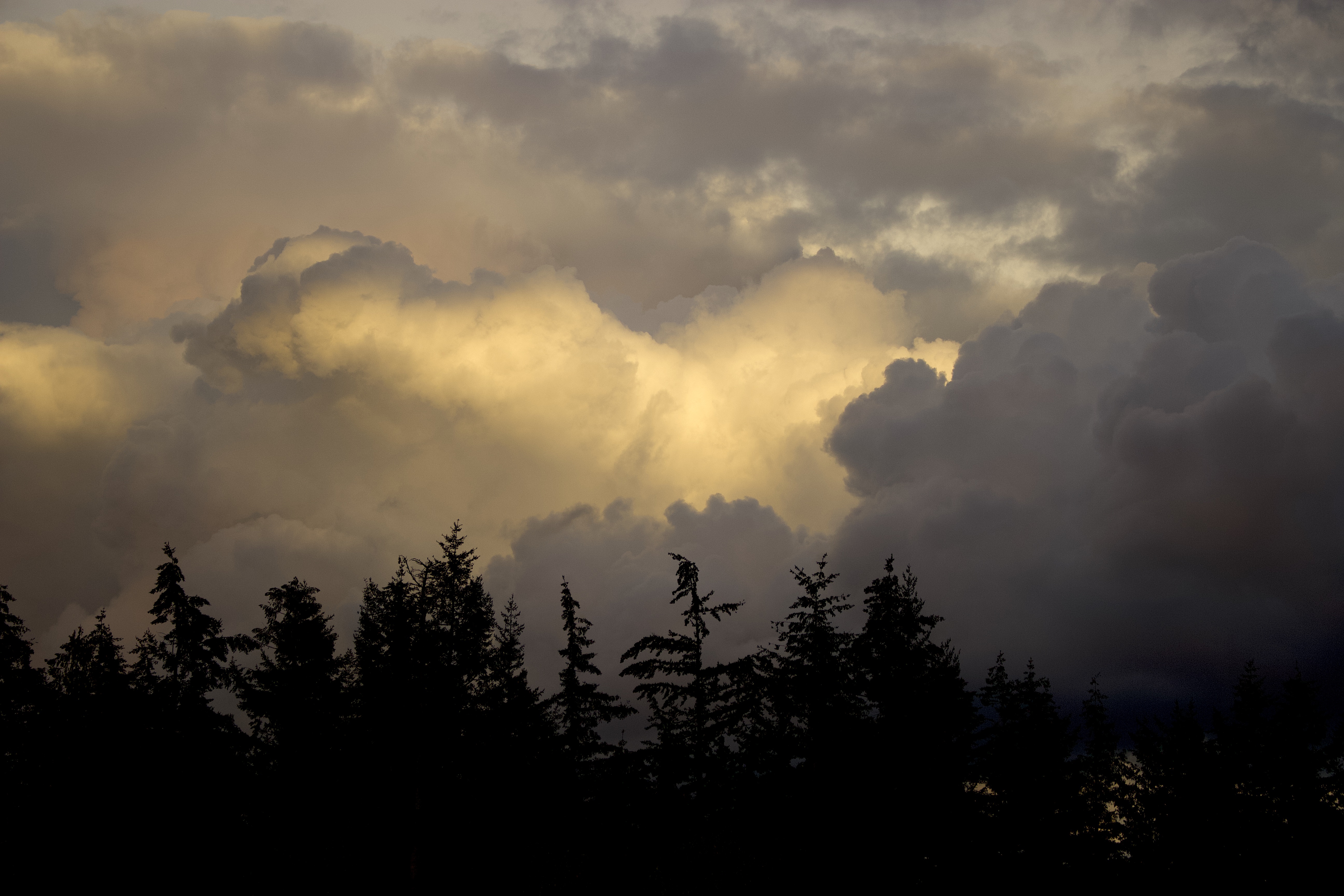
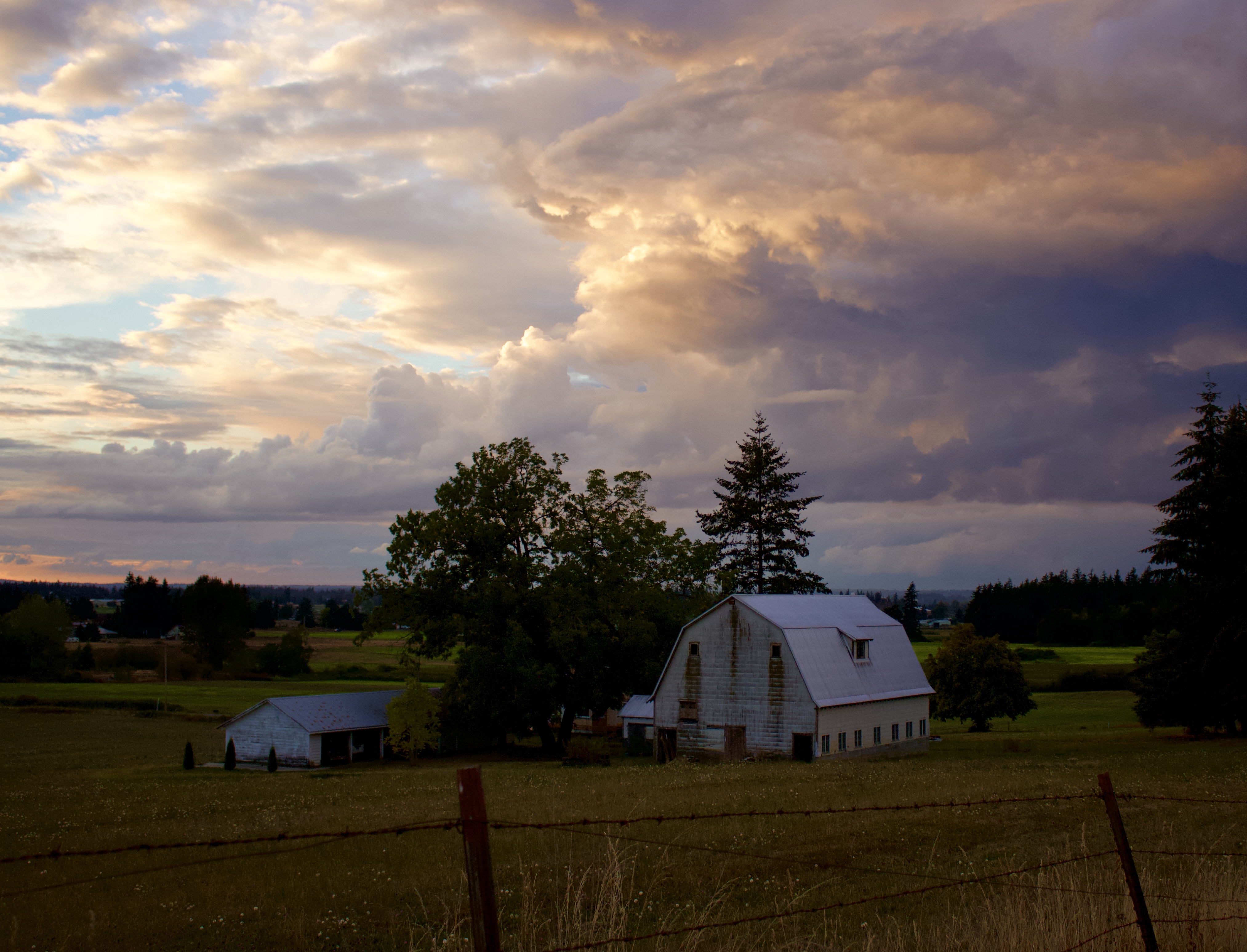
My facility with words doesn’t measure up so I rely on pictures to show the hope I see when I look at the sky. I keep reaching for the rainbow hiding within the clouds, searching for the prophetic promise that preserves my days and nights forever.
After all, in the beginning was the Word, and no one says it better than He does.
The river is famous to the fish. The loud voice is famous to silence, which knew it would inherit the earth before anybody said so.
The cat sleeping on the fence is famous to the birds watching him from the birdhouse. The tear is famous, briefly, to the cheek. The idea you carry close to your bosom is famous to your bosom.
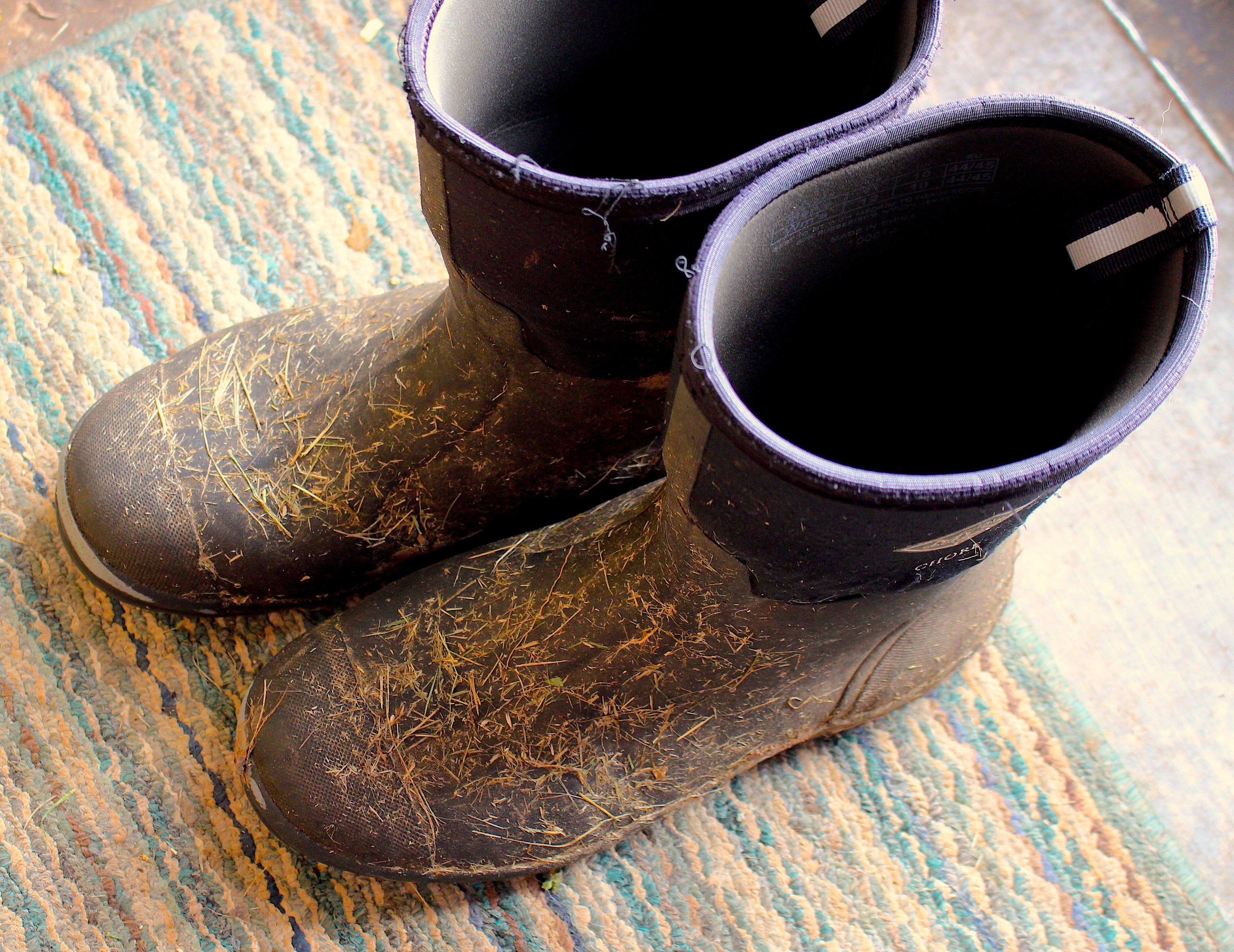
The boot is famous to the earth, more famous than the dress shoe, which is famous only to floors. The bent photograph is famous to the one who carries it and not at all famous to the one who is pictured.
I want to be famous to shuffling men who smile while crossing streets, sticky children in grocery lines, famous as the one who smiled back.
I want to be famous in the way a pulley is famous, or a buttonhole, not because it did anything spectacular, but because it never forgot what it could do. ~Naomi Shihab Nye “Famous” from Words Under the Words: Selected Poems
Detail from “Descent from the Cross” by Rogier van der Weyden
Here’s the truth of it: no one really wants to be famous but seeks a life of meaning and purpose rather than one empty of significance.
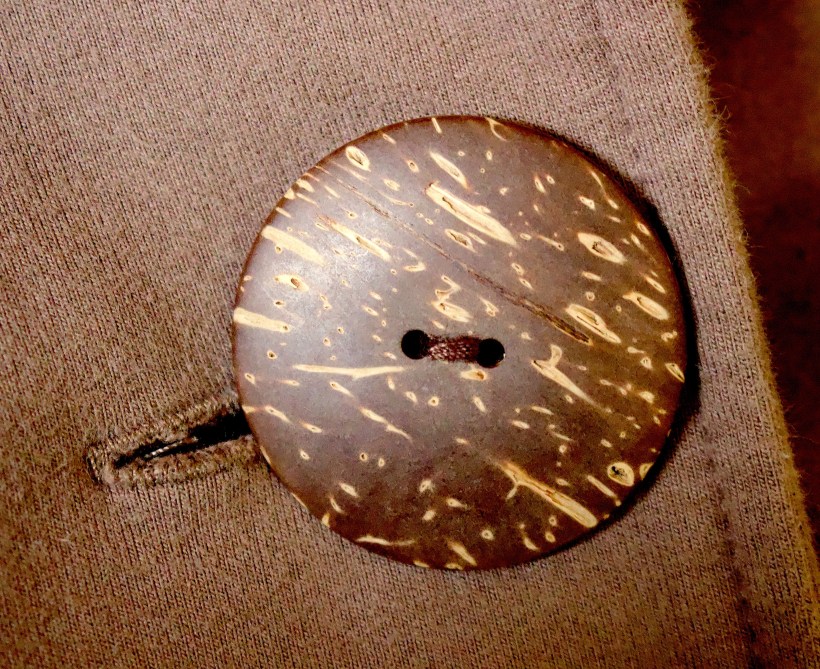
The button alone is pure window-dressing, a flash in the pan, a bauble ready to loosen and fall off, easy to go missing.
A button hole by itself without a button to latch around is plain and gaping and lonely and allows in drafts, blending into the background, silently waiting for its moment of usefulness.
We cannot forget who we’re meant to be and what we’re meant to do – we fit the task for which we’re made.
Send me a button and I’ll make sure it is secured.
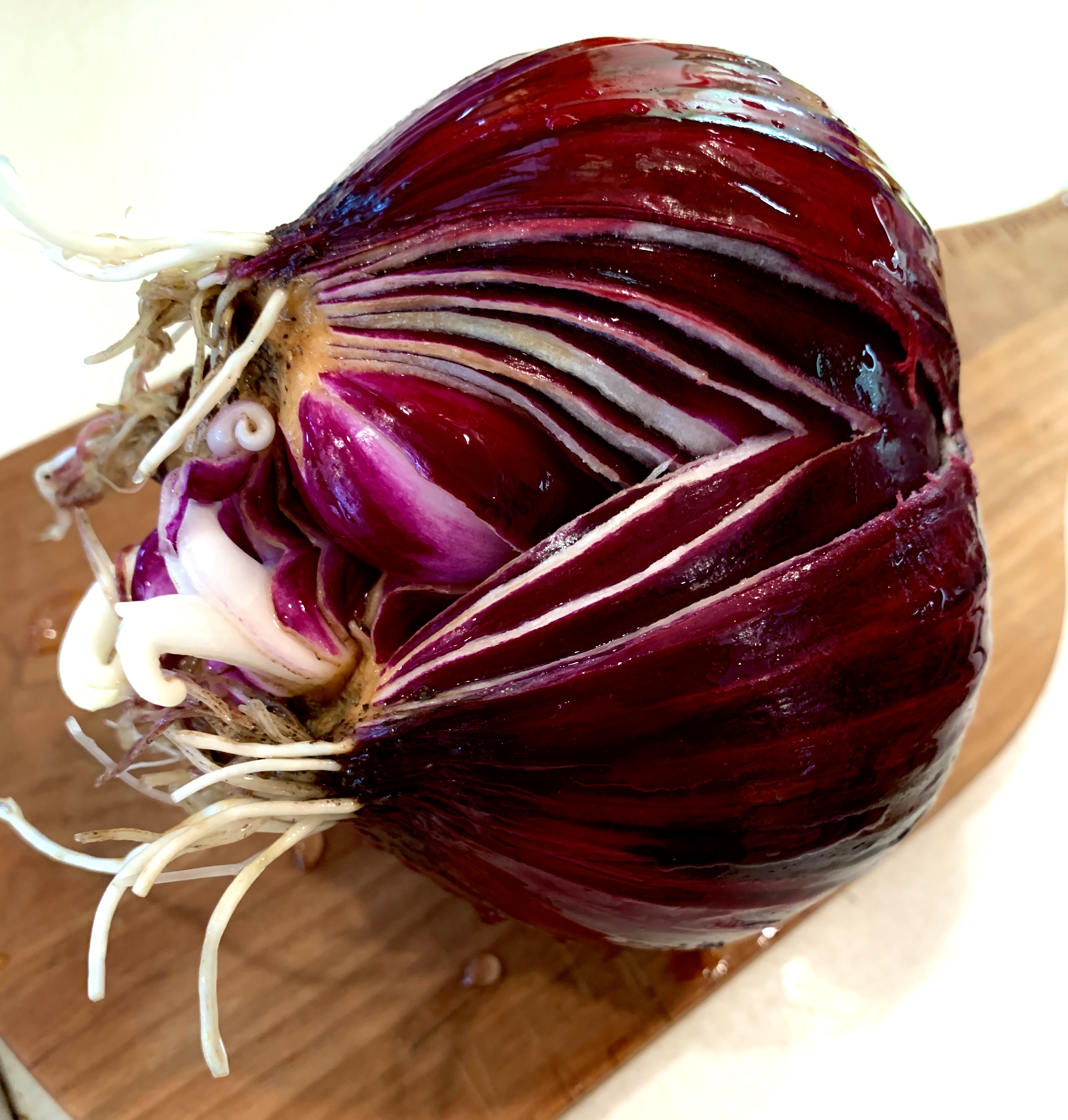
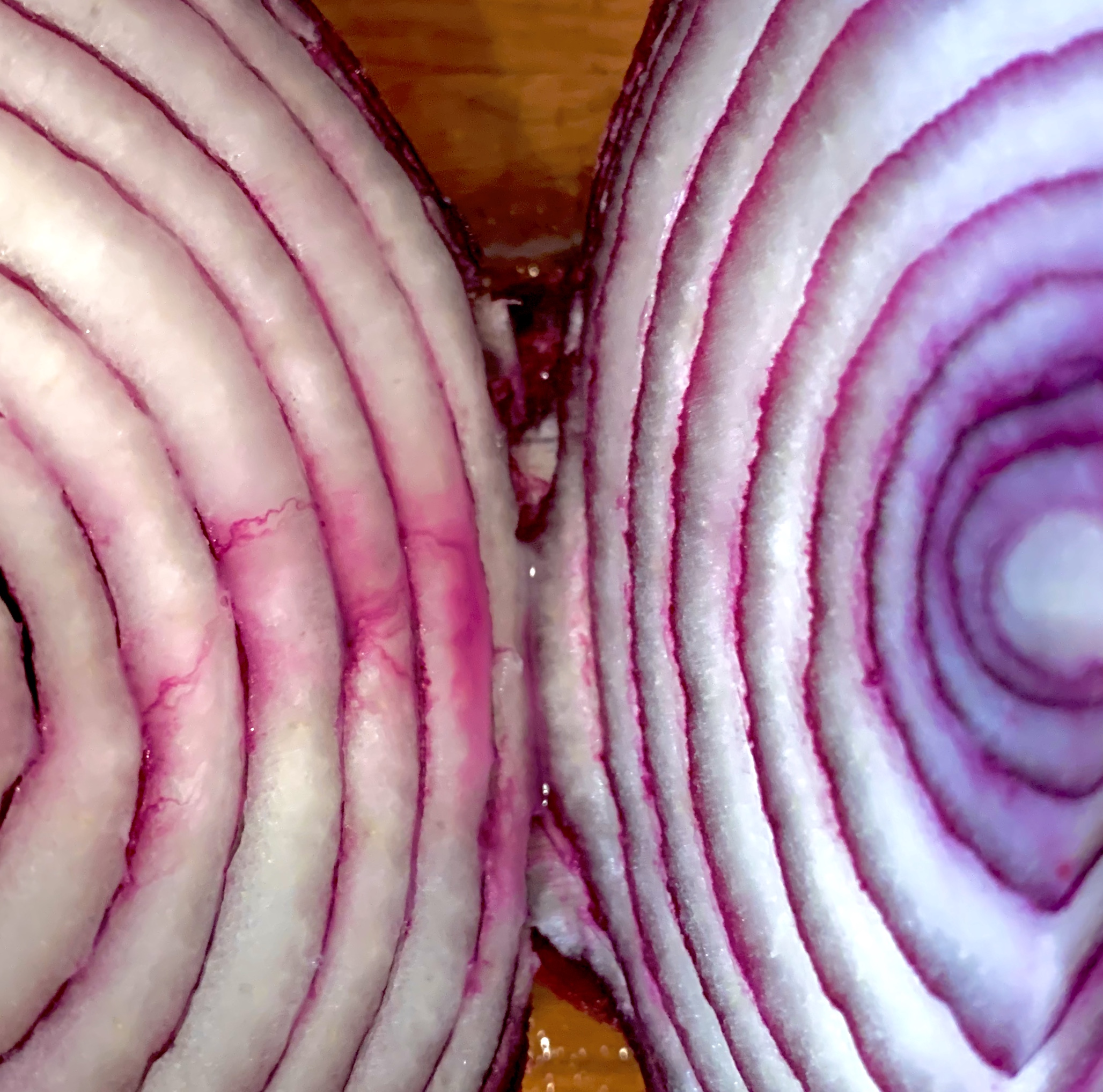
…It’s true it can make you weep to peel them, to unfurl and to tease from the taut ball first the brittle, caramel-colored and decrepit papery outside layer, the least
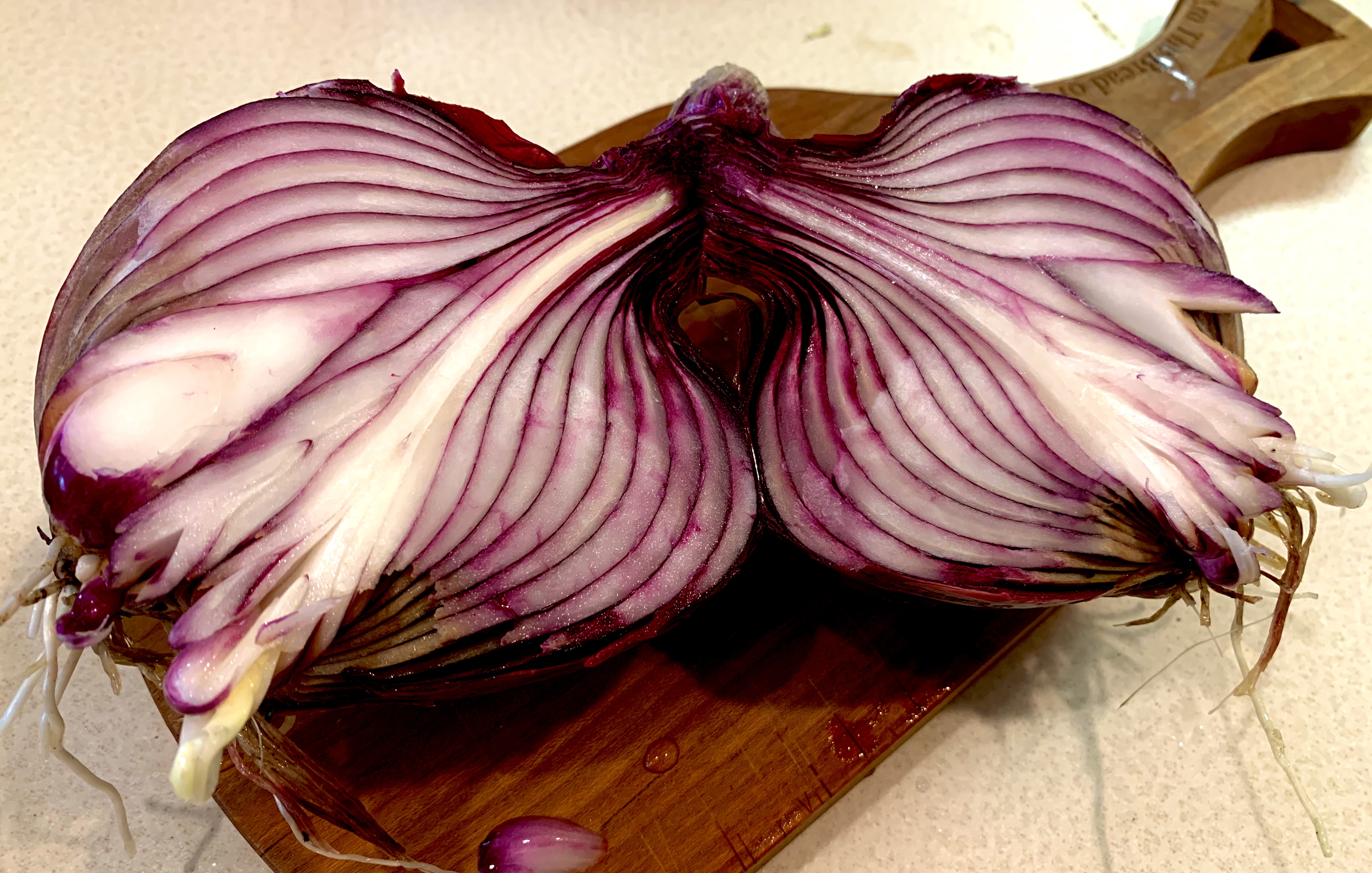
recent the reticent onion wrapped around its growing body, for there’s nothing to an onion but skin, and it’s true you can go on weeping as you go on in, through the moist middle skins, the sweetest
and thickest, and you can go on in to the core, to the bud-like, acrid, fibrous skins densely clustered there, stalky and in- complete, and these are the most pungent… ~William Matthews from “Onions”
…I would never scold the onion for causing tears. It is right that tears fall for something small and forgotten. How at meal, we sit to eat, commenting on texture of meat or herbal aroma but never on the translucence of onion, now limp, now divided, or its traditionally honorable career: For the sake of others, disappear. ~Naomi Shihab Nye, from “The Traveling Onion” from Words Under the Words: Selected Poems.
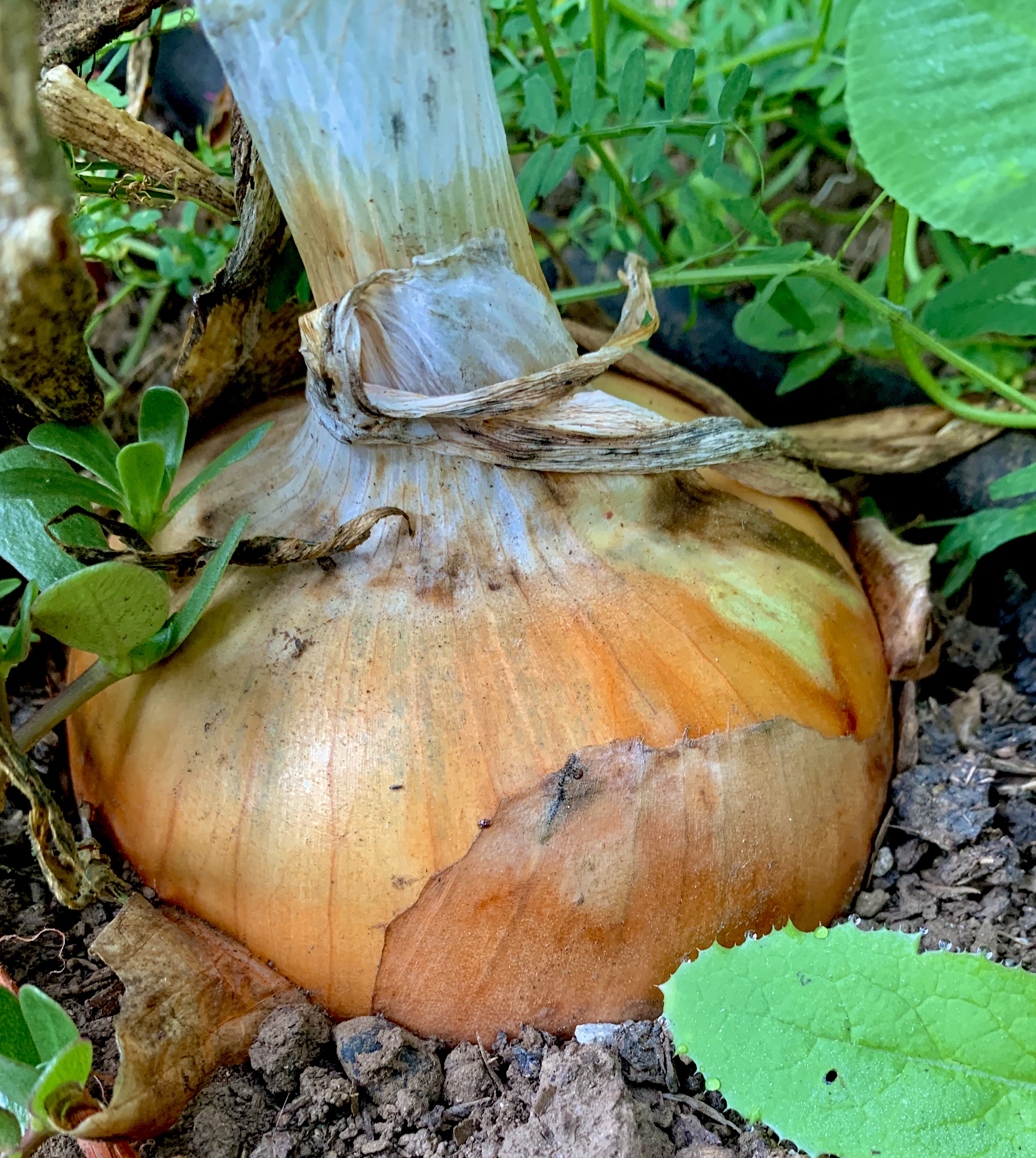
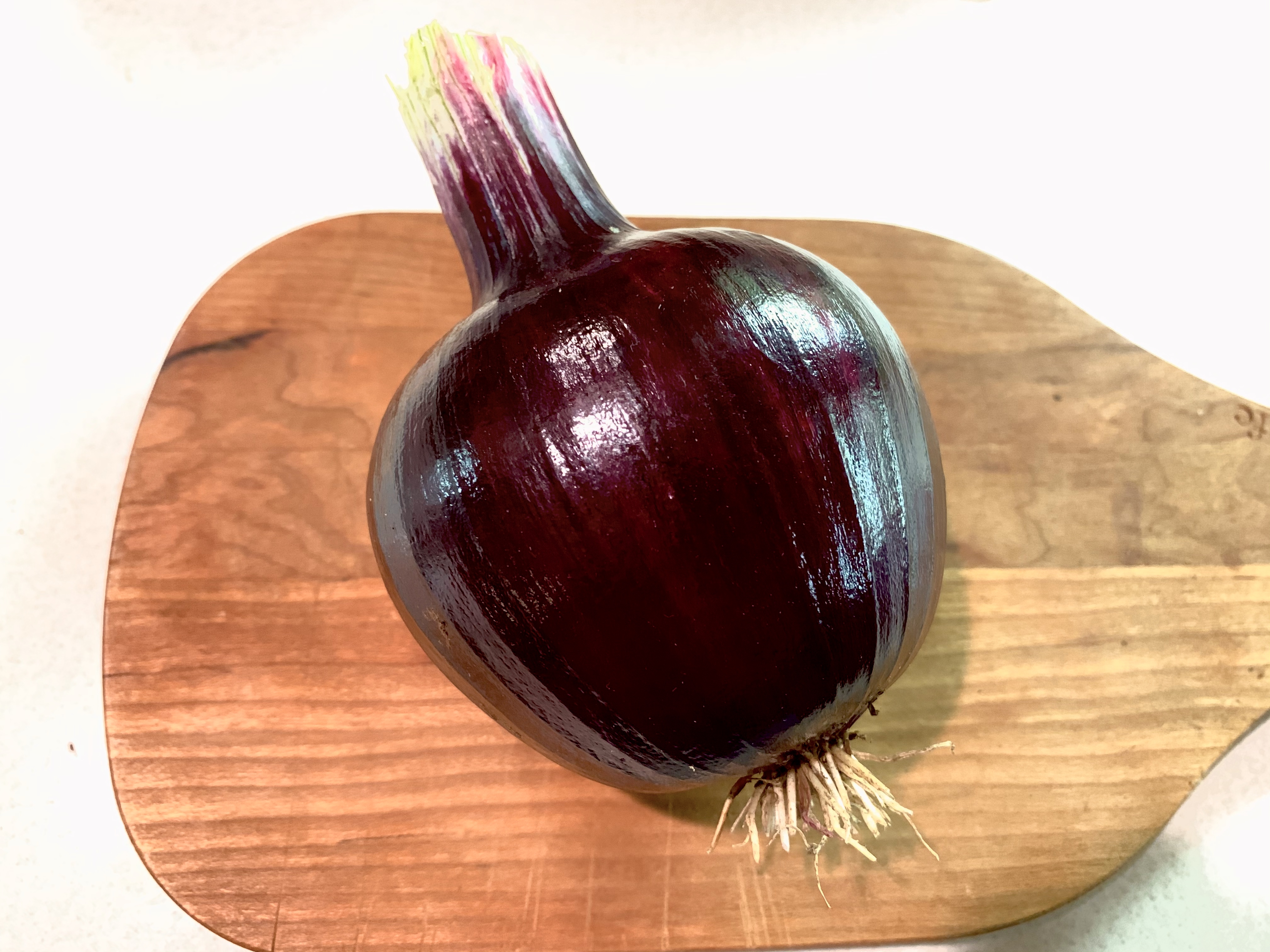
Onion, luminous flask, your beauty formed petal by petal, crystal scales expanded you and in the secrecy of the dark earth your belly grew round with dew. Under the earth the miracle happened and when your clumsy green stem appeared, and your leaves were born like swords in the garden, the earth heaped up her power showing your naked transparency…
…You make us cry without hurting us. I have praised everything that exists, but to me, onion, you are more beautiful than a bird of dazzling feathers, heavenly globe, platinum goblet, unmoving dance of the snowy anemone
and the fragrance of the earth lives in your crystalline nature. ~Pablo Neruda from “Ode to the Onion”
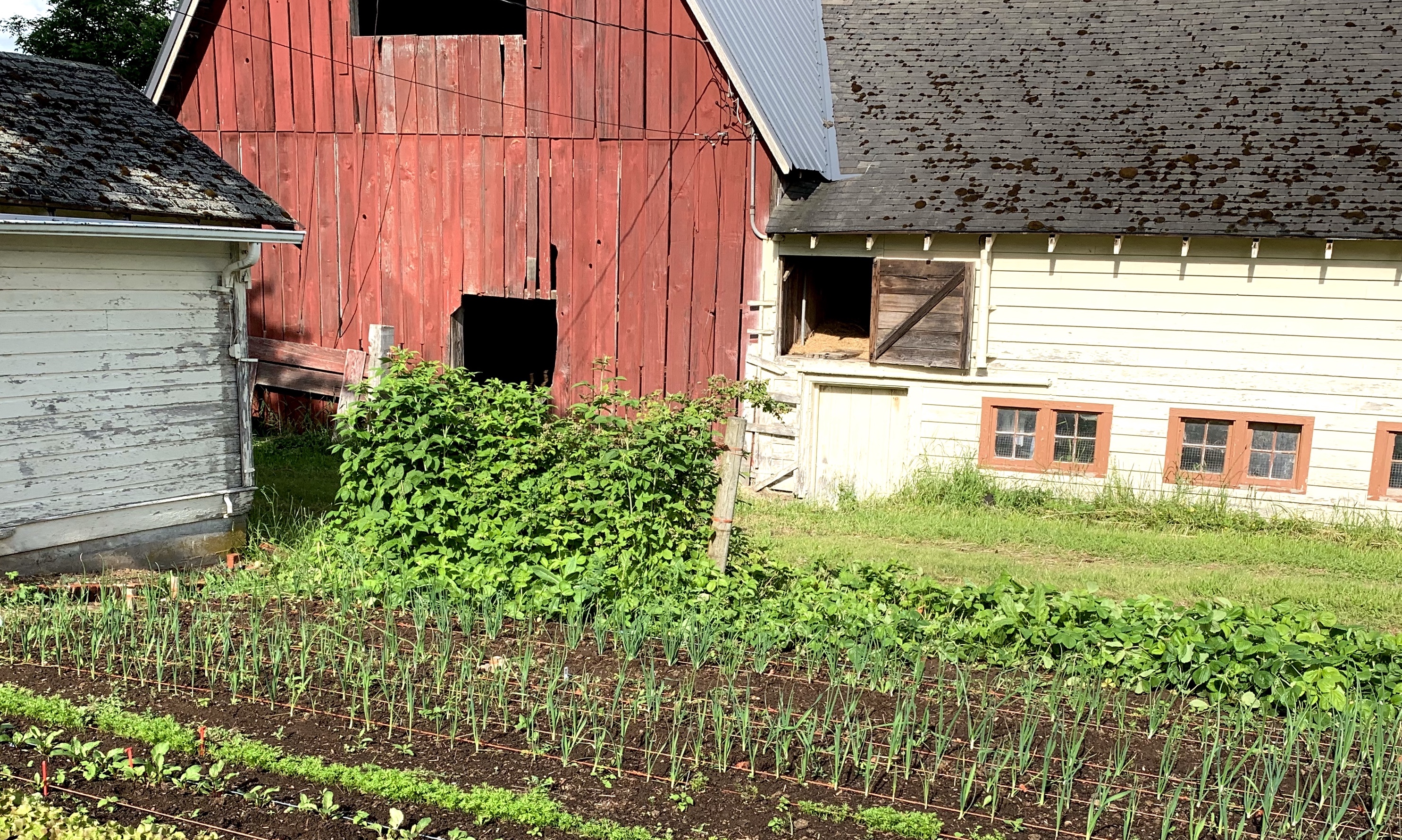
Everything smells of “eau de onion” here in the kitchen as the onions are brought in from our late summer garden to be stored or dehydrated and frozen for winter soups and stews.
This is weepy business, but these are good tears like I spill over the whistled Greensleeves theme from the old “Lassie” TV show, or during any childrens’ choir song, or by simply watching videos of our grandchildren who are quarantined so far away from our arms.
It takes almost nothing these days to make me weep, so onions are a handy excuse, allowing my tears to flow without explanation:
I weep over the headlines. I weep over how changed life is and for the sadness of the stricken. I weep over how messy things can get between people who don’t listen to one another or who misinterpret what they think they hear. I weep knowing we all have layers and layers of skin that appear tough on the outside, but as you peel gently or even ruthlessly cut them away, the layers get more and more tender until you reach the throbbing heart of us.
We tend to hide our hearts out of fear of being hurt, crying out in pain.
Like an onion, each one of us exists to make the day a bit better, the meal more savory, to enhance the flavors of all who are mixed into this melting pot together. We aren’t meant to stand alone, but to disappear into the stew, and be sorely missed if we are absent.
So very dish needs an onion, and for the sake of the dish, every onion vanishes in the process.
No, I don’t mean to make you cry as you peel my layers away, gently, one by one, each more tender until you reach my heart. Chop away at me if you must but weep the good tears, the ones that mean we weep for the sake of our meal together: you eating and drinking, and me – consumed.
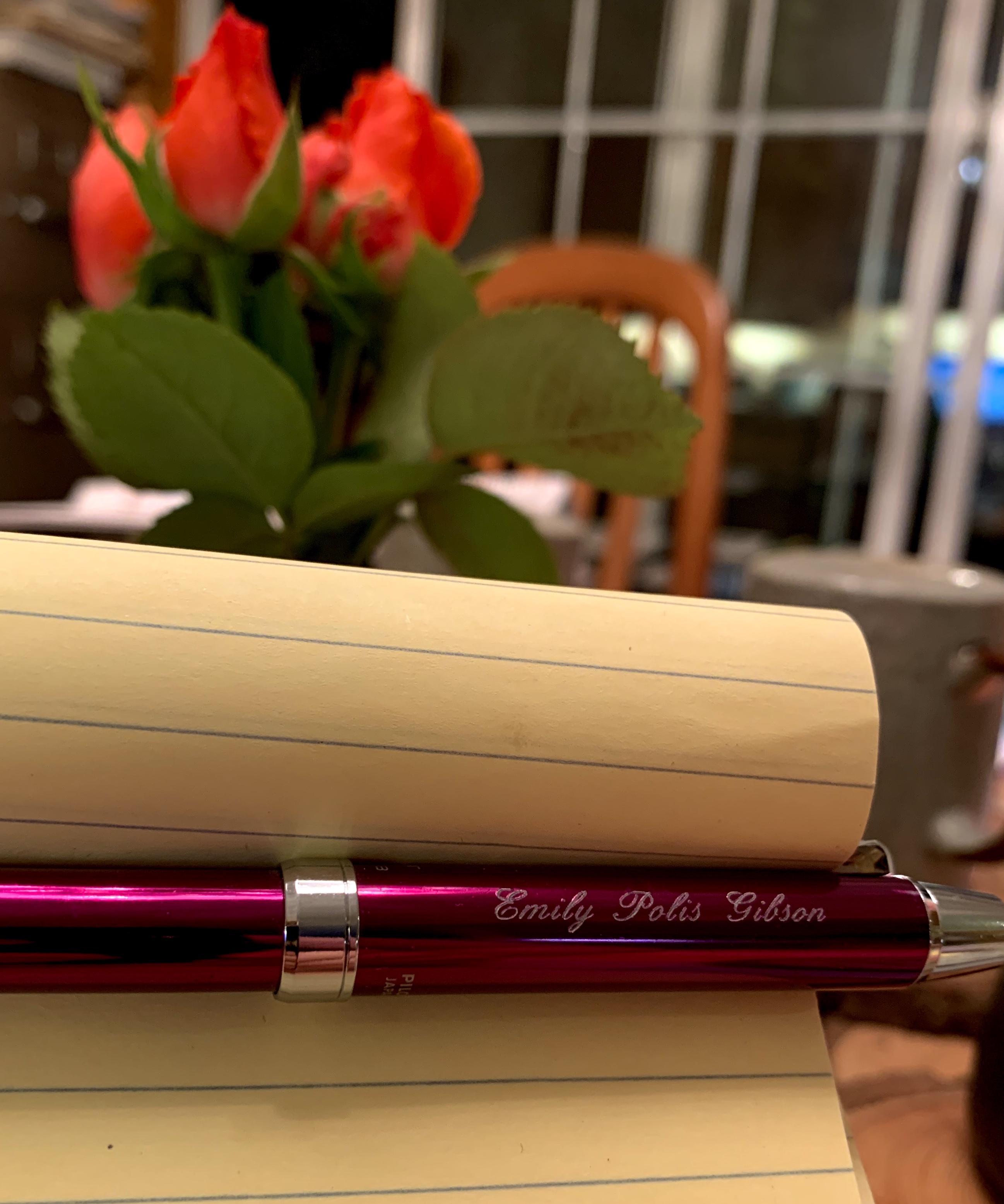
Between my finger and my thumb The squat pen rests; snug as a gun.
Under my window, a clean rasping sound When the spade sinks into gravelly ground: My father, digging. I look down
Till his straining rump among the flowerbeds Bends low, comes up twenty years away Stooping in rhythm through potato drills Where he was digging.
The coarse boot nestled on the lug, the shaft Against the inside knee was levered firmly. He rooted out tall tops, buried the bright edge deep To scatter new potatoes that we picked, Loving their cool hardness in our hands.
By God, the old man could handle a spade. Just like his old man.
My grandfather cut more turf in a day Than any other man on Toner’s bog. Once I carried him milk in a bottle Corked sloppily with paper. He straightened up To drink it, then fell to right away Nicking and slicing neatly, heaving sods Over his shoulder, going down and down For the good turf. Digging.
The cold smell of potato mould, the squelch and slap Of soggy peat, the curt cuts of an edge Through living roots awaken in my head. But I’ve no spade to follow men like them.
Between my finger and my thumb The squat pen rests. I’ll dig with it. ~Seamus Heaney, “Digging” from Death of a Naturalist
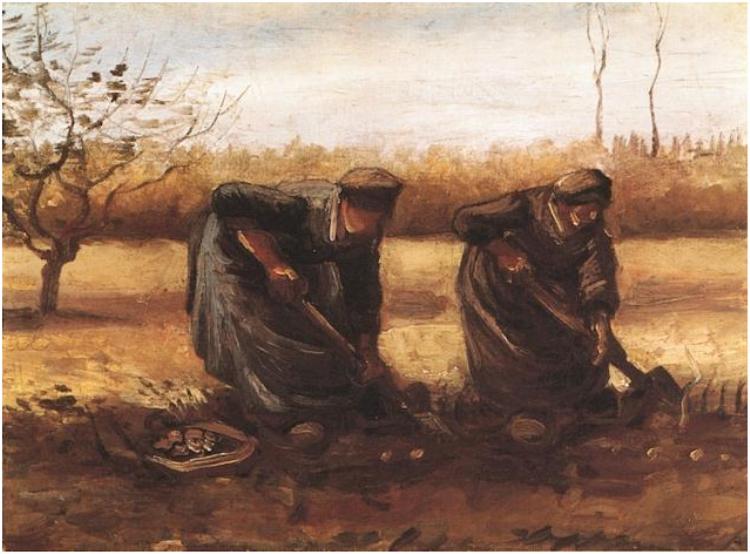
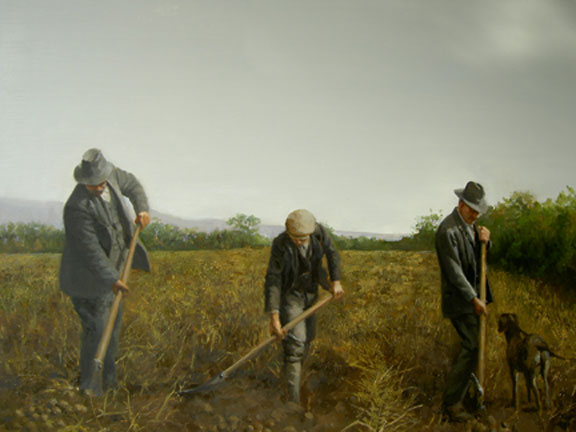
Van Gogh Painting, Oil on Canvas on Panel Nuenen: August, 1885 Kröller-Müller Museum Otterlo, The NetherlandsDigging Potatoes by Martin Driscoll http://www.martindriscoll.com
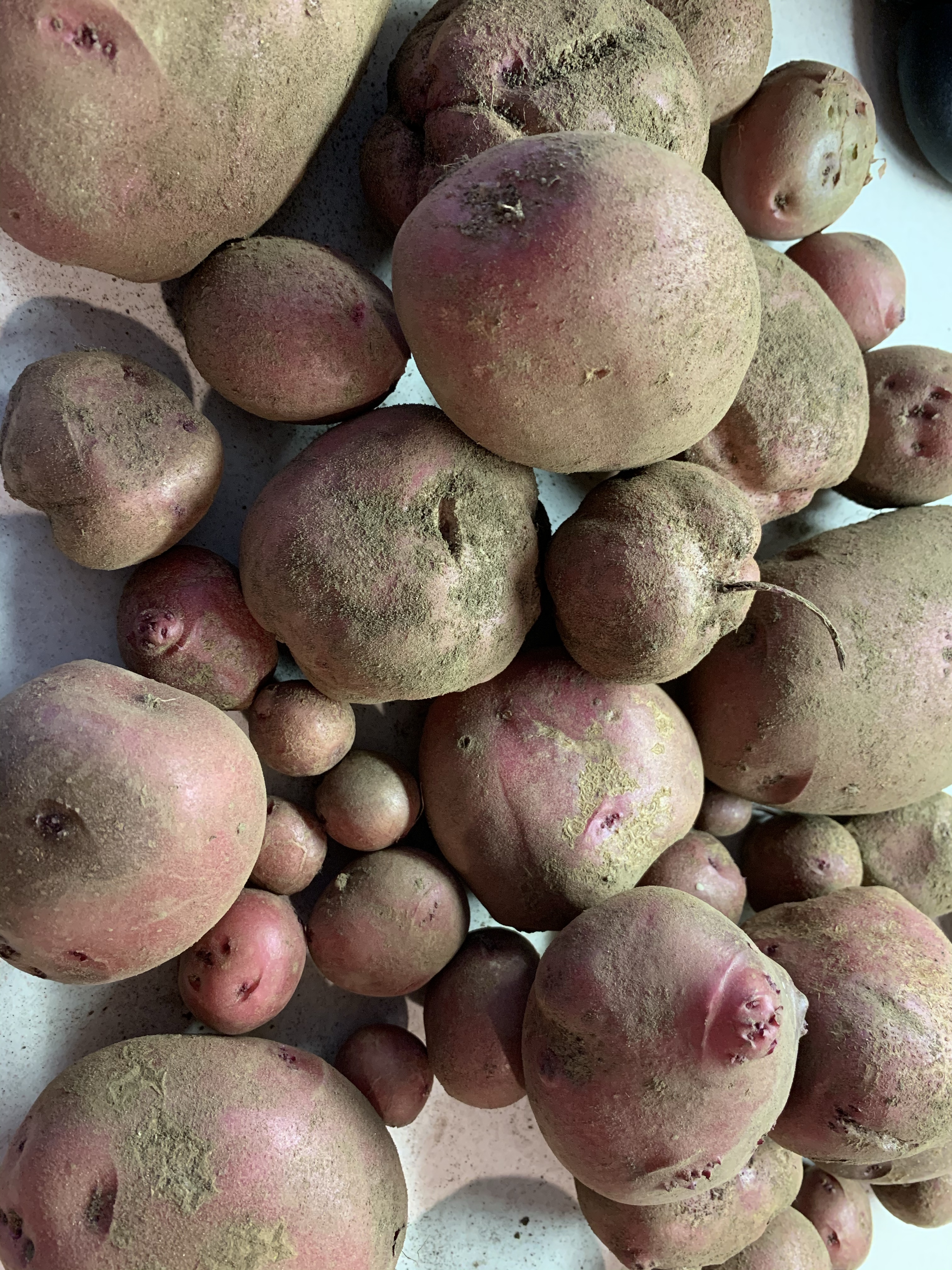
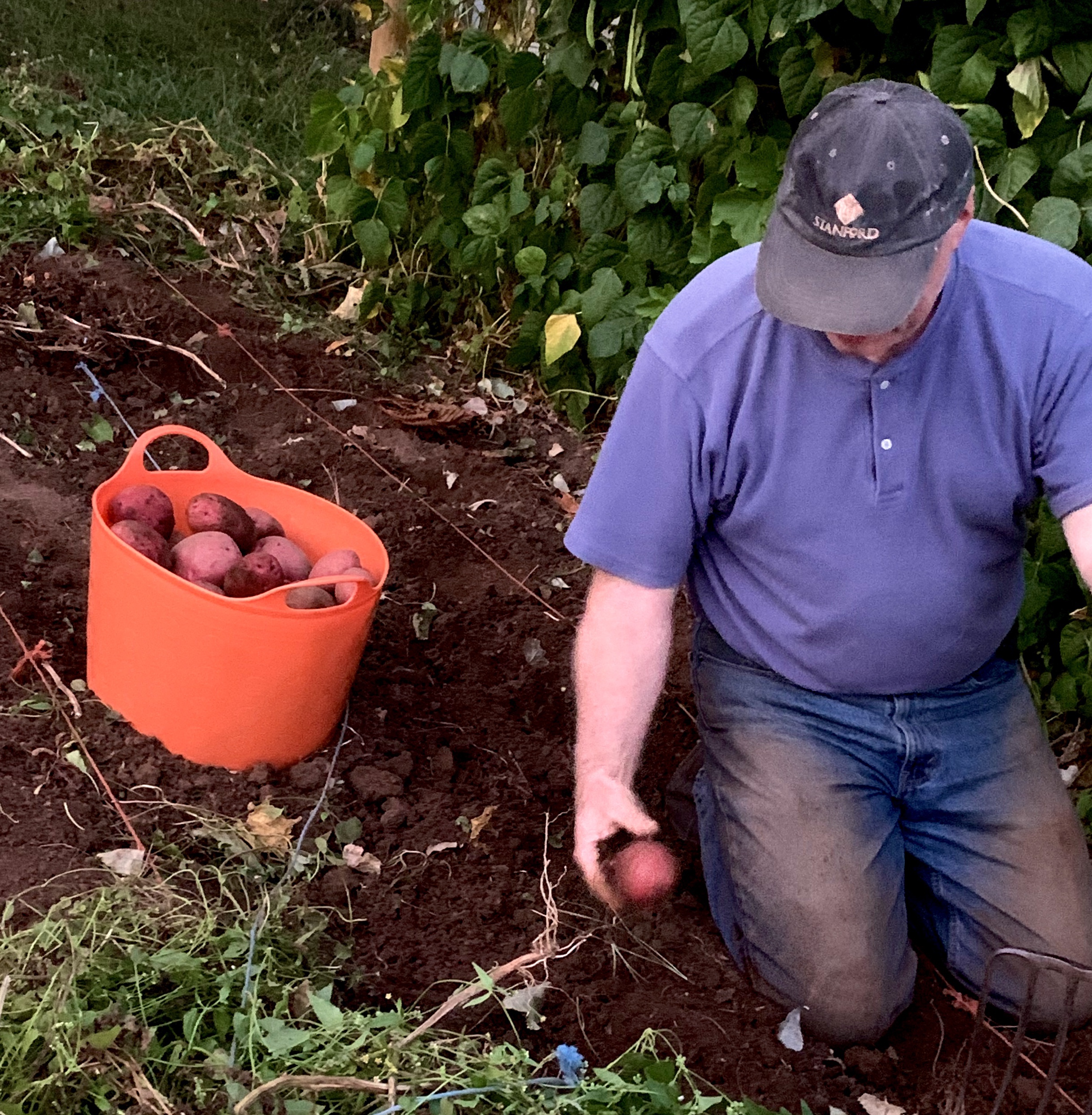
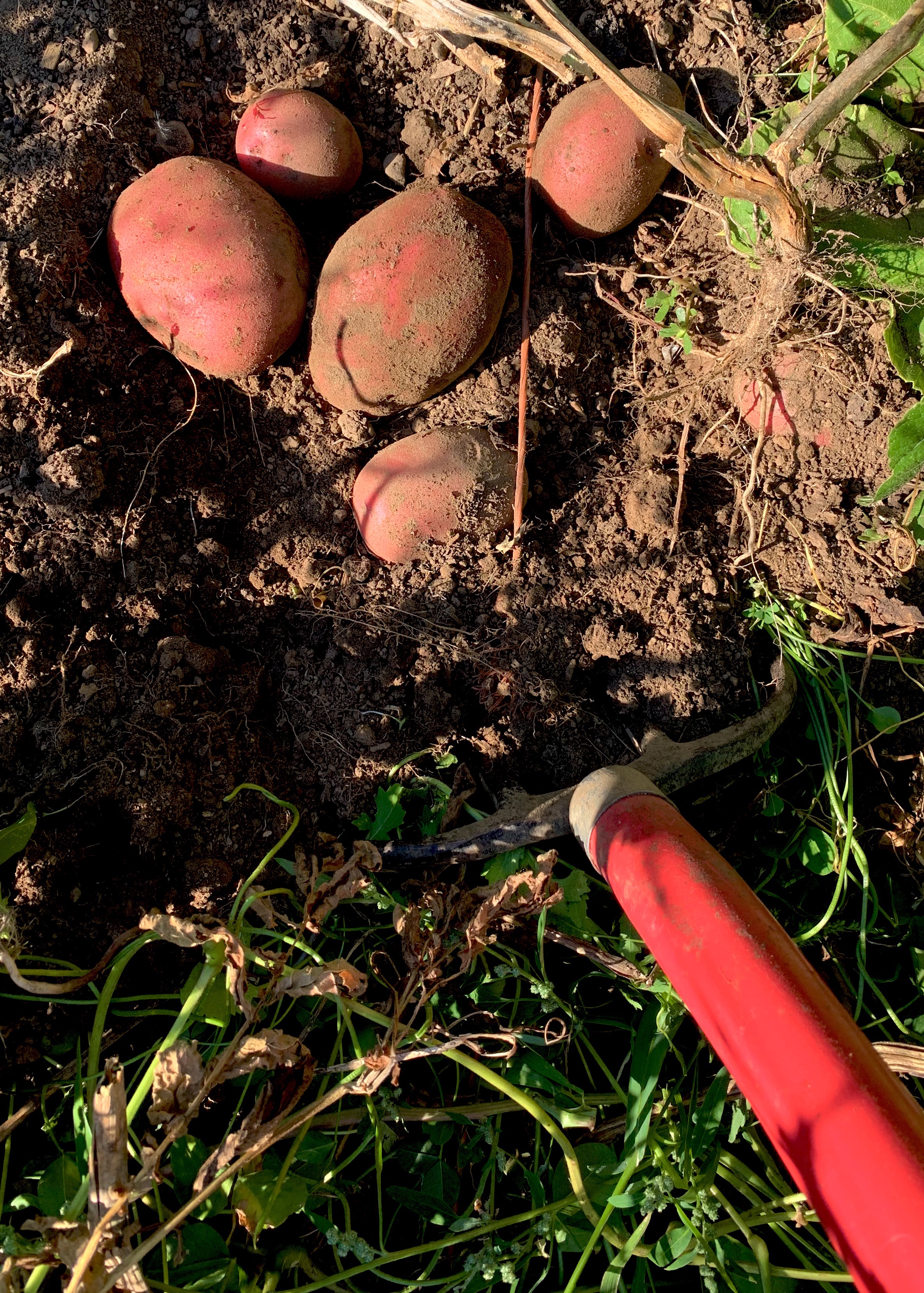
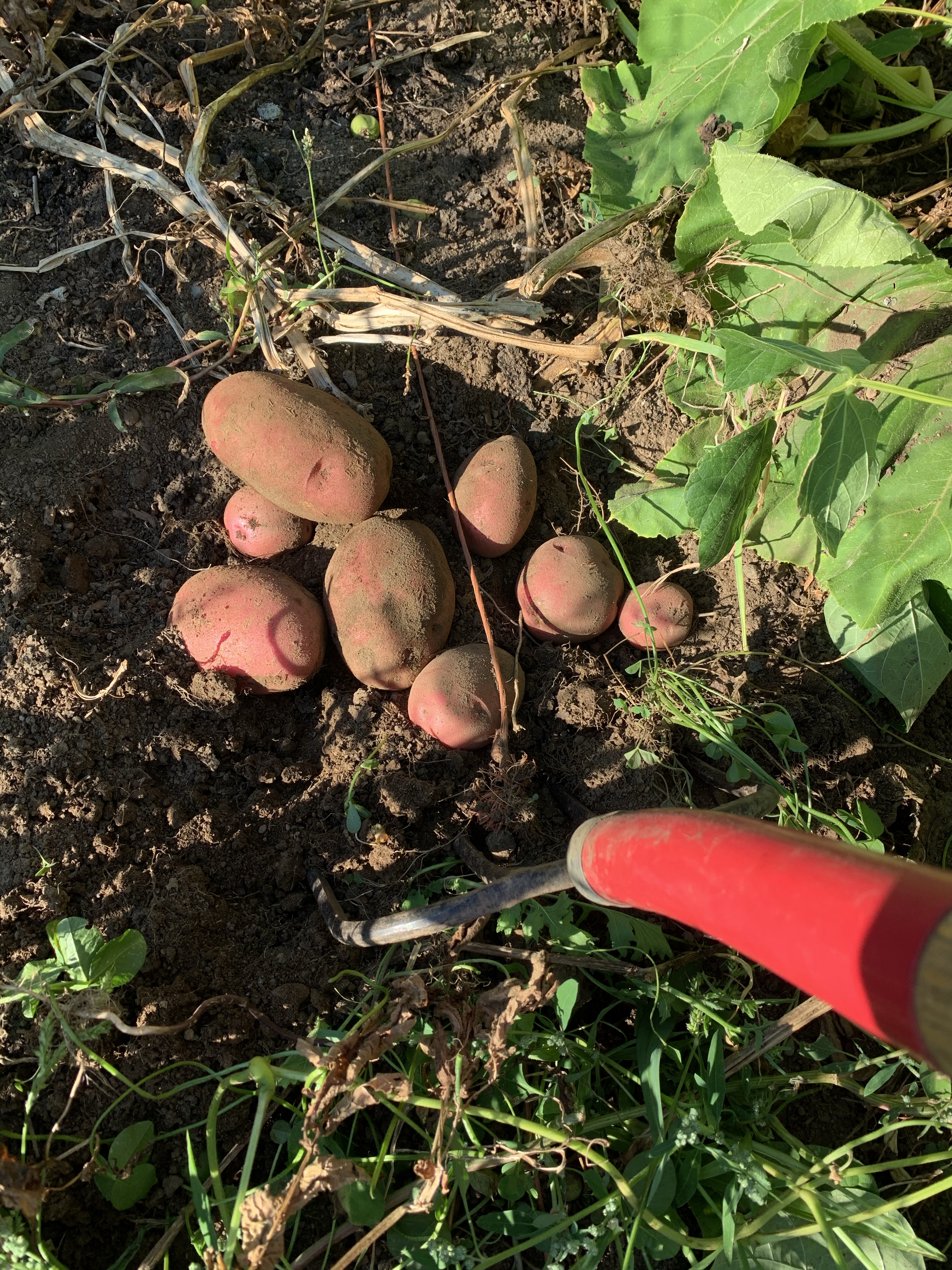
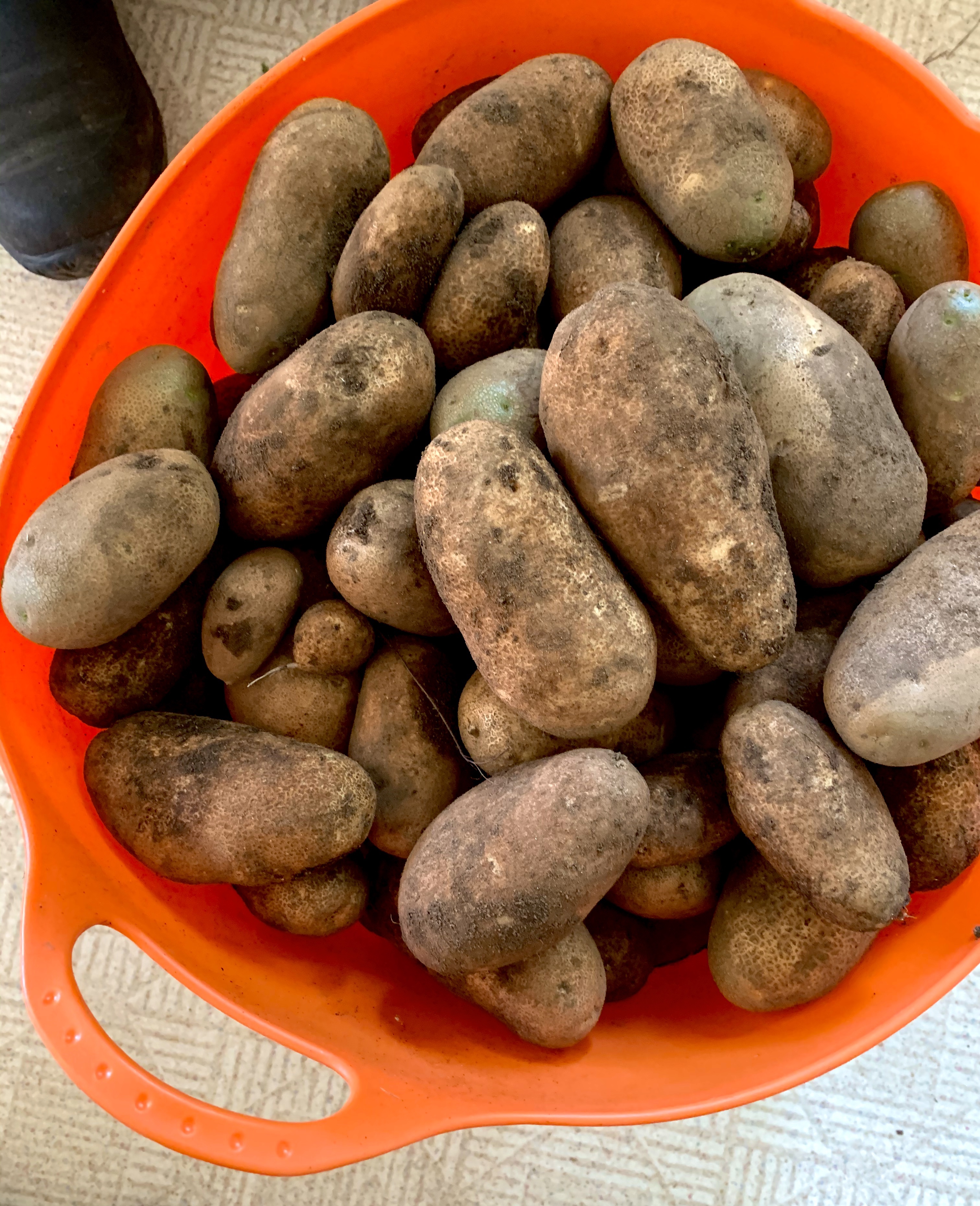
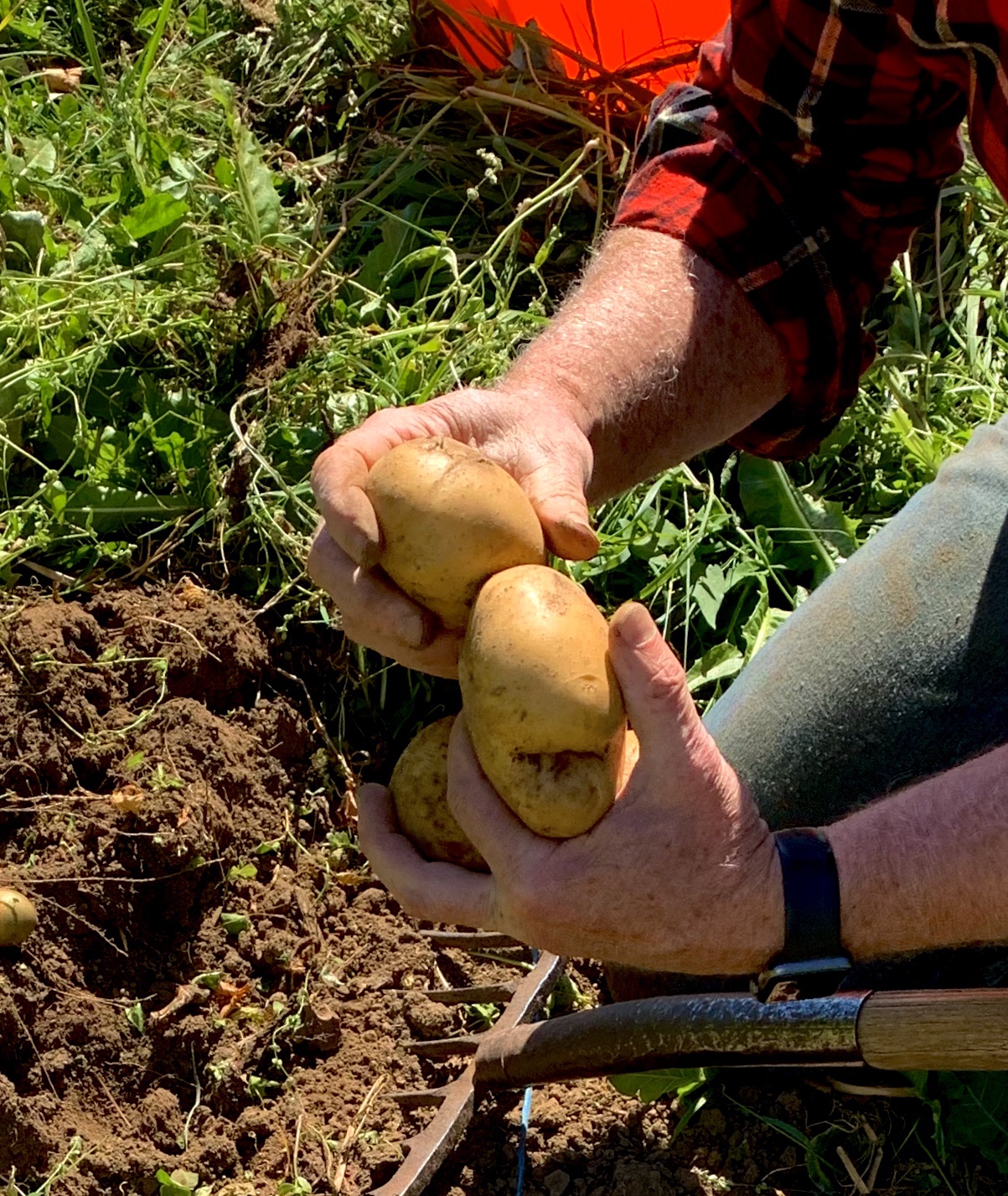
Digging potatoes is one of the most satisfying tasks for a farmer. Often the dead above-ground vines have melted into the ground, blending in with the weeds and encroaching sprawl of squash vines. Finding the treasure underneath the topsoil is an act of faith. You set the shovel or fork boldly into the dirt to loosen up the top eight inches. Then you submerge your hand into the dirt and come up with a fistful of potato gold nuggets, each smooth cool tuber rolling into fresh air like so many newly discovered hidden Easter eggs.
A daily dig for words to write isn’t nearly as easy as finding potatoes in the soil; the bounty under the surface often remains hidden away from my view and elusive. I have to keep searching and sifting and sorting. Some that I end up with are rotten. Some are overexposed, too green and toxic. Some are scabby and look ugly, but are still useable and hopefully tasty.
Yet I get out my virtual spade and dig into the dirt of life every day, hoping, just hoping, to come up with words in my hands that are not only beautiful, colorful, smooth and palatable, but a sheer delight for the digger/reader to discover along with me.
A writer should concern himself with whatever absorbs his fancy, stirs his heart, and unlimbers his typewriter. I feel no obligation to deal with politics. I do feel a responsibility to society. A writer has the duty to be good, not lousy; true, not false; lively, not dull; accurate, not full of error. He should tend to lift people up, not lower them down.
A writer must reflect and interpret his society, his world; he must also provide inspiration and guidance and challenge. Much writing today strikes me as deprecating, destructive, and angry. There are good reasons for anger, and I have nothing against anger. But I think some writers have lost their sense of proportion, their sense of humor, and their sense of appreciation.
I am often mad, but I would hate to be nothing but mad: one role of the writer today is to sound the alarm. The environment is disintegrating, the hour is late, and not much is being done. Instead of carting rocks from the moon, we should be carting the feces out of Lake Erie. …I think I would lose what little value I may have as a writer if I were to refuse, as a matter of principle, to accept the warming rays of the sun, and to report them, whenever, and if ever, they happen to strike me. ~E.B. White 1969 (on writing)
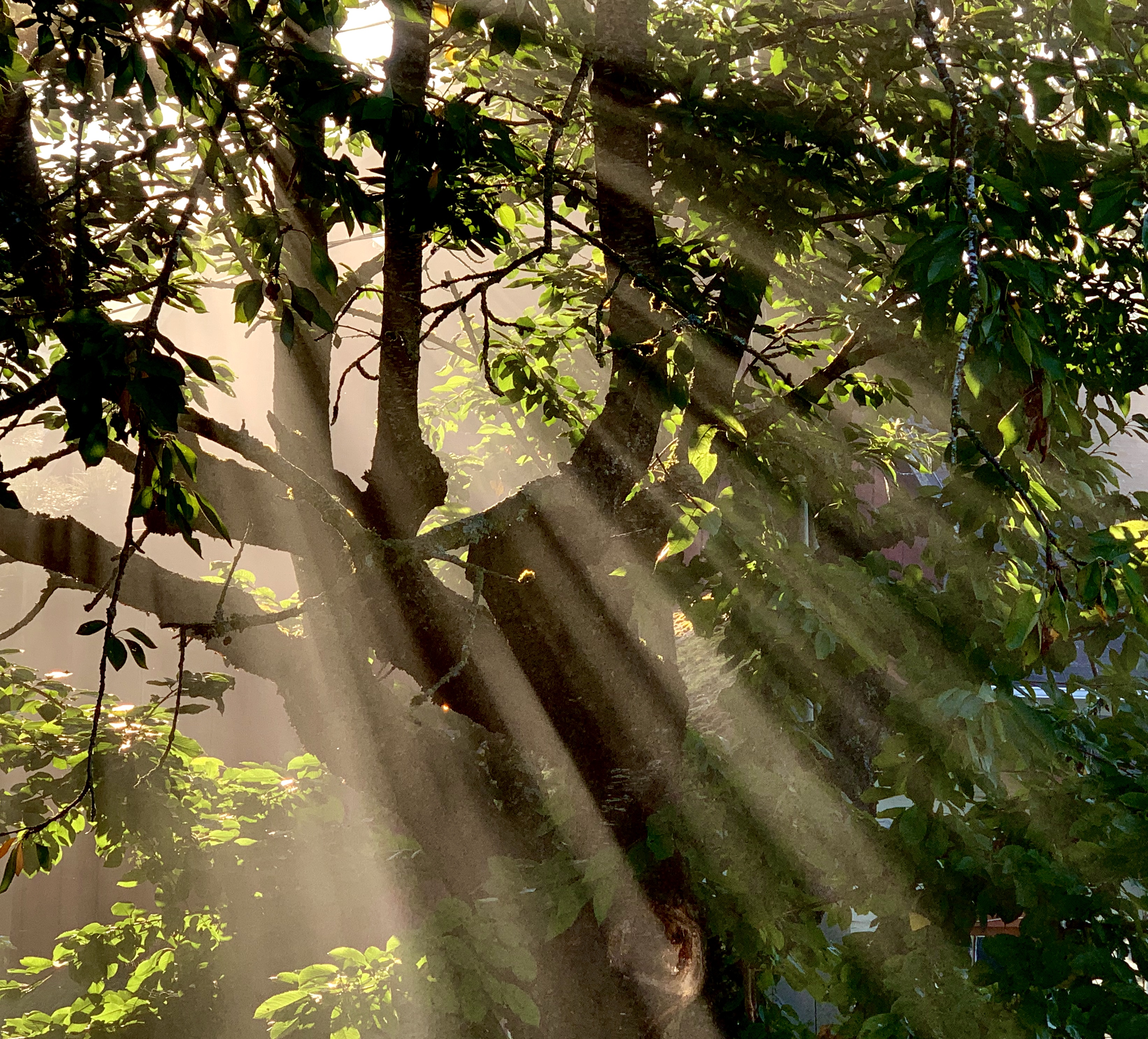
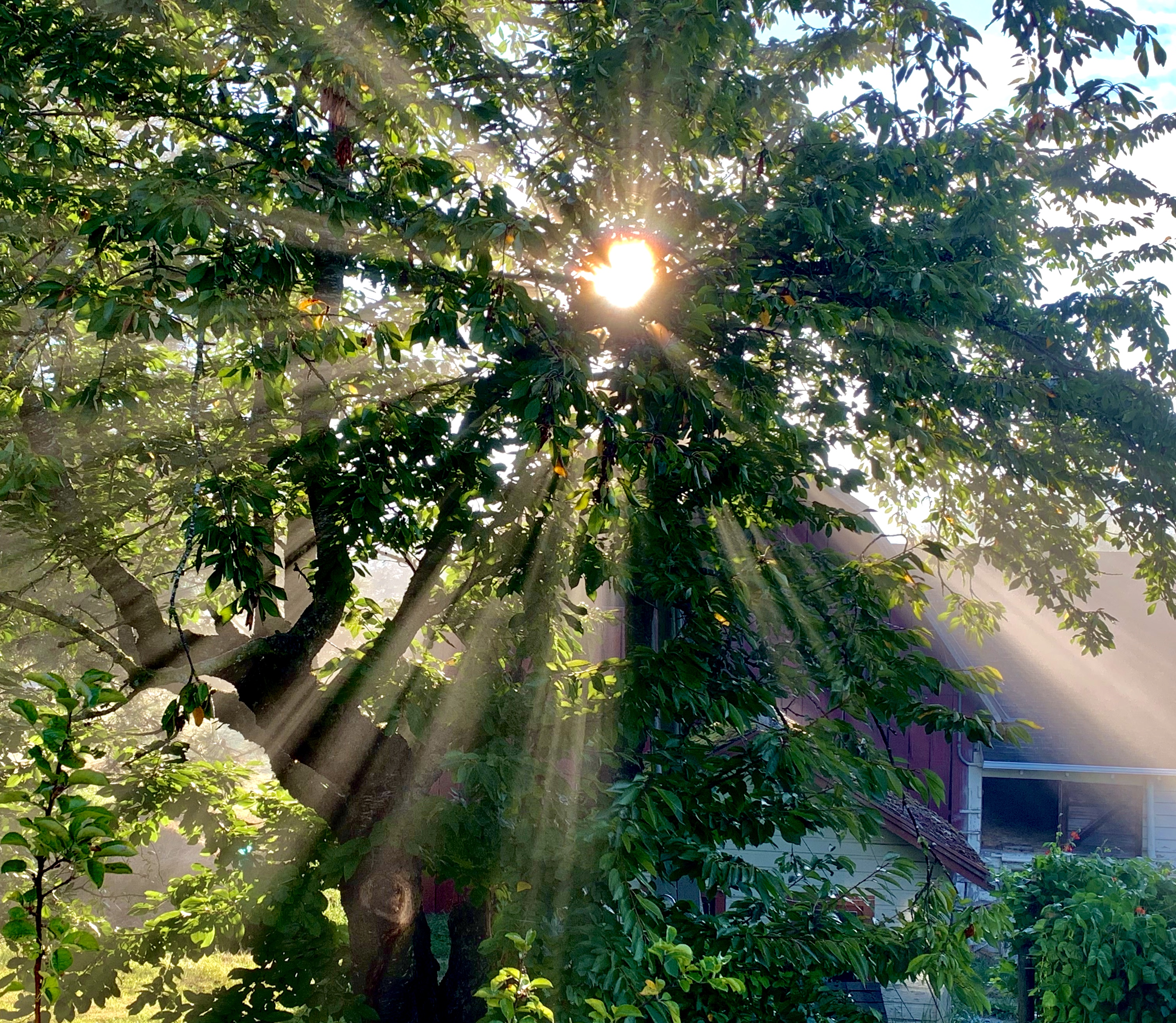
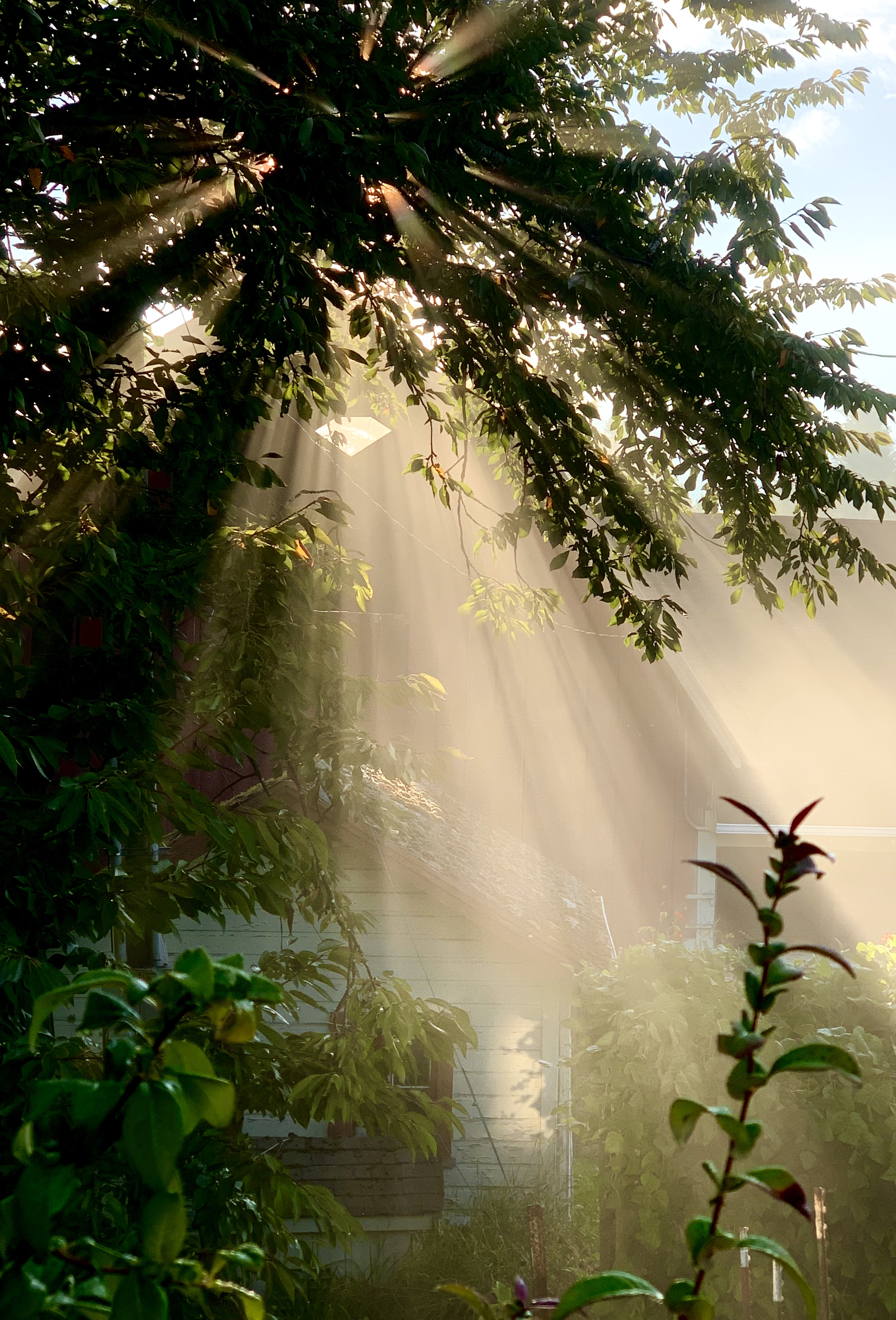
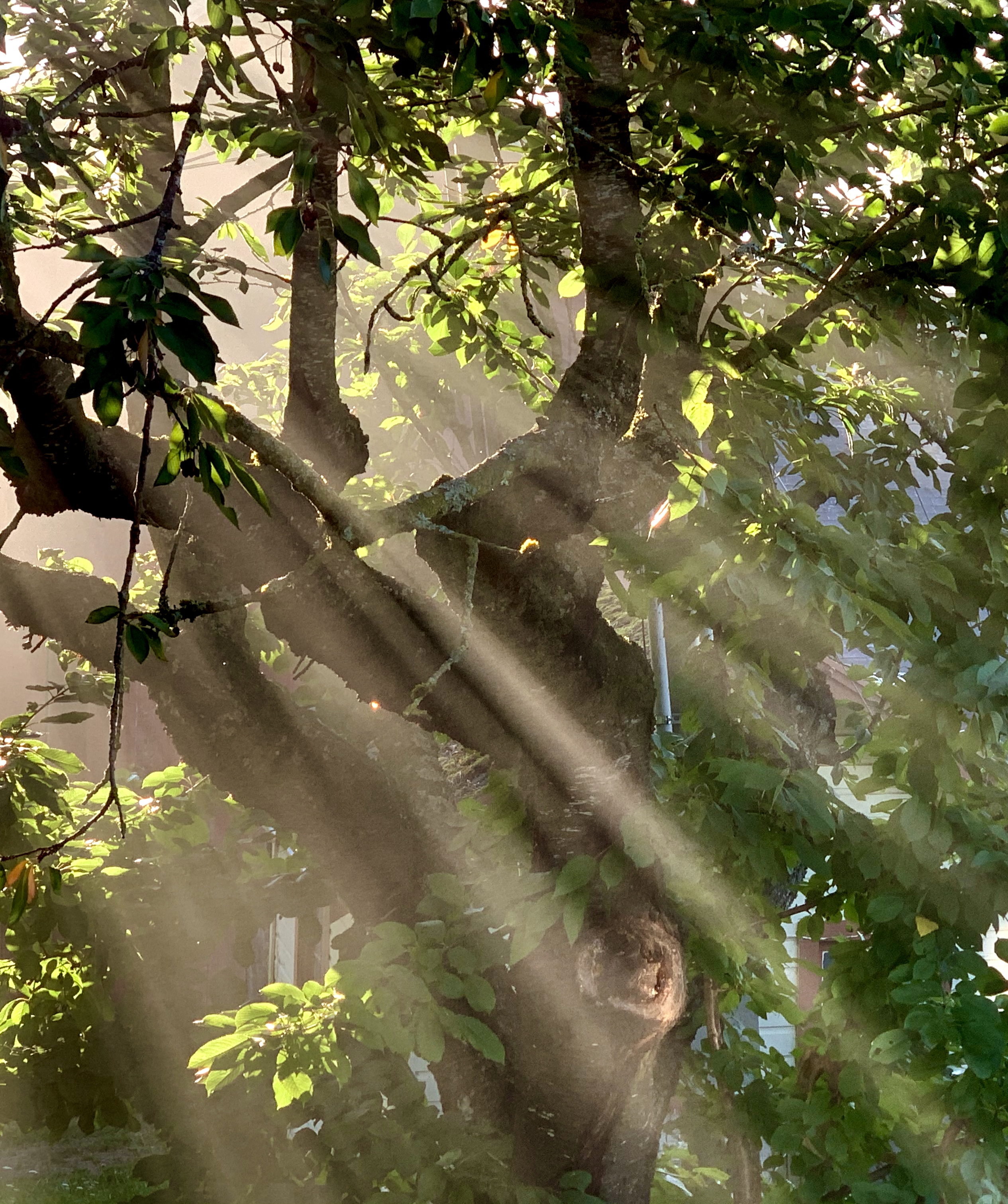
It becomes tiresome always feeling angry about what it is happening in the world, feeling that everything, even a virus, has been made political. I’m done with reading and writing nothing but words of frustration, but will rail against the meanness that surrounds us, and push back the bully to seek out a balance of perspective and insight.
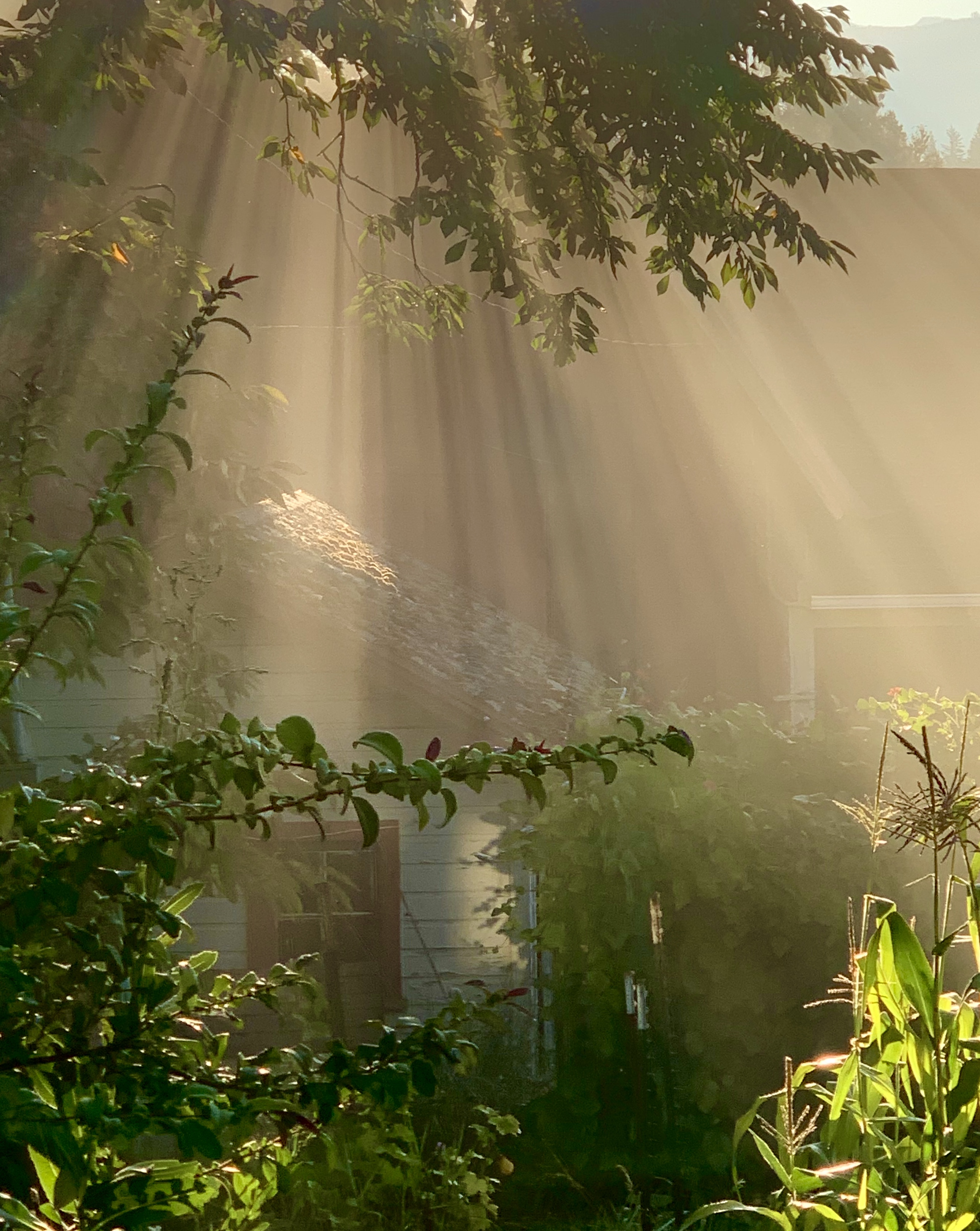
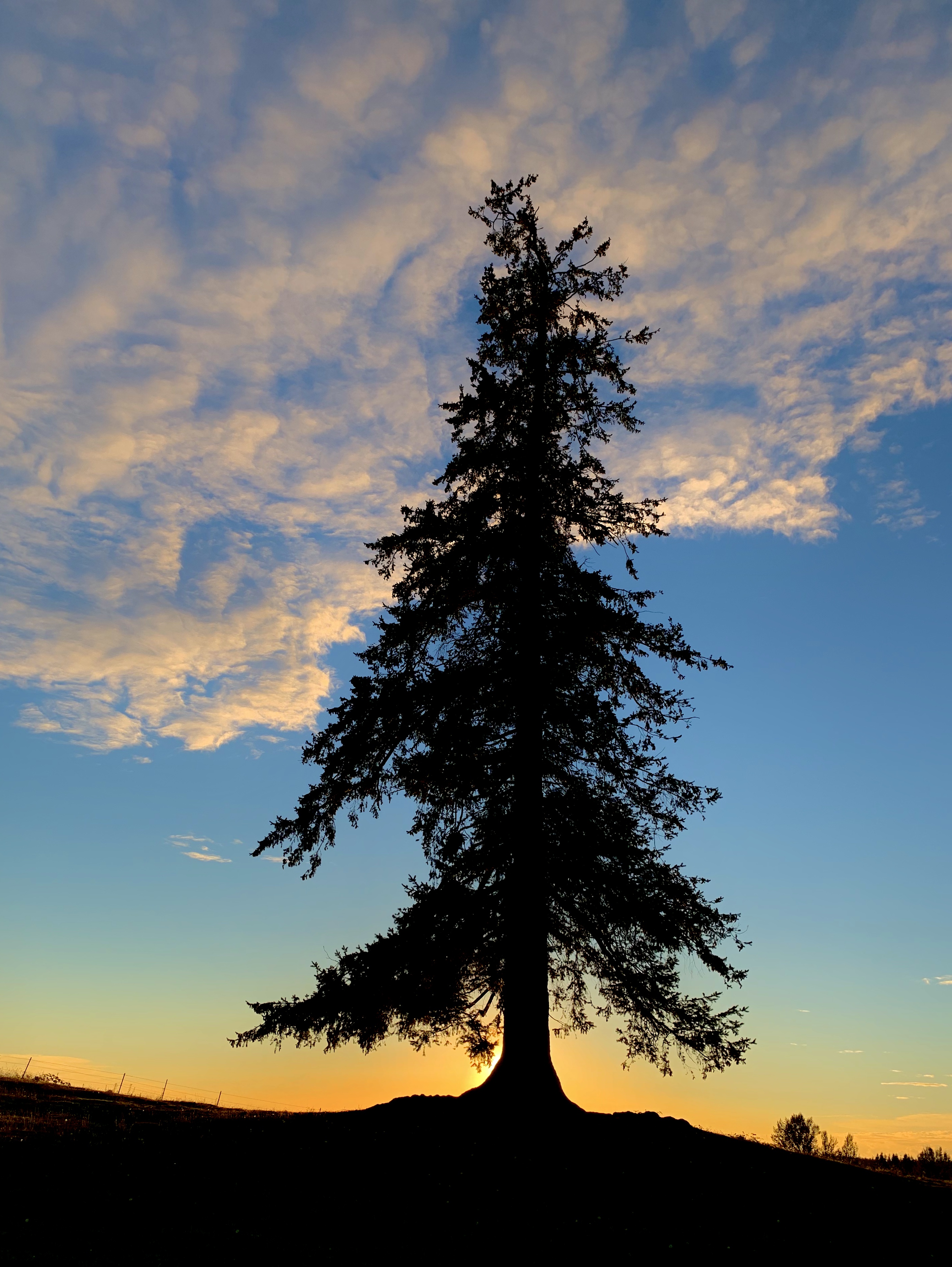
When I need to feel something other than mad, I’ll walk as far as I can go, look up, revel in the gift of rays of light and bask in their warmth and promise.
I will accept what the sun has to offer and tell about it so that my anger drains away like so much waste flushed down a pipe, never to be seen again.
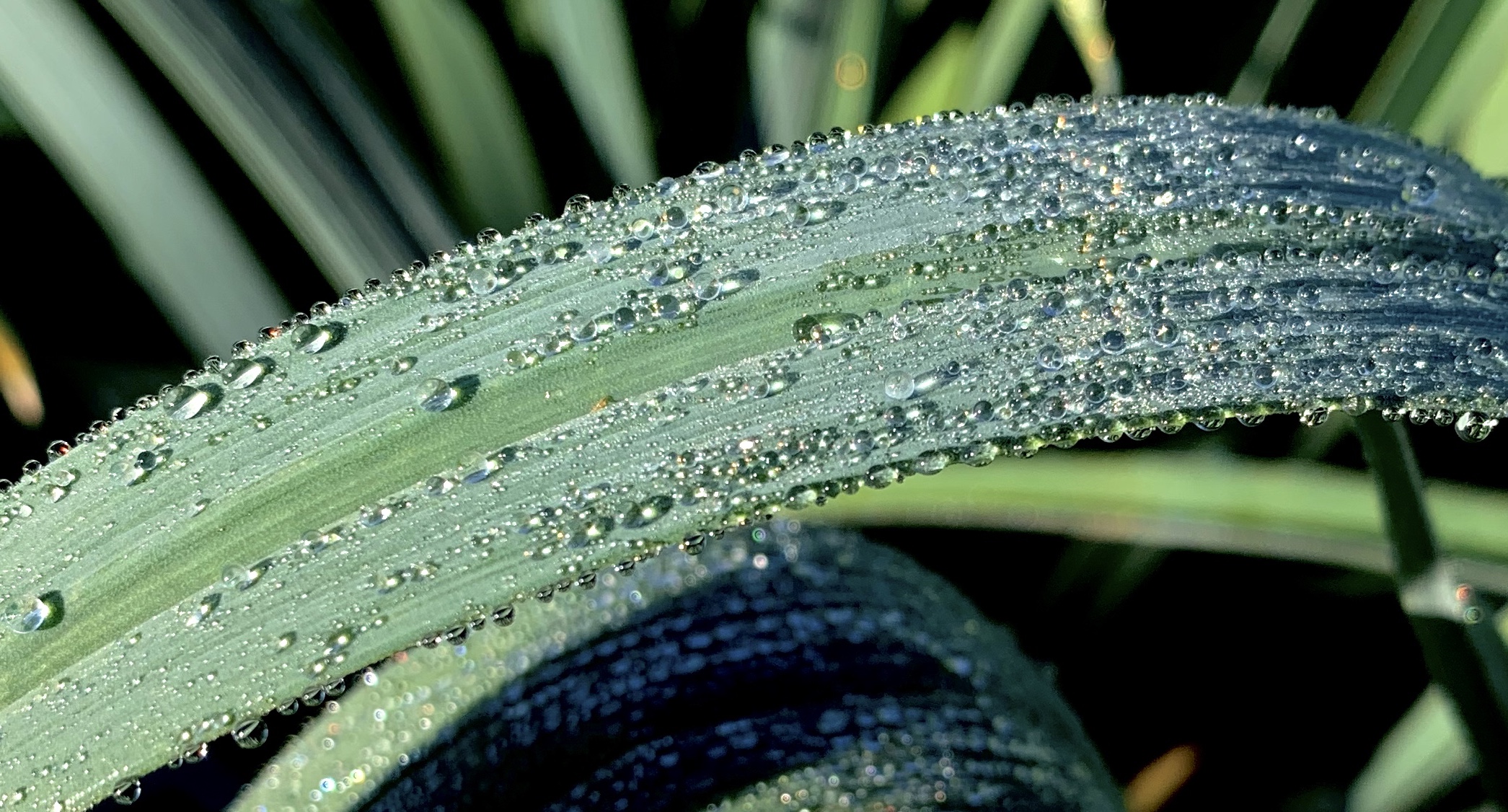
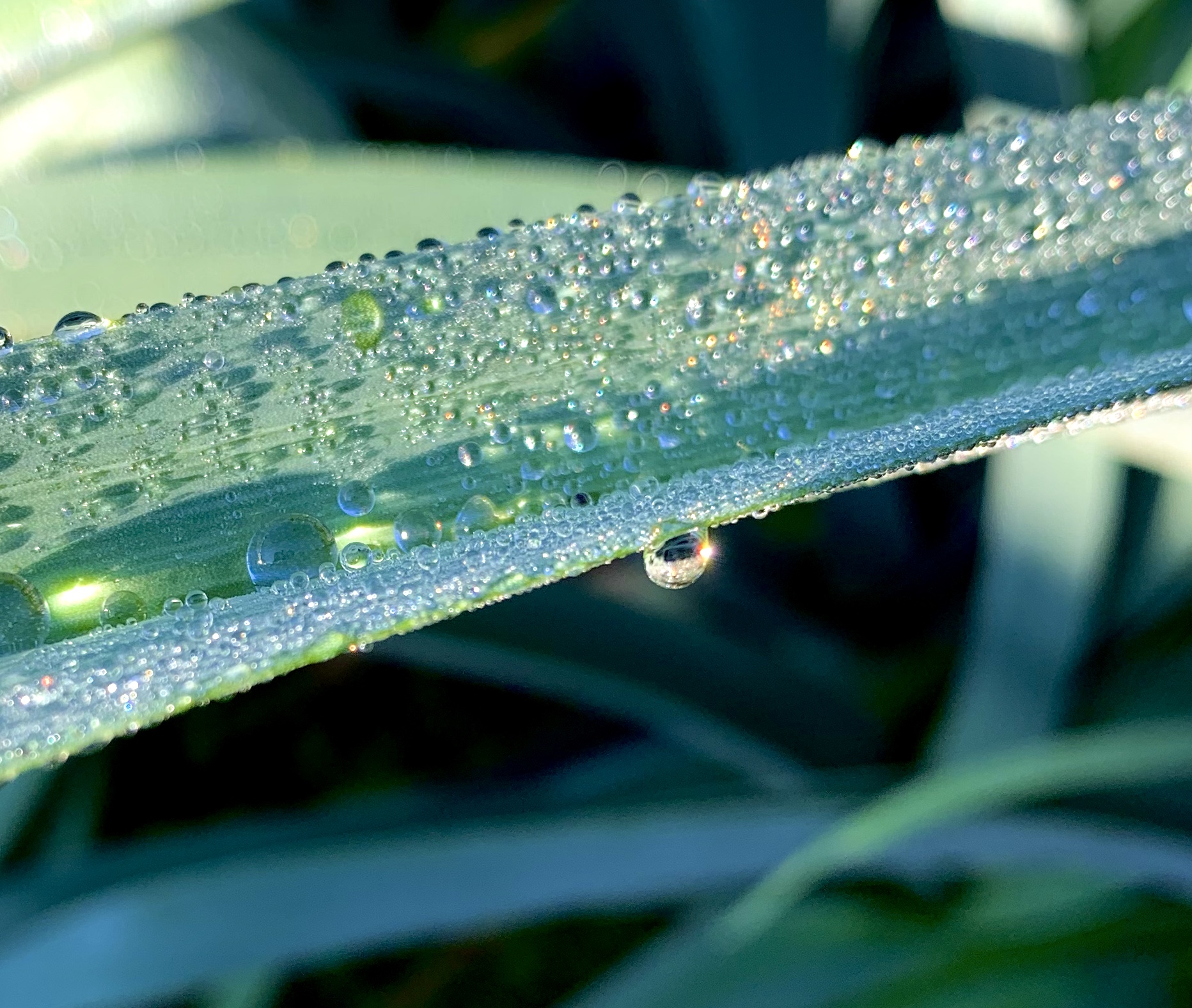
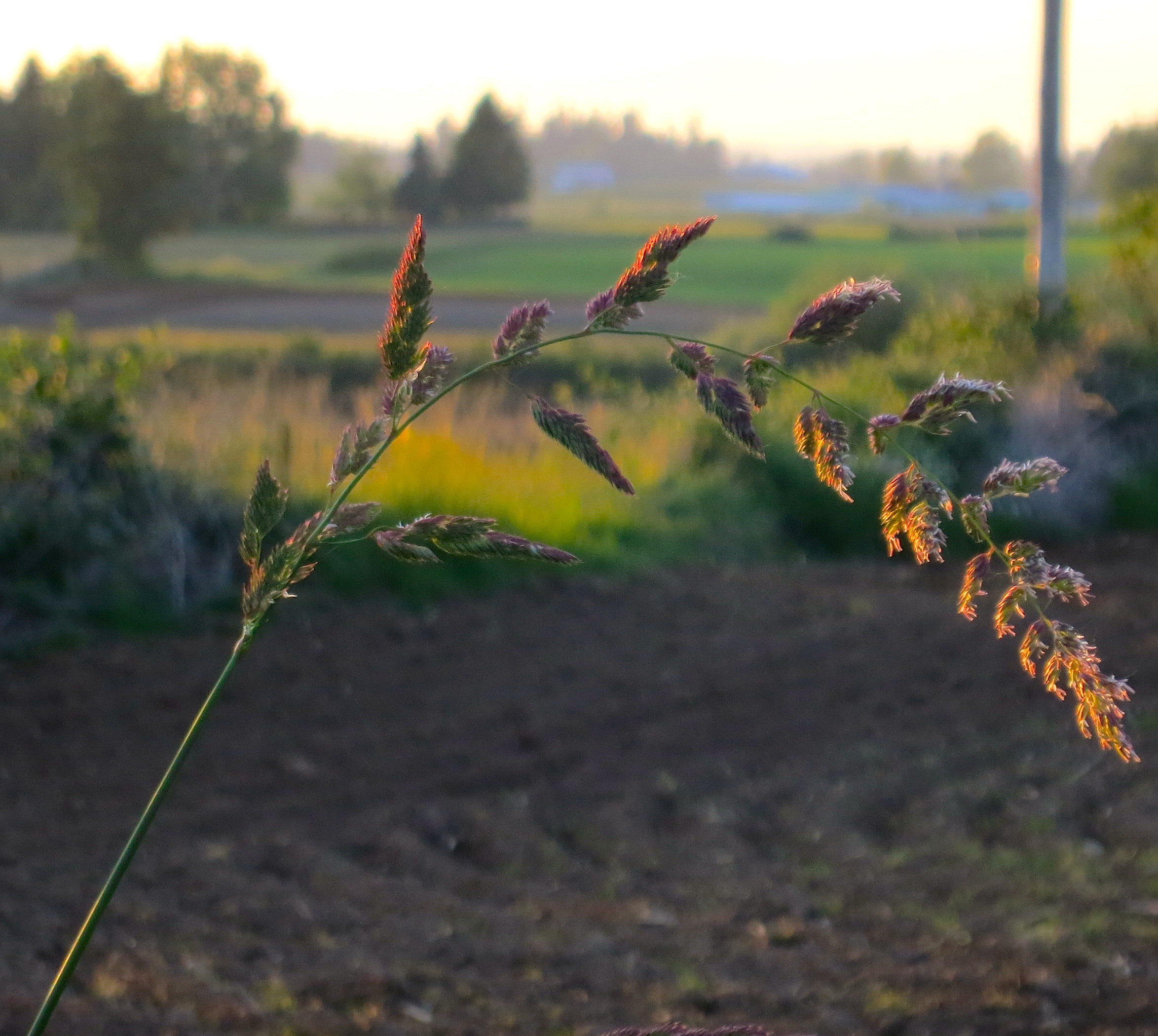
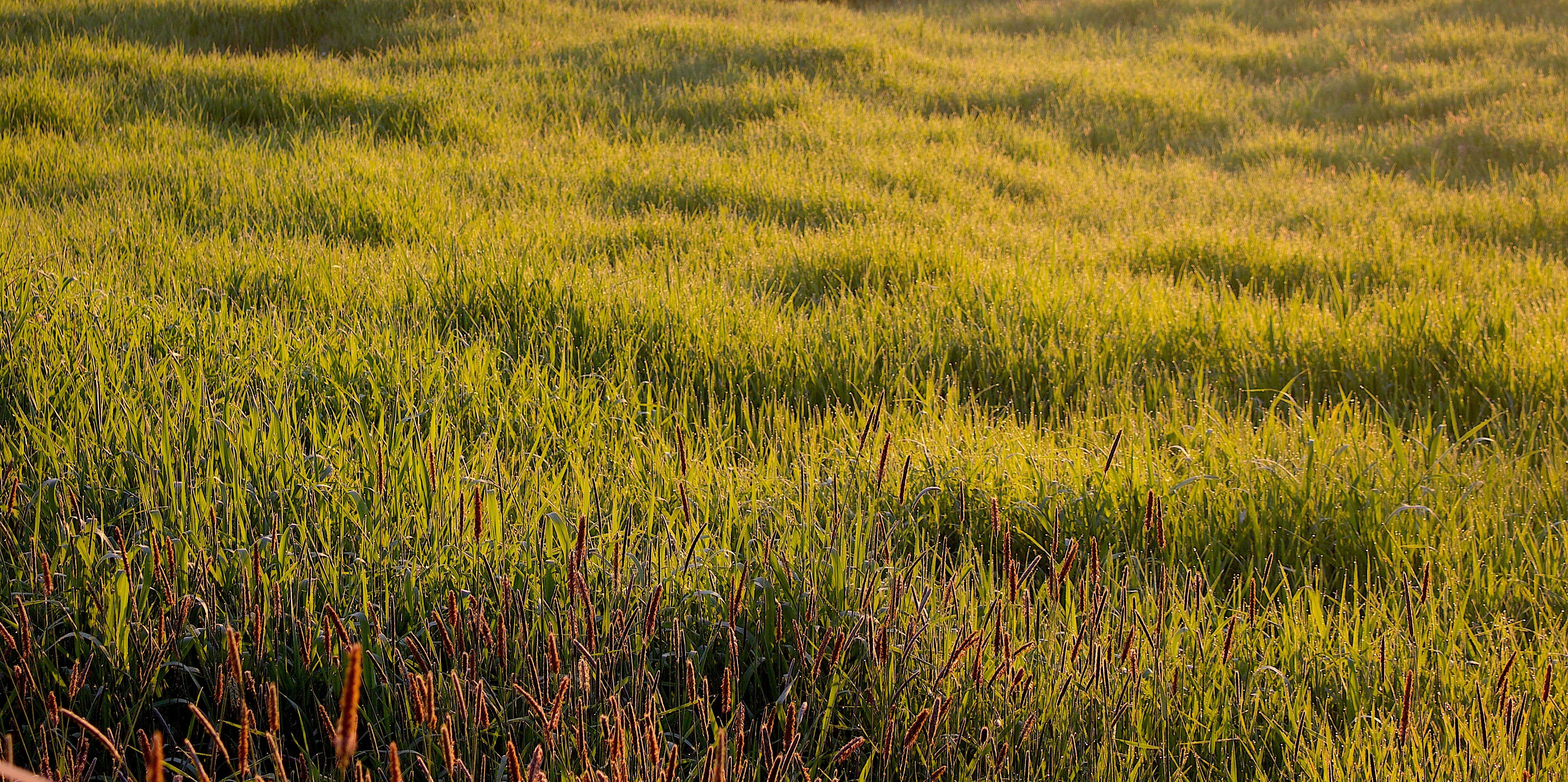
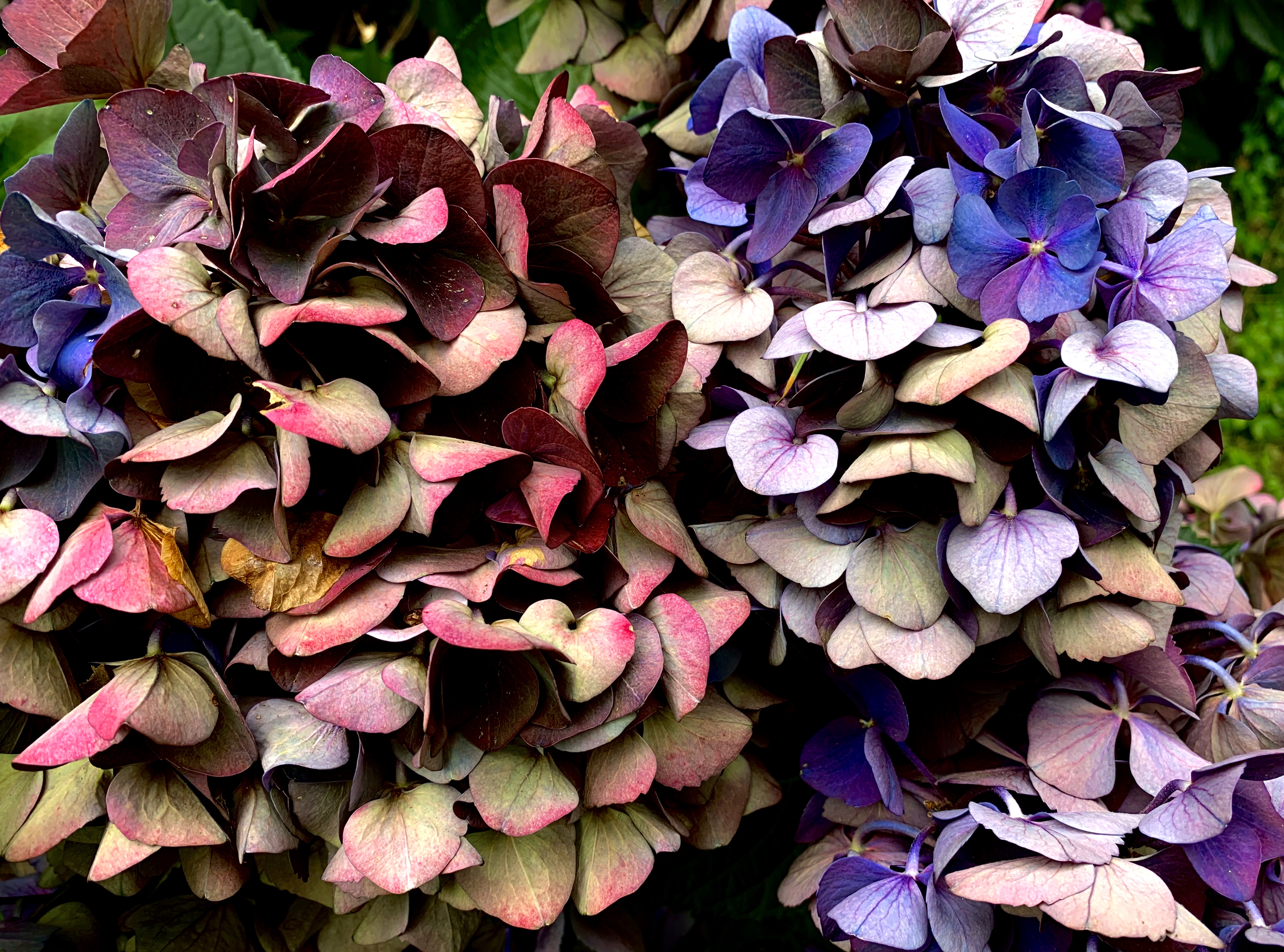
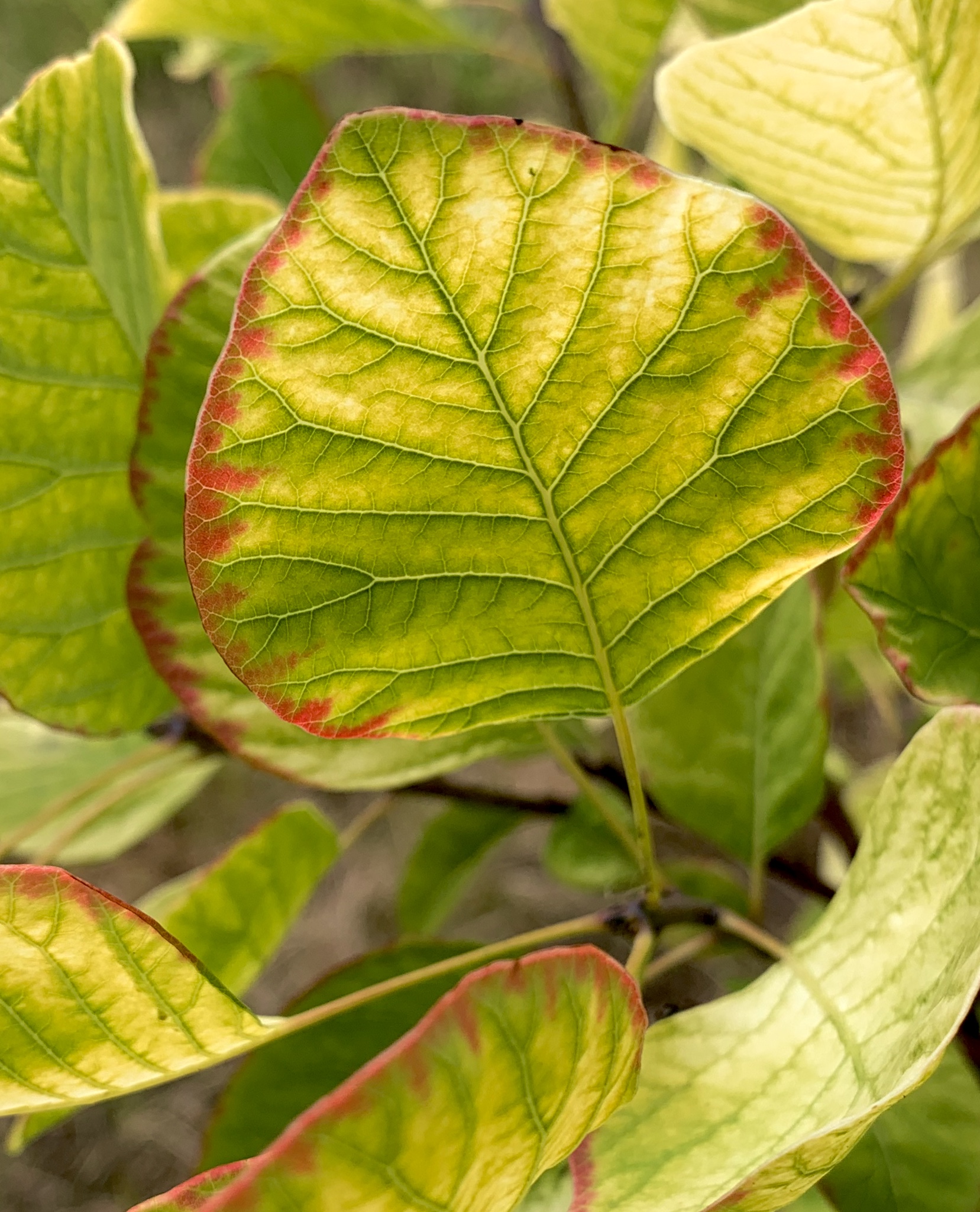
There is not one blade of grass, there is no color in this world that is not intended to make us rejoice. ~John Calvin as quoted in John Calvin: A Sixteenth Century Portrait (Oxford, 1988)byWilliam J. Bouwsma
It is too easy to become blinded to the glory surrounding us if we perceive it to be routine and commonplace.
I can’t remember the last time I celebrated a blade of grass, given how focused I am at mowing it into conformity.
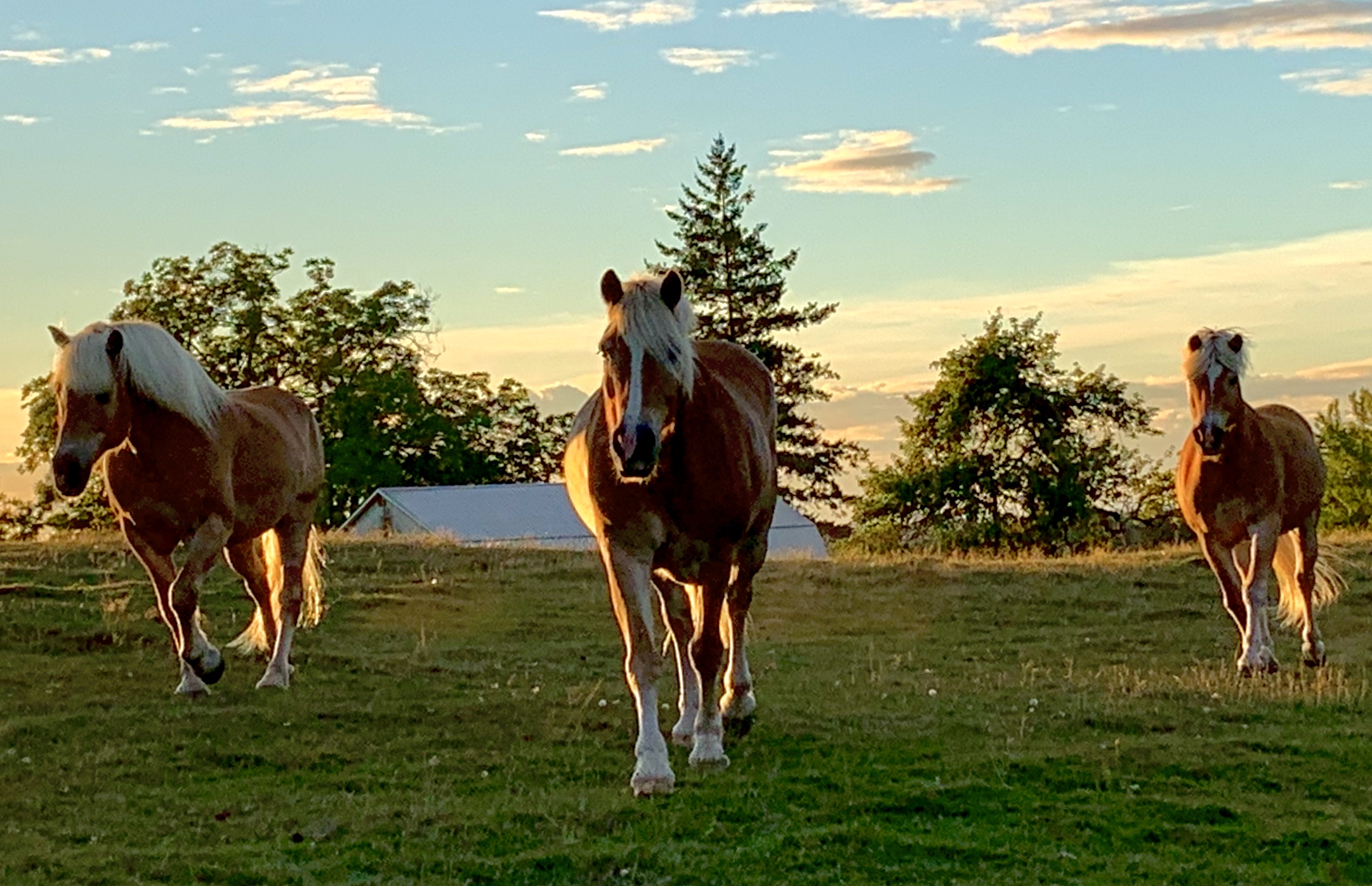
Too often I’m not up early enough to witness the pink sunrise or I’m too busy to take time to watch the sun paint the sky red as it sets or to witness our horses turning to gold in the evening glow.
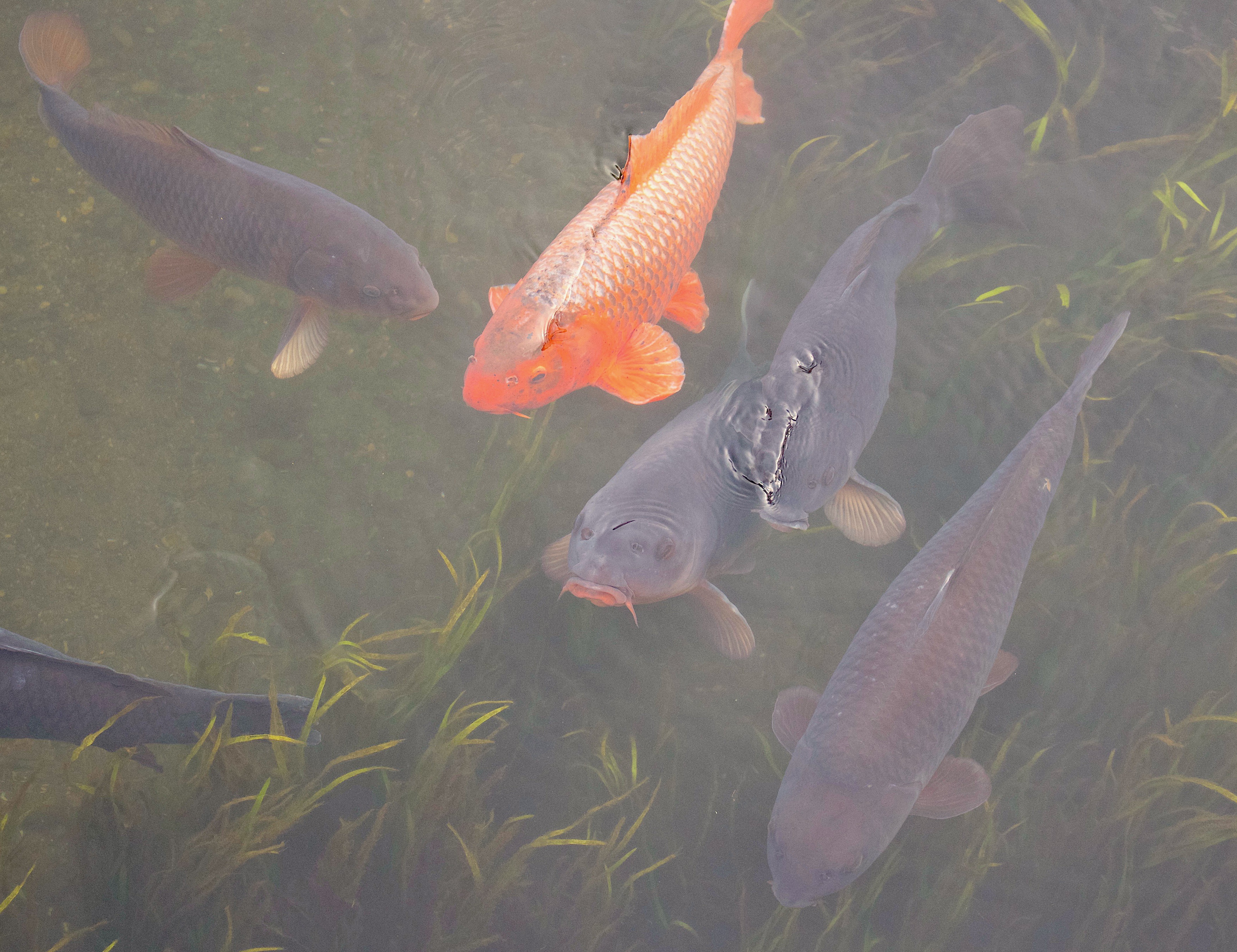
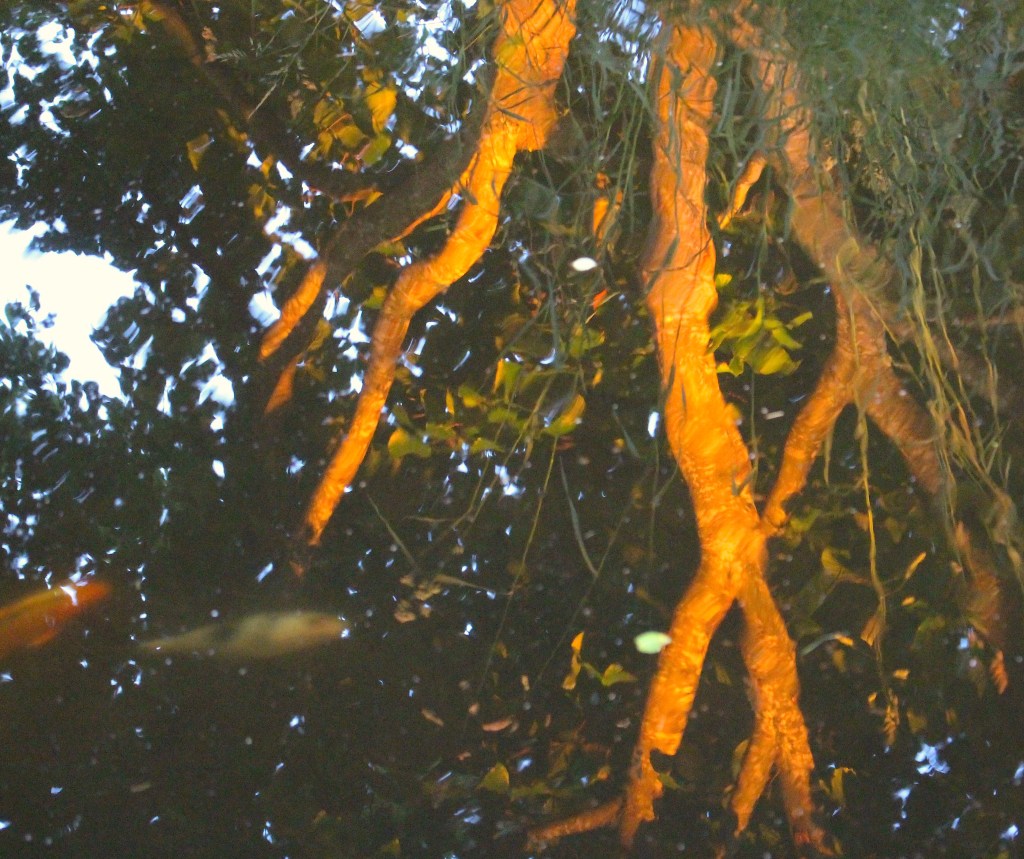
I didn’t notice how the light was illuminating our walnut tree until I saw the perfect reflection of it in our koi pond — I had marveled at a reflection instead of the real thing itself.
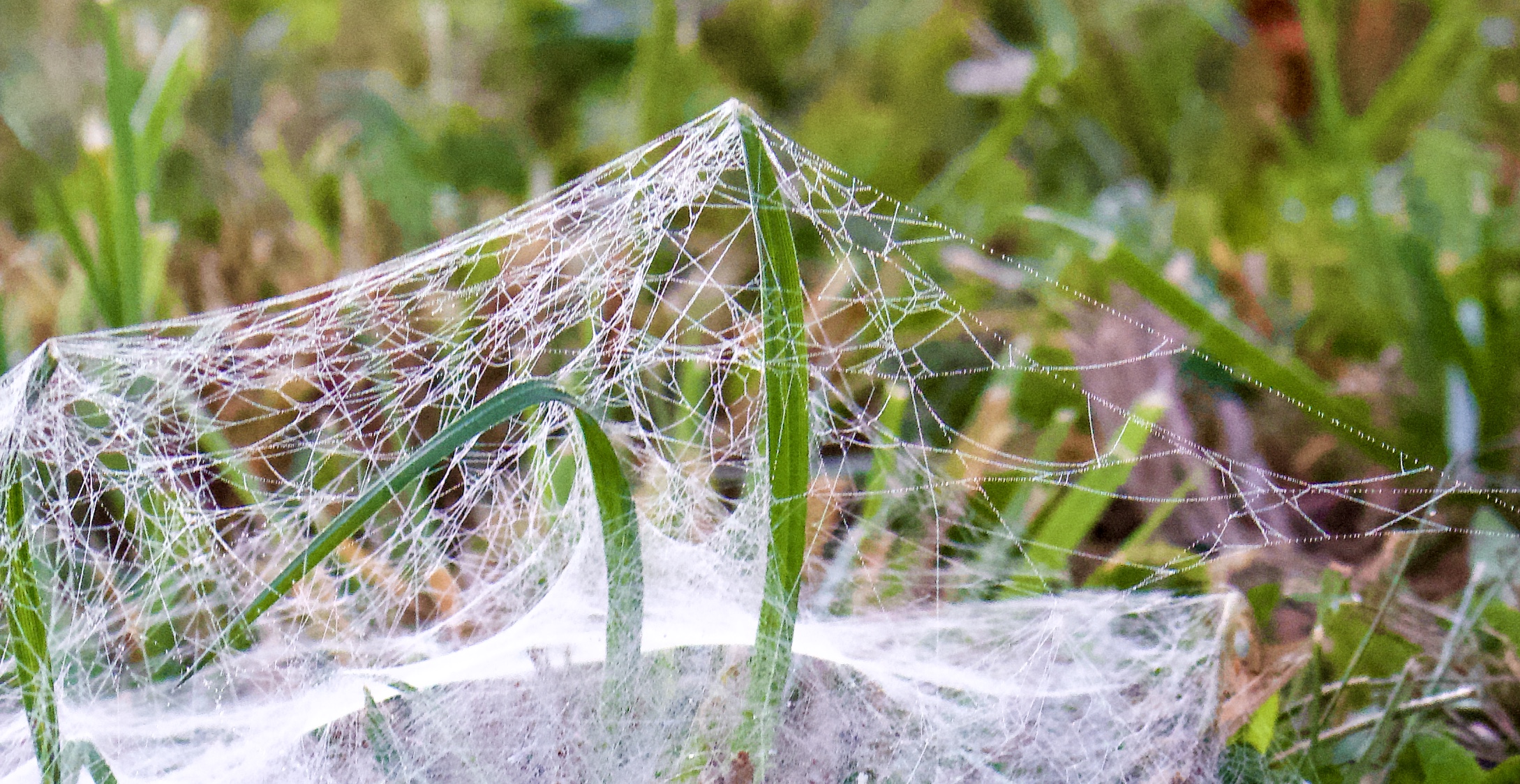
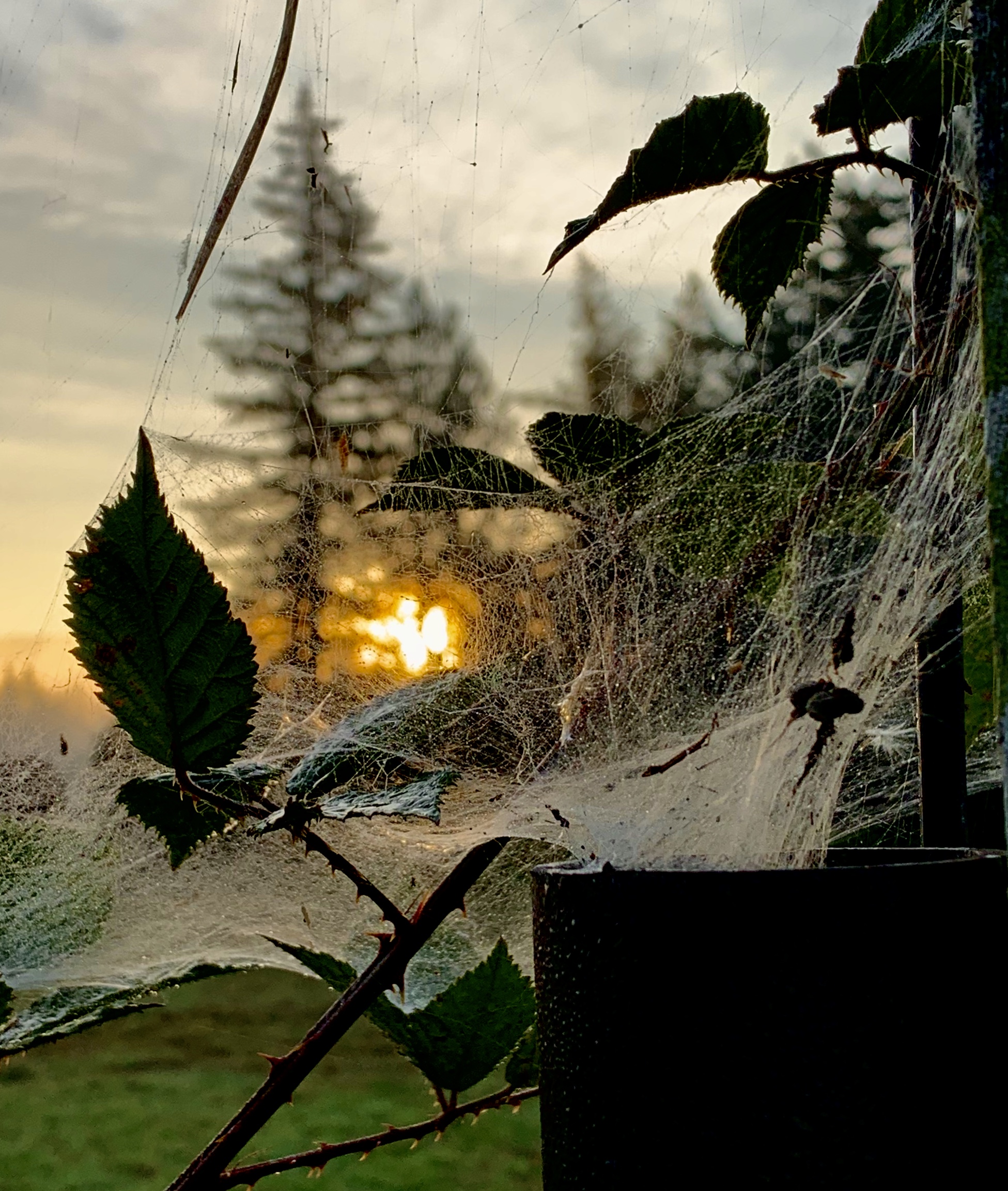
I almost missed the miracle of a spider’s overnight work in the grass; from a distance, it looked like a dew-soaked tissue draped like a tent over the green blades. When I went to go pick it up to throw it away in the trash, I realized I was staring at a small creature’s masterpiece.
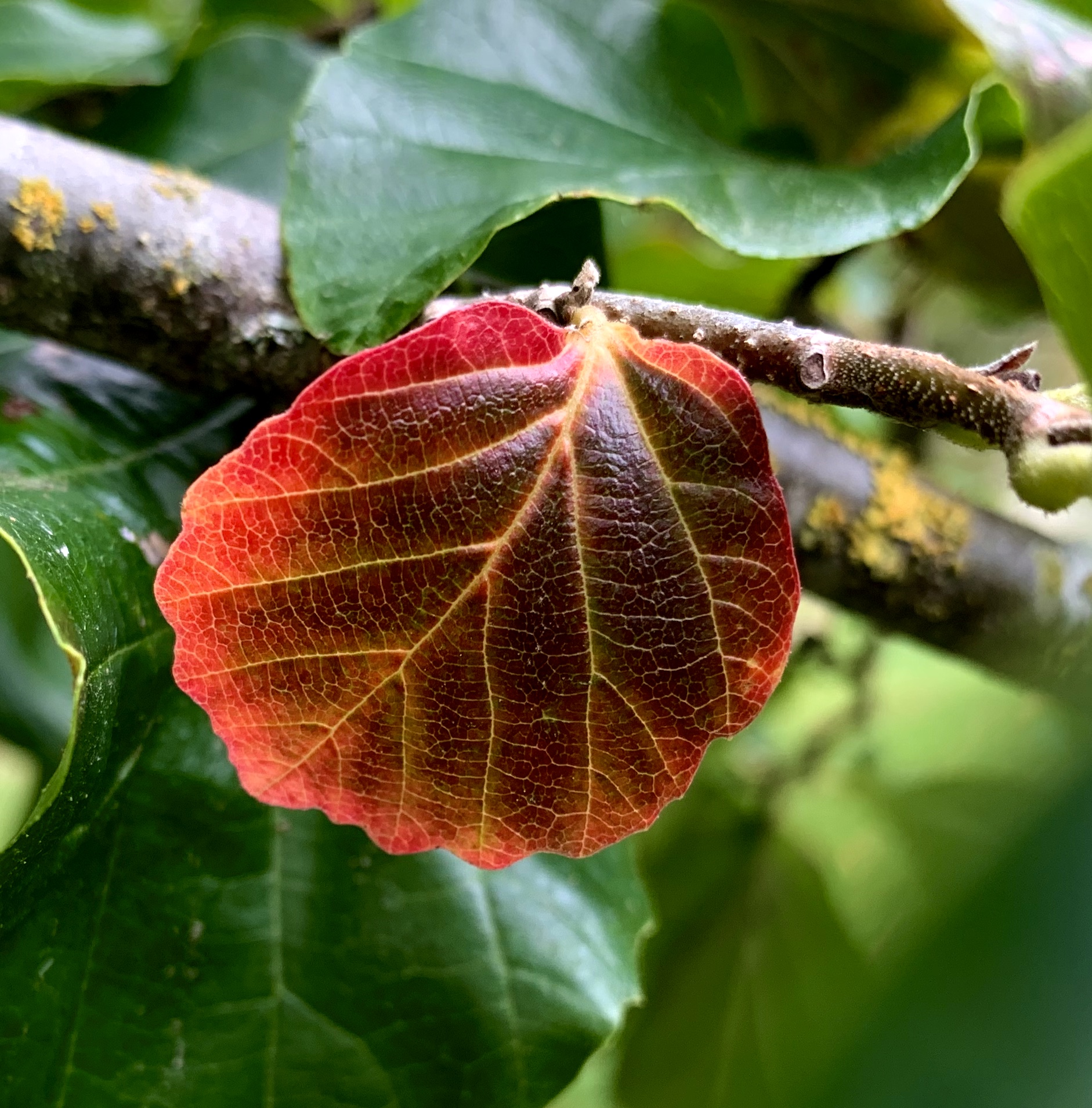
I miss opportunities to rejoice innumerable times a day. It takes only a moment of recognition and appreciation to feel the joy, and in that moment time stands still. Life stretches a little longer when I stop to acknowledge the intention of creation as an endless reservoir of rejoicing. If a blade of grass, if a leaf turning color, if a chance reflection, if a delicately knit tent in the grass — if all this is made for joy, then maybe so am I.
Even colorless, plain and commonplace me, created an image-bearer and intended reflector of Light.









 Barnstorming