I like the slants of light; I’m a collector. That’s a good one, I say… ~Annie Dillard from Pilgrim at Tinker Creek
How valuable it is in these short days, threading through empty maple branches, the lacy-needled sugar pines.
Its glint off sheets of ice tells the story of Death’s brightness, her bitter cold.
We can make do with so little, just the hint of warmth, the slanted light... ~Molly Fisk, “Winter Sun” from The More Difficult Beauty
There’s a certain Slant of light On winter afternoons — That oppresses, like the Heft of cathedral tunes. When it comes, the Landscape listens — Shadows hold their breath — When it goes, ’tis like the Distance On the look of Death. ~Emily Dickinson
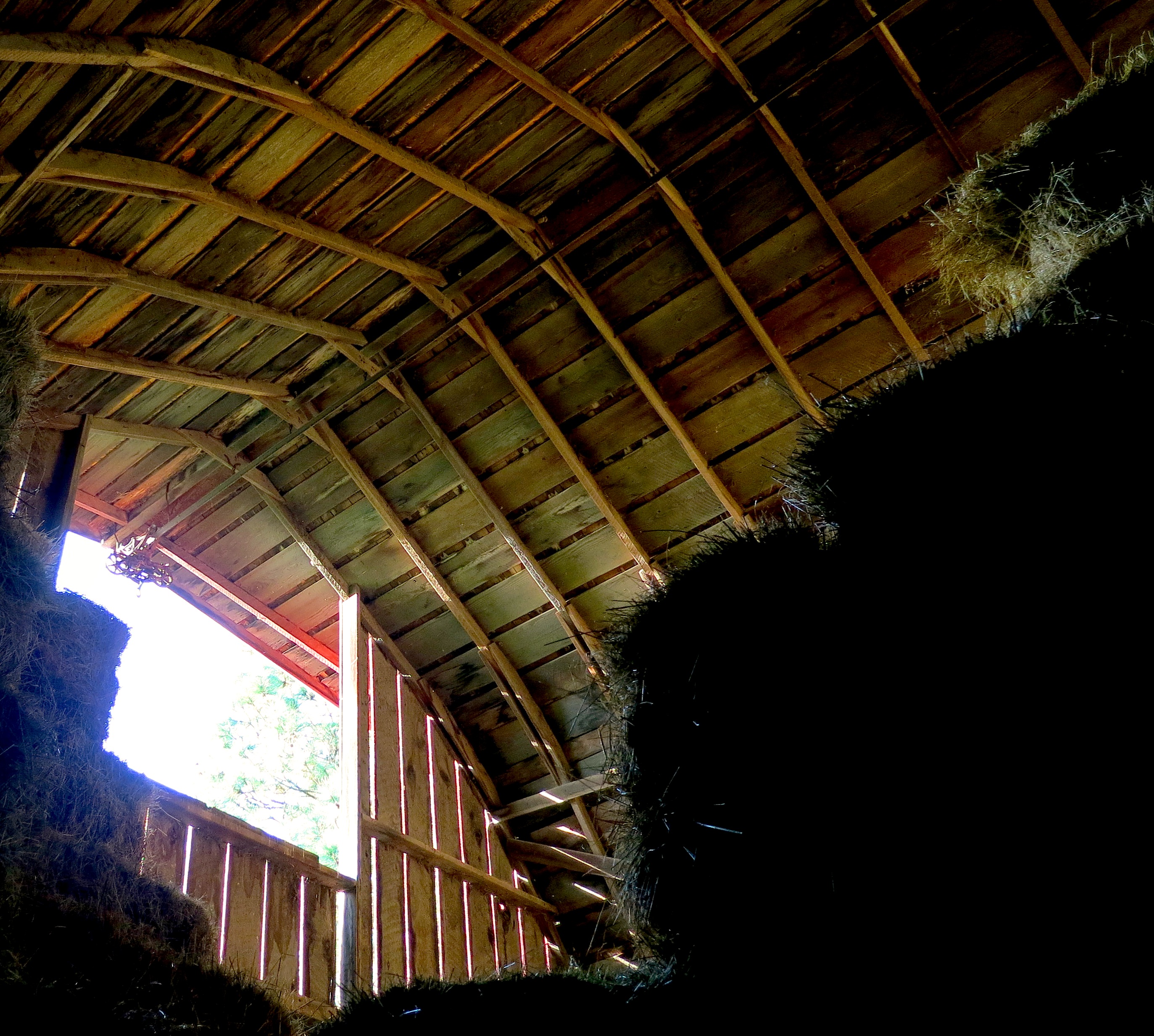
During our northwest winters, there is usually so little sunlight on gray cloudy days that I routinely turn on the two light bulbs in the big hay barn any time I need to fetch hay bales for the horses. This is so I avoid falling into the holes that inevitably develop in the hay stack between bales. Winter murky lighting tends to hide the dark shadows of the leg-swallowing pits among the bales, something that is particularly hazardous when attempting to move a 60 pound hay bale.
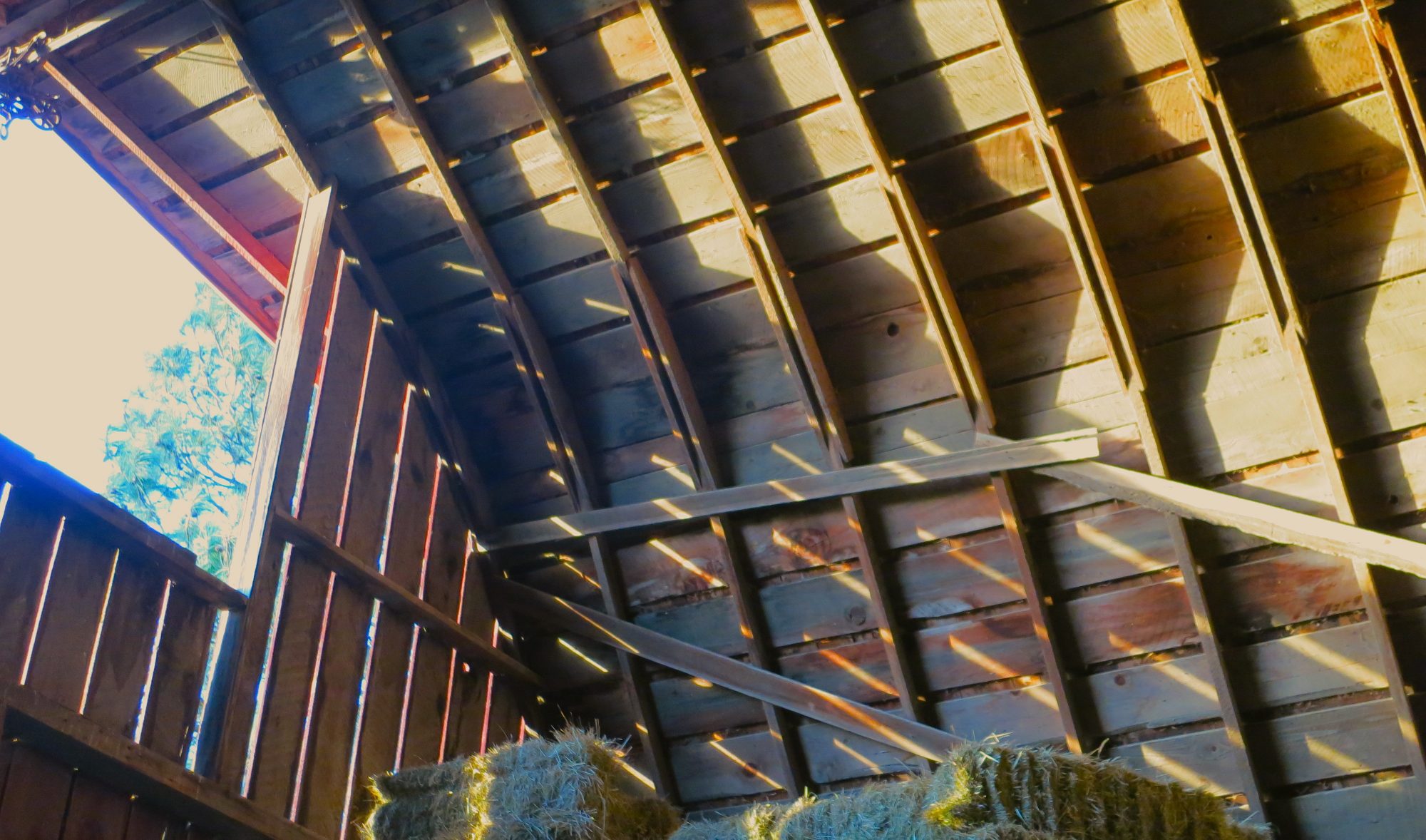
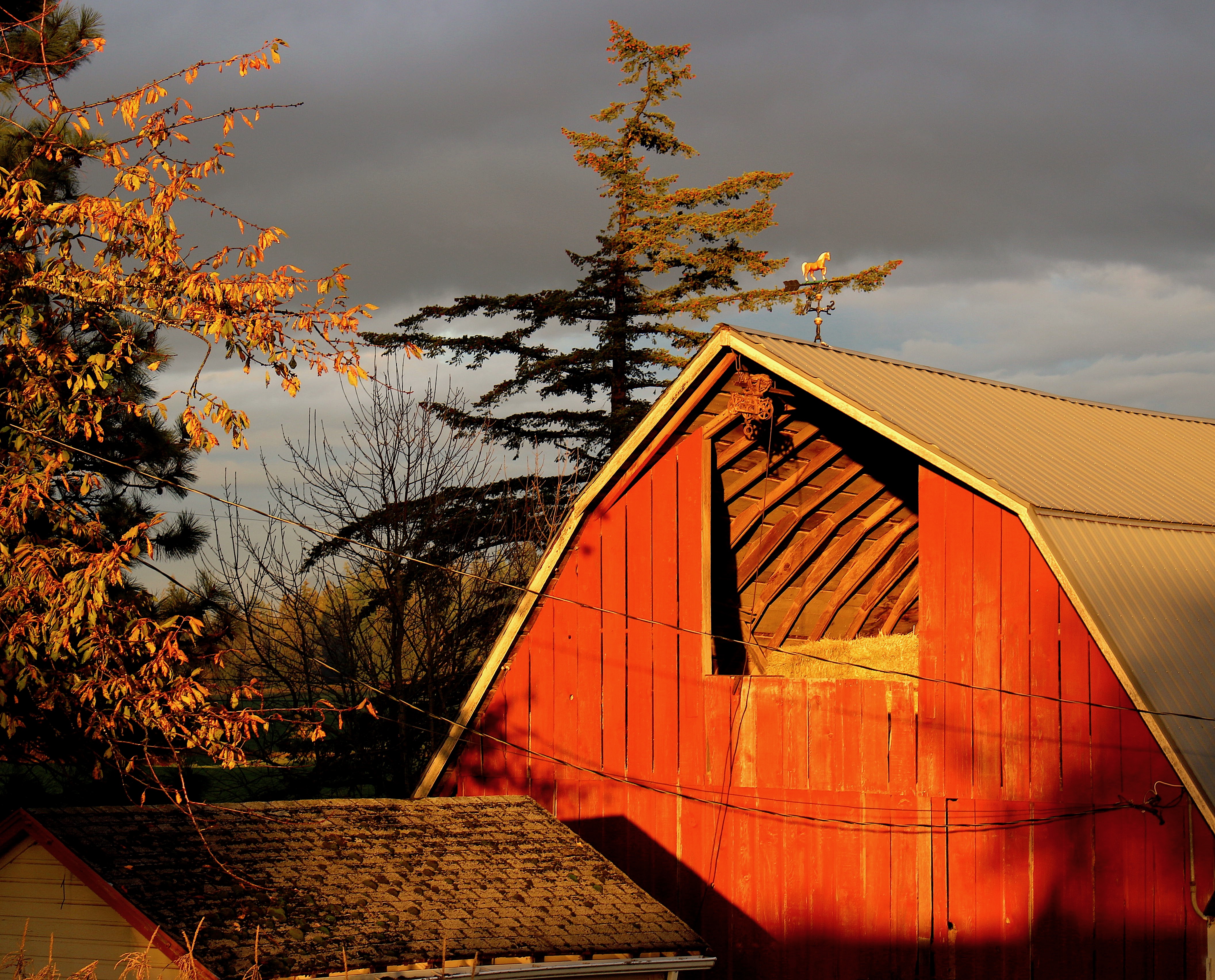
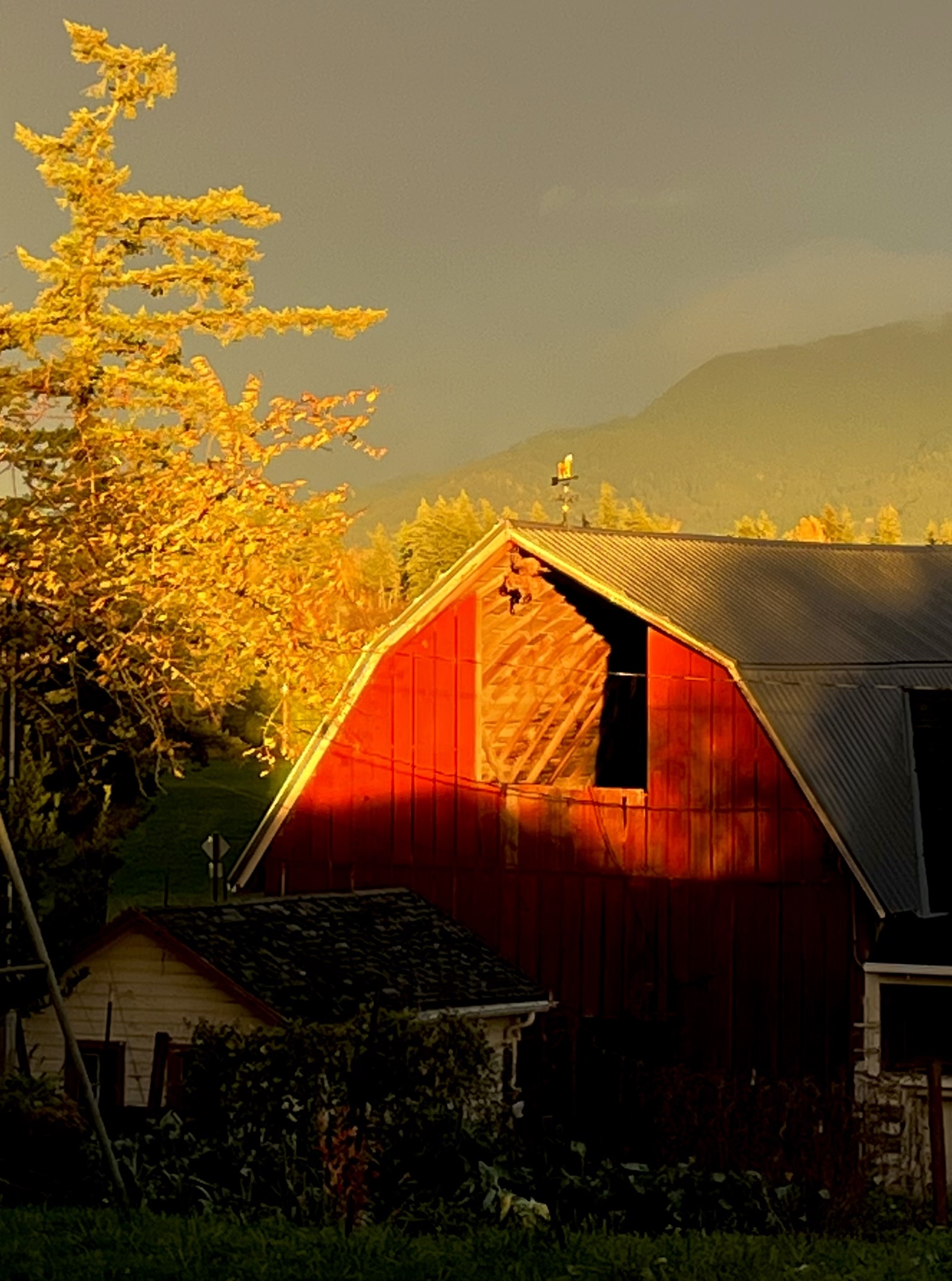
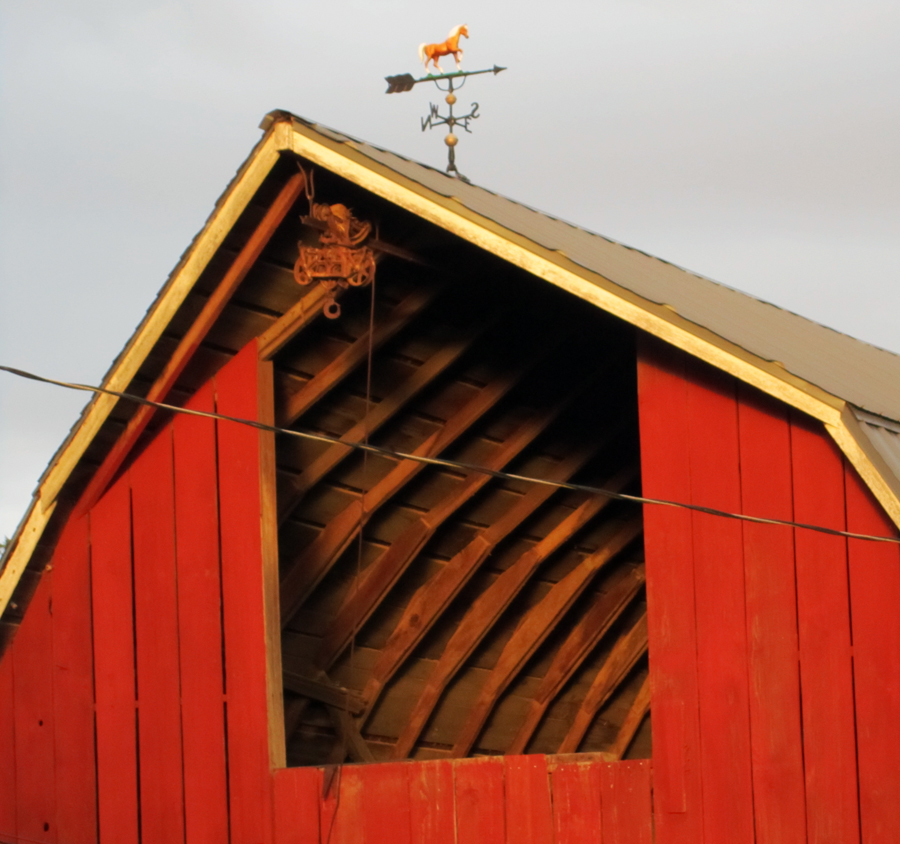
Sometimes in mid-winter, when I go to grab hay bales for the horses at sunset, before I flip the light switch, I can see light already blazing in the big barn. The last of the day’s sun rays are at a precise winter slant, streaming through the barn slat openings, ricocheting off the roof timbers onto the bales, casting an almost fiery glow onto the hay. The barn is ignited and ablaze without fire and smoke — the last things one would ever want in a hay barn.
Thanks to occasional late afternoon winter light, I can scramble among the bales without worry.
It seems as I age I have been running into more dark holes. Even when I know where they lie and how deep they are, some days I will manage to step right in anyway. Each time it knocks the breath out of me, makes me cry out, makes me want to quit trying to lift the loads which need carrying. It leaves me fearful to venture where the footing is uncertain.
Then, on the darkest of days, light comes from the most unexpected of places, blazing a trail to help me see where to step, what to avoid, how to navigate the hazards to avoid collapsing on my face. I’m redirected, inspired anew, granted grace, gratefully calmed and comforted amid my fears.
For many Americans, tomorrow represents the dark holes getting even darker. But we know — love, respect, and kindness will eventually reignite again.
The Light always returns so we can climb out of any dark holes that try to swallow us whole.
Yet another slant of Light for our collection…
Tell all the truth but tell it slant — Success in Circuit lies Too bright for our infirm Delight The Truth’s superb surprise As Lightning to the Children eased With explanation kind The Truth must dazzle gradually Or every man be blind — ~Emily Dickinson
AI image created for this post
One-Time
Monthly
Yearly
Make a one-time or recurring donation to support daily Barnstorming posts
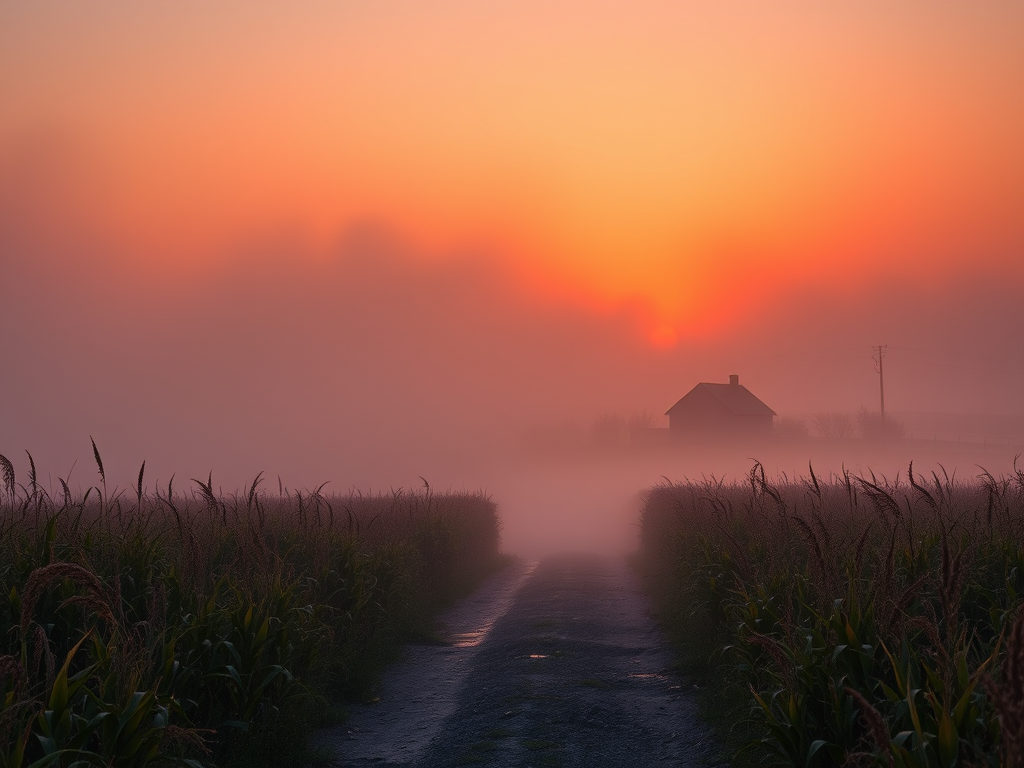
In the quiet misty morning When the moon has gone to bed, When the sparrows stop their singing And the sky is clear and red, When the summer’s ceased its gleaming When the corn is past its prime, When adventure’s lost its meaning – I’ll be homeward bound in time
Bind me not to the pasture Chain me not to the plow Set me free to find my calling And I’ll return to you somehow
If you find it’s me you’re missing If you’re hoping I’ll return, To your thoughts I’ll soon be listening, And in the road I’ll stop and turn Then the wind will set me racing As my journey nears its end And the path I’ll be retracing When I’m homeward bound again
Bind me not to the pasture Chain me not to the plow Set me free to find my calling And I’ll return to you somehow
In the quiet misty morning When the moon has gone to bed, When the sparrows stop their singing I’ll be homeward bound again. ~Marta Keen “Homeward Bound”
Eighty-two years ago, my parents married on Christmas Eve. It was not a conventional wedding day but a date of necessity, only because a justice of the peace was available to marry a score of war-time couples in Quantico, Virginia, shortly before the newly trained Marine officers were shipped out to the South Pacific to fight in WWII.
When I look at my parents’ young faces – ages 22 and just turned 21 — in their only wedding portrait, I see a hint of the impulsive decision that led to that wedding just a week before my father left for 30 months. They had known each other at college for over a year, had talked about a future together, but with my mother starting a teaching job in a rural Eastern Washington town, and the war potentially impacting all young men’s lives very directly, they had not set a date.
My father put his college education on hold to enlist, knowing that would give him some options he wouldn’t have if drafted, so they went their separate ways as he headed east to Virginia for his Marine officer training, and Mom started her high school teaching career as a speech and drama teacher. One day in early December of 1942, he called her and said, “If we’re going to get married, it’ll need to be before the end of the year. I’m shipping out the first week in January.” Mom went to her high school principal, asked for a two week leave of absence which was granted, told her astonished parents, bought a dress, and headed east on the train with a friend who had received a similar call from her boyfriend.
This was a completely uncharacteristic thing for my overly cautious mother to do, so… it must have been love.
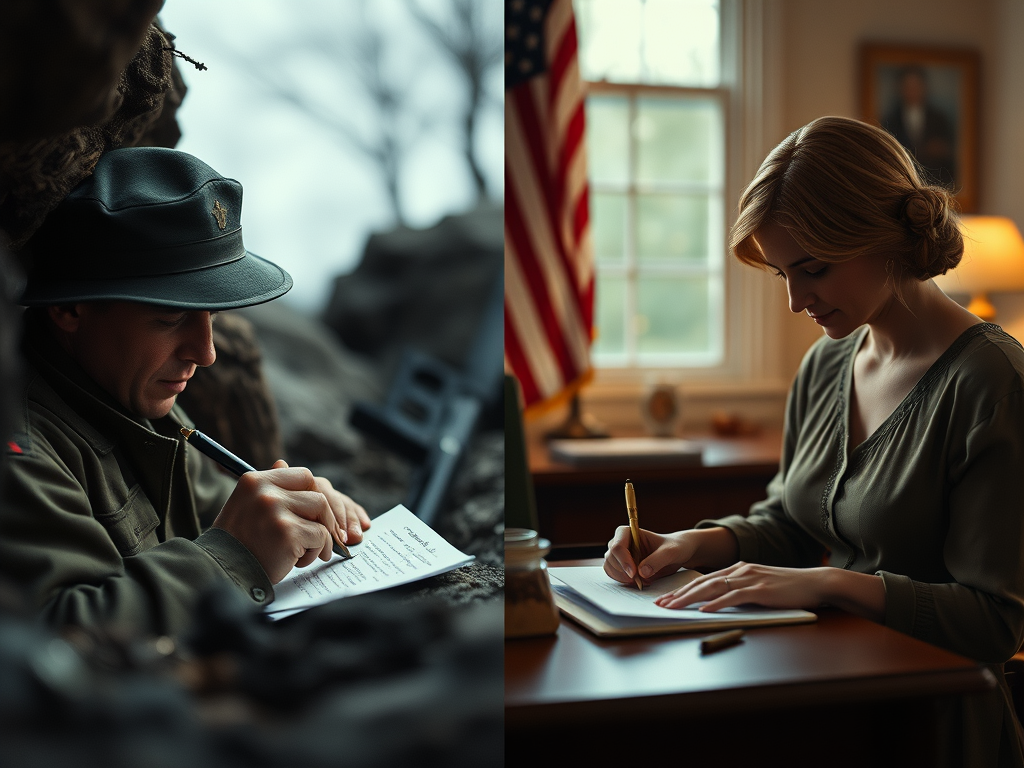
They were married in a brief civil ceremony with another couple as the witnesses. They stayed in Virginia only a couple days and took the train back to San Diego, and my father was shipped out. Just like that. Mom returned to her teaching position and the first three years of their married life was composed of letter correspondence only, with gaps of up to a month during certain island battles when no mail could be delivered or posted.
As I sorted through my mother’s things following her death over a decade ago, I found their war-time letters to each other, stacked neatly and tied together in a box.
In my father’s nearly daily letters home to my mother during WWII, month after month after month, he would say, over and over, while apologizing for the repetition:
“I will come home to you, I will return, I will not let this change me, we will be joined again…”
This was his way of convincing himself even as he carried the dead and dying after island battles: men he knew well and the enemy he did not know. He knew they were never returning to the home they died protecting and to those who loved them.
He shared little of battle in his letters as each letter was reviewed and signed off by a censor before being sealed and sent. This story, however, made it through:
“You mentioned a story of Navy landing craft taking the Marines into Tarawa. It reminded me of something which impressed me a great deal and something I’m sure I’ll never forget.
So you’ll understand what I mean I’ll try to start with an explanation. In training – close order drill- etc. there is a command that is given always when the men form in the morning – various times during the day– after firing– and always before a formation is dismissed. The command is INSPECTION – ARMS. On the command of EXECUTION- ARMS each man opens the bolt of his rifle. It is supposed to be done in unison so you hear just one sound as the bolts are opened. Usually it is pretty good and sounds O.K.
Just to show you how the morale of the men going to the beach was – and how much it impressed me — we were on our way in – I was forward, watching the beach thru a little slit in the ramp – the men were crouched in the bottom of the boat, just waiting. You see- we enter the landing boats with unloaded rifles and wait till it’s advisable before loading. When we got about to the right distance in my estimation I turned around and said – LOAD and LOCK – I didn’t realize it, but every man had been crouching with his hand on the operating handle and when I said that — SLAM! — every bolt was open at once – I’ve never heard it done better – and those men meant business when they loaded those rifles.
A man couldn’t be afraid with men like that behind him.”
My father did return home to my mother after nearly three years of separation. He finished his college education to become an agriculture teacher to teach others how to farm the land while he himself became bound to the pasture and chained to the plow.
He never forgot those who died, making it possible for him to return home. I won’t forget either.
My mother and father could not have foretold the struggles that lay ahead for them. The War itself seemed struggle enough for the millions of couples who endured the separation, the losses and grieving, as well as the eventual injuries–both physical and psychological. It did not seem possible that beyond those harsh and horrible realities, things could go sour after reuniting.
The hope and expectation of happiness and bliss must have been overwhelming, and real life doesn’t often deliver. After raising three children, their 35 year marriage fell apart with traumatic finality. When my father returned home (again) over a decade later, asking for forgiveness, they remarried and had five more years together before my father died in 1995.
Christmas is a time of joy, a celebration of new beginnings and new life when God became man, humble, vulnerable and tender. But it also gives us a foretaste for the profound sacrifice made in giving up this earthly life, not always so gently.
As I peer at my father’s and mother’s faces in their wedding photo, I remember those eyes, then so trusting and unaware of what was to come. I find peace in knowing they both have returned home to behold the Light, the Salvation and the Glory~~the ultimate Christmas~~in His presence.
AI image created for this postAI image created for this post
One-Time
Monthly
Yearly
Make a one-time or recurring donation to support daily Barnstorming posts
And in despair I bowed my head; “There is no peace on earth,” I said; “For hate is strong, And mocks the song Of peace on earth, good-will to men!”
Then pealed the bells more loud and deep: “God is not dead, nor doth He sleep; The Wrong shall fail, The Right prevail, With peace on earth, good-will to men.” ~Henry Wadsworth Longfellowfrom Christmas Bells
On the whole, I do not find Christians, outside of the catacombs, sufficiently sensible of conditions. Does anyone have the foggiest idea what sort of power we so blithely invoke?
The churches are children playing on the floor with their chemistry sets, mixing up a batch of TNT to kill a Sunday morning. It is madness to wear ladies’ straw hats and velvet hats to church; we should all be wearing crash helmets. Ushers should issue life preservers and signal flares; they should lash us to our pews. For the sleeping god may wake someday and take offense, or the waking god may draw us out to where we can never return. ~Annie Dillard from Teaching a Stone to Talk: Expeditions and Encounters
Let the stable still astonish; Straw – dirt floor, dull eyes, Dusty flanks of donkeys, oxen; Crumbling, crooked walls; No bed to carry that pain, And then, the child, Rag-wrapped, laid to cry In a trough. Who would have chosen this? Who would have said: “Yes, Let the God of all the heavens and earth Be born here, in this place?” Who but the same God Who stands in the darker, fouler rooms Of our hearts And says, “Yes, Let the God of Heaven and Earth Be born here – In this place. ~Leslie Leyland Fields “Let the Stable Still Astonish”
During Advent, I too am guilty of nostalgia and sentiment, invoking the gentle bedtime story of that silent night, with the infant napping away in a hay-filled manger, His devoted parents hovering, the humble shepherds peering in the stable door.
All is calm. All is bright.
No, this is not a sentimental story. It is astonishing.
God never sleeps.
This is no gentle bedtime story: – a teenage mother gives birth in a smelly among animals, with no alternative but to lay her baby in a rough feed trough.
– the heavenly host appearing to shepherds – the lowest of the low in society – shouting and singing glories which causes terror.
– Herod’s response to the news that a Messiah had been born was to kill a legion of male children whose parents undoubtedly begged for mercy, clinging to their children about to be murdered.
– a family’s flight to Egypt as refugees seeking asylum so their son would not be yet another victim of Herod.
– Jesus grew up to become itinerant and homeless, tempted while fasting in the wilderness, owning nothing, rejected by His own people, betrayed by His disciples, sentenced to death by acclamation before Pilate, tortured, hung on a cross until He gave up his spirit.
– Jesus understood He was not of this world. He knew the power that originally brought him to earth as a helpless infant lying in an unforgiving stone trough would eventually move the stone covering His tomb.
He would be sacrificed, He would die and rise again, He would return again as King of all nations.
When I hear skeptics scoff at Christianity as a “crutch for the weak”, they underestimate the courage it takes to walk into church each week admitting we are a desperate people seeking rescue. We cling to the life preserver found in the Word, lashed to our seats and hanging on. It is only because of grace that we survive the tempests of temptation, shame, guilt and self-doubt to worship an all-knowing God who is not dead and who never ever sleeps.
This bedtime story is not for the faint of heart. It is meant to astonish. The power invoked created the very dust we are made of, and breathed His life into us.
So be not afraid: the wrong shall fail the Right prevail. He chose this place. Peace on earth, good-will to men.
The grass withers, the flower fades, But the word of our God stands forever. Isaiah 40:8
AI image created for this post
One-Time
Monthly
Yearly
Make a one-time or recurring donation to support daily Barnstorming posts
We have become so accustomed to the idea of divine love and of God’s coming at Christmas that we no longer feel the shiver of fear that God’s coming should arouse in us. We are indifferent to the message, taking only the pleasant and agreeable out of it and forgetting the serious aspect, that the God of the world draws near to the people of our little earth and lays claim to us. The coming of God is truly not only glad tidings, but first of all frightening news for everyone who has a conscience. ~Dietrich Bonhoeffer from Watch for the Light
Was certainly not winter, scholars say, When holy habitation broke the chill Of hearth-felt separation, icy still, The love of life in man that Christmas day. Was autumn, rather, if seasons speak true; When green retreats from sight’s still ling’ring gaze, And creeping cold numbs sense in sundry ways, While settling silence speaks of solitude. Hope happens when conditions are as these; Comes finally lock-armed with death and sin, When deep’ning dark demands its full display. Then fallen nature driven to her knees Flames russet, auburn, orange fierce from within, And brush burns brighter for the growing grey. ~David Baird “Autumn”
Christianity does not agree with the optimistic thinkers who say, “We can fix things if we try hard enough.” Nor does it agree with the pessimists who see only a dystopian future. The message of Christianity is, instead, “Things really are this bad, and we can’t heal or save ourselves. Things really are this dark—nevertheless, there is hope.” ~Tim Keller from Hidden Christmas
And in the same region there were shepherds out in the field, keeping watch over their flock by night. And an angel of the Lord appeared to them, and the glory of the Lord shone around them, and they were sore afraid. And the angel said to them, “Fear not, for behold, I bring you good news of great joy that will be for all the people. For unto you is born this day in the city of David a Savior, who is Christ the Lord. ~Luke 2: 8-11
The shepherds were sore afraid. So why aren’t we?
The reds and oranges of autumn have faded fast; we descend into winter in a few days. Murderous frosts have wilted down all that was flush with life.
This Baby is sent as a refiner’s fire; we feel His heat dispelling our chilly darkness, changing sin to ash.
Indeed – Hope happens when conditions are as these…
AI image created for this post
This year’s Advent theme is from Dietrich Bonhoeffer’s sermon on the First Sunday in Advent, December 2, 1928:
The celebration of Advent is possible only to those who are troubled in soul, who know themselves to be poor and imperfect, and who look forward to something greater to come. For these, it is enough to wait in humble fear until the Holy One himself comes down to us, God in the child in the manager.
God comes.
He is, and always will be now, with us in our sin, in our suffering, and at our death. We are no longer alone. God is with us and we are no longer homeless. ~Dietrich Bonhoeffer – from Christmas Sermons
We stood on the hills, Lady, Our day’s work done, Watching the frosted meadows That winter had won. The evening was calm, Lady, The air so calm, Silence more lovely than music Folded the hill. There was a star, Lady, Shone in the night, Larger than Venus it was and bright, so bright. Oh, a voice from the sky, Lady, It seemed to us then Of God being born in the world of men. And so we have come, Lady Our day’s work done, Our love, our hopes, ourselves we give to your son.
Deep in the cold of winter, Darkness and silence were eve’rywhere; Softly and clearly, there came through the stillness a wonderful sound, A wonderful sound to hear.
All bells in paradise I heard them ring, Sounding in majesty the news that they bring; All bells in paradise I heard them ring, Welcoming our Saviour, born on earth, a heavenly King. All bells in paradise, I heard them ring, ‘Glory to God on high’ the angel voices sing.
Lost in awe and wonder, Doubting I asked what this sign may be; Christ, our Messiah, revealed in a stable, A marvelous sight, a marvelous sight to see.
Chorus
He comes down in peace, A child in humility, The keys to his kingdom belong to the poor; Before him shall kneel the kings with their treasures, Gold, incense, and myrrh.
Chorus ~John Rutter “All Bells in Paradise”
One-Time
Monthly
Yearly
Make a one-time or recurring donation to support daily Barnstorming posts
Just as our love for God begins with listening to God’s Word, the beginning of love for other Christians is learning to listen to them. God’s love for us is shown by the fact that God not only gives us God’s Word, but also lends us God’s ear. ~Dietrich Bonhoeffer from Life Together
The house lights go off and the footlights come on. Even the chattiest stop chattering as they wait in darkness for the curtain to rise. In the orchestra pit, the violin bows are poised. The conductor has raised his baton.
In the silence of a midwinter dusk, there is far off in the deeps of it somewhere a sound so faint that for all you can tell it may be only the sound of the silence itself.
You hold your breath to listen.
You are aware of the beating of your heart…
The extraordinary thing that is about to happen is matched only by the extraordinary moment just before it happens.
Just remaining quietly in the presence of God, listening to Him, being attentive to Him, requires a lot of courage and know-how. ~Thomas Merton
The LORD came and stood there, calling as at the other times, “Samuel! Samuel!” Then Samuel said, “Speak, for your servant is listening.” 1 Samuel 3:10
But the angel said to them, “Do not be afraid. I bring you good news that will cause great joy for all the people. When they had seen him, they spread the word concerning what had been told them about this child, and all who heard it were amazed at what the shepherds said to them. Luke 2: 10 and 17-18
photo by Nate Gibson
The Advent story is chock-full of listening people.
They listen to Caesar Augustus, to angels, to shepherds, to Herod, to Simeon and Anna in the temple.
It took great courage to simply listen and pay attention–to hear what was frightening, amazing, terrifying, joyous, distressing, fulfilling.
I too listen again to this story with amazement and joy, forgetting my fear as I know the end of the story and what it means for my life. I am called to continue listening throughout my life: for the angel song, for the blessing, for the spreading of good news, and particularly and especially–for the sound of God’s heartbeat here on earth.
Though I hold my breath to listen, Jesus reminds me to keep breathing.
AI image created for this post
This year’s Advent theme is from Dietrich Bonhoeffer’s sermon on the First Sunday in Advent, December 2, 1928:
The celebration of Advent is possible only to those who are troubled in soul, who know themselves to be poor and imperfect, and who look forward to something greater to come. For these, it is enough to wait in humble fear until the Holy One himself comes down to us, God in the child in the manager.
God comes.
He is, and always will be now, with us in our sin, in our suffering, and at our death. We are no longer alone. God is with us and we are no longer homeless. ~Dietrich Bonhoeffer – from Christmas Sermons
One-Time
Monthly
Yearly
Make a one-time or recurring donation to support daily Barnstorming posts
“Supposing a tree fell down, Pooh, when we were underneath it?”
“Supposing it didn’t,” said Pooh after careful thought.
Piglet was comforted by this. ~A.A. Milnefrom Winnie the Pooh
Let it come, as it will, and don’t be afraid. God does not leave us comfortless, so let evening come. ~Jane Kenyon “Let Evening Come”
Once I saw a fire across the water reaching high into the night. So I lit my fire. My fire was small but it was enough to signal to the other, I see you, and I am here.
Now, whenever I light fires, I wonder who’s watching – the trees, the grass, the flowers, the fireflies, the moths, the birds, the ocean, the clouds, the moon, the stars, the very ground I rest upon? Testing for echo, I send my calls of light into darkness. Even when all I receive is the gift of silence, I am comforted because I see and I am here. ~John Paul Caponigro “Test for Echo”
Blessed be the God and Father of our Lord Jesus Christ, the Father of mercies and God of all comfort,who comforts us in all our affliction, so that we may be able to comfort those who are in any affliction, with the comfort with which we ourselves are comforted by God.For as we share abundantly in Christ’s sufferings, so through Christ we share abundantly in comfort too. 2 Corinthians 1:3-6
Those who know me well know I can fret and worry better than most. Medical training only makes it worse. It teaches one to think catastrophically. That is what I did for a living for over 40 years, to always be ready for the worse case scenario.
When I rise, sleepless, to face a day of uncertainty as we all must do at times~ after careful thought, I reach for the certainty I am promised over the uncertainty I can only imagine:
What is my only comfort in life and in death? That I am not my own, but belong —body and soul, in life and in death— to my faithful Savior, Jesus Christ.
He has fully paid for all my sins with his precious blood, and has set me free from all the power of the devil.
He also preserves me in such a way that with the will of my heavenly Father not a hair can fall from my head; indeed, all things must work together for my salvation.
Therefore, by his Holy Spirit he also assures me of eternal life and makes me heartily willing and ready from now on to live for him. Heidelberg Catechism Question and Answer 1
God says to me:”Supposing it didn’t.You belong to me, not to the tree.” And I am comforted. I am not alone. I see you and I am here and so is He.
This year’s Advent theme is from Dietrich Bonhoeffer’s sermon on the First Sunday in Advent, December 2, 1928:
The celebration of Advent is possible only to those who are troubled in soul, who know themselves to be poor and imperfect, and who look forward to something greater to come. For these, it is enough to wait in humble fear until the Holy One himself comes down to us, God in the child in the manager.
God comes.
He is, and always will be now, with us in our sin, in our suffering, and at our death. We are no longer alone. God is with us and we are no longer homeless. ~Dietrich Bonhoeffer – from Christmas Sermons
AI image created for this post
One-Time
Monthly
Yearly
Make a one-time or recurring donation to support daily Barnstorming posts
The pain I feel now is the happiness I had before. That’s the deal. ~C.S. Lewisfrom A Grief Observed
I imagine one of the reasons people cling to their hates so stubbornly is because they sense, once hate is gone, they will be forced to deal with pain. ~James A. Baldwin
We pay for hate with our lives, and that’s too big a price to pay. ~Brené Brown from Braving the Wilderness
We live in a world of hurt. We are consumed with hatred for all that is unjust and unfair because we are people who are in fear and in pain.
We get angry at what we don’t like or don’t understand and that includes the mystery of the ways of God.
We are a people struggling with profound irritability of the spirit. We give no one the benefit of the doubt any more, and that includes God.
We ask God why He doesn’t do something about the suffering we see everywhere, or the terrible hurt we feel ourselves. We want answers, and that includes answers from God.
Instead He asks us the same question right back: What are we doing about the suffering of others? What are we doing to understand our own misery? Where are we seeking answers if not from His own Words?
God knows suffering and hurt. He knows fear. He knows what it is to be hated, far more than we do. He took it all on Himself, loving us so much because His pain was part of the deal He made with us to rescue us.
With that realization, we trade our pain for hope in Him, our fear for trust in His promises, and our hatred gives way to His sacrificial love.
Only then are we ready to respond to His call, wrap ourselves within and around Him, cling to His Word, and feel His comfort for His people.
There is no fear in love. But perfect love drives out fear.. 1 John 4:18a
AI image created for this post
One-Time
Monthly
Yearly
Make a one-time or recurring donation to support daily Barnstorming posts
Here is the world. Beautiful and terrible things will happen. Don’t be afraid. ~Frederich Buechner
…the heart of this country does not beat in Washington, DC, nor does its soul lie in a seat of power, nor does its destiny lie in which party occupies which section of government.
No, those things all lie with… people like you and me, people who get up and go to work and love their tiny plot of Earth and whose hands are rough and hardened by loving and giving. ~Billy Coffey from “The Heart of this Land”
Even if I knew that tomorrow the world would go to pieces, I would still plant my apple tree. ~Martin Luther
…as the land around turns rocky and hollow… I’d never suspected: every day, Although the nation is done for, I find new flowers. ~Donald Revell from “Election Year”
This morning I search for any hint of beauty trying its best to thrive in the rocky hollowed-out cracks of our foundation.
I look for something (anything) kind and gentle and hopeful to share here.
But we, the people, have chosen a vengeful meanness to rule us, to crush, bloody and fracture us apart.
I fear beauty and goodness have gone into hiding.
Even so, we are reminded of Words spoken again and again and again to a troubled world:
if only we can hear them for ourselves if only we can reassure one another to keep planting, growing, feeding and caring for one another
The Son came to be with us when we needed saving from ourselves, and will not abandon us:
do not be afraid do not be afraid do not be afraid
One-Time
Monthly
Yearly
Make a one-time or recurring donation to support daily Barnstorming posts
The gaps are the thing. The gaps are the spirit’s one home, the altitudes and latitudes so dazzlingly spare and clean that the spirit can discover itself like a once-blind man unbound. The gaps are the clefts in the rock where you cower to see the back parts of God; they are fissures between mountains and cells the wind lances through, the icy narrowing fiords splitting the cliffs of mystery. Go up into the gaps. If you can find them; they shift and vanish too. Stalk the gaps. Squeak into a gap in the soil, turn, and unlock… a universe. ~Annie Dillard from Pilgrim at Tinker Creek
Something will have gone out of us as a people if we ever let the remaining wilderness be destroyed … We simply need that wild country available to us, even if we never do more than drive to its edge and look in. ~Wallace Stegner, The Sound of Mountain Water
There is a yawning separation threatening us all right now as we peer over the frightening edge of another tight election.
Once again there is a fissuring gap between us.
People who have eaten at our tables, who were good friends, who we have worshiped alongside – became estranged. This separation was buoyed by blowing of the chill wind of politics where once there had been warmth and nurture and caring.
We disagreed then and continue to disagree. We no longer understand one another’s points of view.
How did we allow these gaps between us to develop? How do we close these fissures so something new and vital can grow? How can we stalk the gaps together?
Not one of us has the corner on the Truth; if we are honest with ourselves and each other, we cower together for safety in the cracks of this world, watching helplessly as the backside of God passes by, His face too holy for us to gaze upon.
He places us there together for our own good. I see you there alongside me.
We are weaker together when one side wins and the other loses. We are dependent together. We need to hold each other up as we look over the edge of the upcoming cliff.
Only His Word – nothing else – can fill the open gaping hollow before us. His Grace is great enough to fill every hole bridge every gap bring hope to the hopeless plant seeds for the future and restore us wholly to each other.
One-Time
Monthly
Yearly
Make a one-time or recurring donation to support daily Barnstorming posts
When we look long at one another, we soften, we relent, listen,
might forgive. We allow for silence —and when we see each other,
are known, and in that moment might change
though nothing has moved or been spoken.
There are some who say the walls cannot be broken,
but suddenly we are in a free place, and the fields
that extend from its center stretch for miles
as if out of the pupil and the iris of that momentary kingdom. ~Annie Lighthart “When We Look” from Pax
The weasel was stunned into stillness as he was emerging from beneath an enormous shaggy wild rose bush four feet away. I was stunned into stillness twisted backward on the tree trunk. Our eyes locked, and someone threw away the key.
Our look was as if two lovers, or deadly enemies, met unexpectedly on an overgrown path when each had been thinking of something else: a clearing blow to the gut.
It was also a bright blow to the brain, or a sudden beating of brains, with all the charge and intimate grate of rubbed balloons. It emptied our lungs. It felled the forest, moved the fields, and drained the pond; the world dismantled and tumbled into that black hole of eyes.
If you and I looked at each other that way, our skulls would split and drop to our shoulders. But we don’t. We keep our skulls. So. ~Annie Dillard from “Living Like Weasels”
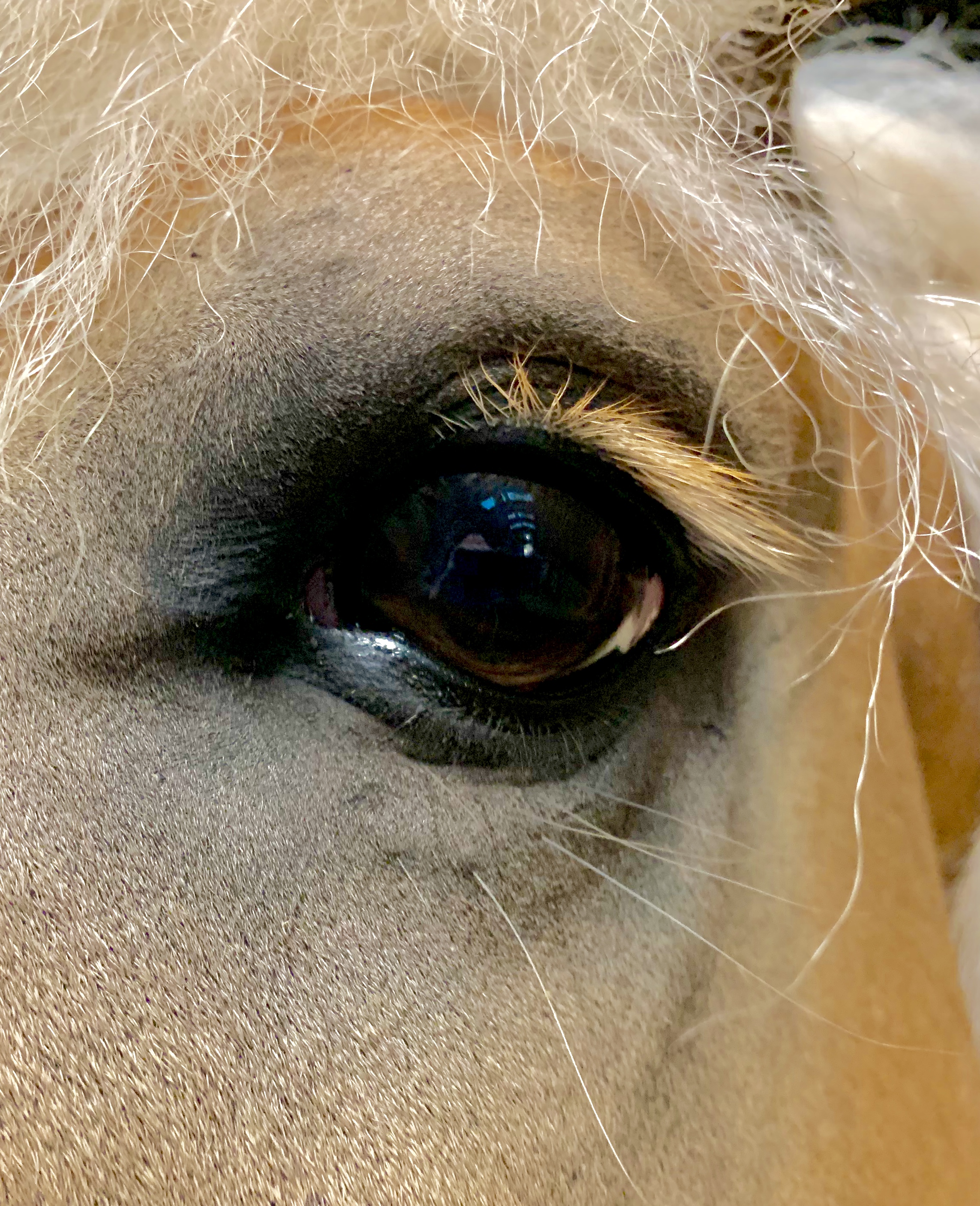
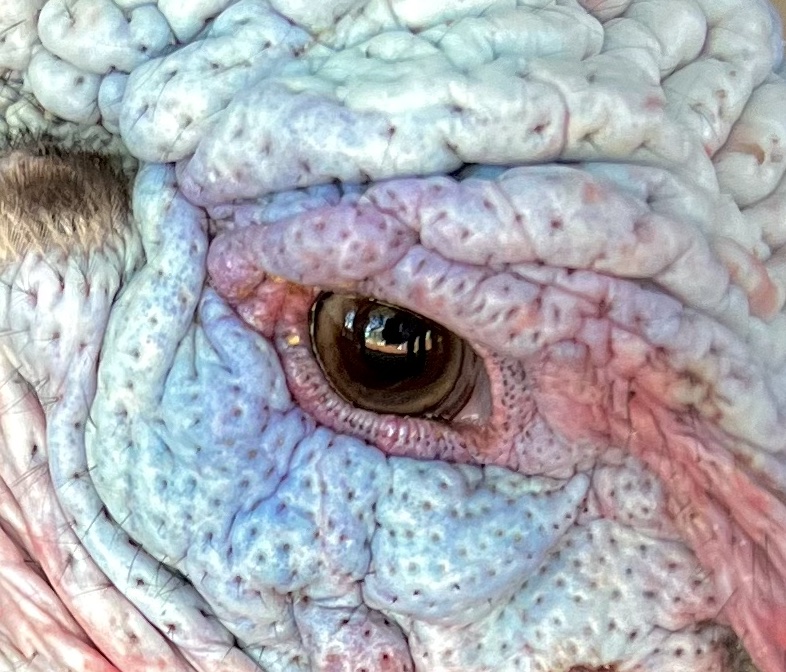
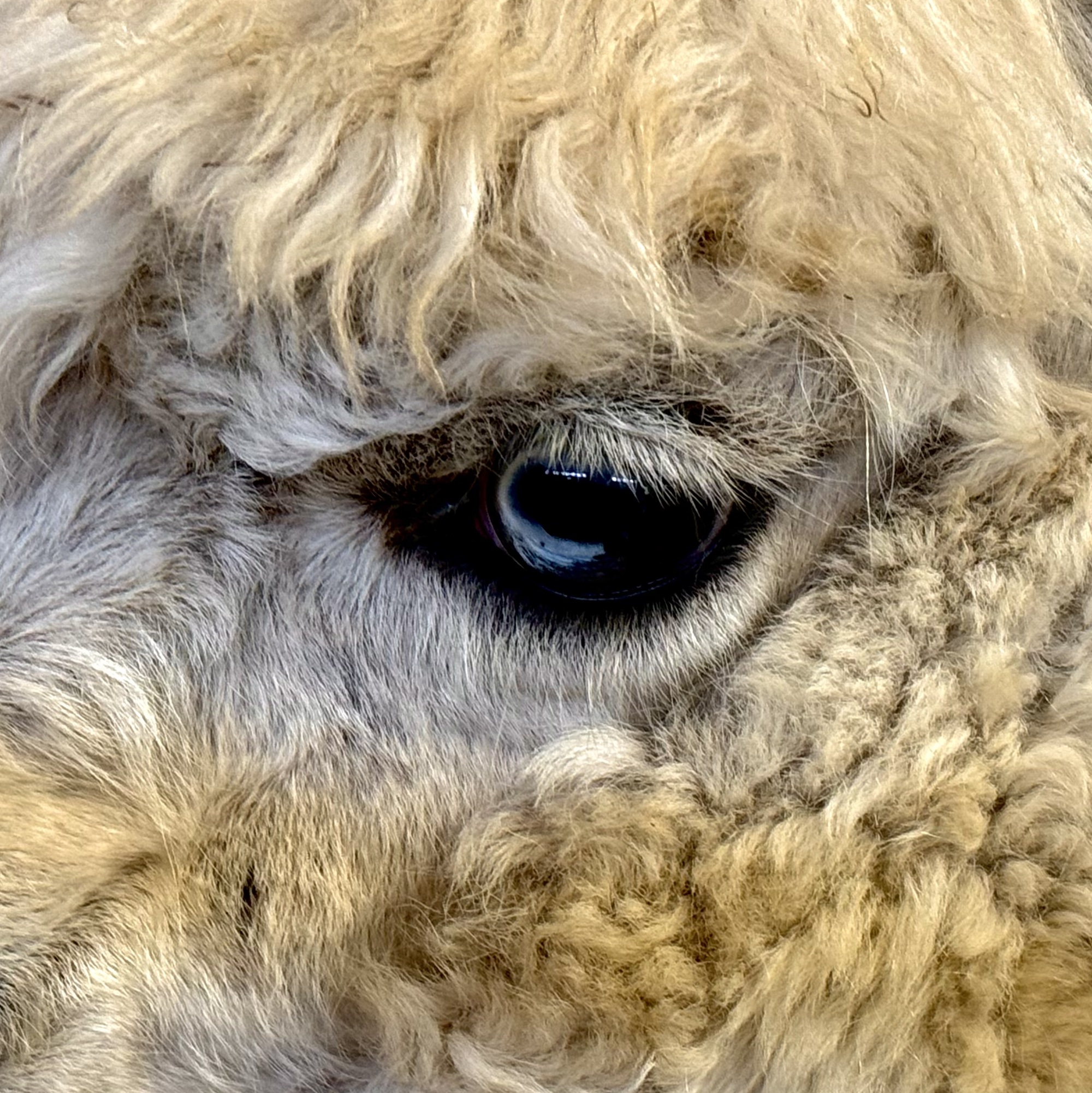
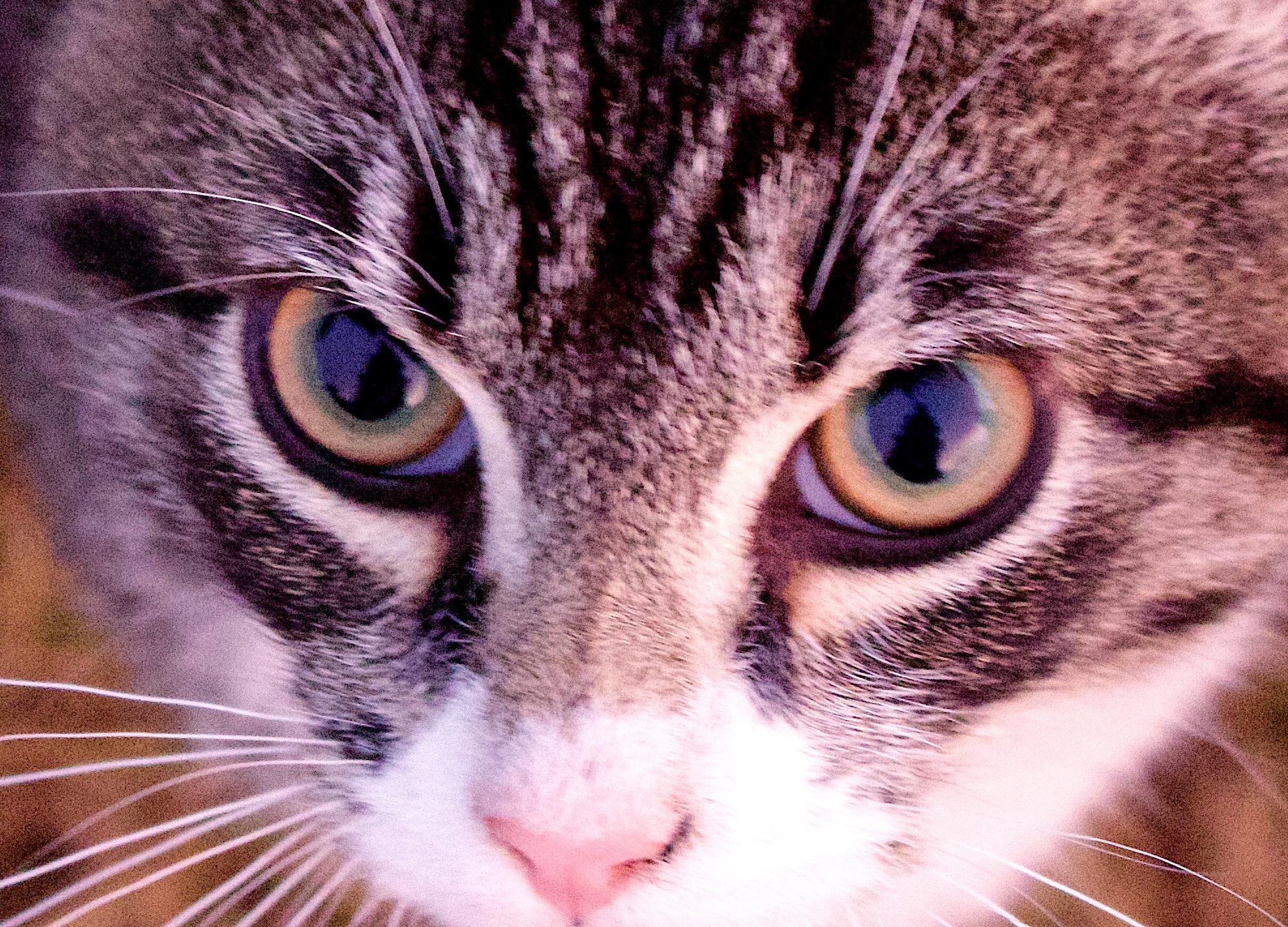
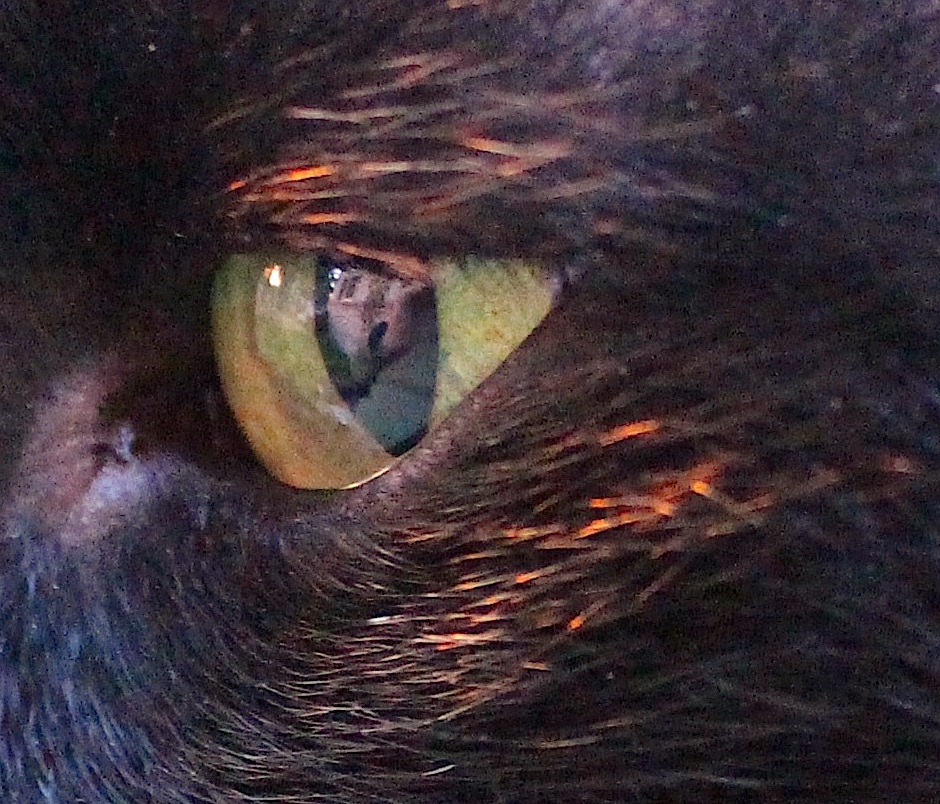
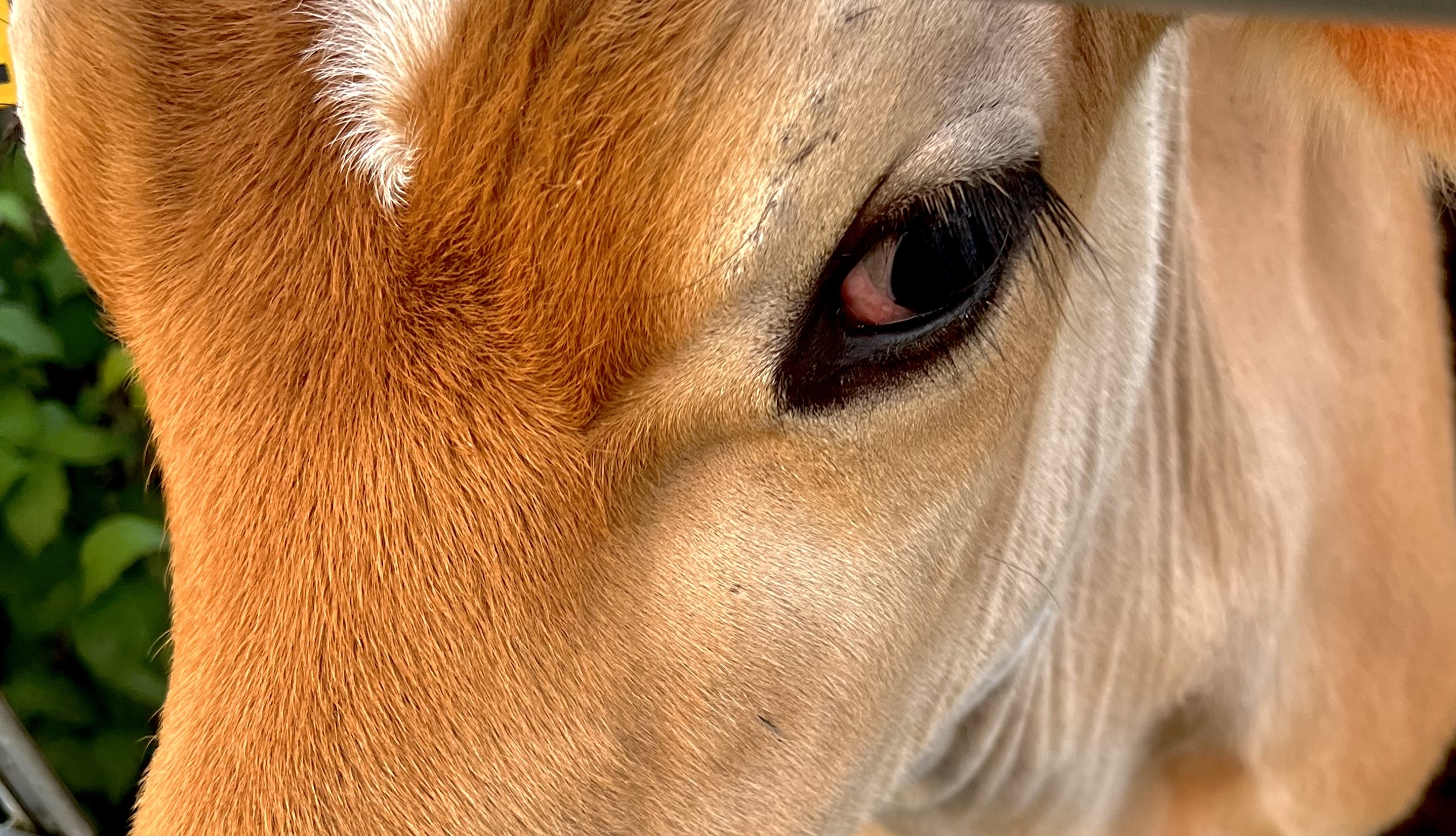
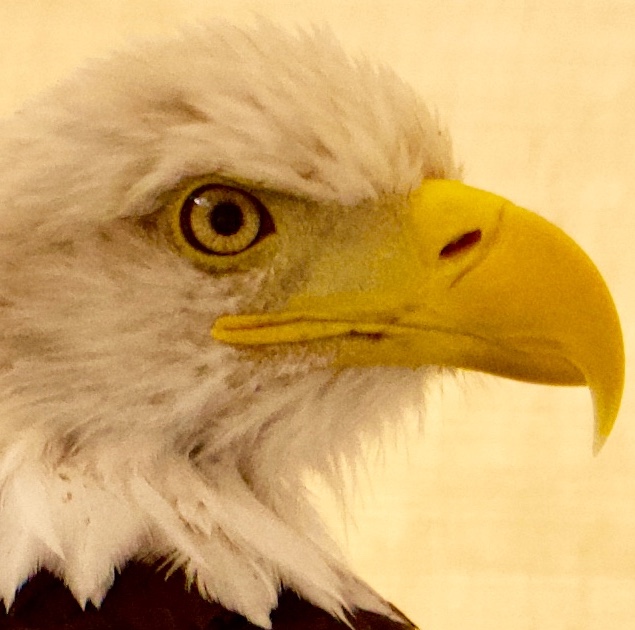
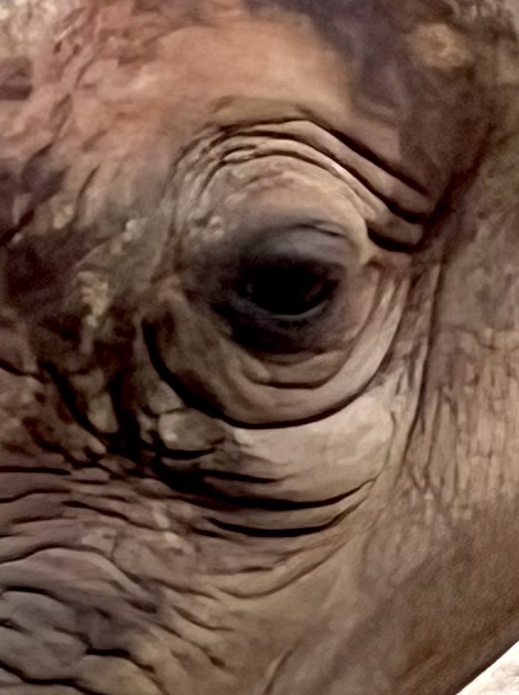
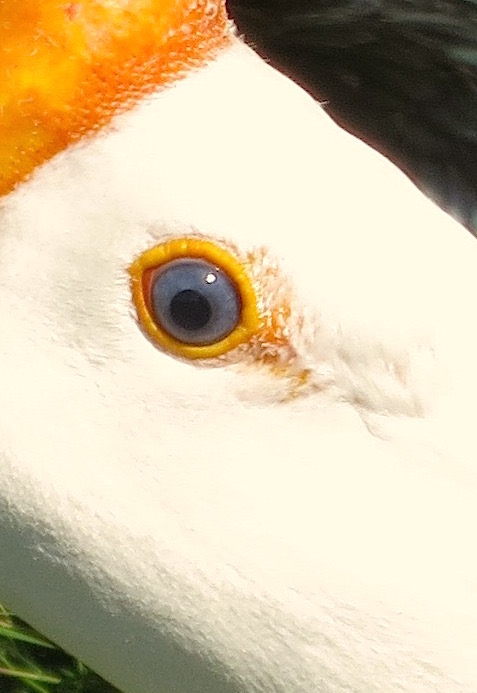
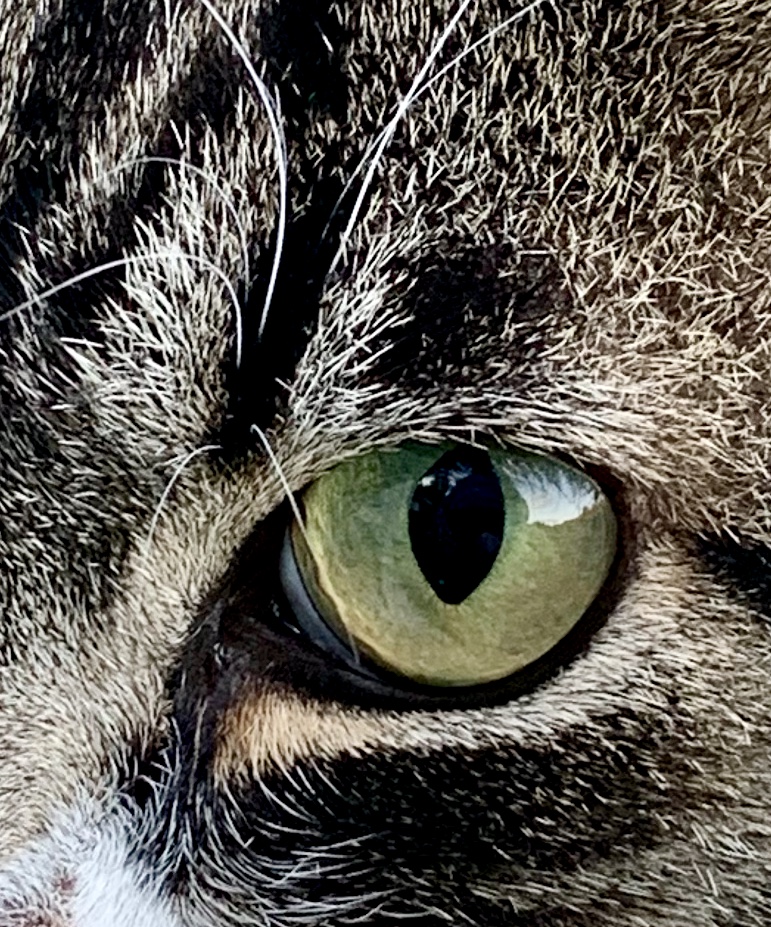
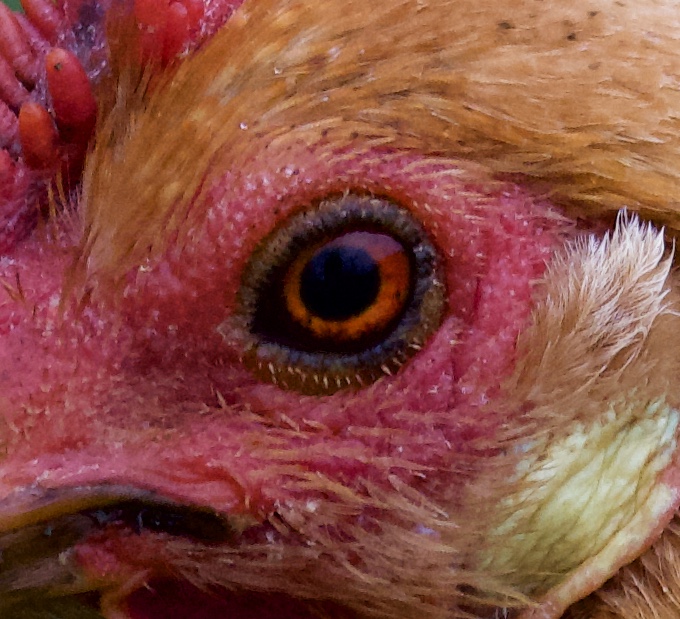
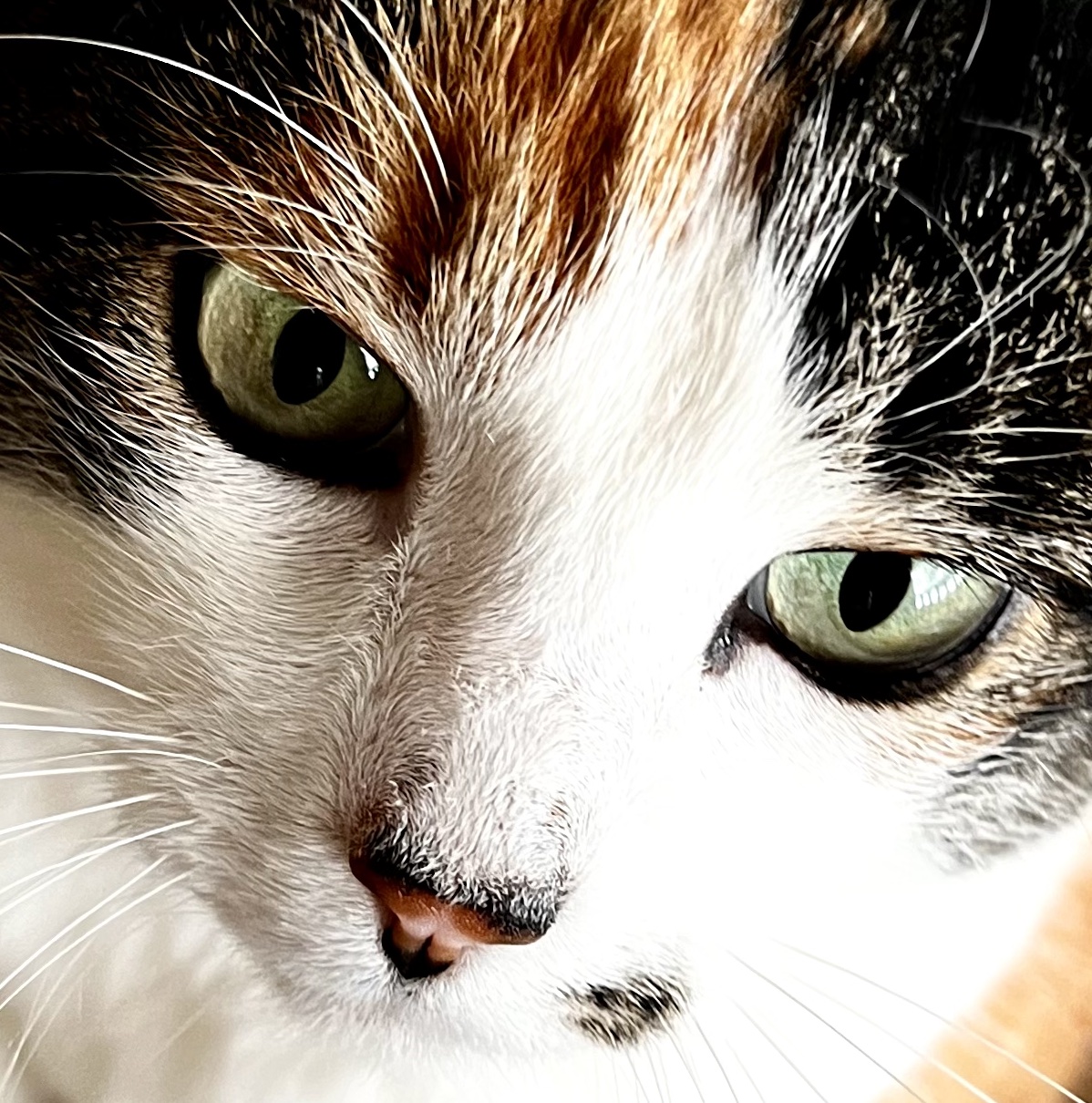
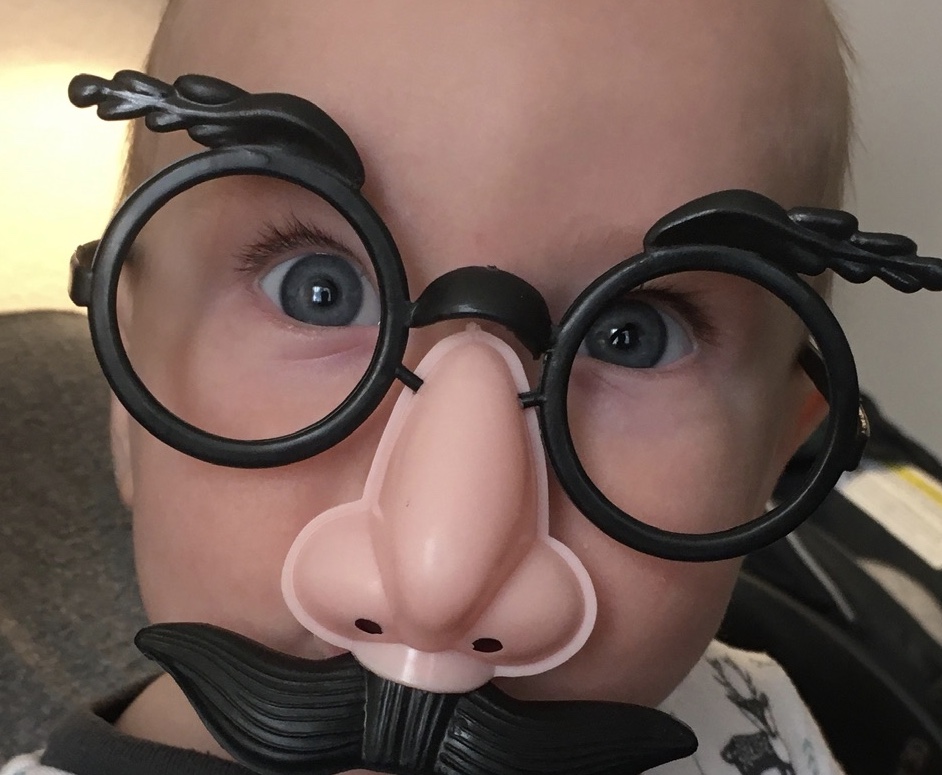
The pupil and iris are a portal to our thoughts, our dreams, our passions and our fears. They are simultaneously window and mirror, revealing feelings we try to keep to ourselves.
Locking eyes can be one of the most thrilling, stomach-butterflies, ecstatic moments of connection. It can be tender, loving, reassuring and encouraging.
Or it can be intimidating and terrifying. I tend to avoid eye contact when passing a stranger on a dark street, or when engaged in a very stressful public interaction. I don’t want to reveal my insecurity, vulnerability, or worry through direct eye contact. While studying primates in Africa, I learned never to look a baboon in the eye as it can communicate aggression and instigate an attack.
So instead, I learned to look at my feet.
I’d much rather lock eyes and learn everything I can about you. I want to dive deep into who you are, breaking down the walls and dismantle the barriers that keep us apart from one another. Then I’m letting you in too. The black holes of our inner universe.
After all, this is preparation when we see the face of God and allow Him to lock into our eyes, knowing our truth.
No keys needed forevermore.
AI image created for this post
One-Time
Monthly
Yearly
Make a one-time or recurring donation to support daily Barnstorming posts






































 Barnstorming