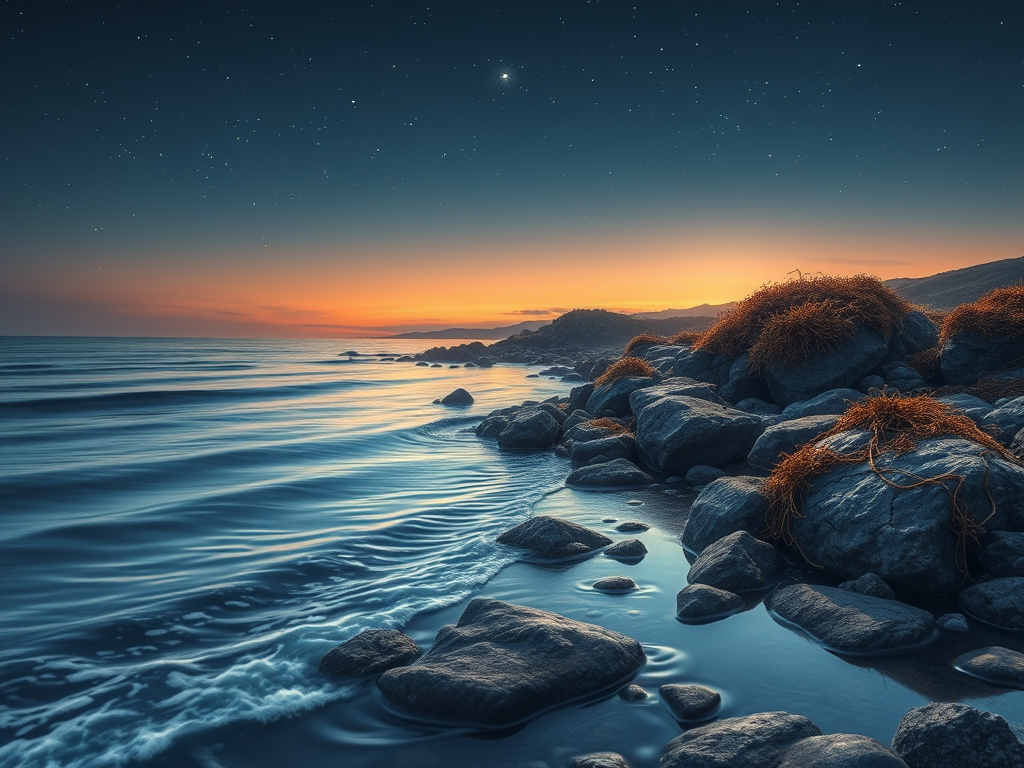
The cold remote islands And the blue estuaries Where what breathes, breathes The restless wind of the inlets, And what drinks, drinks The incoming tide;
Where shell and weed Wait upon the salt wash of the sea, And the clear nights of stars Swing their lights westward To set behind the land;
Where the pulse clinging to the rocks Renews itself forever; Where, again on cloudless nights, The water reflects The firmament’s partial setting;
—O remember In your narrowing dark hours That more things move Than blood in the heart. Louise Bogan “Night” from The Blue Estuaries
I know what my heart is like Since your love died: It is like a hollow ledge Holding a little pool Left there by the tide, A little tepid pool, Drying inward from the edge. ~Edna St. Vincent Millay “Ebb”
My mother was 58 when my father left her for a younger woman.
For months, she withered, her heart broken, her pulse erratic, crying until there were no more tears left.
She began drying inward from her edges despite the ebbing and flowing of her heartbeat.
It took ten years, but he came back like an overdue high tide.
She was sure her love had died but that tepid pool refilled with water cool to the touch, yet overflowing.
AI image created for this post
One-Time
Monthly
Yearly
Make a one-time or recurring donation to support daily Barnstorming posts
Evening, and all the birds In a chorus of shimmering sound Are easing their hearts of joy For miles around.
The air is blue and sweet, The few first stars are white,– Oh let me like the birds Sing before night. ~Sara Teasdale “Dusk in June”
I am half agony, half hope… ~Jane Austen from Persuasion
Sure on this shining night Of star made shadows round, Kindness must watch for me This side the ground. The late year lies down the north. All is healed, all is health. High summer holds the earth. Hearts all whole. Sure on this shining night I weep for wonder wand’ring far alone Of shadows on the stars. ~James Agee “Sure on this Shining Night”
This time of uncertainty holds the earth captive; our hearts fearful of war in a shimmering summer dusk.
I weep for wonder in hope for a healing peace, at this time, at this place, singing under these stars.
May we rest assured, on another shining night, sometime, we know not when, we know not how, we will lay down arms and live without threat of war.
Amen and Amen.
One-Time
Monthly
Yearly
Make a one-time or recurring donation to support daily Barnstorming posts
…And when the sun rises we are afraid it might not remain when the sun sets we are afraid it might not rise in the morning when our stomachs are full we are afraid of indigestion when our stomachs are empty we are afraid we may never eat again when we are loved we are afraid love will vanish when we are alone we are afraid love will never return and when we speak we are afraid our words will not be heard nor welcomed but when we are silent we are still afraid
So it is better to speak remembering we were never meant to survive. ~Audre Lorde from “A Litany for Survival”
We are all here so briefly, just trying to survive.
Although designed to live forever, we are fallen, running the clock out as long as we can.
Just one day more, we say. Give us just one more.
From the first, there has been struggle – the pain of our birth, the cry of our laboring mother, then feeding and protection of our children, keeping them safe from the bombs of war and the ravages of disease, followed by weakening of our frail aging bodies.
If there is a reason for all this (and there is): life’s struggles redeem us.
Heaven knows, each life means something to God, each death echoes His sorrow.
We fear we fail to make a difference in such a short time. So we speak. Hear our voices. Just one day more, Lord. Please – one day more.
Tomorrow we’ll discover What our God in Heaven has in store One more dawn One more day One day more… ~from Les Miserable
AI image created for this post
One-Time
Monthly
Yearly
Make a one-time or recurring donation to support daily Barnstorming posts
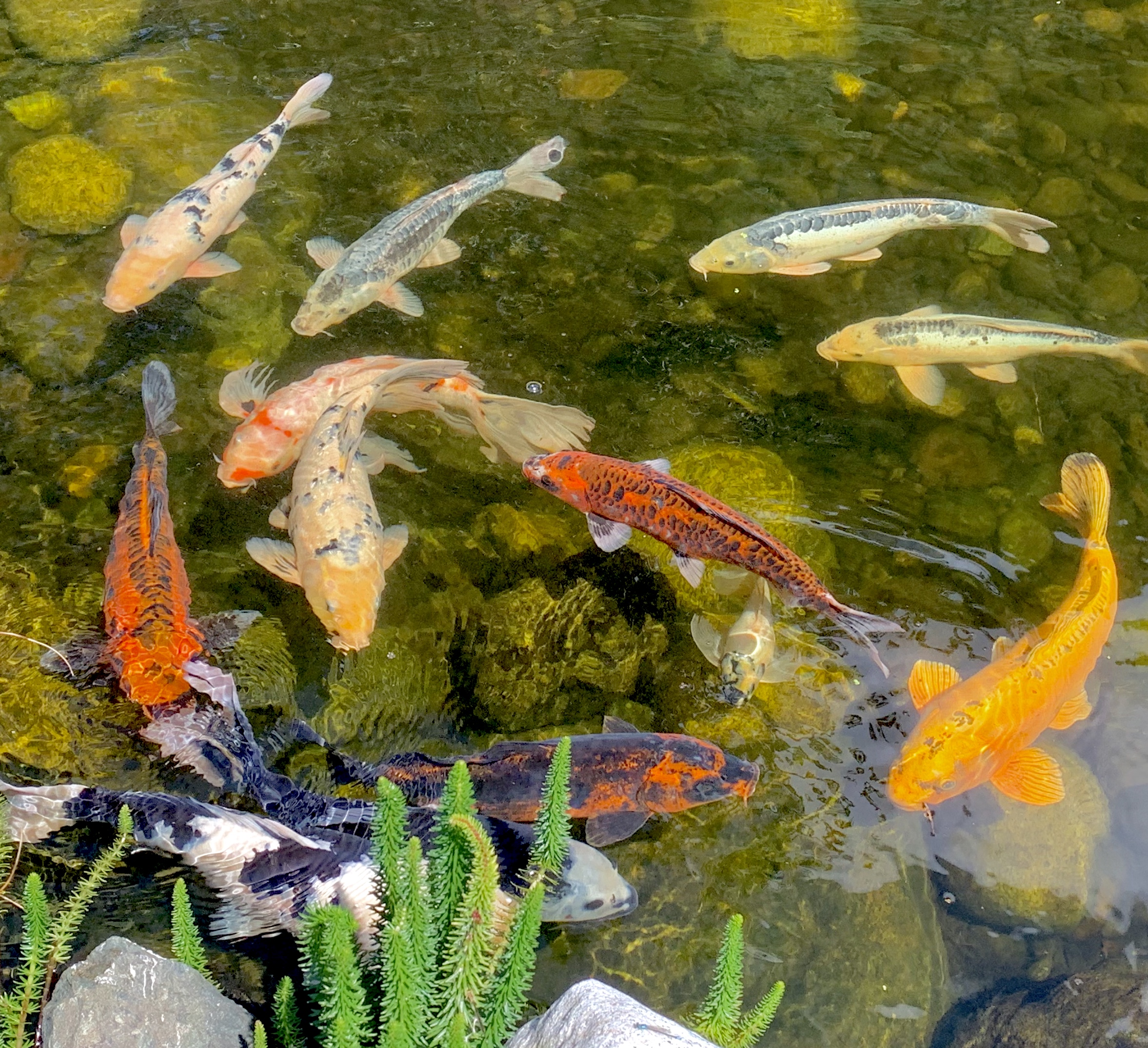
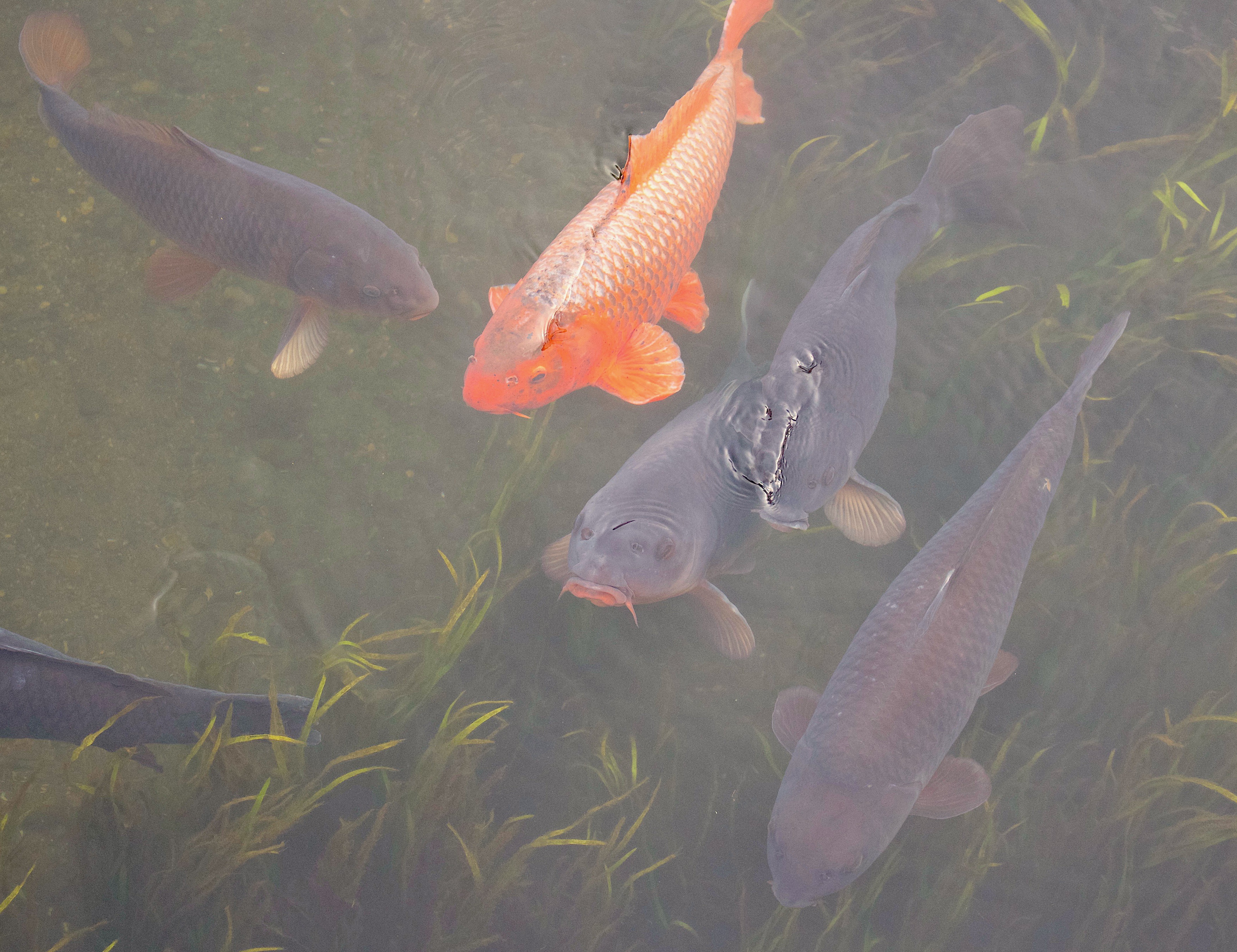
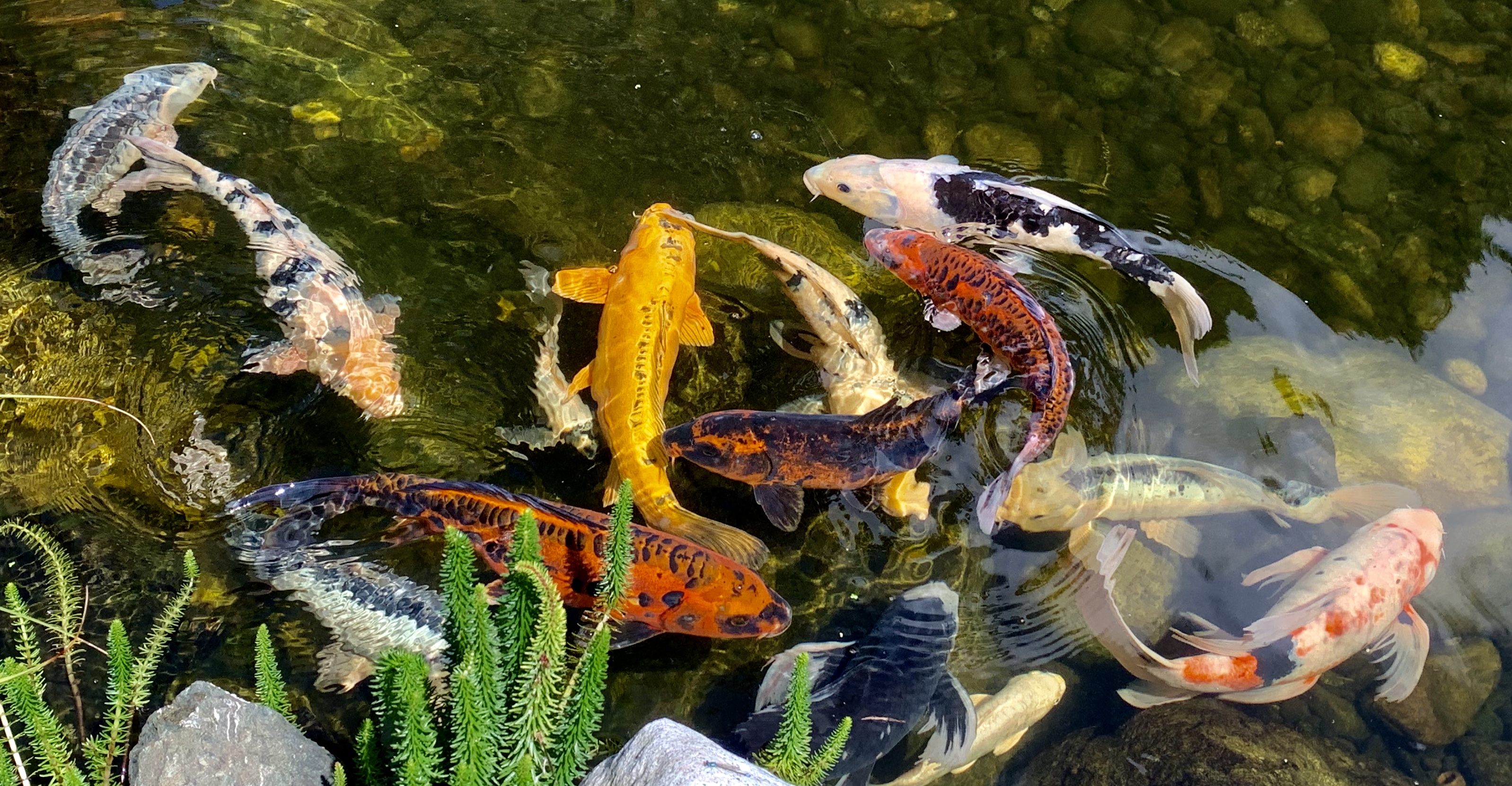
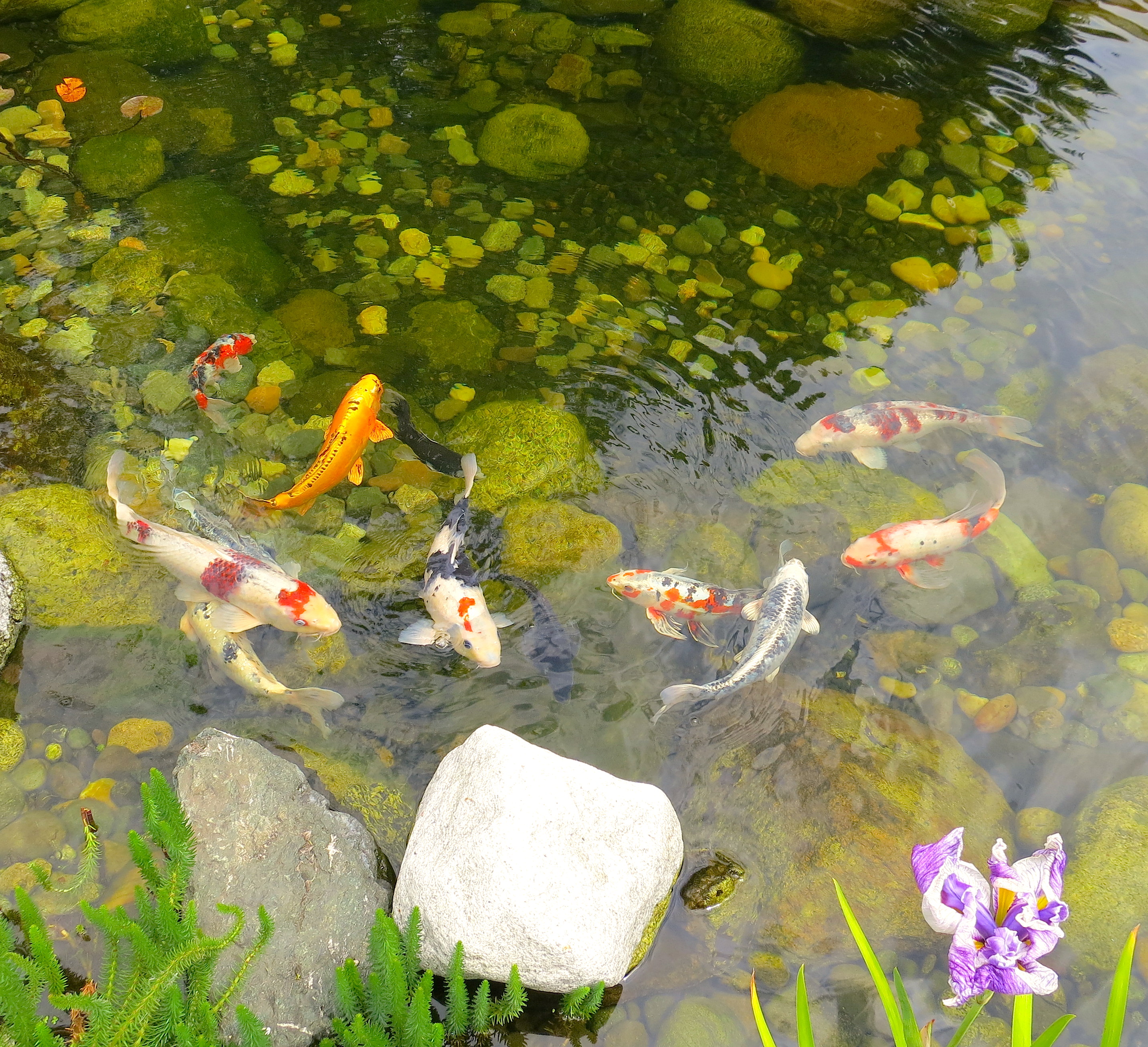
Our shadows bring them from the shadows: a yolk-yellow one with a navy pattern like a Japanese woodblock print of fish scales. A fat 18-karat one splashed with gaudy purple and a patch of gray. One with a gold head, a body skim-milk-white, trailing ventral fins like half-folded fans of lace. A poppy-red, faintly disheveled one, and one, compact, all indigo in faint green water. They wear comical whiskers and gather beneath us as we lean on the cement railing in indecisive late-December light, and because we do not feed them, they pass, then they loop and circle back. Loop and circle. Loop. “Look,” you say, “beneath them.” Beneath them, like a subplot or a motive, is a school of uniformly dark ones, smaller, unadorned, perhaps another species, living in the shadow of the gold, purple, yellow, indigo, and white, seeking the mired roots and dusky grasses, unliveried, the quieter beneath the quiet. ~Susan Kolodny “Koi Pond, Oakland Museum”
The boardwalk, a treachery of feathers ready to receive another broken bone, looms just above the surface. Step deliberately when approaching. With few exceptions, ice has claimed this part of the pond.
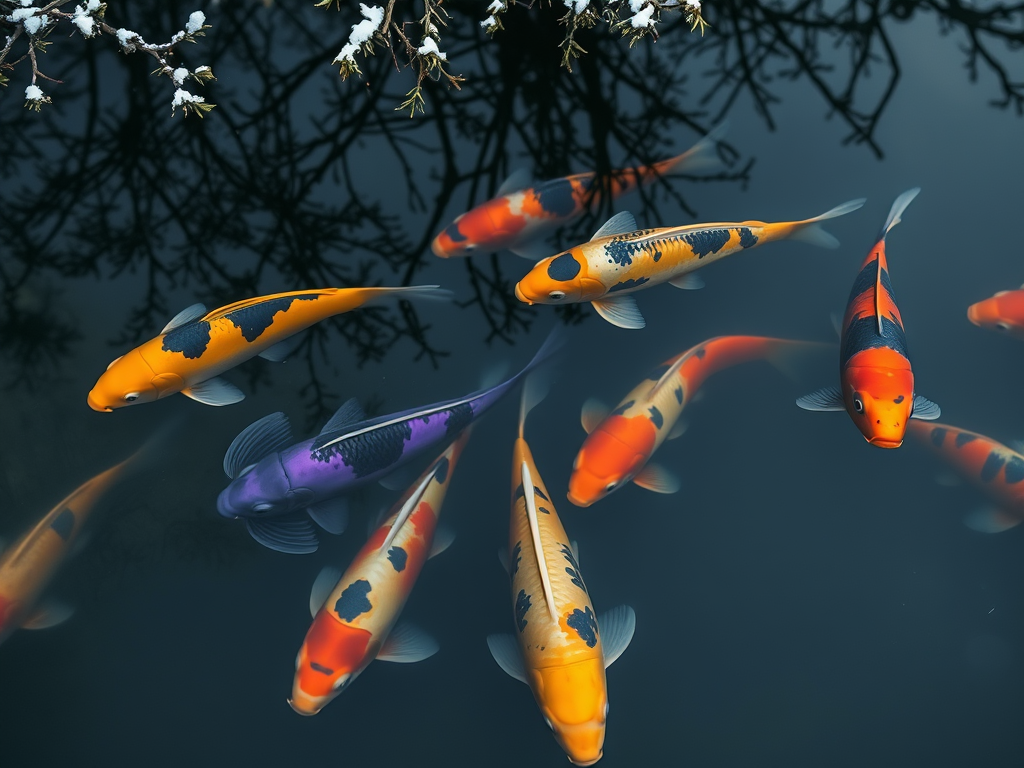
This is where you see her, moving through what free water remains: a sluggish ghost in the shadows, slow, conserving the fragile heat she still has in this late winter. A canopy of juniper dressed with light snow overhangs, watching.
Last year, a quorum of her kind was lost, turned to stone, to frigid silence. She doesn’t know that story, but some instinct guides her to keep what warmth she can, to cruise in stubborn torpor.
In her drift, she remembers the summer, her long, languid vowels, the accompanying texts of her companions. How they interwove manuscripts, narrations of sky, tree, sun, and moon. Warm days are a memory now, and thoughts rest lightly in her body.
She has held the same posture for an hour. Her bones have reached a conclusion— an idea about hope itself— there, near the indifferent bridge, inches from the force that will take her ~Carolyn Adams, “Koi Pond” from Going Out to Gather
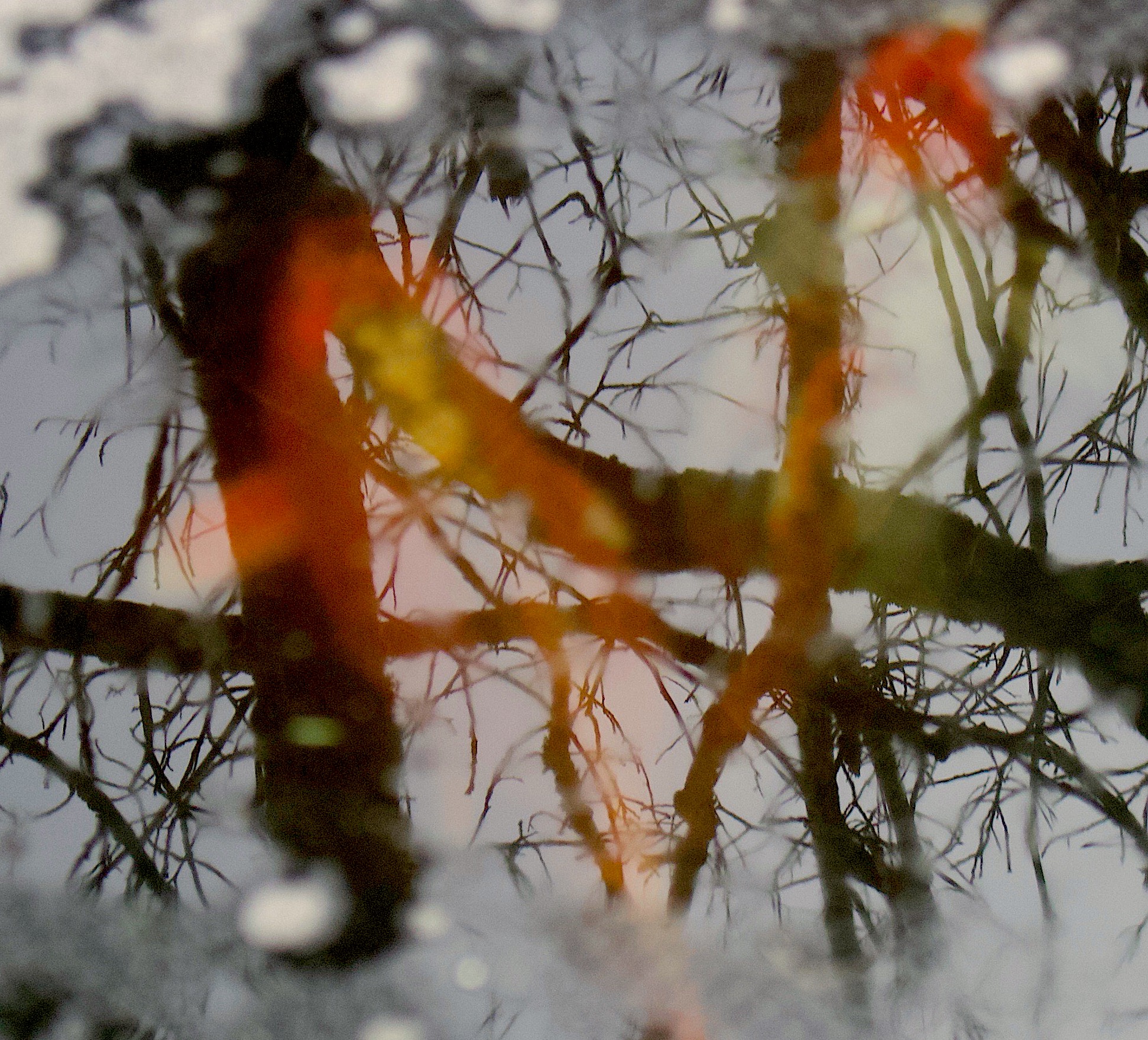
The water going dark only makes the orange seem brighter, as you race, and kiss, and spar for food, pretending not to notice me. For this gift of your indifference, I am grateful. I will sit until the pond goes black, the last orange spark extinguished. ~Robert Peake from “Koi Pond”
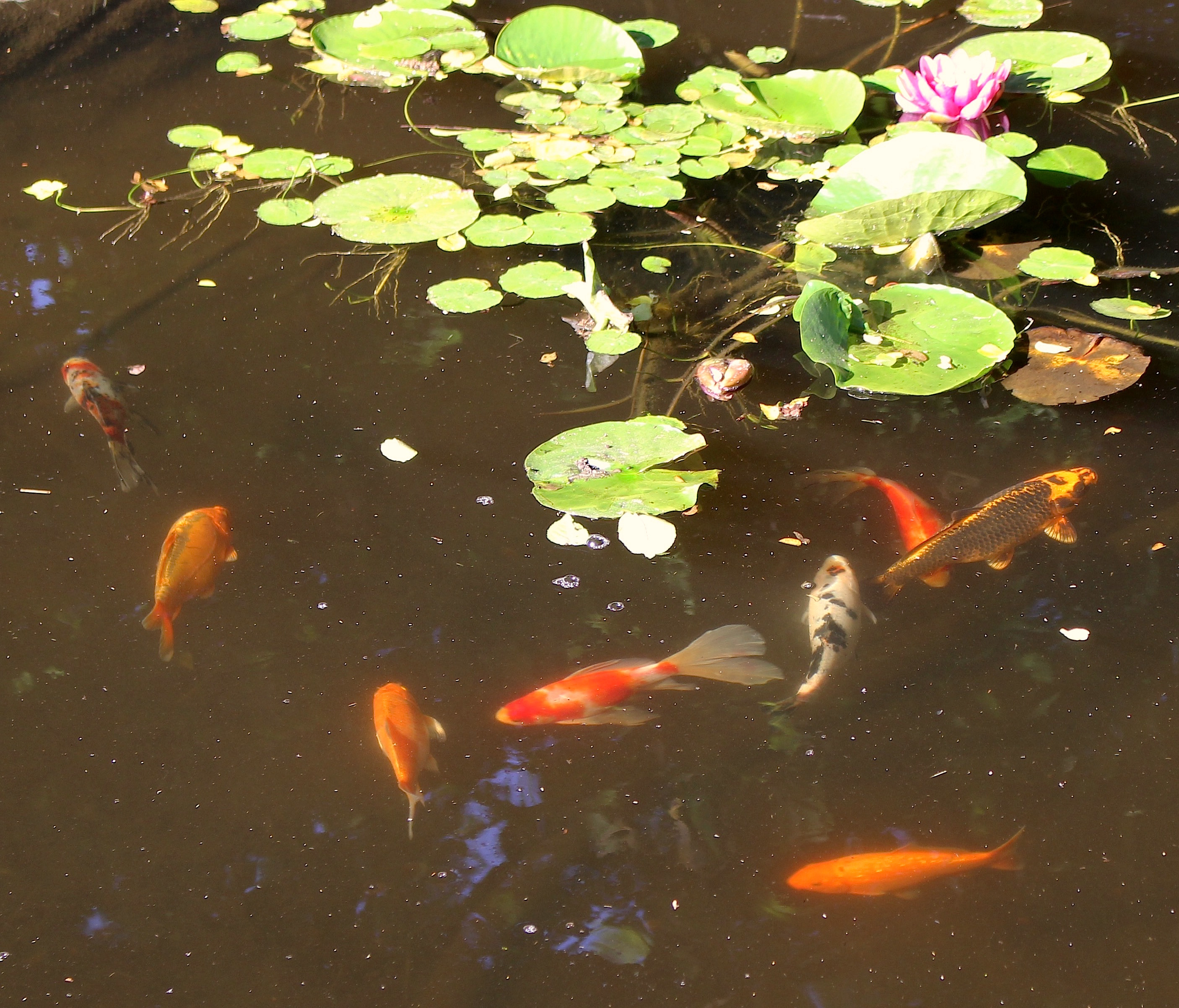
Koi and goldfish thrived in our pond after we covered it with netting, finally thwarting the herons arriving at dawn for breakfast.
Thus protected, our fish grew huge, celebrating each feeding with a flurry of tail flips and gaping mouths as I tossed pellets to them each evening.
When the pond cooled in the fall and sometimes ice-covered in winter, the fish settled at the bottom, barely moving silhouettes of color in the darkness. Spring would warm them to action again. As the water temperature rose, so did they, eager and hungry to flash their color and fins again.
Two winters ago, the chill winds and low temperatures lasted longer than usual. As the pond ice began to melt, the fish at the bottom remained still as stones. Netting them for burial felt like burying the sun and the moon and the stars, relegating their rainbows of light and color deep into the earth.
No longer would their colorful glory shine, an illumination now extinguished.
I haven’t had the heart to try again. I need a pond heater, a new filter system, and a total clean out of the pond if I am going to restock.
But then I remember the joy of feeding those flashes of fins and fish mouths, so I just might try again.
Rainbows promise to return, even from buried stone.
AI image created for this post
Lyrics From the love of my own comfort From the fear of having nothing From a life of worldly passions Deliver me O God From the need to be understood From the need to be accepted From the fear of being lonely Deliver me O God And I shall not want I shall not want When I taste Your goodness I shall not want From the fear of serving others From the fear of death or trial From the fear of humility Deliver me O God
One-Time
Monthly
Yearly
Make a one-time or recurring donation to support daily Barnstorming posts
For to come upon warblers in early May was to forget time and death.—Theodore Roethke
Every poem of death should start with my mother’s love for birds. Finches and waxwings her favorites, though she wasn’t one to quibble; an eagle dragging a carp across the sky would do.
There are worse things than being dead. You might be swallowed by the daily minutia of the great mundane, to be spit up years later wondering where your life has gone.
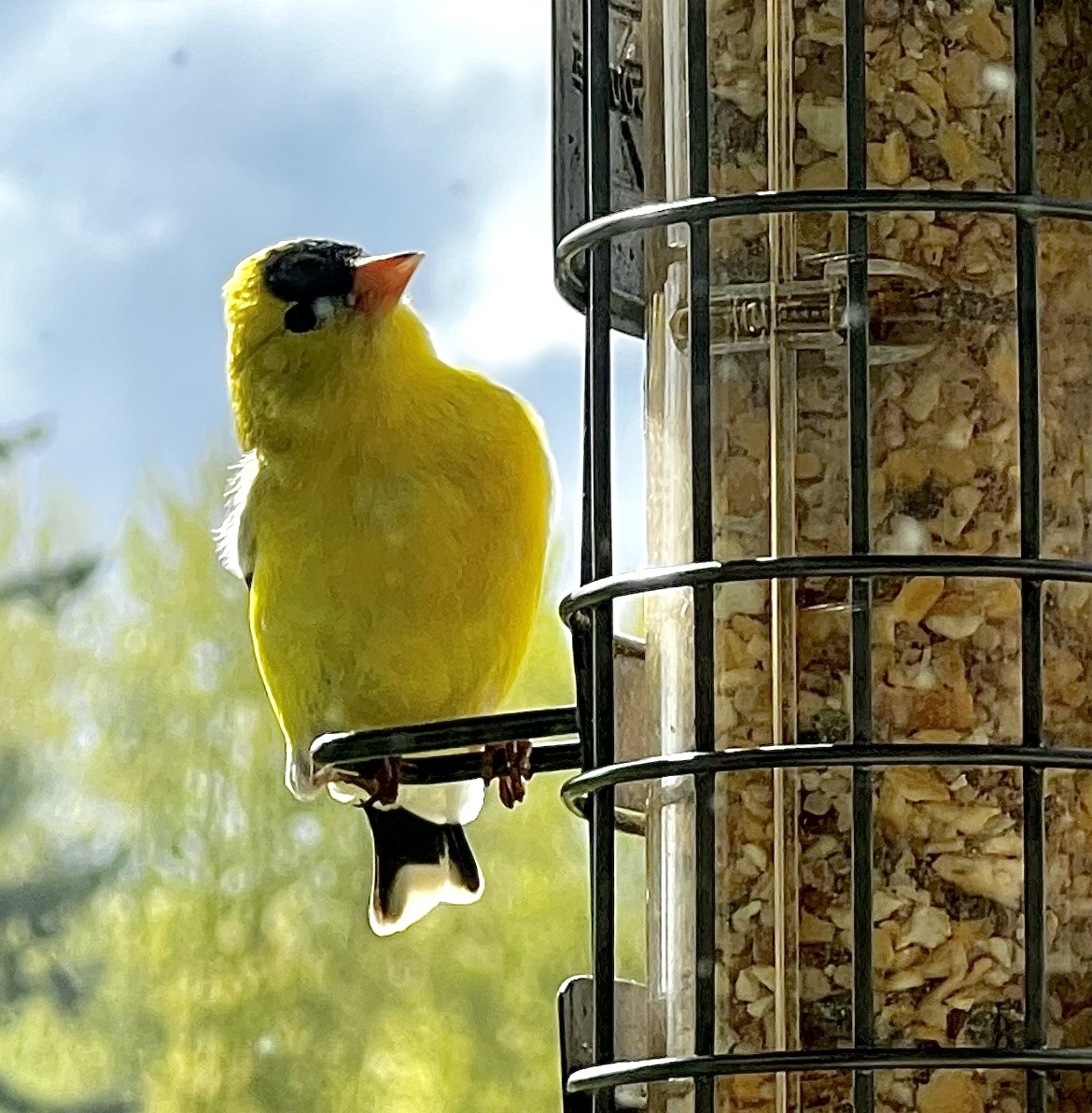
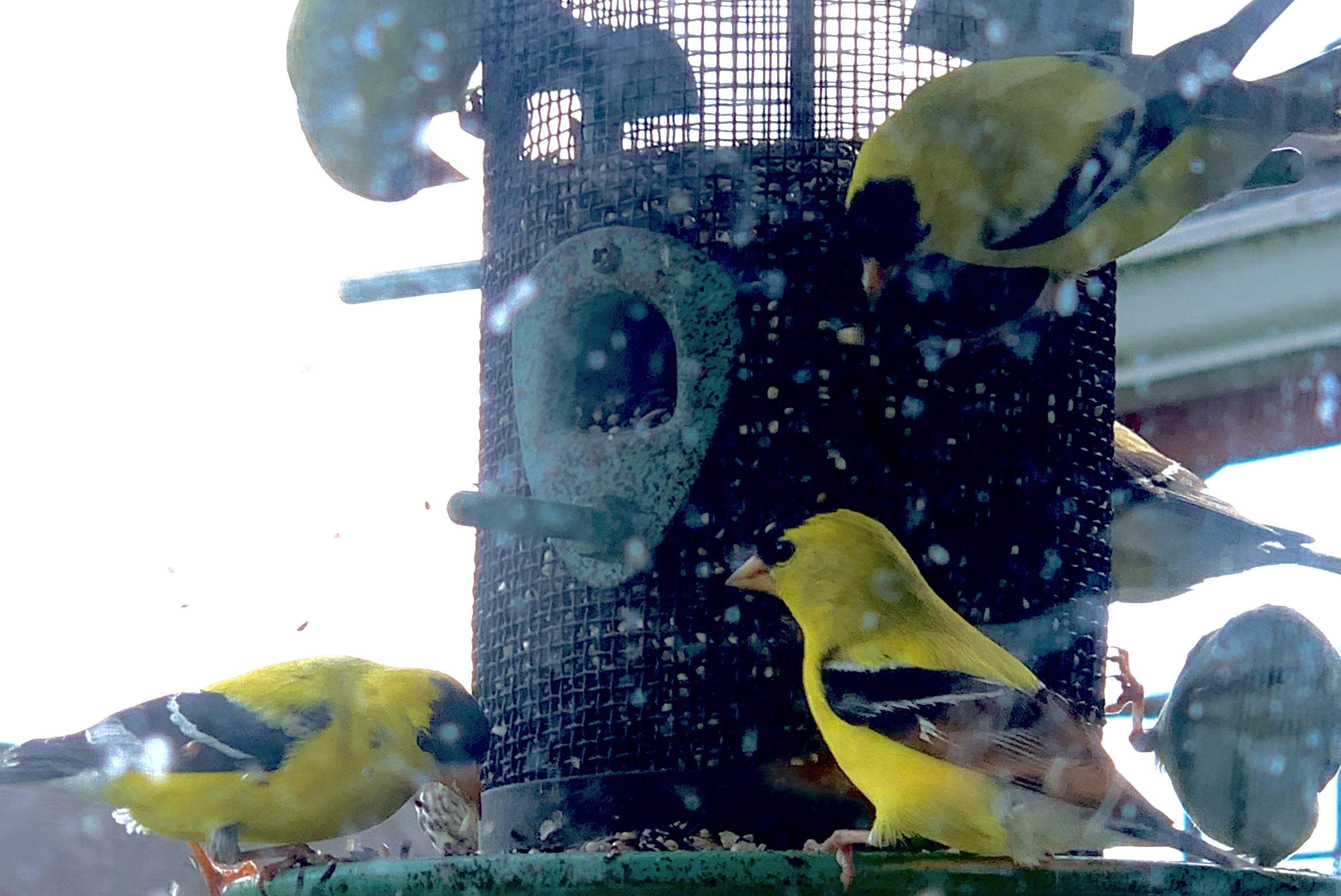
But loving something can save you: the way finches stack a feeder, meddle in each other’s business until a woodpecker crashes in, littering surrounding shrubs with wings.
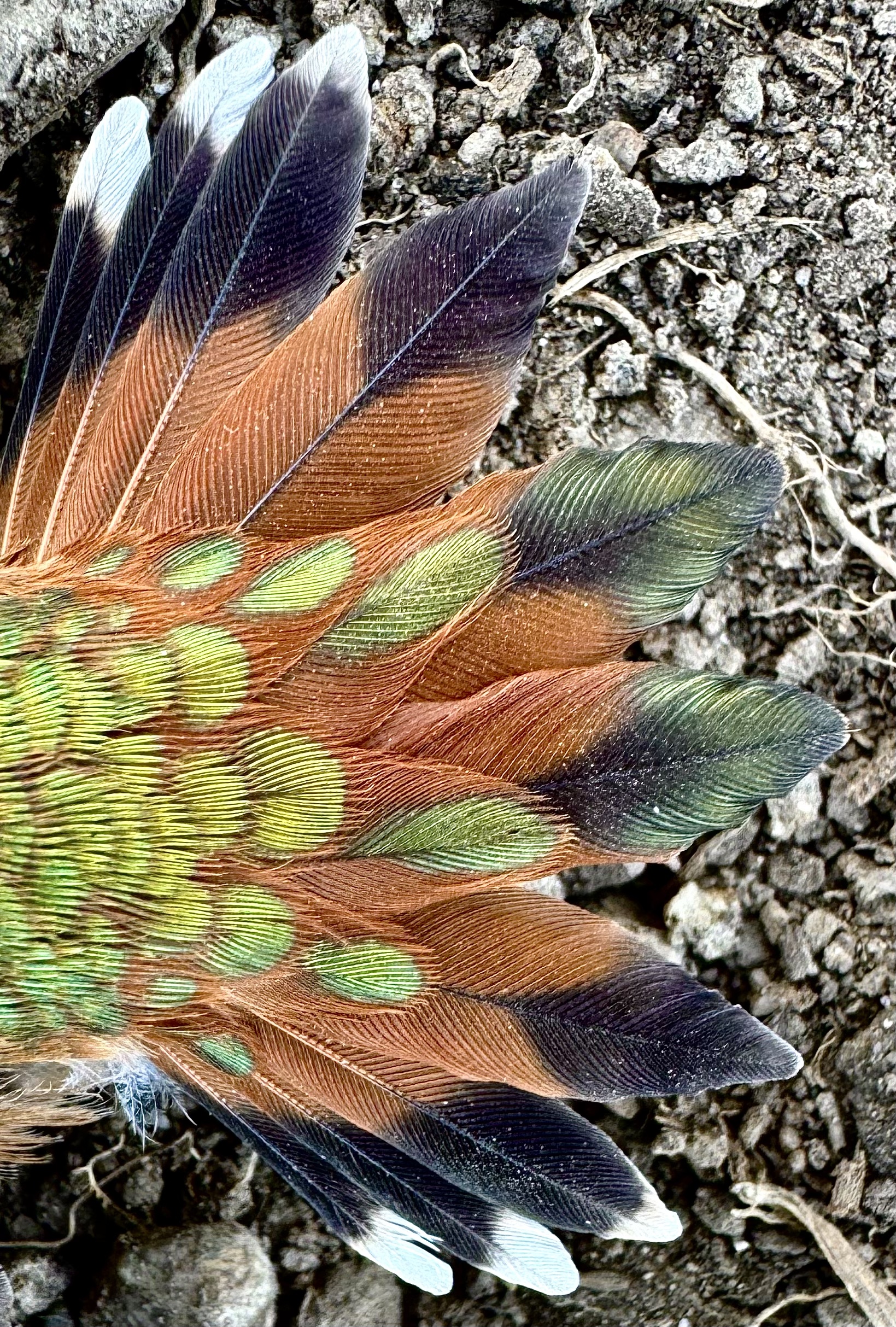
Last summer my wife found a hummingbird on Mount Pisgah. Its emerald wings trembled as its feet tried to grasp her fingers. A ranger said that their lives are so short anyway. What a curious reply, I thought, but later reconsidered. Perhaps any time being a hummingbird is enough. ~Bill Brown “With the Help of Birds”
That long-ago morning at Ruth’s farm when I hid in the wisteria and watched hummingbirds. I thought the ruby or gold that gleamed on their throats was the honeyed blood of flowers. They would stick their piercing beaks into a crown of petals until their heads disappeared. The blossoms blurred into wings, and the breathing I heard was the thin, moving stems of wisteria. That night, my face pressed against the window, I looked out into the dark where the moon drowned in the willows by the pond. My heart, bloodstone, turned. That long night, the farm, those jeweled birds, all these gone years. The horses standing quiet and huge in the moon-crossing blackness. ~Joseph Stroud “First Song”
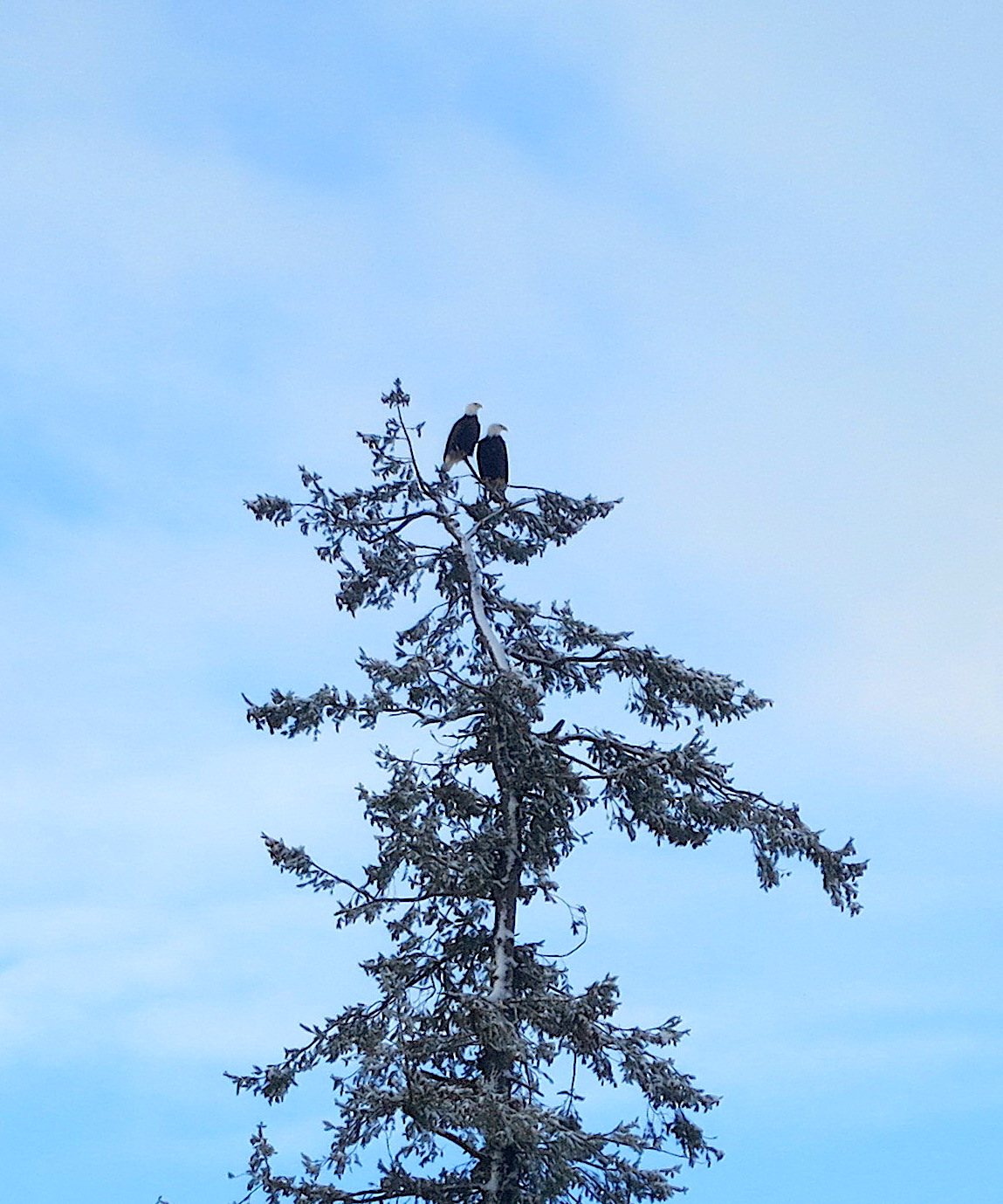
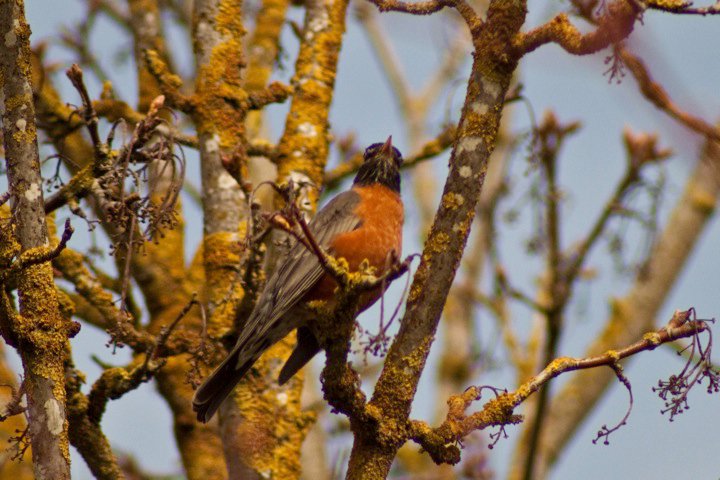
Birds are everywhere this time of year – I keep my phone handy with the Merlin App open from Cornell Lab, so I know who I’m hearing. From the robins and sparrows, to warblers and thrushes, along with the chittering bald eagles nesting by the pond across the road, it is quite a symphony to witness in the early morning and at sunset.
The app even tries to identify a woodpecker’s rapping and a hummingbird’s buzz.
There was a time not long ago when I was too busy with daily details to pay much attention to the awesome variety of creatures around me.
Once it hit me what I was missing, I started watching, listening and being part of all this life rather than wondering too late where life had gone.
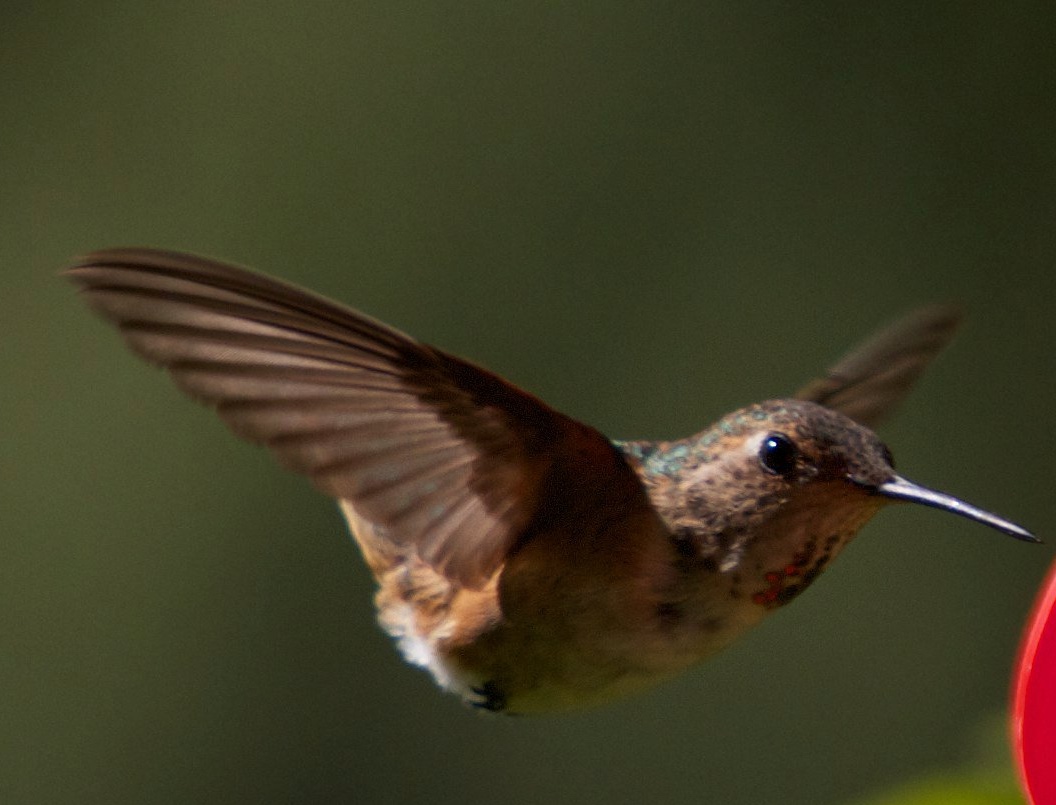
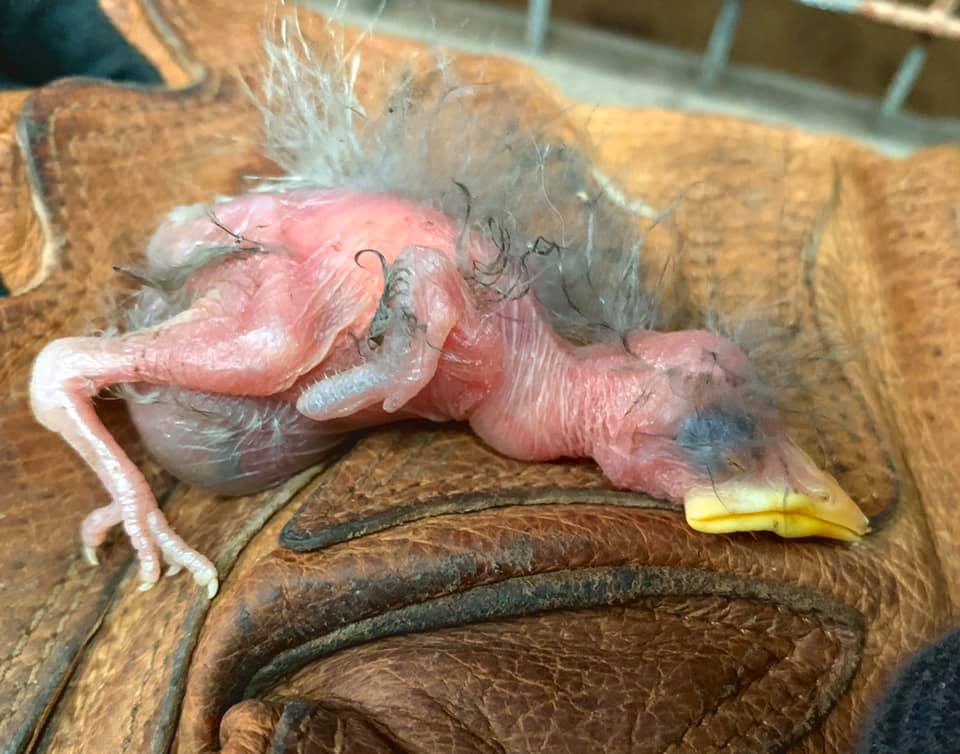
How sobering one day to find a hummingbird dead in the dirt, once a dear little bird of motor and constant motion, lying stilled and silenced as if simply dropped from the sky, a wee bit of fluff and stardust.
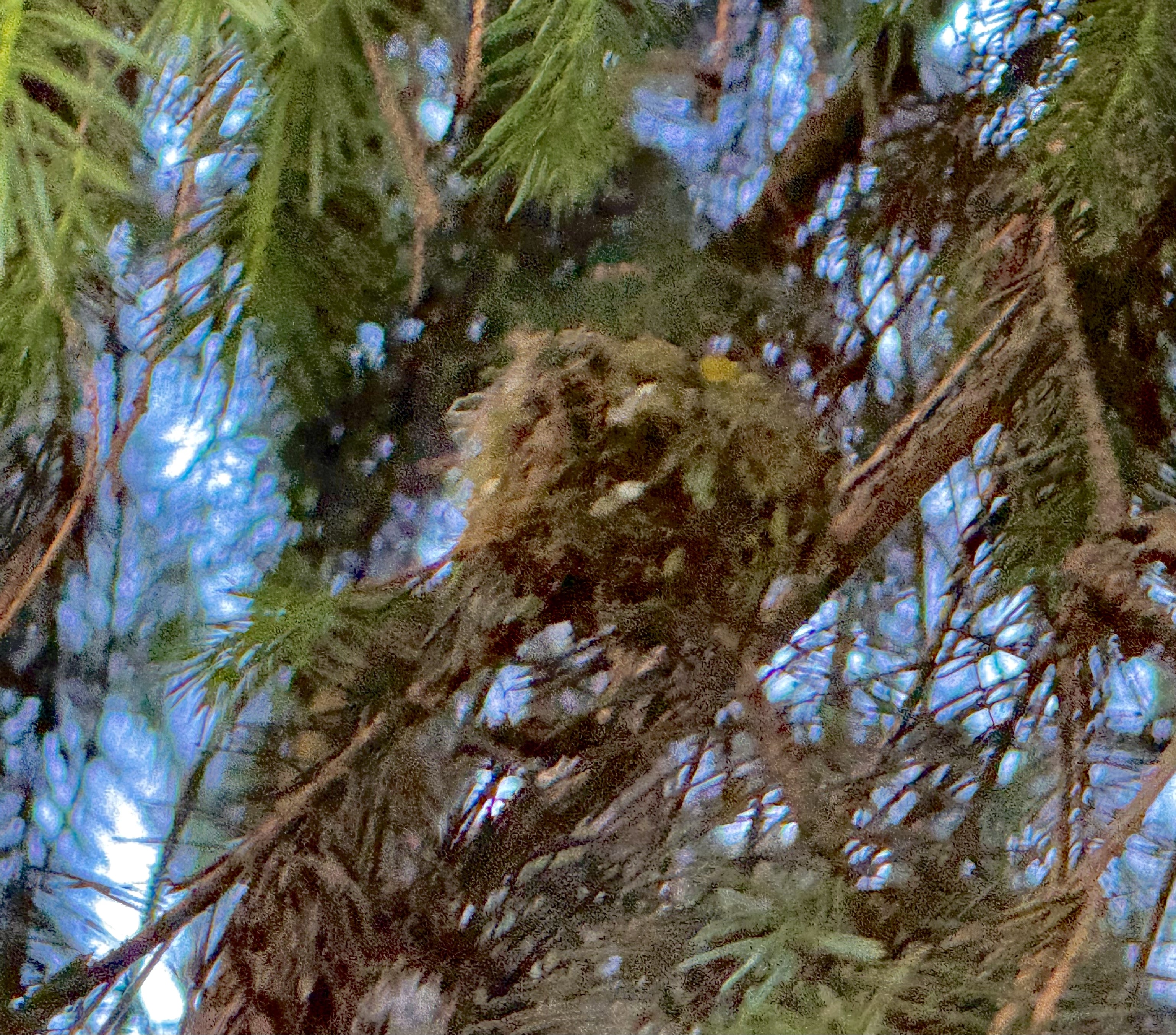
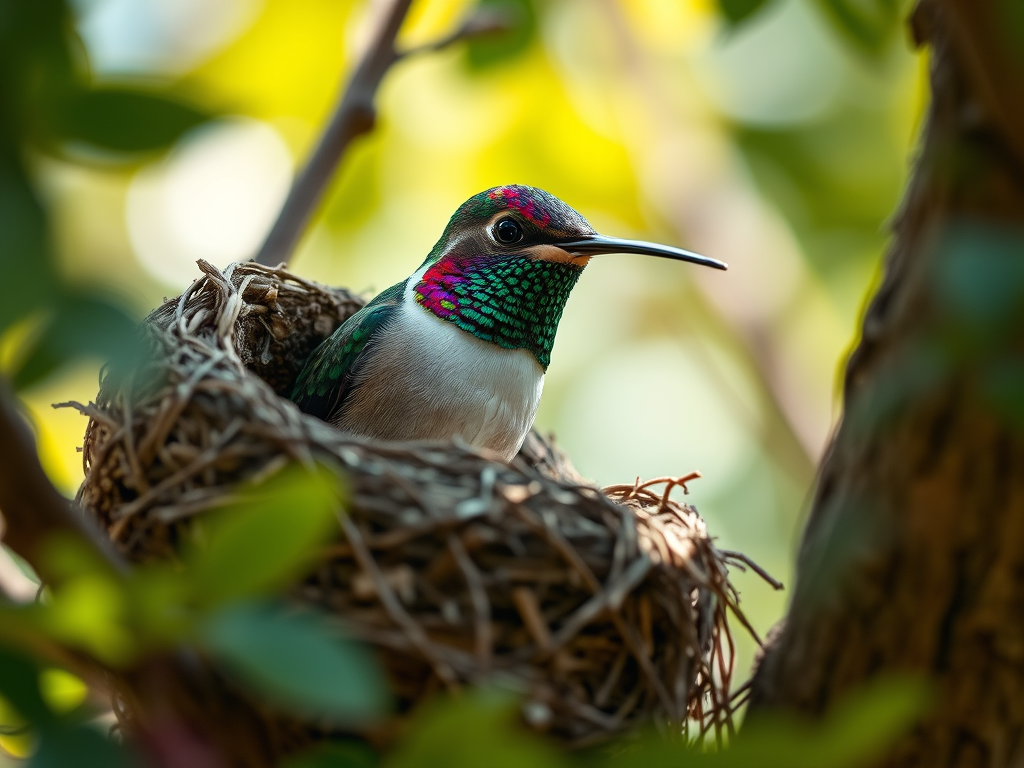
Then a friend pointed out a hummingbird nest high in a tree. And so it is the way of things…
We are here and gone. Beauty hatched, grown and flown, then grounded. …but not forgotten.
AI image created for this post
One-Time
Monthly
Yearly
Make a one-time or recurring donation to support daily Barnstorming posts
And the secret garden bloomed and bloomed and every morning revealed new miracles.
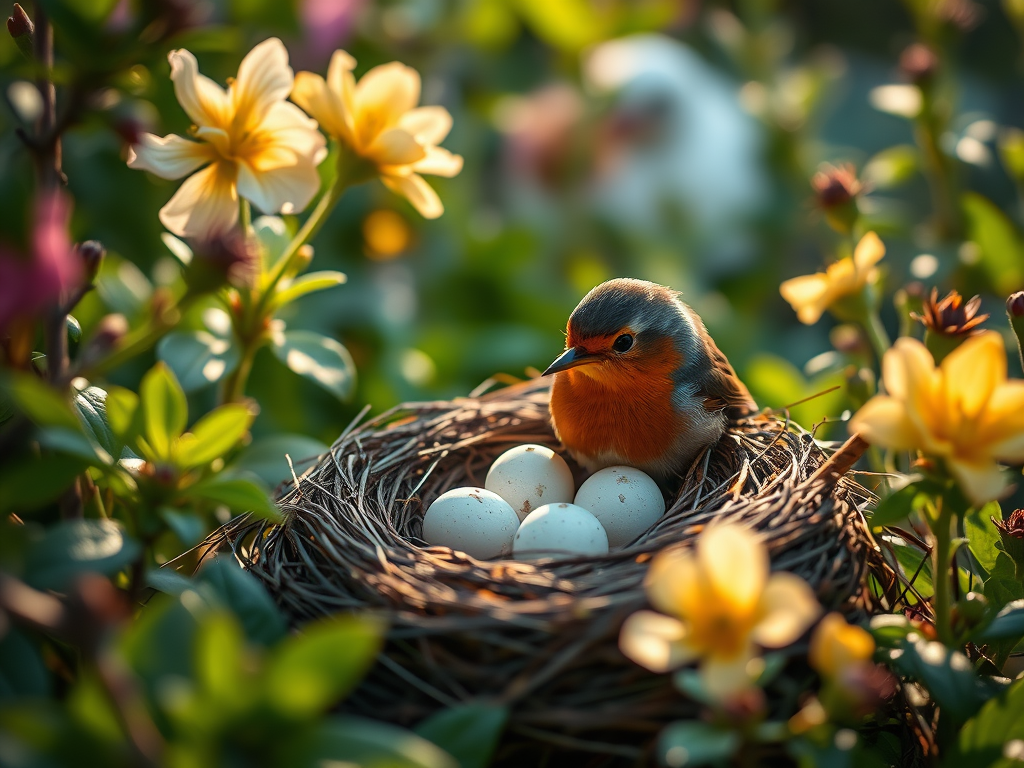
In the robin’s nest there were Eggs and the robin’s mate sat upon them keeping them warm with her feathery little breast and careful wings.
….in the garden there was nothing which was not quite like themselves, nothing which did not understand the wonderfulness of what was happening to them, the immense, tender, terrible, heart-breaking beauty and solemnity of Eggs.
If there had been one person in that garden who had not known through all his or her innermost being that if an Egg were taken away or hurt the whole world would whirl round and crash through space and come to an end—
if there had been even one who did not feel it and act accordingly there could have been no happiness even in that golden springtime air.
But they all knew it and felt it and the robin and his mate knew they knew it. ~Frances Hodgson Burnett from The Secret Garden
Some say you’re lucky If nothing shatters it.
But then you wouldn’t Understand poems or songs. You’d never know Beauty comes from loss.
It’s deep inside every person: A tear tinier Than a pearl or thorn.
We all start out in the secret garden of a fallopian tube as an egg pierced to become so much more… – each tiny part of the least of us – – whether brain, heart, lungs or liver – wonderfully made, even if discarded or fallen from the nest.
The act of creation of something so sacred is immense, tender, terrible, beautiful, heart-breaking, and so very solemn and joyful.
The act of harming one tiny part of creation hurts the whole world; we risk whirling round and crashing through space and coming to an end.
If there is even one who does not feel it and act accordingly, there can be no happiness.
But they all knew it and felt it and they knew they knew it.
And what is born broken is beloved nevertheless.
photo by Josh ScholtenAI image created for this post
One-Time
Monthly
Yearly
Make a one-time or recurring donation to support daily Barnstorming posts
The issue is now clear. It is between light and darkness and everyone must choose his side. ~G. K. Chesterton, on his death bed
God is going to invade, all right: but what is the good of saying you are on His side then, when you see the whole natural universe melting away like a dream and something else – something it never entered your head to conceive – comes crashing in; something so beautiful to some of us and so terrible to others that none of us will have any choice left?
For this time it will be God without disguise; something so overwhelming that it will strike either irresistible love or irresistible horror into every creature.
It will be too late then to choose your side.
There is no use saying you choose to lie down when it has become impossible to stand up. That will not be the time for choosing: it will be the time when we discover which side we really have chosen, whether we realized it before or not.
Now, today, this moment, is our chance to choose the right side. ~C.S. Lewis – from Mere Christianity
…our hands have always been able to heal as much as harm. …since the dawn of humanity, each of us contains three people— the angel, the demon, and the one who decides which we will obey. ~Billy Coffey
It shouldn’t take plunging into a profound darkness, swallowed in a pit of sadness and sorrow to experience God’s immense capacity for love and compassion, but that is when our need for light and forgiveness is greatest.
It should not take sin and suffering to remind us life is precious and worthy of our protection, no matter how tempted we are to choose otherwise.
We are created, from the beginning, in the beginning, with the capacity to choose sides between darkness and light.
We choose too often to remain cloaked in darkness.
Our God chooses to shine the light of His Creation, to conquer our darkness through illuminating grace, dispersing our shadows, suffering the deepest darkness on our behalf to guarantee we are eternally worthy of His loving protection.
How then will we choose when He so clearly chooses us?
One-Time
Monthly
Yearly
Make a one-time or recurring donation to support daily Barnstorming posts
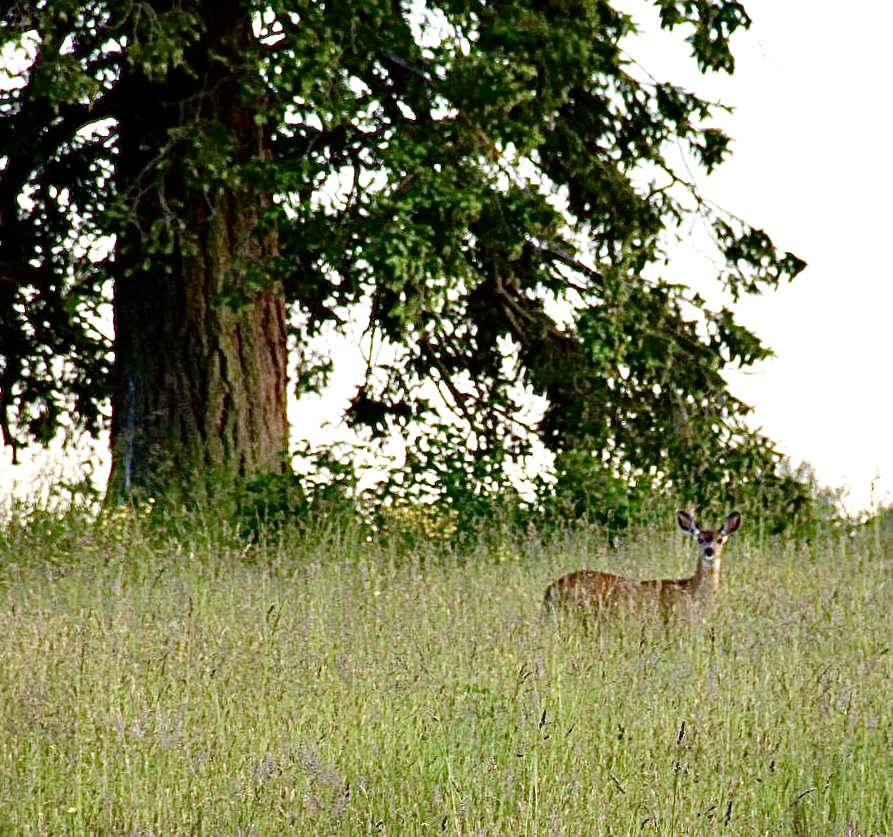
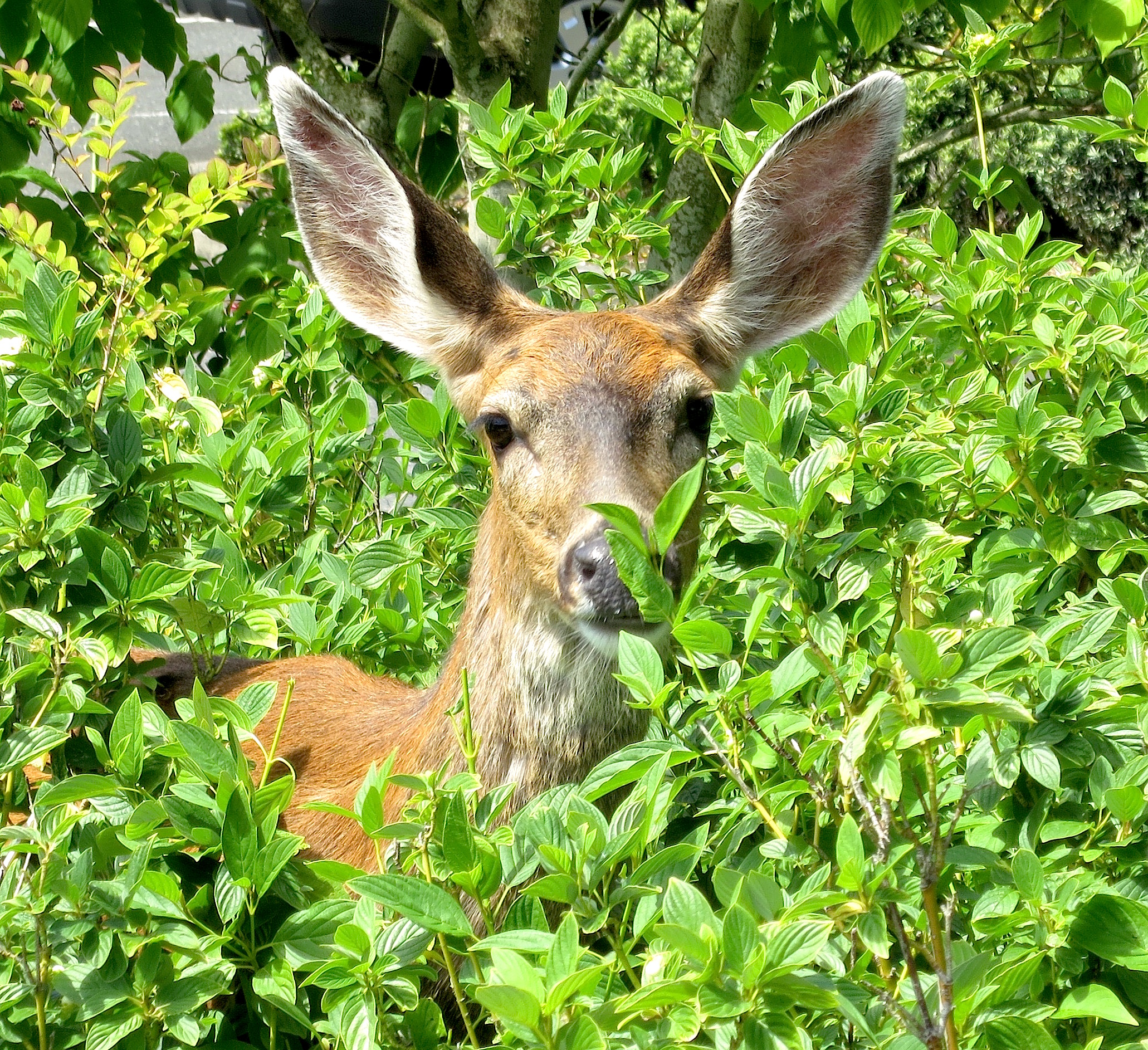
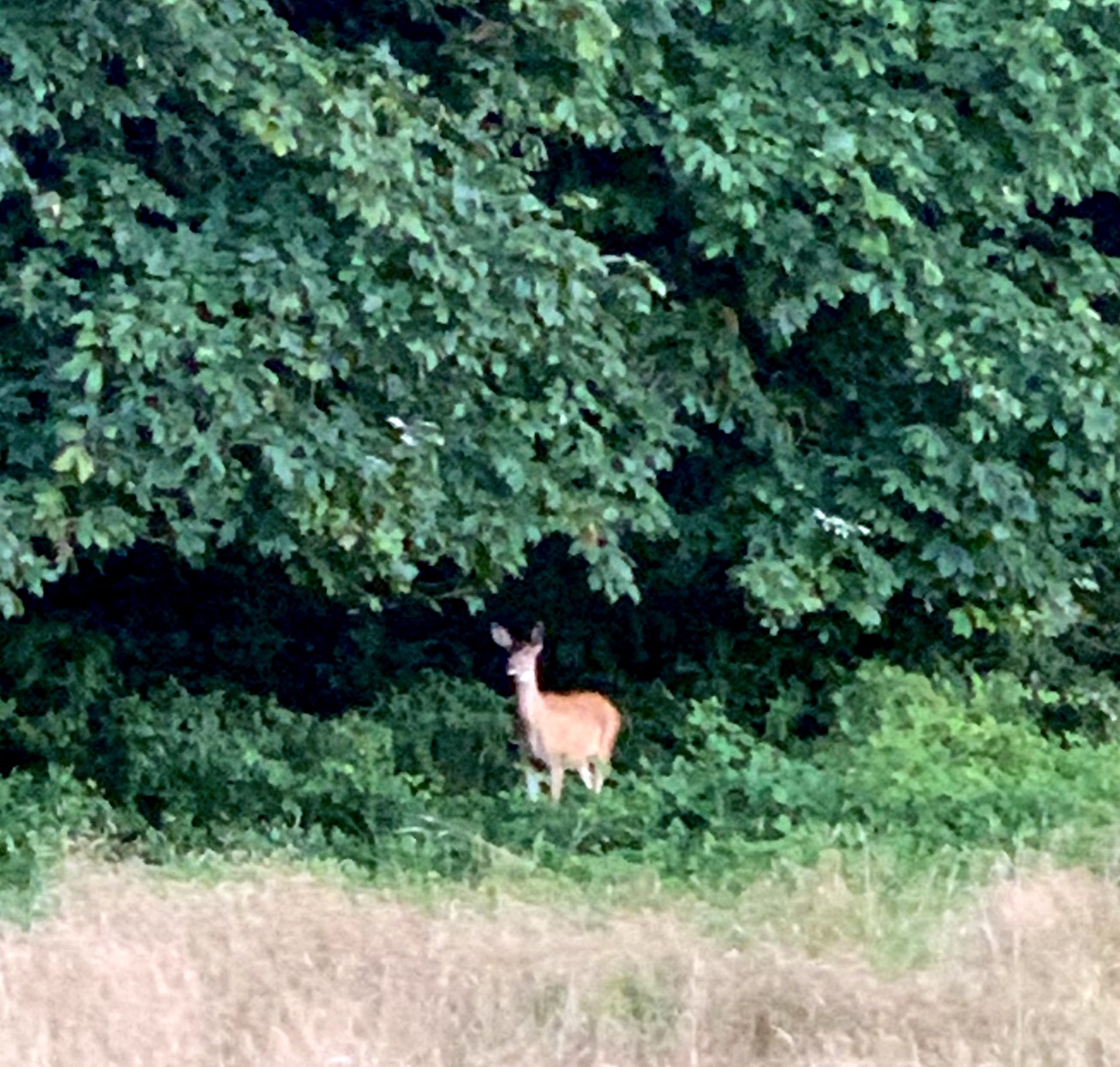
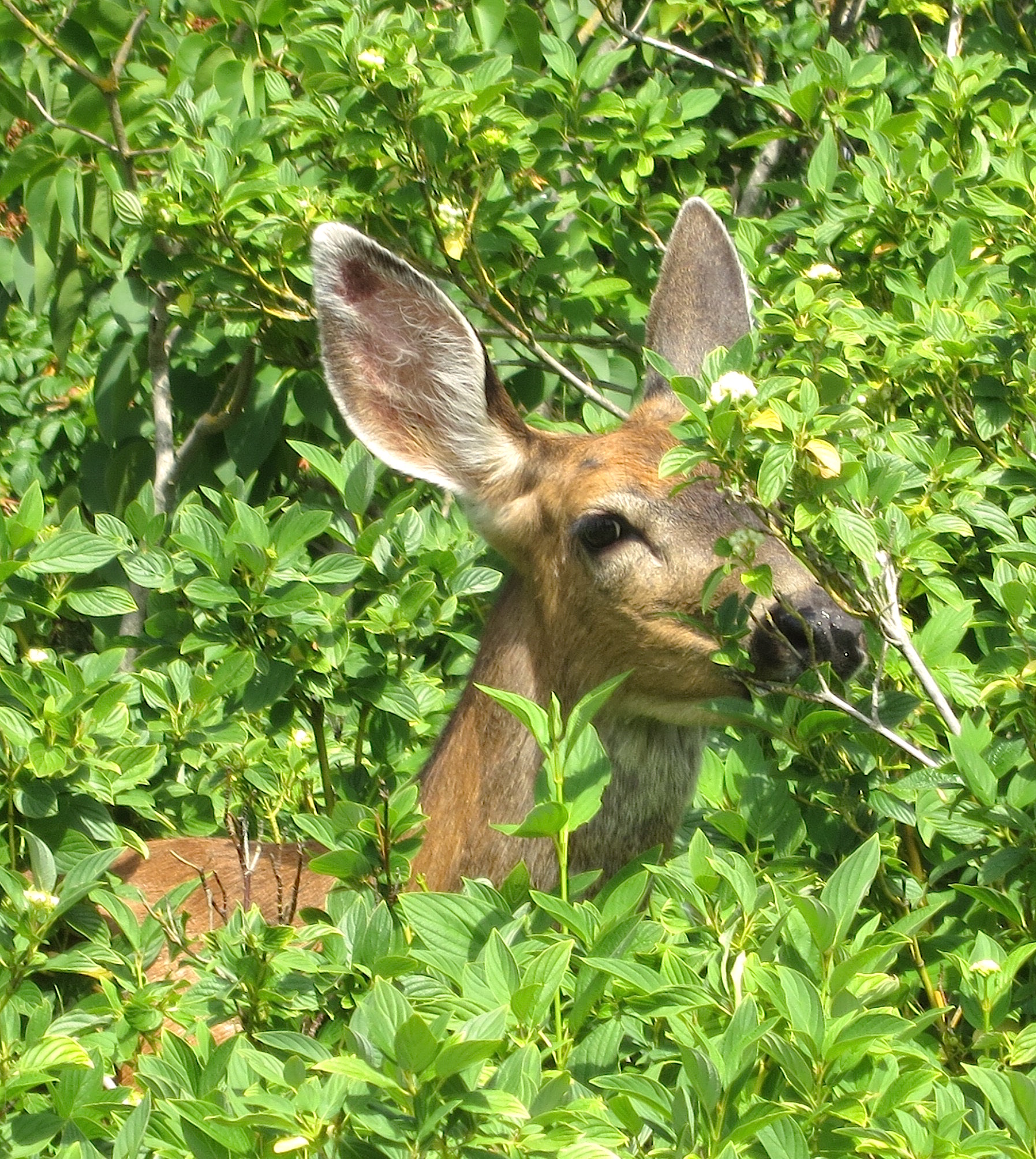
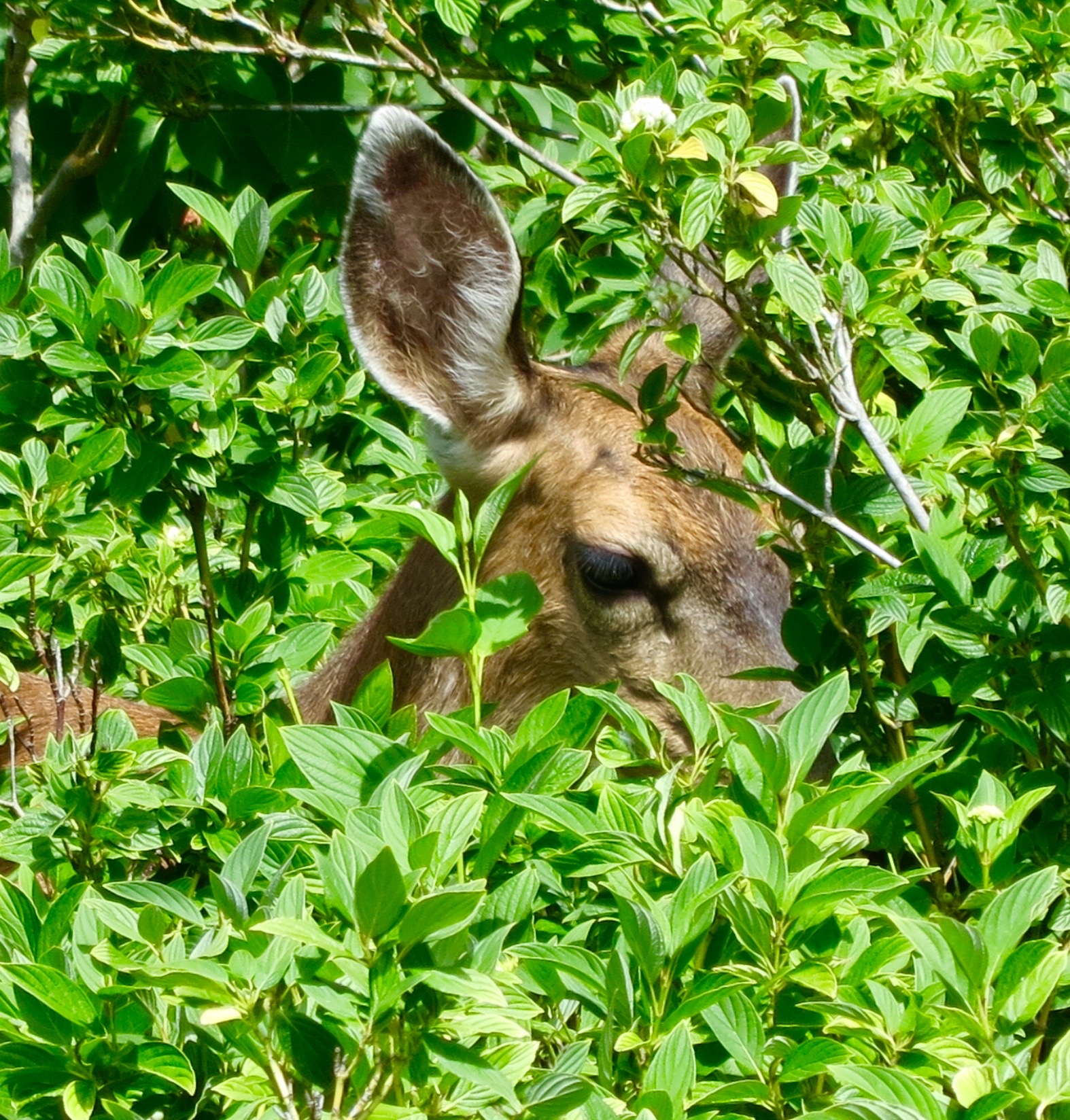
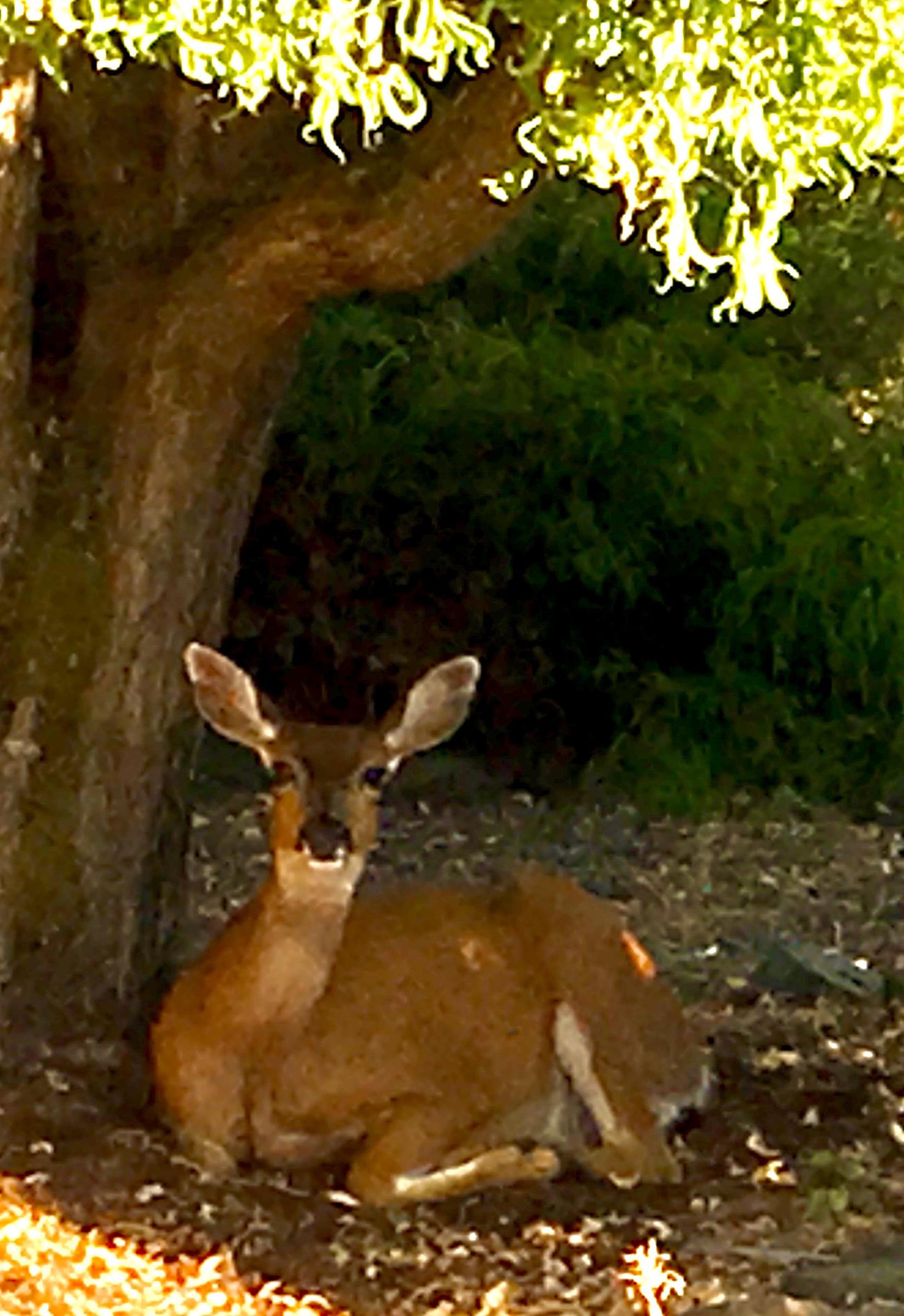
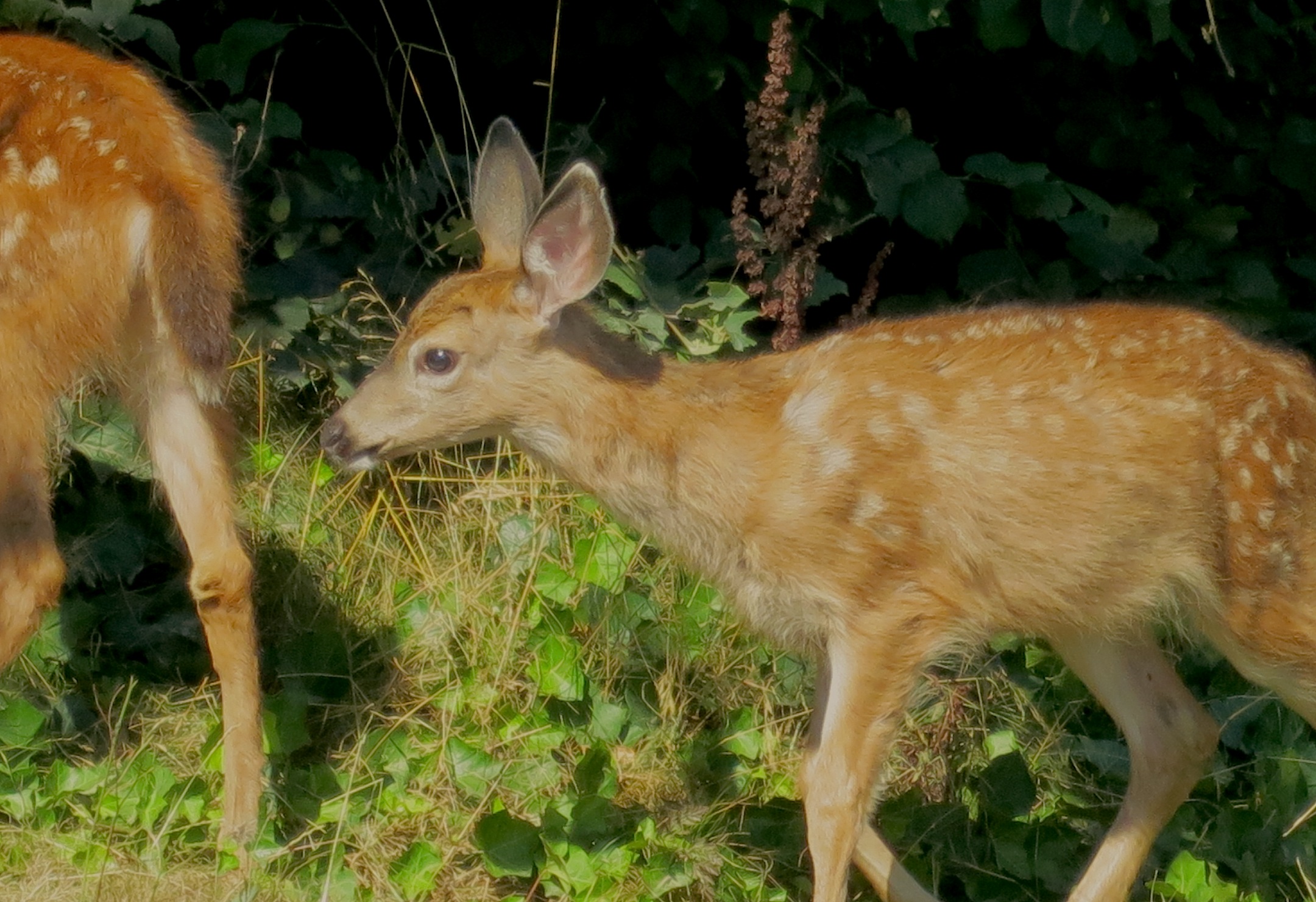
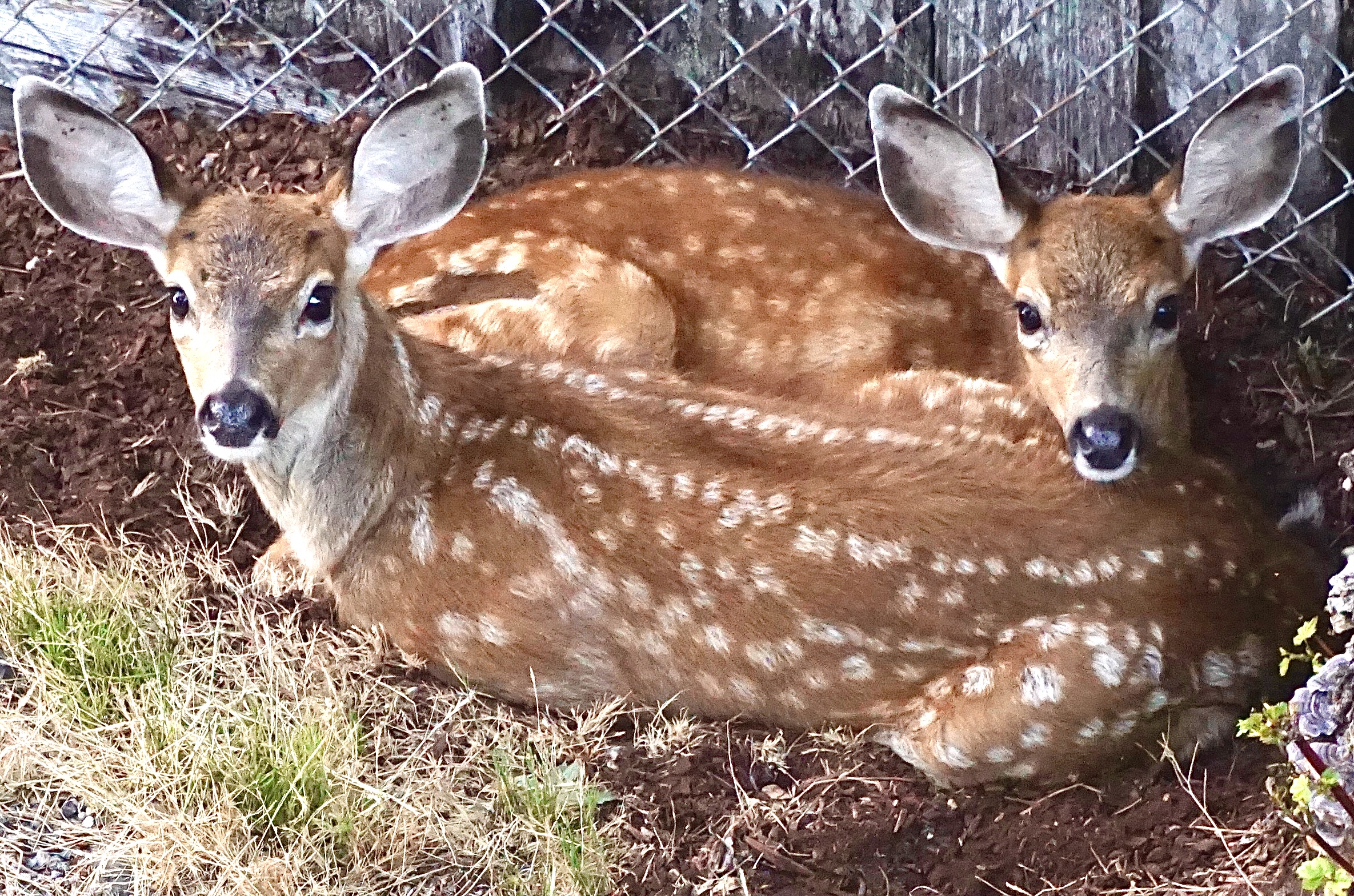
Perhaps she came down for the apples, or was flushed out by the saws powering the far woods, or was simply lost, or was crossing one open space for another.
She was a figure approaching, a presence outside a kitchen window, framed by the leafless apple trees, the stiff blueberry bushes, the after-harvest corn, the just-before-rain sky,
a shape only narrow bones could hold, turning its full face upward, head tilted to one side, as if to speak.
Everything changing faster than we can respond: loss of jobs, research halting mid-study, inconsistency abounds, families shattered, uncertainty prevails.
What happened to of the people, by the people, for the people rather than dictated by just a few
We are so lost, how to find our way back to caring for the poor, the weak, the vulnerable with a spirit of commitment, compassion and sacrifice.
For God alone – no one else – remains our strength and shield. Lost and afraid, we want our lives back.
We need His Refuge where we may rest. We seek Sanctuary from this darkness, to once again awaken hopeful to a new morning.
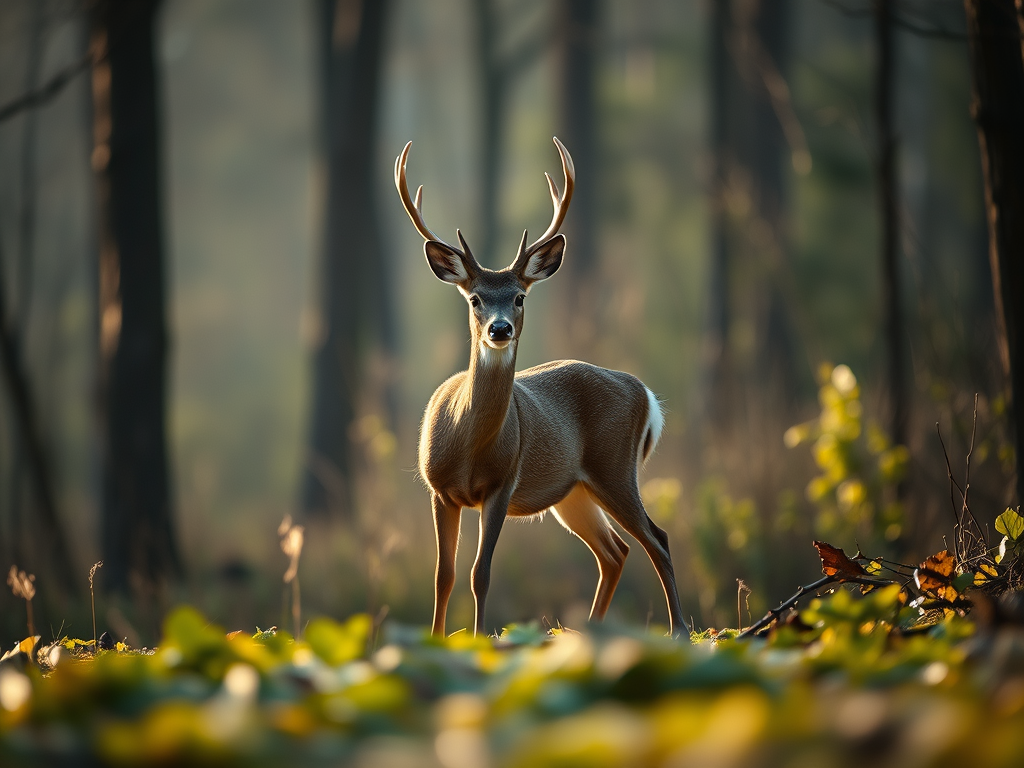
AI image created for this post
One-Time
Monthly
Yearly
Make a one-time or recurring donation to support daily Barnstorming posts
Here at the centre everything is still Before the stir and movement of our grief Which bears it’s pain with rhythm, ritual, Beautiful useless gestures of relief. So they anoint the skin that cannot feel Soothing his ruined flesh with tender care, Kissing the wounds they know they cannot heal, With incense scenting only empty air. He blesses every love that weeps and grieves And makes our grief the pangs of a new birth. The love that’s poured in silence at old graves Renewing flowers, tending the bare earth, Is never lost. In him all love is found And sown with him, a seed in the rich ground. ~Malcolm Guite “Station XIV of the Cross”
The Holy Saturday of our life must be the preparation for Easter, the persistent hope for the final glory of God. The virtue of our daily life is the hope which does what is possible and expects God to do the impossible. To express it somewhat paradoxically, but nevertheless seriously: the worst has actually already happened; we exist, and even death cannot deprive us of this. Now is the Holy Saturday of our ordinary life, but there will also be Easter, our true and eternal life. ~Karl Rahner “Holy Saturday” in The Great Church Year
I said to my mind, be still, and wait without hope For hope would be hope for the wrong thing; wait without love For love would be love of the wrong thing; yet there is faith But the faith and the hope and the love are all in the waiting. Wait without thought, for you are not ready for thought: So the darkness shall be light, and the stillness the dancing. ~T. S. Eliot, from “East Coker” The Four Quartets
The happy ending has never been easy to believe in. After the Crucifixion the defeated little band of disciples had no hope, no expectation of Resurrection. Everything they believed in had died on the cross with Jesus. The world was right, and they had been wrong. Even when the women told the disciples that Jesus had left the stone-sealed tomb, the disciples found it nearly impossible to believe that it was not all over. The truth was, it was just beginning. Madeleine L’Engle from “Waiting for Judas” in Plough Magazine
This in-between day after all had gone so wrong: the rejection, the denials, the trumped-up charges, the beatings, the burden, the jeering, the thorns, the nails, the thirst, the despair of being forsaken.
This in-between day before all will go so right: the forgiveness and compassion, the grace and sacrifice, the debt paid in full, the immovable stone rolled away, our name on His lips, our hearts burning to hear His words.
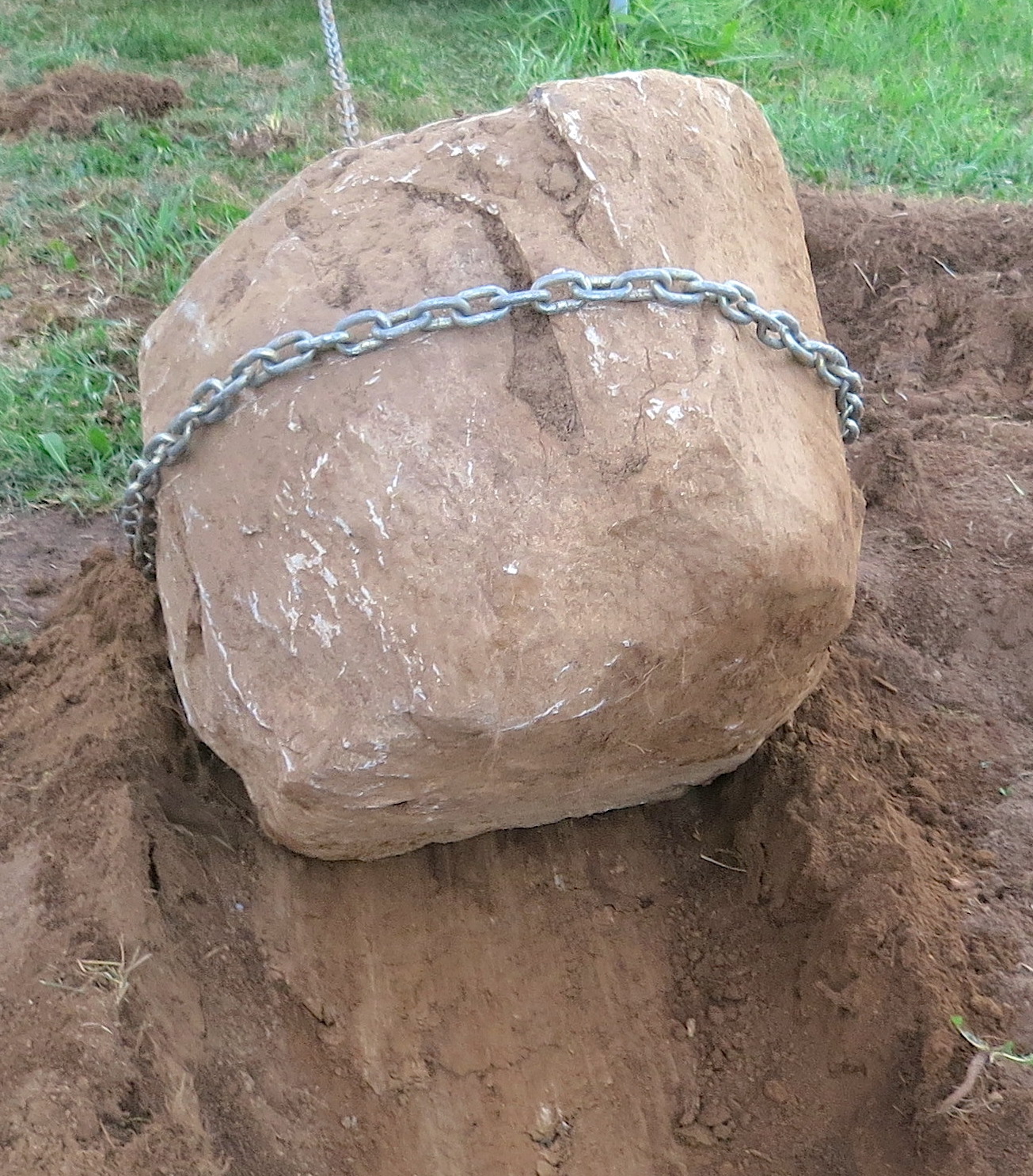
What does it take to move the stone? When it is an effort to till the untillable, creating a place where simple seed can drop, be covered and sprout and thrive, it takes muscle and sweat and blisters and tears.
What does it take to move the stone? When it is a day when no one will speak out of fear, the silent will be moved to cry out the truth, heard and known and never forgotten.
What does it take to move the stone? When it is a day when all had given up, gone behind locked doors in grief.
When two came to tend the dead, there would be no dead to tend.
Only a gaping hole left Only an empty tomb Only a weeping weary silence broken by Love calling our name and we turn to greet Him as if hearing it for the first time.
We cannot imagine what is to come in the dawn tomorrow as the stone lifted and rolled, giving way so our separation is bridged, darkness overwhelmed by light, the crushed and broken rising to dance, and inexplicably, from the waiting stillness He stirs and we, finding death emptied, greet Him with trembling and are forever moved, just like the stone.
This year’s Lenten theme:
…where you go I will go… Ruth 1:16
One-Time
Monthly
Yearly
Make a one-time or recurring donation to support daily Barnstorming posts


















 Barnstorming