I am not resigned to the shutting away Of loving hearts in the hard ground. So it is, and so it will be, for so it has been, time out of mind: Into the darkness they go, the wise and the lovely. Crowned With lilies and with laurel they go; but I am not resigned. Lovers and thinkers, into the earth with you. Be one with the dull, the indiscriminate dust. A fragment of what you felt, of what you knew, A formula, a phrase remains,—but the best is lost. The answers quick and keen, the honest look, the laughter, the love,— They are gone. They are gone to feed the roses. Elegant and curled Is the blossom. Fragrant is the blossom. I know. But I do not approve. More precious was the light in your eyes Than all the roses in the world. Down, down, down into the darkness of the grave Gently they go, the beautiful, the tender, the kind; Quietly they go, the intelligent, the witty, the brave. I know. But I do not approve. And I am not resigned. ~Edna St. Vincent Millay “Dirge Without Music”
These hearts were woven of human joys and cares, Washed marvelously with sorrow, swift to mirth. The years had given them kindness. Dawn was theirs, And sunset, and the colors of the earth.
These had seen movement, and heard music; known Slumber and waking; loved; gone proudly friended; Felt the quick stir of wonder; sat alone; Touched flowers and furs and cheeks. All this is ended.
There are waters blown by changing winds to laughter And lit by the rich skies, all day. And after, Frost with a gesture, stays the waves that dance And wandering loveliness. He leaves a white Unbroken glory, a gathered radiance, A width, a shining peace, under the night. ~Rupert Brooke “All This is Ended”
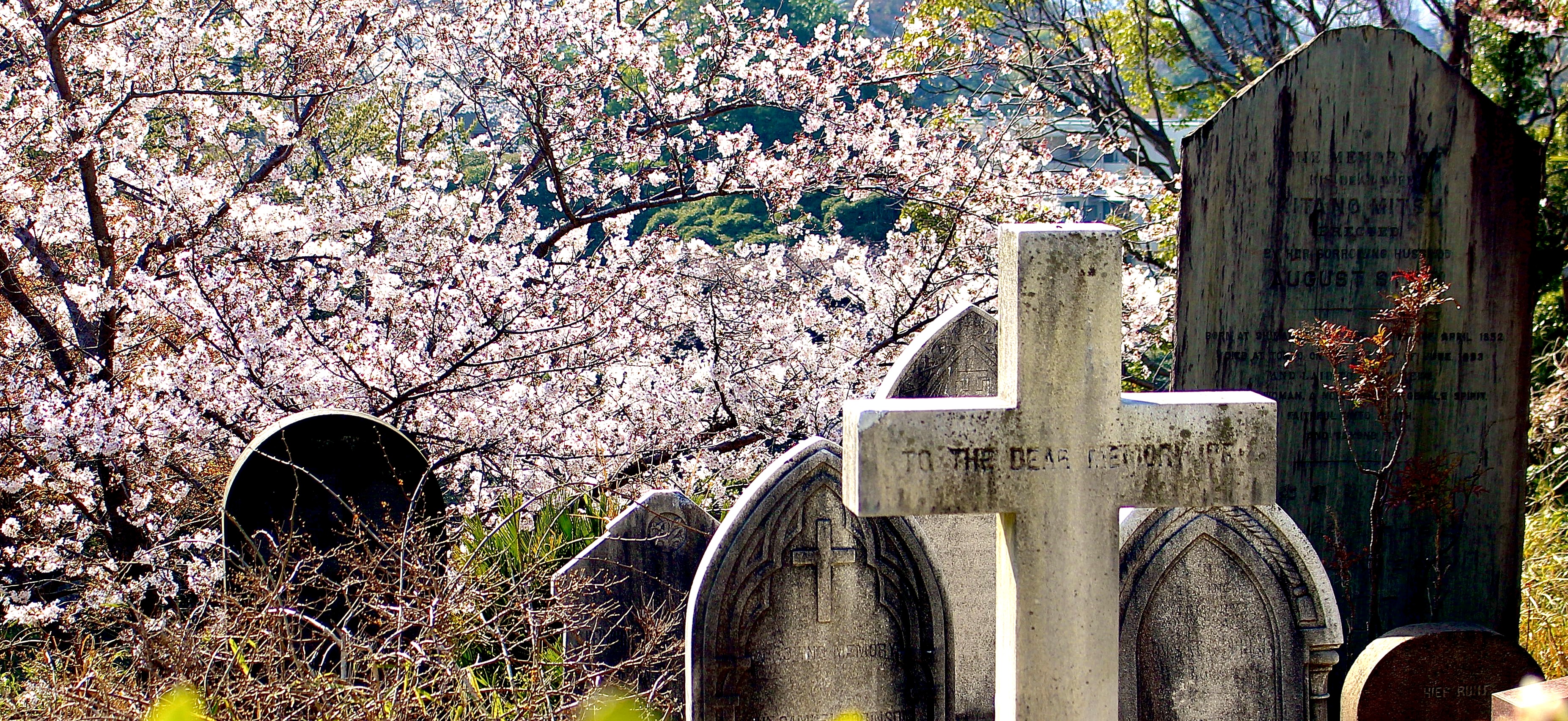
Each Memorial Day weekend without fail, we gather with family, have lunch, reminisce, and trek to a cemetery high above Puget Sound to catch up with our relatives who lie there still. Some for well over 100 years, some too recent, some we knew and loved and miss every day, others not so much, unknown to us except on genealogy charts, their names and dates and these stones all that is left of them:
the red-haired great-grandmother who died too young, the aunt who was eight with lymphoma, the Yukon river boat captain, the logger and stump farmer, the unmarried teacher who bequeathed an oil well to her church, the two in-laws who lie next to each other but could not co-exist in the same room while they lived and breathed.
Yet we know each of these (as we know ourselves and others) was tender and kind, though flawed and broken, was beautiful and strong, though wrinkled and frail, was hopeful and faithful, though too soon in the ground.
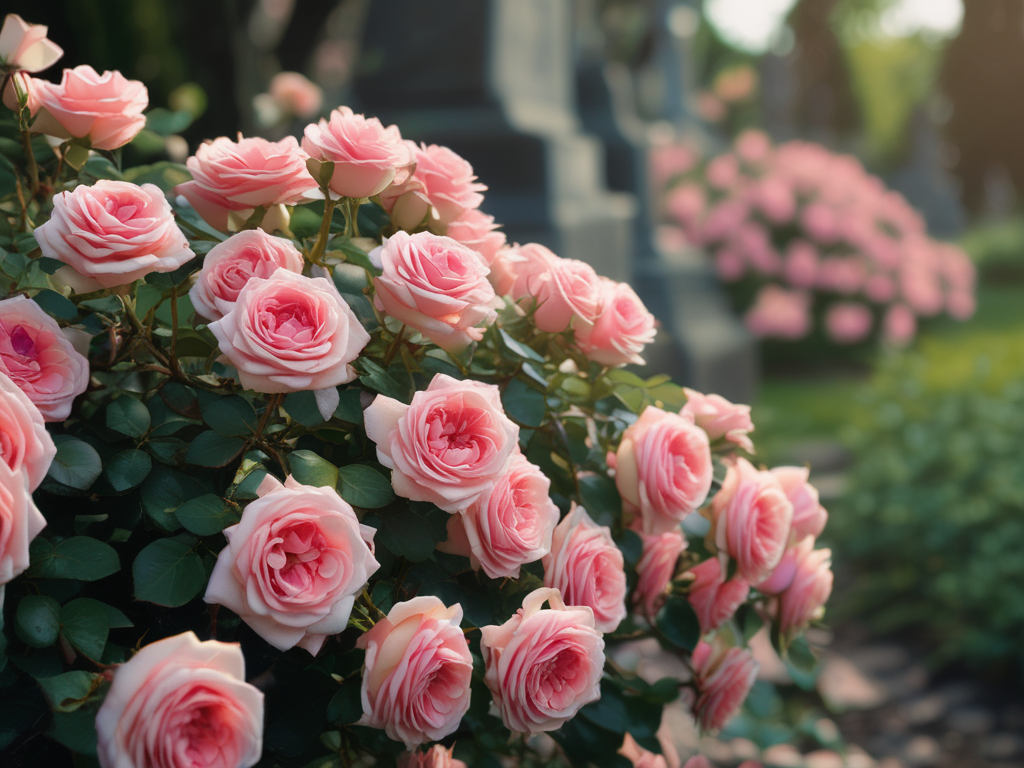
We know this about them as we know it about ourselves: someday we too will feed roses, the light in our eyes transformed into elegant swirls emitting the fragrant scent of heaven.
No one asks if we approve. Nor am I resigned to this but only know: So it is, so it has been, so it will be.
Deep in our sub-conscious, we are told Lie all our memories, lie all the notes Of all the music we have ever heard And all the phrases those we loved have spoken, Sorrows and losses time has since consoled, Family jokes, out-moded anecdotes Each sentimental souvenir and token Everything seen, experienced, each word Addressed to us in infancy, Before we could even know or understand The implications of our wonderland. There they all are, the legendary lies The birthday treats, the sights, the sounds, the tears Forgotten debris of forgotten years Waiting to be recalled, waiting to rise Before our world dissolves before our eyes Waiting for some small, intimate reminder, A word, a tune, a known familiar scent An echo from the past when, innocent We looked upon the present with delight And doubted not the future would be kinder And never knew the loneliness of night. ~Noel Coward “Nothing Is Lost” from Collected Verse
I wonder sometimes how memories are stored in our neurons. Do they sit on brain sulci and gyri shelves in chronological order? Or are they alphabetized, ready to be pulled and leap to the front of our awareness whenever we’re reminded by an (A)pple pie smell or a passage of a (B)ach toccata or the taste of a (C)adbury Creme Egg?
Perhaps, as we get older, they tend to mix and muddle a bit because our brain libraries are getting crowded with too much to recall and subsequently reshelf back into the proper spot. Whenever I decide to do a brain search for some long forgotten memory, it can take longer than it used to, certainly longer than a Google search does on my computer.
Then I start thinking about what can be recycled or (heavens!) trashed to make more room. Except – things get thrown away that I didn’t intend to lose…
But mostly it is all still there, nearly 70 years of recollections, some so insignificant that it is a mere dust bunny in the corner of my brain, and others still as fresh as when they happened over 65 years ago. Some memories I want to spend time mulling over and over and others can stay buried in the stacks forever as far as I’m concerned.
My mission, should I choose to accept it, is to store away the present moment with such care that I will find its memory with very little trouble. These are days to recall with warmth and delight. I want to remember them during the long and lonely nights that come unbidden at times when the power goes out. That is when I need to turn on an inner light in order to see where I’m heading.
Sure on this shining night Of star made shadows round, Kindness must watch for me This side the ground. The late year lies down the north. All is healed, all is health. High summer holds the earth. Hearts all whole. Sure on this shining night I weep for wonder wand’ring far alone Of shadows on the stars. ~James Agee
One-Time
Monthly
Yearly
Make a one-time or recurring donation to support daily Barnstorming posts
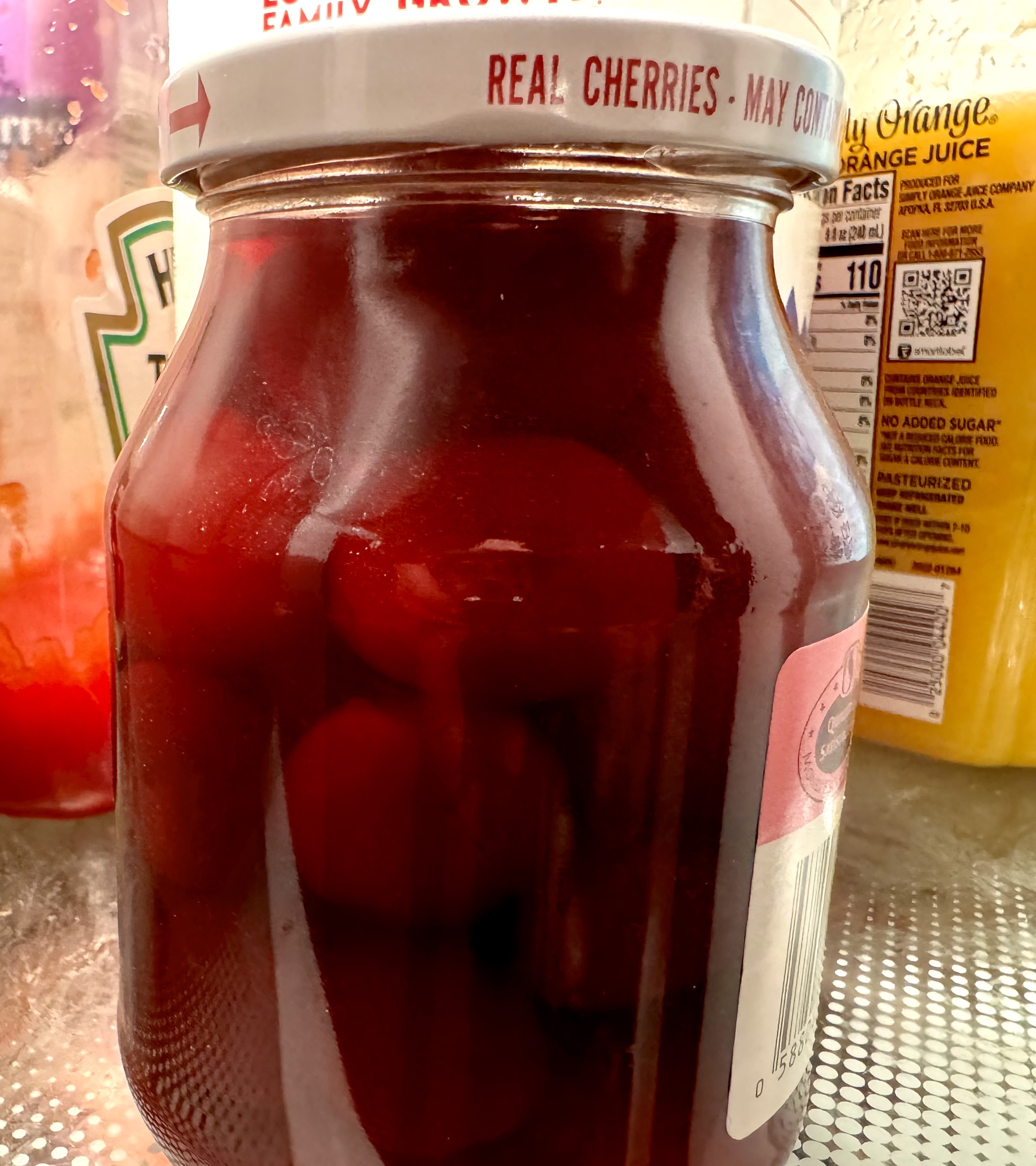
More like a vault — you pull the handle out and on the shelves: not a lot, And what there is (a boiled potato in a bag, a chicken carcass under foil) looking dispirited, drained, mugged. This is not a place to go in hope or hunger. But, just to the right of the middle of the middle door shelf, on fire, a lit-from-within red, heart red, sexual red, wet neon red, shining red in their liquid, exotic, aloof, slumming in such company: a jar of maraschino cherries. Three-quarters full, fiery globes, like strippers at a church social. Maraschino cherries, maraschino, the only foreign word I knew. Not once did I see these cherries employed: not in a drink, nor on top of a glob of ice cream, or just pop one in your mouth. Not once. The same jar there through an entire childhood of dull dinners — bald meat, pocked peas and, see above, boiled potatoes. Maybe they came over from the old country, family heirlooms, or were status symbols bought with a piece of the first paycheck from a sweatshop, which beat the pig farm in Bohemia, handed down from my grandparents to my parents to be someday mine, then my child’s? They were beautiful and, if I never ate one, it was because I knew it might be missed or because I knew it would not be replaced and because you do not eat that which rips your heart with joy. ~Thomas Lux “Refrigerator, 1957”
My childhood refrigerator also contained a jar of maraschino cherries. They were used only once a year, at Thanksgiving, when my mother would pull the jar out from the depths of the fridge, twist open the top and pull out four bright red cherries.
A sweet potato dish would be warming in the oven, covered by large melting marshmallows placed in the center of a ring of canned pineapple. Mom arranged the cherries, cut in half, on top of each marshmallow and replaced the dish in the oven, until the meal was ready to serve.
That was it. We never saw the cherries again for another year.
Sweet potatoes taste wonderful, all on their own, without a dressing of marshmallows and pineapples. But the special holiday tradition was set. In some magical way, the cherries dressed the dish up to help make a tense family gathering a bit jollier.
I do still have my own jar of maraschino cherries in my refrigerator. I forget why. It doesn’t have anything to do with sweet potatoes which I like to serve up plain for Sunday dinners. I possibly bought the jar out of nostalgia, or perhaps because I think every refrigerator needs a jar of maraschino cherries — kind of like the open box of baking soda that sits in most fridges to keep the odors under control.
Regardless, when I spy the jar every once in a while when rummaging in the fridge for something else, it stops time for a moment of remembrance and sadness. After all, I don’t replicate my mom’s mid-century cooking efforts of many-colored jello salads, bread-crumb-topped casseroles and… maraschino marshmallow sweet potatoes.
Even so, a daughter’s love for her mama remains irreplaceable.
One-Time
Monthly
Yearly
Make a one-time or recurring donation to support daily Barnstorming posts
On the first day I took his class on Native American Mythology and Lore in 1974 at Stanford, a tall, young N.Scott Momaday strolled to the front, wrote the 60 words of an Emily Dickinson poem “Further in Summer”on the blackboard. He told us we would spend at least a week working out the meaning of what he considered the greatest poem written — this in a class devoted to Native American writing and oral tradition. In his resonant bass, he read the poem to us many times, rolling the words around his mouth as if to extract their sweetness. This man of the plains, a member of the Kiowa tribe, loved this poem put together by a New England recluse poet — someone as culturally distant from him and his people as possible.
But grace works to unite us, no matter our differences, and Scott knew this as he led us, mostly white students, through the poem. What on the surface appears a paean to late summer insect droning – doomed to extinction by the desolation of oncoming winter – is a statement of the transcendence of man beyond our understanding of nature and the world in which we, its creatures, find ourselves. As summer begins its descent into the dark death of winter, we, unlike cicadas and crickets, become all too aware we too are descending. There is no one as lonely as an individual facing their mortality and no one as lonely as a poet facing the empty page, in search of words to describe the sacrament of sacrifice and perishing.
Yet the written Word is not silent; the Word brings Grace unlike any other, even when the summer, pathetic and transient as it is, is gone. The Word brings Grace, like no other, to pathetic and transient man who will emerge transformed.
There is no furrow on the glow. There is no need to plow and seed our salvaged souls, already lovingly planted by our Creator God, yielding a fruited plain.
Scott was one of my most remarkable and influential teachers, teaching me to trust memories, to use the best words, and to describe beauty as best I can. I know his words will forever live on.
…<Dickinson’s Further in Summer is> one of the great poems of American literature. The statement of the poem is profound; it remarks the absolute separation between man and nature at a precise moment in time. The poet looks as far as she can into the natural world, but what she sees at last is her isolation from that world. She perceives, that is, the limits of her own perception. But that, we reason, is enough. This poem of just more than sixty words comprehends the human condition in relation to the universe:
“So gradual the Grace A pensive Custom it becomes Enlarging Loneliness.“
But this is a divine loneliness, the loneliness of a species evolved far beyond all others. The poem bespeaks a state of grace. In its precision, perception and eloquence it establishes the place of words within that state. Words are indivisible with the highest realization of human being. ~N.Scott Momaday from The Man Made of Words
When all the others were away at Mass I was all hers as we peeled potatoes. They broke the silence, let fall one by one Like solder weeping off the soldering iron: Cold comforts set between us, things to share Gleaming in a bucket of clean water. And again let fall. Little pleasant splashes From each other’s work would bring us to our senses.
So while the parish priest at her bedside Went hammer and tongs at the prayers for the dying And some were responding and some crying I remembered her head bent towards my head, Her breath in mine, our fluent dipping knives— Never closer the whole rest of our lives. ~Seamus Heaney “Clearances -3”
April 2008 – Vigil at Mom’s Bedside
Lying still, your mouth gapes open as I wonder if you breathe your last. Your hair a white cloud Your skin baby soft No washing, digging, planting gardens, peeling potatoes, Or raising children Anymore.
Where do your dreams take you? At times you wake in your childhood home of Rolling wheat fields, boundless days of freedom. Other naps take you to your student and teaching days Grammar and drama, speech and essays. Yesterday you were a young mother again Juggling babies, farm and your wistful dreams.
Today you looked about your empty nest Disguised as hospital bed, Wondering aloud about Children grown, flown. You still control through worry and tell me: Travel safely Get a good night’s sleep Take time to eat Call me when you get there
I dress you as you dressed me I clean you as you cleaned me I love you as you loved me You try my patience as I tried yours. I wonder if I have the strength to Mother my mother For as long as she needs.
When I tell you the truth Your brow furrows as it used to do When I disappointed you~ This cannot be A bed in a room in a sterile place Waiting for death Waiting for heaven Waiting
And I tell you: Travel safely Eat, please eat Sleep well Call me when you get there.
______________
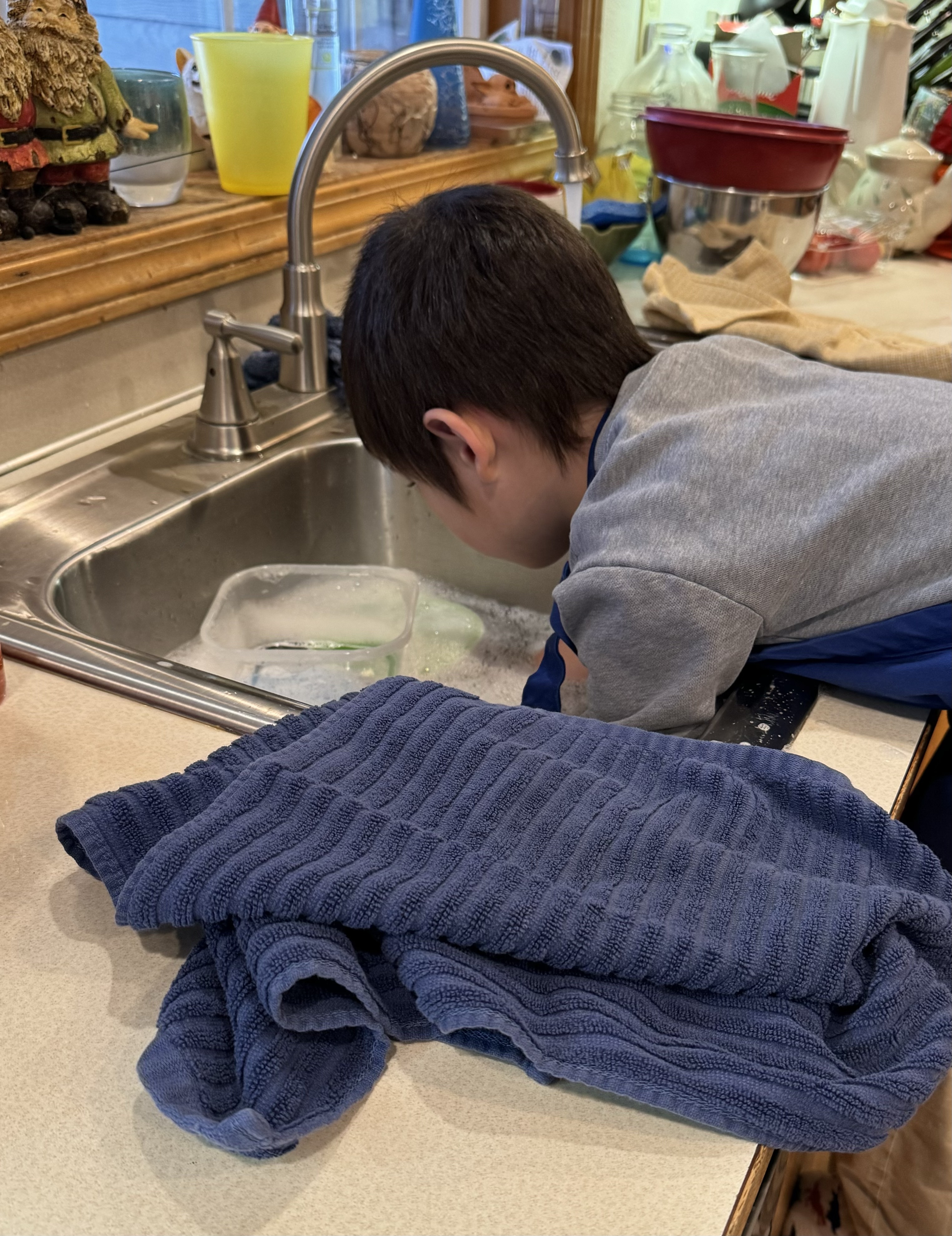
Now that I am a grandmother, I seek those tiny, daily, apparently meaningless opportunities to create memories that my grandchildren may warmly recall decades from now, knowing they were all mine, if only for a few minutes at the kitchen sink.
One-Time
Monthly
Yearly
Make a one-time or recurring donation to support daily Barnstorming posts
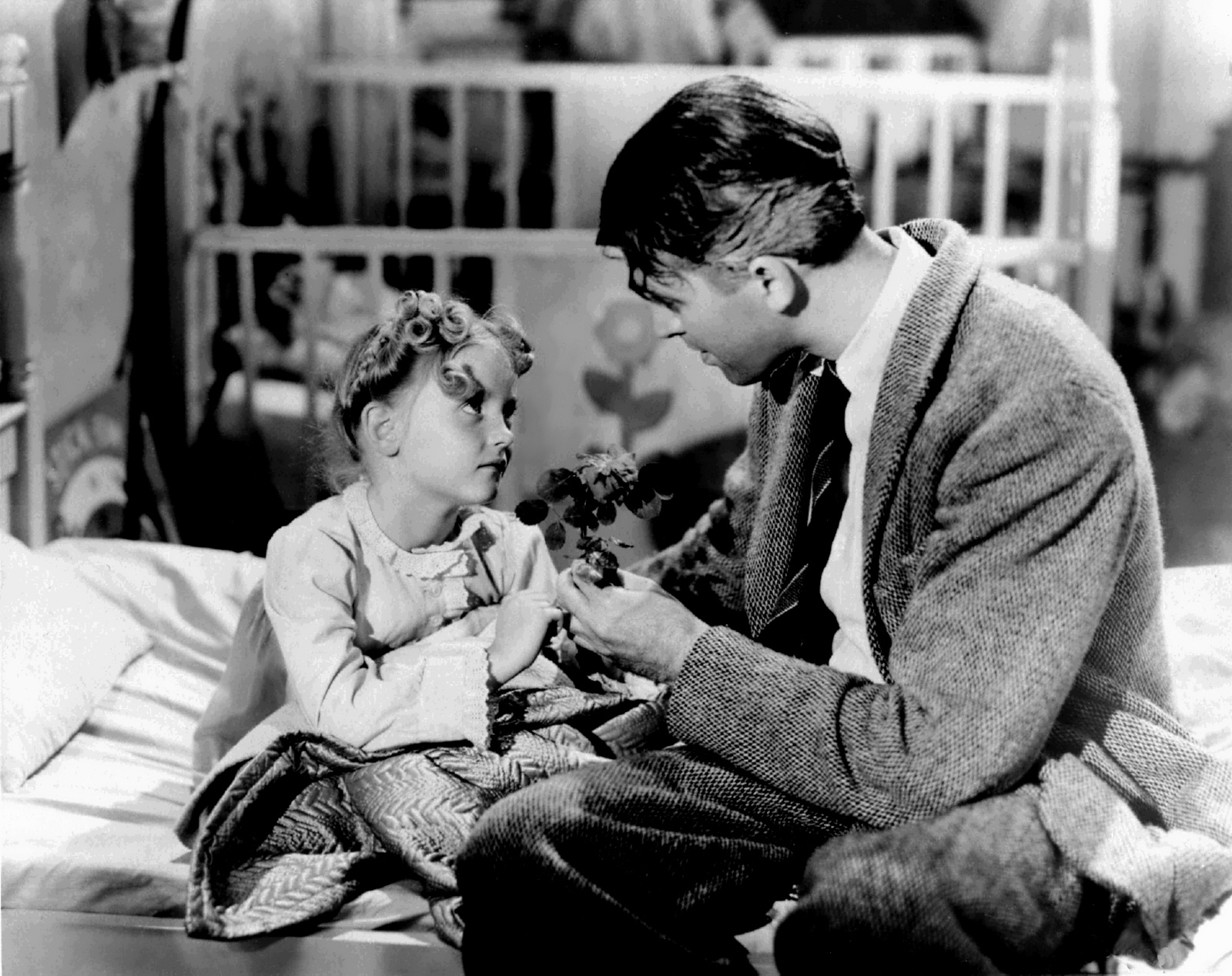
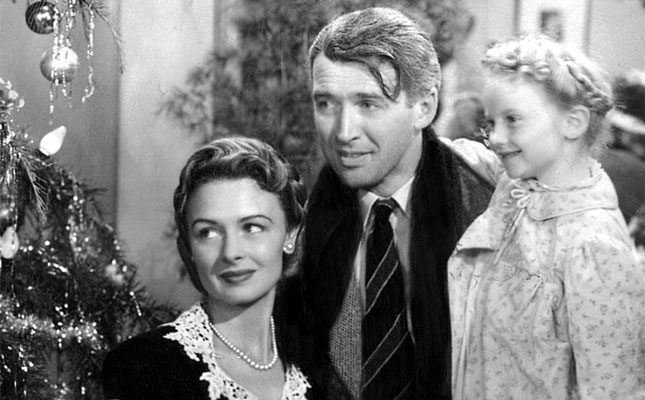
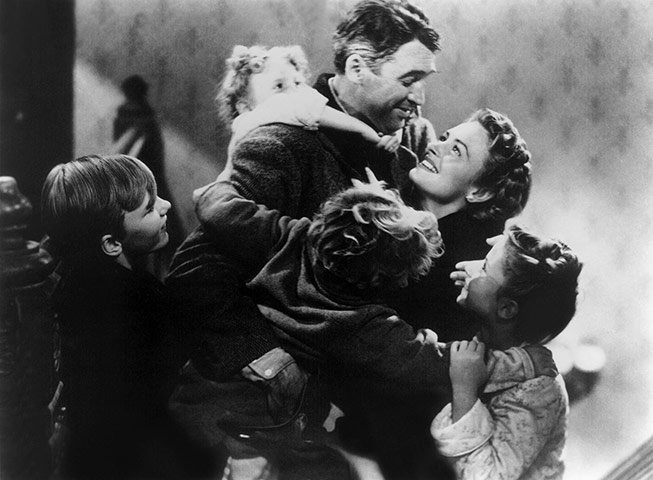
One life, George learns, touches so many other lives. Far from a failure, his life was the glue that held together his family, his business, and his community. In the end, George embraces life, and the people of Bedford Falls gather around him in love, donating the money to restore the Building and Loan that had helped them to achieve their own simple dreams of freedom, independence, and dignity.
George Bailey neither does that which feels good nor asserts his own narrow vision of himself and his role in society. He accepts the responsibility that is placed upon his shoulders and allows himself to be shaped and defined by the needs of others around him. Rather than change the world to suit his own self-centered desires, he changes himself to adapt to the true calling that is upon him.
George Bailey does more than delay gratification. He embraces his true and essential identity and purpose and is strengthened to perform the work for which he was created. ~Louis Markos “Christmas With Capra: Classic Films for Our Troubled Times”
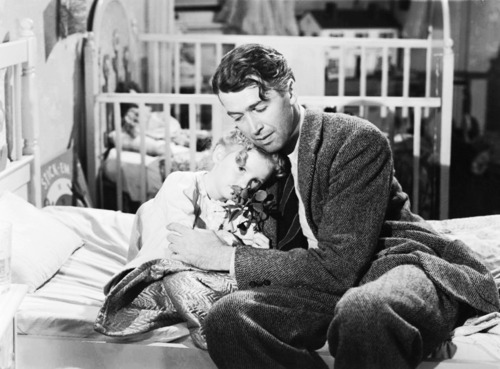
“ZuZu’s Petals” ~Lessons from “It’s a Wonderful Life”~
Our children had to be convinced Watching black and white holiday movies Was worthwhile~ This old tale and its characters Caught them up right away From steadfast George Bailey to evil Mr. Potter- They resonate in our hearts.
What surprised me most Was our sons’ response to Donna Reed’s Mary: ~how can we find one like her? (and they both did!) Her loyalty and love unequaled, Never wavering…
I want to be like her for you. When things go sour I won’t forget what brought us together In the first place. I’m warmth in the middle-of-the-night storm When you need shelter. I’m ZuZu’s petals in your pocket When you are trying to find your way back home.
One-Time
Monthly
Yearly
Make a one-time or recurring donation to support daily Barnstorming posts
I am the whole dream of these things You see, I am alive, I am alive
I stand in good relation to all that is beautiful You see, I am alive, I am alive ~N.Scott Momaday from “The Delight Song of Tsoai-talee” from In the Presence of the Sun: Stories and Poems
I wonder if, in the dark night of the sea, the octopus dreams of me. ~N. Scott Momaday
If I am brutally honest with myself, one of my worst fears is to have lived on this earth for a few decades and then pass away forgotten, inconsequential, having left behind no legacy of significance whatsoever. I know it is self-absorbed to feel the need to leave a mark, but my search for purpose and meaning lasting beyond my time here provides new momentum for each day.
The forgetting can happen so fast. Most people know very little about their great great grandparents, if they even know their names. A mere four generations, a century, renders us dust, not just in flesh, but in memory as well. There may be a yellowed photograph in a box somewhere, perhaps a tattered postcard or letter written in elegant script, but the essence of who this person was is long lost and forgotten. We owe it to our descendants to write down or record the stories about who we were while we lived on this earth. We need to share why we lived, for whom we lived, for what we lived.
I suspect however, unless I try every day to record some part of who I am, it will be no different with me and those who come after me. Whether or not we are remembered by great great grandchildren or become part of the dreams of creatures in the depths of the seas: we came from dust and will return to dust- there is no changing that.
Good thing this is not our only home. Good thing we are created to be more than memory and dreams. Good thing there is an eternity that transcends good works or long memories or legacies left behind. Good thing we are loved that much and always will be, Forever and ever, Amen.
One-Time
Monthly
Yearly
Make a one-time or recurring donation to support daily Barnstorming posts
Some years ago, while sitting with my husband and young family high in the upper reaches of Seattle’s (then) Safeco Field watching the Mariners lose to the Cleveland (then) Indians, my attention diverted from the baseball game to the expansive view of the surrounding city.
In particular, I couldn’t help but place myself back inside the old Art Deco building that sits up on Beacon Hill (now known as the Pac Tower.) I had spent a hundreds of hours of my life in that building in the late 1970s; it was easy imagine my younger self in those hallways and rooms.
The 90 year old building had a number of different purposes since originally being constructed to provide hospital care for the region’s Merchant seamen. By 1999, it had become the home of a five year old business that had outgrown Jeff Bezos’ garage — Amazon.com.
I trained inside the walls of that Public Health Hospital, back in the days when it was the hospital in the region for not only Merchant Marines, but many of the indigenous people of the Pacific northwest and Alaska, in addition to local folks who needed affordable (as in free) health care. I had opportunity to work several clinical rotations in this building as a University of Washington medical student, and to think of it being Amazon’s first (but not last) major headquarters for Amazon made my brain do twists.
I remembered so much life and death happening inside those walls over the years.
I first walked into this building as a very green 24 year old med student beginning a surgical rotation in fall 1976, knowing only which end of the stethoscope to put in my ears and which end rests on the patient. On the first day I was shown how to put on a surgical gown, masks and sterile gloves without contaminating myself and the people around me. I never have forgotten that sequence of moves, even though my opportunity to go into an operating room (other than as a patient) became rare after my training days. My chief surgical resident was an exceptionally talented young man who worked himself and everyone working with him around the clock caring for his patients. This brilliant surgeon could only operate on patients while listening and singing to the music of Elvis Presley. I can’t hear any Elvis Presley songs to this day without smelling the odors of surgery–cauterized blood vessels and pus.
He was soon to become a leading trauma surgeon in a city known for its fine surgeons. The pressure was too much for him. He experienced a personal crisis for which he sought treatment. When he returned to medicine, he abandoned his incredible surgical skills to train as a psychiatrist and still remains an authority on helping impaired physicians, assisting other care providers to acknowledge and deal with addiction and mental health burnout before they harm a patient.
Those endless clinical rotation days and nights meant witnessing the misery of the most vulnerable of humanity in desperate need of healing, and sometimes we succeeded, but often we did not. I still have a recurring dream of running up and down the staircases of the Public Health Hospital, bringing pint after pint of blood to the OR from the lab as our team operated on an Alaskan indigenous patient bleeding from dilated esophageal varices, developed as a result of a damaged liver from chronic alcohol dependency. We did not save her, nor have I saved her even once in my dreams over the decades, though I keep trying to run faster. My response to her death was to spend 20 years of my clinical career working with patients in an alcohol and drug treatment program, hoping to prevent her fate in others.
Nor did we save a classmate of mine, on a rotation on a different service, the daughter of a beloved radiologist in this very hospital, who for reasons unknown, had a cardiac arrest while napping briefly during her 32 hour shift. Another medical student sleeping in the same room heard her odd breathing, found her unresponsive and all medical interventions were employed, to no avail. Even when all the right people, and the right equipment, and the right medicine is seconds away, death can still come, even to healthy people in their 20s. This was a shock to us all, and an extraordinarily humbling lesson to the pompous and overconfident among us. We might die, in our sleep, whenever it is our time. Years later, I still remember that in my evening prayers.
There was also the young surgical resident who was hospitalized there with jaundice and subsequently died of Hepatitis B, contracted from a blood exposure during his training. No vaccination was available in those days, but was in development. And it was in this and other hospitals in the city, we began to see unusual cases of gay men with severe wasting, rare skin cancers and difficult to treat pneumonias. Initially called GRID (gay-related immune deficiency), it was renamed AIDS as it began appearing in the general population as well, and for too long was a death sentence for anyone infected.
One on-call night in particular is memorable. It was Christmas Eve, and a heavy snowstorm had brought the city to a standstill. We had very little to do that night in the hospital as the elective surgeries were all postponed until after the holiday and no ambulance could easily make it up the steep drive to the ER, so they were being diverted to other hospitals. As a result, our patient load was light. I was in my tiny sleeping room, on the 14th floor of the tower, facing out north to the city of Seattle, able to enjoy the view of the city, everything blanketed under snow, so peaceful and very quiet. The freeway, ordinarily so busy day and night, was practically abandoned, and the lights of the city were brighter from the snowfall. It was an enchanting vision of a city forced to slow itself and be still, so anticipatory on a sacred and holy night.
I remember thinking about how young and inexperienced I was, and how very little I knew. My chief resident thought I’d make a good surgeon – I was a diligent worker and technically very good with my hands. My heart told me that I’d be better as a generalist/family doctor. The city held many attractions and excitement, but I longed to return to a farm and a someday family. It was a wistful bittersweet night and I slept very little, perched on that little bed overlooking the sleeping snowy city. I wondered where life might take me, as I reflected on who I was becoming and where I was meant to be.
Forty five years later, I still am reminded every day at how little I know, but I do realize this: for however long we’re on this earth, each day we have a distinct purpose and reason for being.
That day, my purpose was to be snowbound on that Christmas day at the old Public Health Hospital, unable to go home from my shift because my car was stuck in the parking lot. Instead, I covered for others who couldn’t make it in to work, singing Christmas carols for all the patients who had to stay put in their hospital beds.
Soon, my purpose was to meet the man I was to marry, eventually living with three beloved children on a little farm 100 miles to the north while practicing medicine in a variety of primary care roles for over forty years.
And perhaps, my purpose now in retirement is to share a few stories while reflecting on a life still in progress.
Only the Lord knows why He places us where He does.
view from the “sleeping room” at the top of the tower
One-Time
Monthly
Yearly
Make a one-time or recurring donation to support daily Barnstorming posts
The soul’s sap quivers. There is no earth smell Or smell of living thing. This is the spring time But not in time’s covenant. Now the hedgerow Is blanched for an hour with transitory blossom Of snow, a bloom more sudden Than that of summer, neither budding nor fading, Not in the scheme of generation. Where is the summer, the unimaginable Zero summer?
We shall not cease from exploration And the end of all our exploring Will be to arrive where we started And know the place for the first time. Through the unknown, unremembered gate When the last of earth left to discover Is that which was the beginning;
And all shall be well and All manner of thing shall be well When the tongues of flames are in-folded Into the crowned knot of fire And the fire and the rose are one. ~T.S. Eliot – from “Little Gidding”from the Four Quartets
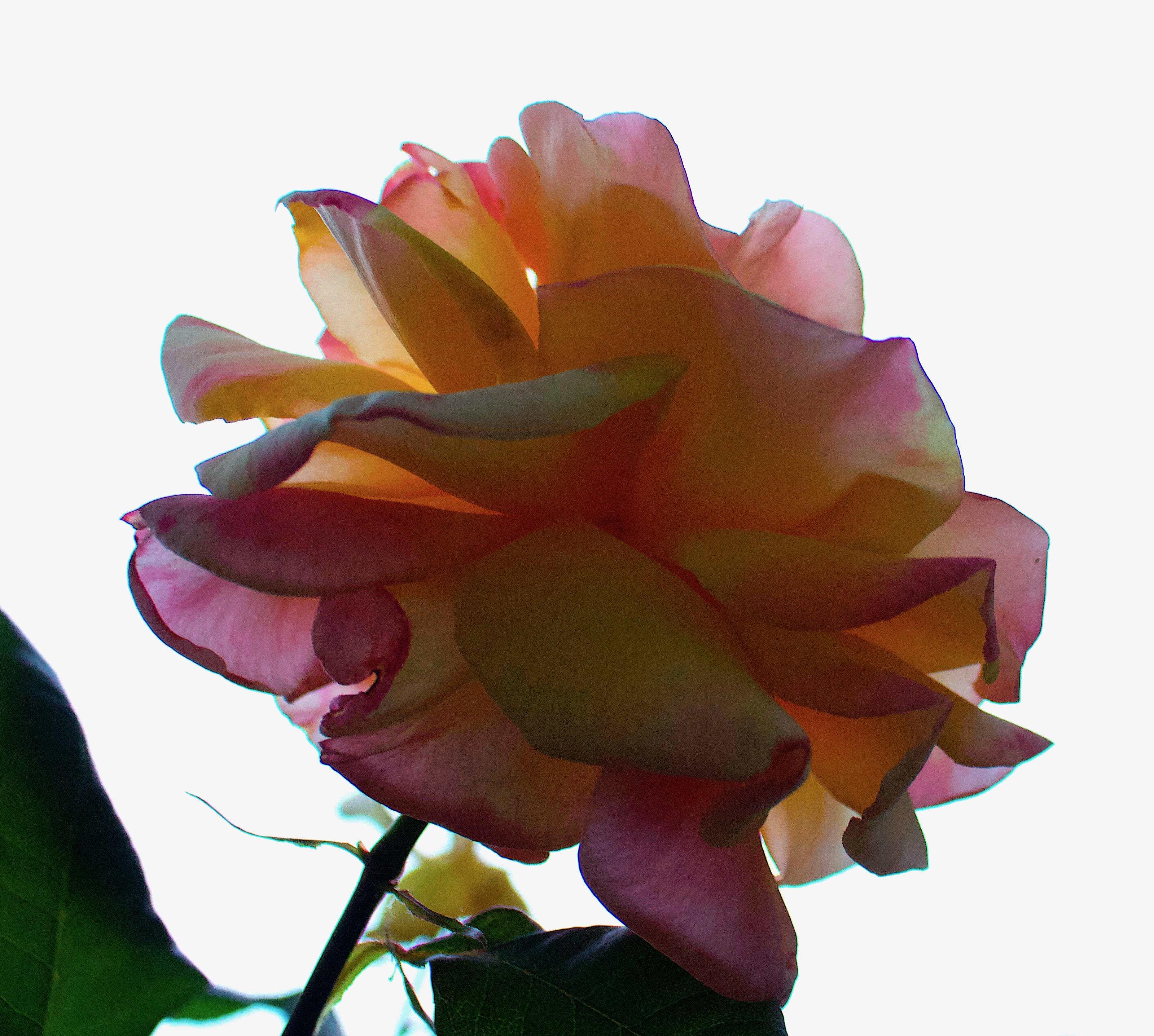
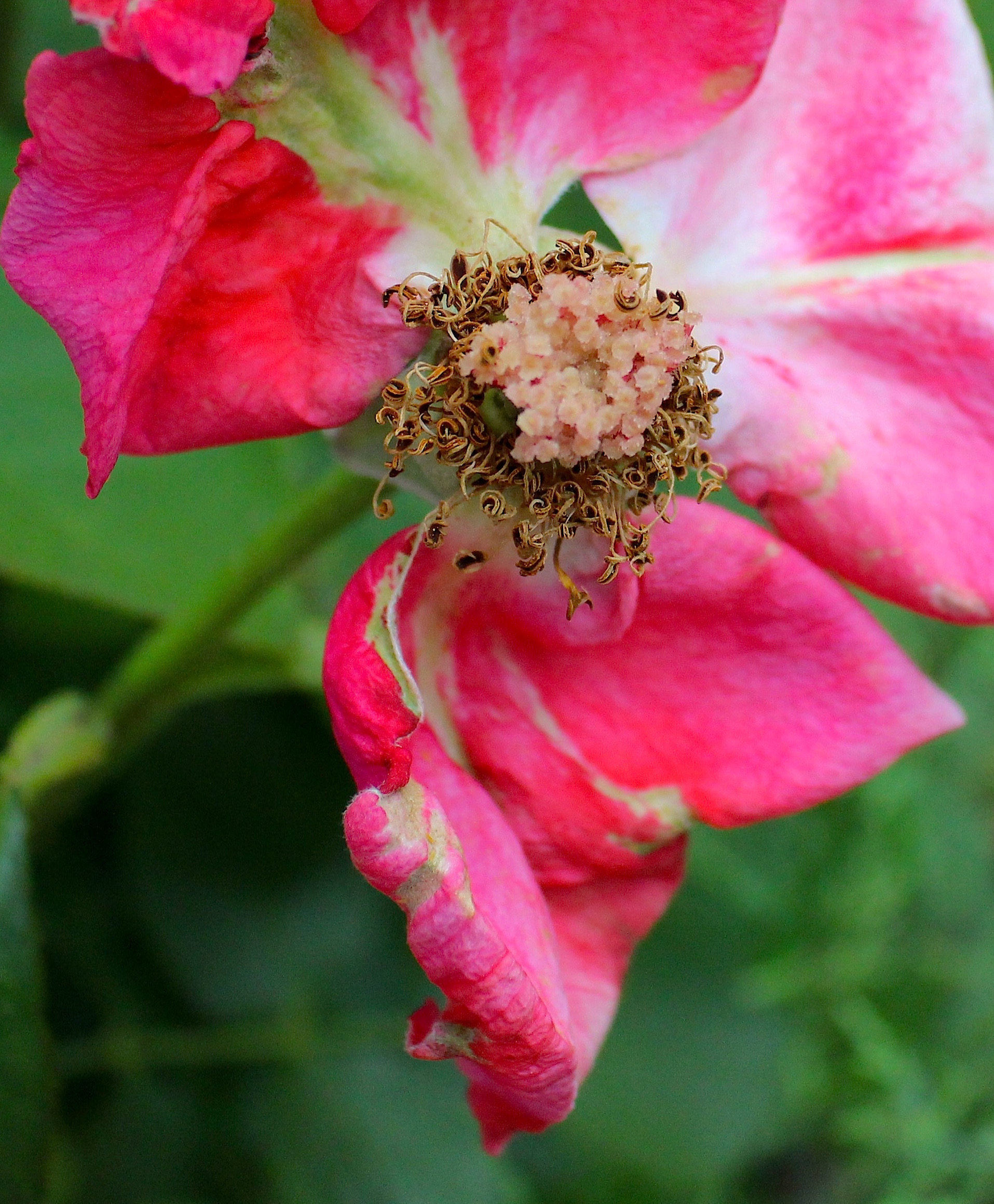
To think that this meaningless thing was ever a rose, Scentless, colourless, this! Will it ever be thus (who knows?) Thus with our bliss, If we wait till the close?
Though we care not to wait for the end, there comes the end Sooner, later, at last, Which nothing can mar, nothing mend:
An end locked fast, Bent we cannot re-bend. ~Christina Rossetti “Summer is Ended”
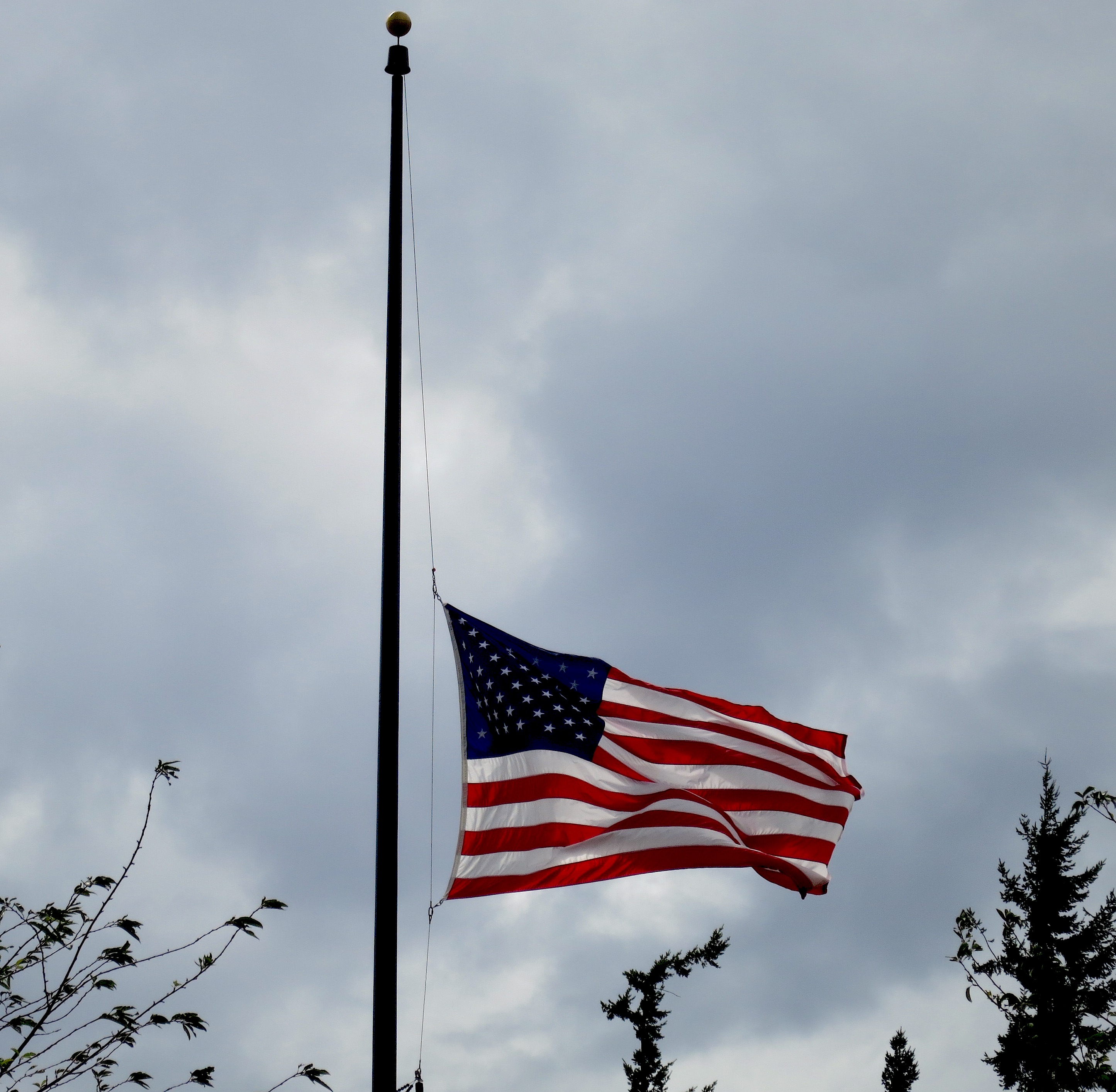
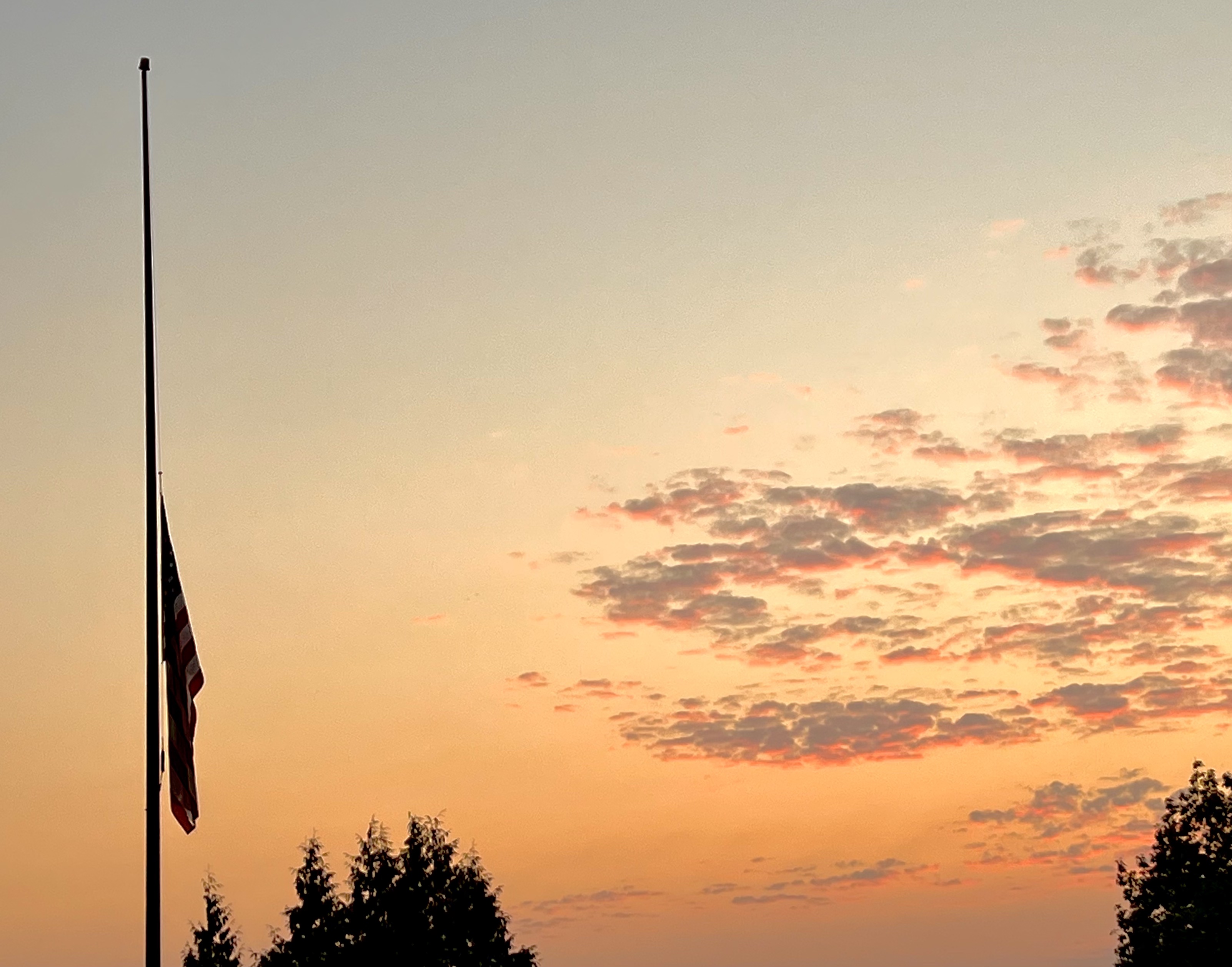
As a 3rd grader in November 1963, I learned the import of the U.S. flag being lowered to half mast in response to the shocking and violent death of our President. The lowering of the flag was so rare when I was growing up, it had dramatic effect on all who passed by —
our soul’s sap quivers
— something very sad had happened to our country, something or someone had tragically ended, warranting our silence, our stillness, and our grief.
For the twenty-two years since 9/11/01, our flag has spent significant time at half mast, most often due to our own home-grown mass shooting terrorism. When I see it flying low, I’m befuddled instead of contemplative, puzzling over what the latest loss might be as there are so many, sometimes all happening in the same time frame. We no longer are silenced by this gesture of honor and respect; we certainly are not stilled when personally and corporately instigating and suffering the same mistakes against humanity over and over again.
We are so bent. Will we ever be mended again?
Eliot wrote these prescient words of the Four Quartets in the midst of the WWII German bombing raids that destroyed so many people and neighborhoods. Perhaps he sensed the destruction he witnessed would not be the last time in history that evil visits the innocent, leaving them in ashes. There would be so many more losses to come, not least being the horror of 9/11/01.
There remains so much more sadness to be borne, such abundance of grief. Our world has become overwhelmed and stricken. Yet Eliot was right: we have yet to live in a Zero summer of endless hope and fruitfulness, of spiritual awakening and understanding. Where is it indeed? When will the summer Rose of beauty and fragrance rise again?
We must return, as people of faith to Eliot’s still point to which we are called on a remembrance day such as today. We must be stilled; we must be silenced. We must grieve the losses of this turning world and pray for release from the suffering we cause and we endure. Only in the asking, only in the kneeling down and pleading, are we surrounded by God’s unbounded grace.
Only then will His Rose bloom, once again recognizable.
“Zero Summer” imagines the unimaginable horror of Hiroshima and Nagasaki, and yet points to epiphanic awakening that transcend human imagination at the same time. T.S. Eliot, who coined this term in his “Four Quartets,” longed for that eternal summer, birthed out of the “still point,” where imagination is met with grace and truth. ~Makoto Fujimura
“There Are No Words” written on 9/11/2001 by Kitty Donohoe
there are no words there is no song is there a balm that can heal these wounds that will last a lifetime long and when the stars have burned to dust hand in hand we still will stand because we must
in one single hour in one single day we were changed forever something taken away and there is no fire that can melt this heavy stone that can bring back the voices and the spirits of our own
all the brothers, sisters and lovers all the friends that are gone all the chairs that will be empty in the lives that will go on can we ever forgive though we never will forget can we believe in the milk of human goodness yet
we were forged in freedom we were born in liberty we came here to stop the twisted arrows cast by tyranny and we won’t bow down we are strong of heart we are a chain together that won’t be pulled apart
One-Time
Monthly
Yearly
Make a one-time or recurring donation to support daily Barnstorming posts






























 Barnstorming