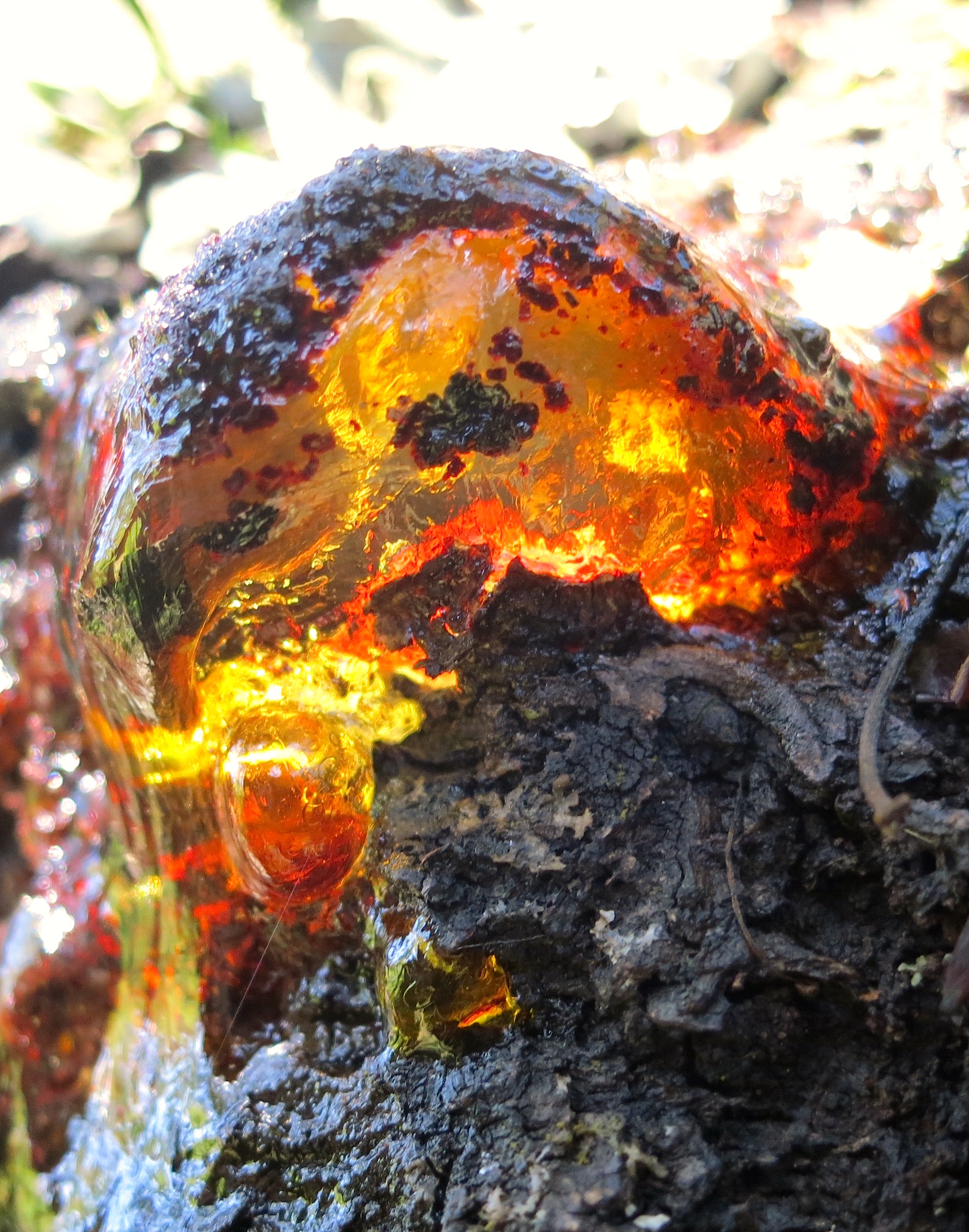
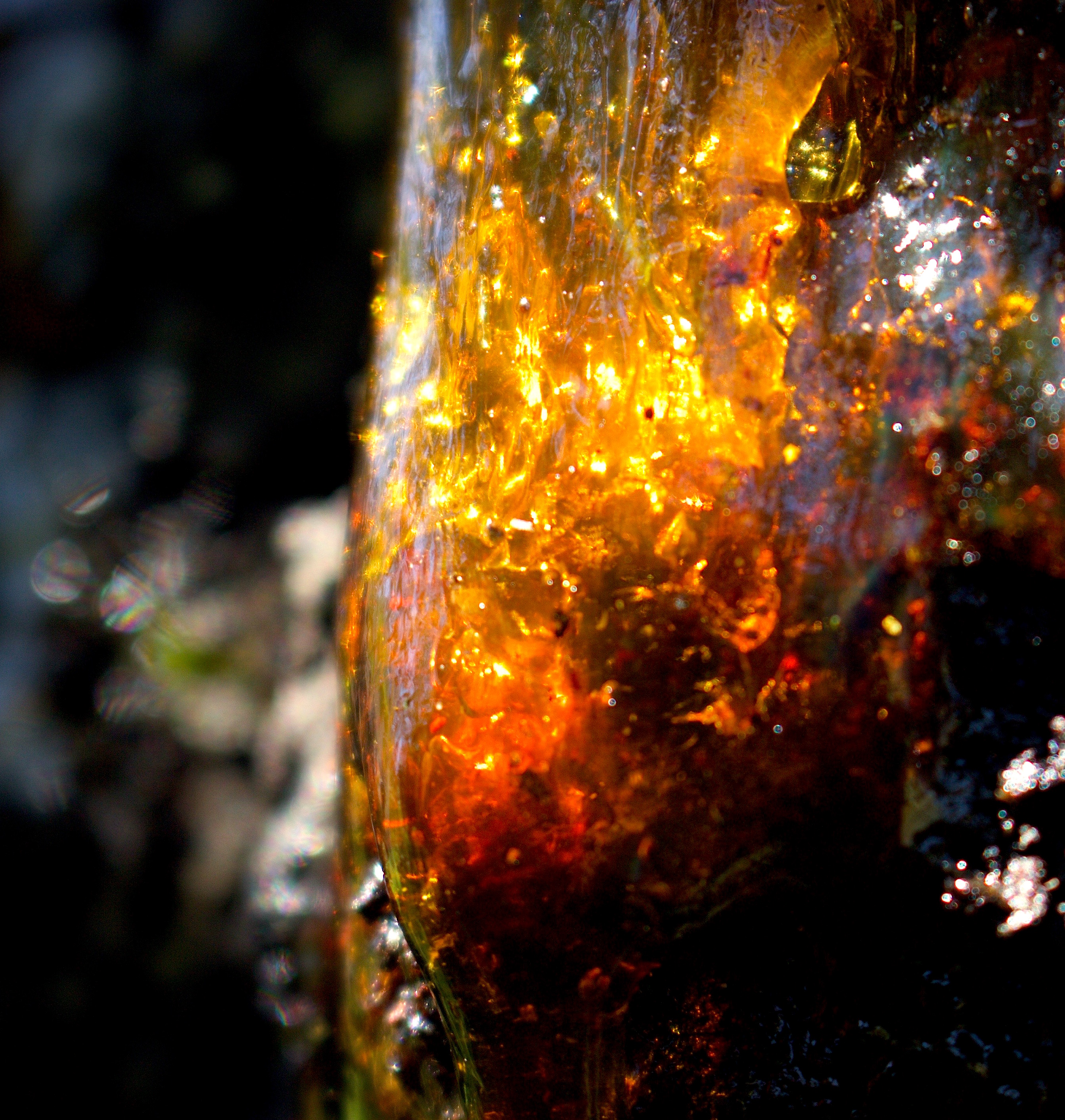
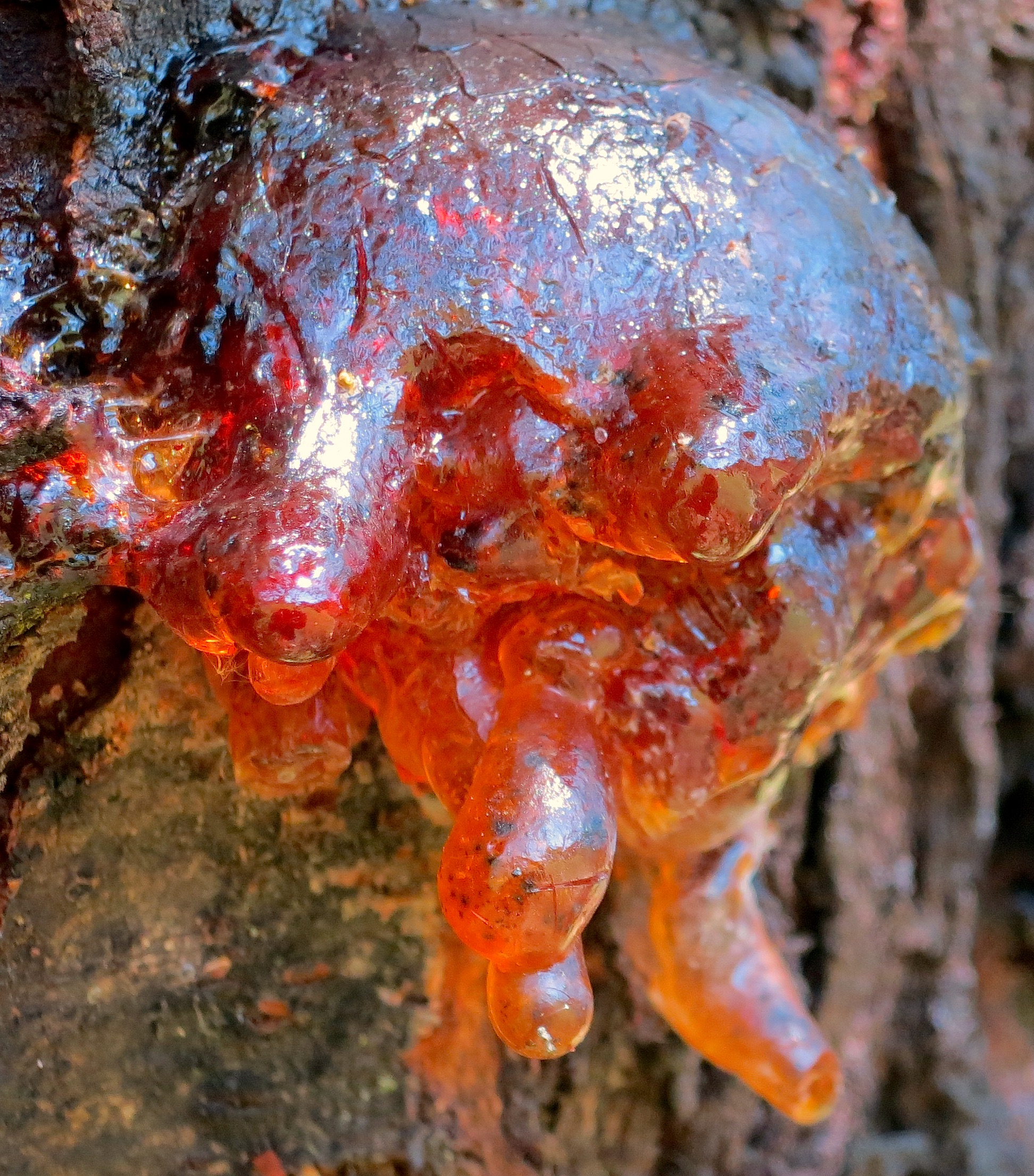
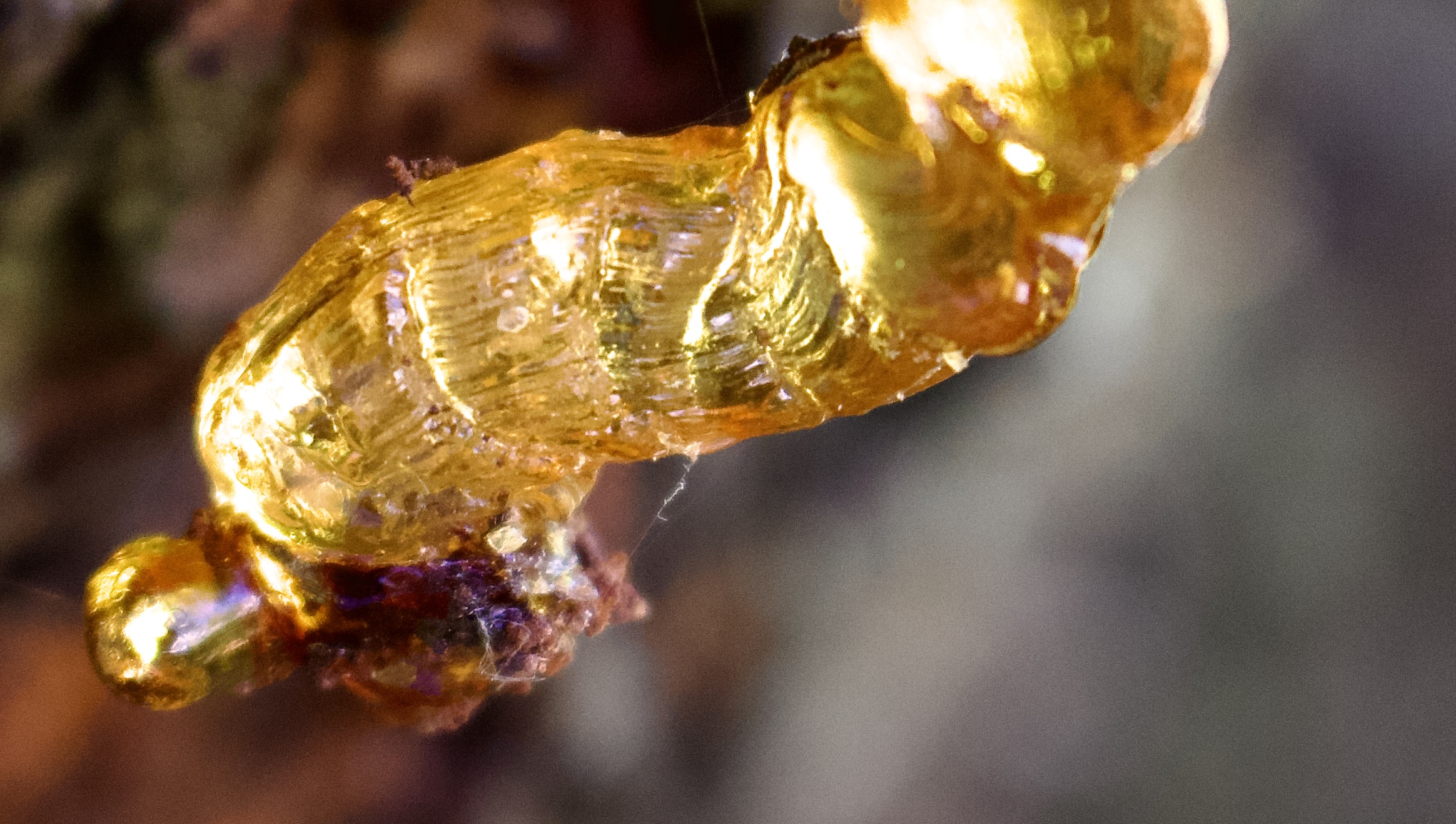
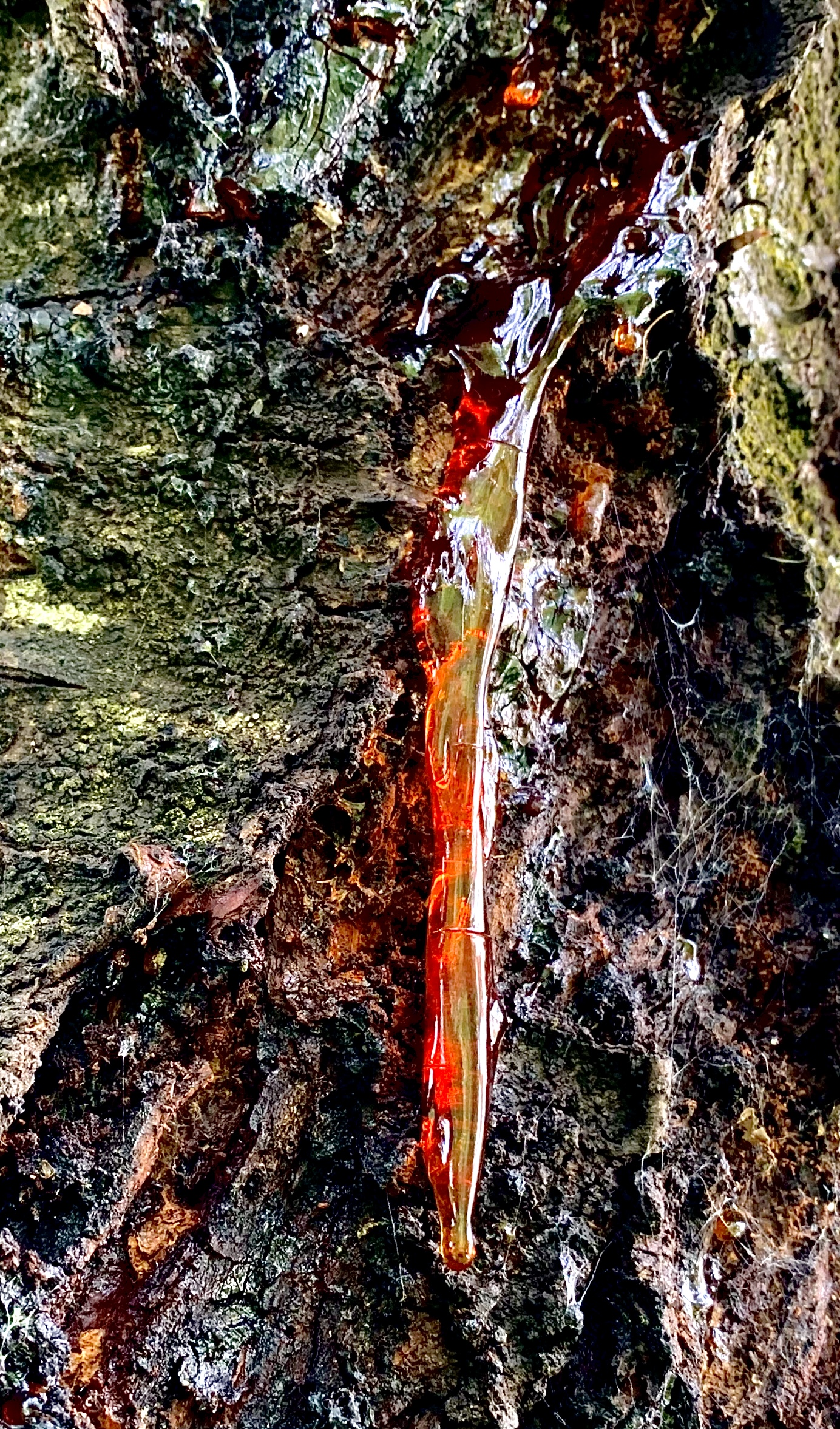
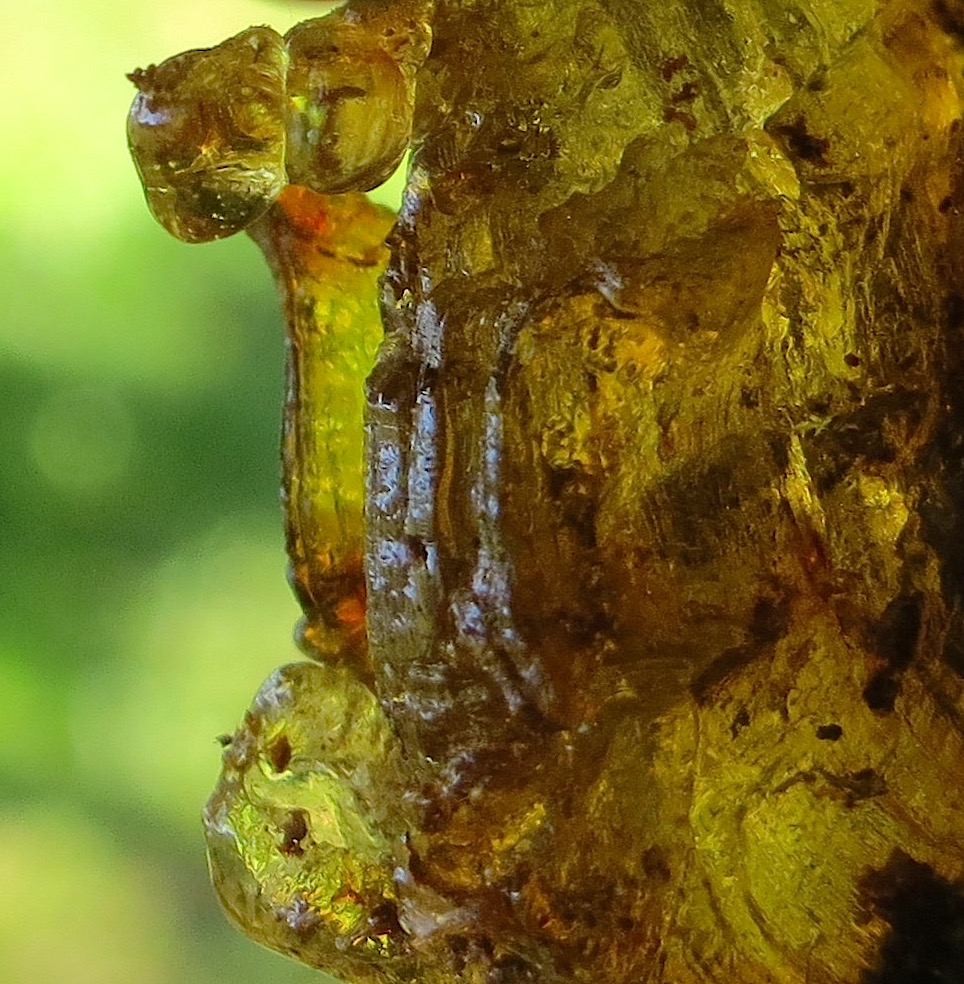
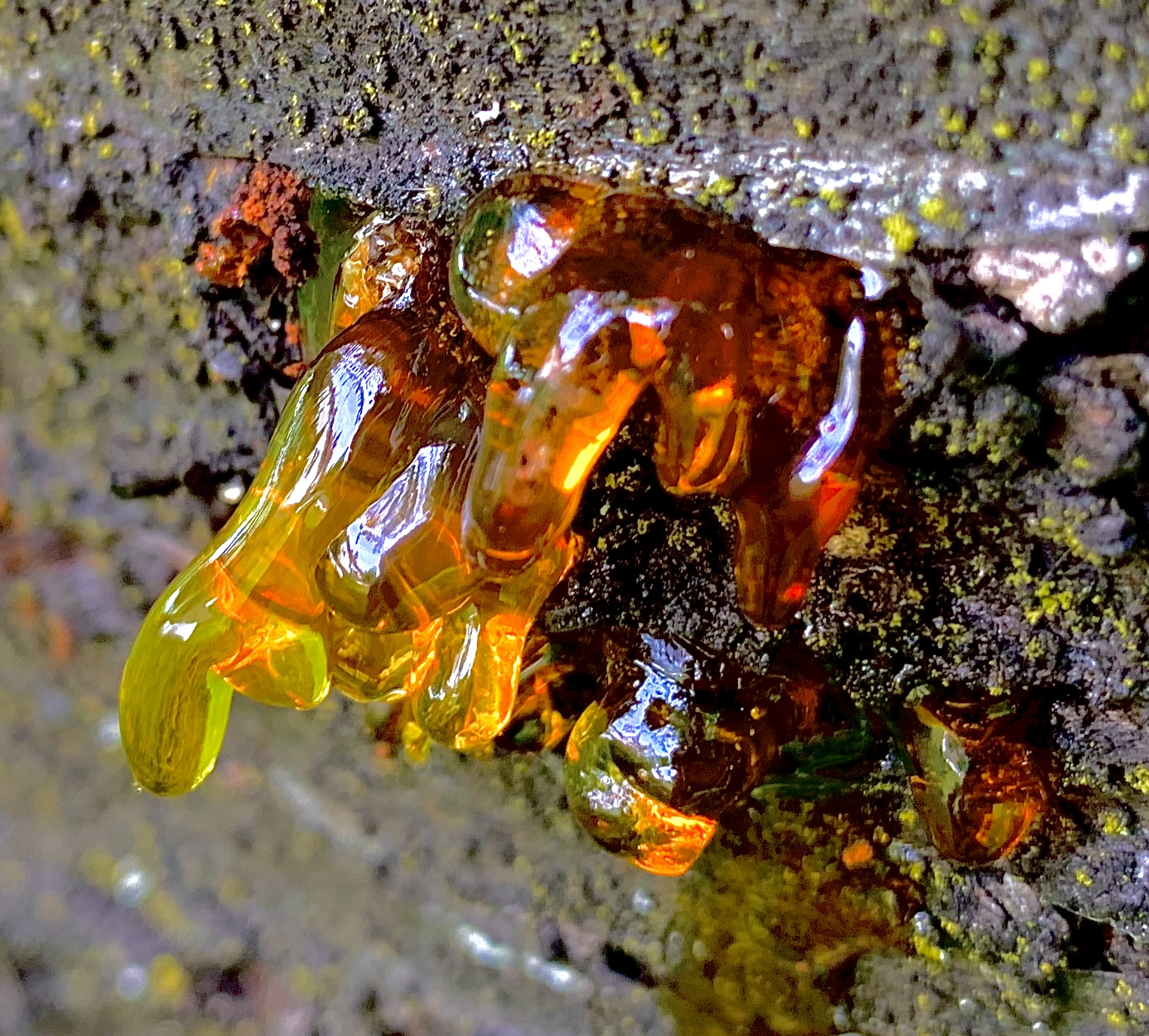
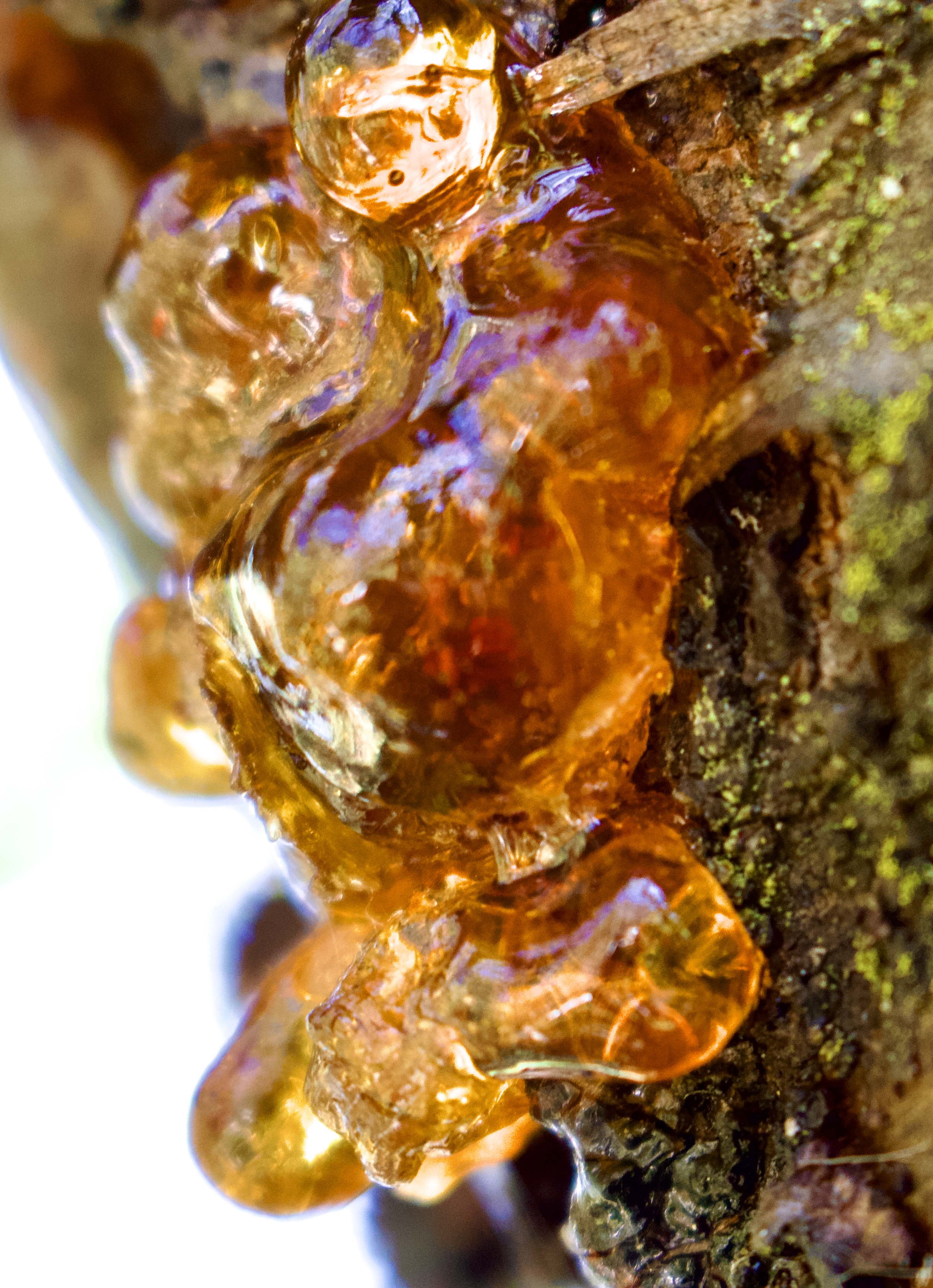
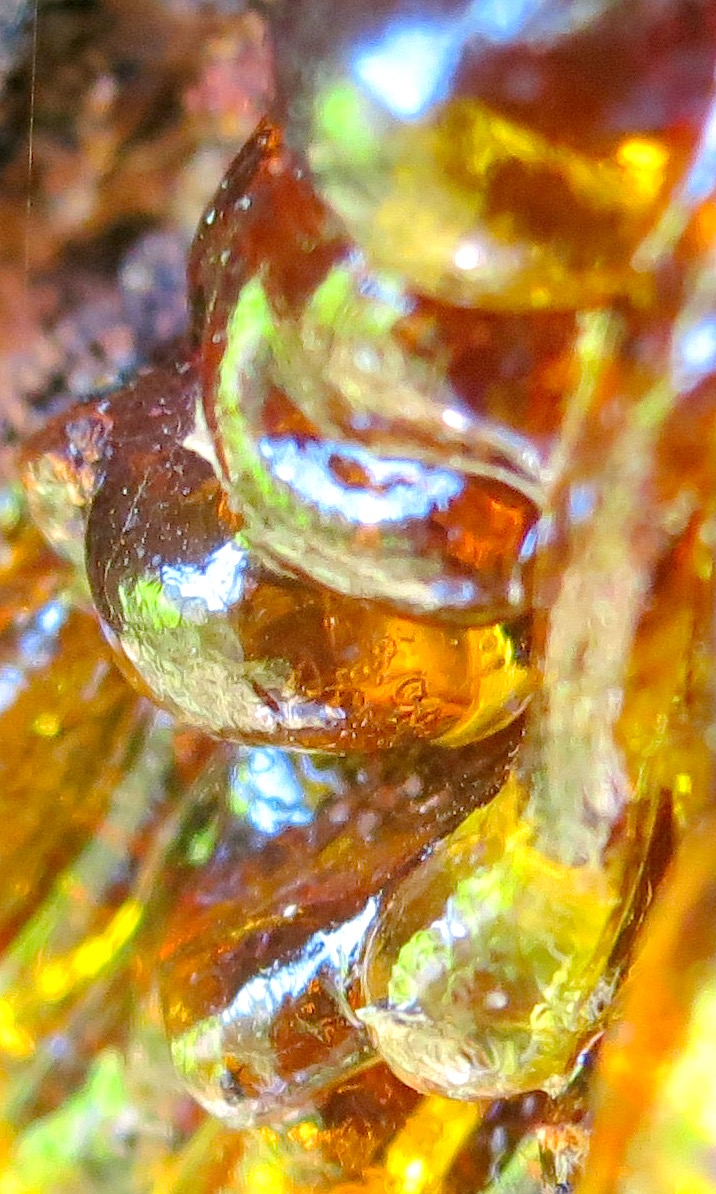
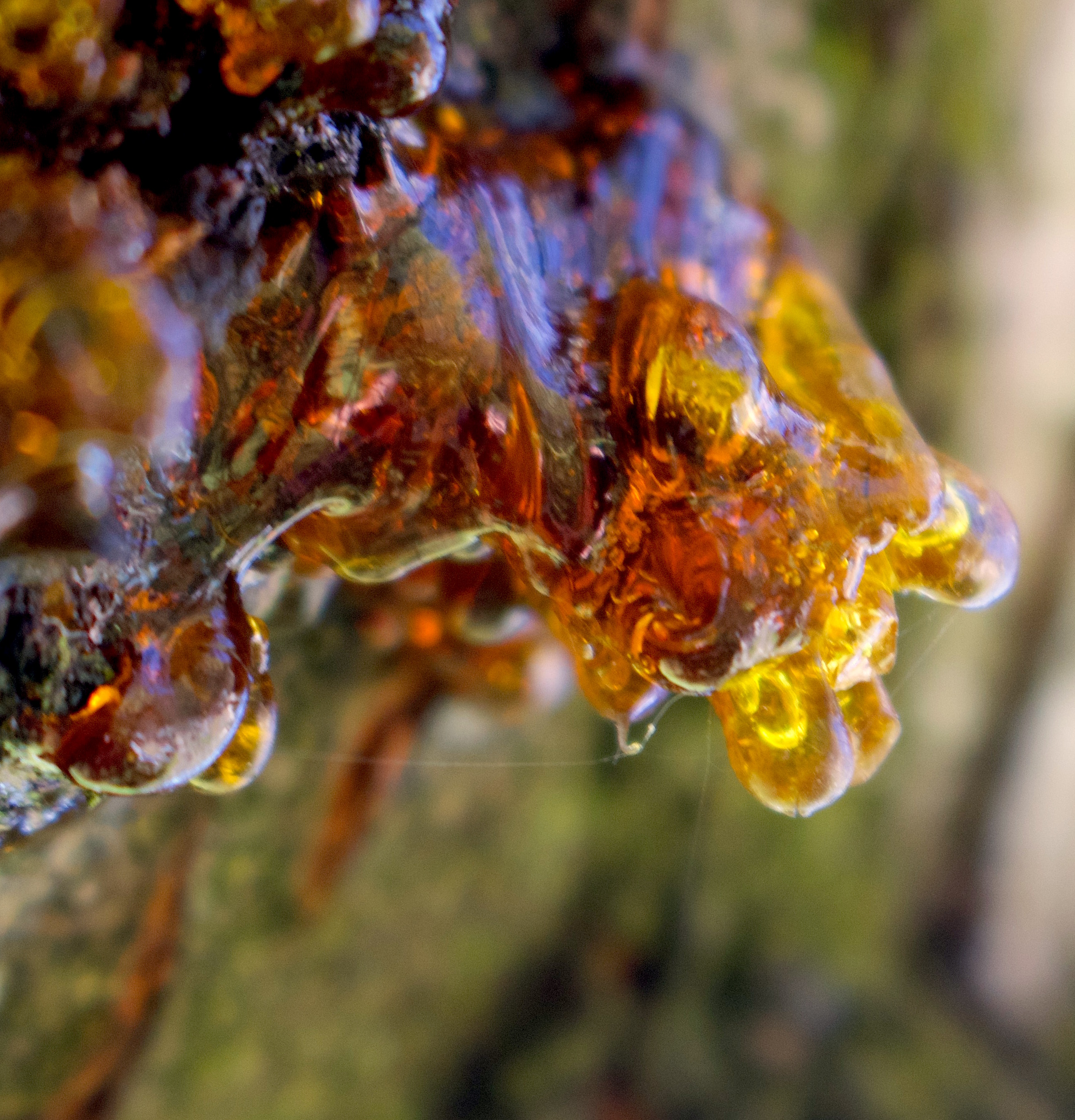
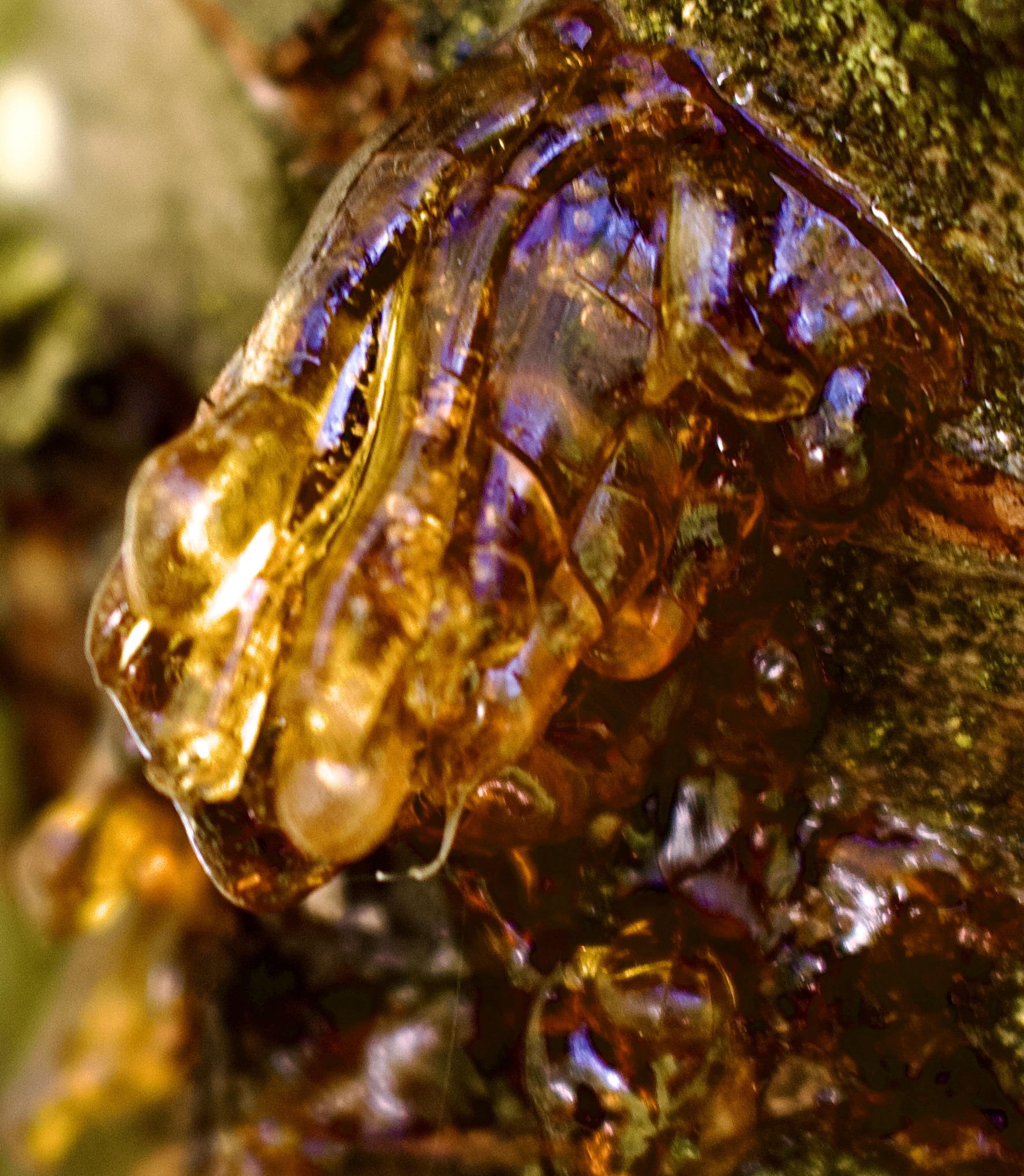
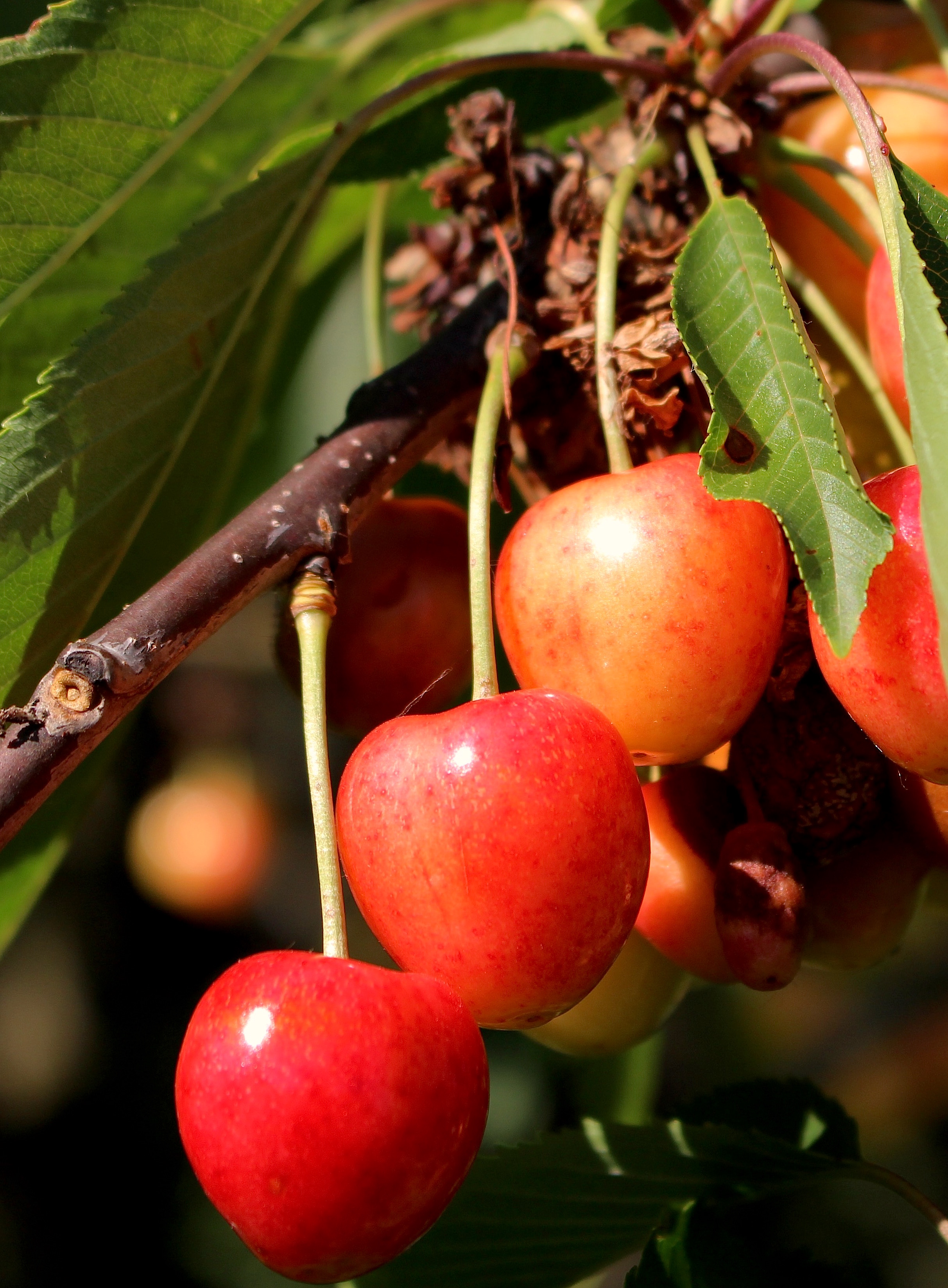
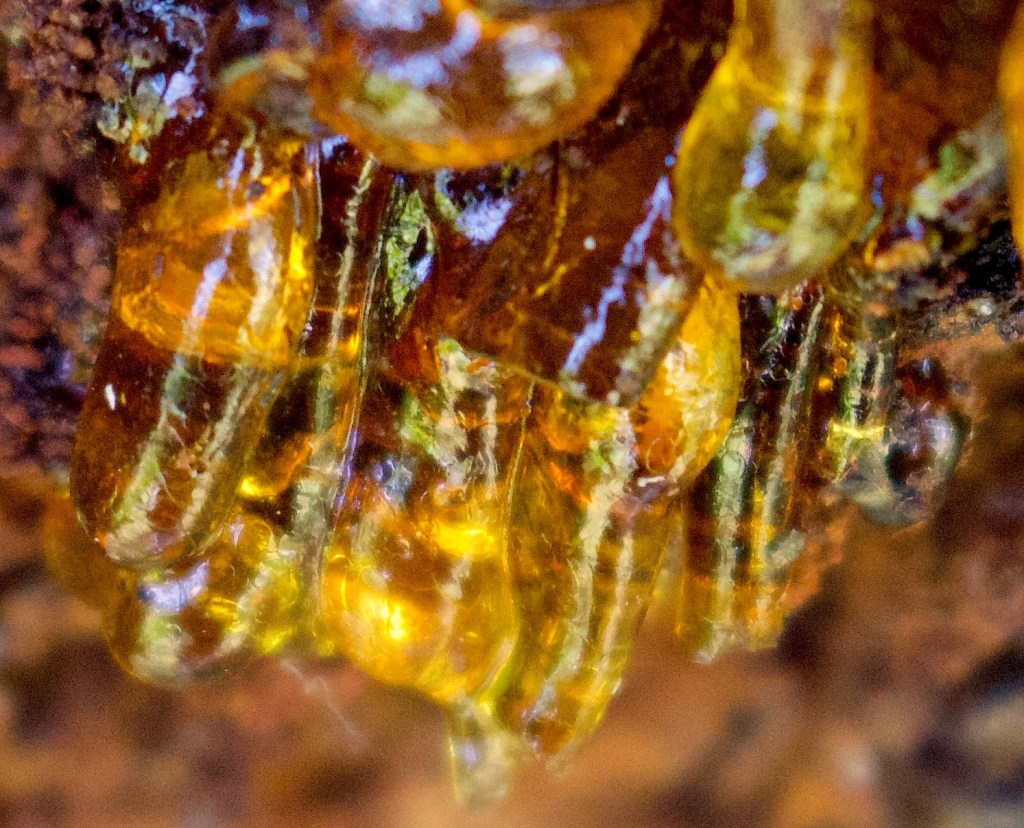
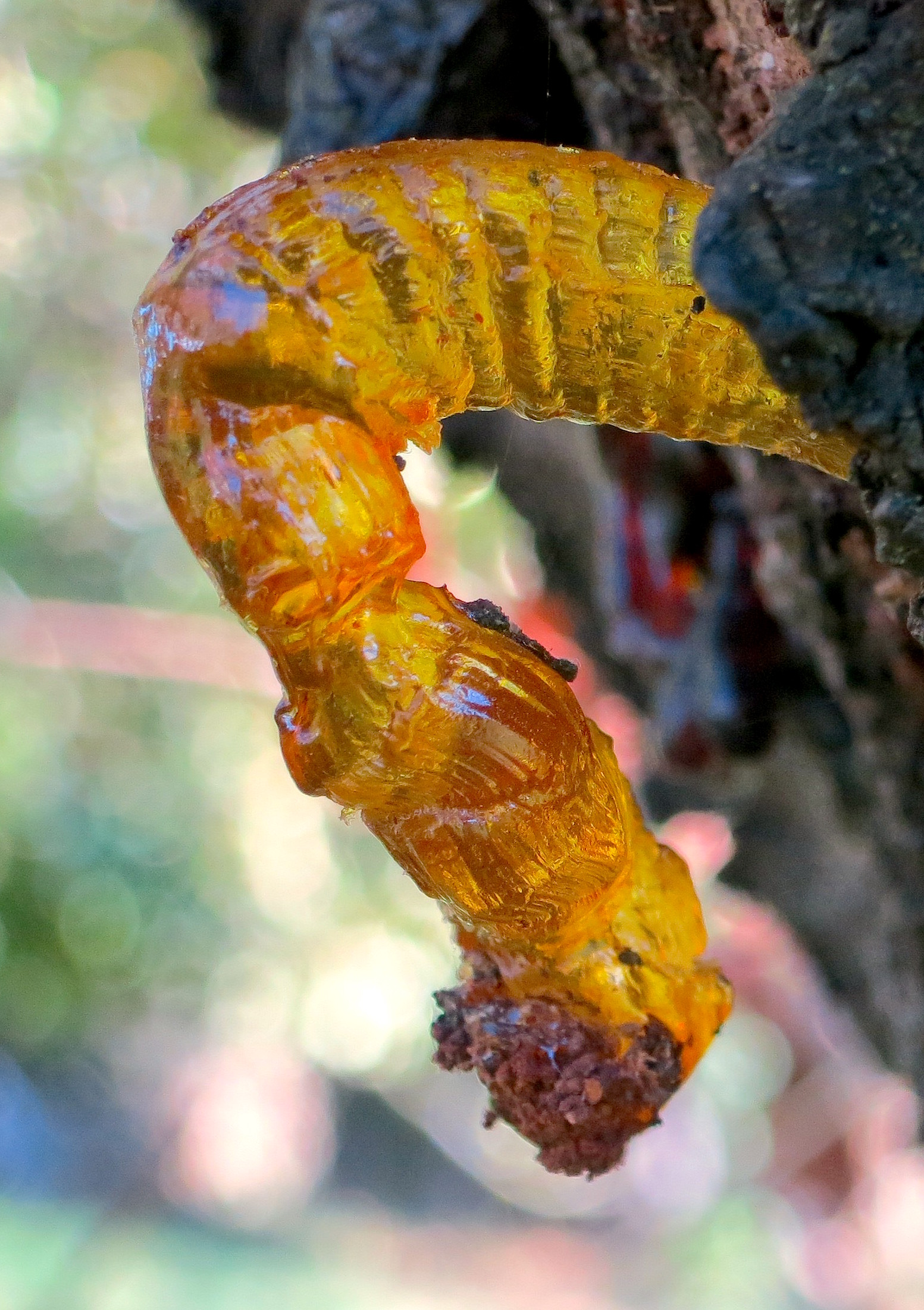
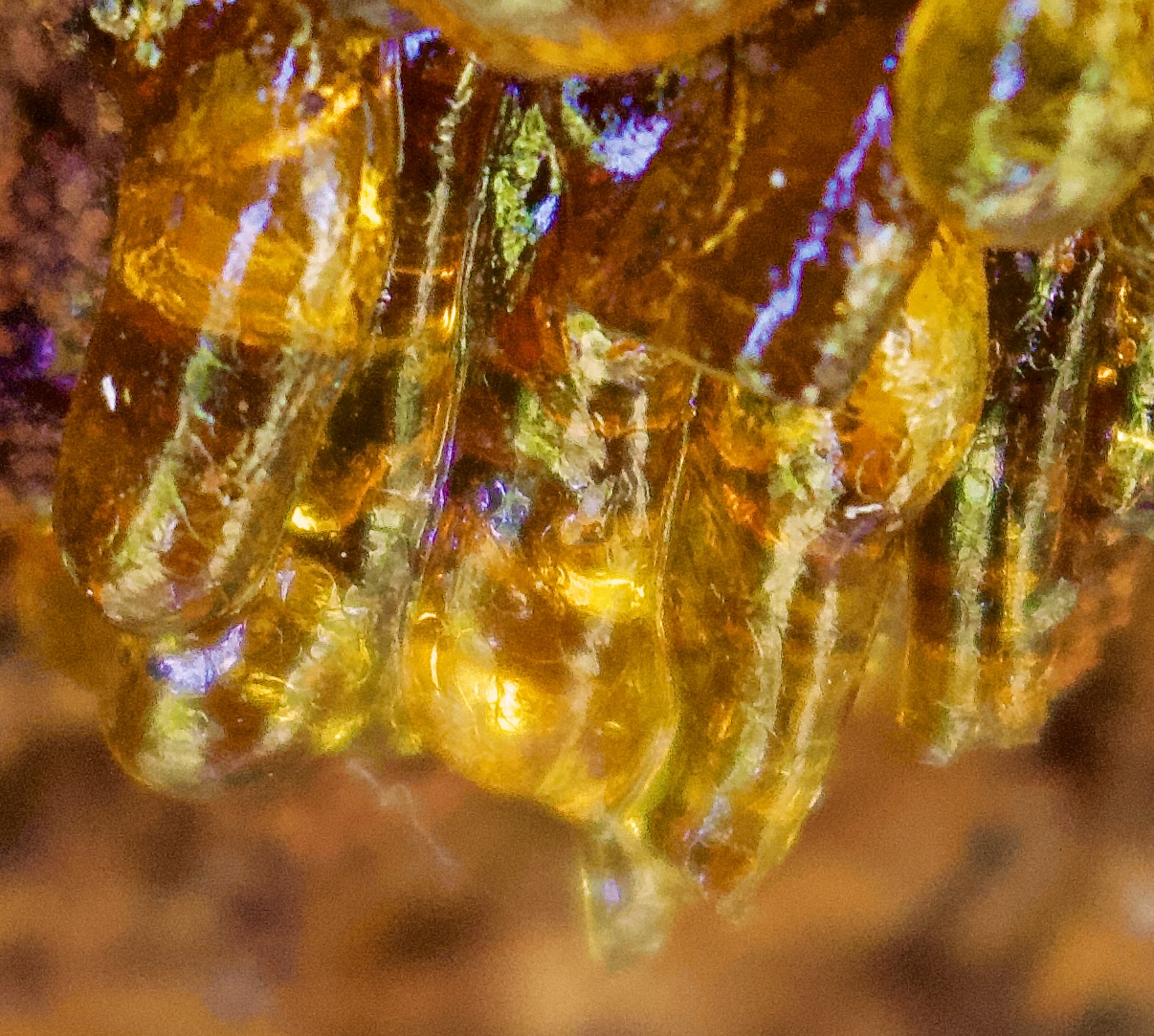
The last remaining cherry tree on our farm, a Royal Anne, has stood between house and barn for over 100 years. This year, its branch joints and bark defects are bleeding – oozing sculptures of amber sap.
The resin is hard and glass-like, reflecting the tree’s slow internal circulation, changing subtly day by day.
Though its cherries burst months ago with juicy flavor, now it bleeds crystalline flames from its wounds.
What a gift is this love bleeding out as it moves deep inside an old trunk. In its thirsty anguish, our dear cherry tree is weeping, creating glass fruit reflecting Light.
One-Time
Monthly
Yearly
Make a one-time or recurring donation to support daily Barnstorming posts
The wild November come at last Beneath a veil of rain; The night wind blows its folds aside – Her face is full of pain.
The latest of her race, she takes The Autumn’s vacant throne: She has but one short moon to live, And she must live alone.
A barren realm of withered fields, Bleak woods, and falling leaves, The palest morns that ever dawned; The dreariest of eves.
It is no wonder that she comes, Poor month! With tears of pain; For what can one so hopeless do But weep, and weep again? ~Richard Henry Stoddard “November”
A fine rain was falling, and the landscape was that of autumn. The sky was hung with various shades of gray, and mists hovered about the distant mountains – a melancholy nature. Every landscape is, as it were, a state of the soul, and whoever penetrates into both is astonished to find how much likeness there is in each detail. ~Henri Frederic Amiel
Leaves wait as the reversal of wind comes to a stop. The stopped woods are seized of quiet; waiting for rain bird & bug conversations stutter to a stop.
…the rain begins to fall. Rain-strands, thin slips of vertical rivers, roll the shredded waters out of the cloud and dump them puddling to the ground. Like sticks half-drowned the trees lean so my eyes snap some into lightning shapes, bent & bent.
Whatever crosses over through the wall of rain changes; old leaves are now gold. The wall is continuous, doorless. True, to get past this wall there’s no need for a door since it closes around me as I go through. ~Marie Ponsot from “End of October”
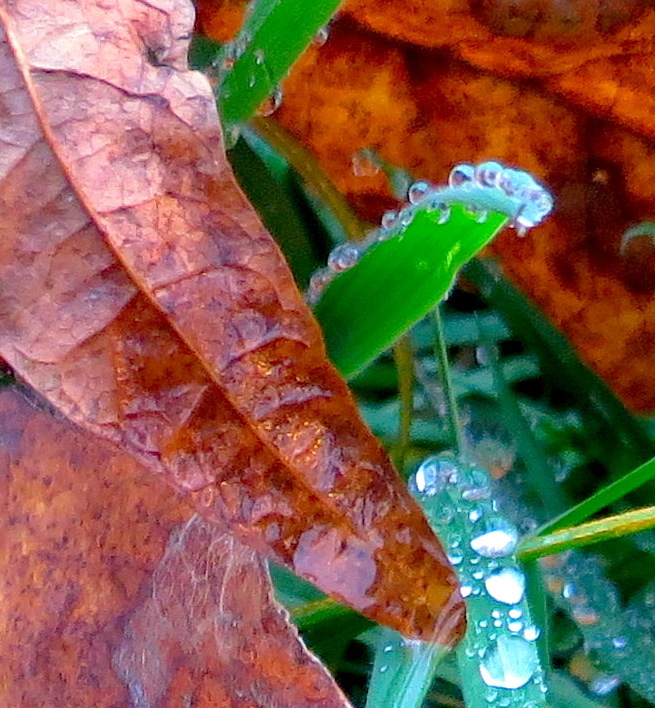
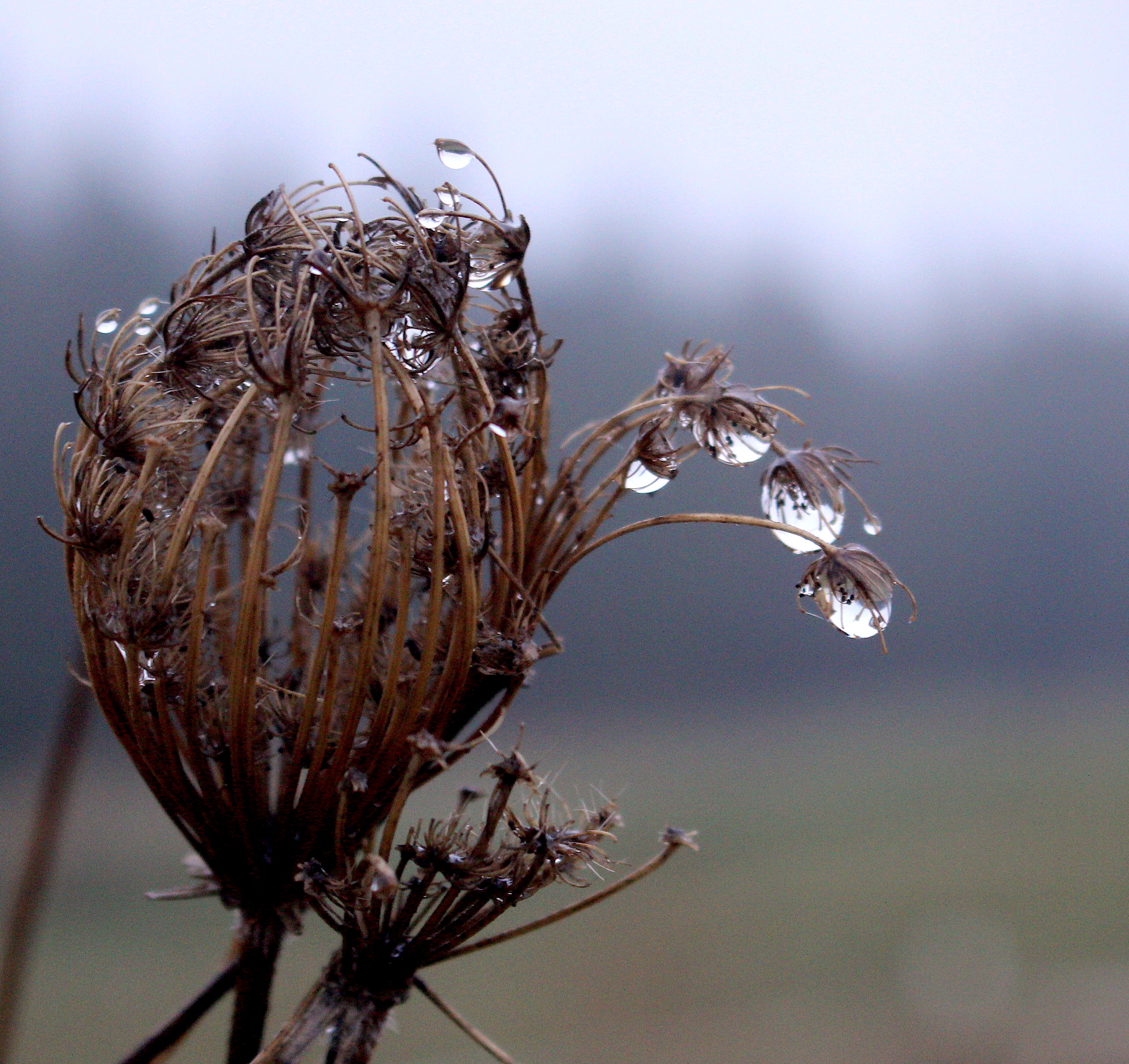
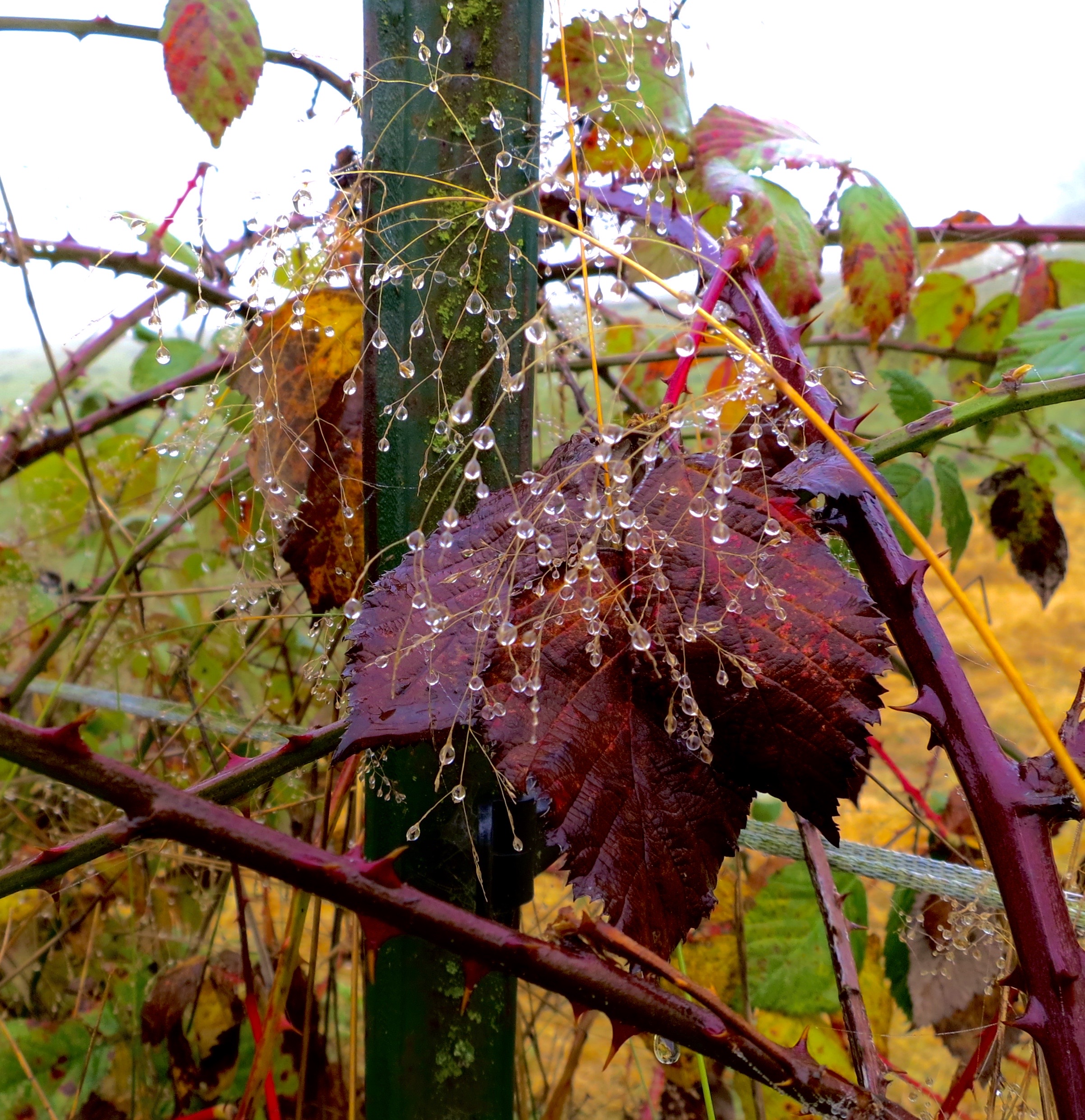
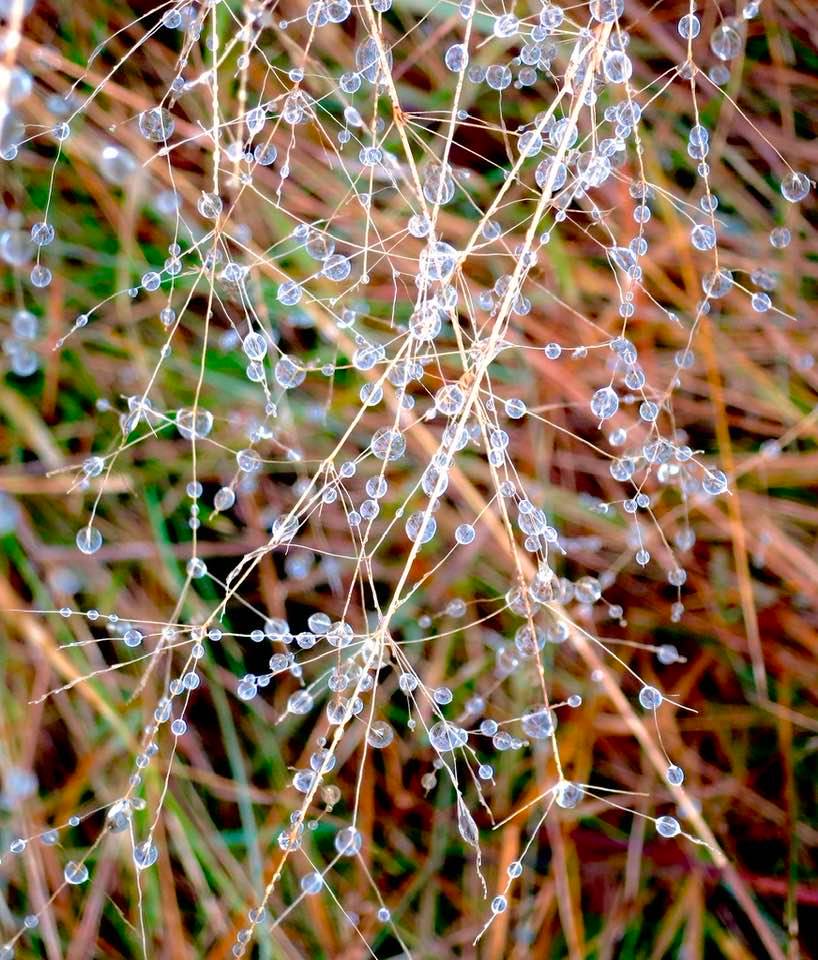
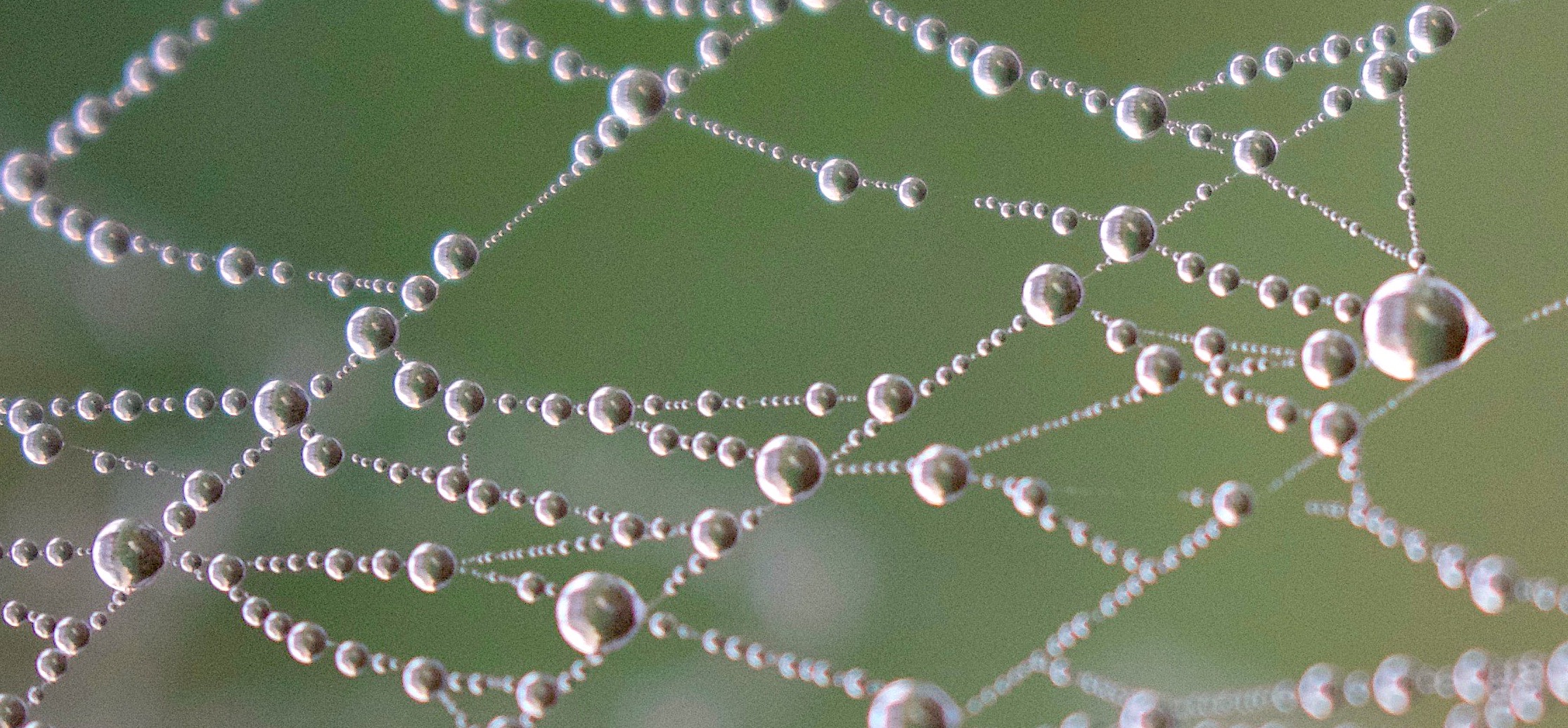
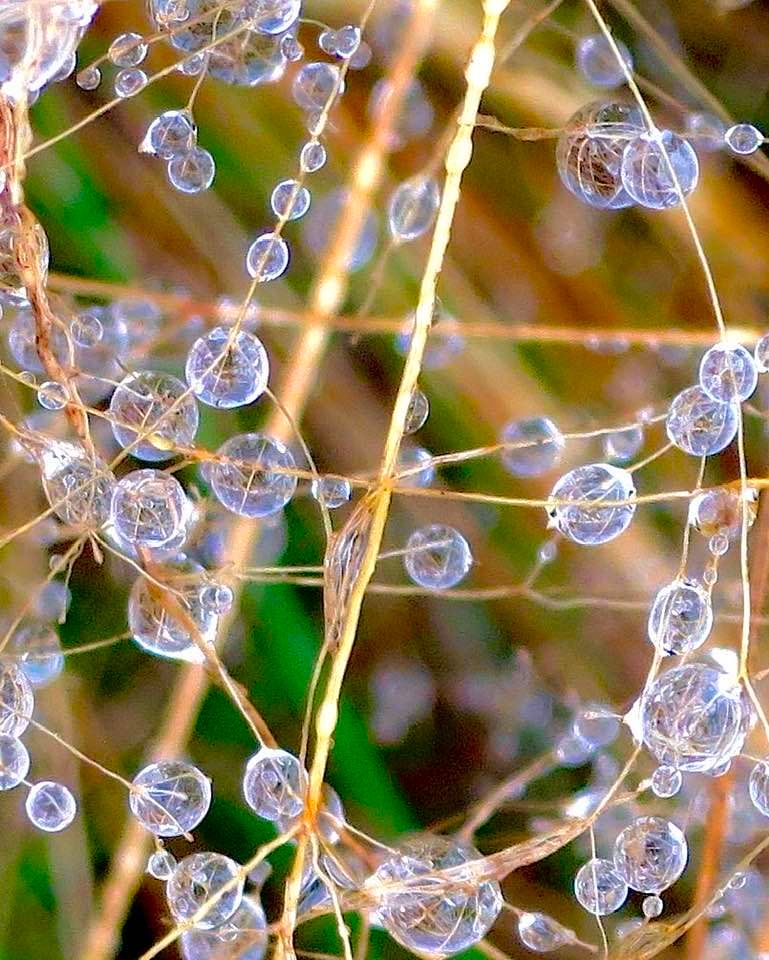
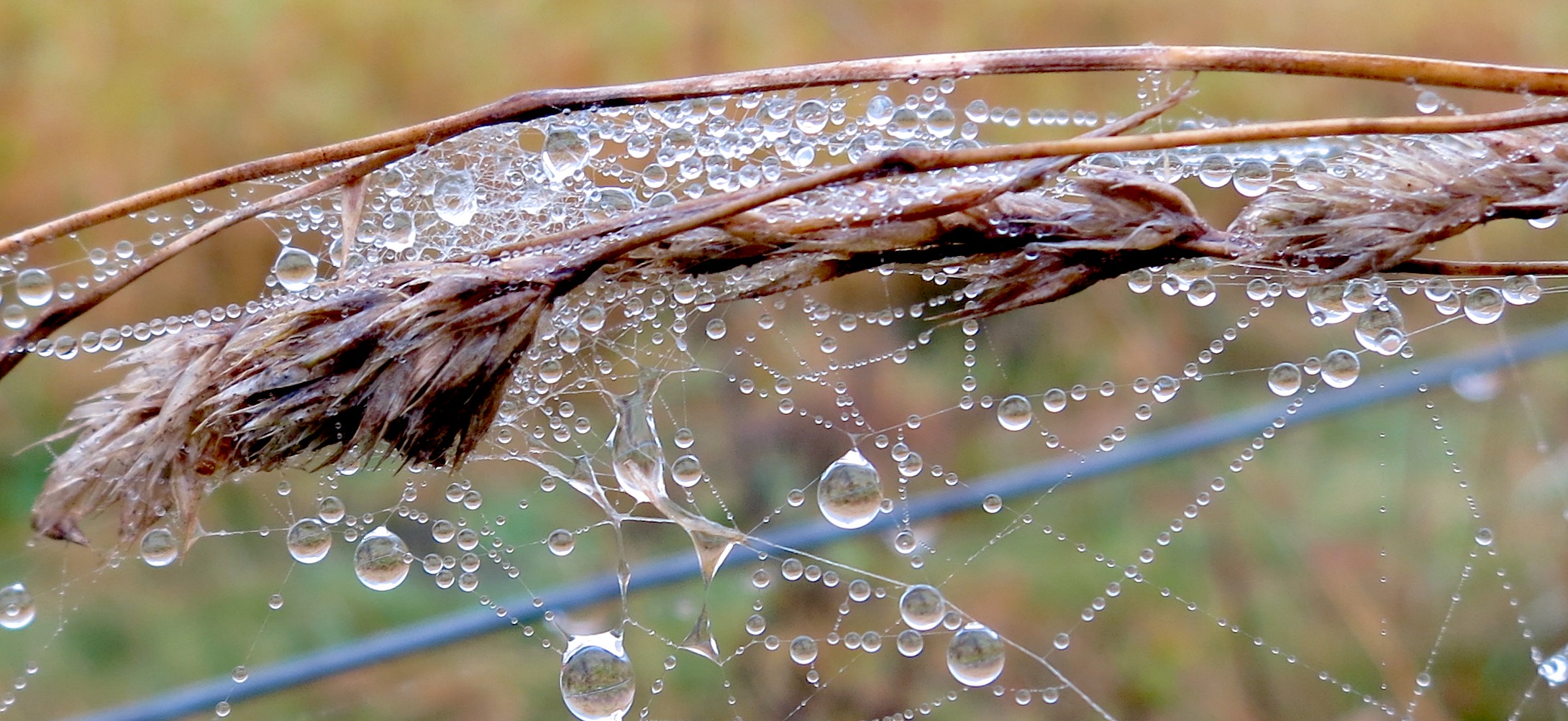
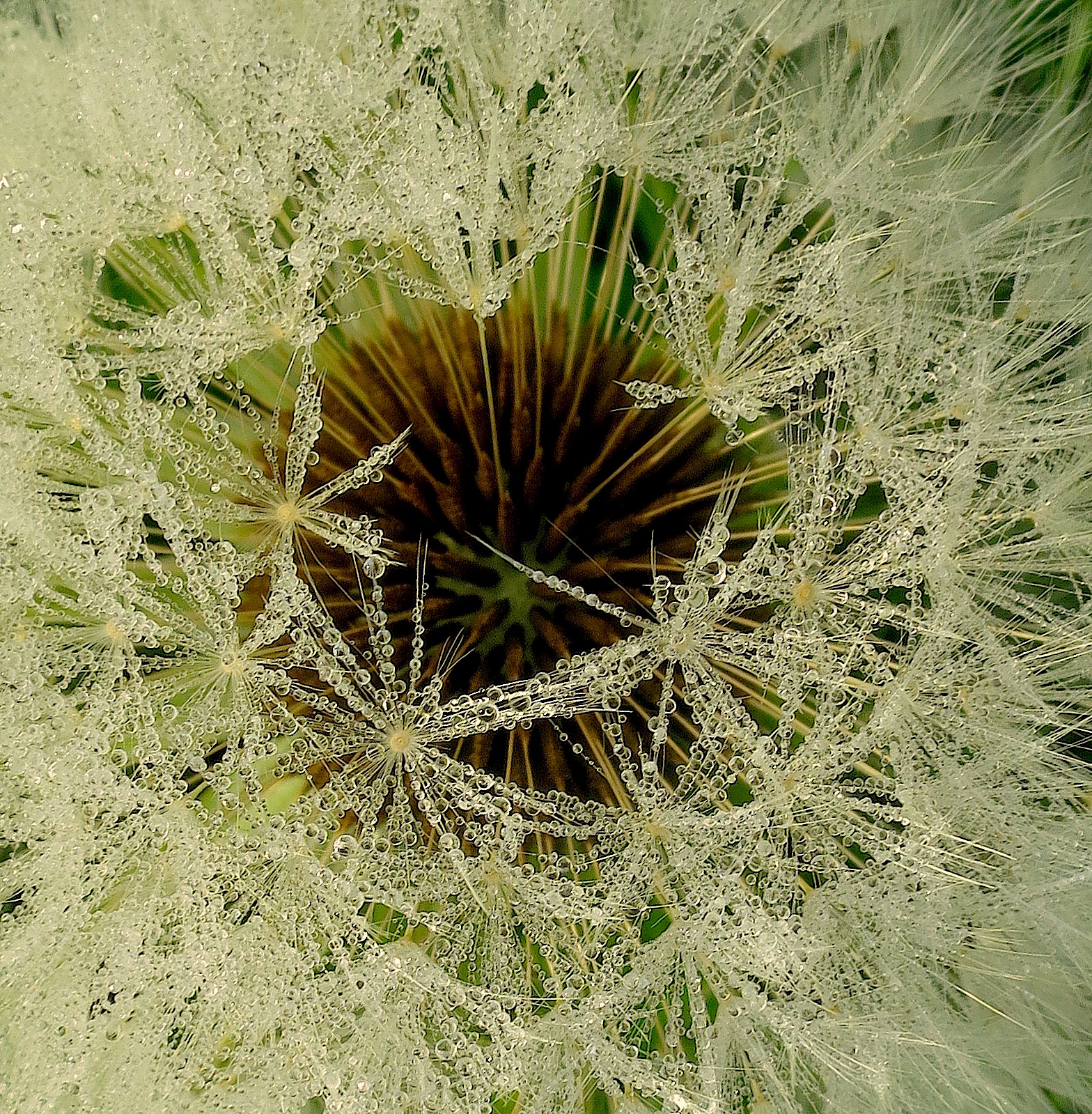
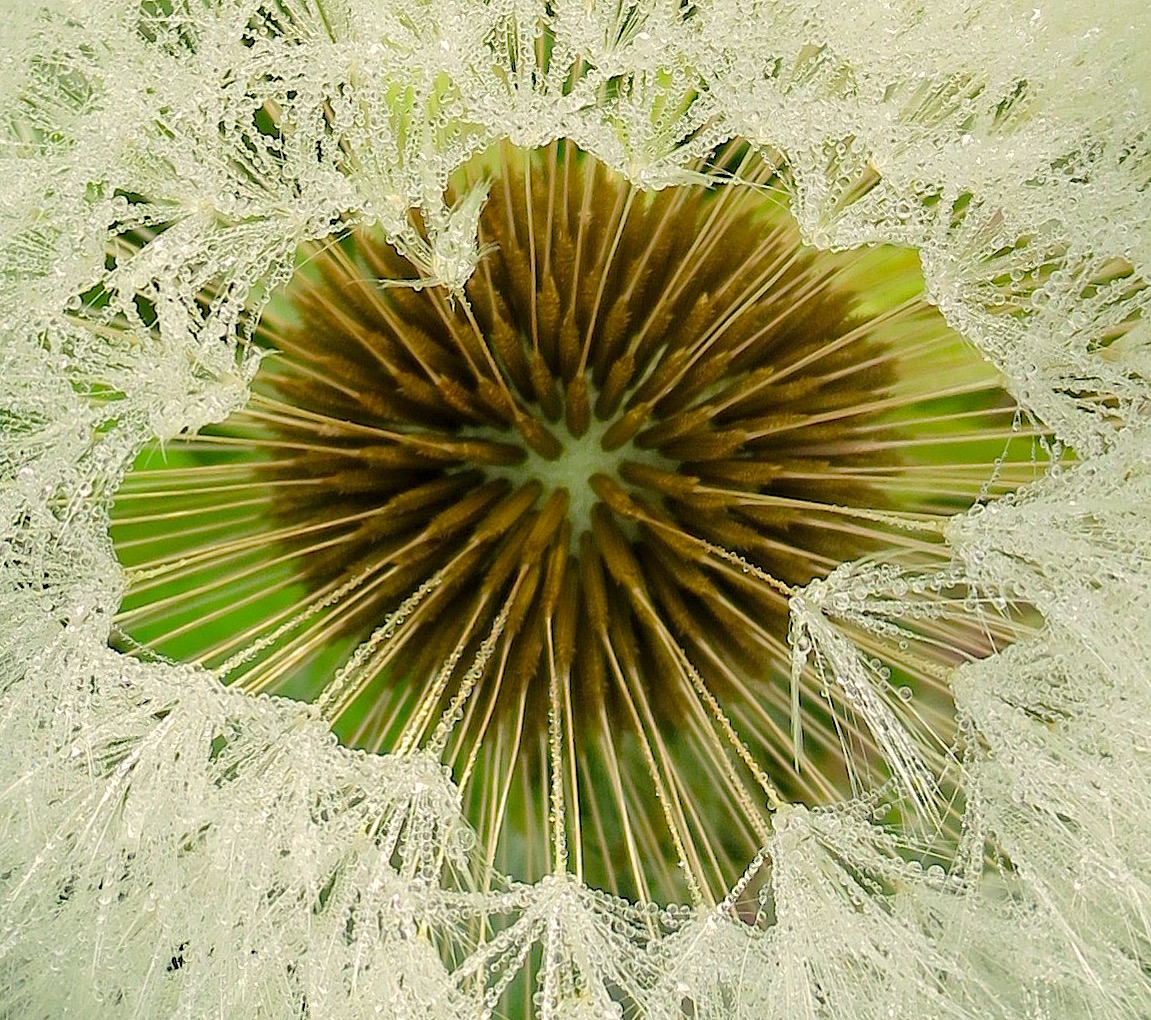
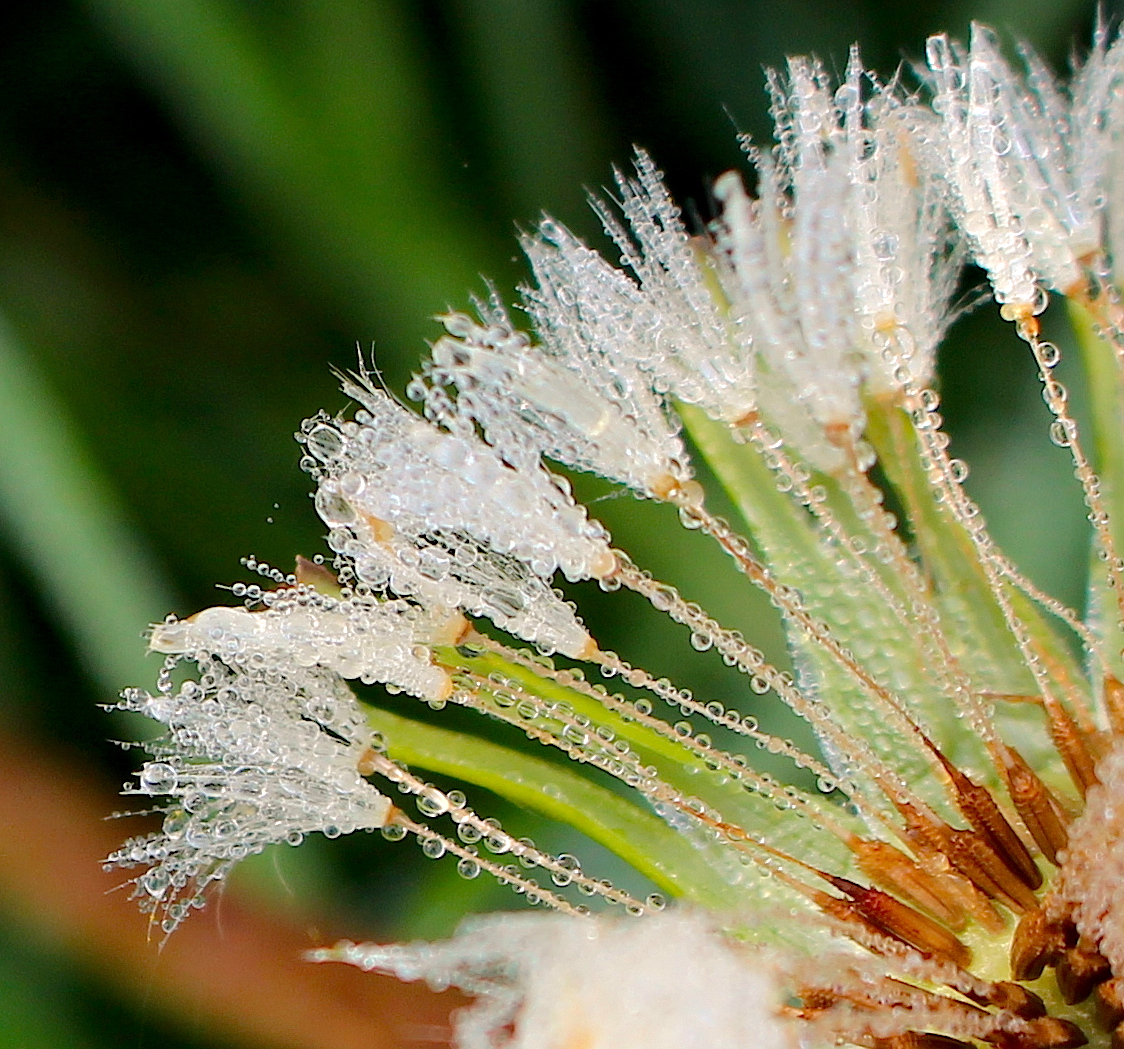
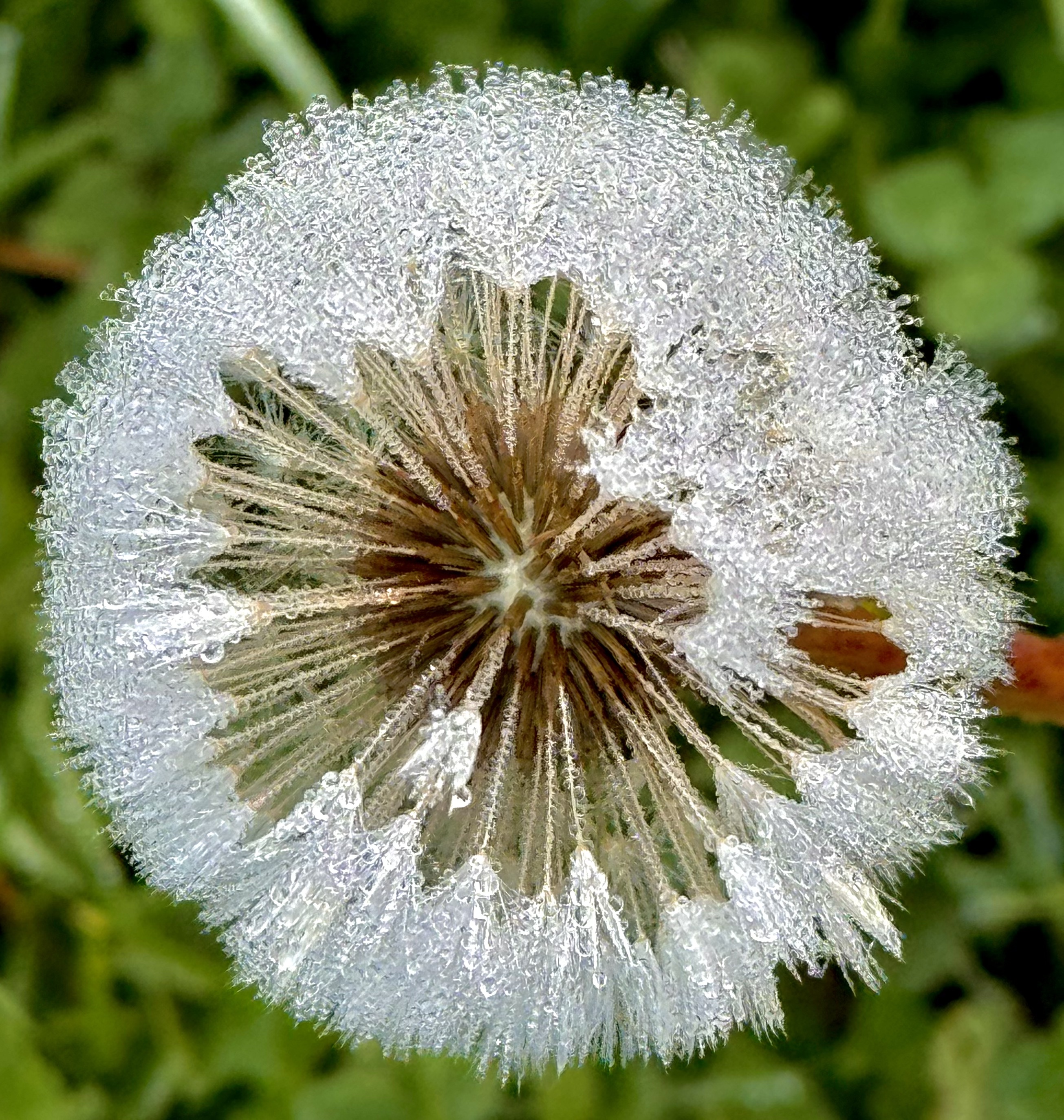
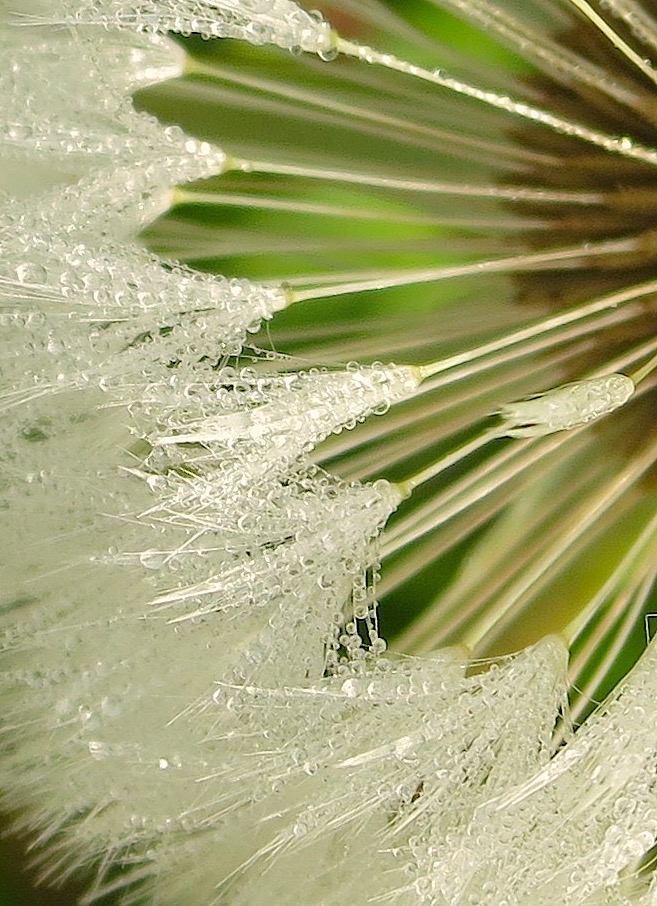
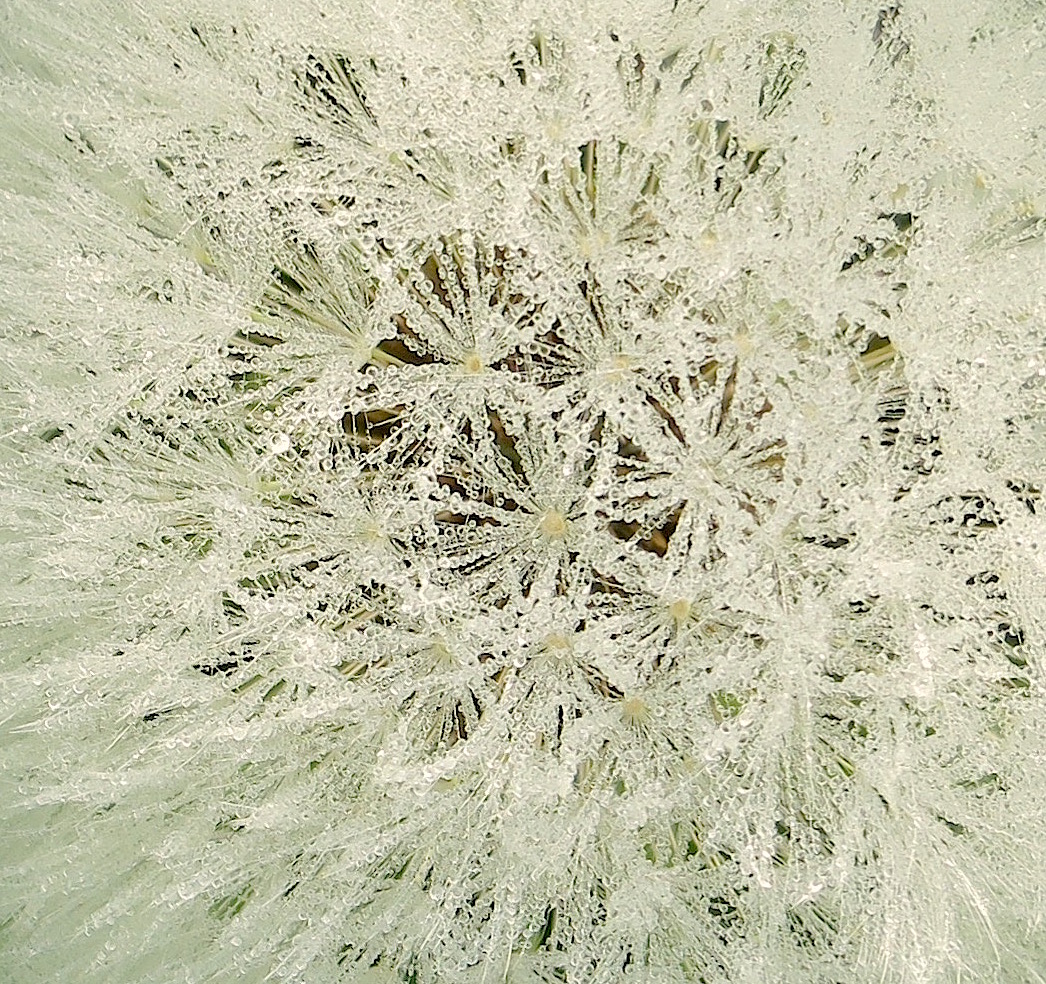
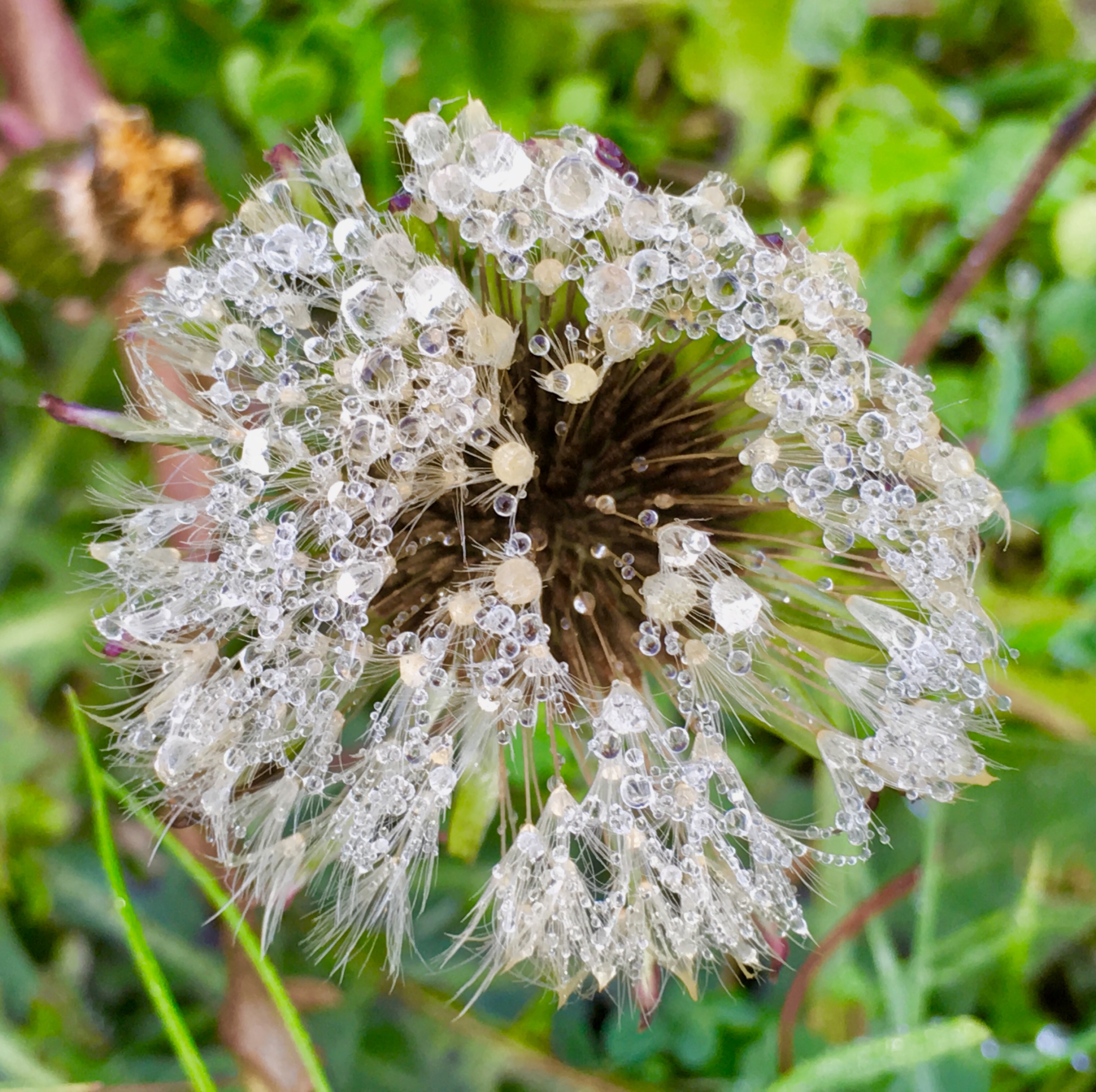
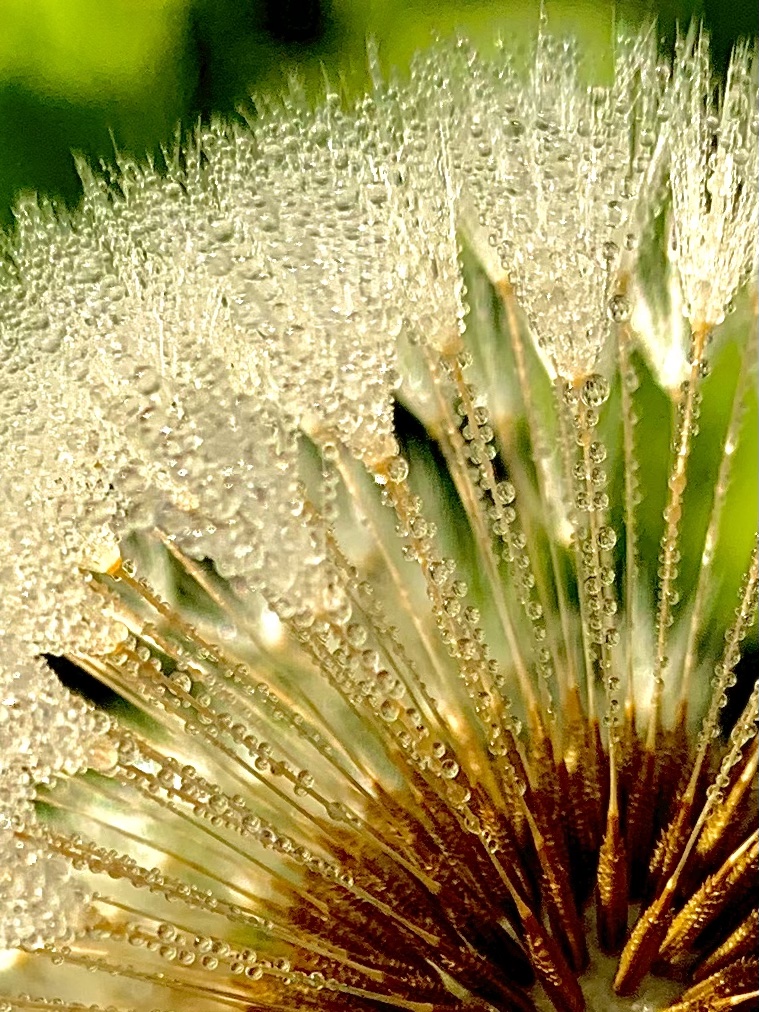
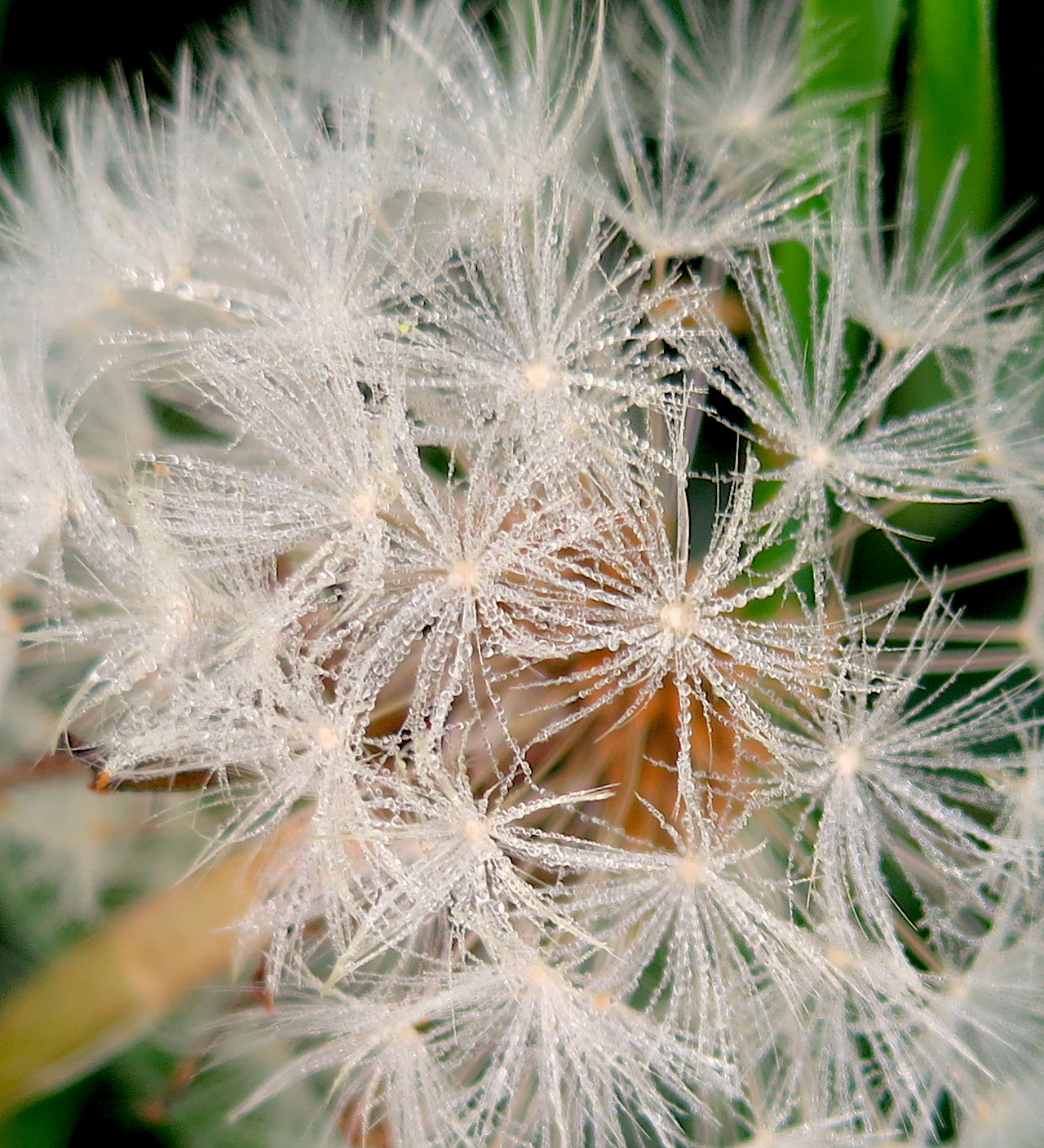
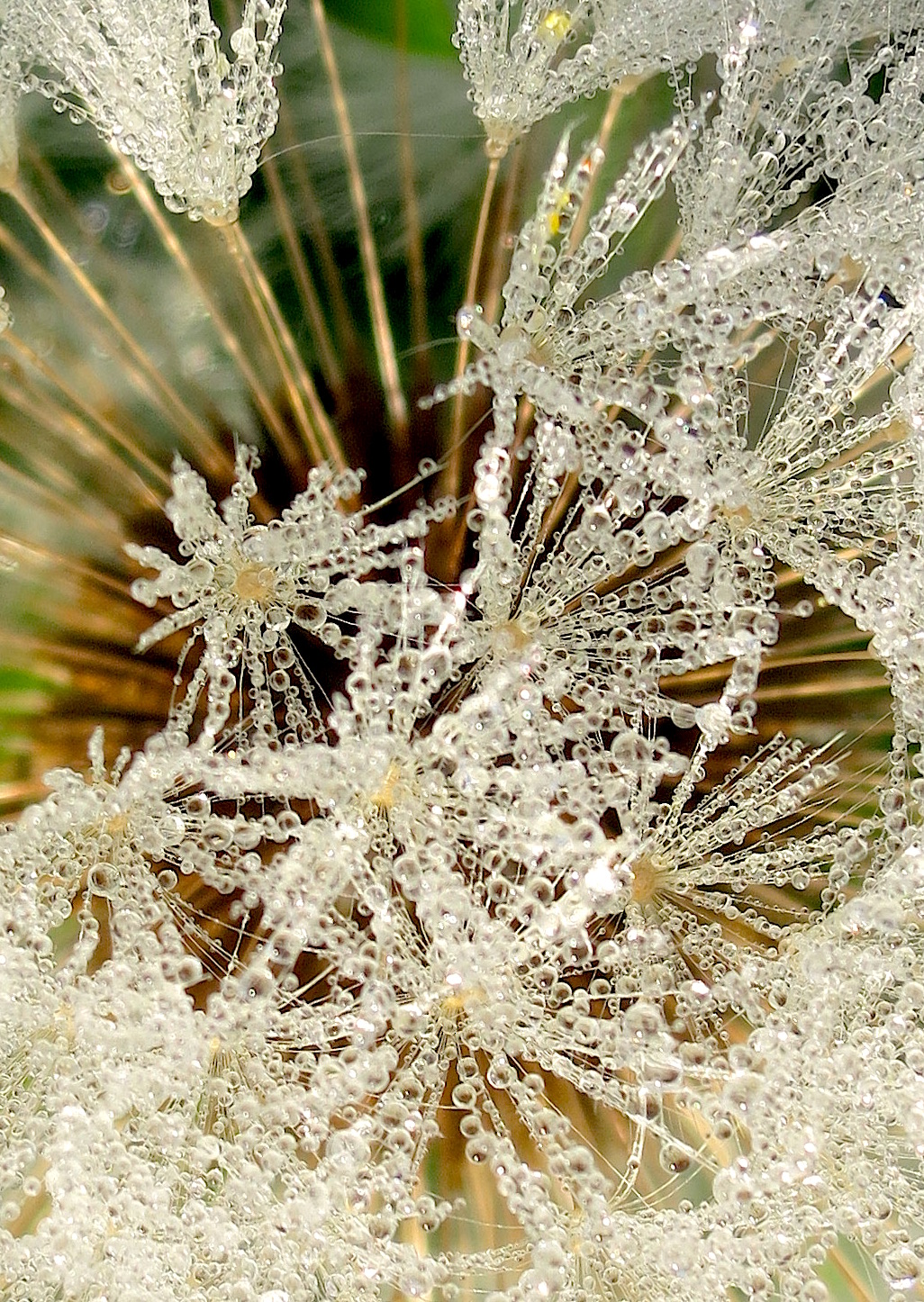
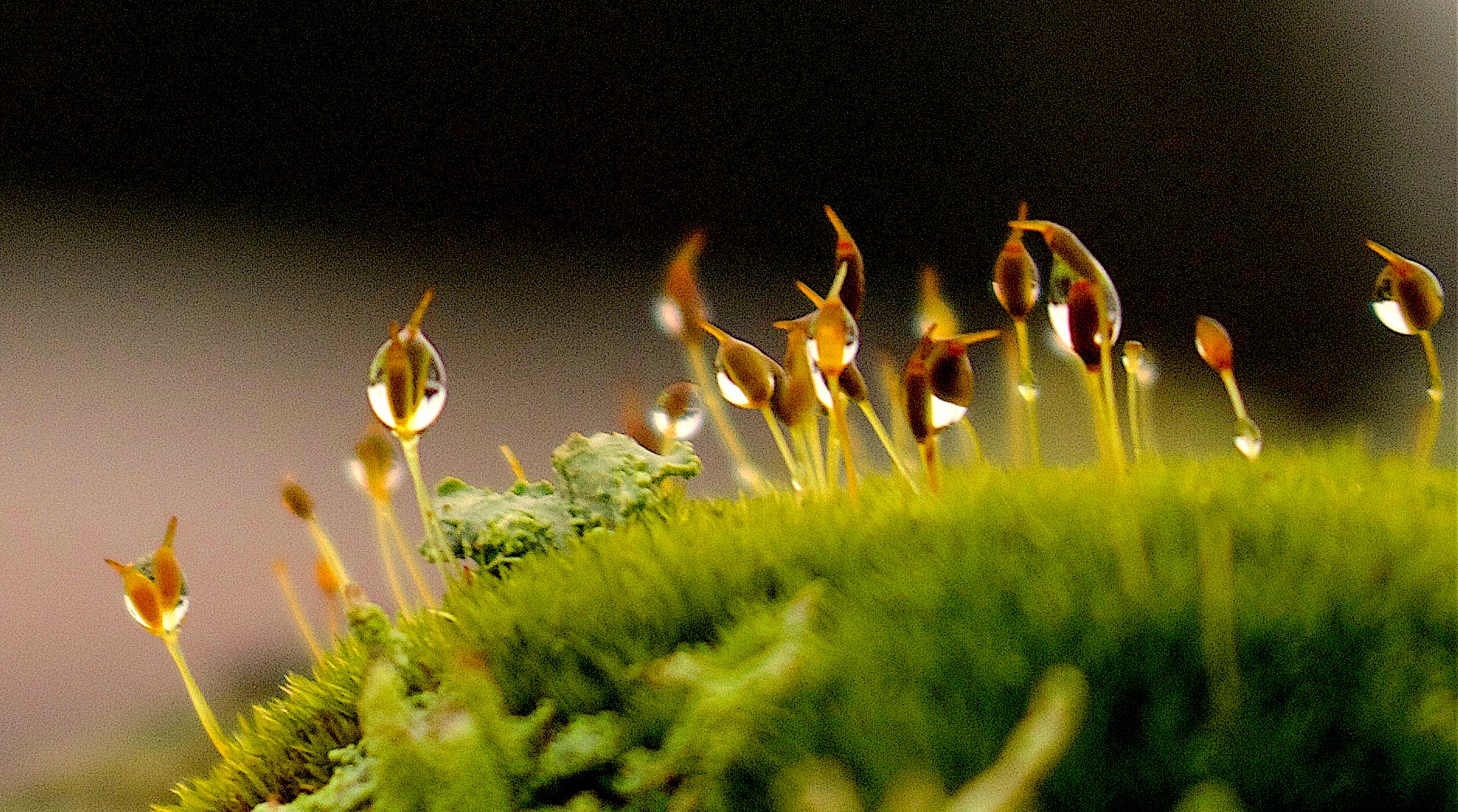
What is melancholy at first glance glistens bejeweled when studied up close.
It isn’t all sadness~ there is solace in knowing the landscape and I share an inner world of tears.
One-Time
Monthly
Yearly
Make a one-time or recurring donation to support daily Barnstorming posts
~Lustravit lampade terras~ (He has illumined the world with a lamp) The weather and my mood have little connection. I have my foggy and my fine days within me; my prosperity or misfortune has little to do with the matter. – Blaise Pascal from “Miscellaneous Writings”
And so you have a life that you are living only now, now and now and now, gone before you can speak of it, and you must be thankful for living day by day, moment by moment … a life in the breath and pulse and living light of the present… ~Wendell Berry from Hannah Coulter
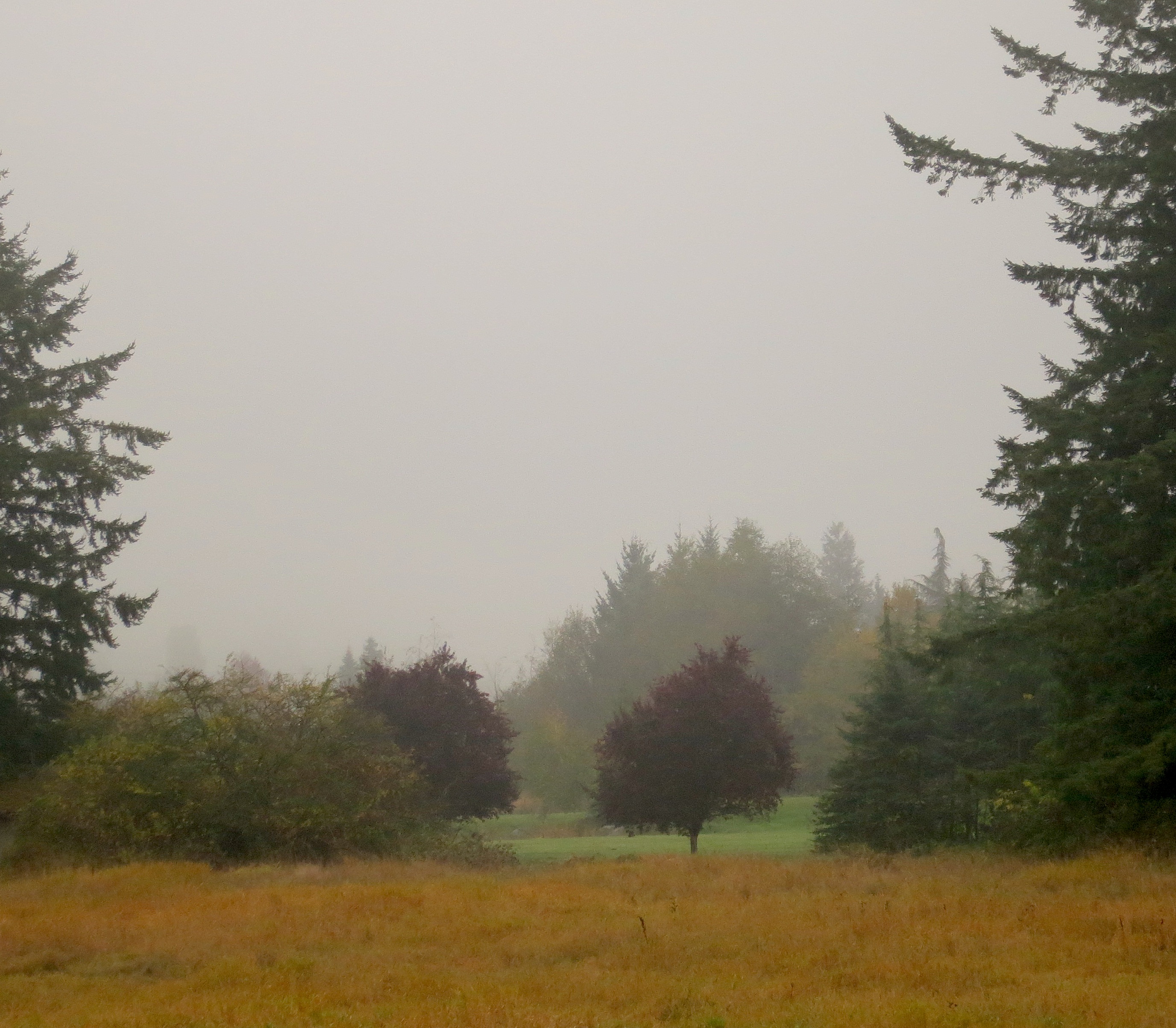
Early morning, everything damp all through. Cars go by. A ripping sound of tires through water. For two days the air Has smelled like salamanders. The little lake on the edge of town hidden in fog, Its cattails and island gone. All through the gloom of the dark week Bright leaves have been dropping From black trees Until heaps of color lie piled everywhere In the falling rain. ~Tom Hennen “Wet Autumn” from Darkness Sticks to Everything.
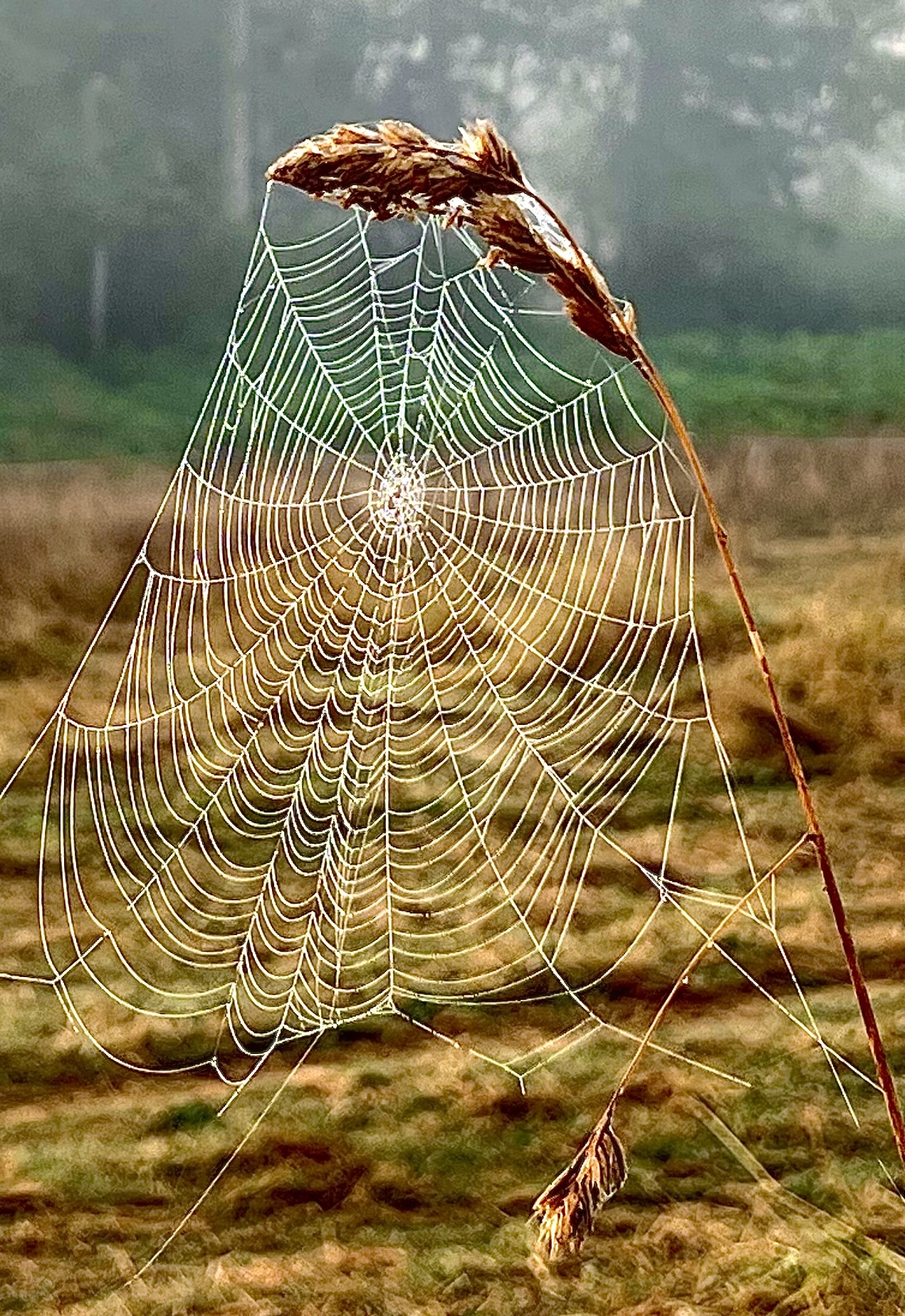
An absolute patience. Trees stand up to their knees in fog. The fog slowly flows uphill. White cobwebs, the grass leaning where deer have looked for apples. The woods from brook to where the top of the hill looks over the fog, send up not one bird. So absolute, it is no other than happiness itself, a breathing too quiet to hear. – Denise Levertov “The Breathing“
Worry and anger and angst can be more contagious than the flu.
I want to mask up and wash my hands of it throughout the day. There should be a vaccination against the fear of reading headlines.
I want to say to myself: Stop now, this moment in time. Stop and stop and stop.
Stop needing to be numb to all discomfort. Stop resenting the gift of each breath. Just stop. Instead, simply be still, in this moment
I want to say to myself: this moment, foggy or fine, is yours alone, this moment of weeping and sharing and breath and pulse and light.
Shout for joy in it. Celebrate it. I am alive in it, even in worry.
Be thankful for tears that flow over grateful lips just as rain clears the fog. Stop holding them back.
Just be– be blessed in both the fine and the foggy days– in the now and now and now.
One-Time
Monthly
Yearly
Make a one-time or recurring donation to support daily Barnstorming posts
For this you may see no need, You may think my aim Dead set on something
Devoid of conceivable value: An Anthology of Rain, A collection of voices
Telling someone somewhere What it means to follow a drop Traveling to its final place of rest. By opening anywhere, a drop And its story reappear As air turns to water, water to air. ~Phyllis Levin – excerpt from “An Anthology of Rain”
A drop fell on the apple tree, Another on the roof; A half a dozen kissed the eaves, And made the gables laugh.
A few went out to help the brook, That went to help the sea. Myself conjectured, Were they pearls, What necklaces could be– ~Emily Dickinson
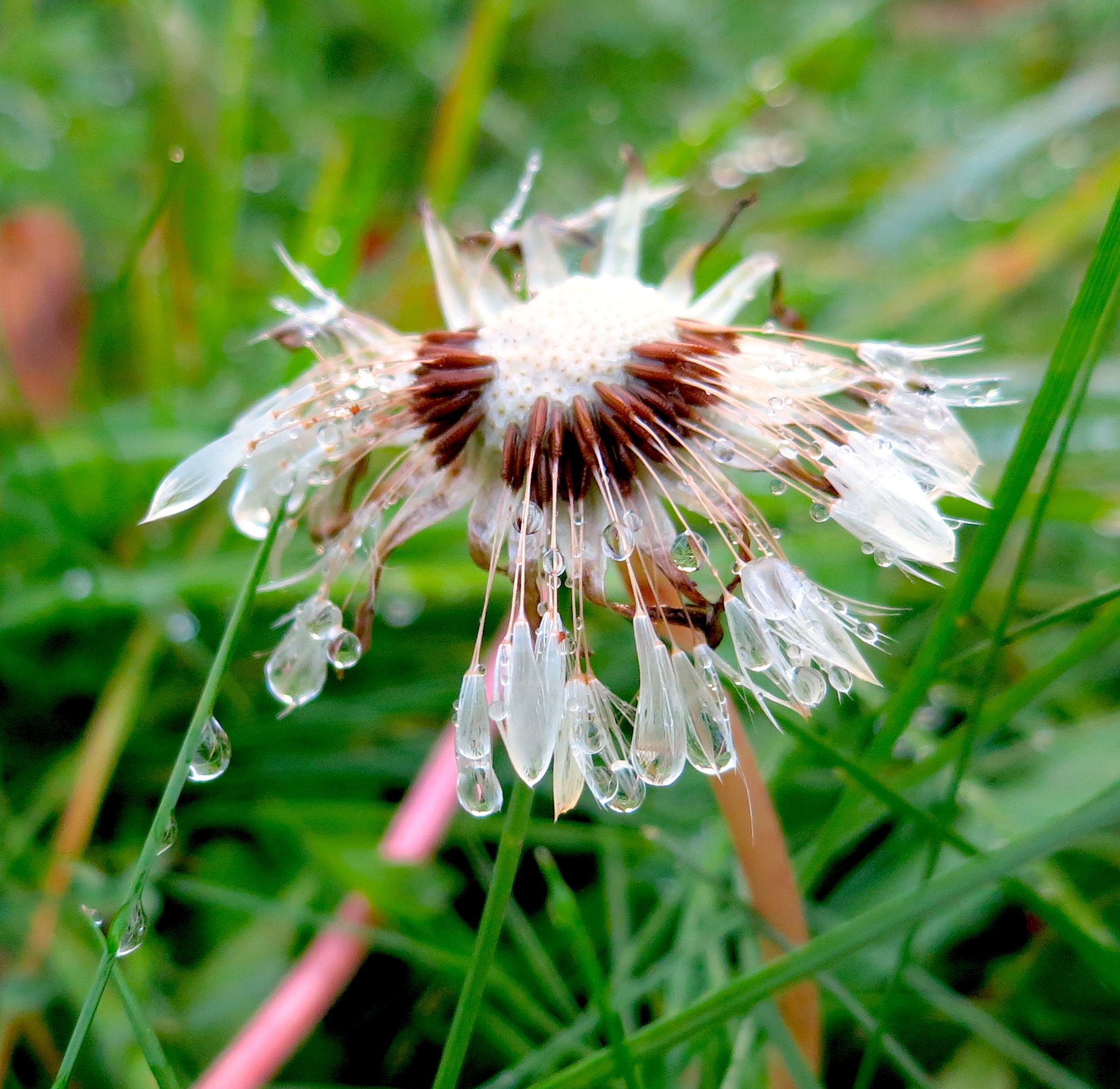
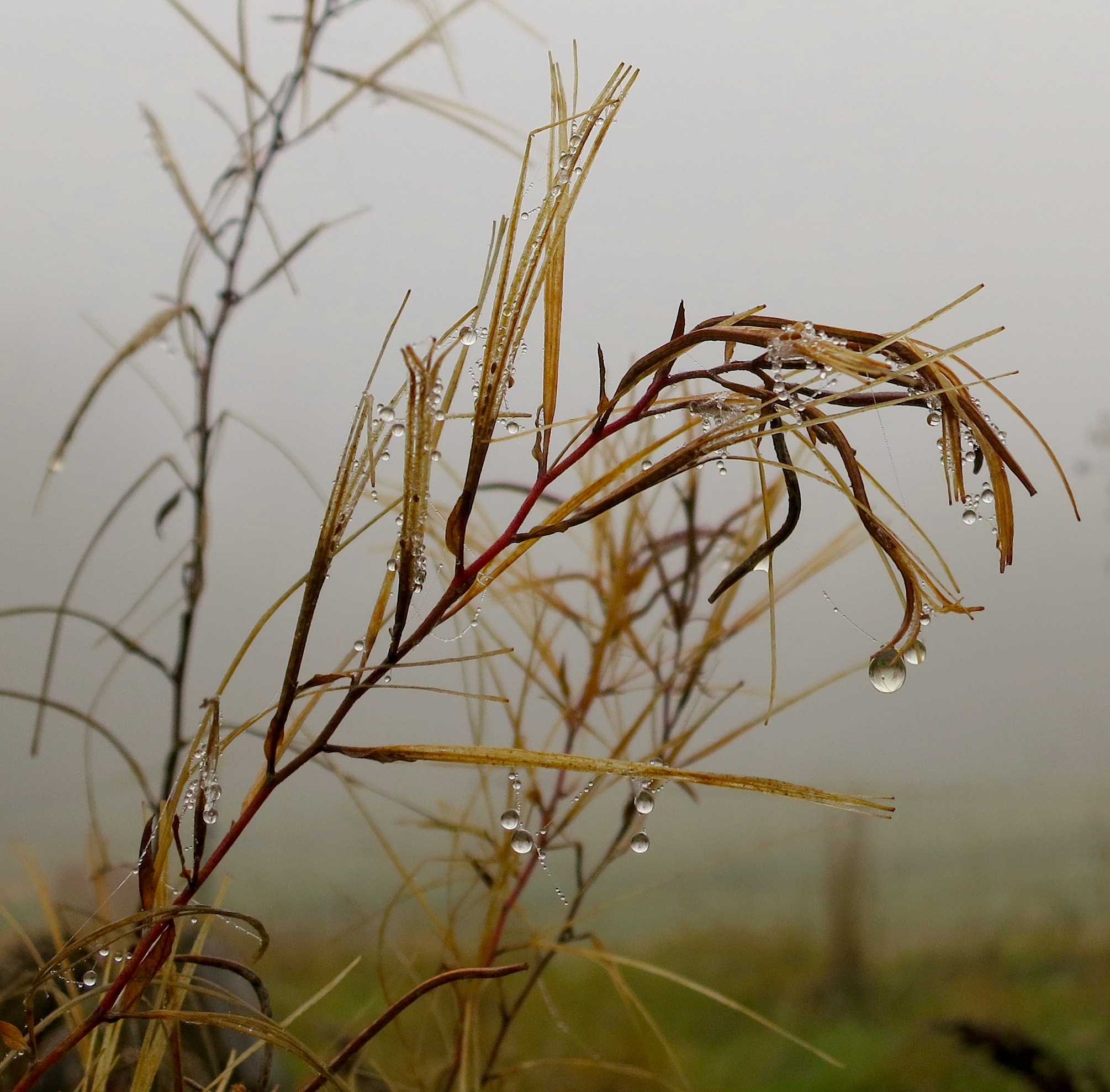
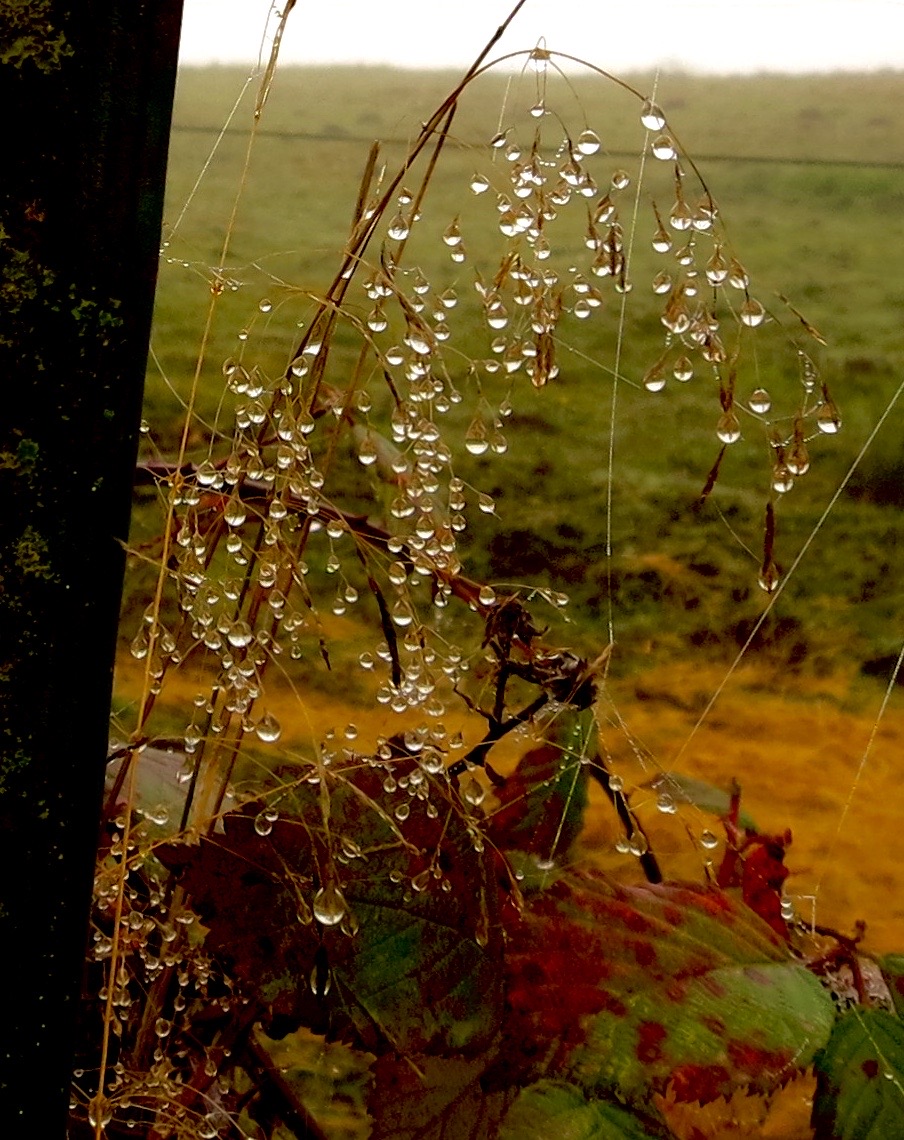
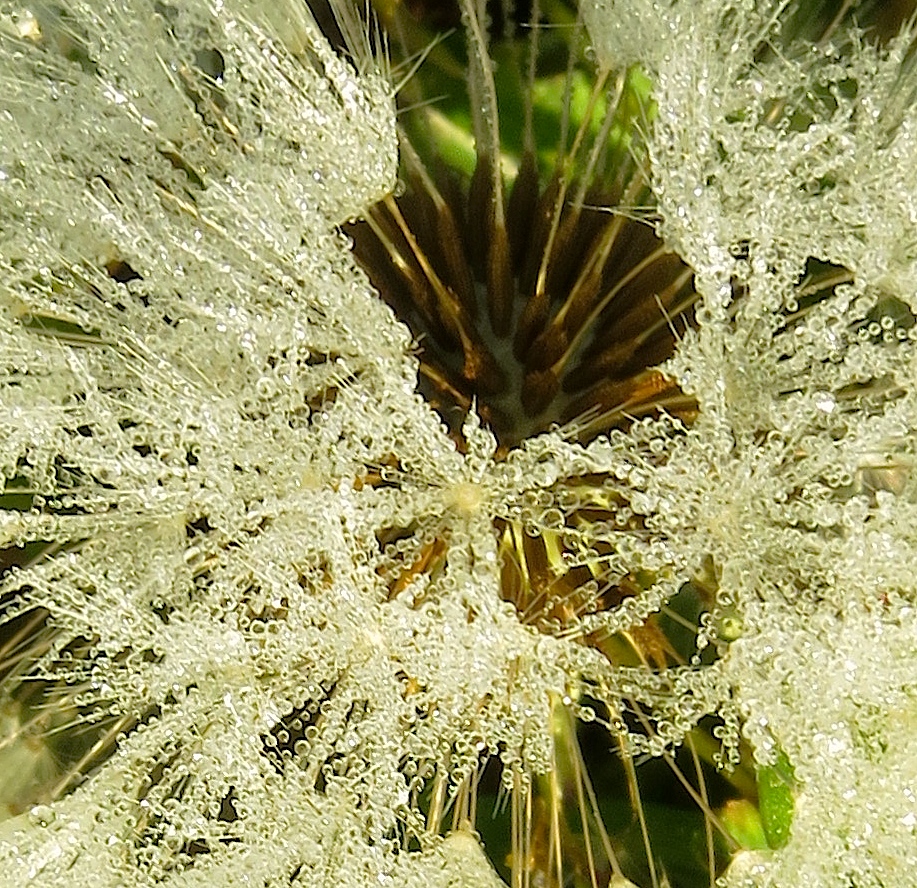
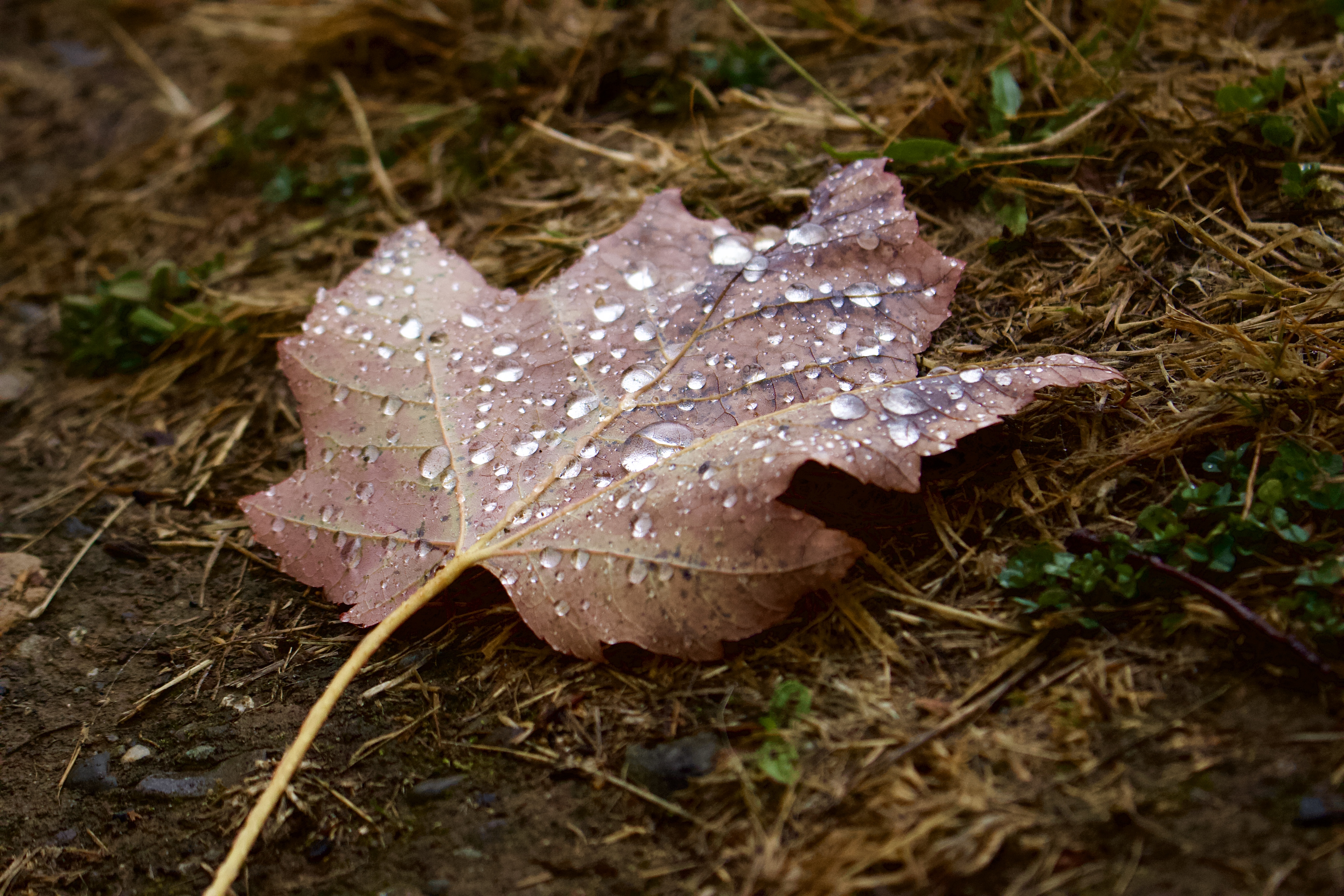
At first glance, this soppiness is melancholic.
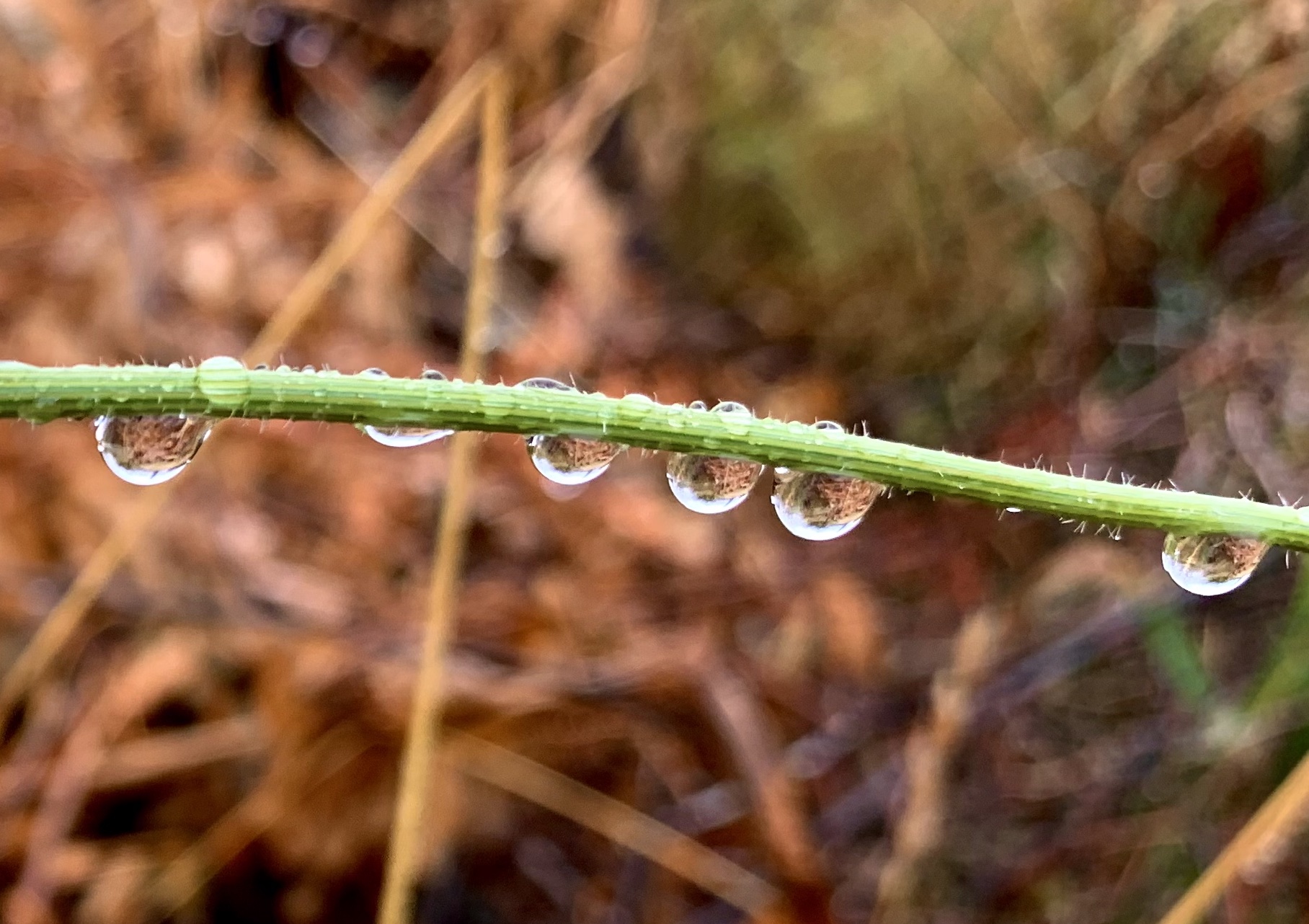
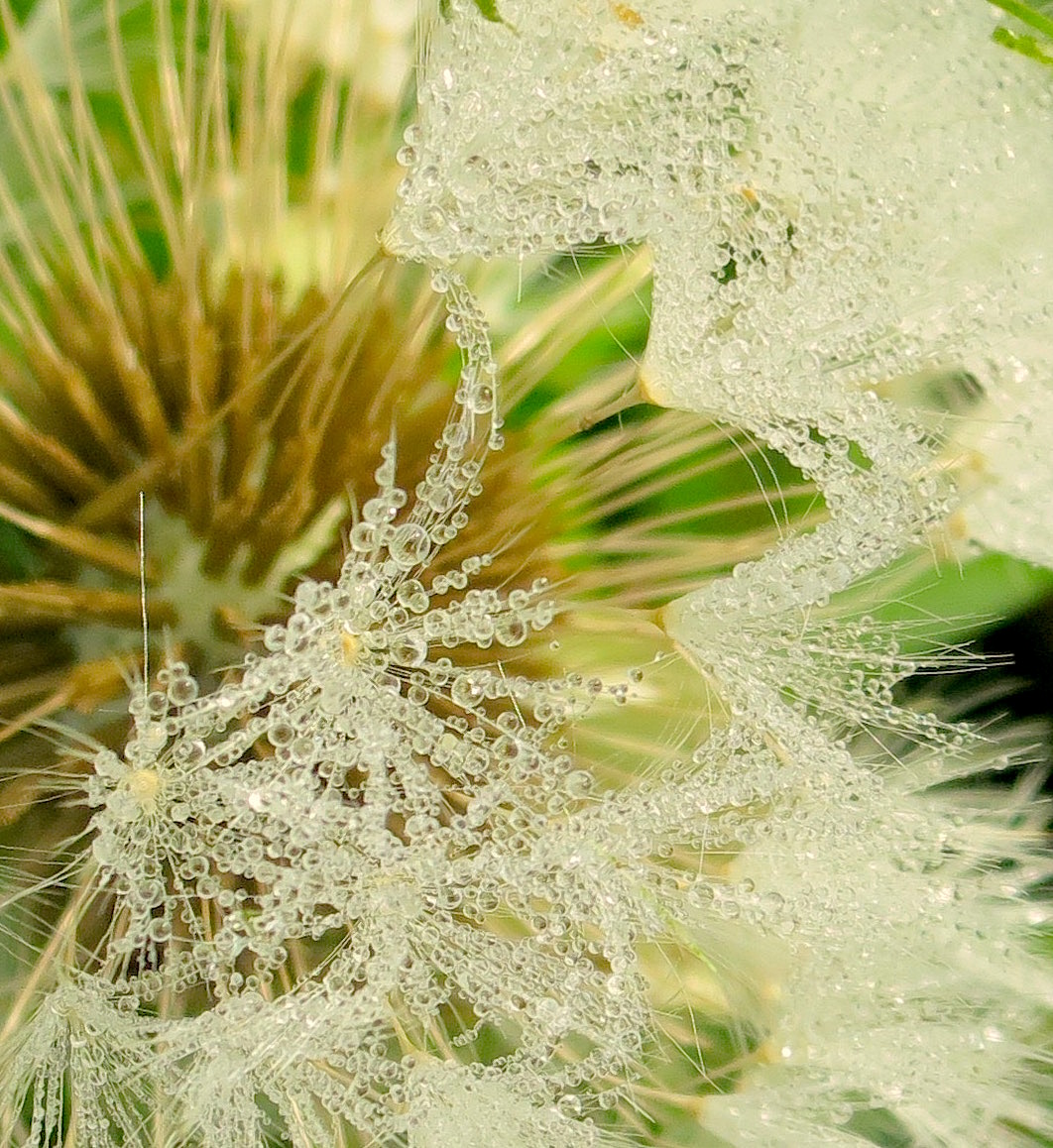
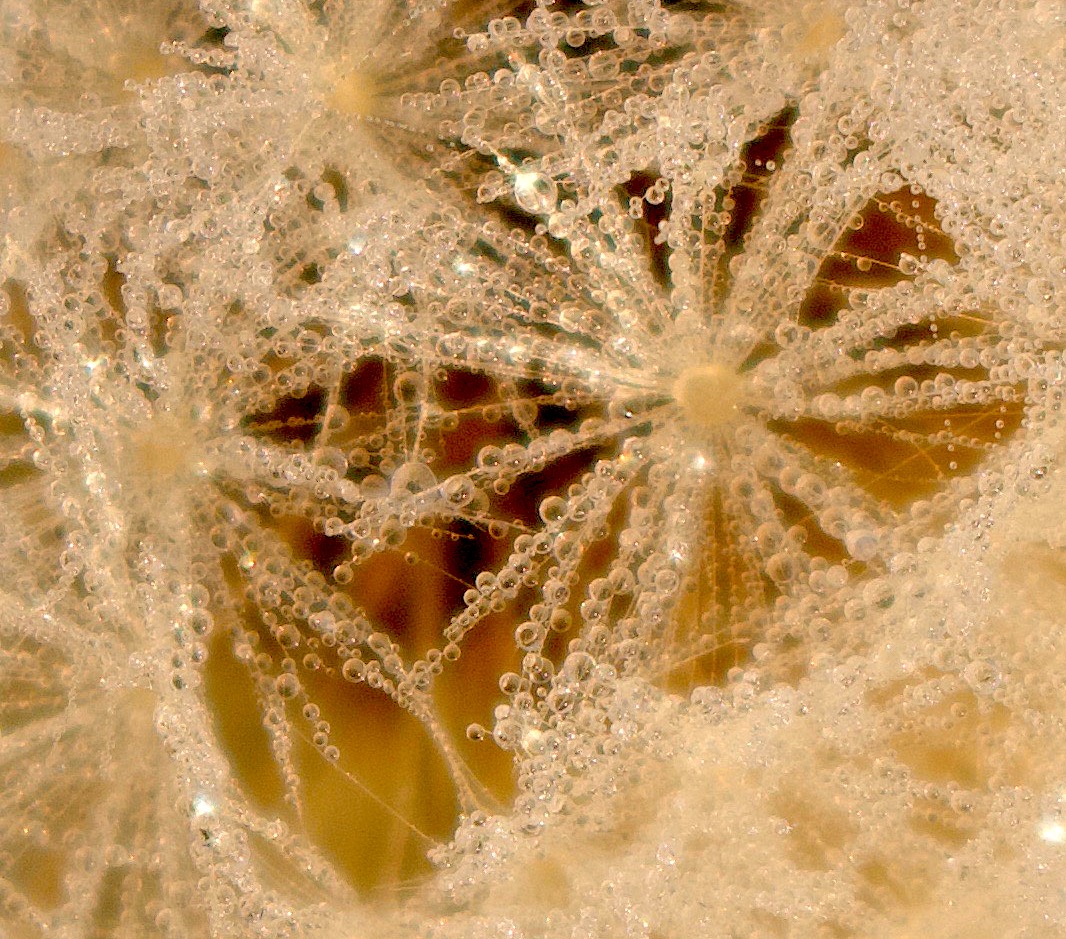
Yet, when studied up close, rain droplets glisten like jewels.
The onset of rainy season isn’t all sadness~ there is solace in knowing the landscape and I share an inner world of change: though sodden, these are the promises of renewal within our tears.
One-Time
Monthly
Yearly
Make a one-time or recurring donation to support daily Barnstorming posts
The mail truck goes down the coast Carrying a single letter. At the end of a long pier The bored seagull lifts a leg now and then And forgets to put it down.
There is a menace in the air Of tragedies in the making. Last night you thought you heard television In the house next door. You were sure it was some new Horror they were reporting, So you went out to find out. Barefoot, wearing just shorts. It was only the sea sounding weary After so many lifetimes Of pretending to be rushing off somewhere And never getting anywhere.
This morning, it felt like Sunday. The heavens did their part By casting no shadow along the boardwalk Or the row of vacant cottages, Among them a small church With a dozen gray tombstones huddled close As if they, too, had the shivers. ~Charles Simic “Late September” from The Voice at 3:00 a.m.: Selected Late and New Poems
Have compassion for everyone you meet, even if they don’t want it. What seems conceit, bad manners, or cynicism is always a sign of things no ears have heard, no eyes have seen. You do not know what wars are going on down there where the spirit meets the bone. ~Miller Williams “Compassion” from The Ways We Touch: Poems.
Christians are called by God to be living so sacrificially and beautifully that the people around us, who don’t believe what we believe, will soon be unable to imagine the world without us. ~Pastor Tim Keller
As we walk this life of trouble and suffering, this Jericho Road together, we cannot pass by the brother, the sister, the child who lies dying in the ditch.
We must stop and help. We cannot turn away from others’ suffering.
By mere circumstances of our place of birth, it could be you or me there bleeding, beaten, abandoned until Someone, journeying along that road, comes looking for us.
He was sent to take our place, as Substitution so we can get up, cared for, loved, made whole again, and walk Home.
Maranatha.
One-Time
Monthly
Yearly
Make a one-time or recurring donation to support daily Barnstorming posts
To see a World in a Grain of Sand And a Heaven in a Wild Flower, Hold Infinity in the Palm of your Hand, and Eternity in an Hour.
When the Soul Slept in Beams of Light God Appears & God is Light To those poor Souls who dwell in Night But does a Human Form Display To those who Dwell in Realms of day ~William Blake from “Auguries of Innocence”
Had I the heavens’ embroidered cloths, Enwrought with golden and silver light, The blue and the dim and the dark cloths Of night and light and the half light, I would spread the cloths under your feet: But I, being poor, have only my dreams; I have spread my dreams under your feet; Tread softly because you tread on my dreams. ~William Butler Yeats “Aedh Wishes for the Cloths of Heaven”
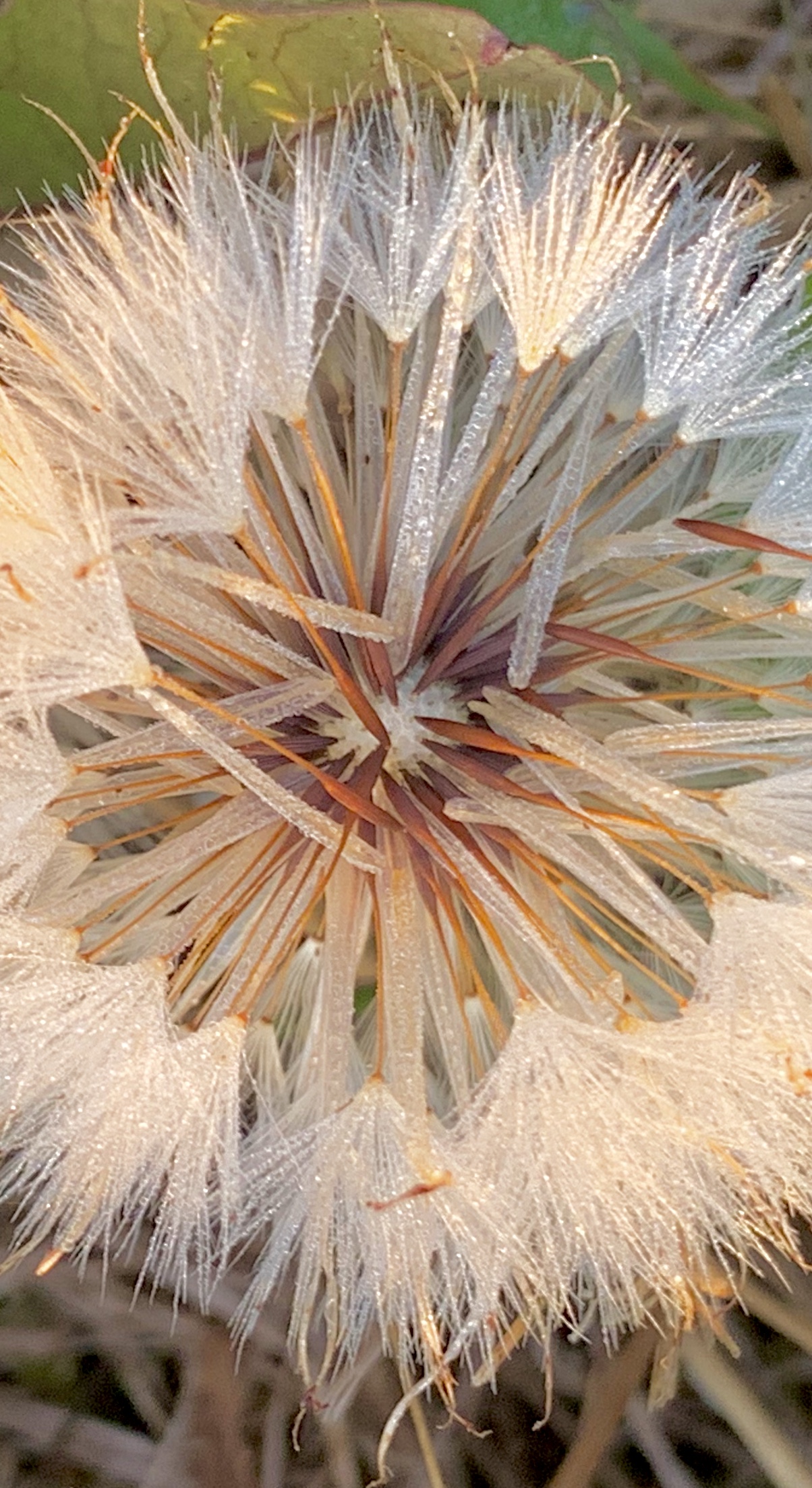
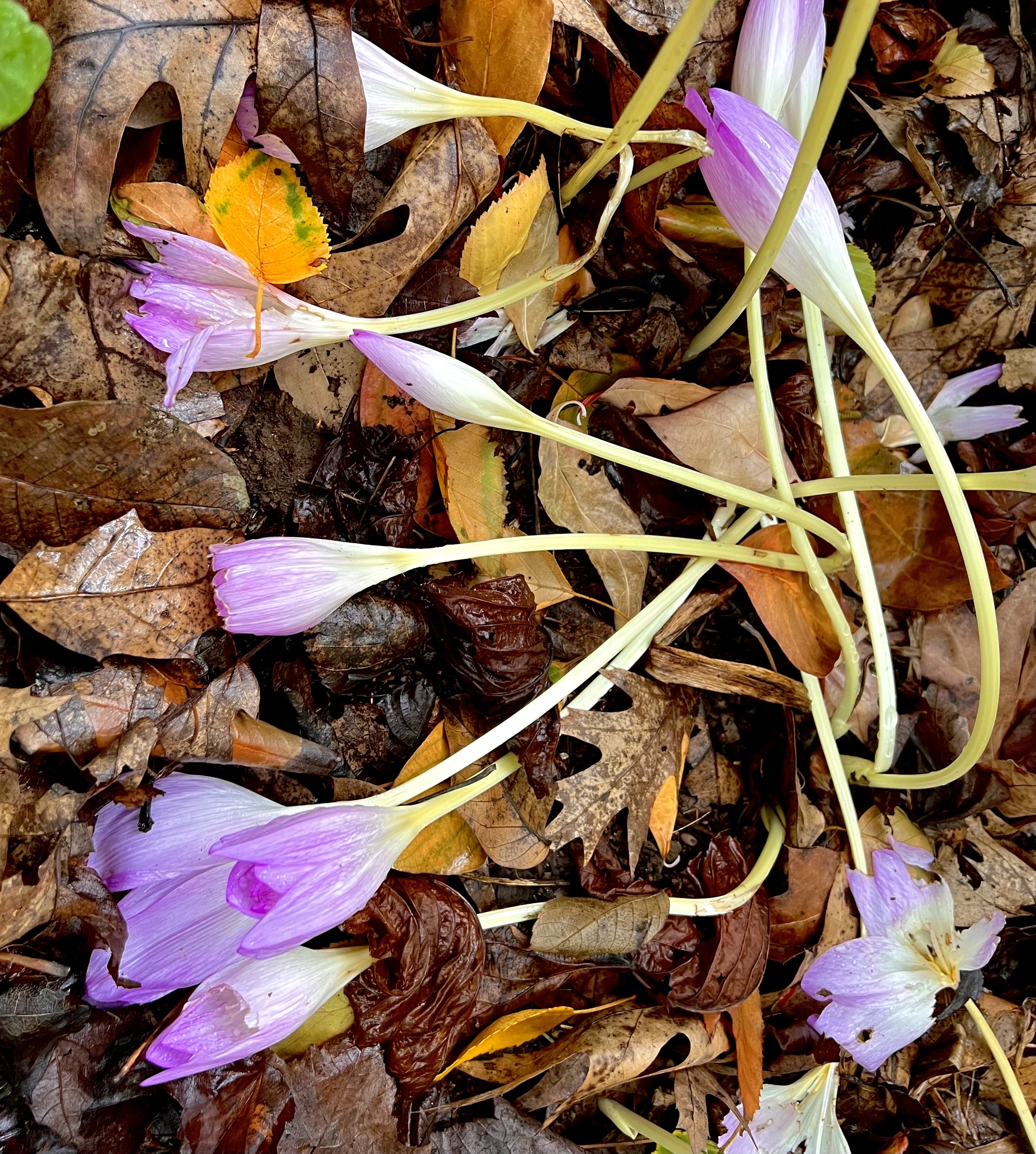
If I look closely enough underfoot, I might find the extraordinary in the commonplace things of life.
So I keep my eyes alert; my heart open to infinite possibilities and try to tread softly.
Sometimes what I see is so beautiful, it is uncovering heaven come to earth, when the cosmos is contained within the commonplace.
The God of Light and Living Water is no further away than my back yard.
One-Time
Monthly
Yearly
Make a one-time or recurring donation to support daily Barnstorming posts
The thing is to love life, to love it even when you have no stomach for it and everything you’ve held dear crumbles like burnt paper in your hands, your throat filled with the silt of it. When grief sits with you, its tropical heat thickening the air, heavy as water more fit for gills than lungs; when grief weights you like your own flesh only more of it, an obesity of grief, you think, How can a body withstand this? Then you hold life like a face between your palms, a plain face, no charming smile, no violet eyes, and you say, yes, I will take you I will love you, again. ~Ellen Bass, “The Thing Is” from Mules of Love
...everything here seems to need us —Rainer Maria Rilke
It’s a hard time to be human. We know too much and too little. Does the breeze need us? If you’ve managed to do one good thing, the ocean doesn’t care. But when Newton’s apple fell toward the earth, the earth, ever so slightly, fell toward the apple. ~Ellen Bass from “The World Has Need of You” from Like a Beggar
Fallen leaves will climb back into trees. Shards of the shattered vase will rise and reassemble on the table. Plastic raincoats will refold into their flat envelopes. The egg, bald yolk and its transparent halo, slide back in the thin, calcium shell. Curses will pour back into mouths, letters un-write themselves, words siphoned up into the pen. My gray hair will darken and become the feathers of a black swan. Bullets will snap back into their chambers, the powder tamped tight in brass casings. Borders will disappear from maps. Rust revert to oxygen and time. The fire return to the log, the log to the tree, the white root curled up in the un-split seed. Birdsong will fly into the lark’s lungs, answers become questions again. When you return, sweaters will unravel and wool grow on the sheep. Rock will go home to mountain, gold to vein. Wine crushed into the grape, oil pressed into the olive. Silk reeled in to the spider’s belly. Night moths tucked close into cocoons, ink drained from the indigo tattoo. Diamonds will be returned to coal, coal to rotting ferns, rain to clouds, light to stars sucked back and back into one timeless point, the way it was before the world was born, that fresh, that whole, nothing broken, nothing torn apart. ~Ellen Bass “When You Return” from Like a Beggar
There is so much grief these days so much anger, so much loss of life, so much weeping.
How can we withstand this? How can we know, now, when we are barely able to breathe that we might know – at some point – we might have the stomach to love life again?
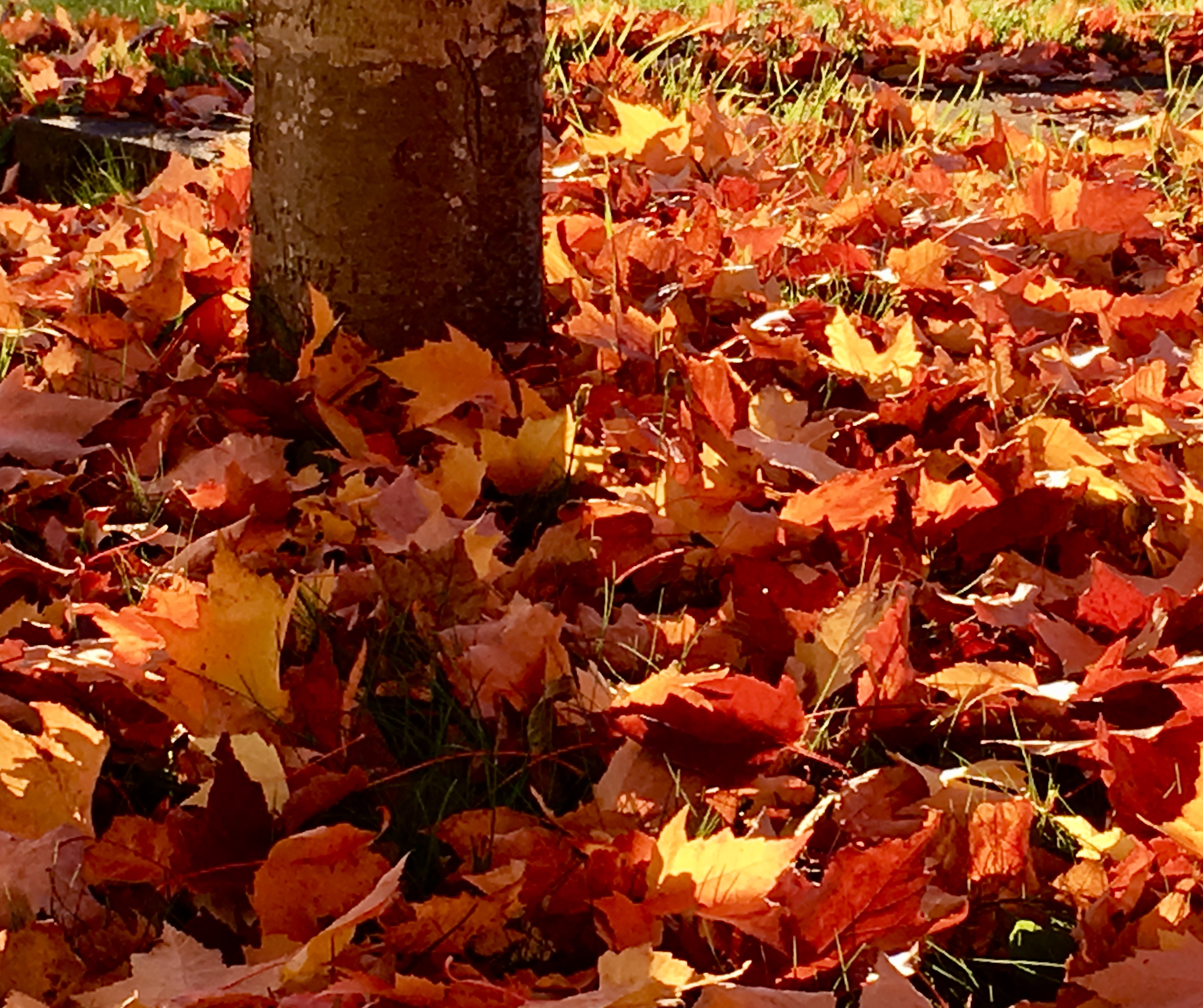
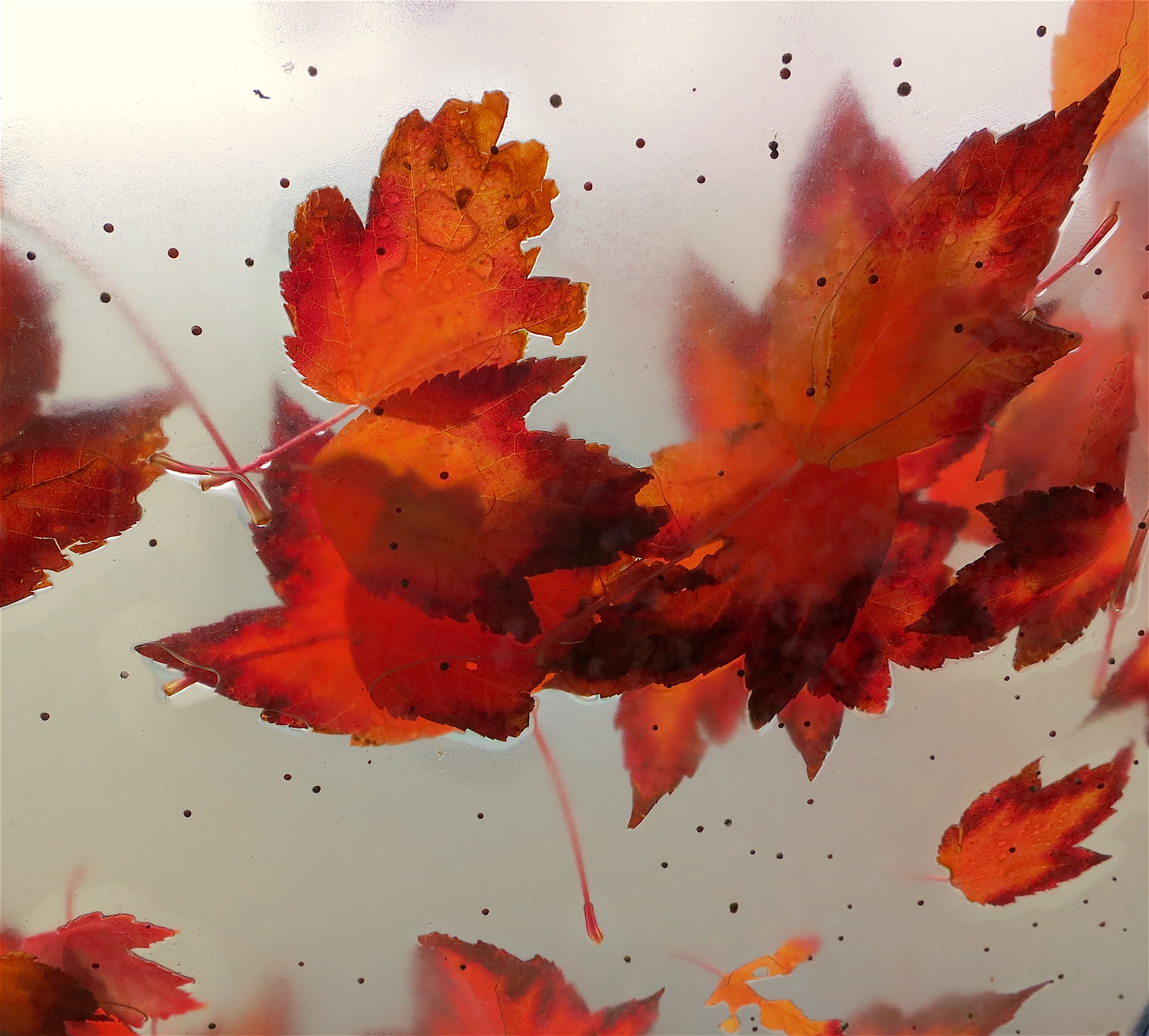
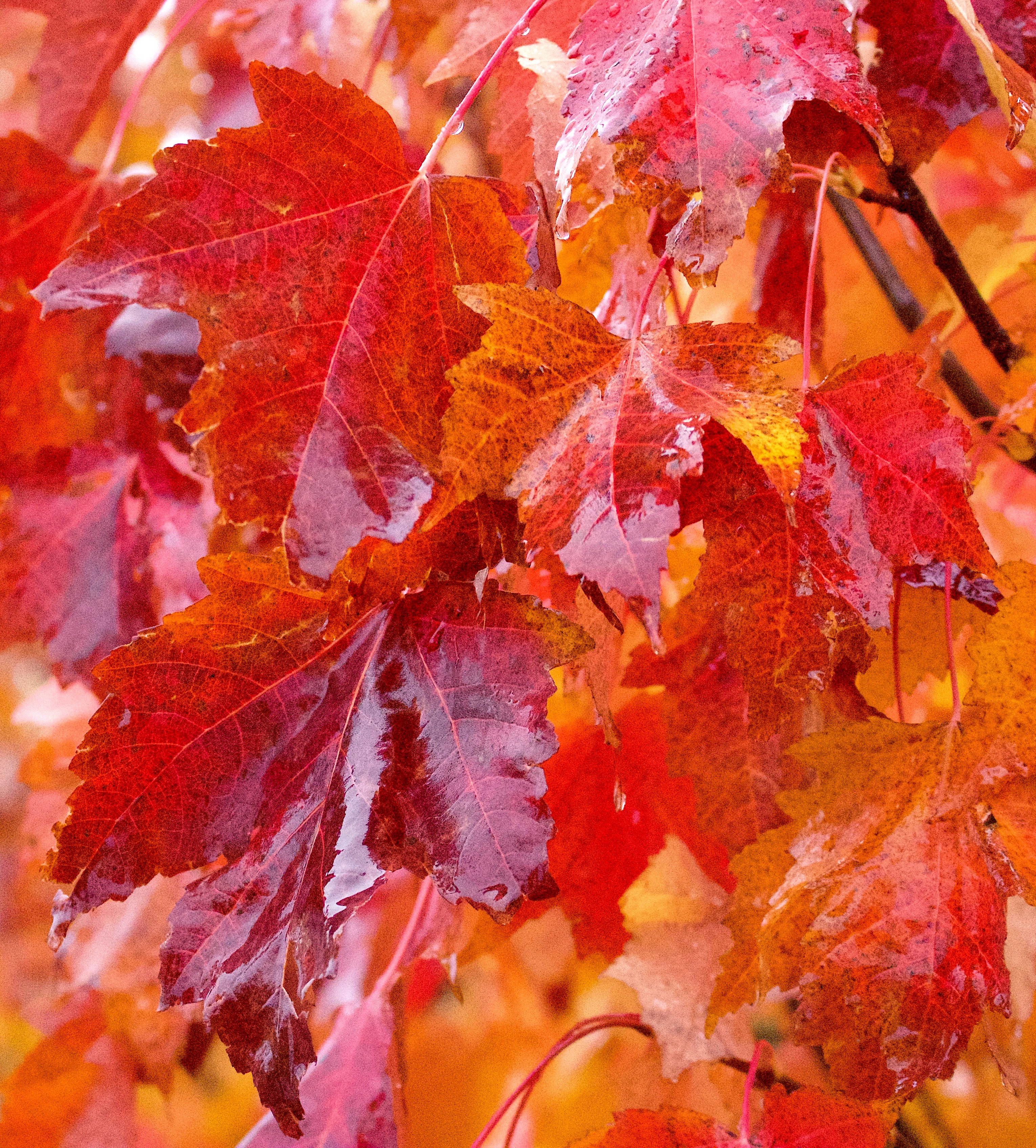
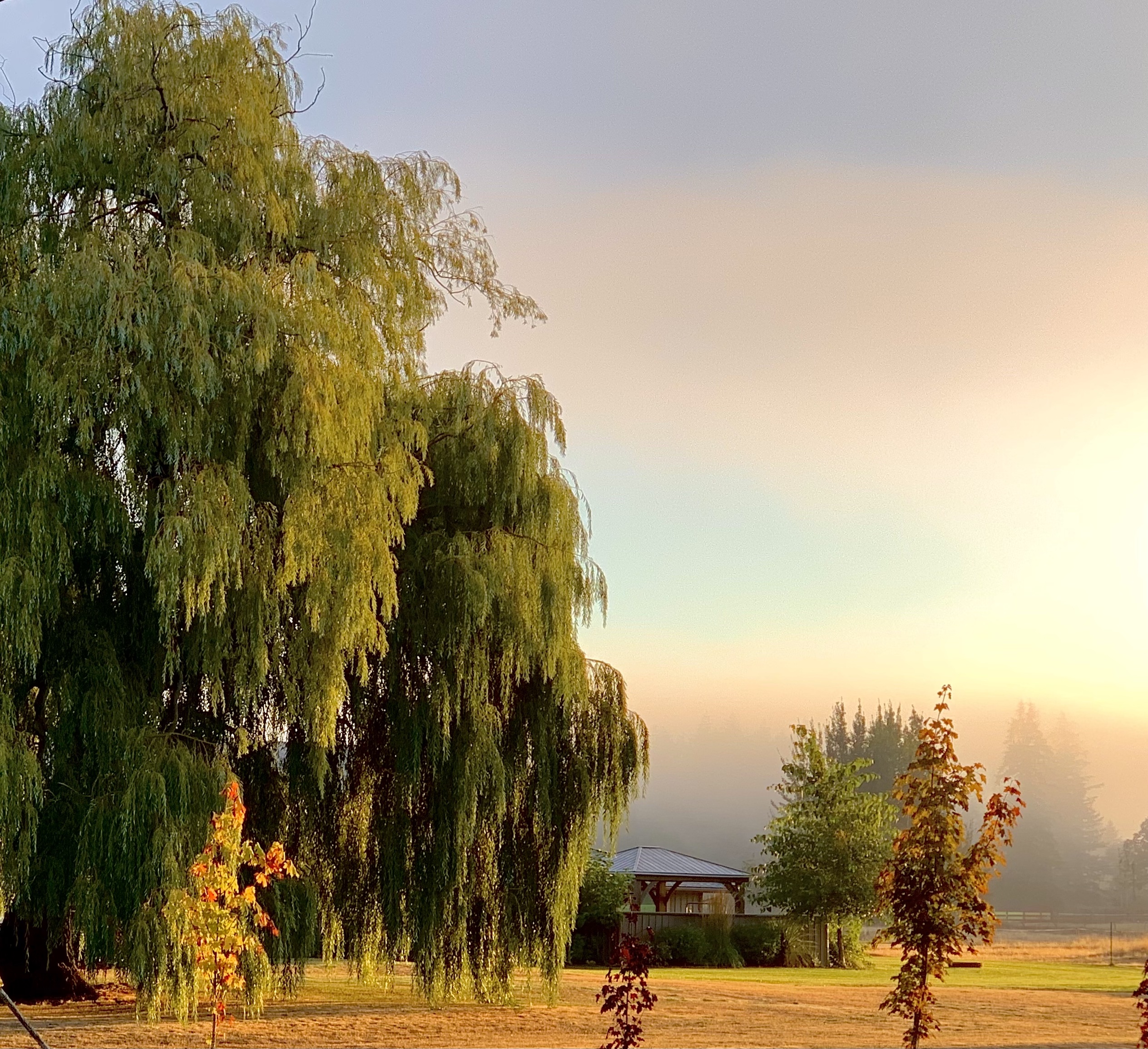
This time of year, no matter which way I turn, autumn’s kaleidoscope displays new patterns, new colors, new empty spaces as I watch the world die into itself once again.
Some dying is flashy, brilliant, blazing – a calling out for attention. Then there is the hidden dying that happens without anyone taking notice: just a plain, tired, rusting away letting go.
I spent this morning adjusting to the change in season by occupying myself with the familiar task of moving manure. Cleaning barn is a comforting chore, allowing me to transform tangible benefit from something objectionable and just plain stinky to the nurturing fertilizer of the future.
It feels like I’ve actually accomplished something.
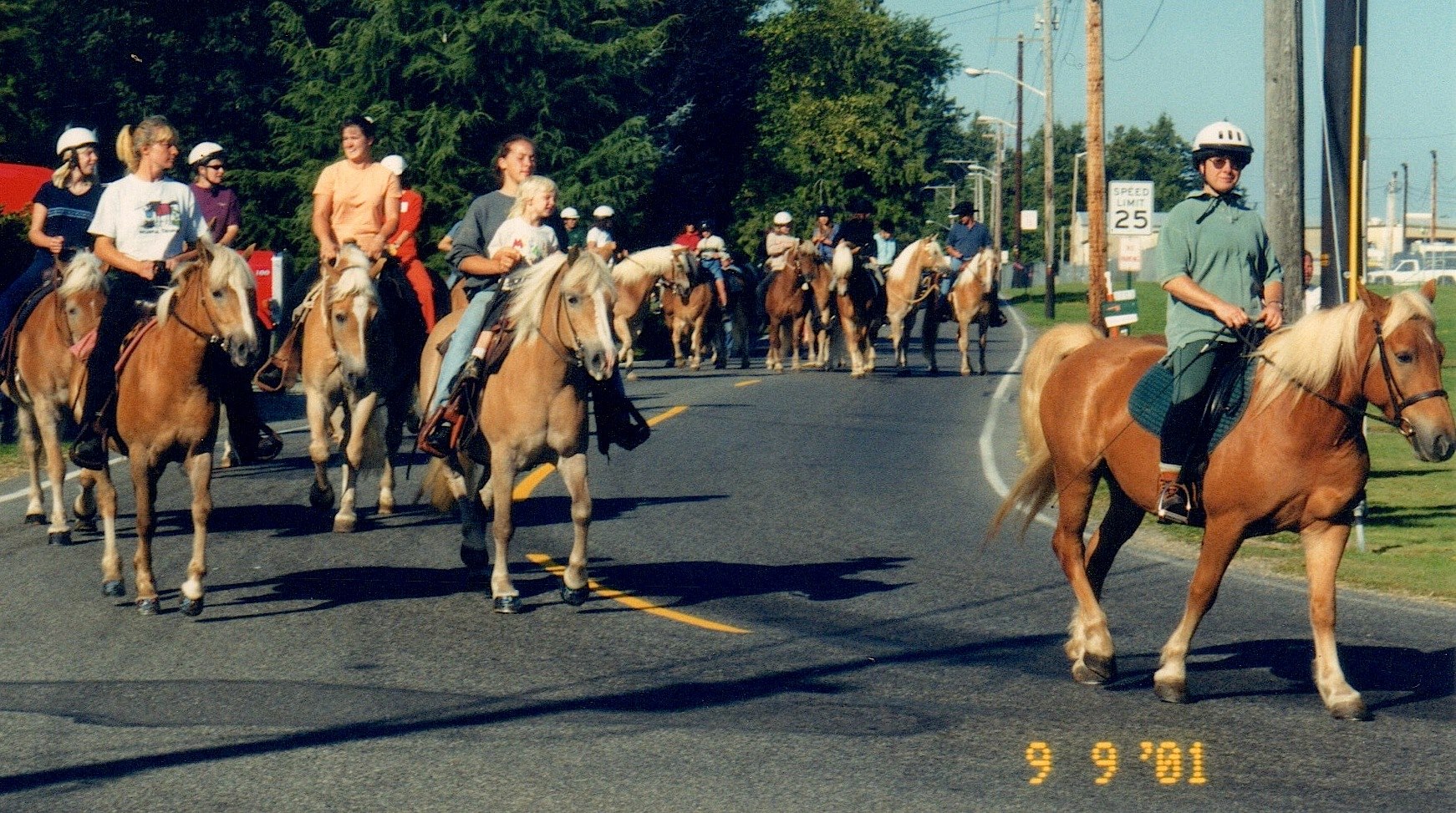
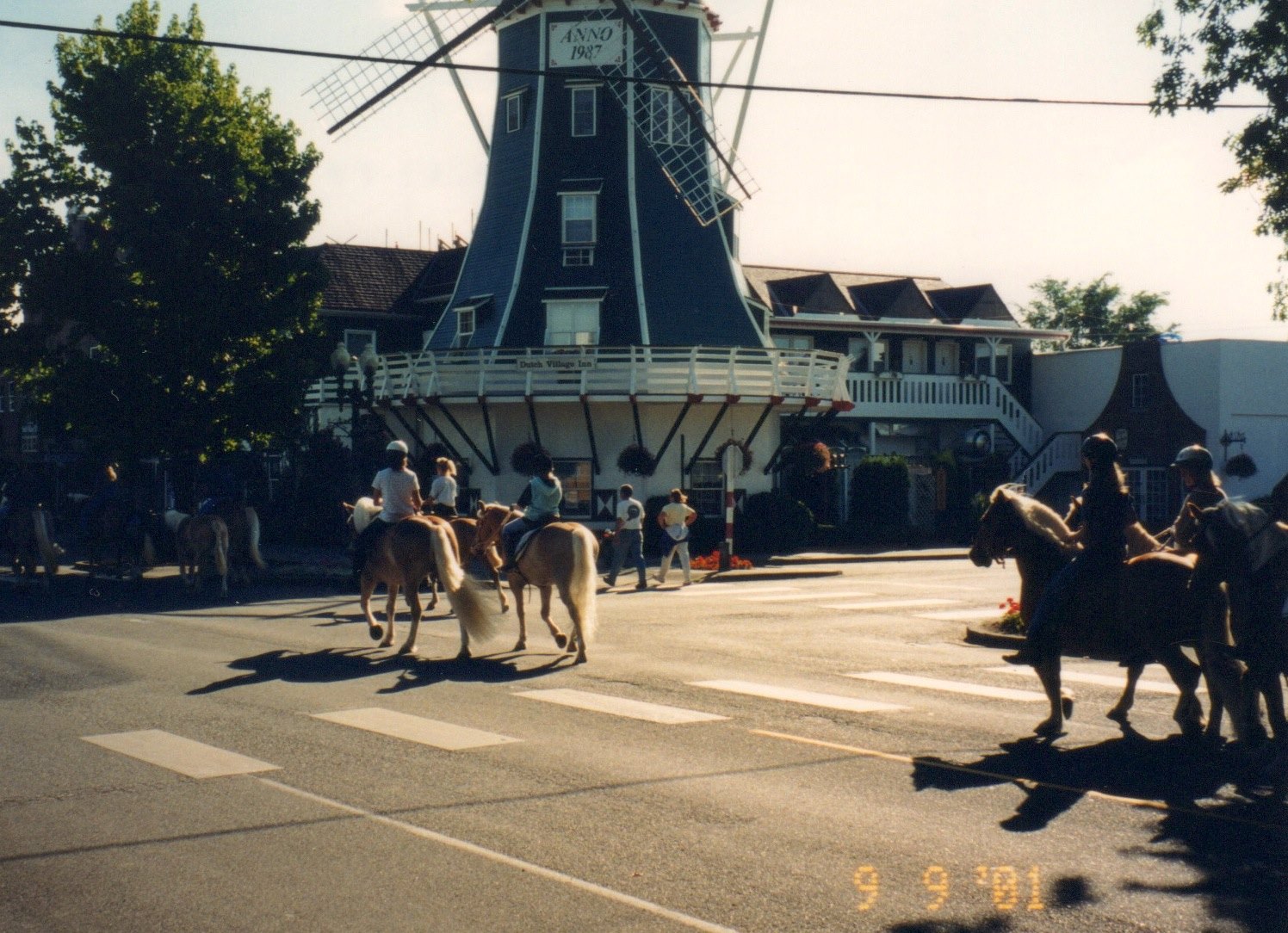
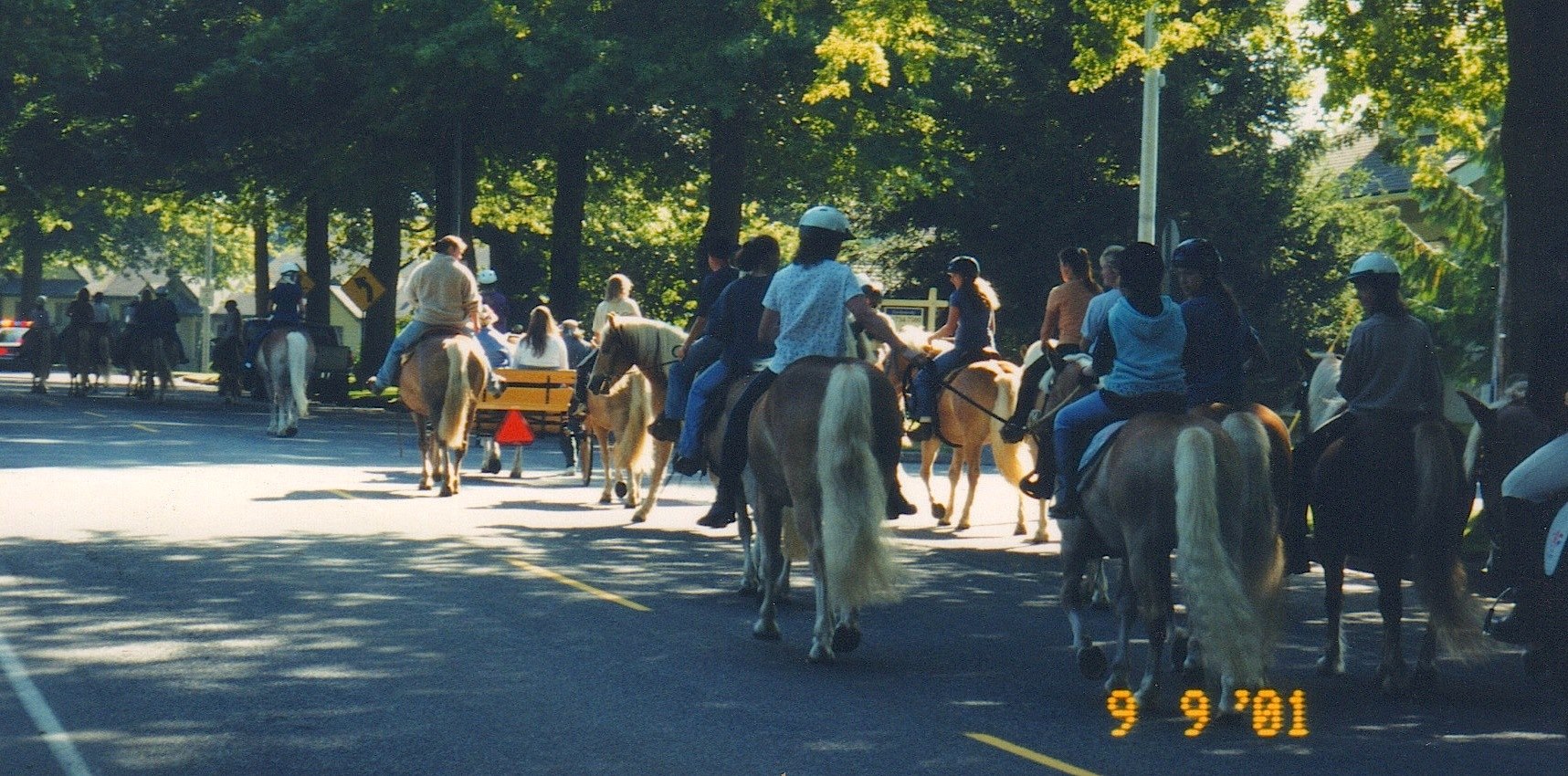
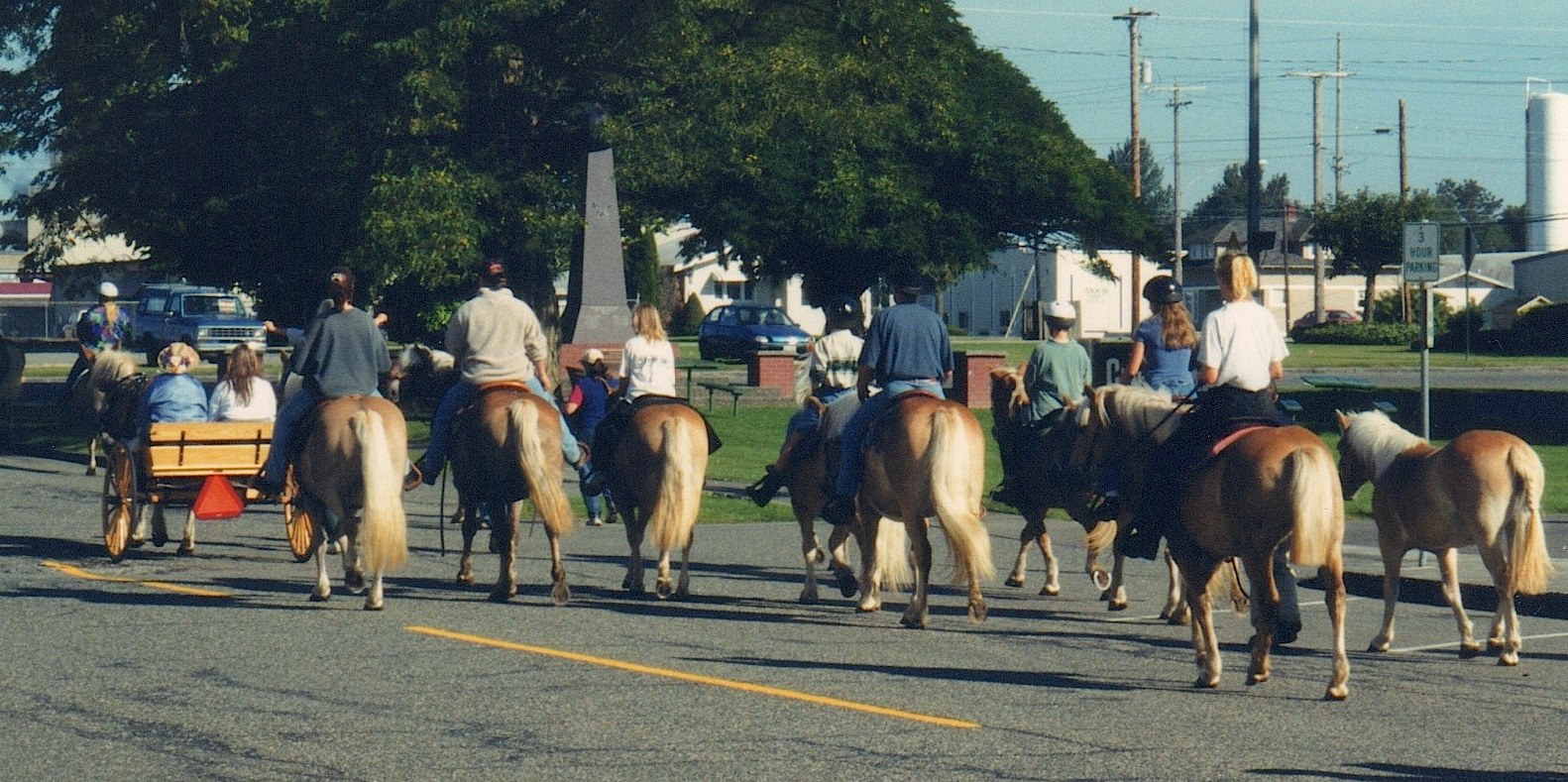
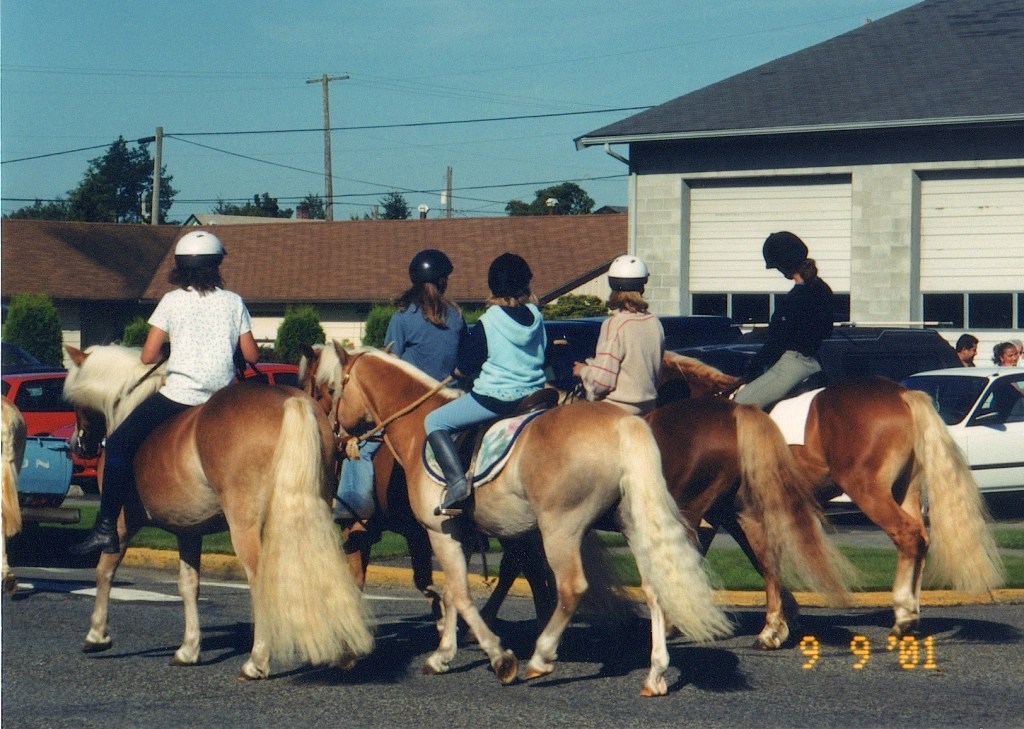
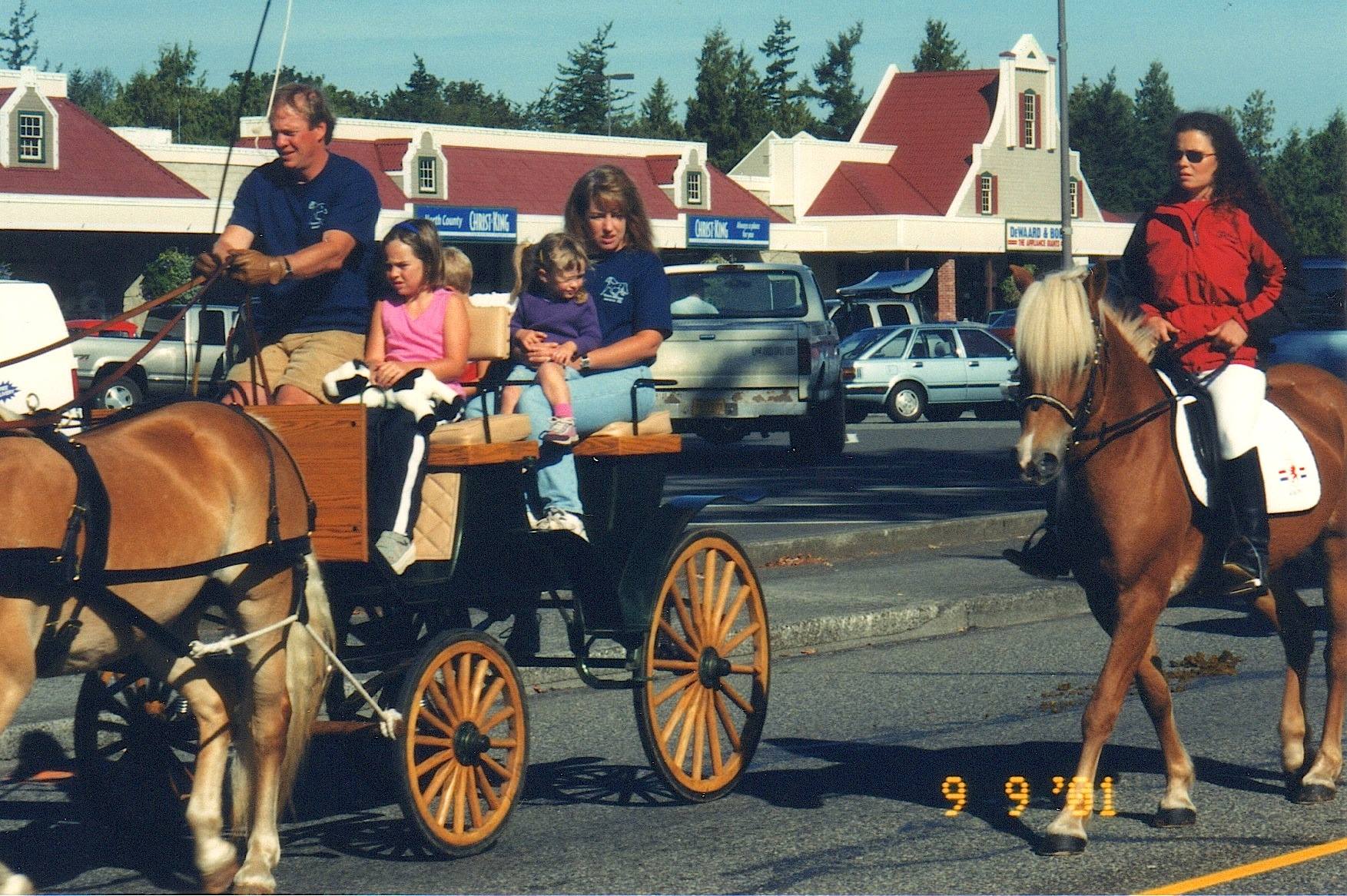
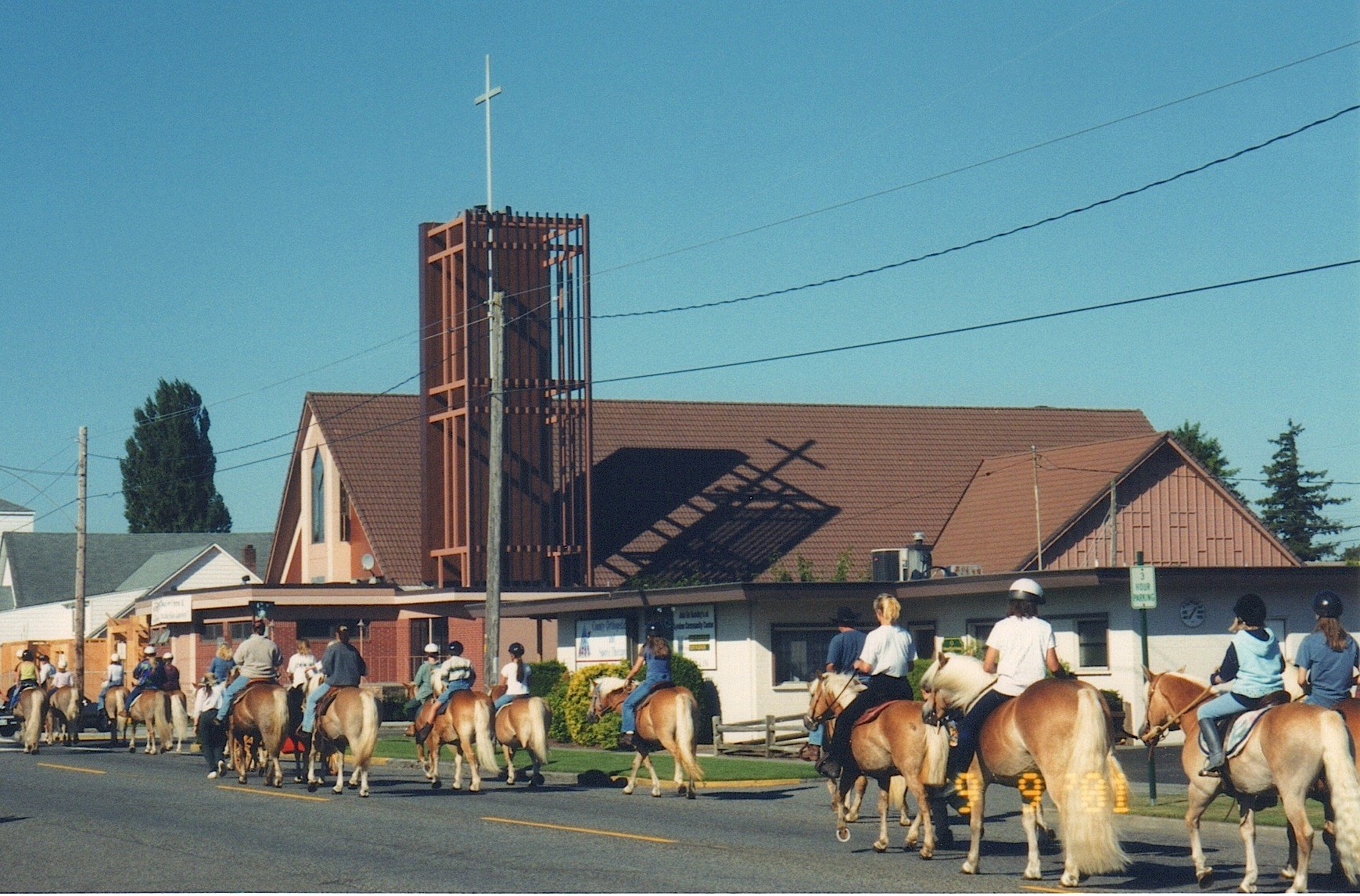
As I scoop and push the wheelbarrow, I recalled another barn cleaning 24 years ago, just days before the world changed on 9/11/01.
I was one of three or four friends left cleaning over ninety stalls after a Haflinger horse event that I had organized at our local fairgrounds. Some people had brought their horses from over 1000 miles away to participate for several days, including a Haflinger parade through our town on a quiet Sunday morning.
There had been personality clashes and harsh words among some participants along with criticism directed at me as the organizer that I had taken very personally. As I struggled with the umpteenth wheelbarrow load of manure, tears stung my eyes and my heart.
I was miserable with regret, feeling my work had been futile and unappreciated.
One friend had stayed behind with her young family to help clean up the large facility and she could see I was struggling to keep my composure. Jenny put herself right in front of my wheelbarrow and looked me in the eye, insisting I stop for a moment and listen:
“You know, none of these troubles and conflicts will amount to a hill of beans years from now. People will remember a fun event in a beautiful part of the country, a wonderful time with their Haflingers, their friends and family, and they’ll be all nostalgic about it, not giving a thought to the infighting or the sour attitudes or who said what to whom. So don’t make this about you and whether you did or didn’t make everyone happy. You loved us all enough to make it possible to meet here and the rest was up to us. So quit being upset about what you can’t change. There’s too much you can still do for us.”
Jenny had no idea how wise her words were, even two days later, on 9/11.
During tough times since (and there have been plenty), Jenny’s advice replays, reminding me to cease seeking appreciation from others or feeling hurt when harsh words come my way.
She was right about the balm found in the tincture of time. She was right about giving up the upset in order to die to self and self absorption, and instead to focus outward.
I have remembered.
Jenny herself did not know that day she would subsequently spend six years dying while still loving life every day, fighting a relentless cancer that was only slowed in the face of her faith and intense drive to live.
She became a rusting leaf gone holy, fading imperceptibly over time, crumbling at the edges until she finally had to let go. Her dying did not flash brilliance, nor draw attention at the end. Her intense focus during the years of her illness had always been outward to others, to her family and friends, to the healers she spent so much time with in medical offices, to her firm belief in the plan God had written for her and those who loved her.
So Jenny let go her hold on life here. And we reluctantly let her go. Brilliance cloaks her as her focus is now on things eternal.
You were so right, Jenny. The hard feelings from a quarter century ago don’t amount to a hill of beans now. The words you spoke to me that day taught me to love life even when I have no stomach for it.
All of us did have a great time together a few days before the world changed. And manure transforms over time to rich, nurturing compost.
I promise I am no longer upset that I can’t change what is past nor the fact that you and so many others have now left us.
But we’ll catch up later.
One-Time
Monthly
Yearly
Make a one-time or recurring donation to support daily Barnstorming posts
After nourishment, shelter and companionship, stories are the thing we need most in the world. Philip Pullman
You’re going to feel like hell if you wake up someday and you never wrote the stuff that is tugging on the sleeves of your heart: your stories, memories, visions, and songs–your truth, your version of things–in your own voice. That’s really all you have to offer us, and that’s also why you were born. ~Anne Lamott in a TED Talk
Write as if you were dying. At the same time, assume you write for an audience consisting solely of terminal patients. That is, after all, the case. ~Annie Dillard from “Write Till You Drop”
I began to write after September 11, 2001 because that day it became obvious to me I too was dying, albeit more slowly than the thousands who vanished that day in fire and ash, their voices obliterated with their bodies.
So, nearly each day since, while I still have voice and a new dawn to greet, I speak through my fingers and my camera lens to others dying around me.
We are, after all, terminal patients, some more imminent than others, some of us more prepared to move on, as if our readiness had anything to do with the timing.
Each day I too get a little closer, so I write in my own voice and share photos of my world as a way to hang on a while longer, yet with a loosening grasp. Each day I must detach just a little bit, leaving a small trace of my voice and myself behind.
Eventually, through unmerited grace, so much of me will be left on the page there won’t be anything or anyone left to do the typing.
There is no moment or picture or word to waste.
One-Time
Monthly
Yearly
Make a one-time or recurring donation to support daily Barnstorming posts
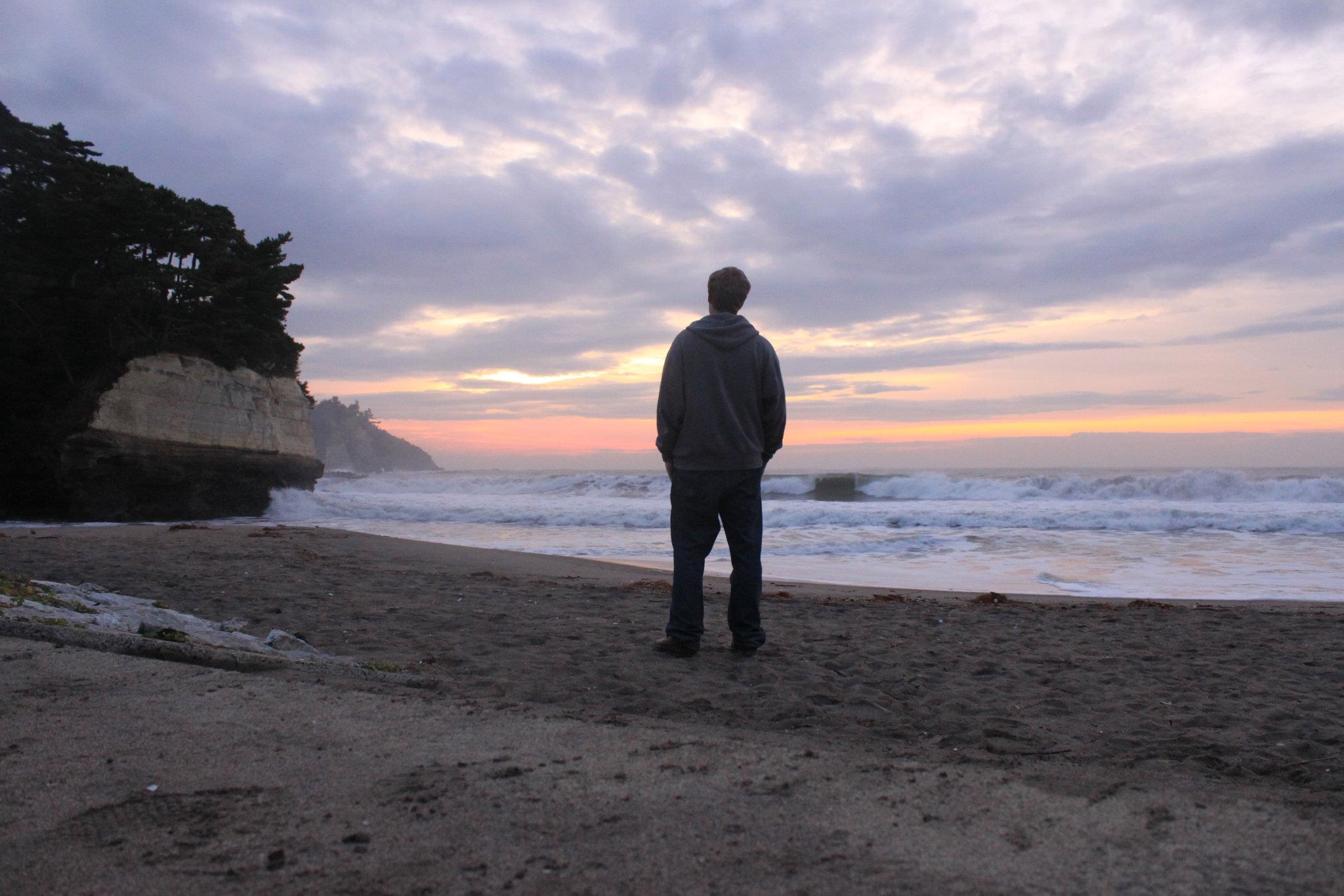
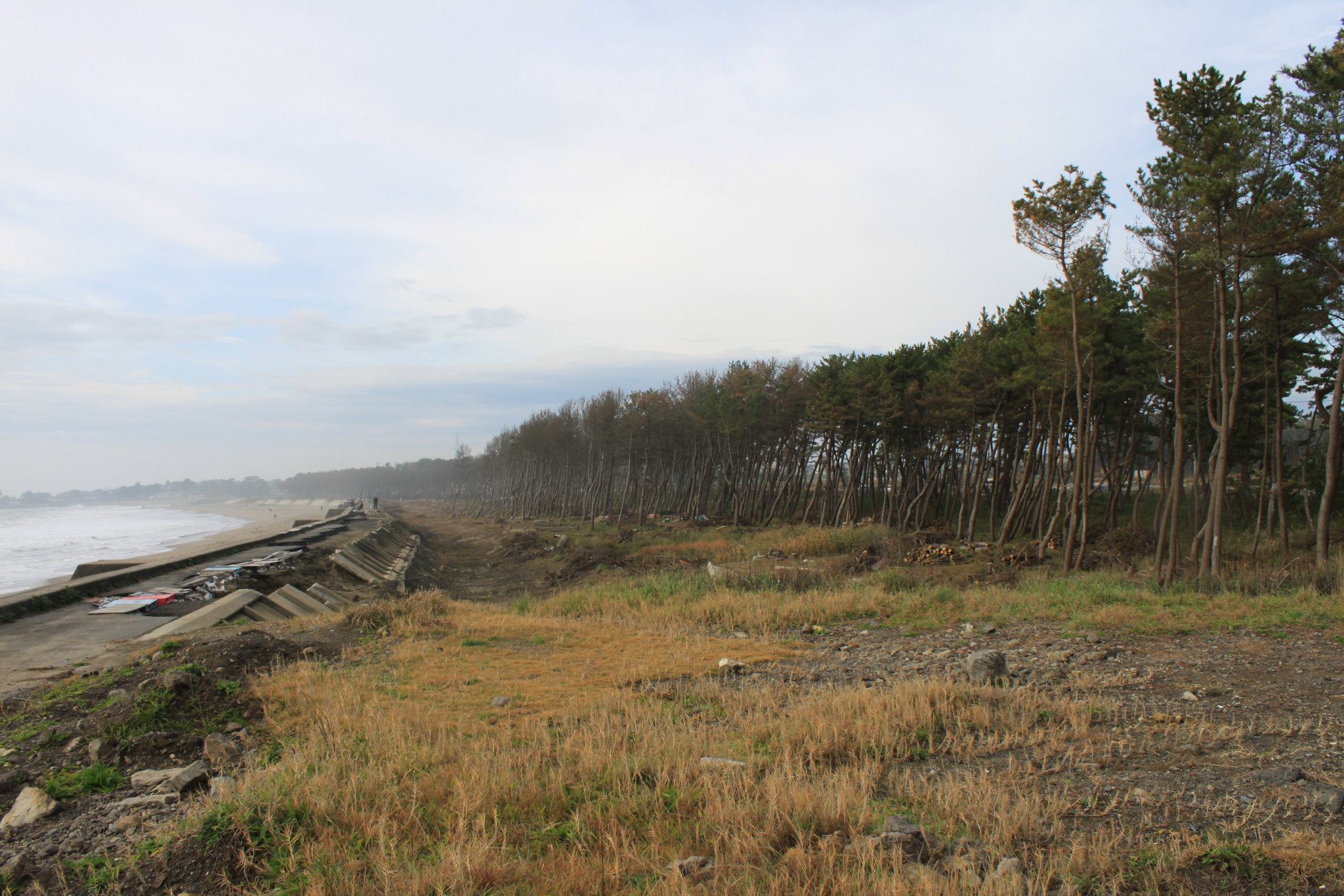
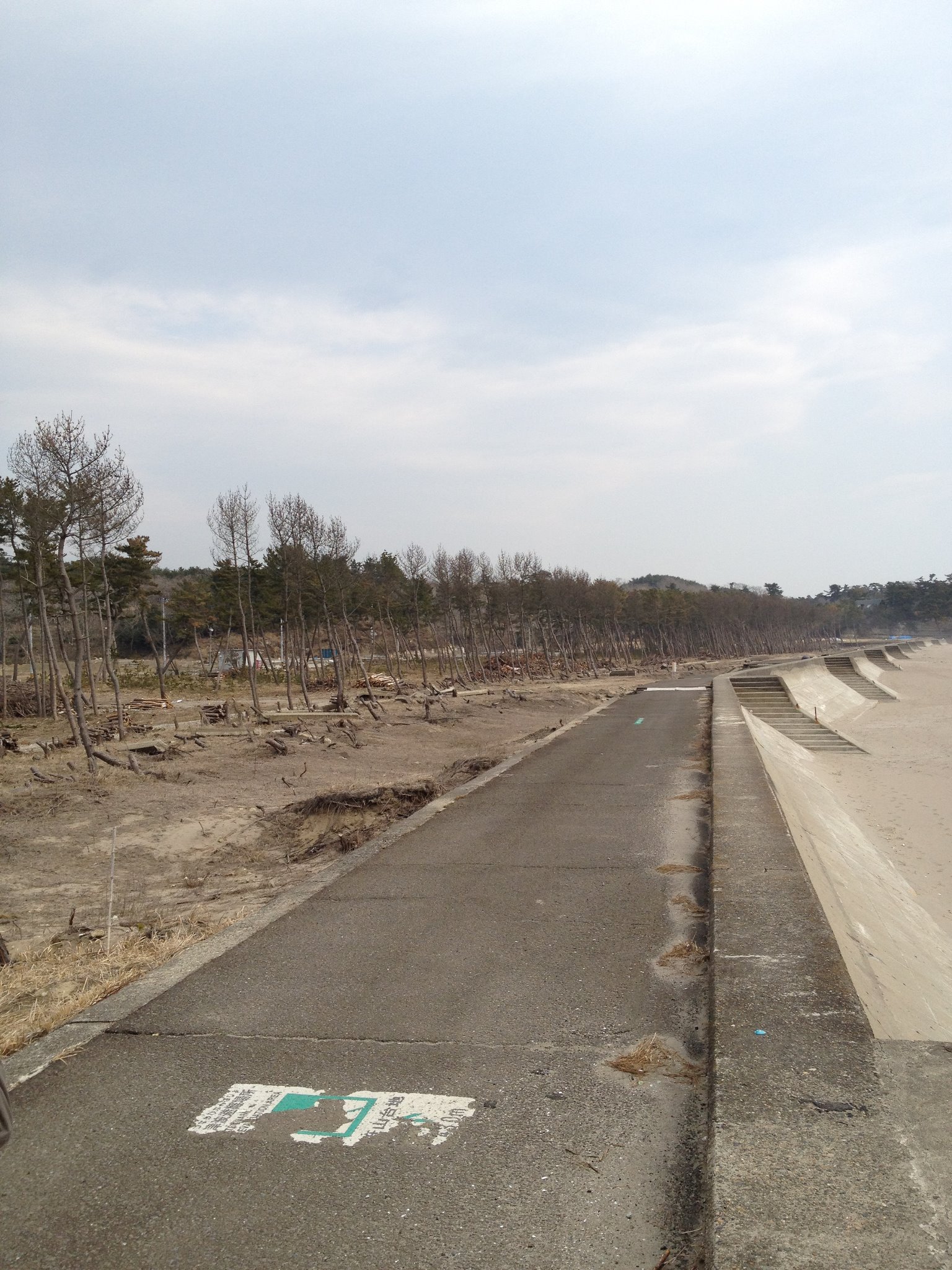
In 2012, we stayed with our friends Brian and Bette at their cabin on a bluff just above the Pacific Ocean at Sendai, Japan, just a few dozen feet above the devastation that wiped out an entire fishing village below during the 3/11/11 earthquake and tsunami.
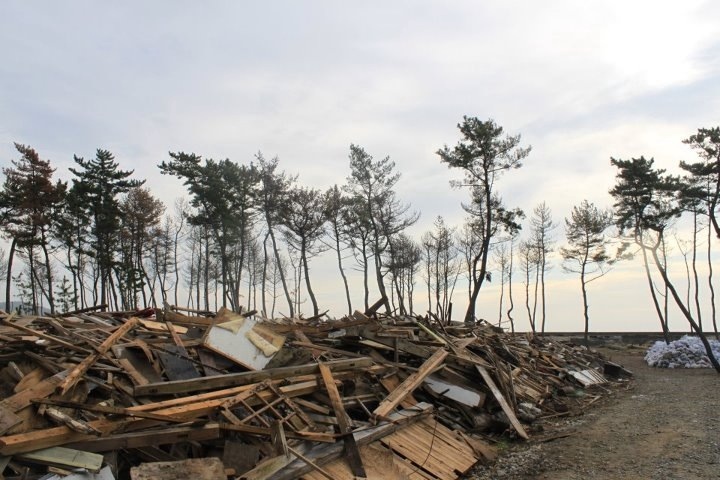
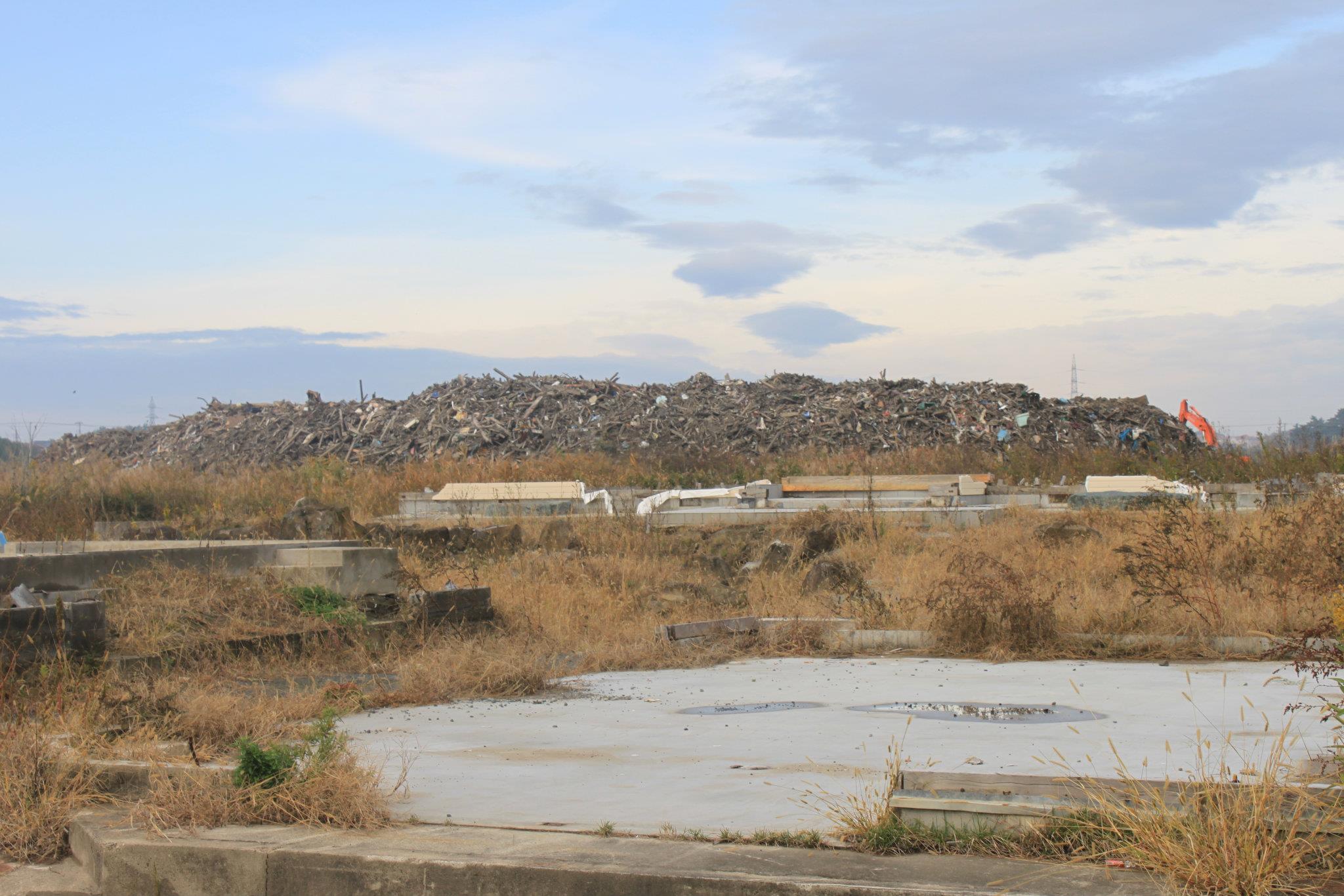
As we walked that stretch of beach, we heard the stories of the people who had lived there, some of whom did not survive the waves that swept their houses and cars away before they could escape. We walked past the footprints of foundations of hundreds of demolished homes, humbled by the rubble mountains yet to be hauled away a year later, to be burned or buried. There were acres of wrecked vehicles piled one on another, waiting to become scrap metal.
It was visual evidence of life so suddenly and dramatically disrupted and carried away.
This had been a place of recreation and respite for some who visited regularly, commerce and livelihood for others who stayed year round and, in ongoing recovery efforts, struggling to be restored to something familiar. Yet it looked like a foreign ghostly landscape. Many trees perished, lost, broken off, fish nets still stuck high on their scarred trunks. There were small memorials to lost family members within some home foundations, with stuffed animals and flowers wilting from the recent anniversary observance.
Tohoku is a powerful place of memories for those who still live there and know what it once was, how it once looked and felt, and painfully, what it became in a matter of minutes on 3/11/11. The waves swept in inexplicable suffering, then carried their former lives away. Happiness gave ground to such terrible pain that could never have hurt as much without the joy and contentment that preceded it.
We are tempted to ask God why He doesn’t do something about the suffering that happened in this place or anywhere a disaster occurs –but if we do, He will ask us the same question right back. We need to be ready with our answer and our action.
God knows suffering. Far more than we do. He took it all on Himself, feeling His pain amplified, as it was borne out of His love and joy in His creation.
This beautiful place, and its dedicated survivors have slowly recovered, but the inner and outer landscape is forever altered. What remains the same is the pulsing tempo of the waves, the tides, and the rhythm of the light and the night, happening just as originally created.
With that realization, pain will finally give way, unable to stand up to His love, His joy, and our response to His sacrifice.
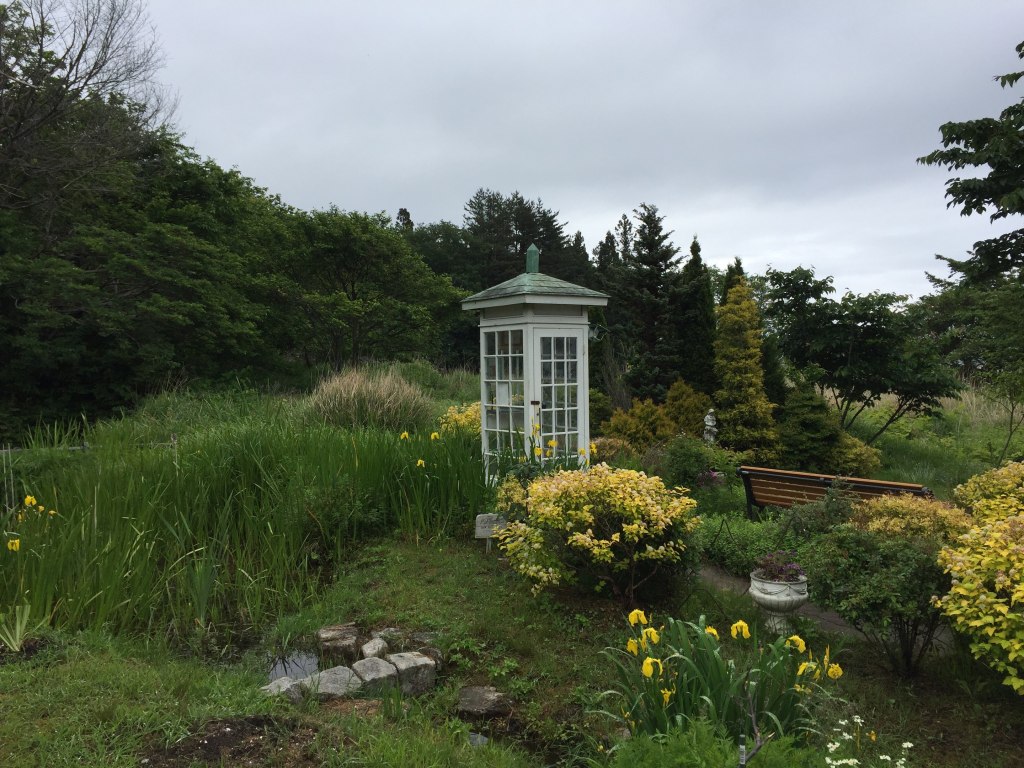
We can call Him up anytime and anywhere.
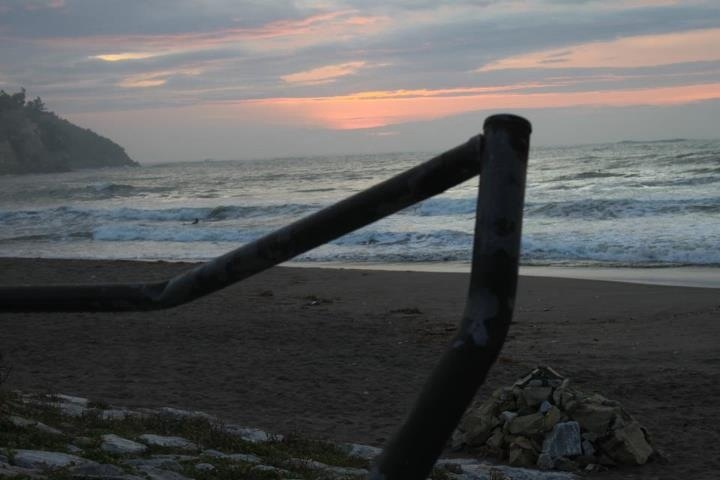
bent gate at Sendai beach -2012
One-Time
Monthly
Yearly
Make a one-time or recurring donation to support daily Barnstorming posts
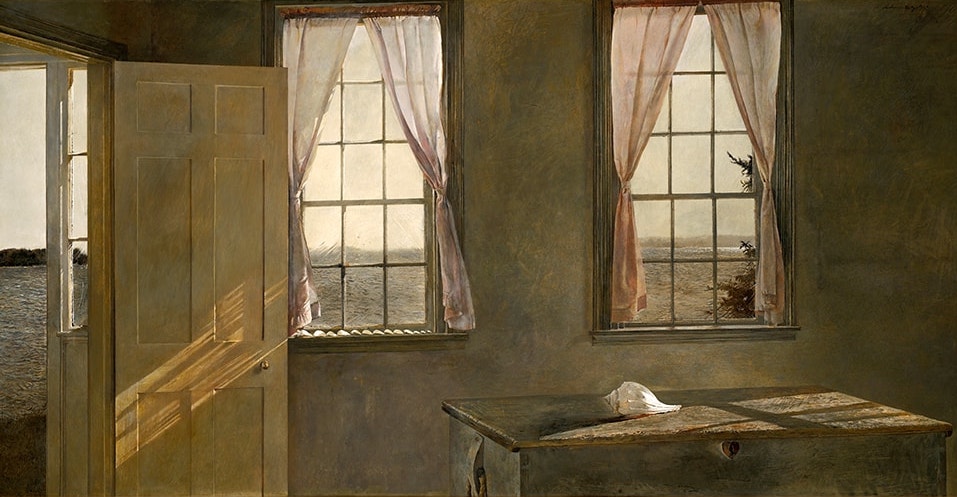
Needing them still, I come when I can, this time to the sea where we share a room: their double bed, my single. Morning fog paints the pale scene even paler. Lace curtains breathing, the chenille spread folded back, my father’s feet white sails furled at the edge of blue pajamas. Every child’s dream, a parent in each hand, though this child is fifty. Their bodies fit easily, with room to spare. When did they grow so small? Grow so small— as if it were possible to swell backwards into an earlier self.
“Her Room” by Andrew Wyeth in the Farnsworth Art Museum
My parents have been gone now for some time, my father 30 years, my mother, nearly 17 years. Their dying was a long process of counted breaths and pauses. I witnessed their bodies curling into themselves, shrinking smaller, worn down by illness and age.
I still miss them as I’m reminded of them by the events of my own life, still wanting them to take me by the hand as I navigate my own daily path.
After mom’s death, those possessions not distributed to family members have remained packed up and stored in our barn buildings. I know it is well past time to deal with their stuff as I become keenly aware of my own graying and aging.
In the house, next to where I write, is a box of over 500 letters written by my mother and father between 1941 and 1945. The letters began as they were getting to know each other at college, going from “pinned” to “engaged” and continue for three and a half more years after a hurried wedding Christmas Eve 1942. By mid-January 1943, my newly minted Marine officer father shipped out to spend the next three years of his life fighting on the battlefields of Saipan, Tinian and Tarawa in the Pacific Ocean, not to return again to the states until late summer of 1945.
My mother wrote her letters from the small rural eastern Washington community of Colville, living in a “teachers’ cottage” with other war wives who taught school while waiting for their husbands to return home – or not.
It took me a decade to find the courage and time to devote to reading these letters they treasured and never threw away. I sorted them unopened by postmark date into some semblance of order and sat down to start at the very beginning, which, of course, is my beginning as well. I opened each one with some trepidation and a lump in my throat about what I might find written there. I worried I may find things I didn’t want to know. I hoped I would find things that I desperately needed to know.
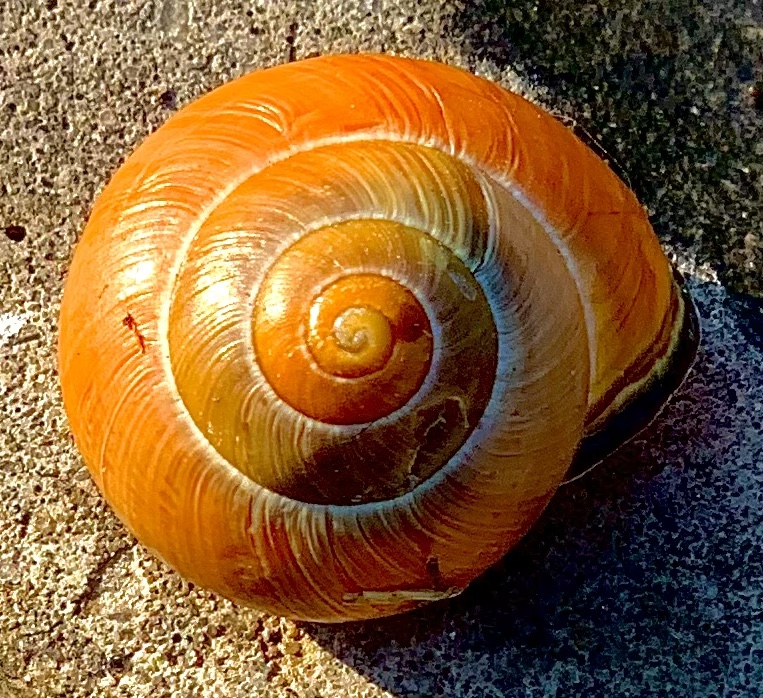
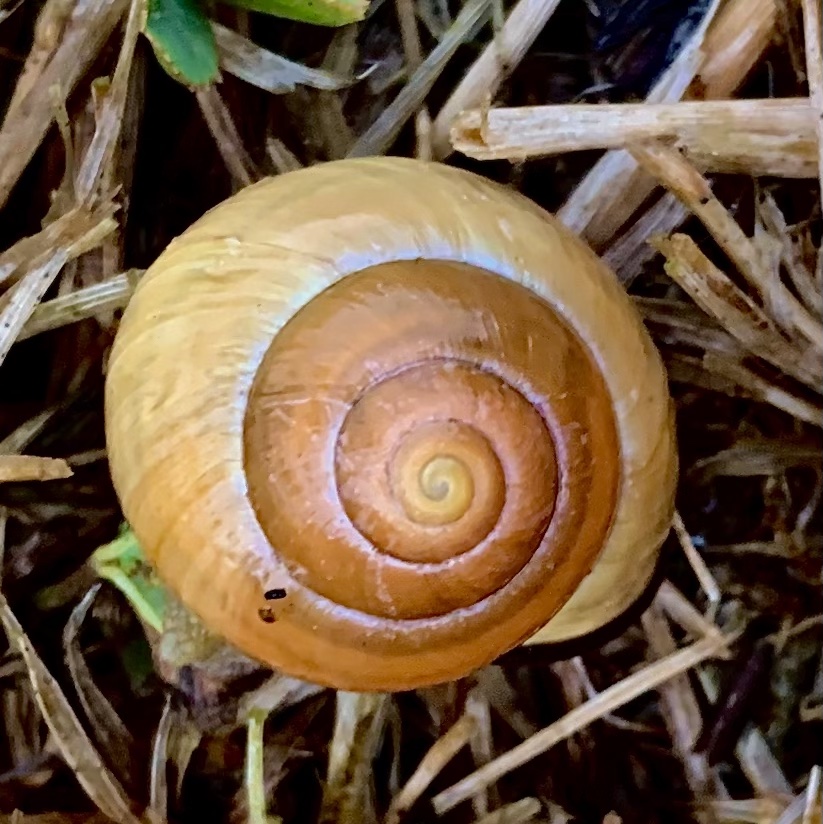
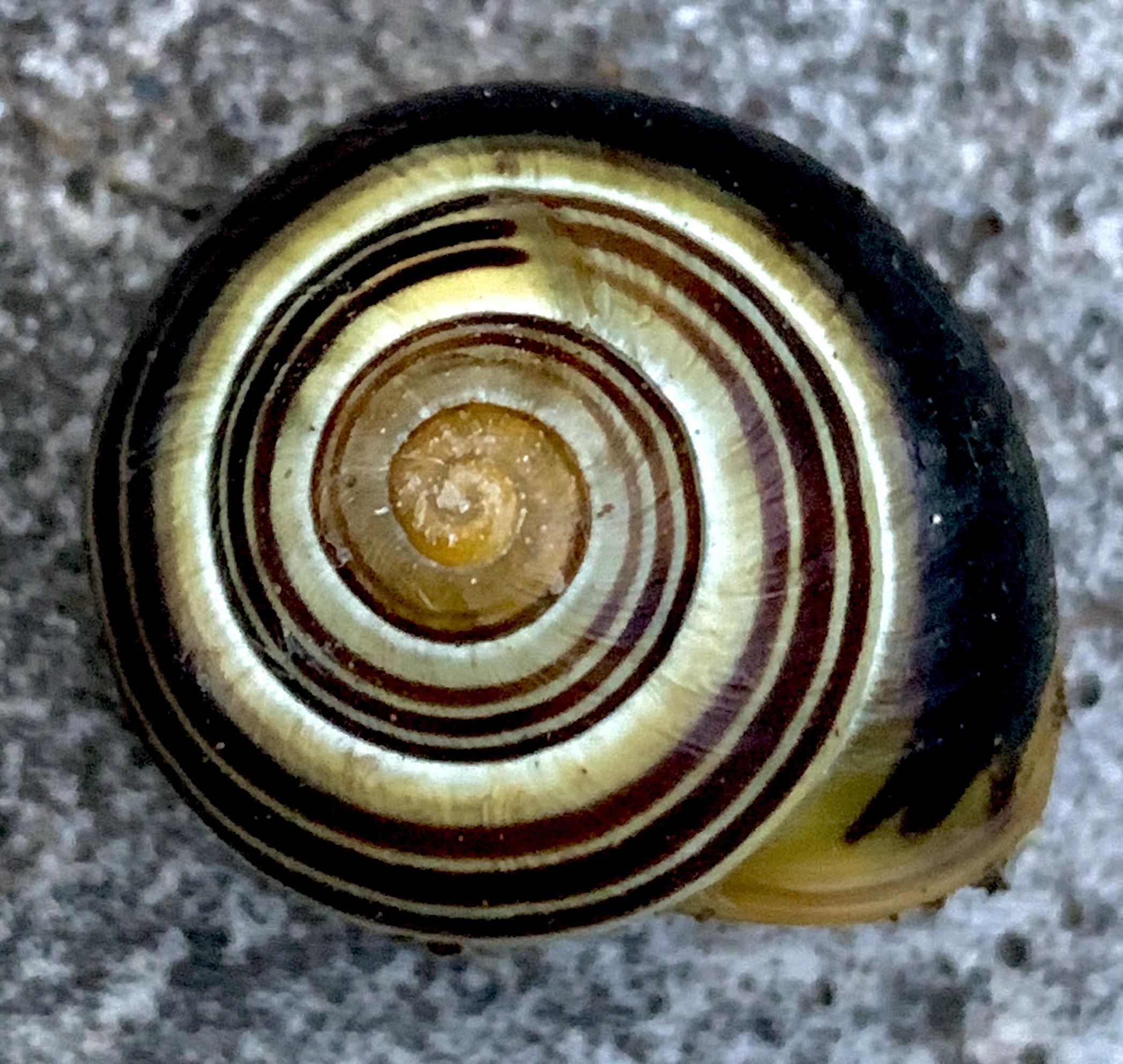
Most of all I wanted to understand the two people who became my parents within the coiled shell of their forty years together, though broken by a painful divorce which lasted a decade. Having lived through that awful time with them, I want to understand the origin of a love which eventually mended their cracked shell of companionship, gluing them back together for five more years before my father died.
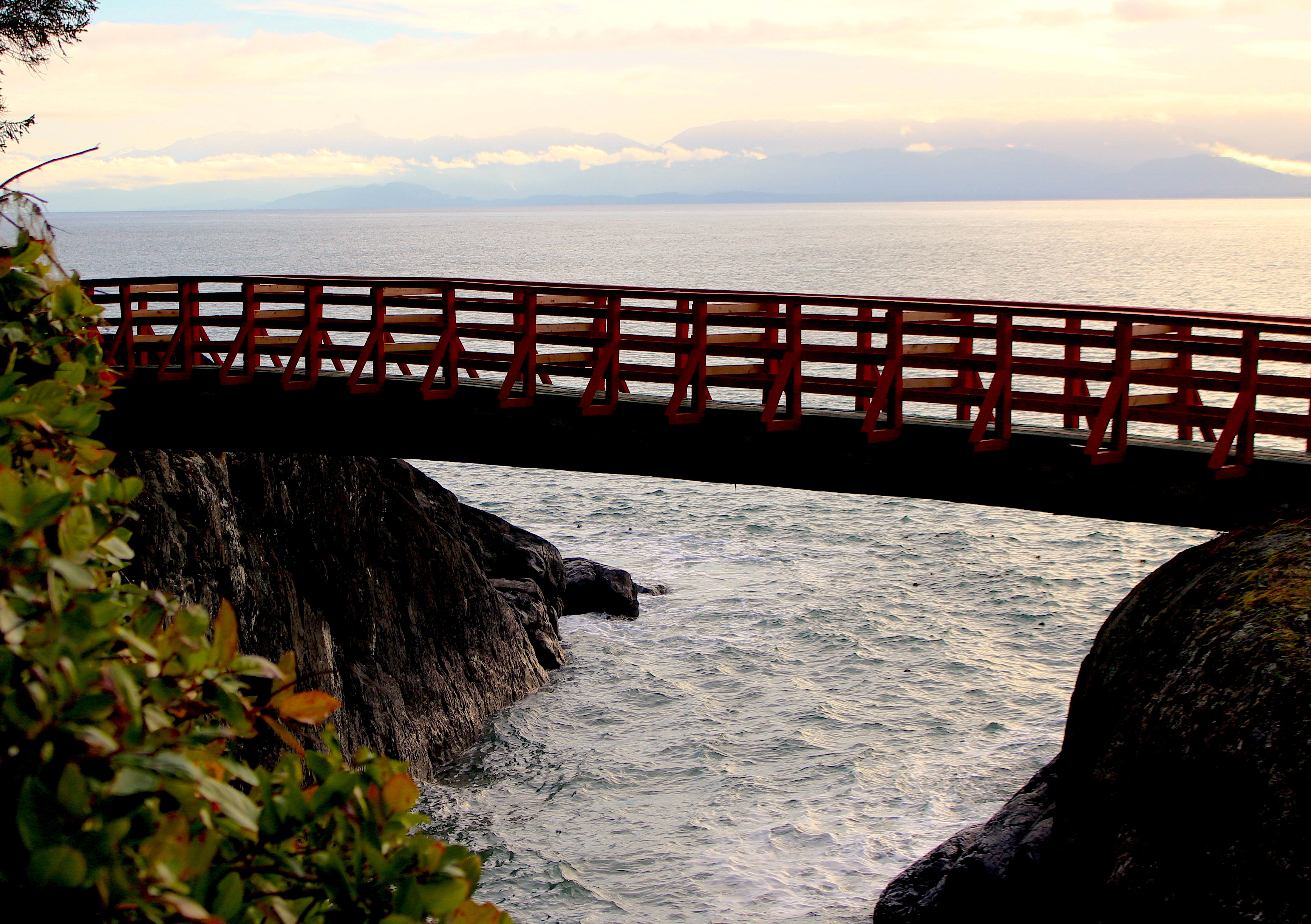
As I ponder their words, I too cross a bridge back to them both, my ear pressed to the coiled shell of those fading voices, as if I might still hear the sea, at times bringing them closer, then pulling them farther away.
AI image created for this post
One-Time
Monthly
Yearly
Make a one-time or recurring donation to support daily Barnstorming posts













 Barnstorming