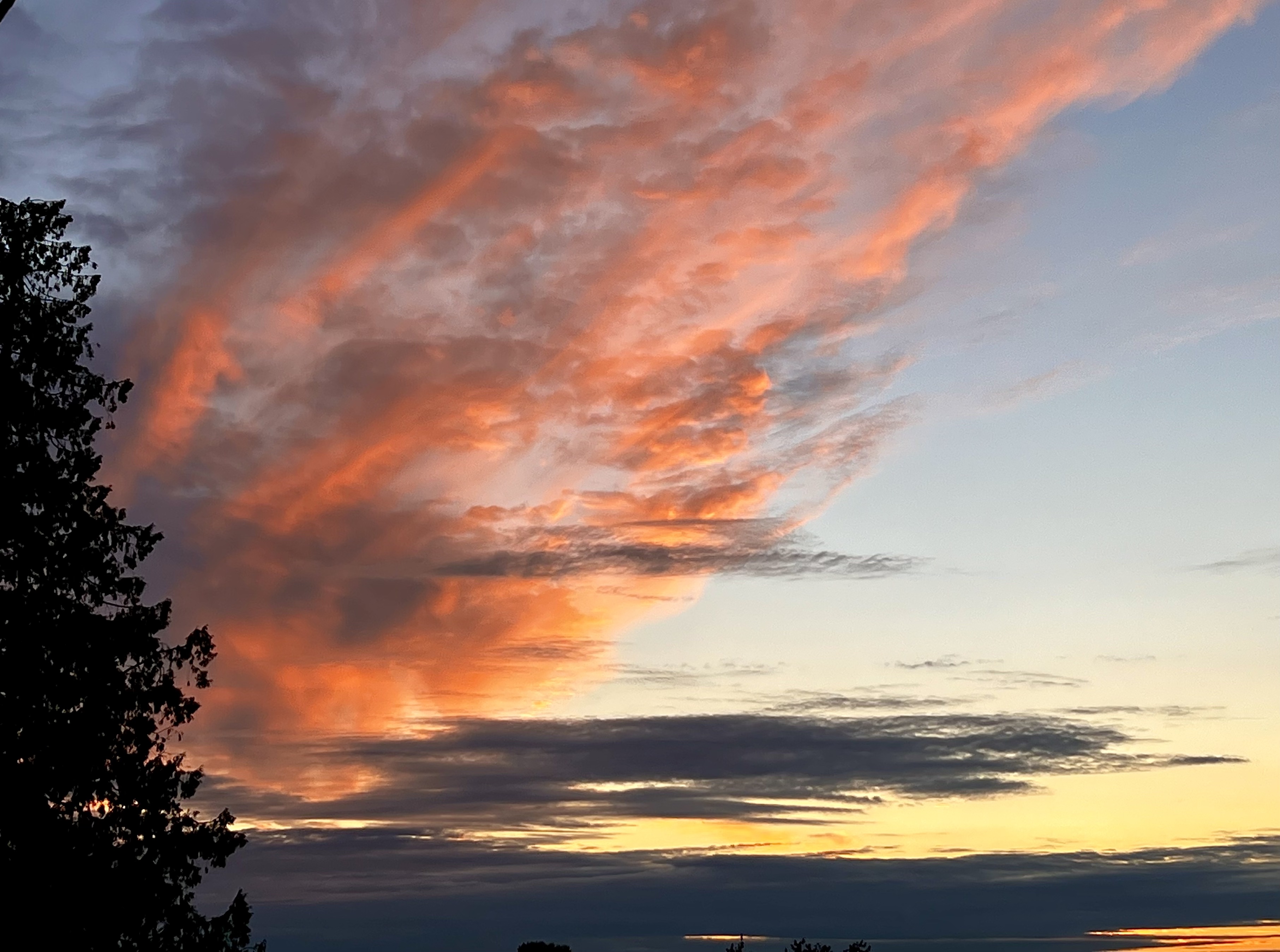
…today, the unseen was everything. The unknown, the only real fact of life. All this he saw, for one moment breathless and intense, vivid on the morning sky; and still, as he looked, he lived; and still, as he lived, he wondered. ~Kenneth Grahame, The Wind in the Willows
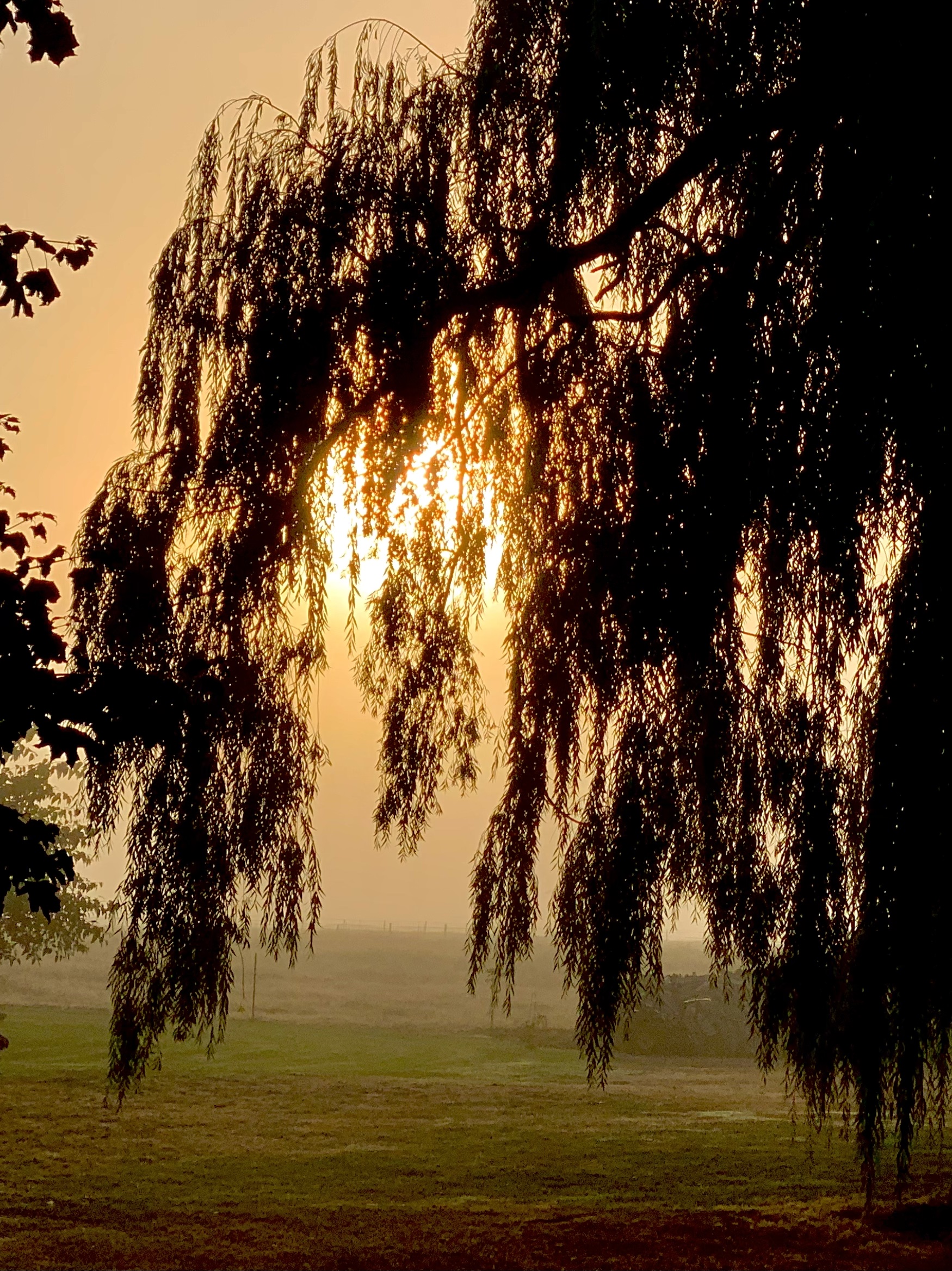
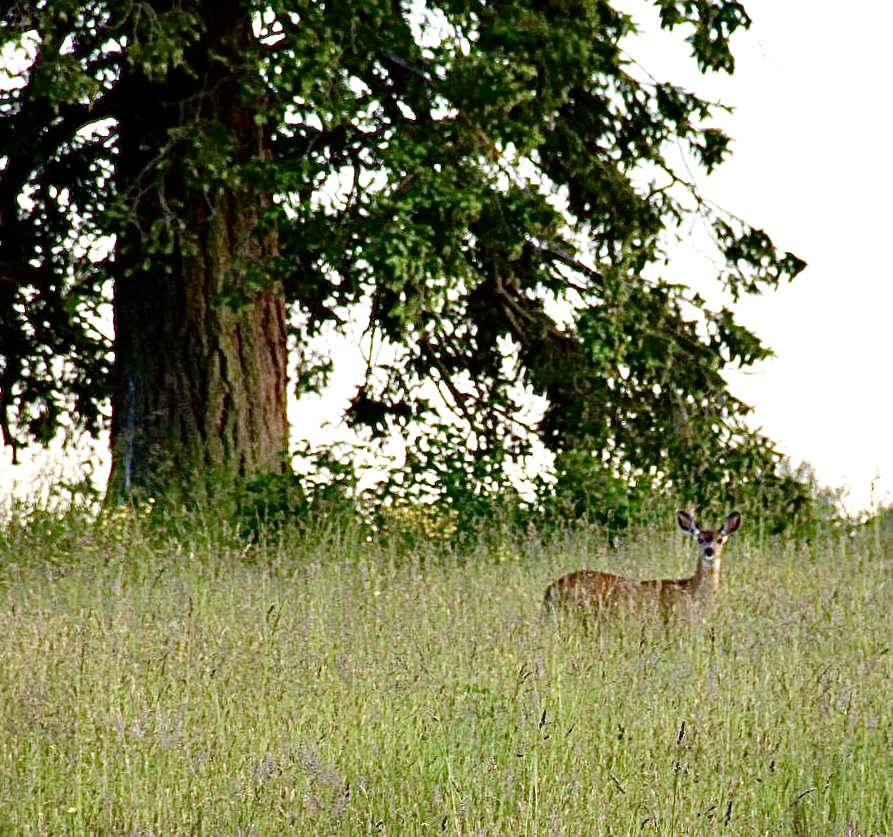
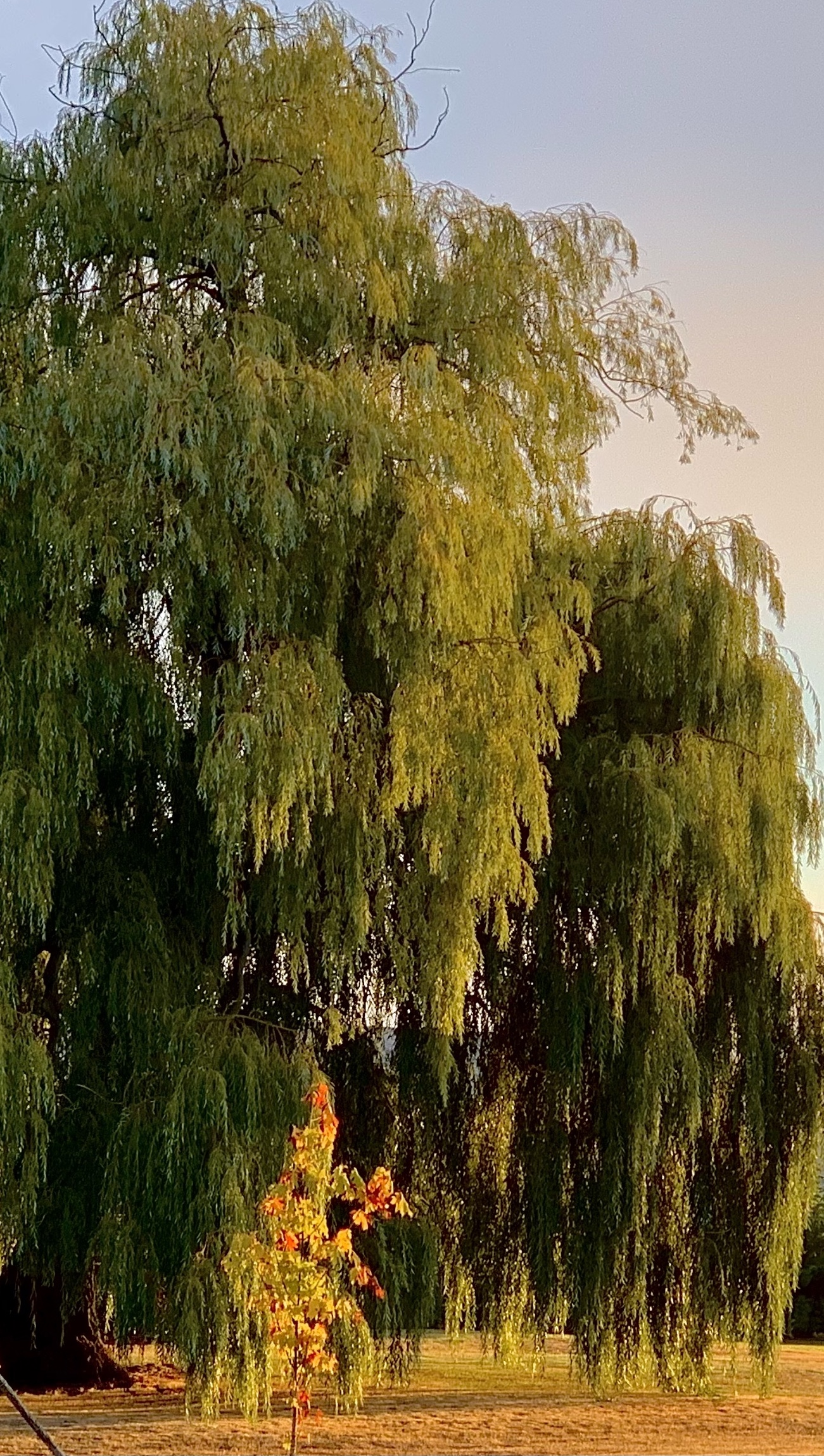
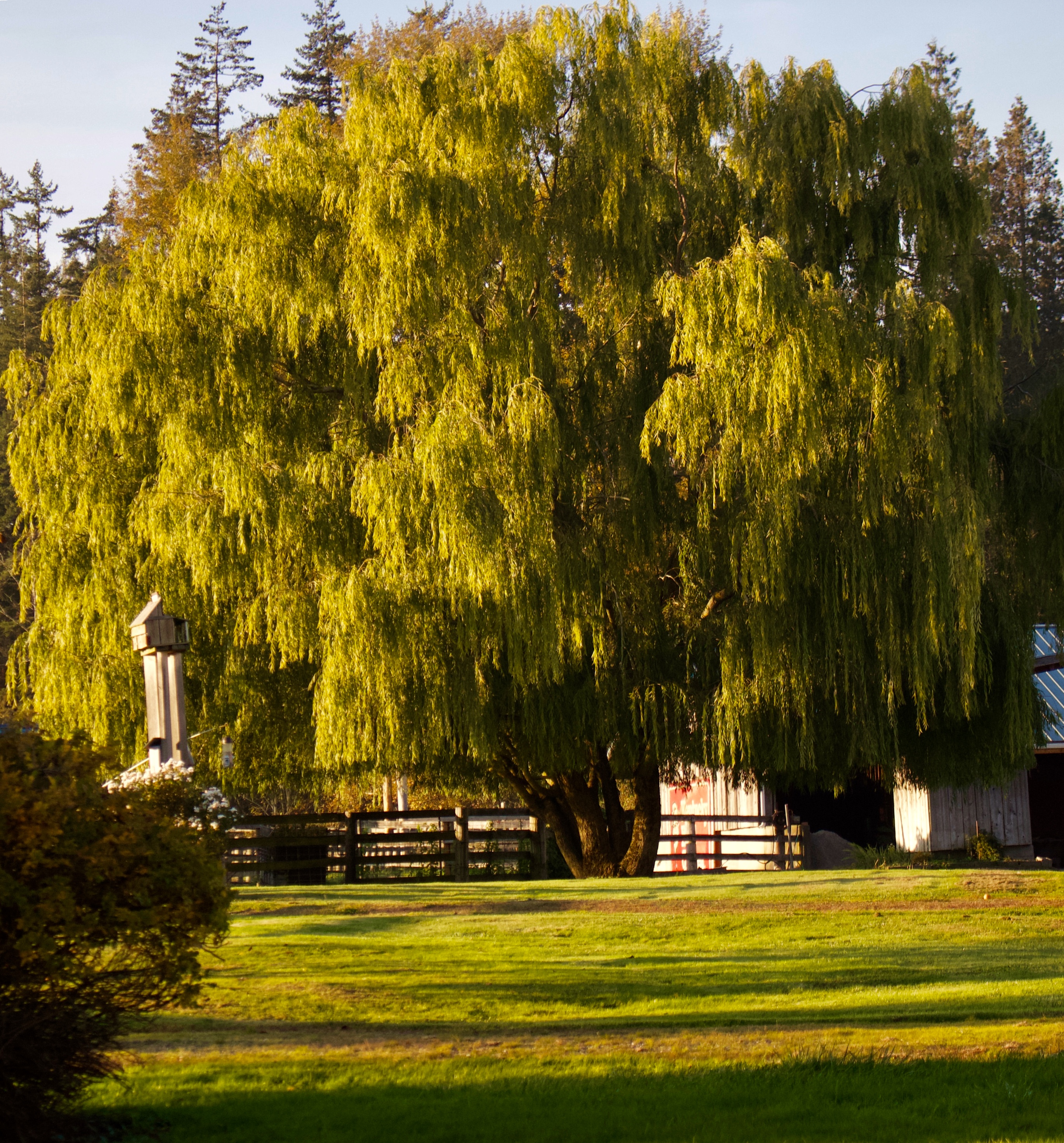
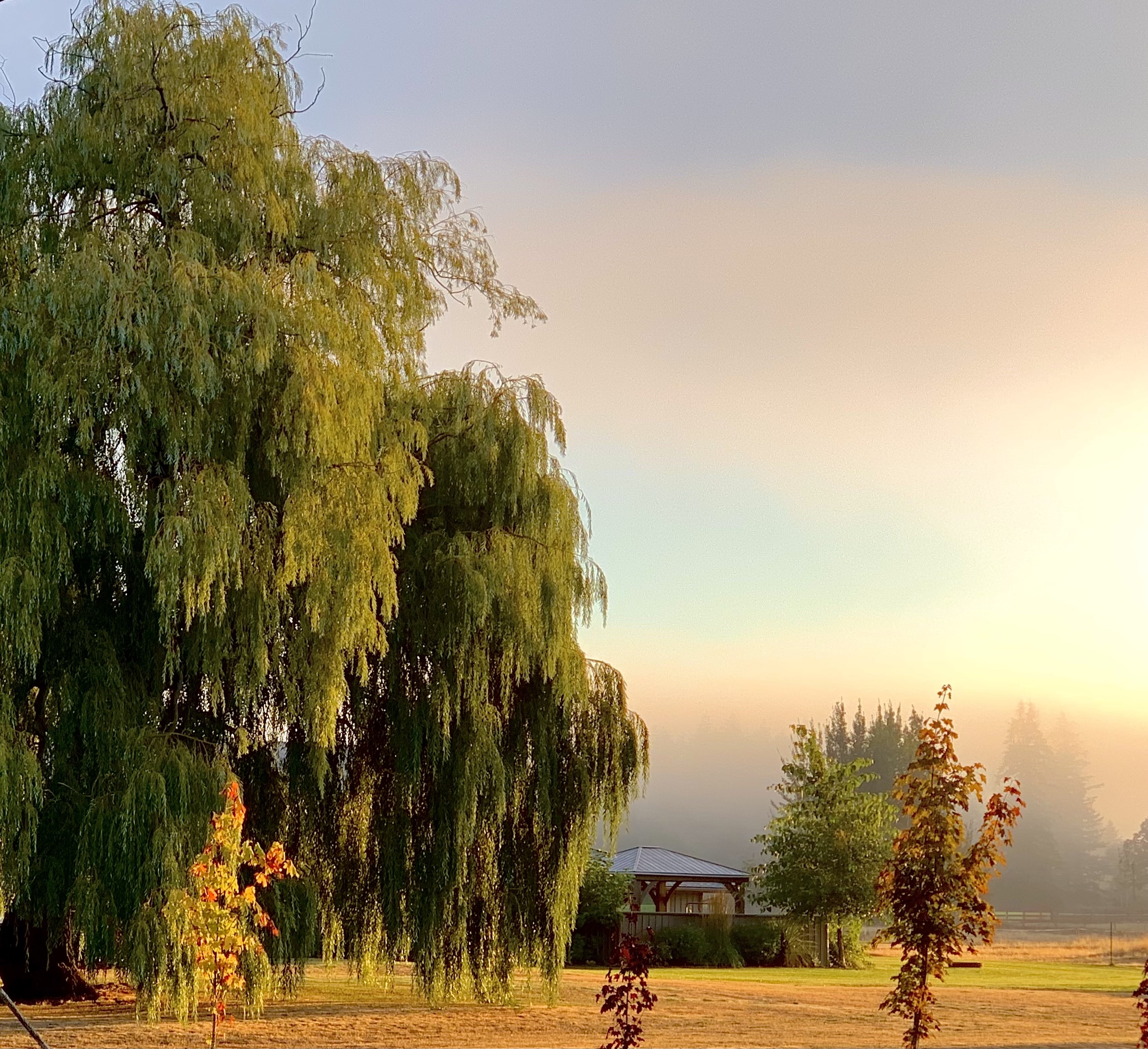
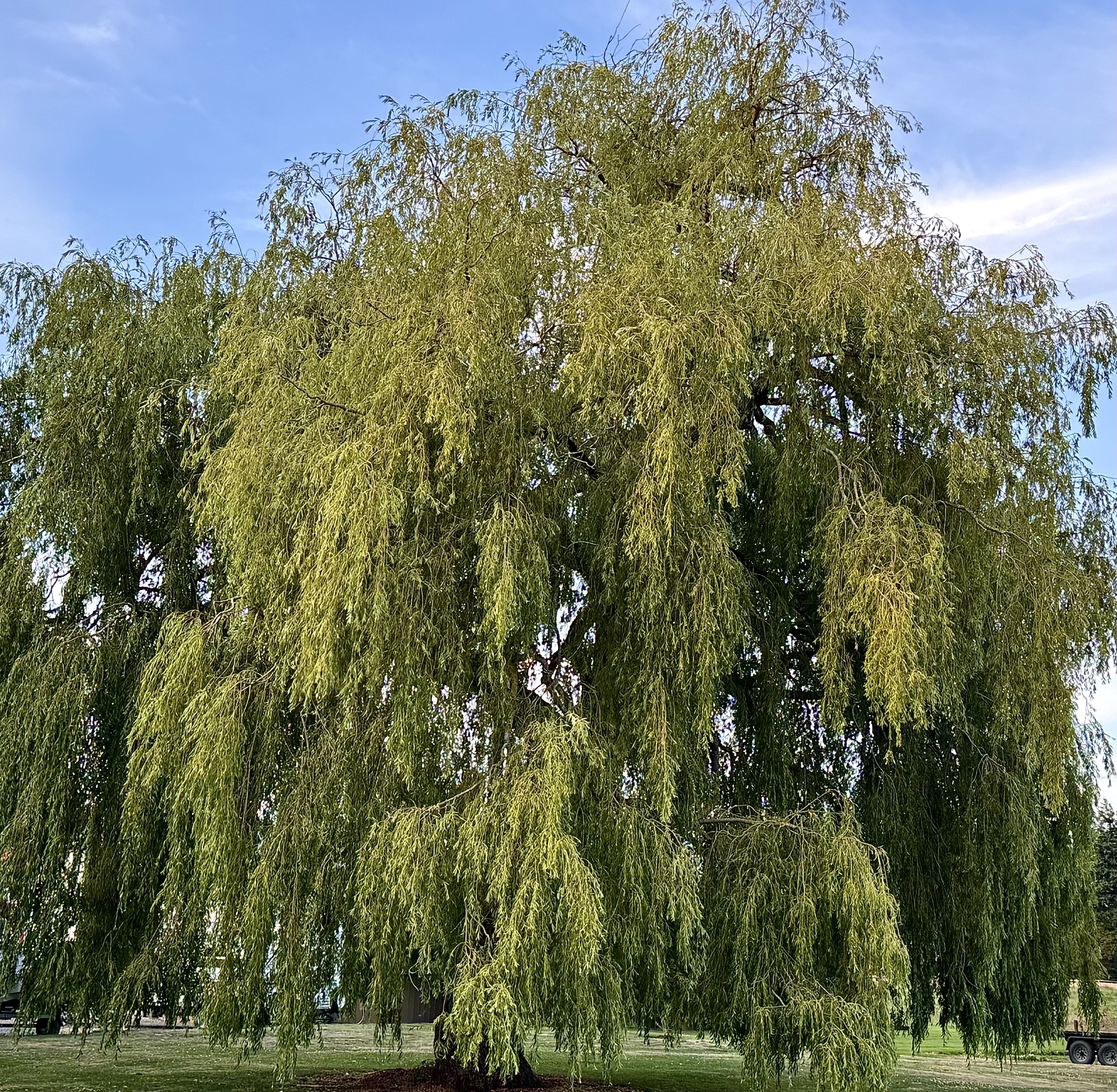
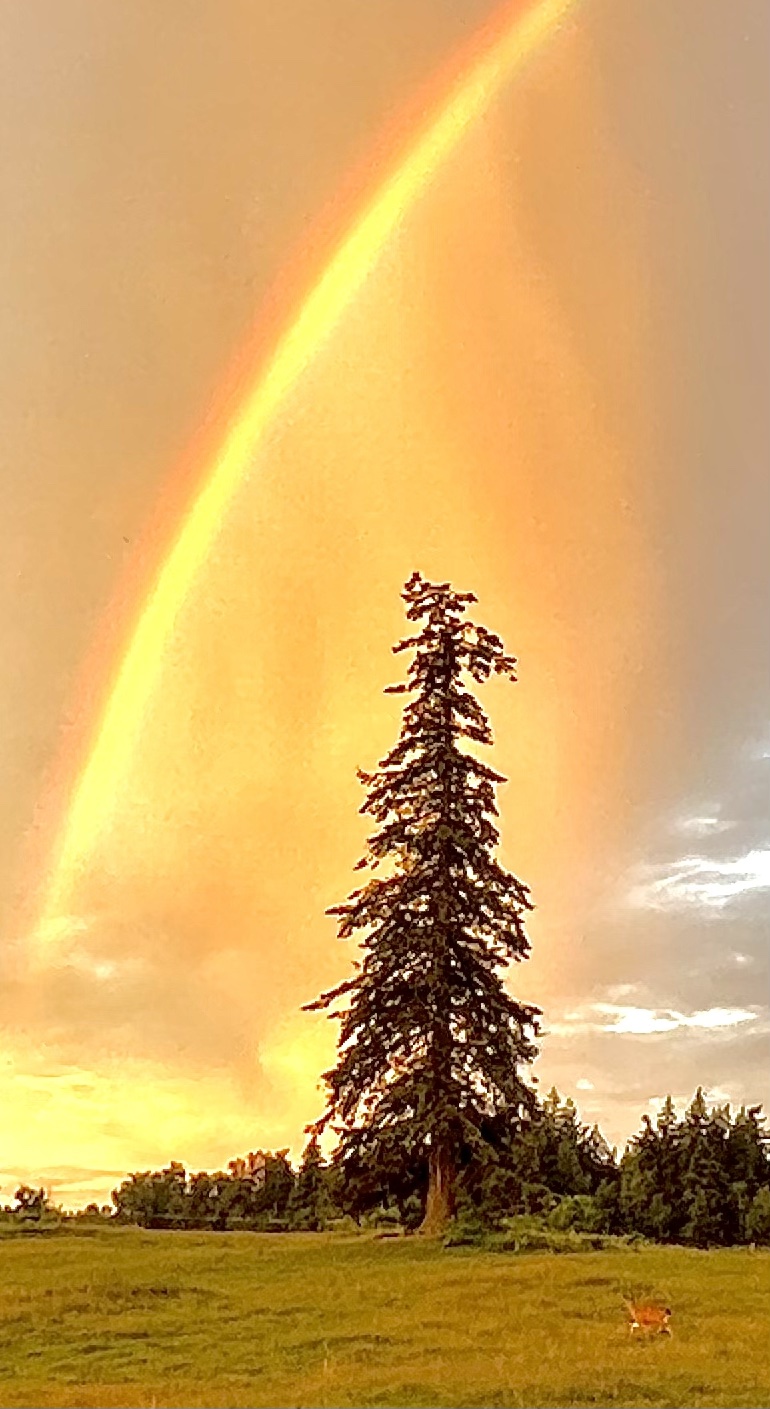
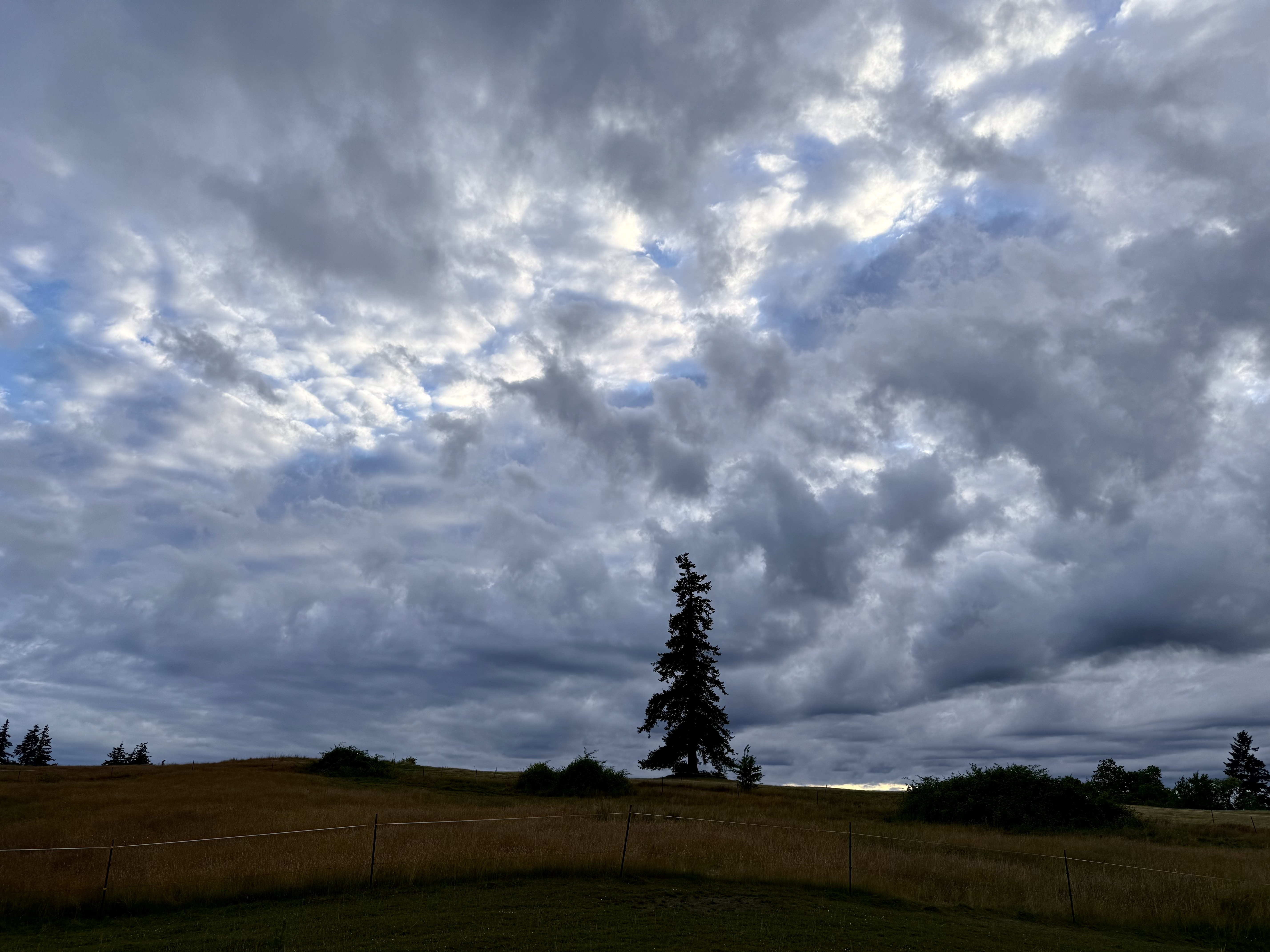
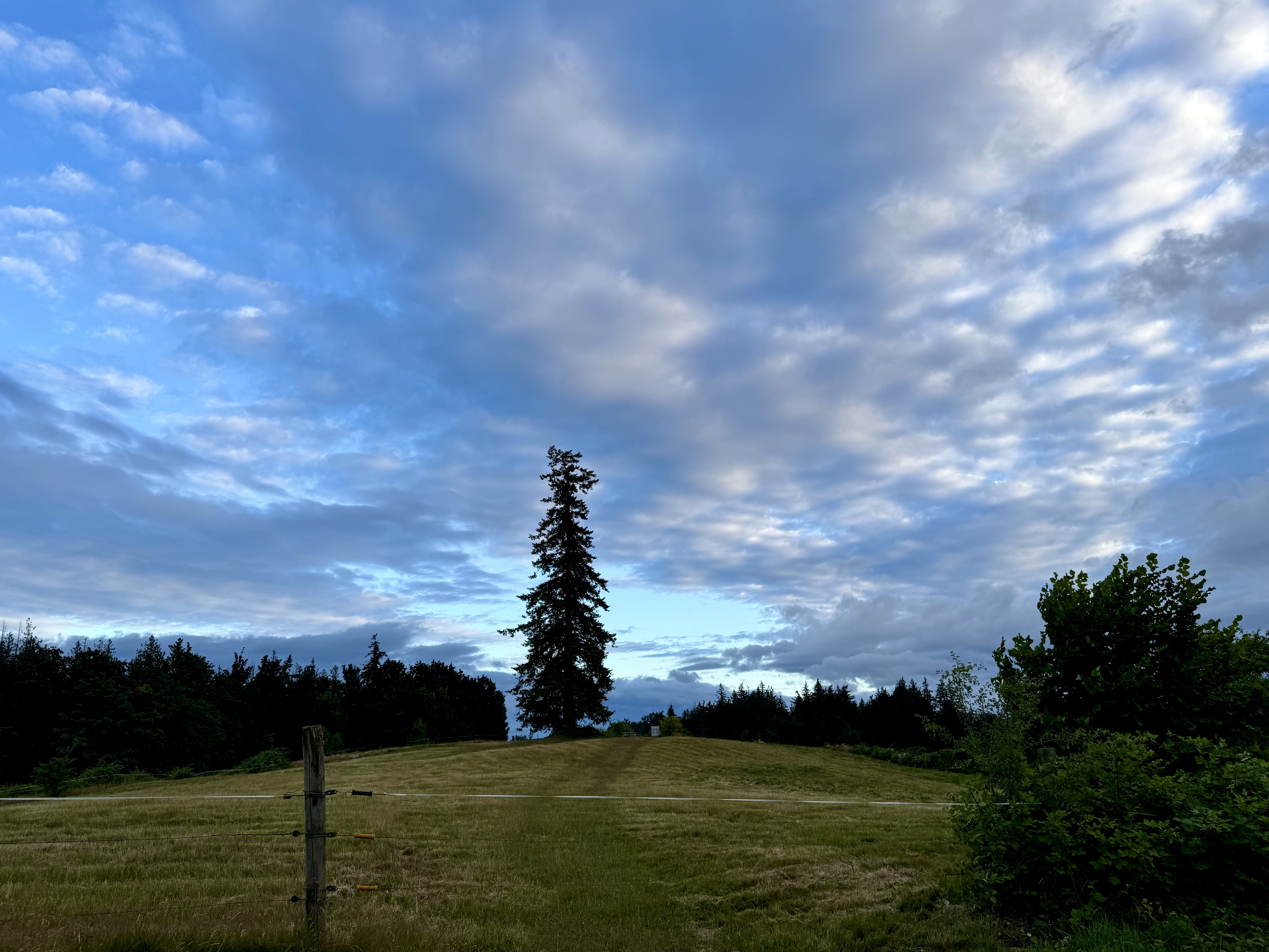
Purposefully lost in the willow stillness of a late summer meadow in the deer-filled dusk—a silver evening following a blue and amber day. ~Tim Hawkins “Purposefully Lost” from West of the Backstory
I search for the unseen, purposely lost, hoping to find meaning in the unknown.
I am bewildered by this life much of the time. Anyone looking at what I share here sees my struggle each day to discern how to make this sad and suffering world a little bit better place.
I have little to offer you other than my own wrestling match with the mysteries we all face.
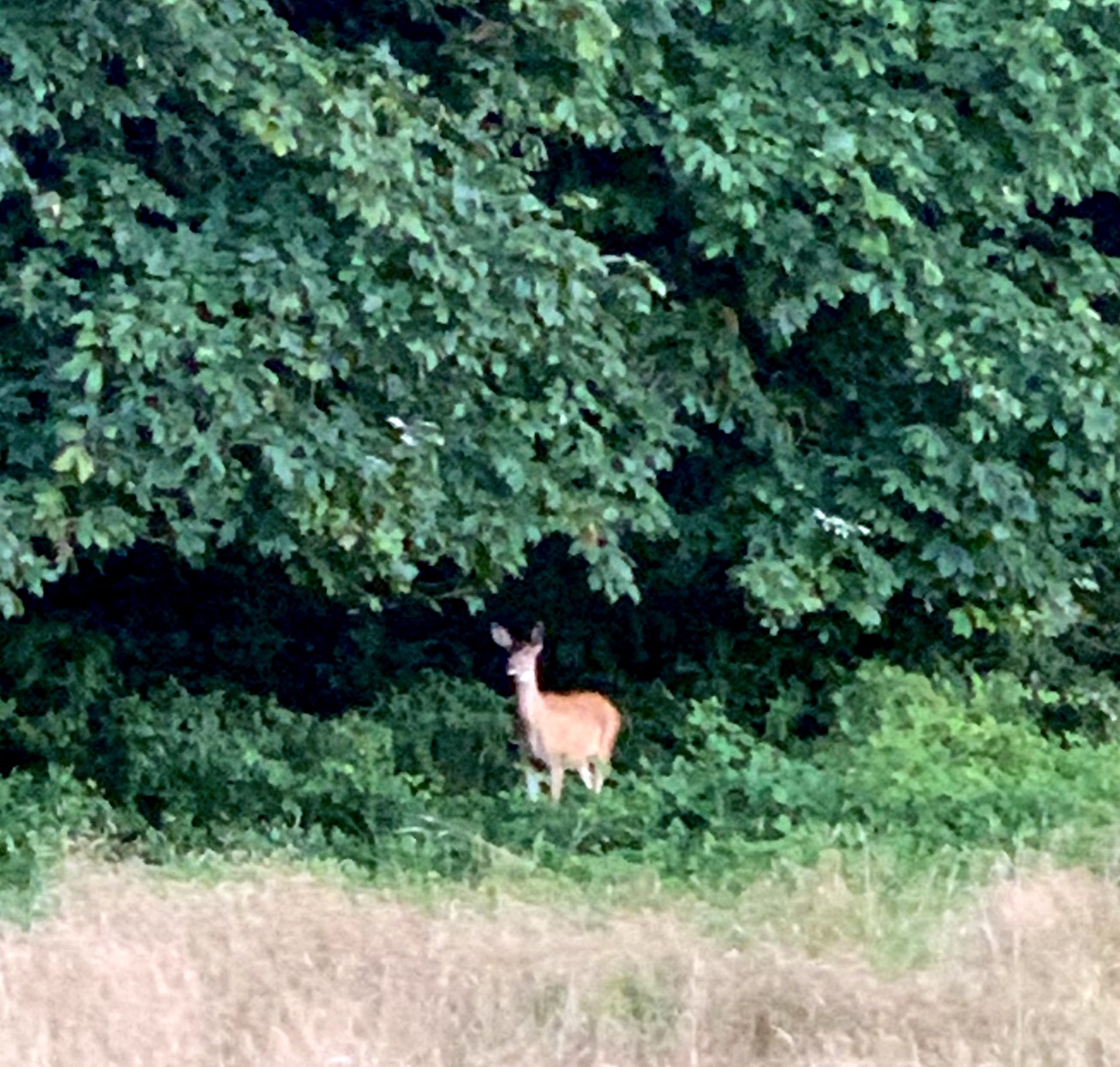
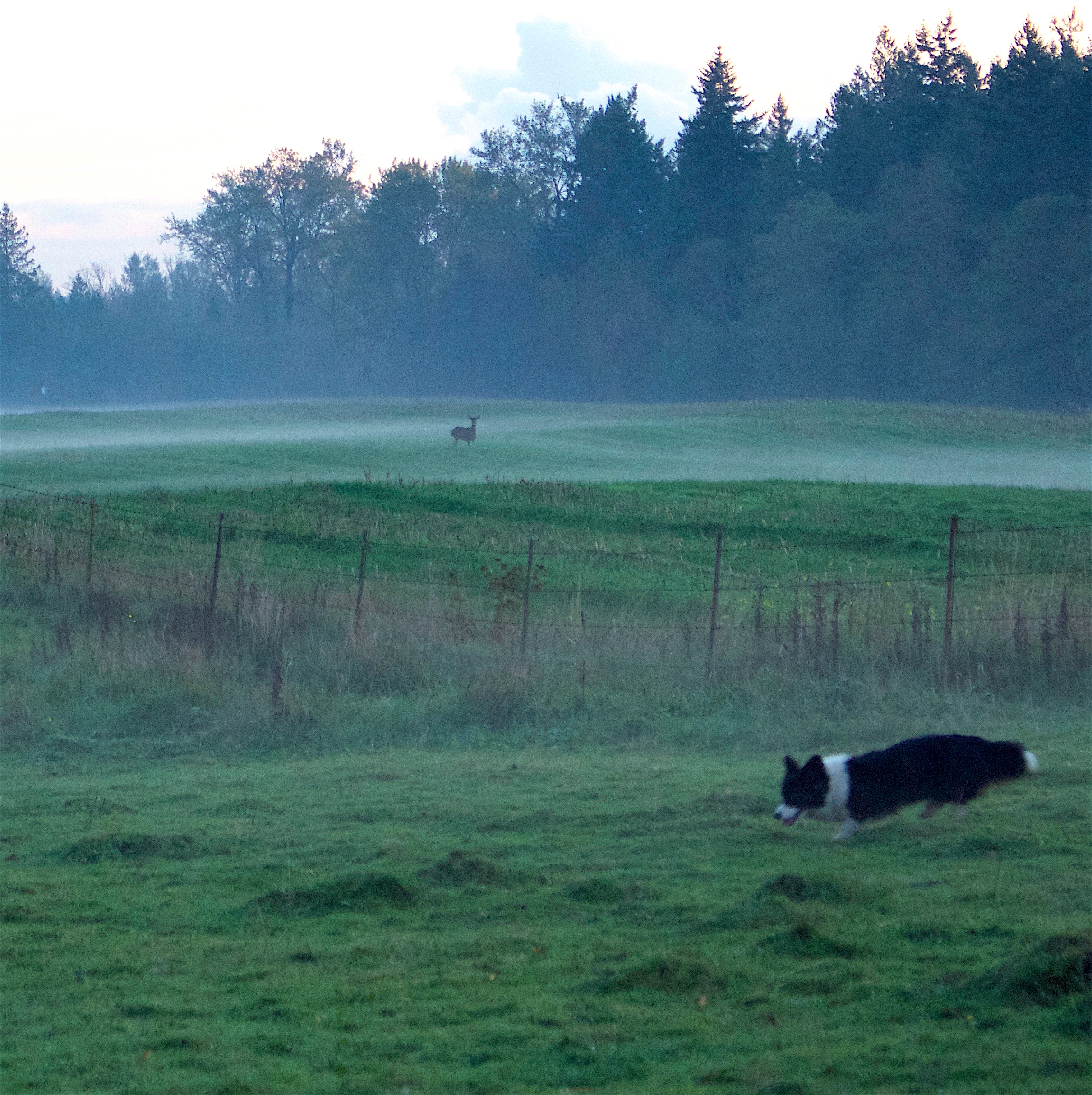
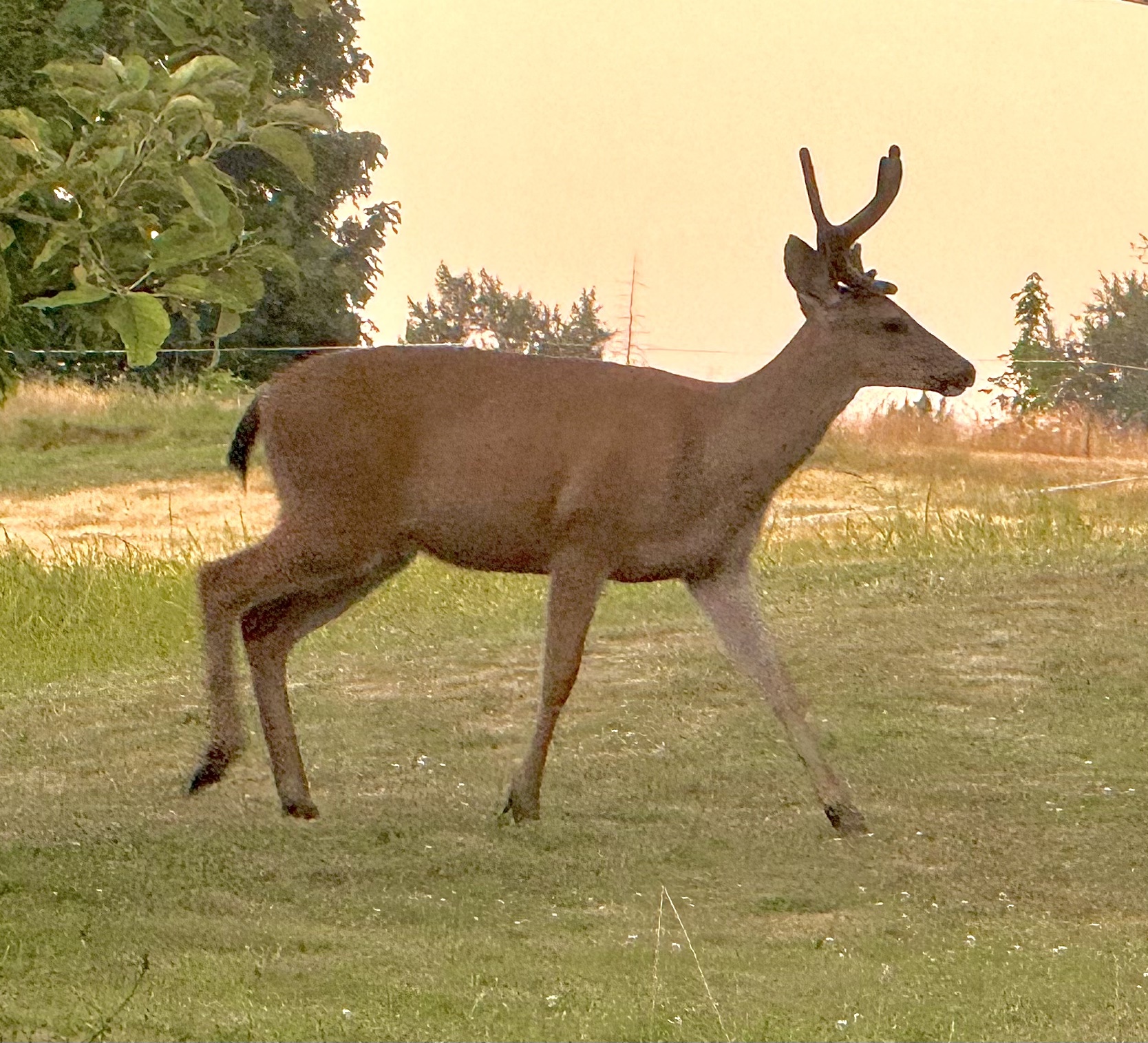
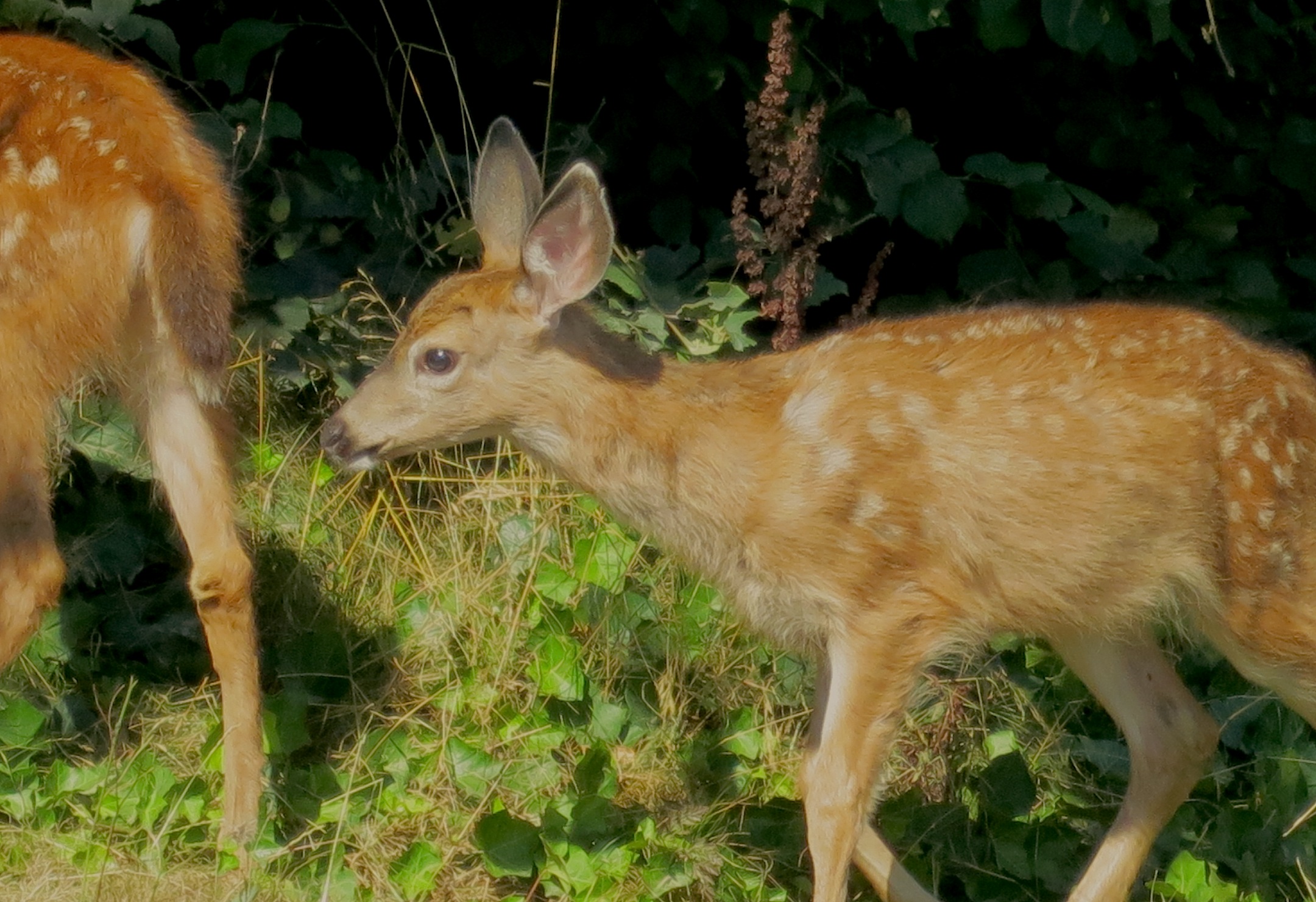
Then, when a light does shine out through darkness, when a deer steps out of the woods into the meadow, I am not surprised.
I simply need to pay attention. Illumination was there all the time, but I needed the eyes to see its beauty laid bare, brave enough to show itself even brighter in the light of day.
One-Time
Monthly
Yearly
Make a one-time or recurring donation to support daily Barnstorming posts
It’s an early summer day, going to be a hot one. I’m away from home, I’m working; the sky is solidly blue with just a chalk smear of clouds. So why this melancholy? Why these blues? Nothing I’ve done seems to matter; I could leave tomorrow and no one would notice, that’s how invisible I feel. But look, there’s a pair of cardinals on the weathered table, pecking at sunflower seeds which I’ve brought from home. They don’t seem particularly grateful. Neither does the sky, no matter how I transcribe it. I wanted to do more in this life, not the elusive prizes, but poems that astonish. A big flashy jay lands on the table, scattering seeds and smaller birds. They regroup, continue to hunt and peck on the lawn. ~Barbara Crooker, “Melancholia” from Some Glad Morning
When despair for the world grows in me and I wake in the night at the least sound in fear of what my life and my children’s lives may be, I go and lie down where the wood drake rests in his beauty on the water, and the green heron feeds. I come into the peace of wild things who do not tax their lives with forethought of grief. I come into the presence of still water. And I feel above me the day-blind stars waiting with their light. For a time I rest in the grace of the world, and am free. ~Wendell Berry “The Peace of Wild Things” fromThe Selected Poems of Wendell Berry
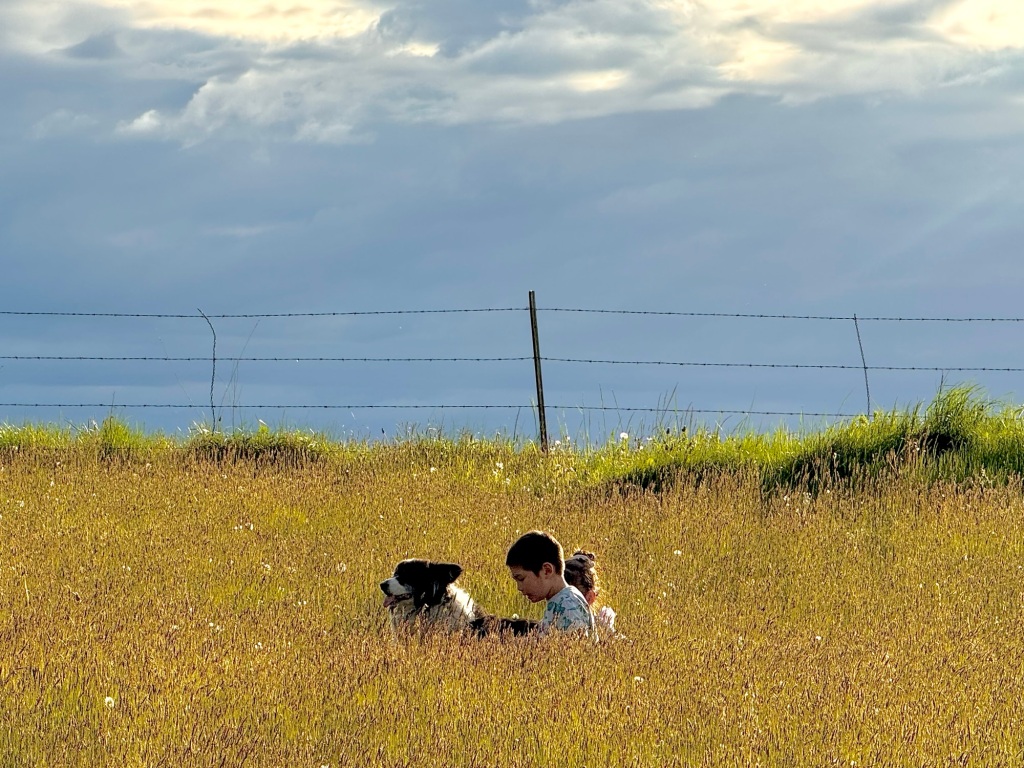
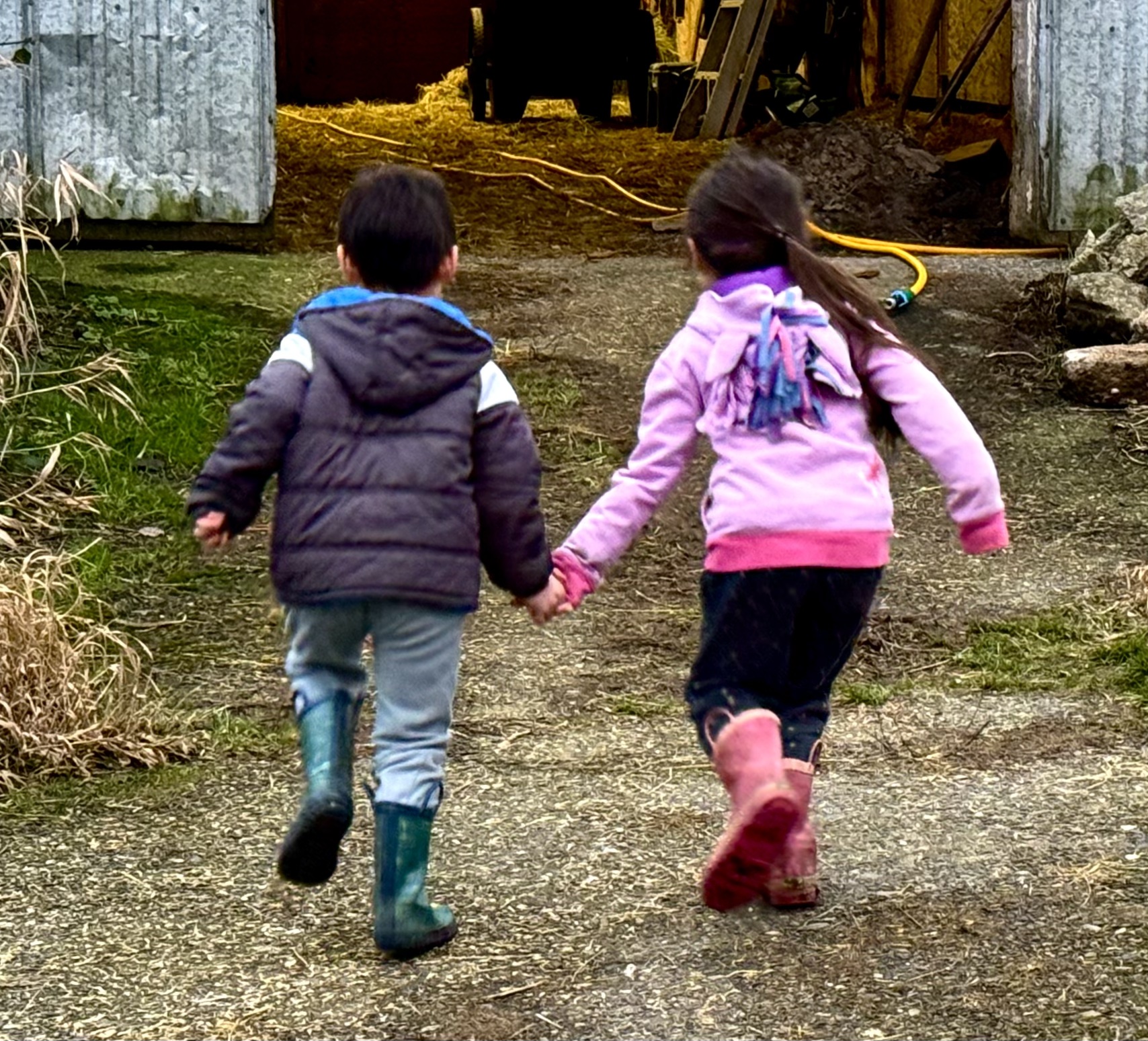
Three years ago, I laid awake thinking about our son and his family’s ten hour overnight flight from Tokyo in progress. Our two young grandchildren were arriving here after 30 months of pandemic separation – to them, we were just faces on a screen.
They said a sorrowful sayonara to their grandparents and family there, arriving here to a new life thanks to my daughter-in-law’s newly issued green card after two years of waiting, new jobs, new language, new everything, with all their worldly belongings in suitcases.
From the largest city in the world to our little corner of the middle of nowhere.
Over the past three years, I have watched them discover for themselves the joys and sorrows of this part of the world. When I look at things through their eyes, I am reminded of the light beyond the darkness I fear, there is peace amid the chaos, there is a smile behind the tears, there is stillness within the noisiness there is rest despite our restlessness, there is grace as we who are older give way to the younger.
I have given up on astonishing others. Instead, astonishing is happening all around me; I need only be a witness.
Measure me, sky! Tell me I reach by a song Nearer the stars; I have been little so long.
Weigh me, high wind! What will your wild scales record? Profit of pain, Joy by the weight of a word.
Horizon, reach out! Catch at my hands, stretch me taut, Rim of the world: Widen my eyes by a thought.
Sky, be my depth, Wind, be my width and my height, World, my heart’s span; Loveliness, wings for my flight. ~Leonora Speyer “Measure Me, Sky”
One-Time
Monthly
Yearly
Make a one-time or recurring donation to support daily Barnstorming posts
…And when the sun rises we are afraid it might not remain when the sun sets we are afraid it might not rise in the morning when our stomachs are full we are afraid of indigestion when our stomachs are empty we are afraid we may never eat again when we are loved we are afraid love will vanish when we are alone we are afraid love will never return and when we speak we are afraid our words will not be heard nor welcomed but when we are silent we are still afraid
So it is better to speak remembering we were never meant to survive. ~Audre Lorde from “A Litany for Survival”
We are all here so briefly, just trying to survive.
Although designed to live forever, we are fallen, running the clock out as long as we can.
Just one day more, we say. Give us just one more.
From the first, there has been struggle – the pain of our birth, the cry of our laboring mother, then feeding and protection of our children, keeping them safe from the bombs of war and the ravages of disease, followed by weakening of our frail aging bodies.
If there is a reason for all this (and there is): life’s struggles redeem us.
Heaven knows, each life means something to God, each death echoes His sorrow.
We fear we fail to make a difference in such a short time. So we speak. Hear our voices. Just one day more, Lord. Please – one day more.
Tomorrow we’ll discover What our God in Heaven has in store One more dawn One more day One day more… ~from Les Miserable
AI image created for this post
One-Time
Monthly
Yearly
Make a one-time or recurring donation to support daily Barnstorming posts
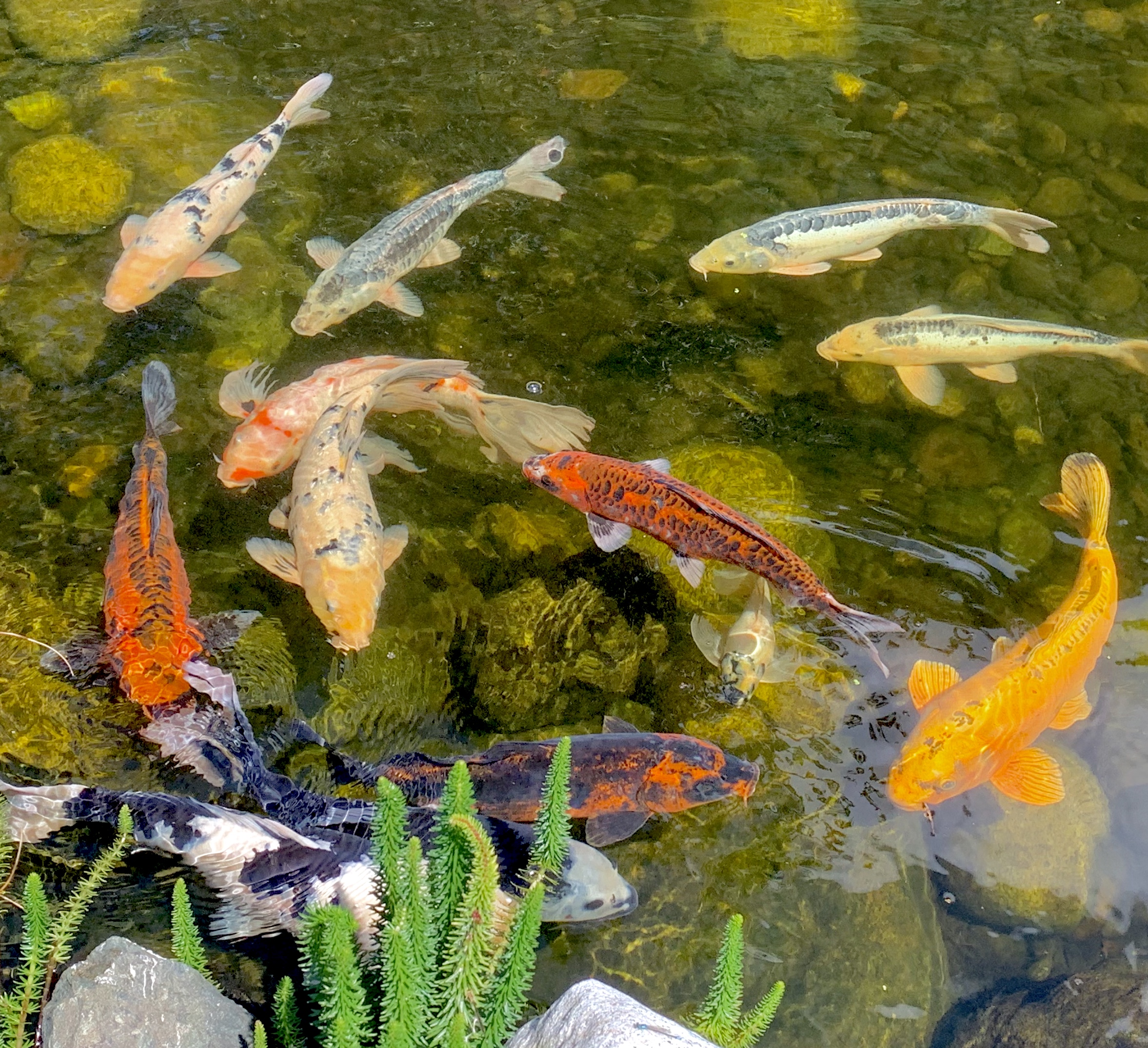
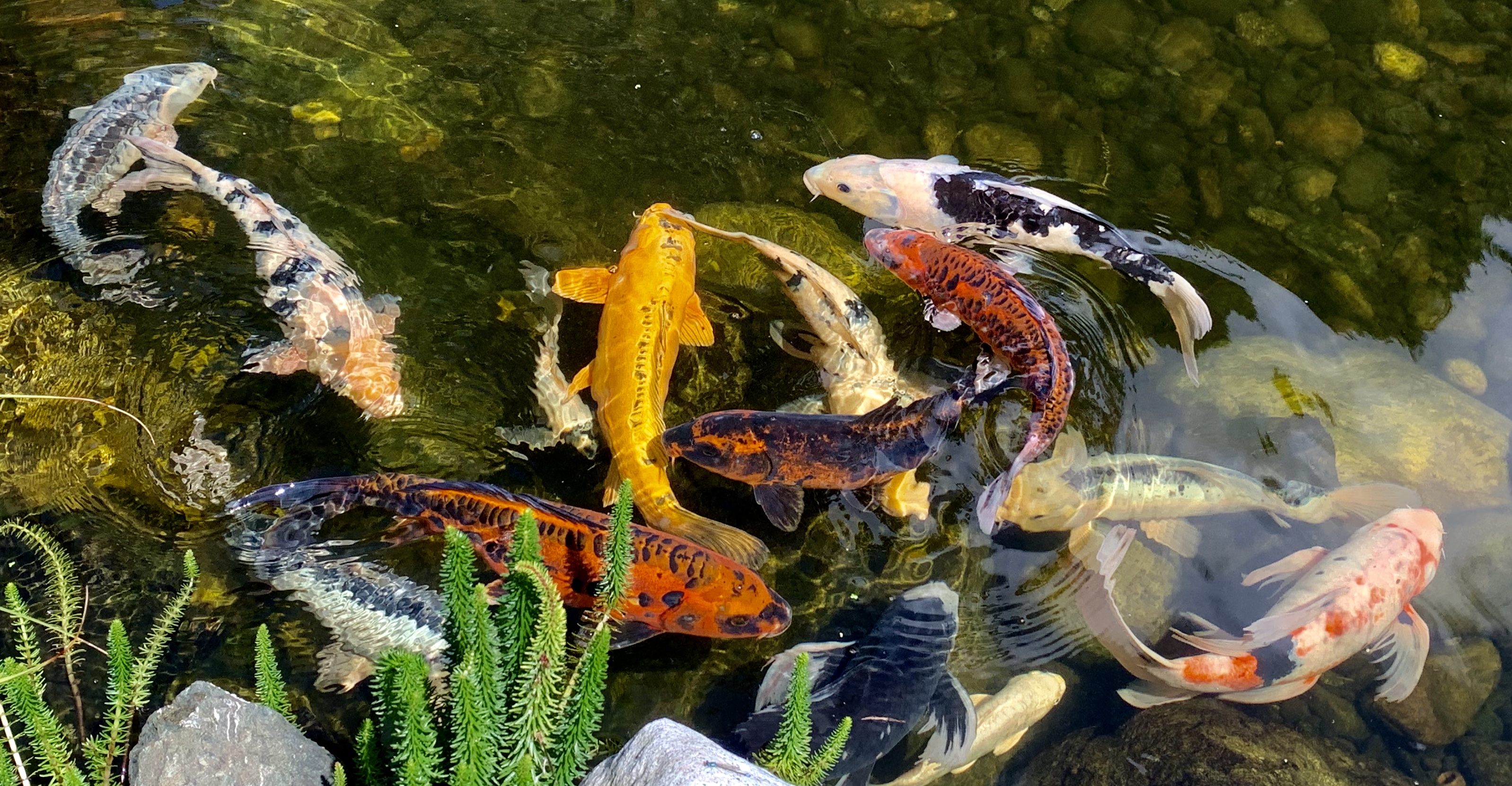
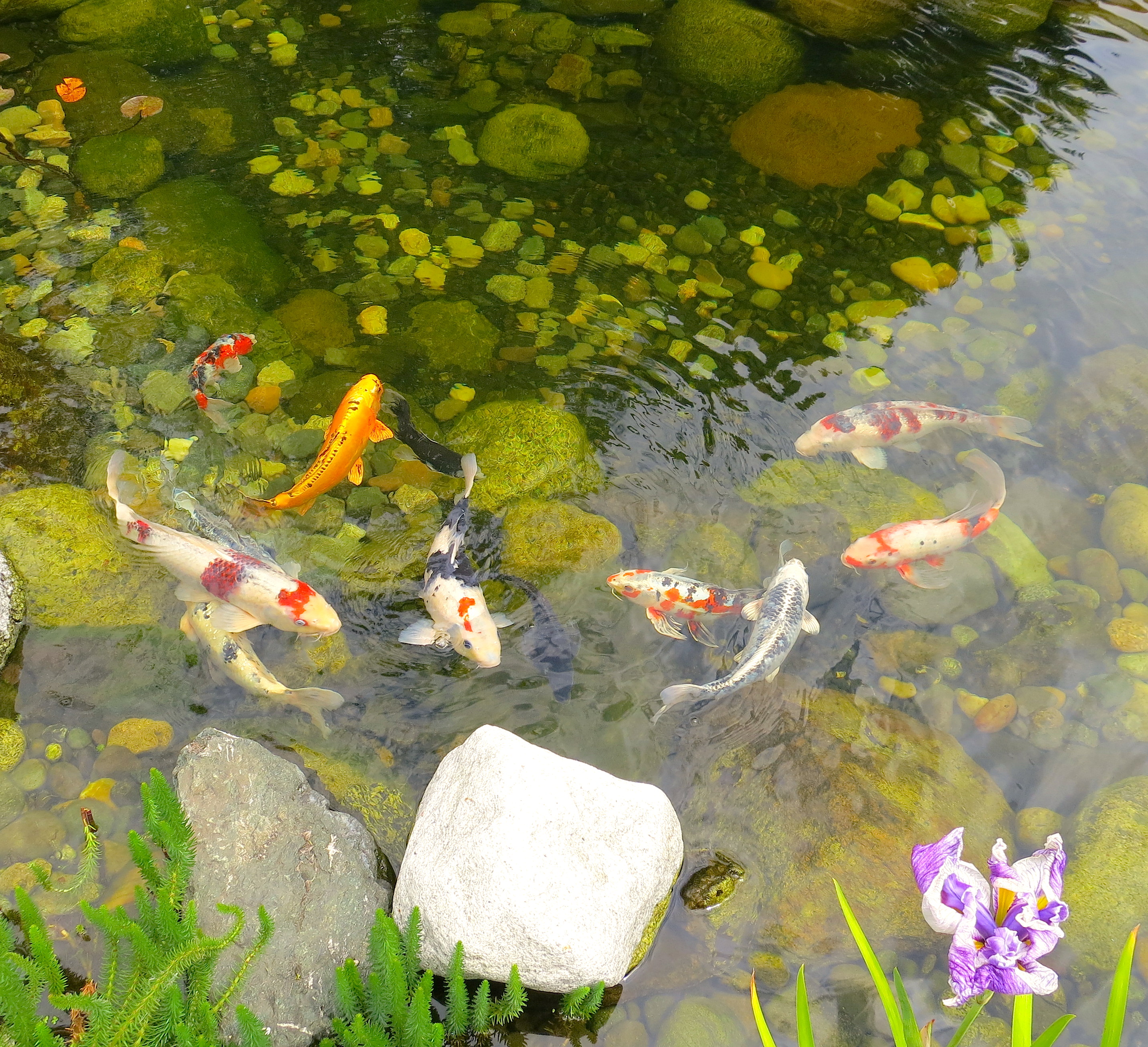
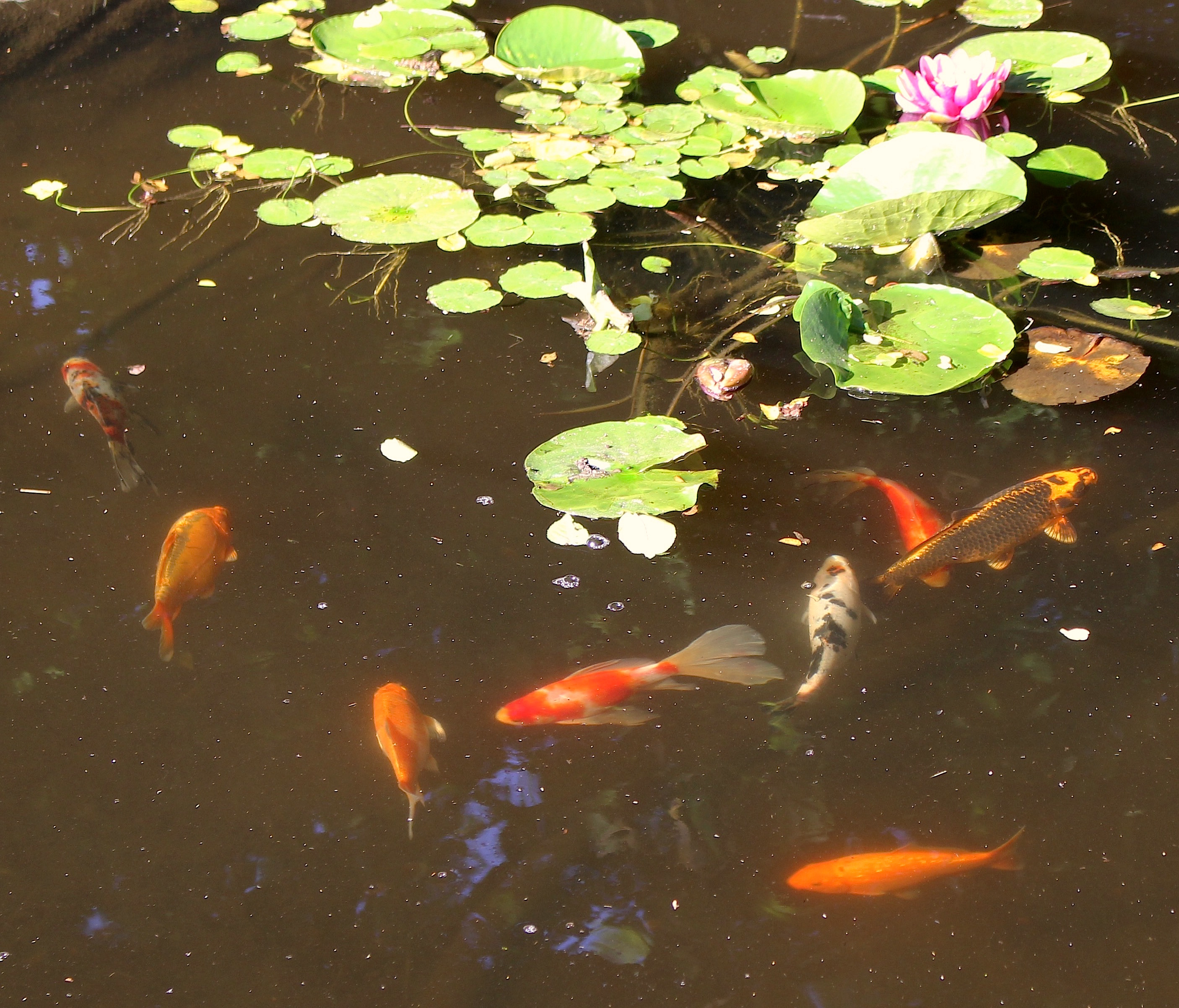
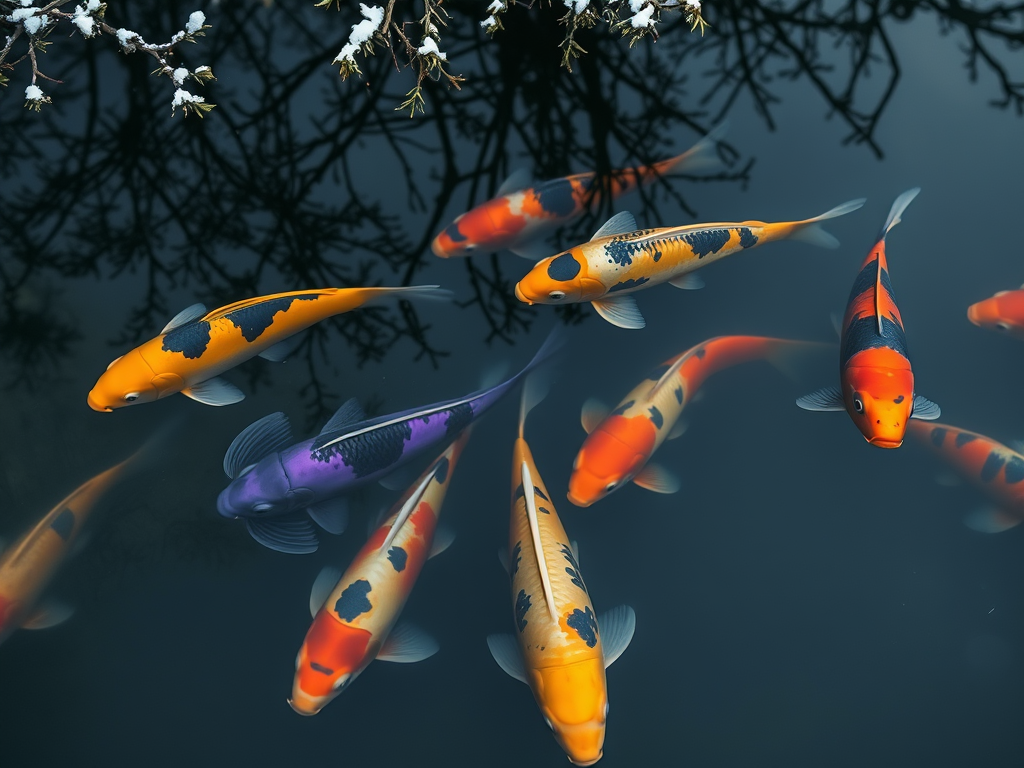
Our shadows bring them from the shadows: a yolk-yellow one with a navy pattern like a Japanese woodblock print of fish scales. A fat 18-karat one splashed with gaudy purple and a patch of gray. One with a gold head, a body skim-milk-white, trailing ventral fins like half-folded fans of lace. A poppy-red, faintly disheveled one, and one, compact, all indigo in faint green water. They wear comical whiskers and gather beneath us as we lean on the cement railing in indecisive late-December light, and because we do not feed them, they pass, then they loop and circle back. Loop and circle. Loop. “Look,” you say, “beneath them.” Beneath them, like a subplot or a motive, is a school of uniformly dark ones, smaller, unadorned, perhaps another species, living in the shadow of the gold, purple, yellow, indigo, and white, seeking the mired roots and dusky grasses, unliveried, the quieter beneath the quiet. ~Susan Kolodny “Koi Pond, Oakland Museum”
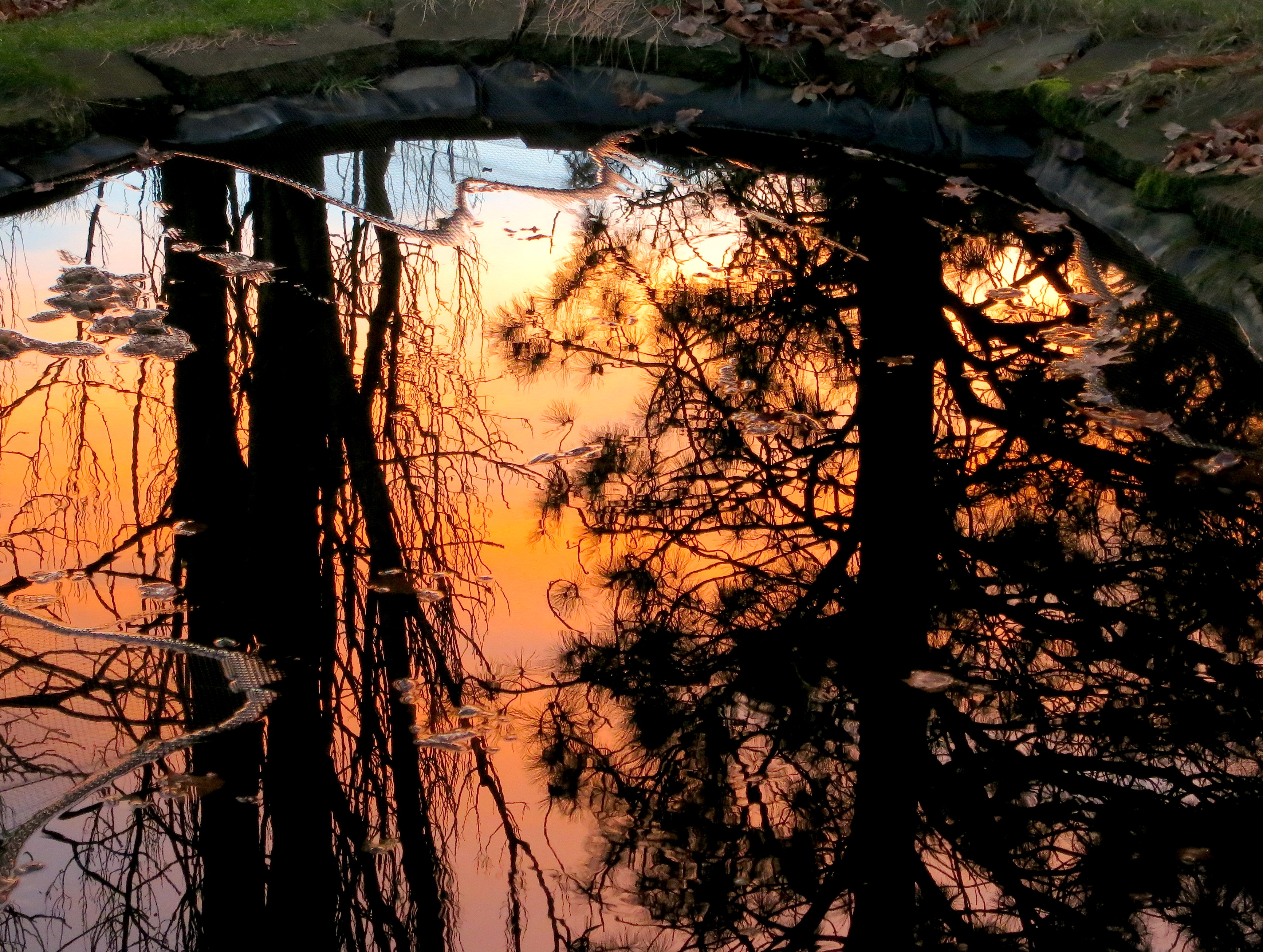
The boardwalk, a treachery of feathers ready to receive another broken bone, looms just above the surface. Step deliberately when approaching. With few exceptions, ice has claimed this part of the pond.
This is where you see her, moving through what free water remains: a sluggish ghost in the shadows, slow, conserving the fragile heat she still has in this late winter. A canopy of juniper dressed with light snow overhangs, watching.
Last year, a quorum of her kind was lost, turned to stone, to frigid silence. She doesn’t know that story, but some instinct guides her to keep what warmth she can, to cruise in stubborn torpor.
In her drift, she remembers the summer, her long, languid vowels, the accompanying texts of her companions. How they interwove manuscripts, narrations of sky, tree, sun, and moon. Warm days are a memory now, and thoughts rest lightly in her body.
She has held the same posture for an hour. Her bones have reached a conclusion— an idea about hope itself— there, near the indifferent bridge, inches from the force that will take her ~Carolyn Adams, “Koi Pond” from Going Out to Gather
The water going dark only makes the orange seem brighter, as you race, and kiss, and spar for food, pretending not to notice me. For this gift of your indifference, I am grateful. I will sit until the pond goes black, the last orange spark extinguished. ~Robert Peake from “Koi Pond”
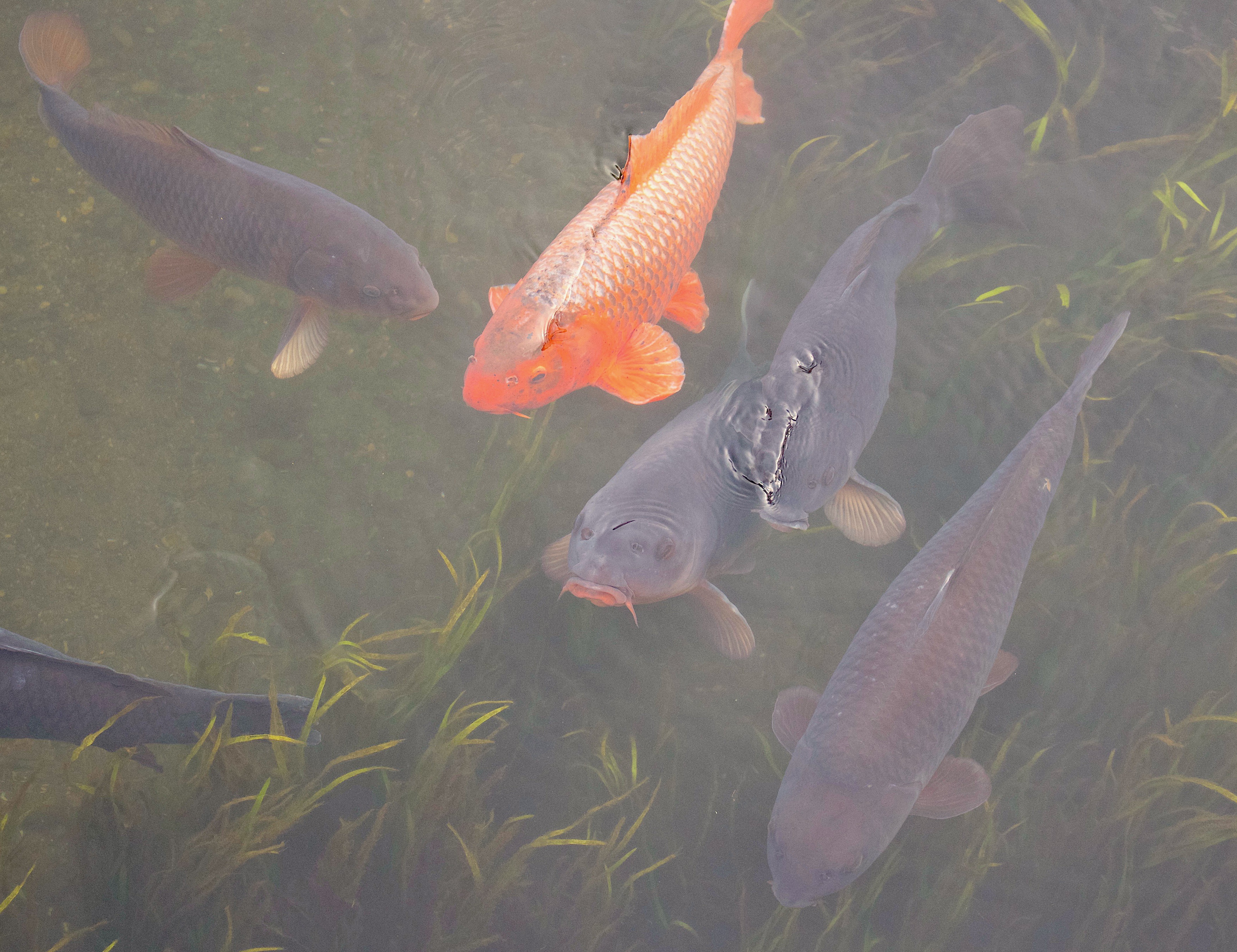
Koi and goldfish thrived in our pond after we covered it with netting, finally thwarting the herons arriving at dawn for breakfast.
Thus protected, our fish grew huge, celebrating each feeding with a flurry of tail flips and gaping mouths as I tossed pellets to them each evening.
When the pond cooled in the fall and sometimes ice-covered in winter, the fish settled at the bottom, barely moving silhouettes of color in the darkness. Spring would warm them to action again. As the water temperature rose, so did they, eager and hungry to flash their color and fins again.
Two winters ago, the chill winds and low temperatures lasted longer than usual. As the pond ice began to melt, the fish at the bottom remained still as stones. Netting them for burial felt like burying the sun and the moon and the stars, relegating their rainbows of light and color deep into the earth.
No longer would their colorful glory shine, an illumination now extinguished.
I haven’t had the heart to try again. I need a pond heater, a new filter system, and a total clean out of the pond if I am going to restock.
But then I remember the joy of feeding those flashes of fins and fish mouths, so I just might try again.
Rainbows promise to return, even from buried stone.
AI image created for this post
Lyrics From the love of my own comfort From the fear of having nothing From a life of worldly passions Deliver me O God From the need to be understood From the need to be accepted From the fear of being lonely Deliver me O God And I shall not want I shall not want When I taste Your goodness I shall not want From the fear of serving others From the fear of death or trial From the fear of humility Deliver me O God
One-Time
Monthly
Yearly
Make a one-time or recurring donation to support daily Barnstorming posts
A day is nothing if not a disappearing act held fast by ropes of sunlight and breeze until rain comes or a tree coughs to shake night along;
then there are the shadows that feel like yesterday’s distance but become only apparitions when we haul them into light or move beyond their pull—
I wish for mornings, still, days full of violets— and the beautiful clouds, where in their always- disappearing, their solemn ache, I find poems. ~Sarah Etlinger “Evanescence (with Clouds)” from The Weather Gods
I look for poems everywhere, even in colorless misty mornings, chill and stormy winds, humid breathless afternoons.
It is as if a Poet is saying to me: I feel this ache today. You too?
One-Time
Monthly
Yearly
Make a one-time or recurring donation to support daily Barnstorming posts
I am not resigned to the shutting away of loving hearts in the hard ground. So it is, and so it will be, for so it has been, time out of mind: Into the darkness they go, the wise and the lovely. Crowned With lilies and with laurel they go; but I am not resigned.
Lovers and thinkers, into the earth with you. Be one with the dull, the indiscriminate dust. A fragment of what you felt, of what you knew, A formula, a phrase remains,—but the best is lost.
The answers quick and keen, the honest look, the laughter, the love,— They are gone. They are gone to feed the roses. Elegant and curled Is the blossom. Fragrant is the blossom. I know. But I do not approve. More precious was the light in your eyes than all the roses in the world.
Down, down, down into the darkness of the grave Gently they go, the beautiful, the tender, the kind; Quietly they go, the intelligent, the witty, the brave. I know. But I do not approve. And I am not resigned. ~Edna St. Vincent Millay “Dirge Without Music”
Each Memorial Day weekend without fail, we gather with family, have lunch, reminisce, and trek to a cemetery high above Puget Sound to catch up with our relatives who lie there, still.
Some for over 110 years, some for barely more than a decade, some we knew and loved and miss every day, others not so much as they are unknown to us except on genealogy charts, names and dates and stones and stories:
the red-haired great-grandmother who died too young, the aunt who was eight when lymphoma took her, the grandmother who dreamed of world travel too late, the great-grandfather Yukon river boat captain, the grandfather logger and stump farmer, the great aunt unmarried school teacher who hid an oil well, the two in-laws who forever lie next to each other but could not co-exist in the same room while they lived and breathed.
Yet we know each of these (as we know ourselves and others)
could be tender and kind, though flawed and broken, had been beautiful and strong, though wrinkled and frail, was hopeful and faithful, though too soon in the ground.
We know this about them as we know it about ourselves: someday we too will feed roses, the light in our eyes transformed into elegant swirls emitting the fragrant scent of heaven.
No one asks if we approve. Nor am I resigned to this though I know: So it is, so it has been, so it will be for me someday.
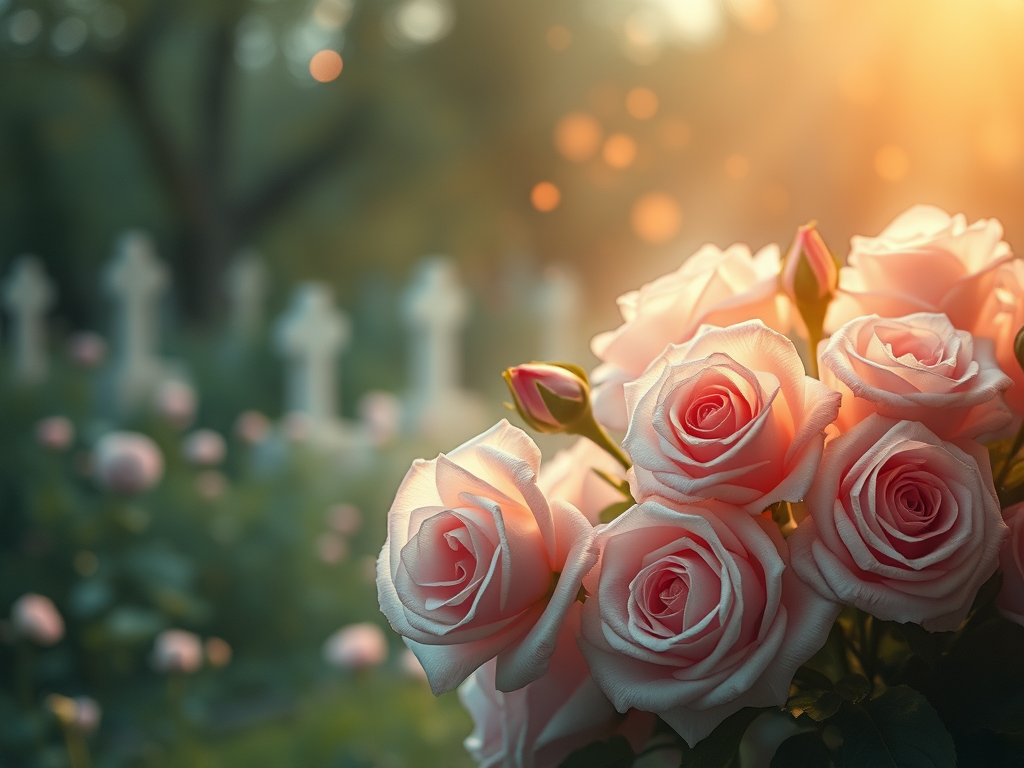
AI image created for this post
One-Time
Monthly
Yearly
Make a one-time or recurring donation to support daily Barnstorming posts
People have said, “Don’t cry” to other people for years and years, and all it has ever meant is, “I’m too uncomfortable when you show your feelings. Don’t cry.” I’d rather have them say, “Go ahead and cry. I’m here to be with you.”
I cry easily, always have. Certain songs and hymns will trigger tears, and of course, any rituals surrounding baptisms, funerals, weddings, and graduations.
Tears don’t bother me, whether they are my own or someone else’s. My medical office and exam rooms were always well- stocked with boxes of tissues as a safe place to cry it out.
One of my routine mental health history questions was “what will bring tears to your eyes – dicing onions doesn’t count?”
Some patients would look at me blankly, not sure they ever remember crying, and others will weep at the mere suggestion.
No matter what the reason for someone’s tears, it is a powerful outward expression of human feeling, like a laugh or a grimace of pain. I watch for those cues and sometimes feel their emotion as surely as if it were my own.
Even tears can bring peace – like a river.
I am with you. And always intend to be.
One-Time
Monthly
Yearly
Make a one-time donation to support daily Barnstorming posts
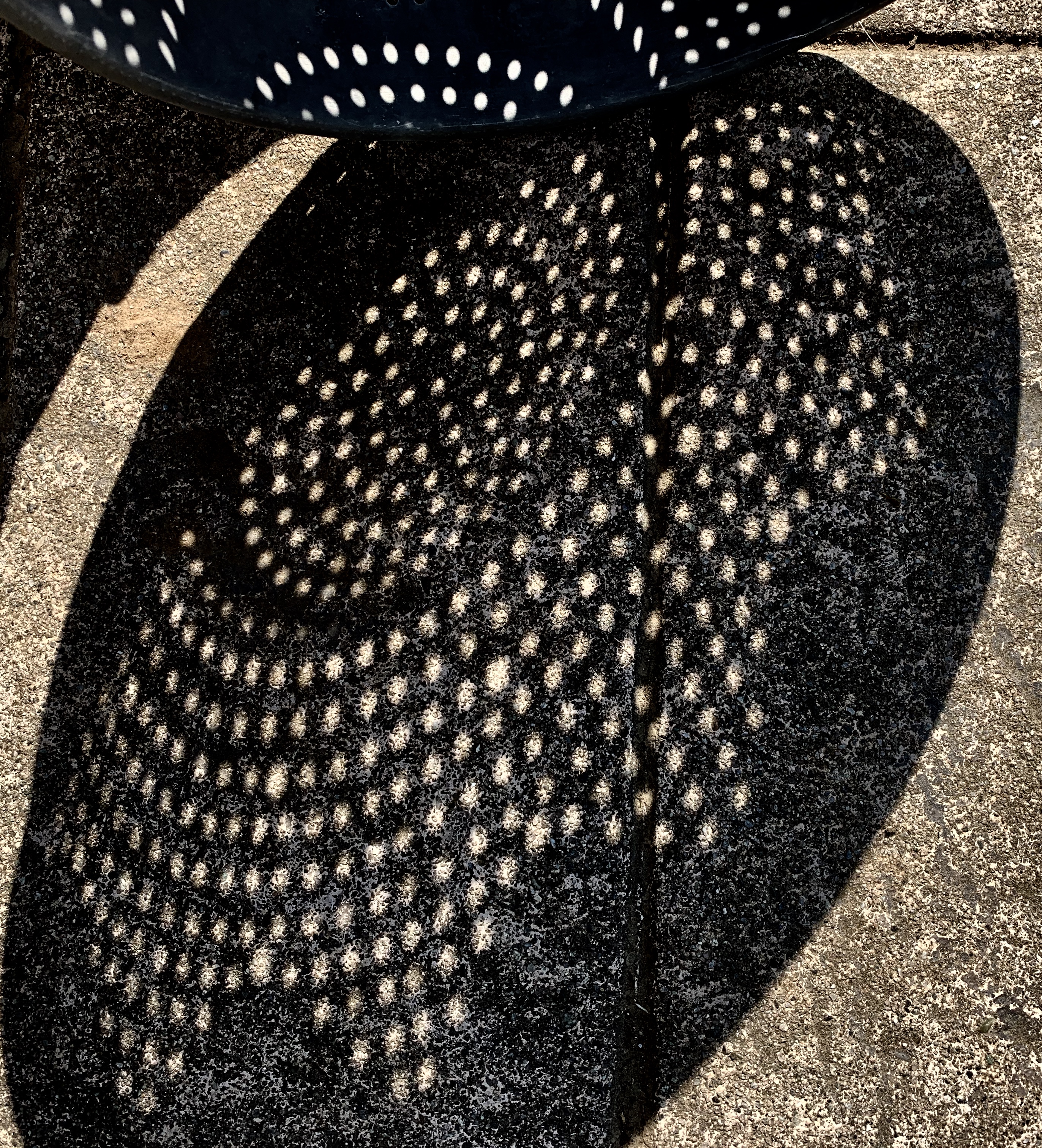
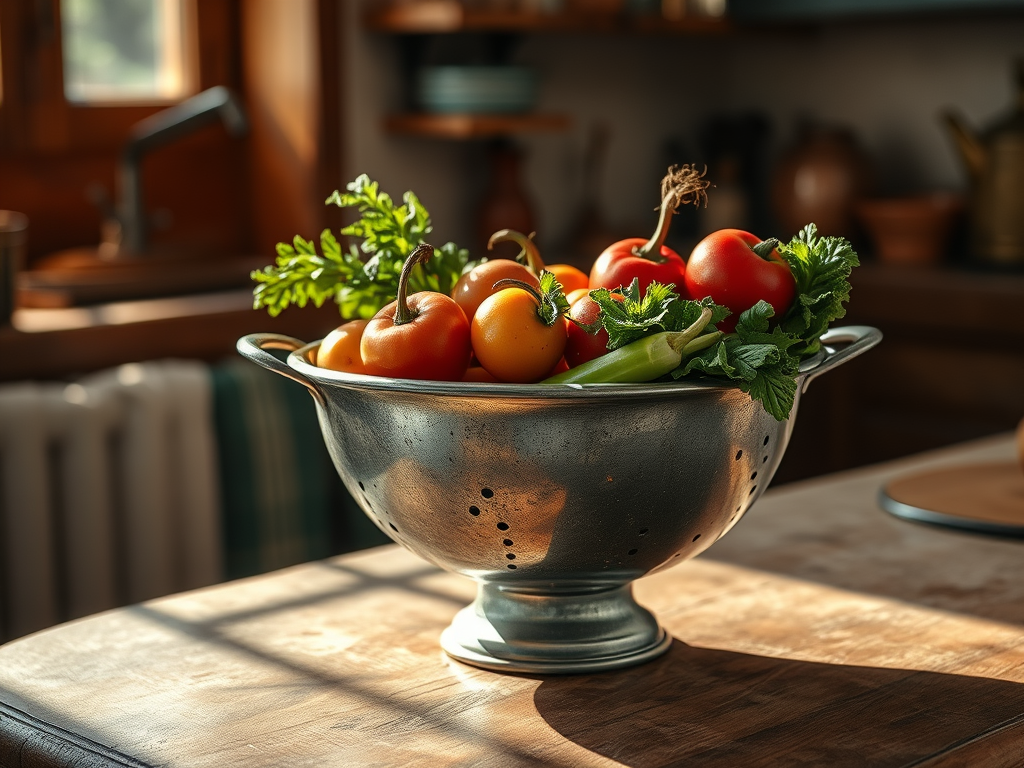
Holes in the shape of stars punched in gray tin, dented, cheap, beaten by each of her children with a wooden spoon.
Noodle catcher, spaghetti stopper, pouring cloudy rain into the sink, swirling counter clockwise down the drain, starch slime on the backside, caught in the piercings.
Scrubbed for sixty years, packed and unpacked, the baby’s helmet during the cold war, a sinking ship in the bathtub, little boat of holes.
Dirt scooped in with a plastic shovel, sifted to make cakes and castles. Wrestled from each other’s hands, its tin feet bent and re-bent.
Bowl daylight fell through onto freckled faces, noon stars on the pavement, the universe we circled aiming jagged stones, rung bells it caught and held. ~Dorianne Laux “My Mother’s Colander”
Many of my mother’s kitchen things, some over eighty years old, are still packed away in boxes that I haven’t had the emotional wherewithal to open. They sit waiting for me to sort and purge and save and weep.
It is as if I haven’t wanted to say goodbye after her death at age 88, now seventeen years ago.
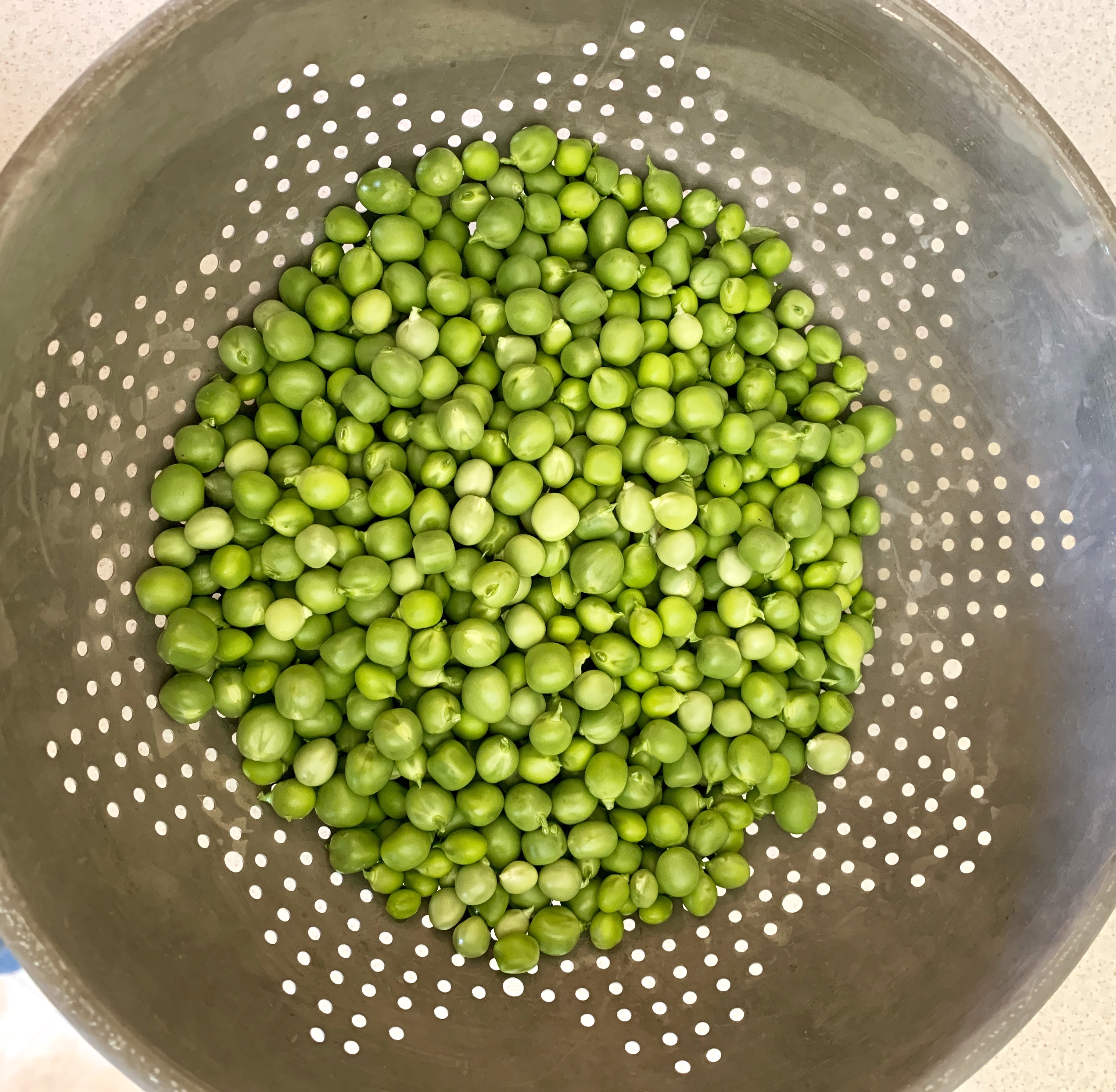
This particular kitchen item- her old dented metal colander – found its way to me when I moved into my first apartment some 49 years ago. She had purchased a bright green plastic colander at a Tupperware party so she felt the old metal one was somehow outdated, overworked and plain, and ready for retirement.
It had held hundreds of pounds of rinsed garden vegetables during my childhood, had drained umpteen pasta noodles, had served as a sifter in our sandbox, and a helmet for many a pretend rocket launch to infinity and beyond.
Dented and battered, it still works fine, thank you very much, for all intended and some unintended purposes. It does make me wonder what other treasures may surprise me as I begin to open and sort my mother’s boxes. Her things have remained in suspended animation, waiting to be rediscovered.
I know there will be tons of tupperware, carefully saved yogurt containers with lids, and quite likely a hoard of pickle jars. As a child of the depression, she saved anything that could be potentially used again.
Perhaps these items have waited patiently to be touched lovingly and with distinct purpose as they once were, and be remembered for the part they played in one woman’s long sacrificial and faith-filled life.
Maybe, just maybe, it will feel like I’ve unpacked Mom once again and maybe this time it can be both a hello and a goodbye.
To infinity and beyond…
AI image created for this post
One-Time
Monthly
Yearly
Make a one-time or recurring donation to support daily Barnstorming posts
Jesus comes near and he beholds the city And looks on us with tears in his eyes, And wells of mercy, streams of love and pity Flow from the fountain whence all things arise. He loved us into life and longs to gather And meet with his beloved face to face How often has he called, a careful mother, And wept for our refusals of his grace, Wept for a world that, weary with its weeping, Benumbed and stumbling, turns the other way, Fatigued compassion is already sleeping Whilst her worst nightmares stalk the light of day. But we might waken yet, and face those fears, If we could see ourselves through Jesus’ tears. ~Malcolm Guite “Jesus Weeps”
When Jesus wept, the falling tear in mercy flowed beyond all bound; when Jesus groaned, a trembling fear seized all the guilty world around. ~William Billings
And when he drew near and saw the city, he wept over it, saying, “Would that you, even you, had known on this day the things that make for peace! But now they are hidden from your eyes. ~Luke 19:41-42
Commencing this holy week of remembrance, knowing how our world is in a terrible disarray, too many sleeping in the street, some in graves, many grieving losses, all wondering what comes next.
On this journey, we face our own fears of vulnerability and mortality, these days when thorns overwhelm emerging blossoms~~
To remember what He did this week long ago, and still does today to conquer the shroud and the stone, to defy death, makes all the difference to me.
Indeed Jesus wept and groaned for us.
To be known for who we are by a God who weeps for us and moans with pain we caused: we can know no greater love.
This week ends our living for self, only to die, and begins our dying to self, in order to live.
This year’s Lenten theme:
…where you go I will go… Ruth 1:16
One-Time
Monthly
Yearly
Make a one-time or recurring donation to support daily Barnstorming posts
To be commanded to love God at all, let alone in the wilderness , is like being commanded to be well when we are sick, to sing for joy when we are dying of thirst, to run when our legs are broken. But this is the first and great commandment nonetheless. Even in the wilderness- especially in the wilderness – you shall love him. ~Frederick Buechnerfrom A Room Called Remember
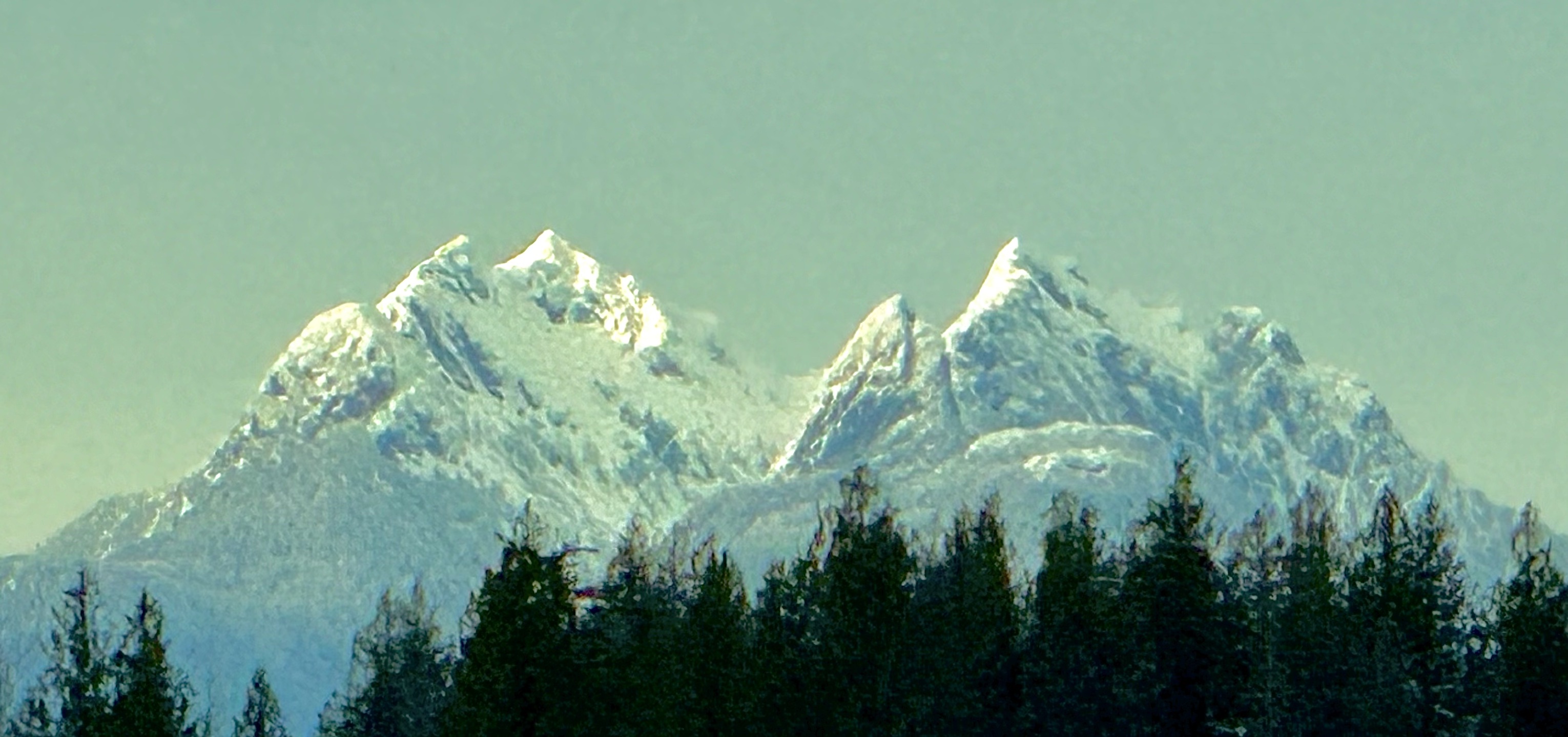
The wilderness might be a distant peak far removed from anything or anyone, where there is bleak darkness.
The wilderness might be the darkest corner of the human heart we keep far away from anything and anyone.
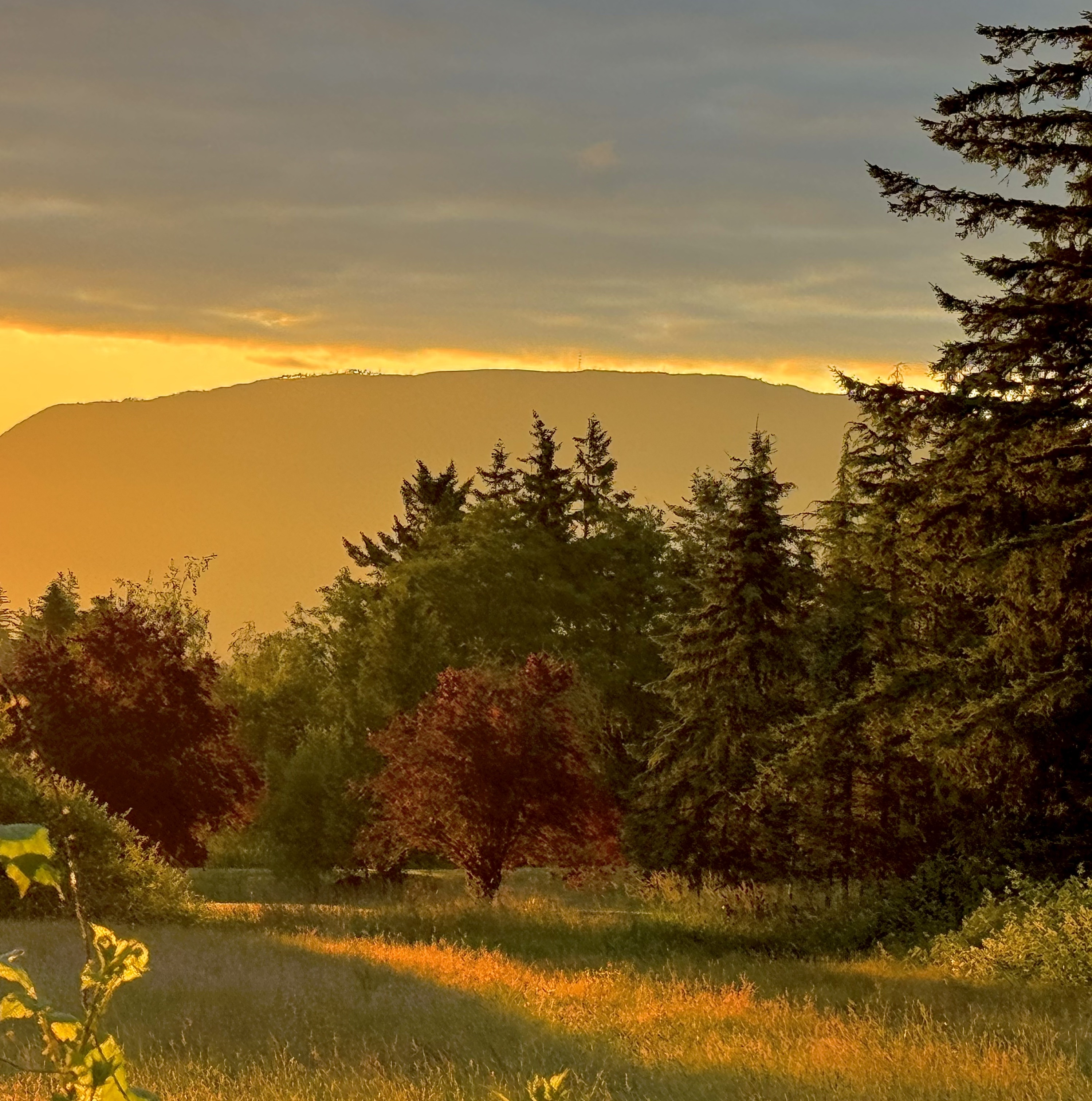
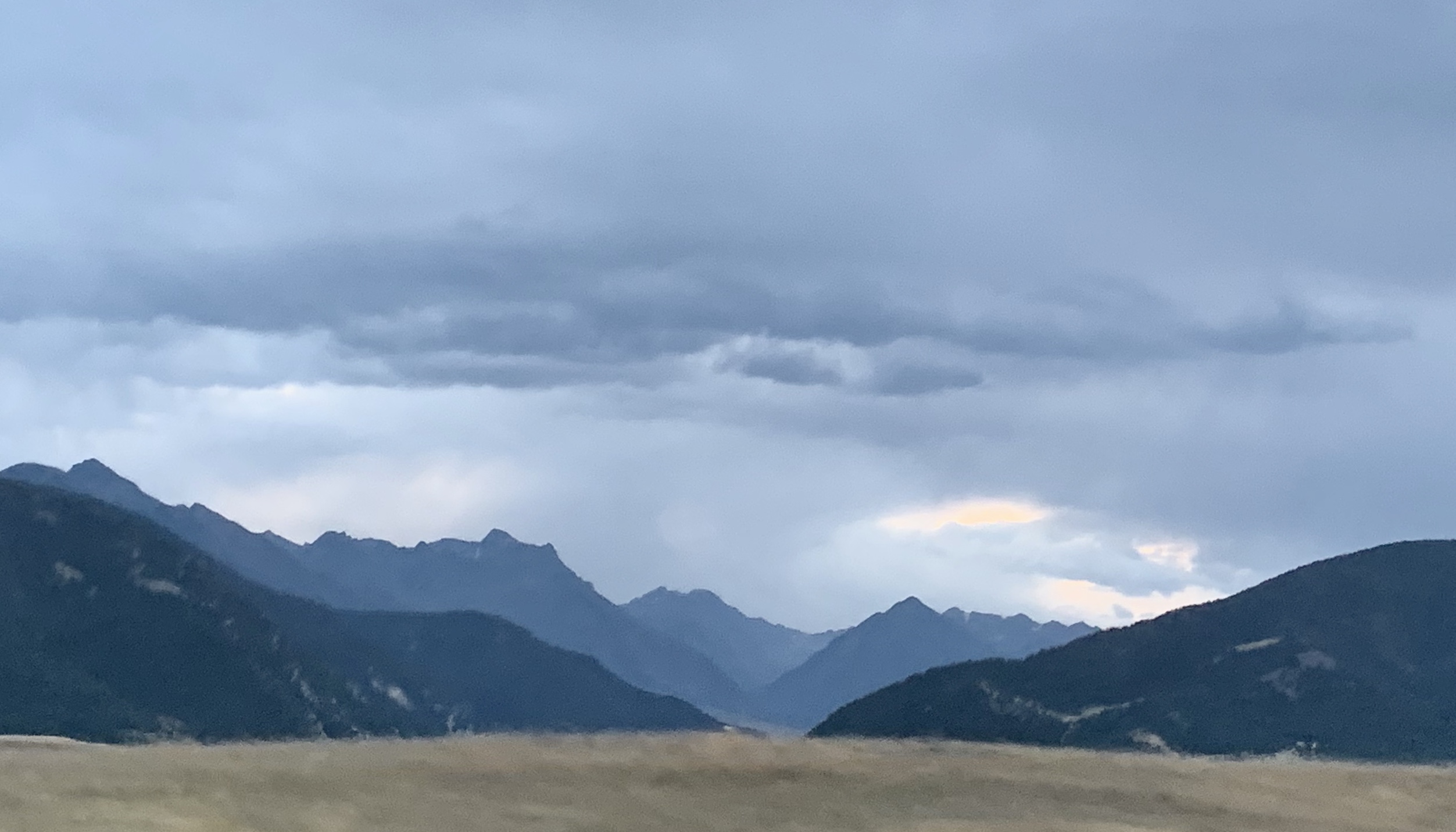
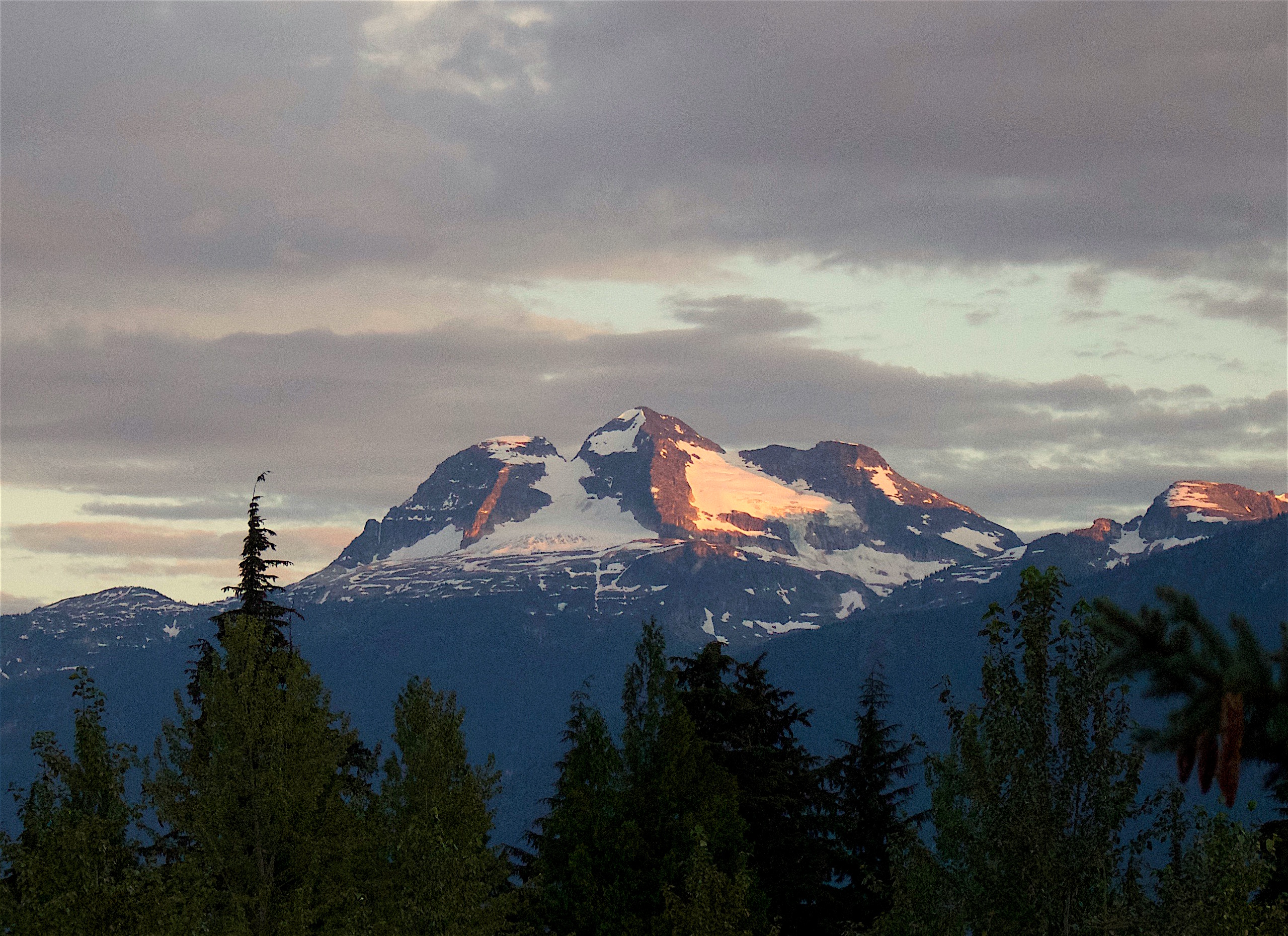
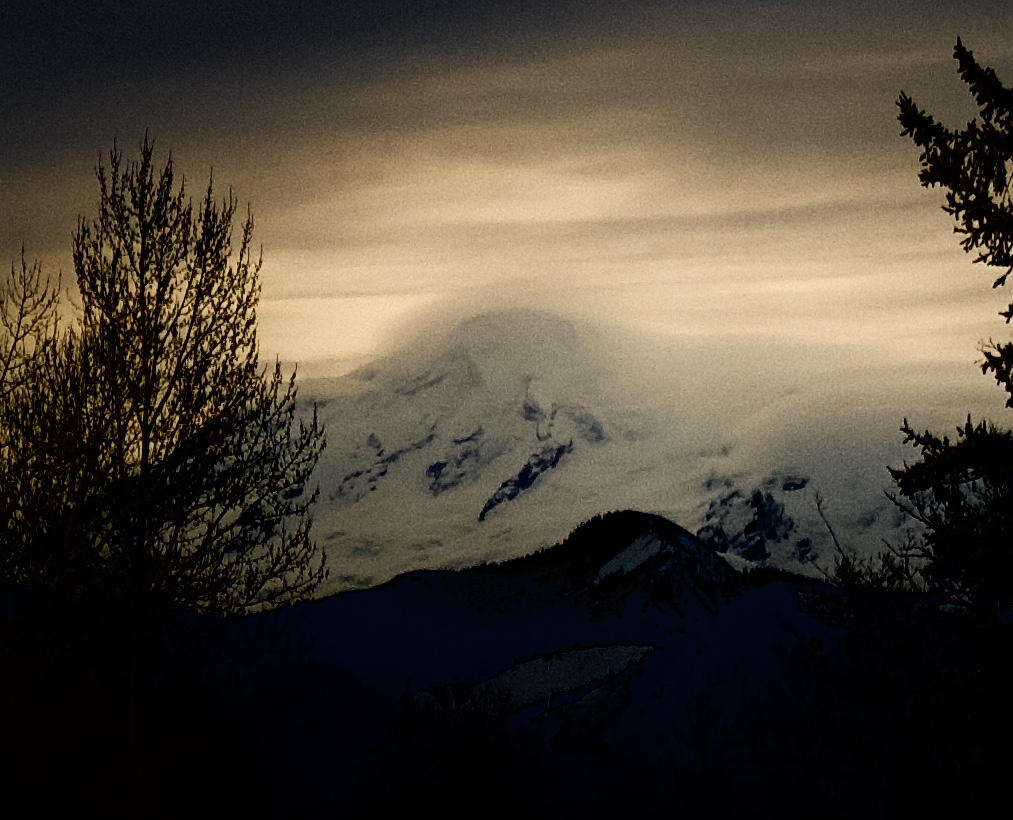
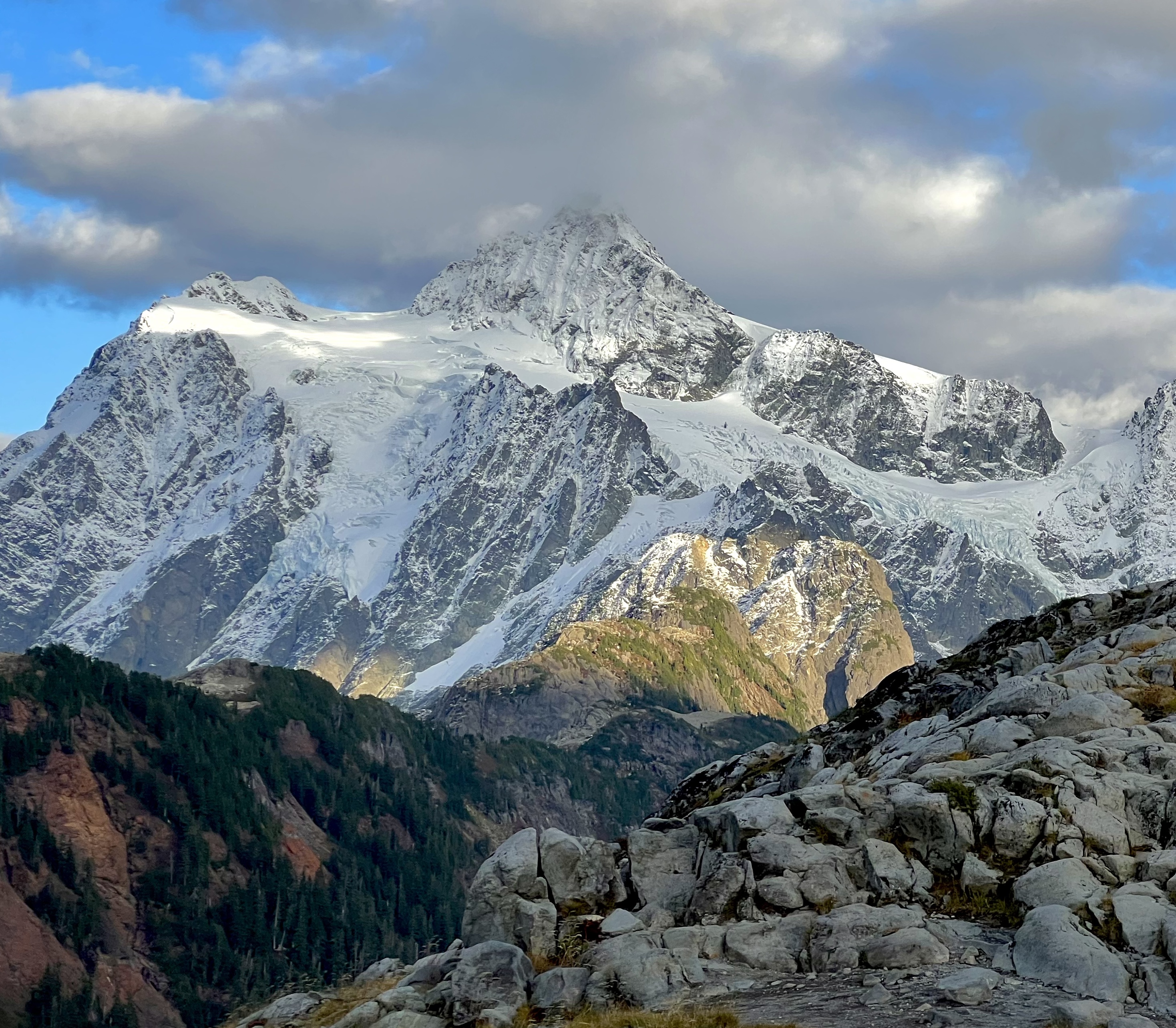
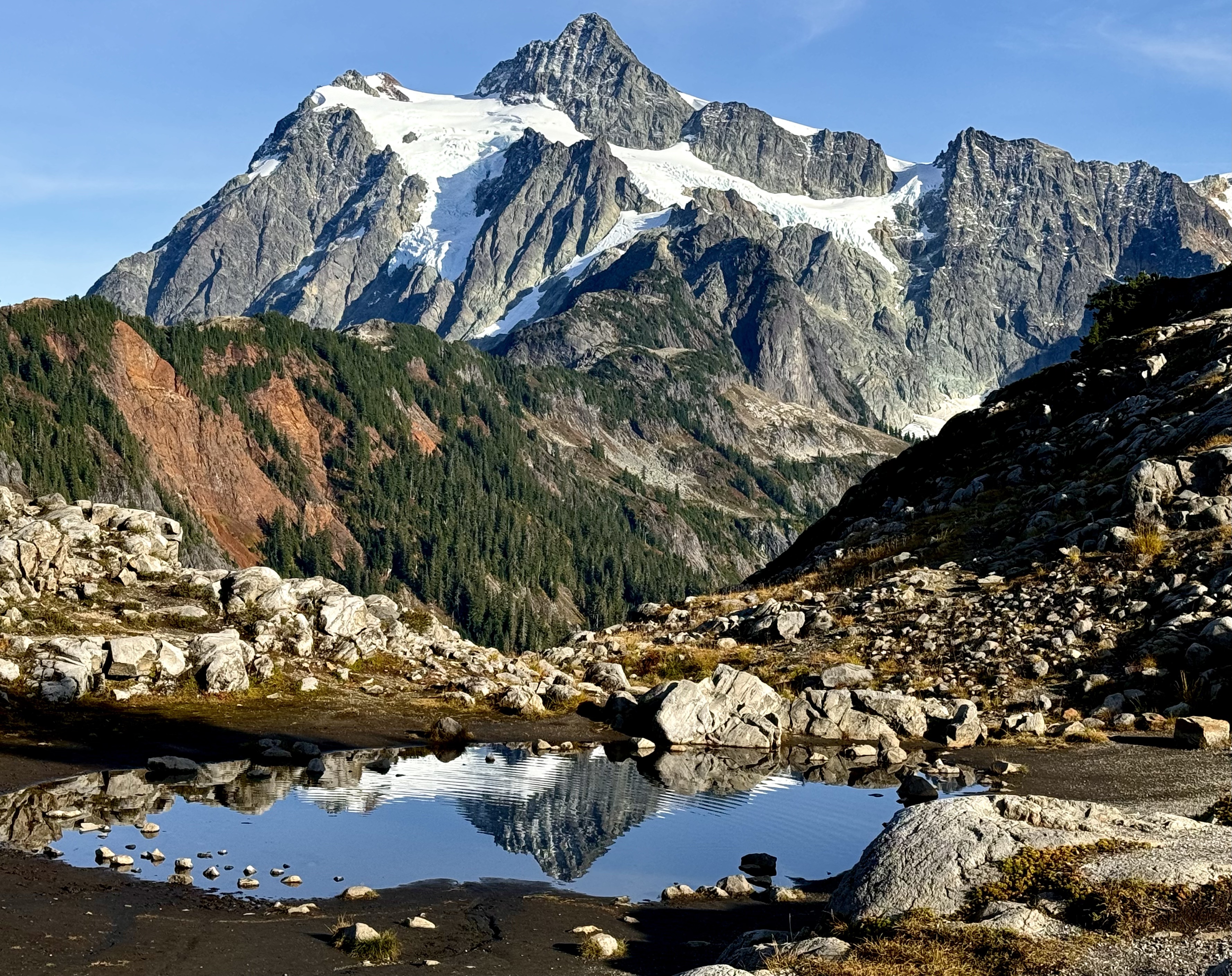
From my kitchen window on a clear day, I sometimes see a distant mountain wilderness, when the cloud cover moves away.
During decades of perching on a round stool in clinic exam rooms, I was given access to hearts lost in the wilderness many times every day.
Sometimes the commandment to love God seems impossible. We are too self-sufficient, too broken, too frightened, too wary to trust God with our love and devotion.
Recognizing a diagnosis of wilderness of the heart is straight forward: despair, discouragement,disappointment, lack of gratitude, lack of hope.
The treatment is to allow the healing power of the Father who sent His own Son to navigate the wilderness in our place.
He reaches for our bitter, wary, and broken hearts that beat within our bodies, to bring us home from the dark wilderness of our souls.
This year’s Lenten theme:
…where you go I will go… Ruth 1:16
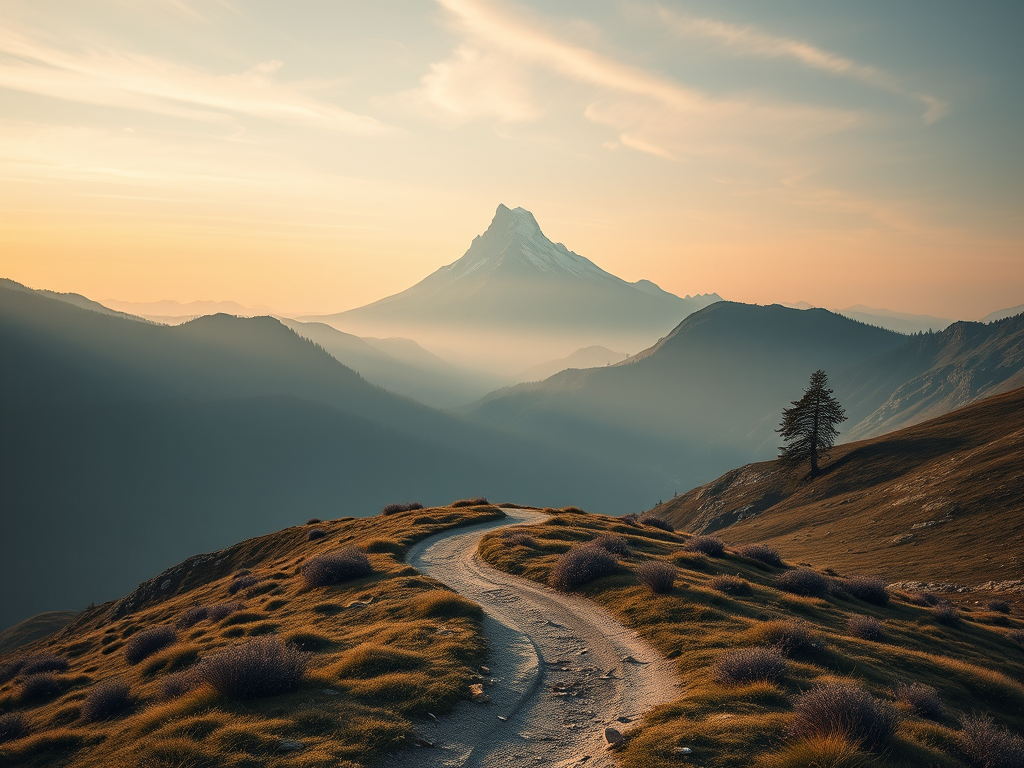
AI image created for this post
One-Time
Monthly
Yearly
Make a one-time or recurring donation to support daily Barnstorming posts

















 Barnstorming