To understand the meek picture a great stallion at full gallop in a meadow, who— at his master’s voice—seizes up to a stunned but instant halt. So with the strain of holding that great power in check, the muscles along the arched neck keep eddying, and only the velvet ears prick forward, awaiting the next order. ~Mary Karr from “Who The Meek Are Not”
Blessed are the meek, for they shall inherit the earth. Matthew 5:5
Let every man be quick to hear, slow to speak, slow to anger, for the anger of man does not work the righteousness of God. James 1: 19-20
I’ve seen meekness like this, first hand.
Our stallion allowed his strength and passion to be under control. He was eager to listen. He wanted to see what we might ask of him. He took instruction eagerly. He never lashed back in anger. He simply wanted to be with us.
Meekness and humility make no sense given the world’s demand now for “strongman” leadership: someone who submits to no one, apologizes to no one, blames others for what goes wrong, feels compassion for no one.
Globally and individually, we have desperate need of meekness. True strength is when someone knows the extent of their power but resists the need to prove it to anyone else.
The meek love this God who shares Himself, who sacrifices for the bereft, and whose great strength is obvious, yet directed completely to our salvation.
Humble and Human, willing to bend You are Fashioned of flesh and the fire of life, You are Not too proud to wear our skin To know this weary world we’re in Humble, humble Jesus
Humble in sorrow, You gladly carried Your cross Never refusing Your life to the weakest of us Not too proud to bear our sin To feel this brokenness we’re in
Humble, humble Jesus We bow our knees We must decrease You must increase We lift You high
Humble in greatness, born in the likeness of man Name above all names, holding our world in Your hands Not too proud to dwell with us, to live in us, to die for us
Humble, humble Jesus We bow our knees We must decrease You must increase We lift You high We bow our knees We must decrease You must increase We lift You high
One-Time
Monthly
Yearly
Make a one-time or recurring donation to support daily Barnstorming posts
Because I know tomorrow his faithful gelding heart will be broken when the spotted mare is trailered and driven away, I come today to take him for a gallop on Diaz Ridge.
Returning, he will whinny for his love. Ancient, spavined, her white parts red with hill-dust, her red parts whitened with the same, she never answers.
But today, when I turn him loose at the hill-gate with the taste of chewed oat on his tongue and the saddle-sweat rinsed off with water, I know he will canter, however tired, whinnying wildly up the ridge’s near side, and I know he will find her.
He will be filled with the sureness of horses whose bellies are grain-filled, whose long-ribbed loneliness can be scratched into no-longer-lonely.
His long teeth on her withers, her rough-coated spots will grow damp and wild. Her long teeth on his withers, his oiled-teakwood smoothness will grow damp and wild. Their shadows’ chiasmus will fleck and fill with flies, the eight marks of their fortune stamp and then cancel the earth. From ear-flick to tail-switch, they stand in one body. No luck is as boundless as theirs. ~Jane Hirshfield “The Love of Aged Horses”
We all know that something is eternal. And it ain’t houses and it ain’t names, and it ain’t earth, and it ain’t even the stars . . . everybody knows in their bones that something is eternal, and that something has to do with human beings. All the greatest people ever lived have been telling us that for five thousand years and yet you’d be surprised how people are always losing hold of it. There’s something way down deep that’s eternal …. ~Thornton Wilder, from “Our Town”
Is there anything as wonderful as a good friend when times get tough?
Someone who doesn’t mind if you are getting long in the tooth and fluffy around the waist and getting white around the whiskers?
Someone who will listen to your most trivial troubles and nod and understand even if they really don’t?
Someone who will fix you up when you are hurt and celebrate when you are happy?
Someone who knows exactly where your itches are that need scratching, even if it means a mouthful of hair?
We all need at least one. We all need to be one for at least one other.
Ain’t it good to know? You’ve got a friend in me…
One-Time
Monthly
Yearly
Make a one-time or recurring donation to support daily Barnstorming posts
We who choose to surround ourselves with lives more temporary than our own, live within a fragile circle, easily and often breached.
Unable to accept its awful gaps, we still would live no other way.
The life of a horse, often half our own, seems endless until one day. That day has come and gone for me, and I am once again within a somewhat smaller circle. ~ Irving Townsend from Separate Lifetimes
1996 photo of Noblesse with Chesna Klimek, taken by Norma Jenner
That day comes, yet not without warning.
Noblesse, our oldest Haflinger mare, nearing 29 years old, kept convincing me this past summer she was living her best life and was not too old to keep enjoying more time on this earth. She came running when I whistled and would be the first to greet me when I came to the barn for chores.
It wasn’t all rainbows and roses for her. I would see her dozing more frequently, walking slowly due to joint pain, and showing the hallmark signs of metabolic dysfunction. I debated about calling the vet clinic to schedule her euthanasia. But then she would look at me defiantly: not yet, not yet…
This morning when I went out to the barn, she was standing with her head down, atypical for such an extroverted bossy mare who usually demands that I attend to her first. Then, she startled me by dropping down to roll and then rolled again. Not eating, reaching around to bite at her flanks. She was clearly miserable.
I knew then this was the day.
Within the hour, thanks to a responsive vet and his assistant, she was pain-free and no longer facing a cold wet winter ahead.
It is a wistful goodbye to Noblesse, given that she was born on this farm and raised her foals here. She was the first American-born gold-rated mare in AHR inspection and classification. Except for brief times away for training and always part of our Haflinger display at our regional fair, it was right and fitting that she should breathe her last on this farm.
Our circle of aging Haflingers has just become smaller. Two are her sons.
The life of a horse seems endless, until one day. For Noblesse, that day was today.
One-Time
Monthly
Yearly
Make a one-time or recurring donation to support daily Barnstorming posts
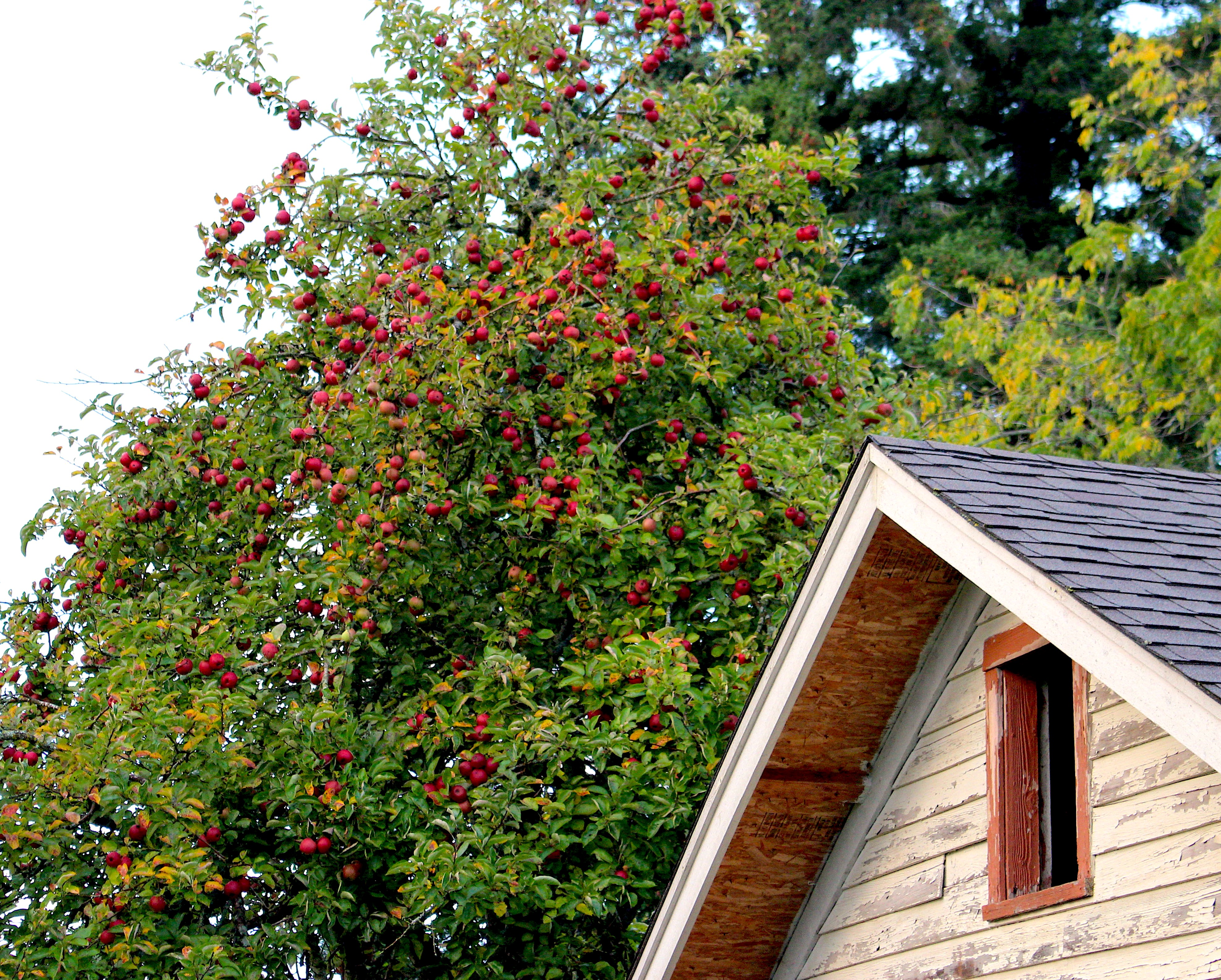
And then there is that day when all around, all around you hear the dropping of the apples, oneby one, from the trees. At first it is one here and one there, and then it is three and then it is four and then nine andtwenty, until the apples plummet like rain, fall like horse hoofsin the soft, darkening grass, and you are the last apple on thetree; and you wait for the wind to work you slowly free fromyour hold upon the sky, and drop you down and down. Longbefore you hit the grass you will have forgotten there everwas a tree, or other apples, or a summer, or green grass below, You will fall in darkness… ~Ray Bradbury from Dandelion Wine
But I am done with apple-picking now. Essence of winter sleep is on the night, The scent of apples: I am drowsing off. I cannot rub the strangeness from my sight I got from looking through a pane of glass I skimmed this morning from the drinking trough And held against the world of hoary grass. It melted, and I let it fall and break. But I was well Upon my way to sleep before it fell, And I could tell What form my dreaming was about to take. For I have had too much Of apple-picking: I am overtired Of the great harvest I myself desired. There were ten thousand thousand fruit to touch, Cherish in hand, lift down, and not let fall. For all That struck the earth, No matter if not bruised or spiked with stubble, Went surely to the cider-apple heap As of no worth. One can see what will trouble This sleep of mine, whatever sleep it is. Were he not gone, The woodchuck could say whether it’s like his Long sleep, as I describe its coming on, Or just some human sleep. ~Robert Frost from “After Apple-Picking”
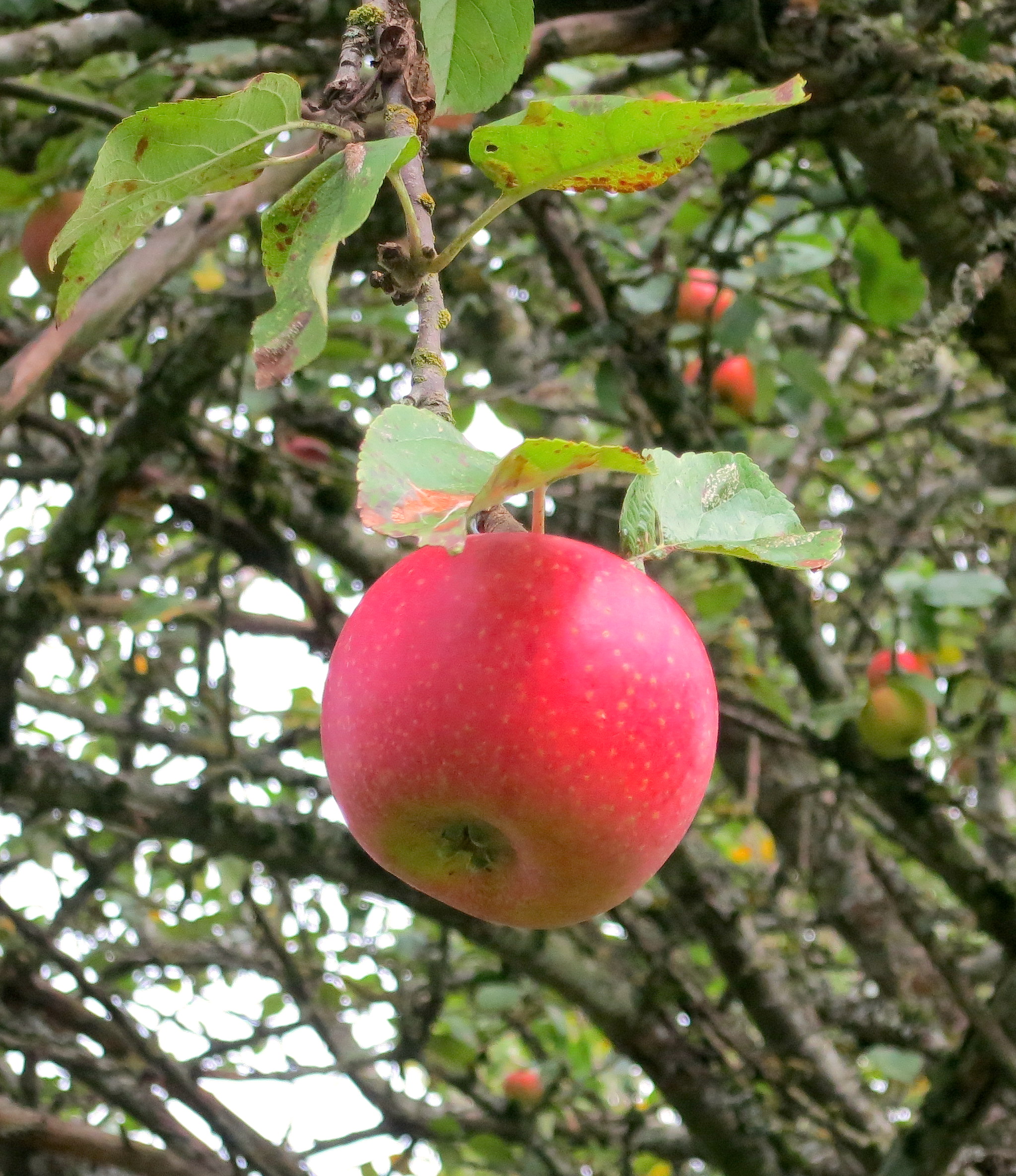
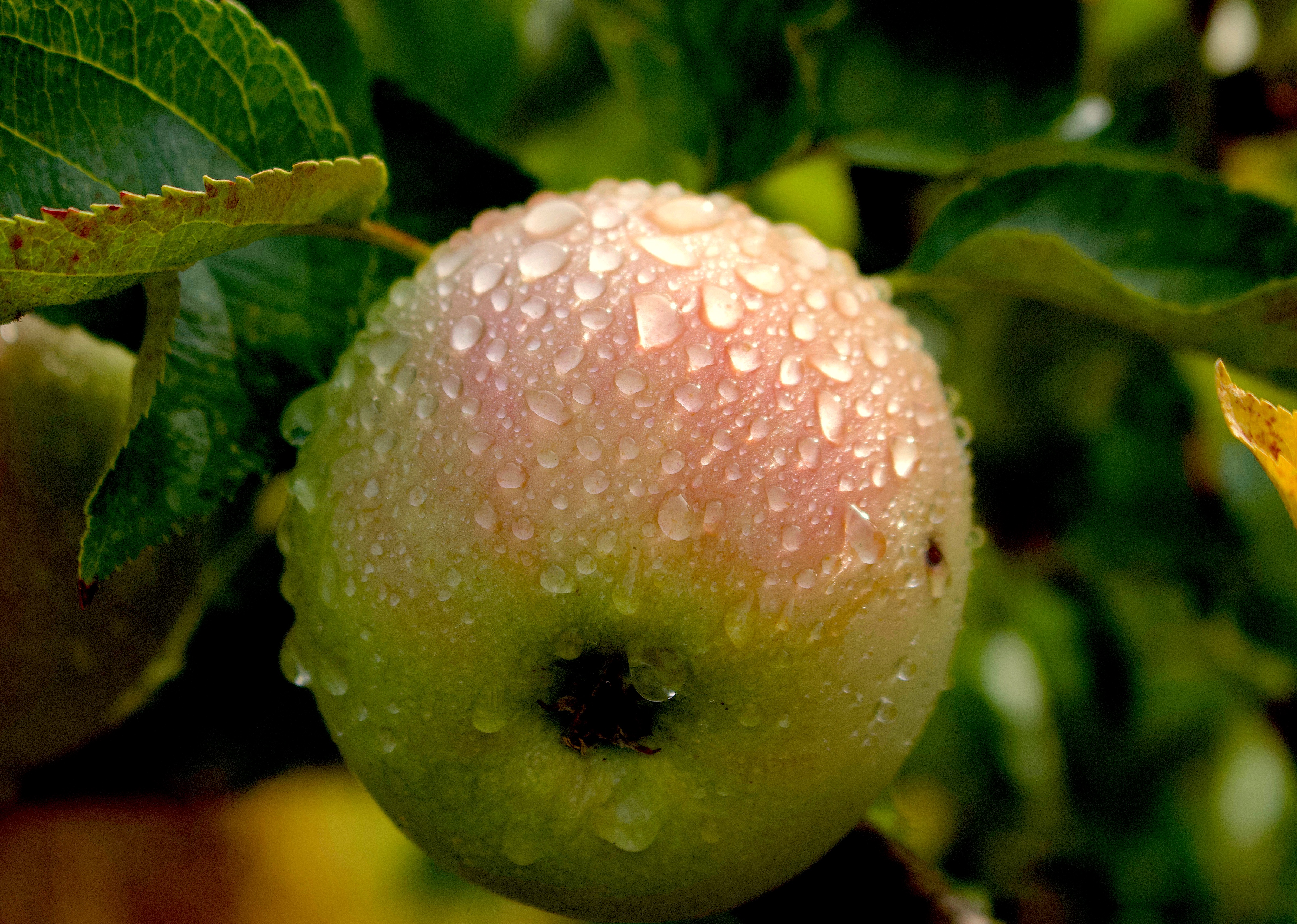
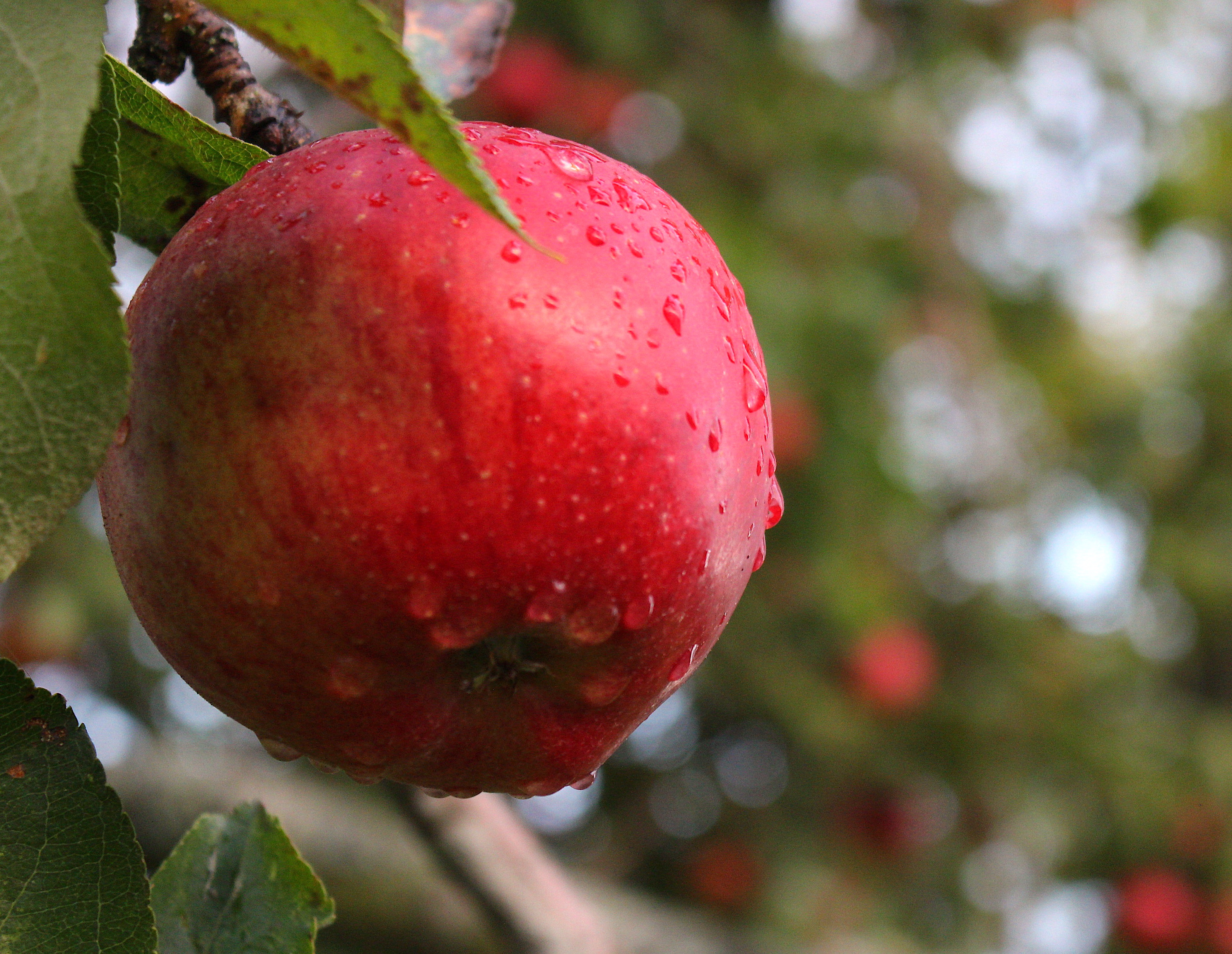
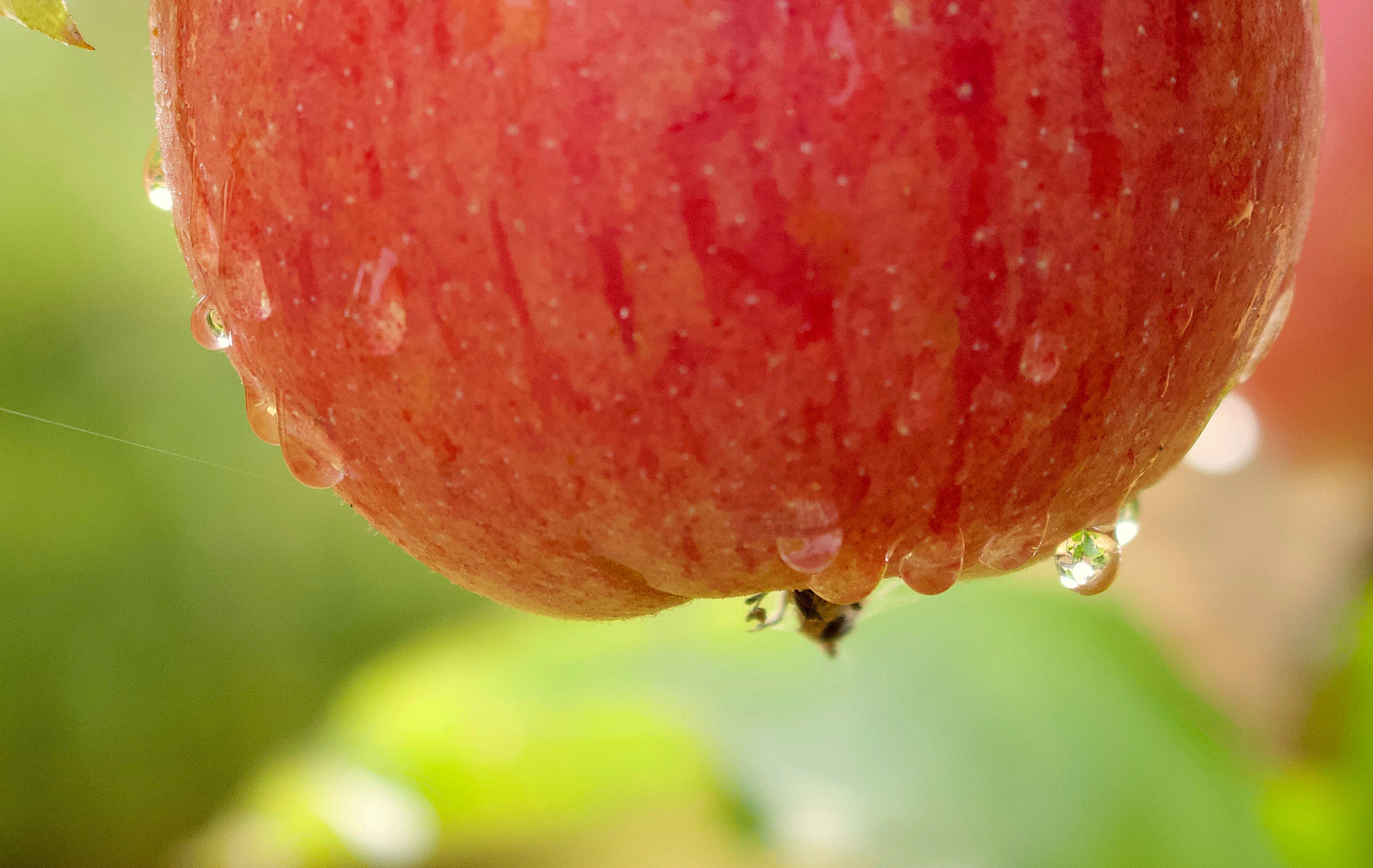
I pick up windfall apples to haul down to the barn for a special treat each night for the Haflingers. These are apples that we humans wouldn’t take a second glance at in all our satiety and fussiness, but the Haflingers certainly don’t mind a bruise, or a worm hole or slug trails over apple skin.
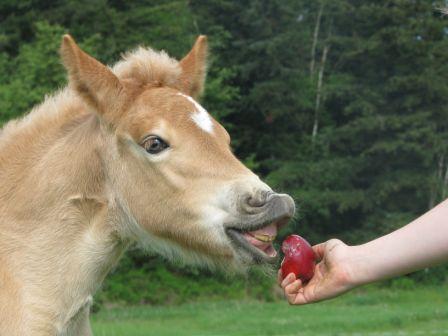
I’ve found over the years that our horses must be taught to eat apples–if they have no experience with them, they will bypass them lying in the field and not give them a second look. There simply is not enough odor to make them interesting or appealing–until they are cut in slices that is. Then they become irresistible and no apple is left alone from that point forward.
When I offer a whole apple to a young Haflinger who has never tasted one before, they will sniff it, perhaps roll it on my hand a bit with their lips, but I’ve yet to have one simply bite in and try. If I take the time to cut the apple up, they’ll pick up a section very gingerly, kind of hold it on their tongue and nod their head up and down trying to decide as they taste and test it if they should drop it or chew it, and finally, as they really bite in and the sweetness pours over their tongue, they get this look in their eye that is at once surprised and supremely pleased. The only parallel experience I’ve seen in humans is when you offer a five month old baby his first taste of ice cream on a spoon and at first he tightens his lips against its coldness, but once you slip a little into his mouth, his face screws up a bit and then his eyes get big and sparkly and his mouth rolls the taste around his tongue, savoring that sweet cold creaminess. His mouth immediately pops open for more.
It is the same with apples and horses. Once they have that first taste, they are our slaves forever in search of the next apple.
The Haflinger veteran apple eaters can see me coming with my sweat shirt front pocket stuffed with apples, a “pregnant” belly of fruit, as it were. They offer low nickers when I come up to their stalls and each horse has a different approach to their apple offering.
There is the “bite a little bit at a time” approach, which makes the apple last longer, and tends to be less messy in the long run. There is the “bite it in half” technique which leaves half the apple in your hand as they navigate the other half around their teeth, dripping and frothing sweet apple slobber. Lastly there is the greedy “take the whole thing at once” horse, which is the most challenging way to eat an apple, as it has to be moved back to the molars, and crunched, and then moved around the mouth to chew up the large pieces, and usually half the apple ends up falling to the ground, with all the foam that the juice and saliva create. No matter the technique used, the smell of an apple as it is being chewed by a horse is one of the best smells in the world. I can almost taste the sweetness too when I smell that smell.
What do we do when offered such a sublime gift from Someone’s hand? If it is something we have never experienced before, we possibly walk right by, not recognizing that it is a gift at all, missing the whole point and joy of experiencing what is being offered. How many wonderful opportunities are right under our noses, but we fail to notice, and bypass them because they are unfamiliar?
Perhaps if the Giver really cares enough to “teach” us to accept this gift of sweetness, by preparing it and making it irresistible to us, then we are overwhelmed with the magnitude of the generosity and are transformed by the simple act of receiving.
We must learn to take little bites, savoring each piece one at a time, making it last rather than greedily grab hold of the whole thing, struggling to control it, thereby losing some in the process. Either way, it is a gracious gift, and how we receive it makes all the difference.
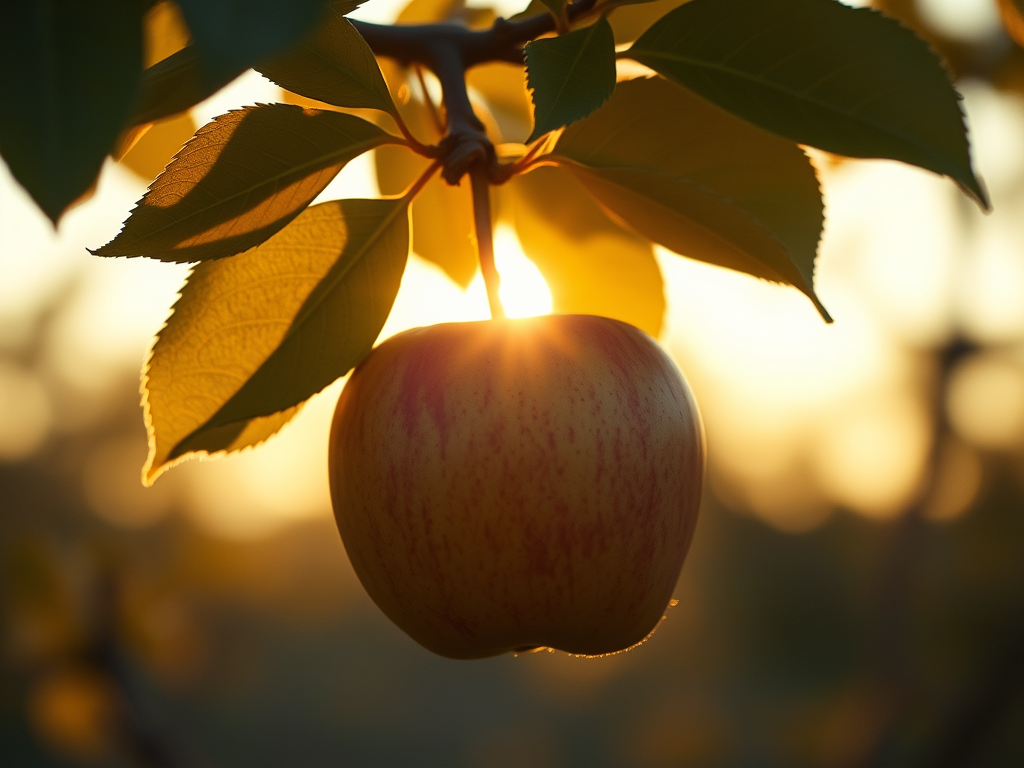
AI image created for this post
The tree of life my soul hath seen, Laden with fruit and always green; The trees of nature fruitless be, Compared with Christ the Apple Tree.
His beauty doth all things excel, By faith I know but ne’er can tell The glory which I now can see, In Jesus Christ the Appletree.
For happiness I long have sought, And pleasure dearly I have bought; I missed of all but now I see ‘Tis found in Christ the Appletree.
I’m weary with my former toil – Here I will sit and rest awhile, Under the shadow I will be, Of Jesus Christ the Appletree.
With great delight I’ll make my stay, There’s none shall fright my soul away; Among the sons of men I see There’s none like Christ the Appletree.
I’ll sit and eat this fruit divine, It cheers my heart like spirit’al wine; And now this fruit is sweet to me, That grows on Christ the Appletree.
This fruit doth make my soul to thrive, It keeps my dying faith alive; Which makes my soul in haste to be With Jesus Christ the Appletree.
One-Time
Monthly
Yearly
Make a one-time or recurring donation to support daily Barnstorming posts
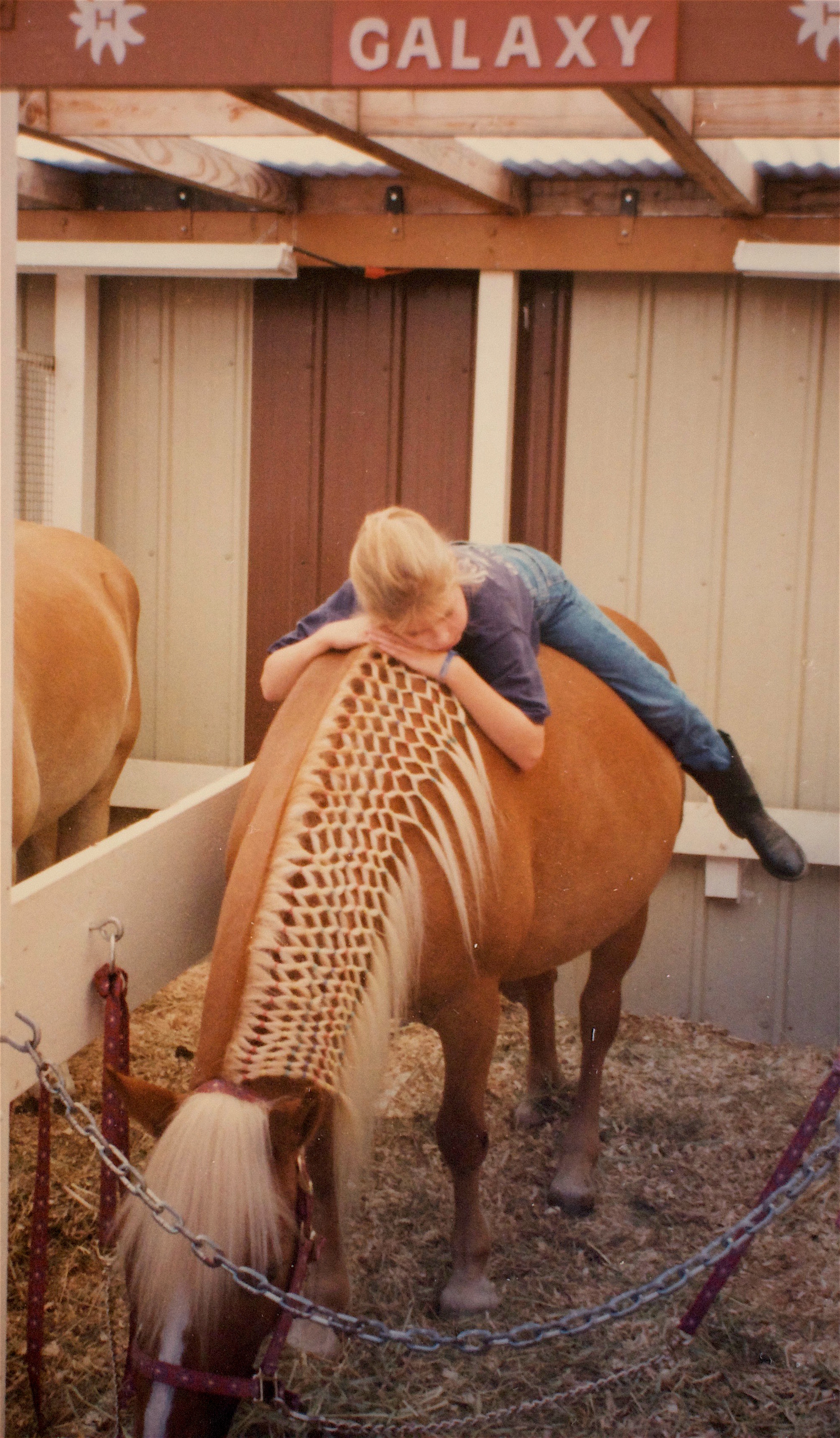
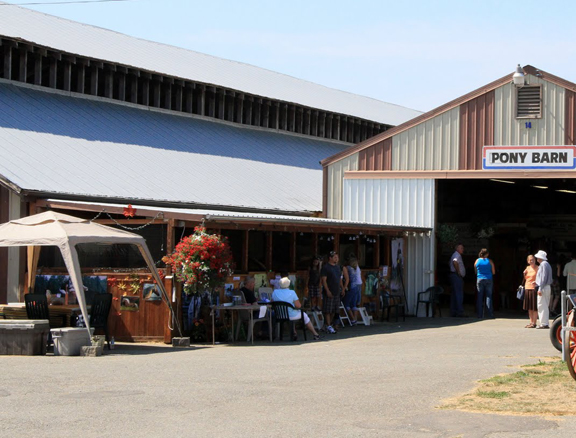
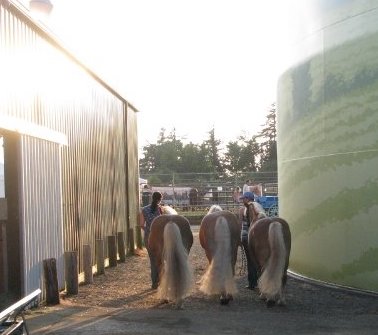
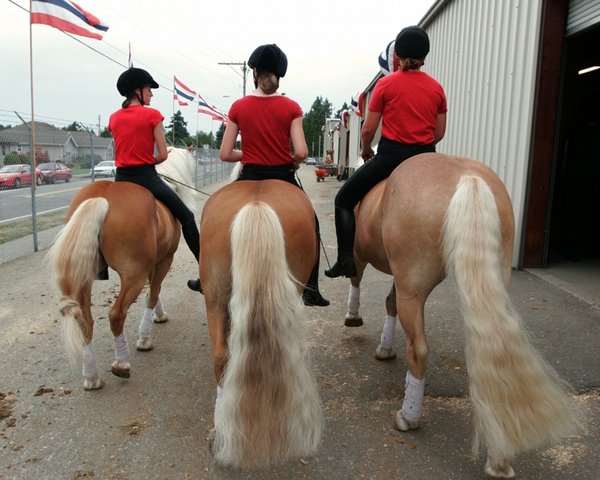
The Northwest Washington Fair in Lynden is under way again this week and instead of being part of the fun and hub-bub, our Haflinger horses are staying home, out on pasture. It’s been over a decade since they were cleaned up, curried, braided and trailered into town for a week to help make dreams come true for thousands of fairgoers.
I feel a bit wistful as I wake up early on this foggy mid-August morning, remembering the twenty years of 5:30 AM dawns where I would gather up our sleepy children and their friends and head into the fairgrounds to clean the Haflingers’ stalls, walk the horses for exercise and prepare for a busy day of people strolling by and admiring them.
We stopped “doing” the fair as a Haflinger farm. Now that I’m 70 years old, rather than 40, 50, or 60, I’m okay about that. It was great while it lasted but this aging human and my equines relish our retirement, especially since the fair expanded to a 10 day rather than just a 6 day commitment. I so admire the draft horse families that have kept their six horse hitches active with their Belgians, Percherons and Clydesdales – some families are now in their fourth generation at the fair with teamsters, still driving the hitches, well into their eighties.
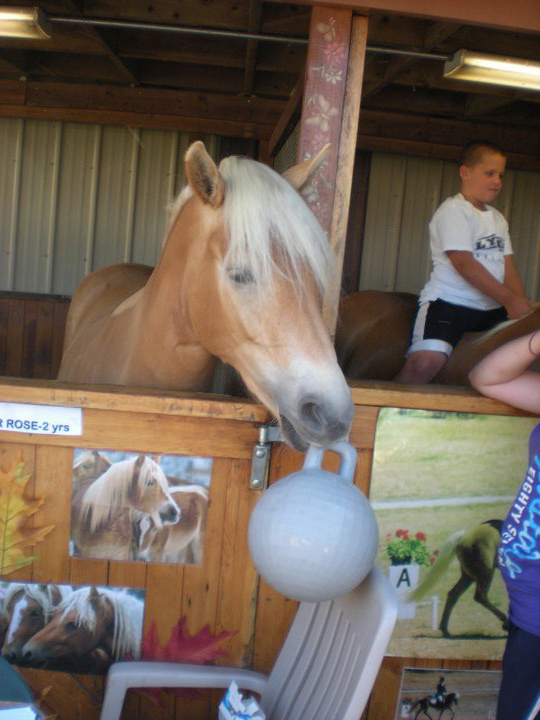
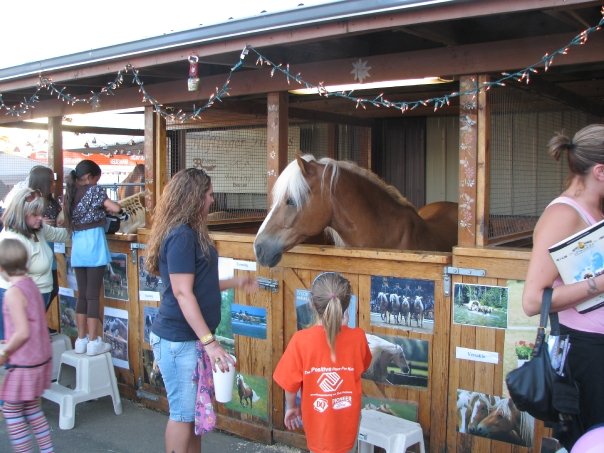
Our BriarCroft Haflingers display was a consistent presence at this regional fair for two decades, promoting the Haflinger breed in well-decorated stalls. Part of our commitment was to provide a 24-hr-a-day human presence with the horses. We had petitioned the Fair Board for 5 years in the late 1980s to allow us a spot at the fair, and they finally said “okay, here’s the space, build it yourself”, so we did.
We didn’t ask for classes, competition, or ribbons. We were there because fairgoers enjoyed seeing and touching our Haflingers and we enjoyed talking to all the people.
Once our children and their friends had careers and children of their own, they were no longer available to help “man” the horse stalls. I still miss spending such concentrated time with all the young nieces, nephews, neighbors, church and school friends who hung out with us over the years. I hope they still have fond memories of their time helping us at the fair.
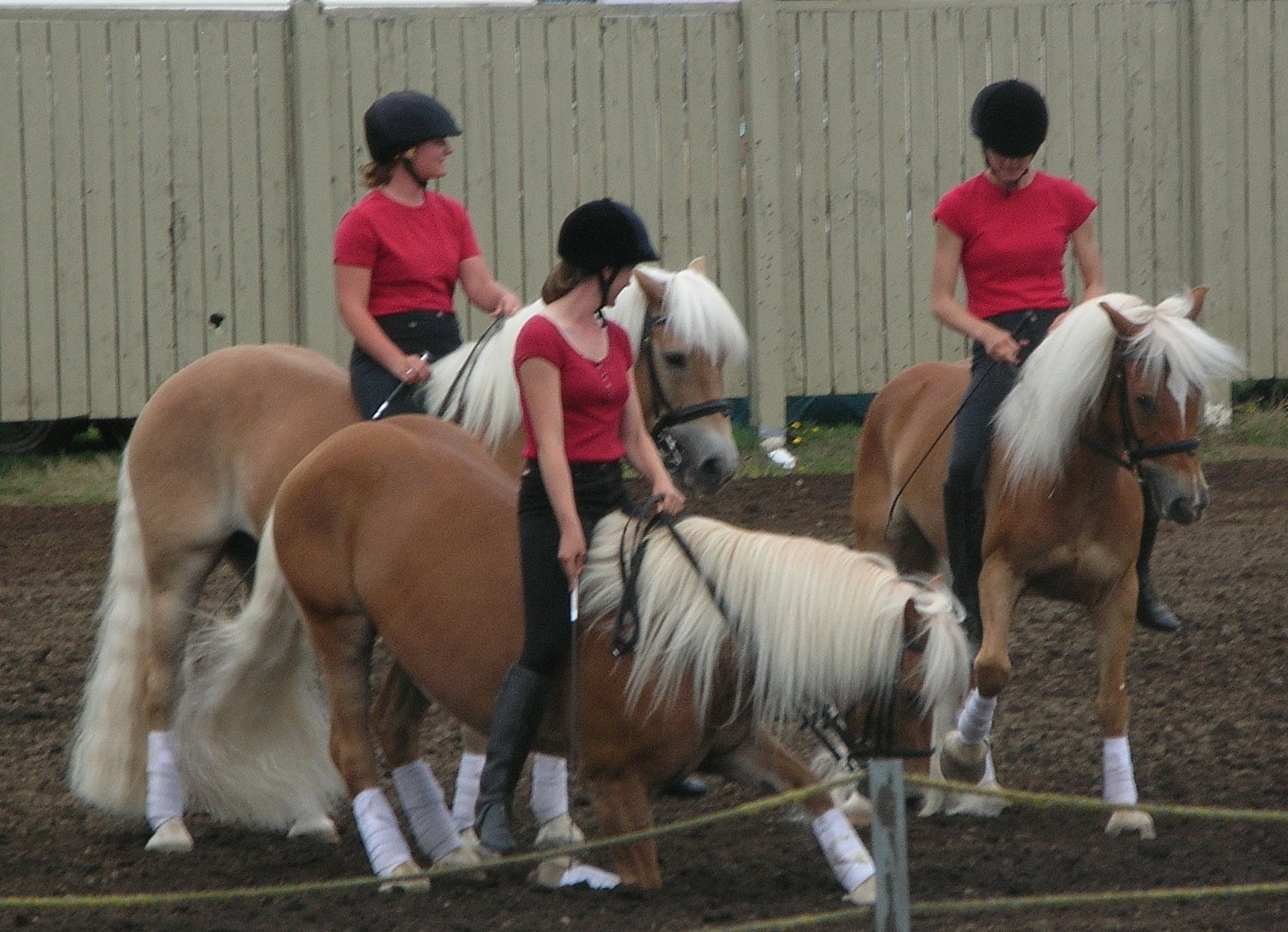
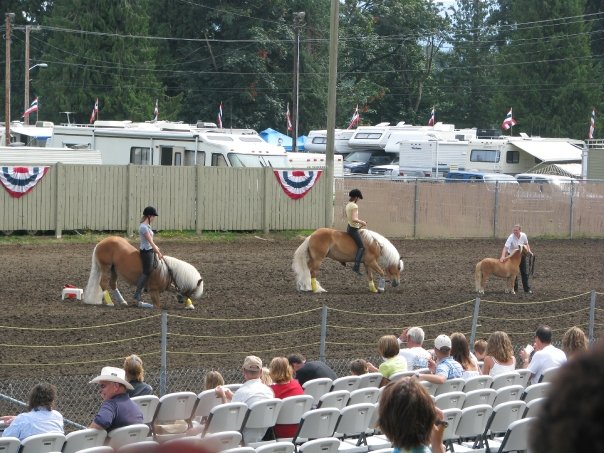
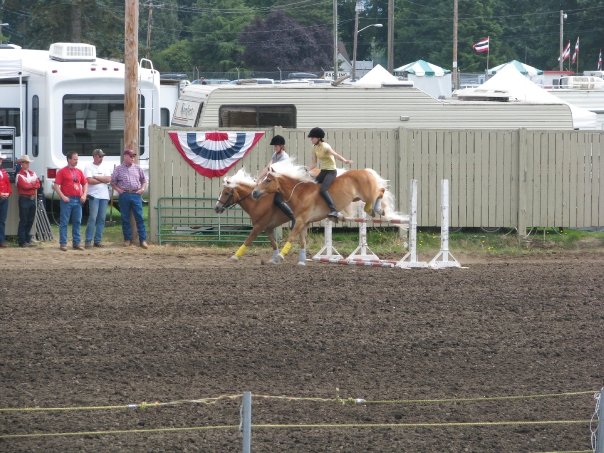
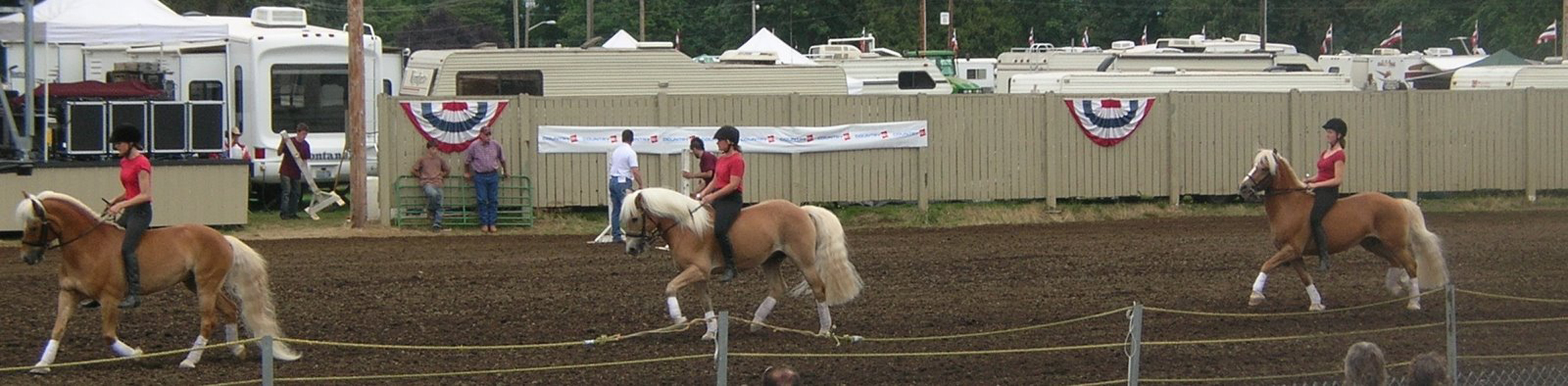
Every year from 1992 onward, we evaluated whether we had the energy and resources to do it again. Initially, Dan and I juggled our small children as well as horses at the fair and at home, taking a week of vacation from our jobs. Then, with the help of two other Haflinger breeding farms, and several young women who did a crowd-pleasing Haflinger “trick” riding demo in front of the grandstand, we rotated duties. The older kids watched the younger kids, the in-between kids did most of the horse stall cleaning duty, and the adults could sit and shoot the breeze.
This created good will for the fair visitors who depended on us every year to be there with horses that they and their children could actually pet (and sit on) without worry, who enjoyed our braiding demonstrations, and our Haflinger trivia contests and prizes.
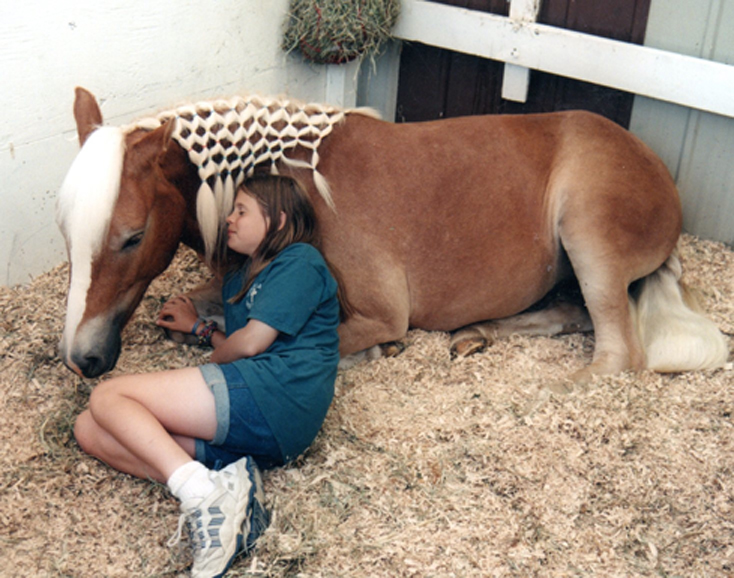
We continued to do this for so long because our horses were friendly and happy to give fair-goers a chance to safely get up close. These Haflingers became what dreams are made of.
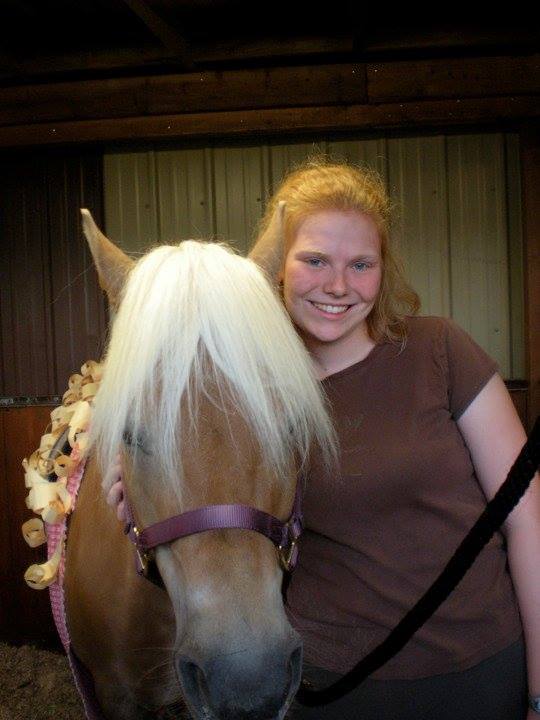
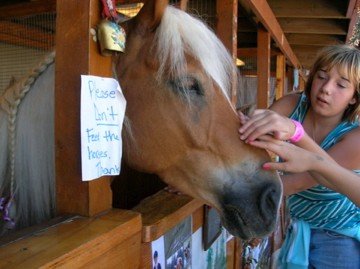
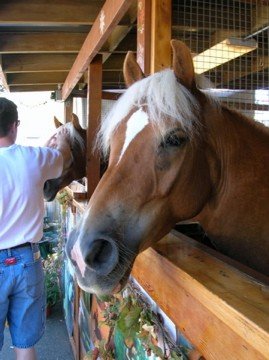
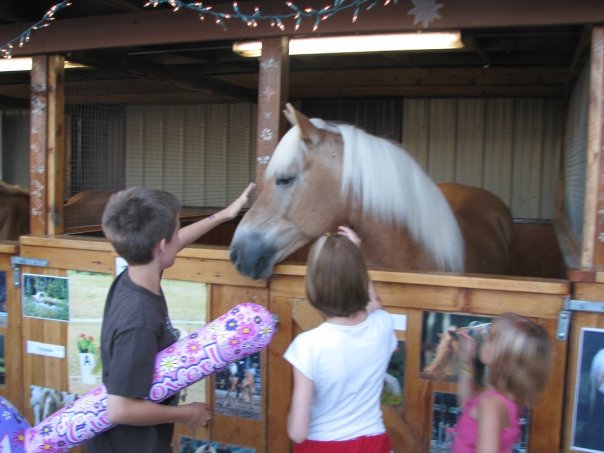
Countless times a day a bright eyed child approached our stalls, climbed up on the step stools and reached up to pet a Haflinger nose or neck and look deep into those big brown eyes. They will not forget the moment when a horse they had never met before loved them back. Haflingers are magic with children and we saw that over and over again.
So on this foggy August morning years later, instead of heading to the fairgrounds to clean stalls and braid manes, I’m turning out our retired, dusty, unbathed Haflingers into the field as usual. They barely recall all the excitement they are missing.
Even if our horses don’t remember much about those fair weeks so long ago, I know some fair-goers still miss the friendly golden horses with the big brown eyes who tried, even if for a day, to make their dreams come true.
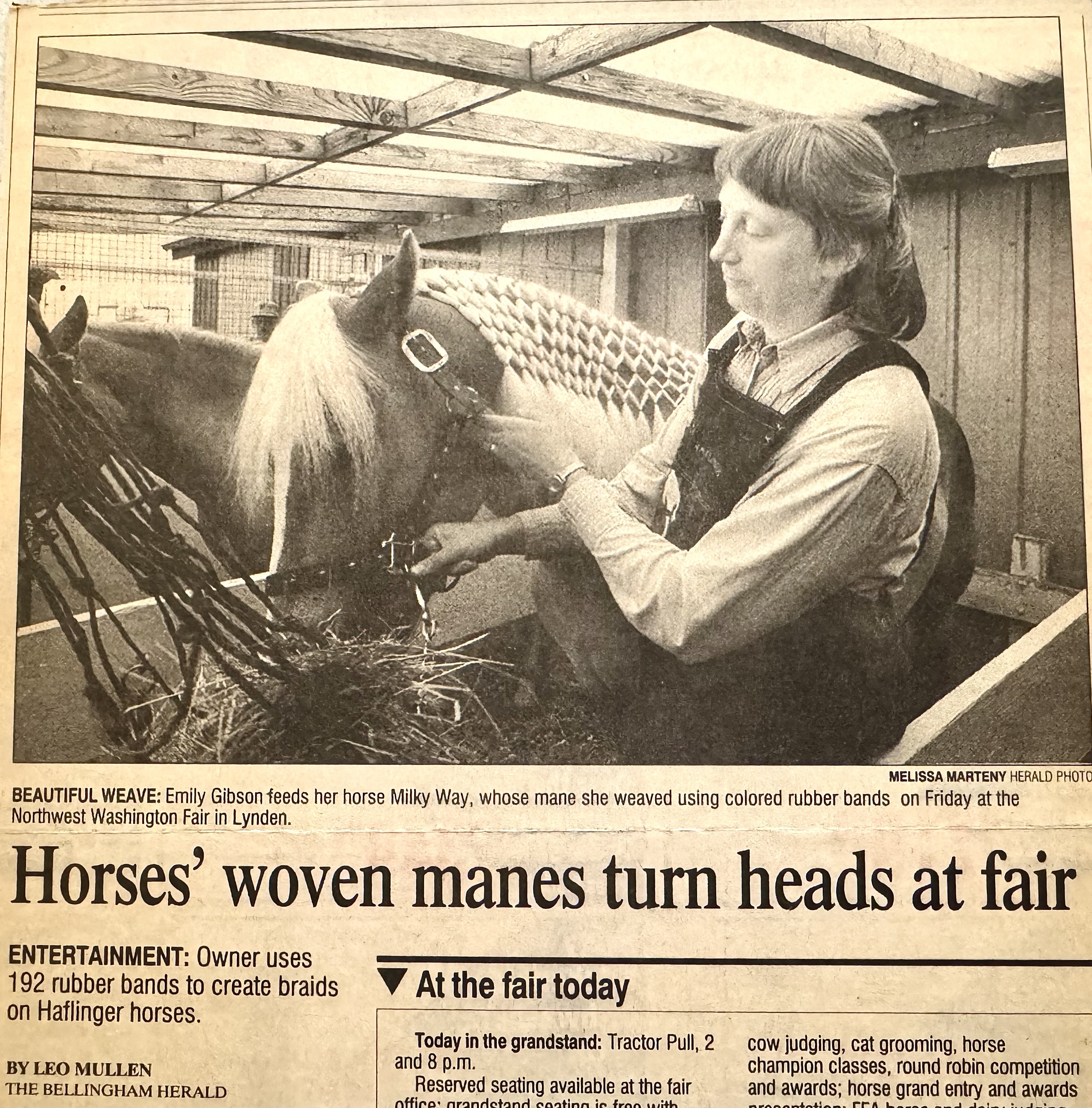
29 years ago, Milky Way and I were featured in our fair display on the front page of the local Bellingham Herald
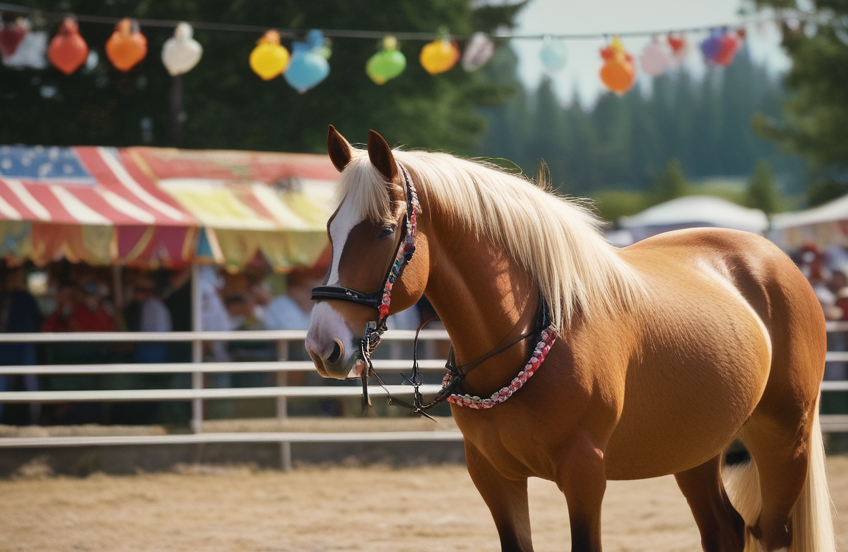
AI image created for this post
One-Time
Monthly
Yearly
Make a one-time or recurring donation to support daily Barnstorming posts
Broad August burns in milky skies, The world is blanched with hazy heat; The vast green pasture, even, lies Too hot and bright for eyes and feet.
Amid the grassy levels rears The sycamore against the sun The dark boughs of a hundred years, The emerald foliage of one.
Lulled in a dream of shade and sheen, Within the clement twilight thrown By that great cloud of floating green, A horse is standing, still as stone.
He stirs nor head nor hoof, although The grass is fresh beneath the branch; His tail alone swings to and fro In graceful curves from haunch to haunch.
He stands quite lost, indifferent To rack or pasture, trace or rein; He feels the vaguely sweet content Of perfect sloth in limb and brain. ~William Canton “Standing Still”
Sweet contentment is a horse dozing in the summer field, completely sated by grass and clover, tail switching and skin rippling automatically to discourage flies.
I too wish at times for that stillness of mind and body, allowing myself to simply “be” without concern about yesterday’s travails, or what duties await me tomorrow.
I flunked sloth long ago. Perhaps I was born driven. My older sister, never a morning person, was thoroughly annoyed to share a bedroom with a toddler who awoke chirpy and cheerful, singing “Twinkle Twinkle” for all to hear and ready to conquer the day.
Since retiring, I admit I am becoming accustomed now to sloth-dom, though I am still too chipper in the early morning. It is a distinct character flaw.
Even so, I’m not immune to the attractions of a hot hazy day of doing absolutely nothing but standing still switching at flies. I envy our retired ponies in the pasture who spend the day grazing, moseying, and lazing. I worked hard many years to make that life possible for them.
I want to use my days well. I want to be worthy. I want to know there is a reason to be here beyond just warning the flies away.
It is absolutely enough to enjoy the glory of it all.
One-Time
Monthly
Yearly
Make a one-time or recurring donation to support daily Barnstorming posts
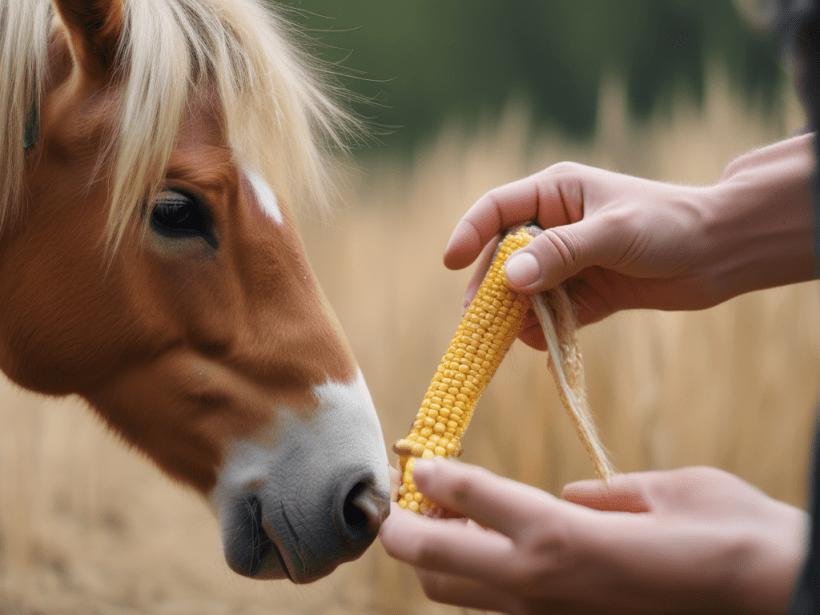
I stop the car along the pasture edge, gather up bags of corncobs from the back, and get out. Two whistles, one for each, and familiar sounds draw close in darkness— cadence of hoof on hardened bottomland, twinned blowing of air through nostrils curious, flared. They come deepened and muscular movements conjured out of sleep: each small noise and scent heavy with earth, simple beyond communion, beyond the stretched-out hand from which they calmly take corncobs, pulling away as I hold until the mid-points snap. They are careful of my fingers, offering that animal-knowledge, the respect which is due to strangers; and in the night, their mares’ eyes shine, reflecting stars, the entire, outer light of the world here. ~Jane Hirshfield “After Work” from Of Gravity and Angels
photo by Emily VanderHaak
Just off the highway to Rochester, Minnesota, Twilight bounds softly forth on the grass. And the eyes of those two Indian ponies Darken with kindness. They have come gladly out of the willows To welcome my friend and me. We step over the barbed wire into the pasture Where they have been grazing all day, alone. They ripple tensely, they can hardly contain their happiness That we have come. They bow shyly as wet swans. They love each other. There is no loneliness like theirs. At home once more, They begin munching the young tufts of spring in the darkness. I would like to hold the slenderer one in my arms, For she has walked over to me And nuzzled my left hand. She is black and white, Her mane falls wild on her forehead, And the light breeze moves me to caress her long ear That is delicate as the skin over a girl’s wrist. Suddenly I realize That if I stepped out of my body I would break Into blossom. ~James Wright, “A Blessing” from Above the River: The Complete Poems
Horses have been a daily part of my life for over fifty years, though while I attended school and worked in the city, I was forced to limit myself to goldfish.
Eventually living on a farm in the country was my goal, rather than a seeking out a prestigious career in the city. Raising horses (and cattle and goats and chickens and geese and ducks and dogs and cats…) was always my hope and dream.
And dreams sometimes come true.
As I get older, I realize how much easier goldfish are in comparison. Horses are so much bigger and stronger than I am; I’m far more aware of where I am and where they are so I don’t have an unscheduled landing.
As they get older (in their second and third decades of life), the horses have plenty of opinions, deeply trusting they belong here on this farm. They know the routine, the lay of the land, they know each other and they know me.
As the person who does their daily feeding and watering and brushing and bed cleaning, I expect them to be respectful and polite and they expect the same of me. Sometimes we mutually bump into senior citizen stubbornness.
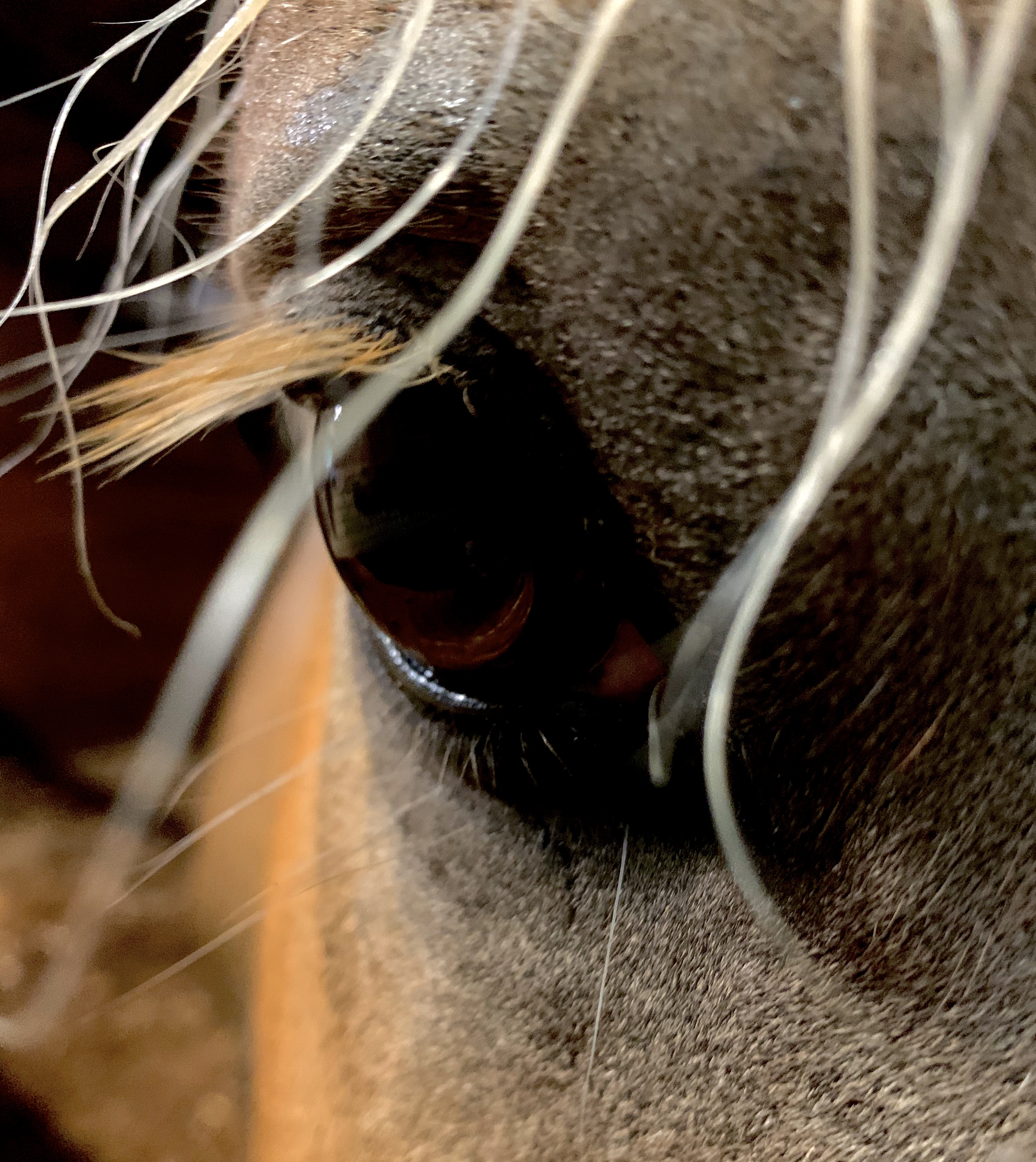
Even so, for as long as we all shall live, I find it a pure blessing to look into their shining eyes.
AI image created for this post
One-Time
Monthly
Yearly
Make a one-time or recurring donation to support daily Barnstorming posts
Because I have come to the fence at night, the horses arrive also from their ancient stable. They let me stroke their long faces, and I note in the light of the now-merging moon
how they, a Morgan and a Quarter, have been by shake-guttered raindrops spotted around their rumps and thus made Appaloosas, the ancestral horses of this place.
Maybe because it is night, they are nervous, or maybe because they too sense what they have become, they seem to be waiting for me to say something
to whatever ancient spirits might still abide here, that they might awaken from this strange dream, in which there are fences and stables and a man who doesn’t know a single word they understand. ~Robert Wrigley “After a Rainstorm”from Beautiful Country
During our three decades of Haflinger horse ownership, I figured out long ago that Haflingers must have a migration center in their brain that tells them that it is time to move on to other territory – a move based on quality of forage, the seasons, or maybe simply a sudden urge for a change in scenery. This thrifty mountain breed adapted over hundreds of years to living in rather sparse Alpen meadows. They needed to move on to another feeding area enmasse on a pretty regular basis, or when the weather was starting to get crummy.
Or perhaps the next valley over had a better view, who knows? Trouble is, my Haflingers seem to have the desire to “move to other pastures” even if the grass in their own territory is plentiful and the view is great. And there doesn’t seem to be much in the way of natural or man-made barrier that will discourage them.
I have a trio of geldings I dub the “Three Musketeers”) who are particularly afflicted with wanderlust. There is not a field yet that has held them when they decide together that it is time to move on. We are a hotwire and white tape fenced farm–something that has worked fairly well over the years, as it is inexpensive, easily repaired and best of all, easily moved if we need to change the fencing arrangement in our pasture rotation between five different 2 acre pastures.
Previous generations of Haflingers have tested the hotwire and learned not to bother it again. No problem.
But not the Three Musketeers.
They know when the wire is grounding out somewhere, so the current is low. They know when the weather is so dry that conduction is poor through the wire. They know when I’ve absent-mindedly left the fencer unplugged because I’ve had someone visit and we wanted to climb unshocked through the fences to walk from field to field.
These three actually have little conferences out in the field together about this. I’ve seen them huddled together, discussing their strategy, and fifteen minutes later, I’ll look out my kitchen window and they are in another field altogether and the wire and tape is strewn everywhere and there’s not a mark on any of them. Even more mysteriously, often I can’t really tell where they made their escape as they leave no trace–I think one holds up the top wire with his teeth and the others carefully step over the bottom wire. I’m convinced they do this just to make me crazy.
Last night, when I brought them in from a totally different field from where they had started in the morning, they all smirked at me as they marched to their stalls as if to say, “guess what you have waiting for you out there.” It was too dark to survey the damage last night but I got up extra early to check it out this morning before I turned them out again.
Sure enough, in the back corner of the field they had been put in yesterday morning, (which has plenty of grass), the tape had been stretched, but not broken, and the wires popped off their insulators and dragging on the ground and in a huge tangled mass. I enjoyed 45 minutes of Pacific Northwest summer morning putting it all back together. Then I put them out in the field they had escaped to last night, thinking, “okay, if you like this field so well, this is where you’ll stay”.
Tonight, they were back in the first field where they started out yesterday morning. Just to prove they could do it. They are thoroughly enjoying this sport. I’m ready to buy a grand poobah mega-wattage fry-their-whiskers fence charger.
But then, I’d be spoiling their fun and their travels. As long as they stay off the road, out of our garden, and out of my kitchen, they can have the run of the place. I too remember being afflicted with wanderlust, long long ago, and wanting to see the big wide world, no matter what obstacles had to be overcome or shocks I had to endure to get there. And I got there after all that trouble and effort and realized that home was really where I wanted to be.
Now, prying me away from my little corner of the world gets more difficult every year. I hope my Haflinger trio will eventually decide that staying home is the best thing after all. Maybe they will listen to what I have to say this time.
AI image created for this post
One-Time
Monthly
Yearly
Make a one-time or recurring donation to support daily Barnstorming posts
In a daring and beautiful creative reversal, God takes the worse we can do to Him and turns it into the very best He can do for us. ~Malcolm Guite from The Word in the Wilderness
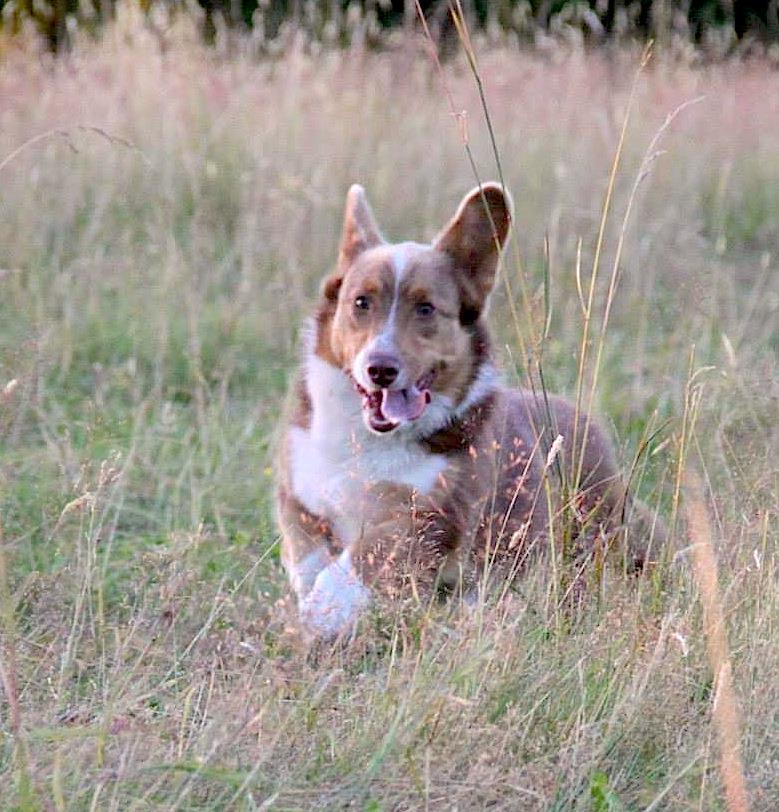
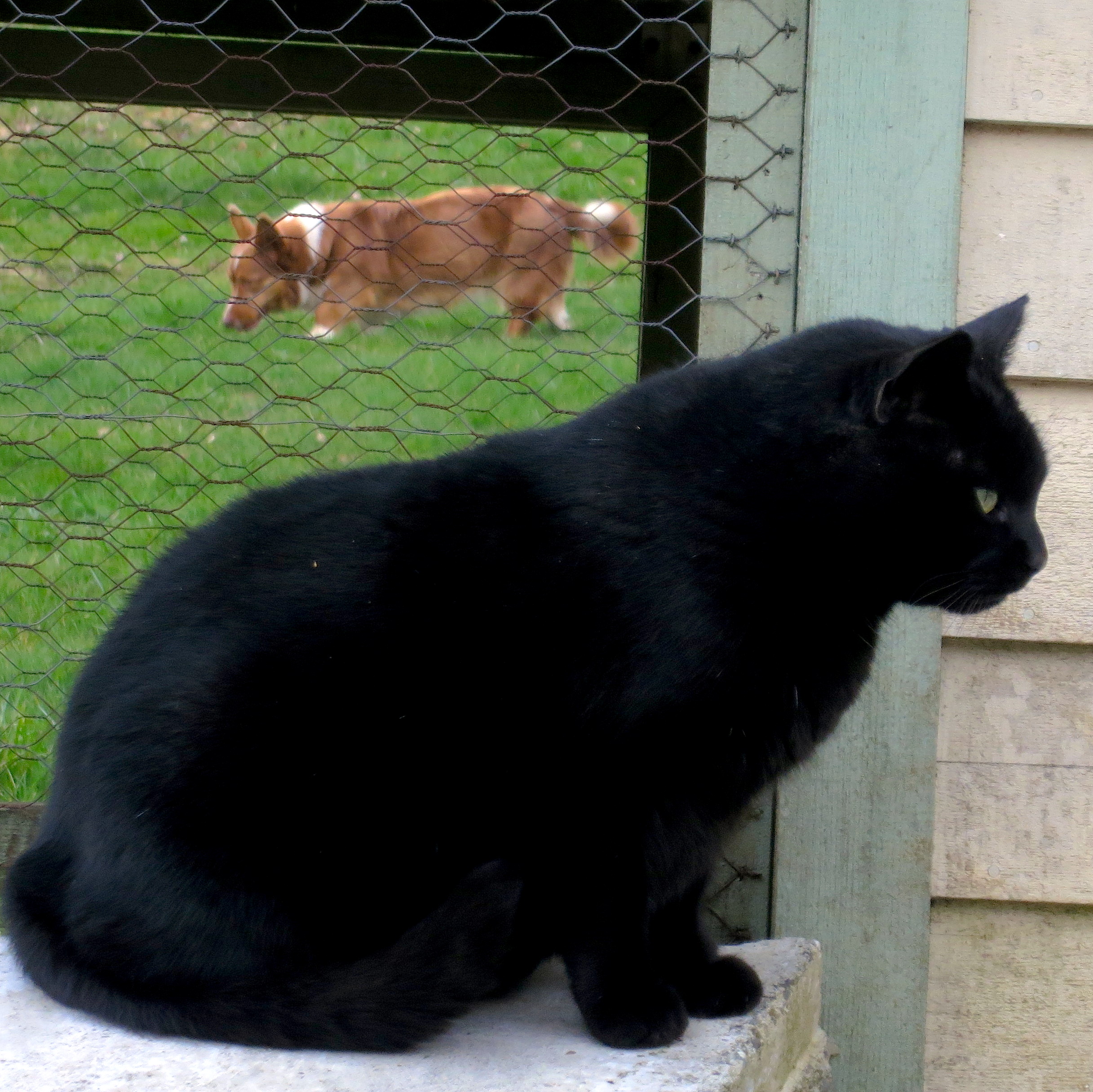
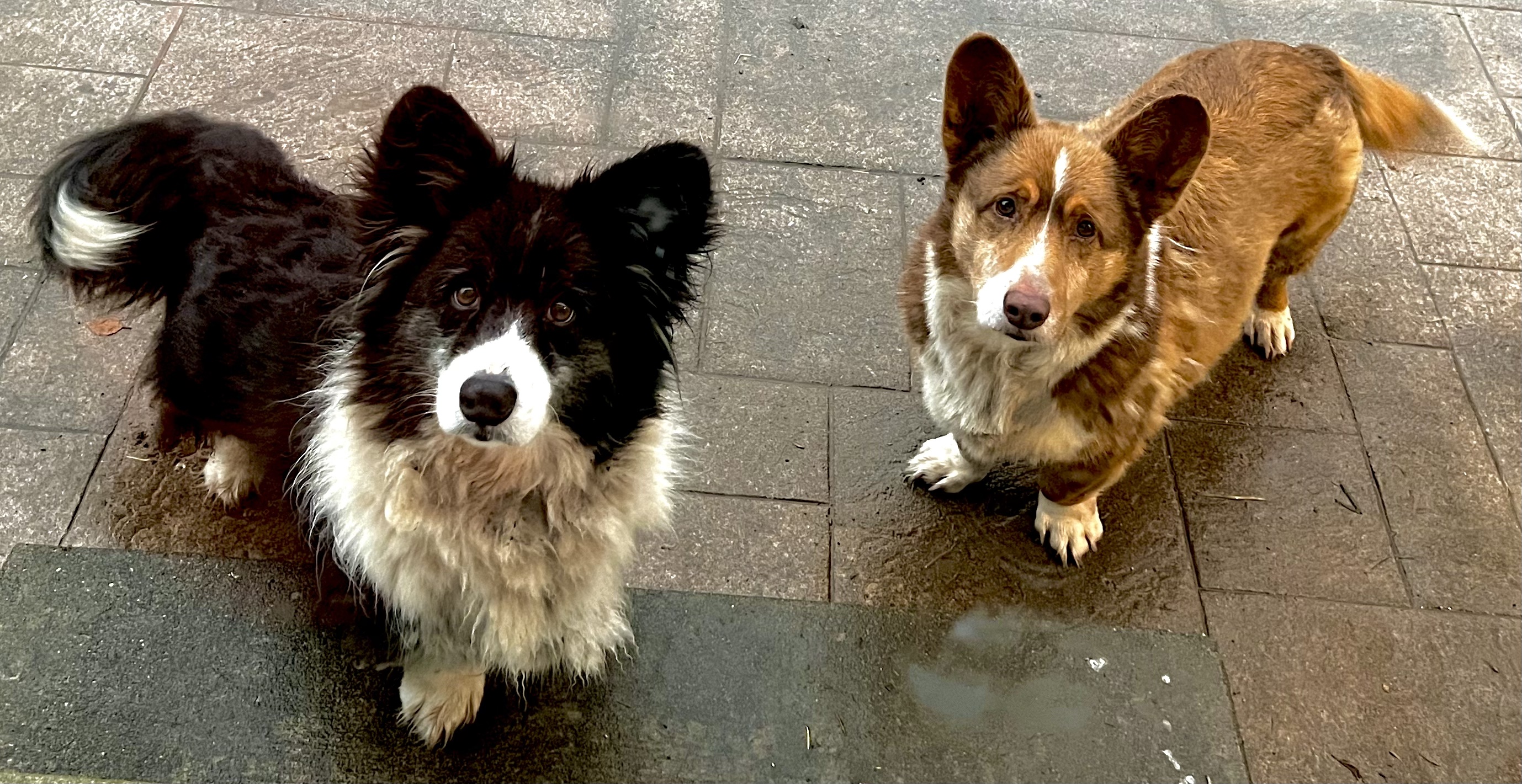
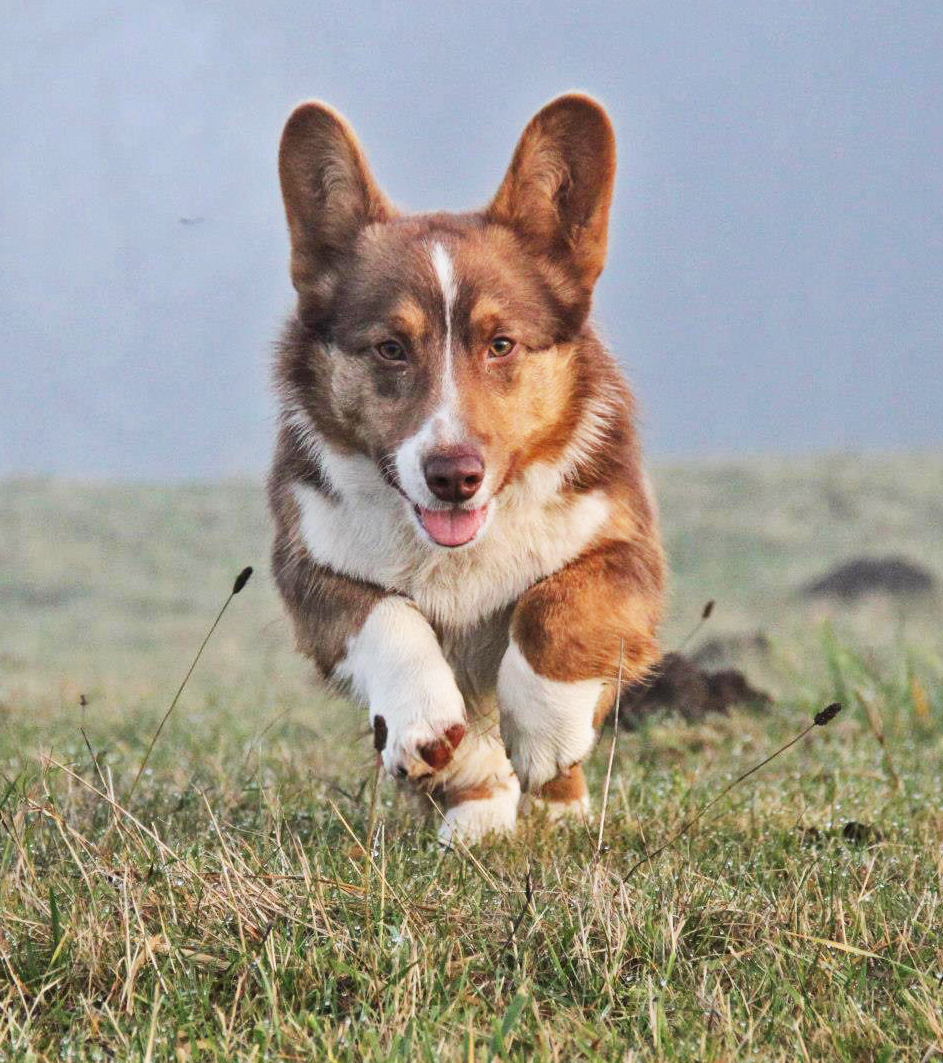
Samwise Gamgee and Homer, our two Cardigan Corgis, do barn chores with me twice daily. They run up and down the aisles as I fill the buckets and throw the horses hay. Then they explore the manure pile out back, have a happy roll in some really smelly stuff in the field, and have stand offs with the barn cats (which they always lose).
We have our routine. When I get done with chores, I whistle for them and we all head back to their breakfast in their outdoor pen.
We always return home together.
Except this particular morning. I whistled when I was done and although Homer came running, Sam’s furry fox face didn’t appear as usual. I walked back through both barns calling his name, whistling. No signs of Sam. I walked to the fields, I walked back to the dog pen, I walked the road (where he never ever goes), I scanned the pond where he once fell in as a pup (yikes), I went back to the barn and glanced inside every stall, I went in the hay barn where he likes to jump up and down on stacked bales, worried about a bale avalanche he might be trapped under, or a hole he couldn’t climb out of.
Nothing.
I’m really anxious about him at this point, fearing the worst. Even Homer seemed clueless about where his friend disappeared.
Sam was nowhere to be found, utterly lost.
Passing through the barn again, I heard a little faint scratching inside one Haflinger’s stall, which I had just glanced in 10 minutes before as a mare was peacefully eating hay. Sure enough, there was Sam standing with his feet up against the door as if asking what took me so long. He must have scooted in when I filled up her water bucket, and I closed the door unaware he was still inside. He and his horse buddy kept it their secret.
Making not a whimper or a bark when I called out his name, passing that stall at least 10 times looking for him, he patiently waited for me to open the door and set him free.
The lost is found even though he never felt lost to begin with.
Yet he was lost to me. And that is all that matters. We have no idea how lost we are until a determined Someone comes looking for us, doing whatever it takes to bring us back alongside them.
Sam was just waiting for that closed door to be opened. And this Holy Week, the door is thrown wide open and we’re welcomed back home.
photo by Nate Gibson
Let’s have a feast and celebrate.For this son of mine was dead and is alive again; he was lost and is found. Luke 15: 23-24
This Lenten season I reflect on the words of the 19th century southern spiritual hymn “What Wondrous Love is This”
One-Time
Monthly
Yearly
Make a one-time or recurring donation to support daily Barnstorming posts
Every happening, great and small, is a parable whereby God speaks to us, and the art of life is to get the message. ~Malcolm Muggeridge
I’ve banked nothing, or everything. Every day the chores need doing again. Early in the morning, I clean the horse barn with a manure fork. Every morning, it feels as though it could be the day beforeor a year ago or a year before that. With every pass, I give the fork one final upward flick to keep the manure from falling out, and every day I remember where I learned to do that and from whom. Time all but stops.
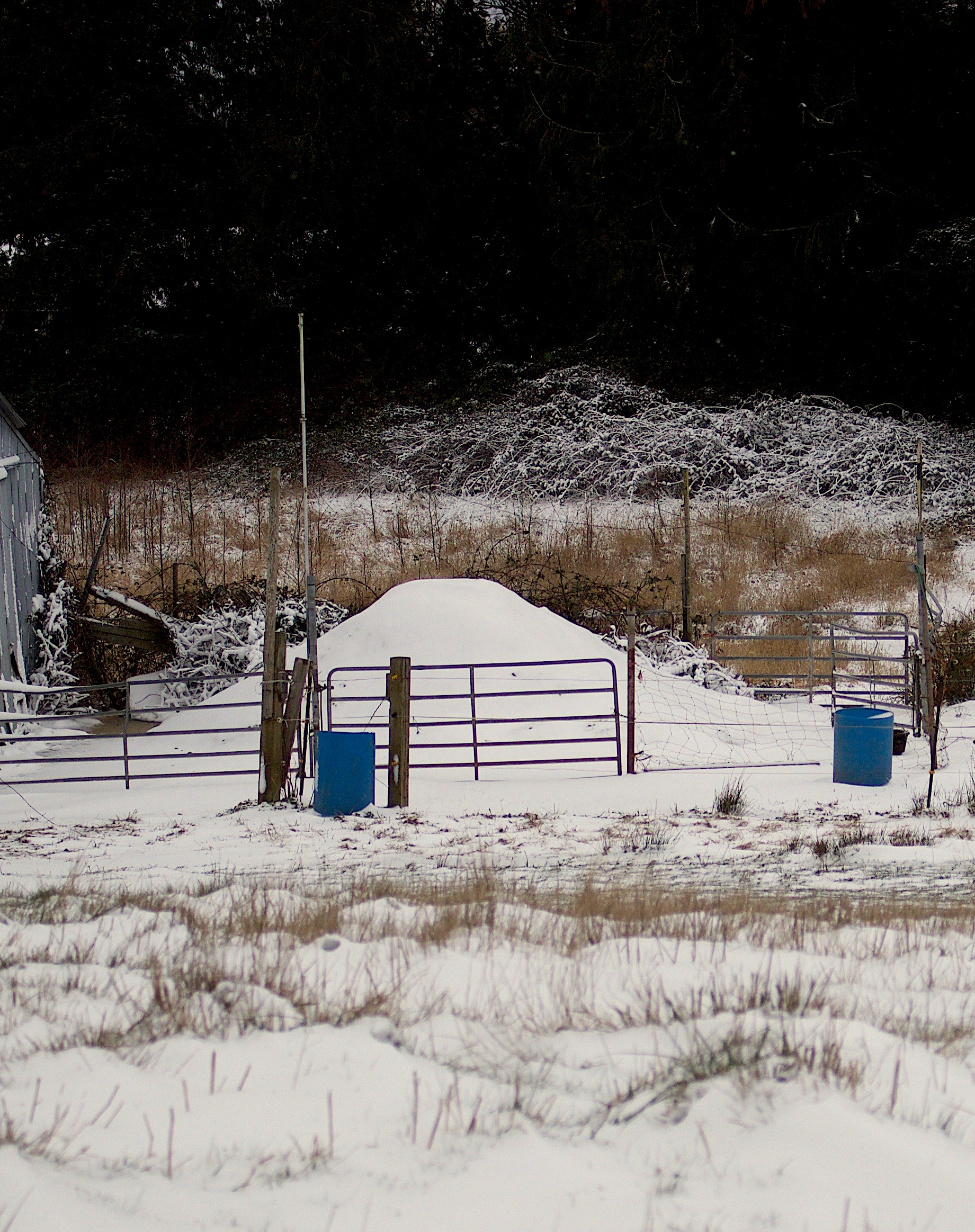
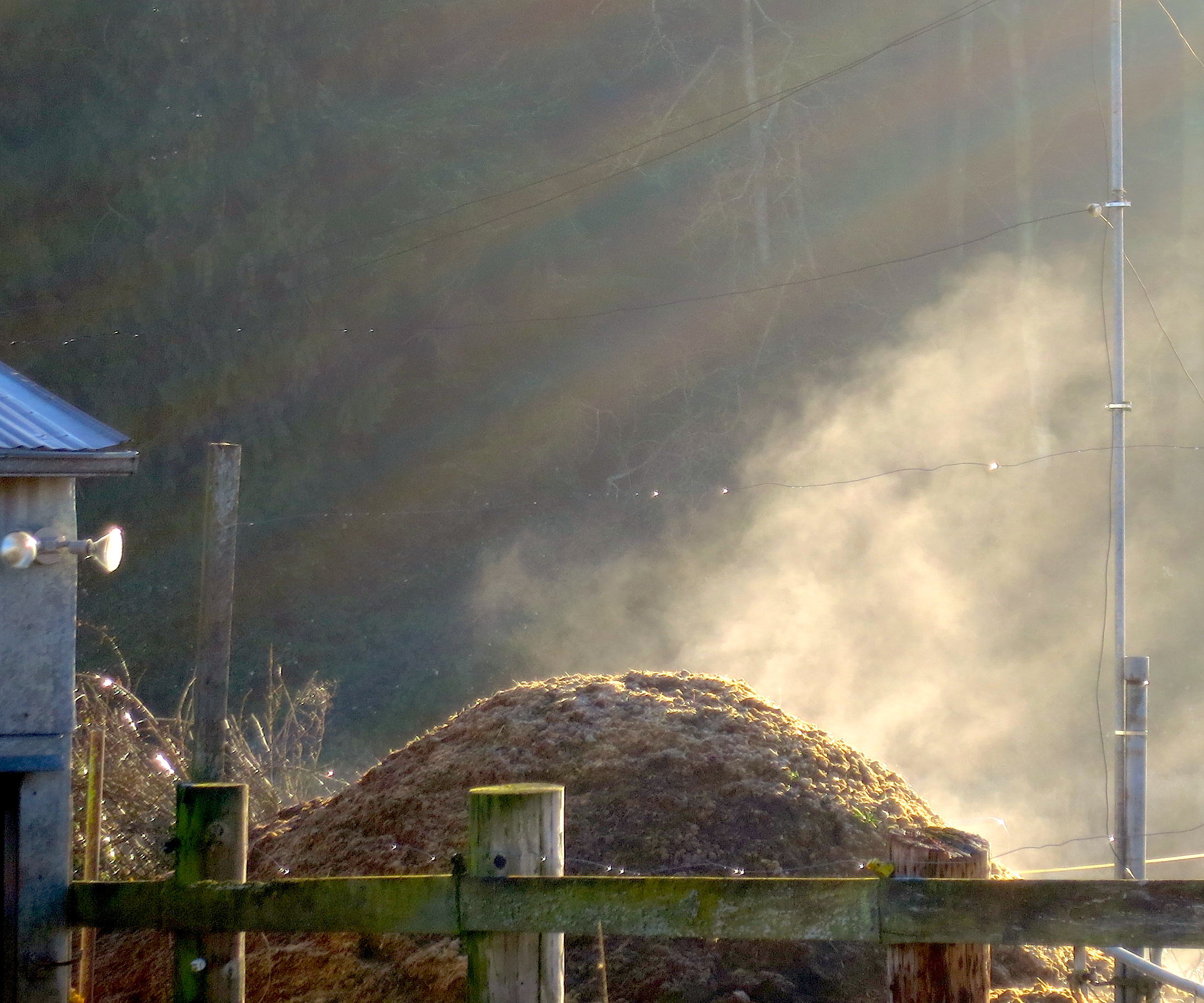
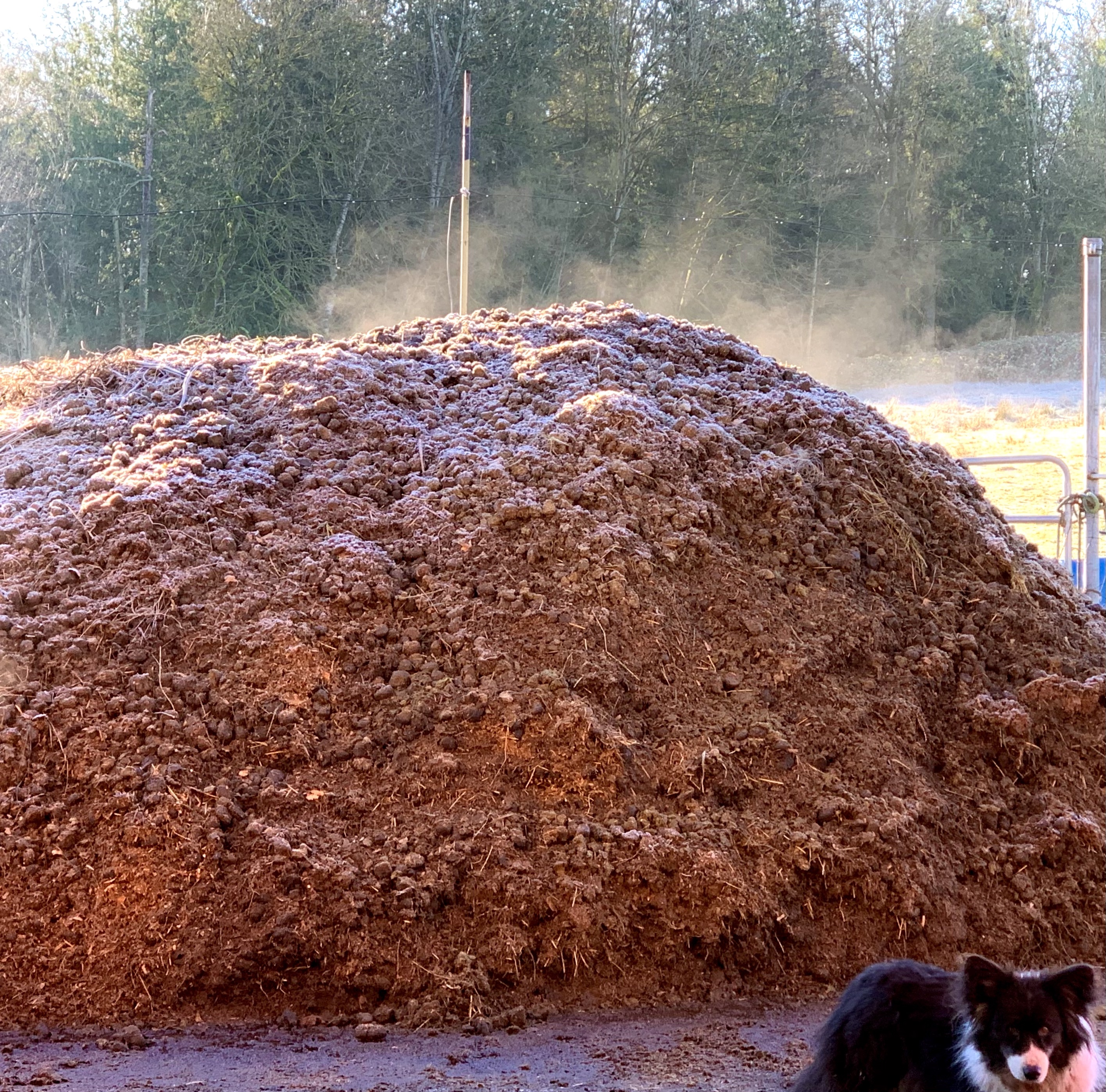
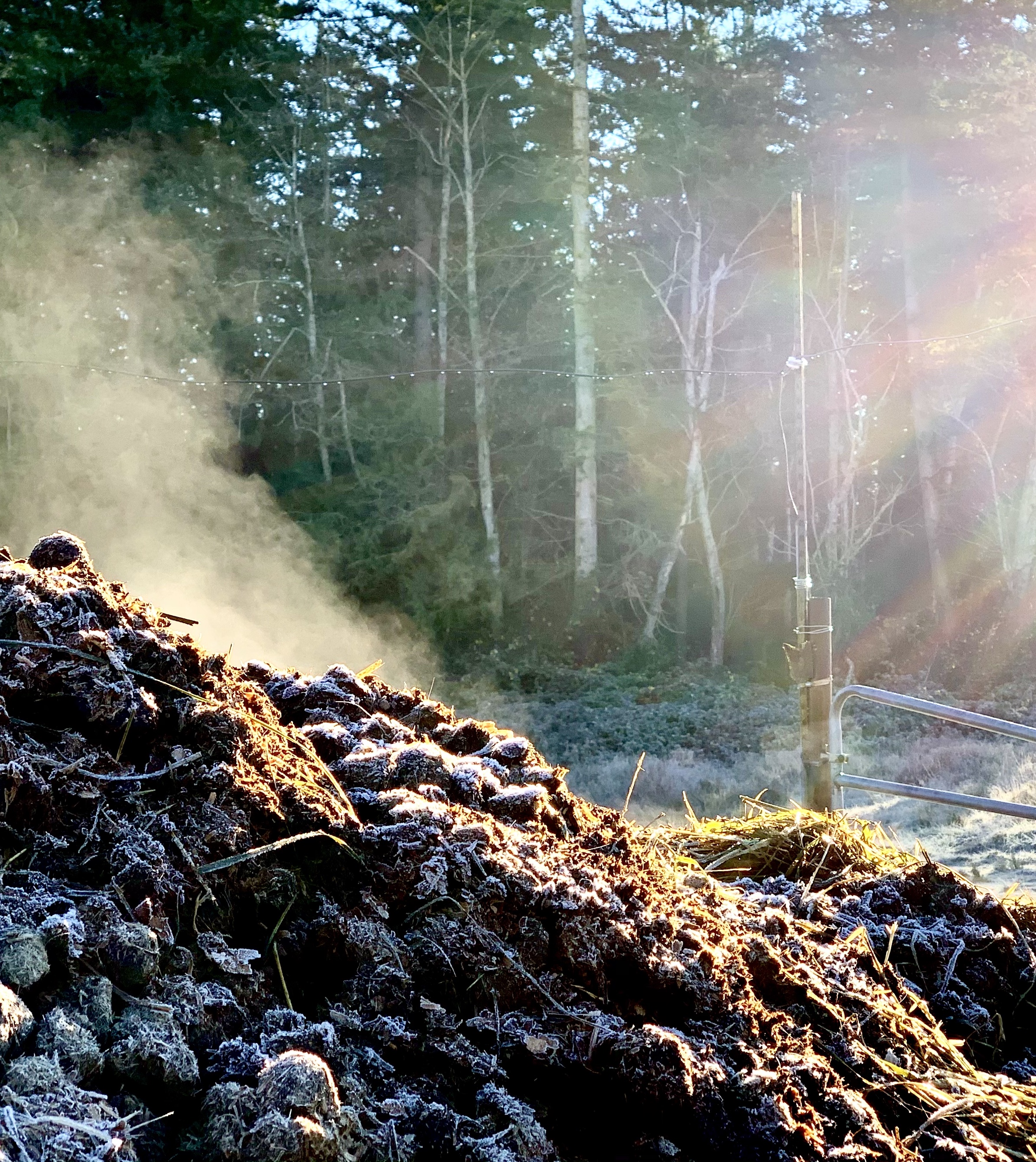
But then I dump the cart on the compost pile. I bring out the tractor and turn the pile, once every three or four days. The bucket bites and lifts, and steam comes billowing out of the heap. It’s my assurance that time is really moving forward, decomposing us all in the process. ~Verlyn Klinkenborg from More Scenes from the Rural Life
He <the professor> asked what I made of the other Oxford students so I told him: They were okay, but they were all very similar… they’d never failed at anything or been nobodies, and they thought they would always win. But this isn’t most people’s experience of life.
He asked me what could be done about it. I told him the answer was to send them all out for a year to do some dead-end job like working in a chicken processing plant or spreading muck with a tractor. It would do more good than a gap year in Peru.
He laughed and thought this was tremendously witty. It wasn’t meant to be funny. ~James Rebanks from The Shepherd’s Life (how a sheep farmer succeeds at Oxford and then goes back to the farm)
It is done by us all, as God disposes, from the least cast of worm to what must have been in the case of the brontosaur, say, spoor of considerable heft, something awesome.
We eat, we evacuate, survivors that we are. I think these things each morning with shovel and rake, drawing the risen brown buns toward me, fresh from the horse oven, as it were, or culling the alfalfa-green ones, expelled in a state of ooze, through the sawdust bed to take a serviceable form, as putty does, so as to lift out entire from the stall.
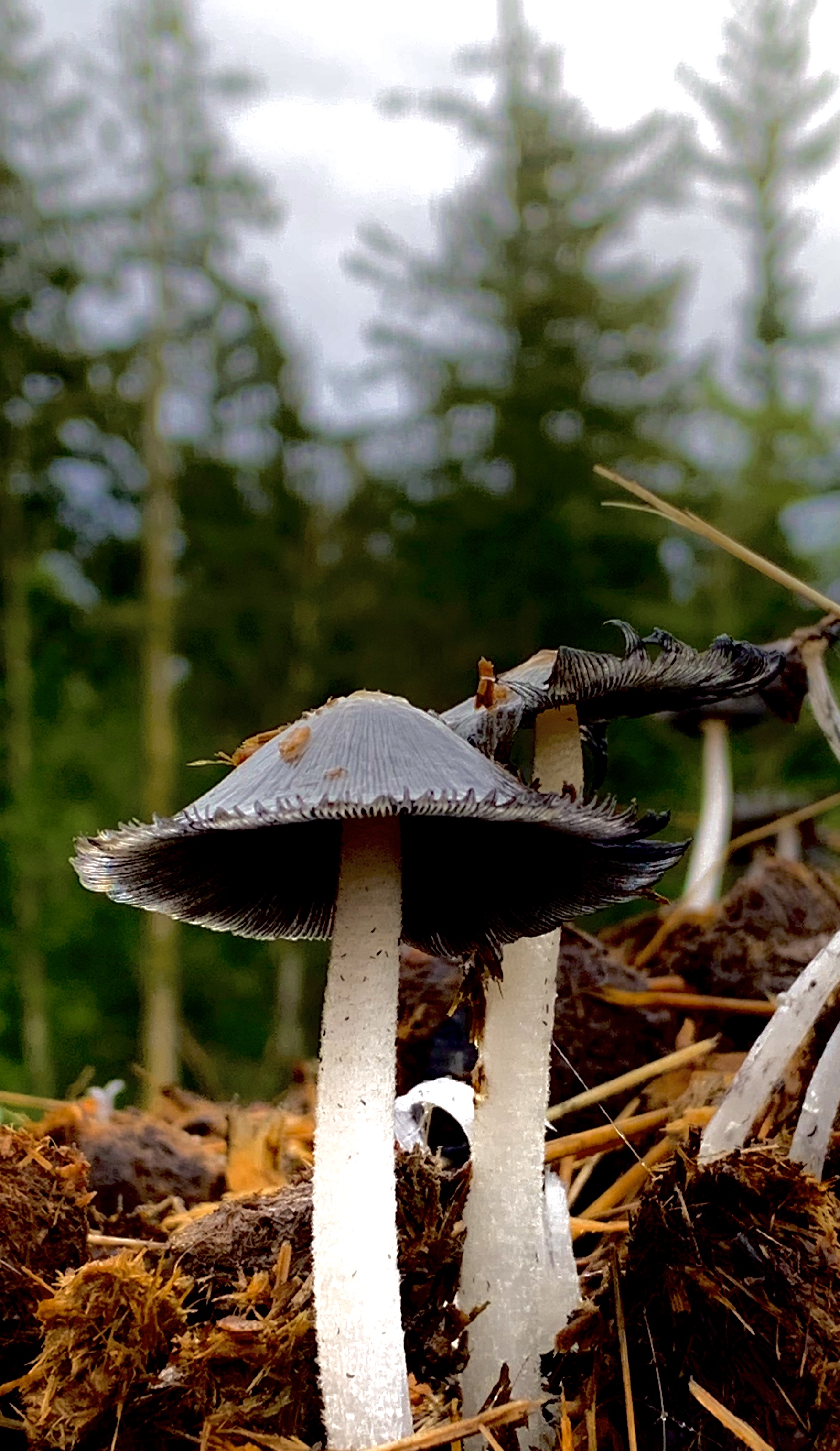
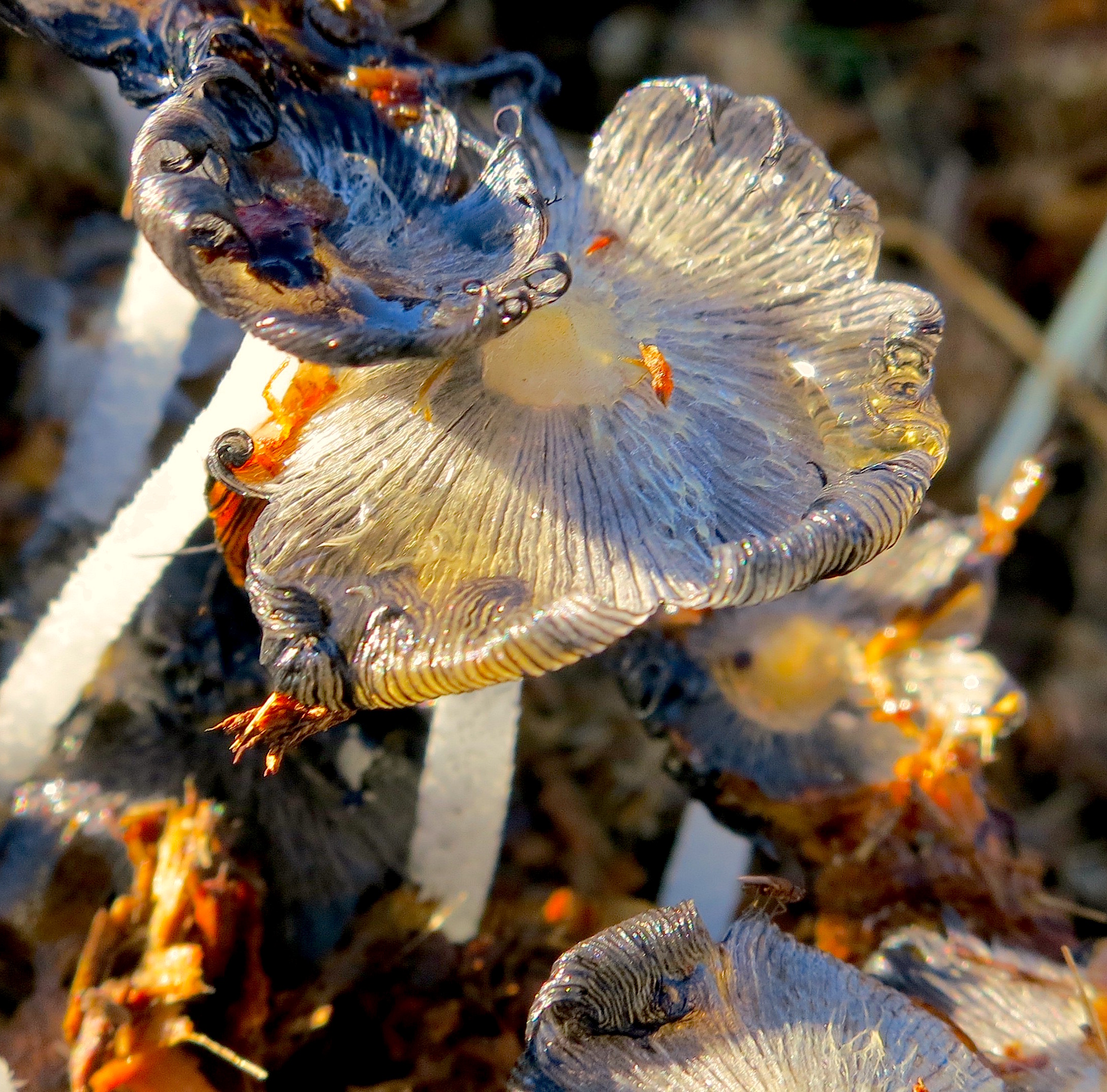
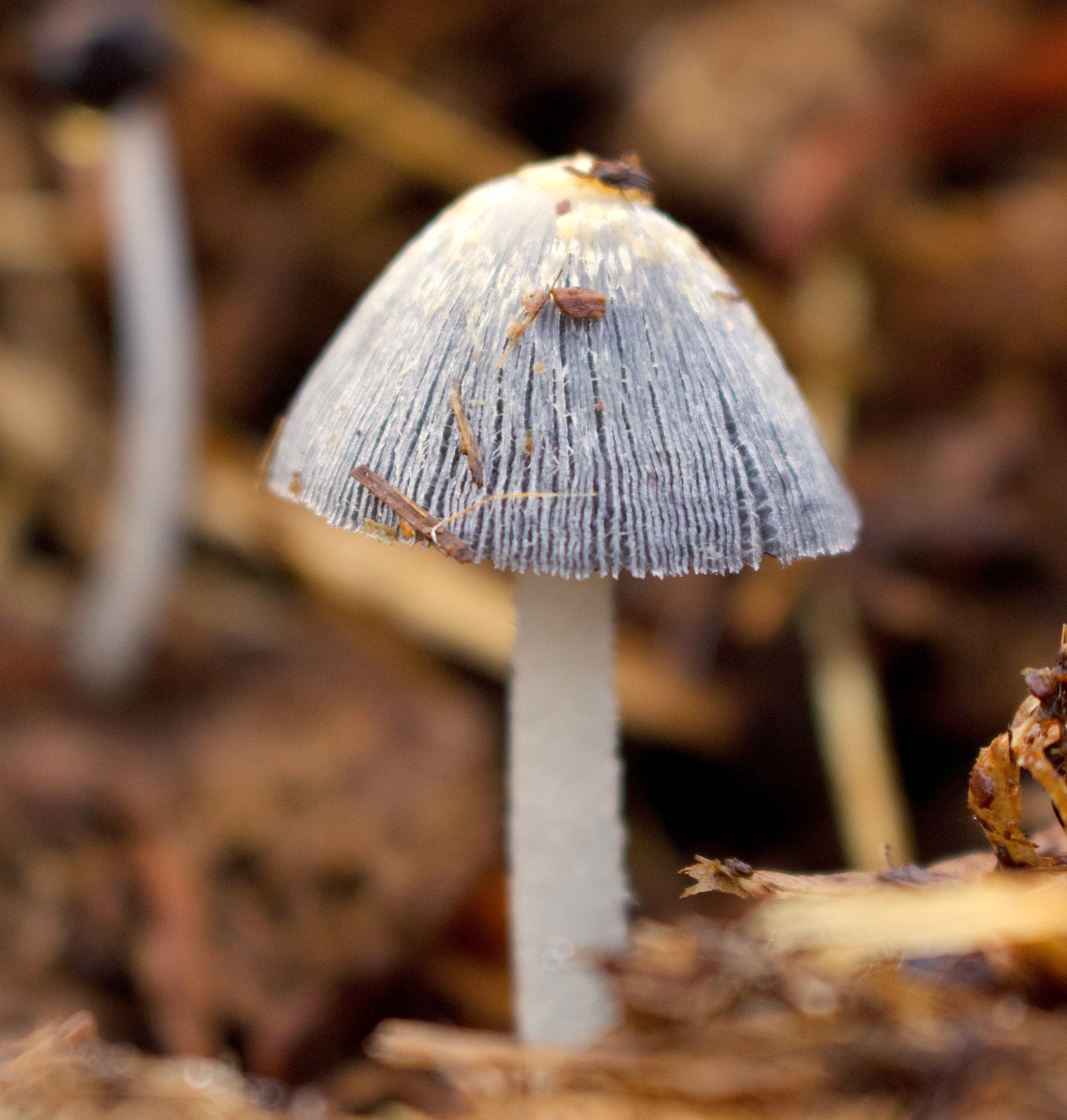
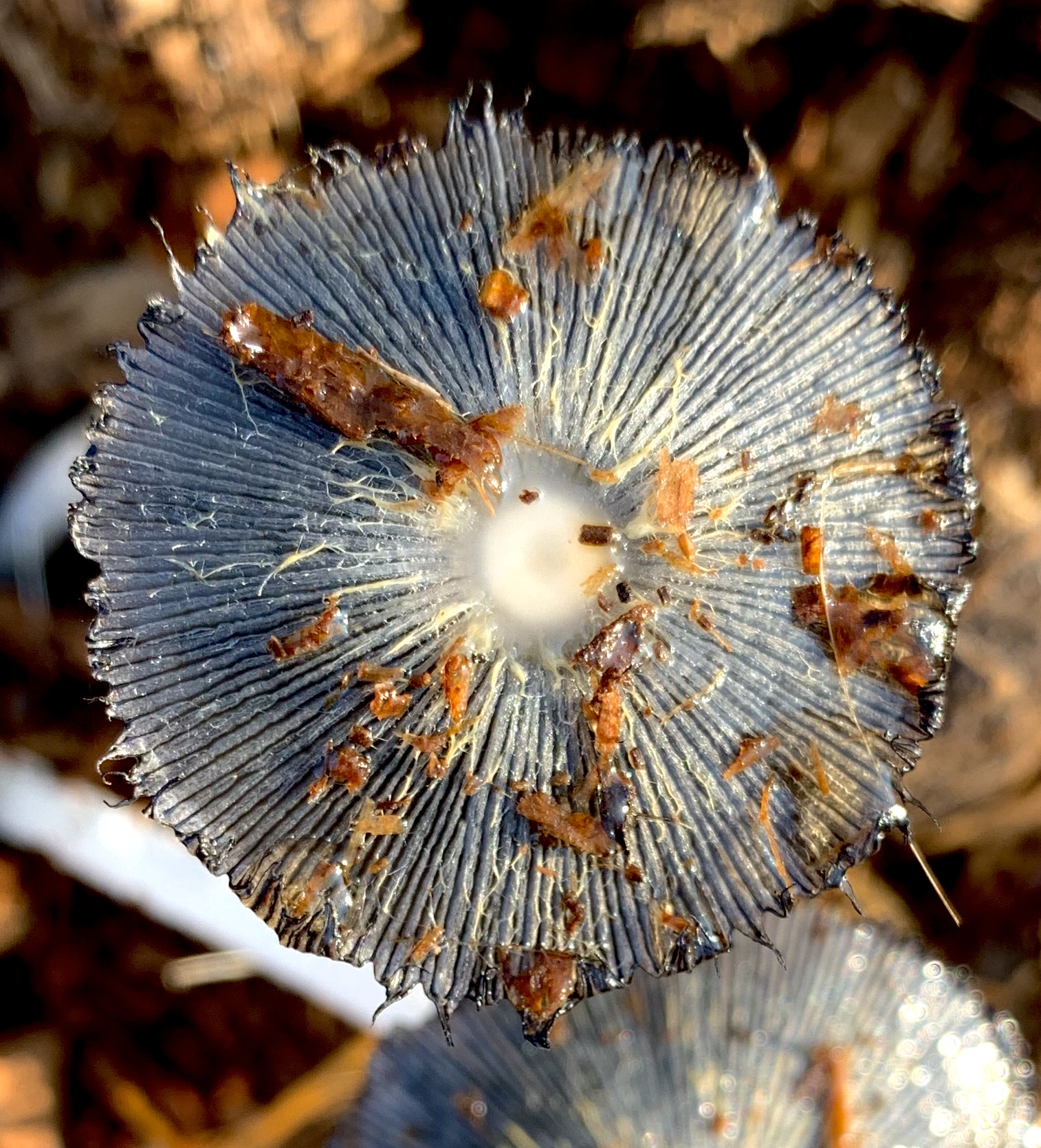
And wheeling to it, storming up the slope, I think of the angle of repose the manure pile assumes, how sparrows come to pick the redelivered grain, how inky-cap coprinus mushrooms spring up in a downpour.
I think of what drops from us and must then be moved to make way for the next and next. However much we stain the world, spatter it with our leavings, make stenches, defile the great formal oceans with what leaks down, trundling off today’s last barrow-full, I honor shit for saying: We go on. ~Maxine Kumin “The Excrement Poem”
For well over thirty years, my husband and I have spent over an hour a day shoveling manure out of numerous horse stalls and I’m a better person for it. Wintertime chores are always a character-building experience. It feels like everything, myself included, is in a process of decomposition.
Everyone should spend time simply mucking out every day; I think the world would generally be a better place. I enlist any young person who happens to visit our farm as an object lesson in better living through composting the stinky stuff in our lives.
Wheeled to a mountainous pile in our barnyard, our daily collection of manure happily composts year round, becoming rich fertilizer in a matter of months through a crucible-like heating process of organic chemistry, bacteria and earthworms. Nothing mankind has achieved quite matches the drama of useless and basically disgusting stuff transforming into the essential elements needed for productive growth and survival. This is a metaphor I can <ahem> happily muck about in.
I’m in awe, every day, at being part of this process — in many ways a far more tangible improvement to the state of the world than anything else I manage to accomplish every day. The horses, major contributors that they are, act underwhelmed by my enthusiasm. I guess some miracles are relative, depending on one’s perspective, but if the horses understood that the grass they contentedly eat in the pasture, or the hay they munch on during the winter months, was grown thanks to their carefully recycled waste products, they might be more impressed.
Their nonchalance about the daily mucking routine is understandable. If they are outside, they probably don’t notice their beds are clean when they return to the stalls at night. If they are inside during the heavy rain and frozen winter days, they feel duty-bound to be in our faces as we move about their stall, toting a pitchfork and pushing a wheelbarrow. I’m a source of constant amusement as they nose my jacket pockets for treats that I never carry, as they beg for scratches on their unreachable itchy spots, and as they attempt to overturn an almost full load, just to see balls of manure roll to all corners of the stall like breaking a rack of billiard balls in a game of pool.
Wally, our former stallion, now gelded, discovered a way to make my life easier rather than complicating it. He hauled a rubber tub into his stall from his paddock, by tossing it into the air with his teeth and throwing it, and it finally settled against one wall. Then he began to consistently pile his manure, with precise aim, right in the tub. I didn’t ask him to do this. It had never occurred to me. I hadn’t even thought it was possible for a horse to house train himself. But there it is, proof that some horses prefer neat and tidy rather than the whirlwind eggbeater approach to manure distribution. After a day of his manure pile plopping, it is actually too heavy for me to pick up and dump into the wheelbarrow all in one tub load, but it takes 1/4 of the time to clean his stall than the others, and he spares all this bedding.
What a guy. He provides me unending inspiration in how to keep my own personal muck concentrated rather than spattering it about, contaminating the rest of the world.
Now, once I teach him to put the seat back down when he’s done, he’s welcome to move into the house.
One-Time
Monthly
Yearly
Make a one-time or recurring donation to support daily Barnstorming posts
























 Barnstorming