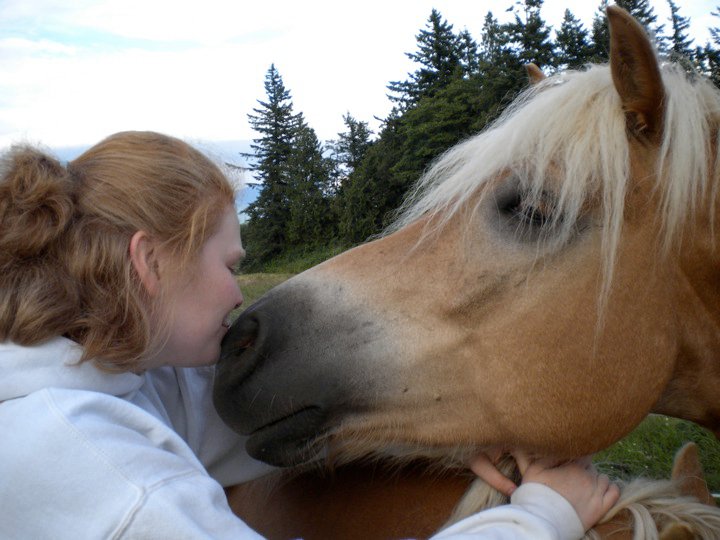
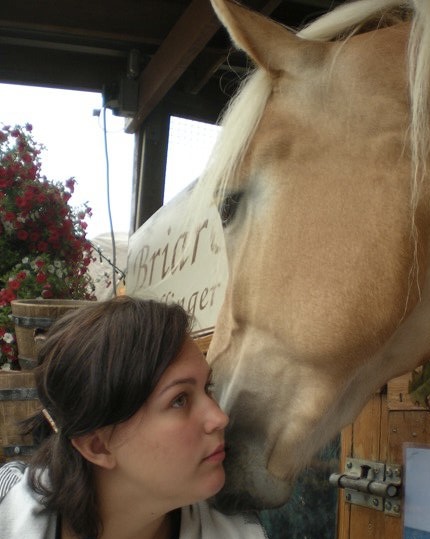
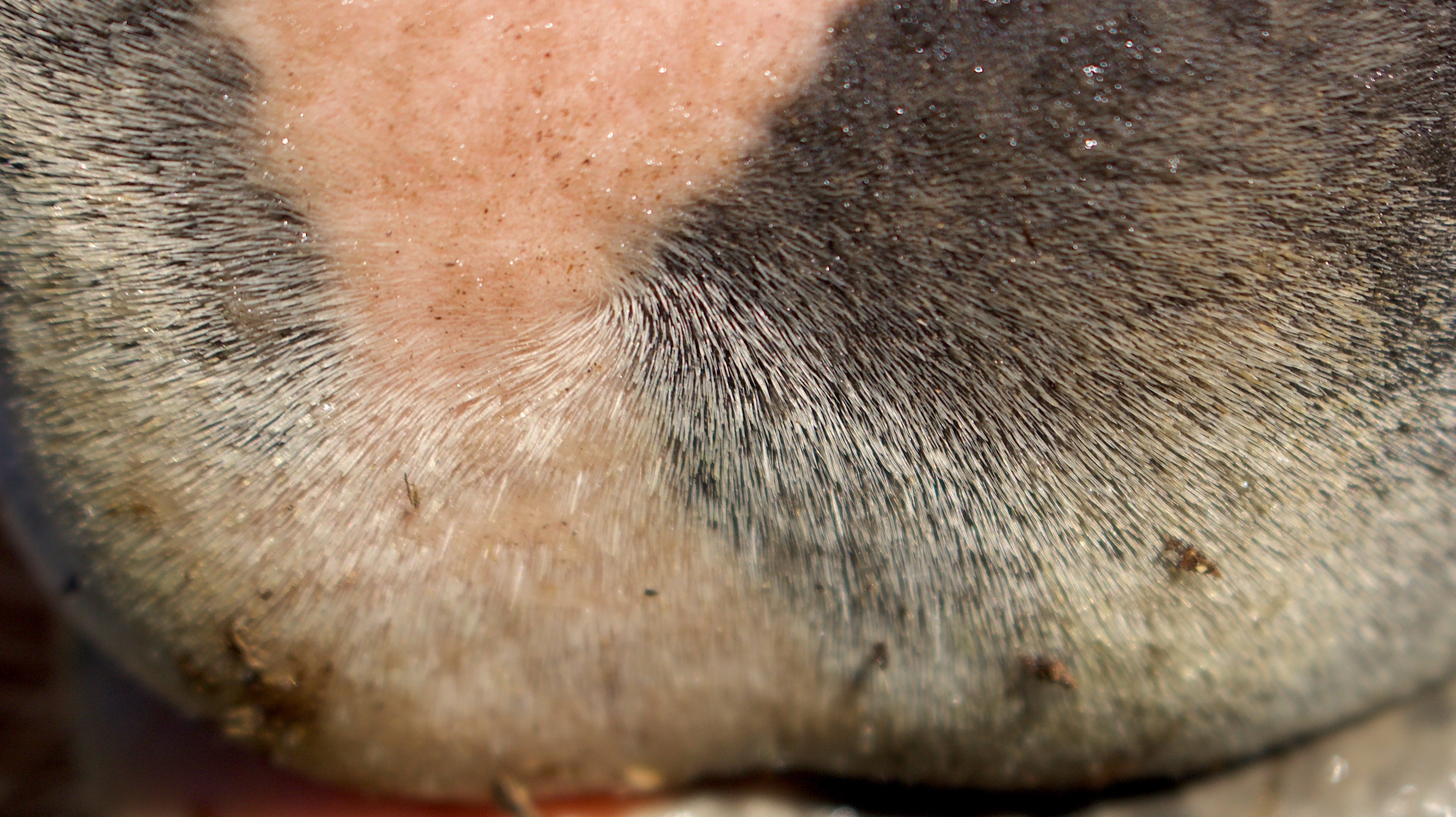
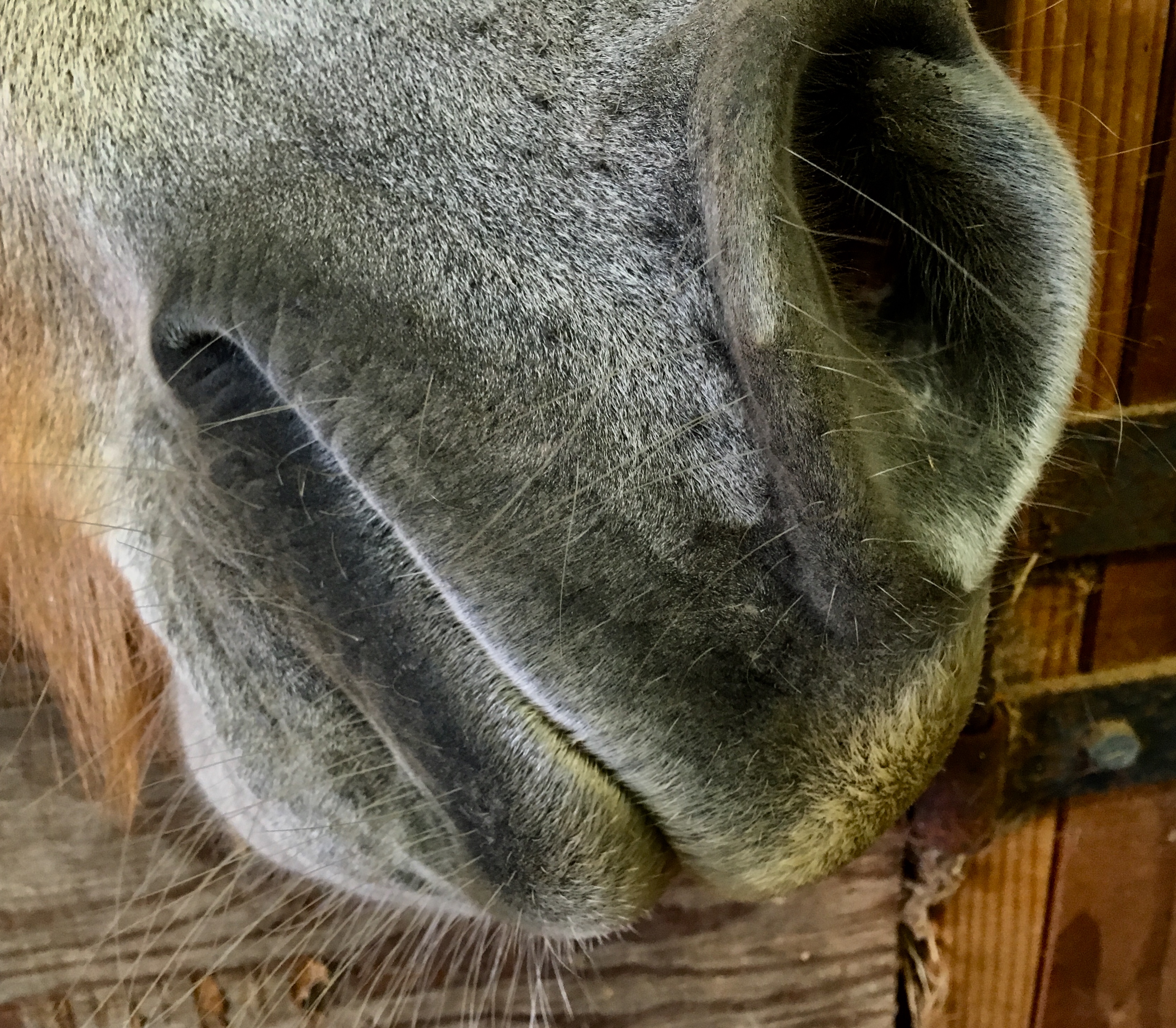
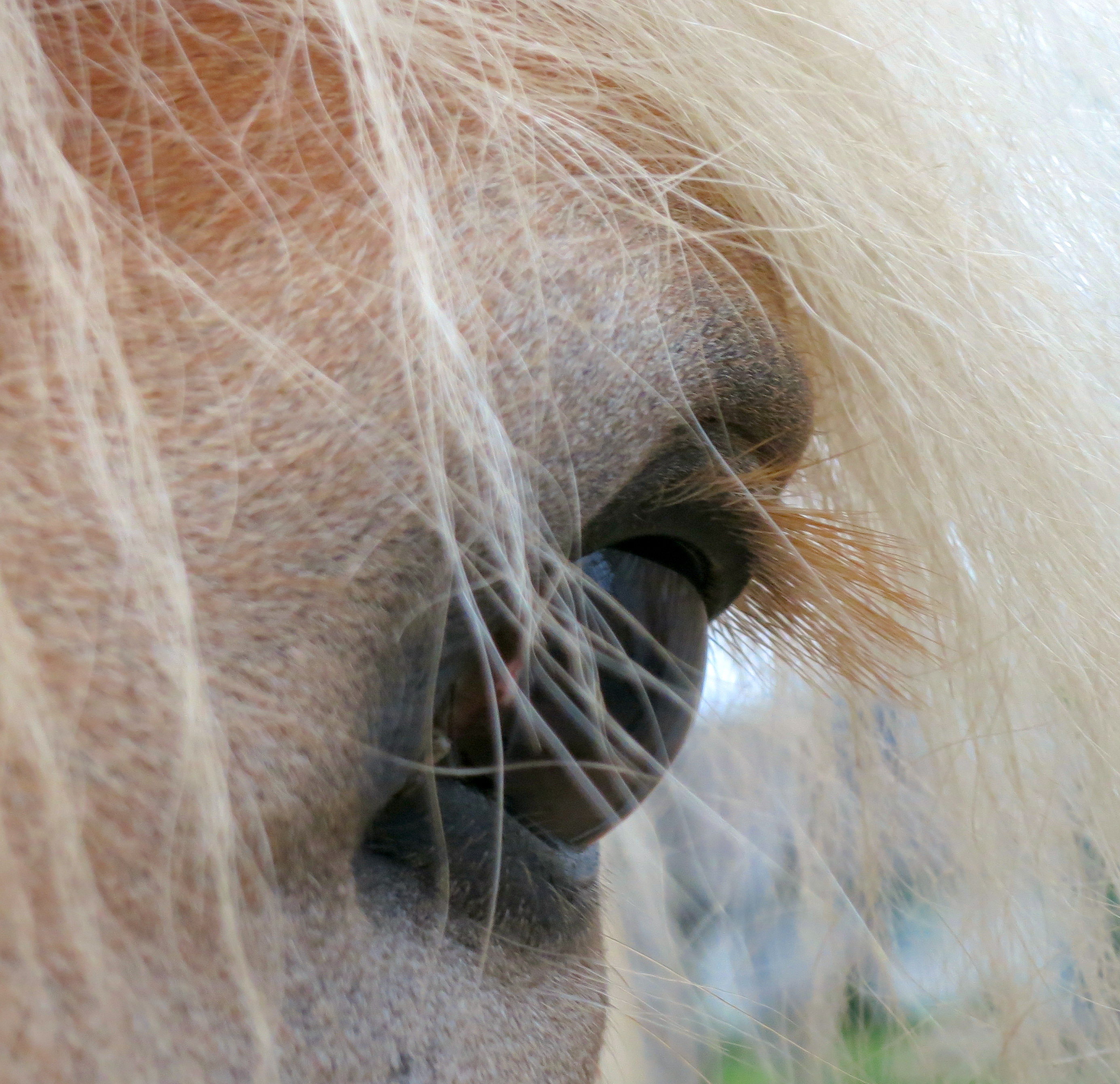
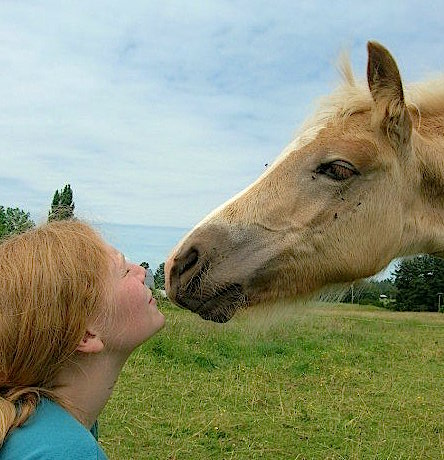
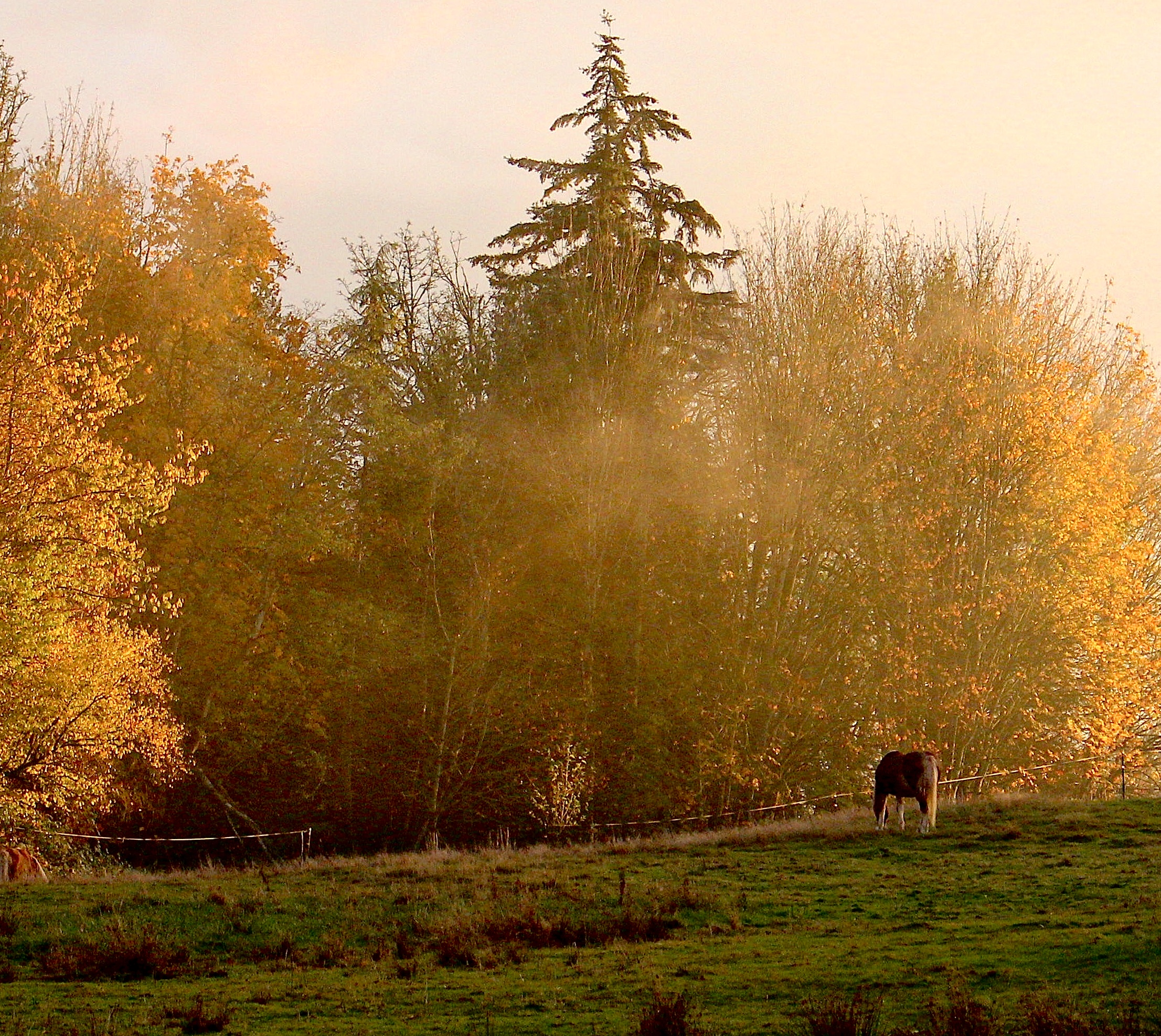
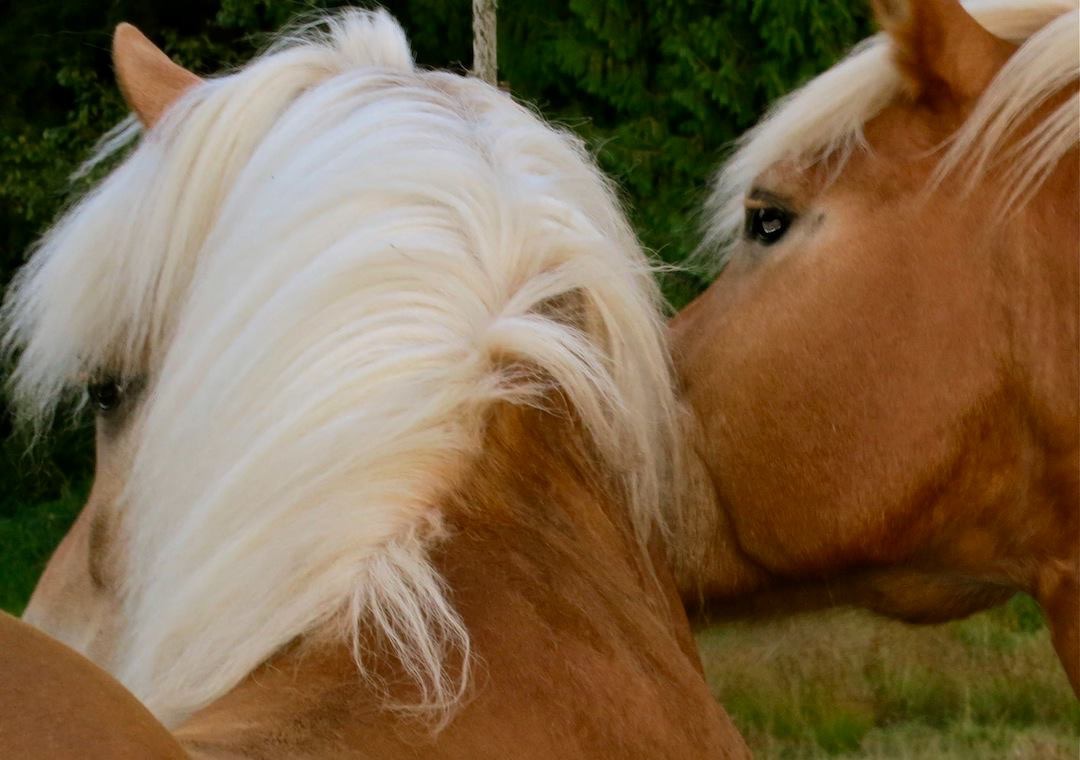
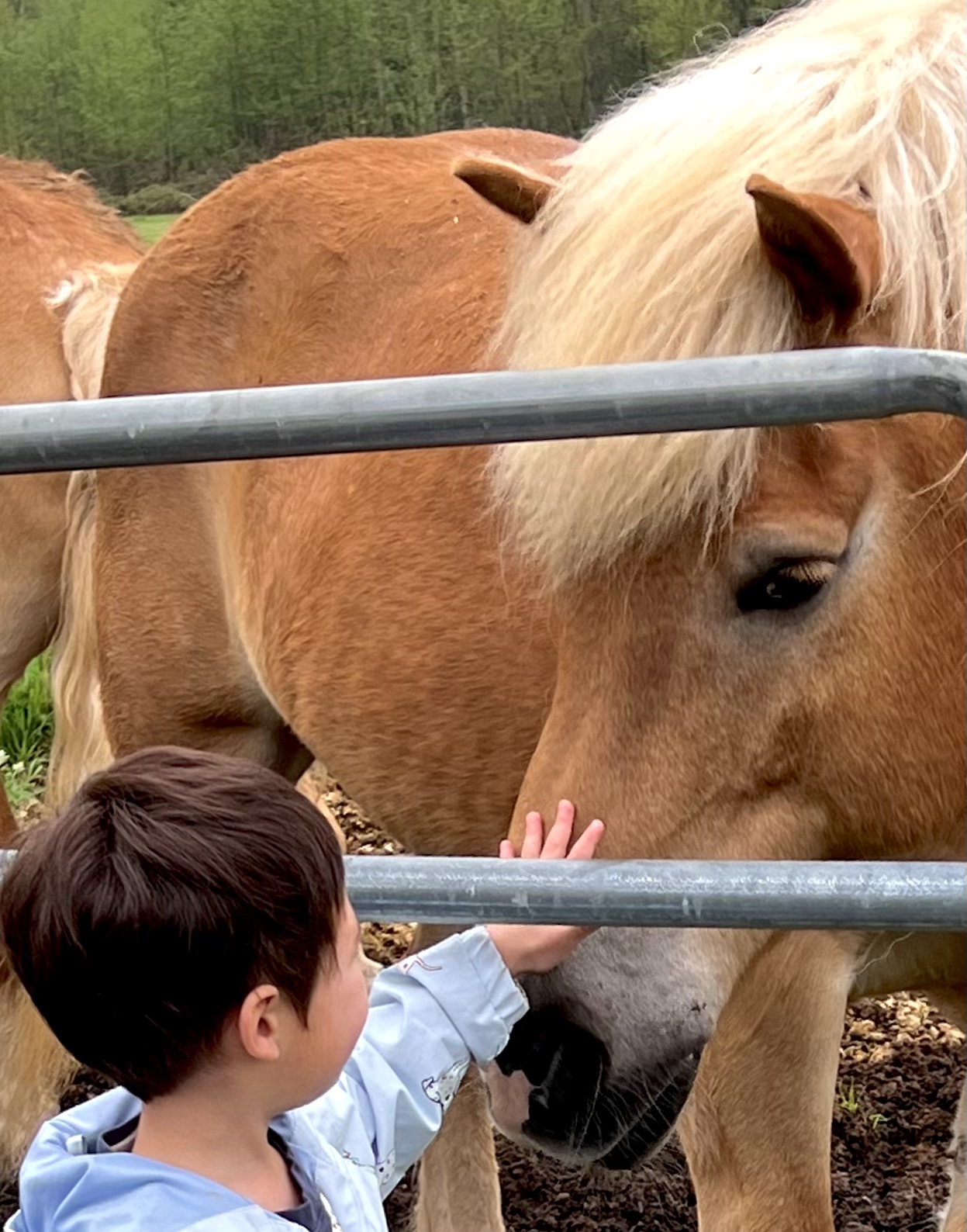
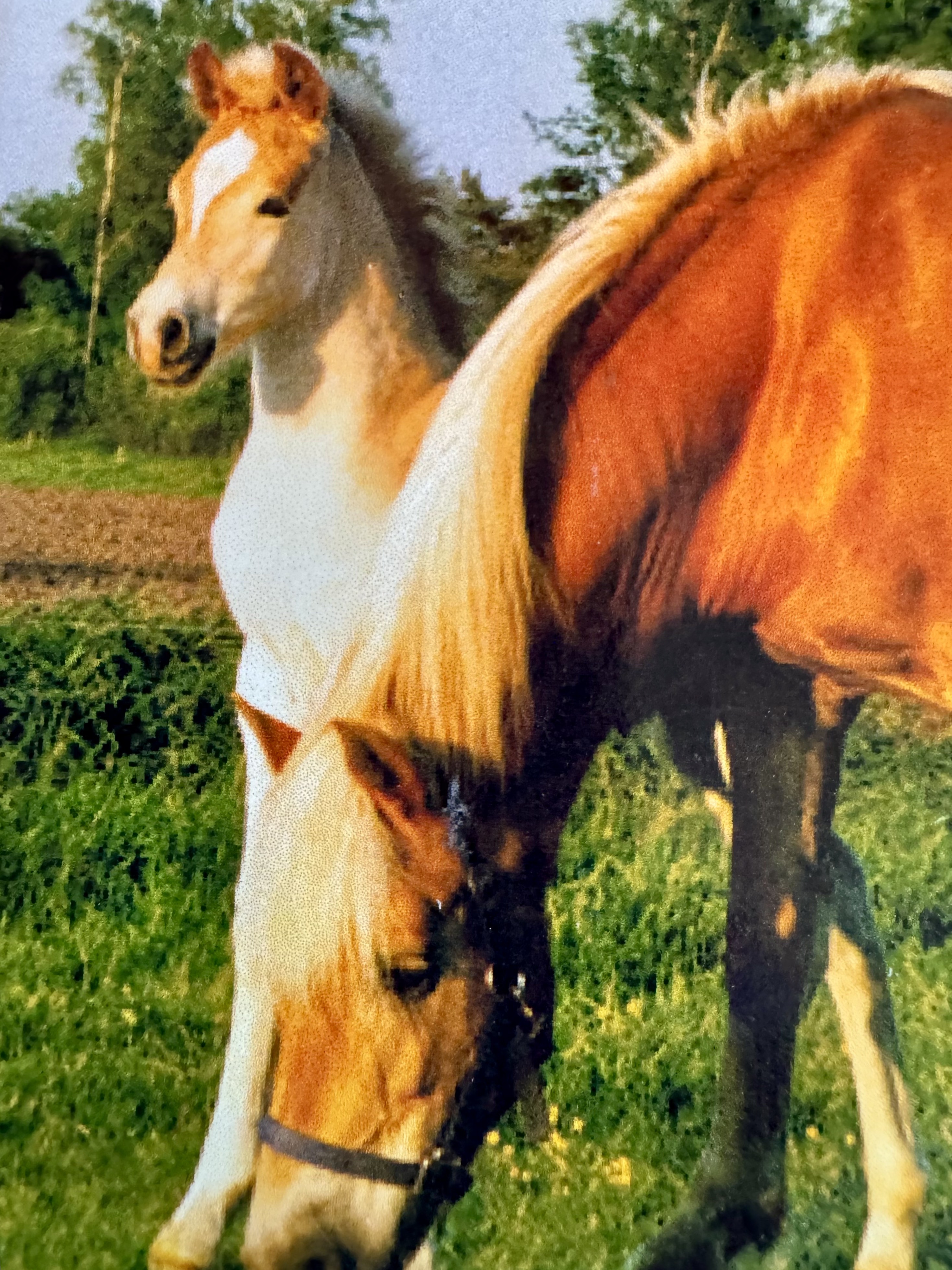
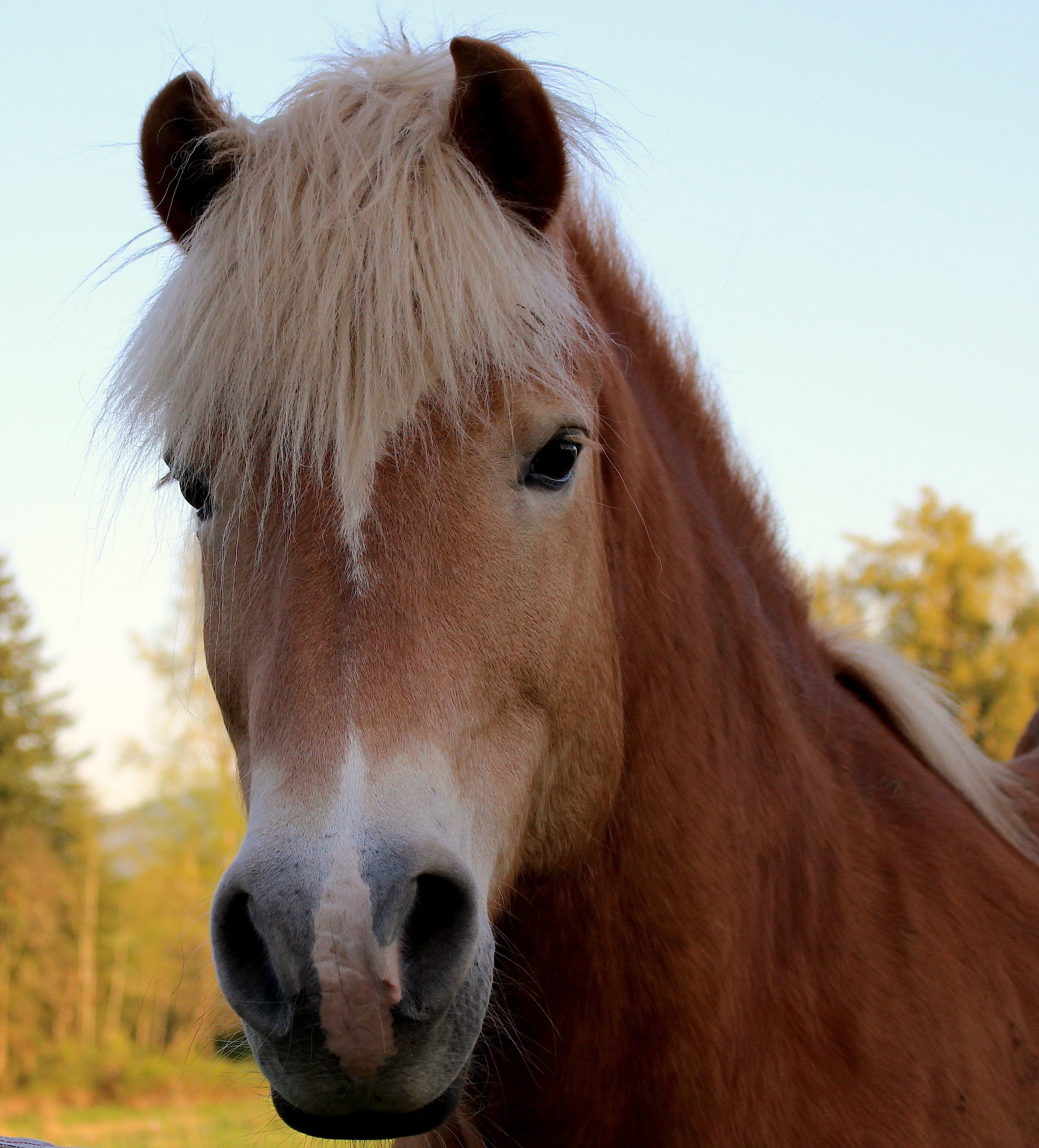
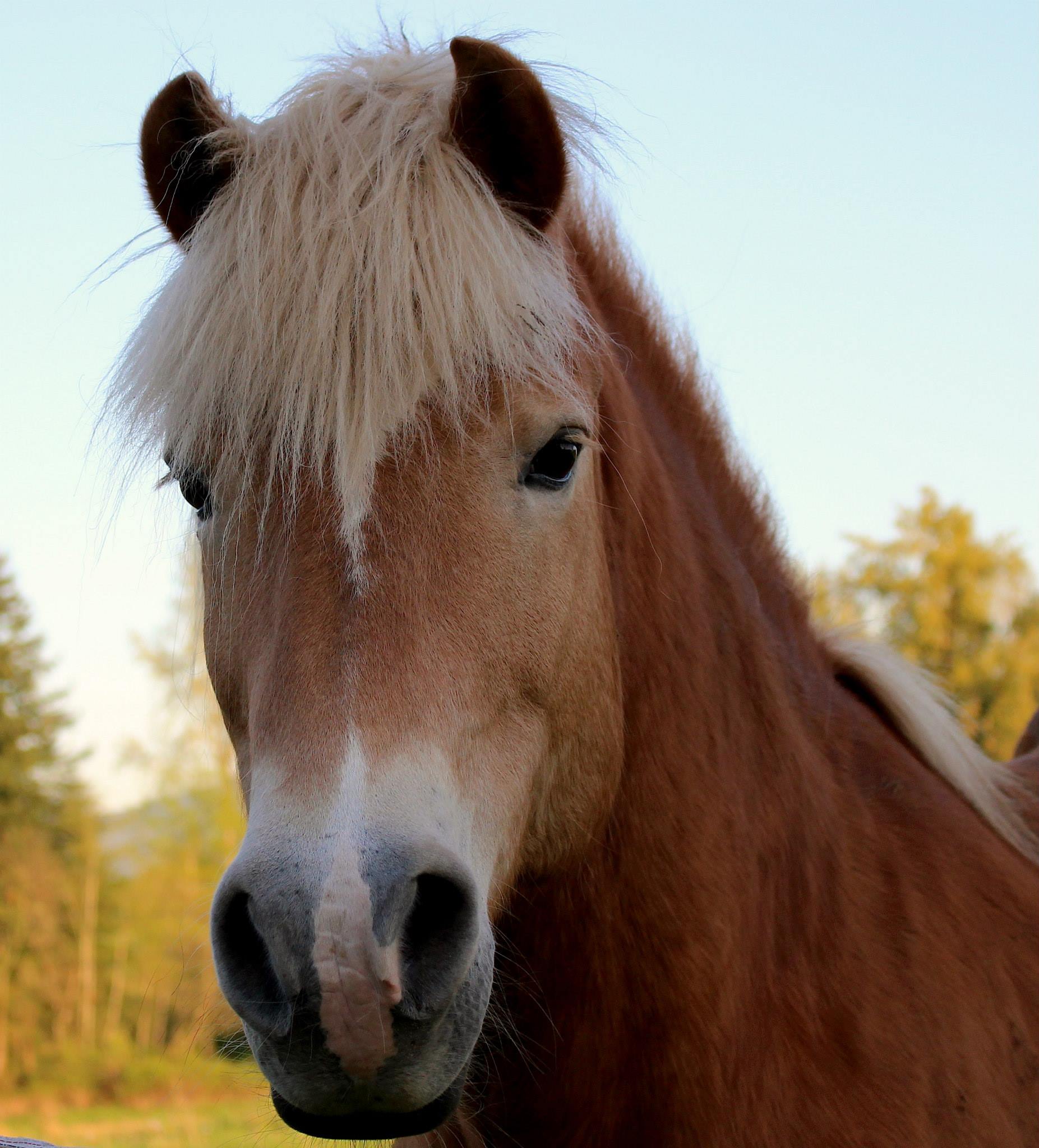
…and there was once, oh wonderful, a new horse in the pasture, a tall, slim being–a neighbor was keeping her there– and she put her face against my face, put her muzzle, her nostrils, soft as violets, against my mouth and my nose, and breathed me, to see who I was, a long quiet minute–minutes– then she stamped her feet and whisked tail and danced deliciously into the grass away, and came back. She was saying, so plainly, that I was good, or good enough. ~Mary Oliver from “The Poet Goes to Indiana”
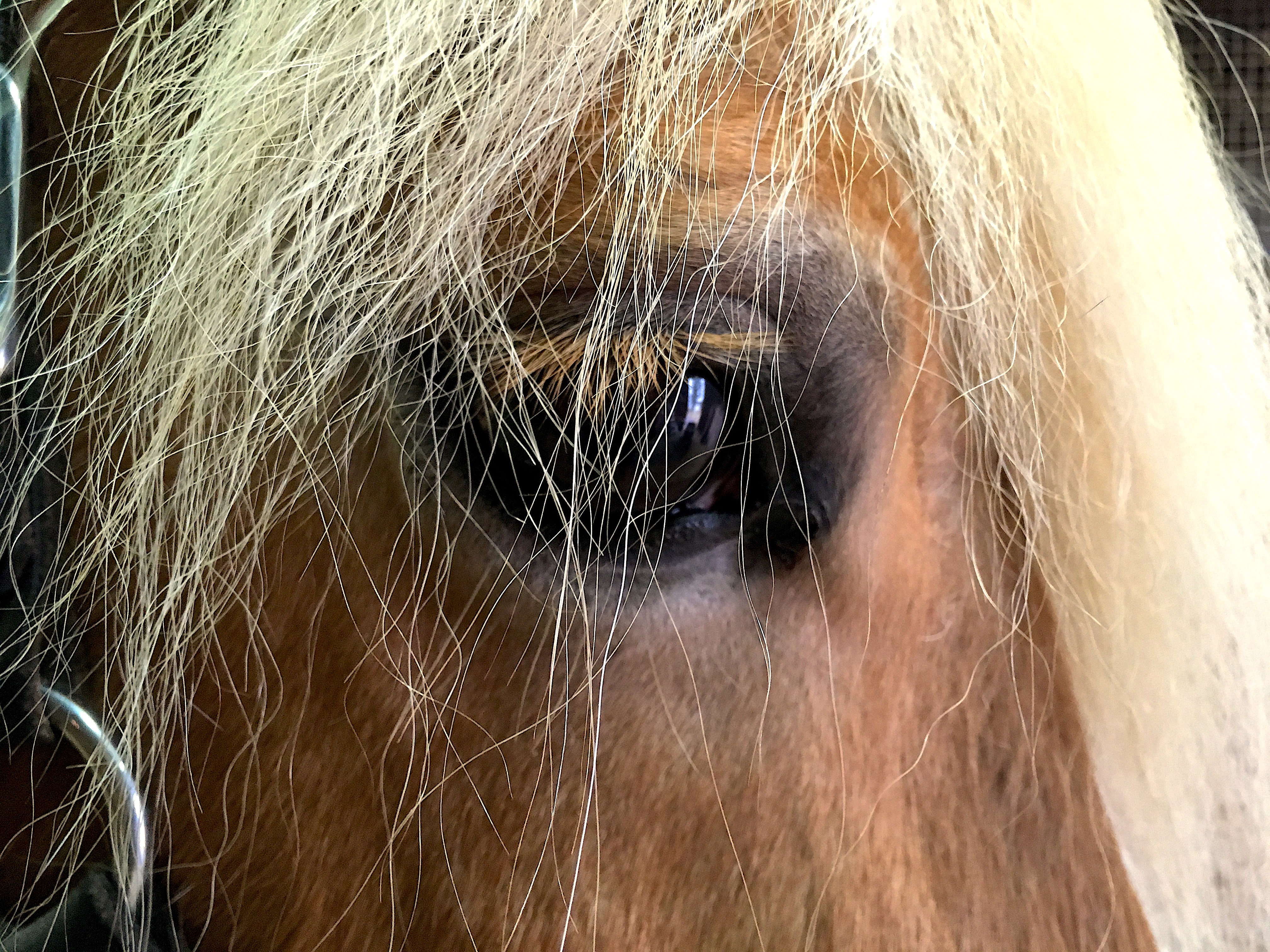
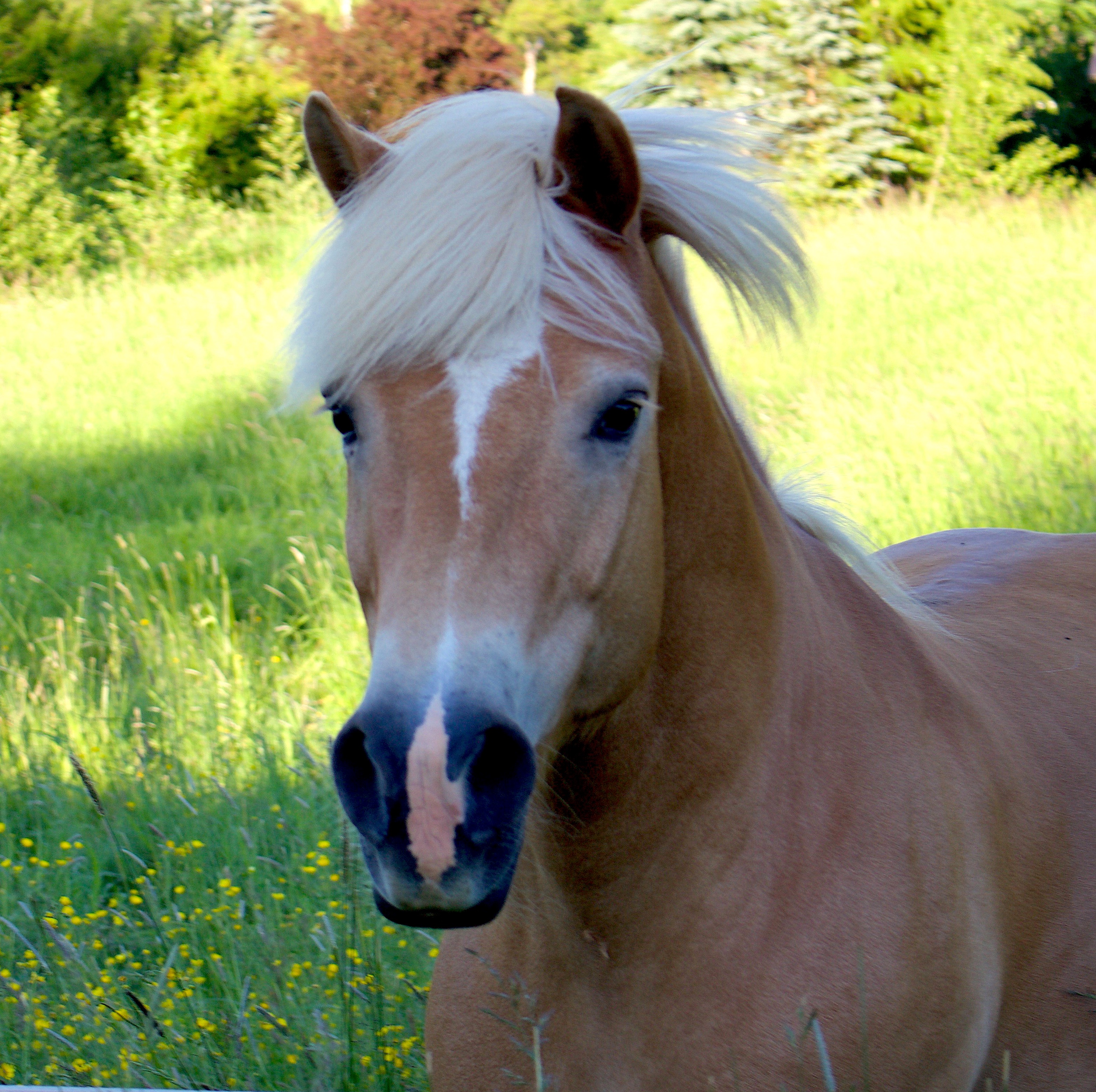
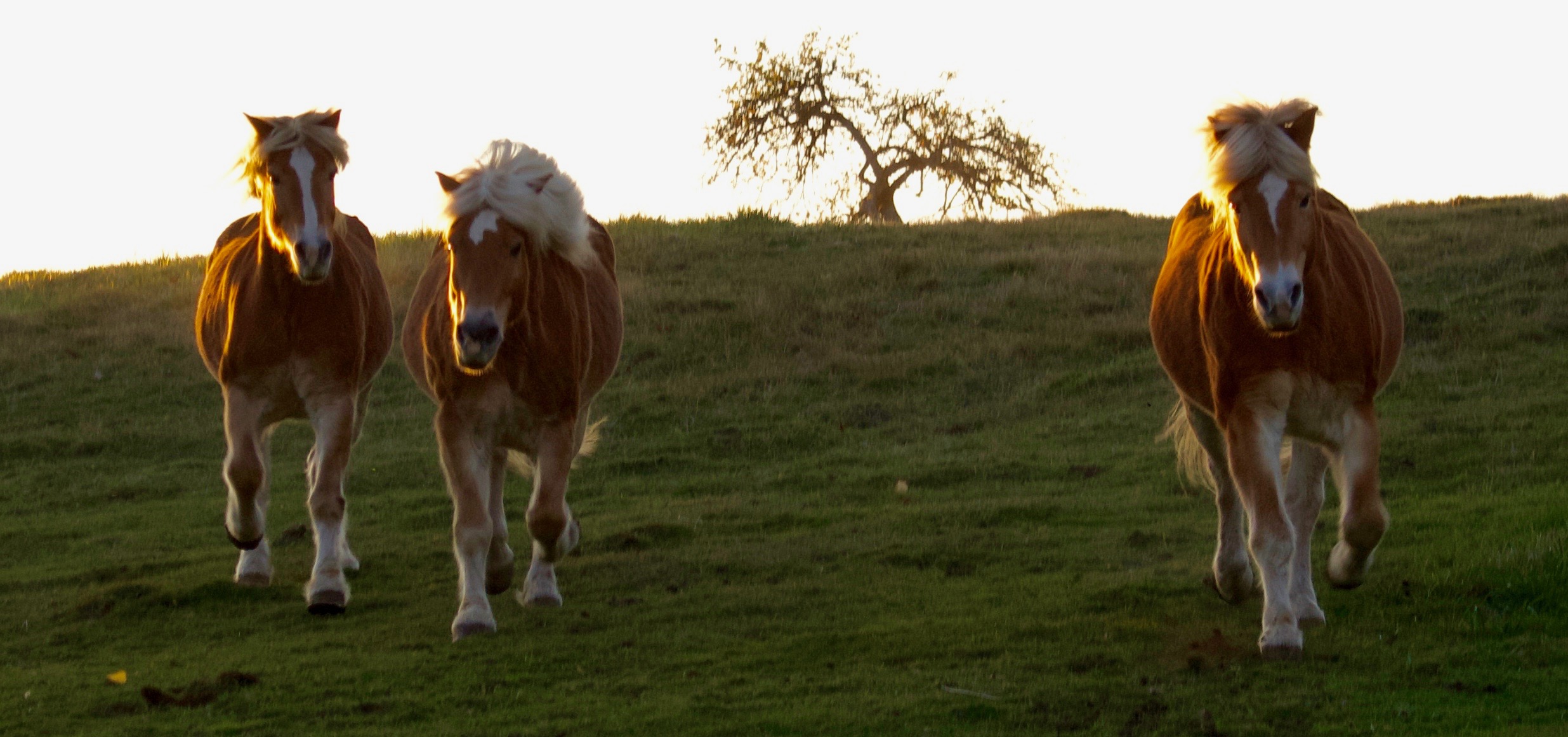
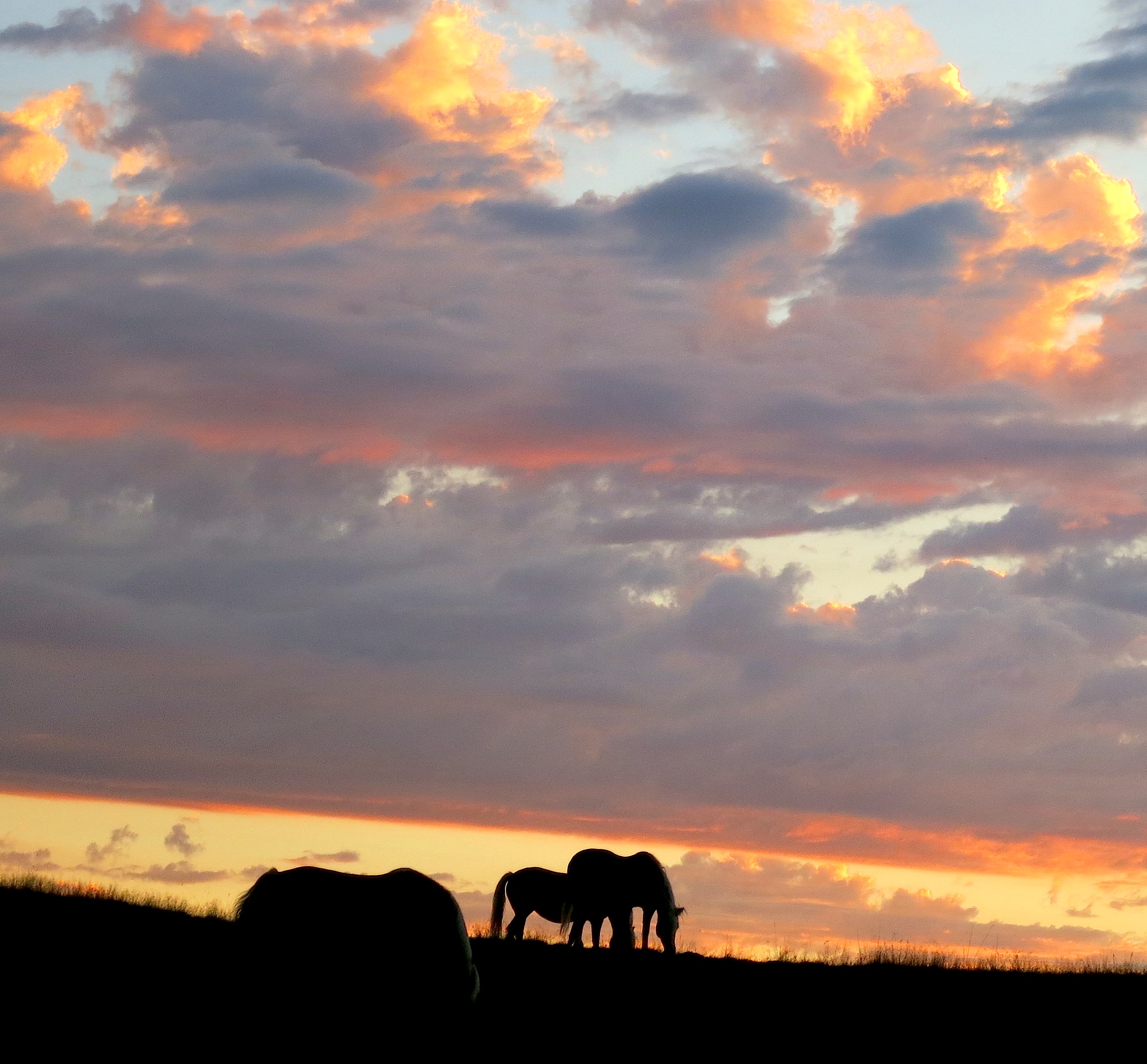
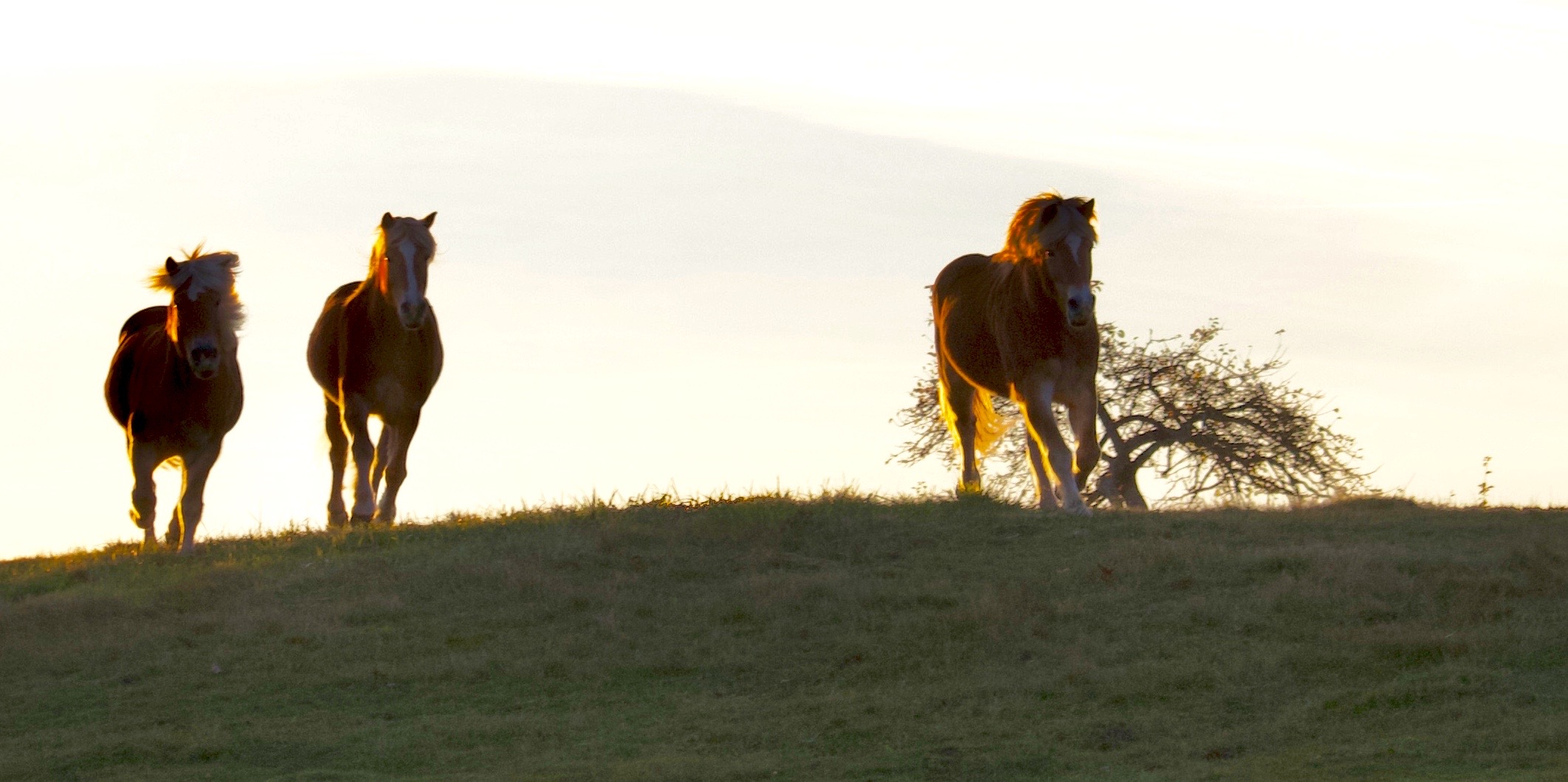
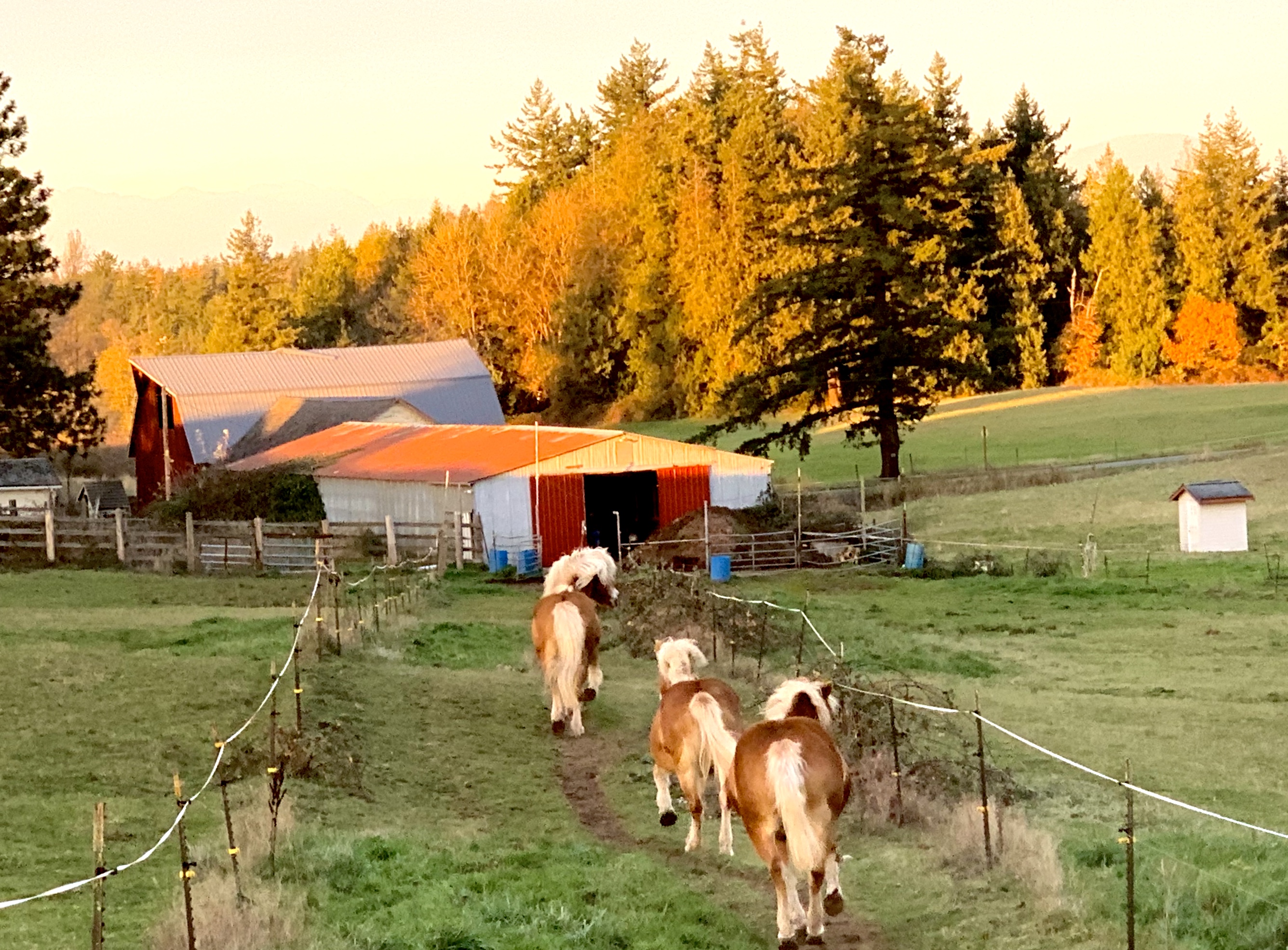
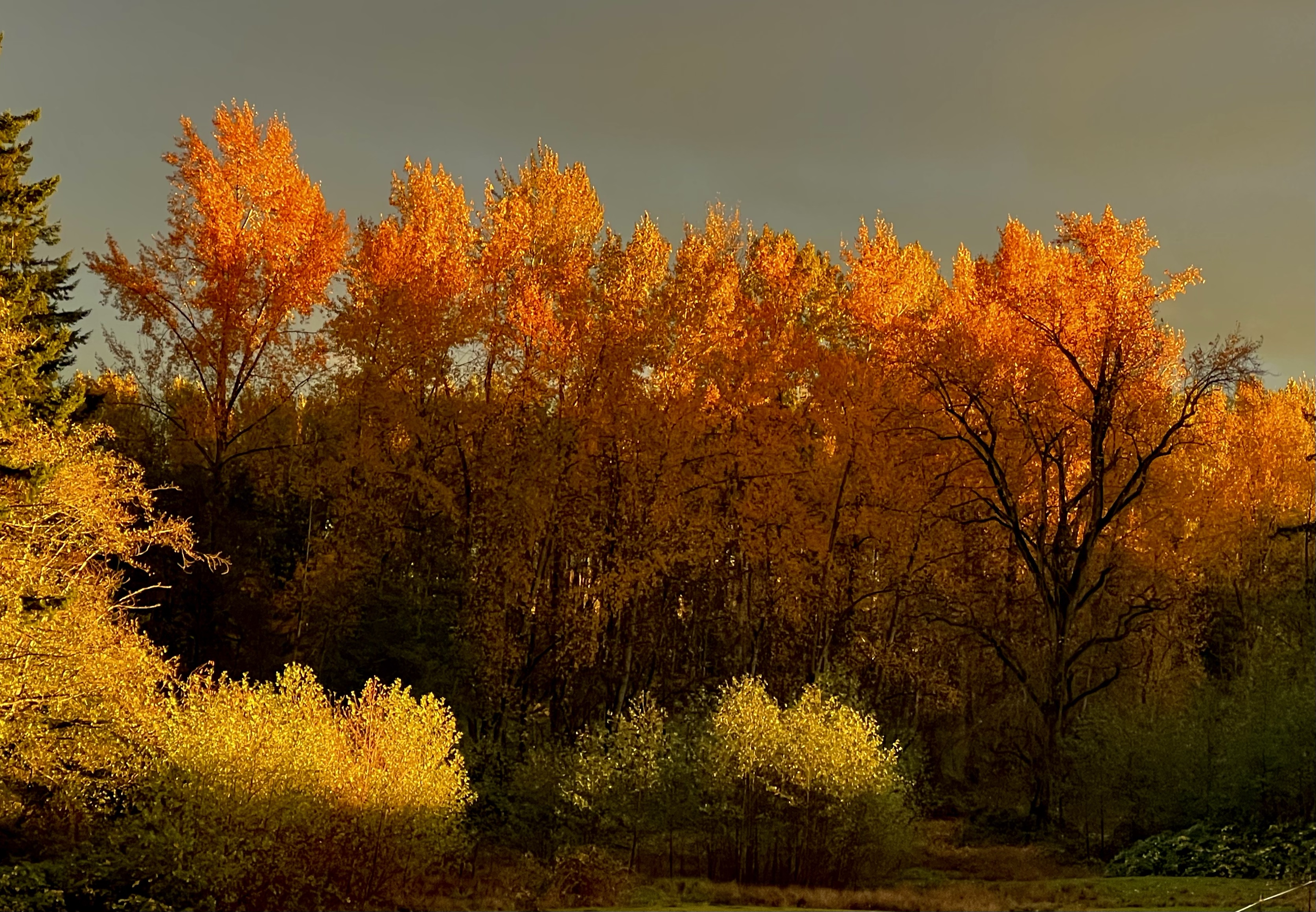
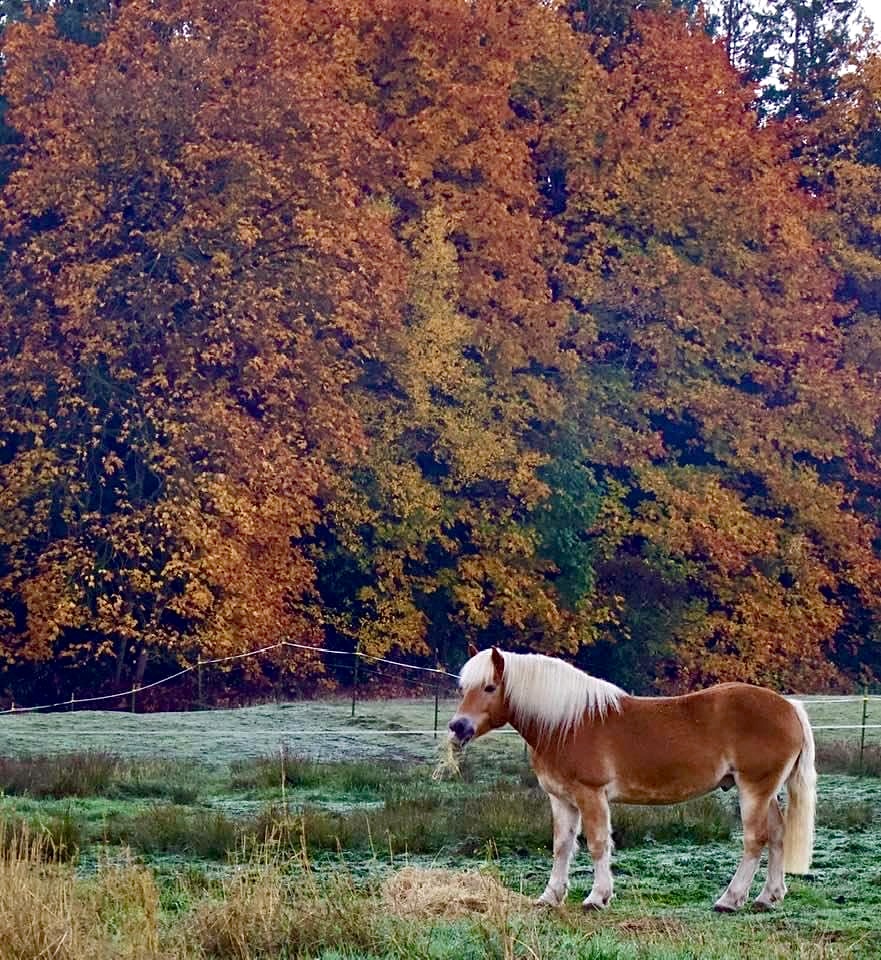
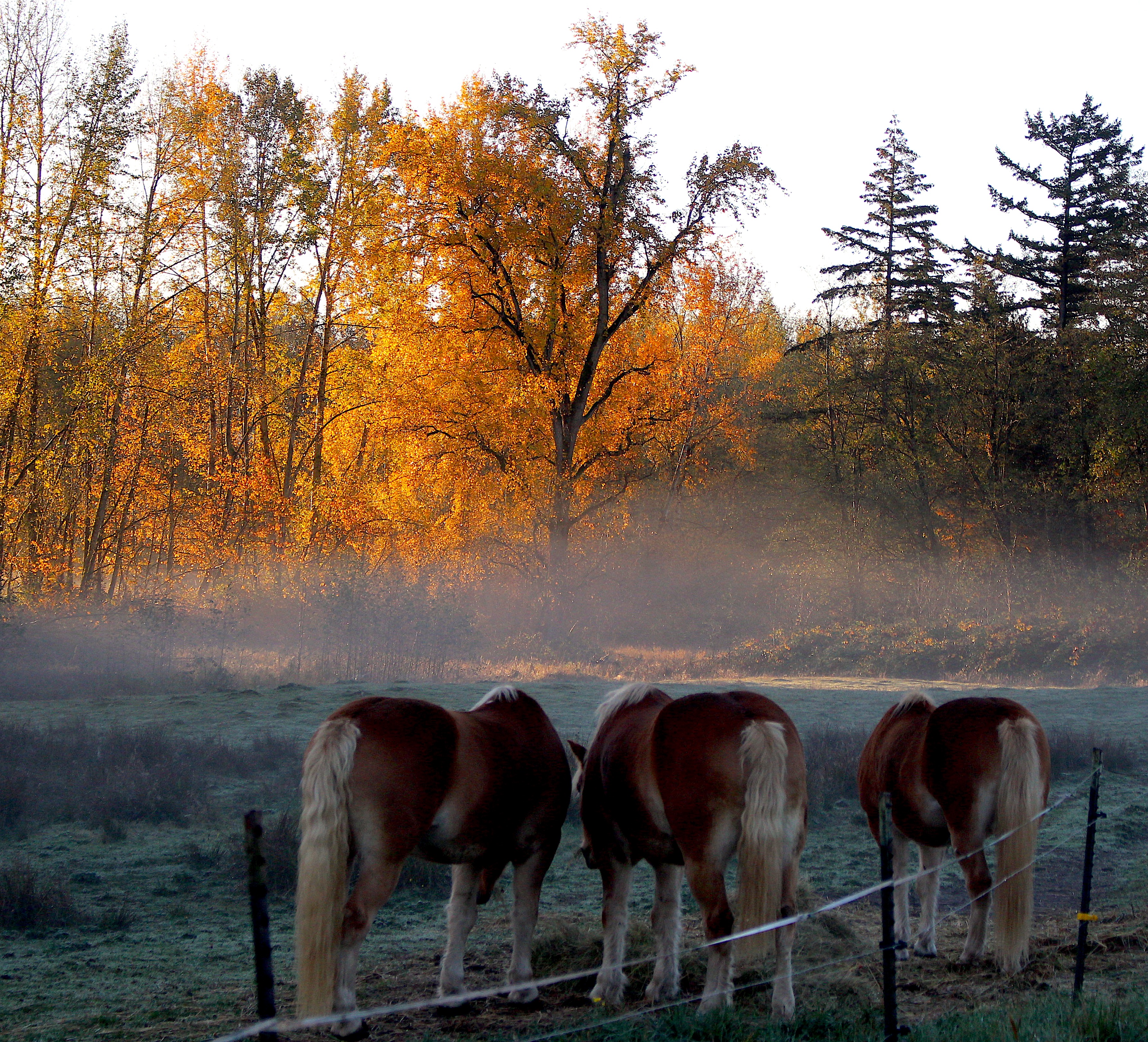
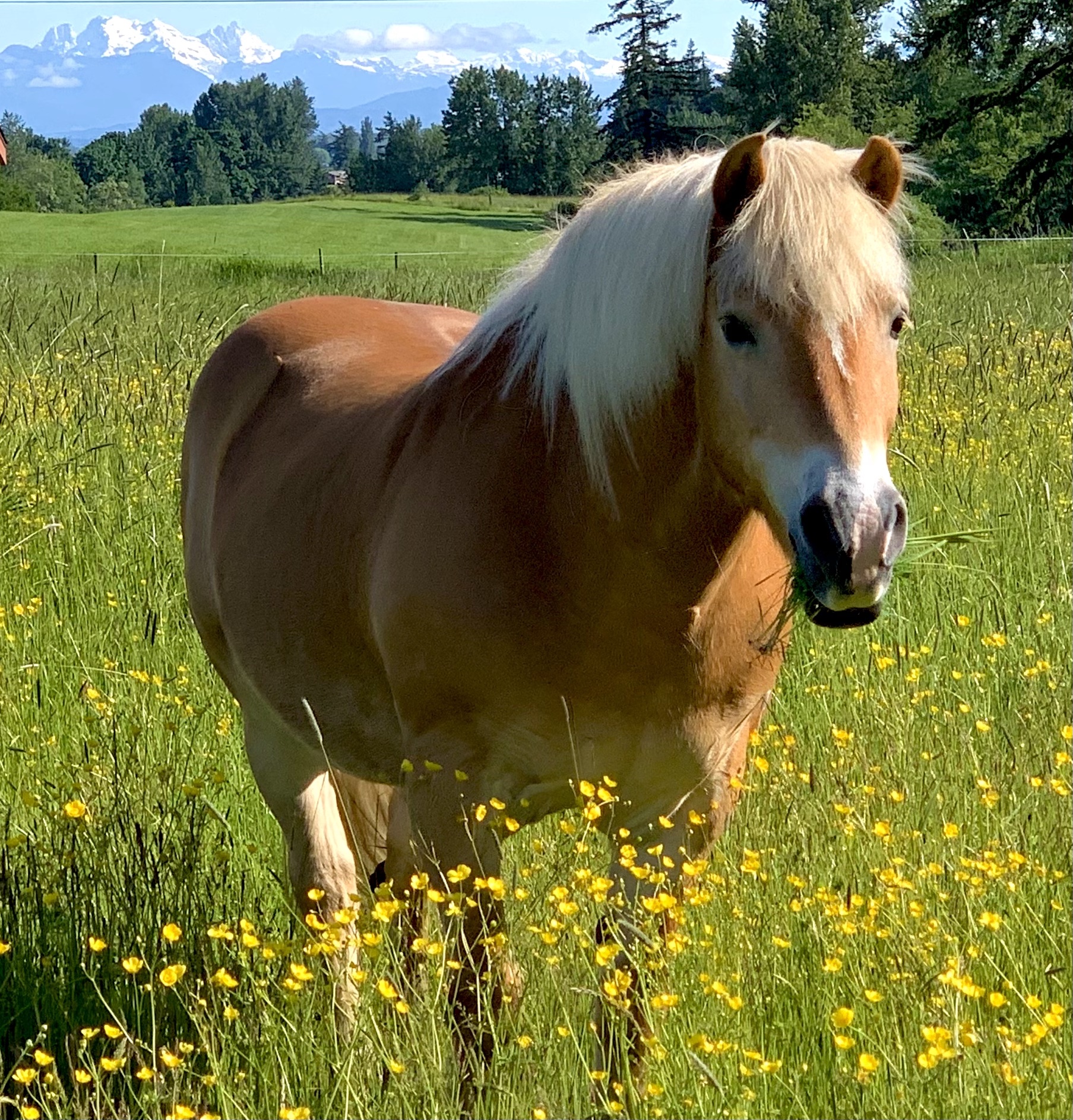
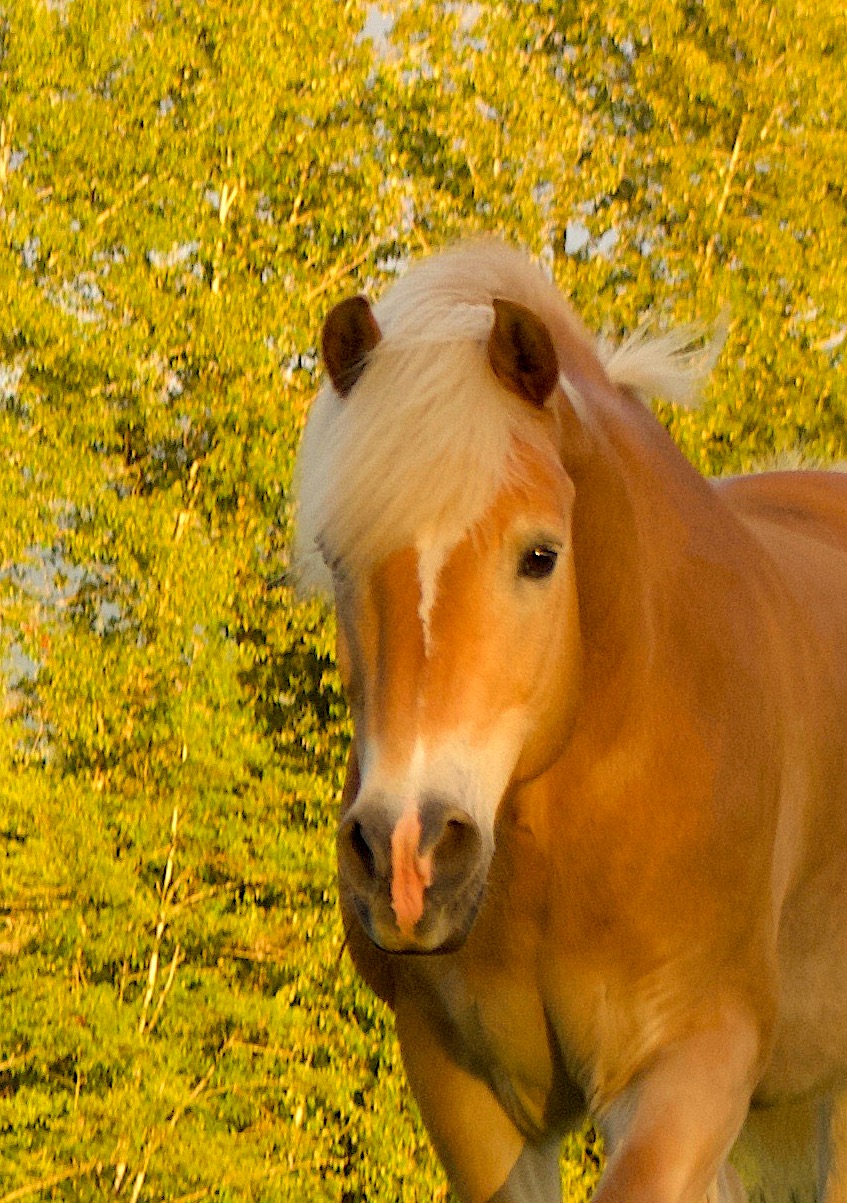
photo by Lea Gibson
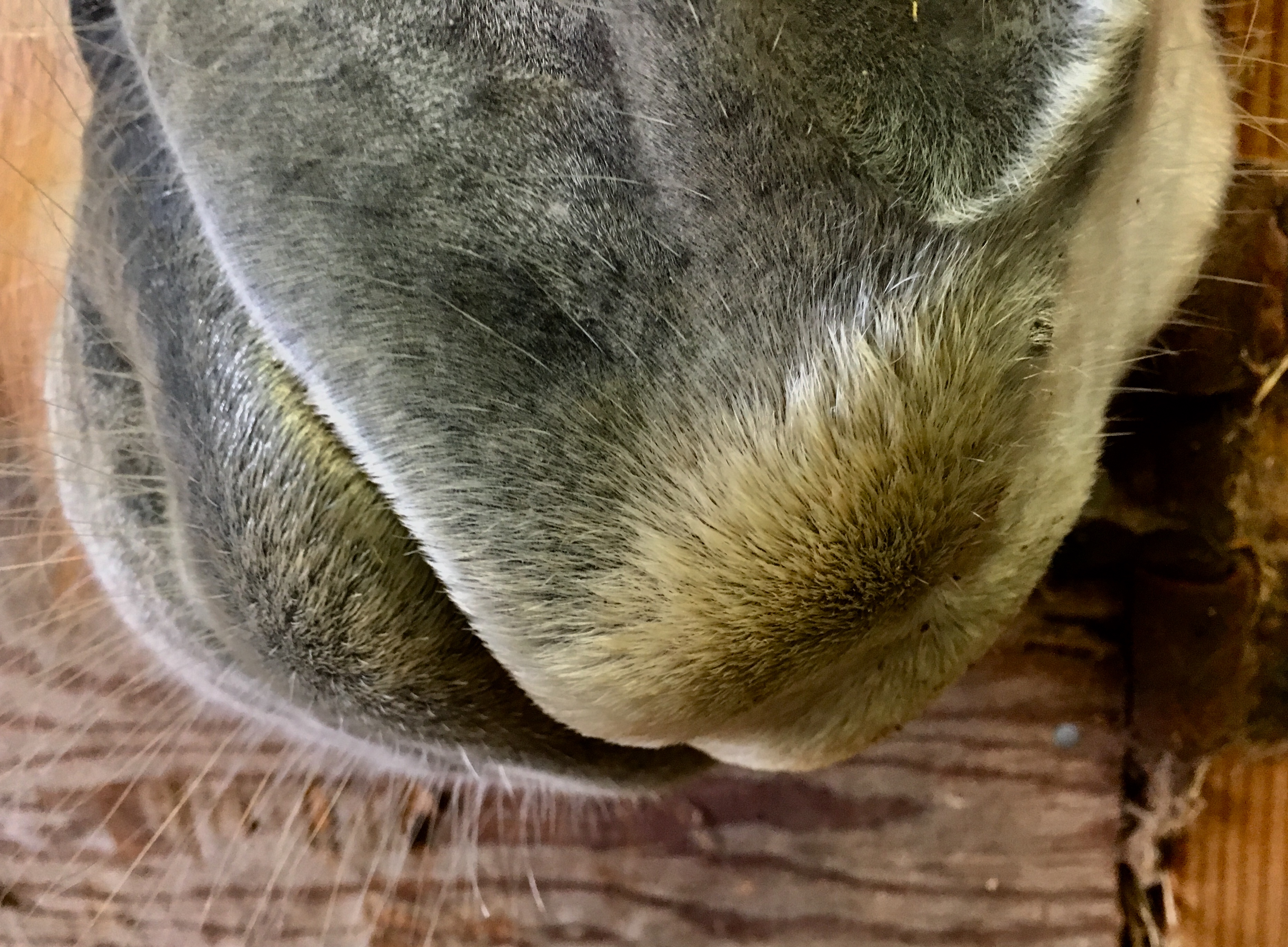
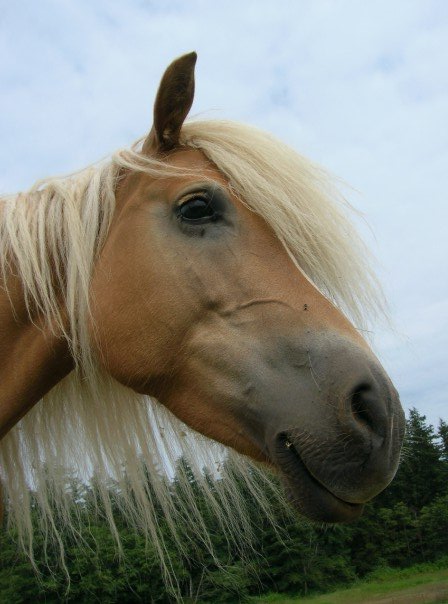
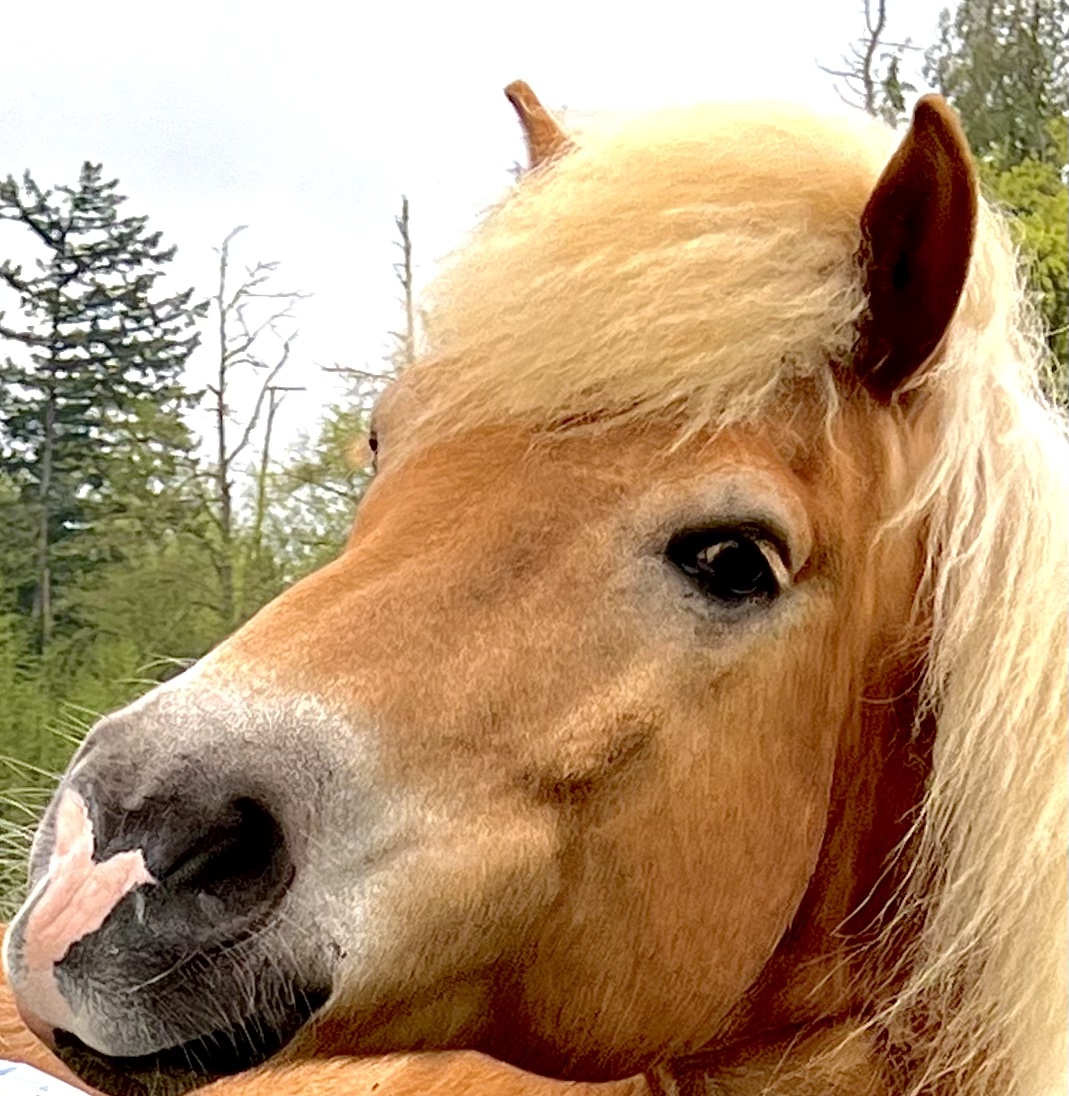
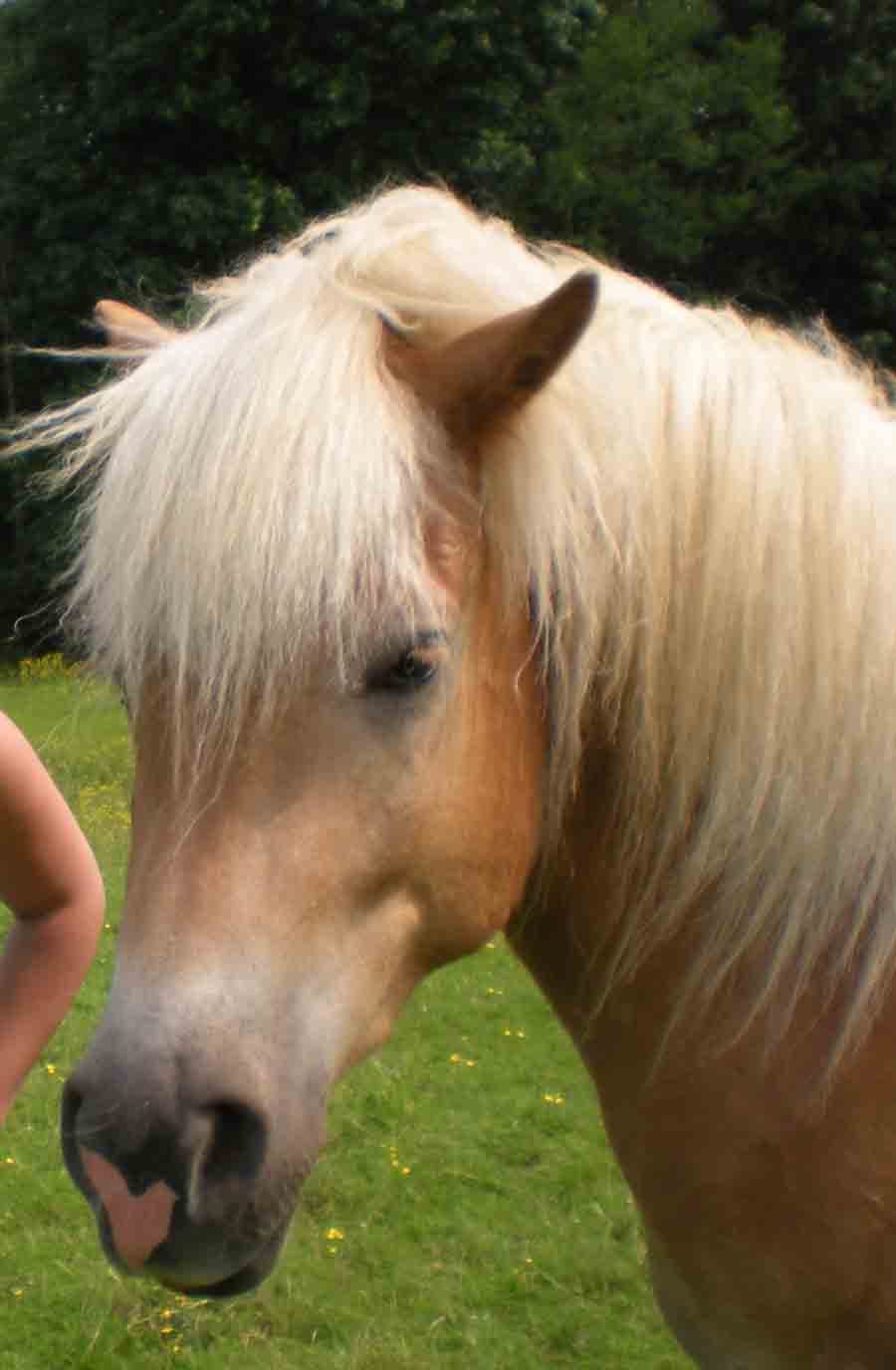
photo by Emily Vander Haak
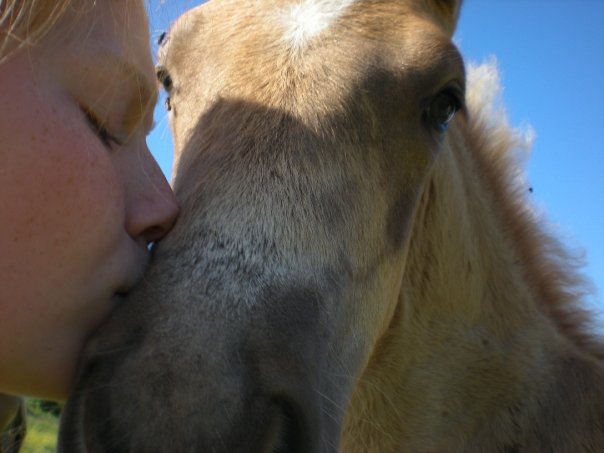
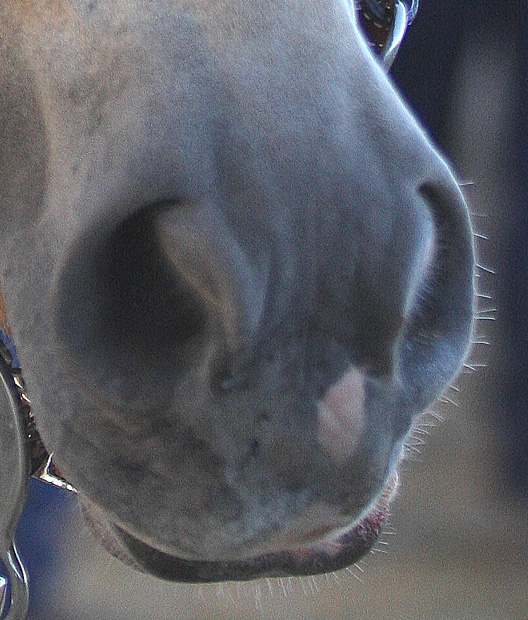
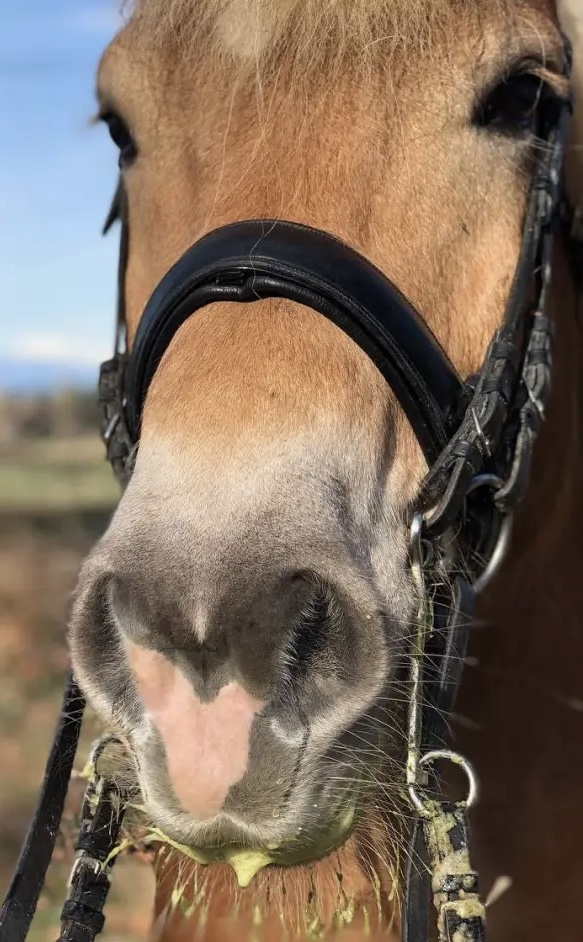
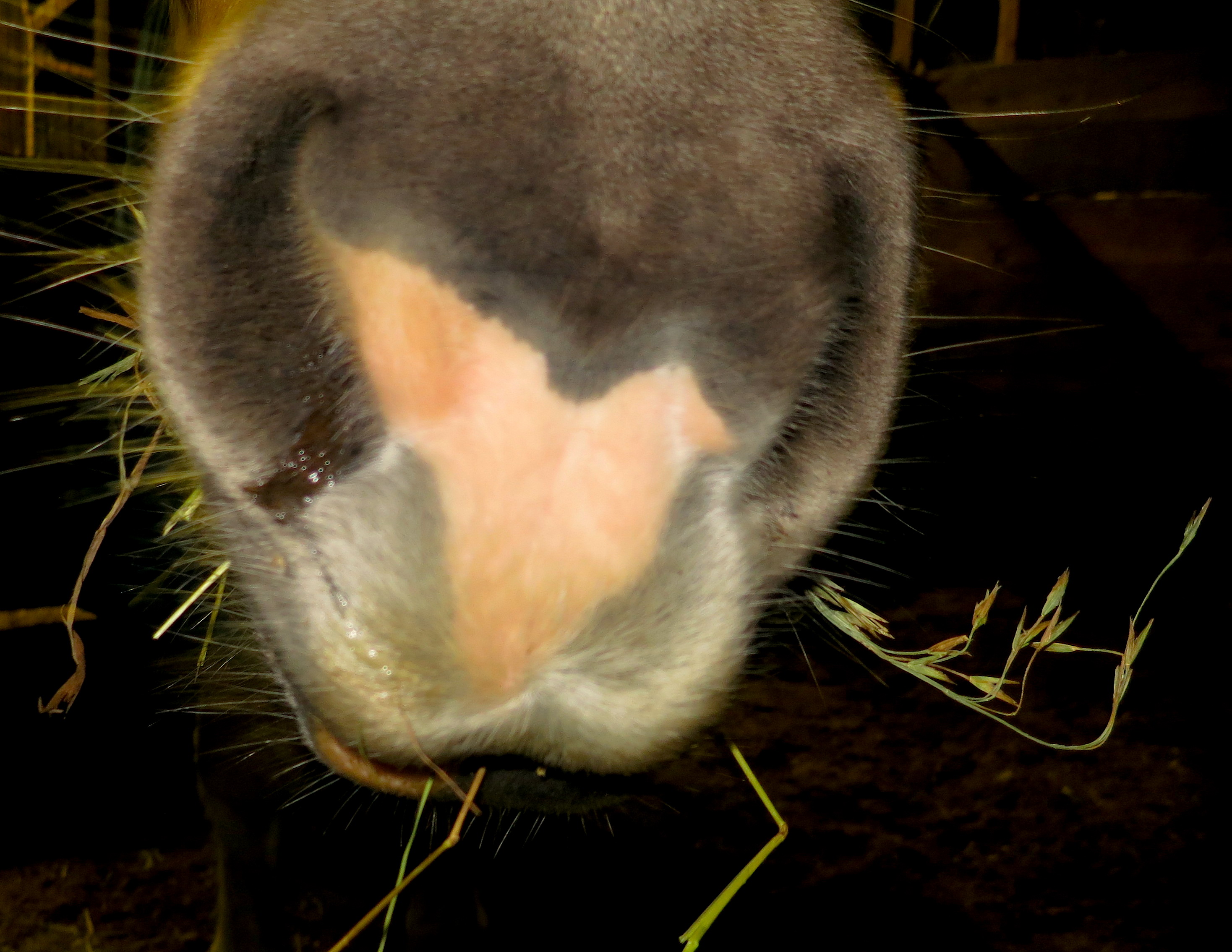
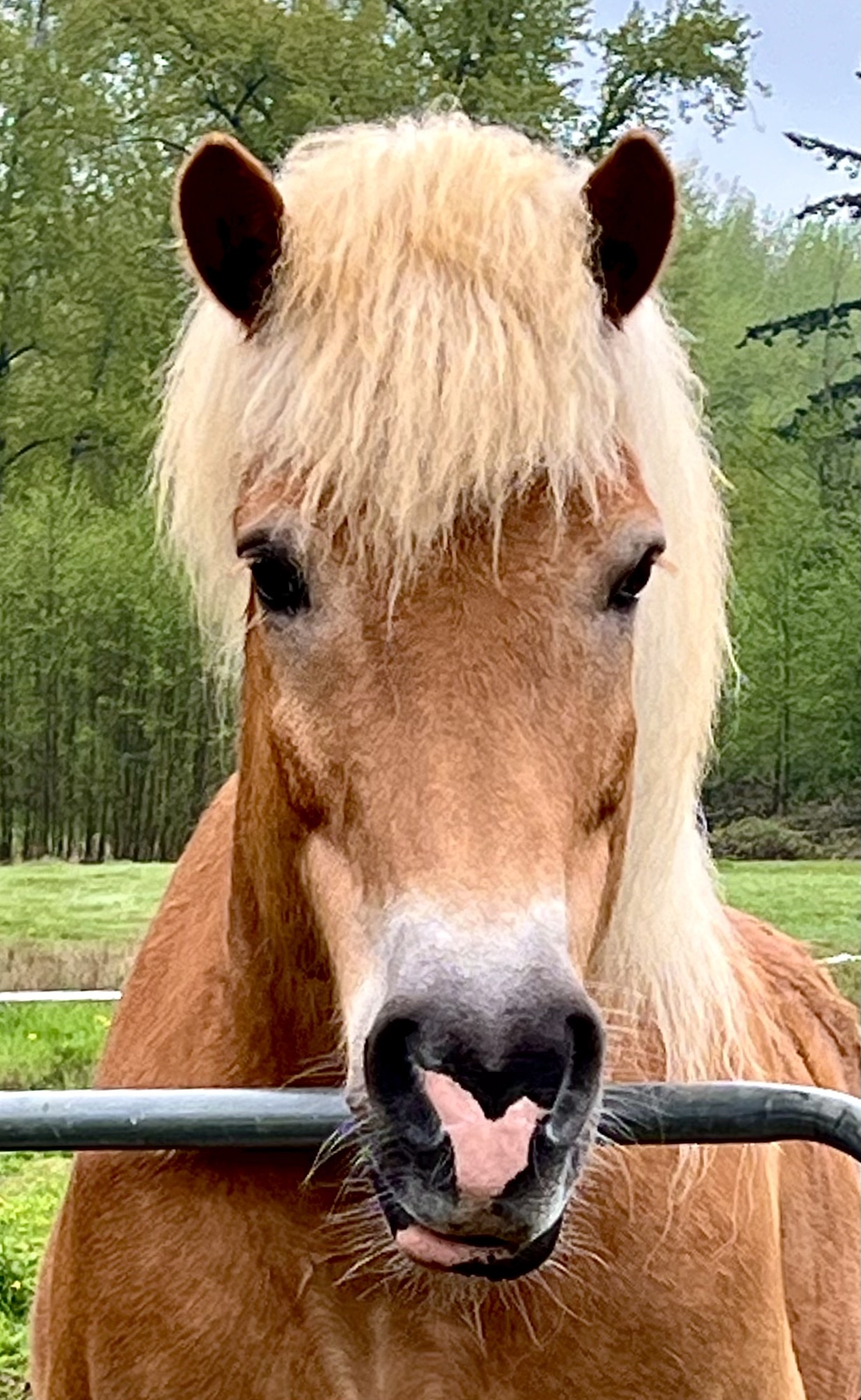
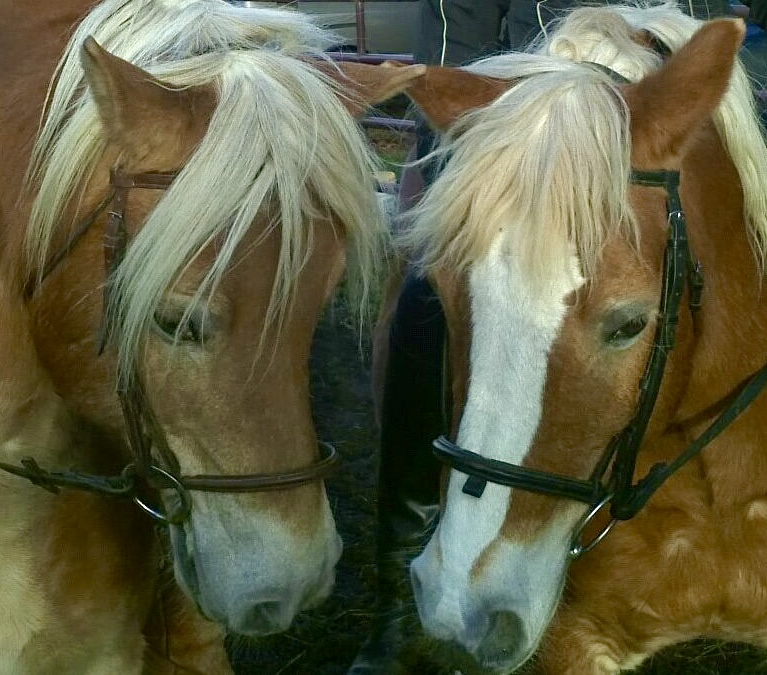
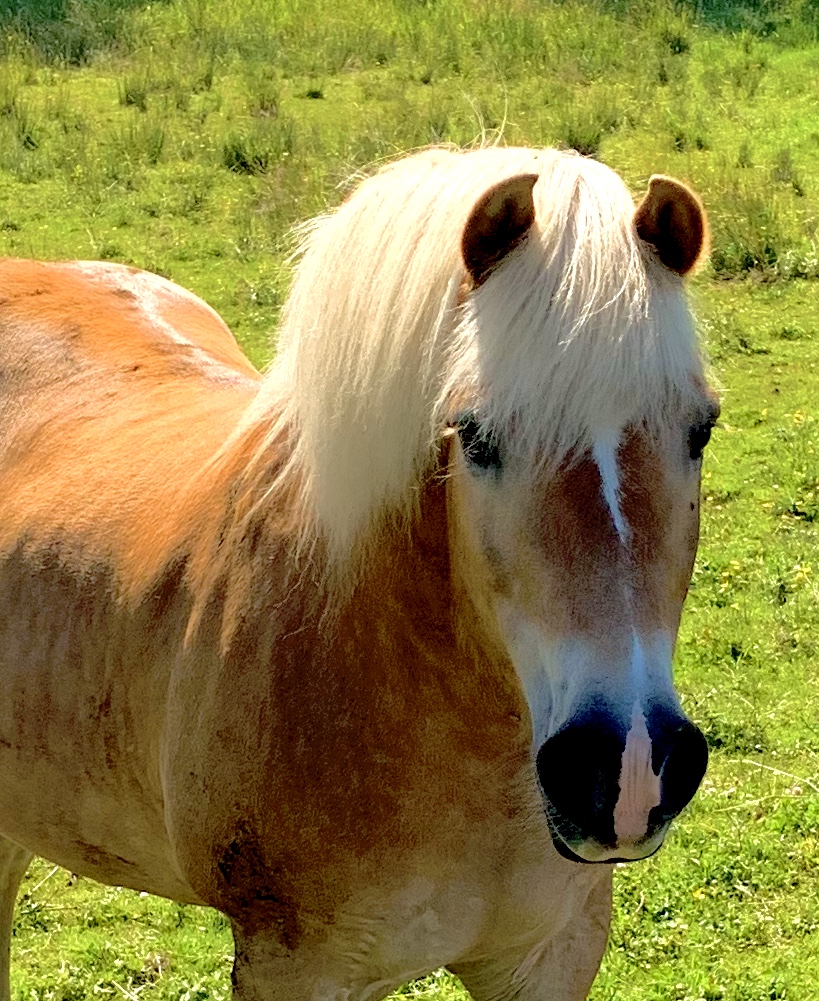
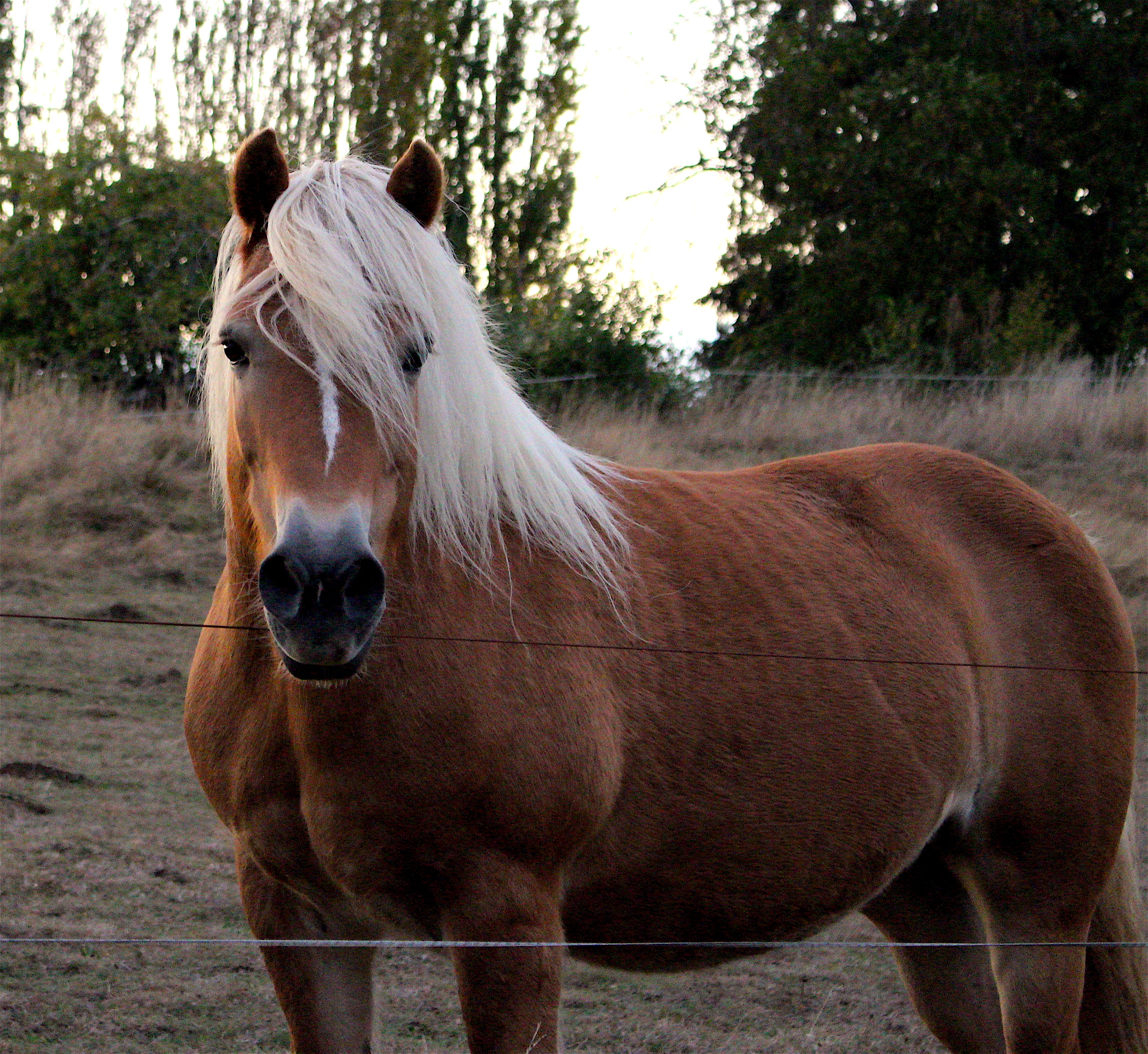
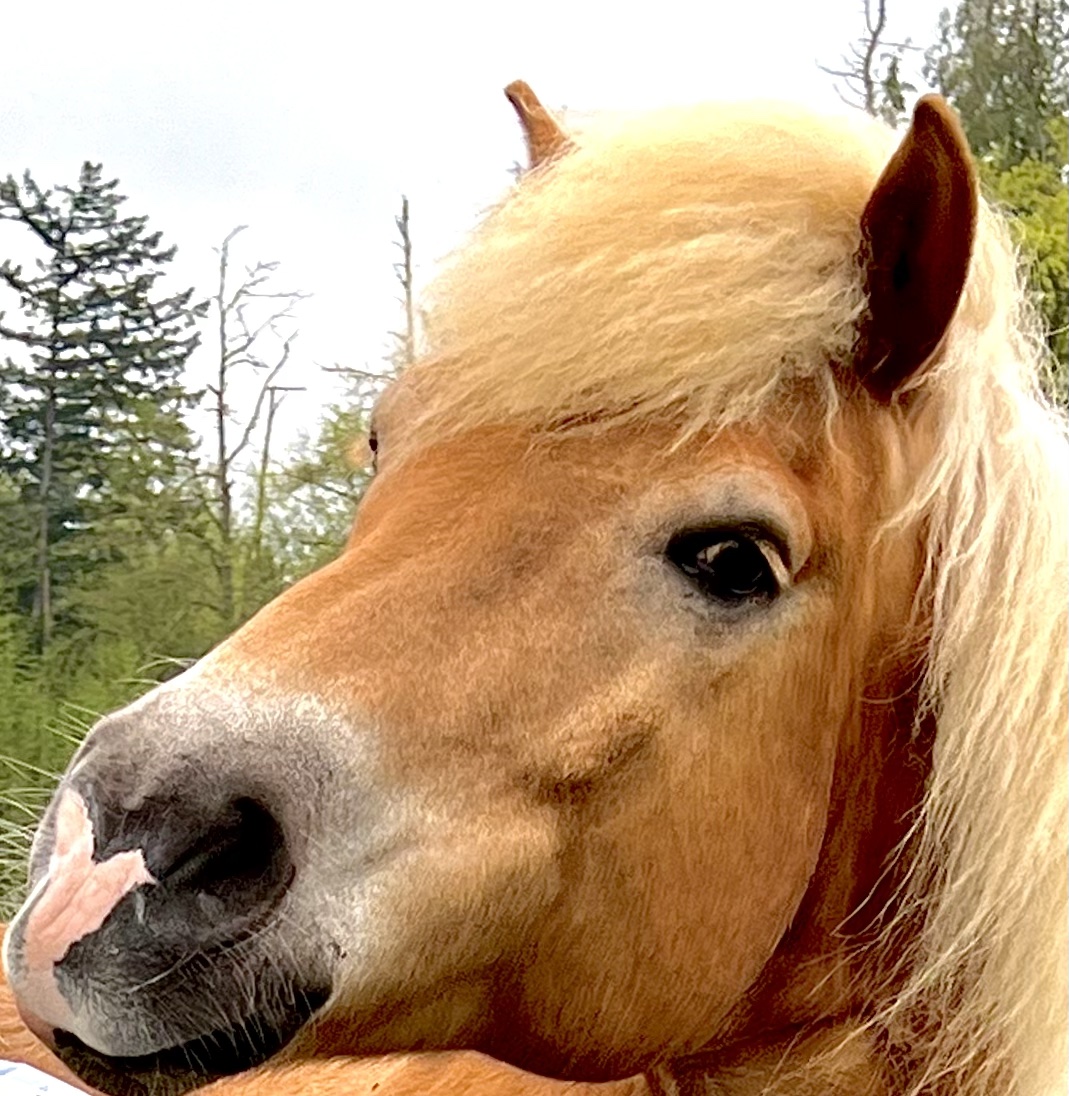
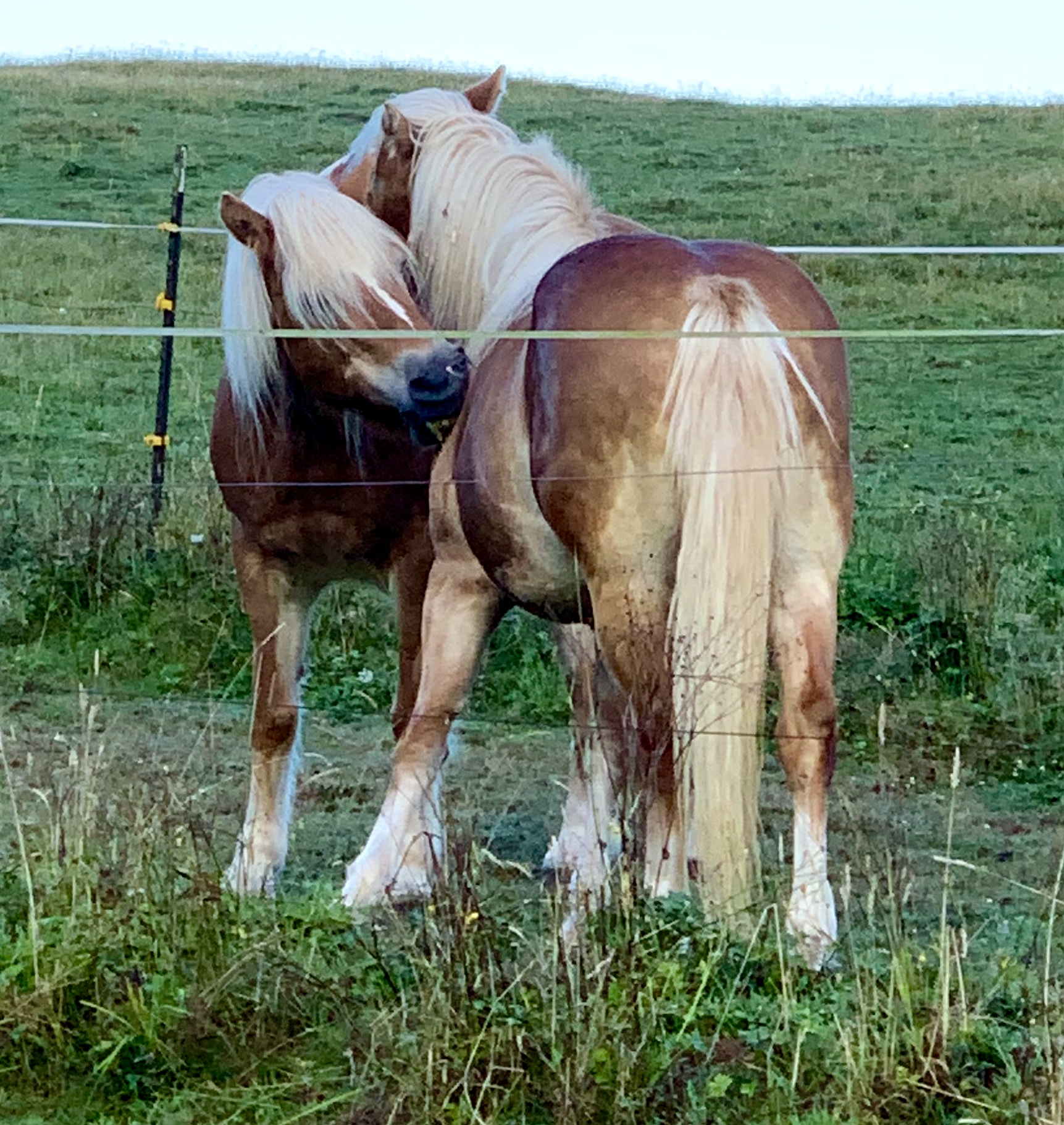
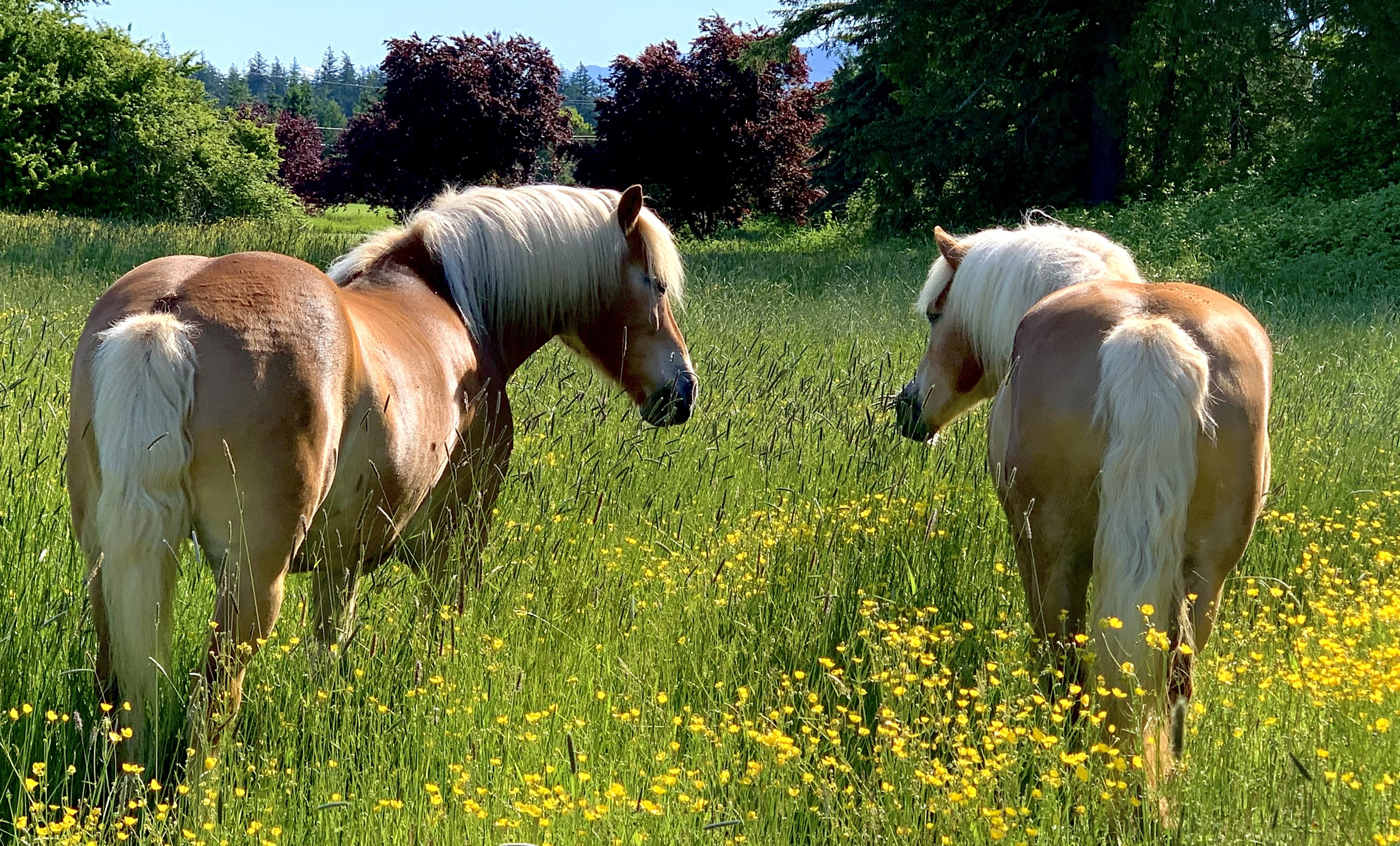
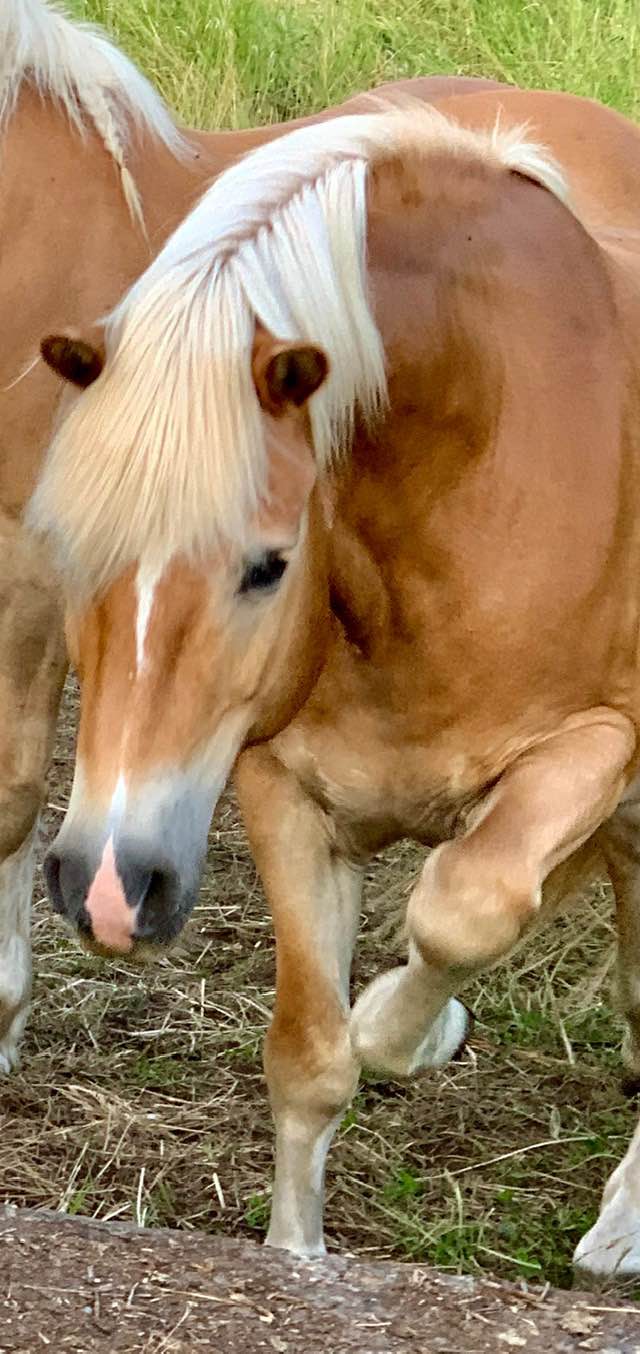
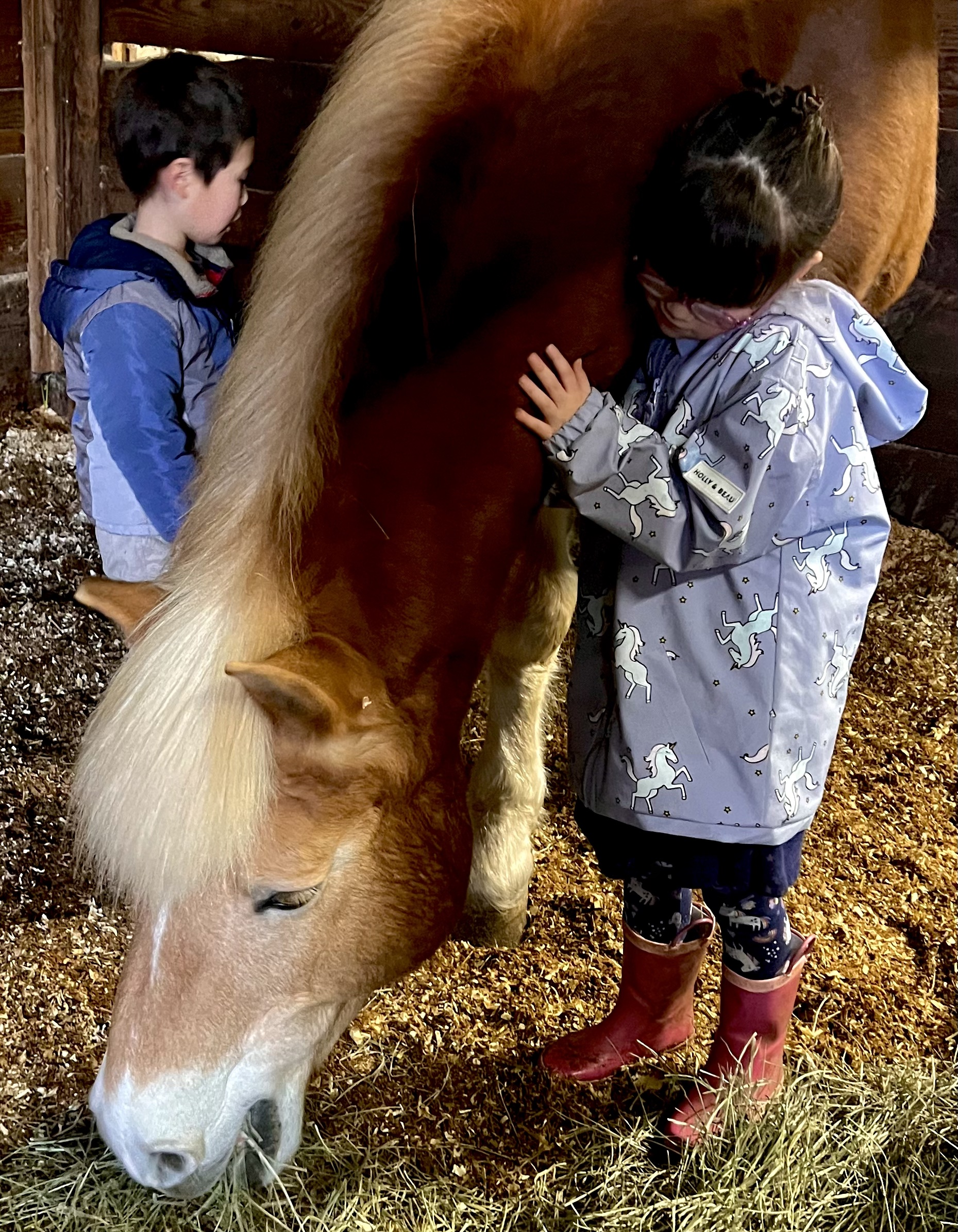
Our farm has had many nuzzling muzzles here over the years–
Pink noses, gray noses, nondescript not-sure-what-color noses, noses that have white stripes, diamonds, hearts, triangles, or absolutely no marks at all.
Hot breath that exudes warm grassy fragrance better than any pricey perfume, lips softer than the most elegant velvet.
Noses that reach out in greeting to: blow, sniff, caress, push, search, breathe me in and breathe for me, to see who I am, or who I will become,
smudge my face and shower snot.
I guess I’m just good enough to be blessed by a nuzzling baptism of grace.
There is a basic lesson that all young horses must learn (and a fewer older horses must relearn) on our farm. It is to stand still when asked and move only when asked. This does not come naturally to a young horse–they tend to be impatient and fidgety and fretful and full of energy. If they are hungry, they want food now and if they are bored, they want something different to do and if they are fearful, they want to be outta there.
Teaching a horse to be still is actually a greater lesson in persistence and consistency for the human handler, which means I don’t always do well in teaching this to my horses and they (and I) lapse frequently–wiggly pushy horses and a weary frustrated handler. It means correcting each little transgression the horse makes, asking them to move back to their original spot, even if there is hay waiting just beyond their nose, asking them to focus not on their hunger, their boredom, their fear, but asking them to focus only on me and where they are in relationship to me. It means they must forget about themselves and recognize something outside of themselves that is in control–even if I move away from them to do other things.
The greatest trust is when I can stand a horse in one spot, ask them to be still, walk away from them, briefly go out of sight, and return to find them as I left them, still focused on me even when I was not visible.
I was reminded of this during our pastor’s sermon on the book of Exodus when he preached on the moments before Moses parted the Red Sea, allowing the Hebrews an escape route away from Pharoah and the Egyptian chariots and soldiers. In those moments beforehand, the Hebrews were pressed up against the Sea with the Egyptians bearing down on them and they lamented they should never have left Egypt in the first place, and that generations of bondage in slavery would have been preferable to dying in the desert at the hands of the soldiers or drowning in the Sea.
Moses told them to “be still”. Or as our pastor said, he told them to “shut up”. Stay focused, be obedient, trust in the Lord’s plan. And the next thing that happened was the Sea opened up. Then the Hebrews rejoiced in thanksgiving for their freedom.
Thanksgiving, as it has developed over the years from the first historical observance of a meal shared jointly between the Pilgrims and their patient and generous Native American hosts, is just such a moment to “be still and know” about the gifts from our God. Yet in our hurried and harried culture, Thanksgiving is about buying the best bargain turkey, creating the most memorable recipes, decorating in perfect Martha Stewart style, eating together in Norman Rockwell style extended family gatherings, watching football and parades on the biggest flat screen TV, while preparing for the mad dash out the door the next day to start the Christmas shopping season.
Instead of all that fol de rol – be still.
Like my horses, I need correction when I start to agitate out of “hunger”–wanting to literally stuff myself full, or out of my boredom– seeking the latest in entertainment or satisfaction, or out of my fear– feeling the threats that surround us all in the world today. I need to be reminded continually that my focus must be outside myself and my perceived needs, and to be still long enough to know God is with us even though we cannot see Him every moment.
I do not do well at this.
My horses learn much faster than I do. I am restless, rarely taking the time to be still and acknowledge God who continually watches, waiting for me to settle down and focus on Him.
May this Thanksgiving remind me of my need for God, and my gratitude for His patient persistence in moving me back into place when I wiggle and fret and stuff myself even when I’m really not hungry.
May I remember that to be still and know God is the greatest gift I can give and that I can receive.
And may His Stillness be with you today as well.
One-Time
Monthly
Yearly
Make a one-time or recurring donation to support daily Barnstorming posts
The world does not need words. It articulates itself in sunlight, leaves, and shadows. The stones on the path are no less real for lying uncatalogued and uncounted. The fluent leaves speak only the dialect of pure being…
The sunlight needs no praise piercing the rainclouds, painting the rocks and leaves with light, then dissolving each lucent droplet back into the clouds that engendered it. The daylight needs no praise, and so we praise it always– greater than ourselves and all the airy words we summon. ~Dana Giola from “Words”
The words the world needs is only the Word itself; we exist because He breathed breath into us, saying it was good.
Whatever we have to say about His Creation pales compared to His it is good
But we try over and over again to use words of wonder and praise to express our awe and gratitude and amazement while painted golden by His breath of Light.
One-Time
Monthly
Yearly
Make a one-time or recurring donation to support daily Barnstorming posts
I like the lady horses best, how they make it all look easy, like running 40 miles per hour is as fun as taking a nap, or grass. I like their lady horse swagger, after winning. Ears up, girls, ears up! But mainly, let’s be honest, I like that they’re ladies. As if this big dangerous animal is also a part of me, that somewhere inside the delicate skin of my body, there pumps an 8-pound female horse heart, giant with power, heavy with blood. Don’t you want to believe it? Don’t you want to lift my shirt and see the huge beating genius machine that thinks, no, it knows, it’s going to come in first. ~Ada Limón “How to Triumph Like a Girl”
Primarily from my college training in animal behavior, I have an appreciation for social cues, both human and non-human: those often nonverbal signals that are communicated through subtle means–in people, perhaps it is a raised eyebrow, a rapid blink, a tensing of the lips, a fidgeting foot.
When I studied captive and wild chimpanzees, they showed very familiar facial expressions and nonverbal communication that could be understood readily by a human primate.
In horses, it can be harder to interpret but their nonverbal language is there for all to see. The herdmates and the human handler, with careful observation and interpretation, should not be surprised about “what is going to happen next.”
It is no mystery.
I don’t consider Haflinger horses particularly subtle in their communication with each other or with humans. They can tend to have a “bull in a china shop” approach to life; this is not a breed that evolved particularly plagued with the existence of many predators in the Austrian Alps, so the need to blend into the background was minimal. Haflingers tend to be “out there”: unafraid, bold, meeting one’s gaze, and curious what the human is thinking.
I’ve found over the years that the best way to interpret a Haflinger’s emotions is by watching their ears, and to a lesser extent, their lips and tails. They usually have “poker face” eyes, deceptive at times in their depth, calmness and serenity. I tend to get lost in the beauty of their eyes and not pay attention to what the rest of the horse is saying.
Watching them interact with each other, almost everything is said with their ears. A horse with a friendly approach has ears forward, receptive, eager. If the horse being approached is welcoming, the ears are relaxed. Two good friends grooming or grazing together have swiveling, loose ears, often pointing toward each other, almost like a unique conversation between the four ears themselves. So when a Haflinger is happy to approach, or be approached by humans, the ears always say so.
Ears that are swiveling back, tensing and tight, or pinning are another story altogether. It is the clear signal of “get outta my way!”, or “you are not sharing this pile of hay with me” or “you may think you are a cute colt, but if you climb on me one more time…”
Ears can signal impatience “you are not getting my grain fast enough”, or “I’ve been standing here tied for too long!” A simple change in ear position can cause a group of horses to part like the Red Sea.
I owned a mare who was orphaned at 3 days of age, and spent her early weeks with intensive handling by people, and then allowed to socialize with a patient older gelding until she was old enough to be among other weanlings. When she came to our farm at 6 months of age, she had not learned all the usual equine social cues of a mare herd, and though very astute at reading human gestures and behavior, took awhile to learn appropriate responses. When turned out with the herd, she was completely clueless–she’d approach the dominant alpha mare incorrectly, without proper submission, get herself bitten and kicked and was the bottom of the social heap for years, a lonesome little filly with few friends and very few social skills.
She had never learned submission with people either, and had to have many remedial lessons on her training path. Once she was a mature working mare, her relationship with people markedly improved as there was structure to her work and predictability for her, and after having her own foals, she picked up cues and signals that helped her keep her foal safe, though she has always been one of our most relaxed “do whatever you need to do” mothers when we handle her foals as she simply never learned that she needed to be concerned.
Over the years, as the herd changed, this mare became the alpha mare, largely by default and seniority, so I don’t believe she really trusted her position as “real”. She tended to bully, and react too quickly out of her own insecurity about her inherited position. She was very skilled with her ears but she is also a master at the tail “whip” and the tensed upper lip–no teeth, just a slight wrinkling of the lip. The herd scattered when they see her face change.
The irony of being on top of the herd hierarchy: she was more lonely than when she was at the bottom. She was a whole lot less happy as she had few grooming partners any more. She craved power more than friends.
I certainly see people like this at times in the world. Some are not at all attuned to social cues, blundering their way into situations without understanding the consequences and “blurting without thinking”. It takes lots of kicks and bites for them to learn how to read other people and behave appropriately. Sometimes they turn to bullying because it is communication that everyone understands and responds to, primarily by “getting out of their way”. Perhaps they are very lonely, insecure, and need friends but their need for power overcomes their need for support.
We see this too frequently in people in our news headlines.
I continue to “watch the ears”–both Haflinger and human. And I continue to refine my own way of communicating so that I’m not a mystery to those around me. Hopefully no one scatters when they see me coming…
One-Time
Monthly
Yearly
Make a one-time or recurring donation to support daily Barnstorming posts
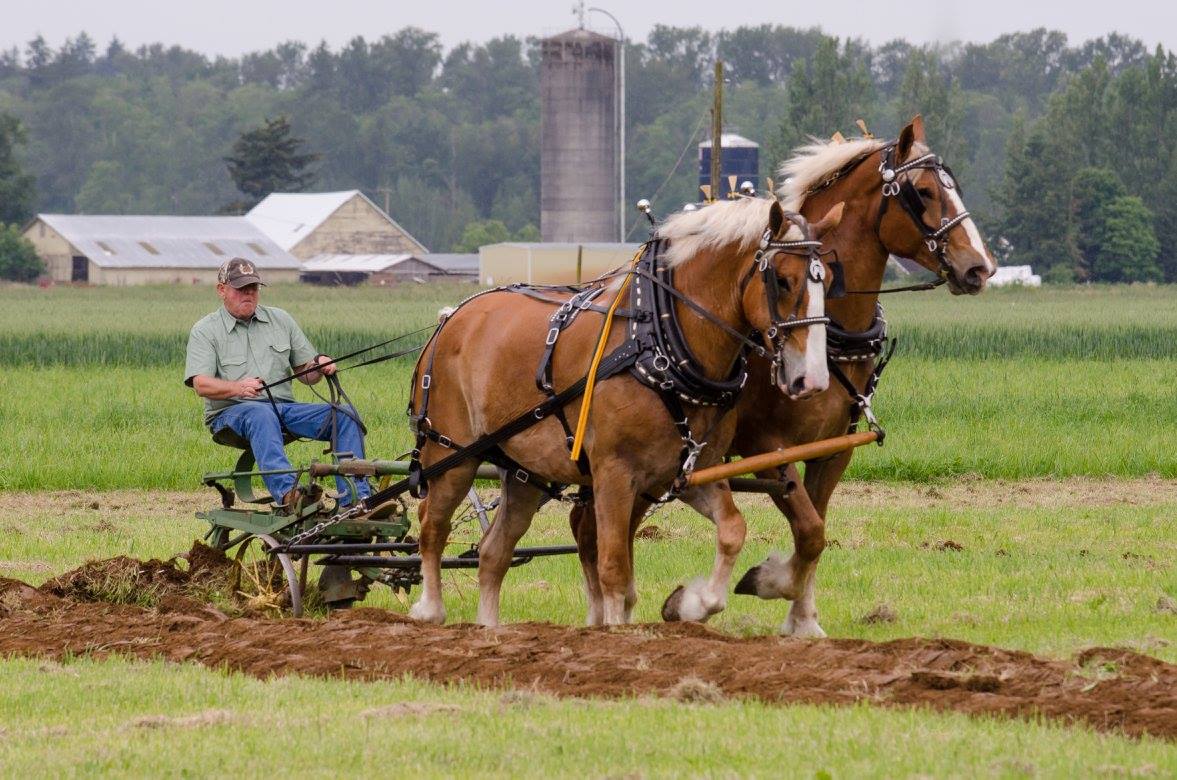
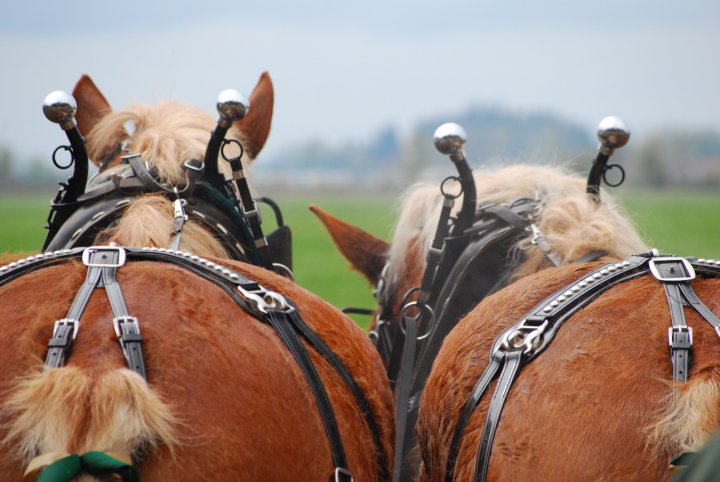
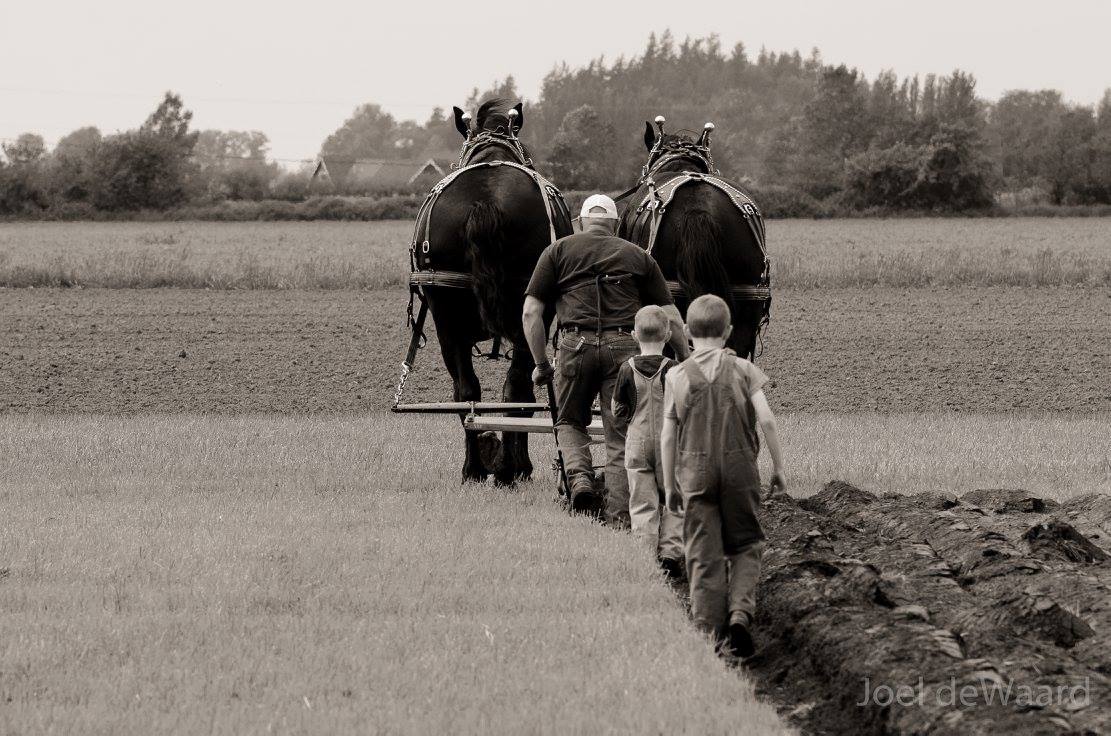
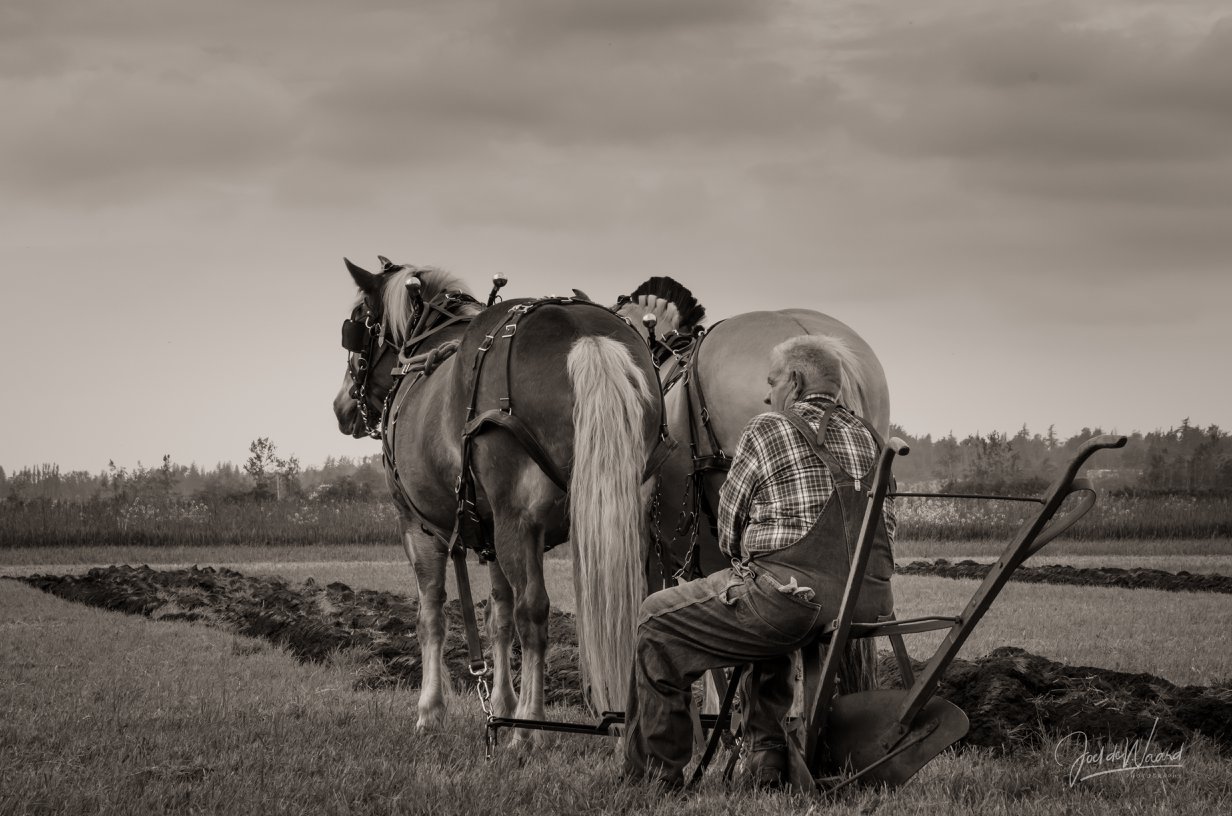
… The Amish have maintained what I like to think is a proper scale, largely by staying with the horse. The horse has restricted unlimited expansion. Not only does working with horses limit farm size, but horses are ideally suited to family life. With horses you unhitch at noon to water and feed the teams and then the family eats what we still call dinner. While the teams rest there is usually time for a short nap. And because God didn’t create the horse with headlights, we don’t work nights. ~Amish farmer David Kline in Great Possessions
photo by Joel De Waardphoto by Joel De Waardphoto by Joel De Waardphoto by Joel De Waard
You can’t have the family farm without the family. ~G.K. Chesterton from “The Unprecedented Architecture of Commander Blair,” Tales of the Long Bow
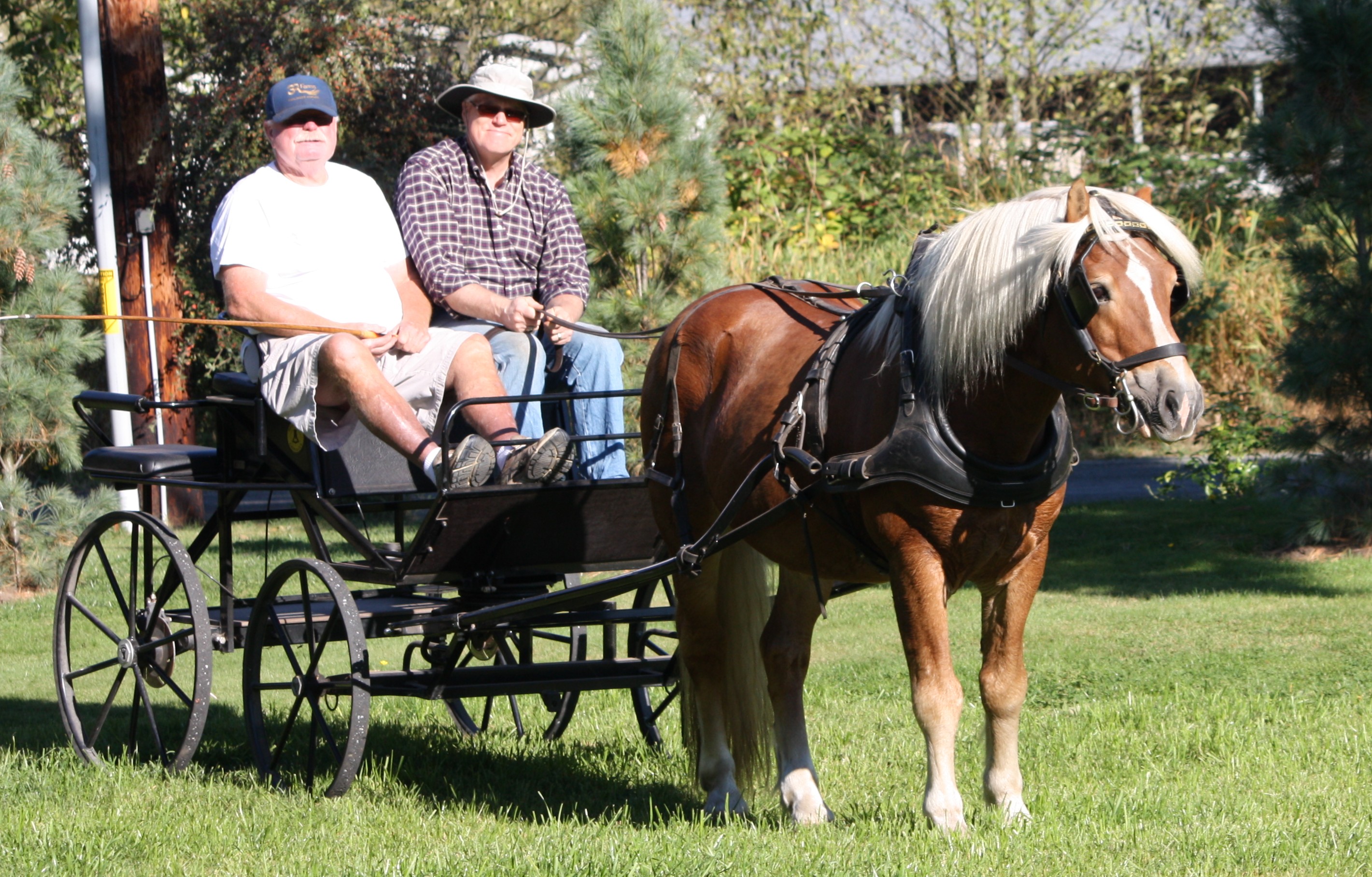
Photo of Aaron Janicki haying with his Oberlander team in Skagit County courtesy of Tayler RaeBenjamin Janicki of Sedro Woolley raking hay with his team of Oberlanders
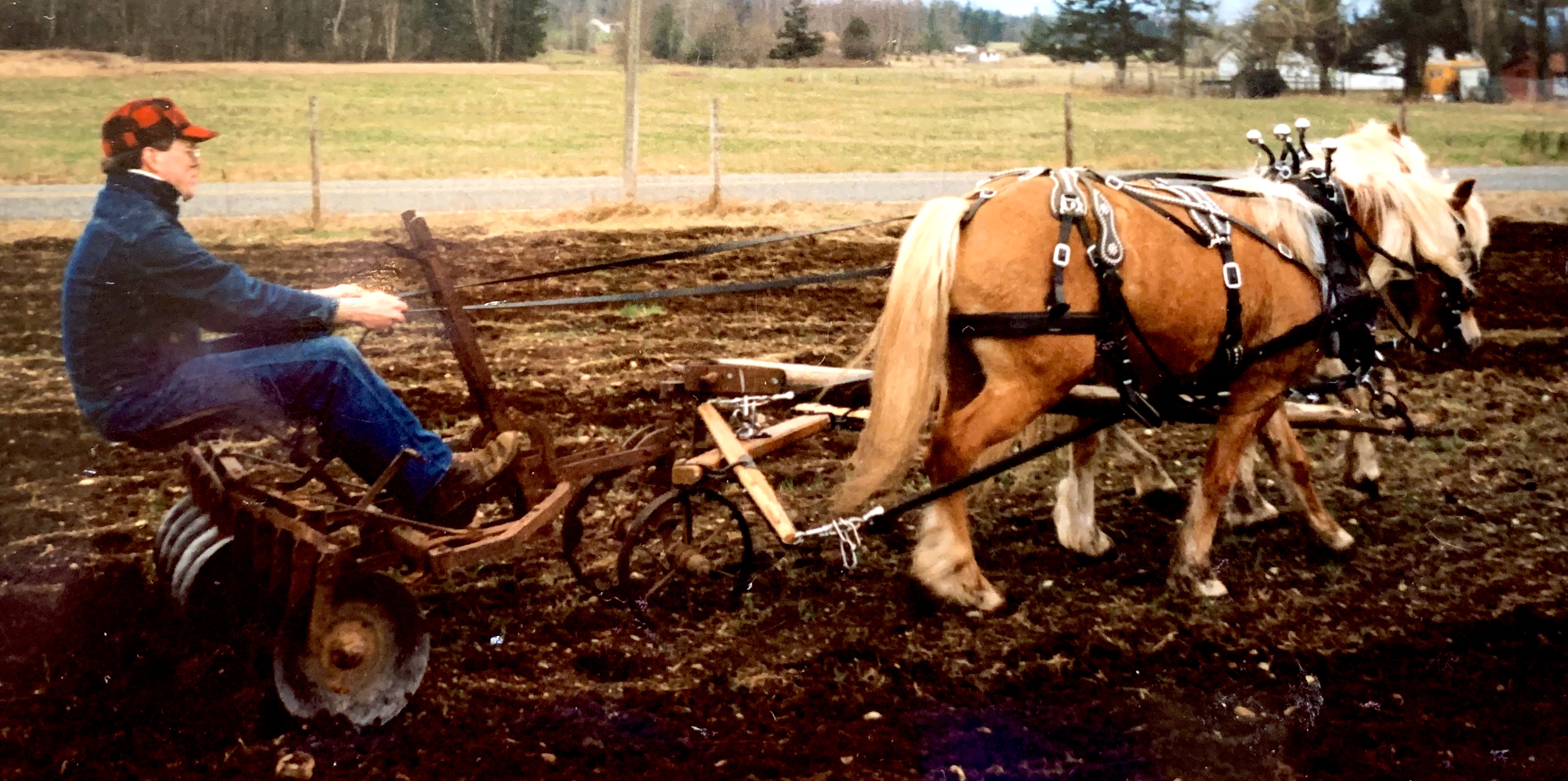
I’m 71 years old ~ old enough to have parents who grew up on farms worked by horses, one raising wheat and lentils in the Palouse country of eastern Washington and the other logging in the woodlands of Fidalgo Island of western Washington. The horses were crucial to my grandfathers’ success in caring for and tilling the land, seeding and harvesting the crops and bringing supplies from town miles away. Theirs was a hardscrabble life in the early 20th century with few conveniences. Work was year round from dawn to dusk; caring for the animals came before any human comforts. Once night fell, work ceased and sleep was welcome respite for man and beast.
In the rural NW Washington countryside where we live, we’ve been fortunate enough to live near farmers who still dabble in horse farming, whose draft teams are hitched to plows and mowers and manure spreaders as they head out to the fields to recapture the past. They still gather together in the spring to have a well-attended and friendly competition plowing match.
Watching a good team work with no diesel motor running means hearing bird calls from the field, the steady footfall of the horses, the harness chains jingling, the leather straps creaking, the machinery shushing quietly as gears turn and grass lays over in submission. No ear protection is needed. There is no clock needed to pace the day.
There is a rhythm of nurture when animals instead of engines are part of the work day. The gauge for taking a break is the amount of foamy sweat on the horses and how fast they are breathing. It is time to stop and take a breather, it is time to start back up to do a few more rows, it is time to water, it is time for a meal, it is time for a nap, it is time for a rest in a shady spot. This is gentle use of the land with four footed stewards who deposit right back to the soil the digested forage they have eaten only hours before.
Our modern fossil-fuel-powered approach to food production has bypassed the small family farm which was so dependent on the muscle power of humans and animals. In our move away from horses worked by skilled teamsters, what has been gained in high production values has meant loss of self-sufficiency and dedicated stewardship of a smaller acreage. Draft breeds, including the Haflinger horses we raised for forty years, now are bred for higher energy with lighter refined bone structure meant more for eye appeal and floating movement, rather than the sturdy conformation and unflappable low maintenance mindset needed for pulling work.
Modern children grow up with a different set of values as well, no longer raised to work together with other family members, as well as the animals on the farm for a common purpose of daily survival.
Still fascinated by the The Small Farmer’s Journal, I am encouraged when the next generation reaches for horse collars and bridles, hitches up their horses to do the work as it used to be done. Although the modern world will never go back to the days of horse-drawn farming and transportation, we can acknowledge there were some benefits to the old ways of doing things, when progress meant being harnessed together as a team with our horses, tilling for truth and harvesting hope.
photo by Tayler Rae
I like farming. I like the work. I like the livestock and the pastures and the woods. It’s not necessarily a good living, but it’s a good life. I now suspect that if we work with machines the world will seem to us to be a machine, but if we work with living creatures the world will appear to us as a living creature. That’s what I’ve spent my life doing, trying to create an authentic grounds for hope. ~Wendell Berry, horse farmer, essayist, poet, professor
photo by Tayler Rae
One-Time
Monthly
Yearly
Make a one-time or recurring donation to support daily Barnstorming posts
Teach me to walk with tender feet, as the wild ones do. Let me be the cinder-glow of the fox in her burrow, wreathed around the honey-spark fur of her sleeping kits.
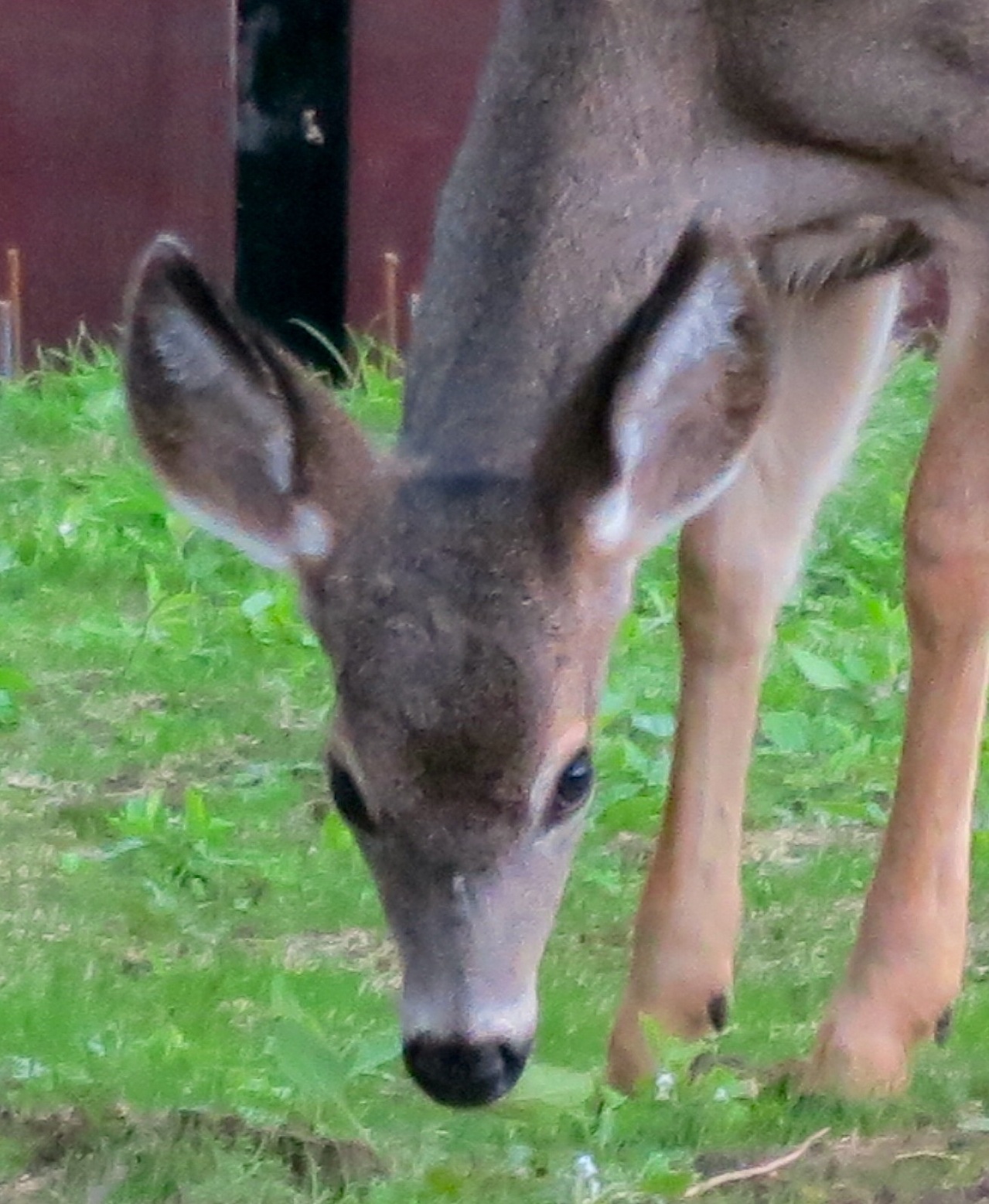
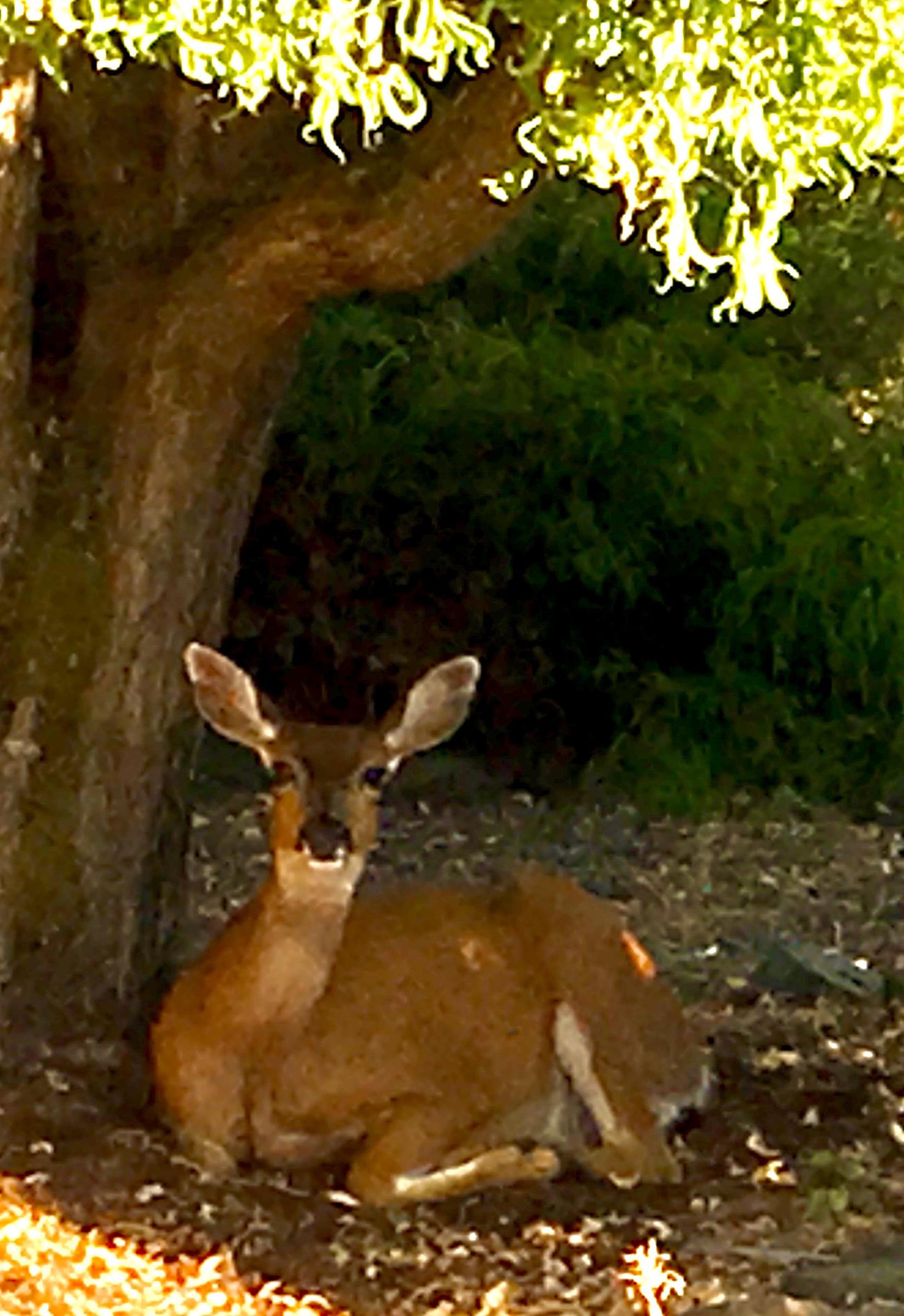
Let me be the shaded pools of the doe’s eyes in winter, when the snow falls, when the stars lean down to listen, when the world is darker and softer than rain.
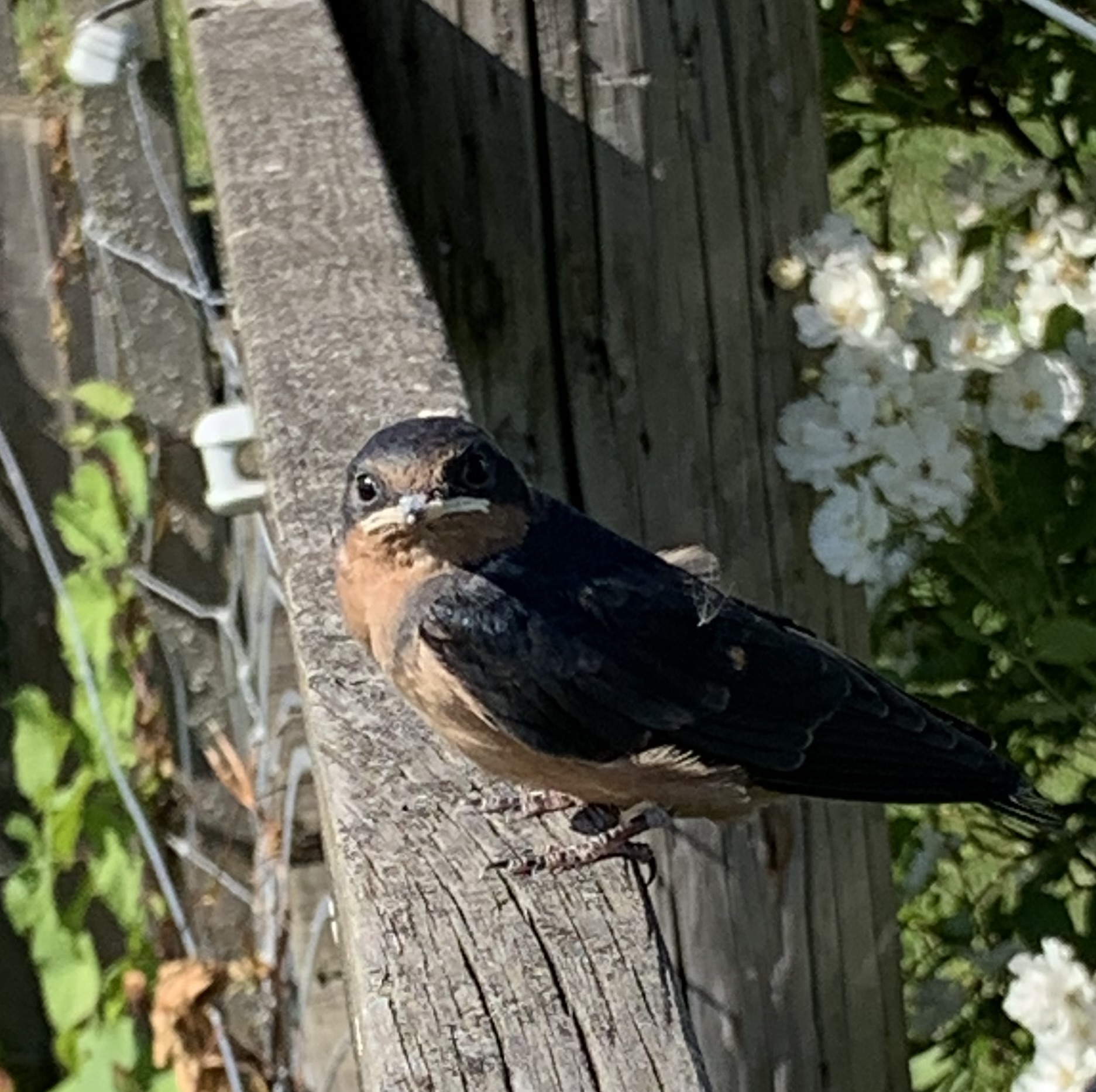
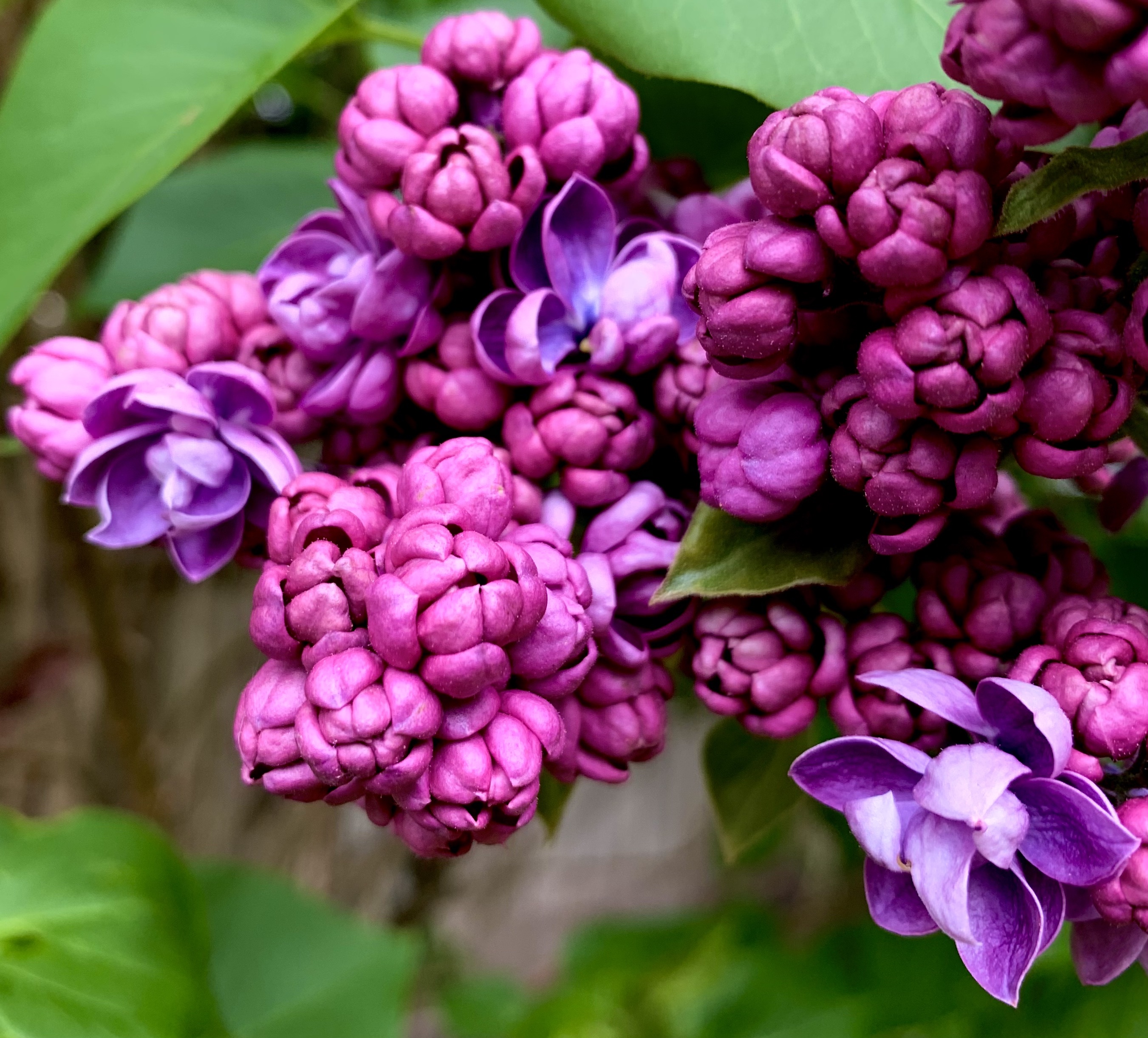
Let me be the swallow after flight, when she is perched upon the branch where the petals of the lilacs used to be, and she is just still, and quiet, her downy head inclined, as though she is praying for their return. ~Kimberly Beck “Tender Feet”
As the weather changes, softening in the mists of autumn, I walk each step with careful feet, my tender heart singing songs in the rain. I pray for peace in this troubled land, for protection from harm until spring comes again.
May God grant a gentle night’s sleep for all His creatures.
video by Harry Rodenberger
Lyrics for Aragorn’s Sleepsong: Lay down your head and I’ll sing you a lullaby Back to the years of loo-li lai-lay And I’ll sing you to sleep and I’ll sing you tomorrow
Bless you with love for the road that you go May you sail far to the far fields of fortune With diamonds and pearls at your head and your feet And may you need never to banish misfortune
May you find kindness in all that you meet May there always be angels to watch over you To guide you each step of the way To guard you and keep you safe from all harm Loo-li, loo-li, lai-lay
May you bring love and may you bring happiness Be loved in return to the end of your days Now fall off to sleep, I’m not meaning to keep you I’ll just sit for a while and sing loo-li, lai-lay
May there always be angels to watch over you To guide you each step of the way To guard you and keep you safe from all harm Loo-li, loo-li, lai-lay
One-Time
Monthly
Yearly
Make a one-time or recurring donation to support daily Barnstorming posts
O! for a horse with wings! ~William Shakespeare from Cymbeline
photo by Bette Vander Haakphoto by Bette Vander Haak
Be winged. Be the father of all flying horses. ~C.S. Lewis from The Magician’s Nephew
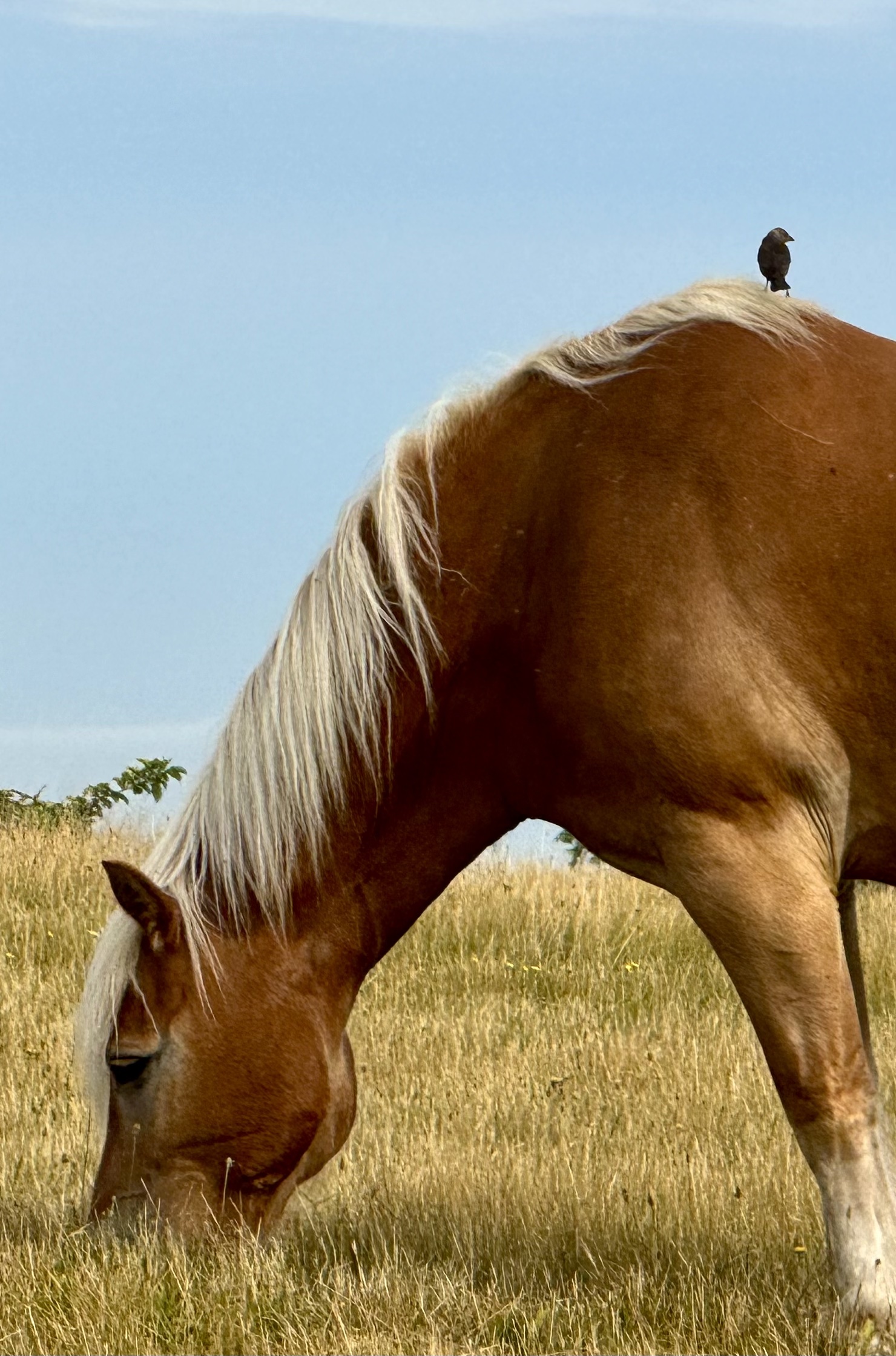
photo by Bette Vander Haak
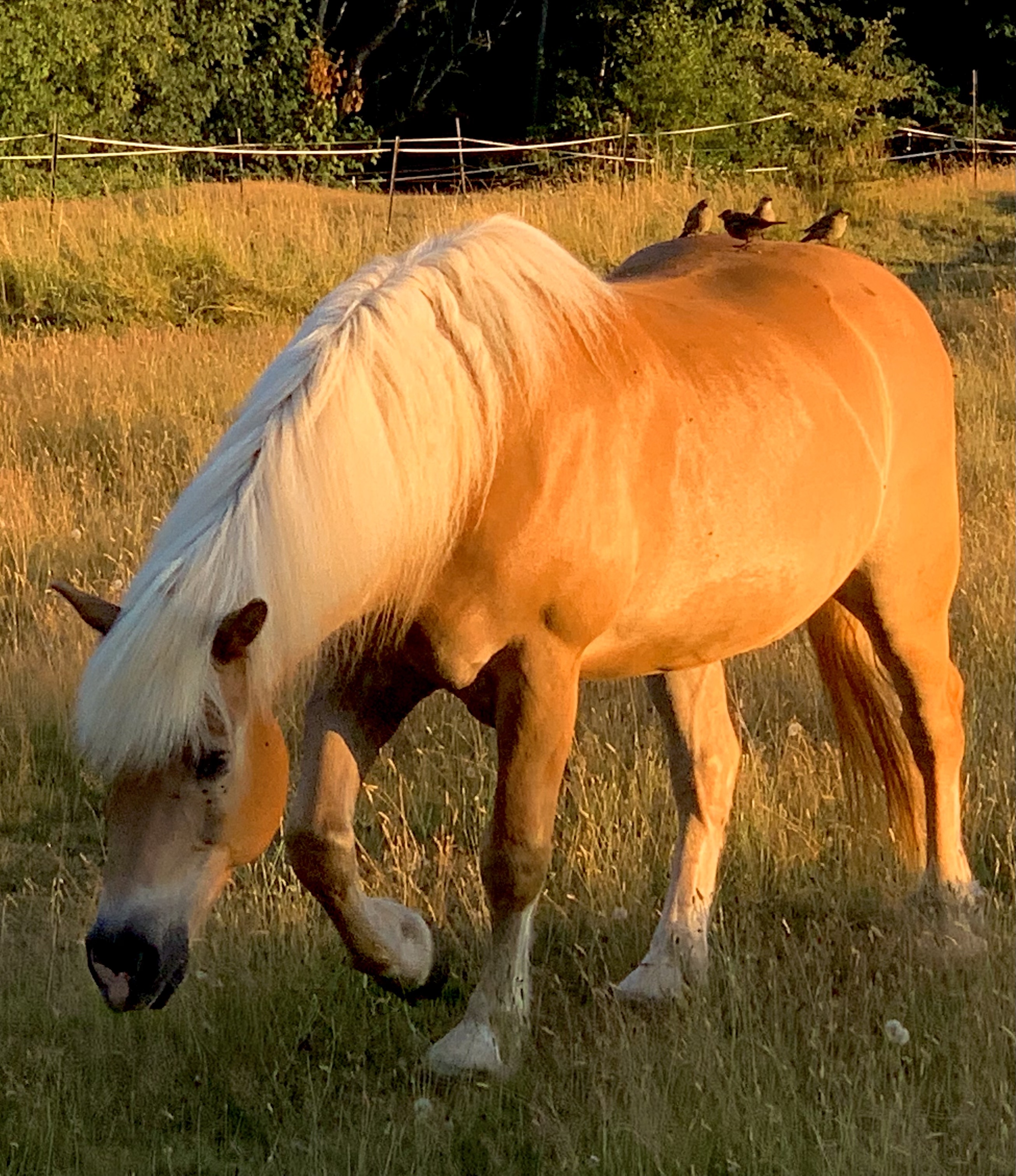
photo by Bette Vander Haak
One reason why birds and horses are happy is because they are not trying to impress other birds and horses. ~Dale Carnegie
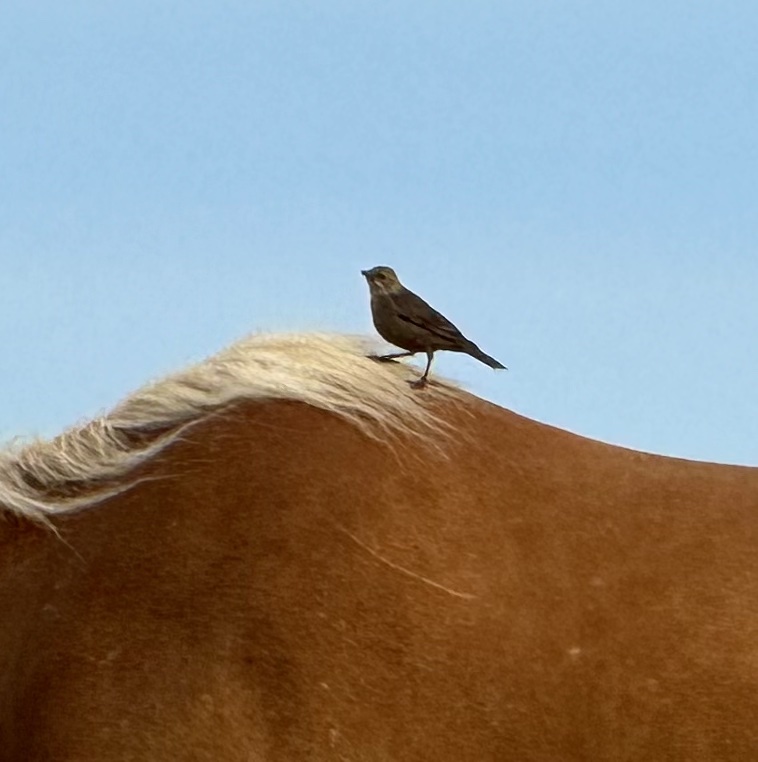
photo by Bette Vander Haak
When I bestride him, I soar, I am a hawk: he trots the air; the earth sings when he touches it; ~William Shakespeare from Henry V
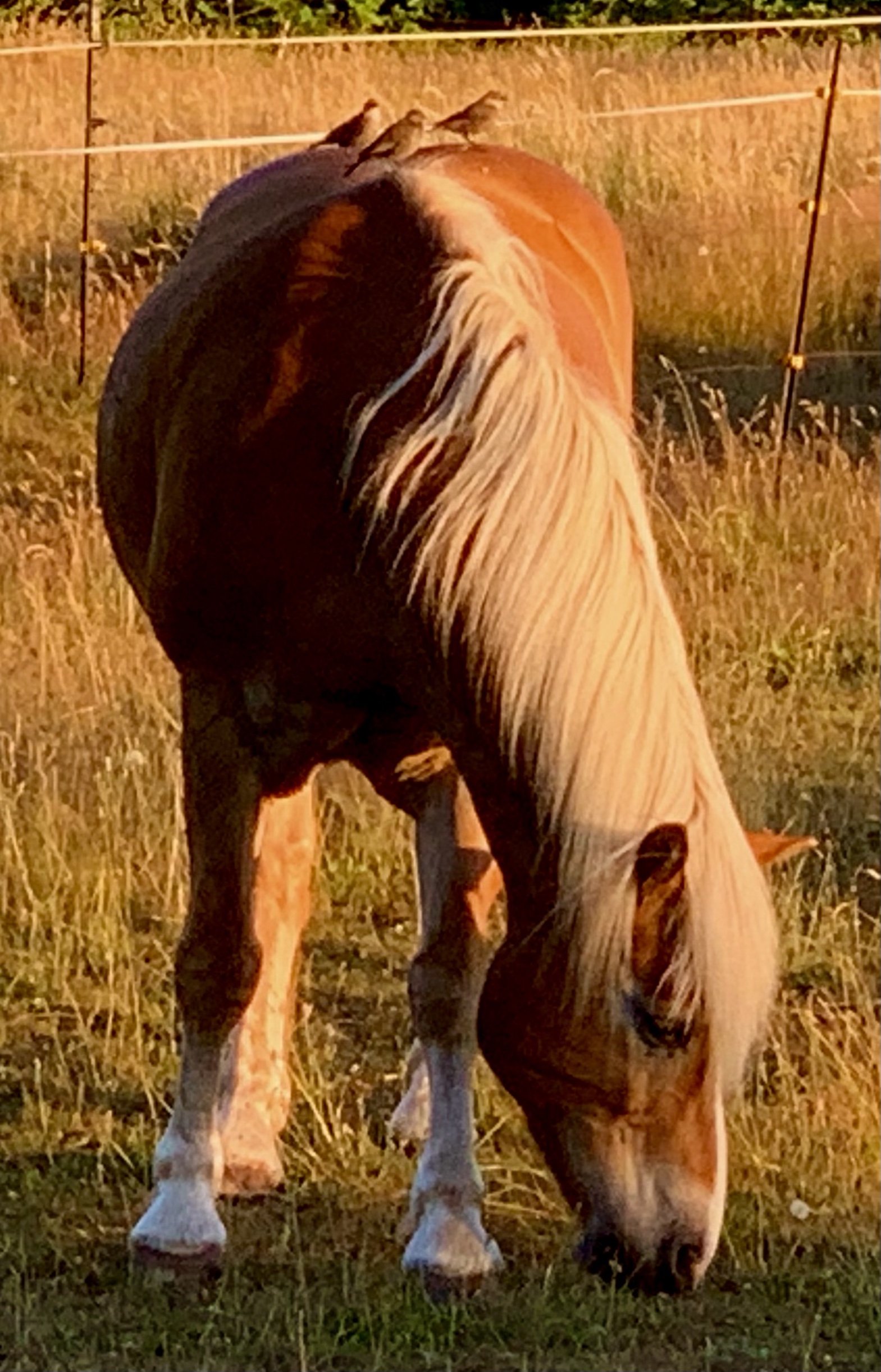
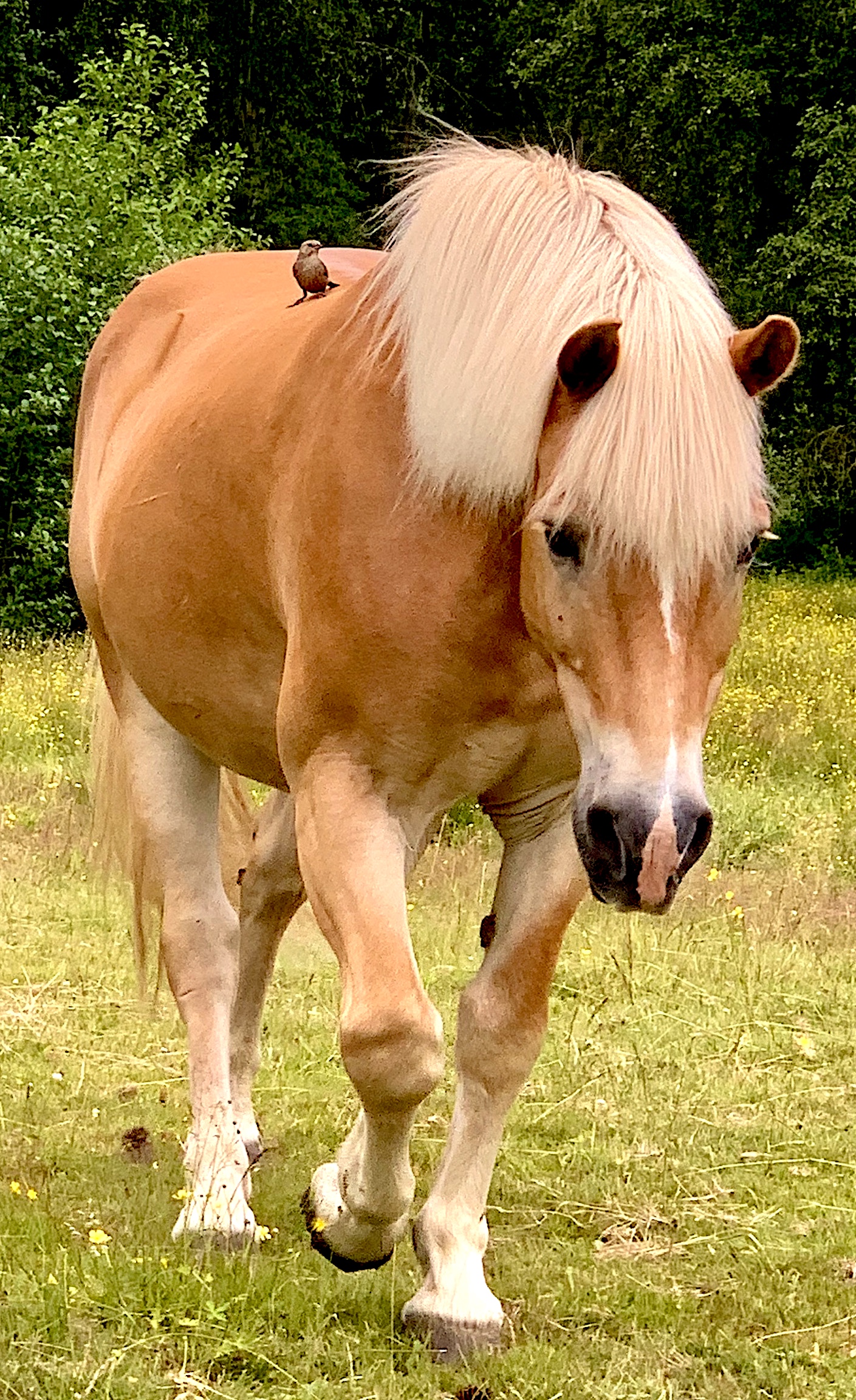
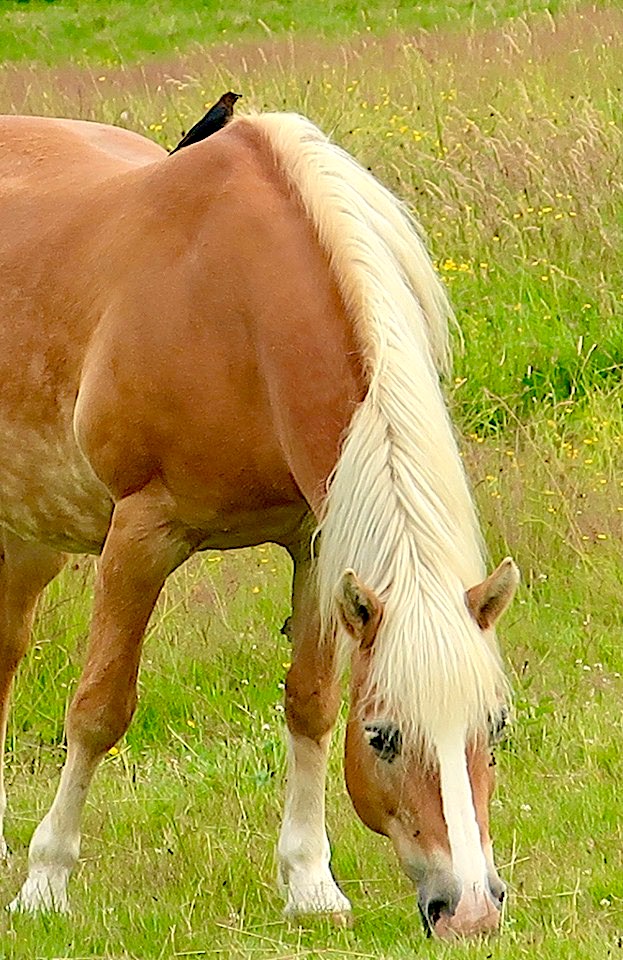
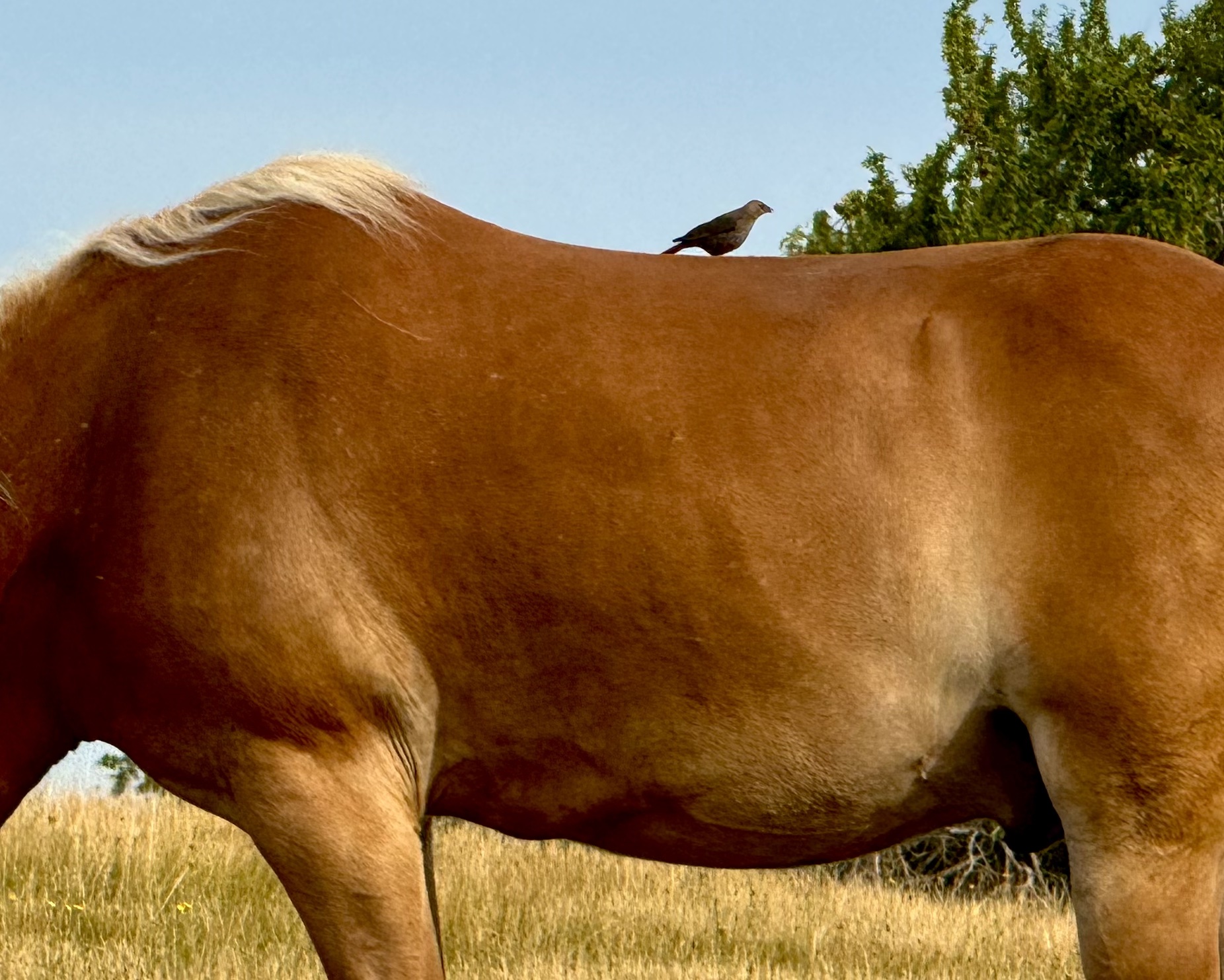
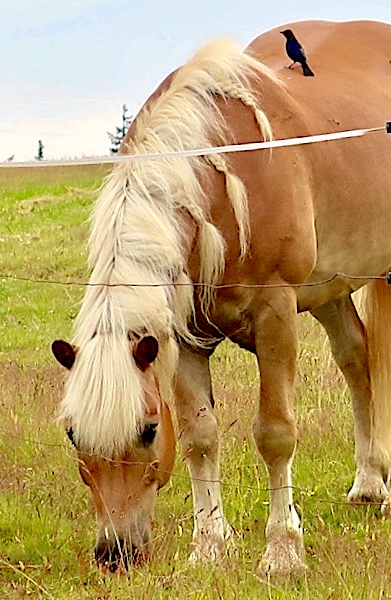
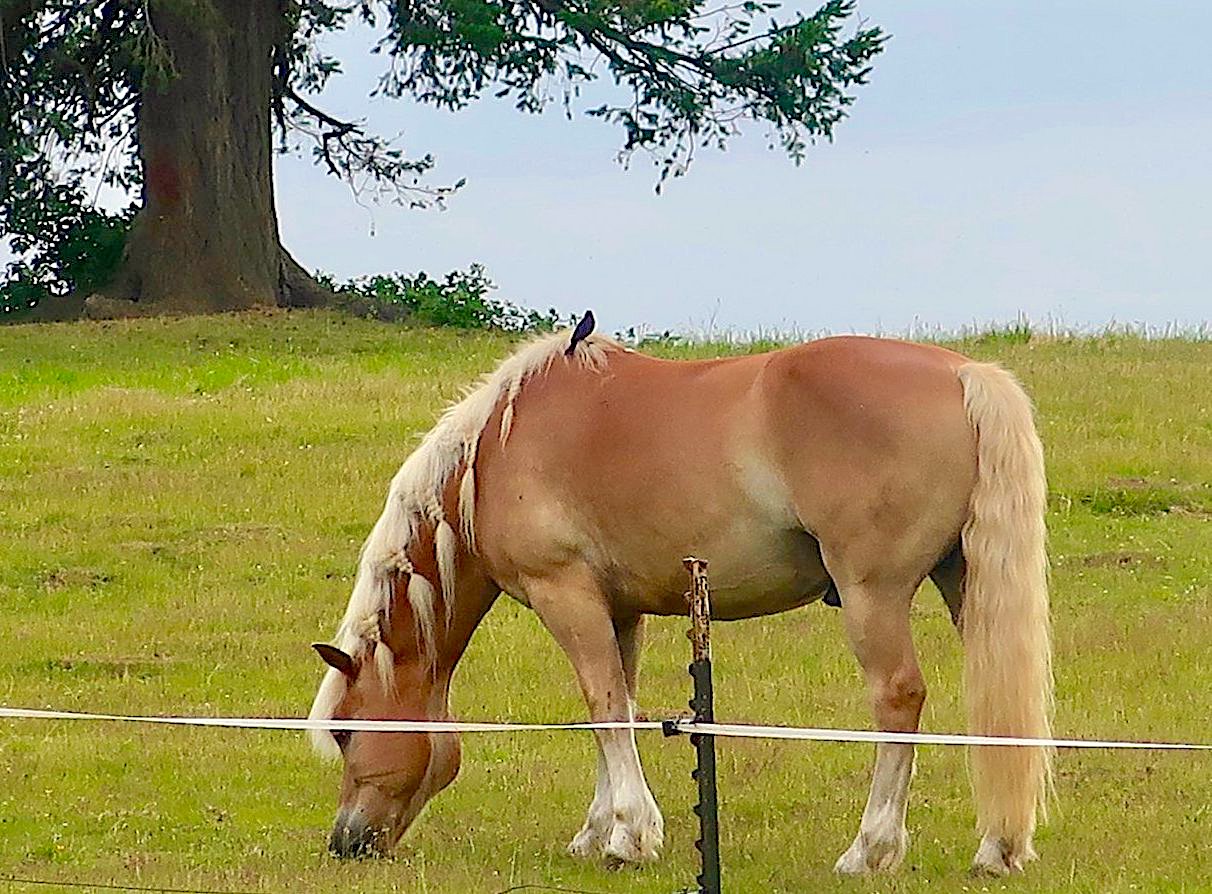
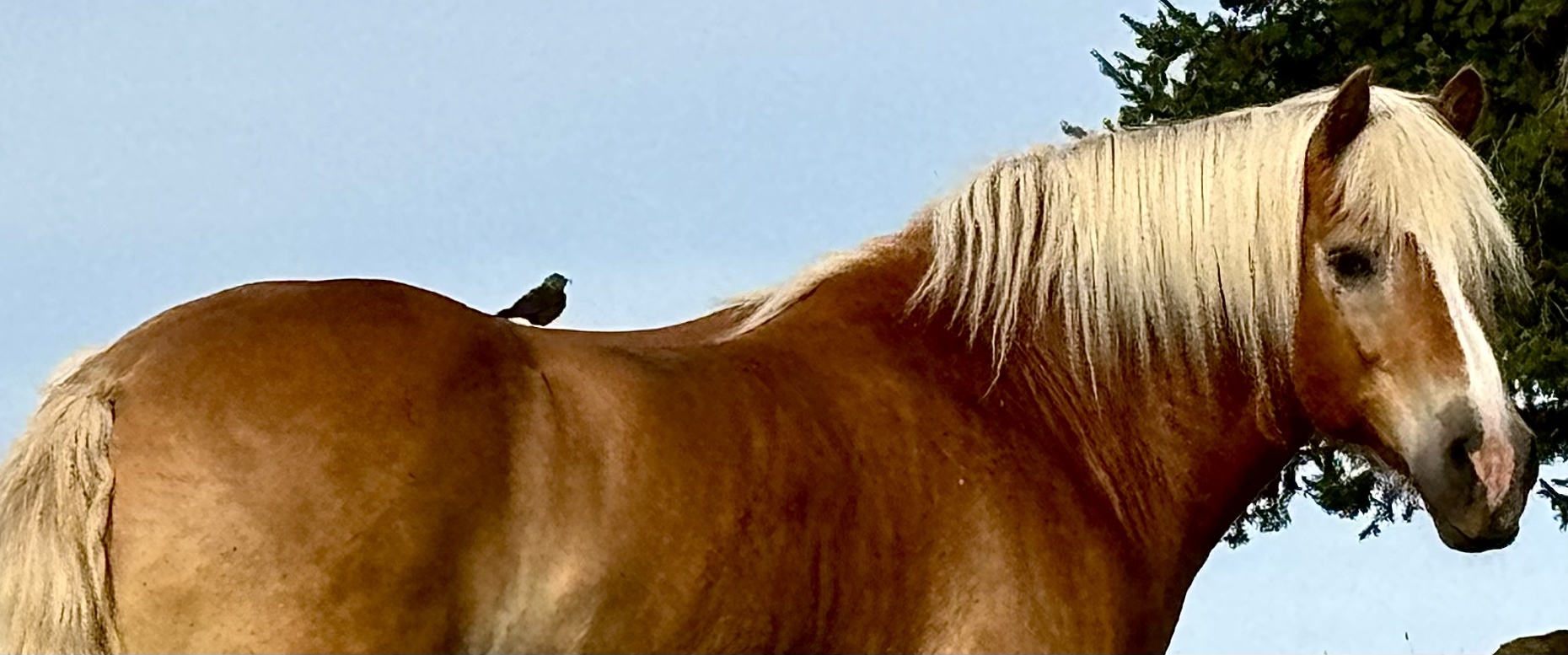
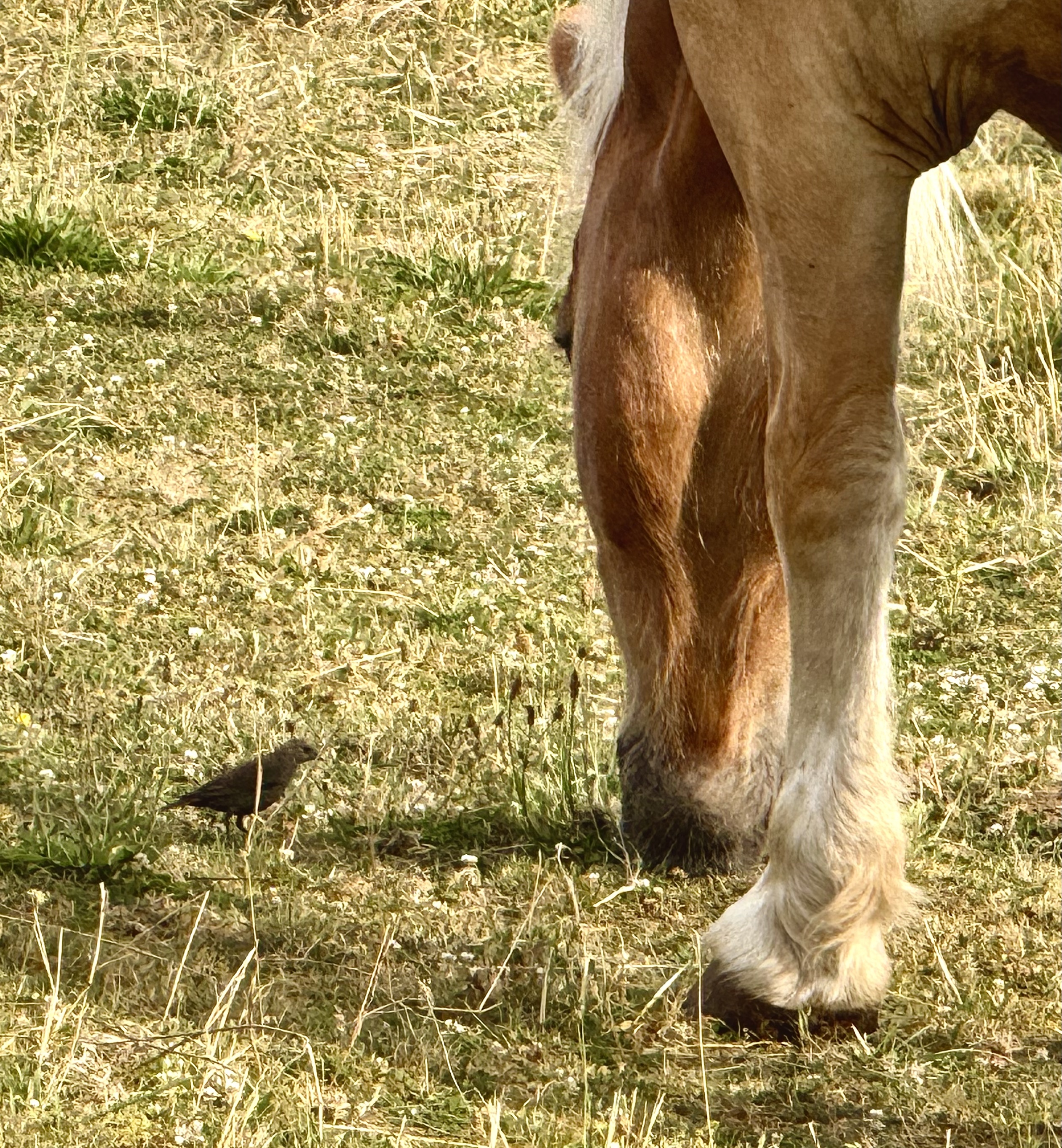
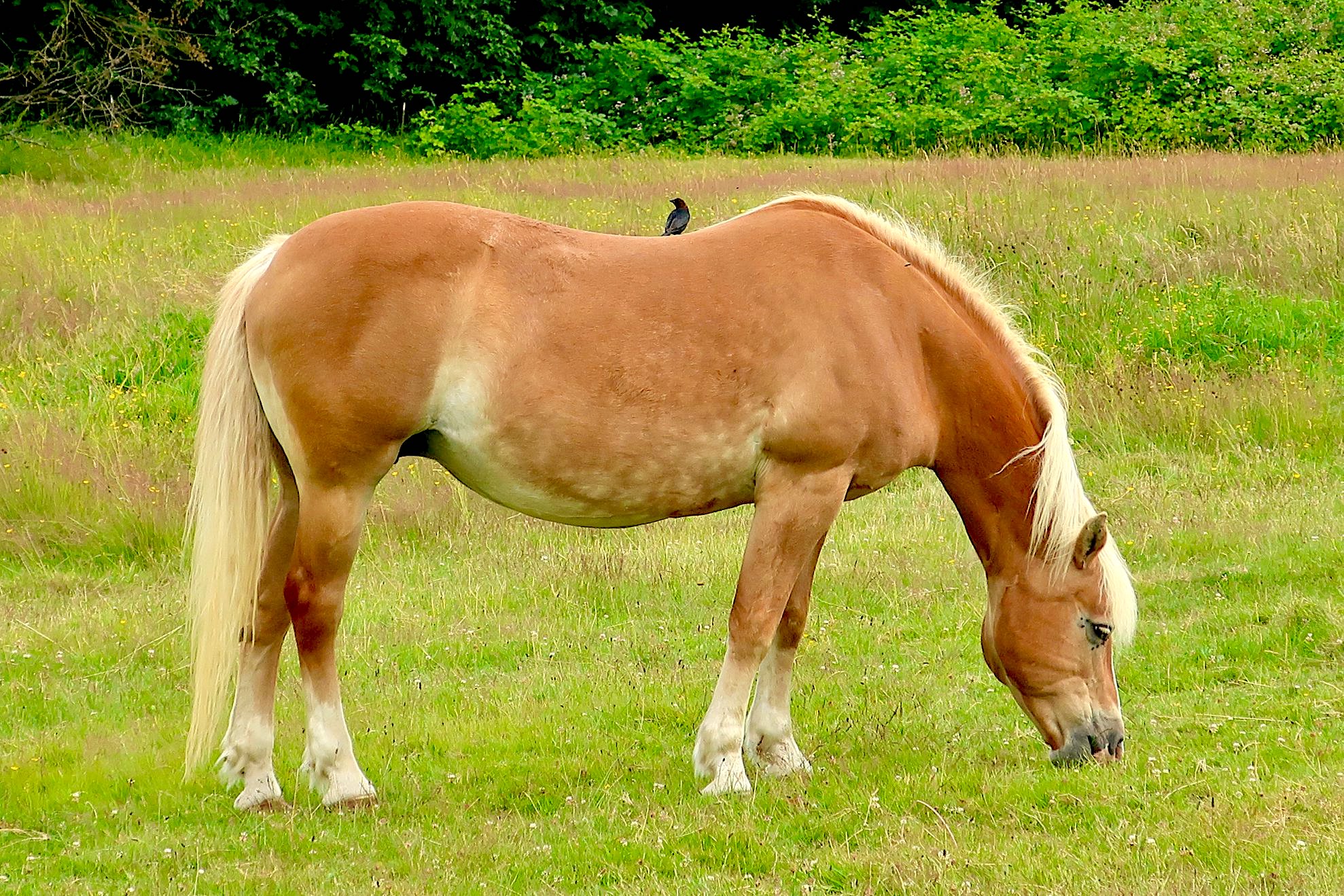
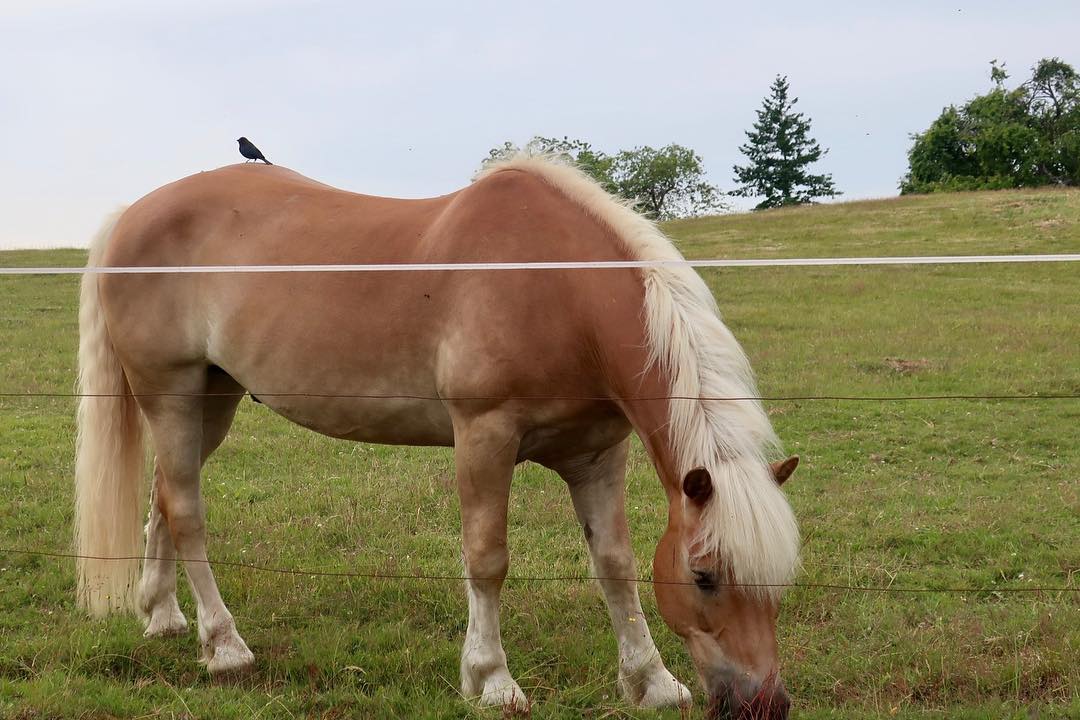
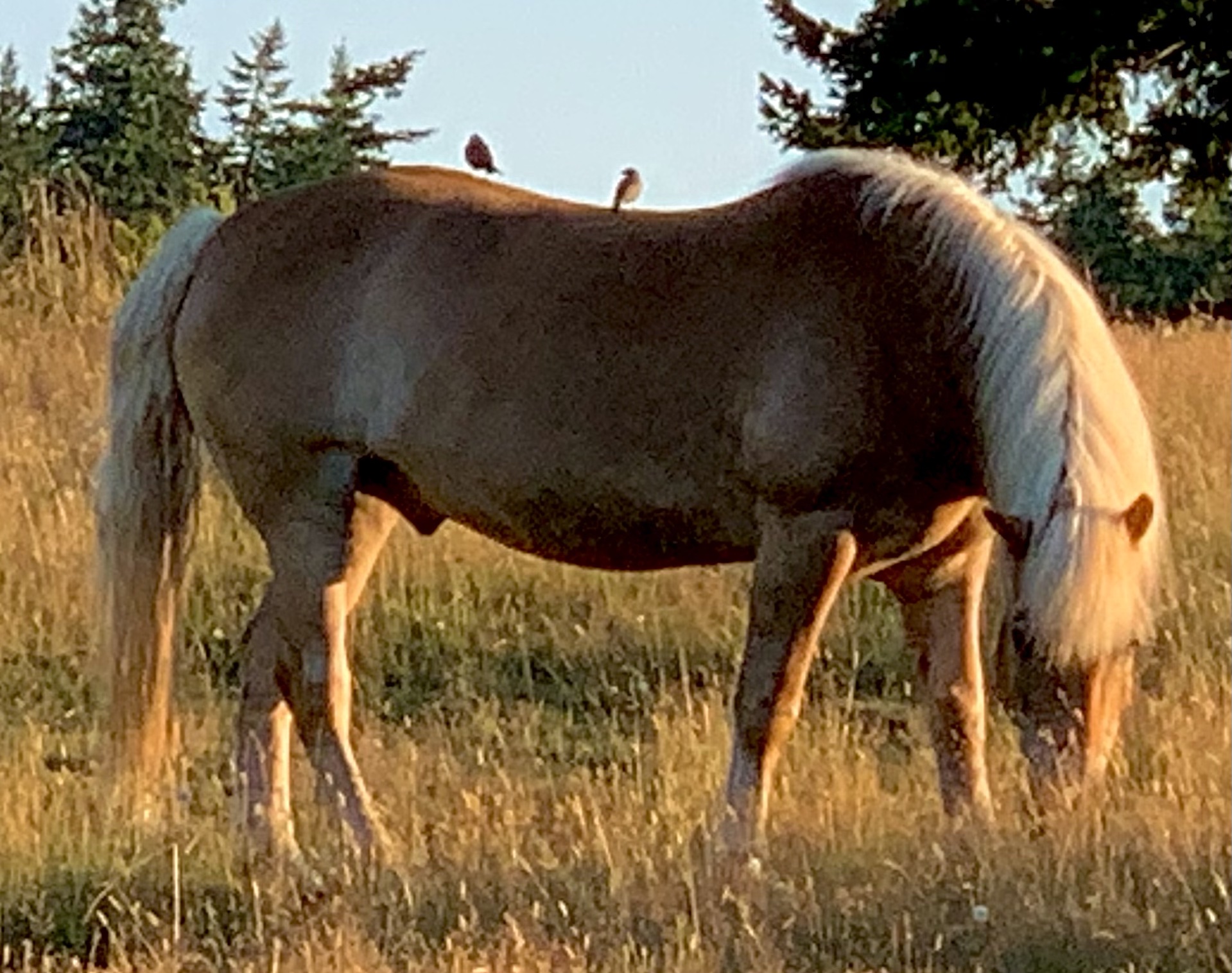
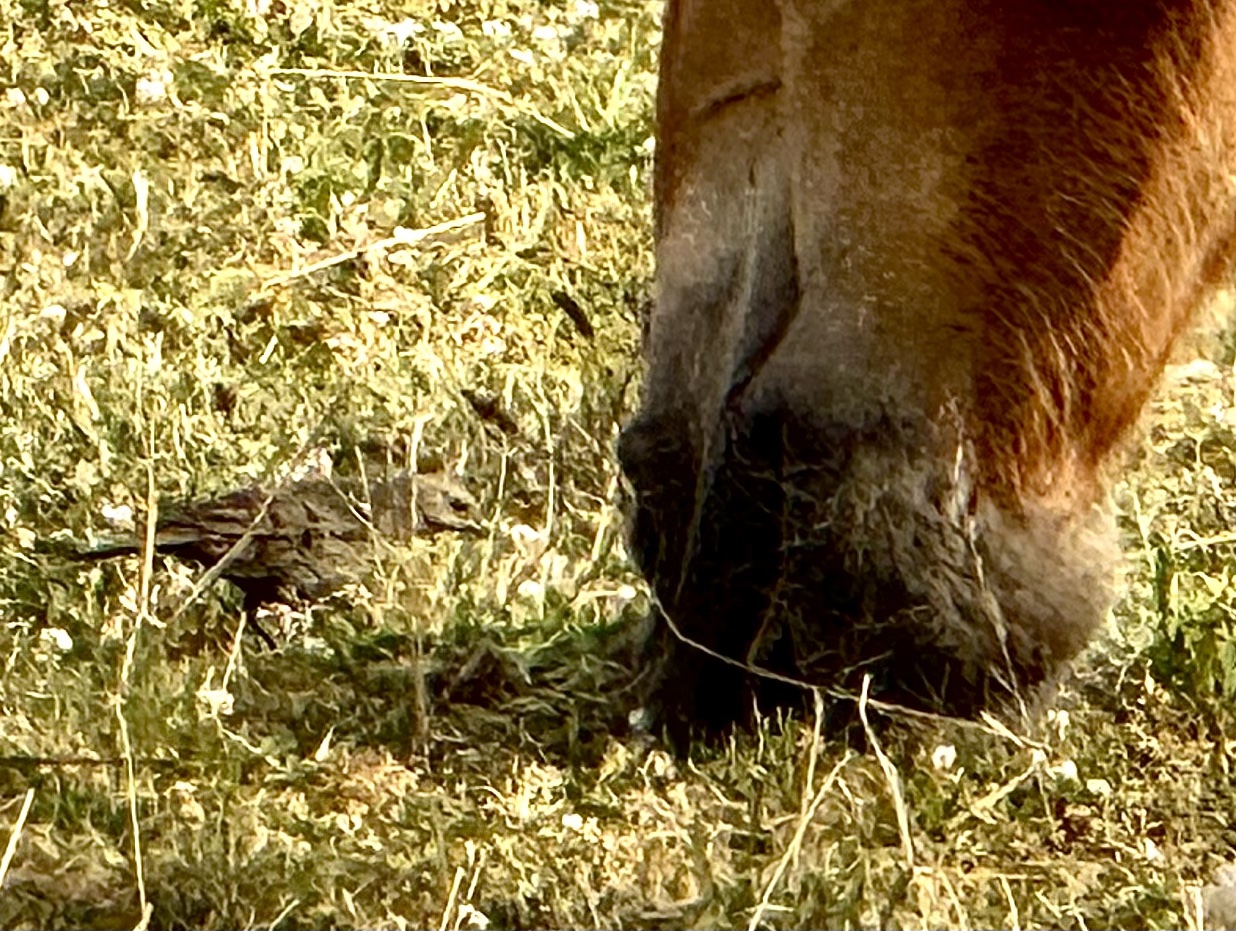
We all need someone along for the ride with us, blessing us with their company — a precious friend who has our back and scratches it wonderfully – helping to keep the biting flies away by gobbling them up.
It is symbiosis at its best: a relationship built on mutual trust and helpfulness. In exchange for relief from annoying insects that a tail can’t flick off, a Haflinger horse serves up bugs on a smorgasbord landing platform located safely above farm cats and marauding coyotes.
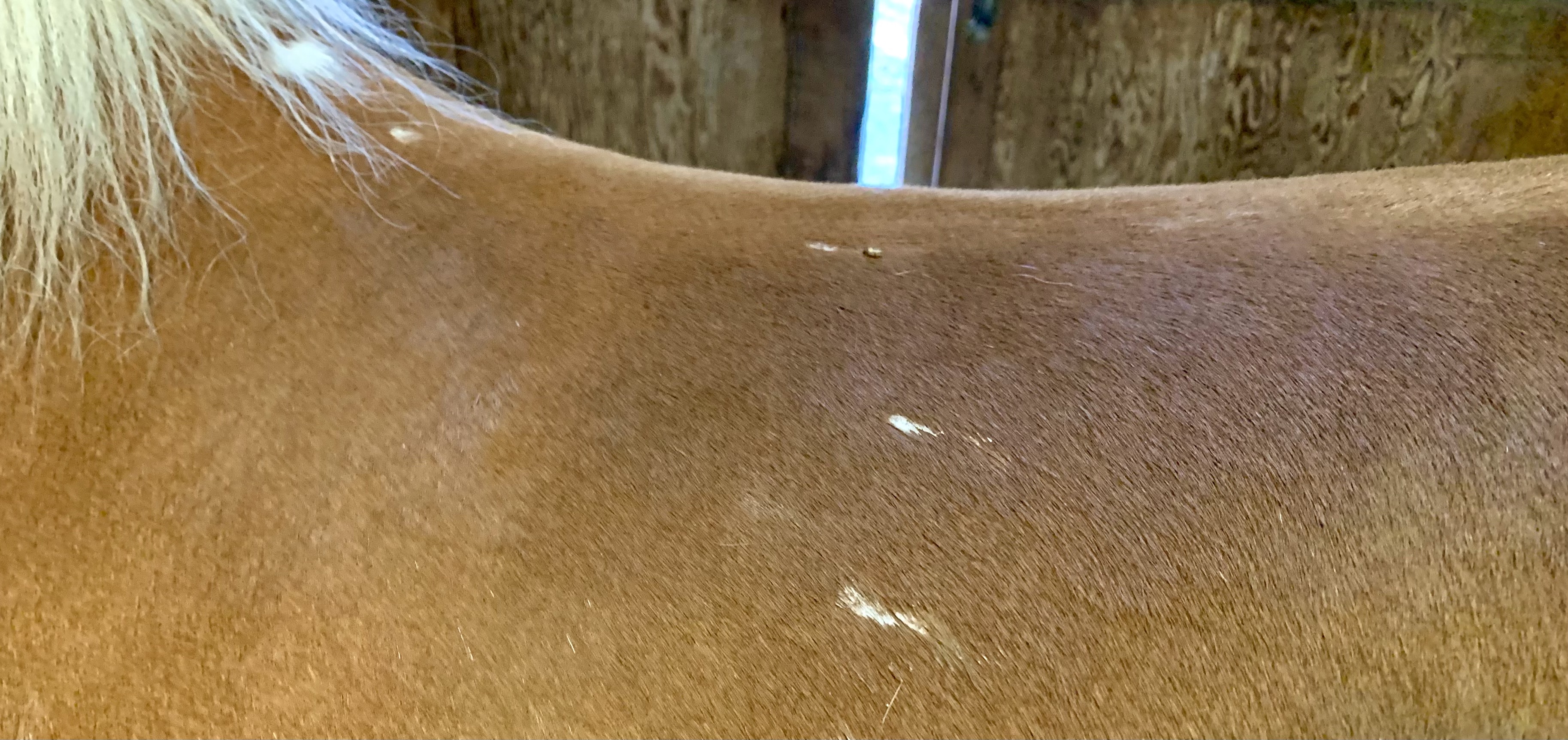
Thanks to their perpetual full meal deals, these cowbirds do leave generous “deposits” behind that need to be brushed off at the end of the day. Like any good friendship, tidying up the little messes left behind is a small price to pay for the bliss of companionable comradeship.
We’re buds after all – best forever friends, trotting the air while the earth sings along.
And this is exactly what friends are for: one provides the feast while the other provides the wings, even if things get messy.
Be winged. Be fed. Cleaning up together.
One-Time
Monthly
Yearly
Make a one-time or recurring donation to support daily Barnstorming posts
Now a red, sleepy sun above the rim Of twilight stares along the quiet weald, And the kind, simple country shines revealed In solitudes of peace, no longer dim. The old horse lifts his face and thanks the light, Then stretches down his head to crop the green. All things that he has loved are in his sight; The places where his happiness has been Are in his eyes, his heart, and they are good. ~Siegfried Sassoon from “Break of Day”
My husband and I grow old along with our horses – we are now past 70, just as a couple of our horses in “horse” years.
None of us, horses or humans, need to climb in the harness or put on the saddle to pull or carry the heavy loads of our former work lives.
It is a good life – each day treasured for its ordinariness.
Our retired horses feel the morning sun on their withers and the green blades under their feet, they scan the pasture for the sweetest tender patch to munch in the fields they know and love so well. They nap more now than in their younger years, taking breaks to let their heads hang relaxed and nodding, their tails slowly swishing at flies.
This morning was not so ordinary.
Waldheer van de Wortel (Wally), imported from Holland as a foal 27 years ago to be our herd stallion, let me know he wasn’t feeling well. He repeatedly pawed at the ground and the pasture gates, biting at his flank, trying to lie down and then get back up, not eating – clearly experiencing colicky belly pain that was getting worse.
I wondered if Wally’s time had come to bid him farewell. I had made a promise to my geriatric horses that I would not allow them to live in pain just because I didn’t want to let them go.
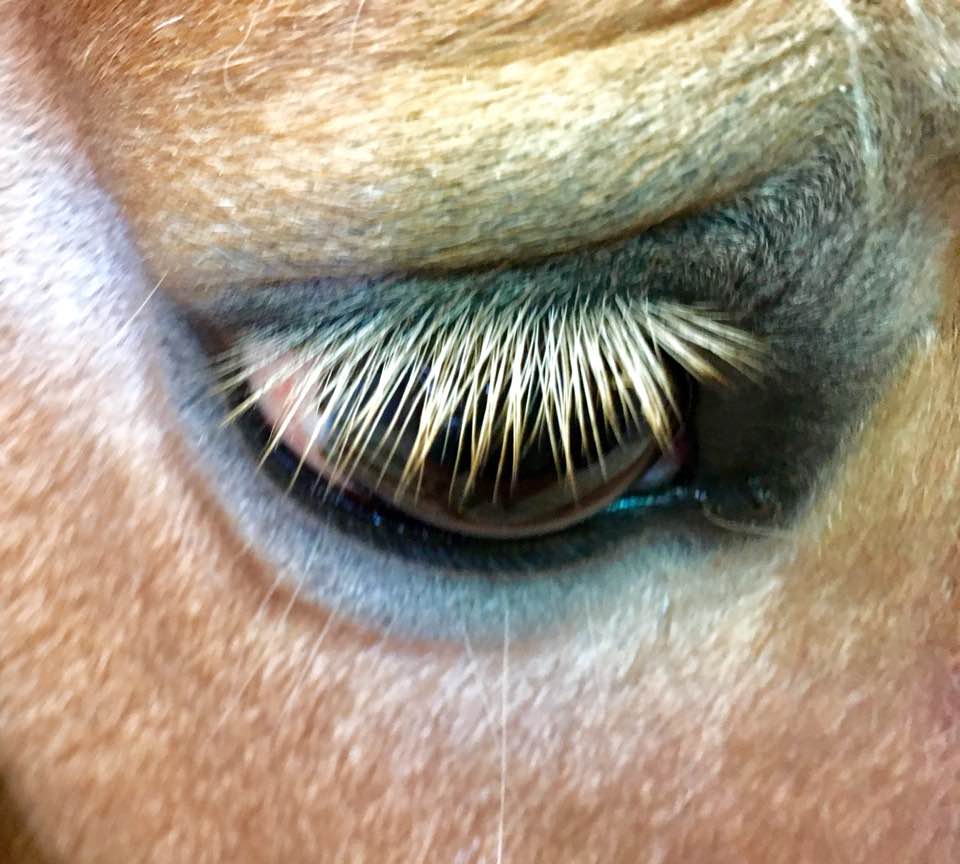
The vet came quickly and we talked about Wally’s options. She remarked about how he didn’t look his age, was holding weight well, his coat so sleek and shiny, his long-lashed eyes still bright and curious. But she said an older horse could often have repeated bouts of colic before the end, even if they temporarily improve with medical treatment.
I decided it was the right time to let him go to Haflinger heaven on a sunny summer morning, nibbling a mouthful of clover I offered him.
He was laid to sleep where he had lived nearly three decades.
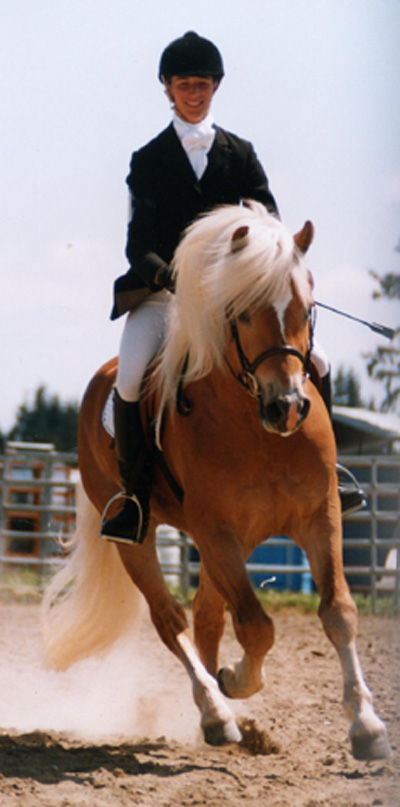
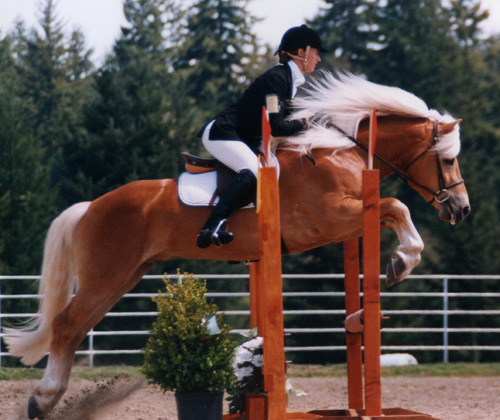
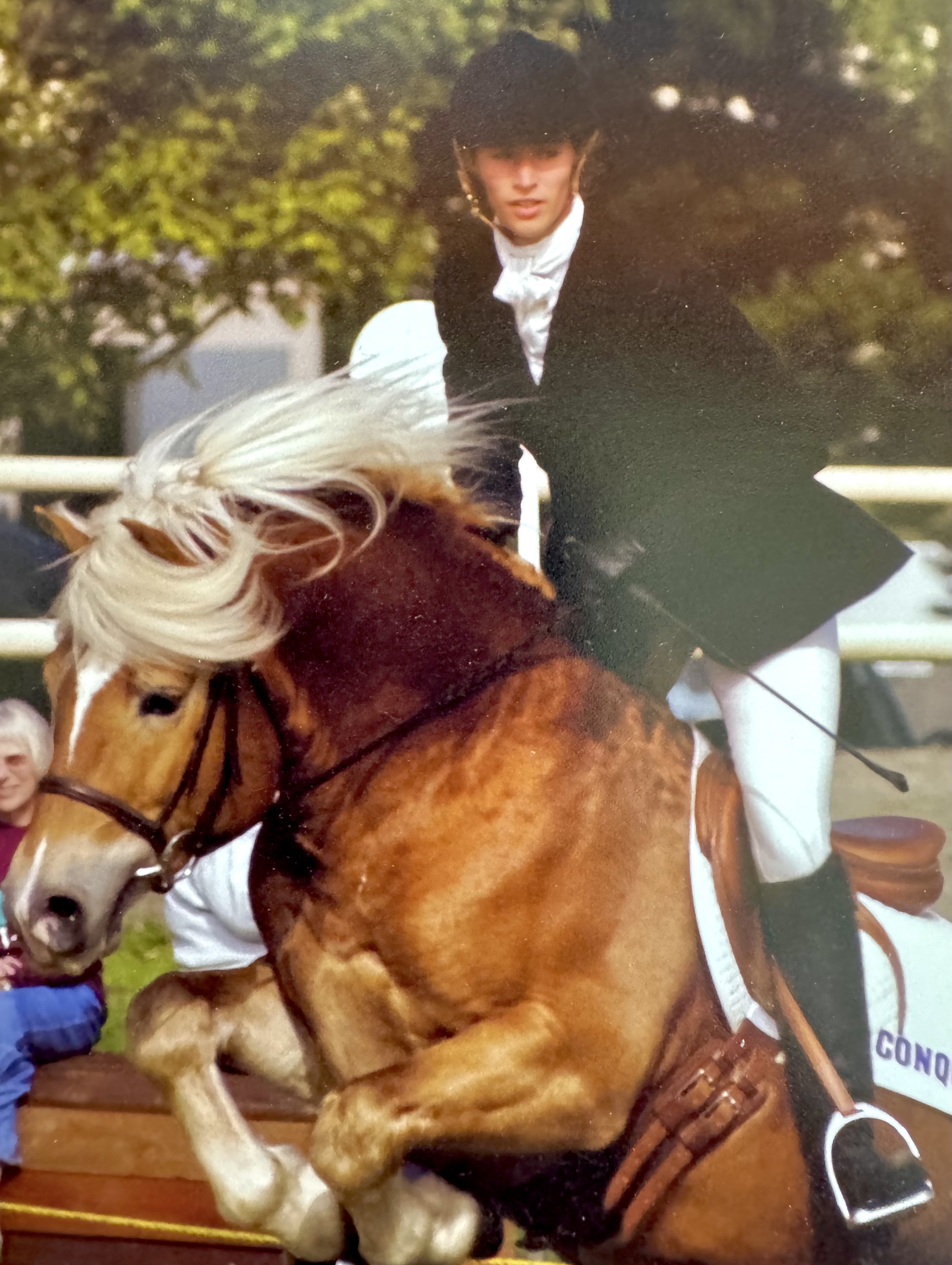
He leaves behind two sons who were his pasture buddies, a couple dozen offspring scattered around the country, and people who loved his ambassadorship for the Haflinger breed. In his younger days, he was an enthusiastic eventer in the northwest region, ridden by his trainer Jessica Heidemann. They both had an enthusiastic fan-following.
In his later years, Wally was patient and loving with our grandchildren and with us. He lived a good life in his place of happiness. I wanted him to die peacefully at home, without a worry.
It just doesn’t get much better than that.
Waldheer van de Wortel, 1998 foal in Holland27 year old WallyArt work made by a fan of Waldheer
One-Time
Monthly
Yearly
Make a one-time or recurring donation to support daily Barnstorming posts
Ten more miles, it is South Dakota. Somehow, the roads there turn blue, When no one walks down them. One more night of walking, and I could have become A horse, a blue horse, dancing Down a road, alone.
I have got this far. It is almost noon. But never mind time: That is all over. It is still Minnesota. Among a few dead cornstalks, the starving shadow Of a crow leaps to his death. At least, it is green here, Although between my body and the elder trees A savage hornet strains at the wire screen. He can’t get in yet.
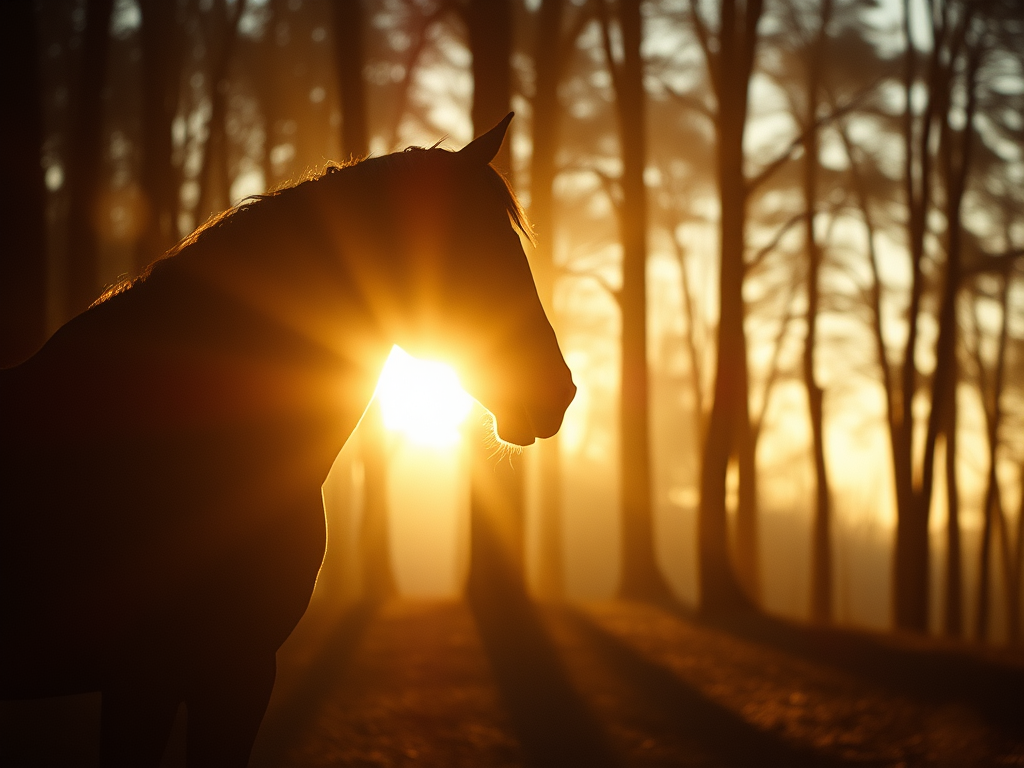
It is so still now, I hear the horse Clear his nostrils. He has crept out of the green places behind me. Patient and affectionate, he reads over my shoulder These words I have written. He has lived a long time, and he loves to pretend No one can see him. Last night I paused at the edge of darkness, And slept with green dew, alone. I have come a long way, to surrender my shadow To the shadow of a horse. ~James Wright “Sitting in a small screenhouse on a summer morning”
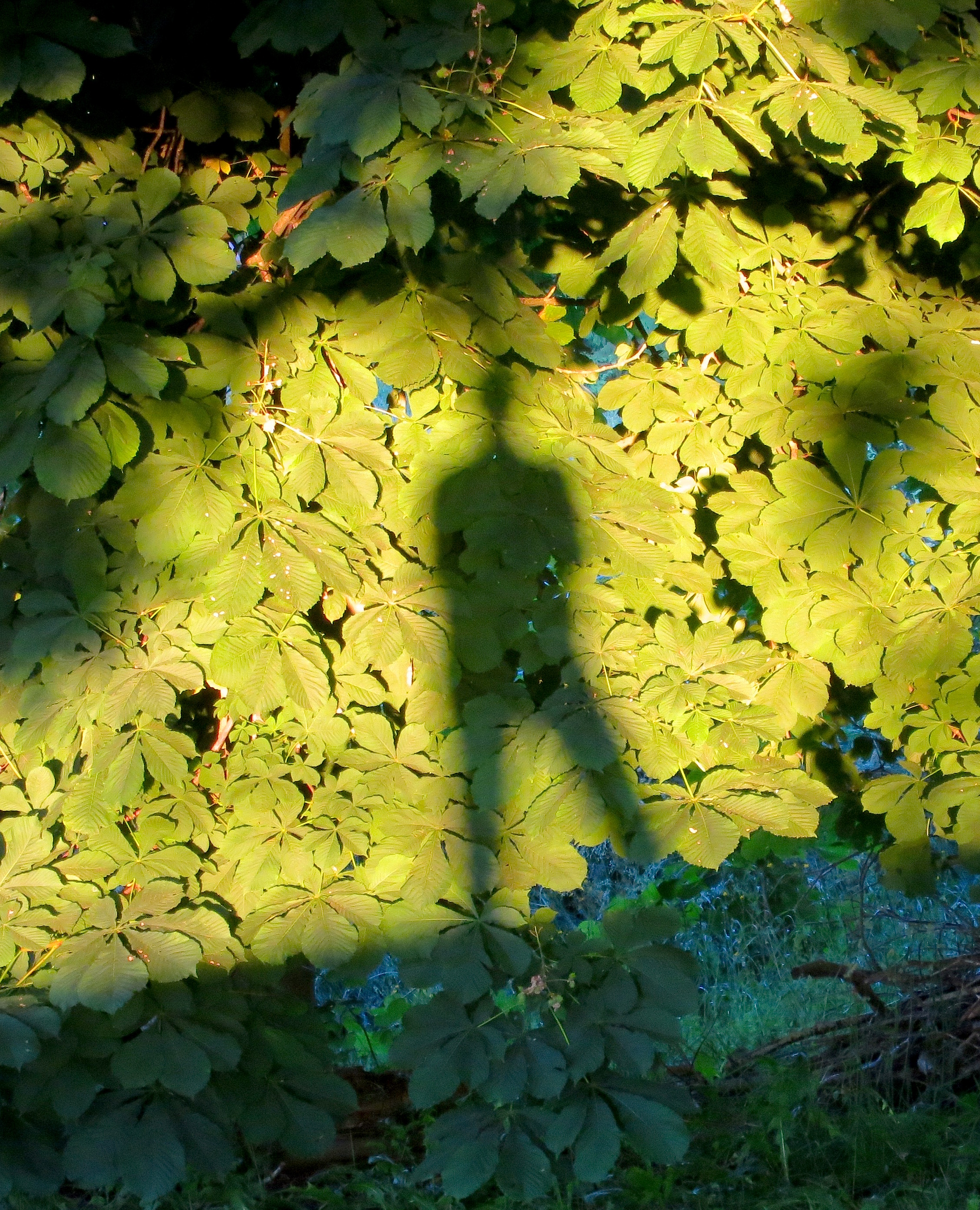
I have a sense of someone reading over my shoulder as I write.
It keeps me honest to feel that warm breath on my hair, its green smell reminding me where I am and who I am. It is encouraging to know what I do matters to someone.
I do not try to be anyone else.
When my words don’t say exactly what I hope, I feel forgiveness from the shadow beside me.
It’s all softness and warm breath. It’s all okay even when it’s not.
AI image created for this post
One-Time
Monthly
Yearly
Make a one-time or recurring donation to support daily Barnstorming posts
“Why, what’s the matter, That you have such a February face, So full of frost, of storm and cloudiness?” – William Shakespeare, Much Ado About Nothing
The wrap-up to February feels like spring is flirting with us. But will winter really ever be finished?
Our doldrums are deep; a brief respite of sun and warmth too rare.
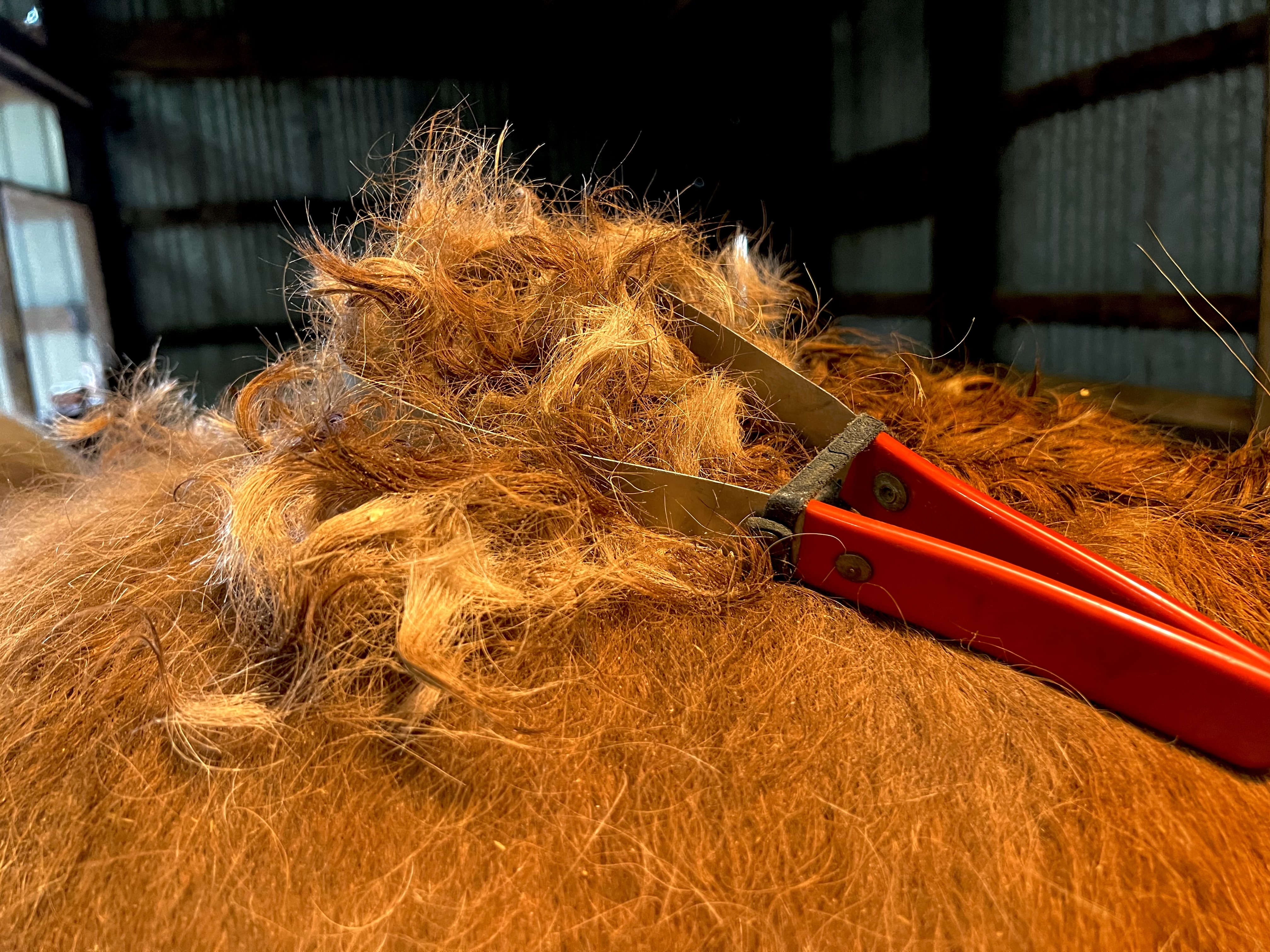
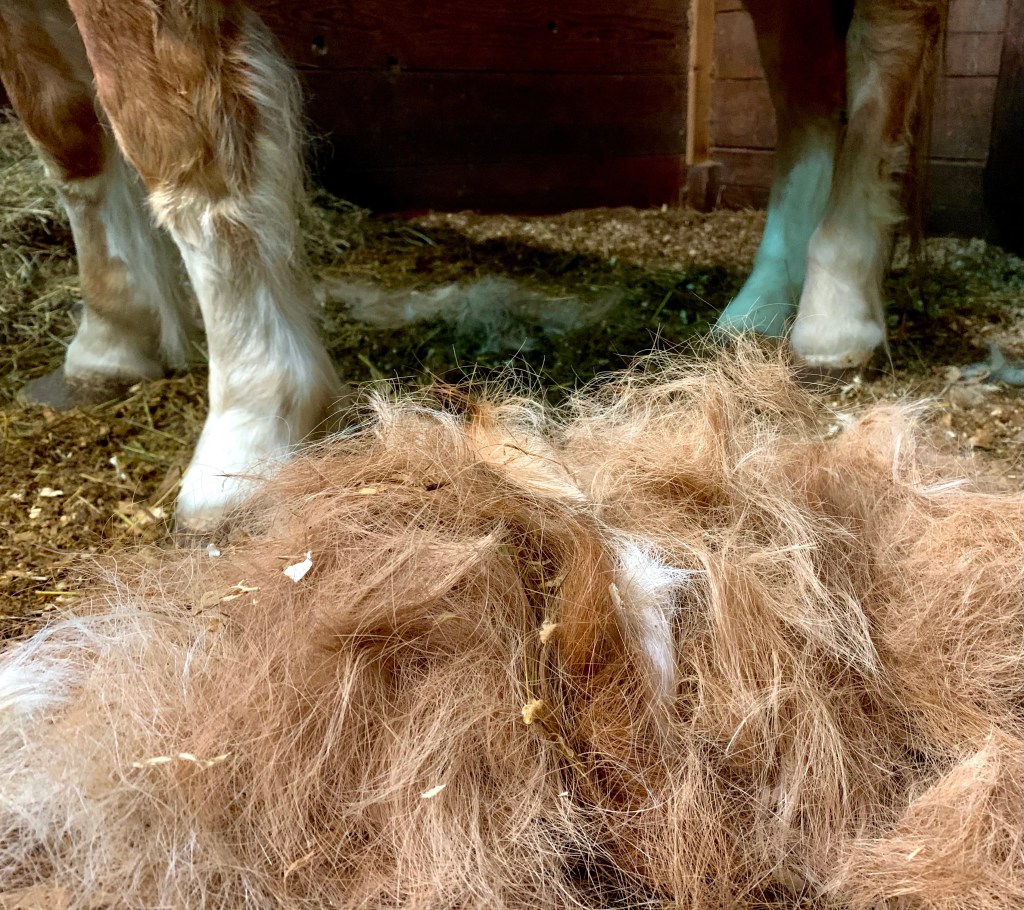
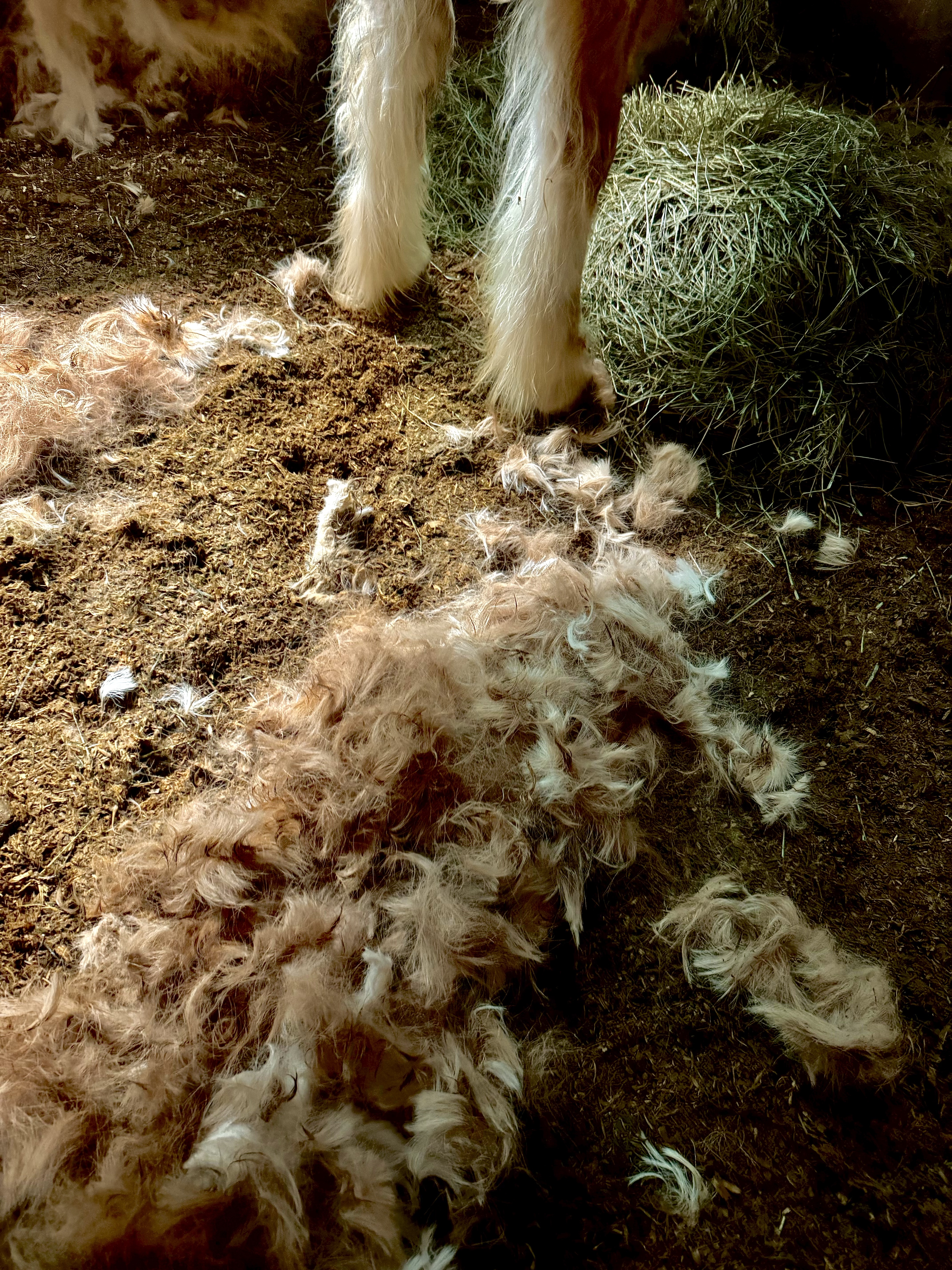
We feel it in the barn as we go about our daily winter routine. The Haflingers are impatient and yearn for freedom, over-eager when handled, sometimes banging on the stall doors in their frustration at being shut in, not understanding that the alternative is to stand outside all day in cold rain and wind. To compensate for their confinement, we start grooming off their thick winter coats, urging their hair to loosen and curry off in sheets over parts of their bodies, yet otherwise still clinging tight.
The horses are a motley crew right now, much like a worn ’60s shag carpet, uneven and in dire need of updating. I prefer that no one see them (or me) like this. Eventually I know the shag on my horses will come off, revealing the sheen of new short hair beneath, but when I look at myself, I’m unconvinced there is such transformation in store for me.
Cranky, I put one foot ahead of the other, oblivious to the subtle seasonal renewal around me, refusing to believe even in the possibility.
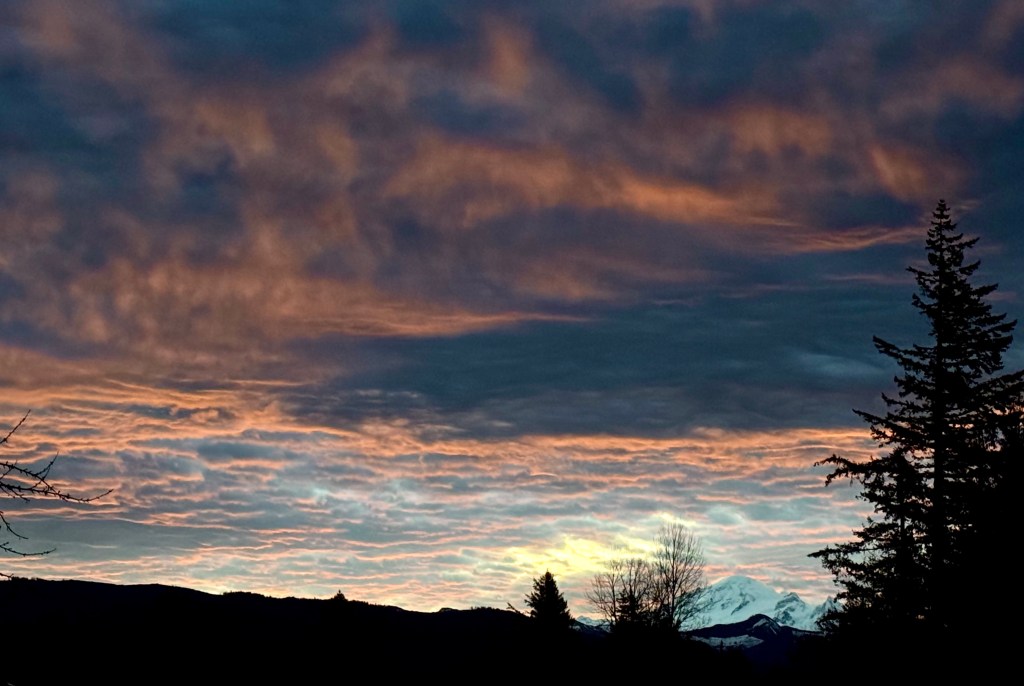
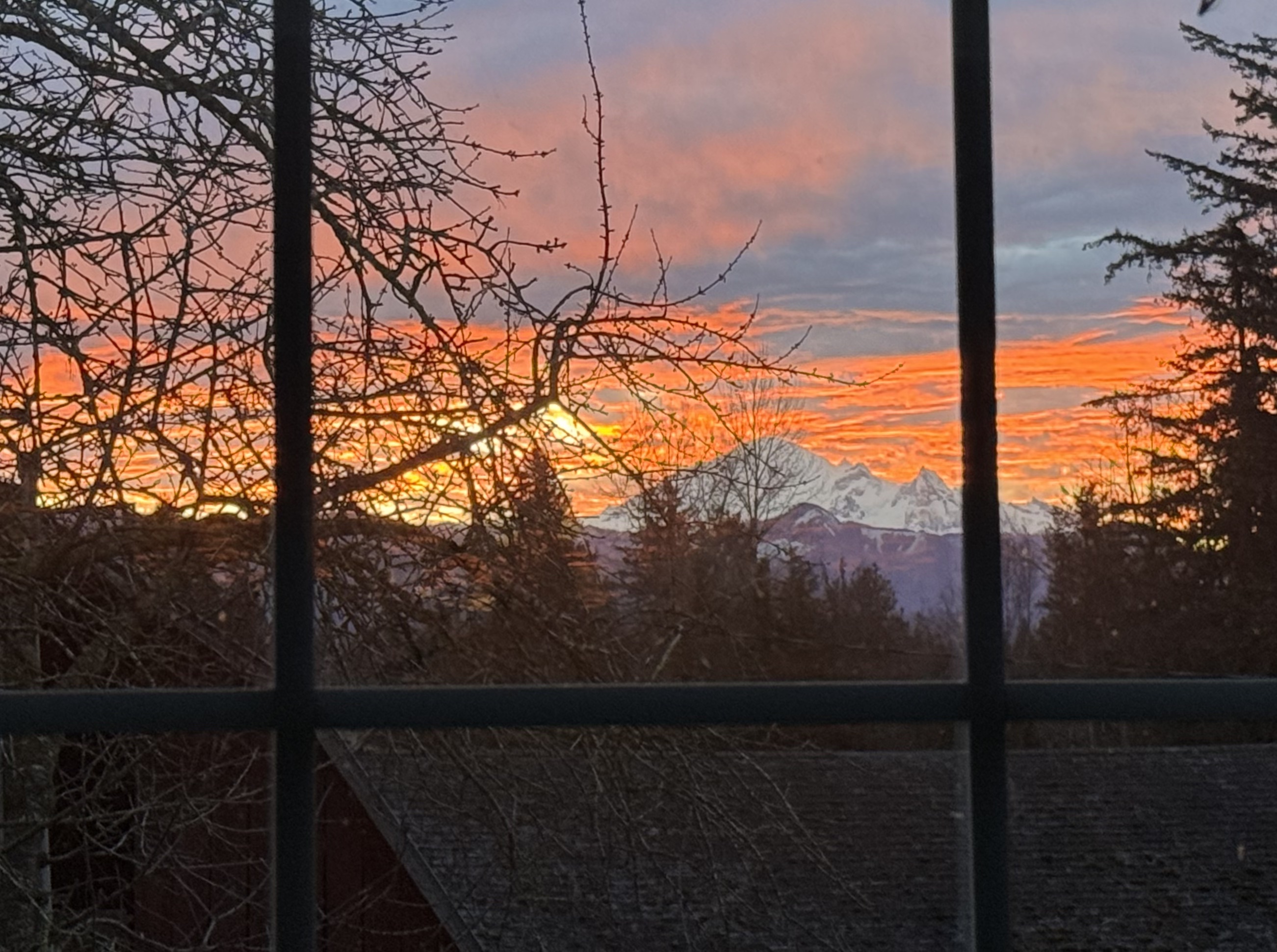
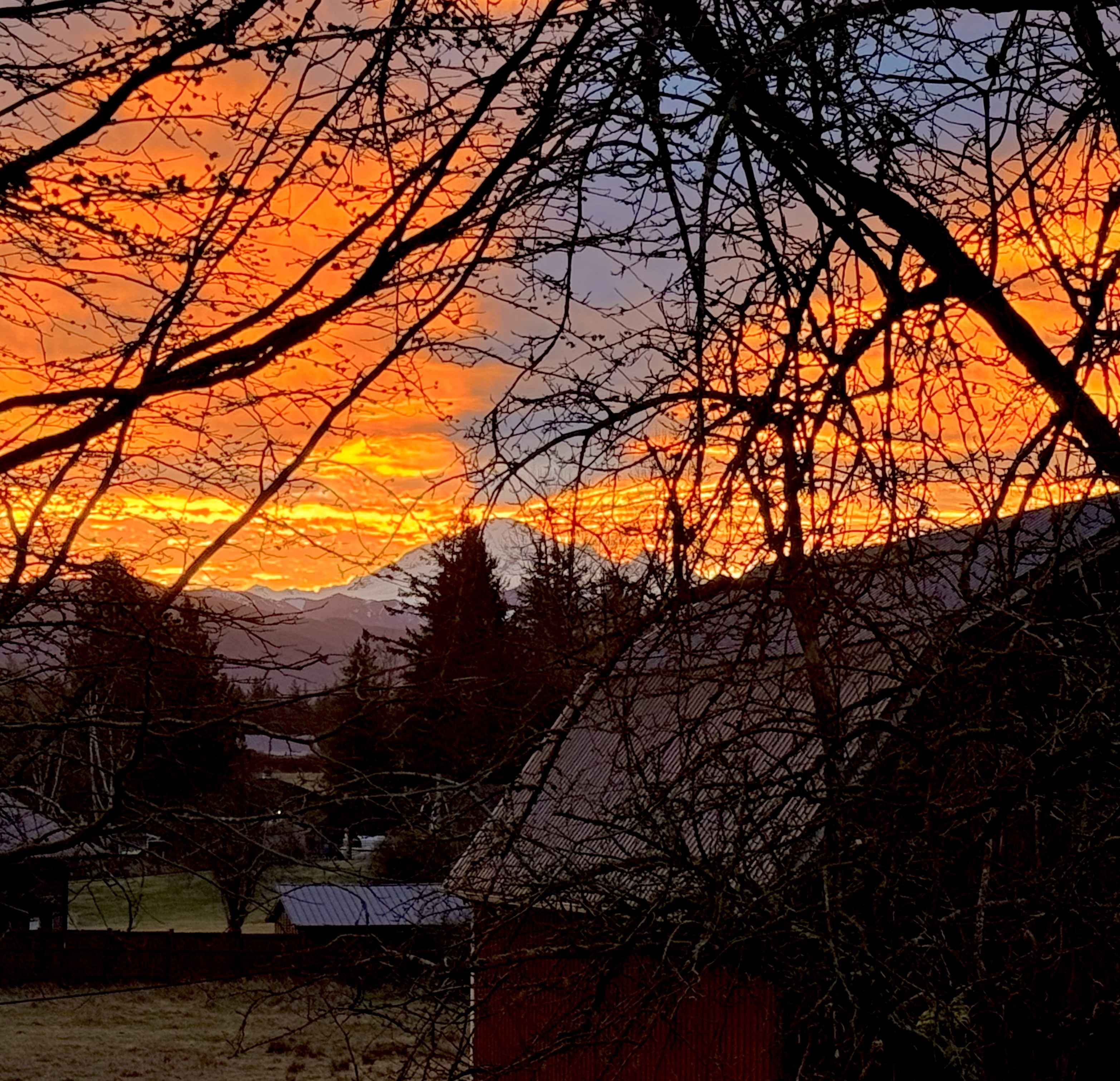
It happened today. Dawn broke bright and blinding so I headed outside and stumbled across something extraordinary.
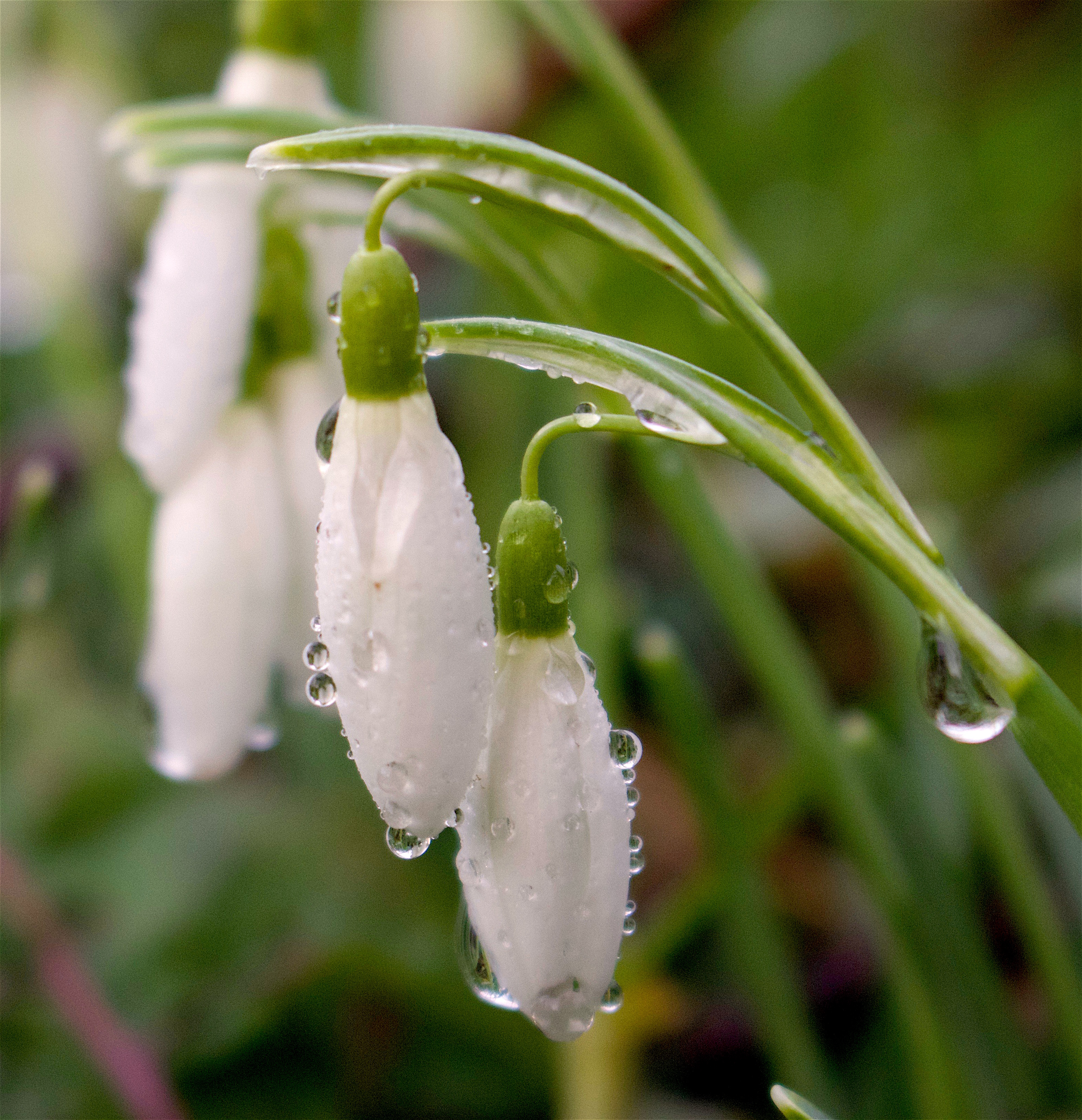
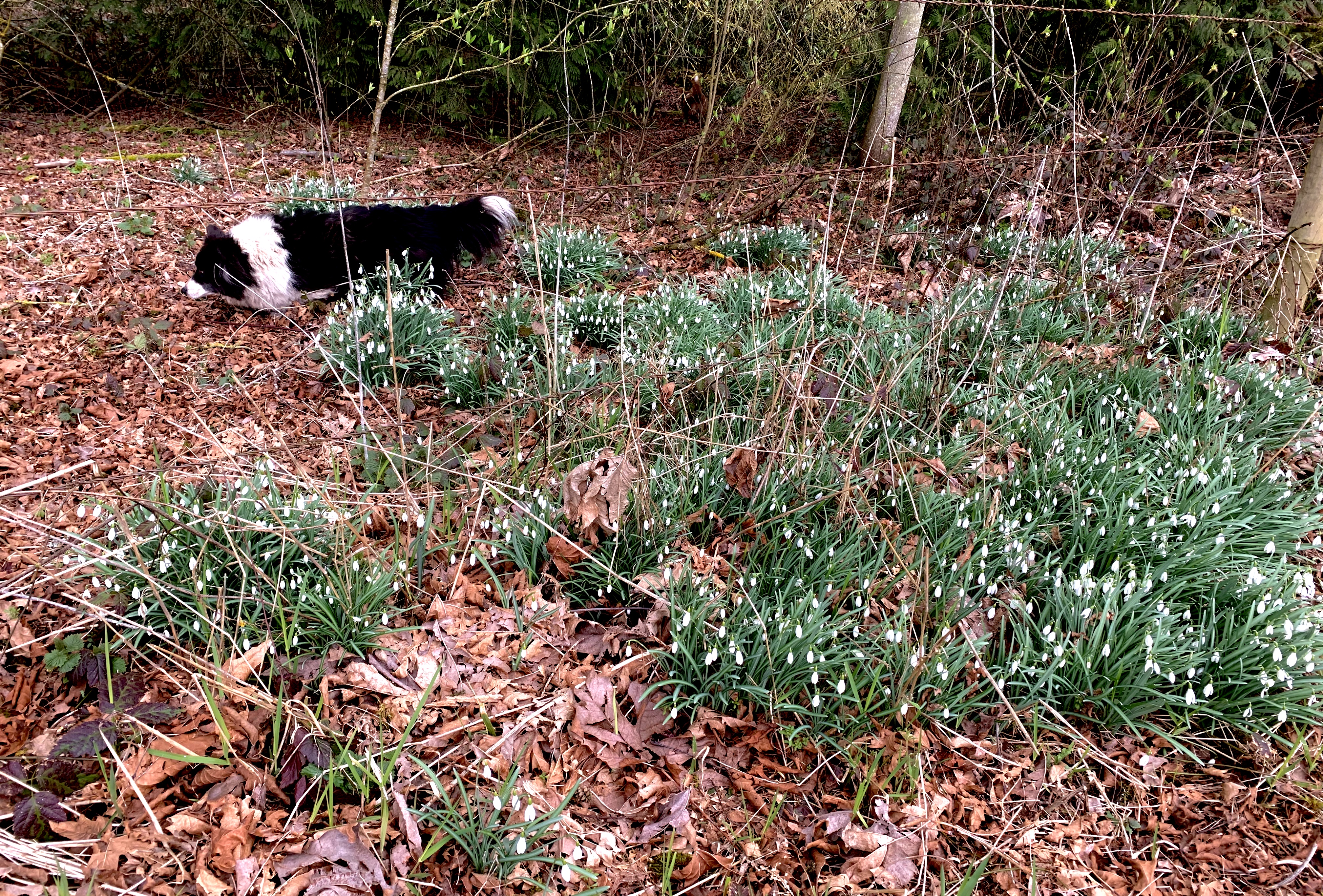
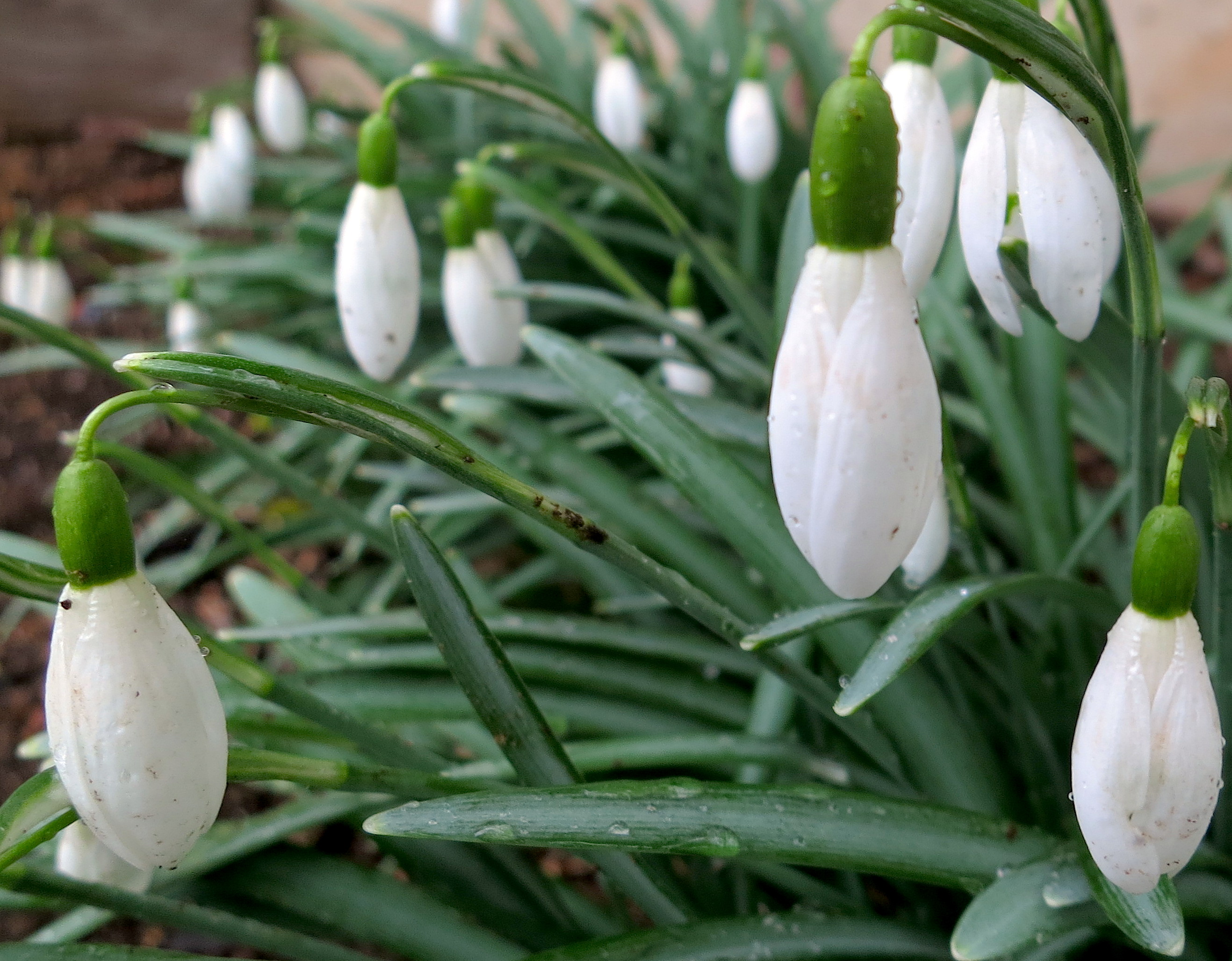
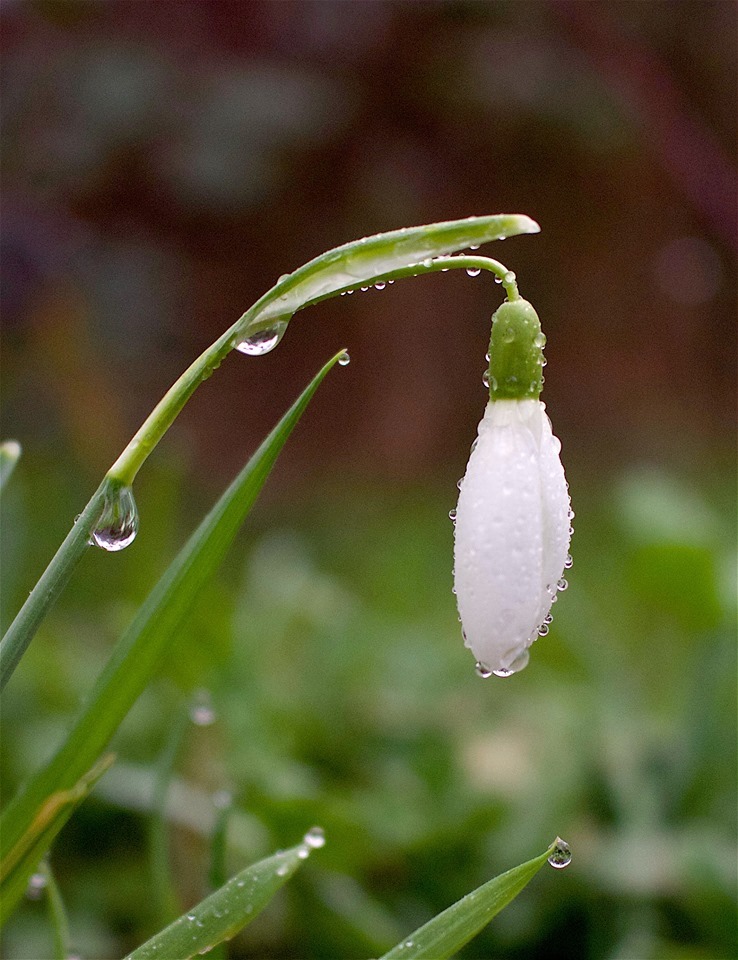
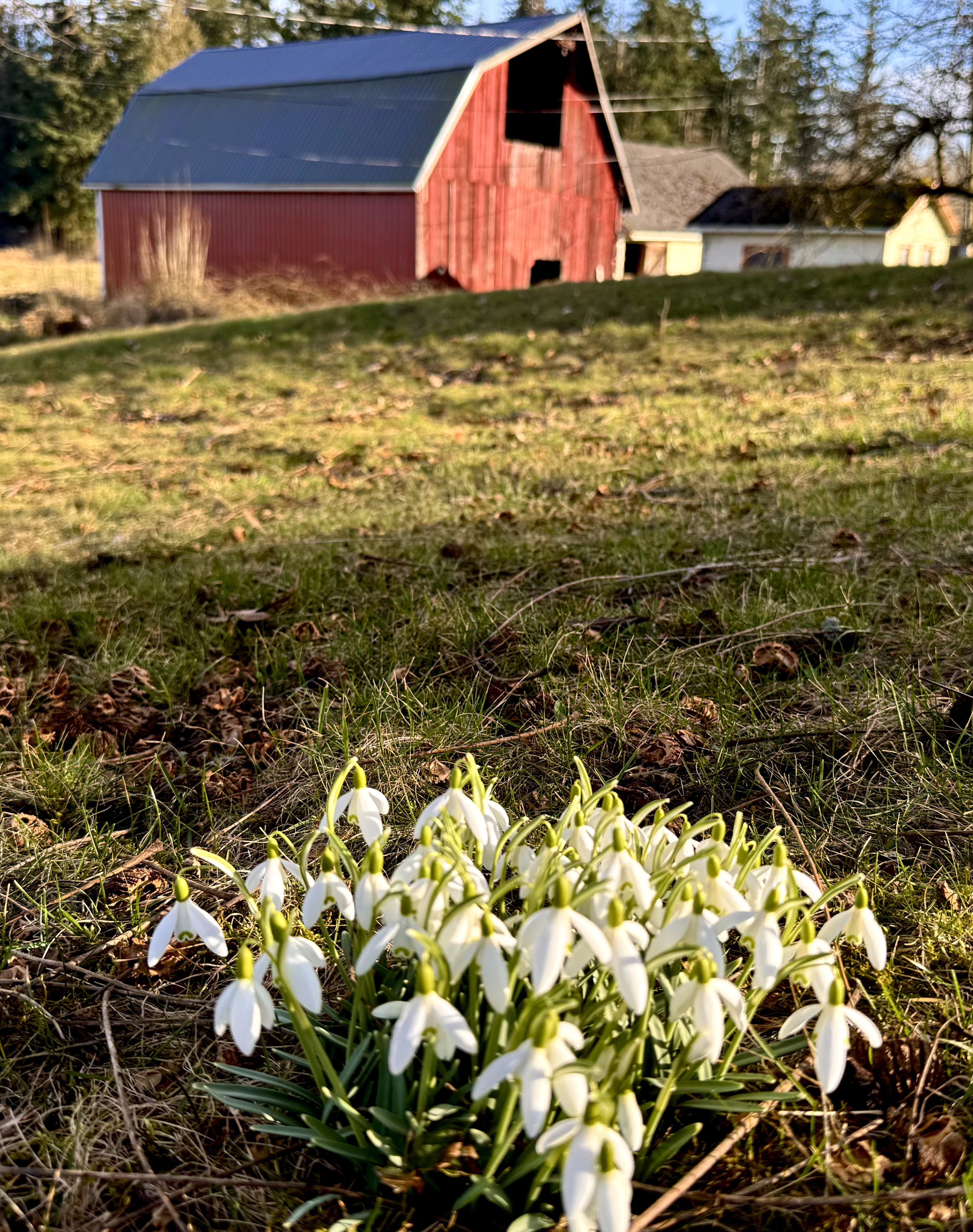
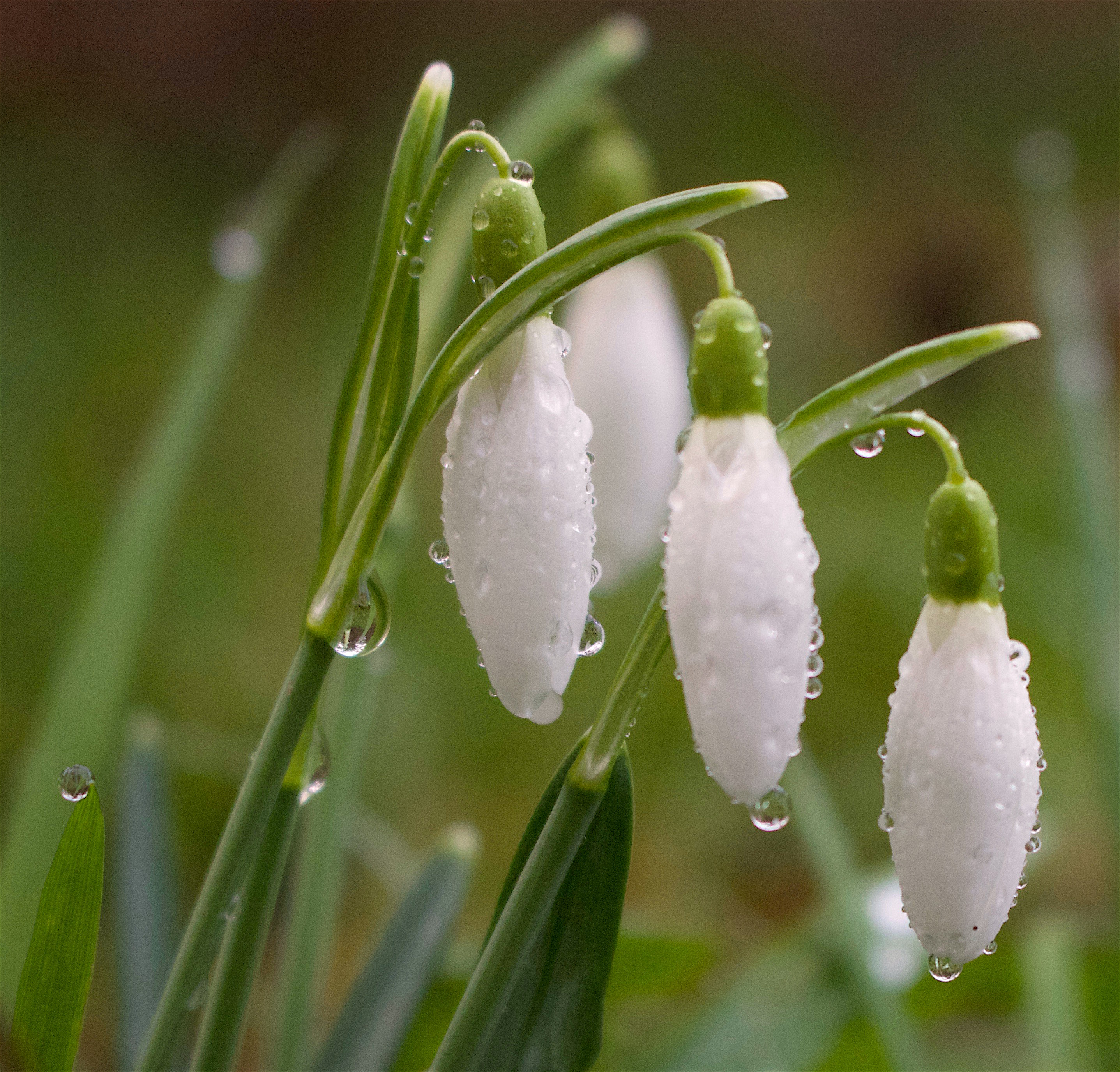
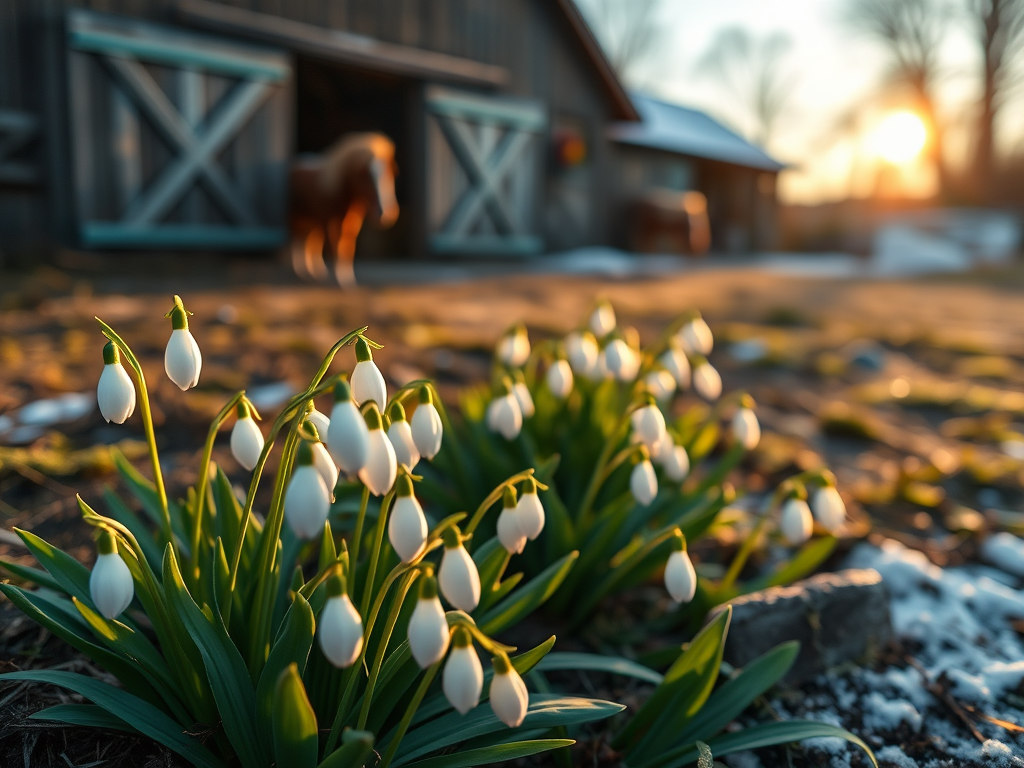
A patch of snowdrops sat blooming in a newly cleared space in our farmyard, visible now only because of bramble removal done last fall. These little white upside down flowers were planted decades ago around our house and yard. There they’ve been, year after year, harbingers of the long-awaited spring to come in a few short weeks, sometimes covered by the overgrowth and invisible to me in my self-absorbed blindness.
I was astonished that someone, many many years ago, had carried these bulbs around the farm, planting them, hoping they might bless another soul sometime somehow. The blossoms had sprung from their sleep beneath the covering of years of fallen leaves and blackberry vines.
It was as if I’d been physically hugged by this someone long dead, now flesh and blood beside me, with work-rough hands, and dirty fingernails, and broad brimmed hat, and a satisfied smile. This secret gardener is no long living, so I mentally reach back across those years in gratitude, showing my deep appreciation for the time and effort it took to place a foretaste of spring in an unexpected and hidden place.
I am thus compelled to look for ways to leave such a gift for someone to find 70 years from now as they likewise stumble blindly through too many gray days full of human drama, frailty and flaw. Though I will be long gone, I can reach across the years to grab them, hug them in their doldrums, lift them up and give them hope for what is to come.
It is the peeling away of winter’s shaggy coat, revealing the fresh smoothness of spring glistening underneath.
What an astonishing thought that it was done for me, and in reaffirming that promise of renewal, I might do it for another.
AI image created for this post
One-Time
Monthly
Yearly
Make a one-time or recurring donation to support daily Barnstorming posts














 Barnstorming