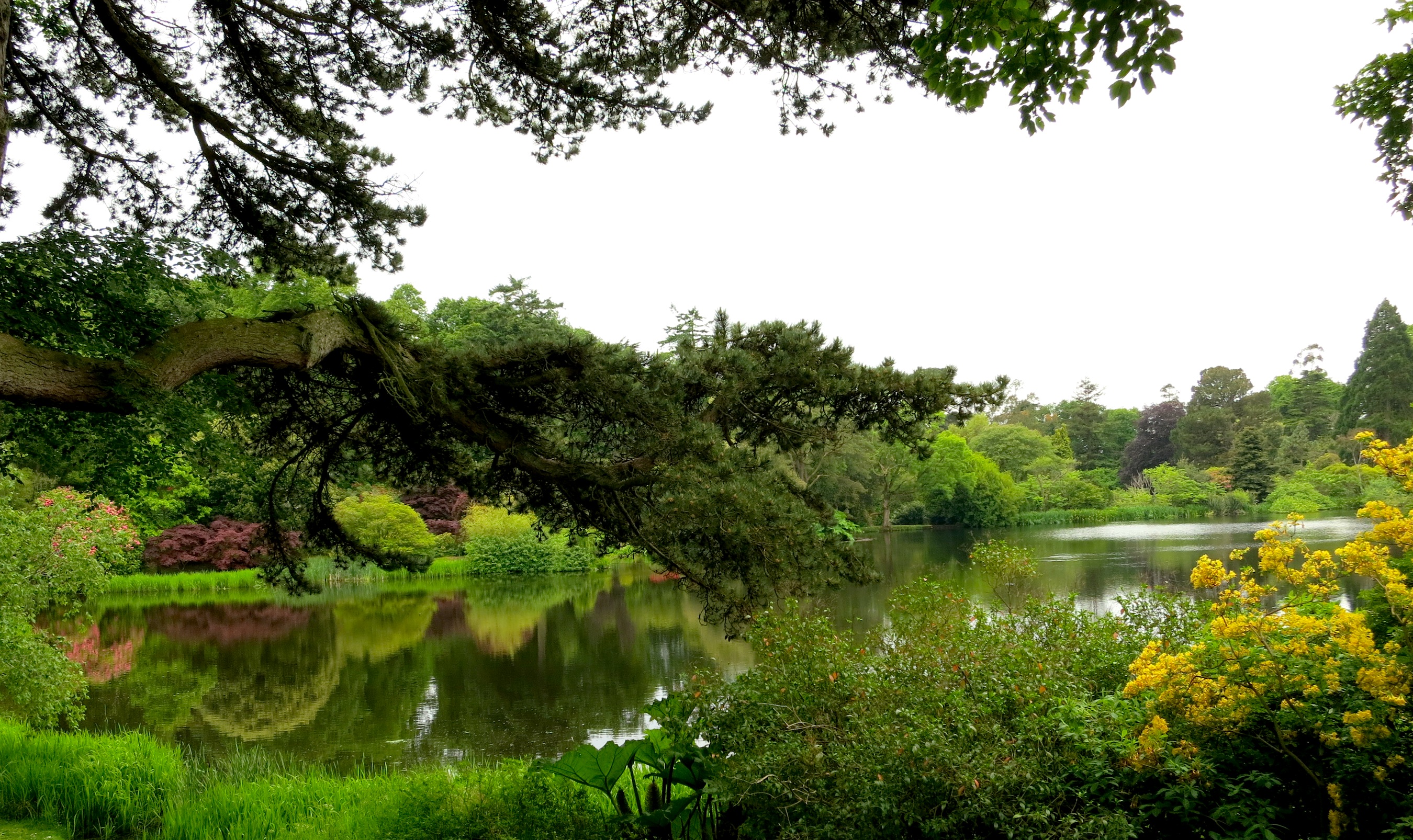
If ever we see those gardens again, The summer will be gone—at least our summer. Some other mockingbird will concertize Among the mulberries, and other vines Will climb the high brick wall to disappear.
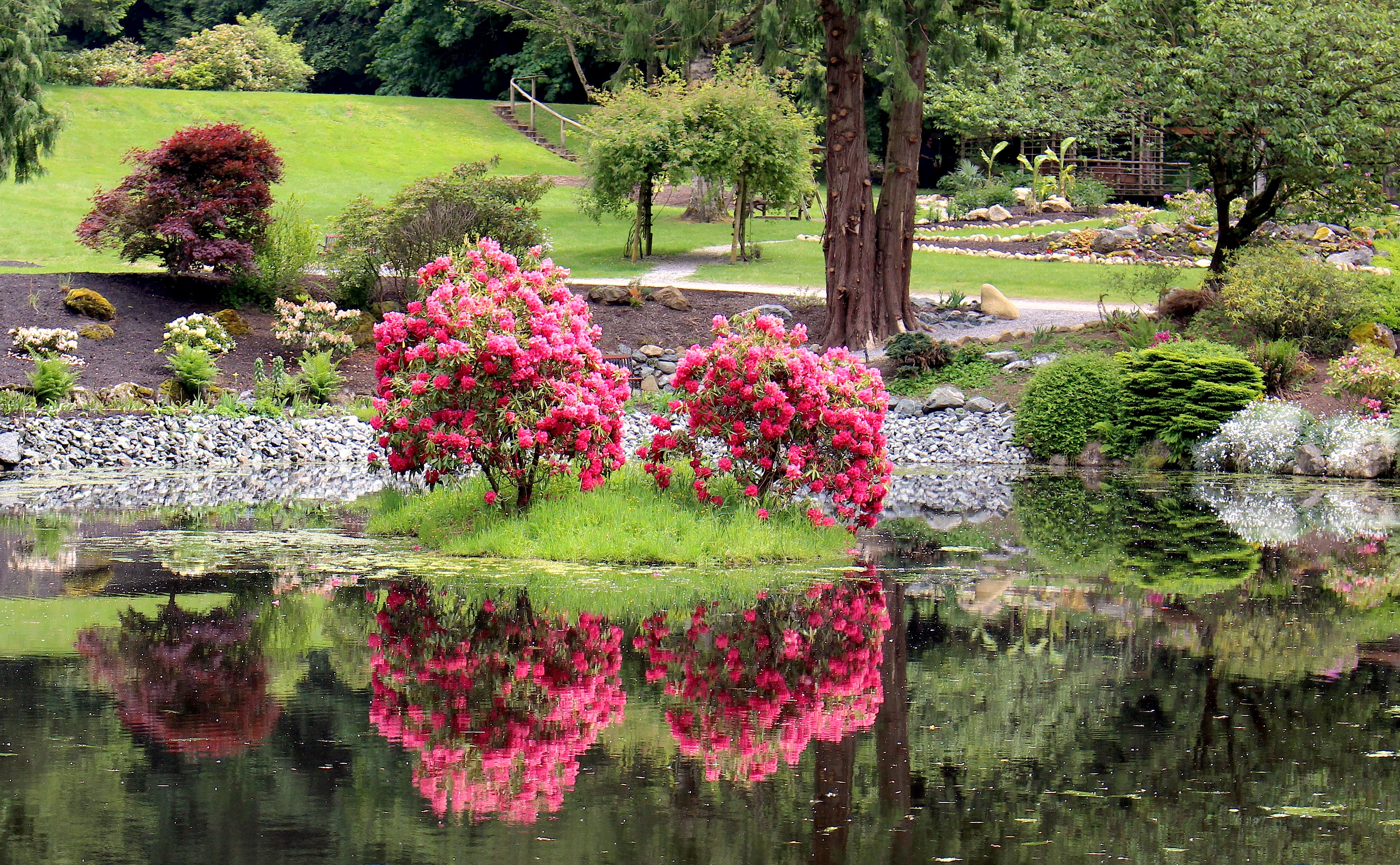
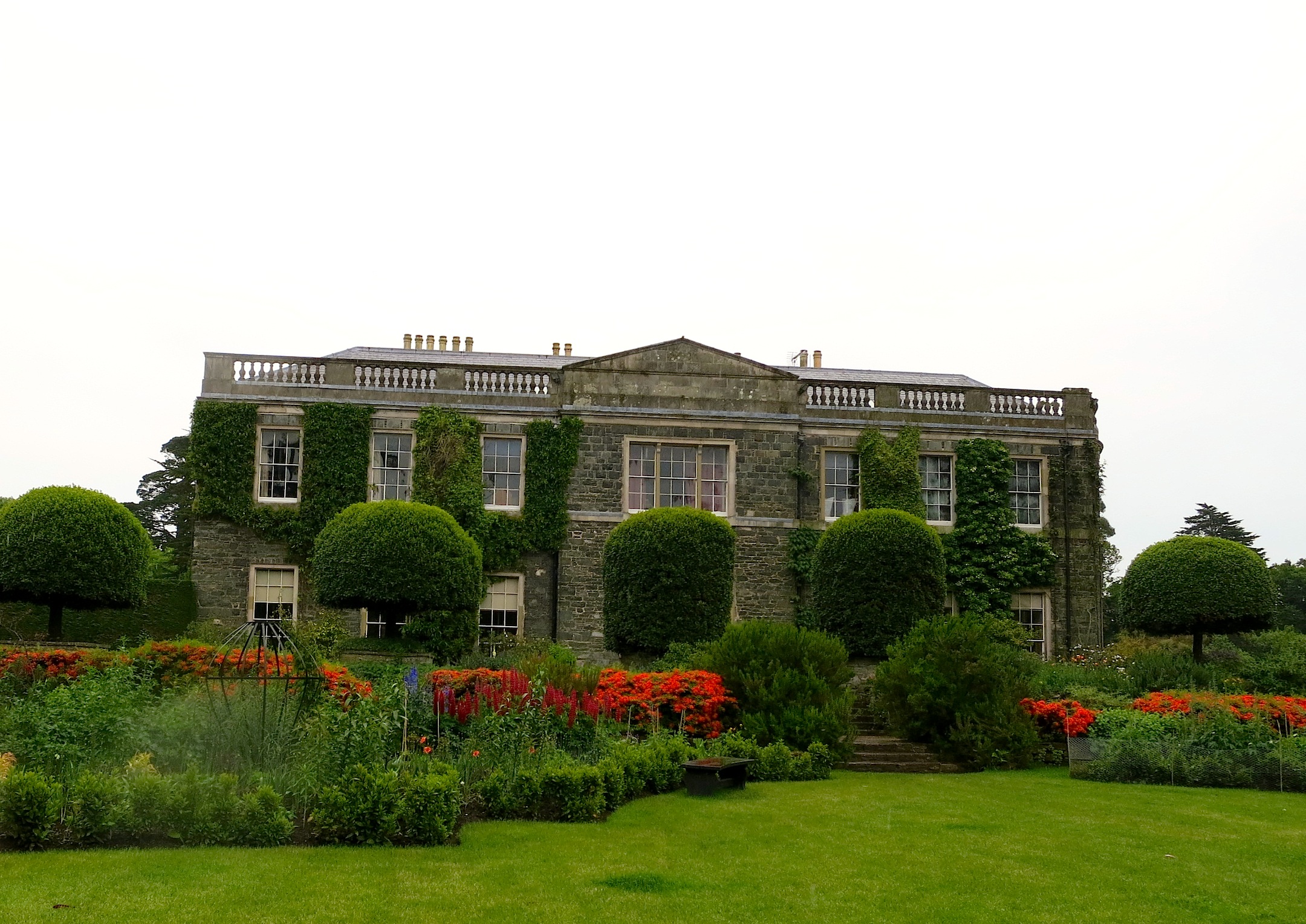
How many footpaths crossed the old estate— The gracious acreage of a grander age— So many trees to kiss or argue under, And greenery enough for any mood. What pleasure to be sad in such surroundings.
At least in retrospect. For even sorrow Seems bearable when studied at a distance, And if we speak of private suffering, The pain becomes part of a well-turned tale Describing someone else who shares our name.
Still, thinking of you, I sometimes play a game. What if we had walked a different path one day, Would some small incident have nudged us elsewhere The way a pebble tossed into a brook Might change the course a hundred miles downstream?
The trick is making memory a blessing, To learn by loss the cool subtraction of desire, Of wanting nothing more than what has been, To know the past forever lost, yet seeing Behind the wall a garden still in blossom. ~Dana Gioia “The Lost Garden” from Interrogations at Noon.
At present we are on the outside of the world, the wrong side of the door. . . . We cannot mingle with the splendours we see. But all the leaves of the New Testament are rustling with the rumour that it will not always be so. Some day, God willing, we shall get in. C.S. Lewis from The Weight of Glory
Memory can play tricks, either smoothing over the many potholes in the road of life, or digging the holes so deep, I fall in and am lost.
Whenever I am feeling regret for the things I have done, or all that I have left undone, I remember I have walked on paths of beauty beyond imagining.
I wouldn’t change much about what has been, knowing there is much more beauty to come.
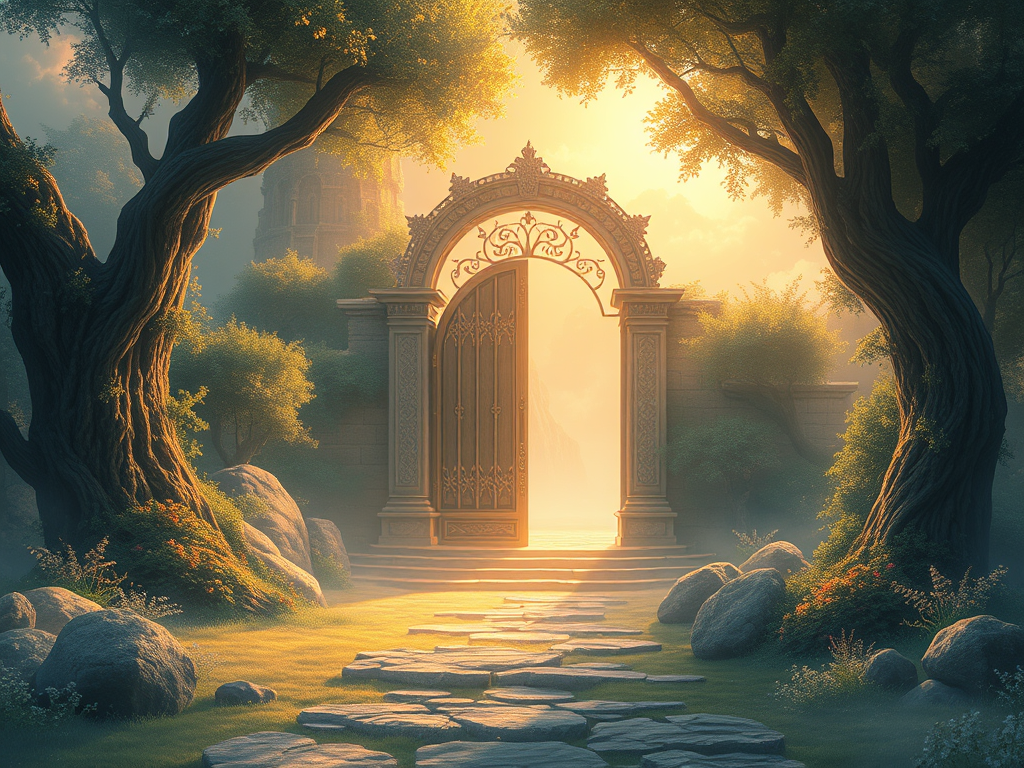
I remember gates and doors I could not open. Just a peek told me all I needed to know: there is a hidden, lost garden just waiting, still blooming, still inspiring, still brimming full of everything any of us could ever need.
AI image created for this post
One-Time
Monthly
Yearly
Make a one-time or recurring donation to support daily Barnstorming posts
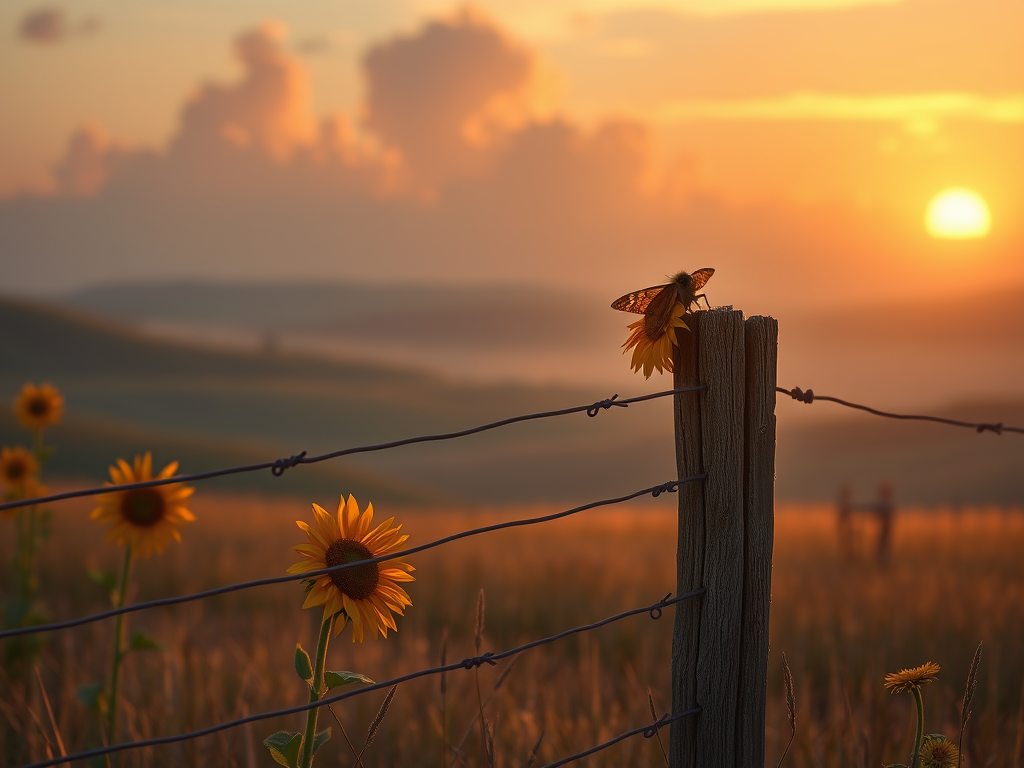
Something is calling to me from the corners of fields, where the leftover fence wire suns its loose coils, and stones thrown out of the furrow sleep in warm litters; where the gray faces of old No Hunting signs mutter into the wind, and dry horse tanks spout fountains of sunflowers; where a moth flutters in from the pasture, harried by sparrows, and alights on a post, so sure of its life that it peacefully opens its wings. ~Ted Kooser “In the Corners of Fields” from Flying at Night.
I am a visitor here, even though we’ve lived here for more than 30 years.
There is something to be discovered in the field each day if I make an effort to look and listen.
My Merlin app on my phone tells me the birds I hear around me. A photo of a wildflower or weed is identified by Google. The jet flight tracks overhead are pinpointed by another app saying who is flying where.
Yet I’m placed right here by my Maker. He knows where I am at all times, the words I write, the thoughts I pray.
I try to be at peace in these turbulent times: to be sure of this life I’m given, to be sure to Whom I belong, to simply open my wings to the light, to be ready to fly when my time comes.
AI image created for this post
One-Time
Monthly
Yearly
Make a one-time or recurring donation to support daily Barnstorming posts
What seemed to be the end proved to be the beginning… Suddenly a wall becomes a gate. ~Henri Nouwen from Gracias! A Letter of Consolation
As Christians we do not believe in walls, but that life lies open before us; that the gate can always be unbarred; that there is no final abandonment or desertion. We do not believe that it can ever be “too late.”
We believe that the world is full of doors that can be opened. Between us and others. Between the people around us. Between today and tomorrow. Our own inner person can be unlocked too: even within our own selves, there are doors that need to be opened.
If we open them and enter, we can unlock ourselves, too, and so await whatever is coming to free us and make us whole. ~ Jörg Zink from “Doors to the Feast”
What we call the beginning is often the end And to make an end is to make a beginning. The end is where we start from.
We shall not cease from exploration And the end of all our exploring Will be to arrive where we started And know the place for the first time. Through the unknown, unremembered gate When the last of earth left to discover Is that which was the beginning; ~T.S. Eliot from “Little Gidding” The Four Quartets
There we shall rest and we shall see; we shall see and we shall love; we shall love and we shall praise. Behold what shall be in the end and shall not end. ~Augustine of Hippo ‘The City of God,’ Bk. XXII, Chap. 30
We stand outside the gate, incapable of opening it ourselves, watching as God Himself throws it open wide.
We choose to enter this unknown, unremembered gate into the endless length of days, where we shall see and we shall love, we shall love and we shall praise –
or we choose to remain outside, lingering in the familiar confines of what we know, though it destroys us.
AI image created for this post
With thanks to conductor, composer, singer Ben Kornelis for putting these beautiful Augustinian words to music
One-Time
Monthly
Yearly
Make a one-time or recurring donation to support daily Barnstorming posts
Because I have come to the fence at night, the horses arrive also from their ancient stable. They let me stroke their long faces, and I note in the light of the now-merging moon
how they, a Morgan and a Quarter, have been by shake-guttered raindrops spotted around their rumps and thus made Appaloosas, the ancestral horses of this place.
Maybe because it is night, they are nervous, or maybe because they too sense what they have become, they seem to be waiting for me to say something
to whatever ancient spirits might still abide here, that they might awaken from this strange dream, in which there are fences and stables and a man who doesn’t know a single word they understand. ~Robert Wrigley “After a Rainstorm”from Beautiful Country
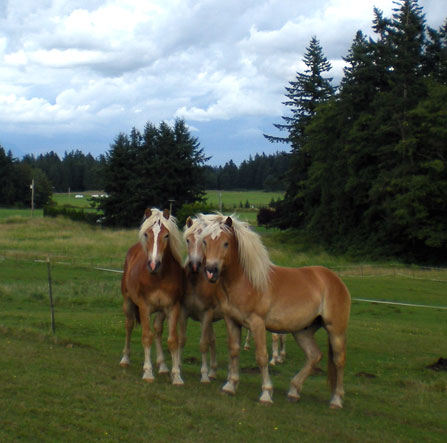
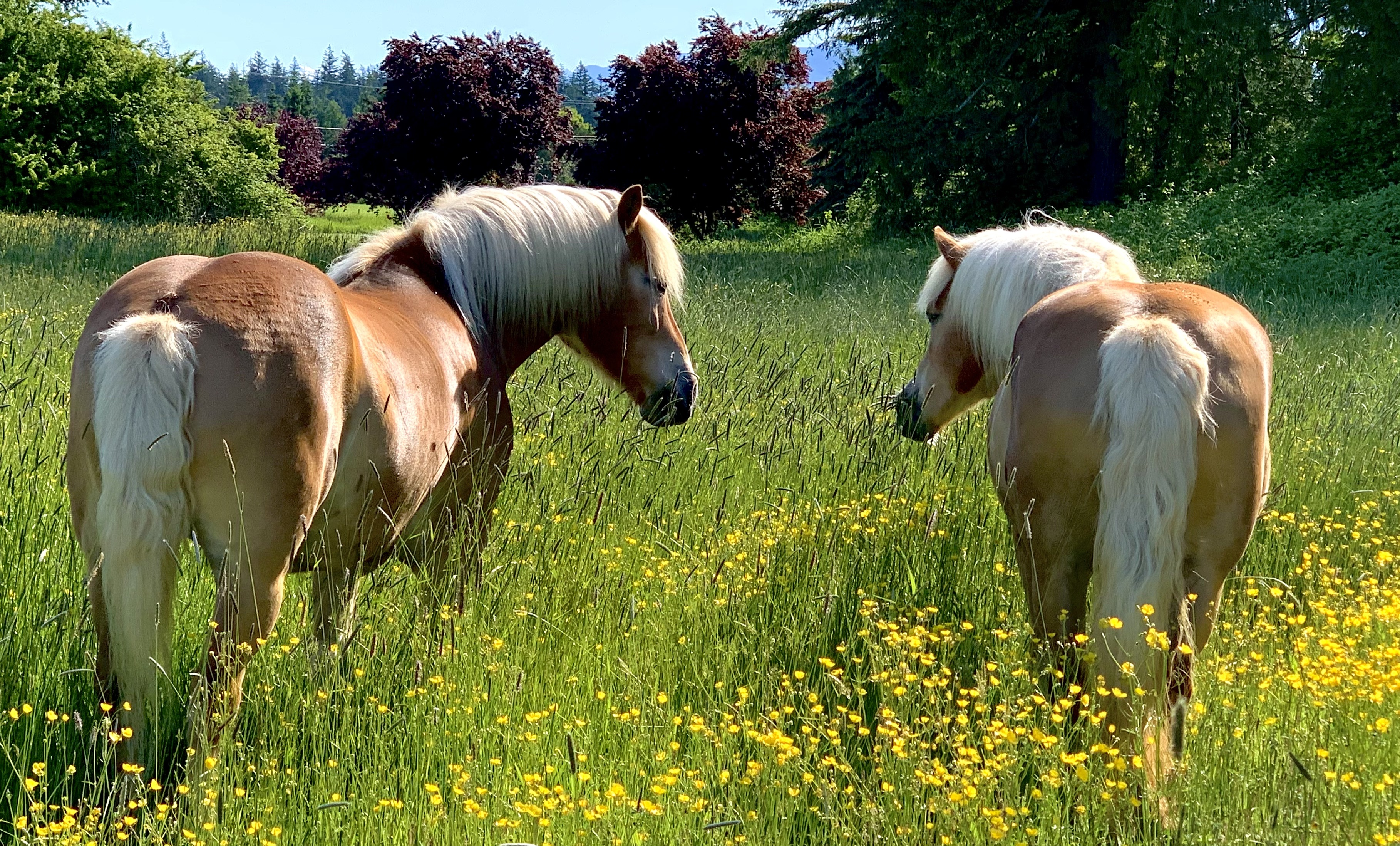
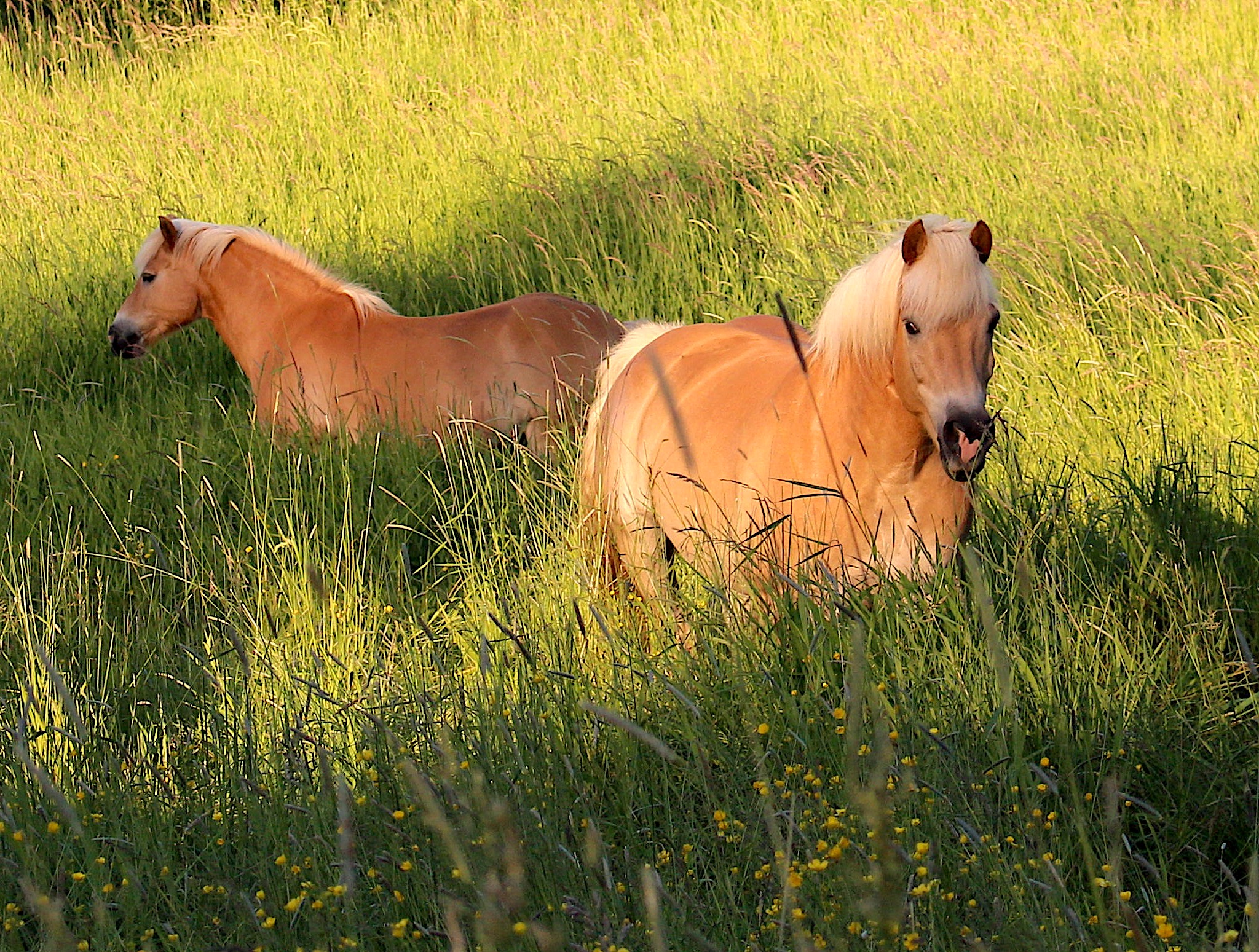
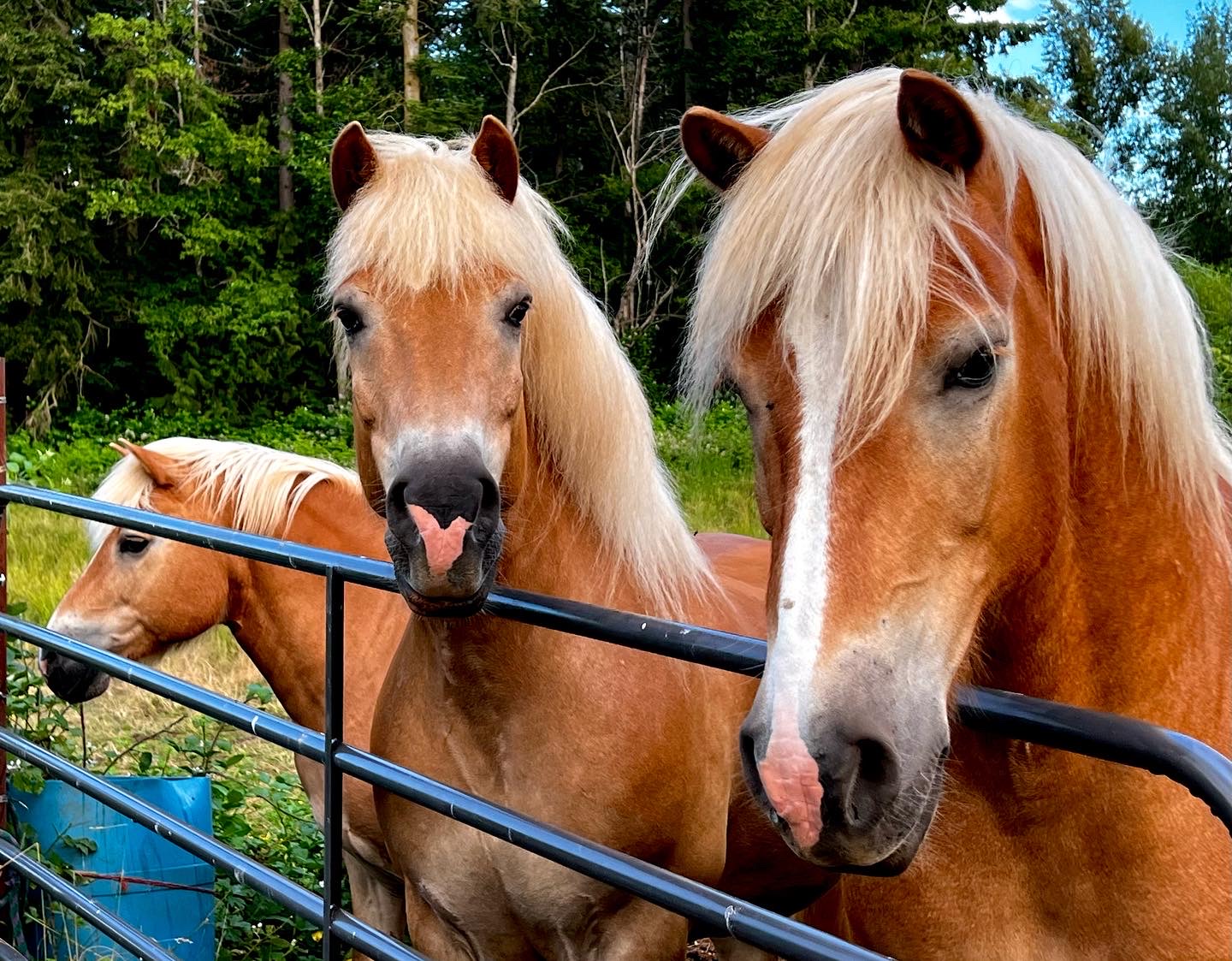
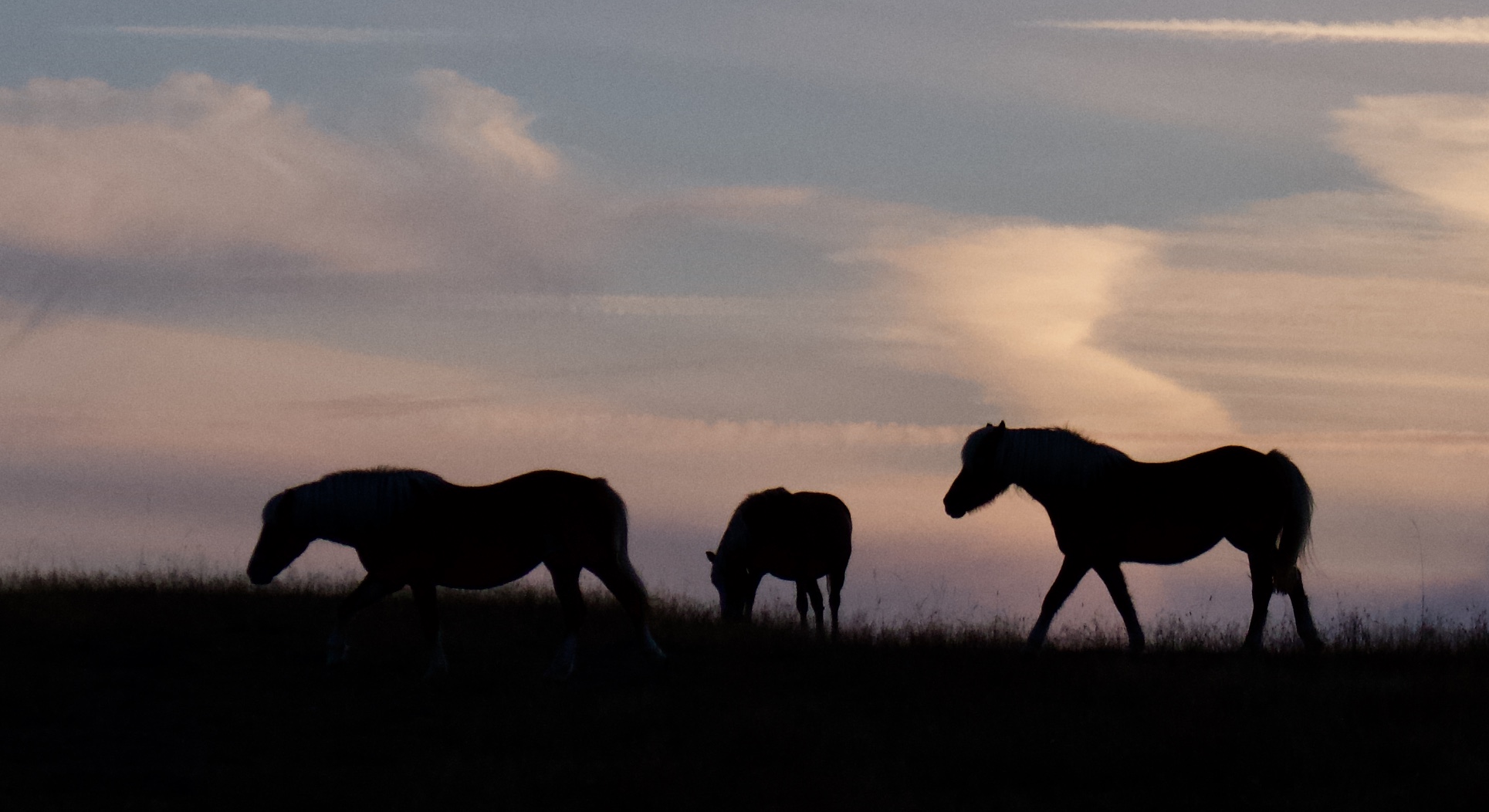
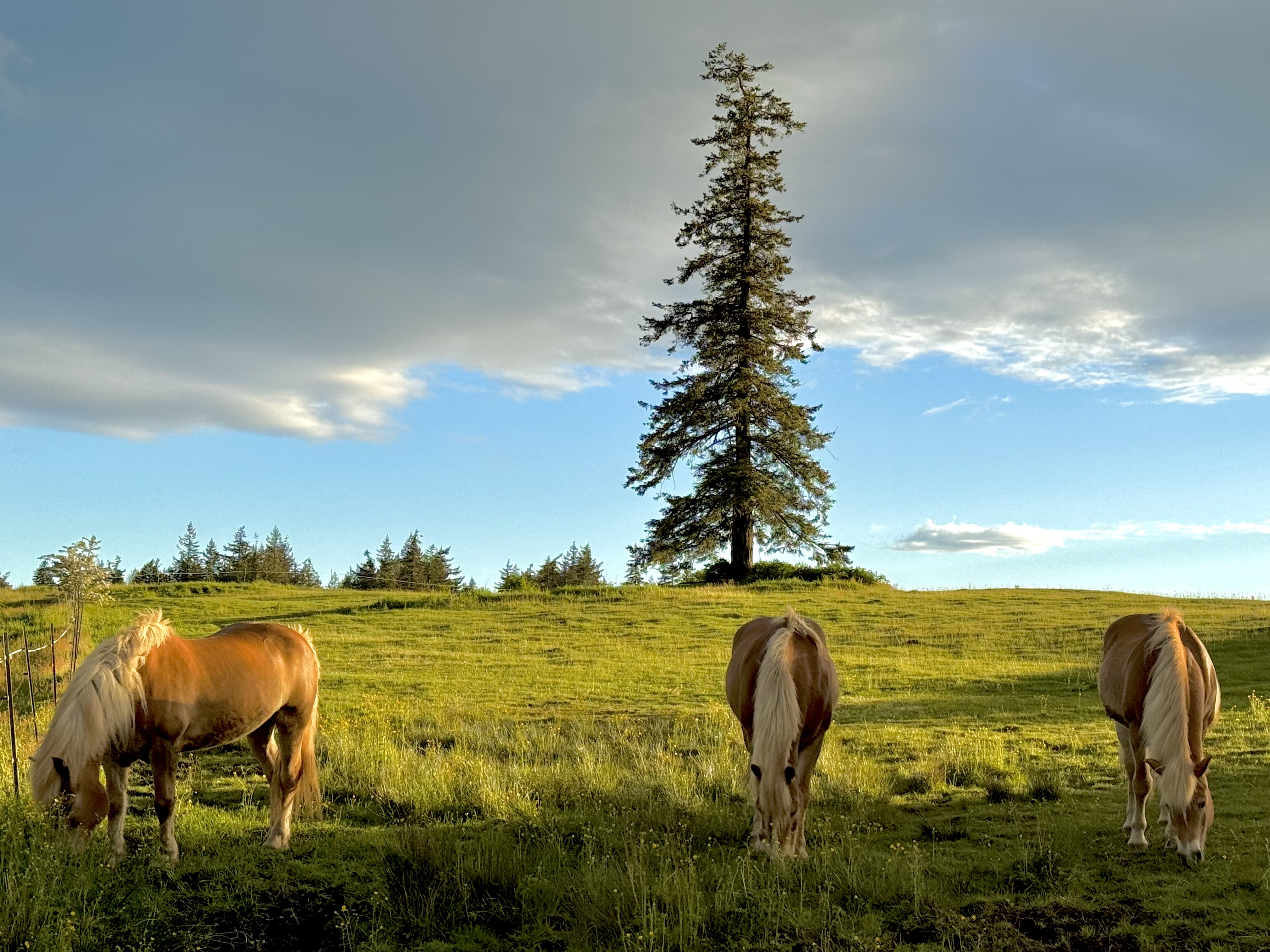
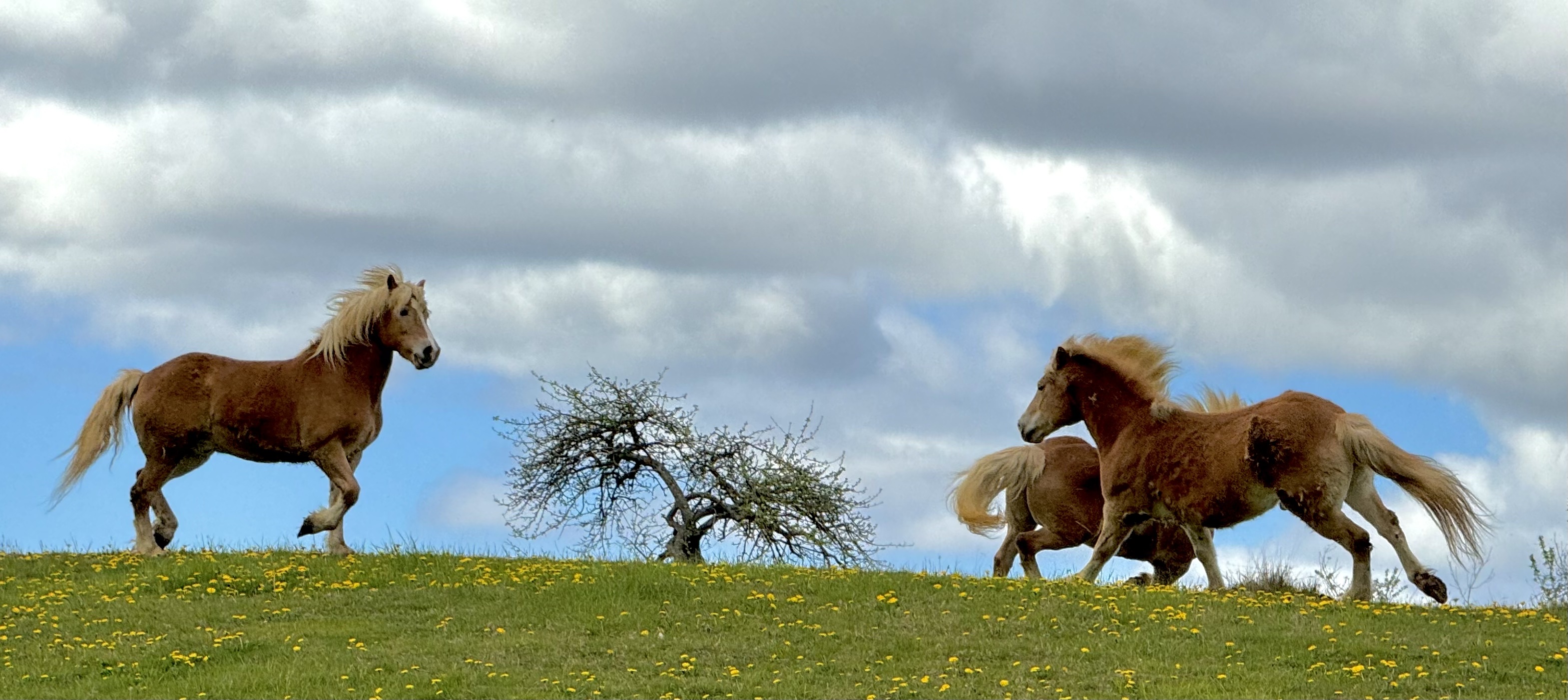
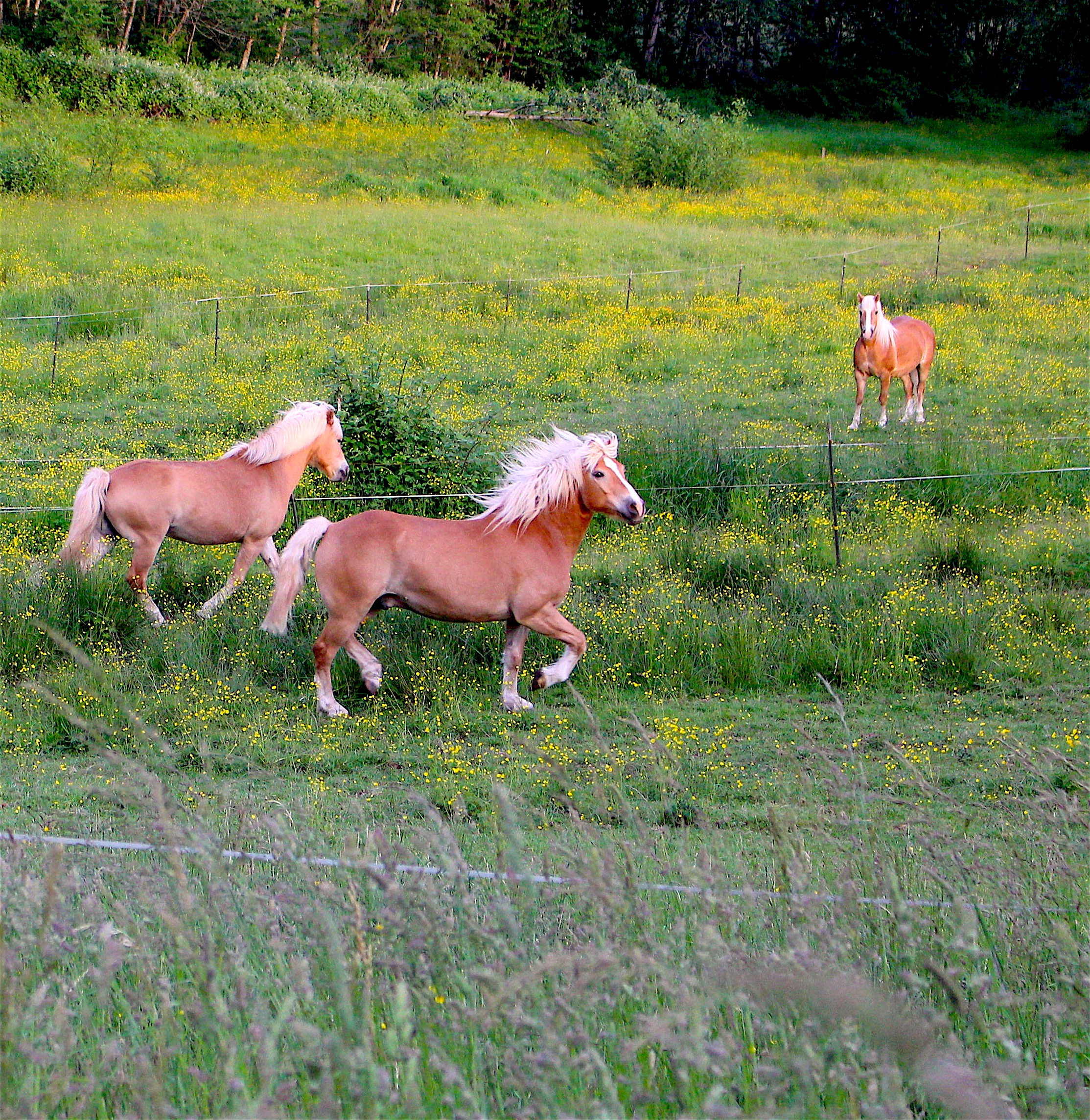
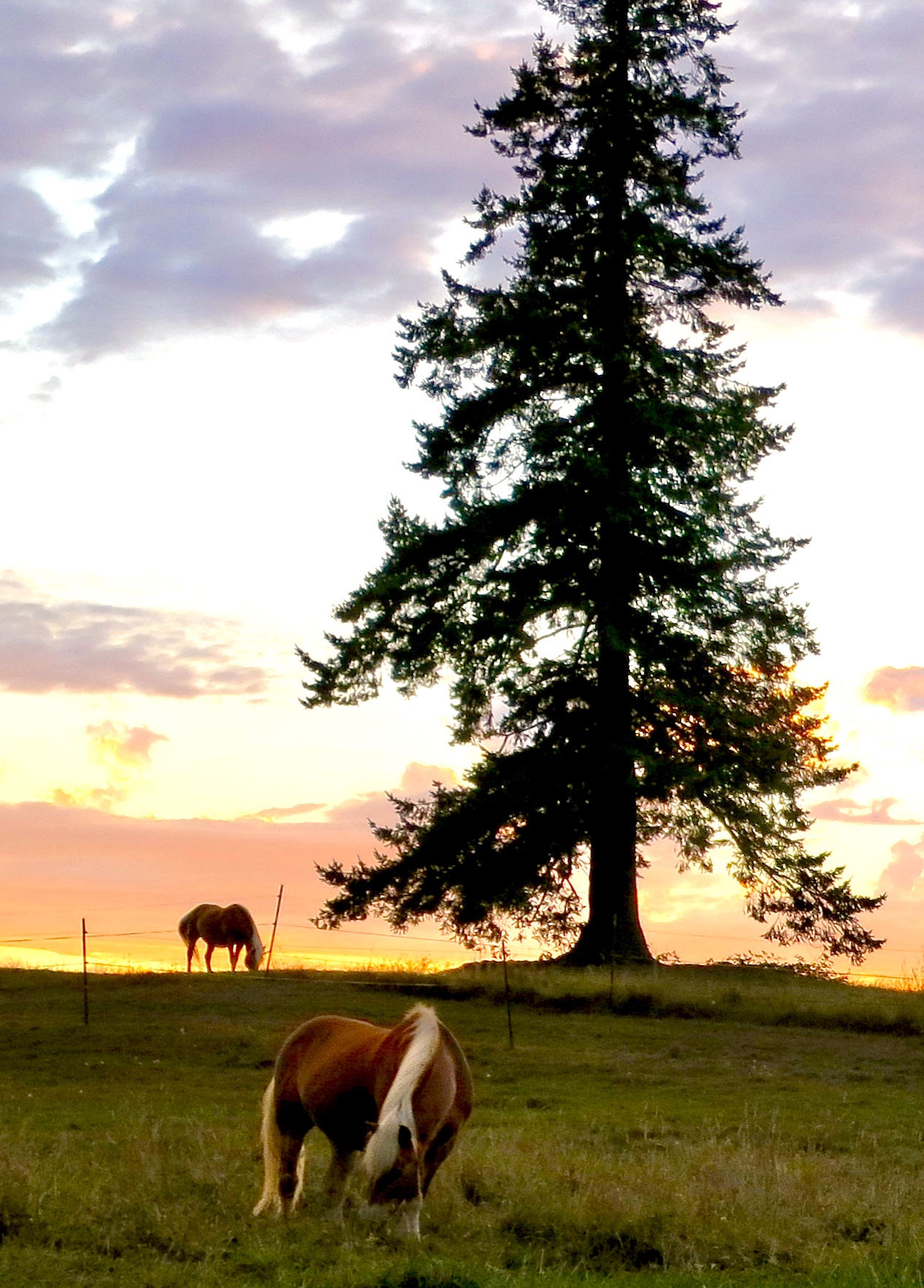
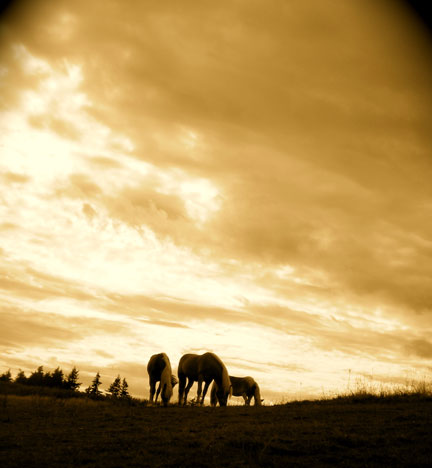
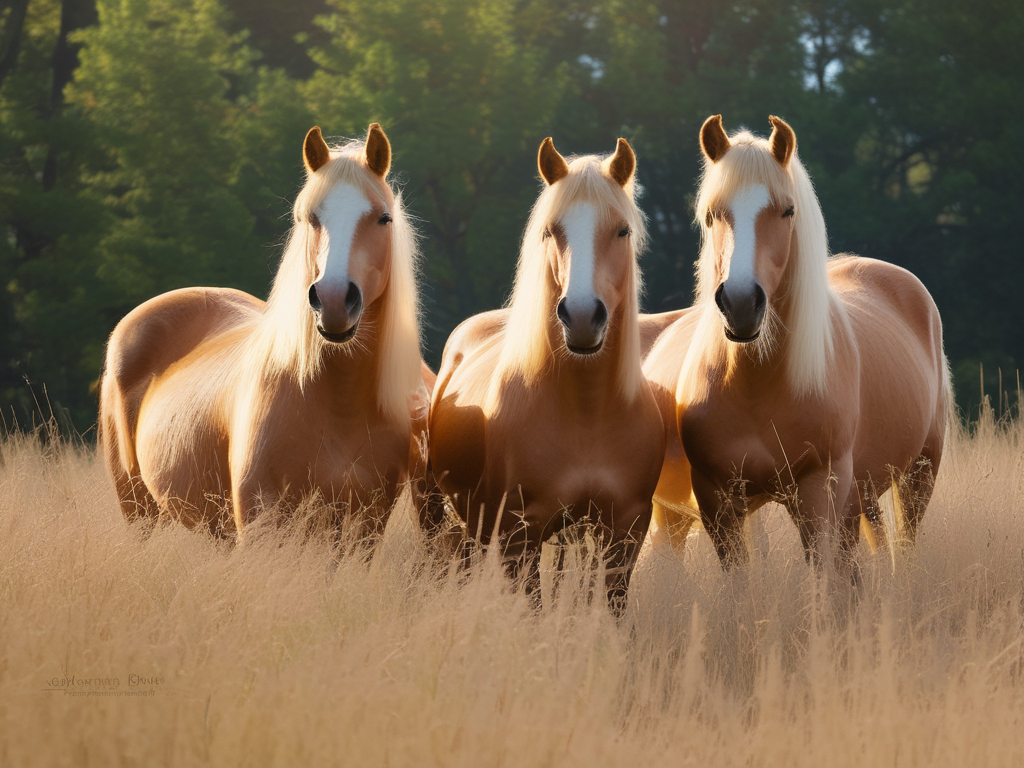
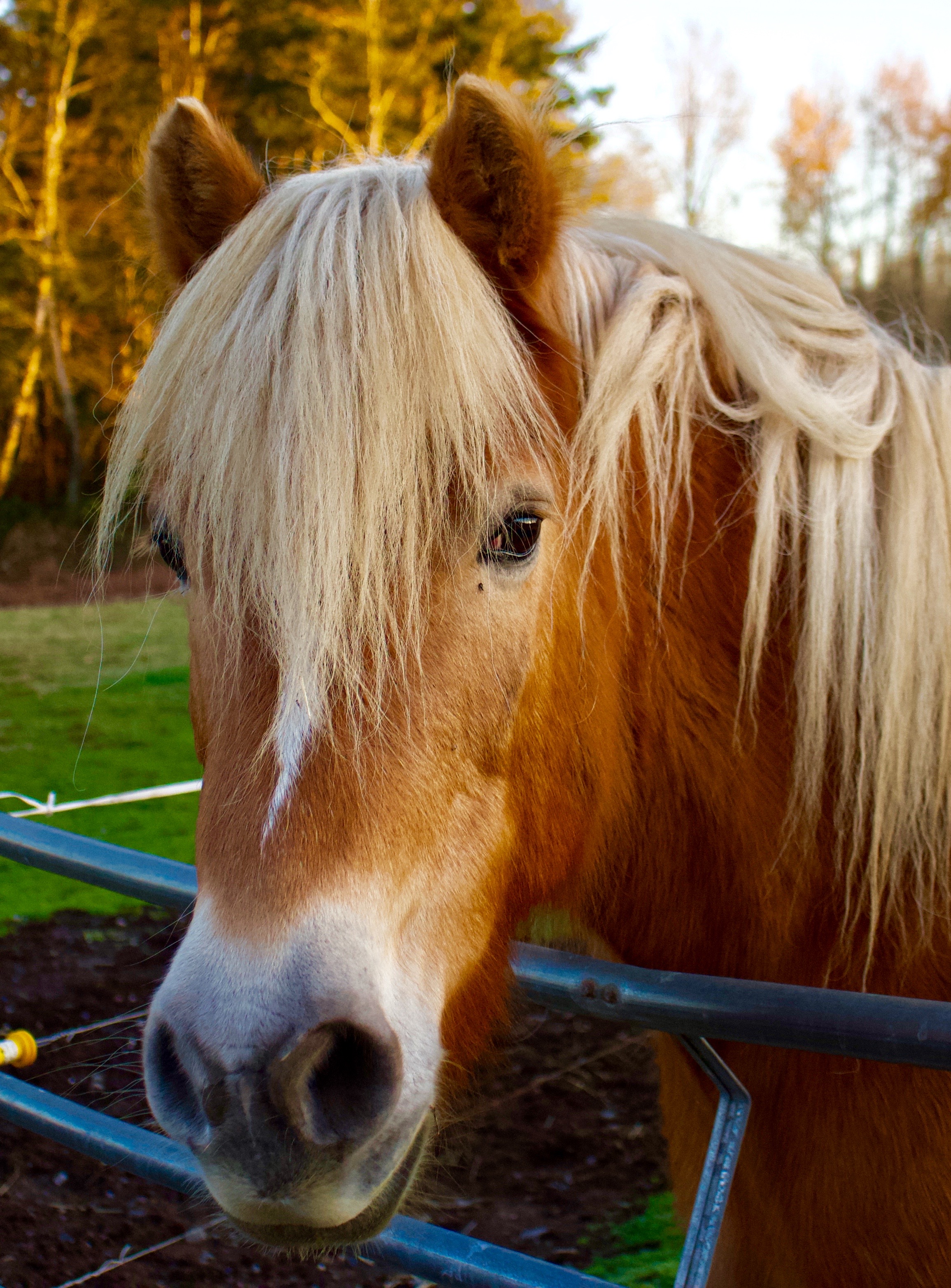
During our three decades of Haflinger horse ownership, I figured out long ago that Haflingers must have a migration center in their brain that tells them that it is time to move on to other territory – a move based on quality of forage, the seasons, or maybe simply a sudden urge for a change in scenery. This thrifty mountain breed adapted over hundreds of years to living in rather sparse Alpen meadows. They needed to move on to another feeding area enmasse on a pretty regular basis, or when the weather was starting to get crummy.
Or perhaps the next valley over had a better view, who knows? Trouble is, my Haflingers seem to have the desire to “move to other pastures” even if the grass in their own territory is plentiful and the view is great. And there doesn’t seem to be much in the way of natural or man-made barrier that will discourage them.
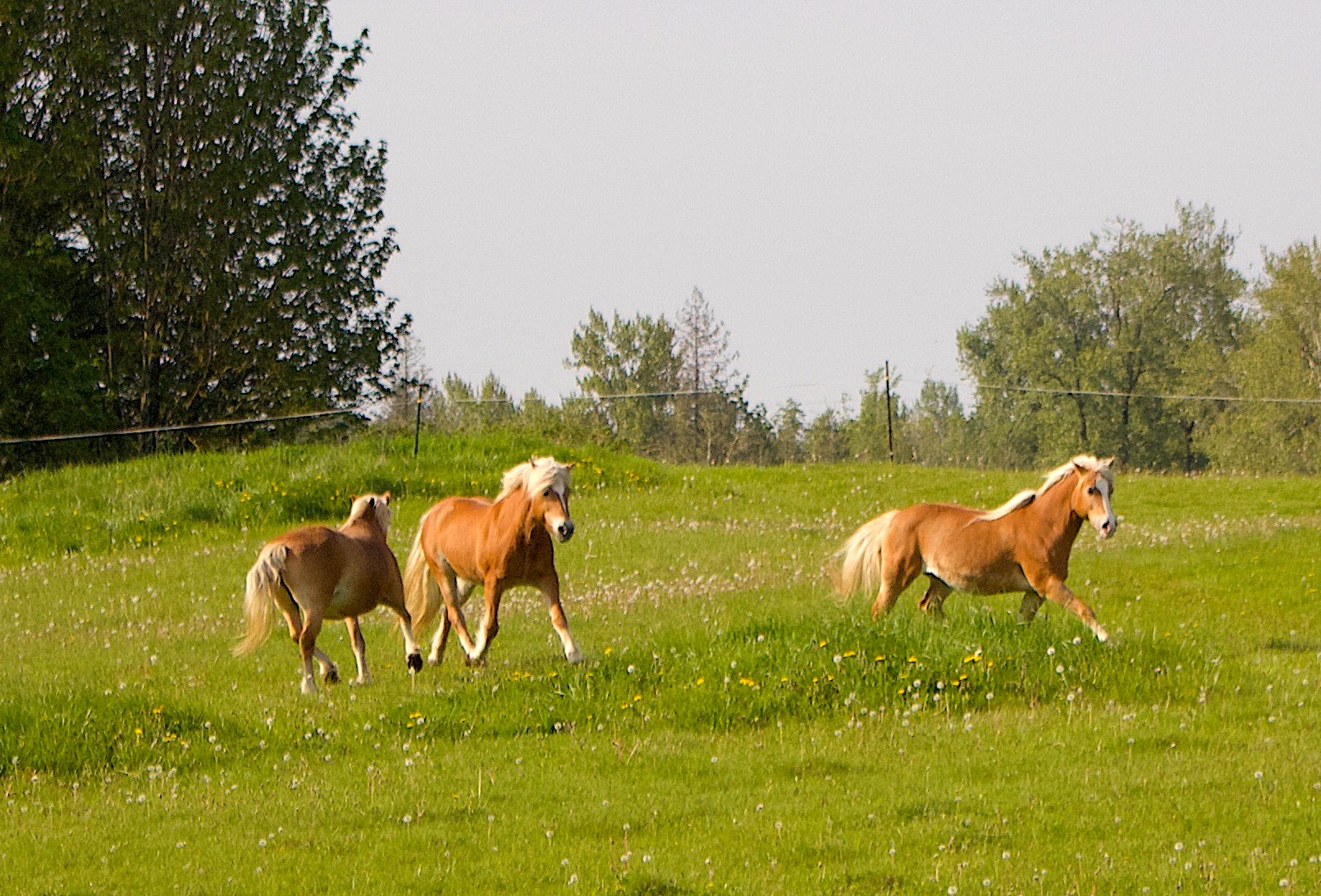
I have a trio of geldings I dub the “Three Musketeers”) who are particularly afflicted with wanderlust. There is not a field yet that has held them when they decide together that it is time to move on. We are a hotwire and white tape fenced farm–something that has worked fairly well over the years, as it is inexpensive, easily repaired and best of all, easily moved if we need to change the fencing arrangement in our pasture rotation between five different 2 acre pastures.
Previous generations of Haflingers have tested the hotwire and learned not to bother it again. No problem.
But not the Three Musketeers.
They know when the wire is grounding out somewhere, so the current is low. They know when the weather is so dry that conduction is poor through the wire. They know when I’ve absent-mindedly left the fencer unplugged because I’ve had someone visit and we wanted to climb unshocked through the fences to walk from field to field.
These three actually have little conferences out in the field together about this. I’ve seen them huddled together, discussing their strategy, and fifteen minutes later, I’ll look out my kitchen window and they are in another field altogether and the wire and tape is strewn everywhere and there’s not a mark on any of them. Even more mysteriously, often I can’t really tell where they made their escape as they leave no trace–I think one holds up the top wire with his teeth and the others carefully step over the bottom wire. I’m convinced they do this just to make me crazy.
Last night, when I brought them in from a totally different field from where they had started in the morning, they all smirked at me as they marched to their stalls as if to say, “guess what you have waiting for you out there.” It was too dark to survey the damage last night but I got up extra early to check it out this morning before I turned them out again.
Sure enough, in the back corner of the field they had been put in yesterday morning, (which has plenty of grass), the tape had been stretched, but not broken, and the wires popped off their insulators and dragging on the ground and in a huge tangled mass. I enjoyed 45 minutes of Pacific Northwest summer morning putting it all back together. Then I put them out in the field they had escaped to last night, thinking, “okay, if you like this field so well, this is where you’ll stay”.
Tonight, they were back in the first field where they started out yesterday morning. Just to prove they could do it. They are thoroughly enjoying this sport. I’m ready to buy a grand poobah mega-wattage fry-their-whiskers fence charger.
But then, I’d be spoiling their fun and their travels. As long as they stay off the road, out of our garden, and out of my kitchen, they can have the run of the place. I too remember being afflicted with wanderlust, long long ago, and wanting to see the big wide world, no matter what obstacles had to be overcome or shocks I had to endure to get there. And I got there after all that trouble and effort and realized that home was really where I wanted to be.
Now, prying me away from my little corner of the world gets more difficult every year. I hope my Haflinger trio will eventually decide that staying home is the best thing after all. Maybe they will listen to what I have to say this time.
AI image created for this post
One-Time
Monthly
Yearly
Make a one-time or recurring donation to support daily Barnstorming posts
I look for the spade I used when I was young, when my grandfather said dig and I dug holes the depth I’d been taught so the posts would stand, hold the miles of barbed and hog wire dividing our ground… Dig, he would say, and all morning, afternoon, until it rained, until dark, until I couldn’t lift the spade and grub and he said enough, I dug through dry brown until it turned yellow clay or black earth caked to the tip of the steel. He taught me to measure strength by depth, narrow the hole around the oiled post, and sturdy the line he’d laid before I was old enough to blister from work, acquire the knowledge of straight, of strength, cool soil, rusted staples and splintered wood, the knowledge of bending spikes new, splicing wire, swinging a hammer down hard, the ache from hours of digging, calloused hands and sunburn. He trained me to rake, tamp, stomp, pack dirt and clay, the weight of the earth around the post, its strength into the line. Now the hammers, pliers and cutters are gone. No rolls of wire hang from the beams. No boxes of staples and spikes jam the shelves. The tamping stick is broken. Someone has wrapped duct tape around the spade handle; the steel has rusted brown and rough; a crack climbs from the tip to the mud-caked neck. He would say it is useless, that things are not like they were… ~Curtis Bauer from “A Fence Line Running Through It”
The old farmers in our county are dying off, the ones who remember when horse and human muscle provided the power instead of diesel engines. They have climbed down off their tractors and into their beds for a good night’s sleep.
Their machine sheds are cleared in an auction, their animals trucked away for butcher, their fence lines leaning yet the corner posts, set solid and sure in the hard ground, keep standing when the old farmer no longer does.
These old farmers knew hard work. knew there were no days off, no shirking duty, knew if anyone was going to do what needed doing it was them, no one else. Things are not like they were yet the strong posts remain, ready to hold up another fence line, showing us few remaining farmers what hard work yields.
One-Time
Monthly
Yearly
Make a one-time or recurring donation to support daily Barnstorming posts
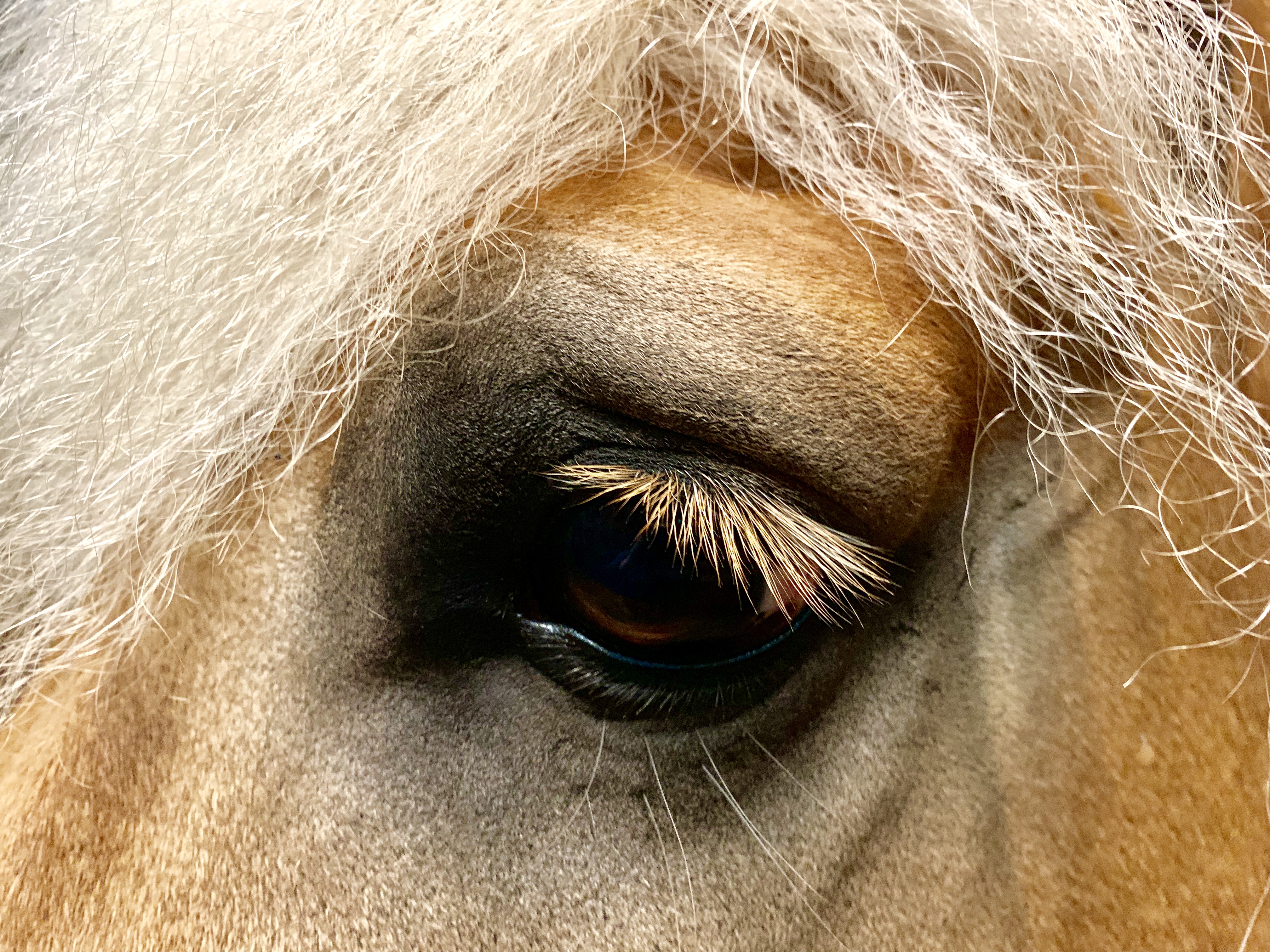
The squirrel sticks its head from the tree’s knot, shrieking directions, a village gossip with a huge plumed tail. It moves down the scalloped bark, swaying on tiny nails, and stops, eye-level with my swollen belly. A black blur of bird swoops, the velvet of its wing against my cheek. It nests among a ruckus of robins, less interested in being fed than being heard. Around the curve of the road, I near the farmer’s fence. His mare lowers her fan of lashes. In the pond, a fish flips, exposing its silver stomach. ~Tina Barry, “The Animals Know” from Beautiful Raft
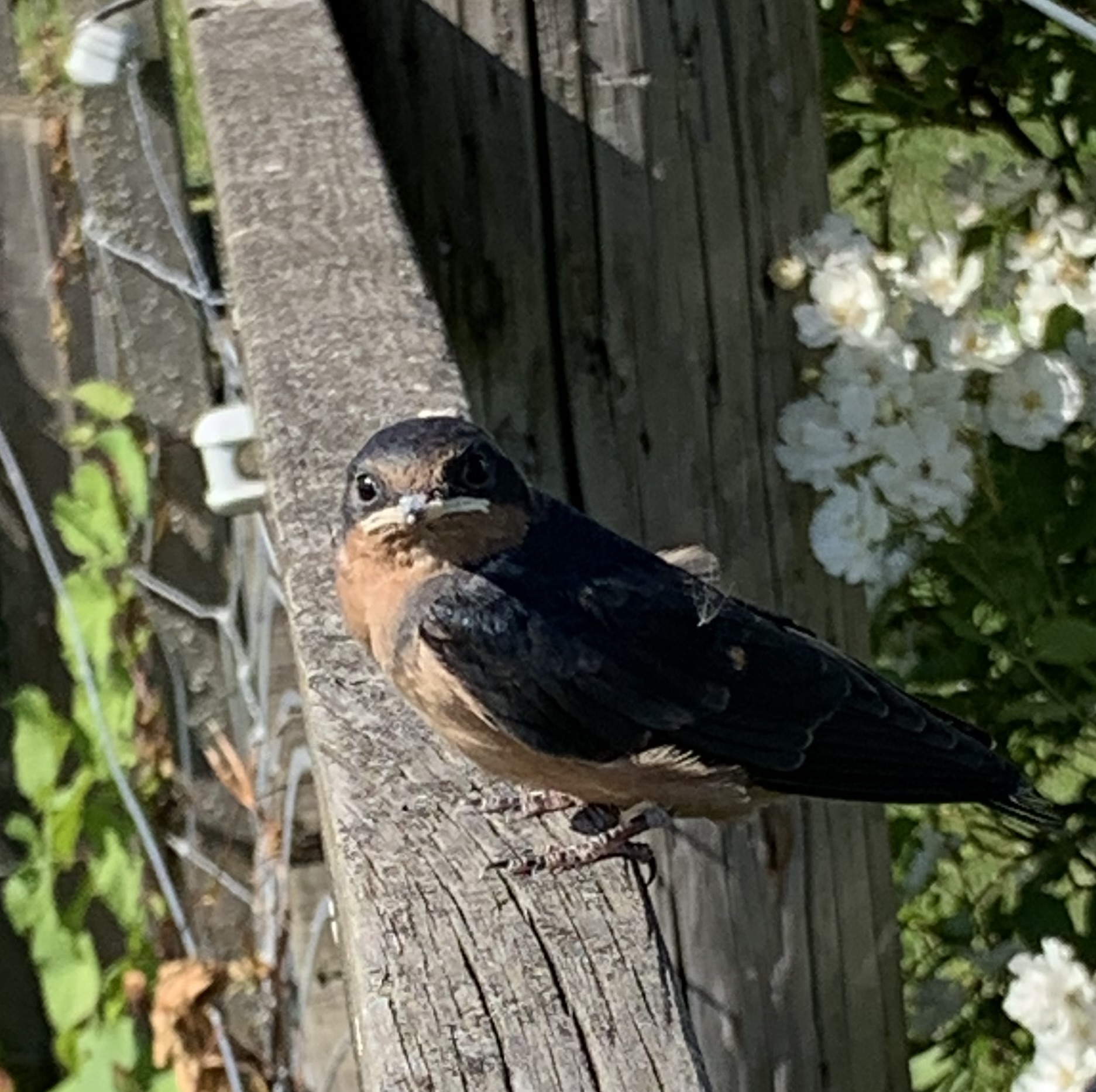
photo by Harry Rodenberger
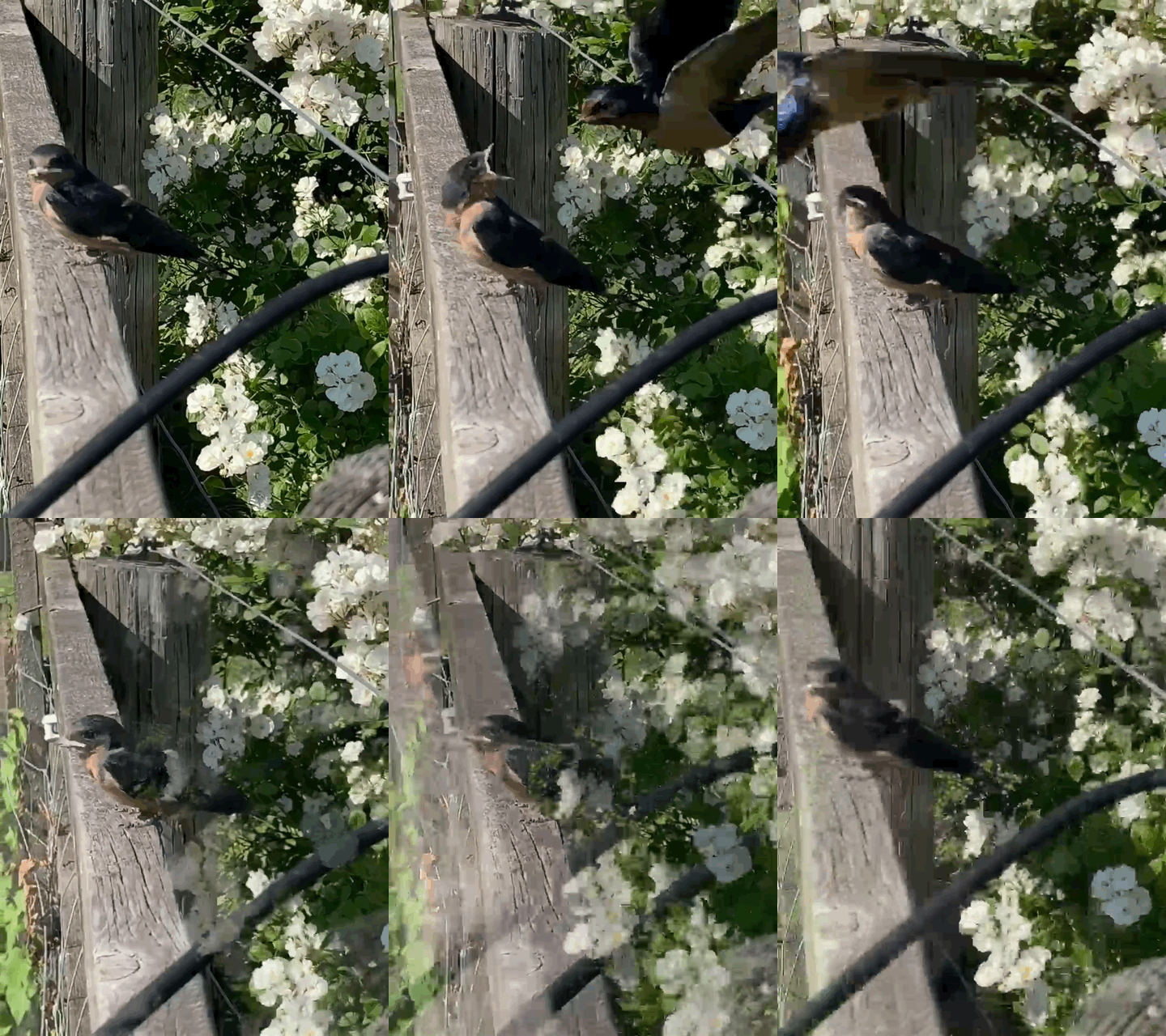
video by Harry Rodenberger
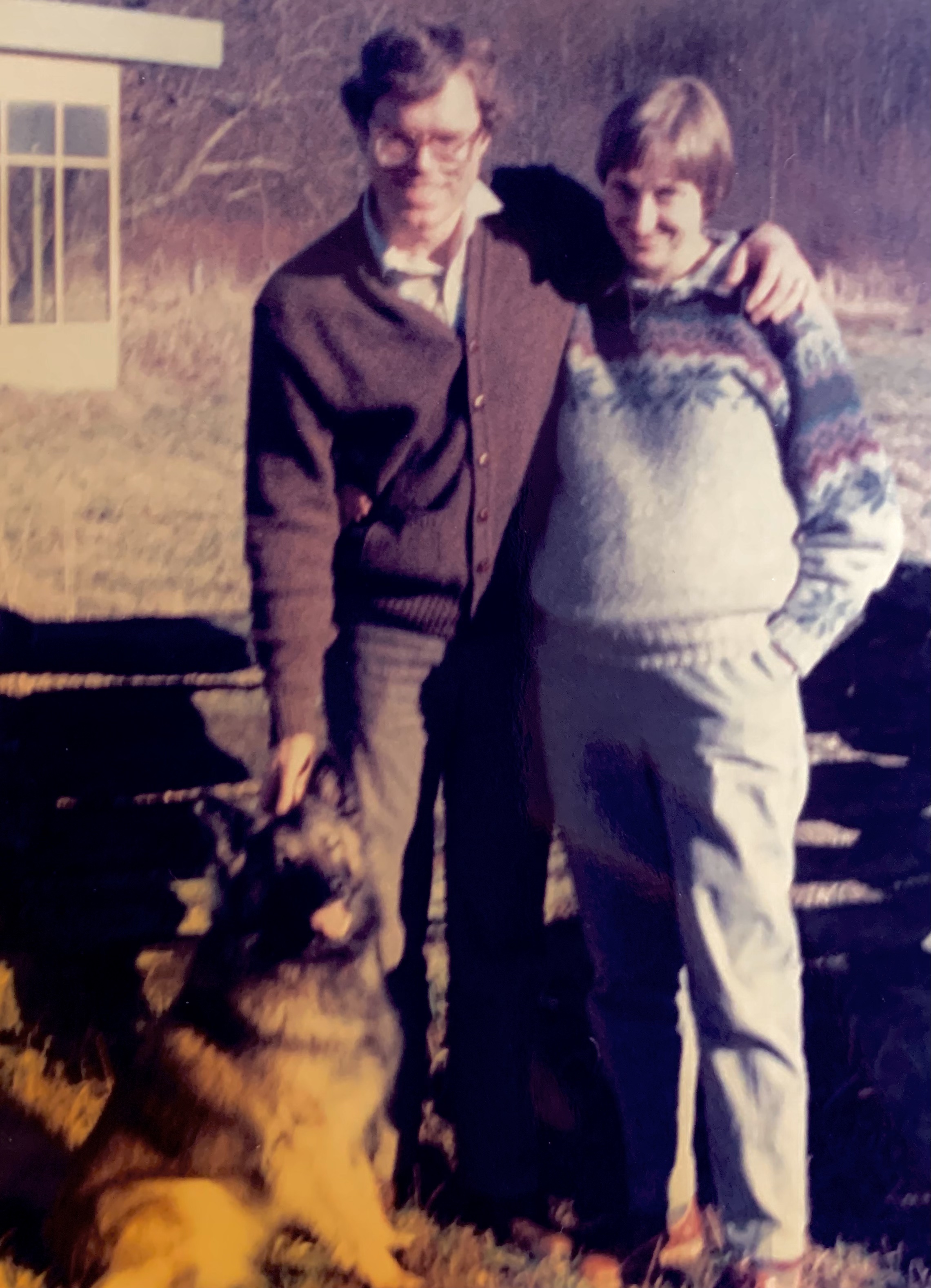
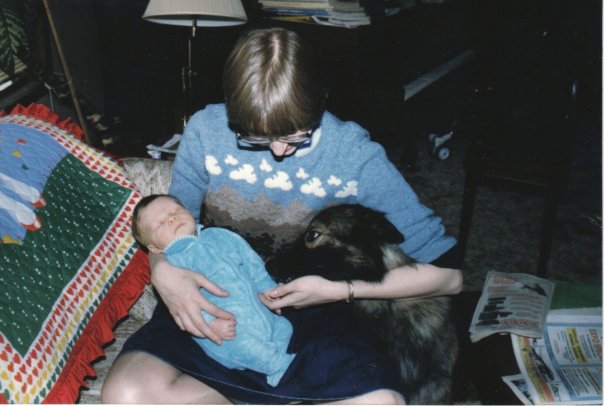
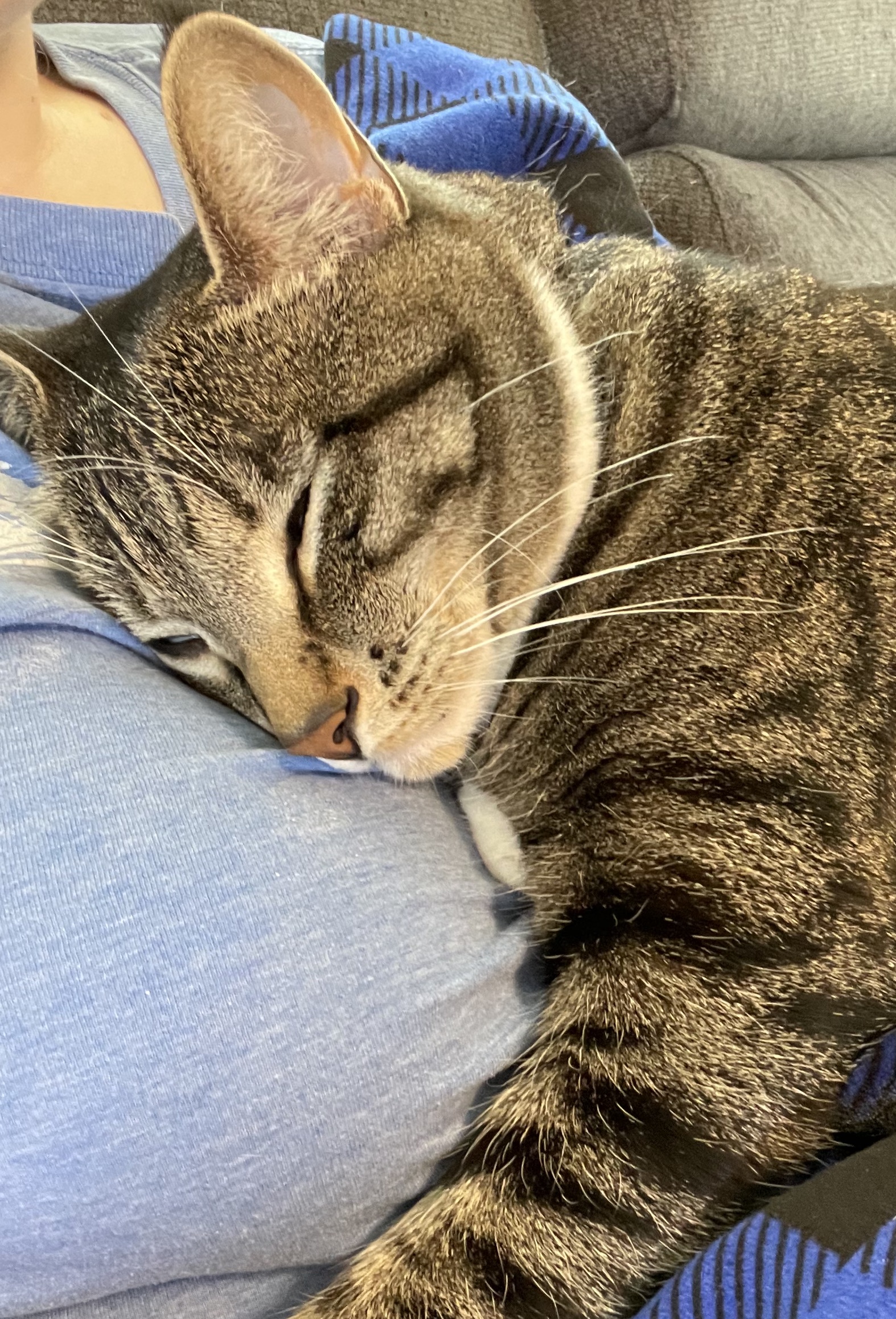
It has been over thirty years since I carried a child in my belly. Each time, I remember having the feeling our farm animals knew I was “expecting” even before it became obvious. Maybe it was because I was so overjoyed, I carried myself differently. After experiencing a miscarriage and two years of infertility workups, it felt almost magical being pregnant. It seemed as if our invisibly growing baby was already welcomed by all the creatures on our farm and were celebrating the anticipation along with us.
While I was pregnant with our first son, after such a long wait for parenthood, we bought a new dog, Tango and moved to a farm from the city. She was a year old and had never been around babies, so we weren’t sure how she would adapt to both new surroundings and new owners. As we drove six hours to her bring her to her new home, she happily settled in for the trip lying on my bulging tummy, pummeled by kicks from a baby she would soon meet face to face.
She loved him as soon as she saw him. She had known him and understood him as he grew inside.
Now, decades later, our family’s next generation is fulfilling their own hopes for the future: we have four cherished grandchildren in addition to the two we are now waiting to meet — one will be any day now.
The expectation of new life is so sweet. All that lives and breathes anticipates this new soul budding and about to bloom.
Somehow, they just know…
One-Time
Monthly
Yearly
Make a one-time or recurring donation to support daily Barnstorming posts
Though I know well enough To hunt the Lady’s Slipper now Is playing blindman’s-buff, For it was June She put it on And grey with mist the spider’s lace Swings in the autumn wind, Yet through this hill-wood, high and low, I peer in every place; Seeking for what I cannot find I do as I have often done And shall do while I stay beneath the sun. ~Andrew Young “Lady’s Slipper Orchid”
How strange to find you where I did along a path beside a road, your legs in graceful green dancing to music made by wind and woods.
Like ladies from a bygone age, you left your slippers there to air in dappled shade, while you, barefoot, relaxed your stays, let loose your hair.
The treasures of this world might be as simple as an orchid’s bloom; how sad that so much time is spent in filling coffers for the tomb.
If only life could be so fresh and free as you in serenade, we might learn we value most those things found lost in woodland shade. ~Mike Orlock “Lady Slipper Serenade (in 4/4 time)”
My grandmother’s house where my father was born had been torn down. She sold her property on Fidalgo Island near Anacortes, Washington to a lumber company – this was the house where all four of her babies were born, where she and my grandfather loved and fought and separated and finally loved again, and where we spent chaotic and memorable Thanksgiving and Christmas meals. After Grandpa died, Grandma took on boarders, trying to afford to remain there on the homesteaded wooded acreage on Similk Bay, fronted by meadows where her Scottish Highland cattle grazed. Her own health was suffering and she reached a point when it was no longer possible to make it work. A deal was struck with the lumber company and she moved to a small apartment for the few years left to her, remaining bruised by leaving her farm.
My father realized what her selling to a lumber company meant and it was a crushing thought. The old growth woods would soon be stumps on the rocky hill above the bay, opening a view to Mt. Baker to the east, to the San Juan Islands to the north, and presenting an opportunity for development into a subdivision. He woke my brother and me early one Saturday in May and told us we were driving the 120 miles to Anacortes. He was on a mission.
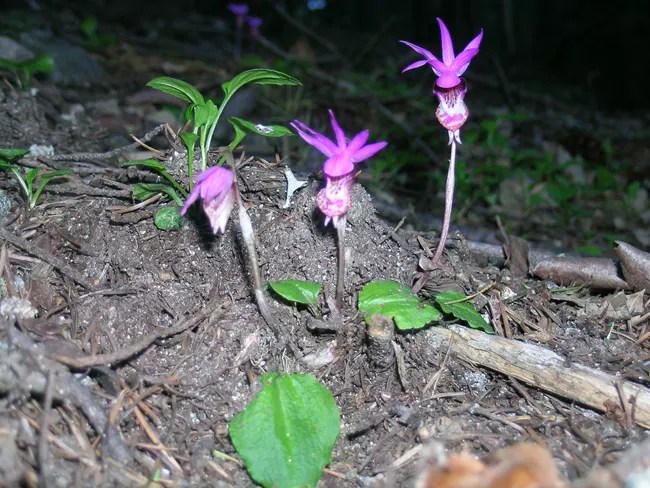
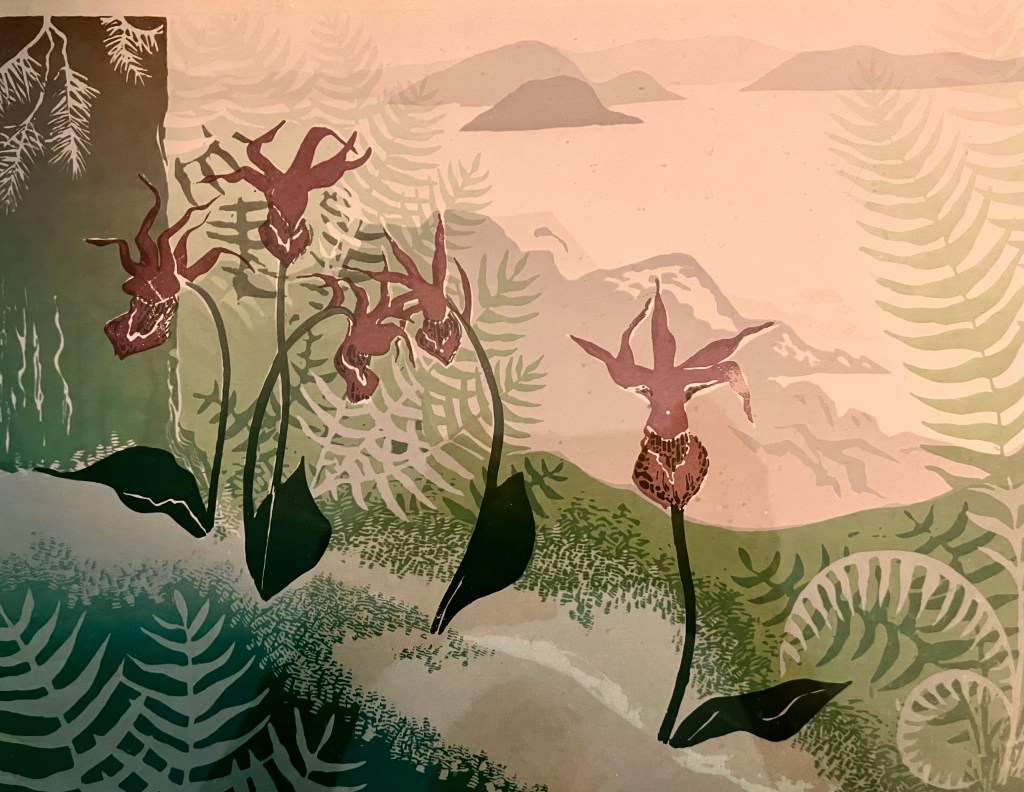
As a boy growing up on that land, he had wandered the woods, explored the hill, and helped his dad farm the rocky soil. There was only one thing he felt he needed from that farm and he had decided to take us with him, to trespass where he had been born and raised to bring home a most prized treasure–his beloved lady slippers (Calypso bulbosa) from the woods.
These dainty flowers enjoy a spring display known for its brevity–a week or two at the most–and they tend to bloom in small little clusters in the leafy duff mulch of the deep woods, preferring only a little indirect sunlight part of the day. They are not easy to find unless you know where to look.
My father remembered exactly where to look.
We hauled buckets up the hill along with spades, looking as if we were about to dig for clams at the ocean. Dad led us up a trail into the thickening foliage, until we had to bushwhack our way into the taller trees where the ground was less brush and more hospitable ground cover. He would stop occasionally to get his bearings as things were overgrown. We reached a small clearing and he knew we were near. He went straight to a copse of fir trees standing guard over a garden of lady slippers.
There were almost thirty of them blooming, scattered about in an area the size of my small bedroom. Each orchid-like pink and lavender blossom had a straight backed stem that held it with sturdy confidence. To me, they looked like they could be little shoes for fairies who may have hung them up while they danced about barefoot. To my father, they represented the last redeeming vestiges of his often traumatic childhood, and were about to be trammeled by bulldozers. We set to work gently digging them out of their soft bedding, carefully keeping their bulb-like corms from losing a protective covering of soil and leafy mulch. Carrying them in the buckets back to the car, we felt some vindication that even if the trees were to be lost to the saws, these precious flowers would survive.
When we got home, Dad set to work creating a spot where he felt they could thrive in our own woods. He found a place with the ideal amount of shade and light, with the protection of towering trees and the right depth of undisturbed leaf mulch. We carefully placed the lady slippers in their new home, scattered in a pattern similar to how we found them. Then Dad built a four foot split rail fence in an octagon around them, as a protection from our cattle and a horse who wandered the woods, and as a way to demarcate that something special was contained inside.
The next spring, only six lady slippers bloomed from the original thirty. Dad was disappointed but hoped another year might bring a resurgence as the flowers established themselves in their new home. The following year there were only three. A decade later, my father left our farm and family, not looking back.
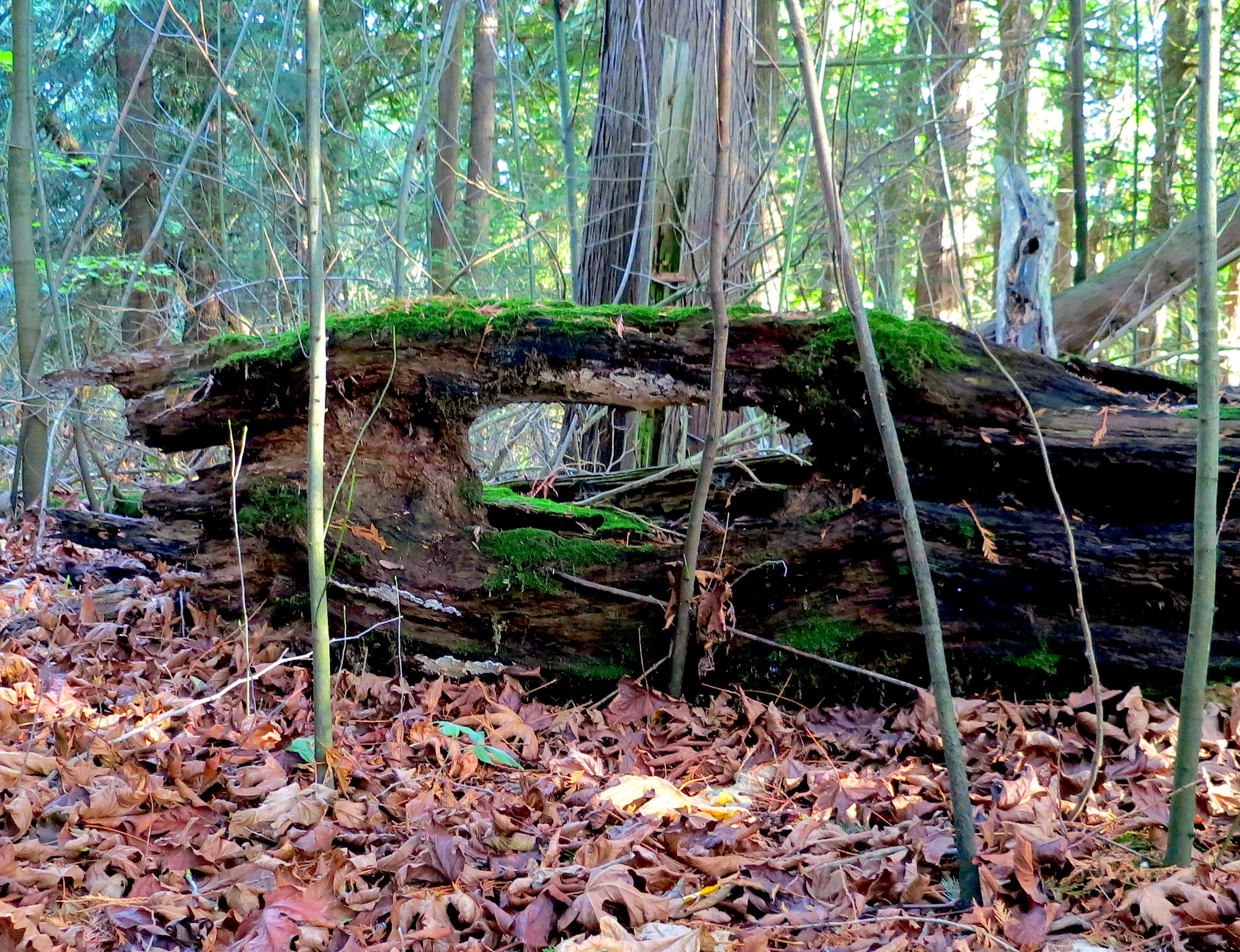
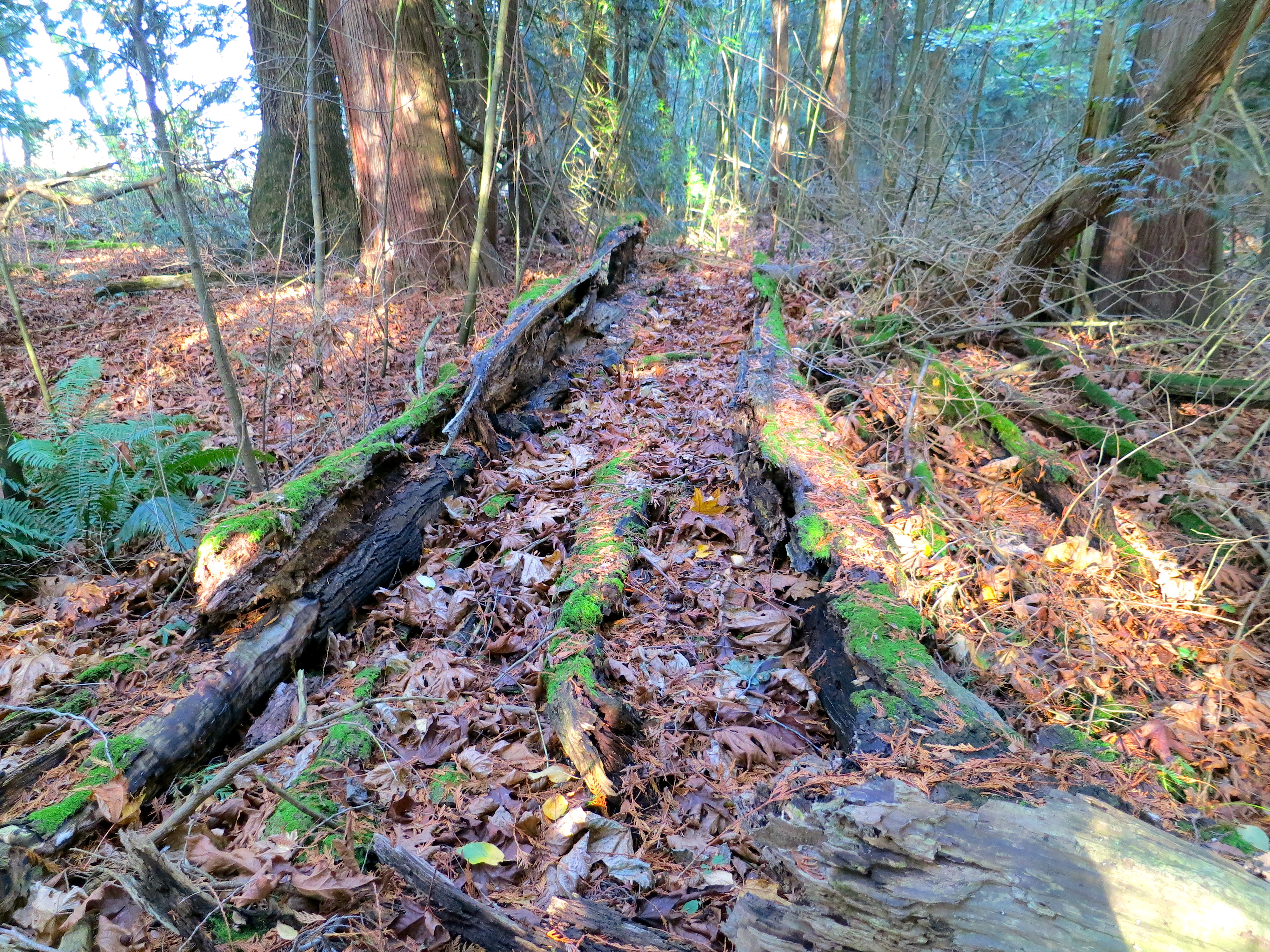
Sometime after the divorce, when my mother had to sell the farm, I visited our lady slipper sanctuary in the woods for the last time in the middle of May, seeking what I hoped might still be there, but I knew was no longer. The split rail fence still stood, guarding nothing but old memories. No lady slippers bloomed. There was not a trace they had ever been there. They had given up and disappeared.
The new owners of the farm surely puzzled over the significance of the small fenced-in area in the middle of our woods. They probably thought it surrounded a graveyard of some sort.
And they would be right – it did.
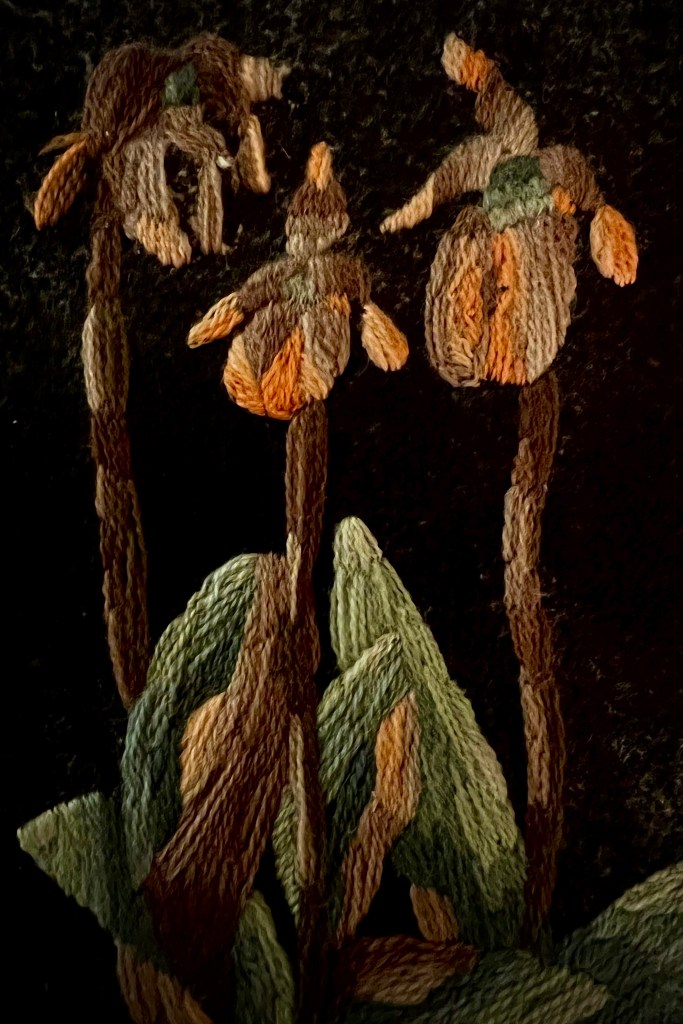
An embroidery I made for my father after he replanted the lady slippers — on the back I wrote “The miracle of creation recurs each spring in the delicate beauty of the lady slipper – may we ourselves be recreated as well…”
One-Time
Monthly
Yearly
Make a one-time or recurring donation to support daily Barnstorming posts
Each one is a gift, no doubt, mysteriously placed in your waking hand or set upon your forehead moments before you open your eyes…
Through the calm eye of the window everything is in its place but so precariously this day might be resting somehow
on the one before it, all the days of the past stacked high like the impossible tower of dishes entertainers used to build on stage.
No wonder you find yourself perched on the top of a tall ladder hoping to add one more. Just another Wednesday
you whisper, then holding your breath, place this cup on yesterday’s saucer without the slightest clink. ~Billy Collins, “Day” from The Art of Drowning
Some days feel like this: teetering at the top of a finite number of minutes and hours, trying to not topple over a life so carefully balanced, even as the wind blows and the fencing sharp and the ladder of time feels rickety.
It is a balancing act – this waking up to try on a new day while juggling everything still in the air from the days before.
To stay on solid ground, while flowing with the river of time, I anchor deep into the calm eye of your unchanging love, reminded, once again, I’m held up from above when everything beneath me feels precarious.
One-Time
Monthly
Yearly
Make a one-time or recurring donation to support daily Barnstorming posts
What seemed to be the end proved to be the beginning… Suddenly a wall becomes a gate. ~Henri Nouwen from A Letter of Consolation
I heard in Addison’s Walk a bird sing clear: This year the summer will come true. This year. This year.
Winds will not strip the blossom from the apple trees This year, nor want of rain destroy the peas.
This year time’s nature will no more defeat you, Nor all the promised moments in their passing cheat you.
This time they will not lead you round and back To Autumn, one year older, by the well-worn track.
This year, this year, as all these flowers foretell, We shall escape the circle and undo the spell.
Often deceived, yet open once again your heart, Quick, quick, quick, quick!—the gates are drawn apart. ~C.S. Lewis “What the Bird Said Early in the Year”
What we call the beginning is often the end And to make an end is to make a beginning. The end is where we start from.
We shall not cease from exploration And the end of all our exploring Will be to arrive where we started And know the place for the first time. Through the unknown, unremembered gate When the last of earth left to discover Is that which was the beginning… ~T.S. Eliot from “Little Gidding” The Four Quartets
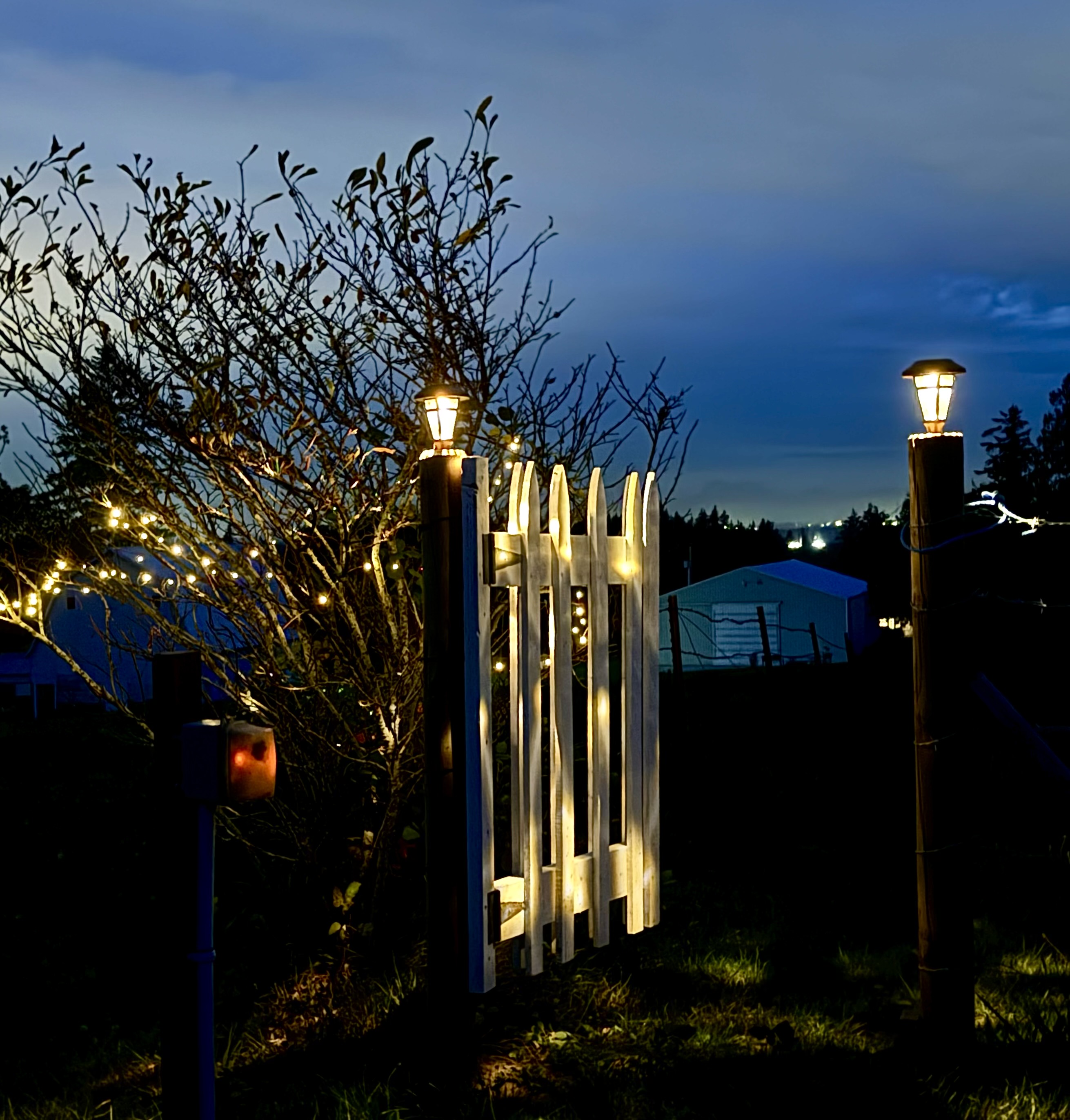
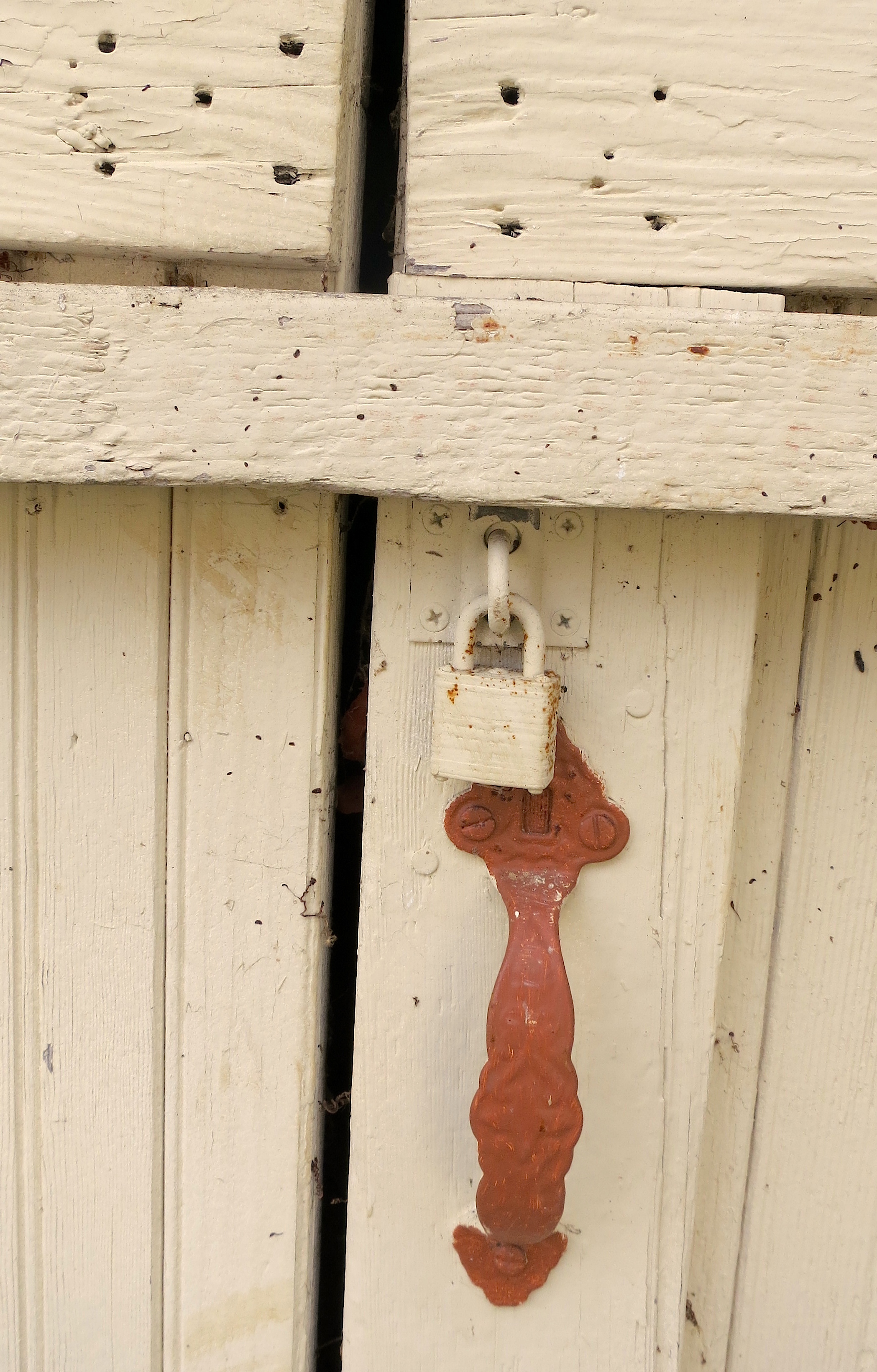
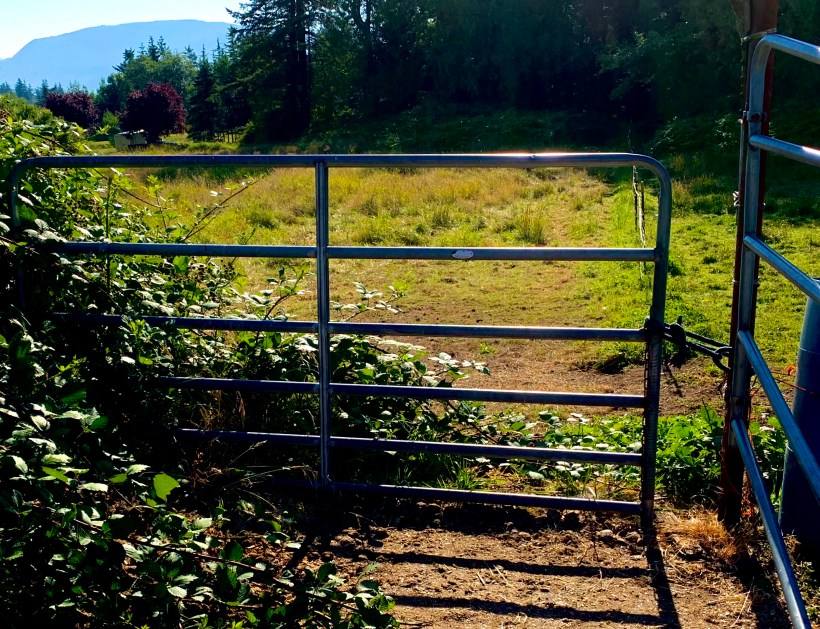
I expect gates in my neighborhood to be closed – in the farming business, a gate left open is an invitation to disaster. Likewise, barn doors are often locked, to keep things safe inside and leave the unwanted out.
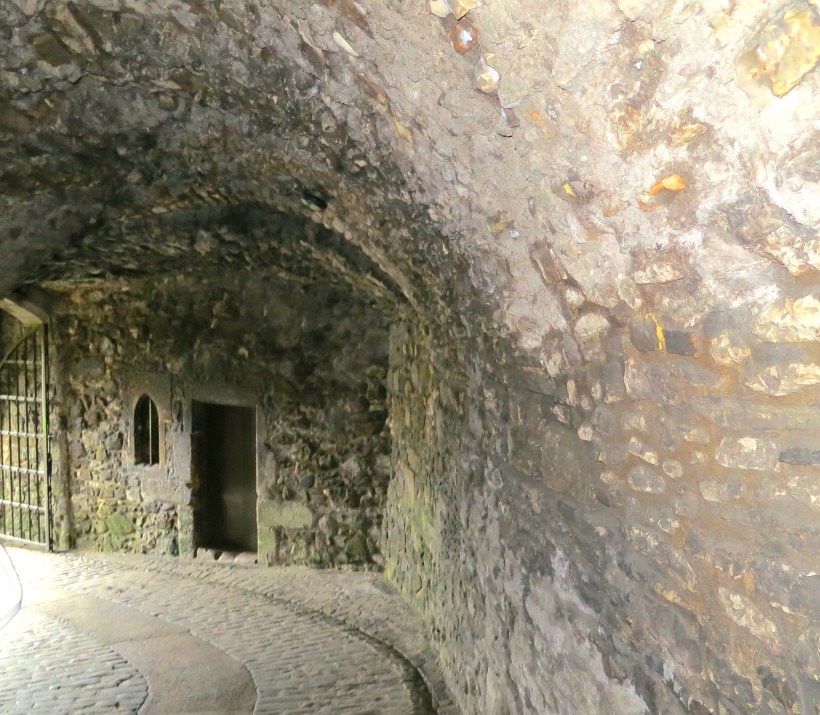
So it is true of the heart, where my most cherished treasures are stored and protected – a lockbox of faith and love. But the Lord knocks at the locked doors and closed gates of our hearts, expecting a response. He came to earth to enter into our lives, not be kept outside waiting. From the very beginning of His life, we refused Him entry to share our comfortable inn, relegating Him to a stone trough, and at the end, a stone tomb.
A gate never opened becomes a wall. A heart that does not bleed joy and tears and sorrow becomes nothing but stone.
He has come to turn the key and we are unlocked forever.
This year’s Advent theme “Dawn on our Darkness” is taken from this 19th century Christmas hymn.
Brightest and best of the sons of the morning, dawn on our darkness and lend us your aid. Star of the east, the horizon adorning, guide where our infant Redeemer is laid. ~Reginald Heber -from “Brightest and Best”
One-Time
Monthly
Yearly
Make a one-time or recurring donation to support daily Barnstorming posts













 Barnstorming