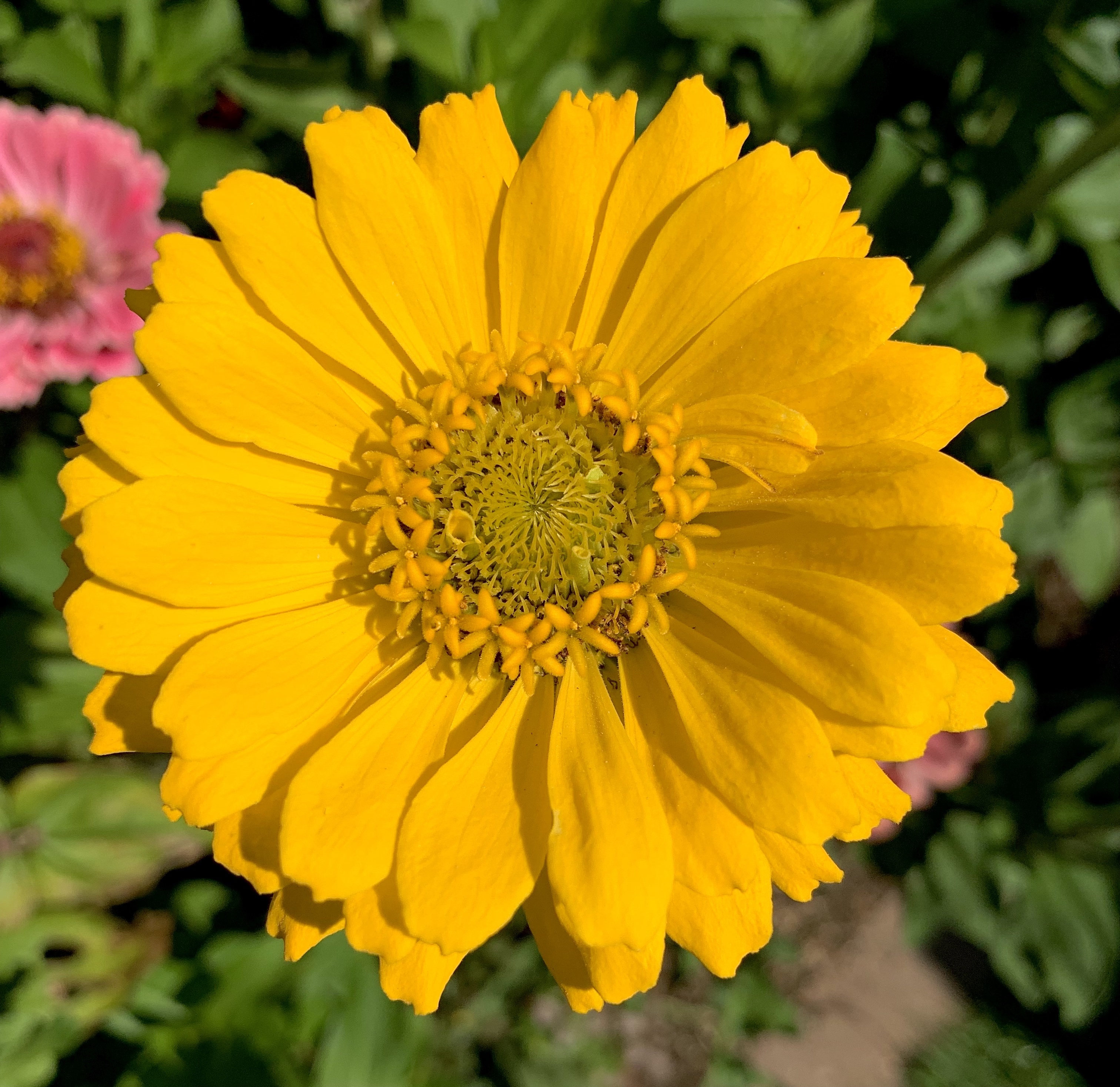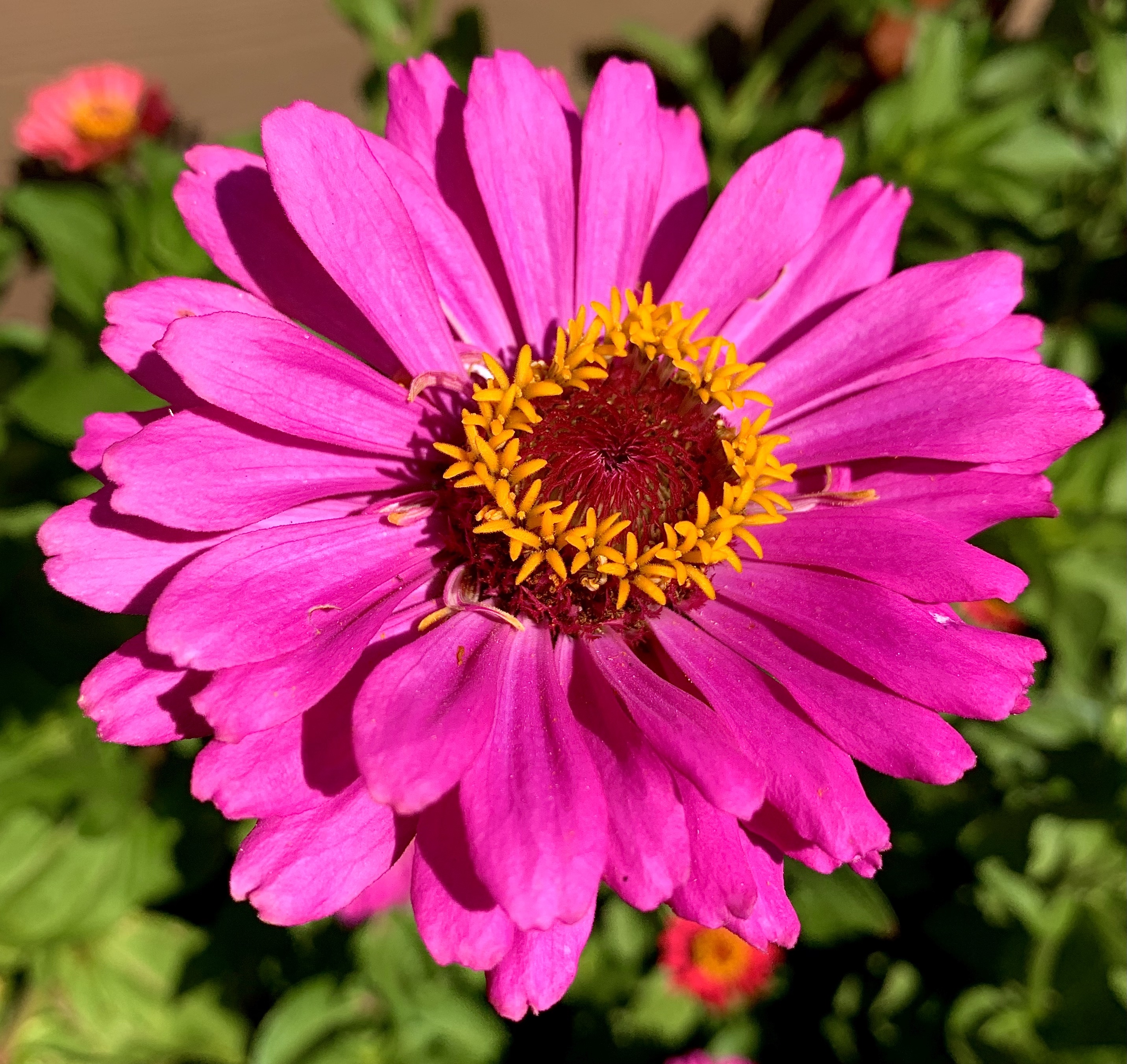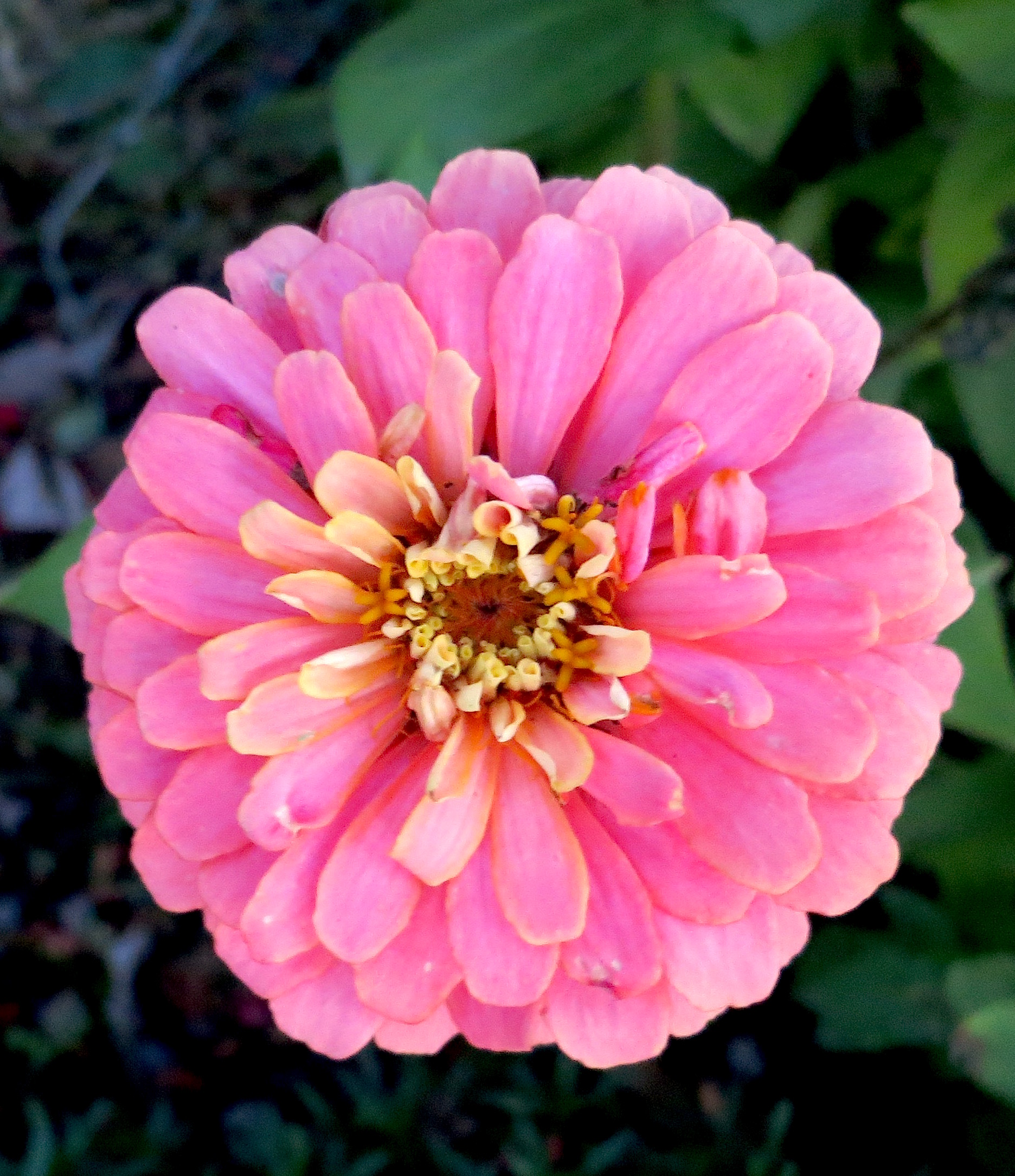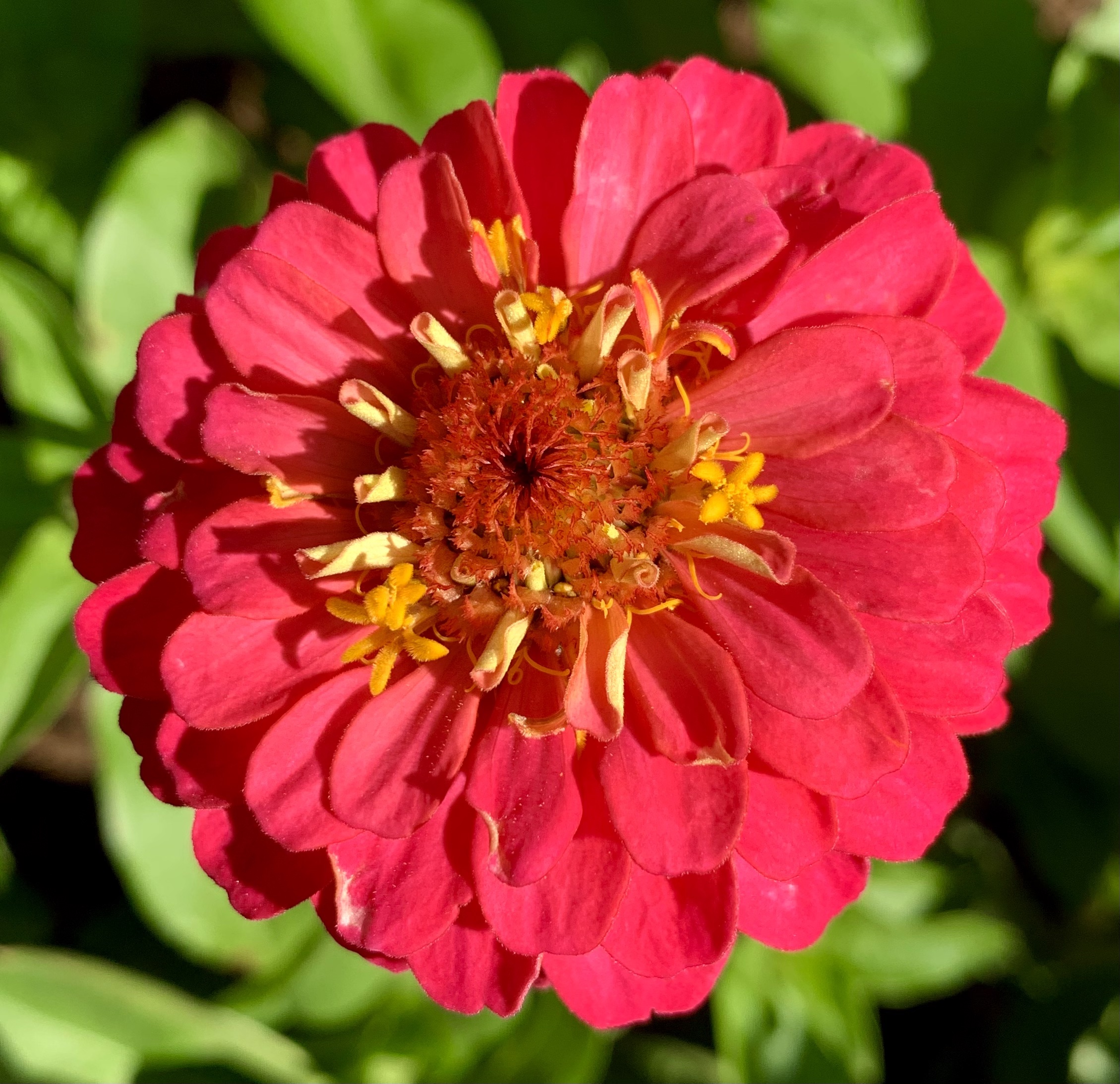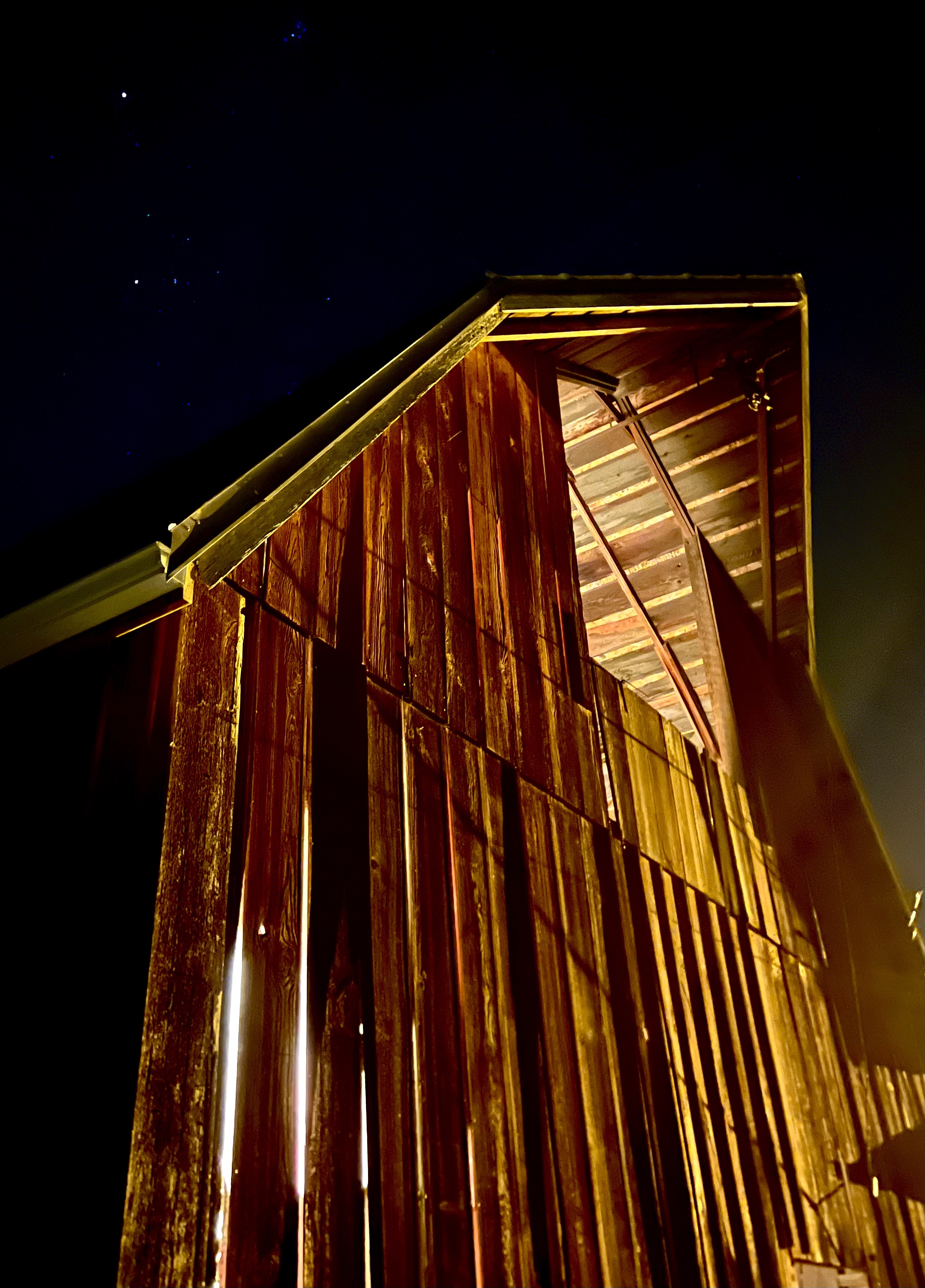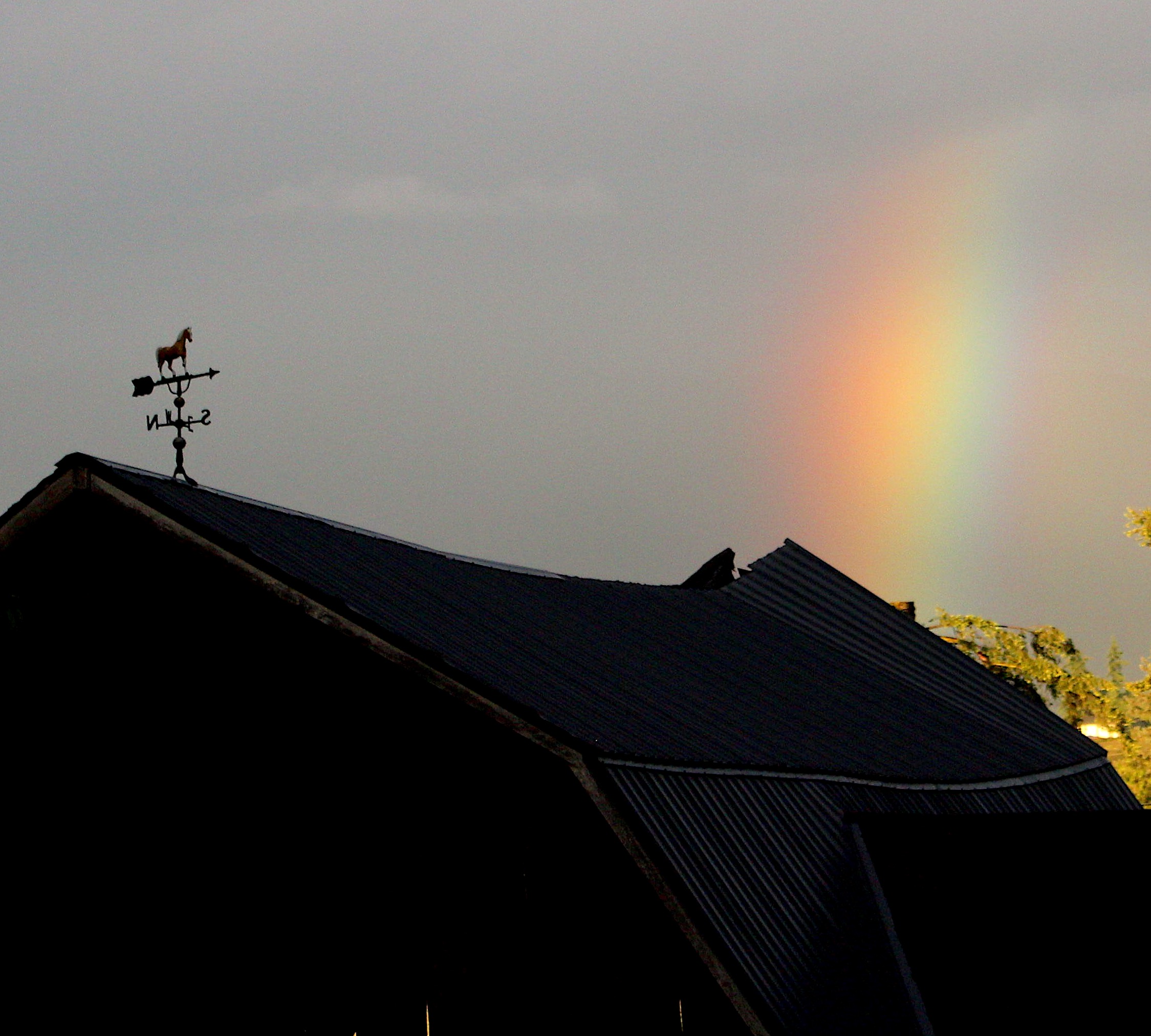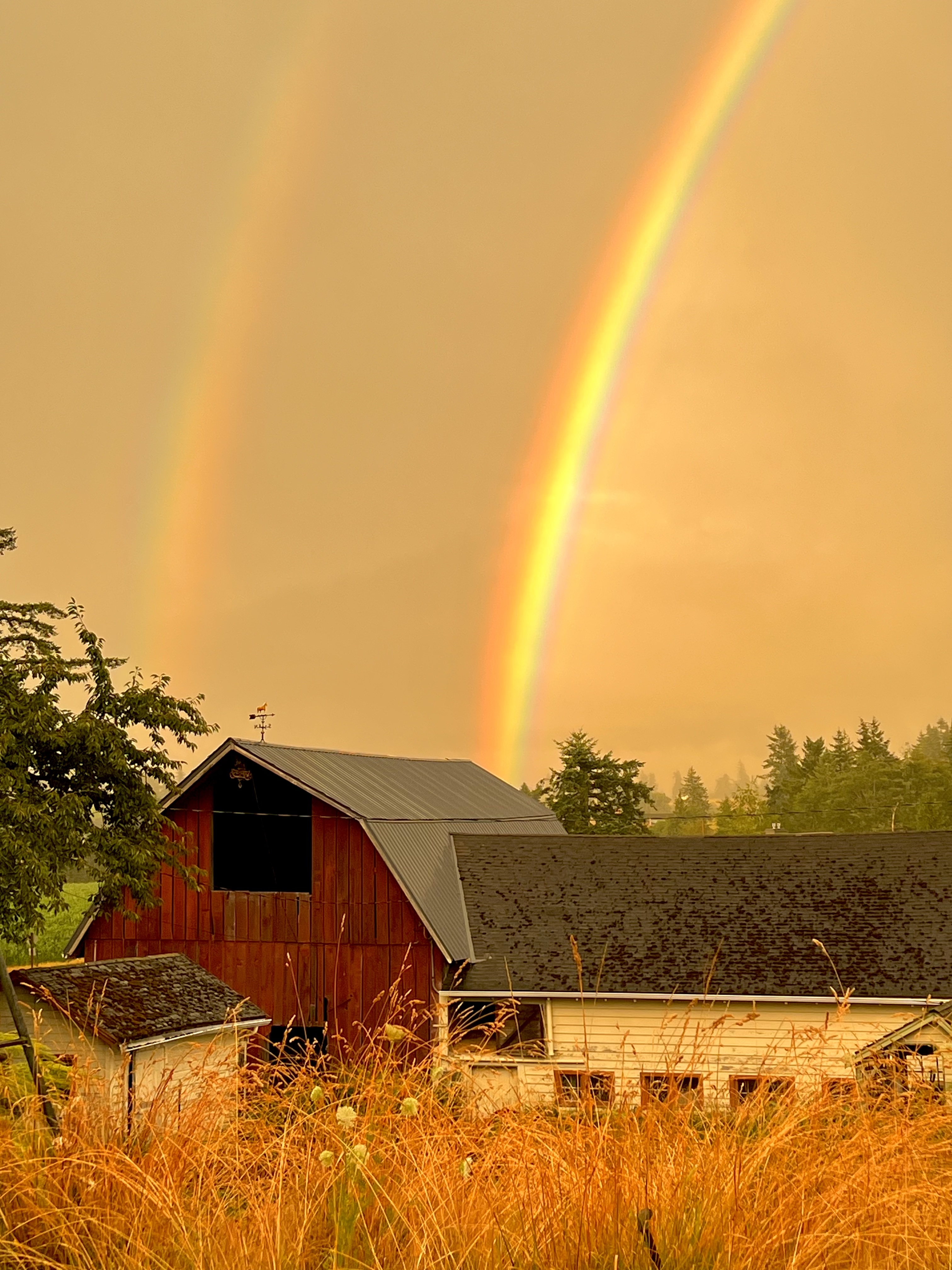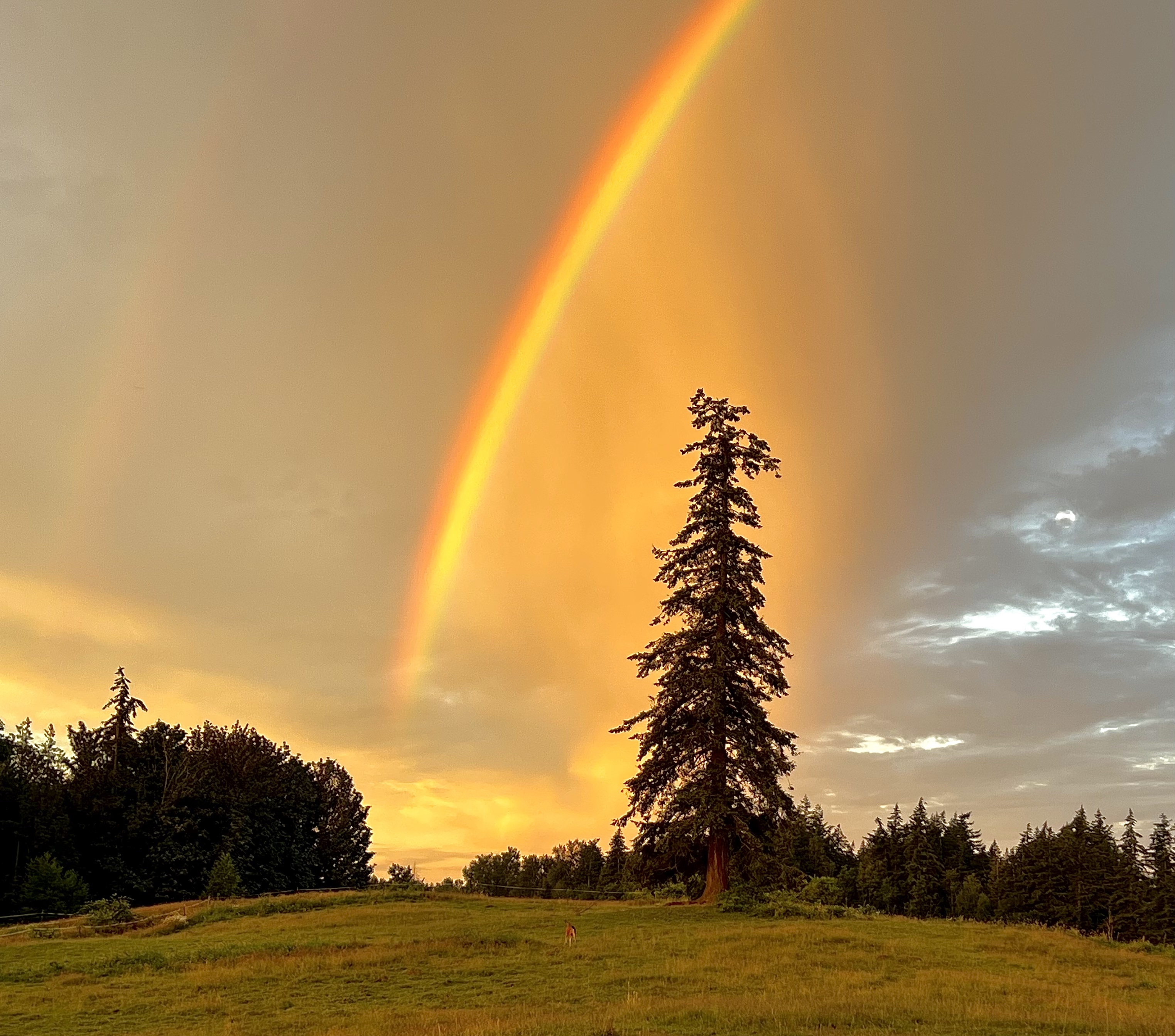

Until There’s Nothing Left

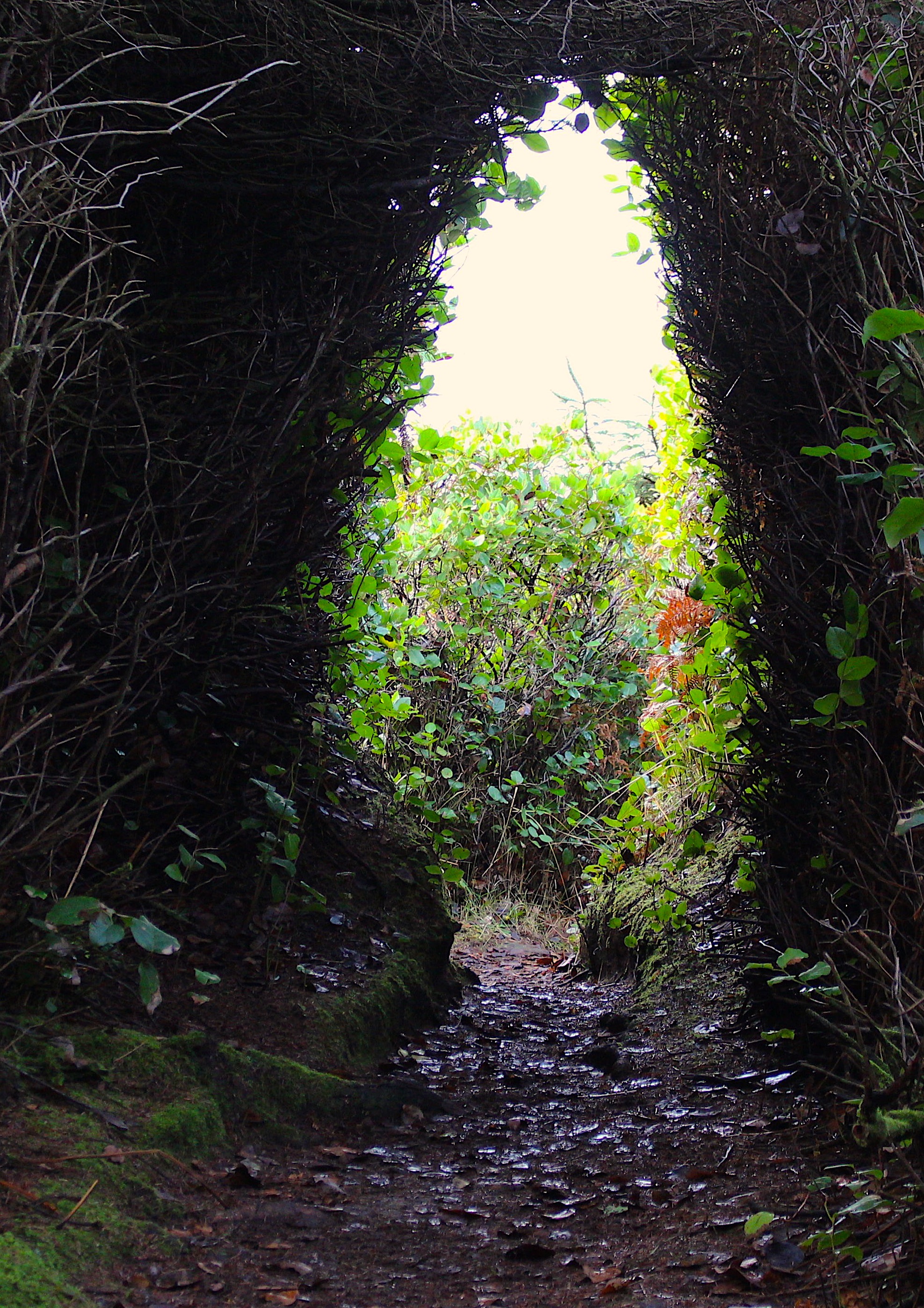
Walk noisily to declare your presence.
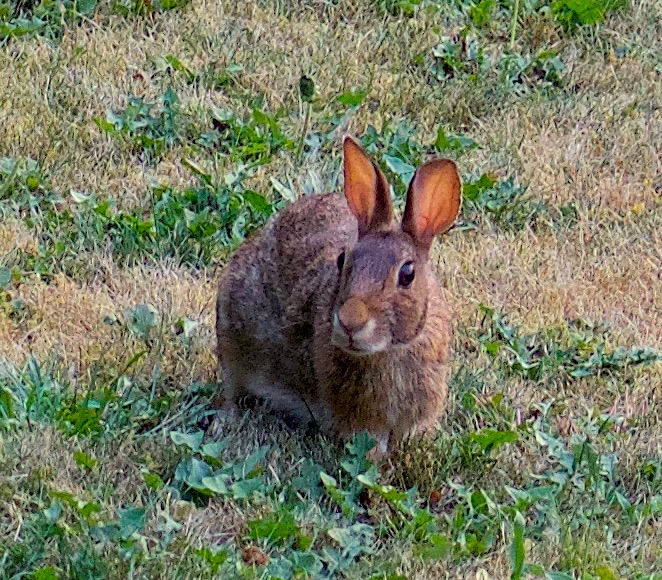
The rabbits and deer will leave
as soon as they hear you coming,
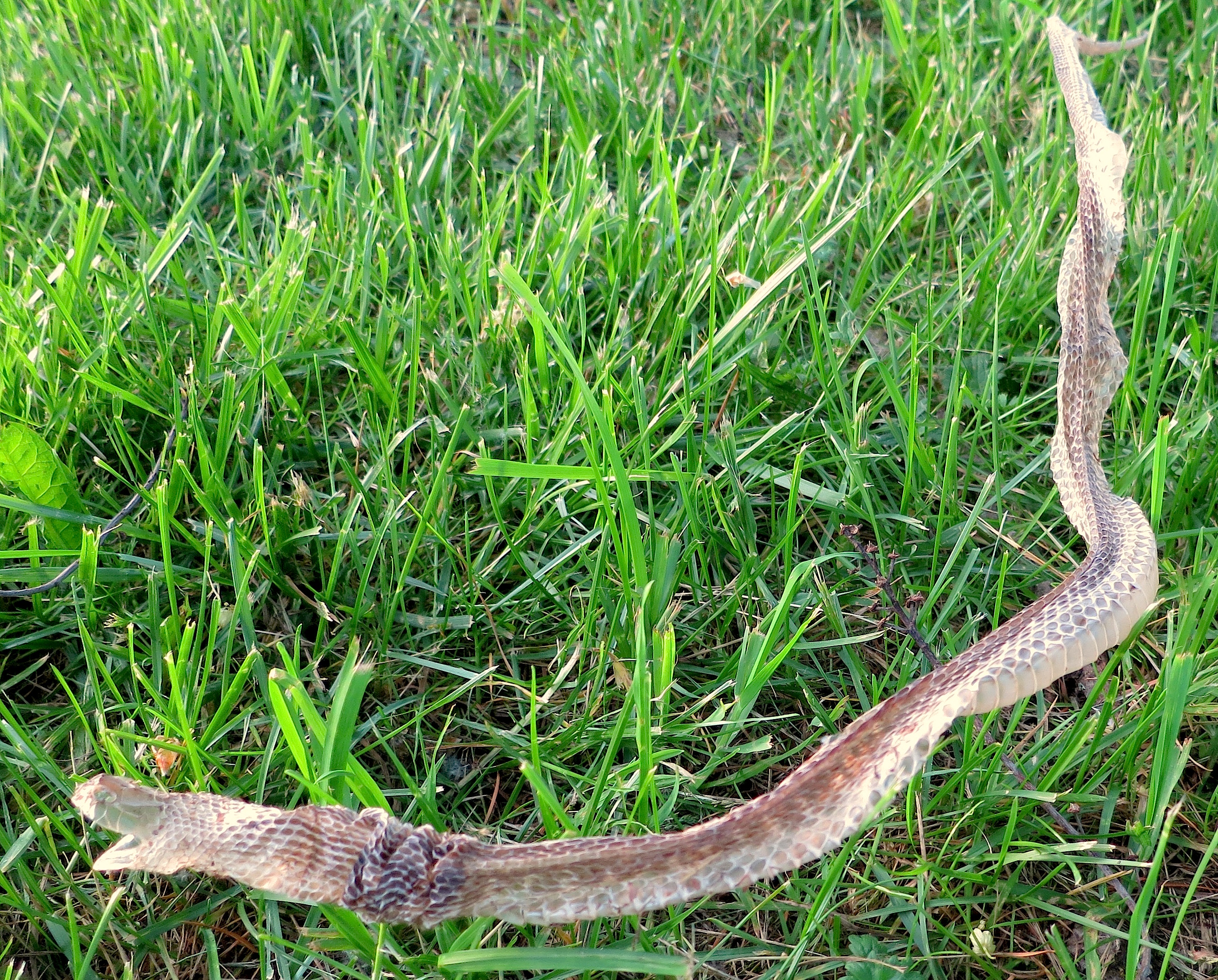
but the snakes need time
to process your intentions.

Take a moment to be certain
of what you’re cutting.
Many stems look alike
down close to the ground,
especially when they’re young.
Look up occasionally.

Don’t begrudge the wild roses
for whipping thorns across
your face and arms,
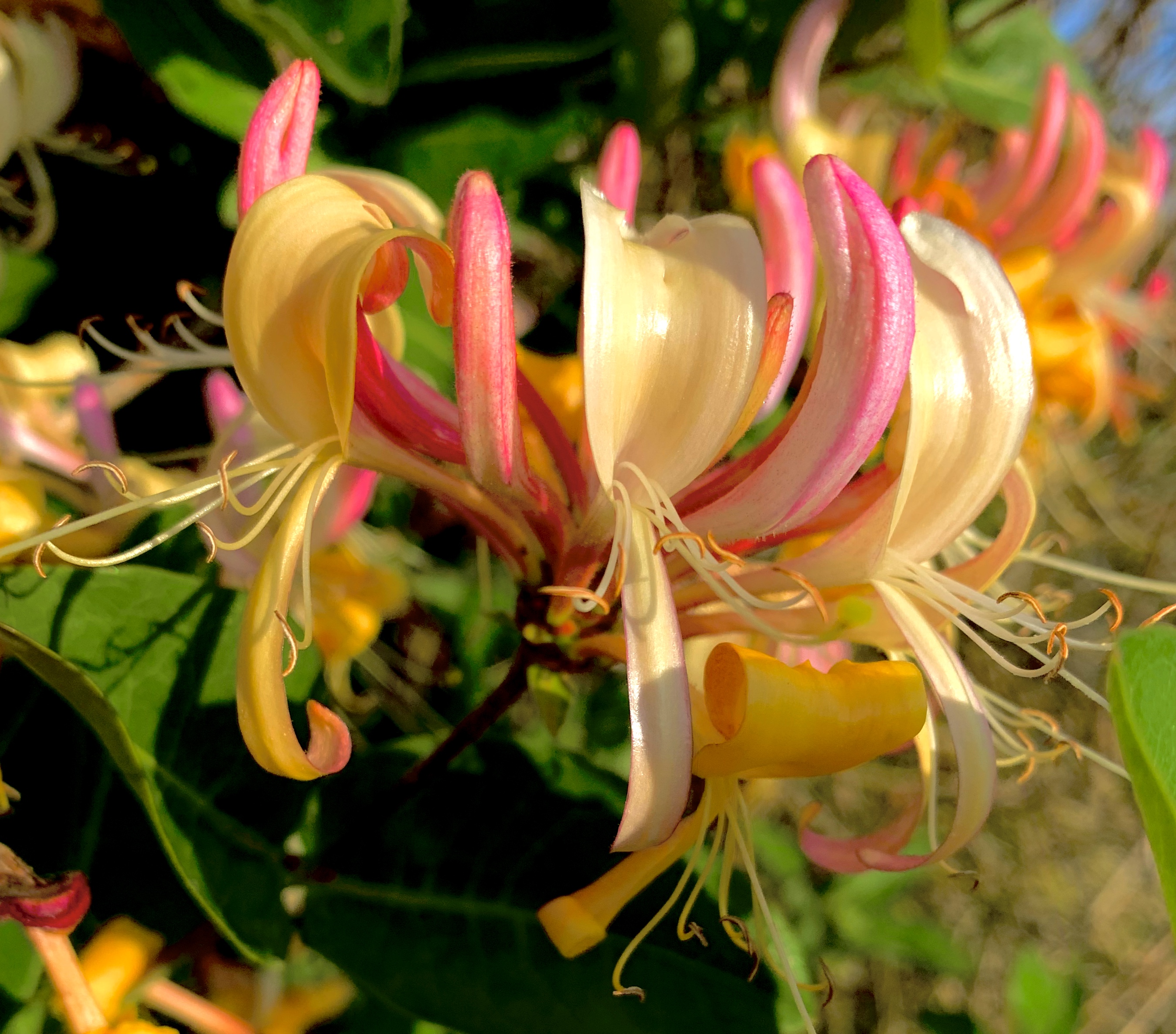
or the honeysuckle
for tangling your feet
and pulling the pruners
from your hands. You’d do
the same in their place.
Honor them with a clean cut.

Never begin when you’re angry
or you might not stop
until there’s nothing left
to hold the soil.

Always wear gloves
and keep your eye
on the blade.
~Jeff Coomer “Some Advice for Clearing Brush” from 
A Potentially Quite Remarkable Thursday.
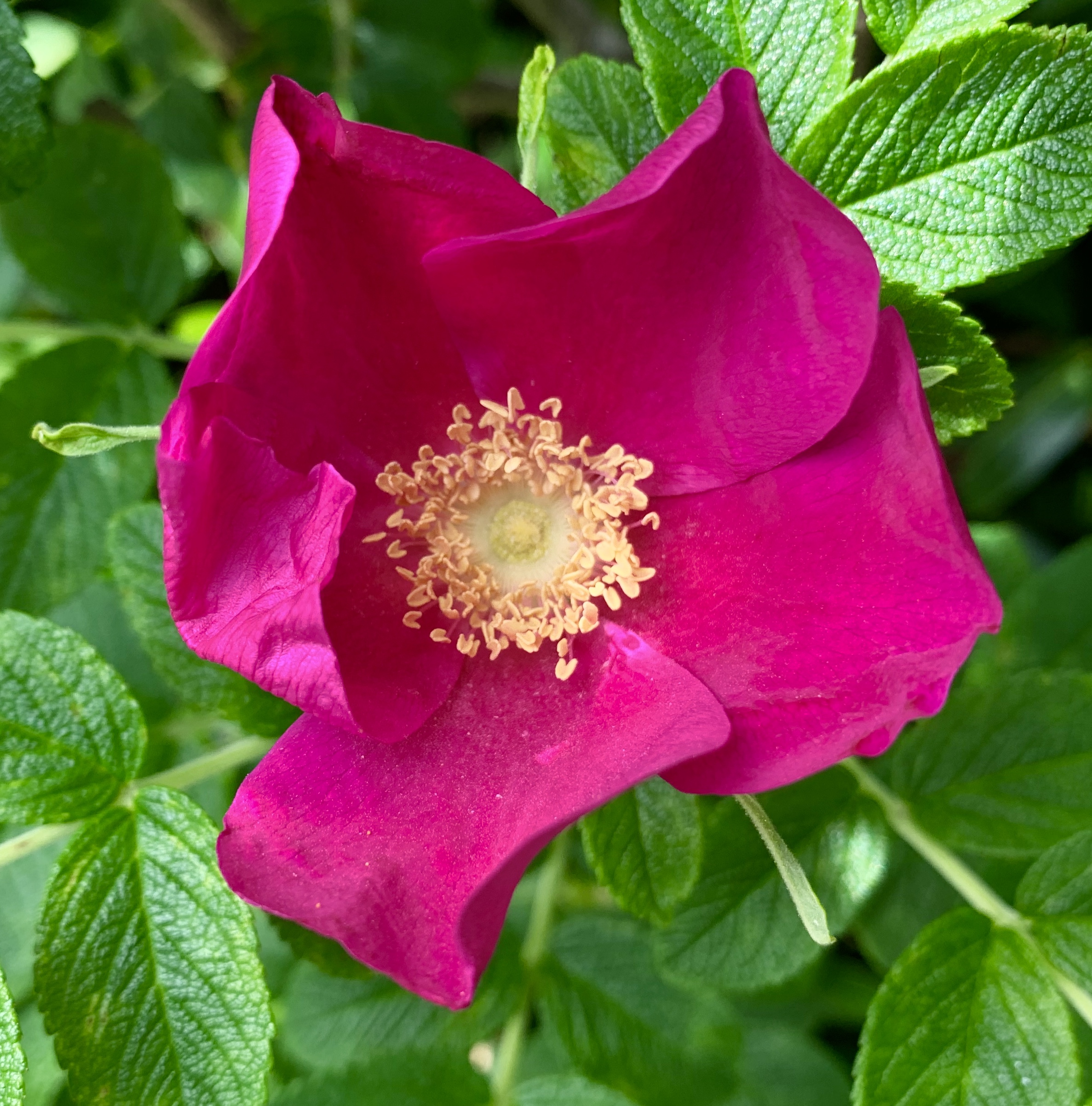
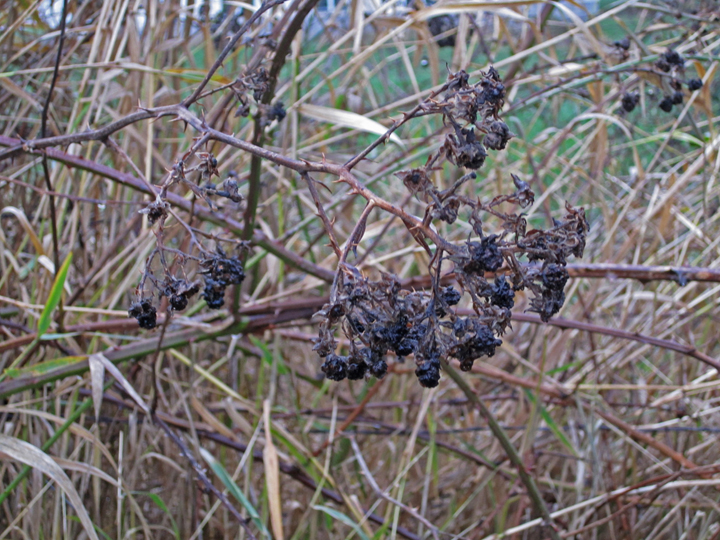
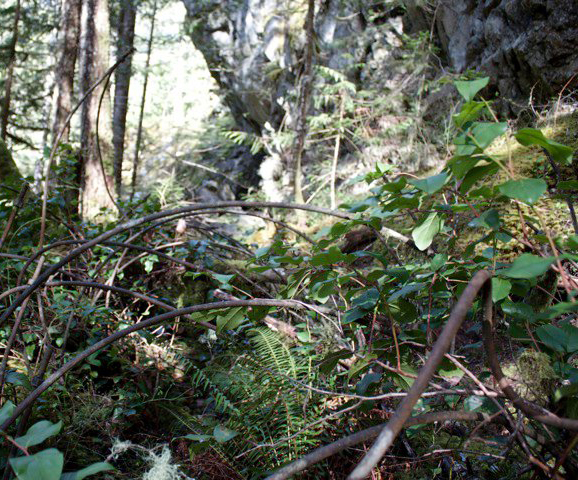
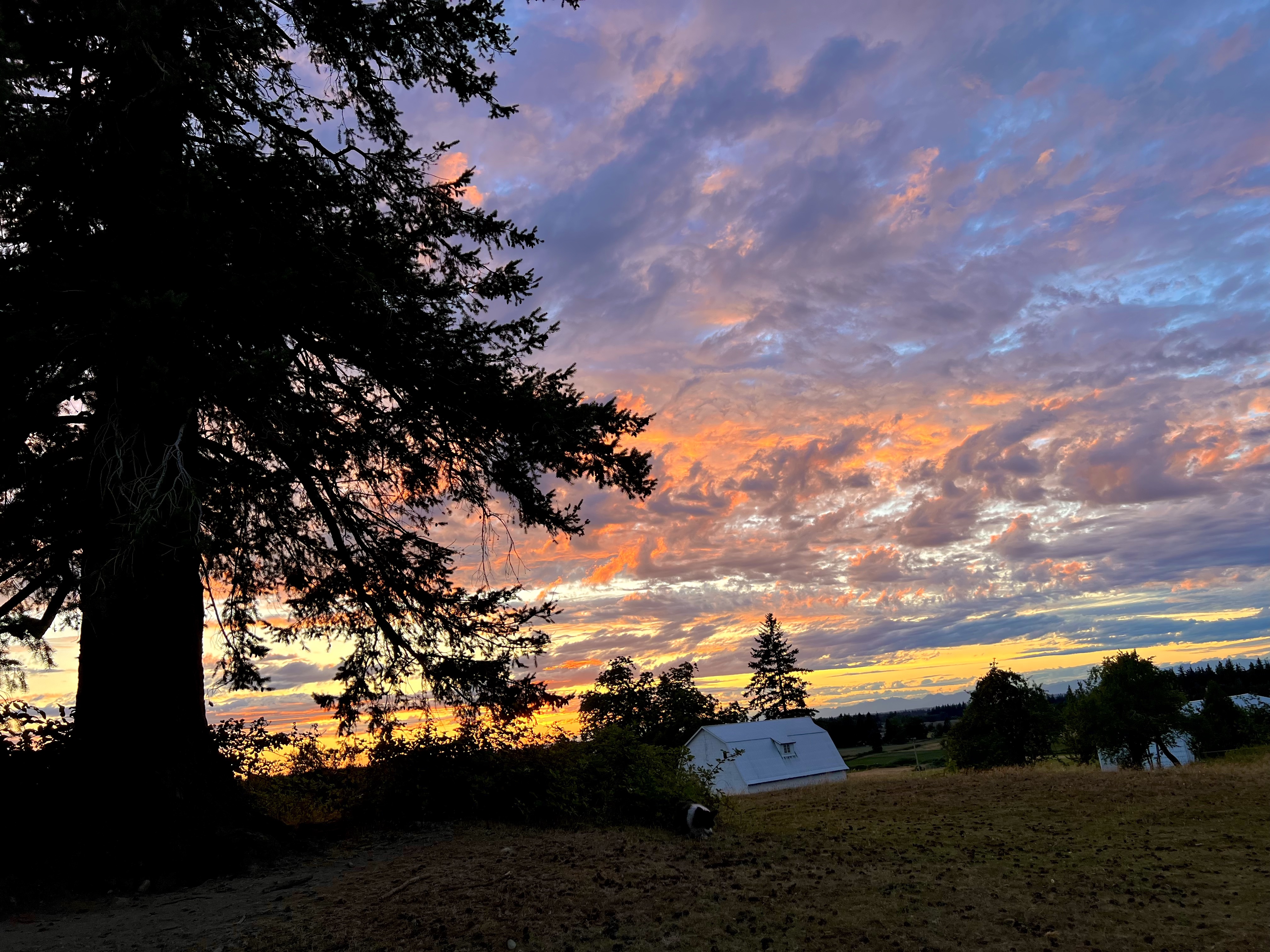
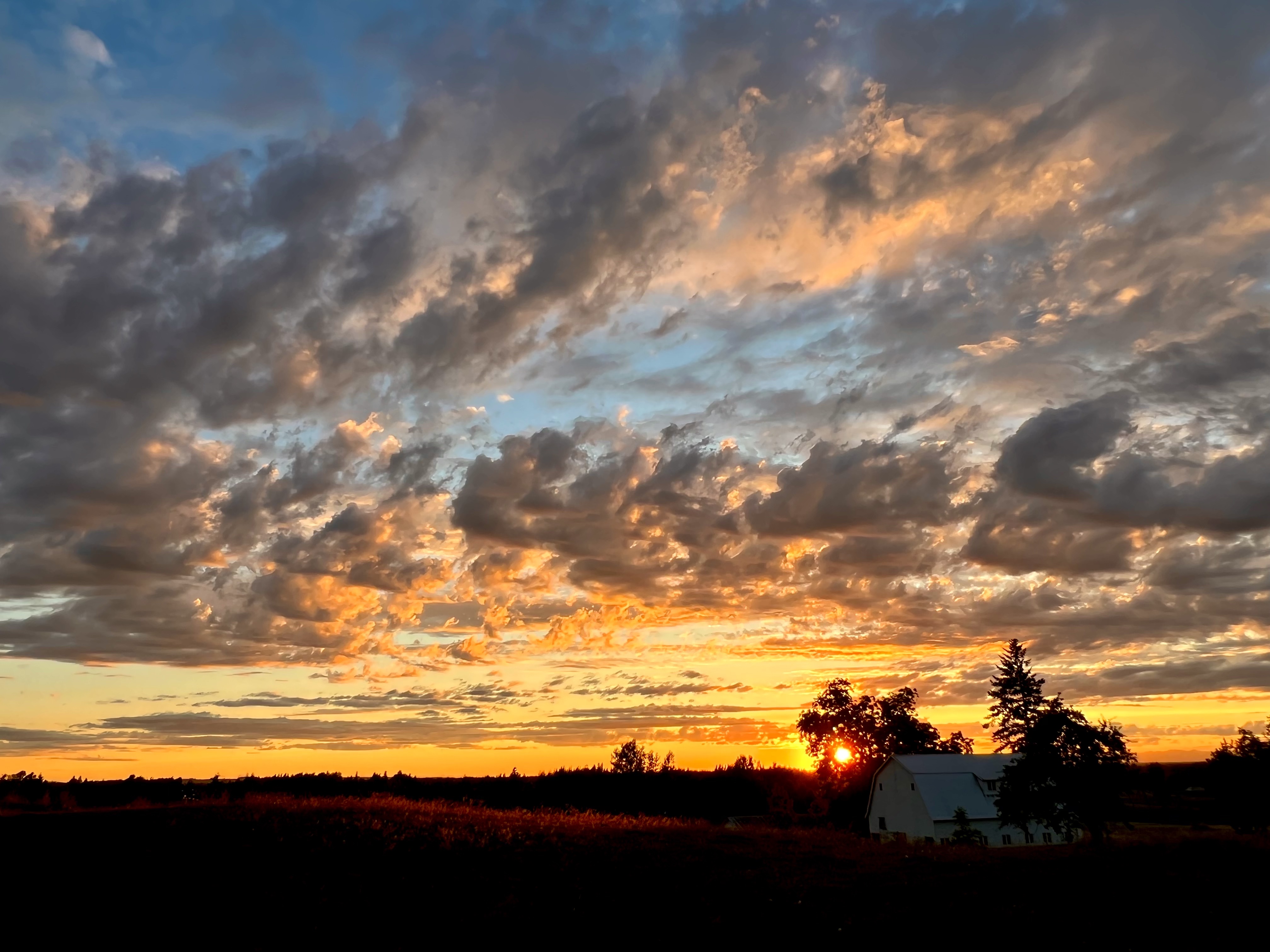
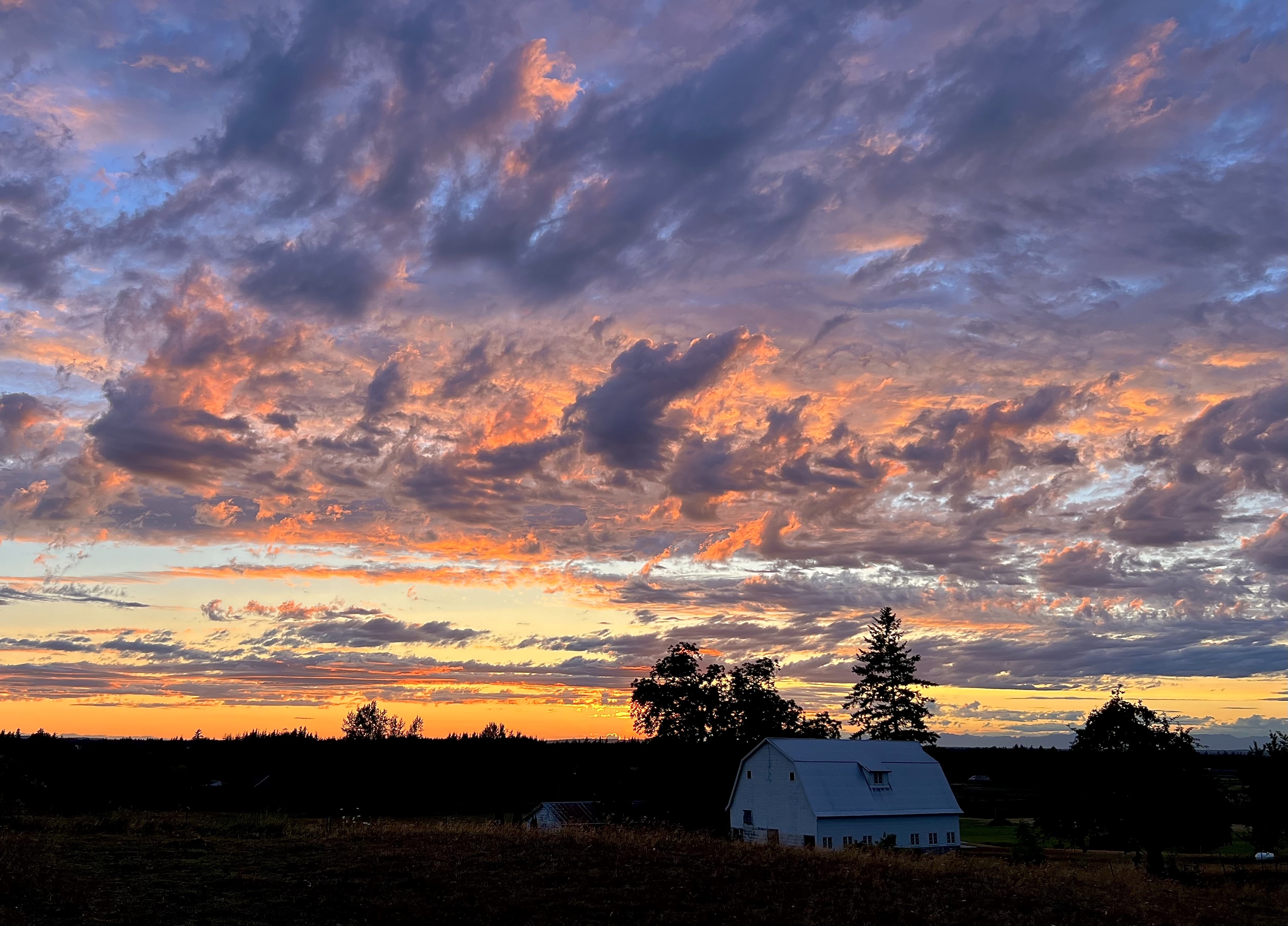
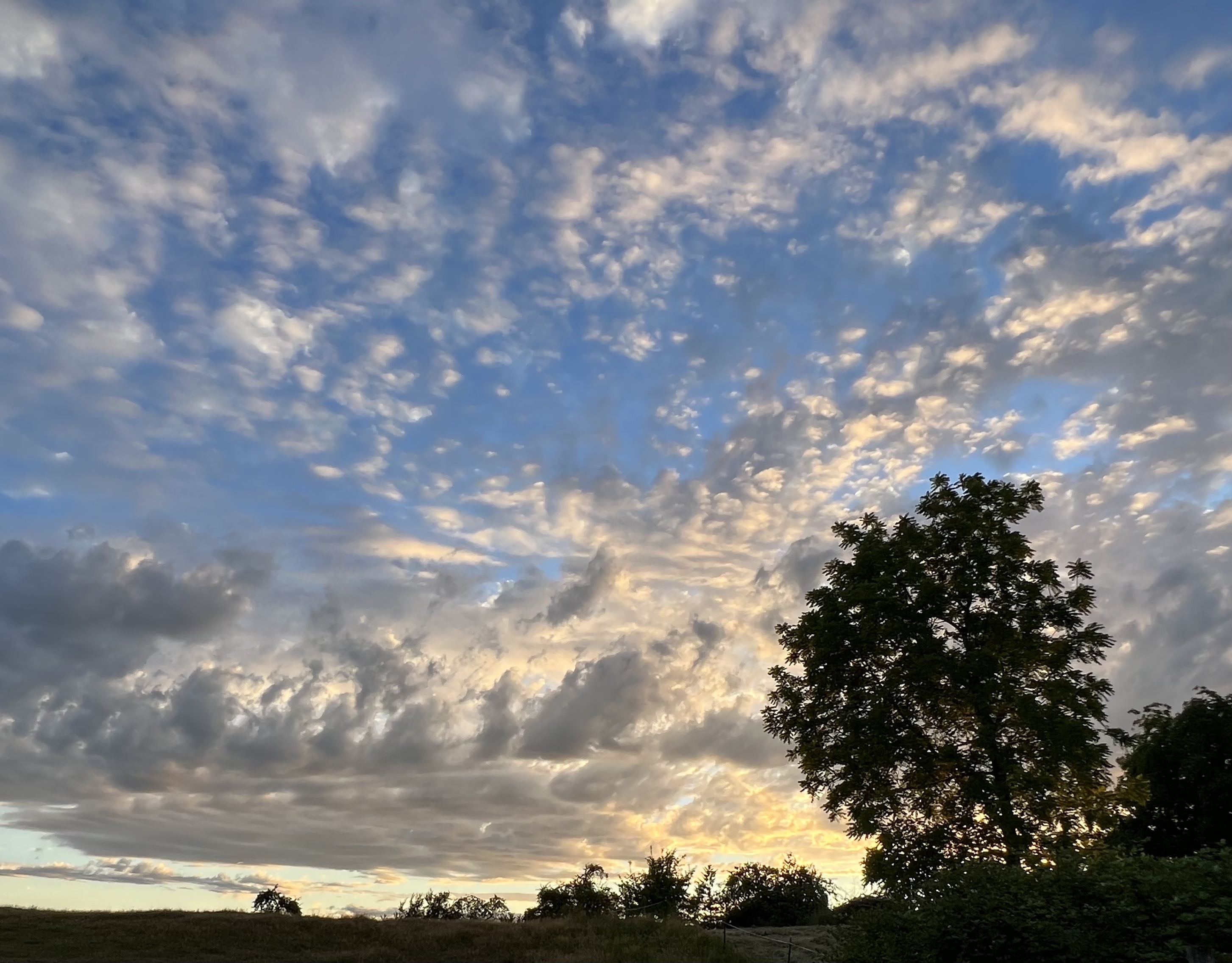
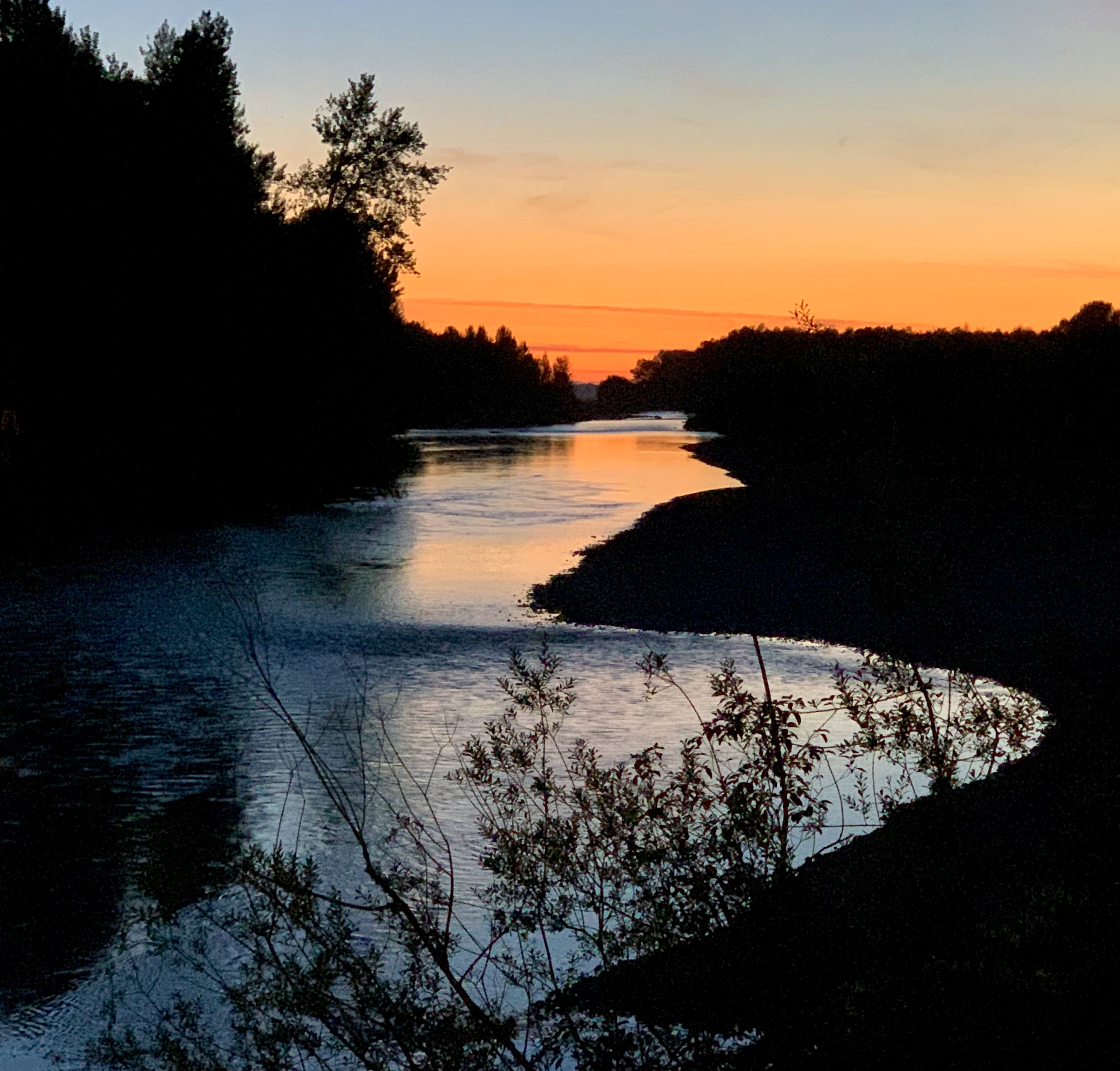
photo by Josh Scholten

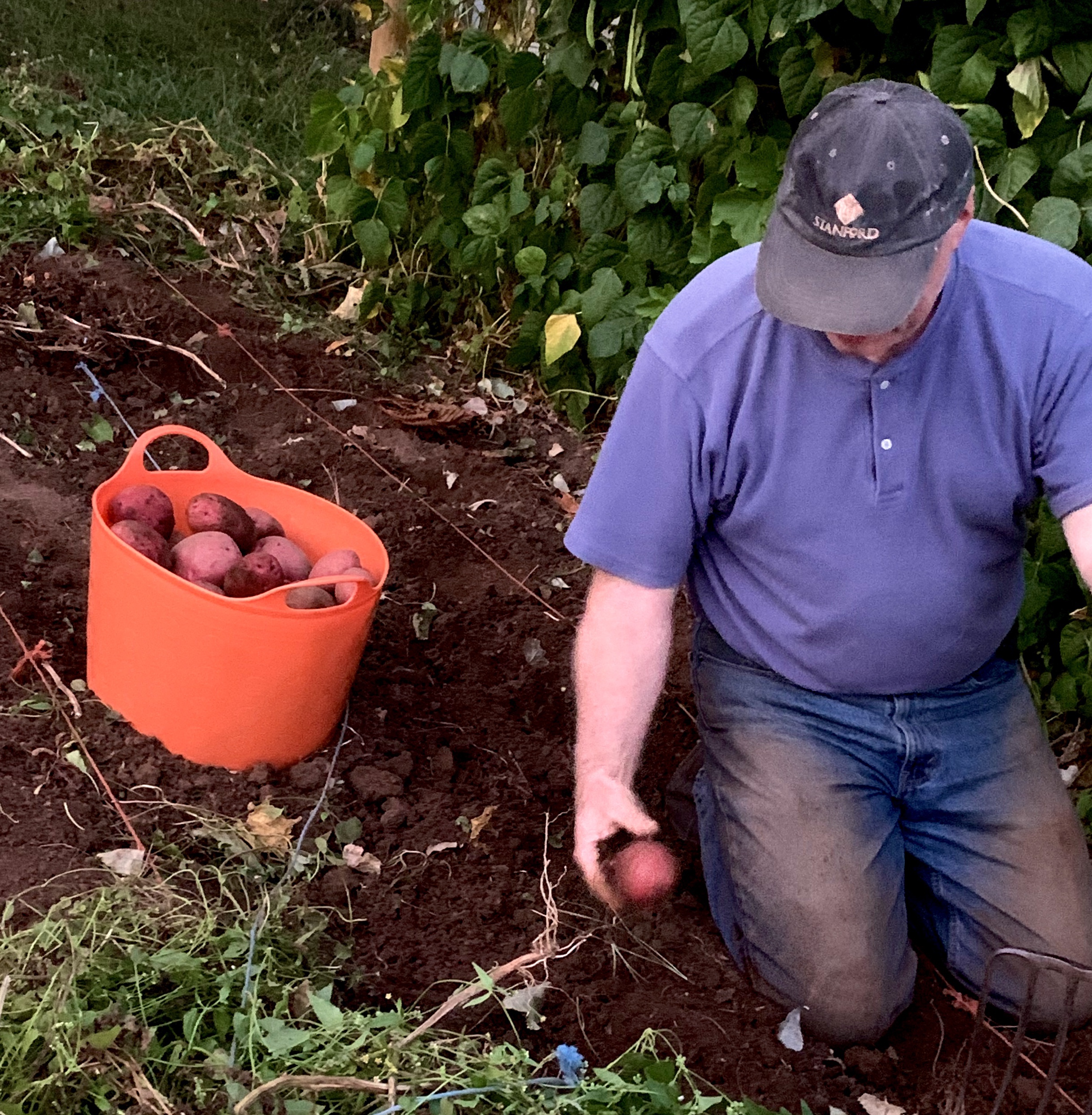
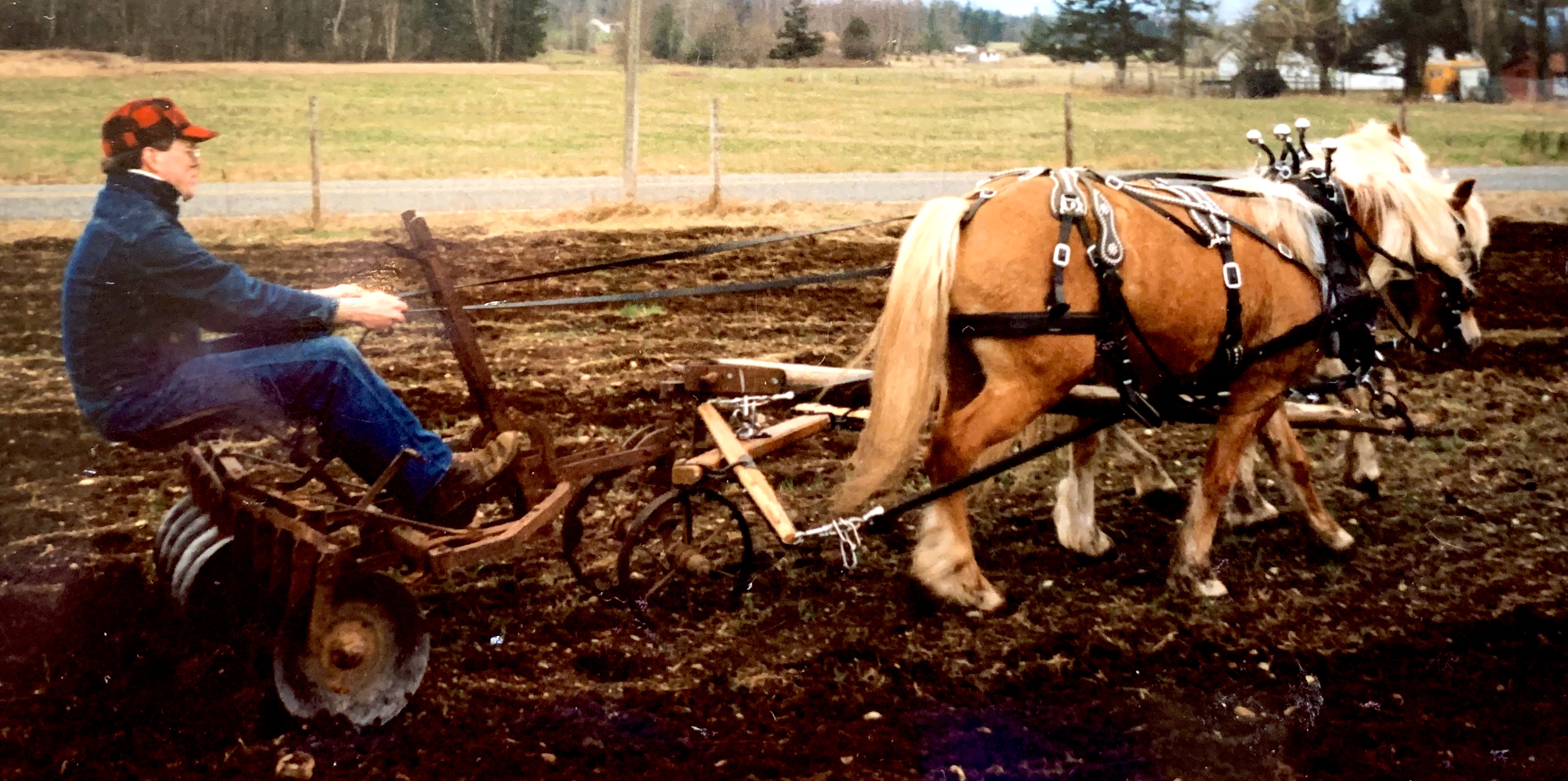
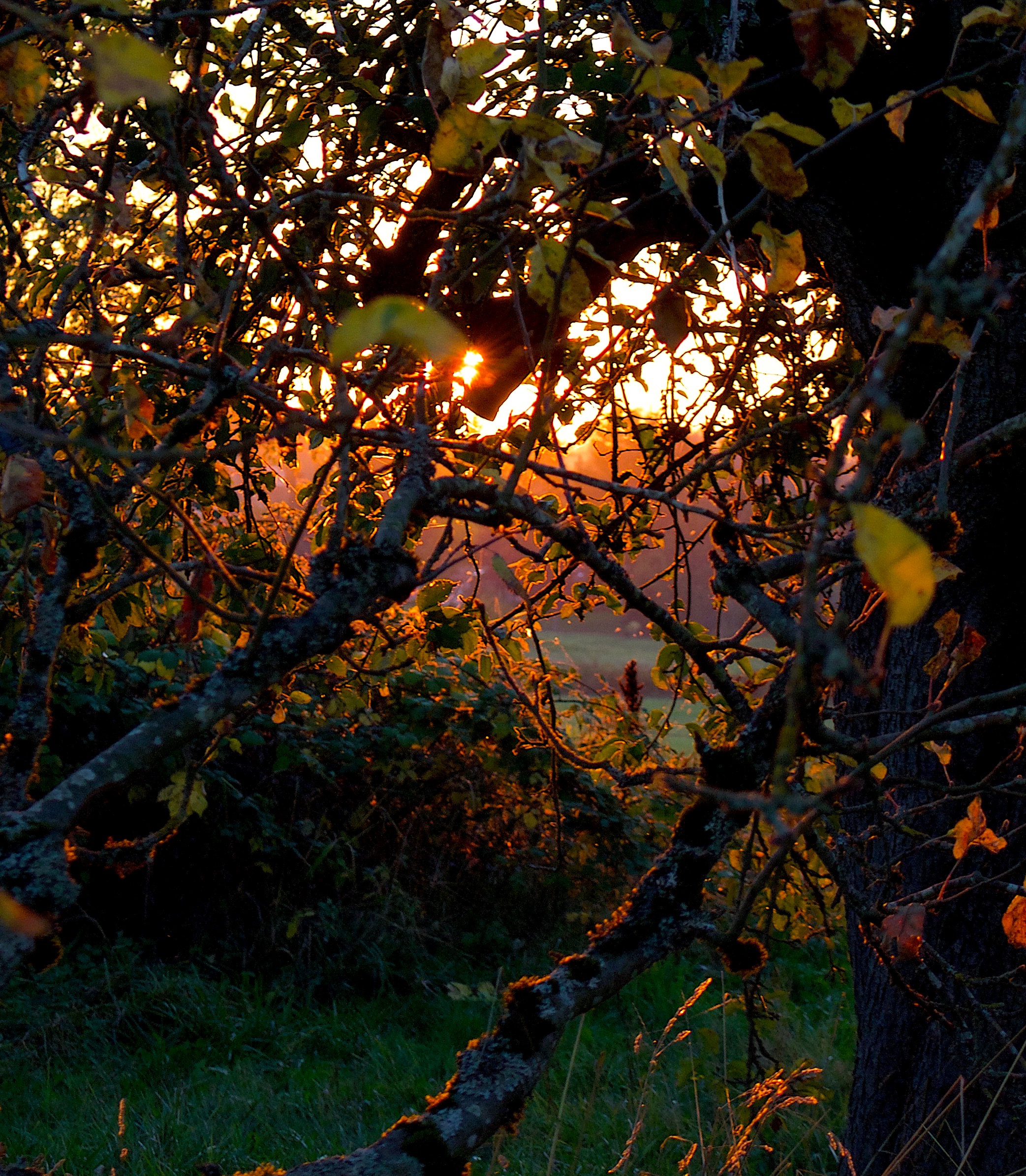
My father never quite adapted to his administrative desk job mid-career, working in a state job as a supervisor. He was a man of action, a former Marine and before that, a teenager whose young muscles were needed to tame the brush that grew out of control on his parents’ failing farm land. He learned young to swing a brush hook and later in life found it helped manage his desk-bound frustration to slash away at the vines and thorns and branches that stood between him and a sense of order on the land.

He would have been bemused, but impressed, that not just one, but two modern U.S. Presidents, Reagan and George W., found brush clearing to be therapeutic physical activity. Perhaps it helped them manage their anger impulses as well.

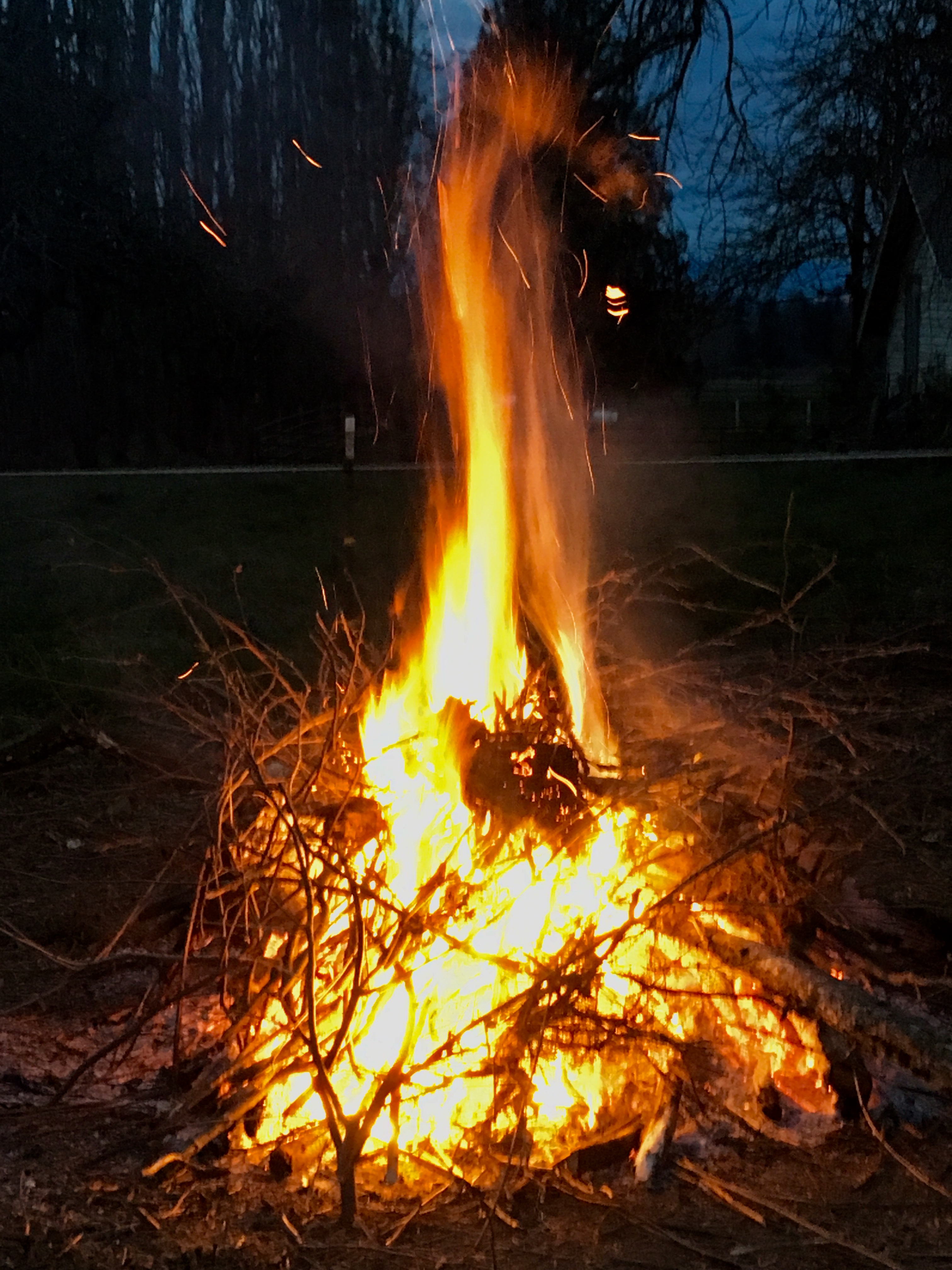
As soon as my dad got home from work, I remember him changing into denim overhauls and heavy duty gloves and boots. As long as there was daylight, he would head to our field and woods to battle back the brush thickets. He would swing his trusty brush hook, bringing down all manner of thick obstructing and unwanted plant life, then create numerous “brush piles” which he would let dry out and then burn in huge bonfires down to ashes in autumn until nothing was left but dust.

It was no small irony that he sometimes had to return in a few years to the same spot to clear it once again. It was a Sisyphean task, but yet somehow necessary for his general well-being.

I should have known there was something amiss when one year when I returned from college on a break, I found he had stopped clearing brush and chose instead to exercise on a stationary bicycle. Something in him had given up trying to make our fields and woods more habitable and useable. I figured he simply grew weary of perpetually ridding the land of thorn-bearing vines, thistles and weeds which had impeded his personal vision of the perfect park-like farmland.

Instead, he gave up and walked away from his marriage and his brush hook which he left hanging up in the barn. With nothing left to hold him there, he left, in search of something he felt was missing in his life.

We, my mom and his grown children, were left sifting through the ashes of what was left behind. It didn’t take long for the woods to become impenetrable in his absence.

We could not have known he would return a decade later, arising forgiven from the ashes he had left behind.

After all, there was more brush to clear and he was back to take care of it.
One-Time
Monthly
Yearly

Make a one-time or recurring donation to support daily ad-free Barnstorming posts

Make a monthly donation

Make a yearly donation

Choose an amount

$10.00
$25.00
$50.00
$5.00
$15.00
$100.00
$5.00
$15.00
$100.00

Or enter a custom amount

$

Your contribution is deeply appreciated.

Your contribution is appreciated.

Your contribution is appreciated.

DonateDonate monthlyDonate yearly
Waiting for the Letters

I love you forever
my father’s letter tells her
for forty-nine pages,
from the troopship crossing the Atlantic
before they’d ever heard of Anzio.

He misses her, the letter says,
counting out days of boredom, seasickness,
and changing weather,
poker games played for matches
when cash and cigarettes ran out,
a Red Cross package—soap,
cards, a mystery book he traded away
for The Rubaiyyat a bunkmate didn’t want.
He stood night watch and thought
of her. Don’t forget the payment
for insurance, he says.

My mother waits at home with me,
waits for the letter he writes day by day
moving farther across the ravenous ocean.
She will get it in three months and
her fingers will smooth the Army stationery
to suede.

He will come home, stand
beside her in the photograph, leaning
on crutches, holding
me against the rough wool
of his jacket. He will sit
alone and listen to Aïda

and they will pick up their
interrupted lives. Years later,
she will show her grandchildren
a yellow envelope with
forty-nine wilted pages telling her

of shimmering sequins on the water,
the moonlight catching sudden phosphorescence,
the churned wake that stretched a silver trail.
~Ellen Steinbaum, “Letter Home” from Container Gardening

The dead say little in their letters
they haven’t said before.
We find no secrets, and yet
how different every sentence sounds
heard across the years.

My father breaks my heart
simply by being so young and handsome.
He’s half my age, with jet-black hair.
Look at him in his navy uniform
grinning beside his dive-bomber.

It’s silly to get sentimental.
The dead have moved on. So should we.
But isn’t it equally simple-minded to miss
the special expertise of the departed
in clarifying our long-term plans?

They never let us forget that the line
between them and us is only temporary.
Get out there and dance! the letters shout
adding, Love always. Can’t wait to get home!
And soon we will be. See you there.
~Dana Gioia from “Finding a Box of Family Letters

Marine Captain Henry Polis

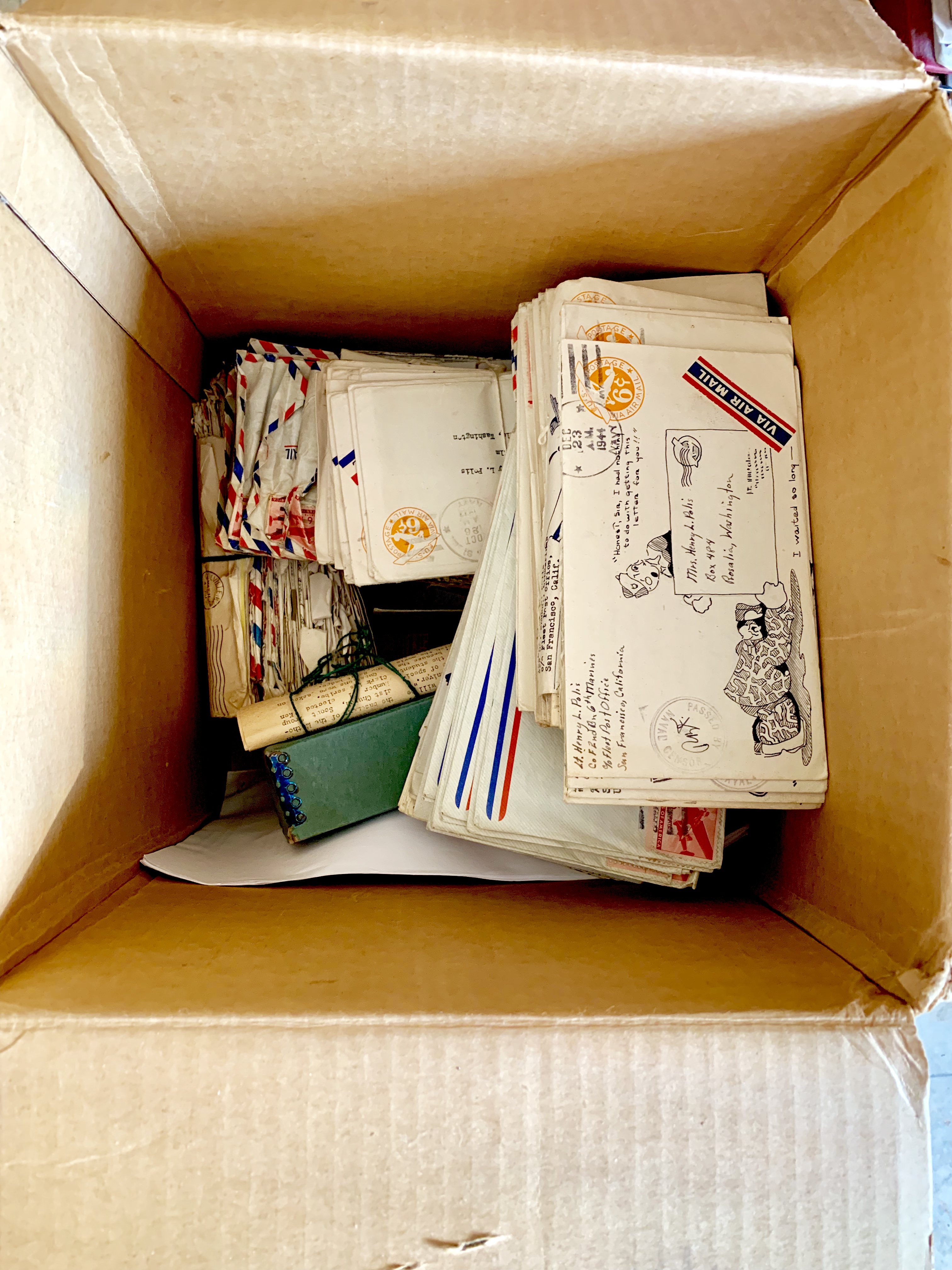
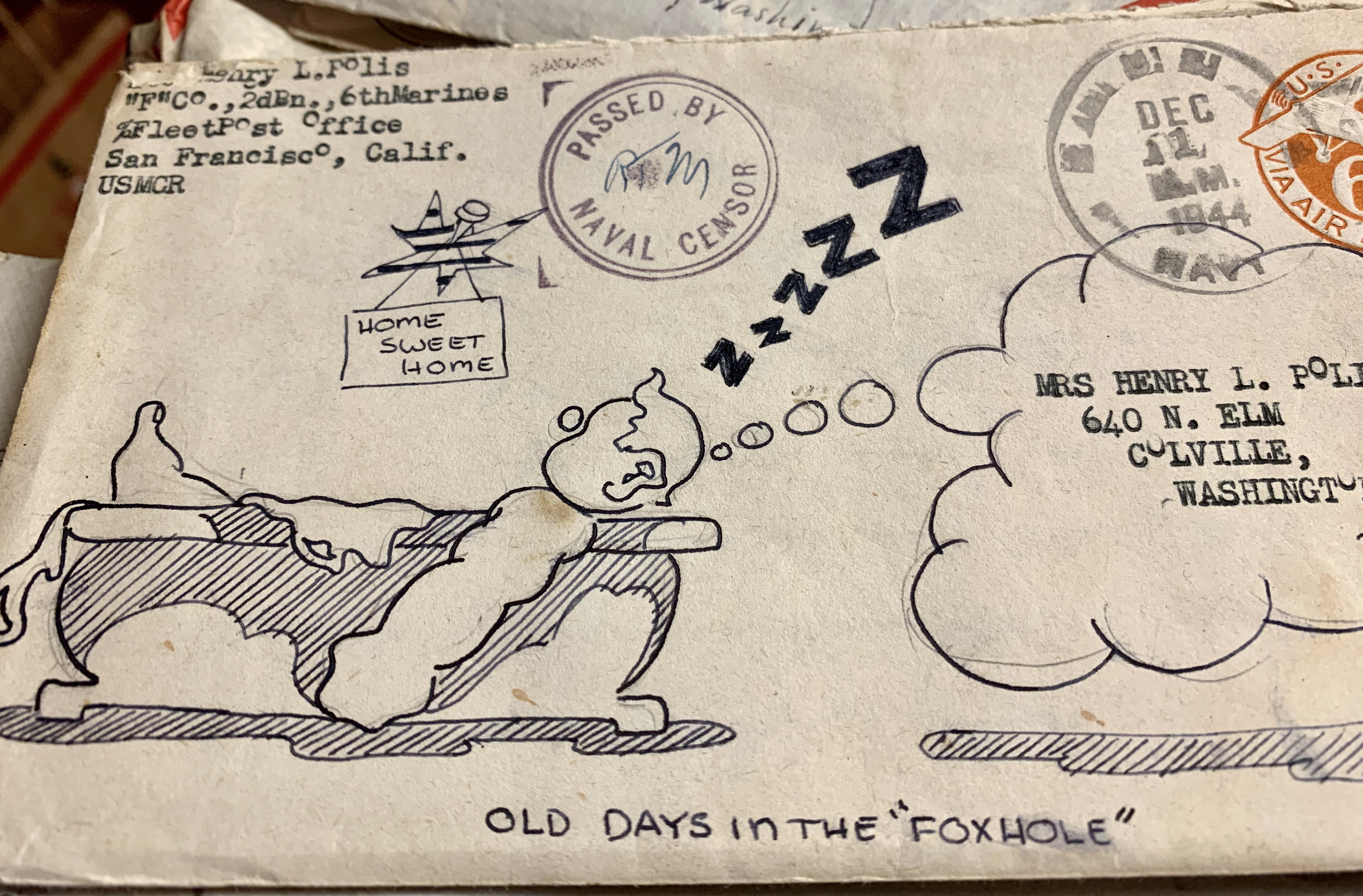
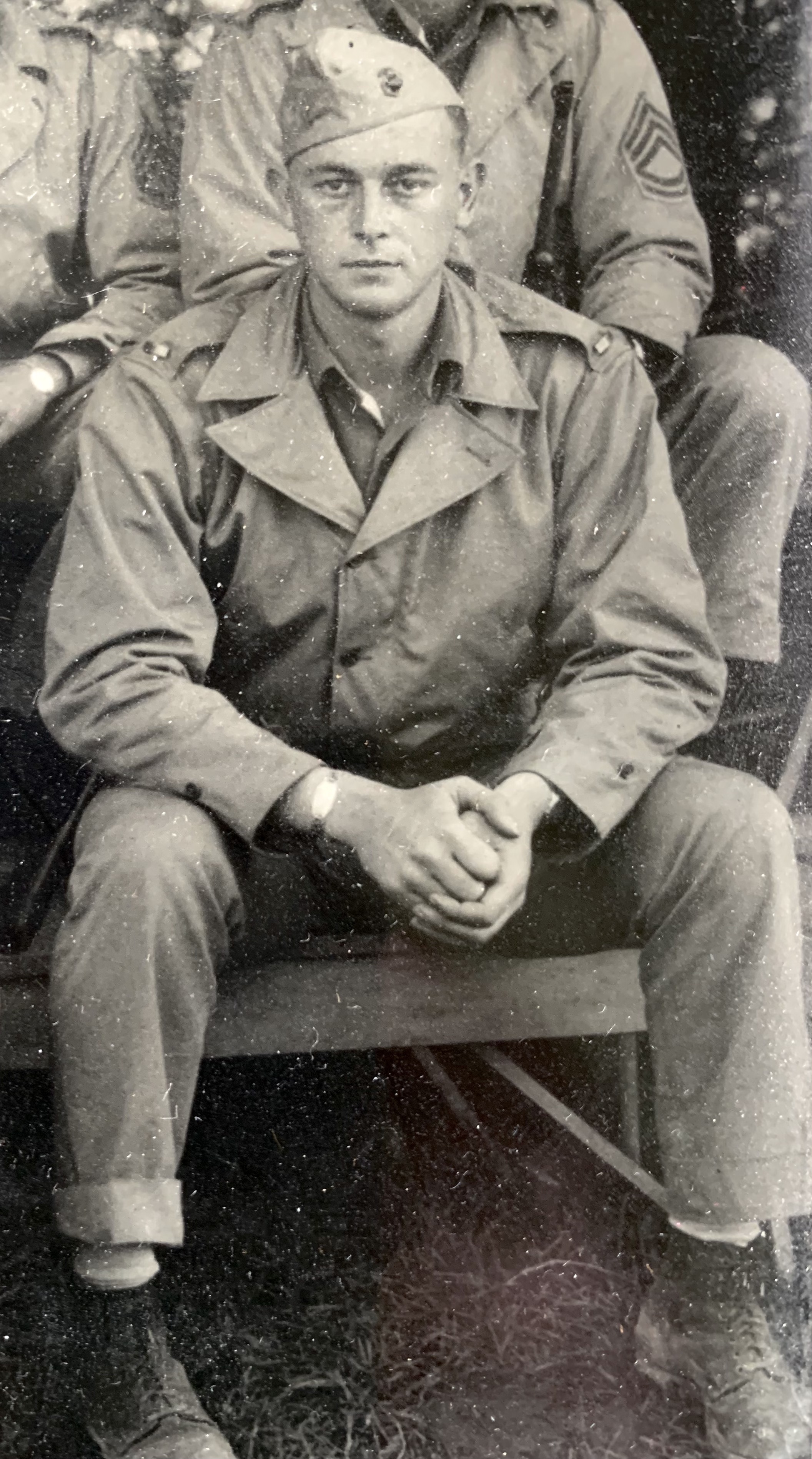
Today is the 80th anniversary of the Battle of Tarawa, one of the bloodiest Marine Corps island victories in World War II. My 21 year old father was there, leading a company of over 100 men into battle on the “second wave.”

Below is a portion of a 1944 letter he sent home to my mother about approaching the island on November 21, 1943. When he was not in active battle, he wrote to her nearly daily. He returned home in late 1945, physically uninjured. He never spoke about his 36 months in combat, except in the most general terms.

I had never seen him with a gun in his hands, and wasn’t aware he even had kept a gun after leaving the Marines. One day, in the early 1970’s, one of our farm’s beef animals was injured so my father, for the first time in thirty years, pulled out a gun from its hiding place to put down the suffering animal. I never saw the gun again and believe my father disposed of it soon after – firing that gun after so many years was too much for him.

I have no idea what all my father witnessed and had to experience while under orders during those months in the South Pacific. I do know he would have done whatever his superiors asked him to do, just as the men under his command trusted him to lead them, even into their dying hour. These young men, some as teenagers at the time, guaranteed us the freedoms we blithely take for granted now.

His letter, which made it past the Marine censors:

“You mentioned a story of Navy landing craft taking the Marines into Tarawa.  It reminded me of something which impressed me a great deal and something I’m sure I’ll never forget. 

So you’ll understand what I mean I’ll try to start with an explanation.  In training – close order drill- etc.  there is a command that is given always when the men form in the morning – various times during the day– after firing– and always before a formation is dismissed.  The command is INSPECTION – ARMS.  On the command of EXECUTION- ARMS each man opens the bolt of his rifle.  It is supposed to be done in unison so you hear just one sound as the bolts are opened.  Usually it is pretty good and sounds O.K.

Just to show you how the morale of the men going to the <Tarawa> beach was – and how much it impressed me — we were on our way in – I was forward, watching the beach thru a little slit in the ramp – the men were crouched in the bottom of the boat, just waiting.  You see- we enter the landing boats with unloaded rifles and wait till it’s advisable before loading.  When we got about to the right distance in my estimation I turned around and said – LOAD and LOCK – I didn’t realize it, but every man had been crouching with his hand on the operating handle and when I said that — SLAM! — every bolt was open at once – I’ve never heard it done better – and those men meant business when they loaded those rifles. 

A man couldn’t be afraid with men like that behind him.
~ Marine Captain Henry Polis in a 1944 letter home about the Battle of Tarawa November 20-23, 1943

For photos of the battle:

National WWII Museum: The Battle of Tarawa

The History Channel: Battle of Tarawa

The Battle of Tarawa

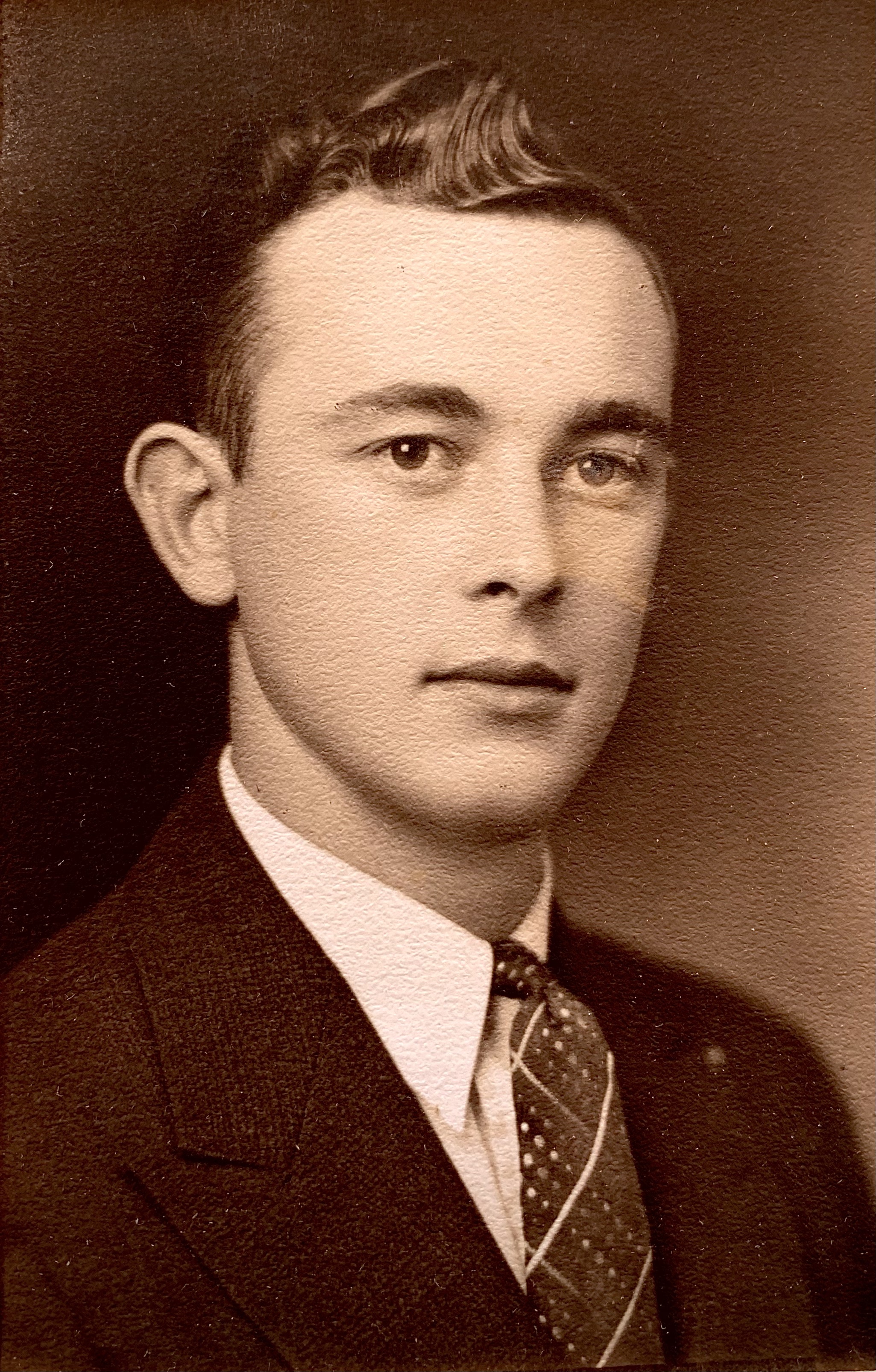
Henry Polis, Washington State College 1941 (age 20, before enlisting in the Marine Corps)
One-Time
Monthly
Yearly

Make a one-time or recurring donation to support daily ad-free Barnstorming posts

Make a monthly donation

Make a yearly donation

Choose an amount

$10.00
$25.00
$50.00
$5.00
$15.00
$100.00
$5.00
$15.00
$100.00

Or enter a custom amount

$

Your contribution is deeply appreciated.

Your contribution is appreciated.

Your contribution is appreciated.

DonateDonate monthlyDonate yearly

Finding Refuge

When the wind
turns and asks, in my father’s voice,
Have you prayed?

I know three things. One:
I’m never finished answering to the dead.

Two: A man is four winds and three fires.
And the four winds are his father’s voice,
his mother’s voice . . .

Or maybe he’s seven winds and ten fires.
And the fires are seeing, hearing, touching,
dreaming, thinking . . .
Or is he the breath of God?

When the wind turns traveler
and asks, in my father’s voice, Have you prayed?
I remember three things.

One: A father’s love
is milk and sugar,
two-thirds worry, two-thirds grief, and what’s left over
is trimmed and leavened to make the bread
the dead and the living share.

And patience? That’s to endure
the terrible leavening and kneading.


And wisdom? That’s my father’s face in sleep.

When the wind
asks, Have you prayed?
I know it’s only me
reminding myself

a flower is one station between
earth’s wish and earth’s rapture, and blood
was fire, salt, and breath long before
it quickened any wand or branch, any limb
that woke speaking. It’s just me
in the gowns of the wind,

or my father through me, asking,
Have you found your refuge yet?
asking, Are you happy?

Strange. A troubled father. A happy son.
The wind with a voice. And me talking to no one.

~Li Young Lee “Have You Prayed?”

I pray because I can’t help myself.
I pray because I’m helpless.
I pray because the need flows out of me all the time — waking and sleeping.
It doesn’t change God — it changes me.

~C.S. Lewis

I never did hear my father pray out loud except for saying grace together as a family before our dinner meal. Once he described a prayer he uttered while hunkering in a trench on the island of Tarawa during WWII: if God could see him safe through the three years of combat, he would turn his life to over to God and become a preacher of the Word.

He came home safe, his body still whole but he could see the harsh reality of his foxhole promise: agriculture teachers made better incomes than preachers. He had a family to support so he became a high school FFA teacher. I’m not sure he ever forgave himself for not keeping his word, even when God did. I figure the world needs good farmers as much as good preachers and he trained his share of farmers over the decades, including me.

I learned to pray out loud at our small church as we spend part of every evening service praying out loud for the needs of our church people, our community and our world. It still does not come easily or naturally to me, yet I hope our children, having heard their parents pray out loud, have learned they are not just talking to the wind when they speak to God aloud, when helpless, when weary, when joyful, when thankful.

Praying changes everything.

One-Time
Monthly
Yearly

Make a one-time or recurring donation to support daily Barnstorming posts

Make a monthly donation

Make a yearly donation

Choose an amount

$10.00
$25.00
$50.00
$5.00
$15.00
$100.00
$5.00
$15.00
$100.00

Or enter a custom amount

$

Your contribution is deeply appreciated.

Your contribution is appreciated.

Your contribution is appreciated.

DonateDonate monthlyDonate yearly
Having the Strength to Ask

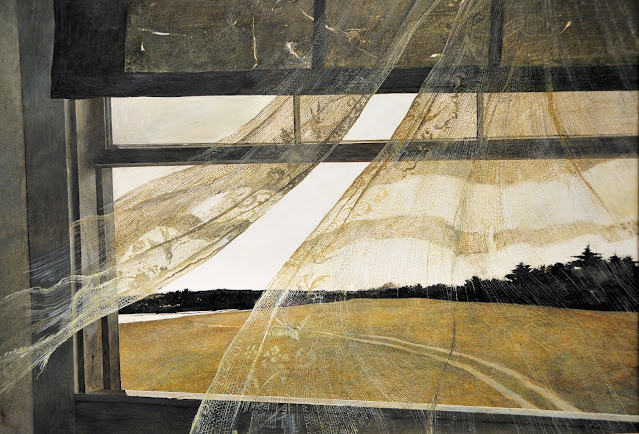
Flung is too harsh a word for the rush of the world. Blown is more like it, but blown by a generous, unending breath.
~Annie Dillard
from Pilgrim at Tinker Creek

Andrew Wyeth – Wind from the Sea, 1947

Perhaps as a child you had the chicken pox
and your mother, to soothe you in your fever
or to help you fall asleep, came into your room
and read to you from some favorite book,
Charlotte’s Web or Little House on the Prairie,
a long story that she quietly took you through
until your eyes became magnets for your shuttering
lids and she saw your breathing go slow. And then
she read on, this time silently and to herself,
not because she didn’t know the story,
it seemed to her that there had never been a time
when she didn’t know this story—the young girl
and her benevolence, the young girl in her sod house—
but because she did not yet want to leave your side
though she knew there was nothing more
she could do for you. And you, not asleep but simply weak,
listened to her turn the pages, still feeling
the lamp warm against one cheek, knowing the shape
of the rocking chair’s shadow as it slid across
your chest. So that now, these many years later,
when you are clenched in the damp fist of a hospital bed,
or signing the papers that say you won’t love him anymore,
when you are bent at your son’s gravesite or haunted
by a war that makes you wake with the gun
cocked in your hand, you would like to believe
that such generosity comes from God, too,
who now, when you have the strength to ask, might begin
the story again, just as your mother would,
from the place where you have both left off.
~Keetje Kuipers “Prayer”

How is it possible 64 years have flown by and I still need the same story to be told to me again? 

Long ago the 5-year old me had a sudden terrifying revelation that I would someday cease to walk this earth. Now a nearly 70-year old me is more intimidated at the head-long rush of the days-months-years than at the inevitable end to come. The world hurtles through space and time at a pace that leaves me breathless. Indeed, I have been flung at times, bruised and weary from all the hurry and hubbub.

I want to find the strength to ask God to begin telling the reassuring story again, starting right where we left off. I know I will be blown away again – blown by God’s breath that loves, fills and nurtures with a generous promise both hopeful and fulfilled.

Utterly blown away by what comes next.

If only the five year old me could have known.

One-Time
Monthly
Yearly

Make a one-time or recurring donation to support daily Barnstorming posts

Make a monthly donation

Make a yearly donation

Choose an amount

$10.00
$25.00
$50.00
$5.00
$15.00
$100.00
$5.00
$15.00
$100.00

Or enter a custom amount

$

Your contribution is deeply appreciated.

Your contribution is appreciated.

Your contribution is appreciated.

DonateDonate monthlyDonate yearly
A Man Who Loves His Home

I wait for you
In the grassland
Where small lilies bloom.
On the corners of the field,
The rainbow shows up.
小百合さく 小草がなかに 君まてば  野末にほいて 虹あらはれぬ
~Yosano Akiko Tanka Poem (1878-1942)

Who loves the rain    
    And loves his home, 
And looks on life with quiet eyes,  
     Him will I follow through the storm;    
     And at his hearth-fire keep me warm;
Nor hell nor heaven shall that soul surprise,    
     Who loves the rain, 
     And loves his home, 
And looks on life with quiet eyes.

~Frances Shaw, “Who loves the rain” from Look To the Rainbow

For Dan’s 70th birthday…

In this journey together,
we inhabit each other,
however long may be the road we travel;
you have become the air I breathe,
refreshing, renewing, restoring~~
you are that necessary to me,
and that beloved.

Each year, as we grow older together:
grayer, softer, gentler
with ourselves,
each other,
and the world.

I pause,
on this day you were born,
to thank God yet again
for bringing you to earth
so we could meet,
raise our three amazing children,
and now our grandchildren,
walking life together
with faith and hope and dreams.

It was your quiet brown eyes I trusted first
and just knew
I’d follow you anywhere
and I have…

One-Time
Monthly
Yearly

Make a one-time or recurring donation to support daily Barnstorming posts

Make a monthly donation

Make a yearly donation

Choose an amount

¤10.00
¤25.00
¤50.00
¤5.00
¤15.00
¤100.00
¤5.00
¤15.00
¤100.00

Or enter a custom amount

¤

Your contribution is deeply appreciated.

Your contribution is appreciated.

Your contribution is appreciated.

DonateDonate monthlyDonate yearly
Meeting Face to Face

After the months
of his pursuit of her now
they meet face to face.
From the beginnings of the world
his arrival and her welcome
have been prepared. They have always
known each other.
~Wendell Berry  from “Her First Calf”

For our daughter Lea and her husband Brian –
who waited in faith through many complications along the way:
Born early this morning – their healthy son, Levi Jireh –
The Lord provides!


It is the fate of parents to be wrung from,
mightily compressed within the inevitable
emotional and physical labor of birth.

There is nothing gentle in what it takes
to give birth to a new mother and father.

Parenting is sweetness
never tasted before,
a flood of unprecedented devotion,
an unforgettable face to face meeting
destined from the beginnings of time.

You both have known him,
and he has known you all along,
right from the very Beginning.

Now born in covenant promise,
he is set free to return your loving gaze.

One-Time
Monthly
Yearly

Make a one-time or recurring donation to support daily Barnstorming posts

Make a monthly donation

Make a yearly donation

Choose an amount

¤10.00
¤25.00
¤50.00
¤5.00
¤15.00
¤100.00
¤5.00
¤15.00
¤100.00

Or enter a custom amount

¤

Your contribution is deeply appreciated.

Your contribution is appreciated.

Your contribution is appreciated.

DonateDonate monthlyDonate yearly

A Crooked Furrow

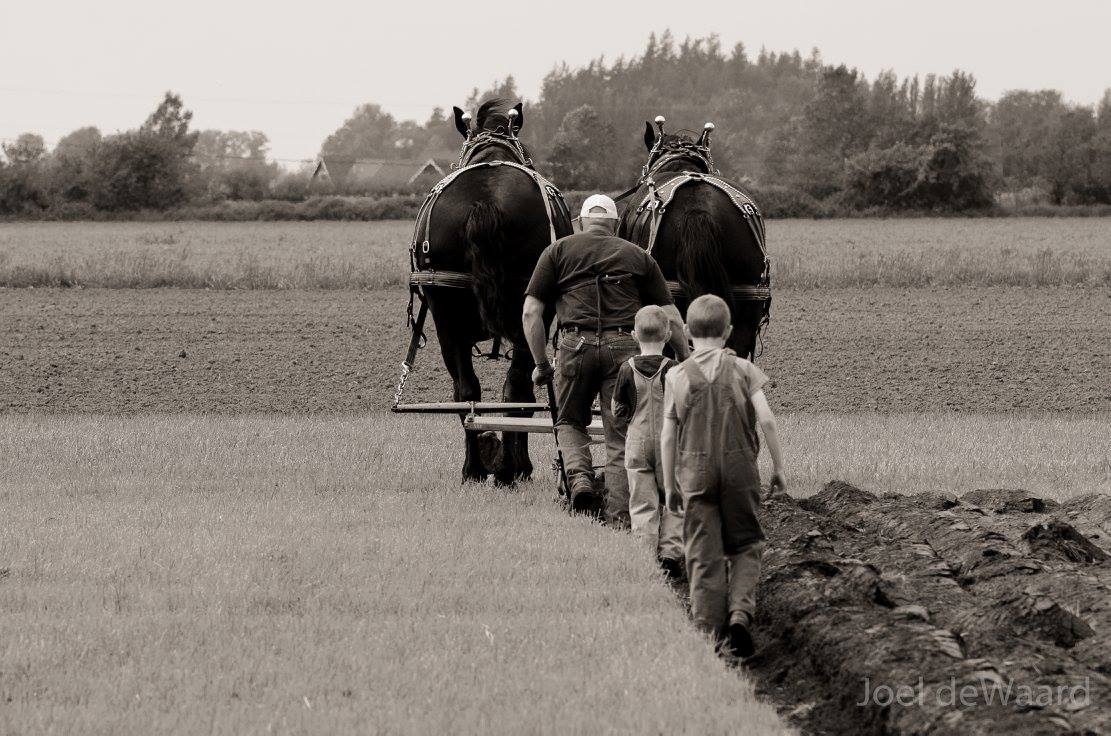
photo by Joel DeWaard

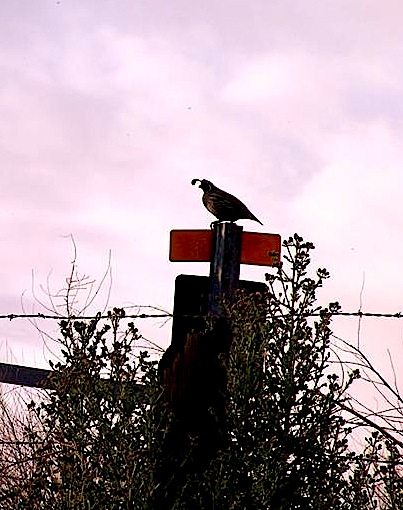
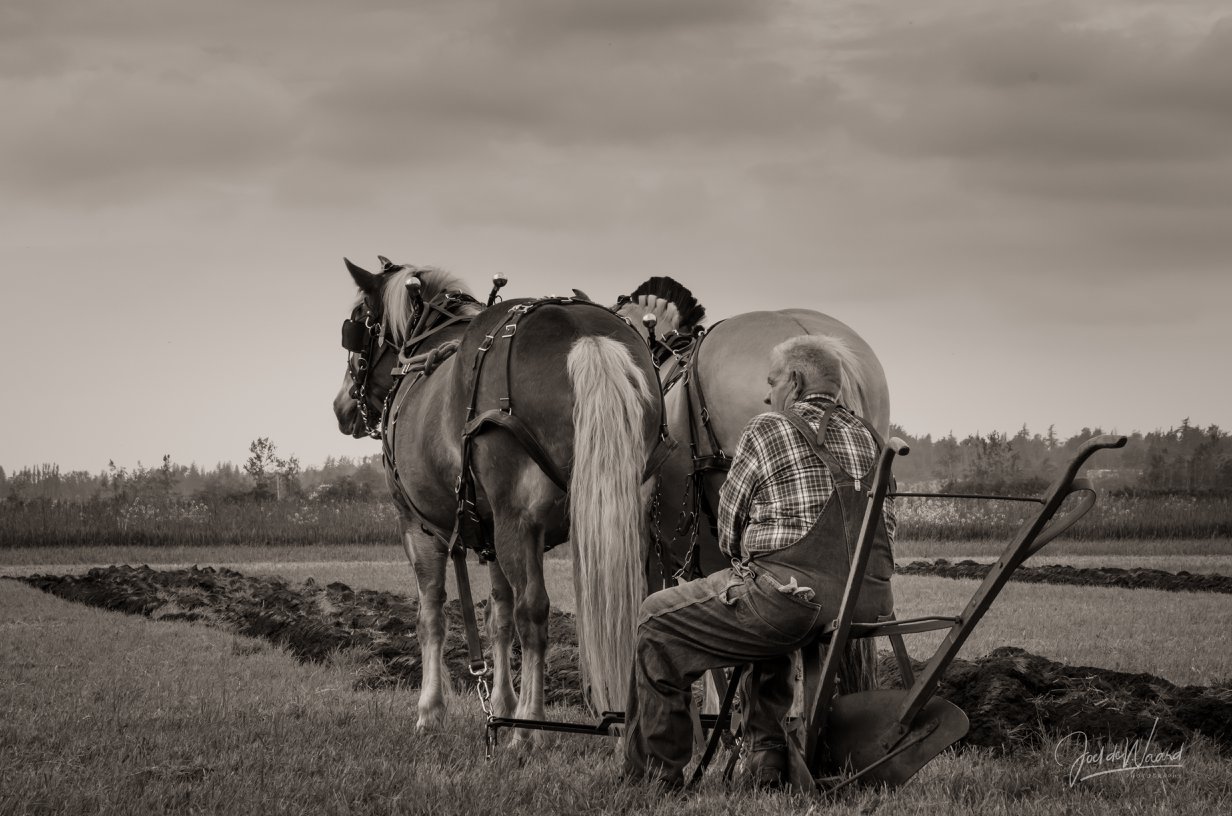
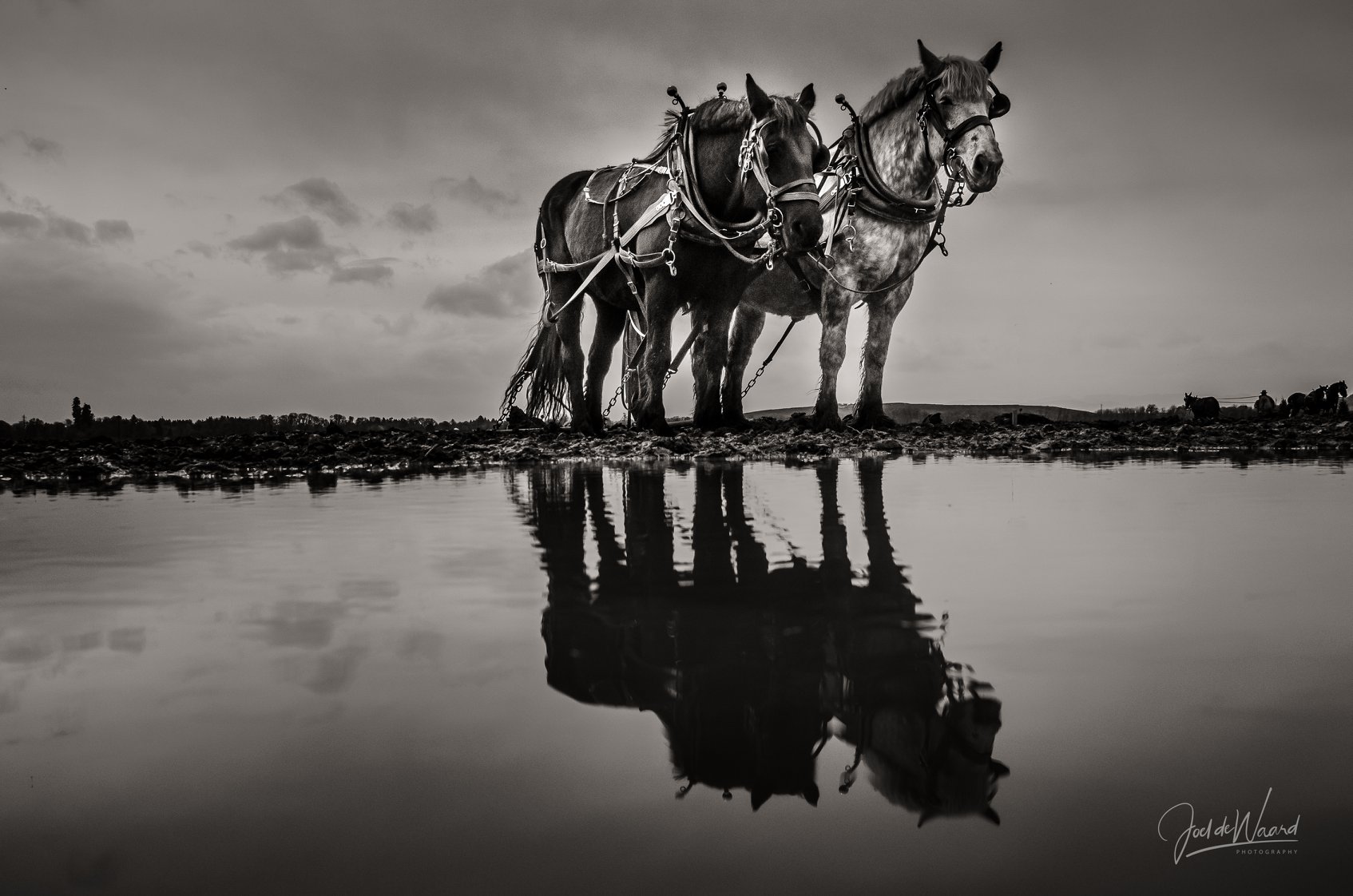
My father swerves the team
to miss the quail’s nest
hidden in the furrow
she rises up beating her wings
her cries fill all the world
of sky and cloud echoing her call…

and so he passes
the caring farmer with his crooked furrow
saluting life the warm round eggs
hidden in the spring grass
the quail rising and falling
pulled by invisible heartstrings.
~Dorothy Hewitt  “Quail’s Nest”

photo by Kate Steensma
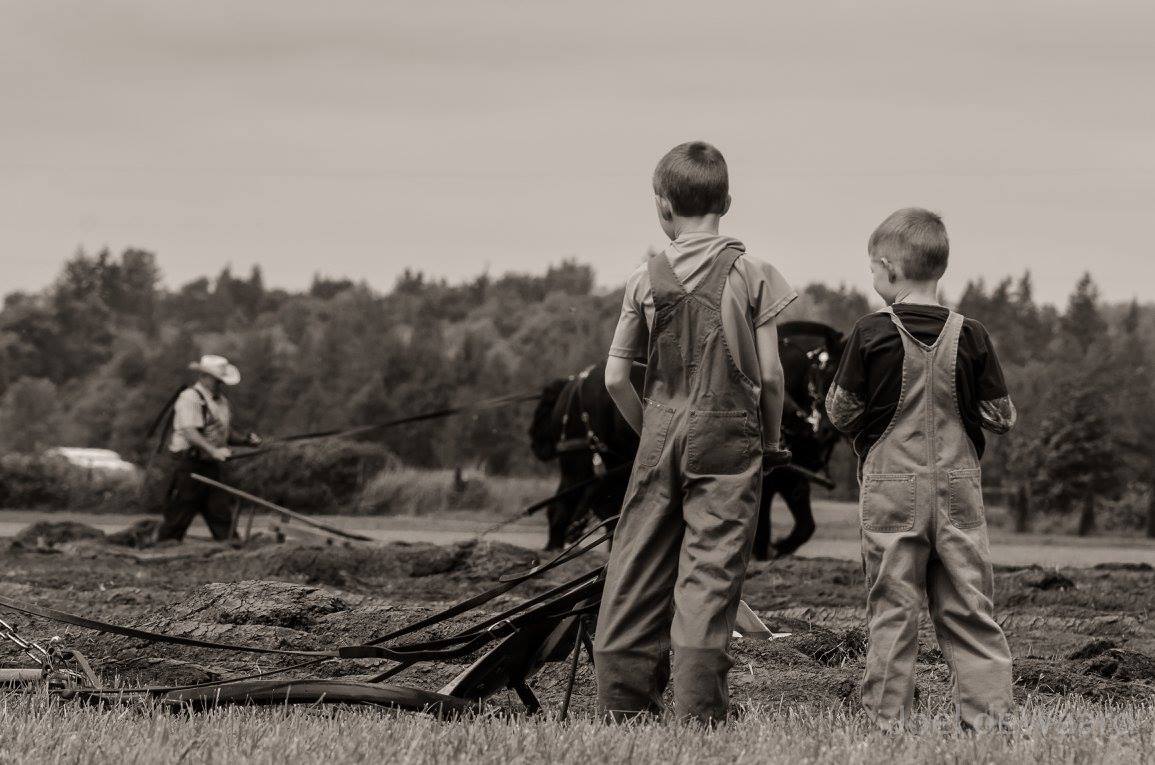
photo by Joel DeWaard

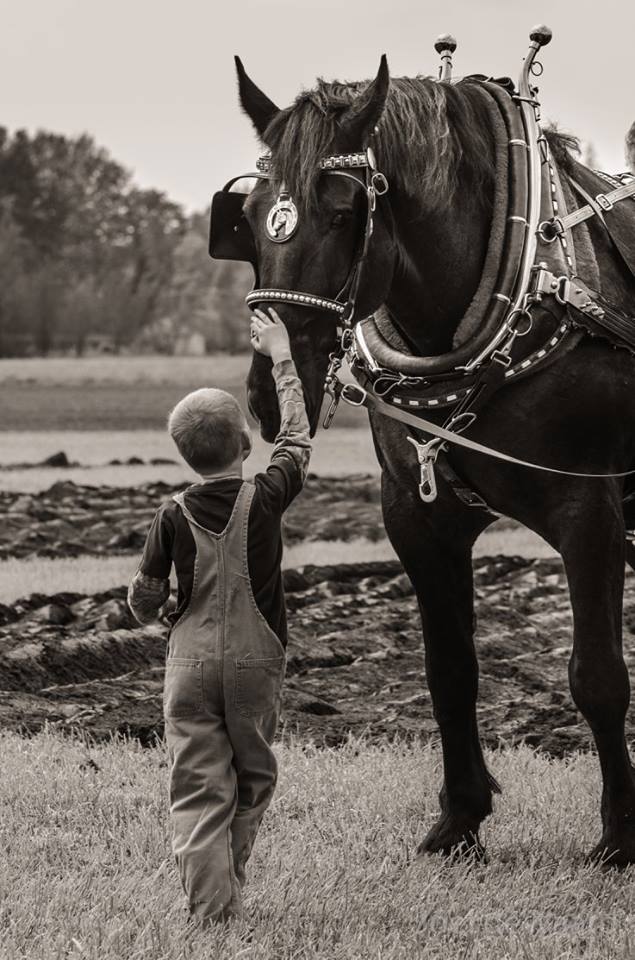
I remember my father driving a wooden post in the ground
where a killdeer nest held 6 speckled eggs;
the mother would run off crying plaintively,
flapping her “broken” wing
to lure him away from her precious brood.

He drove the plow around the nest,
marking their spot for the season,
respecting their presence,
preserving their future,
without anyone saying
he should or he must –
only his heart had told him
it was the right thing to do.

photo by Joel DeWaard
photo by Kate Steensma
One-Time
Monthly
Yearly

Make a one-time or recurring donation to support daily Barnstorming posts

Make a monthly donation

Make a yearly donation

Choose an amount

¤10.00
¤25.00
¤50.00
¤5.00
¤15.00
¤100.00
¤5.00
¤15.00
¤100.00

Or enter a custom amount

¤

Your contribution is deeply appreciated.

Your contribution is appreciated.

Your contribution is appreciated.

DonateDonate monthlyDonate yearly
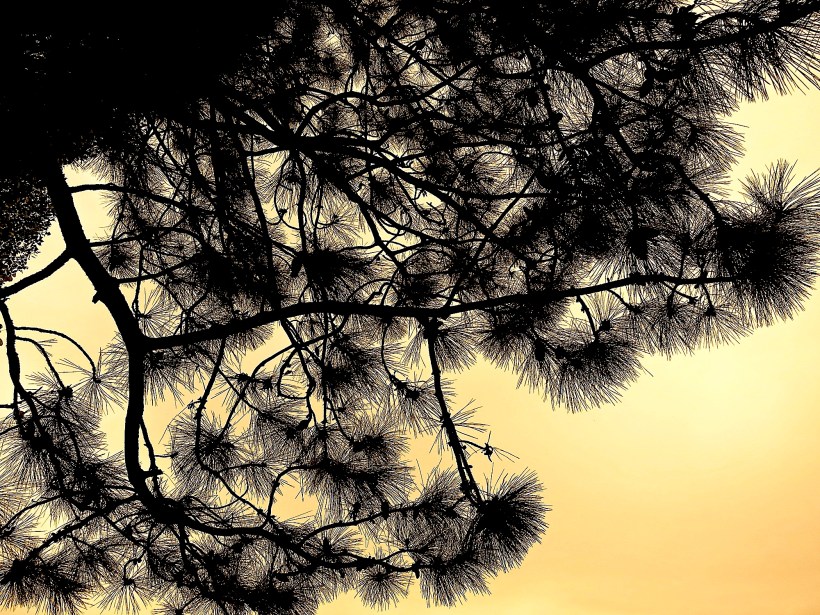
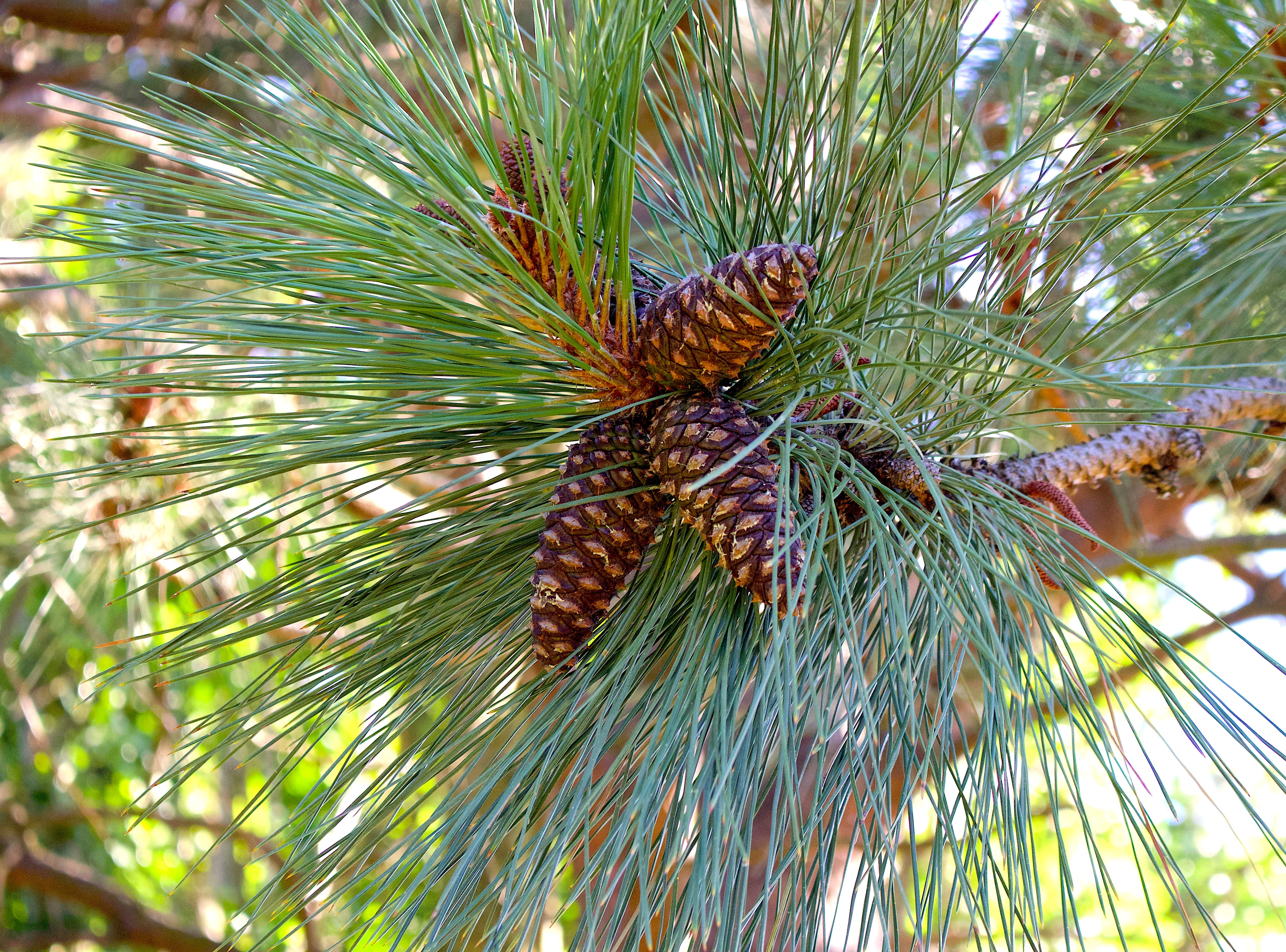
Wind Hymning Through the Pines

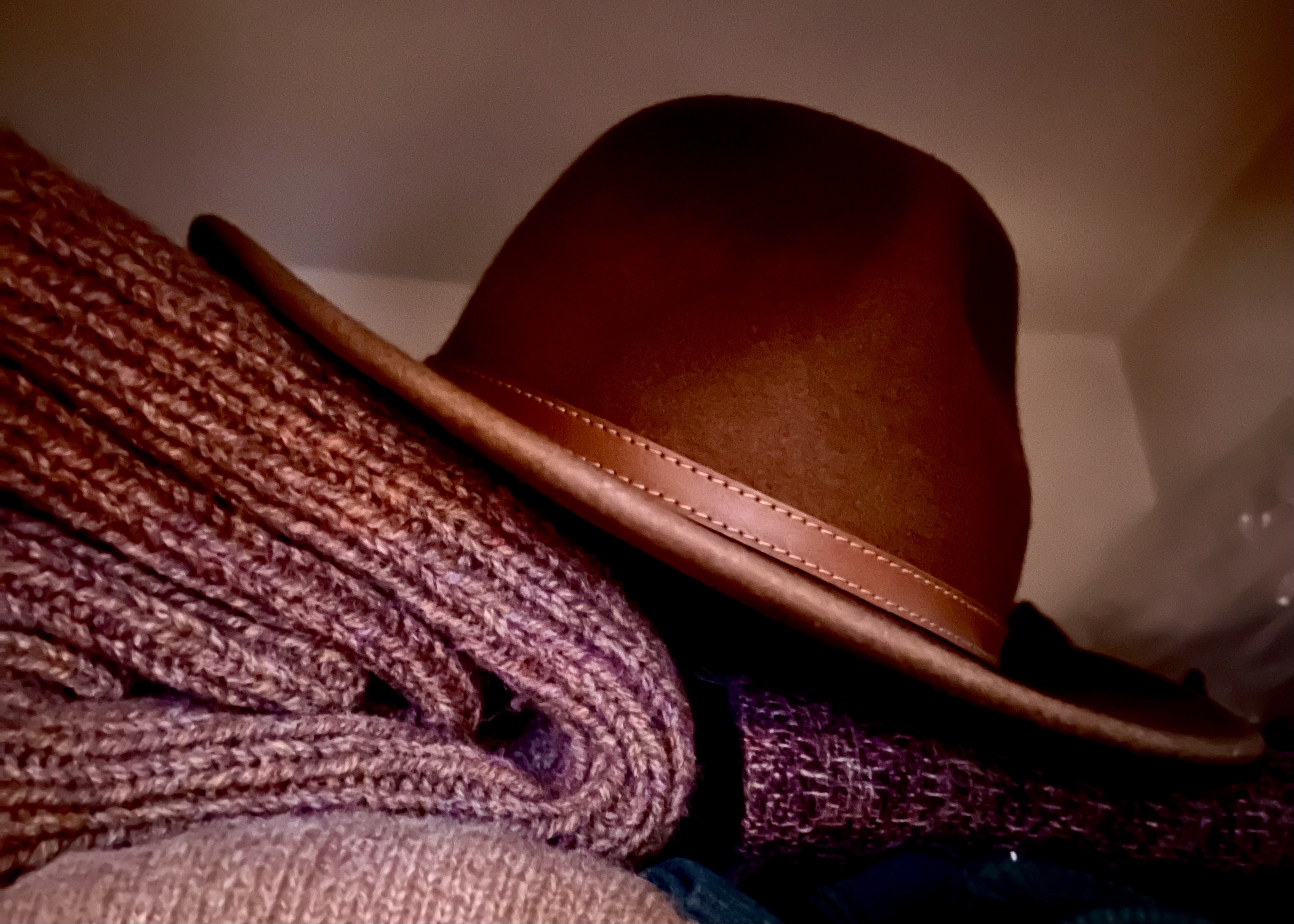
Sunday mornings I would reach
high into his dark closet while standing
on a chair and tiptoeing reach
higher, touching, sometimes fumbling
the soft crowns and imagine
I was in a forest, wind hymning
through pines, where the musky scent
of rain clinging to damp earth was
his scent I loved, lingering on
bands, leather, and on the inner silk
crowns where I would smell his
hair and almost think I was being
held, or climbing a tree, touching
the yellow fruit, leaves whose scent
was that of a clove in the godsome
air, as now, thinking of his fabulous
sleep, I stand on this canyon floor
and watch light slowly close
on water I’m not sure is there.
~Mark Irwin “My Father’s Hats”

Henry Polis 1968

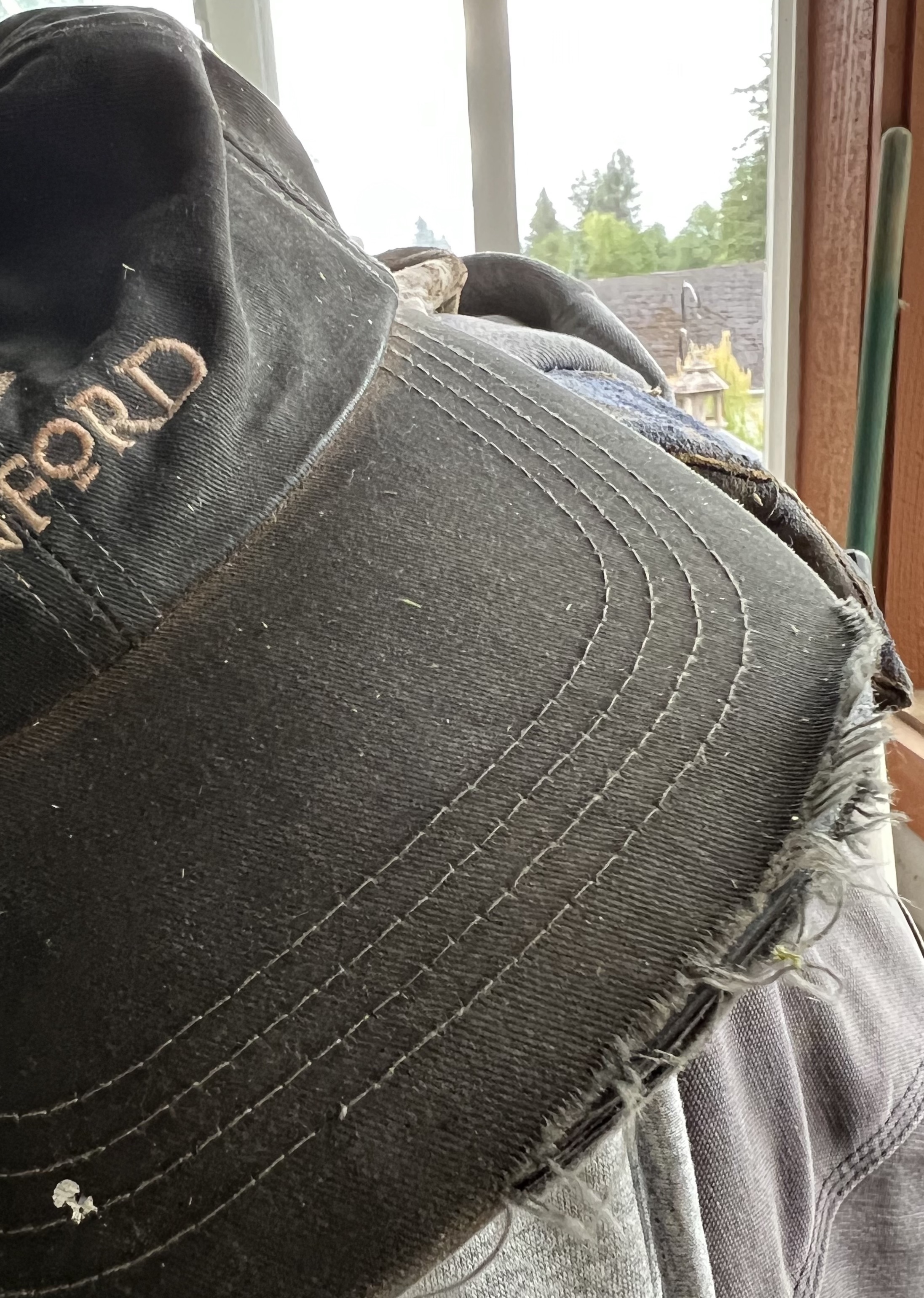
My father was always more comfortable working outdoors rather than at a desk. He had a nice felt hat for going to church along with the requisite suit and tie, but at home he wore a work cap with a tattered bill and a farm shop logo on the front. It hung on a hook in our breezeway, always sweat-stained from his laboring in full sun on projects on our small farm. I think he could wring it out at the end of the day.

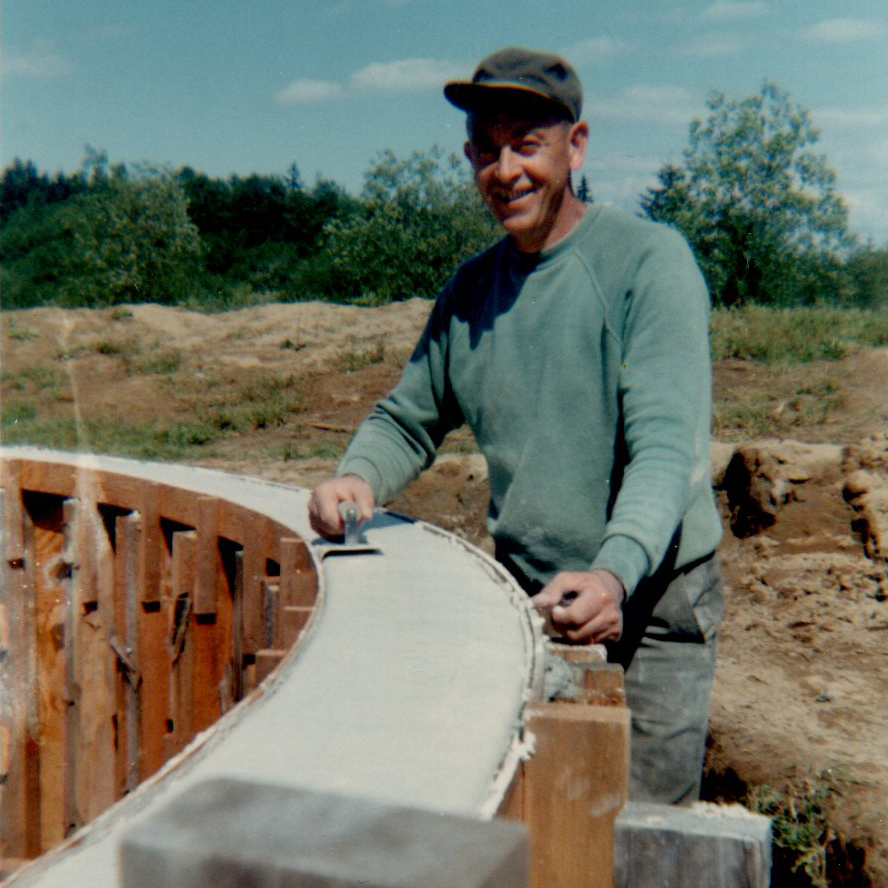
My dad was not one for wearing aftershave or cologne, even to his office job. He had to scrub hard on Sunday mornings as his fingernails contained soil from the garden and grease from the car engines. He smelled like the woods where he slashed and piled brush, like the smoke from the burn piles he lit, like the cement he was always mixing to create his latest walkway, foundation, or support structure. And he always smelled of tobacco – his chosen vice – but never of alcohol which ruined not only his own father’s life and those around him.

I don’t think my father lost his faith even when he suffered at the end, dying of a second cancer after the first was defeated. He wasn’t one to speak of God or salvation so I simply assumed, just as I did during those decades of Sunday morning hat and suits, worshiping in church.

His light shone, even during the hard times when I wasn’t sure it was still there.

One-Time
Monthly
Yearly

Make a one-time or recurring donation to support daily Barnstorming posts

Make a monthly donation

Make a yearly donation

Choose an amount

¤10.00
¤25.00
¤50.00
¤5.00
¤15.00
¤100.00
¤5.00
¤15.00
¤100.00

Or enter a custom amount

¤

Your contribution is deeply appreciated.

Your contribution is appreciated.

Your contribution is appreciated.

DonateDonate monthlyDonate yearly
Reconsidering the Meaning of Flag Day

I am what you make me; nothing more. I swing before your eyes as a bright gleam of color, a symbol of yourself.
~Franklin K. Lane, Secretary of the Interior, 1914 Flag Day address

Sometimes, as a child,  when I was bored, I’d grab a step ladder, pull it into our hallway, climb half way up and carefully lift the plywood hatch that was the portal to our unlit attic.  It took some effort to climb up into the attic from the ladder, juggling a flashlight at the same time, but once seated safely on the beams above our ceiling, being careful not to put my foot through the carpet of insulation, I could explore what was stowed and normally inaccessible to me.

All the usual attic-type things were put up there:  Christmas ornaments and lights,  baby cribs and high chairs,  lamps and toys no longer used.  Secrets to my parents’ past were stored away there too.  It was difficult imagining them as young children growing up on opposite sides of the state of Washington, in very different circumstances, or as attractive college students who met at a dance, or as young marrieds unencumbered by the daily responsibilities of a family.  The attic held those images and memories like a three dimensional photo album.

My father’s dark green Marine Corps cargo trunk was up there, the one that followed him from Officer Training in Quantico, Virginia, to beach and mountain battles on Tarawa, Tinian and Saipan in the South Pacific, and three years later back home again.  It had his name and rank stenciled on the side in dark black lettering.  The buckles were stiff but could be opened with effort, and in the dark attic, there was always the thrill of unlatching the lid, and shining the flashlight across the contents.  His Marine Corps dress uniform lay inside underneath his stiff brimmed cap.  There were books about protocol, and a photo album which contained pictures of “his men” that he led in his battalion, and the collection of photos my mother sent of herself as she worked as a teacher of high school students back home.

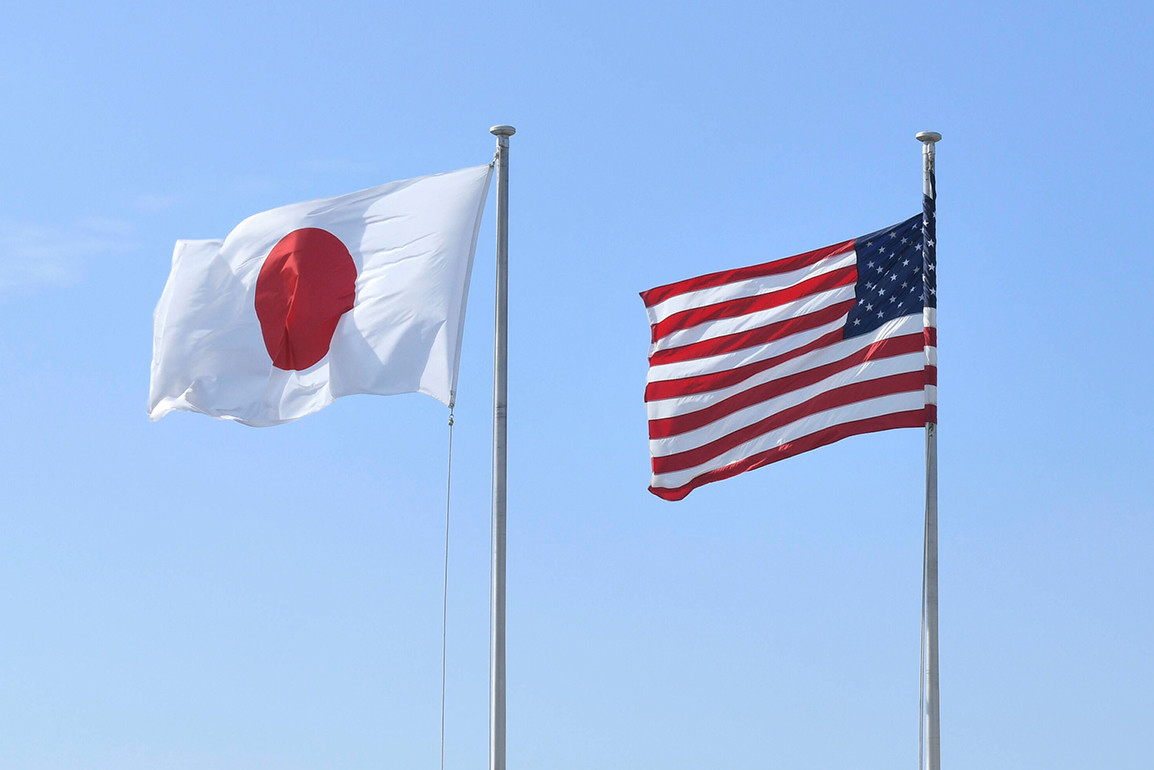
Most fascinating was a folded Japanese flag inside a small drawstring bag, made of thin white see-through cloth with the bold red sun in the middle.  Surrounding the red sun were the delicate inked characters of many Japanese hands as if painted by artists, each wishing a soldier well in his fight for the empire.  Yet there it was, a symbol of that soldier’s demise, itself buried in an American attic, being gently and curiously held by an American daughter of a Marine Corps captain.  It would occur to me in the 1960s that some of the people who wrote on this flag might still be living, and certainly members of the soldier’s family would still be living.  I asked my father once about how he obtained the flag, and he, protecting both me and himself, waved me away, saying he couldn’t remember.  I know better now.  He knew but could not possibly tell me the truth.

These flags, charms of good luck for the departing Japanese soldier as he left his neighborhood or village for war, are called Hinomaru Yosegaki (日の丸寄せ書き).  Tens of thousands of these flags came home with American soldiers; it is clear they were not the talisman hoped for.  A few of these flags are now finding their way back to their home country, to the original villages, to descendants of the lost soldiers.  So now has this flag.

Eighty years ago doesn’t seem that long, a mere drop in the river of time.  There is more than mere mementos that have flowed from the broken dam of WWII, flooding subsequent generations of Americans, Japanese, Europeans with memories that are now lost as the oldest surviving soldiers in their 90’s pass, scores of them daily, taking their stories of pain and loss and heroism with them.   My father could never talk with a person of Asian descent, Japanese or not, without being visibly uneasy. As a child, I saw and felt this from him, but heard little from his mouth.

When he was twenty two years old,  pressed flat against the rocks of Tarawa, trying to melt into the ground to become invisible to the bullets whizzing overhead, he could not have conceived that sixty five years later his twenty two year old grandson would disembark from a jumbo jet at Narita in Tokyo, making his way to an international school to teach Japanese children.  My father would have been shocked that his grandson would settle happily into a culture so foreign, so seemingly threatening, so apparently abhorrent. Yet this irony is the direct result of the horrors of that too-long horrible bloody war of devastation: Americans and Japanese, despite so many differences, have become the strongest of allies, happily exchanging the grandchildren of those bitterly warring soldiers back and forth across the Pacific.  It too was my privilege to care for Japanese exchange students daily in my University health clinic, peering intently into their open faces and never once seeing the enemy that my father feared.

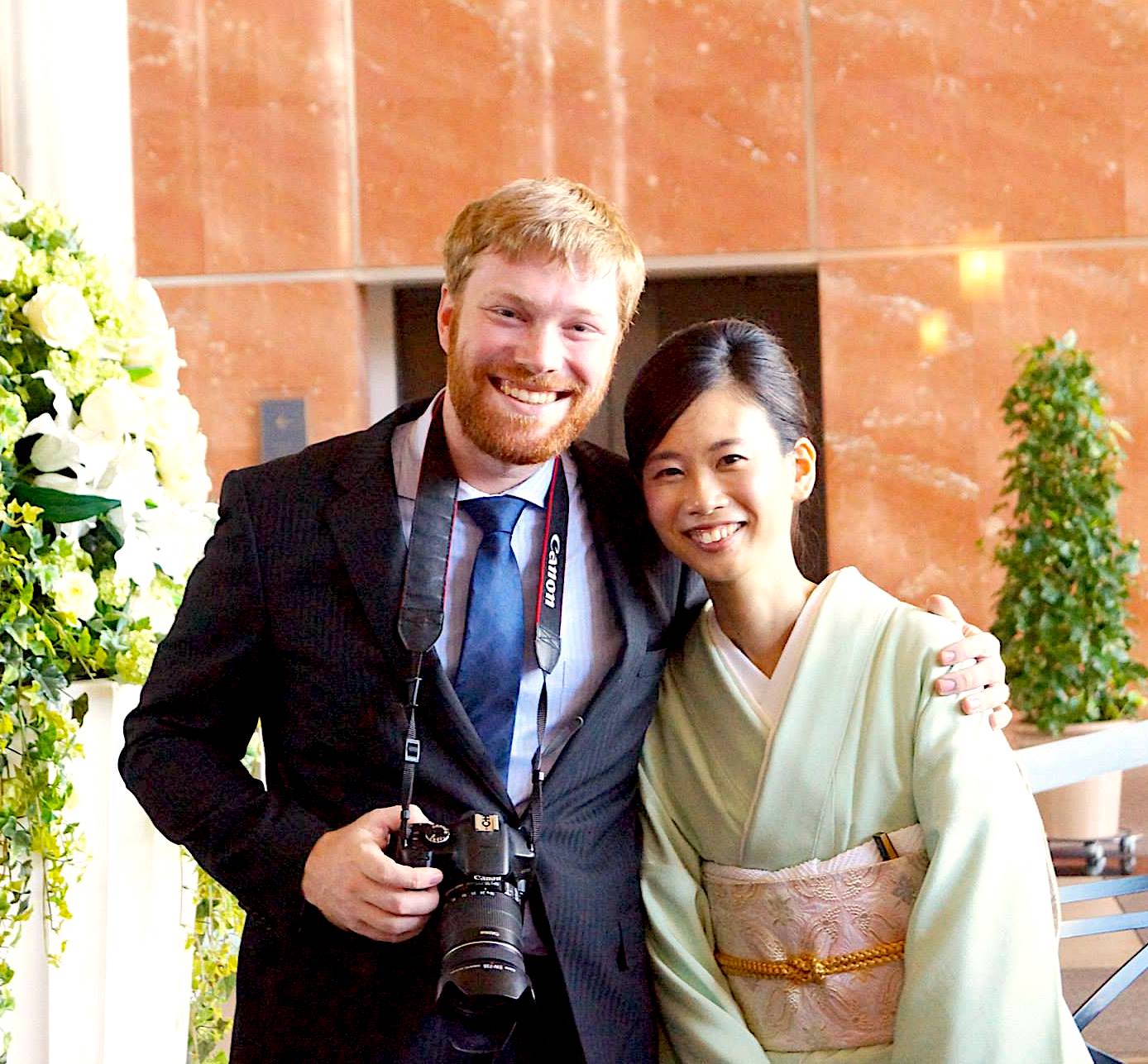
Now all these decades later, our son taught for 13 years in Tokyo, with deep admiration and appreciation for each of his students, some of whom were great-grandchildren of WWII Japanese soldiers. He married a granddaughter of those my father fought. Their two children are the perfect amalgam of once warring, yet now peaceful, cultures; a symbol of blended and blending peoples overcoming the hatred of past generations, creating a new world.

Our son and daughter-in-law, having settled their family in the States, are adapting to a different language, culture and flag. I pray our son having devoted part of his life as teacher and missionary to the land of the rising sun has redeemed his grandfather, the soldier-warrior of the past century.

(U.S. Air Force photo by Staff Sgt. Peter Reft)
One-Time
Monthly
Yearly

Make a one-time or recurring donation to support daily Barnstorming posts

Make a monthly donation

Make a yearly donation

Choose an amount

¤10.00
¤25.00
¤50.00
¤5.00
¤15.00
¤100.00
¤5.00
¤15.00
¤100.00

Or enter a custom amount

¤

Your contribution is appreciated.

Your contribution is appreciated.

Your contribution is appreciated.

DonateDonate monthlyDonate yearly
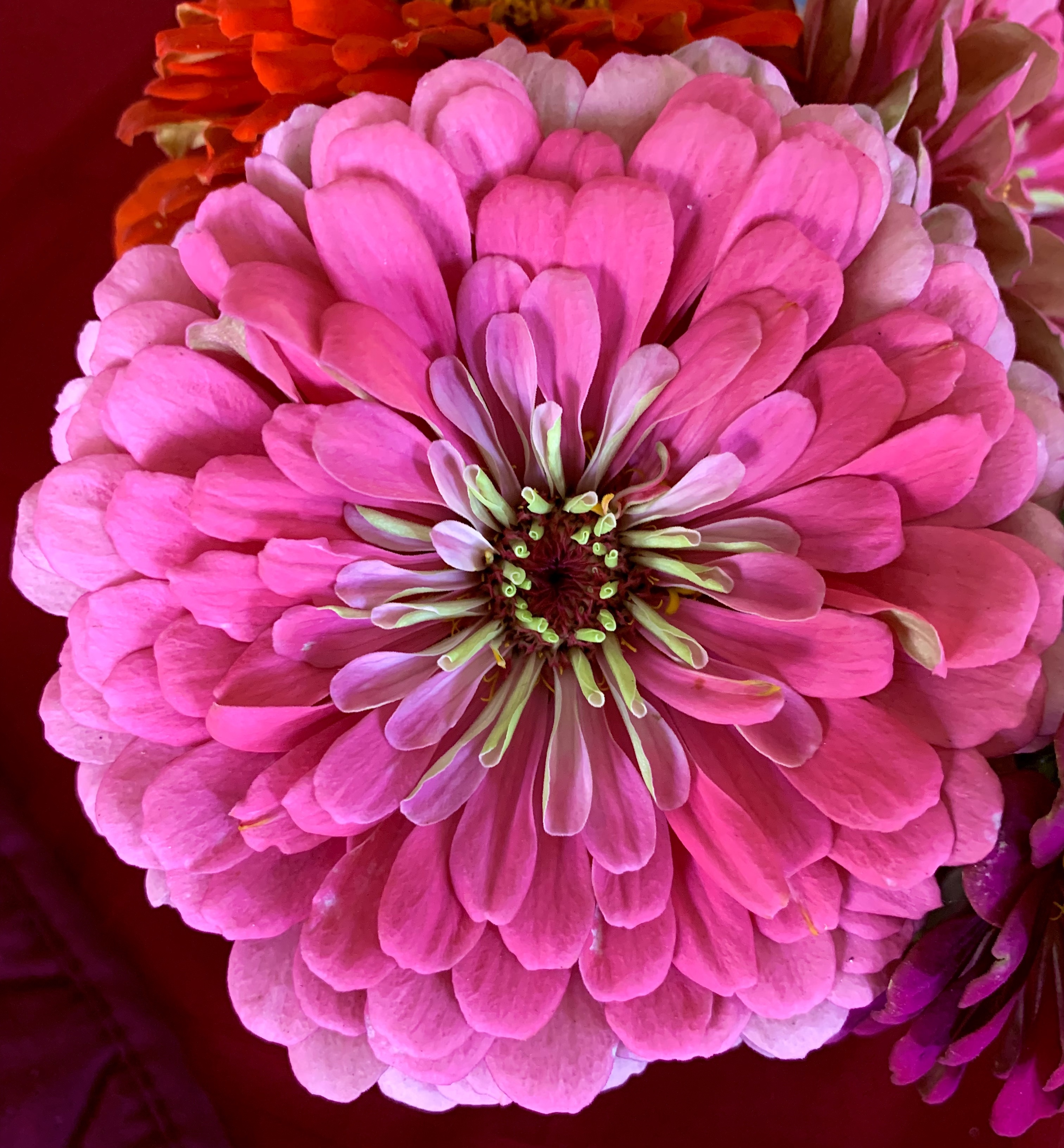
Seeking What Won’t Be Found

photo of Calypso Bulbosa by Kate Steensma

Though I know well enough
To hunt the Lady’s Slipper now
Is playing blindman’s-buff,
For it was June She put it on
And grey with mist the spider’s lace
Swings in the autumn wind,
Yet through this hill-wood, high and low,
I peer in every place;
Seeking for what I cannot find
I do as I have often done
And shall do while I stay beneath the sun.
~Andrew Young “Lady’s Slipper Orchid”

photo from USNPS

How strange to find you where I did
along a path beside a road,
your legs in graceful green dancing
to music made by wind and woods.

Like ladies from a bygone age,
you left your slippers there to air
in dappled shade, while you, barefoot,
relaxed your stays, let loose your hair.

The treasures of this world might be
as simple as an orchid’s bloom;
how sad that so much time is spent
in filling coffers for the tomb.

If only life could be so fresh
and free as you in serenade,
we might learn we value most those
things found lost in woodland shade.

~Mike Orlock “Lady Slipper Serenade (in 4/4 time)”


My grandmother’s house where my father was born had been torn down. She sold her property on Fidalgo Island near Anacortes, Washington to a lumber company – this was the house where all four of her babies were born, where she and my grandfather loved and fought and separated and finally loved again, and where we spent chaotic and memorable Thanksgiving and Christmas meals. After Grandpa died, Grandma took on boarders, trying to afford to remain there on the homesteaded wooded acreage on Similk Bay, fronted by meadows where her Scottish Highland cattle grazed. Her own health was suffering and she reached a point when it was no longer possible to make it work. A deal was struck with the lumber company and she moved to a small apartment for the few years left to her, remaining bruised by leaving her farm.

My father realized what her selling to a lumber company meant and it was a crushing thought. The old growth woods would soon be stumps on the rocky hill above the bay, opening a view to Mt. Baker to the east, to the San Juan Islands to the north, and presenting an opportunity for development into a subdivision. He woke my brother and me early one Saturday in May and told us we were driving the 120 miles to Anacortes. He was on a mission.

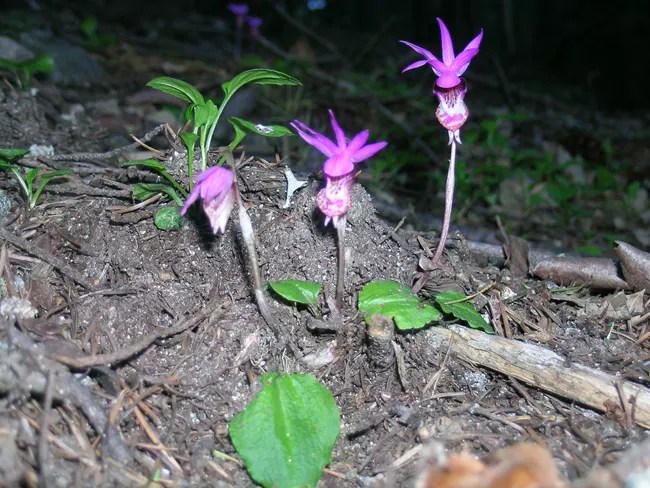
As a boy growing up on that land, he had wandered the woods, explored the hill, and helped his dad farm the rocky soil. There was only one thing he felt he needed from that farm and he had decided to take us with him, to trespass where he had been born and raised to bring home a most prized treasure–his beloved lady slippers (Calypso bulbosa) from the woods.

These dainty flowers enjoy a spring display known for its brevity–a week or two at the most–and they tend to bloom in small little clusters in the leafy duff mulch of the deep woods, preferring only a little indirect sunlight part of the day.  They are not easy to find unless you know where to look. 

My father remembered exactly where to look.

We hauled buckets up the hill along with spades, looking as if we were about to dig for clams at the ocean. Dad led us up a trail into the thickening foliage, until we had to bushwhack our way into the taller trees where the ground was less brush and more hospitable ground cover. He would stop occasionally to get his bearings as things were overgrown.  We reached a small clearing and he knew we were near.  He went straight to a copse of fir trees standing guard over a garden of lady slippers.

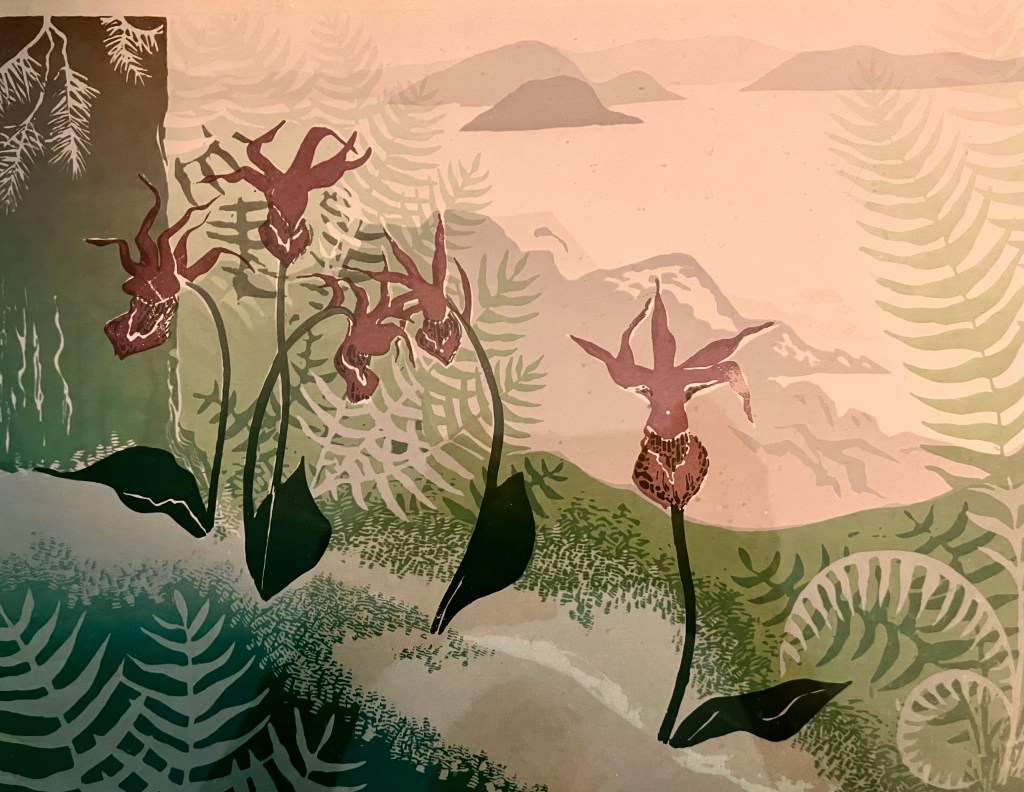
There were almost thirty of them blooming, scattered about in an area the size of my small bedroom.  Each orchid-like pink and lavender blossom had a straight backed stem that held it with sturdy confidence. To me, they looked like they could be little shoes for fairies who may have hung them up while they danced about barefoot.  To my father, they represented the last redeeming vestiges of his often traumatic childhood, and were about to be trammeled by bulldozers.  We set to work gently digging them out of their soft bedding, carefully keeping their bulb-like corms from losing a protective covering of soil and leafy mulch. Carrying them in the buckets back to the car, we felt some vindication that even if the trees were to be lost to the saws, these precious flowers would survive.

When we got home, Dad set to work creating a spot where he felt they could thrive in our own woods. He found a place with the ideal amount of shade and light, with the protection of towering trees and the right depth of undisturbed leaf mulch. We carefully placed the lady slippers in their new home, scattered in a pattern similar to how we found them. Then Dad built a four foot split rail fence in an octagon around them, as a protection from our cattle and a horse who wandered the woods, and as a way to demarcate that something special was contained inside.

The next spring, only six lady slippers bloomed from the original thirty.  Dad was disappointed but hoped another year might bring a resurgence as the flowers established themselves in their new home.  The following year there were only three. A decade later, my father left our farm and family, not looking back.

Sometime after the divorce, when my mother had to sell the farm, I visited our lady slipper sanctuary in the woods for the last time in the middle of May, seeking what I hoped might still be there, but I knew was no longer. The split rail fence still stood, guarding nothing but old memories. No lady slippers bloomed. There was not a trace they had ever been there. They had given up and disappeared.

The new owners of the farm surely puzzled over the significance of the small fenced-in area in the middle of our woods. They probably thought it surrounded a graveyard of some sort.

And they would be right – it did.

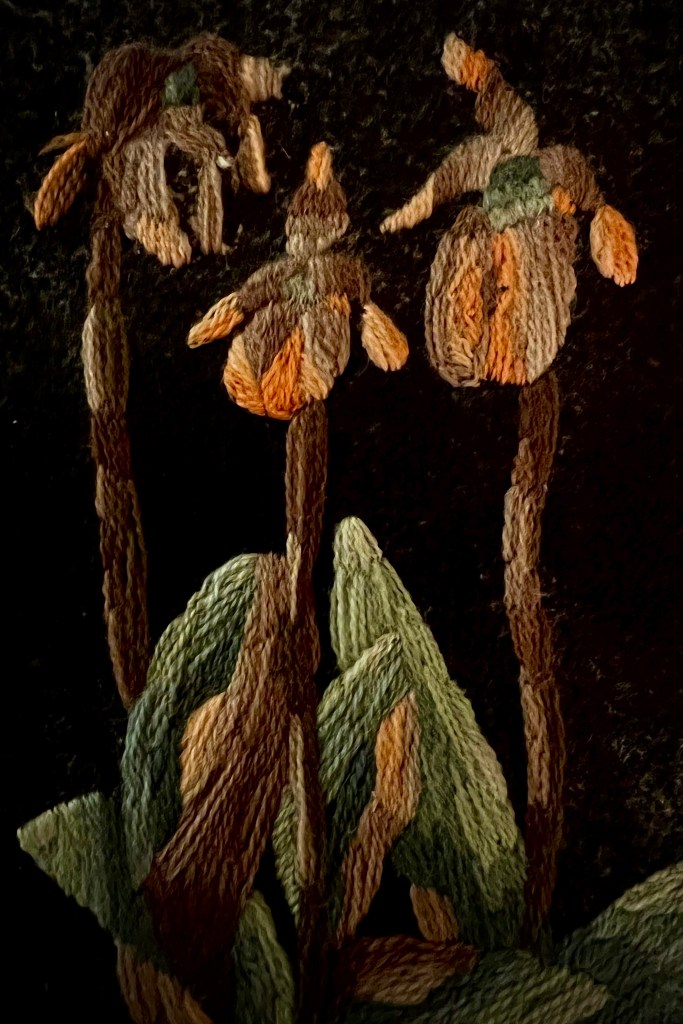
An embroidery I made for my father after he replanted the lady slippers — on the back I wrote “The miracle of creation recurs each spring in the delicate beauty of the lady slipper – may we ourselves be recreated as well…”

One-Time
Monthly
Yearly

Make a one-time or recurring donation to support daily Barnstorming posts

Make a monthly donation

Make a yearly donation
Choose an amount

¤10.00
¤25.00
¤50.00
¤5.00
¤15.00
¤100.00
¤5.00
¤15.00
¤100.00

Or enter a custom amount

¤

Your contribution is deeply appreciated.

Your contribution is appreciated.

Your contribution is appreciated.

DonateDonate monthlyDonate yearly