When to be Glad

embrace

gardengrass

Well I know now the feel of dirt under the nails,
I know now the rhythm of furrowed ground under foot,
I have learned the sounds to listen for in the dusk,
the dawning and the noon.

I have held cornfields in the palm of my hand,
I have let the swaying wheat and rye run through my fingers,
I have learned when to be glad for sunlight and for sudden
thaw and for rain.

I know now what weariness is when the mind stops
and night is a dark blanket of peace and forgetting
and the morning breaks to the same ritual and the same
demands and the silence.
~Jane Tyson Clement from No One Can Stem the Tide

sunset98163

Soon to arrive, a wave of 15,000 young people
with such potential to grow,
their health needs entrusted to us
as if we tend them as gardeners:
most thriving and flourishing,
yet some already withering,
their roots thirsting.

As the winds of time bring
new thousands to our care,
blown in from places unknown,
I weary weep for those who may not bloom,
wondering if I will fail to water or care enough~

or is it me with thirst unceasing,
my roots drying from each new morning’s
same ritual and same demands unceasing,
as if I’ve forgotten how to be glad for this work,
being met with the silence
of my own gardeners.

rainyleaf7

dillweb


On Mine AĆ«ry Nest

cloudstudy92165

sunset93163
And when Sunset may breathe, from the lit sea beneath,
Its ardours of rest and of love,
And the crimson pall of eve may fall
From the depth of Heaven above,
With wings folded I rest, on mine aƫry nest,
As still as a brooding dove.
~Percy Bysse Shelley from “The Cloud”
cloudstudy9216

To make myself understood and to diminish the distance between us, I called out: ā€œI am an evening cloud too.ā€ They stopped still, evidently taking a good look at me. Then they stretched towards me their fine, transparent, rosy wings. That is how evening clouds greet each other. They had recognized me.
~Rainer Maria Rilke from Stories of God

cloudstudy92166

cloudstudy92165

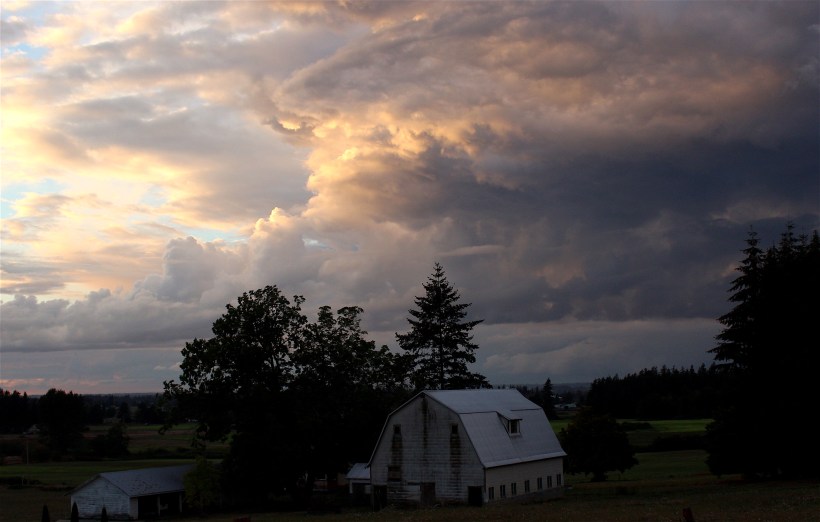
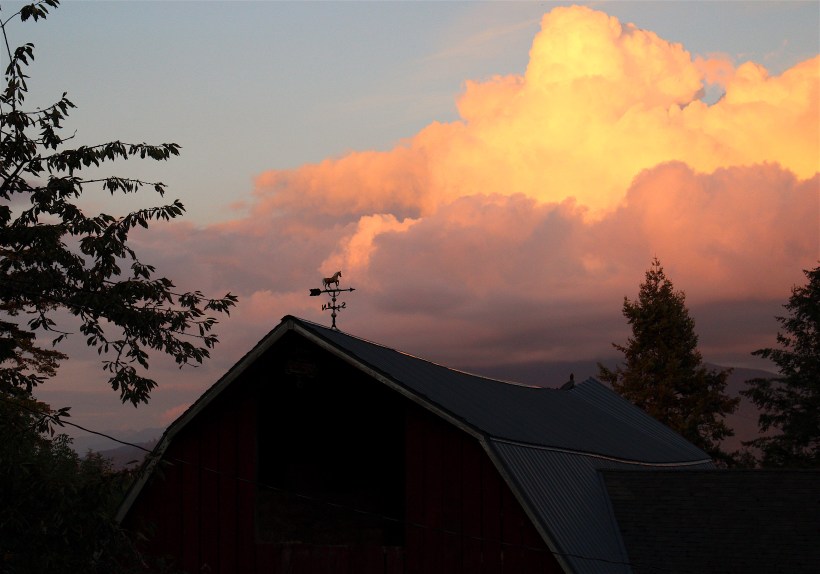
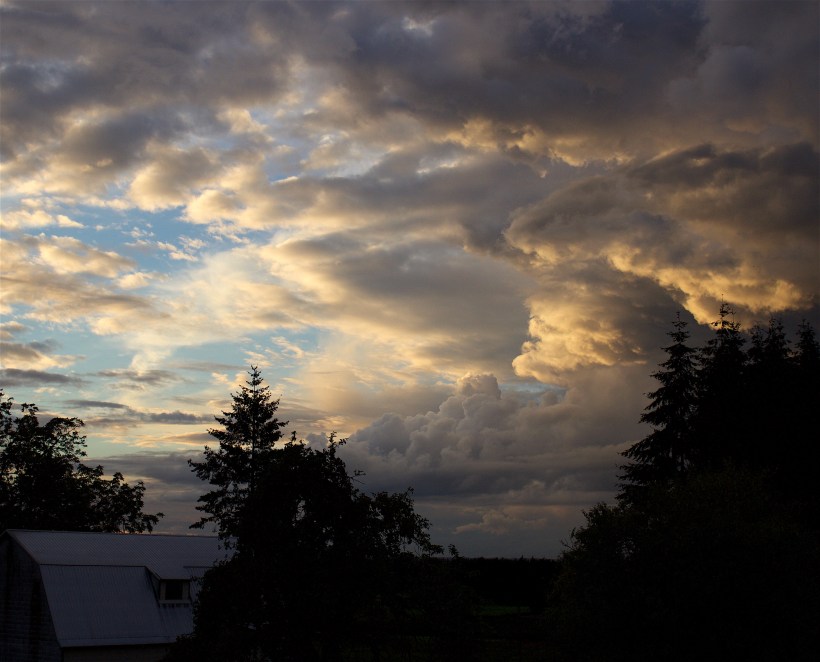
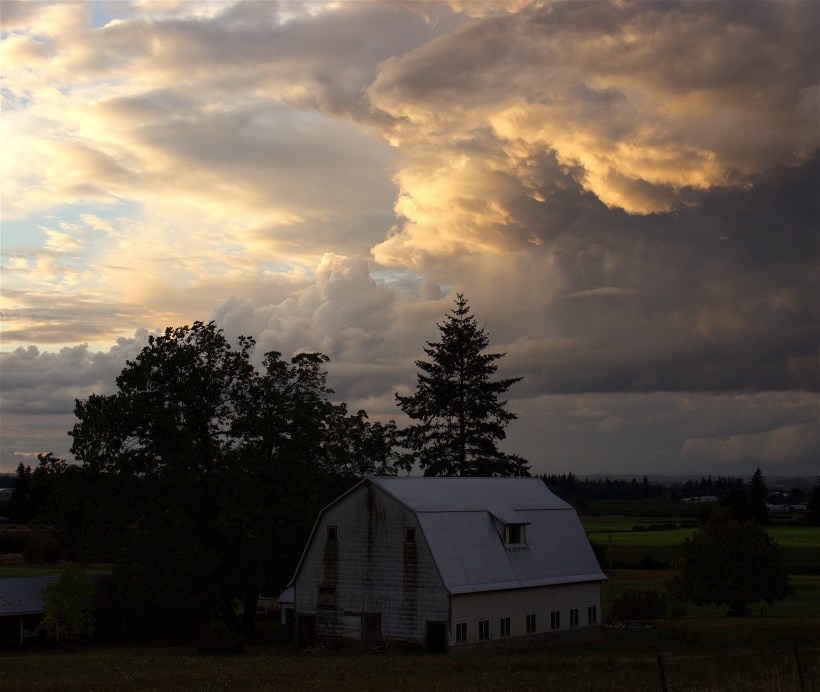
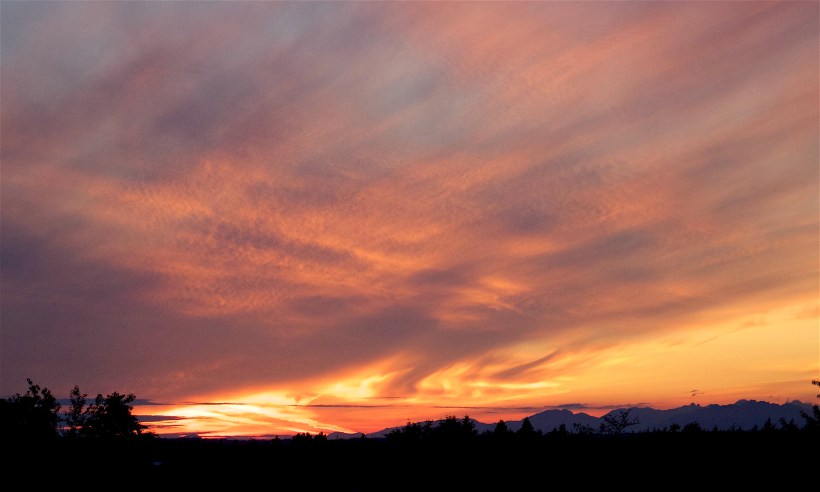
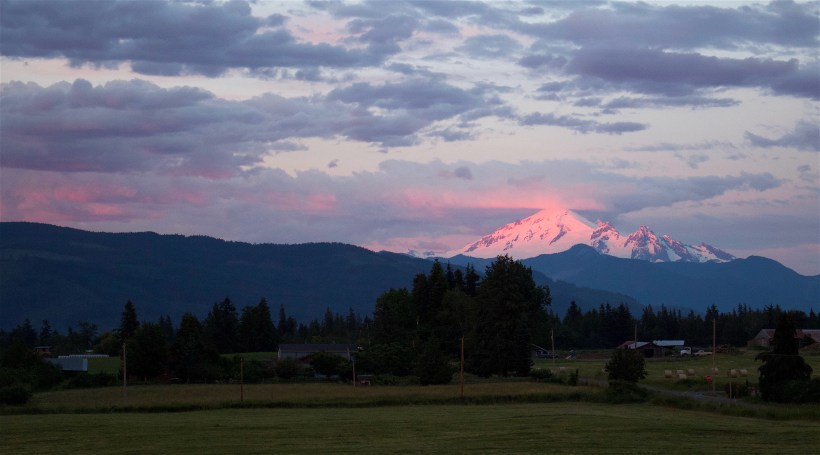
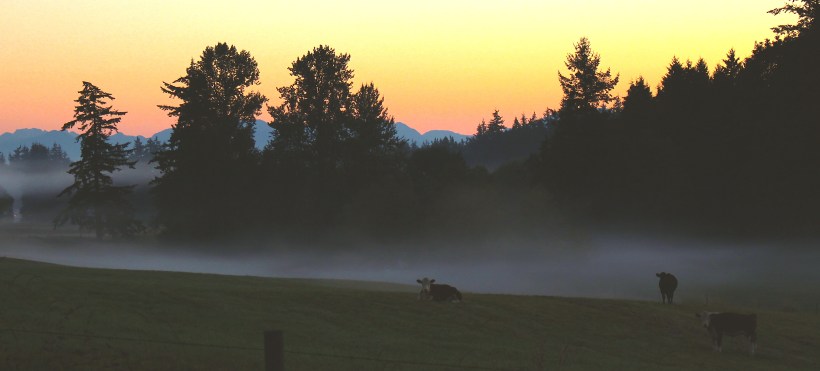
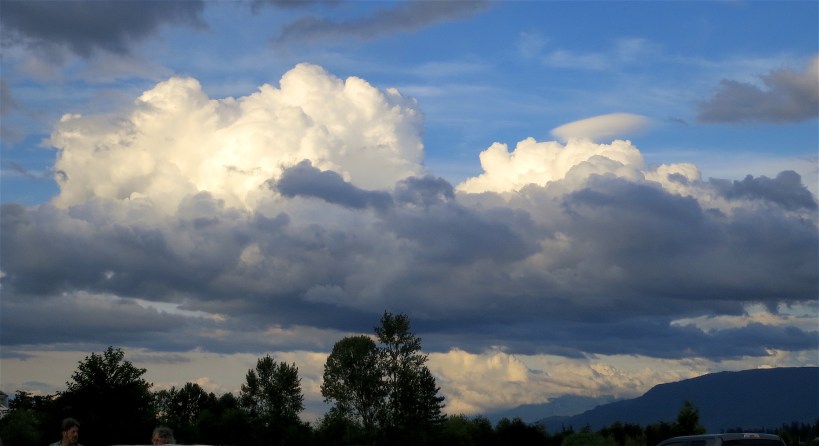
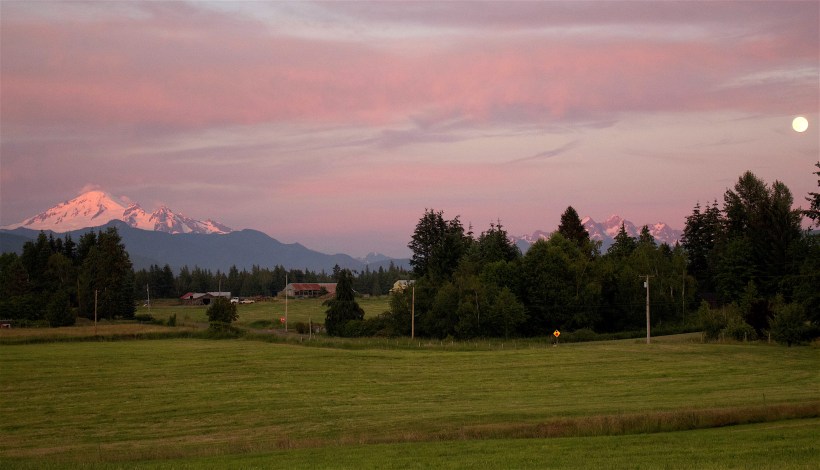
From this hill, we can see for miles.Ā  At certain times of morning and evening, it can feel as if we are aloft, closer up to the clouds, seeing the terrain from their vantage point.Ā  There are the snow-covered peaks to the east, the craggy Canadian coastal range to the north, the stretch of river valley to the north west, the Salish Sea to the west and the forest to the south.

Surrounding us is the farmland and the good people who feed this community: the expanse of dairy land and its vast pastures, the corn fields, berry rows and potato mounds, acres of orchard espaliers and local farm-to-market and CSA growers.

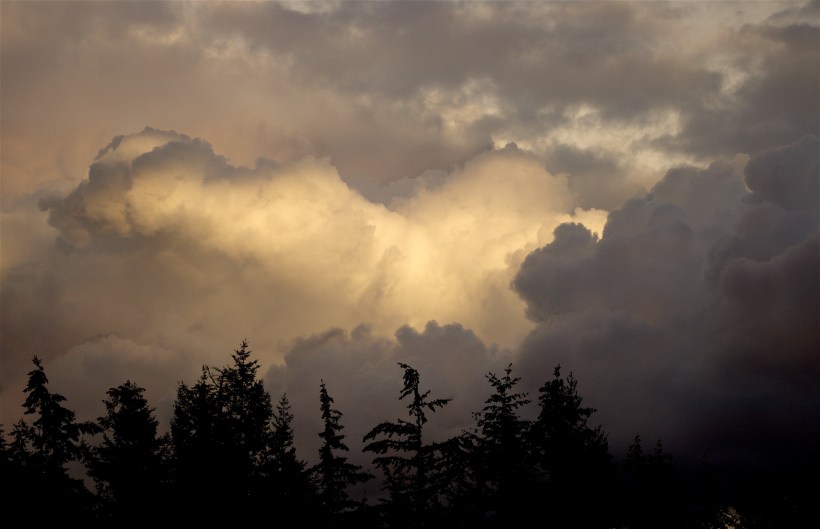
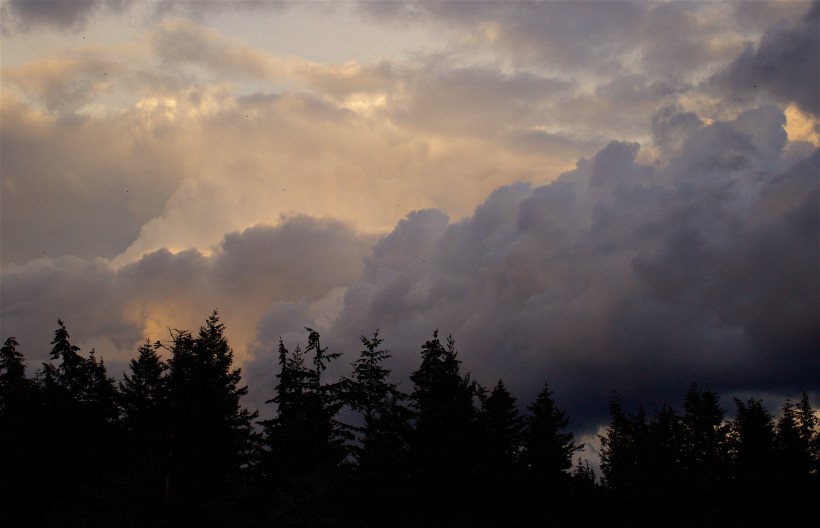
The ever-moving, ever-changing immensity of the clouds covers us all.Ā  As those clouds touch, embrace, release, mold and transform, they show us how connection with others is done.Ā  As we county folk pass on the roads during an evening walk, as we are running late to town jobs, as we meet in the store or at church or community events, we too should touch and greet one another, nod and encourage, acknowledge the shared light that comes from beyond us that restores and transforms us.

Most of all, like the clouds, we are too often full to brimming, a shedding of shared tears at how easily this land can be taken away — whether remembering the sad history of people group domination and removal from their ancestral homes, or the ravages of flood or volcanoes, the effects of drought and wildfire, of blight or sickness, or the currentover-regulation of government ensuring no farmer can afford to continue to do what they know best to preserve the land, the habitat and their crops.

We weep in recognition, like these clouds, to make ourselves understood and to diminish the distance between us.

cloudstudy92163

cloudstudy92162

Politics is Applesauce

applesauce

img_0270

Politics is applesauce.
~Will Rogers
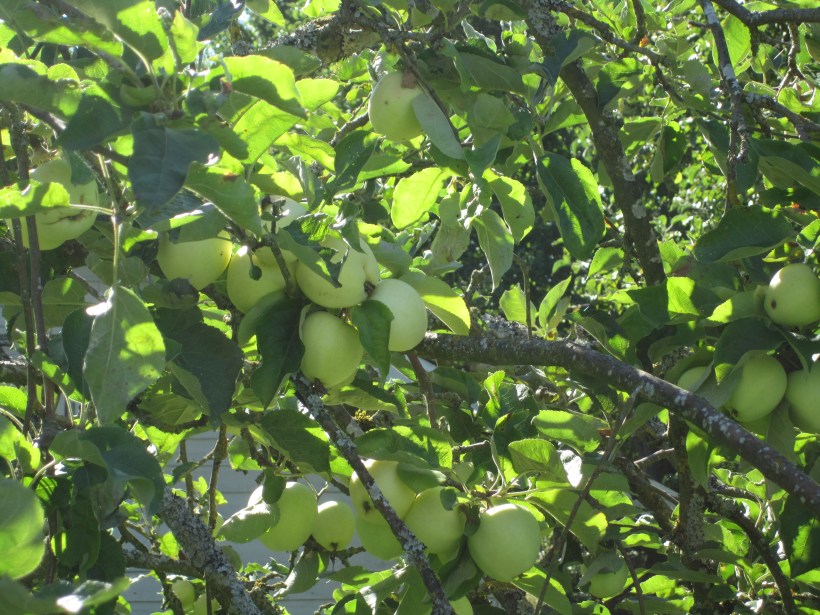
Our transparent apple trees are heavily burdened with fruit this year, to the point of breaking branches crashing to the ground with the weight. There have been plenty of windfalls, just perfect for making applesauce.

The transparent apple variety has a short window between fruit too green and sour beforeĀ  becoming too soft and mealy.Ā  With the hot weather, these thin-skinned apples will start to crack and turn to mush right on the tree without even letting go first.Ā  So the time for applesauce is now, this week, ready or not.

Applesauce-making is one of my more satisfying domestic activities.Ā  Peeling and coring apples is tedious, there are always a few bad spots to cut out, and there is the occasional wiggling worm to dispose of before cooking.Ā  They make a tart sauce and need no sugar;Ā  with all the careful preparation before the cooking, the result is smooth to the tongue and a lovely creamy light color, with all blemishes removed, extra unwanted wormy protein deposited in the compost bucket along with mountains of peel, cores and seeds.

Would that I could similarly pare out, peel off, dispose in the compost all the political opinions flooding my real and virtual mailboxes, the robo-calls coming into our unlisted phone number, the radio, TV and internet ads that burden us all until we crack and break under the weight.Ā  Actually most of this year’s election fruit is already rotting on the tree, turning us all to mush in the process.Ā  I’m weary just thinking about the millions, no billions, of dollars spent in advertising that could be used for far greater good and benefit for the citizenry.

The interminable process of selecting a president and members of Congress, as well as a governor and controversial initiatives can be so vile and mean-spirited that the whole kettle of sauce is spoiled.Ā Ā  I could cook it all day long and there still will be worms waving in the air, rotten cores festering, scabby peels floating on top, the bottom scalding with the heat of the cook stove.Ā  How does a reasonable person decide what is best for the country when nothing is transparent at all in what politicians say versus what they do versus what the media says they do?

And how palatable will the political flavors be when all is said and done?Ā Ā  I guess we’ll need to wait until November to know how the messy mush of politics will taste.

Thankfully I will have stored up plenty of the real stuff in the freezer so we can drown our misery in the creaminess of summer apples prepared and cooked to perfection: no blemishes, no scabs, no rot, and no worms waving back.

What a world.

applesauce

Dancing in Dust Motes

barnboys

farmkids3

ready
emptied and ready

They put up hay loose there, the old way,
forking it into the loft from the wagon rack
while the sweaty horses snorted and switched off flies
and the littlest kids were commanded to trample it flat
in between loads until the entire bay
was alight with its radiant sun-dried manna….
It was paradise up there with dusty sun motes
you could write your name in as they skirled and drifted down.
There were ropes we swung on and dropped from and shinnied up
and the smell of the place was heaven, hurling me back
to some unknown plateau, tears standing up in my eyes
and an ancient hunger in my throat, a hunger….
~Maxine Kumin from ā€œHayā€

filling
filling up

haybarnfull

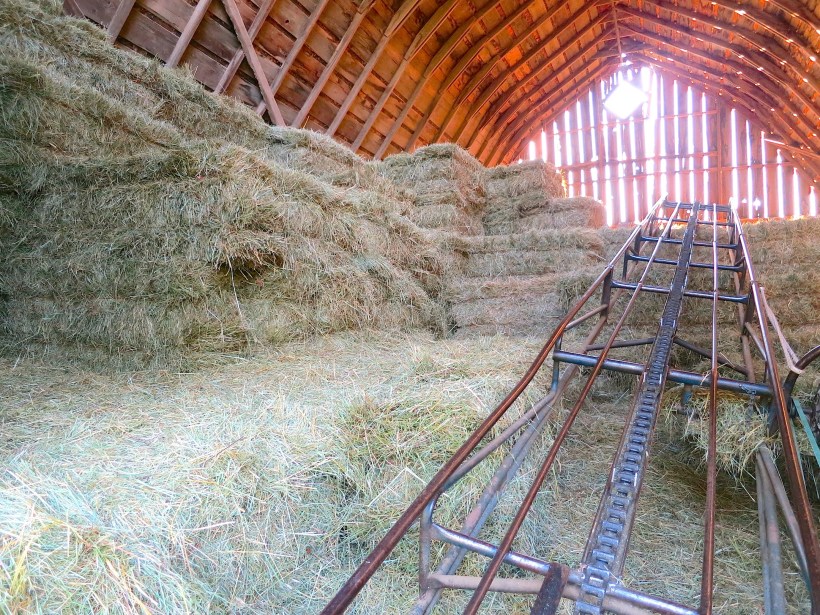
My parents knew that ancient hunger, both born on farms with teams of horses that brought in hay the old way while the children tramped and stamped the loose piles firm.

I’ve known that ancient hunger, having grown up on a farm that brought in to the barn loose hay the old way by tractor and wagon, having danced in the dusty sun motes on the top of the hay on a bright afternoon, the light cut in stripes over the sweet smelling grass.

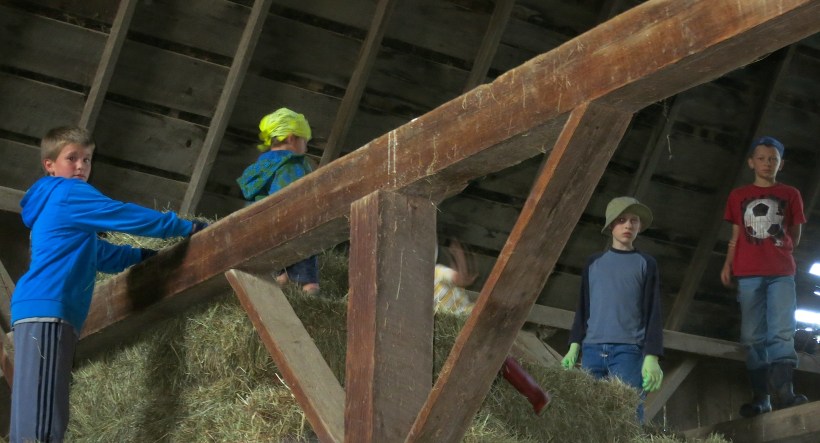
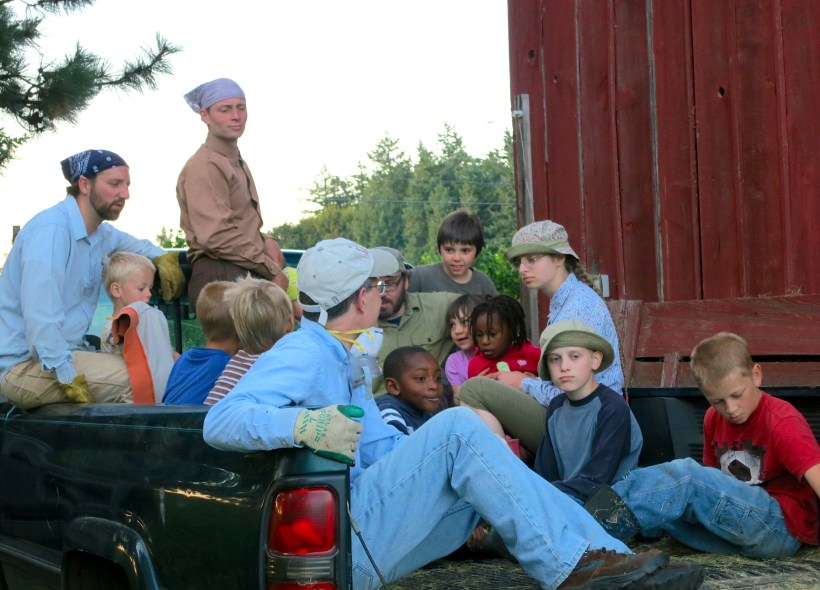
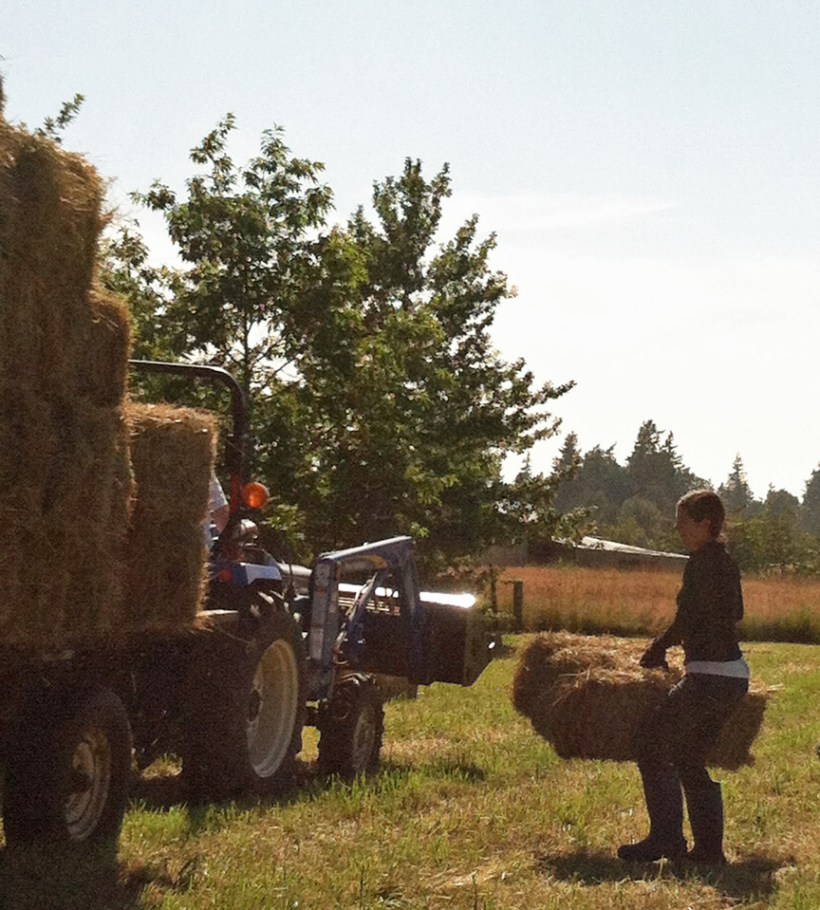
We’ve made sure our three children knew that ancient hunger, born to a farm that brought in hay bales stacked to the rafters through community effort, those same dusty sun motes swirling about their heads as they learned their jobs, from bale rolling to lifting to tossing and stacking.

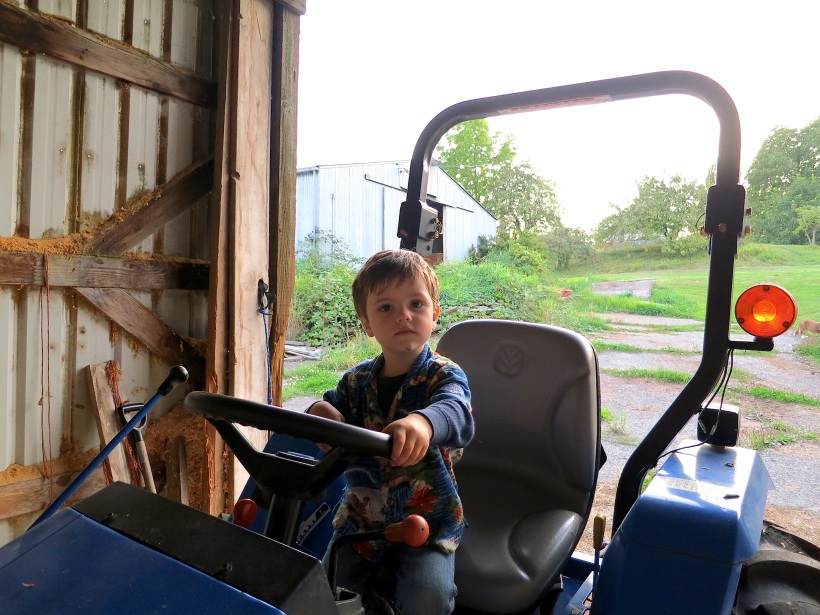
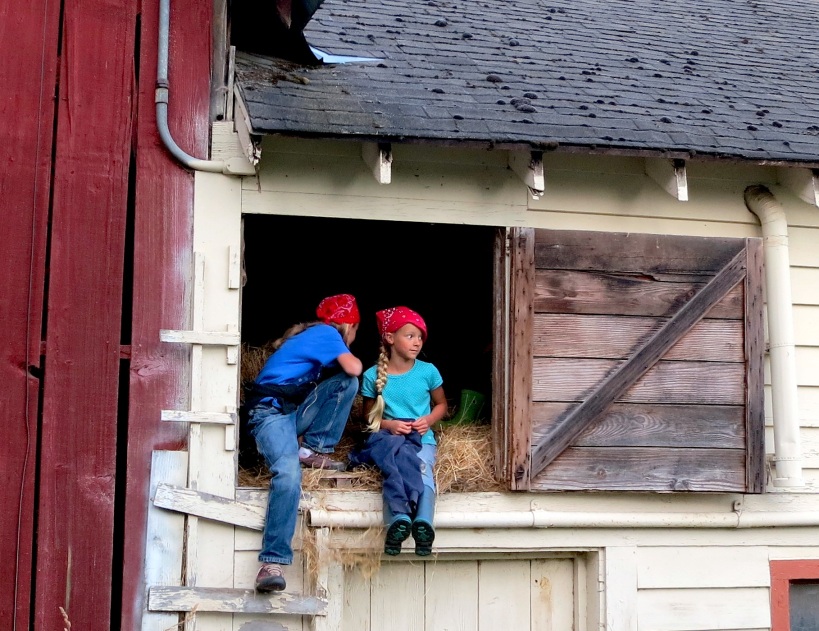
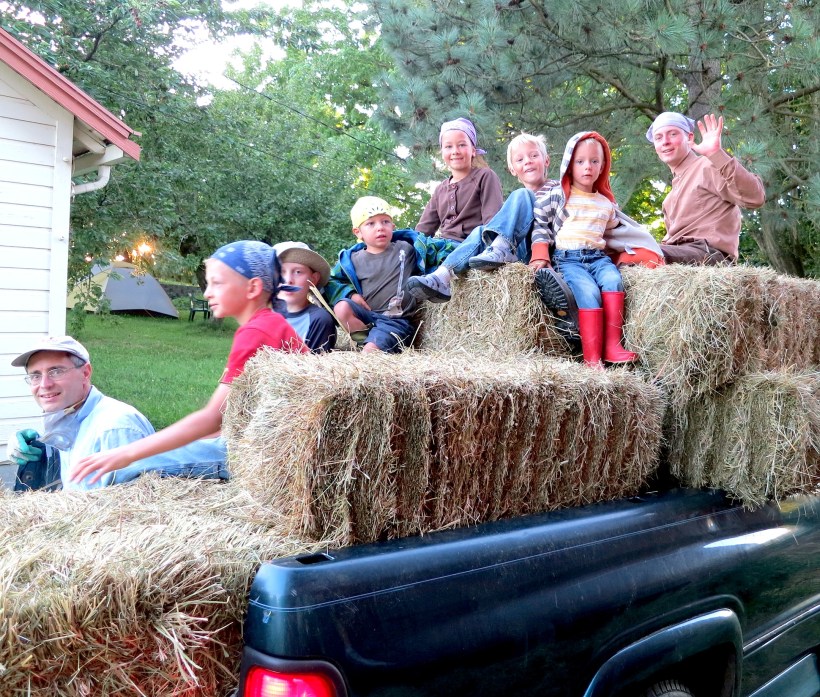
And now the next generation of neighborhood children arrive with shouts on haying days to clamor up and down the bale mountains, answering to the same hunger, blowing the same dusty snot and thrilling to the adventure of tractors, wagons and trucks, celebrating the gathering in of sun-dried manna together.

Surely this is what heaven will be like: we are all together, dancing in the light of the sun motes, our hunger filled to the brim by manna provided from above.

farmertheo1

farmgirls

farmcrew


Bound to the Earth

sunset76161

sistersmoon

My grandparents owned the land,
worked the land, bound
to the earth by seasons of planting
and harvest.

They watched the sky, the habits
of birds, hues of sunset,
the moods of moon and clouds,
the disposition of air.
They inhaled the coming season,
let it brighten their blood
for the work ahead.

Soil sifted through their fingers
imbedded beneath their nails
and this is what they knew;
this rhythm circling the years.
They never left their land;
each in their own time
settled deeper.
~Lois Parker Edstrom ā€œAlmanacā€ from Night Beyond Black. Ā© MoonPath Press, 2016.

morningswans

396747_496652663682556_1002398142_n
Photo of Aaron Janicki haying with his Oberlander team in Skagit County courtesy of Tayler Rae

I am old enough to have parents who grew up on farms worked by horses, one raising wheat and lentils in the Palouse country of eastern Washington and the other logging in the woodlands of Fidalgo Island of western Washington.Ā  The horses were crucial to my grandparents’ success in caring for and tilling the land, seeding and harvesting the crops and bringing supplies from town miles away.Ā  Theirs was a hardscrabble life in the early 20th century with few conveniences.Ā  Work was year round from dawn to dusk; caring for the animals came before any human comforts.Ā  Once night fell, work ceased and sleep was welcome respite for man and beast.

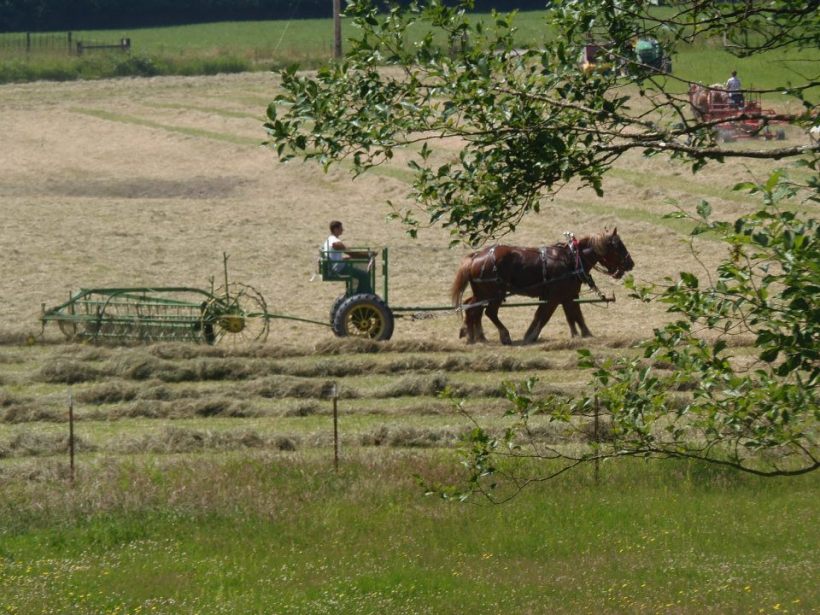
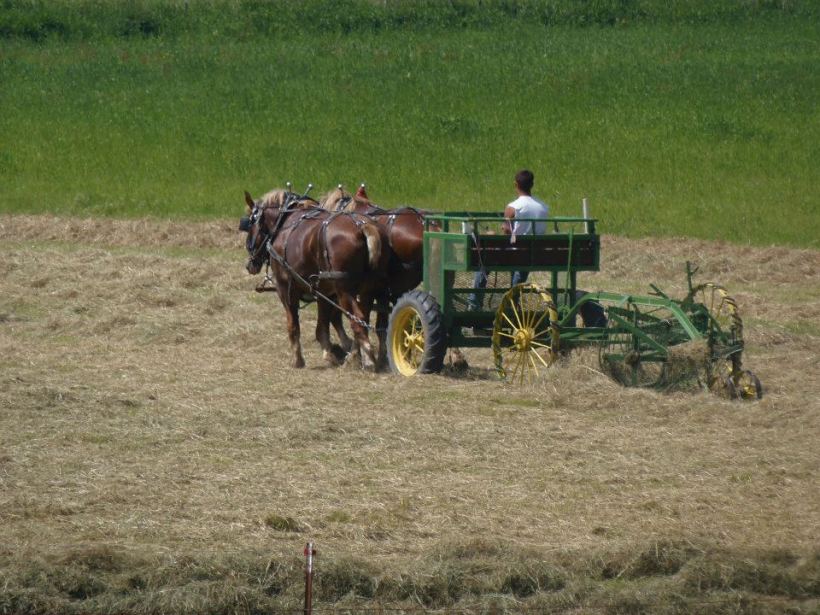
In the rural countryside where we live now, we’ve been fortunate enough to know people who still dabble in horse farming, whose draft teams are hitched to plows and mowers and manure spreaders as they head out to the fields to recapture the past.Ā  Watching a good team work with no diesel motor running means hearing bird calls from the field, the steady footfall of the horses, the harness chains jingling, the leather straps creaking, the machinery shushing quietly as gears turn and grass lays over in submission.Ā  No ear protection is needed.Ā  There is no clock needed to pace the day.Ā Ā  There is a rhythm of nurture when animals instead of engines are part of the work day.Ā Ā  The gauge for taking a break is the amount of foamy sweat on the horses and how fast they are breathing. It is time to stop and take a breather, it is time to start back up and do a few more rows, it is time to water, it is time for a meal, it is time for a nap, it is time for a rest in a shady spot.Ā  This is gentle use of the land with four footed stewards who deposit right back to the soil the digested forage they have eaten only hours before.

Our modern agribusiness megafarm fossil-fuel-powered approach to food production has bypassed the small family farm which was so dependent on the muscle power of humans and animals.Ā Ā Ā  In our move away from horses worked by skilled teamsters,Ā  what has been gained in high production values has meant loss of self-sufficiency and dedicated stewardship of a particular plot of ground.Ā  Draft breeds, including the Haflinger horses we own, now are bred for higher energy with lighter refined bone structure meant more for eye appeal and floating movement,Ā  rather than the sturdy conformation and unflappable low maintenance mindset needed for pulling work.Ā Ā  Modern children are bred for a different purpose as well, no longer raised to work together with other family members for a common purpose of daily survival.Ā Ā  Their focus at school is waning as they have no morning farm chores when they get up, too little physical work to do before they arrive at their desks in the morning.Ā Ā  Their physical energy, if directed at all,Ā  is directed to competitive sports, engaged in fantasy combat rather than winning a very real victory over hunger.

I am encouraged when young people still reach for horse collars and bridles, hitch up their horses and do the work as it used to be done.Ā Ā  All is not lost if we can still make incremental daily progress,Ā  harnessed together as a team with our horses, tilling for truth and harvesting hope.

pinkbaker4
I like farming. I like the work. I like the livestock and the pastures and the woods.Ā  It’s not necessarily a good living, but it’s a good life.Ā  I now suspect that if we work with machines the world will seem to us to be a machine, but if we work with living creatures the world will appear to us as a living creature.Ā  That’s what I’ve spent my life doing, trying to create an authentic grounds for hope. –Wendell Berry, horse farmer, essayist, poet, professor

sunrise9714

314753_496651617015994_783180103_n
photo by Tayler Rae


We Are As Others Are


Let us go forward quietly, forever making for the light, and lifting up our hearts in the knowledge that we are as others are (and that others are as we are), and that it is right to love one another in the best possible way – believing all things, hoping for all things, and enduring all things.Ā ~Vincent Van Gogh in “Letters”


We like to believe it is in our DNA to be tribal, to justify setting ourselves apart from the “other”, to be discontent with whatever we are given — but that belief is how humanity’s troubles began.

Every election and convention season only intensifies our sense of “otherness”, further driving us apart and further into the darkness.

We are slaves to divisiveness: even worshiping and voting for it in the name of “becoming great again”, emphasizing our own “truth” in the name of “unity.”

I can’t watch it and I can’t listen to prayers for one political party over another.

I want to know it is still possible to love each other in all our differences in the best possible way, Ā with quiet endurance and hope. No shouting, no balloons, no Ā ridiculous rhetoric.

We are as others are — denying it is folly. Ā Believing it is the beginning of selfless love, something God did intend for our DNA. He became the “other” among us to show us how it can be done.

A Healthy Fence Row

morning528151

mistyfence

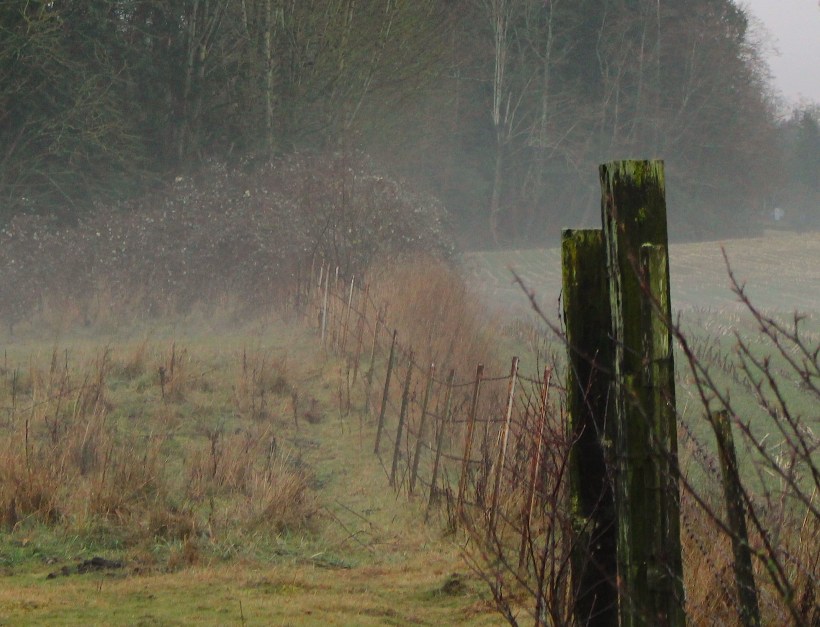
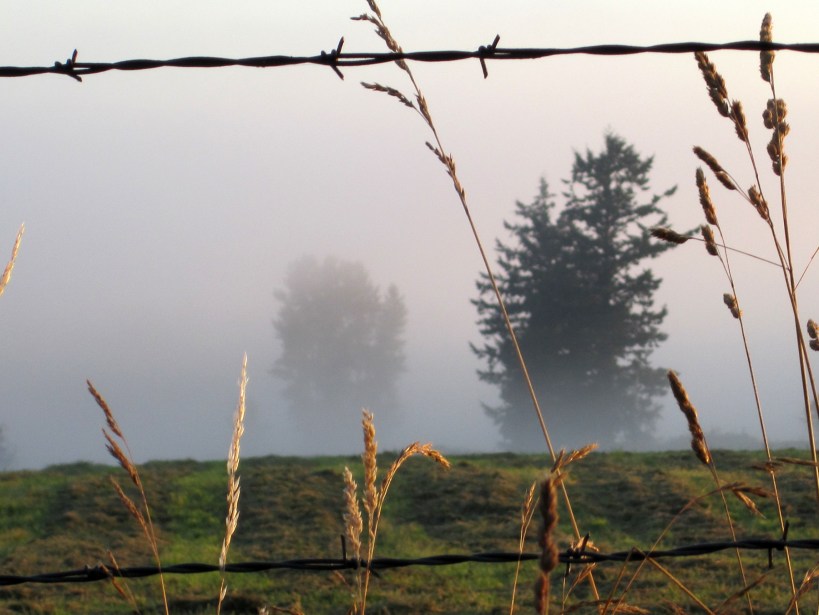
Brushy fencerows are in a sense a gift from man to nature — at least if, after the posts are dug in and the fence stapled to the posts, nature is given some free reign. Birds sitting on the fence and posts will pass undigested seeds in their droppings. Some of these seeds of blackberry, wild cherry, elderberry, bittersweet, sassafras, mulberry, and unfortunately, in some areas, multiflora rose, will take root in the loose soil around the posts and later in soil dug up by woodchucks. Chipmunks scurrying along the fence will bring and bury acorns and hickory nuts, while the wind will deliver dandelion, milkweed, and thistle seeds — all ingredients for a healthy fencerow.
~David Kline from Great Possessions

fence

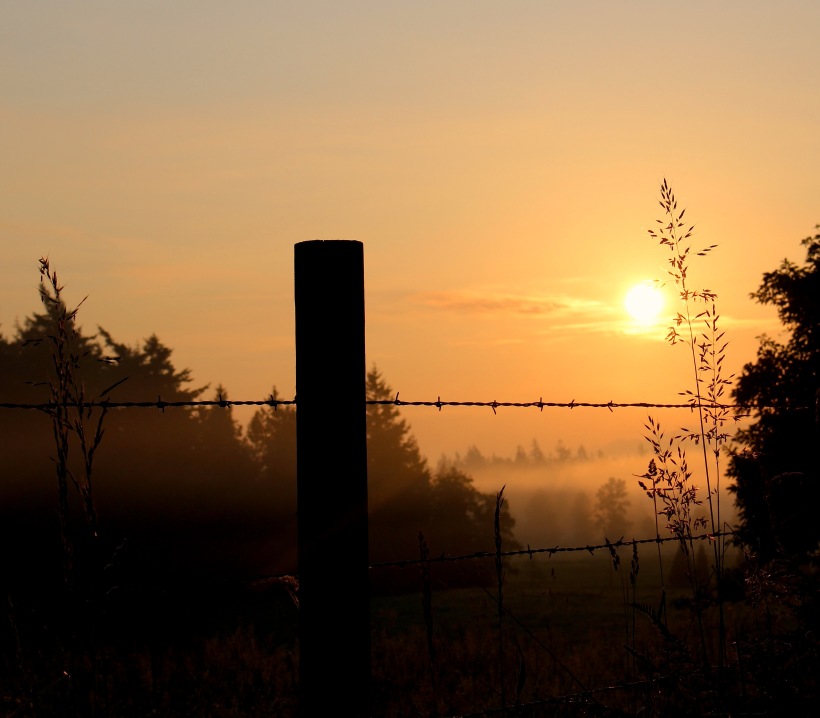
Before I built a wall I’d ask to know
What I was walling in or walling out,
And to whom I was like to give offence.

He will not go behind his father’s saying,
And he likes having thought of it so well
He says again, ā€œGood fences make good neighbors.ā€
~Robert Frost from “Mending Fences”

fencepostssunset32

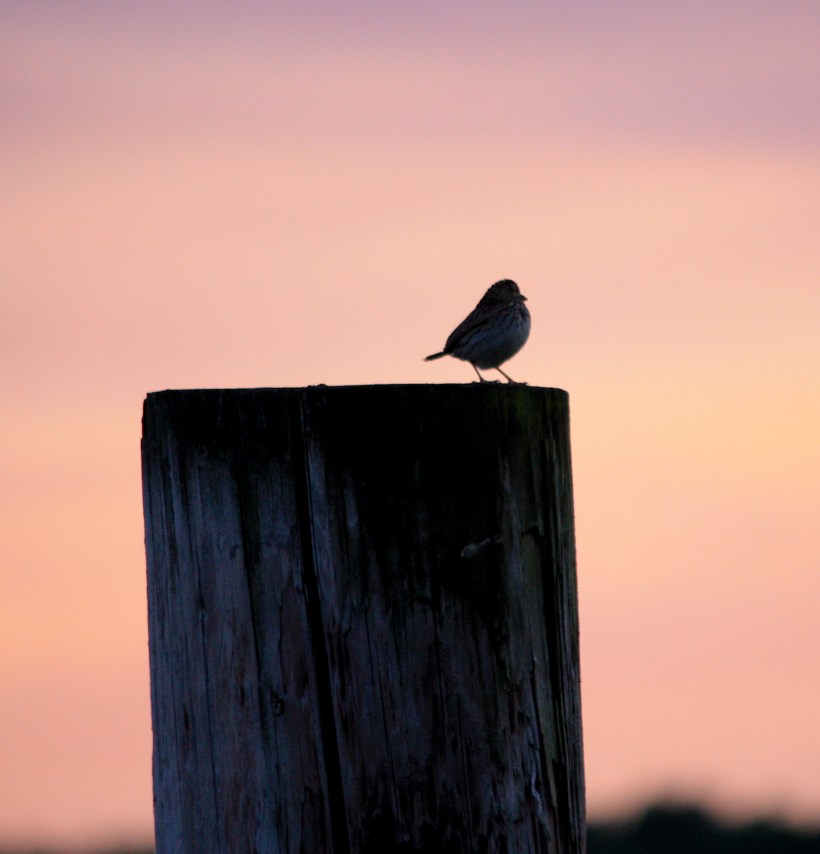
birdonpostrodenberger
photo by Harry Rodenberger


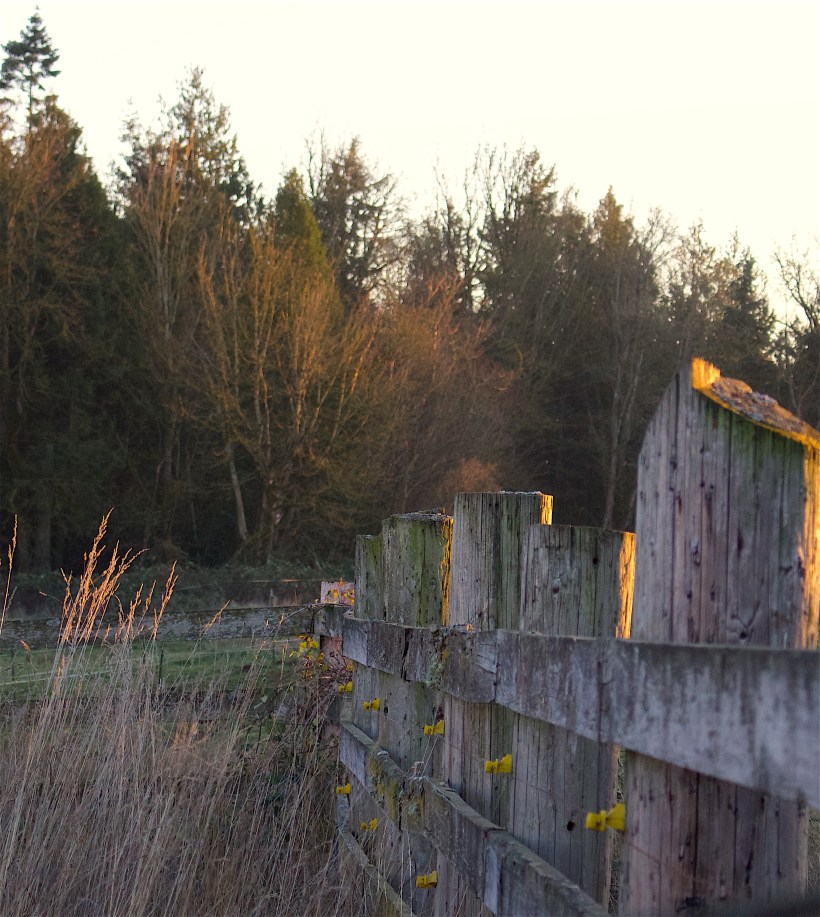
I maintain, in my haphazard and often ineffectual way, our farm’s wood rail and hot wire fences to keep the horses confined, preventing them from wandering into the adjacent orchard, corn field, or most risky of all, the road. As utilitarian as a fence is for that purpose, the fence row itself is the hospitality center for all sorts of diversity of flora and fauna.Ā  It doesn’t repel; it invites.

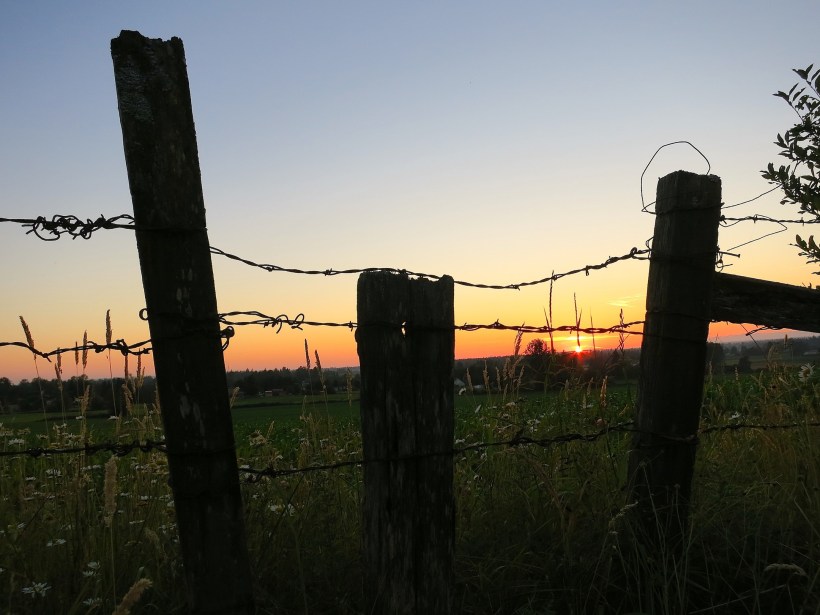
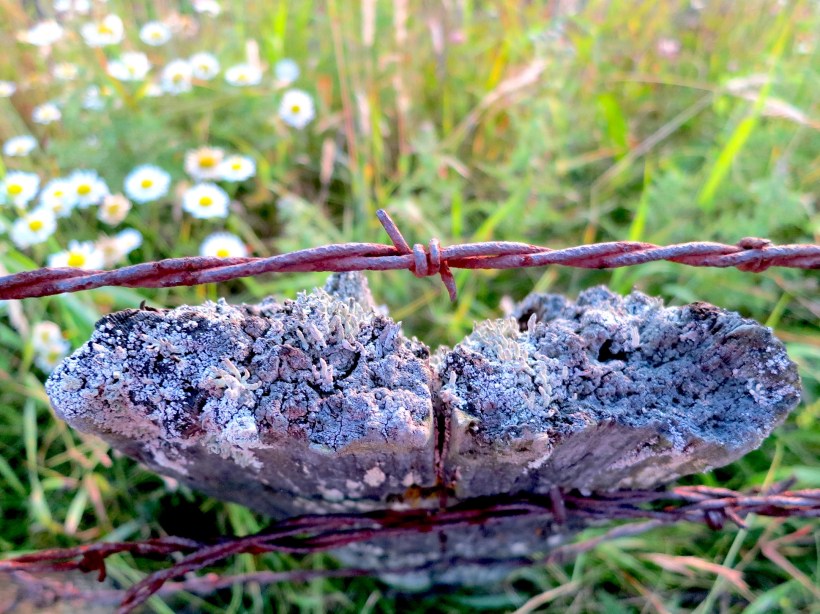
As one travels in the United Kingdom and across the plains and mountains of North America, old fences are everywhere. Some fences were built painstakingly of stone centuries ago, some of old barbed wire, now falling and decrepit, no longer effective, but still testimony to a determined farmer’s desire to section off his barren land from another’s barren land, or perhaps the requirement borne of the homesteading laws of the time. Robert Frost wrote in his poem “Mending Fences” that a fence spans the balance between man’s sometimes irrational desire for barriers, acknowledging the order that they bring to an uncertain and sometimes unpredictable world that lays beyond our walls.

Political fences continue to exist in many parts of the world today, created primarily out of fear. Indeed, new walls have been proposed, absurdly ridiculous in their scope and expense.Ā  Much celebration accompanied the fall of the Berlin Wall after its years of imposing testimony to the lack of trust and understanding between people who were once relatives, neighbors and friends. The Great Wall of China still stands, now primarily tourist attraction, no longer serving any other useful purpose other than to illustrate the lengths to which man goes to barricade himself off from others.

So why maintain life’s fences, even if the building and maintaining of these fences seems a futile and foolish task when they are pushed down, blown over in the winds, with trees fallen over them, and overgrown with brush and wild blackberries?

Fences, like rules and laws, define order and structure. They can bite back if they are breached. If crashed and broken, they are hazardous in and of themselves, not withstanding the potential dangers that lay beyond them. Remove them altogether and we risk losing the diversity represented in the fence row itself.

So, in the best of times, we are mending walls out of continuing need for contact with our neighbors. We meet across the barriers to shake hands and visit while we repair the fences together, leaving the barriers standing and strong, and the space in the fence row becomes even more diverse and welcoming. In the worst of times, we fortify and hide behind the walls, making them taller, wider, deeper, creating greater and greater gulfs between us and eventually losing touch forever as the walls themselves deteriorate without the necessary mutual ā€œmendingā€.

So we must not love walls themselves, but must maintain them with our neighbor. We don’t worship the walls themselves but instead respect the foundation they rest on and the life they protect within the row itself.

We accept such boundaries with humility, recognizing their necessity is due to our own imperfections, as we too are full of prickles and barbs that too easily draw blood when breached.

oldfence

moydalganfield5

sunsetfence

sunsetfence

Crossing the Threshold

hayfield

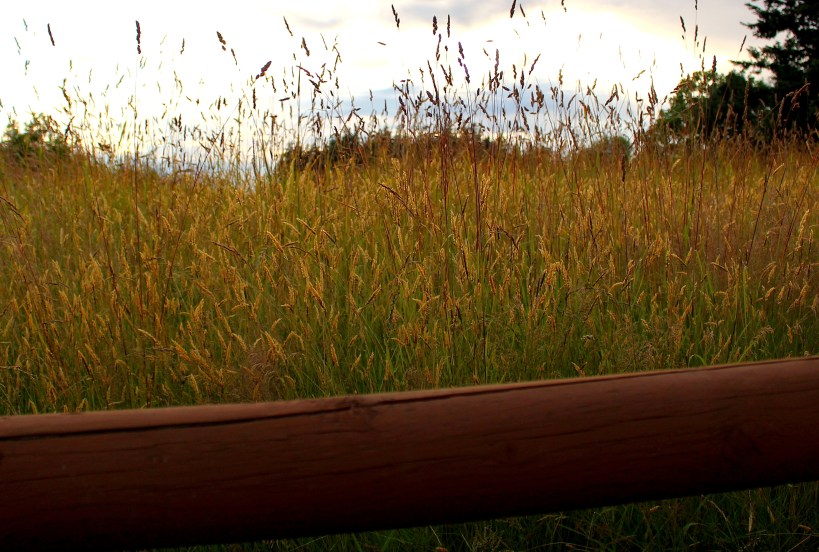
earsgrass

John O’Donohue gave voice to the connection between beauty and those edges of life—
thresholds was the word he loved—
where the fullness of reality becomes more stark and more clear.

If you go back to the etymology of the word ā€œthreshold,ā€ it comes from ā€œthreshing,ā€ which is to separate the grain from the husk. So the threshold, in a way, is a place where you move into more critical and challenging and worthy fullness.

There are huge thresholds in every life.

You know that, for instance, if you are in the middle of your life in a busy evening, fifty things to do and you get a phone call that somebody you love is suddenly dying, it takes ten seconds to communicate that information.

But when you put the phone down, you are already standing in a different world. Suddenly everything that seems so important before is all gone and now you are thinking of this.

So the given world that we think is there and the solid ground we are on is so tentative.
And a threshold is a line which separates two territories of spirit, and very often how we cross is the key thing.

When we cross a new threshold worthily, what we do is we heal the patterns of repetition
that were in us that had us caught somewhere.

~John O’Donohue from an “On Being” interview with Krista Tippett on “Becoming Wise”

clouds7816

I emerge from the mind’s
cave into the worse darkness
outside, where things pass and
the Lord is in none of them.
I have heard the still, small voice
and it was that of the bacteria
demolishing my cosmos. I
have lingered too long on
this threshold, but where can I go?
To look back is to lose the soul
I was leading upwards towards
the light. To look forward? Ah,
what balance is needed at
the edges of such an abyss.
I am alone on the surface
of a turning planet. What
to do but, like Michelangelo’s
Adam, put my hand
out into unknown space,
hoping for the reciprocating touch?
~R.S. Thomas “Threshold”

fullmoon61916


These past few months of mass shootings, tragic deaths and never-ending conflict have forced us all to a threshold needing to be crossed. Yet we stand stubborn, immobilized, frozen and dying on the spot, peering out in fear but never peering inward for self-examination.

Instead of submitting to the crushing winnowing that must happen to blow away the chaff of our lives, to get down to the kernel of truth that sustains us, we cling to the old and familiar. It is we who have delivered ourselves a non-choice between two deeply flawed individuals for president. They represent what evils we tolerate as a people: celebrating entitlements, tolerating their legal, moral and financial shenanigans simply because they are rich and famous.

Unwilling to change attitude or perspective, reluctant to move forward into largely uncharted territory, mired in a tribalism only skin deep, we wonder why history repeats itself, why we are dying every day, by our own hand or by others’.

How to cross worthily? How to cross together, arm in arm, united in the need to move forward beyond this mess we have made for ourselves?

We need a good threshing, badly. We need to be worthy. We need to reach out our hands into the unknown that lies ahead, hoping and praying Someone is there to grab hold and lead us across to a better day.


thimbleweb

Plunged into the Dark Abyss

salpiglossis

The ultimate weakness of violence is that it is a descending spiral
begetting the very thing it seeks to destroy.
Instead of diminishing evil, it multiplies it.
Through violence you may murder the liar,
but you cannot murder the lie, nor establish the truth.
Through violence you may murder the hater,
but you do not murder hate.
In fact, violence merely increases hate.
So it goes.
Returning violence for violence multiplies violence,
adding deeper darkness to a night already devoid of stars.
Darkness cannot drive out darkness:
only light can do that.
Hate cannot drive out hate: only love can do that.
Hate multiplies hate,
violence multiplies violence,
and toughness multiplies toughness
in a descending spiral of destruction….
The chain reaction of evil —
hate begetting hate,
wars producing more wars —
must be broken,
or we shall be plunged
into the dark abyss of annihilation.
~
Dr. Martin Luther King, Jr. from Strength to Love

salpiglossis3

The world is indeed full of peril and in it there are many dark places.
But still there is much that is fair. And though in all lands, love is now
mingled with grief, it still grows, perhaps, the greater.
— J. R. R. Tolkien

rainyrose

We forget that God is right there, waiting for us to turn to him, no matter how dire our situation.Ā  We forget the reassuring words of his messengers: ā€œFear not.ā€Ā Ā  God always seeks to draw close to us — even in the depths of hell.
…it comes down to this: the only way to truly overcome our fear of death is to live life in such a way that its meaning cannot be taken away by death.Ā  It means fighting the impulse to live for ourselves, instead of for others.Ā  It means choosing generosity over greed.Ā  It also means living humbly, rather than seeking influence and power.Ā  Finally, it means being ready to die again and again — to ourselves, and to every self-serving opinion or agenda.

~Johann Christoph Arnold

hydrangearainyblu

This week, bullets have been fired out of fear and anger by, and have struck down, people who look and are just like us.Ā  Shed tears never need translation or interpretation, no matter what color cheeks they moisten.

Distrust and fear continue to impact our communities daily, settling like a shroud over the most routine activities.Ā  So we must fall back on what we were told long ago and each and every day in 365 different verses in the Word itself: fear not.

Do not be overwhelmed with evil but overcome evil with good.

The goal of this life is to live for others, to live in such a way that death cannot erase the meaning and significance of a life.Ā  We are called to give up our selfish agendas in order to consider the dignity of others and their greater good.

Cherish life, all lives, including, as is crystal clear from Christ’s example,Ā  those who are so fearful, they hate and want to murder us.

Our only defense against evil is God’s offense; only He will lead us to Tolkien’s ā€œwhere everything sad will come untrueā€, where tears are no longer shed in sorrow,Ā  but can only be tears of joy.

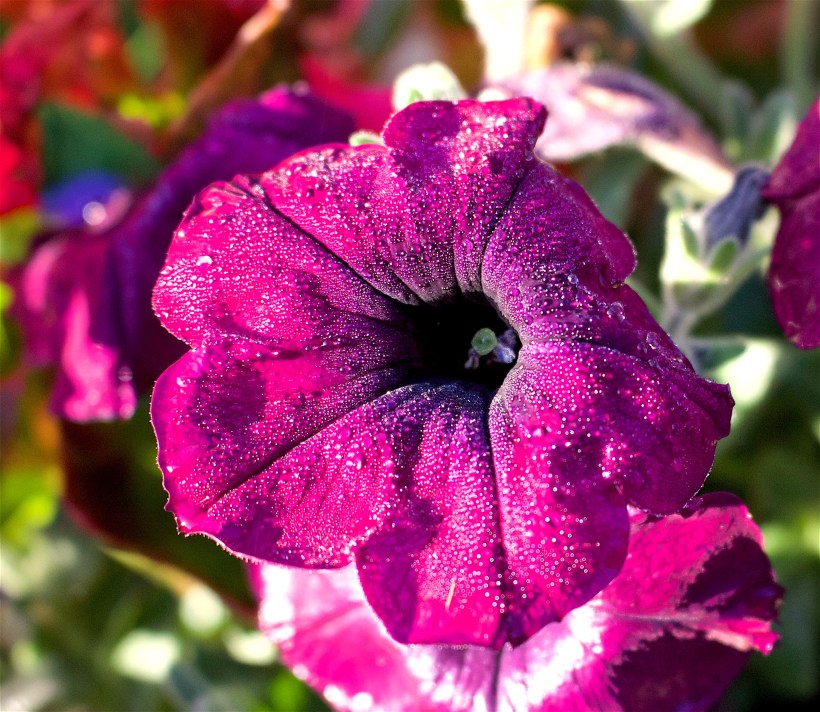
dewypetunia

‘Tis Hay Time

haybarnfull

haywagon

Tis haytime & the red complexioned sun
Was scarcely up ere blackbirds had begun
Along the meadow hedges here & there
To sing loud songs to the sweet smelling air
Where breath of flowers & grass & happy cow
Fling oer ones senses streams of fragrance now
While in some pleasant nook the swain & maid
Lean oer their rakes & loiter in the shade
Or bend a minute oer the bridge & throw
Crumbs in their leisure to the fish below
—Hark at that happy shout—& song between
Tis pleasures birthday in her meadow scene
What joy seems half so rich from pleasure won
As the loud laugh of maidens in the sun.
~John Clare “Hay Making”

farmcrew3

haymaking5

haying2012

Every hay crew is the same
Though the names change;
Young men flexing their muscles,
A seasoned farmer defying his age
Tossing four bales high,
Determined girls bucking up on the wagon,
Young children rolling bales closer,
Add a school teacher, pastor,
Professor, lawyer and doctor
Getting sweaty and dusty
United in being farmers
If only for an evening.

Stacking
Basket weave
Interlocking
Cut side up
Steadying the load
Riding over hills
Through valleys
In slow motion
Eagles over head
Searching the bare fields
Evening alpen glow
Of snowbound
Eastern peaks

Friends and neighbors
Walking the dotted pastures,
Piling on the wagons,
Driving the truck,
Riding the top of hay stack
In the evening breeze,
Filling empty barn space to the rafters,
Making gallons of lemonade in the kitchen.
A hearty meal consumed
In celebration
Of summer baled, stored, preserved
For another year.

Hay crew
Remembered on
Frosty autumn mornings before dawn
When bales are broken for feed
And fragrant summer spills forth.
In the dead of winter

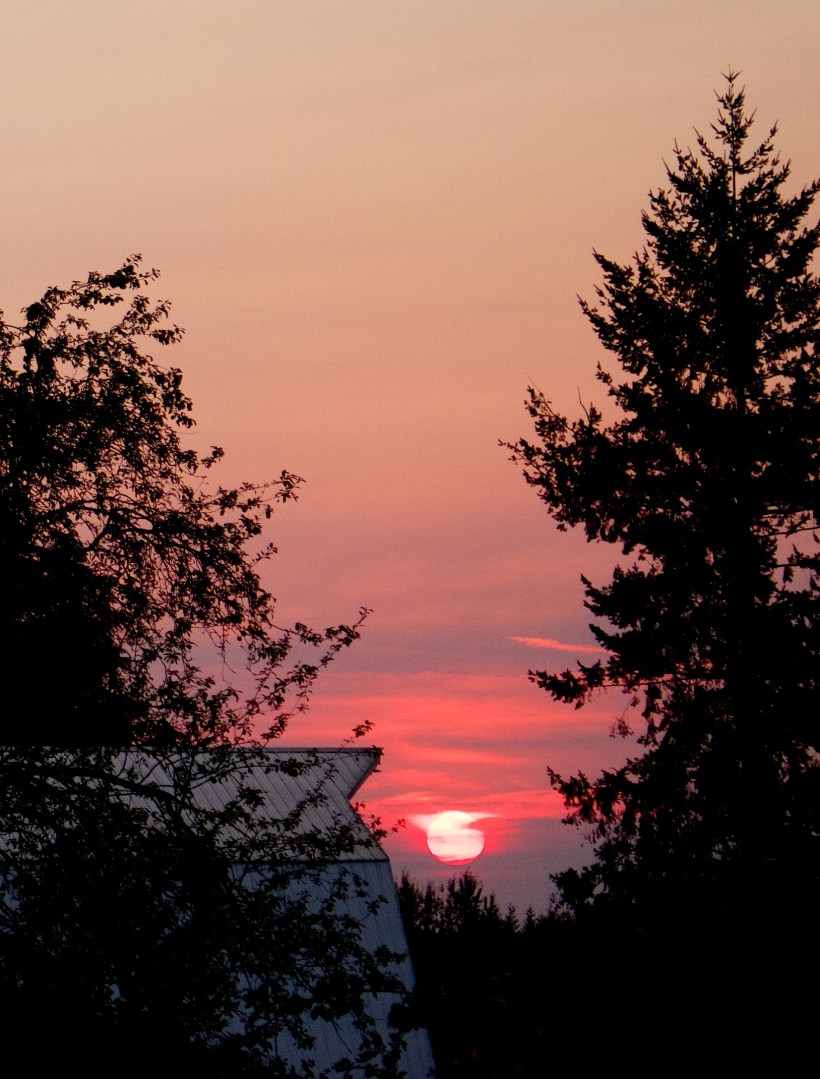
sunset81115

sunset811153

puffsunset2