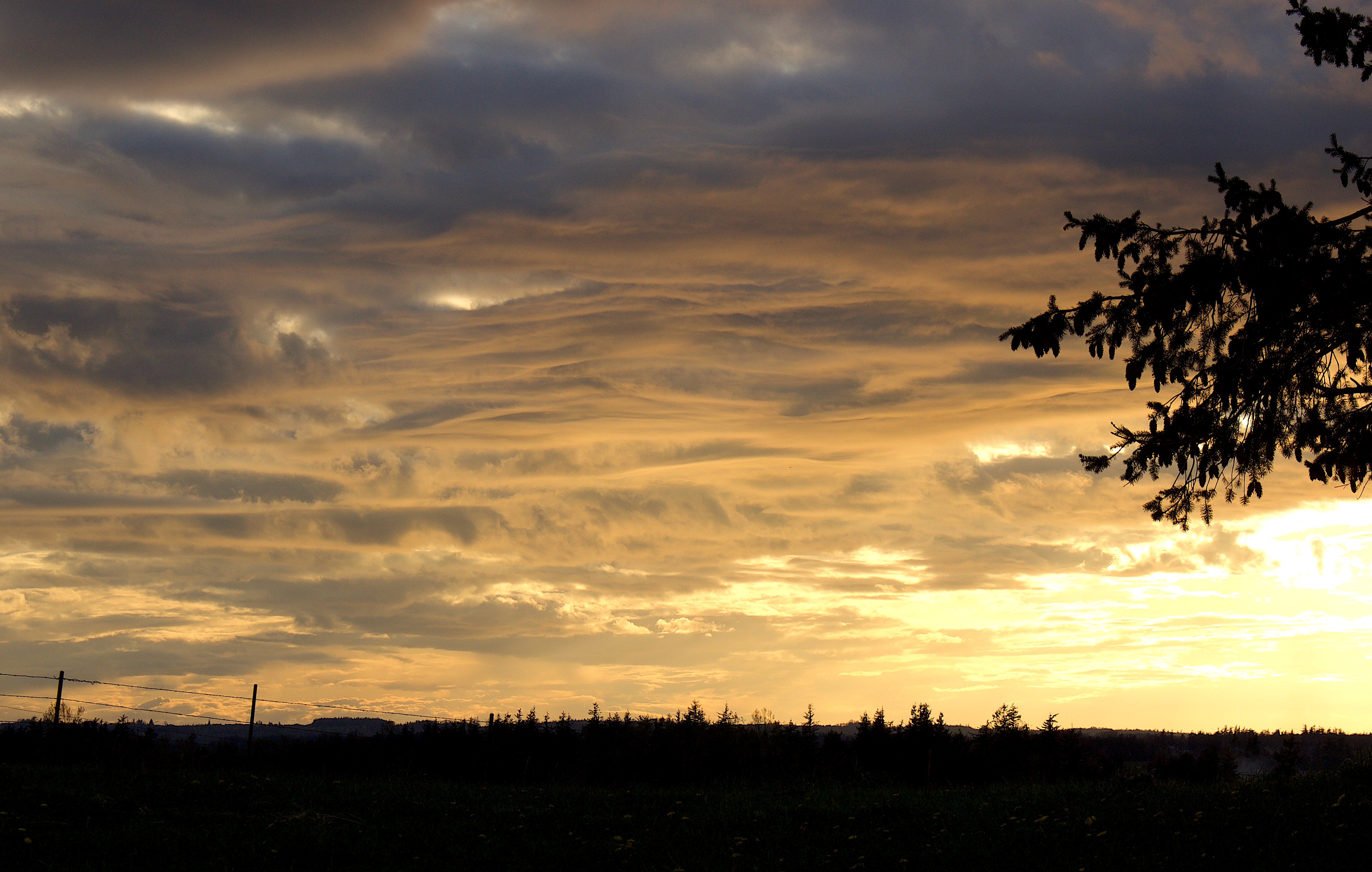
Here dies another day During which I have had eyes, ears, hands And the great world round me; And with tomorrow begins another. Why am I allowed two? ~G.K. Chesterton “Evening”
Even on a Monday, despite so much of the world suffering, there is work that must be done; I’ve been allowed this day to do my best and maybe as this day dies there will come, just as miraculous, another.
The church, I think, is God’s way of saying, “What I have in the pot is yours, and what I have is a group of misfits whom you need more than you know and who need you more than they know.”
“Take, and eat,” he says, “and take, and eat, until the day, and it is coming, that you knock on my door. I will open it, and you will see me face to face.”
He is preparing a table. He will welcome us in. Jesus will be there, smiling and holy, holding out a green bean casserole. And at that moment, what we say, what we think, and what we believe will be the same: “I didn’t know how badly I needed this.” ~Jeremy Clive Huggins from “The Church Potluck”
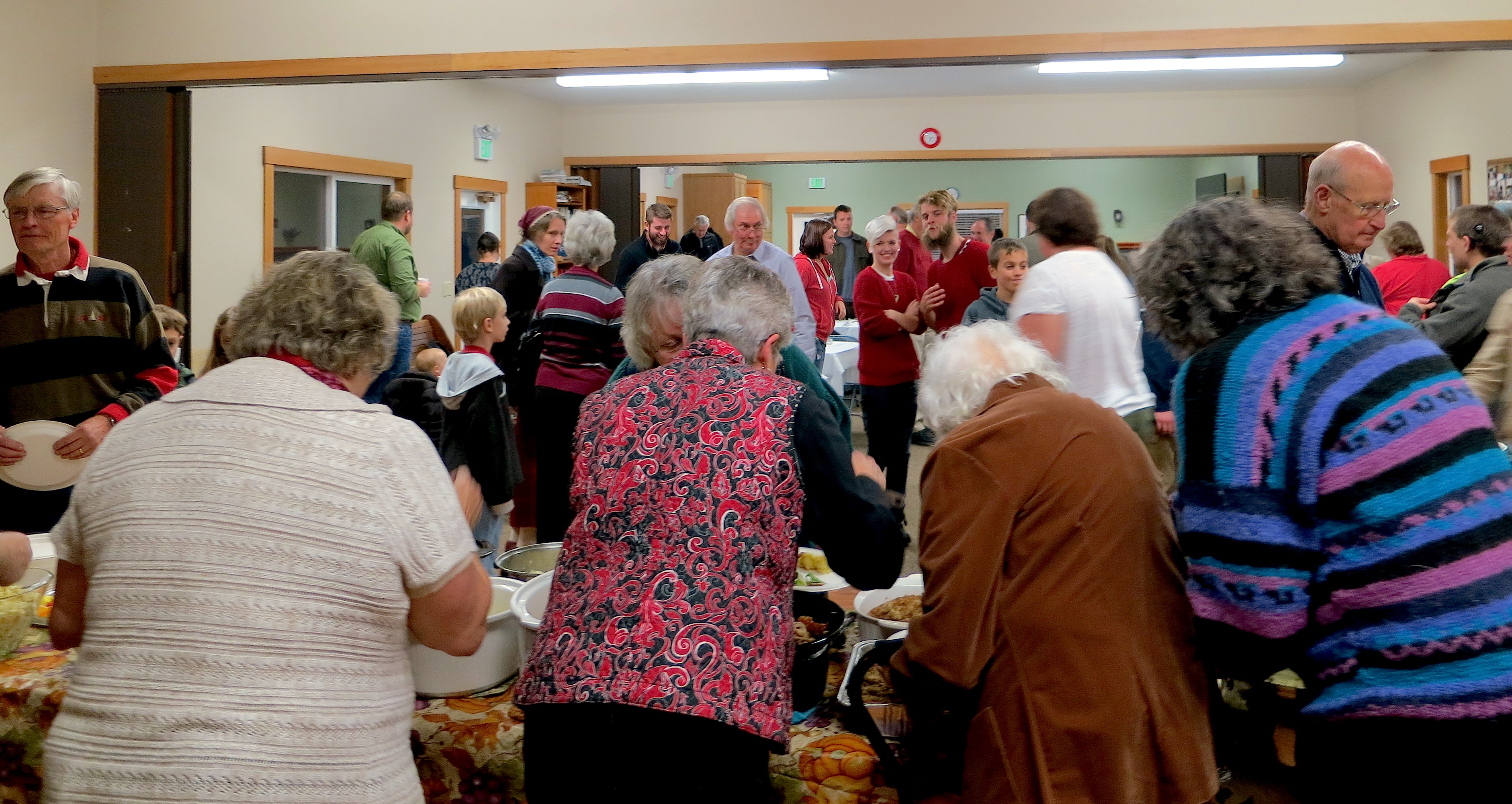
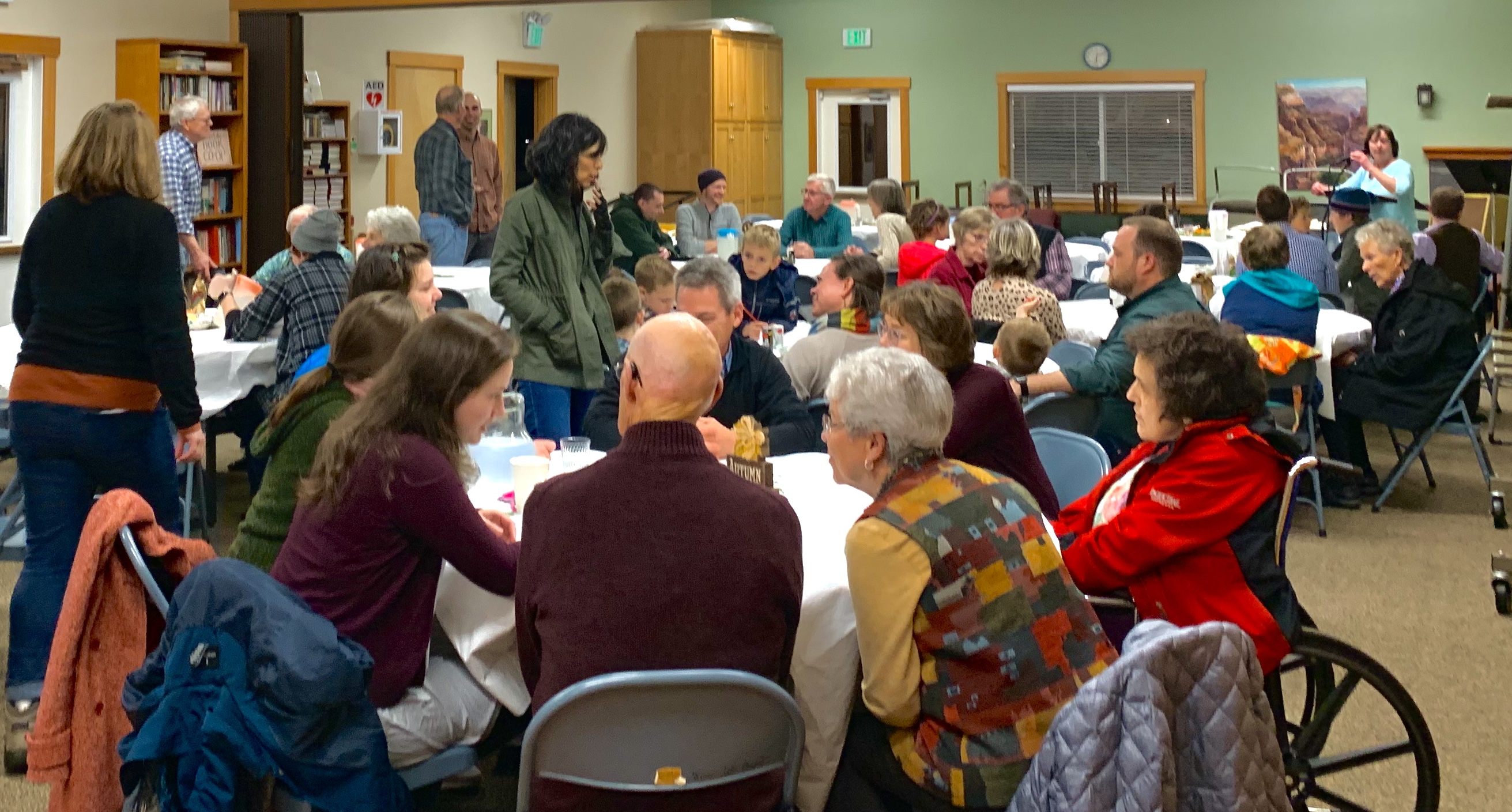
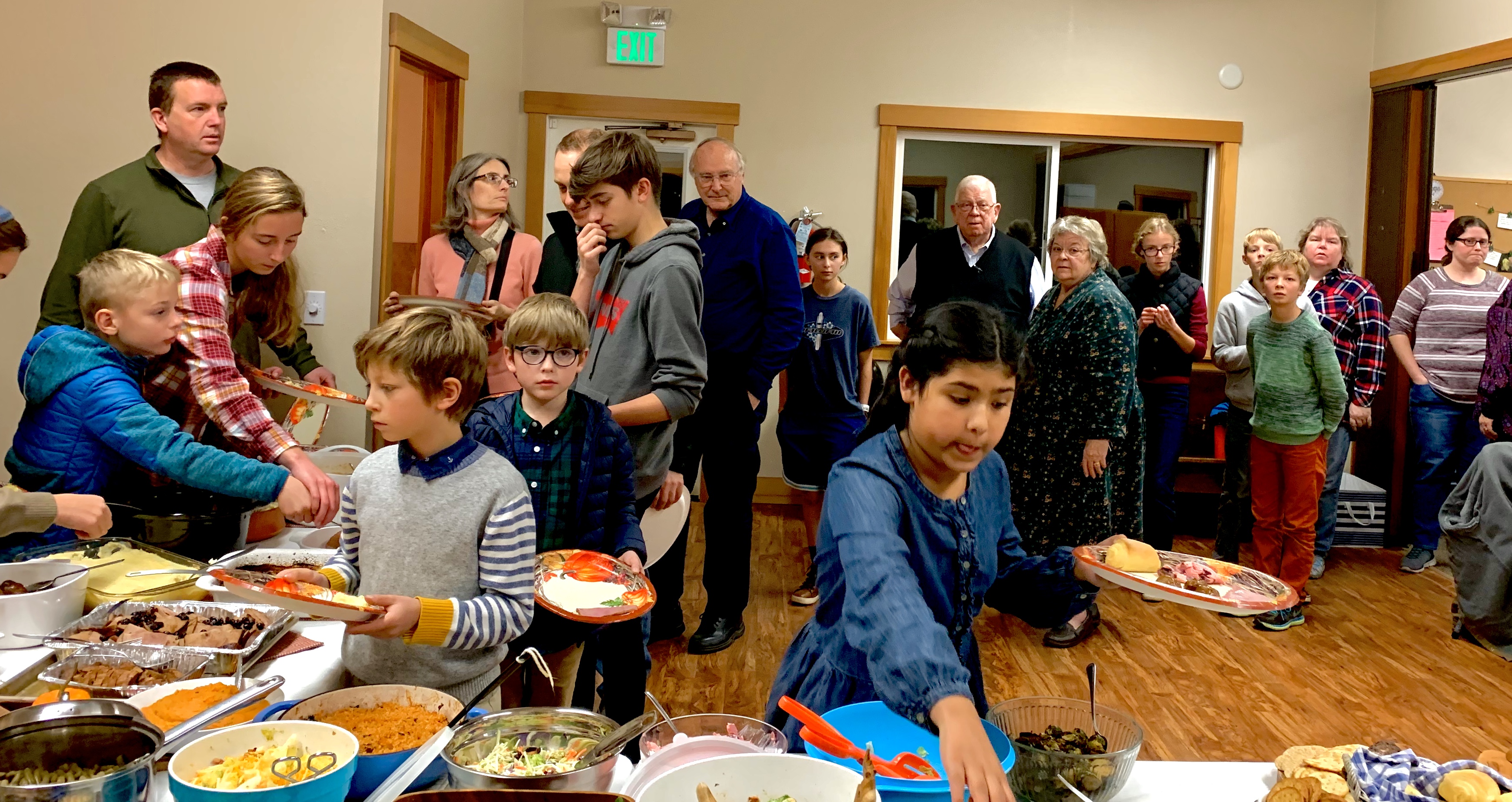
Perhaps a celebration at the end of a long cold winter month Possibly a need of respite from a month of dieting Likely a response to bad headline news day after day: A potlatch, a potluck, a communion of comfort food.
What to bring? What soothes stomach and heart?
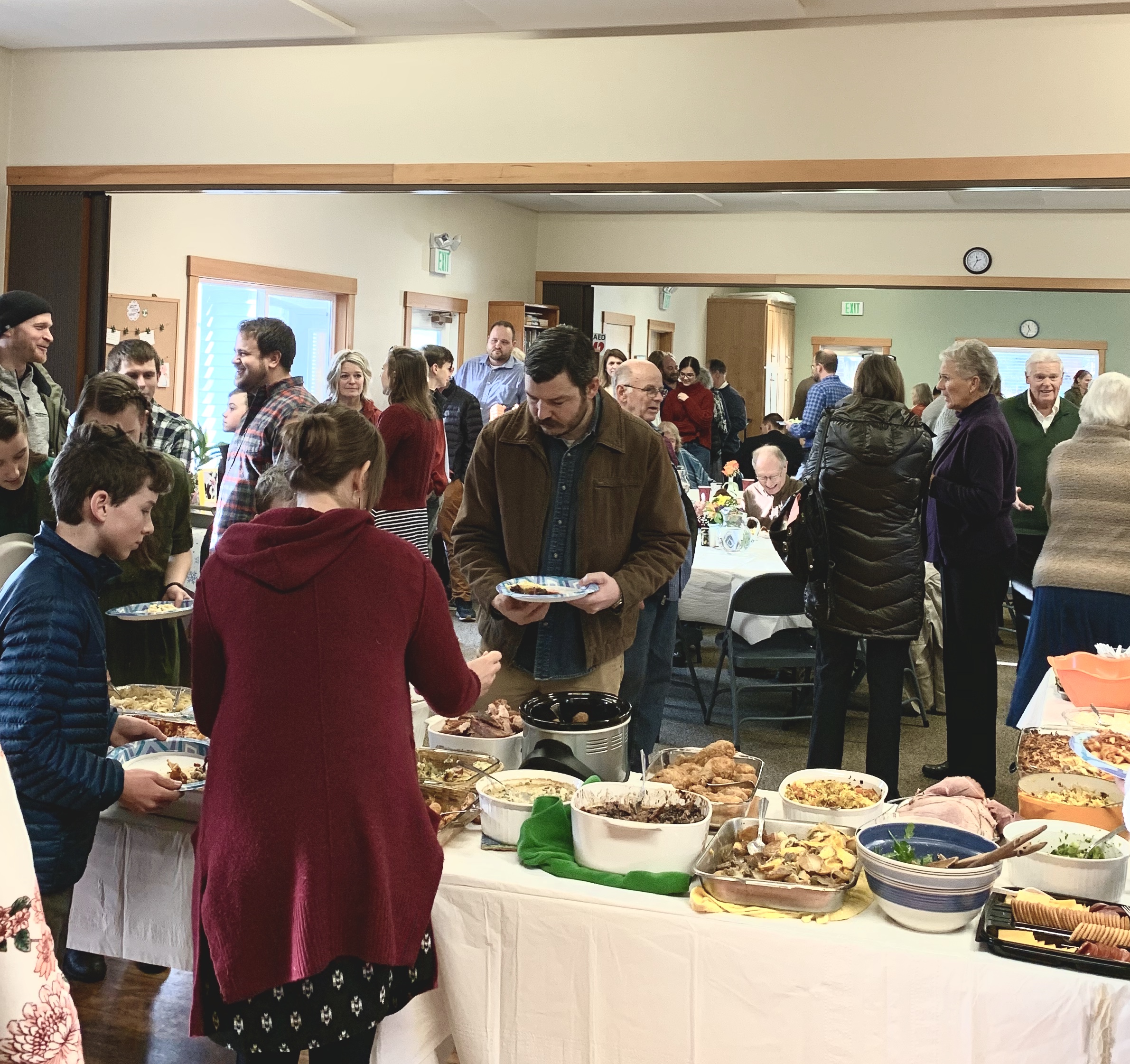
Macaroni and cheese, with drizzled bread cubes on top Beef stew chuck-a-block with vegetables and potatoes Buckets of fried chicken Greenbean casserole Meat loaf topped with ketchup Tossed Caesar salad Tator tots drizzled with cheese Jello and ham buns
Home made bread, steaming, soft Whole chocolate milk And ice cream sundaes
Nothing expensive Or extravagant Or requiring going into debt to pay.
A fitting ending to a Sabbath of worship, After meeting for prayer and hymns and the Word; When times get tough, when we feel all alone, When we drown in discouragement.
This is time for connecting congregation and community, For huddling against life’s storm Forgetting our worries for a time And sharing God’s comfort food, all together, misfits that we are, Smiling to know — we all badly needed this.
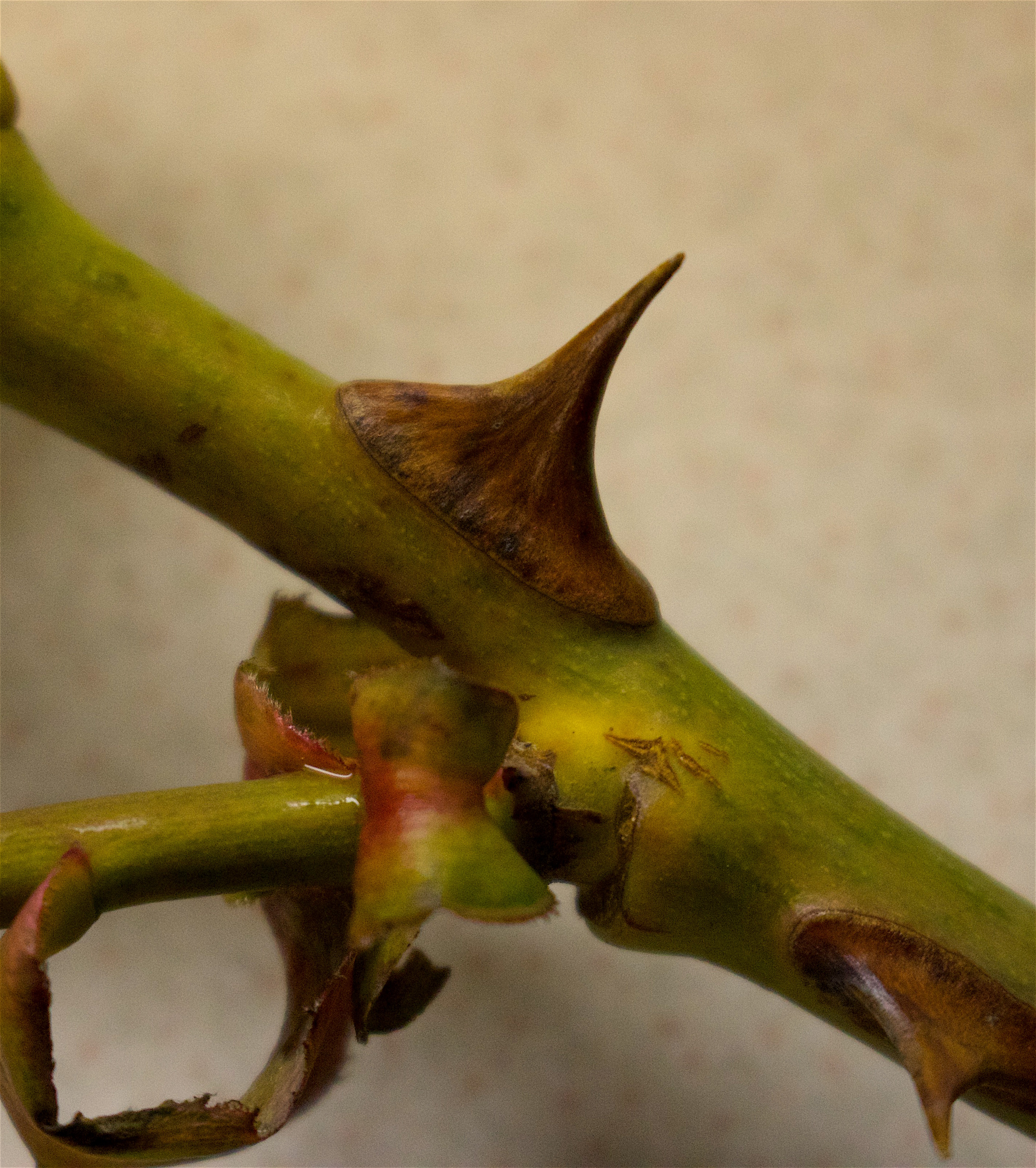
To pull the metal splinter from my palm my father recited a story in a low voice. I watched his lovely face and not the blade. Before the story ended, he’d removed the iron sliver I thought I’d die from.
I can’t remember the tale, but hear his voice still, a well of dark water, a prayer. And I recall his hands, two measures of tenderness he laid against my face, the flames of discipline he raised above my head.
Had you entered that afternoon you would have thought you saw a man planting something in a boy’s palm, a silver tear, a tiny flame. Had you followed that boy you would have arrived here, where I bend over my wife’s right hand.
Look how I shave her thumbnail down so carefully she feels no pain. Watch as I lift the splinter out. I was seven when my father took my hand like this, and I did not hold that shard between my fingers and think, Metal that will bury me, christen it Little Assassin, Ore Going Deep for My Heart. And I did not lift up my wound and cry, Death visited here! I did what a child does when he’s given something to keep. I kissed my father. ~Li-Young Lee, “The Gift”
Your father enters the poem early, storying past the metal splinter in your palm.
I set your paternity —and the poem— aside, to reach back for my mother and try to remember
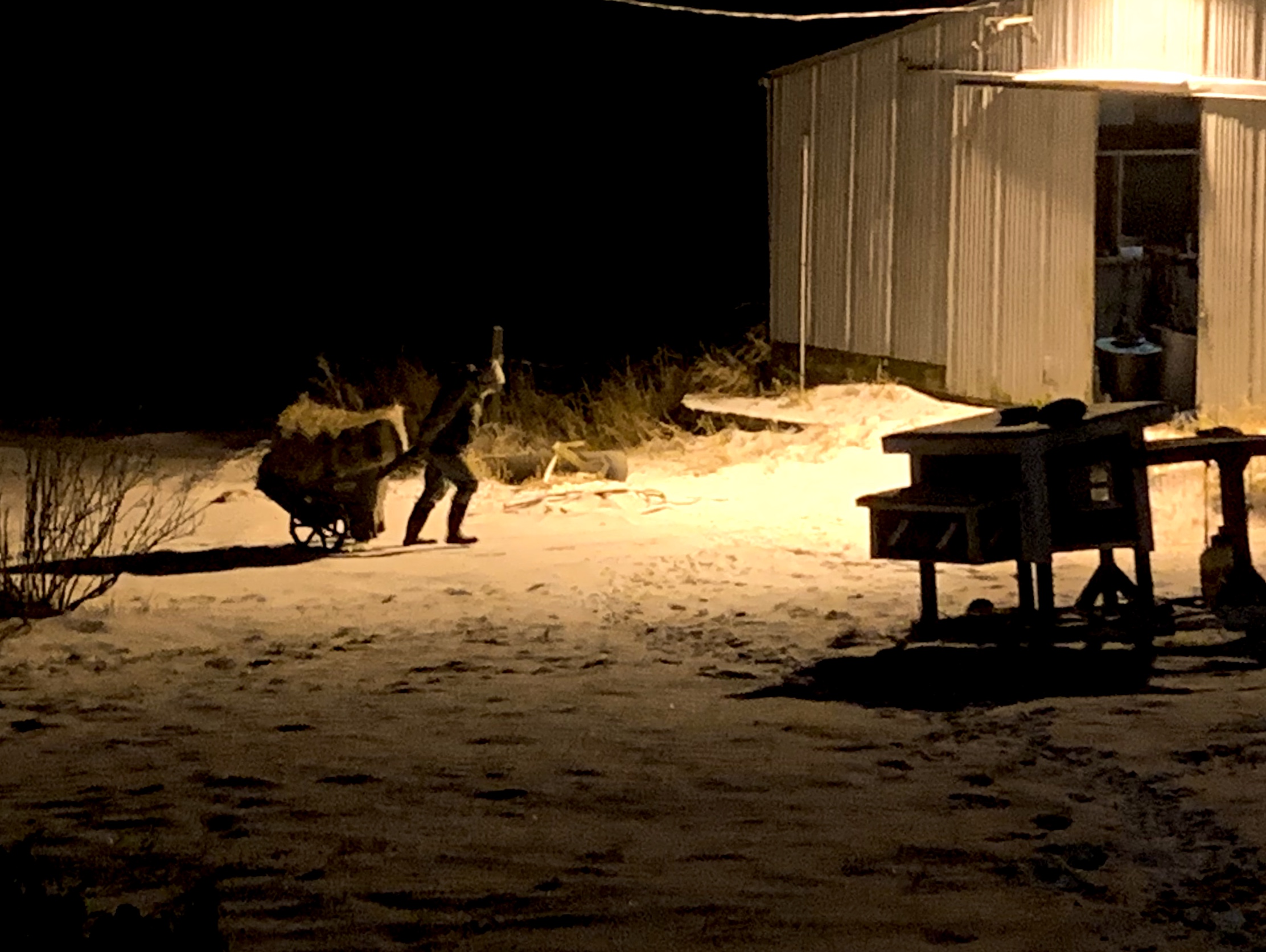
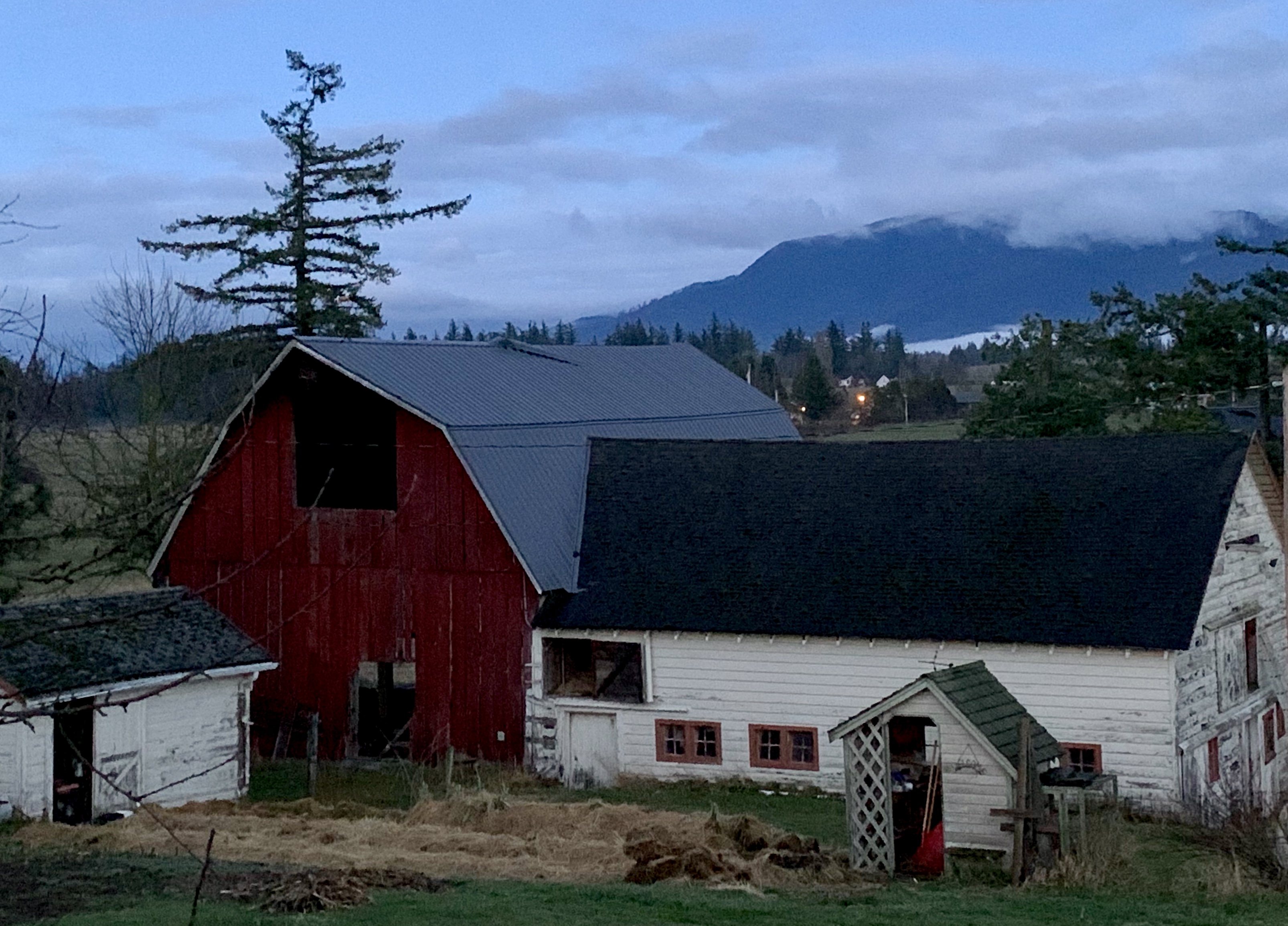
what kind of day it was when I played by the barn where, it is said, my own father raised pigs (I do not remember this).
And what kind of day it was when I found the barn, door open, silent
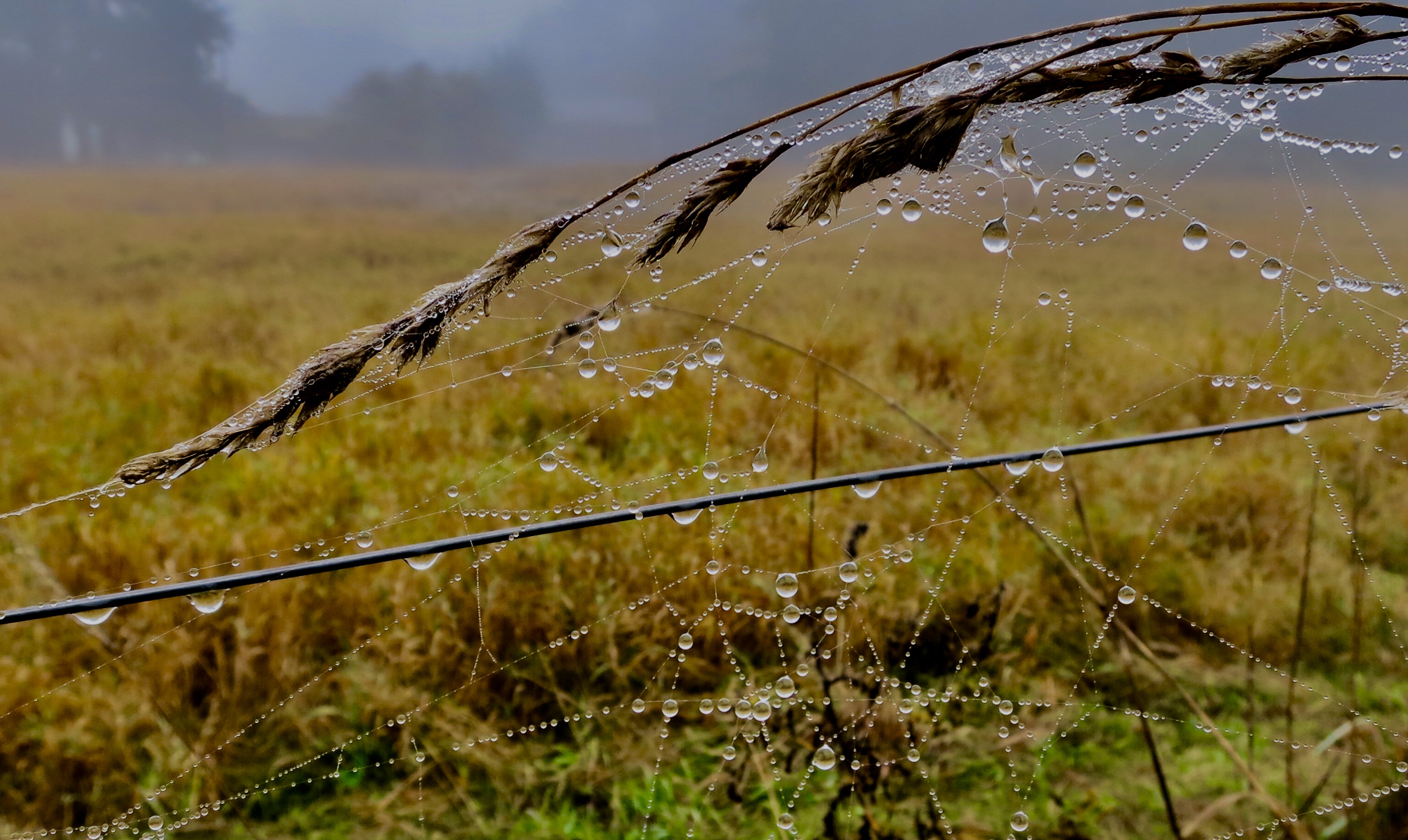
and tried to pluck silver lines from silver webs long-left, then tendered my hand on noiseless silvered wood
until my palms were rife with the evidence of my trying,
and mother spent the night with a silver tweezer, counting as she went… ninety-eight ninety-nine one hundred—
a ritual for my tears.
And now I wonder, Li-Young—did you cry, and who was in the story, and how many times have you counted it since, to forget, and to remember. ~L. L. Barkat, “Li-Young Lee’s Splinter” from Love, Etc.
I did, without ever wanting to, remove my child’s splinter, lance a boil, immobilize a broken arm, pull together sliced skin, clean many dirty wounds. It felt like I was always crossing the line between mommy and doctor. But someone had to do it, and a four hour wait in the emergency room didn’t seem warranted.
My own child learned to cope with hurt made worse by someone they trusted to be comforter. I dealt with inflicting pain, temporary though it may be, to flesh that arose from my own flesh. It hurt as much as if it were my own wound needing cleansing, not theirs.
Our wounds are His – He is constantly feeling our pain as He performs healing surgeries in our lives, not because He wants to but because He must, to save us from our own destruction.
Too often we yell and kick and protest in our distress, wanting it our way, not His way, making it all that much more difficult for both of us.
If only we can come to acknowledge His intervention is our salvage: our tears to flow in relief, not anguish, we cling to His protection rather than pushing Him away, we kiss Him in gratitude as we are restored again and yet again.
It was like a church to me. I entered it on soft foot, Breath held like a cap in the hand. It was quiet. What God there was made himself felt, Not listened to, in clean colours That brought a moistening of the eye, In a movement of the wind over grass.
There were no prayers said. But stillness Of the heart’s passions – that was praise Enough; and the mind’s cession Of its kingdom. I walked on, Simple and poor, while the air crumbled And broke on me generously as bread. ~R.S. Thomas “The Moor”
There are mornings surrounded by His stilling presence~ when God is felt, neither seen nor heard, overtaking me within each breath taken, following the path of each glistening tear, the air crumbling down around me, its rich manna becoming the ground reaching to meet my foot with each step I take.
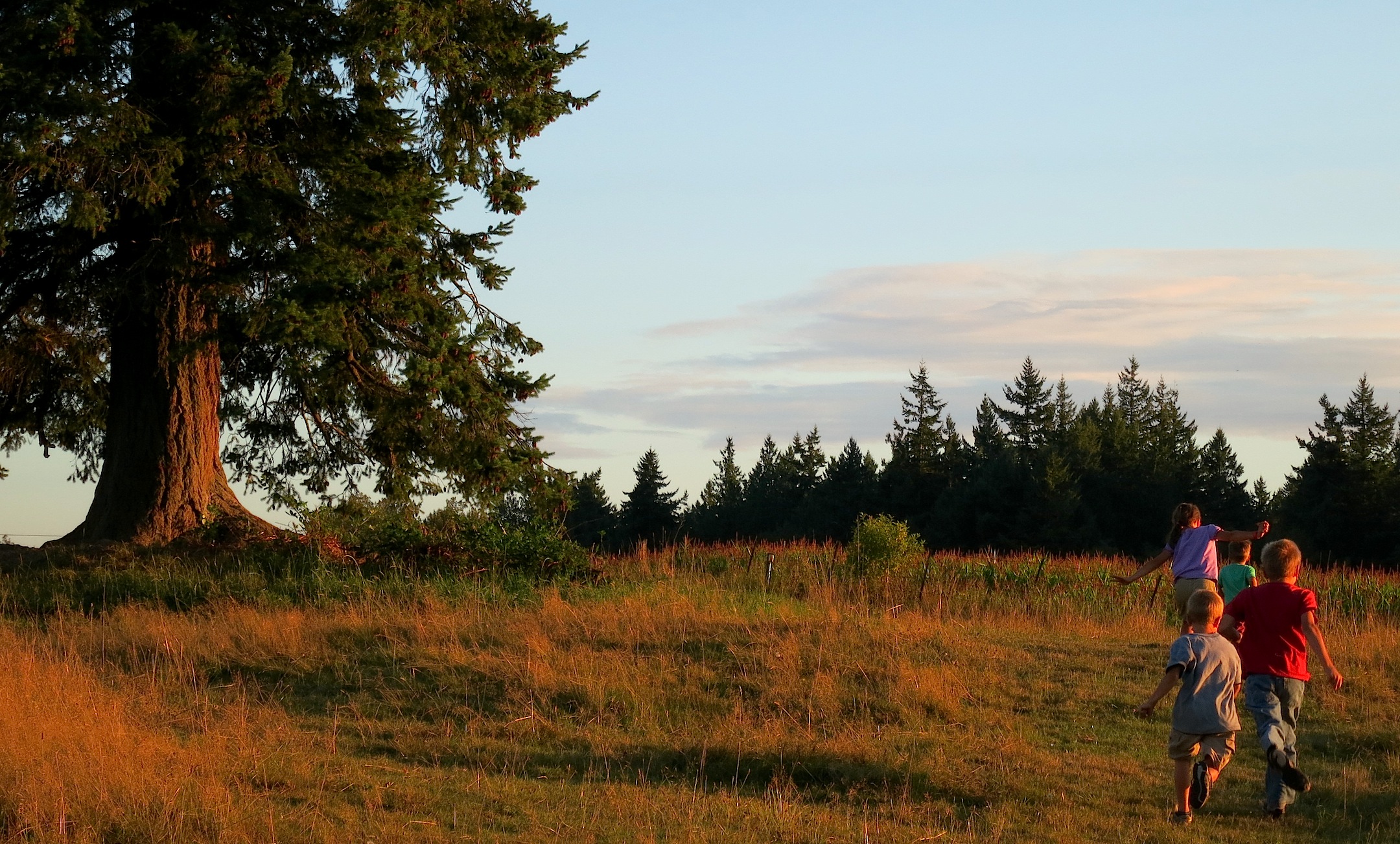
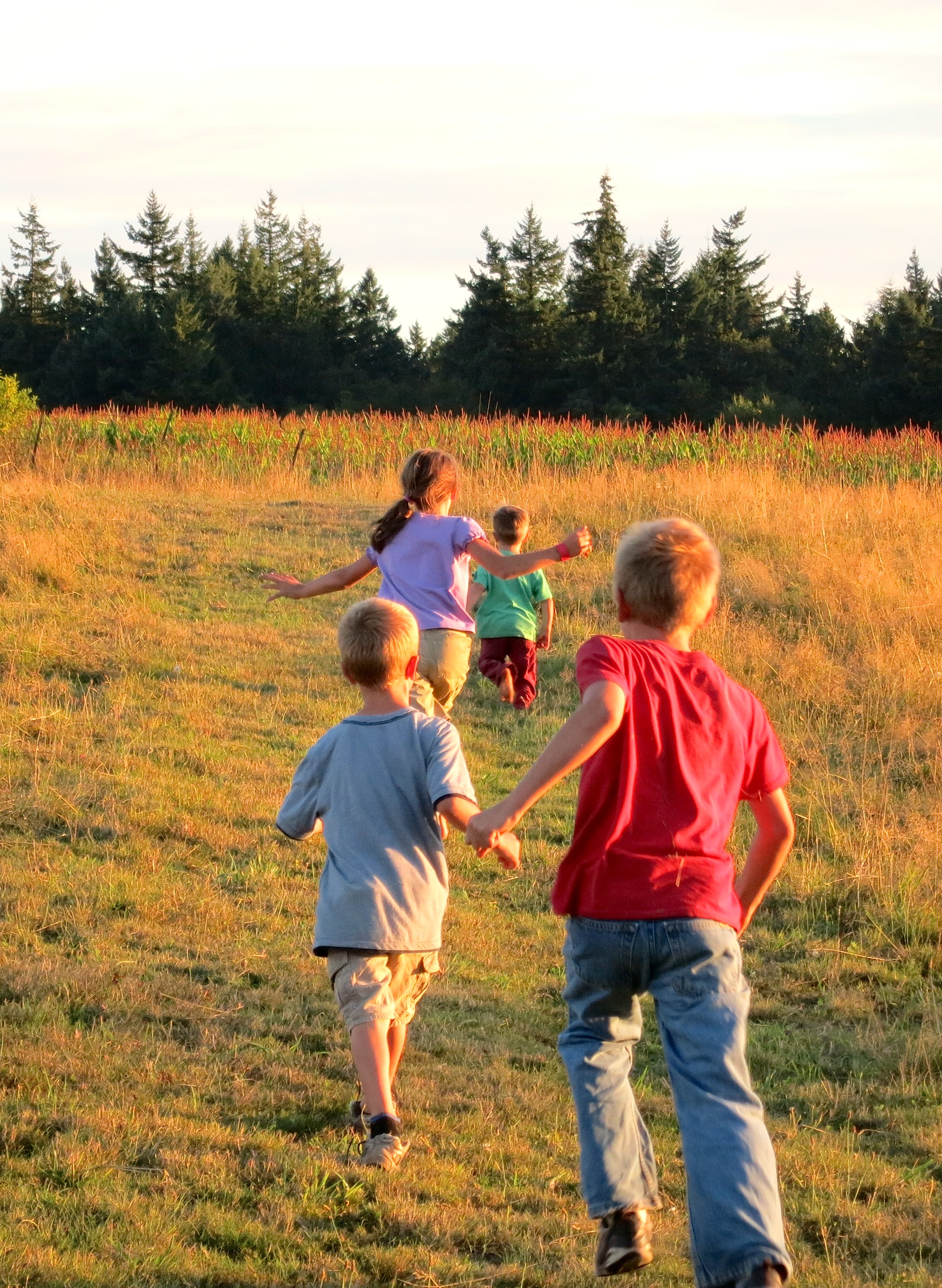
What courage we had, our infantry stretched across the yard, no shields, no swords, no cavalry assembled behind us calming their nervous mounts. We had the strength of our arms, the speed of our legs. We had our friends and our convictions. Opposite us, the undulating line of children drew suddenly straight. It was early on a summer day but the larks fell silent. A high voice invoked the name Red Rover; we could not say who said it first. But righteousness passed through us like current through a wire. Or like an inaugural sip of wine burning in our chests, something father gave us over our mother’s earnest protestations. ~Connie Wanek, “Red Rover” from Rival Gardens
… if you ran, time ran. You yelled and screamed and raced and rolled and tumbled and all of a sudden the sun was gone and the whistle was blowing and you were on your long way home to supper. When you weren’t looking, the sun got around behind you! The only way to keep things slow was to watch everything and do nothing! You could stretch a day to three days, sure, just by watching! ~Ray Bradbury from Dandelion Wine
I was a kid born without the necessary courage to enjoy playground games and sports – I was always chosen last as I didn’t have good coordination, I wasn’t fast or strong and I wasn’t physically aggressive. Games like dodge ball and Red Rover were too intimidating as I inevitably got battered and bruised by the other kids.
In Red Rover, that impenetrable line-up of kids found a weak link in me. I could feel the electricity like a current through the linked arms in the line, until it came to me. I became the off switch. Kids knew to choose my arm to break through because I tended to let go rather than have my arm bashed and bruised by some big kid running straight into it.
How have my years of work felt similar? Now well into my seventh decade, I can recall a few times when I’ve chosen to “let go” rather than get bruised. I’ve tried to be strong enough to stand up to the battering that comes with leadership positions and taking unpopular stands. It takes its toll and I regret I’m not strong enough at times. However, there is relief in no longer being connected to the electric current of these times.
What I always liked best about the playground was to simply run and jump and holler and hoot from the joy of being alive, or to just stand and watch what was going on around me without having to be in the center of things. Now decades later, I find myself again standing apart, just watching, grateful I’m no longer part of the line up about to get bashed.
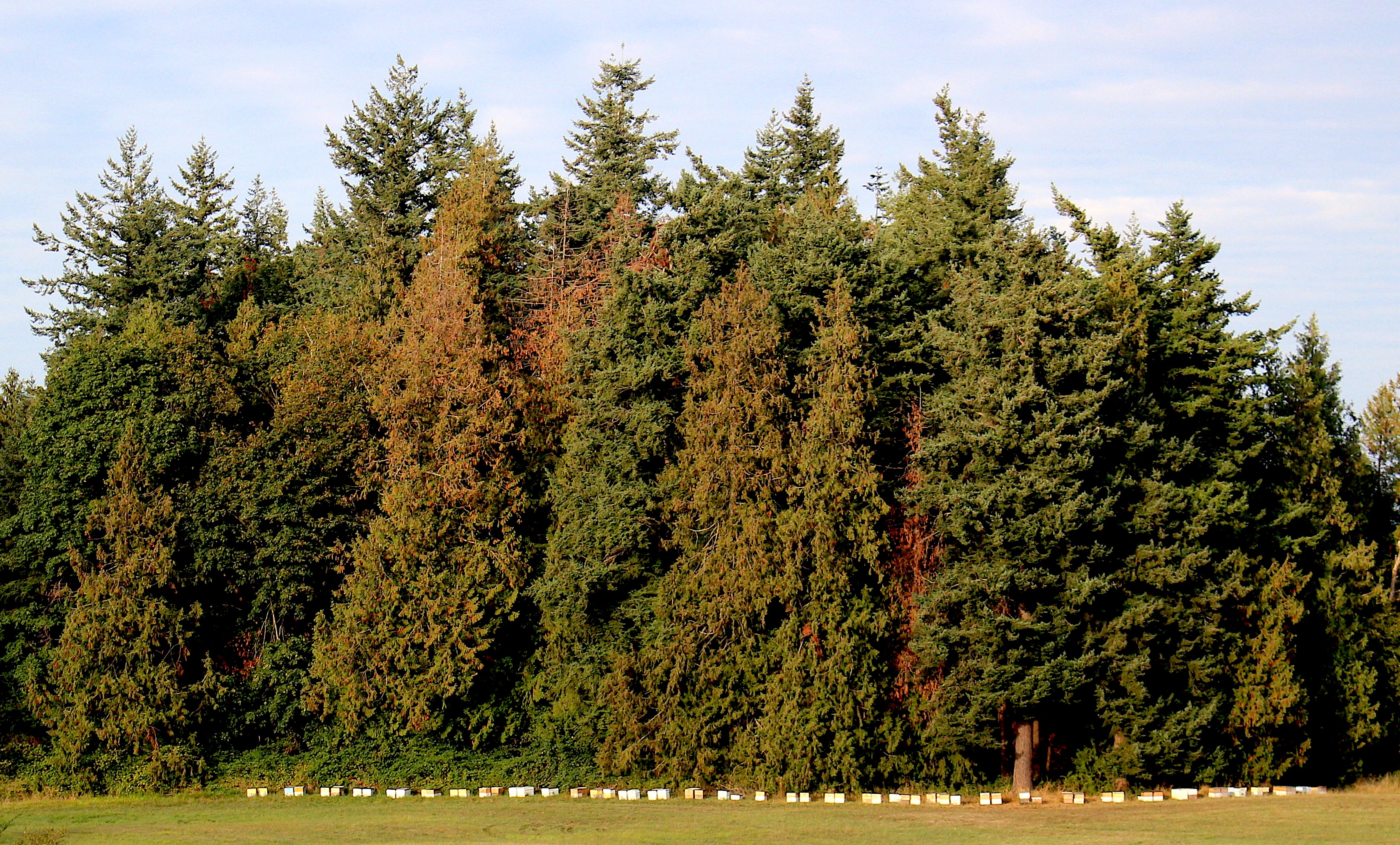
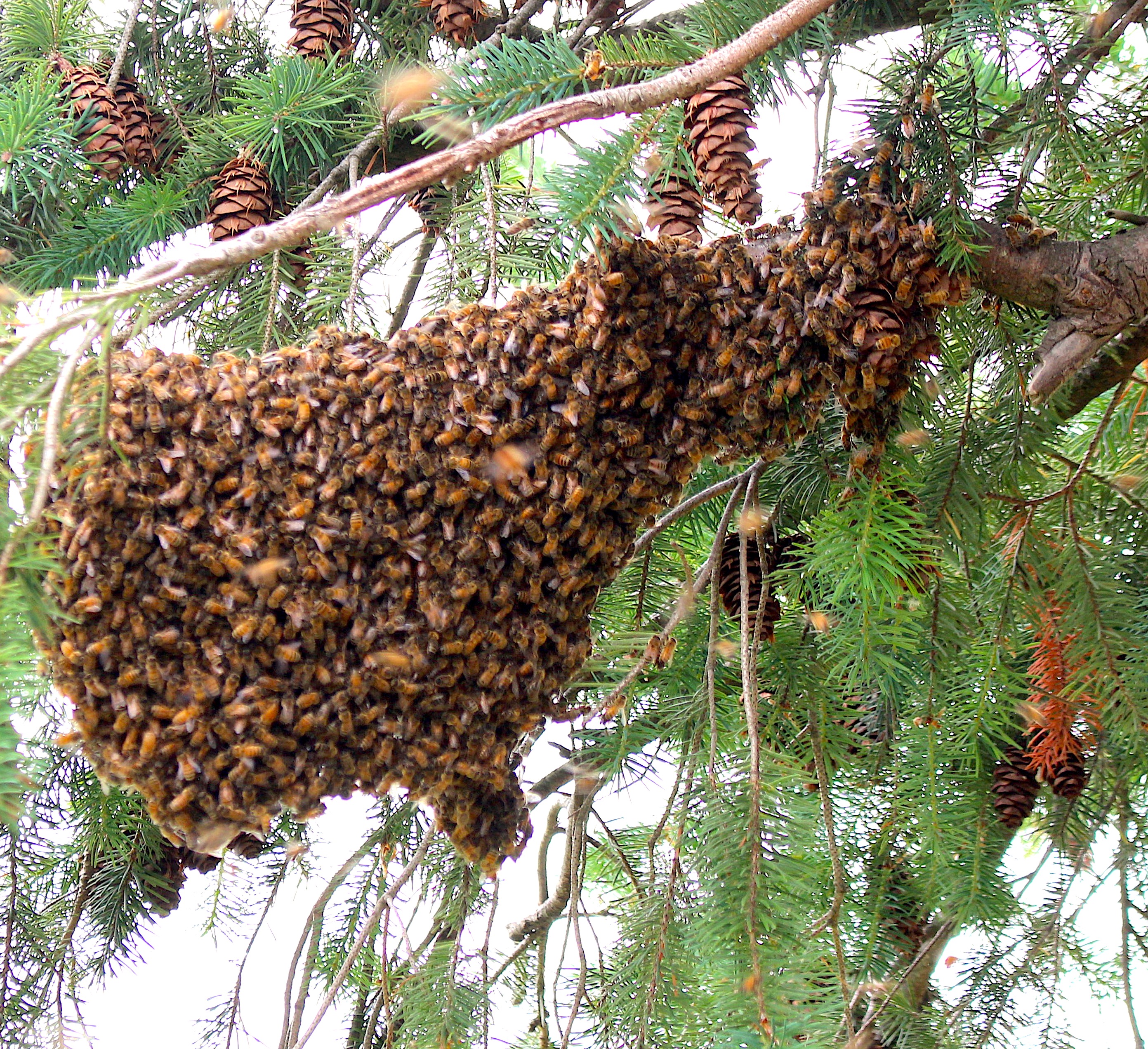
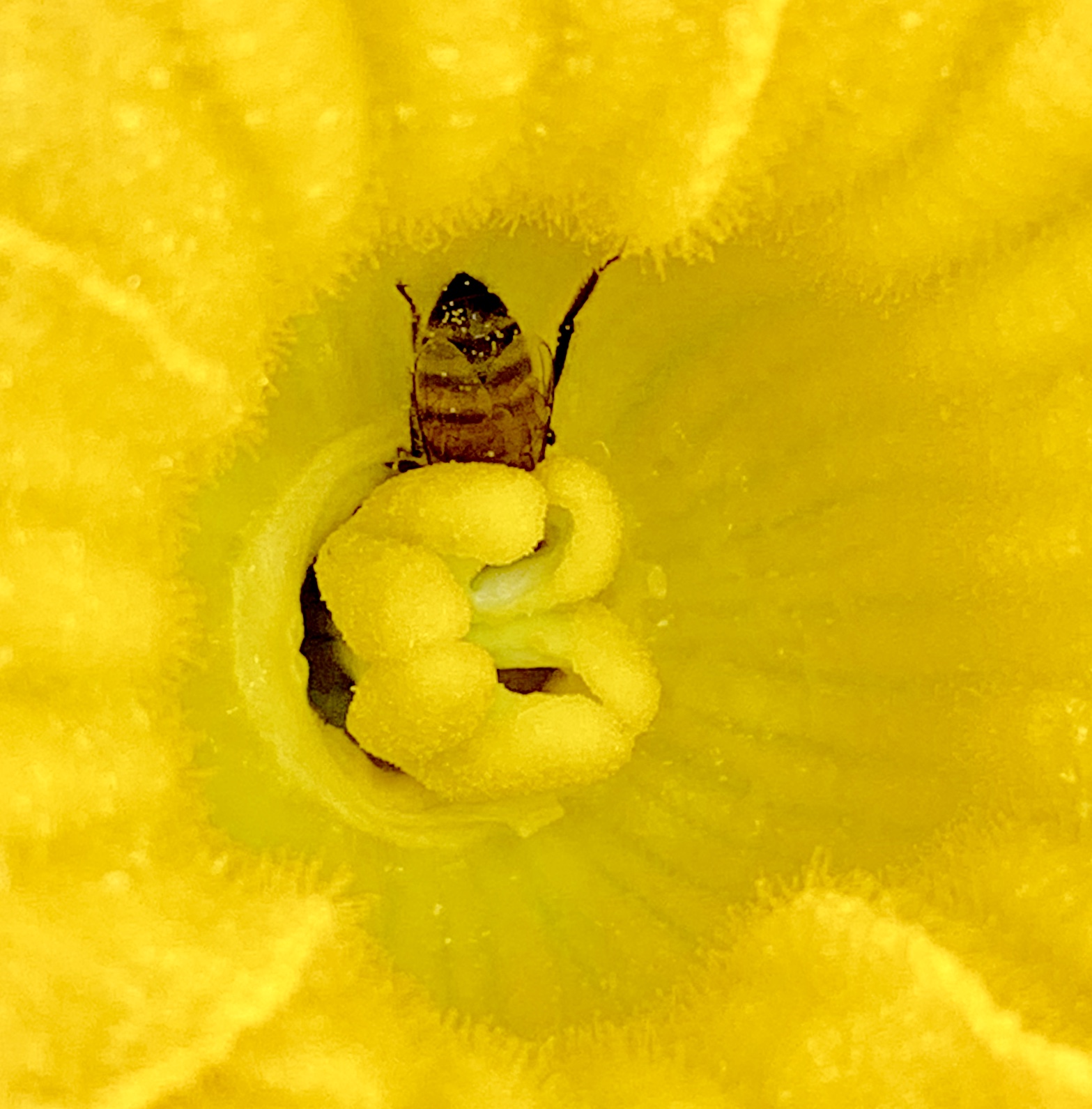
He calls the honeybees his girls although he tells me they’re ungendered workers who never produce offspring. Some hour drops, the bees shut off. In the long, cool slant of sun, spent flowers fold into cups. He asks me if I’ve ever seen a Solitary Bee where it sleeps. I say I’ve not. The nearest bud’s a long-throated peach hollyhock. He cradles it in his palm, holds it up so I spy the intimacy of the sleeping bee. Little life safe in a petal, little girl, your few furious buzzings as you stir stay with me all winter, remind me of my work undone. ~Heid E. Erdrich, from “Intimate Detail” from The Mother’s Tongue
The barn’s brown gable, the vine by the door,— Nothing changed but the hives of bees. Before them, under the garden wall, Forward and back, Went drearily singing the chore-girl small, Draping each hive with a shred of black. Trembling, I listened: the summer sun Had the chill of snow; For I knew she was telling the bees of one Gone on the journey we all must go! ~John Greenleaf Whittier from “Telling the Bees”
An old Celtic tradition necessitates sharing any news from the household with the farm’s bee hives, whether cheery like a new birth or a wedding celebration or sad like a family death. This ensures the hives’ well-being and continued connection to home and community – the bees are kept in the loop, so to speak, so they stay at home, not swarm and move on to a more hospitable place.
Each little life safe at home, each little life with work undone.
Good news seems always easy to share; we tend to keep bad news to ourselves so this tradition helps remind us that what affects one of us, affects us all.
These days, with instant news at our fingertips at any moment, bad news is constantly bombarding us. Like the bees in the hives of the field, we want to flee from it and find a more hospitable home.
I hope the Beekeeper, our Creator, comes personally to each of us to say: “Here is what has happened. All will be well, dear one. We will navigate your little life together.”
The time is ripe for looking back over the day, the week, the year, and trying to figure out where we have come from and where we are going to, for sifting through the things we have done and the things we have left undone for a clue to who we are and who, for better or worse, we are becoming. We cling to the present out of wariness of the past. But there is a deeper need yet, I think, and that is the need—not all the time, surely, but from time to time—to enter that still room within us all where the past lives on as a part of the present, where the dead are alive again, where we are most alive ourselves to turnings and to where our journeys have brought us. The name of the room is Remember—the room where with patience, with charity, with quietness of heart, we remember consciously to remember the lives we have lived.” ~Frederick Buechner from A Room Called Remember
He was a big man, says the size of his shoes on a pile of broken dishes by the house; a tall man too, says the length of the bed in an upstairs room; and a good, God-fearing man, says the Bible with a broken back on the floor below the window, dusty with sun; but not a man for farming, say the fields cluttered with boulders and the leaky barn.
A woman lived with him, says the bedroom wall papered with lilacs and the kitchen shelves covered with oilcloth, and they had a child, says the sandbox made from a tractor tire. Money was scarce, say the jars of plum preserves and canned tomatoes sealed in the cellar hole. And the winters cold, say the rags in the window frames. It was lonely here, says the narrow country road.
Something went wrong, says the empty house in the weed-choked yard. Stones in the fields say he was not a farmer; the still-sealed jars in the cellar say she left in a nervous haste. And the child? Its toys are strewn in the yard like branches after a storm—a rubber cow, a rusty tractor with a broken plow, a doll in overalls. Something went wrong, they say. ~Ted Kooser, “Abandoned Farmhouse” from Sure Signs: New and Selected Poems.
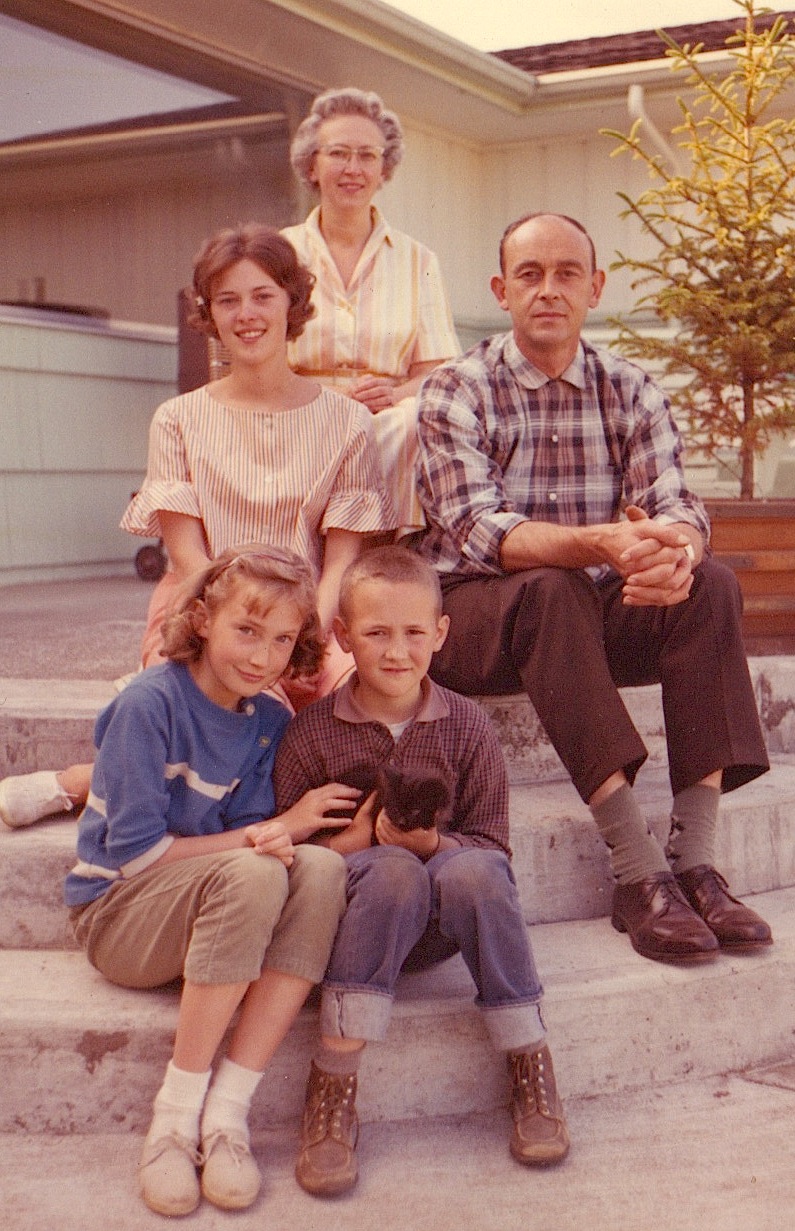
In 1959, when I was five years old, my father left his high school agriculture teaching position for a new supervisor position with the state. I didn’t understand at the time the reasons for his leaving his job after 13 years.
Our family moved from a large 3 story farm house in a rural community to a 1950’s newer rambler style home just outside the city limits of the state capitol. It was a big adjustment to move to a much smaller house without a basement or upper story, no garage, and no large haybarn nor chicken coop. It meant most things we owned didn’t make the move with us.
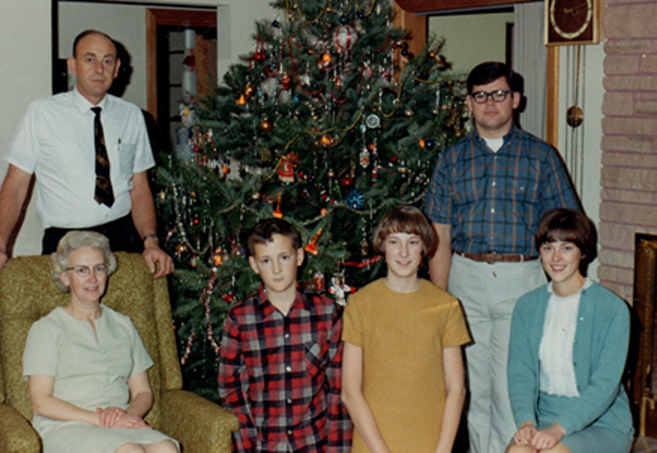
The rambler had two side by side mirror image rooms as the primary central living space between the kitchen on one side and the hallway to the bedrooms on the other. The living room could only be entered through the front door and the family room was accessed through the back door with a shared sandstone hearth in the center, containing a fireplace in each room. The only opening between the rooms had a folding door shut most of the year. In December, the door was opened to accommodate a Christmas tree, so it sat partially in the living room and depending on its generous width, spilled over into the family room. That way it was visible from both rooms, and didn’t take up too much floor space.
The living room, because it contained the only carpeting in the house, and our “best” furniture, was strictly off-limits. In order to keep our two matching sectional knobby gray fabric sofas, a green upholstered chair and gold crushed velvet covered love seat in pristine condition, the room was to be avoided unless we had company. The carpet was never to develop a traffic pattern, there would be no food, beverage, or pet ever allowed in that room, and the front door was not to be used unless a visitor arrived. The hearth never saw a fire lit on that side because of the potential of messy ashes or smoke smell. This was not a room for laughter, arguments or games and certainly not for toys. The chiming clock next to the hearth, wound with weighted cones on the end of chains, called out the hours without an audience.
One week before Christmas, a tree was chosen to fit in the space where it could overflow into the family room. I particularly enjoyed decorating the “family room” side of the tree, using all my favorite ornaments that were less likely to break if they fell on the linoleum floor on that side of the door.
It was as if the Christmas tree became divided, with a “formal” side in the living room and a “real life” face on the other side where the living (and hurting) was actually taking place.
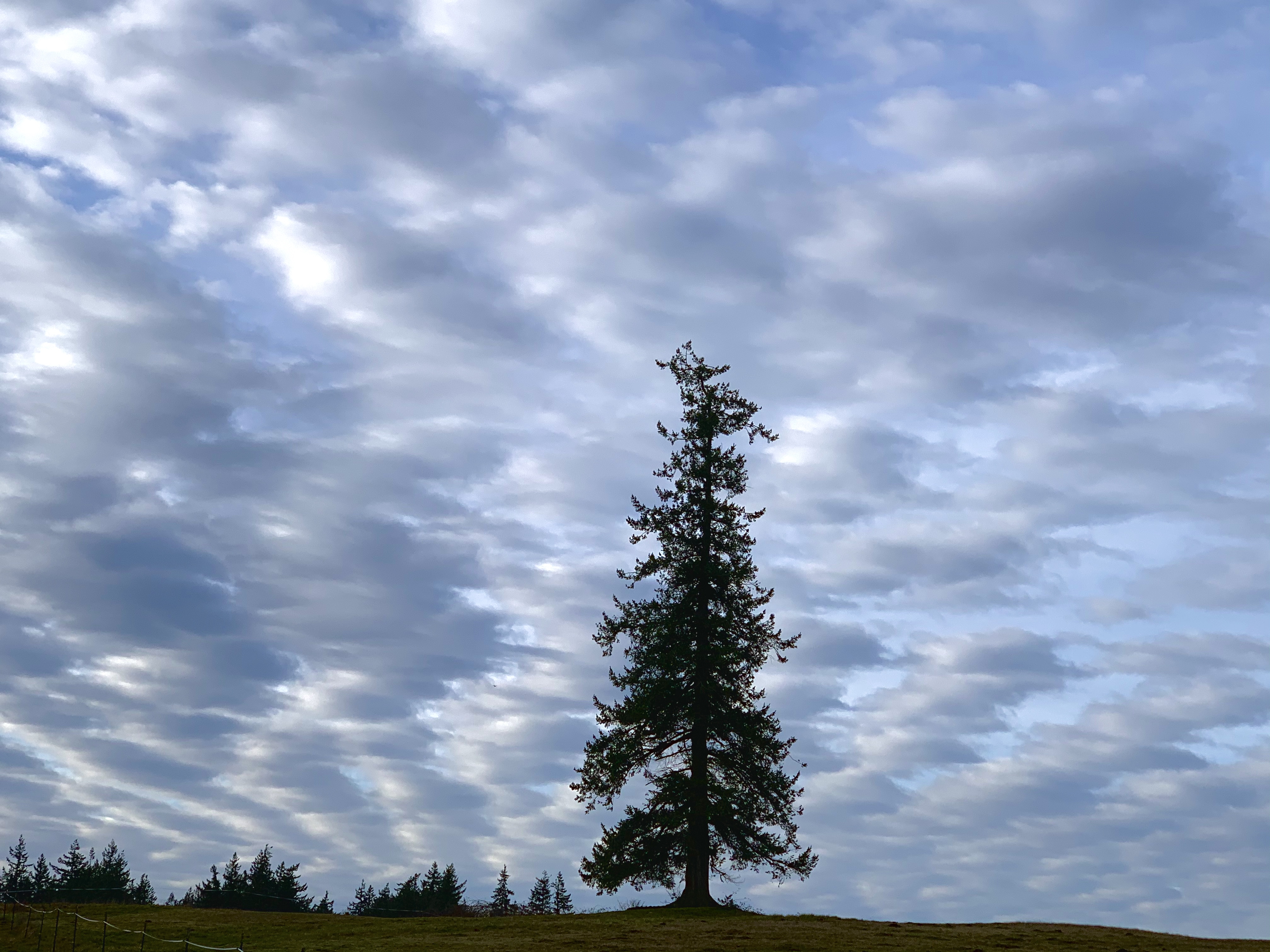
The tree straddled more than just two rooms. Every year that tree’s branches reached out to shelter a family that was slowly, almost imperceptibly, falling apart, like the fir needles dropping to the floor to be swept away. Something was going wrong.
Each year since, the Christmas tree bearing those old ornaments from my childhood reminds me of a still room of mixed memories within me. I am no longer wary of the past, and when I sweep up the fir needles that inevitably drop, I no longer weep.
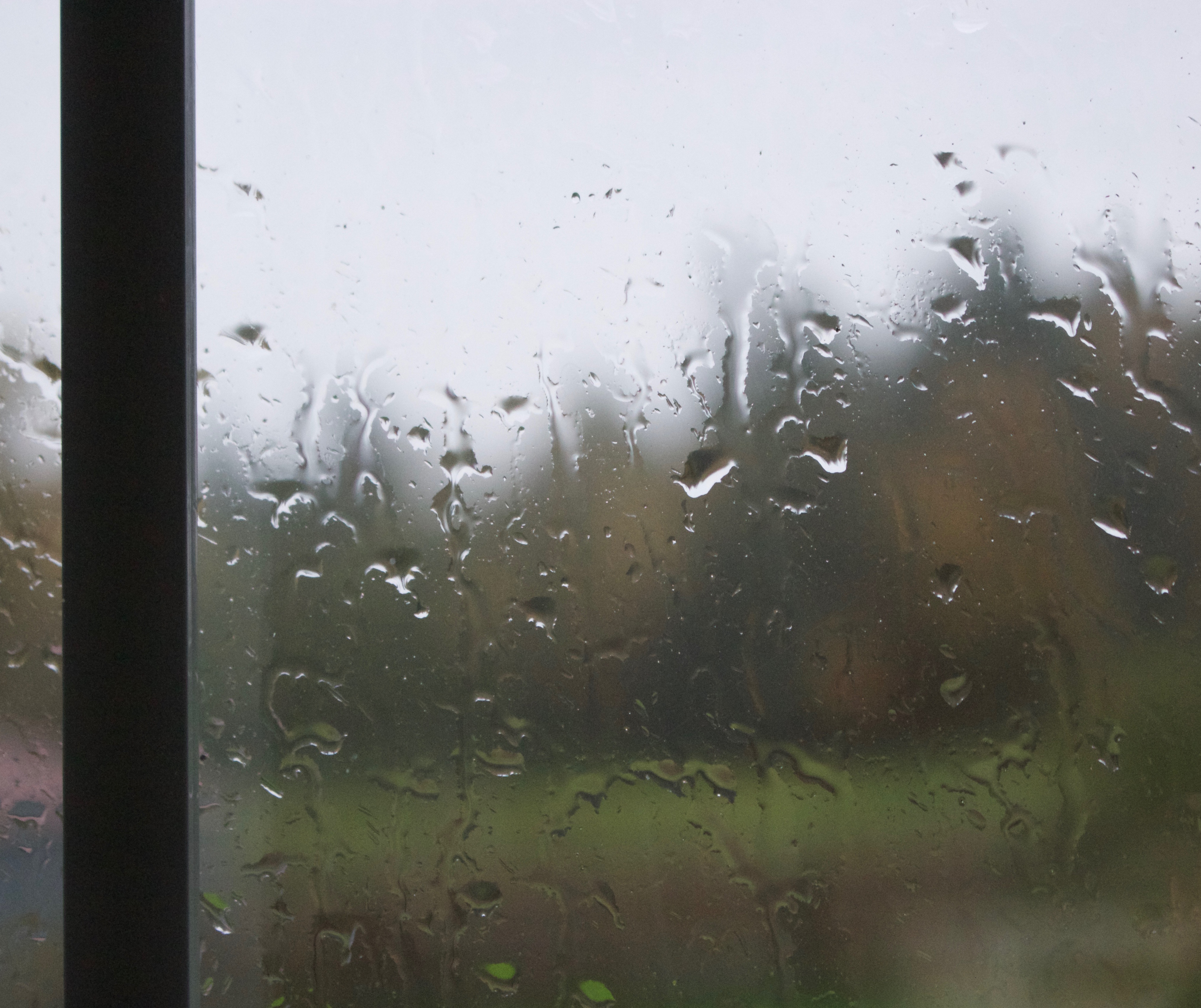
I like these cold, gray winter days. Days like these let you savor a bad mood. ~Bill Wattersonfrom “Calvin and Hobbes”
The wind is keen coming over the ice; it carries the sound of breaking glass. And the sun, bright but not warm, has gone behind the hill. Chill, or the fear of chill, sends me hurrying home. ~Jane Kenyon from “Walking Alone in Late Winter”
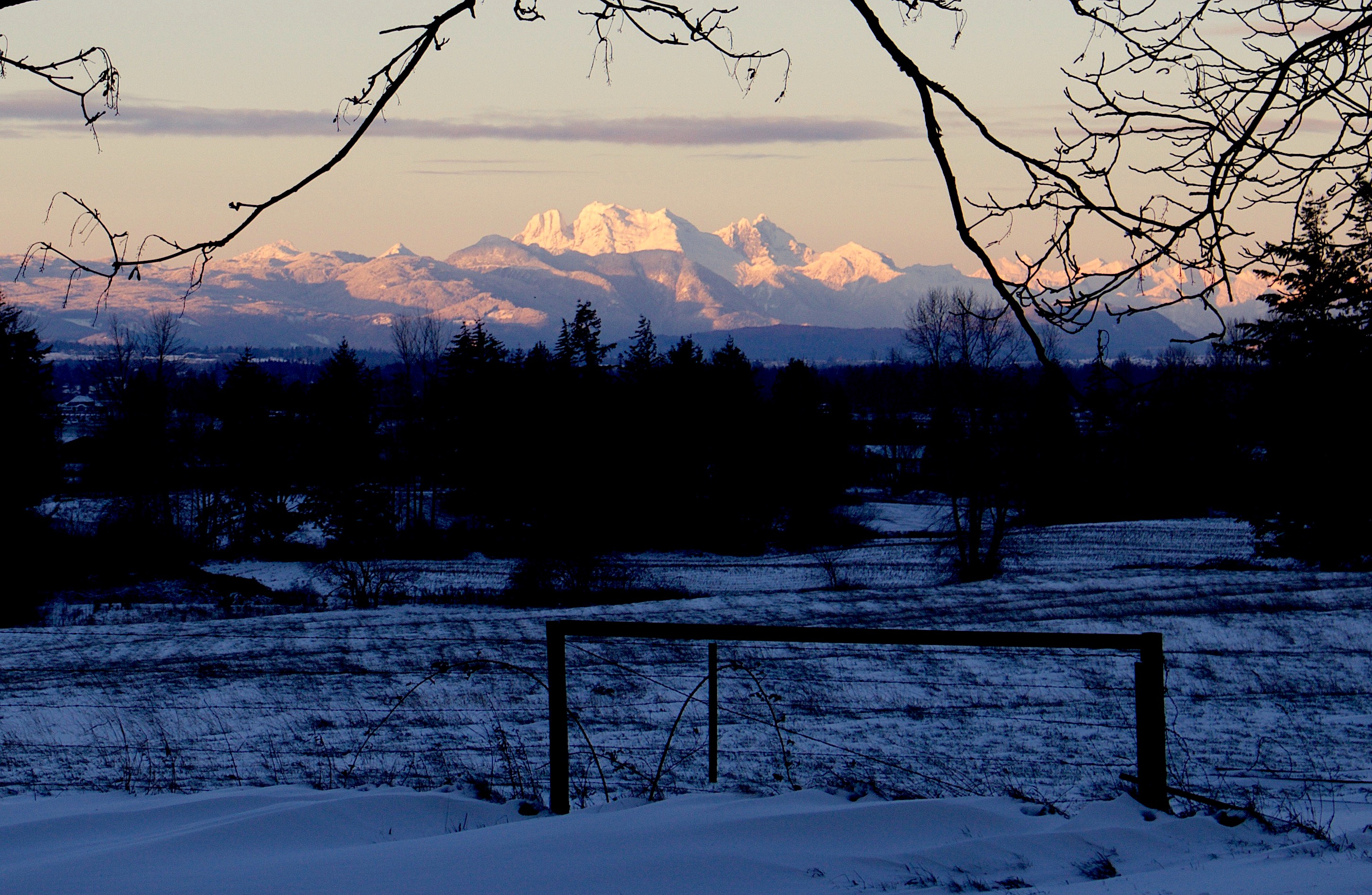
Roused by faint glow at midnight peering between slats of window blinds closed tight to a chill wind-
Bedroom becomes suffused in ethereal light from a moonless sky~ a million stars fall silent as
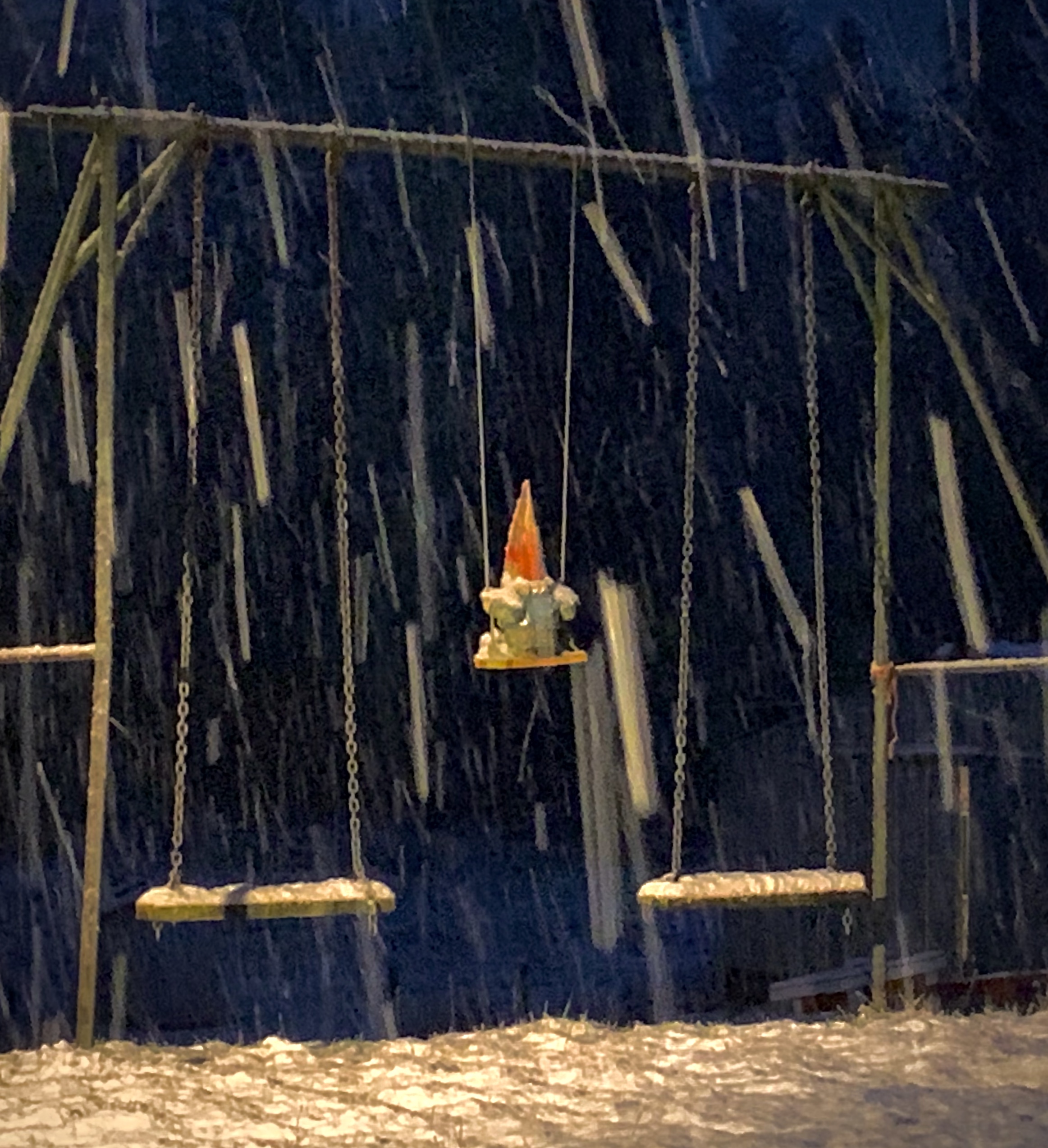
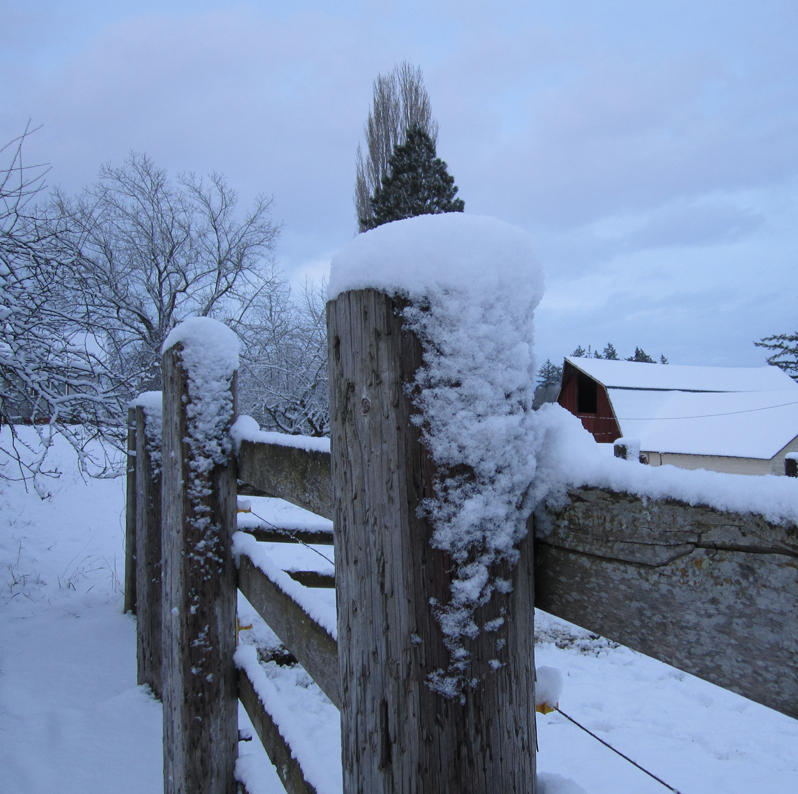
Snow light covers all, settling gently while tucking the downy corners of the snowflake comforter
of heaven, plumping the pillows, cushioning the landscape, lightening and illuminating a fearfully chilled and grumpy heart.
Outside the house the wind is howling and the trees are creaking horribly. This is an old story with its old beginning, as I lay me down to sleep. But when I wake up, sunlight has taken over the room. You have already made the coffee and the radio brings us music from a confident age. In the paper bad news is set in distant places. Whatever was bound to happen in my story did not happen. But I know there are rules that cannot be broken. Perhaps a name was changed. A small mistake. Perhaps a woman I do not know is facing the day with the heavy heart that, by all rights, should have been mine. ~Lisel Mueller “In November”
It does not escape me~ (I wake every day knowing this) the earthquake happened somewhere else, a tornado leveled some other town, a plane full of ordinary people like me was shot out of the sky, a drunk driver destroyed a family, a fire left a forest and homes in ashes, a missing son’s body was found frozen in an avalanche, a devastating diagnosis darkens someone’s remaining days.
No mistake has been made, yet I wake knowing this part of my story has not yet visited me- the heavy heart that should have been mine awaits, still breaking, still bleeding, still beating still believing miracles can happen.
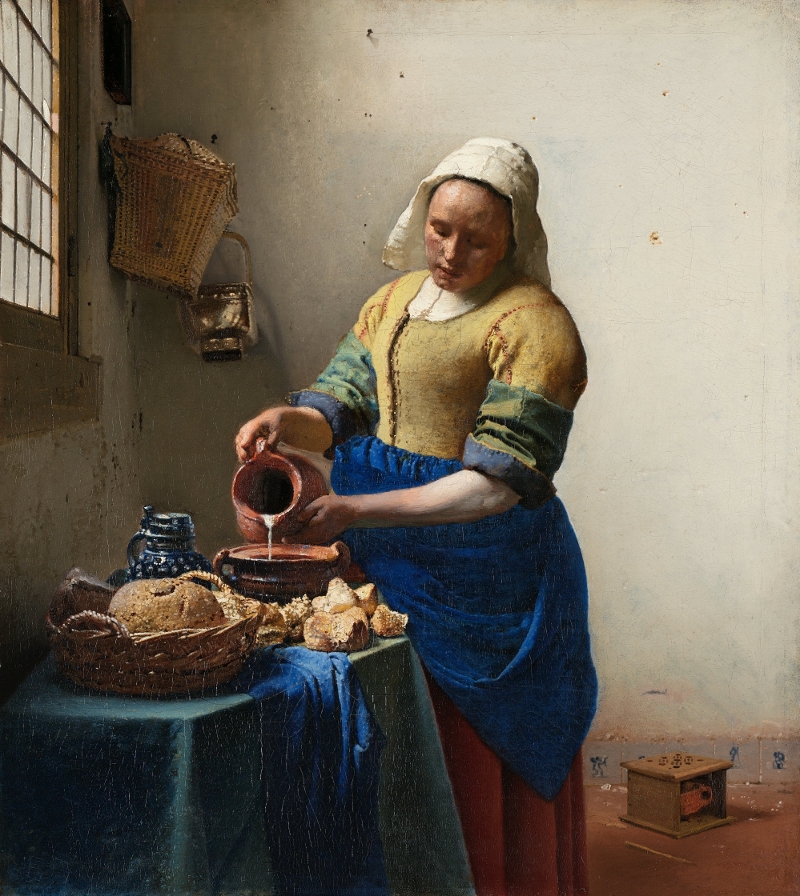
So long as that woman from the Rijksmuseum in painted quiet and concentration keeps pouring milk day after day from the pitcher to the bowl the World hasn’t earned the world’s end. ~Wisława Szymborska “Vermeer” trans. Clare Cavanagh & Stanisław Barańczak
I am struck by the expression of so much widespread hopelessness: the earth is being destroyed by humanity. Our continued existence is causing the world’s end.
This certainly isn’t the first time we’ve felt such desperation about our relationship with the world. It happened long ago when we chose to eat the fruit of the one forbidden tree and as a result were banned from the Garden. It happened with the plague when careless exposures wiped out entire villages. It happened when our wars left behind no living thing, leaving the ground itself cinders. It happened with the threat of imminent nuclear holocaust as missiles remain pointed at each other.
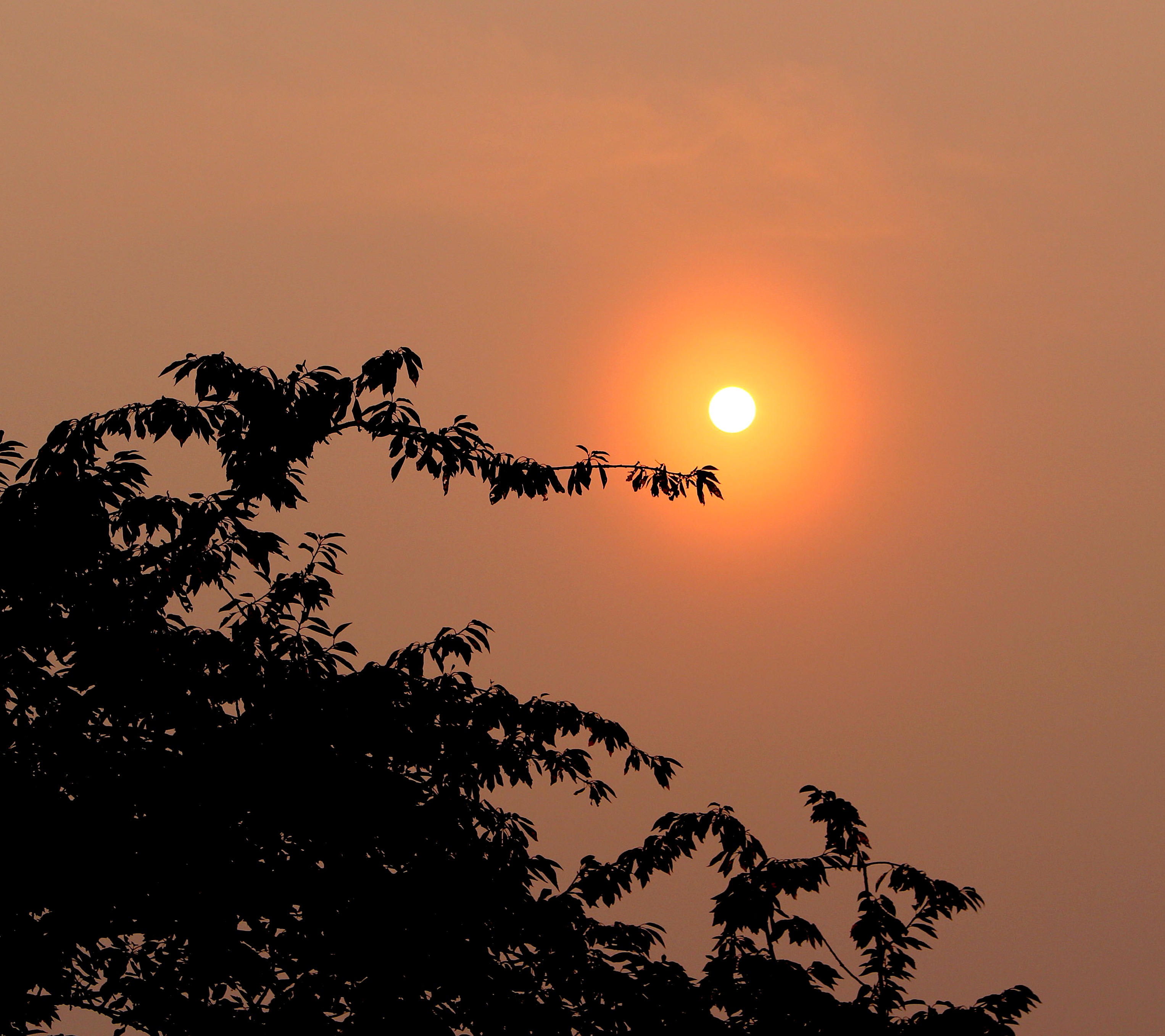
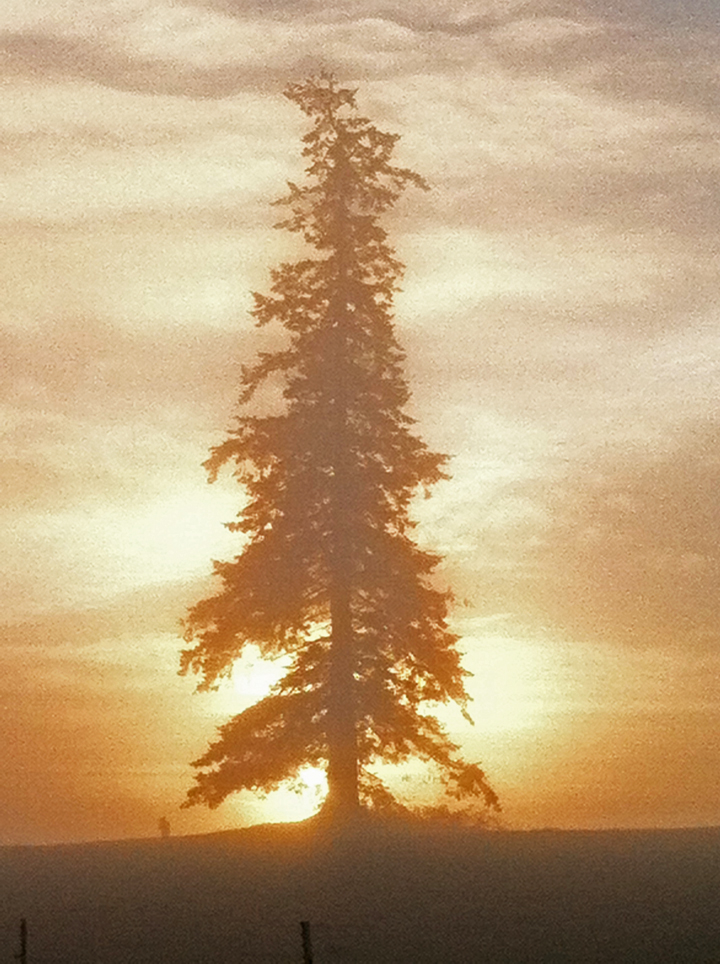
Still the sun rises and the sun sets, day after day. We don’t know for how much longer. Only God knows as God put us here with a plan.
So we continue to pour the milk as a sacrament: quietly, with great concentration, as that is the work we do, day after day. We still milk the cows and raise the wheat for bread and conceive children and raise them up as best we can. As long as we continue to do the work of the Garden, even while we dwell outside it, we are not causing the apocalypse. It is God’s world, after all, and all that is in it.





















 Barnstorming