Come behold the wondrous mystery In the dawning of the King, He the theme of heaven’s praises Robed in frail humanity. (First line of “Come Behold the Wondrous Mystery”)
Here is the mystery, the secret, one might almost say the cunning, of the deep love of God: that it is bound to draw on to itself the hatred and pain and shame and anger and bitterness and rejection of the world, but to draw all those things on to itself is precisely the means, chosen from all eternity by the generous, loving God, by which to rid his world of the evils which have resulted from human abuse of God-given freedom. ~N.T. Wright from The Crown and the Fire
Inundated by ongoing and overwhelmingly bad news of the world, blasted 24/7 from our screens, we seek respite anywhere we may find it. I have found I must cling to the mystery of God’s magnetism for my weaknesses and flaws.
He willingly pulls our sin onto Himself and out of us. Hatred and pain and shame and anger and bitterness disappear into the vortex of His love and beauty, the dusty corners of our hearts vacuumed spotless.
We are let in on a secret – His mystery revealed: His frail humanity is unsullied by absorbing the dirty messes of our lives. Instead, once we are safely within His mysterious divine depths, we are brought to glory by “grace unmeasured, love untold.”
This year’s Lenten theme for Barnstorming is a daily selection from songs and hymns about Christ’s profound sacrifice on our behalf.
If we remain silent about Him, the stones themselves will shout out and start to sing (Luke 19:40).
In His name, may we sing…
One-Time
Monthly
Yearly
Make a one-time or recurring donation to support daily Barnstorming posts
O God beyond all praising, we worship you today and sing the love amazing that songs cannot repay; for we can only wonder at every gift you send… ~Michael Perry
This is why I believe that God really has dived down into the bottom of creation, and has come up bringing the whole redeemed nature on His shoulders. The miracles that have already happened are, of course, as Scripture so often says, the first fruits of that cosmic summer which is presently coming on. Christ has risen, and so we shall rise.
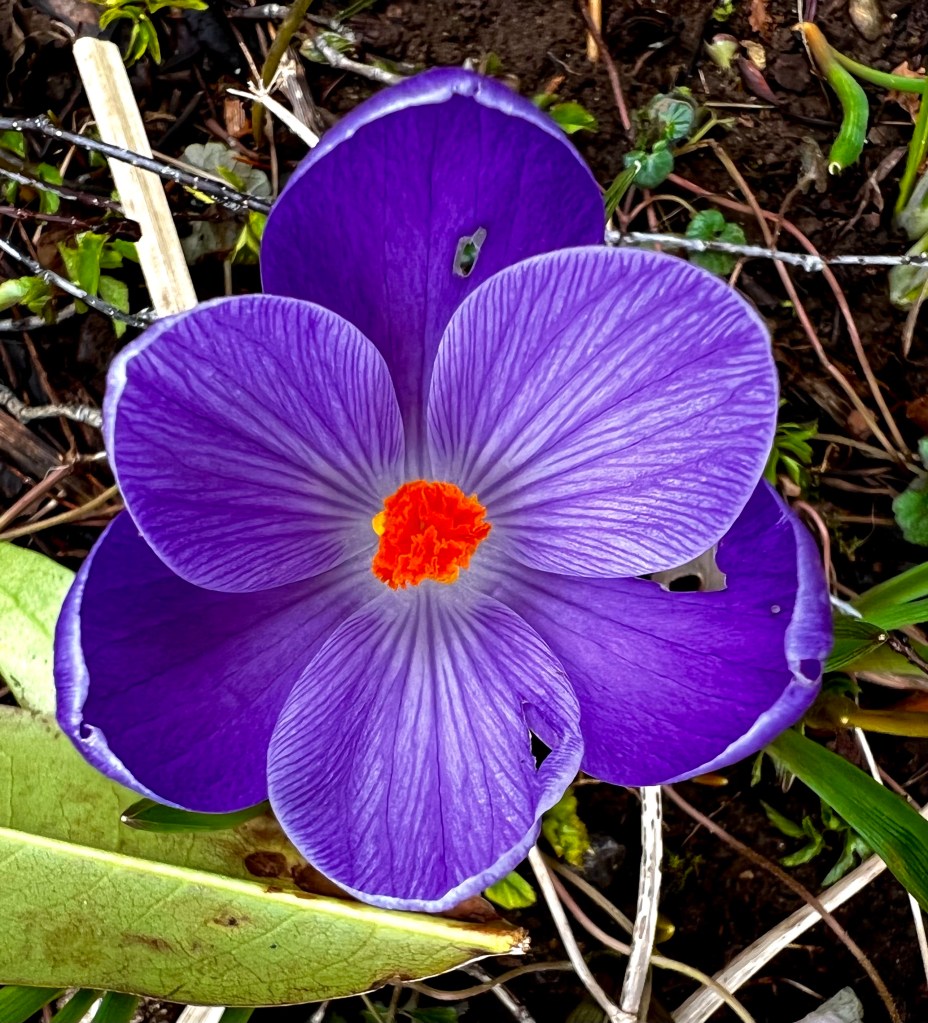
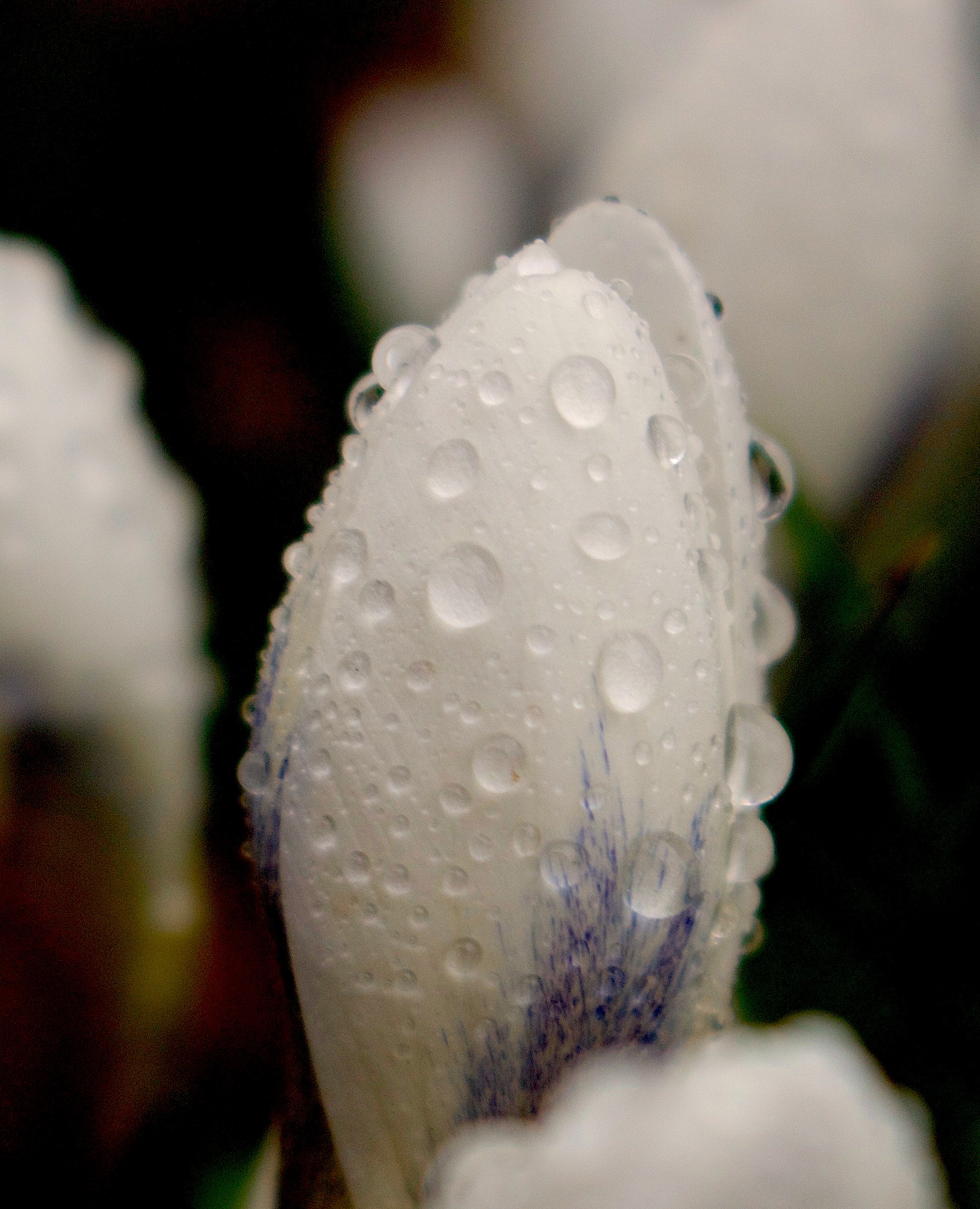
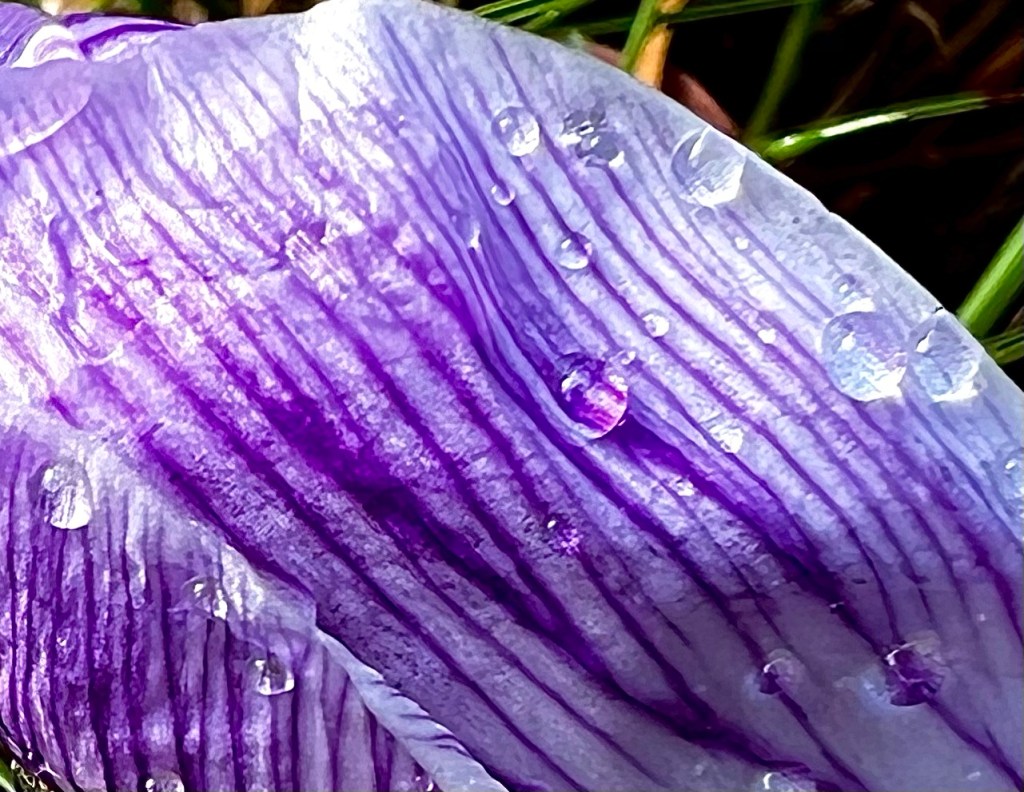
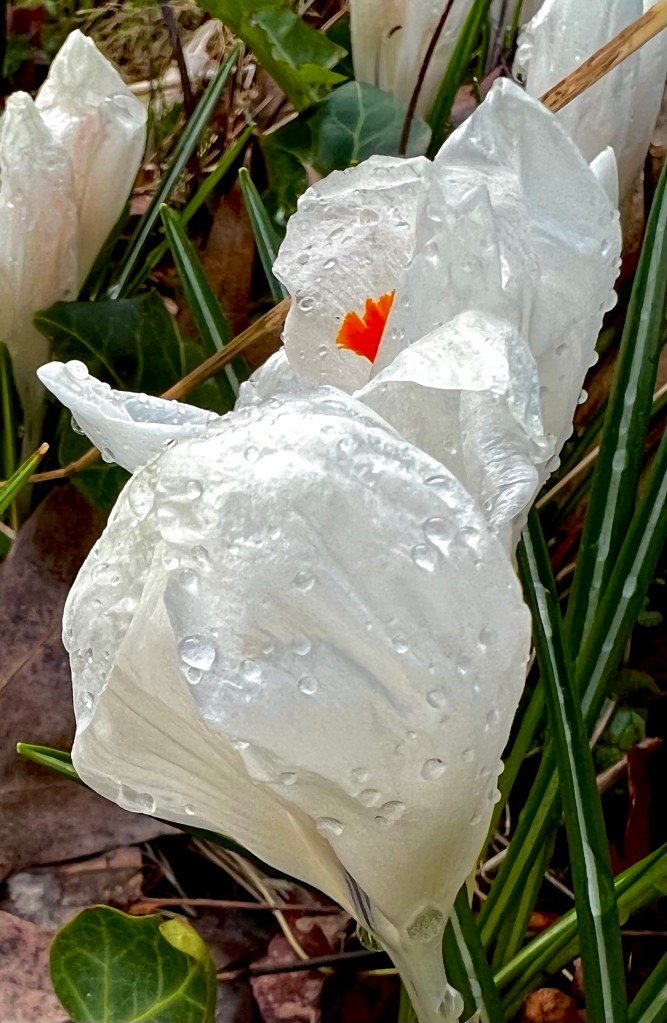
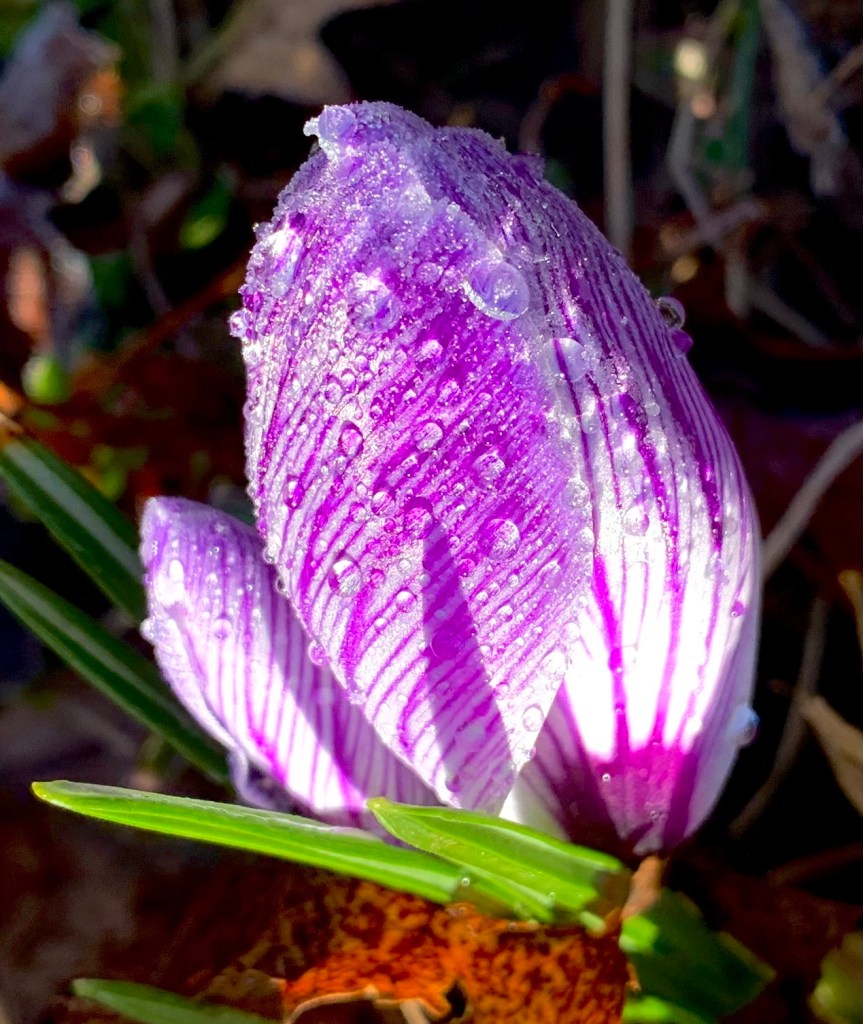
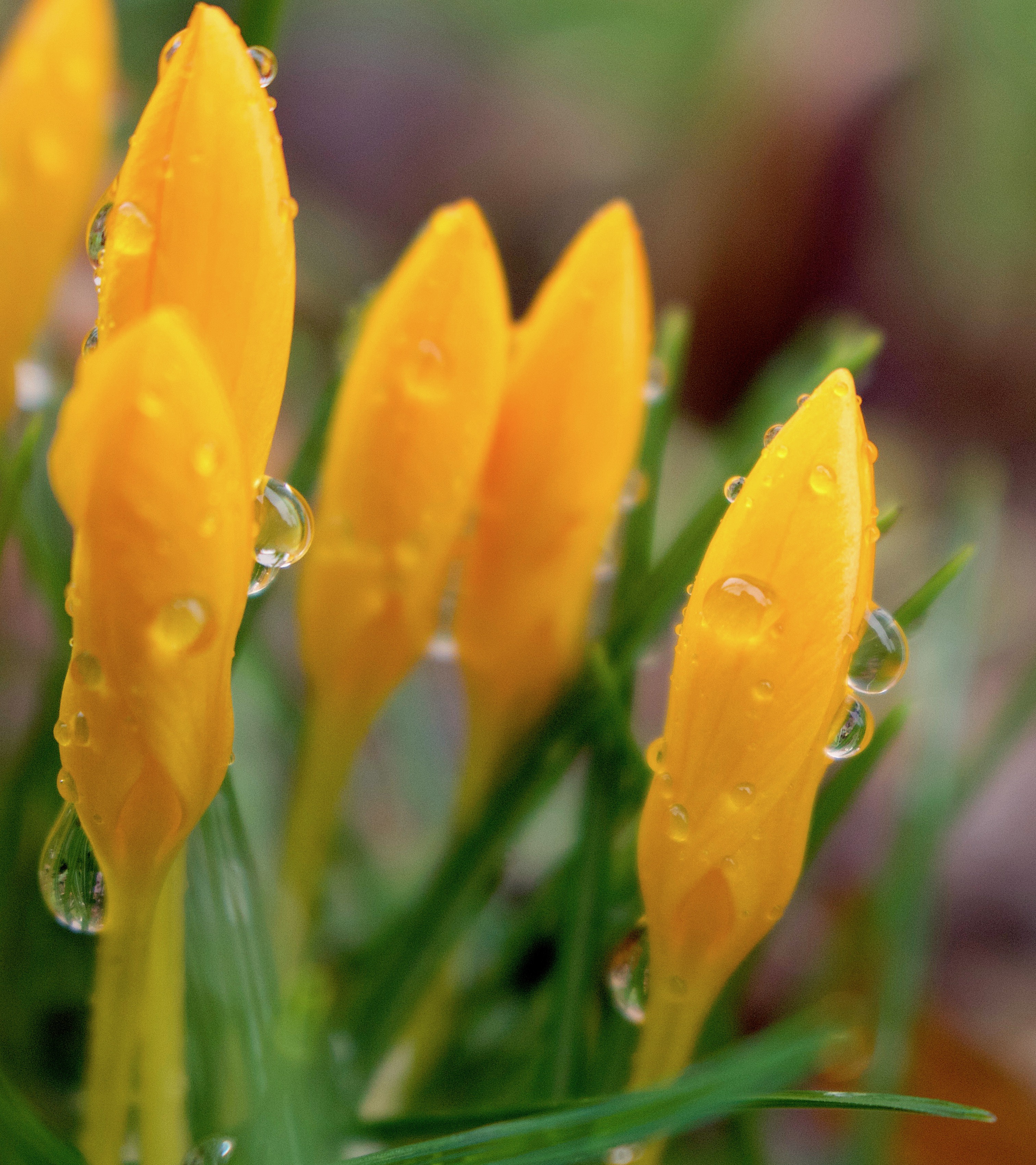
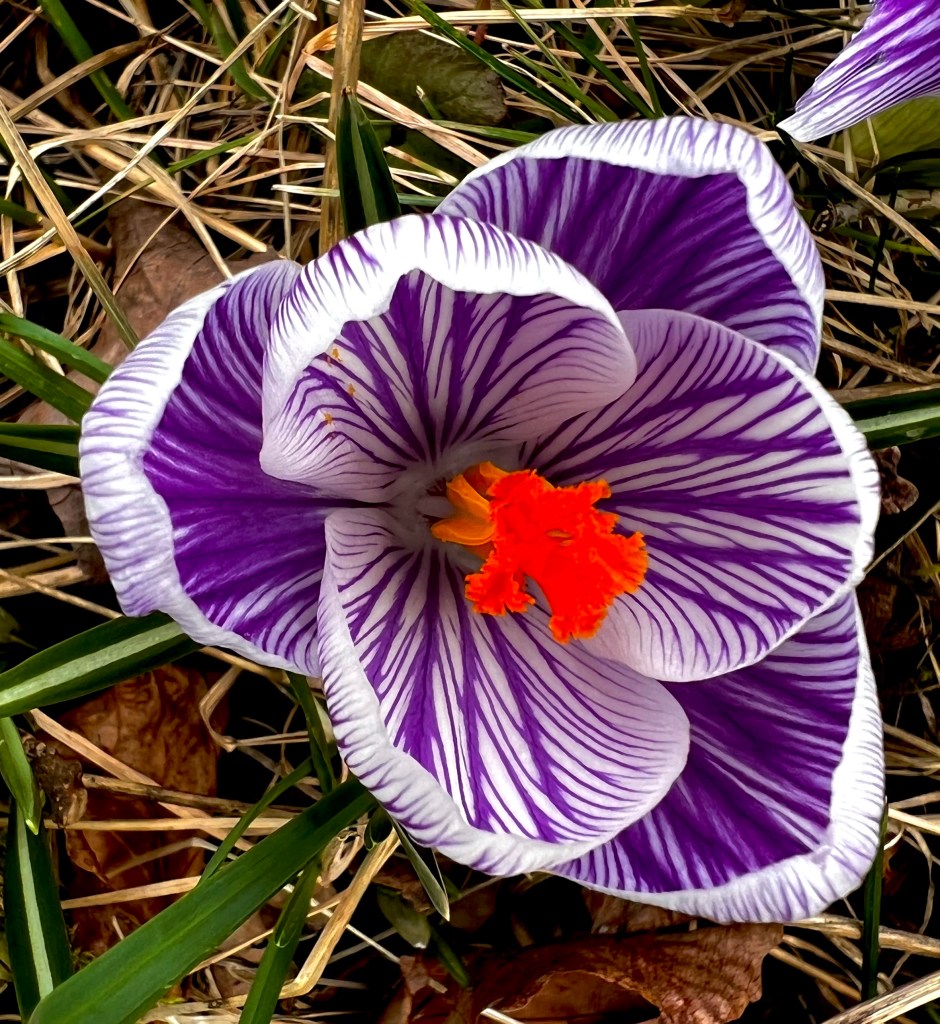
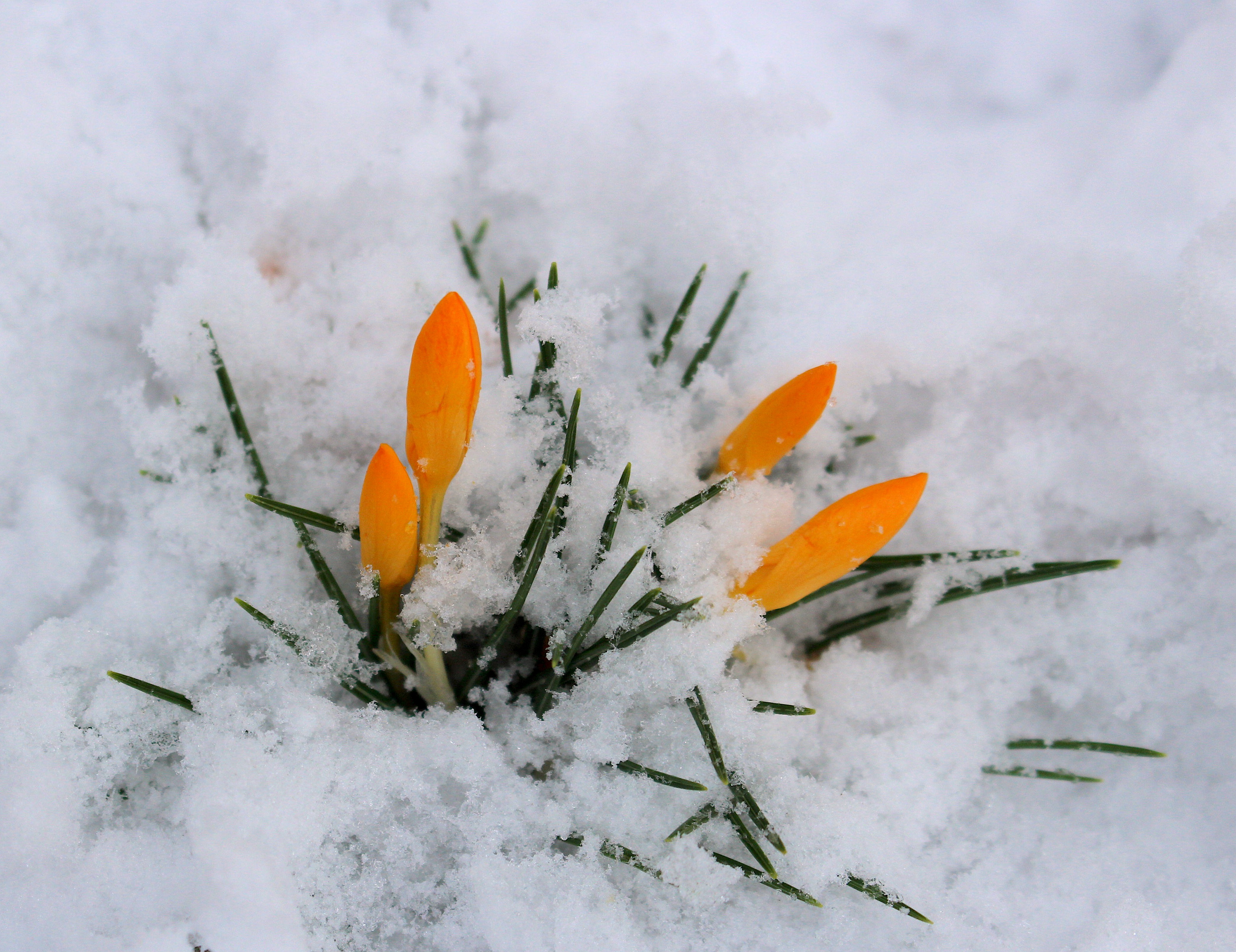
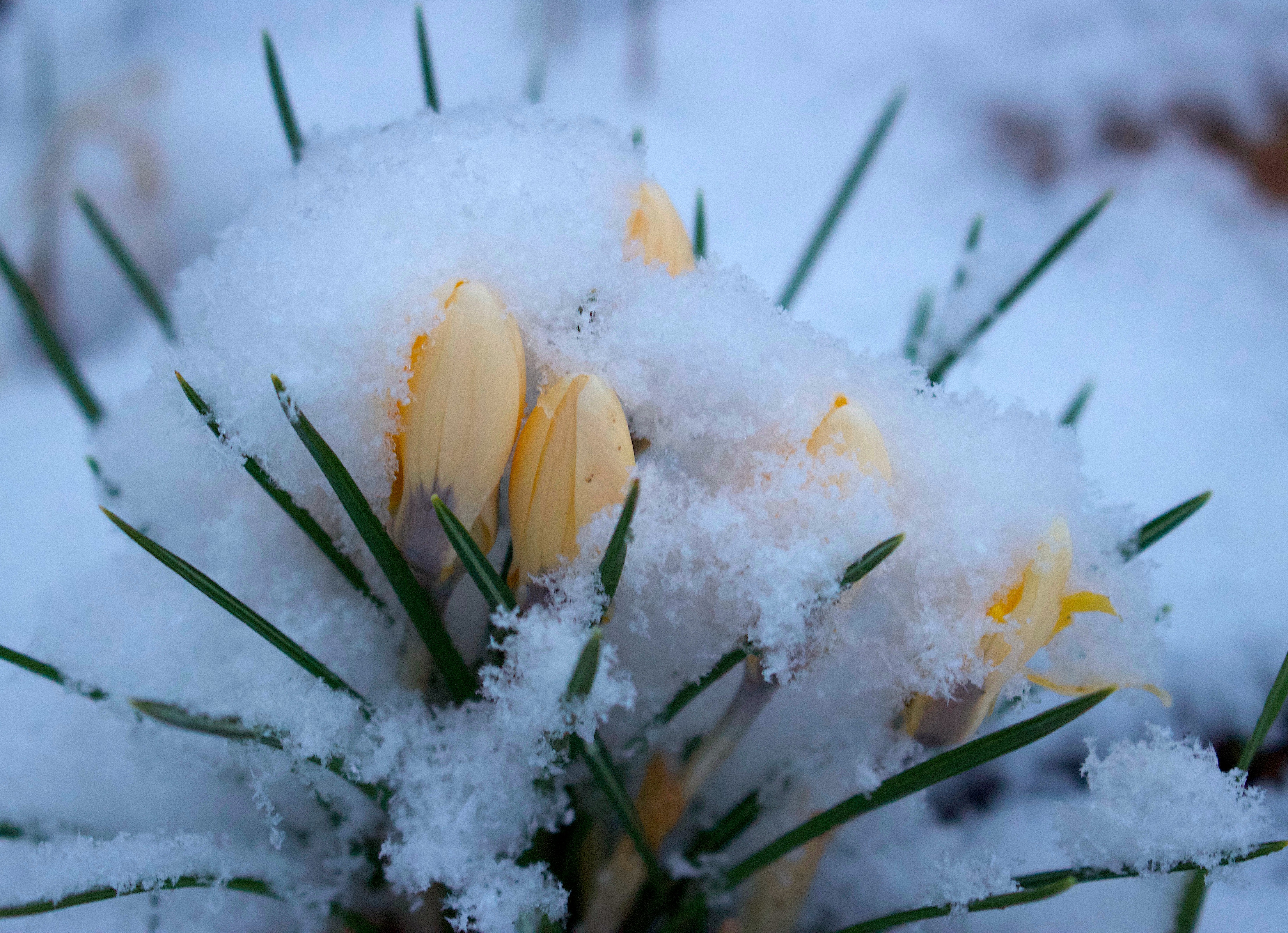
…To be sure, it feels wintry enough still: but often in the very early spring it feels like that. Two thousand years are only a day or two by this scale. A man really ought to say, ‘The Resurrection happened two thousand years ago’ in the same spirit in which he says ‘I saw a crocus yesterday.’
Because we know what is coming behind the crocus.
The spring comes slowly down the way, but the great thing is that the corner has been turned. There is, of course, this difference that in the natural spring the crocus cannot choose whether it will respond or not.
We can.
We have the power either of withstanding the spring, and sinking back into the cosmic winter, or of going on…to which He is calling us.
It remains with us whether to follow or not, to die in this winter, or to go on into that spring and that summer. ~C. S. Lewis from “God in the Dock”
You, who are beyond our understanding, have made yourself understandable to us in Jesus Christ. You, who are the uncreated God, have made yourself a creature for us. You, who are the untouchable One, have made yourself touchable to us. You, who are most high, make us capable of understanding your amazing love and the wonderful things you have done for us. Make us able to understand the mystery of your incarnation, the mystery of your life, example and doctrine, the mystery of your cross and passion, the mystery of your resurrection and ascension. ~Angela of Foligno (1248-1309)– prayer
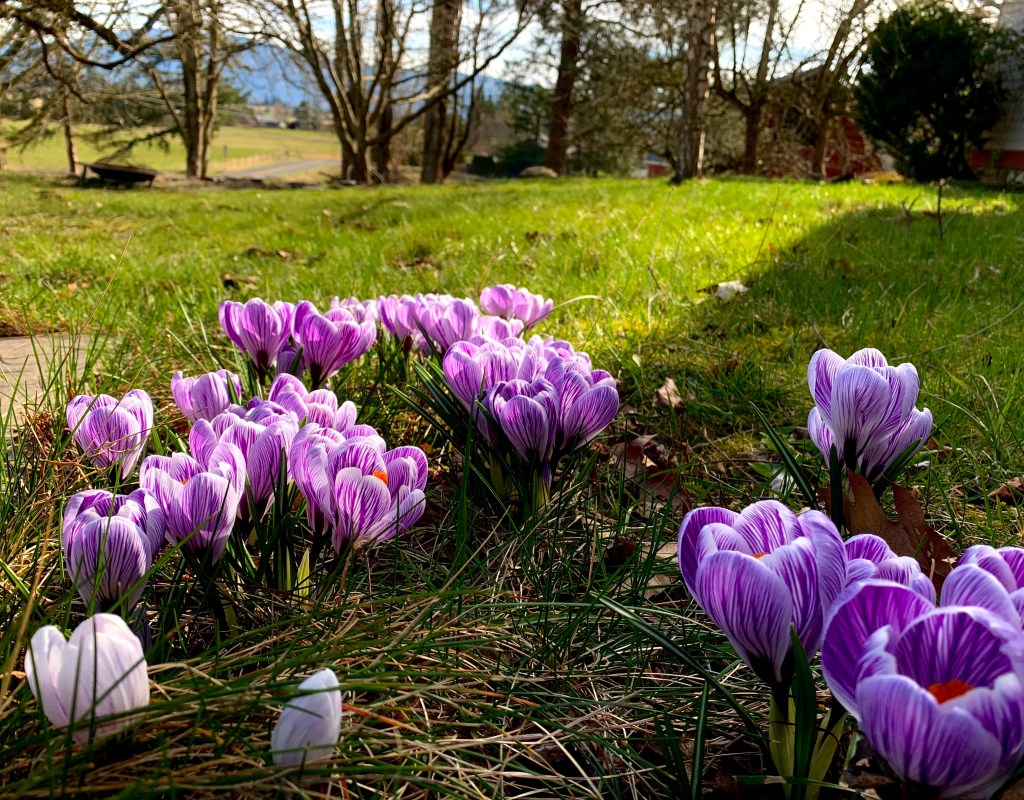
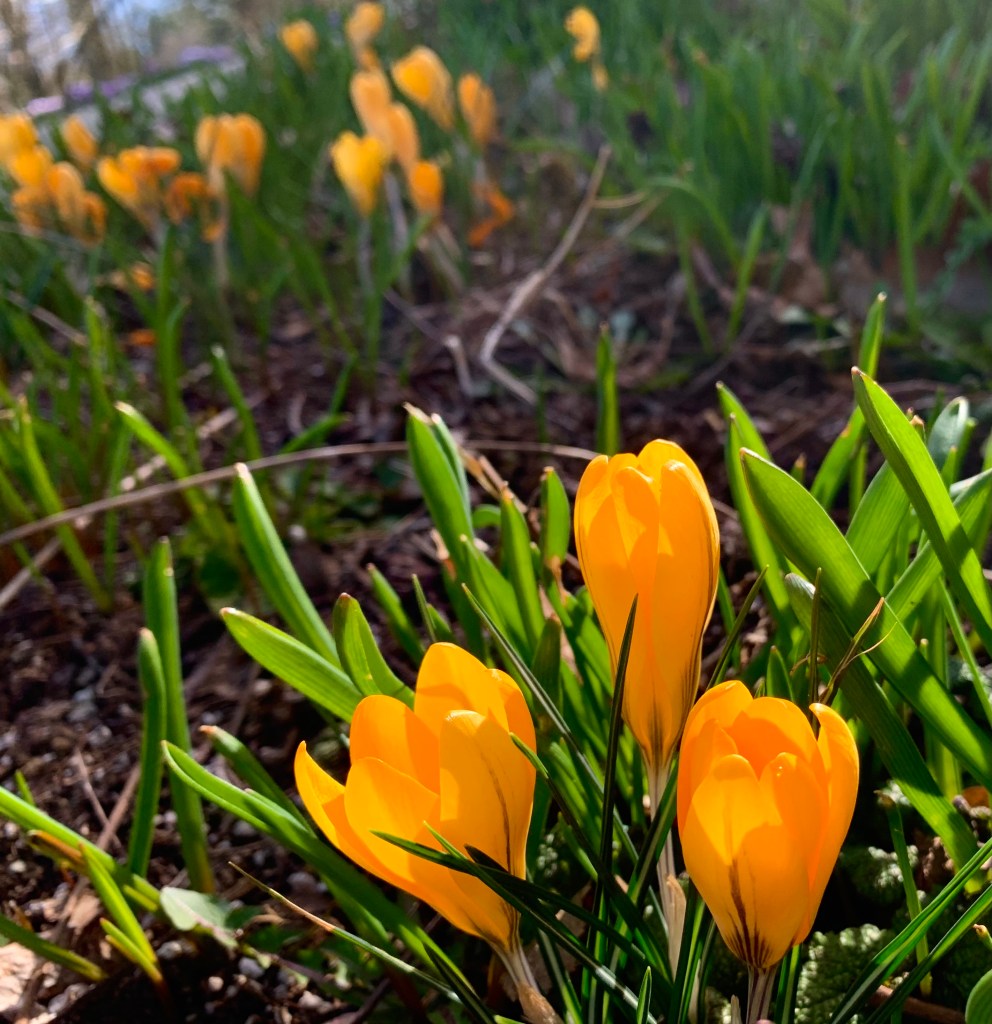
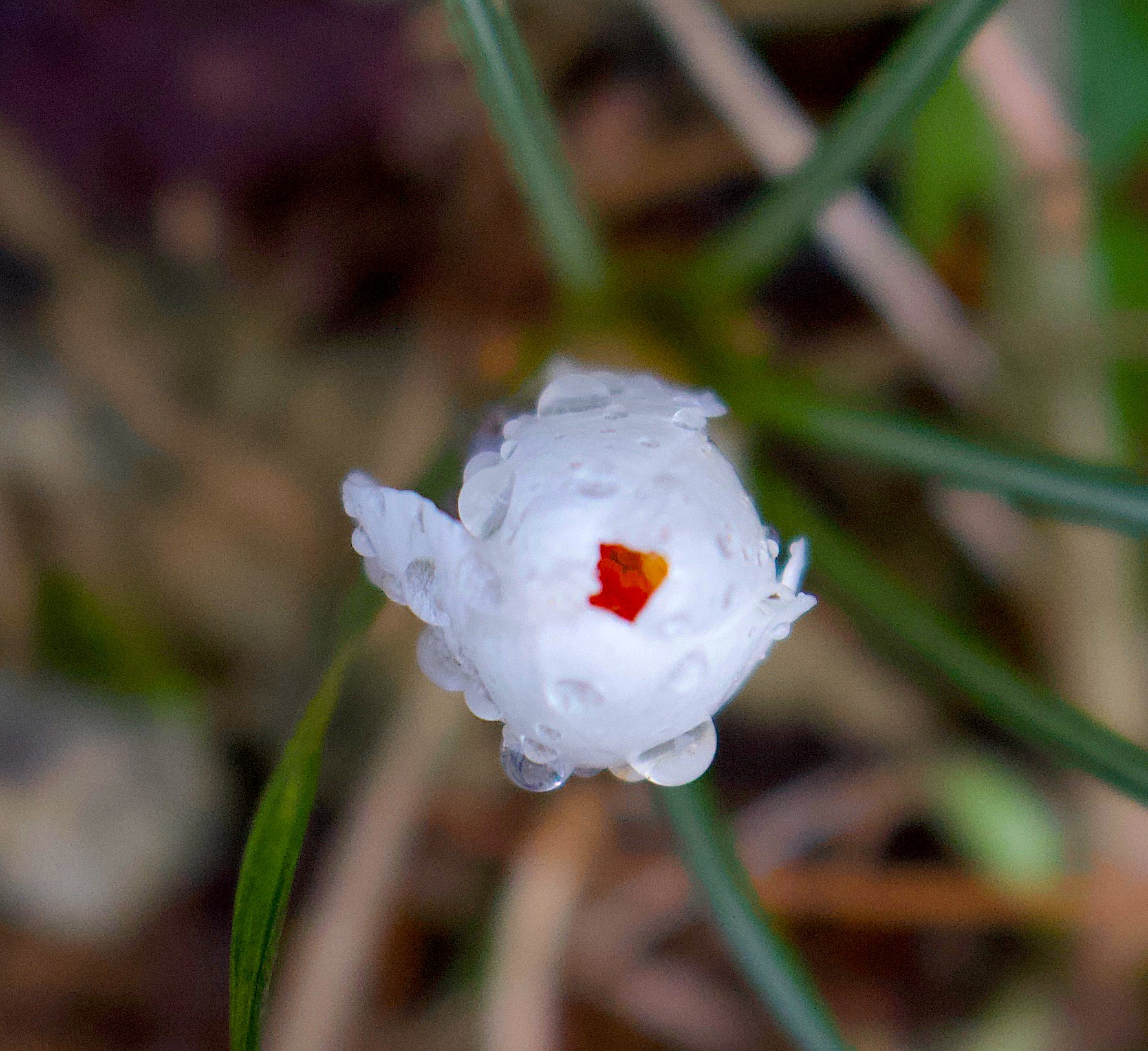
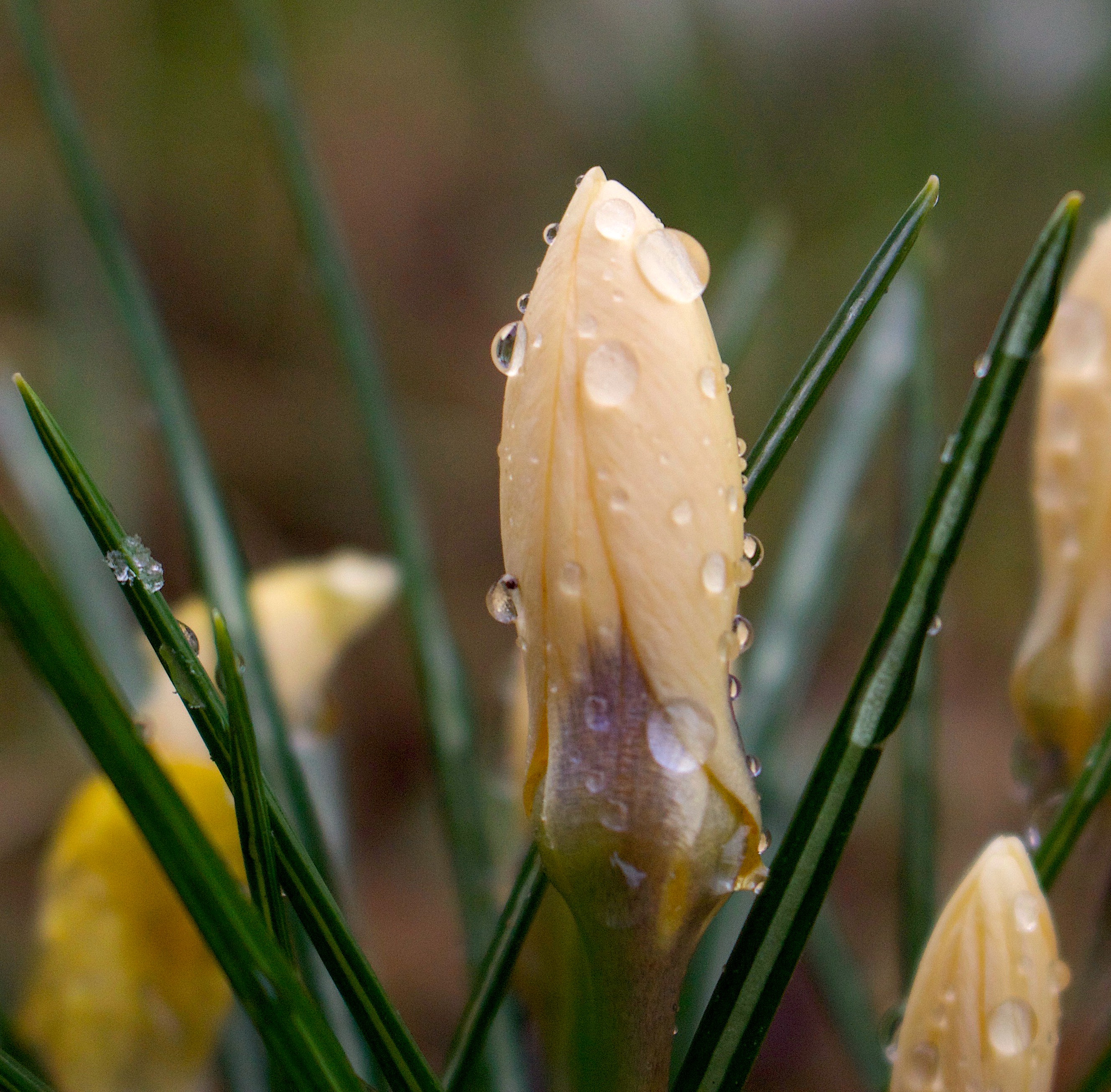
My husband, with help from our neighbor kids and our son who was visiting for Christmas several years ago, prepared soil beds on our farm and planted hundreds of spring bulbs, including over two hundred crocus. We were called to this action, especially in the midst of winter – to plan for, to anticipate, to long for spring, year after year.
We, God’s children, become part of the promise that winter is not forever.
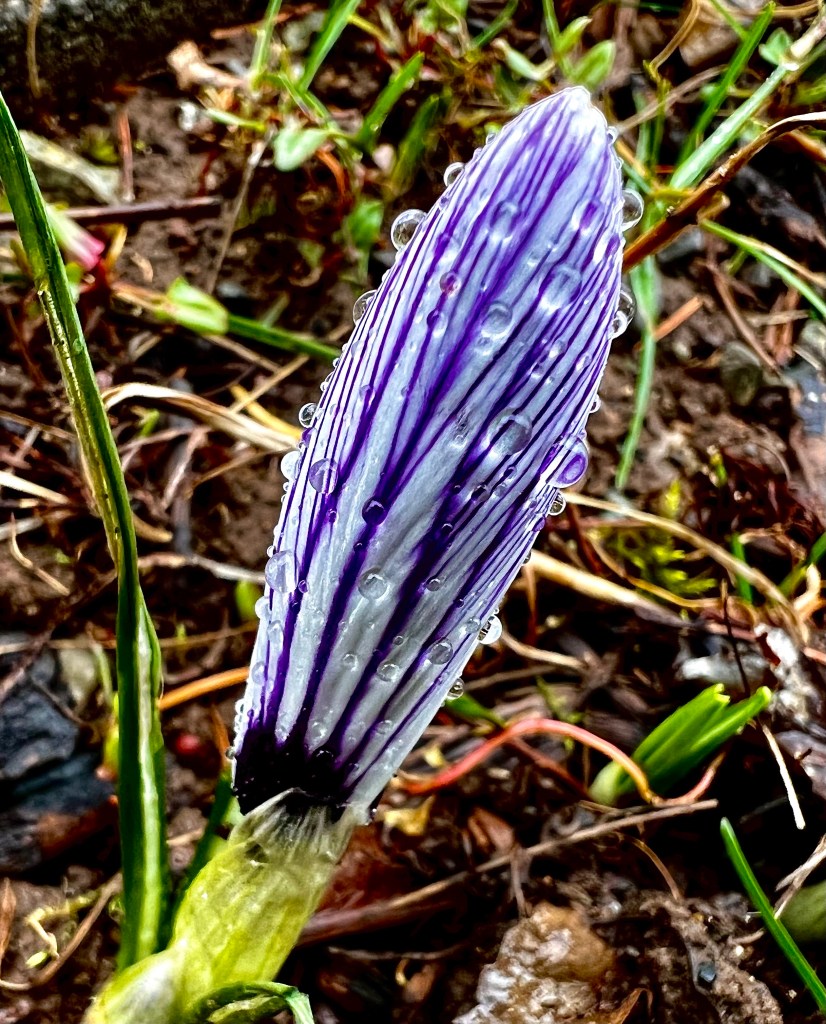
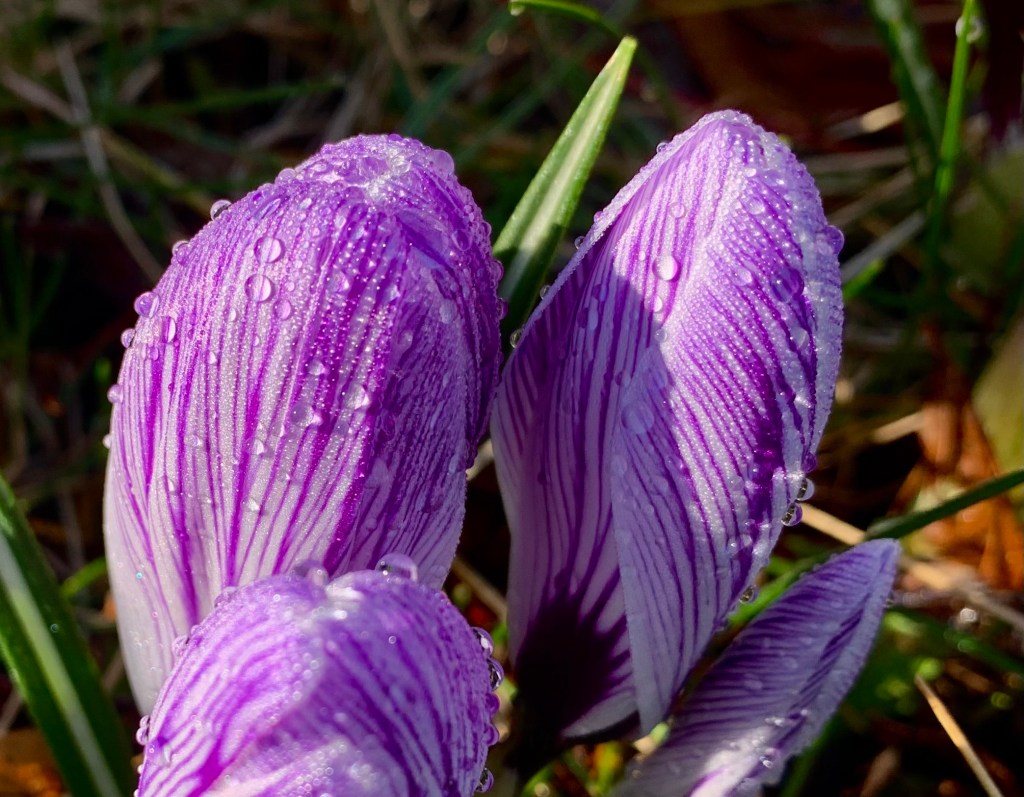
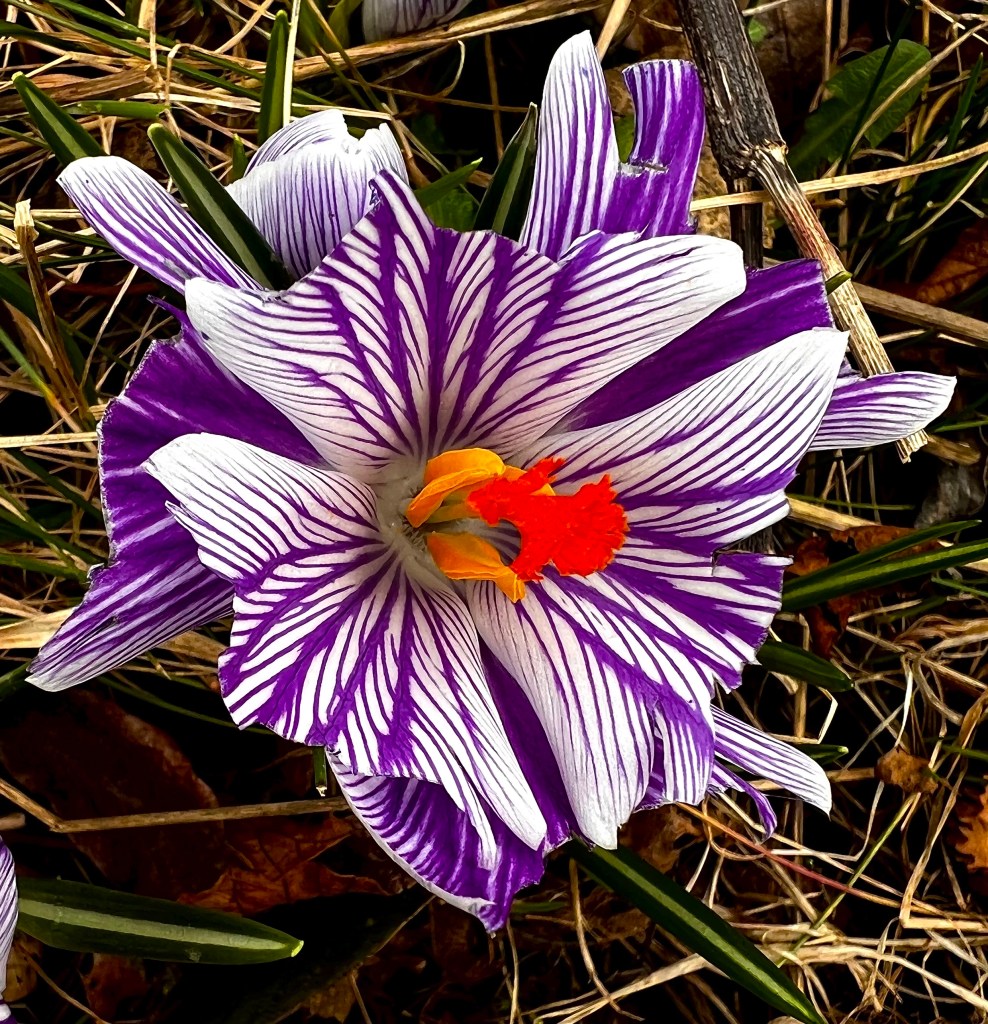
The larger bulbs – the tulips, the daffodils – have no choice but to respond to spring – the expanding light calls to them as the soil begins to warm. But the crocus are a mystery, sprouting earlier when there is not yet reason to surface. Snow is still on the ground. Frost still crisps everything at night. Yet they come forth from the soil even when everything is still weeping winter.
What wondrous love comes behind the crocus?
We are called to rise up from the dark to enter the light. We are called to become part of the mystery.
This year’s Lenten theme for Barnstorming is a daily selection from songs and hymns about Christ’s profound sacrifice on our behalf.
If we remain silent about Him, the stones themselves will shout out and start to sing (Luke 19:40).
In His name, may we sing…
1 O God beyond all praising, we worship you today and sing the love amazing that songs cannot repay; for we can only wonder at every gift you send, at blessings without number and mercies without end: we lift our hearts before you and wait upon your word, we honour and adore you, our great and mighty Lord.
2 Then hear, O gracious Saviour, accept the love we bring, that we who know your favour may serve you as our king; and whether our tomorrows be filled with good or ill, we’ll triumph through our sorrows and rise to bless you still: to marvel at your beauty and glory in your ways, and make a joyful duty our sacrifice of praise.
Instructions for living a life: Pay attention. Be astonished. Tell about it. ~Mary Oliver
If your everyday life seems poor to you,do not accuse it; accuse yourself, tell yourself you are not poet enough to summon up its riches; since for the creatorthere is no poverty and no poor or unimportant place. ― Rainer Maria Rilkefrom Letters to a Young Poet
When it’s over, I want to say all my life I was a bride married to amazement. I was the bridegroom, taking the world into my arms.
When it’s over, I don’t want to wonder if I have made of my life something particular, and real.
I don’t want to find myself sighing and frightened, or full of argument.
As a child, I would sometimes spend long rainy afternoons languishing on the couch, complaining to my mother how boring my life was.
Her typical response was to remind me my boredom said more about me than about life; I became the accused, rather than the accuser, failing to summon up life’s riches.
Thus convicted, my sentence followed: she would promptly give me chores to do. I learned not to voice my complaints about how boring life seemed, because it always meant being put to work. I decided to live a life of nearly too much work and activity, missing much I could have slowed down to notice.
Some things haven’t changed, even sixty-some years later. Whenever I am tempted to feel frustrated or pitiful or bored, I need to remember what that says about me. If I’m not poet enough to recognize the Creator’s brilliance in every slant of light or every molecule, then it is my poverty I’m accusing, not His.
So – back to the work of paying attention and being astonished. There is the rest of my life to be lived and nearly always something to say about it.
Night has come: for one whole day again I’ve loved you so much, stirring hills. It’s beautiful to see. But: to feel in the lining of closed eyelids the sweetness of having seen … ~Rainer Maria Rilke
Even After All this time The sun never says to the earth,
“You owe Me.”
Look What happens With a love like that, It lights the Whole Sky. ~Daniel Ladinsky, from “The Gift”
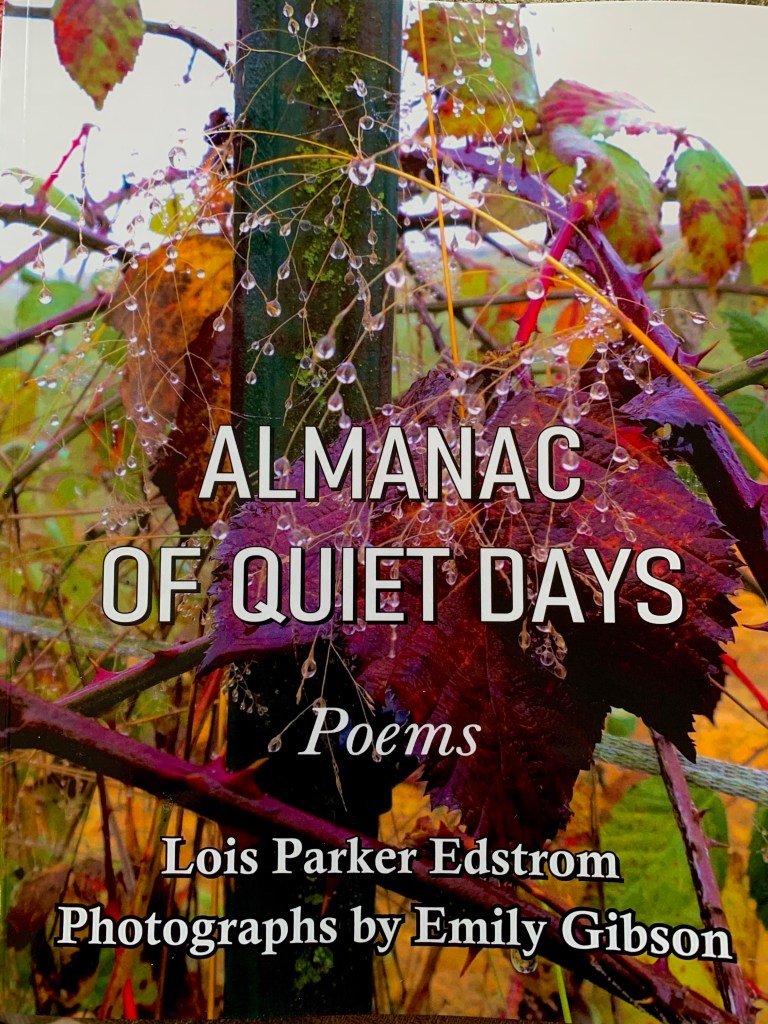
A book of astonishment in words and photography, available to order here:
One-Time
Monthly
Yearly
Make a one-time or recurring donation to support Barnstorming
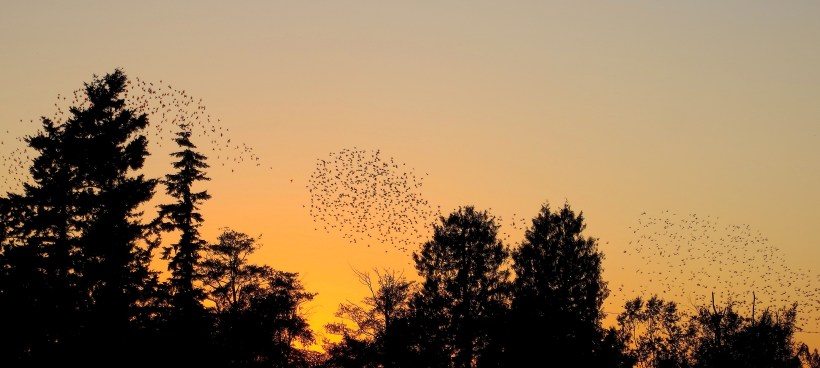
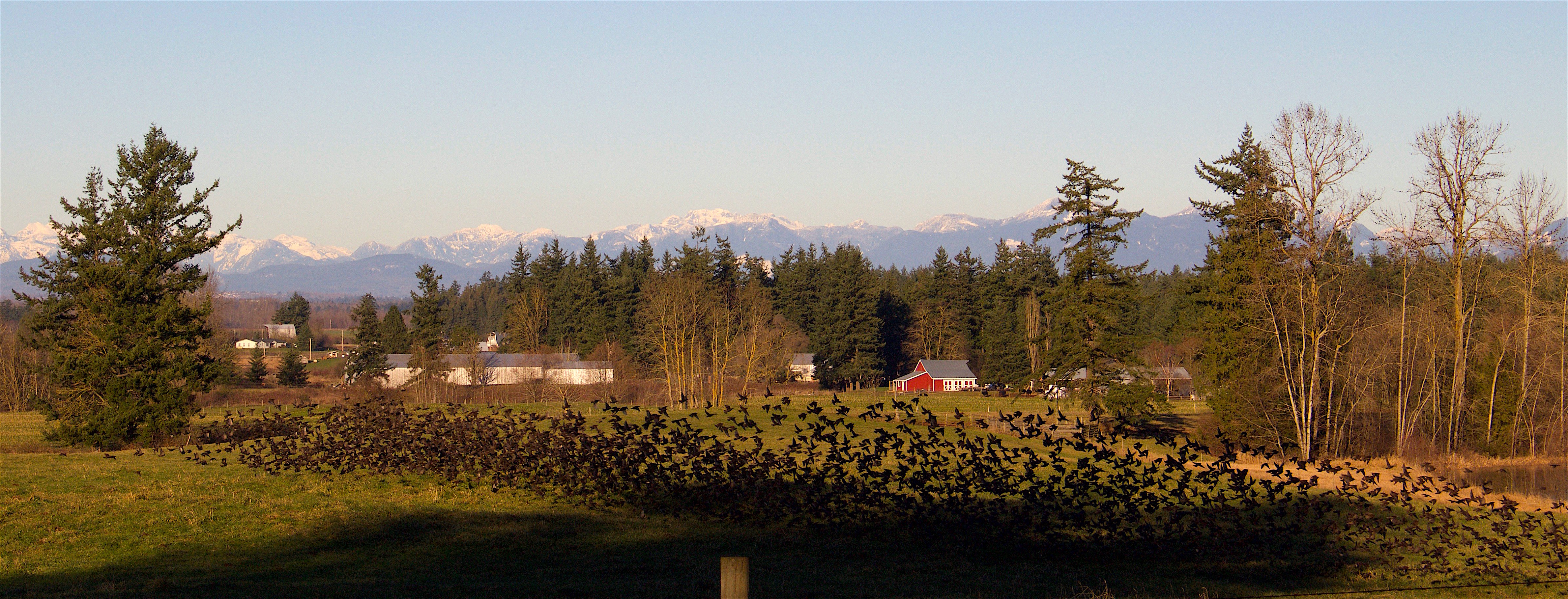
Cold morning. November, taking a walk, when up ahead, suddenly, the trees unleave, and thousands of starlings lift off, an immense river of noise; they braid and unbraid themselves over my head, the gray silk sky embroidered with black kisses, the whoosh of their wings, their chattering clatter, patterns broken/formed/ reformed, a scarf of ragged ribbons. Dumb- struck, mouth open, I say holy and I say moley, And then, they’re gone. ~Barbara Crooker, “Murmuration” from Some Glad Morning.
Out of the dimming sky a speck appeared, then another, and another. It was the starlings going to roost. They gathered deep in the distance, flock sifting into flock, and strayed towards me, transparent and whirling, like smoke. They seemed to unravel as they flew, lengthening in curves, like a loosened skein. I didn’t move; they flew directly over my head for half an hour.
Each individual bird bobbed and knitted up and down in the flight at apparent random, for no known reason except that that’s how starlings fly, yet all remained perfectly spaced. The flocks each tapered at either end from a rounded middle, like an eye.Overhead I heard a sound of beaten air, like a million shook rugs, a muffled whuff.Into the woods they sifted without shifting a twig,right through the crowns of trees, intricate and rushing, like wind.
Could tiny birds be sifting through me right now, birds winging through the gaps between my cells, touching nothing, but quickening in my tissues, fleet? ~Annie Dillard from Pilgrim at Tinker Creek
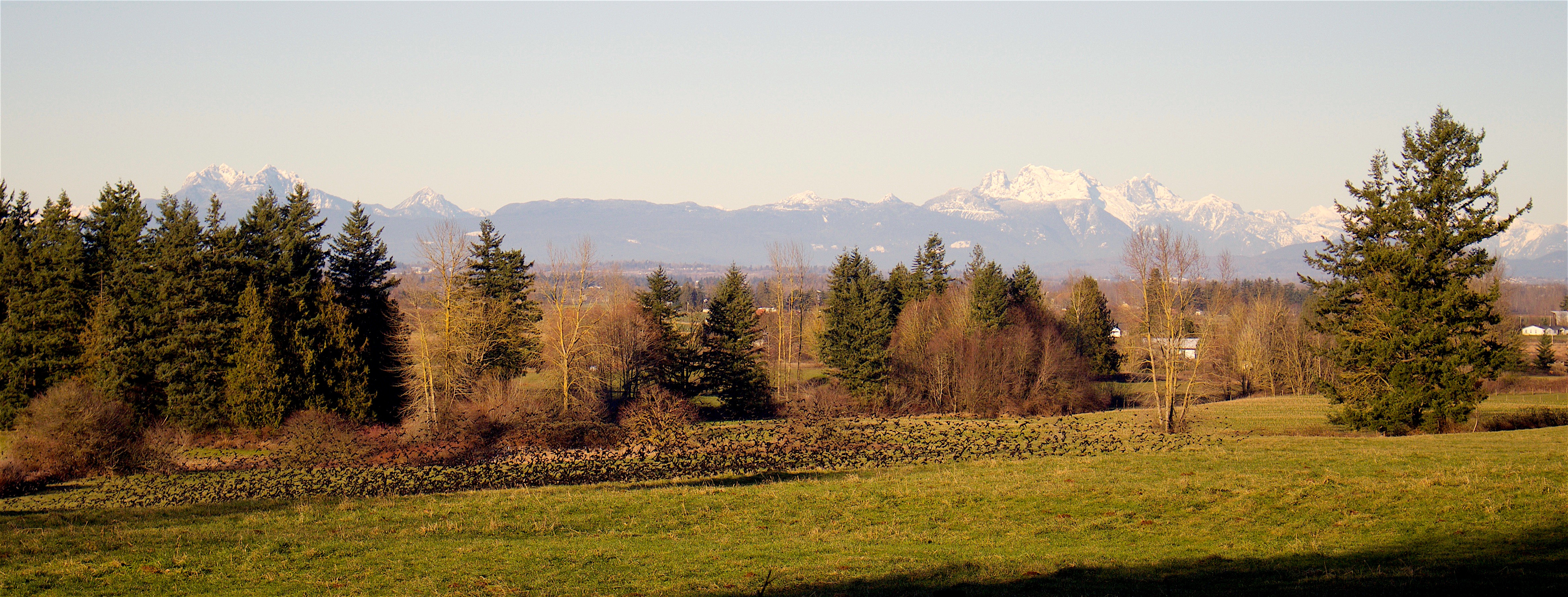
There comes a time in every fall before the leaves begin to turn when blackbirds group and flock and gather choosing a tree, a branch, together to click and call and chorus and clamor announcing the season has come for travel.
Then comes a time when all those birds without a sound or backward glance pour from every branch and limb into the air, as if on a whim but it’s a dynamic, choreographed mass a swoop, a swerve, a mystery, a dance
and now the tree stands breathless, amazed at how it was chosen, how it was changed. ~Julie Cadwallader Staub “Turning” from Wing Over Wing
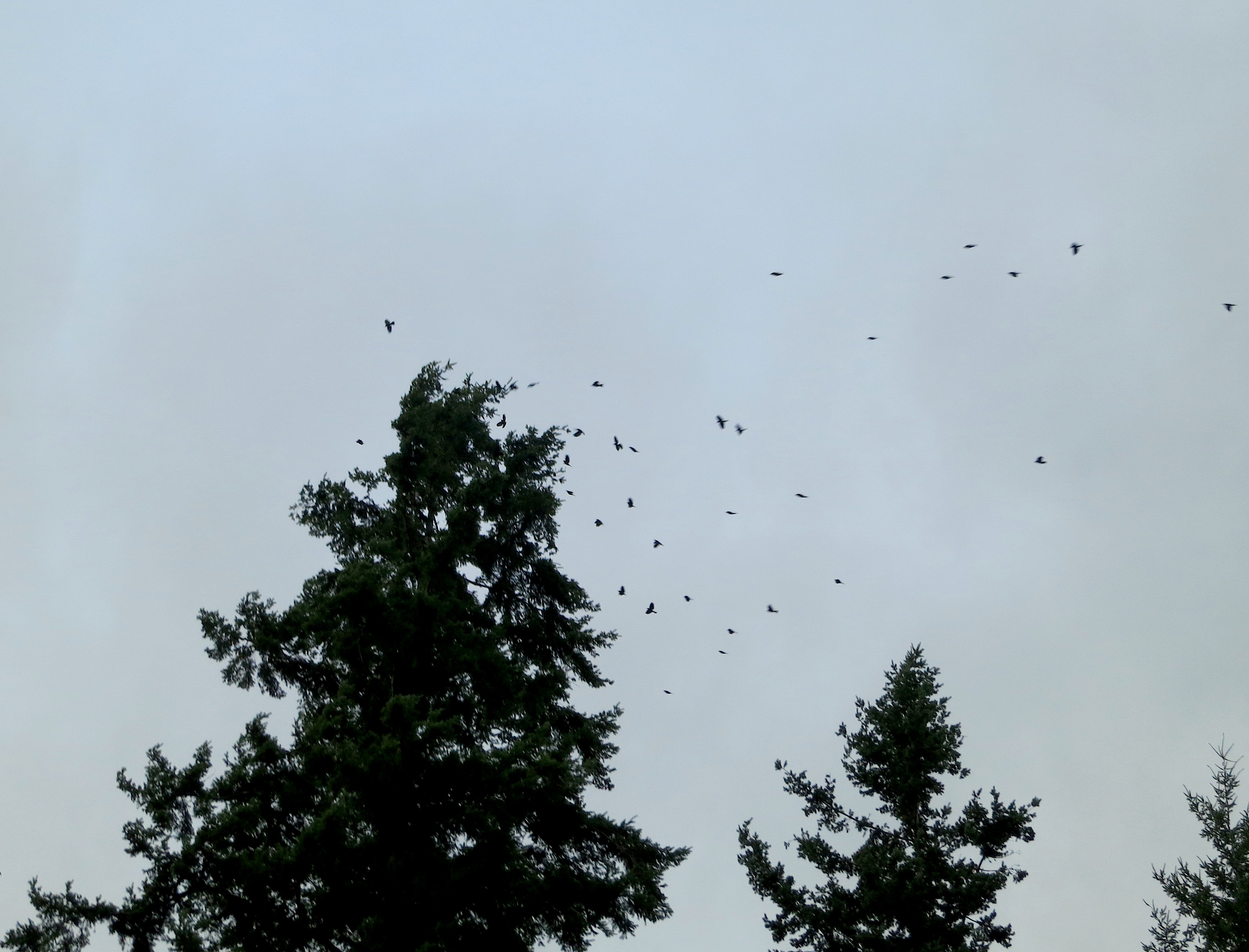
…yesterday I heard a new sound above my head a rustling, ruffling quietness in the spring air
and when I turned my face upward I saw a flock of blackbirds rounding a curve I didn’t know was there and the sound was simply all those wings, all those feathers against air, against gravity and such a beautiful winning: the whole flock taking a long, wide turn as if of one body and one mind.
How do they do that?
If we lived only in human society what a puny existence that would be
but instead we live and move and have our being here, in this curving and soaring world that is not our own so when mercy and tenderness triumph in our lives and when, even more rarely, we unite and move together toward a common good,
we can think to ourselves:
ah yes, this is how it’s meant to be. ~Julie Cadwallader Staub from “Blackbirds” from Wing Over Wing
Watching the starlings’ murmuration is a visceral experience – my heart leaps to see it happen above me. I feel queasy following its looping amoebic folding and unfolding path.
Thousands of individual birds move in sync with one another to form one massive organism existing solely because each tiny component anticipates and cooperates to avoid mid-air collisions. It could explode into chaos but it doesn’t. It could result in massive casualties but it doesn’t. They could avoid each other altogether but they don’t – they come together with a purpose and reasoning beyond our imagining. Even the silence of their movement has a discernible sound of air rushing past wings.
We humans are made up of just such cooperating component parts, that which is deep in our tissues, programmed in our DNA. Yet we don’t learn from our designed and carefully constructed building blocks. We have become frighteningly disparate and independent creatures, each going our own way bumping and crashing without care.
We have lost our internal moral compass for how it is meant to be.
The rustling ruffling quiet of wings in the air is like muffled weeping.
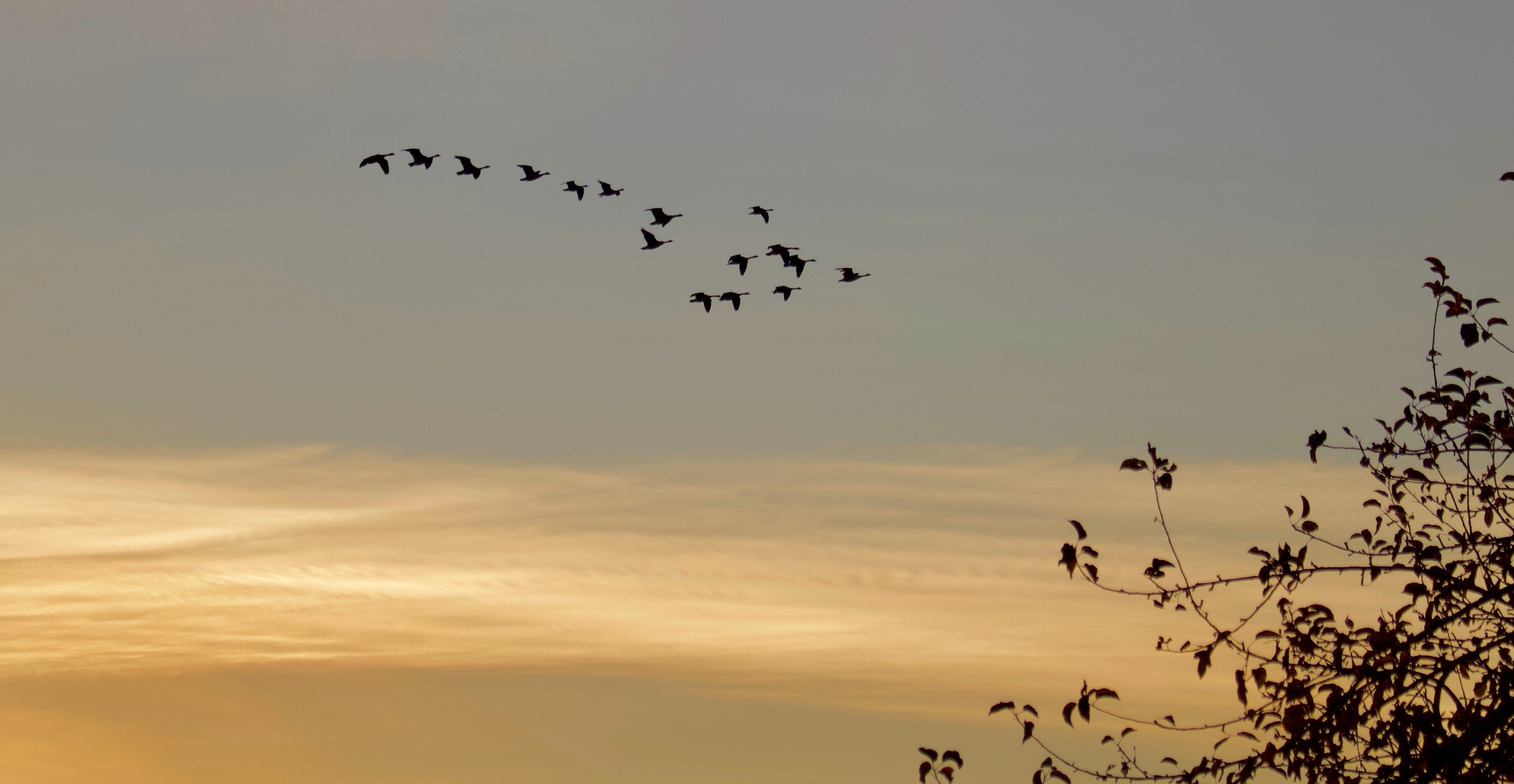
Wild geese are flocking and calling in pure golden air, Glory like that which painters long ago Spread as a background for some little hermit Beside his cave, giving his cloak away, Or for some martyr stretching out On her expected rack. A few black cedars grow nearby And there’s a donkey grazing.
Small craftsmen, steeped in anonymity like bees, Gilded their wooden panels, leaving fame to chance, Like the maker of this wing-flooded golden sky, Who forgives all our ignorance Both of his nature and of his very name, Freely accepting our one heedless glance. ~Anne Porter, “A November Sunrise” from An Altogether Different Language.
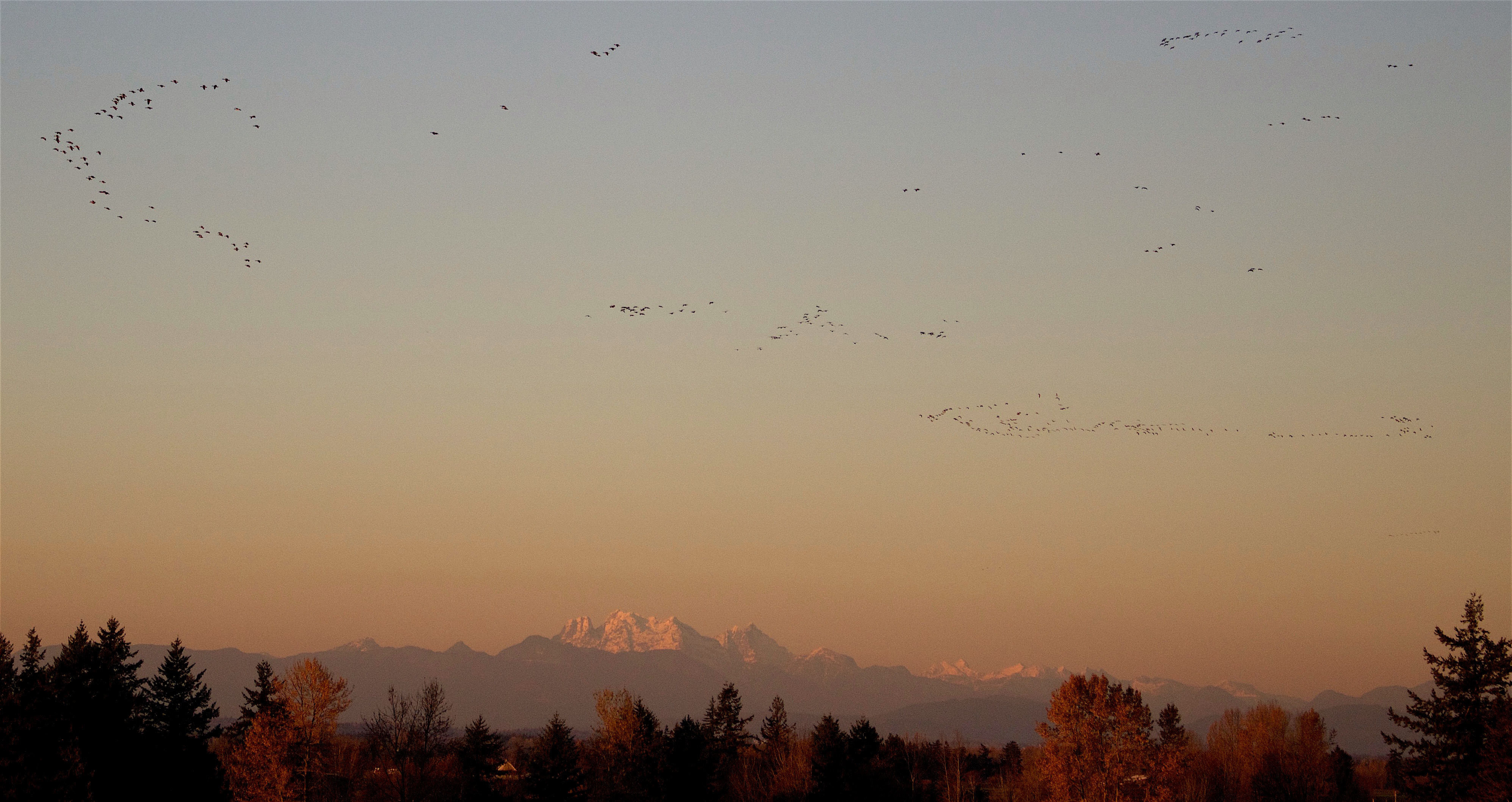
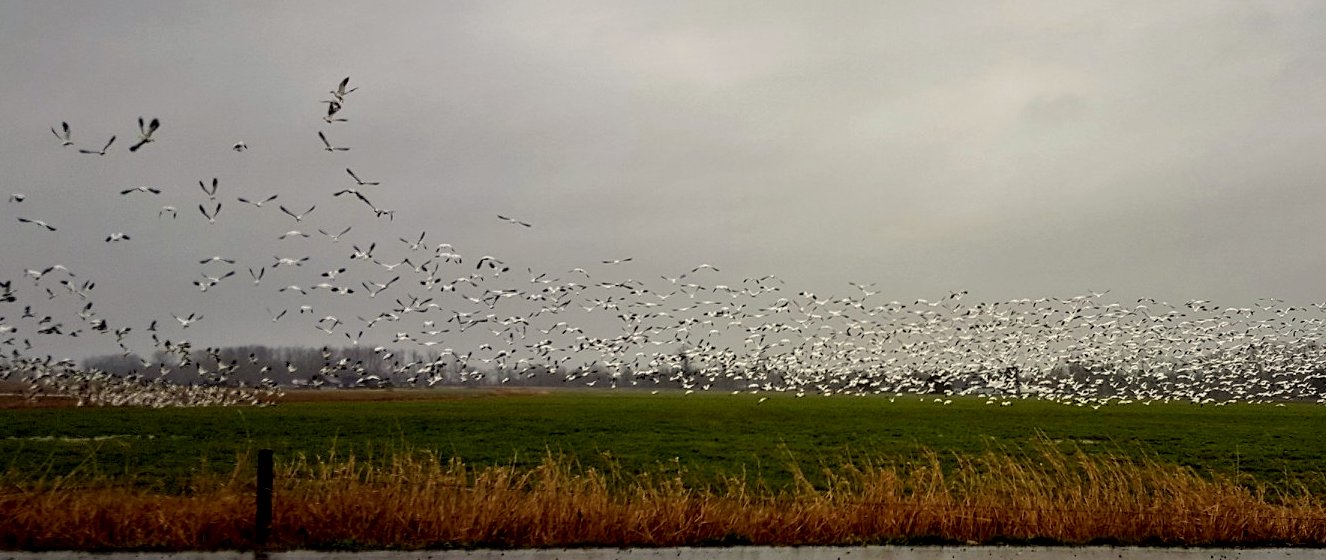
snowgeese in Whatcom County – photo by Chris Lovegren
My need for forgiveness is continually overwhelmed by God’s capacity to forgive: I mess up so frequently, it is as natural as breathing to me.
I tend to forget His provision — God’s grace cleans up after me.
May I never forget His name, see the beauty He created and acknowledge His capacity for loving the unlovable.
The true harvest of my daily life is somewhat as intangible and indescribable as the tints of morning or evening. It is a little star-dust caught, a segment of the rainbow which I have clutched. ~Henry David Thoreau
Painting the indescribable with words necessitates subtlety, sound and rhythm on a page. The best word color portraits I know are by Gerard Manley Hopkins who created through startling combinations: “crimson-cresseted”, “couple-colour”, “rose-moles”, “fresh-firecoal”, “adazzle, dim”, “dapple-dawn-drawn”, “blue-bleak embers”, “gash gold-vermillion”.
I understand, as Thoreau does, how difficult it is to harvest a day using ordinary words. Like grasping ephemeral star trails or the transient rainbow that moves away as I approach, what I hold on the page is intangible yet very real.
I will keep reaching for the rainbow, searching for the best words to preserve my days and nights forever, for my someday greatgrandchildren, or whoever might have the patience to read.
After all, in the beginning was the Word, and there is no better place to start.
More beauty in words and photography is found in this book available here:
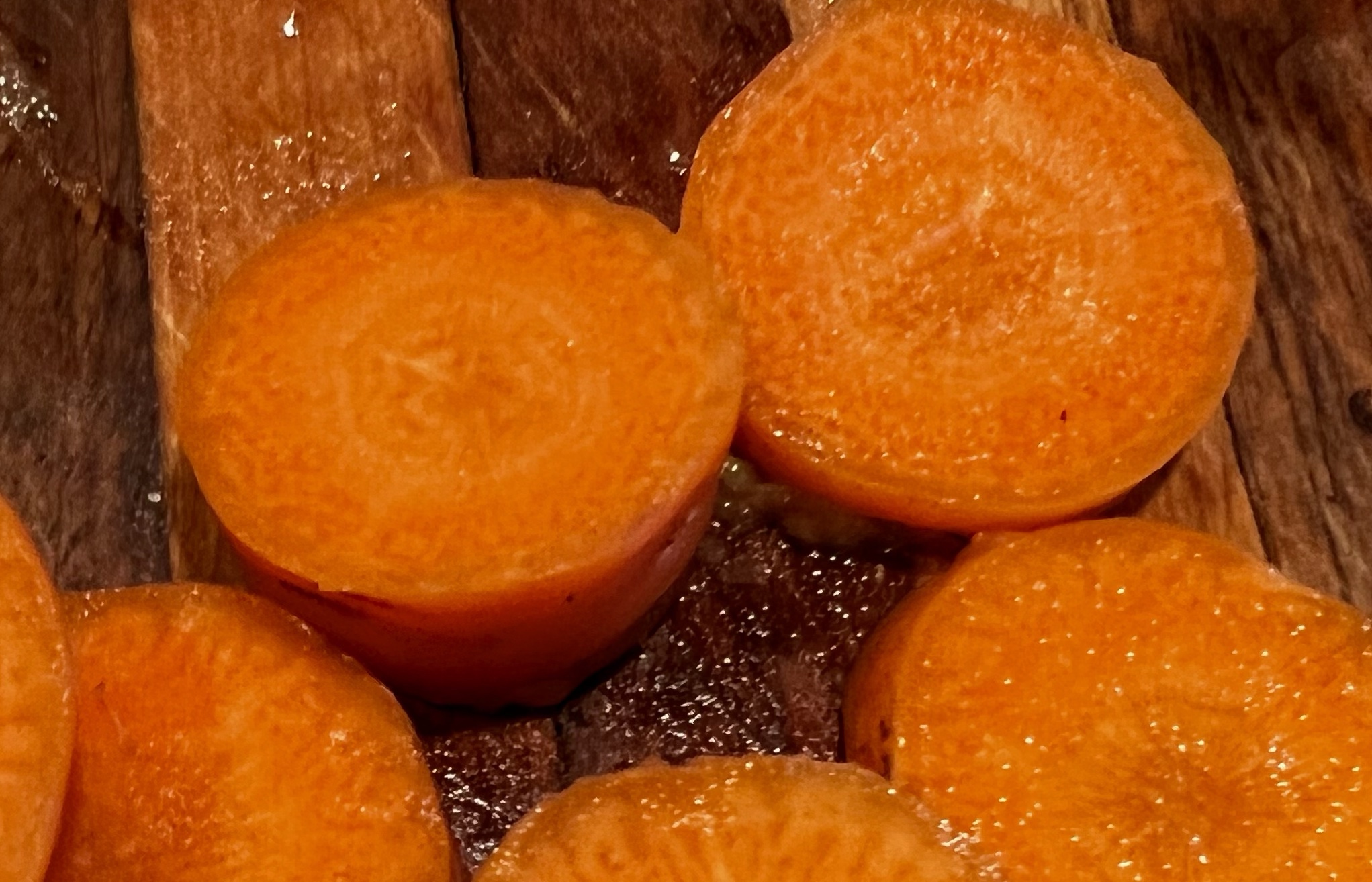
On this first day of November it is cold as a cave, the sky the color of neutral third parties. I am cutting carrots for the chicken soup. Knife against carrot again and again sends a plop of pennies into the pan. These cents, when held to the gray light, hold no noble president, only stills of some kaleidoscope caught being pensive… and beautiful, in the eye of this beholder, who did not expect this moment of marvel while making an early supper for the hungry children. ~Cindy Gregg, “Monday” from Suddenly Autumn.
I wasn’t prepared for November to begin on this chilly Monday morning.
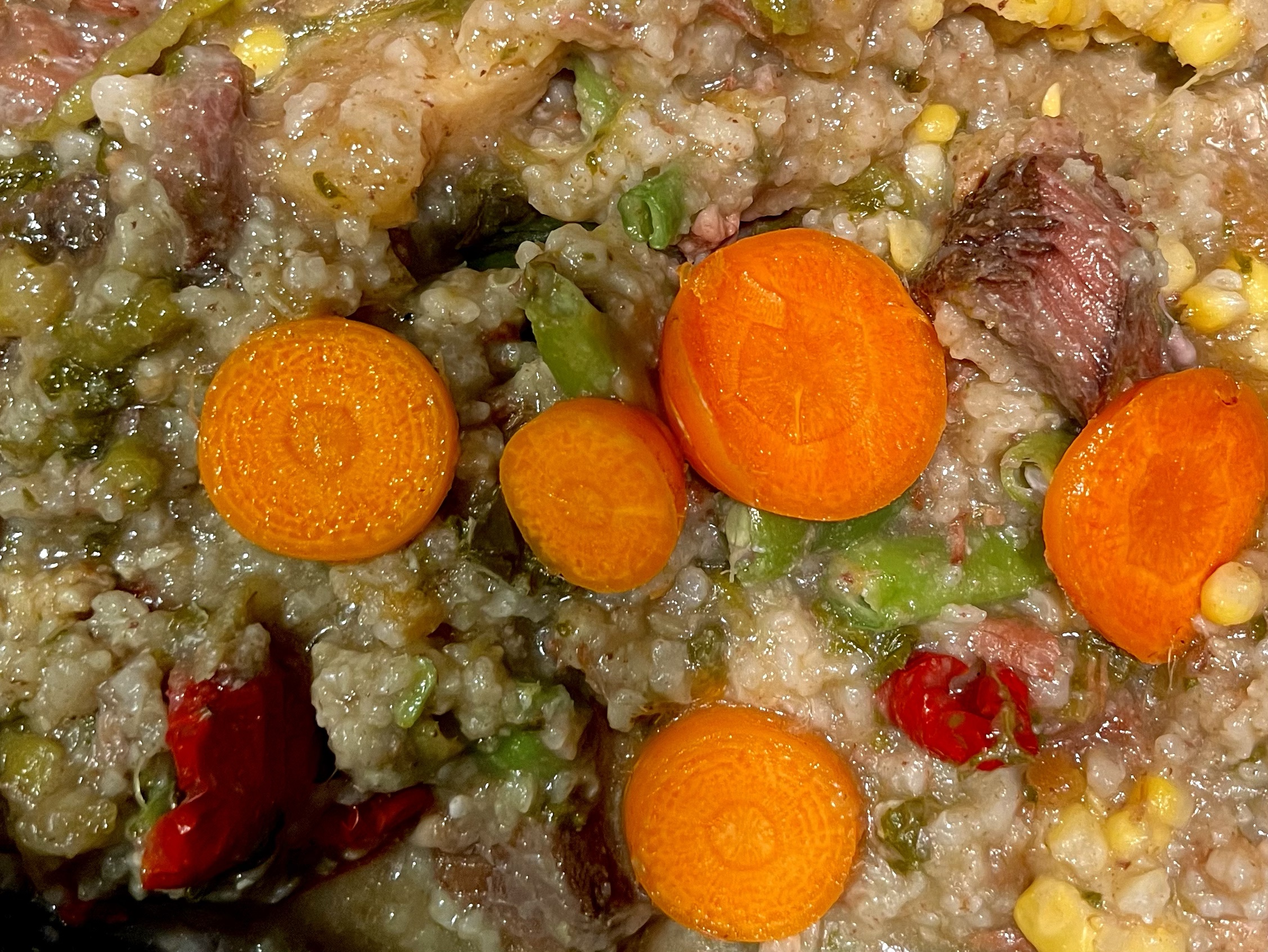
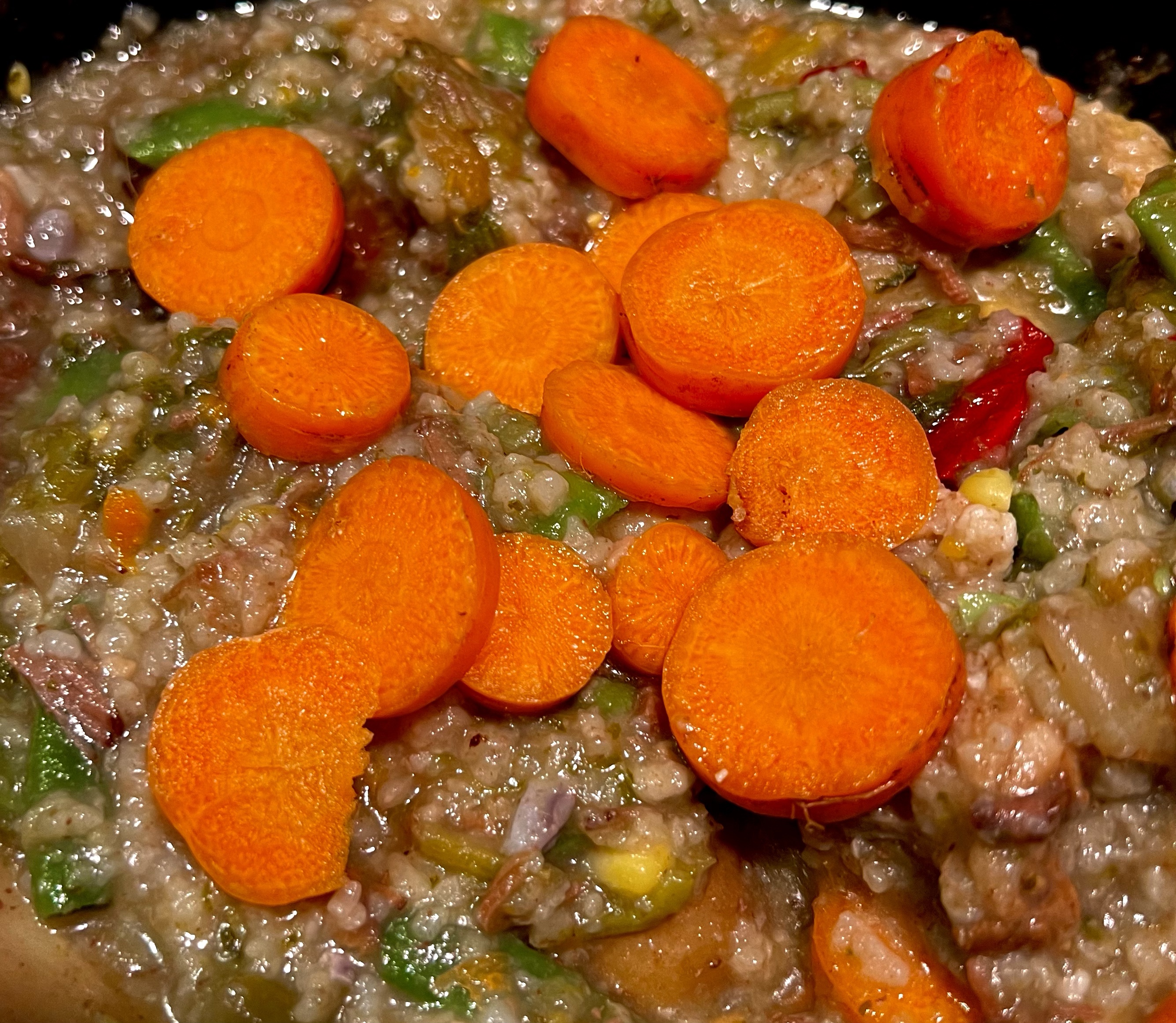
Throwing on my barn coat and boots, I pulled up some of the last carrots from the garden, cut them up, added some already harvested beans, peas and corn from the freezer, threw in some baby potatoes to make a crockpot of beef bone soup.
When we return home hungry from our community work tonight, we will be tired but well fed.
There is a moment of marvel in preparing a meal from one’s own garden bounty, remembering the small seeds put in the ground 6 months ago, and now washed and cut and simmering in a pot in our kitchen.
The start of November isn’t so chilly after all. We are warmed by the work done through the spring and summer, the sun and rain that grew these vegetables, and the Creator God who provides, even in the cold and dark months of the year.
We’ll make it through this first Monday of November, anticipating the marvels to come.
A book of beauty in words and photography, available to order here:
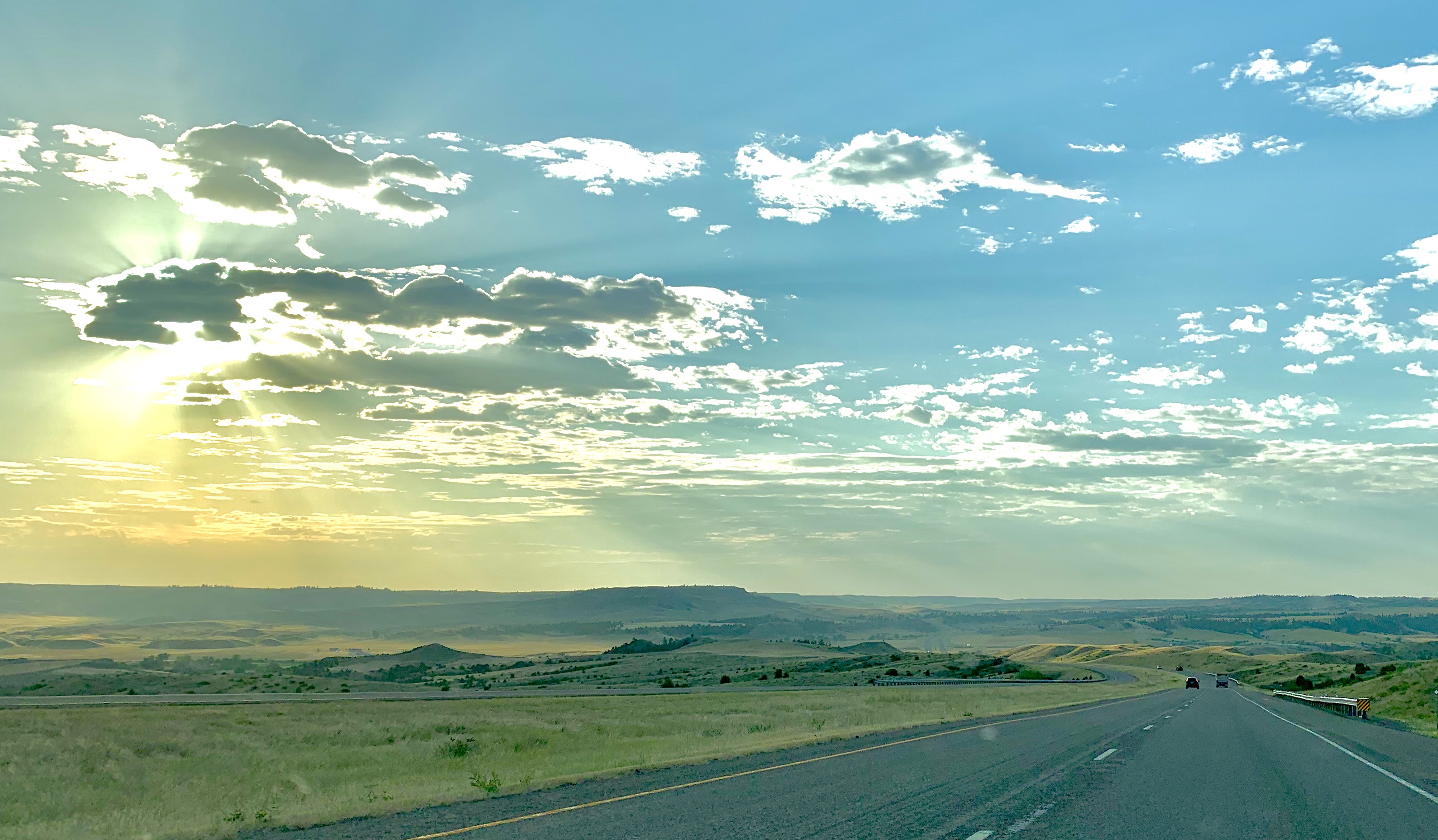
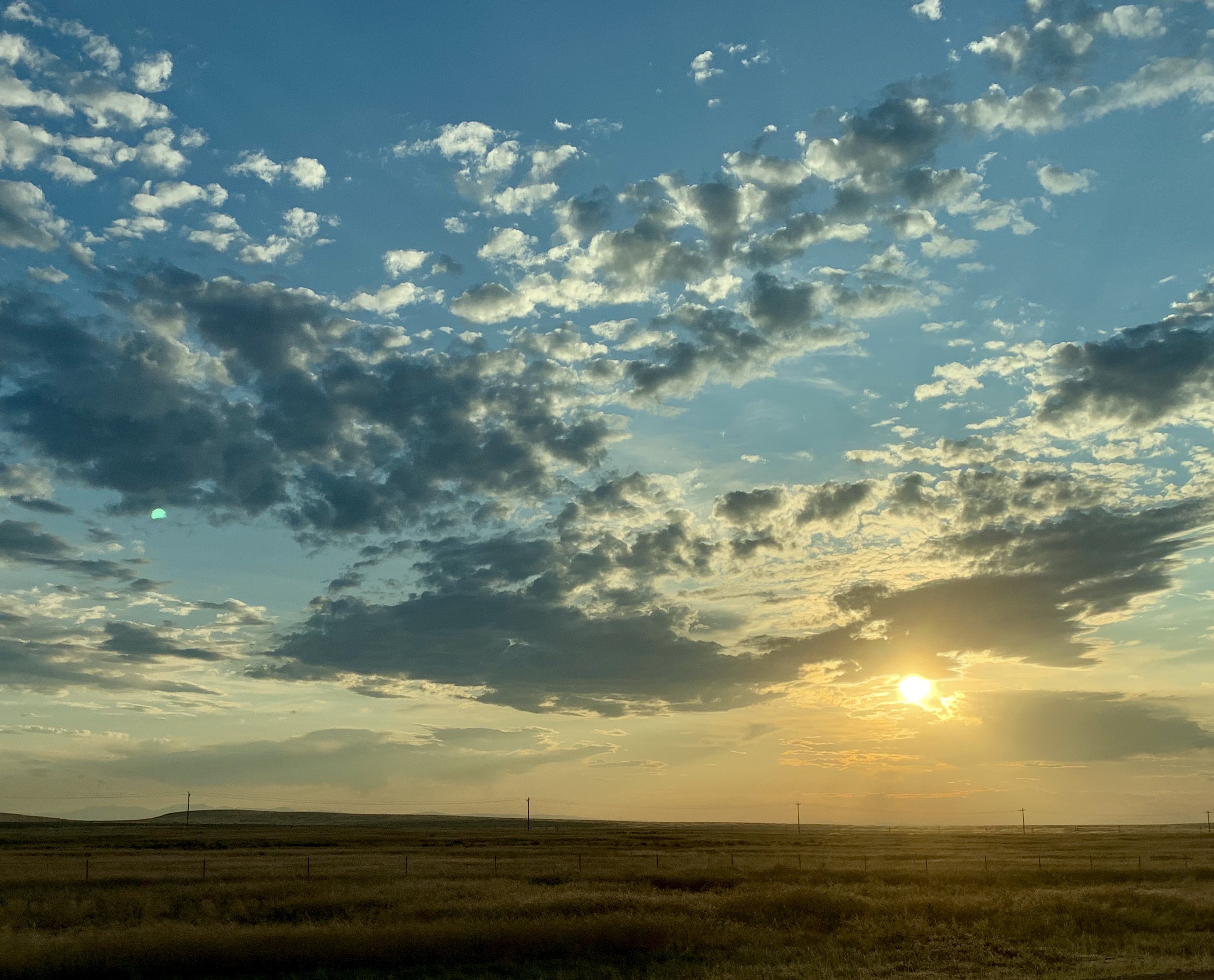
We drove across high prairie, the Mississippi behind us, nothing ahead for miles but sky,
a loamy sky, thick enough to put a trowel into, but off to the south clouds pulled
away from one another as if to stand back take a long look, and in that
space what light was left of the sun already gone below the horizon
flowed up and held there and we did too hold our breaths at the sudden beauty. ~Athena Kildegaard “We drove across high prairie…” from Cloves & Honey.
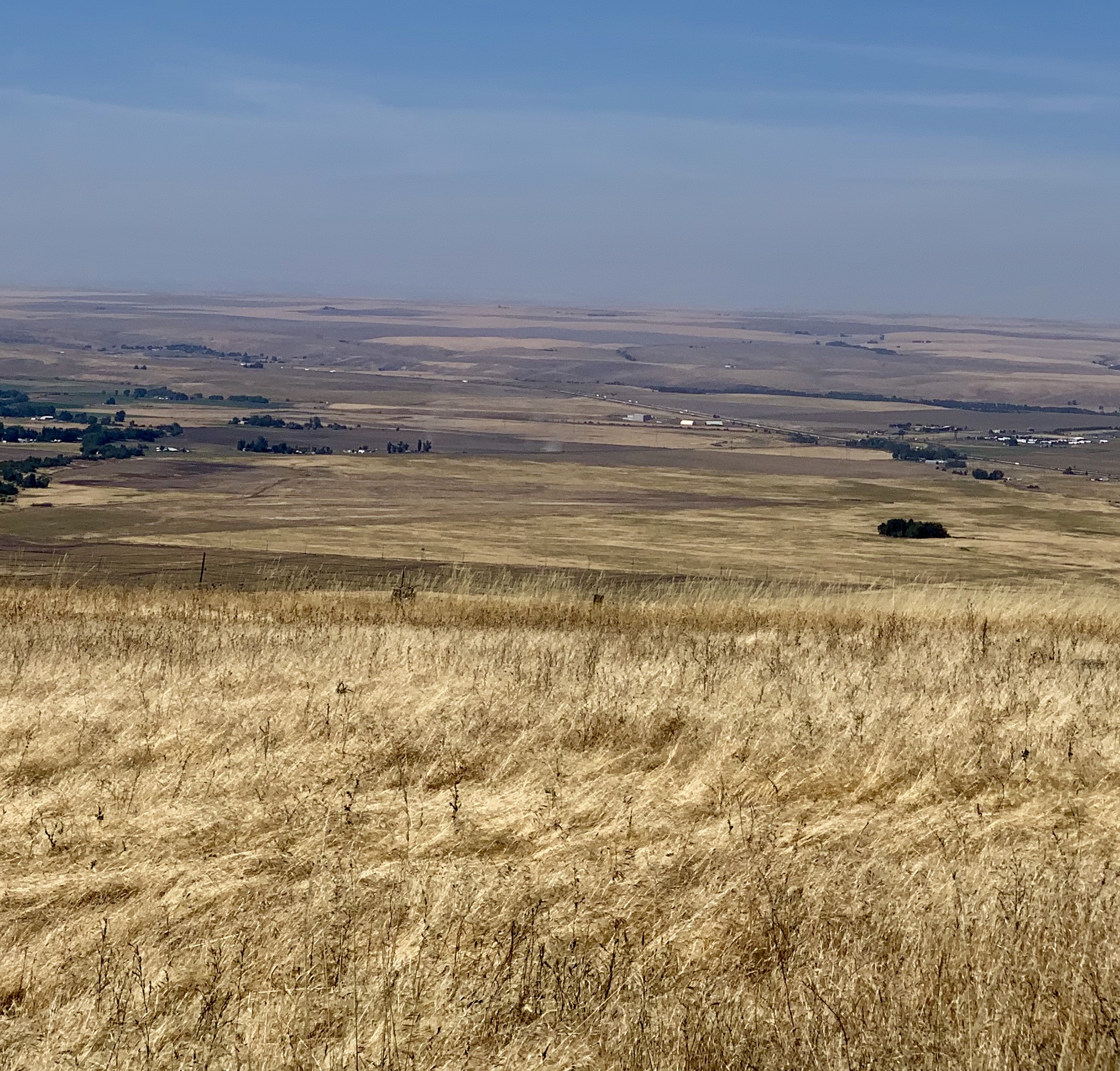
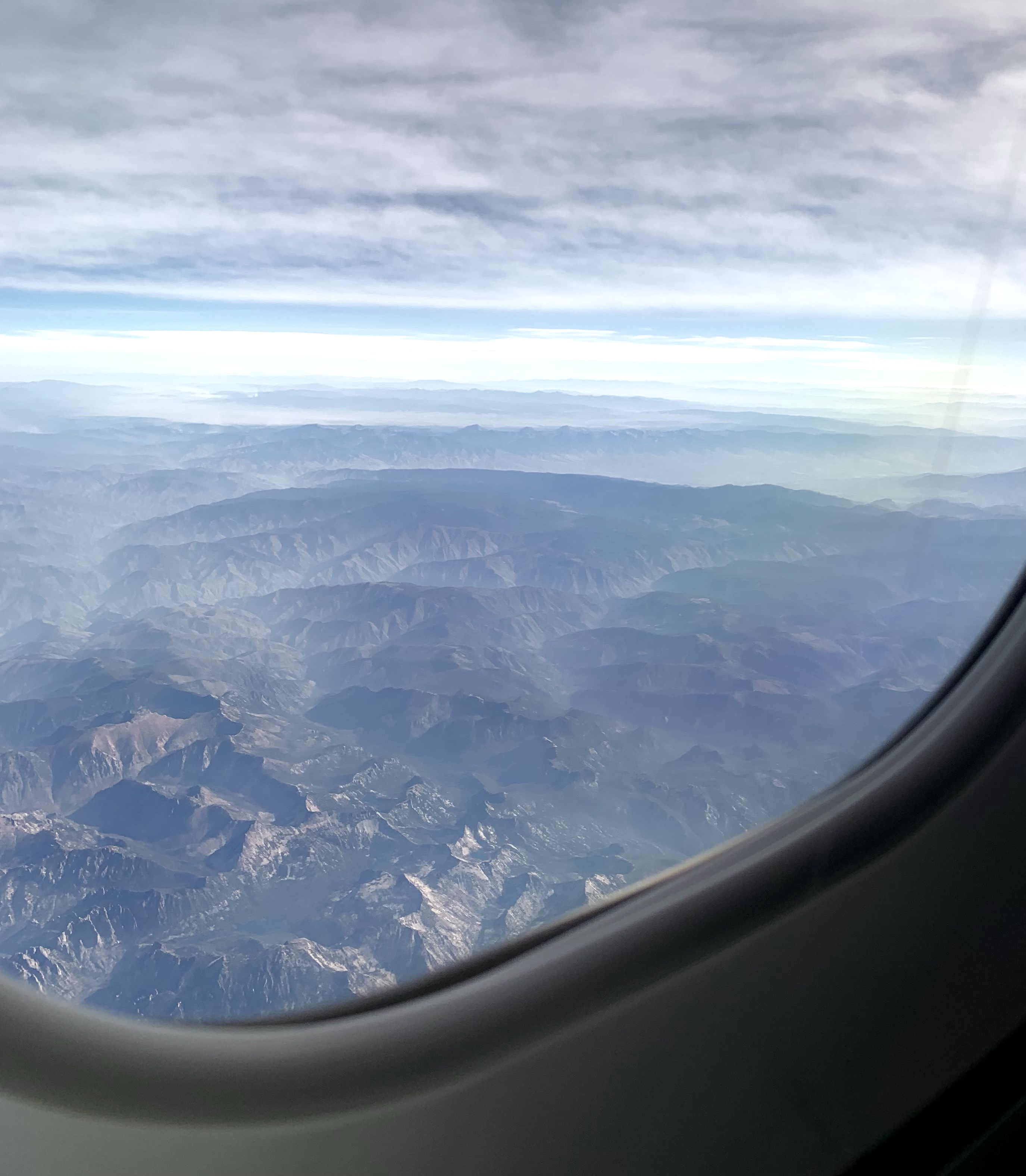
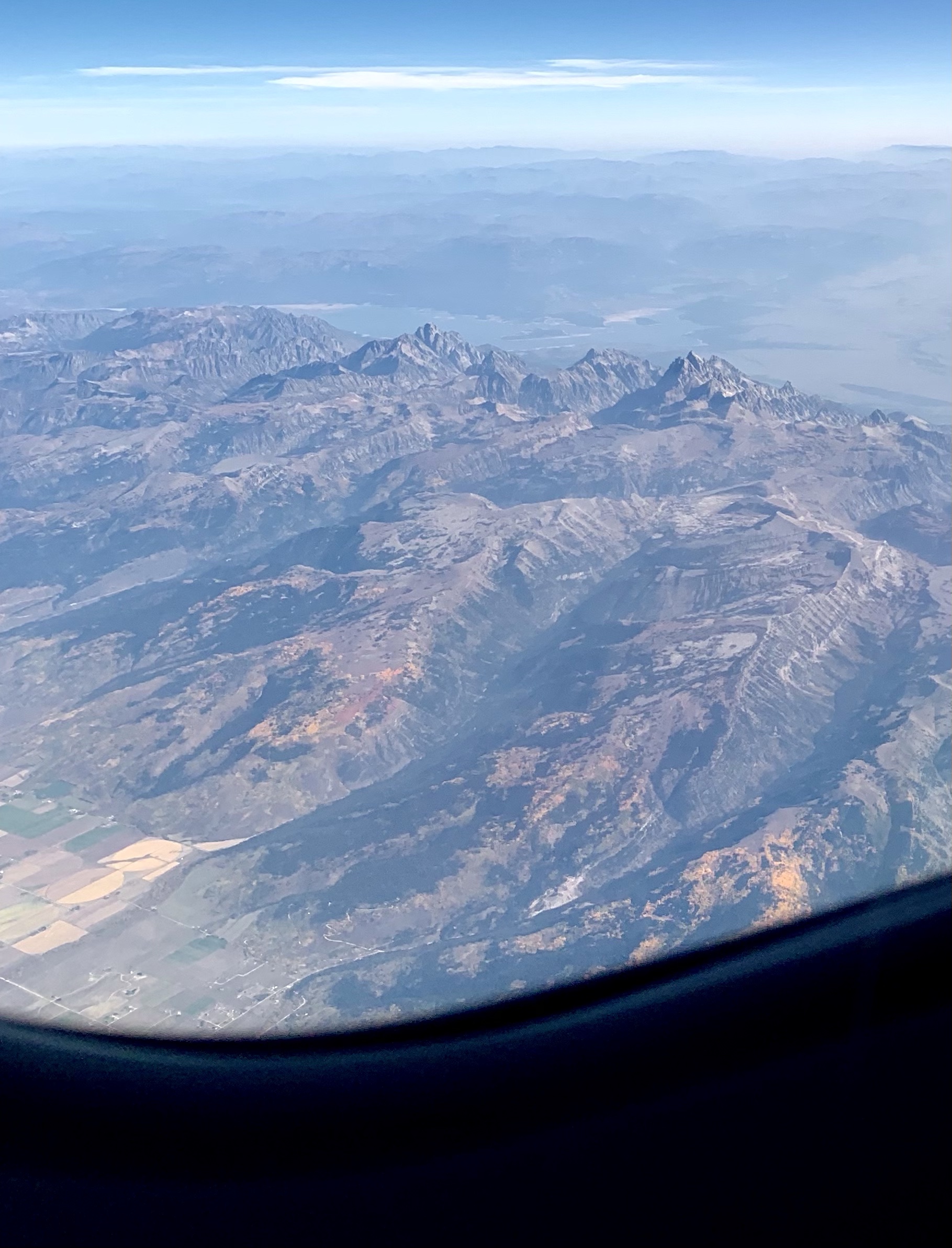
We didn’t drive this time; instead we boarded a plane with other masked people, holding our breath with the unfamiliarity of being so close to strangers— rather than a response to the beauty of what we saw.
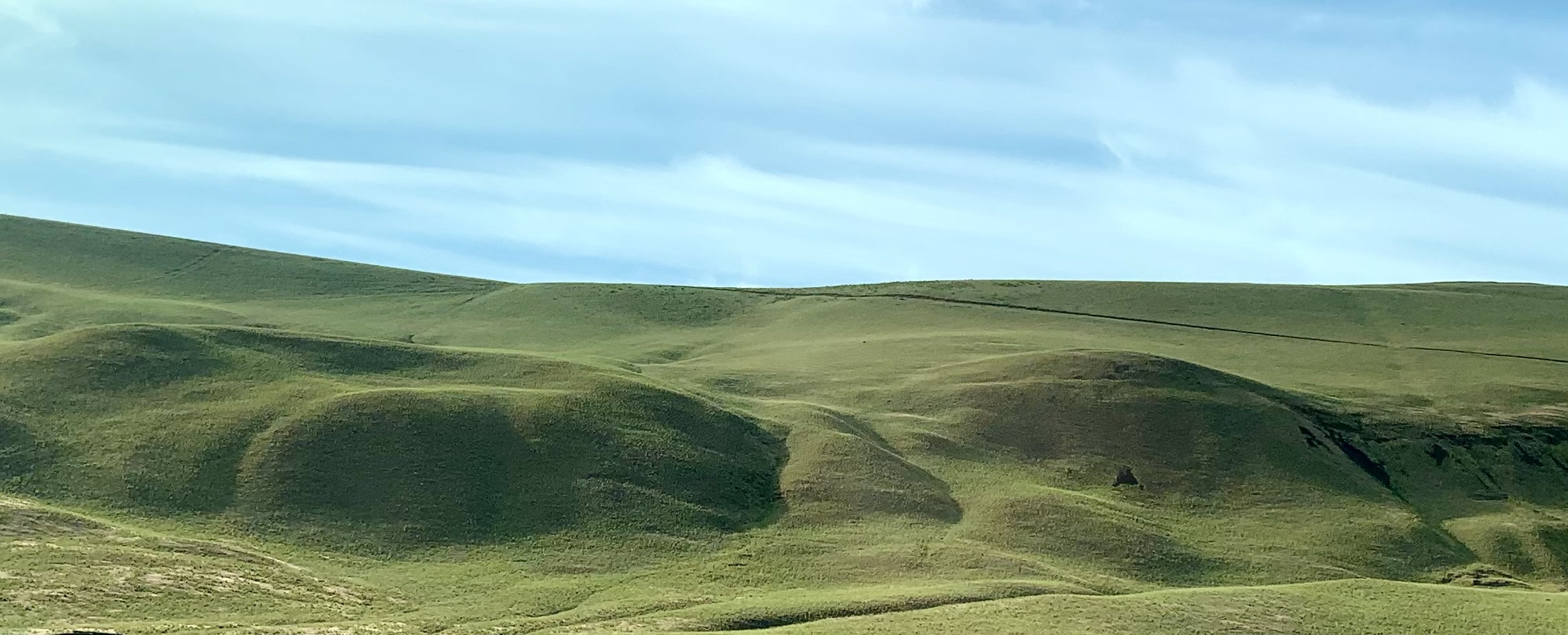
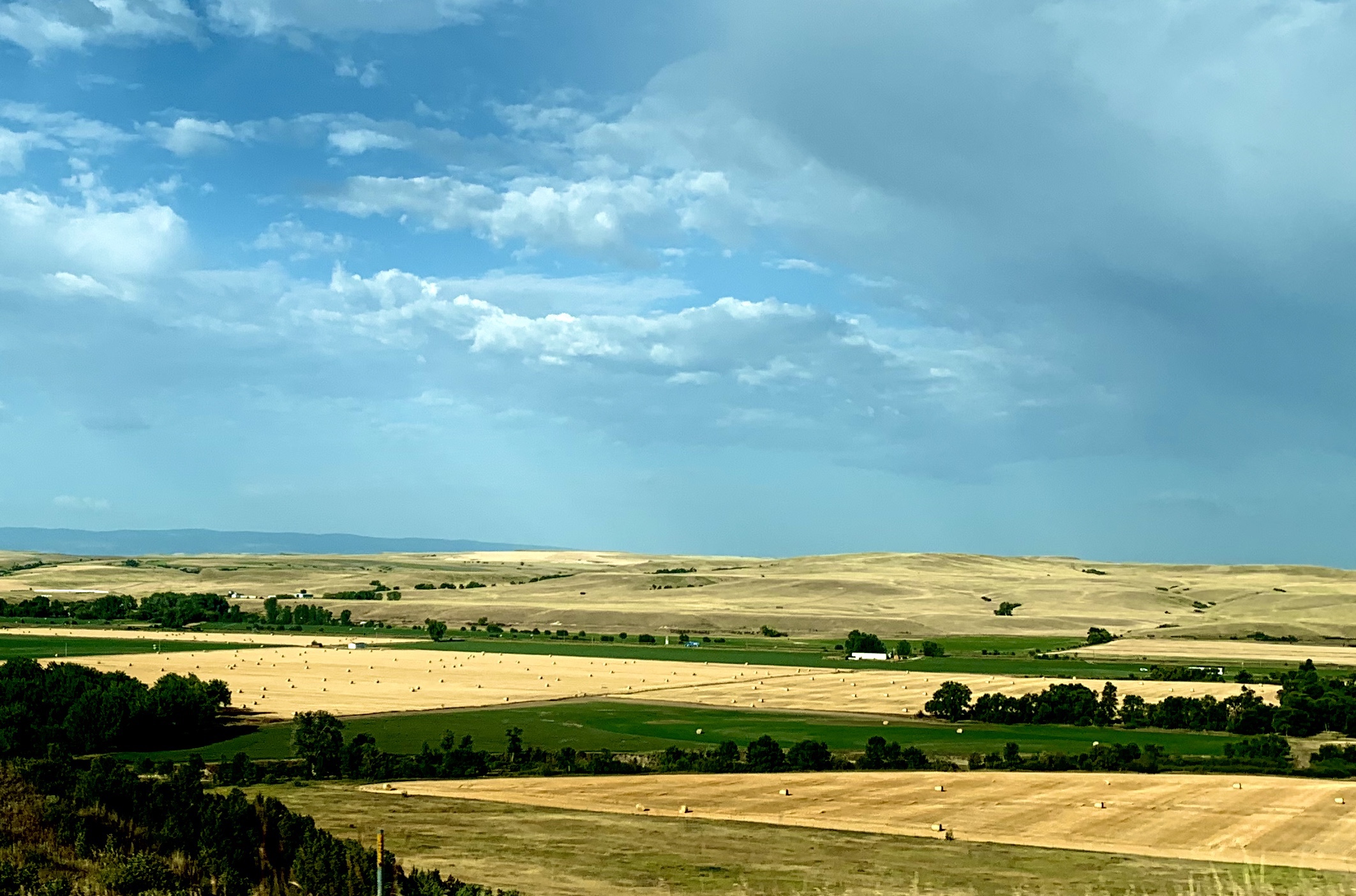
The vast landscape appeared below rather than stretching out before us, its emptiness stark and lonely from the air as well as from the road.
We hold our breath, awed by the reality that we are truly here. Really here, one way or the other.
In two hours, rather than two days. Masked, but never blind to the beauty.
A book of beautiful words and photos available to order
It’s strange to be here. The mystery never leaves you. ~John O’Donohue from Anam Cara
We must learn to acknowledge that the creation is full of mystery; we will never entirely understand it. We must abandon arrogance and stand in awe. We must recover the sense of the majesty of creation, and the ability to be worshipful in its presence. For I do not doubt that it is only on the condition of humility and reverence before the world that our species will be able to remain in it. ~Wendell Berry from The Art of the Commonplace: The Agrarian Essays
How did we come here and how is it we remain?
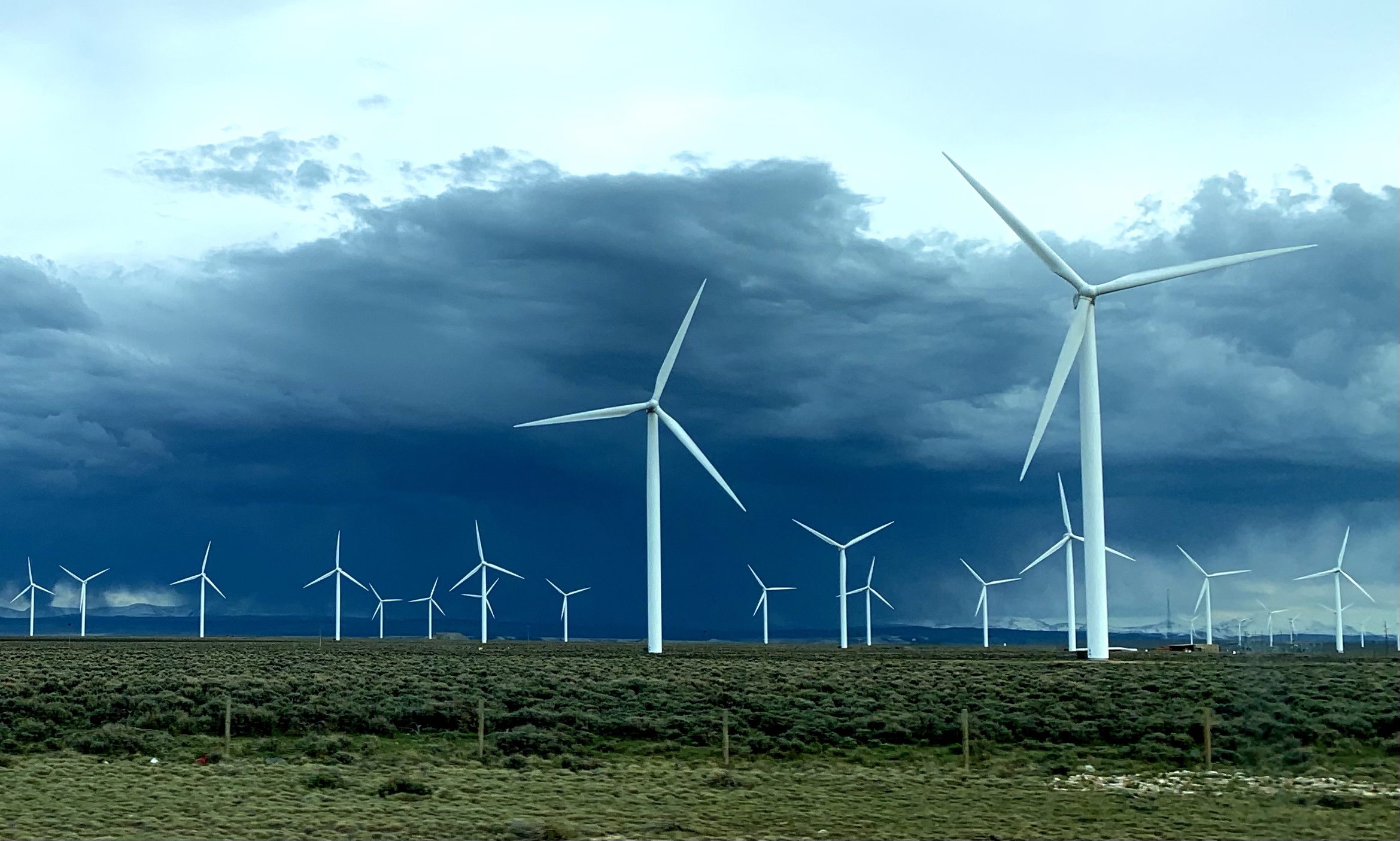
Even when the wind blows mightily, the waters rise, the earth shakes, the fires rage, the pandemic persists…
~we are here, granted another day to get it right. And will we?
It is strange to be here, marveling at the mystery around us – recognizing we are the ultimate mystery of creation, placed here as its witnesses, worshiping in humility, with reverence and obedience.
We don’t own what we see; we only own our awe.
Looking for a beautiful book to own or give? This is available to order here:
My father taught me how to eat breakfast those mornings when it was my turn to help him milk the cows. I loved rising up from
the darkness and coming quietly down the stairs while the others were still sleeping. I’d take a bowl from the cupboard, a spoon
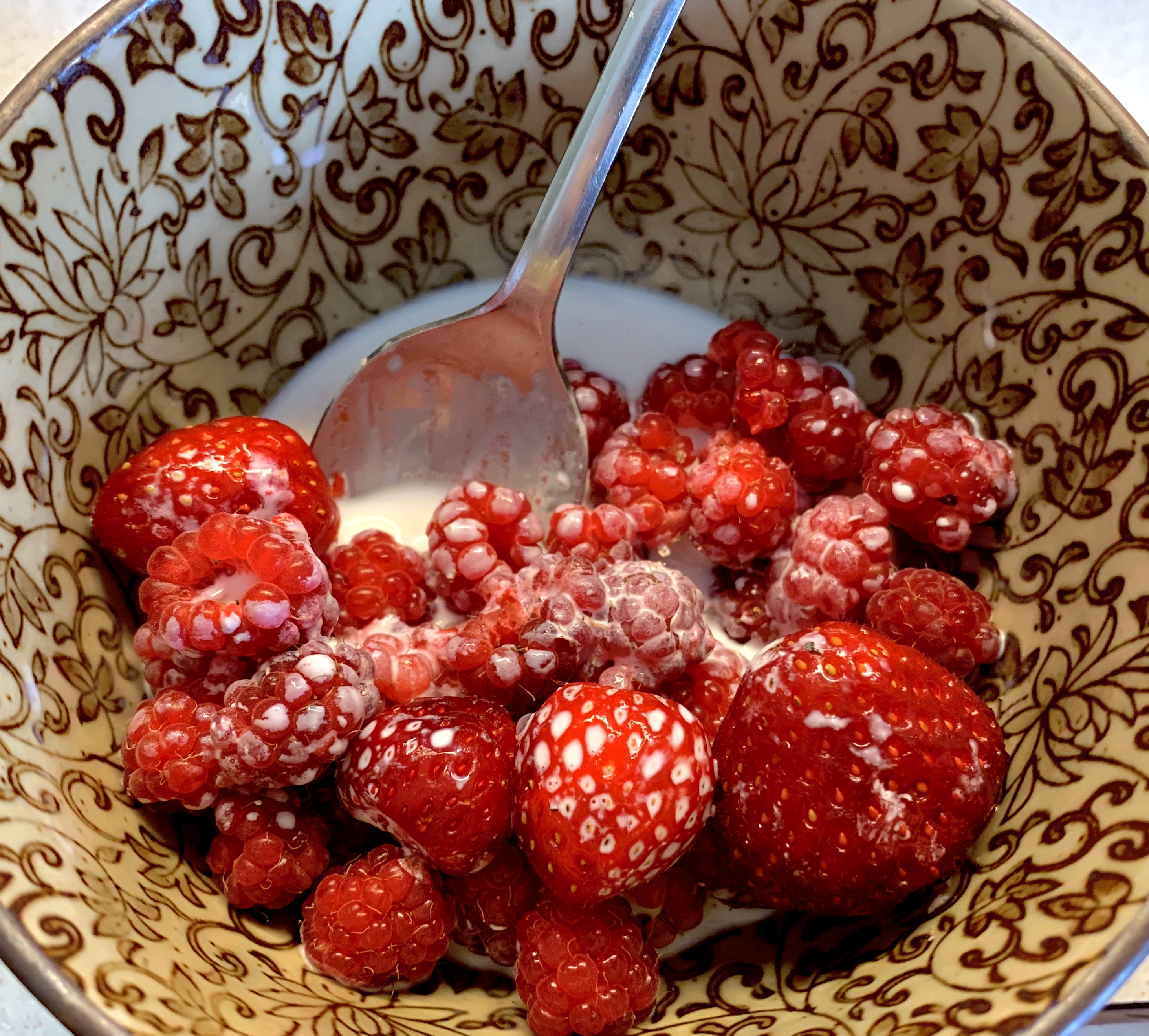
from the drawer, and slip into the pantry where he was already eating spoonfuls of cornflakes covered with mashed strawberries
from our own strawberry fields forever. Didn’t talk much—except to mention how good the strawberries tasted or the way
those clouds hung over the hay barn roof. Simple—that’s how we started up the day. ~Joyce Sutphen, “Breakfast” from First Words, Red Dragonfly.
By the time I was four years old, my family owned several Guernsey and Jersey dairy cows who my father milked by hand twice a day. My mother pasteurized the milk on our wood stove and we grew up drinking the best milk on earth, as well as enjoying home-made butter and ice cream.
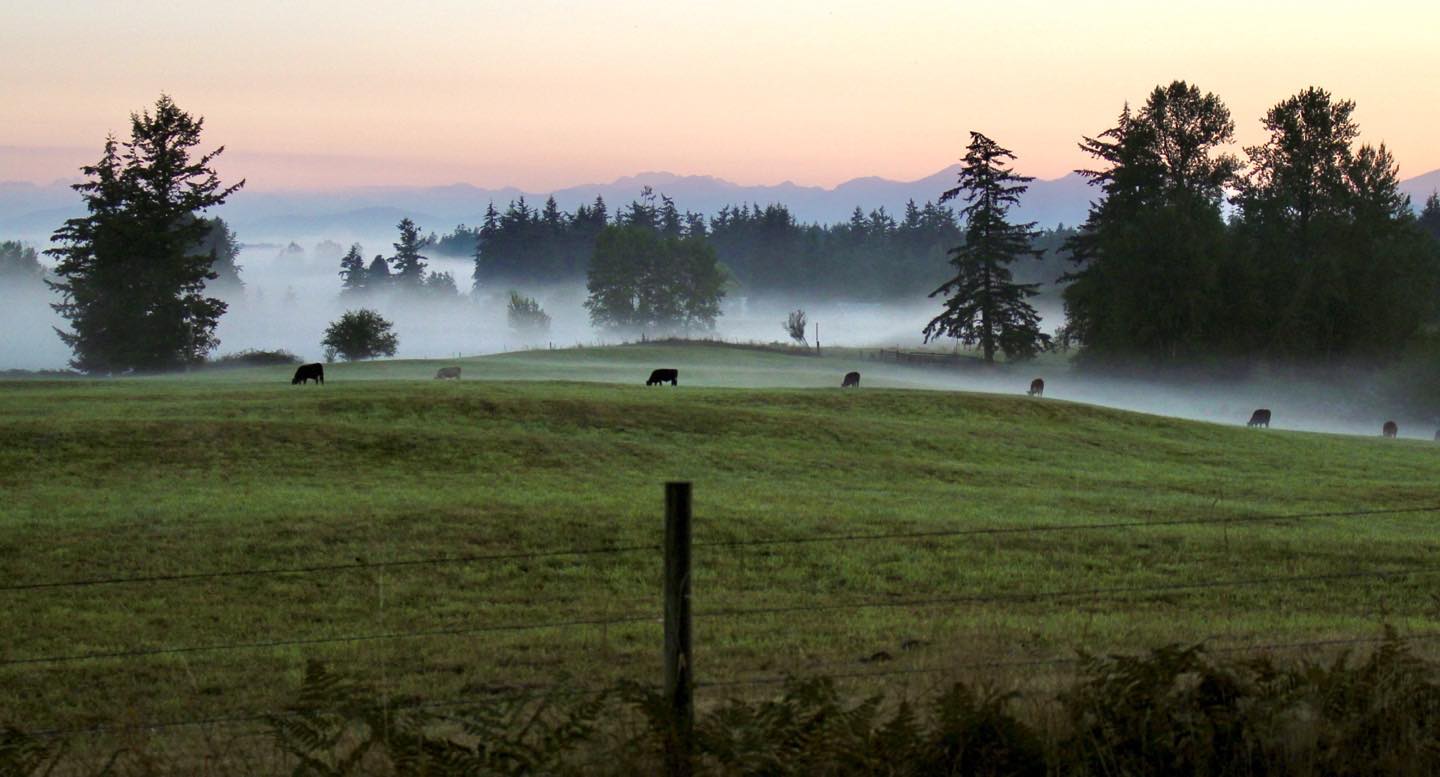
One of my fondest memories is getting up early with my dad, before he needed to be at school teaching FFA agriculture students (Future Farmers of America). I would eat breakfast with him and then walk out into the foggy fall mornings with our dog to bring in the cows for milking. He would boost me up on top of a very bony-backed chestnut and white patchwork cow while he washed her udder and set to work milking.
I would sometimes sing songs from up there on my perch and my dad would whistle since he didn’t sing.
I can still hear the rhythmic sound of the milk squirting into the stainless steel bucket – the high-pitched metallic whoosh initially and then a more gurgling low wet sound as the bucket filled up. I can see my dad’s capped forehead resting against the flank of the cow as he leaned into the muscular work of squeezing the udder teats, each in turn. I can hear the cow’s chewing her breakfast of alfalfa and grain as I balanced on her prominent spine feeling her smooth hair over her ribs. The barn cats circulated around us, mewing, attracted by the warm milky fragrance in the air.
Those were preciously simple starts to the day for me and my father, whose thoughts he didn’t articulate nor I could ever quite discern. But I did know I wasn’t only his daughter on mornings like that – I was one of his future farmers of America he dedicated his life to teaching.
Dad, even without you saying much, those were mornings when my every sense was awakened. I’ve never forgotten that- the best start to the day.
A new shipment of this book is arriving soon – you can order here:



















 Barnstorming