…And when the sun rises we are afraid it might not remain when the sun sets we are afraid it might not rise in the morning when our stomachs are full we are afraid of indigestion when our stomachs are empty we are afraid we may never eat again when we are loved we are afraid love will vanish when we are alone we are afraid love will never return and when we speak we are afraid our words will not be heard nor welcomed but when we are silent we are still afraid
So it is better to speak remembering we were never meant to survive. ~Audre Lorde from “A Litany for Survival”
We are all here so briefly, just trying to survive.
Although designed to live forever, we are fallen, running the clock out as long as we can.
Just one day more, we say. Give us just one more.
From the first, there has been struggle – the pain of our birth, the cry of our laboring mother, then feeding and protection of our children, keeping them safe from the bombs of war and the ravages of disease, followed by weakening of our frail aging bodies.
If there is a reason for all this (and there is): life’s struggles redeem us.
Heaven knows, each life means something to God, each death echoes His sorrow.
We fear we fail to make a difference in such a short time. So we speak. Hear our voices. Just one day more, Lord. Please – one day more.
Tomorrow we’ll discover What our God in Heaven has in store One more dawn One more day One day more… ~from Les Miserable
AI image created for this post
One-Time
Monthly
Yearly
Make a one-time or recurring donation to support daily Barnstorming posts
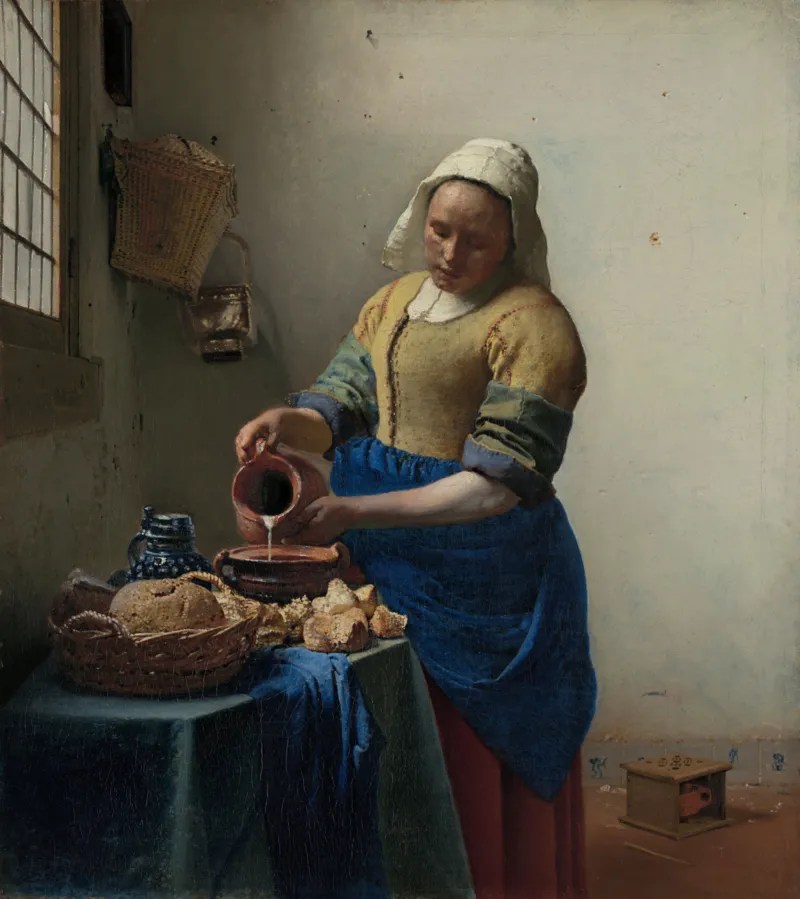
As long as that woman from the Rijksmuseum in painted quiet and concentration keeps pouring milk day after day from the pitcher to the bowl the World hasn’t earned the world’s end. ~Wislawa Szymborska “Vermeer” tr. by Claire Cavanagh and Stanislaw Baranczak from Here
Vermeer’s “The Milkmaid” from the Rijksmuseum, Amsterdam
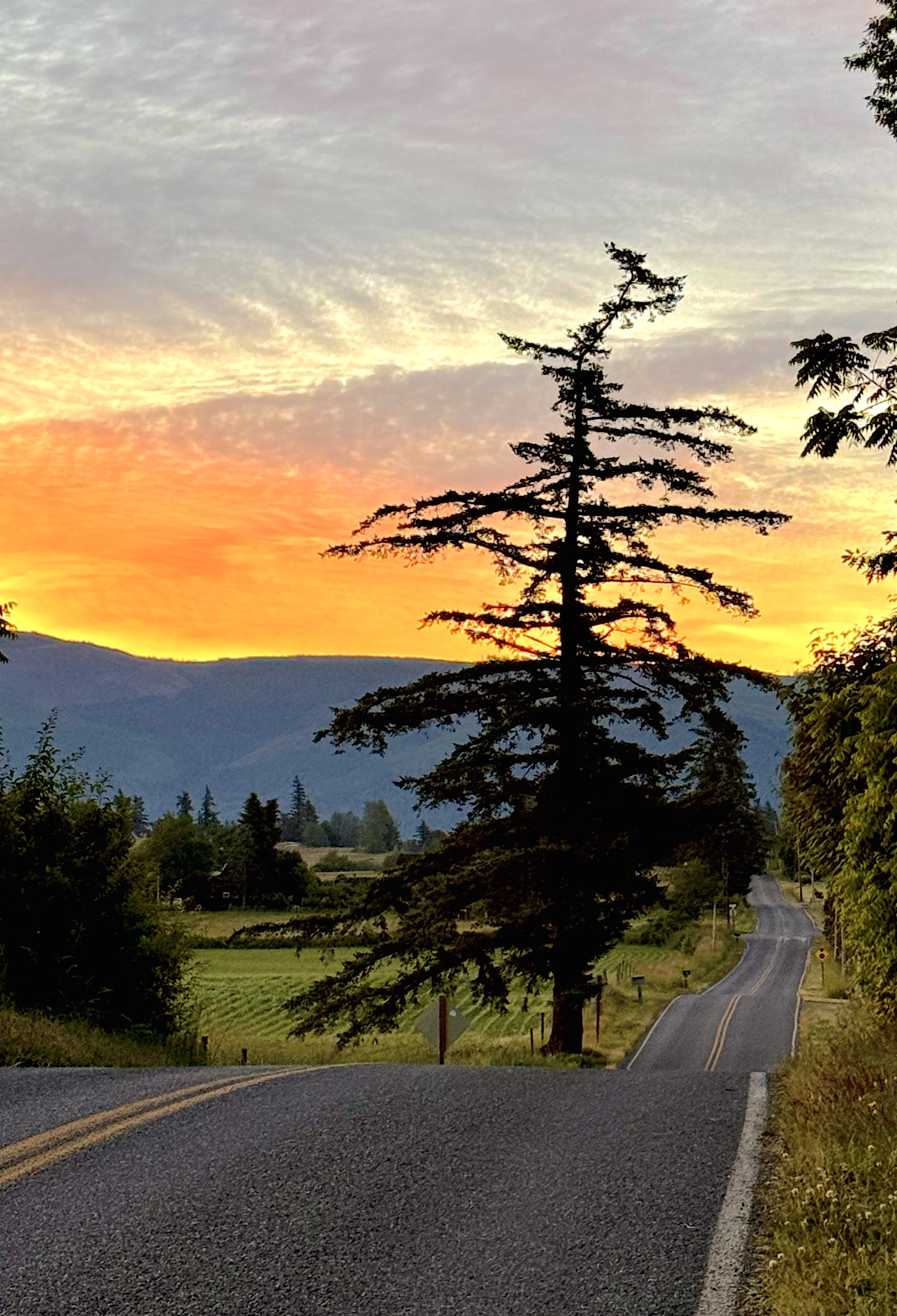
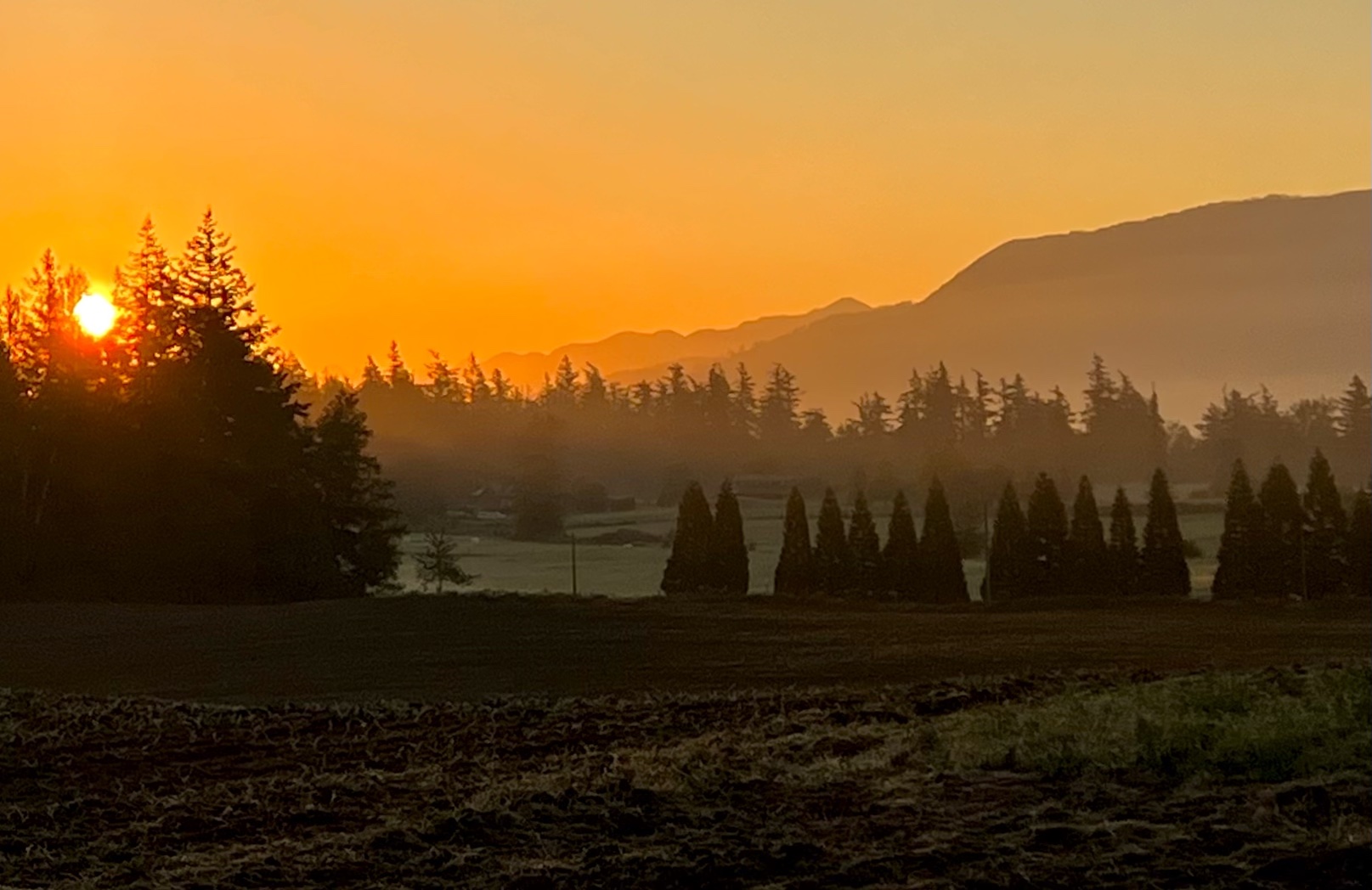
As ever, the sun rises and the sun sets, day after day. God continues to pour out His colors across the skies.
God loves us enough to plant each of us here with a plan for our redemption.
We don’t know how much longer.
Today we wave flags, some in a show of power, some in a show of gratitude, some in a show of discontent.
Instead, I pour milk as a daily sacrament: quietly, with great concentration and appreciation, as that is the work I must do, day after day.
To milk the cows and raise wheat for bread and conceive children and raise them up to pour and bake.
This is God’s created world, after all. We must do our best to restore and preserve all that He has made.
So keep milking and keep pouring.
AI image created for this post
One-Time
Monthly
Yearly
Make a one-time or recurring donation to support daily Barnstorming posts
When I drink in the stars and upward sink into the theater your words have wrought, I touch unfelt immensity and think— like Grandma used to pause in patient thought before an ordinary flower, awed by intricacies hidden in plain view, then say, “You didn’t have to do that, God!”— Surely a smaller universe would do!
But you have walled us in with open seas unconquerable, wild with distant shores whose raging dawns are but your filigree across our vaulted skies. This art of yours, what Grandma held and I behold, these flames, frames truth which awes us more: You know our names. ~Michael Stalcup“The Shallows”
there will be sun, scalloped by clouds, ushered in by a waterfall of birdsong. It will be a temperate seventy-five, low humidity. For twenty-four hours, all politicians will be silent. Reality programs will vanish from TV, replaced by the “snow” that used to decorate our screens when reception wasn’t working. Soldiers will toss their weapons in the grass. The oceans will stop their inexorable rise. No one will have to sit on a committee. When twilight falls, the aurora borealis will cut off cell phones, scramble the Internet. We’ll play flashlight tag, hide and seek, decorate our hair with fireflies, spin until we’re dizzy, collapse on the dew-decked lawn and look up, perhaps for the first time, to read the long lines of cold code written in the stars. . . . ~Barbara Crooker “Tomorrow” from Some Glad Morning
But when Aurora, daughter of the dawn, With rosy lustre purpled o’er the lawn. ~Homer from the Odyssey
Aurora is the effort Of the Celestial Face Unconsciousness of Perfectness To simulate, to Us. ~Emily Dickinson
…for the sun stopped shining. And the curtain of the temple was torn in two. Luke 23:45
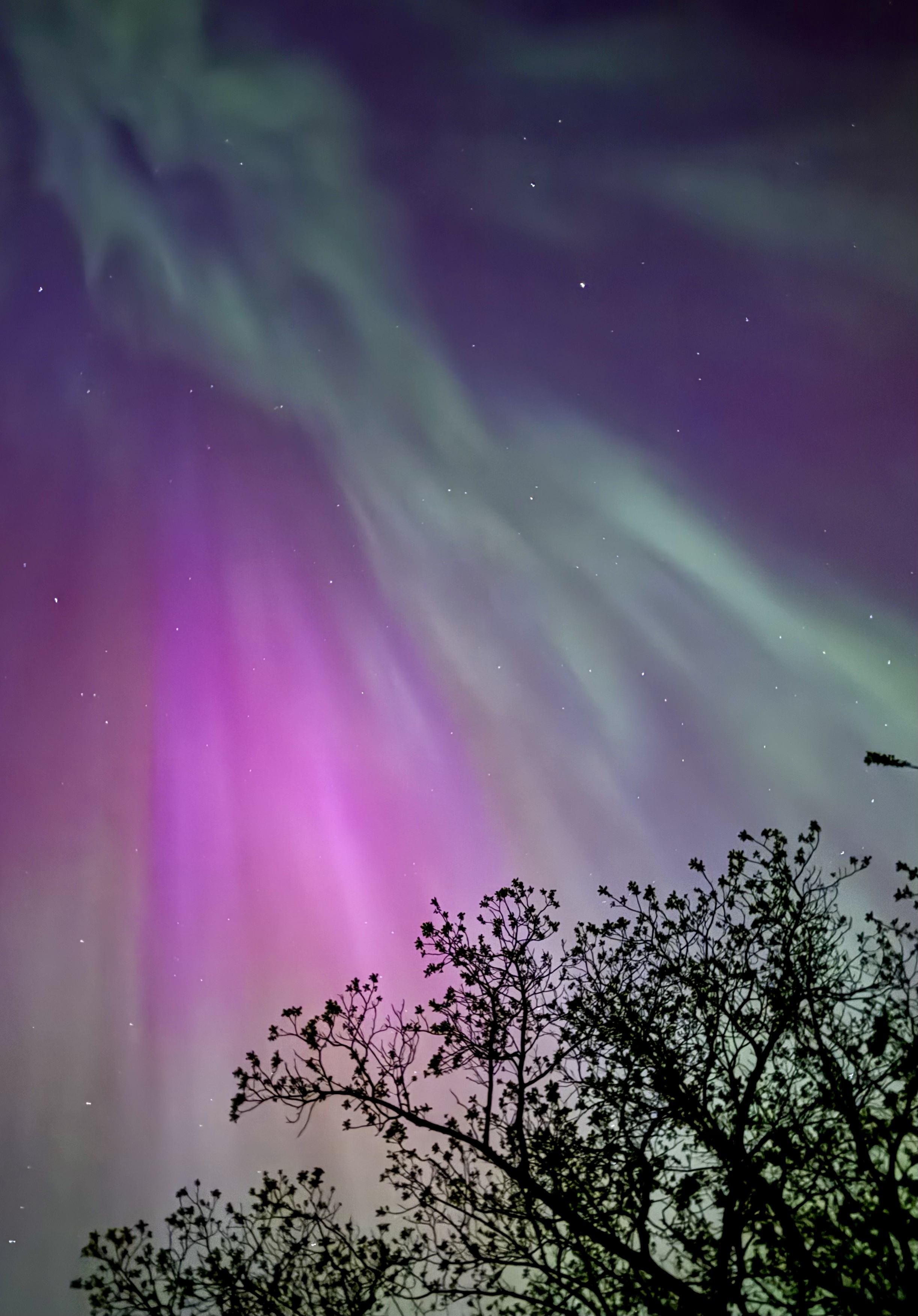
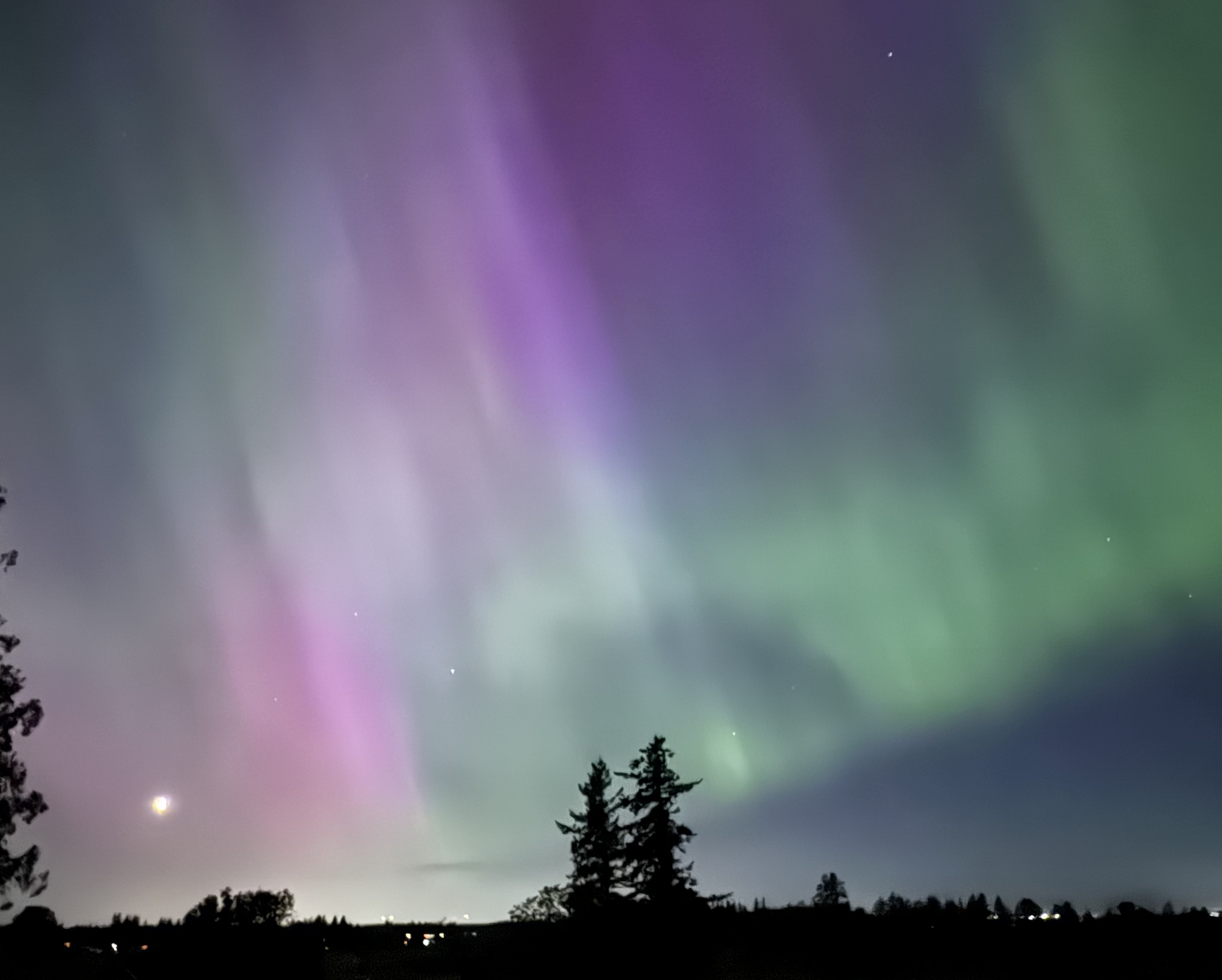
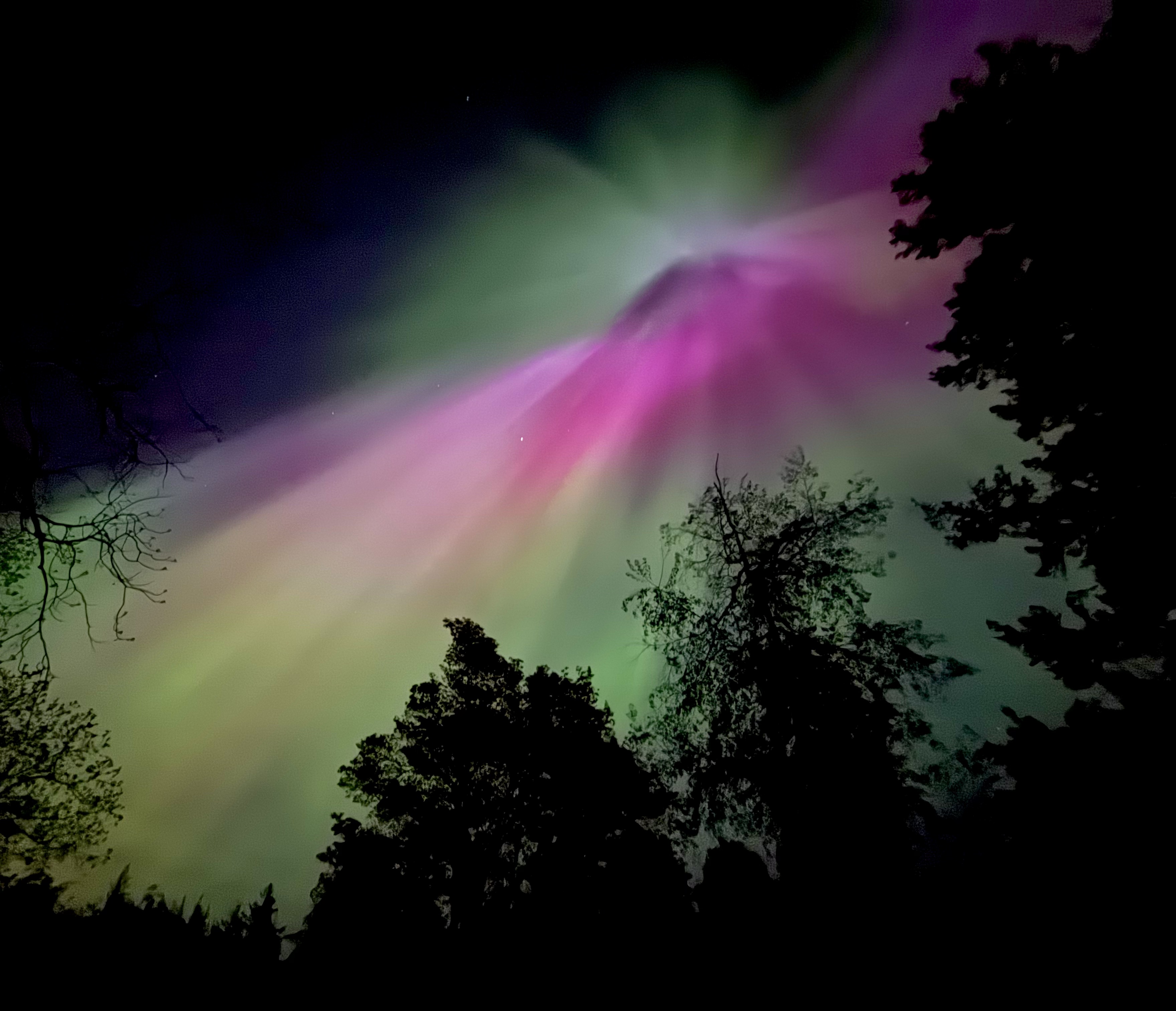
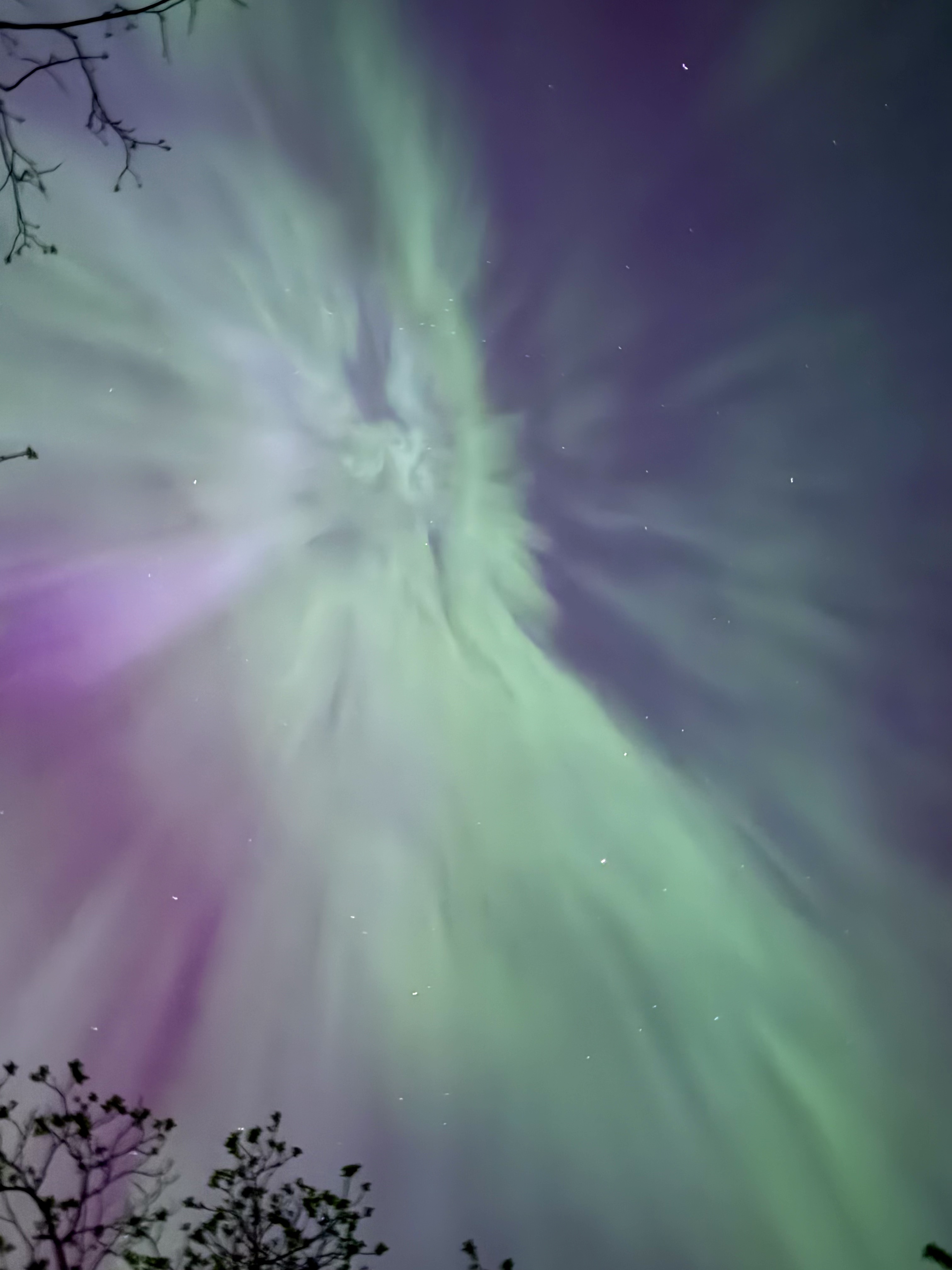
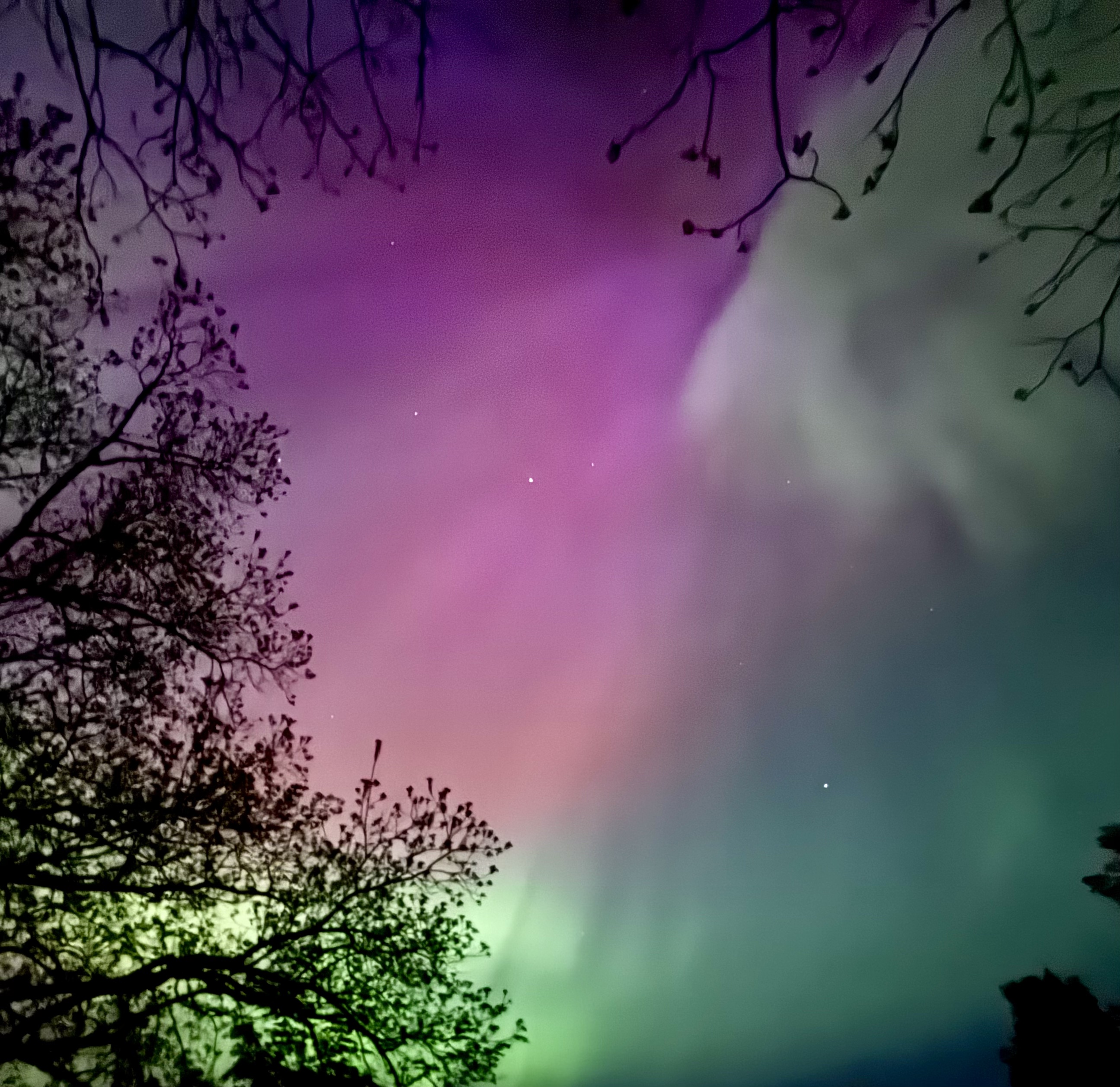
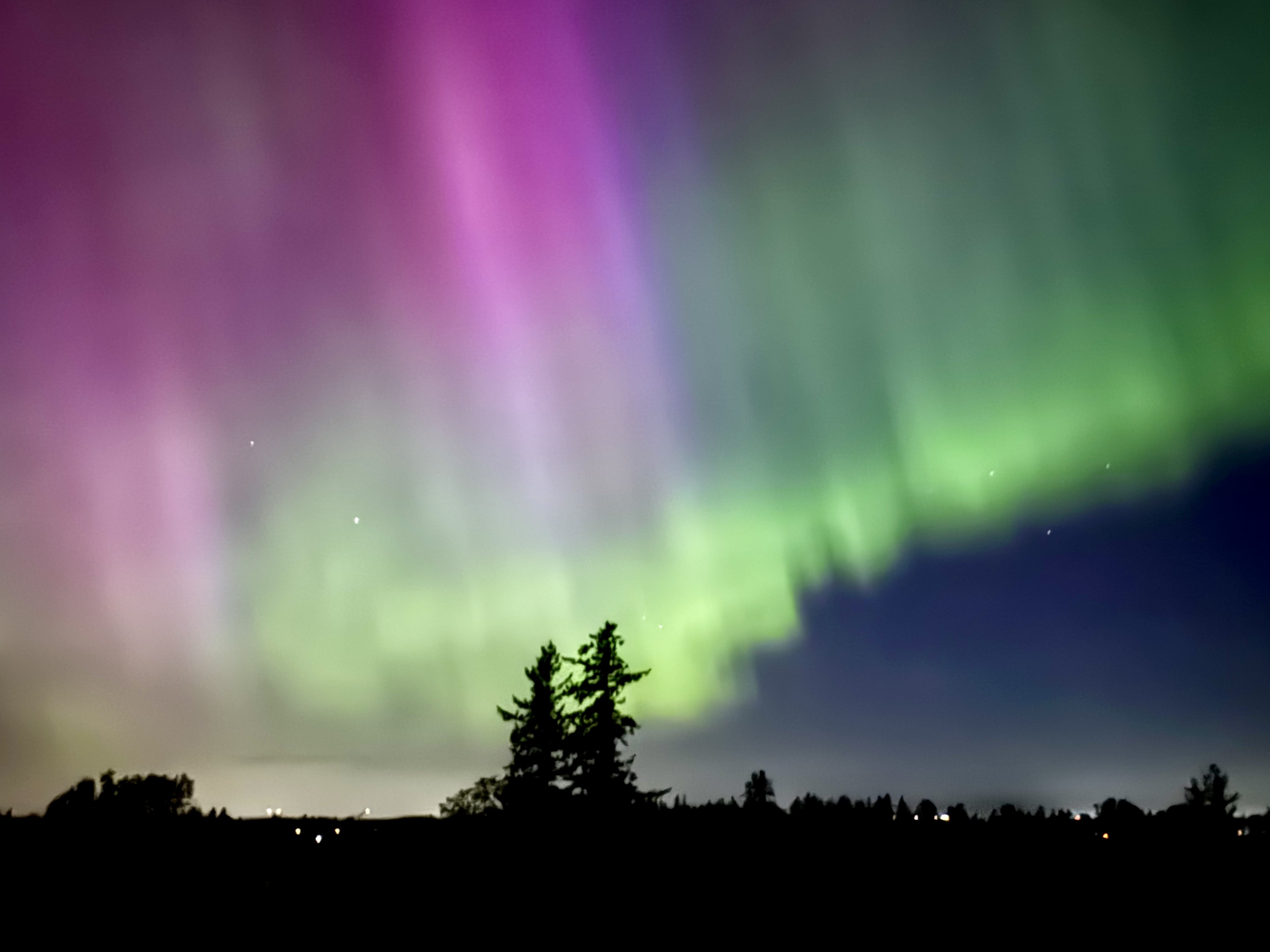
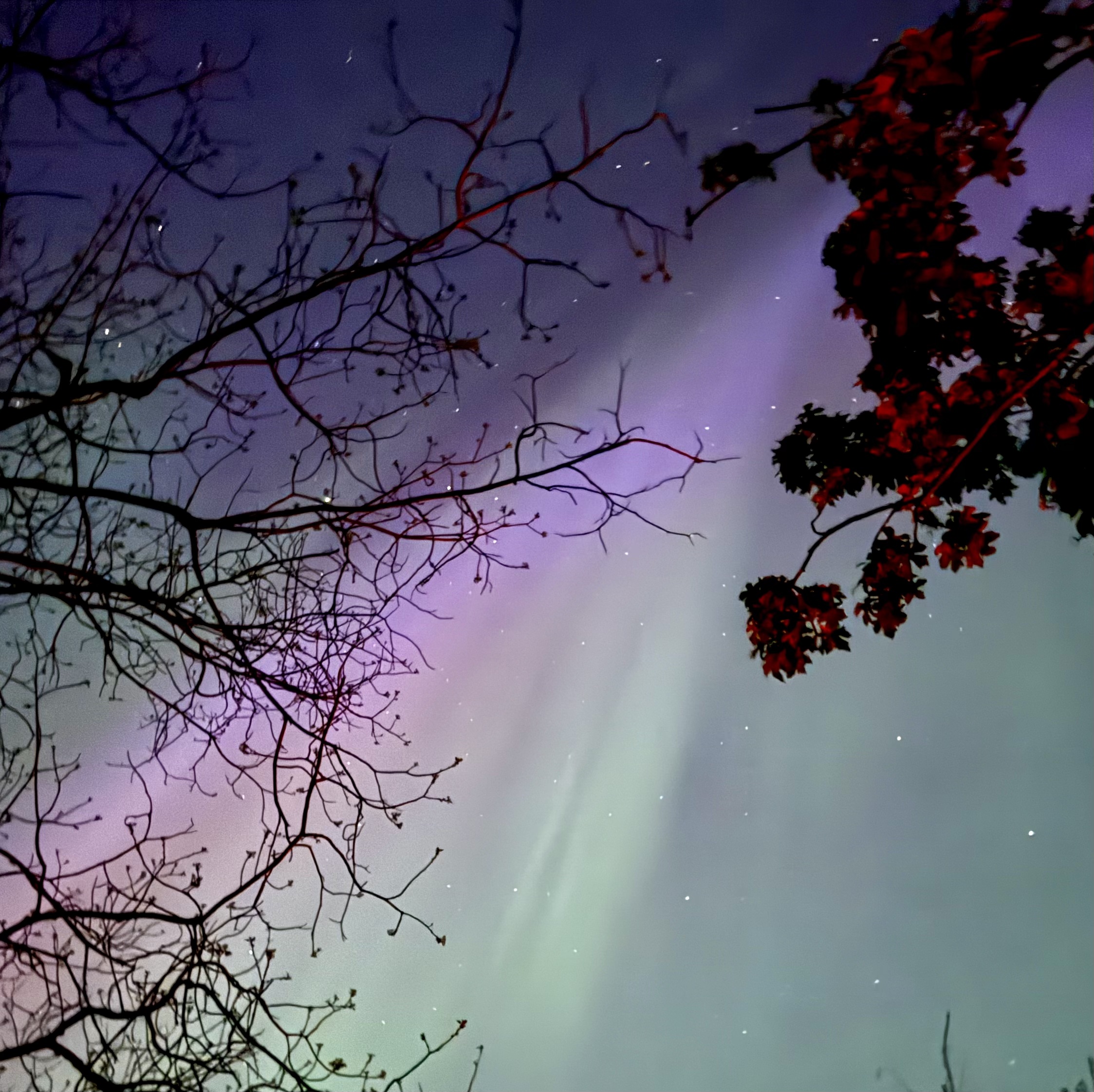
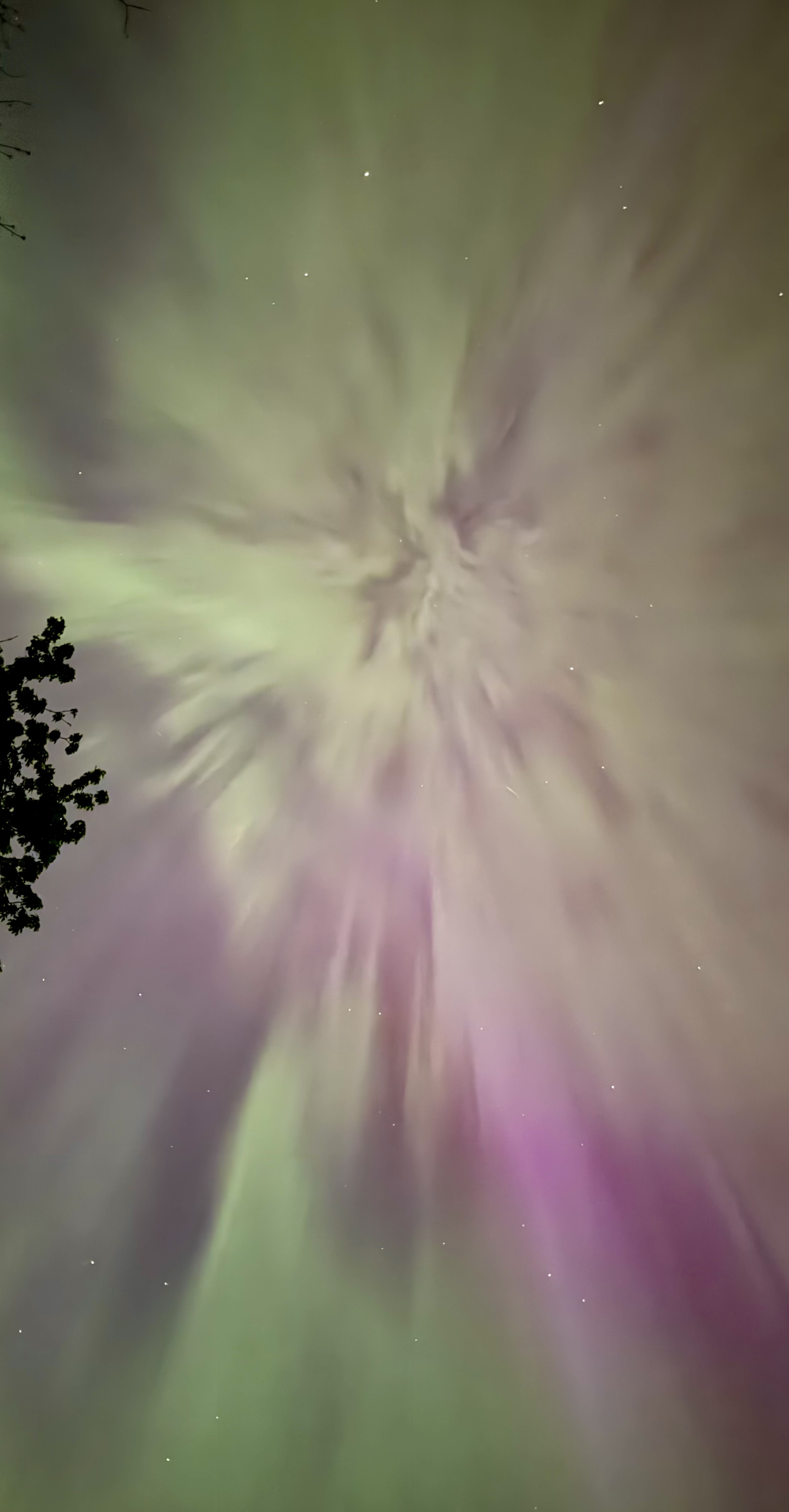
A little over a year ago, an incredible display of aurora borealis paid a rare visit to our part of the Pacific Northwest. It felt appropriate to whoop and holler when the expanse of multicolored lights began to shimmer and shift above us.
Yet as the colors deepened and danced, what struck me most was the sense of how the heavens and earth seek a “thin place” where the space between God and us narrows to a hair-breadth, summoning us to communion with Him.
Just as the curtain barring us from the holy of holies in the temple was torn in two at Christ’s moment of death, with this display, the curtain between heaven and earth seems pulled apart allowing His Light to reach us.
All earthly matters which cause grief cease to matter, such as wars and talk of wars, with politicians grandstanding 24/7.
Sadly though, our flawed and fallen human foibles continue on, oblivious to the perfection of our Creator and His universe.
We are unable to separate ourselves from God’s grandeur and creation when He bids us to witness His celestial face.
One-Time
Monthly
Yearly
Make a one-time or recurring donation to support daily Barnstorming posts
There are no creatures you cannot love. A frog calling at God From the moon-filled ditch As you stand on the country road in the June night. The sound is enough to make the stars weep With happiness. In the morning the landscape green Is lifted off the ground by the scent of grass. The day is carried across its hours Without any effort by the shining insects That are living their secret lives. The space between the prairie horizons Makes us ache with its beauty. Cottonwood leaves click in an ancient tongue To the farthest cold dark in the universe. The cottonwood also talks to you Of breeze and speckled sunlight. You are at home in these great empty places along with red-wing blackbirds and sloughs. You are comfortable in this spot so full of grace and being that it sparkles like jewels spilled on water. ~Tom Hennen “From a Country Overlooked”, from Darkness Sticks to Everything
There are some God’s creatures I struggle to love – fleas, chiggers, mosquitoes, ticks, slugs, yellow jackets among them. Also poisonous snakes, spiders and scorpions come to mind. And then there are pathogenic bacteria, parasites and viruses…
It is not their fault I struggle to find their value – only God knows why He made them as He did.
What I have learned over 7 decades is to try to look for beauty wherever I am.
To listen to the breezes and the birds, to look for how the light plays with leaves and water and how it is all created to help us feel at home for the time we are here.
Yet, this is an imperfect world where beauty doesn’t provide shelter to those with their basic needs unfulfilled – where there is no comfort, no safety, no hope.
God, deliver us from being too comfortable when others suffer. Help us feel Your love to pass on to those in need. Help us to know how to make a difference for them. We know that makes a difference to You.
AI image created for this post
One-Time
Monthly
Yearly
Make a one-time or recurring donation to support daily Barnstorming posts
The second before the sun went out we saw a wall of dark shadow come speeding at us. We no sooner saw it than it was upon us, like thunder. It roared up the valley. It slammed our hill and knocked us out. It was the monstrous swift shadow cone of the moon. I have since read that this wave of shadow moves 1,800 miles an hour. Language can give no sense of this sort of speed—1,800 miles an hour. It was 195 miles wide. No end was in sight—you saw only the edge. It rolled at you across the land at 1,800 miles an hour, hauling darkness like plague behind it. Seeing it, and knowing it was coming straight for you, was like feeling a slug of anesthetic shoot up your arm. If you think very fast, you may have time to think, “Soon it will hit my brain.” You can feel the deadness race up your arm; you can feel the appalling, inhuman speed of your own blood. We saw the wall of shadow coming, and screamed before it hit.
This was the universe about which we have read so much and never before felt: the universe as a clockwork of loose spheres flung at stupefying, unauthorized speeds. How could anything moving so fast not crash, not veer from its orbit amok like a car out of control on a turn?
Less than two minutes later, when the sun emerged, the trailing edge of the shadow cone sped away. It coursed down our hill and raced eastward over the plain, faster than the eye could believe; it swept over the plain and dropped over the planet’s rim in a twinkling. It had clobbered us, and now it roared away. We blinked in the light. It was as though an enormous, loping god in the sky had reached down and slapped the Earth’s face.
When the sun appeared as a blinding bead on the ring’s side, the eclipse was over. The black lens cover appeared again, back-lighted, and slid away. At once the yellow light made the sky blue again; the black lid dissolved and vanished. The real world began there. I remember now: We all hurried away.
We never looked back. It was a general vamoose … but enough is enough. One turns at last even from glory itself with a sigh of relief. From the depths of mystery, and even from the heights of splendor, we bounce back and hurry for the latitudes of home. ~Annie Dillard from her essay “Total Eclipse” in The Atlantic about the February 1979 eclipse in Washington State
From my six week psychiatric inpatient rotation at a Veteran’s Hospital—late winter 1979
Sixty eight year old male catatonic with depression
He lies still, so very still under the sheet, eyes closed; the only clue that he is living is the slight rise and fall of his chest. His face is skull- like framing his sunken eyes, his facial bones standing out like shelves above the hollows of his cheeks, his hands lie skeletal next to an emaciated body. He looks as if he is dying of cancer but without the smell of decay. He rouses a little when touched, not at all when spoken to. His eyes open only when it is demanded of him, and he focuses with difficulty. His tongue is thick and dry, his whispered words mostly indecipherable, heard best by bending down low to the bed, holding an ear almost to his cracked lips.
He has stopped feeding himself, not caring about hunger pangs, not salivating at enticing aromas or enjoying the taste of beloved coffee. His meals are fed through a beige rubber tube running through a hole in his abdominal wall emptying into his stomach, dripping a yeasty smelling concoction of thick white fluid full of calories. He ‘eats’ without tasting and without caring. His sedating antidepressant pills are crushed, pushed through the tube, oozing into him, deepening his sleep, but are designed to eventually wake him from his deep debilitating melancholy.
After two weeks of treatment and nutrition, his cheeks start to fill in, and his eyes are closed less often. He watches people as they move around the room and he responds a little faster to questions and starts to look us in the eye. He asks for coffee, then pudding and eventually he asks for steak. By the third week he is sitting up in a chair, reading the paper.
After a month, he walks out of the hospital, 15 pounds heavier than when he was wheeled in. His lips, no longer dried and cracking, have begun to smile again.
Thirty two year old male rescued by the Coast Guard at 3 AM in the middle of the bay
As he shouts, his eyes dart, his voice breaks, his head tosses back and forth, his back arches and then collapses as he lies tethered to the gurney with leather restraints. He writhes constantly, his arm and leg muscles flexing against the wrist and ankle bracelets.
“The angels are waiting!! They’re calling me to come!! Can’t you hear them? What’s wrong with you? I’m Jesus Christ, King of Kings!! Lord of Lords!! If you don’t let me return to them, I can’t stop the destruction!”
He finally falls asleep by mid-morning after being given enough antipsychotic medication to kill a horse. He sleeps uninterrupted for nine hours. Then suddenly his eyes fly open, and he looks startled.
He glares at me. “Where am I? How did I get here?”
“You are hospitalized in the VA psych ward after being picked up by the Coast Guard after swimming out into the bay in the middle of the night. You said you were trying to reach the angels.”
He turns his head away, his fists relaxing in the restraints, and begins to weep uncontrollably, the tears streaming down his face.
“Forgive them, Father, for they know not what they do.”
Twenty two year old male with auditory and visual hallucinations
He seems serene, much more comfortable in his own skin when compared to the others on the ward. Walking up and down the long hallways alone, he is always in deep conversation. He takes turns talking, but more often is listening, nodding, almost conspiratorial.
During a one-on-one session, he looks at me briefly, but his attention continues to be diverted, first watching an invisible something or someone enter the room, move from the door to the middle of the room, until finally, his eyes lock on an empty chair to my left. I ask him what he sees next to me.
“Jesus wants you to know He loves you.”
It takes all my will power not to turn and look at the empty chair.
Fifty four year old male with chronic paranoid schizophrenia
He has been disabled with psychiatric illness for thirty years, having his first psychotic break while serving in World War II. His only time living outside of institutions has been spent sharing a home with his mother who is now in her eighties. This hospitalization was precipitated by his increasing delusion that his mother is the devil and the voices in his head commanded that he kill her. He had become increasingly agitated and angry, had threatened her with a knife, so she called the police, pleading with them not to arrest him, but to bring him to the hospital for medication adjustment.
His eyes have taken on the glassy staring look of the overmedicated psychotic, and he sits in the day room much of the day sleeping in a chair, drool dripping off his lower lip. When awake he answers questions calmly and appropriately with no indication of the delusions or agitation that led to his hospitalization. His mother visits him almost daily, bringing him his favorite foods from home which he gratefully accepts and eats with enthusiasm. By the second week, he is able to take short passes to go home with her, spending a lunch time together and then returning to the ward for dinner and overnight. By the third week, he is ready for discharge, his mother gratefully thanking the doctors for the improvement she sees in her son. I watch them walk down the long hallway together to be let through the locked doors to freedom.
Two days later, a headline in the local paper:
“Veteran Beheads Elderly Mother”
Forty five year old male — bipolar disorder with psychotic features
He has been on the ward for almost a year, his unique high pitched laughter heard easily from behind closed doors, his eyes intense in his effort to conceal his struggles. Trying to follow his line of thinking is challenging, as he talks quickly, with frequent brilliant off topic tangents, and at times he lapses into a “word salad” of almost nonsensical sentences. Every day as I meet with him I become more confused about what is going on with him, and am unclear what is expected of me in my interactions with him. He senses my discomfort and tries to ease my concern.
“Listen, this is not your problem to fix but I’m bipolar and regularly hear command voices and have intrusive thoughts. My medication keeps me under good control. But just tell me if you think I’m not making sense because I don’t always recognize it in myself.”
During my rotation, his tenuous tether to sanity is close to breaking. He starts to listen more intently to the voices in his head, becoming frightened and anxious, often mumbling and murmuring under his breath as he goes about his day.
On a particular morning, all the patients are more anxious than usual, pacing and wringing their hands as the light outdoors slowly fades, with noon being transformed to an oddly shadowy dusk. The street lights turn on automatically and cars are driving with headlights shining. We stand at the windows in the hospital, watching the city become dark as night in the middle of the day. The unstable patients are sure the world is ending and extra doses of medication are dispensed as needed while the light slowly returns to the streets outside. Within an hour the sunlight is back, and all the patients are napping soundly.
The psychiatrist locks himself in his office and doesn’t respond to knocks on the door or calls on his desk phone.
Stressed by the recent homicide by one of his discharged patients, and identifying with his patients due to his own mental illness, he is overwhelmed by the eclipse. The nurses call the hospital administrator who comes to the ward with two security guards. They unlock the door and lead the psychiatrist off the ward. We watch him leave, knowing he won’t be back.
It is as if the light had left and only his shadow remains.
AI image created for this post
Lyrics: Measure me, sky! Tell me I reach by a song Nearer the stars; I have been little so long.
Weigh me, high wind! What will your wild scales record? Profit of pain, Joy by the weight of a word.
Horizon, reach out! Catch at my hands, stretch me taut, Rim of the world: Widen my eyes by a thought.
Sky, be my depth, Wind, be my width and my height, World, my heart’s span; Loveliness, wings for my flight. ~Leonora Speyer
One-Time
Monthly
Yearly
Make a one-time or recurring donation to support daily Barnstorming posts
My God, my God, why have you forsaken me? Why are you so far from saving me, so far from my cries of anguish? 2 My God, I cry out by day, but you do not answer, by night, but I find no rest.
I am poured out like water, and all my bones are out of joint. My heart has turned to wax; it has melted within me. 15 My mouth is dried up like a potsherd, and my tongue sticks to the roof of my mouth; you lay me in the dust of death.
16 Dogs surround me, a pack of villains encircles me; they pierce my hands and my feet. 17 All my bones are on display; people stare and gloat over me. 18 They divide my clothes among them and cast lots for my garment.
19 But you, Lord, do not be far from me. You are my strength; come quickly to help me. ~Psalm 22: 1-2, 14-19
his appearance was so disfigured beyond that of any human being and his form marred beyond human likeness— so he will sprinkle many nations, and kings will shut their mouths because of him. For what they were not told, they will see, and what they have not heard, they will understand. Isaiah 52: 13-15
When I was wounded whether by God, the devil, or myself —I don’t know yet which— it was seeing the sparrows again and clumps of clover, after three days, that told me I hadn’t died. When I was young, all it took were those sparrows, those lush little leaves, for me to sing praises, dedicate operas to the Lord. But a dog who’s been beaten is slow to go back to barking and making a fuss over his owner —an animal, not a person like me who can ask: Why do you beat me? Which is why, despite the sparrows and the clover, a subtle shadow still hovers over my spirit. May whoever hurt me, forgive me. ~Adelia Prado “Divine Wrath” translated from BrazilianPortuguese by Ellen Doré Watson
*************************************
“My God, My God,” goes Psalm 22, “hear me, why have you forsaken me?”
This is the anguish all we of Godforsaken heart know well. But hear the revelation to which Christ directs us, further in the same psalm:
For He has not despised nor scorned the beggar’s supplication, Nor has He turned away His face from me; And when I cried out to Him, He heard me.
He hears us, and he knows, because he has suffered as one Godforsaken. Which means that you and I, even in our darkest hours, are not forsaken. Though we may hear nothing, feel nothing, believe nothing, we are not forsaken, and so we need not despair.
And that is everything.
That is Good Friday and it is hope, it is life in this darkened age, and it is the life of the world to come. ~Tony Woodlief from “We are Not Forsaken”
*******************************
Emmett Till’s mother speaking over the radio
She tells in a comforting voice what it was like to touch her dead boy’s face,
how she’d lingered and traced the broken jaw, the crushed eyes–
the face that badly beaten, disfigured— before confirming his identity.
And then she compares his face to the face of Jesus, dying on the cross.
This mother says no, she’d not recognize her Lord, for he was beaten far, far worse
than the son she loved with all her heart. For, she said, she could still discern her son’s curved earlobe,
but the face of Christ was beaten to death by the whole world. ~Richard Jones “The Face” fromBetween Midnight and Dawn
******************************
In a daring and beautiful creative reversal, God takes the worse we can do to Him and turns it into the very best He can do for us. ~Malcolm Guite from The Word in the Wilderness
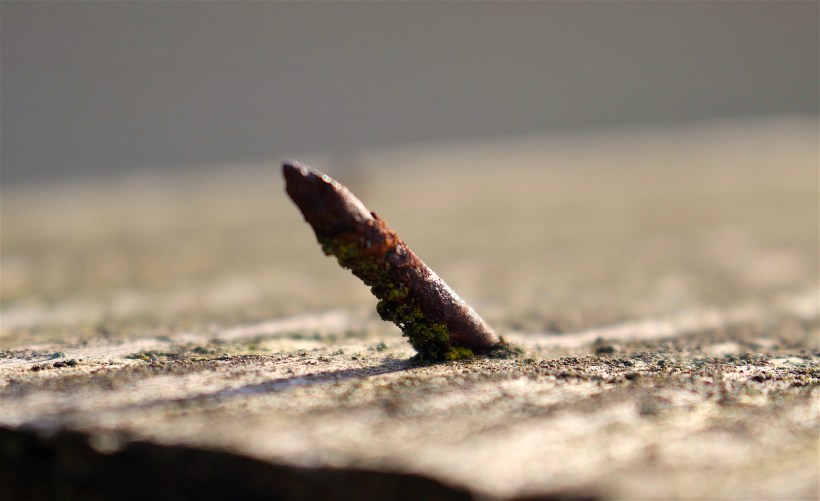
Strangely enough~ it is the nail, not the hammer, that fastens us together~ becoming the glue, the security, the permanence of solid foundation and strong supports, or protecting roof.
The hammer is only a tool to pound in the nail to where it binds so tightly; the nail can’t blend in or be forgotten, where the hole it leaves behind is a forever wounded reminder of what the hammer has done, yet, how thoroughly the hammer, and we, are forgiven.
This year’s Lenten theme:
…where you go I will go… Ruth 1:16
One-Time
Monthly
Yearly
Make a one-time or recurring donation to support daily Barnstorming posts
Jesus comes near and he beholds the city And looks on us with tears in his eyes, And wells of mercy, streams of love and pity Flow from the fountain whence all things arise. He loved us into life and longs to gather And meet with his beloved face to face How often has he called, a careful mother, And wept for our refusals of his grace, Wept for a world that, weary with its weeping, Benumbed and stumbling, turns the other way, Fatigued compassion is already sleeping Whilst her worst nightmares stalk the light of day. But we might waken yet, and face those fears, If we could see ourselves through Jesus’ tears. ~Malcolm Guite “Jesus Weeps”
When Jesus wept, the falling tear in mercy flowed beyond all bound; when Jesus groaned, a trembling fear seized all the guilty world around. ~William Billings
And when he drew near and saw the city, he wept over it, saying, “Would that you, even you, had known on this day the things that make for peace! But now they are hidden from your eyes. ~Luke 19:41-42
Commencing this holy week of remembrance, knowing how our world is in a terrible disarray, too many sleeping in the street, some in graves, many grieving losses, all wondering what comes next.
On this journey, we face our own fears of vulnerability and mortality, these days when thorns overwhelm emerging blossoms~~
To remember what He did this week long ago, and still does today to conquer the shroud and the stone, to defy death, makes all the difference to me.
Indeed Jesus wept and groaned for us.
To be known for who we are by a God who weeps for us and moans with pain we caused: we can know no greater love.
This week ends our living for self, only to die, and begins our dying to self, in order to live.
This year’s Lenten theme:
…where you go I will go… Ruth 1:16
One-Time
Monthly
Yearly
Make a one-time or recurring donation to support daily Barnstorming posts
I wake and feel the fell of dark, not day. Whathours, O what black hours we have spent This night! what sights you, heart, saw; ways you went! And moremust, in yet longer light’s delay.
With witness I speak this. But where I say Hours I mean years, mean life. And my lament Is cries countless, cries like dead letters sent To dearest him that lives alas! away.
I am gall, I am heartburn. God’s most deep decree Bitter would have me taste: my taste was me; Bones built in me, flesh filled, blood brimmed the curse.
Selfyeast of spirit a dull dough sours. I see The lost are like this, and their scourge to be As I am mine, their sweating selves; but worse. ~Gerard Manley Hopkins “I wake and feel the fell of dark”
Surfacing to the street from a thirty two hour hospital shift usually means my eyes blink mole-like, adjusting to searing daylight after being too long in darkened windowless halls. This particular January day is different. As the doors open, I am immersed in a subdued gray Seattle afternoon, with horizontal rain soaking my scrubs.
Finally remembering where I had parked my car in pre-dawn dark the day before, I start the ignition, putting the windshield wipers on full speed. I merge onto the freeway, pinching myself to stay awake long enough to reach my apartment and my pillow.
The freeway is a flowing river current of head and tail lights. Semitrucks toss up tsunami waves cleared briefly by my wipers frantically whacking back and forth.
Just ahead in the lane to my right, a car catches my eye — it looks just like my Dad’s new Buick. I blink to clear my eyes and my mind, switching lanes to get behind. The license plate confirms it is indeed my Dad, oddly 100 miles from home in the middle of the week. I smiled, realizing he and Mom have probably planned to surprise me by taking me out for dinner.
I decide to surprise them first, switching lanes to their left and accelerating up alongside. As our cars travel side by side in the downpour, I glance over to my right to see if I can catch my Dad’s eye through streaming side windows. He is looking away to the right at that moment, obviously in conversation. It is then I realize something is amiss. When my Dad looks back at the road, he is smiling in a way I have never seen before. There are arms wrapped around his neck and shoulder, and a woman’s auburn head is snuggled into his chest.
My mother’s hair is gray.
My initial confusion turns instantly to fury. Despite the rivers of rain obscuring their view, I desperately want them to see me. I think about honking, I think about pulling in front of them so my father would know I have seen and I know. I think about ramming them with my car so that we’d perish all, unrecognizable, in an explosive storm-soaked mangle.
At that moment, my father glances over at me and our eyes meet across the lanes. His face is a mask of betrayal, bewilderment and then shock, and as he tenses, she straightens up and looks at me quizzically.
I can’t bear to look any longer.
I leave them behind, speeding beyond, splashing them with my wake. Every breath burns my lungs and pierces my heart. I can not distinguish whether the rivers obscuring my view are from my eyes or my windshield.
Somehow I made it home to my apartment, my heart still pounding in my ears. The phone rings and remains unanswered.
I throw myself on my bed, bury my wet face in my pillow and pray for sleep without dreams, without secrets, without lies, without the burden of knowing a truth I alone now knew and wished I didn’t..
Postscript: I didn’t tell anyone what I saw that day. My father never asked. He divorced my mother, and was remarried quickly, my mother and two families shattered as a result. Ten years later, his second wife died due to a relentless cancer, and he returned to my mother, asking her forgiveness and wanting to remarry. Within months, he too was diagnosed with cancer and Mom nursed him through his treatment, remission, recurrence and then hospice.
We became a family again, not the same as before, yet put back together for good reason – forgiving and forgiven.
This year’s Lenten theme:
…where you go I will go… Ruth 1:16
AI image created for this post
One-Time
Monthly
Yearly
Make a one-time or recurring donation to support daily Barnstorming posts
Let your speech be alway with grace, seasoned with salt, that ye may know how ye ought to answer every man. Colossians 4: 6
Let all bitterness and wrath and anger and clamor and slander be put away from you, with all malice,and be kind to one another, tenderhearted, forgiving one another, as God in Christ forgave you. Ephesians 4: 31-32
You have heard that it was said, ‘Love your neighbor and hate your enemy.’But I tell you, love your enemies and pray for those who persecute you, that you may be children of your Father in heaven. He causes his sun to rise on the evil and the good, and sends rain on the righteous and the unrighteous. Matthew 5:43-45
And whom do I call my enemy? An enemy must be worthy of engagement. I turn in the direction of the sun and keep walking. It’s the heart that asks the question, not my furious mind. The heart is the smaller cousin of the sun. It sees and knows everything. It hears the gnashing even as it hears the blessing. The door to the mind should only open from the heart. An enemy who gets in, risks the danger of becoming a friend. ~Joy Harjo “This Morning I Pray For My Enemies”
I have a heart full of questions Quieting all my suggestions What is the meaning of Christian In this American life?
Is there a way to love always? Living in enemy hallways Don’t know my foes from my friends and Don’t know my friends anymore Power has several prizes Handcuffs can come in all sizes Love has a million disguises But winning is simply not one ~Jon Guerra from “Citizens”
…{His is} the love for the enemy– love for the one who does not love you but mocks, threatens, and inflicts pain. The tortured’s love for the torturer. This is God’s love. It conquers the world. ~Frederich Buechner from The Magnificent Defeat
After watching the appalling ambush of disrespect and rudeness by our country’s two leaders in the Oval Office yesterday toward visiting Ukrainian President Zelenskyy, I find myself gnashing my teeth in anger.
Now – who indeed is the friend, and who is the enemy?
This was not the time or forum for a public, rather than private high stakes discussion: the presence of cameras encourages bullies to have their say in front of a vast audience, determined to intimidate in order to “make good television.”
Simply agreeing to disagree on some issues in a difficult negotiation no longer seems an option. Why can’t a debate honor the other side enough to facilitate a civil discussion? Instead, if someone doesn’t see it your way, they’re perceived as ungrateful, morally deficient, hostile or worst of all, they have become the enemy.
But Ukraine is not the enemy and never wants to be. They want to remain whole and free to govern themselves and need help to withstand the attacks of their neighborhood bully.
Those of us who have been around awhile know: bellowing hateful words puts a match to angry feelings that burn hot inside and outside. Usually a fruitful political debate over polarizing opinions can inspire a profound sense of purpose and compromise, yet if there is no respect or honor shown, it burns to ashes.
I disagree vehemently with what our leaders are doing and in particular, the boorish and foolish way they are doing it. Their school yard behavior is a far cry from the biblical command to exhibit grace and compassion instead of hostility and retribution.
Fickle things are those angry words – someone lights a match to them, keeps stoking the fire with new fuel, over and over again until nothing remains standing.
Let us refuse to be the kindling as our leaders seek our attention daily by inflicting more trauma and angst, not just to the citizens of Ukraine and Europe, but to the U.S. citizens to whom they are ultimately accountable.
Let us resist our own angry gnashing of teeth by praying that only God’s transforming love for enemies can soften the hearts and minds of the bullies of the world.
One-Time
Monthly
Yearly
Make a one-time or recurring donation to support daily Barnstorming posts
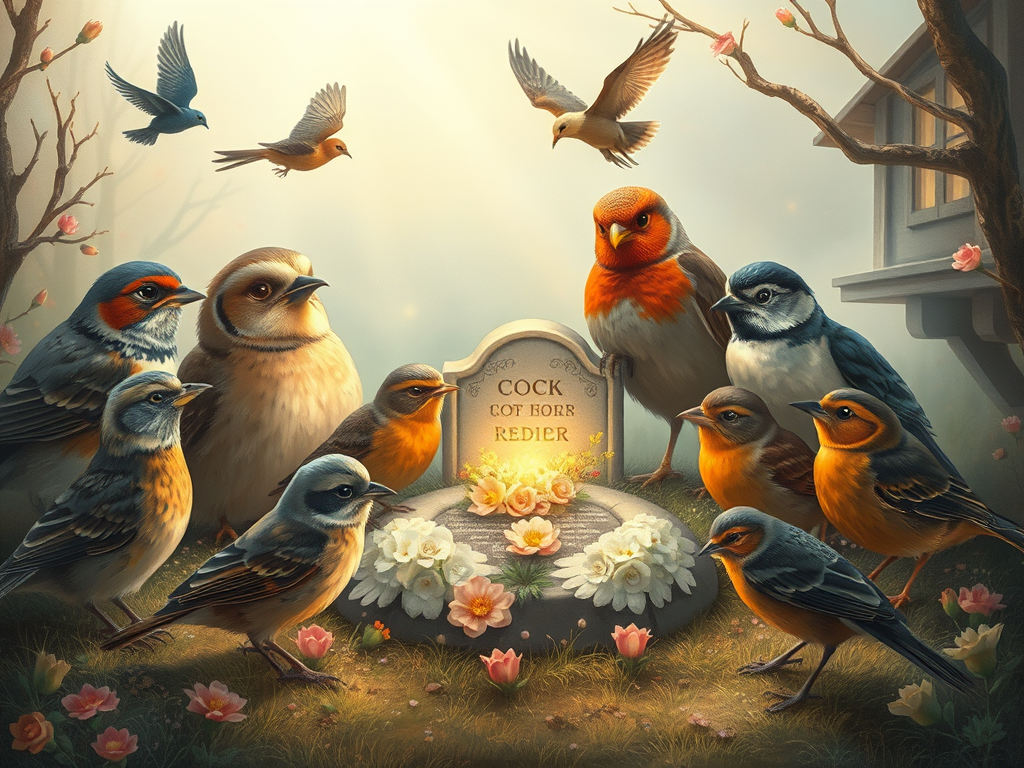
“Who killed Cock Robin?” “I,” said the Sparrow, “With my bow and arrow, I killed Cock Robin.” “Who saw him die?” “I,” said the Fly, “With my little eye, I saw him die.” “Who caught his blood?” “I,” said the Fish, “With my little dish, I caught his blood.” “Who’ll make the shroud?” “I,” said the Beetle, “With my thread and needle, I’ll make the shroud.” “Who’ll dig his grave?” “I,” said the Owl, “With my pick and shovel, I’ll dig his grave.” “Who’ll be the parson?” “I,” said the Rook, “With my little book, I’ll be the parson.” “Who’ll be the clerk?” “I,” said the Lark, “If it’s not in the dark, I’ll be the clerk.” “Who’ll carry the link?” “I,” said the Linnet, “I’ll fetch it in a minute, I’ll carry the link.” “Who’ll be chief mourner?” “I,” said the Dove, “I mourn for my love, I’ll be chief mourner.” “Who’ll carry the coffin?” “I,” said the Kite, “If it’s not through the night, I’ll carry the coffin.” “Who’ll bear the pall?” “We,” said the Wren, “Both the cock and the hen, we’ll bear the pall.” “Who’ll sing a psalm?” “I,” said the Thrush, “As she sat on a bush, I’ll sing a psalm.” “Who’ll toll the bell?” “I,” said the bull, “Because I can pull, I’ll toll the bell.” All the birds of the air fell a-sighing and a-sobbing, When they heard the bell toll for poor Cock Robin. ~Anonymous“Who Killed Cock Robin”
photo by Kate Steensma of Steensma Creameryphoto by Harry Rodenberger
Sighing and sobbing…
The times we live in now are surreal as this dark nursery tale rhyme about the killing of a robin by a smaller bird.
What do we do with the sparrow’s proud confession in the first stanza? Whatever happened to instigate such destructive violence? Self-defense? Vengeance? Accident? Just for sport? Or simple random cruelty?
Such boasting about a killing makes about as much sense as our being witness to the overt destruction of the rule of law taking place right under our noses in the U.S.
Hear the bell toll. We are each diminished as citizens. Let the mourning begin. It is our own death we grieve…
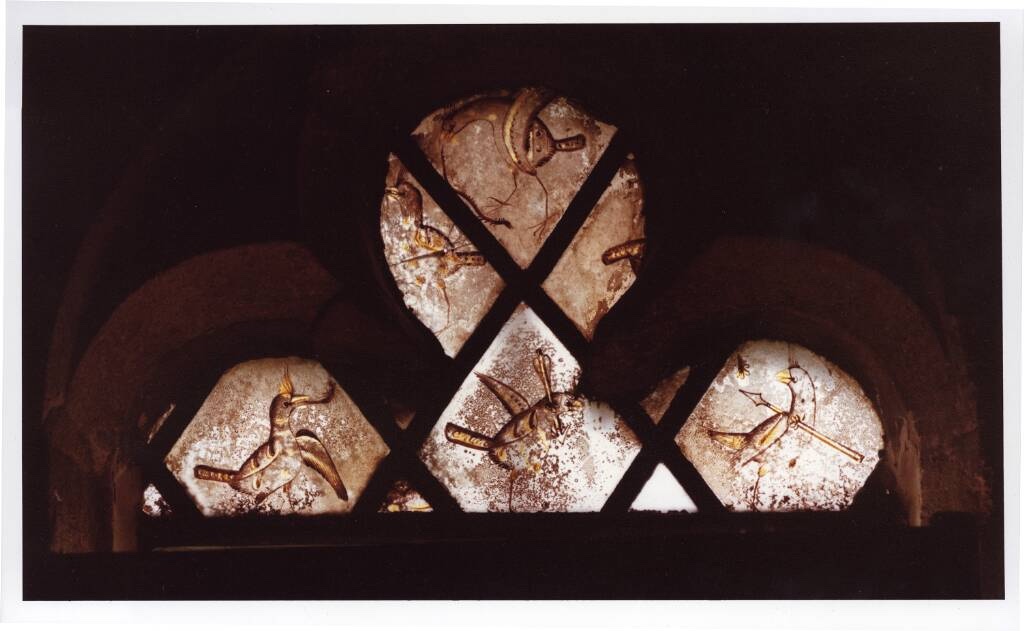
Medieval Stained Glass of a robin shot by an arrow in Buckland Rectory, Gloucester, UK
No man is an island, Entire of itself. Each is a piece of the continent, A part of the main. Each man’s death diminishes me, For I am involved in mankind. Therefore, send not to know For Whom the bell tolls, It tolls for thee… ~John Donne from “For Whom the Bell Tolls”
AI image created for this postAI image created for this post
One-Time
Monthly
Yearly
Make a one-time or recurring donation to support daily Barnstorming posts






























































 Barnstorming