Feeling Blue

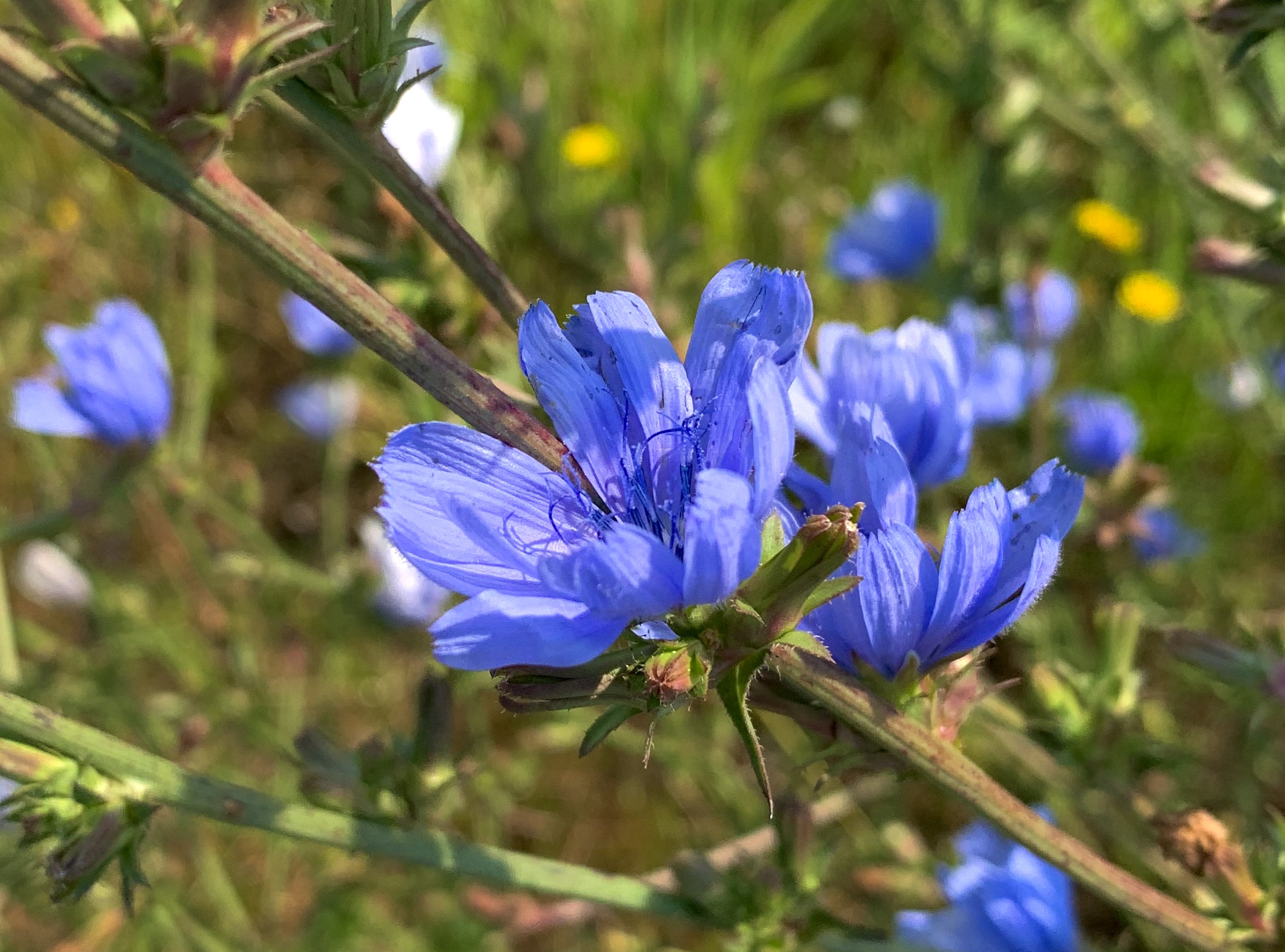
The world is blue at its edges and in its depths.

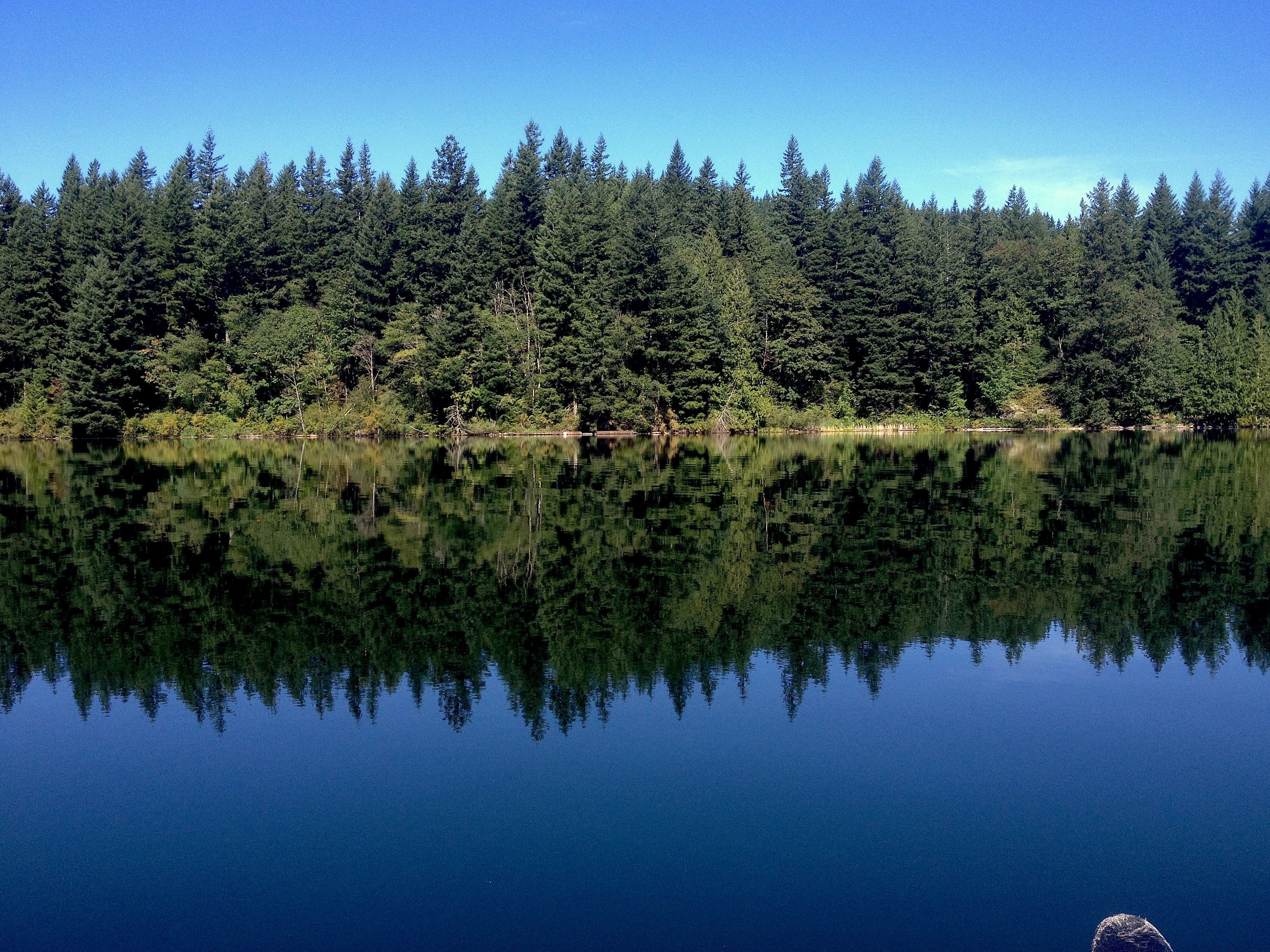
This blue is the light that got lost. Light at the blue end of the spectrum does not travel the whole distance from the sun to us. It disperses among the molecules of the air, it scatters in water. Water is colorless, shallow water appears to be the color of whatever lies underneath it, but deep water is full of this scattered light, the purer the water the deeper the blue.

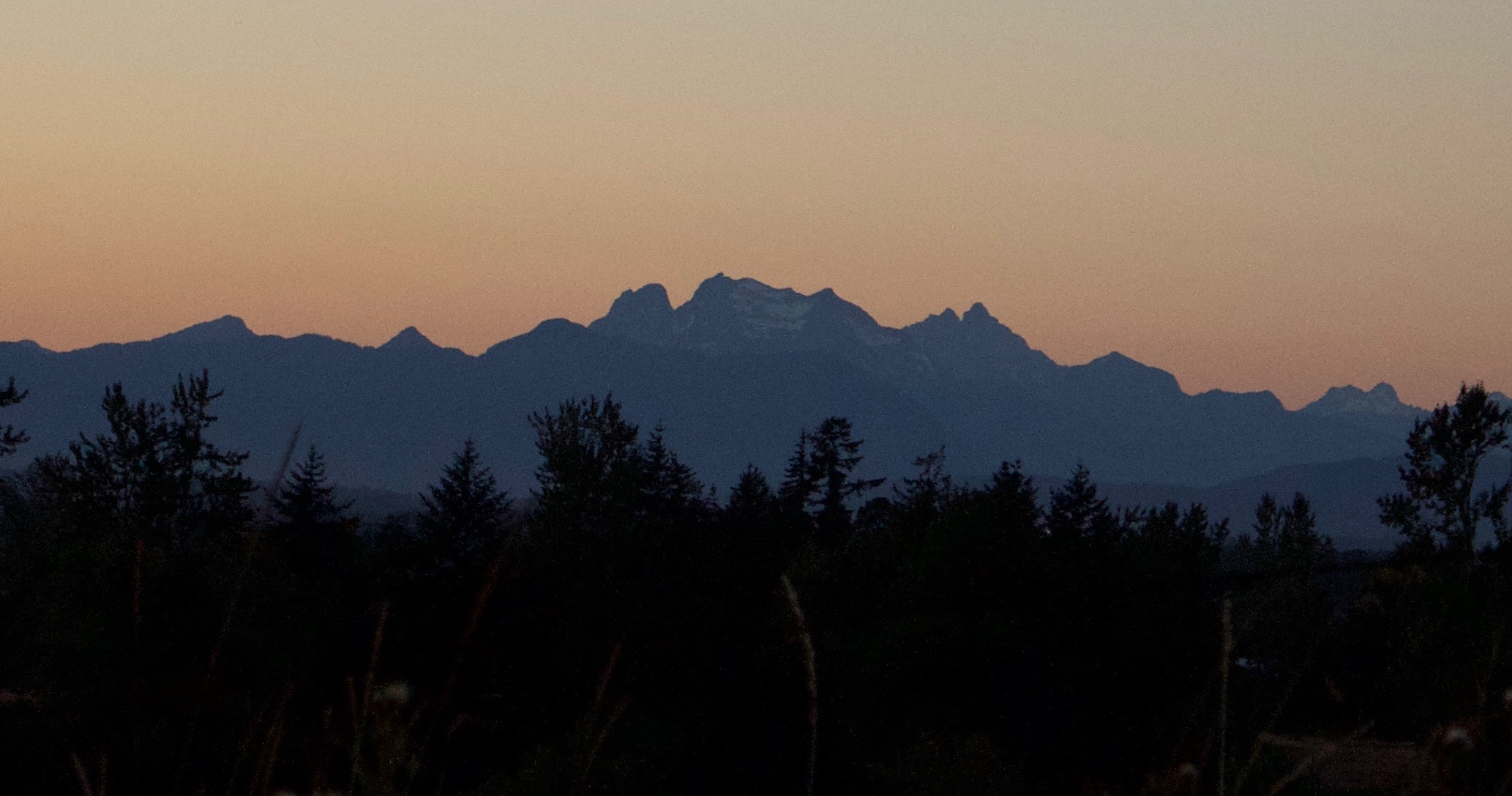
The sky is blue for the same reason, but the blue at the horizon, the blue of land that seems to be dissolving into the sky, is a deeper, dreamier, melancholy blue, the blue at the farthest reaches of the places where you see for miles, the blue of distance. This light that does not touch us, does not travel the whole distance, the light that gets lost, gives us the beauty of the world, so much of which is in the color blue.

For many years, I have been moved by the blue at the far edge of what can be seen, that color of horizons, of remote mountain ranges, of anything far away. The color of that distance is the color of an emotion, the color of solitude and of desire, the color of there seen from here, the color of where you are not. And the color of where you can never go. For the blue is not in the place those miles away at the horizon, but in the atmospheric distance between you and the mountains.

“Longing,” says the poet Robert Hass, “because desire is full of endless distances.”

Blue is the color of longing for the distances you never arrive in…
~Rebecca Solnit from A Field Guide for Getting Lost

photo by Philip Gibson

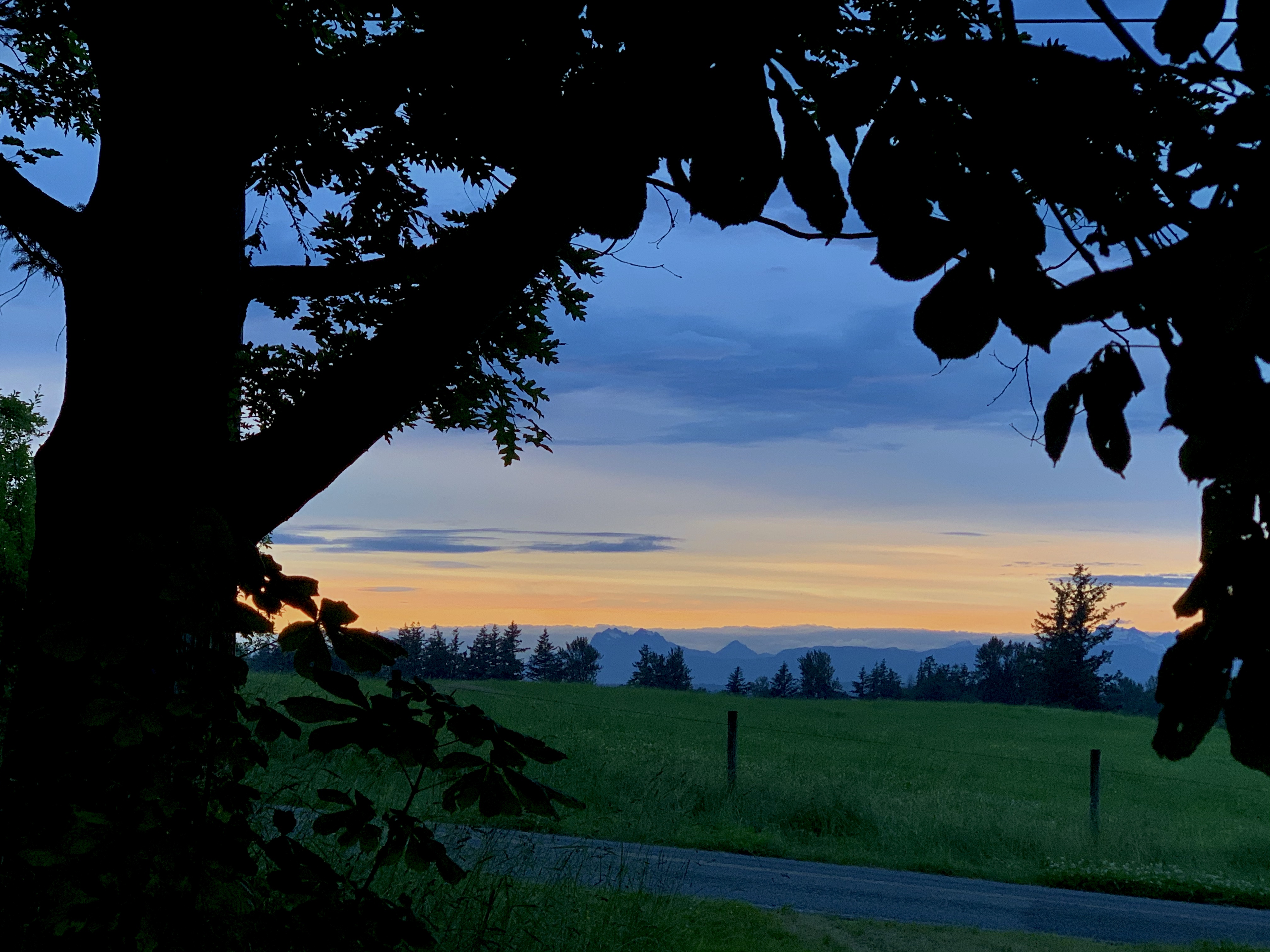
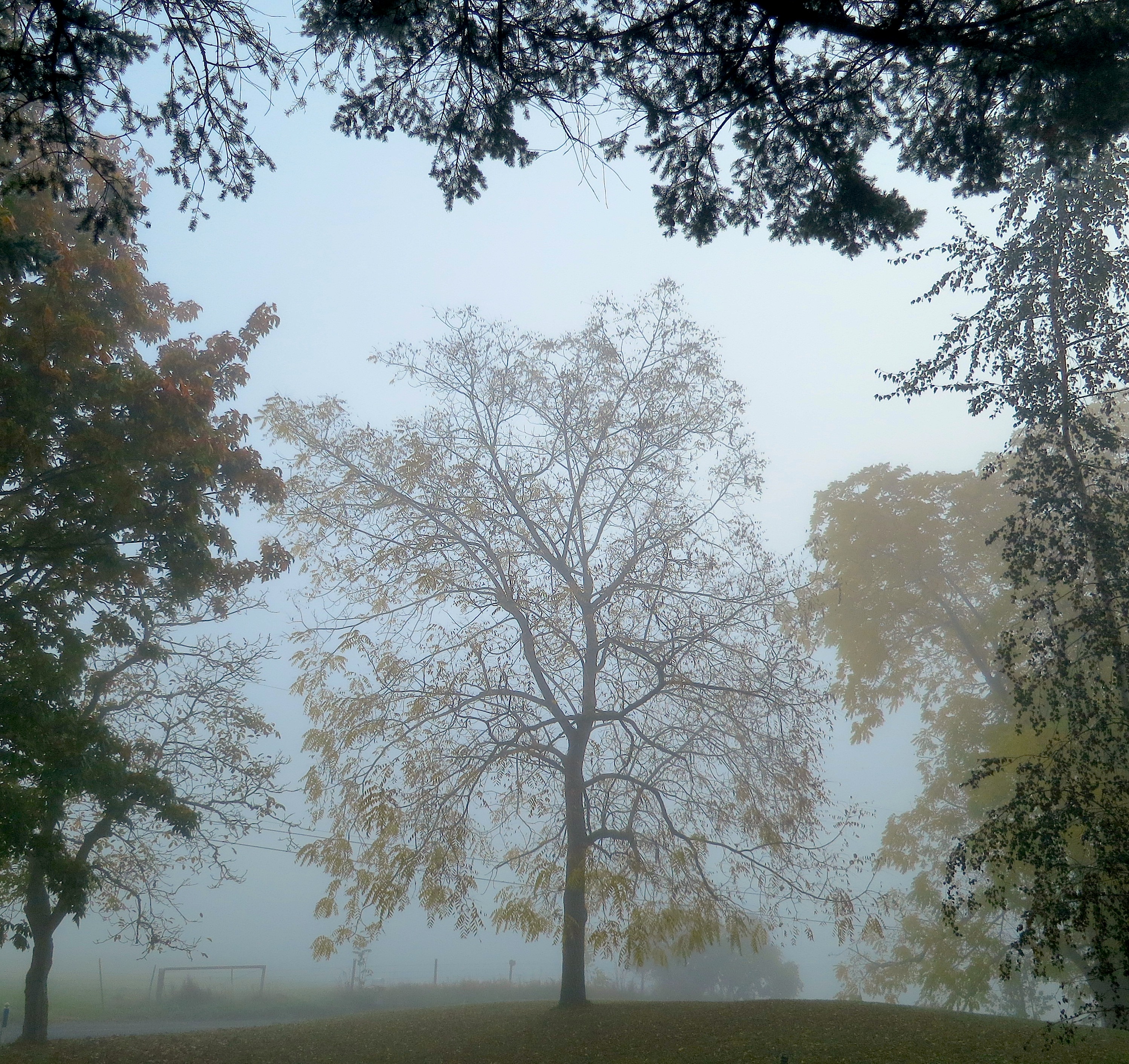
I become easily lost in a horizon of blue mountains
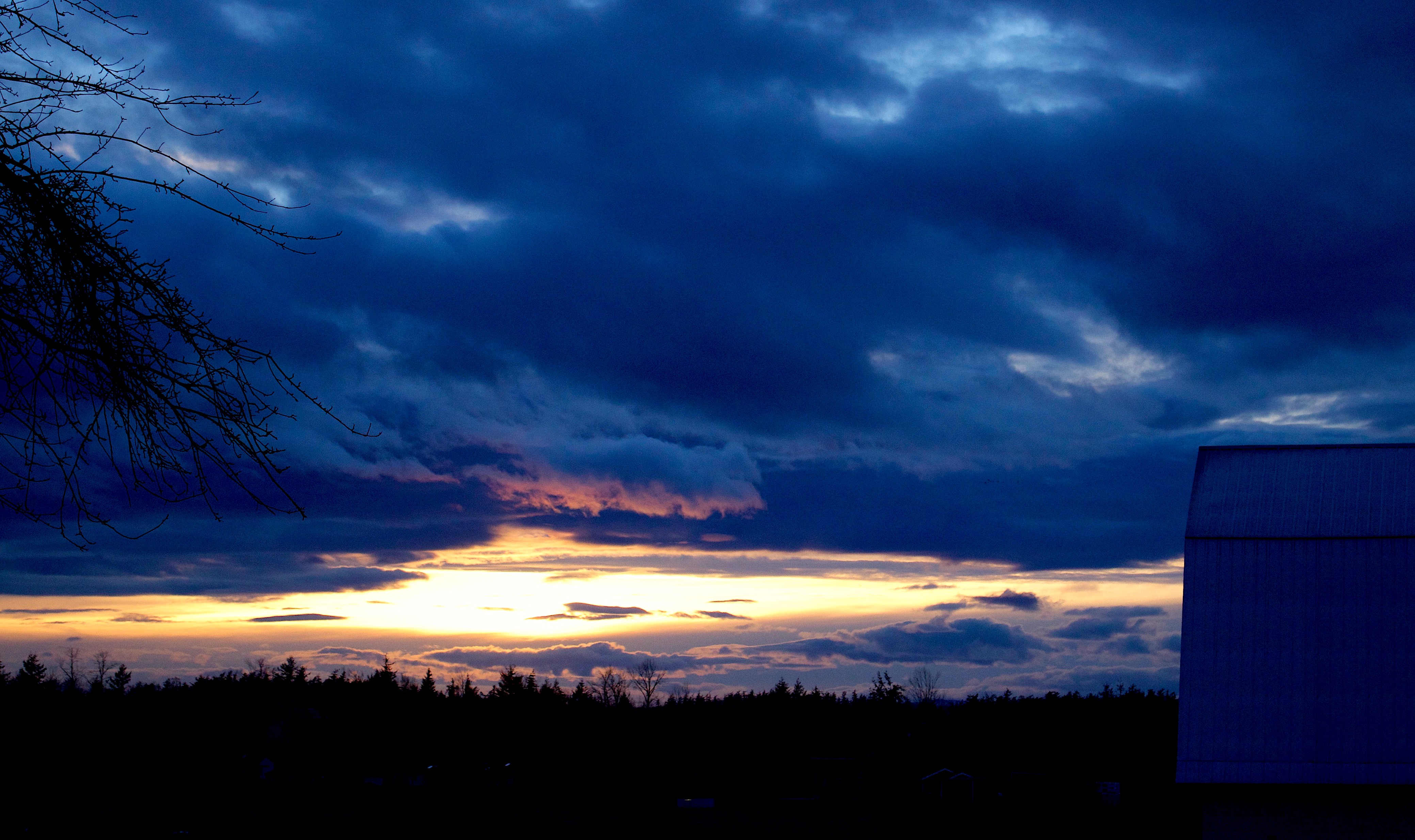
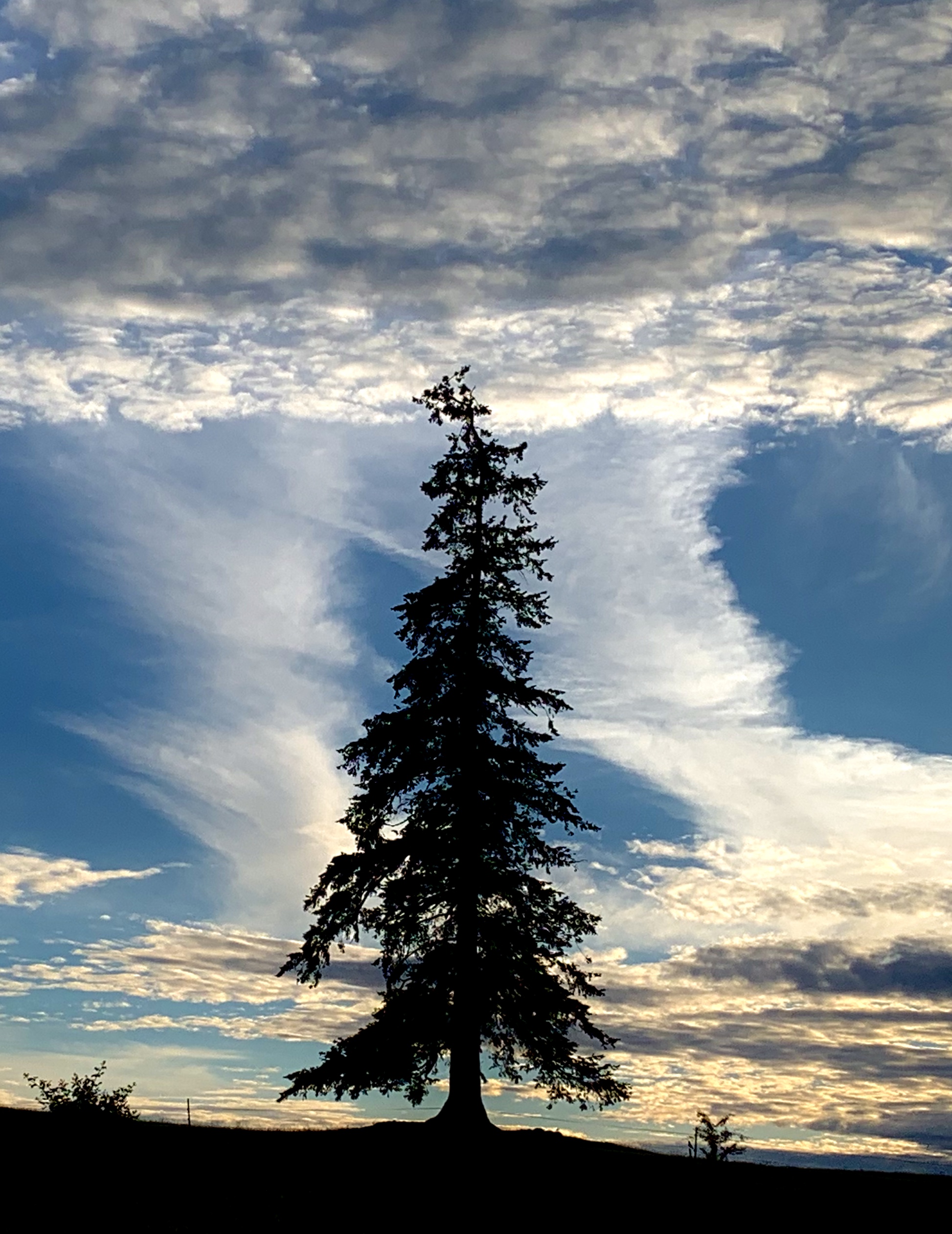
or a vivid sky with clouds
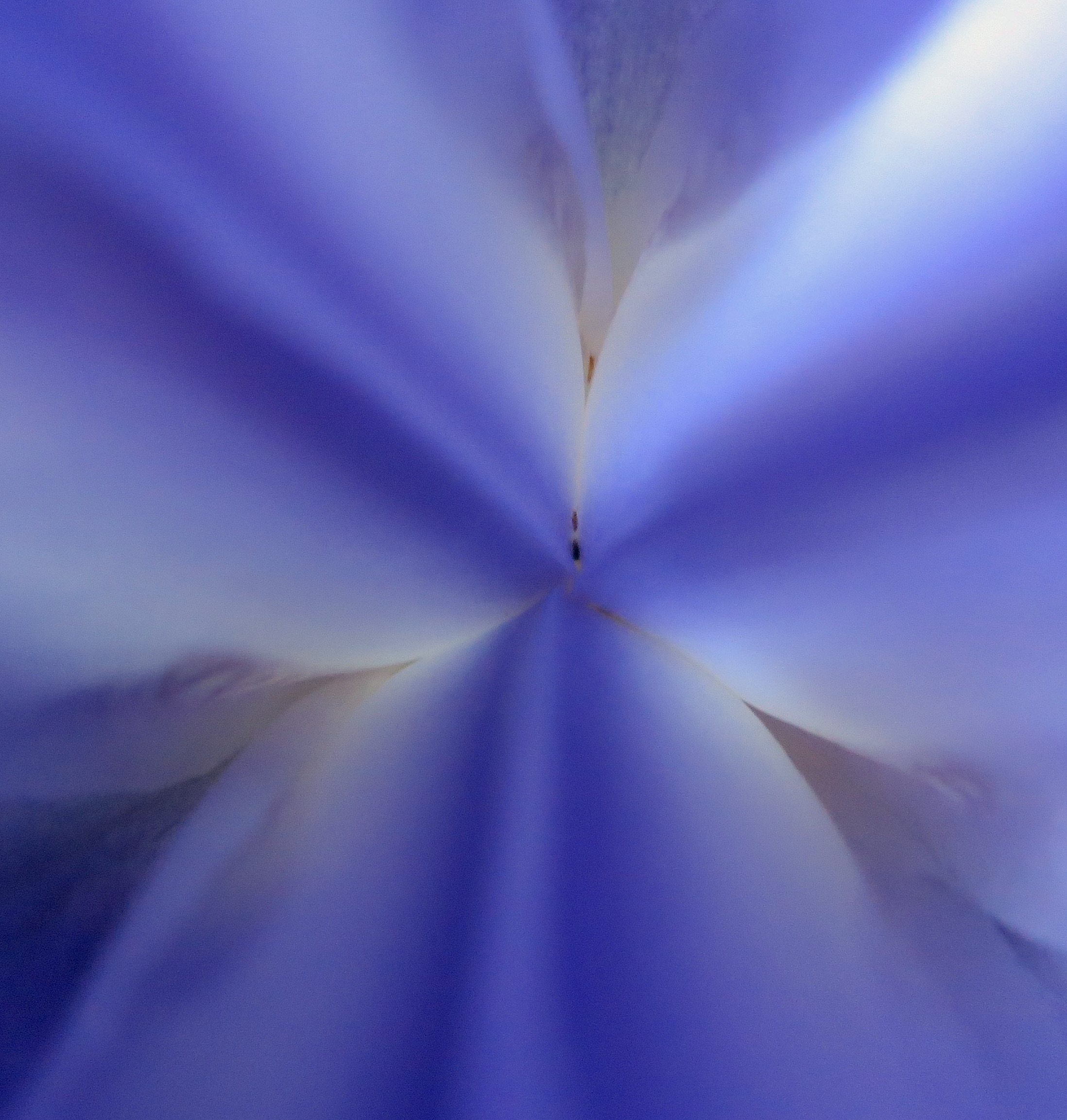
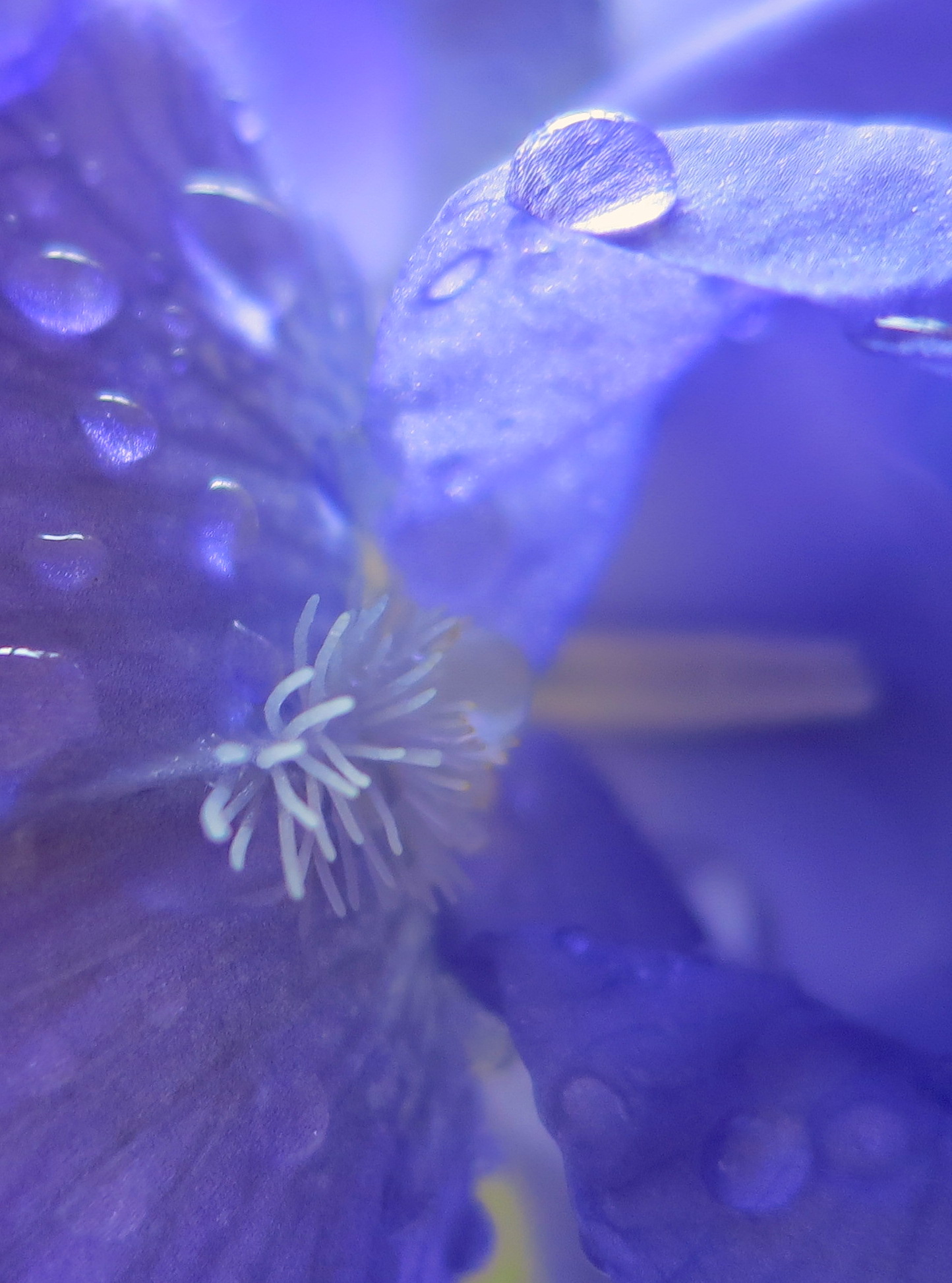
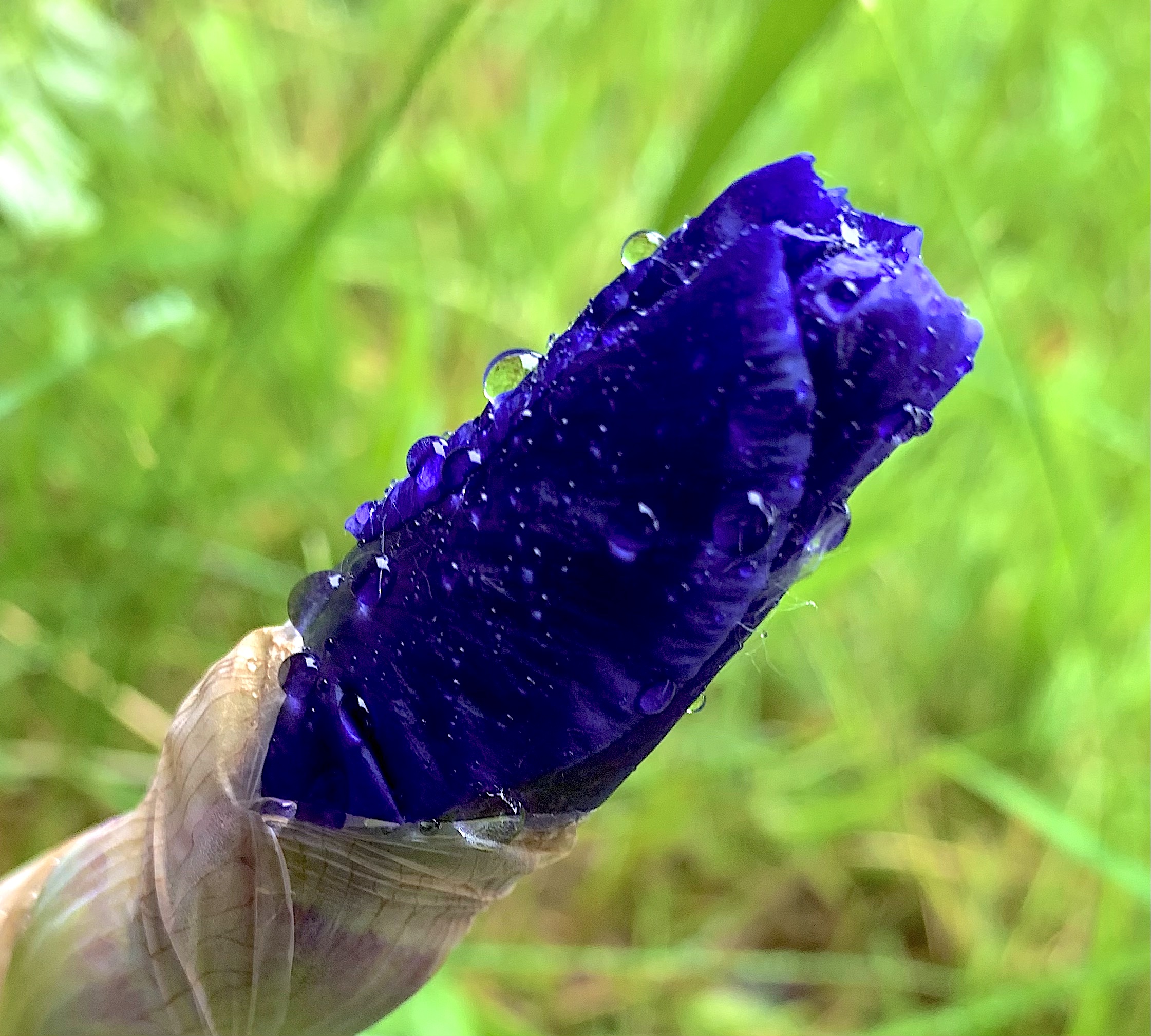
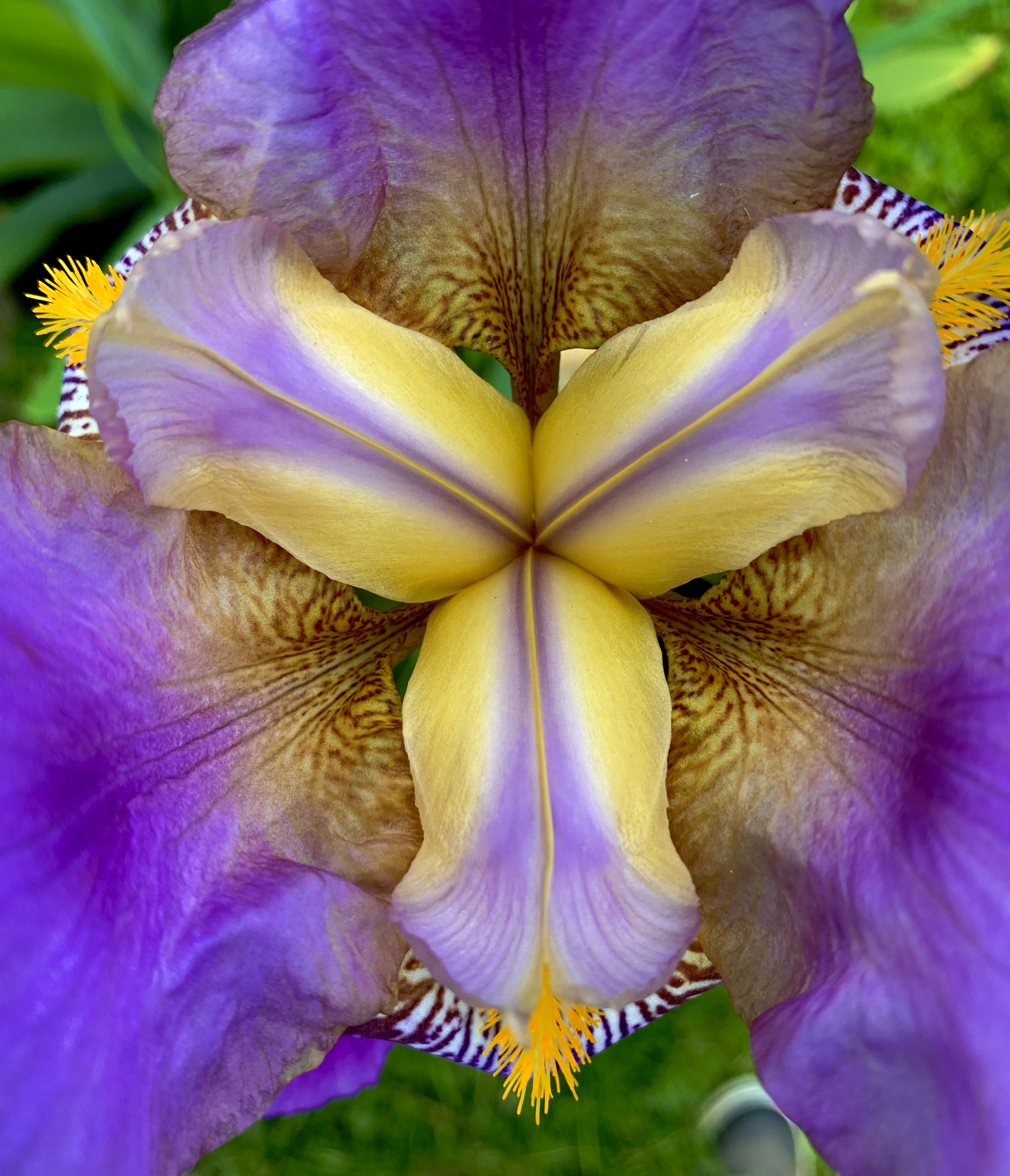
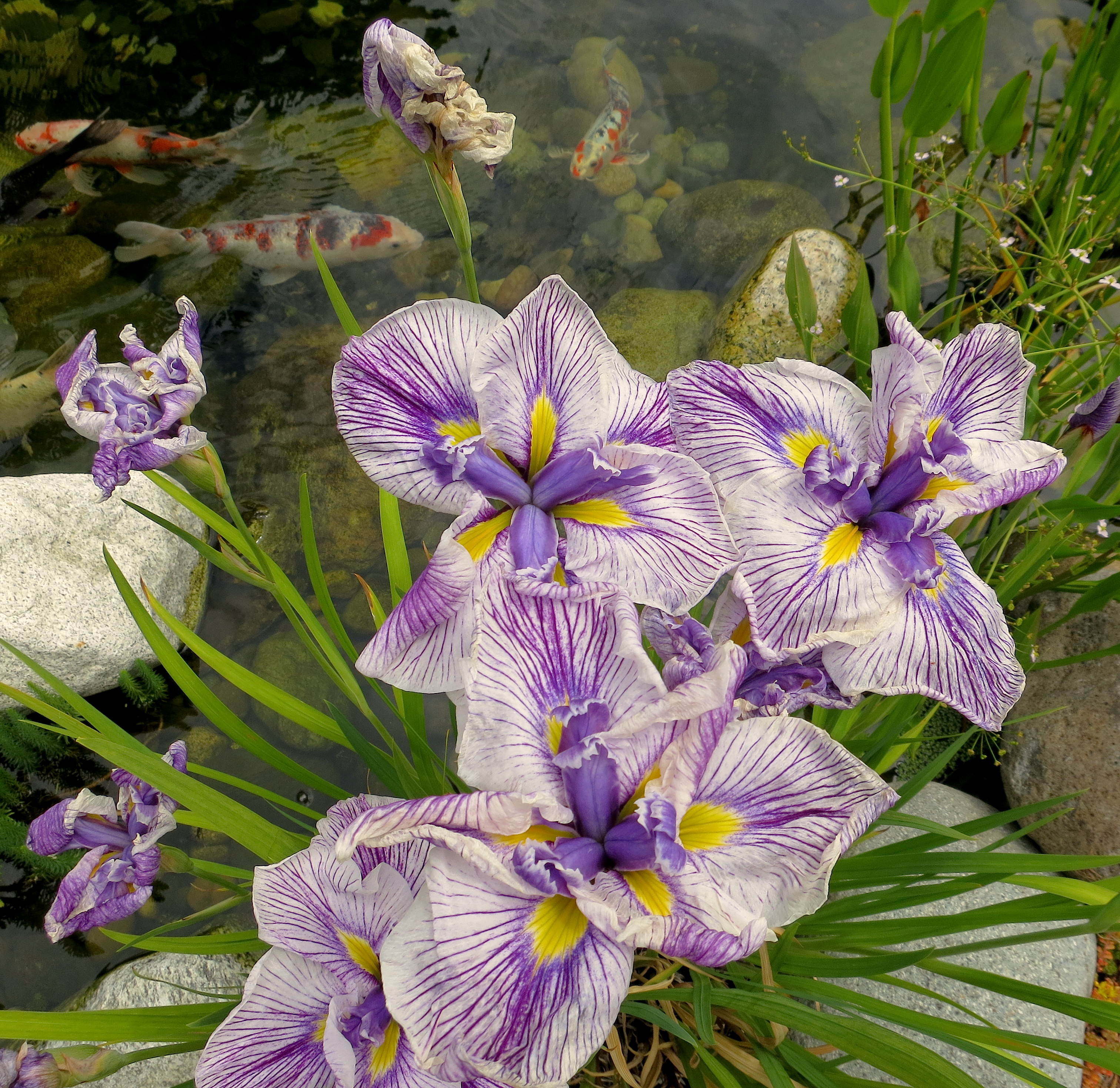
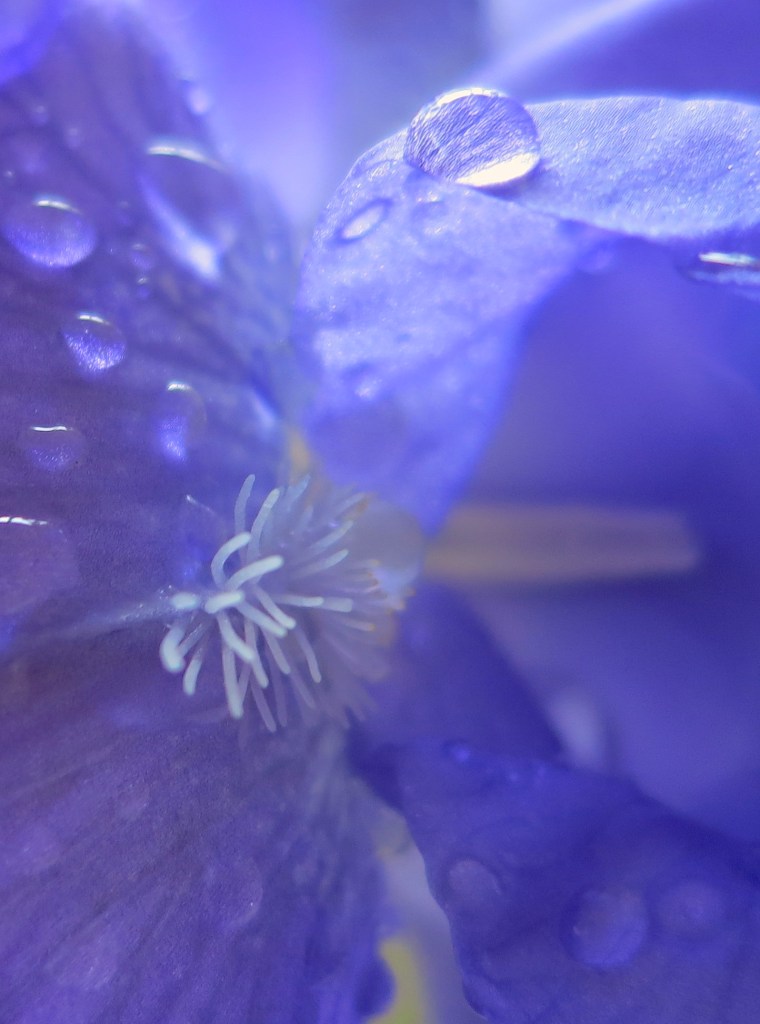
or by merely peering into the innards of a blue iris.

I realize I can never actually be there, but only here,
longing for what I see but cannot touch.

These are landscapes in my mind
forever beyond my reach,
where I can never actually go,
but dwell nevertheless
simply by opening my eyes to see.

My heart forgets me not.
My soul, though lost,
will be found.

Dwelling On What Has Been

The house had gone to bring again
To the midnight sky a sunset glow.
Now the chimney was all of the house that stood,
Like a pistil after the petals go.

The barn opposed across the way,
That would have joined the house in flame
Had it been the will of the wind, was left
To bear forsaken the place’s name.

No more it opened with all one end
For teams that came by the stony road
To drum on the floor with scurrying hoofs
And brush the mow with the summer load.

The birds that came to it through the air
At broken windows flew out and in,
Their murmur more like the sigh we sigh
From too much dwelling on what has been.

Yet for them the lilac renewed its leaf,
And the aged elm, though touched with fire;
And the dry pump flung up an awkward arm:
And the fence post carried a strand of wire.

For them there was really nothing sad.
But though they rejoiced in the nest they kept,
One had to be versed in country things
Not to believe the phoebes wept.
 ~Robert Frost “The Need of Being Versed in Country Things”

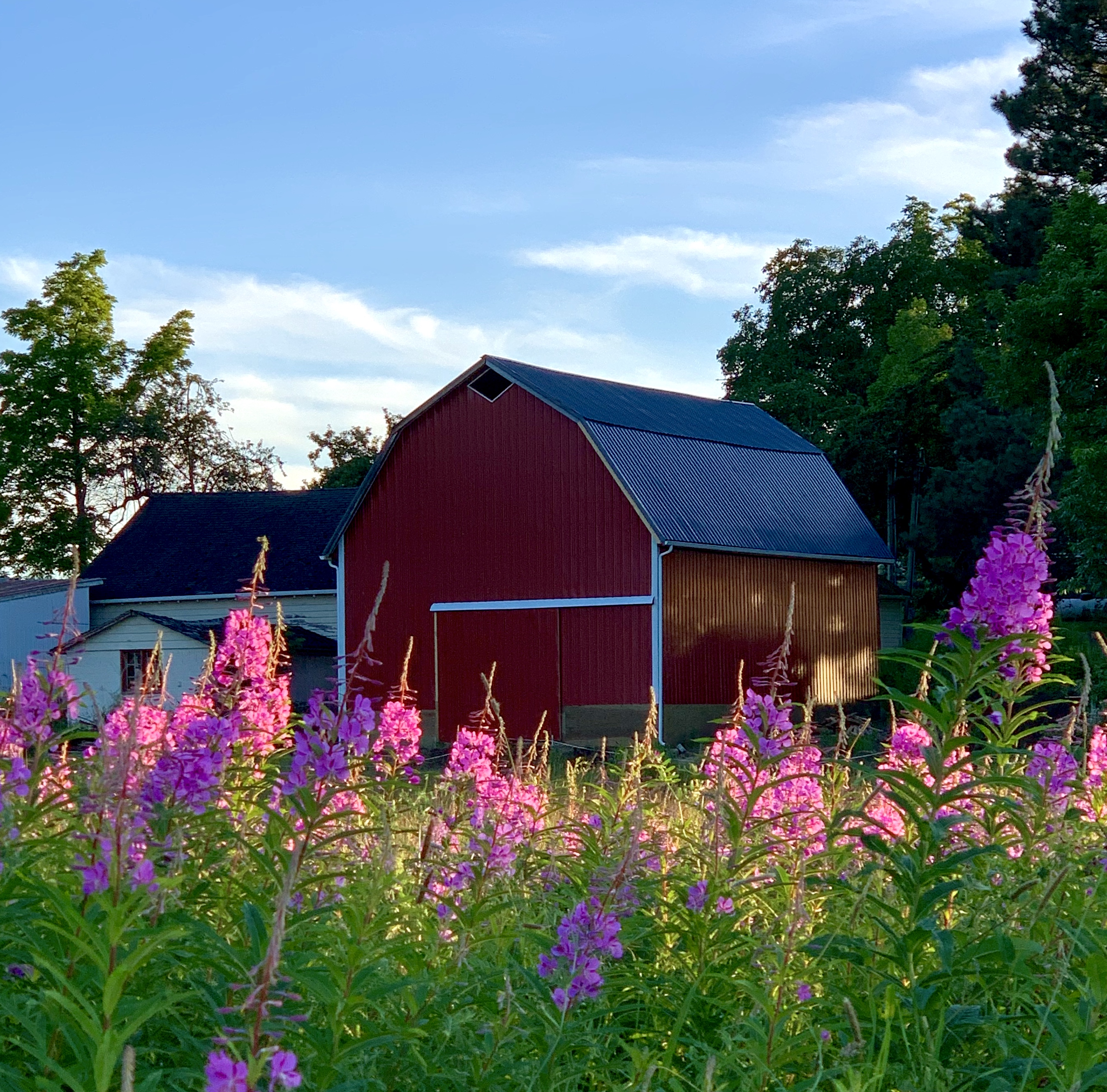
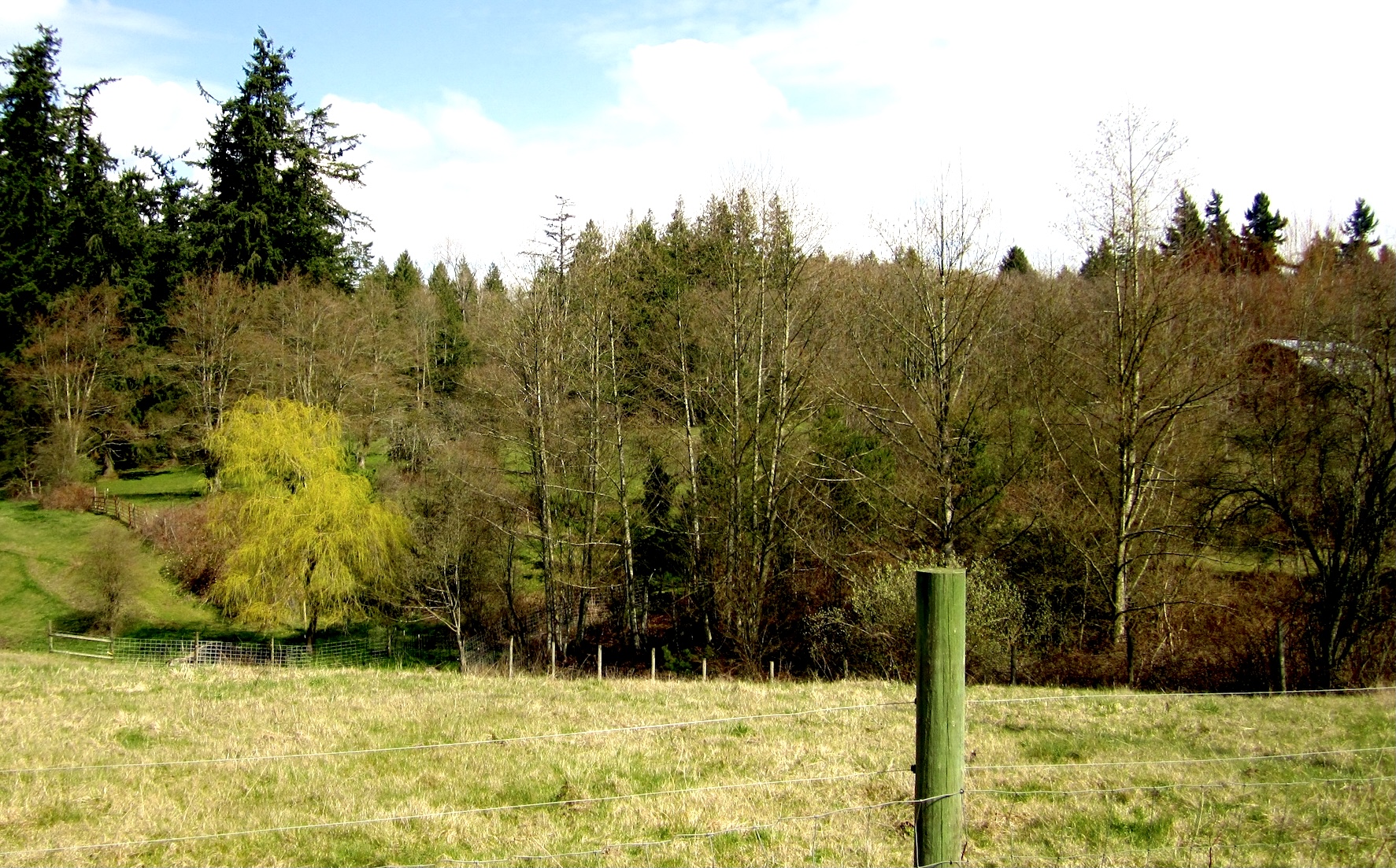
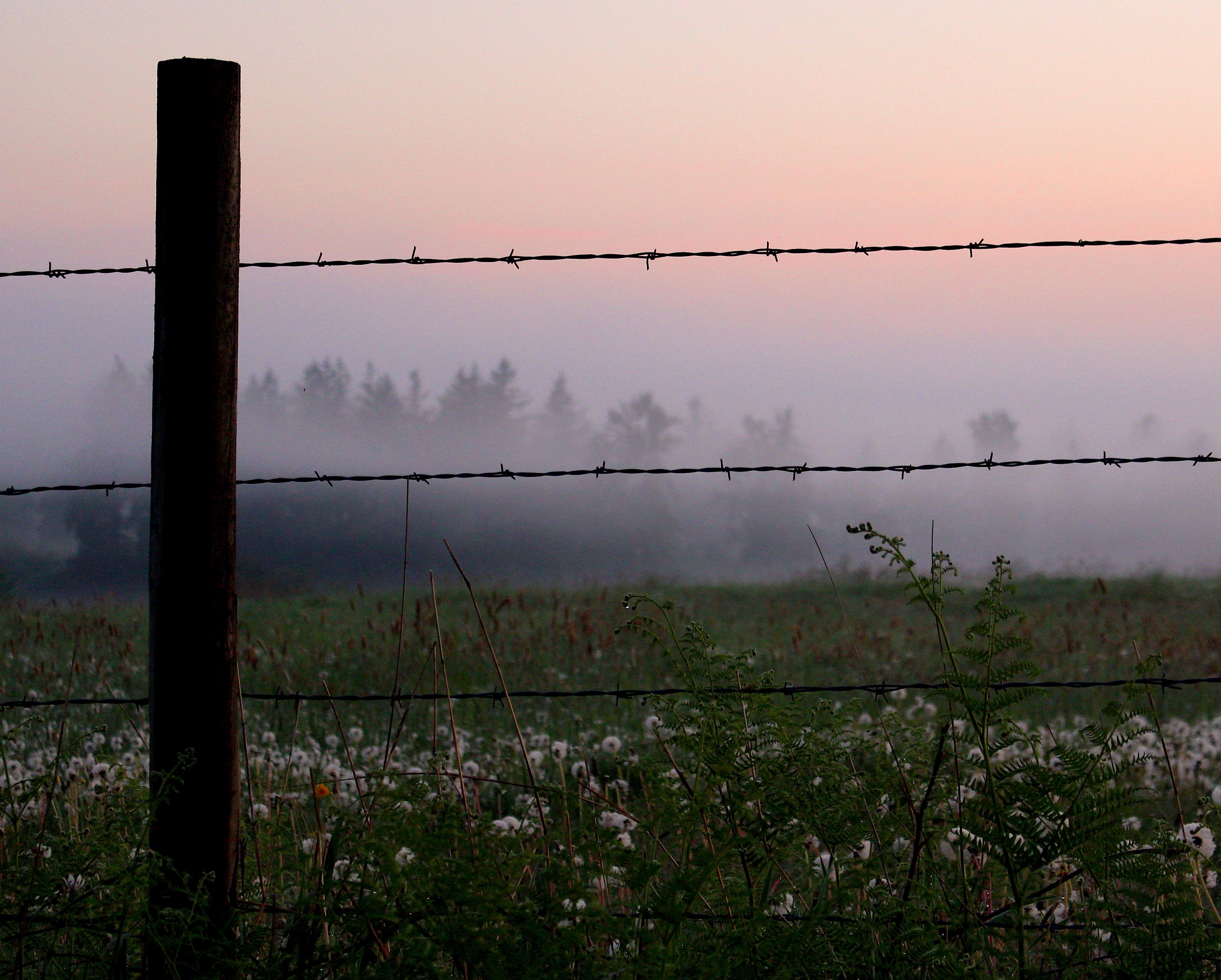
The field of my childhood farm (1954-59) with the red barn visible on the right. The house was destroyed by fire in the mid-60s but the barn was spared

photo by Harry Rodenberger

My family sold our first farm in East Stanwood when my father took a job working for the state in Olympia, moving to supervising high school agriculture teachers rather than being a teacher himself. It was a difficult transition for us all: we moved to a smaller home and a few acres, leaving behind a large two story house, a huge hay barn and chicken coop as well as large fields and a woods where our dairy cows had grazed.

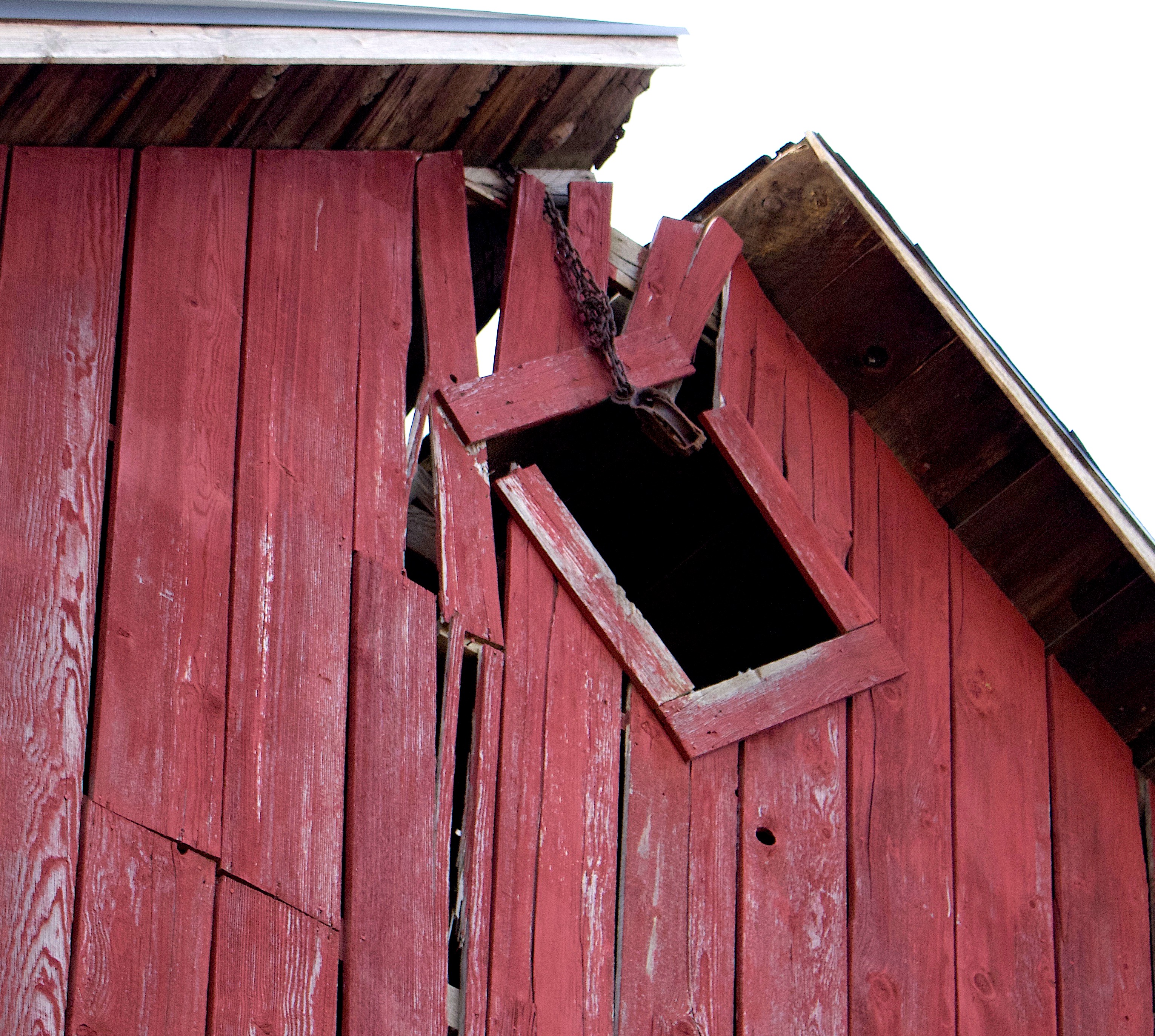
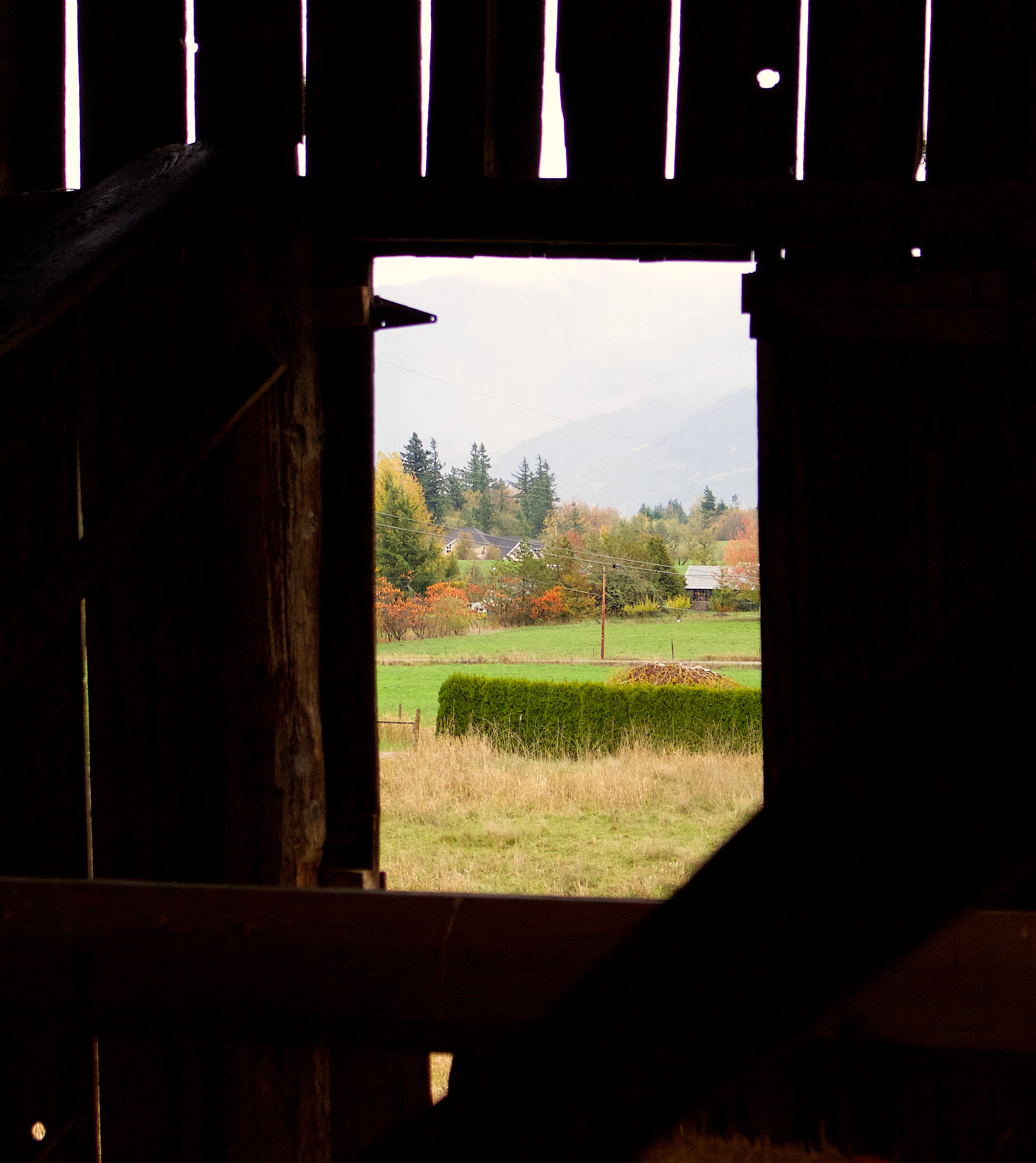
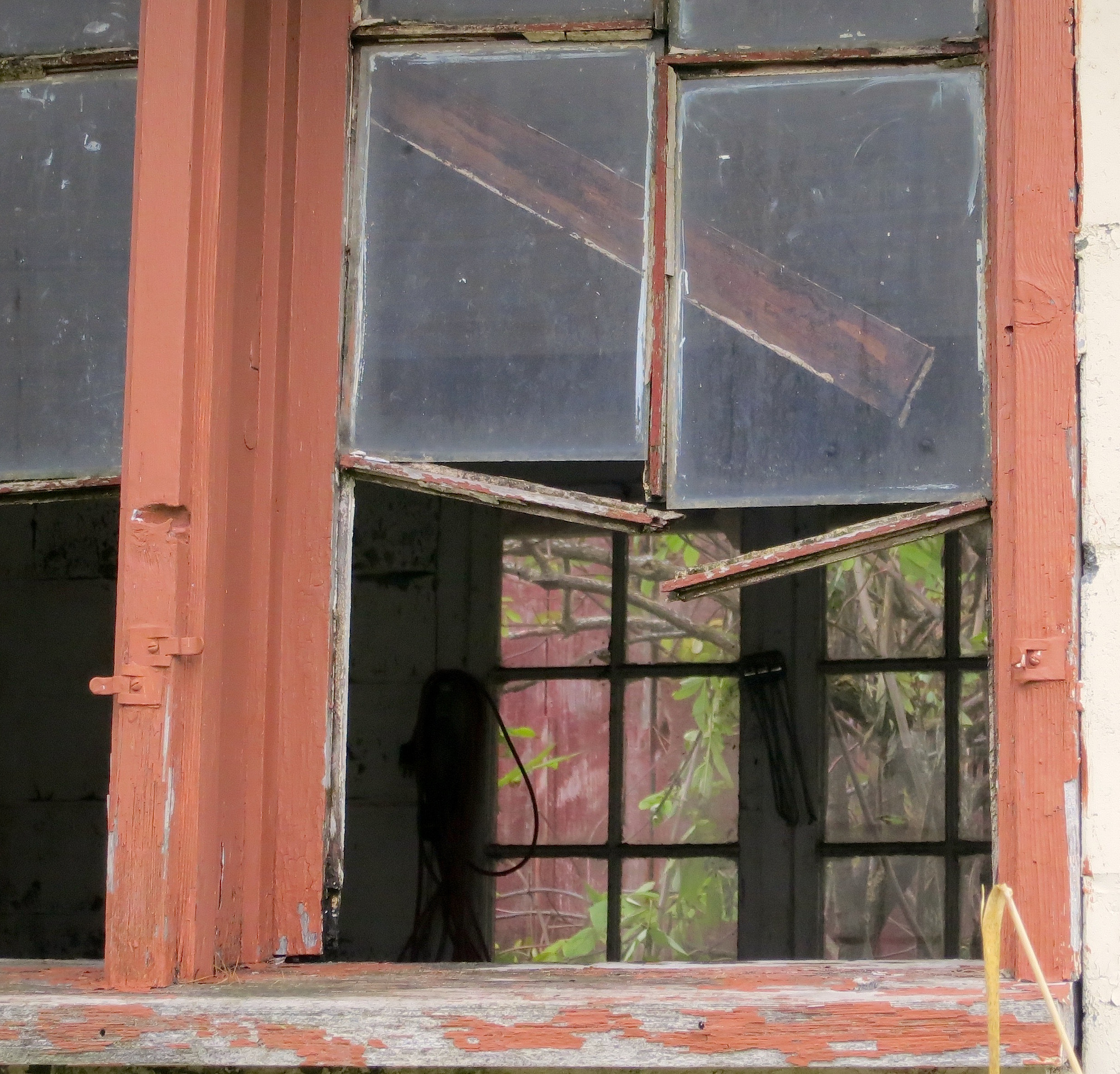
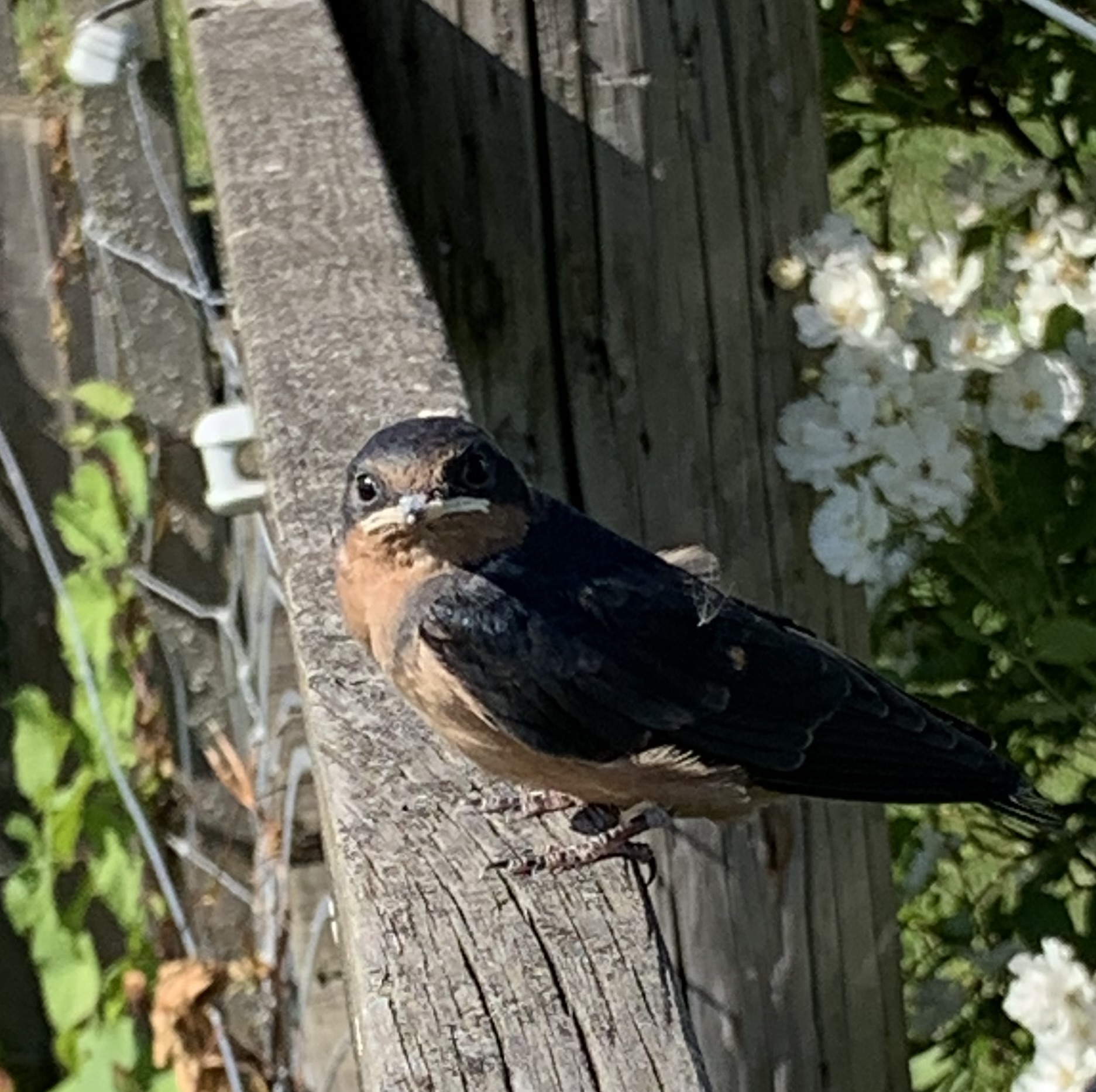
Only a few years later, the old farmhouse burned down but the rest of the buildings were spared. It passed through a few hands and when we had occasion to drive by, we were dismayed to see how nature was taking over the place. The barn still stood but unused it was weathering and withering. The windows were broken, birds flew in and out, the former flower garden had grown wild and unruly.

This was the place I was conceived and learned to walk and talk, where I developed my love for wandering in the fields and respecting the farm animals we depended upon. I remember as a child of four sitting at the kitchen table looking out the window at the sunrise coming rising over the woods and making the misty fields turn golden.

Yet now this land has returned to its essence before the ground was ever plowed or buildings were constructed. It no longer belongs to our family (as if it ever did) but it forever belongs to our memories.

I am overly prone to nostalgia, dwelling more on what has been than what is now or what I hope is to come. It is easy to weep over the losses when time and circumstances reap circumstances that become unrecognizable.

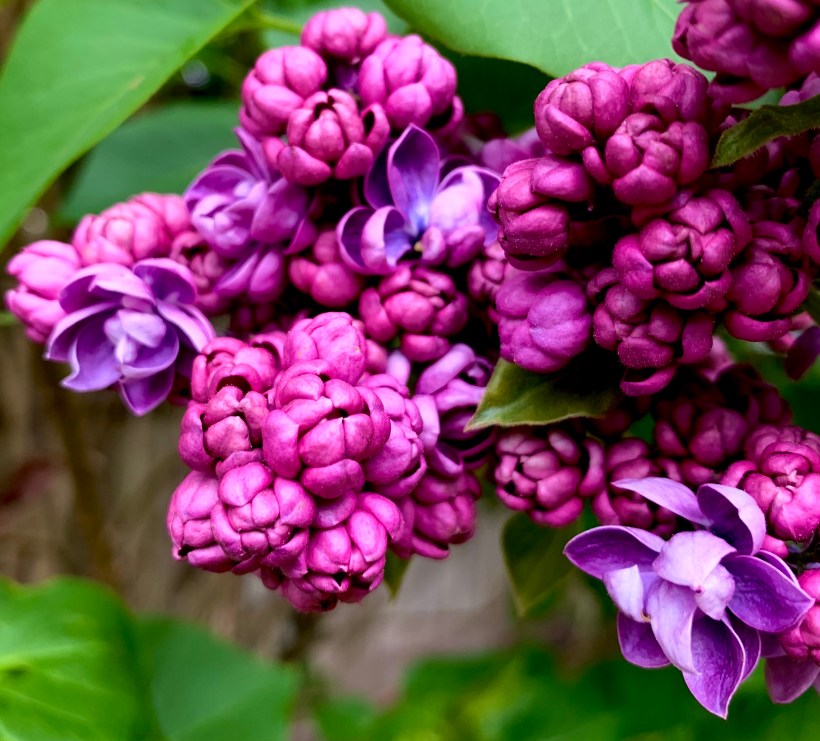
I may weep, but nature does not. The sun continues to rise over the fields, the birds continue to build nests, the lilacs grow taller with outrageous blooms, and each day ends with a promise of another to come.

So I must dwell on what lies ahead, not what perished in the ashes.

photo by Harry Rodenberger

A book available from Barnstorming — information about how to order here

For a Bee’s Experience

Like trains of cars on tracks of plush
I hear the level bee:
A jar across the flowers goes,
Their velvet masonry

Withstands until the sweet assault
Their chivalry consumes,
While he, victorious, tilts away
To vanquish other blooms.

His feet are shod with gauze,
His helmet is of gold;
His breast, a single onyx
With chrysoprase, inlaid.

His labor is a chant,
His idleness a tune;
Oh, for a bee’s experience
Of clovers and of noon!

~Emily Dickinson “The Bee”

There are days we live
as if death were nowhere
in the background; from joy
to joy to joy, from wing to wing,
from blossom to blossom to
impossible blossom, to sweet impossible blossom.

~Li-Young Lee, last stanza of “From Blossoms” from Rose.

I try, as best I can, to see the world from a perspective other than my own:

Spending this week with our toddler grandson has helped me to look at things at the three foot rather than six foot level and suddenly I’m overwhelmed with how large everything appears.

I read opinions that differ considerably from my own so I can gain understanding and hopefully compassion for how others perceive the events of the world, even when I don’t and won’t agree.

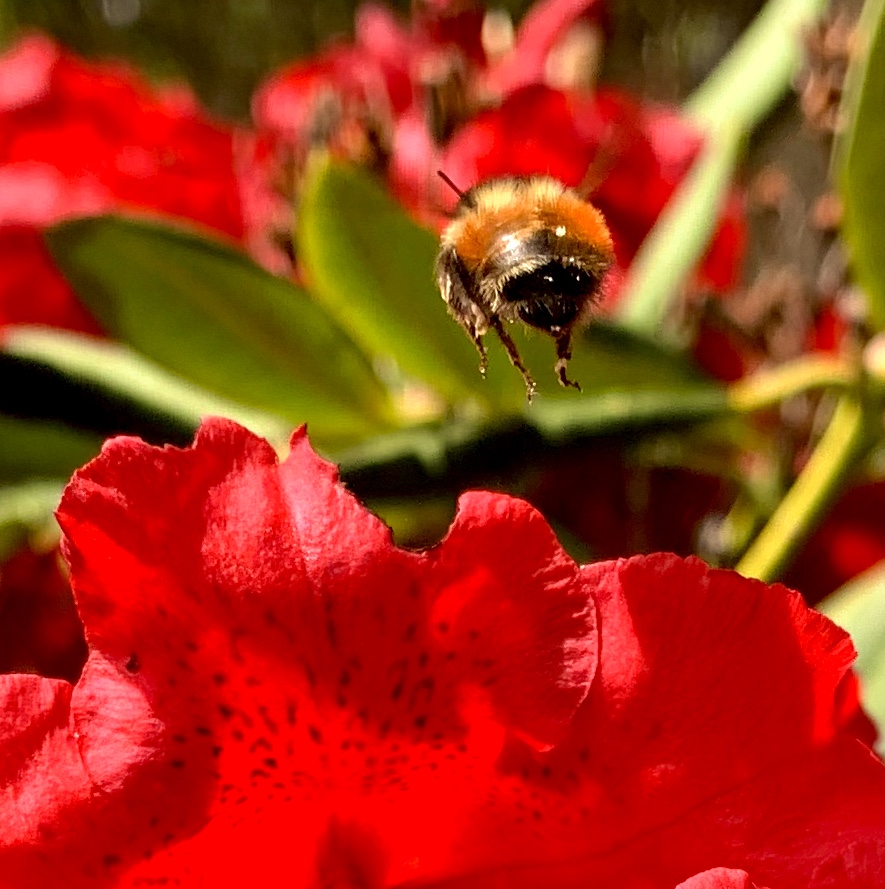
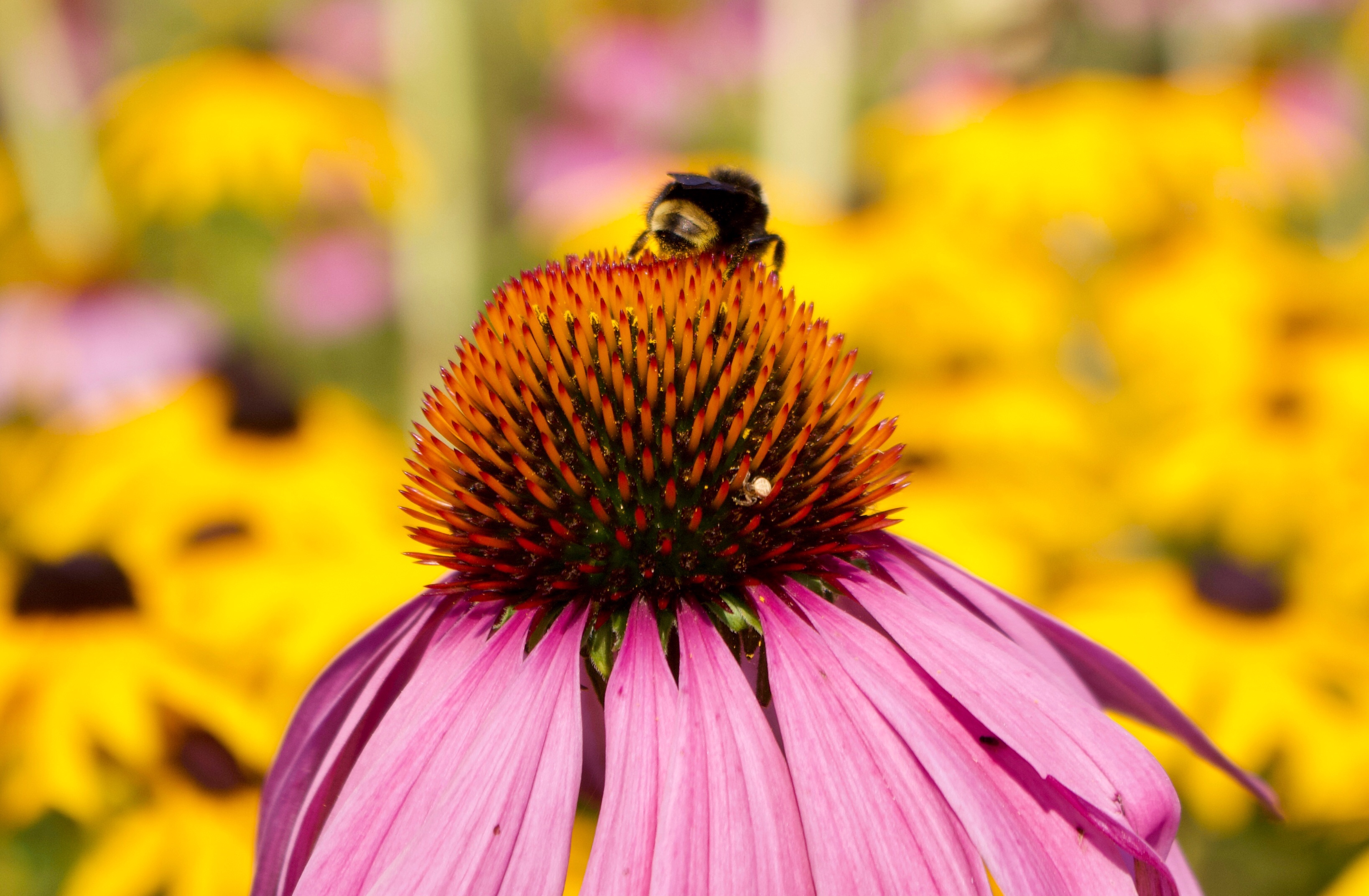
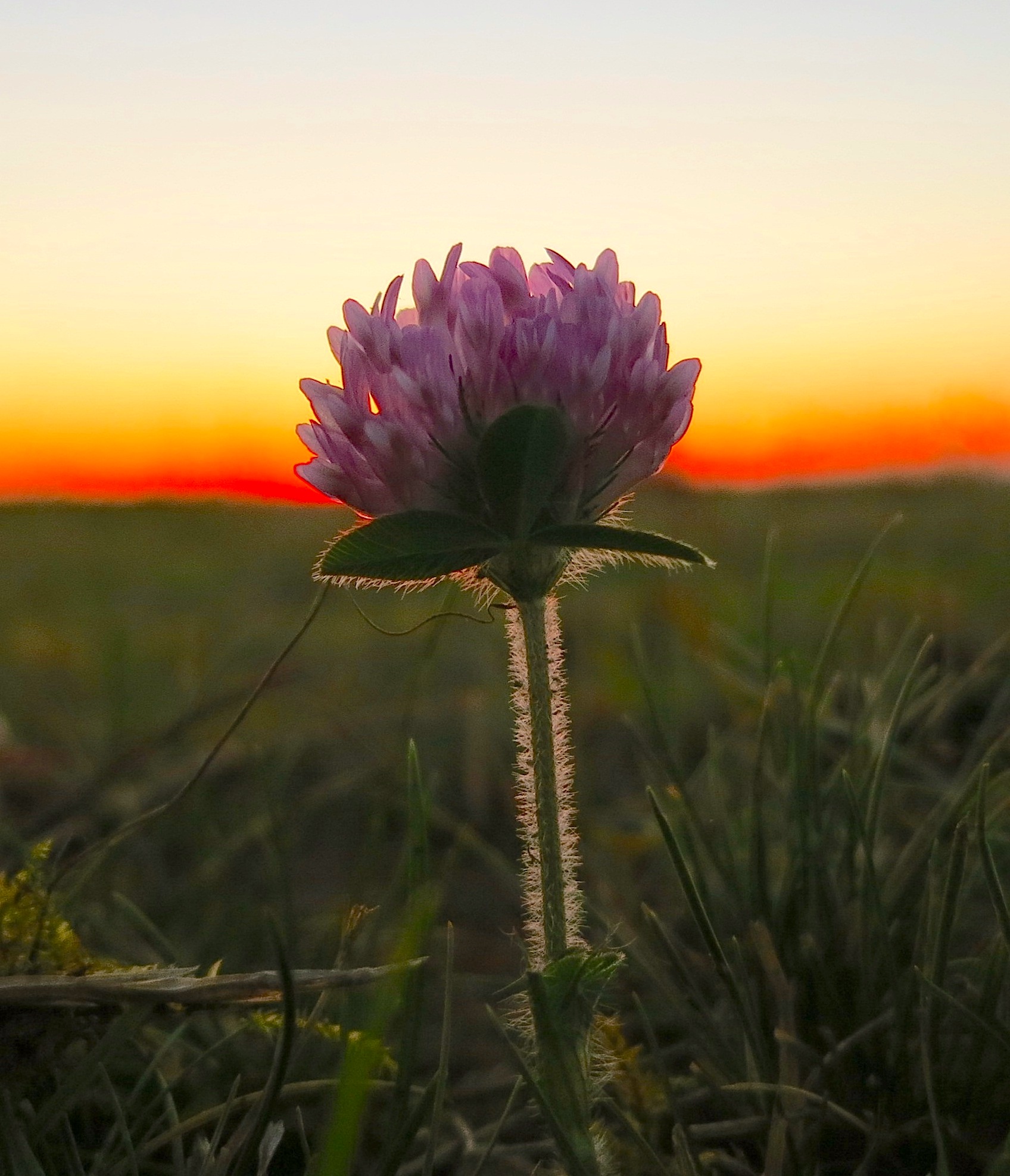
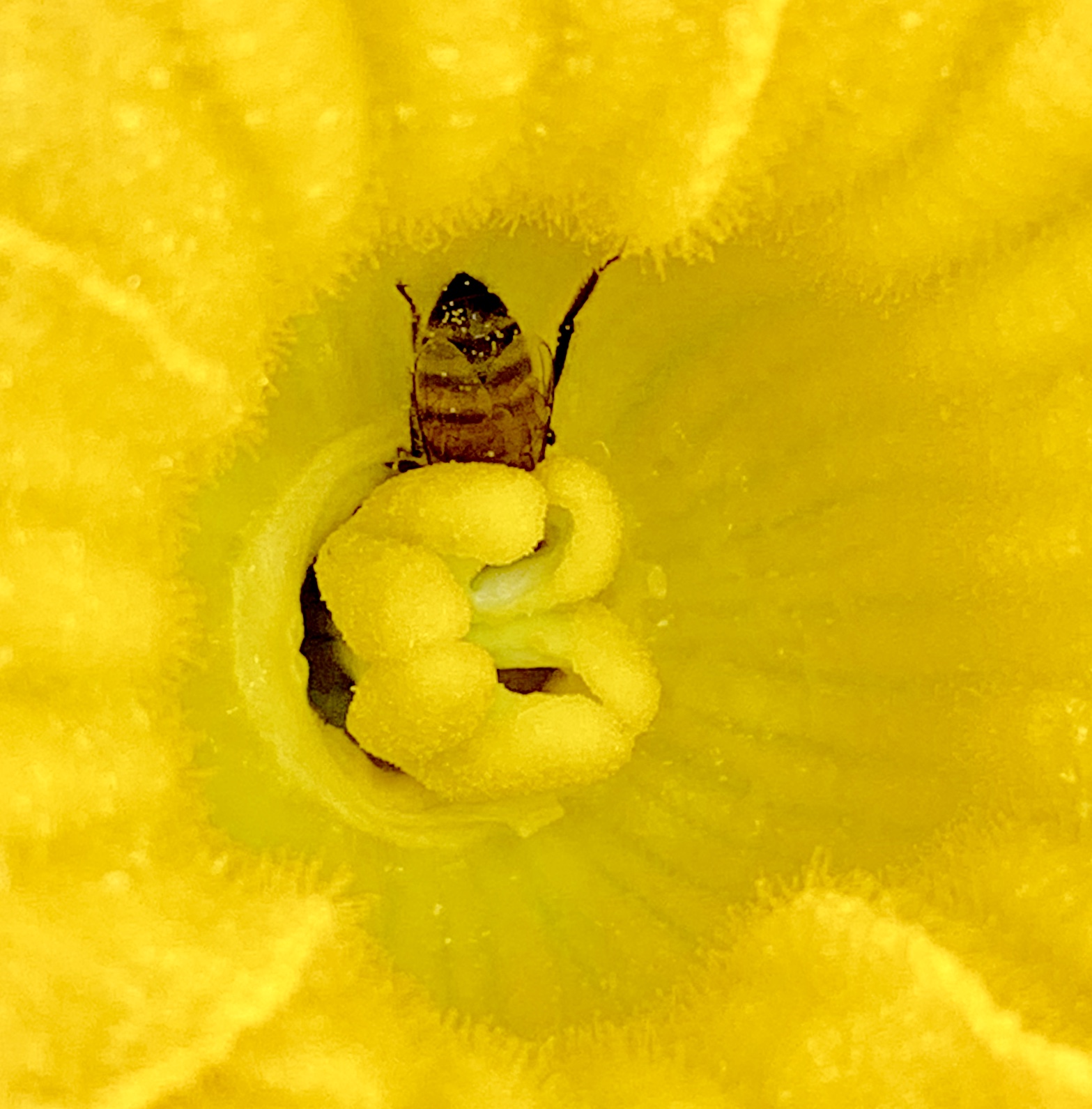
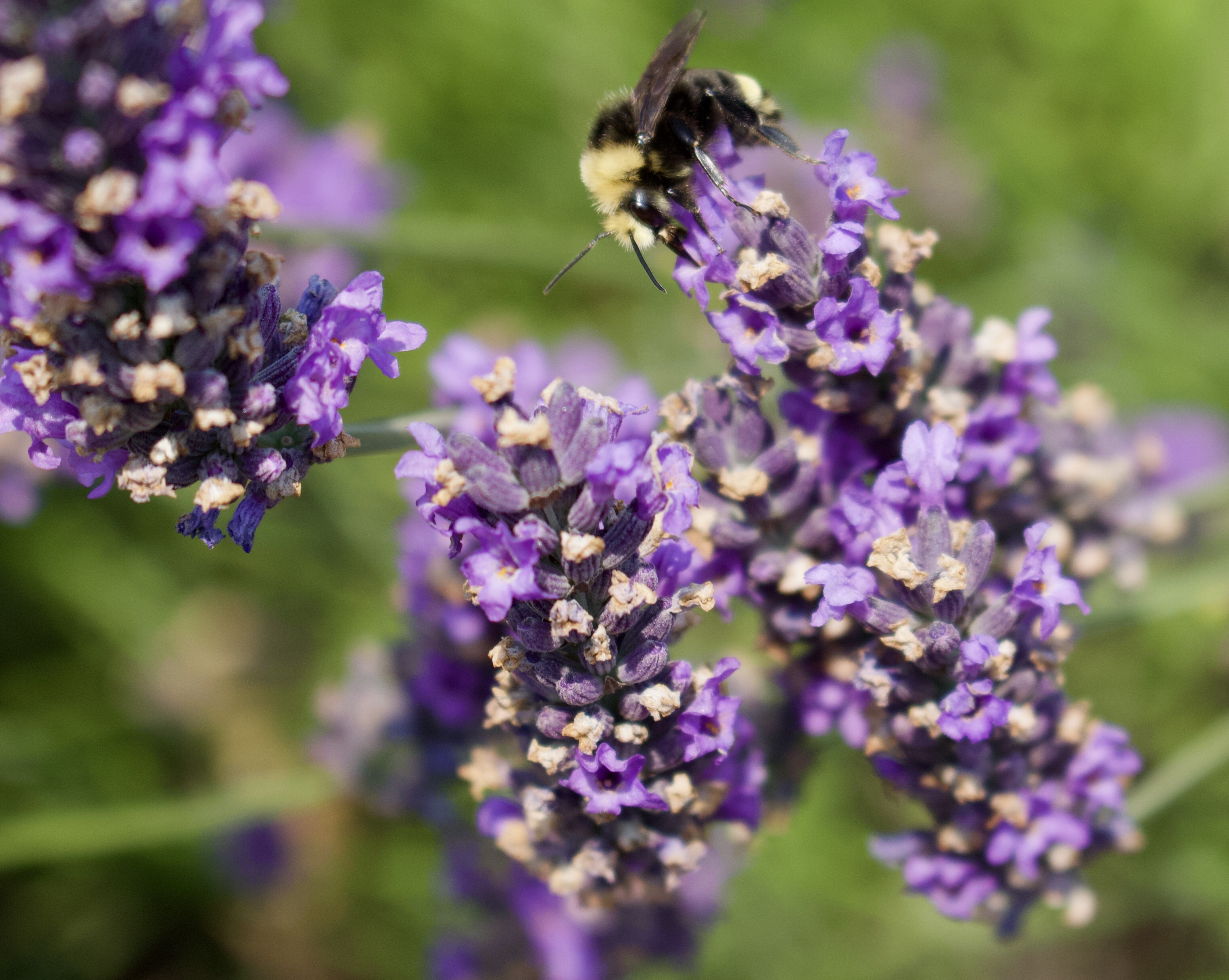
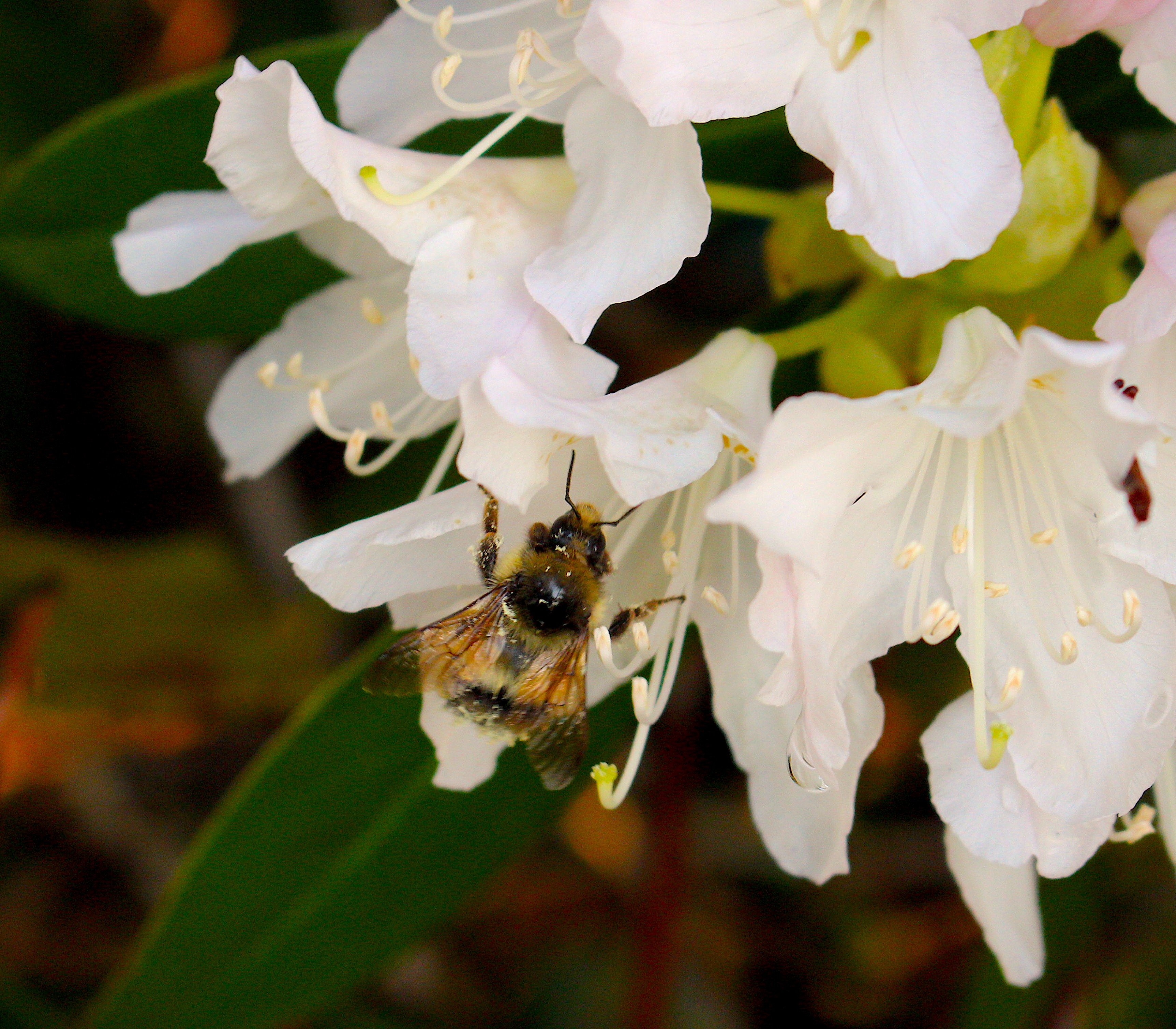
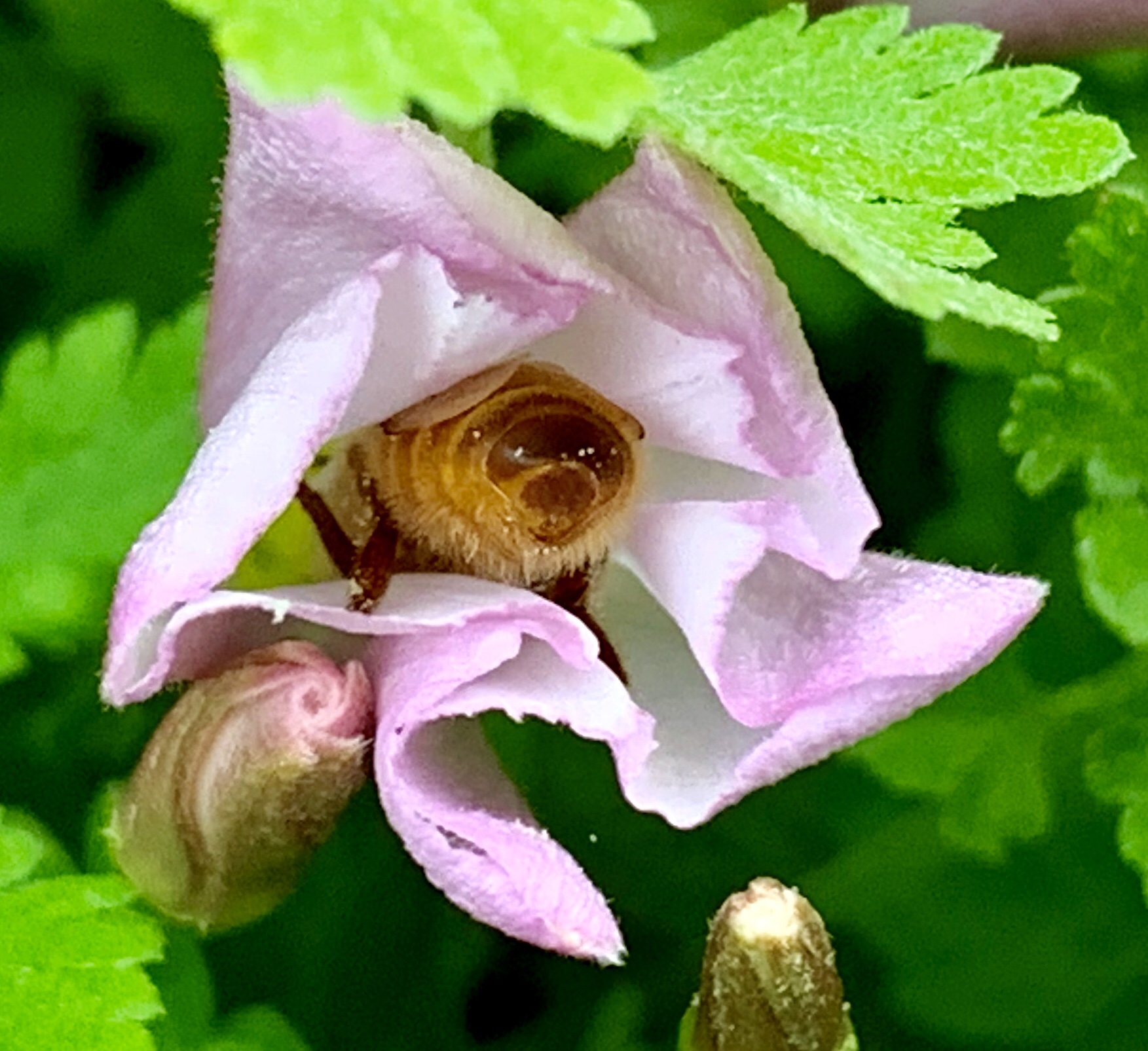
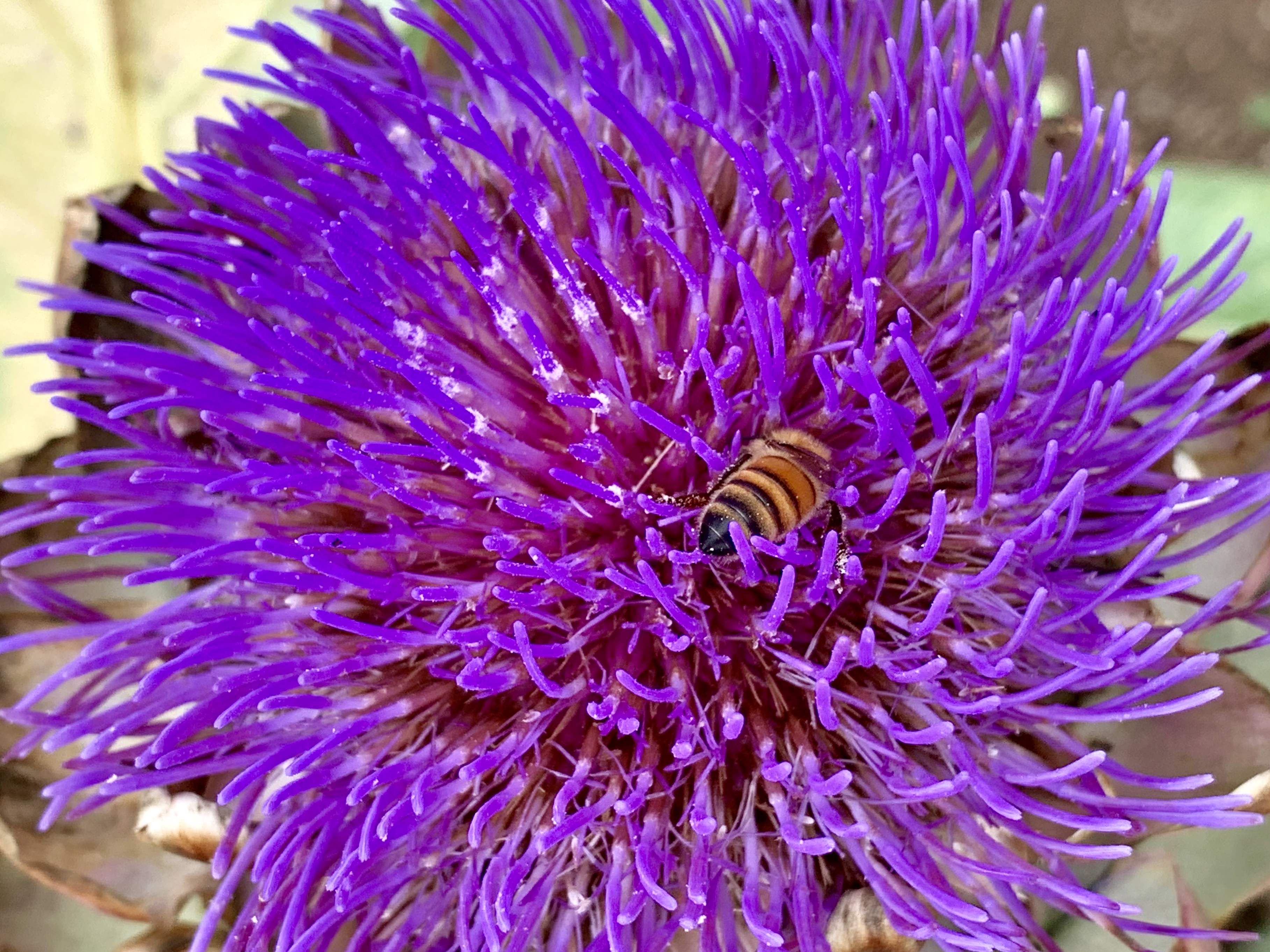
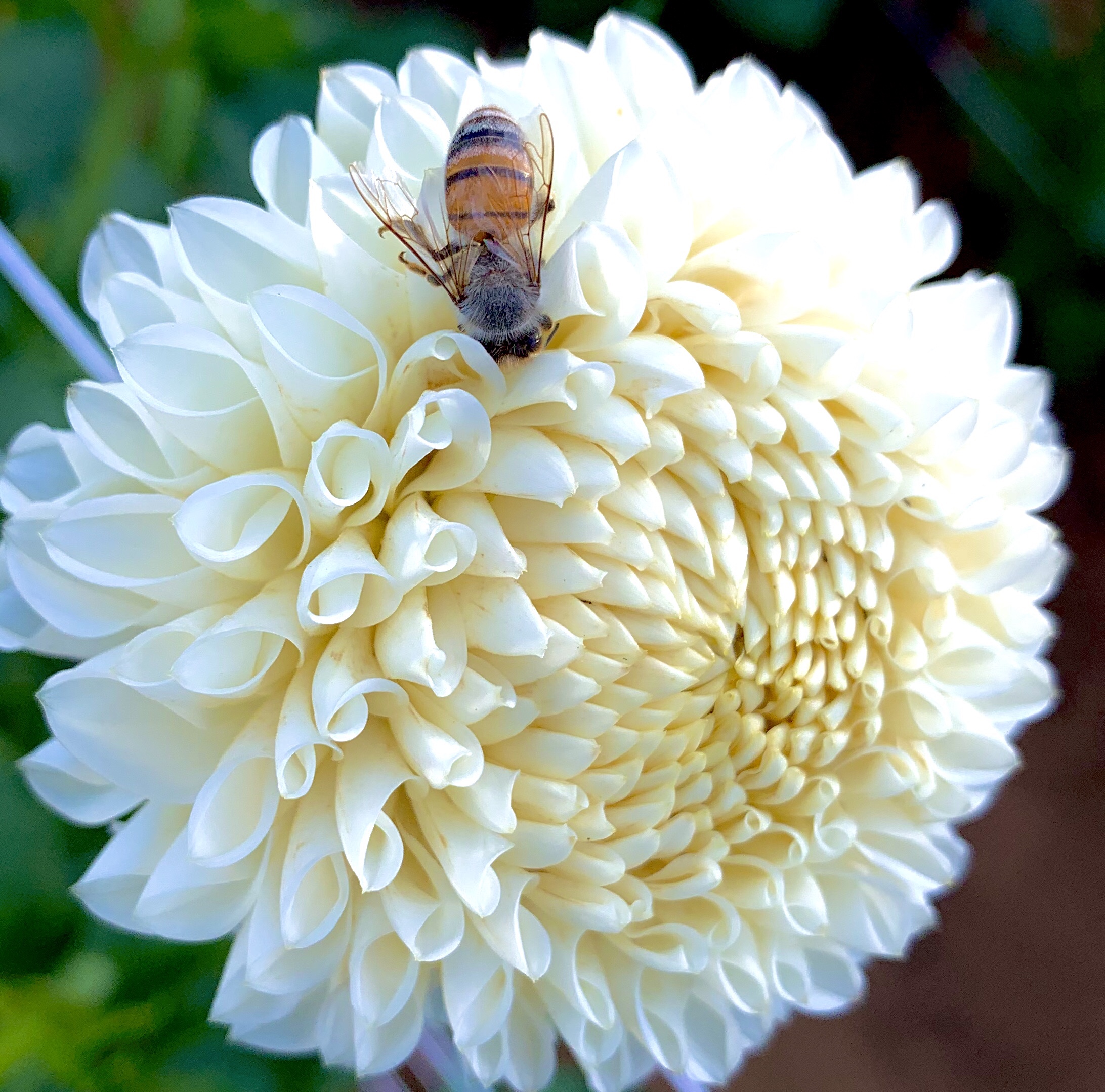
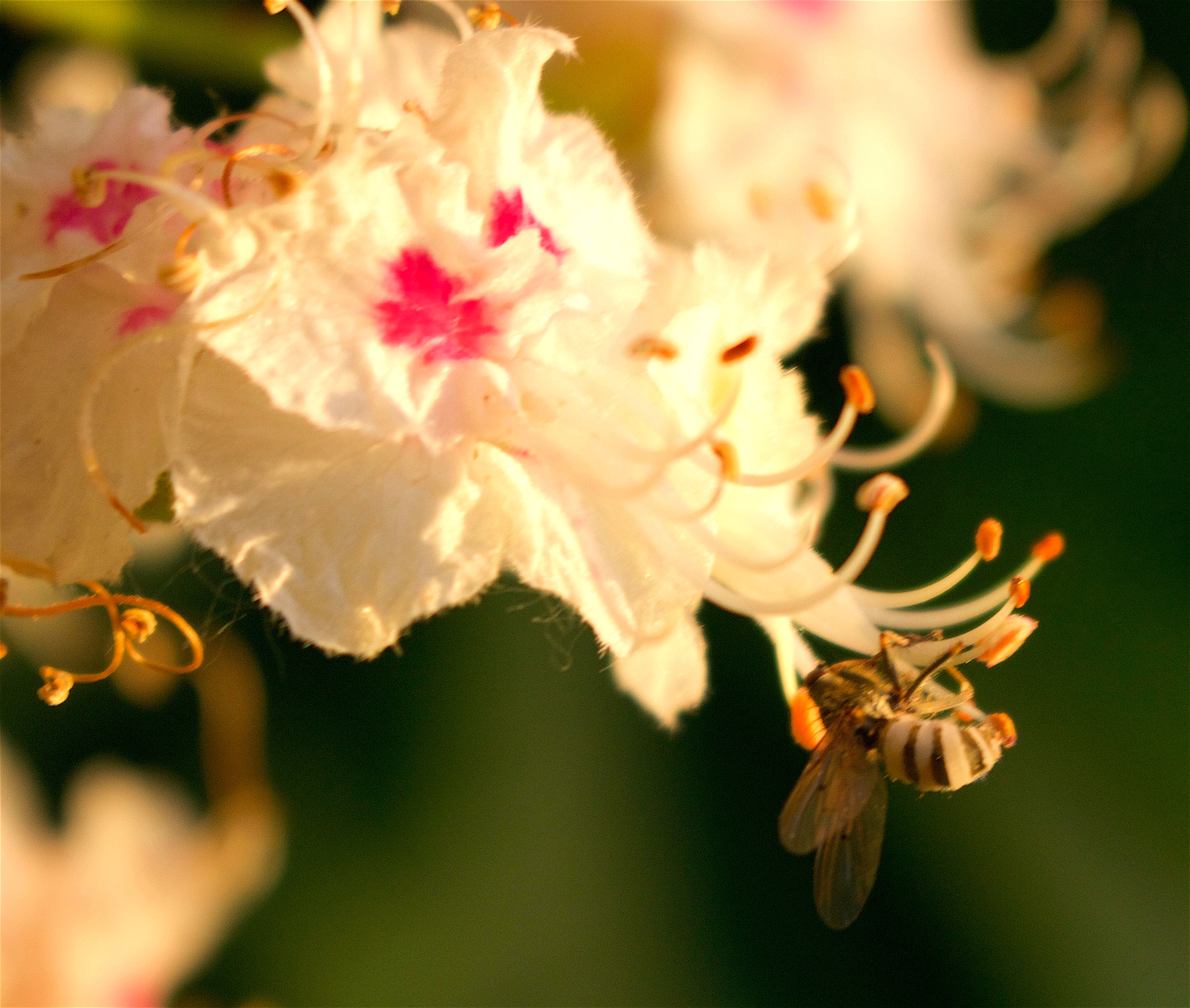
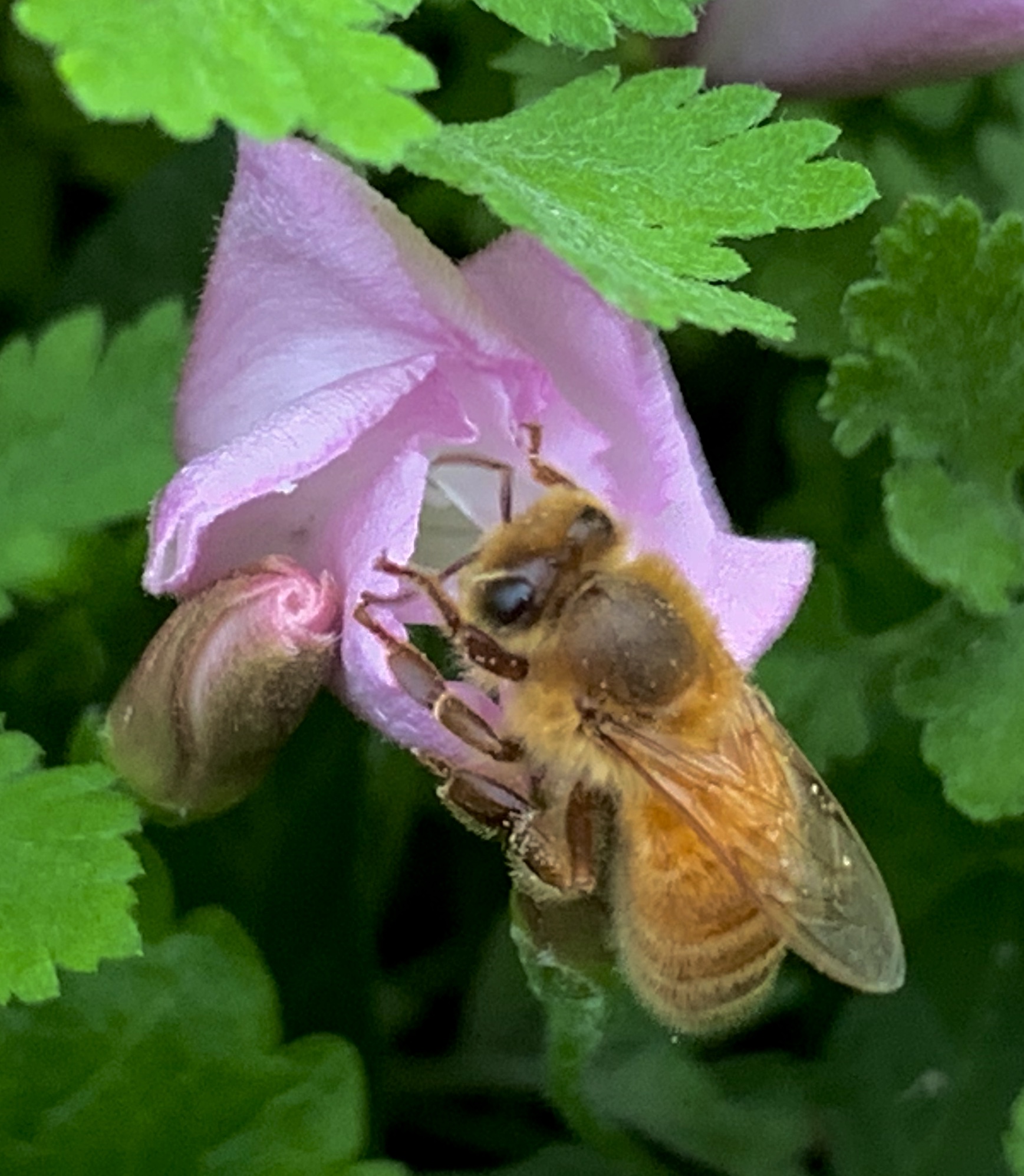
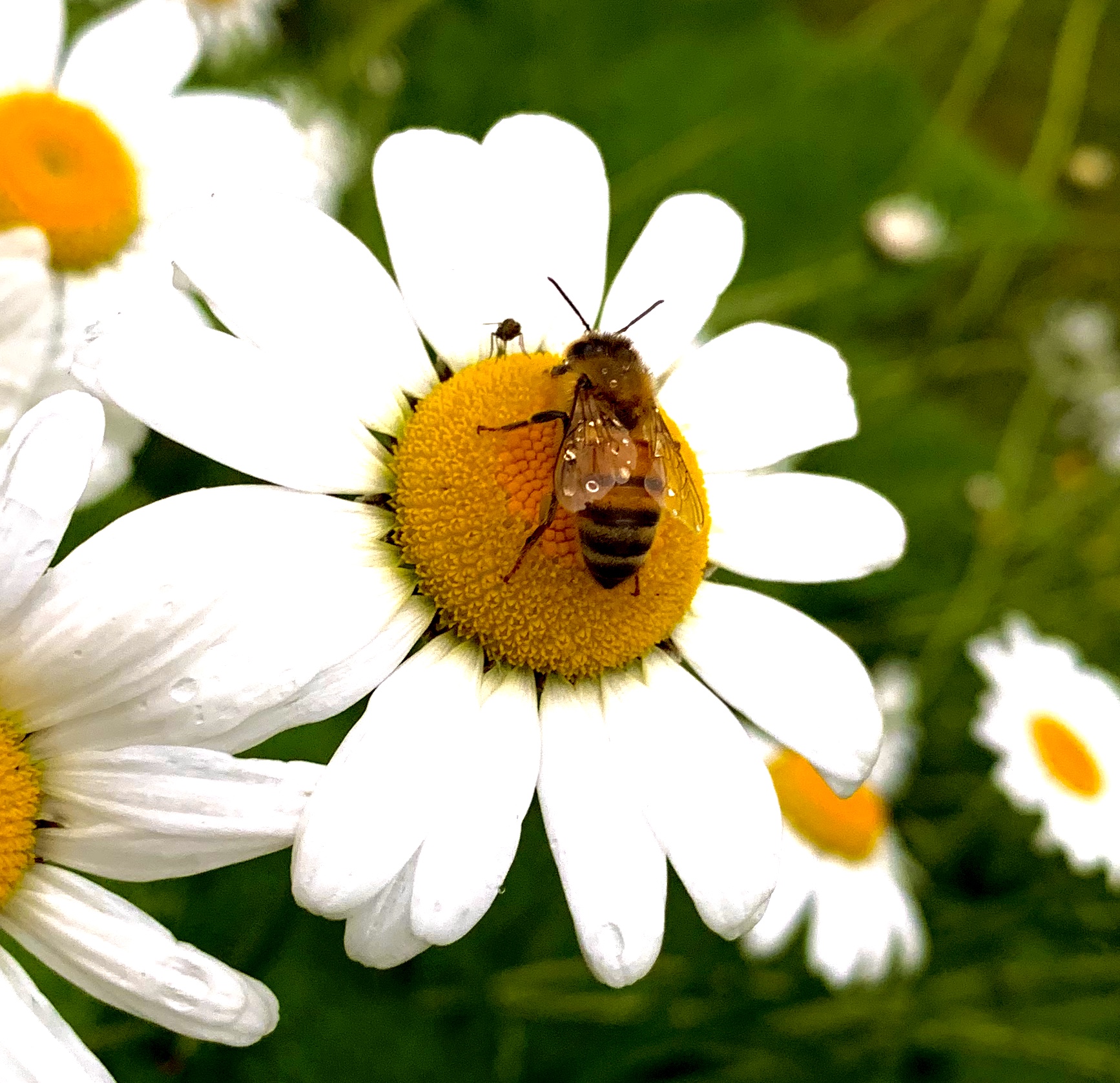
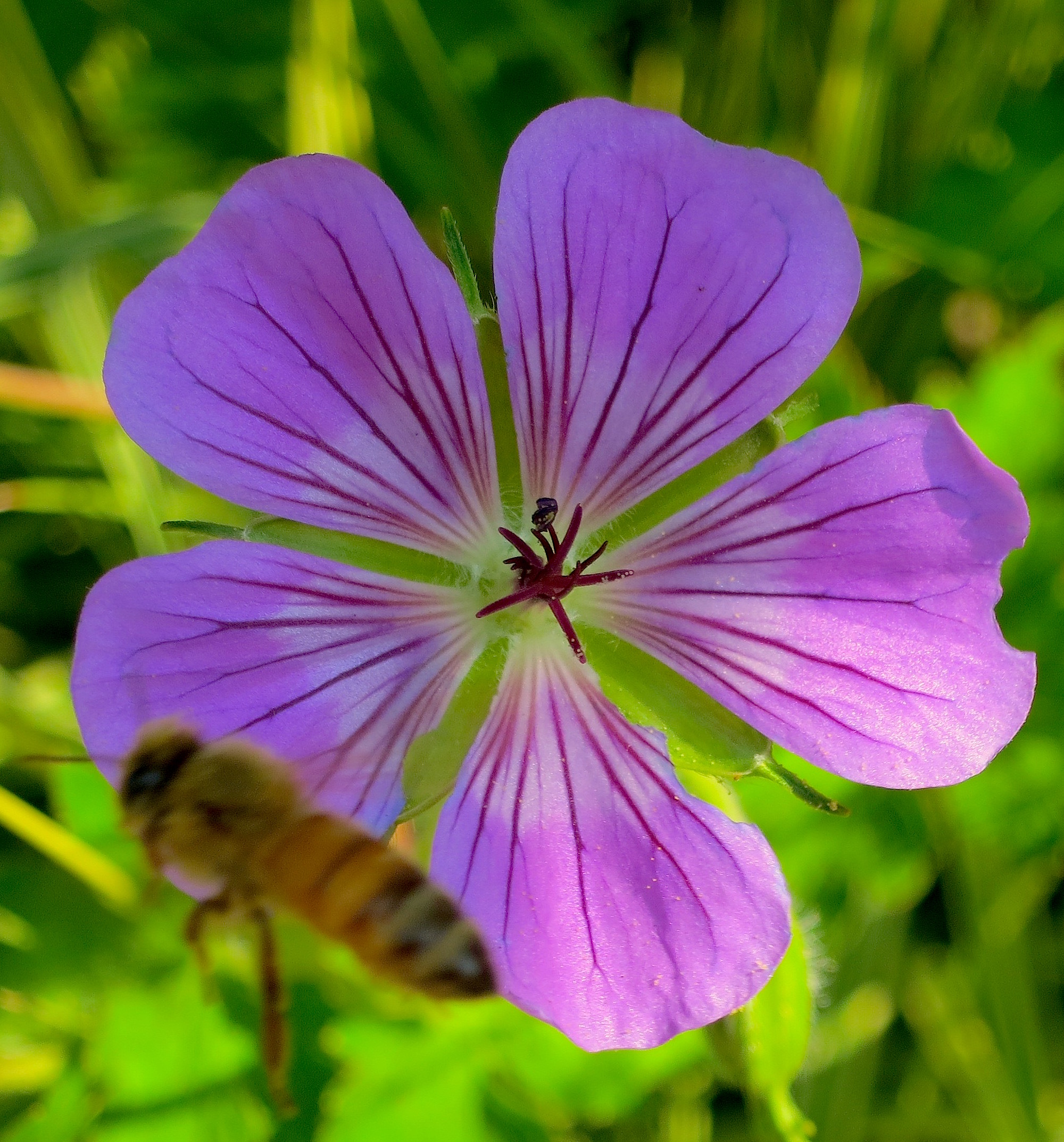
And I’ve always wondered what it would be like to be a bee – to leave my warm and cozy community to find the best sources of pollen, diving bum-deep into a plethora of colors and fragrances, from ‘blossom to blossom to impossible blossom.’

Bees have a life-preserving mission in the world – not only to sustain themselves and their hive, but pollinating millions of blooms, an essential task for the fruiting of the land. Now that is a purpose-driven life.

We are no different. Our reason to exist goes far beyond our self-preservation, or the preservation of everyone who looks like or thinks like we do, i.e. “hive-mind.” We were created to care for the rest of the world, by dipping into each beautiful and sacred thing that thrives here because of us, not despite us.

And that includes each other, as different as we look and think and act. Each of us a sweet impossible blossom.

New book available from Barnstorming — information on how to order it here

My Most Unusual Job Interview

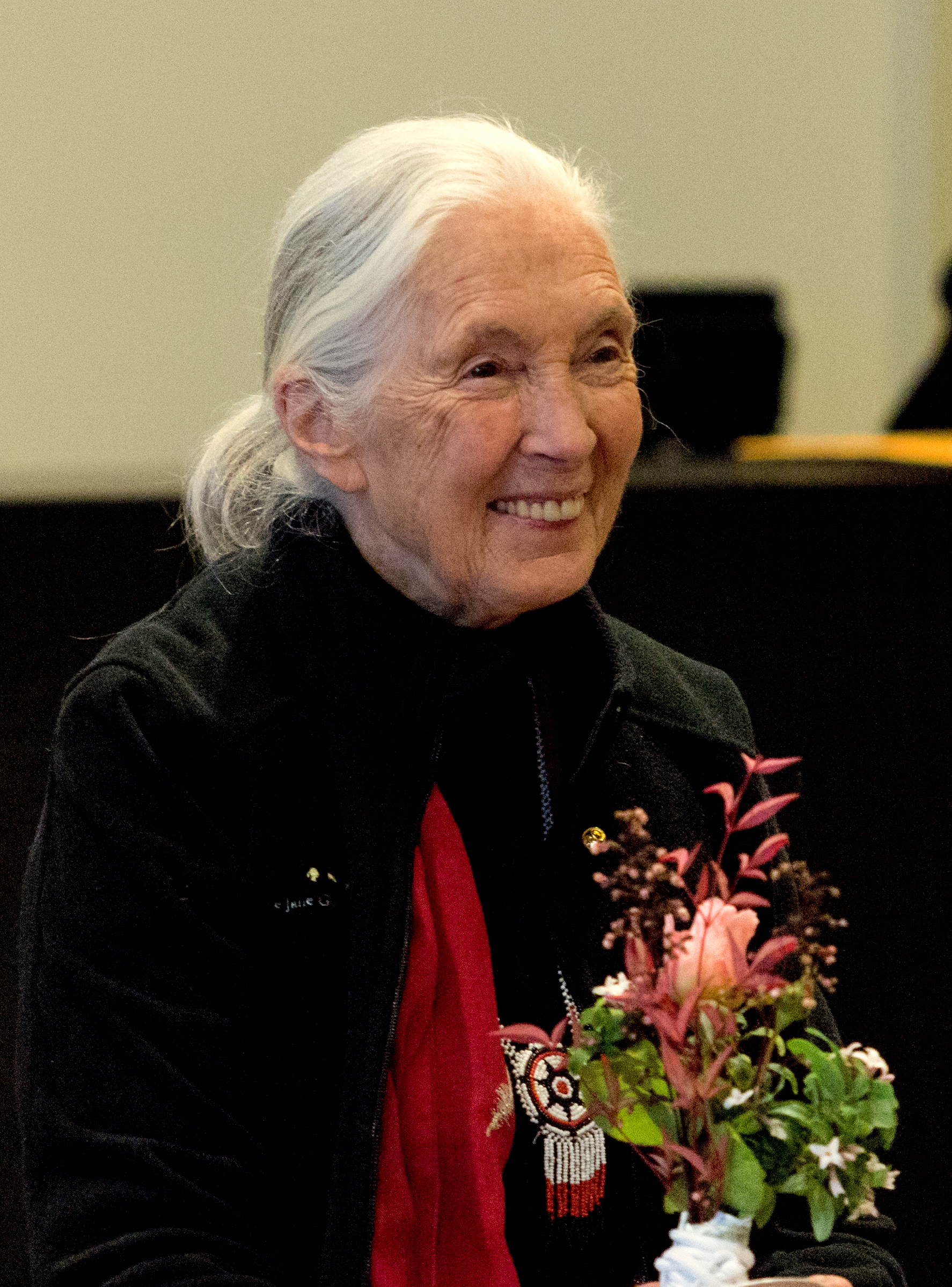
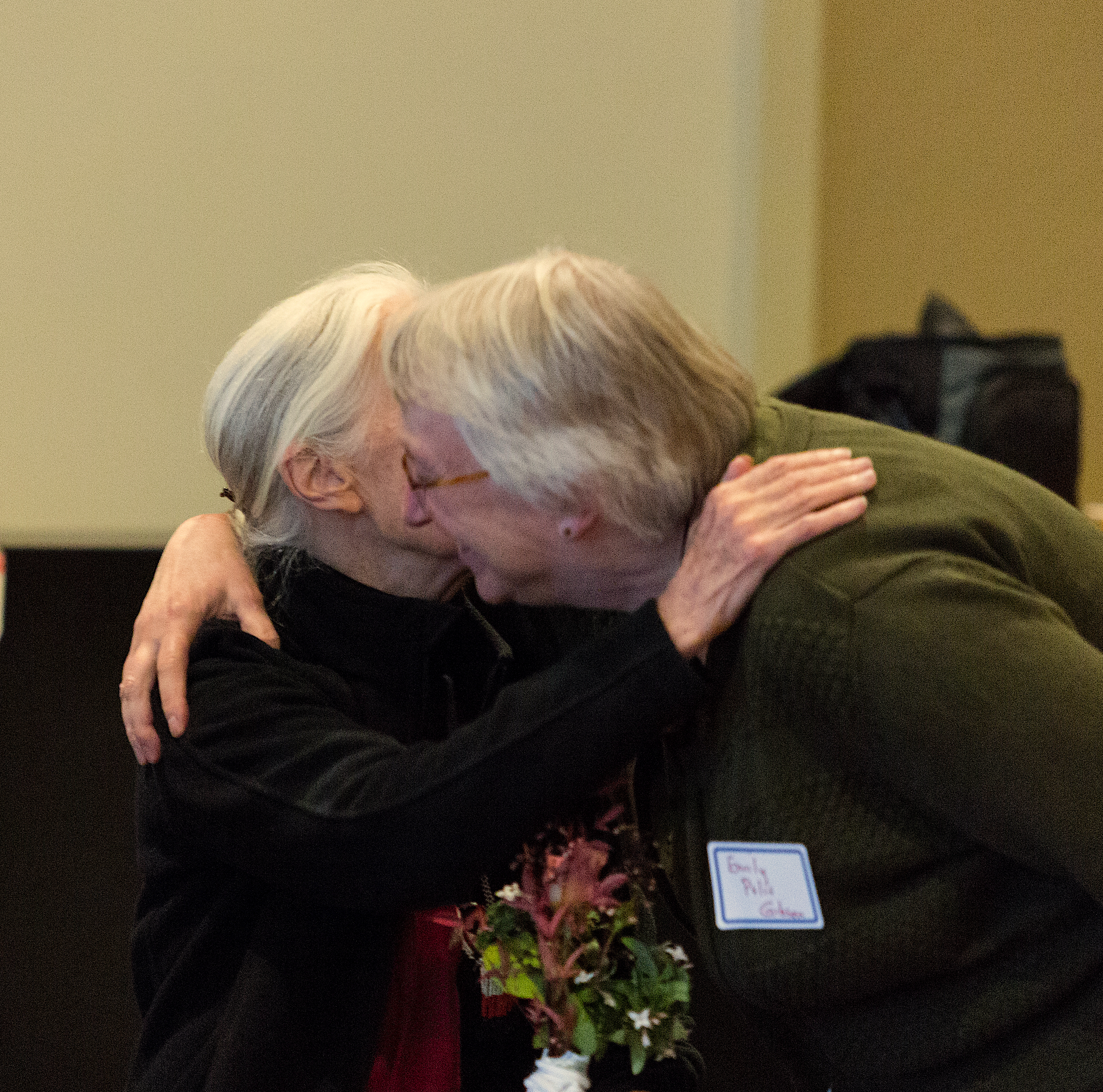
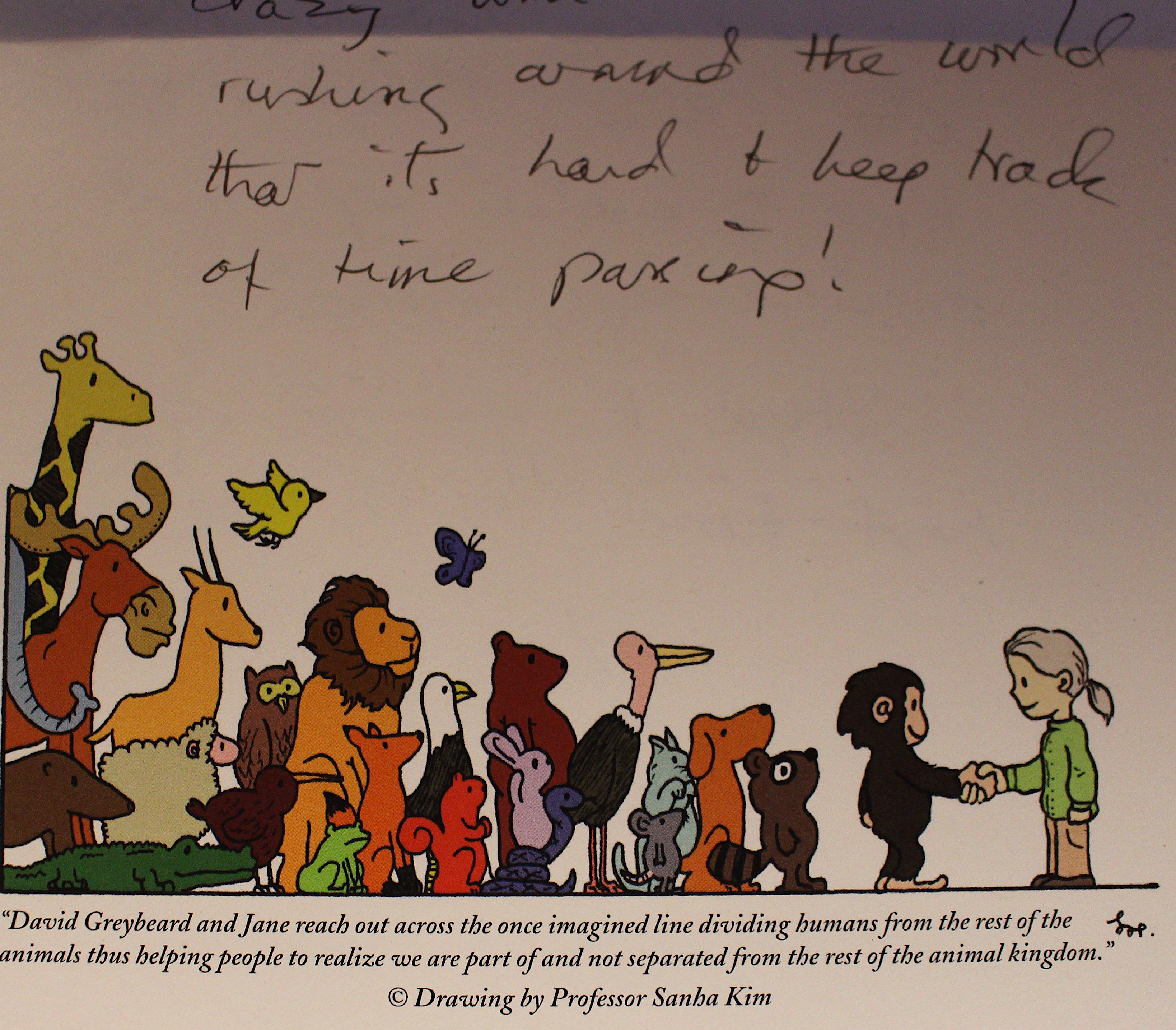
photo of Jane Goodall, smiling at me as I came up to give her a hug, courtesy of WWU University Communications (2018)
courtesy of WWU Communications
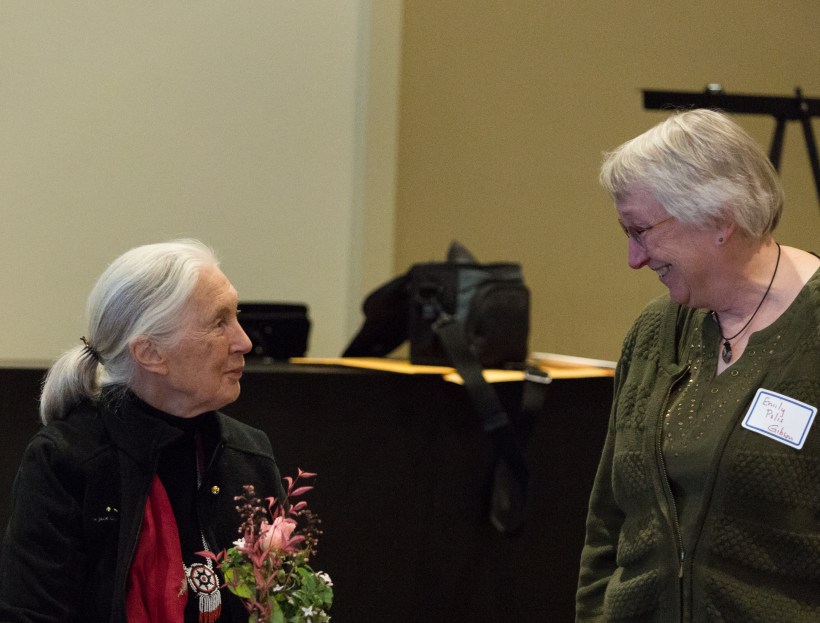
courtesy of WWU University Communications

Standing outside a non-descript door in a long dark windowless hallway of offices at the Stanford Medical Center, I took a deep breath and swallowed several times to clear my dry throat. I hoped I had found the correct office, as there was only a number– no nameplate to confirm who was inside.

I was about to meet a childhood hero, someone whose every book I’d read and every TV documentary I had watched. I knocked with what I hoped was the right combination of assertiveness (“I want to be here to talk with you and prove my interest”) and humility (“I hope this is convenient for you as I don’t want to intrude”). I heard a soft voice on the other side say “Come in” so I slowly opened the door.

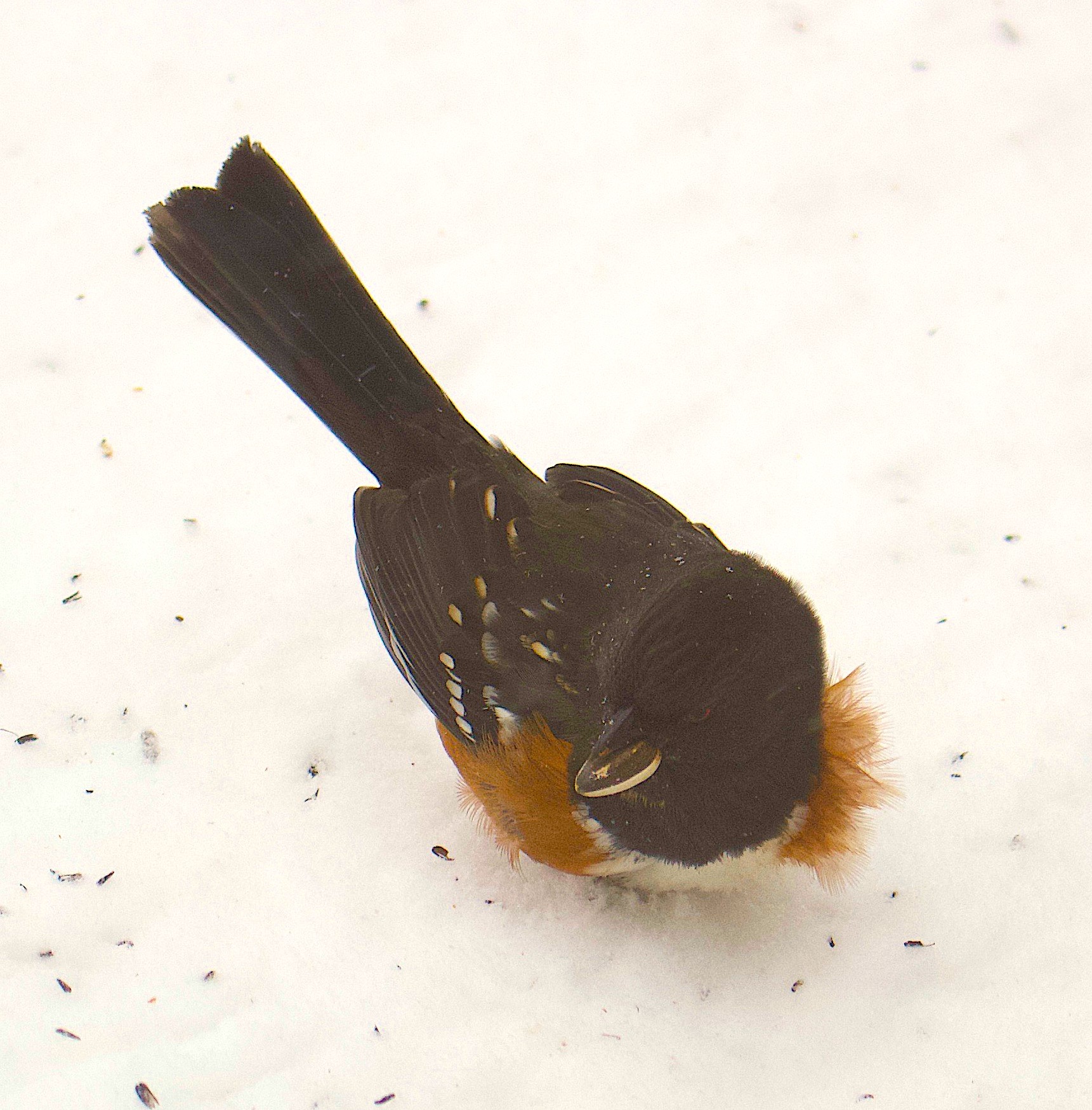
It was a bit like going through the wardrobe to enter Narnia. Bright sunlight streamed into the dark hallway as I stepped over the threshold. Squinting, I stepped inside and quickly shut the door behind me as I realized there were at least four birds flying about the room. They were taking off and landing, hopping about feeding on bird seed on the office floor and on the window sill. The windows were flung wide open with a spring breeze rustling papers on the desk. The birds were very happy occupying the sparsely furnished room, which contained only one desk, two chairs and Dr. Jane Goodall.
She stood up and extended her hand to me, saying, quite unnecessarily, “Hello, I’m Jane” and offered me the other chair when I told her my name. She was slighter than she appeared when speaking up at a lectern, or on film. Sitting back down at her desk, she busied herself reading and marking her papers, seemingly occupied and not to be disturbed. It was as if I was not there at all.

It was disorienting. In the middle of a bustling urban office complex containing nothing resembling plants or a natural environment, I had unexpectedly stepped into a bird sanctuary instead of sitting down for a job interview. I wasn’t sure what I was supposed to do or say. Jane didn’t really ever look directly at me, yet I was clearly being observed. So I waited, watching the birds making themselves at home in her office, and slowly feeling at home myself. I felt my tight muscles start to relax and I loosened my grip on the arms of the chair.

There was silence except for the twittering of the finches as they flew about our heads.

After awhile she spoke, her eyes still perusing papers: “It is the only way I can tolerate being here for any length of time. They keep me company. But don’t tell anyone; the people here would think this is rather unsanitary.”

I said the only thing I could think of: “I think it is magical. It reminds me of home.”
Only then did she look at me. “Now tell me why you’d like to come work at Gombe…”

The next day I received a note from her letting me know I was accepted for the research assistantship to begin a year later. I had proven I could sit silently and expectantly, waiting for something, or perhaps nothing at all, to happen. For a farm girl who never before traveled outside the United States, I was about to embark on an adventure far beyond the barnyard.

(I had no idea when I applied for this position in March of 1974 that a little more than a year later, on May 19, 1975, I would be hiding in a Tanzanian jungle alongside Jane and her eight year old son Grub – that story is found here.

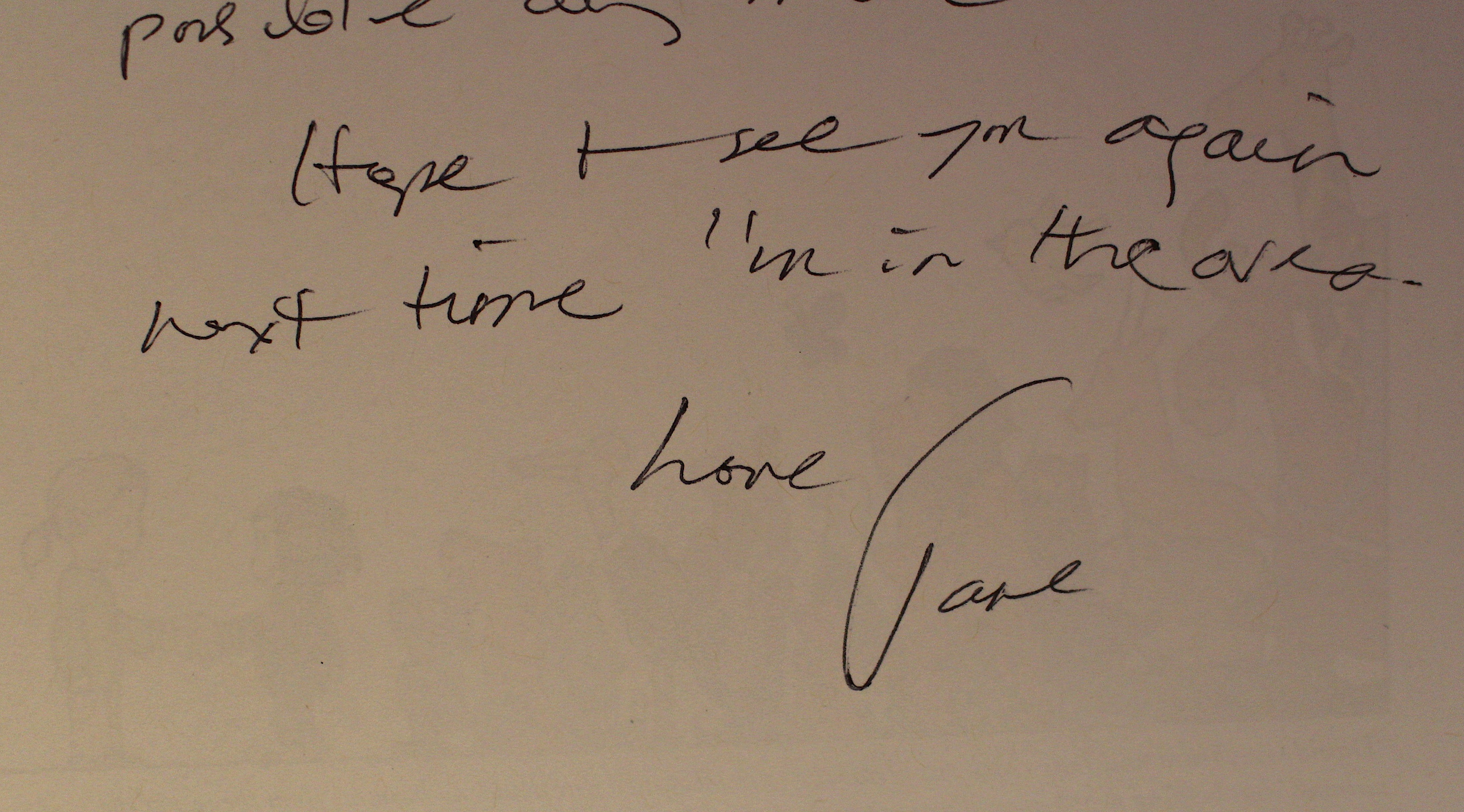
True to Jane’s tradition of impeccable graciousness, she sent me a hand-written note after her last visit in 2018 when she came to speak at Western Washington University in Bellingham.

A documentary “Jane” is streaming online and reviewed at https://www.nytimes.com/2017/10/18/movies/jane-review-jane-goodall-documentary.html

A new book from Barnstorming is available for order here

Standing Guard, Waiting

For as a cloud received Him from their sight,
So with a cloud will He return ere long:
Therefore they stand on guard by day, by night,
Strenuous and strong.

They do, they dare, they beyond seven times seven
Forgive, they cry God’s mighty word aloud:
Yet sometimes haply lift tired eyes to Heaven–
“Is that His cloud?”
~Christina Rossetti from “Ascension Day”

I wait for the Lord, my soul waits,
    and in his word I put my hope.
My soul waits for the Lord
    more than watchmen wait for the morning,
    more than watchmen wait for the morning.

Psalm 130: 5-6 from a Song of Ascents

Waiting is essential to the spiritual life.
But waiting as a disciple of Jesus is not an empty waiting.
It is a waiting with a promise in our hearts
that makes already present what we are waiting for.
We wait during Advent for the birth of Jesus.
We wait after Easter for the coming of the Spirit,
and after the ascension of Jesus
we wait for his coming again in glory.
We are always waiting,
but it is a waiting in the conviction that
we have already seen God’s footsteps.
— Henri Nouwen from Bread For The Journey: A Daybook of Wisdom and Faith

To wait is a hard sweet paradox in the Christian life.  It is hard not yet having what we know will be coming.  But it is sweet to have certainty it is coming because of the footprints we have seen: He has been here among us. 

Like the labor of childbirth, we groan knowing what it will take to get there, and we are full to brimming already.

The waiting won’t be easy; it will often be painful to be patient, staying alert to possibility and hope when we are exhausted, barely able to function.  Others won’t understand why we wait, nor do they comprehend what we could possibly be waiting for. 

We persevere together, with patience, watching and hoping; we are a community groaning together in sweet expectation of the morning.

A new book from Barnstorming available to order here

Always Something to Make You Wonder

bayleaf

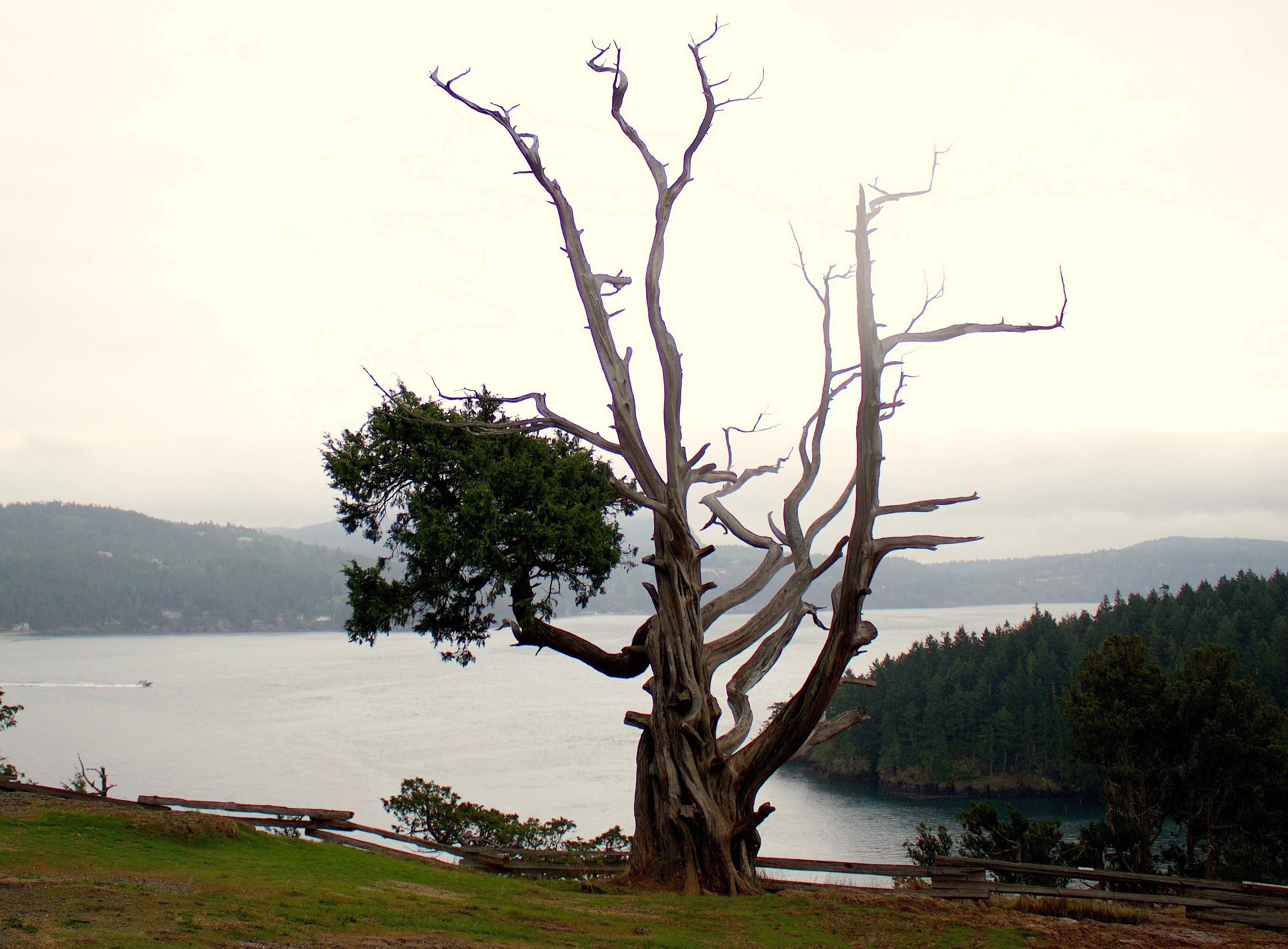
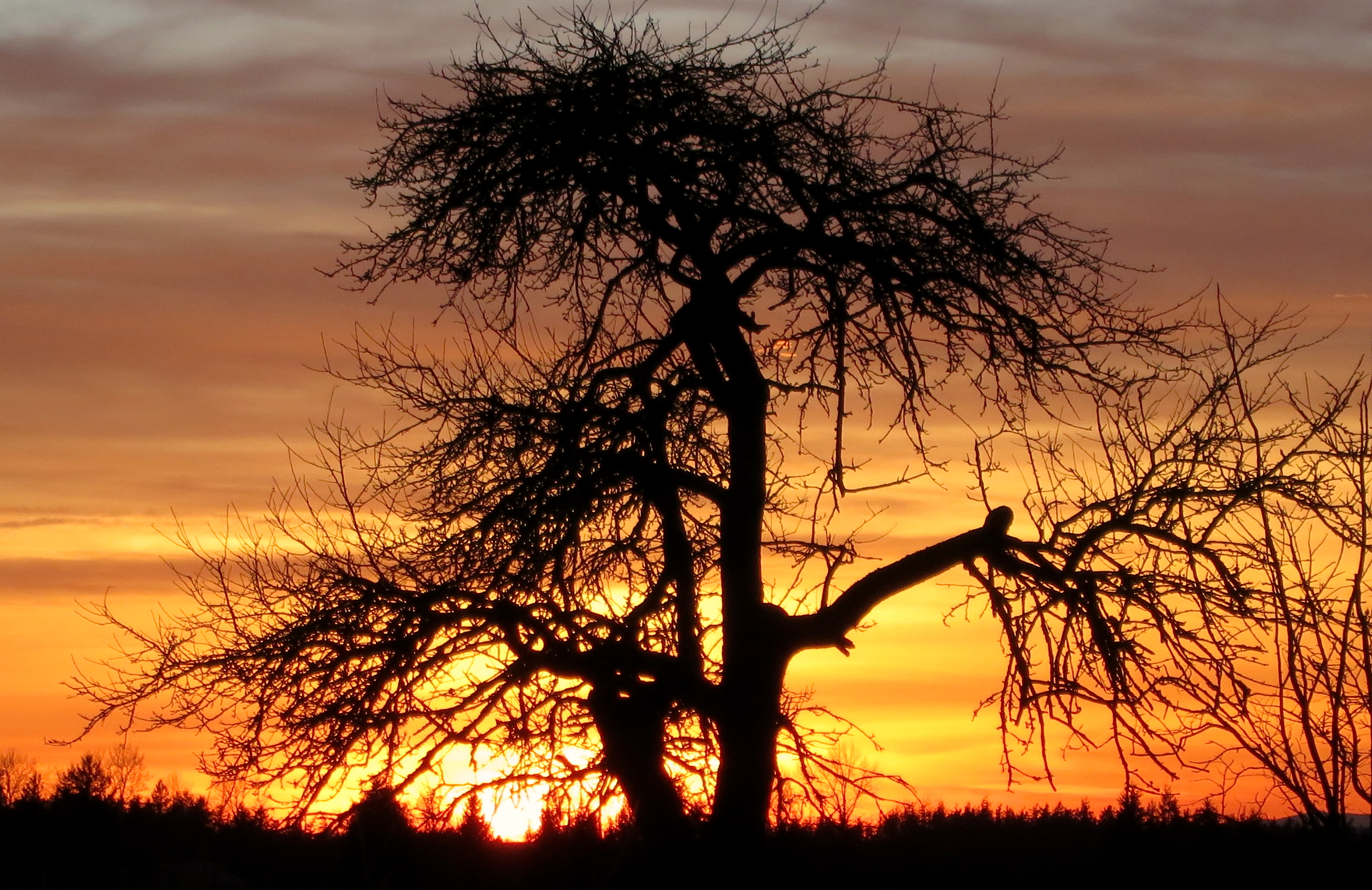
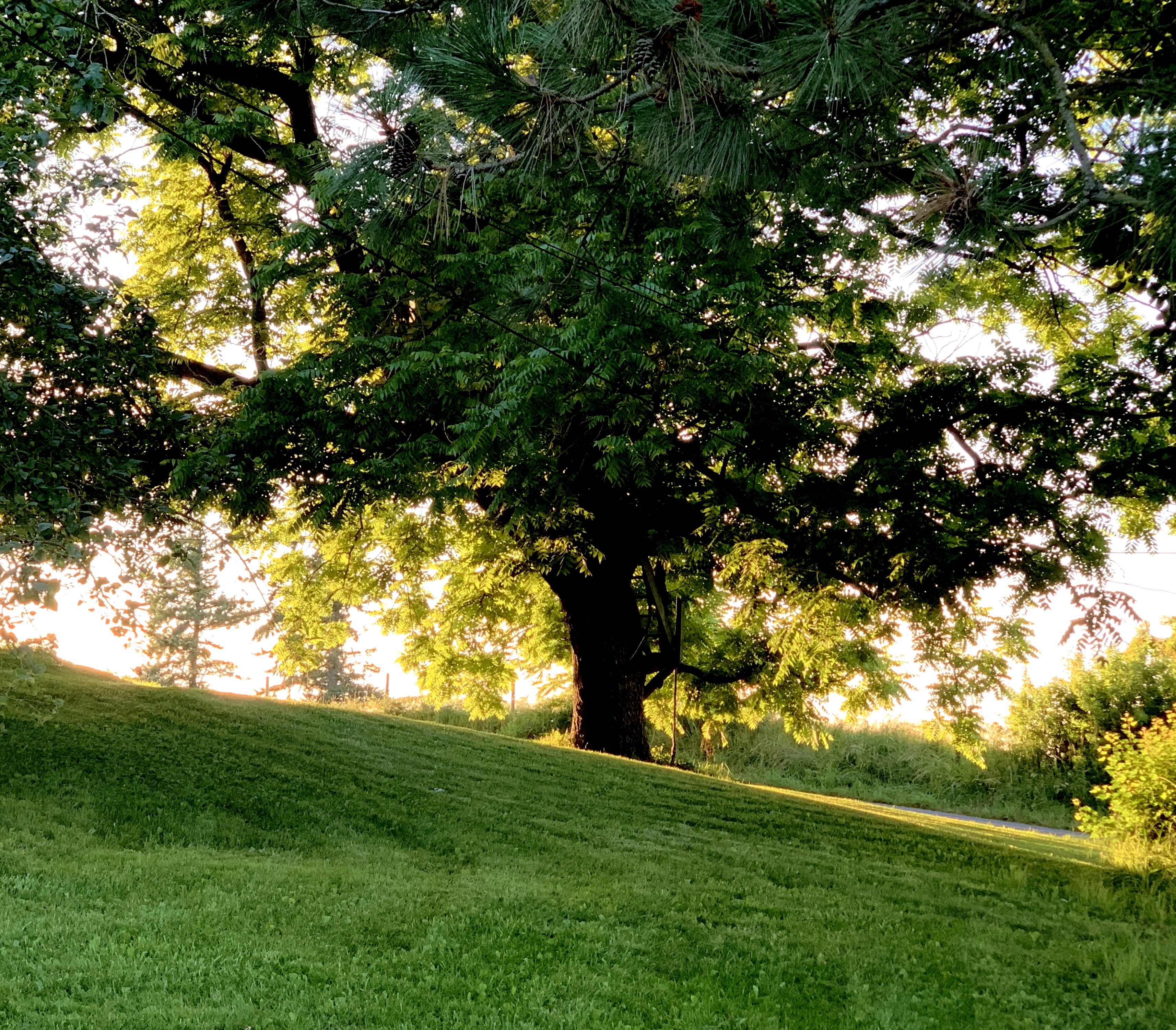
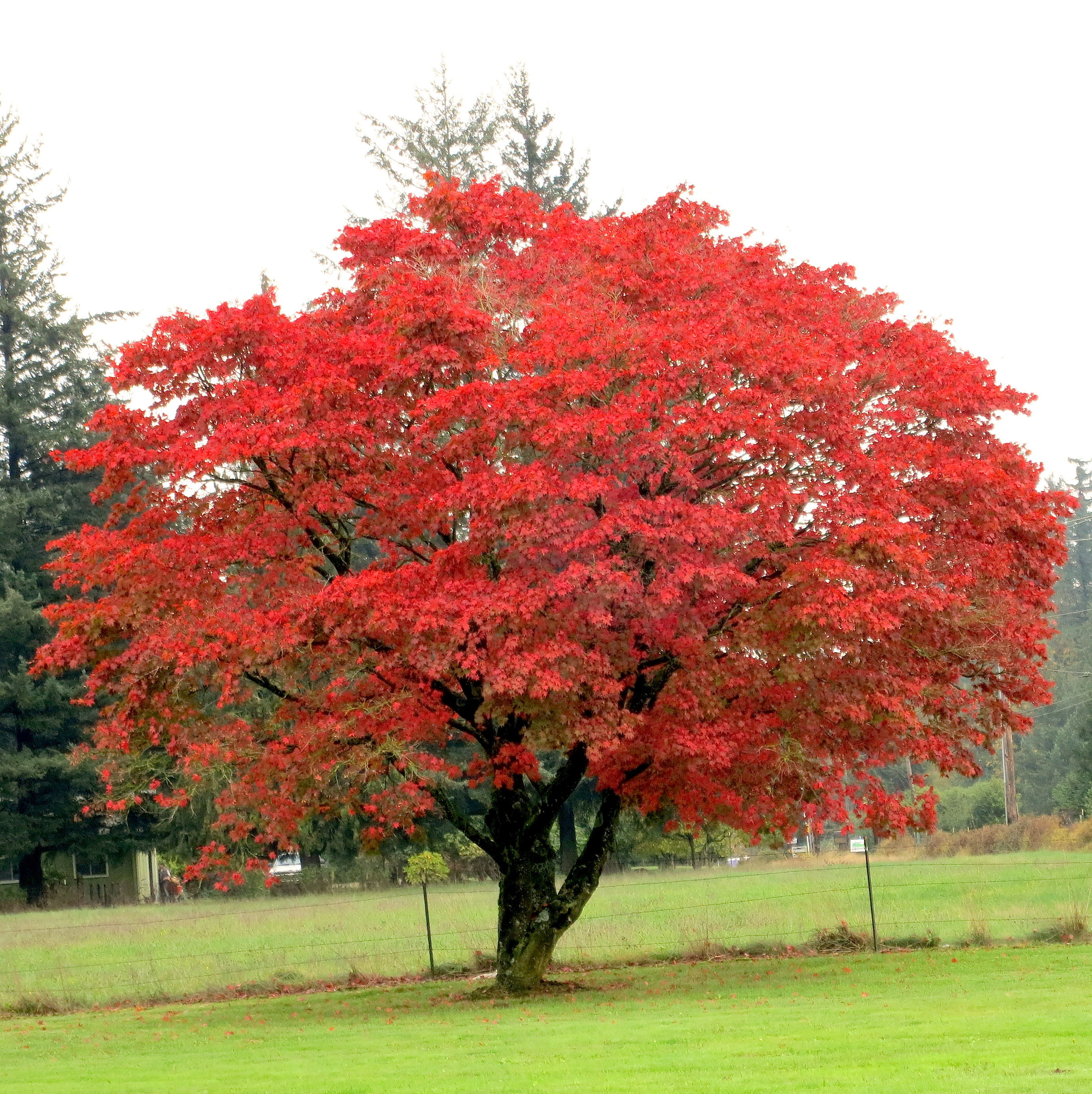
Never say there is nothing beautiful in the world anymore.
There is always something to make you wonder
in the shape of a tree,
the trembling of a leaf.
~ Albert Schweitzer

Long ago I gave up striving
for perfect symmetry,
strong shapely limbs,
the straightest trunk,
the most luscious foliage and colorful blooms.

Instead, my life is as fruitful as possible,
even if I bend more in winter storms,
my roots not anchored as deep,
despite bare and broken branches,
falling leaves,
crooked trunk,
and increasing lumpiness.

I try to provide the best of which I’m capable,
with a minimum of scab, rot and hidden worms.

The promise of breathtaking beauty for eternity
makes getting up in the morning worth the effort
when we would rather hide our homeliness and decay under the covers.

Yet nothing can be as beautiful as the reality of
broken people giving their all
for other broken people.

It is for this we are created;
our imperfections on display,
continually pruned and refined
to produce needed fruit,
abundantly filling and ever so sweet.

It’s enough to make you wonder…

A new book from Barnstorming available to order here

The World is Flux

…The world
is flux, and light becomes what it touches,
becomes water, lilies on water,
above and below water,
becomes lilac and mauve and yellow
and white and cerulean lamps,
small fists passing sunlight
so quickly to one another
that it would take long, streaming hair
inside my brush to catch it.
To paint the speed of light!
Our weighted shapes, these verticals,
burn to mix with air
and change our bones, skin, clothes
to gases.  Doctor,
if only you could see
how heaven pulls earth into its arms
and how infinitely the heart expands
to claim this world, blue vapor without end.
~Lisel Mueller, “Monet Refuses the Operation” from Second Language

“Heaven pulls earth into its arms…”

We all see things differently, don’t we? What seems ordinary to one person is extraordinarily memorable to another. How might I help others to see the world as I do? How might I learn to adjust my focus to see things as you do?

The world is flux; my delight and dismay flows from moment to moment, from object to absence, from light to darkness, from color to gray. Perhaps the blur from the figurative (or real) cataract that impedes my vision creates a deeper understanding, as I use my imagination to fill in what I can’t discern.

My heart and mind expands exponentially to claim this world and all the beauty has to offer, while heaven – all this while – is pulling me into its arms.

In heaven, my focus will be clear. It will all be extraordinarily ordinary.

Cure for Every Hurt

hankerchief tree (Ireland)
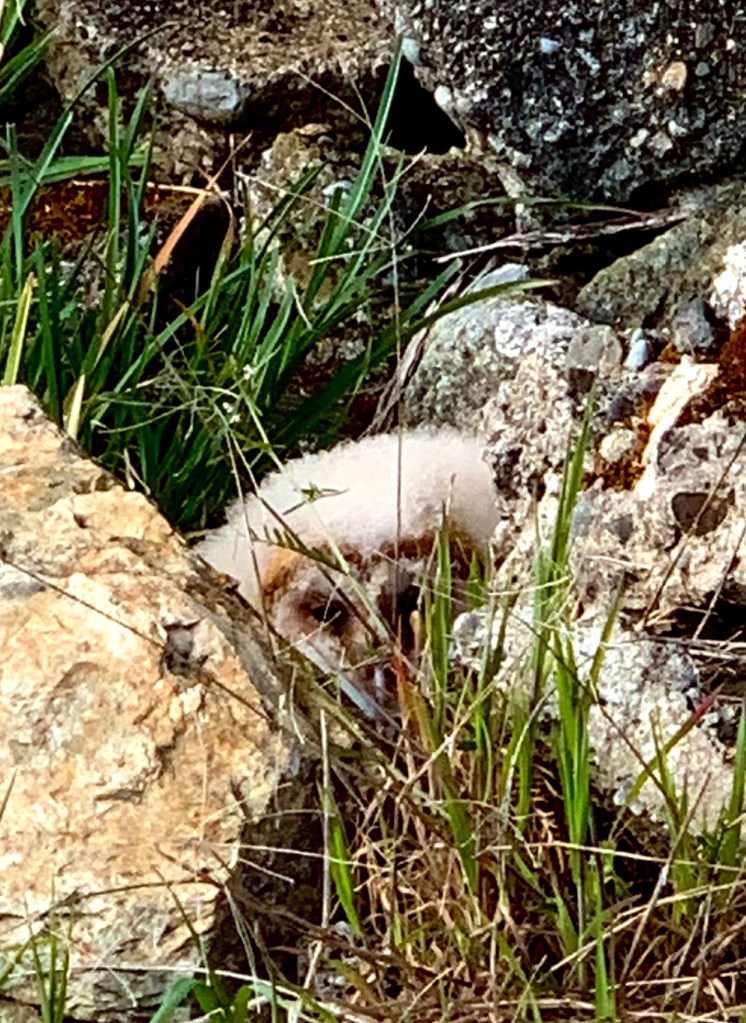
Baby Barn Owlet hiding in the rocks and grass
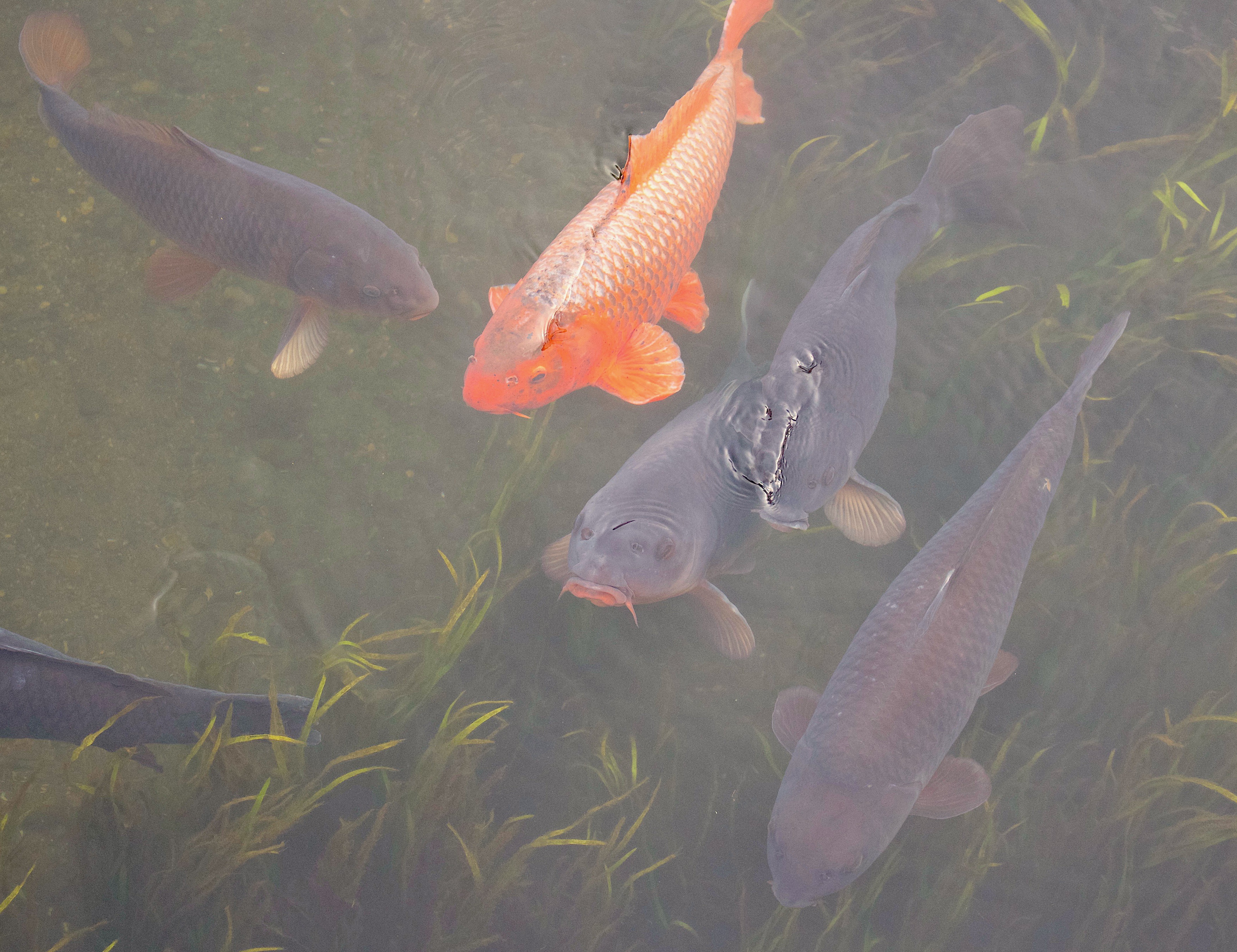
River carp (2-3 feet long) in Higashi-Kurume, Tokyo

Gardens are also good places
to sulk. You pass beds of
spiky voodoo lilies   
and trip over the roots   
of a sweet gum tree,   
in search of medieval   
plants whose leaves,   
when they drop off   
turn into birds
if they fall on land,
and colored carp if they   
plop into water.

Suddenly the archetypal   
human desire for peace   
with every other species   
wells up in you. The lion   
and the lamb cuddling up.
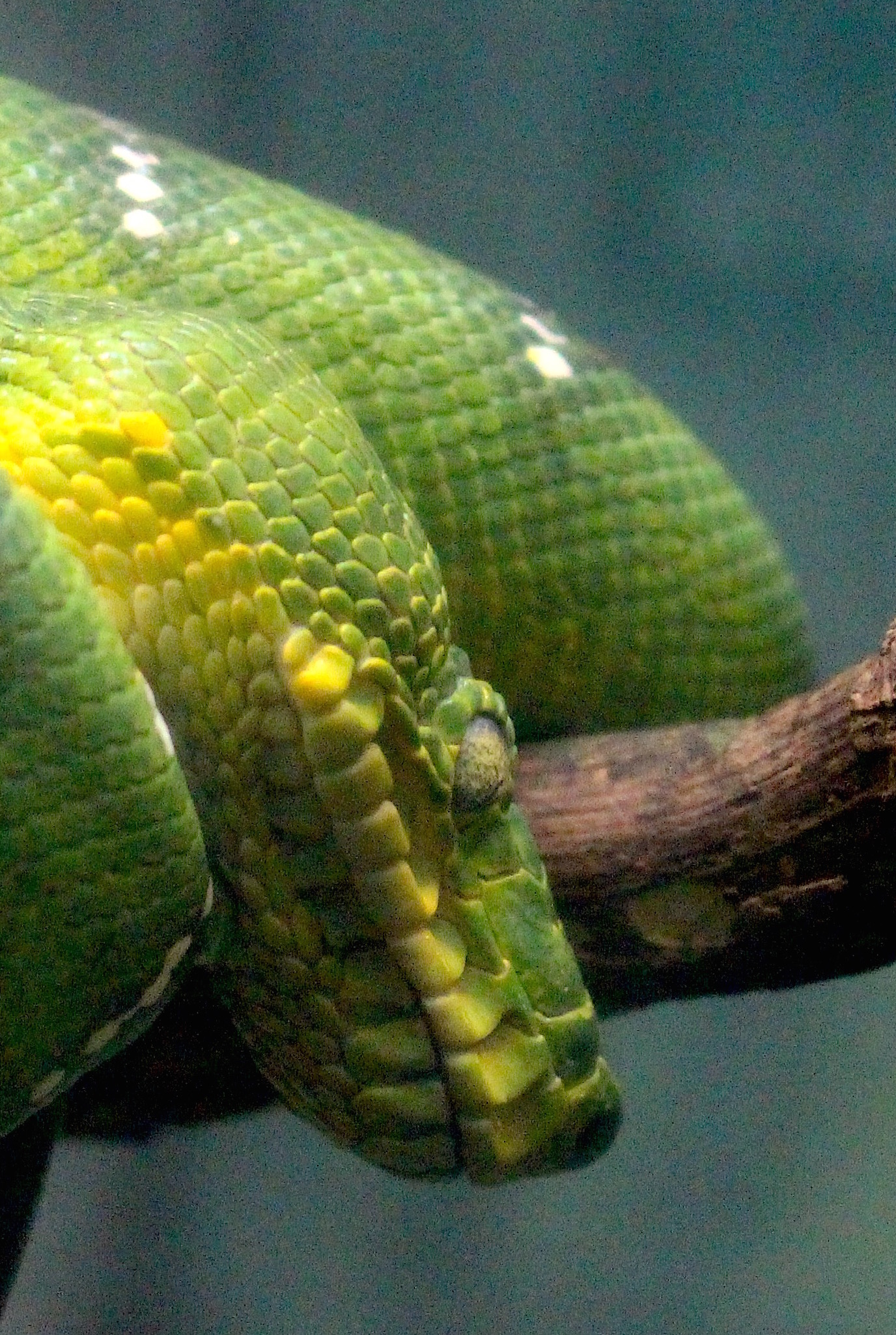
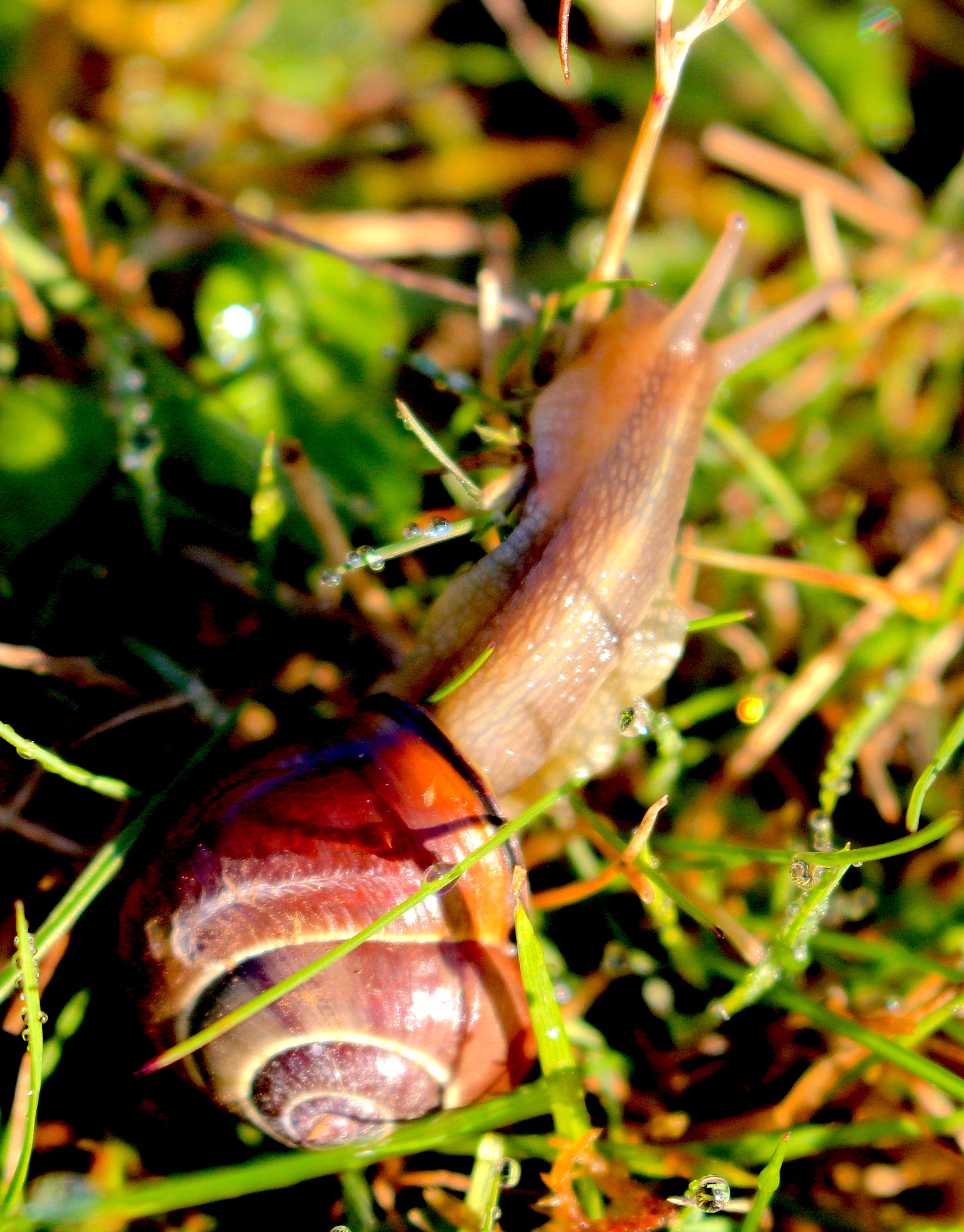
The snake and the snail, kissing.
Even the prick of the thistle,   
queen of the weeds, revives   
your secret belief
in perpetual spring,
your faith that for every hurt   
there is a leaf to cure it.

~Amy Gerstler “Perpetual Spring” from Bitter Angel

photo by Tomomi Gibson

We all want to fix what ails us: that was the point of my many years of medical training and over 40 years “practicing” that art. We want to know there is a cure for every hurt, an answer for every question, a resolution to every mystery, or peace for every conflict.

And there is. It just isn’t always on our timeline, nor is it always the answer we expect, nor the conflict magically dissolved. The mystery shall remain mystery until every tear is dried, as we stand before the Face of our Holy God who both loves and judges our hearts.

Sometimes this life hurts – a lot – but I believe in the perpetual Spring and Resurrection that guarantees our complete healing.

Soli Deo Gloria

A new book available to order https://barnstorming.blog/new-book-available-almanac-of-quiet-days/from Barnstorming and poet Lois Edstrom!

Wing to Wing

No speed of wind or water rushing by
But you have speed far greater. You can climb
Back up a stream of radiance to the sky,
And back through history up the stream of time.
And you were given this swiftness, not for haste
Nor chiefly that you may go where you will,
But in the rush of everything to waste,
That you may have the power of standing still-
Off any still or moving thing you say.
Two such as you with such a master speed

Cannot be parted nor be swept away
From one another once you are agreed
That life is only life forevermore
Together wing to wing and oar to oar
~Robert Frost “Master Speed”

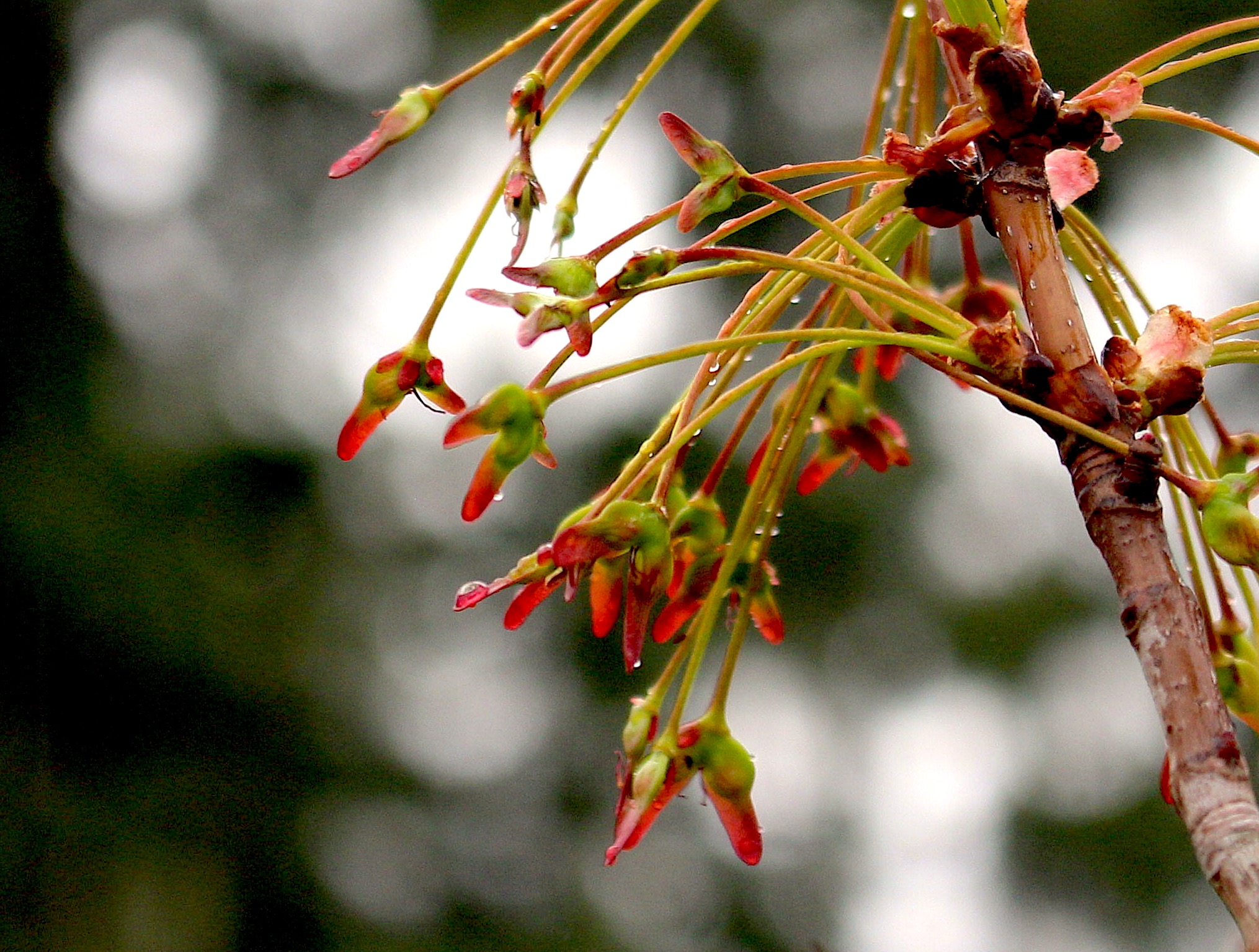
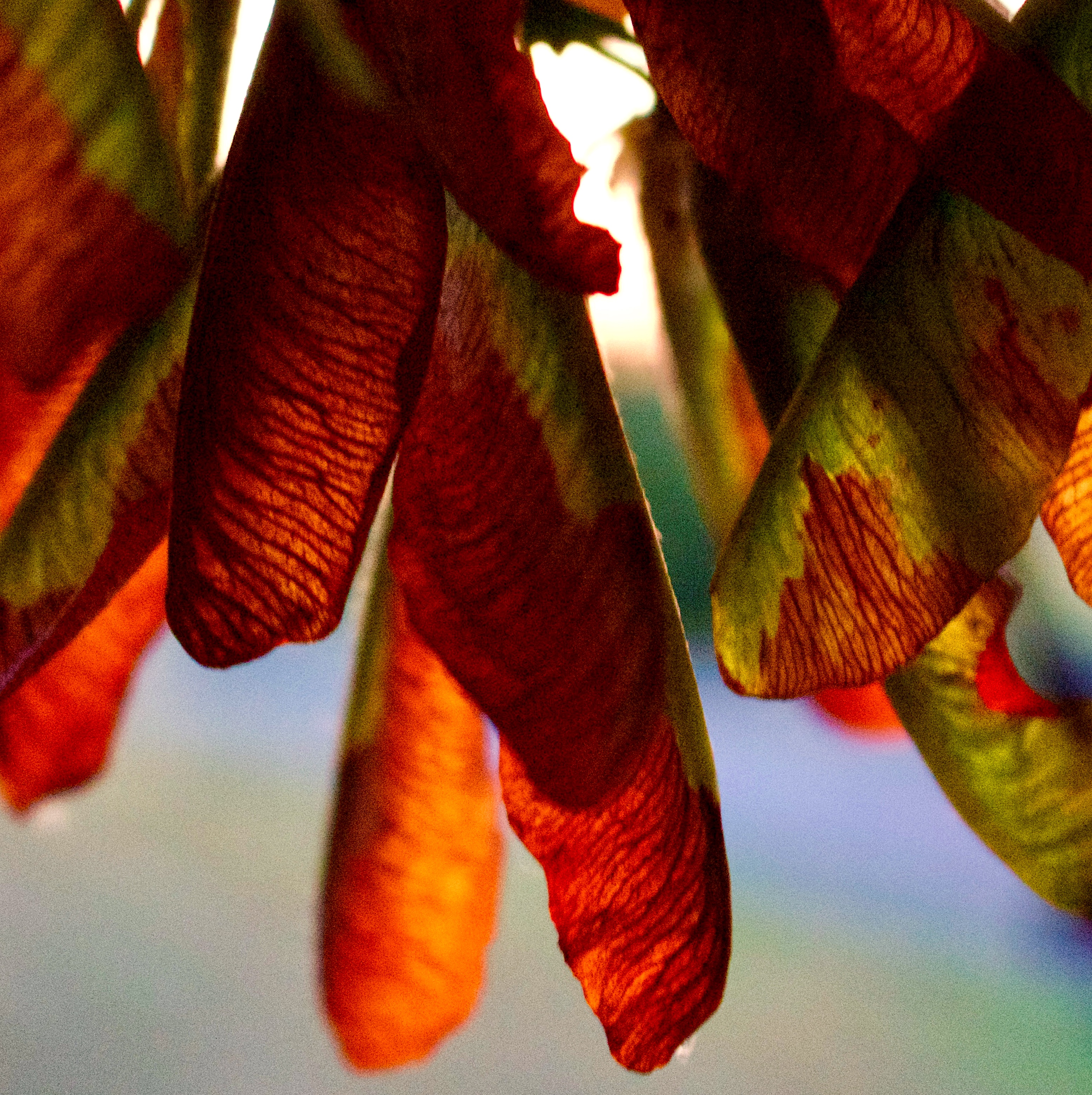
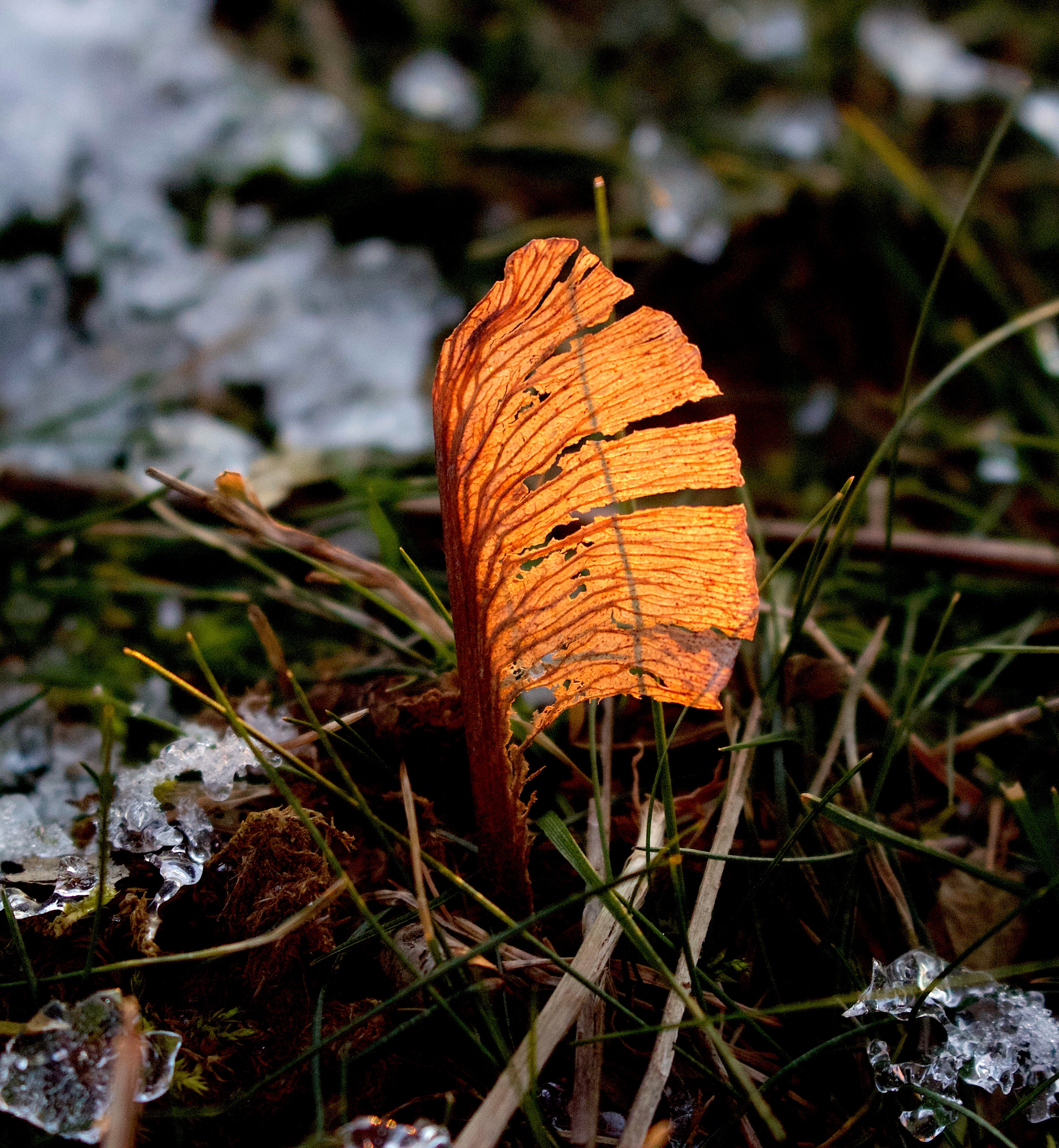
All at once I saw what looked like a Martian spaceship whirling towards me in the air. It flashed borrowed light like a propeller. Its forward motion greatly outran its fall. As I watched, transfixed, it rose, just before it would have touched a thistle, and hovered pirouetting in one spot, then twirled on and finally came to rest. I found it in the grass; it was a maple key, a single winged seed from a pair. Hullo. I threw it into the wind and it flew off again, bristling with animate purpose, not like a thing dropped or windblown, pushed by the witless winds of convection currents hauling round the world’s rondure where they must, but like a creature muscled and vigorous, or a creature spread thin to that other wind, the wind of the spirit which bloweth where it listeth, lighting, and raising up, and easing down. O maple key, I thought, I must confess I thought, o welcome, cheers.

And the bell under my ribs rang a true note, a flourish as of blended horns, clarion, sweet, and making a long dim sense I will try at length to explain. Flung is too harsh a word for the rush of the world. Blown is more like it, but blown by a generous, unending breath. That breath never ceases to kindle, exuberant, abandoned; frayed splinters spatter in every direction and burgeon into flame. And now when I sway to a fitful wind, alone and listing, I will think, maple key. When I see a photograph of earth from space, the planet so startlingly painterly and hung, I will think, maple key. When I shake your hand or meet your eyes I will think, two maple keys. If I am a maple key falling, at least I can twirl.
~Annie Dillard from Pilgrim at Tinker Creek

(Happy birthday to Annie today — her 76th !)

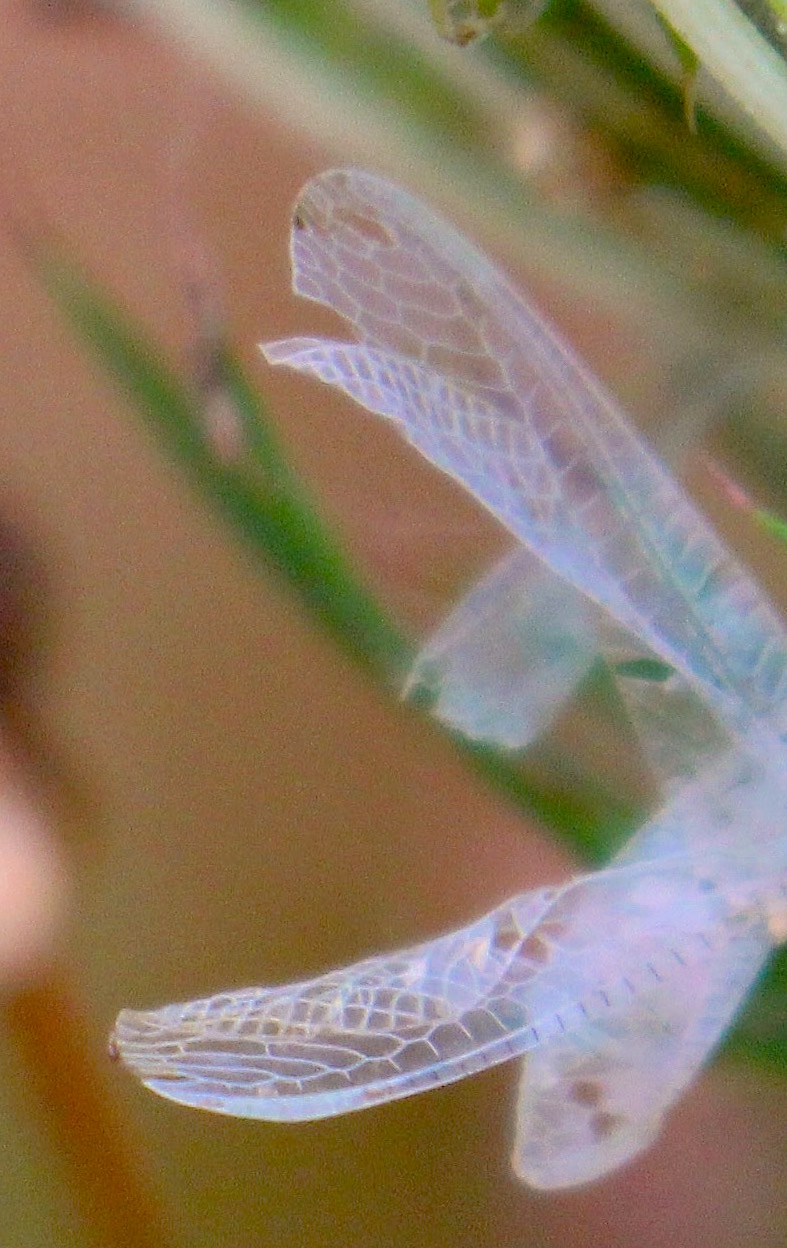
I think a lot about wings — particularly when I’m sitting belted in a seat looking out at them bouncing in turbulence, marveling at how they keep hundreds of people and an entire aircraft miles above ground. 

Wings, no matter what they belong to, are marvelous structures that combine strength and lift and lightness and expanse and mobility, with the ability to rise up and ease back to earth.

And so ideally I am blown rather than flung through my fitful windy days,
rising and falling as those thin veined wings guide me,
twirling, swirling as I fall,
oh so slowly, to settle, planted.

A new book available with Barnstorming photos and poetry by Lois Edstrom:

It is a Lichen Day

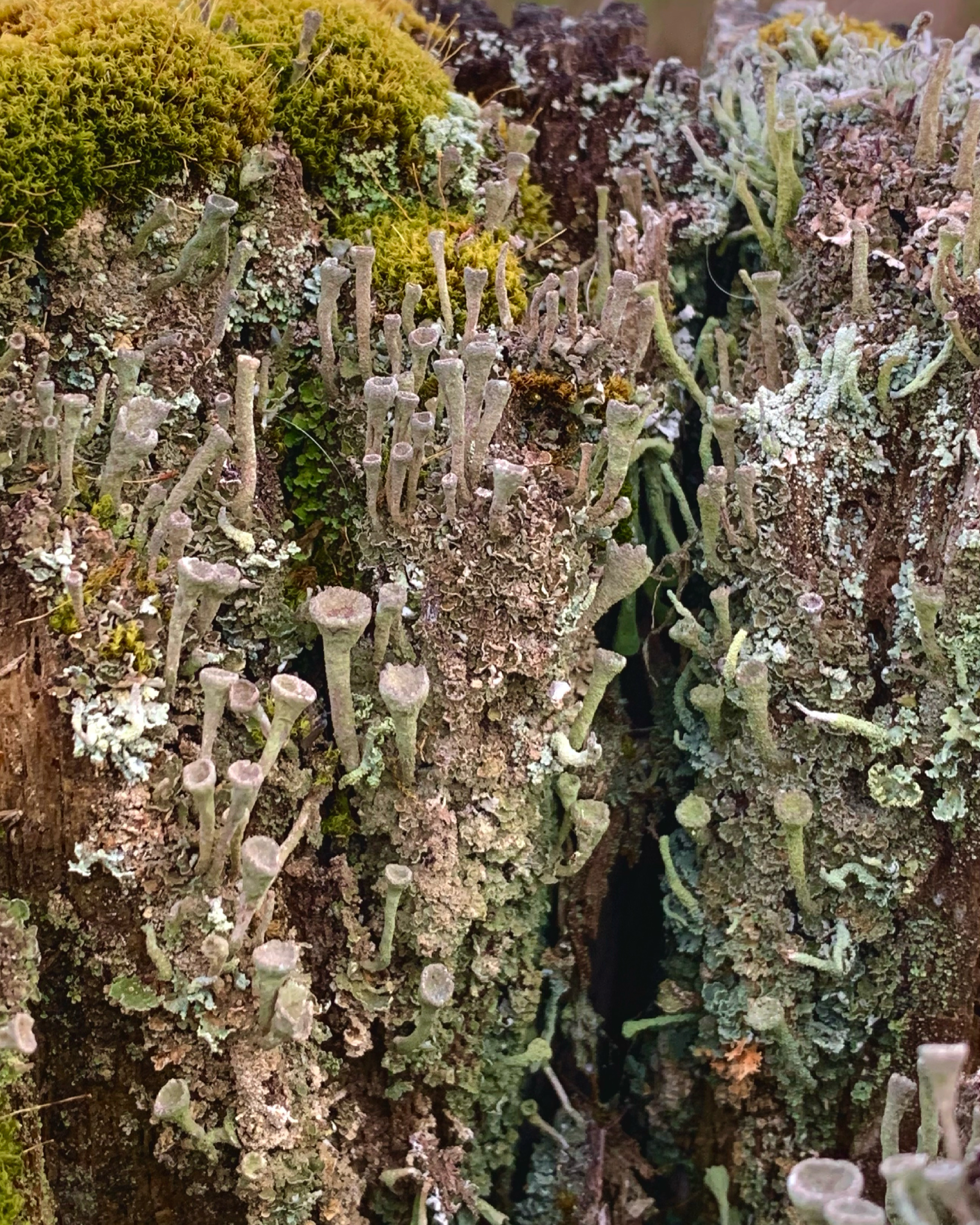
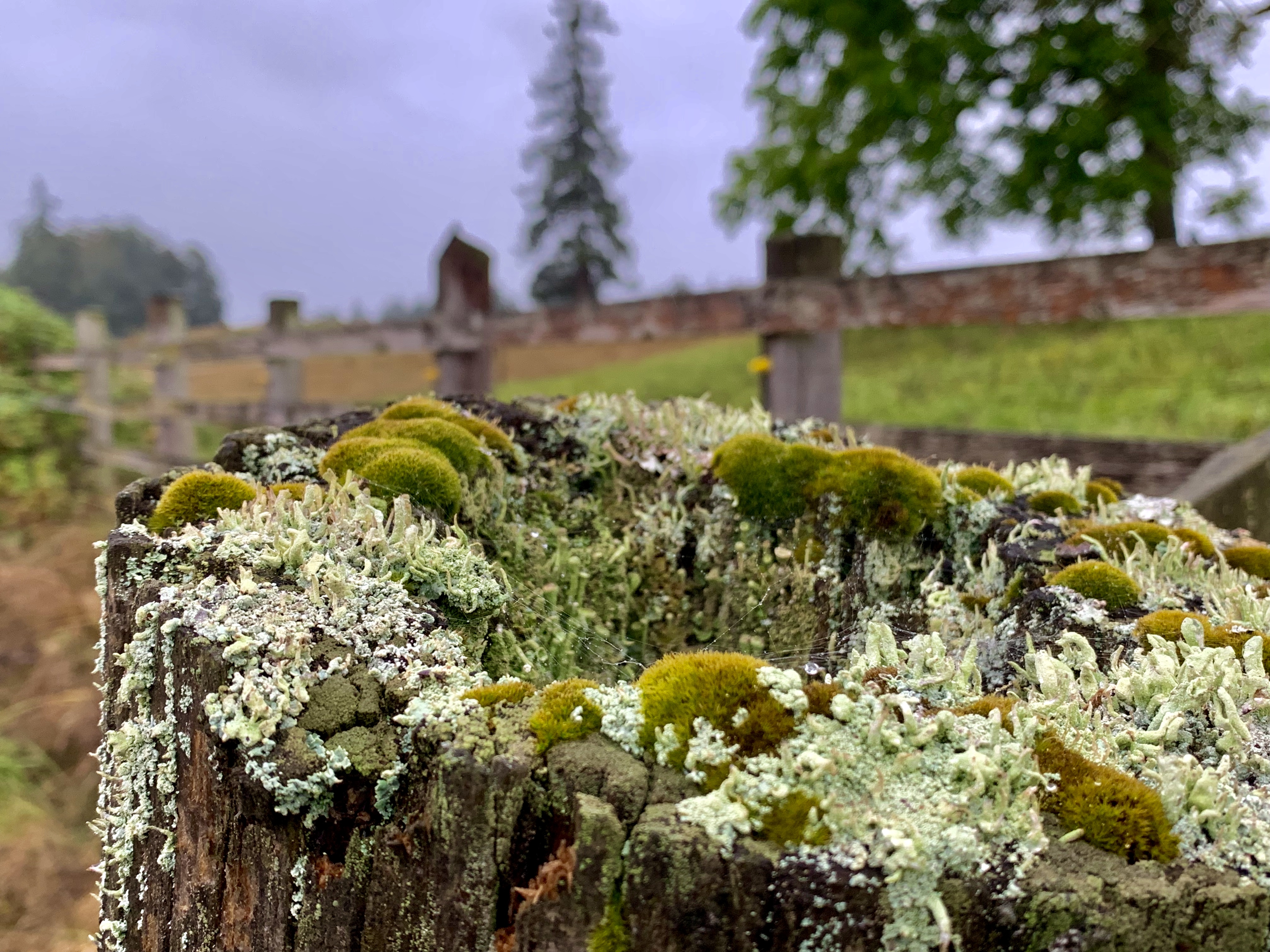
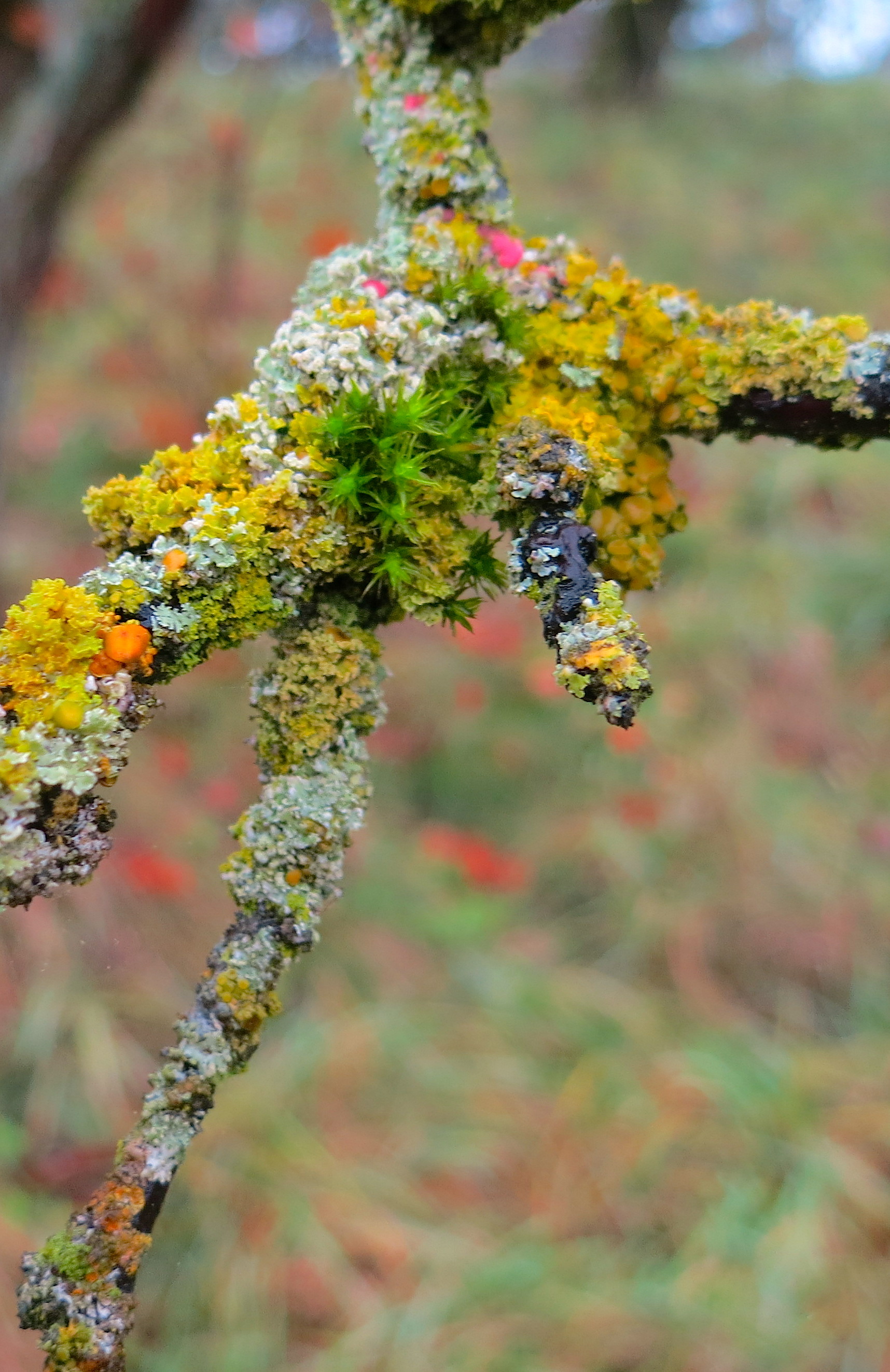
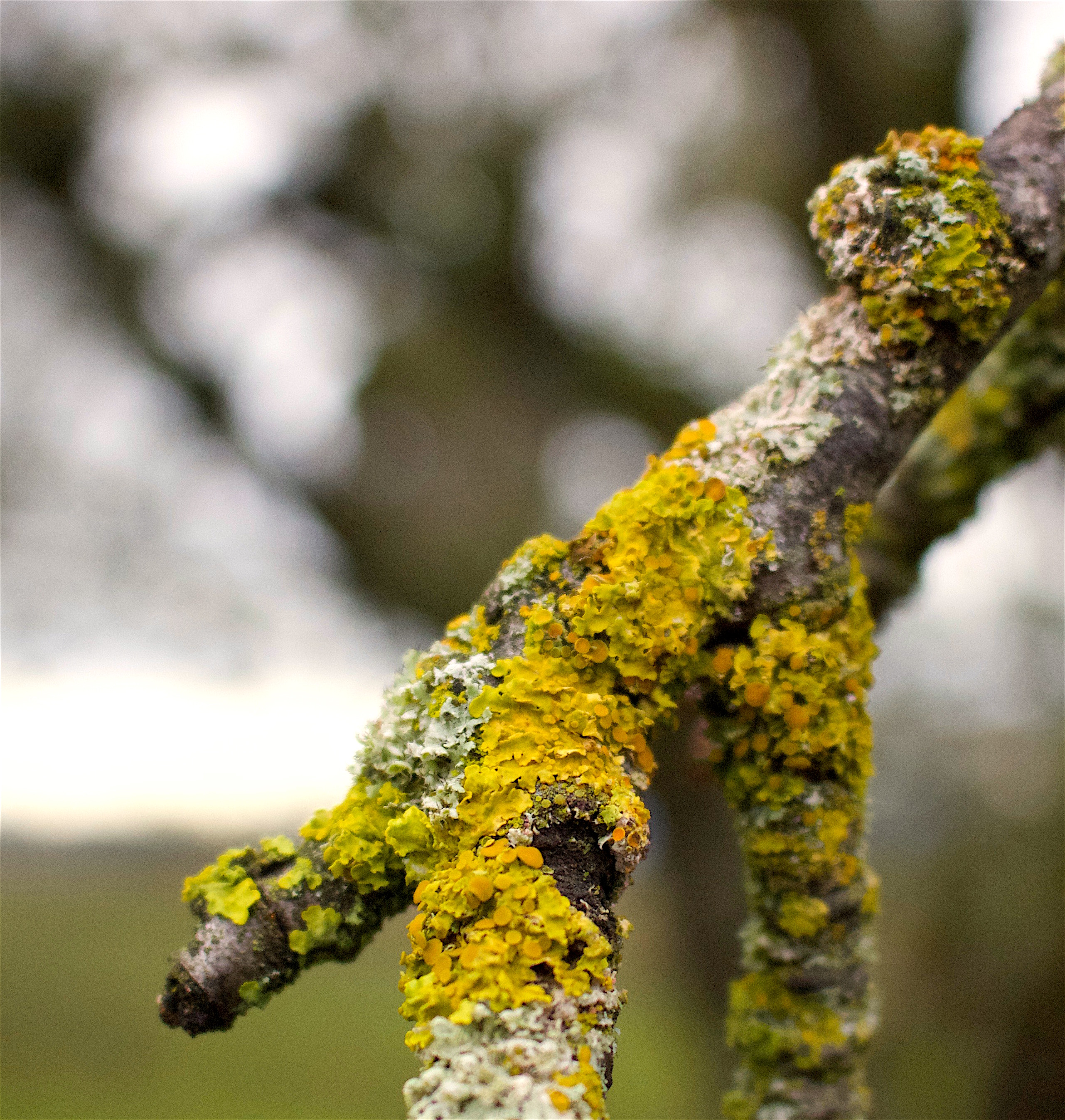
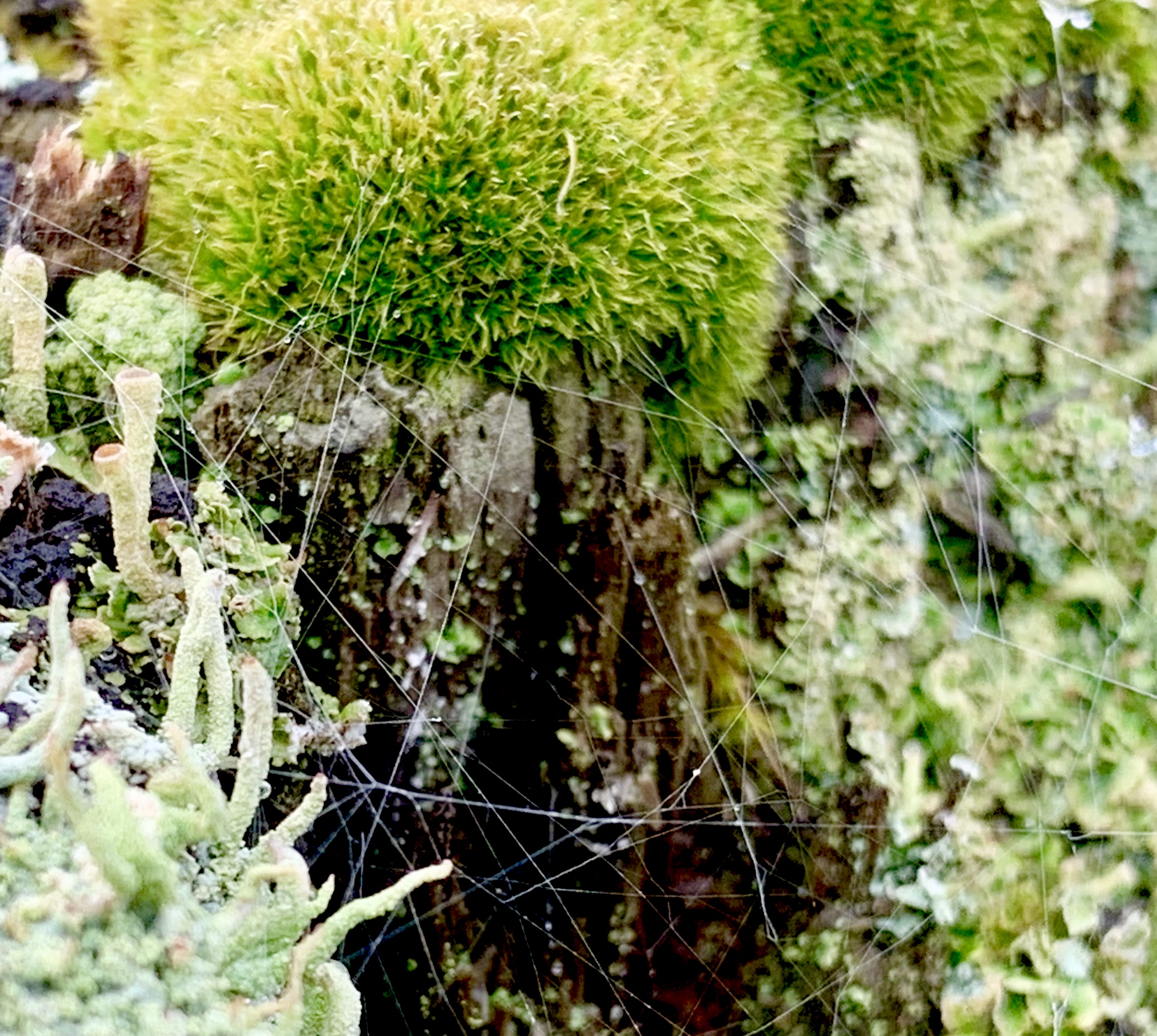
It is a lichen day.
Not a bit of rotten wood lies on the dead leaves,
but it is covered with fresh, green cup lichens…
All the world seems a great lichen and to grow like one.

Nature doth thus kindly heal every wound.
By the mediation of a thousand little mosses and fungi,
the most unsightly objects become radiant of beauty.
There seem to be two sides of this world, presented us at different times,
as we see things in growth or dissolution, in life or death.


And seen with the eye of the poet,
as God sees them,
all things are alive and beautiful
~Henry David Thoreau from his journal

The truth is-
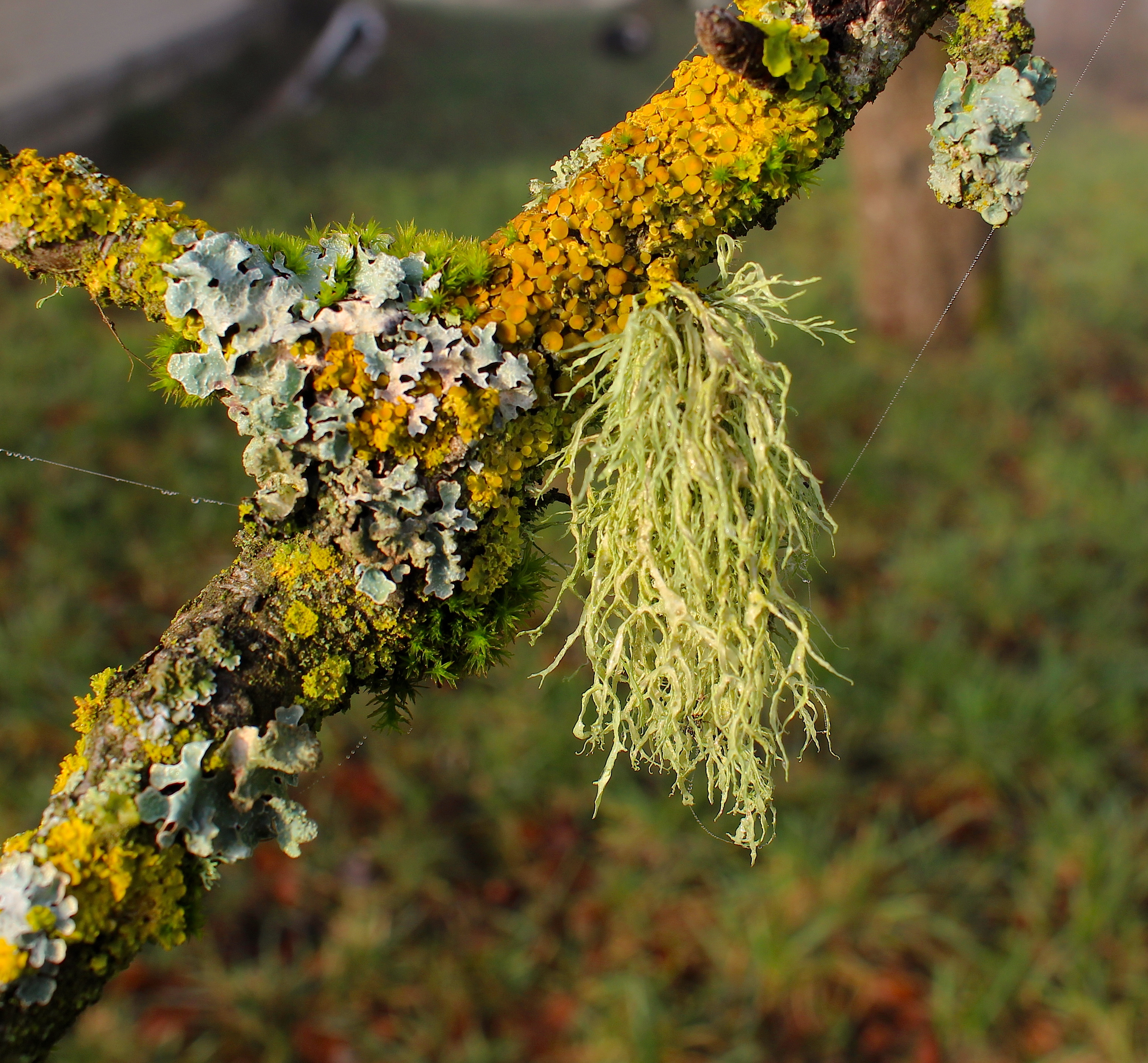
I’m somewhat of a lichen myself –
not easily defined,
a bit of an opportunist,
thriving in gray drizzle,
sometimes colorful but most often not,
attempting to cover and heal unseen wounds.

Mostly I hang on,
persevering,
at times obnoxiously tenacious
and not always appreciated,
yet…unique in an other worldly way.

A dreamer of fairy tale kingdoms
while living simply a peasant’s life
in plain sight.