And so you have a life that you are living only now, now and now and now, gone before you can speak of it, and you must be thankful for living day by day, moment by moment … a life in the breath and pulse and living light of the present… ~Wendell Berry from Hannah Coulter
Astonishing material and revelation appear in our lives all the time. Let it be. Unto us, so much is given. We just have to be open for business. ~Anne Lamott from Help Thanks Wow: Three Essential Prayers
…writing was one way to let something of lasting value emerge from the pains and fears of my little, quickly passing life. Each time life required me to take a new step into unknown spiritual territory, I felt a deep, inner urge to tell my story to others– Perhaps as a need for companionship but maybe, too, out of an awareness that my deepest vocation is to be a witness to the glimpses of God I have been allowed to catch. ~Henri Nouwen from Reaching Out
…there is something illicit, it seems, about wasted time, the empty hours of contemplation when a thought unfurls, figures of speech budding and blossoming, articulation drifting like spent petals onto the dark table we all once gathered around to talk and talk, letting time get the better of us. _Just taking our time_, as we say. That is, letting time take us. ~Patricia Hampl from Blue Arabesque: A Search for the Sublime
I would recognize myself in my patients, one after another after another. They sat at the edge of their seat, struggling to hold back a flood from brimming eyes, fingers gripping the arms of the chair, legs jiggling. Each moment, each breath, each rapid heart beat overwhelmed by panic-filled questions: will there be another breath? must there be another breath? Must this life go on like this in fear of what the next moment will bring?
The only thing more frightening than the unknown is the fear that the next moment could be worse than the last. Sadly, this is a tragic waste of precious time, a lack of recognition of a moment just passed that will never be retrieved and relived.
There is only fear of the next and the next so that the now and now and now is lost forever.
Worry and angst is more contagious than the flu. I washed my hands of it throughout the clinic day. I wished a simple vaccination could protect us all from unnamed fears.
I wanted to say to them as well as myself: Stop to rest within this moment in time. Stop and stop and stop. Stop fearing the gift of each breath.
Simply be.
I wanted to say: this moment in time is yours alone. Don’t let time take it from you; instead, take time for weeping and sharing and breath and pulse and light. Shout for joy in it. Celebrate it. Be thankful for tears that flow and stop holding them back.
Just be, as uncomfortable as it is – and be blessed– in the now and now and now.
Be swept along on the current of time; now winter bare-branched, to be soon unfurling, budding, eventually blossoming.
Time takes us there. So let’s take time.
One-Time
Monthly
Yearly
Make a one-time or recurring donation to support daily Barnstorming posts
The children have gone to bed. We are so tired we could fold ourselves neatly behind our eyes and sleep mid-word, sleep standing warm among the creatures in the barn, lean together and sleep, forgetting each other completely in the velvet, the forgiveness of sleep.
Then the one small cry: one strike of the match-head of sound: one child’s voice: and the hundred names of love are lit as we rise and walk down the hall.
One hundred nights we wake like this, wake out of our nowhere to kneel by small beds in darkness. One hundred flowers open in our hands, a name for love written in each one. ~Annie Lighthart,“The Hundred Names of Love” from Iron String
I thought I had forgotten how to wake to the sound of a baby’s cry or a child’s voice calling out in the night.
I thought I wouldn’t remember how to gently open their bedroom door, entering their darkness from my own darkness, sorting out what was distressing them, sensing how to soothe them back to slumber, wondering if I might sing or pray the words they needed to hear, bringing a blossoming peace and stillness to their night.
When our son’s family arrived three years ago from thousands of miles away, staying with us until they could settle in their own place, I was reminded my nights were never meant to be mine alone.
As a child myself, I had such frequent night-wakenings that I’m sure my mother despaired that I would ever sleep through the night. She would come when I called, sitting beside my bed, rubbing my back until I forgot what woke me in the first place. She was patient and caring despite her own weariness, sleep problems and worriedness. She loved me and forgave me for needing her presence in the night; her nights were never her own.
So I too responded with compassion when my own children called out in the night. As part of my doctoring life, I woke regularly to phone calls from the ER or hospital and from patients during forty-two years of medical practice; I listened and tried my best to answer anxious questions with gentle understanding.
And when a grandchild sleeps here overnight, I’m on call again, remembering the sweetness of someone responding in the dark; the fears of the night need the promise of the Lord staying with us until the new day comes, usually only a few hours away.
Little child, be not afraid Though rain pounds harshly against the glass Like an unwanted stranger, there is no danger I am here tonight
Little child, be not afraid Though thunder explodes and lightning flash Illuminates your tear-stained face I am here tonight
And someday you’ll know That nature is so The same rain that draws you near me Falls on rivers and land On forests and sand Makes the beautiful world that you’ll see In the morning
Little child, be not afraid Though storm clouds mask your beloved moon And its candlelight beams, still keep pleasant dreams I am here tonight
Little child, be not afraid Though wind makes creatures of our trees And their branches to hands, they’re not real, understand And I am here tonight
And someday you’ll know That nature is so The same rain that draws you near me Falls on rivers and land On forests and sand Makes the beautiful world that you’ll see In the morning
For you know, once even I was a Little child, and I was afraid But a gentle someone always came To dry all my tears, trade sweet sleep for fears And to give a kiss goodnight
Well now I am grown And these years have shown That rain’s a part of how life goes But it’s dark and it’s late So I’ll hold you and wait ‘Til your frightened eyes do close
And I hope that you’ll know That nature is so The same rain that draws you near me Falls on rivers and land On forests and sand Makes the beautiful world that you’ll see In the morning
Everything’s fine in the morning The rain’ll be gone in the morning But I’ll still be here in the morning
One-Time
Monthly
Yearly
Make a one-time or recurring donation to support daily Barnstorming posts
The second before the sun went out we saw a wall of dark shadow come speeding at us. We no sooner saw it than it was upon us, like thunder. It roared up the valley. It slammed our hill and knocked us out. It was the monstrous swift shadow cone of the moon. I have since read that this wave of shadow moves 1,800 miles an hour. Language can give no sense of this sort of speed—1,800 miles an hour. It was 195 miles wide. No end was in sight—you saw only the edge. It rolled at you across the land at 1,800 miles an hour, hauling darkness like plague behind it. Seeing it, and knowing it was coming straight for you, was like feeling a slug of anesthetic shoot up your arm. If you think very fast, you may have time to think, “Soon it will hit my brain.” You can feel the deadness race up your arm; you can feel the appalling, inhuman speed of your own blood. We saw the wall of shadow coming, and screamed before it hit.
This was the universe about which we have read so much and never before felt: the universe as a clockwork of loose spheres flung at stupefying, unauthorized speeds. How could anything moving so fast not crash, not veer from its orbit amok like a car out of control on a turn?
Less than two minutes later, when the sun emerged, the trailing edge of the shadow cone sped away. It coursed down our hill and raced eastward over the plain, faster than the eye could believe; it swept over the plain and dropped over the planet’s rim in a twinkling. It had clobbered us, and now it roared away. We blinked in the light. It was as though an enormous, loping god in the sky had reached down and slapped the Earth’s face.
When the sun appeared as a blinding bead on the ring’s side, the eclipse was over. The black lens cover appeared again, back-lighted, and slid away. At once the yellow light made the sky blue again; the black lid dissolved and vanished. The real world began there. I remember now: We all hurried away.
We never looked back. It was a general vamoose … but enough is enough. One turns at last even from glory itself with a sigh of relief. From the depths of mystery, and even from the heights of splendor, we bounce back and hurry for the latitudes of home. ~Annie Dillard from her essay “Total Eclipse” in The Atlantic about the February 1979 eclipse in Washington State
From my six week psychiatric inpatient rotation at a Veteran’s Hospital—late winter 1979
Sixty eight year old male catatonic with depression
He lies still, so very still under the sheet, eyes closed; the only clue that he is living is the slight rise and fall of his chest. His face is skull- like framing his sunken eyes, his facial bones standing out like shelves above the hollows of his cheeks, his hands lie skeletal next to an emaciated body. He looks as if he is dying of cancer but without the smell of decay. He rouses a little when touched, not at all when spoken to. His eyes open only when it is demanded of him, and he focuses with difficulty. His tongue is thick and dry, his whispered words mostly indecipherable, heard best by bending down low to the bed, holding an ear almost to his cracked lips.
He has stopped feeding himself, not caring about hunger pangs, not salivating at enticing aromas or enjoying the taste of beloved coffee. His meals are fed through a beige rubber tube running through a hole in his abdominal wall emptying into his stomach, dripping a yeasty smelling concoction of thick white fluid full of calories. He ‘eats’ without tasting and without caring. His sedating antidepressant pills are crushed, pushed through the tube, oozing into him, deepening his sleep, but are designed to eventually wake him from his deep debilitating melancholy.
After two weeks of treatment and nutrition, his cheeks start to fill in, and his eyes are closed less often. He watches people as they move around the room and he responds a little faster to questions and starts to look us in the eye. He asks for coffee, then pudding and eventually he asks for steak. By the third week he is sitting up in a chair, reading the paper.
After a month, he walks out of the hospital, 15 pounds heavier than when he was wheeled in. His lips, no longer dried and cracking, have begun to smile again.
Thirty two year old male rescued by the Coast Guard at 3 AM in the middle of the bay
As he shouts, his eyes dart, his voice breaks, his head tosses back and forth, his back arches and then collapses as he lies tethered to the gurney with leather restraints. He writhes constantly, his arm and leg muscles flexing against the wrist and ankle bracelets.
“The angels are waiting!! They’re calling me to come!! Can’t you hear them? What’s wrong with you? I’m Jesus Christ, King of Kings!! Lord of Lords!! If you don’t let me return to them, I can’t stop the destruction!”
He finally falls asleep by mid-morning after being given enough antipsychotic medication to kill a horse. He sleeps uninterrupted for nine hours. Then suddenly his eyes fly open, and he looks startled.
He glares at me. “Where am I? How did I get here?”
“You are hospitalized in the VA psych ward after being picked up by the Coast Guard after swimming out into the bay in the middle of the night. You said you were trying to reach the angels.”
He turns his head away, his fists relaxing in the restraints, and begins to weep uncontrollably, the tears streaming down his face.
“Forgive them, Father, for they know not what they do.”
Twenty two year old male with auditory and visual hallucinations
He seems serene, much more comfortable in his own skin when compared to the others on the ward. Walking up and down the long hallways alone, he is always in deep conversation. He takes turns talking, but more often is listening, nodding, almost conspiratorial.
During a one-on-one session, he looks at me briefly, but his attention continues to be diverted, first watching an invisible something or someone enter the room, move from the door to the middle of the room, until finally, his eyes lock on an empty chair to my left. I ask him what he sees next to me.
“Jesus wants you to know He loves you.”
It takes all my will power not to turn and look at the empty chair.
Fifty four year old male with chronic paranoid schizophrenia
He has been disabled with psychiatric illness for thirty years, having his first psychotic break while serving in World War II. His only time living outside of institutions has been spent sharing a home with his mother who is now in her eighties. This hospitalization was precipitated by his increasing delusion that his mother is the devil and the voices in his head commanded that he kill her. He had become increasingly agitated and angry, had threatened her with a knife, so she called the police, pleading with them not to arrest him, but to bring him to the hospital for medication adjustment.
His eyes have taken on the glassy staring look of the overmedicated psychotic, and he sits in the day room much of the day sleeping in a chair, drool dripping off his lower lip. When awake he answers questions calmly and appropriately with no indication of the delusions or agitation that led to his hospitalization. His mother visits him almost daily, bringing him his favorite foods from home which he gratefully accepts and eats with enthusiasm. By the second week, he is able to take short passes to go home with her, spending a lunch time together and then returning to the ward for dinner and overnight. By the third week, he is ready for discharge, his mother gratefully thanking the doctors for the improvement she sees in her son. I watch them walk down the long hallway together to be let through the locked doors to freedom.
Two days later, a headline in the local paper:
“Veteran Beheads Elderly Mother”
Forty five year old male — bipolar disorder with psychotic features
He has been on the ward for almost a year, his unique high pitched laughter heard easily from behind closed doors, his eyes intense in his effort to conceal his struggles. Trying to follow his line of thinking is challenging, as he talks quickly, with frequent brilliant off topic tangents, and at times he lapses into a “word salad” of almost nonsensical sentences. Every day as I meet with him I become more confused about what is going on with him, and am unclear what is expected of me in my interactions with him. He senses my discomfort and tries to ease my concern.
“Listen, this is not your problem to fix but I’m bipolar and regularly hear command voices and have intrusive thoughts. My medication keeps me under good control. But just tell me if you think I’m not making sense because I don’t always recognize it in myself.”
During my rotation, his tenuous tether to sanity is close to breaking. He starts to listen more intently to the voices in his head, becoming frightened and anxious, often mumbling and murmuring under his breath as he goes about his day.
On a particular morning, all the patients are more anxious than usual, pacing and wringing their hands as the light outdoors slowly fades, with noon being transformed to an oddly shadowy dusk. The street lights turn on automatically and cars are driving with headlights shining. We stand at the windows in the hospital, watching the city become dark as night in the middle of the day. The unstable patients are sure the world is ending and extra doses of medication are dispensed as needed while the light slowly returns to the streets outside. Within an hour the sunlight is back, and all the patients are napping soundly.
The psychiatrist locks himself in his office and doesn’t respond to knocks on the door or calls on his desk phone.
Stressed by the recent homicide by one of his discharged patients, and identifying with his patients due to his own mental illness, he is overwhelmed by the eclipse. The nurses call the hospital administrator who comes to the ward with two security guards. They unlock the door and lead the psychiatrist off the ward. We watch him leave, knowing he won’t be back.
It is as if the light had left and only his shadow remains.
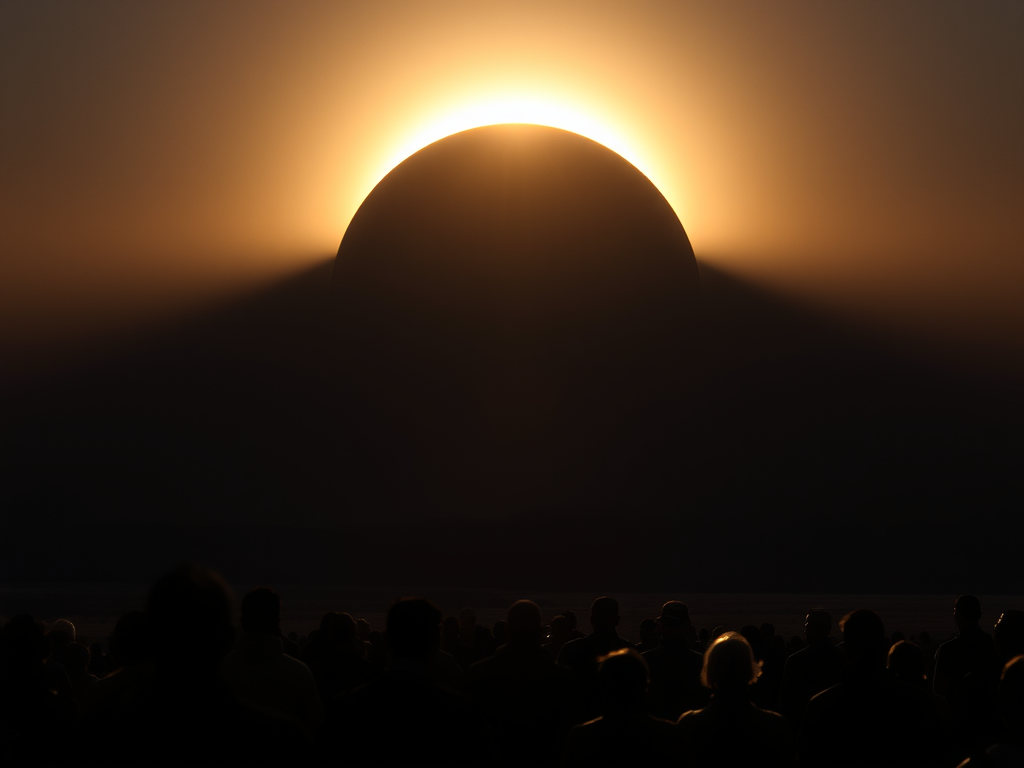
AI image created for this post
Lyrics: Measure me, sky! Tell me I reach by a song Nearer the stars; I have been little so long.
Weigh me, high wind! What will your wild scales record? Profit of pain, Joy by the weight of a word.
Horizon, reach out! Catch at my hands, stretch me taut, Rim of the world: Widen my eyes by a thought.
Sky, be my depth, Wind, be my width and my height, World, my heart’s span; Loveliness, wings for my flight. ~Leonora Speyer
One-Time
Monthly
Yearly
Make a one-time or recurring donation to support daily Barnstorming posts
And so you have a life that you are living only now, now and now and now, gone before you can speak of it, and you must be thankful for living day by day, moment by moment … a life in the breath and pulse and living light of the present… ~Wendell Berry from Hannah Coulter
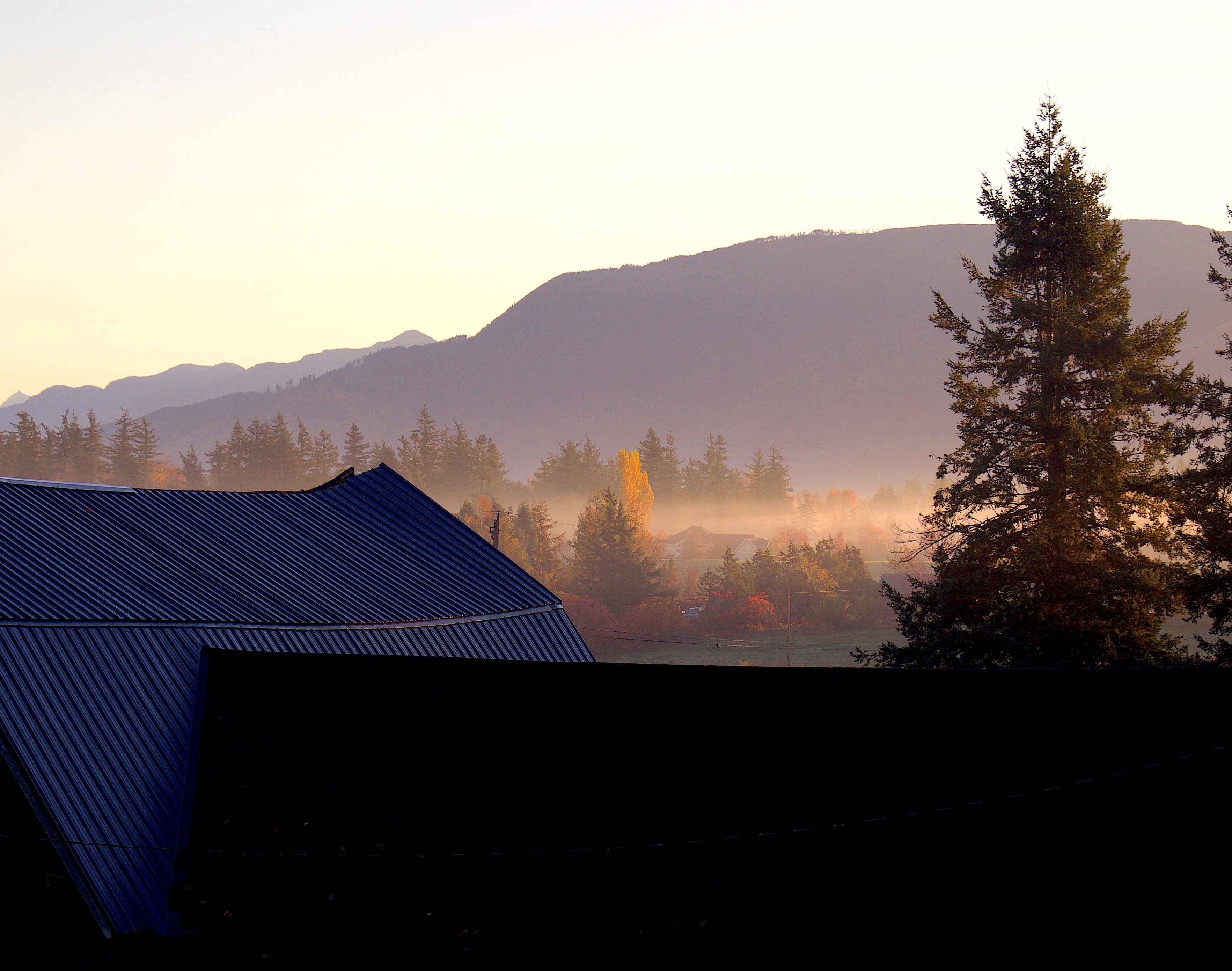
~Lustravit lampade terras~ (He has illumined the world with a lamp) The weather and my mood have little connection. I have my foggy and my fine days within me; my prosperity or misfortune has little to do with the matter. – Blaise Pascal from “Miscellaneous Writings”
photo by Nate Gibson
I laughed in the morning’s eyes. I triumphed and I saddened with all weather, Heaven and I wept together, and its sweet tears were salt with mortal mine. Against the red throb of its sunset heart, I laid my own to beat And share commingling heat.
Rise, clasp my hand, and come. Halts by me that Footfall. Is my gloom, after all, Shade of His hand, outstretched caressingly? Ah, Fondest, Blindest, Weakest, I am He whom thou seekest. Thou dravest Love from thee who dravest Me. ~Francis Thompson from “The Hound of Heaven”
My days are filled with anxious and sad patients, one after another after another. They sit in front of their screen and I in front of mine, so close yet so far from each another – a wilderness of unexpressed emotions.
They struggle to hold back the flood from brimming eyes. Each moment, each breath, each heart beat overwhelmed by questions: How to take yet another painful breath of this sad life? must there be another breath? Must things go on like this in fear of what the next moment will bring?
The only thing more frightening than the unknown is the knowledge that the next moment will be just like the last or perhaps worse. There is no recognition of a moment just passed that can never be retrieved and relived. There is only fear of the next and the next so that now and now and now is lost forever.
Worry and sorrow and angst are more contagious than any viral pandemic. I mask up and wash my hands of it throughout the day. I wish there was a vaccine to protect us all from our unnamed fears in the wilderness.
I want to say to them and myself: Stop this moment in time. Stop and stop and stop. Stop expecting this feeling must be “fixed.” Stop wanting to be numb to all discomfort. Stop resenting the gift of each breath. Just stop. Instead, simply be in the now and now and now.
I want to say: this moment, foggy or fine, is yours alone, this moment of weeping and sharing and breath and pulse and light. Shout for joy in it. Celebrate it. Be thankful for tears that can flow over grateful lips and stop holding them back.
Stop me before I write, out of my own anxiety over you, yet another prescription you don’t really need.
Just be– and be blessed– in the now and now and now.
At almost four in the afternoon, the wind picks up and sifts through the golden woods.
The tree trunks bronze and redden, branches on fire in the heavy sky that flickers
with the disappearing sun. I wonder what I owe the fading day, why I keep
my place at this dark desk by the window measuring the force of the wind, gauging
how long a certain cloud will hold that pink edge that even now has slipped into gray?
Quickly the lights are appearing, a lamp in every window and nests of stars
on the rooftops. Ladders lean against the hills and people climb, rung by rung, into the night. ~Joyce Sutphen “On the Shortest Days” from Modern Love & Other Myths.
While spending my day at my desk talking to faces on a screen, as I will today and every day, the names and stories and symptoms change every half hour. I sometimes glance up and out my window to the world beyond, concerned not to break eye contact.
I want to say: don’t you know this darkness surrounding you won’t last, while this day is fading you can turn on the light that you were given to find your way out of this.
I wonder if I owe it to you to tell you when I was young and afraid and away from home I didn’t believe the light was there either, or it wouldn’t turn on, or it burned out so I I felt swallowed by the darkness.
Then someone gave me a ladder to climb out and lit my light so I could see where I was going.
Here I am now, handing you a working light and a sturdy ladder and telling you how to use them.
You can hide nothing from God. The mask you wear before men will do you no good before Him. He wants to see you as you are, He wants to be gracious to you. You do not have to go on lying to yourself and your brothers, as if you were without sin; you can dare to be a sinner. ~Dietrich Bonhoeffer from Life Together
In your hands
The dog, the donkey, surely they know They are alive. Who would argue otherwise?
But now, after years of consideration, I am getting beyond that. What about the sunflowers? What about The tulips, and the pines?
Listen, all you have to do is start and There’ll be no stopping. What about mountains? What about water Slipping over rocks?
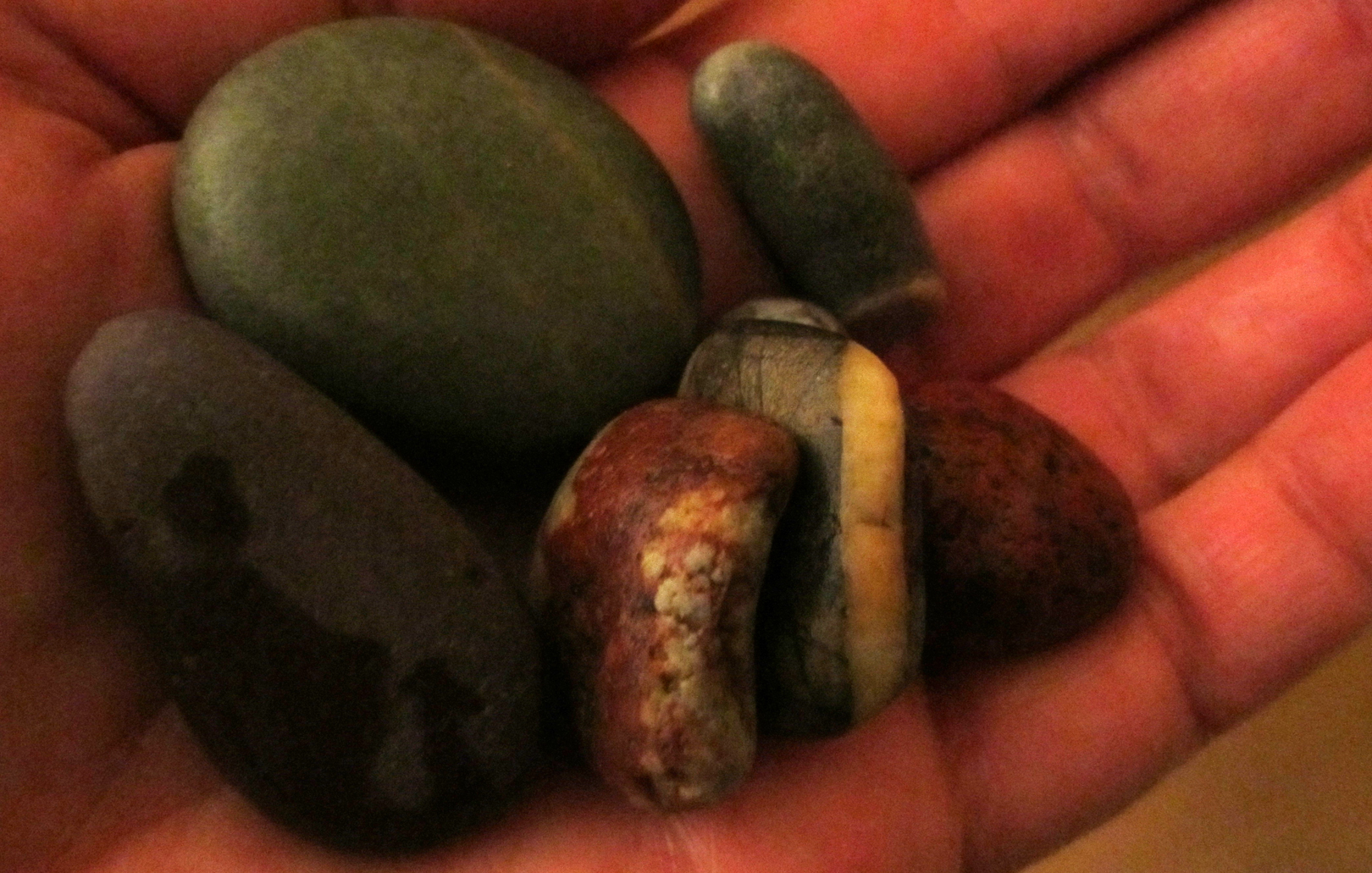
And speaking of stones, what about The little ones you can Hold in your hands, their heartbeats So secret, so hidden it may take years
When I myself go to the doctor, I am to trust I’m seeing someone who is meant to know me thoroughly enough that he or she will help me move out of illness into better health. This is how acceptance feels: trusting someone enough to come out of hiding.
As a physician myself, I am reminded by the amount of “noticing” I need to do in the course of my work. Each patient, and there are so many, deserves my full attention for the few minutes we are together. I start my clinical evaluation the minute we sit down together and I begin taking in all the complex verbal and non-verbal clues offered up, sometimes unwittingly, by another human being.
Now, during the COVID19 pandemic, my interactions with patients are all “virtual” so I don’t have the ability to observe as I usually do, so I need them to tell me outright what is going on in their lives, their minds and their hearts in spoken or written words. I can’t ‘see’ them, even on a screen, in the same way.
How might someone call out to me when their faces are hidden?
I can’t witness first hand the trembling hands, their sweatiness, the scars of self injury. Still, I am their audience and a witness to their struggle; even more, I must understand it in order to best assist them. My brain must rise to the occasion of taking in another person, accepting them for who they are, offering them the gift of compassion and simply be there for them, just them, right now.
God doesn’t struggle in His Holy work as I do in my clinical duties. He knows us thoroughly because He made us; He knows our thoughts before we put them into words. There is no point in staying hidden from Him.
He holds us, little pebbles that we are, in His Hand, and He discerns our secret heartbeats.
We, the hidden, are His.
This year’s Lenten theme for Barnstorming:
God sees us as we are, loves us as we are, and accepts us as we are. But by His grace, He does not leave us where we are. ~Tim Keller
I will search in the silence for your hiding place. In the quiet, Lord, I seek your face. Where can I discover the wellsprings of your love? Is my search and seeking in vain? How can I recover the beauty of your word? In the silence I call out your name. Where can I find shelter to shield me from the storm? To find comfort, though dark be the night? For I know that my welfare is ever in your sight. In the shadows I long for your light. Lead me in your footsteps along your ancient way. Let me walk in the love of the Lord. Your wisdom is my heart’s wealth, a blessing all our days. In the silence I long for Your world. ~Liam Lawton
…difficulties are magnified out of all proportion simply by fear and anxiety. From the moment we wake until we fall asleep we must commend other people wholly and unreservedly to God and leave them in his hands, and transform our anxiety for them into prayers on their behalf: With sorrow and with grief… God will not be distracted. ~Dietrich Bonhoeffer in Letters from Prison
.…you mustn’t be frightened … if a sadness rises in front of you, larger than any you have ever seen; if an anxiety, like light and cloud-shadows, moves over your hands and over everything you do. You must realize that something is happening to you, that life has not forgotten you, that it holds you in its hand and will not let you fall. Why do you want to shut out of your life any uneasiness, any misery, any depression, since after all you don’t know what work these conditions are doing inside you? ~Rainer Maria Rilke from Letters to a Young Poet
Every day I see young adult patients who are so consumed by anxiety they become immobilized in their ability to move forward through the midst of life’s inevitable obstacles and difficulties. They become so mired in their own overwhelming feelings, so distracted by their symptoms, they can’t sleep or eat or think clearly. They self-medicate, self-injure and self-hate. Being unable to nurture themselves or others, they wither like a young tree without roots deep enough to reach the vast reservoir that lies untapped beneath them.
In epidemic numbers, some decide to die, even before life really has fully begun for them.
I grieve for them in their distress, my heart breaks daily. My role is to help find healing solutions, whether it is counseling therapy, a break from academic and work pressures, or a medicine that may give some form of relief. Yet I know all too well the ultimate answer is not as simple as the right prescription.
We who are anxious must depend upon a Creator who does not suffer from attention deficit disorder and who is not distracted from His care for us even when we turn away in worry and sorrow. We magnify our difficult circumstances by staying so tightly into ourselves, unable to look beyond our own eyelashes. We are called to be transformed, to reach higher and deeper, through prayer, through service to others, through acknowledging there exists a power greater than ourselves.
So we are called to pray for ourselves and for others, and in doing so, we disable anxiety and fear as they meld into gratitude and grace.
No longer withering, we drink deeply of the well, finally able to thrive.
This year’s Lenten theme on Barnstorming:
God sees us as we are, loves us as we are, and accepts us as we are. But by His grace, He does not leave us where we are. ~Tim Keller
It feels like falling. It feels like rain. Like losing my balance Again and again. It once was so easy; Breathe in, breathe out. But at the foot of this mountain, I only see clouds.
I feel out of focus, Or at least indisposed As this strange weather pattern Inside me takes hold. Each brave step forward, I take three steps behind. It’s mind over matter – Matter over mind.
Slowly, then all at once. A single loose thread And it all comes undone.
Where there is light, A shadow appears. The cause and effect When life interferes. The same rule applies To goodness and grief; For in our great sorrow We learn what joy means.
I don’t want to fight, I don’t want to fight it. I don’t want to fight, I don’t want to fight it. I don’t want to fight, I don’t want to fight it. But I will learn to fight, I will learn to fight, ‘Til this pendulum finds equilibrium.
Slowly, then all at once. The dark clouds depart, And the damage is done. So pardon the dust While this all settles in. With a broken heart, Transformation begins. ~Ryan O’Neal – Sleeping at Last “Sorrow”
Everyday I see or hear something that more or less
kills me with delight, that leaves me like a needle
in the haystack of light. It was what I was born for — to look, to listen,
to lose myself inside this soft world — ~Mary Oliver from “Mindful”
Some days I’m the needle
and other days I’m the pin cushion
Today I may be both,
probing into people’s lives and feelings,
moving beyond their sharp edges
to find the source of their pain.
They don’t realize I wince too,
remembering how it feels.
I choose the softness of the light
that floats close to the ground,
that reaches out with cloudy grasp.
This is what I was born for:
delighted to be lost
and then found.
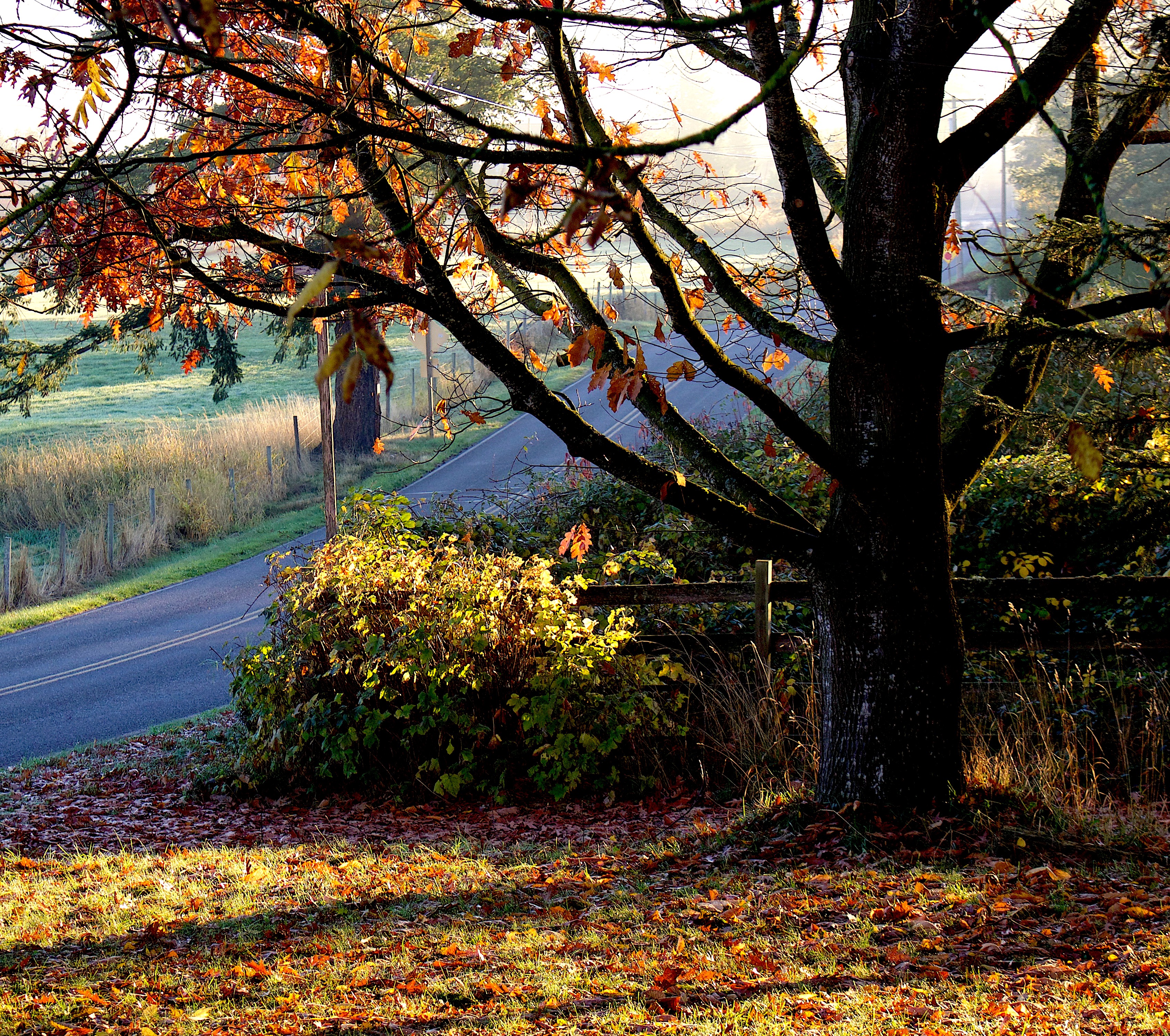
A wind has blown the rain away and blown the sky away and all the leaves away, and the trees stand. I think, I too, have known autumn too long. ~e.e. cummings
Be obscure clearly. ~E. B. White
As a family doctor in the autumn of a forty year career, I work at clarifying obscurity about the human condition daily, dependent on my patients to communicate the information I need to make a sound diagnosis and treatment recommendation. That is hard work for my patients, especially when they are depressed and anxious on top of whatever they are experiencing physically.
There is still much unknown and difficult to understand about psychology, physiology and anatomy. Then throw in a disease process or two or three to complicate what appears to be “normal”, and further consider the side effects and complications of various treatments — even evidence-based decision making isn’t equipped to reflect perfectly the best and only solution to a problem. Sometimes the solution is very muddy, not pristine and clear.
Let’s face the lack of facts. A physician’s clinical work is obscure even on the best of days when everything goes well. We hope our patients can communicate their concerns as clearly as possible, reflecting accurately what is happening with their health. In a typical clinic day we see things we’ve never seen before, must expect the unexpected, learn things we never thought we’d need to know, attempt to make the better choice between competing treatment alternatives, unlearn things we thought were gospel truth but have just been disproved by the latest double blind controlled study which may later be reversed by a newer study. Our footing is quicksand much of the time even though our patients trust we are giving them rock-solid advice based on a foundation of truth learned over years of education and training. Add in medical decision-making that is driven by cultural, political or financial outcomes rather than what works best for the individual, and our clinical clarity becomes even further obscured.
Forty years of doctoring in the midst of the mystery of medicine: learning, unlearning, listening, discerning, explaining, guessing, hoping, along with a little silent praying — has taught me the humility that any good clinician must have when making decisions with and about patients. What works well for one patient may not be at all appropriate for another despite what the evidence says or what an insurance company or the government is willing to pay for. Each person we work with deserves the clarity of a fresh look and perspective, to be “known” and understood for their unique circumstances rather than treated by cook-book algorithm. The complex reality of health care reform may dictate something quite different.
The future of medicine is dependent on finding clarifying solutions to help unmuddy the health care decisions our patients face. We have entered a time of information technology that is unparalleled in bringing improved communication between clinicians and patients because of more easily shared electronic records. The pitfall of not knowing what work up was previously done can be a thing of the past. The risk and cost of redundant procedures can be avoided. The time has come for the patient to share responsibility for maintenance of their medical records and assist the diagnostic process by providing online symptom and outcomes follow up documentation.
The benefit of this shared record is not that all the muddiness in medicine is eliminated, but that an enhanced transparent partnership between clinician and patient develops, reflecting a relationship able to transcend the unknowns.
So we can be obscure clearly. Our lives depend on it.
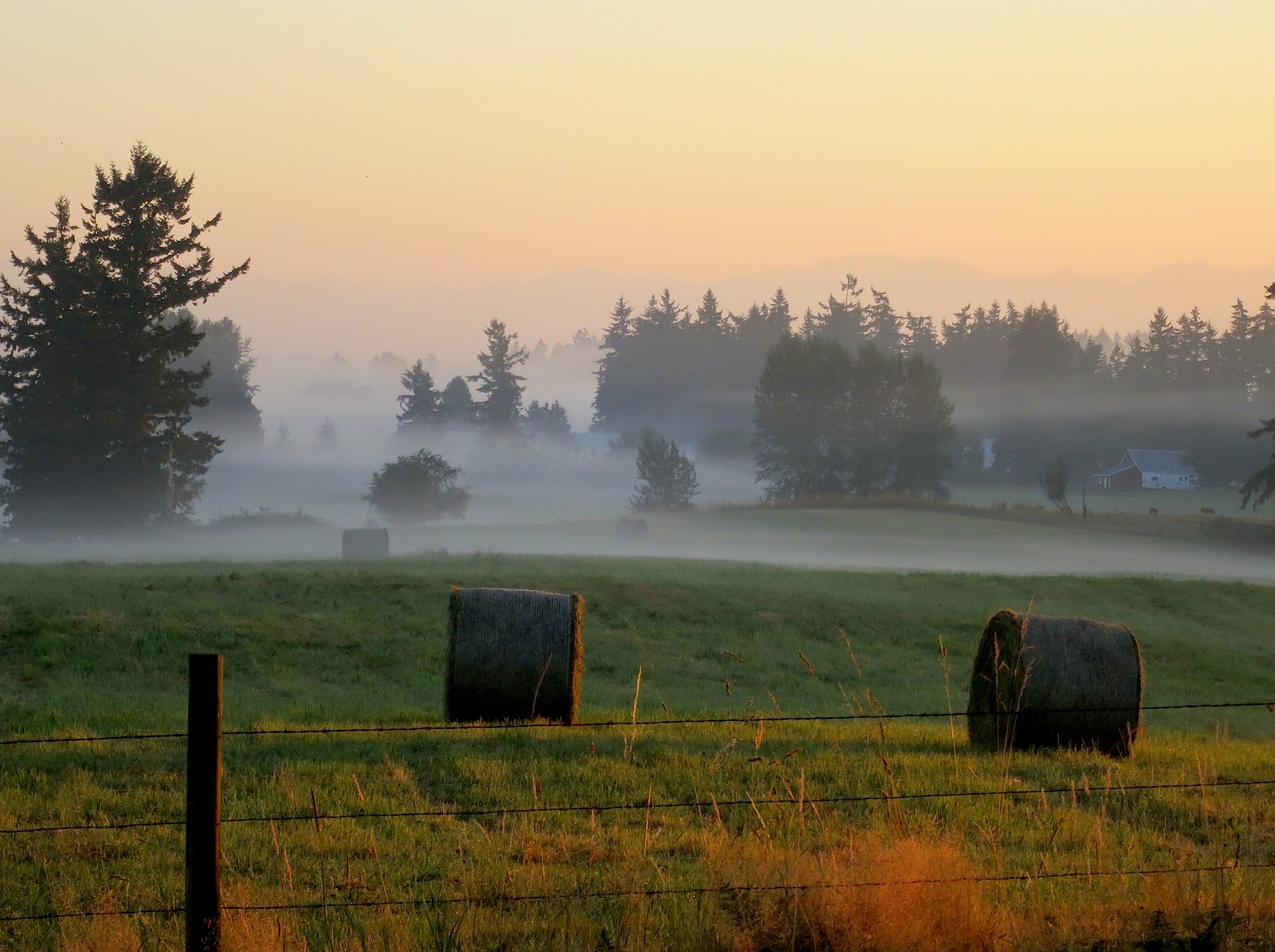
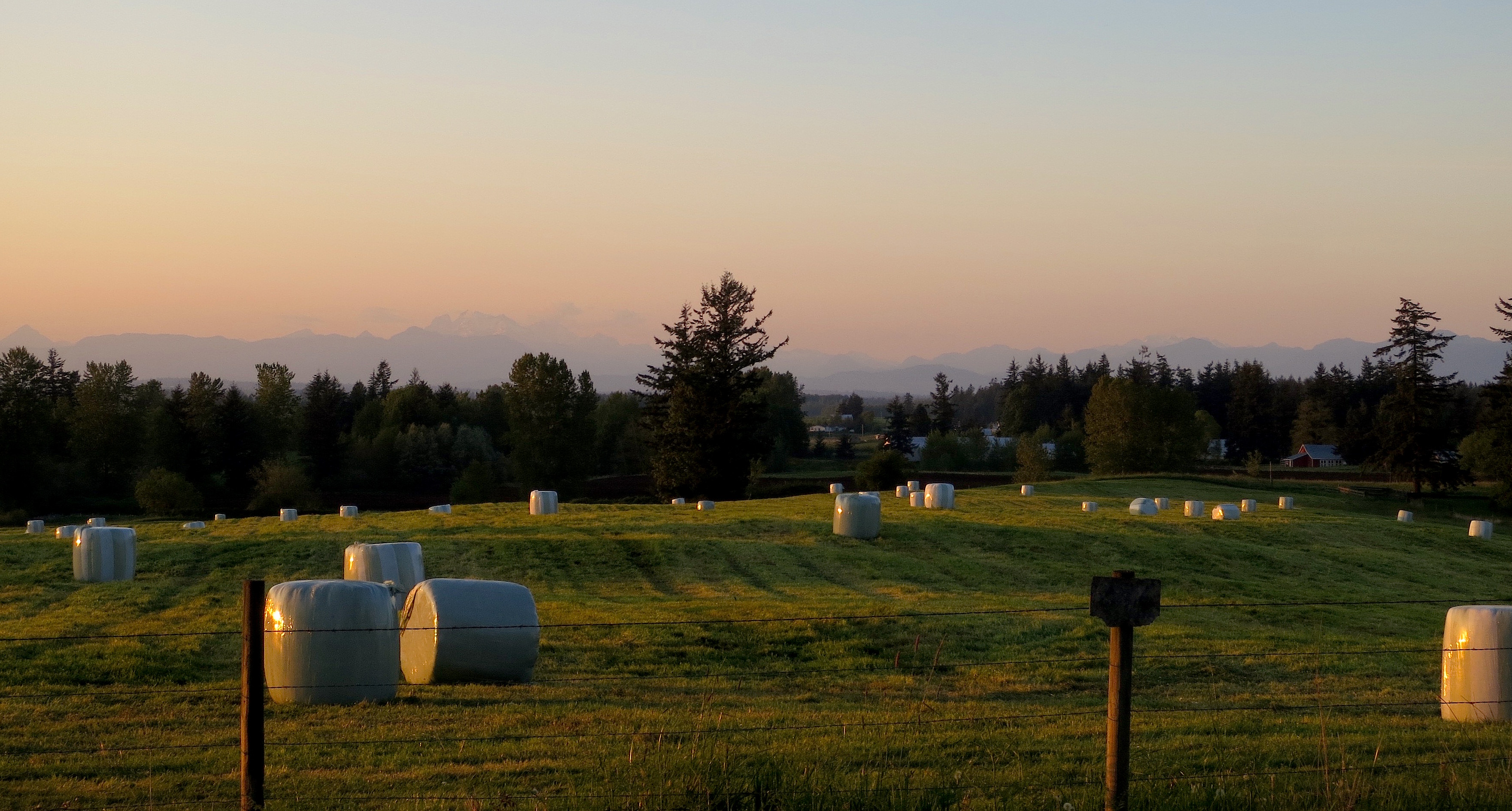
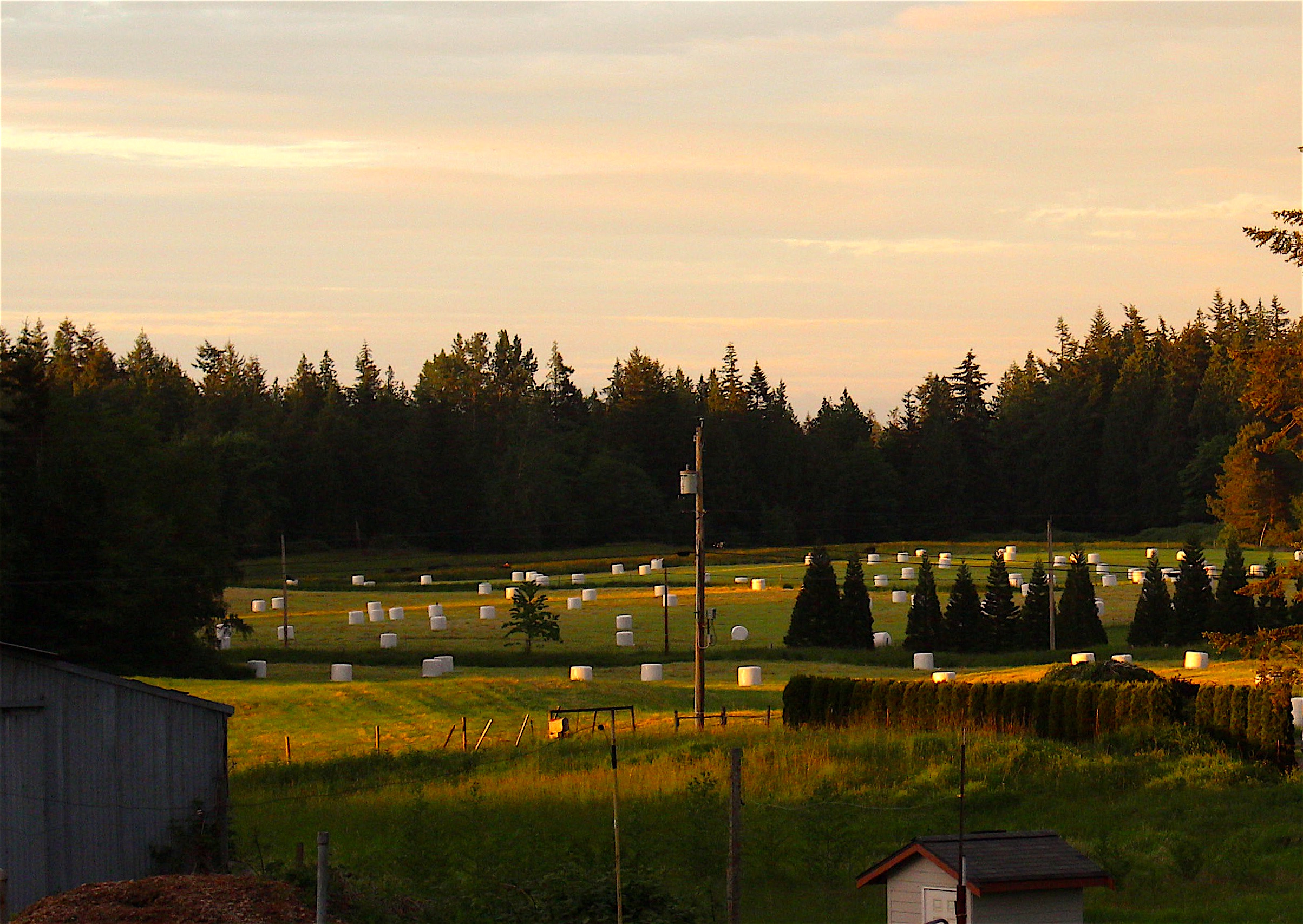
Wheels of baled hay bask in October sun: Gold circles strewn across the sloping field, They seem arranged as if each one Has found its place; together they appeal To some glimpsed order in my mind Preceding my chance pausing here — A randomness that also seems designed. Gold circles strewn across the sloping field Evoke a silence deep as my deep fear Of emptiness; I feel the scene requires A listener who can respond with words, yet who Prolongs the silence that I still desire, Relieved as clacking crows come flashing through, Whose blackness shows chance radiance of fire. Yet stillness in the field remains for everyone: Wheels of baled hay bask in October sun. ~Robert Pack “Baled Hay” from Rounding it Out: A Cycle of Sonnetelles (1999).
Each day I am called to see and listen,
to open fully to all that is around me.
From the simple stillness of the fields
surrounding our farm,
to the weeping of those who sit with me
day after day
in their deep fear of emptiness,
their struggle with whether to try to live
or give up and die.
Their deep fear of emptiness renders me silent;
I struggle to respond with words
that might offer up a healing balm
assuring them even in the darkest time
hope lies waiting, wrapped and baled,
radiant as fire,
ready to spill out fragrant,
to bear us silently to a new morning,
to a stillness borne of grace.




















 Barnstorming