What a piece of work is a man! …And yet, to me, what is this quintessence of dust? ~ William Shakespeare – Hamlet’s soliloquy
God – the God who made the dust, who made the stars, who made the elements of which we are composed – that same God chooses from the beginning to make his dwelling among us, to live for all time like us, as a servant of the soil. I am the dust of the earth, but God declares that he is not too good, not too proud, for my dustiness. ~Daniel Stulac fromPlough Quarterly No. 4: Earth
What I know for sure is this: We come from mystery and we return to mystery. I arrived here with no bad memories of wherever I’d come from, so I have no good reason to fear the place to which I’ll return. And I know this, too: Standing closer to the reality of death awakens my awe at the gift of life. ~Parker Palmer “On the Brink of Everything“
…I do nothing, I give You nothing. Yet You hold me
minute by minute from falling. ~Denise Levertov fromPsalm Fragments (Schnittke String Trio),in The Stream and the Sapphire
This dust left of man: earth, air, water and fire prove inadequate to quell the significance of how, in spoken words at the beginning, this dust became us, and how, forevermore, this is holy dust we leave behind.
We are held secure from falling by transcendent hope of eternal life, restored by a glory breathed into us – such a piece of work we are the plainest of ash.
This year’s Lenten theme:
…where you go I will go… Ruth 1:16
AI image created for this post
One-Time
Monthly
Yearly
Make a one-time or recurring donation to support daily Barnstorming posts
This is a litany to earth and ashes, to the dust of roads and vacant rooms, to the fine silt circling in a shaft of sun, settling indifferently on books and beds. This is a prayer to praise what we become, “Dust thou art, to dust thou shalt return.” Savor its taste—the bitterness of earth and ashes. ~Dana Gioia from “The Litany”
I will show you fear in a handful of dust. ~T.S. Eliot from “The Wasteland”
…let us be marked not for sorrow. And let us be marked not for shame. Let us be marked not for false humility or for thinking we are less than we are
but for claiming what God can do within the dust, within the dirt, within the stuff of which the world is made, and the stars that blaze in our bones, and the galaxies that spiral inside the smudge we bear. ~Jan Richardson from “Blessing the Dust”in Circle of Grace
God’s people are reminded today, through dust and ashes, that our stay here is temporary.
This reality recently became very clear to me. So I follow Christ where He goes, He paused to gather me in – one more lost sheep.
This earth quakes and floods and burns and shatters, as does my frail human heart in all its dustiness.
His light splinters, spilling into colors and hues through that misty veil -God’s people are smudged with no longer bitter ash, no longer opaque, but shining luminous and eternal and glorious.
This year’s Lenten theme:
…where you go I will go… Ruth 1:16
One-Time
Monthly
Yearly
Make a one-time or recurring donation to support daily Barnstorming posts
Let your speech be alway with grace, seasoned with salt, that ye may know how ye ought to answer every man. Colossians 4: 6
Let all bitterness and wrath and anger and clamor and slander be put away from you, with all malice,and be kind to one another, tenderhearted, forgiving one another, as God in Christ forgave you. Ephesians 4: 31-32
You have heard that it was said, ‘Love your neighbor and hate your enemy.’But I tell you, love your enemies and pray for those who persecute you, that you may be children of your Father in heaven. He causes his sun to rise on the evil and the good, and sends rain on the righteous and the unrighteous. Matthew 5:43-45
And whom do I call my enemy? An enemy must be worthy of engagement. I turn in the direction of the sun and keep walking. It’s the heart that asks the question, not my furious mind. The heart is the smaller cousin of the sun. It sees and knows everything. It hears the gnashing even as it hears the blessing. The door to the mind should only open from the heart. An enemy who gets in, risks the danger of becoming a friend. ~Joy Harjo “This Morning I Pray For My Enemies”
I have a heart full of questions Quieting all my suggestions What is the meaning of Christian In this American life?
Is there a way to love always? Living in enemy hallways Don’t know my foes from my friends and Don’t know my friends anymore Power has several prizes Handcuffs can come in all sizes Love has a million disguises But winning is simply not one ~Jon Guerra from “Citizens”
…{His is} the love for the enemy– love for the one who does not love you but mocks, threatens, and inflicts pain. The tortured’s love for the torturer. This is God’s love. It conquers the world. ~Frederich Buechner from The Magnificent Defeat
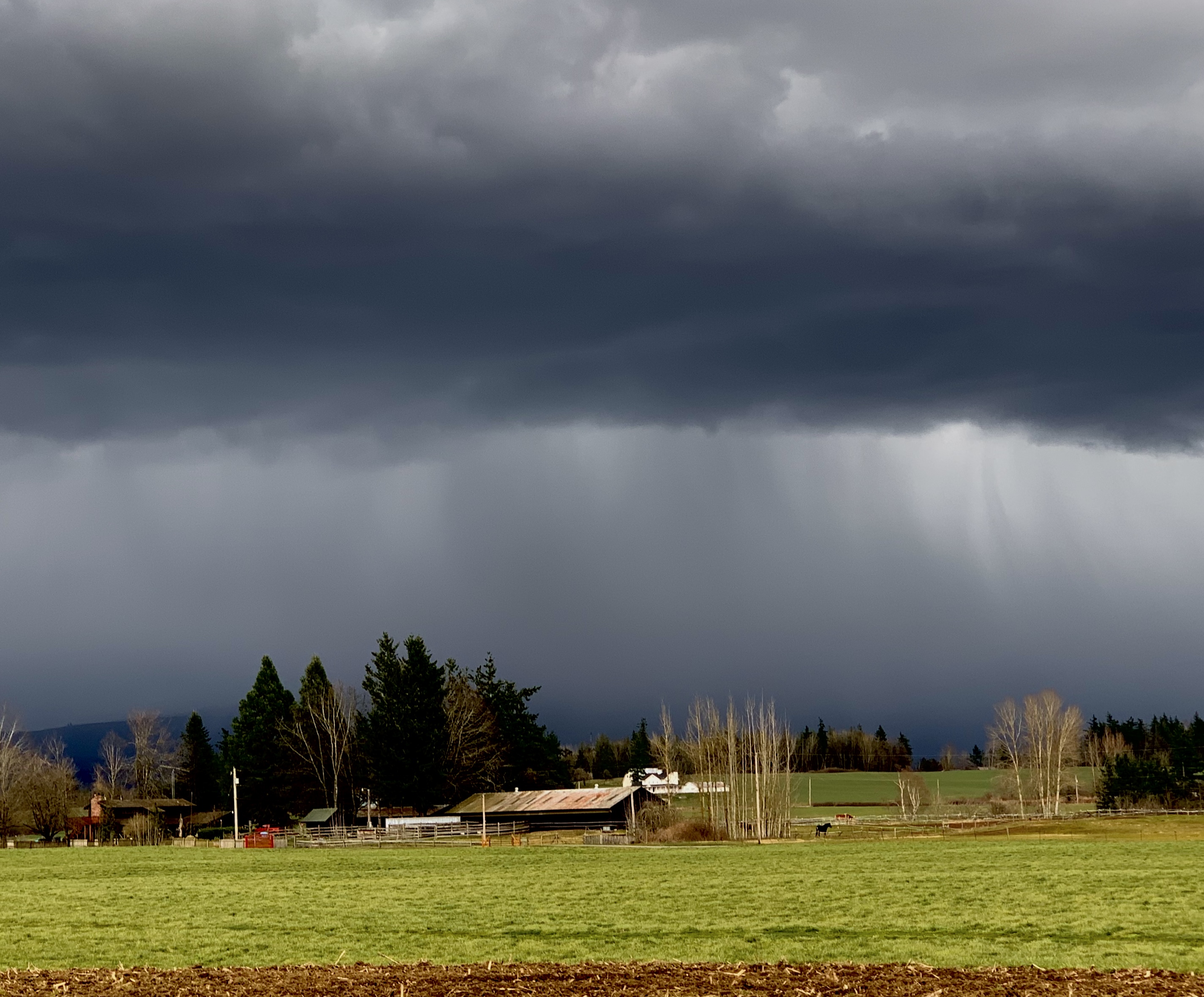
After watching the appalling ambush of disrespect and rudeness by our country’s two leaders in the Oval Office yesterday toward visiting Ukrainian President Zelenskyy, I find myself gnashing my teeth in anger.
Now – who indeed is the friend, and who is the enemy?
This was not the time or forum for a public, rather than private high stakes discussion: the presence of cameras encourages bullies to have their say in front of a vast audience, determined to intimidate in order to “make good television.”
Simply agreeing to disagree on some issues in a difficult negotiation no longer seems an option. Why can’t a debate honor the other side enough to facilitate a civil discussion? Instead, if someone doesn’t see it your way, they’re perceived as ungrateful, morally deficient, hostile or worst of all, they have become the enemy.
But Ukraine is not the enemy and never wants to be. They want to remain whole and free to govern themselves and need help to withstand the attacks of their neighborhood bully.
Those of us who have been around awhile know: bellowing hateful words puts a match to angry feelings that burn hot inside and outside. Usually a fruitful political debate over polarizing opinions can inspire a profound sense of purpose and compromise, yet if there is no respect or honor shown, it burns to ashes.
I disagree vehemently with what our leaders are doing and in particular, the boorish and foolish way they are doing it. Their school yard behavior is a far cry from the biblical command to exhibit grace and compassion instead of hostility and retribution.
Fickle things are those angry words – someone lights a match to them, keeps stoking the fire with new fuel, over and over again until nothing remains standing.
Let us refuse to be the kindling as our leaders seek our attention daily by inflicting more trauma and angst, not just to the citizens of Ukraine and Europe, but to the U.S. citizens to whom they are ultimately accountable.
Let us resist our own angry gnashing of teeth by praying that only God’s transforming love for enemies can soften the hearts and minds of the bullies of the world.
One-Time
Monthly
Yearly
Make a one-time or recurring donation to support daily Barnstorming posts
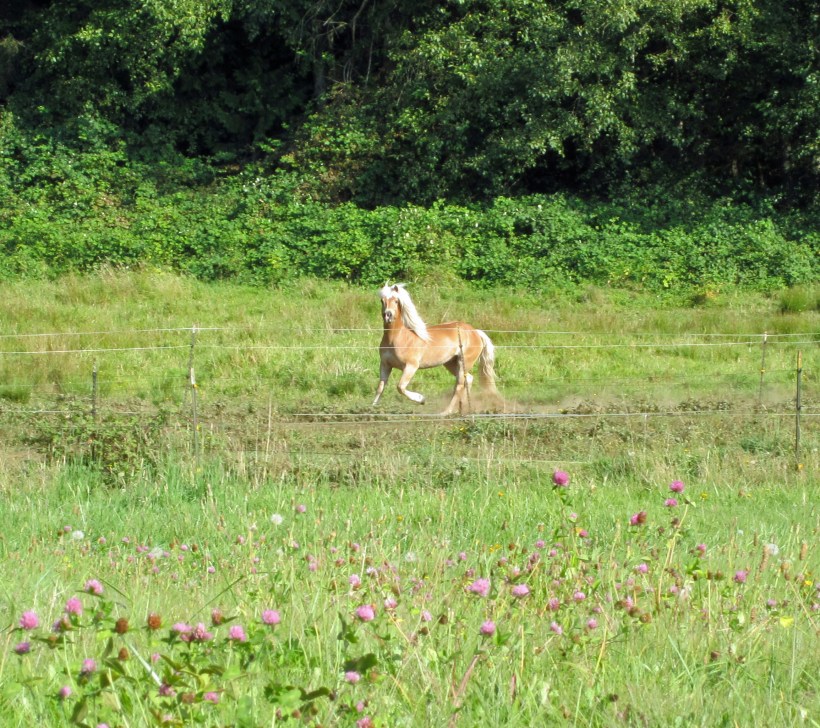
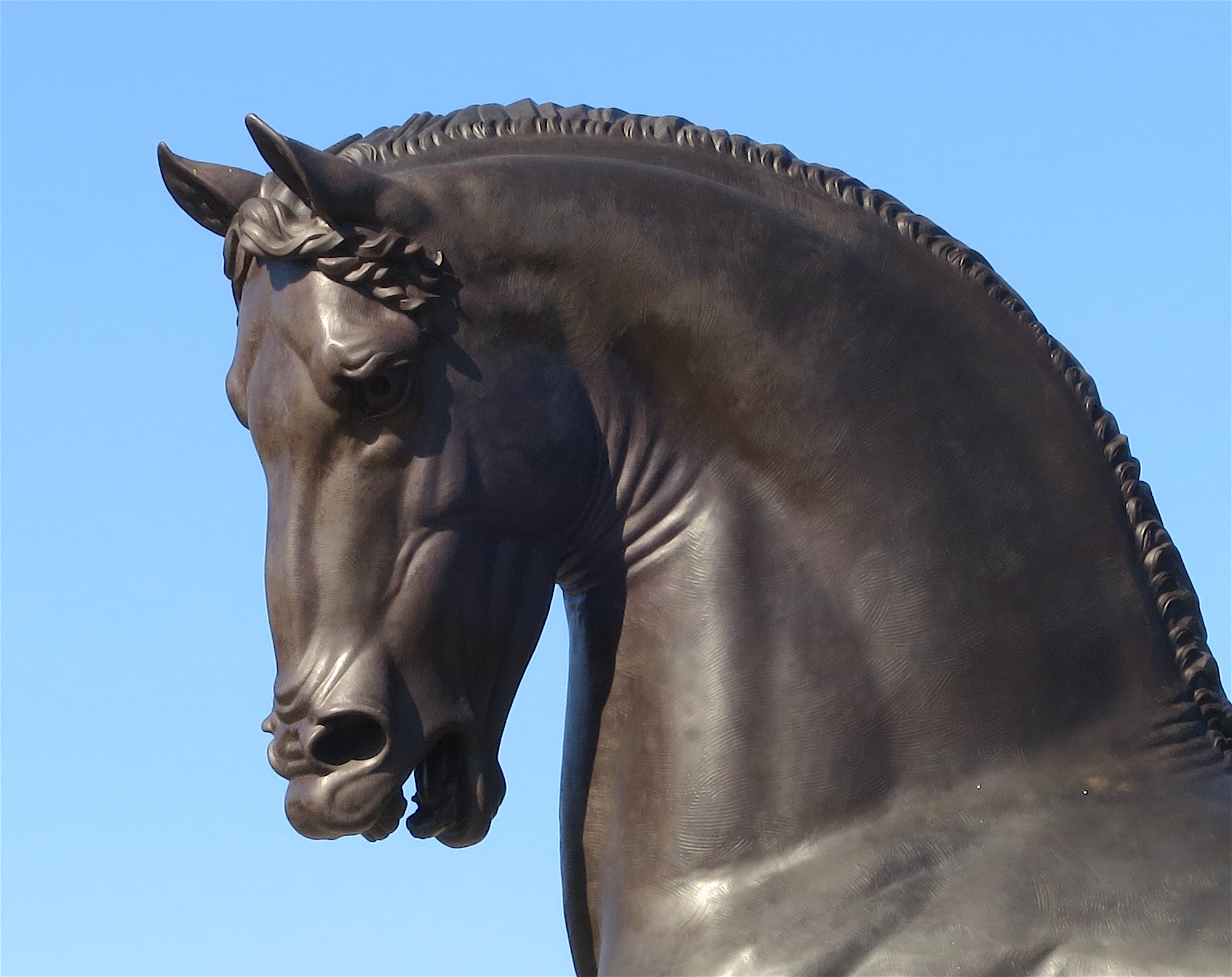
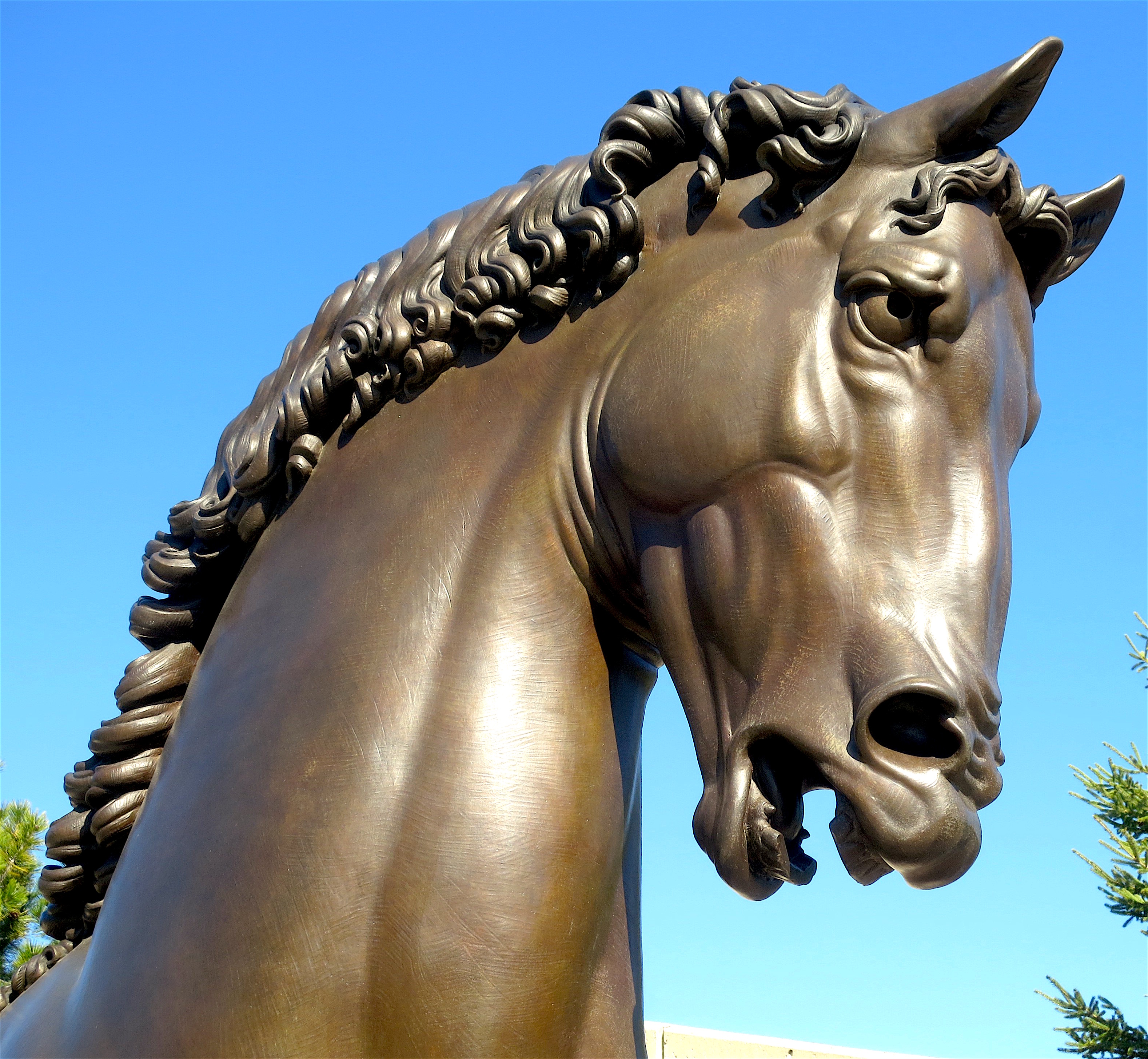
To understand the meek picture a great stallion at full gallop in a meadow, who— at his master’s voice—seizes up to a stunned but instant halt. So with the strain of holding that great power in check, the muscles along the arched neck keep eddying, and only the velvet ears prick forward, awaiting the next order. ~Mary Karr from “Who The Meek Are Not”
Blessed are the meek, for they shall inherit the earth. Matthew 5:5
Let every man be quick to hear, slow to speak, slow to anger, for the anger of man does not work the righteousness of God. James 1: 19-20
I’ve seen meekness like this, first hand.
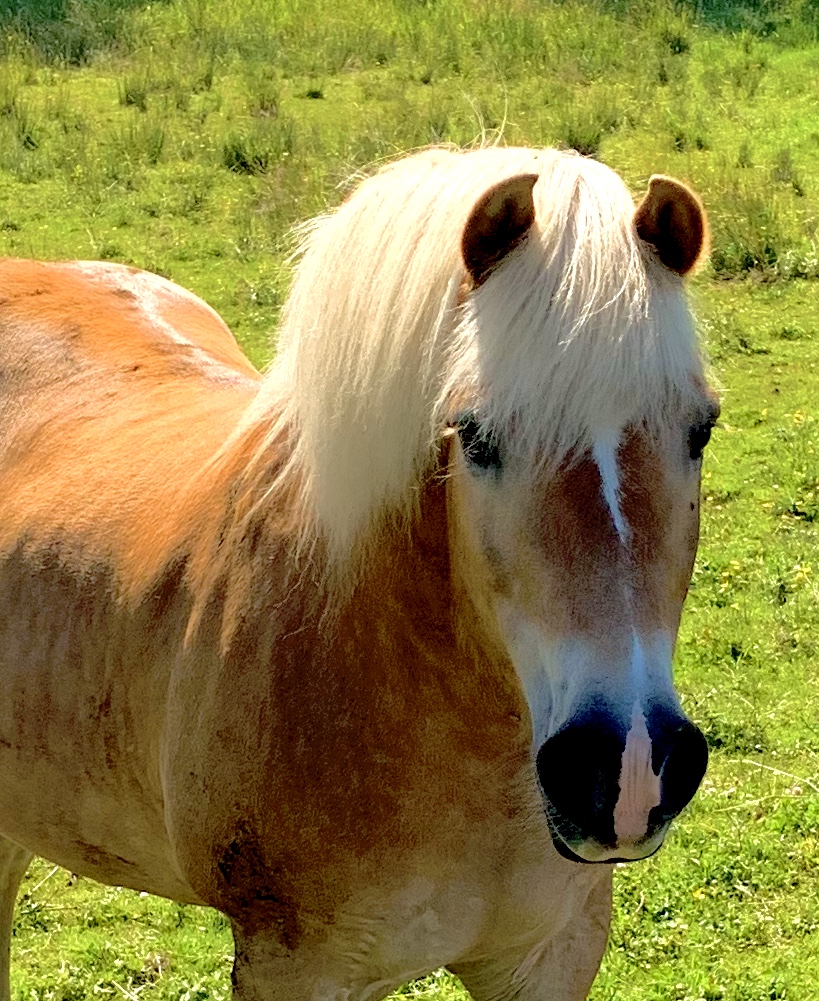
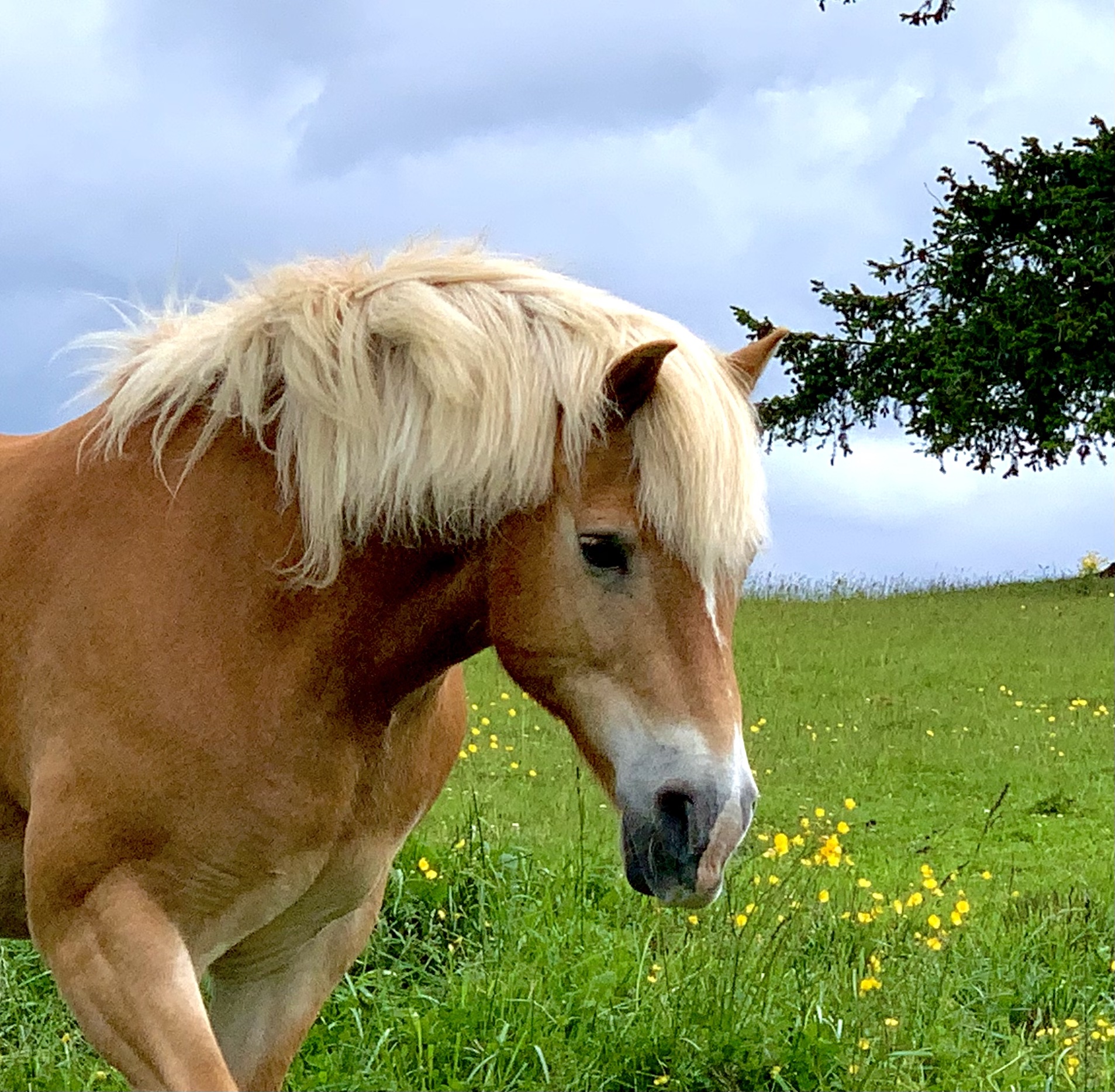
Our stallion allowed his strength and passion to be under control. He was eager to listen. He wanted to see what we might ask of him. He took instruction eagerly. He never lashed back in anger. He simply wanted to be with us.
Meekness and humility make no sense given the world’s demand now for “strongman” leadership: someone who submits to no one, apologizes to no one, blames others for what goes wrong, feels compassion for no one.
Globally and individually, we have desperate need of meekness. True strength is when someone knows the extent of their power but resists the need to prove it to anyone else.
The meek love this God who shares Himself, who sacrifices for the bereft, and whose great strength is obvious, yet directed completely to our salvation.
Humble and Human, willing to bend You are Fashioned of flesh and the fire of life, You are Not too proud to wear our skin To know this weary world we’re in Humble, humble Jesus
Humble in sorrow, You gladly carried Your cross Never refusing Your life to the weakest of us Not too proud to bear our sin To feel this brokenness we’re in
Humble, humble Jesus We bow our knees We must decrease You must increase We lift You high
Humble in greatness, born in the likeness of man Name above all names, holding our world in Your hands Not too proud to dwell with us, to live in us, to die for us
Humble, humble Jesus We bow our knees We must decrease You must increase We lift You high We bow our knees We must decrease You must increase We lift You high
One-Time
Monthly
Yearly
Make a one-time or recurring donation to support daily Barnstorming posts
Schizomeno—meaning in Greek “ripped open.” It occurs twice in the Gospels: once when the temple veil is torn the day of Christ’s crucifixion. The other is when “the heavens opened” upon Christ’s baptism.
But they didn’t just “open.” They were ripped open. God broke into history with a voice and an act of salvation unlike any other.
To study the Bible with people of faith is to see it not only as an object of academic or antiquarian interest but also as a living word, a source of intellectual challenge, inspiration, comfort, uncomfortable ambiguities, and endless insights for people who gather in willingness to accept what seems to be God’s invitation: Wrestle with this.
Healthy churches wrestle, working out their salvation over coffee and concordances, knowing there is nothing pat or simple about the living Word, but that it invites us into subtle, supple, resilient relationship with the Word made flesh who dwells, still, among us. ~Marilyn McEntyre from“Choosing Church”
Passing down this story of Christ’s life, death, resurrection and ascension is not merely, or mainly, an exercise in cognition. Nor is it a divinely inspired game of telephone, where we simply whisper a message to the next generation through the ages.
Inevitably the story comes to us through ordinary people over dinner tables, at work, in songs, through worship, conflict, failure, repentance, ritual, liturgy, art, work and family.
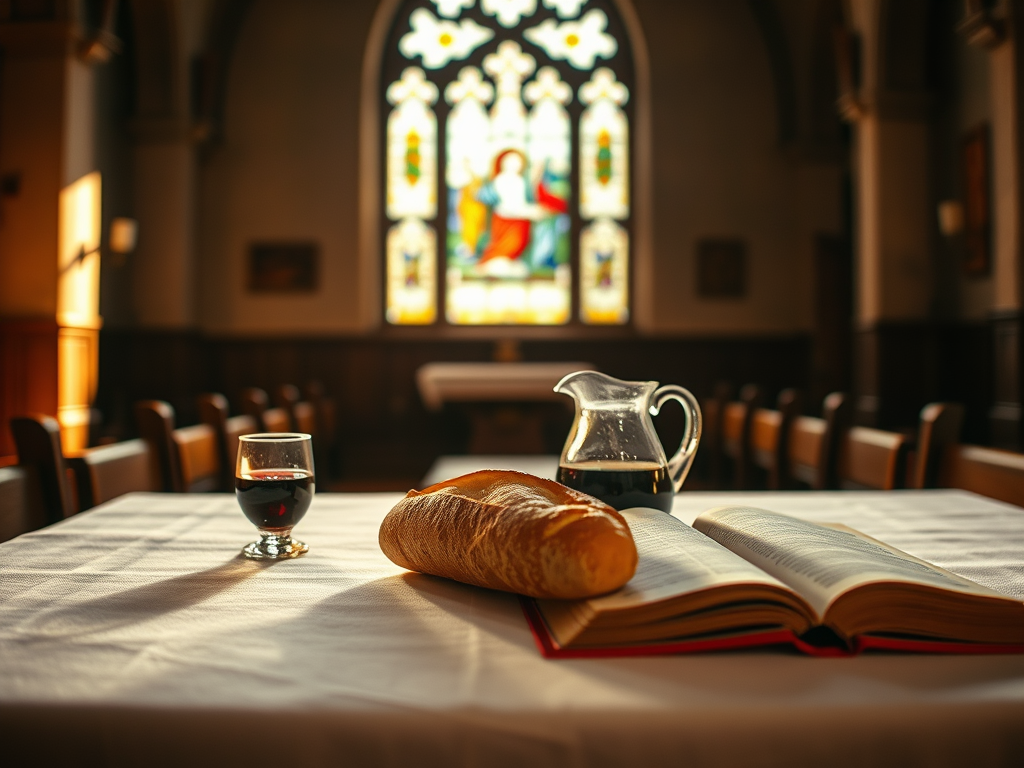
Christianity is something we believe, but it is also a practice. Central to our practice is what Christians call sacraments, where the mysteries of faith are manifest through the ordinary stuff of earth—water and skin, bread and teeth. ~Tish Harrison Warren from “True Story”
photo by Barb Hoelle
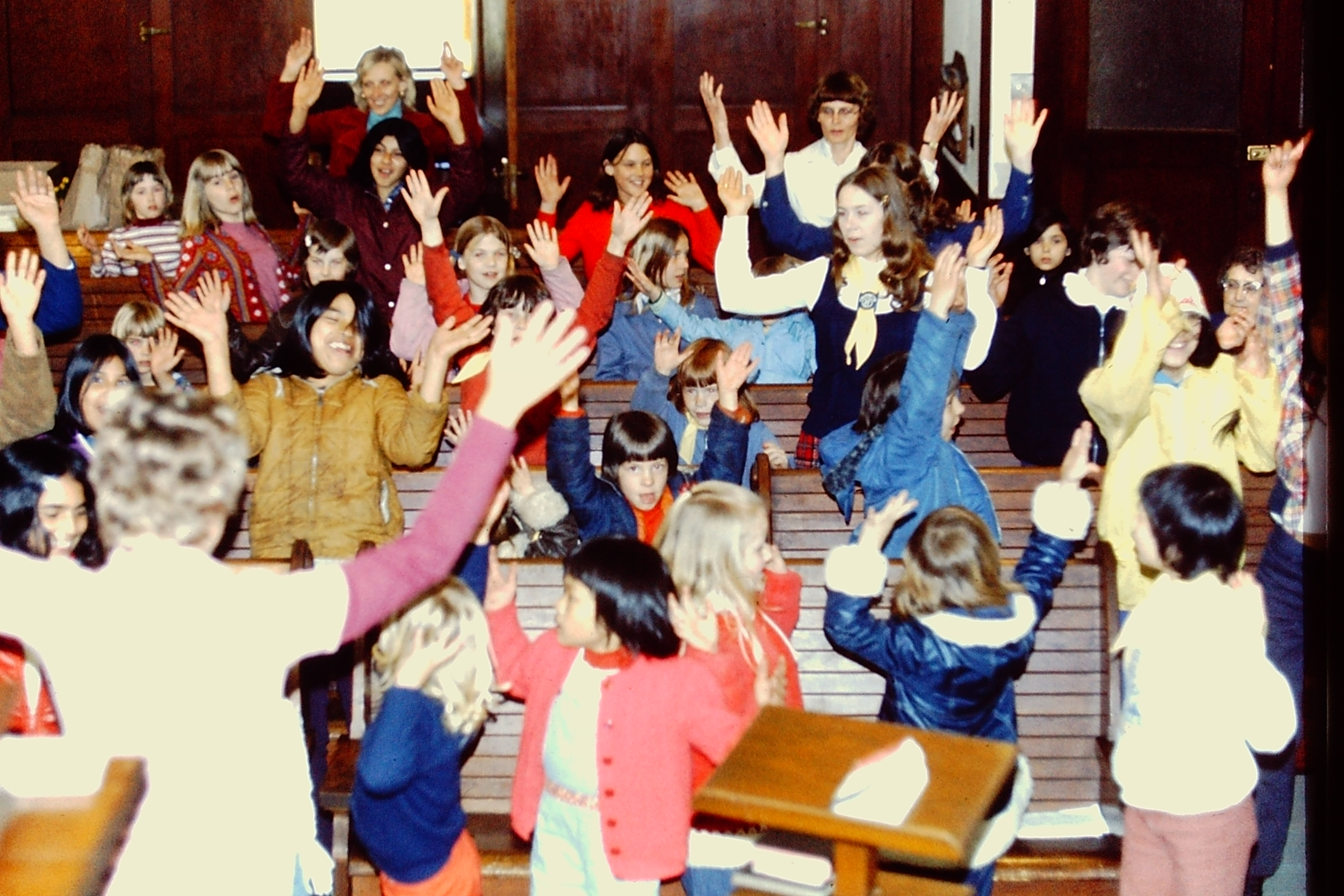
Mom, You raised your hands while we sang this morning like I’ve never known you to, but I guess until recently I’ve never really known you in a church that let you feel alive.
I’m sure the last one did before it faded, but I was too young to distinguish church from habitual gathering and they wouldn’t have taught me grace if they’d wanted to,
and that was before I cracked our lives apart.
But it was then, wasn’t it, in the aftermath, that I saw more of your layers and saw that they were tapestries, punctured a thousand times and intricate, majestic, though they’ve been torn.
Ripped open to allow access – that is what God has done to enter into this ordinary stuff of earth, and giving us access to Him.
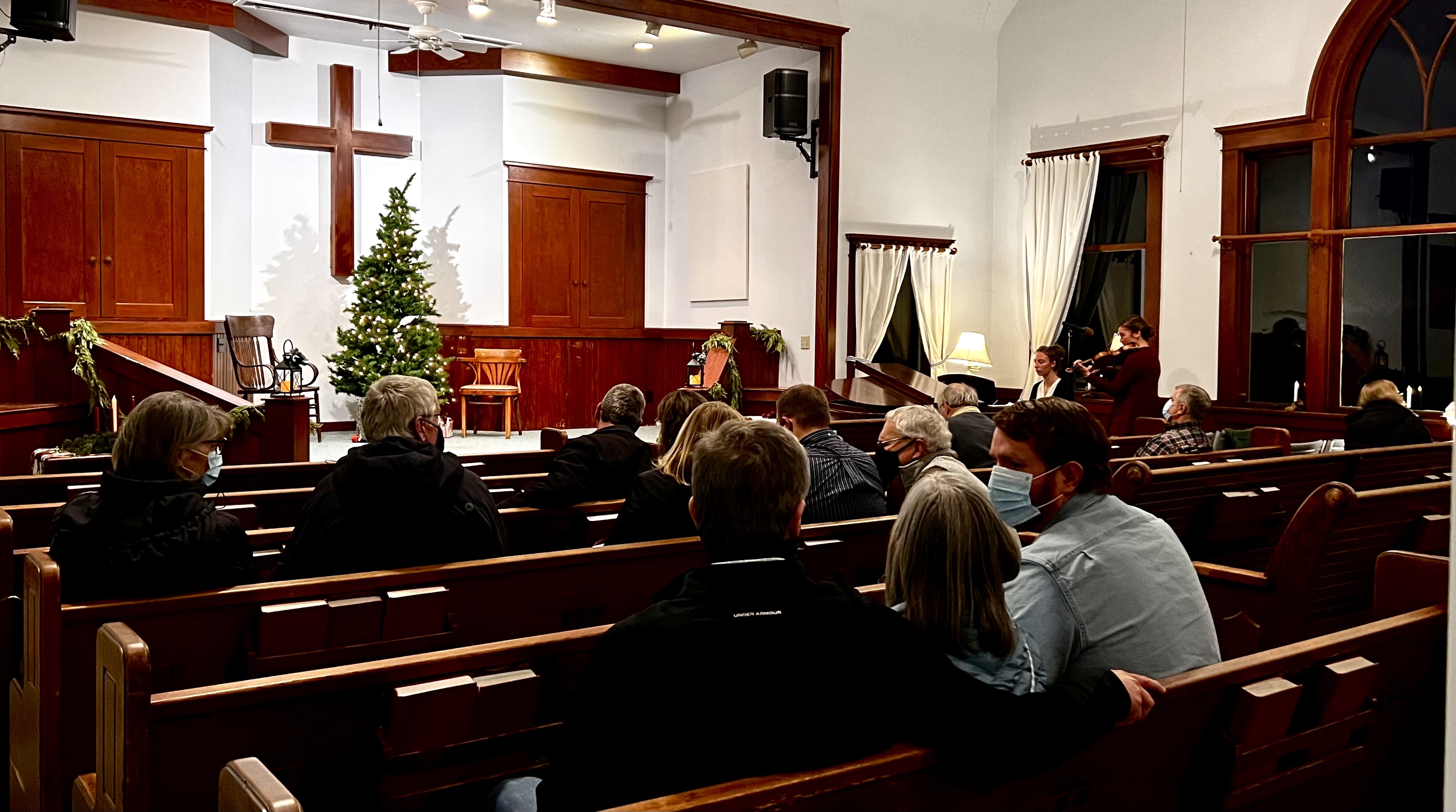
I enter the church sanctuary twice every Sunday to be reminded of this struggle: a wrestling match with ourselves, with each other, with everyday ordinary and ornery stuff, with the living Word of God.
None of this is easy and it isn’t meant to be. We must work for understanding and struggle for contentment and commitment.
I keep going back – gladly, knowing my guilt, eager to be transformed, not only because I choose to be in church, but because He chose to invite me there.
photo by Joel DeWaardAI image created for this post
One-Time
Monthly
Yearly
Make a one-time or recurring donation to support daily Barnstorming posts
It was beautiful as God must be beautiful: glacial eyes that had looked on violence and come to terms with it; a body too huge and majestic for the cage in which it had been put; up and down in the shadow of its own bulk it went lifting, as it turned, the crumpled flower of its face to look into my own face without seeing me. It was the colour of the moonlight on snow and as quiet as moonlight, but breathing as you can imagine that God breaths within the confines of our definition of him, agonizing over immensities that will not return. ~R.S. Thomas “The White Tiger”
There are nights that are so still that I can hear the small owl calling far off and a fox barking miles away. It is then that I lie in the lean hours awake listening to the swell born somewhere in the Atlantic rising and falling, rising and falling wave on wave on the long shore by the village that is without light and companionless. And the thought comes of that other being who is awake, too, letting our prayers break on him, not like this for a few hours, but for days, years, for eternity. ~R.S.Thomas “The Other”
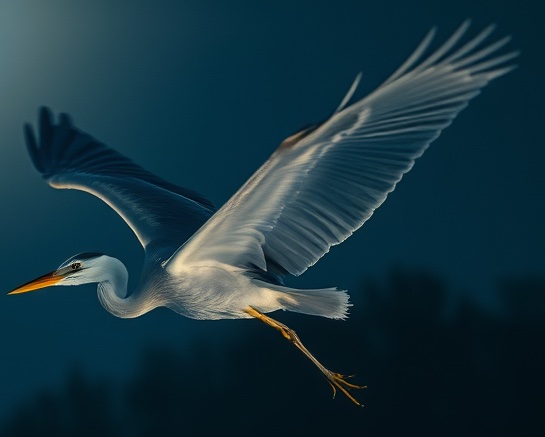
Angels, where you soar Up to God’s own light, Take my own lost bird On your hearts tonight; And as grief once more Mounts to heaven and sings, Let my love be heard Whispering in your wings. ~Alfred Noyes “A Prayer”
We confine and cage our concept of God, trying to understand His power and beauty within our limited world. He tells us what He is capable of, yet we diminish His immensity to only what we are able to fathom.
He is an eternal mystery, allowing our beseeching prayers to break over Him again and again and again.
Our grief is carried on wings to God, our prayers desperate for His breath and comfort.
Let our love be heard, let our love be heard, let our love be heard –always and forever.
One-Time
Monthly
Yearly
Make a one-time or recurring donation to support daily Barnstorming posts
To clasp the hands in prayer is the beginning of an uprising against the disorder of the world. ~Karl Barth
Whatever happens. Whatever what is is is what I want. Only that. But that. ~Galway Kinnell “Prayer”
Ah — a resting place, where we come to understand it is not required of us to wrestle constantly and passionately with our God — nor pursue relentlessly all God’s decrees as we understand them, but only that we listen and wonder and hope and pray, that we might, perhaps, make just a little difference, one quiet grey day. ~Edwina Gateley “Just a Little Difference”
There is much shouting and gnashing of teeth going on in our country right now – some from the streets, some from computer keyboards and screens, and some from inside the echoing halls of government and a certain white house.
We need to stop shouting and clasp hands in prayer.
Nothing can right the world until we are right with God through talking to Him out of our depth of need and fear. Nothing can right the world until we submit ourselves wholly, bowed low, hands clasped, eyes closed, articulating the joy, the thanks, and the petitions weighing on our hearts.
An uprising is only possible when our voice comes alive, unashamed, unselfconscious, rising up from within us, uttering words that beseech and thank and praise. To rise up with hands clasped together calls upon a power needing no billions of funds and no weapons of destruction and no walls to keep people in or keep them out.
He is the Word, come to overcome and overwhelm the shambles left of our world. Nothing can be more victorious than the Amen, our Amen, at the end of our prayers.
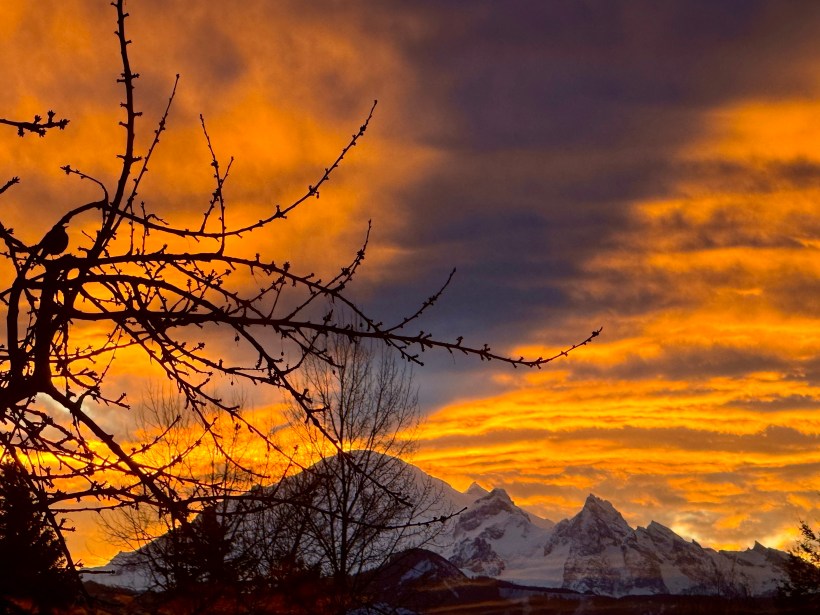
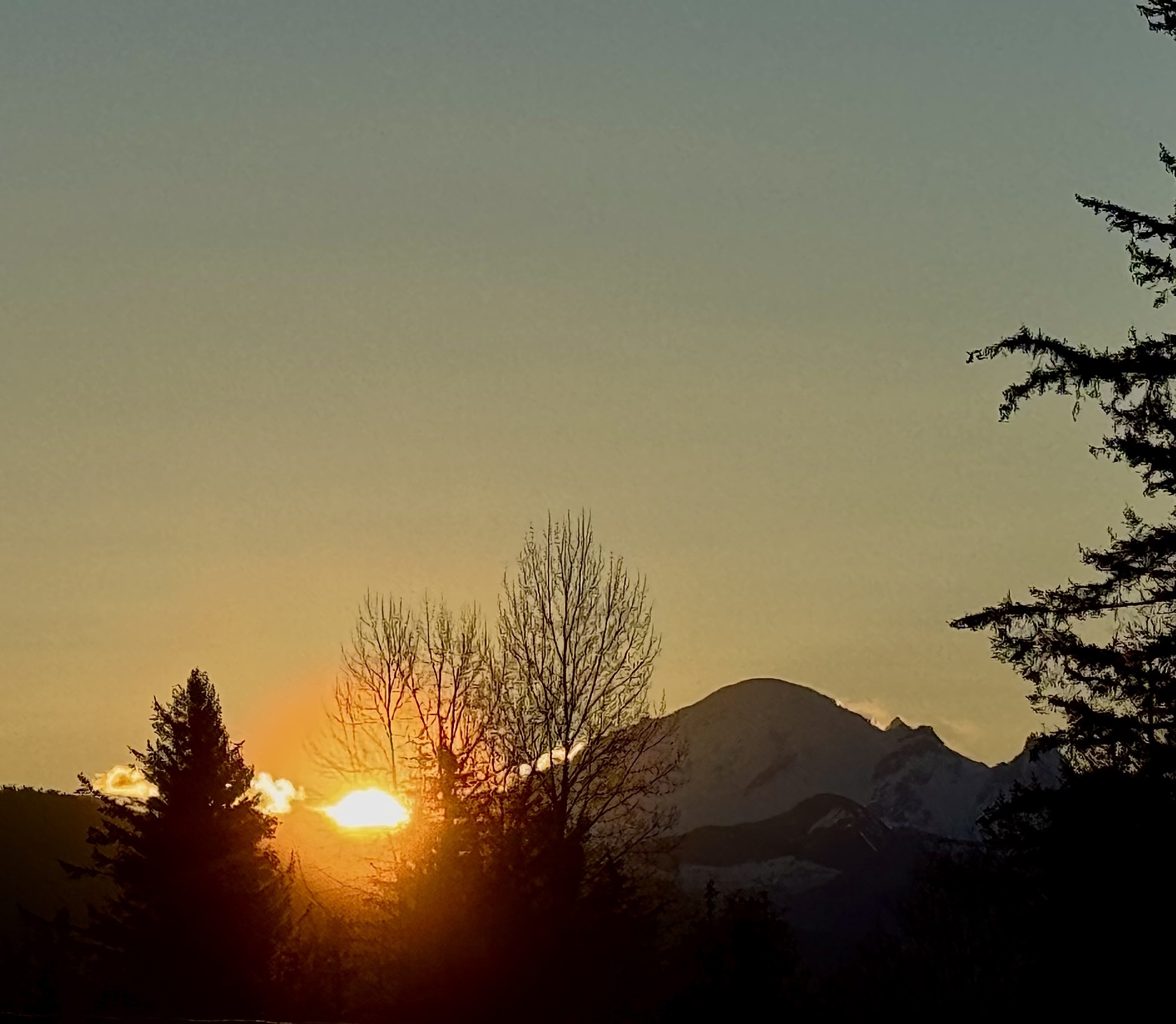
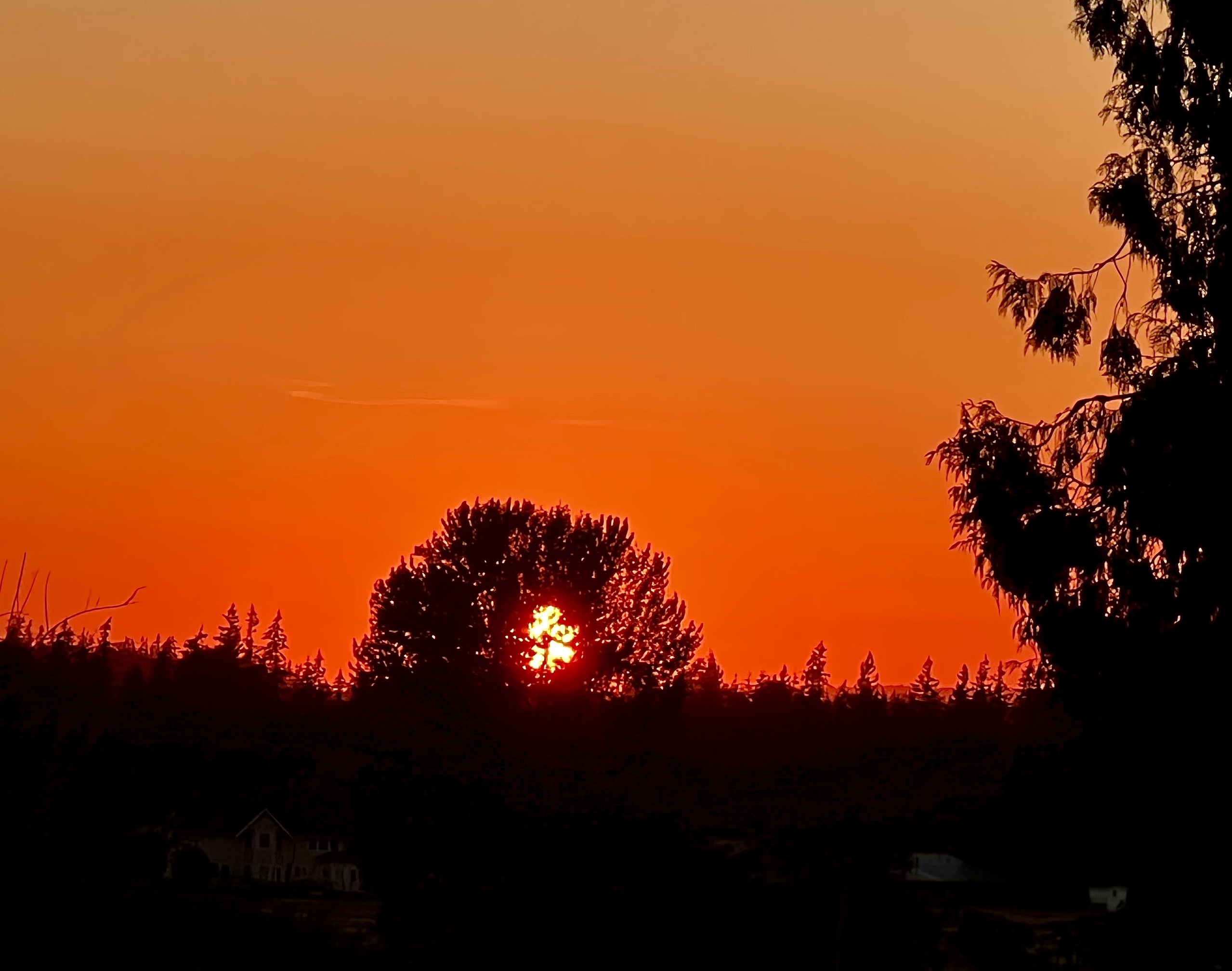
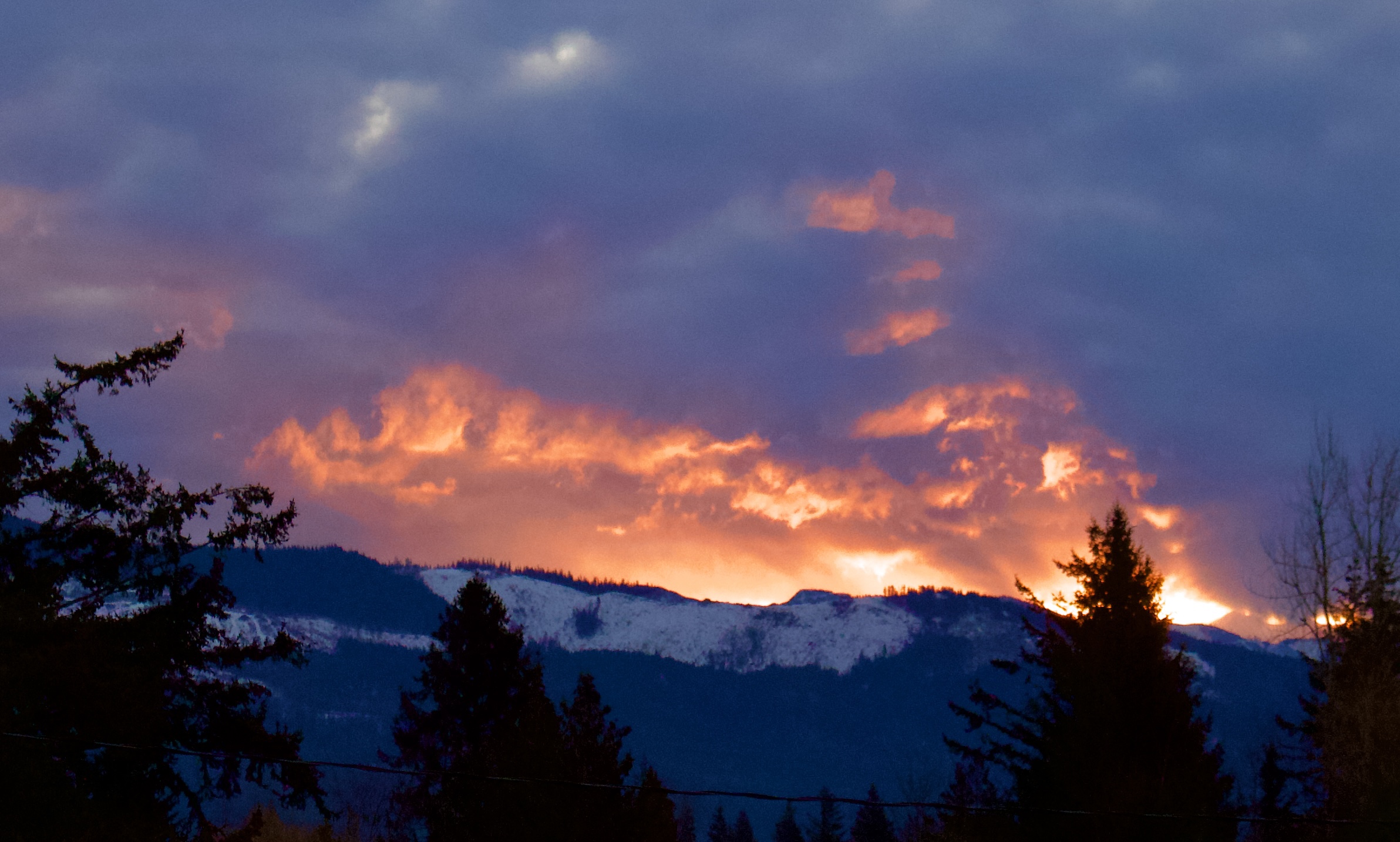
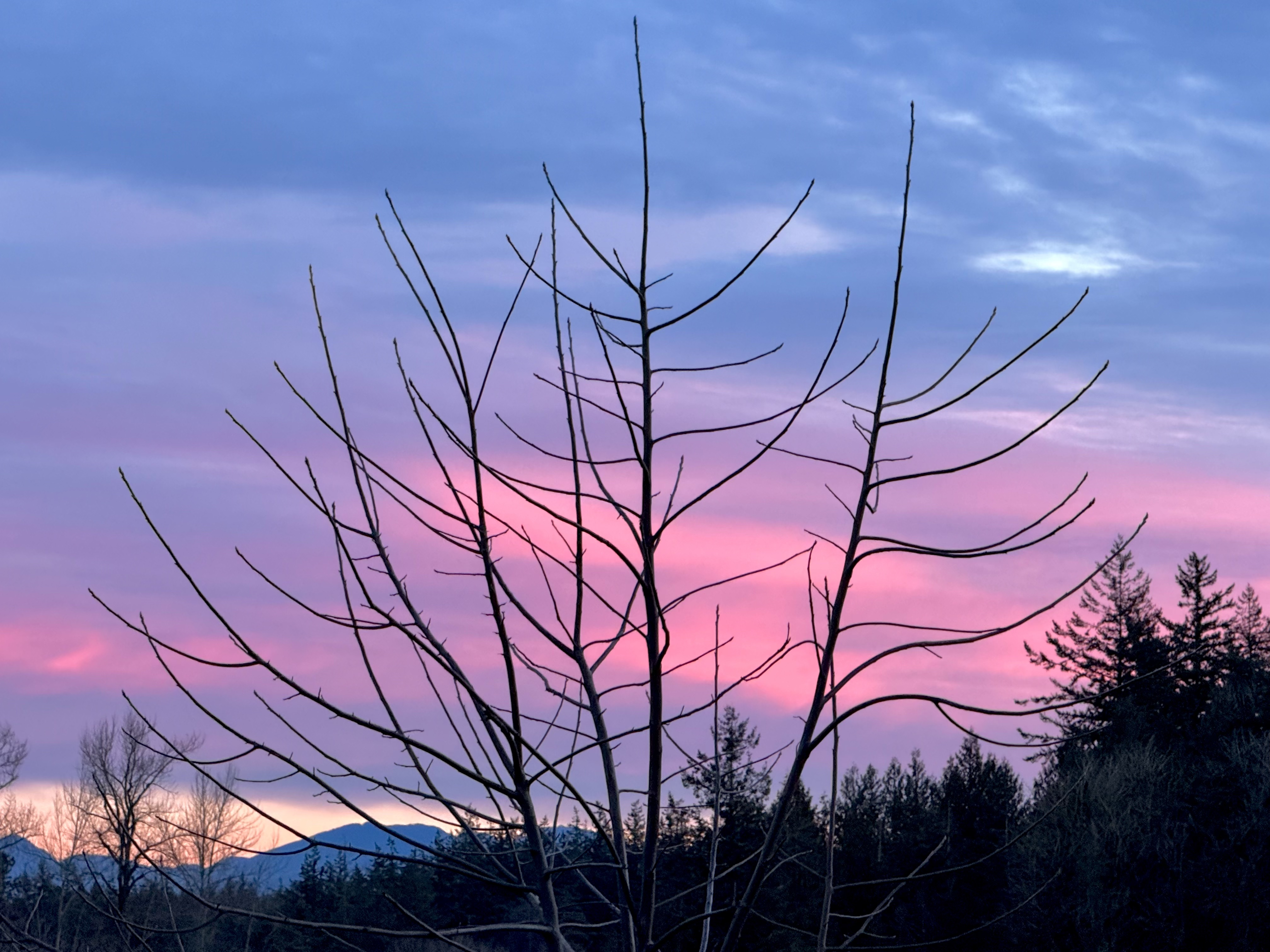
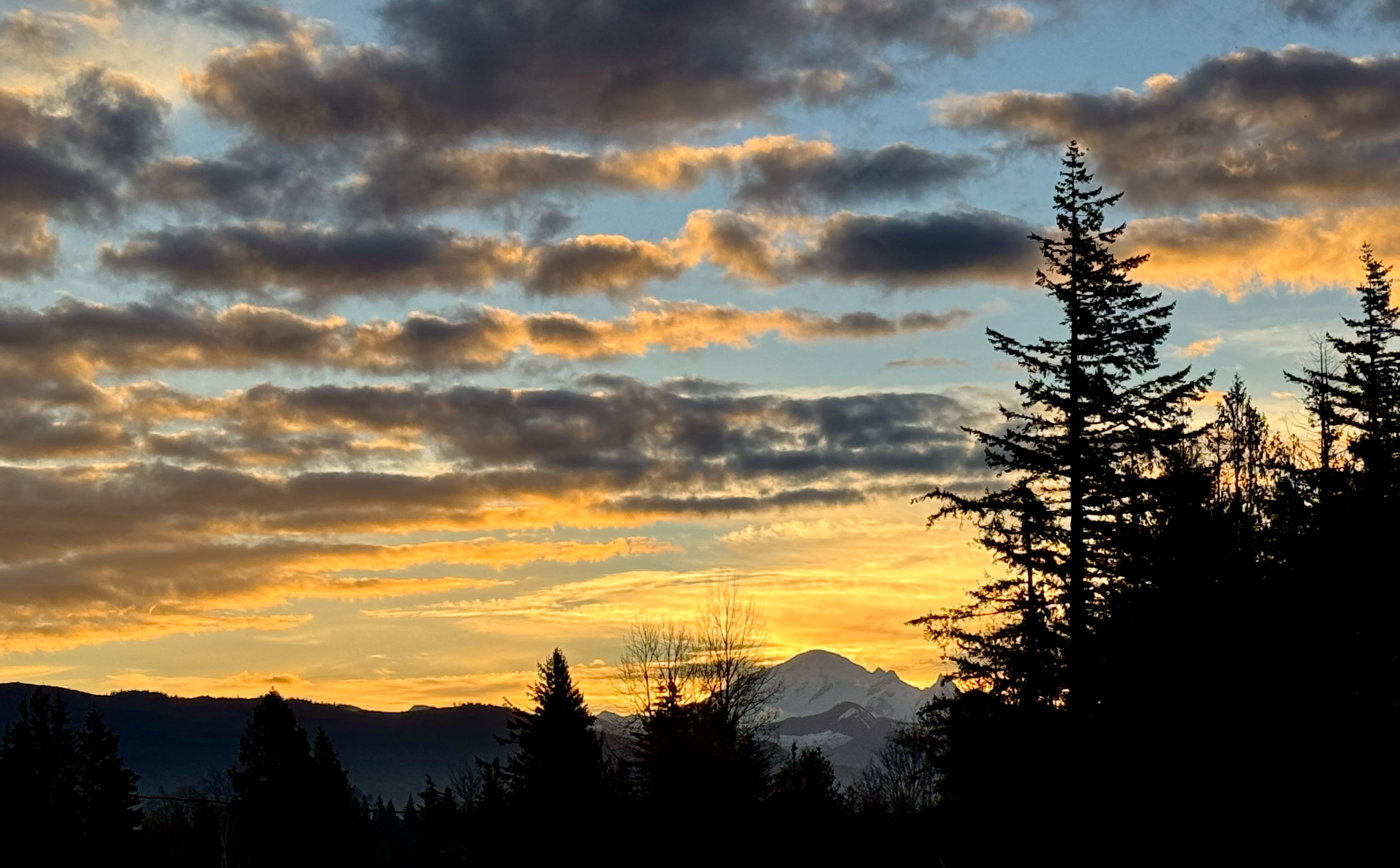
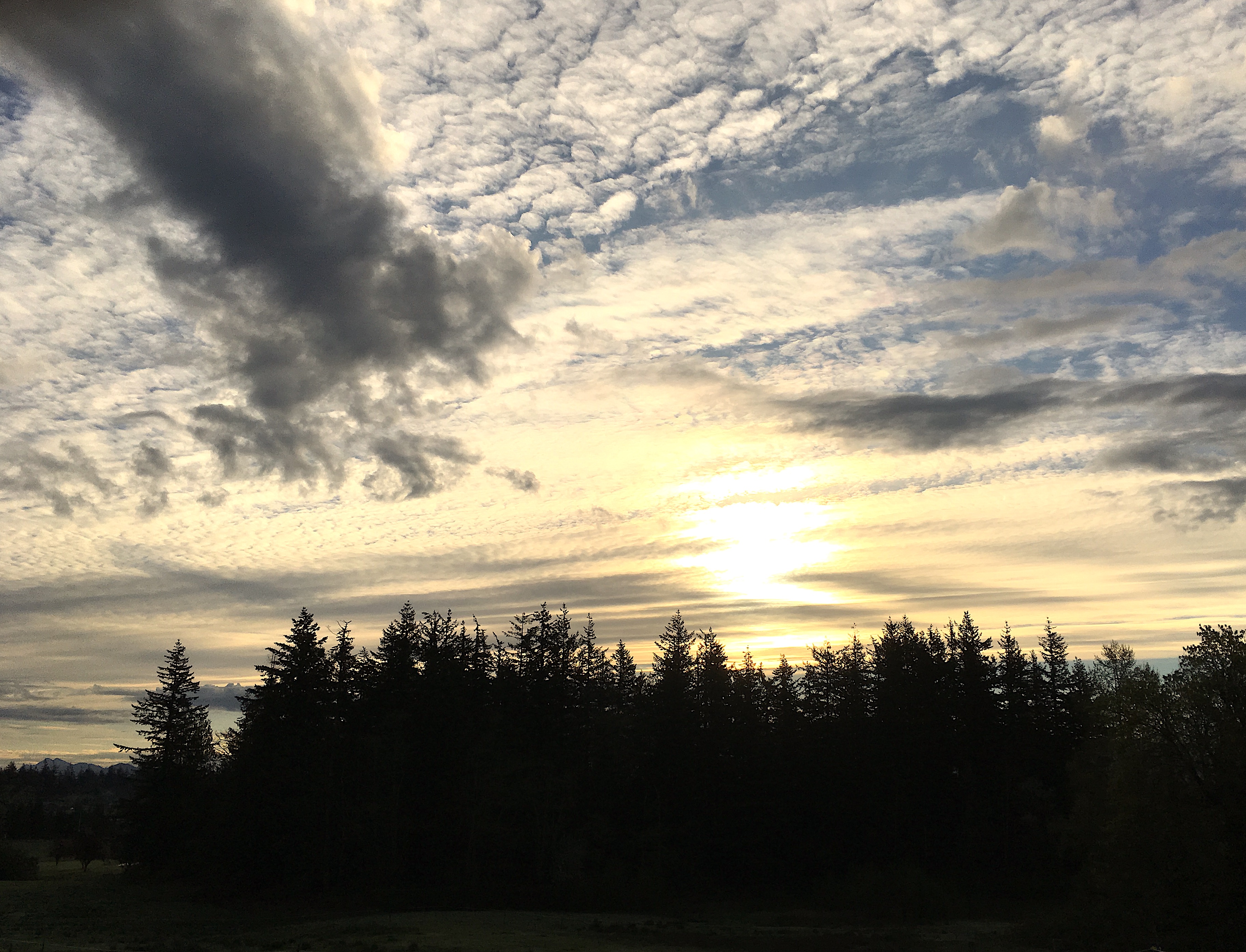
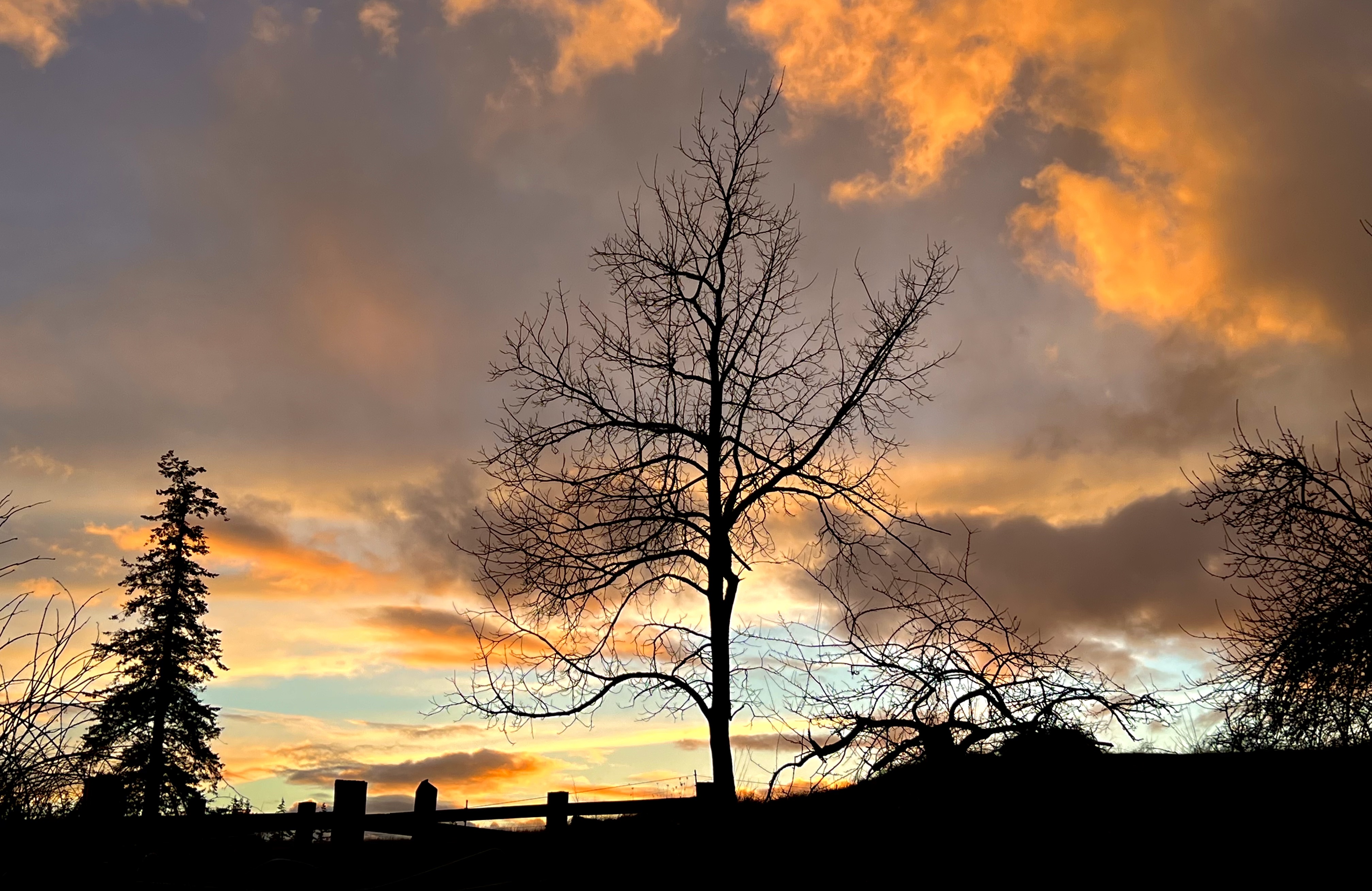
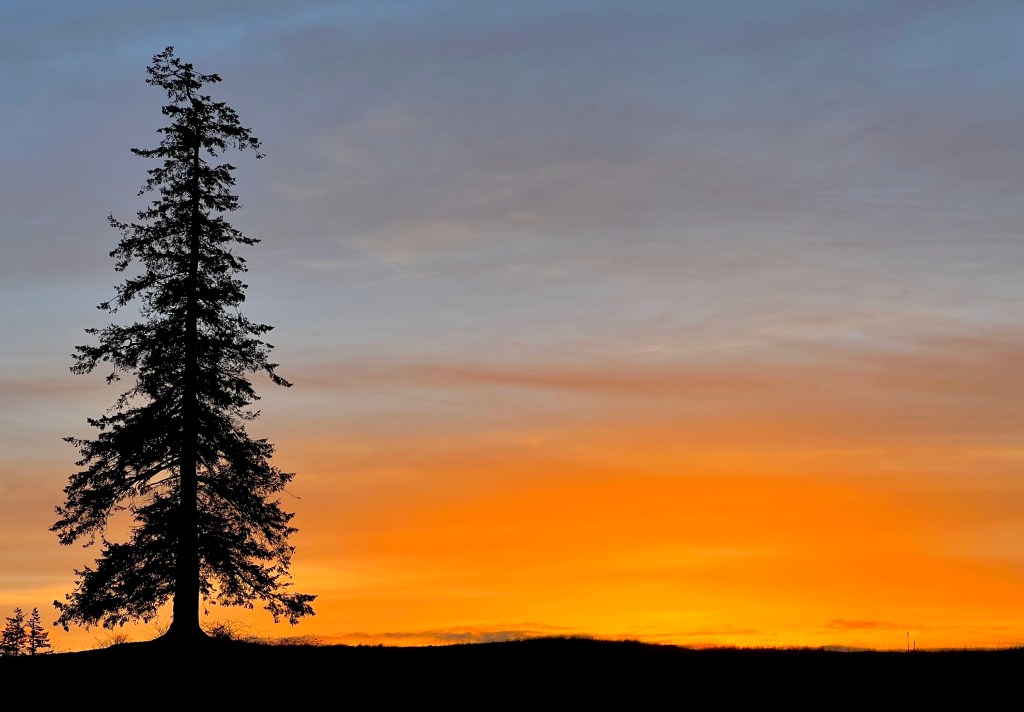
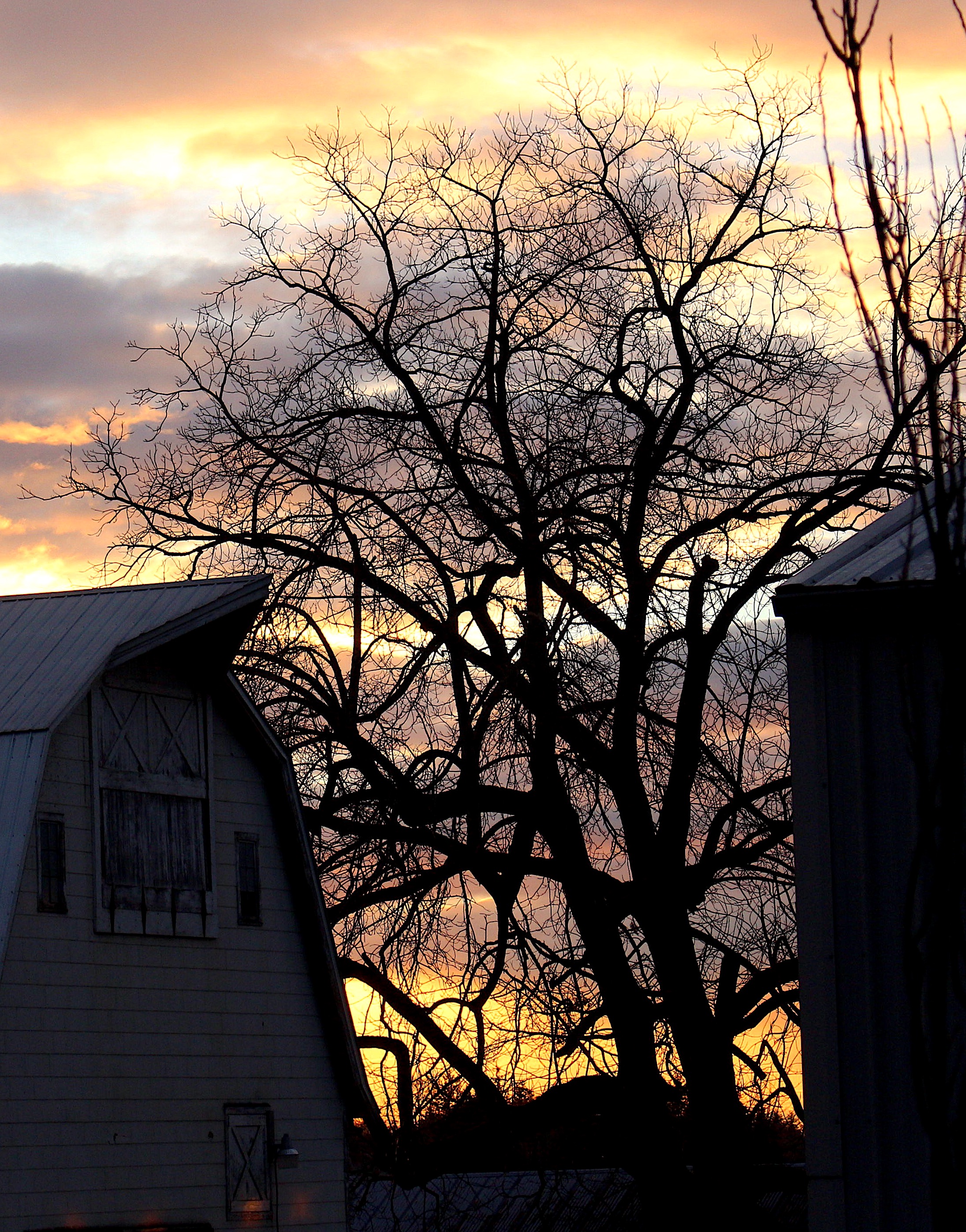
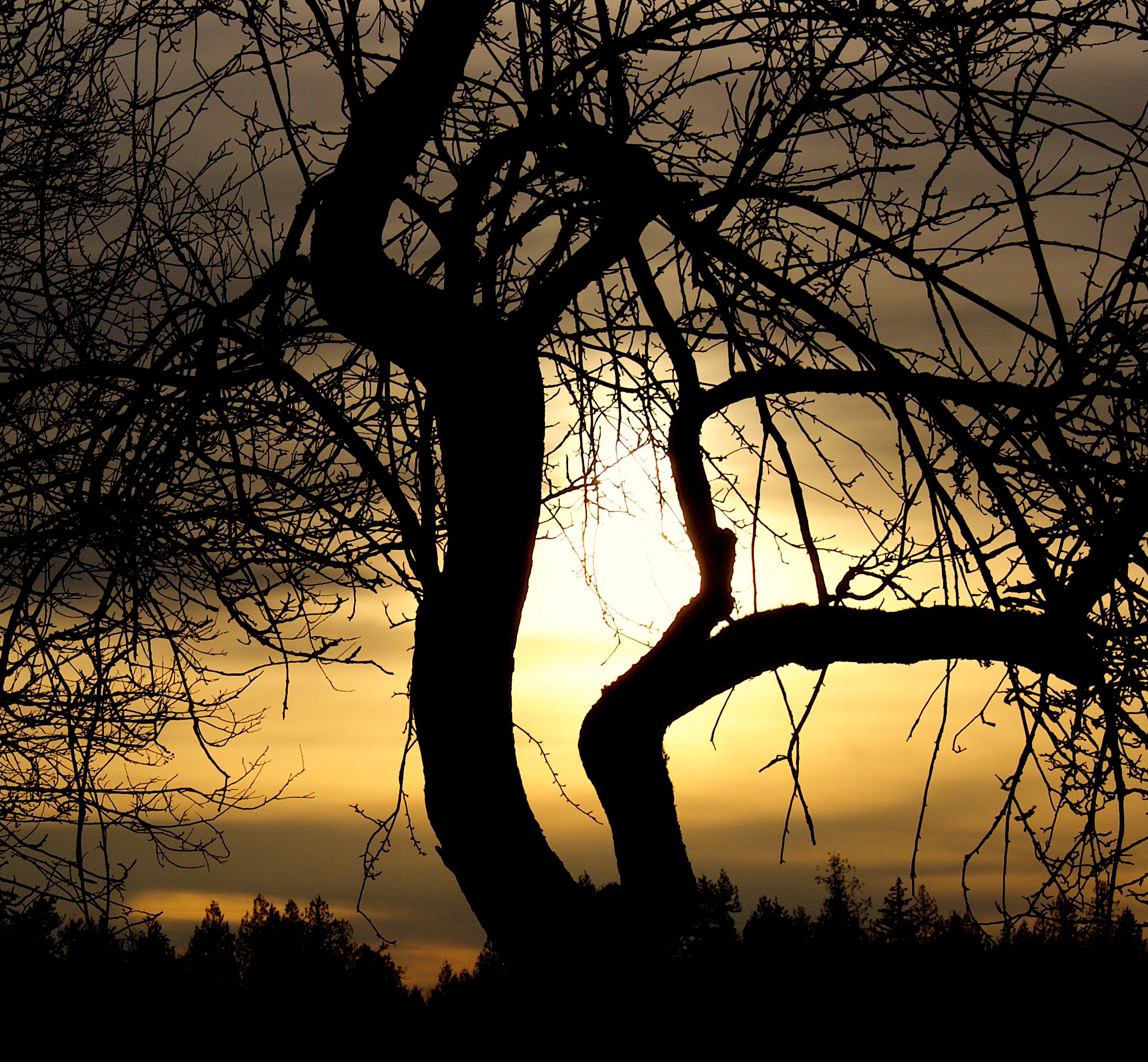
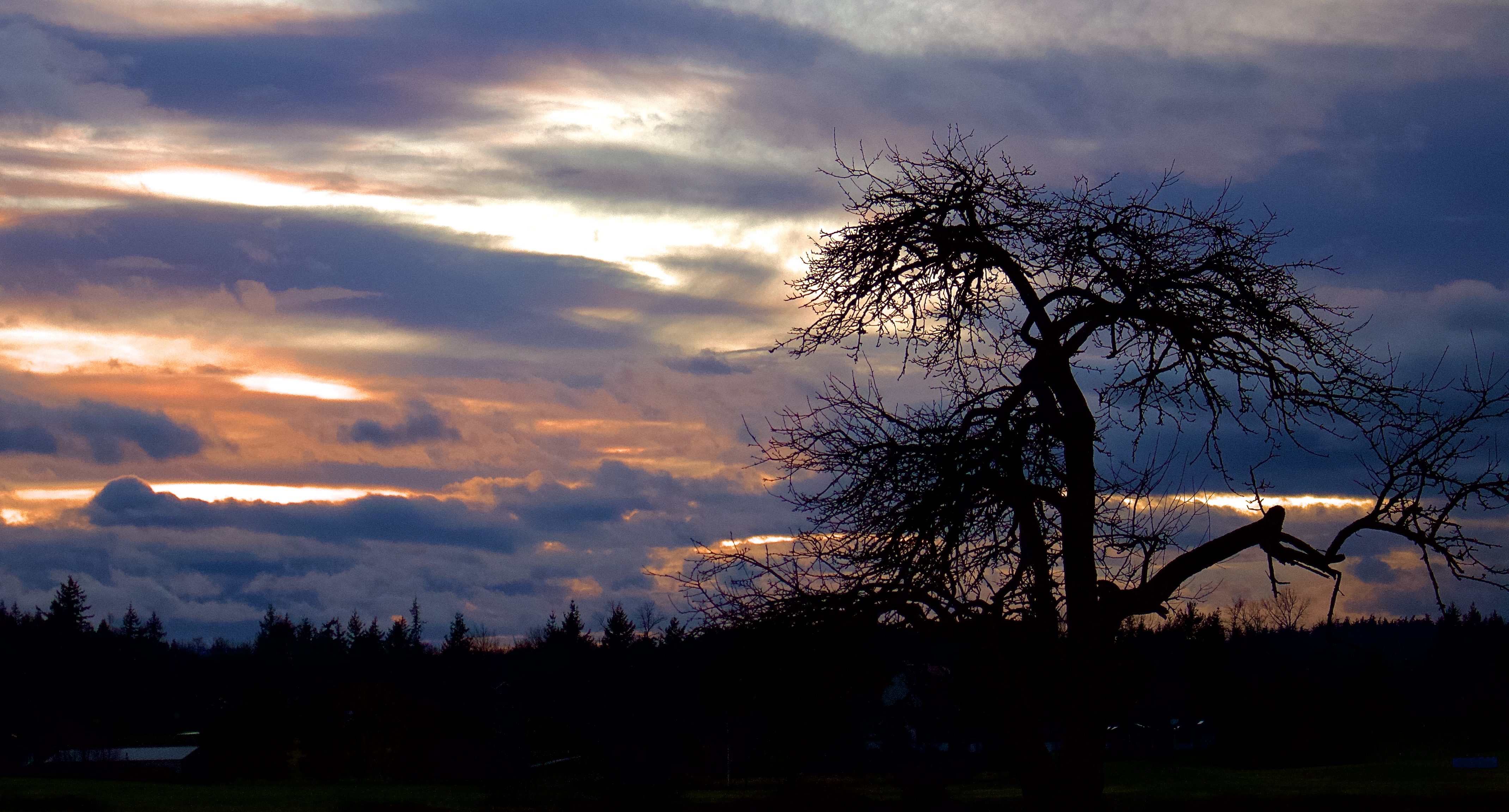
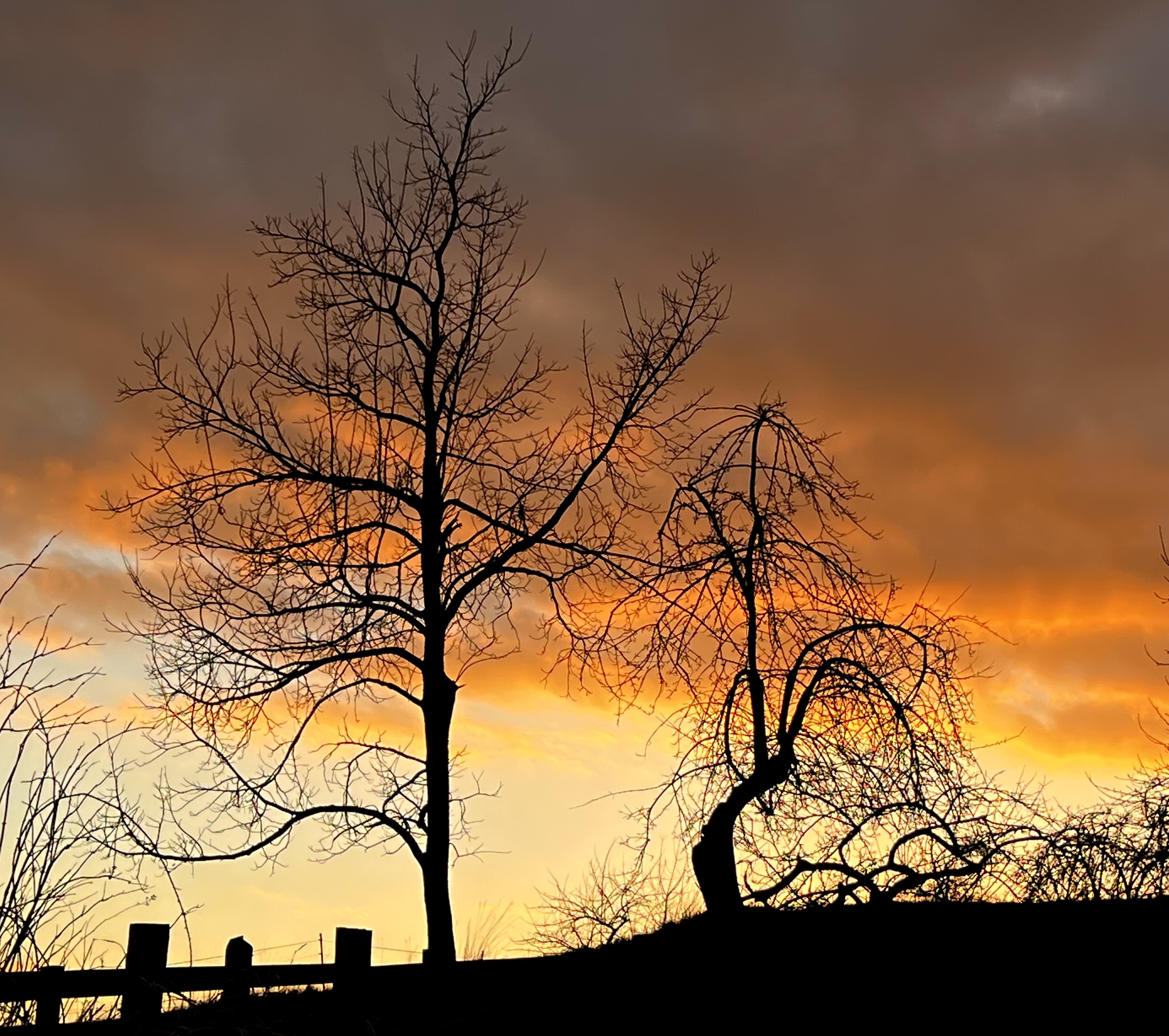
and look at the sky. Suddenly: orange, red, pink, blue, green, purple, yellow, gray, all at once and everywhere.
I pause in this moment at the beginning of my old age and I say a prayer of gratitude for getting to this evening
a prayer for being here, today, now, alive in this life, in this evening, under this sky. ~David Budbill from Winter: Tonight: Sunset
Write as if you were dying. At the same time, assume you write for an audience consisting solely of terminal patients. That is, after all, the case. ~Annie Dillard from “Write Till You Drop”
At its best, the sensation of writing is that of any unmerited grace.
It is handed to you, but only if you look for it. You search, you break your fists, your back, your brain, and then – and only then – it is handed to you. From the corner of your eye you see motion. Something is moving through the air and headed your way. It is a parcel bound in ribbons and bows; it has two white wings.
It flies directly at you; you can read your name on it. If it were a baseball, you would hit it out of the park. It is that one pitch in a thousand you see in slow motion; its wings beat slowly as a hawk’s. ~Annie Dillard from “Write Till You Drop”
I began to write regularly after September 11, 2001 because that day it became obvious to me I was dying too, though more slowly than the thousands who vanished in fire and ash, their voices obliterated with their bodies. So, nearly each day since, while I still have voice and a new dawn to greet, I speak through my fingers to others dying around me.
We are, after all, terminal patients, some of us more prepared than others to move on, as if our readiness has anything to do with the timing. When our small church lost one of its most senior members to metastatic cancer, he announced his readiness once the doctor gave him the dire news (he liked to say he never bought green bananas as he wasn’t sure he’d be around to use them), but God had different plans and kept him among us for several years beyond his diagnosis.
Each day I too get a little closer to the end, but I write in order to feel a little more ready. Each day I detach just a little bit, leaving a trace of my voice behind. Eventually, through unmerited grace, so much of me will be left on the page there won’t be anything or anyone left to do the typing. I will be far out of the park, far beyond here.
Not a moment, not a sunrise, not a sunset, and not a word to waste.
One-Time
Monthly
Yearly
Make a one-time or recurring donation to support daily Barnstorming posts
This saying good-by on the edge of the dark And the cold to an orchard so young in the bark Reminds me of all that can happen to harm An orchard away at the end of the farm All winter, cut off by a hill from the house.
I wish I could promise to lie in the night And think of an orchard’s arboreal plight When slowly (and nobody comes with a light) Its heart sinks lower under the sod. But something has to be left to God. ~Robert Frost from “Good-bye and Keep Cold”
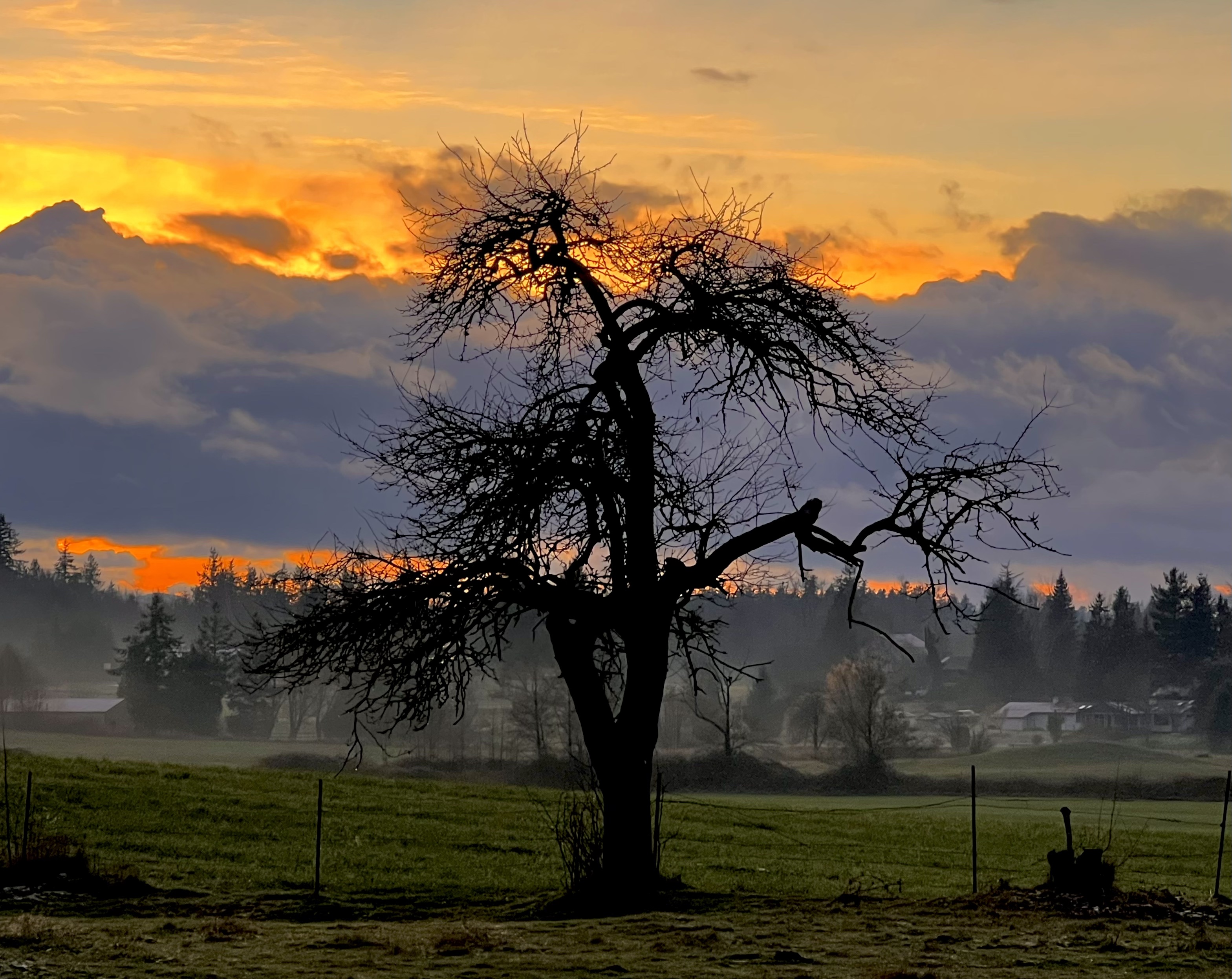
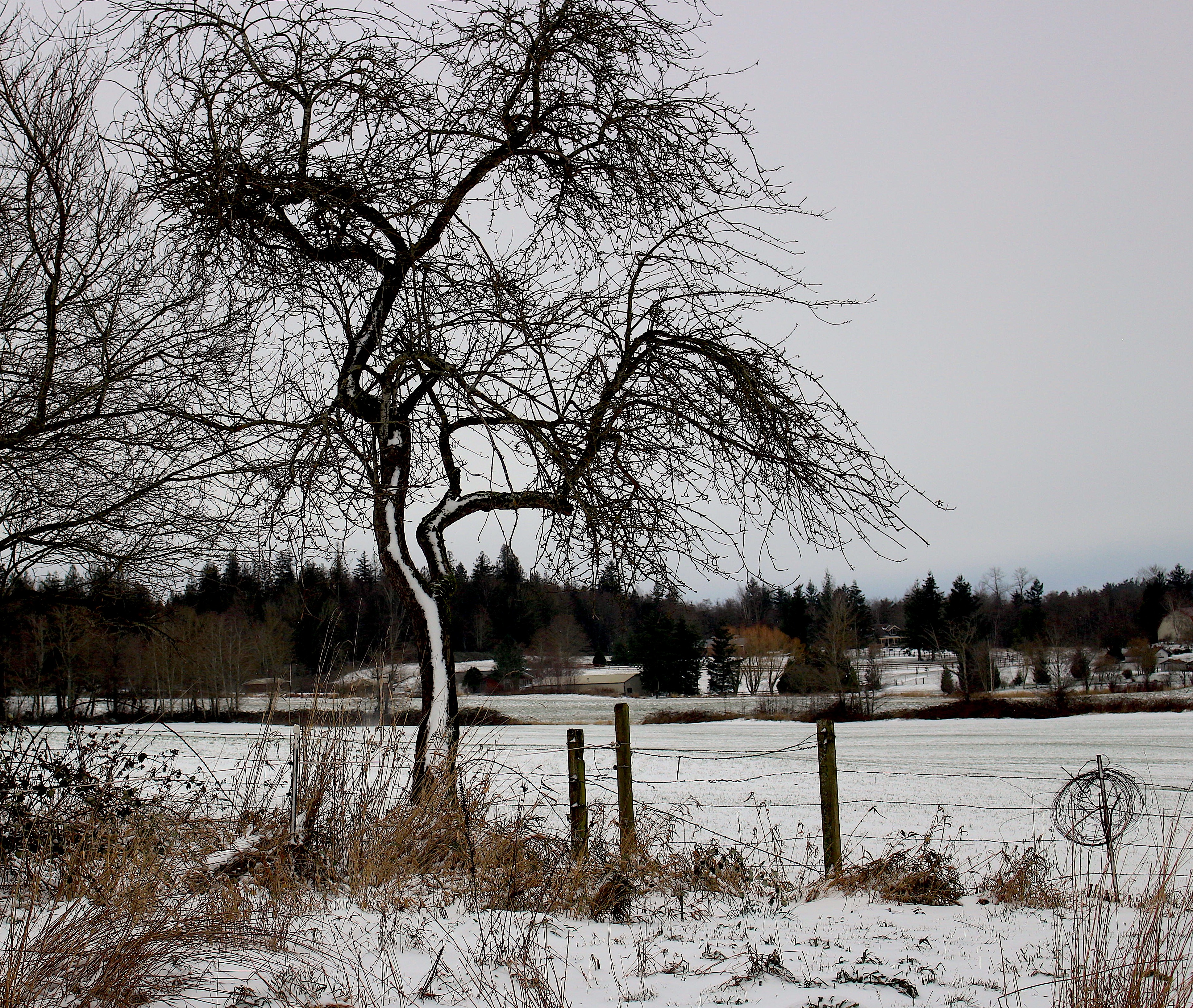
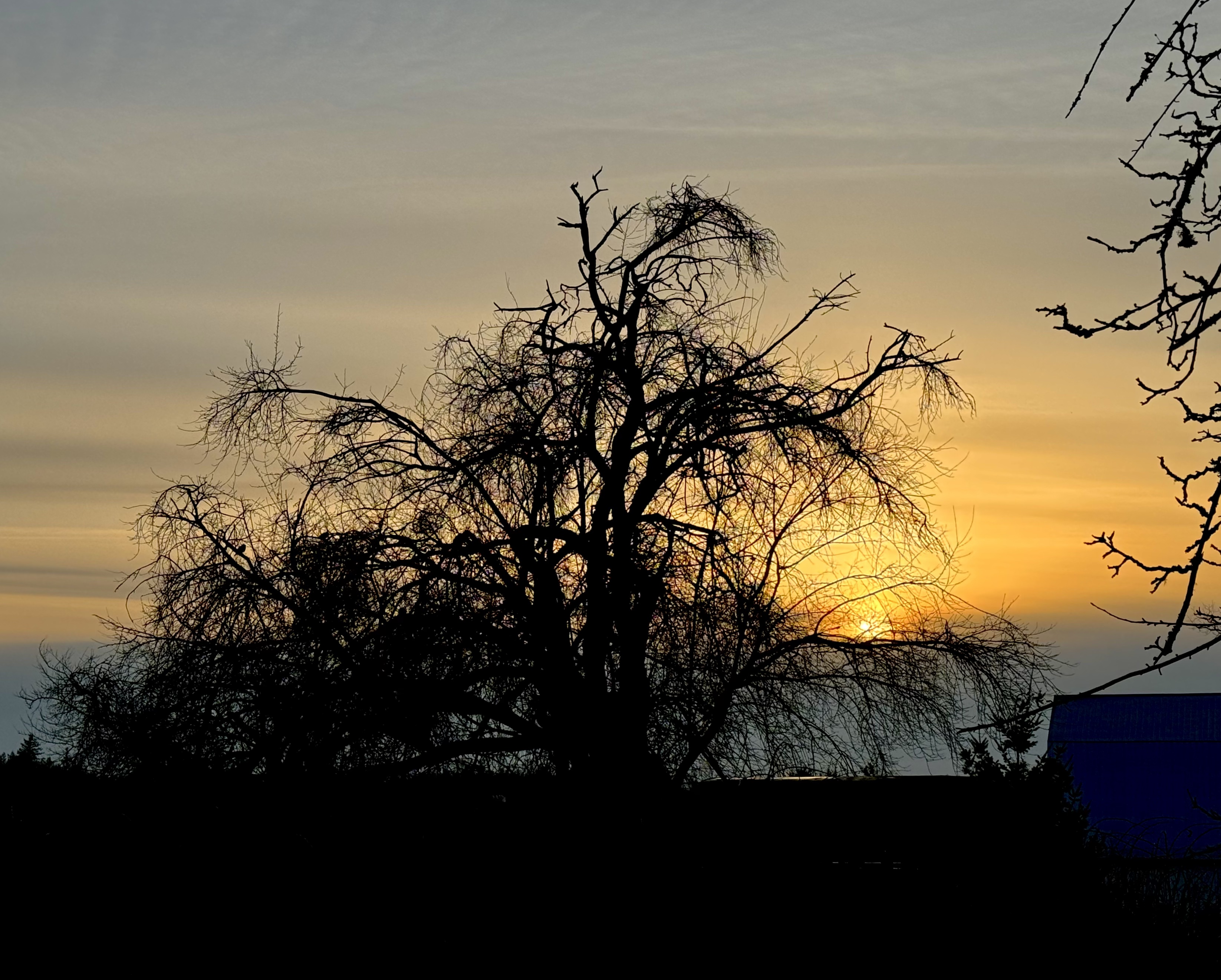
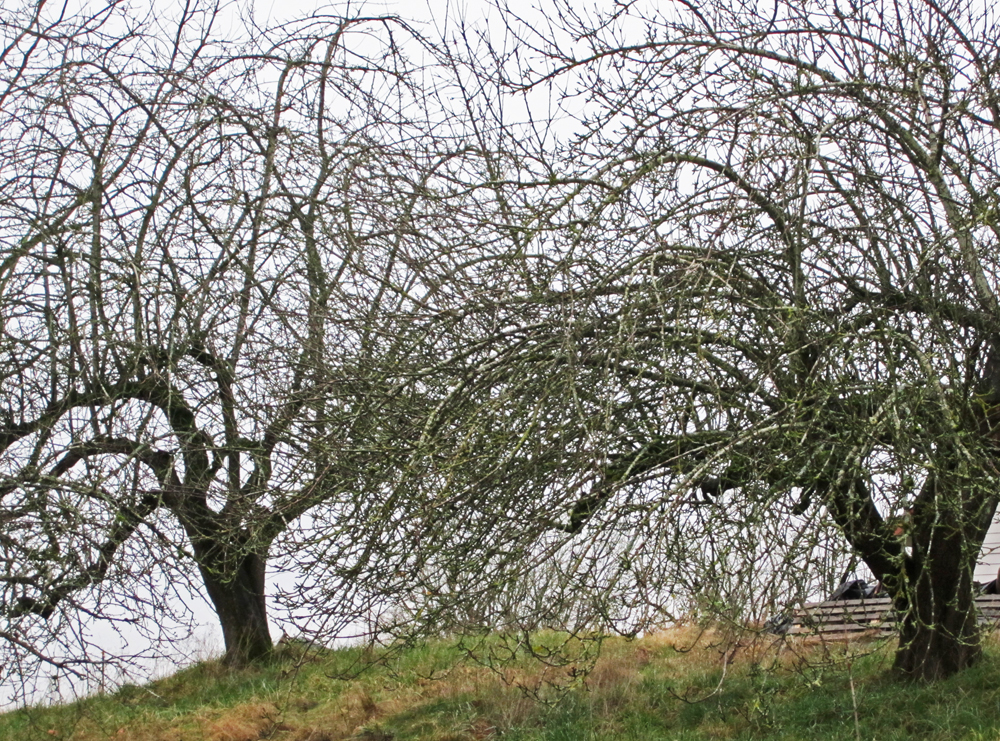
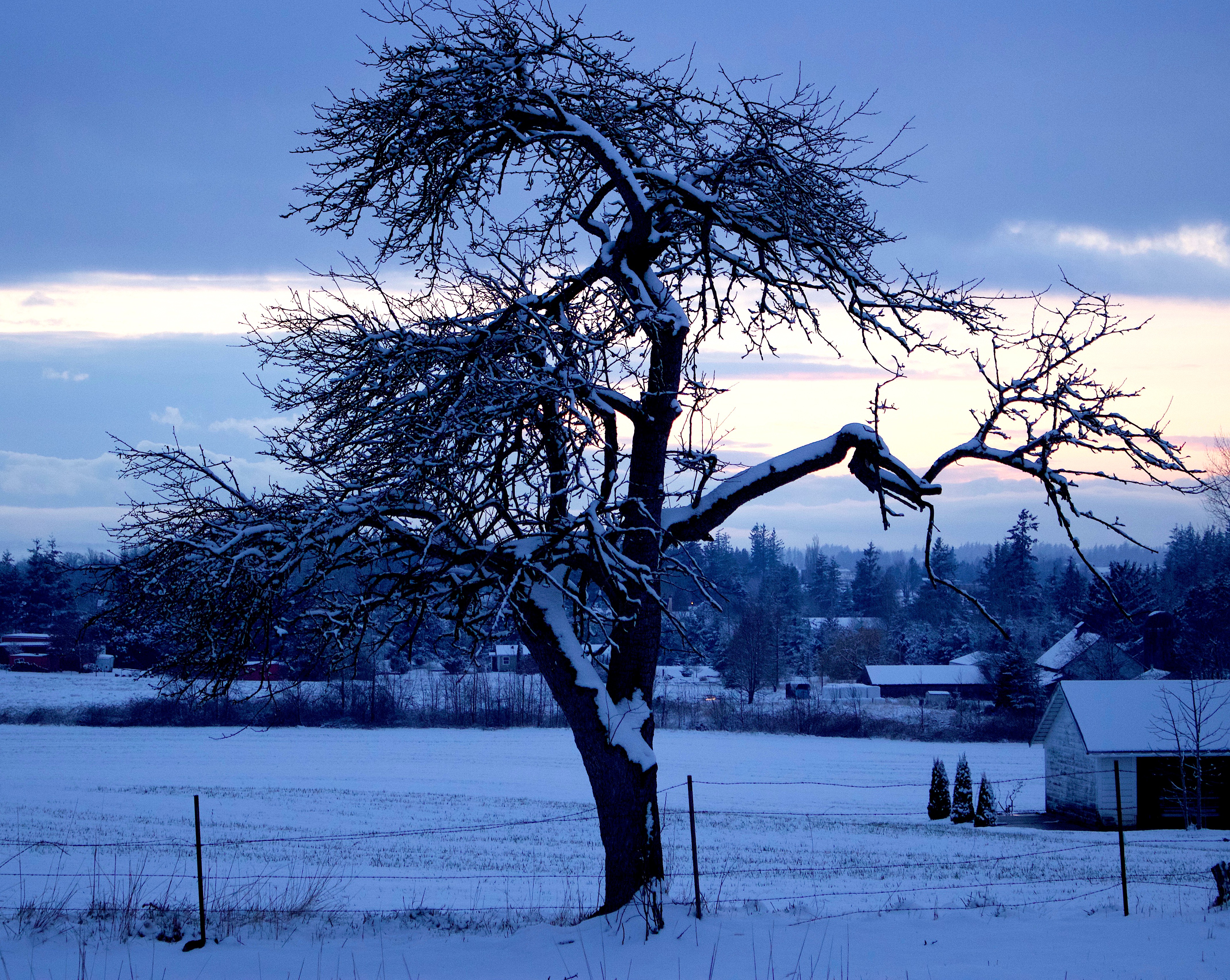
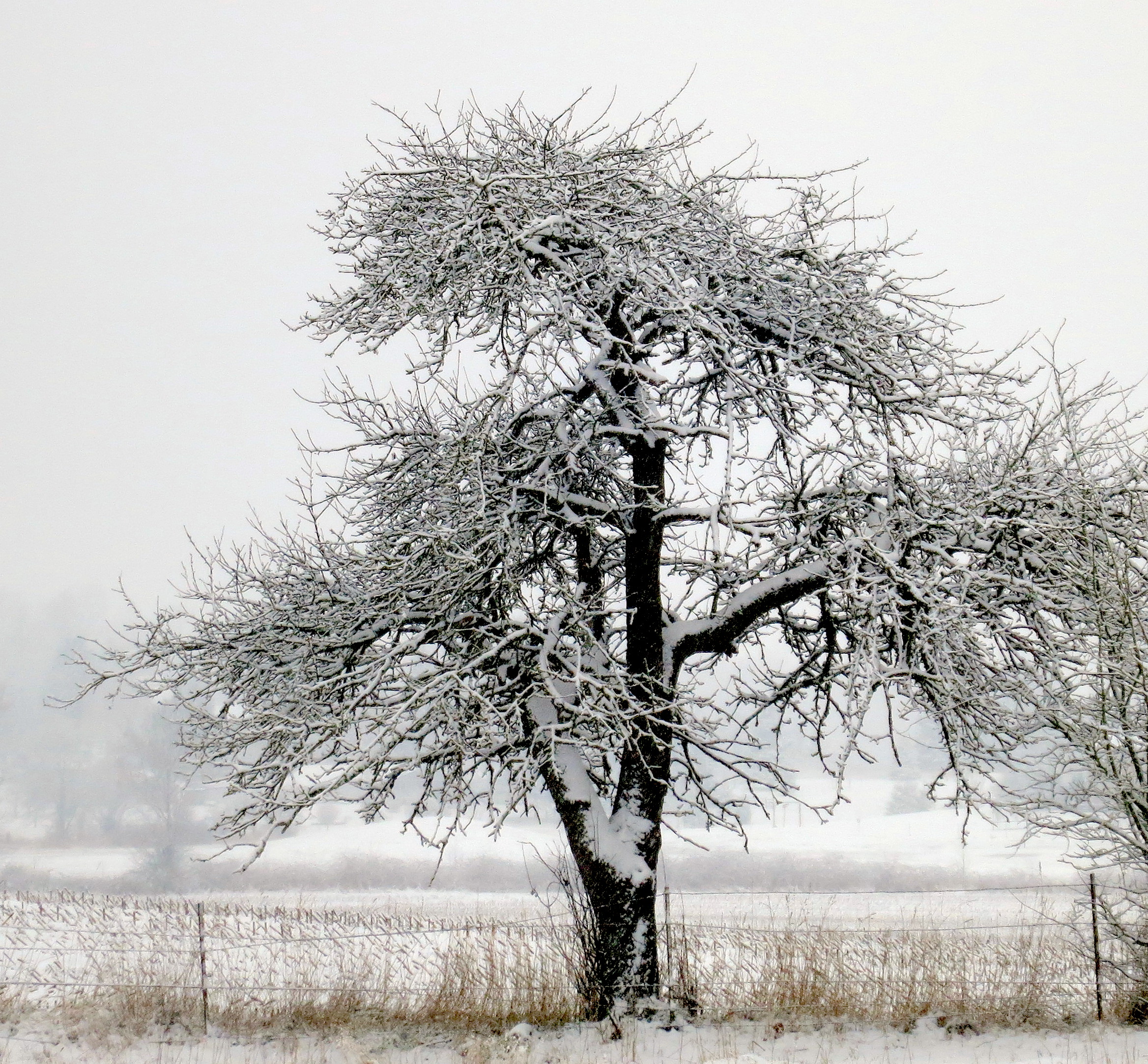
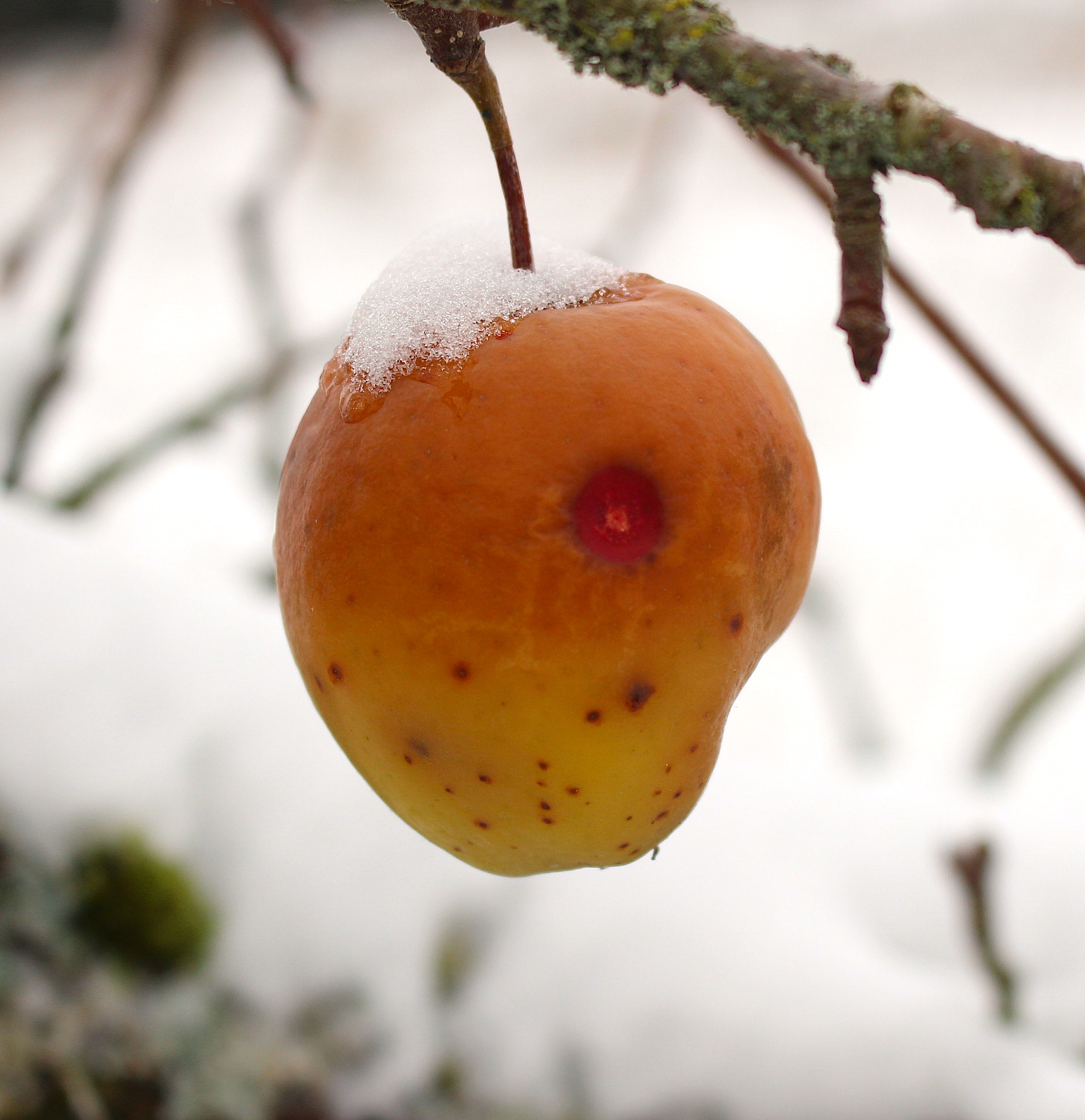
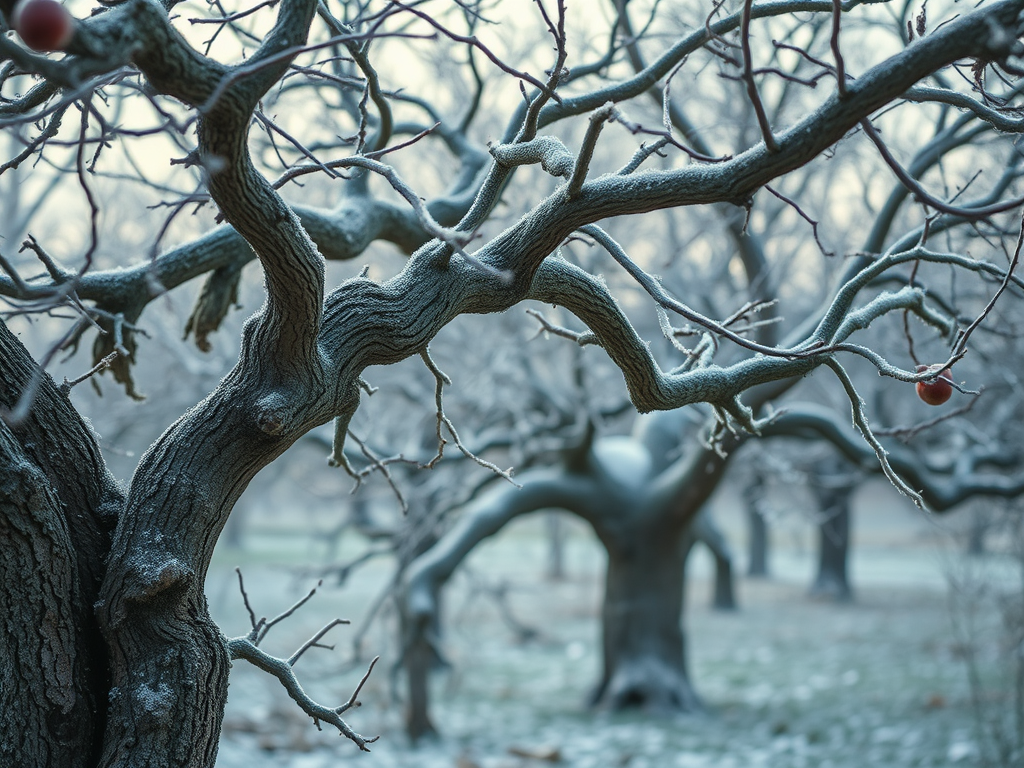
The winter orchard looks cold and silent yet I know plenty is happening beneath the sod.
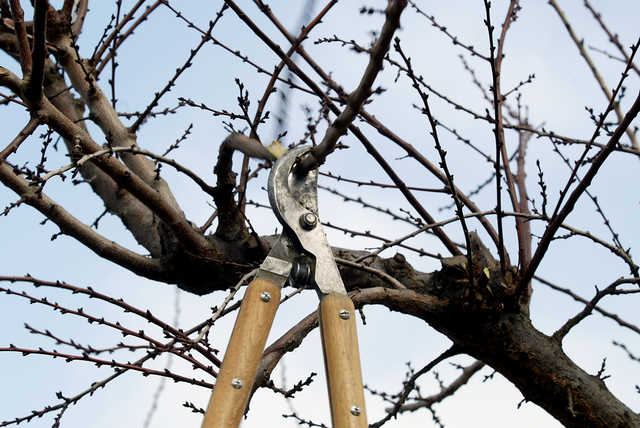
There isn’t much to be done this time of year until the pruning hook comes out. Ideally, now is the time the trees should be shaped and shorn.
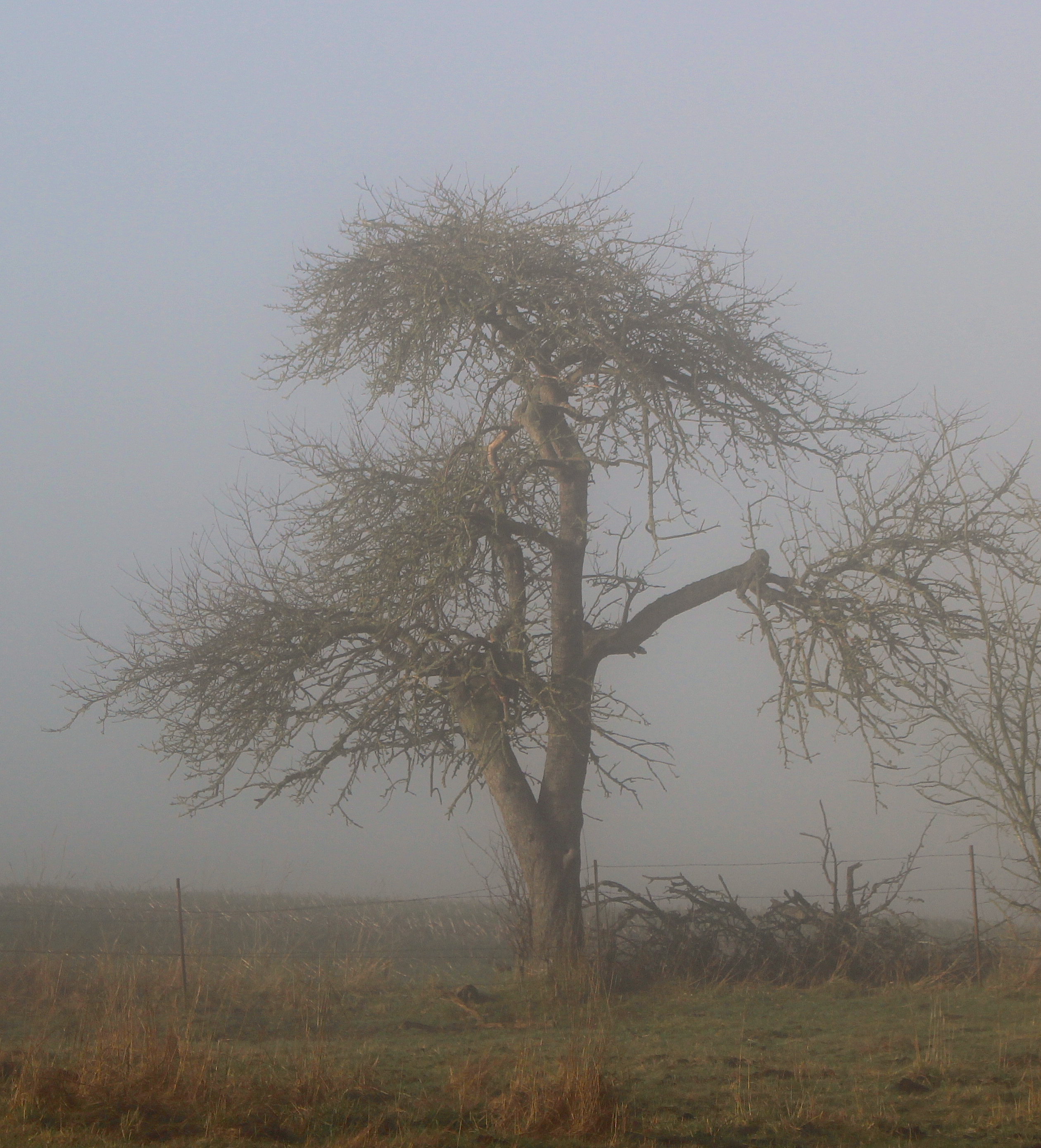
Pruning is one of those tasks that is immensely satisfying–after it’s done – way after. Several years after in some cases. In the case of our fruit trees, which all have an average age of 90 years or more, it is a matter of prune or lose them forever. We set to work, trying to gently retrain wild and chaotic apple, cherry, plum, and pear trees, but our consistency was lacking. The trees remained on the wild side, defying us, and several have toppled over in windstorms due to their weakened frame.
We hired additional help, hoping to get ahead of the new growth, but our helper had the “chain saw” approach to pruning and literally scalped several trees into dormancy before we saw what was happening and stopped the savaging.
Instead, the process of retraining a wild tree is slow, meticulous, thoughtful, and expectant. We must study the tree, the setting, know the fruit it is supposed to bear, and begin making decisions before making cuts. The dead stuff goes first–that’s easy. It’s not useful, it’s taking up space, it’s outta here. It’s the removal of viable branches that takes courage. Like thinning healthy vegetable plants in a garden, I can almost hear the plant utter a little scream as we choose it to be the next one to go. Gardening is not for the faint of heart. So ideally, we choose to trim about a third of the superfluous branches, rather than taking them all at once. In three years, we have the hoped-for tree, bearing fruit that is larger, healthier and hardier.
Then we’re in maintenance mode. That takes patience, vision, dedication, and love. That’s the ideal world.
The reality is we skip years of pruning work, sometimes several years in a row. Or we make a really dumb error and prune in a way that is counter productive, and it takes several years for the tree to recover. Or, in the case of the scalping, those trees took years to ever bear fruit again–standing embarrassed and naked among their peers.
Then there is the clean up process after pruning–if it was just lopping off stuff, I’d be out there doing it right now, but the process of picking up all those discarded branches off the ground, carrying them to a brush pile and burning them takes much more time and effort. That’s where kids come in very handy.
Our three children tolerated our shaping, trimming and pruning for years, grew tall and strong and ready to meet the world, to give it all they’ve got. In our hopes and dreams for them, there were times we probably pruned a bit in haste, or sometimes neglected to prune enough, but even so, they’re all bearing great fruit, now grown up with few “scars” to show for our mistakes.
I’m still pruned regularly by the Master Gardener, often painfully. Sometimes I see the pruning hook coming, knowing the dead branches that I’ve needlessly hung onto must go, and sometimes it comes as a complete surprise, cutting me at my most vulnerable spots. Some years I bear better fruit than other years. Some years, it seems, hardly any at all. I can be cold and dormant, unfruitful and at times desolate.
Yet, I’m still rooted, still fed when hungry and watered when thirsty, and still, amazingly enough, loved. I’ll continue to hang on to the root that chose to feed me and hold me fast through the windstorms of life. Even when my trunk is leaning, my branches broken, my fruit withered, I will know that God’s love sustains me, no matter what.
I am the true vine, and my Father is the gardener. He cuts off every branch in me that bears no fruit, while every branch that does bear fruit he prunes so that it will be even more fruitful. John 15: 1-2
AI image created for this post
One-Time
Monthly
Yearly
Make a one-time or recurring donation to support daily Barnstorming posts
Make a monthly donation
Make a yearly donation
Choose an amount
$10.00
$25.00
$50.00
$5.00
$15.00
$100.00
$5.00
$15.00
$100.00
Or enter a custom amount
$
Your contribution is deeply appreciated to help offset the costs of maintaining an ad-free website.
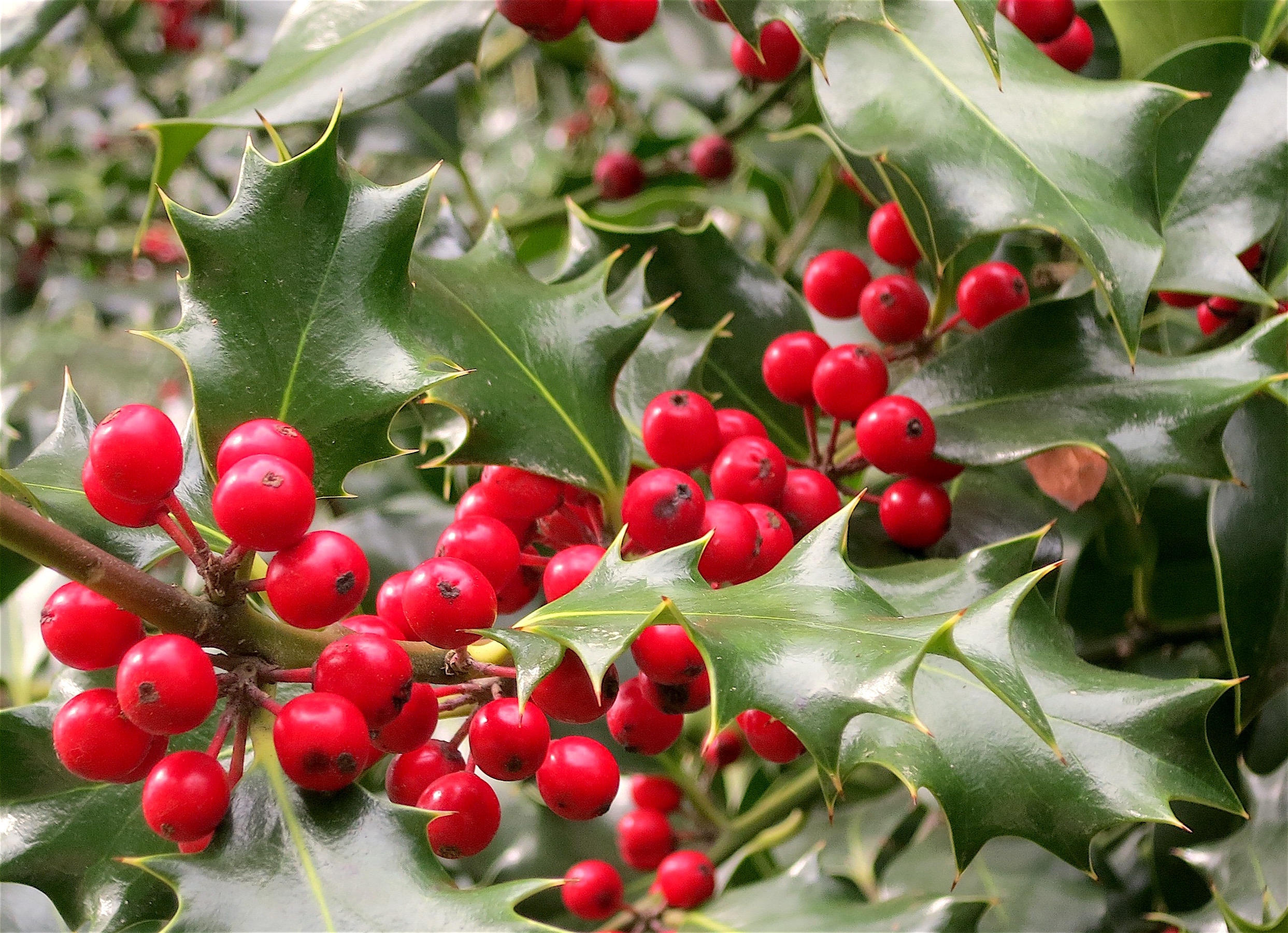
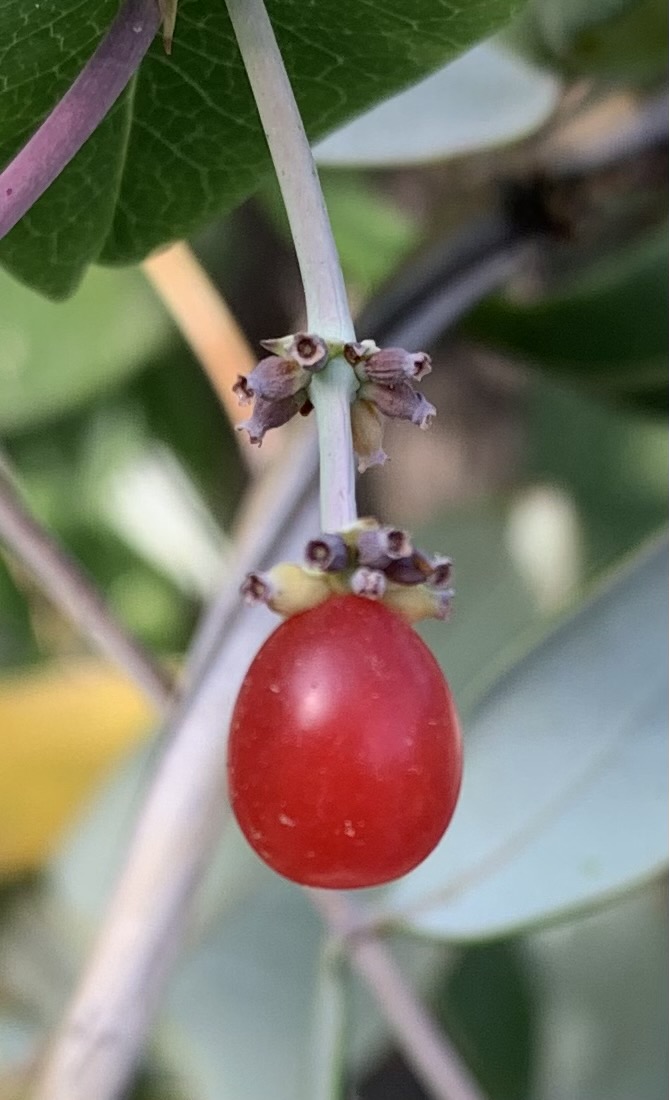
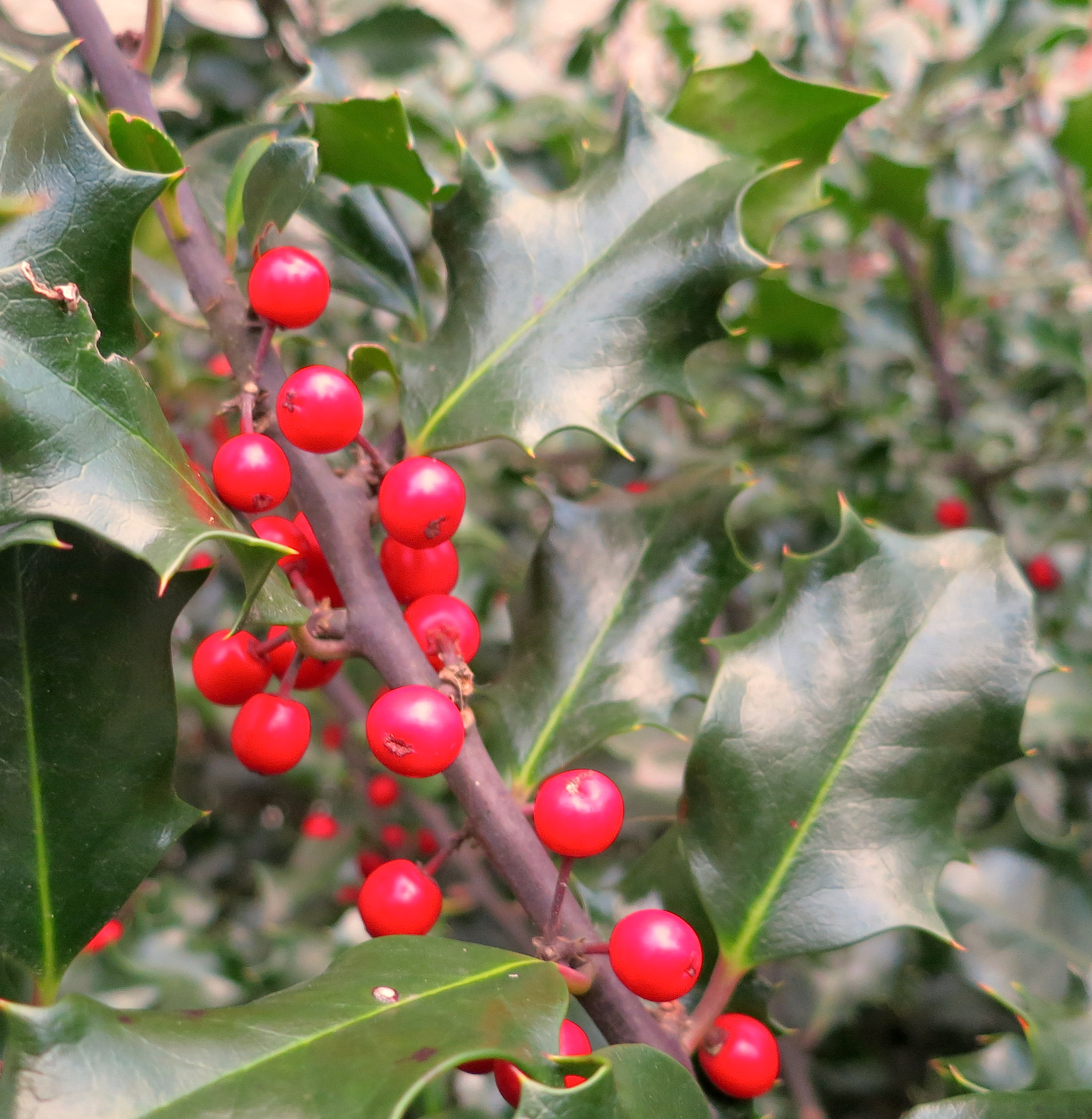
God’s children begin as soft as a holly blossom, turning blood red as its berry, fully surrounded by prickly leaves.
Christ was sent to bleed like us for us, to wear a thorny crown and bear wounds by smoothing over all our sharp edges.
For what is our hope, our joy, or the crown in which we will glory in the presence of our Lord Jesus when he comes? Is it not you? Indeed, you are our glory and joy. 1 Thessalonians 2: 19-20
AI image created for this post
One-Time
Monthly
Yearly
Make a one-time or recurring donation to support daily Barnstorming posts
Make a monthly donation
Make a yearly donation
Choose an amount
$10.00
$25.00
$50.00
$5.00
$15.00
$100.00
$5.00
$15.00
$100.00
Or enter a custom amount
$
Your contribution is deeply appreciated to help offset the costs to maintain an ad-free website.





























#/media/File:1918photoGrace-EricEnstrom.jpg)









 Barnstorming