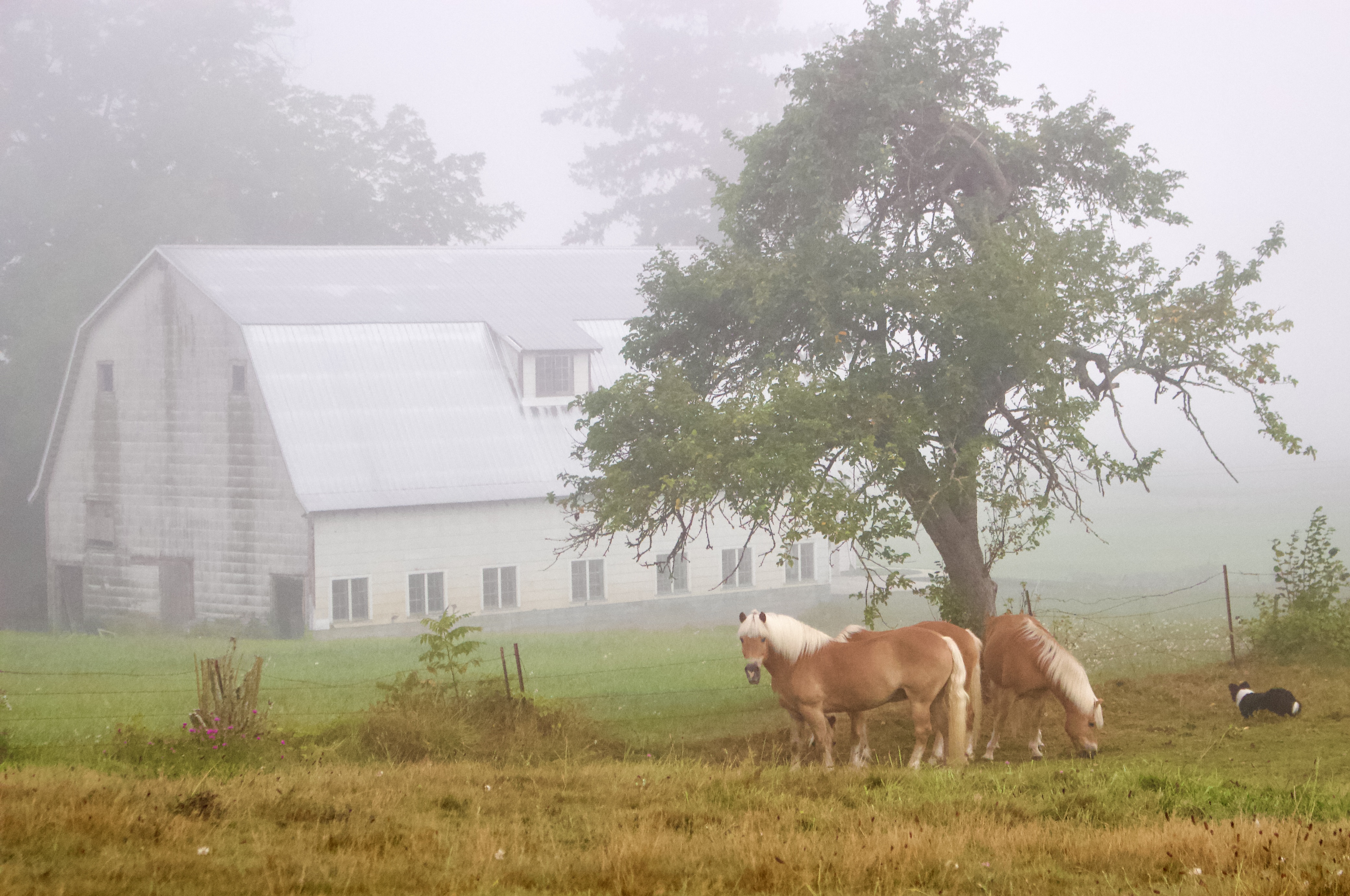
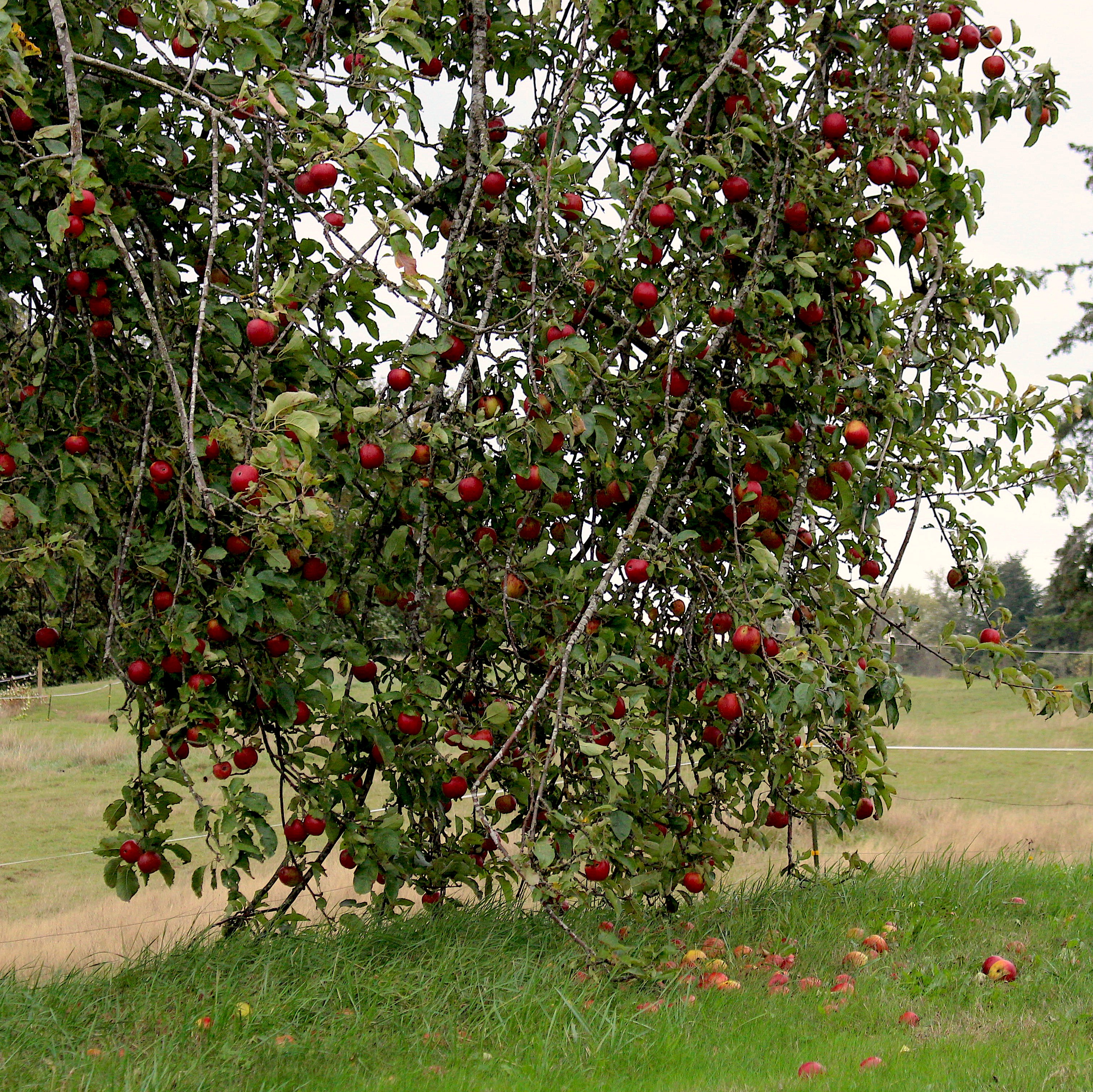
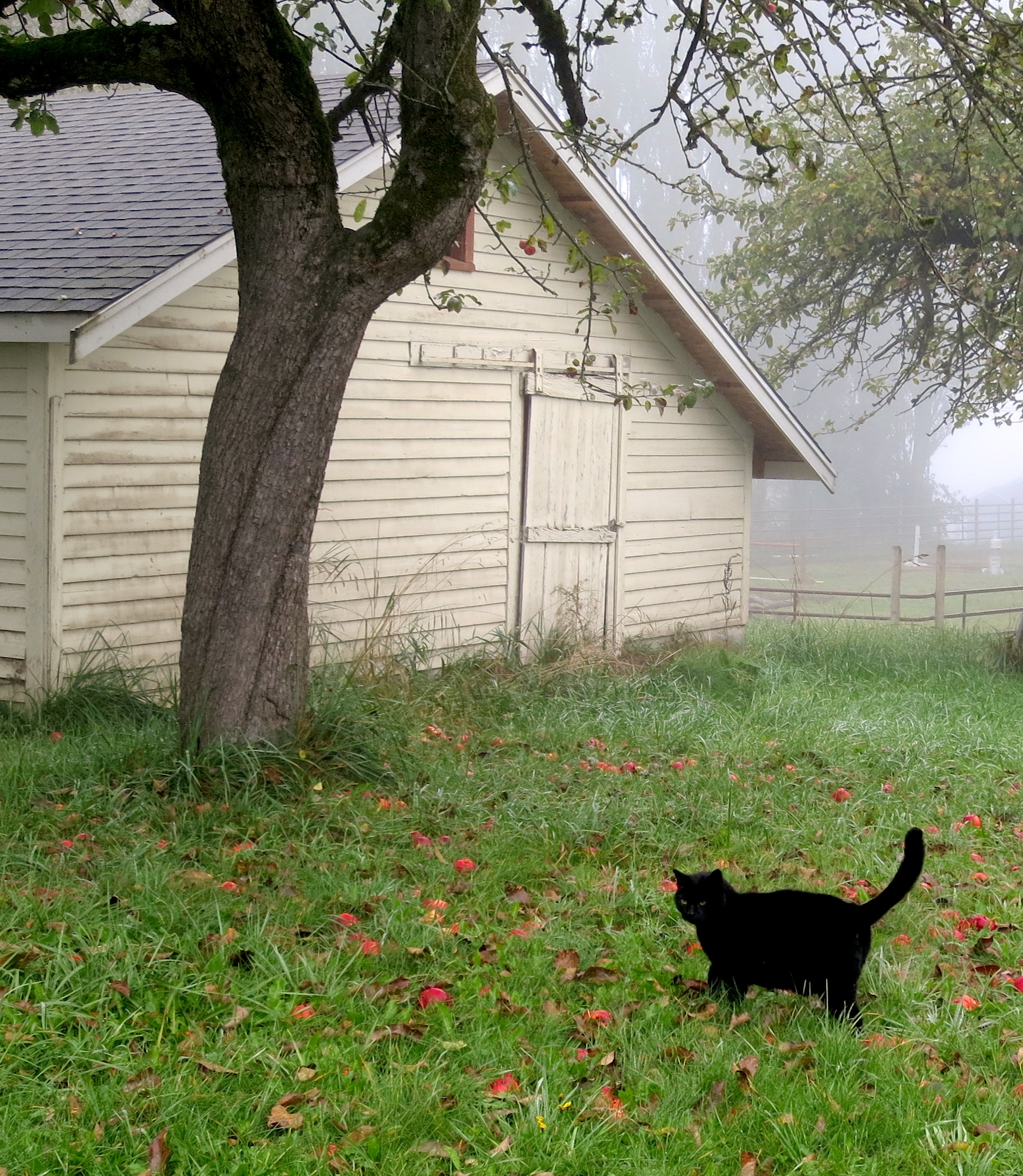
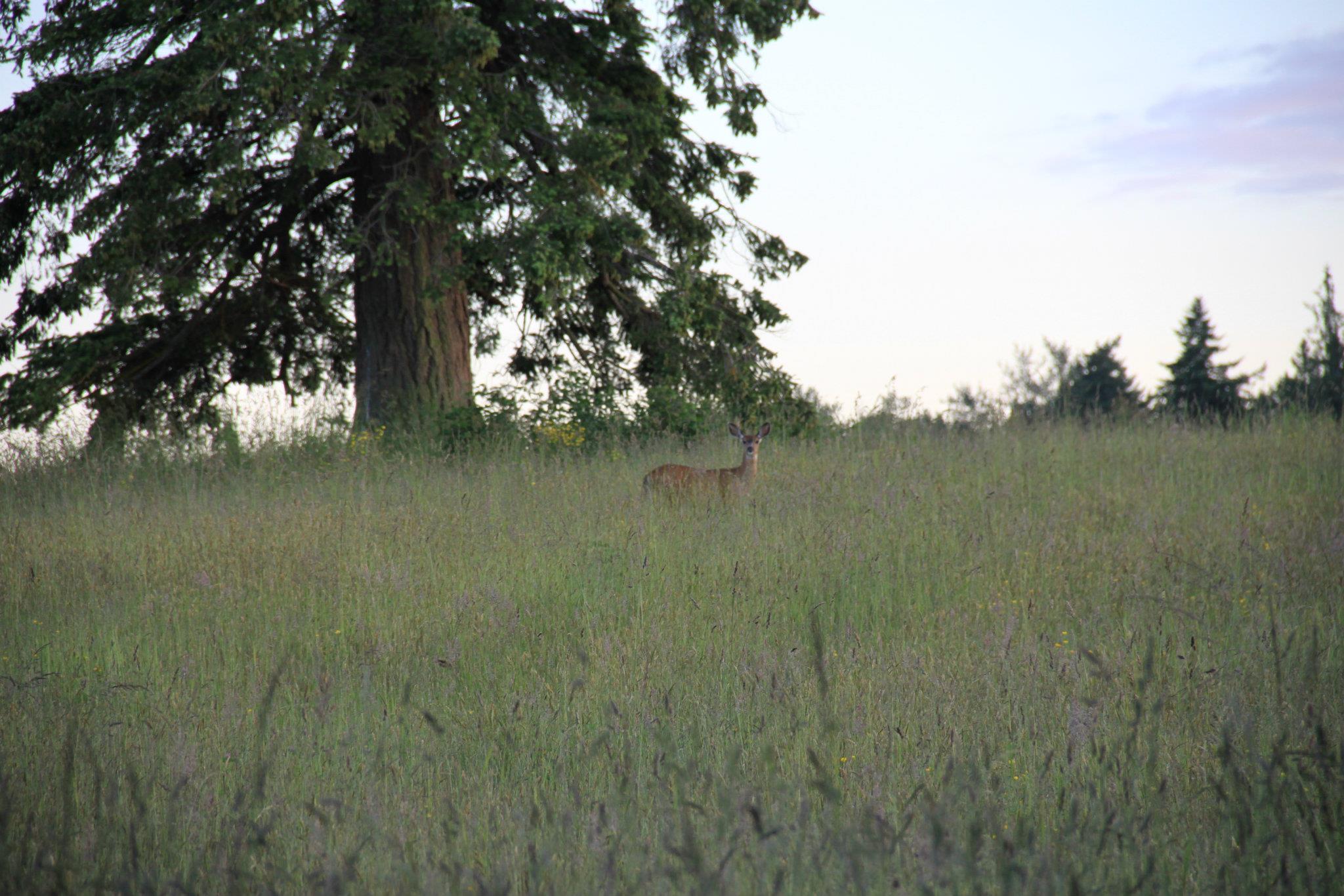
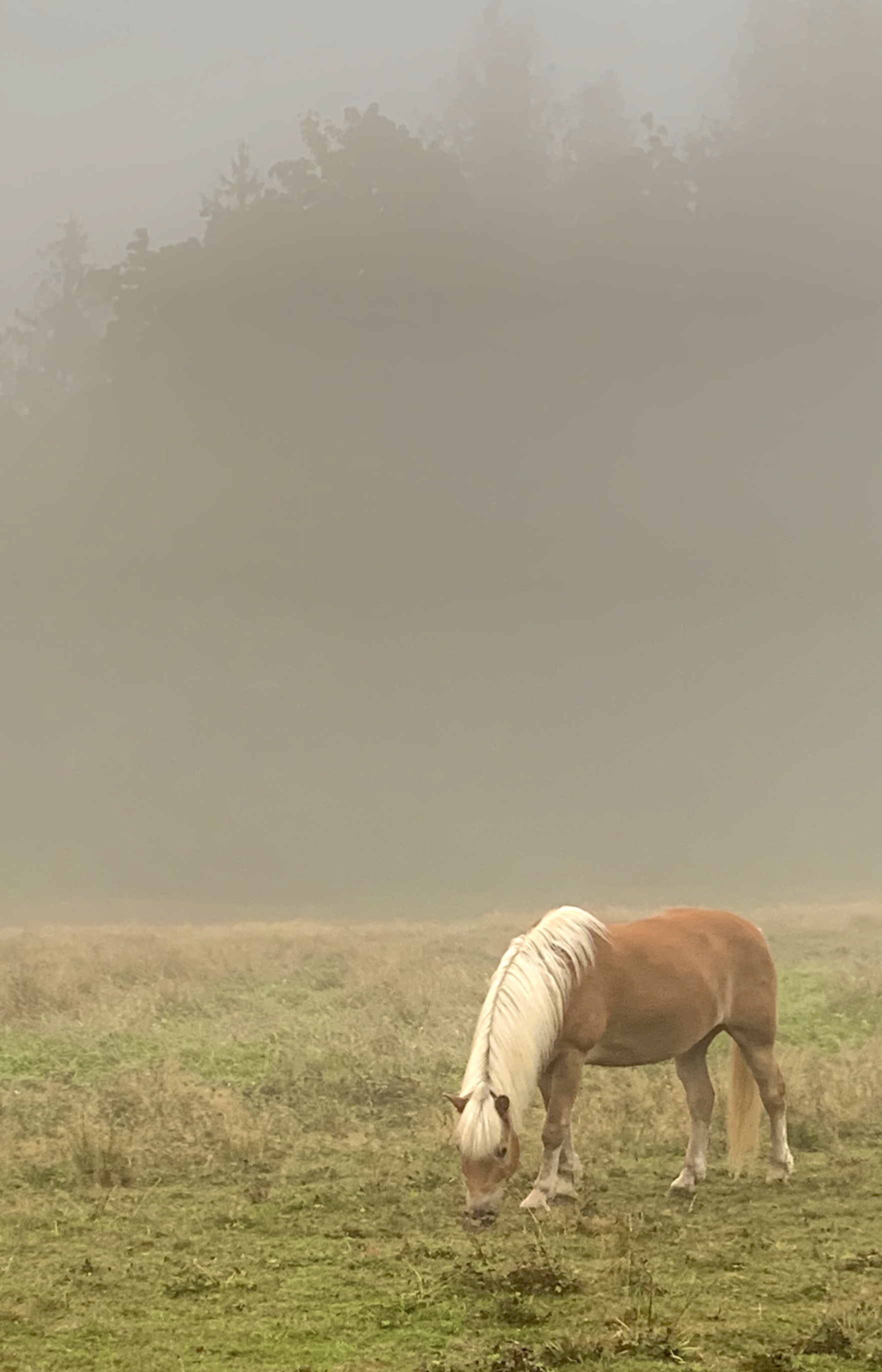
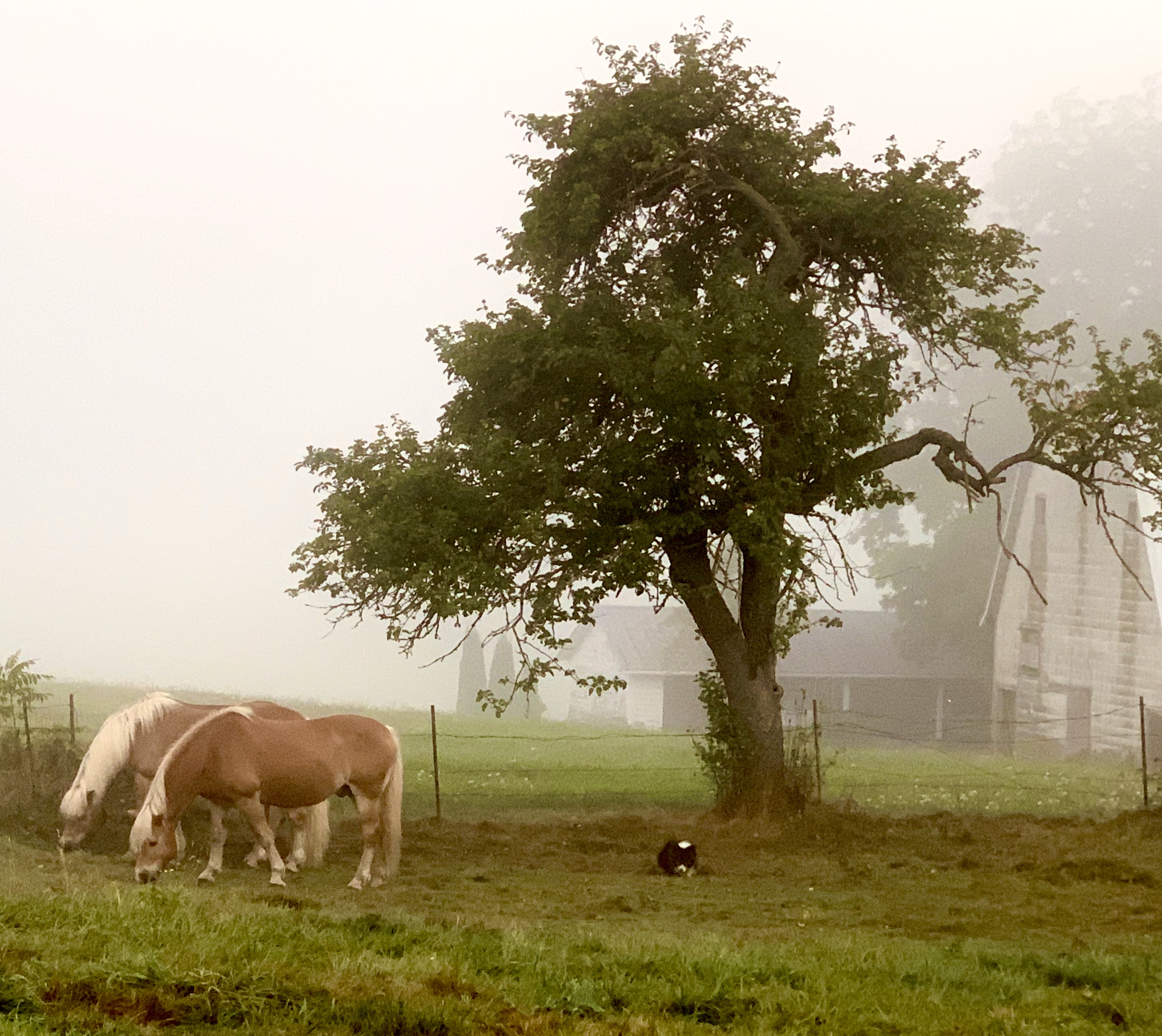
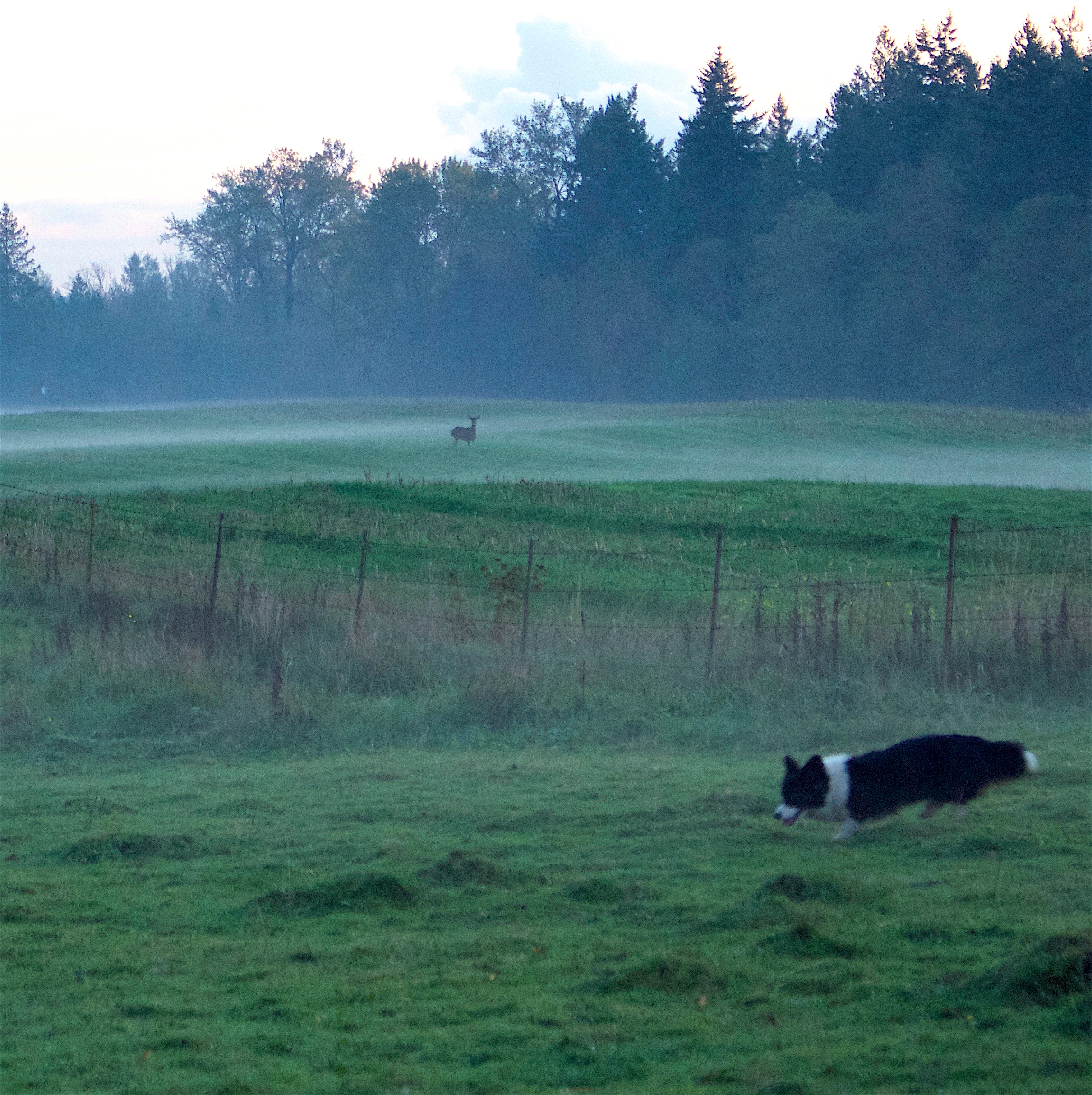
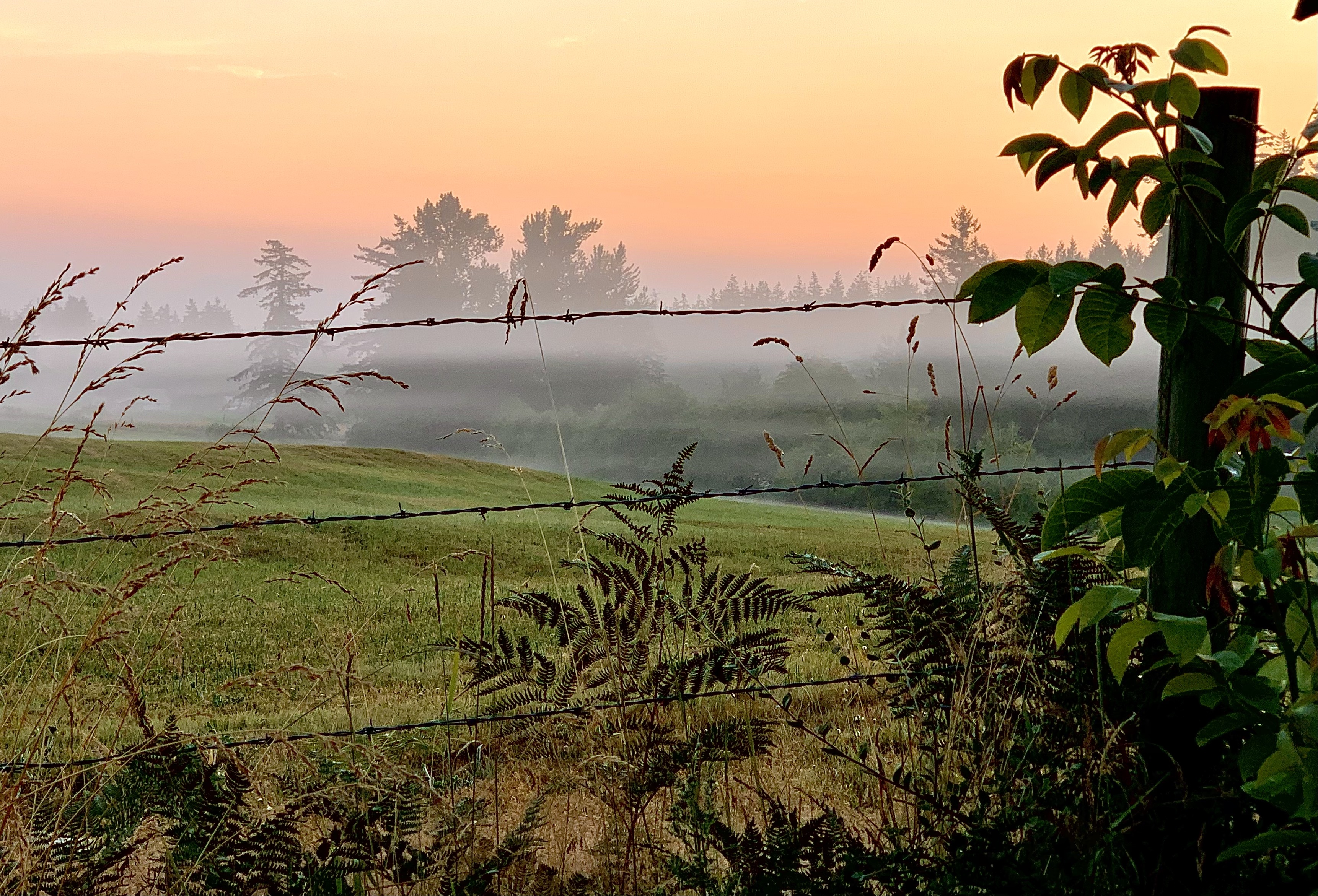
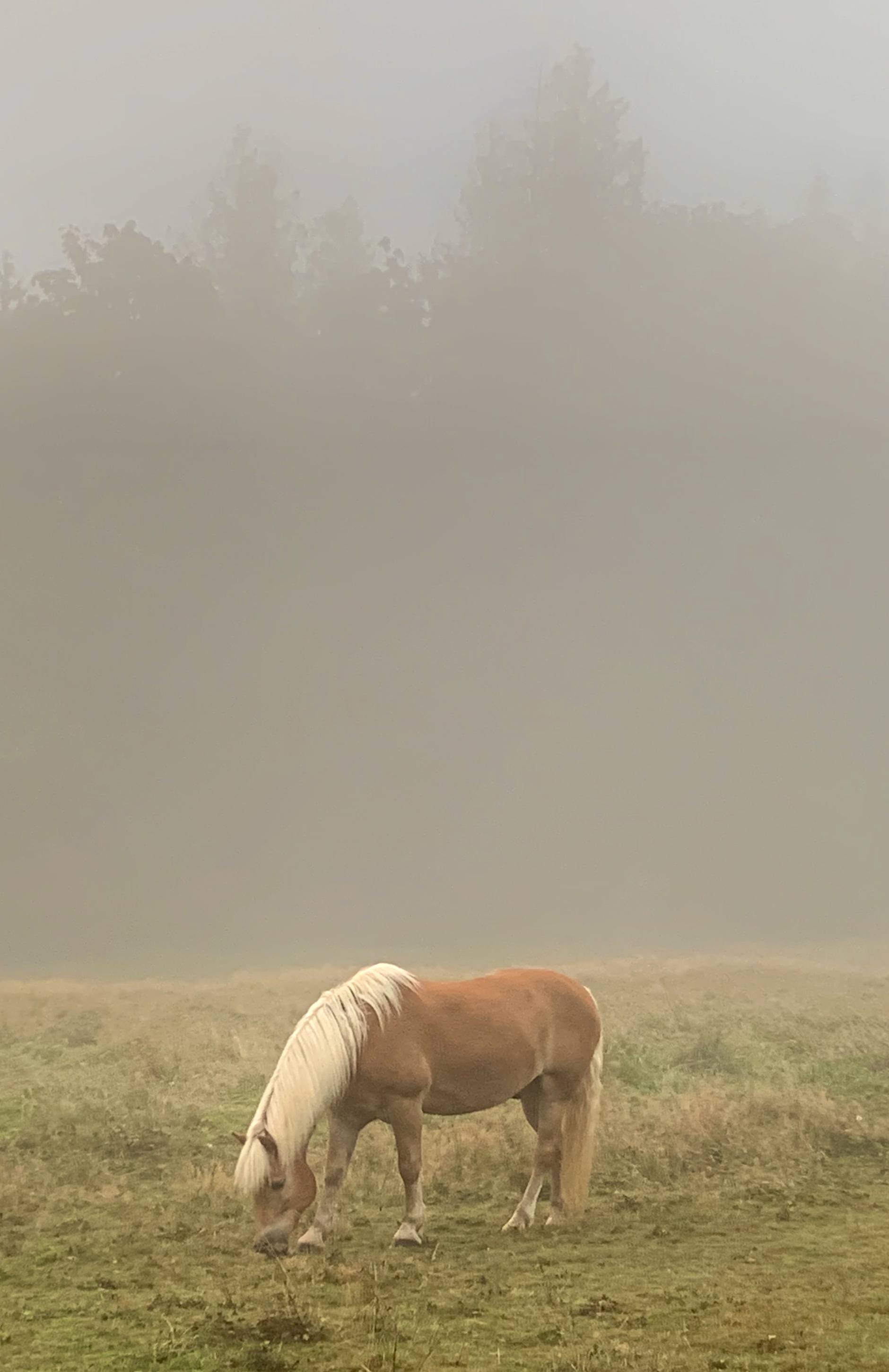
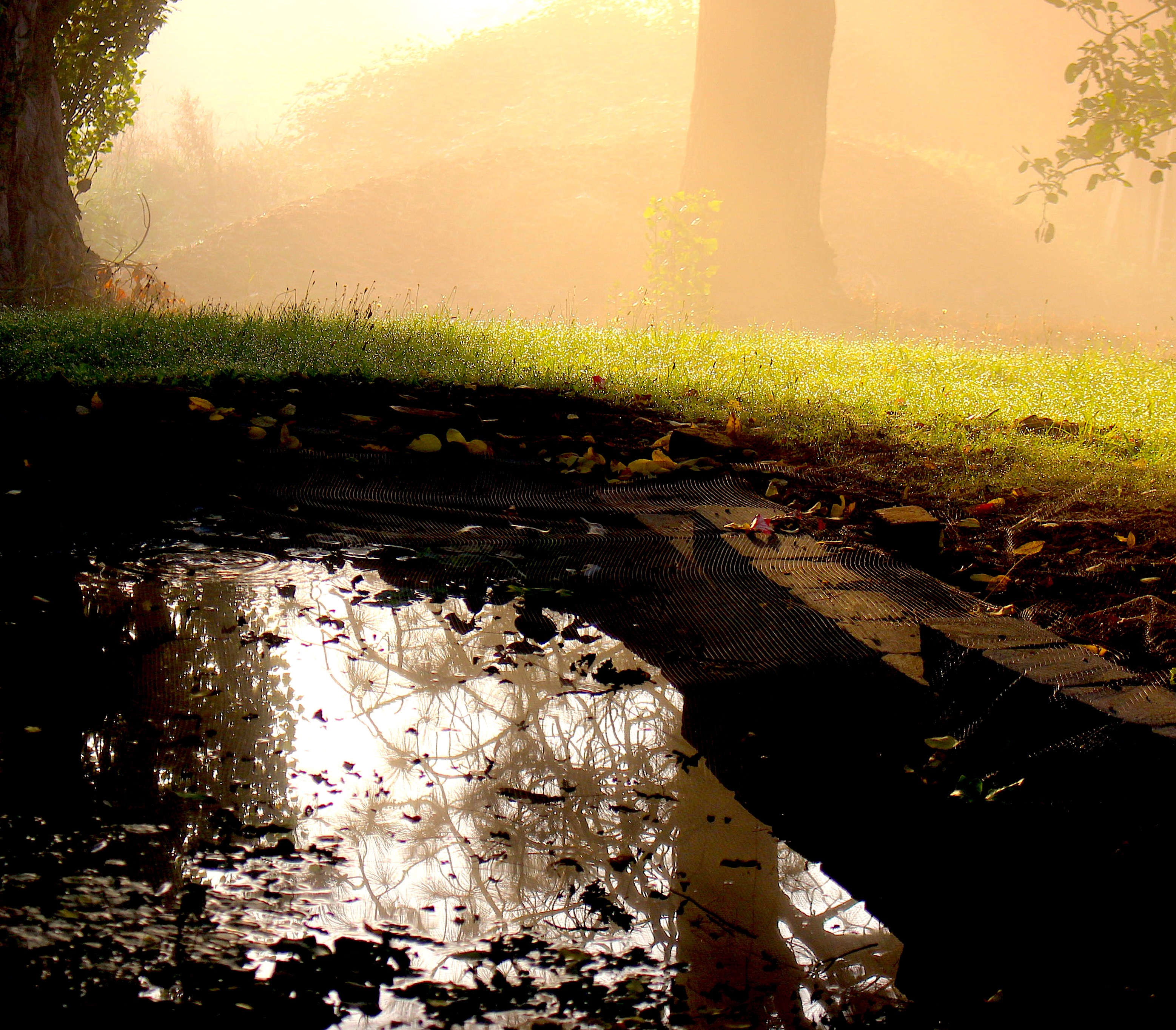
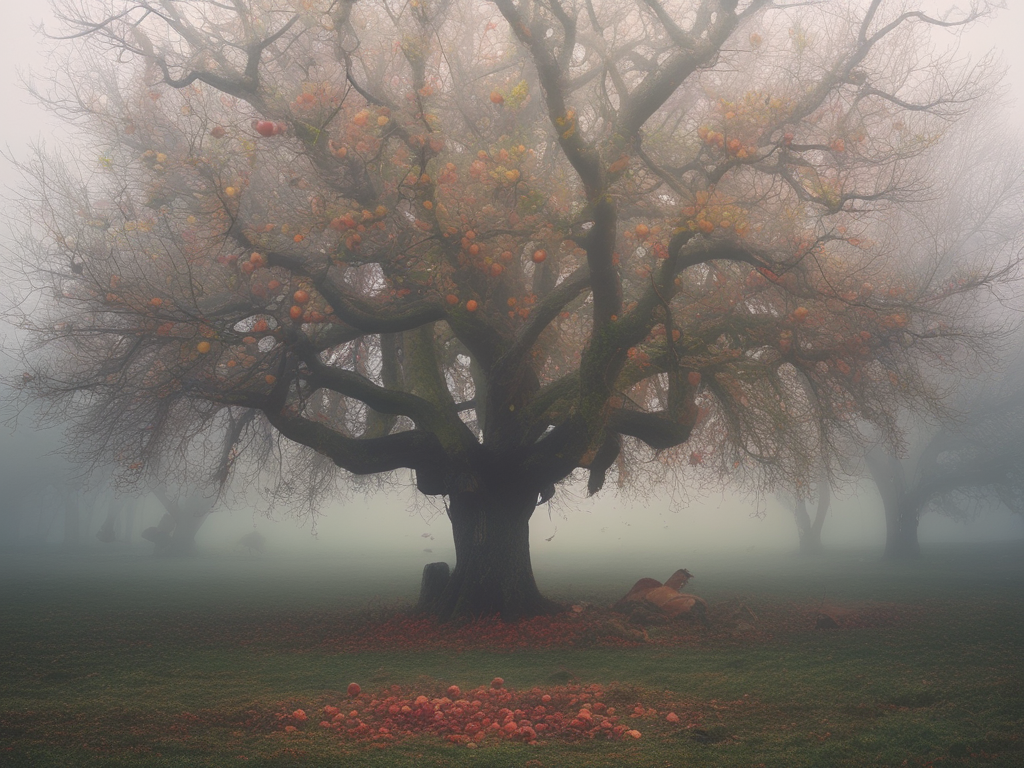
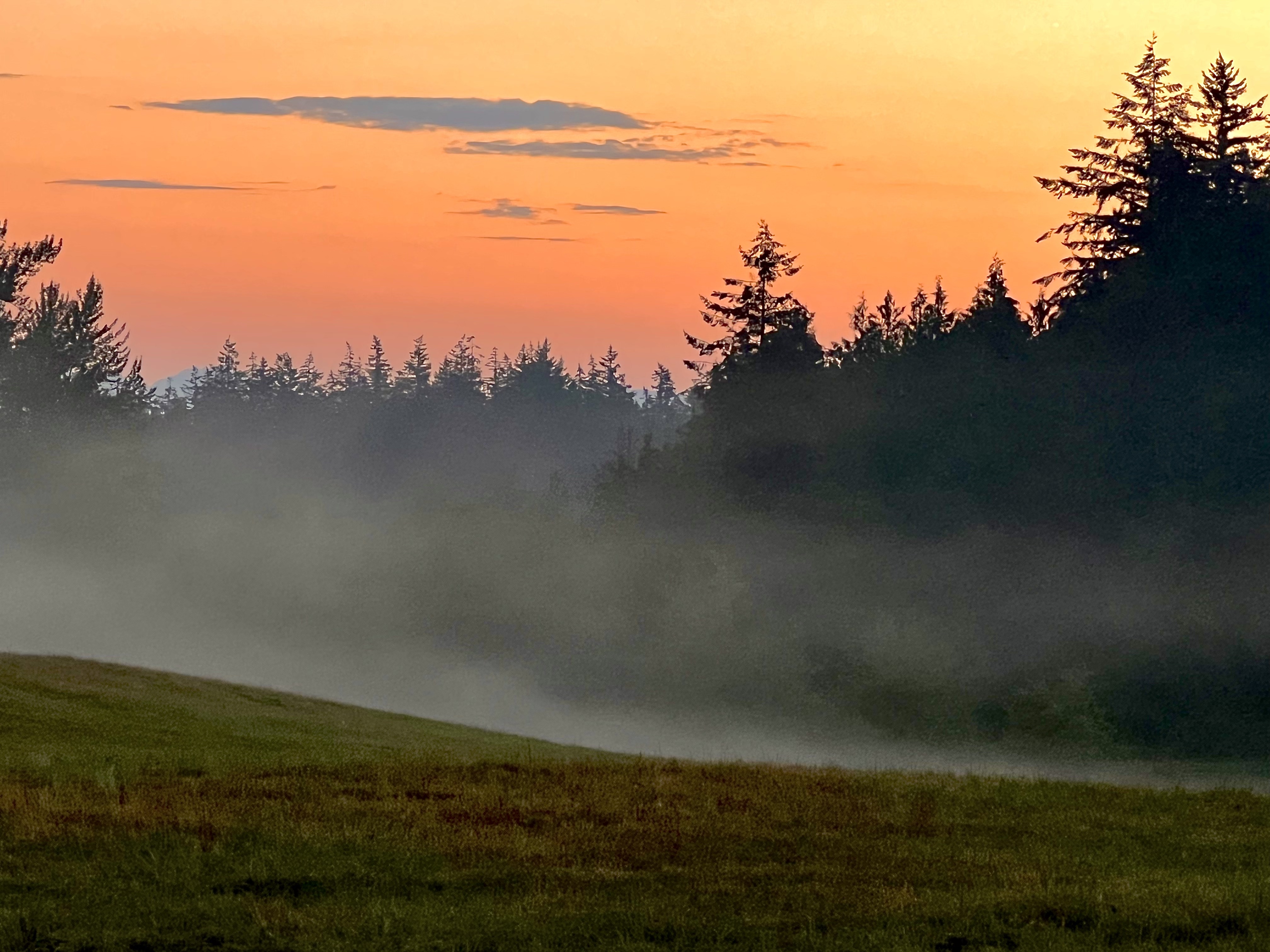
On the second day of fog, she goes to meet it sits on the broad root of a broken down apple tree, remembers being a child in such fog, searching for fairy houses. She hears movement in the grass, keeps very still while the veil of haze rises to treetops bronzed by the burn of the sun. Slowly horses and deer appear all around her, they graze close together, nosing fallen apples, until she forgets this is still a fallen world. ~Lonnie Hull DuPont, “On the Second Day of Fog” from She Calls the Moon by Its Name
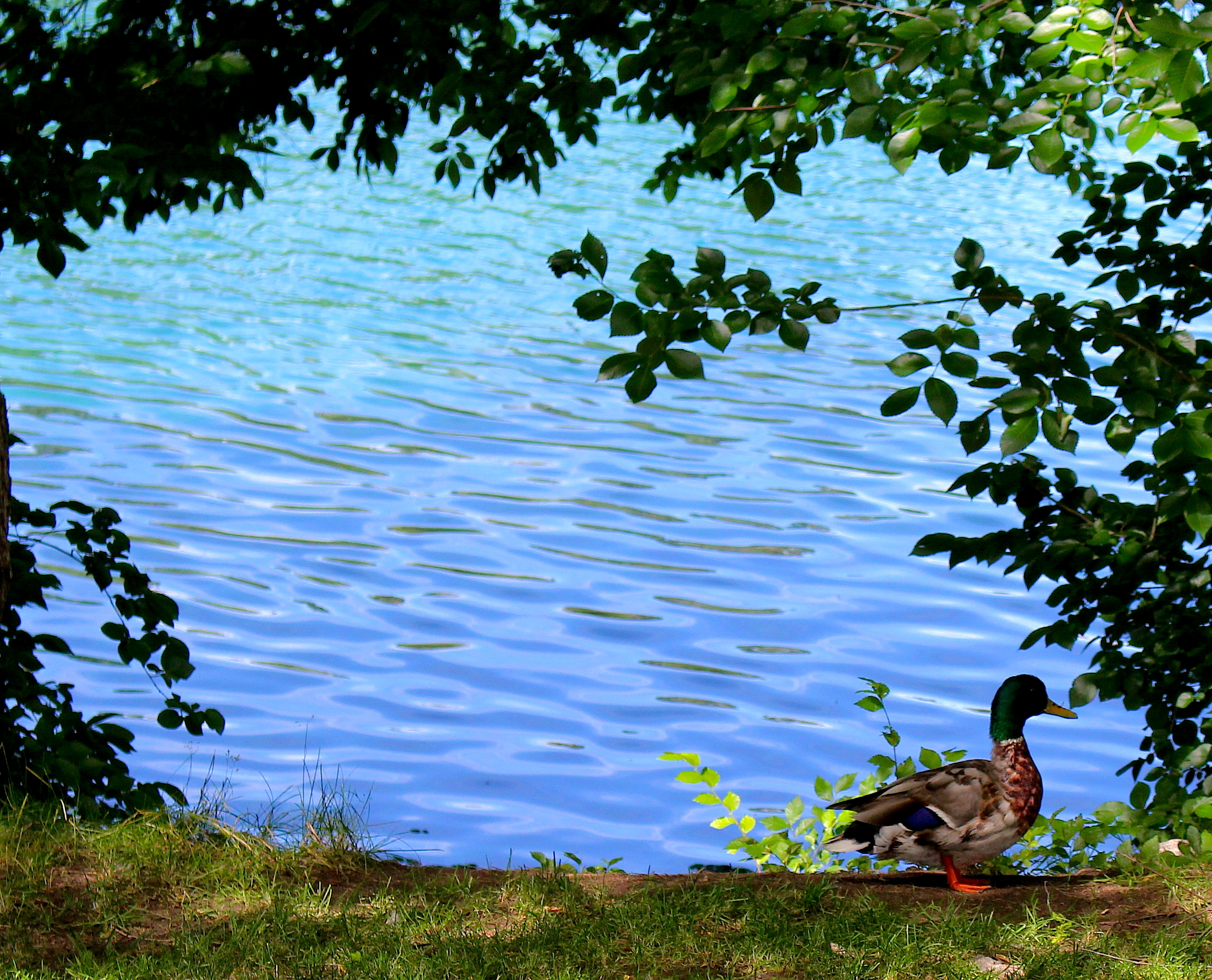
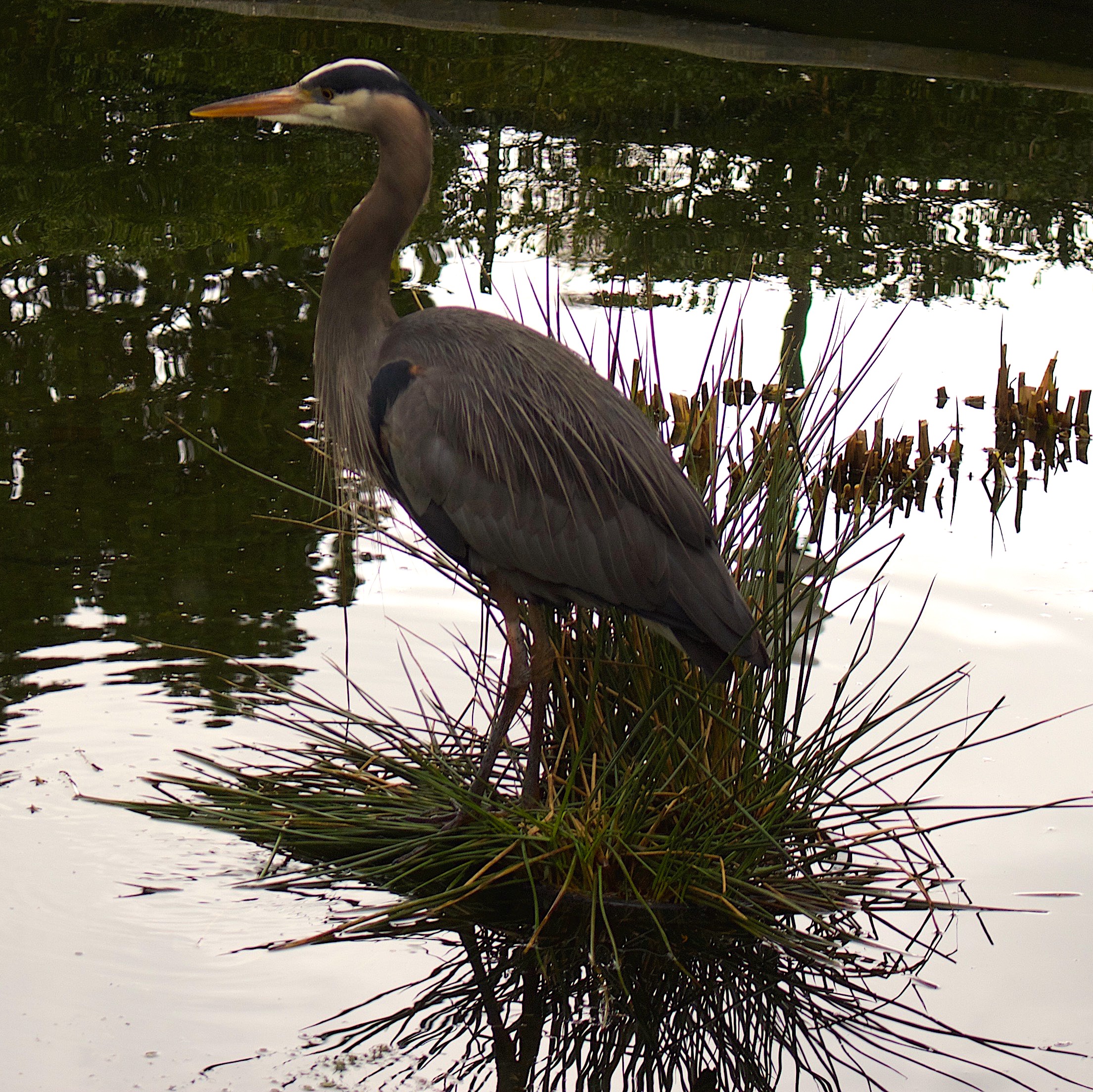
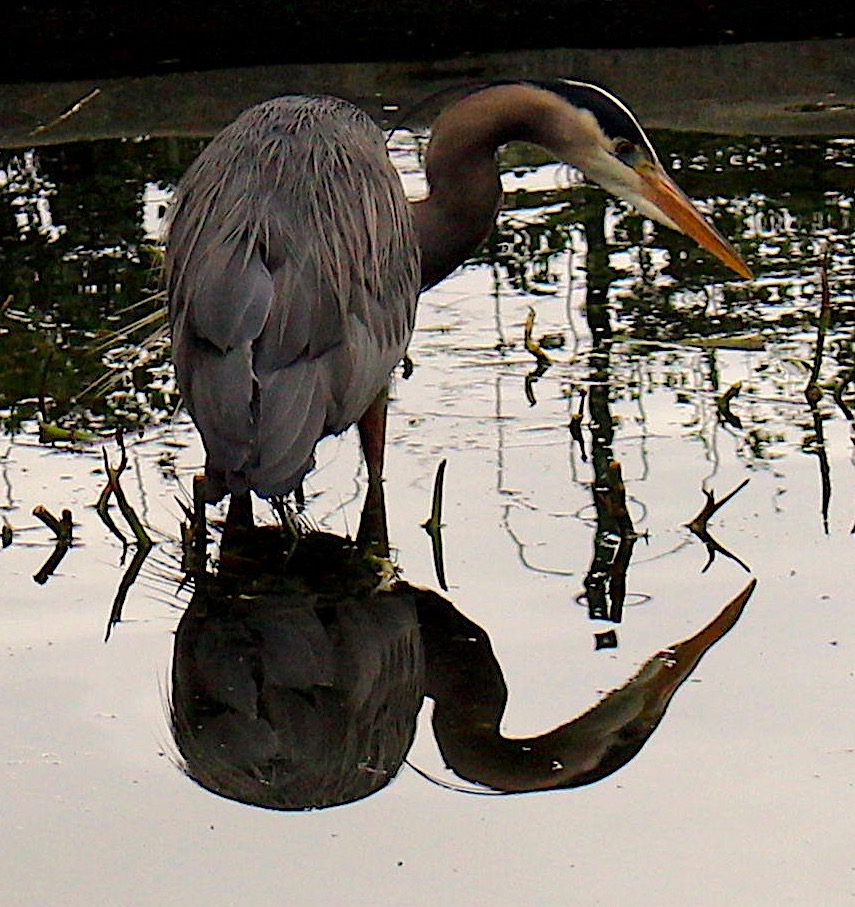
When despair for the world grows in me and I wake in the night at the least sound in fear of what my life and my children’s lives may be, I go and lie down where the wood drake rests in his beauty on the water, and the great heron feeds. I come into the peace of wild things who do not tax their lives with forethought of grief. I come into the presence of still water. And I feel above me the day-blind stars waiting with their light. For a time I rest in the grace of the world, and am free. ~Wendell Berry “The Peace of Wild Things“
When our grandchildren come to visit, I watch as yet another generation rediscovers the mystery of what we know about the joys and sorrows of this fallen but redeemed world.
I am reminded there is light beyond the fearsome darkness, there is peace amid the chaos, there is a smile behind the tears, there is stillness within the noisiness there is rest despite the restlessness, there is grace – ah, there is grace as inevitably the old gives way to the new.
One-Time
Monthly
Yearly
Make a one-time or recurring donation to support daily Barnstorming posts
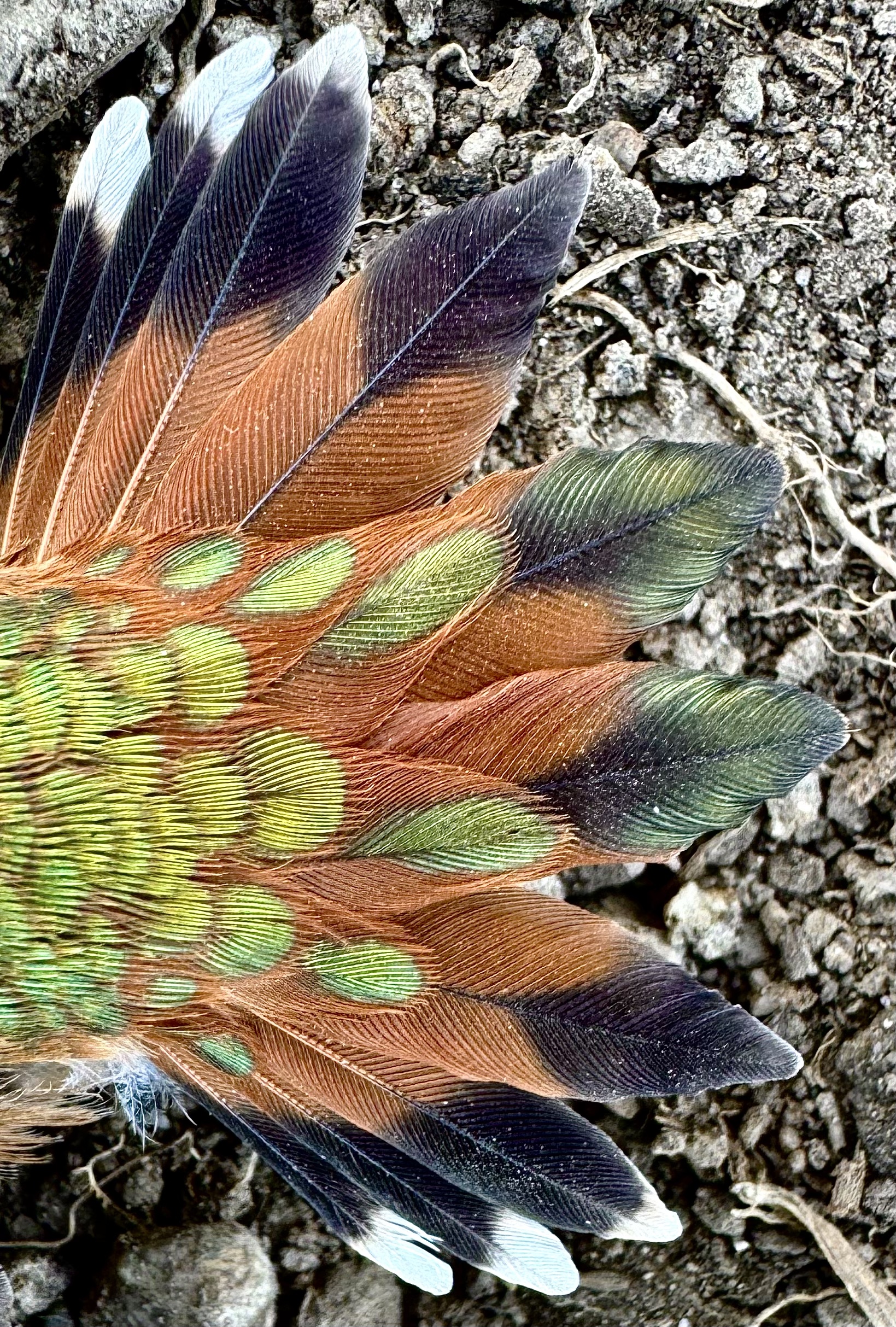
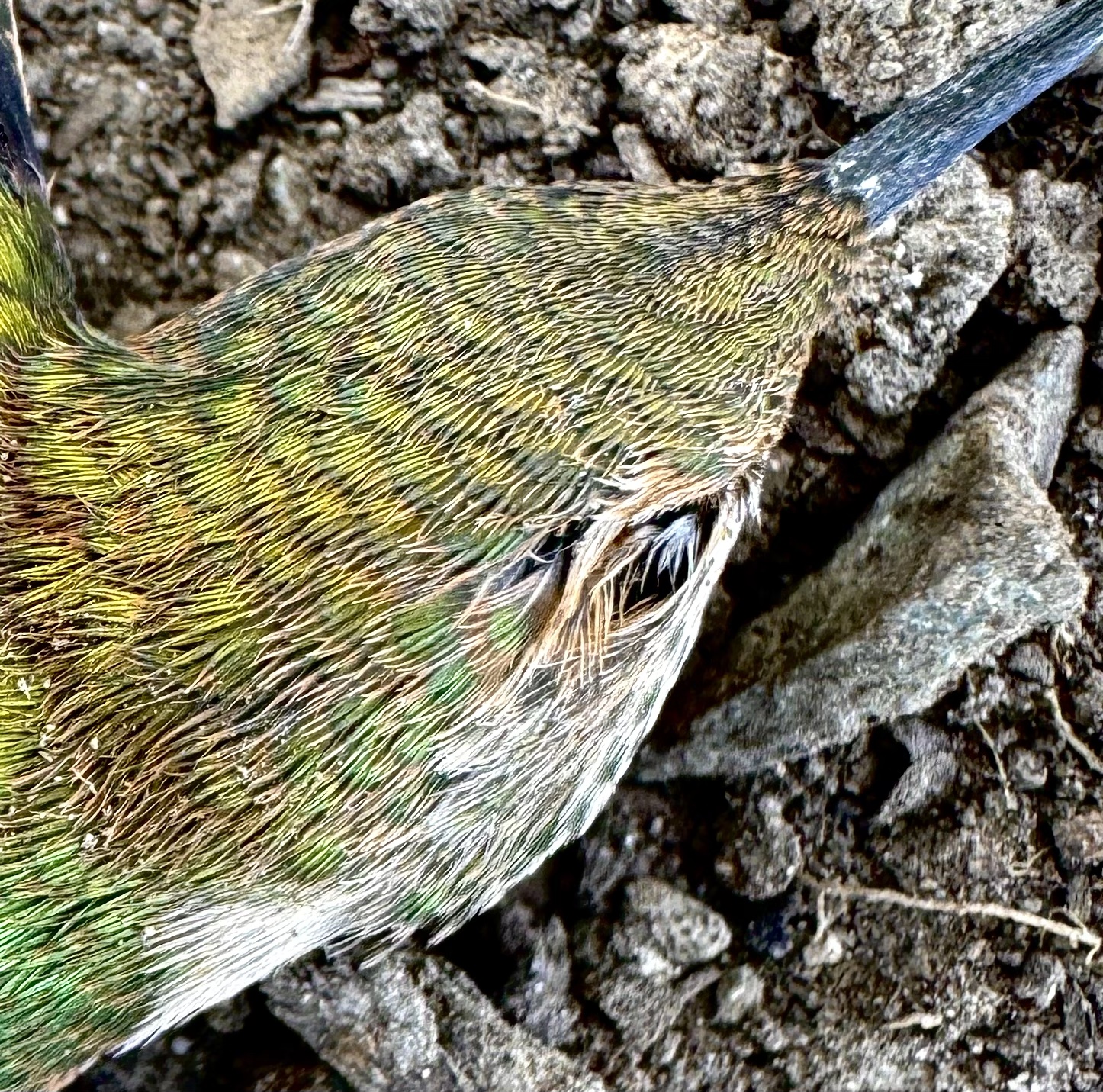
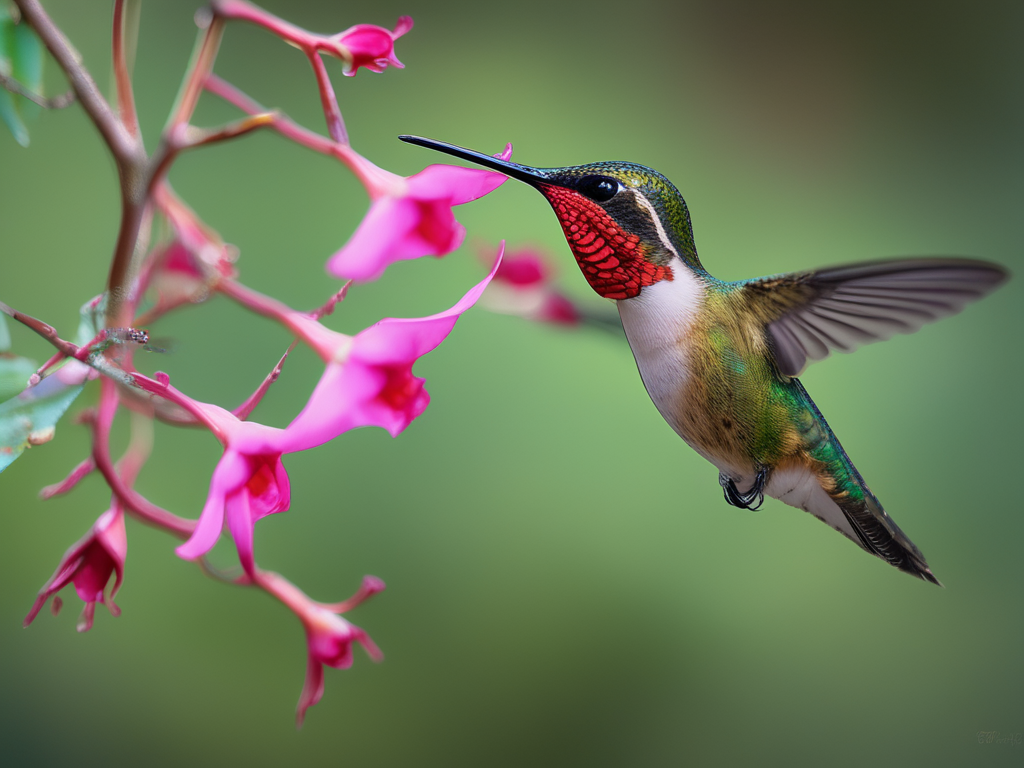
When I was with the green hummingbird, it became the company I didn’t know I needed. We spent our mornings together, and after it went its way, I read and wrote.
…a hummingbird, essential company in the endless journey through dead-ends, restarts, and new beginnings – as well as a reminder of the beauty of the world, the power of the sun, the rain, love, and life, all packed inside the body of a creature that weighs less than an ounce. A sign that within the smallest detail, the whole world is present, and just as the gravity and magnificence of life is present in the mountains, oceans, stars, and everything larger than life, it is also brilliantly present in its smallest bird. ~Zito Madu from “Hummingbirds are Wondrous” in Plough
He took her by the hand and said to her, “Talitha koum!” (which means “Little girl, I say to you, get up!”). Immediately the girl stood up and began to walk around (she was twelve years old). At this they were completely astonished. Mark 5:41-43
Little girl. Old girl. Old boy. Old boys and girls with high blood pressure and arthritis, and young boys and girls with tattoos and body piercing.
You who believe, and you who sometimes believe and sometimes don’t believe much of anything, and you who would give almost anything to believe if only you could.
You happy ones and you who can hardly remember what it was like once to be happy. You who know where you’re going and how to get there and you who much of the time aren’t sure you’re getting anywhere.
“Get up,” he says, all of you – all of you! – and the power that is in him is the power to give life not just to the dead like the child, but to those who are only partly alive, which is to say to people like you and me who much of the time live with our lives closed to the wild beauty and miracle of things, including the wild beauty and miracle of every day we live and even of ourselves. ~Frederick Buechner from Secrets in the Dark
I worried a lot. Will the garden grow, will the rivers flow in the right direction, will the earth turn as it was taught, and if not how shall I correct it?
Was I right, was I wrong, will I be forgiven, can I do better?
Will I ever be able to sing, even the sparrows can do it and I am, well, hopeless.
Is my eyesight fading or am I just imagining it, am I going to get rheumatism, lockjaw, dementia?
Finally I saw that worrying had come to nothing. And I gave it up. And took my old body and went out into the morning, and sang. ~Mary Oliver “I Worried” from Swan: Poems and Prose Poems
Christ said to the dead girl, “Get up.” And she did.
He also tells us to get up, get moving – despite everything that holds us back.
I know there are times when I feel immobilized from tiredness, worry, hopelessness, fear. I hear His reminder: get up and go anyway.
God has given us a world of wild beauty and miraculous things; time to get up and take our place in it.
AI image created for this post
One-Time
Monthly
Yearly
Make a one-time or recurring donation to support daily Barnstorming posts
I am not resigned to the shutting away Of loving hearts in the hard ground. So it is, and so it will be, for so it has been, time out of mind: Into the darkness they go, the wise and the lovely. Crowned With lilies and with laurel they go; but I am not resigned. Lovers and thinkers, into the earth with you. Be one with the dull, the indiscriminate dust. A fragment of what you felt, of what you knew, A formula, a phrase remains,—but the best is lost. The answers quick and keen, the honest look, the laughter, the love,— They are gone. They are gone to feed the roses. Elegant and curled Is the blossom. Fragrant is the blossom. I know. But I do not approve. More precious was the light in your eyes Than all the roses in the world. Down, down, down into the darkness of the grave Gently they go, the beautiful, the tender, the kind; Quietly they go, the intelligent, the witty, the brave. I know. But I do not approve. And I am not resigned. ~Edna St. Vincent Millay “Dirge Without Music”
These hearts were woven of human joys and cares, Washed marvelously with sorrow, swift to mirth. The years had given them kindness. Dawn was theirs, And sunset, and the colors of the earth.
These had seen movement, and heard music; known Slumber and waking; loved; gone proudly friended; Felt the quick stir of wonder; sat alone; Touched flowers and furs and cheeks. All this is ended.
There are waters blown by changing winds to laughter And lit by the rich skies, all day. And after, Frost with a gesture, stays the waves that dance And wandering loveliness. He leaves a white Unbroken glory, a gathered radiance, A width, a shining peace, under the night. ~Rupert Brooke “All This is Ended”
Each Memorial Day weekend without fail, we gather with family, have lunch, reminisce, and trek to a cemetery high above Puget Sound to catch up with our relatives who lie there still. Some for well over 100 years, some too recent, some we knew and loved and miss every day, others not so much, unknown to us except on genealogy charts, their names and dates and these stones all that is left of them:
the red-haired great-grandmother who died too young, the aunt who was eight with lymphoma, the Yukon river boat captain, the logger and stump farmer, the unmarried teacher who bequeathed an oil well to her church, the two in-laws who lie next to each other but could not co-exist in the same room while they lived and breathed.
Yet we know each of these (as we know ourselves and others) was tender and kind, though flawed and broken, was beautiful and strong, though wrinkled and frail, was hopeful and faithful, though too soon in the ground.
We know this about them as we know it about ourselves: someday we too will feed roses, the light in our eyes transformed into elegant swirls emitting the fragrant scent of heaven.
No one asks if we approve. Nor am I resigned to this but only know: So it is, so it has been, so it will be.
“Your attention, please,” the mate’s voice says, “we are slowing a moment for a memorial,” and sure enough we all do, all of us, even those entangled in a bustle to get to the other side, restless chunks of festering business waiting, little urgencies pricking us into a stressed huff. Below on the car deck a small group slowly forms, and a mate lowers a rope, beckons them forward, the ferry engines slowing whatever our hurry, and we are all coasting together on a rainy sea.
A heavy-set woman unwraps a nondescript urn from a carefully held towel, handing it in turn to an ungainly boy, a shy girl, an older man, and she watches as each tips the urn to scatter dust into a windy vortex off the ferry’s stern, a fine grey mist streaming over the roiled wake in a high breeze before settling, disappearing into grey oblivion of sea, sky, and late afternoon.
As the ferry’s horn sounds three long blasts, the four bow heads. The woman hesitates, hides her face a moment in the towel, kisses each of her party, and shakes the mate’s hand. He speaks, his words lost to us in sea sounds and engines, then looks up to the bridge, waves, and the small group, holding hands, rejoins some two hundred of us who have in silence watched this mini-delay in our grey crossing. The ferry’s engines begin their normal thrum to push us forward again against a grey sea and under a low, grey sky, where a fine dust disappeared, and white seagulls rise and cry. ~Rob Jacques, “Memorial, Washington State Ferry” from Adagio for Su Tung-p’o
There is a sense of timelessness while riding on the ferry runs between the islands and peninsulas in Washington state. While driving my car on the busy freeways in the region, I am at the mercy of the weather, other drivers and all manner of delays. When I’m on a ferry, I become mere witness, only a rider seeking peaceful passage. Someone else worries about safely getting from Point A to Point B.
I’m able to breathe: watching the waves and the wake, the antics of gulls and cormorants, and rarely, an orca pod.
Next week is a time of memorial and remembrance of those who have passed into eternity. The ashes of my parents rest in the ground under a plaque that I visit annually with my family. Dad would have preferred his ashes to be cast out upon on the open water that he loved, but Mom chose a cemetery plot for them both, a more familiar resting place for a girl who grew up in the Palouse farmlands, no where near large bodies of water.
Last year, a good friend chose to be composted; he rests now in his beloved orchard, feeding the trees that continue to bear fruit.
No matter where our mortal bodies eventually find our rest, we hope to be remembered.
Our souls have risen, free.
video taken on the Samish Sea (Puget Sound) from my friend Andrew
One-Time
Monthly
Yearly
Make a one-time or recurring donation to support daily Barnstorming posts
Not much to me is yonder lane Where I go every day; But when there’s been a shower of rain And hedge-birds whistle gay, I know my lad that’s out in France With fearsome things to see Would give his eyes for just one glance At our white hawthorn tree.
. . . .
Not much to me is yonder lane Where he so longs to tread: But when there’s been a shower of rain I think I’ll never weep again Until I’ve heard he’s dead. ~Siegfried Sassoon“The Hawthorn Tree”
I drove West in the season between seasons. I left behind suburban gardens. Lawnmowers. Small talk.
Under low skies, past splashes of coltsfoot, I assumed the hard shyness of Atlantic light and the superstitious aura of hawthorn.
All I wanted then was to fill my arms with sharp flowers, to seem from a distance, to be part of that ivory, downhill rush. But I knew,
I had always known, the custom was not to touch hawthorn. Not to bring it indoors for the sake of
the luck such constraint would forfeit– a child might die, perhaps, or an unexplained fever speckle heifers. So I left it
stirring on those hills with a fluency only water has. And, like water, able to redefine land. And free to seem to be–
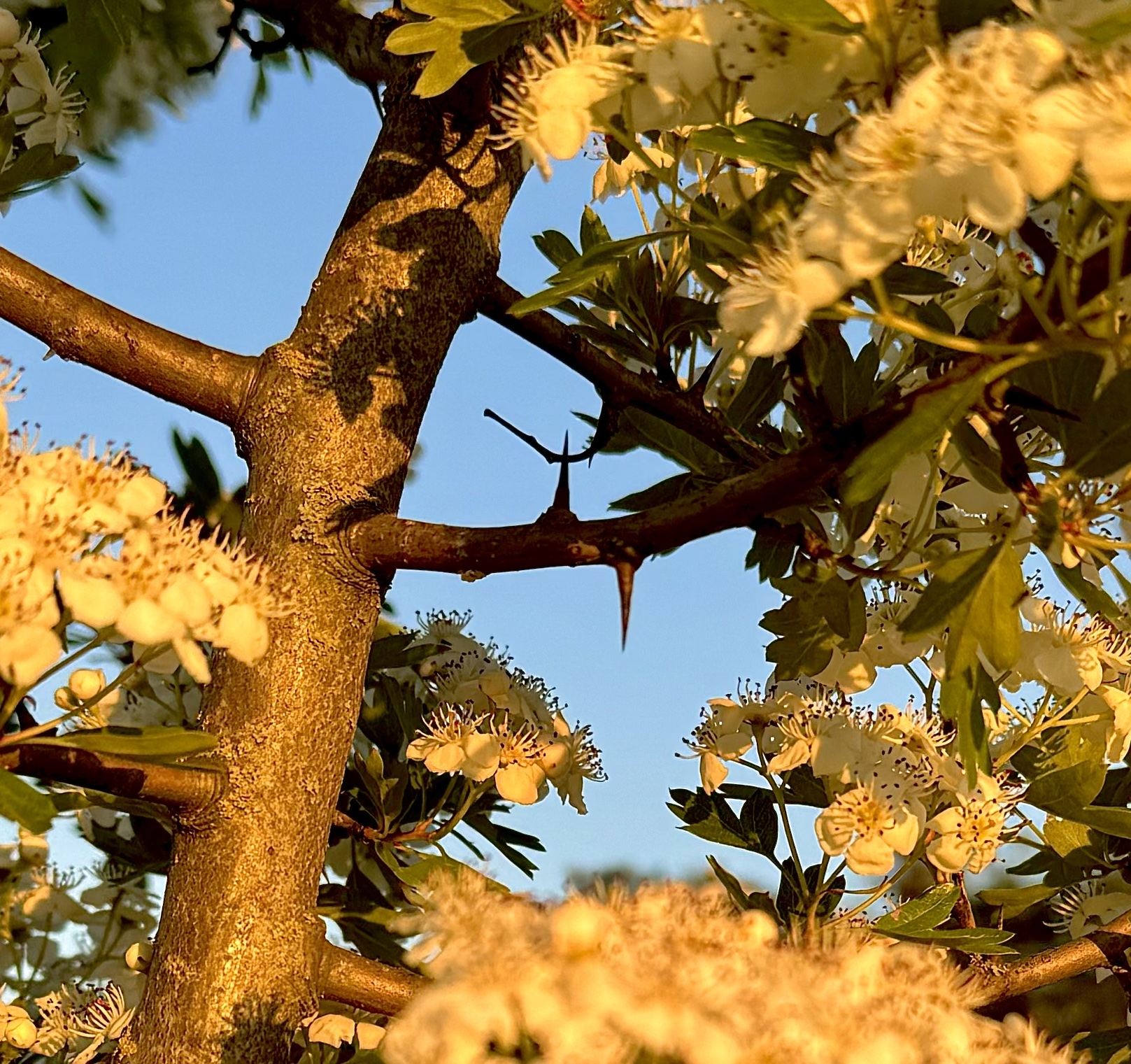
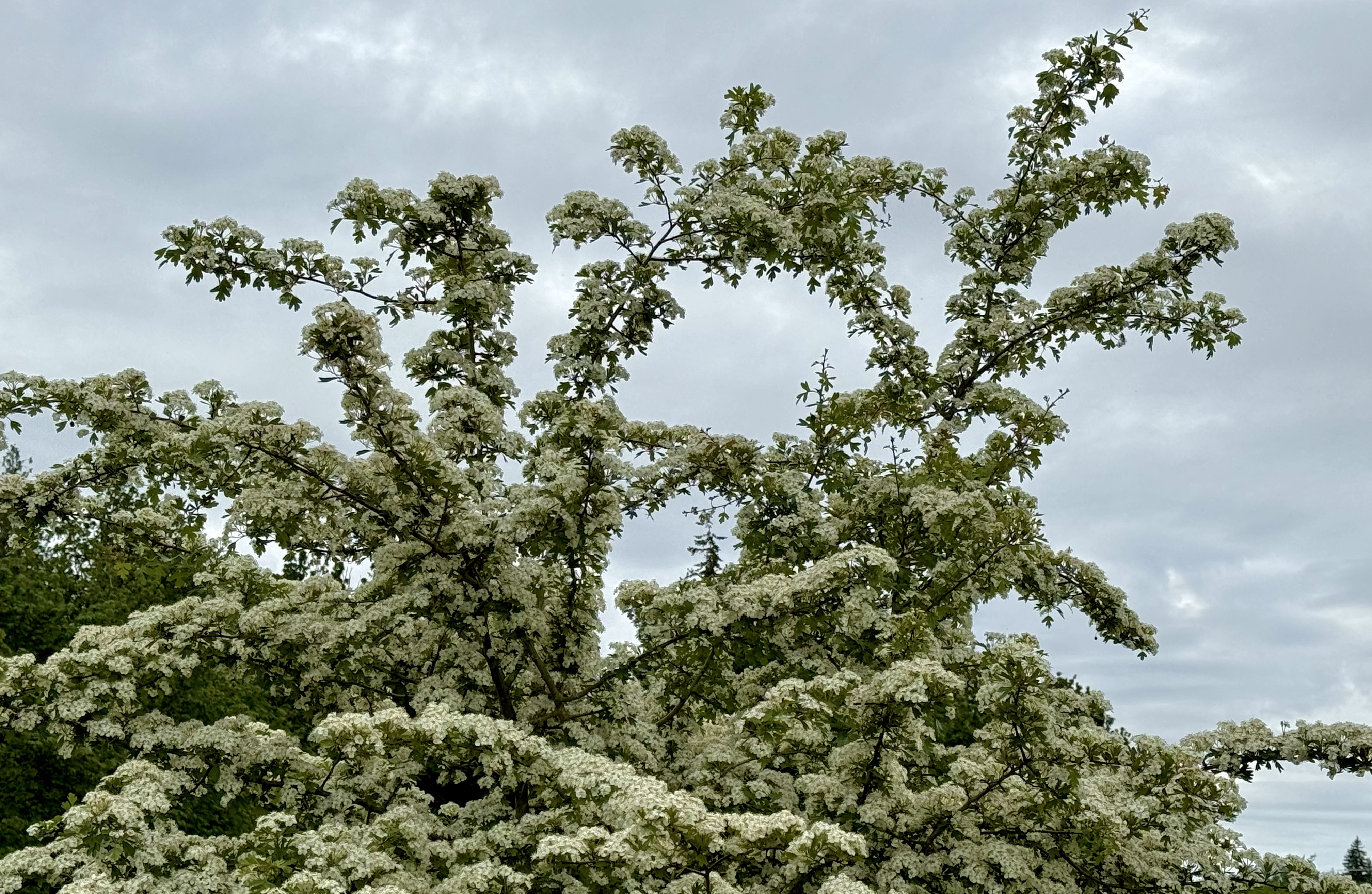
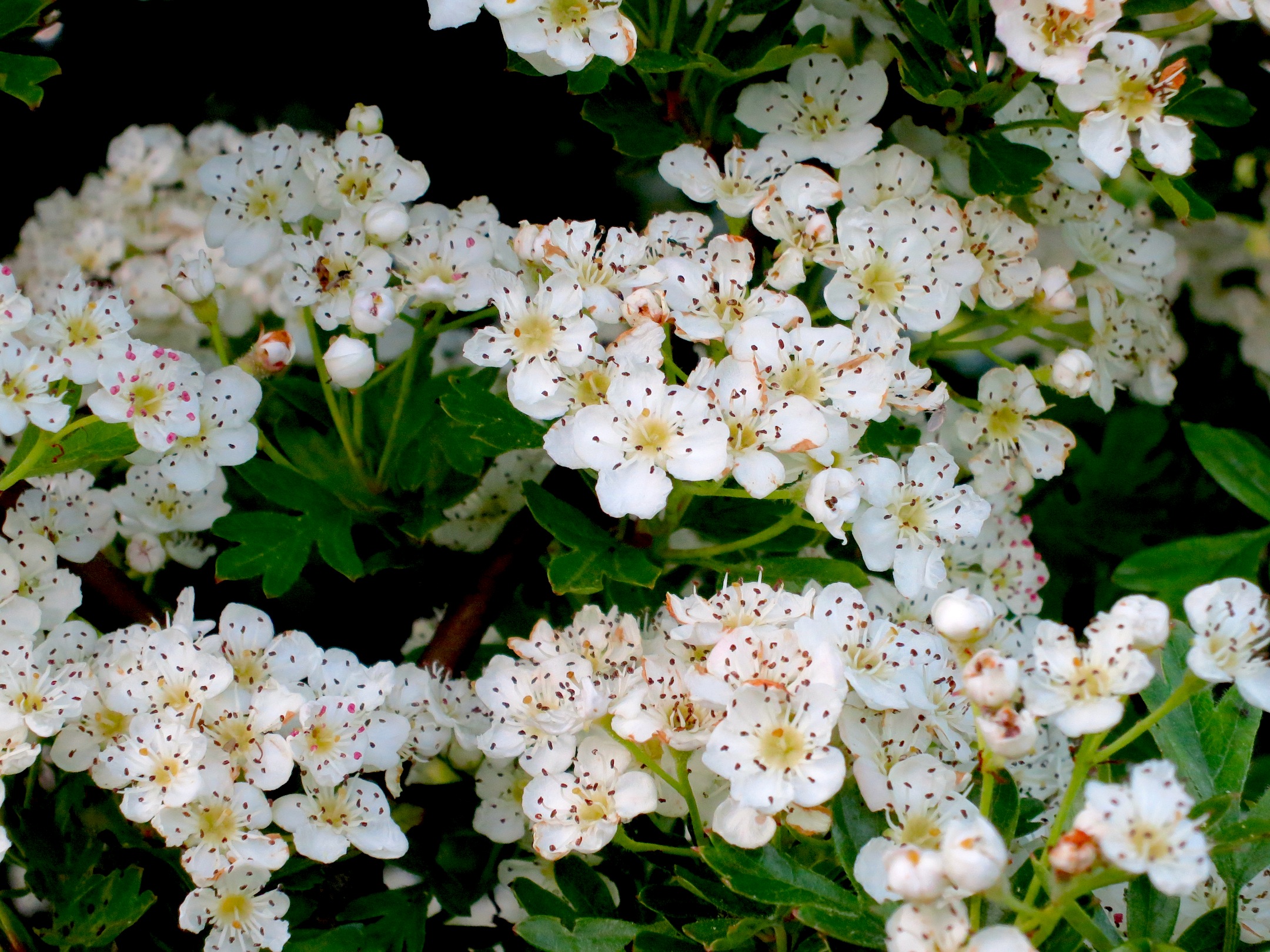
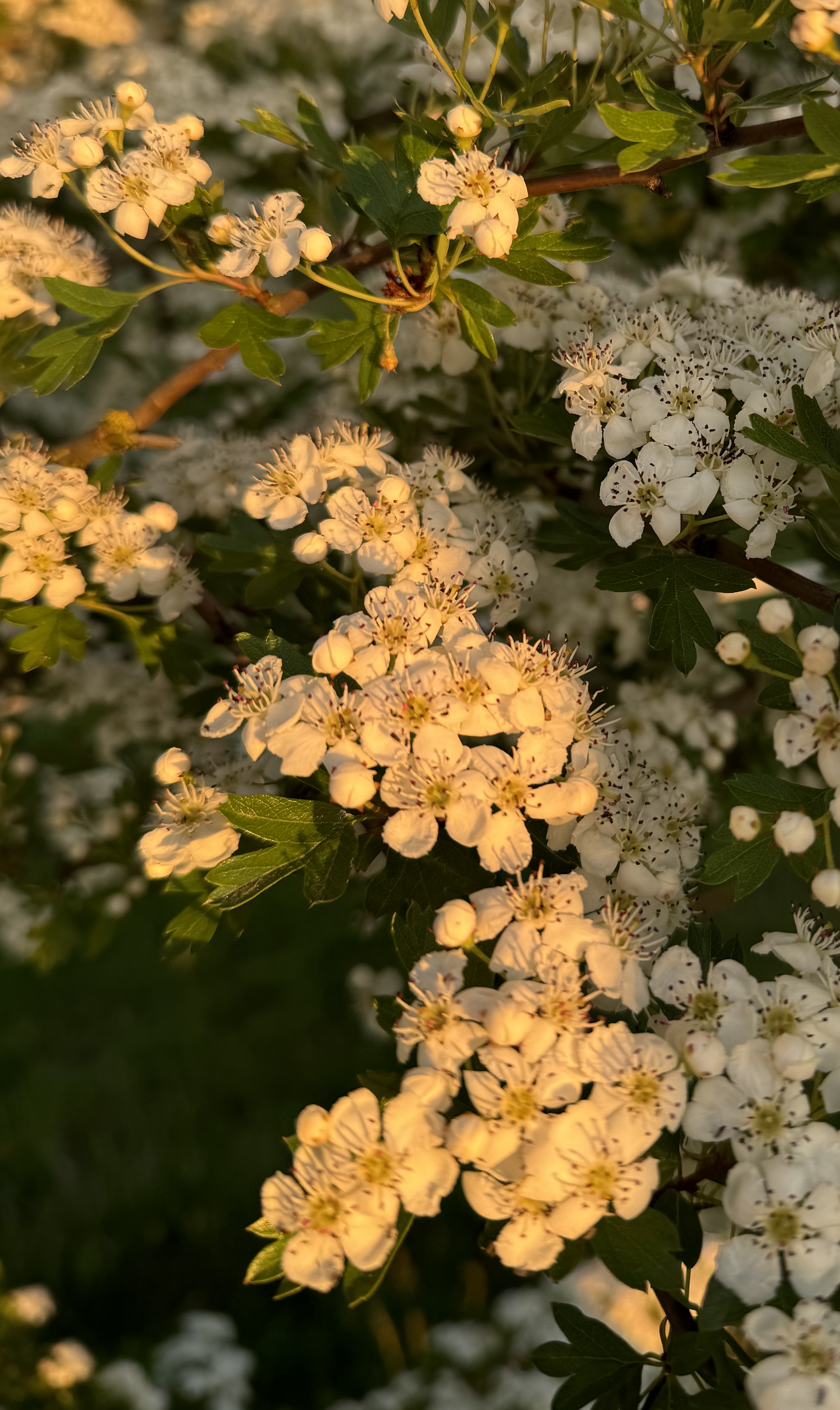
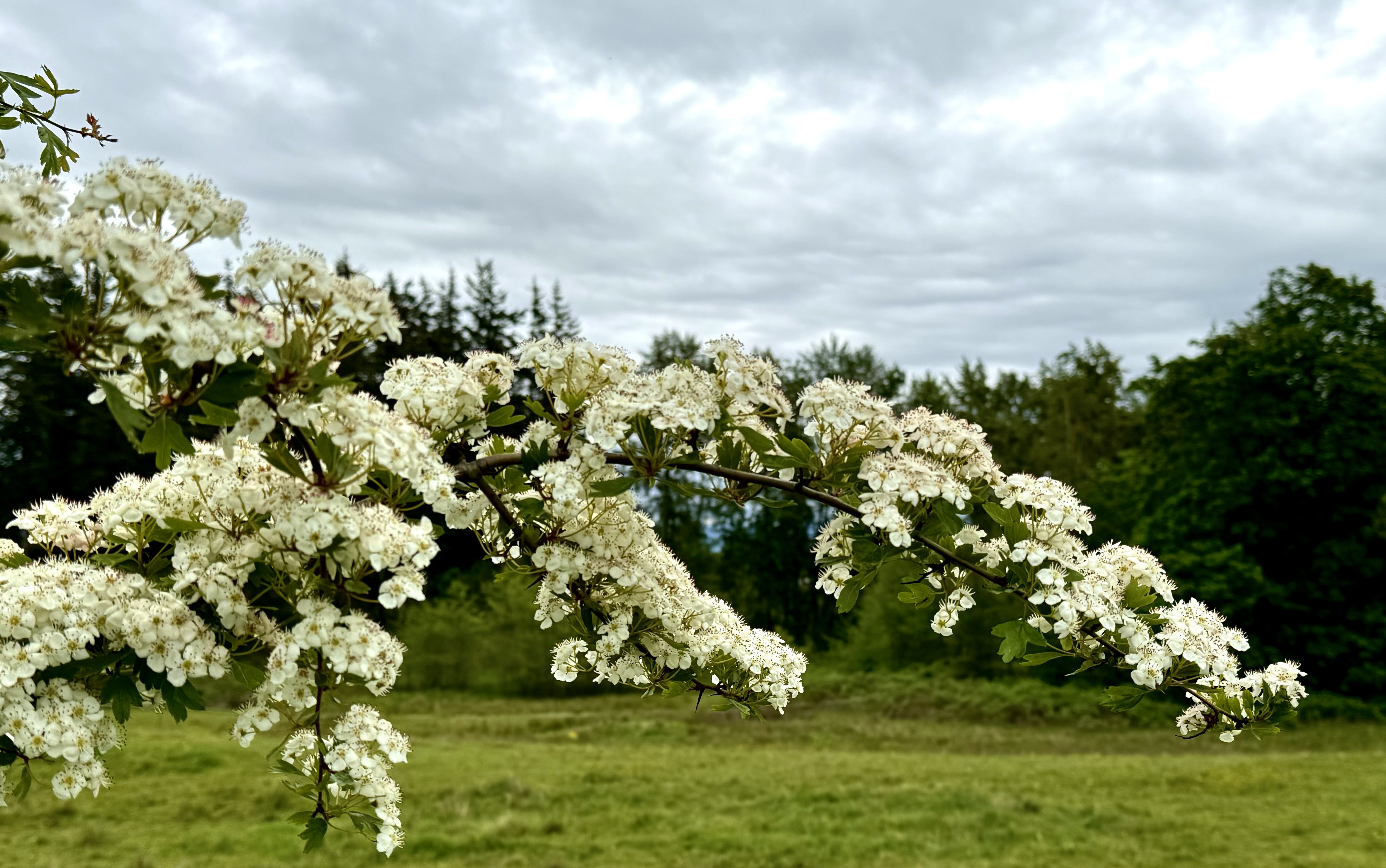
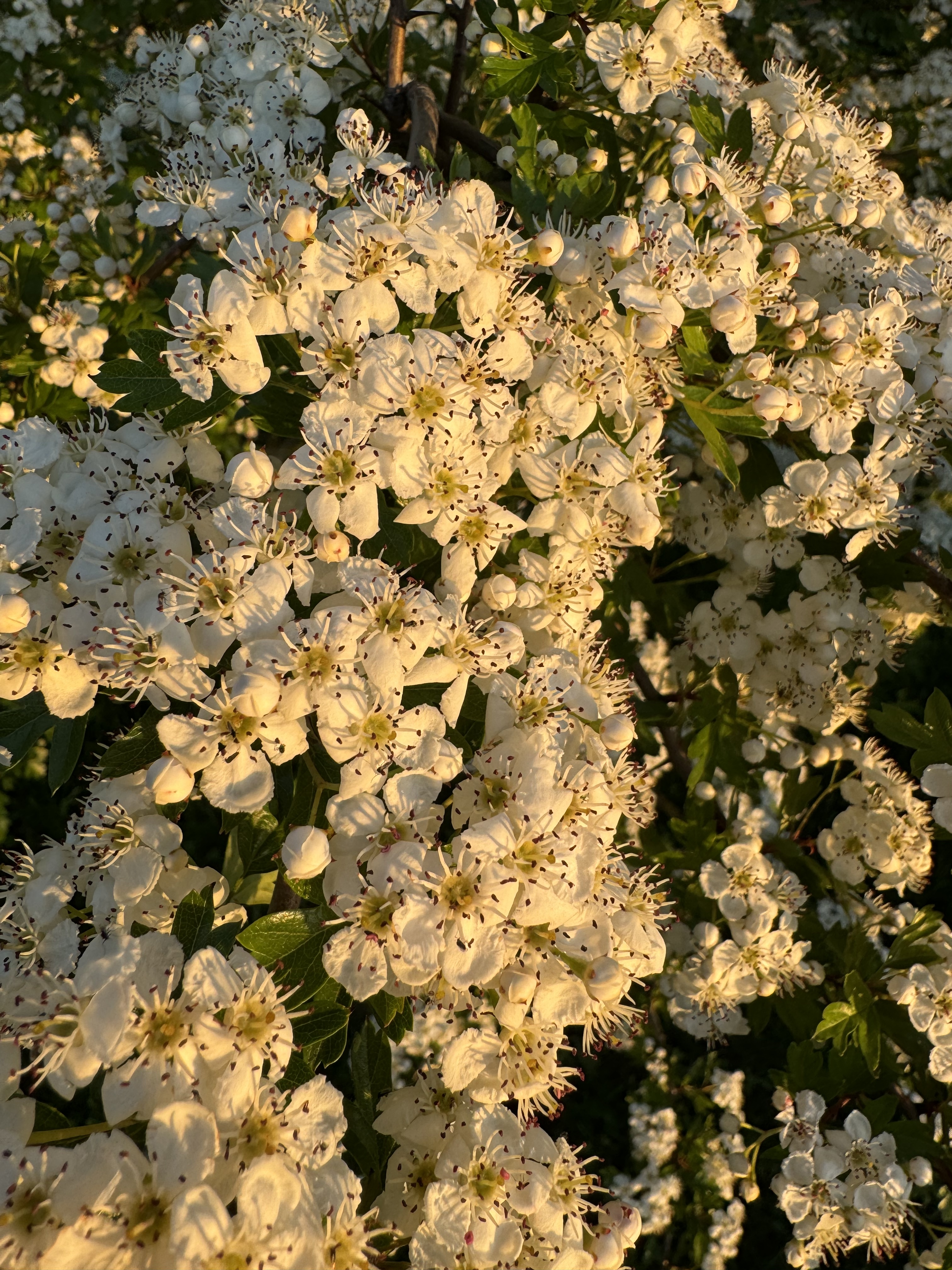
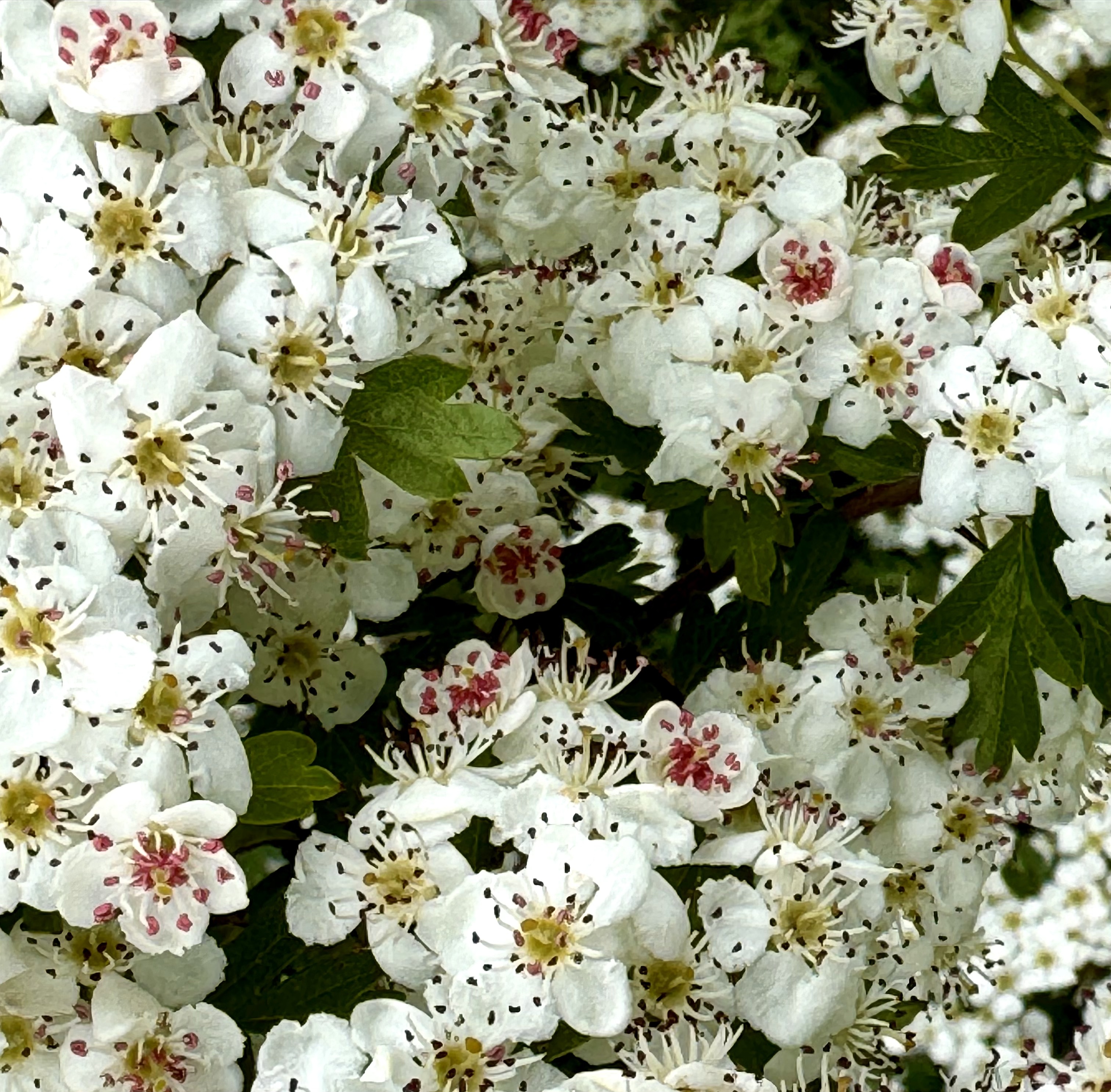
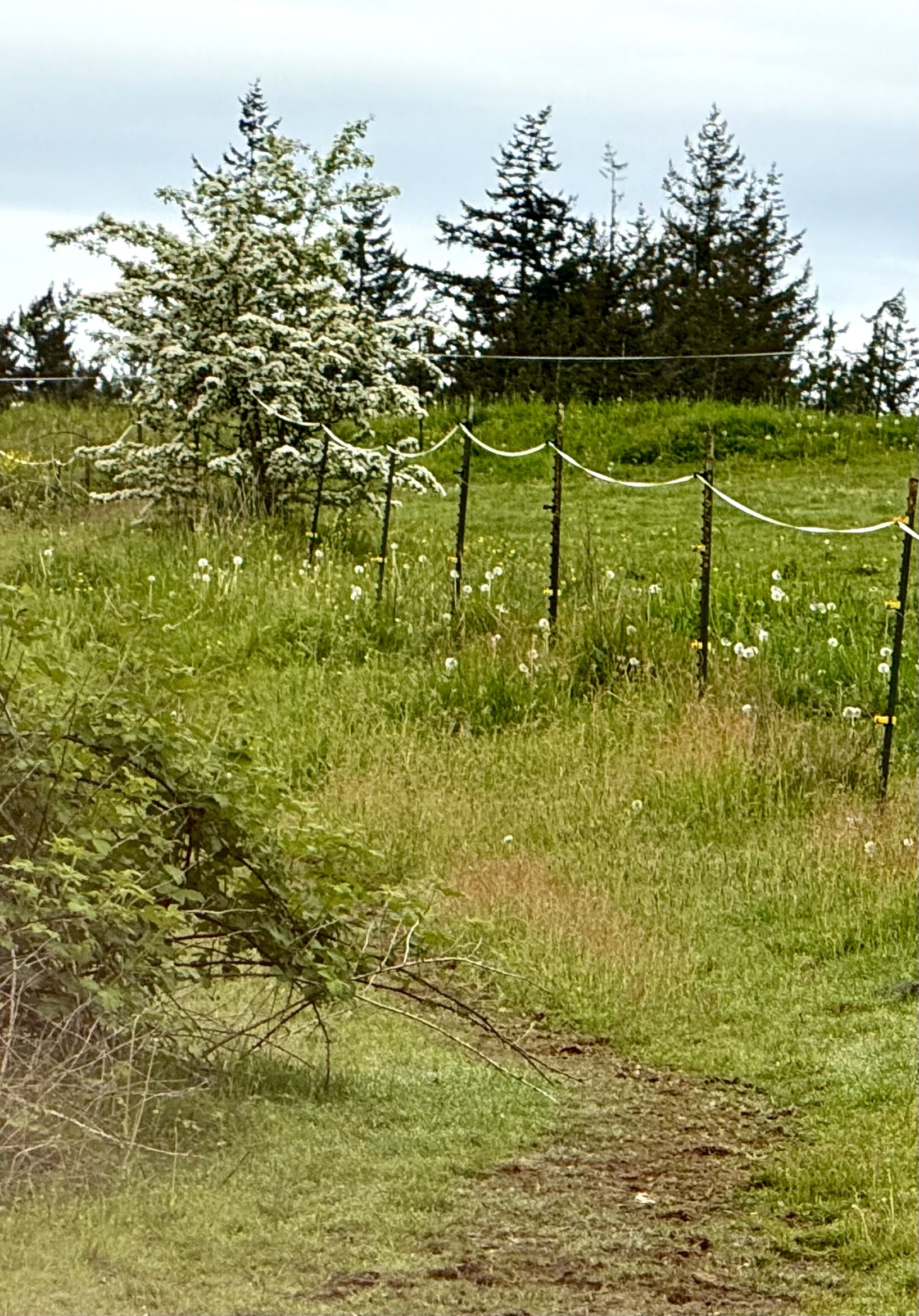
The bird-sowed hawthorn bush along the lane to our back field has suddenly become a blooming tree, staking out its place alongside the trail the horses follow to their pasture. This May, it is a white flame against the dark woods.
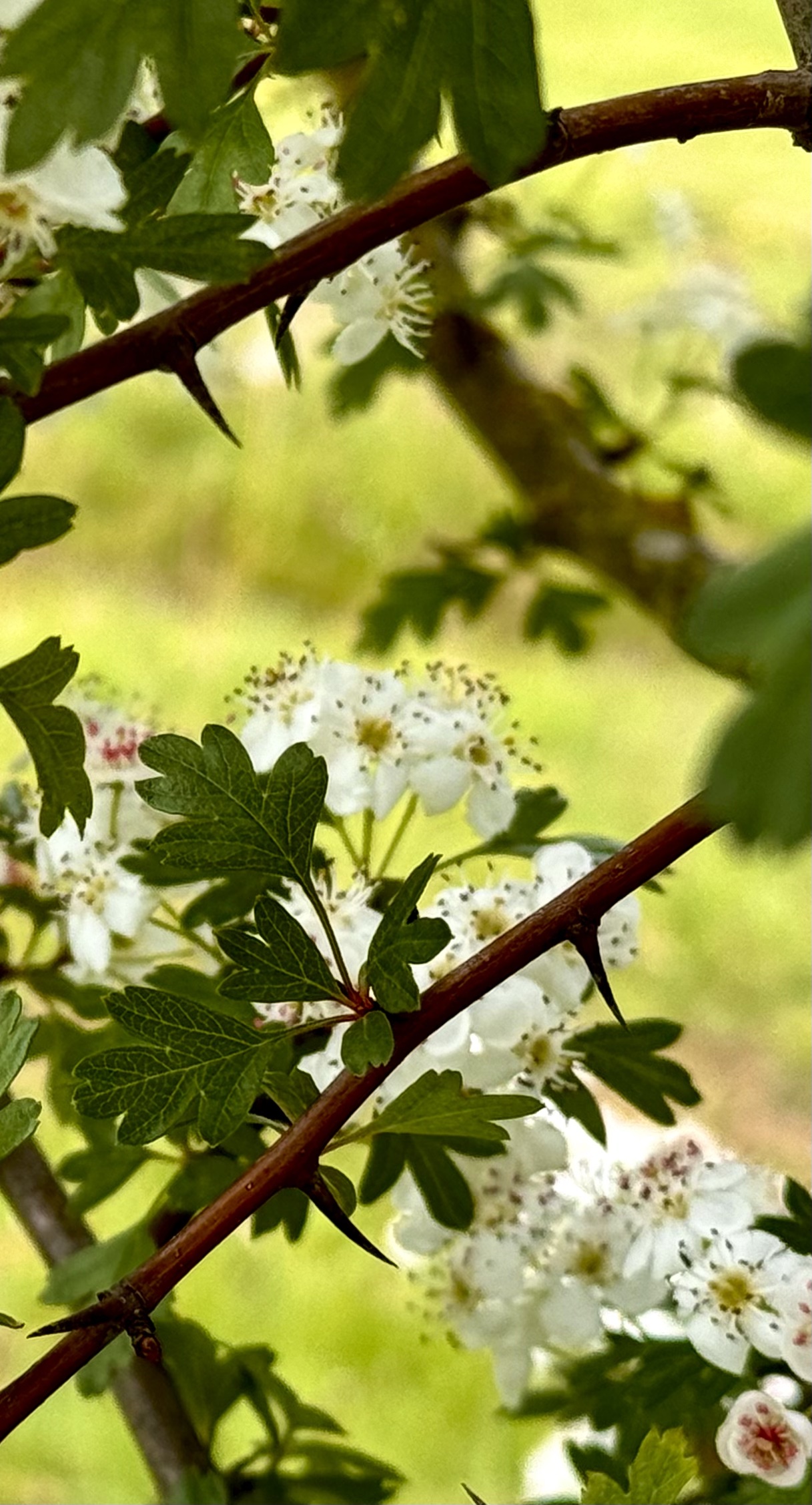
Though we didn’t intend for it to be there, we’ll leave it be. Hawthorns are great bird habitat and a haven for honeybees. They are found in most hedge rows in the United Kingdom, impenetrable due to their fierce thorns and criss-cross network of branches, a historic symbol of the toughness and persistence of the Celtic people. Though we don’t need a hedge row here, I appreciate the tree’s reminder it has a place in myth and lore.
It will never be a hospitable tree like the lone fir tree that graces our hill, or the big leaf maple where children climb, or the black walnut whose branches support the treehouse. But it will be a white beacon every May, portending the summer to come, and if it bears fruit, it will feed the birds that nest in its interior.
And like the poem written by WWI soldier/poet Sassoon, it will be a bittersweet reminder of the familiar comfort of home, even though sharp thorns abound among the blossoms. Those thorns are nothing compared to the despair found in the fearsome trenches of warfare.
AI image created for this postSiegfried Sassoon’s handwritten poem
along fair Arran’s shores the swans sing soft of tale of yore, of a young love taken to sea
the two were hand in glove like sparrows bound in sacred love a tune that only they can sing
a tree of unity they planted by the green eyed sea the branch would hold their love through time
a sailor lad was he he said,”dont cry my lovely, mhari before the moon is full i’ll return”
I’ll wait for thee and she sang to him
the moon shone full and bright and home he sailed mid-summers night the tree so young and blossoming
they slept among the green the world was light and dreams serene the fires in their hearts burned bright
Where moss-grown boulders stand, he took her by the lily hand and there they wed at break of day
the seas know not of hearts and once again the two must part. “it wont be long, i swear to thee.
please wait for me.” and she sang to him
The hawthorn tree has grown, 10 years she walked shores alone, she hears his whisper in the leaves
Home is the sailor lad, home in the sea, forever plaid, Under the wide and starry sky
Yes, I will wait for thee, By mountain, sea and tree; And on the wind you’ll hear my love,
for at the fall of day Beneath the leaves where once we lay I’ll sit and sing i’ll wait for thee
come back to me…. music and lyrics by Fae Wiedenhoeft
One-Time
Monthly
Yearly
Make a one-time or recurring donation to support daily Barnstorming posts
God goes, belonging to every riven thing he’s made sing his being simply by being the thing it is: stone and tree and sky, man who sees and sings and wonders why
God goes. Belonging, to every riven thing he’s made, means a storm of peace. Think of the atoms inside the stone. Think of the man who sits alone trying to will himself into a stillness where
God goes belonging. To every riven thing he’s made there is given one shade shaped exactly to the thing itself: under the tree a darker tree; under the man the only man to see
God goes belonging to every riven thing. He’s made the things that bring him near, made the mind that makes him go. A part of what man knows, apart from what man knows,
God goes belonging to every riven thing he’s made. ~Christian Wiman “Every Riven Thing”
The Holy Saturday of our life must be the preparation for Easter, the persistent hope for the final glory of God. The virtue of our daily life is the hope which does what is possible and expects God to do the impossible. To express it somewhat paradoxically, but nevertheless seriously: the worst has actually already happened; we exist, and even death cannot deprive us of this. Now is the Holy Saturday of our ordinary life, but there will also be Easter, our true and eternal life. ~Karl Rahner “Holy Saturday” in The Great Church Year
This is the day in between when nothing makes sense: we are lost, hopeless, grieving,riven beyond recognition.
We are brought to our senses by this one Death, this premeditated killing, this senseless act that darkened the skies, shook the earth and tore down the curtained barriers to the Living Eternal God.
The worst has already happened, despite how horrific are the constant tragic events filling our headlines.
Today, this Holy Saturday we are in between, stumbling in the darkness but aware of hints of light, of buds, of life, of promised fruit to come.
The best has already happened; it happened even as we remained oblivious to its impossibility.
We move through this Saturday, doing what is possible even when it feels senseless, even as we feel split apart, torn and sundered.
Tomorrow it will all make sense: our hope brings us face to face with our God who is and was and does the impossible.
So Joseph bought some linen cloth, took down the body, wrapped it in the linen, and placed it in a tomb cut out of rock. Then he rolled a stone against the entrance of the tomb.Mary Magdalene and Mary the mother of Joseph saw where he was laid. Mark 15:46-47
Wait for the Lord; be strong and take heart and wait for the Lord. Psalm 27:14
This Lenten season I reflect on the words of the 19th century southern spiritual hymn “What Wondrous Love is This”
I see his blood upon the rose And in the stars the glory of his eyes, His body gleams amid eternal snows, His tears fall from the skies.
I see his face in every flower; The thunder and the singing of the birds Are but his voice-and carven by his power Rocks are his written words.
All pathways by his feet are worn, His strong heart stirs the ever-beating sea, His crown of thorns is twined with every thorn, His cross is every tree. ~Joseph Plunkett “I See His Blood Upon the Rose”
One-Time
Monthly
Yearly
Make a one-time or recurring donation to support daily Barnstorming posts
We were riding through frozen fields in a wagon at dawn. A red wing rose in the darkness.
And suddenly a hare ran across the road. One of us pointed to it with his hand.
That was long ago. Today neither of them is alive, Not the hare, nor the man who made the gesture.
O my love, where are they, where are they going The flash of a hand, streak of movement, rustle of pebbles. I ask not out of sorrow, but in wonder. ~ Czeslaw Milosz “Encounter”
She philosophically noted dates as they came past in the revolution of the year;… her own birthday and every other day, individualized by incidents in which she had taken some share. She suddenly thought one afternoon that there was yet another date of greater importance, her own death… A day which lay sly and unseen among all other days of the year… but not the less surely there. When was it? ~Thomas Hardy from Tess of the d’Urbervilles
We do not know the day or the hour of our death day. We must not be lulled into complacency by the routines of daily life; it could be tomorrow or the next day or maybe it was yesterday.
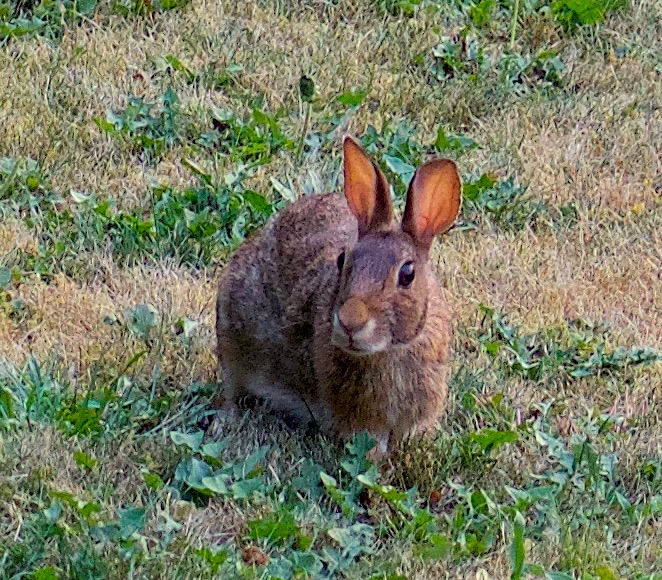
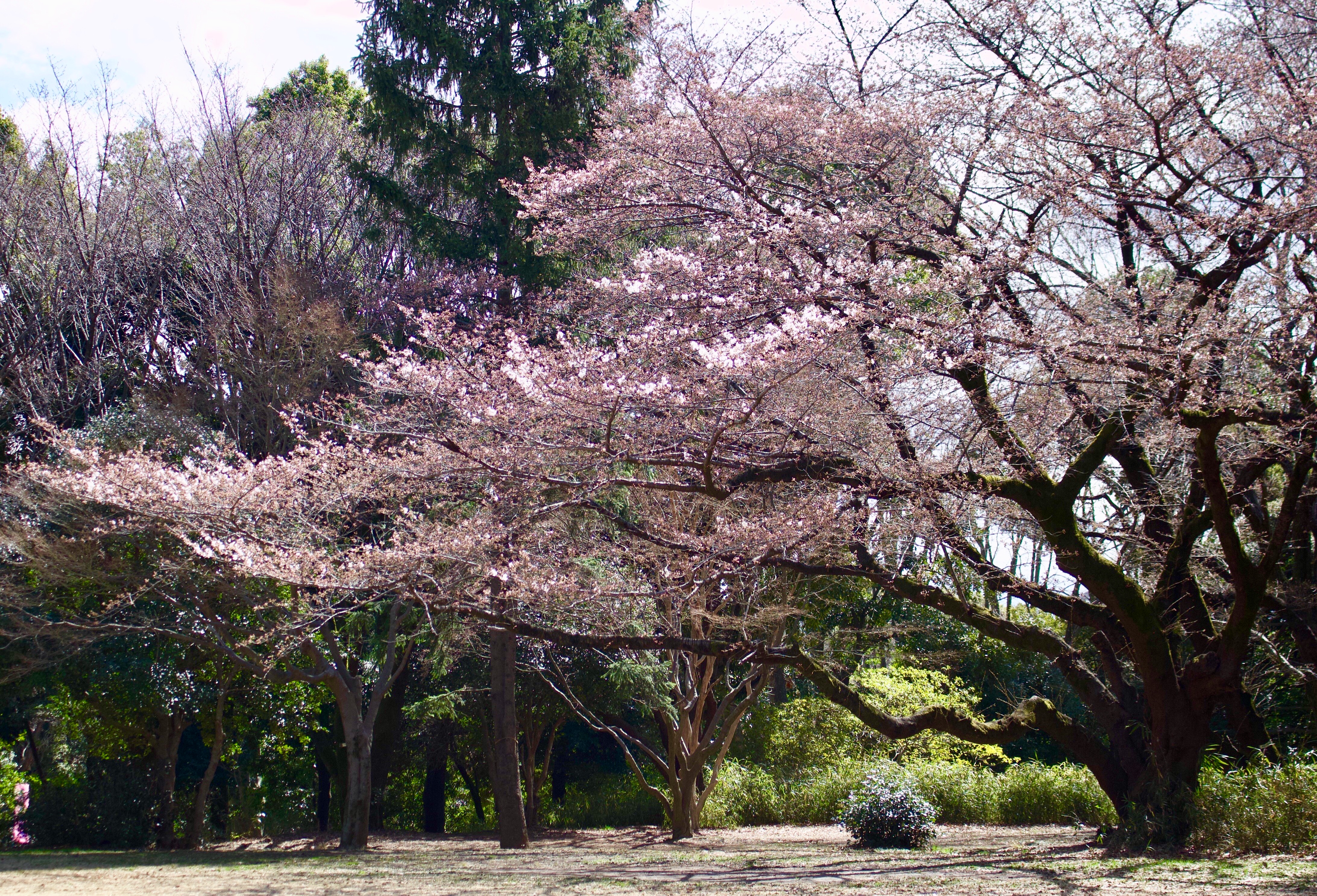
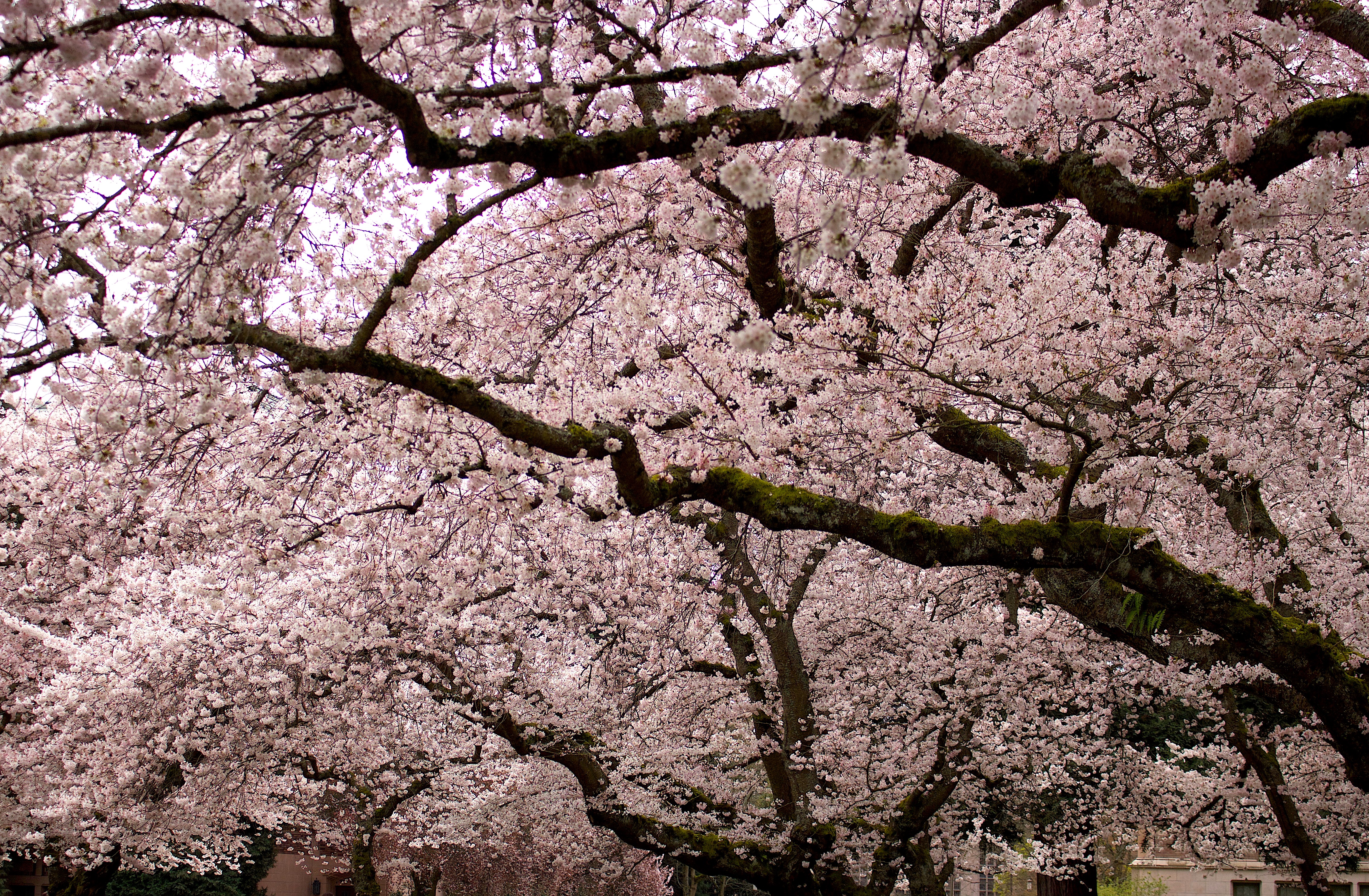
Each moment is a gift, like the flash of a blossom or the transparency of a rabbit’s ear, pulsing with each heart beat as our blood flows and sustains.
And we know – blood was shed, just as blossoms shed, covering us all.
Keeping watch, keeping watch – there is a day when we go home.
fallen sakura petals in Tokyo (photo by Nate Gibson)
Therefore keep watch, because you do not know the day or the hour. Matthew 25: 1-13
This Lenten season I reflect on the words of the 19th century southern spiritual hymn “What Wondrous Love is This”
One-Time
Monthly
Yearly
Make a one-time or recurring donation to support daily Barnstorming posts
We were promised sufferings. They were part of the program. We were even told, ‘Blessed are they that mourn.’ The real problem is not why some pious, humble, believing people suffer, but why some do not. C.S. Lewis ~~writing on suffering in The Problem of Pain
The Christian has never been promised a pain-free existence. No one escapes suffering, no matter how strongly they believe in God. It is what we signed up for.
How could an all-powerful all-knowing God allow suffering, especially in innocent children? This is a standard argument used against the existence of a beneficent God. The reasoning is — if abundant suffering and evil is allowed in the world, no merciful God is in control.
Yet that reasoning sets aside gospel reality: God identifies so strongly with His Creation, He allows His own suffering and death.
He mourns. He weeps. He hurts. He bleeds. He dies. Just like us.
What all-powerful all-knowing God would do that? Our God would, because He is first and foremost a loving God who makes imperfection perfect again. Then He defeats death to ensure our eternal union with Him.
No, there isn’t a “no pain” guarantee –neither God nor even the natural world ever promised that. But only our God promises “no stain” –that we are washed clean for eternity by His shed blood.
In the midst of our sadness and mourning, that is our greatest comfort of all.
For just as we share abundantly in the sufferings of Christ, so also our comfort abounds through Christ. 2 Corinthians 1:5
I have told you these things, so that in me you may have peace. In this world you will have trouble. But take heart! I have overcome the world. John 16:33
This Lenten season I reflect on the words of the 19th century southern spiritual hymn “What Wondrous Love is This”
One-Time
Monthly
Yearly
Make a one-time or recurring donation to support daily Barnstorming posts
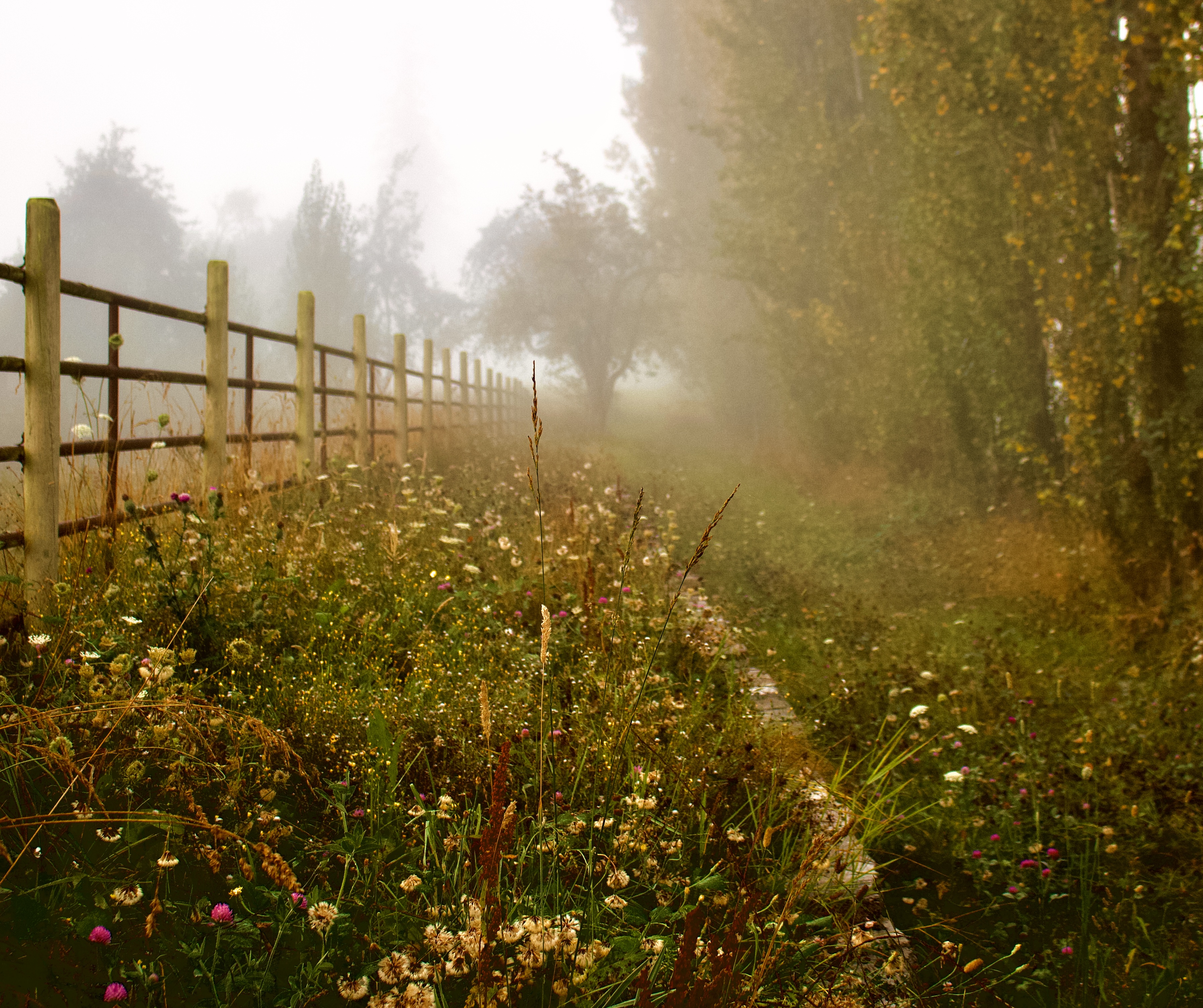
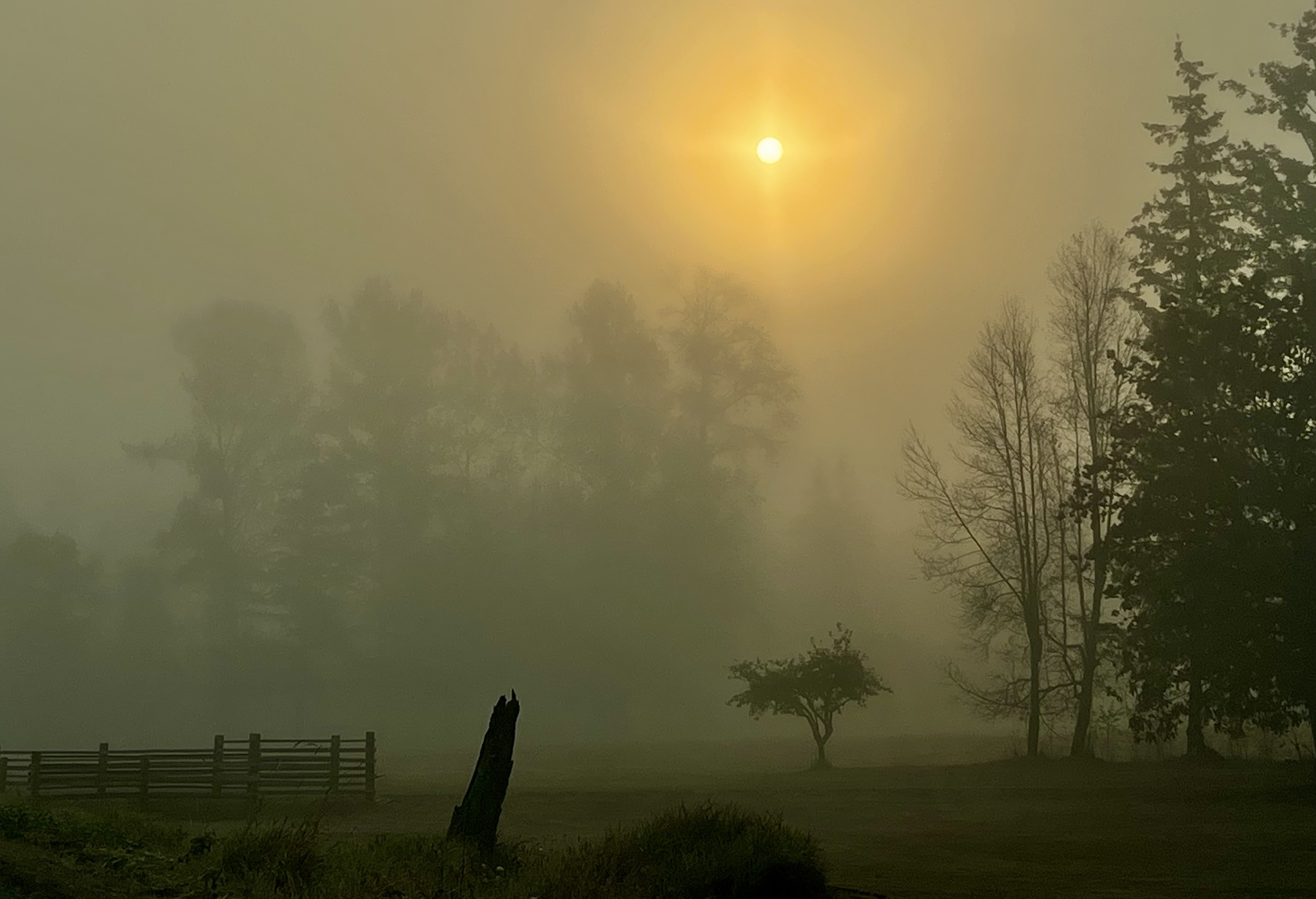
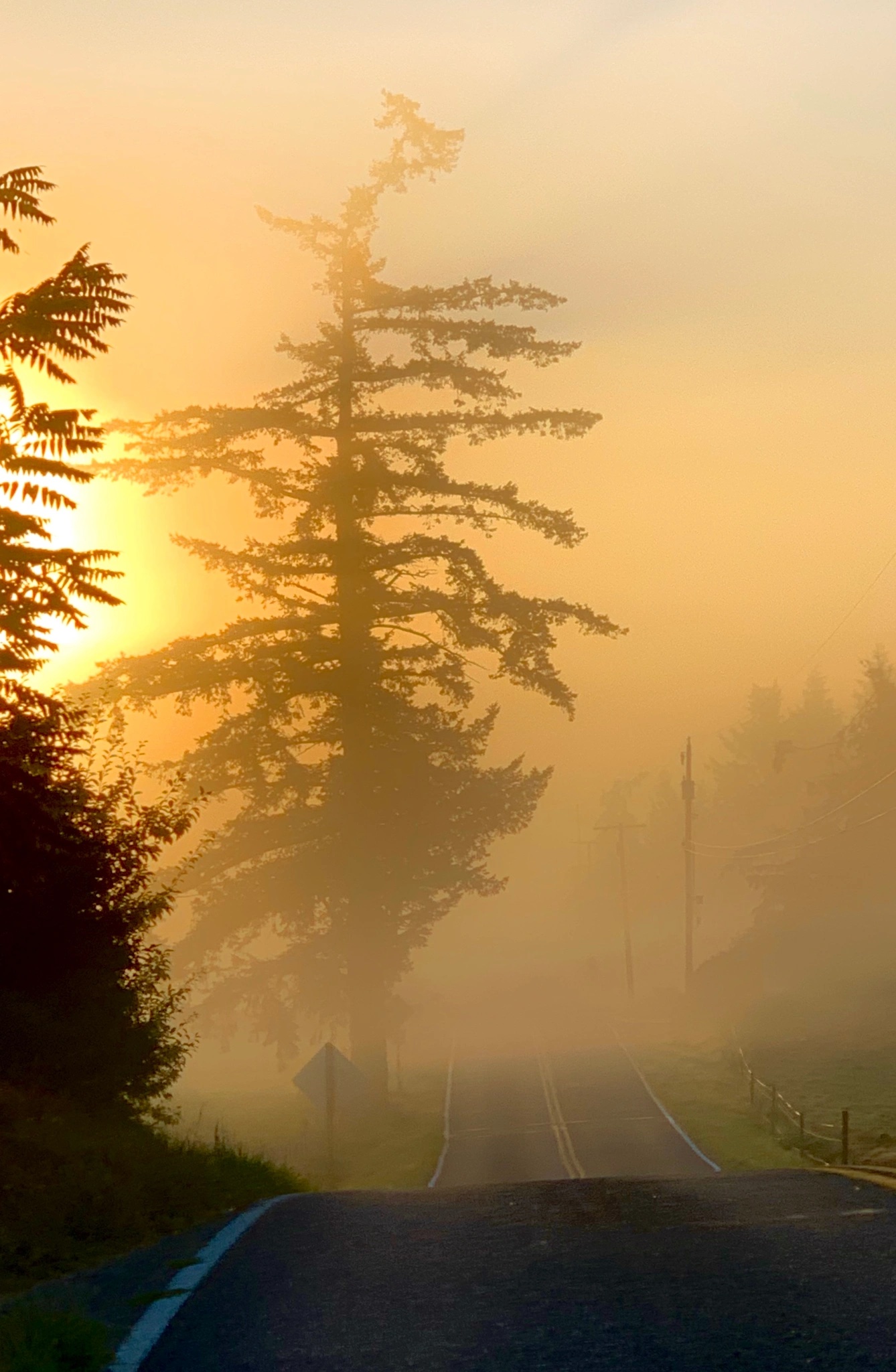
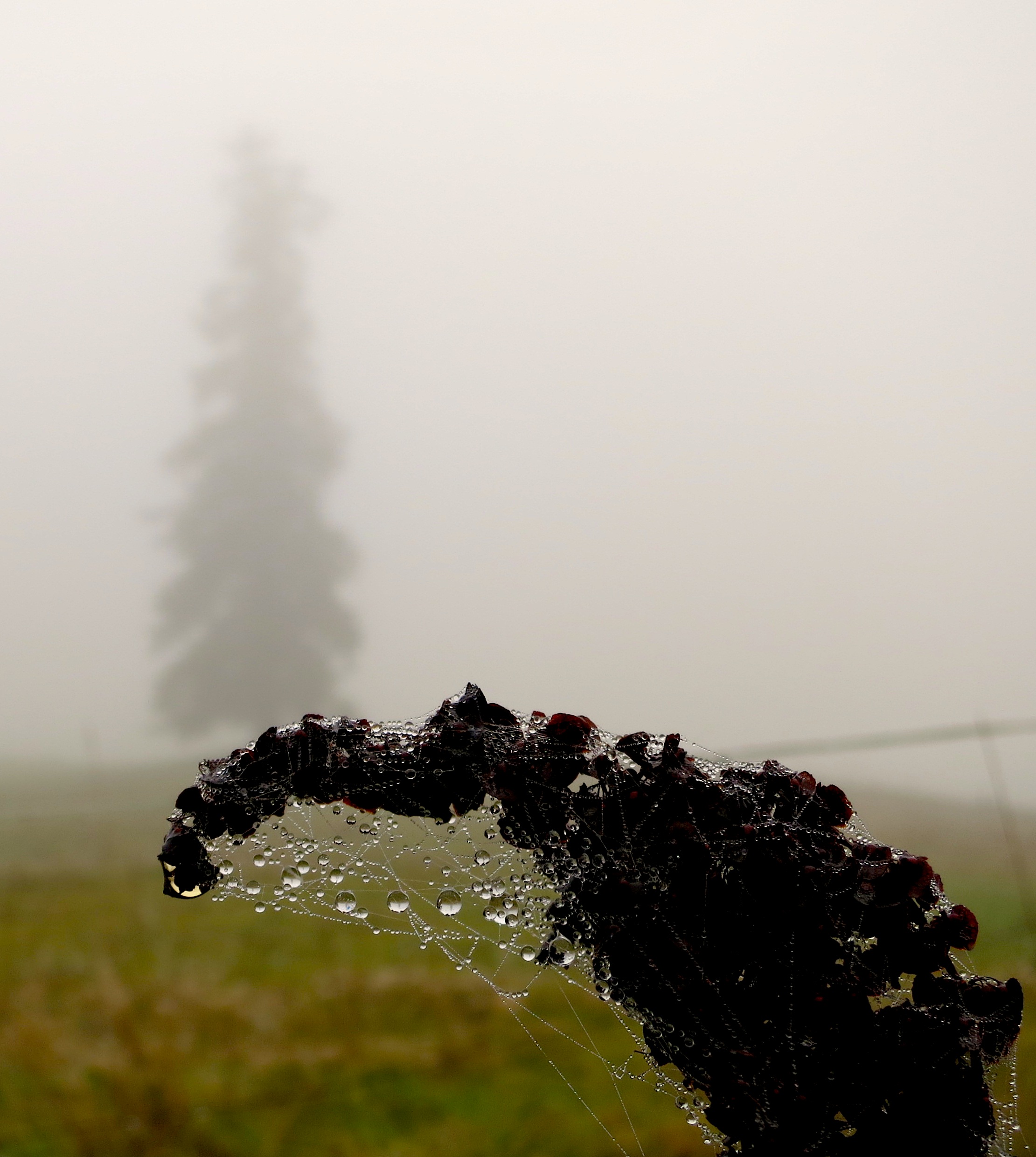
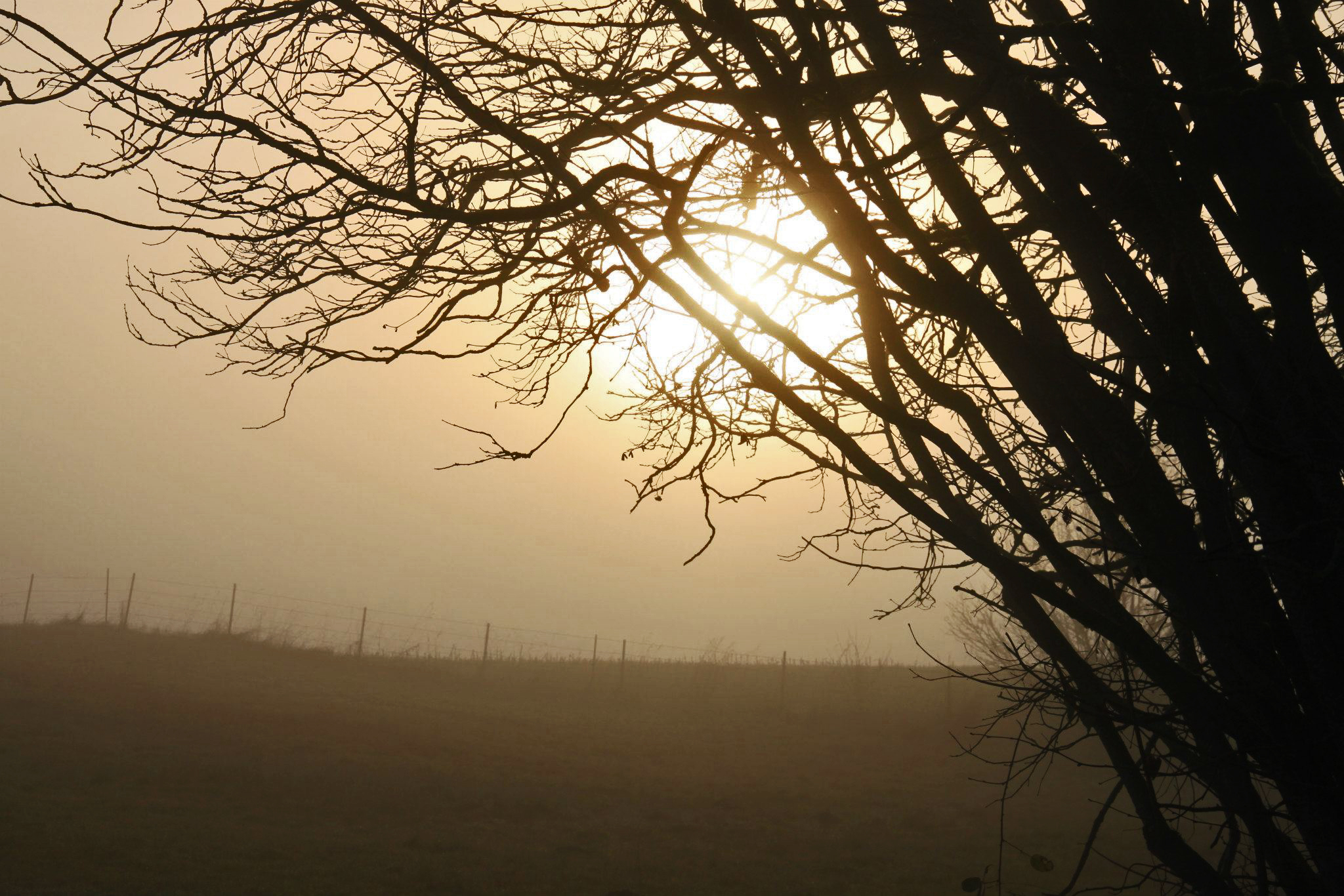
I must go in; the fog is rising… ~Emily Dickinson, her last words
photo by Nate Gibson
I have watched the dying in their last hours: often they see what I cannot, listen to what is beyond my hearing, stretch their arms overhead as fingers touch what is beyond my reach.
I watch and wonder what it will be like to reverse the steps that brought me here from the fog of amnion.
The mist of living lifts as we enter a place unsurpassed in brilliance and clarity; the mystery of what lies beyond solved only by going in to it, welcomed back to that unapproachable Light, where we started.
One-Time
Monthly
Yearly
Make a one-time or recurring donation to support daily Barnstorming posts































 Barnstorming