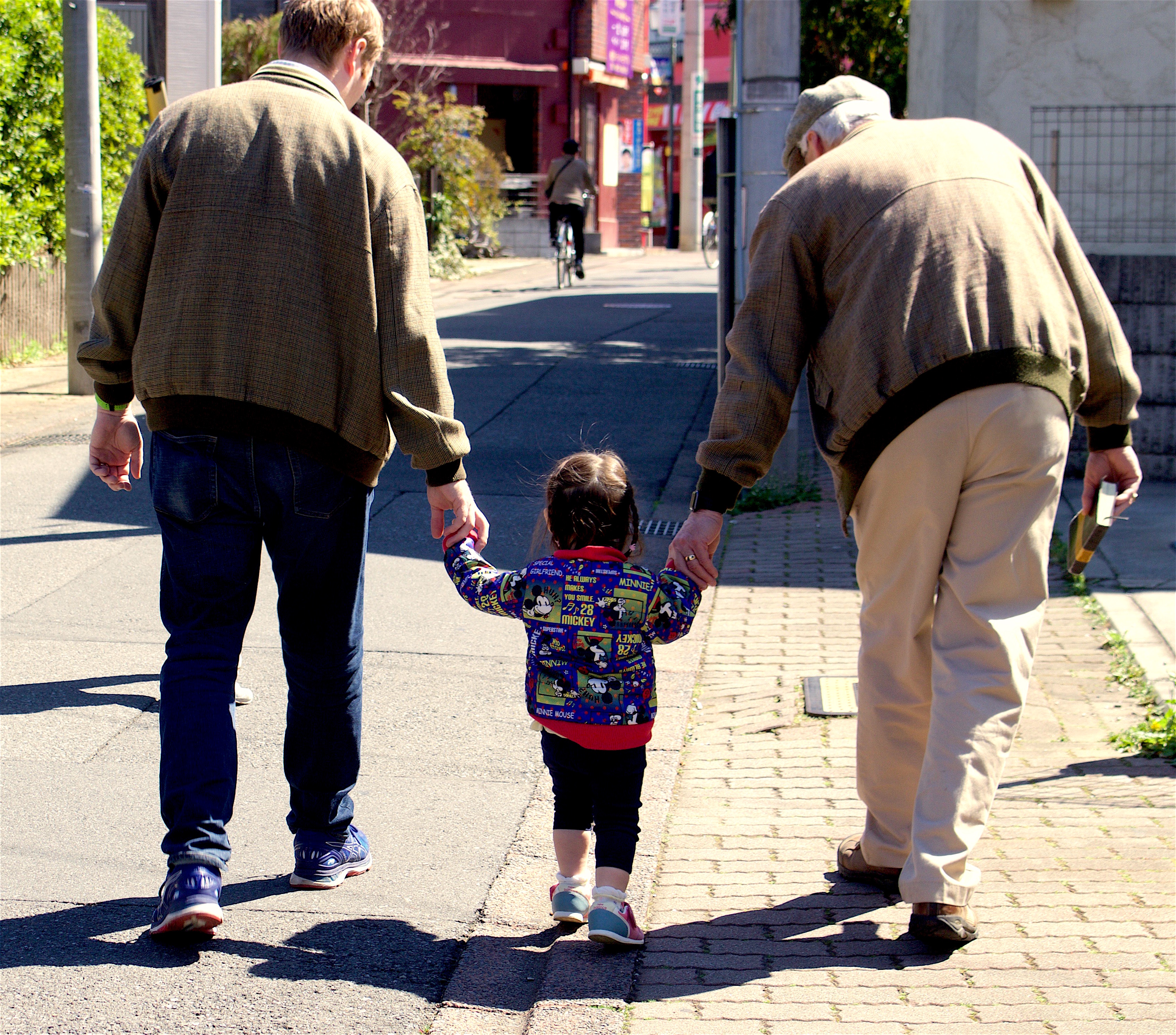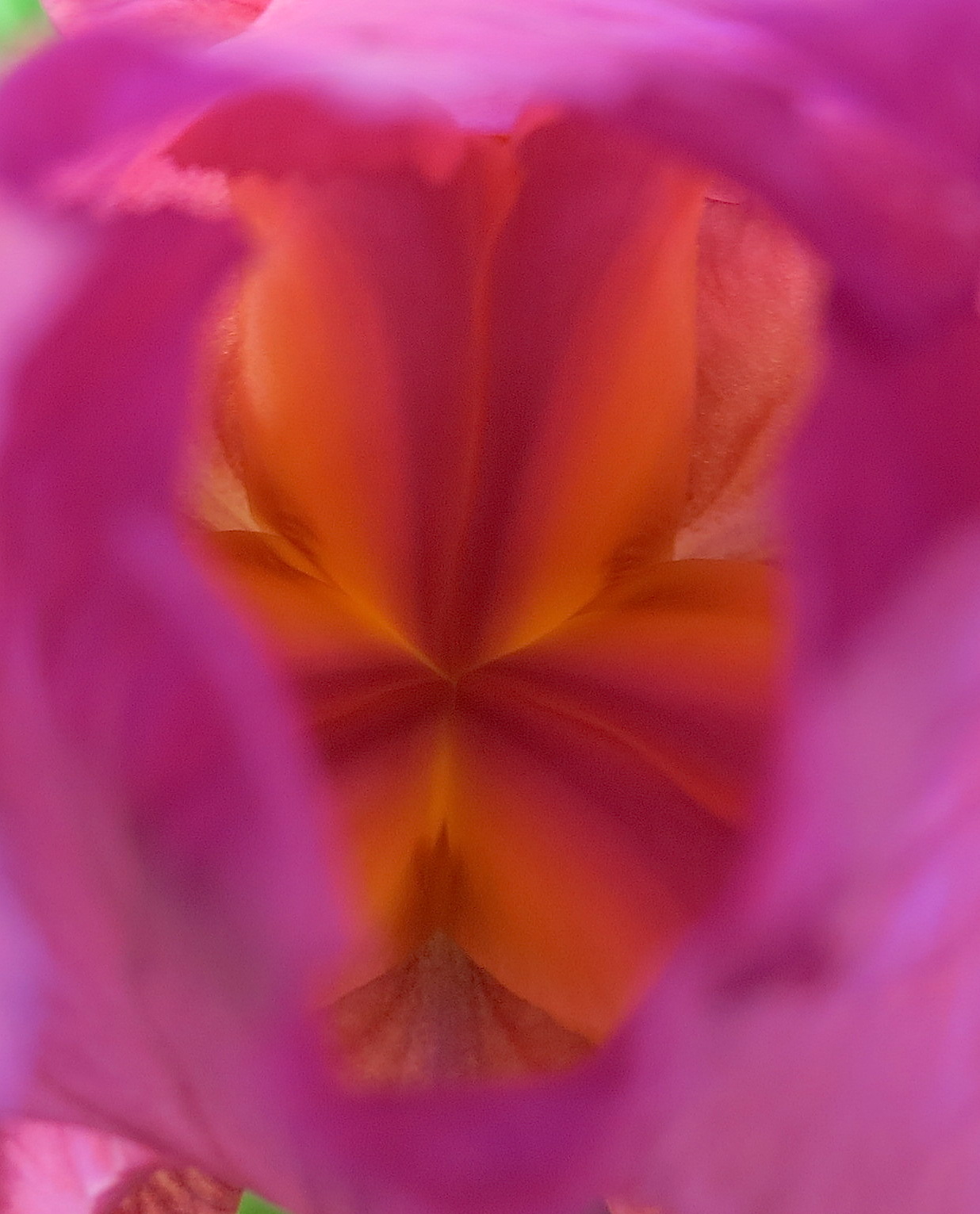
Where You Go, I Will Go: Waiting To Be Filled

Oh! hush thee, my baby, the night is behind us,
And black are the waters that sparkled so green.
The moon, o’er the combers, looks downward to find us
At rest in the hollows that rustle between.
Where billow meets billow, there soft be thy pillow;
Ah, weary wee flipperling, curl at thy ease!
The storm shall not wake thee, nor shark overtake thee,
Asleep in the arms of the slow-swinging seas.
~Rudyard Kipling “Seal Lullaby”

For you created my inmost being;
    you knit me together in my mother’s womb.
14 I praise you because I am fearfully and wonderfully made;
    your works are wonderful,
    I know that full well.
15 My frame was not hidden from you
    when I was made in the secret place,
    when I was woven together in the depths of the earth.
16 Your eyes saw my unformed body;
    all the days ordained for me were written in your book
    before one of them came to be.
17 How precious to me are your thoughts,[a] God!
    How vast is the sum of them!
18 Were I to count them,
    they would outnumber the grains of sand—
    when I awake, I am still with you.

Psalm 139: 13-18

The call came in the middle of a busy night
as we worked on a floppy baby with high fever,
a croupy toddler whose breathing squeezed and squeaked,
a pale adolescent transfusing due to leukemia bleeding.

It was an anencephalic baby just born, unexpected, unwanted
in a hospital across town, and she needed a place to die.

Our team of three puzzled how to manage a baby without a brain–
simply put her in a room, swaddled, kept warm but alone?
Hydrate her with a dropper of water to moisten her mouth?
Offer her a taste of milk?

She arrived by ambulance, the somber attendants
leaving quickly, unnerved by her mewing cries.

I took the wrapped bundle and peeled away the layers
to find a plump full term baby, her hands gripping, arms waving
once freed;  just another newborn until I pulled off her stocking cap
and looked into an empty crater — only a brainstem lumped at the base.

No textbook pictures had prepared me
for the wholeness, the holiness of this living, breathing child.

Her forehead quit above the eyebrows with the entire skull missing,
tufts of soft brown hair fringed her perfect ears,
around the back of her neck.
Her eyelids puffy, squinting tight, seemingly too big
above a button nose and rosebud pink lips.

She squirmed under my fingers, her muscles strong, breaths coming steady despite no awareness of light or touch or noise.

Yet she cried in little whimpers, mouth working, seeking,
lips tentatively gripping my fingertip. A bottle warmed,
nipple offered, a tentative suck allowing tiny flow,
then, amazing,  a gurgling swallow.

Returning every two hours, more for me than for her, I picked her up
to smell the salty sweet scent of amnion still on her skin as she grew dusky.

Her breathing weakened, her muscles loosened, giving up her grip
on a world she would never see or hear or feel to behold
something far more glorious, as I gazed
into her emptiness, waiting to be filled.

(this poem has been published in Sarah Arthur‘s wonderful Lenten and Eastertide anthology Between Midnight and Dawn)
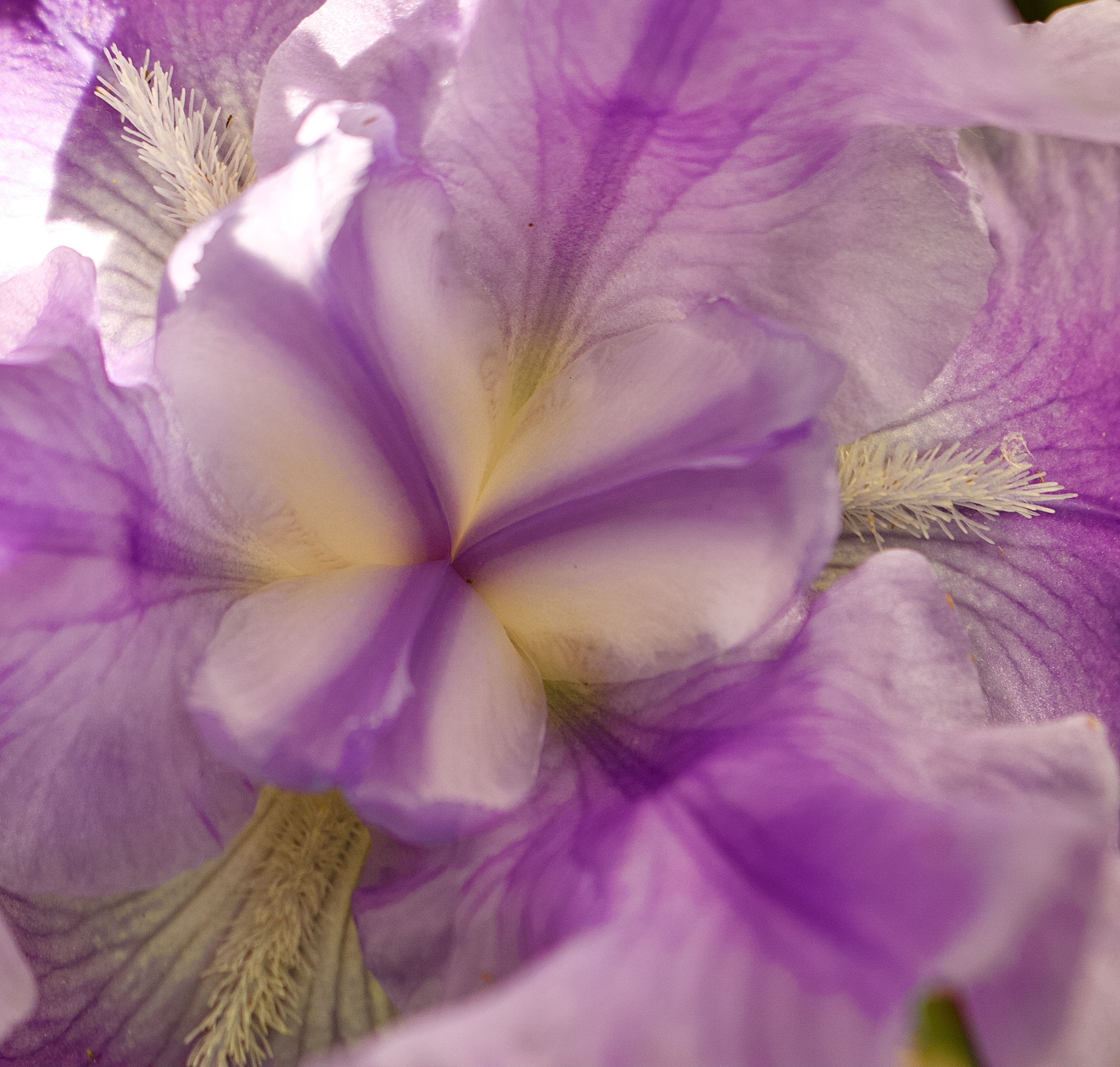
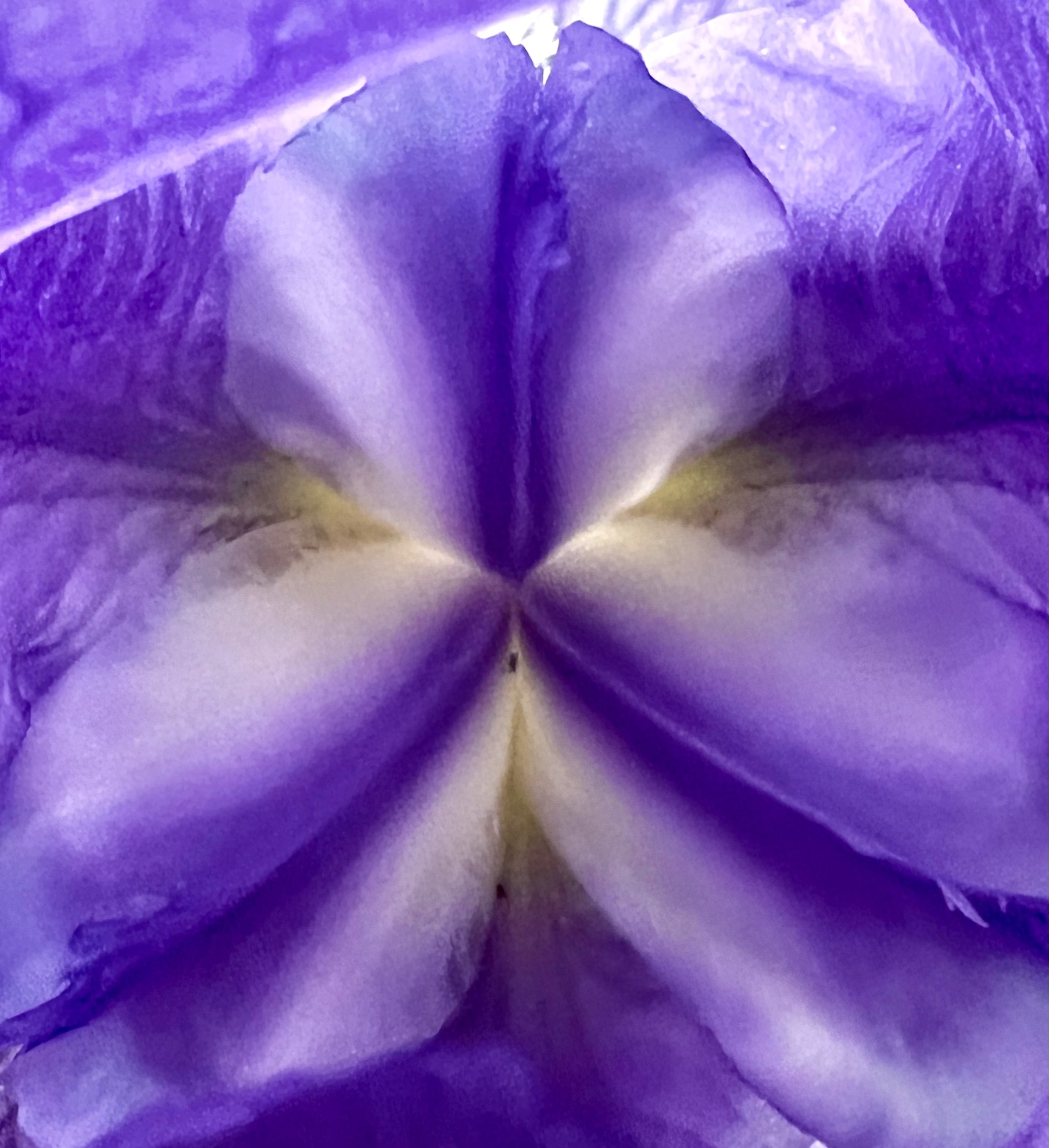
This year’s Lenten theme:

…where you go I will go…
Ruth 1:16

One-Time
Monthly
Yearly

Make a one-time or recurring donation to support daily Barnstorming posts

Make a monthly donation

Make a yearly donation

Choose an amount

$10.00
$25.00
$50.00
$5.00
$15.00
$100.00
$5.00
$15.00
$100.00

Or enter a custom amount

$

Your contribution is deeply appreciated.

Your contribution is appreciated.

Your contribution is appreciated.

DonateDonate monthlyDonate yearly
Inviting Back the Killers of Yesteryear

Texas has been in the news as the origin of the most recent rubeola measles outbreak, continuing to spread with over 124 cases recorded and one child’s death.  This morning, travelers are informed they were exposed to measles earlier this month at LAX after an international flight brought an infected person to the U.S. Later today, there was a Seattle area case announced.

The potential exponential climb of more rubeola cases is anticipated over the next weeks due to the growing percentage of unvaccinated children due to the “anti-vaccine” movement.

Mr. Kennedy, our new HHS secretary, has a great deal to do with that change in vaccination rates, but I’m not writing about the politics of his views which are popular among a strident minority of citizens.

He does not speak or act in concert with the world’s public health scientists and experts. They have worked tirelessly for decades to develop safe life-saving preventive medical care that has significantly dropped infant and child mortality rates, as well as all-age hospitalizations and deaths from infectious diseases.

It started with the small pox vaccine, routine in the U.S. 175 years ago. It’s now been almost seventy years since effective vaccinations became standard for childhood killers like polio, measles, mumps and whooping cough. People my age and older had no choice but to suffer through childhood infectious diseases, given how quickly they spread through a non-immune community. 

Yes, most of us survived, harboring life-long natural immunity. A significant number did not survive or have suffered life-long complications from the effects of those diseases.

People living in privileged first world countries have forgotten the harsh reality of morbidity and mortality statistics, and too many turn their backs on vaccinations, considering them “too risky” for themselves and their children as these diseases become less common in a mostly vaccinated society. In contrast, millions of people without easy and affordable access to vaccines in third world countries have not forgotten the devastation of these infections. They gladly walk miles to get their children vaccinated to give them a better chance at a long life.

As most measles cases in the U.S. originate from overseas travel, it’s especially critical that Americans be vaccinated when traveling outside the U.S., even to Europe. Those who serve in third world countries and mission fields are particularly vulnerable, and I’ve found it interesting that previously unvaccinated Christians are usually more than willing to accept immunizations when they know the risk of exposure is high where medical care may be minimal.

As a society, we simply don’t think about immunizations in the same way as we did in the 1940s and 50s. When I received my first DPT vaccination at the age of 4 months, my mother wrote in my baby book: “Up most of the night with fever 104.5 degrees,  considered a good ‘take’ for the vaccine.”  She truly was relieved that it had made me so sick, as it meant that I would be safe if exposed to those common killer diseases. Now a febrile reaction like that might be considered grounds for a law suit. Our vaccines have vastly improved with ongoing research to improve their effectiveness and reduce their side effects.

When measles or mumps or pertussis outbreaks reemerge within our borders,  we act surprised when it becomes a major media event — but we shouldn’t be. Diseases that were nearly nonexistent a few years ago are occurring with greater frequency again in modern societies due to misguided and misinformed anti-vaccination campaigns.

As a college health physician, I helped enforce vaccination requirements for a public university. A week didn’t go by without my having a discussion with a prospective student (or more likely the student’s parent) about the necessity for our requirement for proof of mumps, measles, rubella vaccination immunity. 

I am accused of being a pawn (or, absurdly, a financial beneficiary??) of the pharmaceutical industry because I believe in undeniable evidence of the efficacy of modern vaccines to help keep a community free of infectious disease outbreaks that can kill healthy people. 

I helped coordinate a public health response at our university in 1995 when we had a rubeola outbreak of eleven confirmed cases over a three week period, necessitating the mass vaccinations of over 8000 students and staff over three days so our institution could safely remain open.  

Having experienced first hand what the effort and resources it takes to respond to a potentially lethal contagious disease outbreak, I am so discouraged it is now happening again and again, due to a “MAHA – Make America Healthy Again” misinformation campaign swallowed whole without questions by thousands of concerned parents.

These families are banking that everyone else will be vaccinated, which puts their own child at lower risk. The problem is: guess again.  There are too many deciding that they are the ones who can remain vaccine-free.

I don’t think any one of these parents would deny the life-saving miracle of injectable insulin for their child diagnosed with diabetes, nor would they fail to strap their child into a car seat for the rare but real possibility of a life-threatening collision on even the shortest car ride.

Vaccines are miracles and instruments of prevention too, but the rub is that we have to give them to healthy youngsters in order to keep them healthy.

I’m an old enough physician to have seen deaths from these diseases as well as the ravages of post-polio paralysis and post-polio syndrome, the sterility from mumps, and deafness from congenital rubella. My father nearly died from the mumps that I brought home from school when I was eight and he was in his early forties. My sister-in-law almost didn’t pull through when she was an infant and contracted pertussis. I’ve seen healthy people develop encephalitis and pneumonia from chicken pox. 

I’ve seen an otherwise healthy college student die of influenza within a week of getting ill despite everything modern medicine could offer him.

If only there were a shot for irrational fears and conspiratorial distrust.  When I’ve written about my stance on vaccinations over the years, I’m astonished at the vehemence of the angry responses coming from individuals who have no trust whatsoever in the advances of modern medicine to prevent the killers that have devastated mankind for centuries, but will spend resources on unproven prevention strategies.

Sure, I wish vaccines were perfect with no side effects and conferring 100% immunity — but as yet they aren’t.

I wish medications that are developed for treatment of a few of these illnesses were perfect but we can’t depend on a 100% guarantee of cure once sickened.

I wish our immune systems were perfectly able to respond to infectious diseases, but they too fail and people do die.

There will always be a new plague on the horizon – history has demonstrated that over and over with the appearance of COVID, HIV, SARS, Ebola or multidrug resistant tuberculosis, and now new strains of Avian flu are in our farmyards. There will be plenty to keep our immune systems at the ready because we don’t yet or may never have effective vaccines widely available for all diseases.

But there is simply no good reason to invite the old plagues back into our homes, our schools,  our blood streams, and onto our death certificates. They deserve to be merely a chapter in the history books as the killers of yesteryear, now wholly overcome by modern medicine.

It takes a united front against these killers to prevent them from leaping from the pages of history to once again wreak devastation upon us all.

One-Time
Monthly
Yearly

Make a one-time or recurring donation to support daily Barnstorming posts

Make a monthly donation

Make a yearly donation

Choose an amount

$10.00
$25.00
$50.00
$5.00
$15.00
$100.00
$5.00
$15.00
$100.00

Or enter a custom amount

$

Your contribution is deeply appreciated.

Your contribution is appreciated.

Your contribution is appreciated.

DonateDonate monthlyDonate yearly
The Cat Knew…

This was our pretty gray kitten,
hence her name; who was born
in our garage and stayed nearby
her whole life. There were allergies;
so she was, as they say,
an outside cat.
But she loved us. For years,
she was at our window.
Sometimes, a paw on the screen
as if to want in, as if
to be with us
the best she could.
She would be on the deck,
at the sliding door.
She would be on the small
sill of the window in the bathroom.
She would be at the kitchen
window above the sink.
We’d go to the living room;
anticipating that she’d be there, too,
hop up, look in.
She’d be on the roof,
she’d be in a nearby tree.
She’d be listening
through the wall to our family life.
She knew where we were,
and she knew where we were going
and would meet us there.
Little spark of consciousness,
calm kitty eyes staring
through the window.

After the family broke,
and when the house was about to sell,
I walked around it for a last look.
Under the eaves, on the ground,
there was a path worn in the dirt,
tight against the foundation —
small padded feet, year after year,
window to window.

When we moved, we left her
to be fed by the people next door.
Months after we were gone,
they found her in the bushes
and buried her by the fence.
So many years after,
I can’t get her out of my mind.

~Philip F. Deaver, “Gray” from How Men Pray

Our pets witness the routine of our lives. They know when the food bowl remains empty too long, or when no one offers their lap to stroke their fur.

They sit silently waiting and wondering, a little spark of consciousness, aware of our family life. They know when things aren’t right at home. They hear the raised voices and they hear the strained silences.

Sometimes a farm cat moves on, looking for a place with more consistency and better feeding grounds. Most often they stick close to what they know, even if it isn’t entirely a happy or welcoming place. After all, it’s home; that’s where they stay, through thick and thin.

When my family broke as my parents split, after the furniture was removed and the dust of over thirty five years of marriage swept up, I wondered if our cat and dog had seen it coming before we did, witnesses to the fact. They had been peering through the window at our lives, gauging what amount of spilled-out love might be left over for them.

I still can’t get them out of my mind – they, like me, became children of divorce. We all knew when we left behind the only home we had ever known, we could never truly feel at home again.

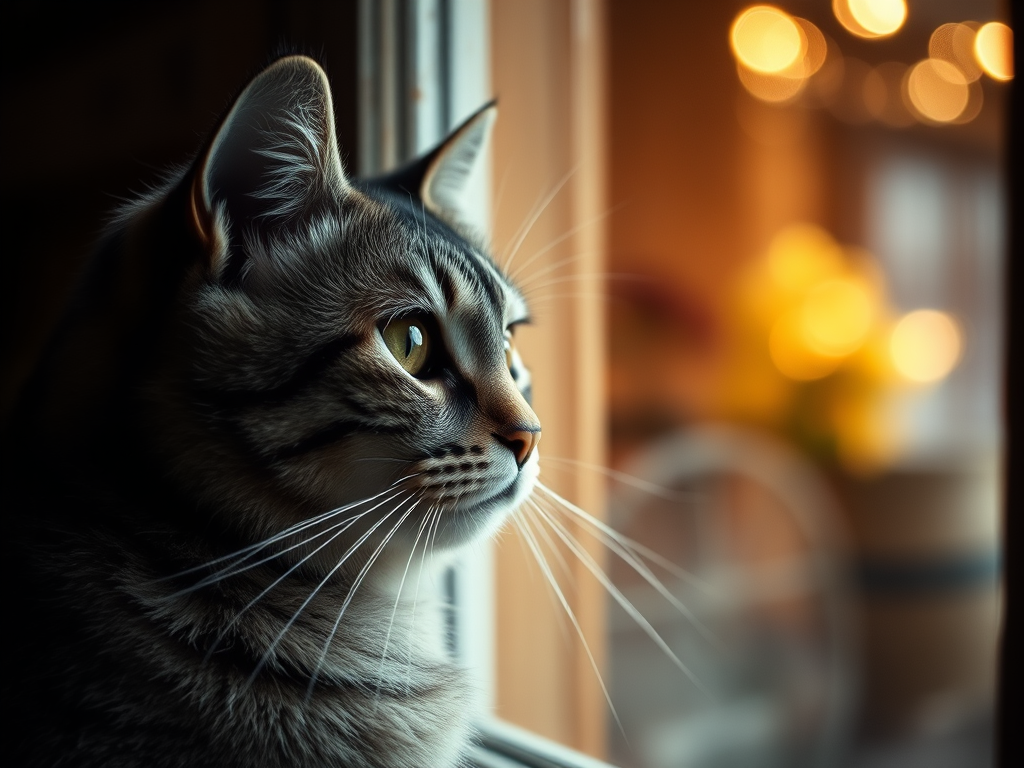
AI image created for this post
One-Time
Monthly
Yearly

Make a one-time or recurring donation to support daily Barnstorming posts

Make a monthly donation

Make a yearly donation

Choose an amount

$10.00
$25.00
$50.00
$5.00
$15.00
$100.00
$5.00
$15.00
$100.00

Or enter a custom amount

$

Your contribution is deeply appreciated to help offset the cost of maintaining an ad-free website.

Your contribution is appreciated.

Your contribution is appreciated.

DonateDonate monthlyDonate yearly
Returning Home Somehow

In the quiet misty morning
When the moon has gone to bed,
When the sparrows stop their singing
And the sky is clear and red,
When the summer’s ceased its gleaming
When the corn is past its prime,
When adventure’s lost its meaning –
I’ll be homeward bound in time

Bind me not to the pasture
Chain me not to the plow
Set me free to find my calling
And I’ll return to you somehow

If you find it’s me you’re missing
If you’re hoping I’ll return,
To your thoughts I’ll soon be listening,
And in the road I’ll stop and turn
Then the wind will set me racing
As my journey nears its end
And the path I’ll be retracing
When I’m homeward bound again

Bind me not to the pasture
Chain me not to the plow
Set me free to find my calling
And I’ll return to you somehow

In the quiet misty morning
When the moon has gone to bed,
When the sparrows stop their singing
I’ll be homeward bound again.

~Marta Keen “Homeward Bound”

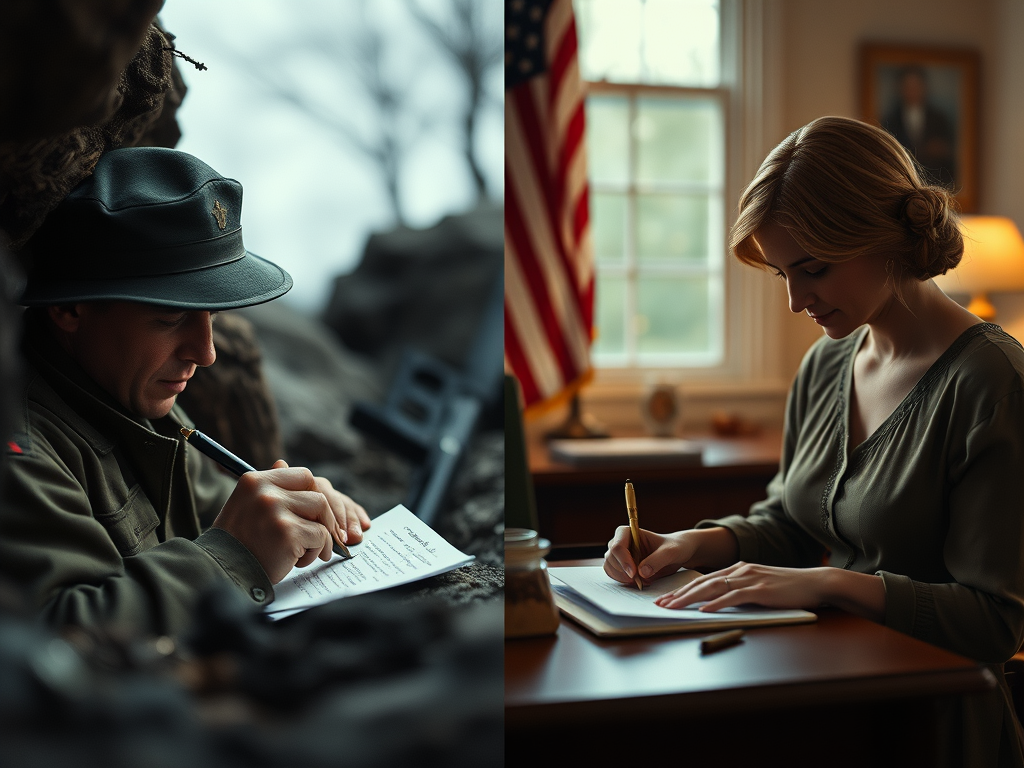
Eighty-two years ago, my parents married on Christmas Eve. It was not a conventional wedding day but a date of necessity, only because a justice of the peace was available to marry a score of war-time couples in Quantico, Virginia, shortly before the newly trained Marine officers were shipped out to the South Pacific to fight in WWII.

When I look at my parents’ young faces – ages 22 and just turned 21 — in their only wedding portrait, I see a hint of the impulsive decision that led to that wedding just a week before my father left for 30 months. They had known each other at college for over a year, had talked about a future together, but with my mother starting a teaching job in a rural Eastern Washington town, and the war potentially impacting all young men’s lives very directly, they had not set a date.

My father put his college education on hold to enlist, knowing that would give him some options he wouldn’t have if drafted, so they went their separate ways as he headed east to Virginia for his Marine officer training, and Mom started her high school teaching career as a speech and drama teacher. One day in early December of 1942, he called her and said, “If we’re going to get married, it’ll need to be before the end of the year. I’m shipping out the first week in January.” Mom went to her high school principal, asked for a two week leave of absence which was granted, told her astonished parents, bought a dress, and headed east on the train with a friend who had received a similar call from her boyfriend.

This was a completely uncharacteristic thing for my overly cautious mother to do, so… it must have been love.

They were married in a brief civil ceremony with another couple as the witnesses. They stayed in Virginia only a couple days and took the train back to San Diego, and my father was shipped out. Just like that. Mom returned to her teaching position and the first three years of their married life was composed of letter correspondence only, with gaps of up to a month during certain island battles when no mail could be delivered or posted.

As I sorted through my mother’s things following her death over a decade ago, I found their war-time letters to each other, stacked neatly and tied together in a box.

In my father’s nearly daily letters home to my mother during WWII, month after month after month, he would say, over and over, while apologizing for the repetition:

“I will come home to you, I will return, I will not let this change me, we will be joined again…”

This was his way of convincing himself even as he carried the dead and dying after island battles: men he knew well and the enemy he did not know. He knew they were never returning to the home they died protecting and to those who loved them.

He shared little of battle in his letters as each letter was reviewed and signed off by a censor before being sealed and sent. This story, however, made it through:

“You mentioned a story of Navy landing craft taking the Marines into Tarawa.  It reminded me of something which impressed me a great deal and something I’m sure I’ll never forget. 

So you’ll understand what I mean I’ll try to start with an explanation.  In training – close order drill- etc.  there is a command that is given always when the men form in the morning – various times during the day– after firing– and always before a formation is dismissed.  The command is INSPECTION – ARMS.  On the command of EXECUTION- ARMS each man opens the bolt of his rifle.  It is supposed to be done in unison so you hear just one sound as the bolts are opened.  Usually it is pretty good and sounds O.K.

Just to show you how the morale of the men going to the beach was – and how much it impressed me — we were on our way in – I was forward, watching the beach thru a little slit in the ramp – the men were crouched in the bottom of the boat, just waiting.  You see- we enter the landing boats with unloaded rifles and wait till it’s advisable before loading.  When we got about to the right distance in my estimation I turned around and said – LOAD and LOCK – I didn’t realize it, but every man had been crouching with his hand on the operating handle and when I said that — SLAM! — every bolt was open at once – I’ve never heard it done better – and those men meant business when they loaded those rifles. 

A man couldn’t be afraid with men like that behind him.”

My father did return home to my mother after nearly three years of separation. He finished his college education to become an agriculture teacher to teach others how to farm the land while he himself became bound to the pasture and chained to the plow.

He never forgot those who died, making it possible for him to return home. I won’t forget either.

My mother and father could not have foretold the struggles that lay ahead for them. The War itself seemed struggle enough for the millions of couples who endured the separation, the losses and grieving, as well as the eventual injuries–both physical and psychological.  It did not seem possible that beyond those harsh and horrible realities, things could go sour after reuniting.

The hope and expectation of happiness and bliss must have been overwhelming, and real life doesn’t often deliver.  After raising three children, their 35 year marriage fell apart with traumatic finality.  When my father returned home (again) over a decade later, asking for forgiveness, they remarried and had five more years together before my father died in 1995.

Christmas is a time of joy, a celebration of new beginnings and new life when God became man, humble, vulnerable and tender. But it also gives us a foretaste for the profound sacrifice made in giving up this earthly life, not always so gently.

As I peer at my father’s and mother’s faces in their wedding photo, I remember those eyes, then so trusting and unaware of what was to come.  I find peace in knowing they both have returned home to behold the Light, the Salvation and the Glory~~the ultimate Christmas~~in His presence.

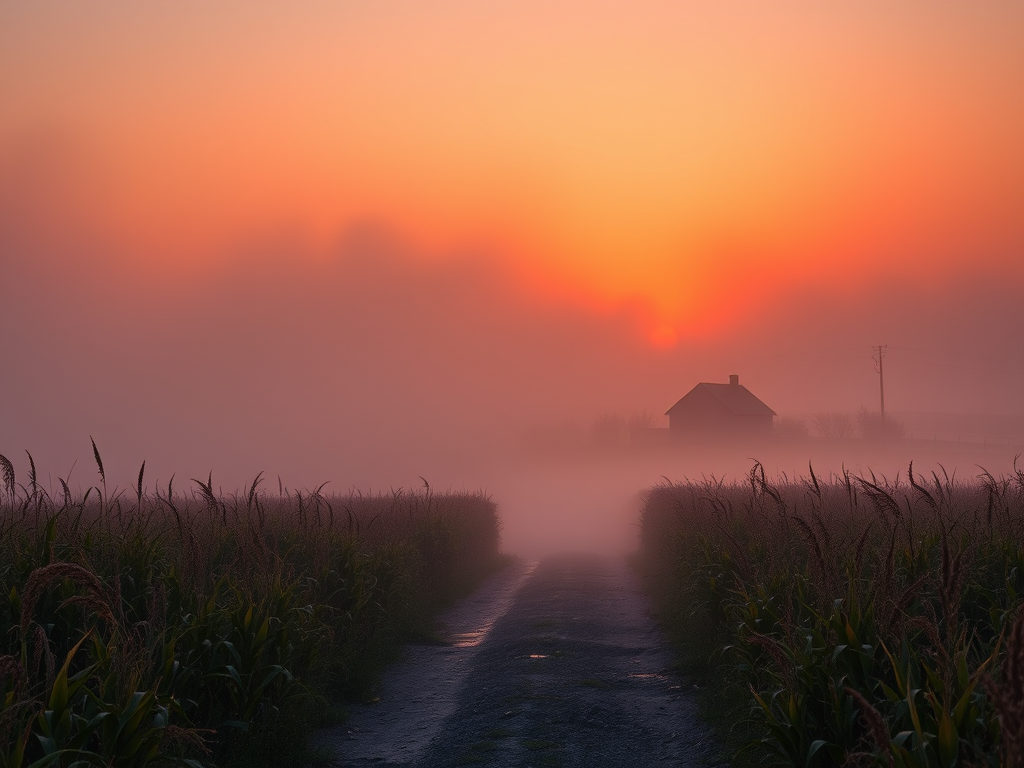
AI image created for this post

One-Time
Monthly
Yearly

Make a one-time or recurring donation to support daily Barnstorming posts

Make a monthly donation

Make a yearly donation

Choose an amount

$10.00
$25.00
$50.00
$5.00
$15.00
$100.00
$5.00
$15.00
$100.00

Or enter a custom amount

$

Your contribution is deeply appreciated.

Your contribution is appreciated.

Your contribution is appreciated.

DonateDonate monthlyDonate yearly

We Will See What We Can Do

I wanted a horse. This was long after
we sold the work horses, and I was feeling

restless on the farm. I got up early
to help my father milk the cows, talking

a blue streak about TV cowboys
he never had time to see and trying to

convince him that a horse wouldn’t cost
so much and that I’d do all the work.

He listened while he leaned his head
against the flank of a Holstein, pulling

the last line of warm milk into
the stainless bucket. He kept listening

while the milk-machine pumped like an engine,
and the black and silver cups fell off and

dangled down, clanging like bells when he
stepped away, balancing the heavy milker

against the vacuum hose and the leather belt.
I knew he didn’t want the trouble

of a horse, but I also knew there was nothing
else I wanted the way I wanted a horse—

another way of saying I wanted
to ride into the sunset and (maybe)

never come back—I think he knew that too.
We’ll see, he said, we’ll see what we can do.
Joyce Sutphen – “What Every Girl Wants”

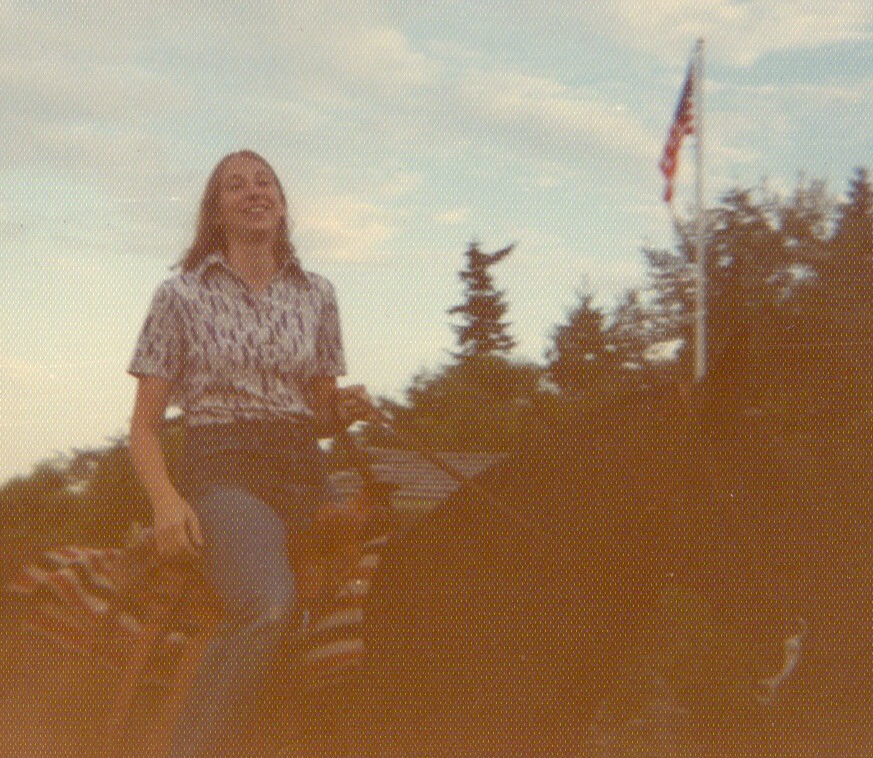
I once was a skinny freckled eleven year old girl who wanted nothing more than to have her own horse. Every inch of my bedroom wall had posters of horses, all my shelves were filled with horse books and horse figurines and my bed was piled with stuffed horses.

I suffered an extremely serious case of horse fever.

I had learned to ride my big sister’s horse while my sister was off to college, but the little mare had pushed down a hot wire to get into a field of spring oats which resulted in a terrible case of colic and had to be put down. I was inconsolable until I set my mind to buy another horse. We had only a small shed, not a real barn, and no actual fences other than the electric hot wire. Though I was earning money as best I could picking berries and babysitting, I was a long way away from the $150 it would take to buy a trained horse back in 1965.

I pestered my father about my dreams of another horse, and since he was the one to dig the hole for my sister’s horse to be buried, he was not enthusiastic.  “We’ll see,”  he said. “We will see what we can do.”

So I dreamed my horsey dreams, mostly about golden horses with long white manes, hoping one day those dreams might come true.

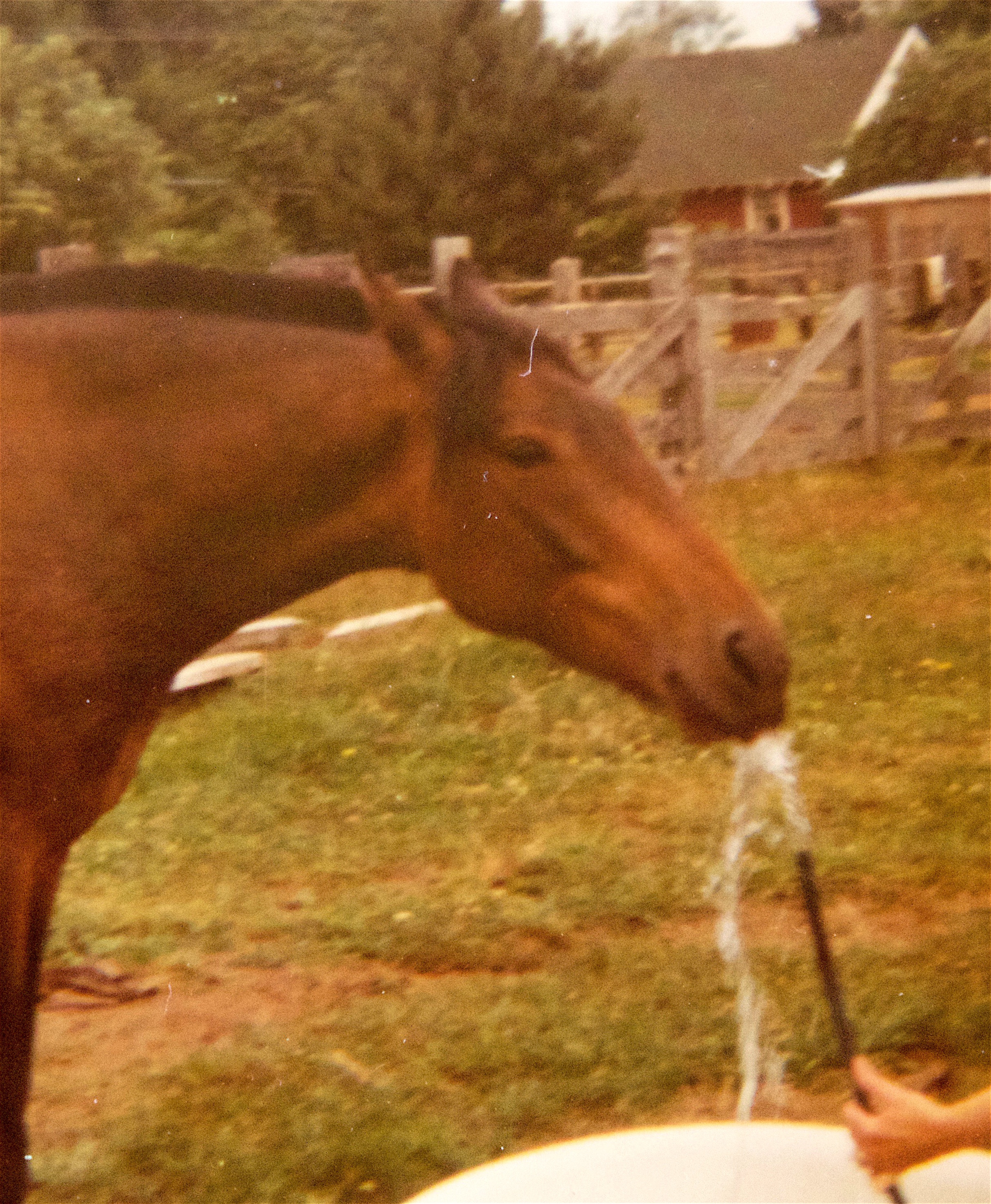
In fall 1965, the  local radio station KGY’s Saturday morning horse news program announced their “Win a Horse” contest. I knew I had to try. The prize was a weanling bay colt, part Appaloosa, part Thoroughbred, and the contest was only open to youth ages 9 to 16 years old. All I had to do was write a 250 word or less essay on “Why I Should Have a Horse”.

I worked and worked on my essay, crafting the right words and putting all my heart into it, hoping the judges would see me as a worthy potential owner. My parents took me to visit the five month old colt named “Prankster”, a fuzzy engaging little fellow who was getting plenty of attention from all the children coming to visit him, and that visit made me even more determined.

When I read these words now, I realize there is nothing quite like the passion of an eleven year old girl:

“Why I Should Have a Horse”

When God created the horse, He made one of the best creatures in the world. Horses are a part of me. I love them and want to win Prankster for the reasons which follow:

To begin with, I’m young enough to have the time to spend with the colt.  My older sister had a horse when she was in high school and her school activities kept her too busy to really enjoy the horse.  I’ll have time to give Prankster the love and training needed.

Another reason is that I’m shy.  When I was younger I found it hard to talk to anybody except my family.  When my sister got the horse I soon became a more friendly person.  When her horse recently died (about when Prankster was born), I became very sad.  If I could win that colt, I couldn’t begin to describe my happiness. 

Also I believe I should have a horse because it would be a good experience to learn how to be patient and responsible while teaching Prankster the same thing. 

When we went to see Prankster, I was invited into the stall to brush him. I was never so thrilled in my life! The way he stood there so majestically, it told me he would be a wonderful horse. 

If I should win him, I would be the happiest girl alive.  I would work hard to train him with love and understanding. If I could only get the wonderful smell and joy of horses back in our barn!

I mailed in my essay and waited.

Fifty nine years ago on this day, November 27, 1965, my mother and I listened to the local horse program that was always featured on the radio at 8 AM on Saturday mornings. They said they had over 300 essays to choose from, and it was very difficult for them to decide who the colt should go to. I knew then I didn’t have a chance. They had several consolation prizes for 2nd through 4th place, so they read several clever poems and heartfelt essays, all written by teenagers.  My heart was sinking by the minute.

The winning essay was next. The first sentence sounded very familiar to me, but it wasn’t until several sentences later that we realized they were reading my essay, not someone else’s. My mom was speechless, trying to absorb the hazards of her little girl owning a young untrained horse.

I woke up my dad, who was sick in bed with an early season flu bug. He opened one eye, looked at me, and said, “I guess I better get a fence up today, right?” Somehow, fueled by the excitement of a daughter whose one wish had just come true, he pulled himself together and put up a wood corral that afternoon, despite feeling so miserable.

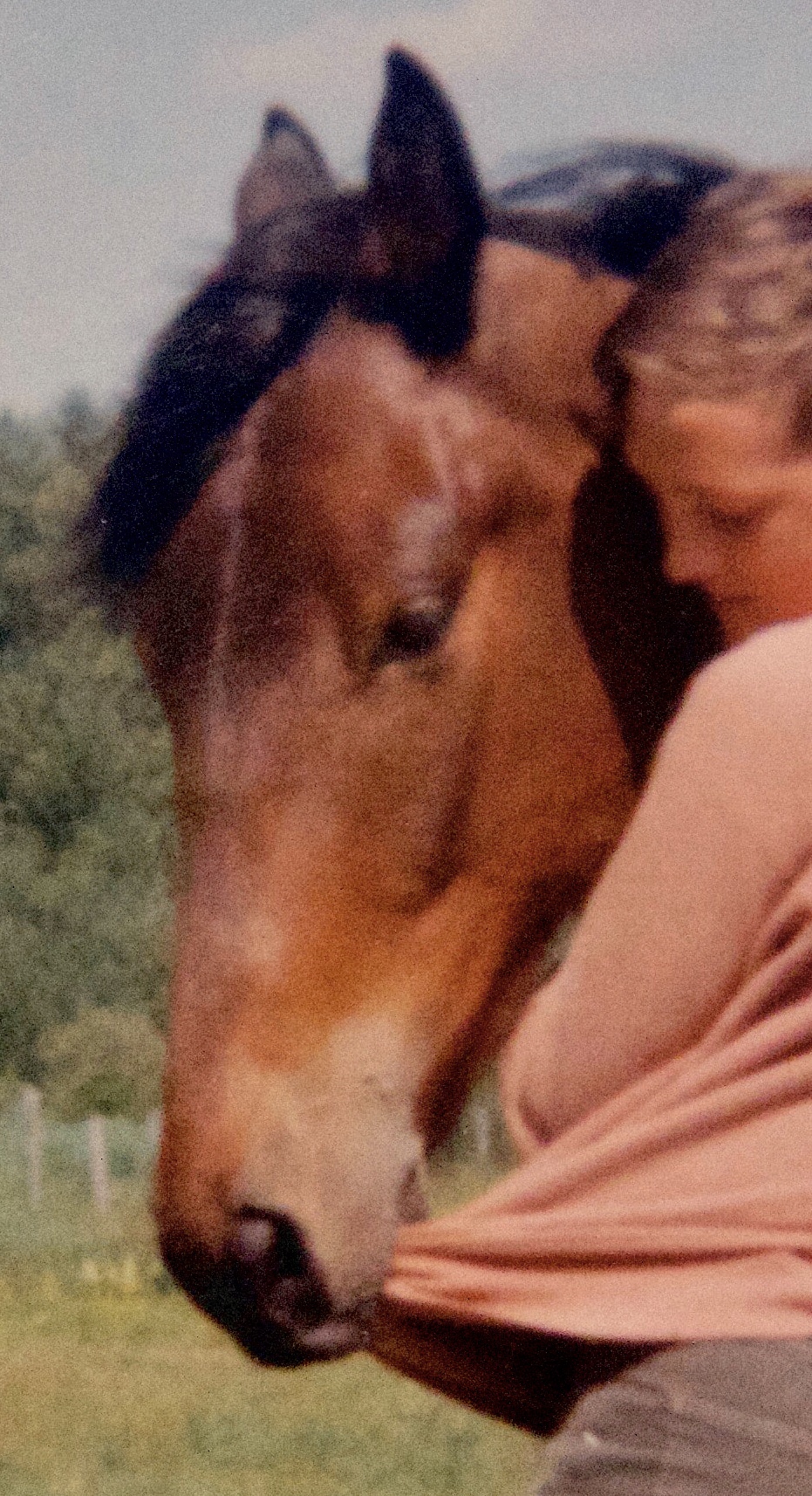
That little bay colt came home to live with me the next day. Over the next few months he and I did learn together, as I checked out horse training books from the library, and joined a 4H group with helpful leaders to guide me. I made plenty of mistakes along the way, learning from each one, including those that left behind scars I still bear.

Prankster was a typical adolescent gelding who lived up to his name — full of mischief with a sense of humor and a penchant for finding trouble, but he was mine and that was all that mattered.

…that and a dad who saw what he needed to do for his passionate kid.  I’ll never forget how he showed his love for me by doing what was needed in that moment.

AI image created for this post
One-Time
Monthly
Yearly

Make a one-time or recurring donation to support daily Barnstorming posts

Make a monthly donation

Make a yearly donation

Choose an amount

$10.00
$25.00
$50.00
$5.00
$15.00
$100.00
$5.00
$15.00
$100.00

Or enter a custom amount

$

Your contribution is deeply appreciated.

Your contribution is appreciated.

Your contribution is appreciated.

DonateDonate monthlyDonate yearly
Such a Full Tide

We walked downhill
to the beach, her hand in mine,
small step after small step.
She said Hi to the doggie on the leash,
Hi Mommy to a woman passing
on the street, Hi Daddy to a bearded man.
On the sand, she stared transfixed
at the water, the slight waves,
the tide not yet pulling out.
She looked up toward a flap of wings.
Bird, I said, pointing at the seagull,
and she mimicked, Bird,
then turned her gaze back
to the waves’ slow slapping.
Later I sat, looking at trees below me,
a hint of haze burning off the far bay,
the world busy working and sailing,
waking, while I sat waiting as Evie napped
that quiet Maine morning,
the full tide of grandmotherhood

lapping my shore.
~Laura Foley, “Full Tide” from It’s This 

They each carried a balloon from a special event for kids and their families.

It had been a morning of our family being together, just because. Being a grandparent needs no other reason other than “just because.”

Big sister was saying how she planned to take her balloon to school on Monday to show her friends. She was enjoying the balloon’s bobbing and weaving in the air … until suddenly it popped, causing her to jump and then she had nothing left but tatters in her hand.

Her face crumpled and the tears began to flow.

Little brother gripped his balloon more tightly, looking at his sister’s tears and worrying the same thing might happen to his balloon. His face contorted, ready to cry right along with her. And then there was a moment of clarity and insight in his eyes.

He handed his balloon to her. He said, “here, you can have mine.” And though he was clearly sad at the thought of having no balloon himself, his eyes were shining with proud tears.

He had discovered what it meant to sacrifice, to comfort and care for someone he loved.

She was speechless. She held his balloon gently, struggling to know how to respond. If it was even possible, she loved him so much more in that moment.

So their parents said to her brother, “we think that gift deserves stopping for a hot chocolate on the way home.”

Big sister looked at her parents, looked again at her little brother, and handed the balloon back to him, saying “why don’t we share?”

Hot chocolate makes all things wonderful and cozy and better, when shared.


Especially for weeping, laughing, full-to-the-brim-with-love grandparents.

AI image created for this post
One-Time
Monthly
Yearly

Make a one-time or recurring donation to support daily Barnstorming posts

Make a monthly donation

Make a yearly donation

Choose an amount

$10.00
$25.00
$50.00
$5.00
$15.00
$100.00
$5.00
$15.00
$100.00

Or enter a custom amount

$

Your contribution is deeply appreciated.

Your contribution is appreciated.

Your contribution is appreciated.

DonateDonate monthlyDonate yearly
Dreaming of Home

In great deeds, something abides. 
On great fields, something stays. 
Forms change and pass; bodies disappear; 
but spirits linger, to consecrate ground for the vision-place of souls. 
And reverent men and women from afar, 
and generations that know us not and that we know not of, 
heart-drawn to see where and by whom great things were suffered and done for them, shall come to this deathless field, 
to ponder and dream; and lo!

the shadow of a mighty presence shall wrap them in its bosom, 
and the power of the vision pass into their souls. 
This is the great reward of service. 
To live, far out and on, in the life of others;
this is the mystery of the Christ,

–to give life’s best for such high sake
that it shall be found again unto life eternal.

~Major-General Joshua Chamberlain, Gettysburg, Pennsylvania 1889

The sunlight now lay over the valley perfectly still.
I went over to the graveyard beside the church
and found them under the old cedars…
I am finding it a little hard to say that I felt them resting there, but I did…

I saw that, for me, this country would always be populated
with presences and absences,
presences of absences,
the living and the dead.
The world as it is

would always be a reminder
of the world that was,
and of the world that is to come.
~Wendell Berry in Jayber Crow

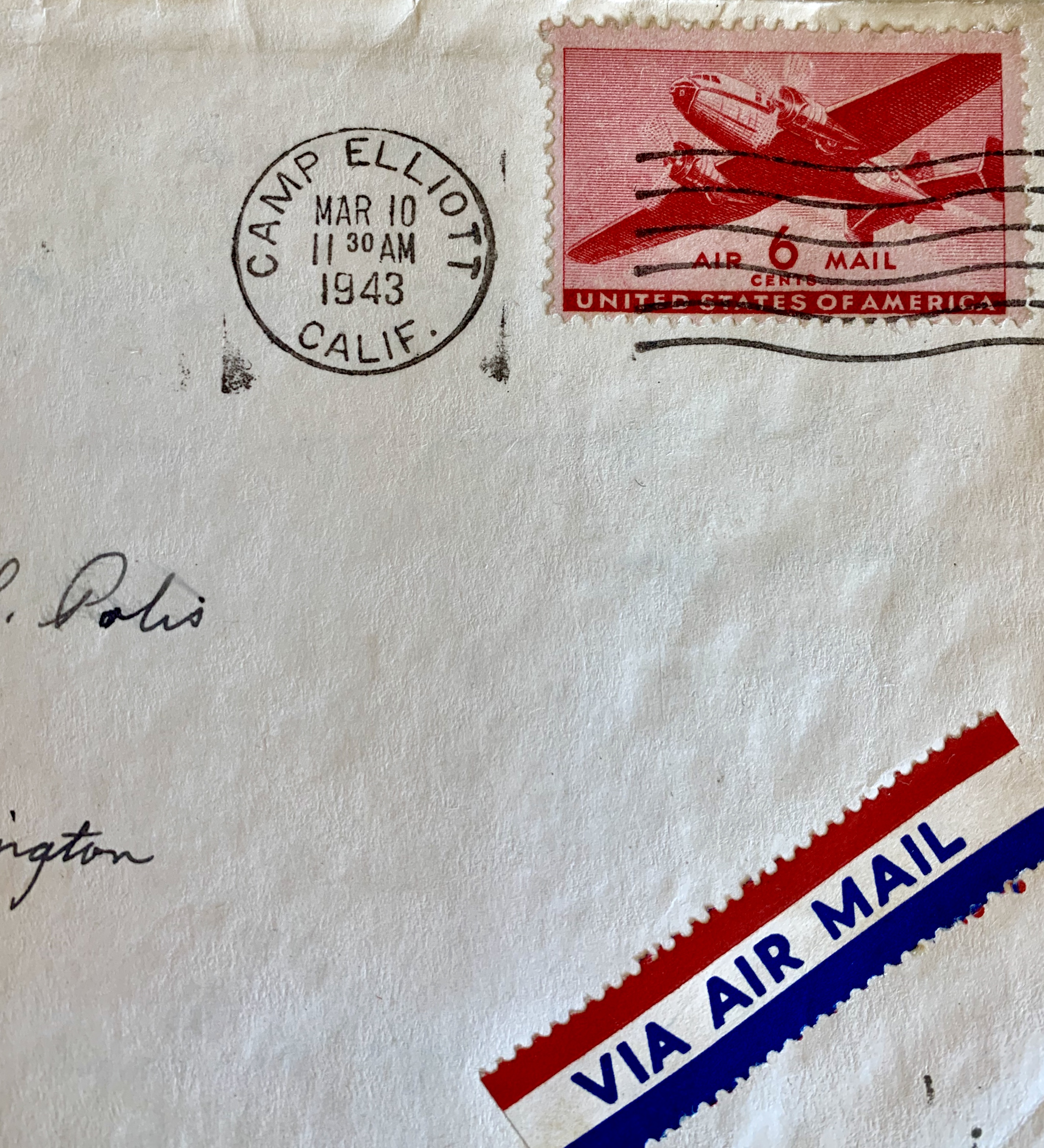
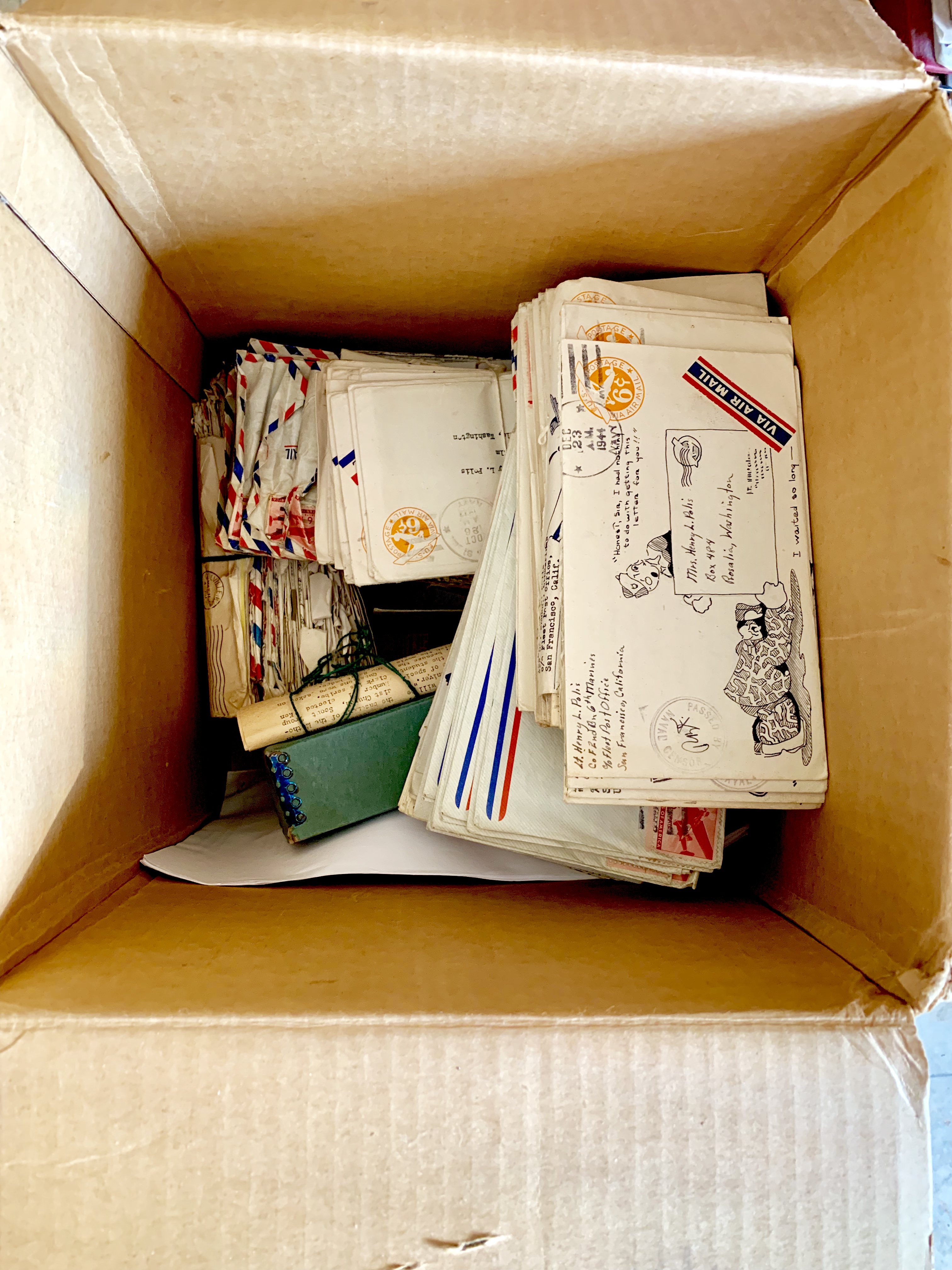
A box of over 700 letters, exchanged between my parents from late 1941 to mid-1945, sat unopened for decades until last year. I started reading.

My parents barely knew each other before marrying quickly on Christmas Eve 1942 – the haste due to the uncertain future for a newly trained Second Lieutenant in the Marine Corps. They only had a few weeks together before she returned home to her rural teaching position and he readied himself to be shipped out for the island battles to come.

They had no idea they would not see each other for another 30+ months or even see each other again at all. They had no idea their marriage would fall apart 35 years later and they would reunite a decade after the divorce for five more years together.

The letters do contain the long-gone but still-familiar voices of my parents, but they are the words and worries of youngsters of 20 and 21, barely prepared for the horrors to come from war and interminable waiting. When he was fighting battles on Tarawa, Saipan, and Tinian, no letters or news would be received for a month or more, otherwise they tried to write each other daily, though with minimal news to share due to military censorship. They speak mostly of their desire for a normal life together rather than a routine centered on mailbox, pen and paper and waiting, lots and lots of waiting.

I’m not sure what I hoped to find in these letters. Perhaps I hoped for flowery romantic whisperings and the poetry of longing and loneliness. Instead I am reading plain spoken words from two people who desperately wanted to have a home together. They somehow made it through those awful years to make my sister and brother and myself possible.

Our inheritance is contained in this musty box of words bereft of poetry. But decades later my heart is moved by these letters – I carefully refold them back into their envelopes and replace them gently back in order. A six cent airmail stamp – in fact hundreds and hundreds of them – was a worthwhile investment in the future, not only for themselves and their family to come, but for generations of U.S. citizens who tend to take their freedom for granted.

Thank you, Dad and Mom, for what you gave up to make today possible.

AI image created by this post

I hear the mountain birds
The sound of rivers singing
A song I’ve often heard
It flows through me now
So clear and so loud
I stand where I am
And forever I’m dreaming of home
I feel so alone, I’m dreaming of home

It’s carried in the air
The breeze of early morning
I see the land so fair
My heart opens wide
There’s sadness inside
I stand where I am
And forever I’m dreaming of home
I feel so alone, I’m dreaming of home

This is no foreign sky
I see no foreign light
But far away am I
From some peaceful land
I’m longing to stand
A hand in my hand
…forever I’m dreaming of home
I feel so alone, I’m dreaming of home
~Lori Barth and Philippe Rombi “I’m Dreaming of Home”

One-Time
Monthly
Yearly

Make a one-time or recurring donation to support daily Barnstorming posts

Make a monthly donation

Make a yearly donation

Choose an amount

$10.00
$25.00
$50.00
$5.00
$15.00
$100.00
$5.00
$15.00
$100.00

Or enter a custom amount

$

Your contribution is deeply appreciated.

Your contribution is appreciated.

Your contribution is appreciated.

DonateDonate monthlyDonate yearly

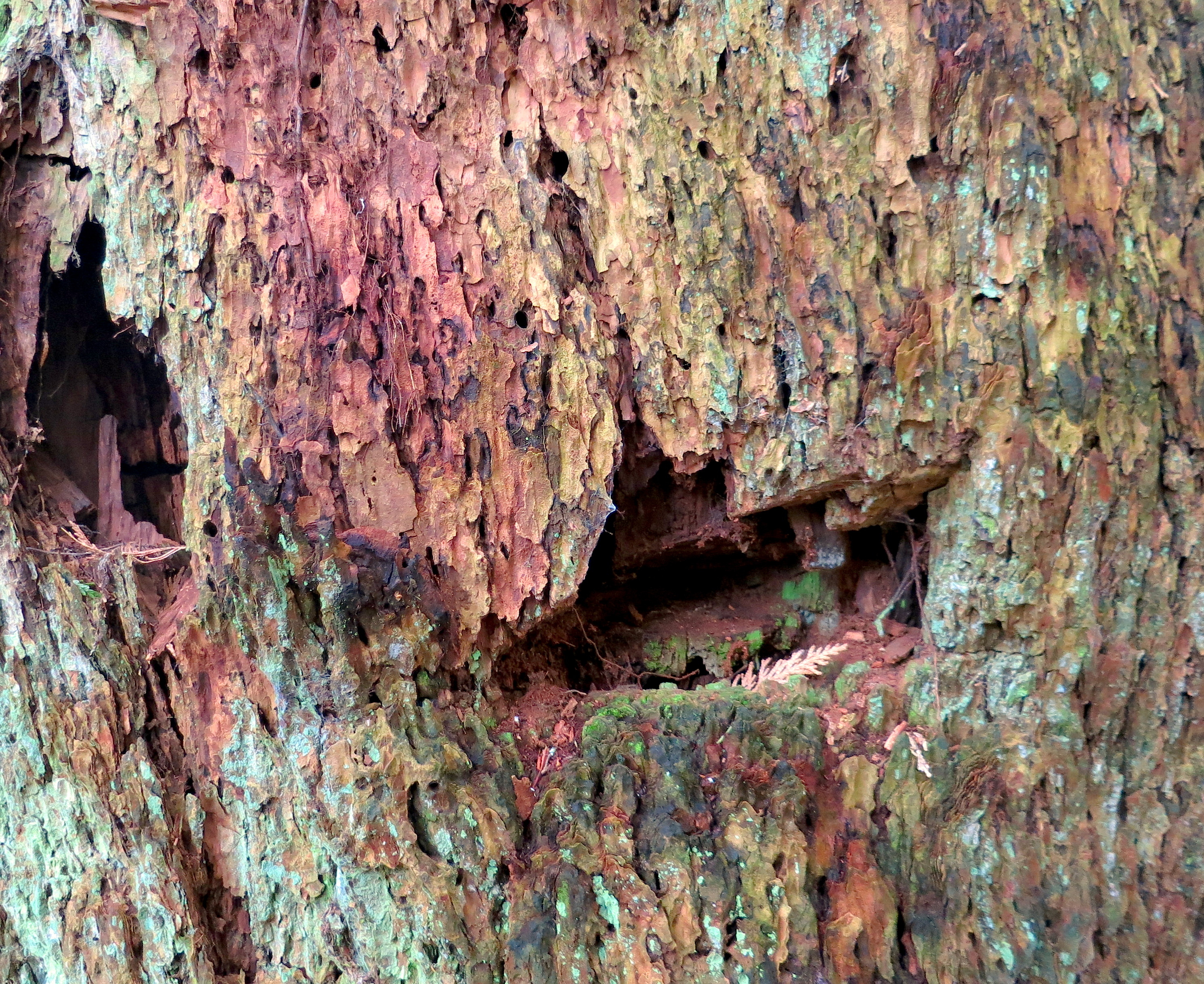
Everything Became a Face

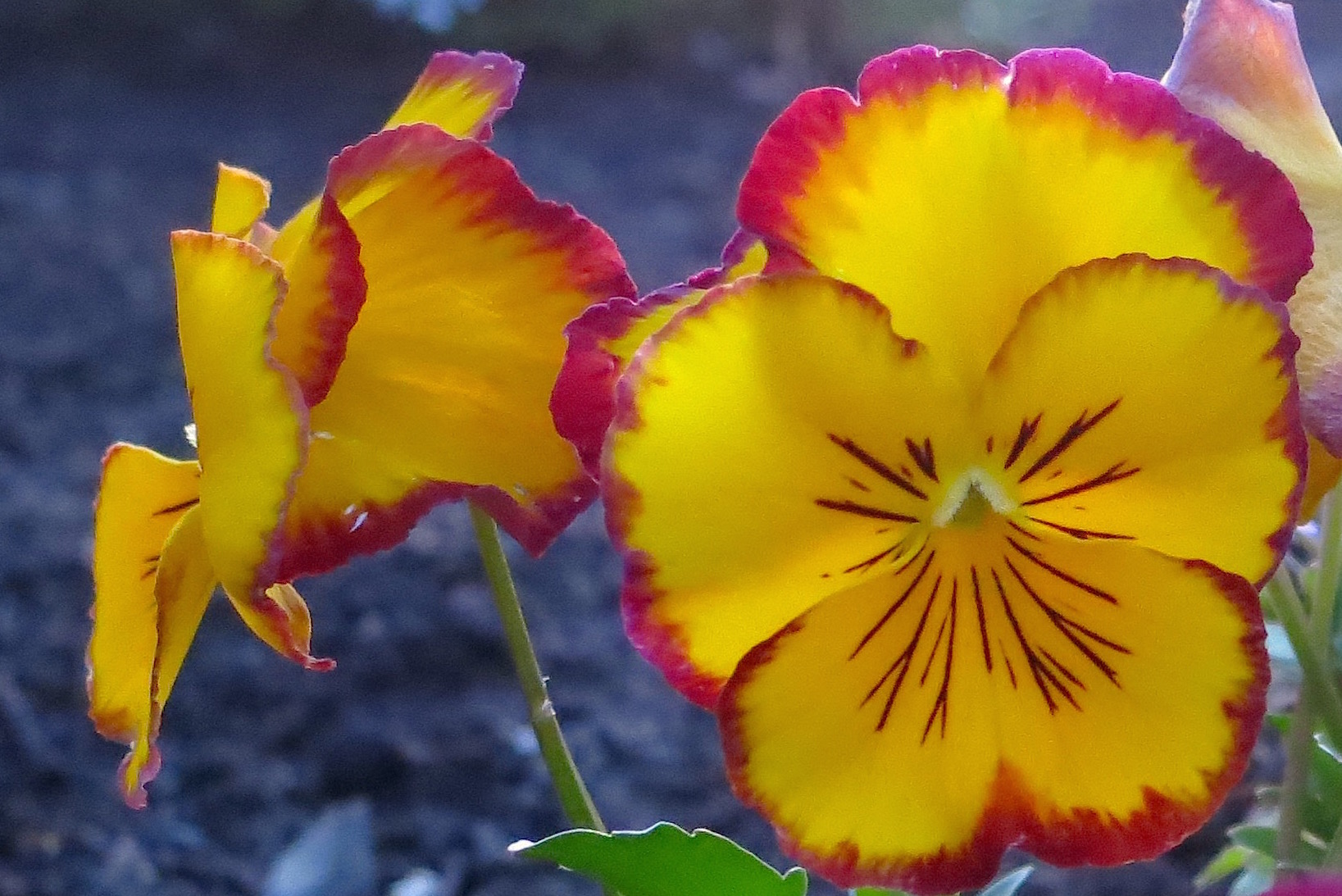
The face among the flowers was not a face but a flower
that blurred the edge of comprehension until everything
became a face, everything had eyes, everything had a mind
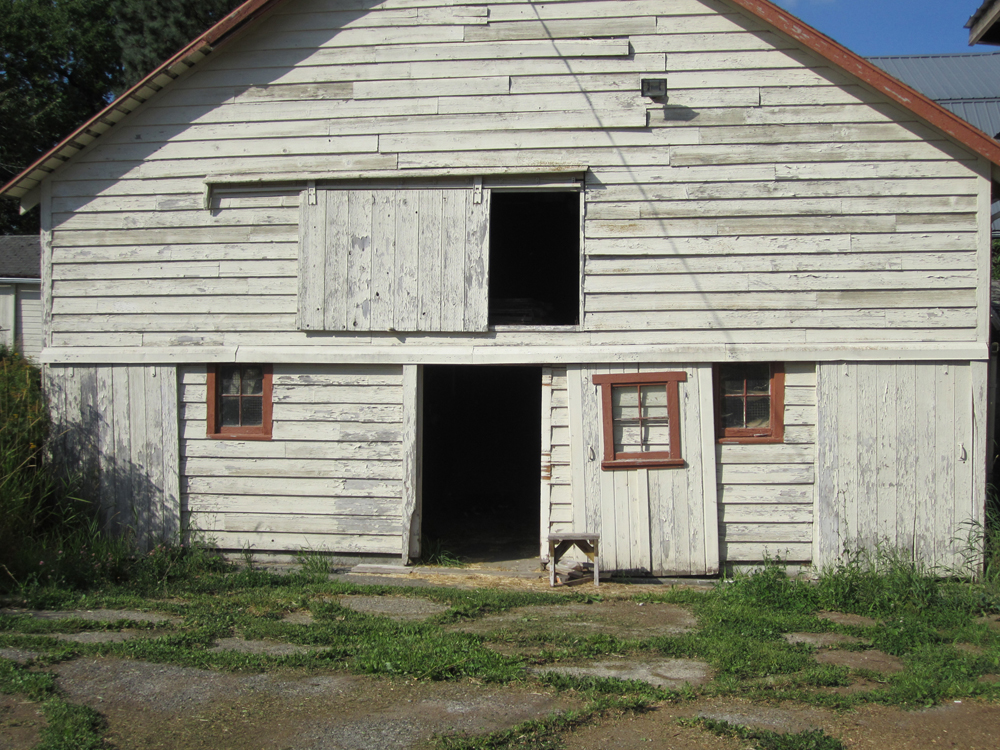
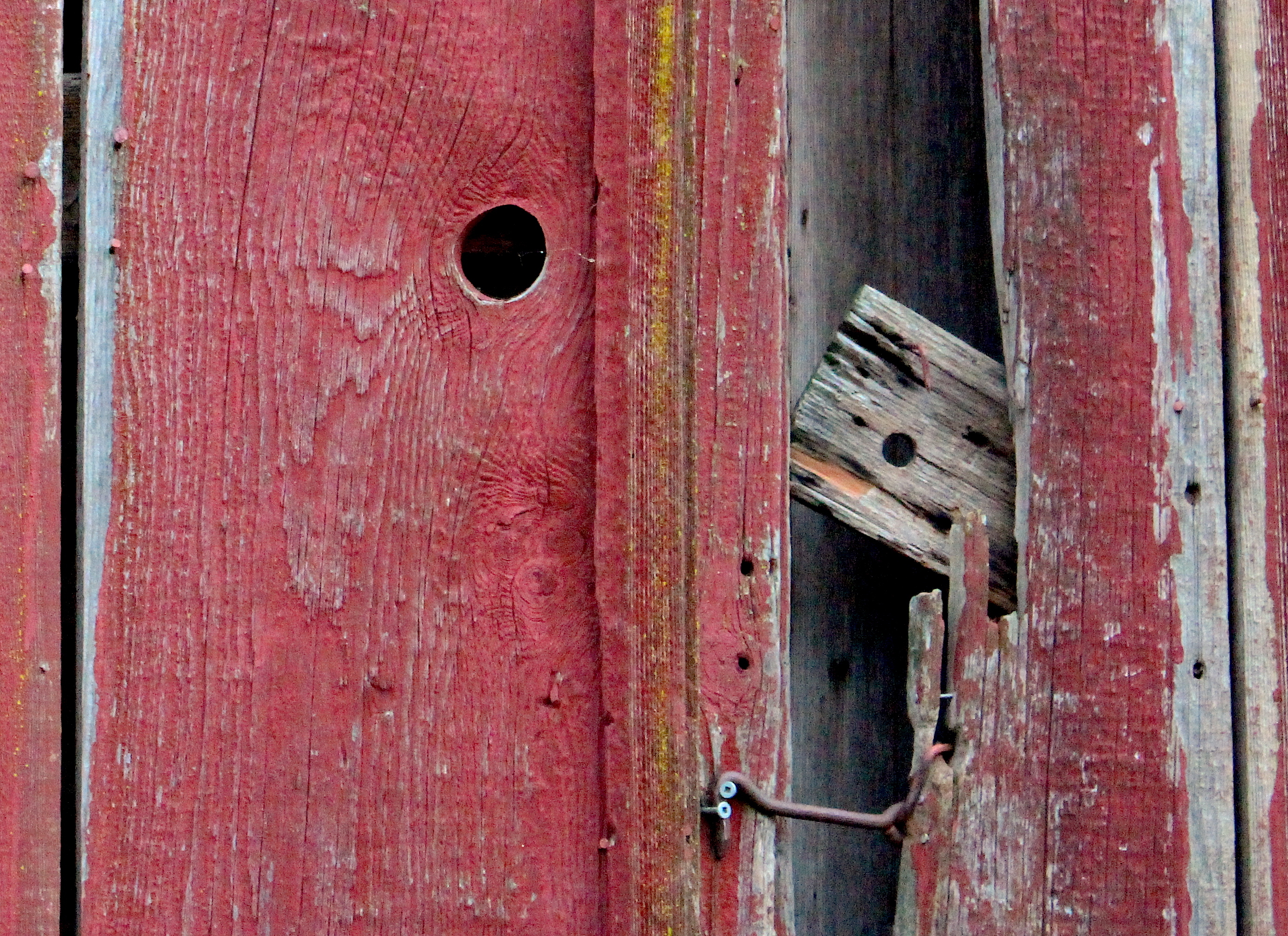
with secret thoughts inside, and so the barn with its smudged
windows stood aware of impatience and time, and the trowel
with its small head in the dirt plotted how not to be found,
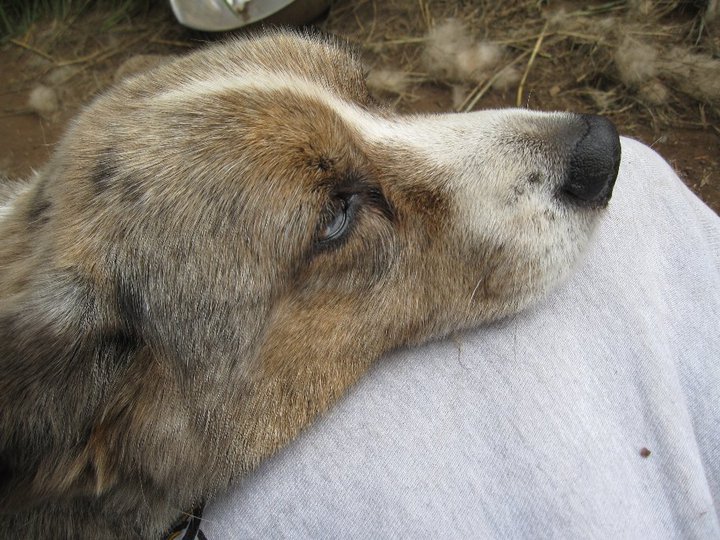
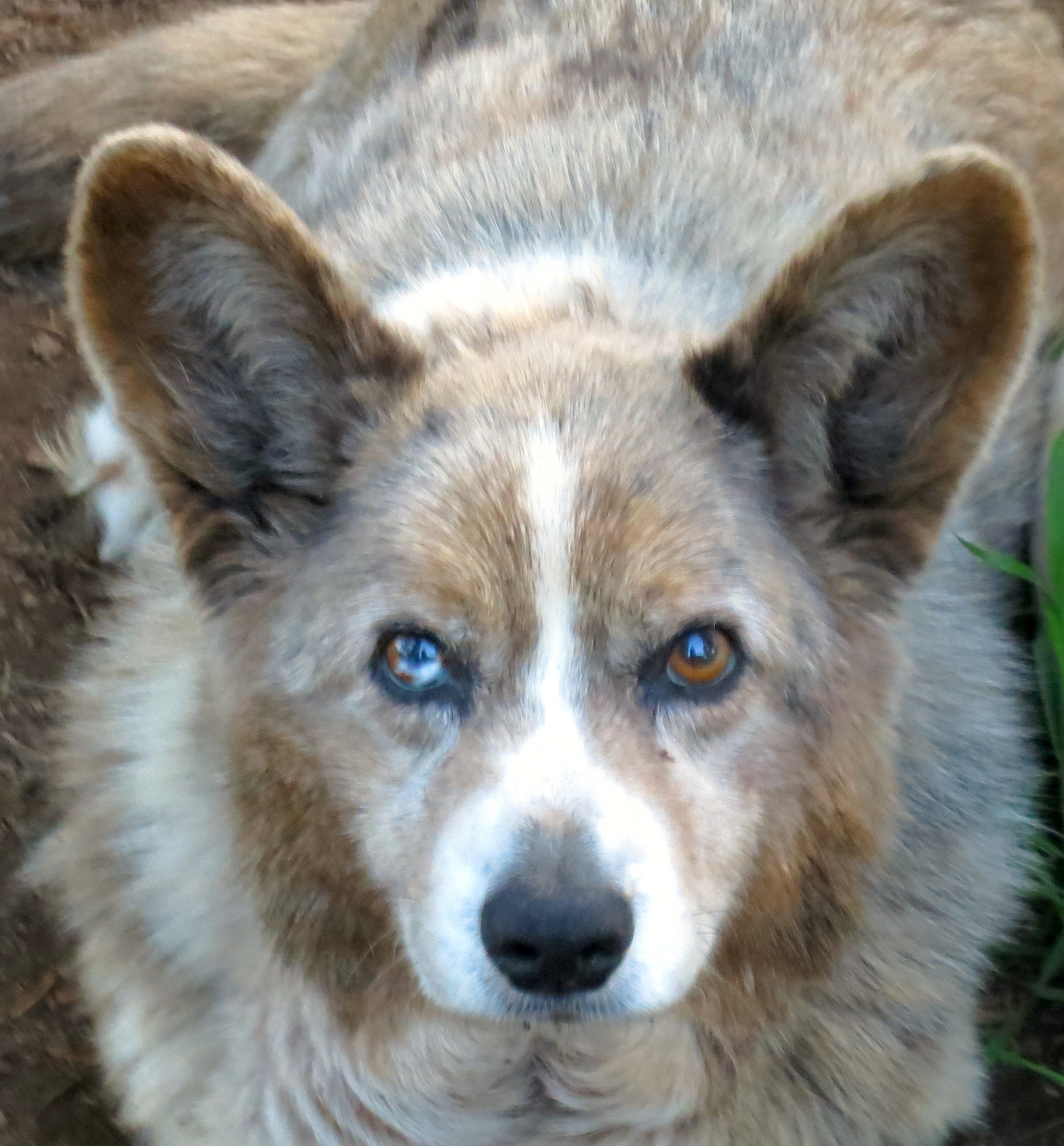
and the old dog, who of course had her own old grey face,
came to have another one, and shifted and sighed on her rug
while thinking about philosophy and the stillness of God,
and then the depths of the afternoons she had passed alone
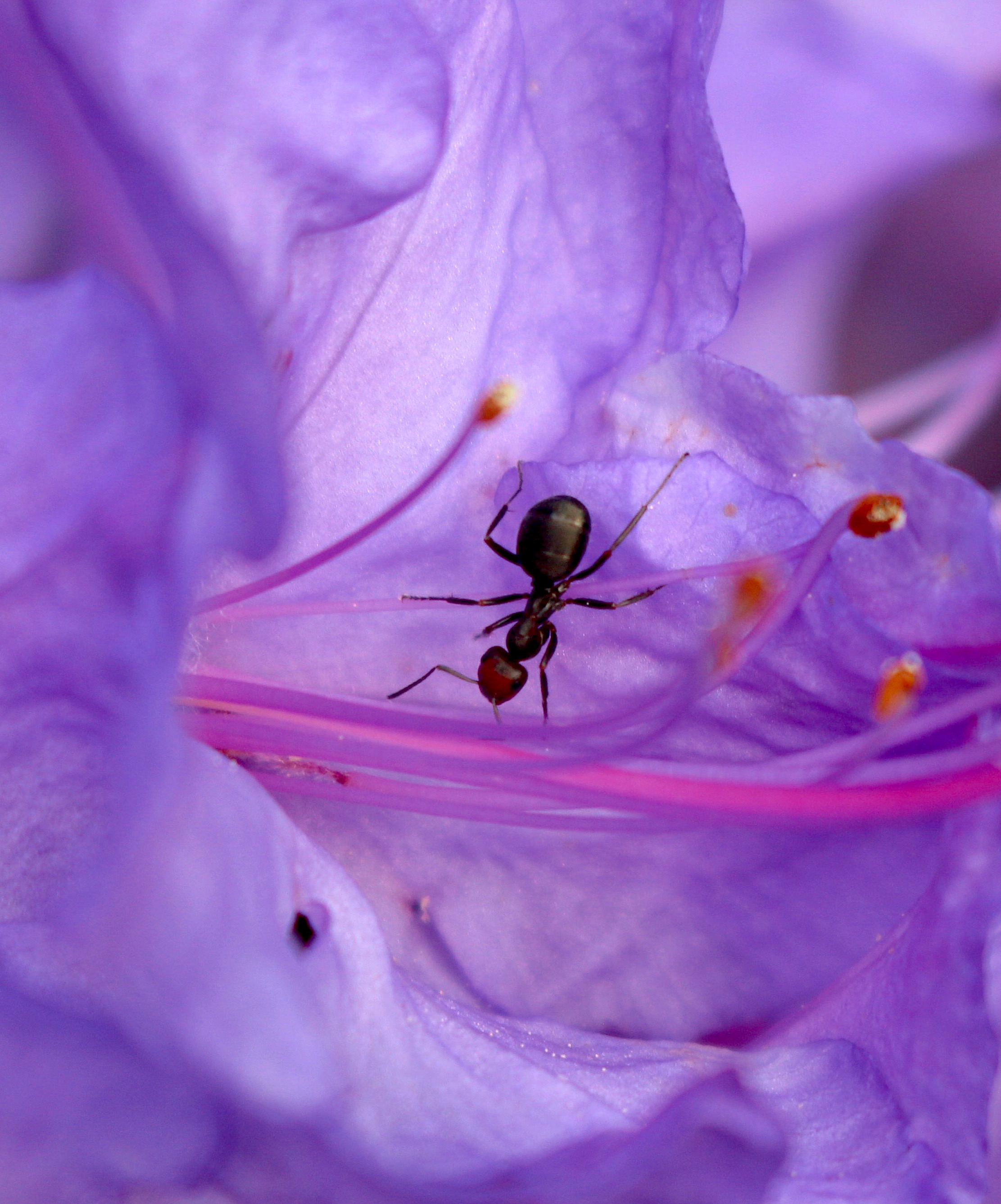
crossed into my heart, and the ants climbing the table stopped
and looked up, and I fell away blind into a softer knowing
as if into the flowers who took me as one of their own.

~Annie Lighthart, “Fluency” from Pax

Newborn babies, despite their hazy vision, will lock their gaze onto a face, and begin to smile back within a few weeks of life. They reciprocate because they are wired to respond, which reinforces a parent to smile back at their adoring and adorable baby.

So it is no wonder we see faces in all sorts of places as we seek reassurance for ourselves, that yes — we belong here. In fact, we are created to reflect God’s image. He knows us and recognizes us.

We naturally hope the rest of the world will smile back at us.

One-Time
Monthly
Yearly

Make a one-time or recurring donation to support daily Barnstorming posts

Make a monthly donation

Make a yearly donation

Choose an amount

$10.00
$25.00
$50.00
$5.00
$15.00
$100.00
$5.00
$15.00
$100.00

Or enter a custom amount

$

Your contribution is deeply appreciated.

Your contribution is appreciated.

Your contribution is appreciated.

DonateDonate monthlyDonate yearly
Helpless Prayer

I pray because I can’t help myself.
I pray because I’m helpless.
I pray because the need flows out of me all the time —

waking and sleeping.
It doesn’t change God — it changes me.

~attributed to C.S. Lewis in “Shadowlands”

A recovering Faye with her sister Merry

Last week, on May 1, I found a surprise hanging on our front door – a little May Day basket full of little perennial blooms, along with a cheery message and a rainbow sticker. It hung from the door handle as a symbol of spring renewal, as well as a bit of a mystery – the flowers came with no hint of who had left them.

So I did a little sleuthing (actually A LOT of sleuthing) and found out they were delivered by our nearby neighbor Faye, who turned 11 just last week. She has a very special history some of you may remember:

Nine years ago, on this Barnstorming blog, I wrote about our little neighbor, two year old Faye, sickened by E.Coli 0157 infection/toxin to the point of becoming critically ill with Hemolytic Uremic Syndrome (plummeting cell counts and renal failure requiring dialysis to keep her alive).  My original post about her illness is found here. I asked for your prayers on her (and others’) behalf.

At the worst point of her hospitalization at Seattle Children’s, when the doctors were sounding very worried on her behalf, Faye’s mother Danyale, in the midst of her helplessness, wrote to our Wiser Lake Chapel Pastor Bert Hitchcock with a plea for prayers from our church.

Here is how Pastor Bert responded to Danyale and her husband Jesse who remained at home, caring for their four other children:

“I understand that Faye (and everyone dealing with her) is fighting for her life. And that’s the way I am praying: that God in his merciful power, would deliver her, even if her condition looks hopeless.

If you were able to be in church this morning, you might hear my sense of urgency, for I have chosen this benediction, with which to close the service — and I give it to you right now, from the mouth of our Lord:

Jesus said: “Do not be afraid, Danyale!
I am the First and the Last.
I am the Living One.
I died, but look – I am alive forever and ever!
And I hold the keys of death and the grave.

Neither you nor I know how this will turn out — the possibilities are terrifying. But we do know who holds the keys of life and health and death; He is the Life-giver, who heals all our diseases — nothing can rip our lives (or little Faye’s life) out of His hands. And, when He does allow these bodies to give out, He promises to give us glorious new life, safe forever in His presence. These are not pious platitudes; these are the rock-hard promises of the one who loves us more than life, and who is absolutely in control of what is happening today.

Safe in the arms of Jesus,
Safe on His gentle breast;
There by His love o’ershaded,
Sweetly my soul shall rest.

I’m praying for you all; and your Chapel Family will be praying this morning, as we gather in the Lord’s presence.

Love you, and yours, Danyale,
Pastor Bert Hitchcock

That week, Faye’s renal failure reversed itself. She was able to return home with normal kidney function and improved cell counts, having also survived a bout with pneumonia.

Here is what her mother wrote to share with you all once she came home:

“Dear Friends and readers of Barnstorming,

Some of you we know, but so many of you we do not. Whichever the case, Emily tells me you have prayed for our little girl, Faye, throughout her sickness and into her recovery. What can parents say when people–many of whom we may never be privileged to meet in this life–have come alongside us to beseech the Lord for our daughter’s life and pray for her healing? Thank you. Thank you!

Faye is doing so well; stronger every day, more and more herself! It is wonderful to see.

This week we head back down to Seattle Children’s for a check up–we’ll get to say hello to the good folks who saw her through her sickness. A special stop will be made on the dialysis unit to see Nurse Kathy, a favorite of Faye’s. We anticipate a good report!

Thanks again for your love and support, far and wide. Truly astounding.
Danyale and Jesse, for Faye, too

—————————————

Now Faye is a delightful, healthy eleven year old girl who secretly blessed me with a basket of May Day flowers. She doesn’t remember the crisis that nearly took her from us nine years ago, but she does know about God’s rainbow promises. And she certainly knows about the power of prayer in the face of helplessness.

As Pastor Bert said: our faith in an unchanging and steadfast God who loves and holds us, can change us – forever.

Amen and Amen

Faye, age 2, after her recovery

Unanchored

It started before Christmas. Now our son
officially walks to school alone.
Semi-alone, it’s accurate to say:
I or his father track him on his way.
He walks up on the east side of West End,
we on the west side. Glances can extend
(and do) across the street; not eye contact.
Already ties are feeling and not fact.
Straus Park is where these parallel paths part;
he goes alone from there. The watcher’s heart
stretches, elastic in its love and fear,
toward him as we see him disappear,
striding briskly. Where two weeks ago,
holding a hand, he’d dawdle, dreamy, slow,
he now is hustled forward by the pull
of something far more powerful than school.

The mornings we turn back to are no more
than forty minutes longer than before,
but they feel vastly different–flimsy, strange,
wavering in the eddies of this change,
empty, unanchored, perilously light
since the red hat vanished from our sight.
~Rachel Hadas “The Red Hat”

You can kiss your family and friends good-bye and put miles between you, but at the same time you carry them with you in your heart, your mind, your stomach, because you do not just live in a world but a world lives in you.
Frederick Buechner

As a child, I lived just outside of city limits in a semi-rural area, only a half mile from my elementary school on a country road. By first grade, I was allowed to walk to school and home again, then when I was older, with my younger brother in tow. I don’t remember my parents watching me as I made the journey, but I do remember some practice walks on a weekend, to reinforce how to safely cross the roads and where to walk alongside the drainage ditch.

I don’t remember ever being worried about what might happen to me outside of my parents’ presence, and nothing scary ever did happen. I’m sure my parents were worried, but both as children had walked to their rural schools on their own – it simply was how things happened in the 20’s and 30’s.

For children growing up now, it feels different.

Our three children grew up on a farm seven miles from town, so rode a school bus or were taken to school by a parent or grandparent. They didn’t have that early independence that I did. Our grandchildren, especially those living in large cities, are even more protected. It didn’t hamper their desire to explore the world – they have traveled all over.

The difference is the anxiety of the parent, watching that child disappear around a corner on foot, or bike or eventually in a car. It is that empty feeling of letting go before one is ready, but when you know you must.

The heart stretches to encompass one’s child out in the world, out of sight, no longer anchored at home. After all, we are that elastic and that resilient.

One-Time
Monthly
Yearly

Make a one-time or recurring donation to support daily Barnstorming posts

Make a monthly donation

Make a yearly donation
Choose an amount

$10.00
$25.00
$50.00
$5.00
$15.00
$100.00
$5.00
$15.00
$100.00

Or enter a custom amount

$

Your contribution is deeply appreciated.
Your contribution is appreciated.

Your contribution is appreciated.

DonateDonate monthlyDonate yearly