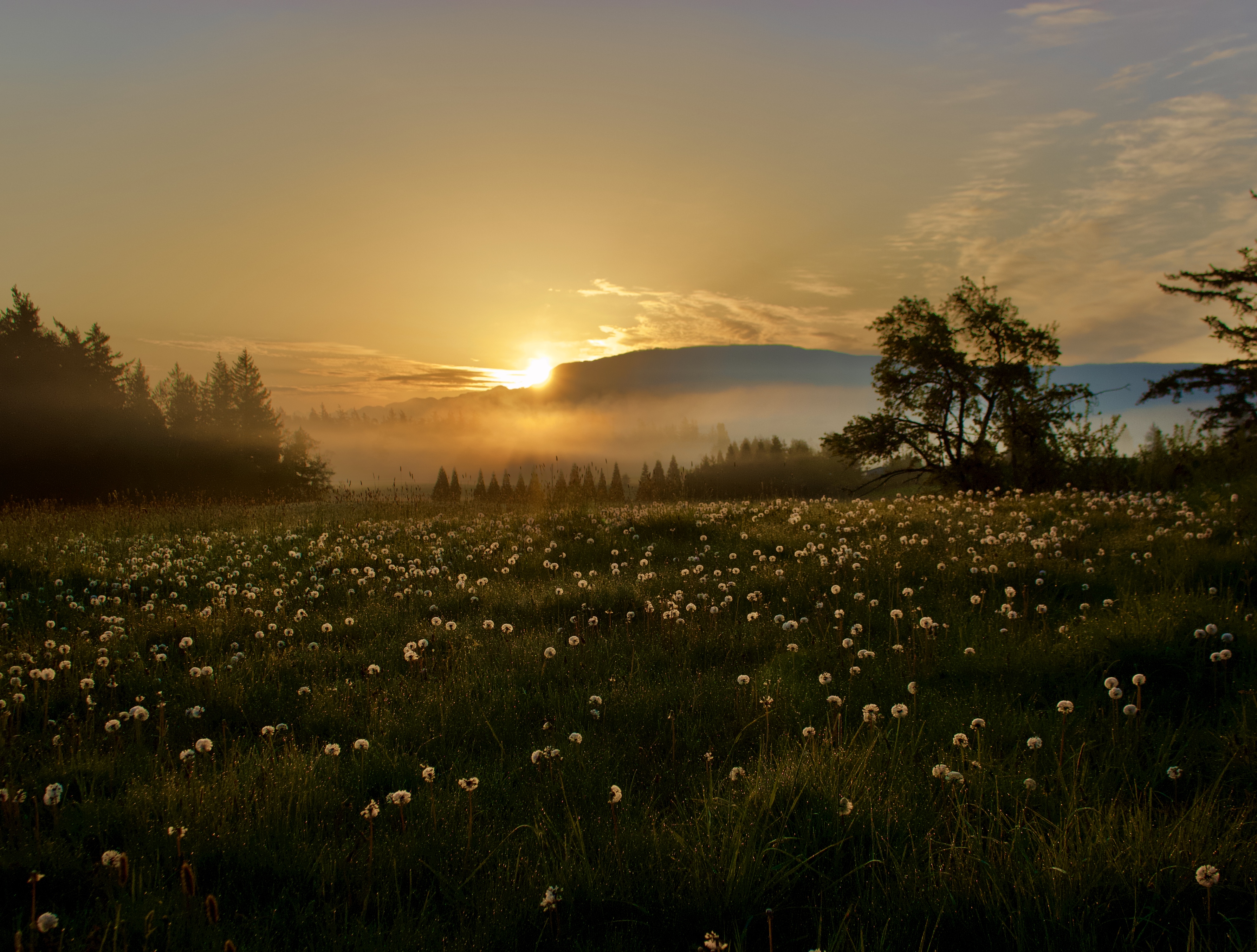
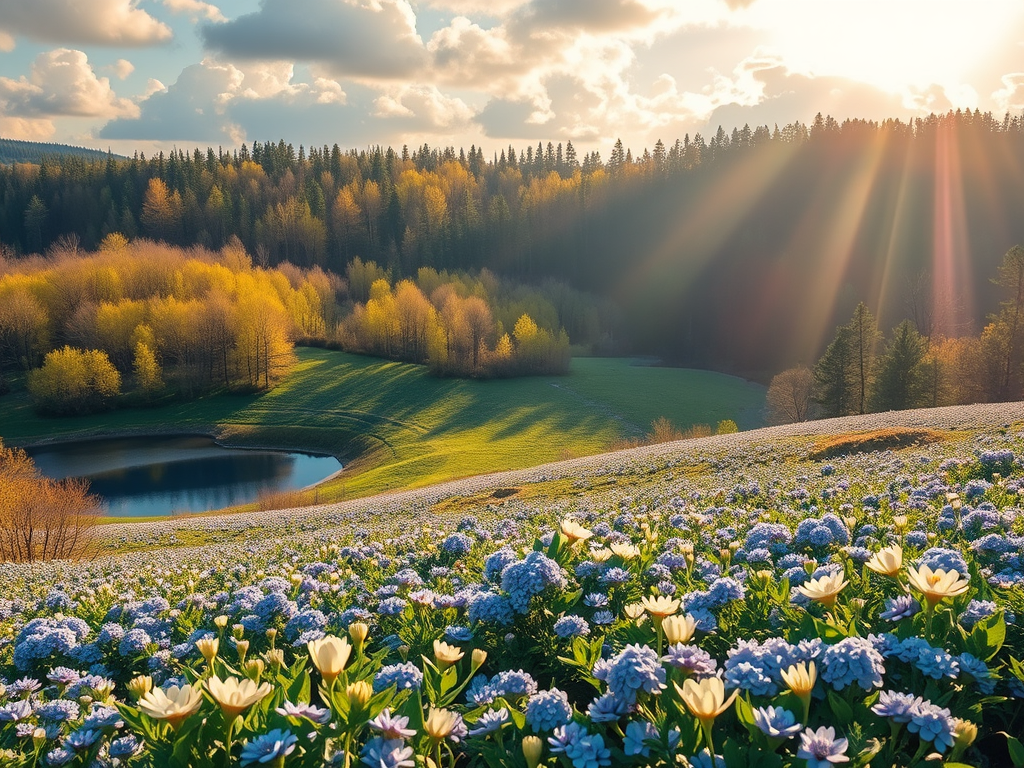
As we walk into words that have waited for us to enter them, so the meadow, muddy with dreams, is gathering itself together
and trying, with difficulty, to remember how to make wildflowers. Imperceptibly heaving with the old impatience, it knows
for certain that two horses walk upon it, weary of hay. The horses, sway-backed and self important, cannot design
how the small white pony mysteriously escapes the fence everyday. This is the miracle just beyond their heavy-headed grasp,
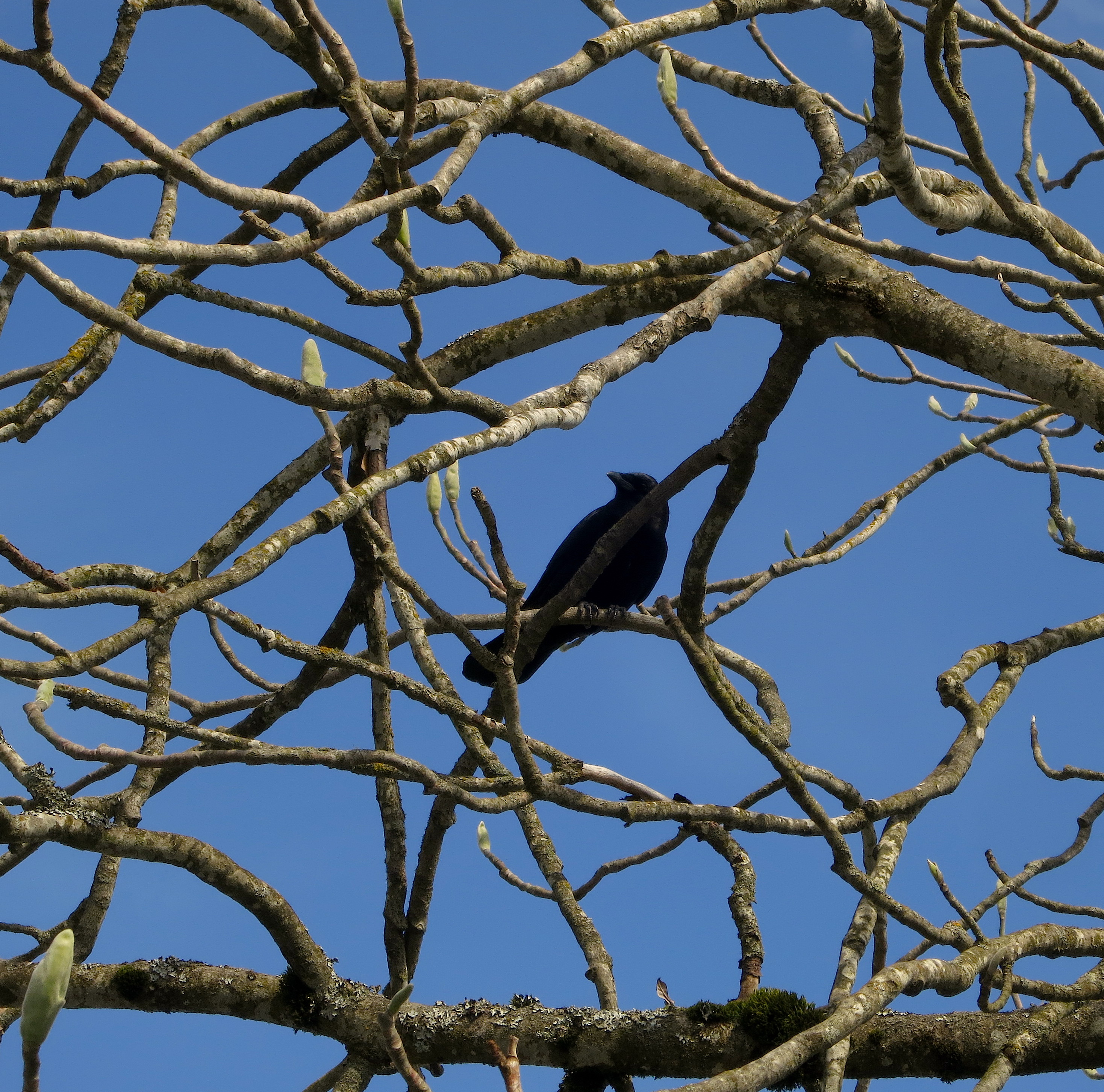
and they turn from his nuzzling with irritation. Everything is crying out. Two crows, rising from the hill, fight
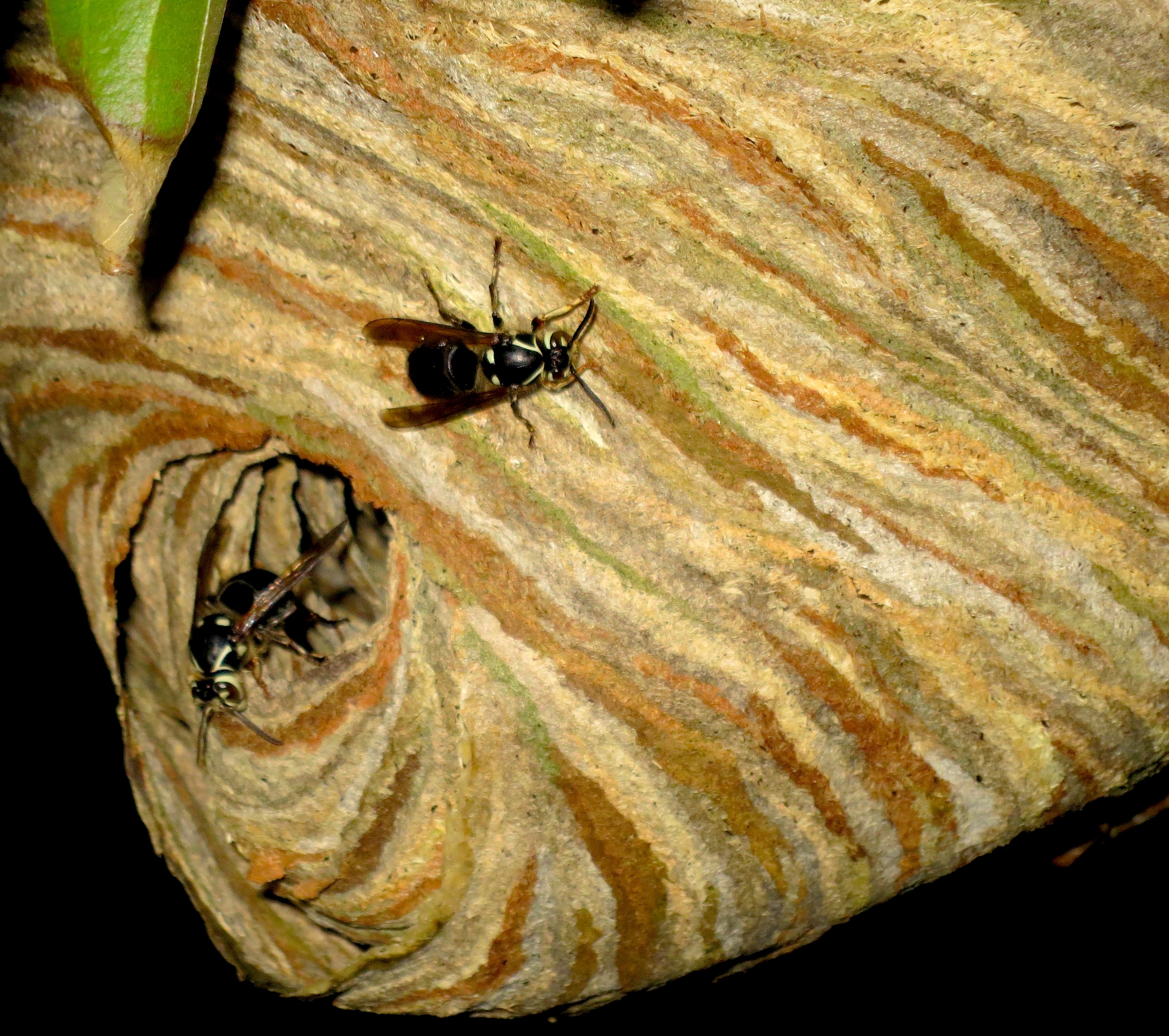
and caw-cry in mid-flight, then fall and light on the meadow grass bewildered by their weight. A dozen wasps drone, tiny prop planes,
sputtering into a field the farmer has not yet plowed, and what I thought was a phone, turned down and ringing,
is the knock of a woodpecker for food or warning, I can’t say. I want to add my cry to those who would speak for the sound alone.
But in this world, where something is always listening, even murmuring has meaning, as in the next room you moan
in your sleep, turning into late morning. My love, this might be all we know of forgiveness, this small time when you can forget
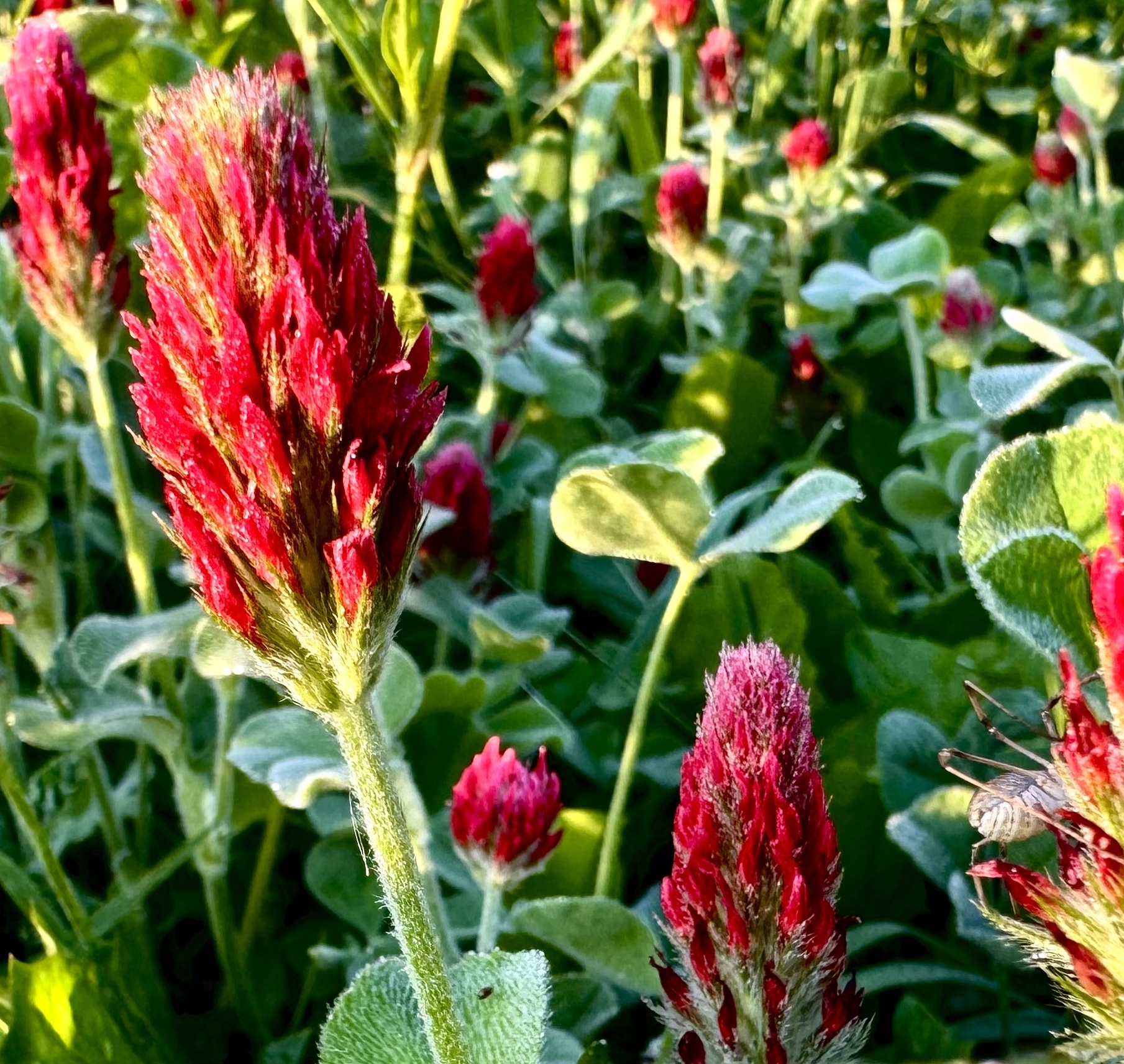
what you are. There will come a day when the meadow will think suddenly, water, root, blossom, through no fault of its own, and the horses will lie down in daisies and clover. Bedeviled, human, your plight, in waking, is to choose from the words
that even now sleep on your tongue, and to know that tangled among them and terribly new is the sentence that could change your life. ~Marie Howe “The Meadow”from The Good Thief
I am constantly looking for the sentence that will change my life.
I search high and low: in books, on tape, in sermons, and in everyday conversation.
I listen.
I realize it will not be a brand new revelation. Instead, it is a very very old sentence:
“I am the light of the world. Whoever follows me will never walk in darkness, but will have the light of life.” John 8:12
I look for the Light in the most unexpected places, and if I find it, I always try to share it here…
What is a sentence that has changed your life?
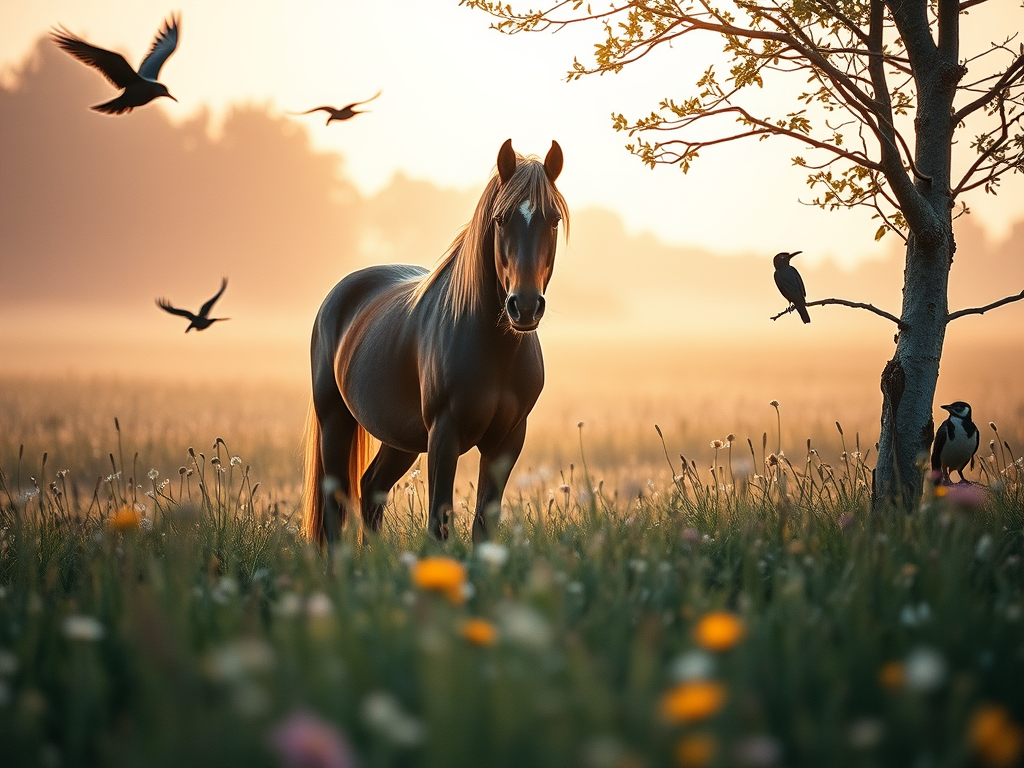
AI image created for this post
One-Time
Monthly
Yearly
Make a one-time or recurring donation to support daily Barnstorming posts
People are like stained-glass windows. They sparkle and shine when the sun is out, but when the darkness sets in, their true beauty is revealed only if there is a light from within. ~ Elisabeth Kübler–Ross
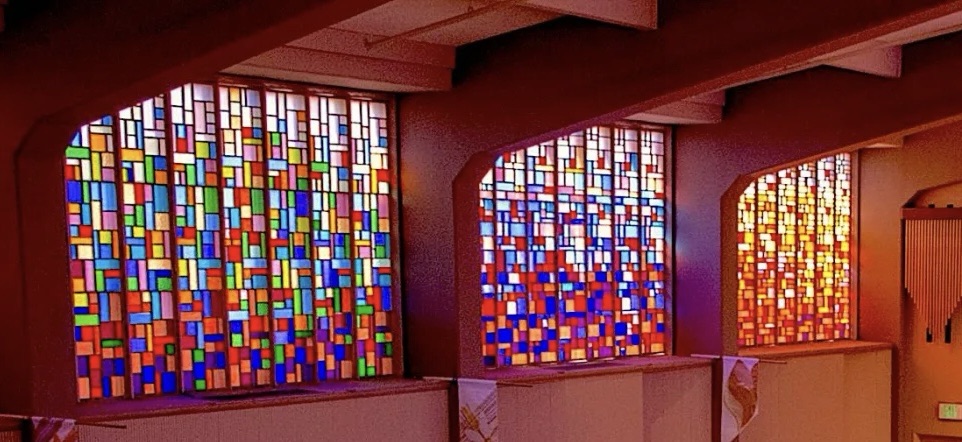
The Methodist church of my childhood had a sanctuary lined by colorful rectangles of stained glass windows. Each church member had an opportunity to choose and place a colored pane matching his or her stage of life, to become a permanent part of the portrait of a diverse church family. Mosaics of colored sections represented the transition through life, moving from childhood in the windows at the entrance, on to adolescence, then to young adulthood, moving to middle age, and then finally to the elder years nearest the altar.
Rainbows of color crisscrossed the pews and aisles, starting with pale and barely defined green and yellow at the outset, blending into a blossom of blue, then becoming a startling fervor of red, fading into a tranquil purple past the center, and lastly immersed in the warmth of orange as one approached the brown of the wood paneled altar.
Depending on where one chose to sit, the light bearing a particular color combination was cast on open pages of scripture, or favorite hymns, or on the skin and clothing of the people, reflecting the essence of that life phase.
Included in the design was the seemingly random but intentional scattering of all of the colors in each panel. Gold and orange panes were sprinkled in the “youth” window predicting the wisdom to come, and a smattering of some greens, blues and reds were found throughout the “orange” window of old age, just like the “spark” of younger years so often seen in the eyes of the our eldest citizens.
The colored windows reflected the truth of God’s plan for our lives. There was certainty in the unrelenting passage of time; there was no turning back or turning away from what was to come.
Although each stage shone with its own unique beauty, none was as warm and welcoming as the fiery glow of the autumn of life. Those final windows focused their brilliance on the plain wood of the cross above the altar.
Beyond the stained glass, as life fades from the richest of colors to the earthy tones of dusty frames, the kaleidoscope of God’s illumination continues to shine, glorious.
We are like windows Stained with colors of the rainbow Set in a darkened room Till the bridegroom comes to shining through
Then the colors fall around our feet Over those we meet Covering all the gray that we see Rainbow colors of assorted hues Come exchange your blues For His love that you see shining through me
We are His daughters and sons We are the colorful ones We are the kids of the King Rejoice in everything
My colors grow so dim When I start to fall away from Him But up comes the strongest wind That he sends to blow me back into his arms again
And then the colors fall around my feet Over those I meet Changing all the gray that I see Rainbow colors of the Risen Son Reflect the One The One who came to set us all free
We are His daughters and sons We are the colorful ones We are the kids of the King Rejoice in everything
We are like windows Stained with colors of the rainbow No longer set in a darkened room Cause the bridegroom wants to shine from you
No longer set in a darkened room Cause the bridegroom wants to shine from you
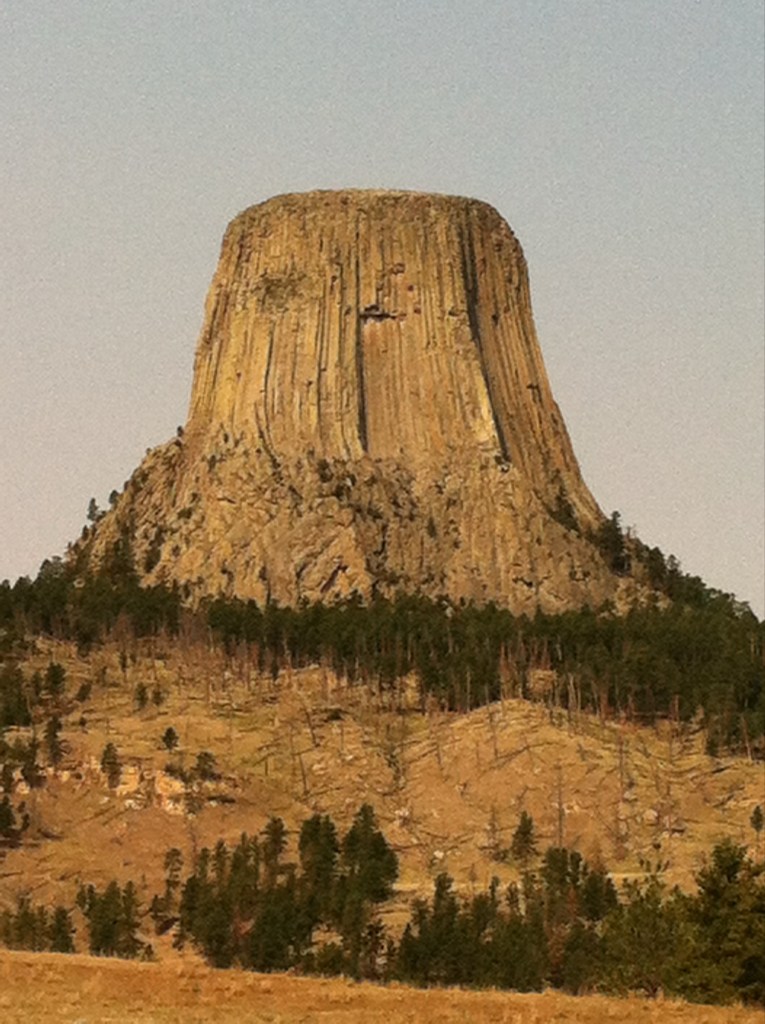
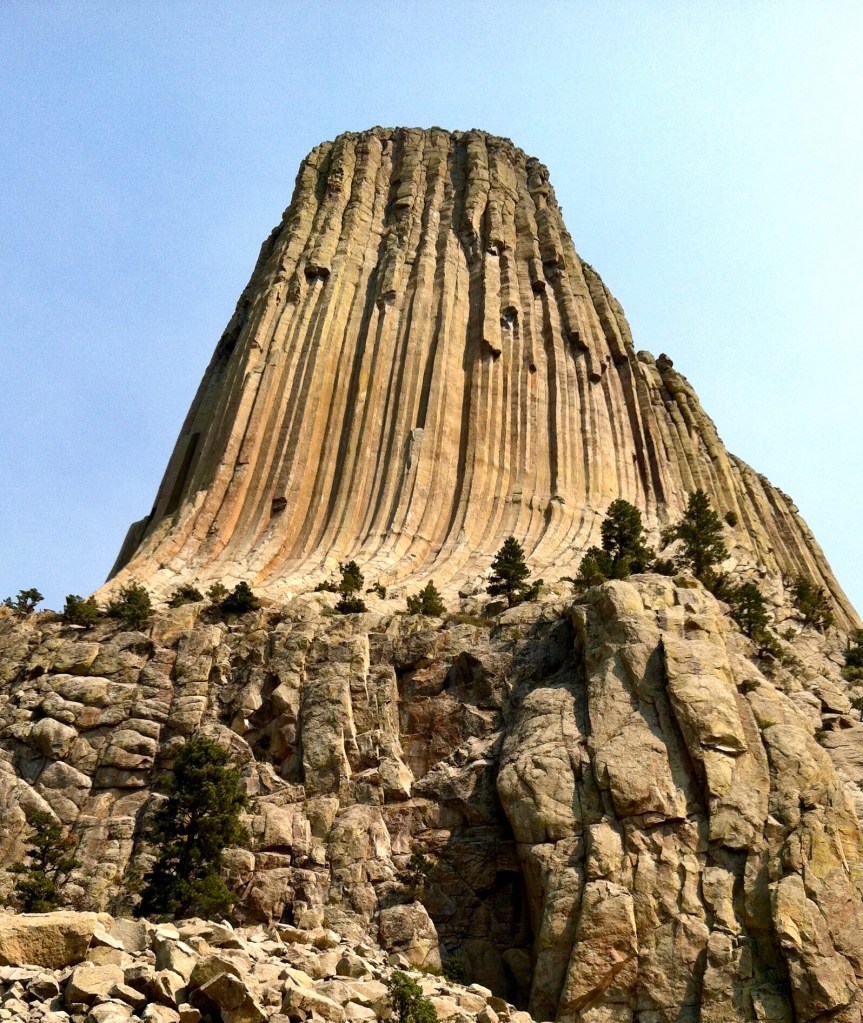
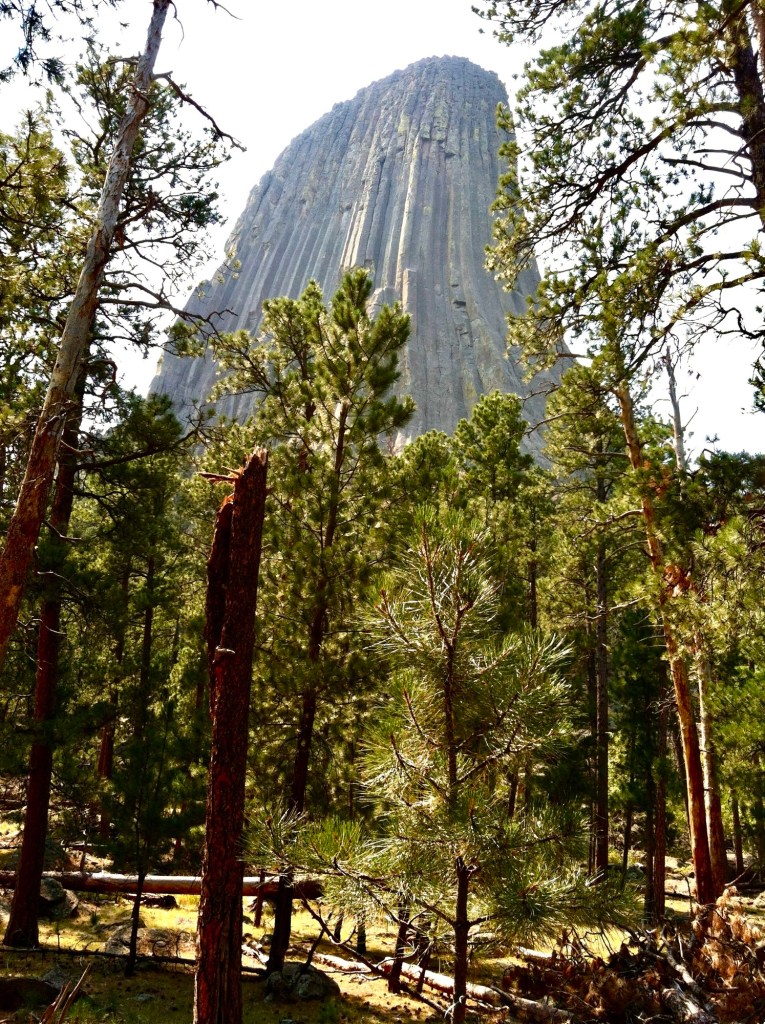
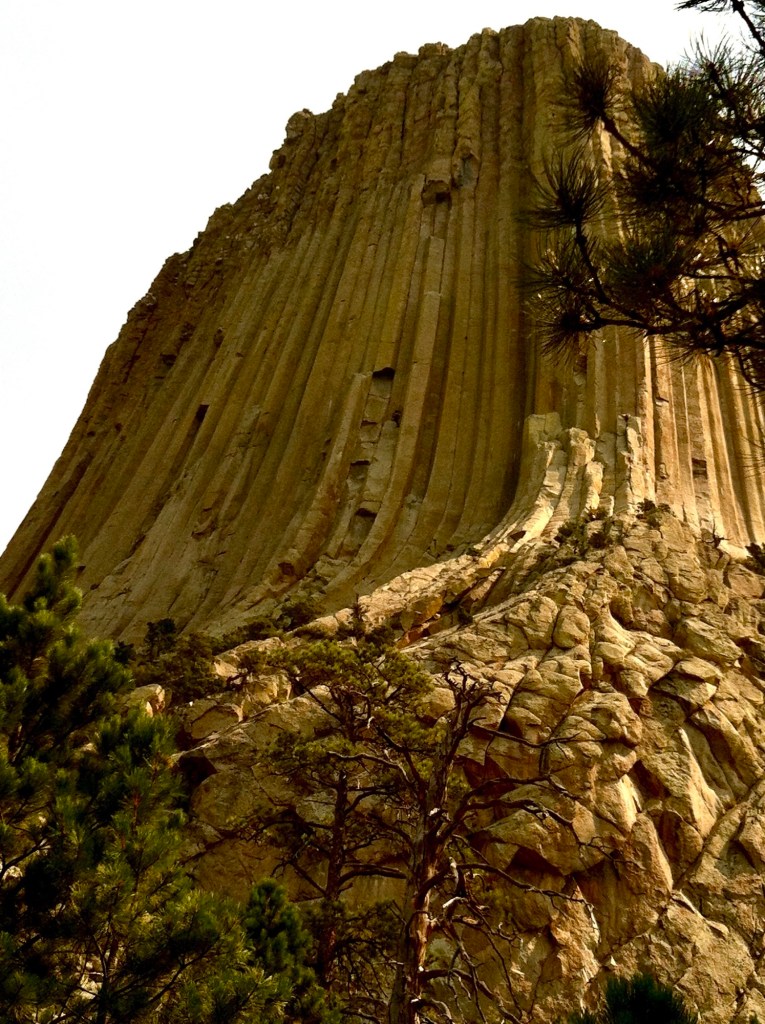
A dark mist lay over the Black Hills, and the land was like iron. At the top of ridge I caught sight of Devil’s Tower upthrust against the gray sky as if in the birth of time the core of the earth had broken through its crust and the motion of the world was begun.
There are things in nature that engender an awful quiet in the heart of man; Devil’s Tower is one of them. ~N.Scott Momaday in The Way to Rainy Mountain
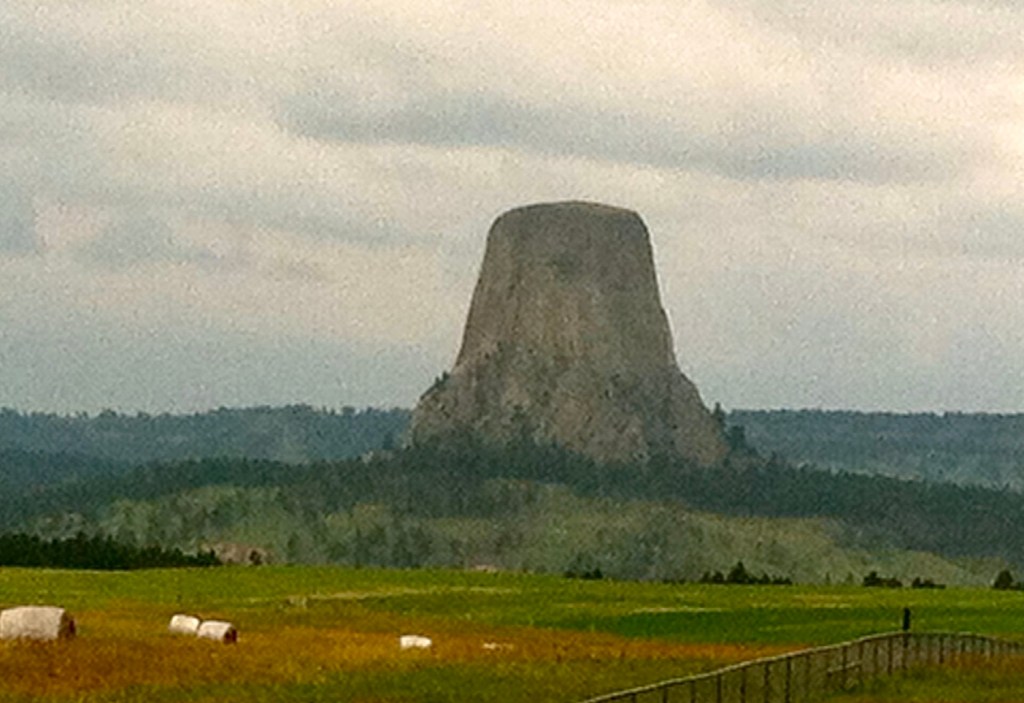
We didn’t have a close encounter with Devil’s Tower on this particular trip yesterday through Wyoming. Over the years we have made many cross-country road trips like this one, passing by the turn-off to Devil’s Tower because there was urgency to get where we needed to go. Occasionally we would see it hazy in the far distance, so I could say I had “seen it” but I really had not seen it … according to my Stanford professor N. Scott Momaday.
Scott was from the Kiowa tribe. In his language, this rock formation is named Tso-i-e or “standing on a rock.” For him and his people, it is sacred ground. The Cheyenne, Crow, Lakota, Shoshone, and Arapahoe all revere this rock monolith, although most tribal members did not live near enough to see it themselves, but the legends traveled many miles through the generations through oral tradition.
I took Scott’s unforgettable class “Native American Mythology and Lore” in 1973, as a 19 year old sophomore. He had a commanding presence, a booming resonant voice for story telling, a predilection for the poetry of Emily Dickinson and a hankering since childhood to be a character in the stories of Billy the Kid. The first day of class, he introduced us to Tso-i-e first and foremost. He told us his grandmother’s story passed to her from her grandparents:
“Eight children were there at play, seven sisters and their brother. Suddenly the boy was struck dumb; he trembled and began to run upon his hands and feet. His fingers became claws, and his body was covered with fur. Directly there was a bear where the boy had been. The sisters were terrified.; they ran and the bear after them. They came to the stump of a great tree, and the tree spoke to them. It bade them climb upon it, and as they did so it began to rise into the air. The bear came to kill them, but they were just beyond its reach. It reared against the tree and scored the bark all around with its claws. The seven sisters were borne into the sky, and they became the stars of the Big Dipper.”
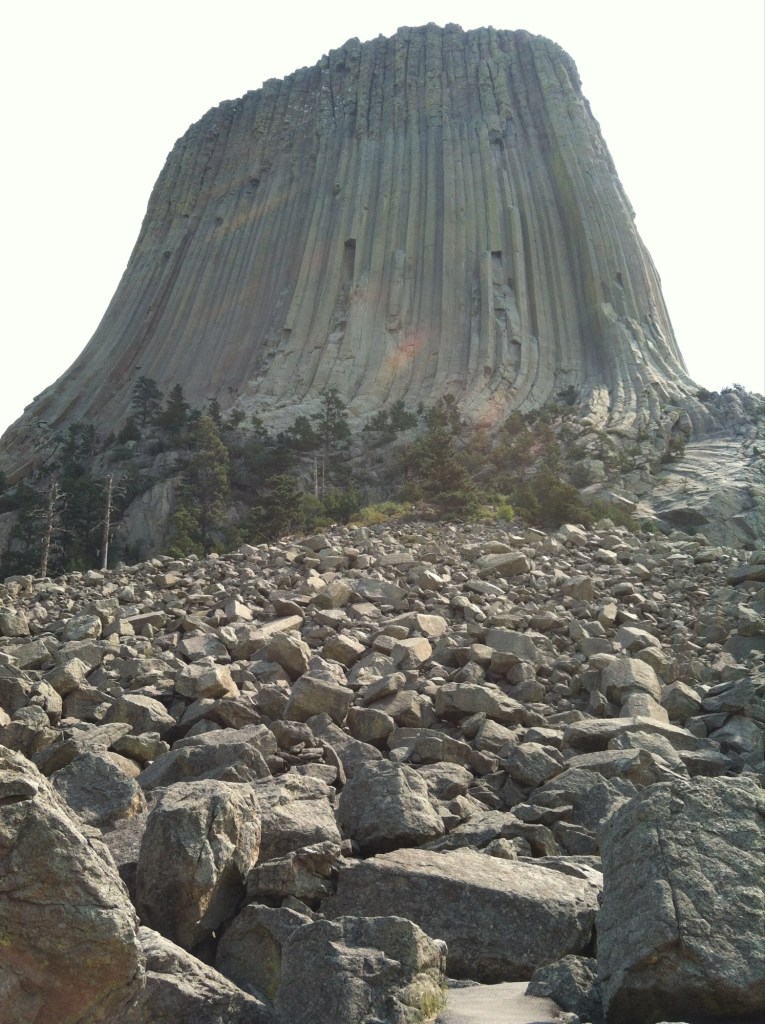
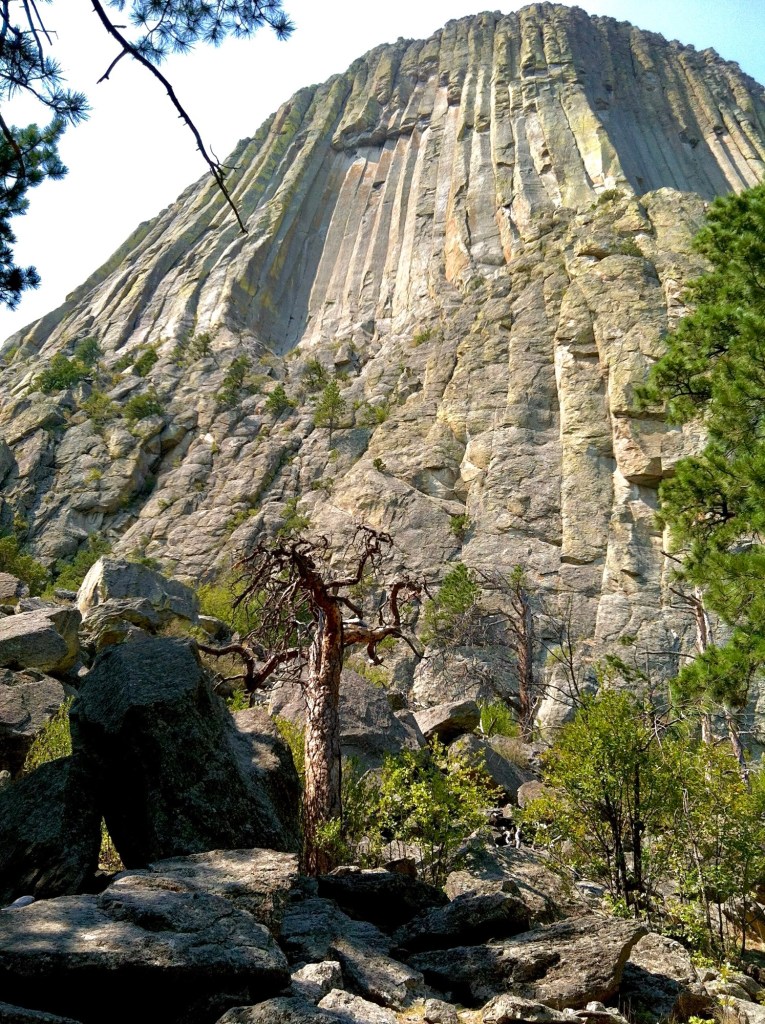
My family finally made time to see the Tower up close. For me, this “close encounter” was meant to connect the dots from my class and to understand more fully the spiritual background of the Plains people as our son, Ben, had lived and taught on the Pine Ridge Lakota Sioux Reservation in South Dakota for two years.
The Tower surely is awe-filled holy ground for us all – we are diminished in its presence. It disquiets the heart with its awful grandeur and sheer other-worldliness. In its own way, it is as resonant as Scott’s captivating stories about its origins, yet remains a reminder of the ever-changing impermanence of geologic formations.
We need more holy places in our lives even as they (and we) change with the sands and winds of time. We need to seek more “awful quiet” in our hearts, to continue to tell our sacred stories, generation to generation, never forgetting Who it is who set the world in motion.
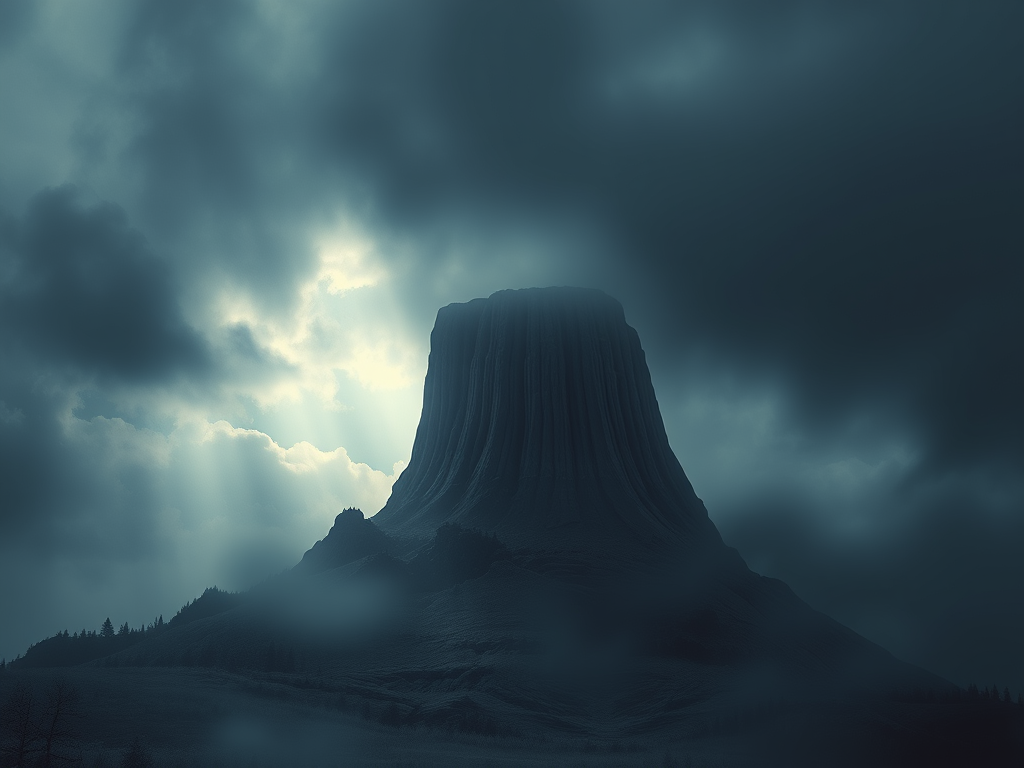
AI image created for this post
One-Time
Monthly
Yearly
Make a one-time or recurring donation to support daily Barnstorming posts
…you mustn’t be frightened … if a sadness rises in front of you, larger than any you have ever seen; if an anxiety, like light and cloud-shadows, moves over your hands and over everything you do. You must realize that something is happening to you, that life has not forgotten you, that it holds you in its hand and will not let you fall. Why do you want to shut out of your life any uneasiness, any misery, any depression, since after all you don’t know what work these conditions are doing inside you? ~Rainer Maria Rilke from Letters to a Young Poet
…difficulties are magnified out of all proportion simply by fear and anxiety. From the moment we wake until we fall asleep we must commend other people wholly and unreservedly to God and leave them in his hands, and transform our anxiety for them into prayers on their behalf: With sorrow and with grief… God will not be distracted. ~Dietrich Bonhoeffer in Letters from Prison
During my decades as a primary care physician for a university health center, my clinic days were often filled with young adults who were so consumed by anxiety they were immobilized in their ability to move forward through life’s inevitable obstacles and difficulties. They were so stuck in overwhelming feelings, they couldn’t sleep or eat or think clearly. They tended to self-medicate, self-injure and self-hate. Unable to nurture themselves or others, they withered like a flower without roots deep enough to reach the vast reservoir untapped beneath them. In epidemic numbers, some decide to die, even before life really has fully begun for them.
My role was to help find healing solutions, whether it was counseling therapy, a break from school, or a medicine that may give some form of relief.
My heart knows the ultimate answer is not as simple as choosing the right prescription – light and cloud shadows differ for each person – it can feel like the sun is blocked forever, all that is left is rain and snow and gray.
I too have known anxiety and how it can distort every thought.
We who are anxious can depend upon a Creator who is not distracted from His care for us even if we have turned away in our worry and sorrow, unable to look past our own eyelashes.
Like a thirsty withering plant, we need to reach higher and deeper: asking for help and support, working through solutions with those helpers, acknowledging there exists a healing power greater than ourselves.
So we are called to pray for ourselves and for others. Self compassion and caring for others can disable anxiety and fear by transforming it to growth, gratitude and grace.
No longer withering, we just might bloom.
AI image created for this post
One-Time
Monthly
Yearly
Make a one-time or recurring donation to support daily Barnstorming posts
The second before the sun went out we saw a wall of dark shadow come speeding at us. We no sooner saw it than it was upon us, like thunder. It roared up the valley. It slammed our hill and knocked us out. It was the monstrous swift shadow cone of the moon. I have since read that this wave of shadow moves 1,800 miles an hour. Language can give no sense of this sort of speed—1,800 miles an hour. It was 195 miles wide. No end was in sight—you saw only the edge. It rolled at you across the land at 1,800 miles an hour, hauling darkness like plague behind it. Seeing it, and knowing it was coming straight for you, was like feeling a slug of anesthetic shoot up your arm. If you think very fast, you may have time to think, “Soon it will hit my brain.” You can feel the deadness race up your arm; you can feel the appalling, inhuman speed of your own blood. We saw the wall of shadow coming, and screamed before it hit.
This was the universe about which we have read so much and never before felt: the universe as a clockwork of loose spheres flung at stupefying, unauthorized speeds. How could anything moving so fast not crash, not veer from its orbit amok like a car out of control on a turn?
Less than two minutes later, when the sun emerged, the trailing edge of the shadow cone sped away. It coursed down our hill and raced eastward over the plain, faster than the eye could believe; it swept over the plain and dropped over the planet’s rim in a twinkling. It had clobbered us, and now it roared away. We blinked in the light. It was as though an enormous, loping god in the sky had reached down and slapped the Earth’s face.
When the sun appeared as a blinding bead on the ring’s side, the eclipse was over. The black lens cover appeared again, back-lighted, and slid away. At once the yellow light made the sky blue again; the black lid dissolved and vanished. The real world began there. I remember now: We all hurried away.
We never looked back. It was a general vamoose … but enough is enough. One turns at last even from glory itself with a sigh of relief. From the depths of mystery, and even from the heights of splendor, we bounce back and hurry for the latitudes of home. ~Annie Dillard from her essay “Total Eclipse” in The Atlantic about the February 1979 eclipse in Washington State
From my six week psychiatric inpatient rotation at a Veteran’s Hospital—late winter 1979
Sixty eight year old male catatonic with depression
He lies still, so very still under the sheet, eyes closed; the only clue that he is living is the slight rise and fall of his chest. His face is skull- like framing his sunken eyes, his facial bones standing out like shelves above the hollows of his cheeks, his hands lie skeletal next to an emaciated body. He looks as if he is dying of cancer but without the smell of decay. He rouses a little when touched, not at all when spoken to. His eyes open only when it is demanded of him, and he focuses with difficulty. His tongue is thick and dry, his whispered words mostly indecipherable, heard best by bending down low to the bed, holding an ear almost to his cracked lips.
He has stopped feeding himself, not caring about hunger pangs, not salivating at enticing aromas or enjoying the taste of beloved coffee. His meals are fed through a beige rubber tube running through a hole in his abdominal wall emptying into his stomach, dripping a yeasty smelling concoction of thick white fluid full of calories. He ‘eats’ without tasting and without caring. His sedating antidepressant pills are crushed, pushed through the tube, oozing into him, deepening his sleep, but are designed to eventually wake him from his deep debilitating melancholy.
After two weeks of treatment and nutrition, his cheeks start to fill in, and his eyes are closed less often. He watches people as they move around the room and he responds a little faster to questions and starts to look us in the eye. He asks for coffee, then pudding and eventually he asks for steak. By the third week he is sitting up in a chair, reading the paper.
After a month, he walks out of the hospital, 15 pounds heavier than when he was wheeled in. His lips, no longer dried and cracking, have begun to smile again.
Thirty two year old male rescued by the Coast Guard at 3 AM in the middle of the bay
As he shouts, his eyes dart, his voice breaks, his head tosses back and forth, his back arches and then collapses as he lies tethered to the gurney with leather restraints. He writhes constantly, his arm and leg muscles flexing against the wrist and ankle bracelets.
“The angels are waiting!! They’re calling me to come!! Can’t you hear them? What’s wrong with you? I’m Jesus Christ, King of Kings!! Lord of Lords!! If you don’t let me return to them, I can’t stop the destruction!”
He finally falls asleep by mid-morning after being given enough antipsychotic medication to kill a horse. He sleeps uninterrupted for nine hours. Then suddenly his eyes fly open, and he looks startled.
He glares at me. “Where am I? How did I get here?”
“You are hospitalized in the VA psych ward after being picked up by the Coast Guard after swimming out into the bay in the middle of the night. You said you were trying to reach the angels.”
He turns his head away, his fists relaxing in the restraints, and begins to weep uncontrollably, the tears streaming down his face.
“Forgive them, Father, for they know not what they do.”
Twenty two year old male with auditory and visual hallucinations
He seems serene, much more comfortable in his own skin when compared to the others on the ward. Walking up and down the long hallways alone, he is always in deep conversation. He takes turns talking, but more often is listening, nodding, almost conspiratorial.
During a one-on-one session, he looks at me briefly, but his attention continues to be diverted, first watching an invisible something or someone enter the room, move from the door to the middle of the room, until finally, his eyes lock on an empty chair to my left. I ask him what he sees next to me.
“Jesus wants you to know He loves you.”
It takes all my will power not to turn and look at the empty chair.
Fifty four year old male with chronic paranoid schizophrenia
He has been disabled with psychiatric illness for thirty years, having his first psychotic break while serving in World War II. His only time living outside of institutions has been spent sharing a home with his mother who is now in her eighties. This hospitalization was precipitated by his increasing delusion that his mother is the devil and the voices in his head commanded that he kill her. He had become increasingly agitated and angry, had threatened her with a knife, so she called the police, pleading with them not to arrest him, but to bring him to the hospital for medication adjustment.
His eyes have taken on the glassy staring look of the overmedicated psychotic, and he sits in the day room much of the day sleeping in a chair, drool dripping off his lower lip. When awake he answers questions calmly and appropriately with no indication of the delusions or agitation that led to his hospitalization. His mother visits him almost daily, bringing him his favorite foods from home which he gratefully accepts and eats with enthusiasm. By the second week, he is able to take short passes to go home with her, spending a lunch time together and then returning to the ward for dinner and overnight. By the third week, he is ready for discharge, his mother gratefully thanking the doctors for the improvement she sees in her son. I watch them walk down the long hallway together to be let through the locked doors to freedom.
Two days later, a headline in the local paper:
“Veteran Beheads Elderly Mother”
Forty five year old male — bipolar disorder with psychotic features
He has been on the ward for almost a year, his unique high pitched laughter heard easily from behind closed doors, his eyes intense in his effort to conceal his struggles. Trying to follow his line of thinking is challenging, as he talks quickly, with frequent brilliant off topic tangents, and at times he lapses into a “word salad” of almost nonsensical sentences. Every day as I meet with him I become more confused about what is going on with him, and am unclear what is expected of me in my interactions with him. He senses my discomfort and tries to ease my concern.
“Listen, this is not your problem to fix but I’m bipolar and regularly hear command voices and have intrusive thoughts. My medication keeps me under good control. But just tell me if you think I’m not making sense because I don’t always recognize it in myself.”
During my rotation, his tenuous tether to sanity is close to breaking. He starts to listen more intently to the voices in his head, becoming frightened and anxious, often mumbling and murmuring under his breath as he goes about his day.
On a particular morning, all the patients are more anxious than usual, pacing and wringing their hands as the light outdoors slowly fades, with noon being transformed to an oddly shadowy dusk. The street lights turn on automatically and cars are driving with headlights shining. We stand at the windows in the hospital, watching the city become dark as night in the middle of the day. The unstable patients are sure the world is ending and extra doses of medication are dispensed as needed while the light slowly returns to the streets outside. Within an hour the sunlight is back, and all the patients are napping soundly.
The psychiatrist locks himself in his office and doesn’t respond to knocks on the door or calls on his desk phone.
Stressed by the recent homicide by one of his discharged patients, and identifying with his patients due to his own mental illness, he is overwhelmed by the eclipse. The nurses call the hospital administrator who comes to the ward with two security guards. They unlock the door and lead the psychiatrist off the ward. We watch him leave, knowing he won’t be back.
It is as if the light had left and only his shadow remains.
AI image created for this post
Lyrics: Measure me, sky! Tell me I reach by a song Nearer the stars; I have been little so long.
Weigh me, high wind! What will your wild scales record? Profit of pain, Joy by the weight of a word.
Horizon, reach out! Catch at my hands, stretch me taut, Rim of the world: Widen my eyes by a thought.
Sky, be my depth, Wind, be my width and my height, World, my heart’s span; Loveliness, wings for my flight. ~Leonora Speyer
One-Time
Monthly
Yearly
Make a one-time or recurring donation to support daily Barnstorming posts
I know what you planned, what you meant to do, teaching me to love the world, making it impossible to turn away completely, to shut it out completely ever again – it is everywhere; when I close my eyes, birdsong, scent of lilac in early spring, scent of summer roses: you mean to take it away, each flower, each connection with earth – why would you wound me, why would you want me desolate in the end, unless you wanted me so starved for hope I would refuse to see that finally nothing was left to me, and would believe instead in the end you were left to me. ~Louise Glück “Vespers”(one of ten Vespers poems)
I wait for the Lord, my soul waits, and in his word I hope; ~Psalm 130:5
Mid-spring days like this: bright, so promising with potential, birdsong constantly in the air, scent of orchard blossoms, lilacs, early roses and a flush of color everywhere…
how can we not love the world so much we never want to leave it?
Yet we must hold this loosely.
It is but a tiny show of the glories to come, of what You have waiting for us next.
I am wounded knowing I must eventually let this go.
I am hungry for hope that isn’t found in all this beauty and lushness, the fulfilling hope that is only You as my Father and Creator.
You provide only a taste here. I know what I starve for, so starved with hope for what You have in store.
I will wait for you I will wait for you in the end You were left for me.
Amen and Amen.
AI image created for this post
One-Time
Monthly
Yearly
Make a one-time or recurring donation to support daily Barnstorming posts
The woodpecker keeps returning to drill the house wall. Put a pie plate over one place, he chooses another. There is nothing good to eat there: he has found in the house a resonant billboard to post his intentions, his voluble strength as provider. But where is the female he drums for? Where? I ask this, who am myself the ruined siding, the handsome red-capped bird, the missing mate. ~Jane Hirshfield “The Woodpecker Keeps Returning”
A woodpecker once, A sort of a dunce, And who as a warbler not much of a siren, Passed by many trees Where he might have with ease Bored out a nice hole to his hunger appease, For a lofty church steeple made out of sheet iron.
He whetted his bill, And then with good-will And a thrumpty-thrum-thrum he started to bore, Nor let up until The end of his bill Was worn off so much that it gave him a chill And the back of his bobber began to get sore.
A black bird and wren, A rooster and hen, A crow and a sparrow were watching him drill, And squinted one eye At his birdship so high, So far from the earth that he looked like a fly And wondered how long he could work with good-will.
When his bobber gave out He gave a faint shout To the crowd that was watching him down on the ground, And said, Come up here Where the air is so clear And lend me a hand, for a worm is so near Whenever I peck I can hear his faint sound.
Then the blackbird and wren And the sparrow and hen And the crow that were watching him, called from below And said, “Silly Goose, Your work’s of no use, You might drill in that iron until your head’s loose. You have no more sense than some men that we know.” ~Ed Blair “The Foolish Woodpecker”
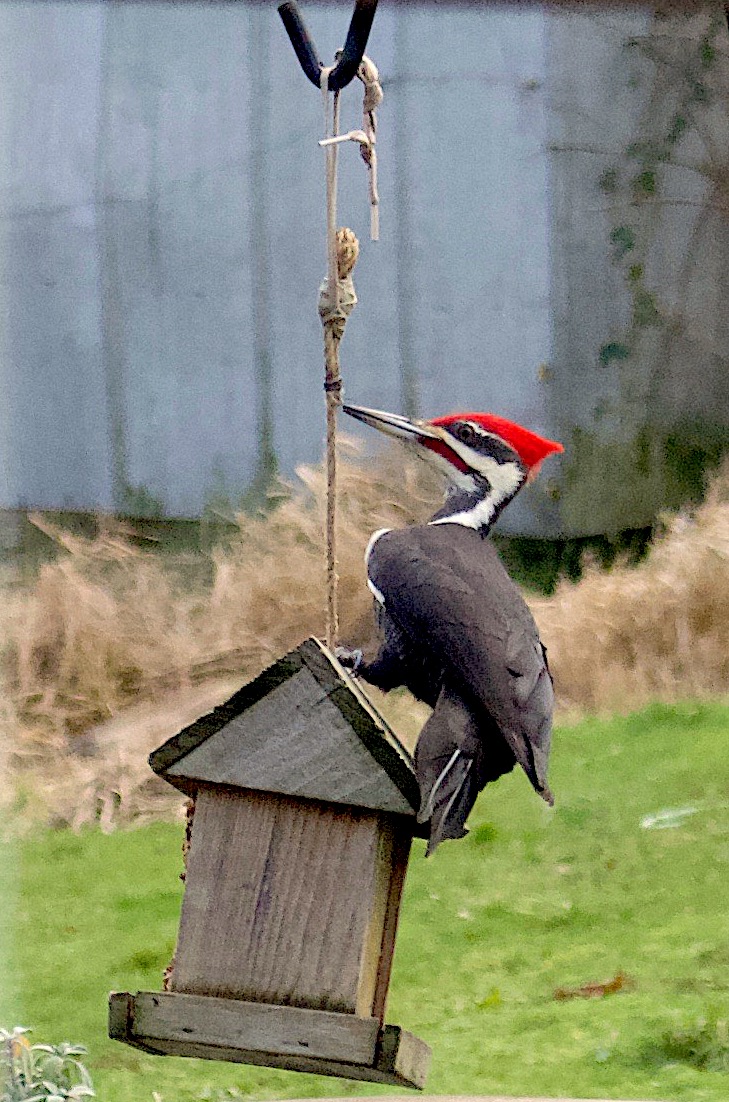
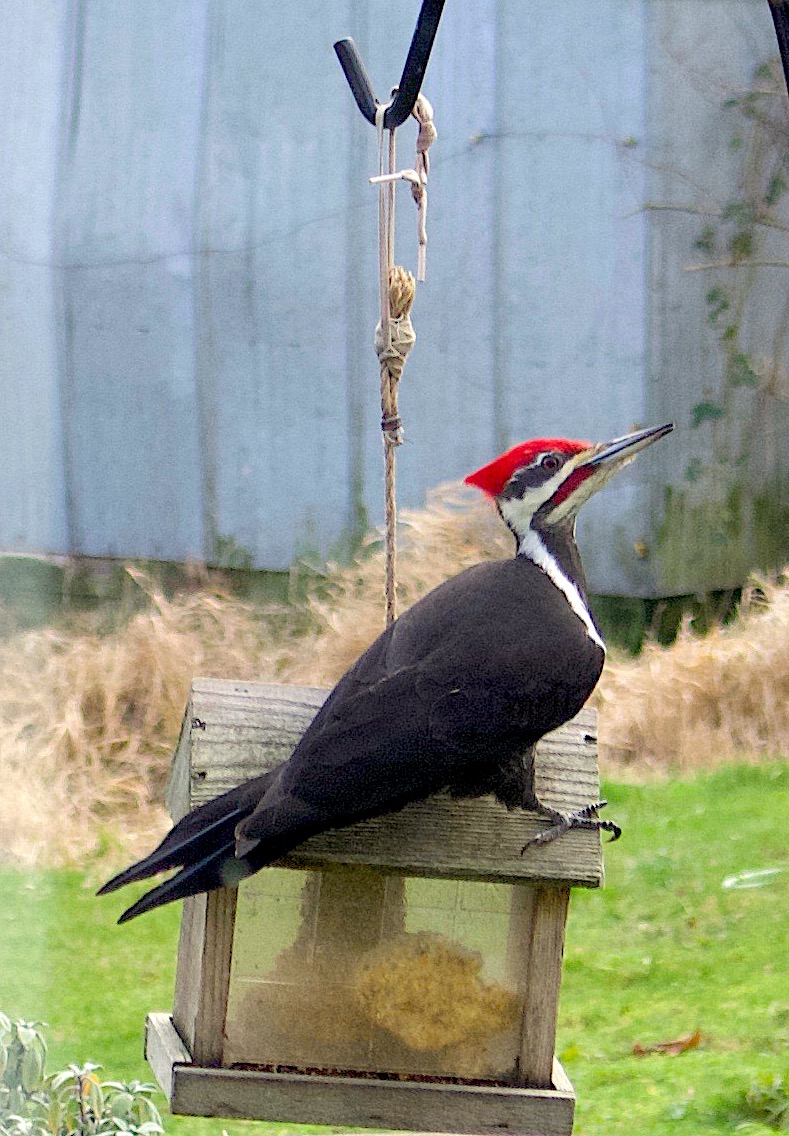
Piliated woodpecker
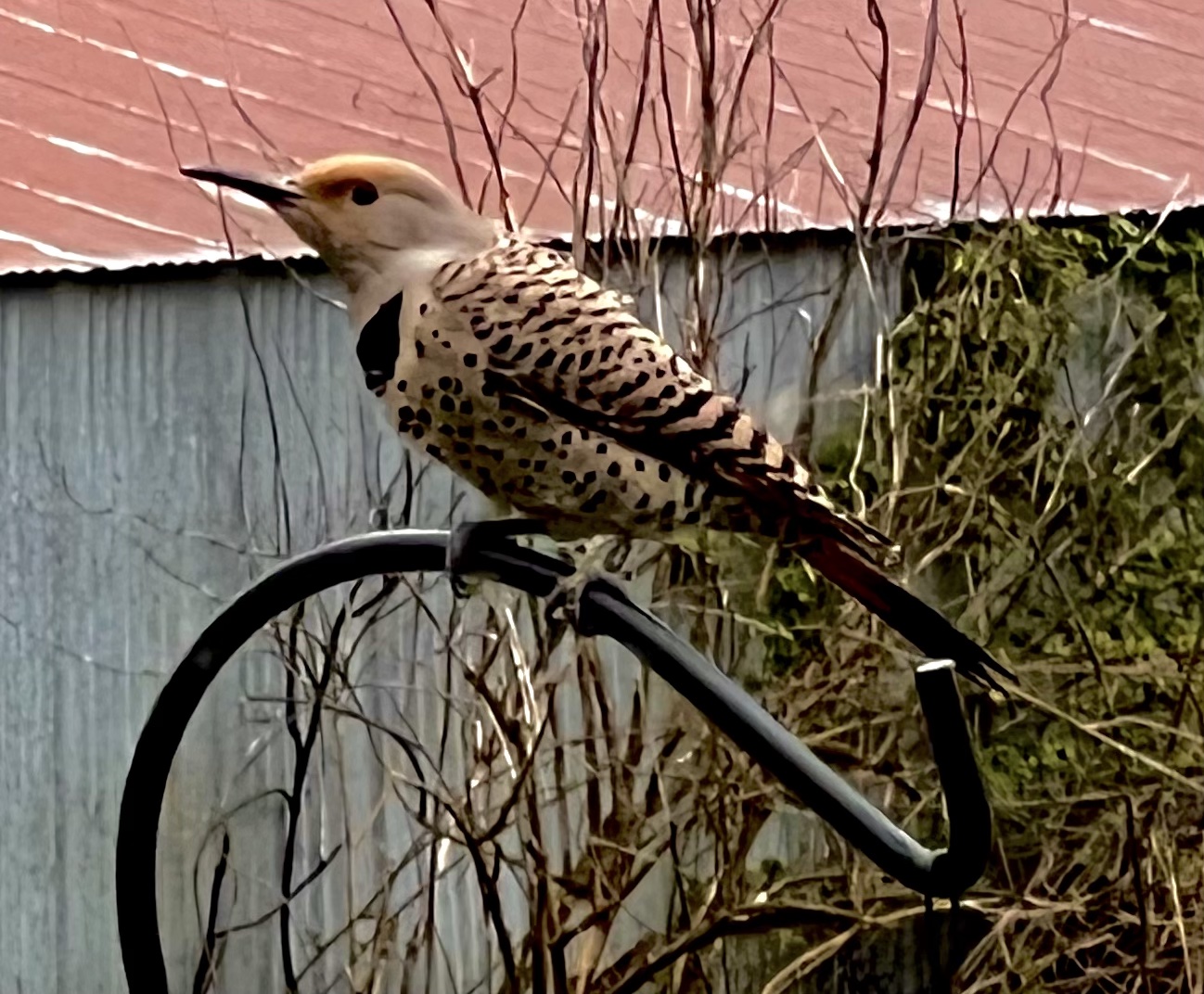
A bold piliated woodpecker in Rockport, Massachusetts made the news last week about his destructive rampage through that community, cracking mirrors and windows on vehicles. He is attacking his reflection as a potential competitor.
He’s been nicknamed the “piliated pillager.” His aggressive attitude and bright topknot of unruly feathers is reminiscent of another public figure who won’t be stopped from destroying things.
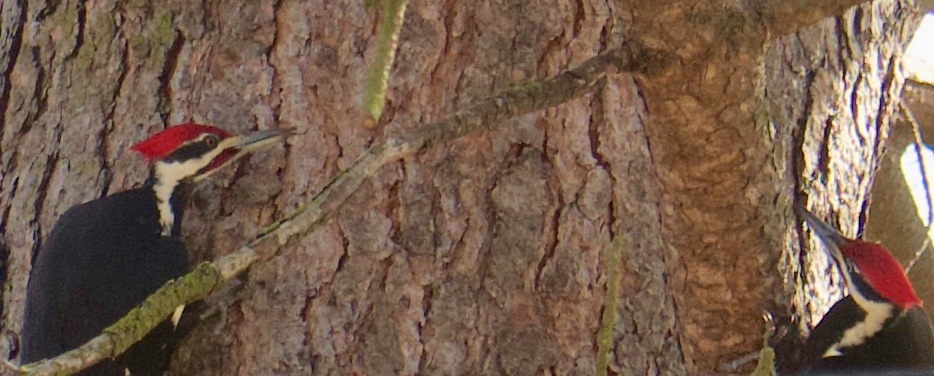
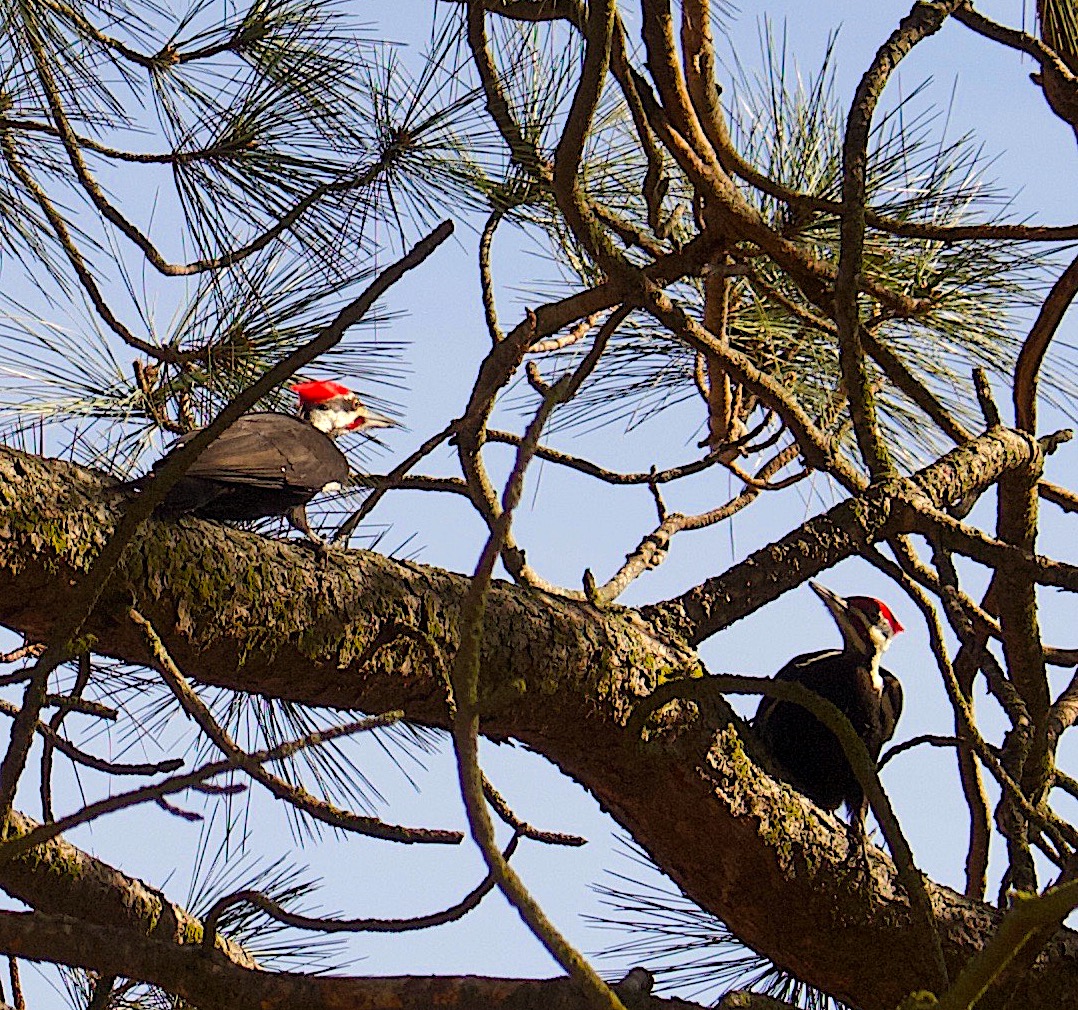
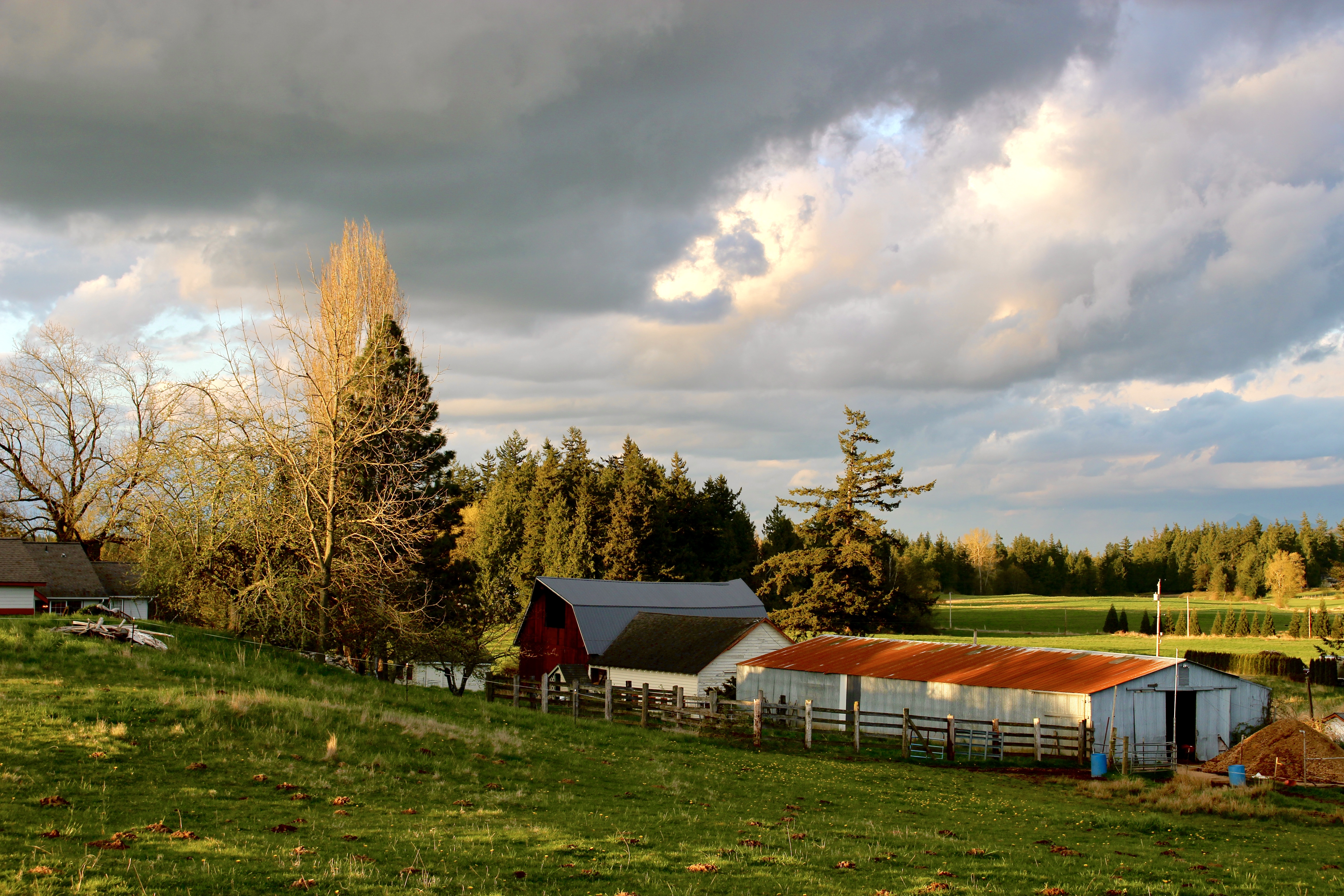
We have a variety of these little fellows here on the farm. One would think the loud rat-a-tats emanating from trees and buildings would be due to similar bold and fearless birds. Yet our woodpeckers tend to be visitors seldom-seen yet most-audible. They project a loud and noisy presence to the ear but prefer to be invisible to the eye.
These noisy birds are a reminder of how some people hammer away on social media, often using lots of capital letters. They desperately want to be heard and acknowledged, wanting their opinions to resonate and reverberate for all to hear.
Whenever I hear an insistent pecking echoing from on high, I try to spot the offending and ornery woodpecker who is claiming dominance over the airwaves and his intended targets. There is no question he has once again succeeded in getting my attention, even if my sole reaction is to shake my head at his utter foolishness — he has no more sense than some men I know…
FlickerDowny woodpecker
“If only, if only, ” the woodpecker sighs The bark on the trees was as soft as the skies… ~from the story “Holes”
AI image created for this post
One-Time
Monthly
Yearly
Make a one-time or recurring donation to support daily Barnstorming posts
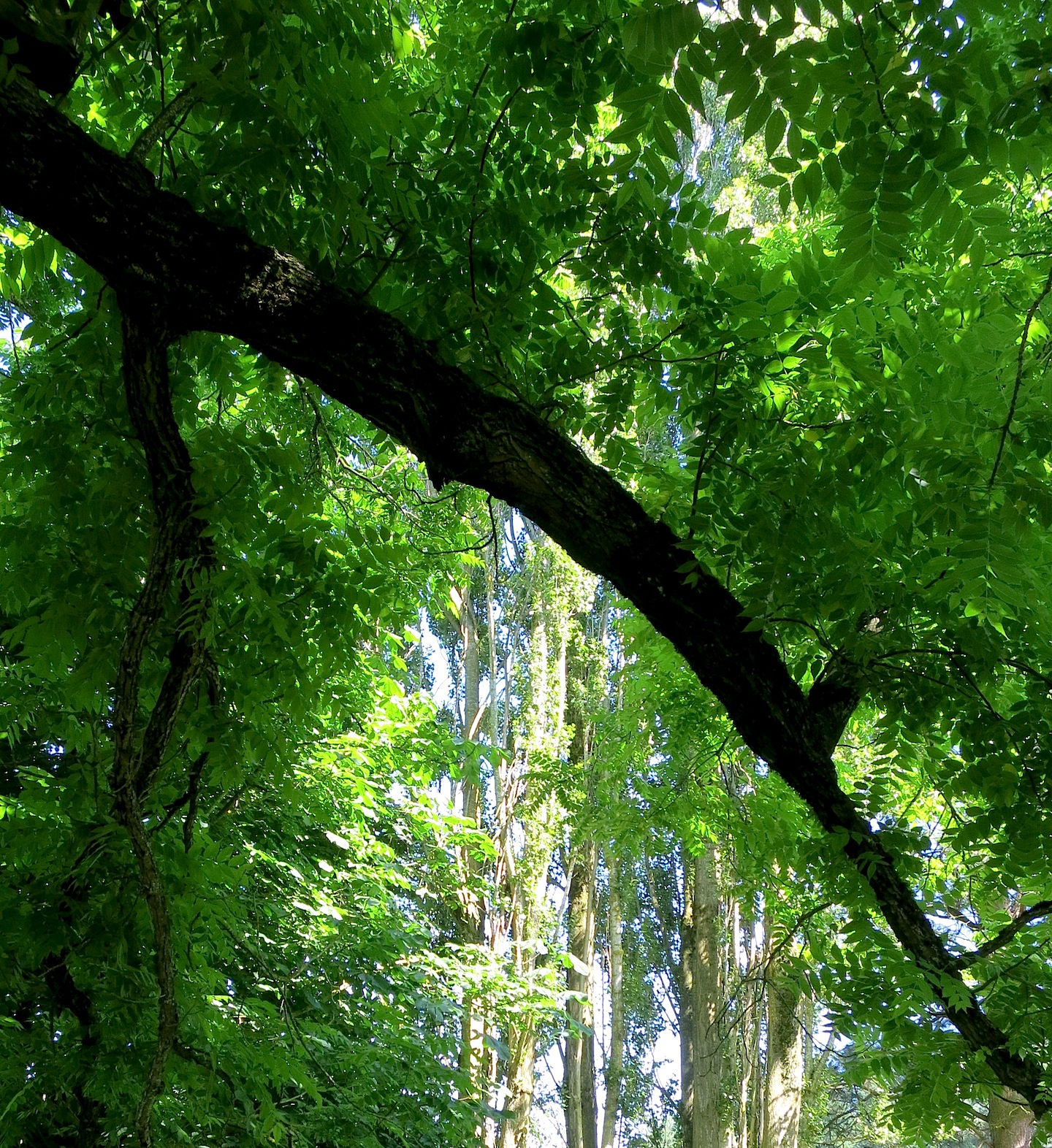
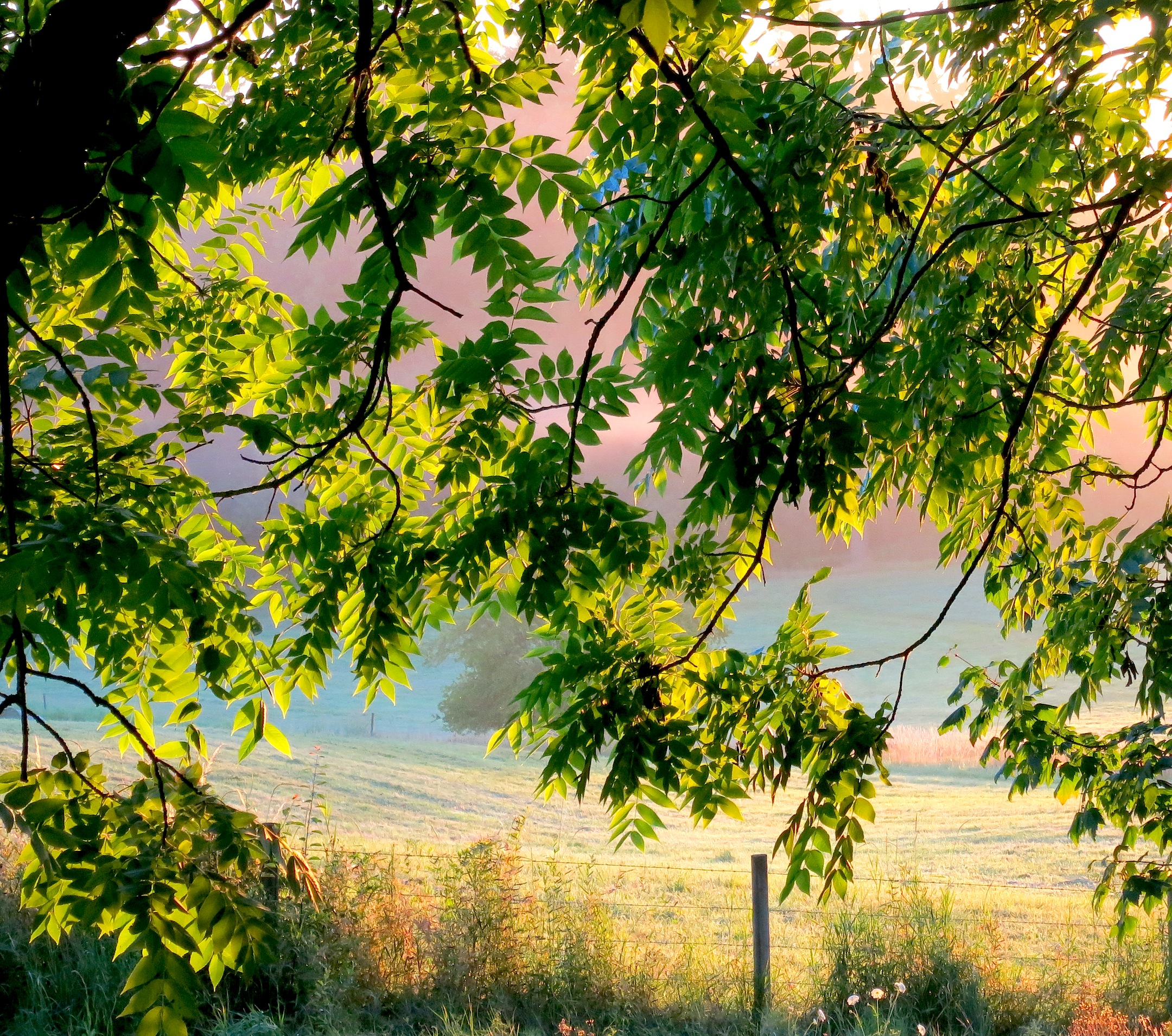
Old friend now there is no one alive who remembers when you were young it was high summer when I first saw you in the blaze of day most of my life ago with the dry grass whispering in your shade and already you had lived through wars and echoes of wars around your silence through days of parting and seasons of absence with the house emptying as the years went their way until it was home to bats and swallows and still when spring climbed toward summer you opened once more the curled sleeping fingers of newborn leaves as though nothing had happened you and the seasons spoke the same language and all these years I have looked through your limbs to the river below and the roofs and the night and you were the way I saw the world ~W.S. Merwin “Elegy for a Walnut”from The Moon Before Morning
Today I stood under the kitchen archway and stepped into my new body. Pasta was on the stove, a cold Tupperware of string beans on the counter. But I knew. I knew I would never be the same— the way I’m certain the magnolia down the block has lost all its petals. I haven’t checked in days, but I’m convinced tomorrow when I take my son to the bus stop, I’ll see them splashed on the sidewalk. What I’m trying to say is sometimes your old skin falls breathlessly off your body in late April, as you slice a cucumber into half moons for your child, and you just stand there and let it. ~Wendy Wisner “Shedding” from The New Life: Poems
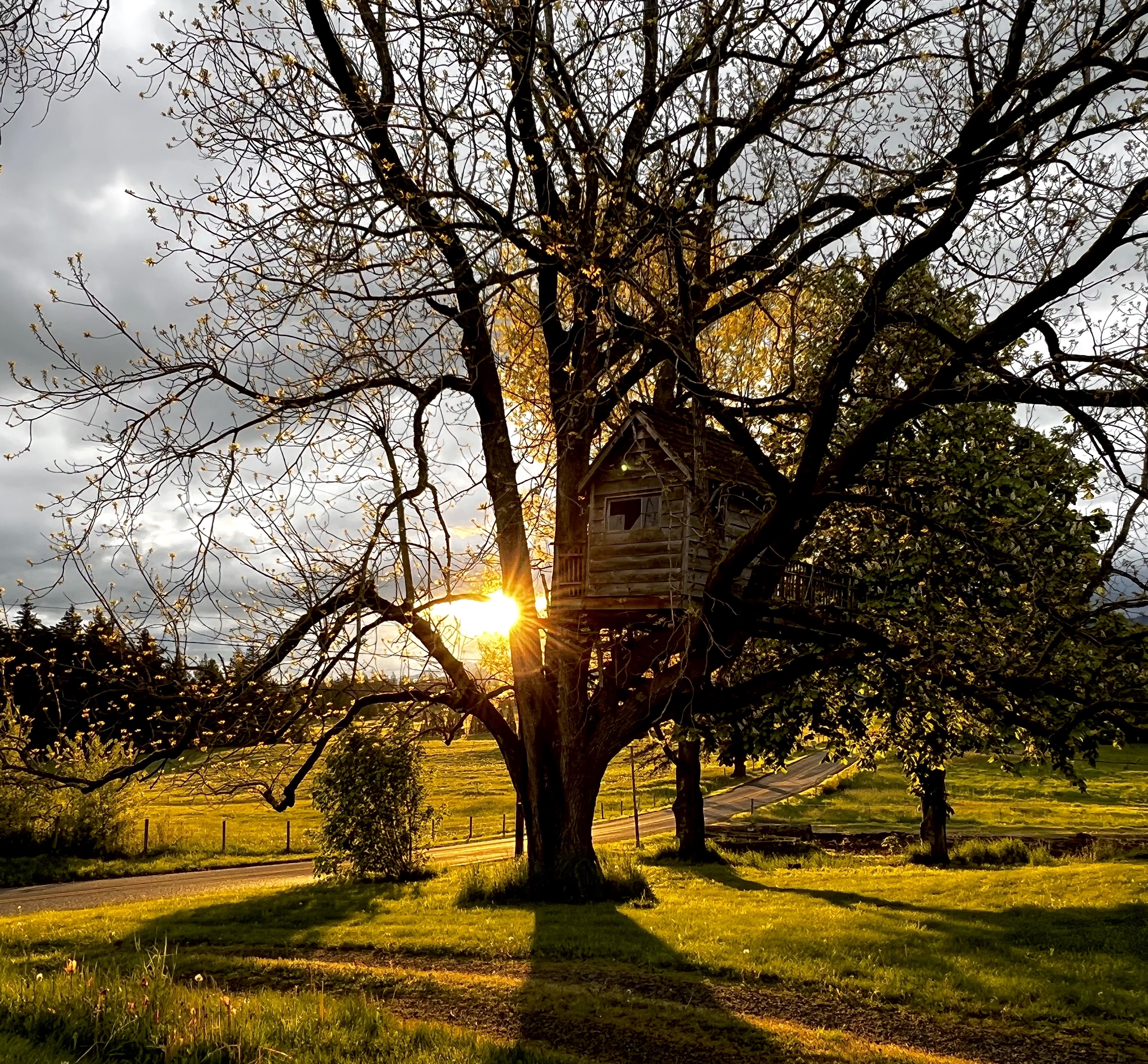
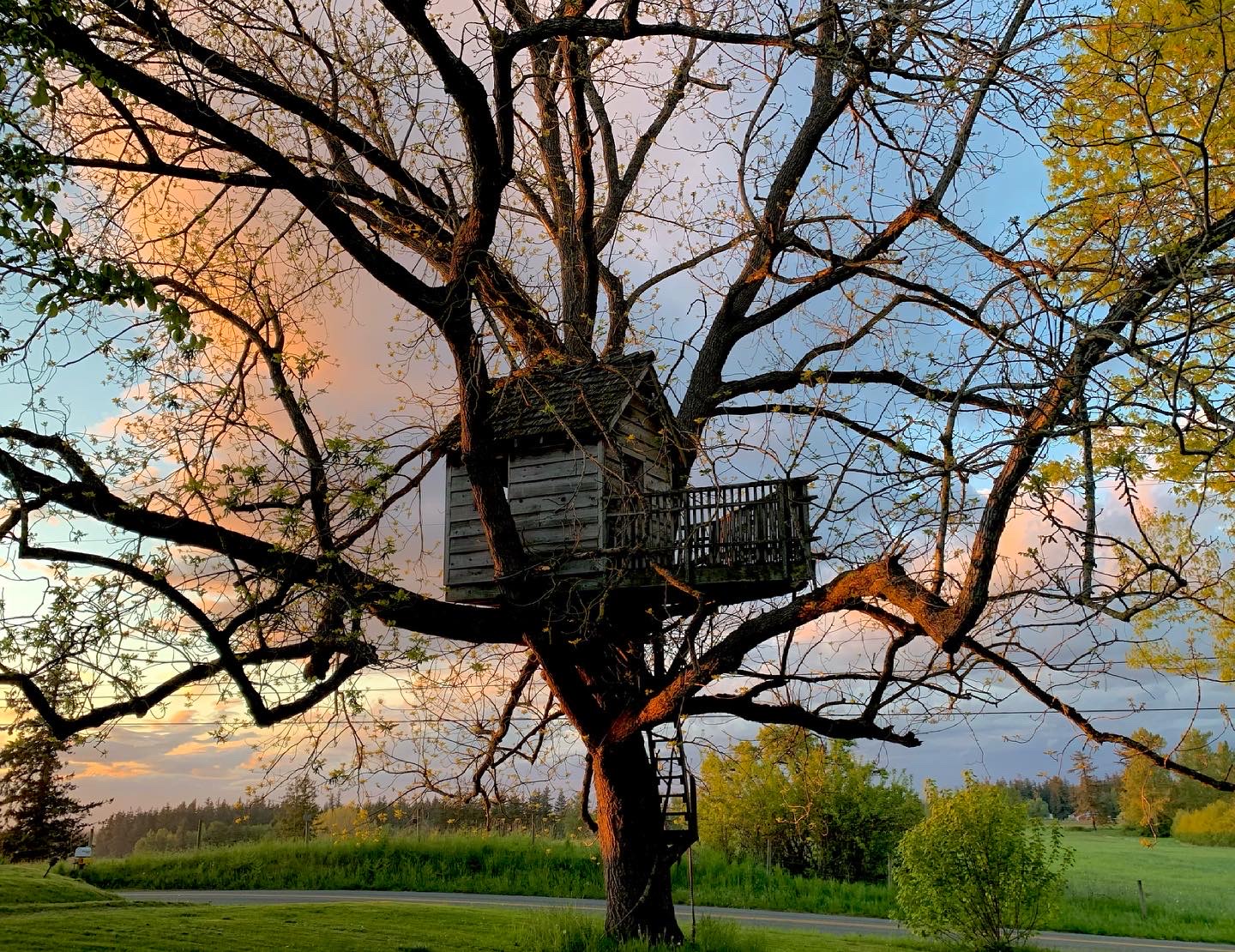
This grand old tree defines the seasons for me while it parallels my own aging.
This past winter’s storms took its branches down in the night with deafening cracks so loud I feared to see what remnant remained in the morning.
Yet it still stands, intrepid, ready for another round of seasons– though tired, sagging, broken at the edges, it’s always reaching to the sky.
AI image created for this post
One-Time
Monthly
Yearly
Make a one-time or recurring donation to support daily Barnstorming posts
Before the second summit party began the ascent of the princess of mountains, an ominous black cloud settled slowly around the summit block, persuading us to take a rest day, but morale was good. The next day at seven in the evening, my daughter Devi was on her last pitch, and it took her until midnight to haul up over the final lip. A long day.
Two days later, a blizzard kept us in our tents, but the next morning, Devi was stricken, saying calmly, “She is calling me. I am going to die,” before she fell into unconsciousness. I tried to revive her, mouth-to-mouth, but felt her lips grow cold against mine. We had lost her. My daughter was gone. I and the other climbers wept.
Her fiancé Andy and I bundled her in her sleeping bag and slipped her off the precipice of the North- East face. I said we had committed her to the deep. She had been the driving force behind this expedition, as she was inexorably drawn to her namesake. The Bliss-Giving Goddess had claimed her own. An excerpt from her last diary is inscribed on a stone placed in a high-altitude meadow of Patai:
“I stand on a windswept ridge at night with the stars bright above and I am no longer alone but I waver and merge with all the shadows that surround me. I am part of the whole and I am content.” ~Eleanor Swanson, Last Light on the West Face of Nanda Devifrom Non Finito
Nanda Devi peak, courtesy of Stanford Alpine Club
The ripple effect from Nanda Devi Unsoeld’s arrival as a new junior in Olympia High School in 1970 reached me within minutes, as I felt the impact of her presence on campus immediately. One of my friends elbowed me, pointing out a new girl being escorted down the hall by the assistant principal. Students stared at the wake she left behind: Devi had wildly flowing wavy long blonde hair, a friendly smile and bold curious eyes greeting everyone she met.
From the neck up, she fit right in with the standard appearance at the time: as the younger sisters of the 60’s generation of free thinking flower children, we tried to emulate them in our dress and style, going braless and choosing bright colors and usually skirts that were too short and tight. There was the pretense we didn’t really care how we looked, but of course we did care very much, with hours spent daily preparing the “casual carefree” look that would perfectly express our freedom from fashion trends amid our feminist longings.
Practicing careful nonconformity perfectly fit our peers’ expectations and aggravated our parents.
But Devi never looked like she cared what anyone else thought of her. The high school girls honestly weren’t sure what to make of her, speculating together whether she was “for real” and viewed her somewhat suspiciously, as if she was putting on an act.
The high school boys were mesmerized.
She preferred baggy torn khaki shorts or peasant skirts with uneven hems, loose fitting faded T shirts and ripped tennis shoes without shoelaces. Her bare legs were covered with long blonde hair, as were her armpits which she showed off while wearing tank tops. She pulled whole cucumbers from her backpack in class and ate them like cobs of corn, rind and all. She smelled like she had been camping without a shower for three days, but then riding her bike to school from her home 11 miles away in all kinds of weather accounted for that. One memorable day she arrived a bit late to school, pushing her bike through 6 inches of snow in soaking tennis shoes, wearing her usual broad smile of satisfaction.
As a daughter of two Peace Corps workers who had just moved back to the U.S. after years of service in Nepal, Devi had lived very little of her life in the United States. Her father Willi Unsoeld, one of the first American climbers to reach the summit of Mt. Everest up the difficult west face, had recently accepted a professorship in comparative religion at new local Evergreen College. He moved his wife and family back to the northwest to be near his beloved snowy peaks, suddenly immersing four children in an affluent culture that seemed foreign and wasteful.
Devi recycled before there was a word for it simply by never buying anything new and never throwing anything useful away, involved herself in social justice issues before anyone had coined the phrase, and was an activist behind the scenes more often than a leader, facilitating and encouraging others to speak out at anti-war rallies, organizing sit-ins for world hunger and volunteering in the local soup kitchen. She mentored adolescent peers to get beyond their self-consciousness and self-absorption to explore the world beyond the security of high school walls.
Regretfully, few of us followed her lead. We preferred the relative security and camaraderie of hanging out at the local drive-in to taking a shift at the local 24-hour crisis line. We showed up for our graduation ceremony in caps and gowns while the rumor was that Devi stood at the top of Mt. Rainier with her father that day.
I never saw Devi after high school but heard of her plans in 1976 to climb with an expedition to the summit of Nanda Devi, the peak in India for which she was named. She never returned, dying in her father’s arms as she suffered severe abdominal pain and irreversible high altitude sickness just below the summit. She lies forever buried in the ice on that faraway peak in India.
Her father died in an avalanche only a few years later, as he led an expedition of Evergreen students on a climb on Mt. Rainier, only 60 miles from home. Her mother, Jolene, later served in Congress from our district in Washington state.
Had Devi lived these last 50 years, I have no doubt she would have led our generation with her combination of charismatic boldness and excitement about each day’s new adventure. She lived without pretense, without hiding behind a mask of fad and fashion and conformity and without any desire for wealth or comfort.
I wish I had learned what she had to teach me when she sat beside me in class, encouraging me by her example to become someone more than the dictates of societal expectations. I secretly admired the freedom she embodied in not being concerned in the least about fitting in. Instead, I still mourn her loss all these years later, having to be content with the legacy she has now left behind on a snowy mountain peak that called her by name.
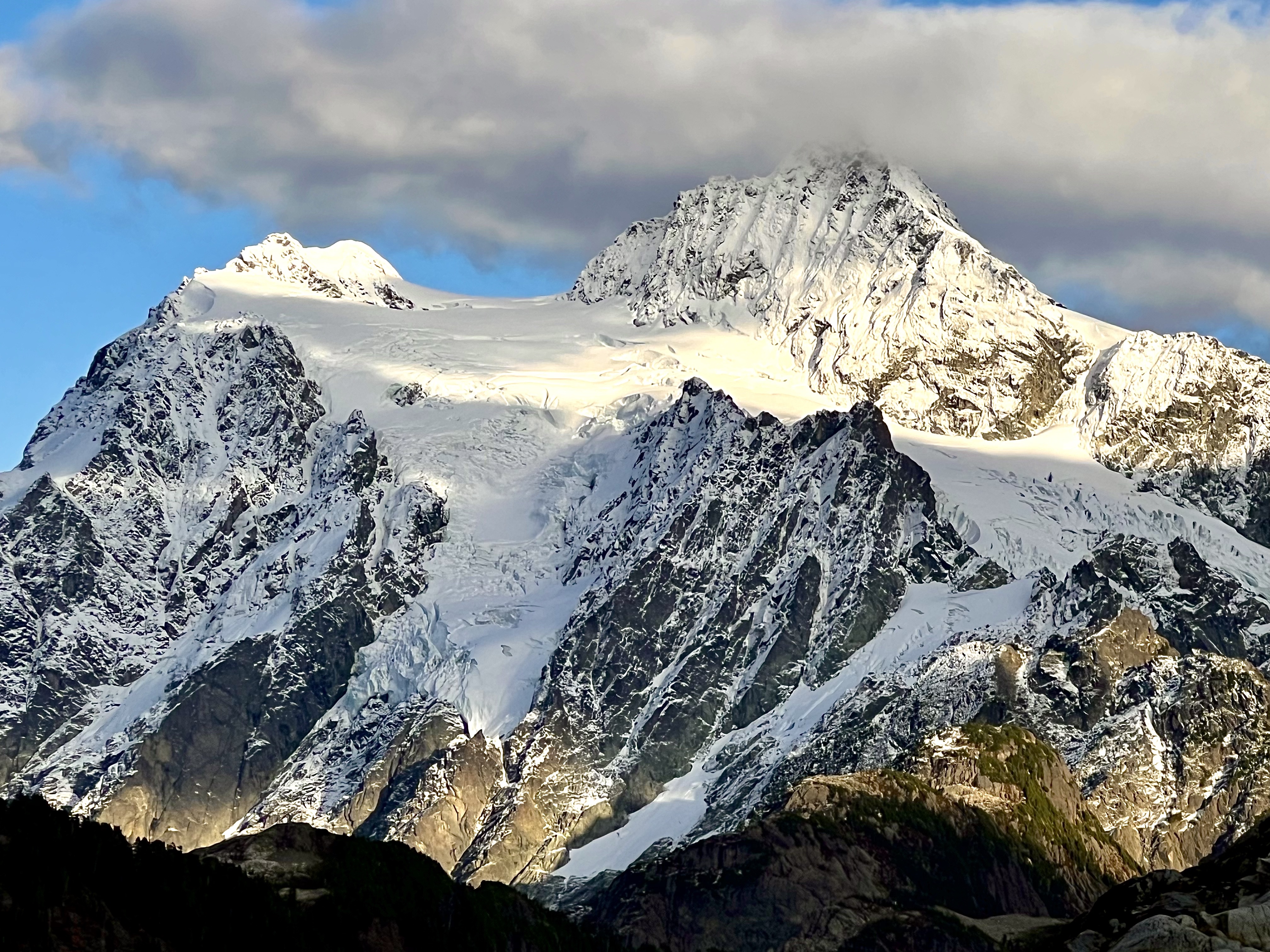
Mt. Shuksan, Washington state
One-Time
Monthly
Yearly
Make a one-time or recurring donation to support daily Barnstorming posts
The fields are snowbound no longer; There are little blue lakes and flags of tenderest green. The snow has been caught up into the sky— So many white clouds—and the blue of the sky is cold. Now the sun walks in the forest, He touches the boughs and stems with his golden fingers; They shiver, and wake from slumber. Over the barren branches he shakes his yellow curls. … Yet is the forest full of the sound of tears…. A wind dances over the fields. Shrill and clear the sound of her waking laughter, Yet the little blue lakes tremble And the flags of tenderest green bend and quiver. ~Katherine Mansfield “Very Early Spring”
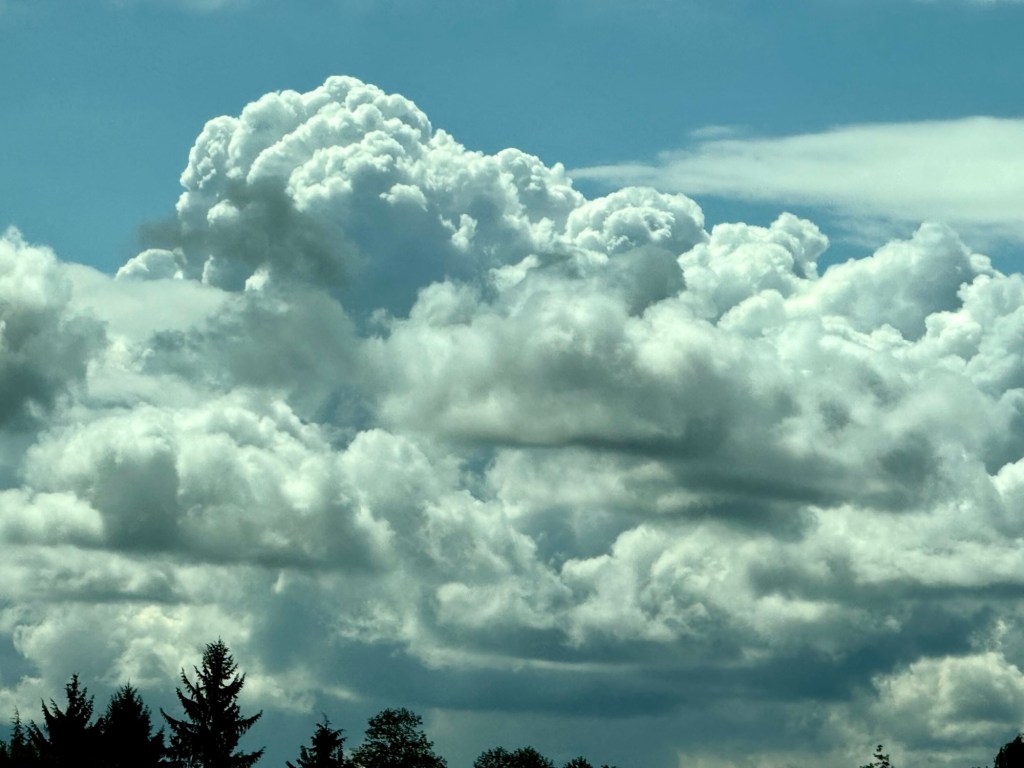
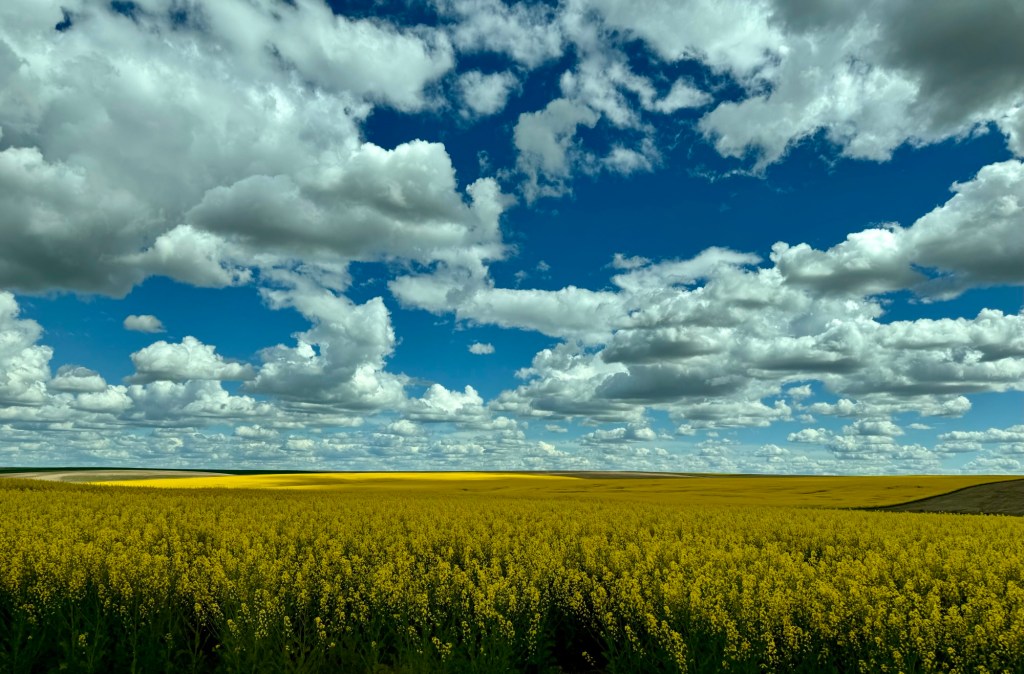
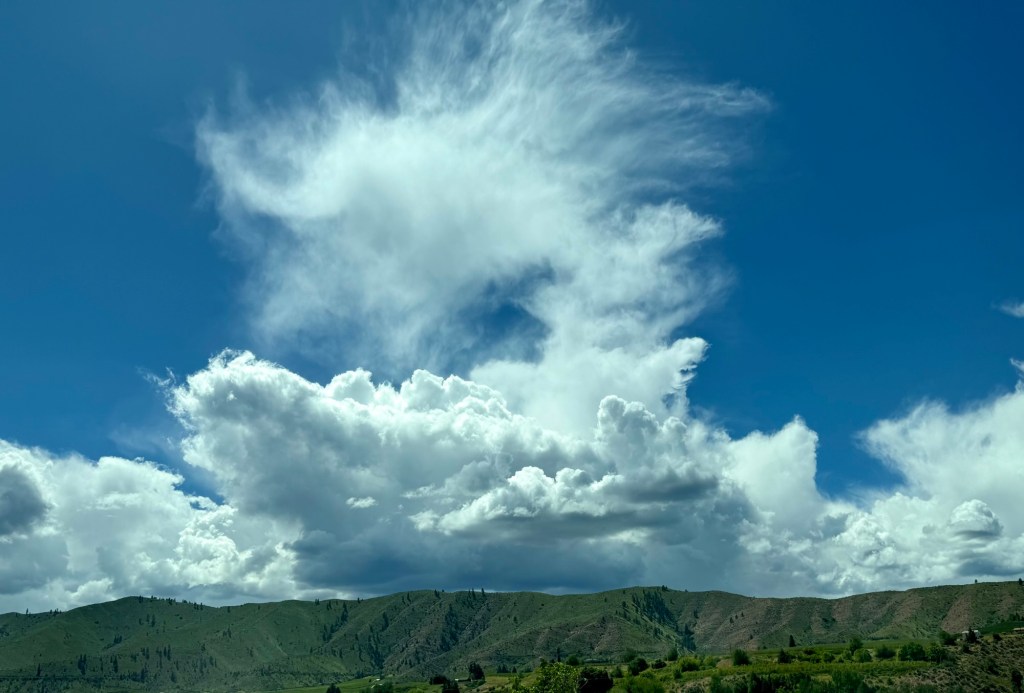
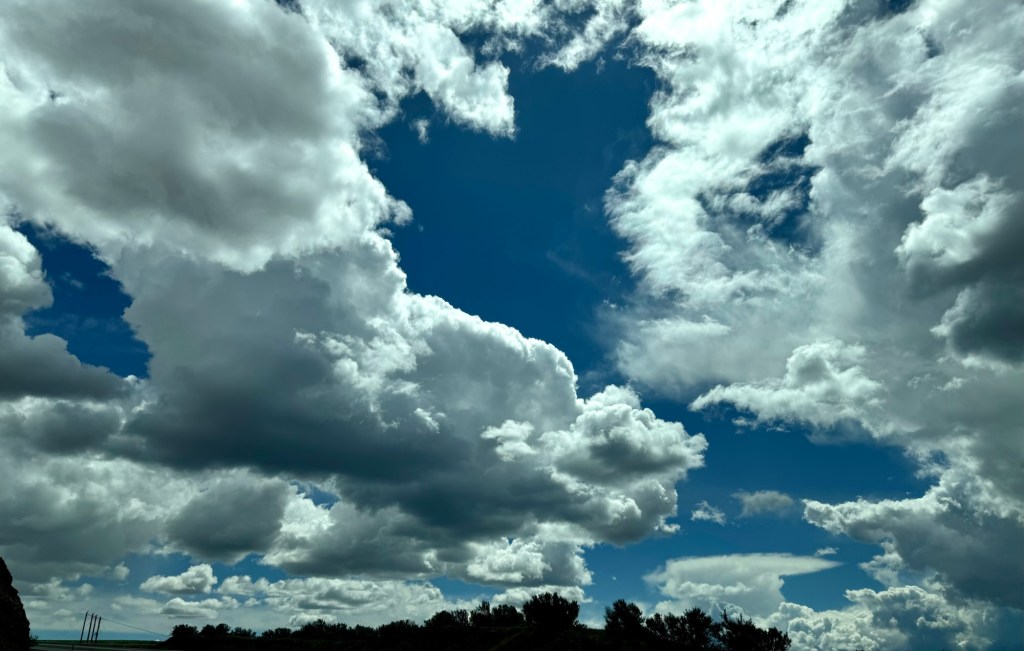
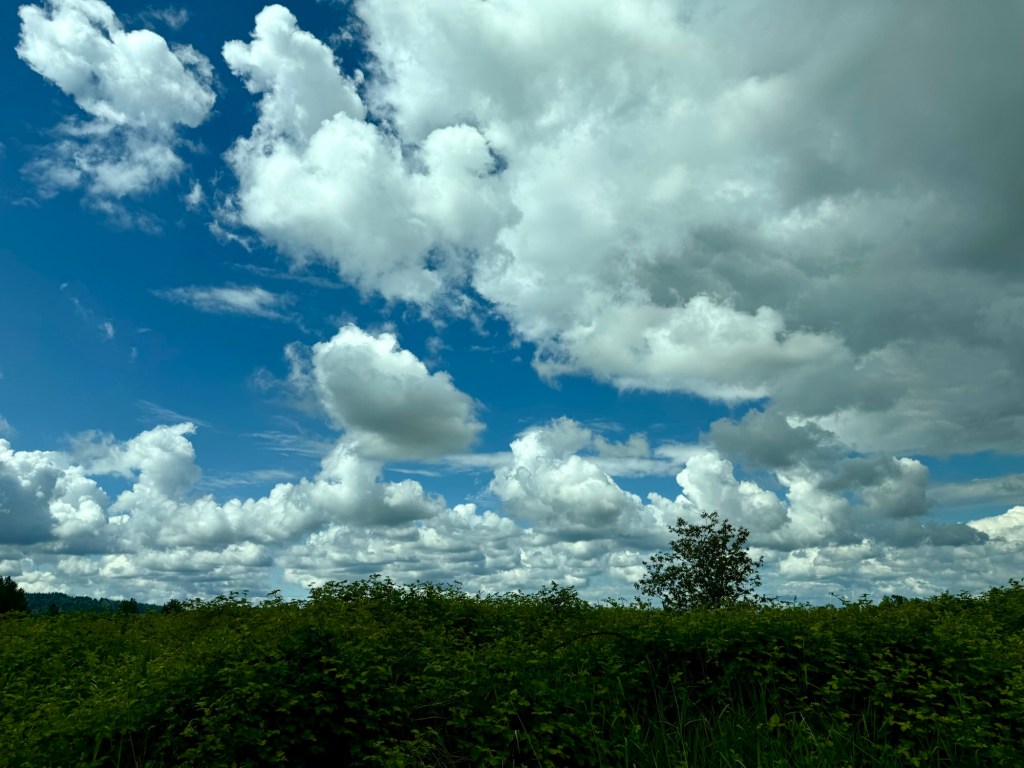
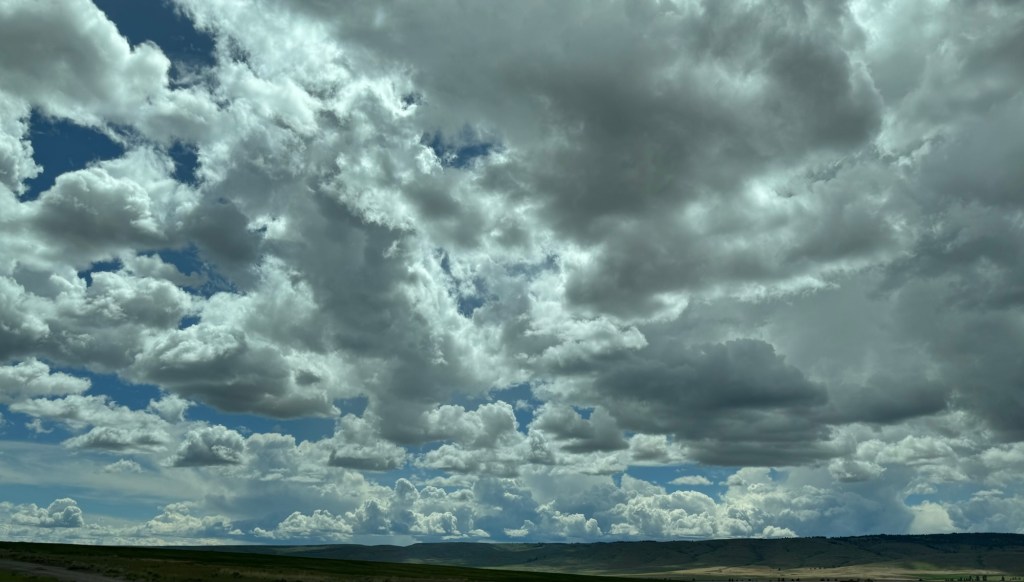
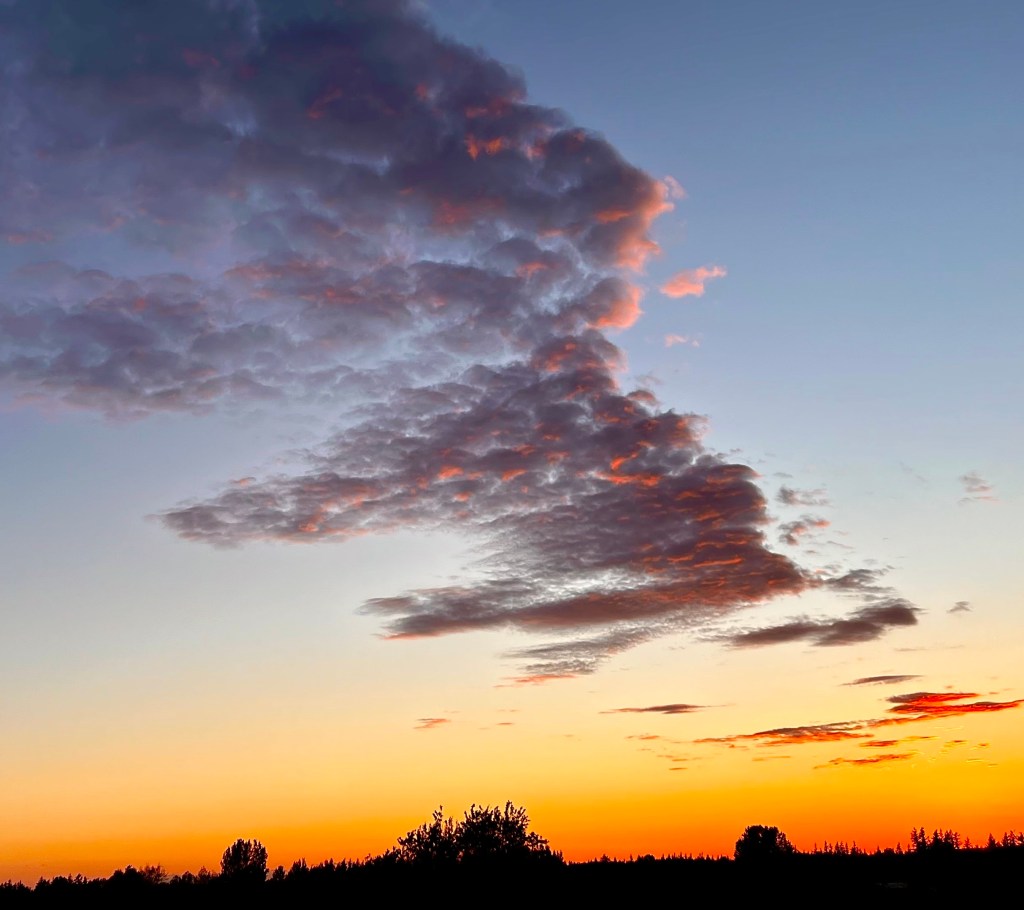
You might say that clouds have no nationality Being flags of no country, flaunting their innocent neutrality Across frontiers, ignorant of boundaries; But these clouds are clearly foreign, such an exotic clutter Against the blue cloth of the sky I want to rummage among them, I want to turn them over With eager fingers, I want to bargain For this one or that one, I want to haggle and dicker Over the prices, and I want to see my clouds wrapped up In sheets of old newspapers, and give them away To young girls to pin in their hair Or tuck them, glossy as gardenias, behind an ear, Or stretch one out to the length of a lacy shawl And toss it over a shoulder, or around a waist. ~Constance Urdang “Clouds”
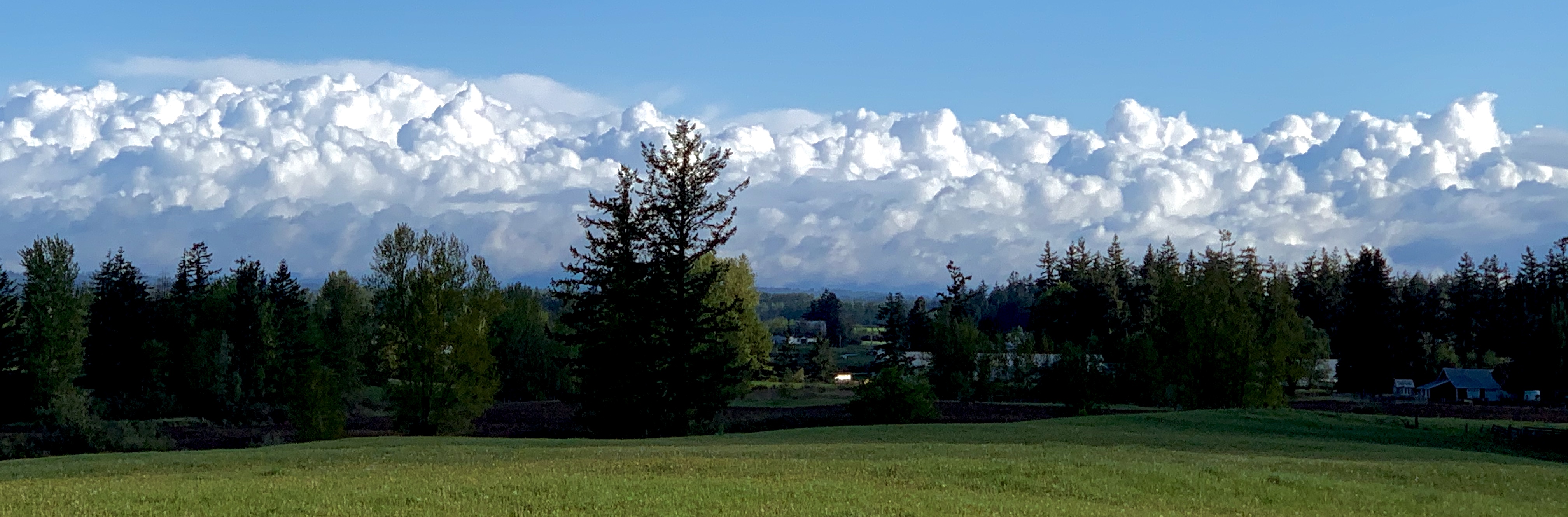
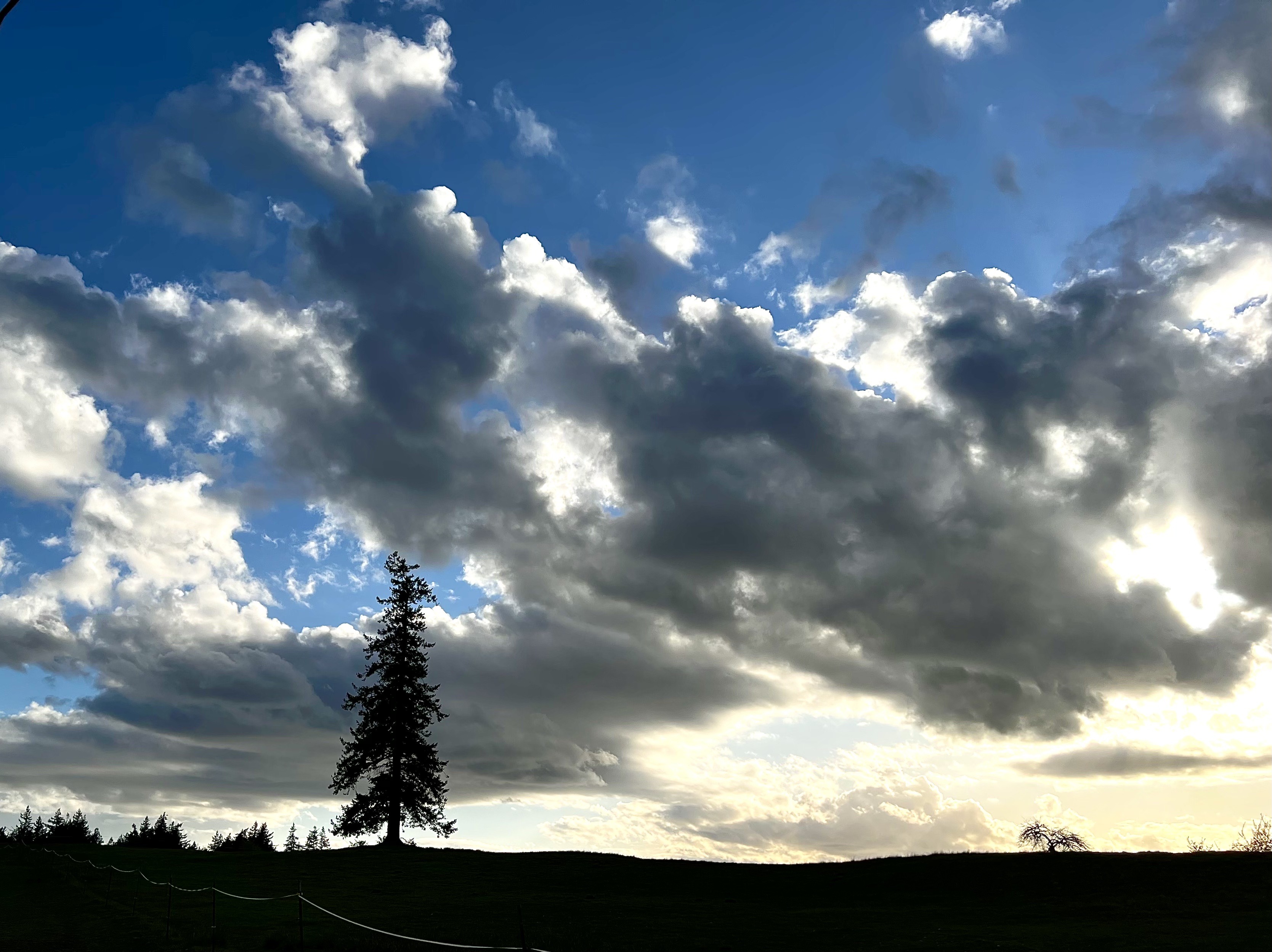
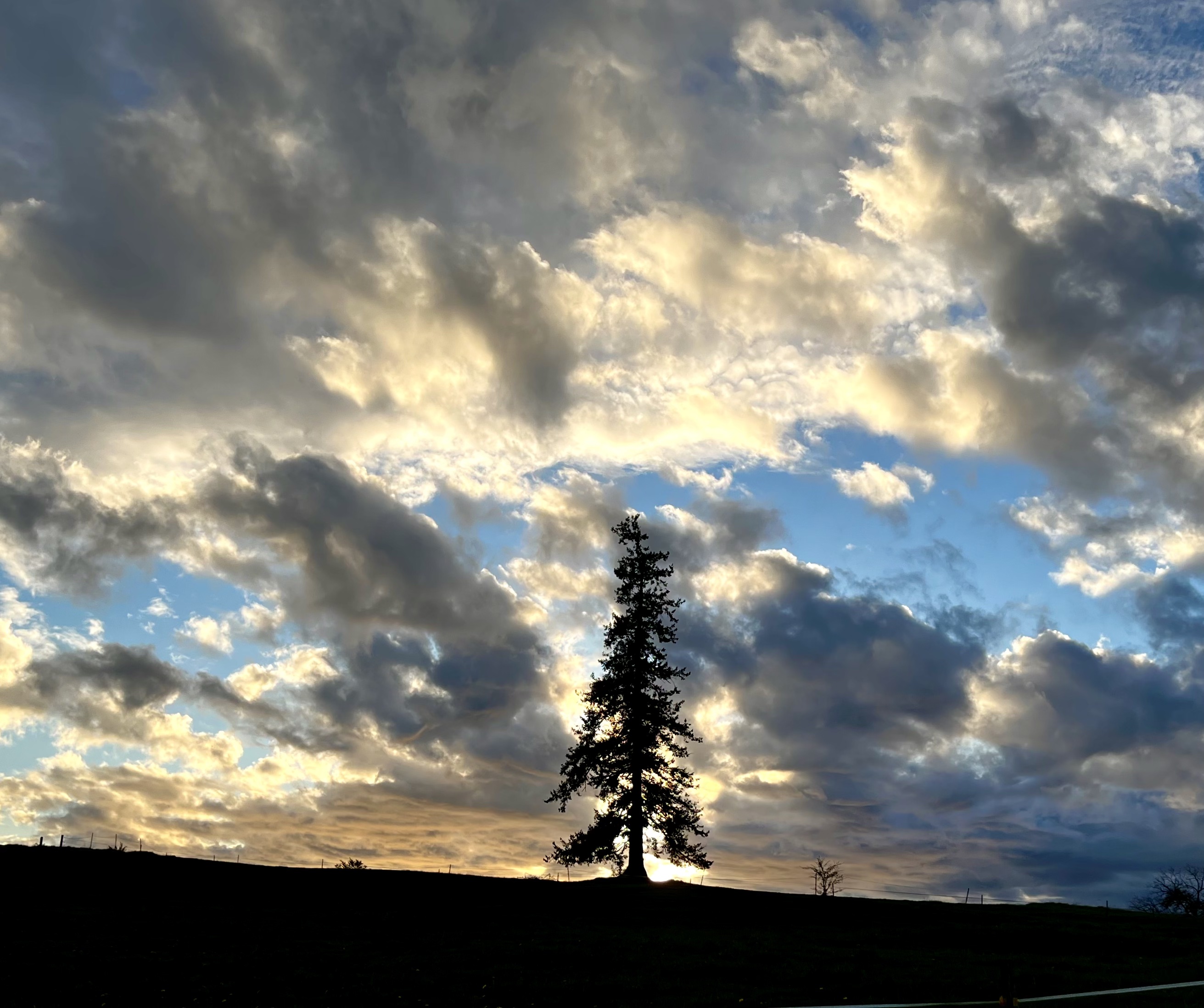
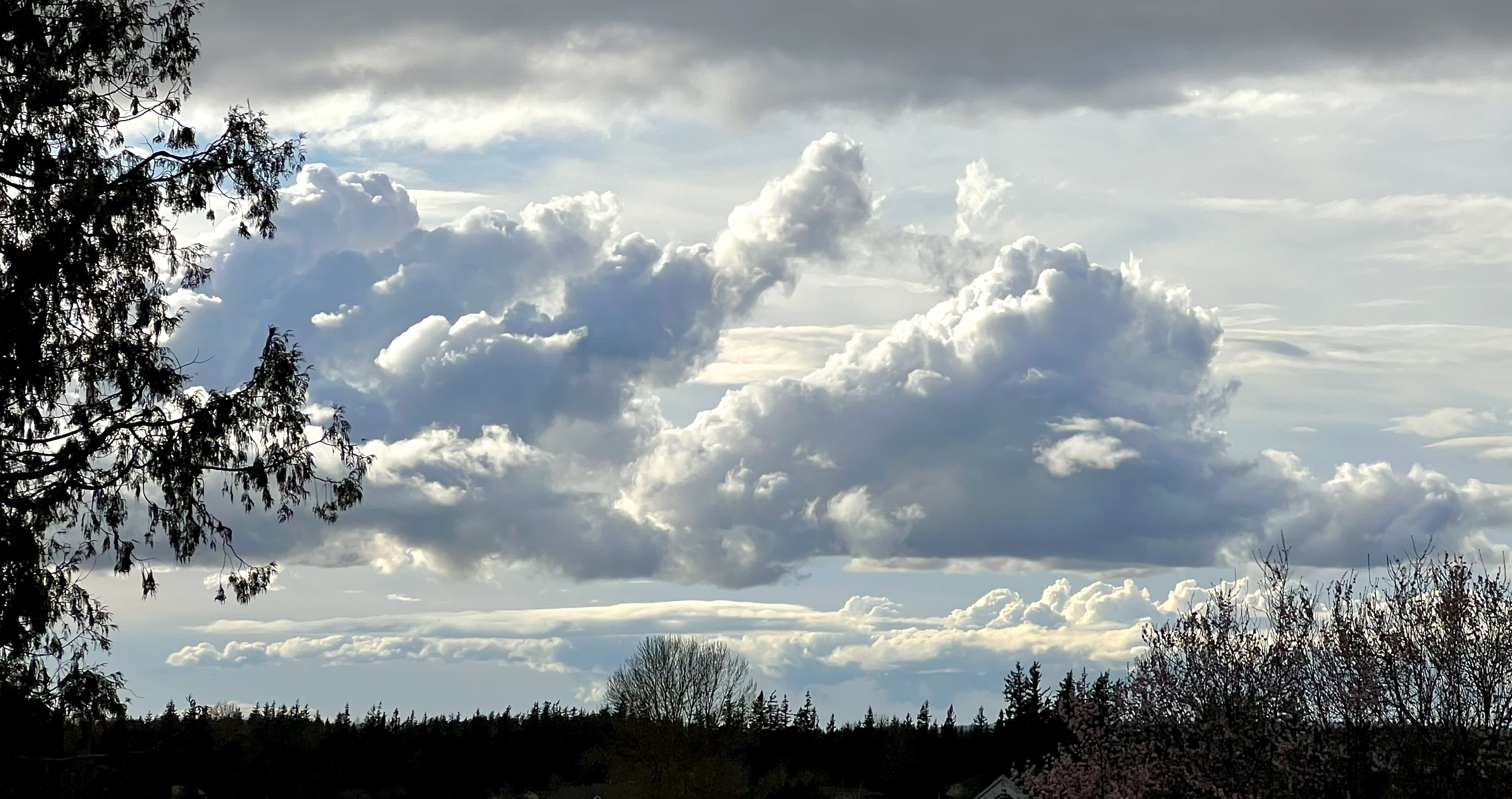
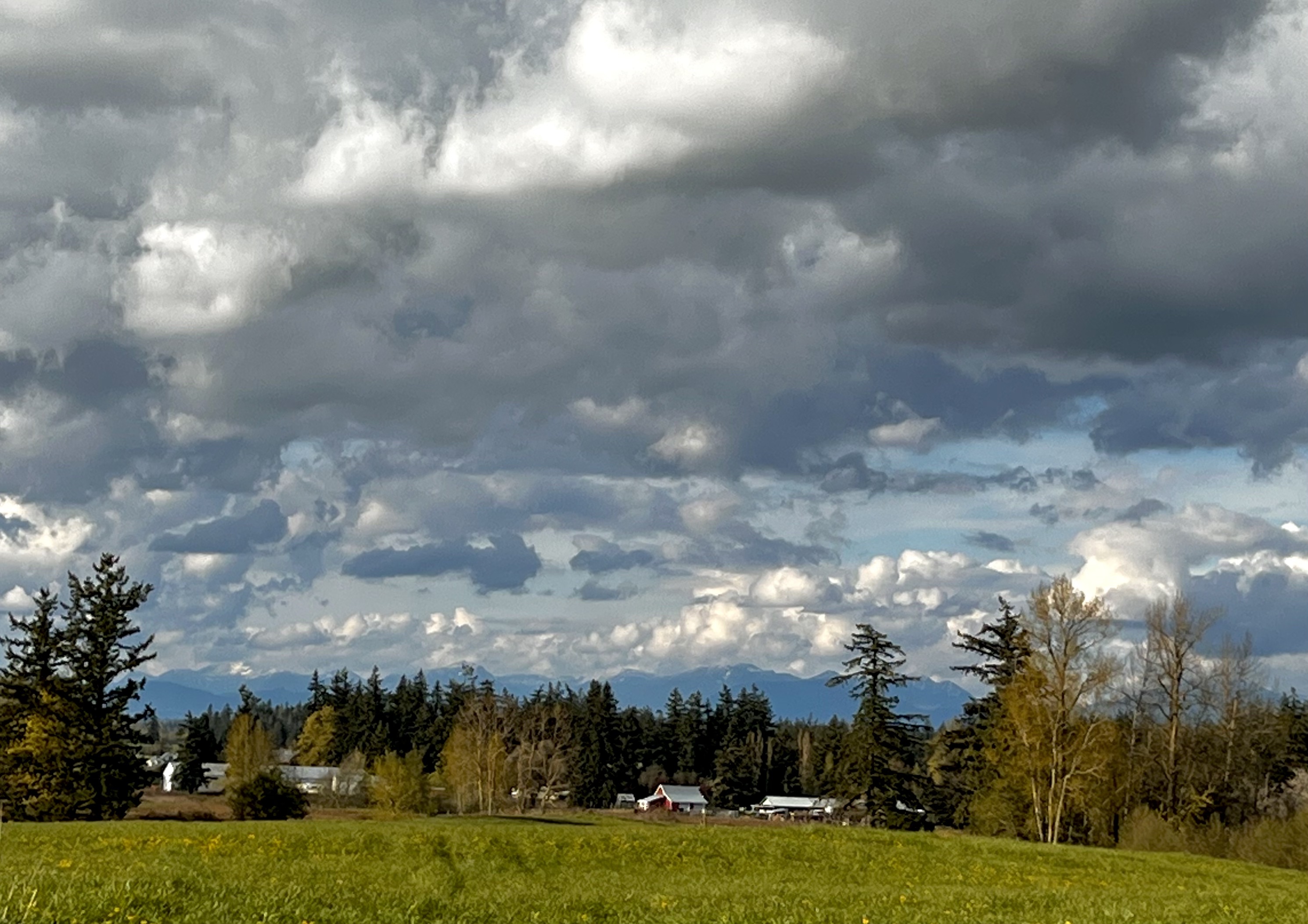
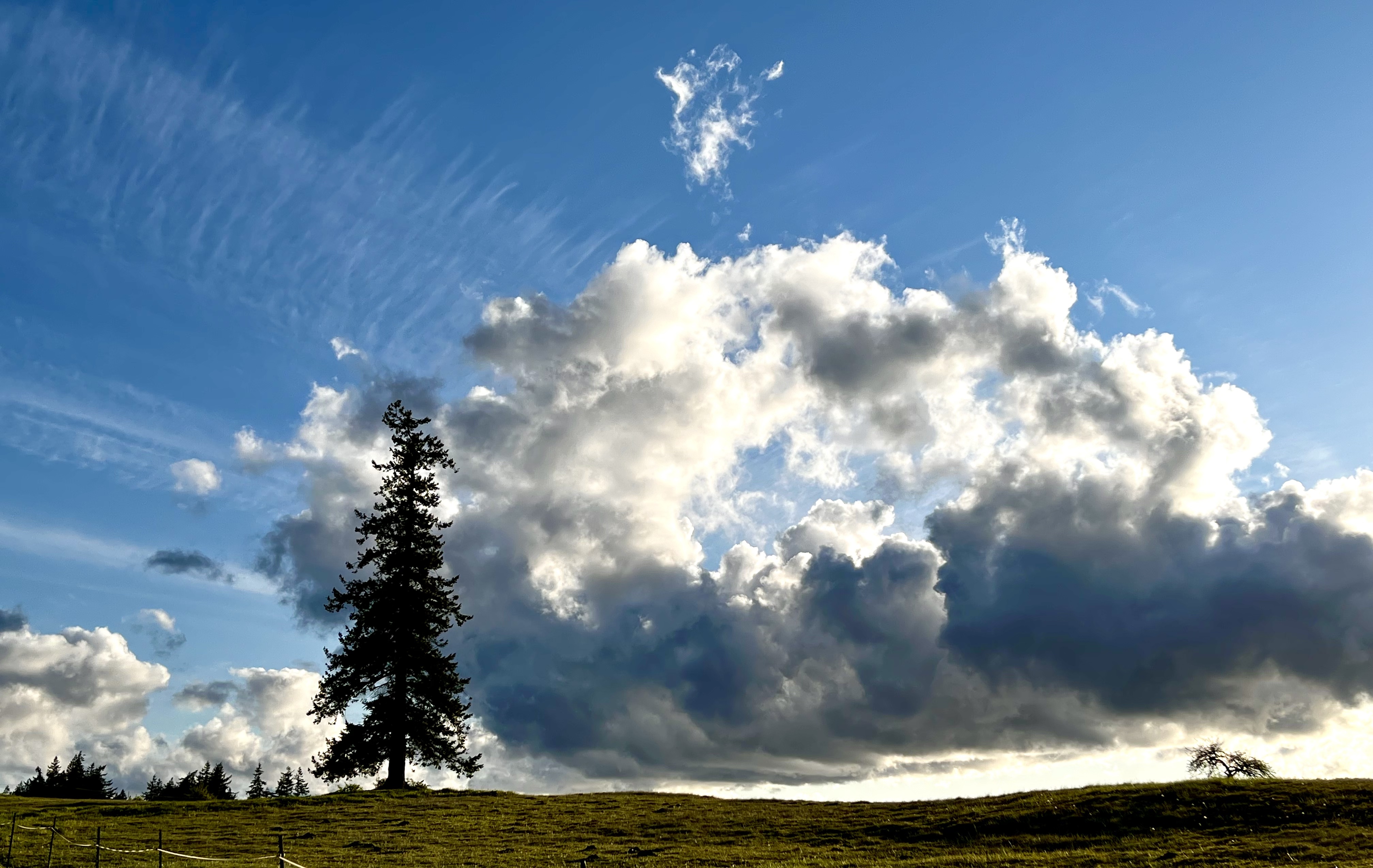
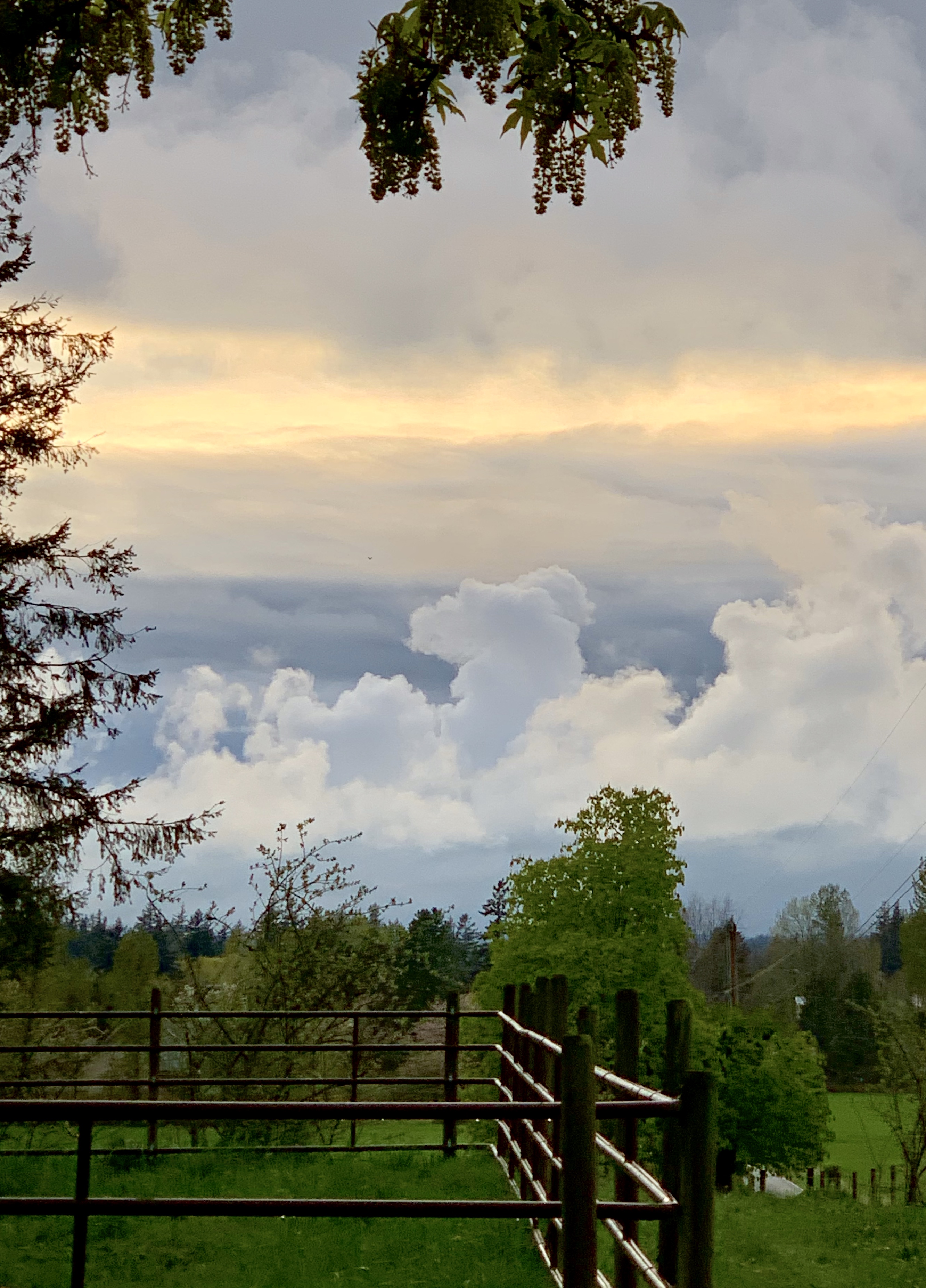
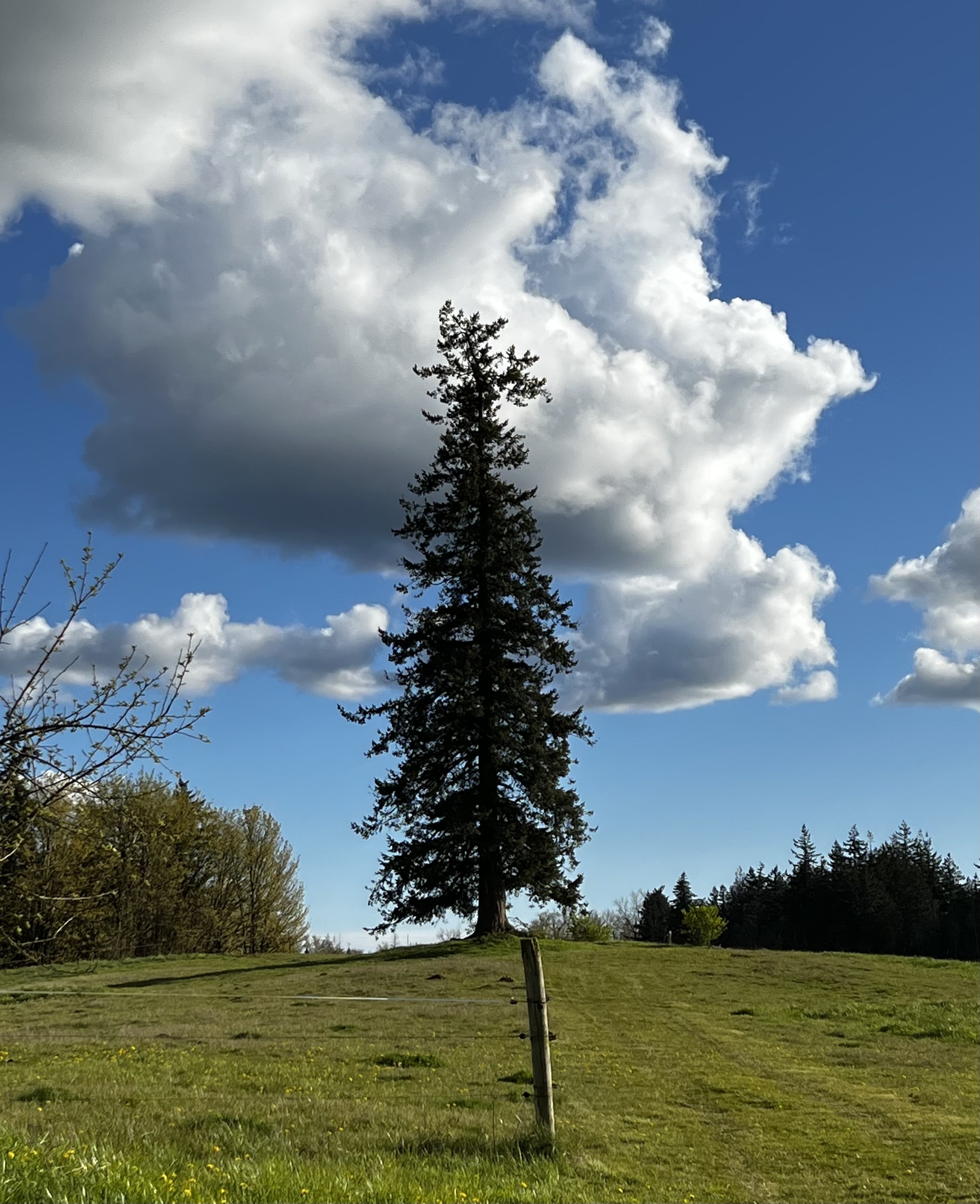
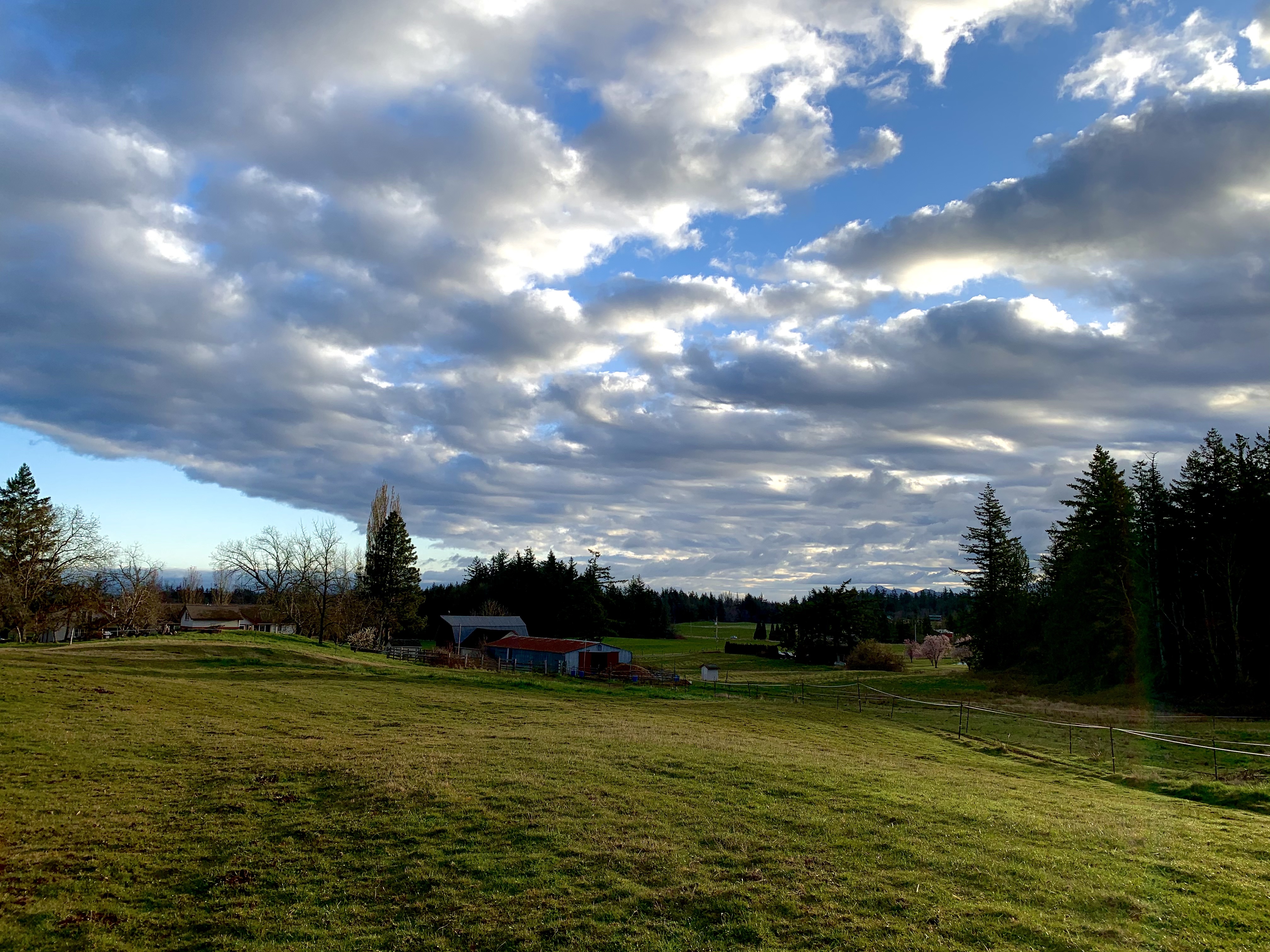
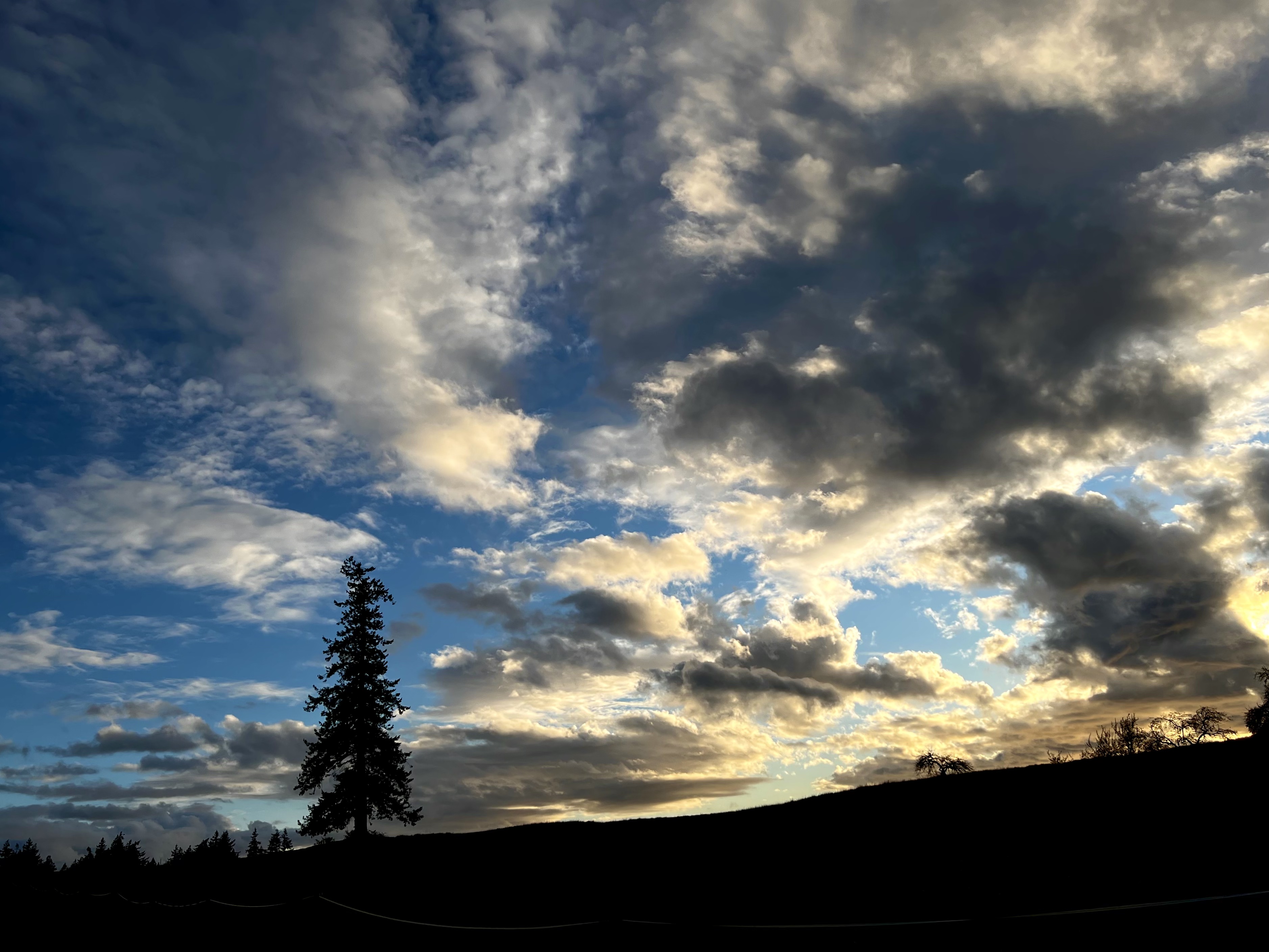
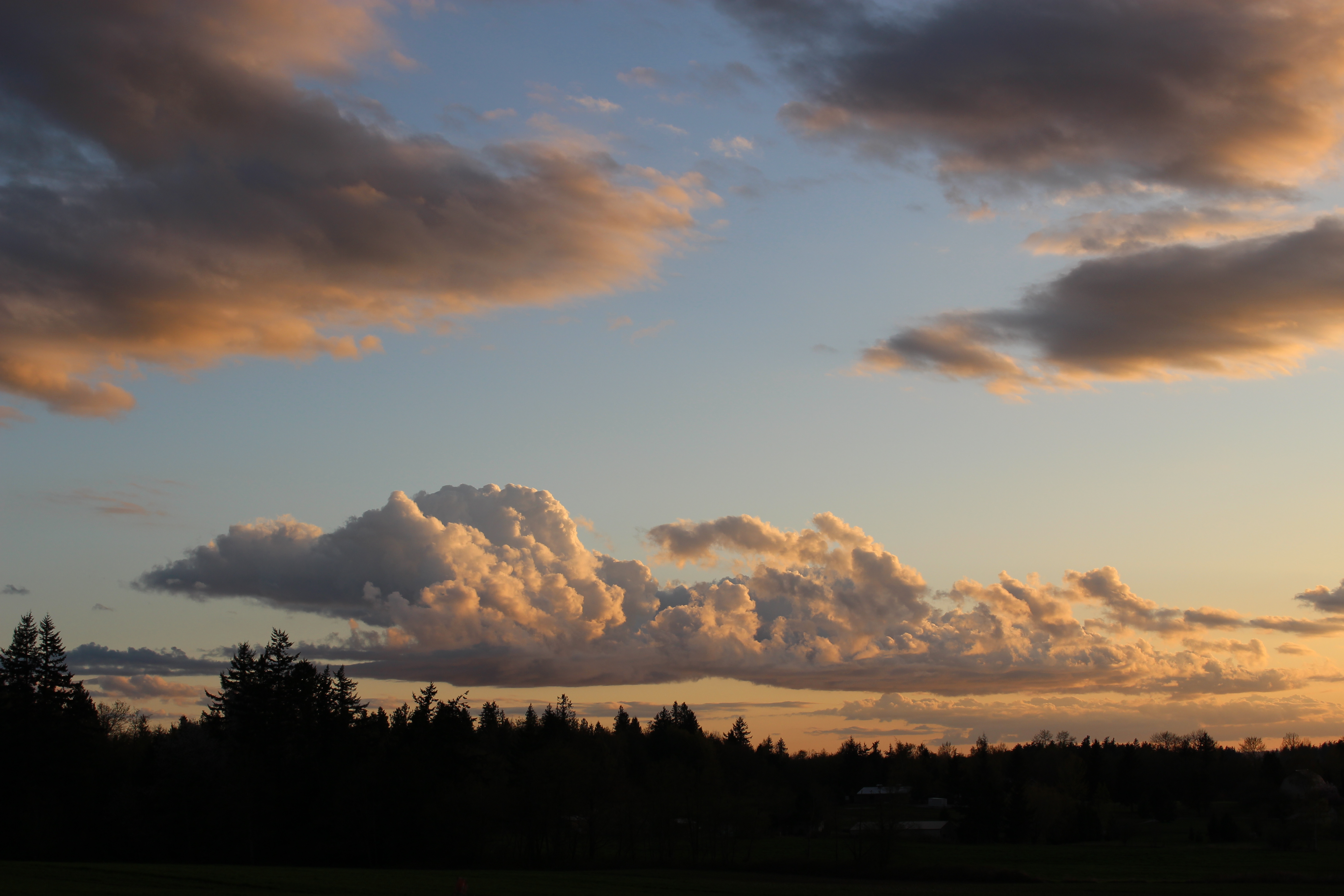
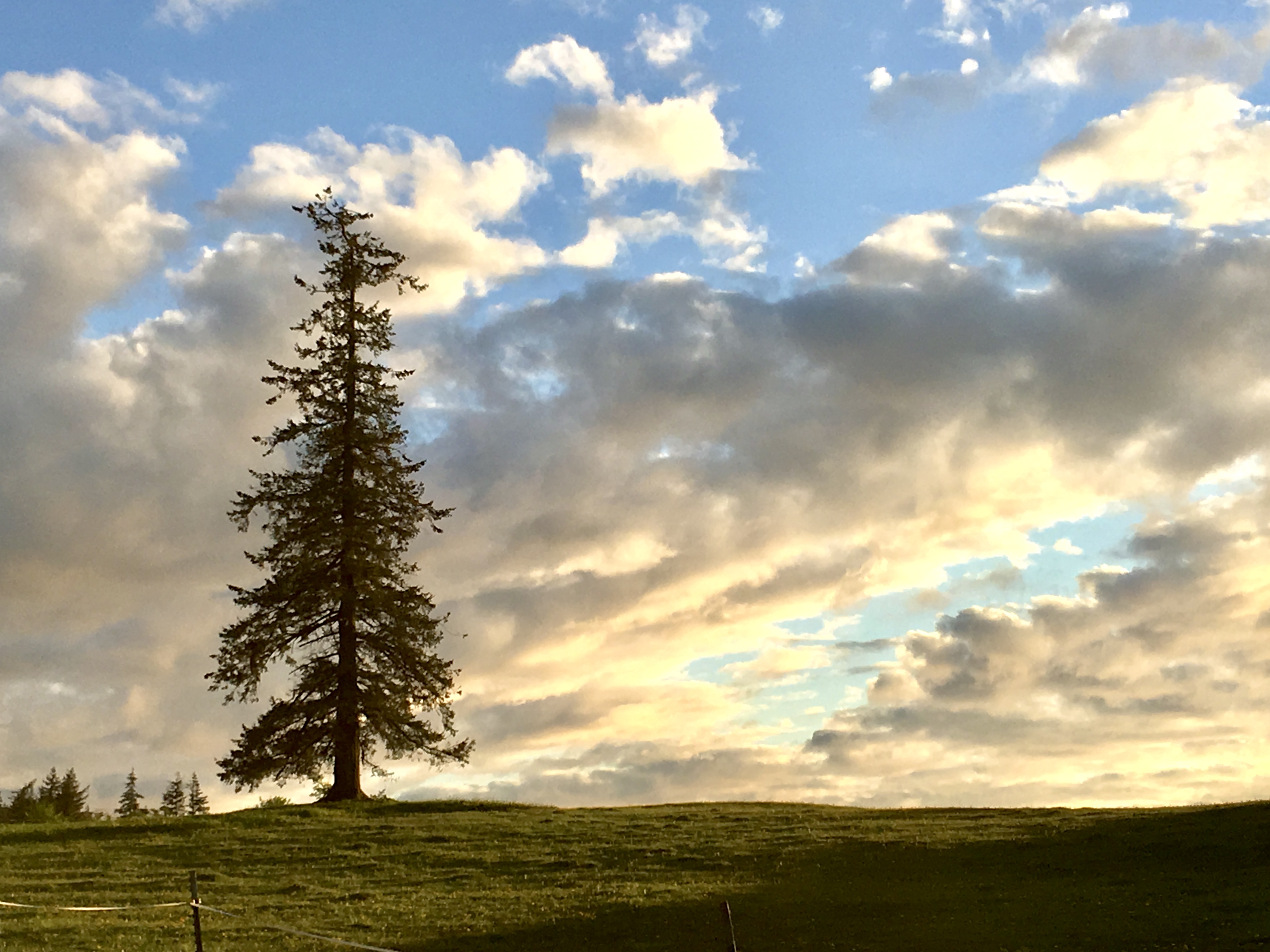
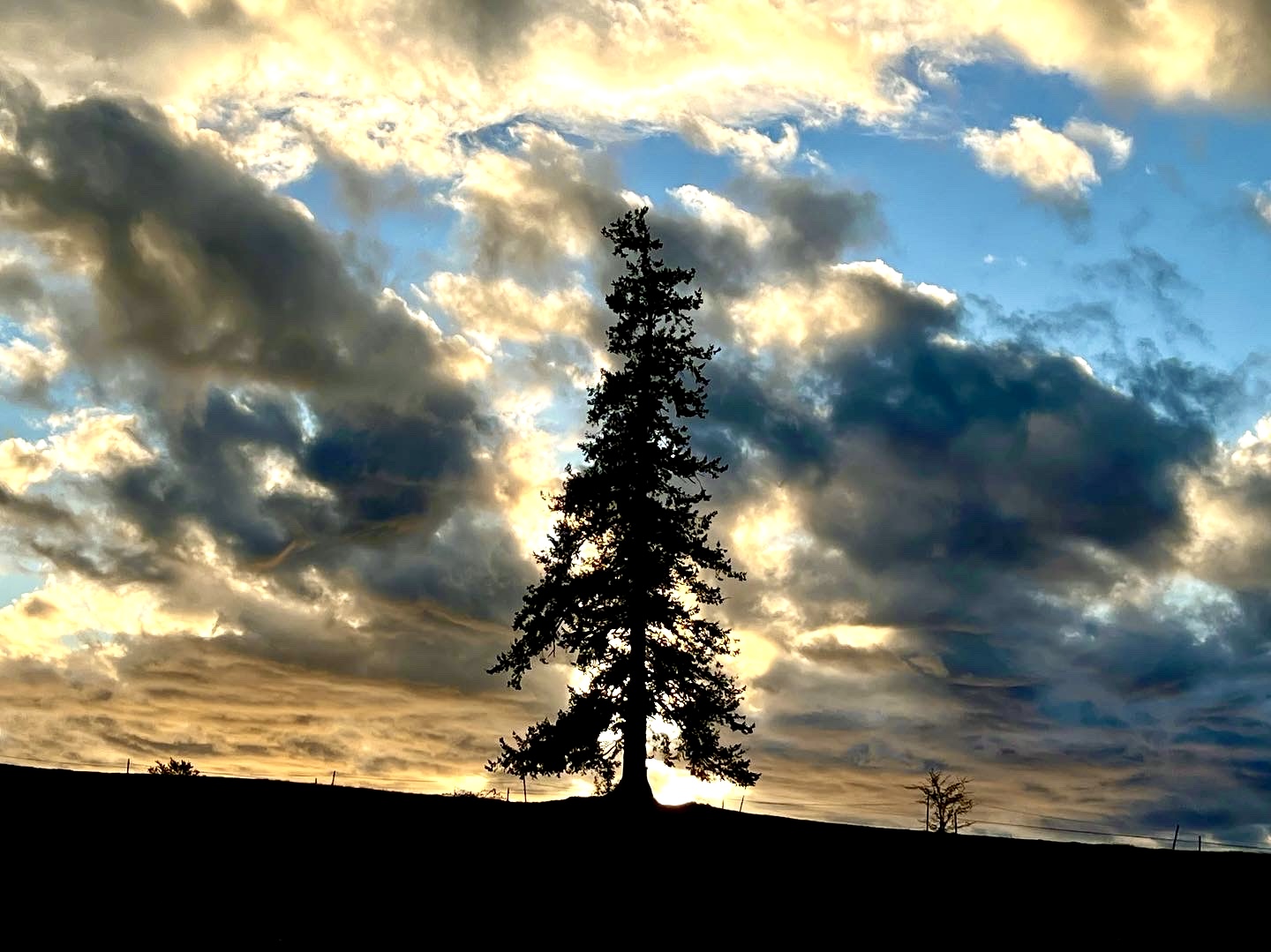
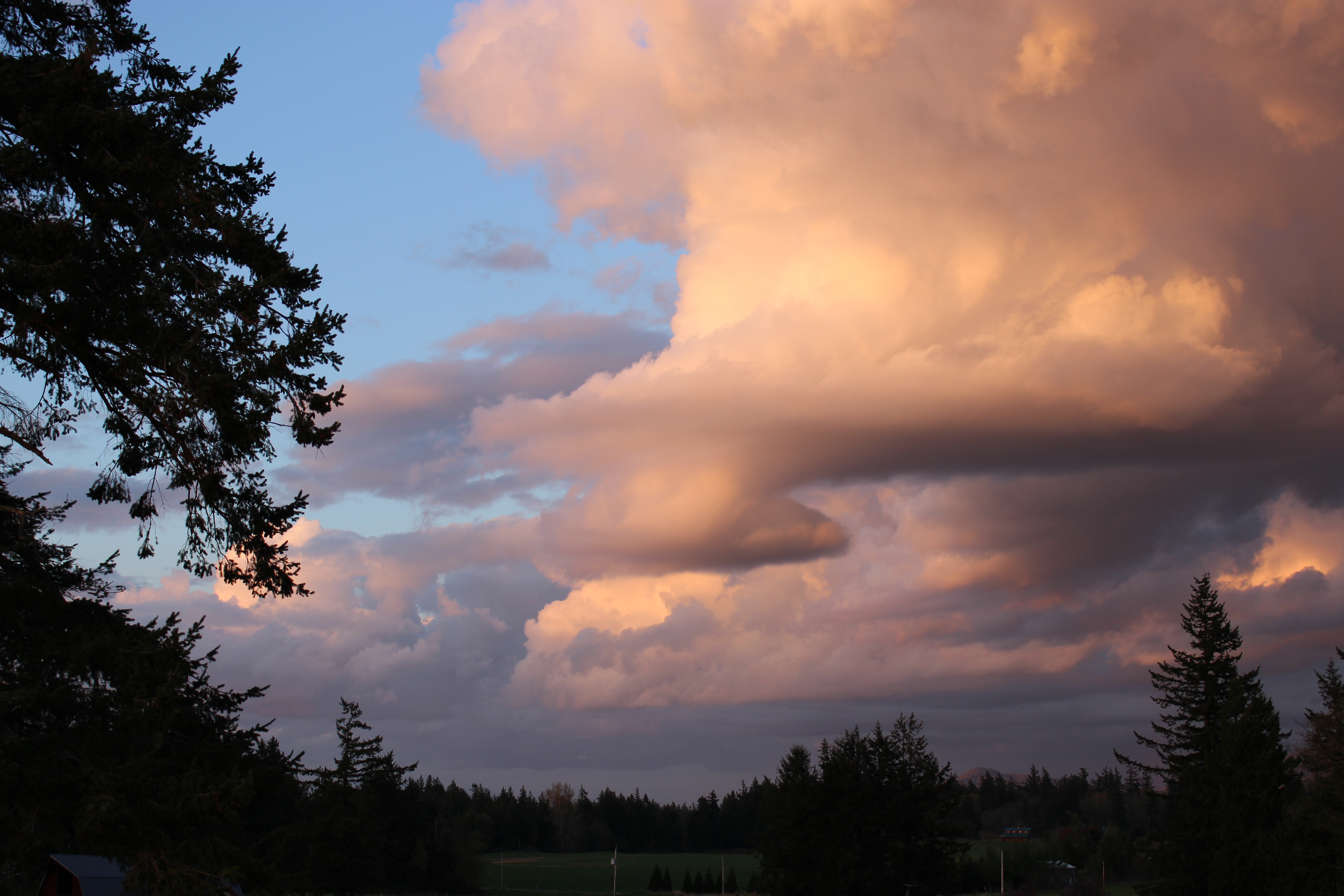
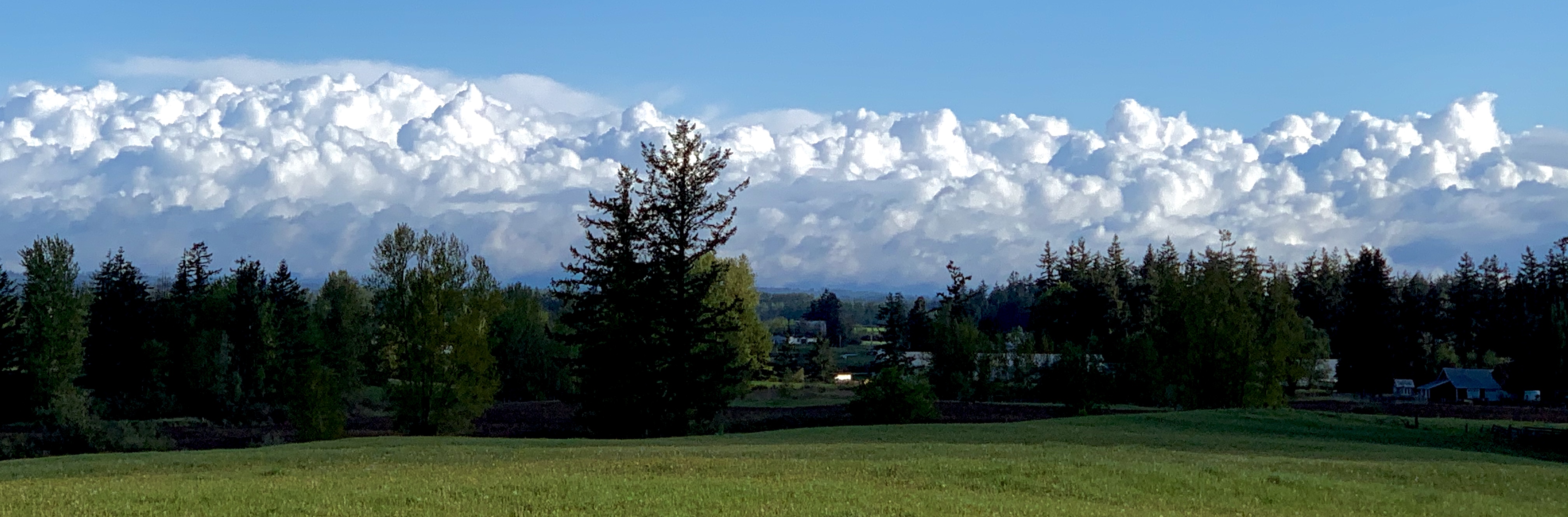
Our farm sits about 9 miles from an international border. The sky and clouds are oblivious to the line drawn by two governments, and don’t bother to stop at the border stations controlling access of humans across that line.
The clouds are free to go where they please, so they do, while we watch. They are both a foreign and domestic cloud of witnesses to our earthbound follies and foolishness.
No passports or IDs, no being pulled into “secondary” for more intensive searches and questioning, no being “turned back” not allowed across, no deportations.
They simply float and glide where the breezes take them, assuming whatever shape, identity or characteristics they wish.
What a beautiful day in the neighborhood if one happens to be a cloud or a cloud of witnesses…
AI image created for this post
One-Time
Monthly
Yearly
Make a one-time or recurring donation to support daily Barnstorming posts



































 Barnstorming