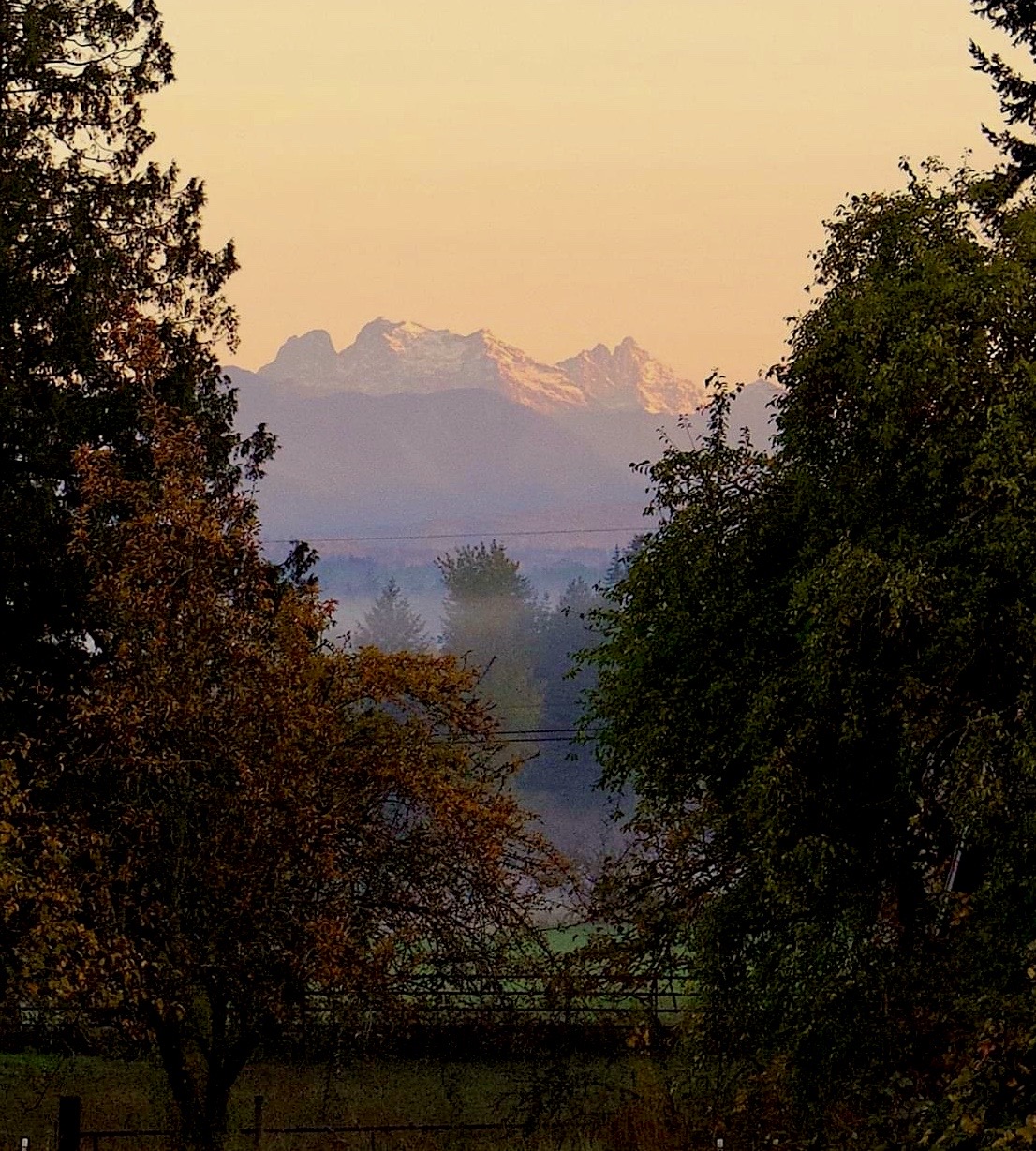
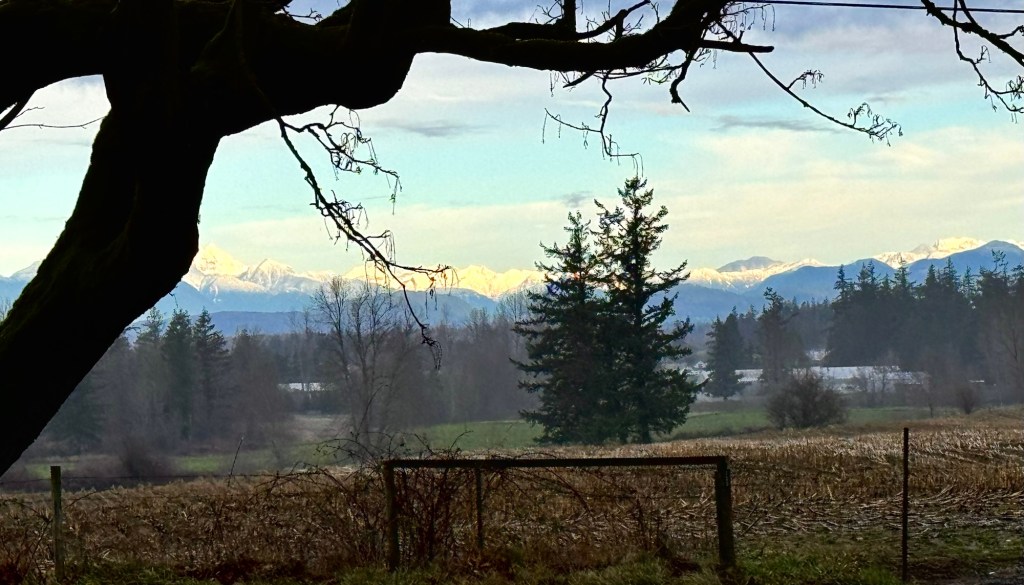
All I could see from where I stood Was three long mountains and a wood; I turned and looked another way, And saw three islands in a bay. So with my eyes I traced the line Of the horizon, thin and fine, Straight around till I was come Back to where I’d started from; And all I saw from where I stood Was three long mountains and a wood.
Over these things I could not see; These were the things that bounded me; And I could touch them with my hand, Almost, I thought, from where I stand. And all at once things seemed so small My breath came short, and scarce at all.
The world stands out on either side No wider than the heart is wide; Above the world is stretched the sky,— No higher than the soul is high. The heart can push the sea and land Farther away on either hand; The soul can split the sky in two, And let the face of God shine through. But East and West will pinch the heart That can not keep them pushed apart; And he whose soul is flat—the sky Will cave in on him by and by. ~Edna St. Vincent Millay at age 19, from “Renascence”
I know for a while again, the health of self-forgetfulness, looking out at the sky through a notch in the valley side, the black woods wintry on the hills, small clouds at sunset passing across. And I know that this is one of the thresholds between Earth and Heaven, from which I may even step forth from myself and be free. ~ Wendell Berry, Sabbaths 2000
I was told once by someone I respected that my writing reflected “sacramental” living — reflecting my effort to touch and taste the holiness of everyday moments, as if they are the cup and bread that sustain us.
I allowed that feedback to sit warmly beside me, like a comforting companion during the hours I struggled with what to share here.
Yet, as tomorrow begins weeks of Lenten observance, I realize it is all too tempting to emphasize sacrament over the sacrifice it inevitably represents.
As much as I love the world and the beauty I find here, I need to recognize there will be “thin places” between heaven and earth where we must forget “self” and step forth through a holy threshold into something far greater.
So I struggle with what sacrificial living truly means, as a terrifying illuminating freedom remaining far beyond my grasp.
I may even step forth from myself and be free…
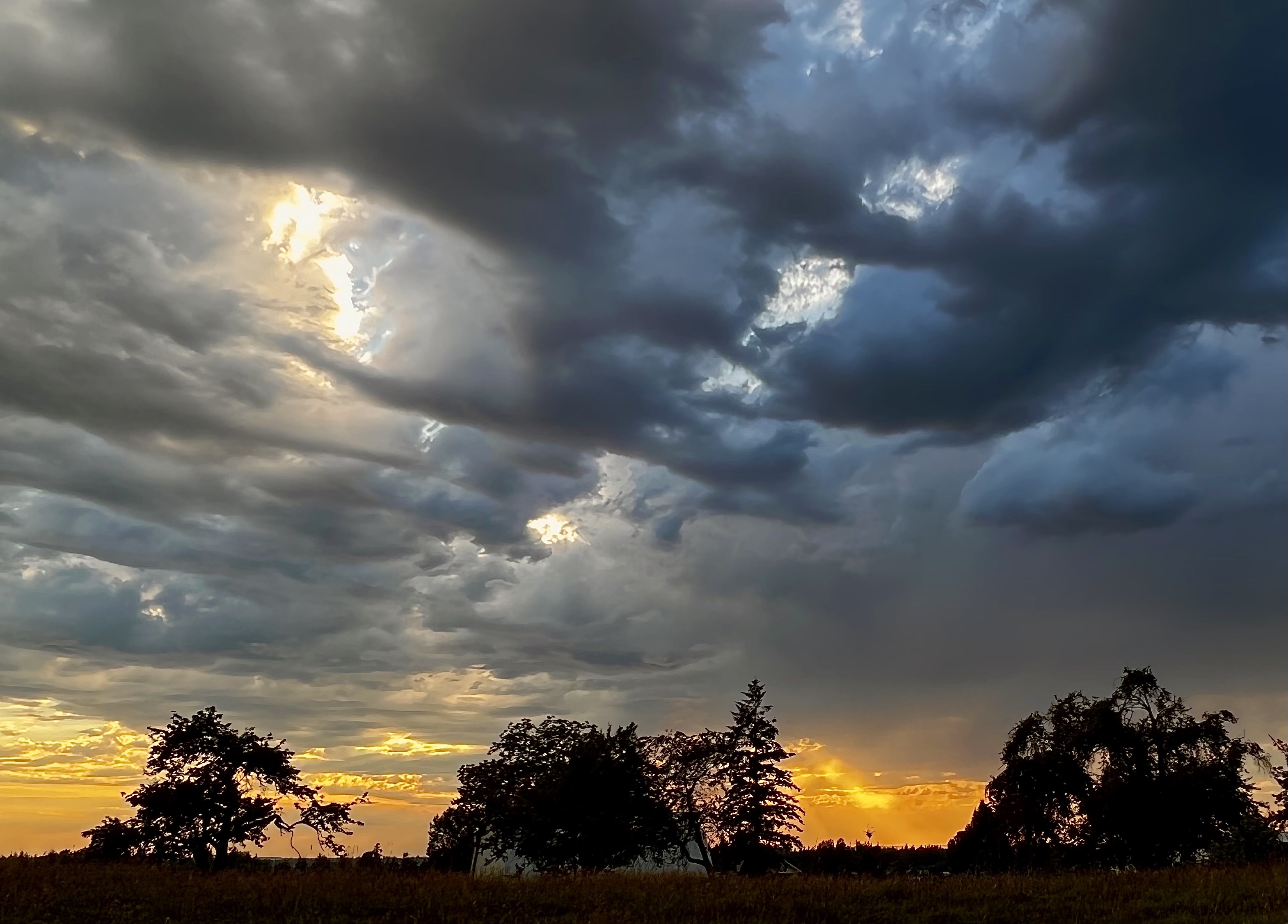
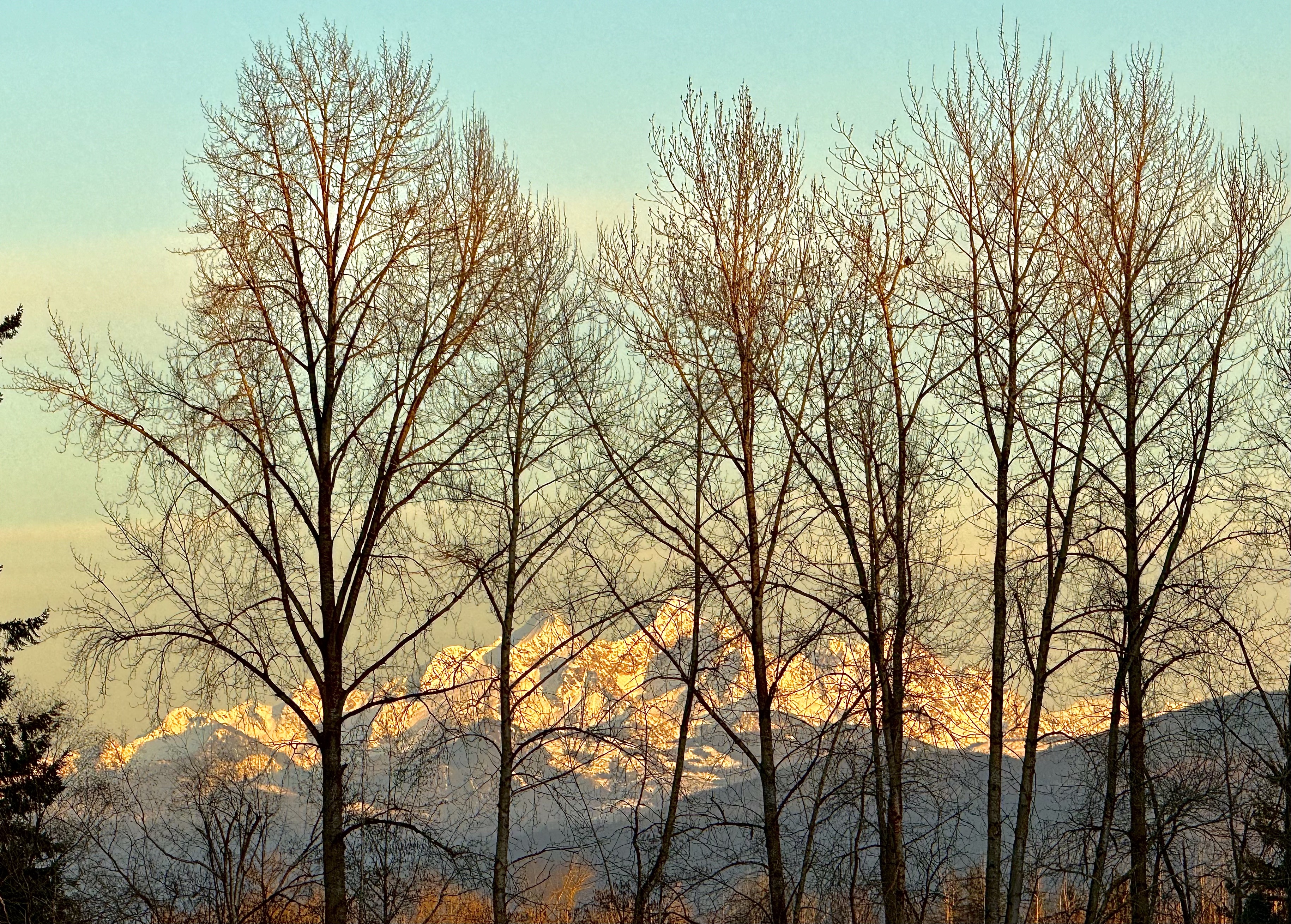
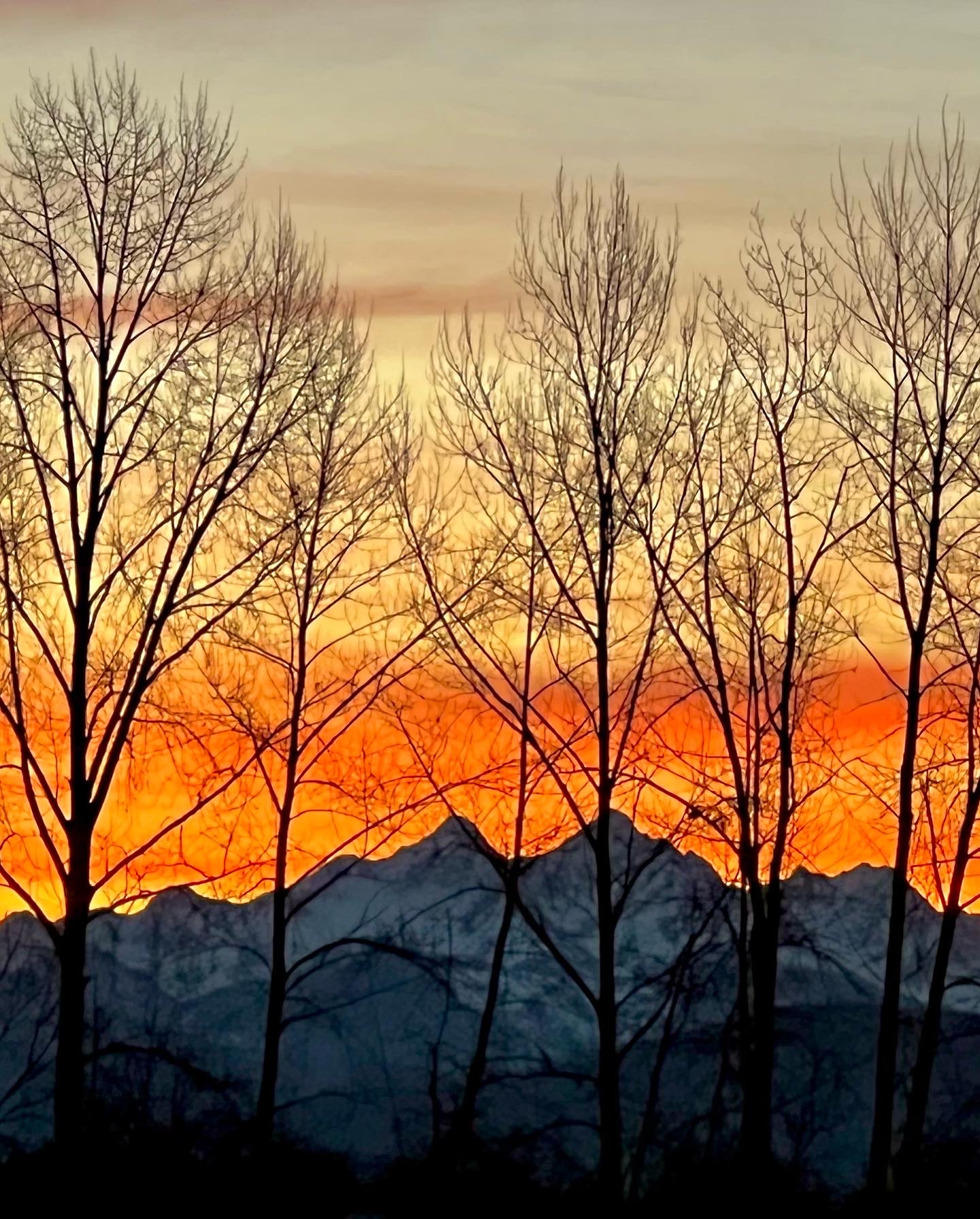
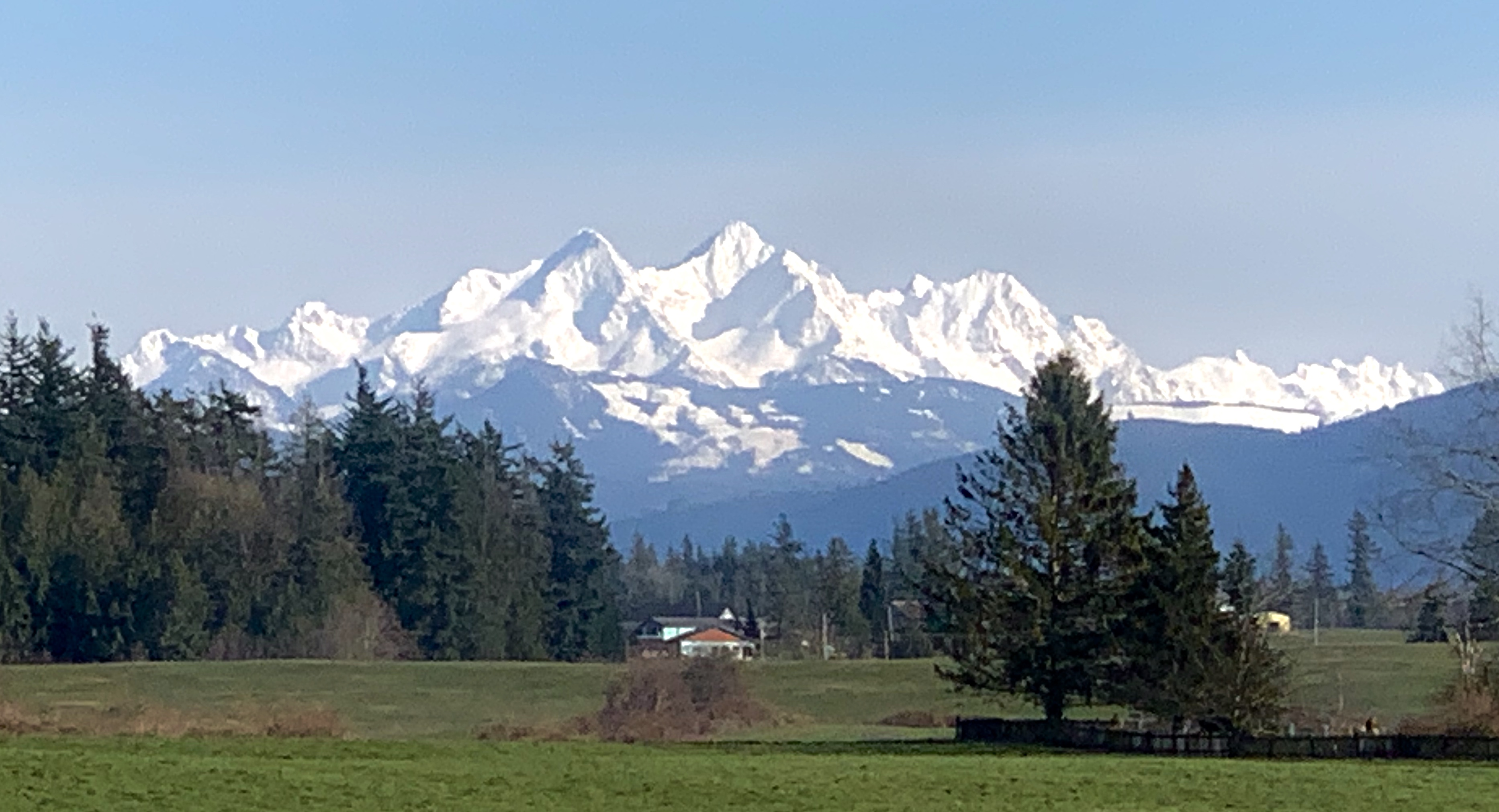
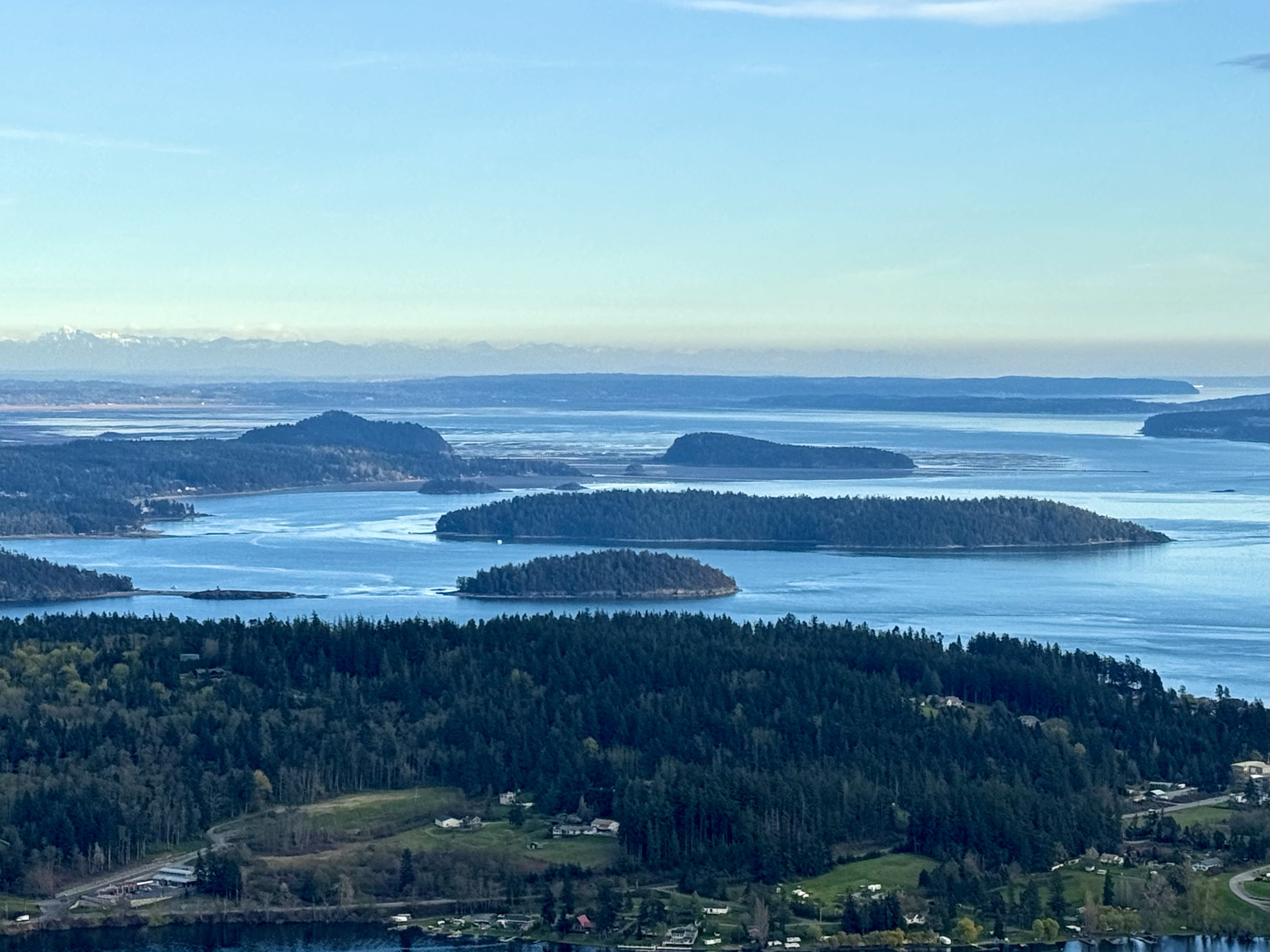
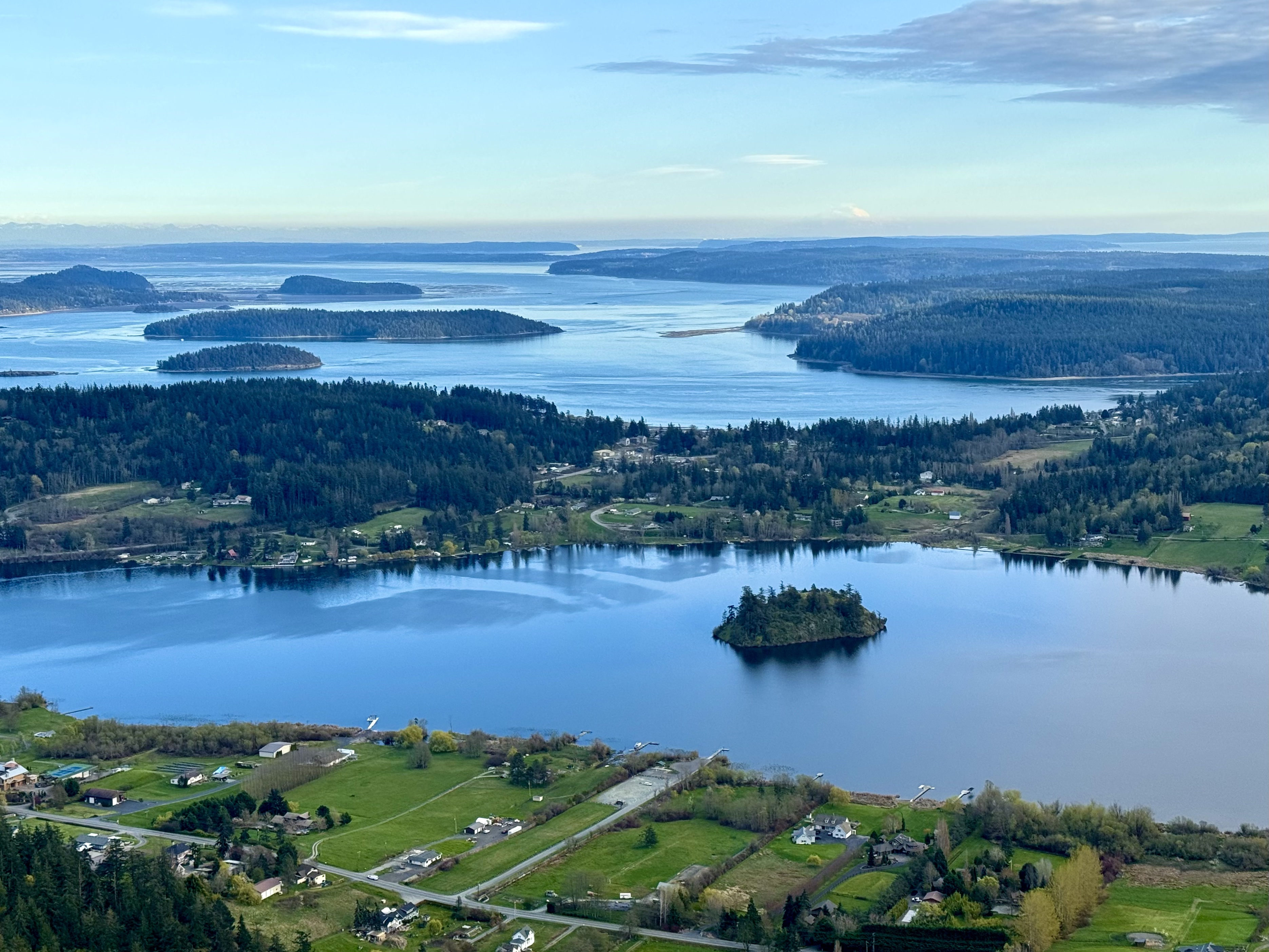
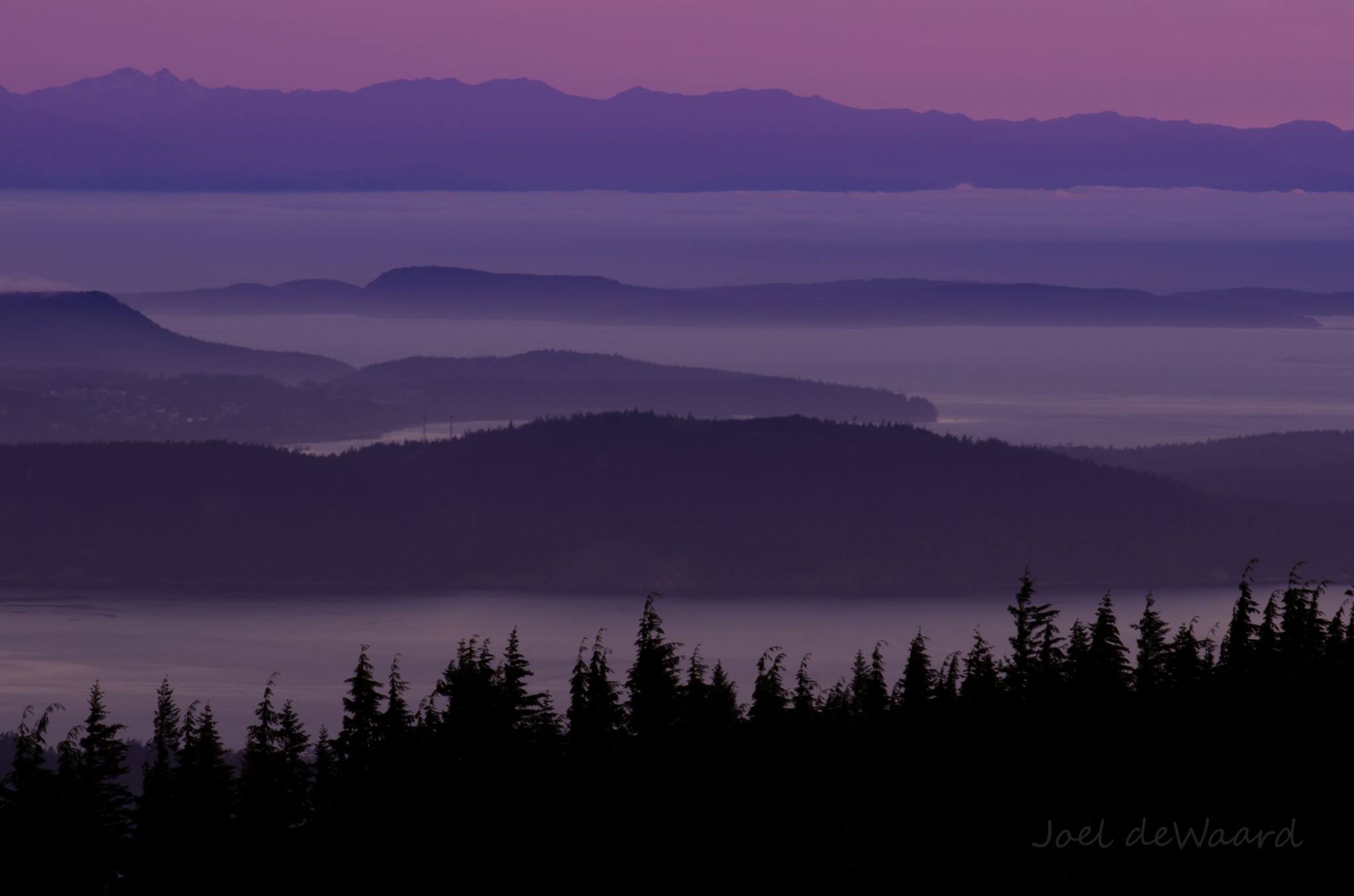
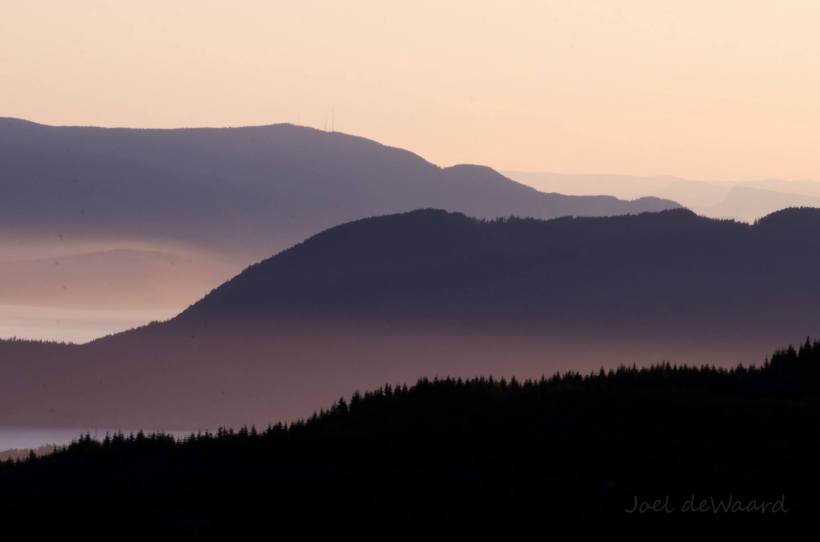
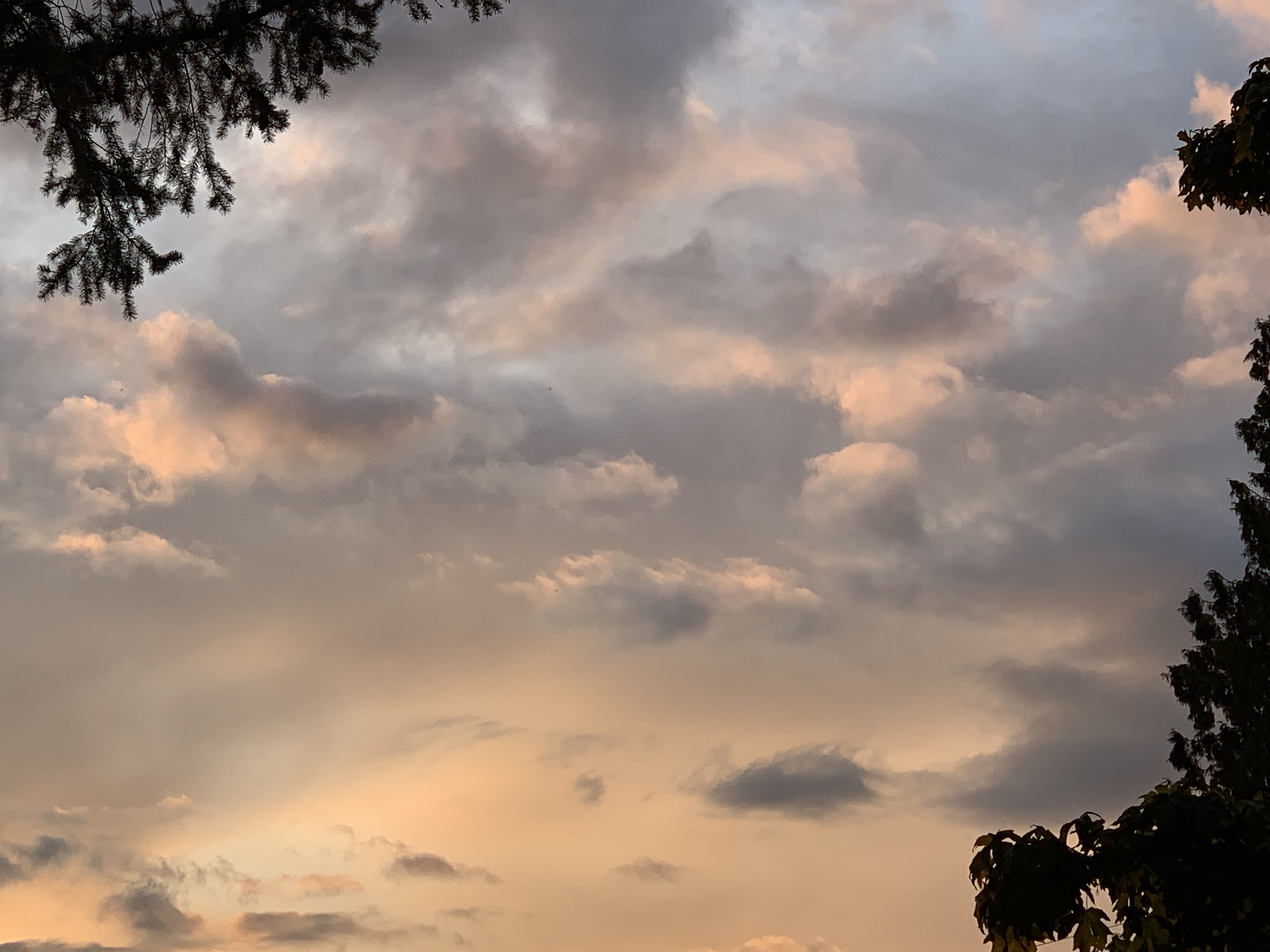
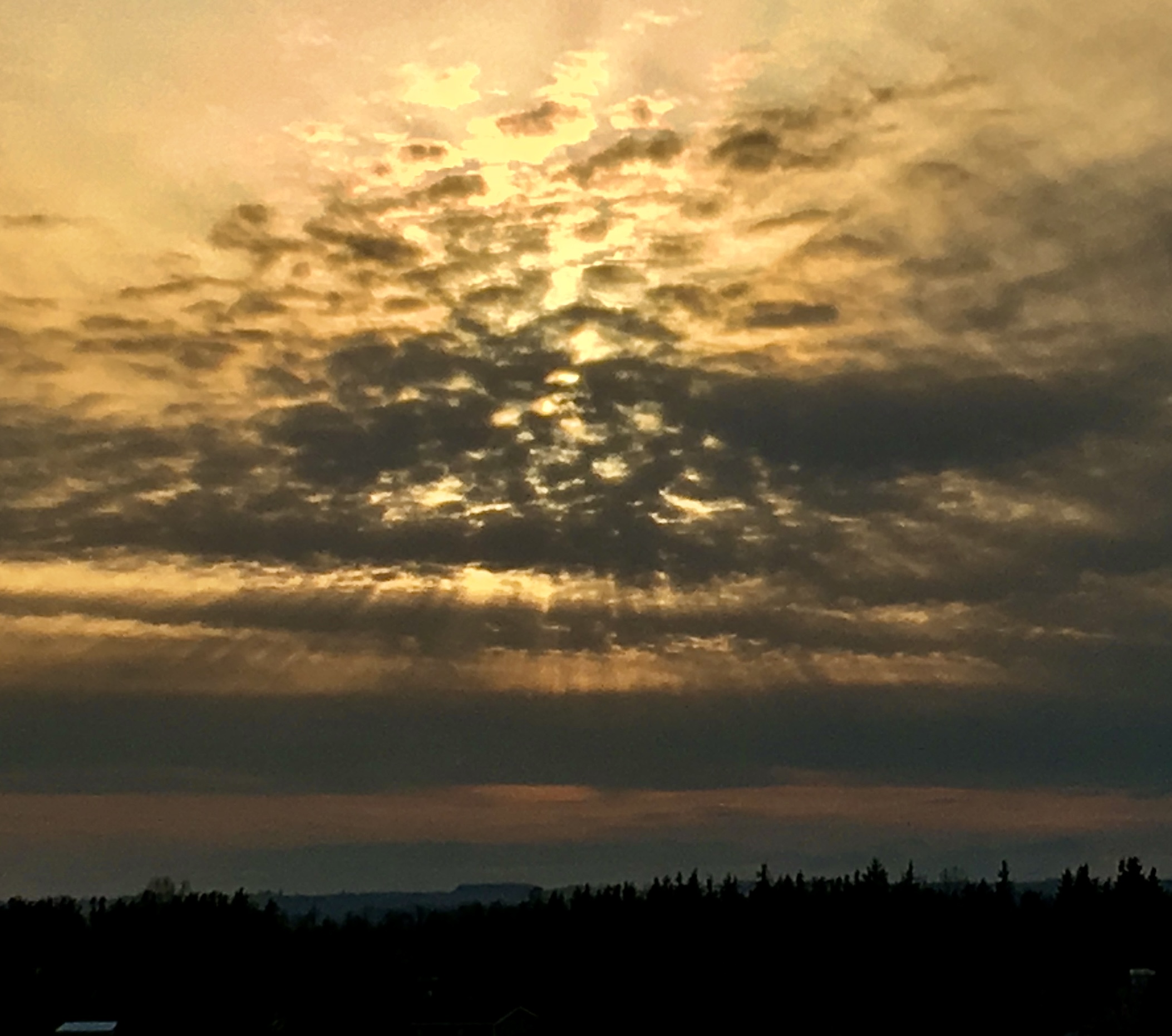
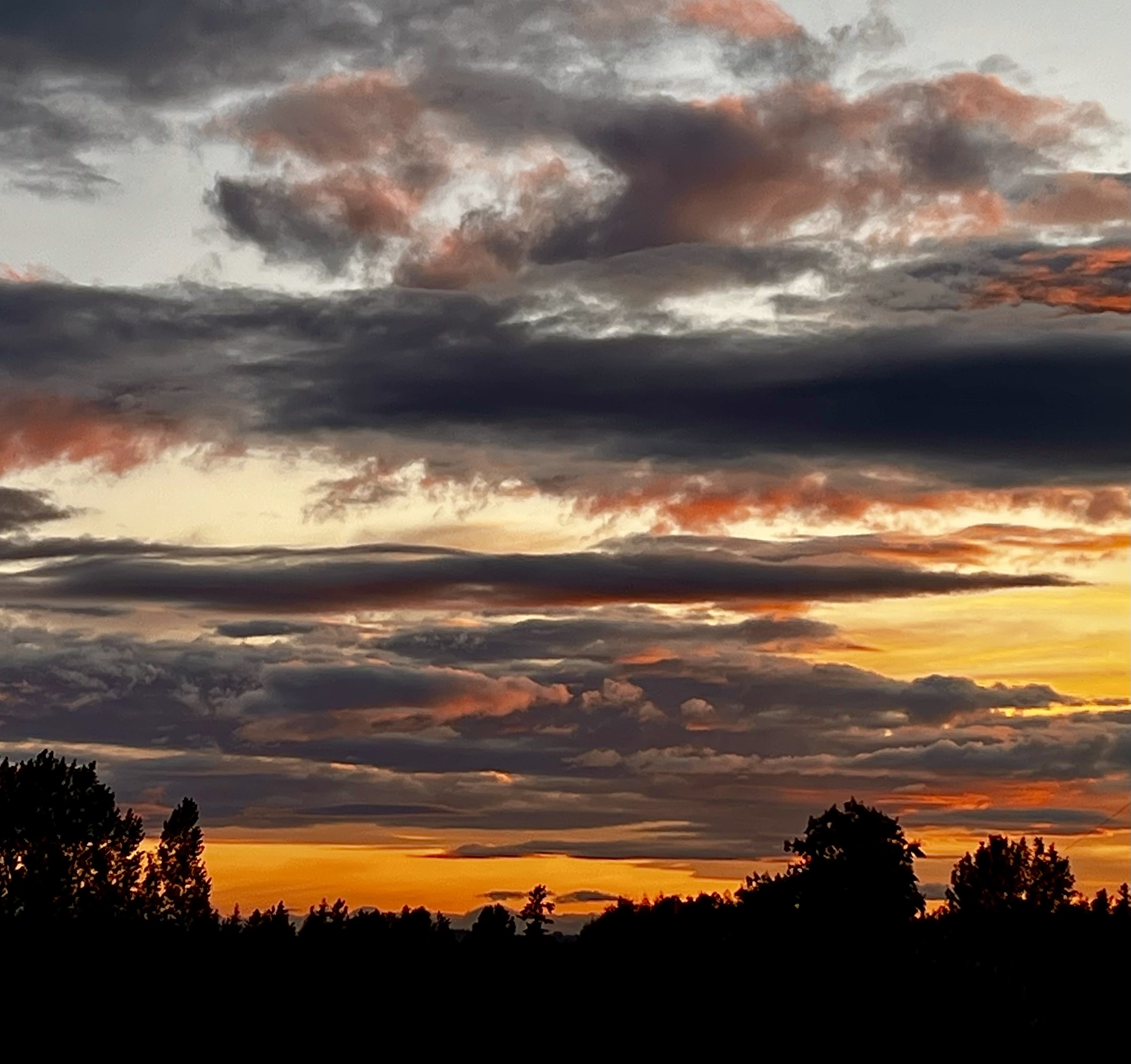
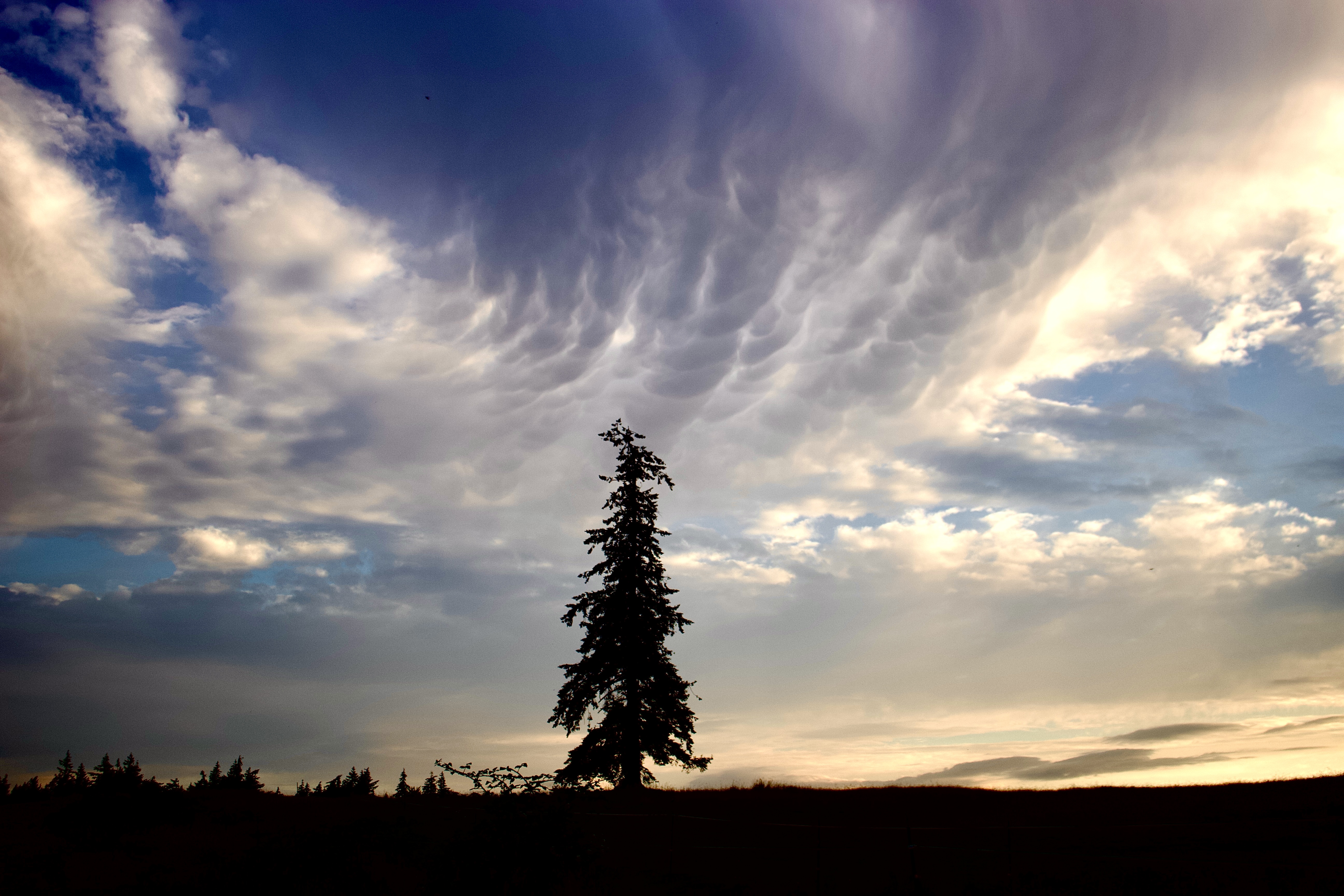
photo of San Juan Islands by Joel De Waardphoto of San Juan Islands by Joel De Waardphoto of San Juan Islands by Joel De WaardAI image created for this post
One-Time
Monthly
Yearly
Make a one-time or recurring donation to support daily Barnstorming posts
Make a monthly donation
Make a yearly donation
Choose an amount
$10.00
$25.00
$50.00
$5.00
$15.00
$100.00
$5.00
$15.00
$100.00
Or enter a custom amount
$
Your contribution is deeply appreciated and helps to offset the costs of maintaining an ad-free website.
I got out of bed on two strong legs. It might have been otherwise. I ate cereal, sweet milk, ripe, flawless peach. It might have been otherwise. I took the dog uphill to the birch wood. All morning I did the work I love. At noon I lay down with my mate. It might have been otherwise. We ate dinner together at a table with silver candlesticks. It might have been otherwise. I slept in a bed in a room with paintings on the walls, and planned another day just like this day. But one day, I know, it will be otherwise. ~Jane Kenyon “Otherwise”
…this has been a day of grace in the dead of winter, the hard knuckle of the year, a day that unwrapped itself like an unexpected gift, and the stars turn on, order themselves into the winter night. ~Barbara Crooker from “Ordinary Life” in Barbara Crooker: Selected Poems
…it’s easy to forget that the ordinary is just the extraordinary that’s happened over and over again. Sometimes the beauty of your life is apparent. Sometimes you have to go looking for it. And just because you have to look for it doesn’t mean it’s not there. God, grant me the grace of a normal day. ~Billy Coffey
…there is no such thing as a charmed life, not for any of us, no matter where we live or how mindfully we attend to the tasks at hand. But there are charmed moments, all the time, in every life and in every day, if we are only awake enough to experience them when they come and wise enough to appreciate them. ~Katrina Kenison from The Gift of an Ordinary Day
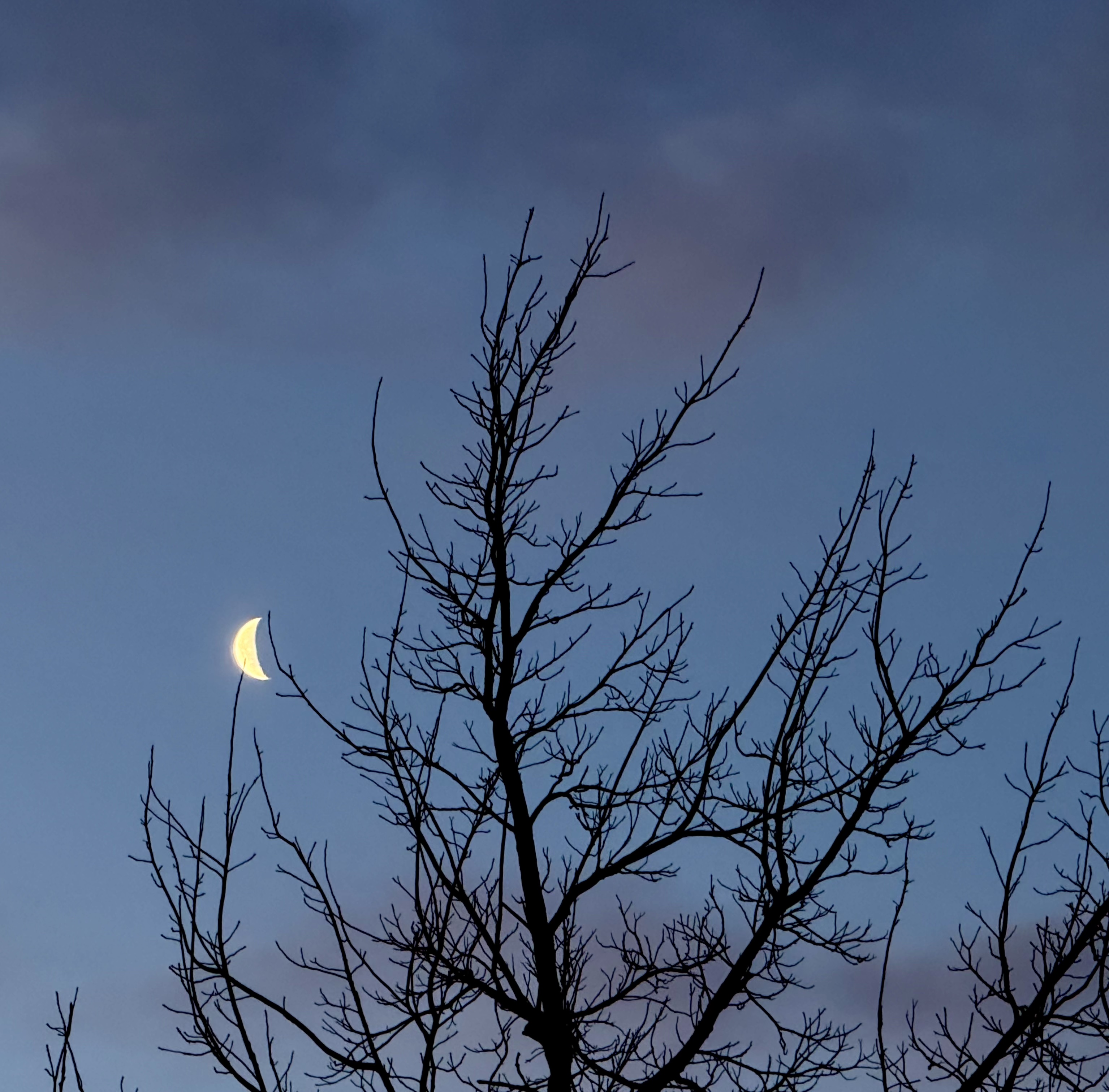
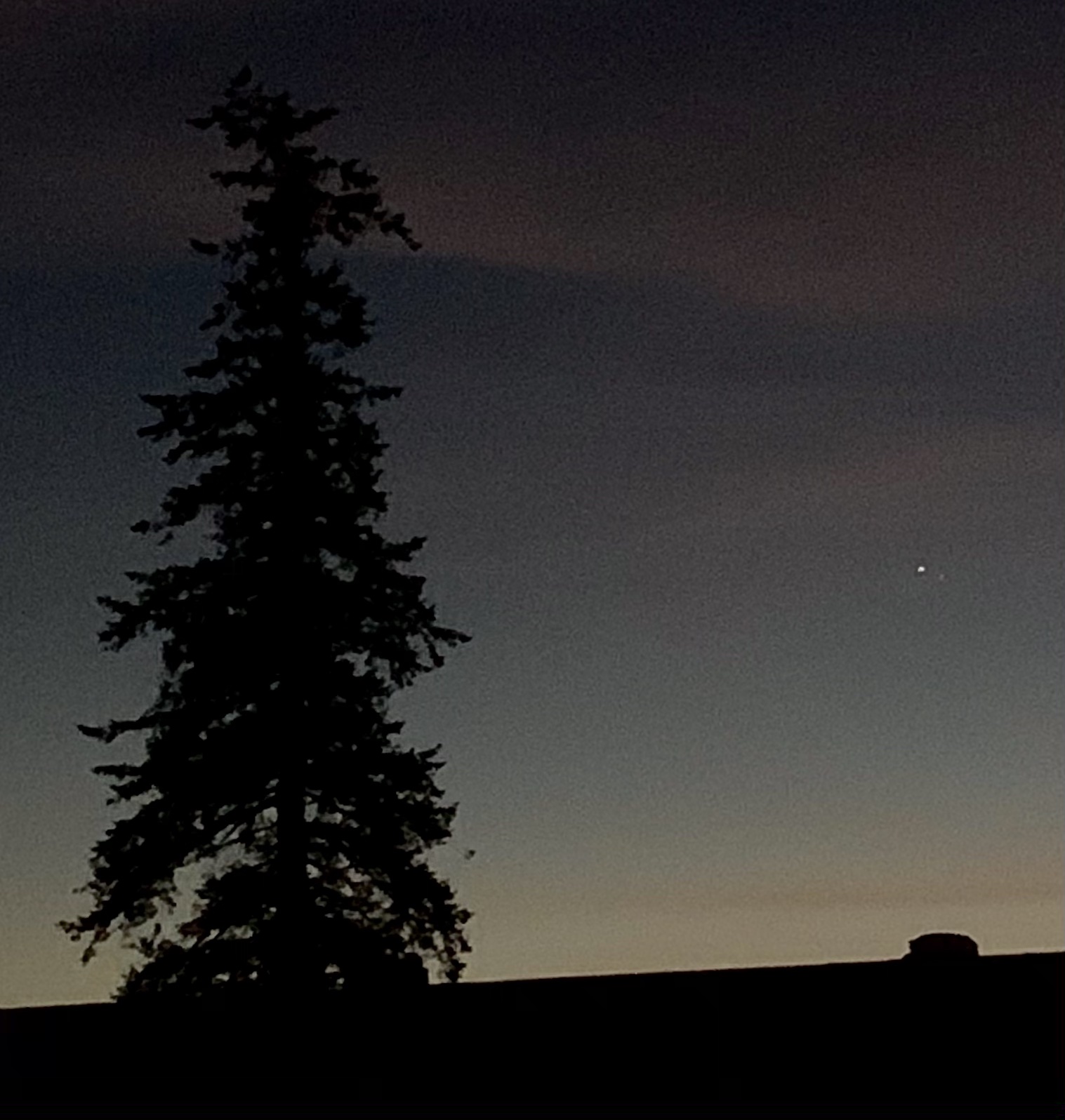
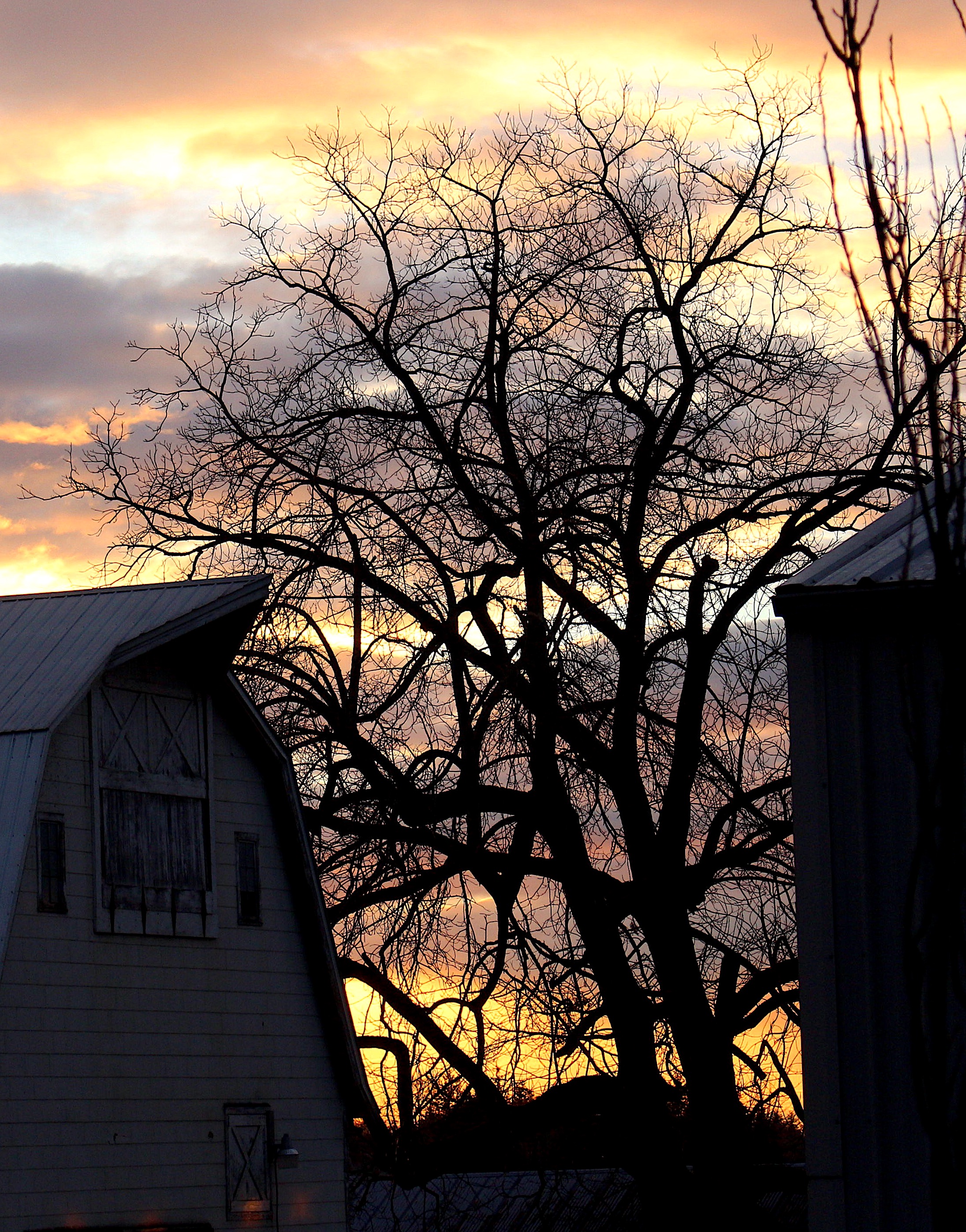
These dead of winter days are lengthening, slowly and surely. I’m thankful I’m retired now so I no longer I leave the farm in darkness to head to work in town, and return in darkness at the end of the workday. I’m able to do my barn chores at either end of the day as the sun is rising to chase away the moon, and later as the sun is chased away by starlight.
I tend to get complacent in my daily routines, confident in the knowledge that tomorrow will be very much like yesterday. The distinct blessings of an ordinary day are lost in the rush of moving forward to whatever comes next. Poet Jane Kenyon wrote her poem with the knowledge she was dying of leukemia, which meant each ordinary day was precious indeed.
The reality is there is nothing ordinary about the events of each day. It might have been otherwise and some day it will be otherwise. That is the hard knuckle of the days we are given, each a gift, each peaches and cream.
One-Time
Monthly
Yearly
Make a one-time or recurring donation to support daily Barnstorming posts
and look at the sky. Suddenly: orange, red, pink, blue, green, purple, yellow, gray, all at once and everywhere.
I pause in this moment at the beginning of my old age and I say a prayer of gratitude for getting to this evening
a prayer for being here, today, now, alive in this life, in this evening, under this sky. ~David Budbill from Winter: Tonight: Sunset
Write as if you were dying. At the same time, assume you write for an audience consisting solely of terminal patients. That is, after all, the case. ~Annie Dillard from “Write Till You Drop”
At its best, the sensation of writing is that of any unmerited grace.
It is handed to you, but only if you look for it. You search, you break your fists, your back, your brain, and then – and only then – it is handed to you. From the corner of your eye you see motion. Something is moving through the air and headed your way. It is a parcel bound in ribbons and bows; it has two white wings.
It flies directly at you; you can read your name on it. If it were a baseball, you would hit it out of the park. It is that one pitch in a thousand you see in slow motion; its wings beat slowly as a hawk’s. ~Annie Dillard from “Write Till You Drop”
I began to write regularly after September 11, 2001 because that day it became obvious to me I was dying too, though more slowly than the thousands who vanished in fire and ash, their voices obliterated with their bodies. So, nearly each day since, while I still have voice and a new dawn to greet, I speak through my fingers to others dying around me.
We are, after all, terminal patients, some of us more prepared than others to move on, as if our readiness has anything to do with the timing. When our small church lost one of its most senior members to metastatic cancer, he announced his readiness once the doctor gave him the dire news (he liked to say he never bought green bananas as he wasn’t sure he’d be around to use them), but God had different plans and kept him among us for several years beyond his diagnosis.
Each day I too get a little closer to the end, but I write in order to feel a little more ready. Each day I detach just a little bit, leaving a trace of my voice behind. Eventually, through unmerited grace, so much of me will be left on the page there won’t be anything or anyone left to do the typing. I will be far out of the park, far beyond here.
Not a moment, not a sunrise, not a sunset, and not a word to waste.
One-Time
Monthly
Yearly
Make a one-time or recurring donation to support daily Barnstorming posts
How can I feel so warm Here in the dead center of January? I can Scarcely believe it, and yet I have to, this is The only life I have. ~James Wright from “A Winter Daybreak Above Vence”
Once I saw a chimpanzee gaze at a particularly beautiful sunset for a full 15 minutes, watching the changing colors [and then] retire to the forest without picking a pawpaw for supper. ~Adriaan Krotlandt, Dutch ethologist in Scientific American (1962)
To-day I shall be strong, No more shall yield to wrong, Shall squander life no more; Days lost, I know not how, I shall retrieve them now; Now I shall keep the vow I never kept before.
Ensanguining the skies How heavily it dies Into the west away; Past touch and sight and sound Not further to be found, How hopeless under ground Falls the remorseful day. ~A.E. Houseman from “How Clear, How Lovely Bright”
to the northwest
It was like a church to me. I entered it on soft foot, Breath held like a cap in the hand. It was quiet. What God there was made himself felt, Not listened to, in clean colours That brought a moistening of the eye, In a movement of the wind over grass. There were no prayers said. But stillness Of the heart’s passions — that was praise Enough; and the mind’s cession Of its kingdom. I walked on, Simple and poor, while the air crumbled And broke on me generously as bread. ~ R.S. Thomas “The Moor”
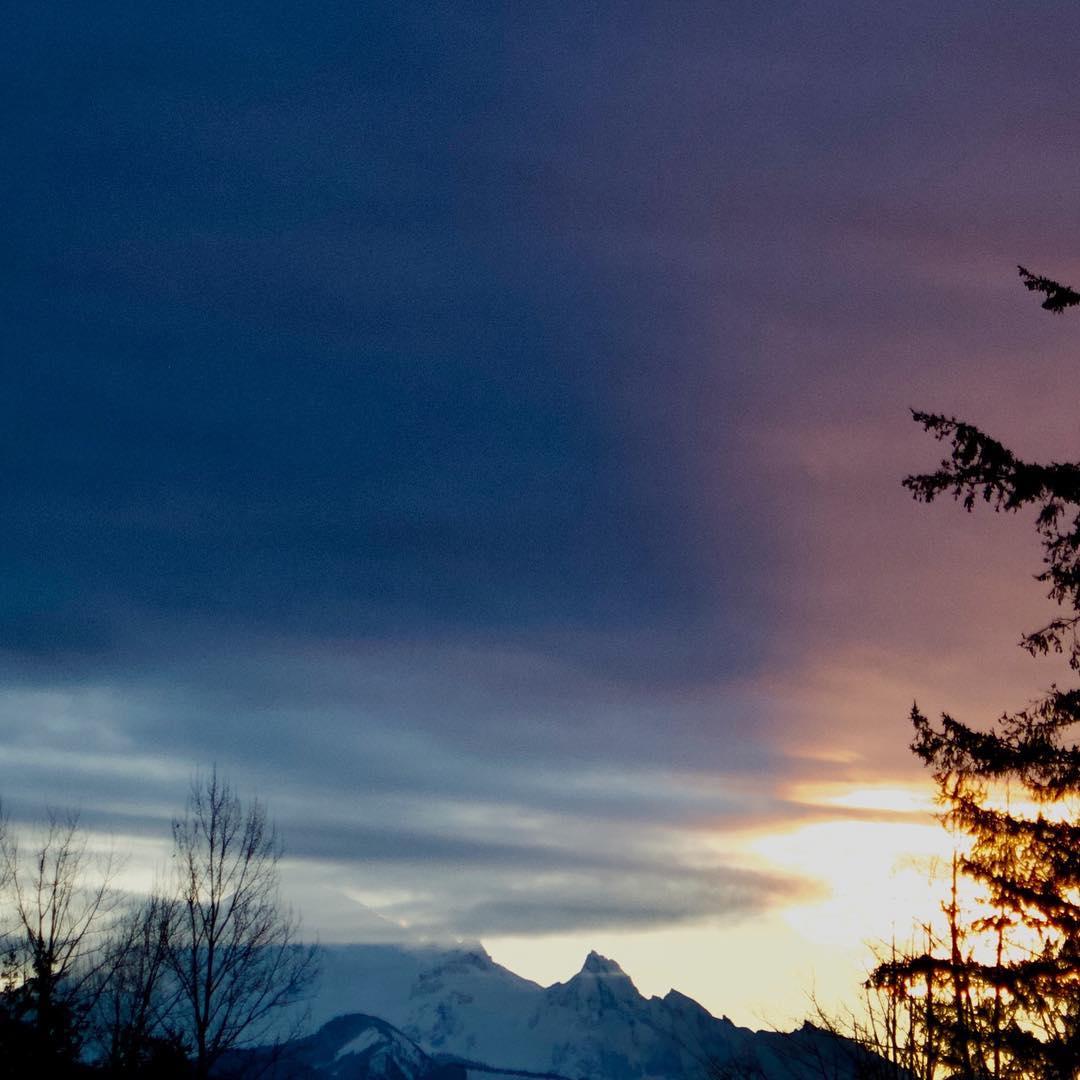
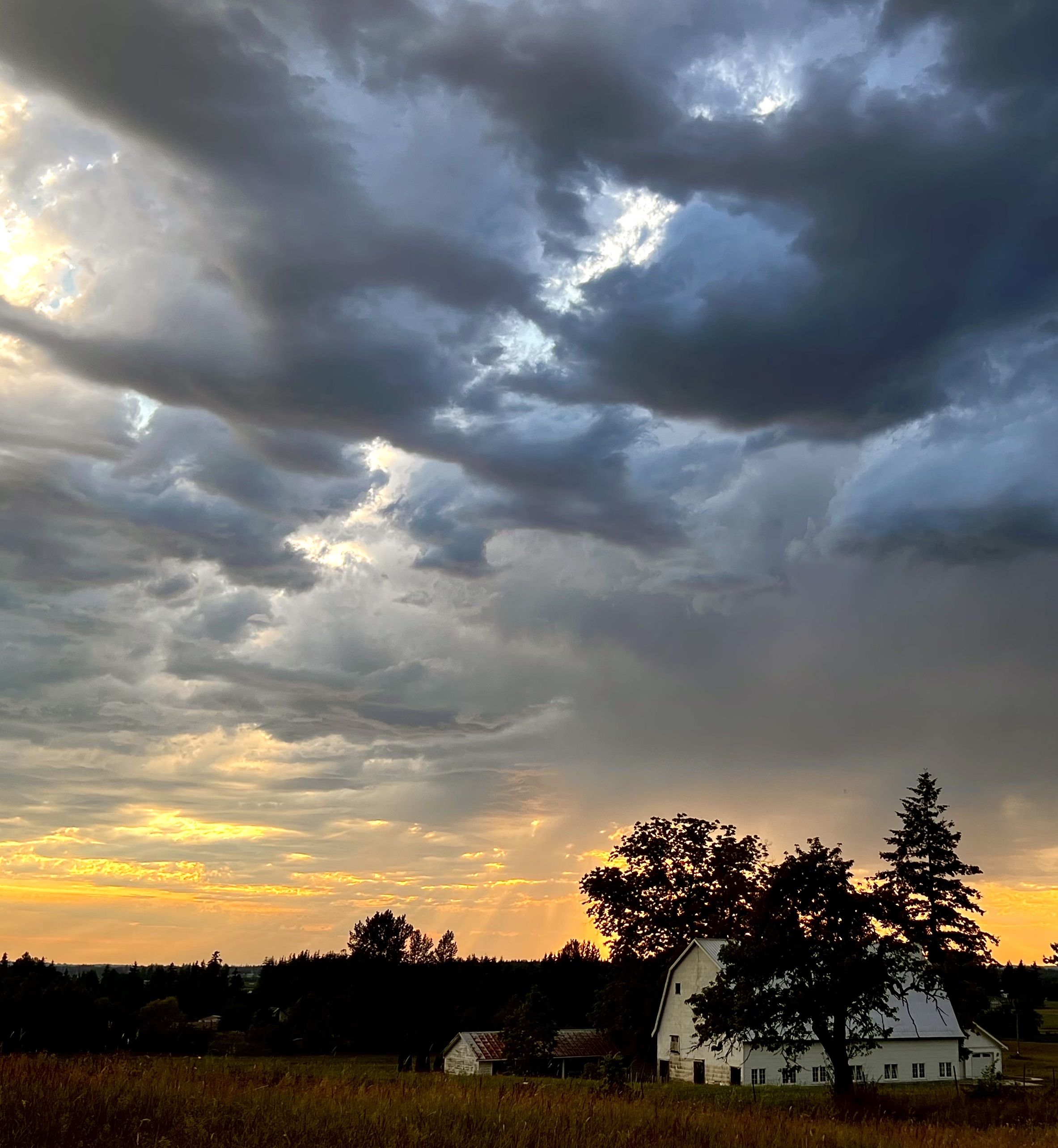
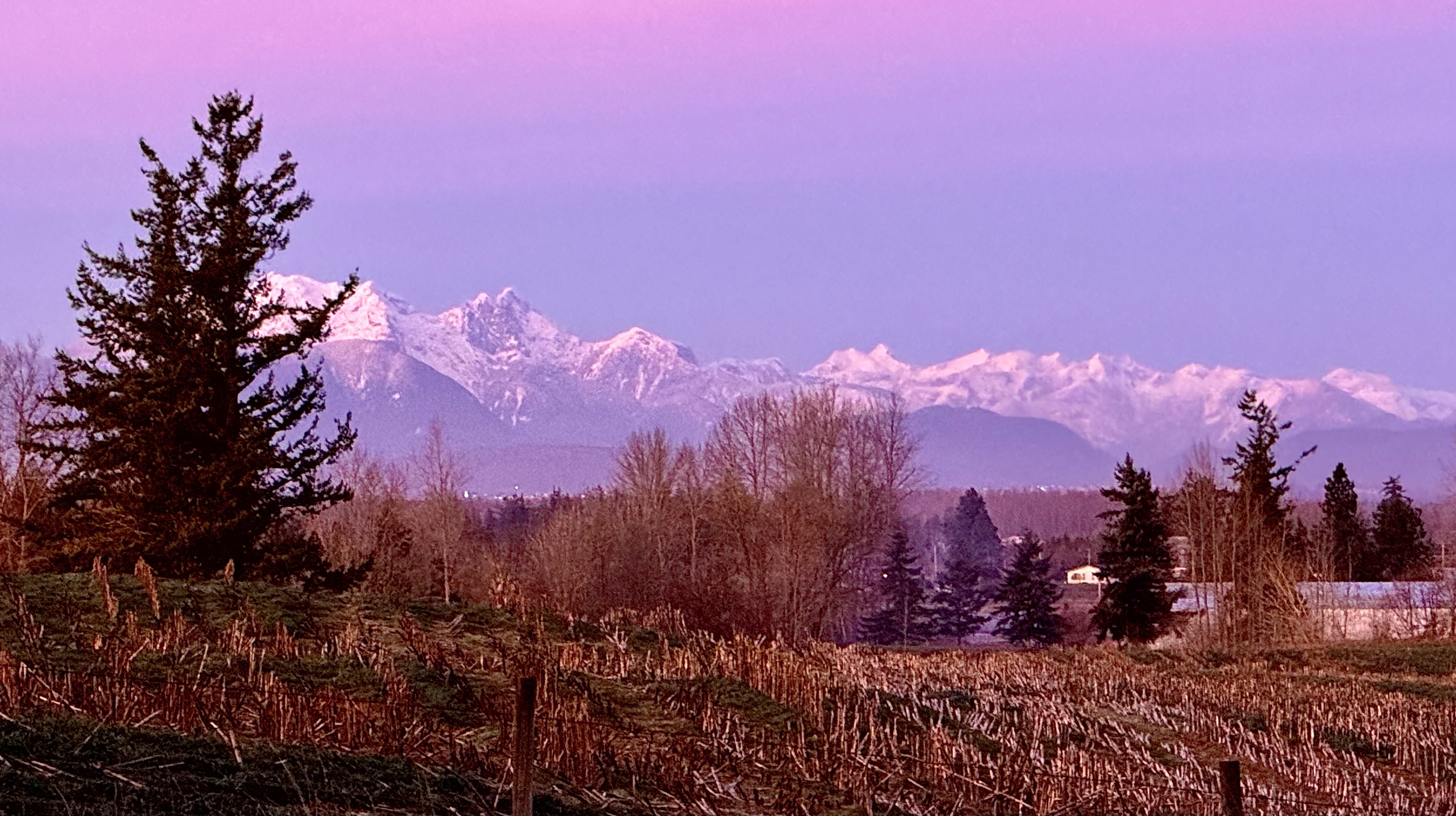
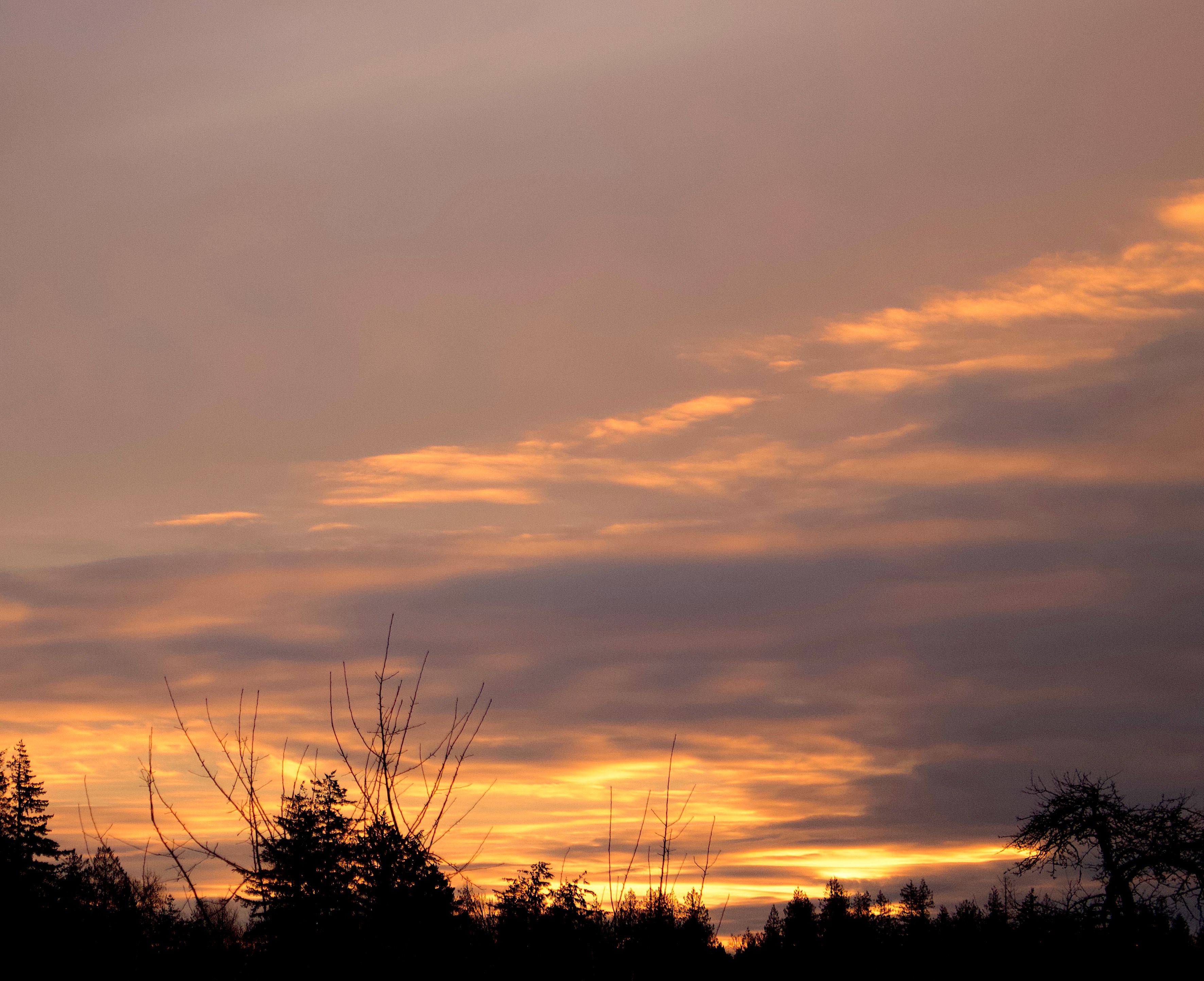
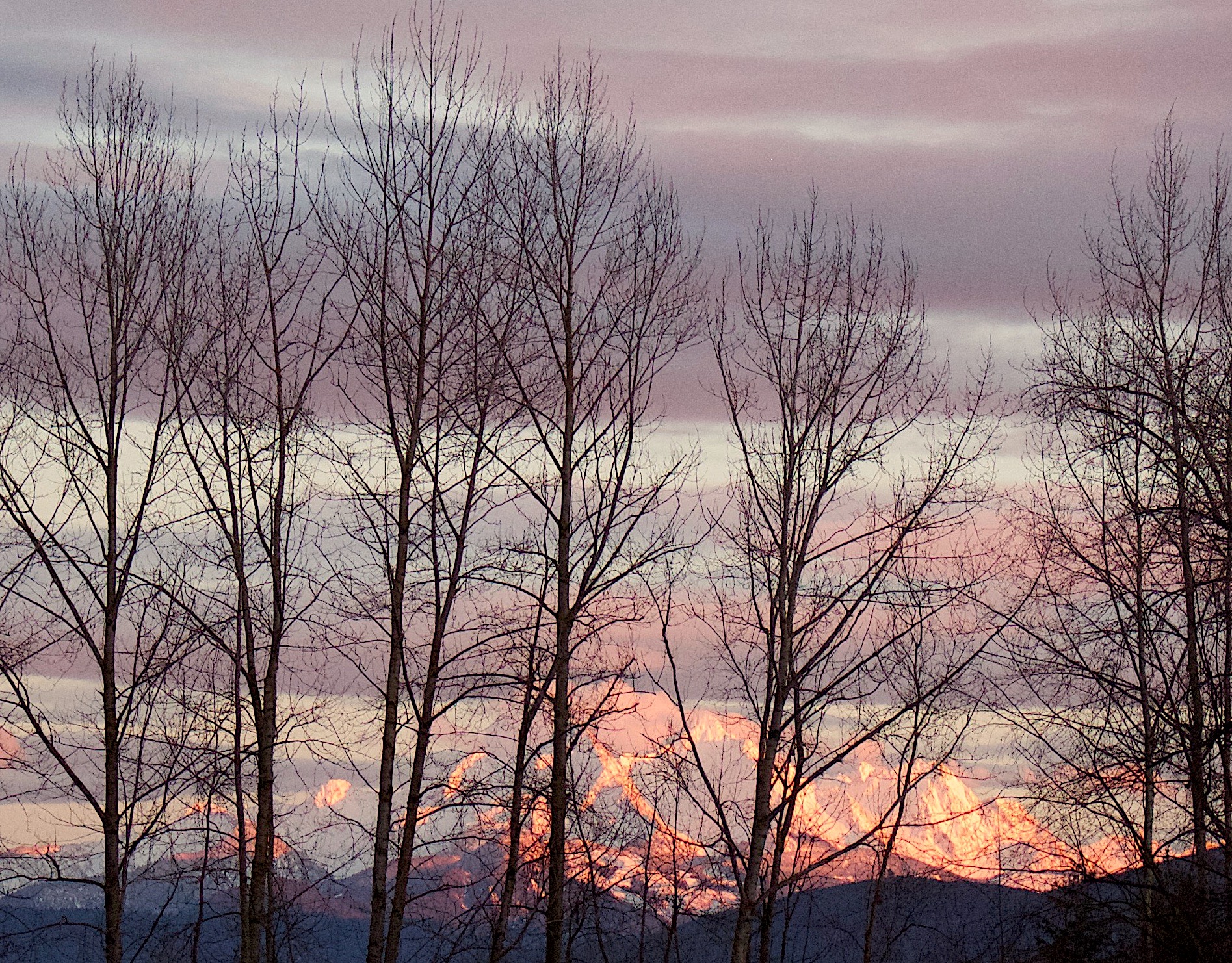
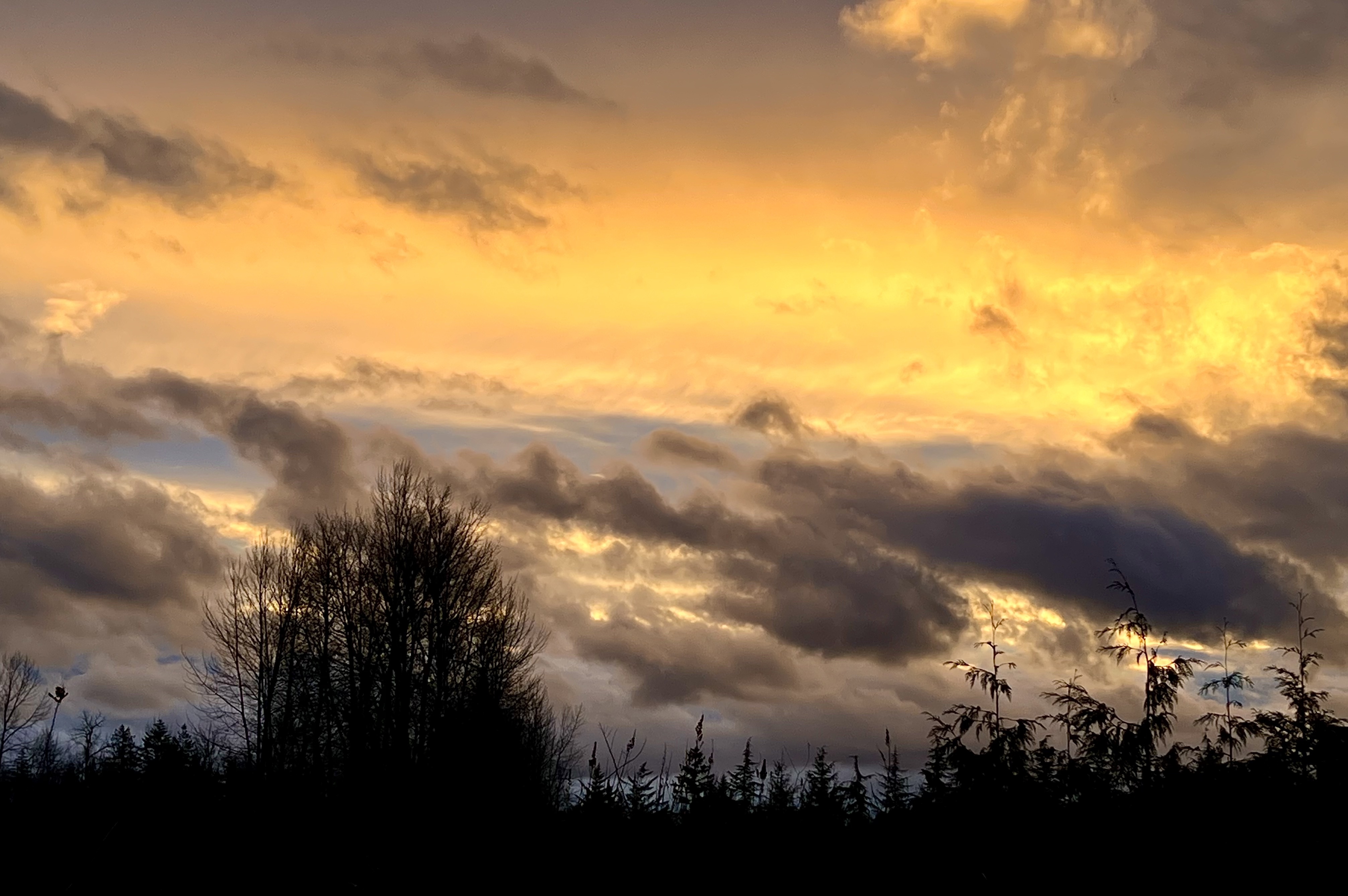
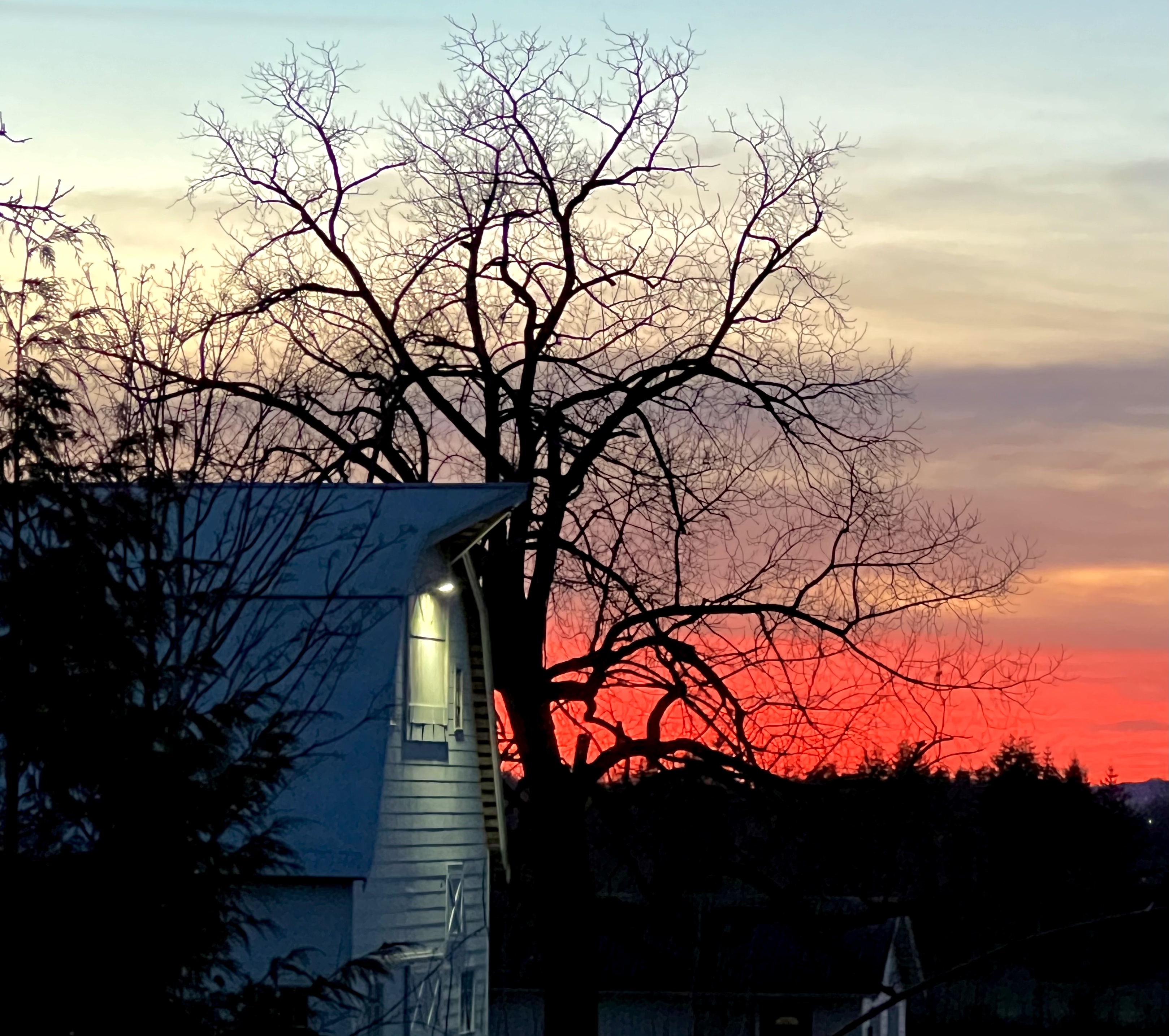
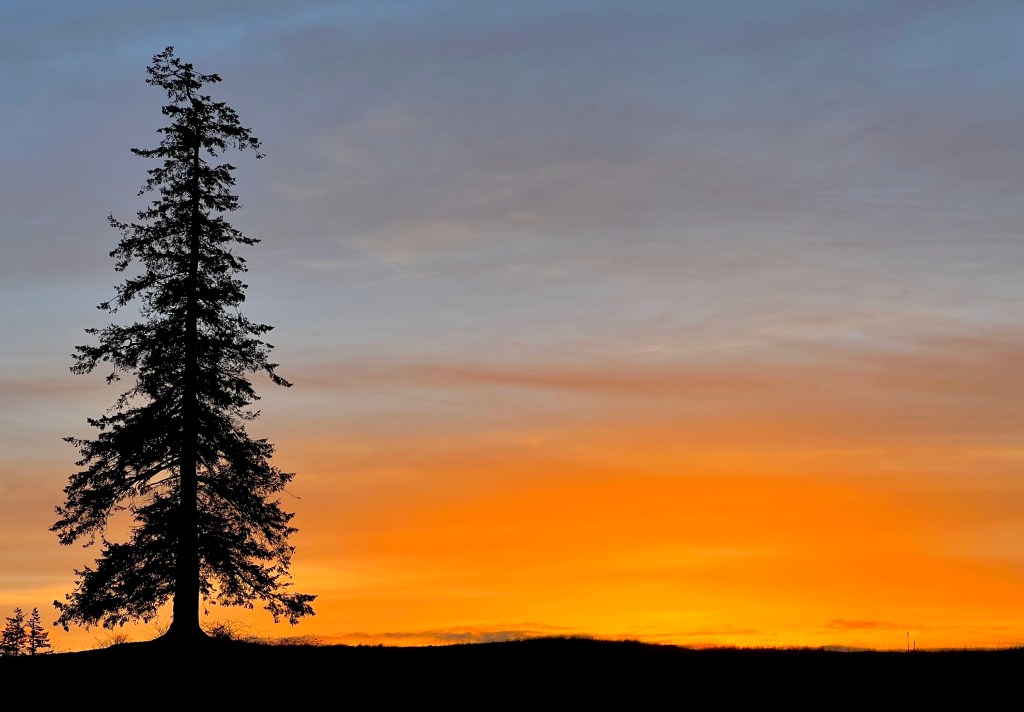
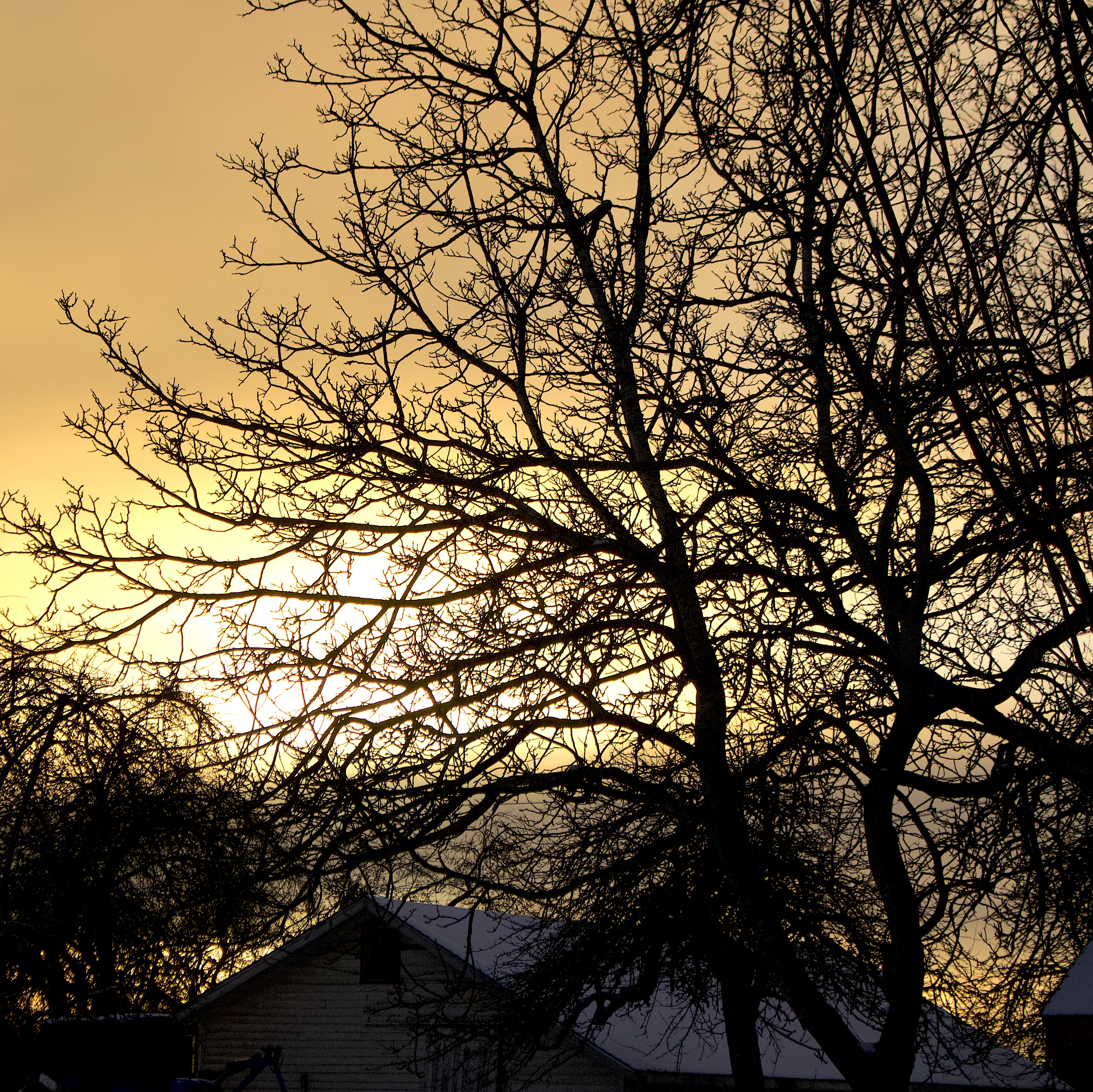
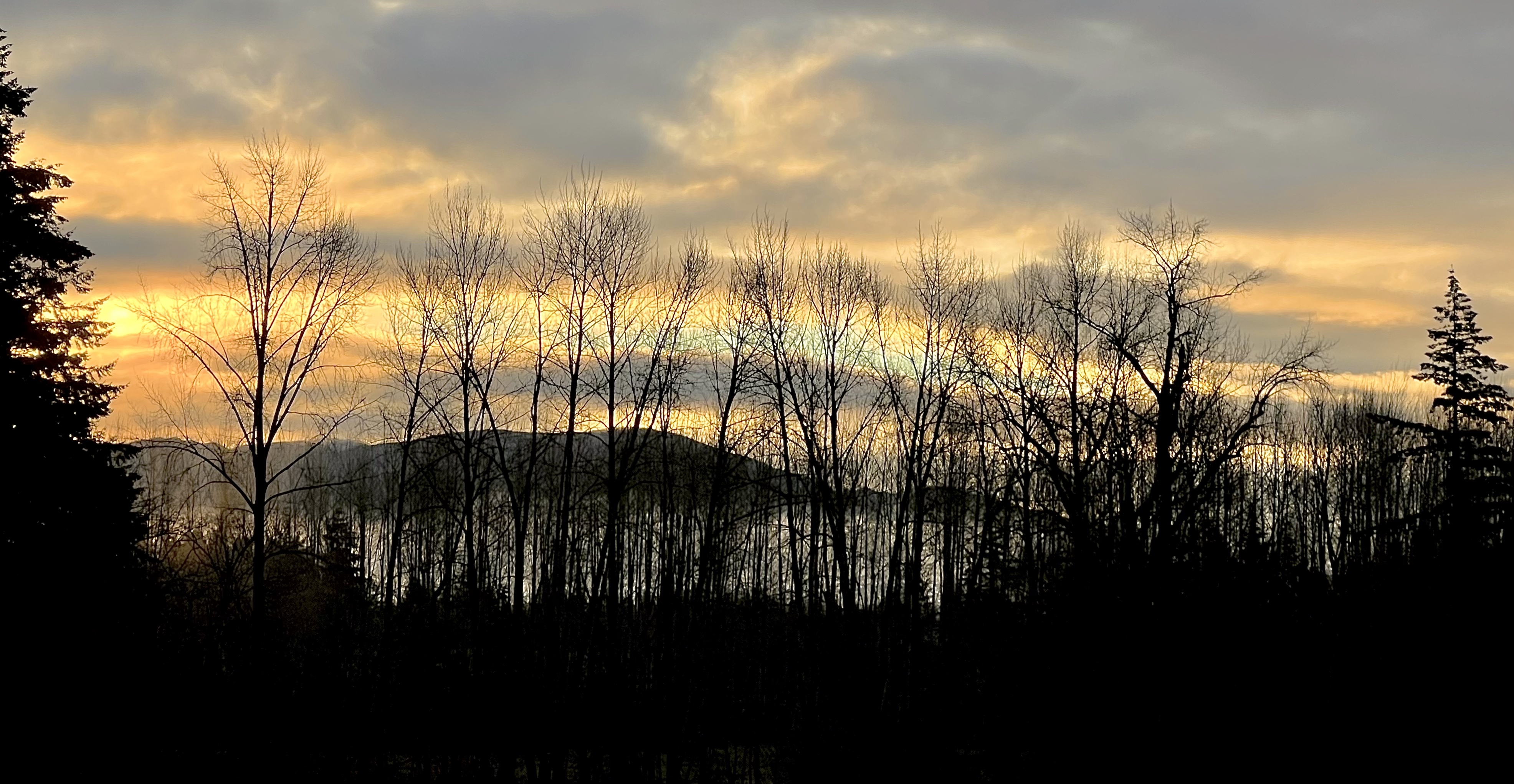
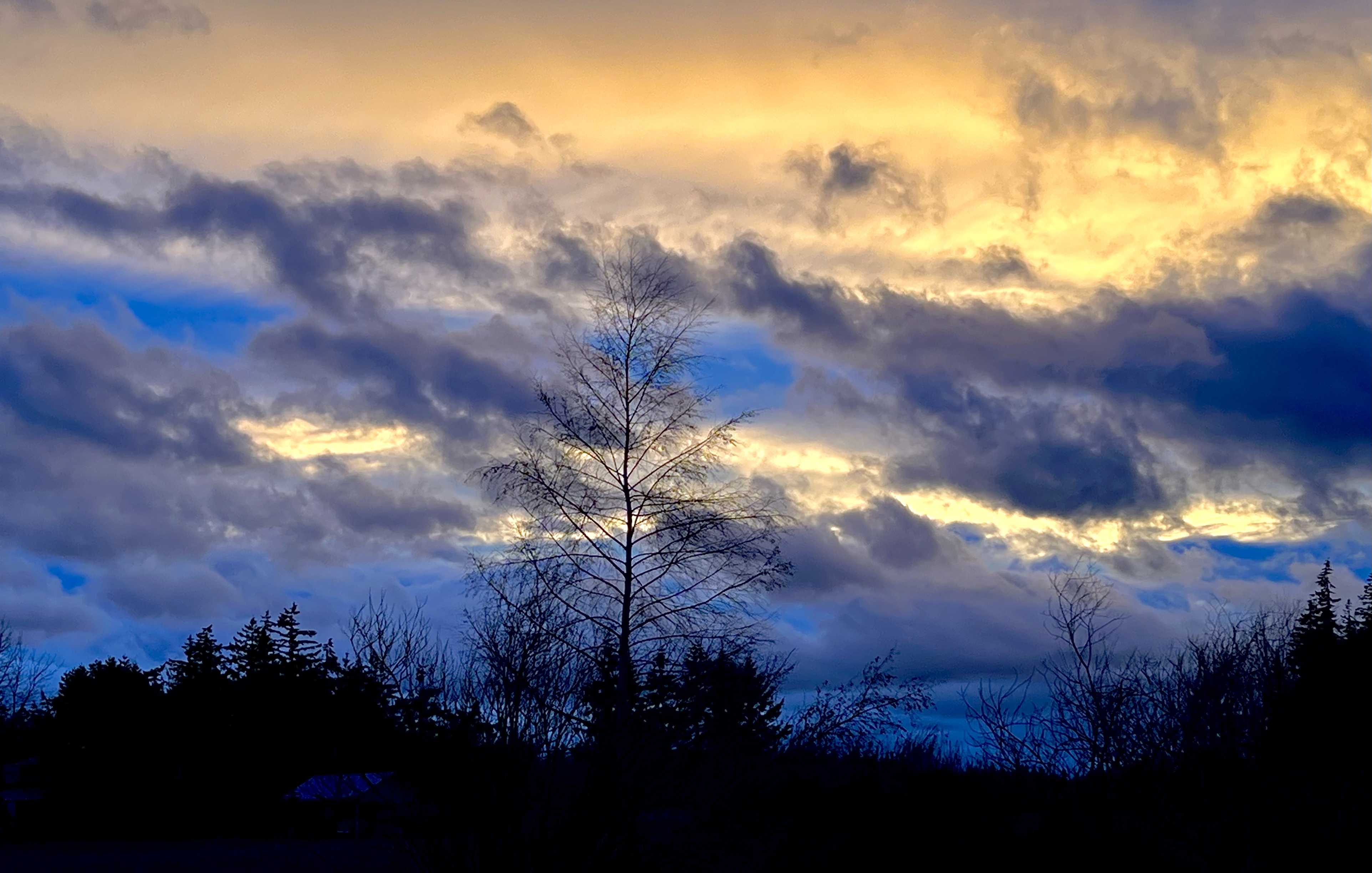
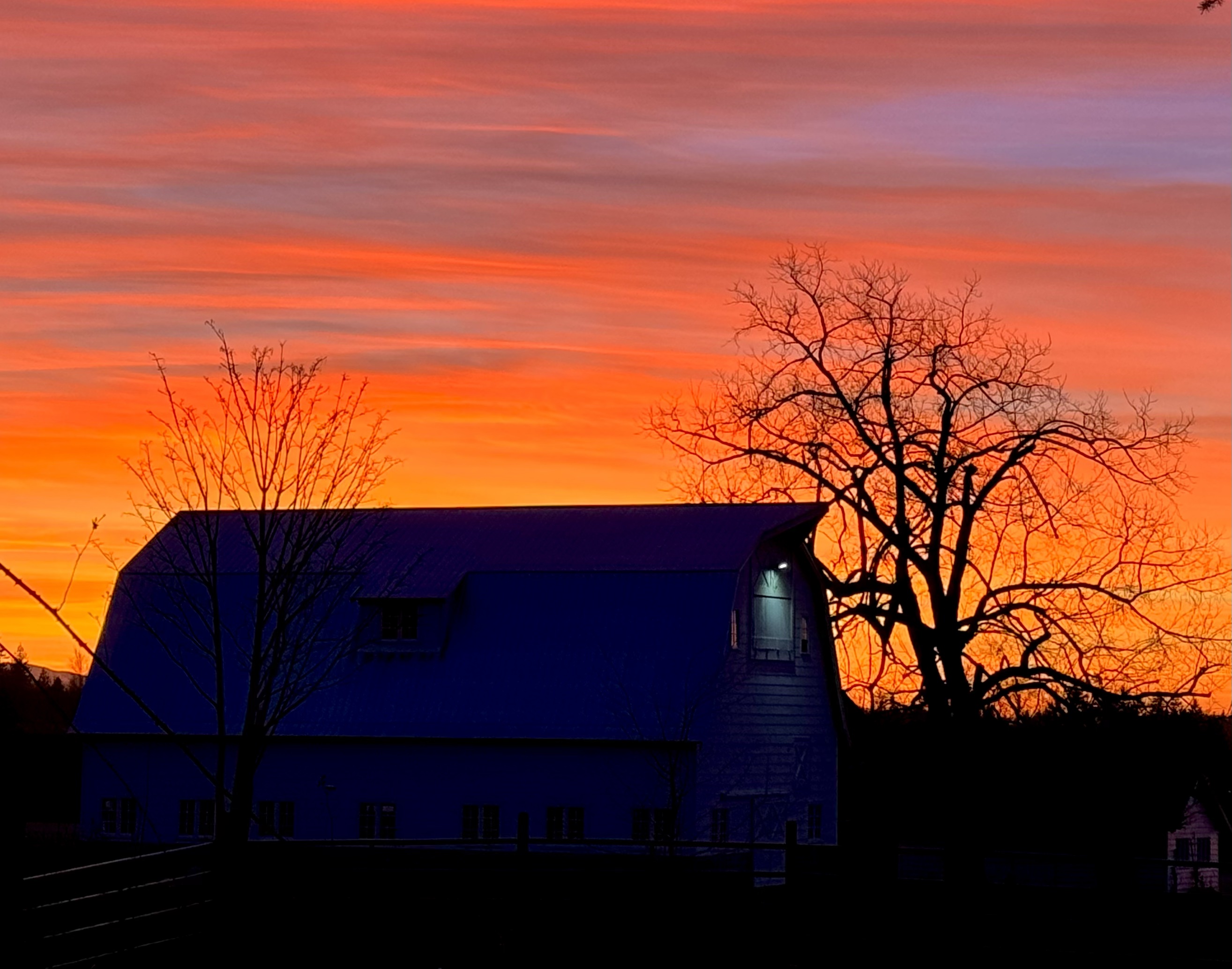
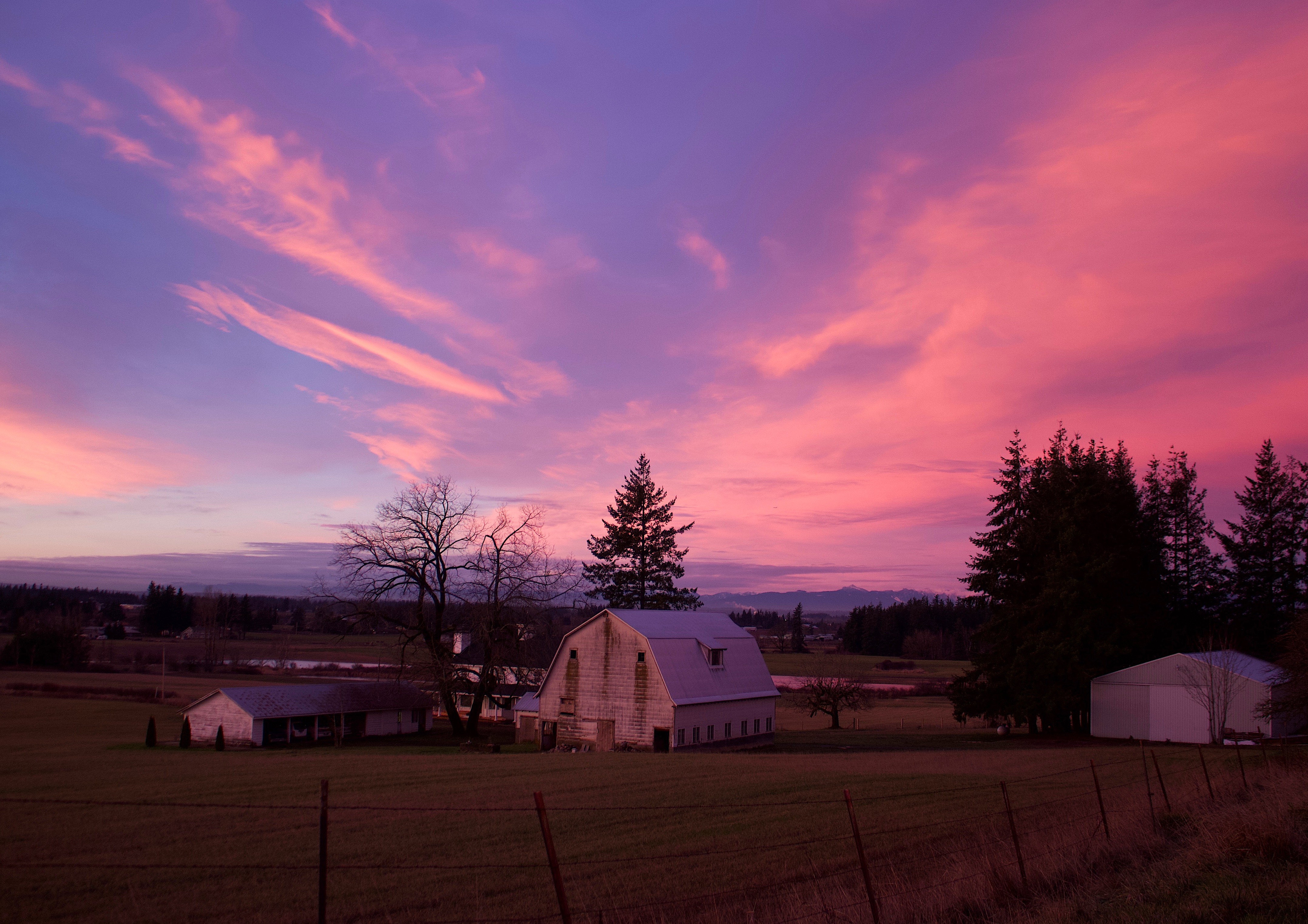
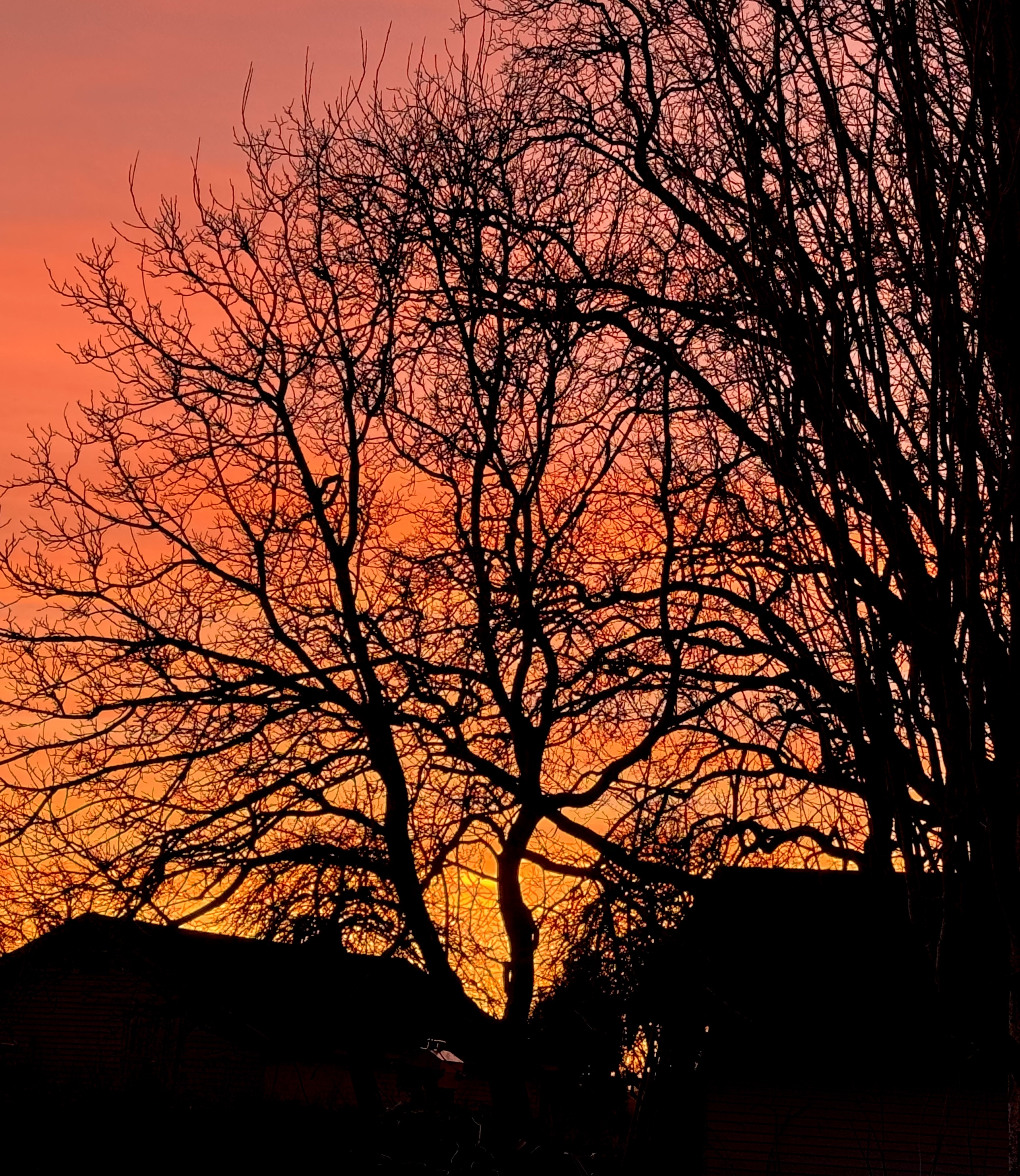
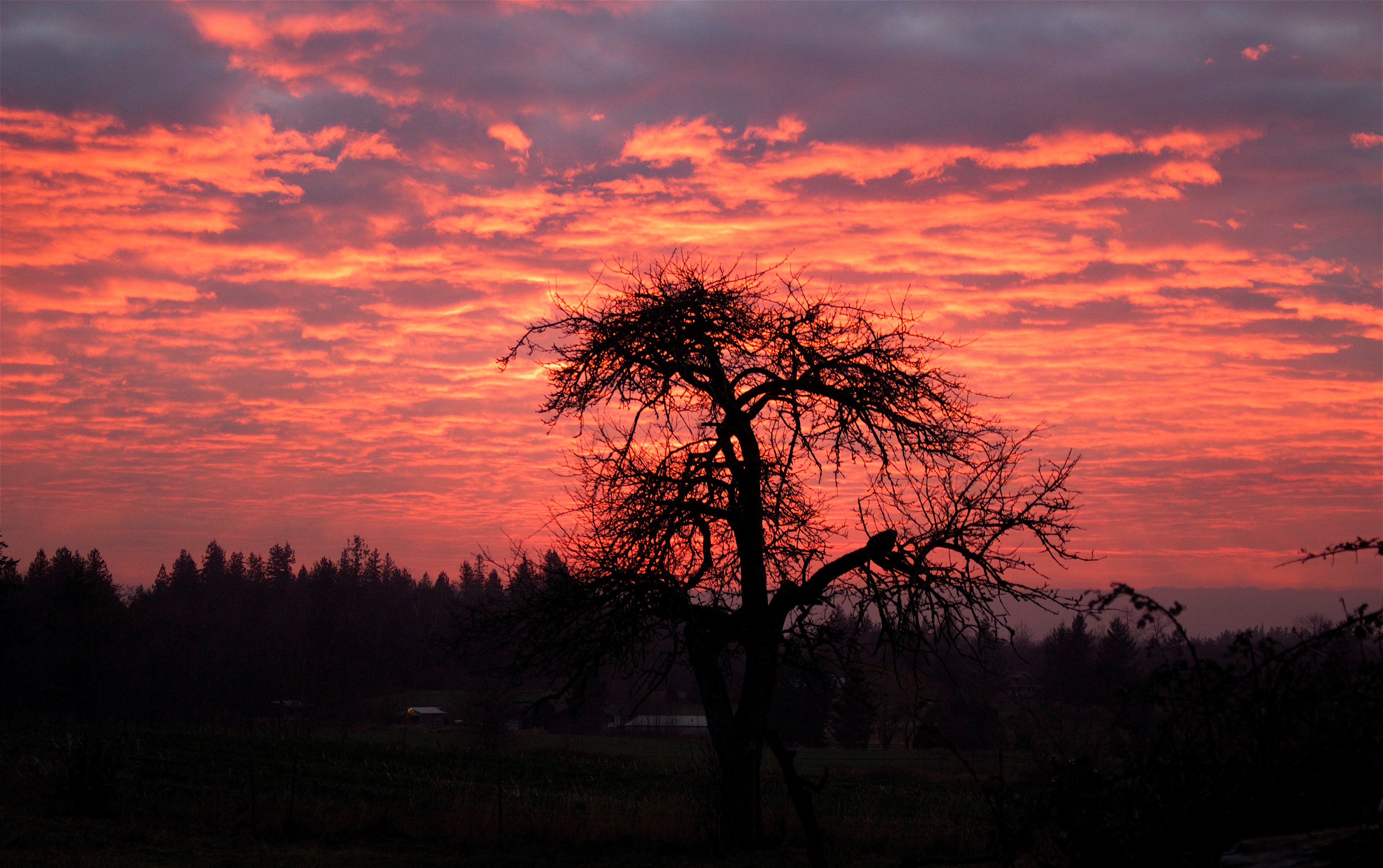
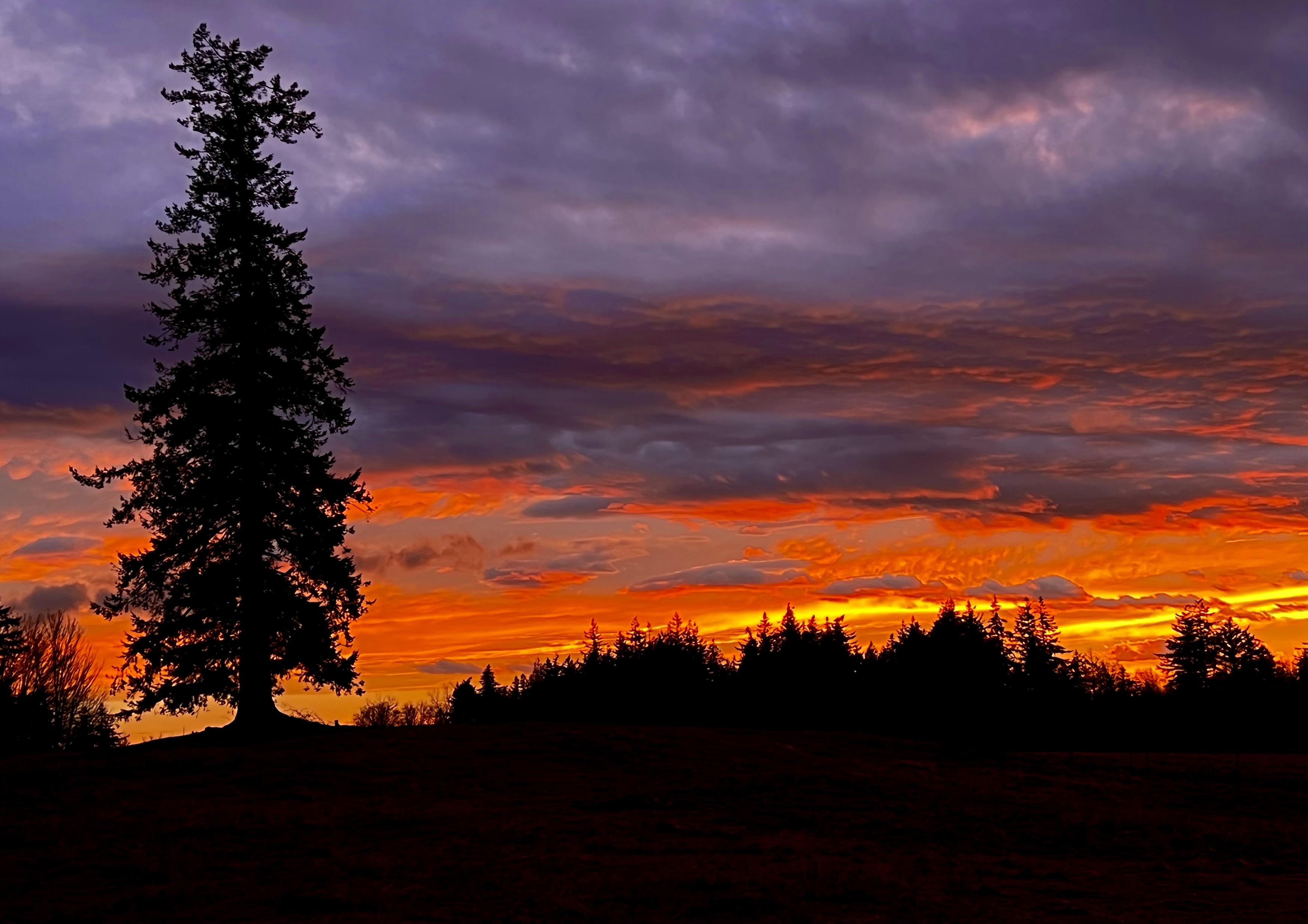
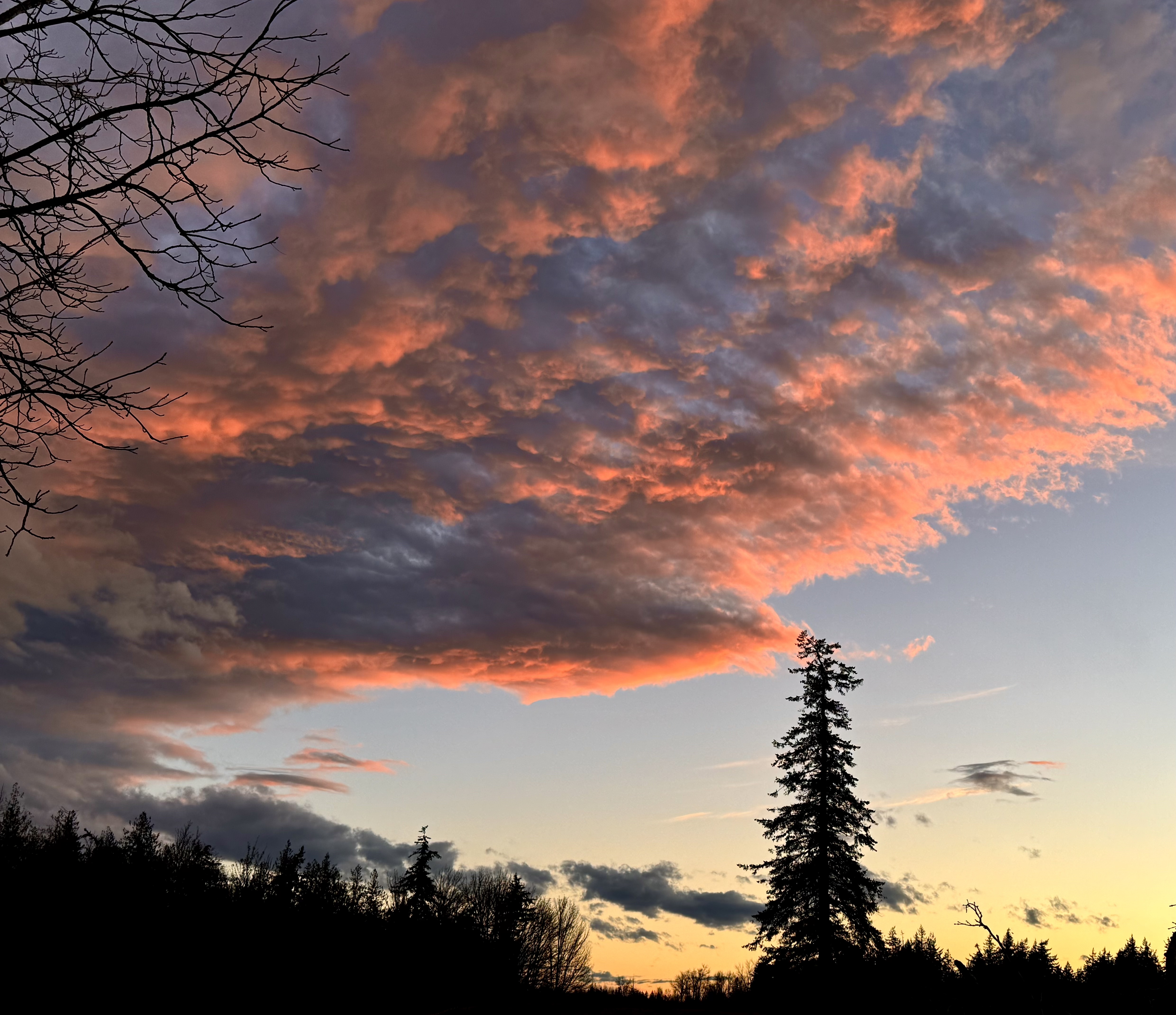
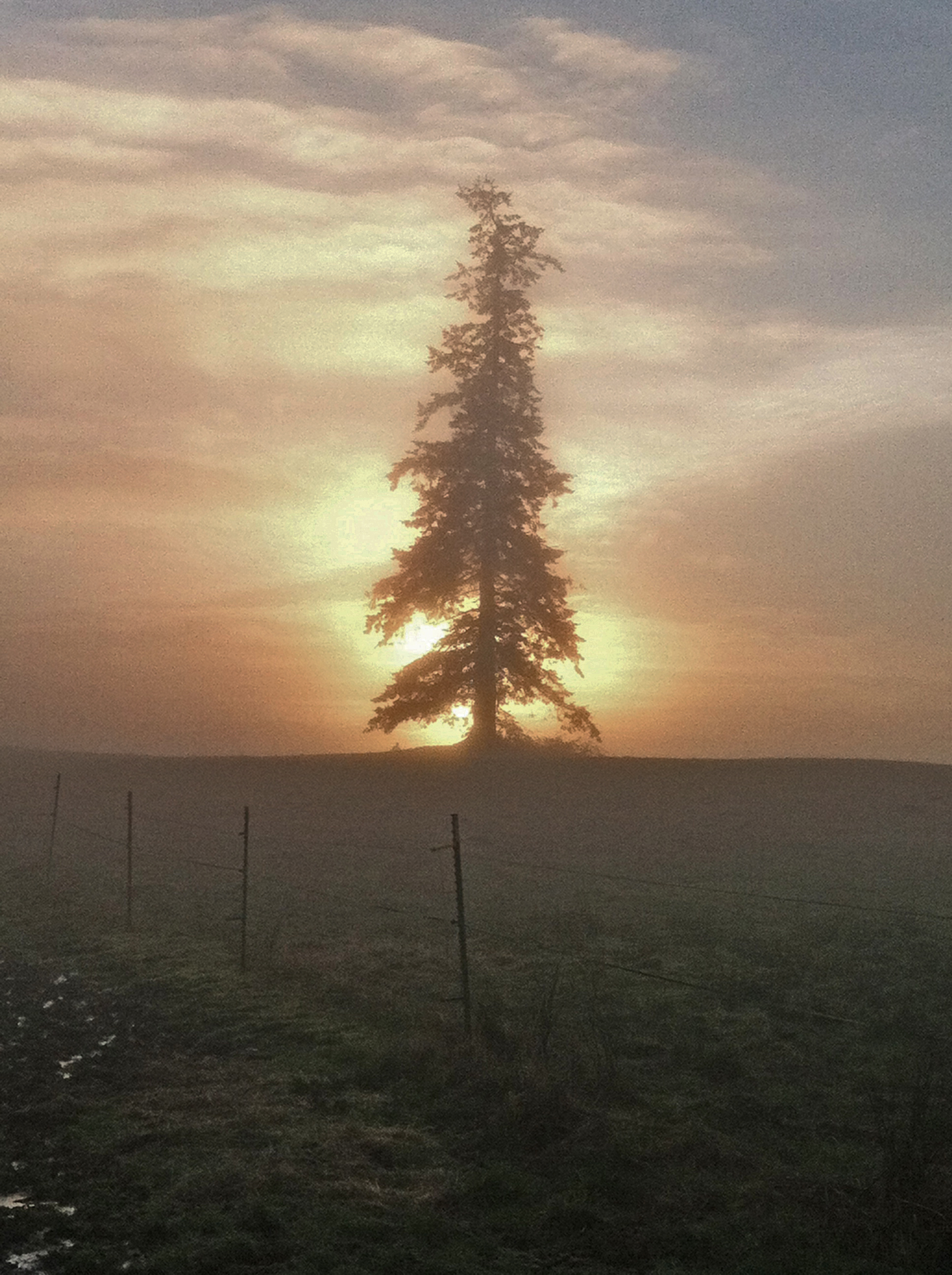
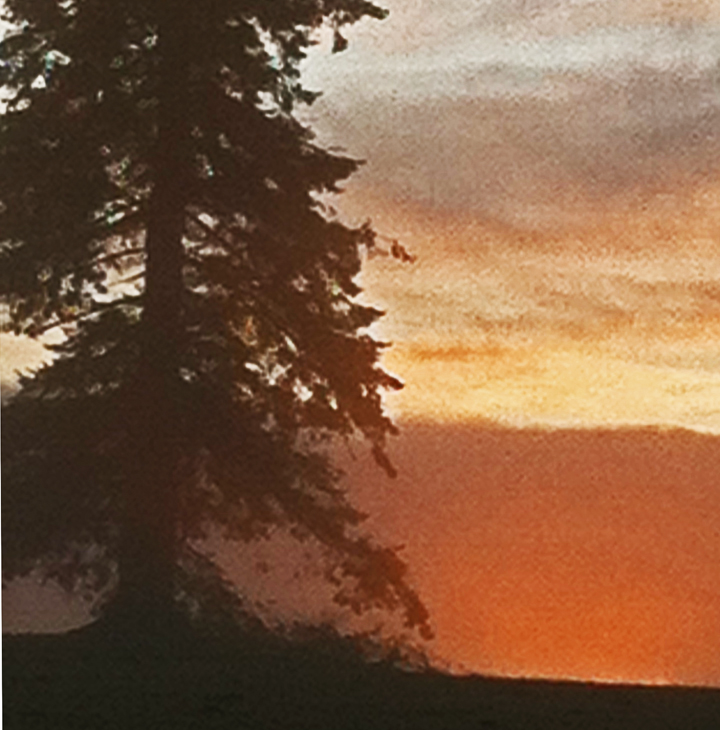
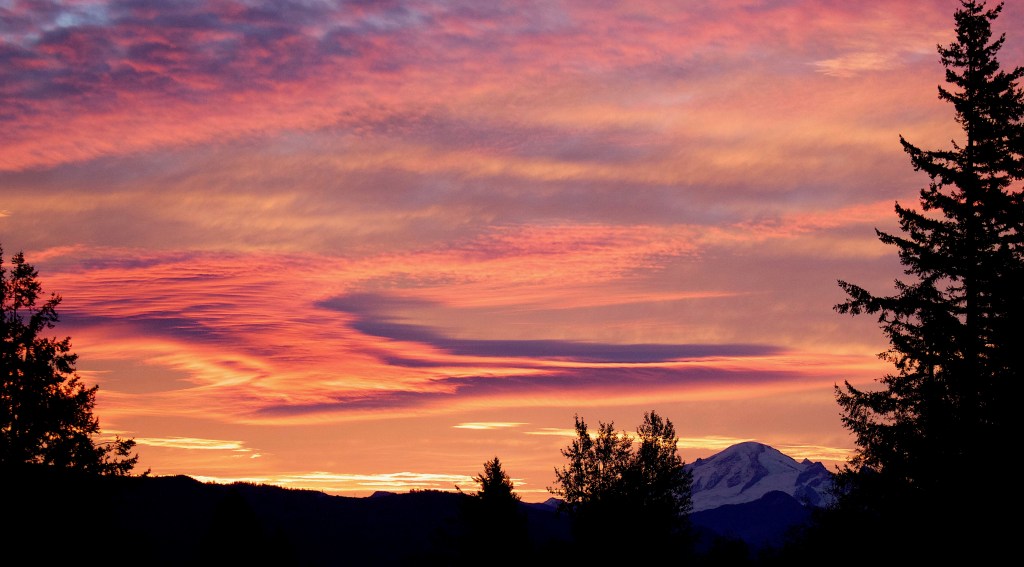
The dead center of January here in the Pacific Northwest is usually pouring-rain gray-skies monochrome-mist.
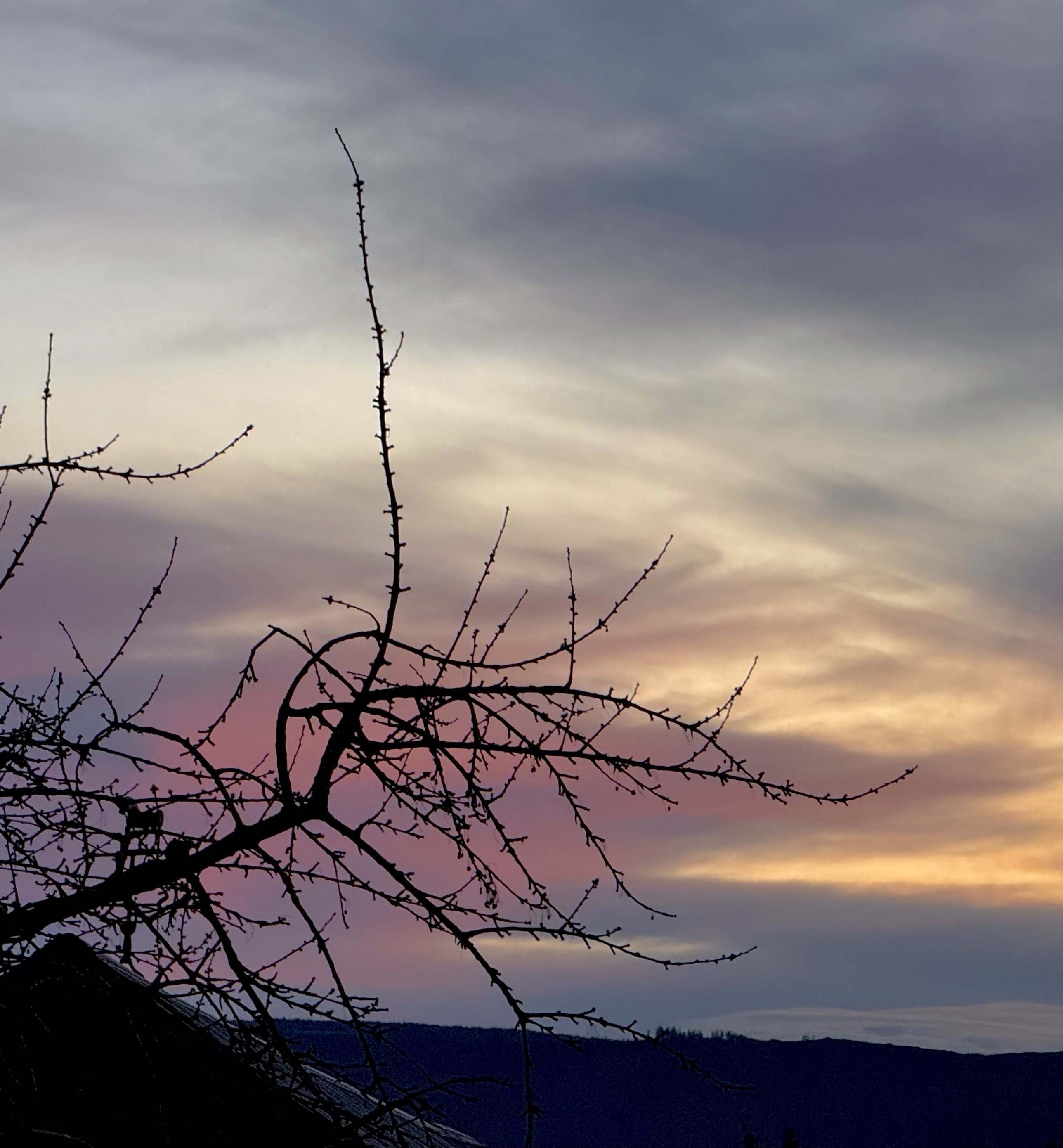
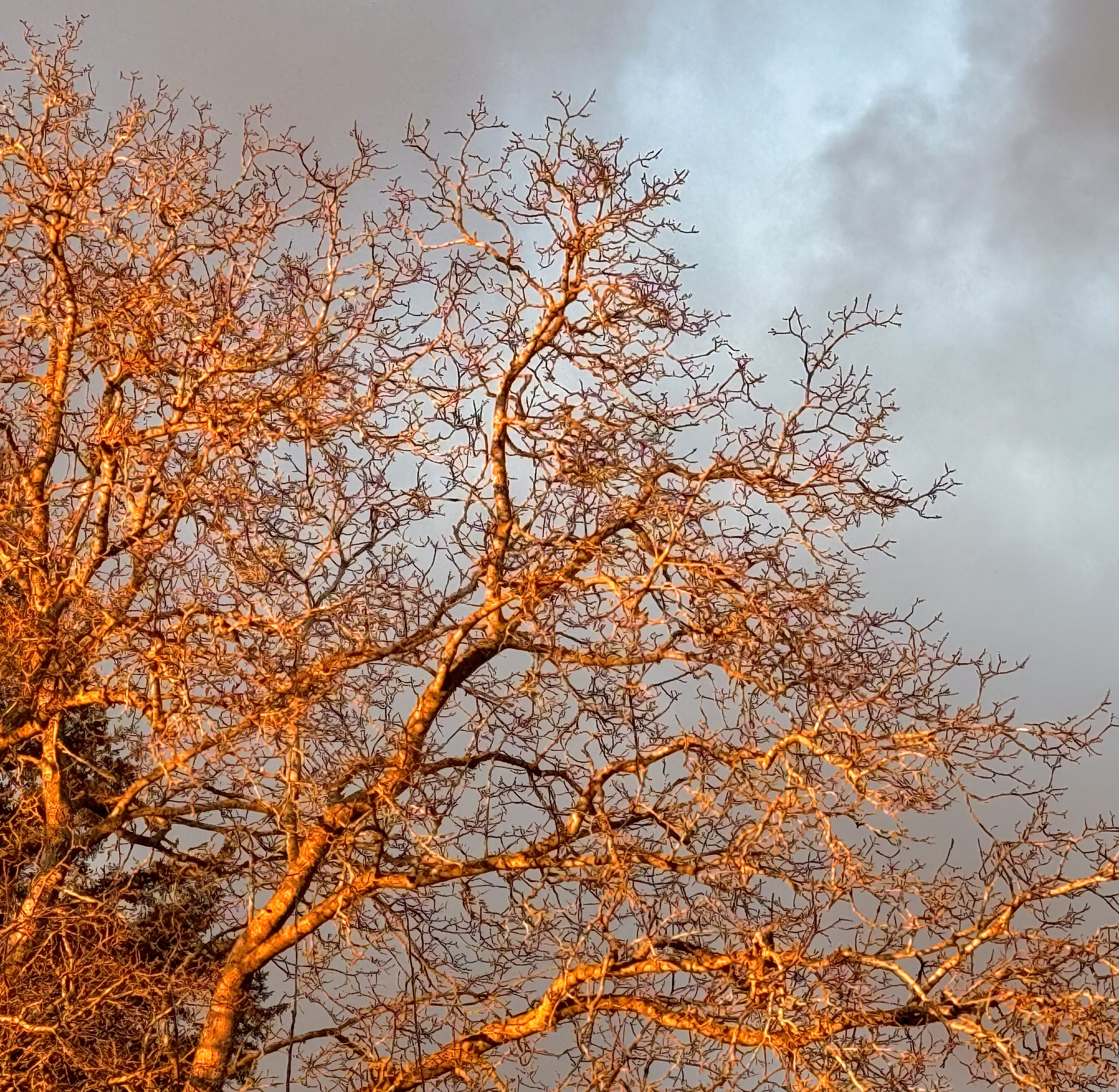
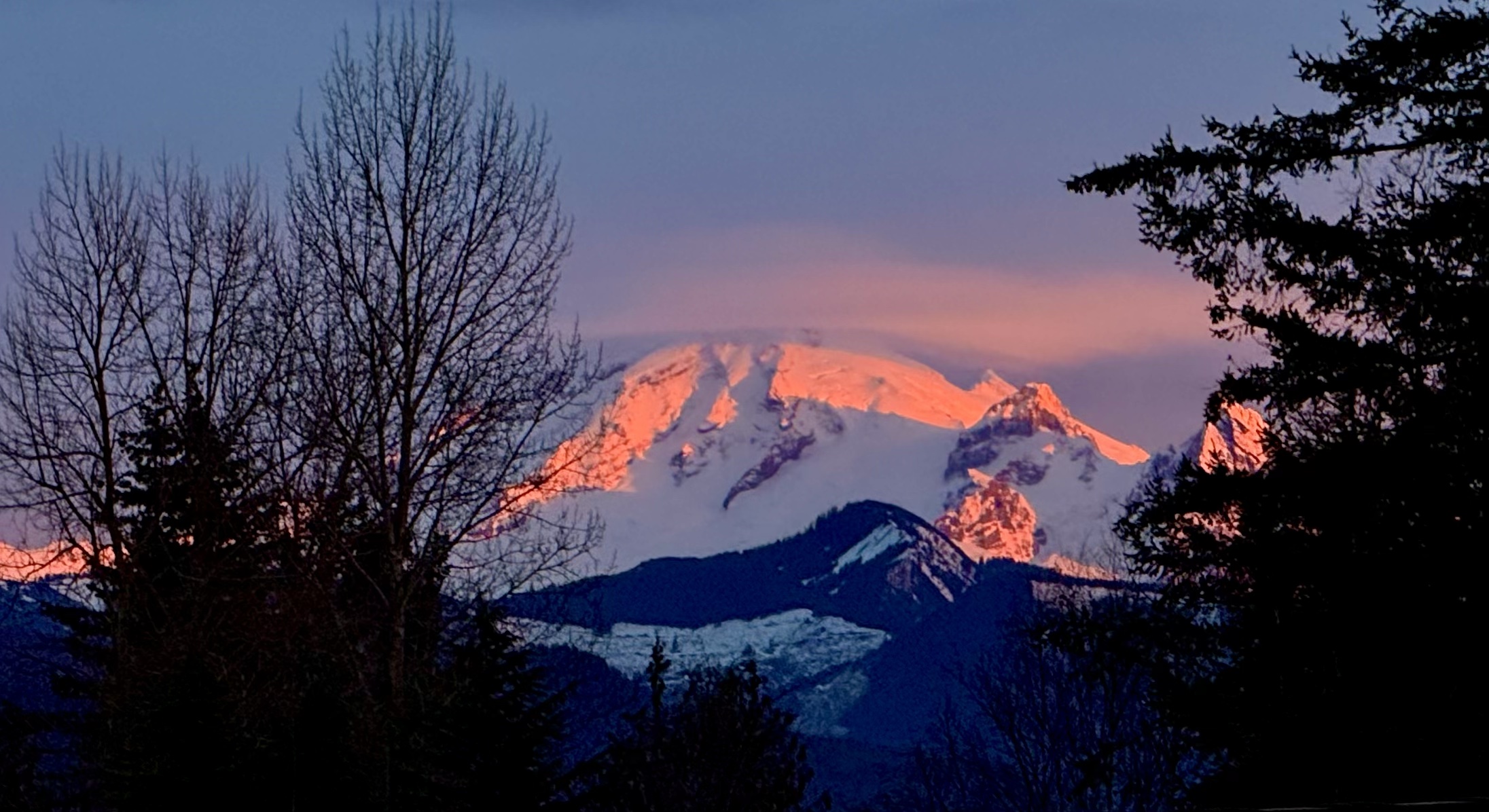
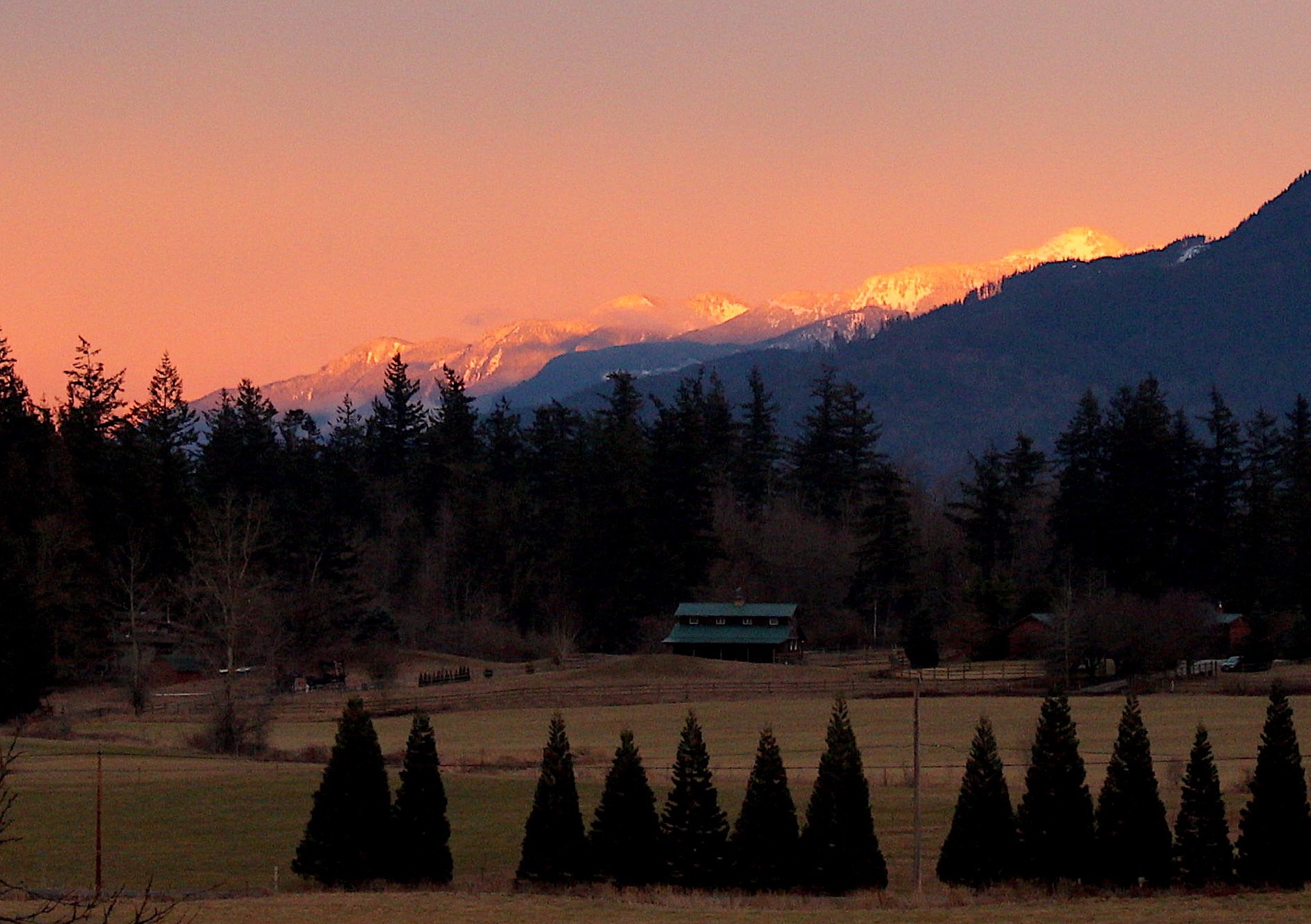
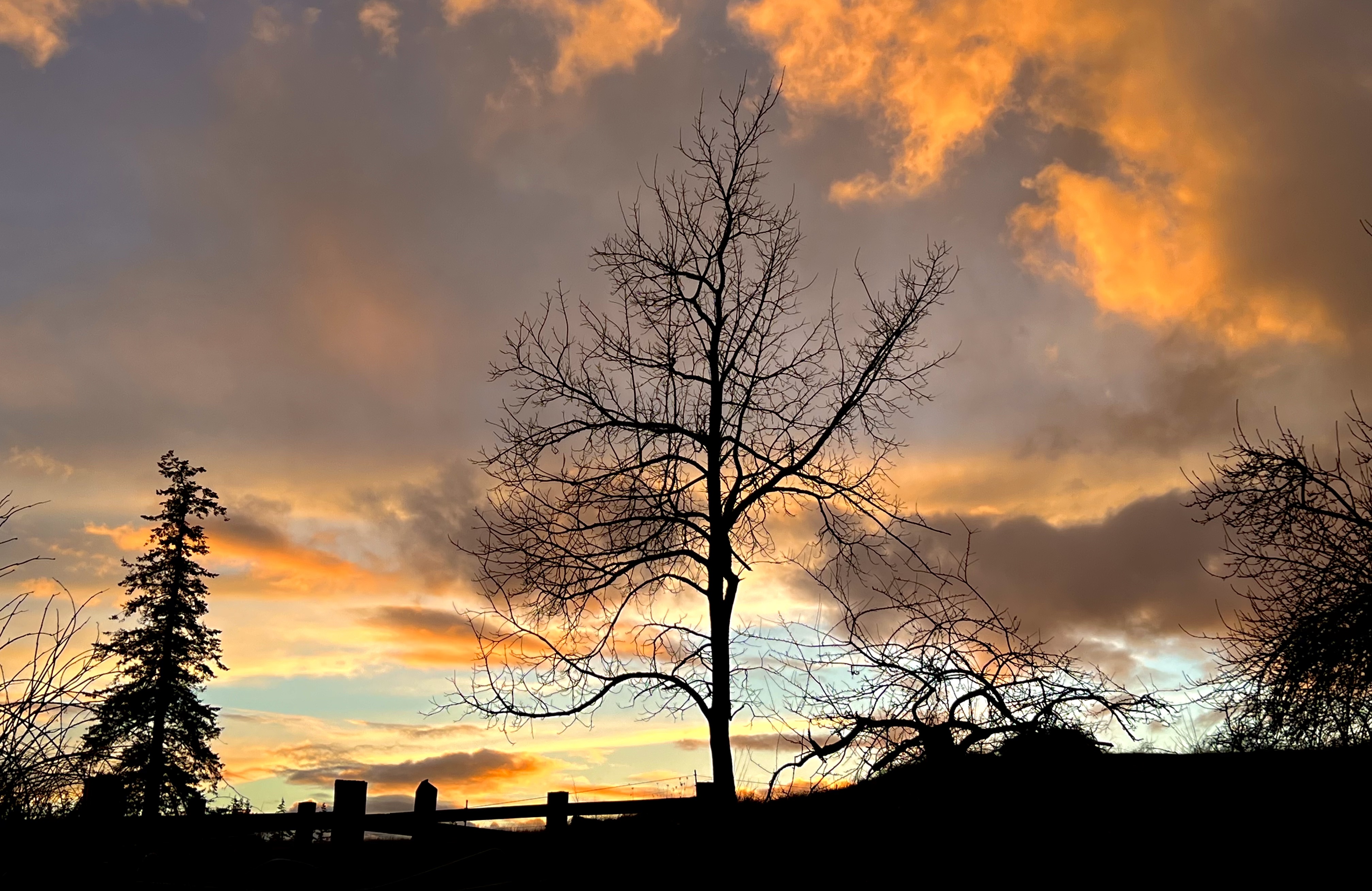
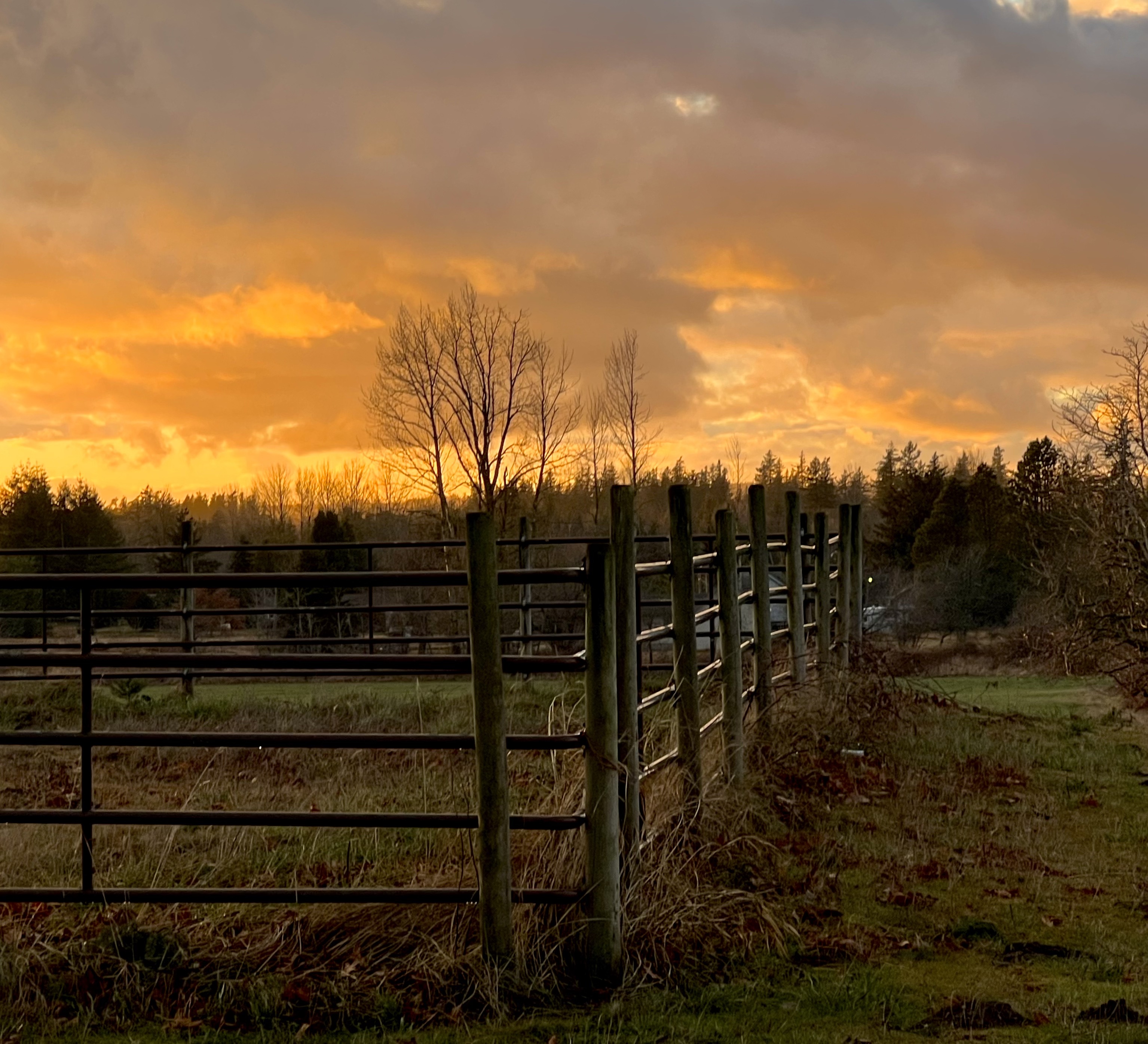
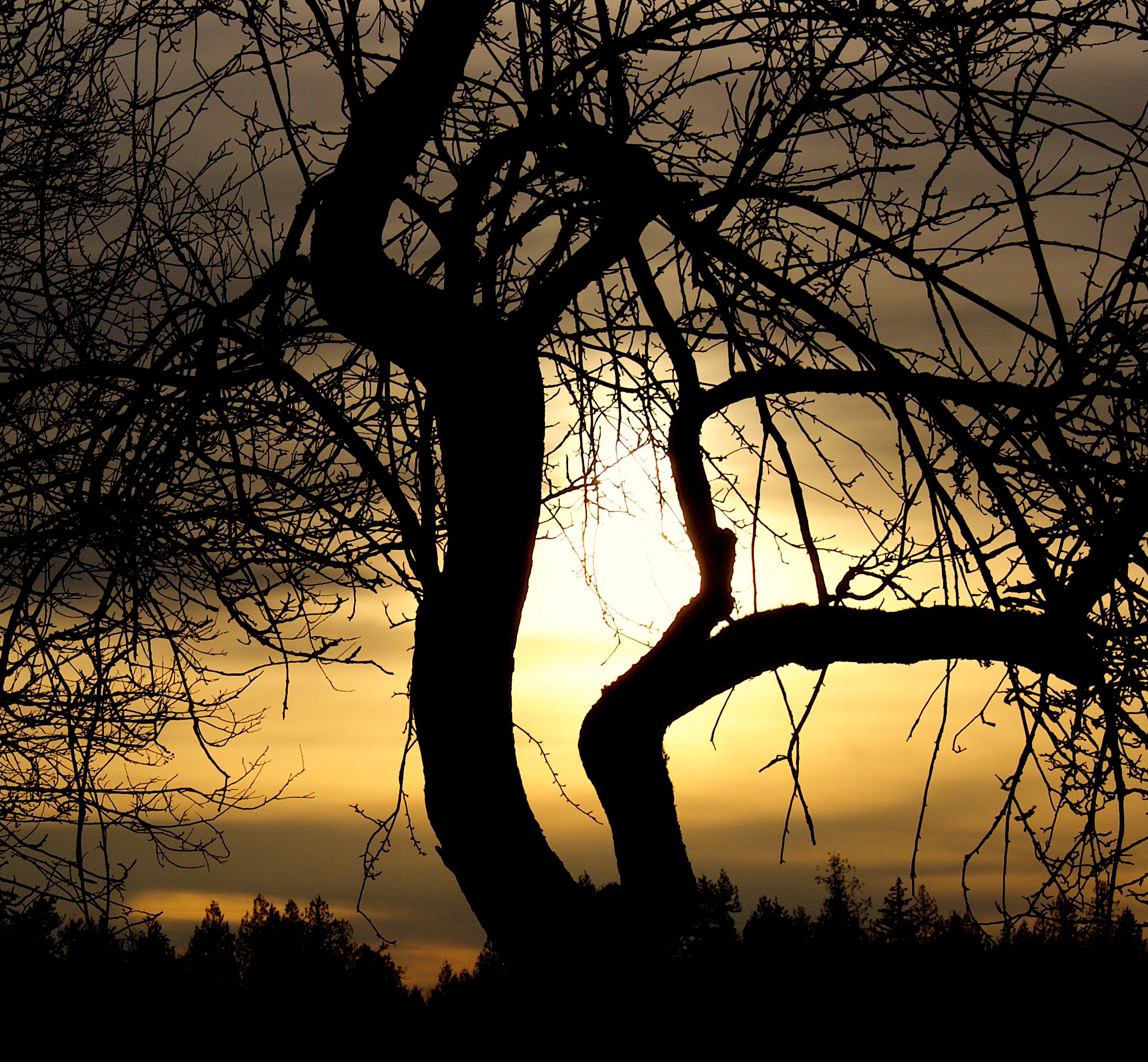
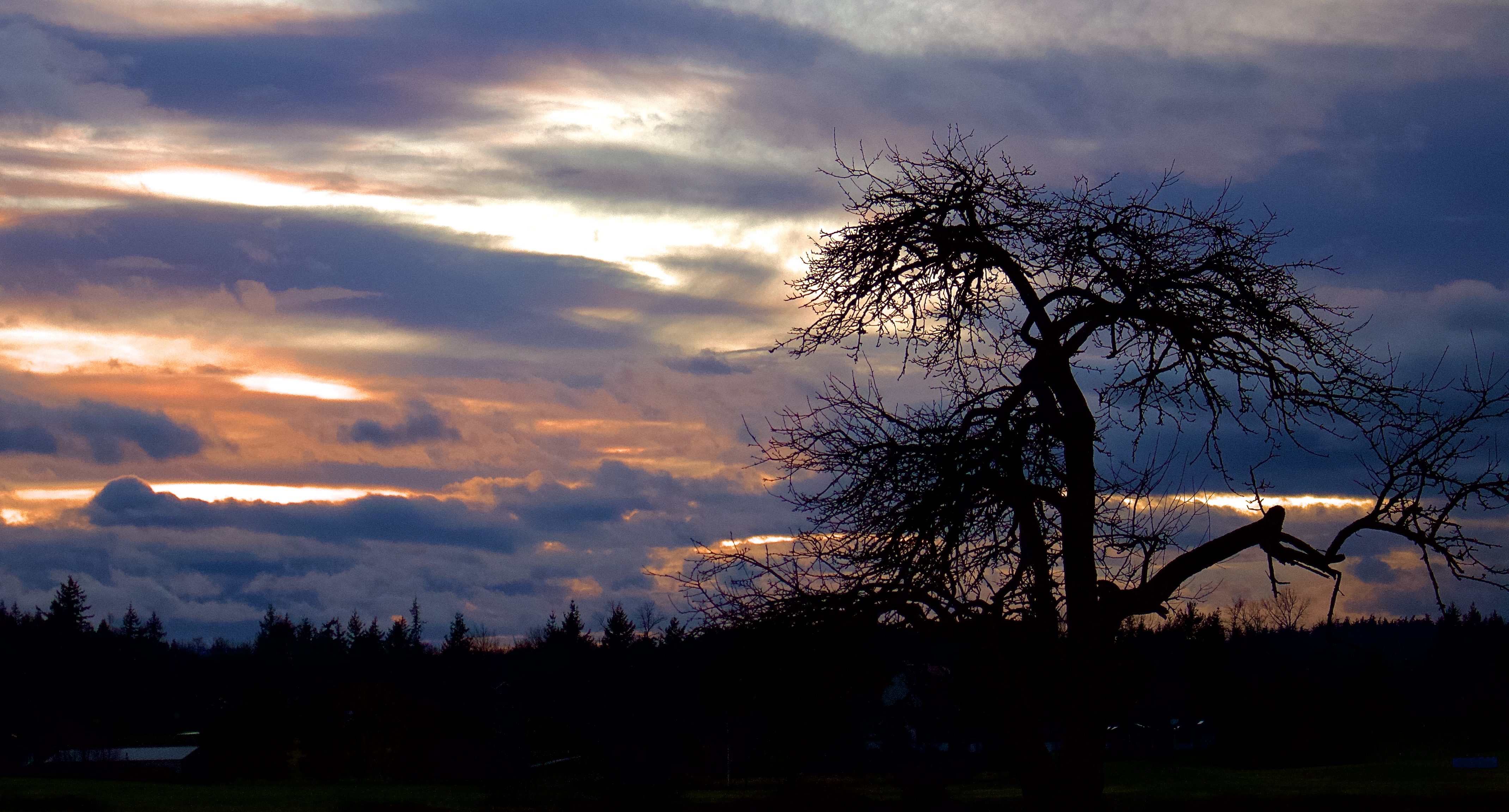
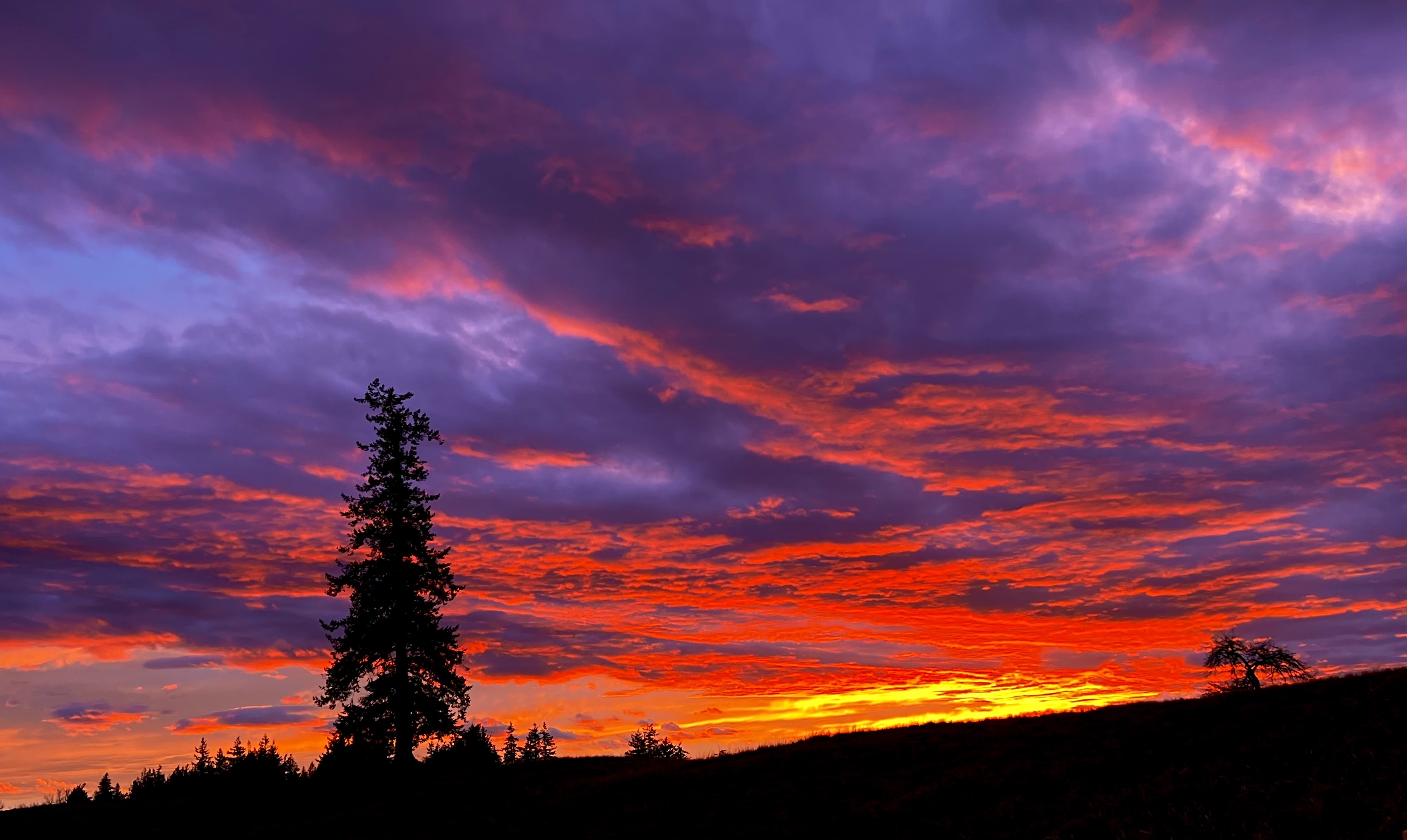
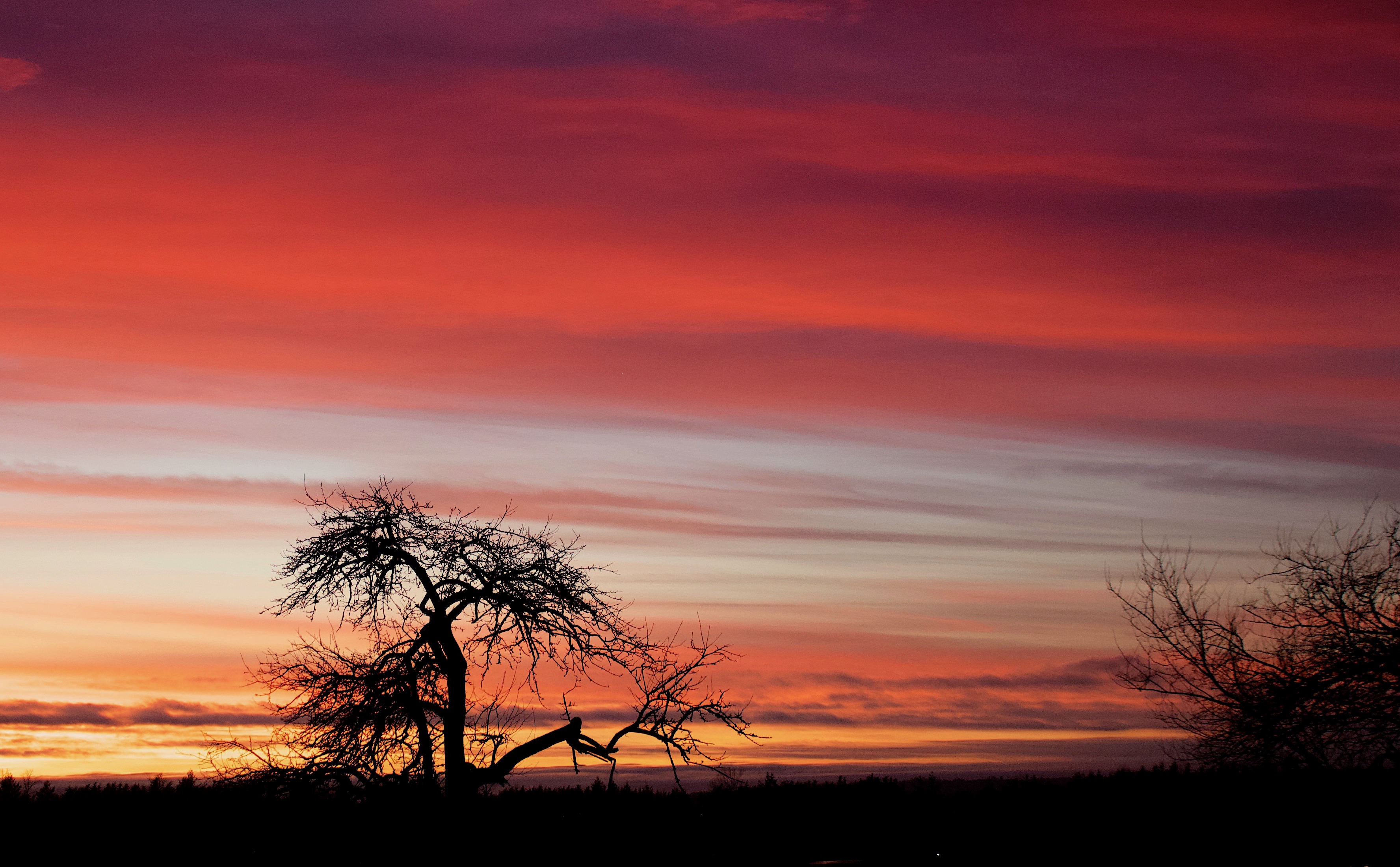
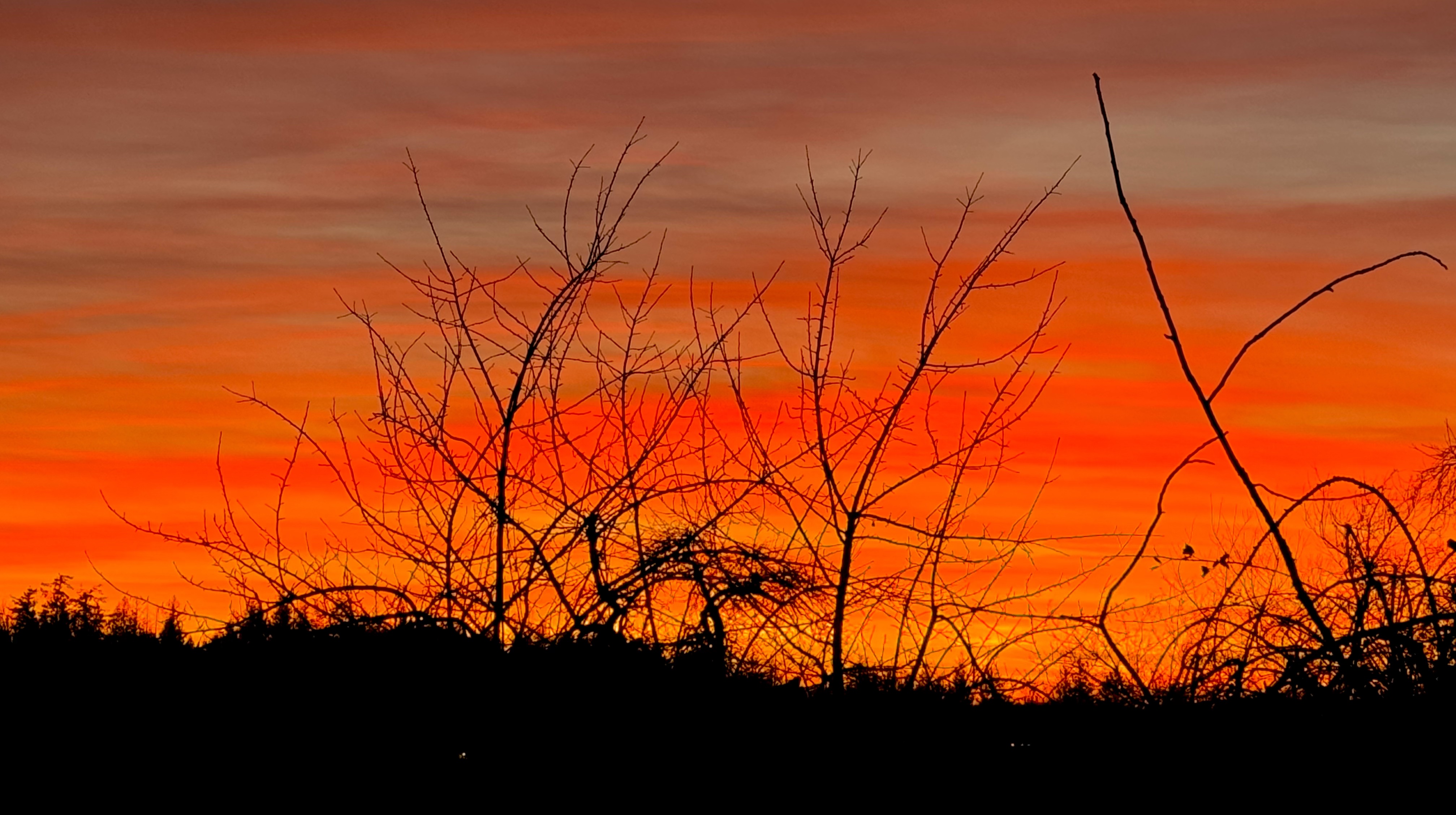
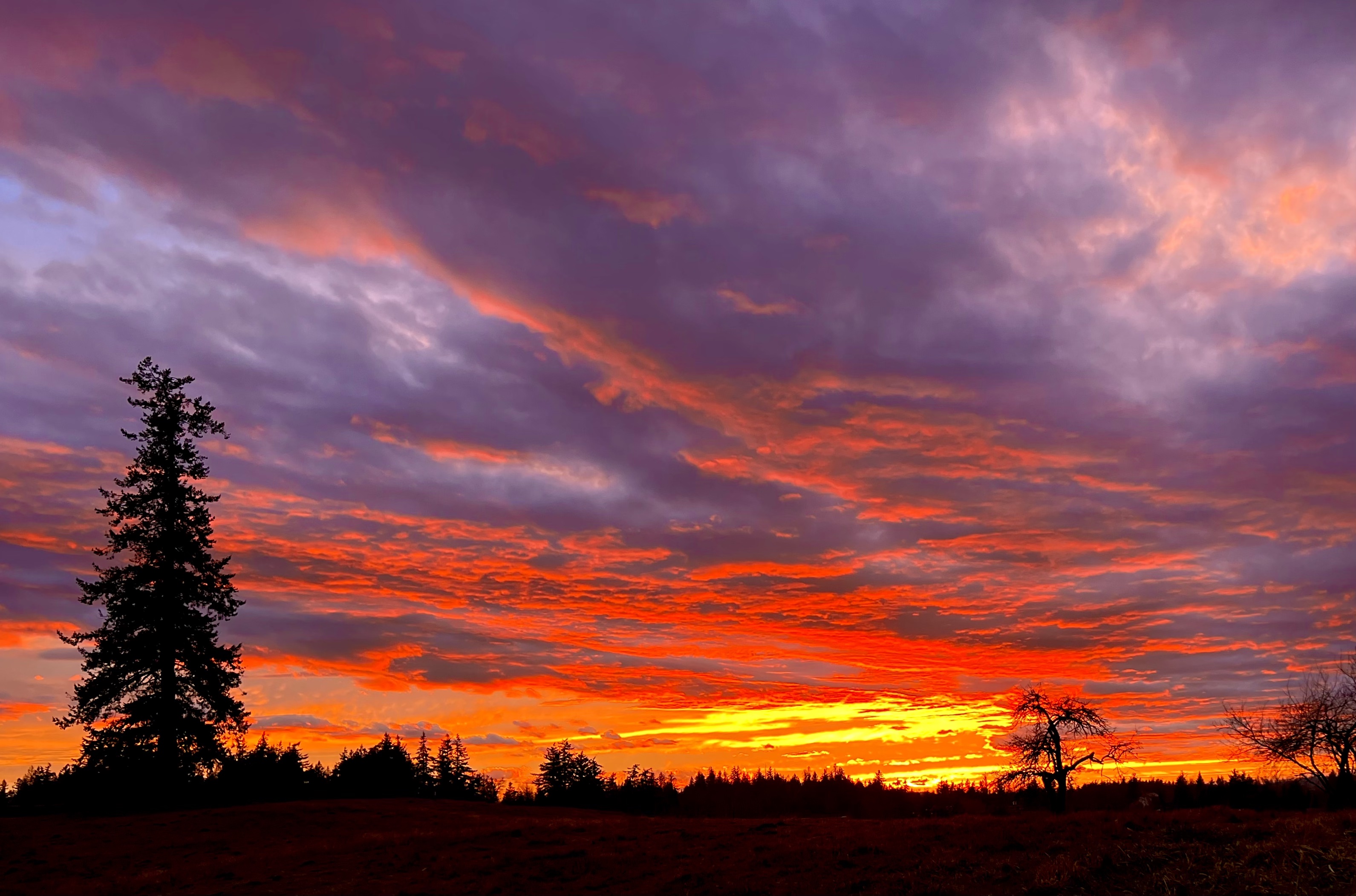
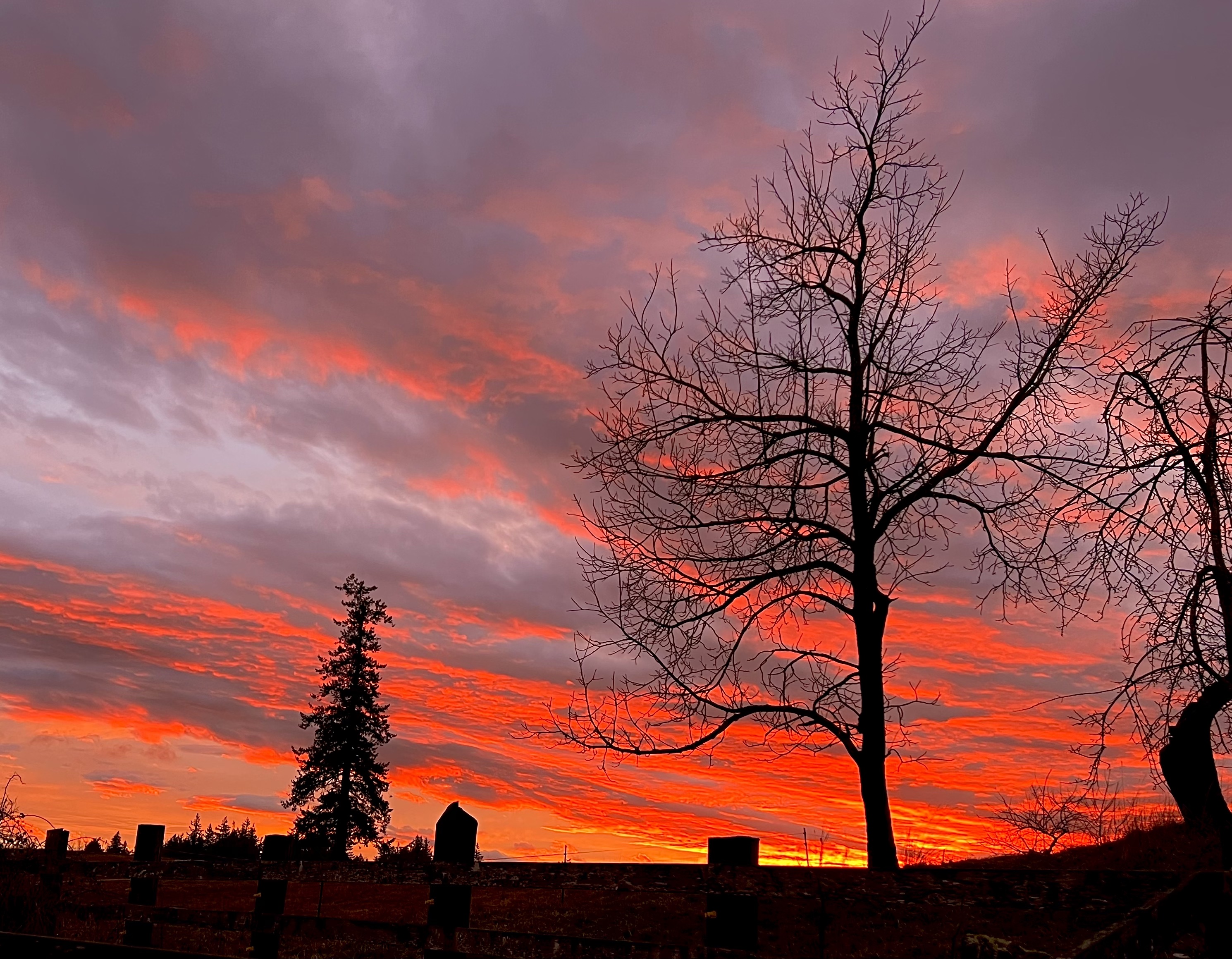
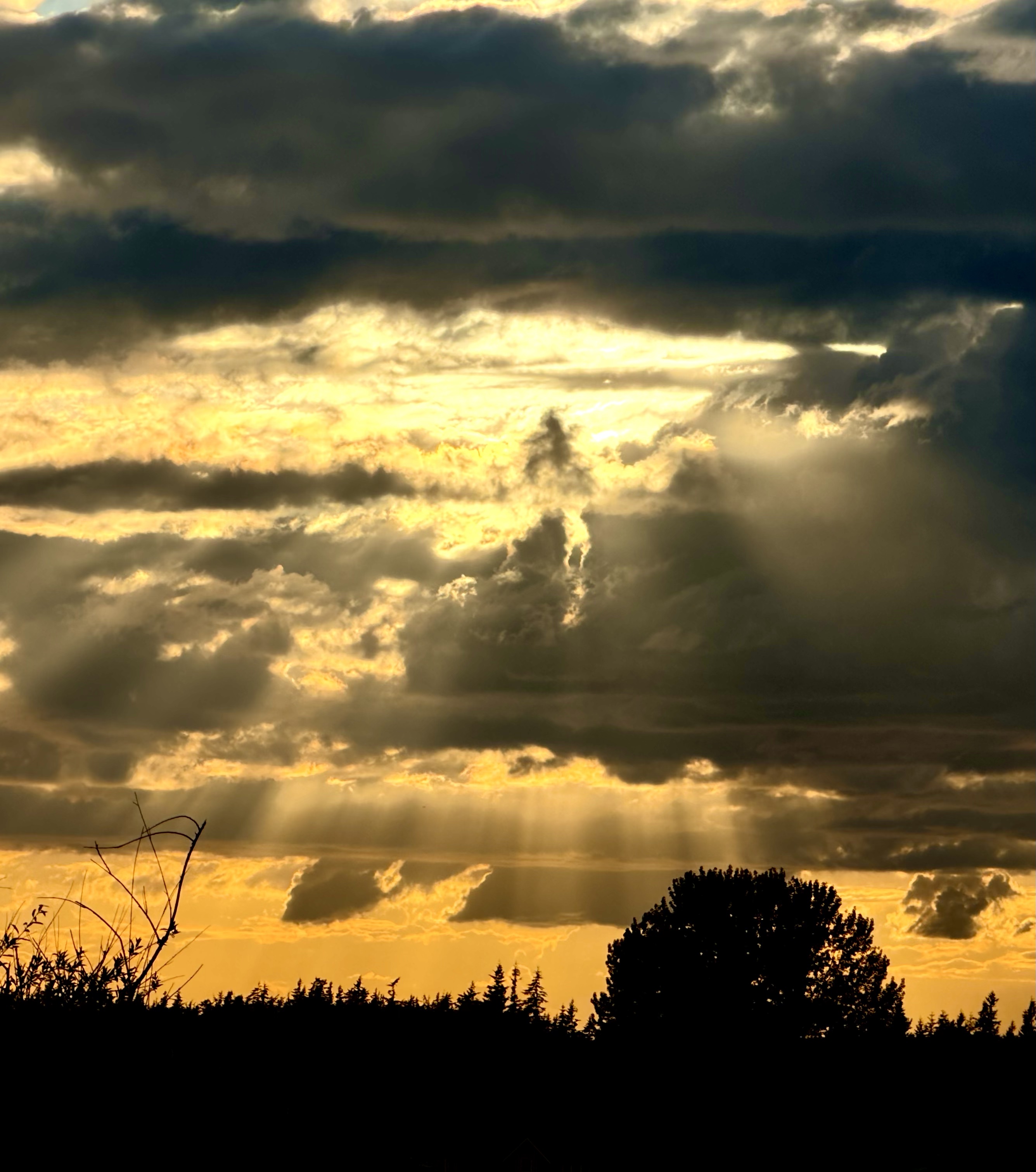
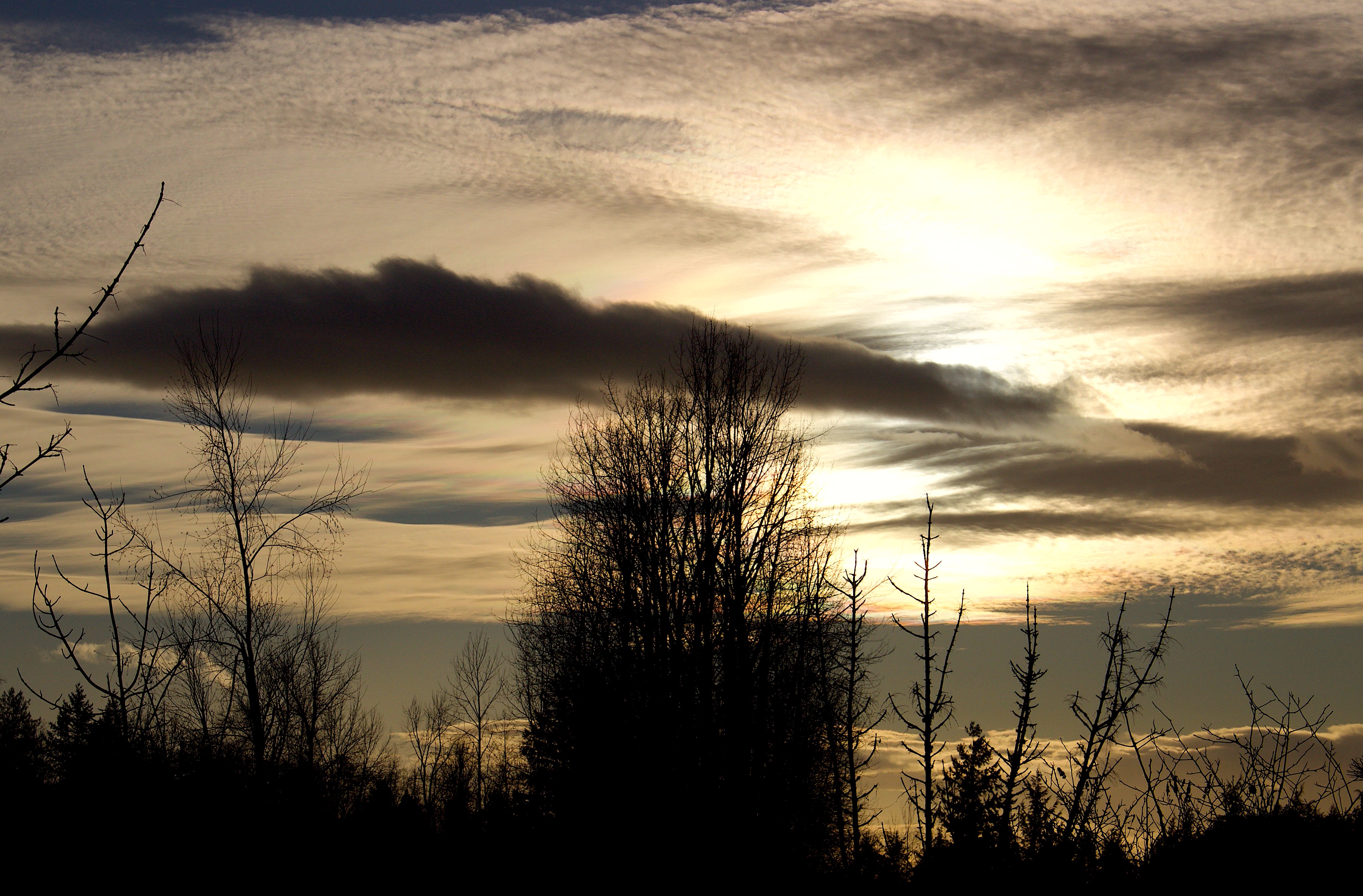
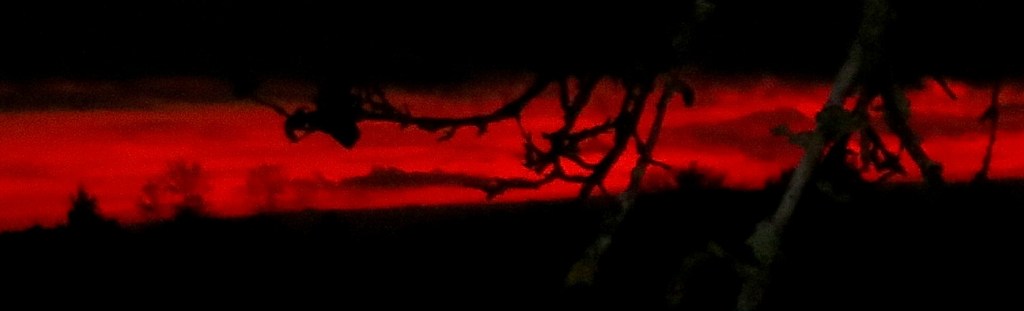
But at times, mid-January sunsets are an evolving array of crimson and purple color and patterns, streaks and swirls, gradation and gradual decline.
It all takes place in silence. No bird song, no wind, no spoken prayer. Yet communion takes place – the air breaks and feeds us like manna from heaven.
Filled to the brim with a reminder:
May I squander my life no more and treasure each moment.
May I vow to cherish God, church, family, friends, alongside those unknown and struggling in my community.
May I witness to the winter’s bleeding out at the last light of day.
AI image created for this post
One-Time
Monthly
Yearly
Make a one-time or recurring donation to support daily Barnstorming posts
Make a monthly donation
Make a yearly donation
Choose an amount
$10.00
$25.00
$50.00
$5.00
$15.00
$100.00
$5.00
$15.00
$100.00
Or enter a custom amount
$
Your contribution is deeply appreciated to help offset the cost of maintaining an ad-free website.
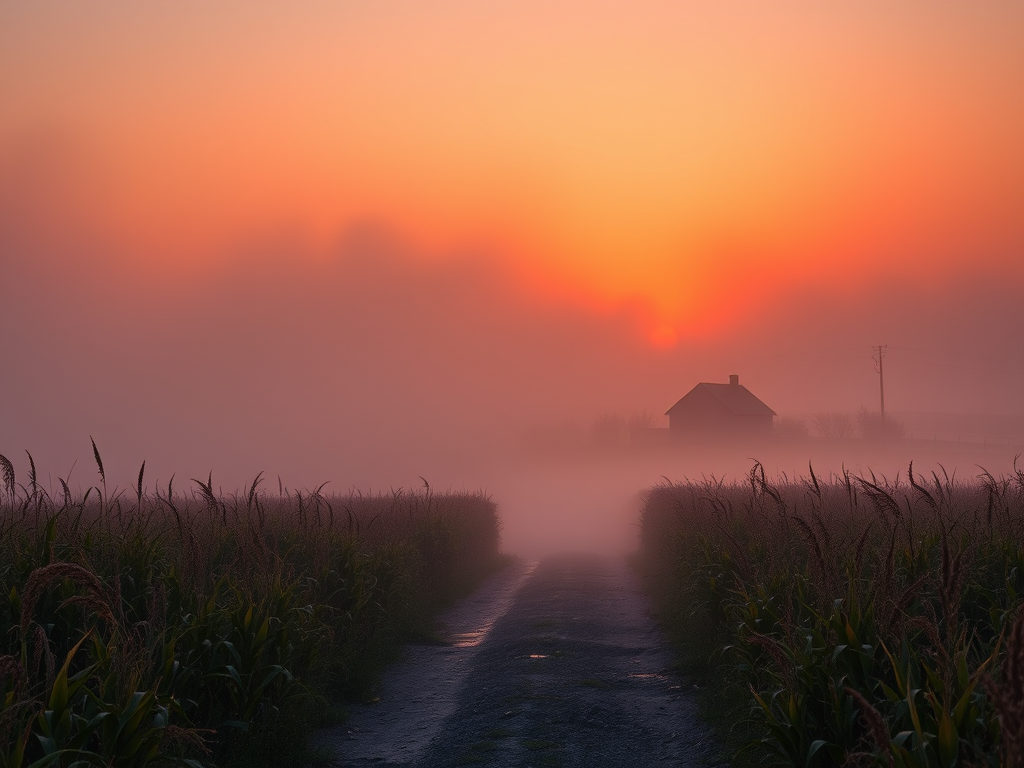
In the quiet misty morning When the moon has gone to bed, When the sparrows stop their singing And the sky is clear and red, When the summer’s ceased its gleaming When the corn is past its prime, When adventure’s lost its meaning – I’ll be homeward bound in time
Bind me not to the pasture Chain me not to the plow Set me free to find my calling And I’ll return to you somehow
If you find it’s me you’re missing If you’re hoping I’ll return, To your thoughts I’ll soon be listening, And in the road I’ll stop and turn Then the wind will set me racing As my journey nears its end And the path I’ll be retracing When I’m homeward bound again
Bind me not to the pasture Chain me not to the plow Set me free to find my calling And I’ll return to you somehow
In the quiet misty morning When the moon has gone to bed, When the sparrows stop their singing I’ll be homeward bound again. ~Marta Keen “Homeward Bound”
Eighty-two years ago, my parents married on Christmas Eve. It was not a conventional wedding day but a date of necessity, only because a justice of the peace was available to marry a score of war-time couples in Quantico, Virginia, shortly before the newly trained Marine officers were shipped out to the South Pacific to fight in WWII.
When I look at my parents’ young faces – ages 22 and just turned 21 — in their only wedding portrait, I see a hint of the impulsive decision that led to that wedding just a week before my father left for 30 months. They had known each other at college for over a year, had talked about a future together, but with my mother starting a teaching job in a rural Eastern Washington town, and the war potentially impacting all young men’s lives very directly, they had not set a date.
My father put his college education on hold to enlist, knowing that would give him some options he wouldn’t have if drafted, so they went their separate ways as he headed east to Virginia for his Marine officer training, and Mom started her high school teaching career as a speech and drama teacher. One day in early December of 1942, he called her and said, “If we’re going to get married, it’ll need to be before the end of the year. I’m shipping out the first week in January.” Mom went to her high school principal, asked for a two week leave of absence which was granted, told her astonished parents, bought a dress, and headed east on the train with a friend who had received a similar call from her boyfriend.
This was a completely uncharacteristic thing for my overly cautious mother to do, so… it must have been love.
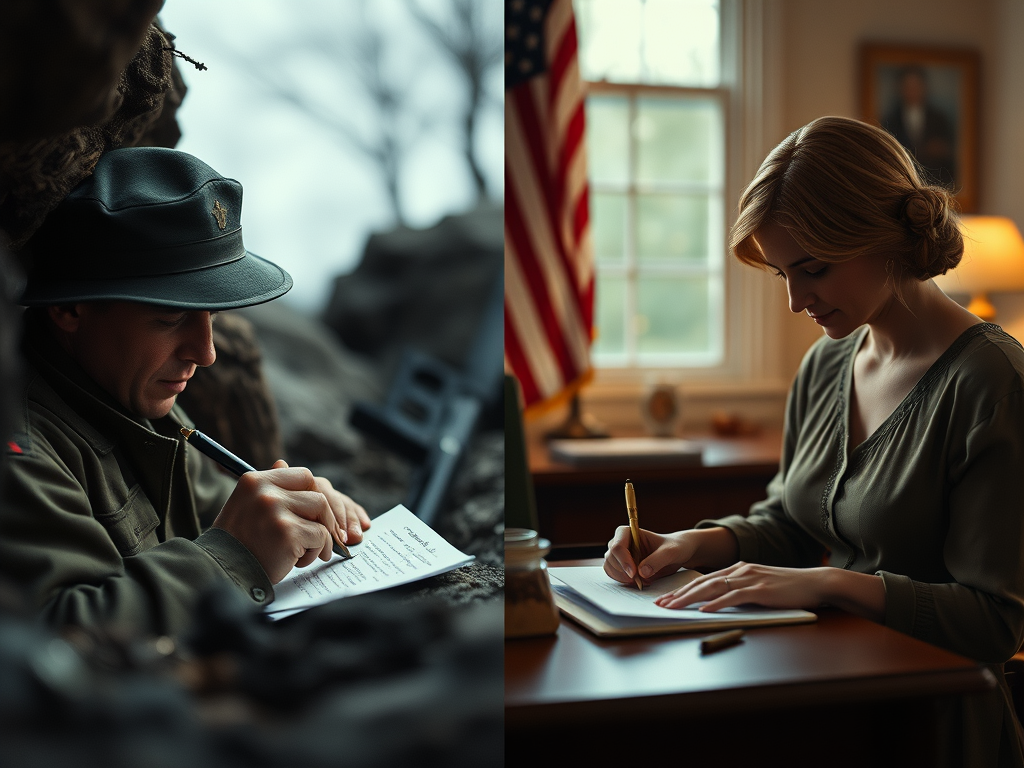
They were married in a brief civil ceremony with another couple as the witnesses. They stayed in Virginia only a couple days and took the train back to San Diego, and my father was shipped out. Just like that. Mom returned to her teaching position and the first three years of their married life was composed of letter correspondence only, with gaps of up to a month during certain island battles when no mail could be delivered or posted.
As I sorted through my mother’s things following her death over a decade ago, I found their war-time letters to each other, stacked neatly and tied together in a box.
In my father’s nearly daily letters home to my mother during WWII, month after month after month, he would say, over and over, while apologizing for the repetition:
“I will come home to you, I will return, I will not let this change me, we will be joined again…”
This was his way of convincing himself even as he carried the dead and dying after island battles: men he knew well and the enemy he did not know. He knew they were never returning to the home they died protecting and to those who loved them.
He shared little of battle in his letters as each letter was reviewed and signed off by a censor before being sealed and sent. This story, however, made it through:
“You mentioned a story of Navy landing craft taking the Marines into Tarawa. It reminded me of something which impressed me a great deal and something I’m sure I’ll never forget.
So you’ll understand what I mean I’ll try to start with an explanation. In training – close order drill- etc. there is a command that is given always when the men form in the morning – various times during the day– after firing– and always before a formation is dismissed. The command is INSPECTION – ARMS. On the command of EXECUTION- ARMS each man opens the bolt of his rifle. It is supposed to be done in unison so you hear just one sound as the bolts are opened. Usually it is pretty good and sounds O.K.
Just to show you how the morale of the men going to the beach was – and how much it impressed me — we were on our way in – I was forward, watching the beach thru a little slit in the ramp – the men were crouched in the bottom of the boat, just waiting. You see- we enter the landing boats with unloaded rifles and wait till it’s advisable before loading. When we got about to the right distance in my estimation I turned around and said – LOAD and LOCK – I didn’t realize it, but every man had been crouching with his hand on the operating handle and when I said that — SLAM! — every bolt was open at once – I’ve never heard it done better – and those men meant business when they loaded those rifles.
A man couldn’t be afraid with men like that behind him.”
My father did return home to my mother after nearly three years of separation. He finished his college education to become an agriculture teacher to teach others how to farm the land while he himself became bound to the pasture and chained to the plow.
He never forgot those who died, making it possible for him to return home. I won’t forget either.
My mother and father could not have foretold the struggles that lay ahead for them. The War itself seemed struggle enough for the millions of couples who endured the separation, the losses and grieving, as well as the eventual injuries–both physical and psychological. It did not seem possible that beyond those harsh and horrible realities, things could go sour after reuniting.
The hope and expectation of happiness and bliss must have been overwhelming, and real life doesn’t often deliver. After raising three children, their 35 year marriage fell apart with traumatic finality. When my father returned home (again) over a decade later, asking for forgiveness, they remarried and had five more years together before my father died in 1995.
Christmas is a time of joy, a celebration of new beginnings and new life when God became man, humble, vulnerable and tender. But it also gives us a foretaste for the profound sacrifice made in giving up this earthly life, not always so gently.
As I peer at my father’s and mother’s faces in their wedding photo, I remember those eyes, then so trusting and unaware of what was to come. I find peace in knowing they both have returned home to behold the Light, the Salvation and the Glory~~the ultimate Christmas~~in His presence.
AI image created for this postAI image created for this post
One-Time
Monthly
Yearly
Make a one-time or recurring donation to support daily Barnstorming posts
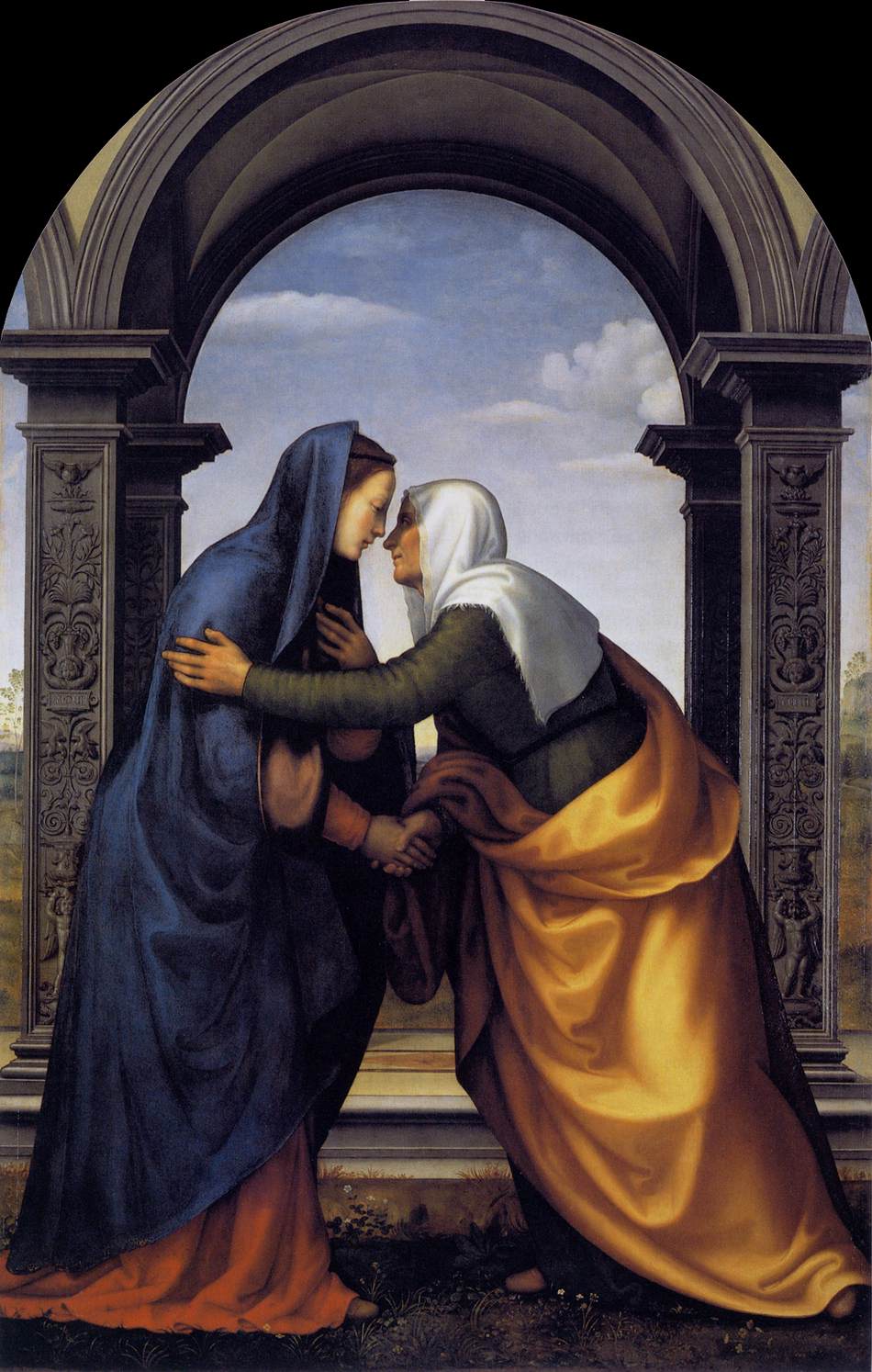
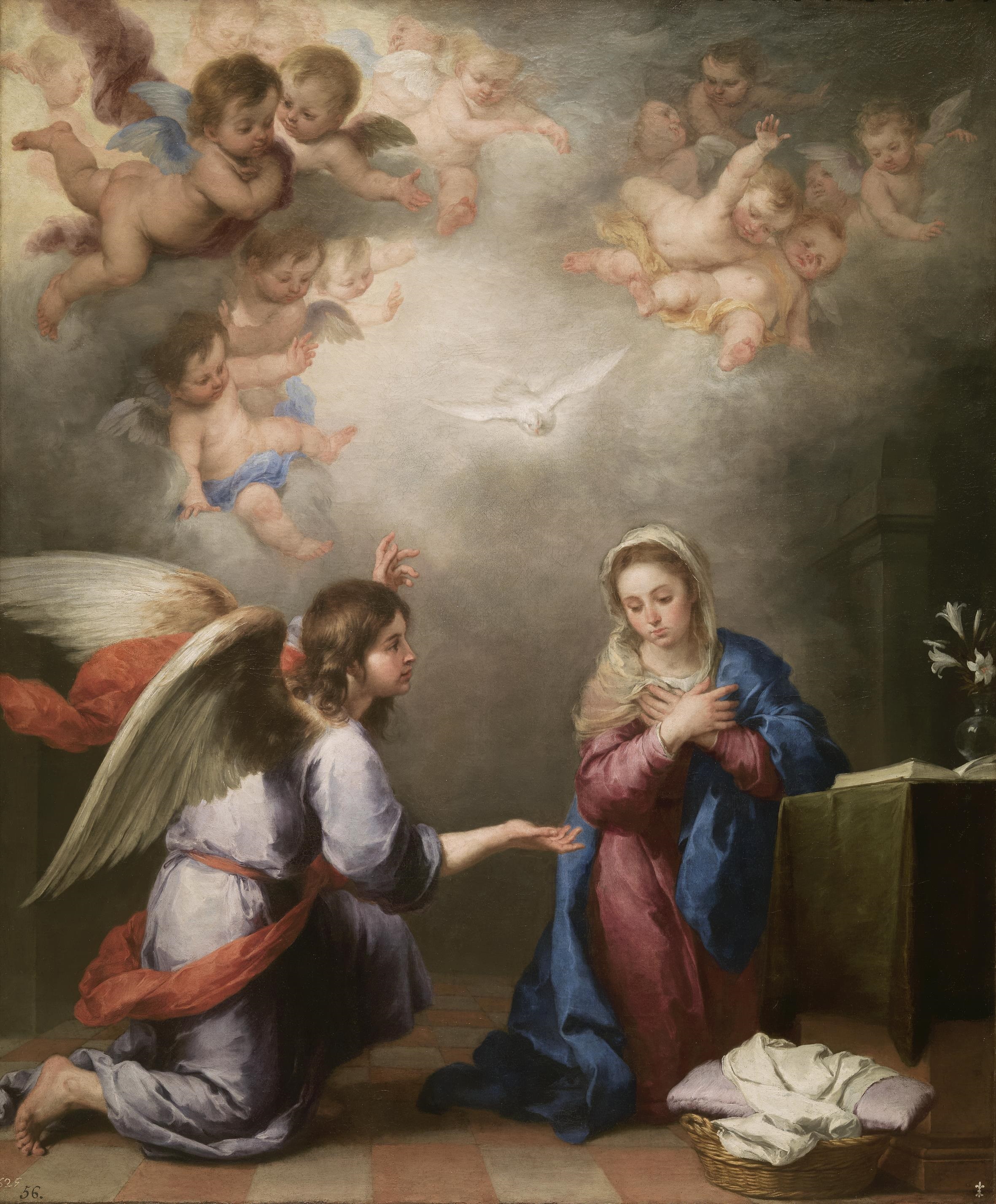
The Visitation by Mariotto AlbertinelliAnnunciation by Bartolome Esteban Perez Murillo
…we should not try to escape a sense of awe, almost a sense of fright, at what God has done. Nothing can alter the fact that we live on a visited planet… We shall be celebrating no beautiful myth, no lovely piece of traditional folklore, but a solemn fact. God has been here once historically, but he will come again with the same silence and same devastating humility into any human heart ready to receive him. J.B. Phillipsfrom Watch for the Light
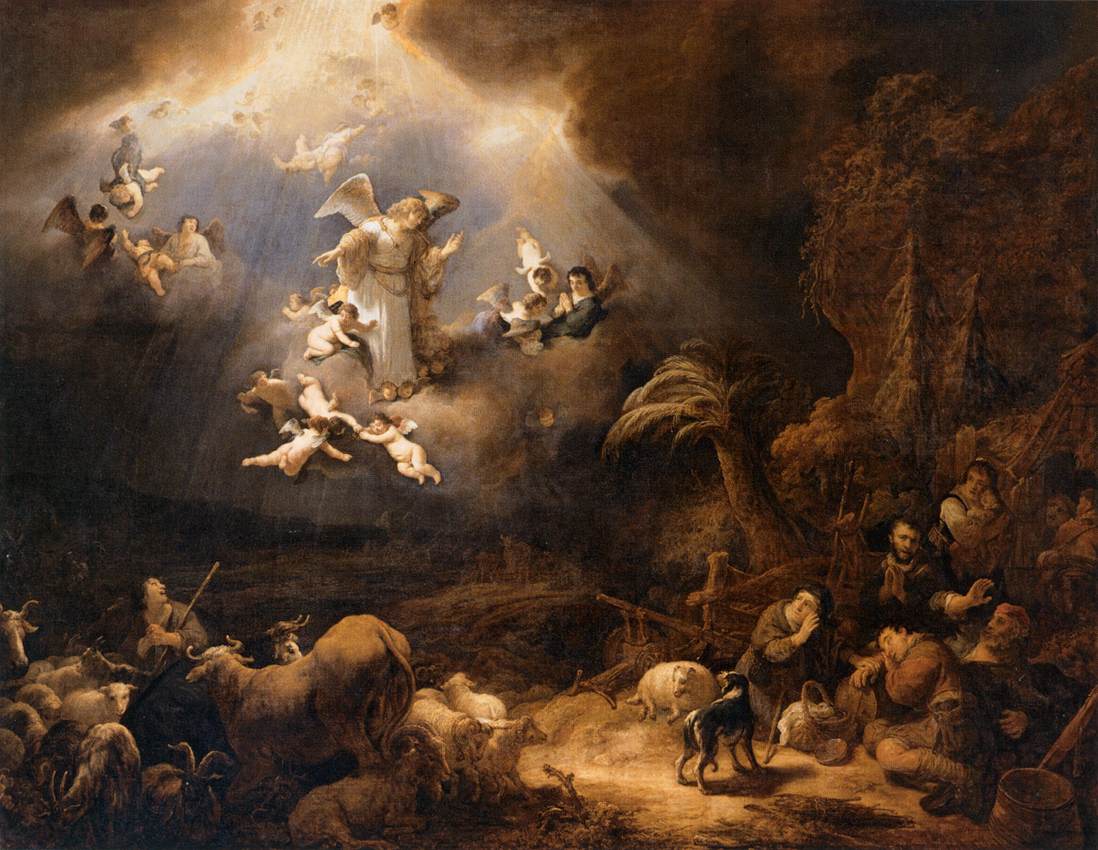
Angels Announcing the Birth of Christ by Govert Flinck
I want to be like the visited Mary in her daily routine, awed yet accepting, as the angel interrupts her with an incredible announcement.
I want to be like the visited Elizabeth, overjoyed, along with the leaping baby in her womb, seeing her cousin Mary pregnant with her Lord.
I want to be like the visited shepherds, silenced and aghast, flattened with so much fear that they need the reassurance “do not be afraid” and immediately go to find the baby in a manger.
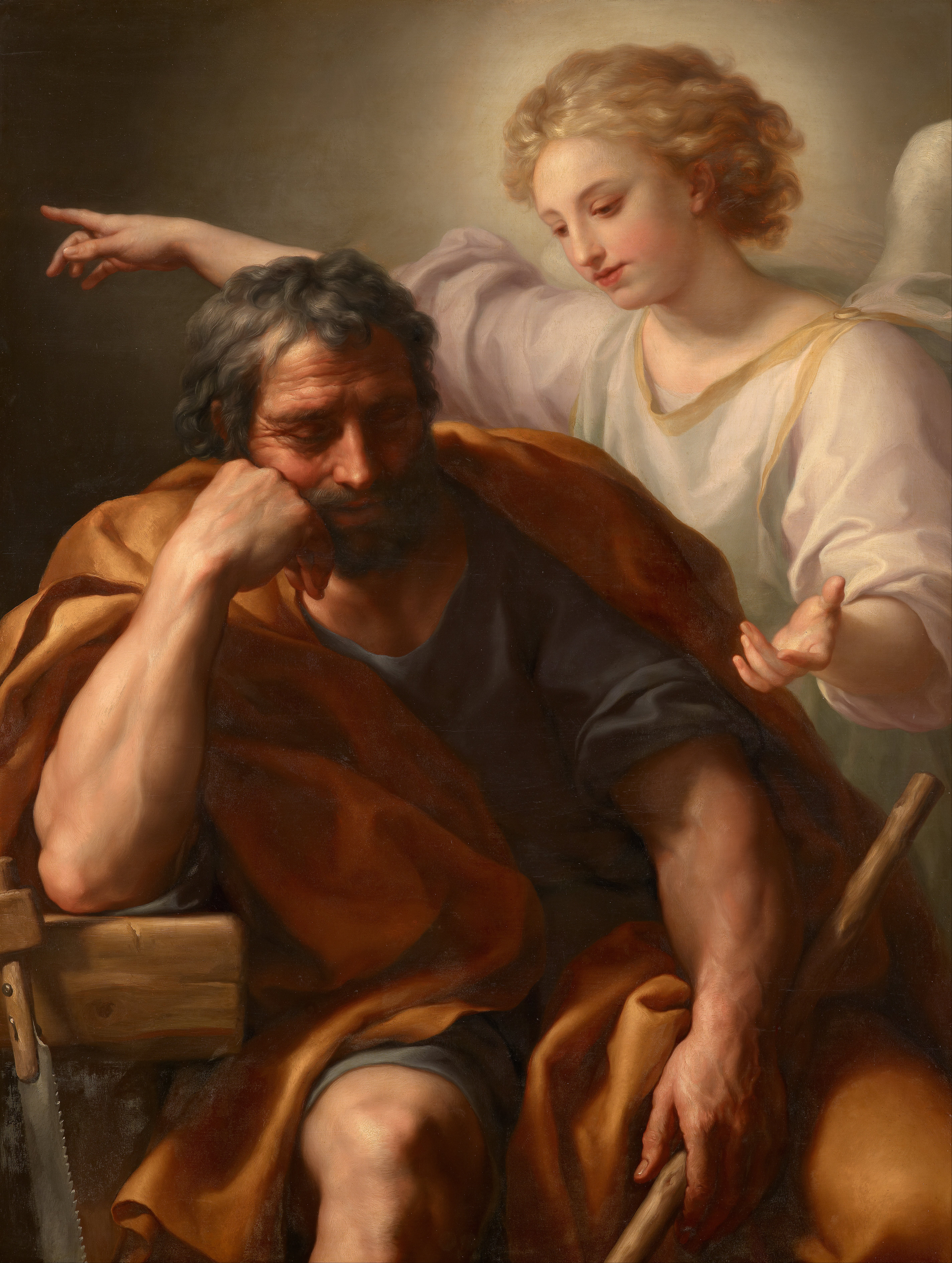
I want to be like the visited Joseph whose life would never be the same again, as my own self-sufficiency and sense of “how things should be” is shot through and leaking dry.
I too need interruption – to be overjoyed, aghast, my expectations upended, eager to find this new gift of life.
Only then is my heart ready to receive and welcome this visitor. Only then.
The Dream of Saint Joseph by Anton Raphael Mengs, 1773
This year’s Advent theme is from Dietrich Bonhoeffer’s sermon on the First Sunday in Advent, December 2, 1928:
The celebration of Advent is possible only to those who are troubled in soul, who know themselves to be poor and imperfect, and who look forward to something greater to come. For these, it is enough to wait in humble fear until the Holy One himself comes down to us, God in the child in the manager.
God comes.
He is, and always will be now, with us in our sin, in our suffering, and at our death. We are no longer alone. God is with us and we are no longer homeless. ~Dietrich Bonhoeffer – from Christmas Sermons
1. This is the truth sent from above, The truth of God, the God of love; Therefore don’t turn me from your door, But hearken all both rich and poor.
2. The first thing which I do relate, Is That God did man create The next thing which to you I tell, Woman was made with man to dwell.
3. Then after this was God’s own choice To place them both in Paradise, There to remain from evil free Except they eat of such a tree.
4. But they did eat, which was a sin, And thus their ruin did begin — Ruin’d themselves, both you and me, And all of their posterity.
5. Thus we were as heirs to endless woes, Till God the Lord did interpose And so a promise soon did run That He would redeem us by His Son. ~the Herefordshire Carol Collected by E. M. Williams from Mr. W. Jenkins, Kings Pyon, Herefordshire, July, 1909. Music Noted by R. Vaughan William
and you will know the truth, and the truth will set you free. John 8:32
One-Time
Monthly
Yearly
Make a one-time or recurring donation to support daily Barnstorming posts
God empties himself into the earth like a cloud. God takes the substance, contours of a man, and keeps them, dying, rising, walking, and still walking wherever there is motion. Annie Dillard from “Feast Days” in Tickets for a Prayer Wheel
Soon we will enter the season of Advent, an opportunity to reflect on a God who “takes the substance, contours of a man”, as He “empties himself into the earth like a cloud.”
Like drought-stricken parched ground, we prepare to respond to the drenching of the Spirit through the Son, and be ready to spring up with renewed growth.
He walked among us before His dying and subsequent rising up. He walked among us again, appearing where least expected, sharing a meal, causing our hearts to burn within us, inviting us to touch and know Him.
His invitation remains open-ended, His heart preparing us for our eternal home.
I think of that every time the clouds gather, open up, and empty. He freely falls to earth, soaking us completely, through and through and through.
AI image created for this post
One-Time
Monthly
Yearly
Make a one-time or recurring donation to support daily Barnstorming posts
In heaven it is always autumn. The leaves are always near to falling there but never fall, and pairs of souls out walking heaven’s paths no longer feel the weight of years upon them. Safe in heaven’s calm, they take each other’s arm, the light shining through them, all joy and terror gone. But we are far from heaven here, in a garden ragged and unkept as Eden would be with the walls knocked down, the paths littered with the unswept leaves of many years, bright keepsakes for children of the Fall. The light is gold, the sun pulling the long shadow soul out of each thing, disclosing an outcome. The last roses of the year nod their frail heads, like listeners listening to all that’s said, to ask, What brought us here? What seed? What rain? What light? What forced us upward through dark earth? What made us bloom? What wind shall take us soon, sweeping the garden bare? Their voiceless voices hang there, as ours might, if we were roses, too. Their beds are blanketed with leaves, tended by an absent gardener whose life is elsewhere. It is the last of many last days. Is it enough? To rest in this moment? To turn our faces to the sun? To watch the lineaments of a world passing? To feel the metal of a black iron chair, cool and eternal, press against our skin? To apprehend a chill as clouds pass overhead, turning us to shivering shade and shadow? And then to be restored, small miracle, the sun shining brightly as before? We go on, you leading the way, a figure leaning on a cane that leaves its mark on the earth. My friend, you have led me farther than I have ever been. To a garden in autumn. To a heaven of impermanence where the final falling off is slow, a slow and radiant happening. The light is gold. And while we’re here, I think it must be heaven. ~Elizabeth Spires from “In Heaven it is Always Autumn”from Now the Green Blade Rises
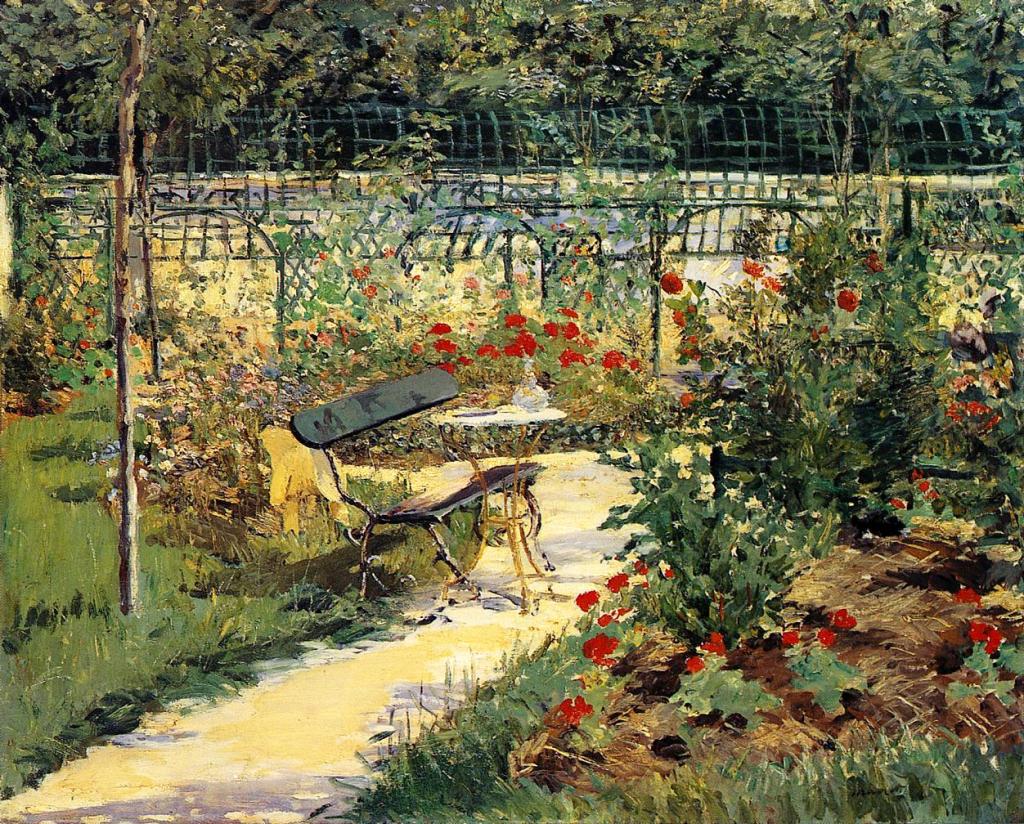
The Bench by Manet
We wander our autumn garden mystified at the passing of the weeks since seed was first sown, weeds pulled, peapods picked. It could not possibly be done so soon–this patch of productivity and beauty, now wilted and brown, vines crushed to the ground, no longer fruitful.
The root cellar is filling up, the freezer packed. The work of putting away is almost done.
So why do I go back to the now barren soil my husband so carefully worked, numb in the knowledge I will pick no more this season, feel the burst of a cherry tomato exploding in my mouth or the green freshness of a bean straight off the vine?
Because for a few fertile weeks, only a few weeks, the garden was a bit of heaven on earth, impermanent but a real taste nonetheless.
We may have mistaken Him for the gardener when He appeared to us radiant, suddenly unfamiliar. He offered the care of the garden, to bring in the sheaves, to share the forever mercies in the form of daily bread grown right here and now.
When He says my name, I will know Him.
And the light is golden.
One-Time
Monthly
Yearly
Make a one-time or recurring donation to support daily Barnstorming posts
I love color. I love flaming reds, And vivid greens, And royal flaunting purples. I love the startled rose of the sun at dawning, And the blazing orange of it at twilight.
I love color. I love the drowsy blue of the fringed gentian, And the yellow of the goldenrod, And the rich russet of the leaves That turn at autumn-time…. I love rainbows, And prisms, And the tinsel glitter Of every shop-window.
I love color. And yet today, I saw a brown little bird Perched on the dull-gray fence Of a weed-filled city yard. And as I watched him The little bird Threw back his head Defiantly, almost, And sang a song That was full of gay ripples, And poignant sweetness, And half-hidden melody.
I love color…. I love crimson, and azure, And the glowing purity of white. And yet today, I saw a living bit of brown, A vague oasis on a streak of gray, That brought heaven Very near to me. ~Margaret Sangster “The Colors”
My eye is always looking for the glow of colors or combination of hues like a harmonious chord blending together. It is like a symphony to my retinas…
But if I don’t look closely enough, I miss the beauty of subtle color hidden in a background of drab. They sing, transcending the ordinary.
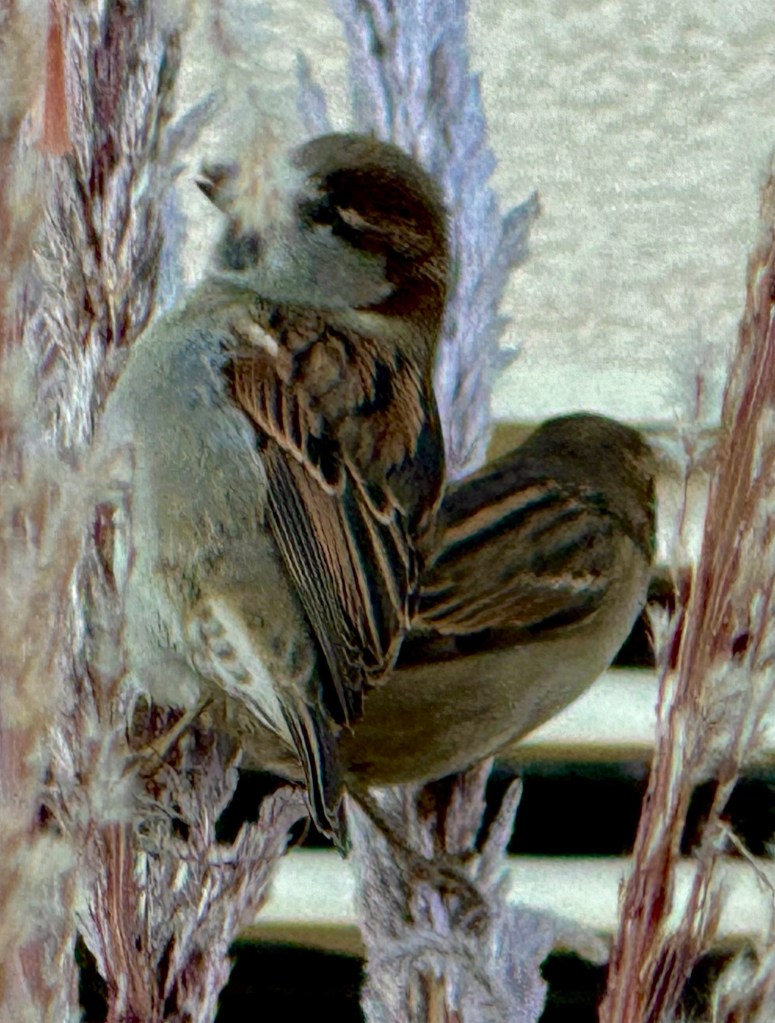
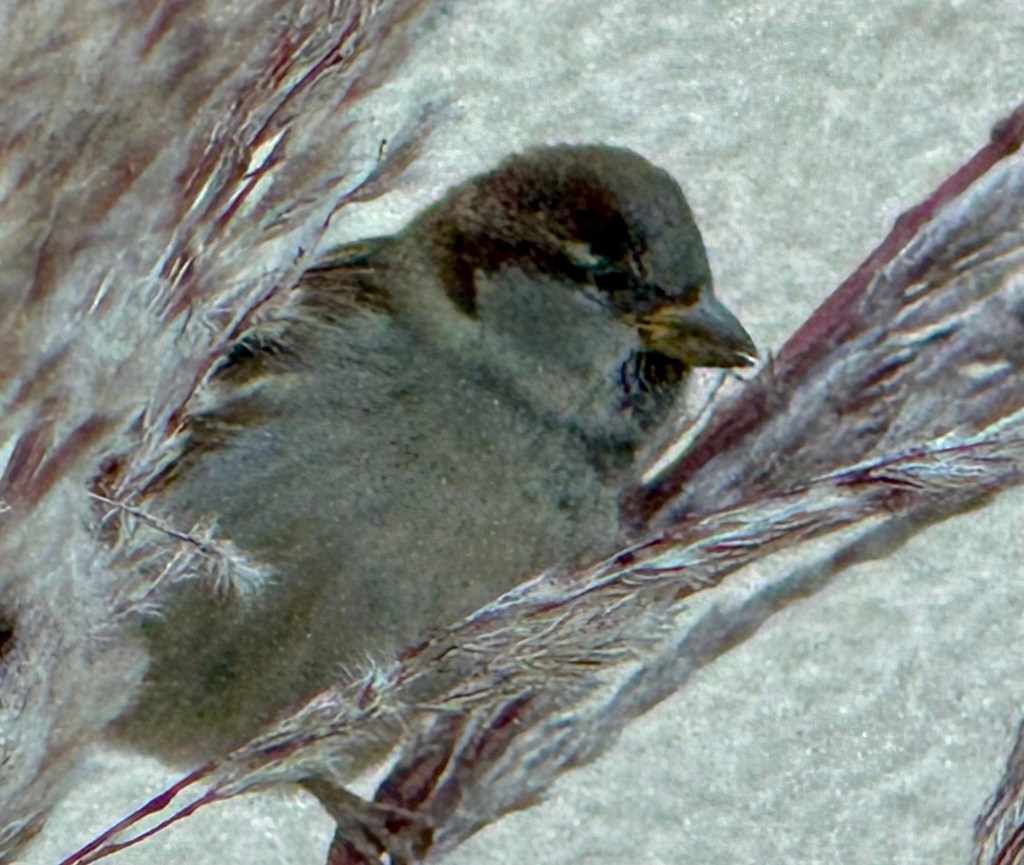
Today, it was these house sparrows, busy eating grass seeds behind a city building. I heard their chirping before I saw them, they were so camouflaged. They are also known as “gutter birds” given their plain and common appearance. Yet, hearing them and then watching their enthusiastic feeding, there was nothing plain about them.
They had brought a bit of heaven to earth. After all, the Word tells us His eyes are on the sparrow…
AI image created for this post
One-Time
Monthly
Yearly
Make a one-time or recurring donation to support daily Barnstorming posts
And then there is that day when all around, all around you hear the dropping of the apples, oneby one, from the trees. At first it is one here and one there, and then it is three and then it is four and then nine andtwenty, until the apples plummet like rain, fall like horse hoofsin the soft, darkening grass, and you are the last apple on thetree; and you wait for the wind to work you slowly free fromyour hold upon the sky, and drop you down and down. Longbefore you hit the grass you will have forgotten there everwas a tree, or other apples, or a summer, or green grass below, You will fall in darkness… ~Ray Bradbury from Dandelion Wine
But I am done with apple-picking now. Essence of winter sleep is on the night, The scent of apples: I am drowsing off. I cannot rub the strangeness from my sight I got from looking through a pane of glass I skimmed this morning from the drinking trough And held against the world of hoary grass. It melted, and I let it fall and break. But I was well Upon my way to sleep before it fell, And I could tell What form my dreaming was about to take. For I have had too much Of apple-picking: I am overtired Of the great harvest I myself desired. There were ten thousand thousand fruit to touch, Cherish in hand, lift down, and not let fall. For all That struck the earth, No matter if not bruised or spiked with stubble, Went surely to the cider-apple heap As of no worth. One can see what will trouble This sleep of mine, whatever sleep it is. Were he not gone, The woodchuck could say whether it’s like his Long sleep, as I describe its coming on, Or just some human sleep. ~Robert Frost from “After Apple-Picking”
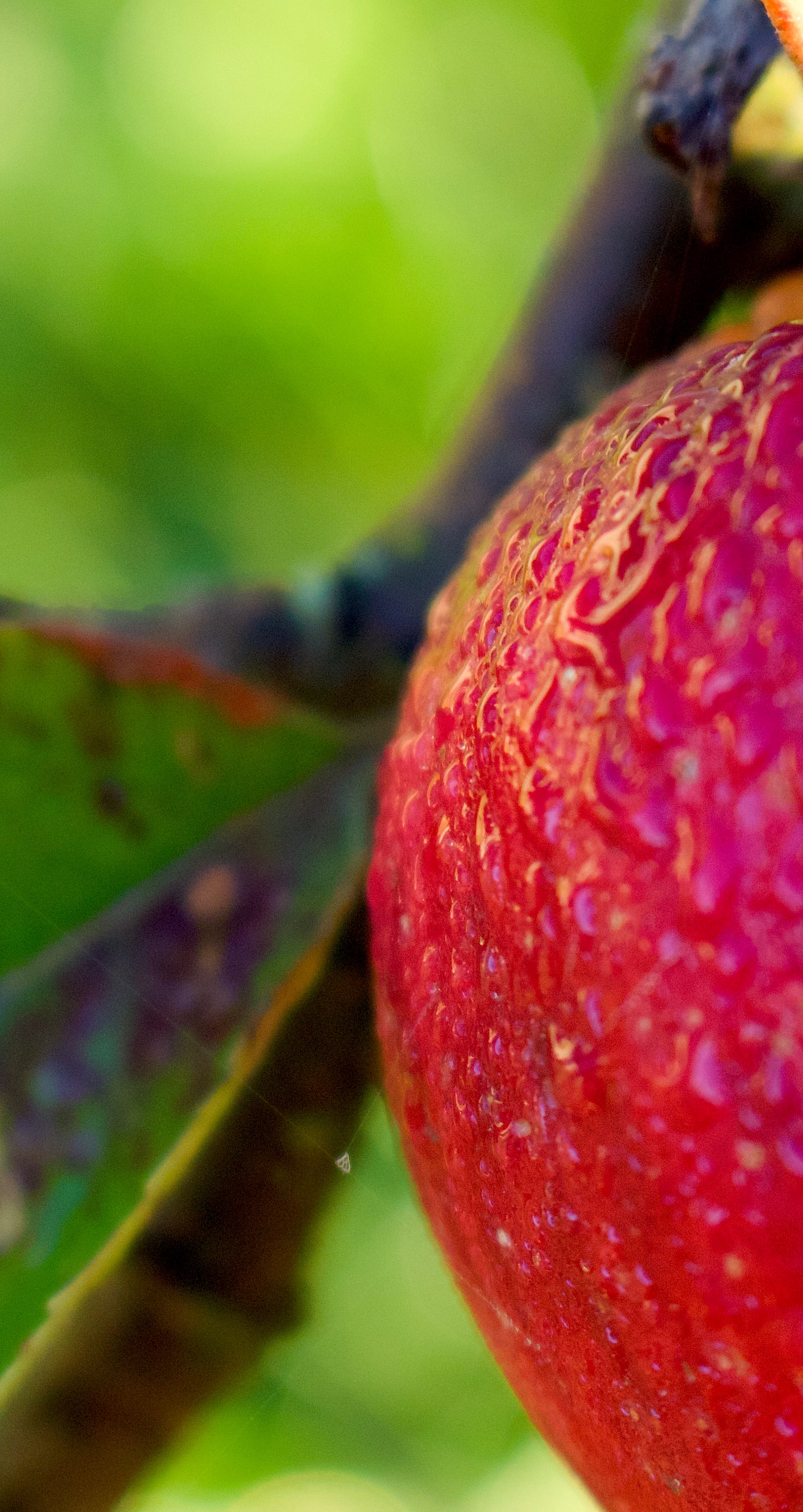
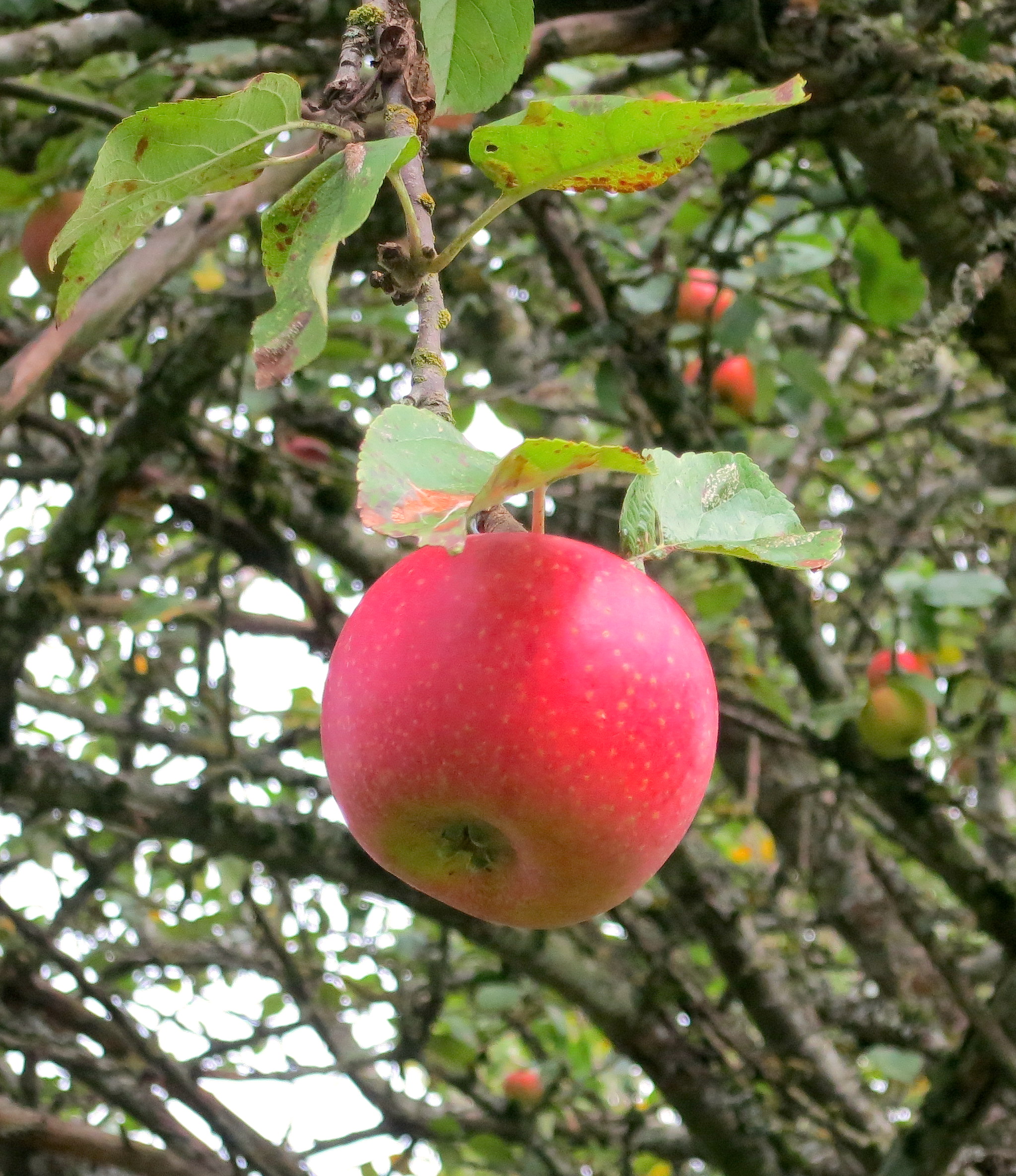
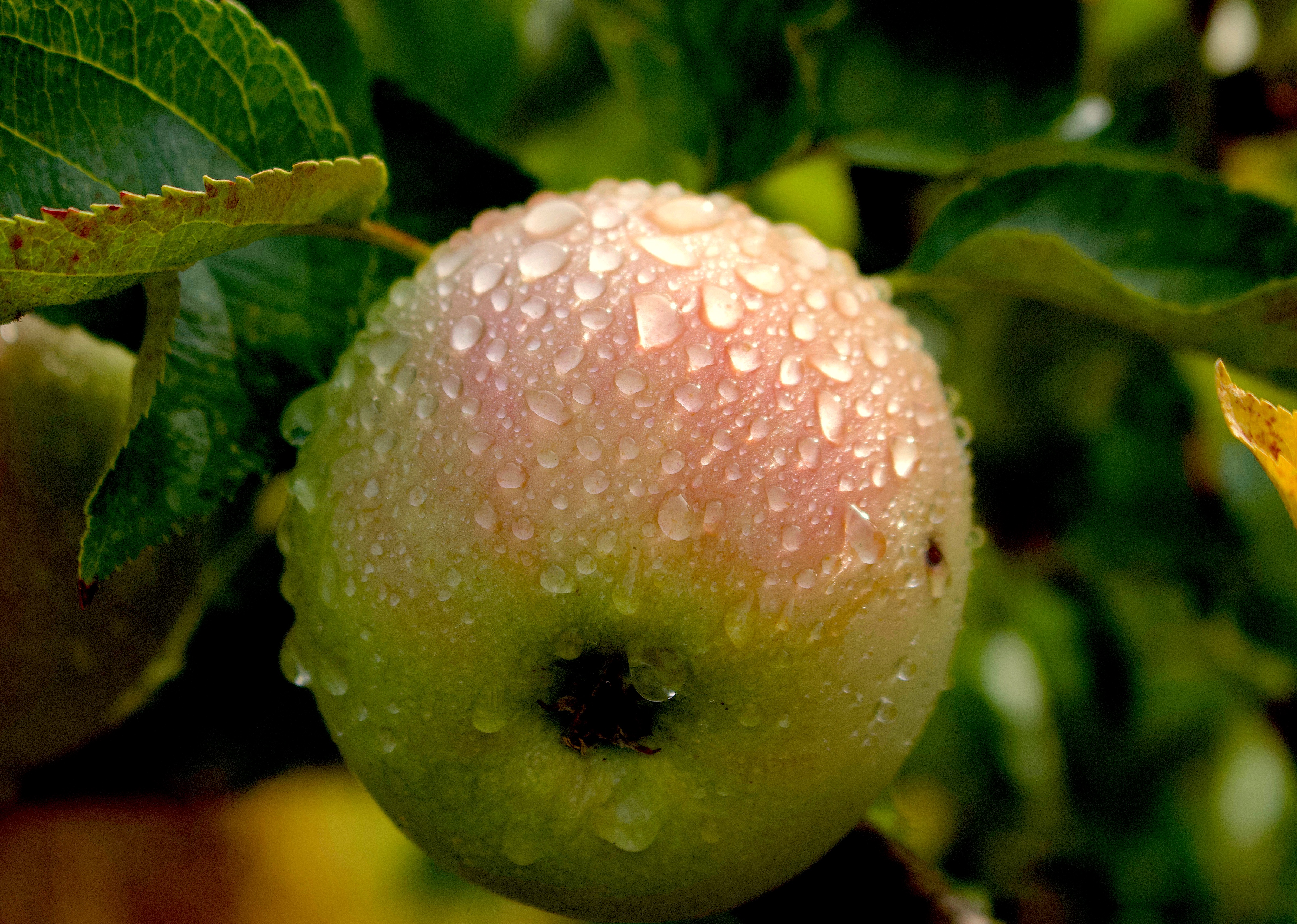
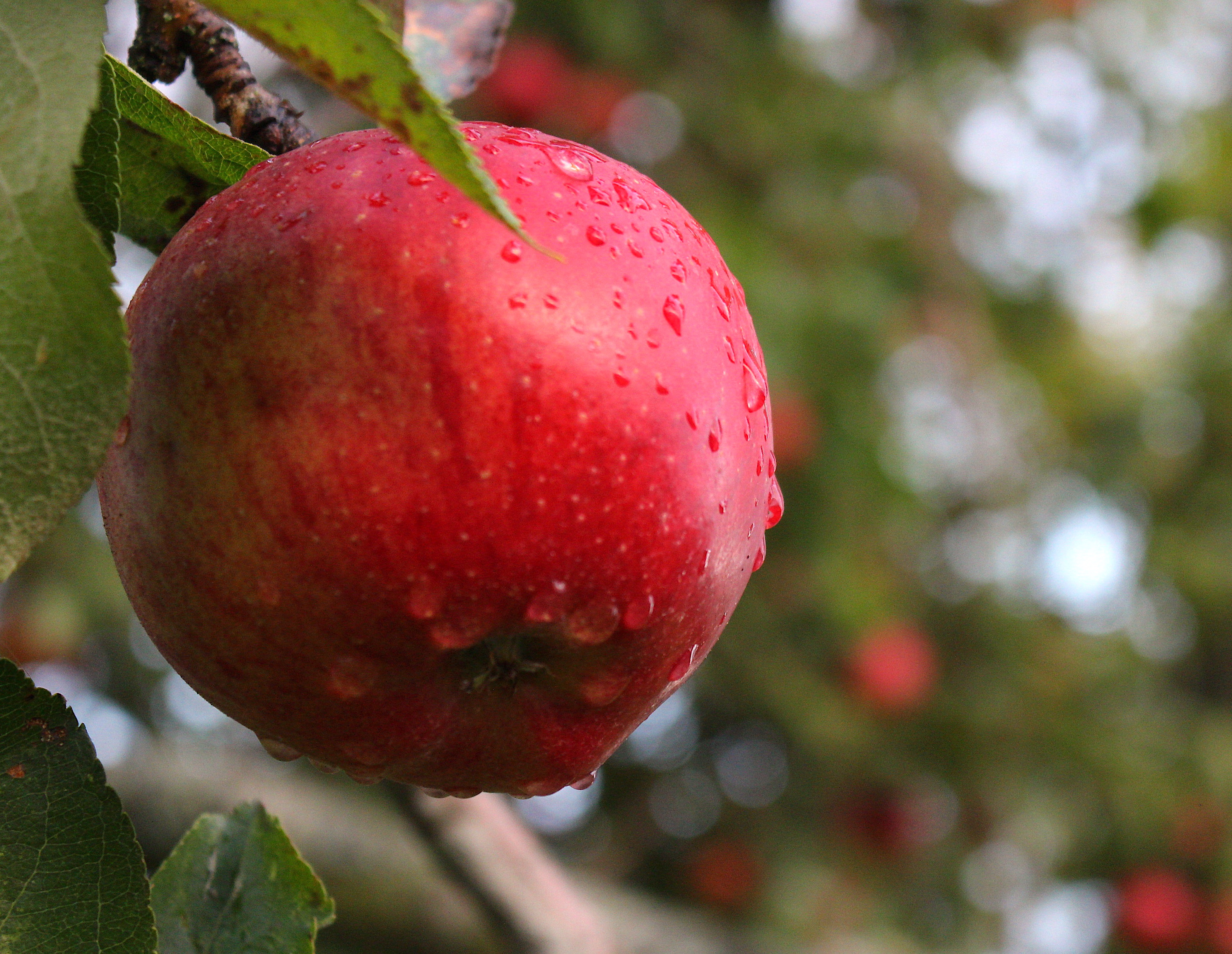
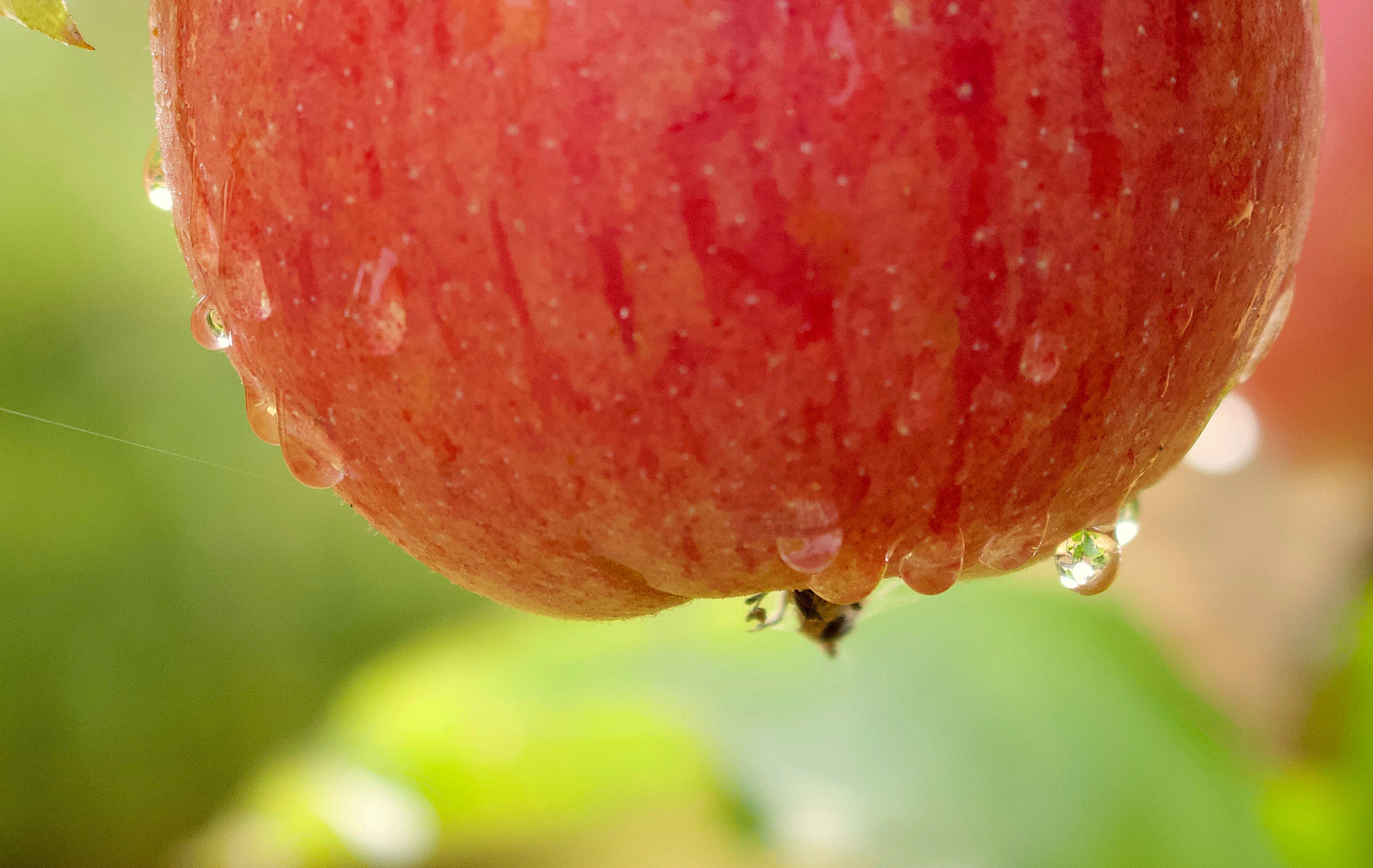
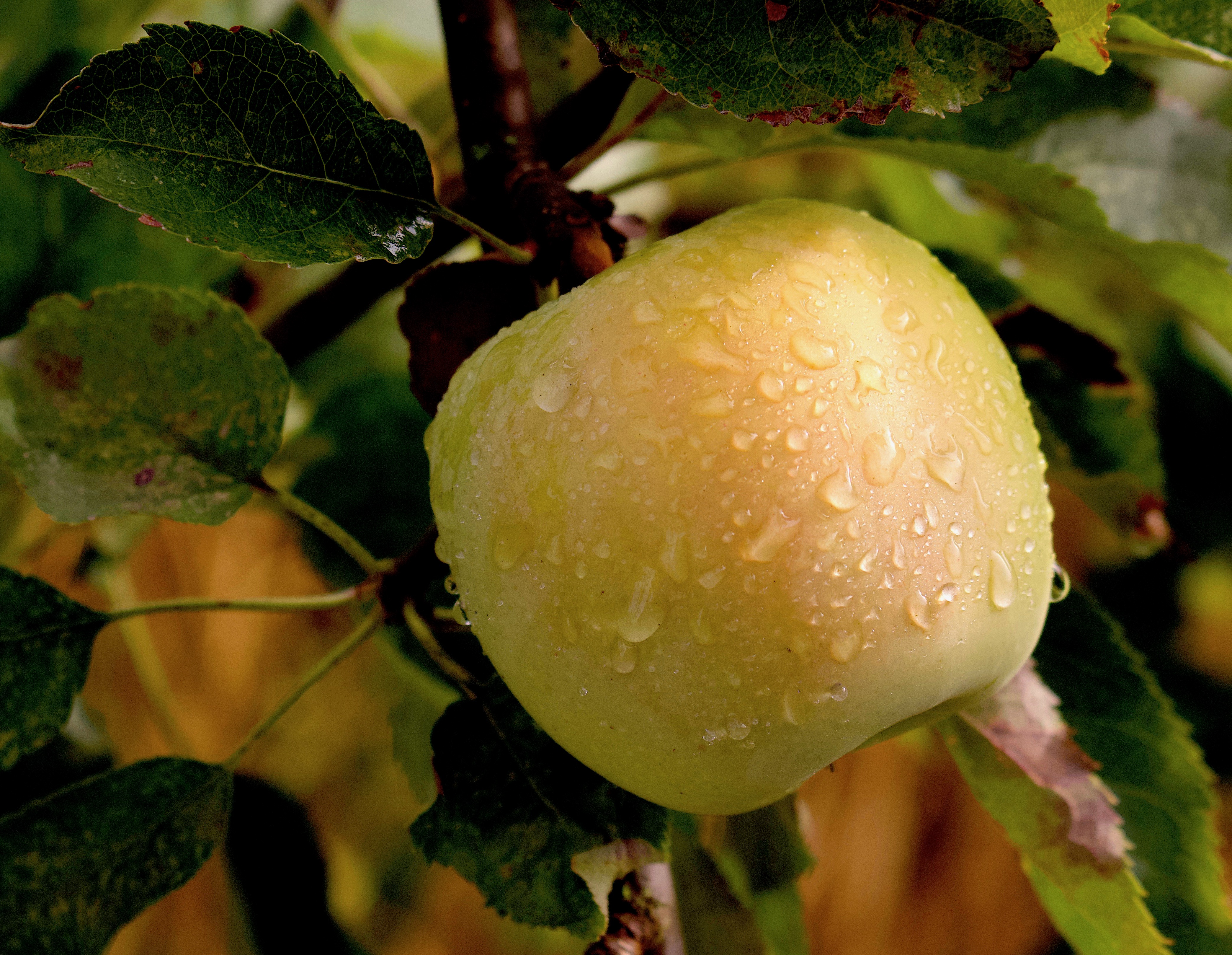
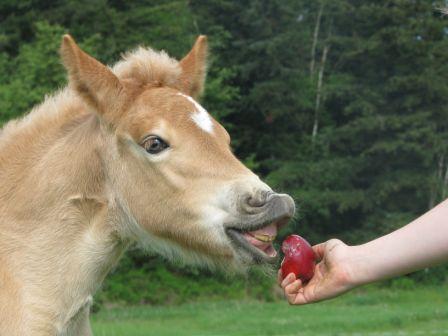
I pick up windfall apples to haul down to the barn for a special treat each night for the Haflingers. These are apples that we humans wouldn’t take a second glance at in all our satiety and fussiness, but the Haflingers certainly don’t mind a bruise, or a worm hole or slug trails over apple skin.
I’ve found over the years that our horses must be taught to eat apples–if they have no experience with them, they will bypass them lying in the field and not give them a second look. There simply is not enough odor to make them interesting or appealing–until they are cut in slices that is. Then they become irresistible and no apple is left alone from that point forward.
When I offer a whole apple to a young Haflinger who has never tasted one before, they will sniff it, perhaps roll it on my hand a bit with their lips, but I’ve yet to have one simply bite in and try. If I take the time to cut the apple up, they’ll pick up a section very gingerly, kind of hold it on their tongue and nod their head up and down trying to decide as they taste and test it if they should drop it or chew it, and finally, as they really bite in and the sweetness pours over their tongue, they get this look in their eye that is at once surprised and supremely pleased. The only parallel experience I’ve seen in humans is when you offer a five month old baby his first taste of ice cream on a spoon and at first he tightens his lips against its coldness, but once you slip a little into his mouth, his face screws up a bit and then his eyes get big and sparkly and his mouth rolls the taste around his tongue, savoring that sweet cold creaminess. His mouth immediately pops open for more.
It is the same with apples and horses. Once they have that first taste, they are our slaves forever in search of the next apple.
The Haflinger veteran apple eaters can see me coming with my sweat shirt front pocket stuffed with apples, a “pregnant” belly of fruit, as it were. They offer low nickers when I come up to their stalls and each horse has a different approach to their apple offering.
There is the “bite a little bit at a time” approach, which makes the apple last longer, and tends to be less messy in the long run. There is the “bite it in half” technique which leaves half the apple in your hand as they navigate the other half around their teeth, dripping and frothing sweet apple slobber. Lastly there is the greedy “take the whole thing at once” horse, which is the most challenging way to eat an apple, as it has to be moved back to the molars, and crunched, and then moved around the mouth to chew up the large pieces, and usually half the apple ends up falling to the ground, with all the foam that the juice and saliva create. No matter the technique used, the smell of an apple as it is being chewed by a horse is one of the best smells in the world. I can almost taste the sweetness too when I smell that smell.
What do we do when offered such a sublime gift from Someone’s hand? If it is something we have never experienced before, we possibly walk right by, not recognizing that it is a gift at all, missing the whole point and joy of experiencing what is being offered. How many wonderful opportunities are right under our noses, but we fail to notice, and bypass them because they are unfamiliar?
Perhaps if the Giver really cares enough to “teach” us to accept this gift of sweetness, by preparing it and making it irresistible to us, then we are overwhelmed with the magnitude of the generosity and are transformed by the simple act of receiving.
We must learn to take little bites, savoring each piece one at a time, making it last rather than greedily grab hold of the whole thing, struggling to control it, thereby losing some in the process. Either way, it is a gracious gift, and how we receive it makes all the difference.
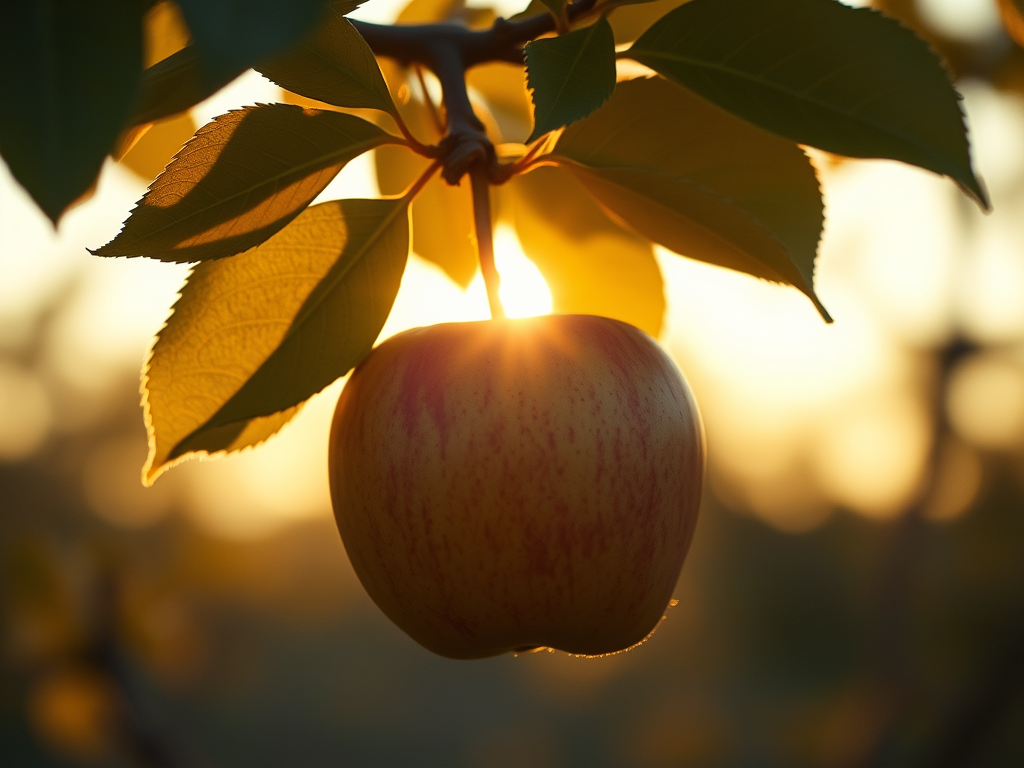
AI image created for this post
The tree of life my soul hath seen, Laden with fruit and always green; The trees of nature fruitless be, Compared with Christ the Apple Tree.
His beauty doth all things excel, By faith I know but ne’er can tell The glory which I now can see, In Jesus Christ the Appletree.
For happiness I long have sought, And pleasure dearly I have bought; I missed of all but now I see ‘Tis found in Christ the Appletree.
I’m weary with my former toil – Here I will sit and rest awhile, Under the shadow I will be, Of Jesus Christ the Appletree.
With great delight I’ll make my stay, There’s none shall fright my soul away; Among the sons of men I see There’s none like Christ the Appletree.
I’ll sit and eat this fruit divine, It cheers my heart like spirit’al wine; And now this fruit is sweet to me, That grows on Christ the Appletree.
This fruit doth make my soul to thrive, It keeps my dying faith alive; Which makes my soul in haste to be With Jesus Christ the Appletree.
One-Time
Monthly
Yearly
Make a one-time or recurring donation to support daily Barnstorming posts















 Barnstorming