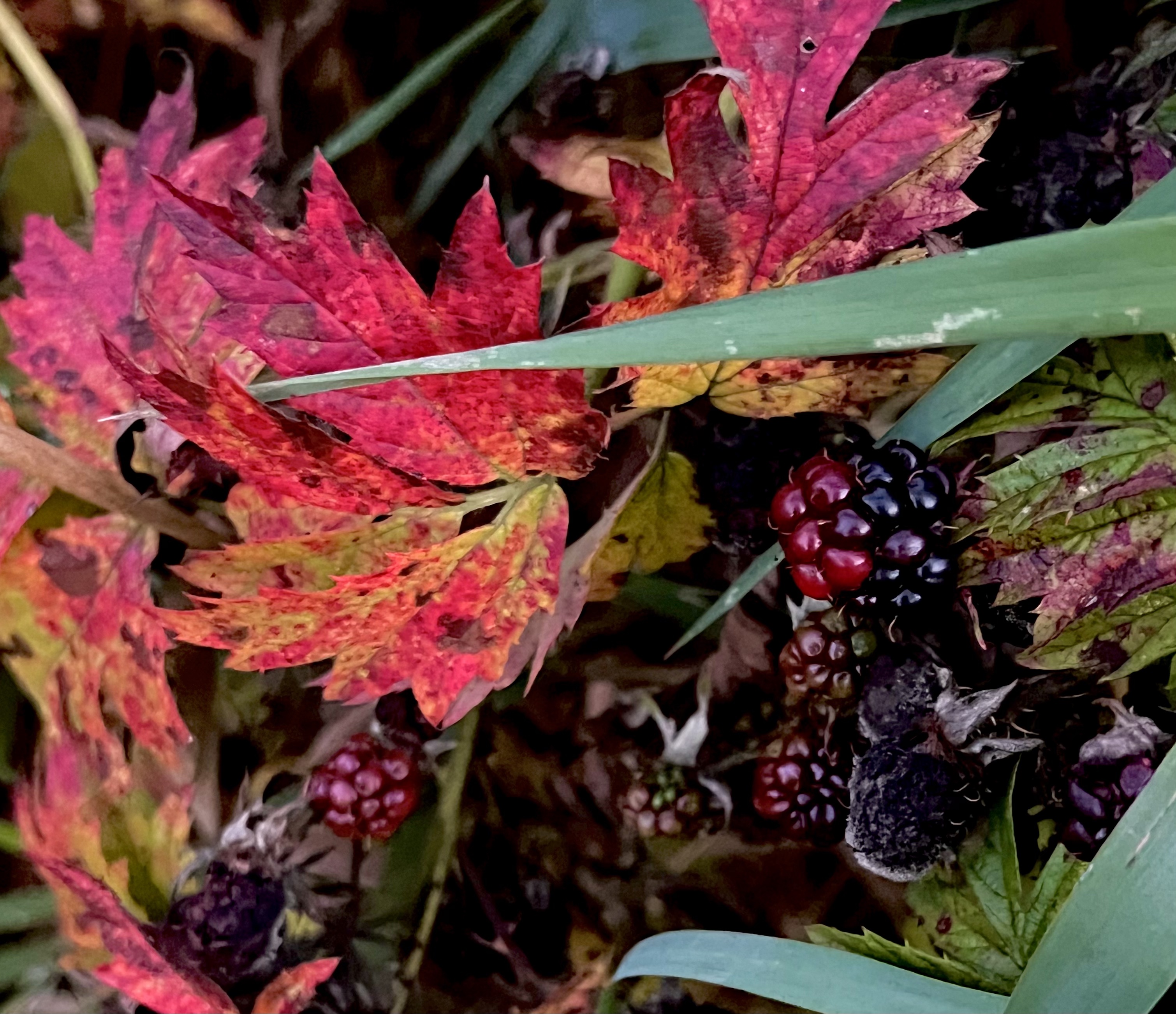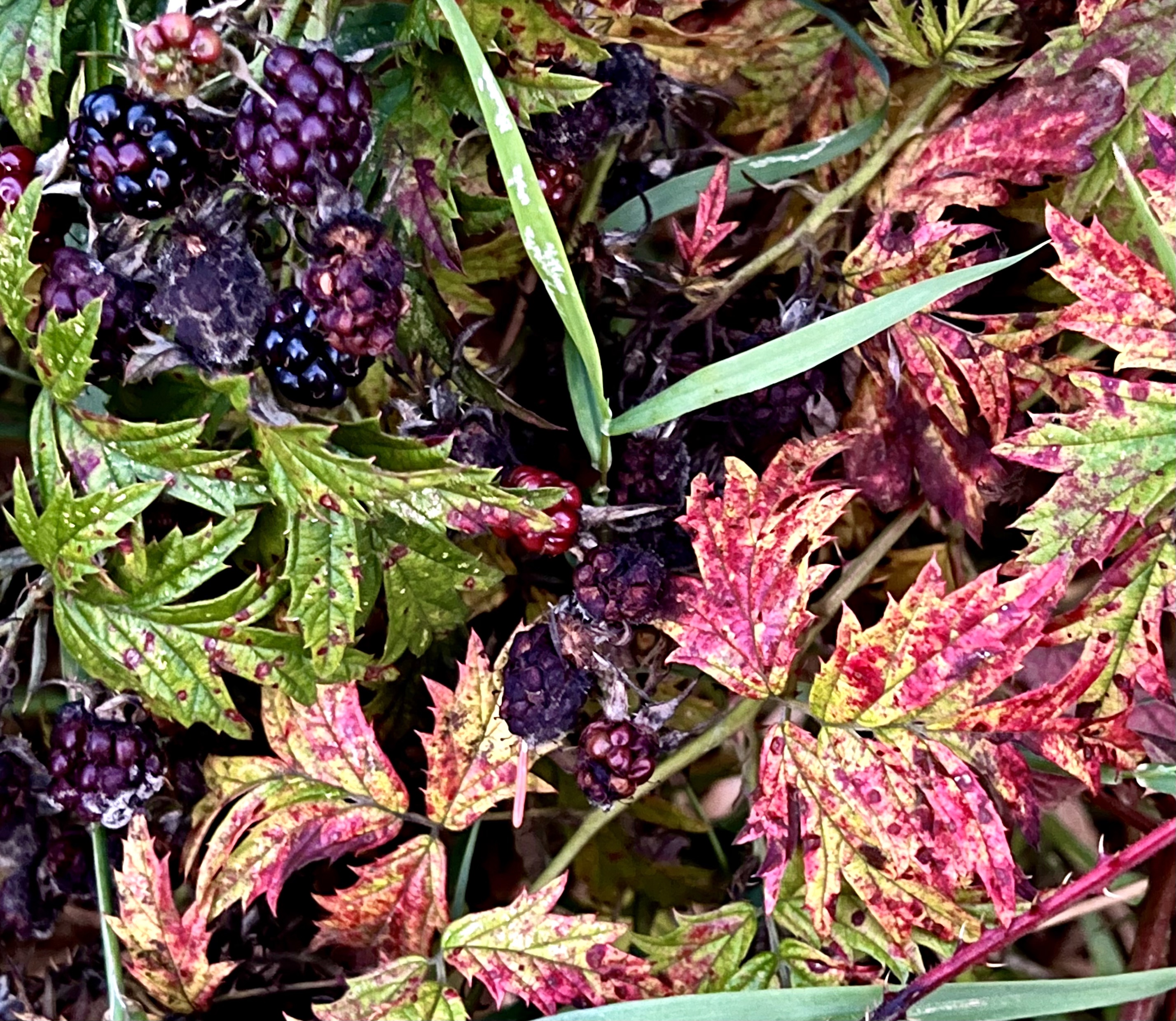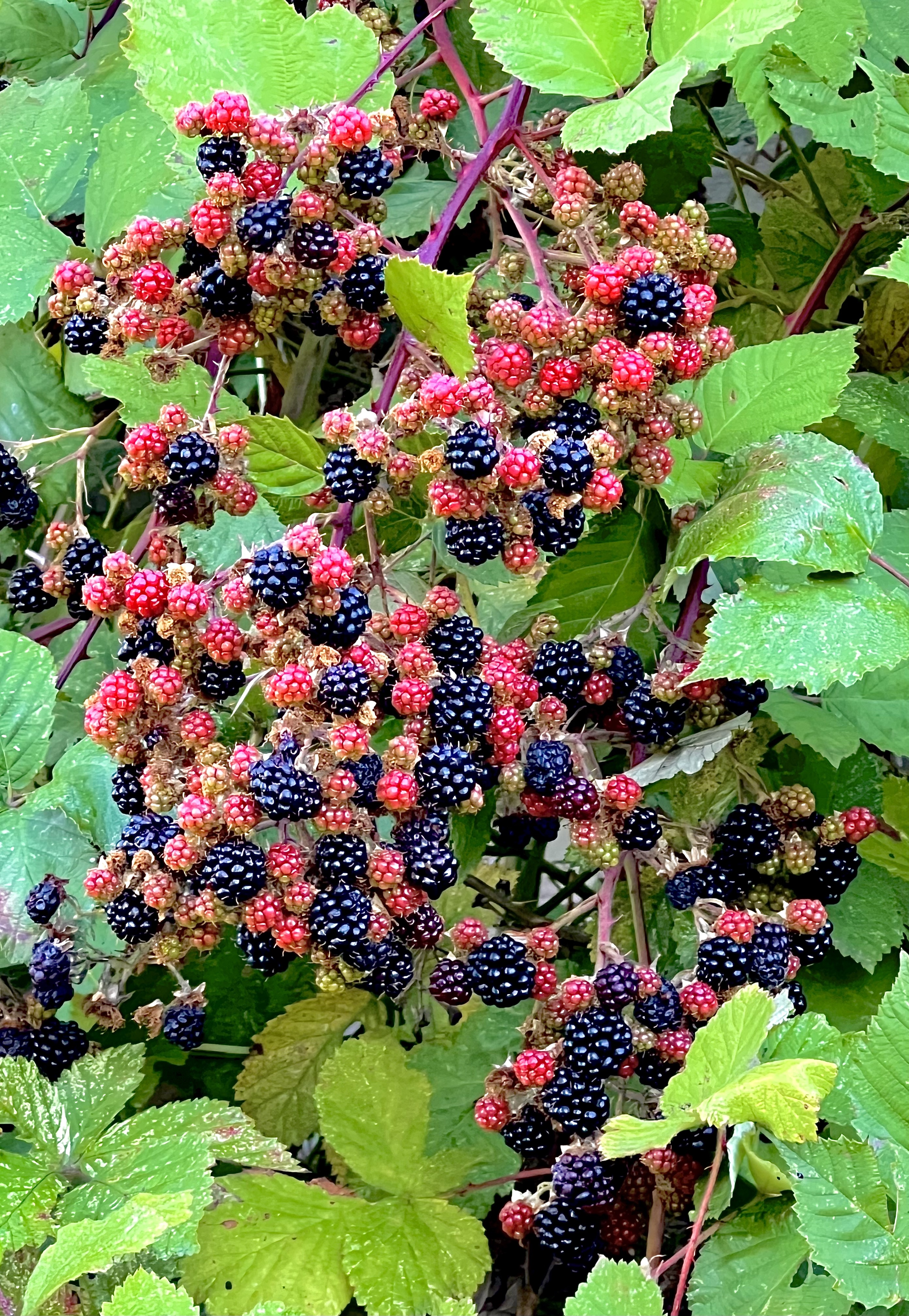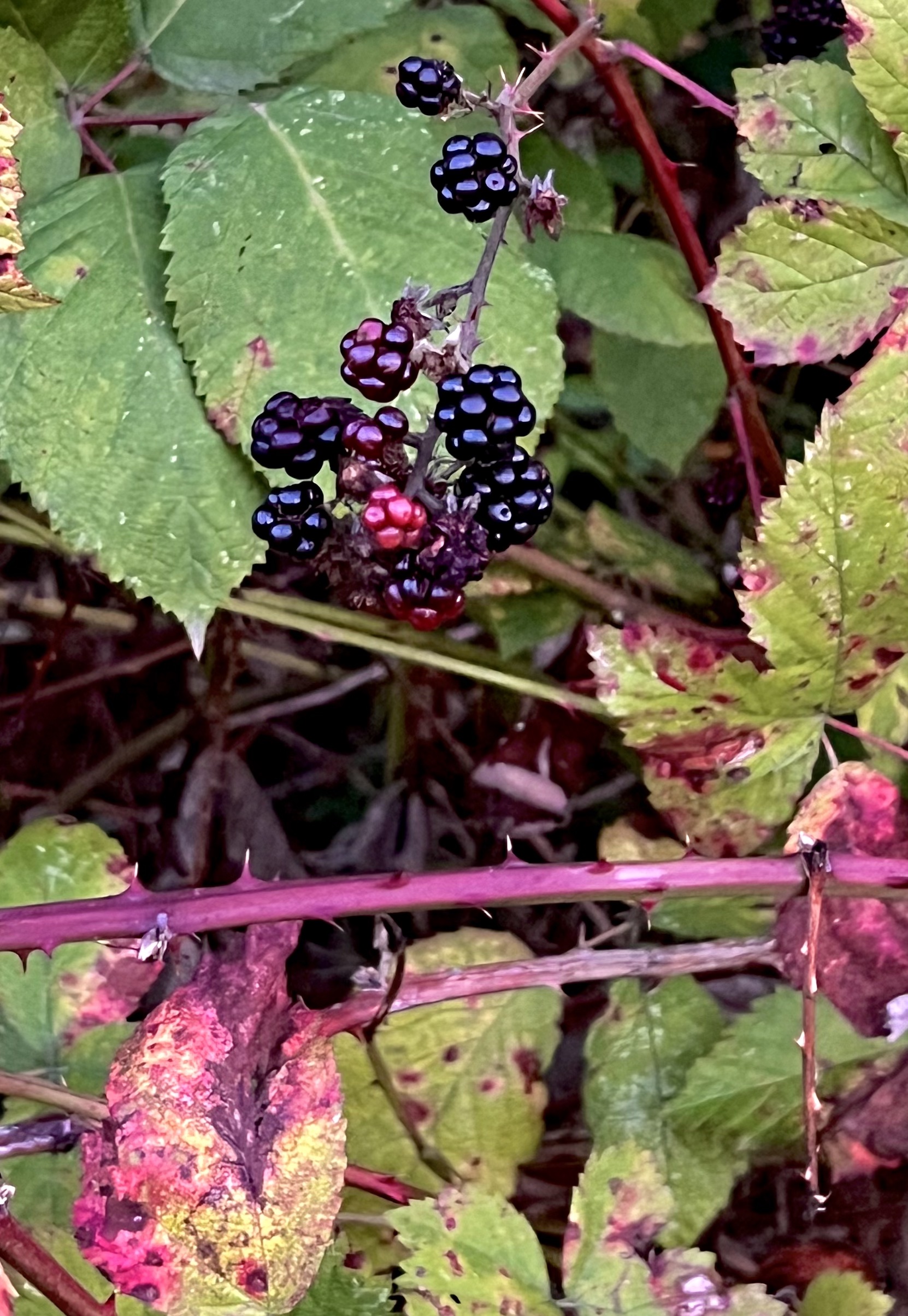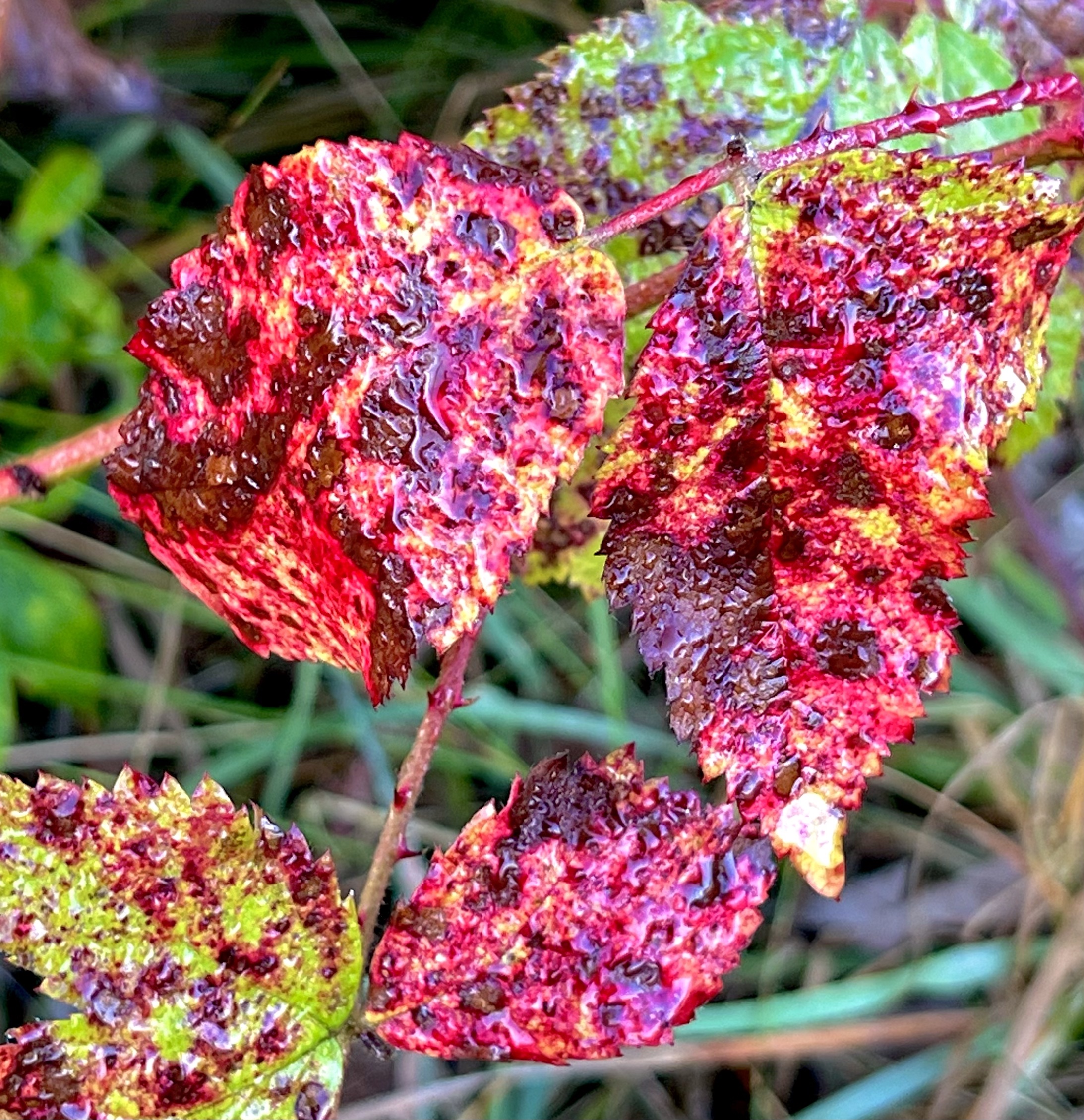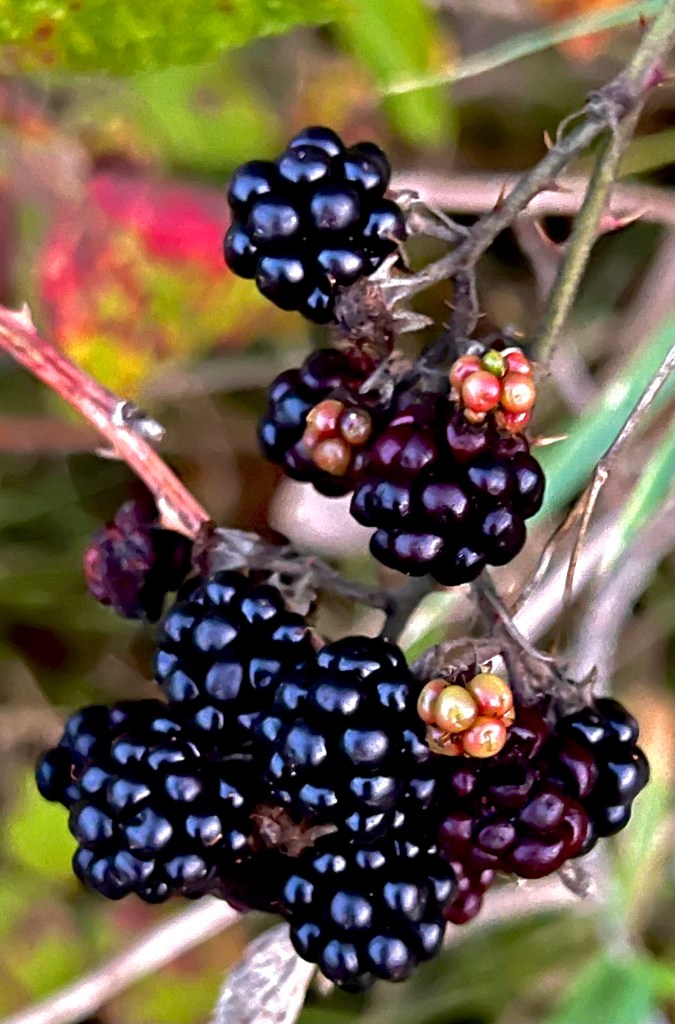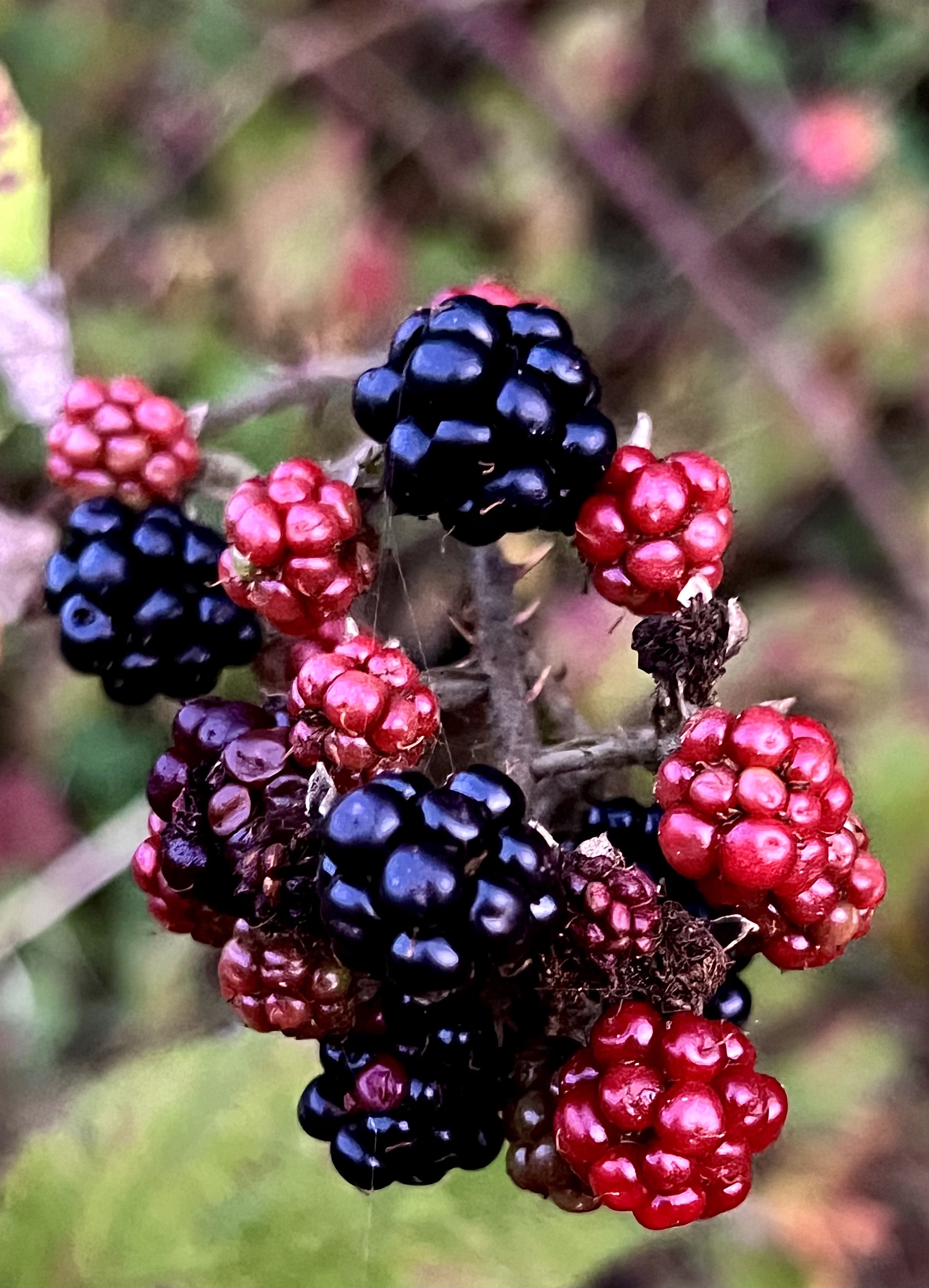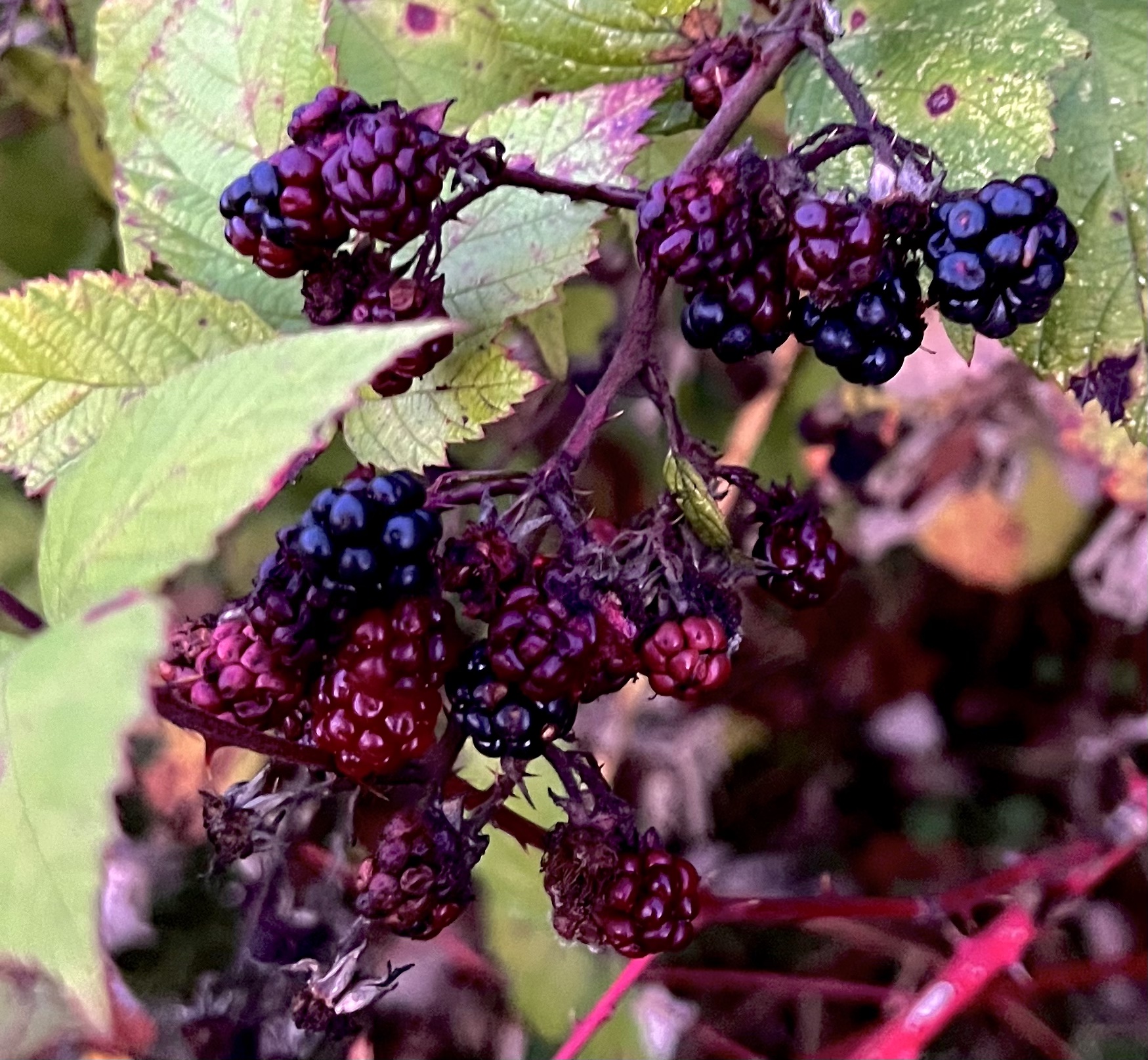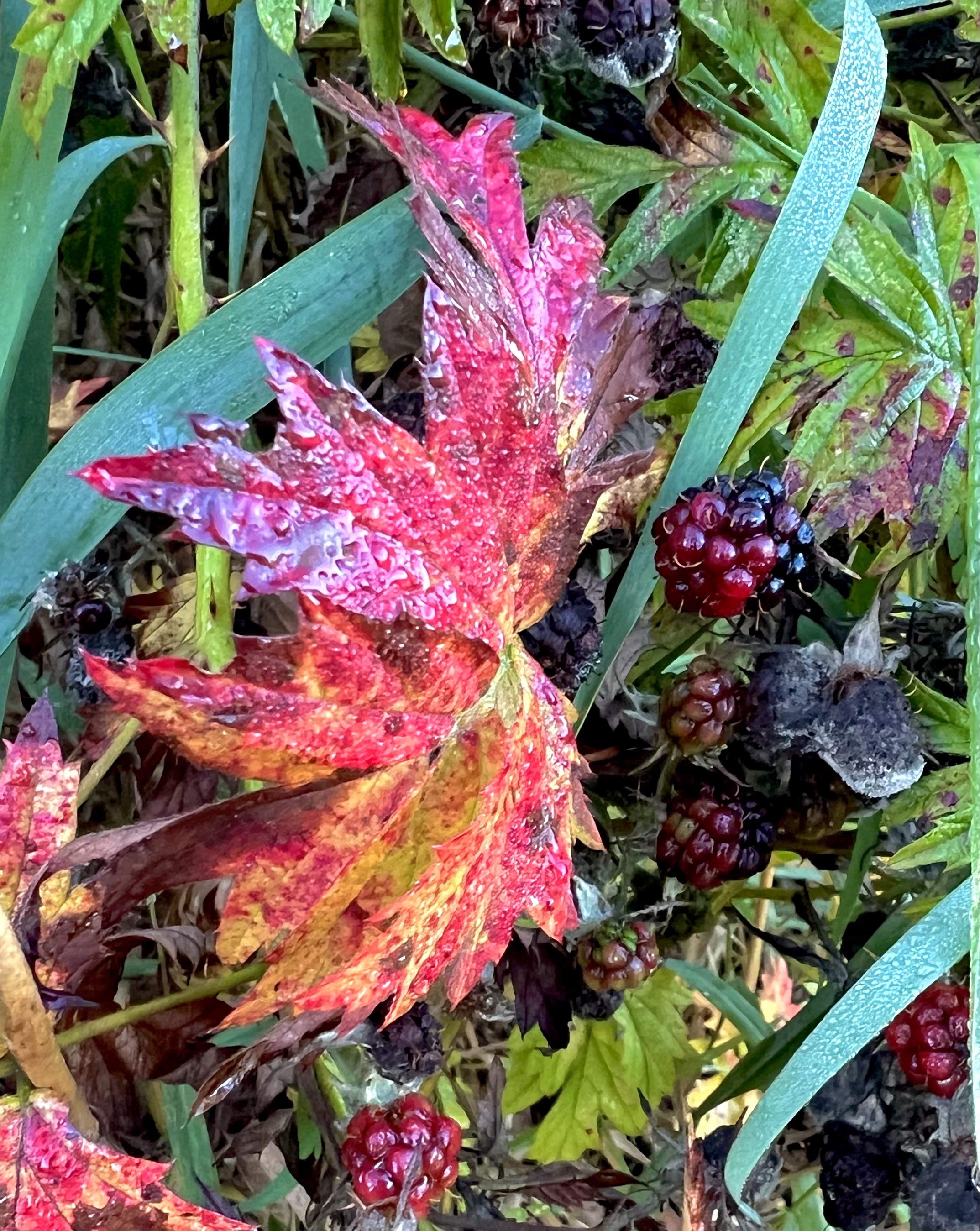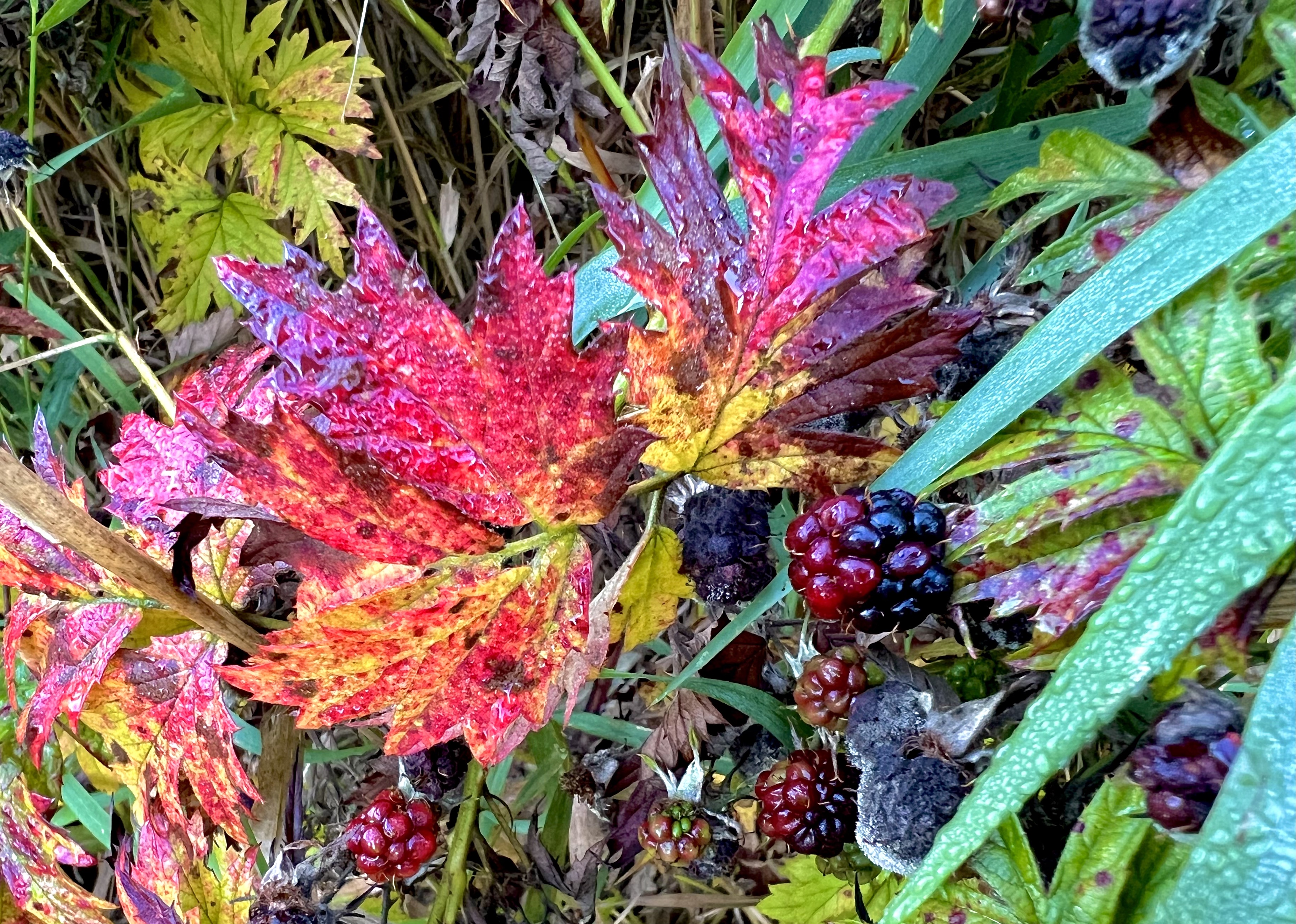
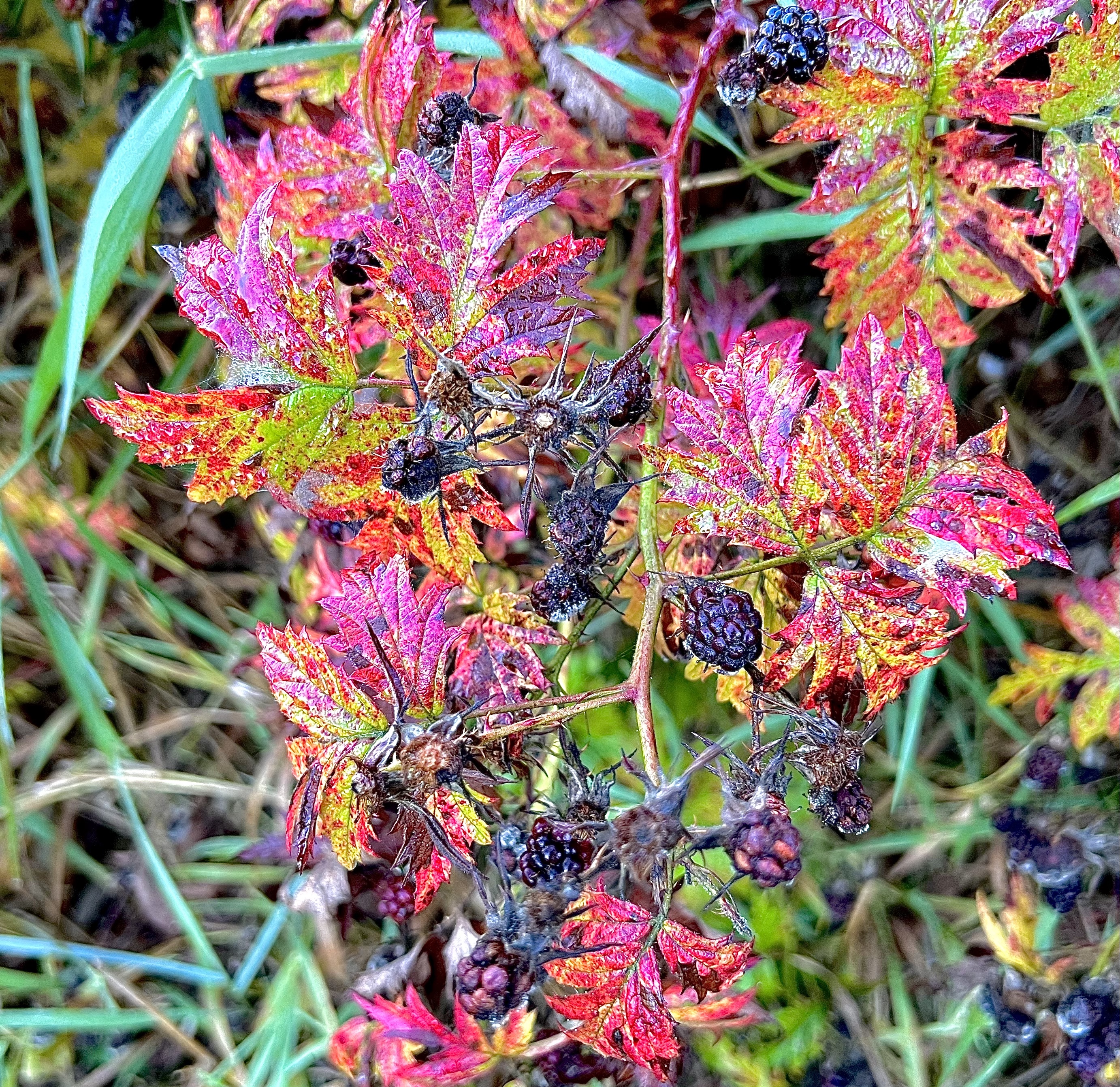
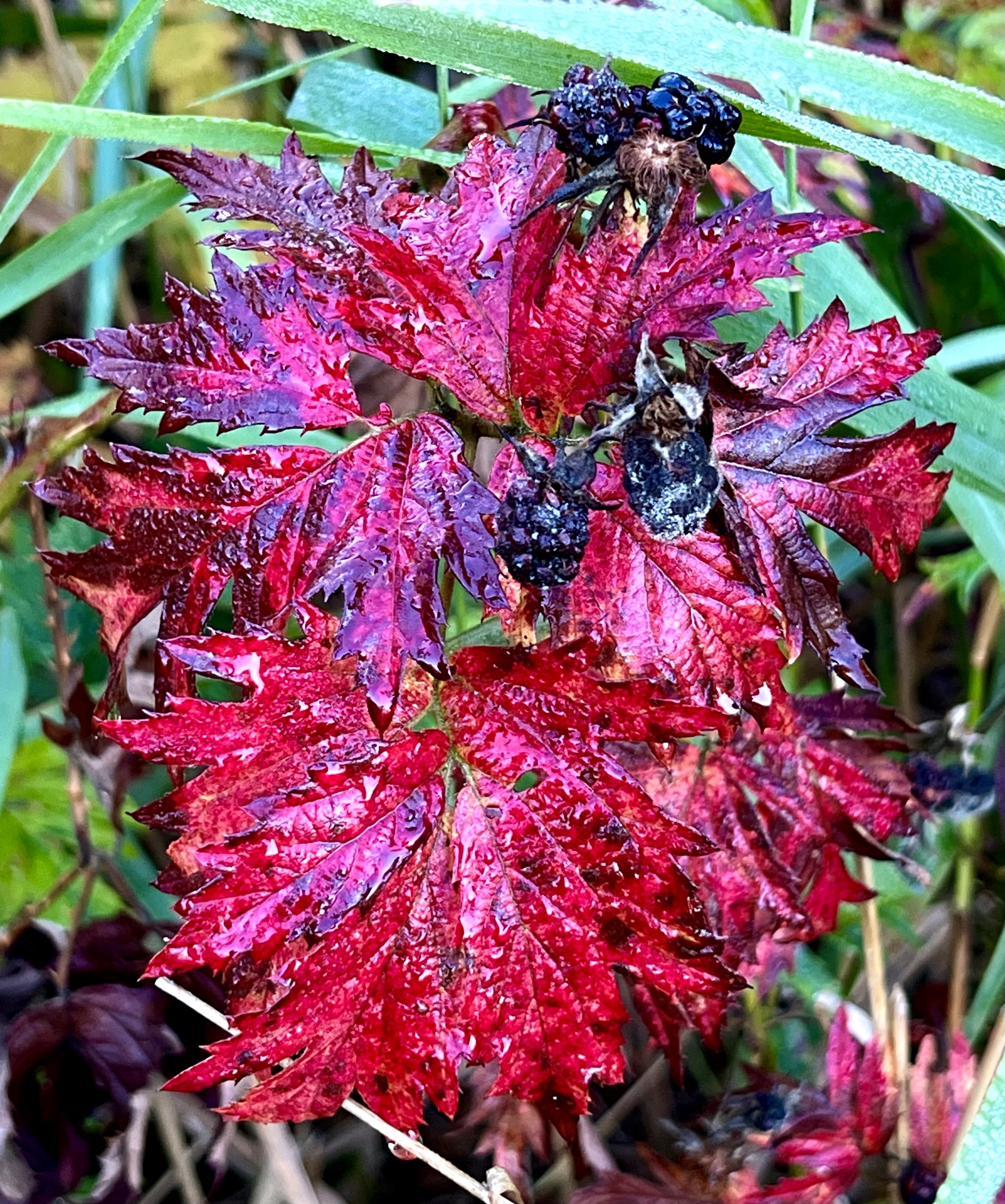
Late September Blackberry Picking

They lie
on the ground
after the deer
have left after the
bear has had her fill they

lie under the stars
and under the sun
in a cloud of brambles
the ripest ones
fall first
become black jam
in the thatch.


as a boy I hated
picking blackberries the
pail never full like
one half of a
slow
conversation.

Now
their taste
is sweeter
in memory
the insect buzz the
branches too high the blue
summer never quite
over before
the fall
begins.

~Richard Terrell from “Blackberries” from What Falls Away is Always
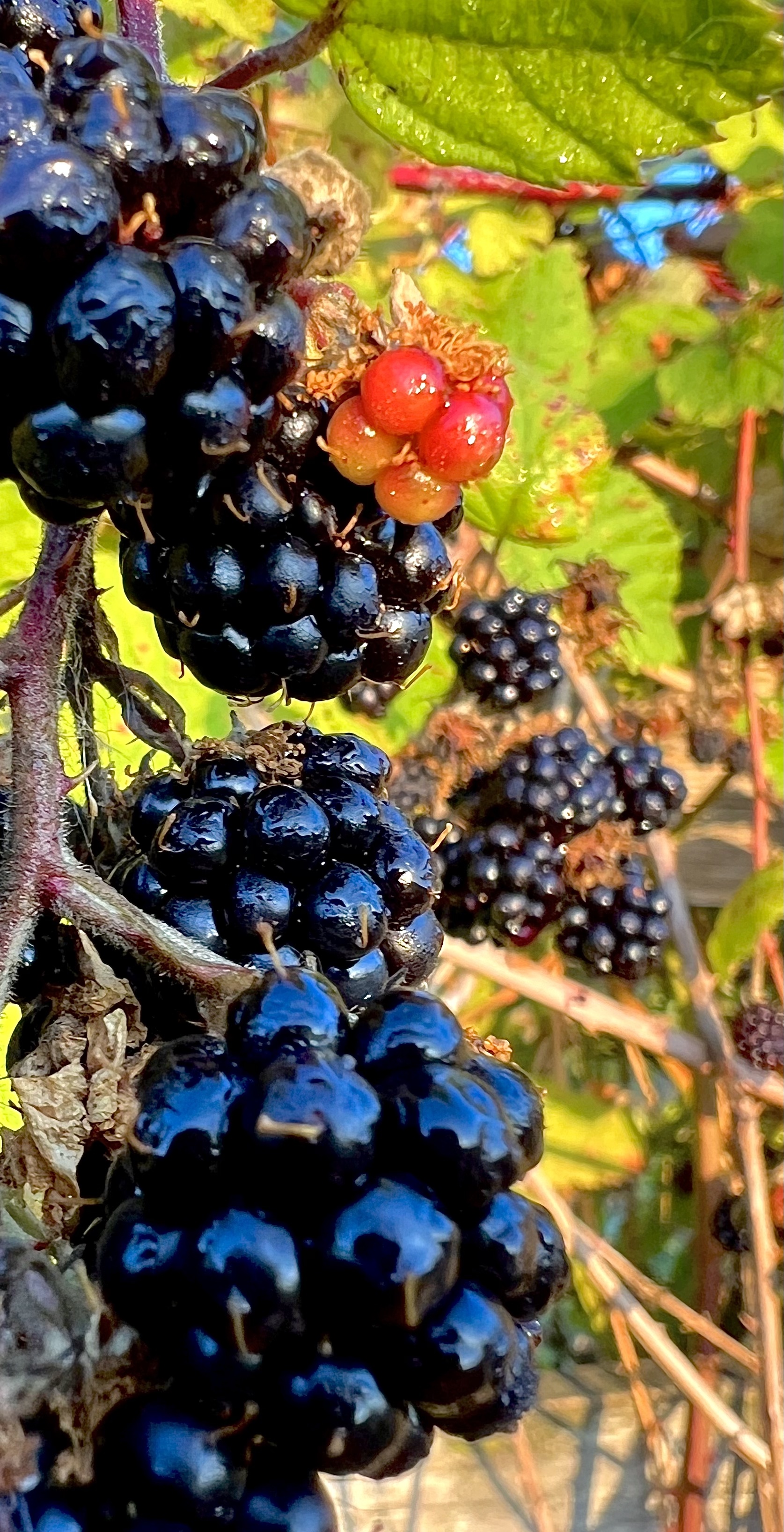
You ate that first one and its flesh was sweet
Like thickened wine: summer’s blood was in it
Leaving stains upon the tongue and lust for
Picking. Then red ones inked up and that hunger
Sent us out with milk cans, pea tins, jam-pots
Where briars scratched and wet grass bleached our boots.
Round hayfields, cornfields and potato-drills
We trekked and picked until the cans were full,
Until the tinkling bottom had been covered
With green ones, and on top big dark blobs burned
Like a plate of eyes. Our hands were peppered
With thorn pricks, our palms sticky as Bluebeard’s.

We hoarded the fresh berries in the byre.
But when the bath was filled we found a fur,
A rat-grey fungus, glutting on our cache.
The juice was stinking too. Once off the bush
The fruit fermented, the sweet flesh would turn sour.
I always felt like crying. It wasn’t fair
That all the lovely canfuls smelt of rot.
Each year I hoped they’d ke
ep, knew they would not.
~Seamus Heaney from “Blackberry Picking”
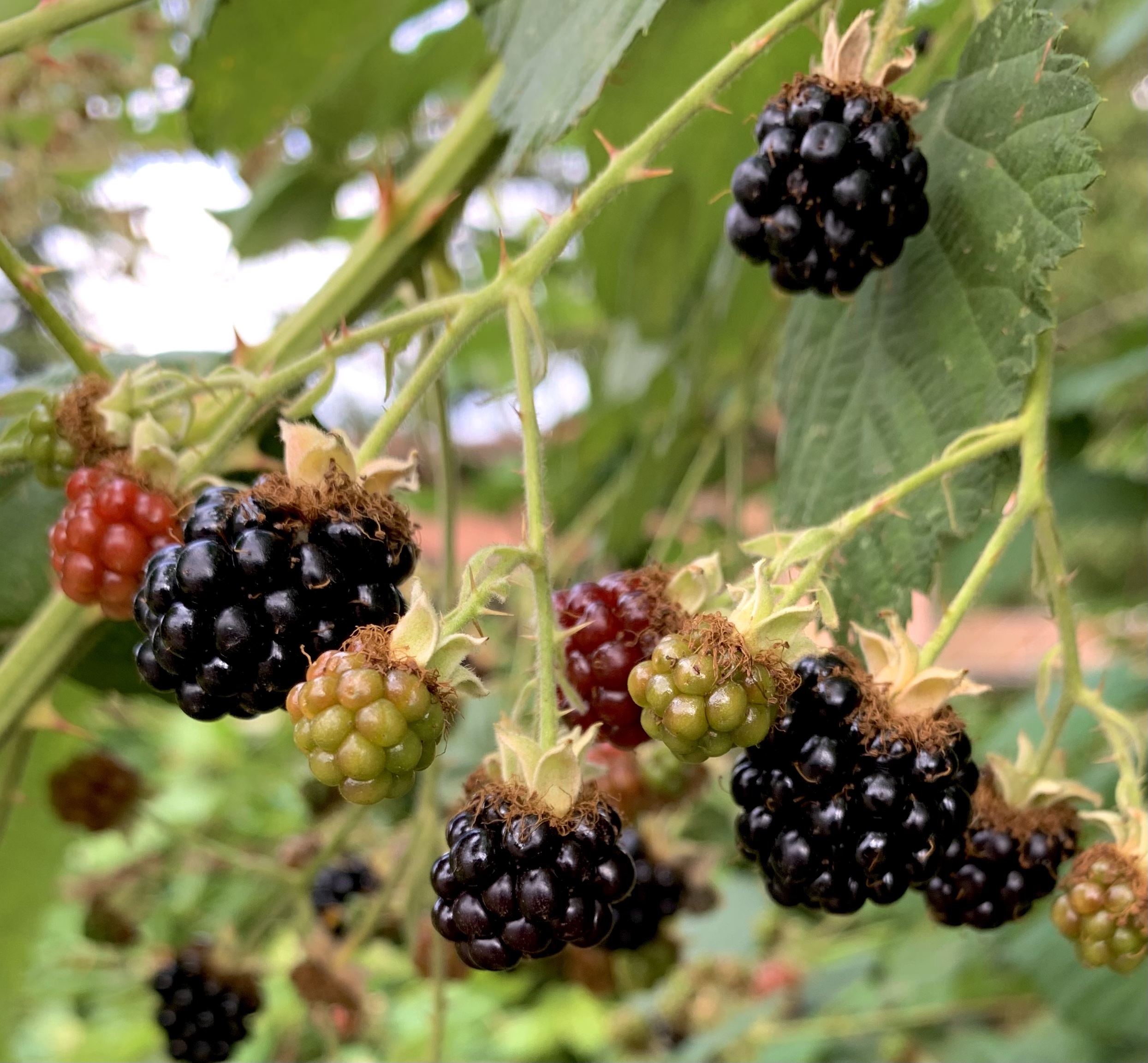
In the early morning an old woman
is picking blackberries in the shade.
It will be too hot later
but right now there’s dew.

Some berries fall: those are for squirrels.
Some are unripe, reserved for bears.
Some go into the metal bowl.
Those are for you, so you may taste them
just for a moment.
That’s good times: one little sweetness
after another, then quickly gone.

Once, this old woman
I’m conjuring up for you
would have been my grandmother.
Today it’s me.
Years from now it might be you,
if you’re quite lucky.

The hands reaching in
among the leaves and spines
were once my mother’s.
I’ve passed them on.
Decades ahead, you’ll study your own
temporary hands, and you’ll remember.
Don’t cry, this is what happens.

Look! The steel bowl
is almost full. Enough for all of us.
The blackberries gleam like glass,
like the glass ornaments
we hang on trees in December
to remind ourselves to be grateful for snow.

Some berries occur in sun,
but they are smaller.
It’s as I always told you:
the best ones grow in shadow.

~Margaret Atwood “Blackberries” from Dearly 
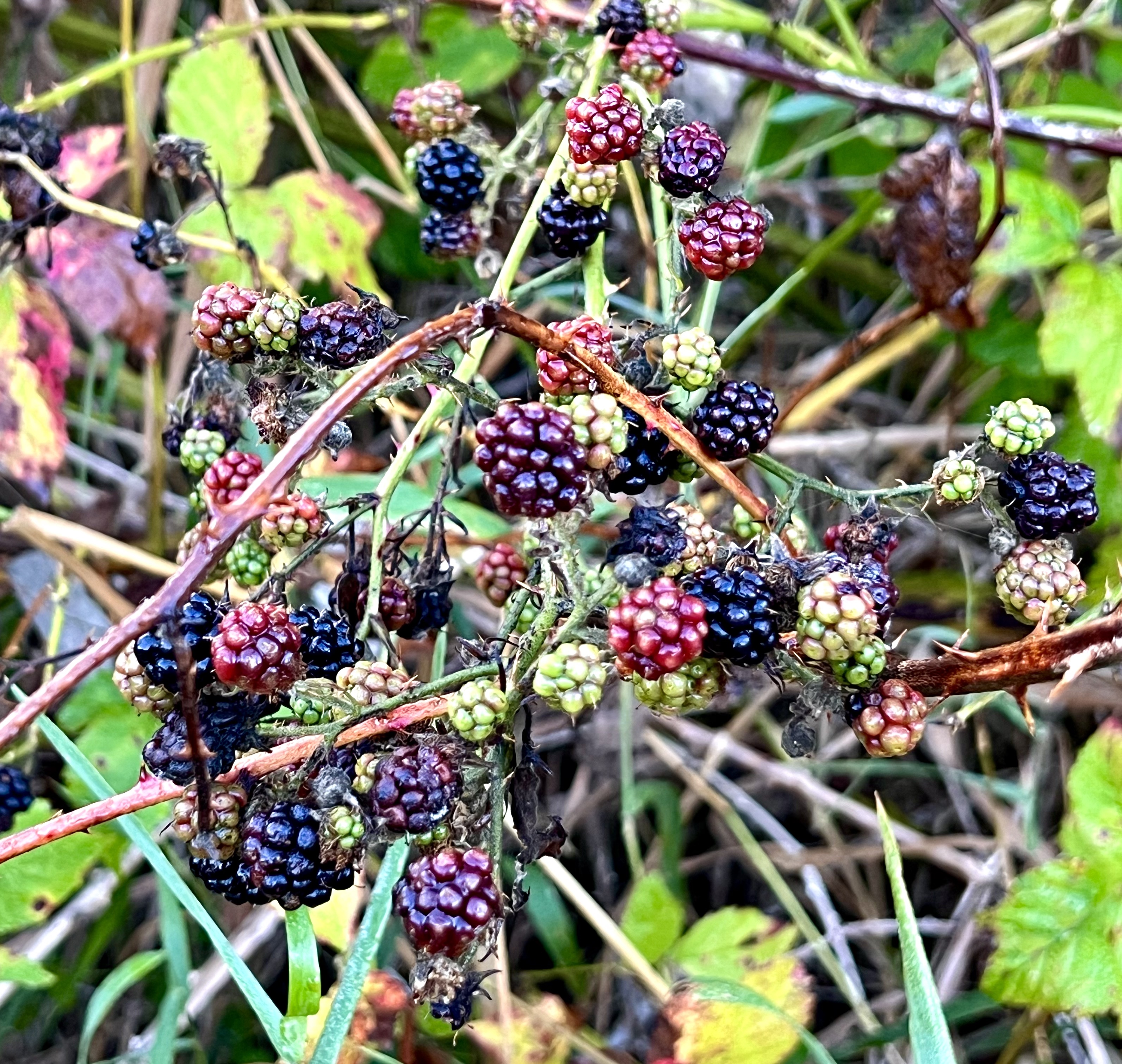
I love to go out in late September
among the fat, overripe, icy, black blackberries
to eat blackberries for breakfast,
the stalks very prickly, a penalty
they earn for knowing the black art
of blackberry-making; and as I stand among them
lifting the stalks to my mouth, the ripest berries
fall almost unbidden to my tongue,
as words sometimes do, certain peculiar words
like strengths or squinched,
many-lettered, one-syllabled lumps,
which I squeeze, squinch open, and splurge well
in the silent, startled, icy, black language
of blackberry-eating in late September.

~Galway Kinnell “Blackberry Eating”
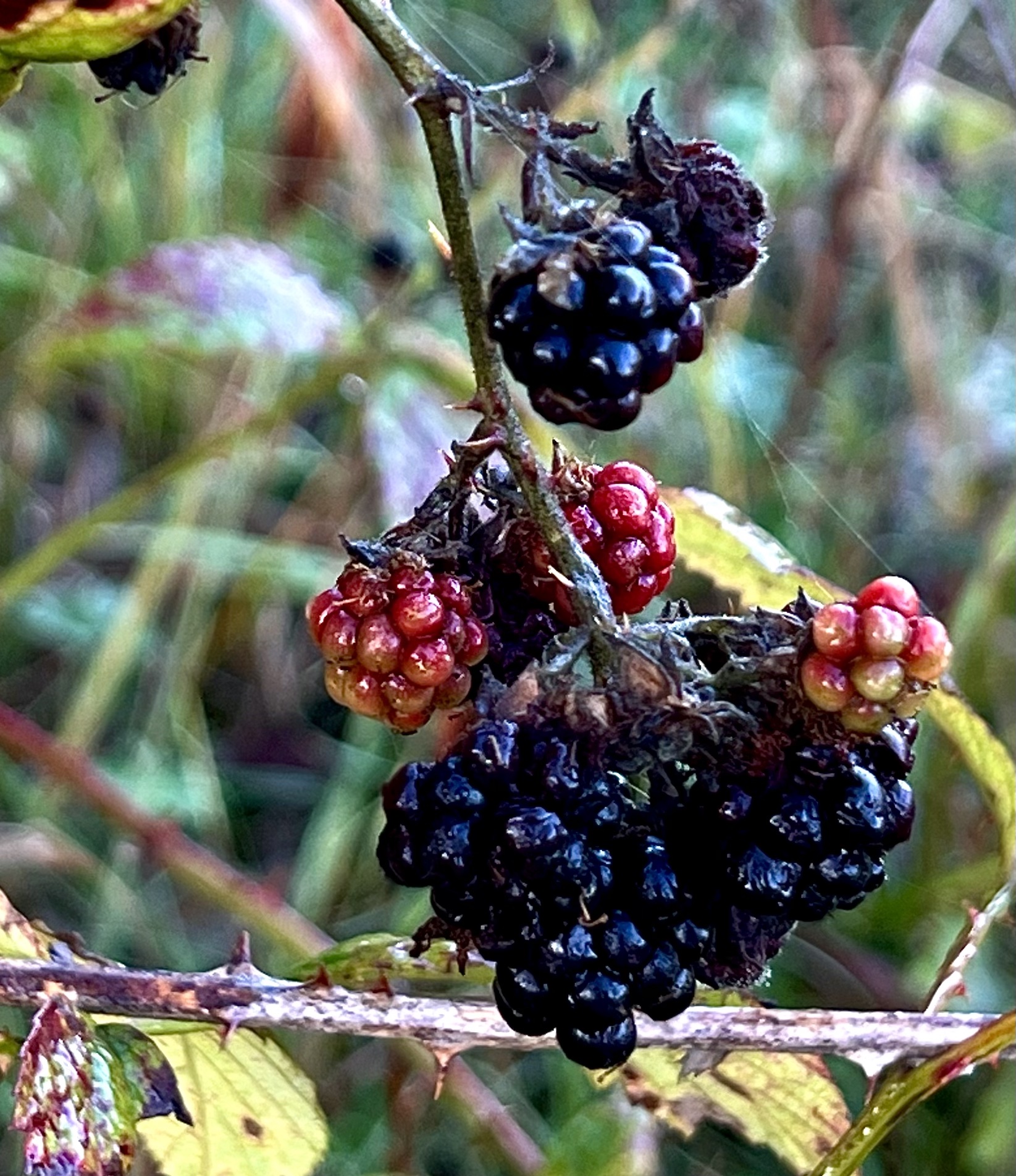
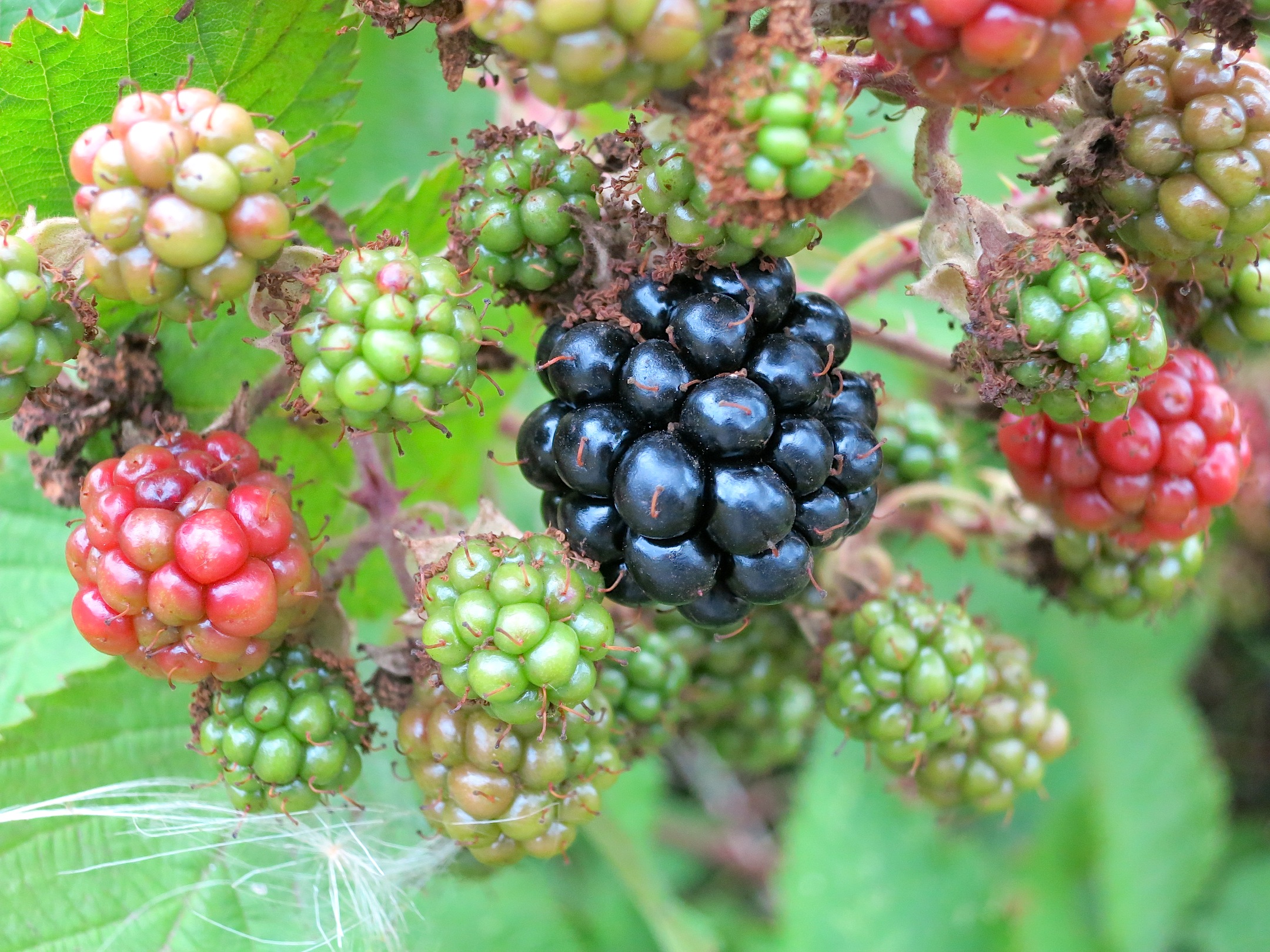
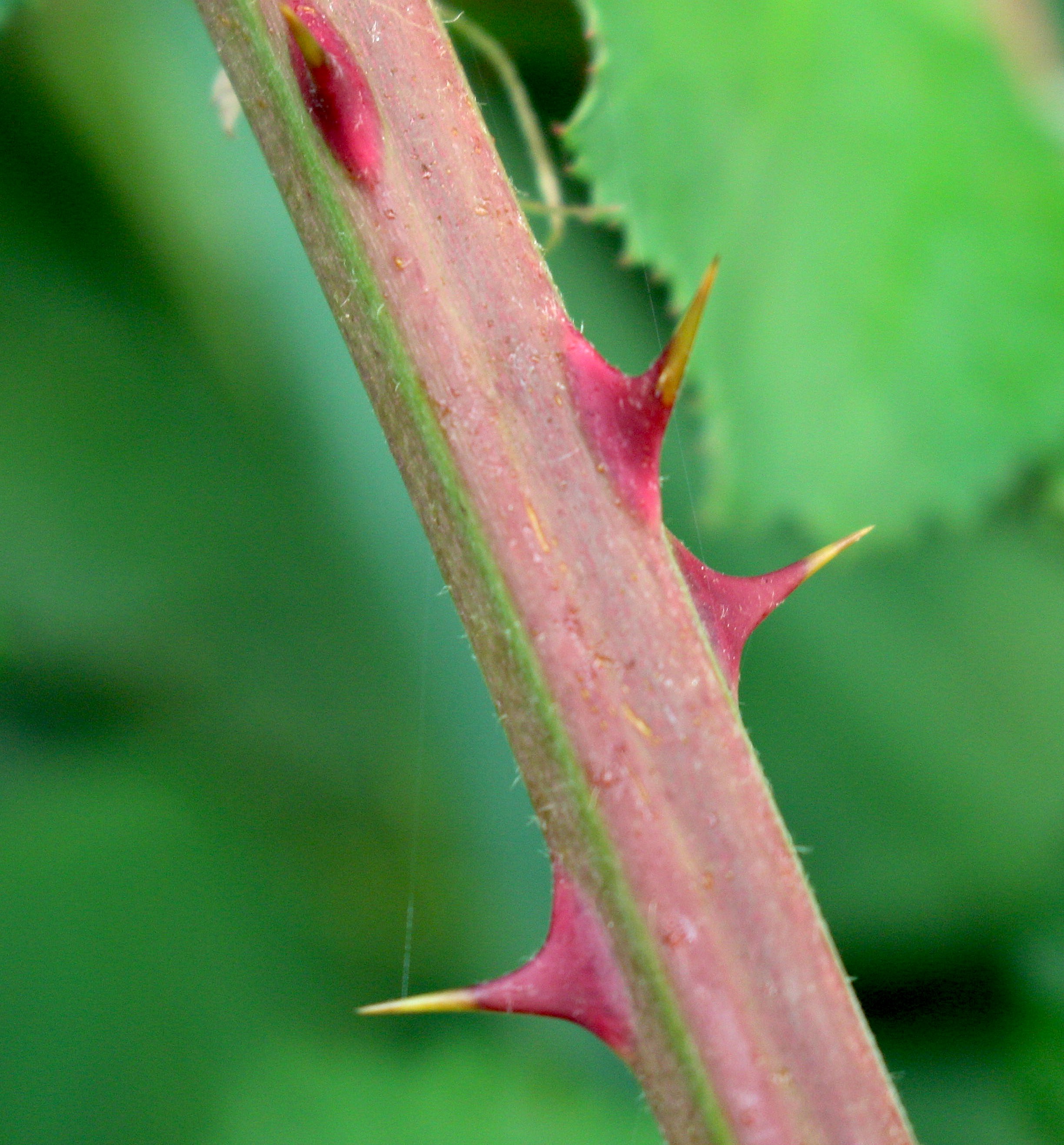
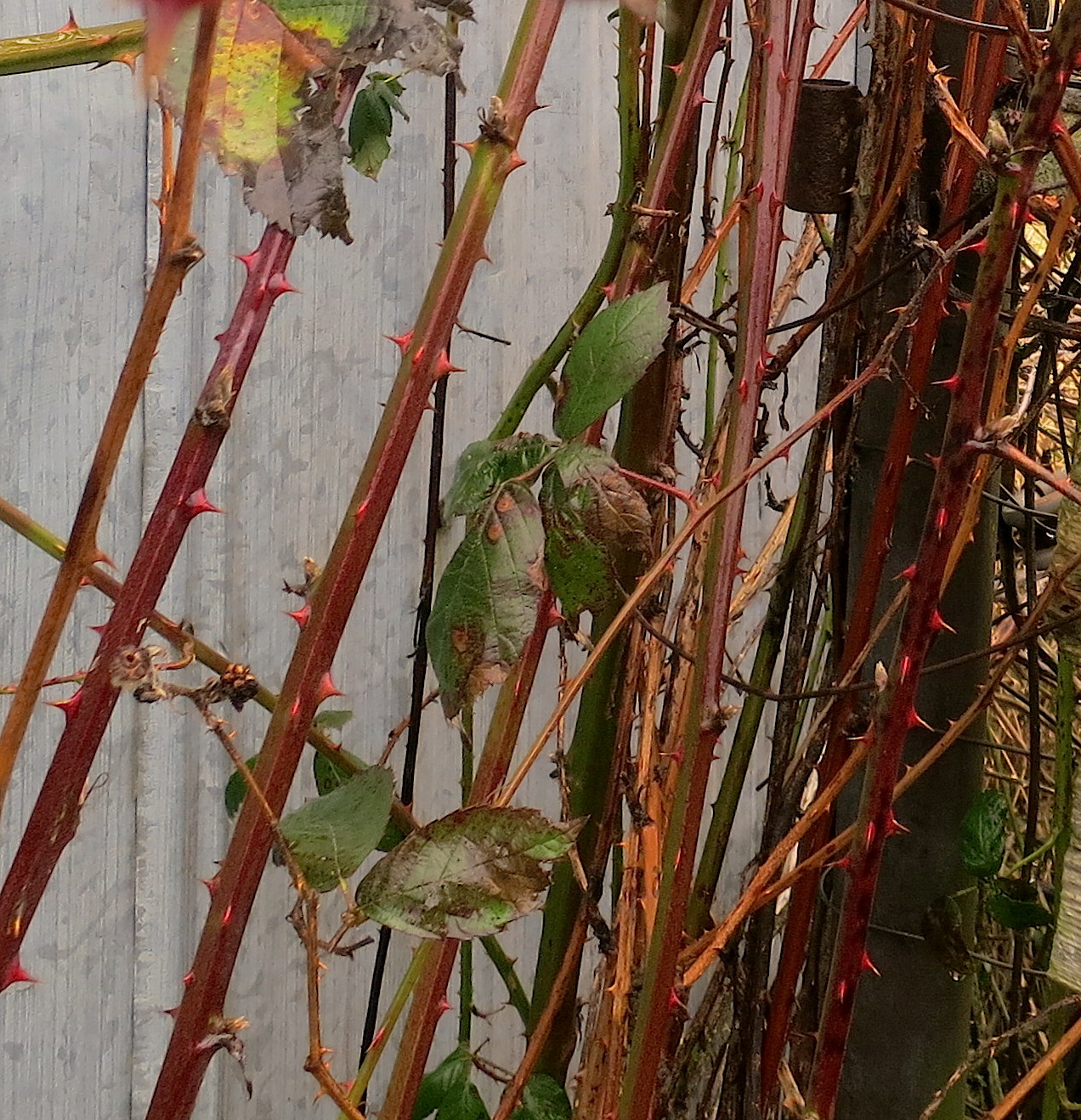
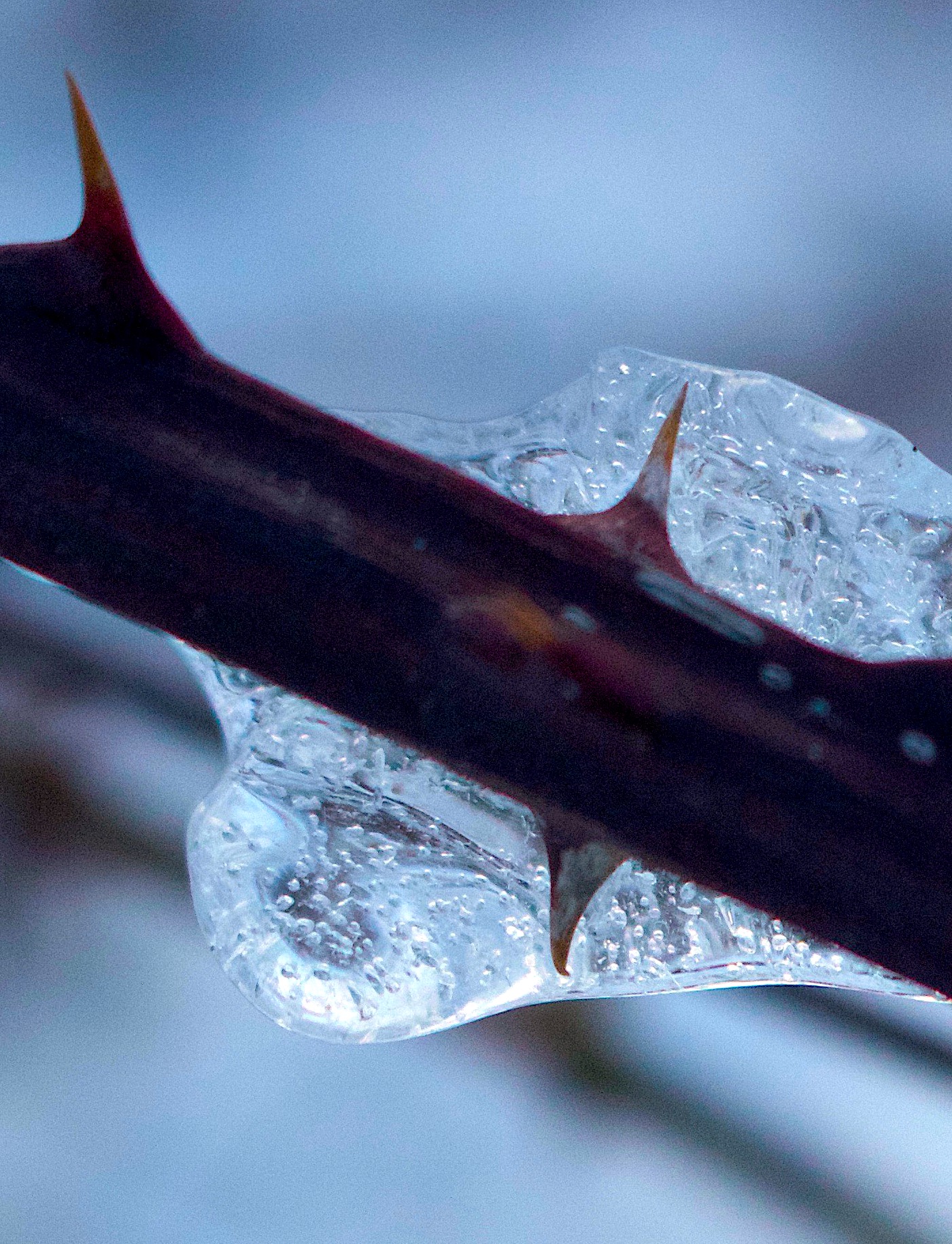
Blackberry vines are trouble 90% of the year – always growing where they are not welcome – reaching out to grab passersby without discriminating between human, dog or horse. But for a month in late summer and early fall, they yield black gold – bursting, swelling, unimaginably sweet fruit that is worth the hassle tolerated the rest of the weeks of the year.

It has been an unusually dry summer here in the Pacific Northwest with little rain until recently, so the fields are brown and even the usually lush blackberry vines have started to dry and color up. The berries themselves are rich from the sun but starting now to shrivel and mold.

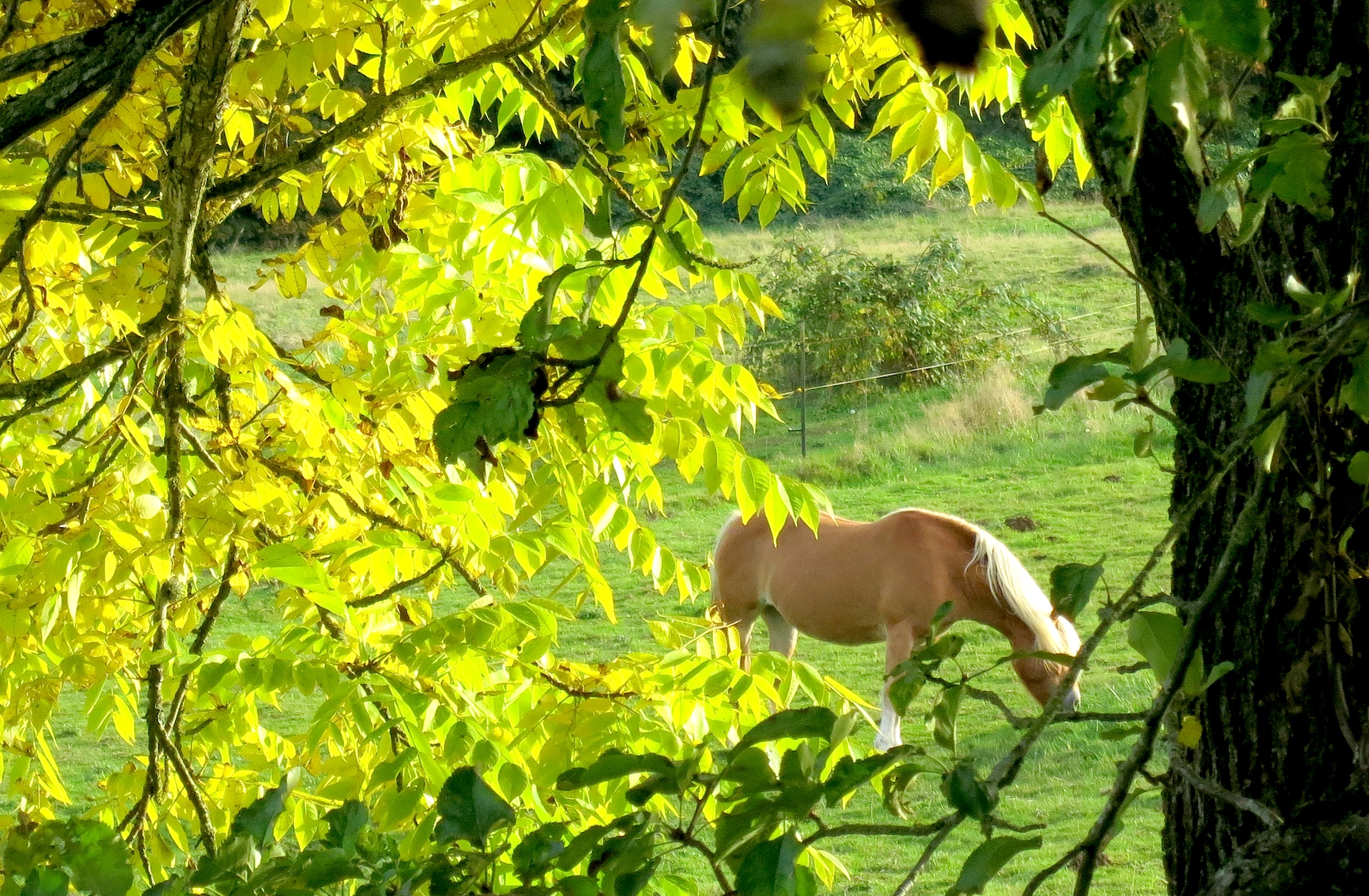
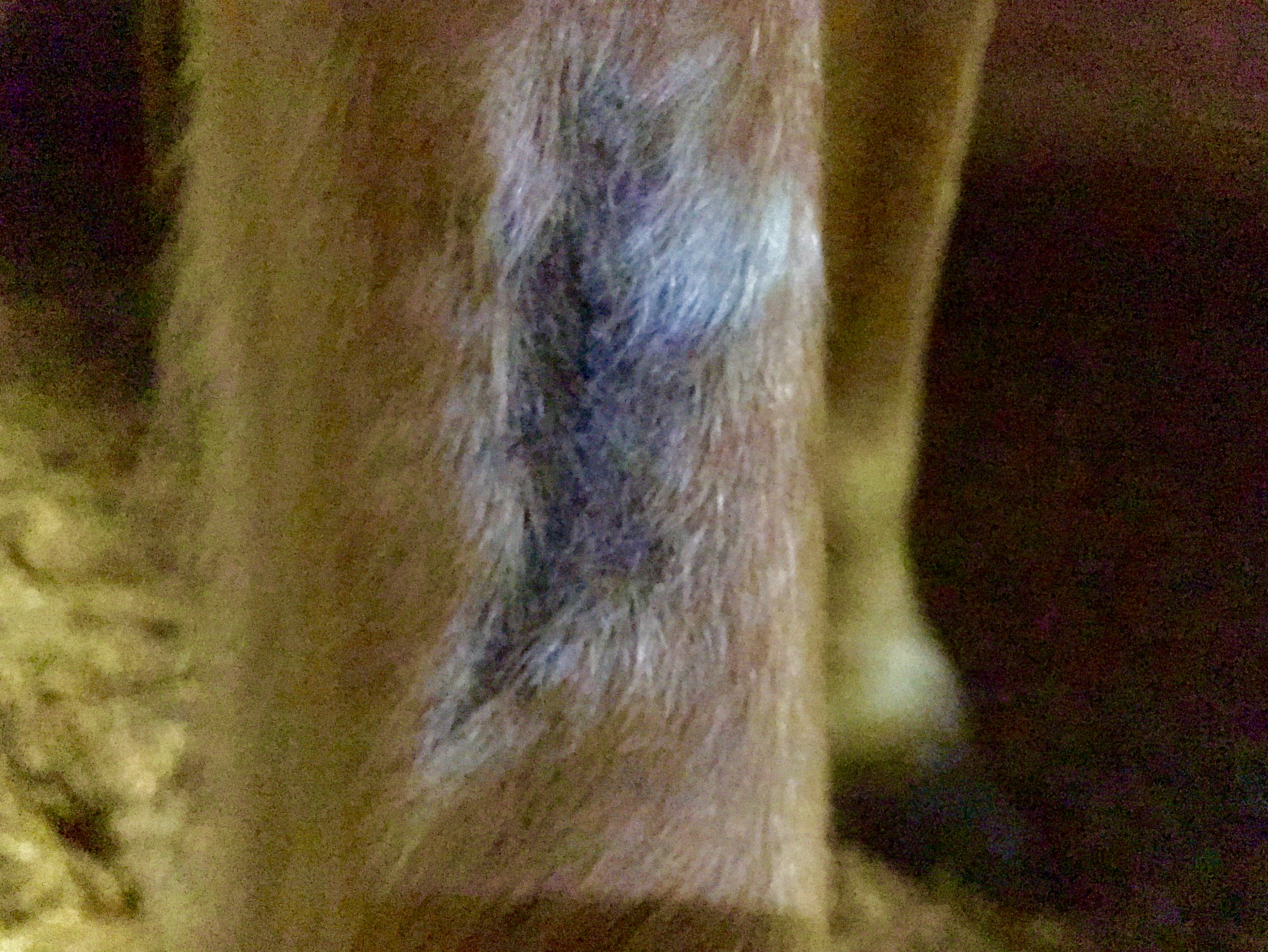
Our Haflinger horses have been fed hay for the past several weeks as there is not enough pasture for them without the supplement–we are about 6 weeks ahead of schedule in feeding hay. I had grown a little suspicious the last couple nights as I brought the Haflingers into the barn for the night. Two of the mares turned out in the back field had purplish stains on their chests and front legs. Hmmmm. Raiding the berries. Desperate drought forage behavior in an extremely efficient eating machine.

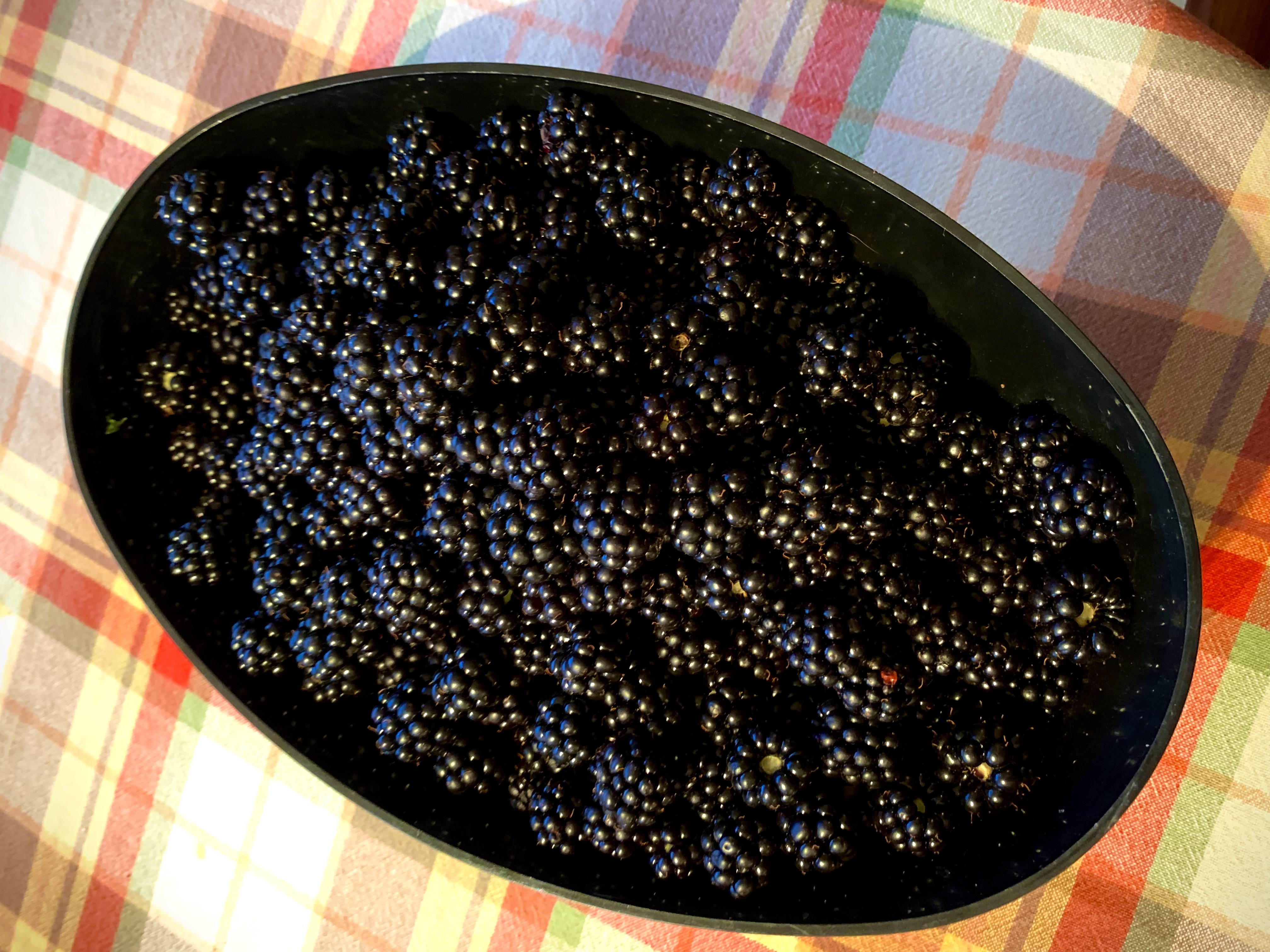
So this evening I headed toward the berries. When the mares saw the bowl in my hand, that was it. They mobbed me. I was irresistible.

So with mares in tow, I approached a berry bank. It was ravaged. Trampled. Haflinger poop piles everywhere. All that were left were some clusters of gleaming black berries up high overhead, barely reachable on my tip toes, and only reachable if I walked directly into the thicket. The mares stood in a little line behind me, pondering me as I pondered my dilemma.

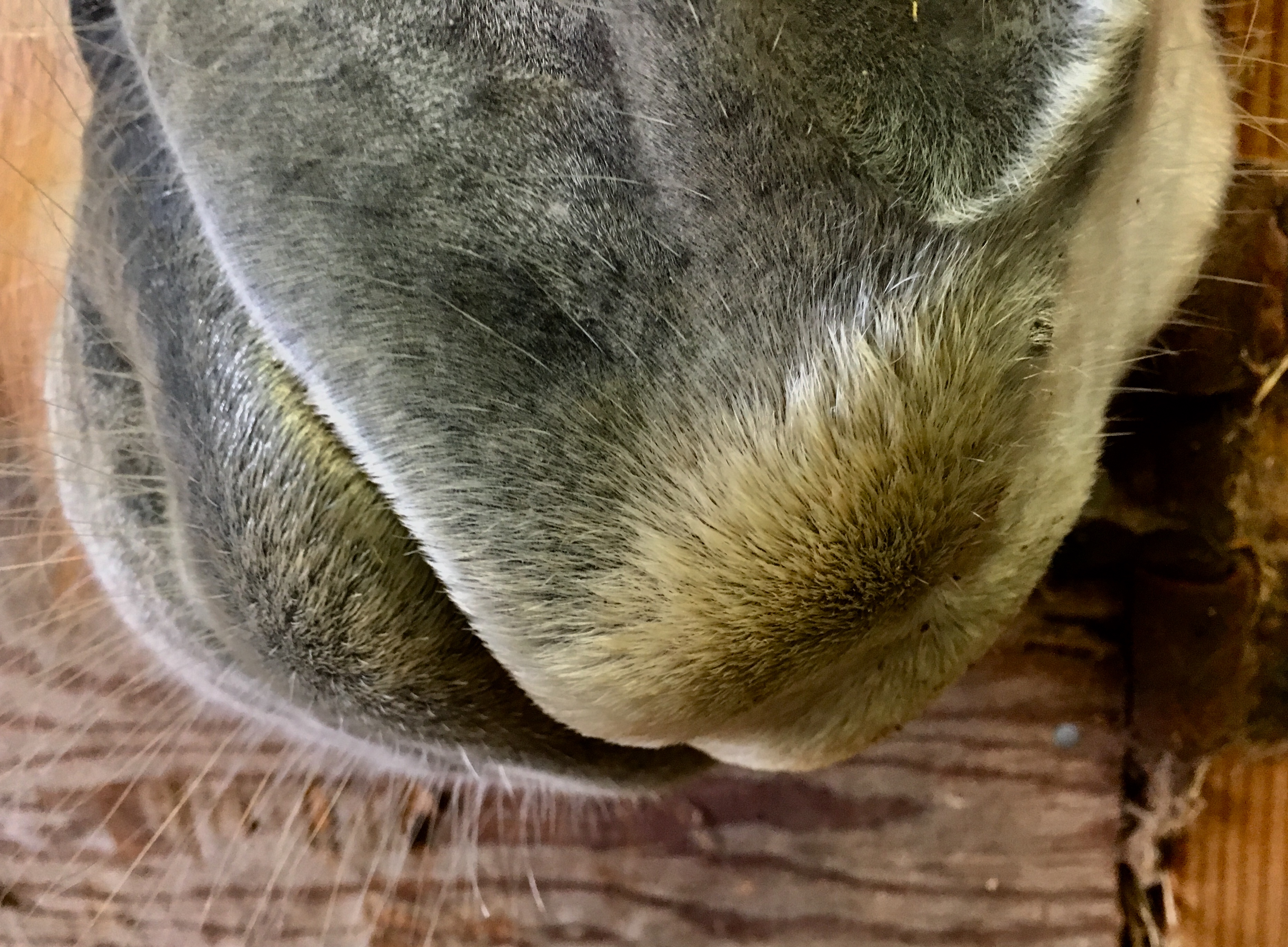
I set to work picking what I could reach, snagging, ripping and bloodying my hands and arms, despite my sleeves. Pretty soon I had mares on either side of me, diving into the brambles and reaching up to pick what they could reach as well, unconcerned about the thorns that tore at their sides and muzzles. They were like sharks in bloody water–completely focused on their prey and amazingly skilled at
grabbing just the black berries, and not the pale green or red ones.

Plump Haflingers and one *plumpish* woman were willingly accumulating scars in the name of sweetness.

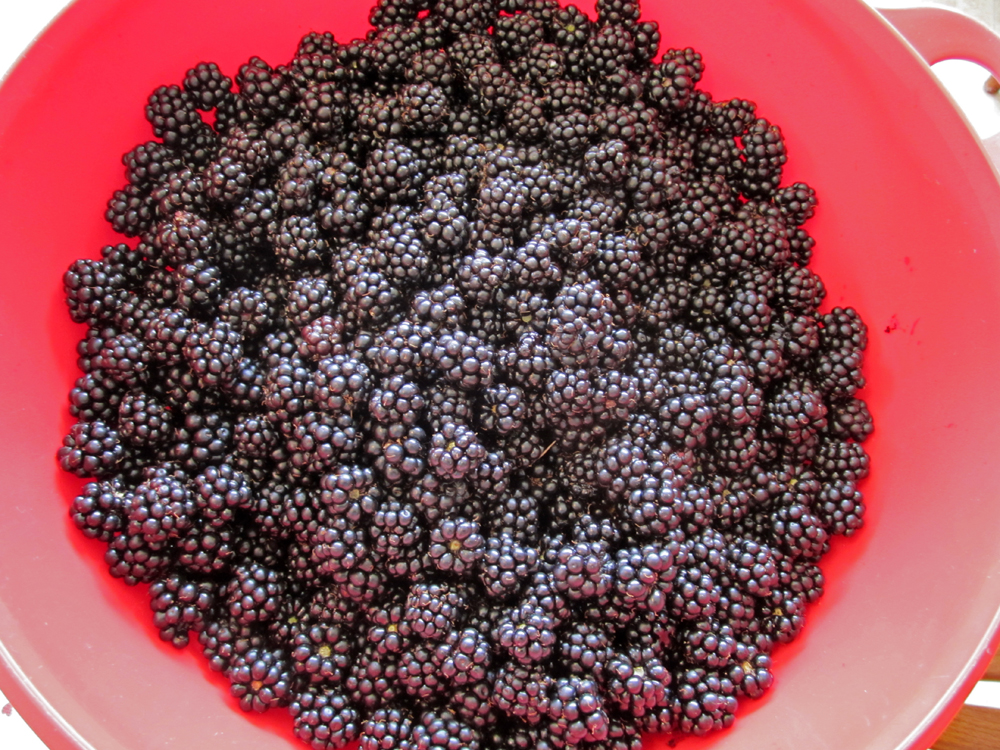
When my bowl was full, I extracted myself from the brambles and contemplated how I was going to safely make it back to the barn without being mare-mugged. Instead, they obediently trailed behind me, happy to be put in their stalls for their evening hay, accepting a gift from me with no thorns or vines attached.

Clearly, thorns are part of our everyday life. Thorns stand in front of much that is sweet and good and precious to us. They tear us up, bloody us, make us cry, make us beg for mercy.

Yet thorns have been overcome. They did not stop our salvation, did not stop goodness raining down on us, did not stop the taste of sweetness given as a gracious gift.

If we hesitate, thorns only proliferate unchecked.

So, desperate and hungry, we dive right in, to taste and eat.
One-Time
Monthly
Yearly

Make a one-time or recurring donation to support daily Barnstorming posts

Make a monthly donation

Make a yearly donation

Choose an amount

$10.00
$25.00
$50.00
$5.00
$15.00
$100.00
$5.00
$15.00
$100.00

Or enter a custom amount

$

Your contribution is deeply appreciated.

Your contribution is appreciated.

Your contribution is appreciated.

DonateDonate monthlyDonate yearly
So Far Beyond Reach

Some people see scars, and it is wounding they remember. To me they are proof of the fact that there is healing.
~ Linda Hogan
from Solar Storms

(after Linda Hogan)

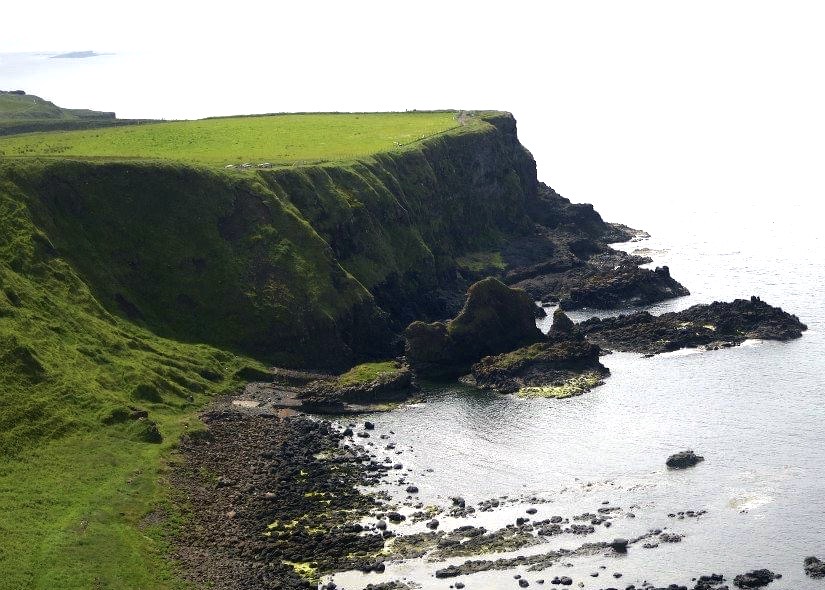
Nothing wants to suffer. Not the wind
as it scrapes itself against the cliff. Not the cliff

being eaten, slowly, by the sea. The earth does not want
to suffer the rough tread of those who do not notice it.

The trees do not want to suffer the axe, nor see
their sisters felled by root rot, mildew, rust. 

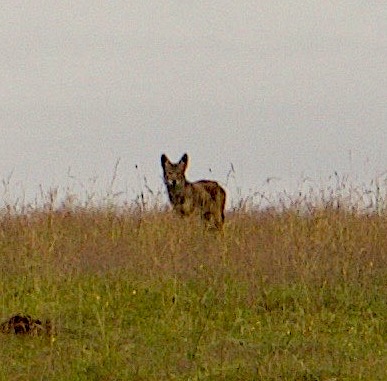
The coyote in its den. The puma stalking its prey.
These, too, want ease and a tender animal in the mouth

to take their hunger. An offering, one hopes, 
made quickly, and without much suffering.

The chair mourns an angry sitter. The lamp, a scalded moth.
A table, the weight of years of argument.

We know this, though we forget.

Not the shark nor the tiger, fanged as they are.
Nor the worm, content in its windowless world of soil and stone.

Not the stone, resting in its riverbed.
The riverbed, gazing up at the stars.

Least of all, the stars, ensconced in their canopy,
looking down at all of us— their offspring—


scattered so far beyond reach.
~Danusa Laméris “Nothing Wants to Suffer”

photo by Josh Scholten

We all arrive into this life helpless and needy, completely dependent on others to survive. If there wasn’t an intuitive tenderness in parents dedicated to caring for their young, there would be no tomorrow for any of us. Even God sent His only Son in a completely helpless state, knowing He would identify more closely with us.

Despite such care and protection, there are inevitable hurts and injuries as we are buffeted and bruised by life. The scars we bear remain proof of the gentle healing touch of our Creator. We are never so far beyond His reach that He can’t leave His mark on us.

We know this, even though we forget…
We are not so far beyond reach.
God Himself reminds us of His love by the scars He bears.

photo by Joel DeWaard

One-Time
Monthly
Yearly

Make a one-time or recurring donation to support daily Barnstorming posts

Make a monthly donation

Make a yearly donation

Choose an amount

$10.00
$25.00
$50.00
$5.00
$15.00
$100.00
$5.00
$15.00
$100.00

Or enter a custom amount

$

Your contribution is deeply appreciated.

Your contribution is appreciated.

Your contribution is appreciated.

DonateDonate monthlyDonate yearly
Sliding to Safety

I’ve learned that people will forget what you said, people will forget what you did, but people will never forget how you made them feel. ~Maya Angelou

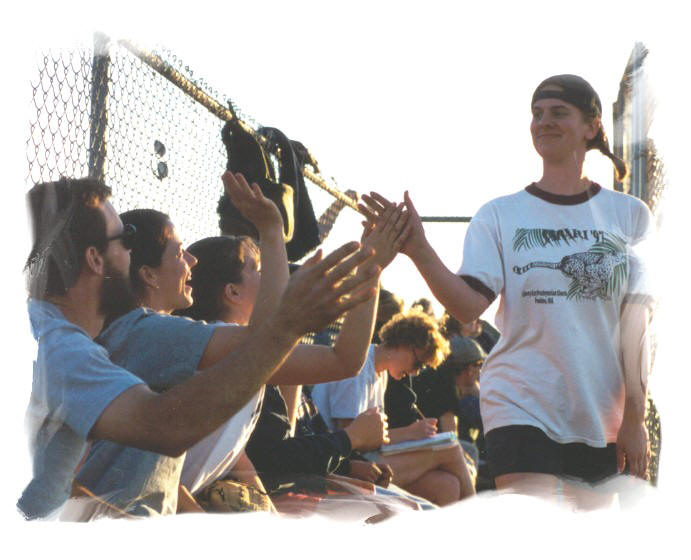
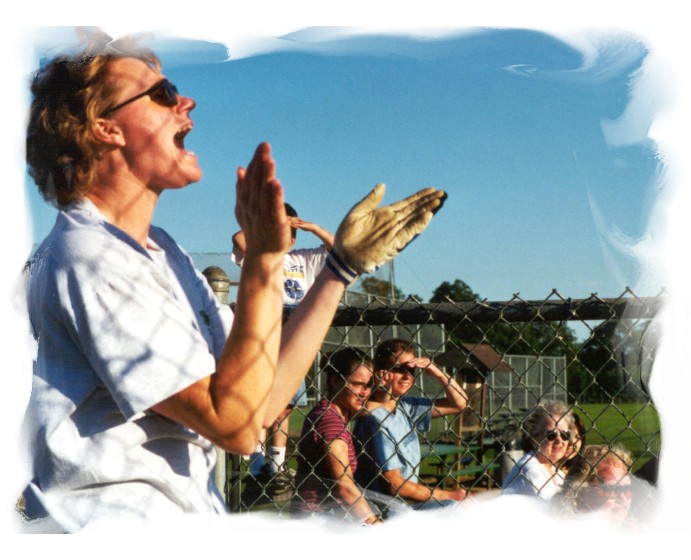
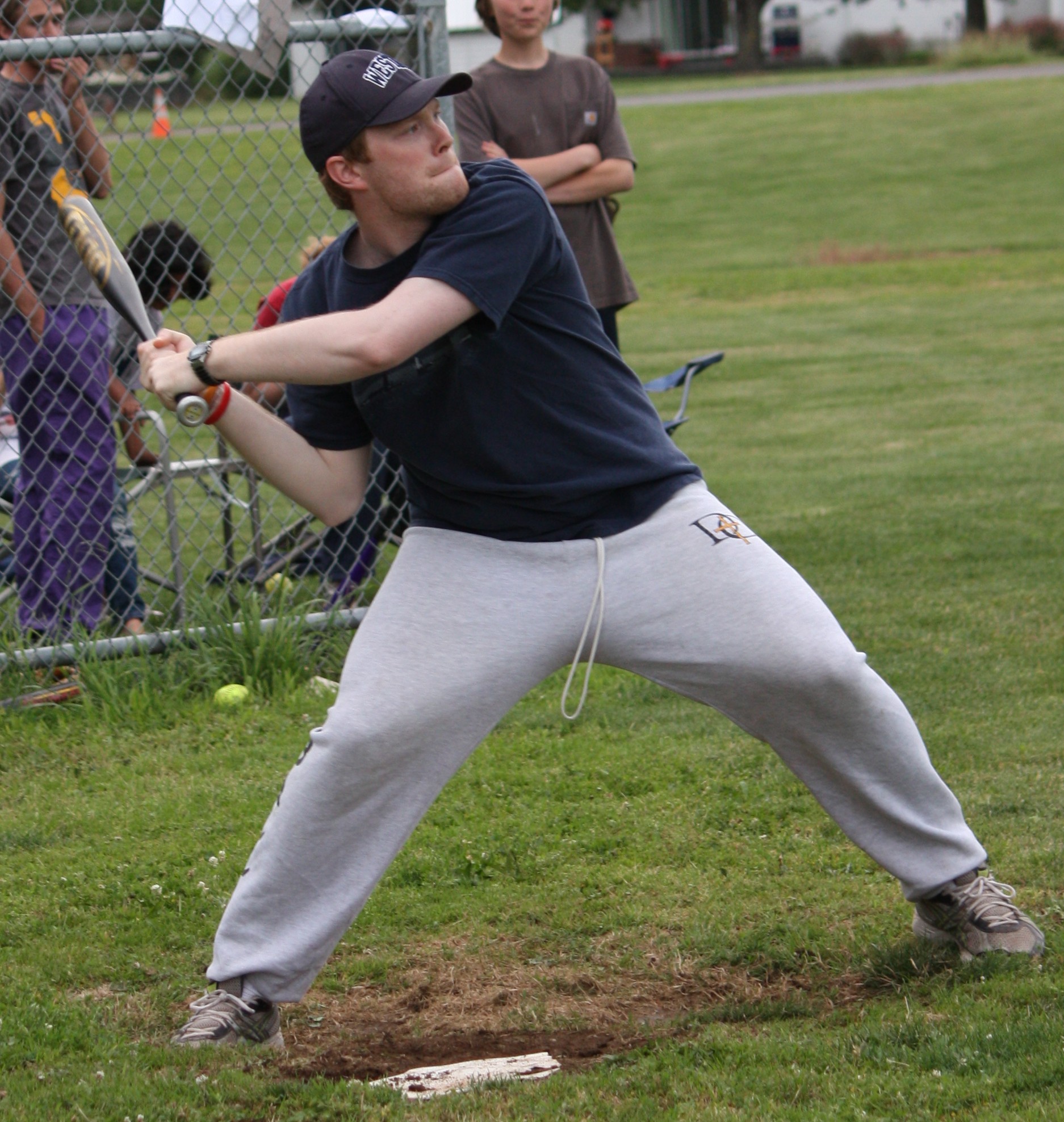
Years ago, our small church, Wiser Lake Chapel,  once belonged to a summer co-ed softball league, along with 8 other churches and a few local businesses. This was a traditional Thursday evening summer activity for a generation or longer. Couples met for the first time on the ball fields and eventually married. Babies attended games in back packs and strollers and eventually were catching at home plate.  Relatives going to different churches found themselves on opposing teams yelling good-natured insults. During our years of participation in the league, there were a few bopped heads, abrasions, sprained fingers and one broken leg as part of the deal. Hot dog roasts and ice cream sundaes were the after-game rewards.

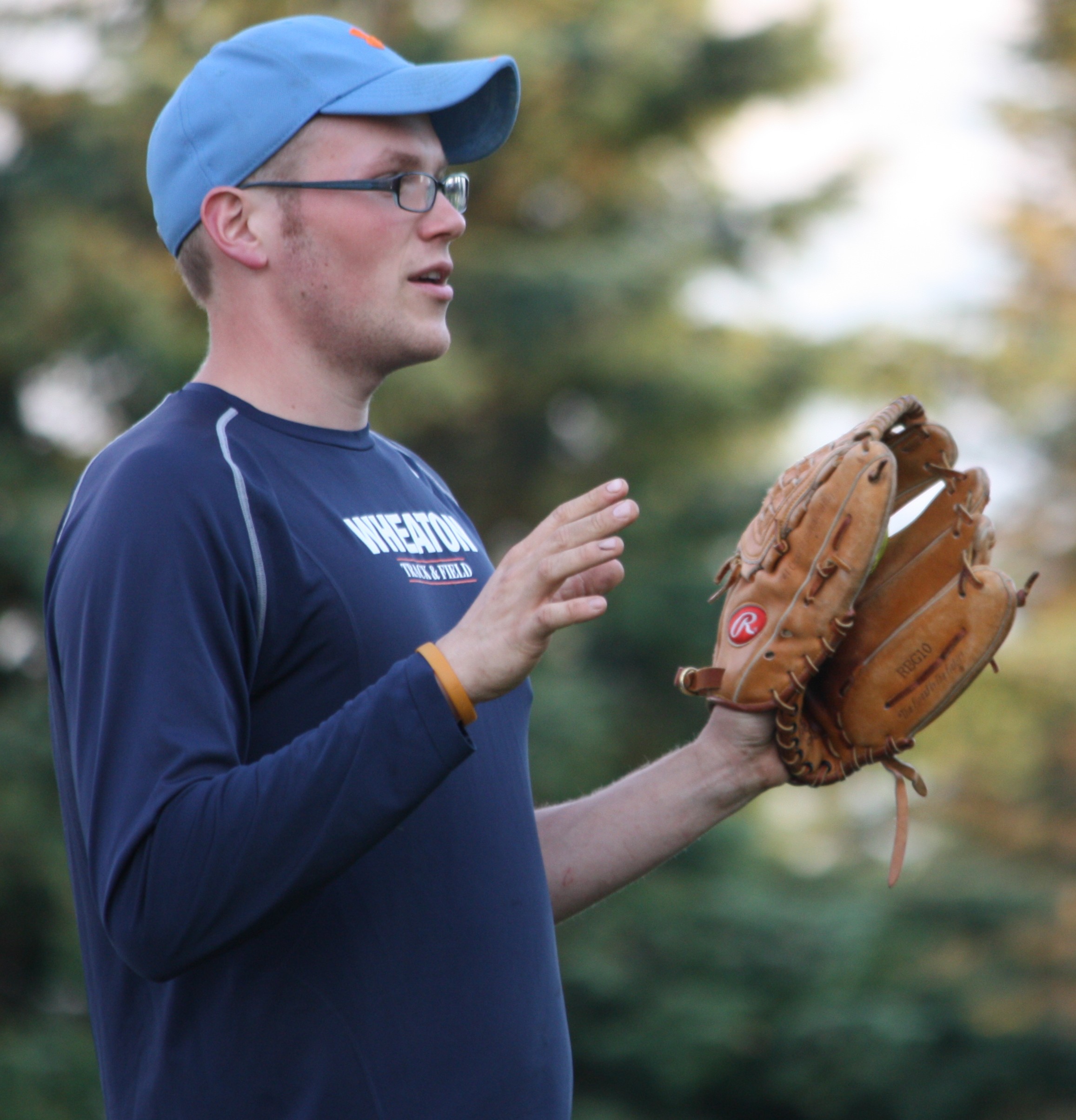
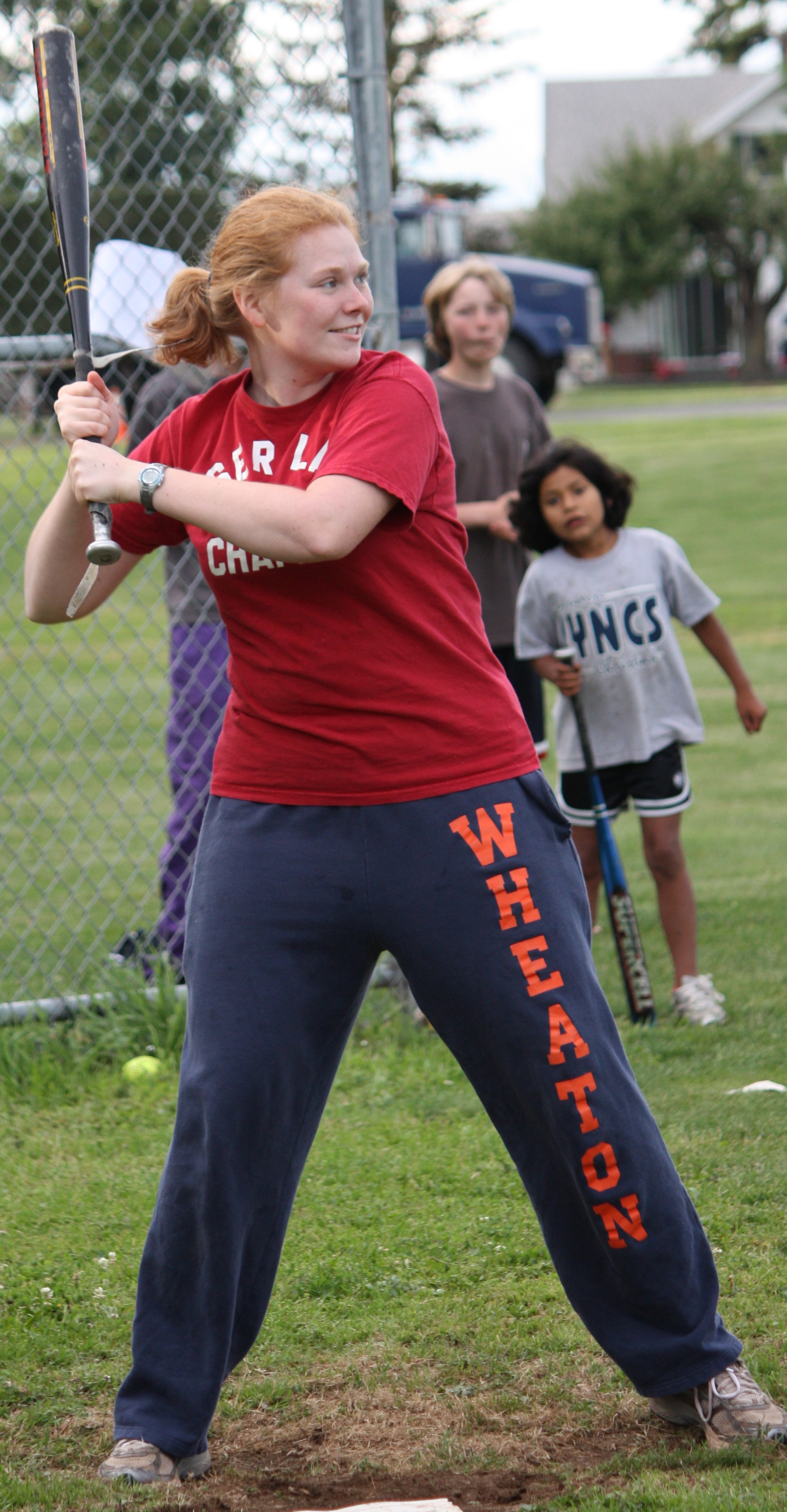
Nothing was quite as wonderful as how a team recreated itself year after year. It was thrown together by our coach Brenda in a mere two weeks prior to the season starting, with the youngest members needing to be at least age 14 with no upper age limit; we’ve had our share of 70+ year olds on the team over the years. Some ball players were raw beginners having never played catch or swung a bat outside of school PE class. A few others had extensive history of varsity fastpitch in school or other community league play so meant business when they strolled out on the diamond. During a few years, we were a force to be reckoned with when we had over a dozen local university students join our church who were incredible players and power hitters.

It was the ultimate diverse talent pool.

A different dynamic exists in church league softball compared to Little League, Pony League, minors or majors when you watch or play. Sure, there still are slow pitch teams that stock their ranks with “invitation-only” players, reserving the best and most athletic so there is a real chance at the trophy at the end of the summer. Churches like ours, a mere 150 people average weekly Sunday attendance, had a “come one, come all” attitude, just to make sure we avoided forfeiting by not having enough players week after week. We always did have enough.  In fact we had more players than we could find positions for. And we had a whole bleacher full of fans, dedicated to cheering and clapping for anything and everything our players did, whether it was a pop-up foul ball, a strike out swing, a missed catch, or an actual hit. We loved it all and wanted our players to know they were loved too, no matter what they did or what happened.

I think that was why the players and fans came back to play week after week, though we hadn’t won a game in years. We rooted and hollered for each other, got great teaching and encouragement from our fantastic coach, and the players’ skills did improve year to year despite months of inactivity. We had a whole line up of pre-14 year olds eager to grow old enough to play, just so they could be a part of the action.

Why did it not matter that we didn’t win games? We were winning hearts, not runs. We were showing our youngsters that the spirit of play is what it is all about, not about the trophy at the end. We were teaching encouragement in the face of errors, smiles despite failure, joy in the fellowship of people who love each other–spending an evening together week after week.

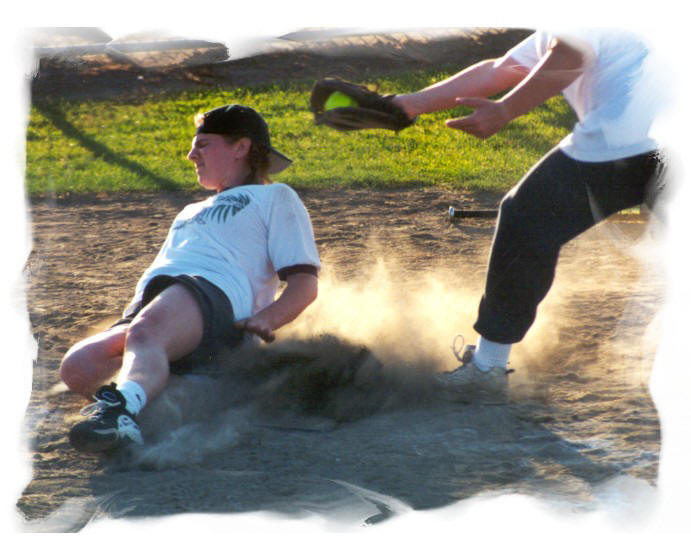
We are family; family picks you up and dusts you off when you’ve fallen flat on your face during your slide to base while still being called “out.”

Most of all, I see this as a small piece of God’s kingdom in action.  Although we no longer gather for church league baseball — the competition got too fierce (and hazardous to our health), the rules too tight — we still gather for a pick-up game now and then, just to remind ourselves of who we are and what we are about.

Our coach models Jesus’ acceptance of all at the table, and embodies the fruits of the spirit: love, joy, peace, patience, kindness, gentleness, faithfulness, and self control.

Our players are the eager, the ambivalent, the accurate, the flawed, the strong, the weak, the fast, the slow: chosen for the game even if they were completely inadequate to the task at hand, volunteering to be part of each moment as painful as it can sometimes be.

The cheering from the bleachers comes as if from heaven itself:
Do not be afraid. Good will to all. We are well pleased. Amen!

We’re sliding to home plate, running as hard as we can, diving for safety, covered in the dust and mire and blood of living/dying and will never, ever be called “out”.

Let’s play ball.

One-Time
Monthly
Yearly

Make a one-time or recurring donation to support daily Barnstorming posts

Make a monthly donation

Make a yearly donation

Choose an amount

$10.00
$25.00
$50.00
$5.00
$15.00
$100.00
$5.00
$15.00
$100.00

Or enter a custom amount

$

Your contribution is deeply appreciated.

Your contribution is appreciated.

Your contribution is appreciated.

DonateDonate monthlyDonate yearly
Scars That Cry

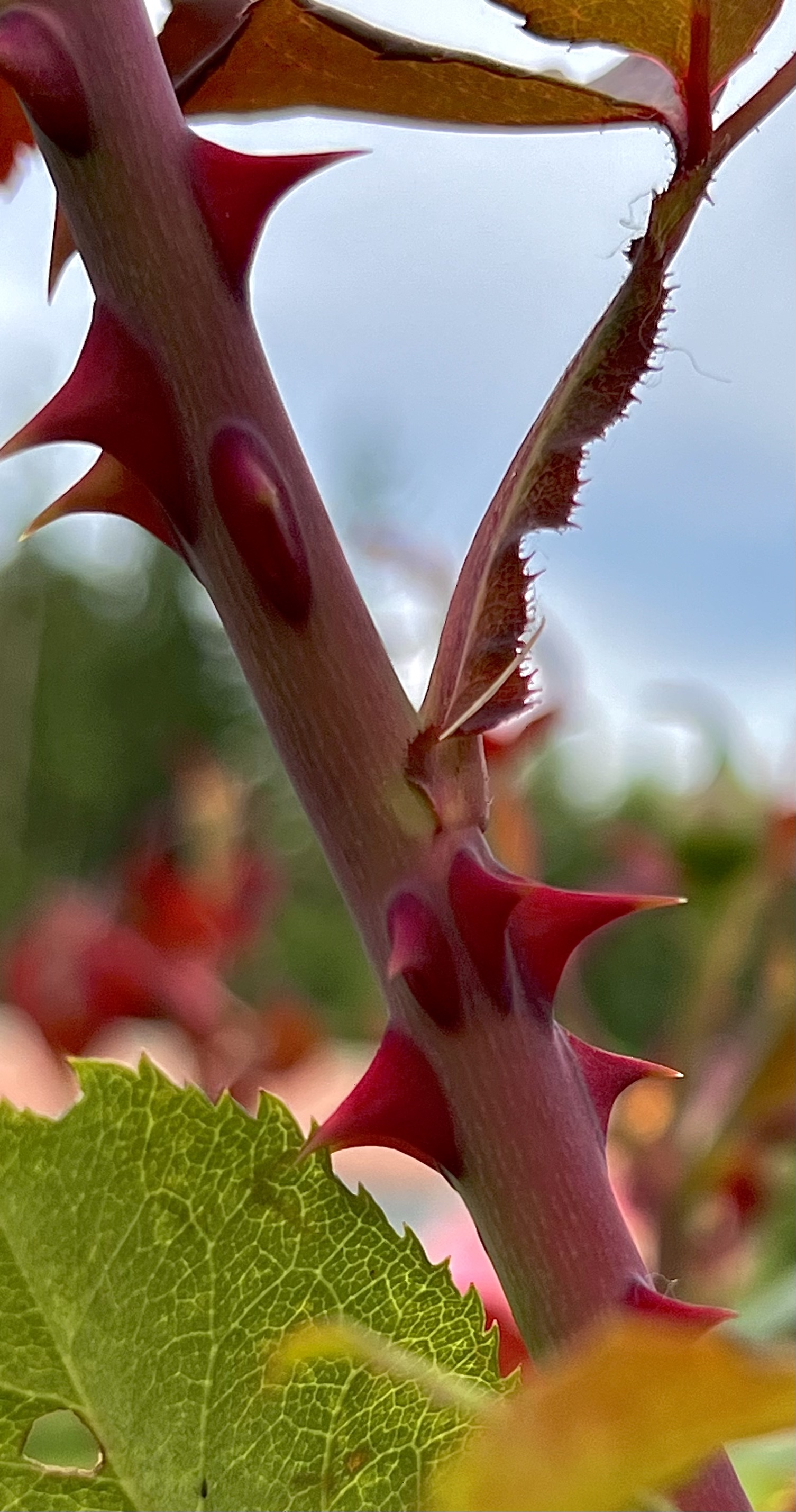
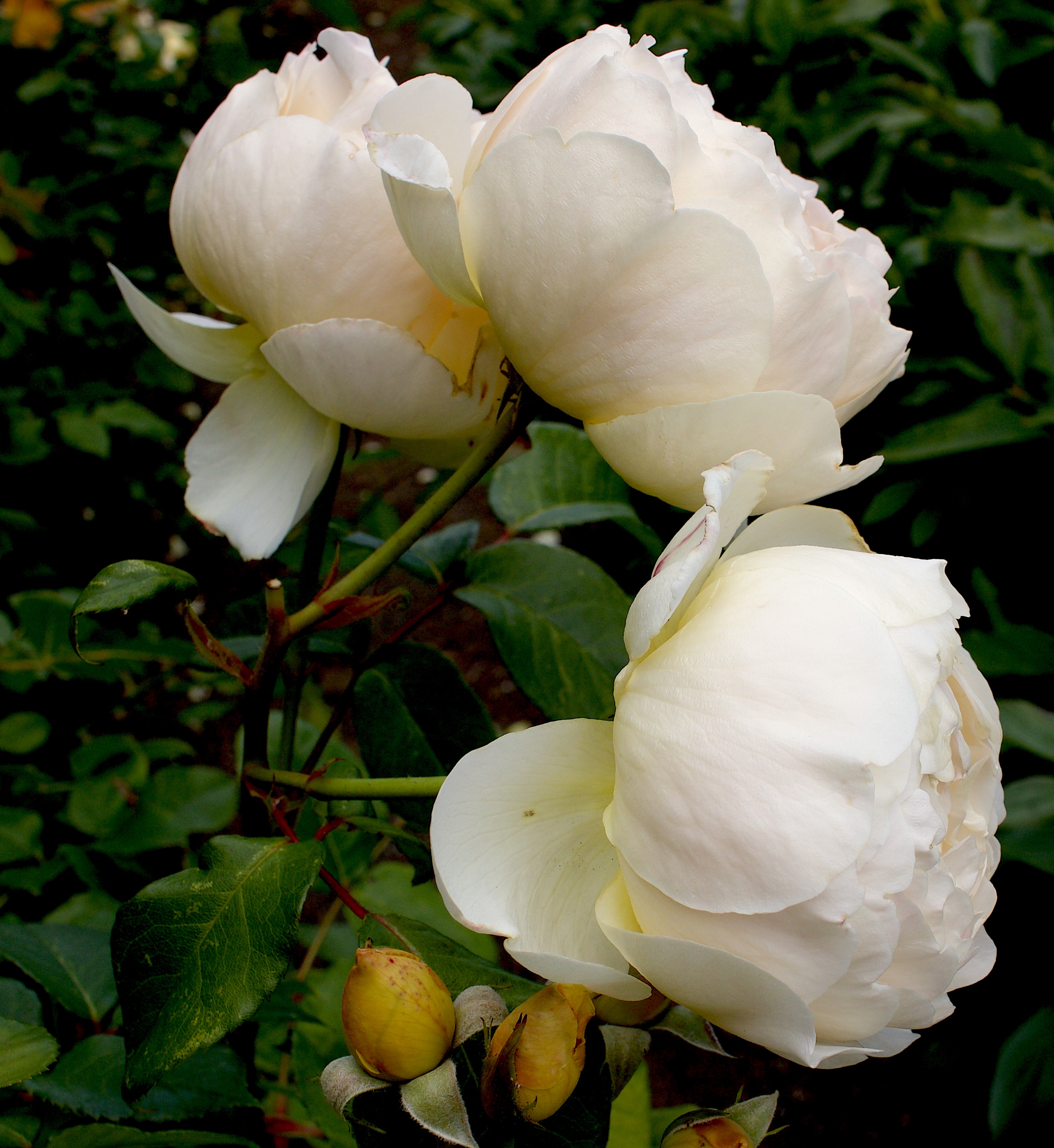
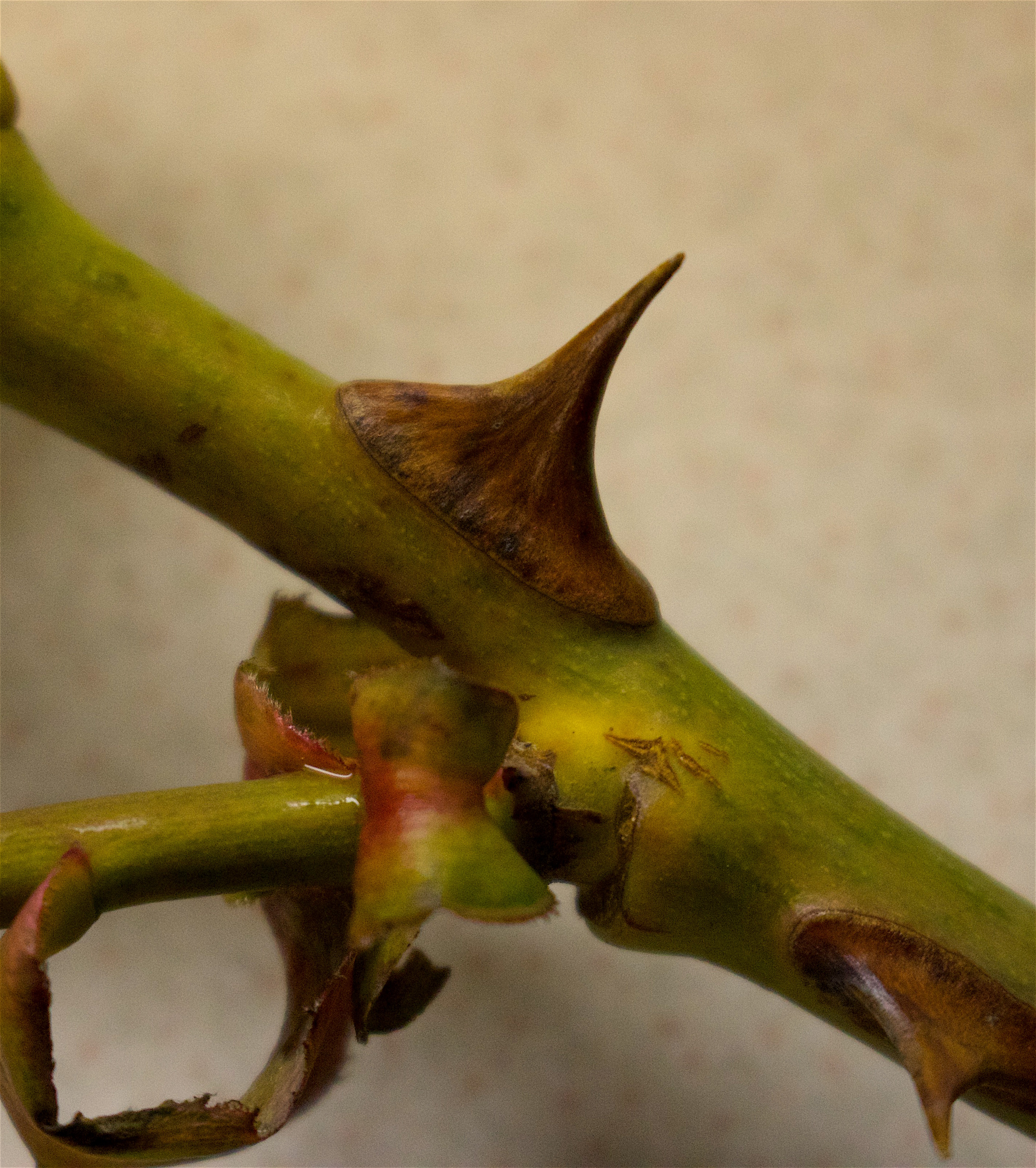
between the rosebuds
and the thorns
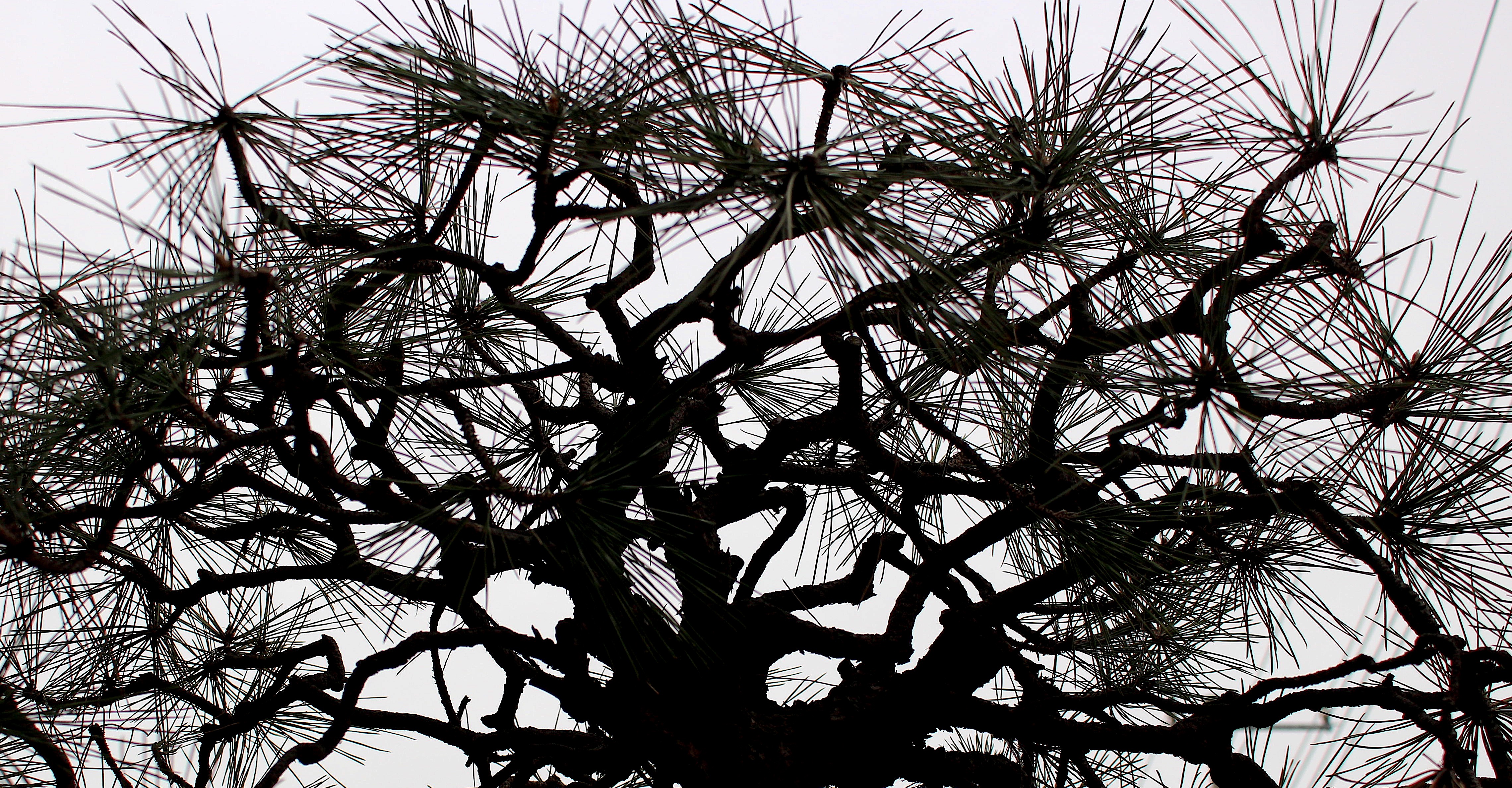
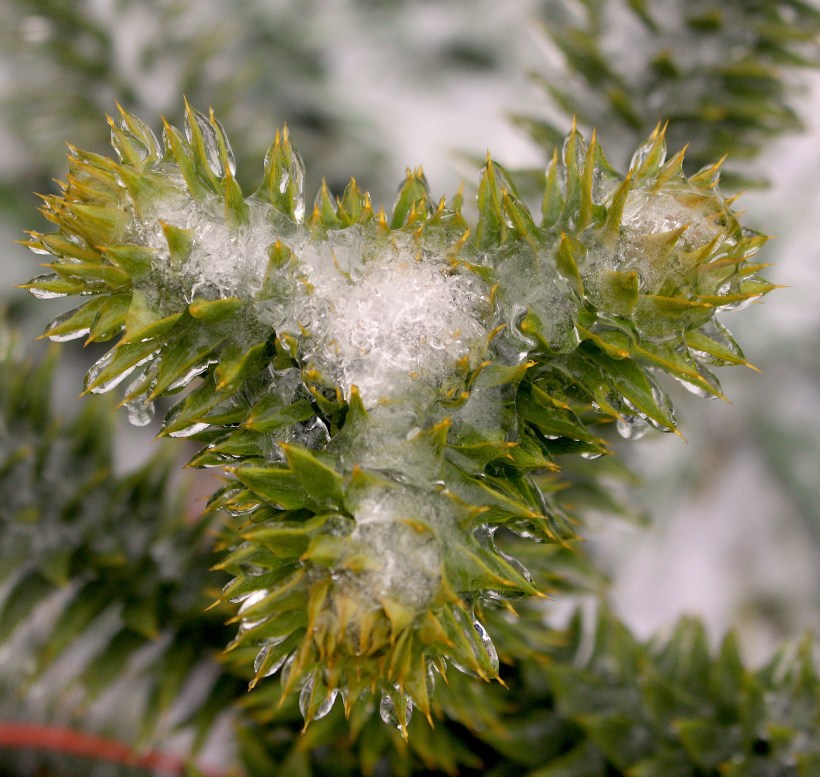
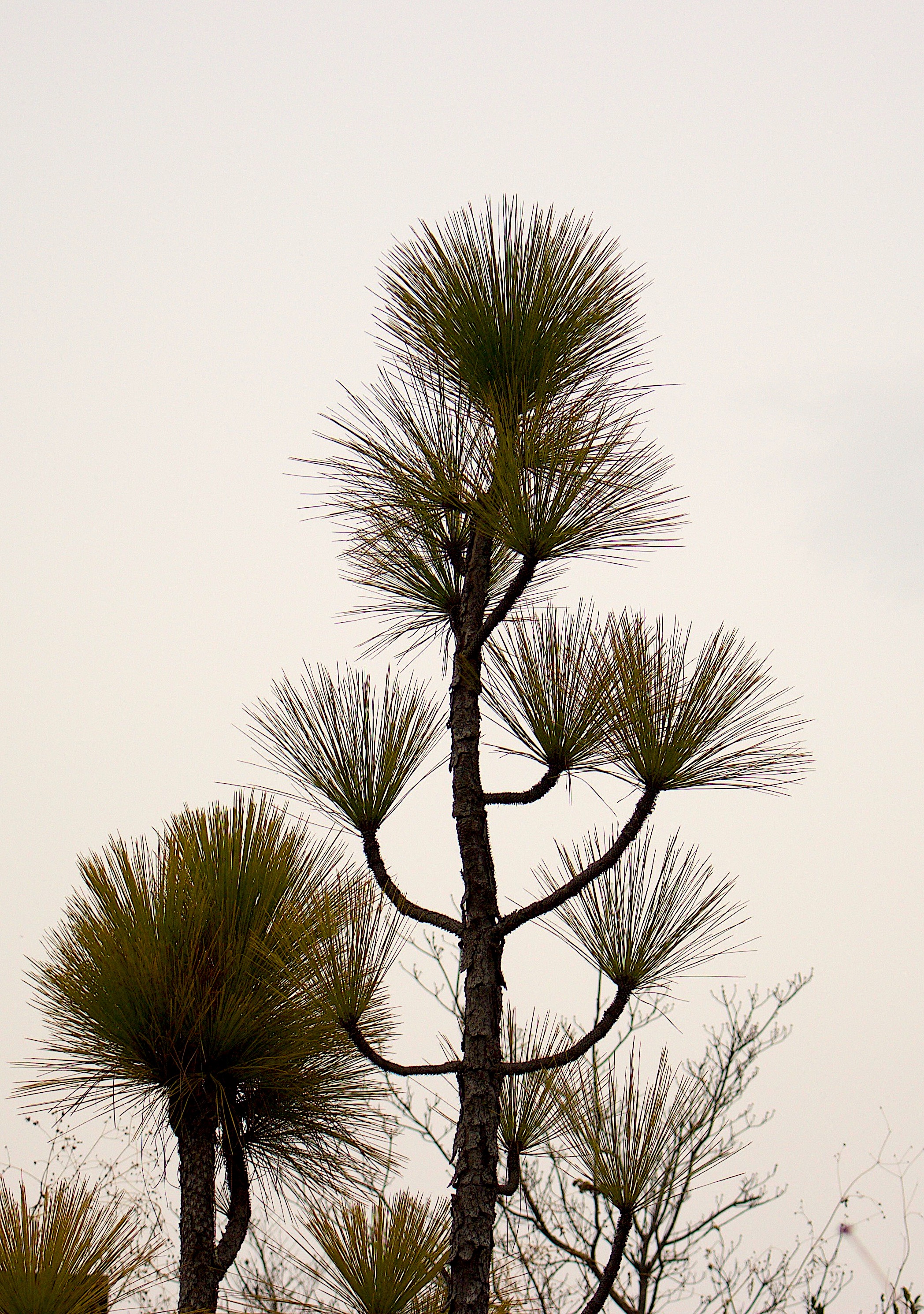
the pine tree branches
with their needles
and kitty claws

my hands are
always bleeding

and turning up
scars that cry, “I’m alive,
I feel it. I feel it all”
and then falling
back into whispers
while my body
heals itself
one more time

~Juniper Klatt, I was raised in a house of water

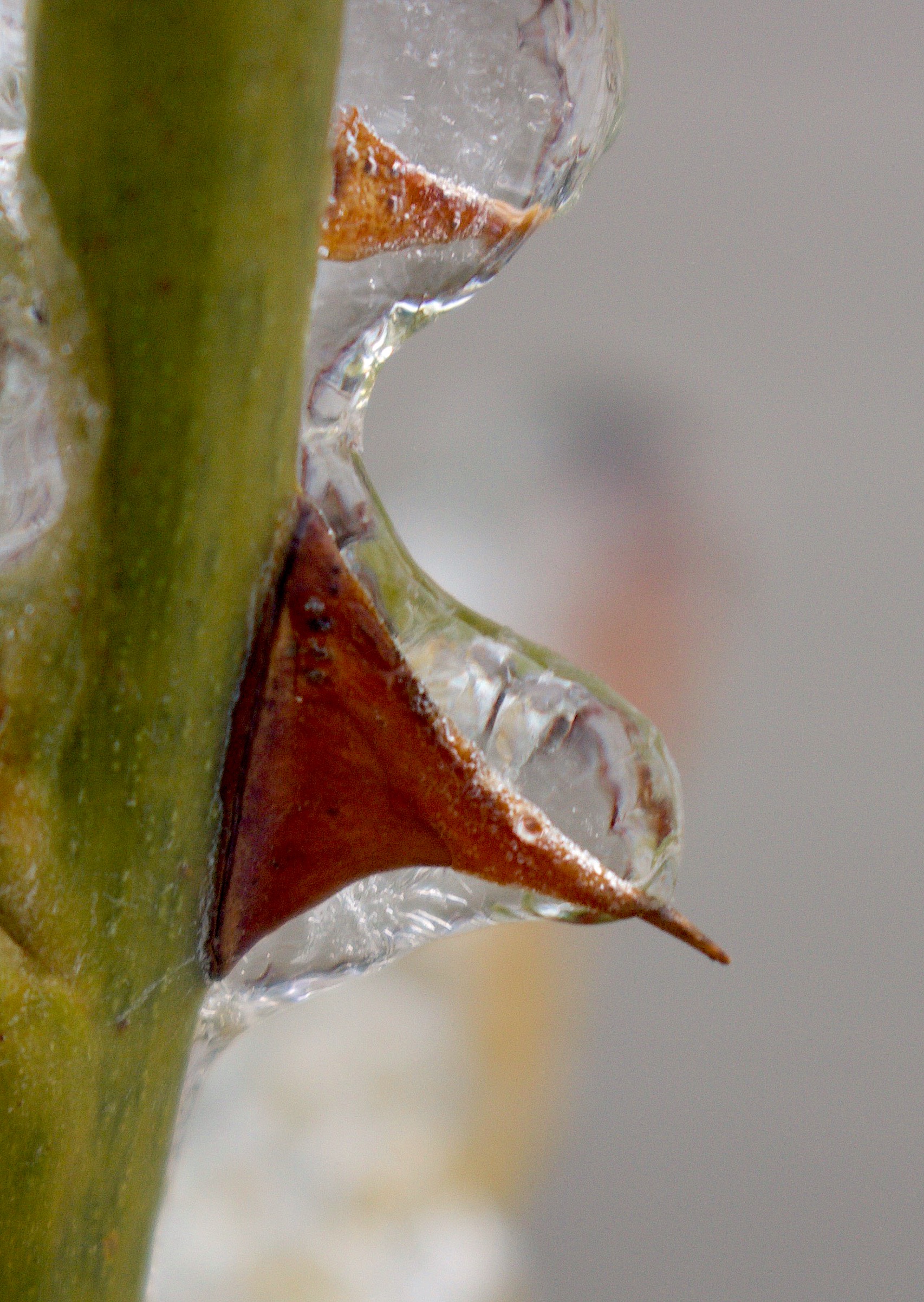
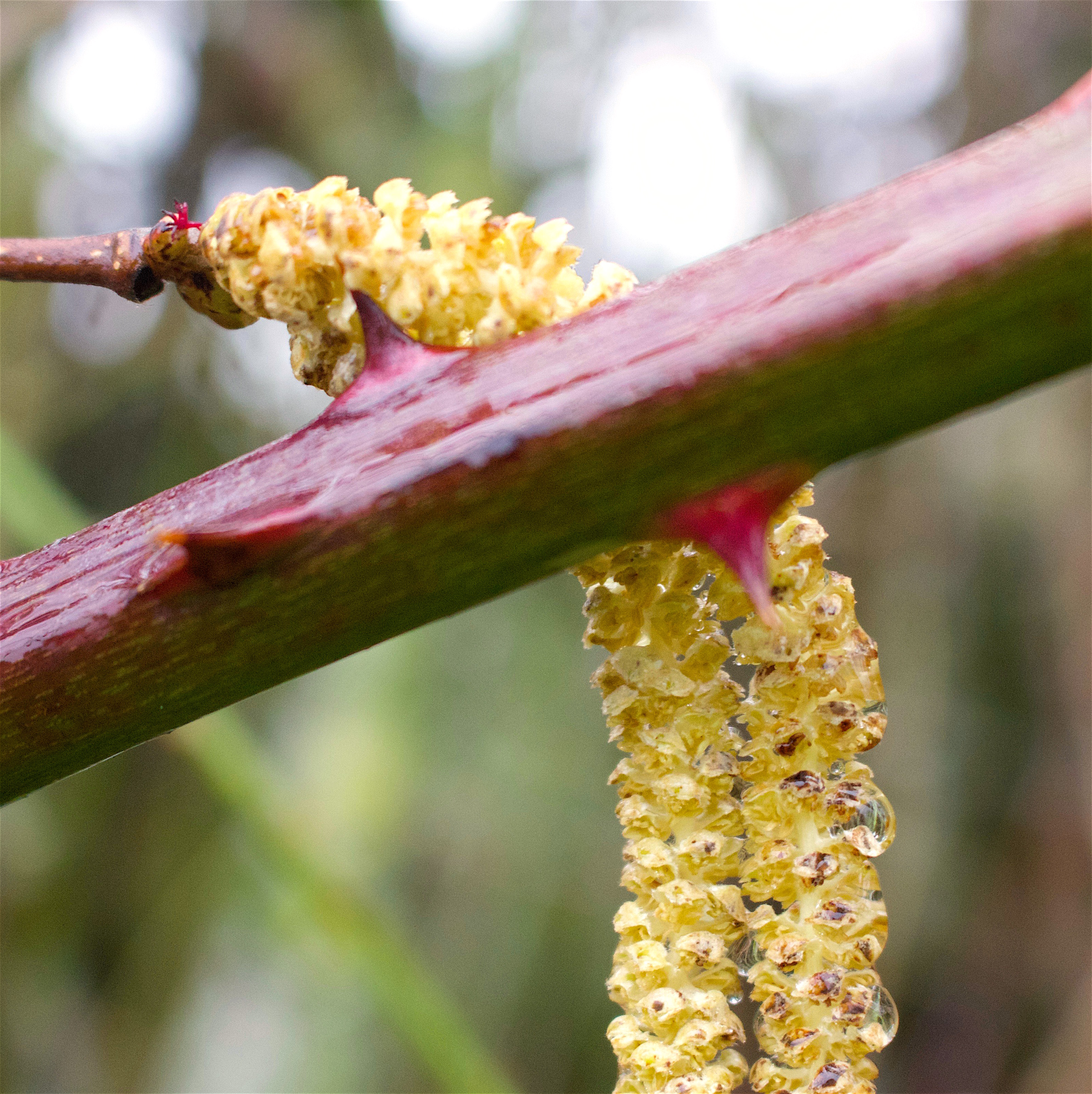
Thorns, needles and claws are indeed part of everyday life. They often are a barrier to that which is sweet and good and precious.

They can tear us up, bloody us, make us weep, make us beg for mercy.

Yet thorns did not stop our search for Salvation, did not stop Goodness, did not stop the Promise of sweetness to come.

Our scars prove we’re alive and even having been hurt, our ability to heal will never give up.

photo by Nate Gibson
One-Time
Monthly
Yearly

Make a one-time or recurring donation to support daily Barnstorming posts

Make a monthly donation

Make a yearly donation

Choose an amount

¤10.00
¤25.00
¤50.00
¤5.00
¤15.00
¤100.00
¤5.00
¤15.00
¤100.00

Or enter a custom amount

¤

Your contribution is deeply appreciated.

Your contribution is appreciated.

Your contribution is appreciated.

DonateDonate monthlyDonate yearly
A World Where Much is Missing

Leave a door open long enough,
a cat will enter.
Leave food, it will stay.
Soon, on cold nights,
you’ll be saying “Excuse me”
if you want to get out of your chair.
But one thing you’ll never hear from a cat
is “Excuse me.”
Nor Einstein’s famous theorem.
Nor “The quality of mercy is not strained.”
In the dictionary of Cat, mercy is missing.
In this world where much is missing,
a cat fills only a cat-sized hole.
Yet your whole body turns toward it
again and again because it is there.

~Jane Hirshfield “A Small-Sized Mystery” from Come, Thief.

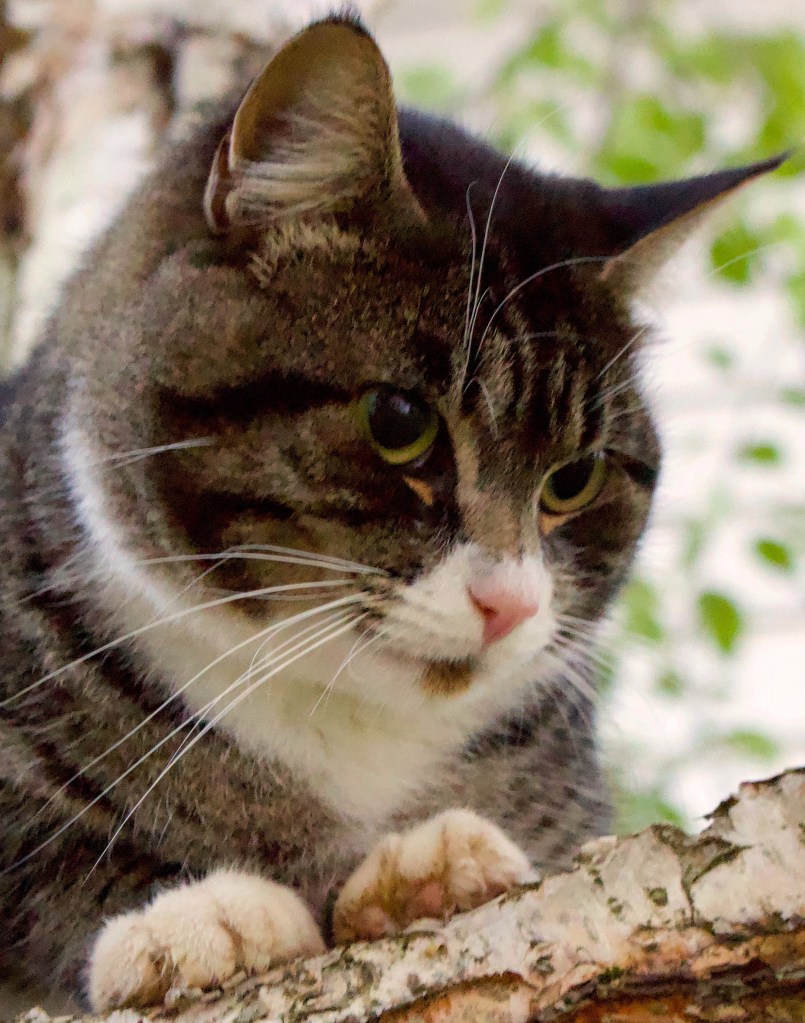
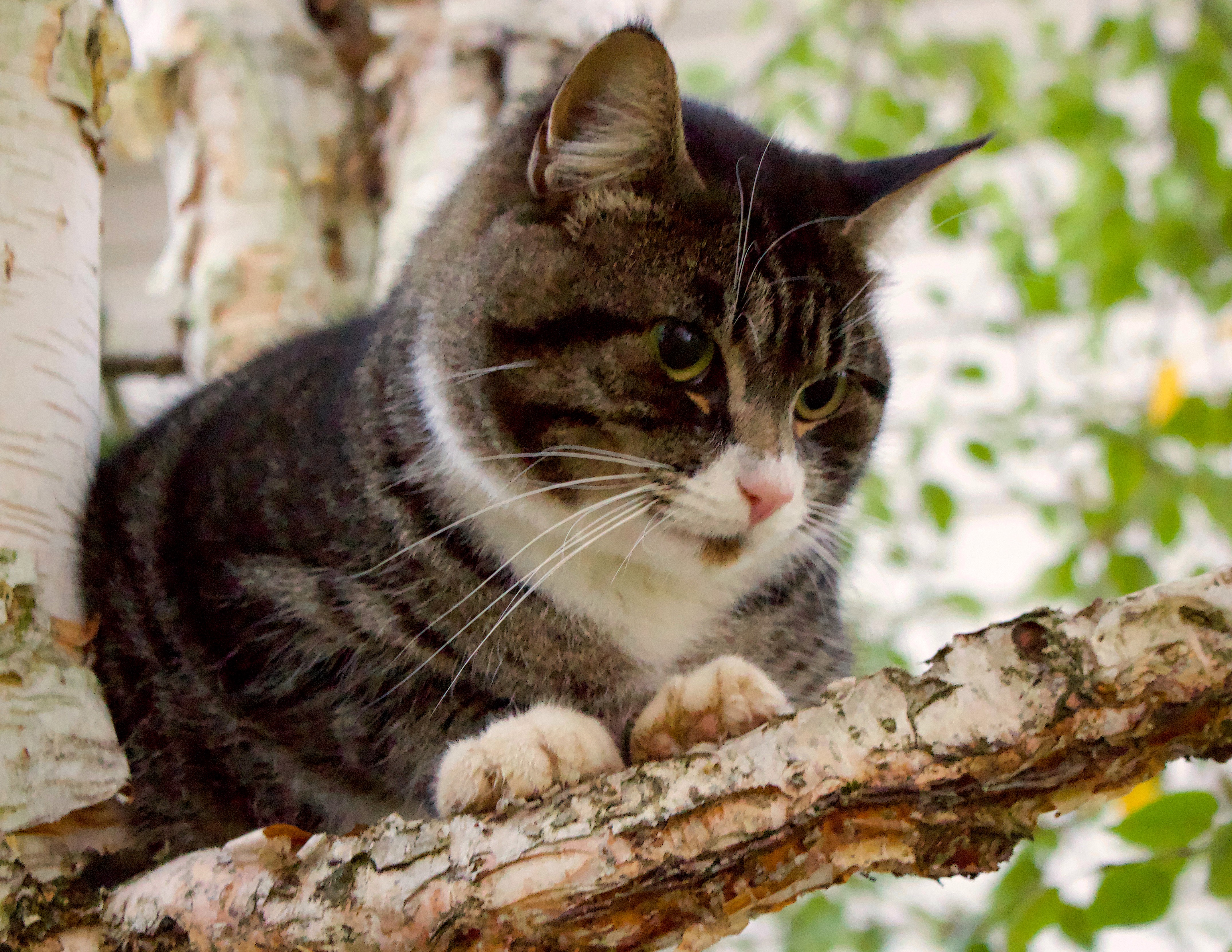
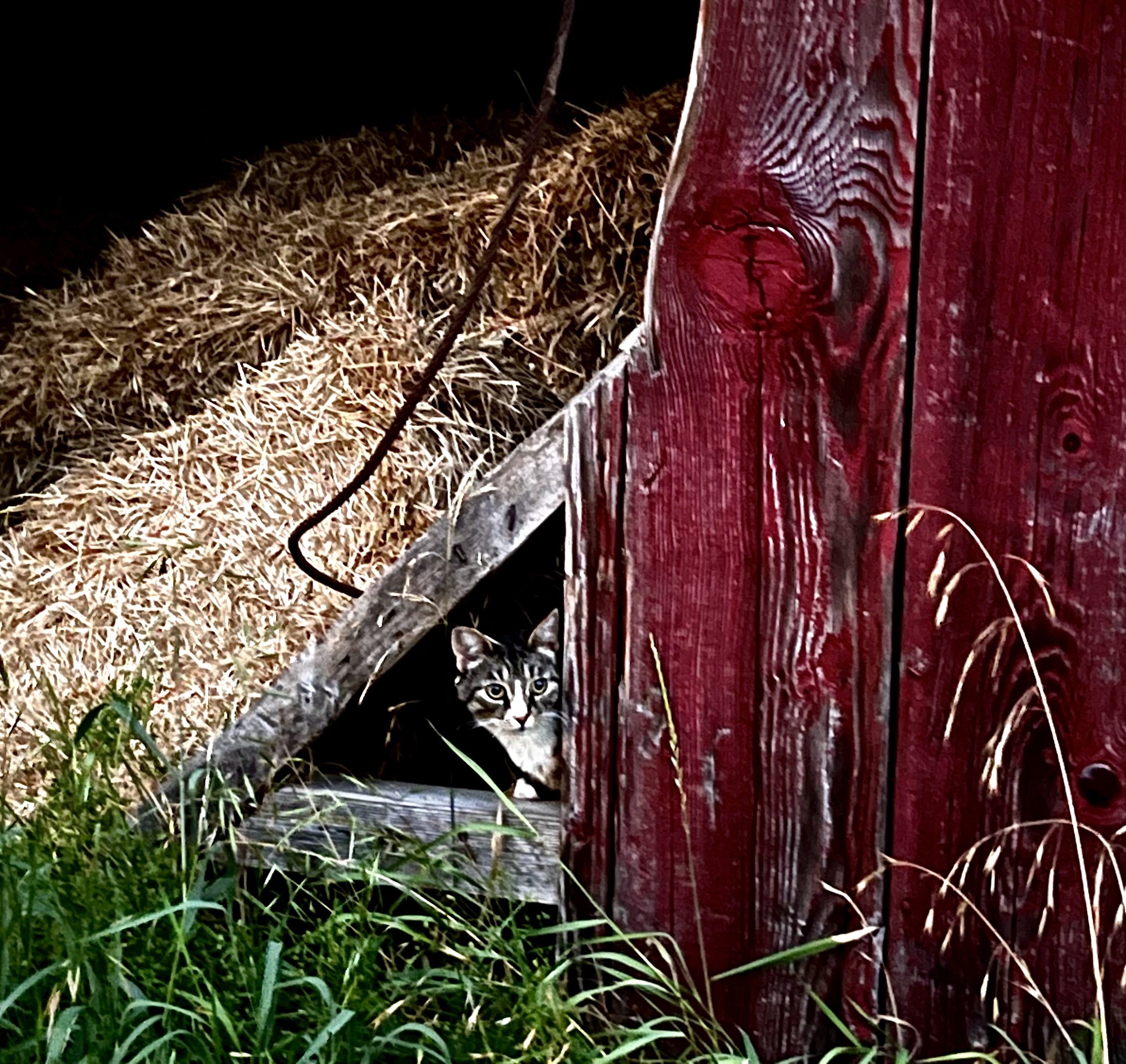
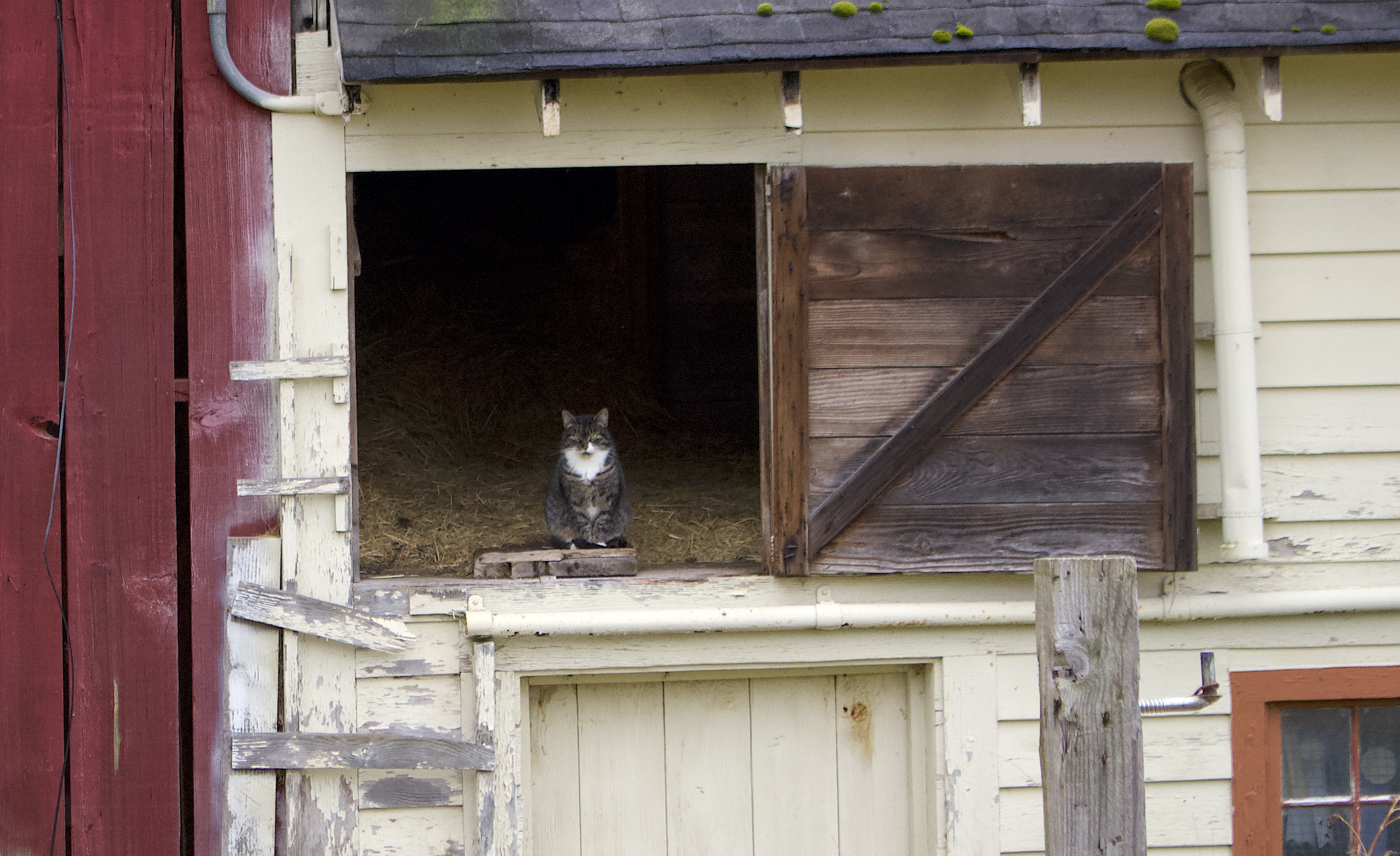
The first time I saw him, it was just a flash of gray ringed tail
disappearing into autumn night mist as I opened the back door
to pour kibble into the empty cat dish on the porch:
just another stray cat among many who visit the farm.

A few linger and stay.

So he did, keeping a distance in the shadows under the trees,
a gray tabby with white nose and bib, serious yet skittish,
watching me as I moved about feeding dogs, cats, birds, horses,
creeping to the cat dish only when the others drifted away.

There was something in the way he held his head,
an oddly forward ear; a stilted swivel of the neck.
I startled him one day as he ate his fill at the dish.

He ran, the back of his head flashing red, scalp completely gone.

Not oozing, nor something new, but recent. A nearly mortal scar
from an encounter with coyote, or eagle or bobcat.
This cat thrived despite trauma and pain, tissue still raw, trying to heal.

He had chosen to live; life had chosen him.

My first thought was to trap him, to put him humanely to sleep
to end his suffering mercifully, in truth to end my distress at seeing him every day,
envisioning florid flesh even as he hunkered invisible
in the shadowlands of the barnyard.

Yet the scar did not keep him from eating well or licking clean his pristine fur.

As much as I wanted to look away, to avoid confronting his mutilation,
I always greeted him from a distance, a nod to his maimed courage,
through wintry icy blasts and four foot snow,
through spring rains and summer heat with flies.

His wounds remained always visible,
a reminder of his inevitable fate.

I never did stroke that silky fur,
or feel his burly purr, assuming he still knew how,
but still fed his daily fill,
as he fed my need to know:
the value of a life so broken,
each breath taken is filled with sacred air.

The depth of his wounds show how much he bleeds.

my wounded friend, as close as he would allow

One-Time
Monthly
Yearly

Thank you your support for daily Barnstorming posts through a one-time or recurring donation

Make a monthly donation

Make a yearly donation

Choose an amount

¤10.00
¤25.00
¤50.00
¤5.00
¤15.00
¤100.00
¤5.00
¤15.00
¤100.00

Or enter a custom amount

¤

Your contribution is deeply appreciated.

Your contribution is appreciated.

Your contribution is appreciated.

DonateDonate monthlyDonate yearly

Fixing Eyes on the Unseen – Footsore

Mo sheasamh ort lá na choise tinne…
(You are the place where I stand on the day when my feet are sore…)
~Irish saying translated by poet and theologian Pádraig Ó Tuama

I’ve been foot sore the last few days, most likely from trying in vain to pull my feet out of some boot-sucking mud in the barnyard while pushing a heavy wheelbarrow. With each painful step I now take, I am reminded how dependent I am on strong legs and feet to carry me through the pathways of life.

I have stumbled into holes, picked my way carefully over sharp rocks, scrambled up steep climbs and pulled my way through the muddiest mire.

Yes, of course I’ve had sore feet before:
blisters and callouses, tendonitis and fasciitis, bruised toes and stressed arches. When every step I take points out my failures and frailty, I begin to beg for a soft landing with each stride.

But more than comfort, I seek a stable place of trust to put my feet, to stand firm even when standing feels impossible.

Lord, be my landing place when I hurt and pull me out when I get stuck up to my ankles. May your gentle road rise to meet my sore feet.

This year’s Lenten theme:
So we fix our eyes not on what is seen, but on what is unseen, since what is seen is temporary, but what is unseen is eternal.
2 Corinthians 4: 18

Take this fainted heart
Take these tainted hands
Wash me in Your love
Come like grace again

Even when my strength is lost
I’ll praise You
Even when I have no song
I’ll praise You
Even when it’s hard to find the words
Louder then I’ll sing Your praise
I will only sing Your praise

Take this mountain weight
Take these ocean tears
Hold me through the trial
Come like hope again

Even when the fight seems lost
I’ll praise You
Even when it hurts like hell
I’ll praise You
Even when it makes no sense to sing
Louder then I’ll sing Your praise, oh-ooh
I will only sing Your praise, oh-ooh

I will only sing Your praise, oh, God
I will only sing Your praise

And my heart burns only for You
You are all, You are all I want
And my soul waits only for You
And I will sing ’til the morning has come

Lord my heart burns only for You
You are all, You are all I want
And my soul waits only for You
And I will sing ’til the miracle comes, yeah

I will only sing Your praise
I will only sing Your praise, ooh-oh, oh
I will only sing Your praise

Even when the morning comes
I’ll praise You
Even when the fight is won
I’ll praise You
Even when my time on earth is done
Louder then I’ll sing your praise
I will only sing Your praise
~Joel Houston

Fixing Eyes on the Unseen – A Hard Gift to Keep

To pull the metal splinter from my palm
my father recited a story in a low voice.
I watched his lovely face and not the blade.
Before the story ended, he’d removed
the iron sliver I thought I’d die from.

I can’t remember the tale,
but hear his voice still, a well
of dark water, a prayer.
And I recall his hands,
two measures of tenderness
he laid against my face,
the flames of discipline
he raised above my head.

Had you entered that afternoon
you would have thought you saw a man
planting something in a boy’s palm,
a silver tear, a tiny flame.
Had you followed that boy
you would have arrived here,
where I bend over my wife’s right hand.

Look how I shave her thumbnail down
so carefully she feels no pain.
Watch as I lift the splinter out.
I was seven when my father
took my hand like this,
and I did not hold that shard
between my fingers and think,
Metal that will bury me,
christen it Little Assassin,
Ore Going Deep for My Heart.

And I did not lift up my wound and cry,
Death visited here!
I did what a child does
when he’s given something to keep.
I kissed my father.
~Li-Young Lee, “The Gift” from Rose

I did, without ever wanting to, remove my child’s splinter, lance a boil, immobilize a broken arm, pull together sliced skin, clean many dirty wounds. It felt like I crossed the line between mommy and doctor.  But someone had to do it, and a four hour wait in the emergency room didn’t seem warranted.

My own children learned to cope with hurt made worse by someone they trusted to be comforter. I dealt with inflicting pain, temporary though it may be, to flesh that arose from my flesh. It hurt as much as if it were my own wound needing cleansing, not theirs.

And so, in the similar way, our wounds are His – He is constantly feeling our pain as He performs healing surgeries in our lives, not because He wants to but because He must, to save us from our own self-destruction. Too often we yell and kick and protest in our distress, making it all that much more difficult for both of us.

If only we can come to acknowledge His intervention is our salvage:
our tears to flow in relief, not anguish,
we cling to His protection rather than pushing Him away,
we kiss Him in gratitude as we are restored again and yet again.

This year’s Lenten theme:
So we fix our eyes not on what is seen, but on what is unseen, since what is seen is temporary, but what is unseen is eternal.
2 Corinthians 4: 18

Whispering Words of Wisdom: Let It Be

Aspire to decency. Practice civility toward one another. Admire and emulate ethical behavior wherever you find it. Apply a rigid standard of morality to your lives; and if, periodically, you fail ­as you surely will, adjust your lives, not the standards.
Ted Koppel

Ten years ago during this week in August, my clinical work was routine and ordinary but took a quick turn when I got a message from the media director at my university that a 14 month old medical opinion article I’d written for the student newspaper and then posted as a regular contributor on www.kevinmd.com was suddenly being quoted on the Huffington Post, Salon.com and other websites.  

Within hours, over a dozen media websites were citing “A War on Pubic Hair”

The original article was written as one in a series of opinion pieces on medical issues pertinent to college students requested by the student newspaper. I wrote it in spring 2011 after draining my umpteenth staph bacteria genital abscess due to the increasingly common practice of cosmetic removal of pubic hair. I felt the students needed to understand the hazards of what they were doing and hoped I could spare the next patient from experiencing an infection so painful and potentially serious.

So it went viral, over a year after it was written, all in a matter of hours. I was being quoted as if I had just been interviewed by these news agencies, which I had not, and they began feeding wrong information to each other: I was identified as “a leading British physician” since the first media report originated in the U.K.  One British site actually asked permission to reprint the original article, which I appreciated so that my words could not be taken out of context, but they attached a photo of me to the article lifted from my family picture on my personal blog.

Soon my personal cell phone started to ring in the middle of the night and my email in-box filled up. Messages from Europe, South America and all over the U.S. came in with requests for interviews, wanting me to elaborate in more detail on my very “provocative” point of view. I said no to every one of them even though some were respectable agencies, like the BBC, because I’d said all I had to say on this particular subject. I did not want my long career to be reduced to my defense of pubic hair or my life motto to read “Leave it alone!” Indeed I can hold my head up and be proud to tell my grandchildren someday that I actually turned down the Playboy Channel.

The online comments on the articles rapidly reproduced themselves, numbering in the thousands, with many hostile to my perspective and saying so in the most mean and inflammatory ways possible, citing my age, my looks and obvious lack of sex appeal as showing I lacked credibility in this subject. I dared to question the point of a multi-billion dollar cosmetic industry spawned by the even bigger multi-billion dollar porn industry, and no one was going to let me get away with it unscathed.

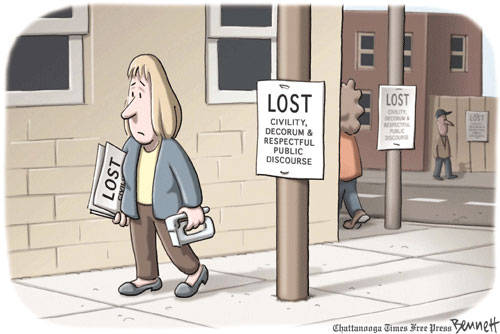
Civility has become even more endangered on the internet in the intervening ten years so I believe I actually got off easy at the time. Human beings lack accountability for their words and actions while hiding behind anonymous comments on media websites and blogs. It is easy to attack, lie, threaten, and bully when it is only words on a screen directed at someone you don’t know and will never meet. Decency and civility are lost forever when the standards for moral and ethical behavior disappear in a fog of pixels and bytes.

It has taken some time and distance for me to consider whether I did the right thing writing about a medical issue no one else would touch at the time. The “bare” trend has definitely waned over the last decade yet plenty of people still engage in the practice, although the recent sexual spread of the monkey pox virus is making some think twice about it.

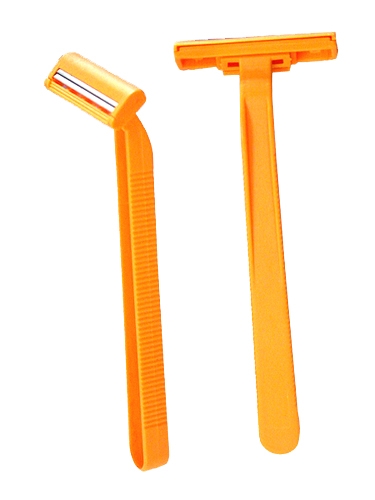
If I managed to convince someone to put away the razor, stop the waxing, and respect their body as nature intended it to be, maybe I did the right thing after all.

After all – I shared whispered words of wisdom:
Let it be…

Cartoon by Clay Bennett
One-Time
Monthly
Yearly

Make a one-time or recurring donation

Make a monthly donation

Make a yearly donation

Choose an amount

¤5.00
¤10.00
¤20.00
¤5.00
¤15.00
¤100.00
¤5.00
¤15.00
¤100.00

Or enter a custom amount

¤

Your contribution is deeply appreciated.

Your contribution is appreciated.

Your contribution is appreciated.

DonateDonate monthlyDonate yearly
The Scar of Proud Flesh

There are names for what binds us:
strong forces, weak forces.
Look around, you can see them:
the skin that forms in a half-empty cup,
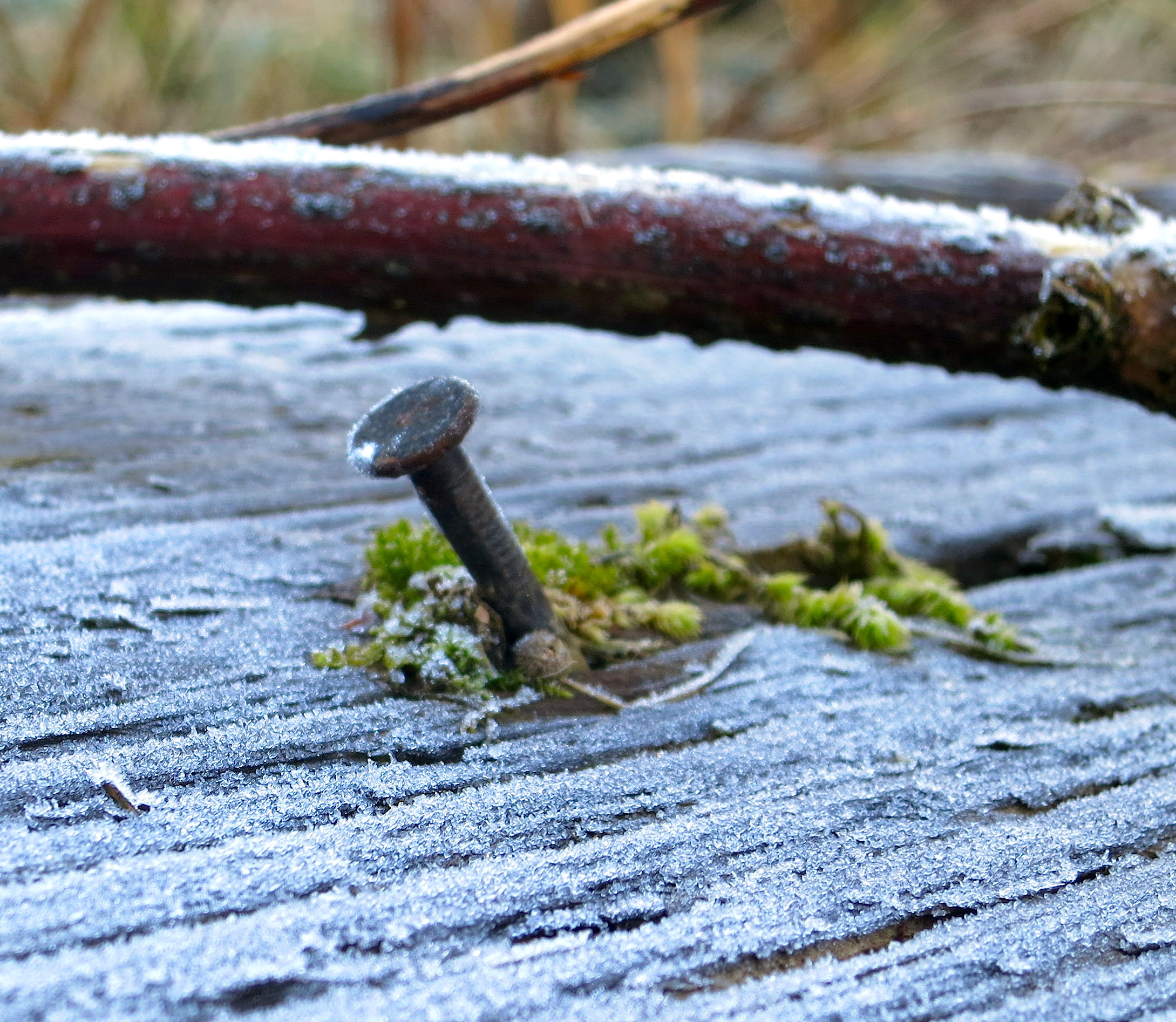
nails rusting into the places they join,
joints dovetailed on their own weight.

The way things stay so solidly whenever they’ve been set down –
and gravity, scientists say, is weak.

And see how the flesh grows back across a wound, with a great vehemence,
more strong than the simple, untested surface before.

There’s a name for it on horses, when it comes back darker and raised:
proud flesh, as all flesh is proud of its wounds,
wears them as honors given out after battle,
small triumphs pinned to the chest –

And when two people have loved each other,
see how it is like a scar between their bodies,
stronger, darker, and proud;
how the black cord makes of them a single fabric
that nothing can tear or mend.
~Jane Hirshfield  “For What Binds Us”

Scars come in various sizes and shapes, some hidden, some quite obvious to all.  How they are inflicted also varies–some accidental, others therapeutic, and too many intentional. 

The most insidious are the ones so deep inside,  no one can see or know they are there.

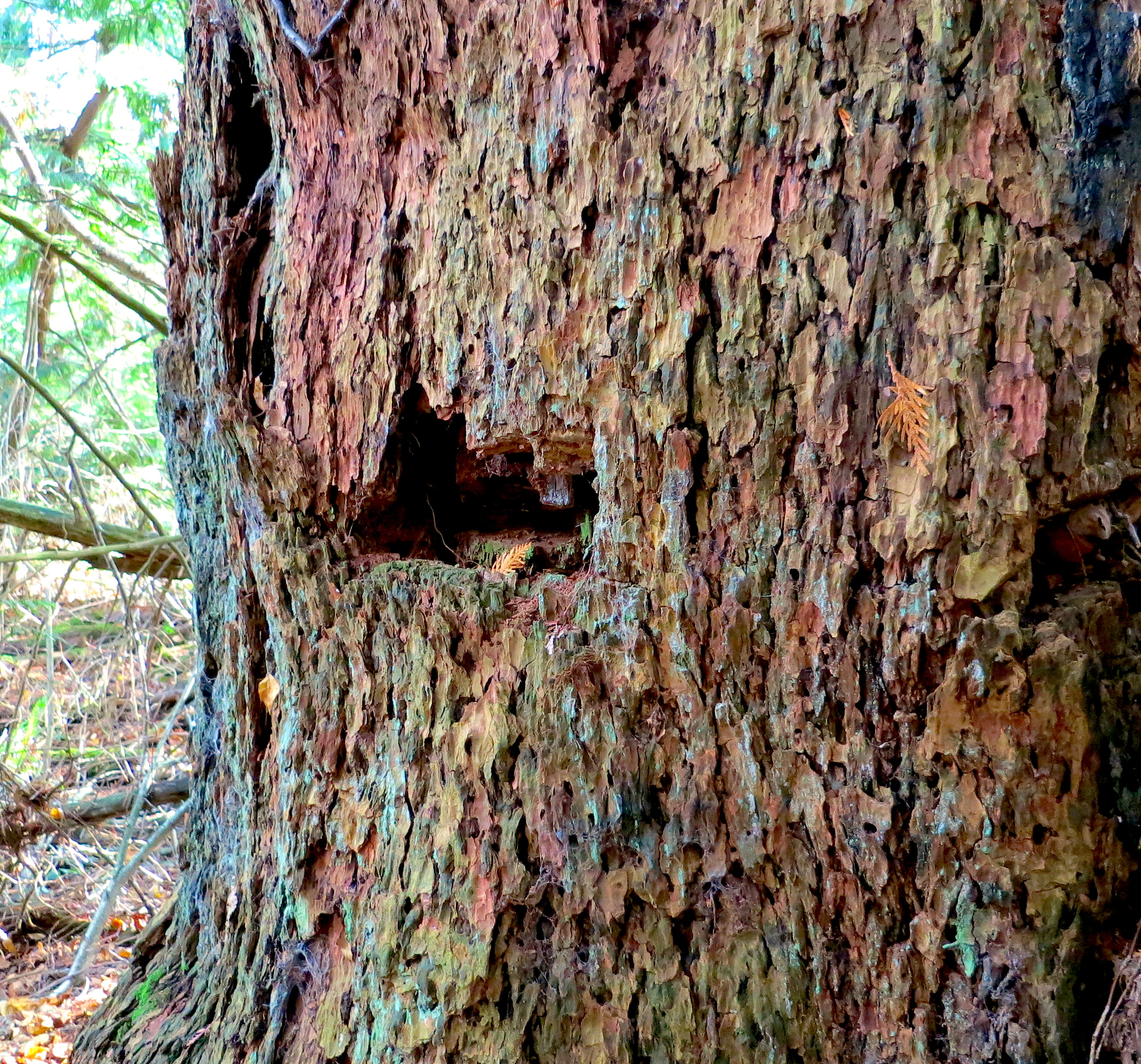
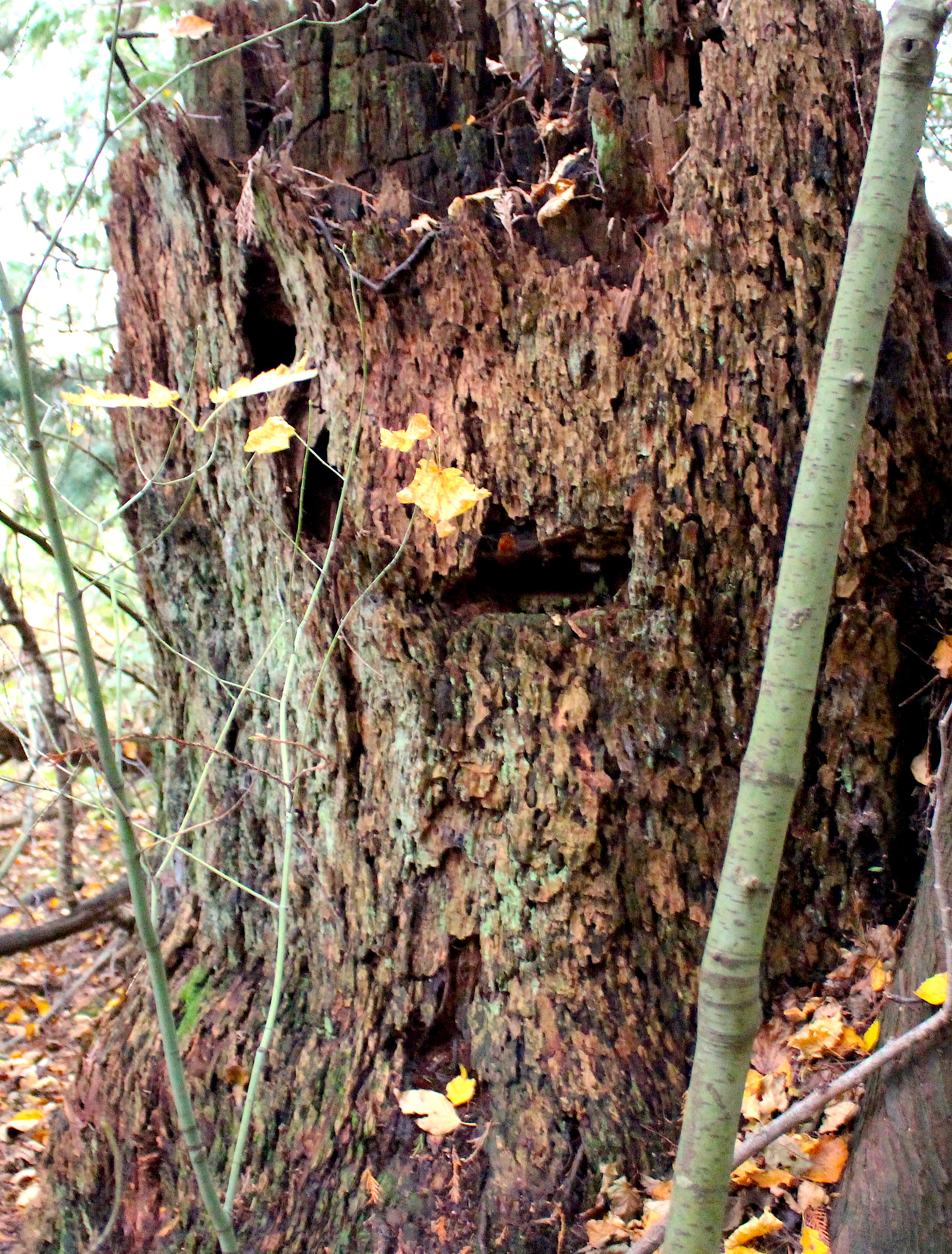
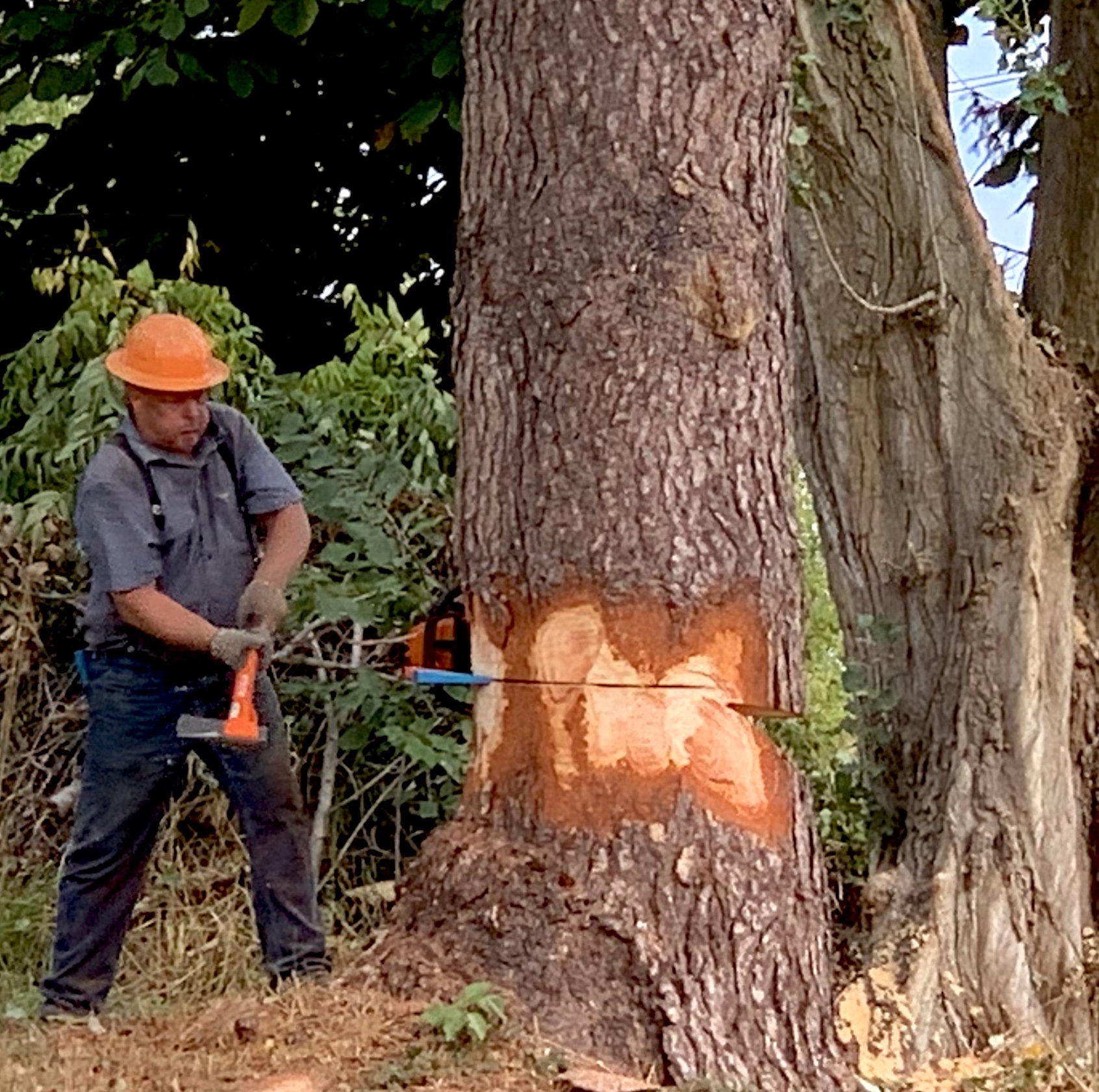
Back in our woodlot stands a sawed off stump of a cedar that was old growth in virgin forest over a hundred years ago.  One day clearcut loggers came through and took every tree they could to haul to the local sawmills to become beams and lumber for the growing homesteading population in the region.  This cedar once was grand and vast, covering an immense part of the forest floor, providing protection to trillium at its feet and finches’ nests and raptors hunting in its branches.   It nurtured its environment until other plans were made, and one day, axes fell on its sides to cut out the notches for the springboards where two loggers stood either side of the proud trunk to man the saw which brought the tree down. 

Where the wood went is anyone’s guess.  It could be one of the mighty beams supporting our old hay barn roof or it could have become the foundation flooring of a nearby one room school house.  It surely had a productive and meaningful life as part of a structure somewhere until rot or carpenter ants or fire brought it once again to its knees.

But this ghost of a stump remains, a tombstone of remembrance of a once grand tree, the notch scars embedded deep in its sides, nursing new seedlings from its center and moss, lichen and ferns from its sides.

I come from logger stock so I don’t begrudge these frontier settlers their hard scrabble living, nor minimize their dangerous work in order to feed themselves and their families.  It’s just I’m struck by those scars over one hundred years later — such a visible reminder of what once was a vital living organism toppled for someone’s need and convenience.

Trees are not unique.  It happens to people too.  Everyday scars are inflicted for reasons hard to justify.  Too often I see them self-inflicted in an effort to feel something other than despair.  Sometimes they are inflicted by others out of fear or need for control.

Sometimes they are simply the scars of living – on our horses they are a dark tough scar of leathery “proud flesh”. These are the wounds that accumulate on our journey through our numbered days.

None of them are as deep and wide as the scars that were accepted on our behalf, nor as wondrous as the Love that oozed from them, nor as amazing as the Grace that abounds to this day because of the promise they represent. 

These are scars from the Word made Flesh, a proud flesh that won’t give way, lasting forever.

As a result, that Tree lives, and so do we.

One-Time
Monthly
Yearly

Make a one-time donation to support Barnstorming

Make a monthly donation

Make a yearly donation

Choose an amount

¤5.00
¤10.00
¤20.00
¤5.00
¤15.00
¤100.00
¤5.00
¤15.00
¤100.00

Or enter a custom amount

¤

Your contribution is deeply appreciated.

Your contribution is appreciated.

Your contribution is appreciated.

DonateDonate monthlyDonate yearly
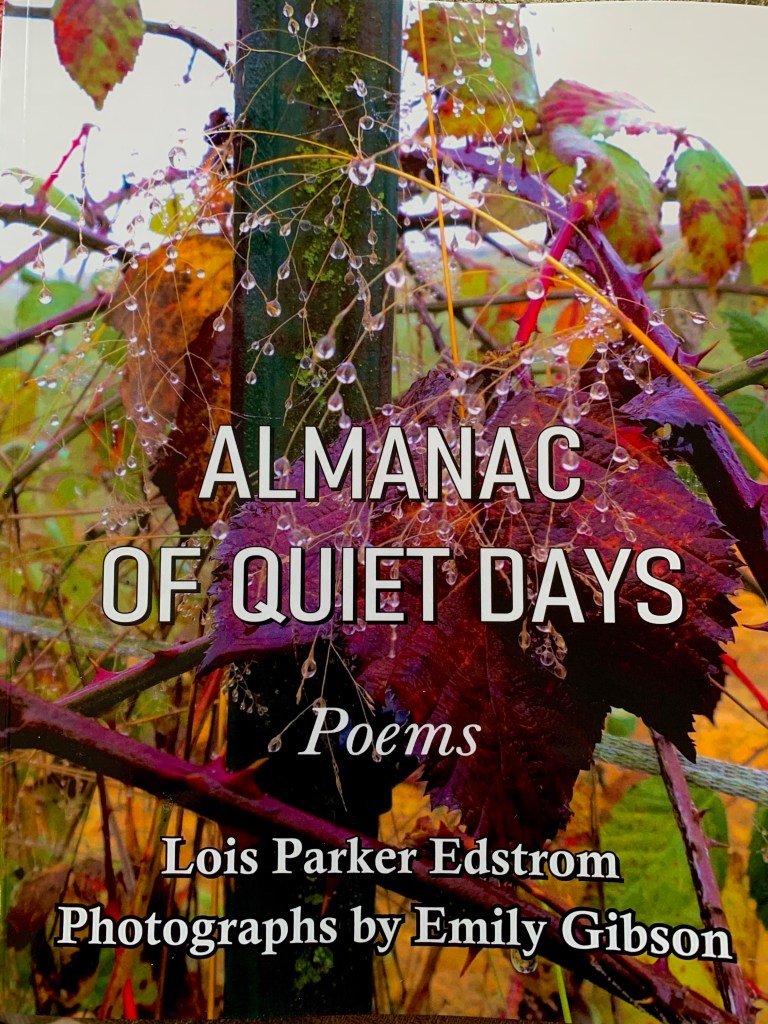
A book of beauty in words and photography, available to order here:

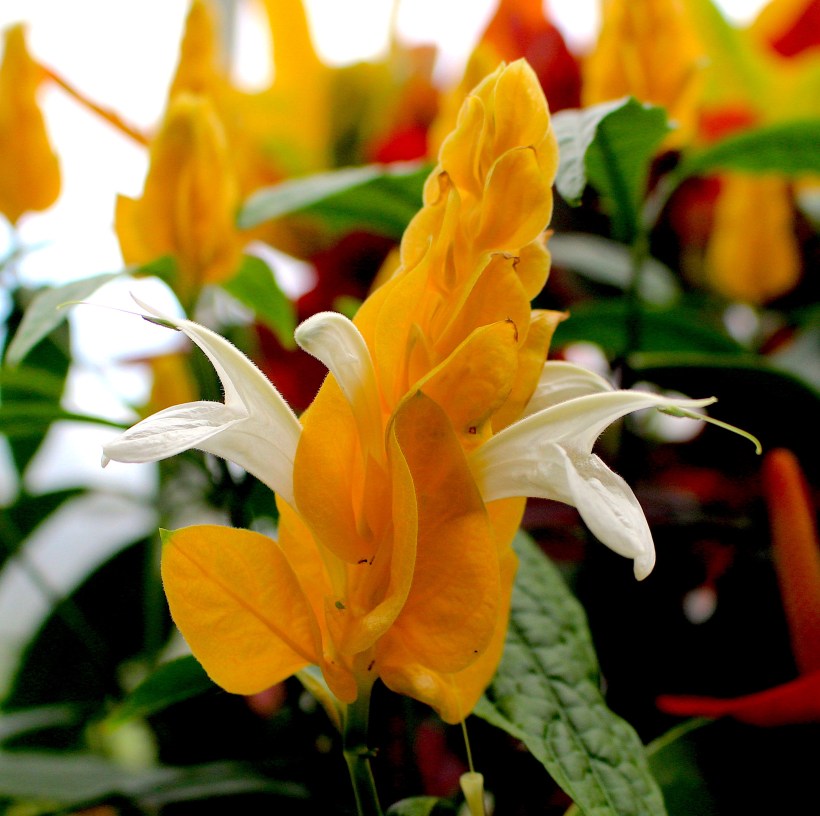
Cure for Every Hurt

hankerchief tree (Ireland)
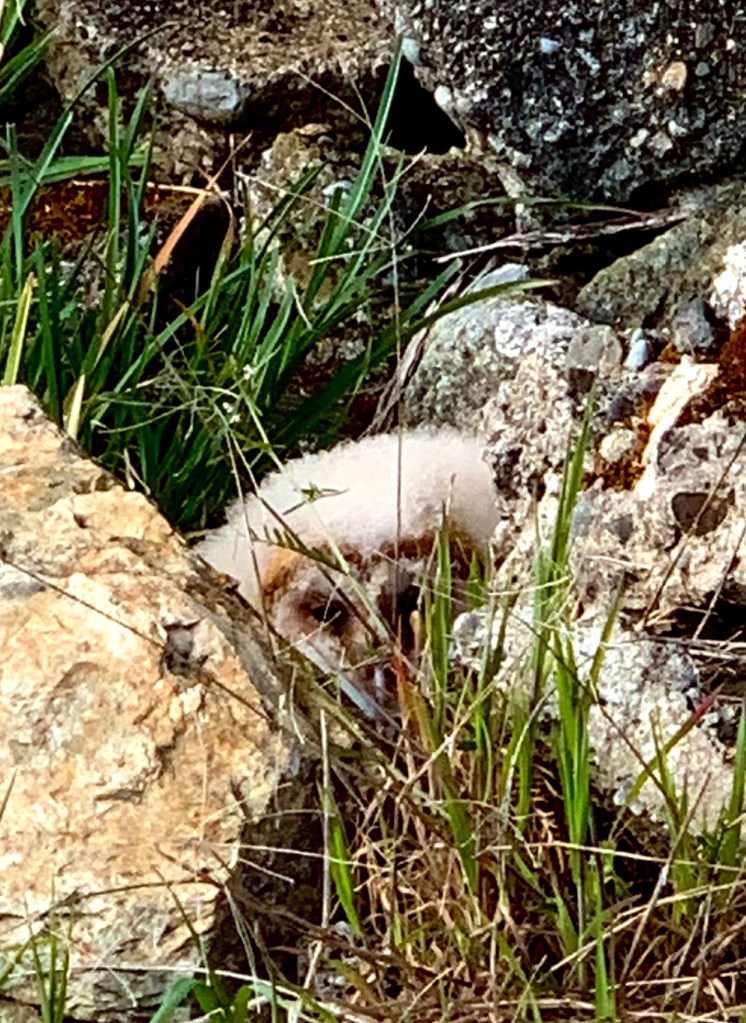
Baby Barn Owlet hiding in the rocks and grass
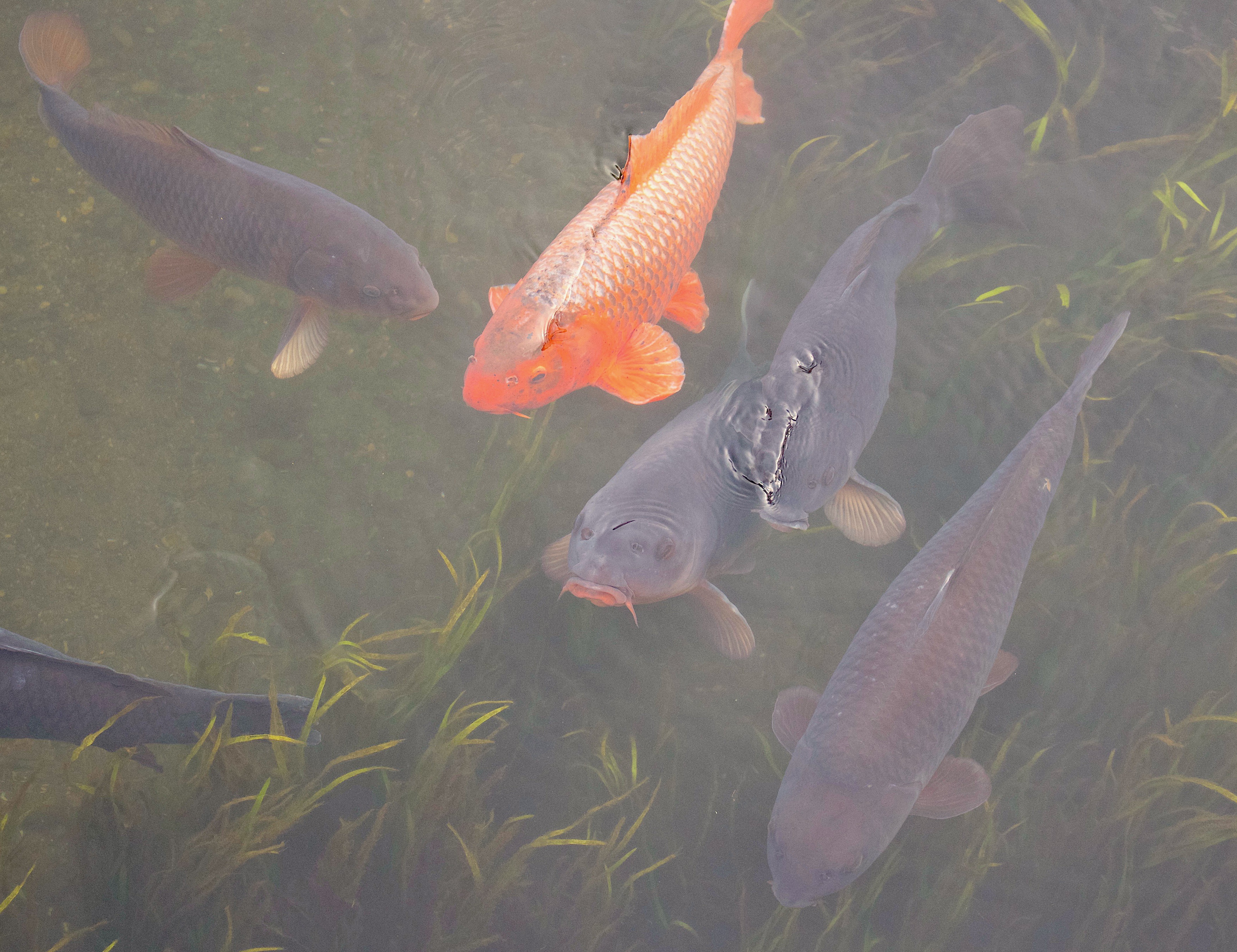
River carp (2-3 feet long) in Higashi-Kurume, Tokyo

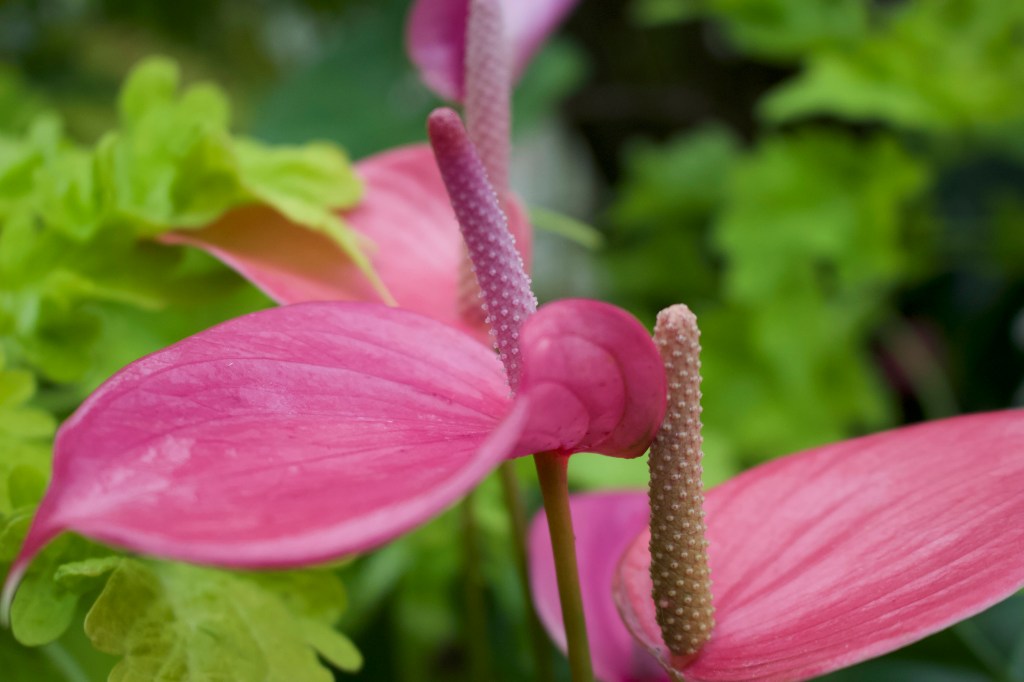
Gardens are also good places
to sulk. You pass beds of
spiky voodoo lilies   
and trip over the roots   
of a sweet gum tree,   
in search of medieval   
plants whose leaves,   
when they drop off   
turn into birds
if they fall on land,
and colored carp if they   
plop into water.

Suddenly the archetypal   
human desire for peace   
with every other species   
wells up in you. The lion   
and the lamb cuddling up.
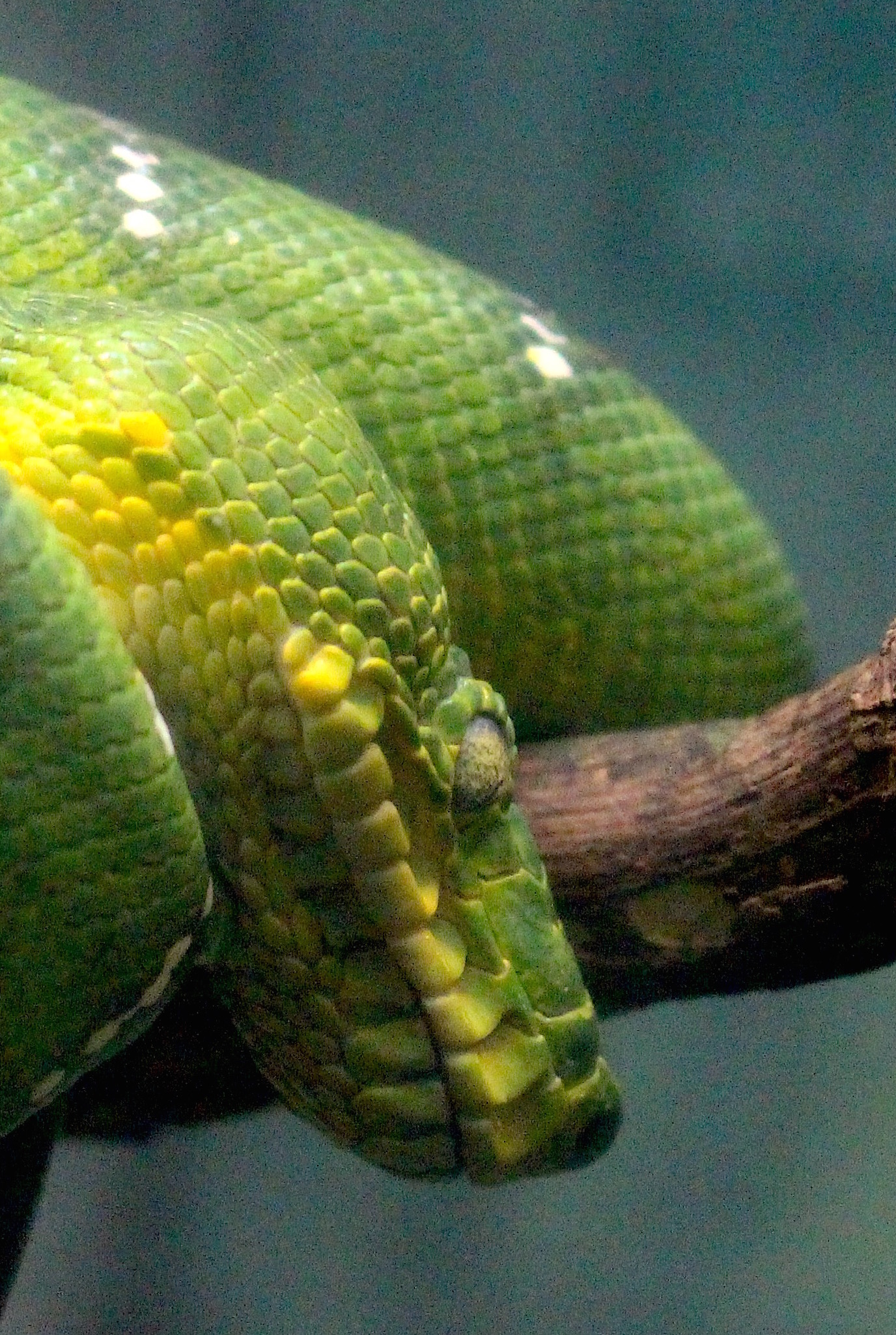
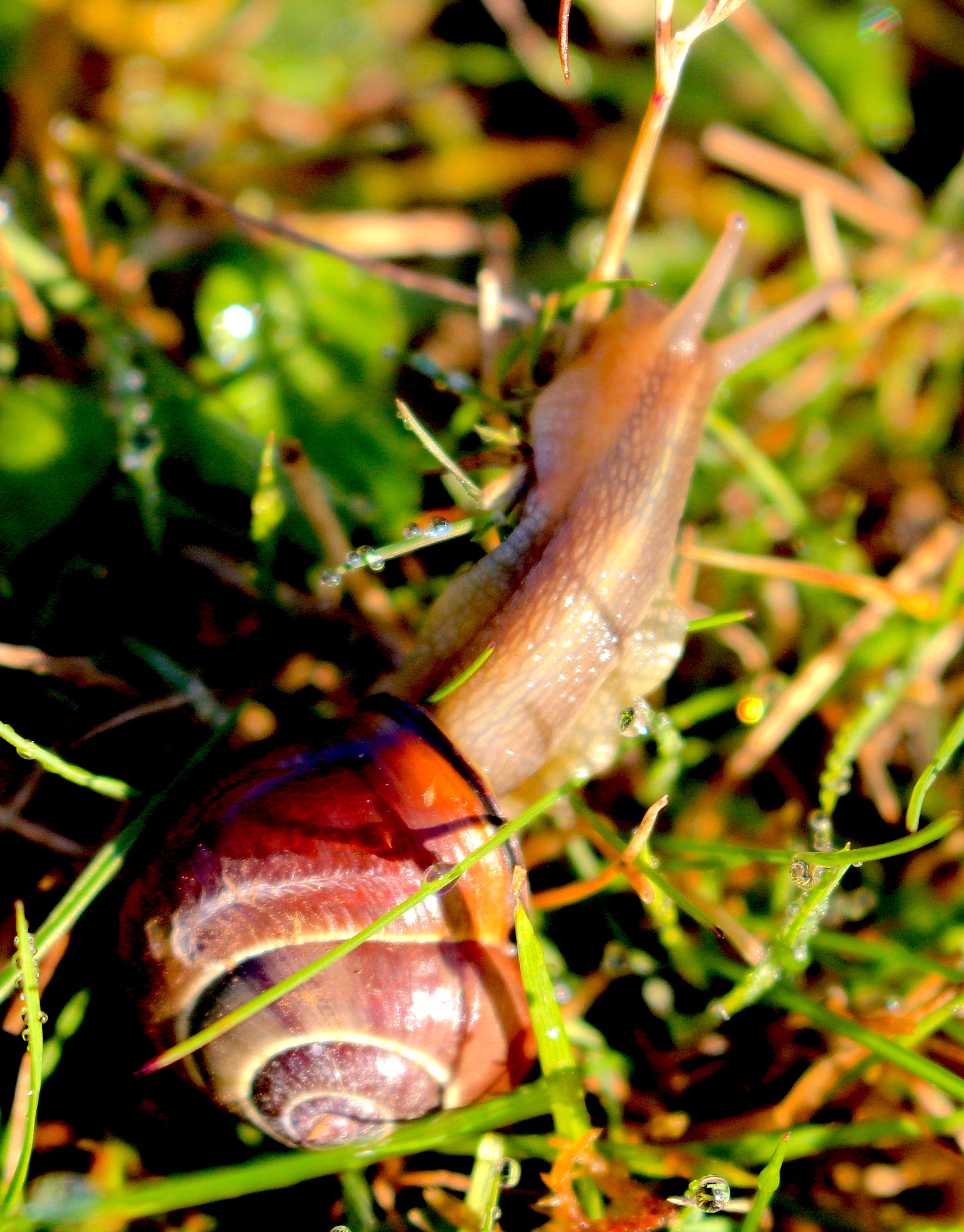
The snake and the snail, kissing.
Even the prick of the thistle,   
queen of the weeds, revives   
your secret belief
in perpetual spring,
your faith that for every hurt   
there is a leaf to cure it.

~Amy Gerstler “Perpetual Spring” from Bitter Angel

photo by Tomomi Gibson

We all want to fix what ails us: that was the point of my many years of medical training and over 40 years “practicing” that art. We want to know there is a cure for every hurt, an answer for every question, a resolution to every mystery, or peace for every conflict.

And there is. It just isn’t always on our timeline, nor is it always the answer we expect, nor the conflict magically dissolved. The mystery shall remain mystery until every tear is dried, as we stand before the Face of our Holy God who both loves and judges our hearts.

Sometimes this life hurts – a lot – but I believe in the perpetual Spring and Resurrection that guarantees our complete healing.

Soli Deo Gloria

A new book available to order https://barnstorming.blog/new-book-available-almanac-of-quiet-days/from Barnstorming and poet Lois Edstrom!