

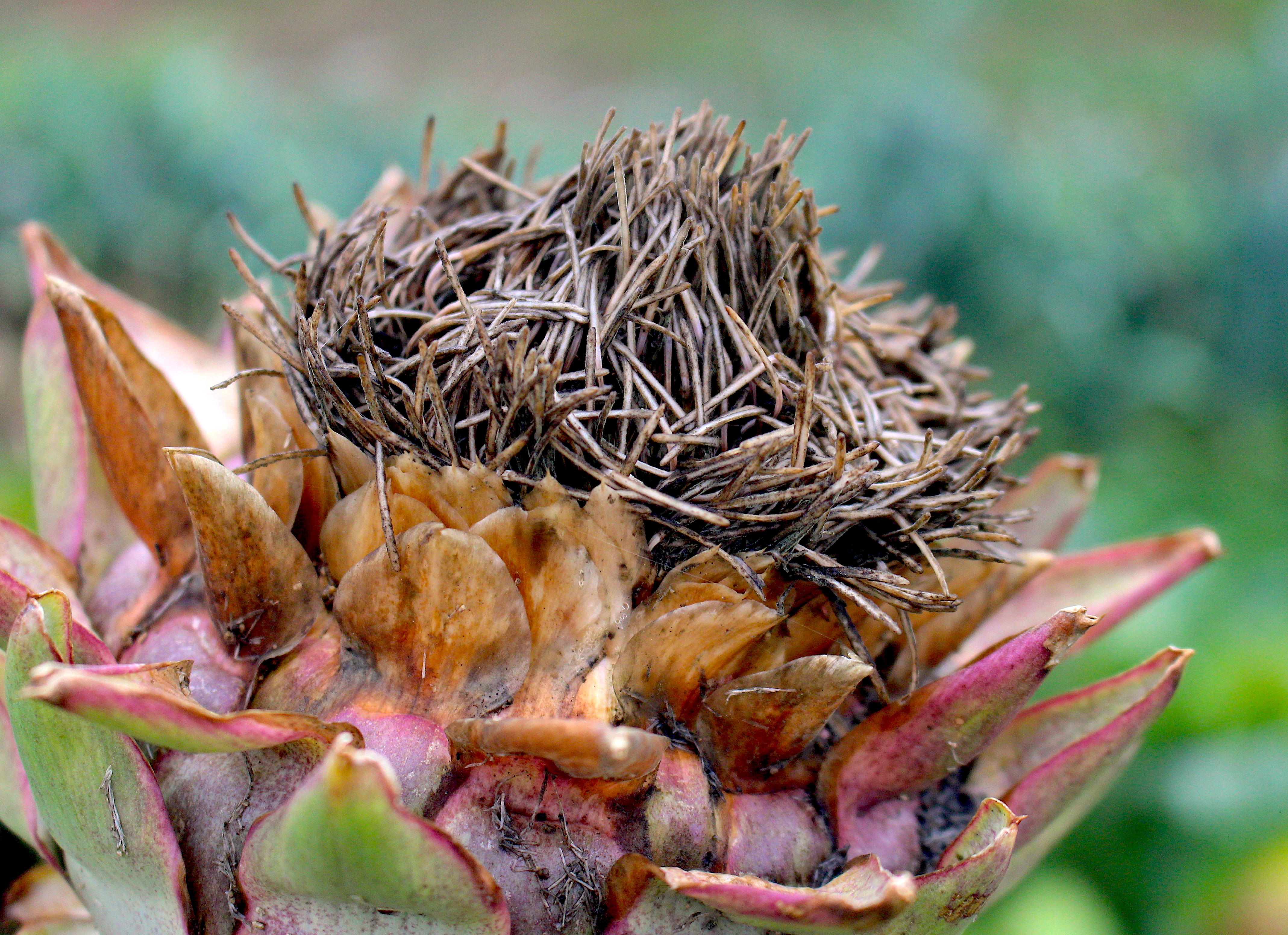
For My Soul: This is Going to Hurt

September.
Second-year medical student.
An early patient interview
at the Massachusetts General Hospital
Routine hernia repair planned, not done.
Abdomen opened and closed.
Filled with disease, cancer.

The patient is fifty-six,
a workingman, Irish
I sit with him, notice
the St. Christopher medal
around his neck.
Can’t hurt, can it? he laughs.
I have become his friend.

I bring him a coloring book picture
that shows this thing, this unfamiliar
organ that melted beneath our hands
at dissection:
Pancreas.

Leaving his room, crying,
avoiding classmates,
I take the back stairs.
I find myself locked,
coatless in the courtyard outside.

~Kelley Jean White “Pandora”
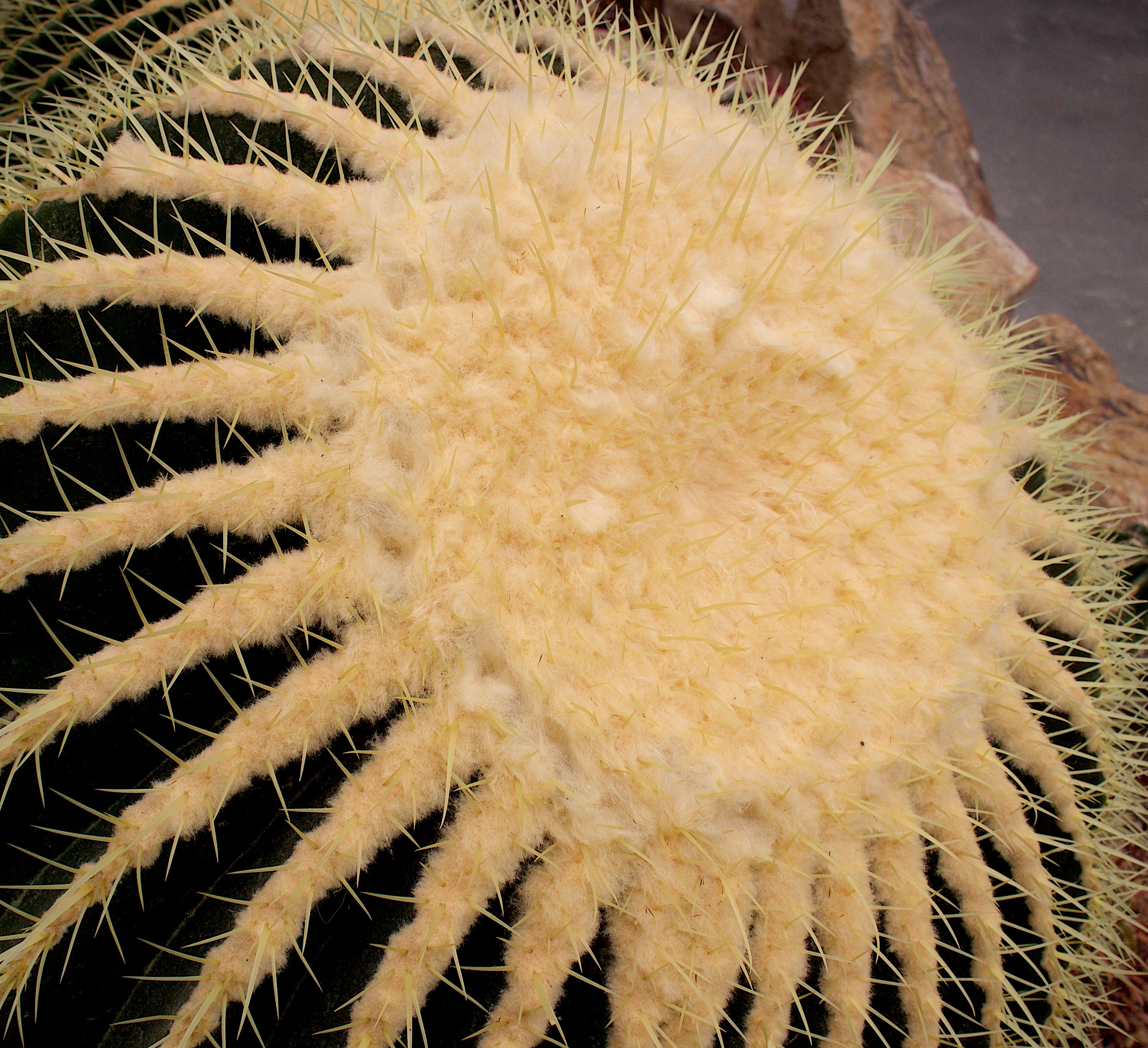
At seventeen years old, I thought I had things figured out. I had graduated near the top of my senior class, was heading off to college, and felt confident about who I was becoming. I had attended church all my life but my commitment to my faith was actually waning rather than strengthening.

In anticipation of college tuition bills, I took a summer job at a local nursing home for $1.25 an hour as a nurses’ aide. My total training was two days following a more experienced aide on her rounds of feeding, pottying, dressing and undressing, and bathing her elderly patients. Then I was assigned patients of my own and during a typical shift I carried a load of 13 patients. It didn’t take long for me to learn the rhythm of caretaking, and I enjoyed the work and my patients.

One woman in particular remains vivid in my memory 52 years later. Irene was in her 80’s with no nearby family, bedridden with a painful bone disease that had crippled her for a decade or more. She was unable to do any of her own self care but her mind remained sharp and her eyes bright. Her hearty greeting cheered me when I’d come in her room several times a shift to turn her on her egg-crate mattress bed to prevent pressure sores on her hips and shoulders.

The simple act of turning her in her bed was an ordeal beyond imagining – it always hurt her. I felt as though I was impaling her on hundreds of sharp needles.

I would prepare her for the turn by cushioning her little body with pads and pillows, but no matter how careful I was, her brittle bones would crackle and crunch like Rice Crispies cereal with every movement. Tears would flow from her eyes and she’d always call out “Oh Oh Oh Oh” during the process but then once settled in her new position, she’d look up at me and say “thank you, dear, for making that so much easier for me.”

I would nearly weep in gratitude at her graciousness when I could do so little to alleviate her suffering.

Before I’d leave the room, Irene would grab my hand and ask when I would be returning. Then she’d say “I know the Lord prepared you to take care of me” and she would murmur a prayer to herself.

As difficult as each “turning” was for both of us, I started to look forward to it. I knew she prayed not only for herself, but I knew she prayed for me as well. I felt her blessing each time I walked into her room knowing she was waiting for me. She trusted me to do my best.

One evening I came to work and was told Irene was running a high fever, and struggling to breathe. She was being given oxygen and was having difficulty taking fluids. The nurse I worked under asked that I check Irene more frequently than my usual routine.

As I approached her bed, Irene reached out and held my hand. She was still alert but very weak. She looked me in the eye and said “You know the Lord is coming for me today?” All I could say was “I know you have waited for Him a long time.” She murmured “Come back soon” and closed her eyes.

I returned to her room as often as I could and found her becoming less responsive, yet still breathing, sometimes short shallow breaths and sometimes long and deep. Near the end of my shift, as morning was dawning, when I entered the room, I knew He had come for her.

She lay silent and relaxed for the first time since I had met her. Her little body, so tight with pain only hours before, seemed at ease. It was my job to prepare her for the mortuary workers who would soon come for her. Her body still warm to touch, I washed and dried her skin and brushed her hair and wrapped her in a fresh sheet, wondering at how I could now turn her easily with no pain and no tears. I could see a trace of a smile at the corners of her mouth. I knew then the Lord had lifted her soul from her imprisonment. He had rewarded her faithful perseverance.

I rejoice in the hope of the glory of the Lord, thanks to Irene. She showed me what it means to watch for the morning when He will come. Though immobile in bed, crippled and wracked with pain, her perseverance led to loving a young teenager uncertain in her faith, and helped point me to my future profession in medicine.

Irene brought the Lord home to me when she went home to Him.
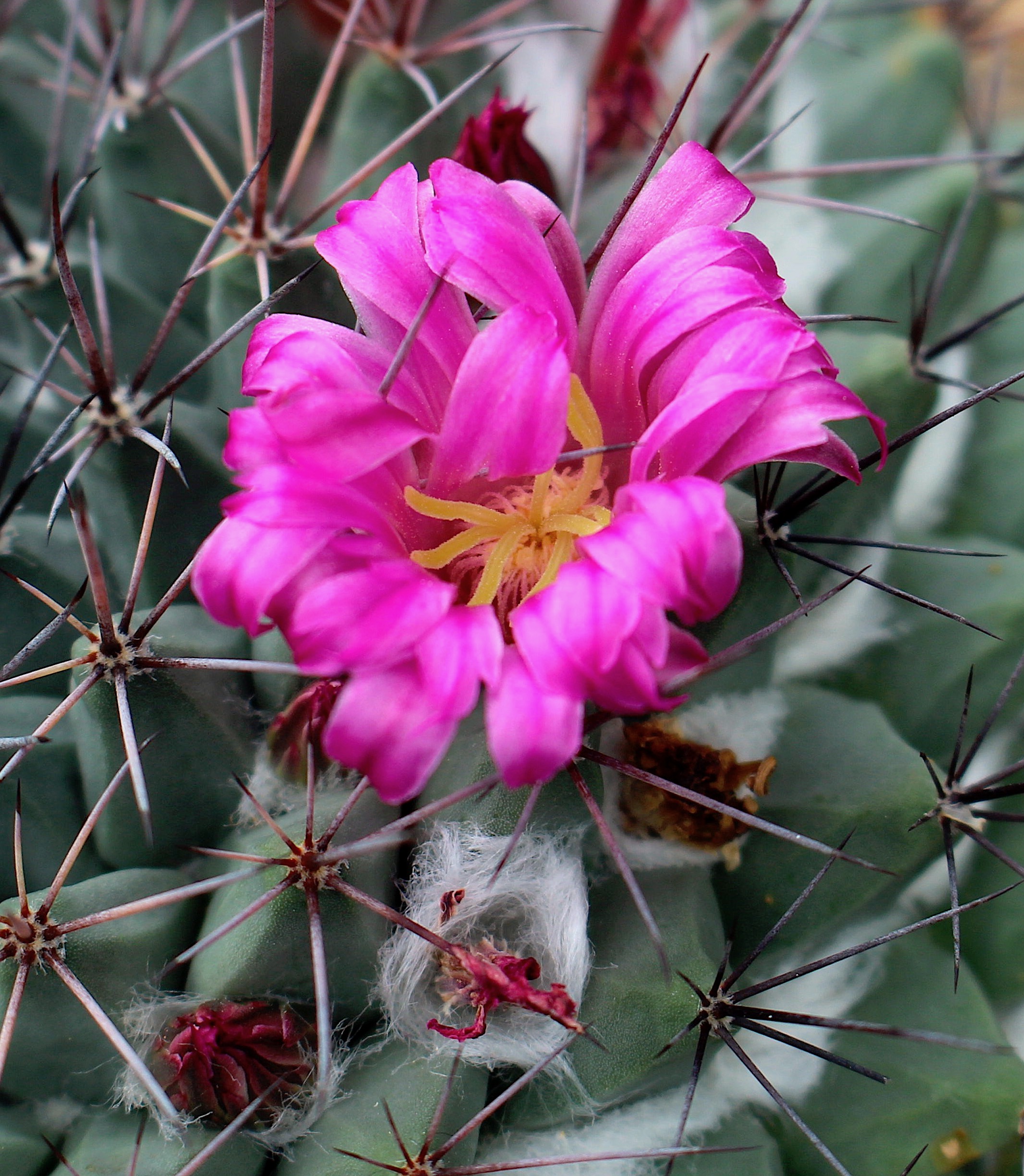
And we rejoice in the hope of the glory of God. Not only so, but we also rejoice in our sufferings, because we know that suffering produces perseverance
Romans 5:2b-3


This Lenten season I reflect on the words of the 19th century southern spiritual hymn “What Wondrous Love is This”

One-Time
Monthly
Yearly

Make a one-time or recurring donation to support daily Barnstorming posts

Make a monthly donation

Make a yearly donation

Choose an amount

$10.00
$25.00
$50.00
$5.00
$15.00
$100.00
$5.00
$15.00
$100.00

Or enter a custom amount

$

Your contribution is deeply appreciated.

Your contribution is appreciated.

Your contribution is appreciated.

DonateDonate monthlyDonate yearly
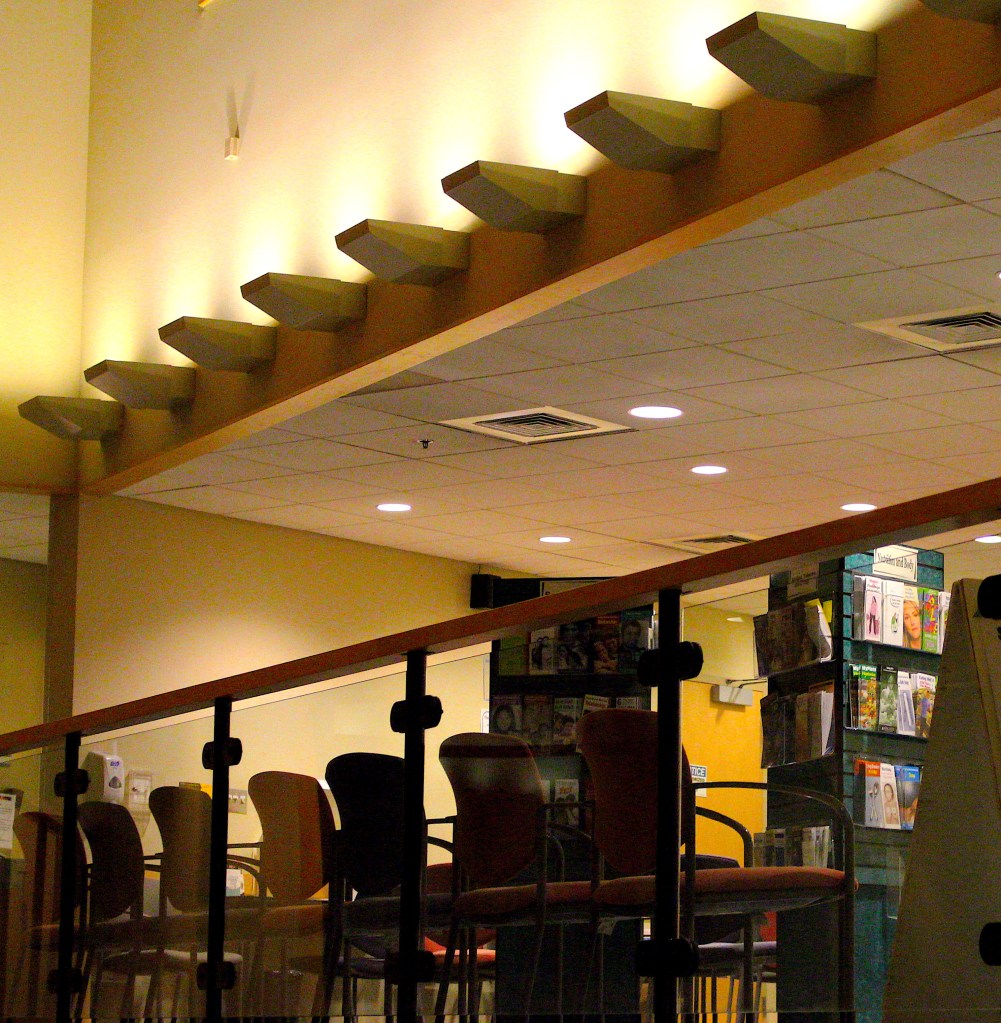
Still Open for Business

Astonishing material and revelation appear in our lives all the time. Let it be.
Unto us, so much is given.
We just have to be open for business.
~Anne Lamott from Help Thanks Wow: Three Essential Prayers

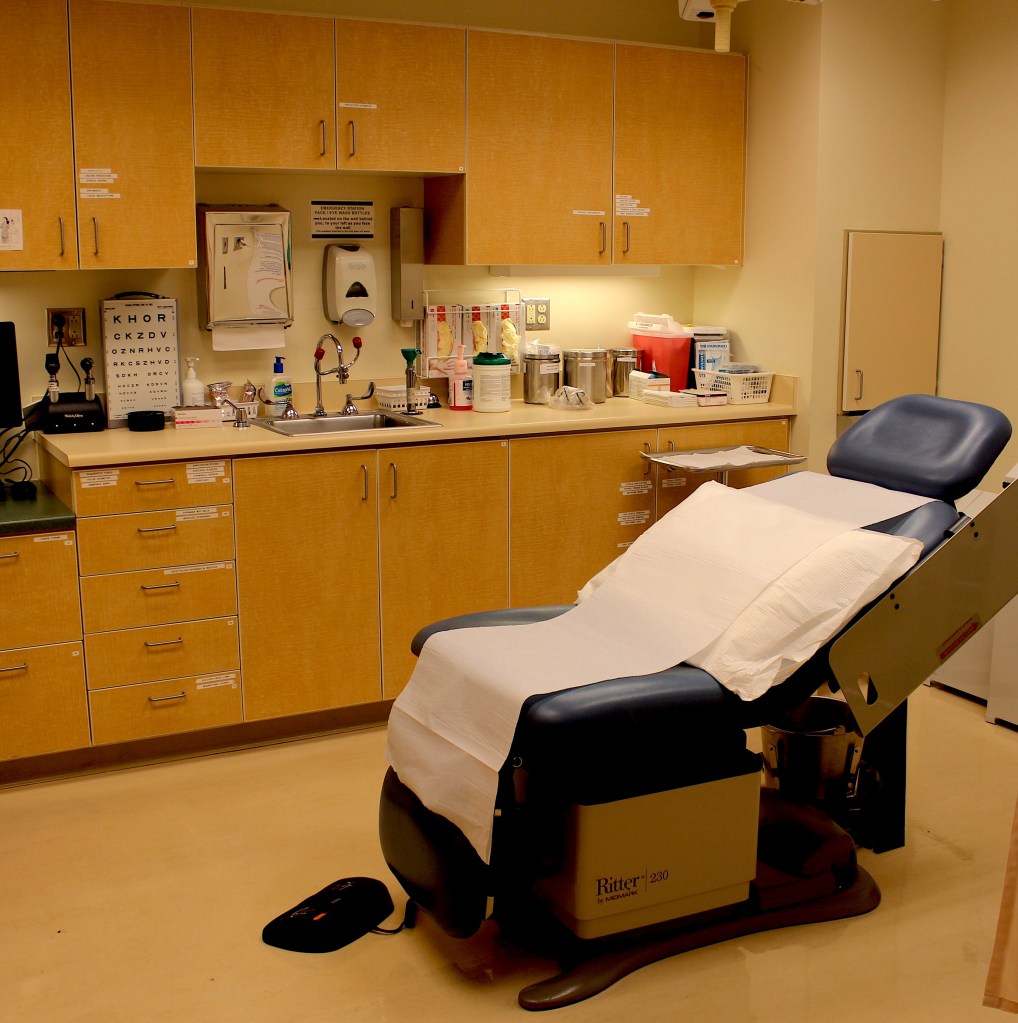
It was my privilege to work in a profession where astonishment and revelation awaited me behind each exam room door.

During an average clinic day, I opened those doors 36 times, then close them behind me and settle in for the ten or fifteen minutes allocated per patient. I needed to peel through the layers of a problem quickly to find the core of truth about why a patient was seeking help.

Sometimes what I was looking for was right on the surface: a bad cough, a swollen ankle, a bad laceration, but also easily were their tears, their pain, their fear. Most of the time, the reason was buried deep and I needed to wade through the rashes and sore throats and headaches to find it.

Once in a while, I could actually do something tangible to help right then and there — sew up the cut, lance the boil, splint the fracture, restore hearing by removing a plug of wax from an ear canal.

Often I simply gave permission to a patient to be sick — to allow themselves time to renew, rest and trust their bodies to know what is needed to heal well.

Sometimes, I was the coach pushing them to stop living “sick” — to stop self-medicating when life is challenging, to stretch even when it hurts, to strive to overcome the overwhelm.

Always I was looking for an opening to say something a patient may consider later — how they might make different choices, how they could be bolder and braver in their self care and care for others, how every day is a thread in the larger tapestry of their one precious life.

At night I took calls and each morning woke early to get online work done, trying to avoid feeling unprepared and inadequate to the volume of tasks heaped upon the day. I know I was frequently stretched beyond my capacity, stressed by administrative pressures and obstacles I faced in providing the best care.

I understood trials my patients were facing because I had faced them too. I shared their worry, their fears and vulnerabilities because I had lived through it too.

Even now, I try to simply let it be, especially through troubled times, when I have been gifted so much over the years. So my own experience is a gift I can still share here, even in retirement.

I’ll never forget: no matter who waited behind the exam room door, they never failed to be astonishing and revelatory to me, professionally and personally.

I’m so grateful I was open for business for 42 years.
I don’t see patients in an exam room any longer.
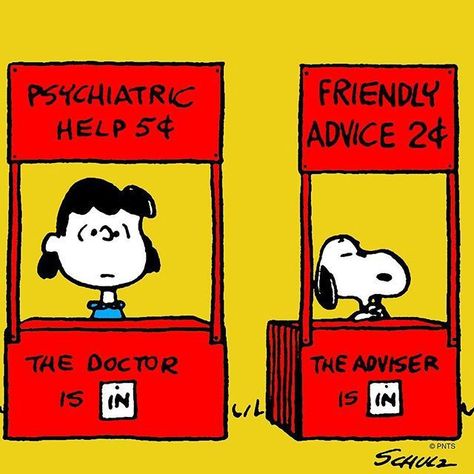
This Doctor is In, writing every day, with friendly advice.
Let it be so.

Peanuts comic by Charles Schulz

What is it You see
What do I possess
Oh how could it be
I should be so blessed

I am nothing much
Neither saint nor queen
I am just a girl
And You are everything

But if You ask
Let it be so
Let it be so
and if You will
Let it be so

I am so afraid
Of this great unknown
They may turn away
I may be all alone

My life is so small
so small a price to pay
to see my savior come
and take my sin away

I will bear their scorn
I will wear the shame
All things for the good
All things in Your name

Father be my strength
Shepherd hold my hand
Open wide my heart
to welcome who is there
~Sarah Hart

One-Time
Monthly
Yearly

Make a one-time or recurring donation to support daily Barnstorming posts

Make a monthly donation

Make a yearly donation

Choose an amount

$10.00
$25.00
$50.00
$5.00
$15.00
$100.00
$5.00
$15.00
$100.00

Or enter a custom amount

$

Your contribution is deeply appreciated.

Your contribution is appreciated.

Your contribution is appreciated.

DonateDonate monthlyDonate yearly

Holding on for Dear Life

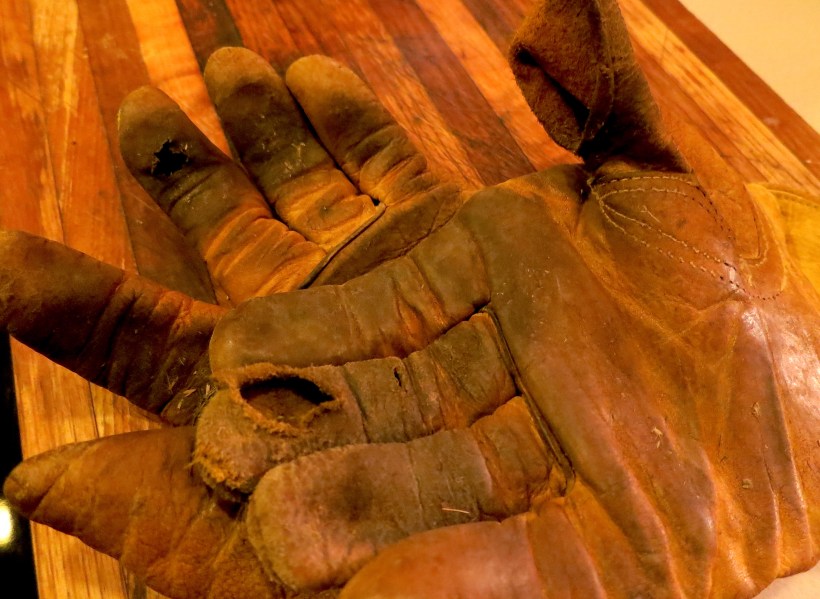
Nothing much to look at
lying on the shelf, one on
top of the other, an old man
resting his hands on a cane.
Dried-out yellow cowhide,
lines cut deep into the palms
from stones, weeds pulled.
Fingers crumpled, swollen
like grub worms shoveled
up in planting. An extra pair
of hands helping with lawn
work, flower beds, shrubs,
whatever else comes along.
A grief pulled on to bury
the old cat some kid in a
speeding pickup knocked
out of the street like he’d
kick a can. Or kneeling last
fall to unearth the blooming
rose suddenly plucked by
an ice storm, then shaking
rich compost loose from its
twisted fingers still clenched,
holding on for dear life.

~Ron Stottlemyer “Work Gloves”

My farm work gloves tend to look ragged at the end of a year of service. I always depend on being gifted a new pair at Christmas to start afresh. It can take awhile to break them in to the point where they feel like a “second skin.”

These gloves keep me from blistering while forking innumerable loads of smelly manure into wheelbarrows, but also help me unkink frozen hoses, tear away blackberry vines from fencing, pull thistle from the field and heavy hay bales from the haymow. Over the years, I’ve gone through a few dozen work gloves which have protected my hands as I’ve cleaned and bandaged deep wounds on legs and hooves, pulled on foals during the hard contractions of difficult births, held the head of dying animals as they fall asleep one final time.

Without wearing my protective farm gloves over the years, my hands would be looking very much scarred up like my tired gloves do, full of rips and holes from the thorns and barbs of the world, sustaining scratches, callouses and blisters from the hard work of life.

But they don’t.

Thanks to these gloves, before I retired, I was presentable for my “day” work as a doctor where I would don a different set of gloves many times a day.

But my work gloves don’t tell my whole story of gratitude.

I’m thankful to a Creator God who doesn’t wear gloves when He goes to work in our world:
-He gathers us up even when we are dirty, smelly, and unworthy.
-He eases us into this life when we are vulnerable and weak,
and carries us gently home as we leave this world, weak and vulnerable.
-He holds us as we bleed from self and other-inflicted wounds.
-He won’t let us go, even when we fight back, or try not to pay attention, or care who He is.

He hangs on to us for dear life.

And this God came to live beside us
with hands just like ours~
tender, beautiful, easy-to-wound hands
that bled
because He didn’t need or want to wear gloves
for what He came to do~

His hands bear evidence of His love…

One-Time
Monthly
Yearly

Make a one-time or recurring donation to support daily Barnstorming posts

Make a monthly donation

Make a yearly donation

Choose an amount

$10.00
$25.00
$50.00
$5.00
$15.00
$100.00
$5.00
$15.00
$100.00

Or enter a custom amount

$

Your contribution is deeply appreciated.

Your contribution is appreciated.

Your contribution is appreciated.

DonateDonate monthlyDonate yearly

Of Now Done Darkness

Not, I’ll not, carrion comfort, Despair, not feast on thee;
Not untwist — slack they may be — these last strands of man
In me ór, most weary, cry I can no more. I can;
Can something, hope, wish day come, not choose not to be.
But ah, but O thou terrible, why wouldst thou rude on me
Thy wring-world right foot rock? lay a lionlimb against me? scan
With darksome devouring eyes my bruisèd bones? and fan,
O in turns of tempest, me heaped there; me frantic to avoid thee and flee?

Why? That my chaff might fly; my grain lie, sheer and clear.
Nay in all that toil, that coil, since (seems) I kissed the rod,
Hand rather, my heart lo! lapped strength, stole joy, would laugh, chéer.
Cheer whom though?
the hero whose heaven-handling flung me, fóot tród
Me? or me that fought him? O which one? is it each one?
That night, that year
Of now done darkness I wretch lay wrestling with (my God!)

my God.
~Gerard Manley Hopkins “Carrion Comfort”

Once again, the mounting deaths by one’s own hand
make grim headlines announcing solemn statistics.

I heard it over and over during decades in my clinic;
patient after patient said the same thing:
I can no more...

this agonizing struggle with despair
makes one frantic to avoid the fight and flee,
to feel no more bruising
and bleed no more,
to become nothing but chaff and ashes.

suicide seems a solution
when one can not feel the love of
a God who, in reality, cares enough to
wrestle with us relentlessly–
who heaven-handling flung us here by
breathing life into our nostrils –

and continues to breathe with us…

perhaps we can’t possibly imagine
a God caring enough to be killed for us
(He Himself created us who doubt,
us who are so sore afraid)

because He loves us,
no one is ever now,
nor ever will be,

~nothing~

My God!
such darkness
is now done
forever.

One-Time
Monthly
Yearly

Make a one-time or recurring donation to support daily ad-free Barnstorming posts

Make a monthly donation

Make a yearly donation

Choose an amount

$10.00
$25.00
$50.00
$5.00
$15.00
$100.00
$5.00
$15.00
$100.00

Or enter a custom amount

$

Your contribution is deeply appreciated.

Your contribution is appreciated.

Your contribution is appreciated.

DonateDonate monthlyDonate yearly
God is in the Details

Thanksgiving starts with thanks for mere survival,
Just to have made it through another year
With everyone still breathing. But we share
So much beyond the outer roads we travel;
Our interweavings on a deeper level,
The modes of life embodied souls can share,
The unguessed blessings of our being here,
The warp and weft that no one can unravel.

So I give thanks for our deep coinherence
Inwoven in the web of God’s own grace,
Pulling us through the grave and gate of death.
I thank him for the truth behind appearance,
I thank him for his light in every face,
I thank him for you all, with every breath.

~Malcolm Guite “Thanksgiving: A Sonnet”

Poetry is what you find
in the dirt in the corner,

overhear on the bus,
God in the details,

the only way to get from here to there.
Poetry (and now my voice is rising)

is not all love, love, love,
and I’m sorry the dog died.

Poetry (here I hear myself loudest)
is the human voice,

and are we not of interest to each other?
~Elizabeth Alexander from “Ars Poetica #100: I Believe”

photo of old Dylan by Nate Gibson

I started writing over twenty years ago as a way to explain who I am for descendants I will never know. I am beyond grateful for those of you who have shown an interest in what I share, whether photography, poetry or prose.

What you find here is my voice of thankfulness for the way God somehow finds His way into the details of my days – especially into the dustiest corners.

I try to preserve what challenges, shapes and molds me:
the beauty I witness in sunrises and sunsets,
this farm that blooms and often bears unexpected fruit,
the animals, those who live here and those passing through,
my mistakes and missteps, buoyed by a loving God,
my family and good folks surrounding me.

I want to say thank you on this Thanksgiving Day to each one of you who take a few minutes from your day to follow my stories. Some of you have become precious friends despite our never having met.

I am honored to hear from you whenever you have a moment.
Your details matter to me, and especially to God.

So when will I hear you tell your story?

One-Time
Monthly
Yearly

Make a one-time or recurring donation to support daily ad-free Barnstorming posts

Make a monthly donation

Make a yearly donation

Choose an amount

$10.00
$25.00
$50.00
$5.00
$15.00
$100.00
$5.00
$15.00
$100.00

Or enter a custom amount

$

Your contribution is deeply appreciated.

Your contribution is appreciated.

Your contribution is appreciated.

DonateDonate monthlyDonate yearly

Rekindled and Ignited

At times our own light goes out and is rekindled by a spark from another person. Each of us has cause to think with deep gratitude of those who have lighted the flame within us.
~Albert Schweitzer

One kind word can warm three winter months…
~Japanese Proverb

Charis always demands the answer of eucharistia.
Grace and gratitude belong together like heaven and earth.
Grace evokes gratitude like the voice an echo.
Gratitude follows grace like thunder and lightning.

we are speaking of the grace of the God who is God for man, and of the gratitude of man as his response to this grace…
~Karl Barth (1886-1968) in Church Dogmatics: The Doctrine of Reconciliation 

“Rekindling” happens without expectation. When I’m out of gas, spent and deflated, someone’s kind word, smile, gracious note or thank you makes all the difference. Suddenly I’m reignited and have fuel to spare. The spark plug comes alive once again and I’m up and running. I need to remember how this feels so I become the igniter and kindler for others.

I remember a moment in my work life in clinic as I was hurrying from one patient to another. A young woman stopped me as I was about to leave the exam room and said “Doctor, I am so grateful you were willing to see me so quickly today. I’ve been concerned about this for weeks, losing sleep with worry and now I feel so reassured it is nothing serious. Thank you!” 

I once received a hand written letter (something rare as hen’s teeth) from a patient I cared for years before. He wanted to tell me he was doing well and how he had appreciated my kindness to him. I was astonished that he remembered me; in his letter he was uncertain if I would remember him. Patients don’t always know how they dwell in their doctors’ consciousness, how they teach us and how much we learn. I surely did remember this patient, his struggles with drug dependency, his strong urge to kill himself, and his desperate search for a reason to keep on living.

He was alive, doing well. He remembered my caring about him. And I was wrapped in his comforting words through some chilly days.

So – I want to share this gift of grace with you,
as a recurring echo which follows a cry of joy,
a warm illumination pouring out on darkness,
through words and images that kindle hope each day.

I thunder loudly at the lightning spark from God,
an unending echo of thanks with my every breath.

One-Time
Monthly
Yearly

Make a one-time or recurring donation to support daily ad-free Barnstorming posts

Make a monthly donation

Make a yearly donation

Choose an amount

$10.00
$25.00
$50.00
$5.00
$15.00
$100.00
$5.00
$15.00
$100.00

Or enter a custom amount

$

Your contribution is deeply appreciated.

Your contribution is appreciated.

Your contribution is appreciated.

DonateDonate monthlyDonate yearly
When a Great Soul Dies

When great souls die,
the air around us becomes
light, rare, sterile.
We breathe, briefly.
Our eyes, briefly,
see with a hurtful clarity.
Our memory, suddenly sharpened,
examines, gnaws on kind words
unsaid, promised walks
never taken.

Great souls die and
our reality, bound to
them, takes leave of us.
Our souls, dependent upon their
nurture,now shrink, wizened.
Our minds, formed
and informed by their
radiance, fall away.
We are not so much maddened
as reduced to the unutterable ignorance of
dark, cold
caves.

And when great souls die,
after a period peace blooms,
slowly and always
irregularly. Spaces fill
with a kind of
soothing electric vibration.
Our senses, restored, never
to be the same, whisper to us.
They existed. They existed.
We can be. Be and be
better. For they existed.

~Maya Angelou from “When Great Trees Fall”

Sara,
my dear friend of nearly forty years,

When I learned you died this morning, your body overwhelmed by a sudden illness no one anticipated – I sat in stillness, trying once again to remember your soft voice, as if you were still part of this world.

I knew you were gone.

It was God’s timing to collect you back and so you went. We all are poorer without you – you the richer as you settle into a body no longer a burden and a struggle.

As recently as last week, you wondered aloud if you had it in you, after decades of surviving chronic illness and two cancers, to keep going with all your physical challenges. God heard your prayer. Instead of feeling depleted and emptied of purpose, you are now restored. The love and energy you shared during your long life, through your doctoring and farming and mothering and grandmothering, is replenished in the presence of Jesus Christ.

You have left so much of yourself behind:
Your mentoring made me a better doctor.
Your example made me a better mother.
Your gentle compassion made me a better friend.
Your forgiving grace and quiet patience made me a better person.

I wasn’t yet ready to say goodbye to you:
I regret not saying everything I needed to say.
I regret not taking more walks with you.
I regret not letting you know how much you blessed me
and the world simply by existing.

Now there is no doubt you are blessing heaven.
And so we who love you – your husband, children, grandchildren,
your friends, colleagues, former patients –
gratefully share the rare gift of grace that is
Dr. Sara Cuene Watson.

All flesh is grass,
and all its beauty is like the flower of the field.
The grass withers,
the flower fades when the breath of the LORD blows on it;
surely the people are grass.
The grass withers, the flower fades,
but the word of our God will stand forever.
Isaiah 40: 6-8

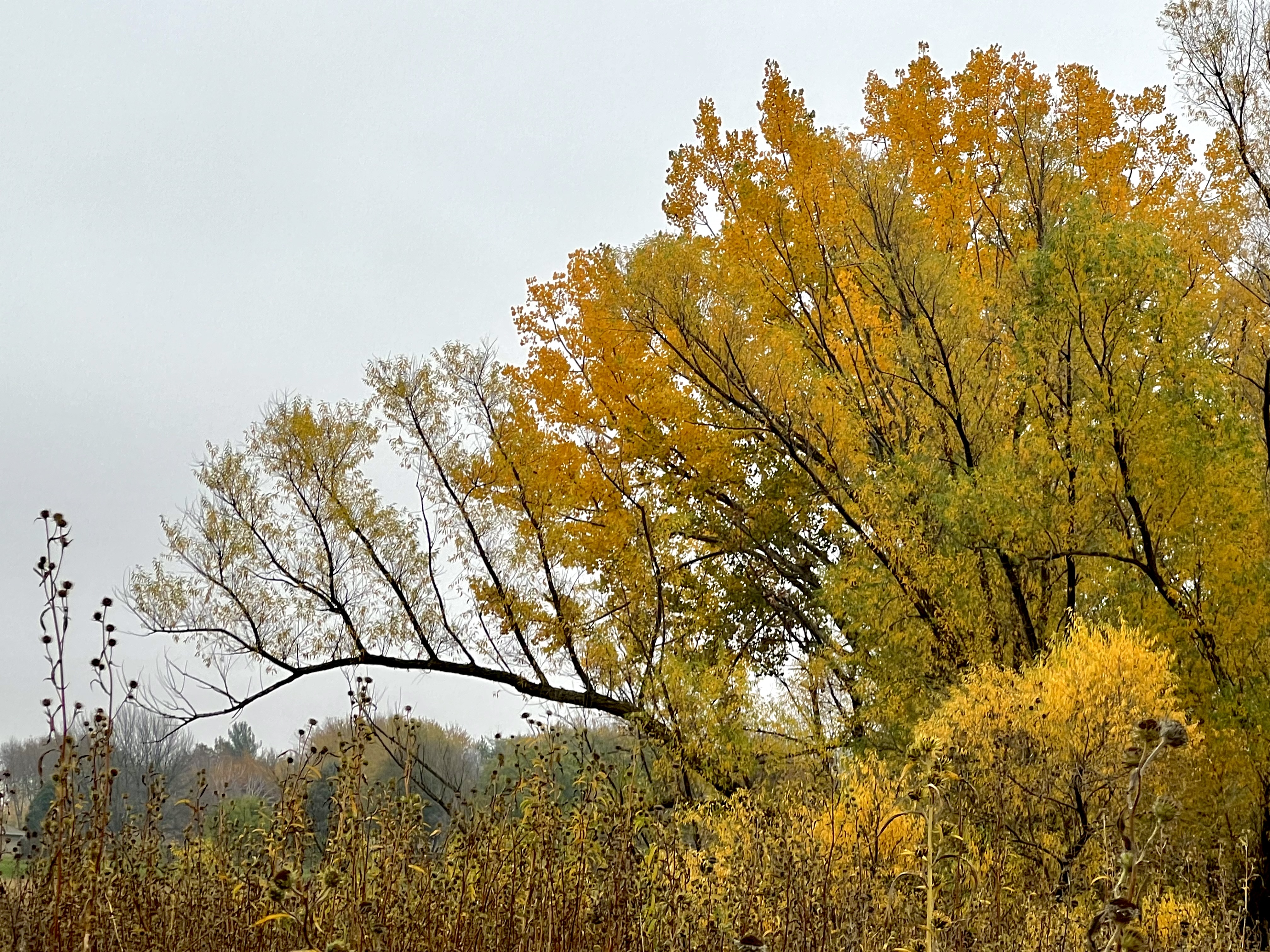
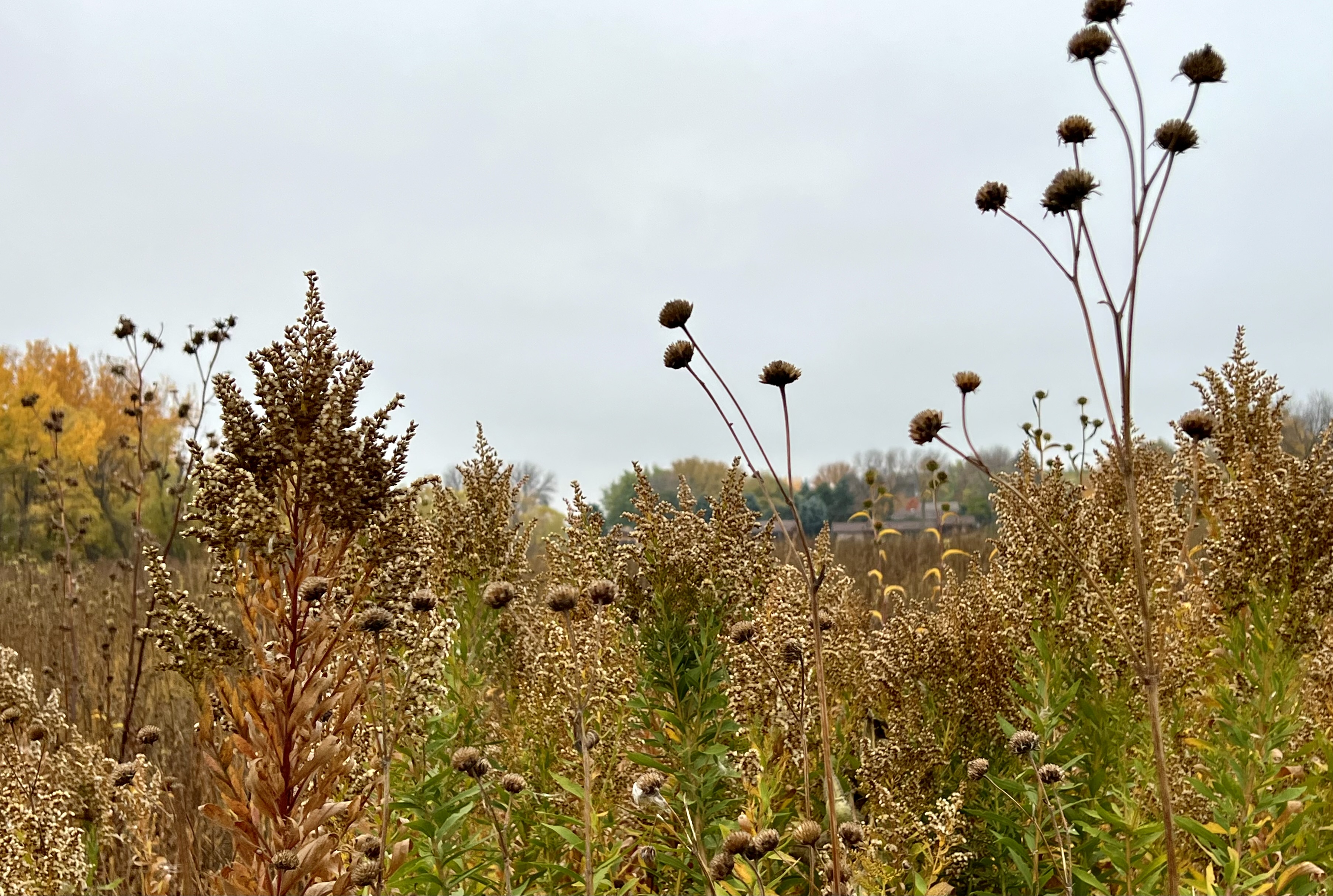
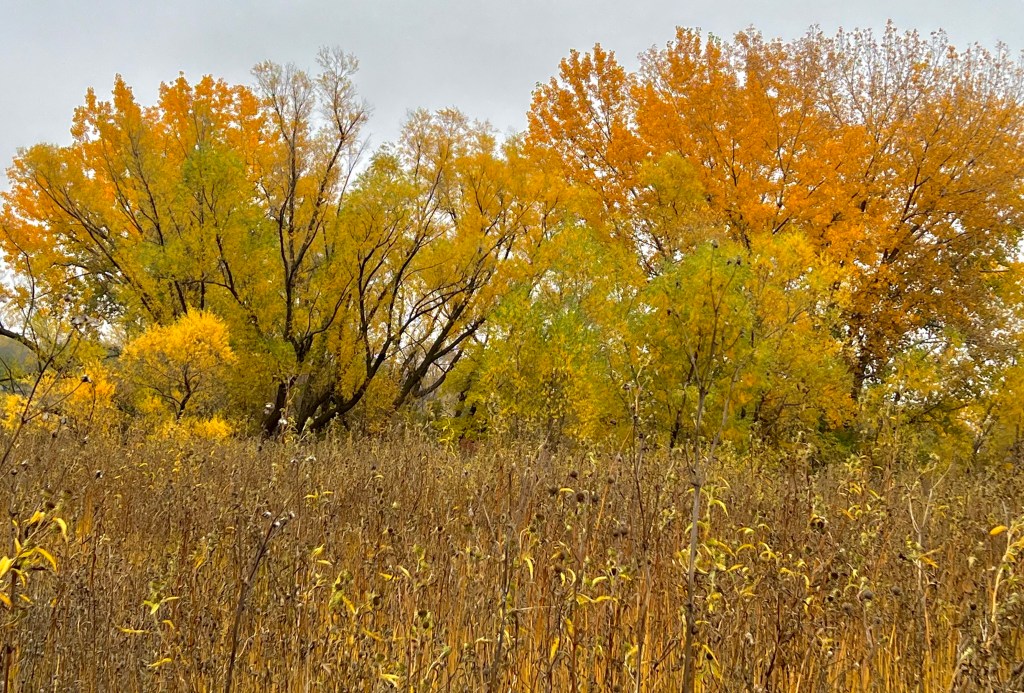
(Photos from Dordt University prairie)

Anatomy Lesson

Thumb stuck out as I go
I’m just travelin’ up the road
Maps don’t do much for me, friend
I follow the weather and the wind

I’m hitch hikin’ all day long
Got what I can carry and my song
I’m a rolling stone just rolling on
Catch me now ’cause tomorrow I’ll be gone

~Bruce Springsteen from “Hitch Hikin'”

His reputation was well known and all the medical students had heard the stories about Dr. Rosse. As the Anatomy Professor, his class would become the primary focus of student energy in the first year of medical school, with other classes seeming like so much background noise.

Dr. Rosse believed in active student participation in class, in the cadaver lab, on oral tests. He told us from the first day on: ” You will learn to THINK in this class like you’ve never thought before! Your patient’s lives depend on this. You will be prepared for my class each and every day, just as you must be prepared for whatever your patients will need from you.”

He was correct.

There were 110 of us in the lecture hall that first day, looking nervously at each other and at the empty podium down in front. We had been assigned three chapters in the anatomy textbook before Dr. Rosse’s first lecture and were expected to know the names of the bones and major blood vessels.

Dr. Rosse’s assignment for himself was to memorize our names and faces from a photo directory provided to him two days previously.

He began his lecture in the barely darkened room, running quickly through a carousel of slides of graphic photos and drawings of body parts. Within five minutes, he stopped and in his thick European accent, pointed at a student in the second row said: “Mr. Davis, can you tell me the name of this blood vessel on this slide?”

The student sat up startled, and sat silent, gathering his wits. Dr. Rosse looked pointedly at his wrist watch and started saying, “Drip. Drip. Drip.”  The student started to sweat.

“Drip, drip, drip, your patient is losing blood, Mr. Davis.”

The student, in a moment of enlightenment asked,” the inferior vena cava?” and Dr. Rosse said, “Very good, Mr. Davis!” and made a notation on the tablet on the podium in front of him.

The rest of our hearts immediately were in our throats, something that Dr. Rosse would later tell us was an anatomic impossibility, no matter how much it felt like it. There would be no dozing off, daydreaming or not preparing for this class.

My turn came the following week as he called out my name, his steely eyes fixed on only me. I got off fairly easy with a question from Dr. Rosse about the attachments for the extensor pollicis longus. I had memorized all the arm muscles the night before so was prepared.

“Yes, very good, Miss Polis.  Now tell me, if I were to fall off this podium right now, land on my outstretched arm and rupture my extensor pollicis longus, what would I not be able to do with my arm?”

I had no idea. I looked at him somewhat aghast. I thought I had done the necessary preparation to be ready for his questioning. My memorizing names and locations of muscles and tendons had only taken me so far. I had not really thought about the functionality of what I was learning and how it might be relevant to my future patients.

“Think now Miss Polis! This is not so very hard that you can’t THINK it out!”  Dr. Rosse demanded from the podium.

So I guessed. “Uh, you can’t grip?”

“Exactly wrong! Take a hike back to your study carrel, Miss Polis. You have not prepared yourself well enough. Go back to your book, and with each muscle you memorize, you must feel it on yourself or your study partner and think about how it works. Your patient will thank you for that someday.”

I was mortified that day, but survived that anatomy class, survived six oral exams over the cadaver with Dr. Rosse, and although I didn’t get an A in his class, I was very relieved to get a B+. As a student, I had never been asked before to actually apply what I was learning to make it relevant to my future work. Dr. Rosse was right. I had learned to not just memorize, but to think.

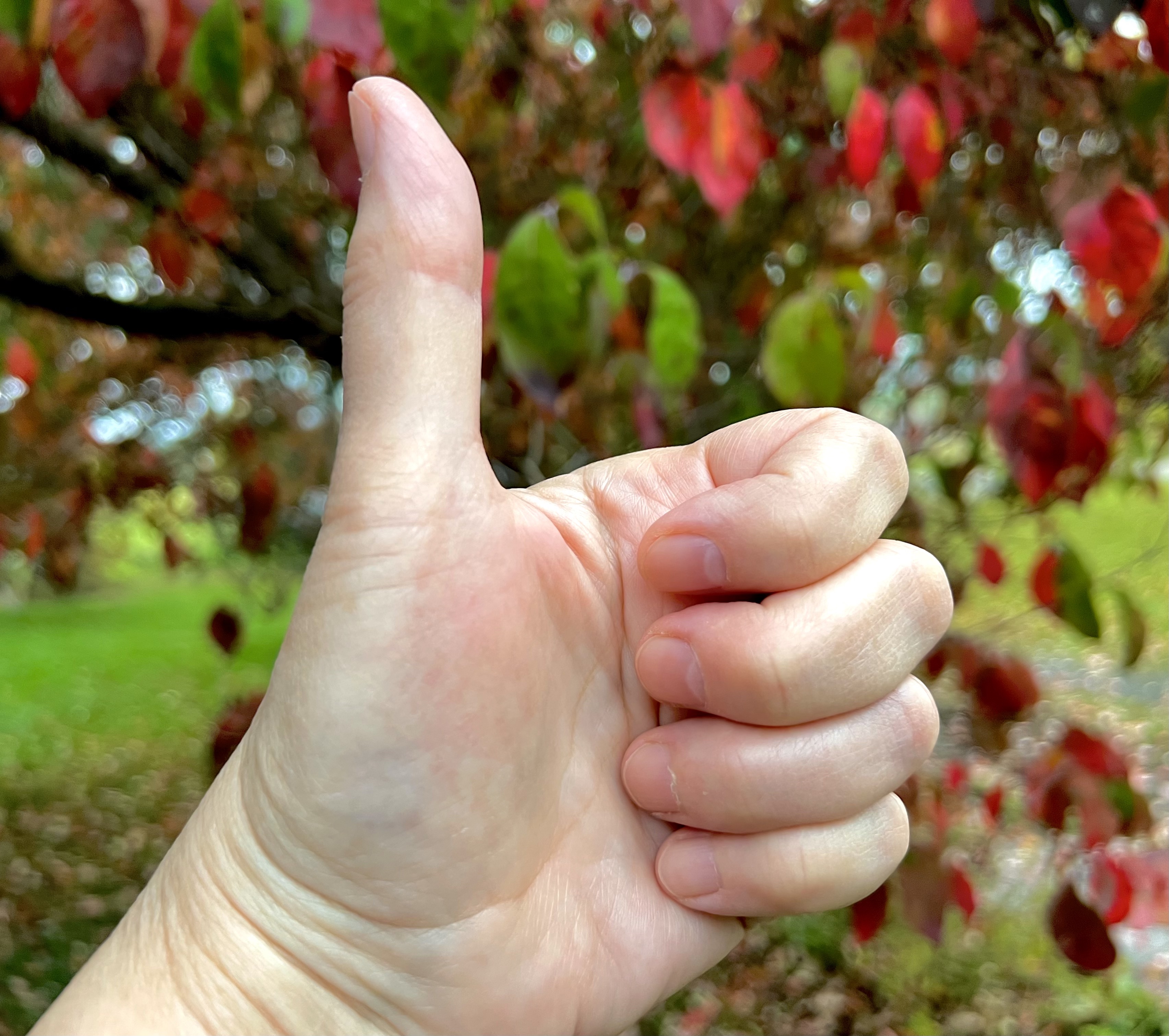
And when I saw my first extensor pollicis longus rupture seven years later in my practice, I was absolutely confident of the diagnosis because my patient could not lift up his thumb when asked to act like he was hitchhiking.  And my patient did thank me.  Dr. Rosse was right again.

One-Time
Monthly
Yearly

Make a one-time or recurring donation to support daily Barnstorming posts

(You’ll receive a thank you gift in the mail)

Make a monthly donation

Make a yearly donation

Choose an amount

$10.00
$25.00
$50.00
$5.00
$15.00
$100.00
$5.00
$15.00
$100.00

Or enter a custom amount

$

Your contribution is deeply appreciated.

Your contribution is appreciated.

Your contribution is appreciated.

DonateDonate monthlyDonate yearly

Reflecting Back…

The Pacific Medical Center (2012) Photo by Joe Mabel
http://www.pactower.org

Some years ago, while sitting with my husband and young family high in the upper reaches of Seattle’s (then) Safeco Field watching the Mariners lose to the Cleveland (then) Indians, my attention diverted from the baseball game to the expansive view of the surrounding city.

In particular, I couldn’t help but place myself back inside the old Art Deco building that sits up on Beacon Hill (now known as the Pac Tower.) I had spent a hundreds of hours of my life in that building in the late 1970s; it was easy imagine my younger self in those hallways and rooms.

The 90 year old building had a number of different purposes since originally being constructed to provide hospital care for the region’s Merchant seamen. By 1999, it had become the home of a five year old business that had outgrown Jeff Bezos’ garage — Amazon.com. 

I trained inside the walls of that Public Health Hospital, back in the days when it was the hospital in the region for not only Merchant Marines, but many of the indigenous people of the Pacific northwest and Alaska, in addition to local folks who needed affordable (as in free) health care. I had opportunity to work several clinical rotations in this building as a University of Washington medical student, and to think of it being Amazon’s first (but not last) major headquarters for Amazon made my brain do twists. 

I remembered so much life and death happening inside those walls over the years. 

I first walked into this building as a very green 24 year old med student beginning a surgical rotation in fall 1976, knowing only which end of the stethoscope to put in my ears and which end rests on the patient. On the first day I was shown how to put on a surgical gown, masks and sterile gloves without contaminating myself and the people around me. I never have forgotten that sequence of moves, even though my opportunity to go into an operating room (other than as a patient) became rare after my training days. My chief surgical resident was an exceptionally talented young man who worked himself and everyone working with him around the clock caring for his patients. This brilliant surgeon could only operate on patients while listening and singing to the music of Elvis Presley. I can’t hear any Elvis Presley songs to this day without smelling the odors of surgery–cauterized blood vessels and pus. 

He was soon to become a leading trauma surgeon in a city known for its fine surgeons. The pressure was too much for him. He experienced a personal crisis for which he sought treatment. When he returned to medicine, he abandoned his incredible surgical skills to train as a psychiatrist and still remains an authority on helping impaired physicians, assisting other care providers to acknowledge and deal with addiction and mental health burnout before they harm a patient. 

Those endless clinical rotation days and nights meant witnessing the misery of the most vulnerable of humanity in desperate need of healing, and sometimes we succeeded, but often we did not.  I still have a recurring dream of running up and down the staircases of the Public Health Hospital, bringing pint after pint of blood to the OR from the lab as our team operated on an Alaskan indigenous patient bleeding from dilated esophageal varices, developed as a result of a damaged liver from chronic alcohol dependency. We did not save her, nor have I saved her even once in my dreams over the decades, though I keep trying to run faster. My response to her death was to spend 20 years of my clinical career working with patients in an alcohol and drug treatment program, hoping to prevent her fate in others.

Nor did we save a classmate of mine, on a rotation on a different service, the daughter of a beloved radiologist in this very hospital, who for reasons unknown, had a cardiac arrest while napping briefly during her 32 hour shift.  Another medical student sleeping in the same room heard her odd breathing, found her unresponsive and all medical interventions were employed, to no avail. Even when all the right people, and the right equipment, and the right medicine is seconds away, death can still come, even to healthy people in their 20s.  This was a shock to us all, and an extraordinarily humbling lesson to the pompous and overconfident among us. We might die, in our sleep, whenever it is our time. Years later, I still remember that in my evening prayers.

There was also the young surgical resident who was hospitalized there with jaundice and subsequently died of Hepatitis B, contracted from a blood exposure during his training. No vaccination was available in those days, but was in development. And it was in this and other hospitals in the city, we began to see unusual cases of gay men with severe wasting, rare skin cancers and difficult to treat pneumonias. Initially called GRID (gay-related immune deficiency), it was renamed AIDS as it began appearing in the general population as well, and for too long was a death sentence for anyone infected.

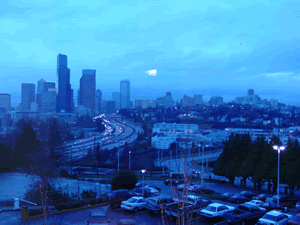
One on-call night in particular is memorable. It was Christmas Eve, and a heavy snowstorm had brought the city to a standstill.  We had very little to do that night in the hospital as the elective surgeries were all postponed until after the holiday and no ambulance could easily make it up the steep drive to the ER, so they were being diverted to other hospitals. As a result, our patient load was light. I was in my tiny sleeping room, on the 14th floor of the tower, facing out north to the city of Seattle, able to enjoy the view of the city, everything blanketed under snow, so peaceful and very quiet.  The freeway, ordinarily so busy day and night, was practically abandoned, and the lights of the city were brighter from the snowfall. It was an enchanting vision of a city forced to slow itself and be still, so anticipatory on a sacred and holy night.

I remember thinking about how young and inexperienced I was, and how very little I knew. My chief resident thought I’d make a good surgeon – I was a diligent worker and technically very good with my hands. My heart told me that I’d be better as a generalist/family doctor. The city held many attractions and excitement, but I longed to return to a farm and a someday family. It was a wistful bittersweet night and I slept very little, perched on that little bed overlooking the sleeping snowy city. I wondered where life might take me, as I reflected on who I was becoming and where I was meant to be.

Forty five years later, I still am reminded every day at how little I know,  but I do realize this:
for however long we’re on this earth, each day we have a distinct purpose and reason for being.

That day, my purpose was to be snowbound on that Christmas day at the old Public Health Hospital, unable to go home from my shift because my car was stuck in the parking lot. Instead, I covered for others who couldn’t make it in to work, singing Christmas carols for all the patients who had to stay put in their hospital beds.

Soon, my purpose was to meet the man I was to marry, eventually living with three beloved children on a little farm 100 miles to the north while practicing medicine in a variety of primary care roles for over forty years. 

And perhaps, my purpose now in retirement is to share a few stories while reflecting on a life still in progress.

Only the Lord knows why He places us where He does.

view from the “sleeping room” at the top of the tower
One-Time
Monthly
Yearly

Make a one-time or recurring donation to support daily Barnstorming posts

Make a monthly donation

Make a yearly donation

Choose an amount

$10.00
$25.00
$50.00
$5.00
$15.00
$100.00
$5.00
$15.00
$100.00

Or enter a custom amount

$

Your contribution is deeply appreciated.

Your contribution is appreciated.

Your contribution is appreciated.

DonateDonate monthlyDonate yearly

The Rising Tide

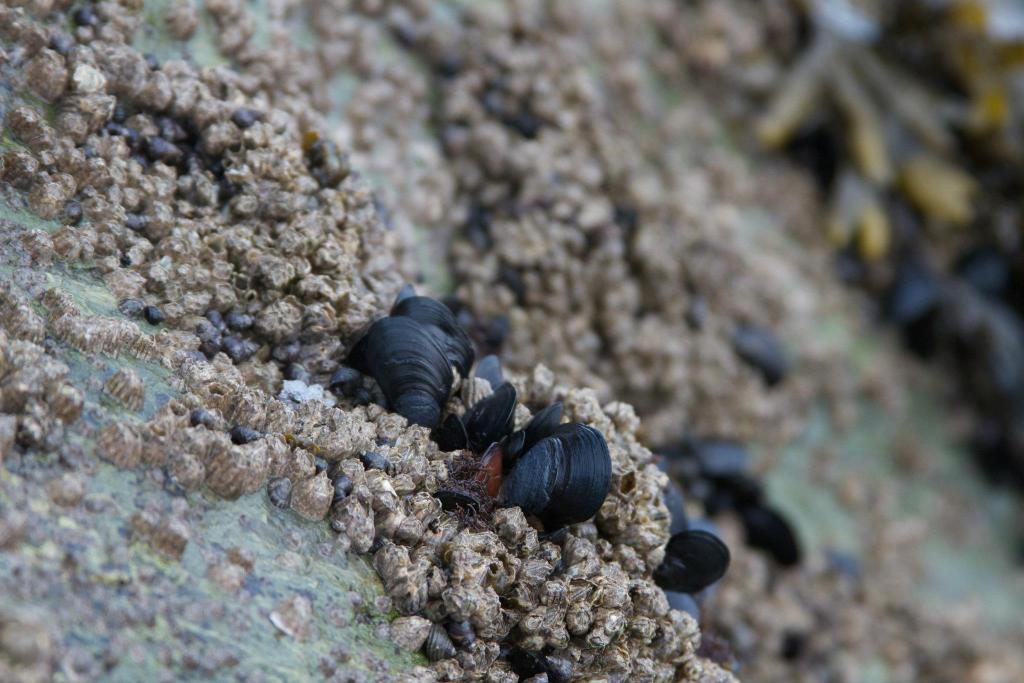
As the tide rises, the closed mollusc
Opens a fraction to the ocean’s food,
Bathed in its riches. Do not ask
What force would do, or if force could.


A knife is of no use against a fortress.
You might break it to pieces as gulls do.
No, only the rising tide and its slow progress
Opens the shell. Lovers, I tell you true.

You who have held yourselves closed hard
Against warm sun and wind, shelled up in fears
And hostile to a touch or tender word—
The ocean rises, salt as unshed tears.

Now you are floated on this gentle flood
That cannot force or be forced, welcome food
Salt as your tears, the rich ocean’s blood,
Eat, rest, be nourished on the tide of love.

~May Sarton “Of Molluscs” from Complete Poems

photo by Josh Scholten

No question when I was younger, I tried to be a tough shell to crack. Over my years of medical training, I was warned to keep what is soft and tender closed and protected, or I would be picked clean, with my hard remains exposed and emptied.

Yet during those stressful years as a young physician, as one of a handful of female students, I didn’t feel attacked, nor was I forced to float through battering tides to hostile shores. Bathed in salty tears at times, I was comforted when the stormy winds came. My teachers were kind and gentle. Soothing words and heartfelt praise flowed around and through me.

I was treated just as I wanted to treat my patients: with respect and nurture.

All these years later, I have not forgotten this gift of love I was shown by my teachers and colleagues. Even when buried in the muck and sand up to my eyeballs, I could trust enough to open up my hard and crusty parts so I could feel the tide rise over and carry me home.

Hey little boy, whatcha got there?
Kind sir it’s a mollusk i’ve found
Did you find it in the sandy ground?
Does it emulate the ocean’s sound?
Yes I found it on the ground
Emulating the ocean’s sound
Bring forth the mollusk cast unto me
Let’s be forever let forever be free

Hey little boy come walk with me
And bring your new found mollusk along
Does it speaketh of the trinity
Can it gaze at the sun with its wandering eye
Yes it speaks of the trinity
Casting light at the sun with its wandering eye
Bring forth the mollusk, cast unto me
Let’s be forever let forever be free

You see there are three things that spur the mollusk from the sand
The waking of all creatures that live on the land
And with just one faint glance, back into the sea
The mollusk lingers, with it’s wandering eye
~Gene Ween

One-Time
Monthly
Yearly

Make a one-time or recurring donation to support daily Barnstorming posts

Make a monthly donation

Make a yearly donation

Choose an amount

¤10.00
¤25.00
¤50.00
¤5.00
¤15.00
¤100.00
¤5.00
¤15.00
¤100.00

Or enter a custom amount

¤

Your contribution is deeply appreciated.
Your contribution is appreciated.

Your contribution is appreciated.

DonateDonate monthlyDonate yearly