There is a gold light in certain old paintings That represents a diffusion of sunlight. It is like happiness, when we are happy. It comes from everywhere and from nowhere at once, this light… One day the sickness shall pass from the earth for good. The orchard will bloom; Our work will be seen as strong and clean and good And all that we suffered through having existed Shall be forgotten as though it had never existed. ~Donald Justice – excerpt from Collected Poems
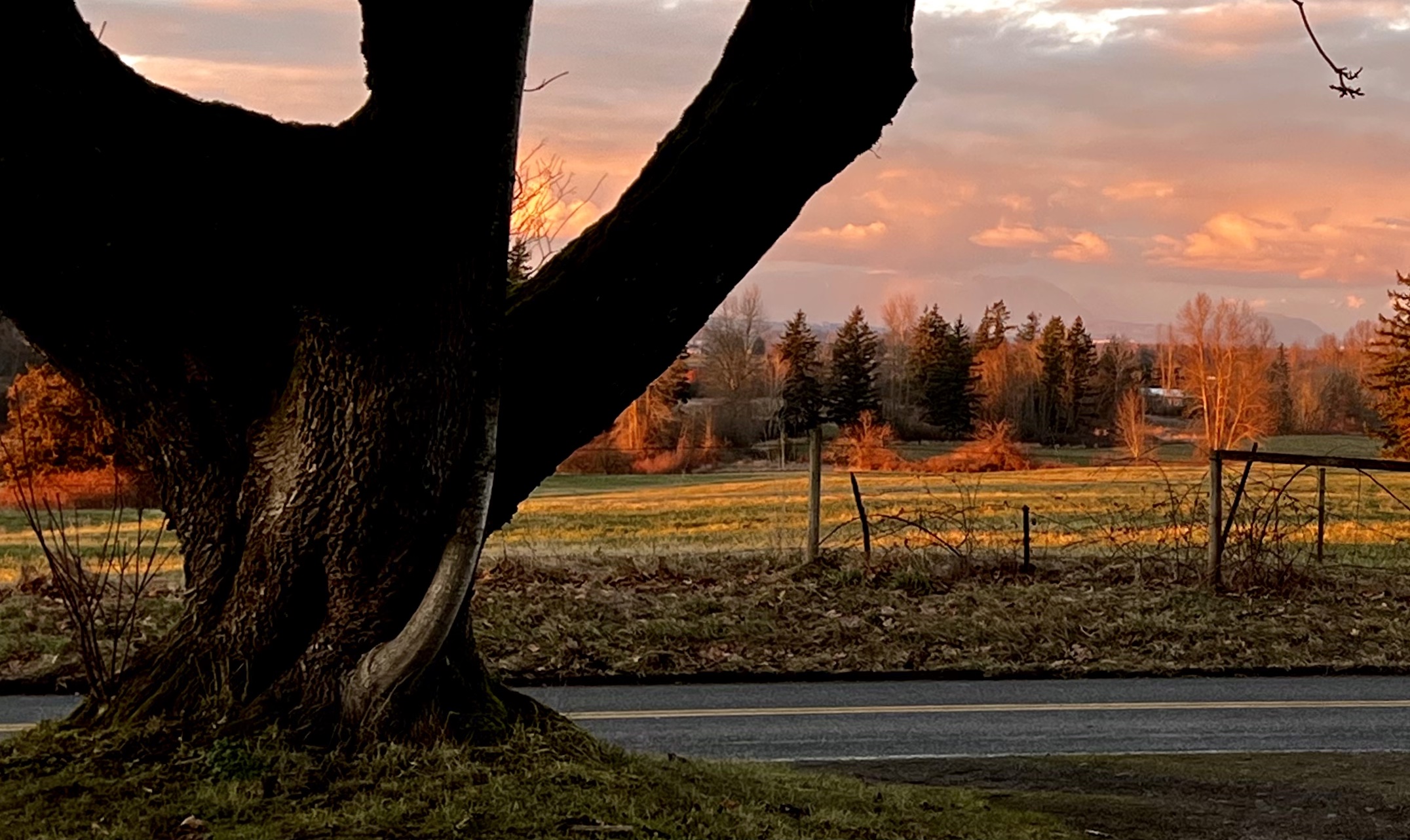
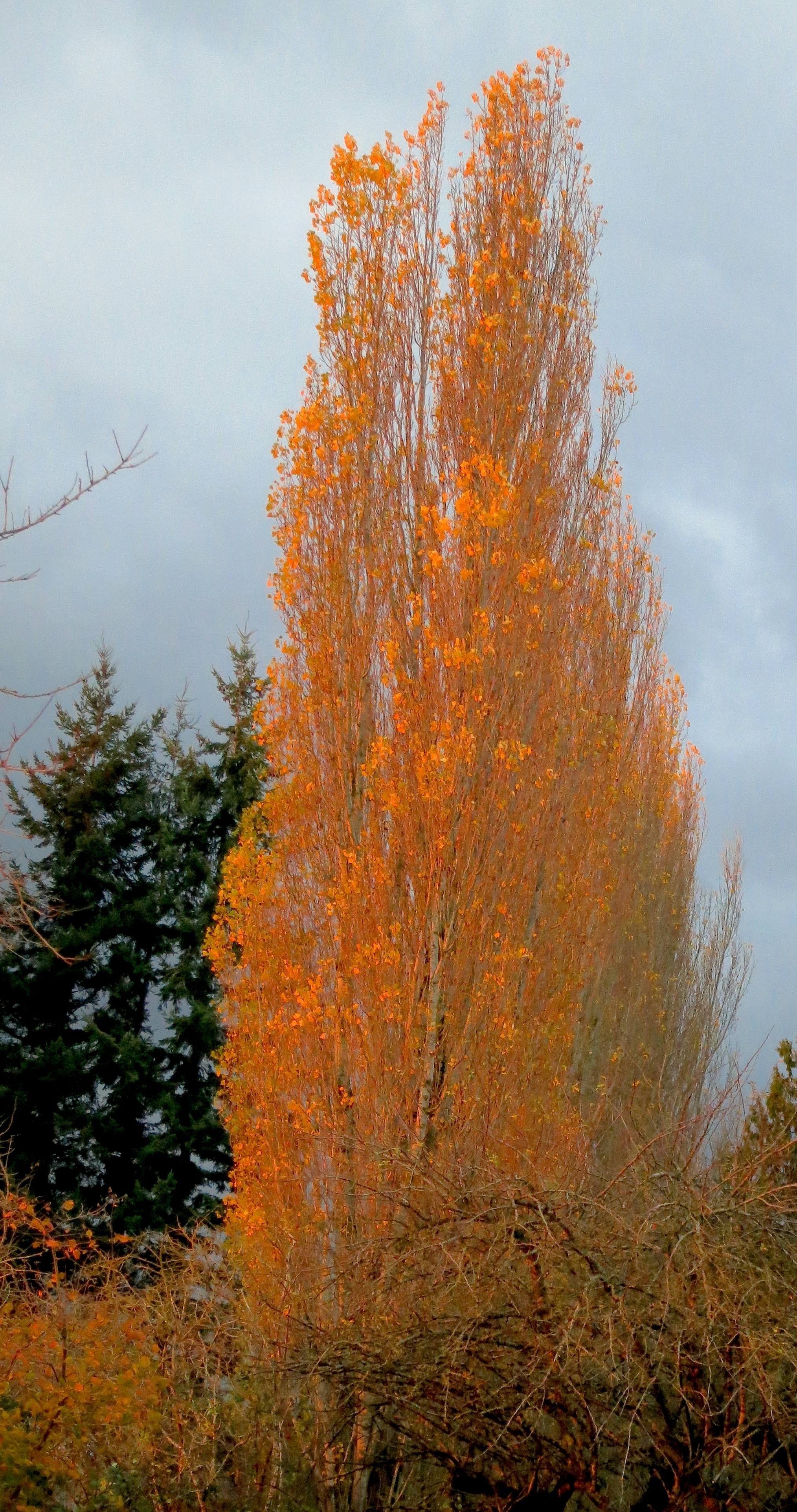
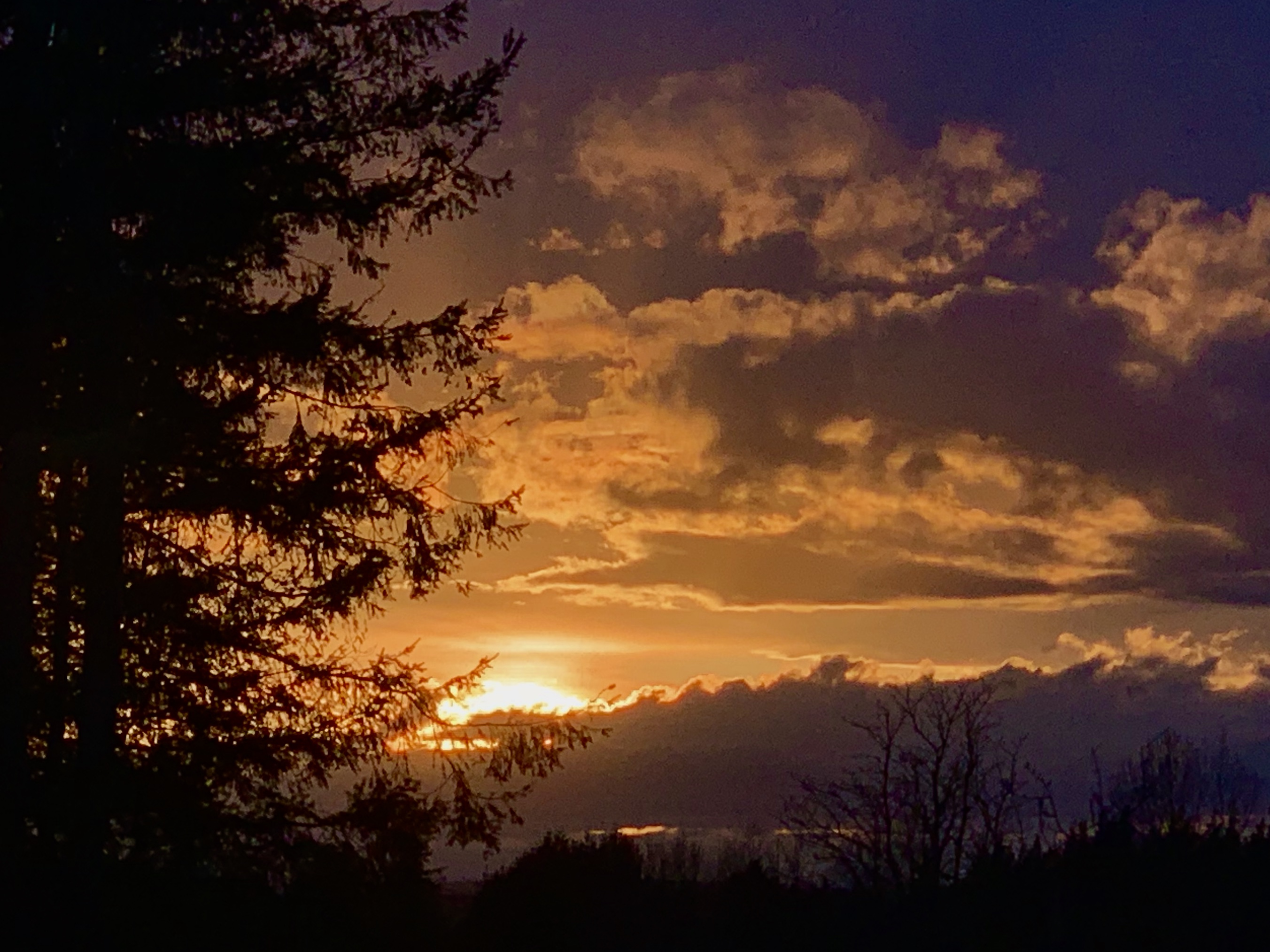
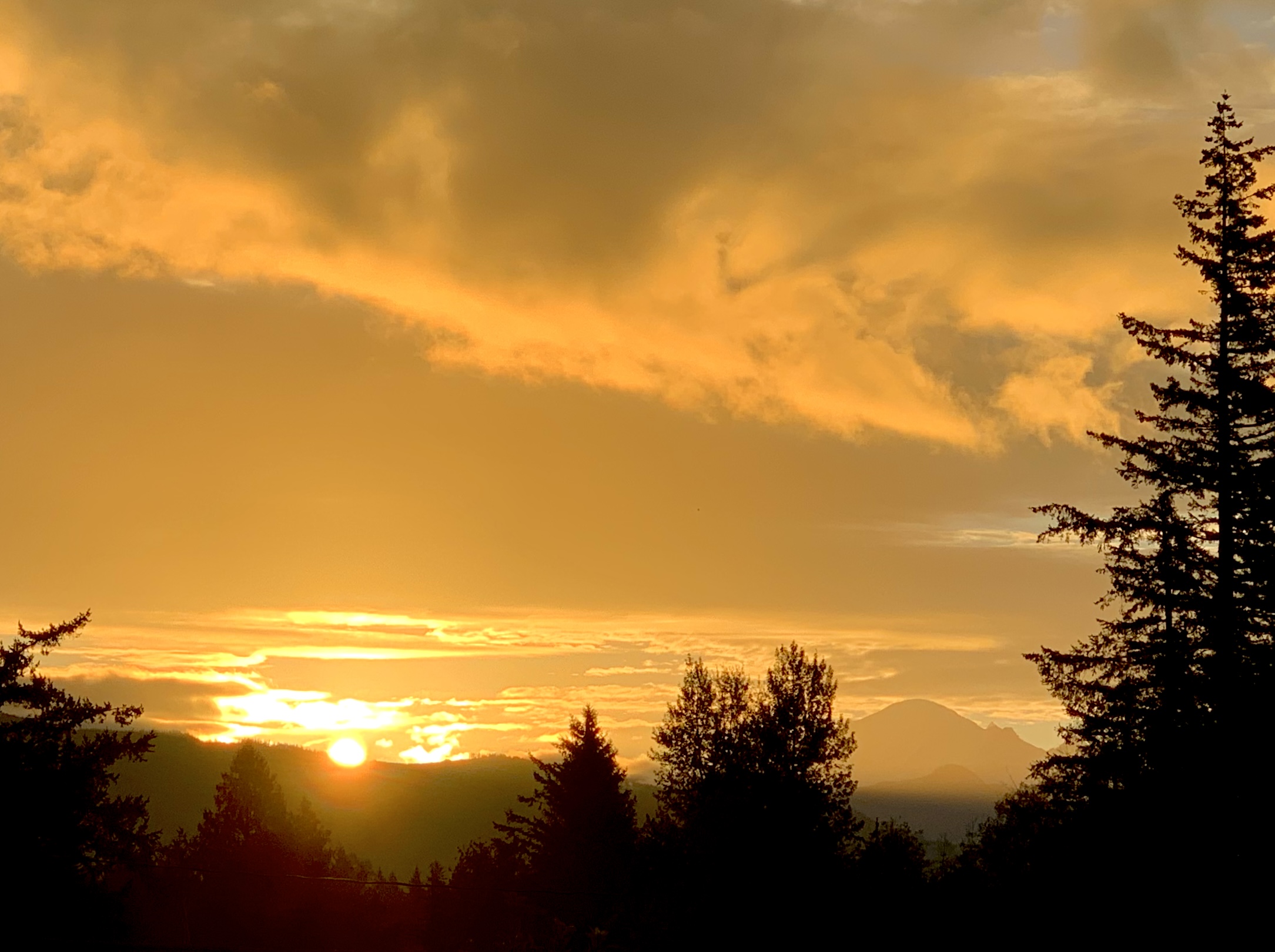
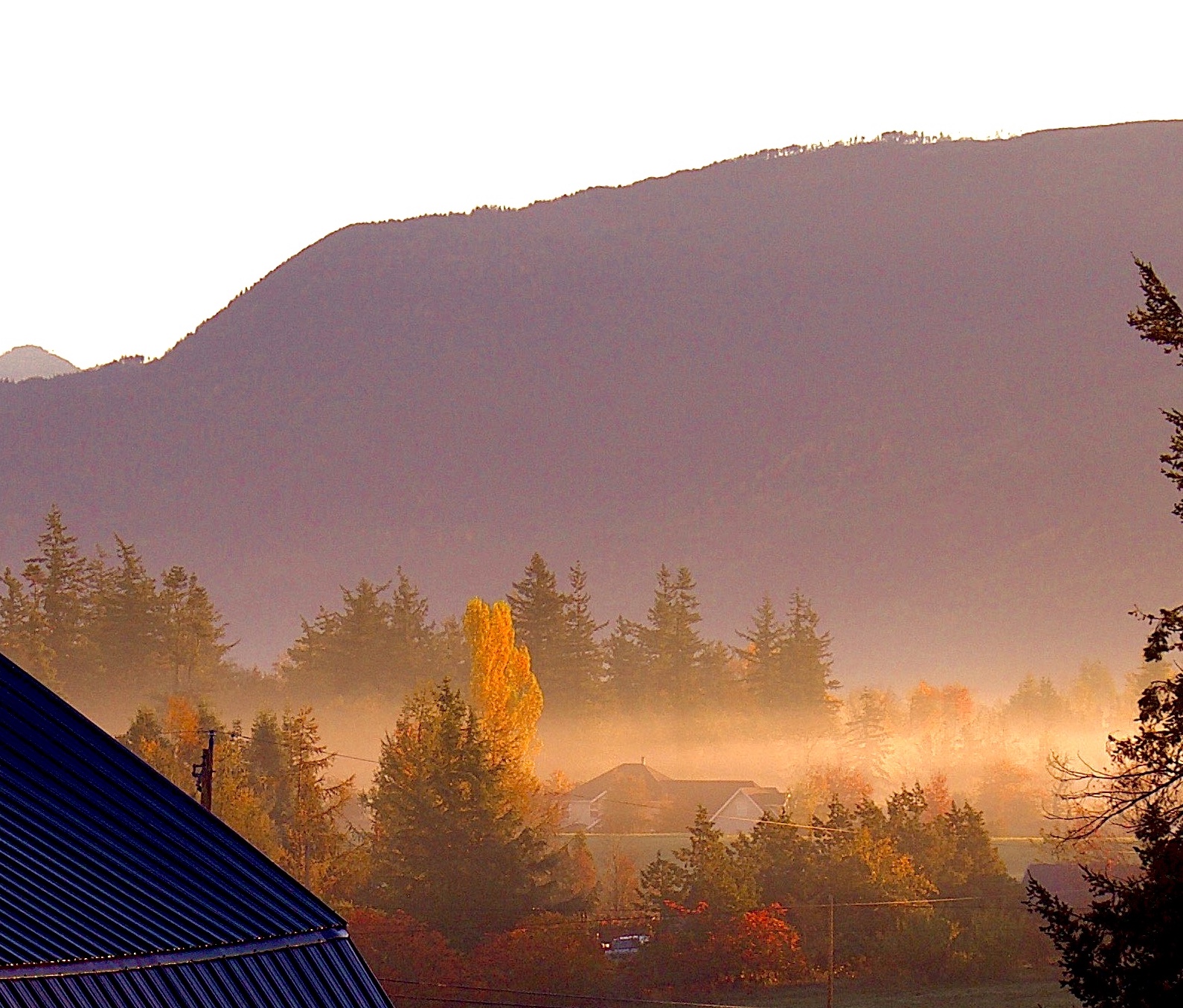
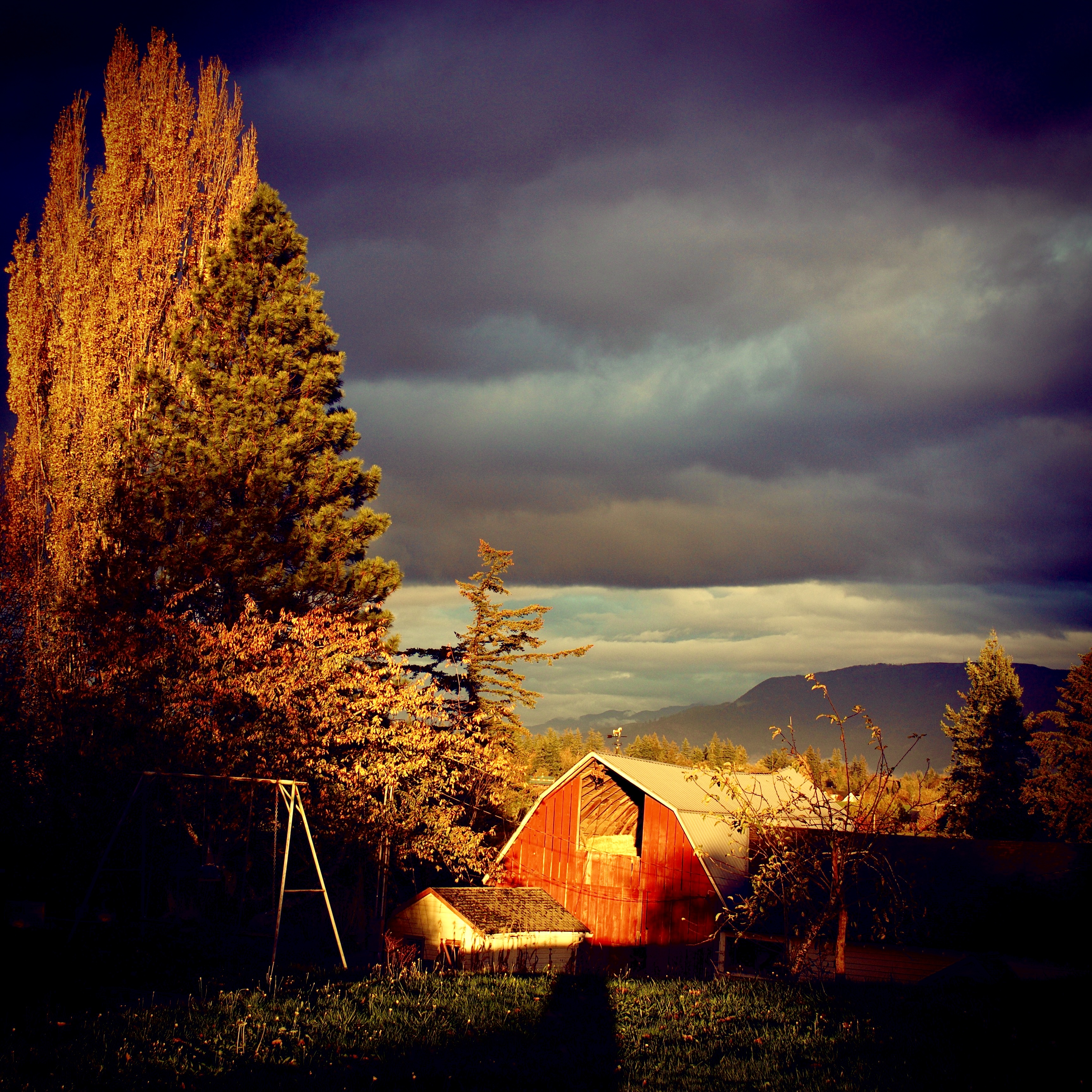
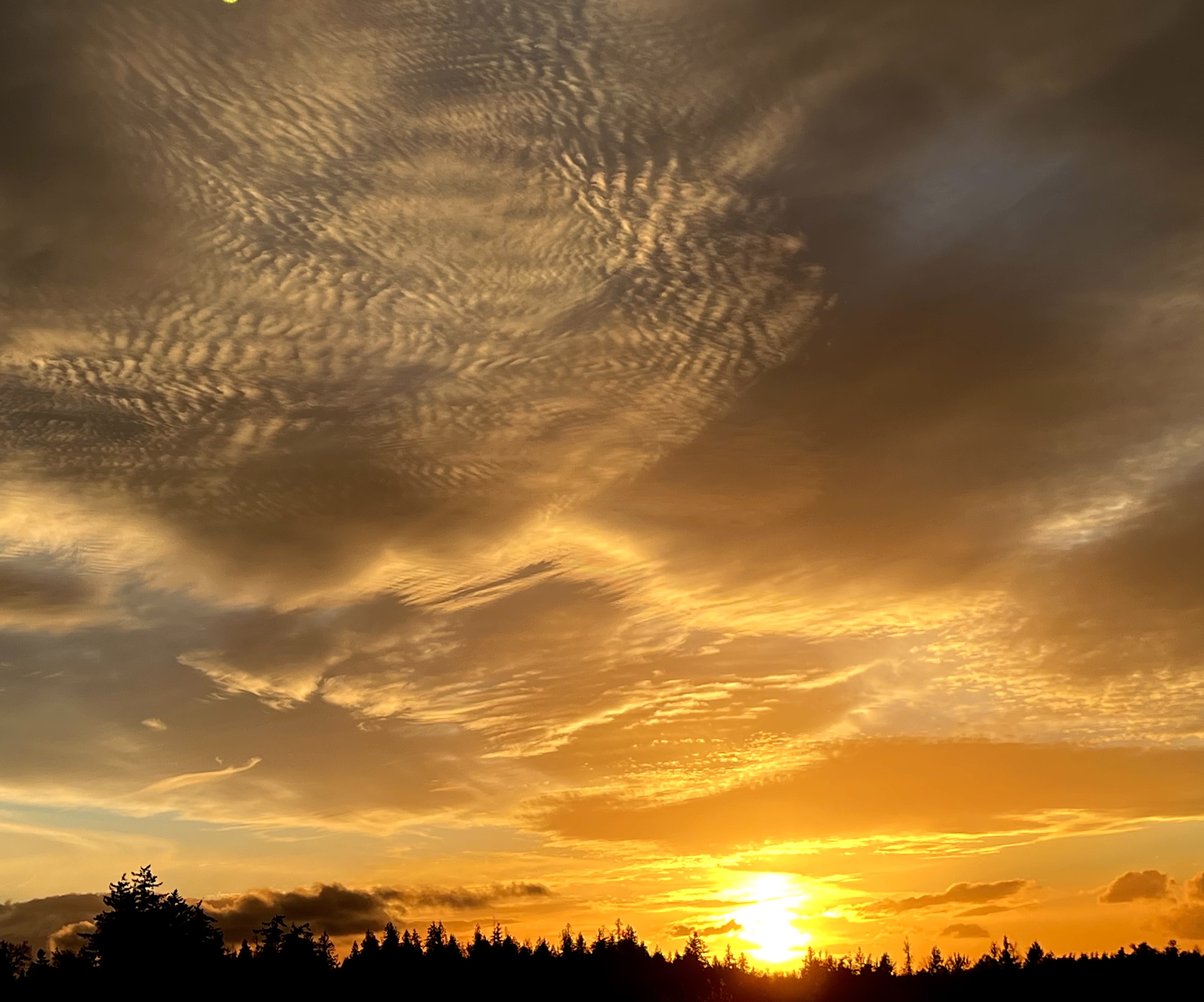
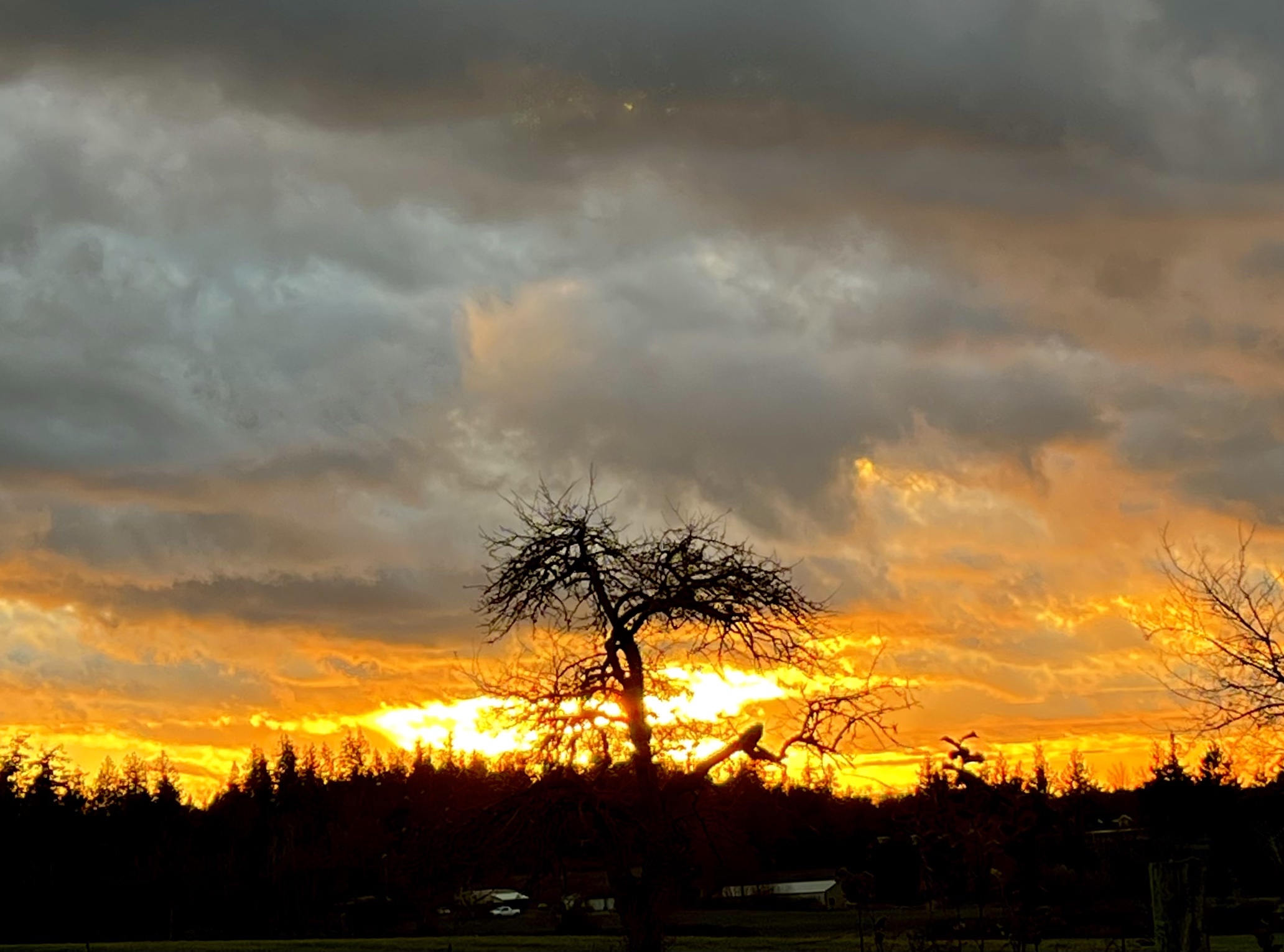
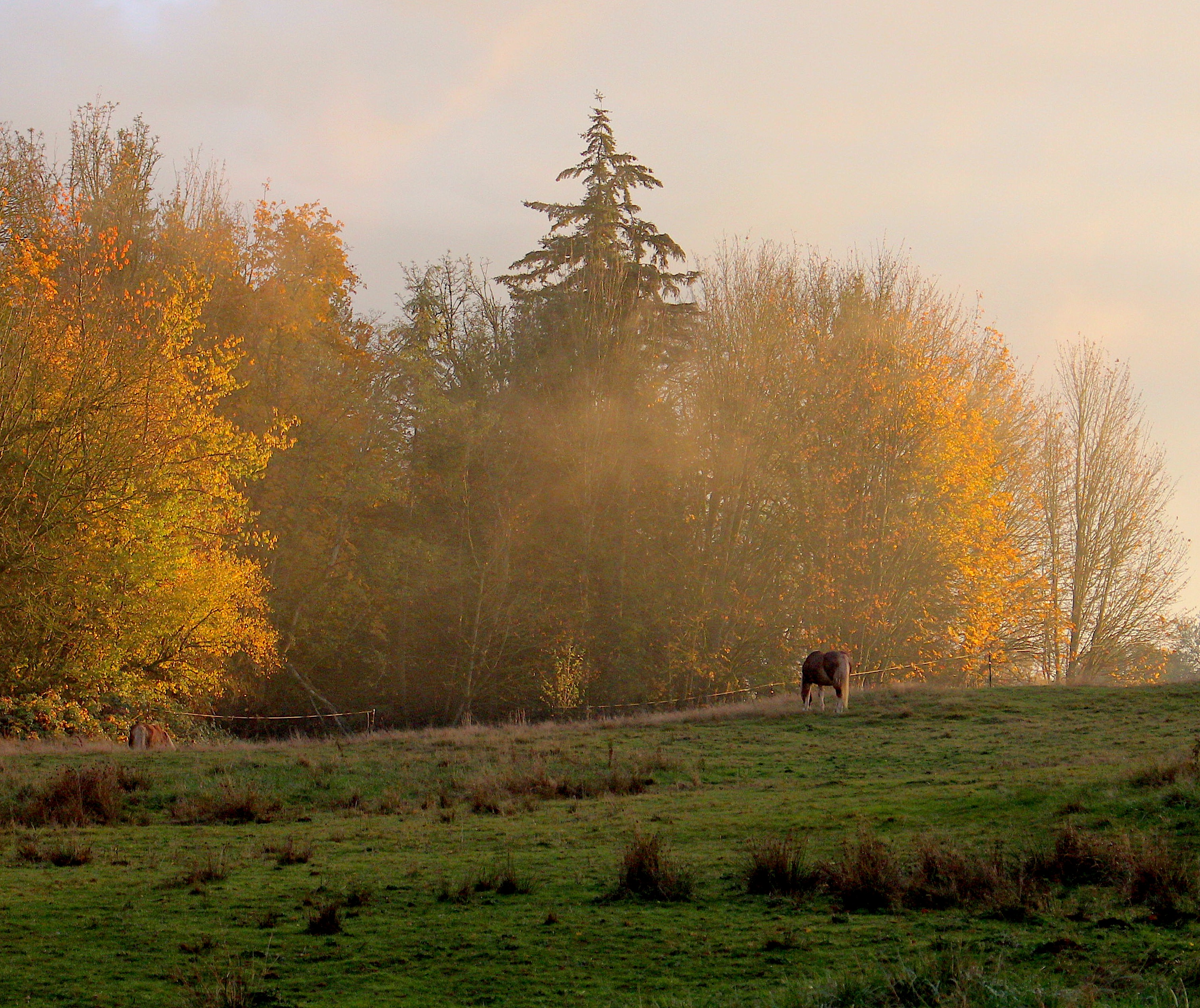
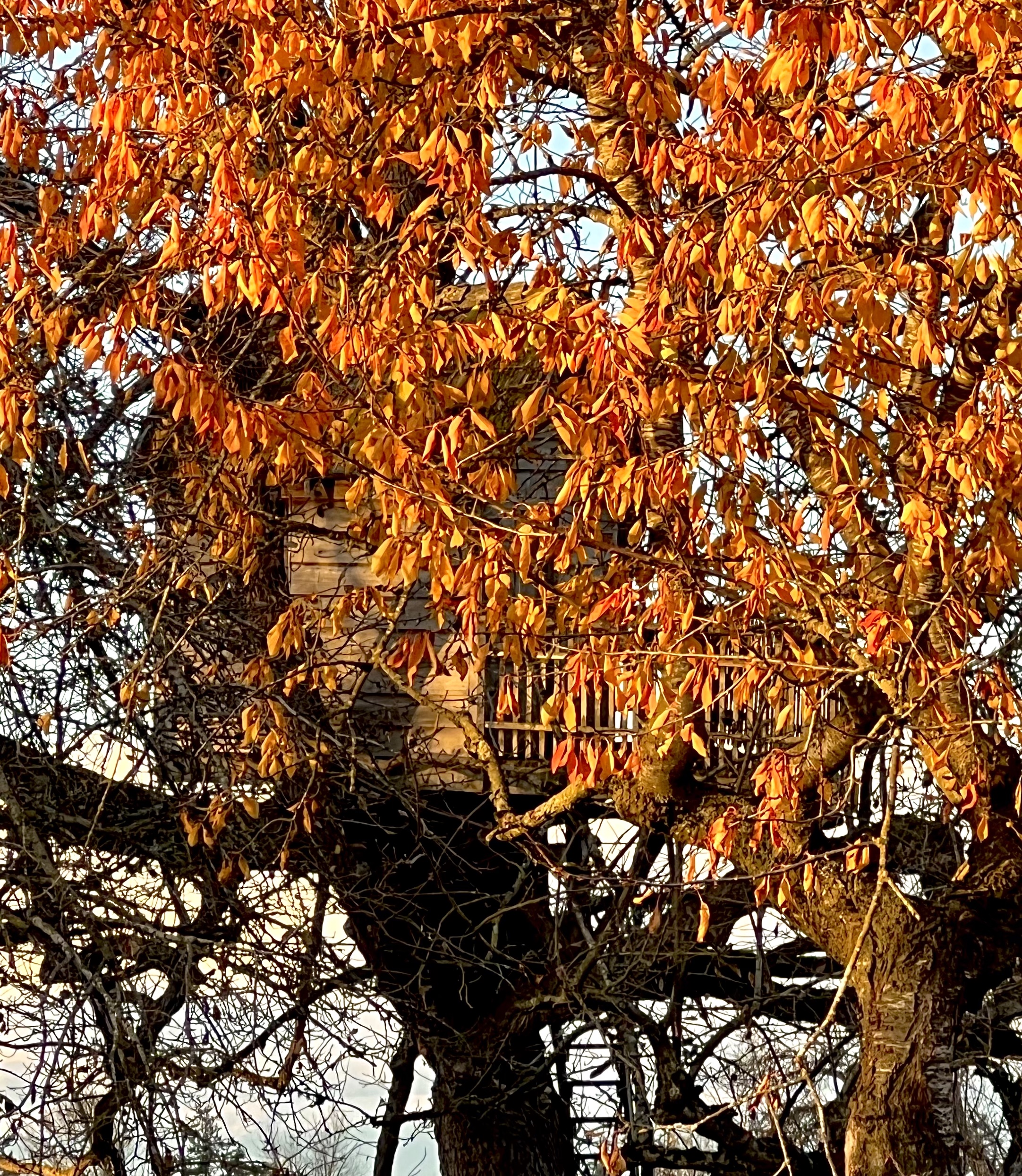
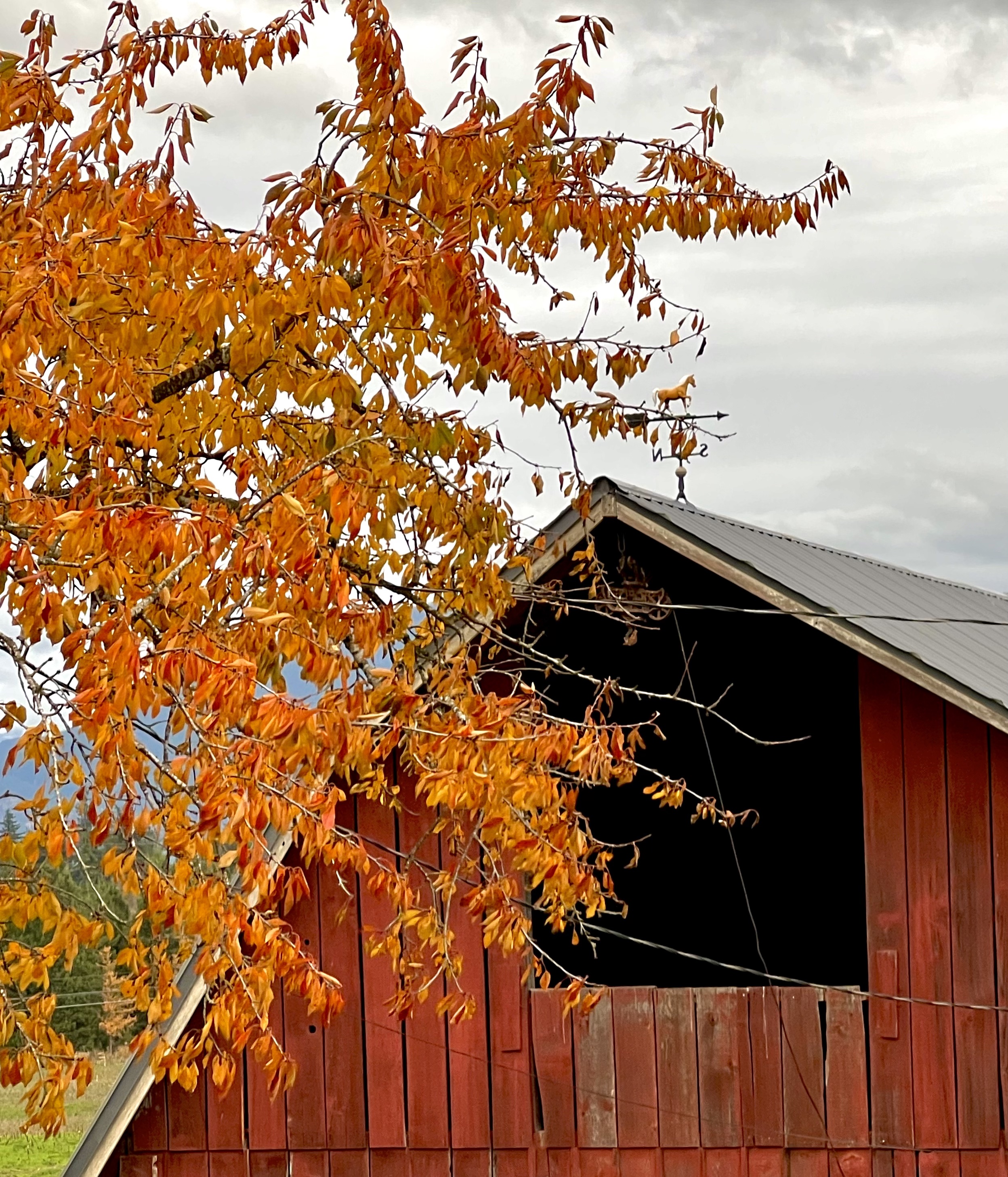
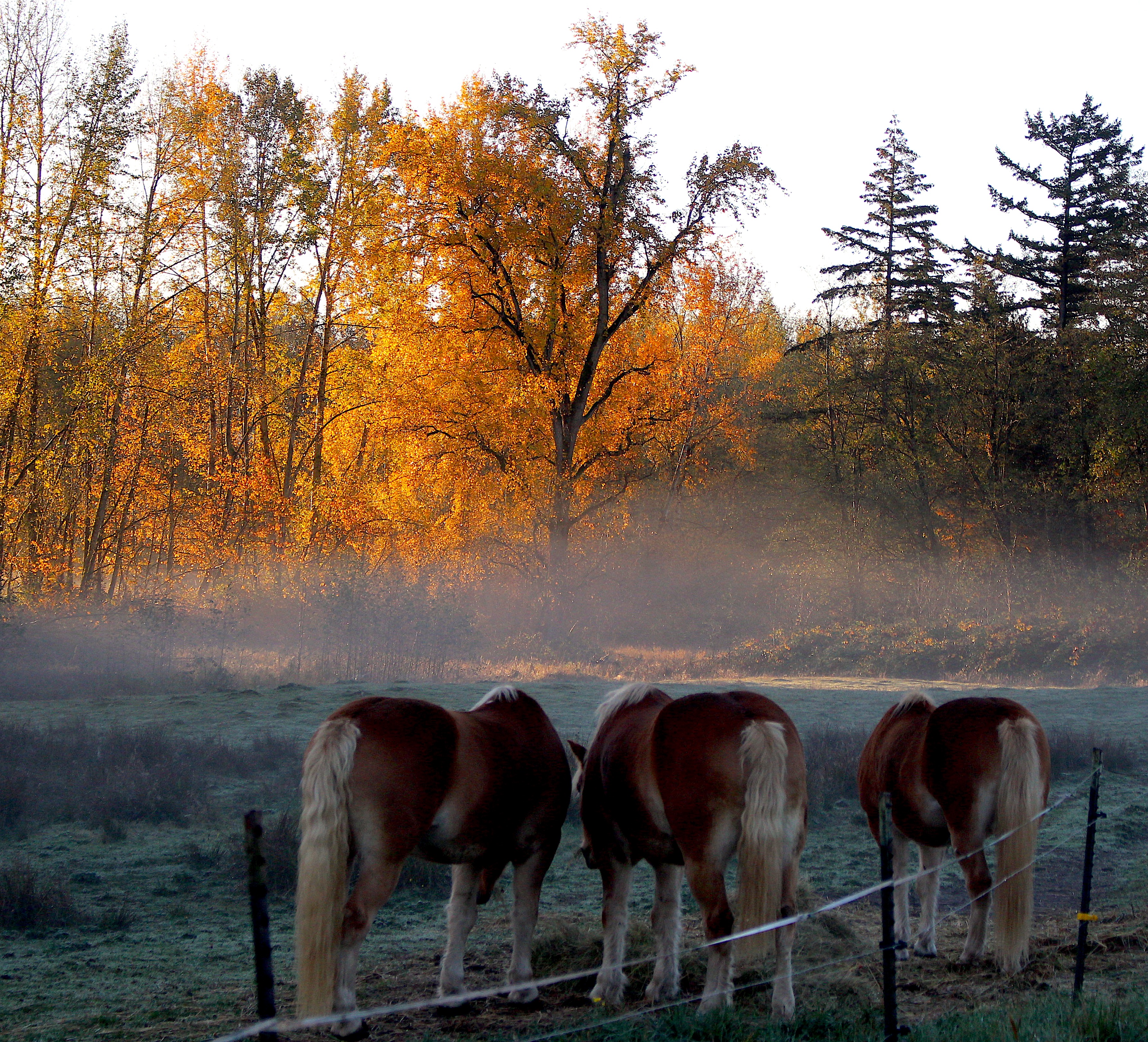
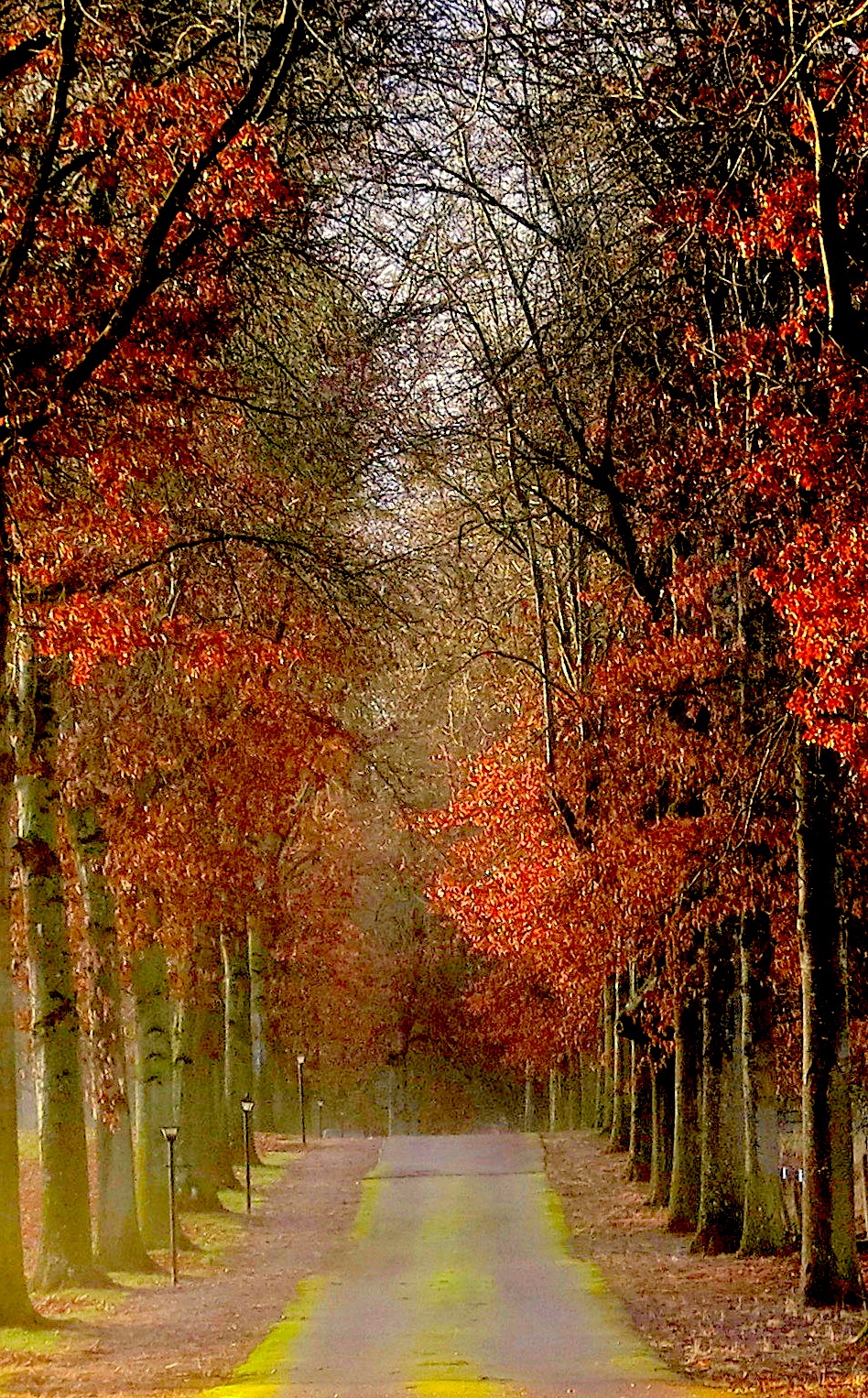
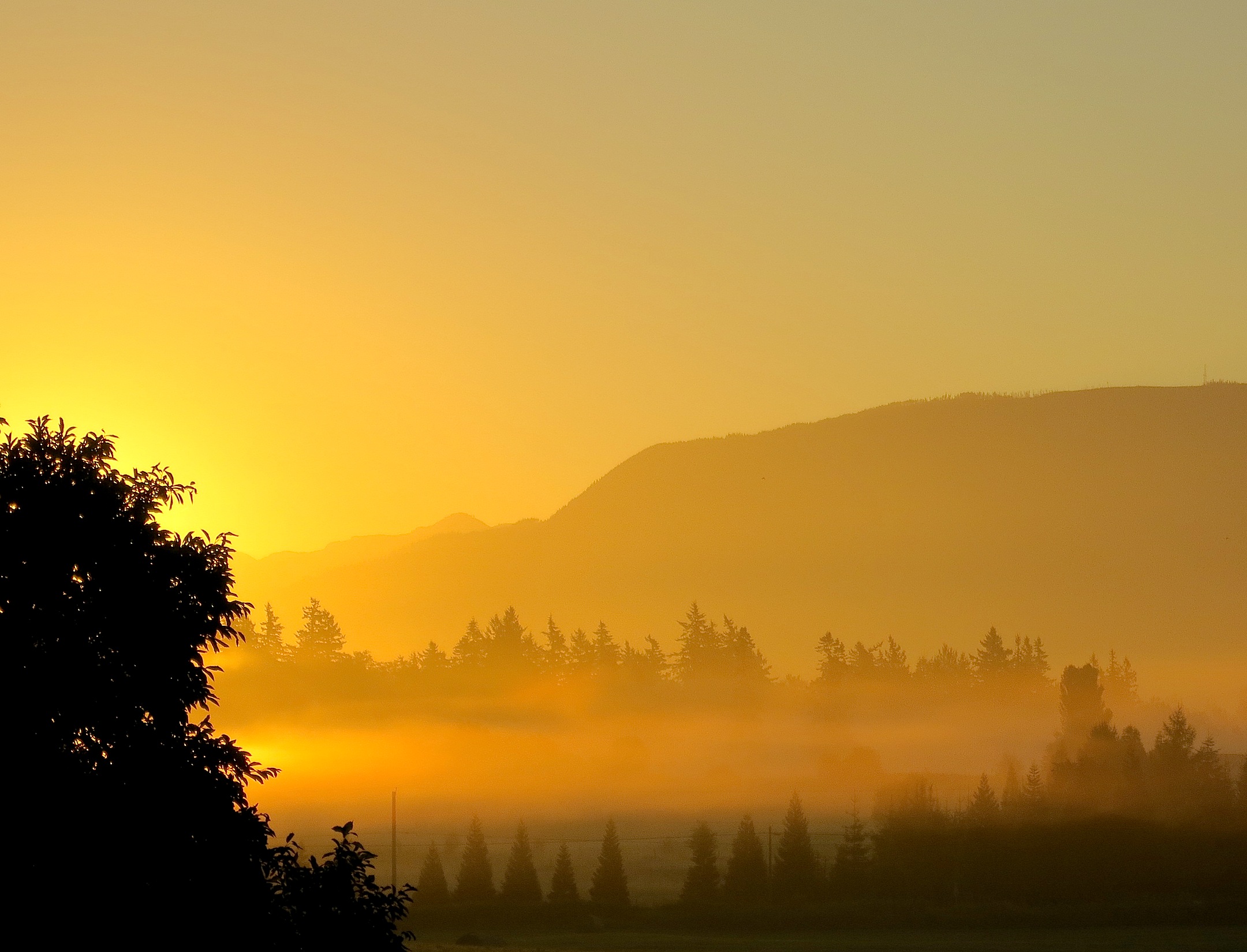
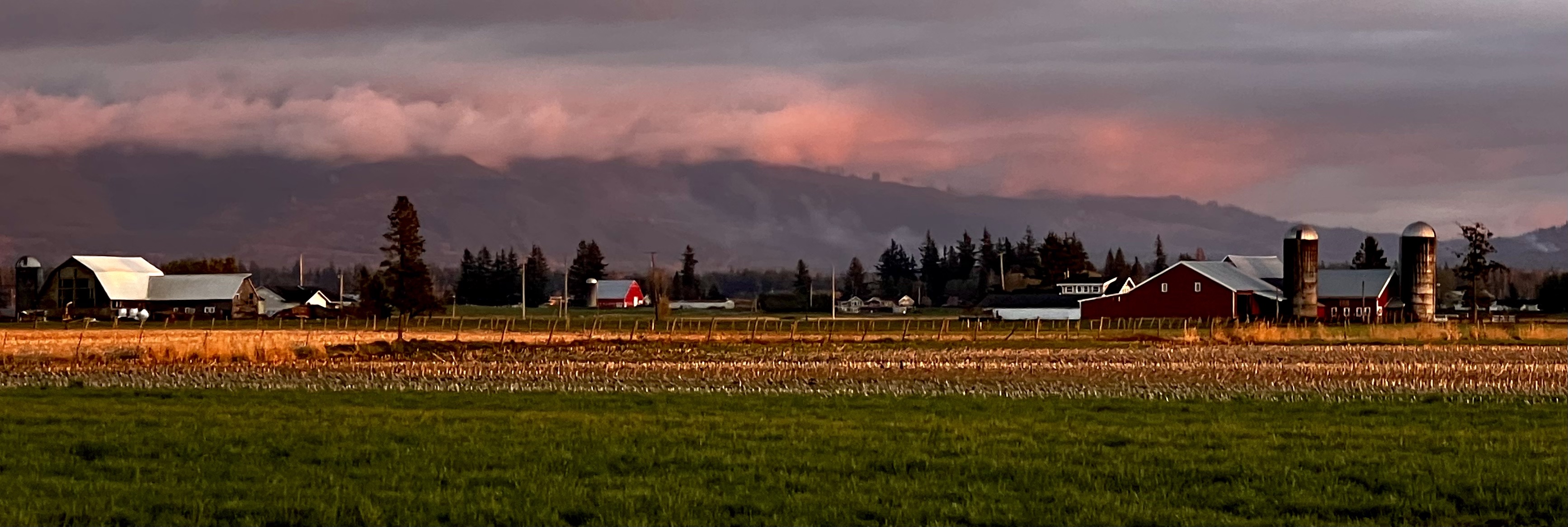
I live where golden hour light is doled out sparingly – we just might get too used to it – where gray clouds tend to mute and muffle the spirit.
So I search for light as if it is buried like treasure.
When gilded light illuminates and glows, when all is immersed and lifted by its radiance, I forget the gray, as if it never was.
So I wait patiently, ready for another such burst of joy coming from everywhere and nowhere all at once. A moment in time to be preserved, not to be forgotten.
One-Time
Monthly
Yearly
Make a one-time or recurring donation to support daily ad-free Barnstorming posts
Season of ripening fruit and seeds, depart; There is no harvest ripening in the heart.
Bring the frost that strikes the dahlias down In one cruel night.The blackened buds, the brown And wilted heads, the crippled stems, we crave – All beauty withered, crumbling to the grave. Wind, strip off the leaves, and harden, ground, Till in your frozen crust no break is found.
Then only, when man’s inner world is one With barren earth and branches bared to bone, Then only can the heart begin to know The seeds of hope asleep beneath the snow; Then only can the chastened spirit tap The hidden faith still pulsing in the sap. ~Anne Morrow Lindberghfrom The Unicorn and Other Poems
After the ranks of stubble have laid bare, And field mice and finches’ beaks have found The last spilled seed corn left upon the ground; And no more swallows miracle in air;
When the green tuft no longer hides the hare, And dropping starling flights at evening come; When birds, except the robin, have gone dumb, And leaves are rustling downwards everywhere;
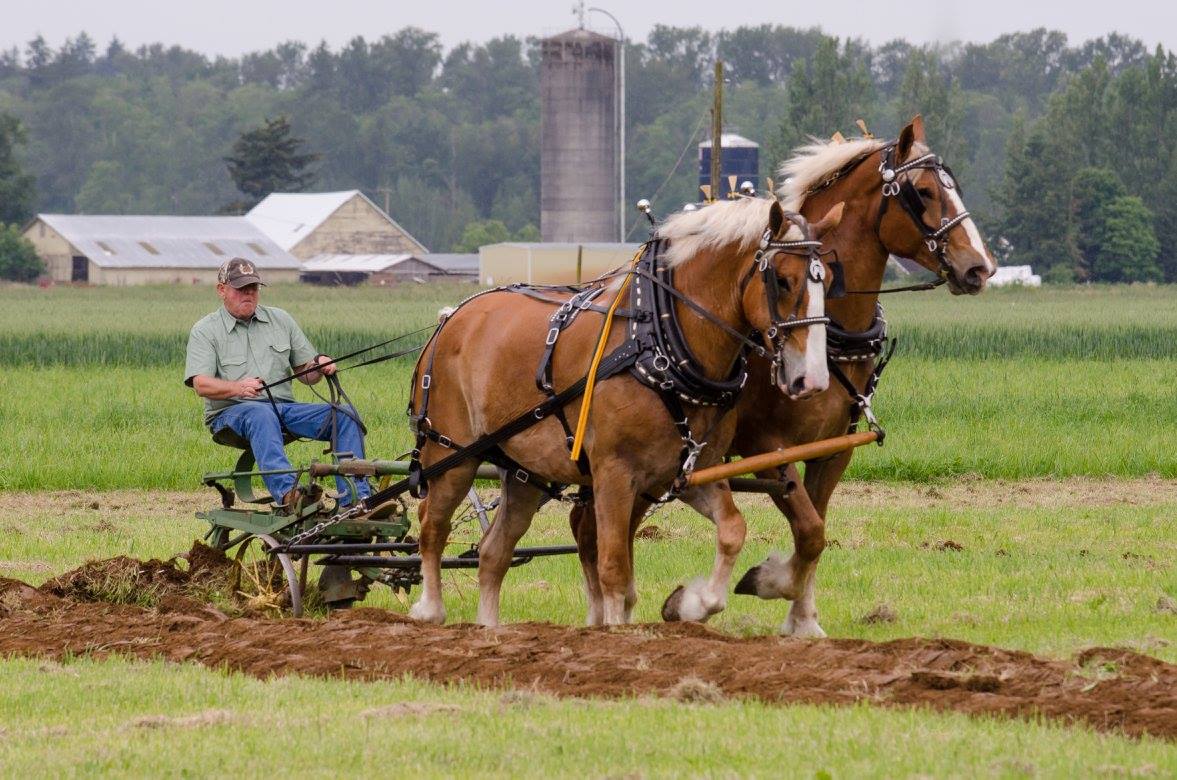
Then out, with the great horses, come the ploughs, And all day long the slow procession goes, Darkening the stubble fields with broadening strips. Grey sea-gulls settle after to carouse:
Harvest prepares upon the harvest’s close, Before the blackbird pecks the scarlet hips. ~John Masefield “Autumn Ploughing”
photo by Joel De Waard
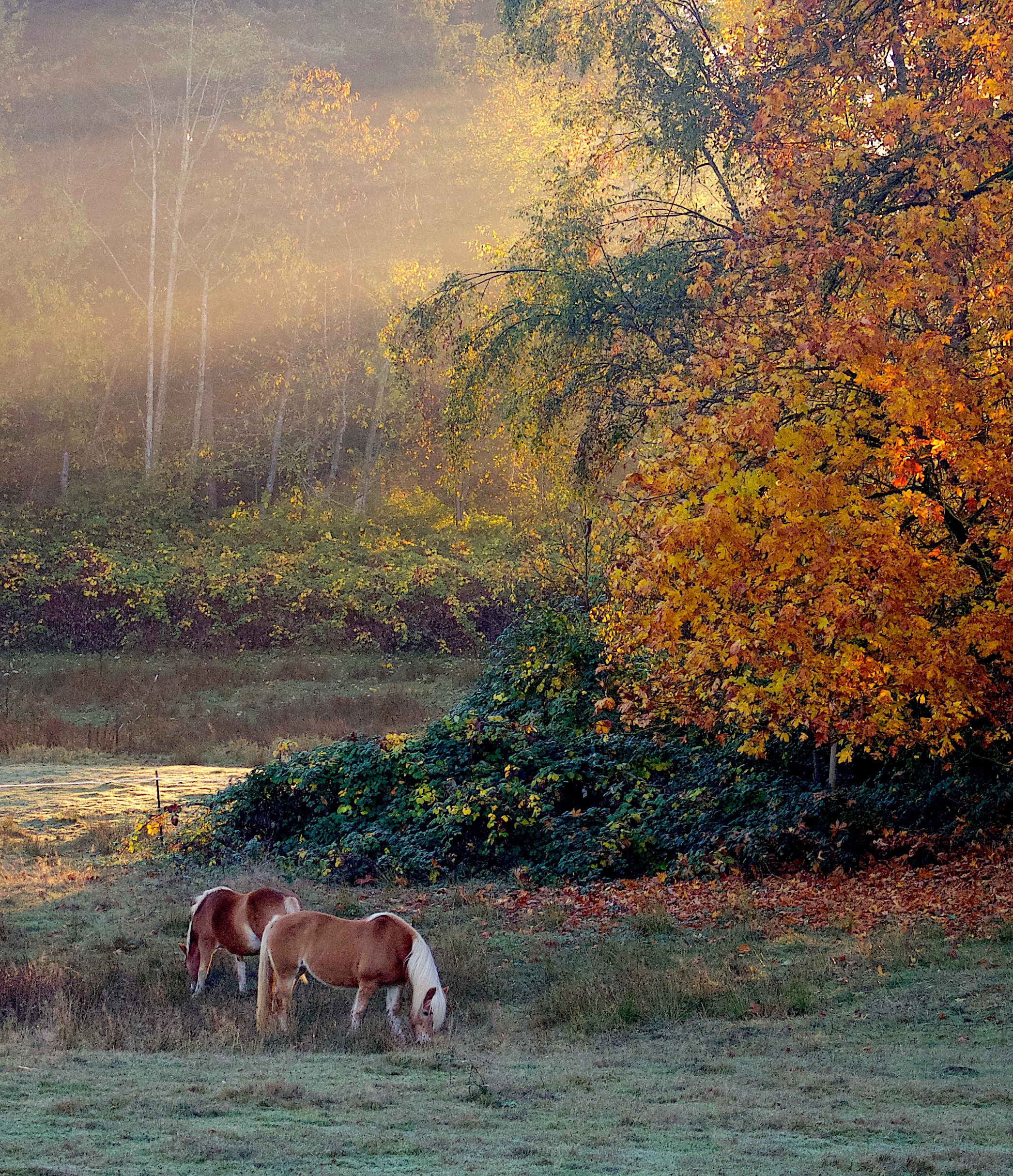
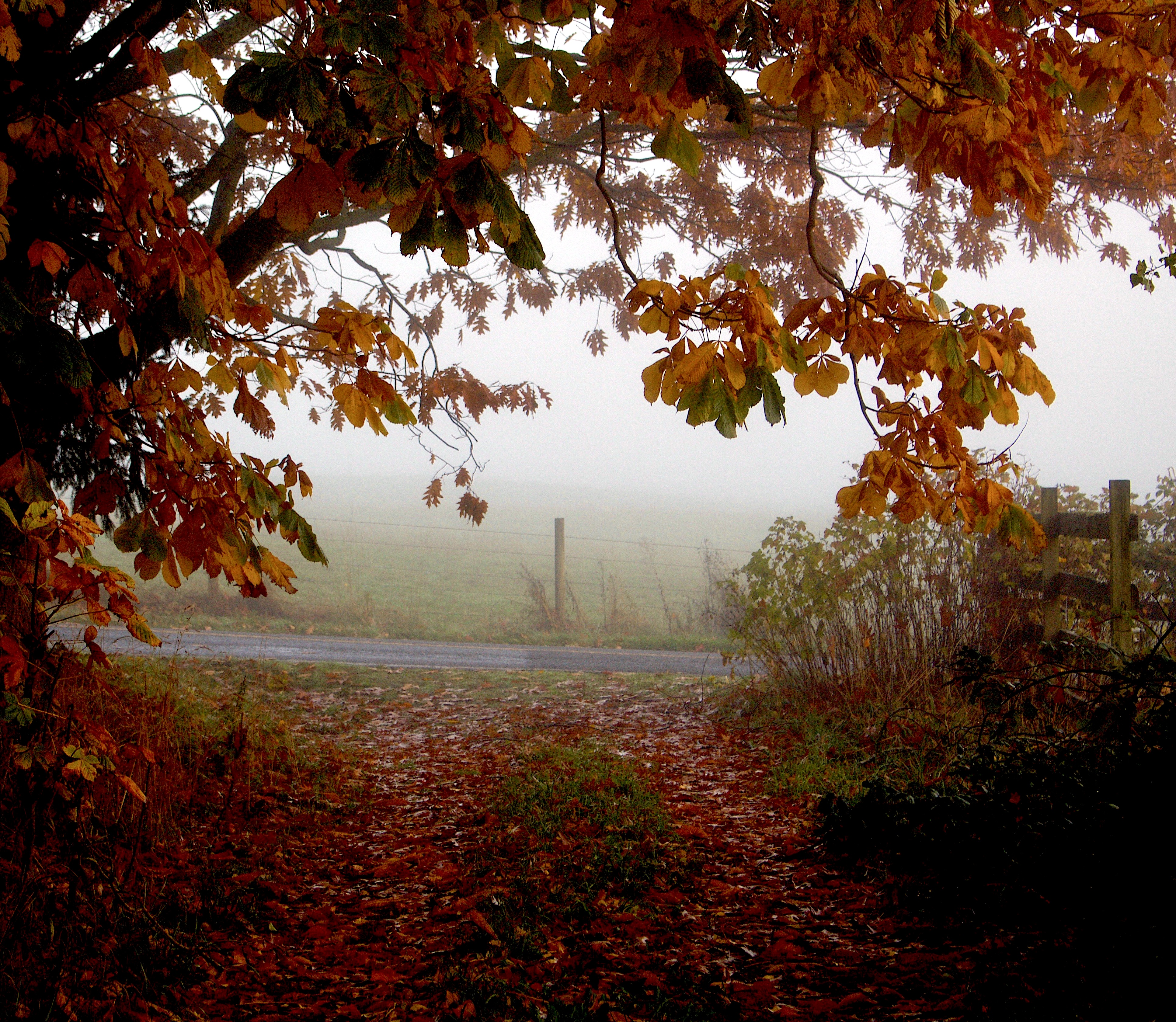
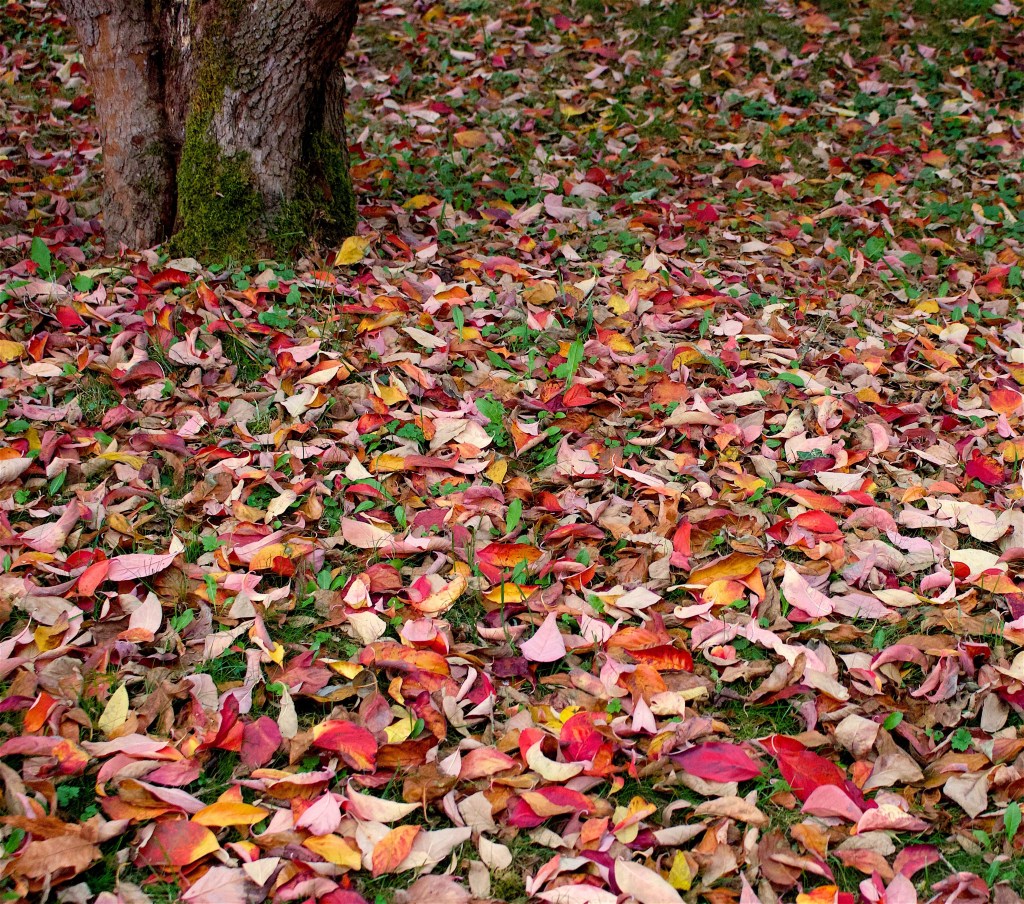
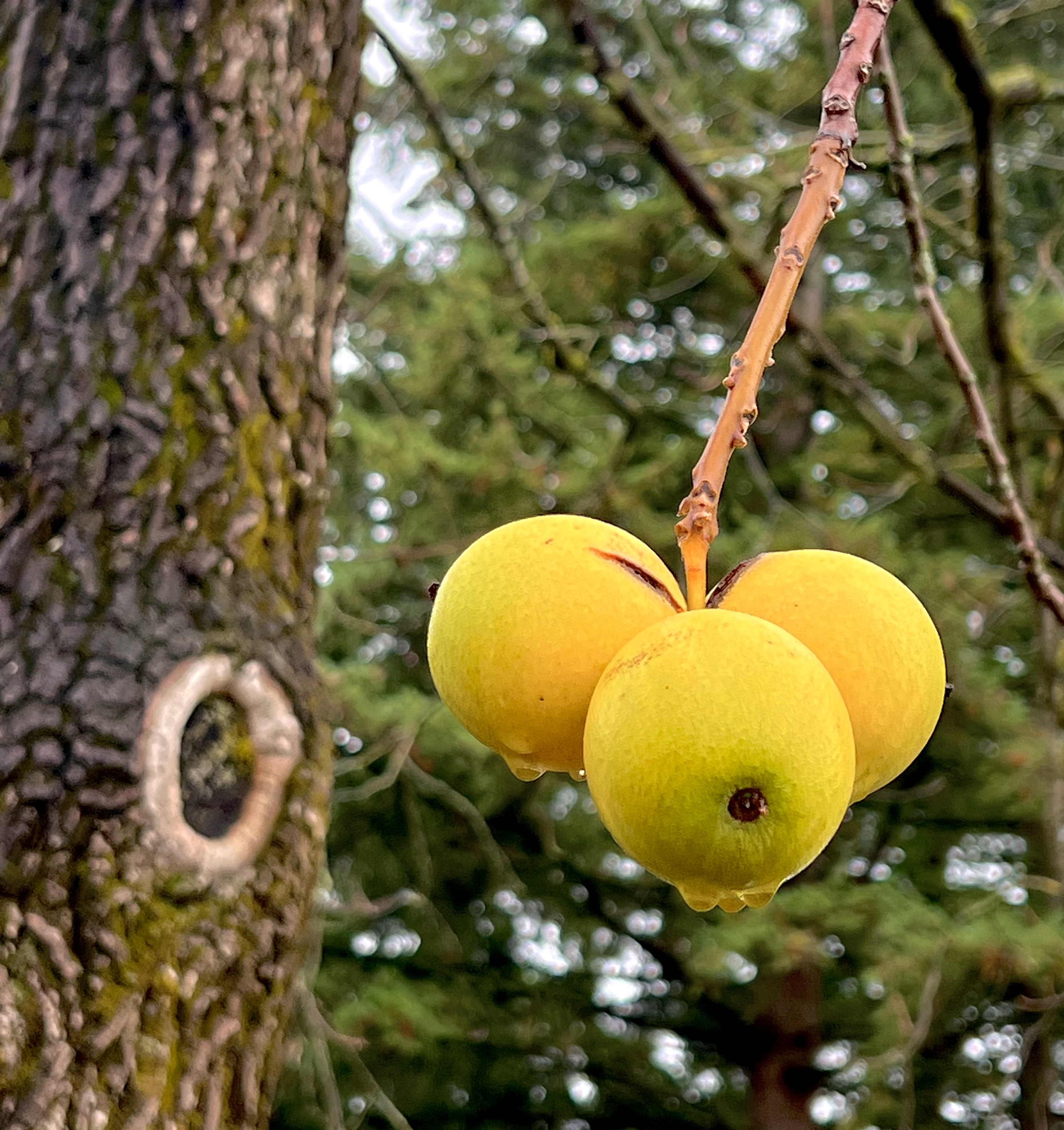
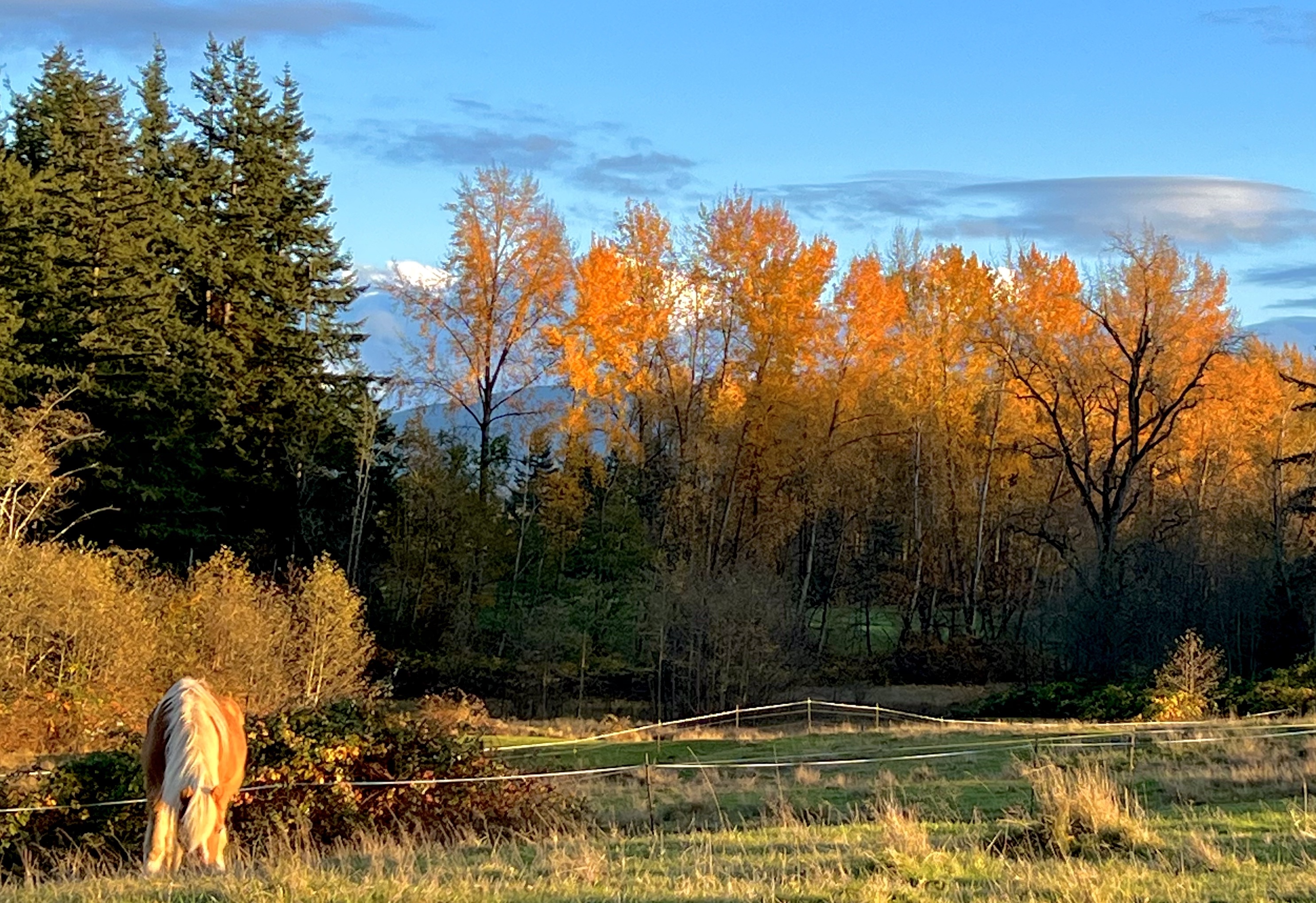
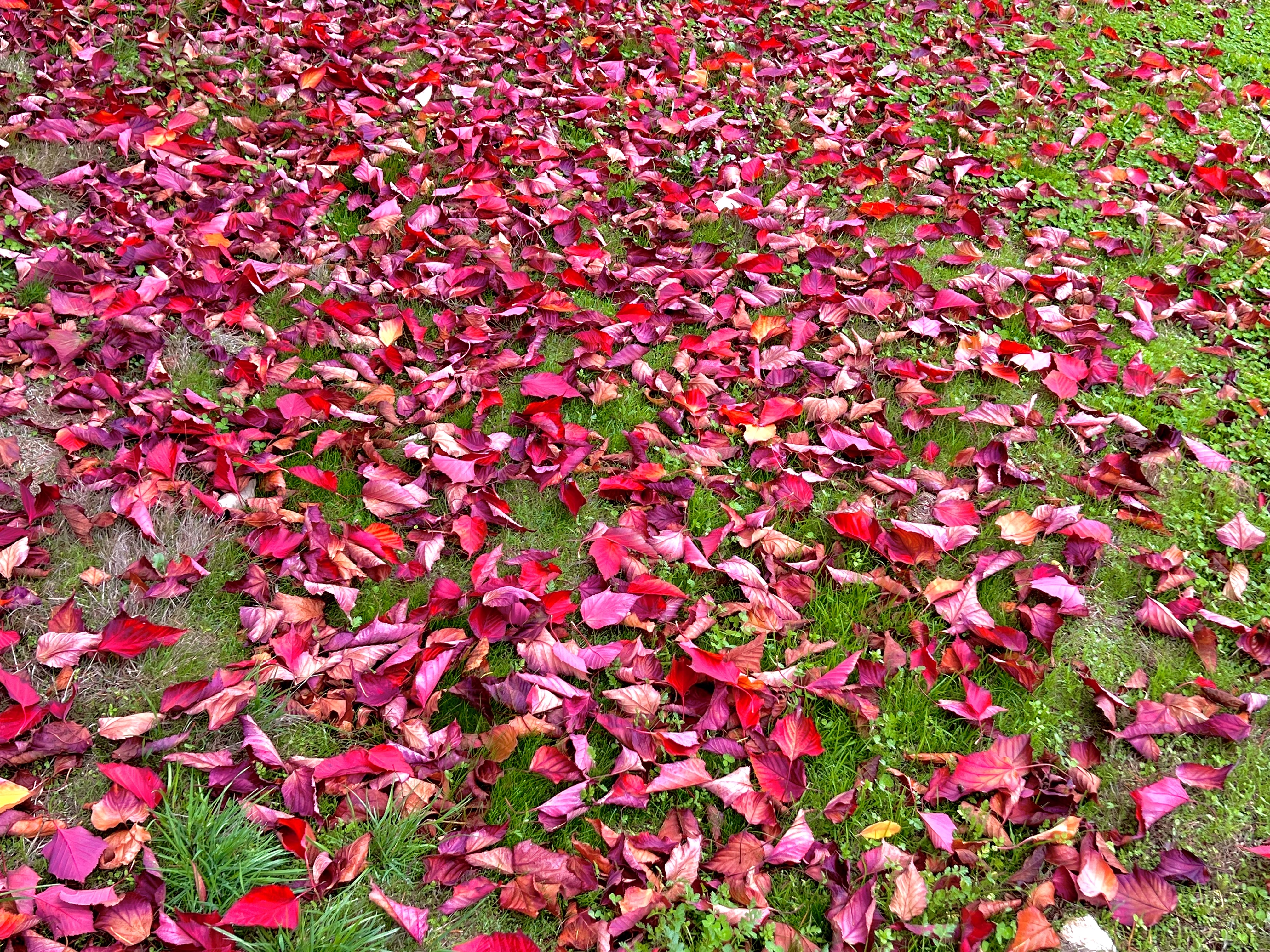
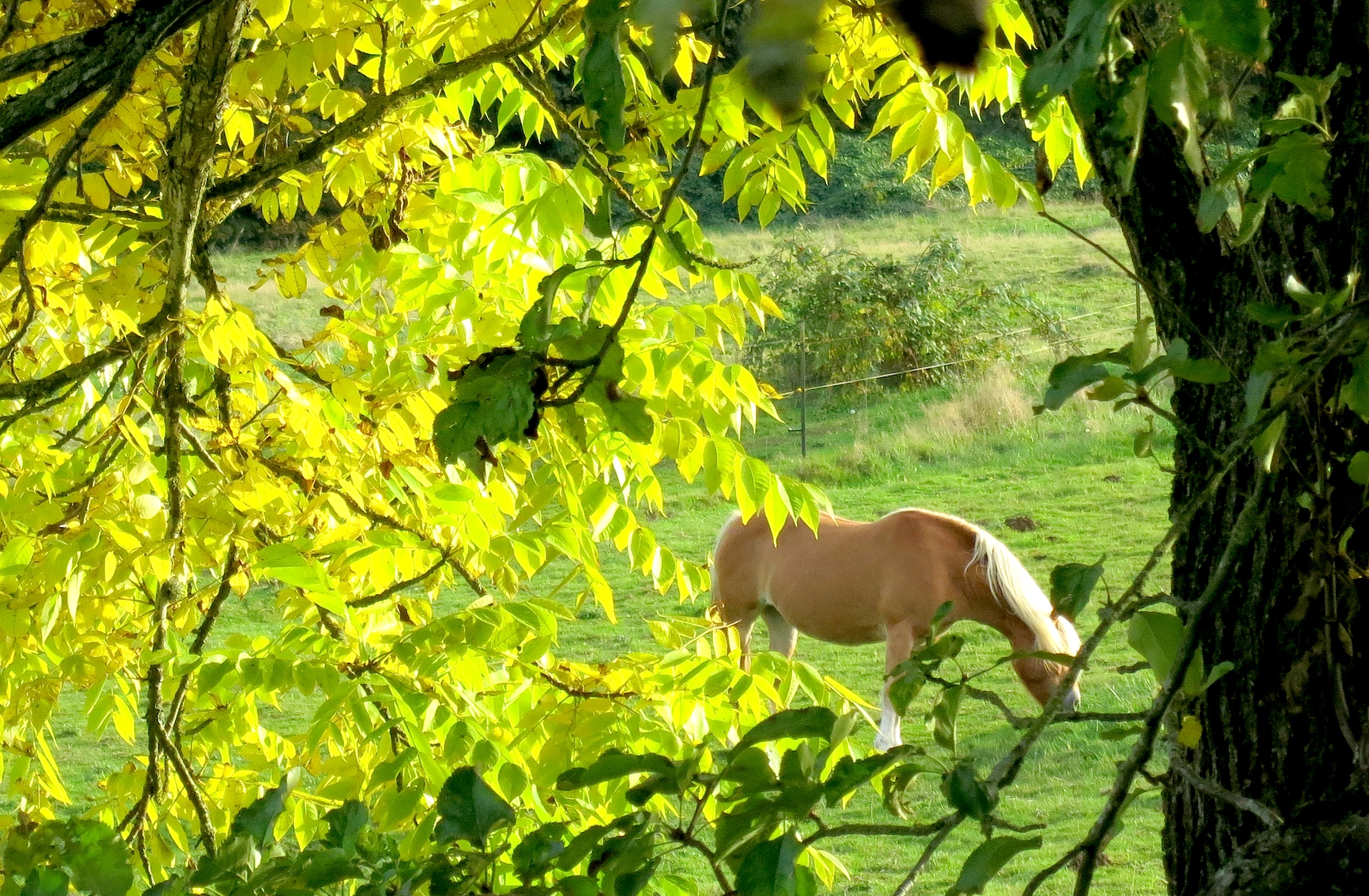
Our farm has been changing gradually over the past several weeks, each day moving a little closer to the reality of winter around the corner. Most of the fruit which is not residing in our freezer has fallen from the trees, and the walnut husks are hanging lonesome and bulbous as a windstorm pulled many leaves to the ground creating a multi-colored carpet everywhere I walk.
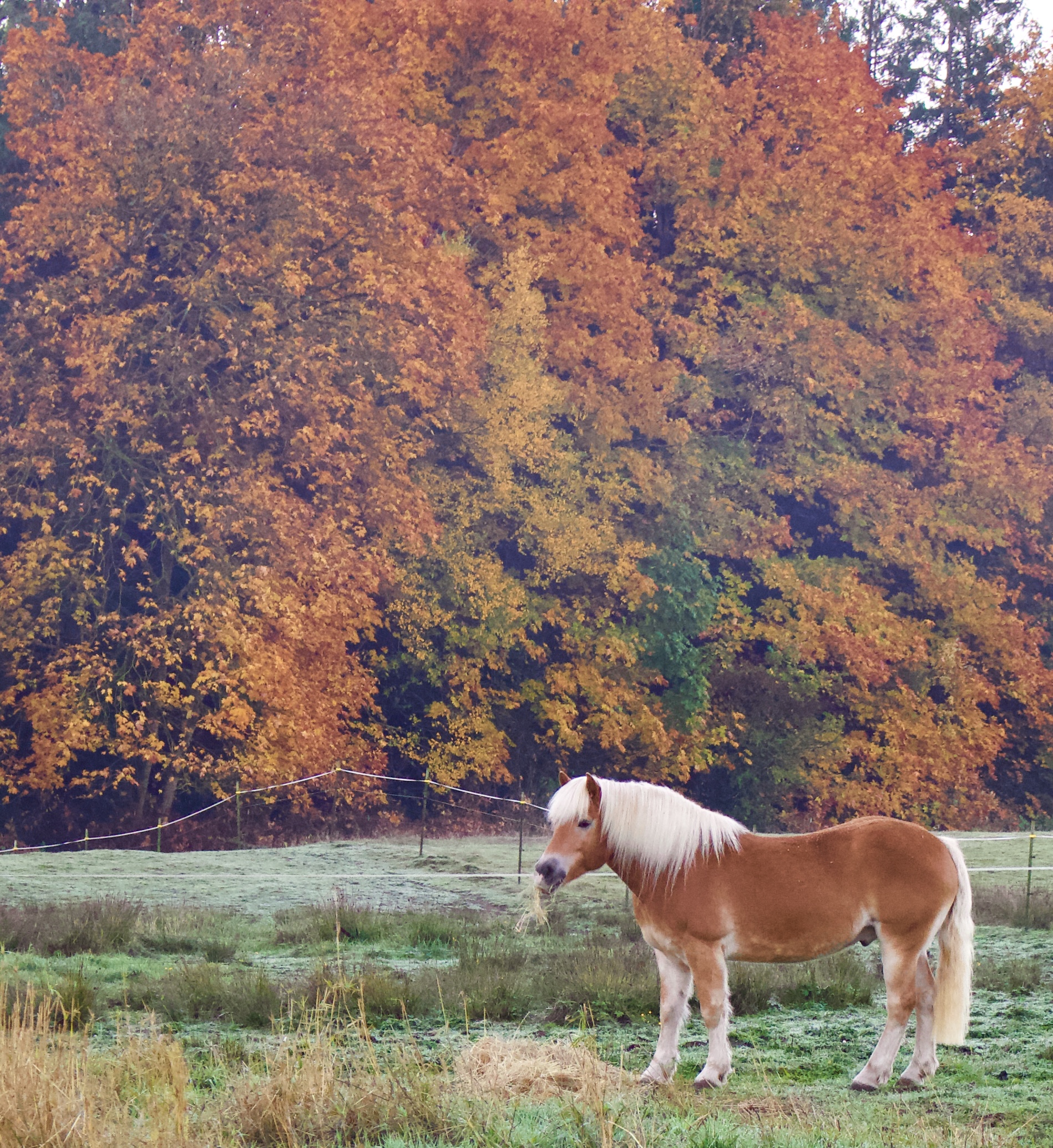
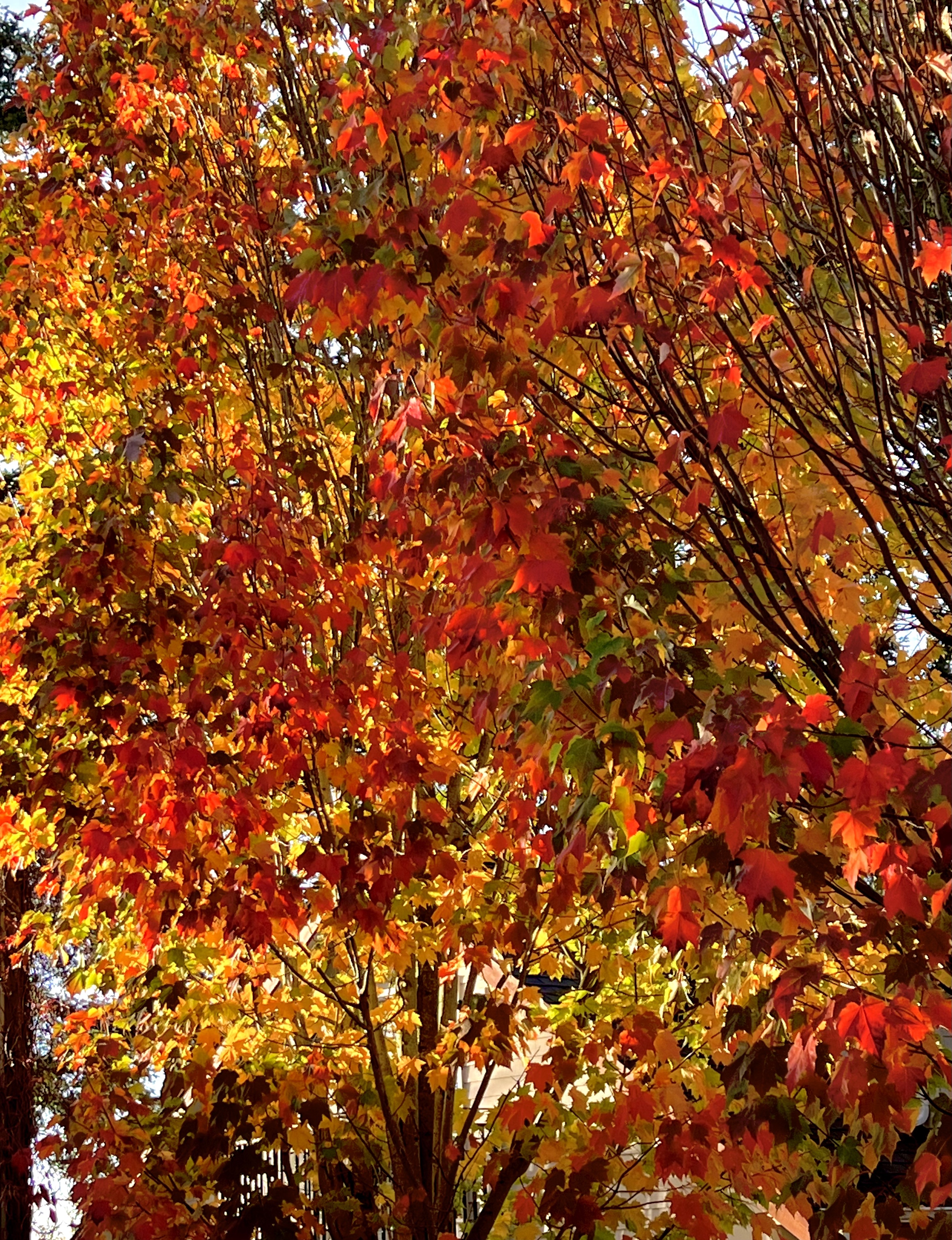
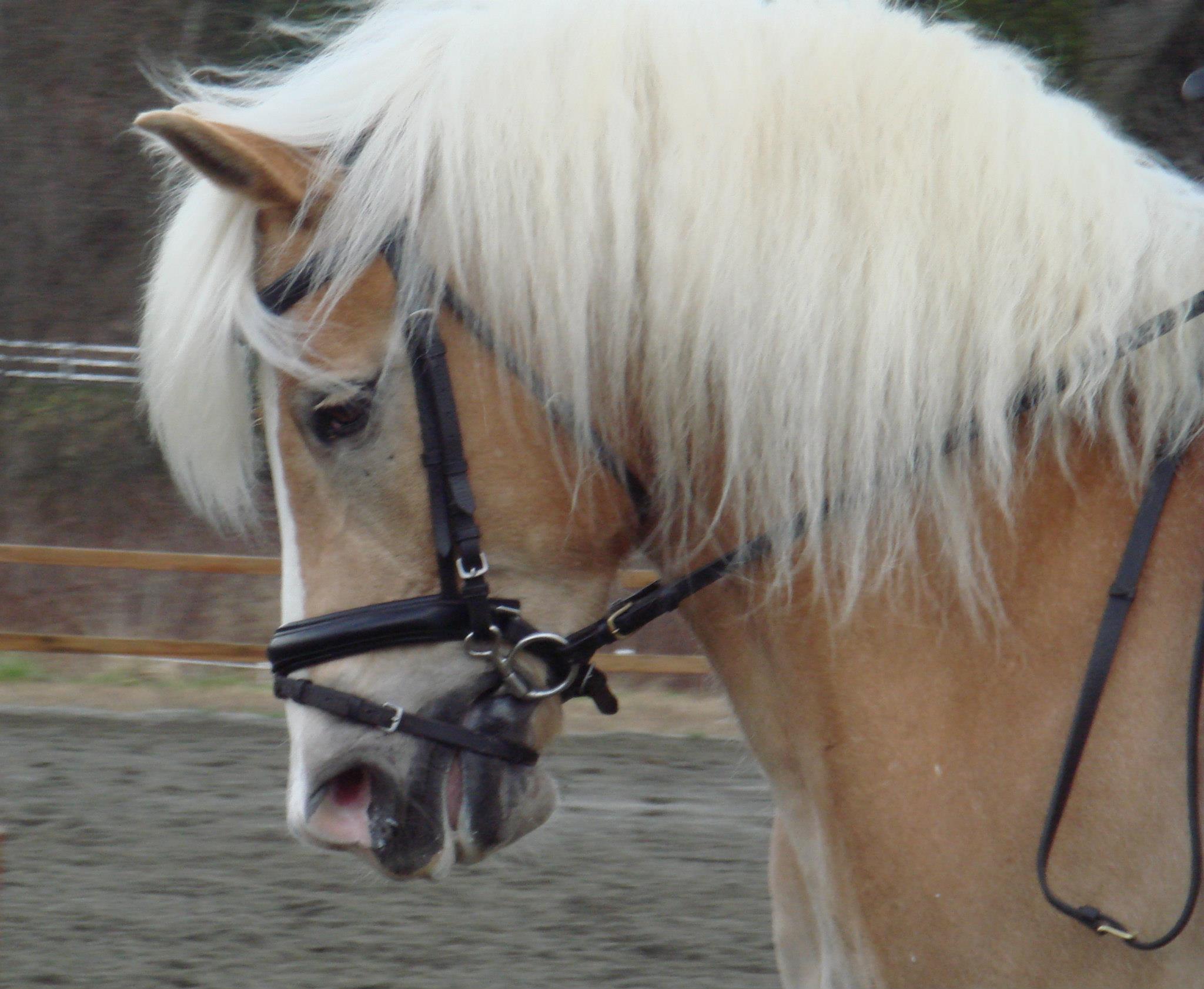
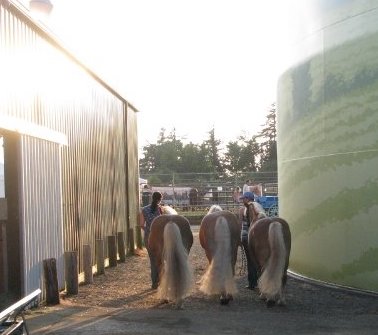
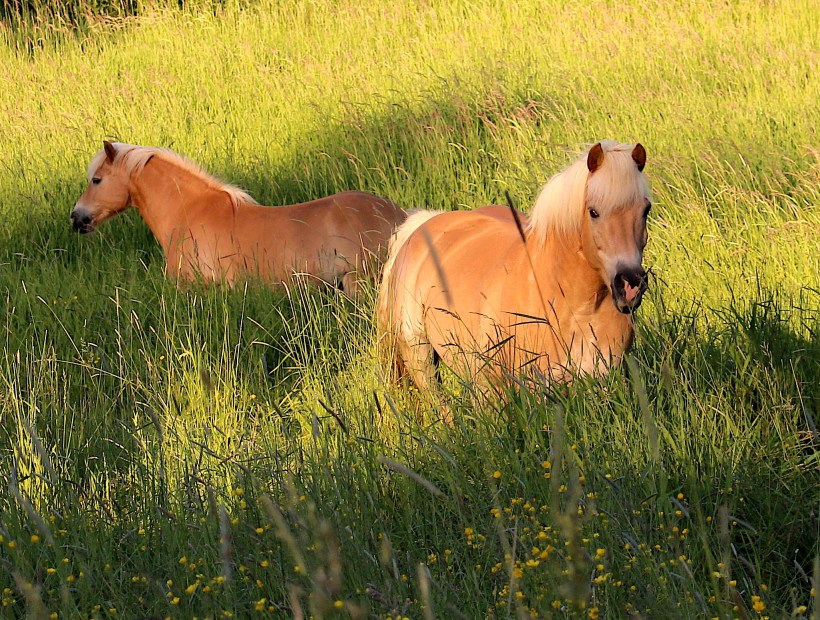
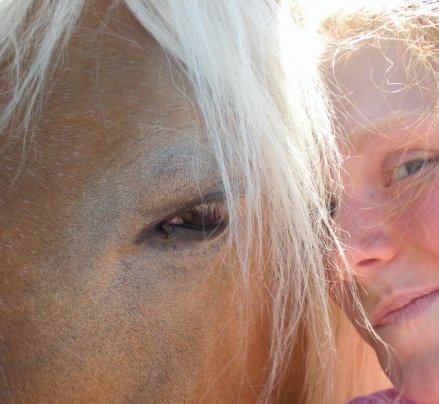
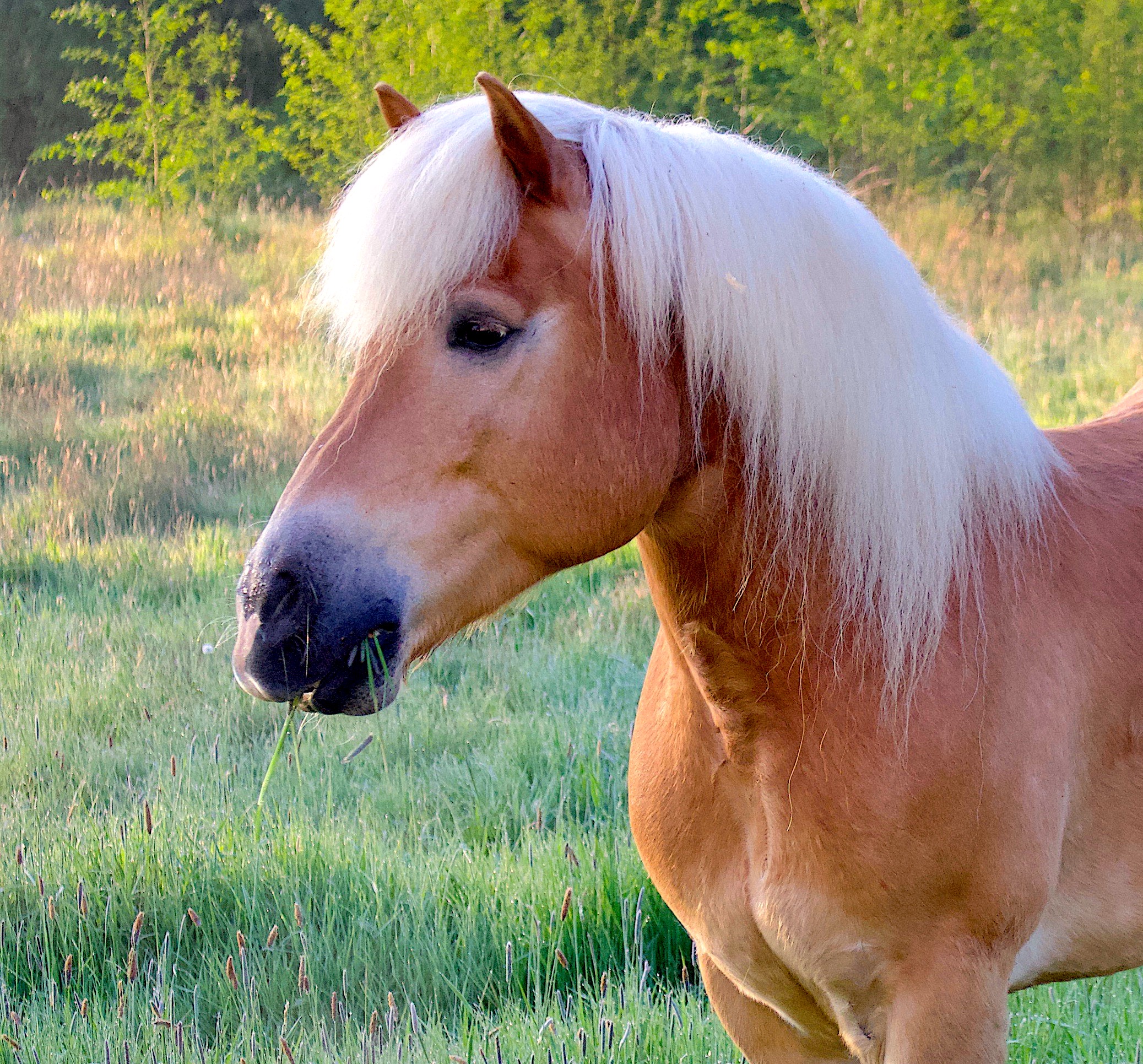
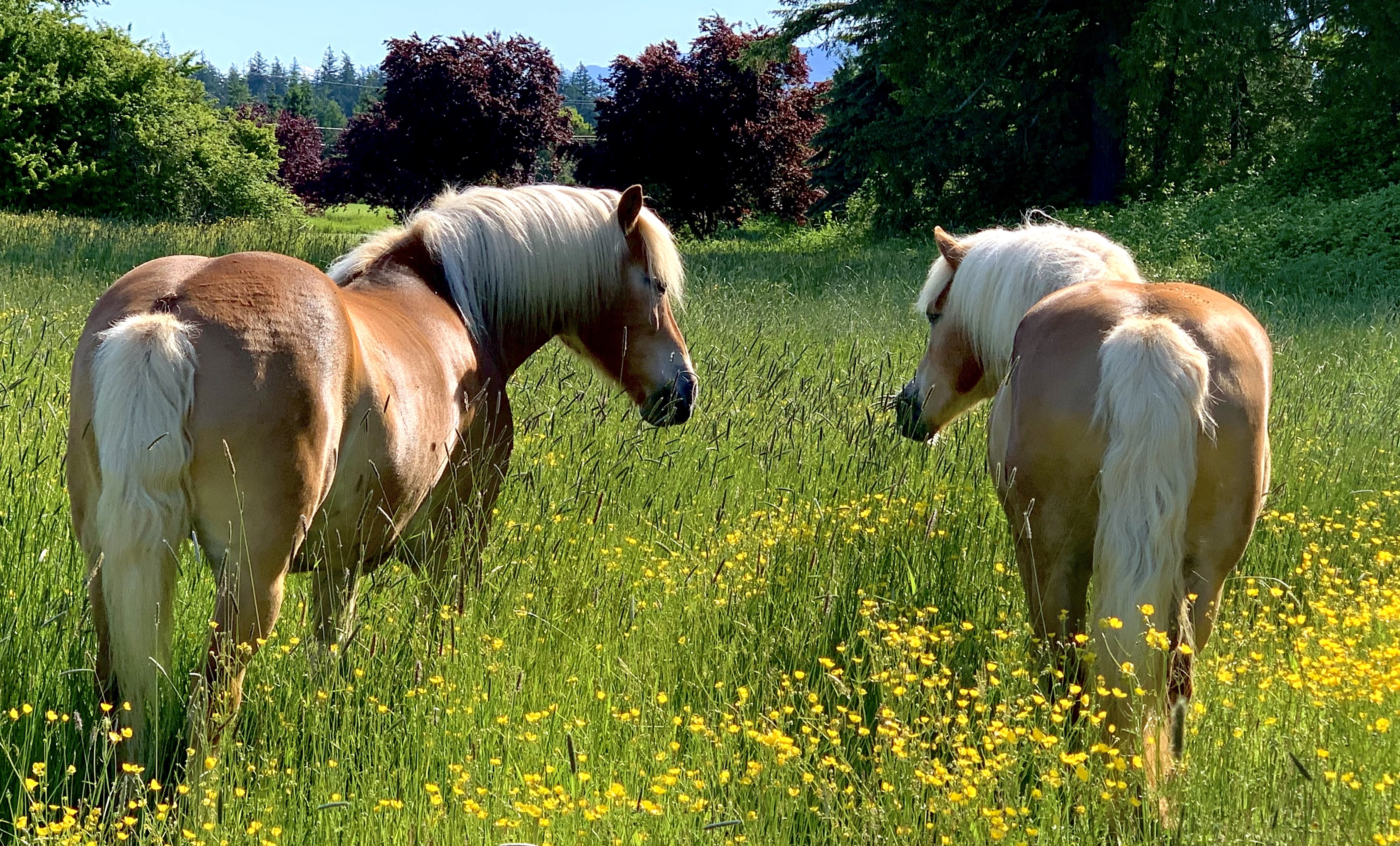
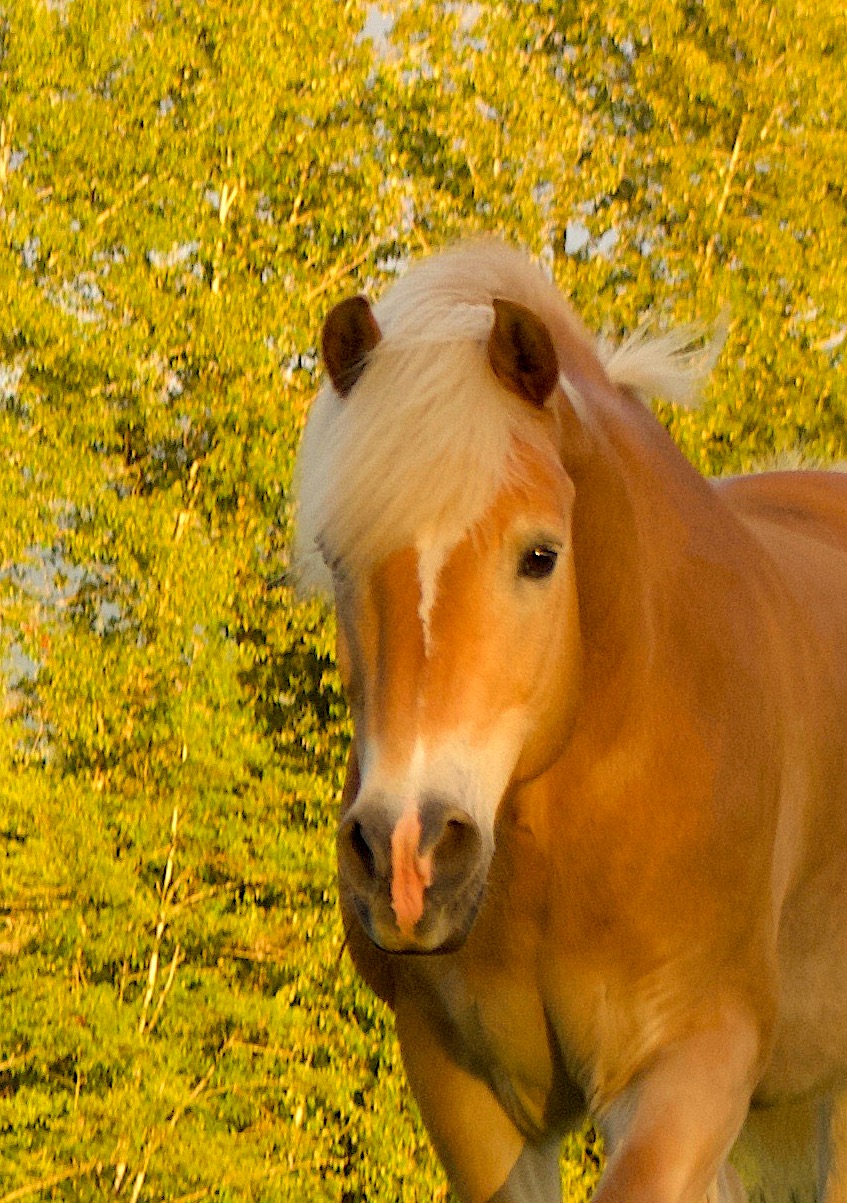
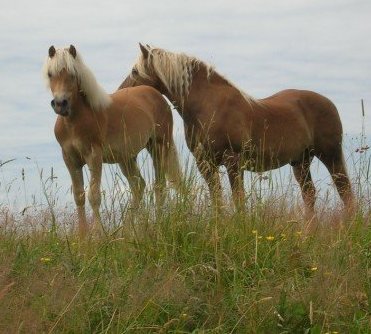
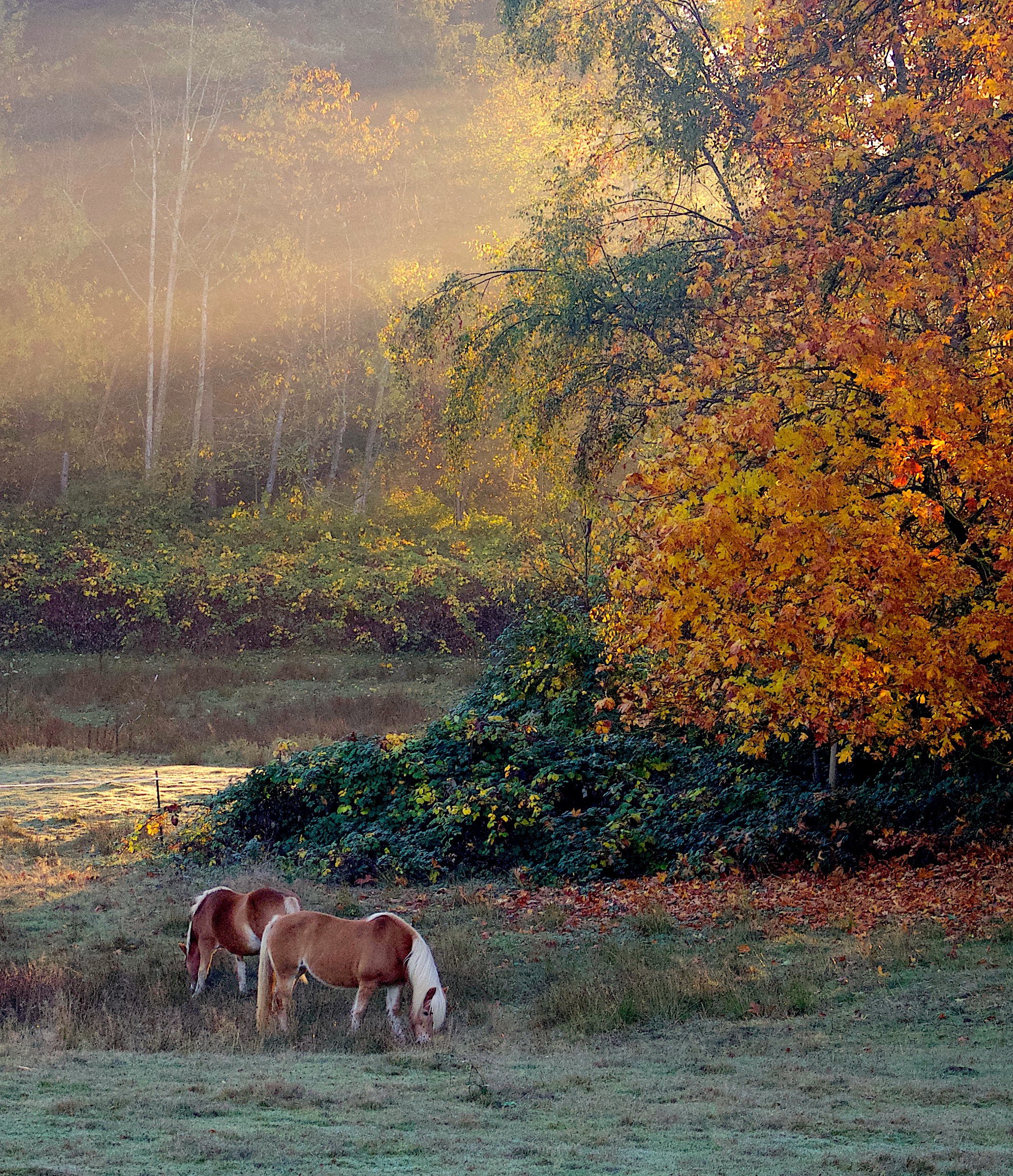
Readying for winter’s sleep is quite a glamorous affair for some trees on our farm–they are clothed in rich crimson and gold like the most alluring and ostentatious negligee. However the majority of tree leaves turn drab yellow or brown, as if donning a practical flannel nightgown or an oversized t-shirt without any pretense of grandeur. Even our Haflinger horses laze about, comfortable in their soft winter woolie coats and feathered slippers, happy with their gift of hay. I understand their contentment as I prefer fluffy flannel myself.
I’m ill at ease with the autumnal transition, as unready as a small child who resists the approach of bedtime, even when exhausted to the point of meltdown. It takes someone to quietly sit down with me to read a good bedtime story and to sing a soft hymn of lullaby. I keep leaping up, eyes propped open, pushing on, aware there are still too many “miles to go before I sleep”.
Yet I know the nighttimes of autumn and winter are the best time to be contemplative, to be still, to have eyes closed in prayer.
The time to sleep will come. Just as a storm brings the leaves to the ground, so I too shall be laid to rest, waiting to be restored in fullness and light when the time is right.
Maybe I should think about wearing that bright red flannel nightie.
One-Time
Monthly
Yearly
Make a one-time or recurring donation to support daily Barnstorming posts
In a hundred trillion years— an actual number though we can’t begin to grasp it—the last traces of our universe will be not even a memory with no memory to lament it.
The last dust of the last star will not drift in the great nothing out of which everything we love or imagine eventually comes.
Yet every day, every four hours around the clock, Debbie prepares her goat’s-milk mix for the orphaned filly who sucks down all three liters of it, gratefully, it seems, as if it matters more than anything in the universe— and it does—at this moment while the sun is still four hours from rising on the only day that matters.
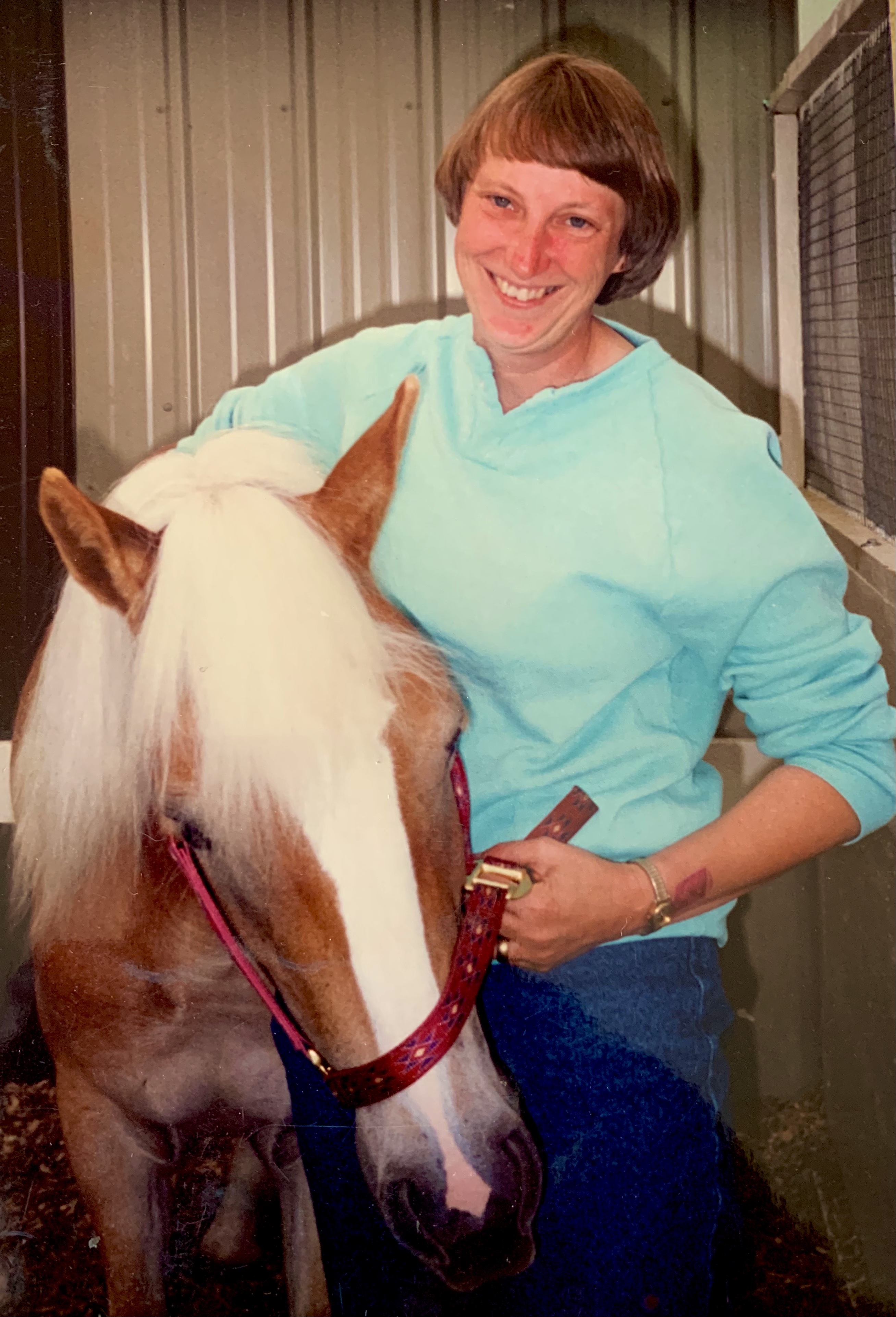
Over eight years ago, our Haflinger mare Marlee passed on to her forever home, far sooner than we planned. She was only twenty two, born only two months after our daughter’s birth, much too young an age for a Haflinger to die.
But something dire was happening to her over the previous two weeks — not eating much, an expanding girth, then shortness of breath. It was confirmed she had untreatable lymphoma.
Her bright eyes were shining to the end so it was very hard to ask the vet to turn the light off. But the time had clearly come.
Marlee M&B came to us as a six month old “runty orphan” baby by the lovely stallion Sterling Silver, but she was suddenly weaned at three days when her mama Melissa died of sepsis. She never really weaned from her around the clock bottle/bucket feeding humans Stefan and Andrea Bundshuh at M&B Farm in Canada. From them she knew people’s behavior, learned their nonverbal language, and understood human subtleties that most horses never learn. This made her quite a challenge as a youngster as it also meant there was no natural reserve nor natural respect for people. She had no boundaries taught by a mother, so we tried to teach her the proper social cues.
When turned out with the herd as a youngster, she was completely clueless–she’d approach the dominant alpha mare incorrectly, without proper submission, get herself bitten and kicked and was the bottom of the social heap for years, a lonesome little filly with few friends and very few social skills. She had never learned submission with people either, and had to have many remedial lessons on her training path. Once she was a mature working mare, her relationship with people markedly improved as there was structure to her work and predictability for her, and after having her own foals, she picked up cues and signals that helped her keep her foal safe, though she was one of our most relaxed “do whatever you need to do” mothers when we handled her foals as she simply never learned that she needed to be concerned.
Over the years, as the herd changed, Marlee became the alpha mare, largely by default and seniority, so I don’t believe she really trusted her position as “real”. She tended to bully, and react too quickly out of her own insecurity about her inherited position. She was very skilled with her ears but she was also a master at the tail “whip” and the tensed upper lip–no teeth, just a slight wrinkling of the lip. The herd scattered when they saw her face change. The irony of it all is that when she was “on top” of the herd hierarchy, she was more lonely than when she was at the bottom. And I think a whole lot less happy as she had few grooming partners any more.
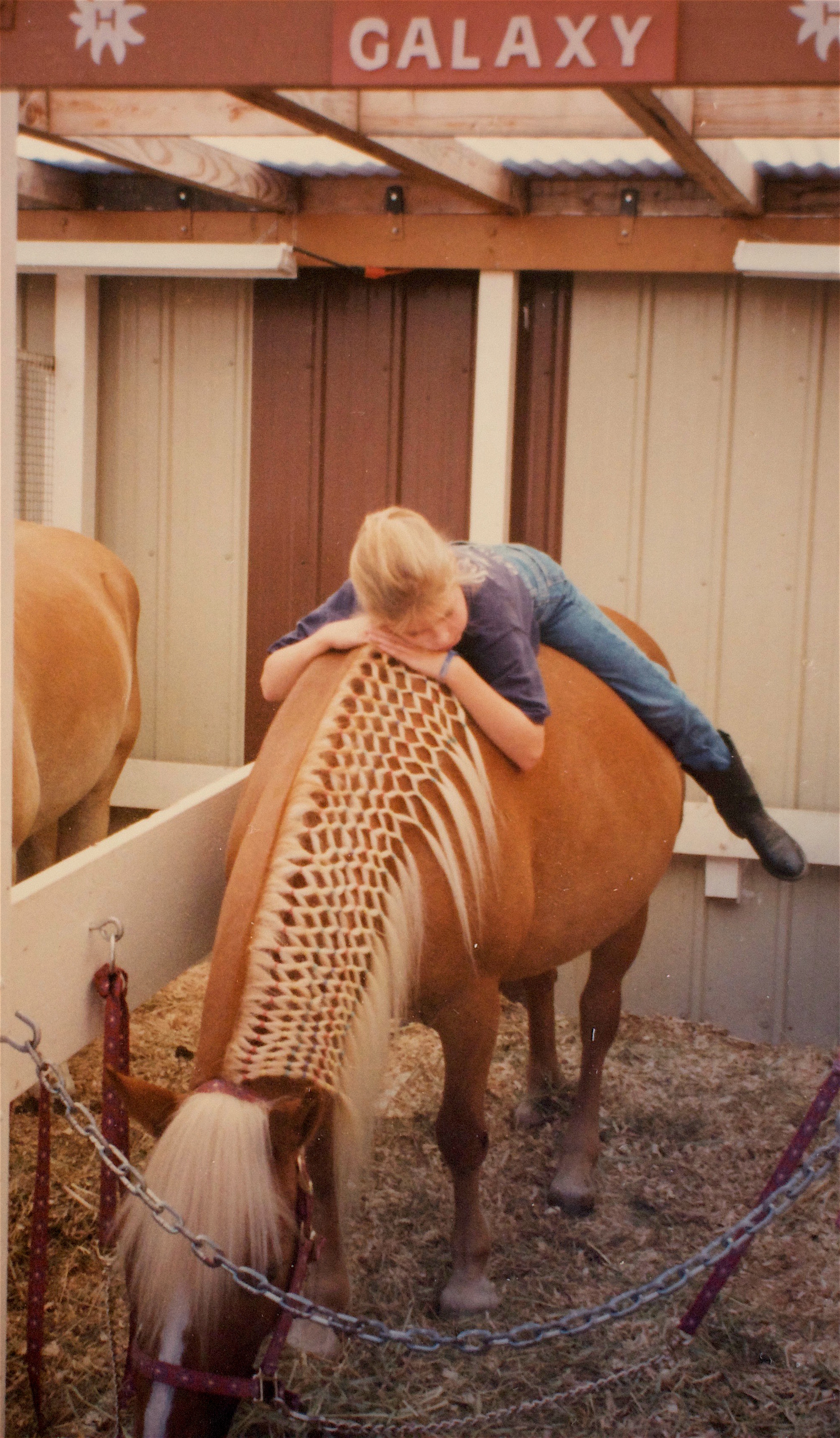
She accompanied us to the fair for a week of display of our Haflingers year after year after year — she could be always counted on to greet the public and enjoy days of braiding and petting and kids sitting on her back.
The day she started formal under saddle training was when the light bulb went off in her head–this was a job she could do! This was constant communication and interaction with a human being, which she craved! This was what she was meant for! And she thrived under saddle, advancing quickly in her skills, almost too fast, as she wanted so much to please her trainer.
For a time, she had an unequaled record among North American Haflingers. She was not only regional champion in her beginner novice division of eventing as a pregnant 5 year old, but also received USDF Horse of the Year awards in First and Second Level dressage that year as the highest scoring Haflinger.
She had a career of mothering along with intermittent riding work, with 5 foals –Winterstraum, Marquisse, Myst, Wintermond, and Nordstrom—each from different stallions, and each very different from one another.
This mare had such a remarkable work ethic, was “fine-tuned” so perfectly with a sensitivity to cues–that our daughter said: “Mom, it’s going to make me such a better rider because I know she pays attention to everything I do with my body–whether my heels are down, whether I’m sitting up straight or not.” Marlee was, to put it simply, trained to train her riders.
I miss her high pitched whinny from the barn whenever she heard the back door to the house open. I miss her pushy head butt on the stall door when it was time to close it up for the night. I miss that beautiful unforgettable face and those large deep brown eyes where the light was always on. Keeping that orphan alive when she was so vulnerable in the first two months was all that mattered.
What a ride she had for twenty two years, that dear little orphan. What a ride she gave to many who trained her and who she trained over the years. Though I never climbed on her back, what joy she gave me all those years, as the surrogate mom who loved and fed her. May I meet her in my memories, whenever I feel lonesome for her, still unable to resist those bright eyes forever now closed in peace.
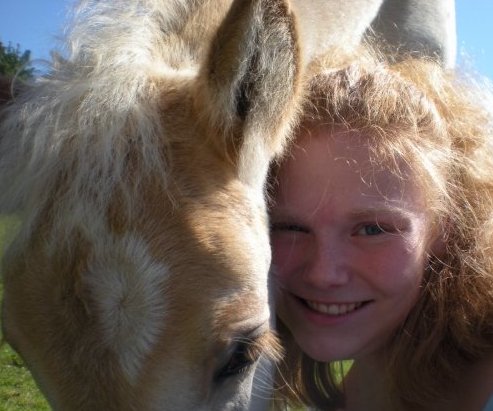
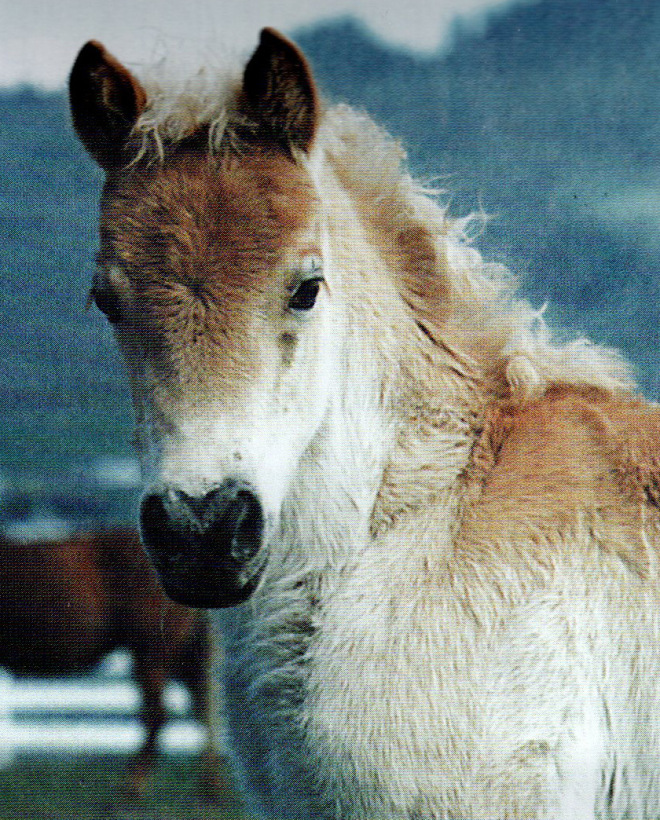
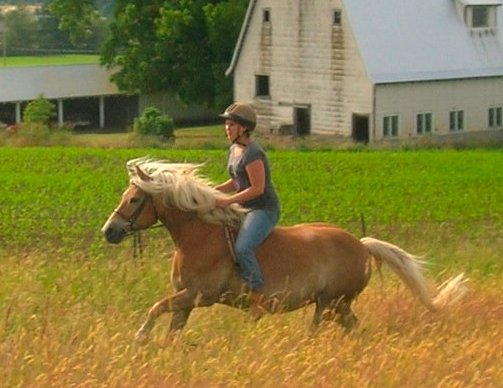
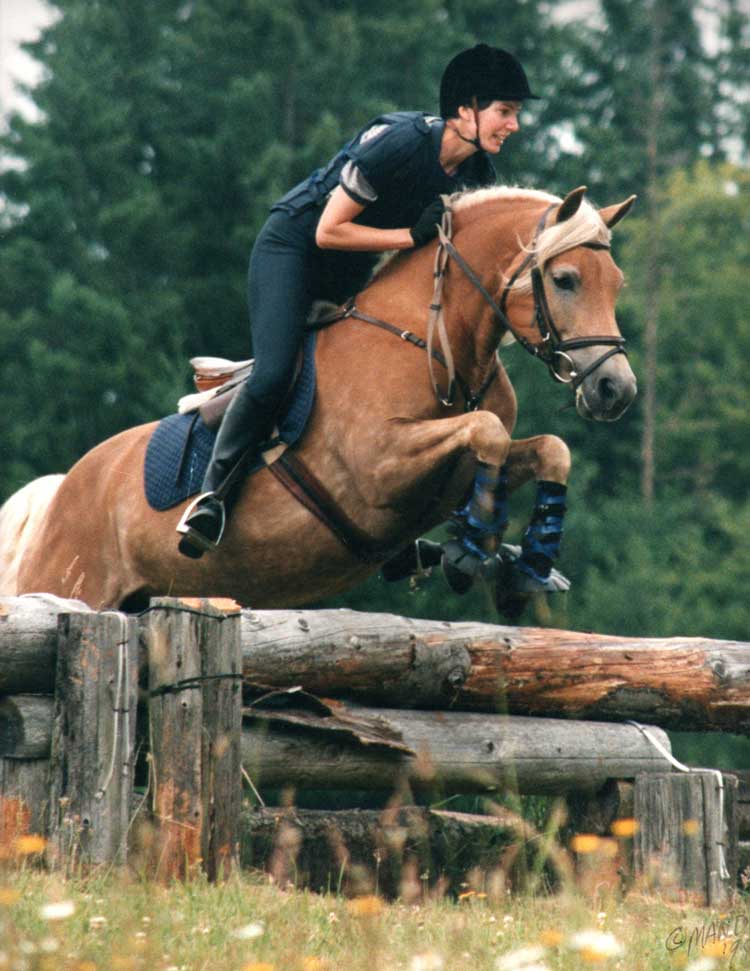
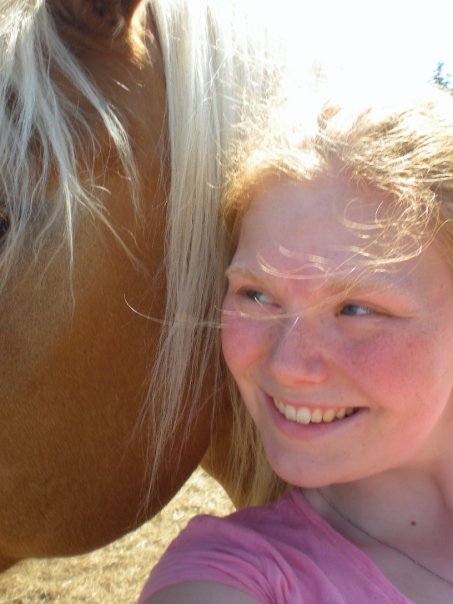
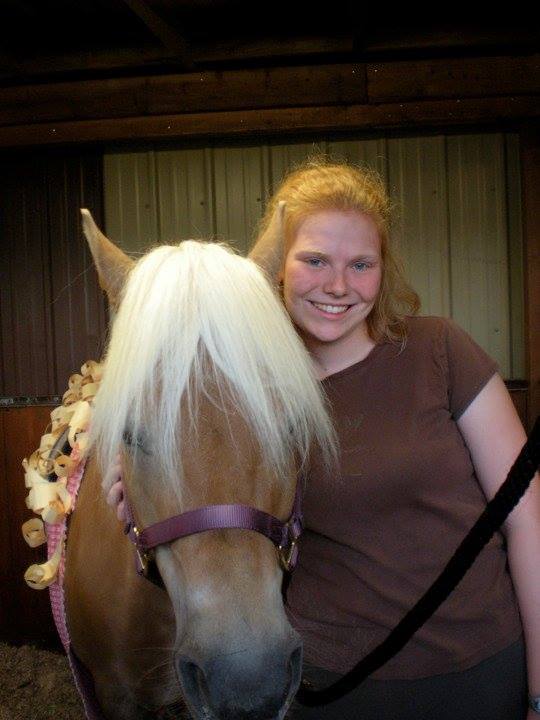
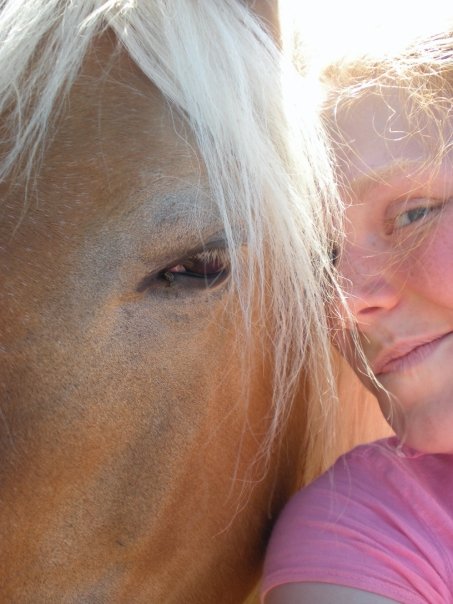
Marlee’s photo album:
One-Time
Monthly
Yearly
Make a one-time or recurring donation to support daily Barnstorming posts
They lie on the ground after the deer have left after the bear has had her fill they
lie under the stars and under the sun in a cloud of brambles the ripest ones fall first become black jam in the thatch. as a boy I hated picking blackberries the pail never full like one half of a slow conversation.
Now their taste is sweeter in memory the insect buzz the branches too high the blue summer never quite over before the fall begins. ~Richard Terrell from “Blackberries” from What Falls Away is Always
You ate that first one and its flesh was sweet Like thickened wine: summer’s blood was in it Leaving stains upon the tongue and lust for Picking. Then red ones inked up and that hunger Sent us out with milk cans, pea tins, jam-pots Where briars scratched and wet grass bleached our boots. Round hayfields, cornfields and potato-drills We trekked and picked until the cans were full, Until the tinkling bottom had been covered With green ones, and on top big dark blobs burned Like a plate of eyes. Our hands were peppered With thorn pricks, our palms sticky as Bluebeard’s.
We hoarded the fresh berries in the byre. But when the bath was filled we found a fur, A rat-grey fungus, glutting on our cache. The juice was stinking too. Once off the bush The fruit fermented, the sweet flesh would turn sour. I always felt like crying. It wasn’t fair That all the lovely canfuls smelt of rot. Each year I hoped they’d keep, knew they would not. ~Seamus Heaney from “Blackberry Picking”
In the early morning an old woman is picking blackberries in the shade. It will be too hot later but right now there’s dew.
Some berries fall: those are for squirrels. Some are unripe, reserved for bears. Some go into the metal bowl. Those are for you, so you may taste them just for a moment. That’s good times: one little sweetness after another, then quickly gone.
Once, this old woman I’m conjuring up for you would have been my grandmother. Today it’s me. Years from now it might be you, if you’re quite lucky.
The hands reaching in among the leaves and spines were once my mother’s. I’ve passed them on. Decades ahead, you’ll study your own temporary hands, and you’ll remember. Don’t cry, this is what happens.
Look! The steel bowl is almost full. Enough for all of us. The blackberries gleam like glass, like the glass ornaments we hang on trees in December to remind ourselves to be grateful for snow.
Some berries occur in sun, but they are smaller. It’s as I always told you: the best ones grow in shadow. ~Margaret Atwood “Blackberries” from Dearly
I love to go out in late September among the fat, overripe, icy, black blackberries to eat blackberries for breakfast, the stalks very prickly, a penalty they earn for knowing the black art of blackberry-making; and as I stand among them lifting the stalks to my mouth, the ripest berries fall almost unbidden to my tongue, as words sometimes do, certain peculiar words like strengths or squinched, many-lettered, one-syllabled lumps, which I squeeze, squinch open, and splurge well in the silent, startled, icy, black language of blackberry-eating in late September. ~Galway Kinnell “Blackberry Eating”
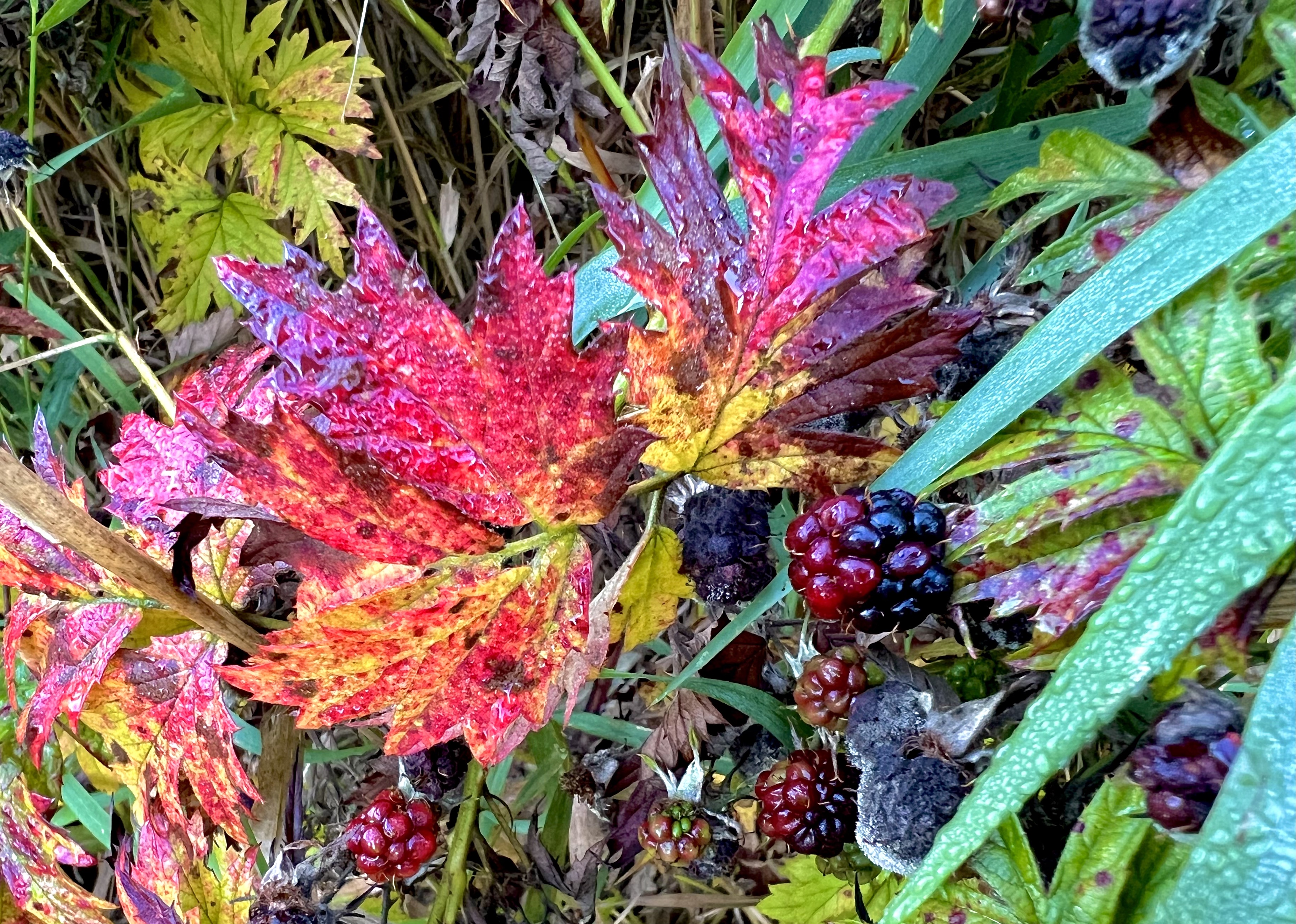
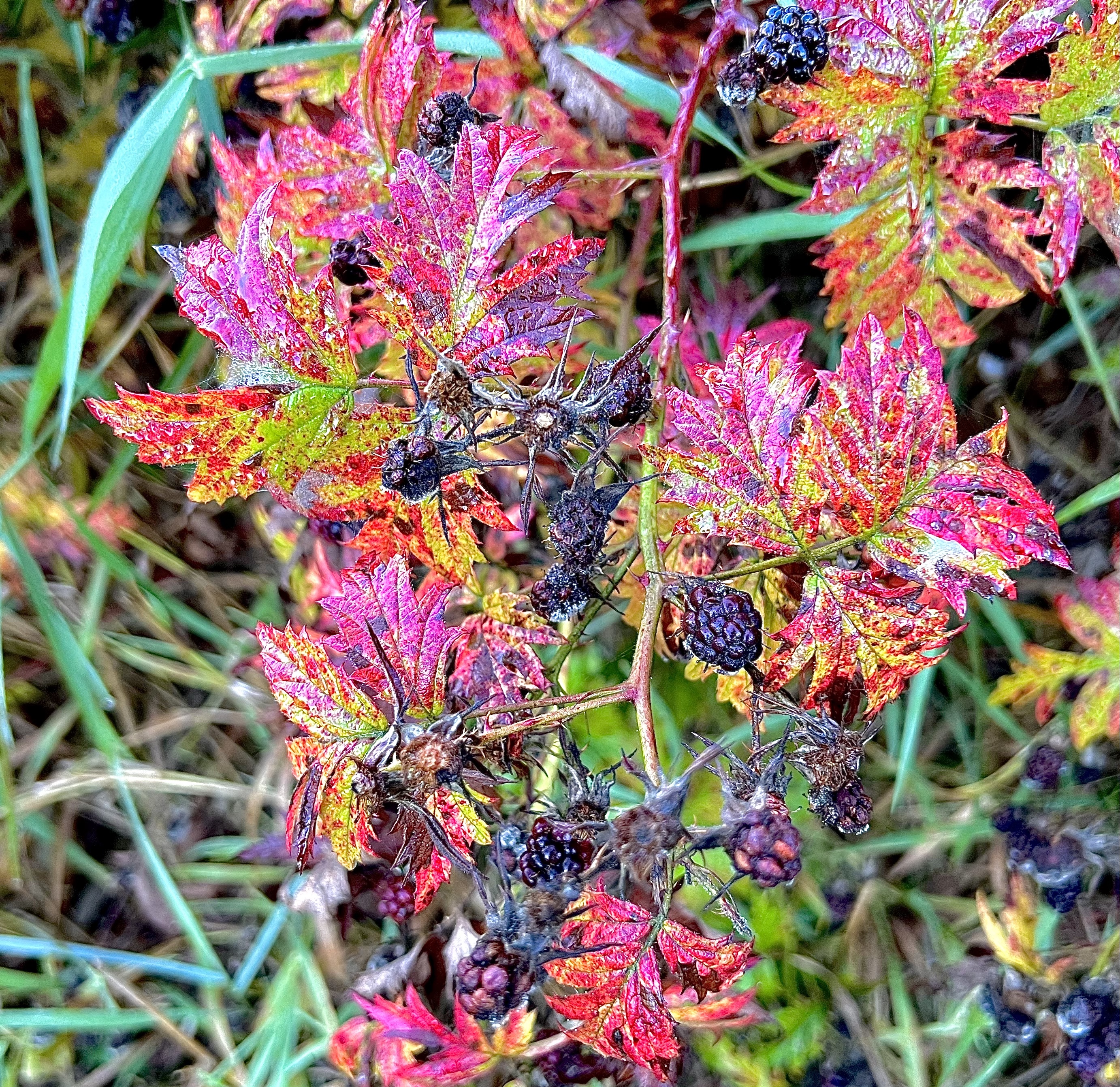
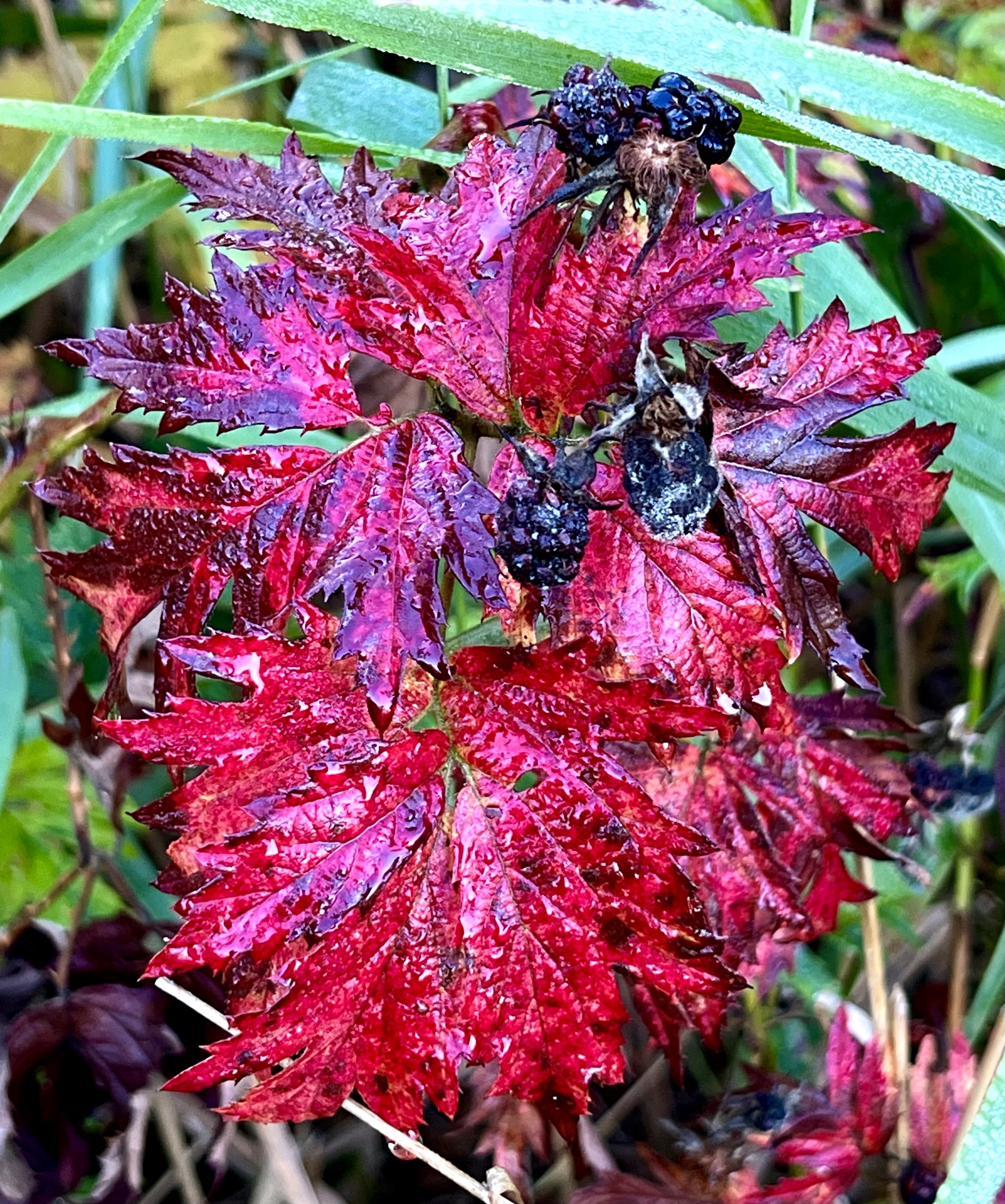
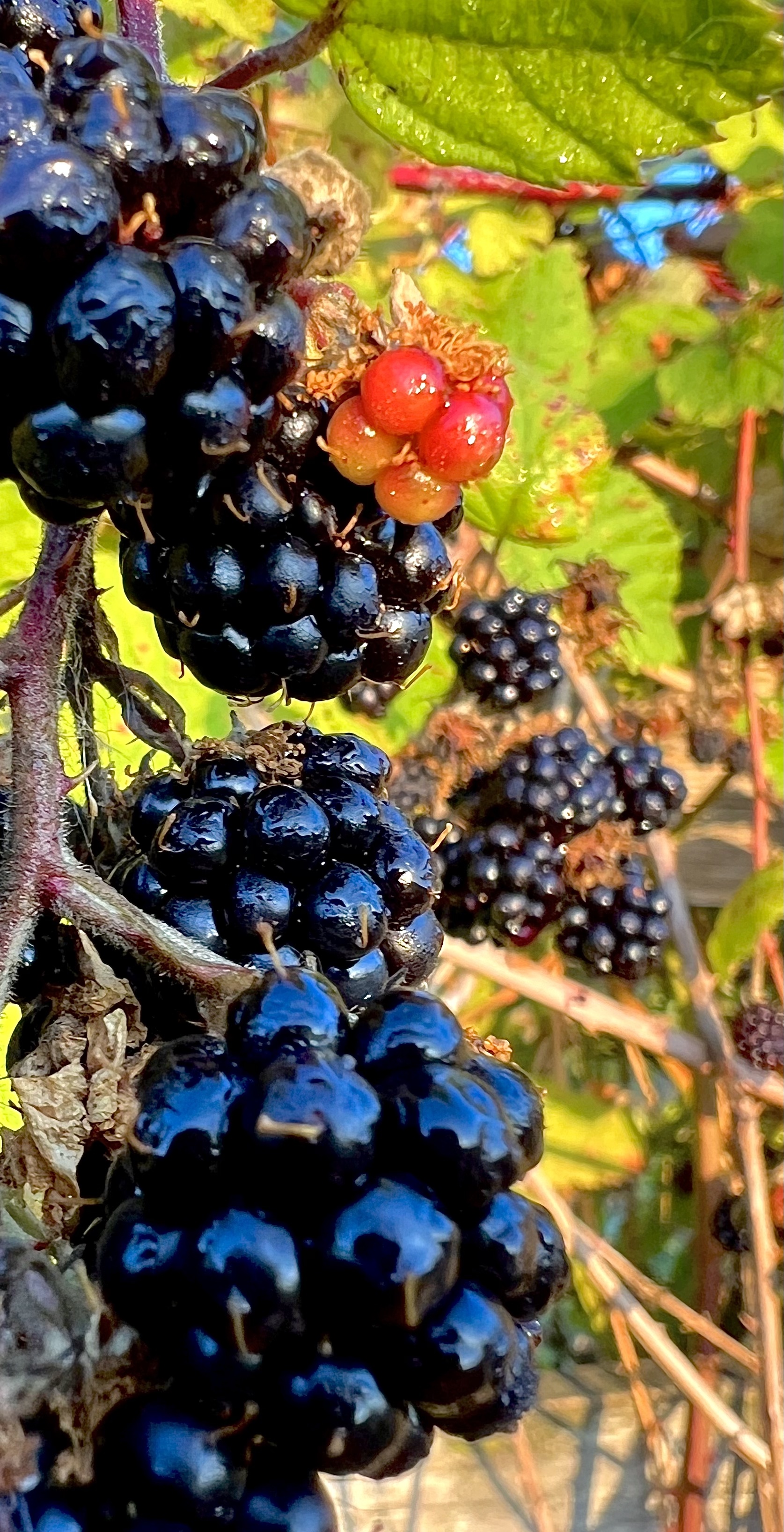
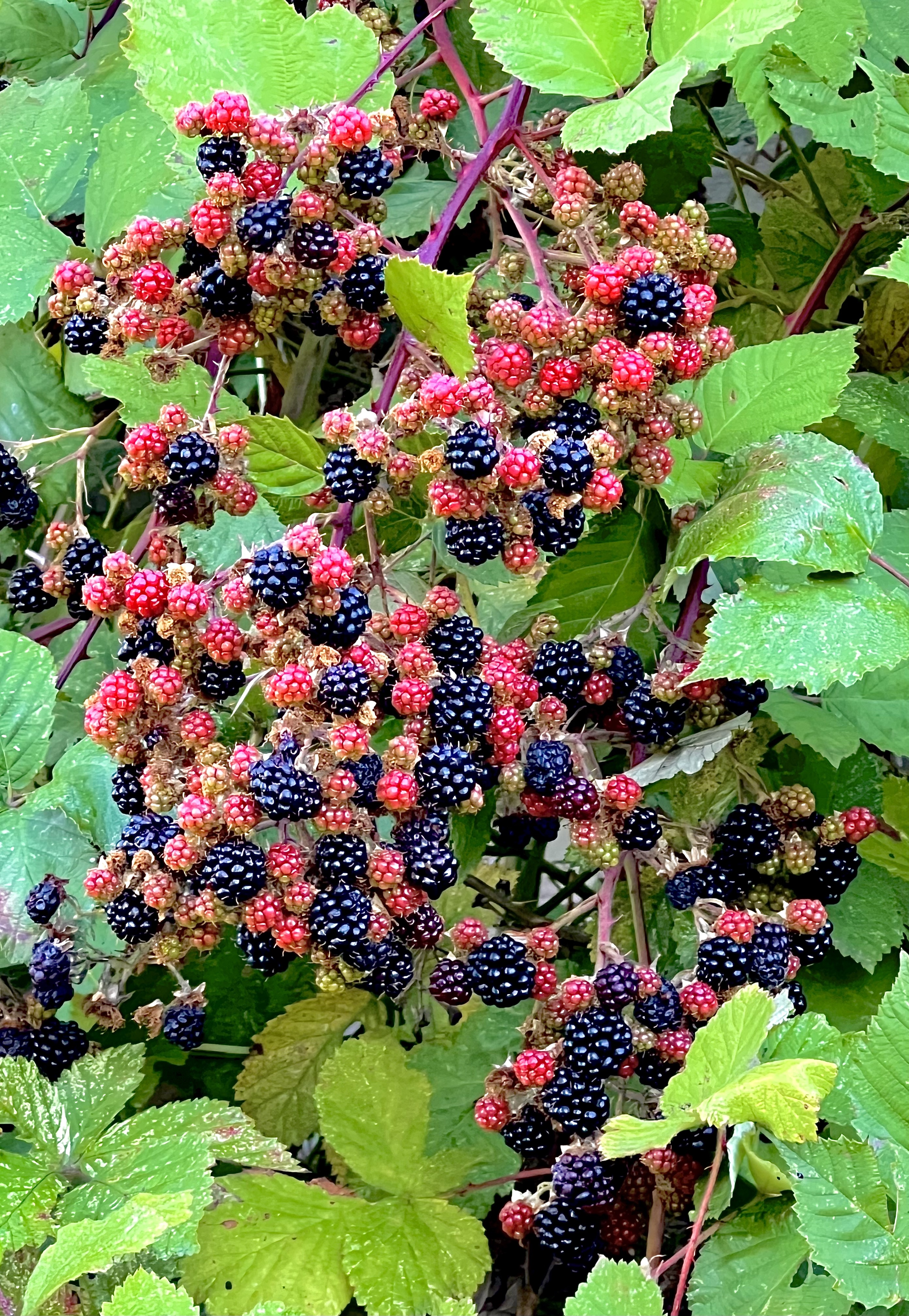
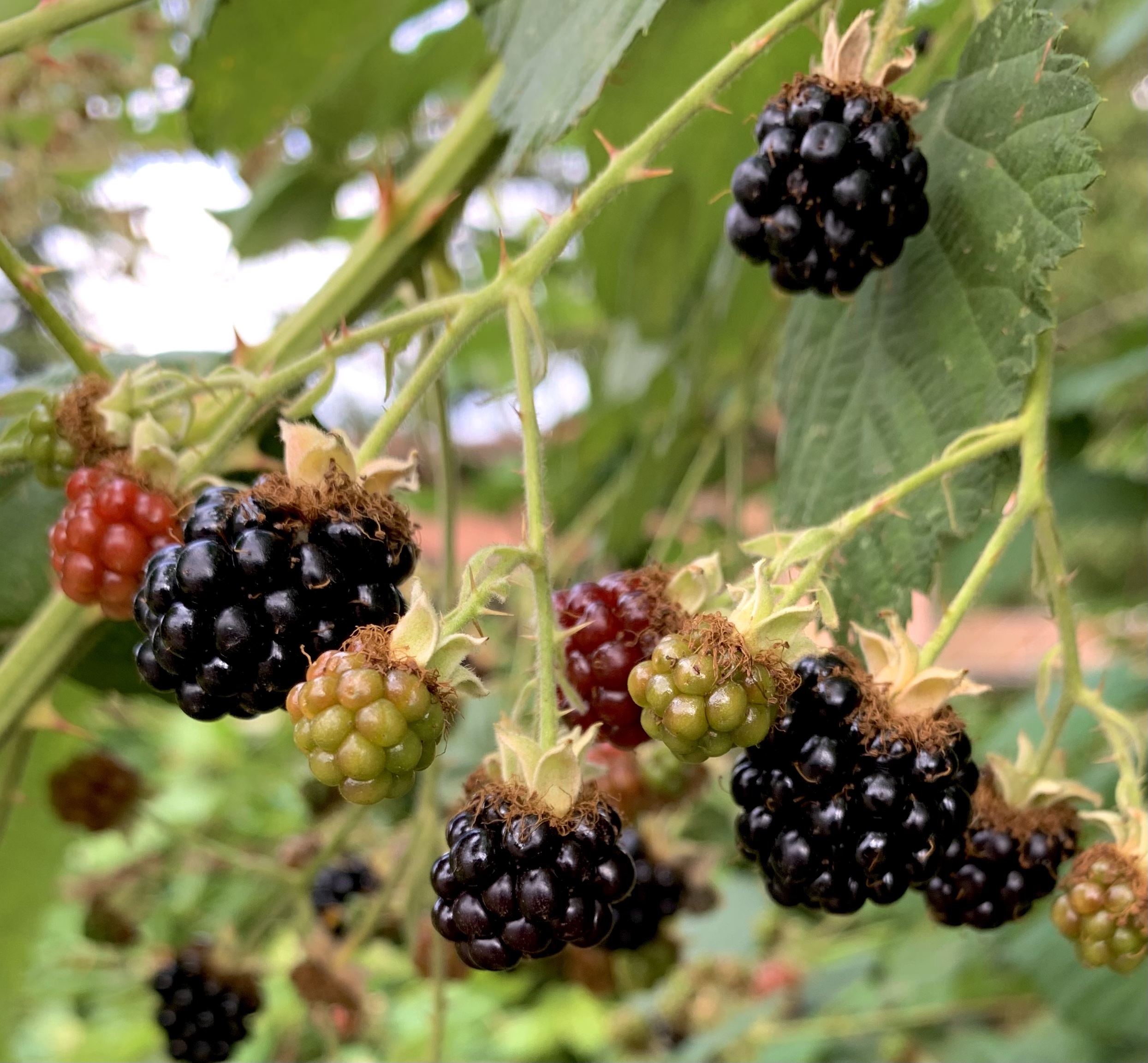
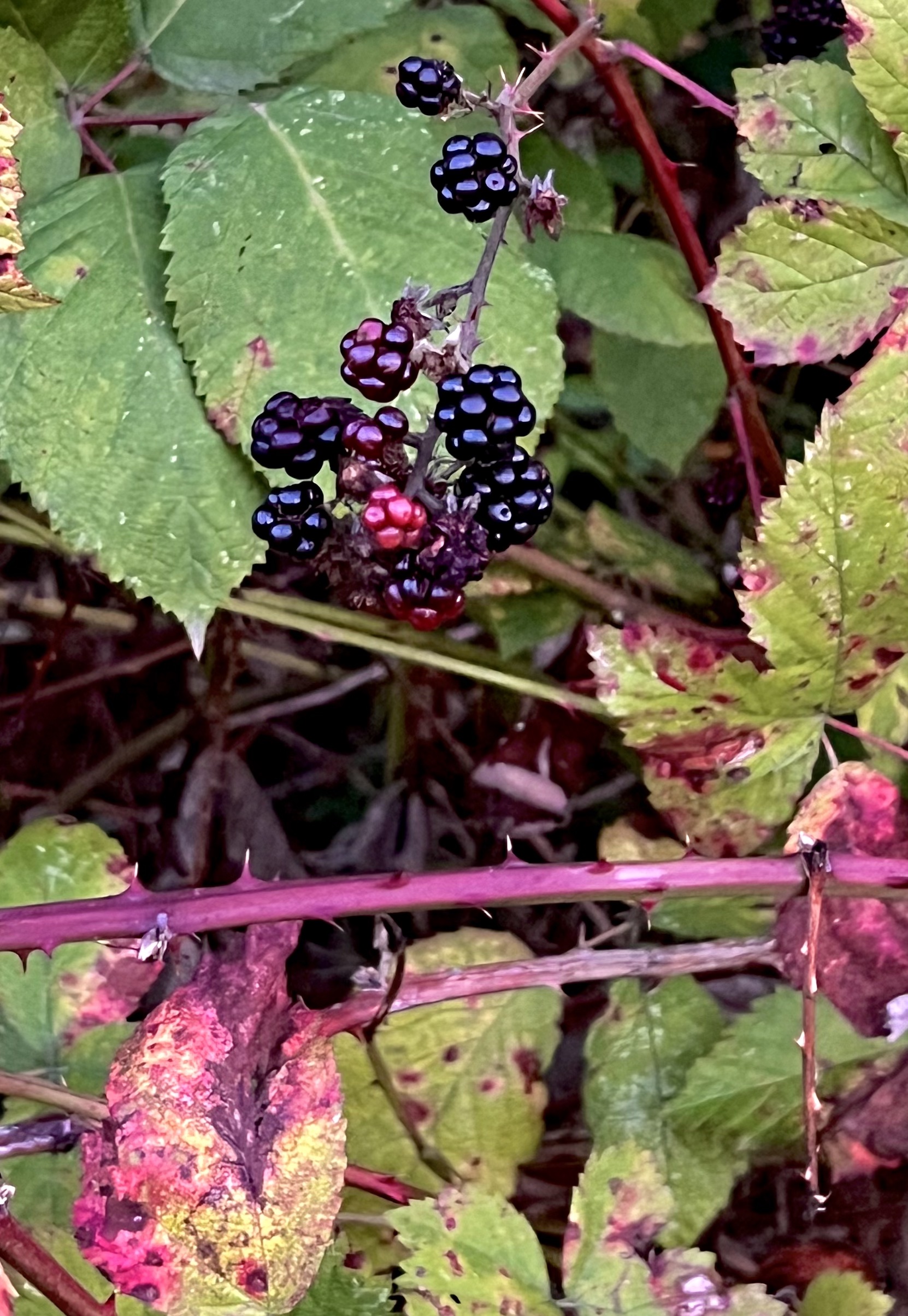
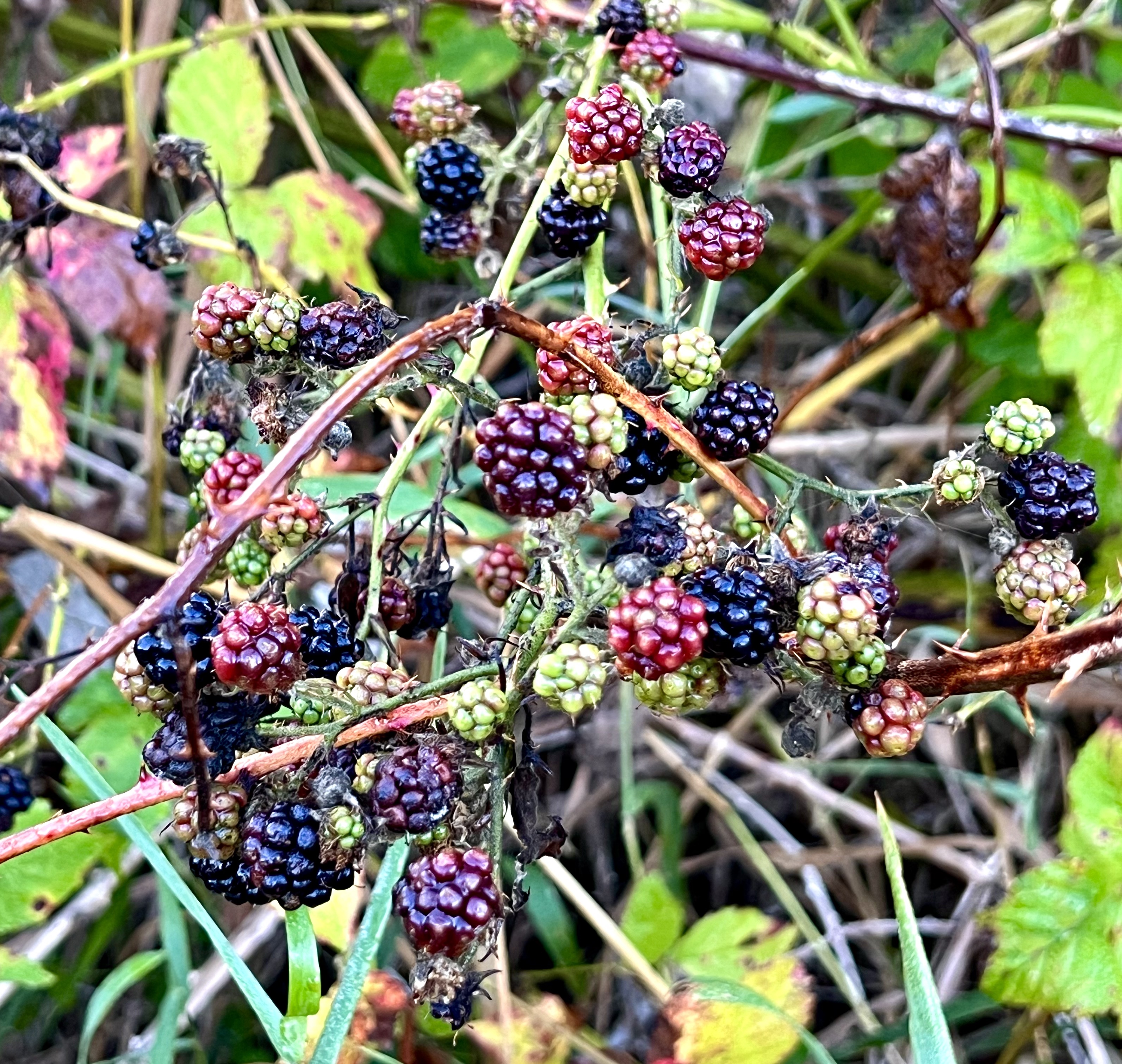
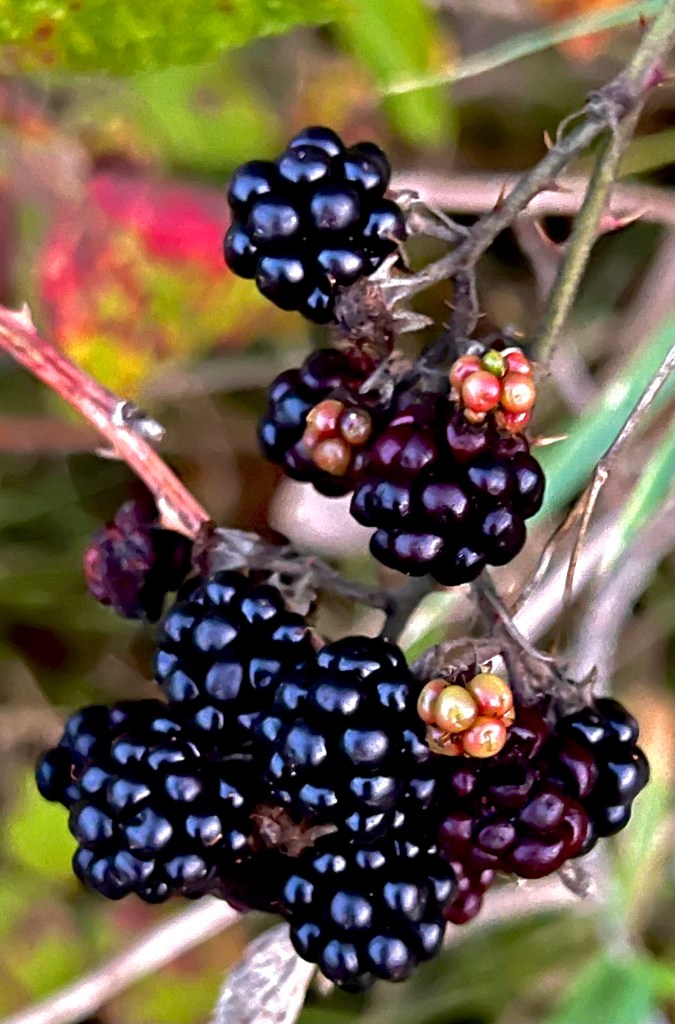
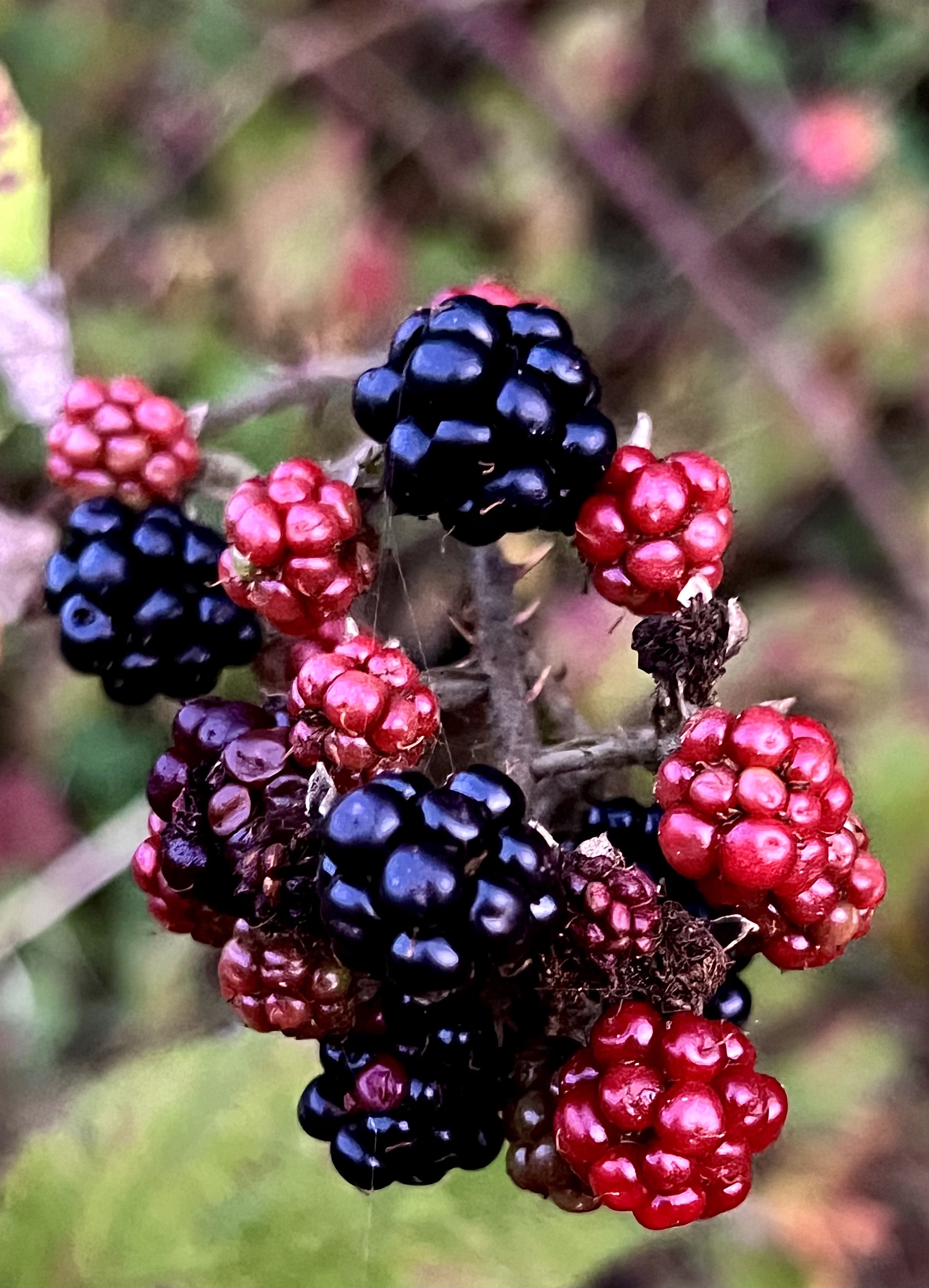
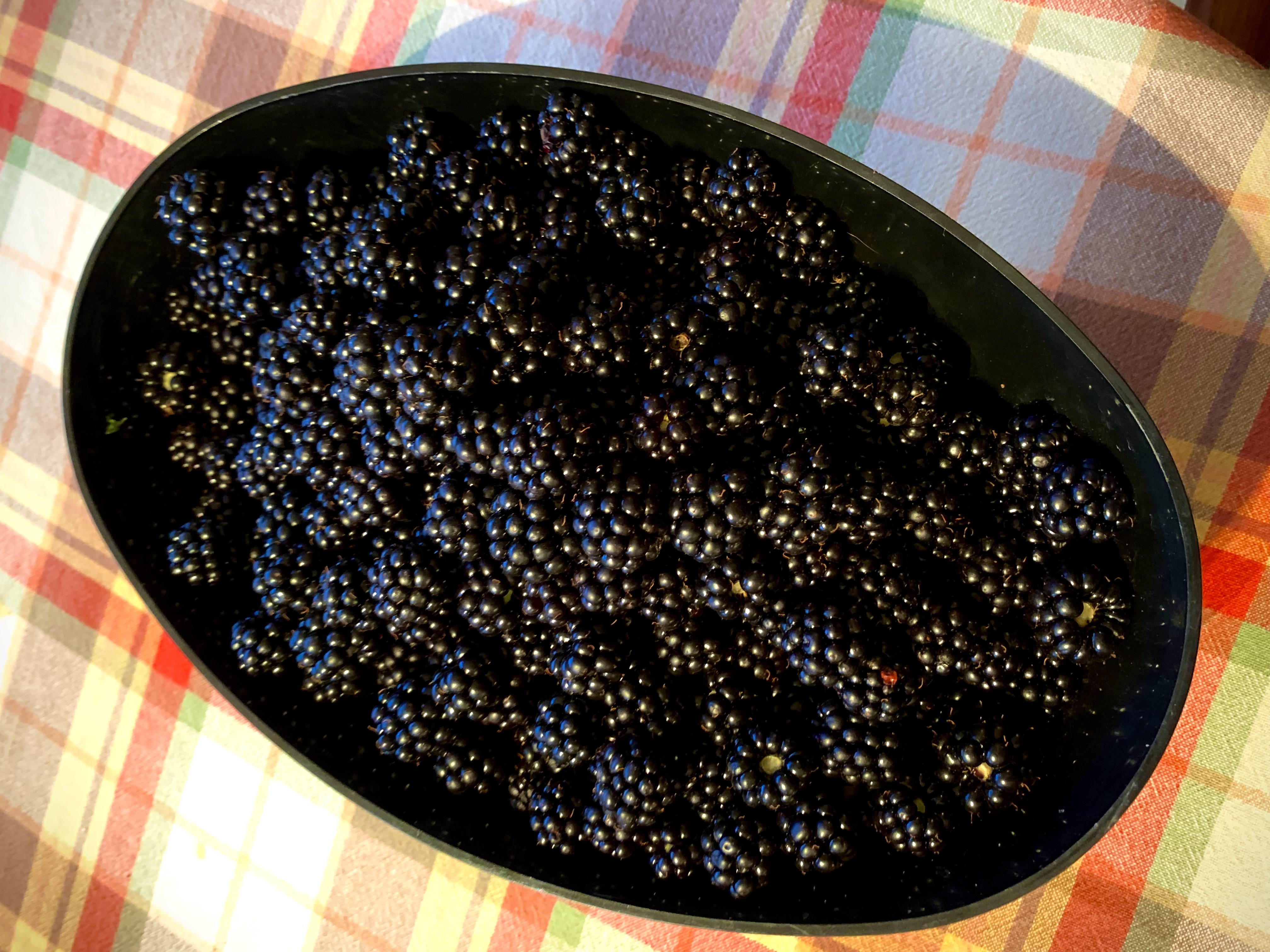
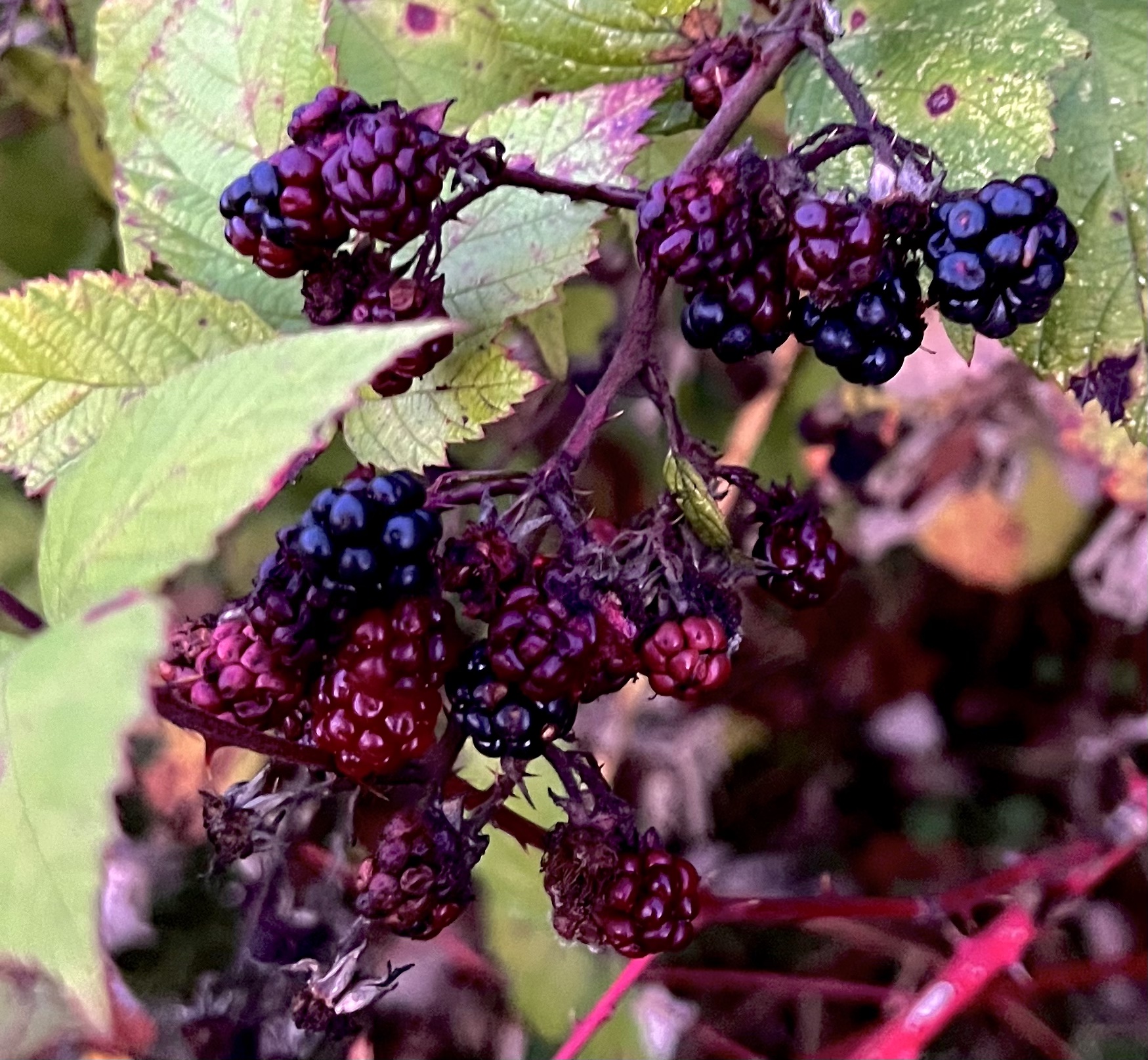
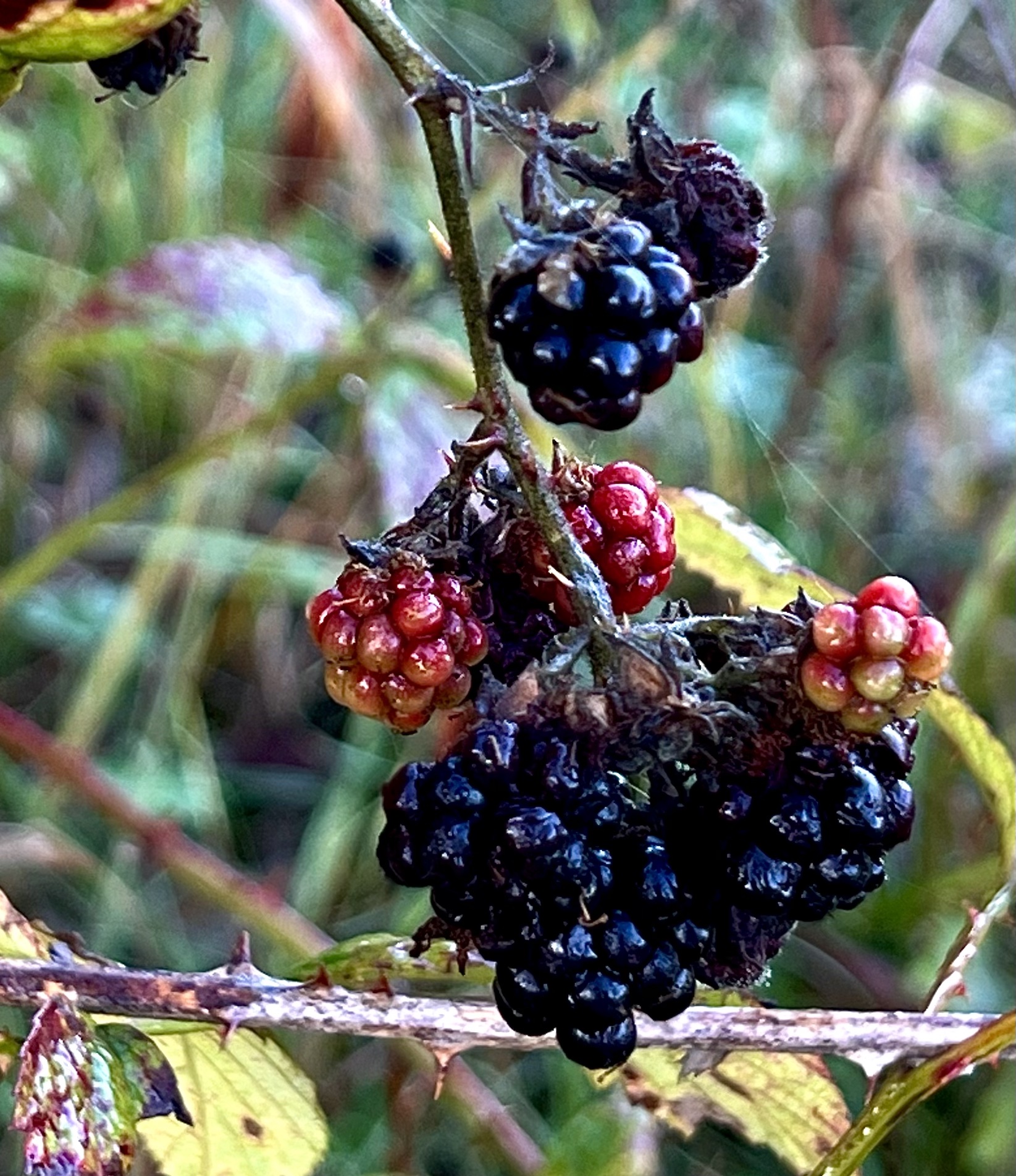
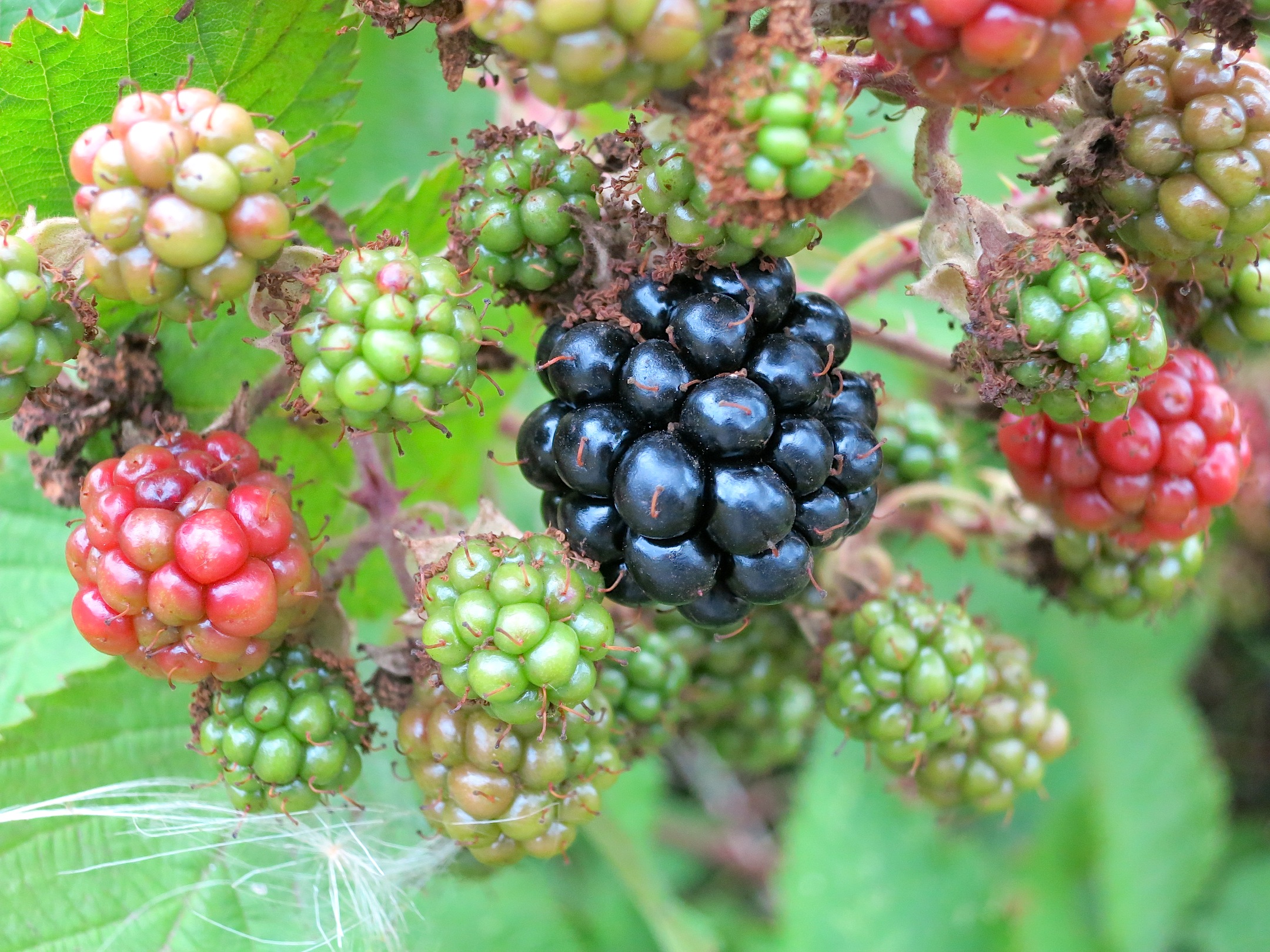
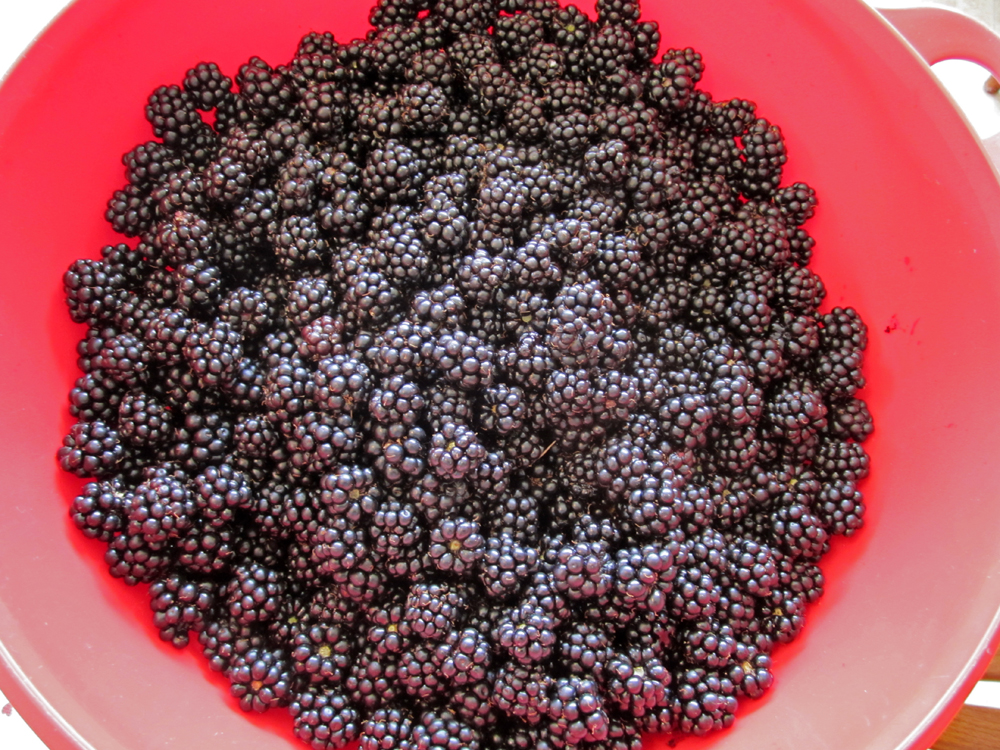
Blackberry vines are trouble 90% of the year – always growing where they are not welcome – reaching out to grab passersby without discriminating between human, dog or horse. But for a month in late summer and early fall, they yield black gold – bursting, swelling, unimaginably sweet fruit that is worth the hassle tolerated the rest of the weeks of the year.
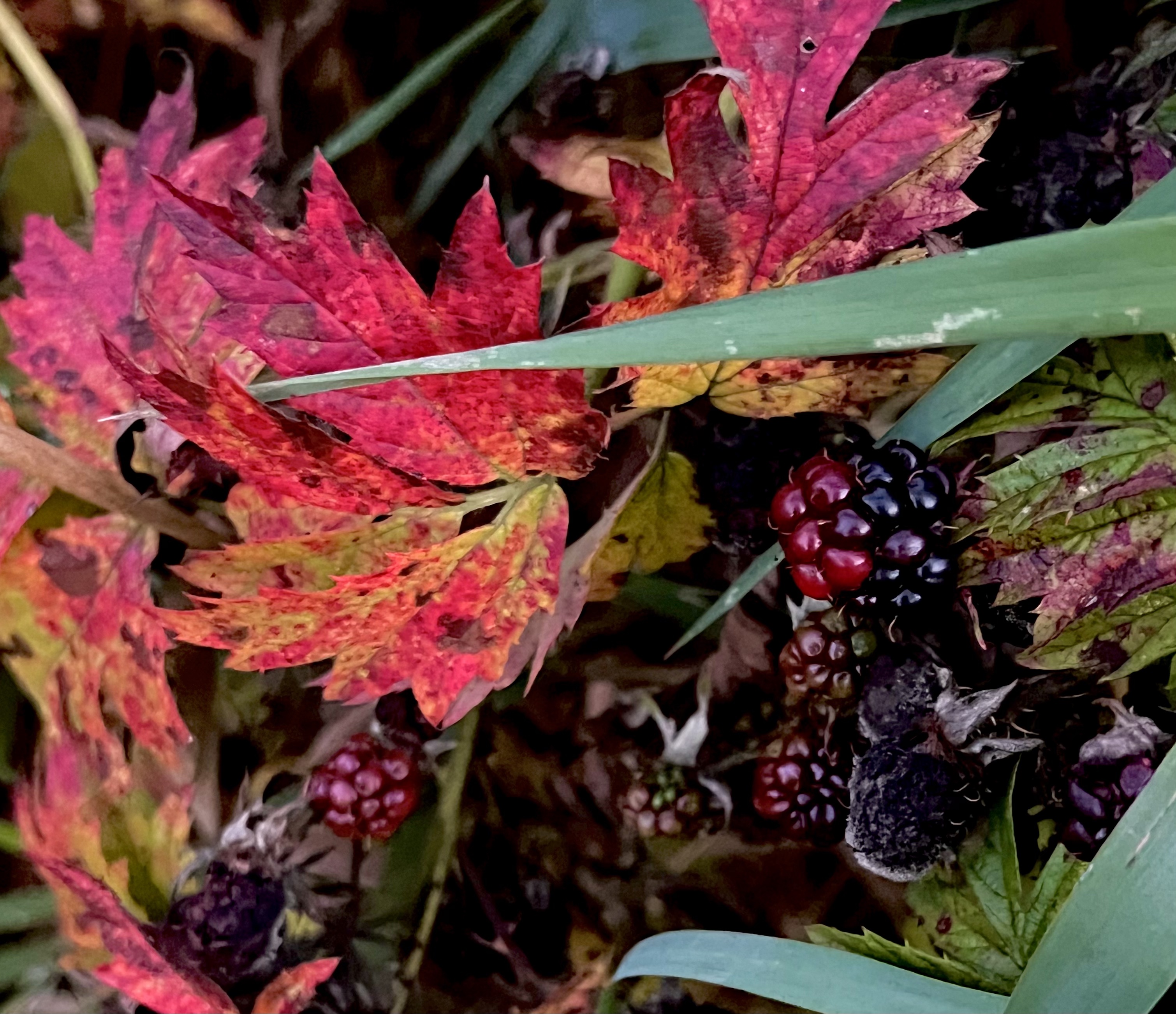
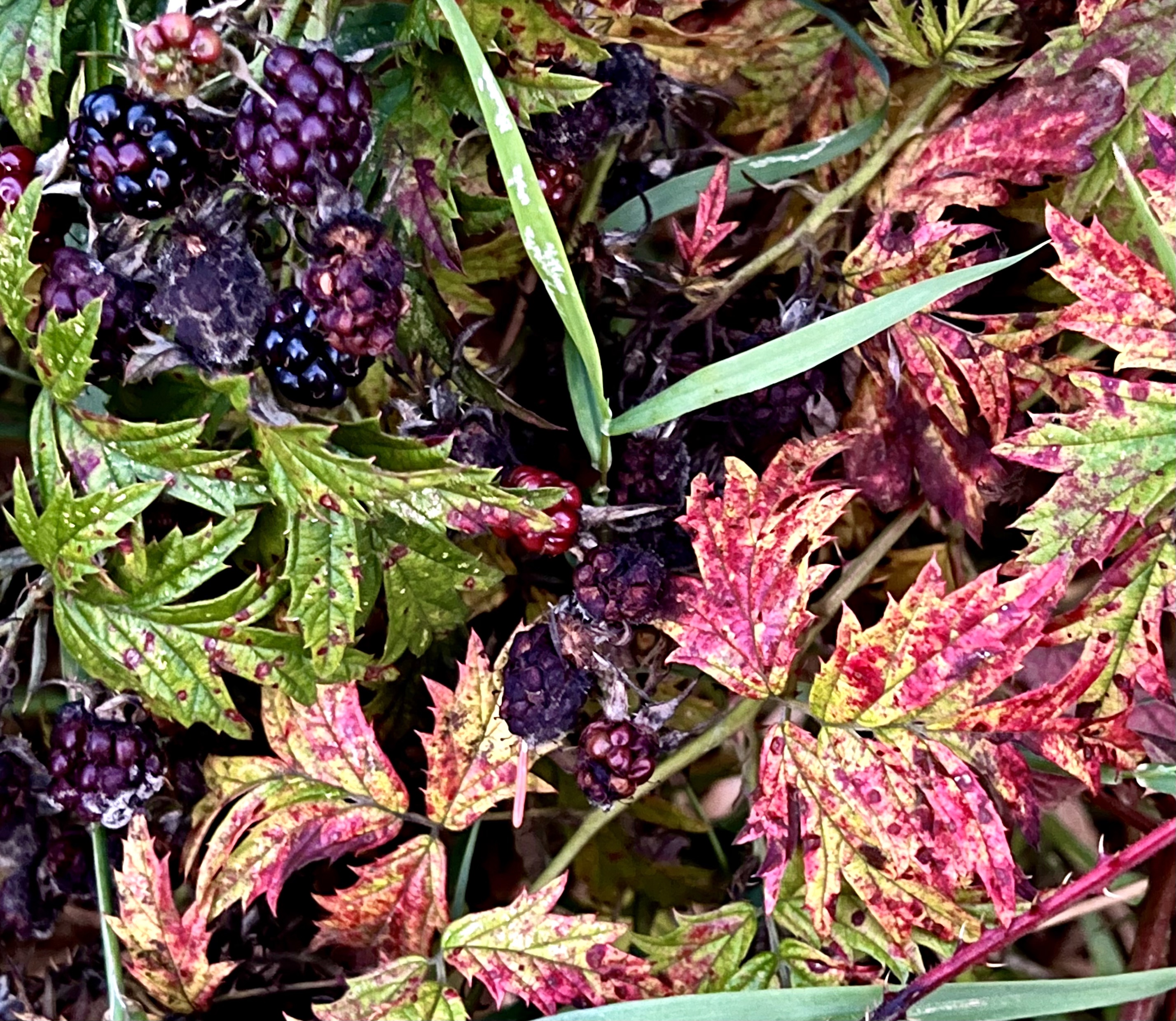
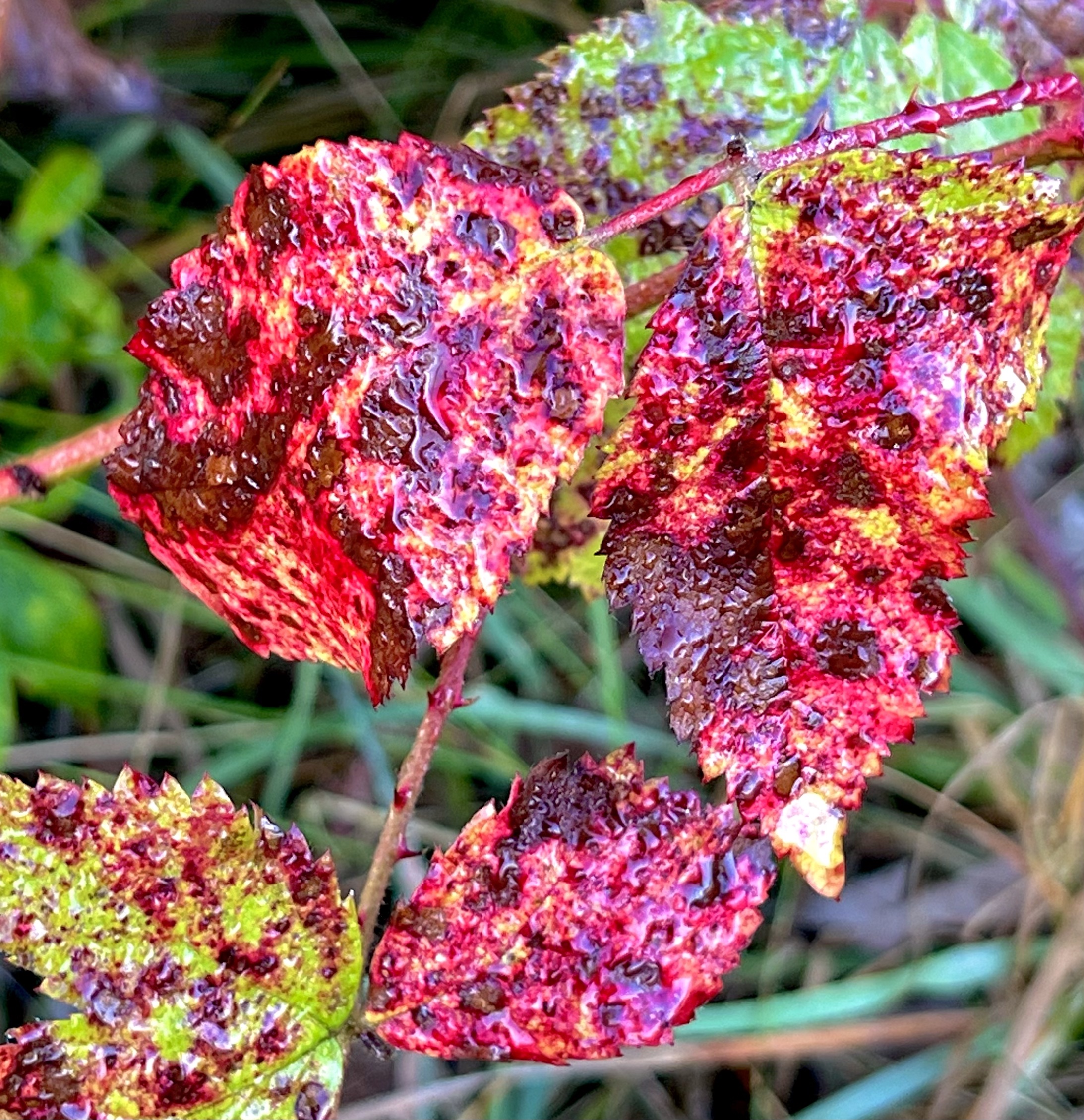
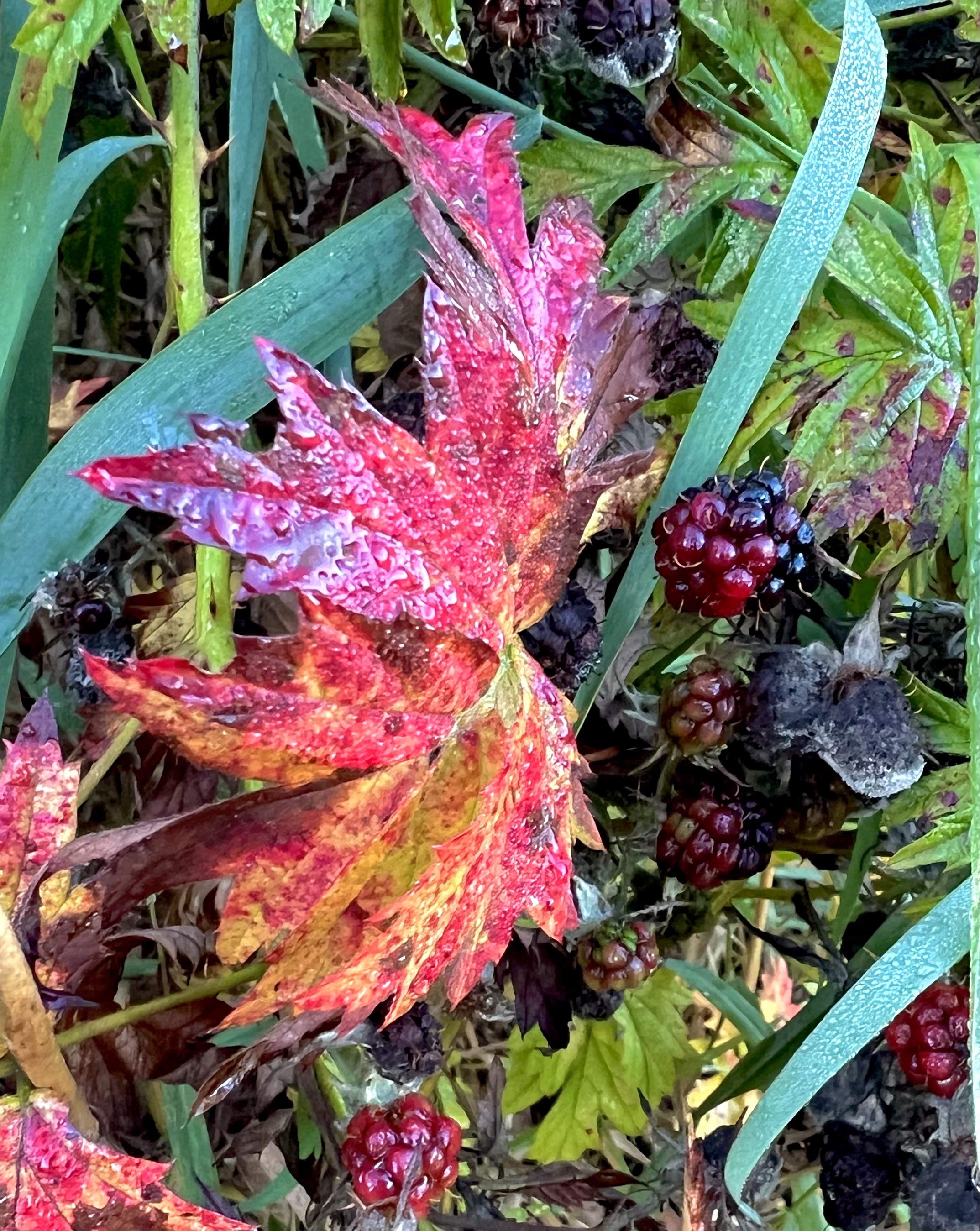
It has been an unusually dry summer here in the Pacific Northwest with little rain until recently, so the fields are brown and even the usually lush blackberry vines have started to dry and color up. The berries themselves are rich from the sun but starting now to shrivel and mold.
Our Haflinger horses have been fed hay for the past several weeks as there is not enough pasture for them without the supplement–we are about 6 weeks ahead of schedule in feeding hay. I had grown a little suspicious the last couple nights as I brought the Haflingers into the barn for the night. Two of the mares turned out in the back field had purplish stains on their chests and front legs. Hmmmm. Raiding the berries. Desperate drought forage behavior in an extremely efficient eating machine.
So this evening I headed toward the berries. When the mares saw the bowl in my hand, that was it. They mobbed me. I was irresistible.
So with mares in tow, I approached a berry bank. It was ravaged. Trampled. Haflinger poop piles everywhere. All that were left were some clusters of gleaming black berries up high overhead, barely reachable on my tip toes, and only reachable if I walked directly into the thicket. The mares stood in a little line behind me, pondering me as I pondered my dilemma.
I set to work picking what I could reach, snagging, ripping and bloodying my hands and arms, despite my sleeves. Pretty soon I had mares on either side of me, diving into the brambles and reaching up to pick what they could reach as well, unconcerned about the thorns that tore at their sides and muzzles. They were like sharks in bloody water–completely focused on their prey and amazingly skilled at grabbing just the black berries, and not the pale green or red ones.
Plump Haflingers and one *plumpish* woman were willingly accumulating scars in the name of sweetness.
When my bowl was full, I extracted myself from the brambles and contemplated how I was going to safely make it back to the barn without being mare-mugged. Instead, they obediently trailed behind me, happy to be put in their stalls for their evening hay, accepting a gift from me with no thorns or vines attached.
Clearly, thorns are part of our everyday life. Thorns stand in front of much that is sweet and good and precious to us. They tear us up, bloody us, make us cry, make us beg for mercy.
Yet thorns have been overcome. They did not stop our salvation, did not stop goodness raining down on us, did not stop the taste of sweetness given as a gracious gift.
If we hesitate, thorns only proliferate unchecked.
So, desperate and hungry, we dive right in, to taste and eat.
One-Time
Monthly
Yearly
Make a one-time or recurring donation to support daily Barnstorming posts
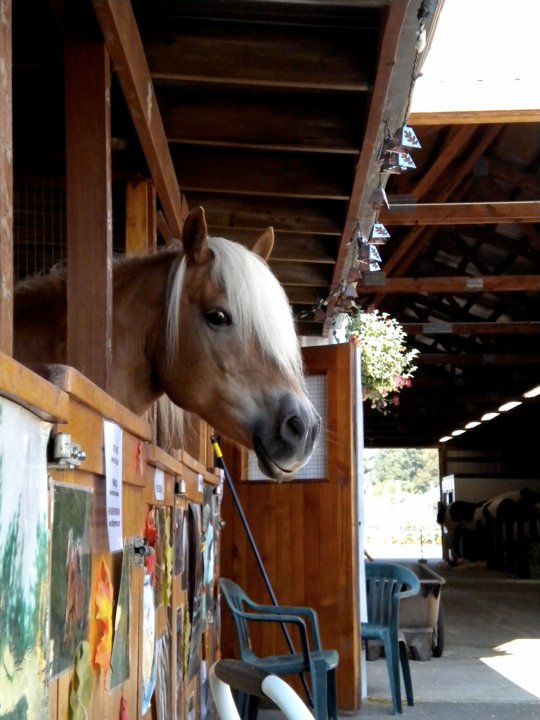
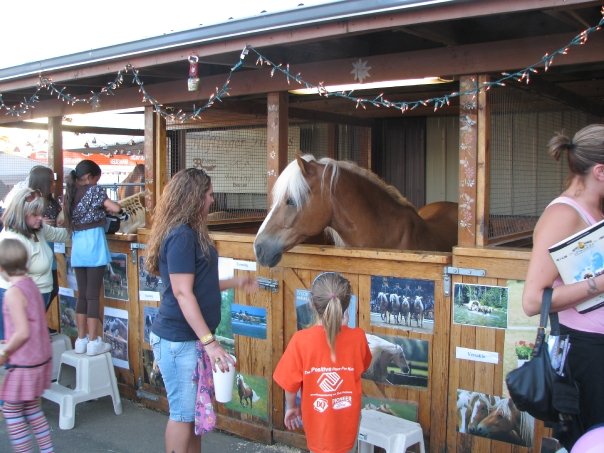
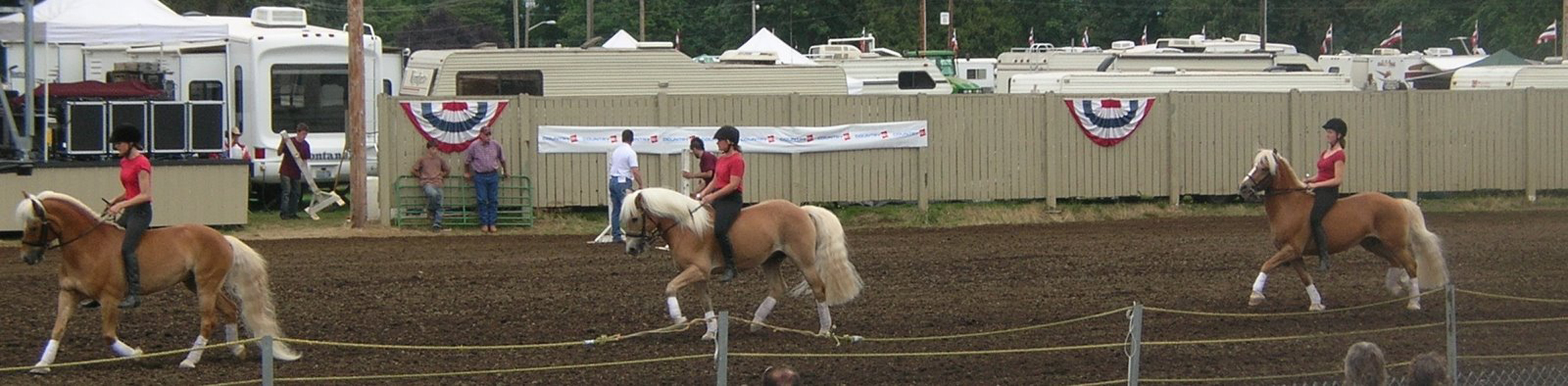
The Northwest Washington Fair in Lynden is underway this week and for the eleventh year in a row, our Haflinger horses aren’t there on display. I feel wistful as I wake up too early on a foggy summer morning, remembering the twenty years where I would gather up our sleepy children and their friends and head into the fairgrounds to clean stalls, walk the ponies and prepare for the day. We are no long “doing” the fair as a farm, and I feel a little bit sad about that.
Our farm, BriarCroft, had been a consistent presence at this fair for nearly two decades, promoting the Haflinger breed in a well-decorated outdoor display, providing 24 hour a day coverage for the horses for the 6 days of the fair. We petitioned the Fair Board for 5 years in the late 1980s to allow us to display at the fair, and they finally said “okay, here’s the space, build it yourself” and we did! We were not there for classes, competition, or ribbons. We were there because people enjoyed our Haflingers and we enjoyed the people.
But now that our children are all grown up and moved away, all with children of their own, we lack their help to “man” the horse stalls. I miss spending that intense one week time with all of the several dozen “kid” helpers from over the years, all grown up and scattered to the winds.
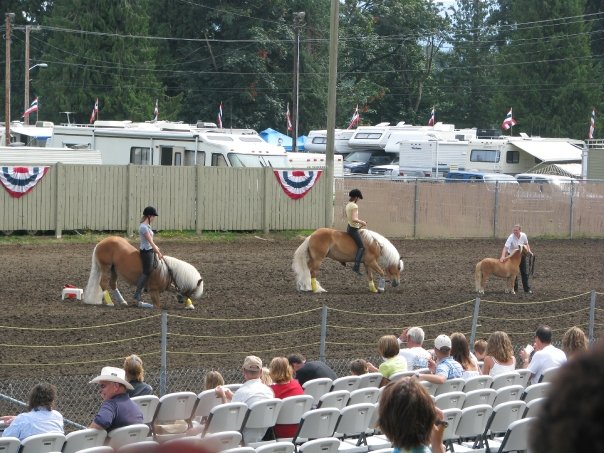
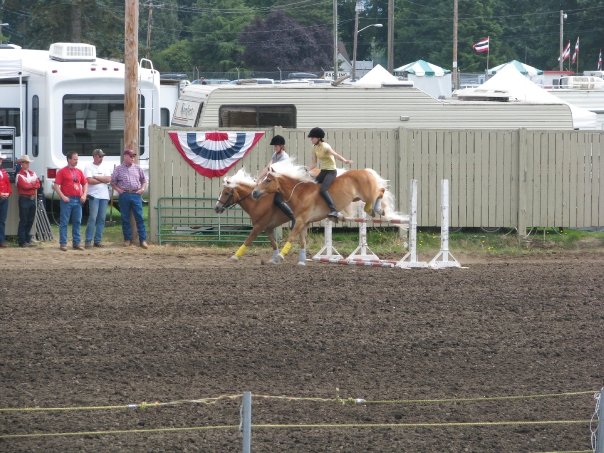
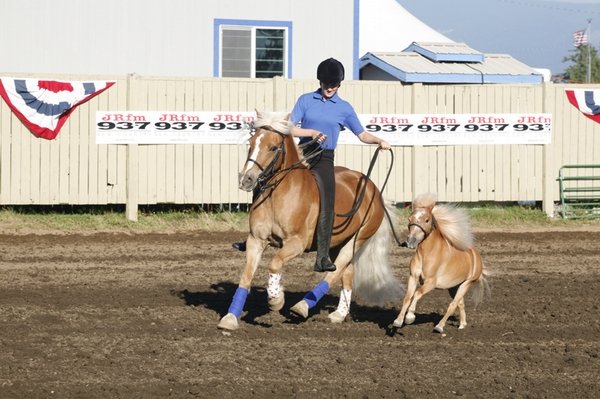
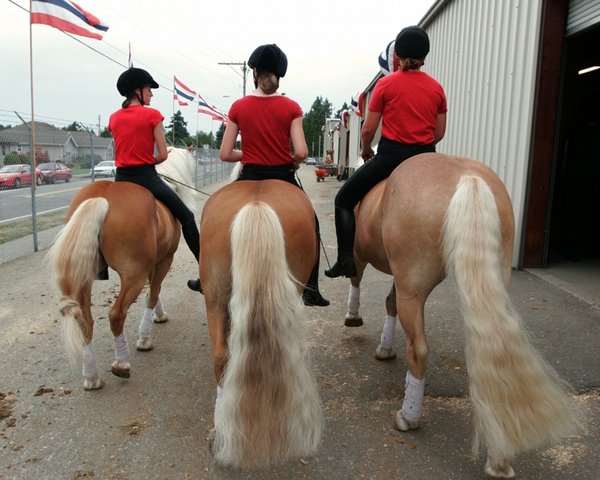
Every year between 1992 and 2012, we were there, sometimes sharing space and duties with other Haflinger farms (Rodenbergers and McKees), along with several brave young women (Kelsy Smith, Chesna Klimek and Emily Vander Haak) who did Haflinger “trick riding” as part of the daily Grandstand show. The older kids watched the younger kids, the in-between kids did most of the horse stall cleaning duty, and we adults sat and shot the breeze.
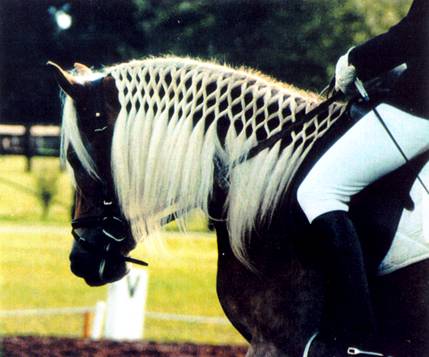
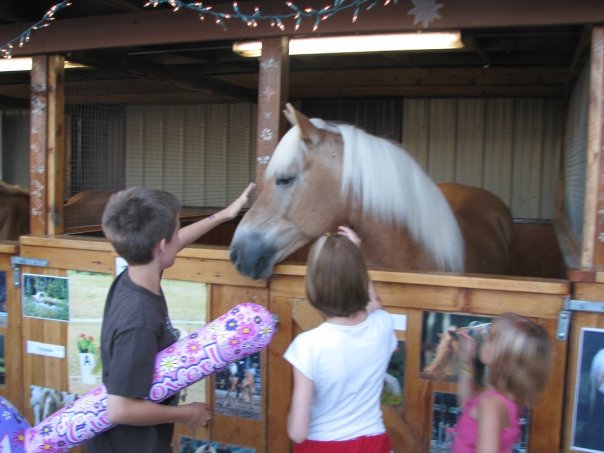
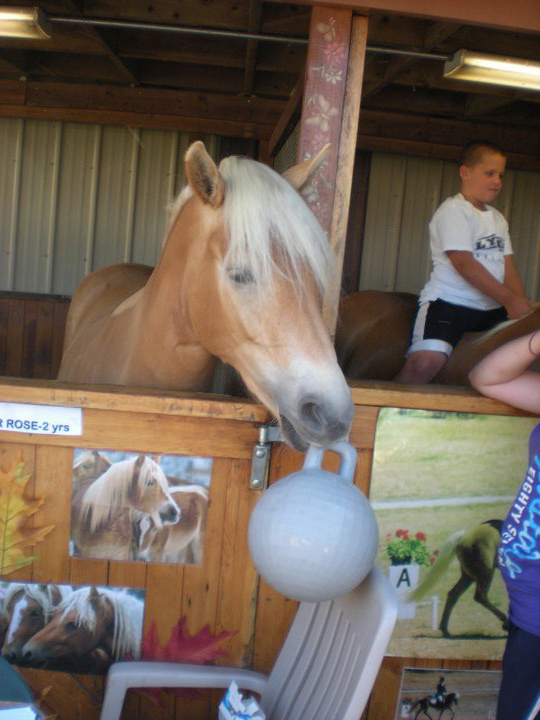
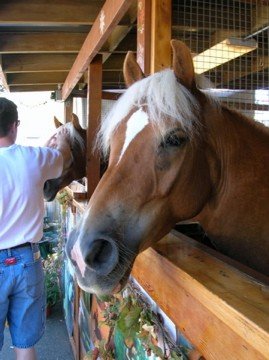
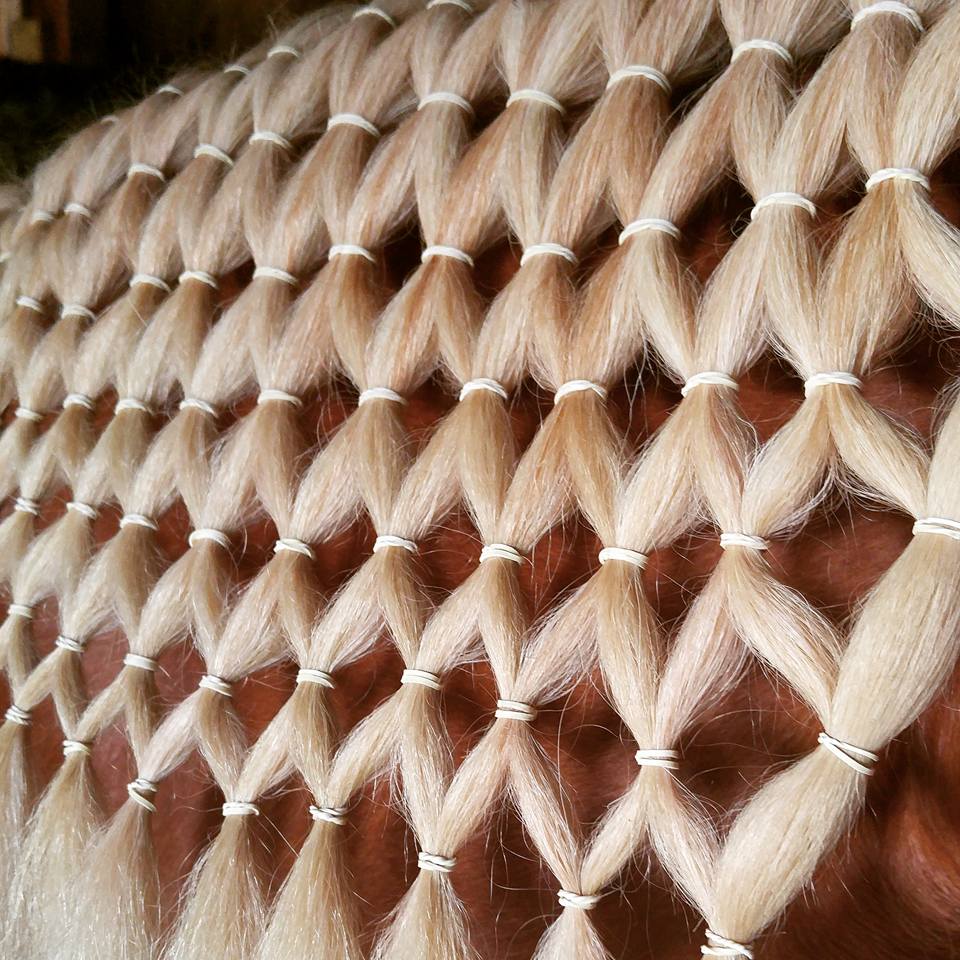
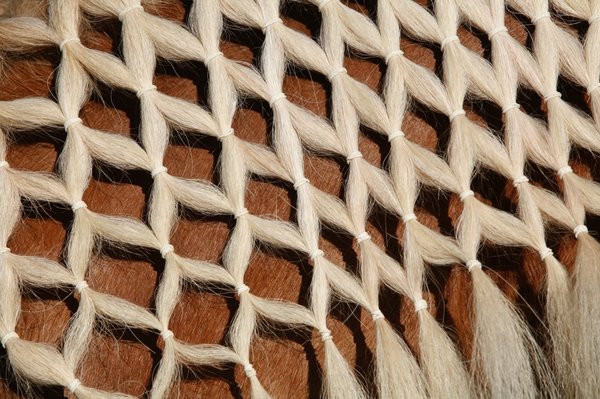
Our display created good will for the fair visitors who depended on us every year to be there with horses that they and their children could actually pet (and sit on) without fear, who enjoyed our braiding demonstrations, and our various Haflinger trivia contests with prizes. Our horses came to represent what dreams are made of.
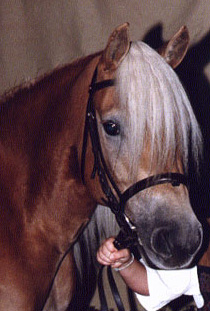
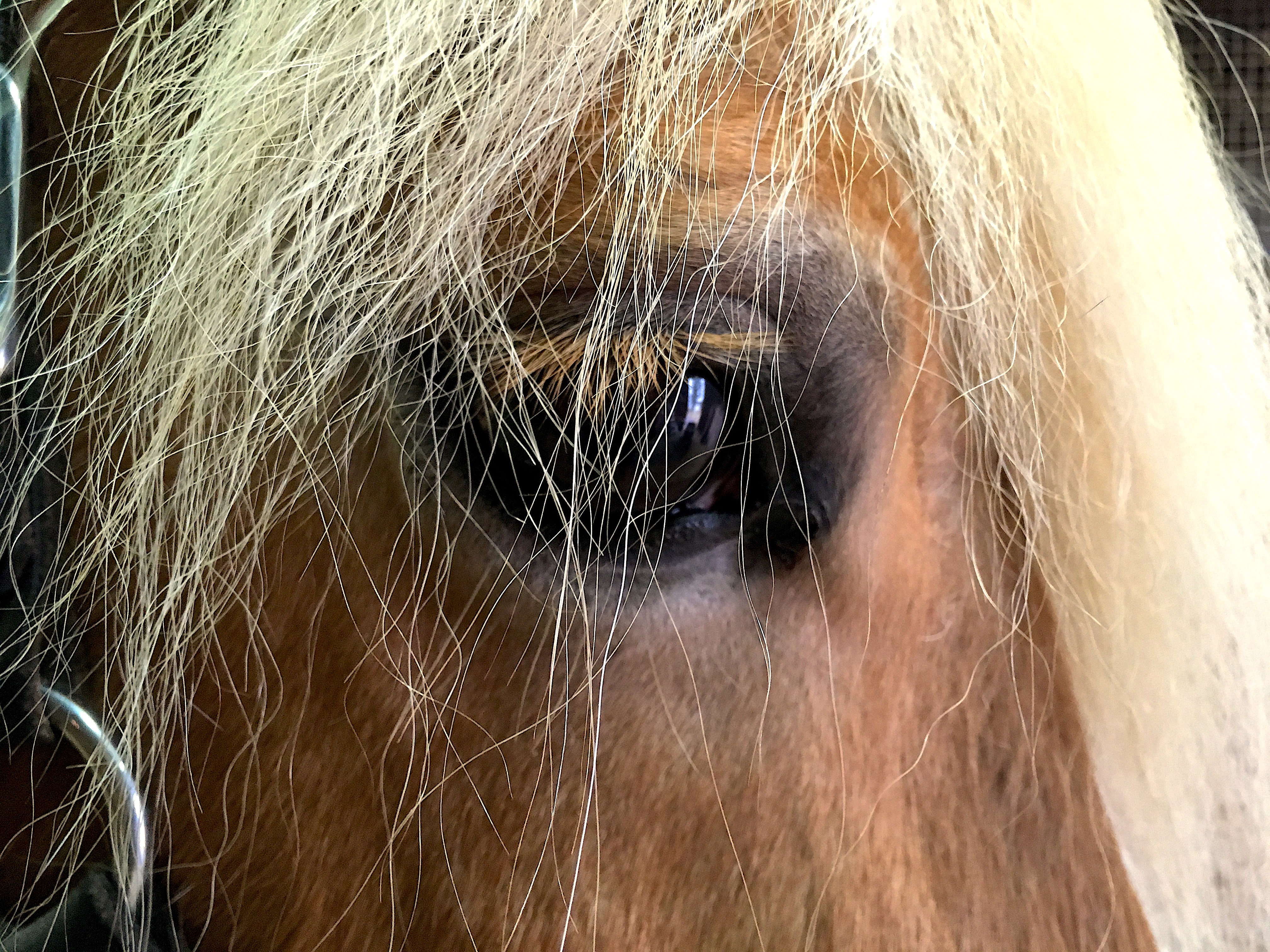
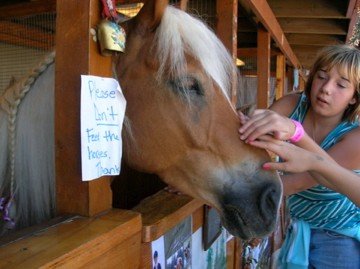
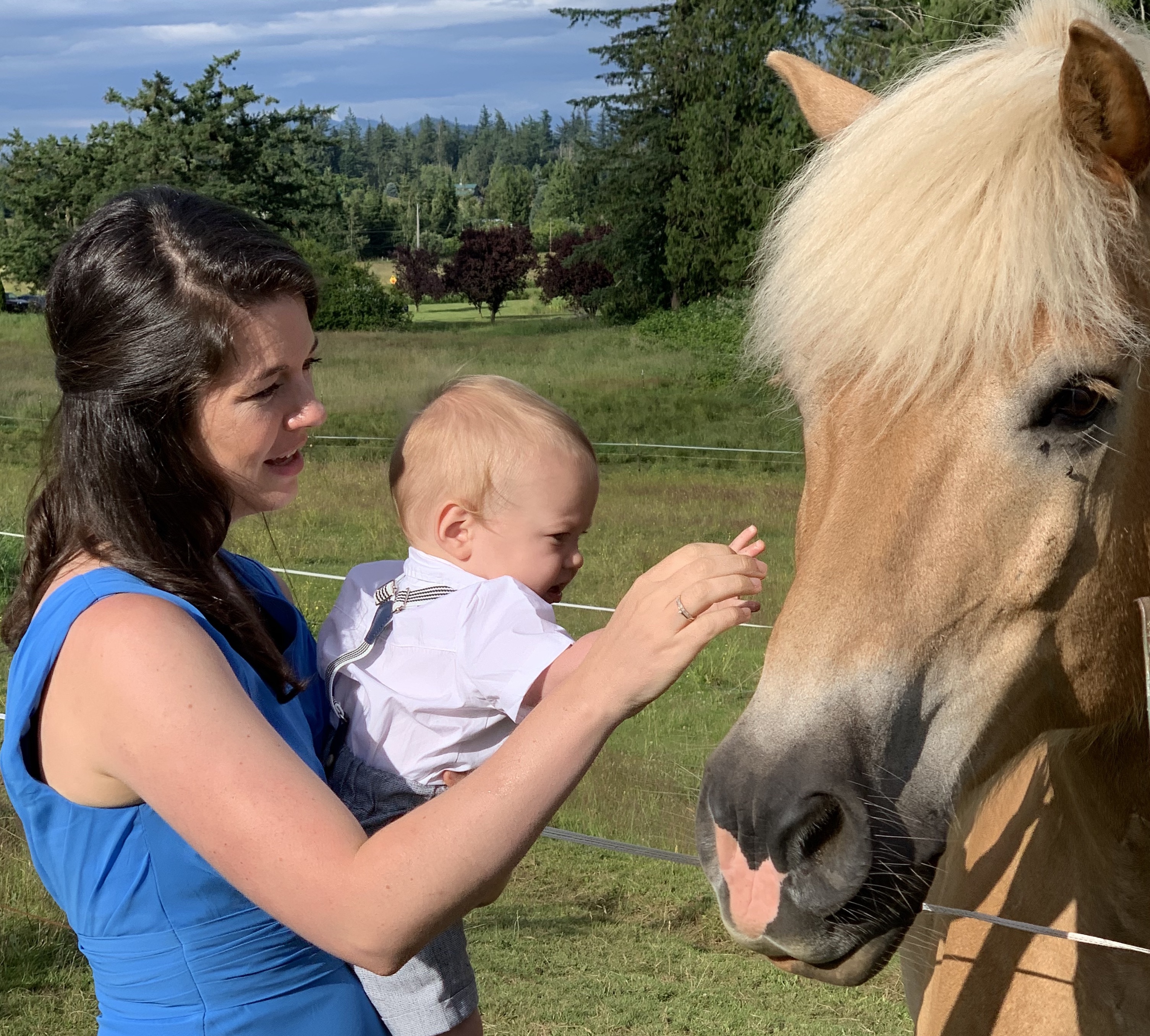
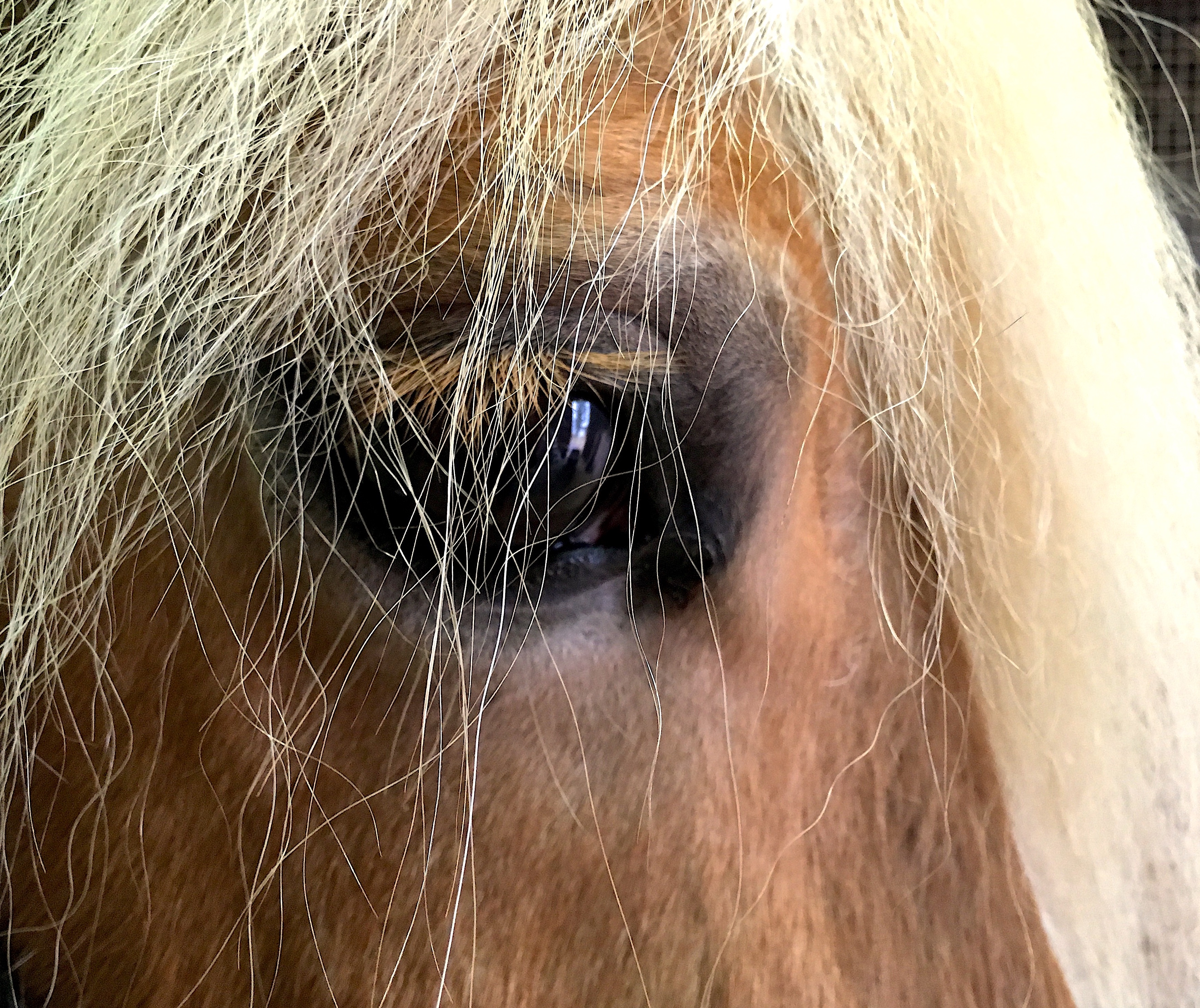
Countless times a day there would be a bright eyed child who approached our stalls, climbed up on the step stools and reached up to pet a Haflinger nose or neck and looked deep into those big brown Haflinger eyes, and lost their heart forever to the breed. They will not forget that moment when a horse they had never met before loved them back. Haflingers are magic with children and we saw that over and over again.
Our first year, in 1992, a mom and her 6 year old son came up to our stalls, as do some 10,000 people a day, and spent a long time petting the horses and talking to them, and enjoying them. They walked off, with the little boy looking over his shoulder at the Haflingers until they turned a corner and went out of sight. An hour later they were back and spent more time with the Haflingers. I offered the little boy a chance to sit on a Haflinger, and he agreed readily, and sat and sat and sat, playing with the mane and petting the shoulder and neck and was simply in heaven, quietly dreaming his own dreams on the back of a horse. His mom told me that they lived in a suburb near Seattle, but always spent this particular week in August at a local beach cabin, and the fair was one of their favorite activities each year. Her son Gary had never had an opportunity to sit on a horse before.
Next year, they were back, and Gary was a little taller, but still a quiet boy, and he kept dragging his mom back to the Haflingers, and she’d sit and visit as he’d sit on the Haflingers. He watched as we watered the horses, or fed them hay, or cleaned their stalls, and pretty soon he was asking if he could do the scooping, or dump the buckets or brush the horses. So he became, out of his own initiative, a helper.
By the time he was 8, he was spending several hours at a time with us at the stalls, taking his turn at the chores, and his mom, trusting that he was in good hands, and that he certainly wasn’t going to wander away from the Haflingers, would check back with him now and then to see if he wanted to go on rides, or see a performance, and his response was always “no, I can do that anytime, but I don’t get to see Haflingers very often!” He would talk a little about his hope someday to have a farm where he could raise Haflingers, and one year even said that his folks were looking at property to buy with acreage, but apparently a job for his dad didn’t materialize, so he remained a city kid in reality, even if he was a future farm kid in his heart.
Gary was one of our regular kid helpers every year until he was 12 when he started turning out for junior high football, and the football summer camp coincided with our fair week, so we’d only see him briefly on Saturdays as he got into his teens. He’d stop by to say hi, pet the horses, catch up on the Haflinger news, and because he only had a few hours to spend at the fair, he’d head off to other things. I really missed him and his happy smile around the stalls.
When he was 15, I missed seeing him because I was working when he stopped by. When he stopped by at age 16, he strolled up to me and I found I was looking up at this young man who I had to study to recognize. I’m a tall woman of 5’10”–he was at least 4 inches taller than me! He told me he wanted to come by because some of his best summer memories were of spending time with the Haflingers at the fair and he wanted me to know that. He thanked me for welcoming him and allowing him to “hang out” with the Haflingers. He told me his hope and dream someday was to live somewhere where he could raise Haflingers, and he was working hard in school so he could make that happen. He was a 4.0 student and the first string quarterback on his high school football team. I was as proud as if he was my own son.
This young man received a full scholarship to play football at a major university, and over four years waited his turn to be the starting quarterback. Once he had his chance, after only a few games of being the starter, he was tackled hard, sustaining a neck fracture which thankfully resulted in no permanent damage, but his college football career was suddenly over.
I have lost track of Gary over the years and I hope he is faring well. I hope his connection with our horses left him with a legacy of love for animals he’ll pass onto his children someday.
So on this misty late summer morning, instead of heading to the fairgrounds to clean stalls, I’m going to turn our dusty, unbathed Haflingers out in the field as usual. They don’t even know all the excitement they are missing.
I do hope the fair-goers still miss the friendly golden horses, with the big brown eyes, who helped over two decades to help make kids’ dreams come true.
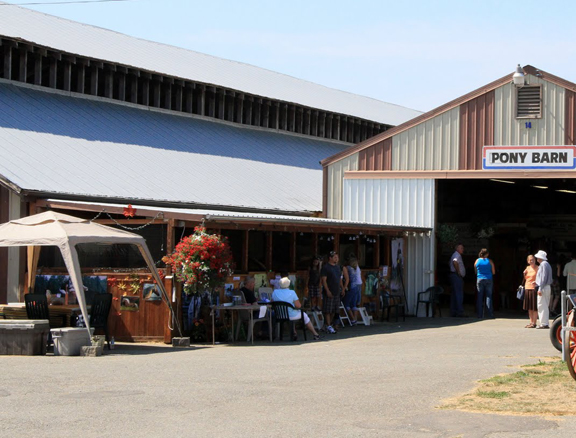
Our Haflinger display at the NW Washington Fair
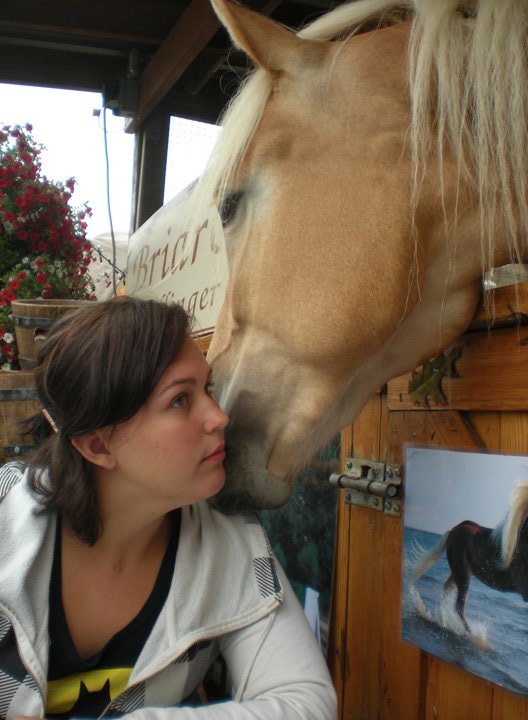
Trillium as a yearling with me at the fair 1993 – she is still part of our herd at age 29
Thank you to Lea Gibson Lozano, Emily Vander Haak, Kelsy Smith, and Chesna Klimek for their photos in this collection.
One-Time
Monthly
Yearly
Make a one-time or recurring donation to support daily Barnstorming posts
Is all I’ve wanted past wanting since I was six and delirious with fever, an infinitive forged from a night when giant ladybugs with toothpick antennae patrolled my wicker nightstand. Yes, I’ve been with horses since, travelled illegally with them in trailers, known certain landscapes only framed by alert ears, and with one in particular, spent whole afternoons with her big jaw heavy on my shoulder. Still, I hatched plots to bring a horse to the house, to ride to school, to pasture one or even three in the garden, shaded by that decorative willow, which could have used a purpose. But there were city bylaws in two languages, and over the years, a dog, stray cats, turtles, and many fish. They lived, they died. It wasn’t the same. Fast-forward, I brought the baby home in a molded bucket seat, but she lacked difference, attuned as I was, checking her twenty-four-seven. Now that she’s grown, I’m reduced to walking city parks with this corrosive envy of mounted police, though I’m too old for the ropes test, wouldn’t know what to do with a gun. If there’s a second act, let me live like the racetrack rat in a small room up the narrow stairs from the stalls, the horse shifting comfortably below, browsing and chewing sweet hay. A single bed with blanket the color of factory-sweepings will suffice, each day shaped to the same arc, because days can only end when the lock slides free on the stall’s Dutch door, and I lead the horse in, then muscle the corroded bolt shut. That’s what days are for: I cannot rest until the horse comes home. ~Julie Bruck “To Bring the Horse Home”
The best moment in the barn is in the evening just following the hay feeding, as the animals are settling down to some serious chewing. I linger in the center aisle, listening to the rhythmic sounds coming from six stalls. It is a most soothing contented cadence, first their lips picking up the grass, then the chew chew chew chew and a pause and it starts again. It’s even better in the dark, with the lights off.
I’ve enjoyed listening to the eating sounds at night from the remote vantage point of my bedroom TV monitor system set up to watch my very pregnant mares before foaling. A peculiar lullaby of sorts, strange as that seems, but when all my farm animals are chewing and happy, I am at peace and sleep better.
It reminds me of those dark deep nights of feeding my own newborns, rocking back and forth with the rhythm of their sucking. It is a moment of being completely present and peaceful, and knowing at that moment, nothing else matters–nothing else at all.
If I am very fortunate, each day I live has a rhythm that is reassuring and steady, like the sounds of hay chewing, or rocking a baby. I awake thinking about where my next step will bring me, and then the next, like each chew of sweet hay. I try to live in each moment fully, without distraction by the worry of the unknown.
But the reality is: life’s rhythms are often out of sync, the cadence is jarring, the sounds are discordant, sometimes I’m the one being chewed on, so pain replaces peacefulness.
Maybe that is why this lullaby in the barn~~this sanctuary~~is so treasured. It brings me home to that doubting center of myself that needs reminding that pain is fleeting, and peace, however elusive now, is forever. I always know where to find it for a few minutes at the end of every day, in a pastoral symphony of sorts.
Someday my hope for heaven will be angel choruses of glorious praise, augmenting a hay-chewing lullaby.
So simple yet so grand.
One-Time
Monthly
Yearly
Make a one-time or recurring donation to support daily Barnstorming posts
It was dragging my hands along its belly, loosing the bit and wiping the spit from its mouth that made me a snatch of grass in the thing’s maw, a fly tasting its ear. It was touching my nose to his that made me know the clover’s bloom, my wet eye to his that made me know the long field’s secrets. But it was putting my heart to the horse’s that made me know the sorrow of horses. Made me forsake my thumbs for the sheen of unshod hooves. And in this way drop my torches. And in this way drop my knives. Feel the small song in my chest swell and my coat glisten and twitch. And my face grow long. And these words cast off, at last, for the slow honest tongue of horses. ~Ross Gay “Becoming A Horse”
photo by Emily Vander Haak
Living the dream of nearly every young girl, I grew up with a horse in our back field. The first was a raw-boned old paint who allowed my older sister and toddler me to sit atop him, walk around the barnyard and on the driveway at no more than a walk. He was arthritic and sore, but patient and tolerant to the attention of little girls. When we moved away to another part of the state, he didn’t come with us and I was too young to fully understand where he had been sent.
The horse on our new farm was my sister’s 4H project who was a spiffy chestnut mare with a penchant for a choppy trot and speedy canter. My sister would go miles with friends on horseback down back-country roads. Sadly, my sister soon became allergic (hives and swelling) to any contact with horses. I was barely old enough to start riding by myself in our fields.The little mare missed her adventures with my sister but seemed to adapt to my inexperience and took care of me as best she could – I never fell off. One night, she broke through a fence and ate her fill in a field of growing oat grass. The next day she was euthanized due to terrible colic. I was inconsolable, crying for days when visiting her burial spot on our property.
These first two horses tolerated the inexperience of their handlers and tried to compensate for it. I’ve since owned a few horses who knew exactly how to take advantage of such inexperience. Horses size up people quickly as our feelings and fear can be so transparent; it takes much longer for us to understand the complexity of their equine mind. Many diverse training techniques are marketed as testimony to that mystery.
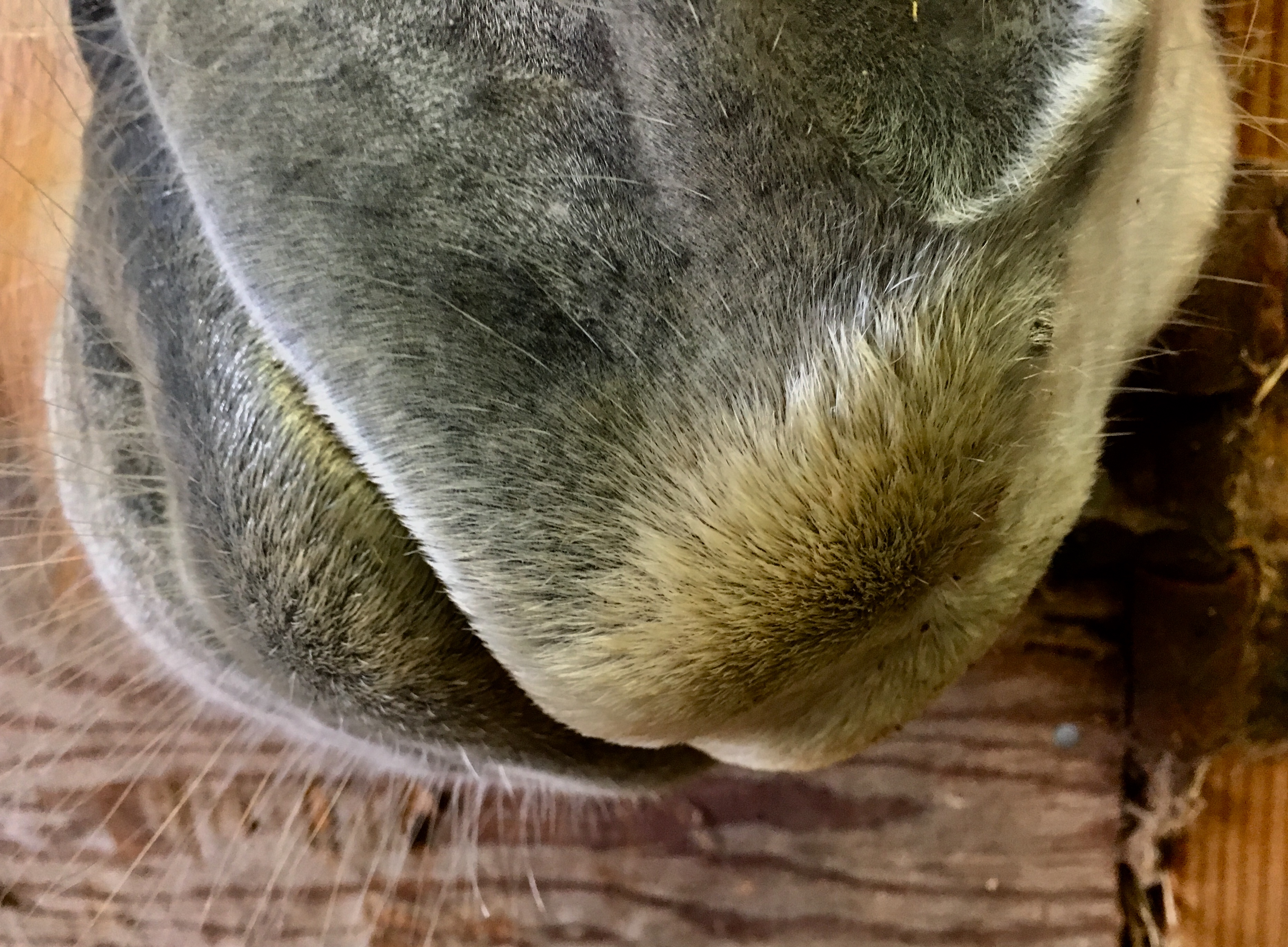
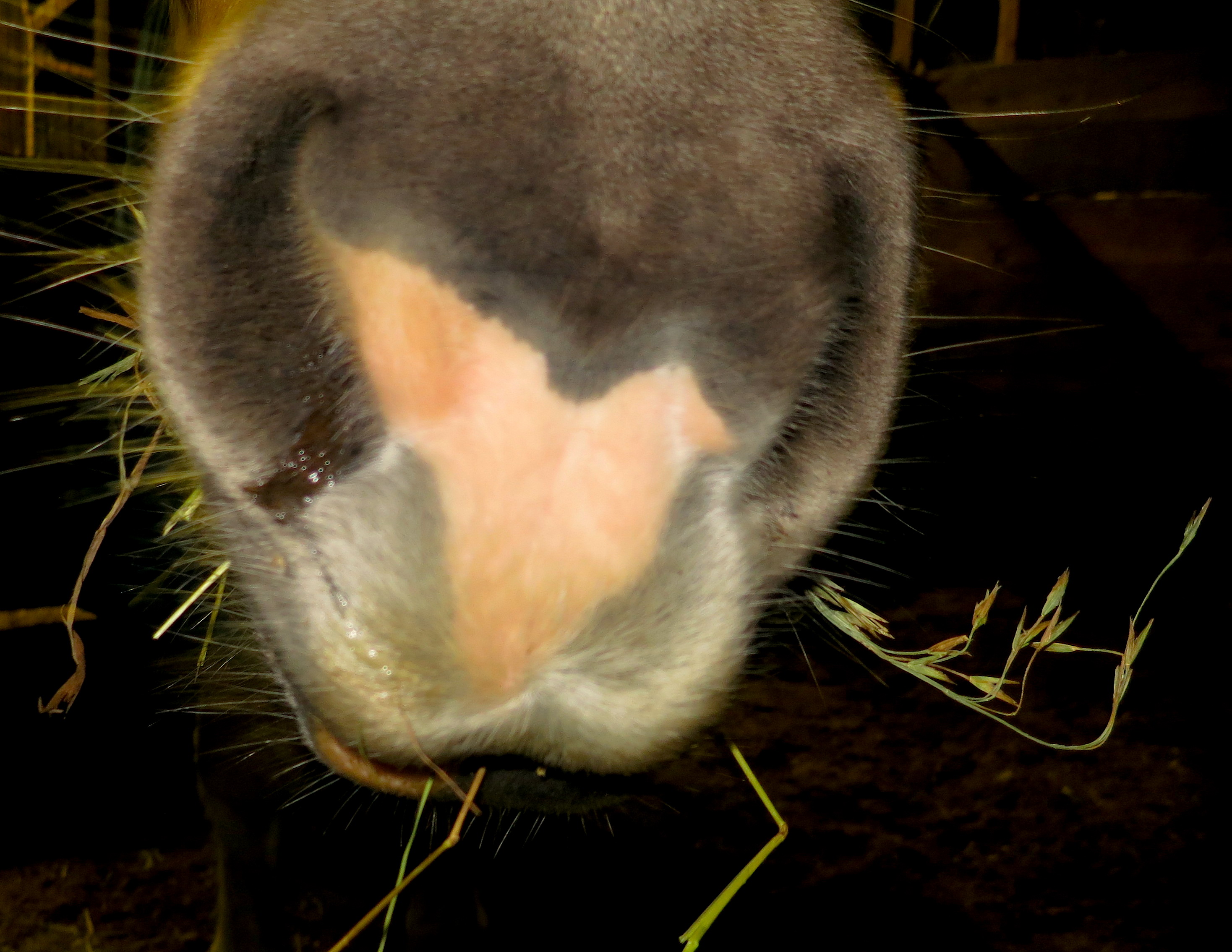
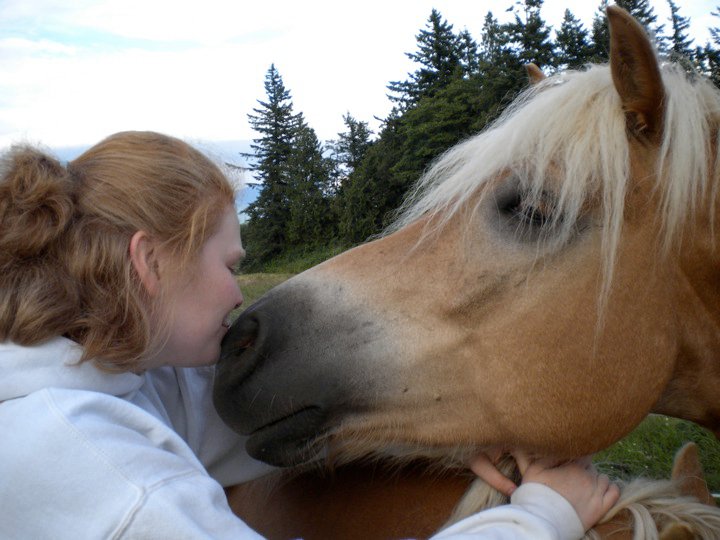
I have learned that horses appreciate a patient and quiet approach, reflecting their consistency and honesty. They like to be looked in the eye and appreciate a soft breath blown over their whiskers. They want us to find their itchy spots rather than act the part of a pseudo-predator with intent to harm.
That’s not asking too much of us.
In return, we learn how best to communicate what we need from them. They are remarkably willing to work when they understand the job and feel appreciated. In return, we are given a chance to experience the world through their eyes and ears, to comprehend the remarkable sensitivity of a skin able to shiver a fly away.
I’ve spent much of my life learning with horses and hope there are a few years still left to learn more. Whatever sorrow they feel in their hearts is when I’ve failed to be who they need me to be. Their gift to me is an honest willingness to forgive, again and yet again.
One-Time
Monthly
Yearly
Make a one-time or recurring donation to support daily Barnstorming posts
Why do we bother with the rest of the day, the swale of the afternoon, the sudden dip into evening, then night with his notorious perfumes, his many-pointed stars?
This is the best— throwing off the light covers, feet on the cold floor, and buzzing around the house on espresso— maybe a splash of water on the face, a palmful of vitamins—
but mostly buzzing around the house on espresso, dictionary and atlas open on the rug, the typewriter waiting for the key of the head, a cello on the radio, and, if necessary, the windows—
trees fifty, a hundred years old out there, heavy clouds on the way and the lawn steaming like a horse in the early morning. ~Billy Collins “Morning”
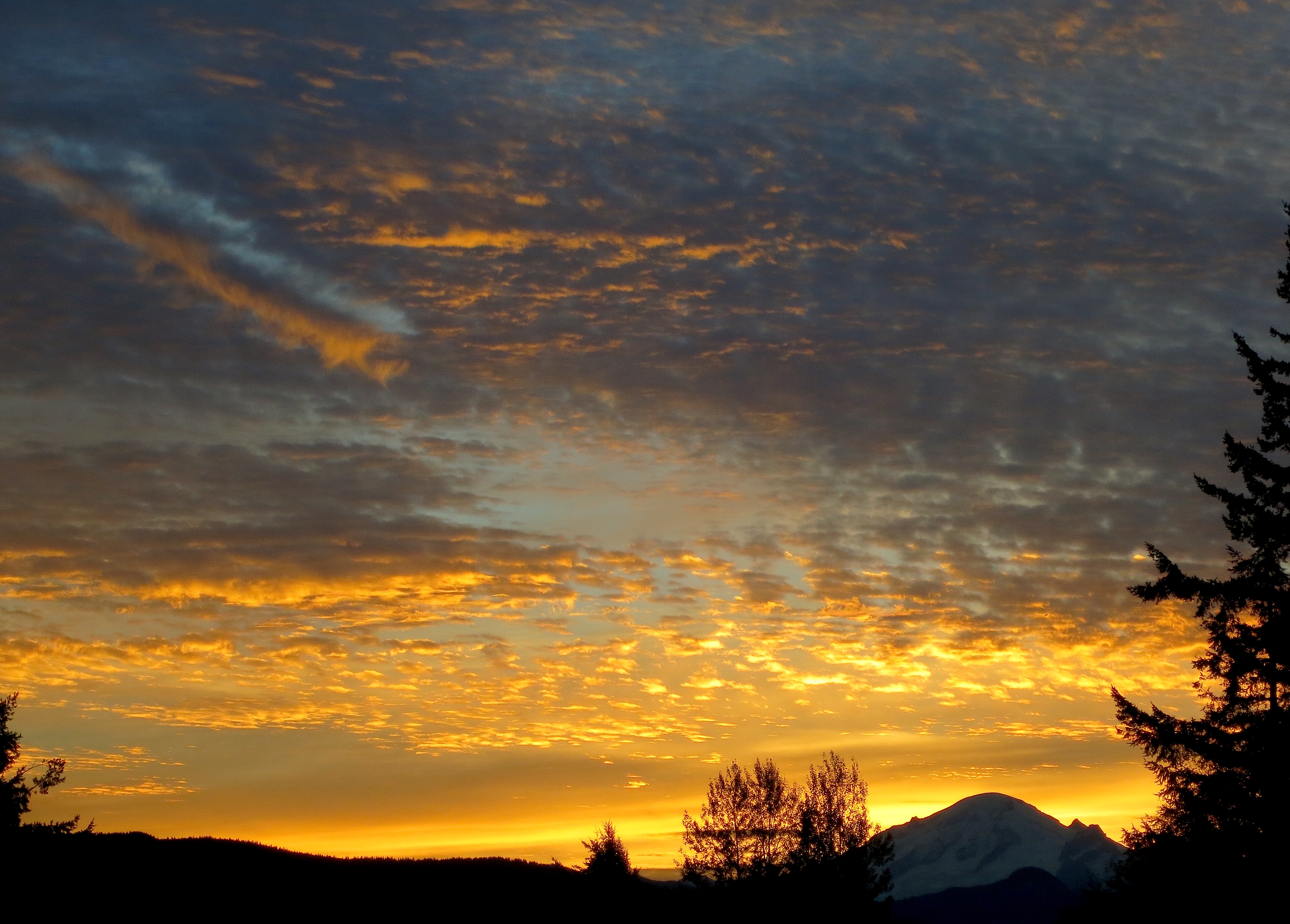
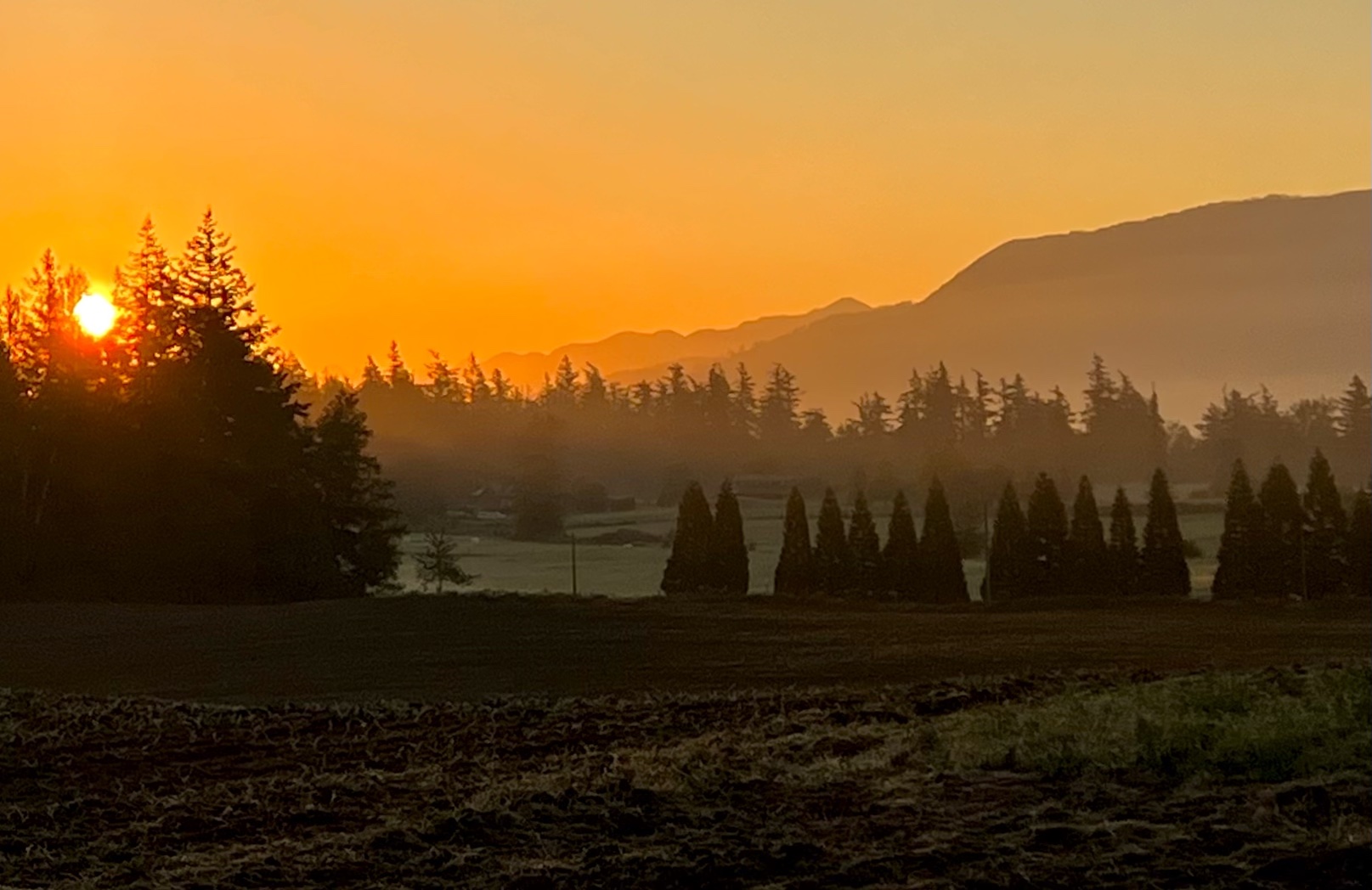
Dawn is a new gift every day, even when the previous night was sleepless. I rise early to see just what might happen as you never know what might be just over the horizon. Soon we’ll round the solstice corner to face the encroaching darkening.
So why do I bother with the rest of the day? Morning is always the best…
Just off the highway to Rochester, Minnesota, Twilight bounds softly forth on the grass. And the eyes of those two Indian ponies Darken with kindness. They have come gladly out of the willows To welcome my friend and me. We step over the barbed wire into the pasture Where they have been grazing all day, alone. They ripple tensely, they can hardly contain their happiness That we have come. They bow shyly as wet swans. They love each other. There is no loneliness like theirs. At home once more, They begin munching the young tufts of spring in the darkness. I would like to hold the slenderer one in my arms, For she has walked over to me And nuzzled my left hand. She is black and white, Her mane falls wild on her forehead, And the light breeze moves me to caress her long ear That is delicate as the skin over a girl’s wrist. Suddenly I realize That if I stepped out of my body I would break Into blossom. ~James Wright, “A Blessing” from Above the River: The Complete Poems
for James Wright
There are more like us. All over the world There are confused people, who can’t remember The name of their dog when they wake up, and people Who love God but can’t remember where
He was when they went to sleep. It’s All right. The world cleanses itself this way. A wrong number occurs to you in the middle Of the night, you dial it, it rings just in time
To save the house. And the second-story man Gets the wrong address, where the insomniac lives, And he’s lonely, and they talk, and the thief Goes back to college. Even in graduate school,
You can wander into the wrong classroom, And hear great poems lovingly spoken By the wrong professor. And you find your soul, And greatness has a defender, and even in death you’re safe. ~Robert Bly “People Like Us” from Stealing Sugar from the Castle
There are rare transcendent moments when I feel I could step outside my body, because something or someone moves me so profoundly, I no longer need to have my feet on the ground.
I’m thinking beyond myself. I’m thinking of another.
It is a sensation of floating while still connected; a circuit created as if electricity might flow, if only for an instant.
You too? Then think of me thinking of you. It brings us back again to the same music, the same poem, the same work of art, the same discovery that illuminates our souls.
Oh, think of me. And I of you.
And this is why we are safe in God’s hands, no matter what happens. We are meant to blossom together.
One-Time
Monthly
Yearly
Make a one-time or recurring donation to support daily Barnstorming posts
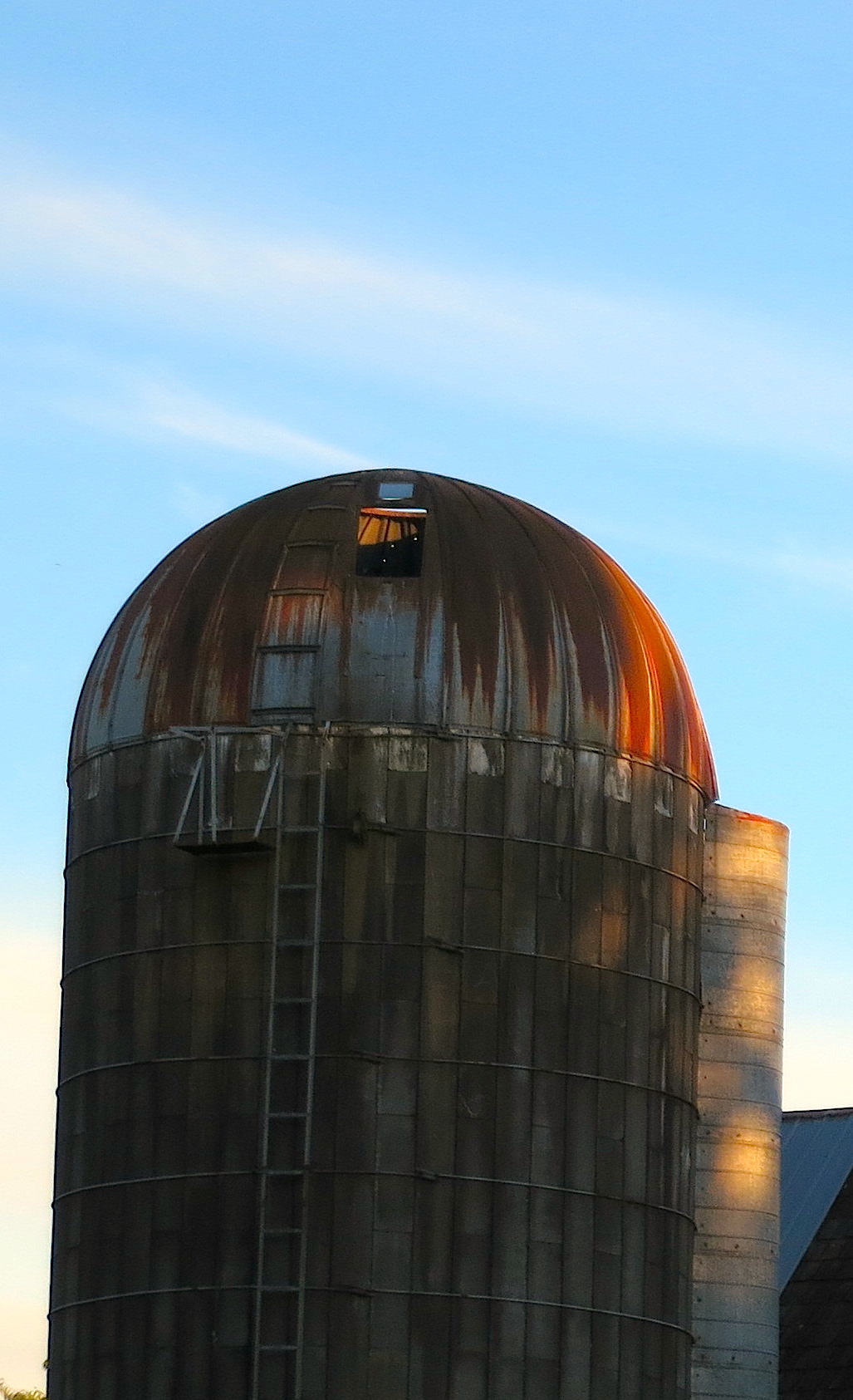
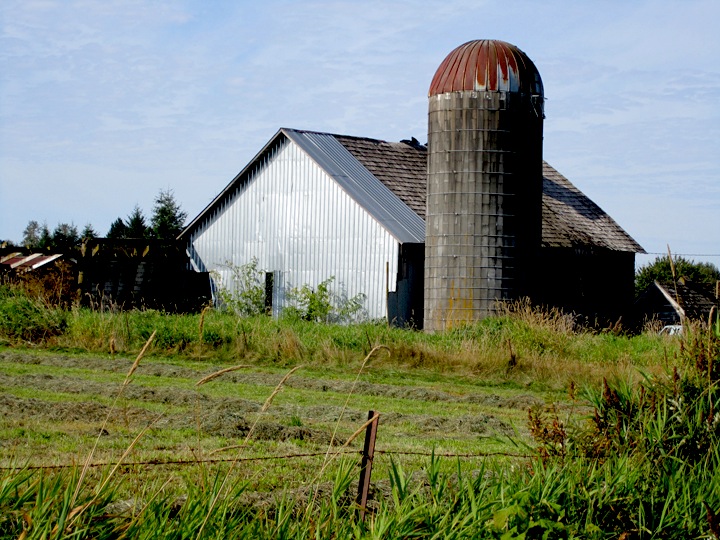
My father climbs into the silo. He has come, rung by rung, up the wooden trail that scales that tall belly of cement.
It’s winter, twenty below zero, He can hear the wind overhead. The silage beneath his boots is so frozen it has no smell.
My father takes up a pick-ax and chops away a layer of silage. He works neatly, counter-clockwise under a yellow light,
then lifts the chunks with a pitchfork and throws them down the chute. They break as they fall and rattle far below.
His breath comes out in clouds, his fingers begin to ache, but he skims off another layer where the frost is forming
and begins to sing, “You are my sunshine, my only sunshine.” ~Joyce Sutphen, “Silo Solo” from First Words
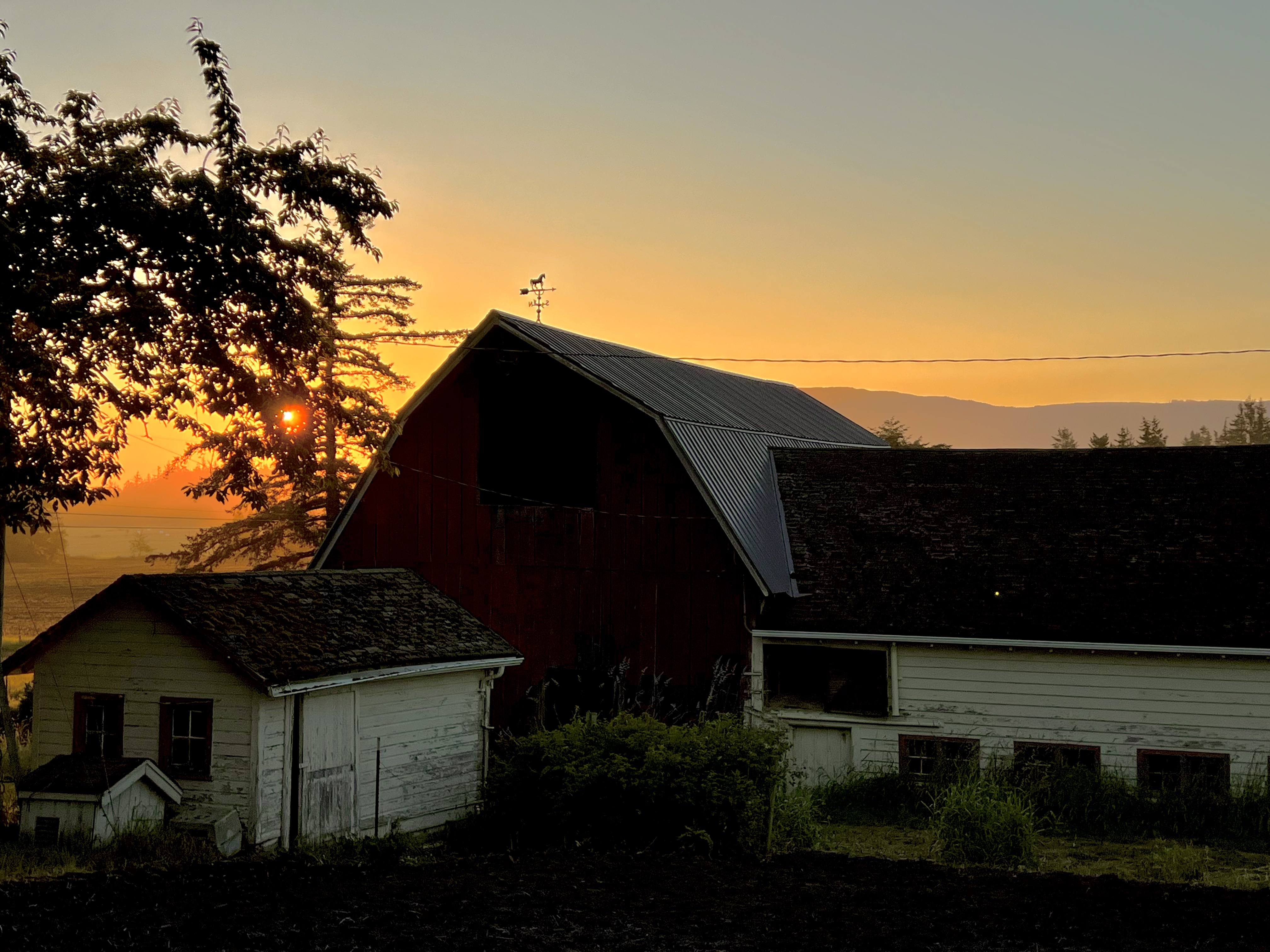
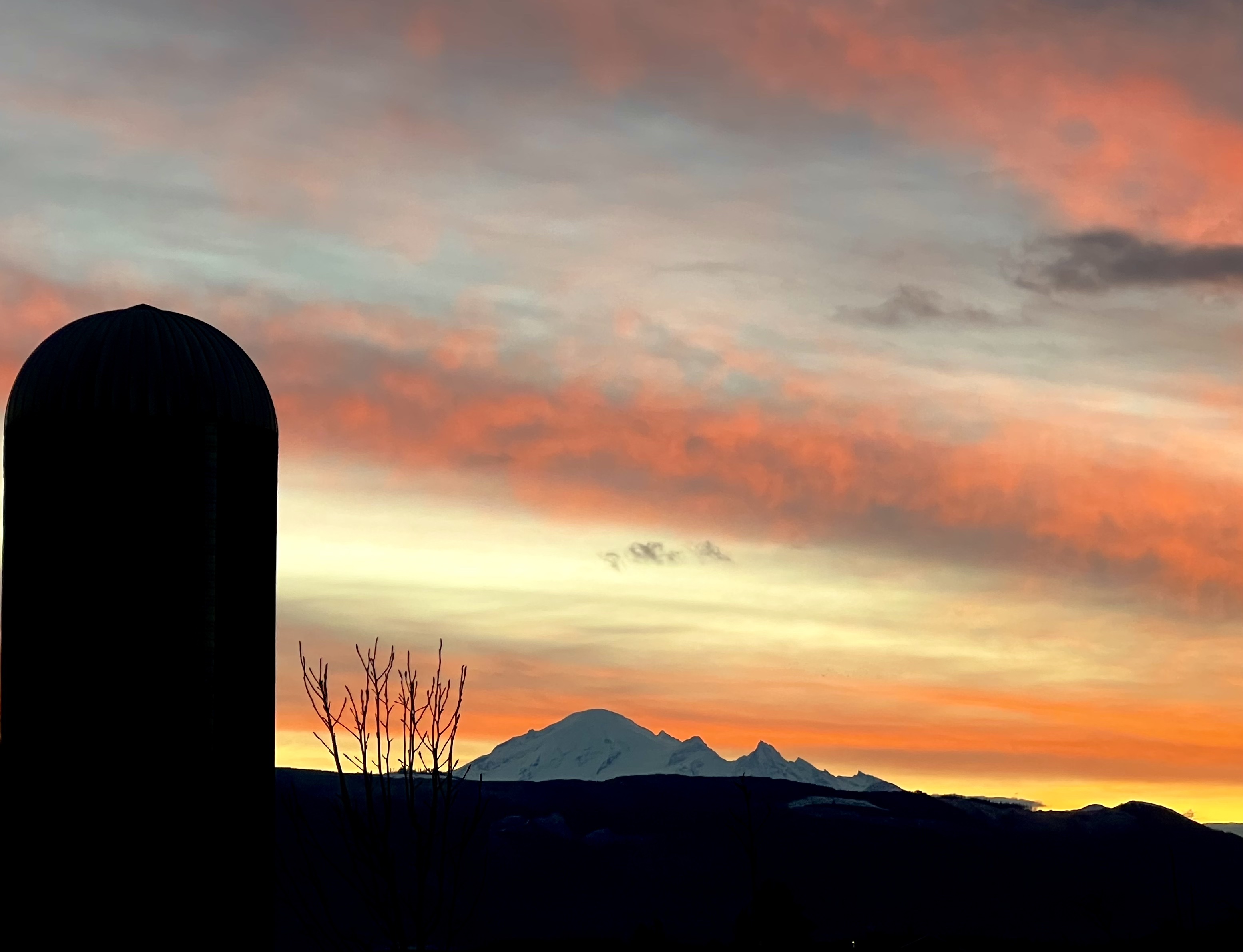
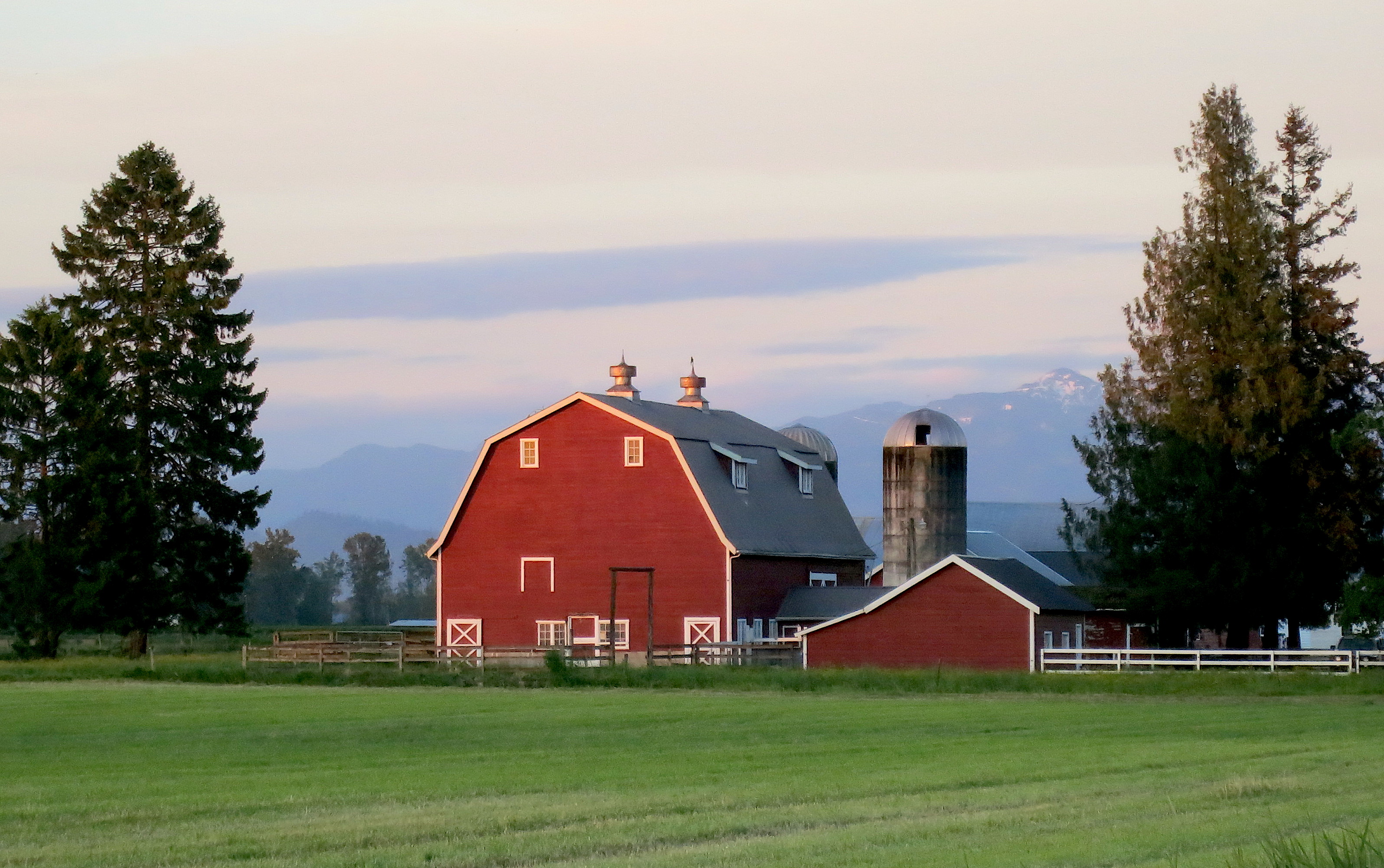
Farmers gotta be tough. There is no taking a day off from chores. The critters need to eat and their beds cleaned even during the coldest and hottest days. Farmers rise before the sun and return to the house long after the sun sets. They need a positive outlook to keep going – knowing there is sunshine somewhere even when the skies are gray, their fingers are aching from the cold, and their back hurts.
I come from a long line of farmers on both sides – my mother was the daughter of wheat farmers and my father was the son of subsistence stump farmers who had to supplement their income with outside jobs as a cook and in lumber mills. Both my parents went to college; their parents wanted something better for them than they had. Both my parents had professions but still chose to live on a farm – daily milkings, crops in the garden and fields, raising animals for meat.
My husband’s story is similar, with both parents working on and off the farm. Dan milked cows with his dad and as a before-school job in the mornings.
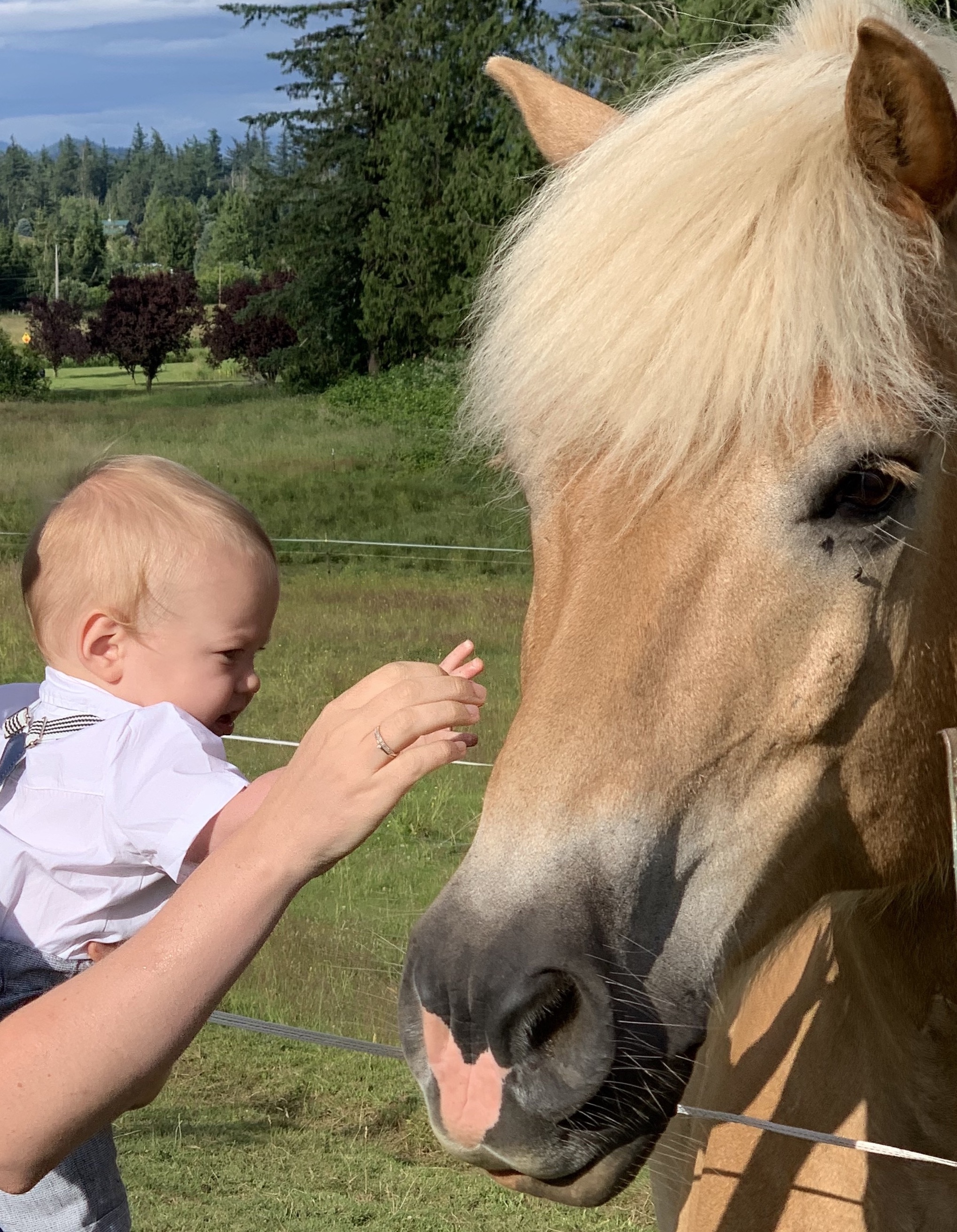
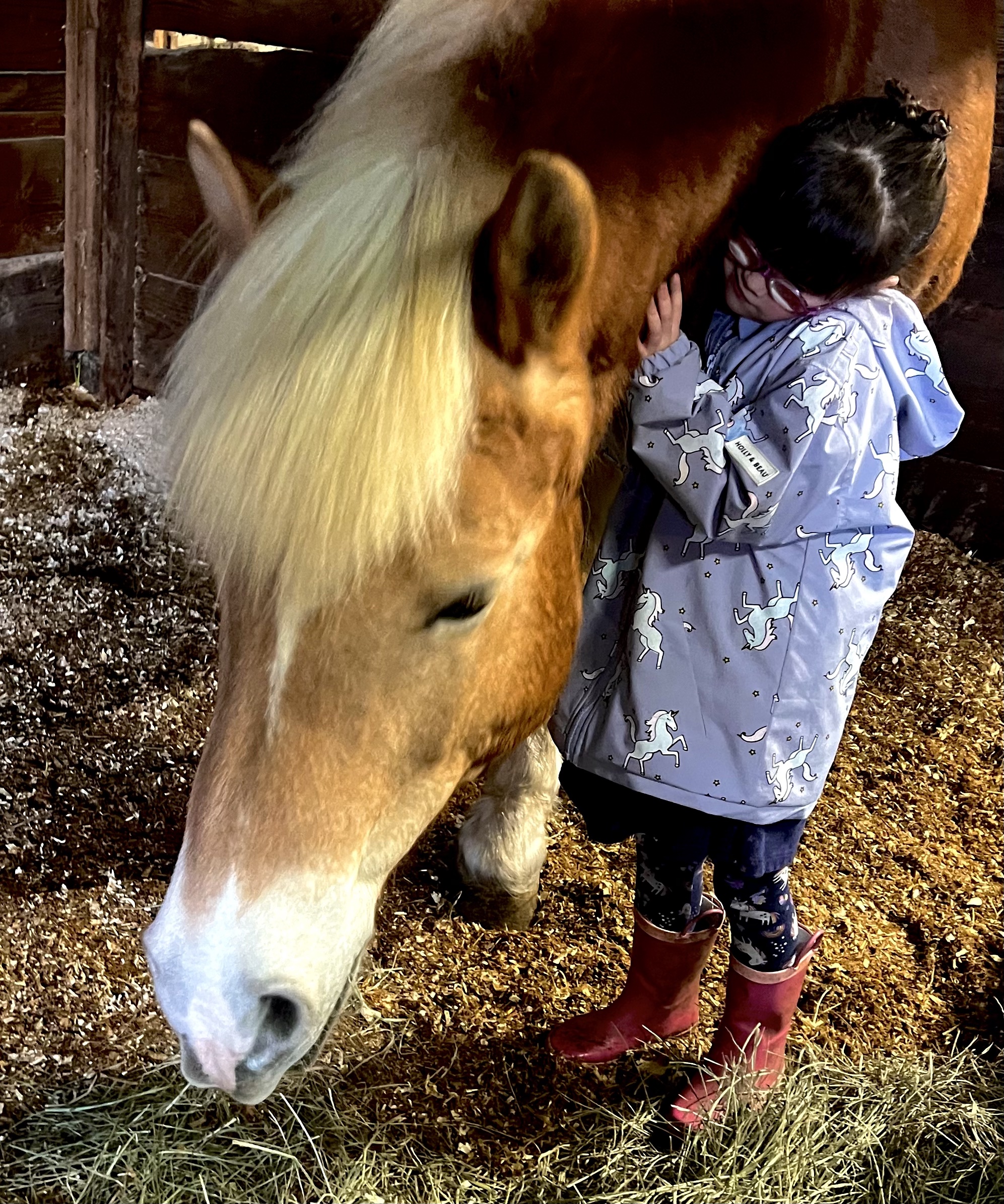
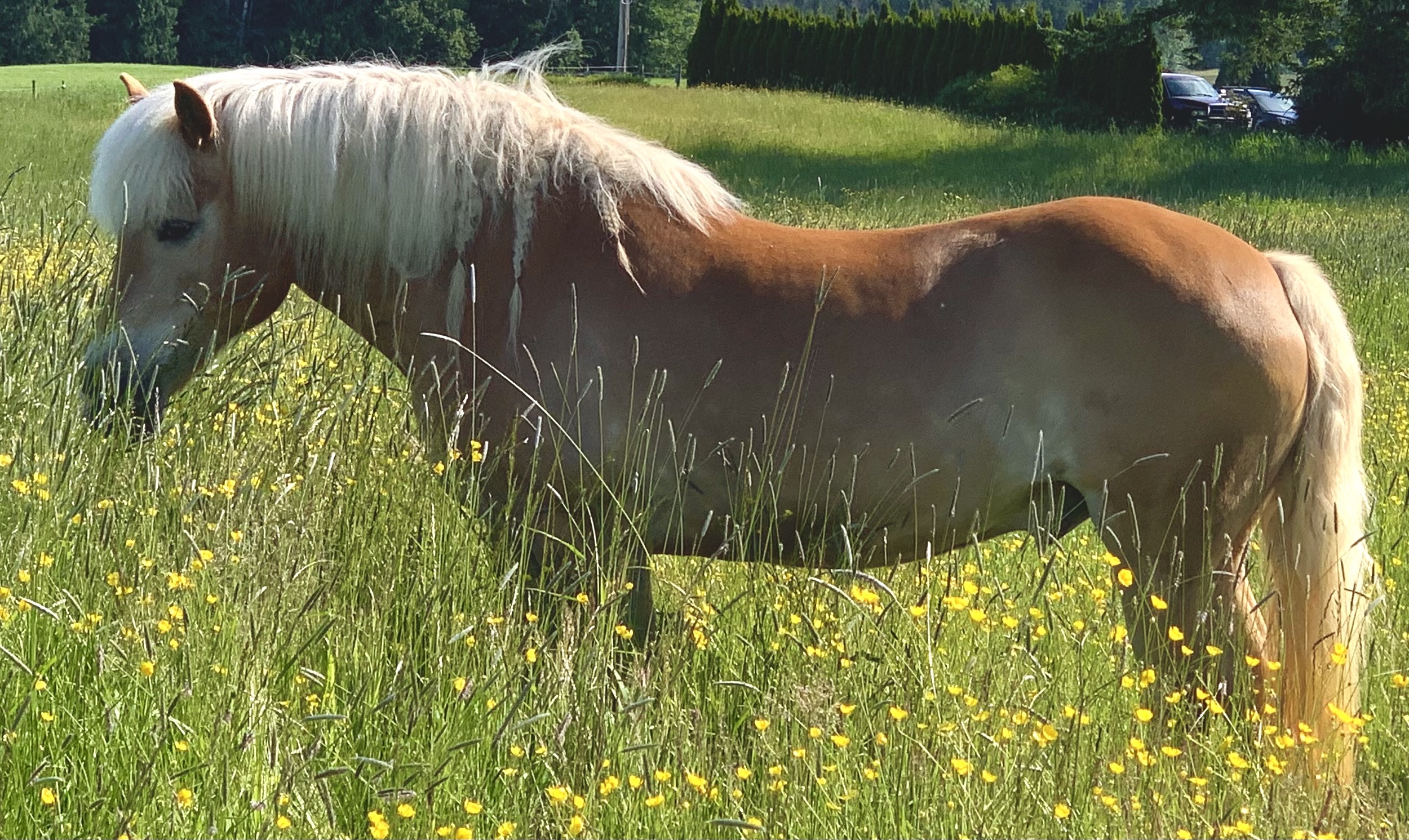
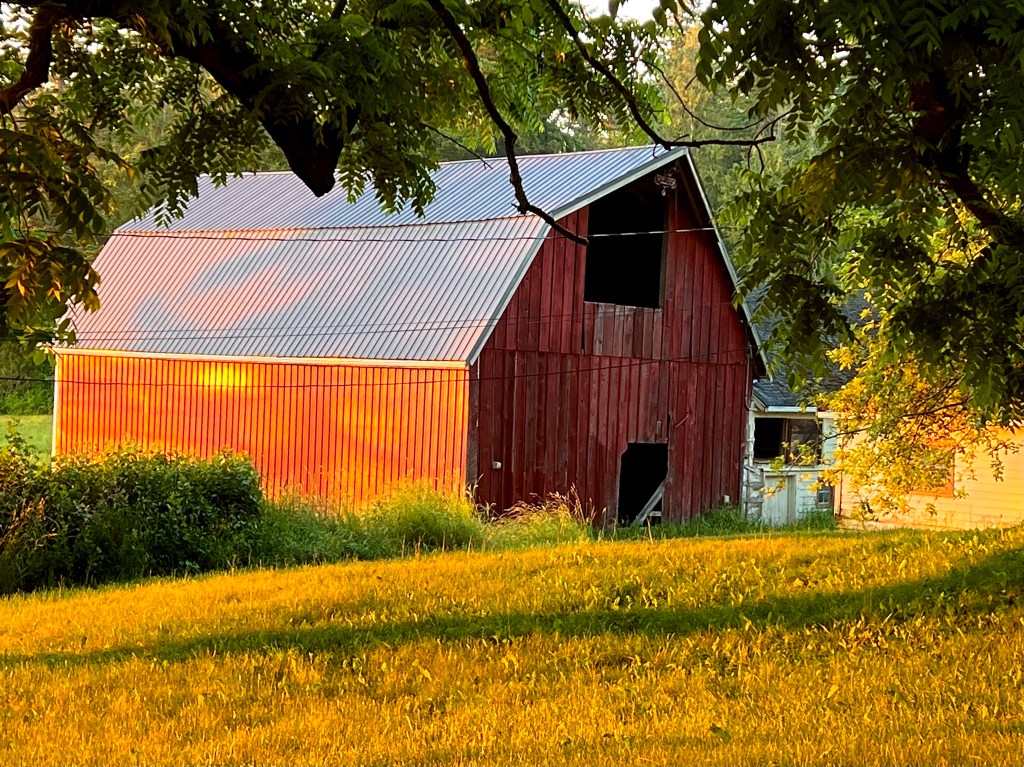
We still chose to live on a farm to raise our children and commit to the daily work, no matter the weather, on sunlit days and blowing snow days and gray muddy days. And now, when our grandchildren visit, we introduce them to the routine and rhythms of farm life, the good and the bad, the joys and the sorrows, and through it all, we are grateful for the values that follow through the generations of farming people.























 Barnstorming