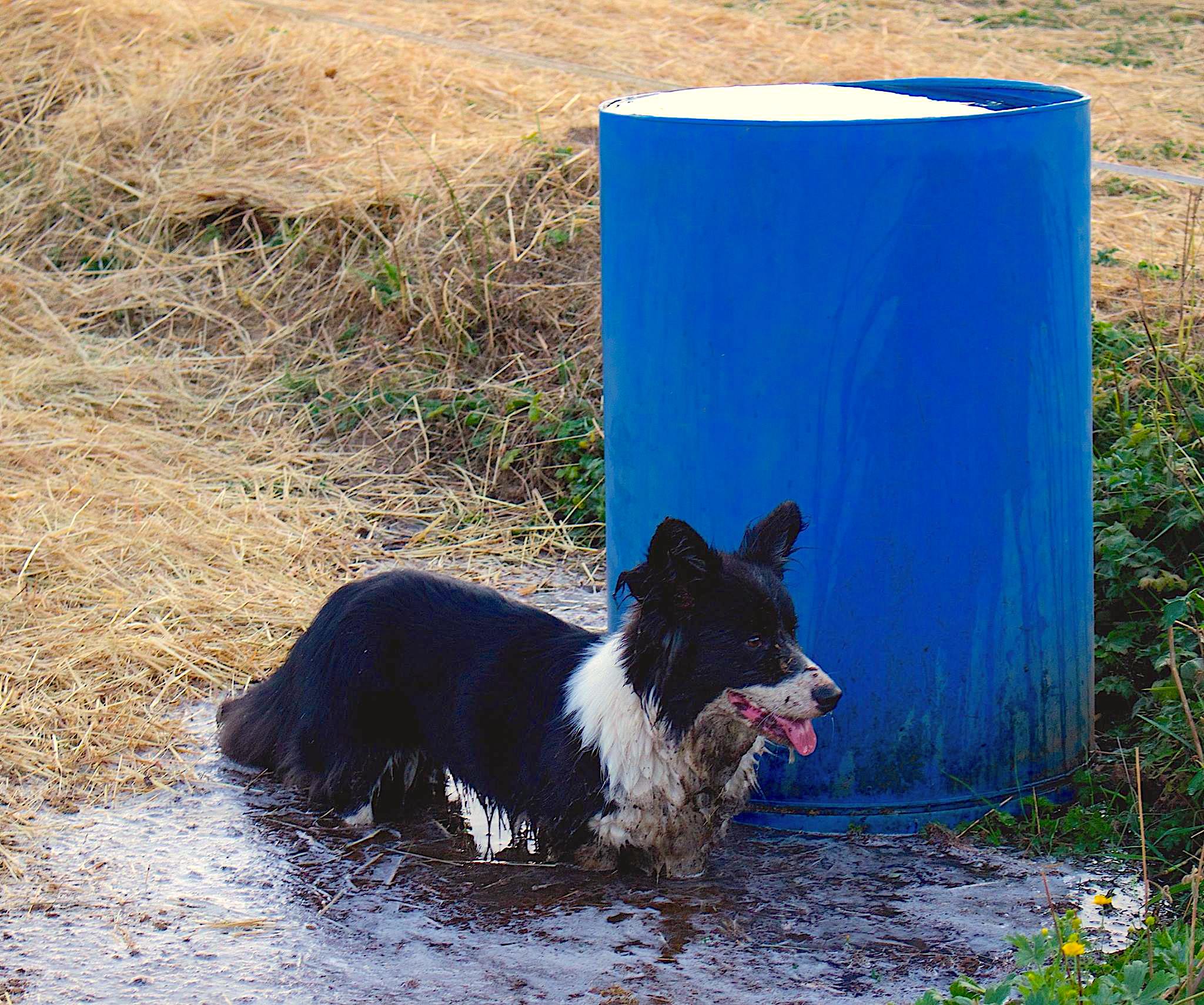
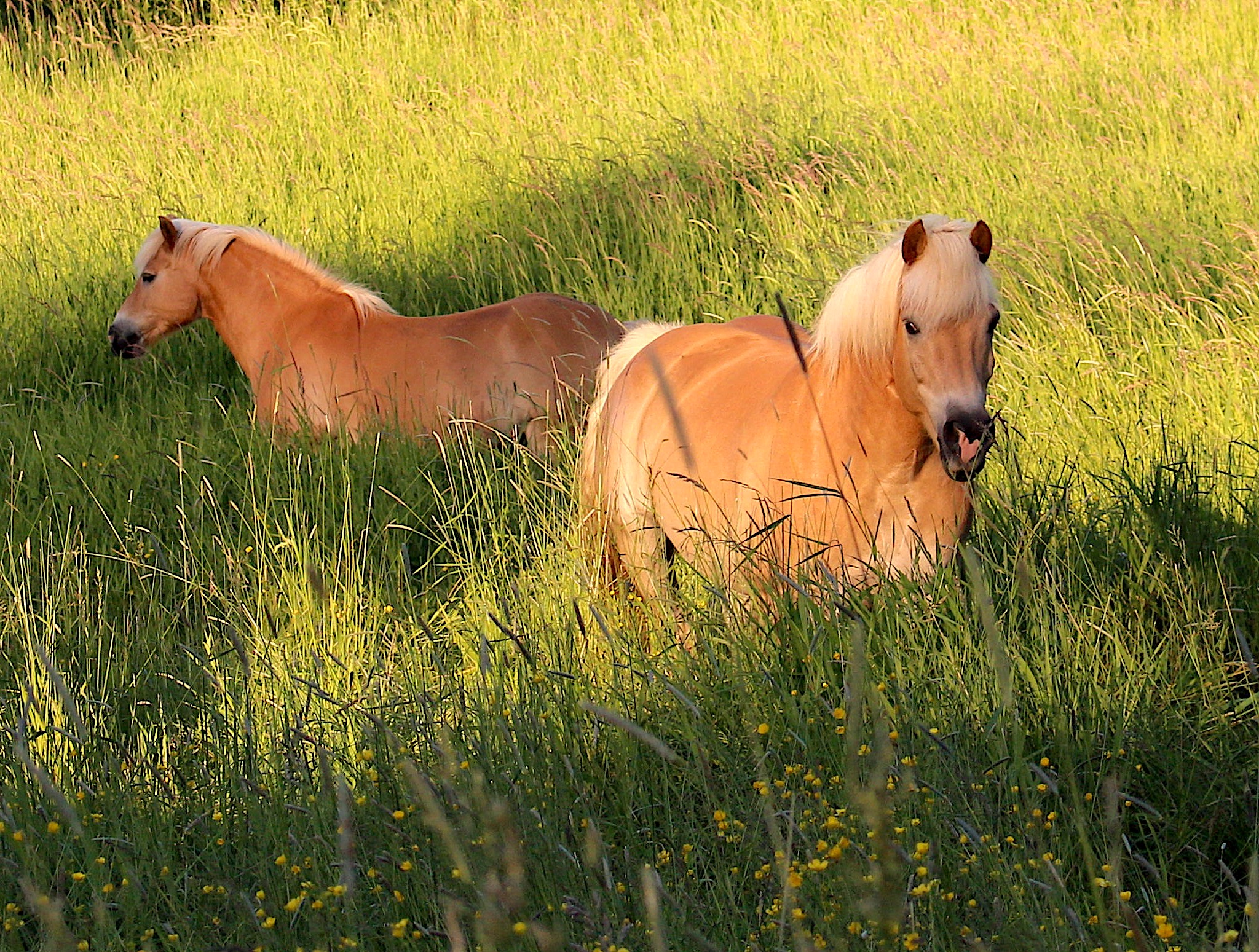
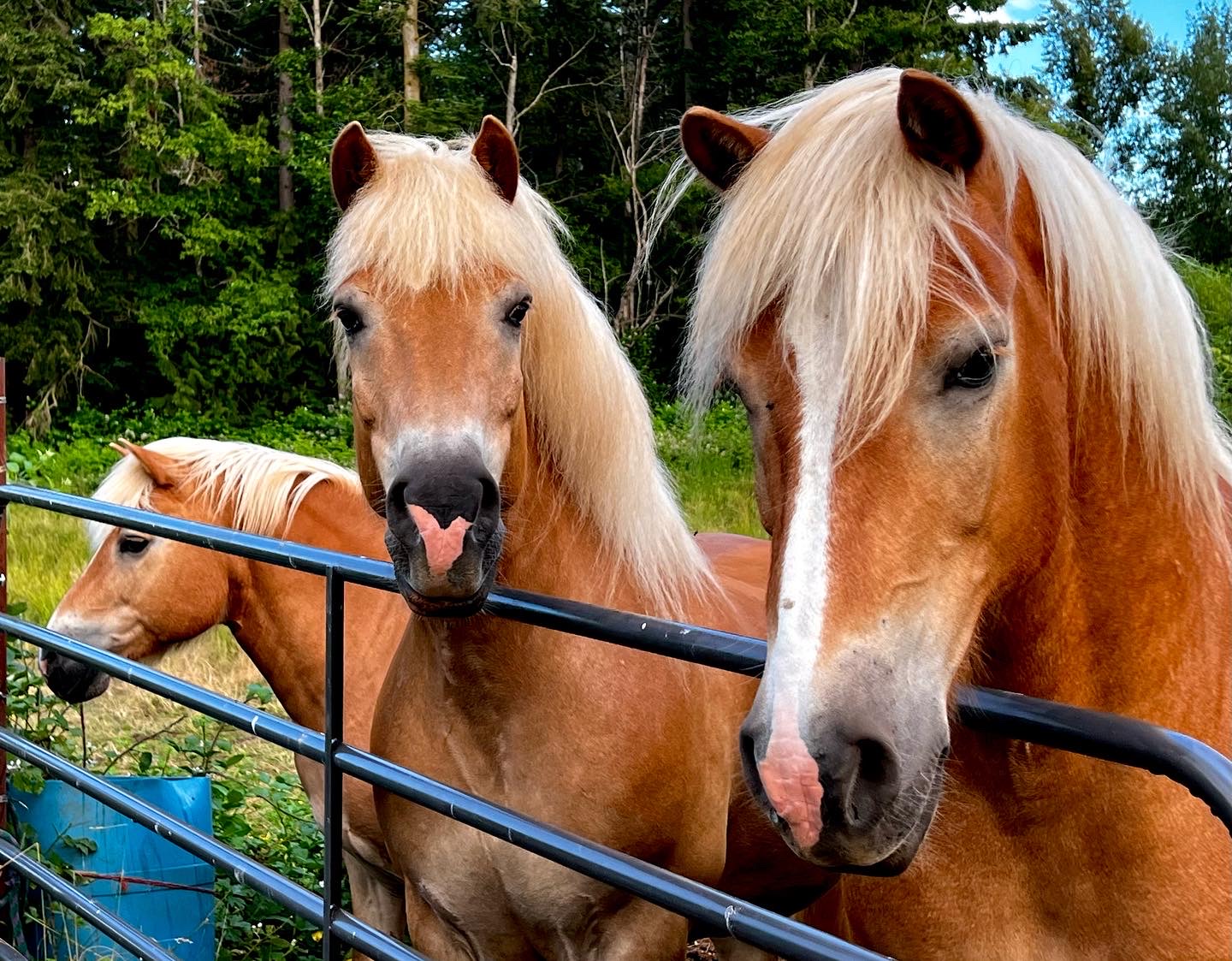
Thoughtful Dripping Muzzles

Let the end of all bathtubs
be this putting out to pasture
of four Victorian bowlegs
anchored in grasses.

Let all longnecked browsers
come drink from the shallows
while faucets grow rusty
and porcelain yellows.

Where once our nude forebears
soaped up in this vessel
come, cows, and come, horses.

Bring burdock and thistle,
come slaver the scum of
timothy and clover
on the cast-iron lip that
our grandsires climbed over

and let there be always
green water for sipping
that muzzles may enter thoughtful
and rise dripping.
~Maxine Kumin “Watering Trough” from Selected Poems

photo by Emily Vander Haak

Farmers became the original recyclers before it was a word or an expectation — there isn’t anything that can’t be used twice or thrice for whatever is needed, wherever and whenever, especially far from the nearest retail outlet or farm supply store.

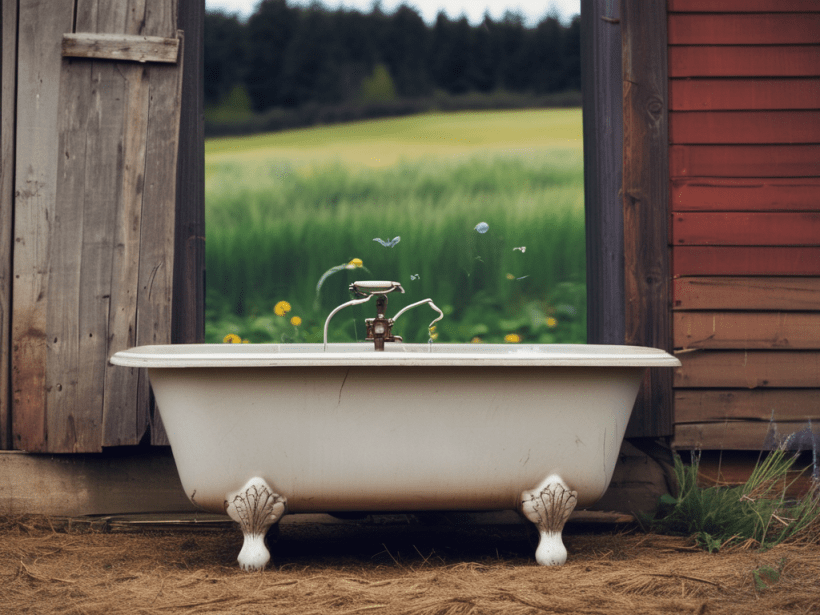
The water troughs on the farm where I grew up were cast-off four-legged bath tubs hauled home from the dump, exactly like the old tub I bathed in when staying overnight at my grandma’s farm house.  She needed her tub to stay put right in the bathroom, never considering an upgrade and remodel; she would never offer it up to her cows.

But there were people who could afford to install showers and molded tubs so out their tubs went to find new life and purpose on farms like ours.

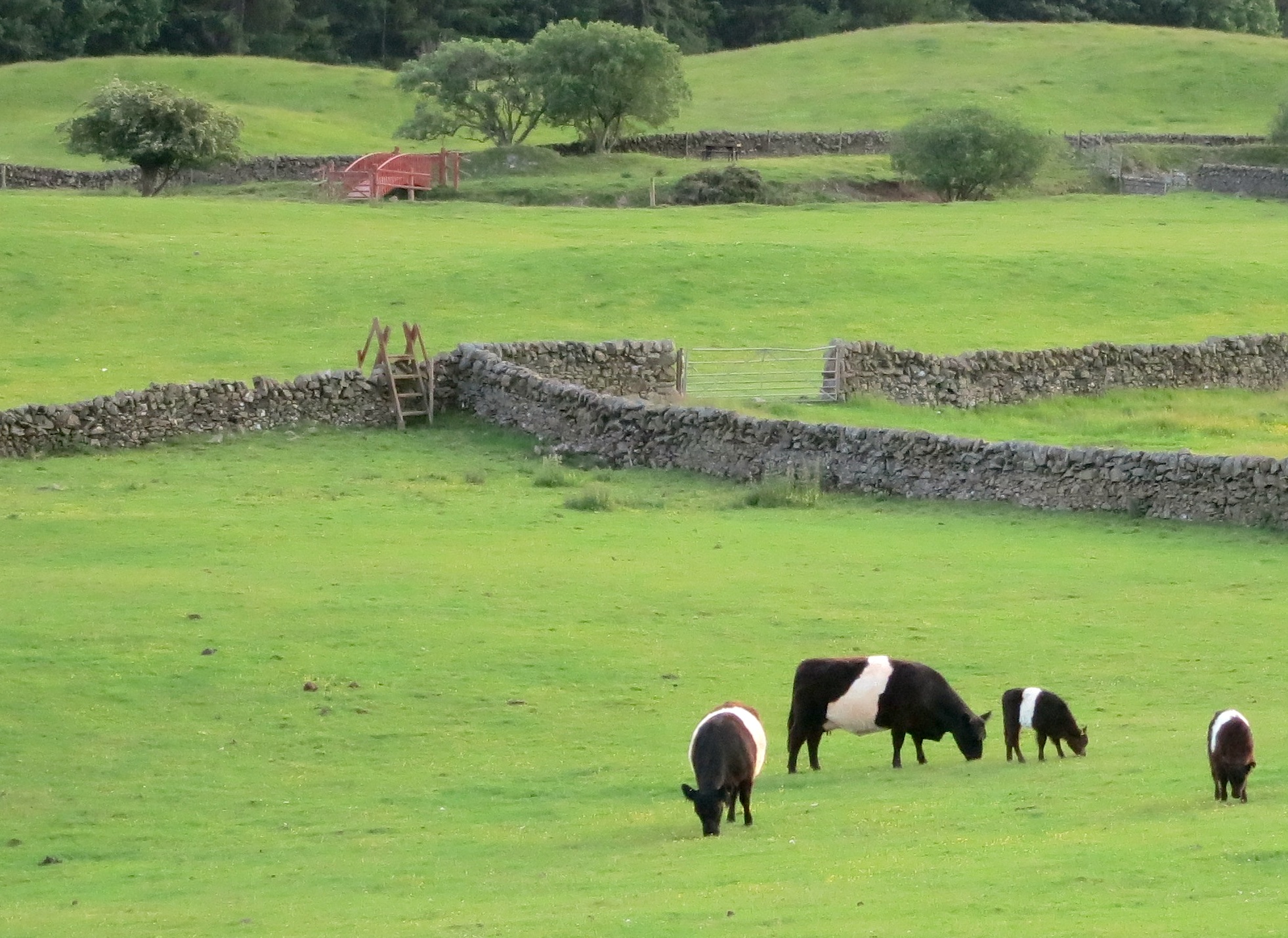
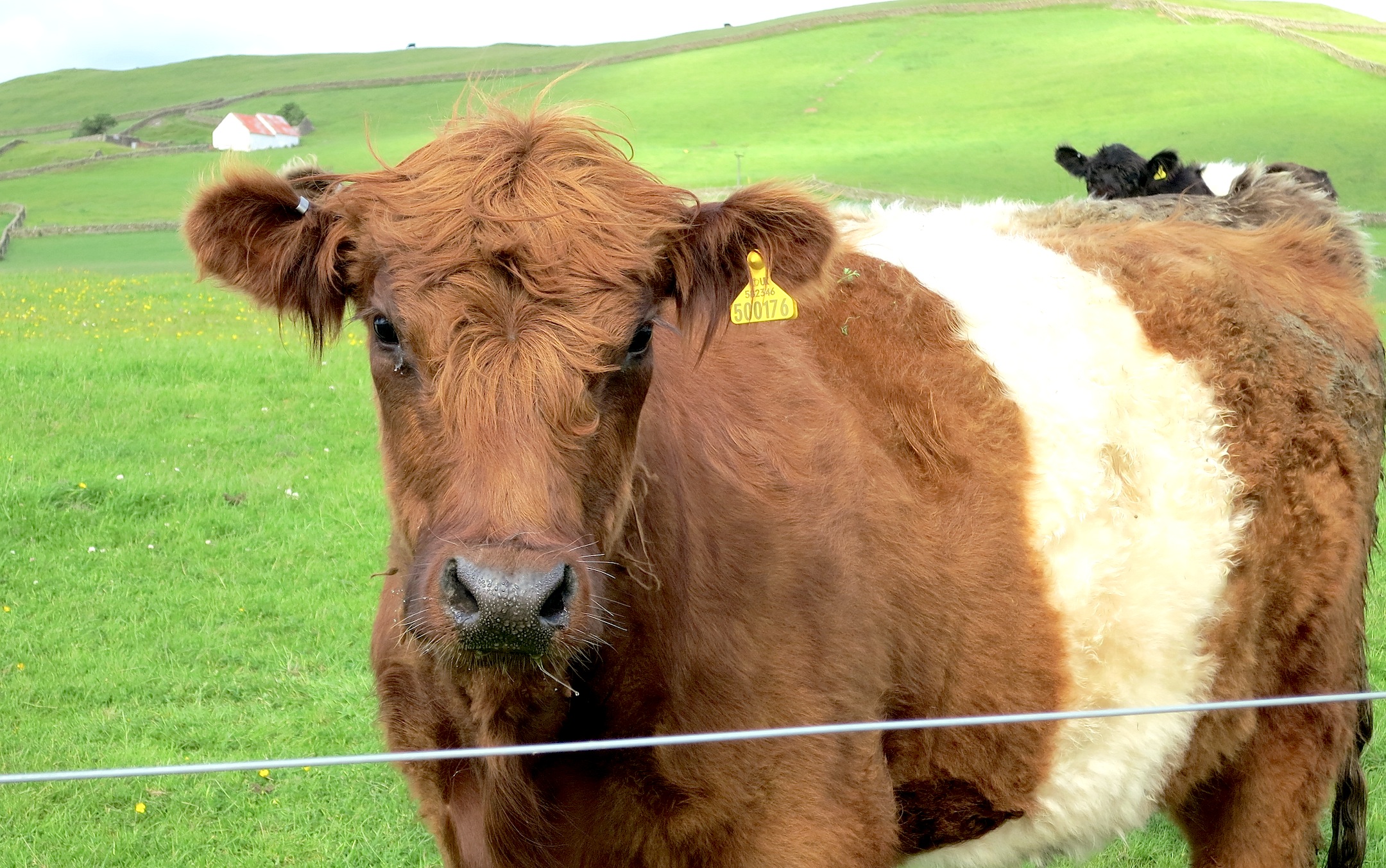
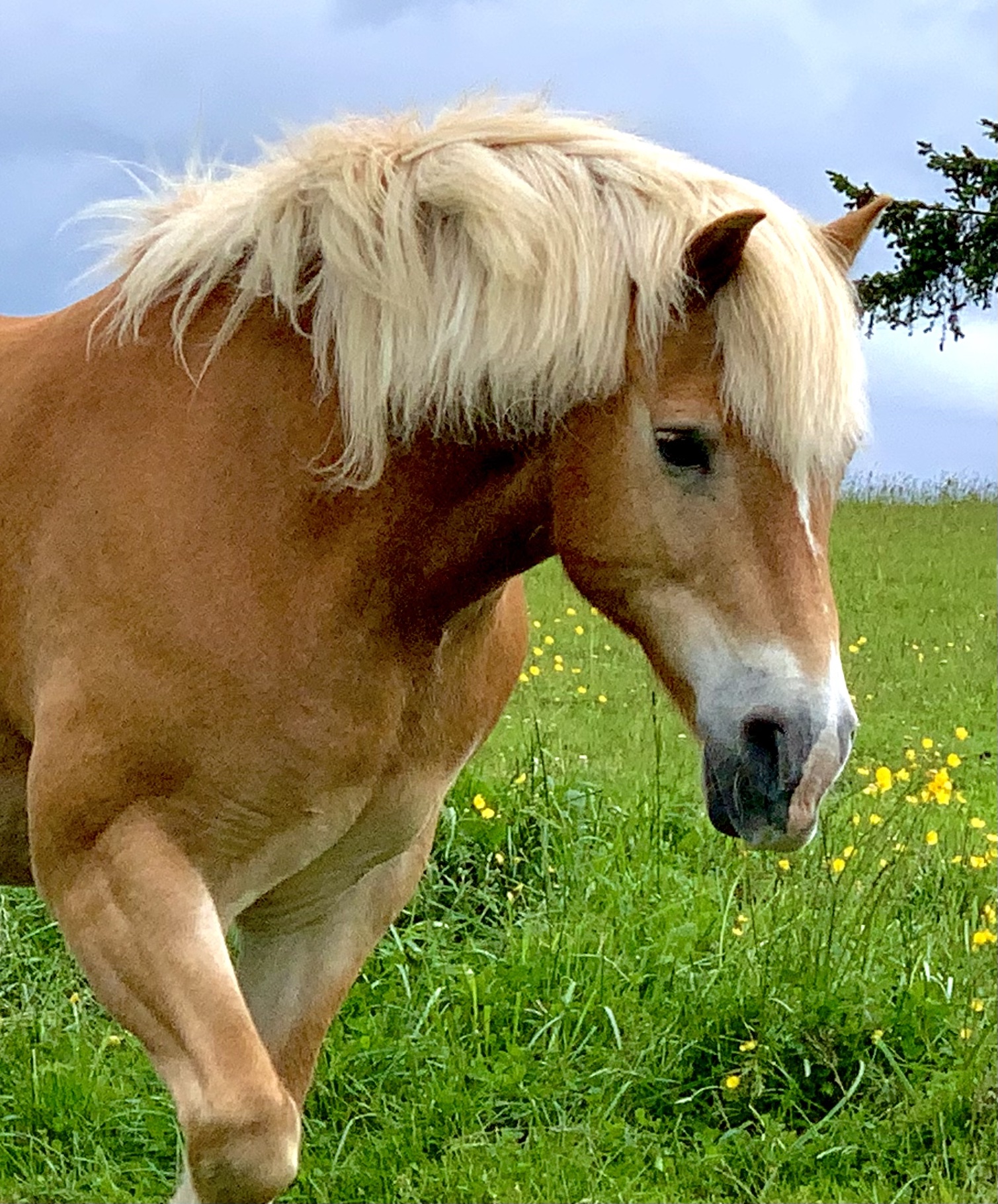
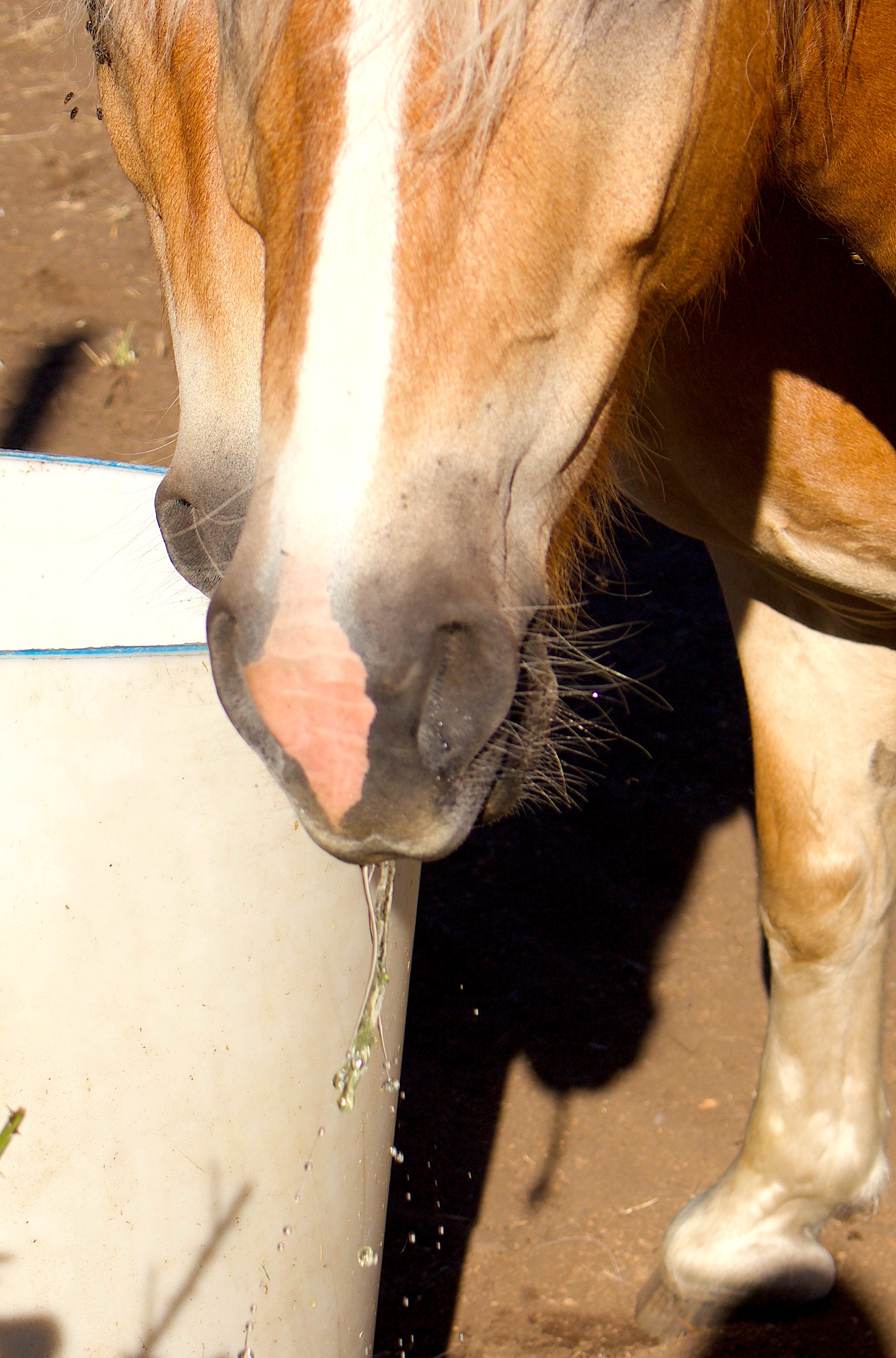
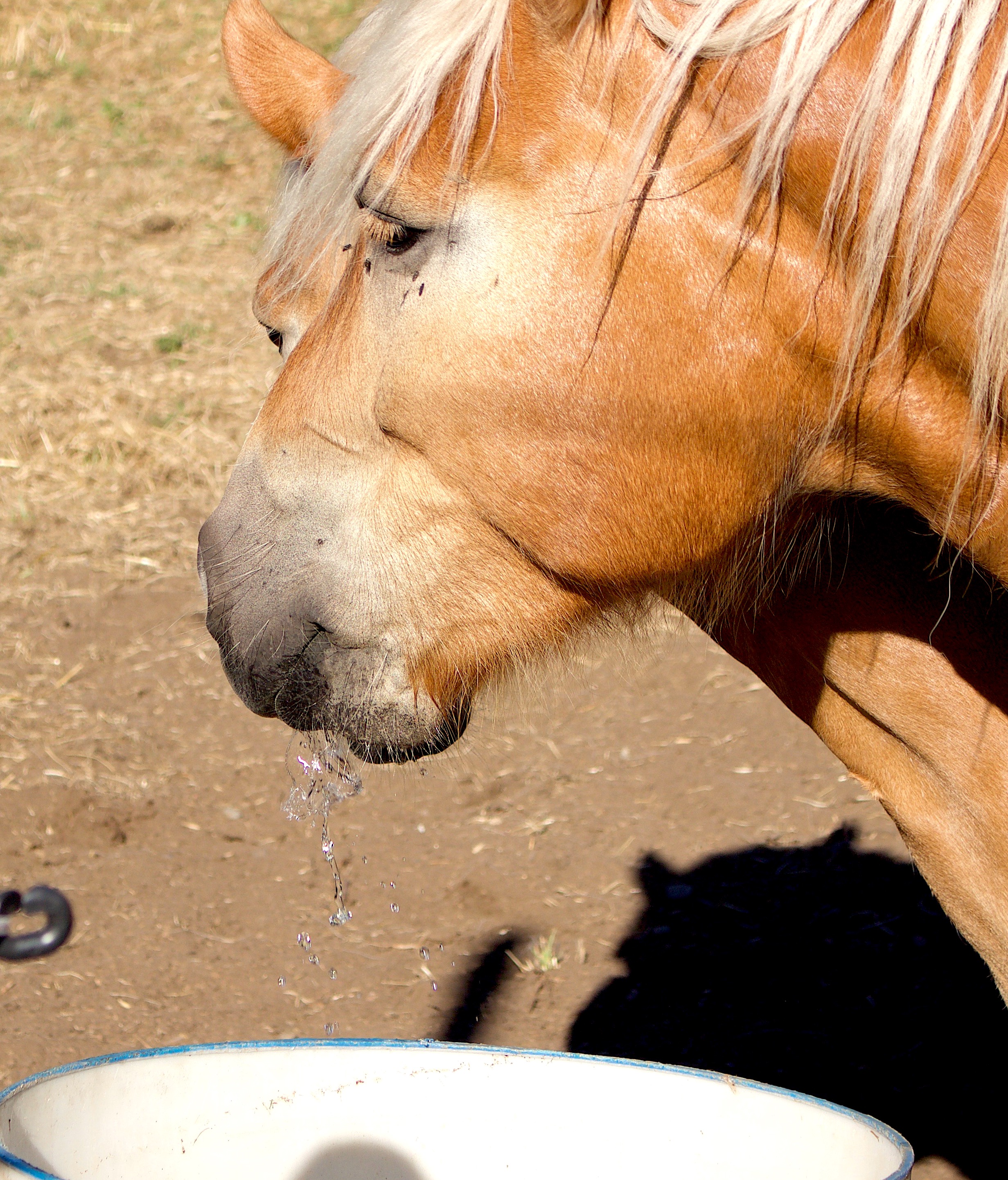
When I was a kid, we kept goldfish in our bathtub water trough, to keep the algae at bay and for the amusement of the farm cats. The horses and cows would stand idle, drowsing by the tub, their muzzles dripping, mesmerized by flashes of orange circling the plugged drain.

I often wondered what they thought of sharing their drinking water with fish, but I suspect they had more weighty things to ponder: where the next lush patch of grass might be, how to reach that belly itch,  and finding the best shade with fewest flies for that summer afternoon nap.

When it comes to sharing a tub, maybe farm animals aren’t that different from their farmer keepers after all: they both stand dripping and thoughtful alongside the tub, contemplating what comes next. After a long hot summer day, it may well be a well-earned rest.

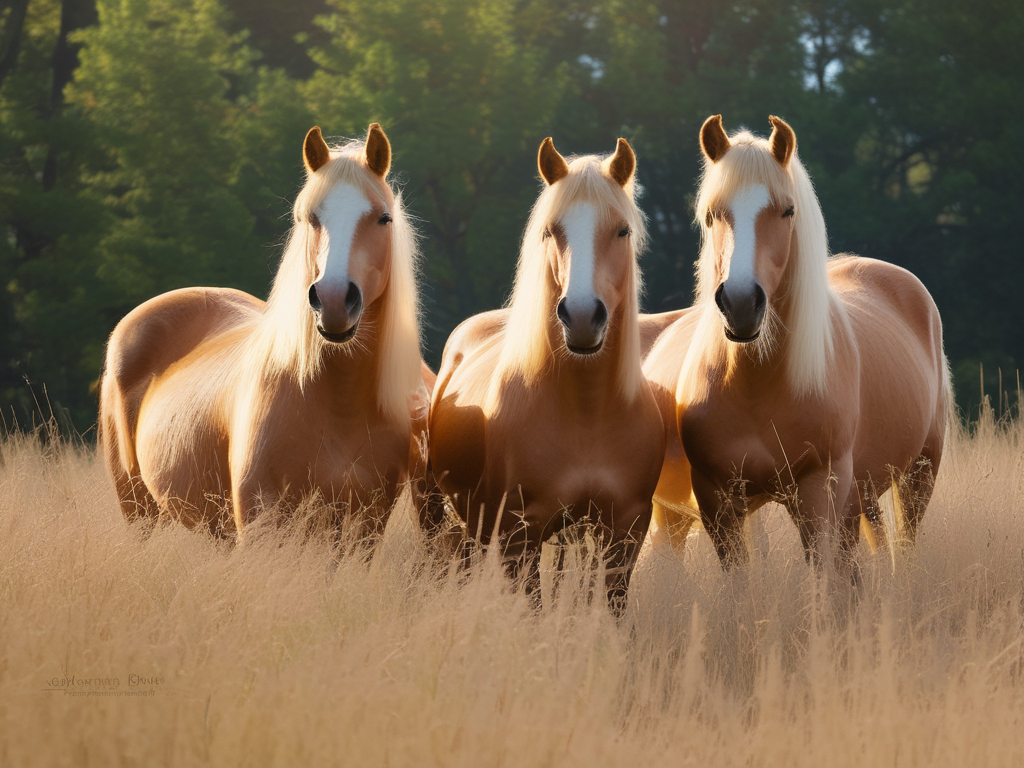
AI image created for this post
One-Time
Monthly
Yearly

Make a one-time or recurring donation to support daily Barnstorming posts

Make a monthly donation

Make a yearly donation

Choose an amount

$10.00
$25.00
$50.00
$5.00
$15.00
$100.00
$5.00
$15.00
$100.00

Or enter a custom amount

$

Your contribution is deeply appreciated.

Your contribution is appreciated.

Your contribution is appreciated.

DonateDonate monthlyDonate yearly
Join the Happy Throng: The Lost is Found

In a daring and beautiful creative reversal, 
God takes the worse we can do to Him
and turns it into the very best He can do for us.
~Malcolm Guite from The Word in the Wilderness

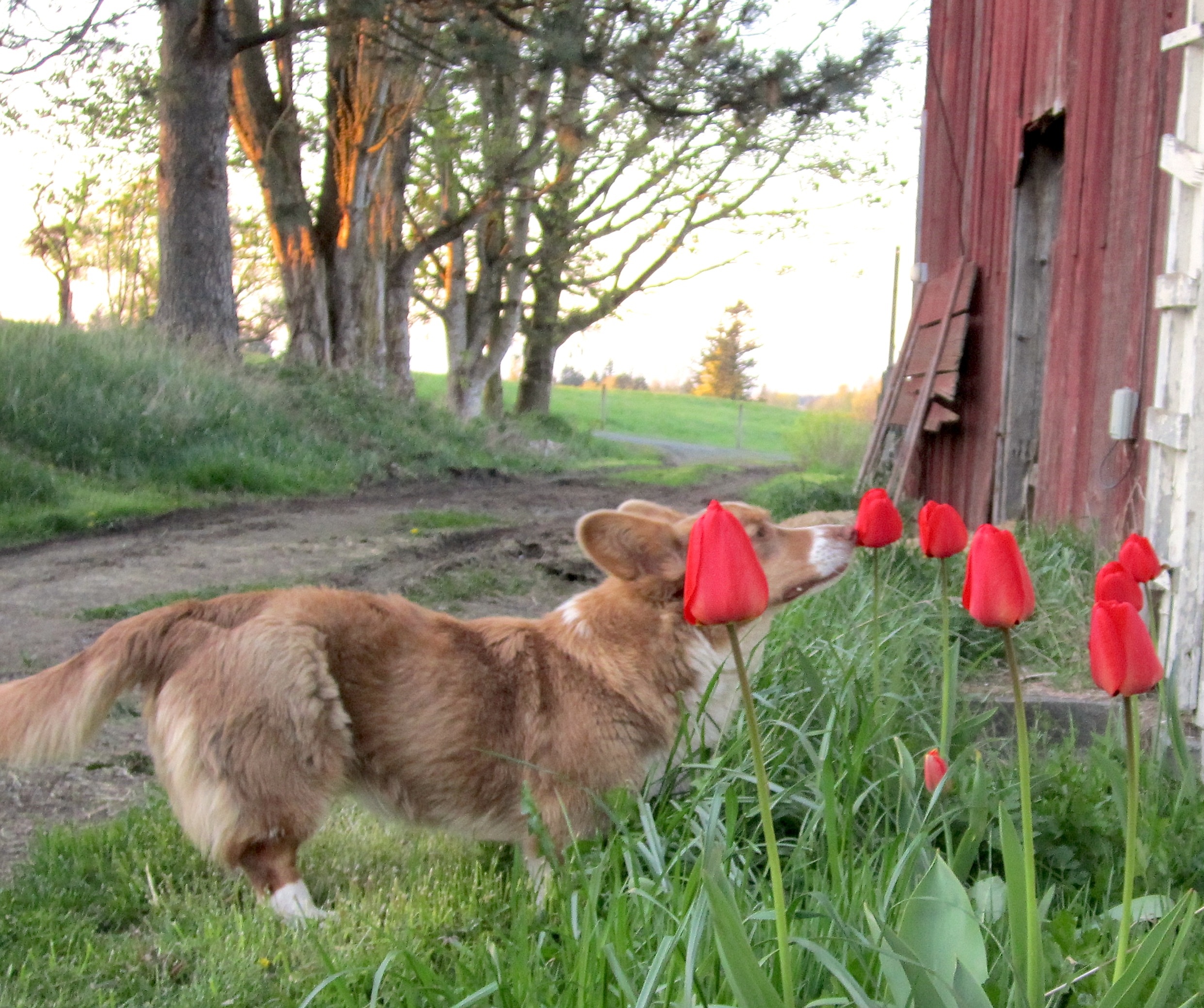
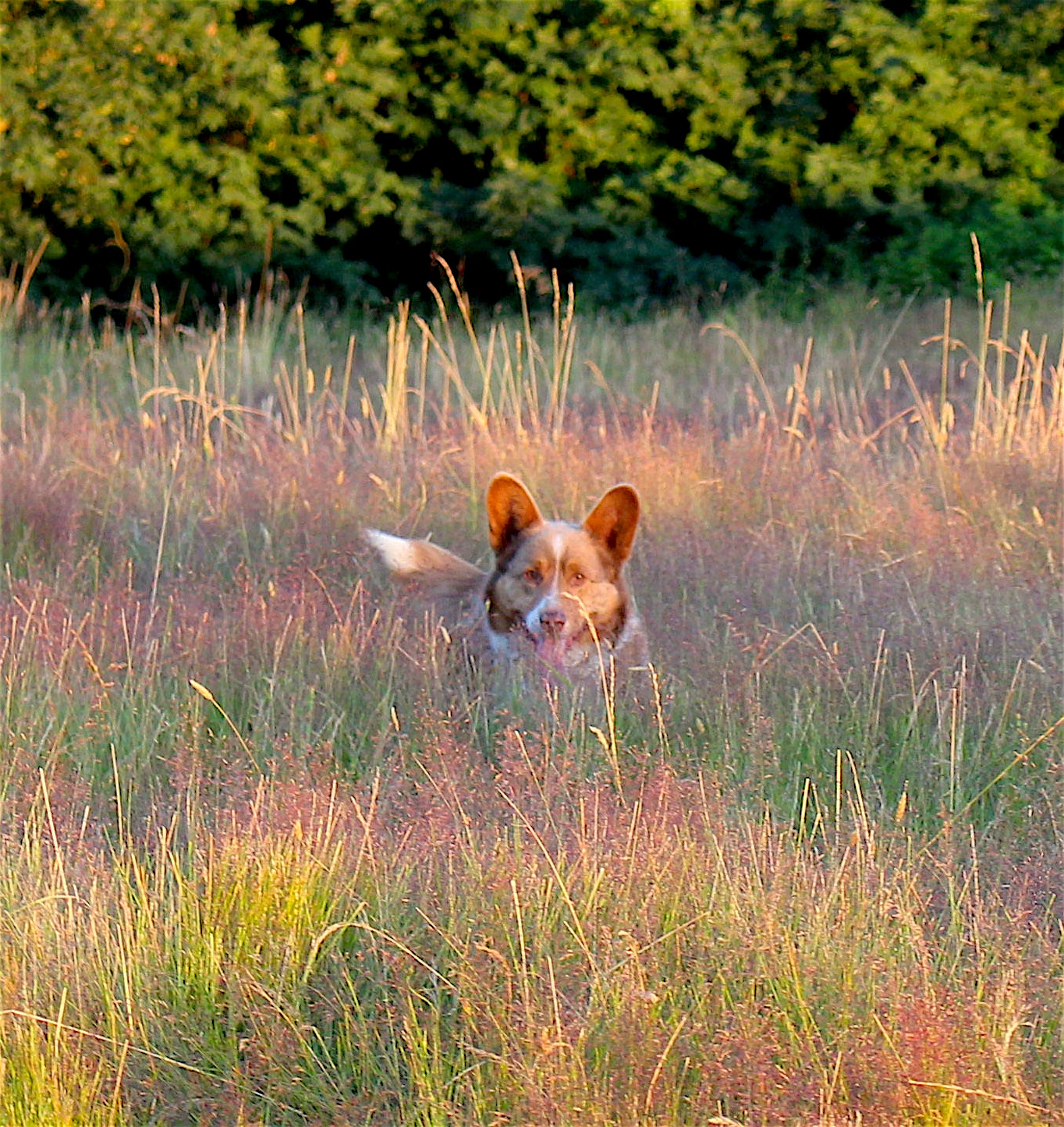
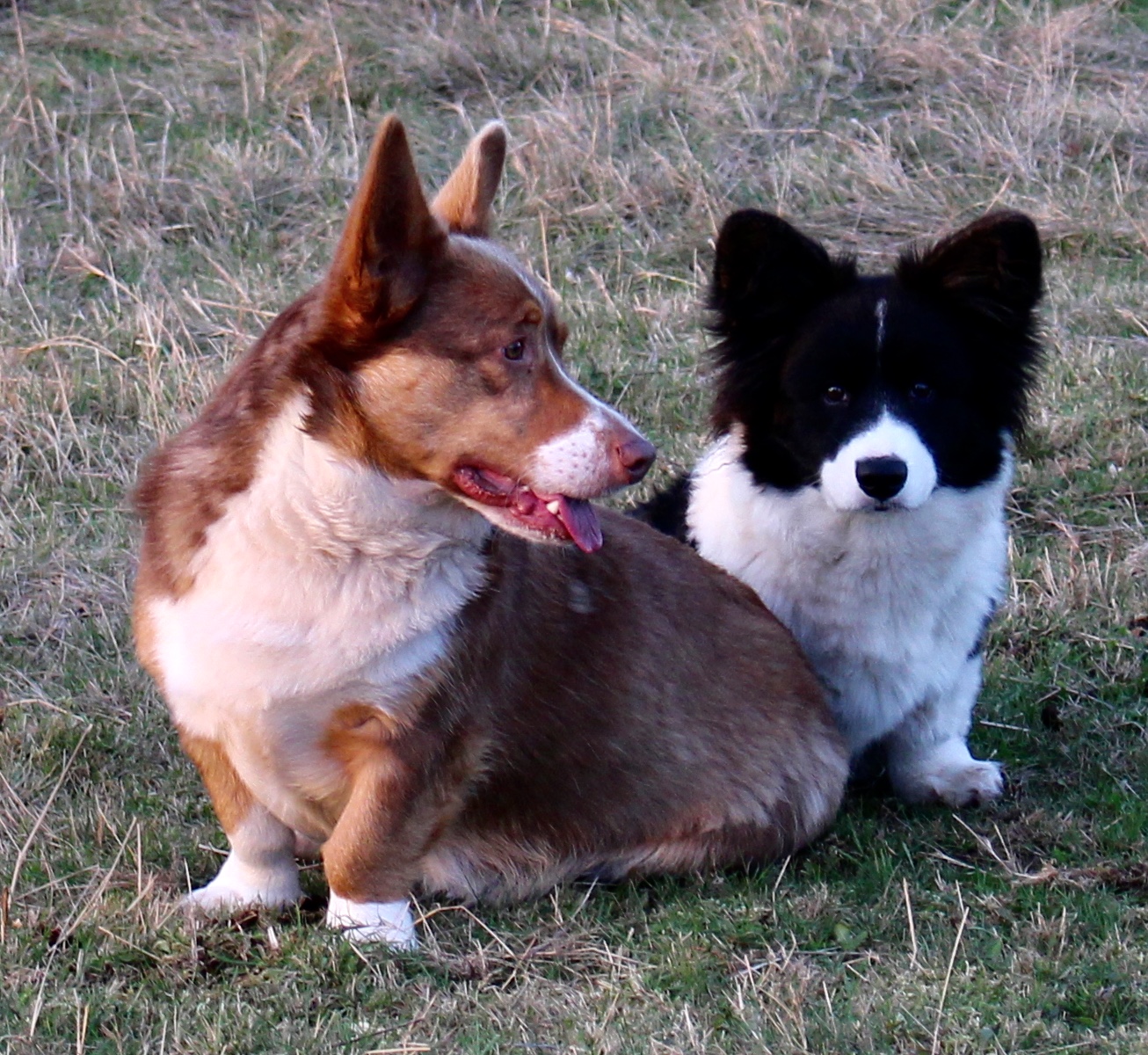
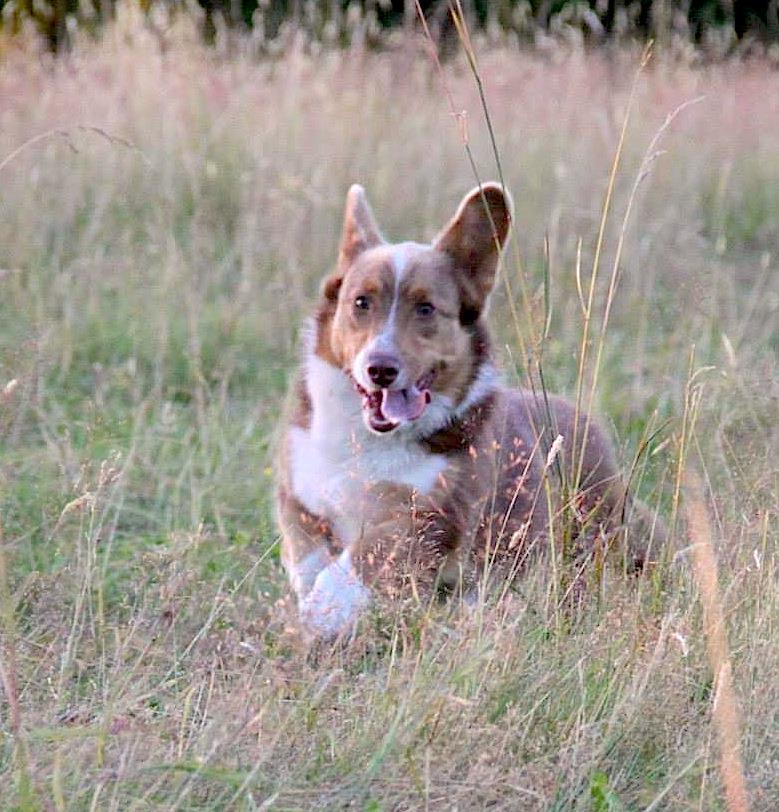
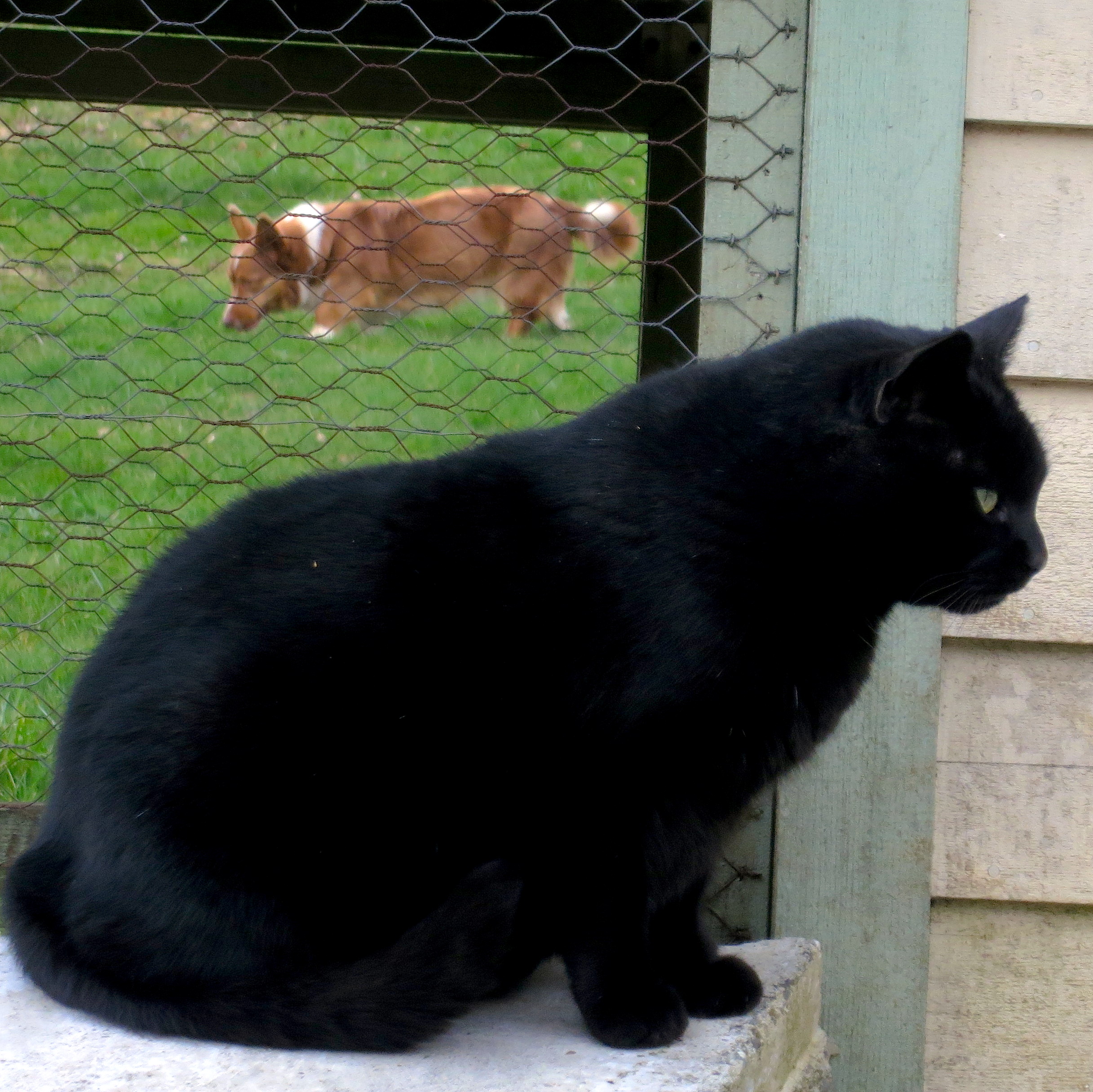
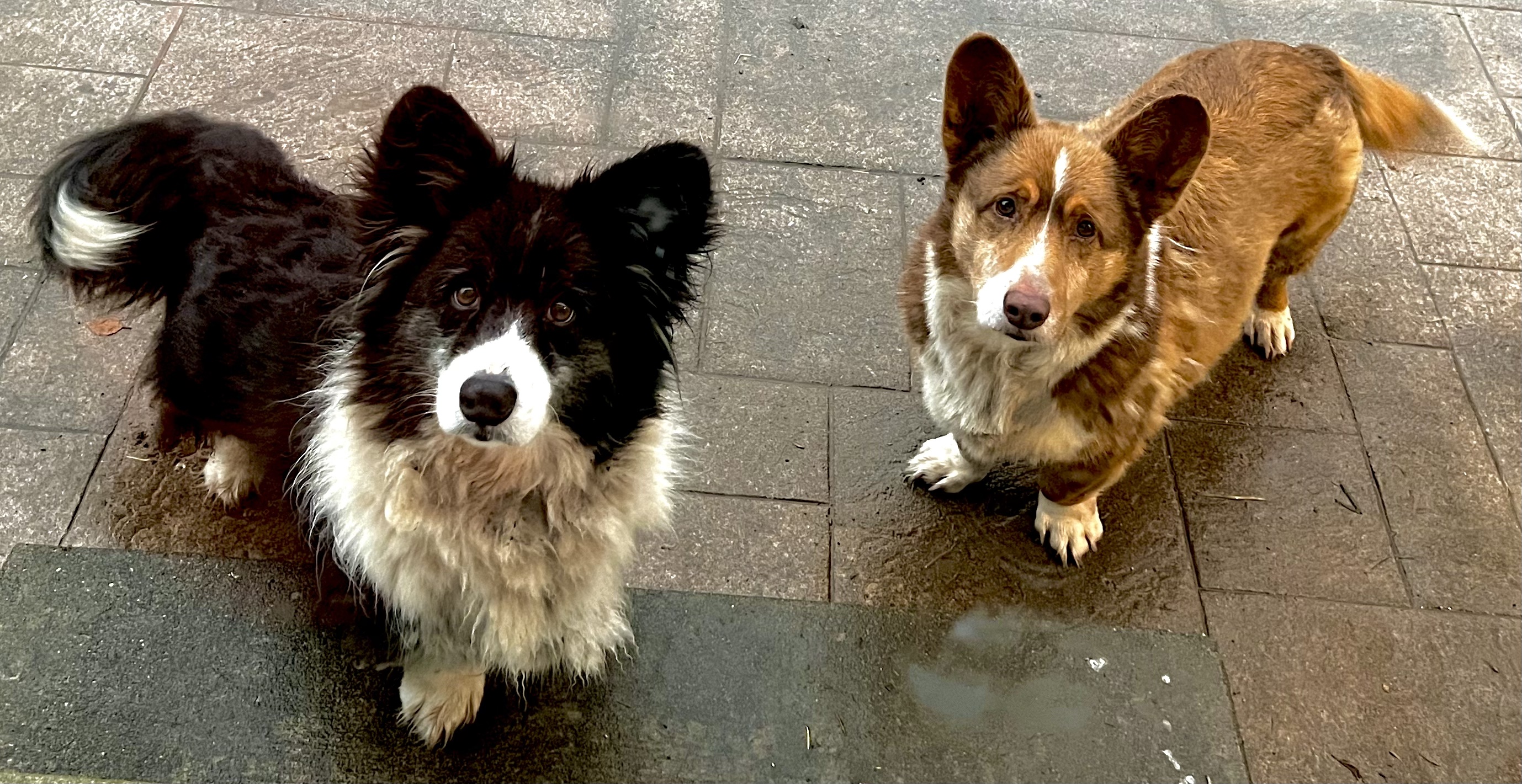
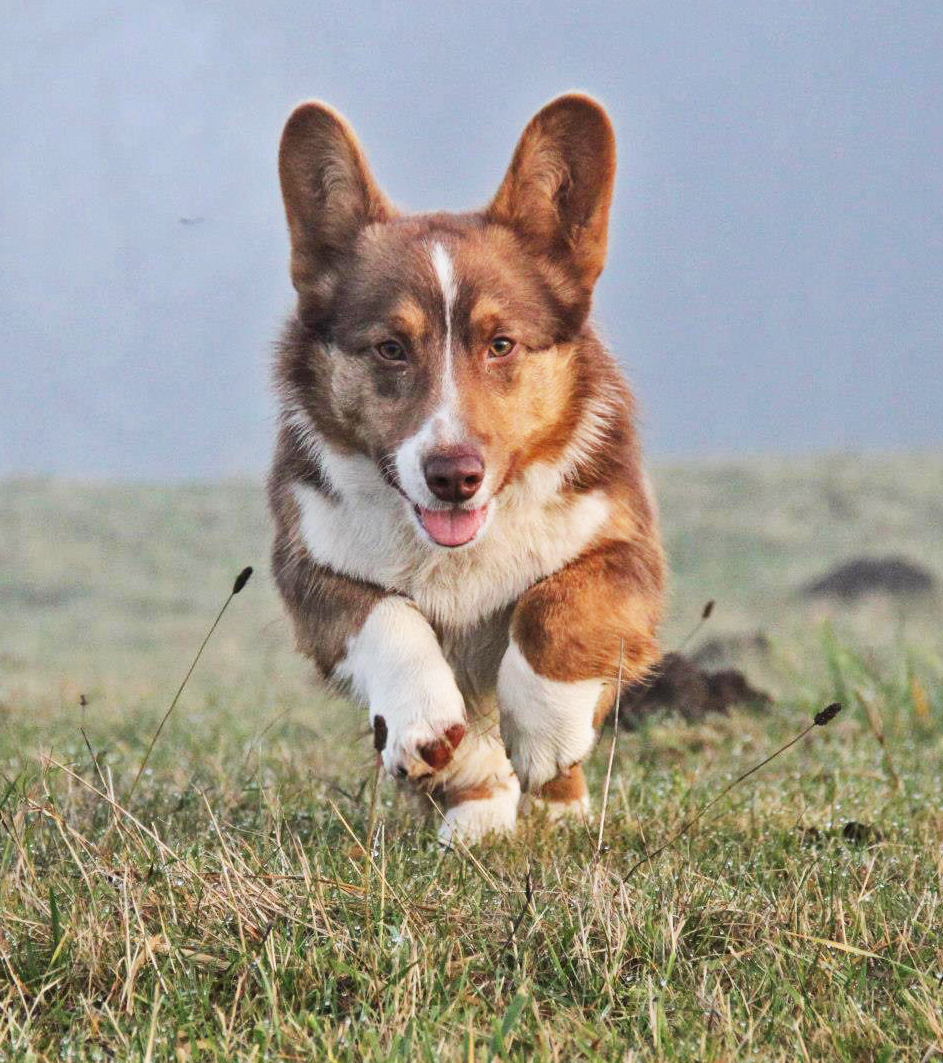
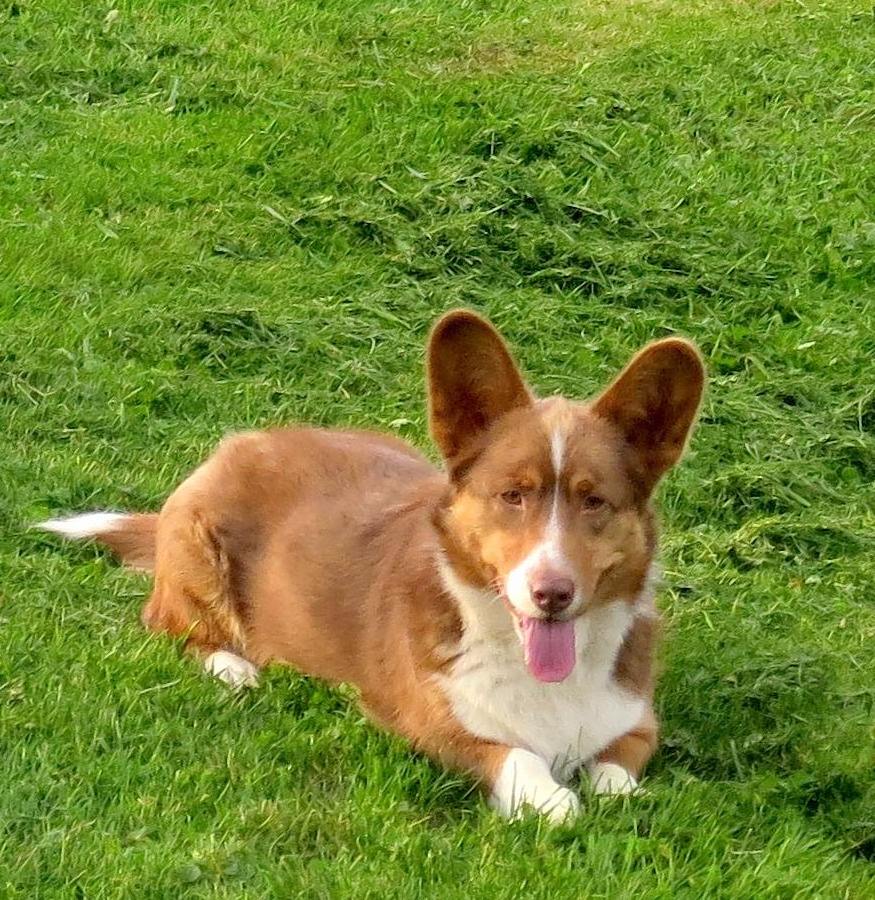
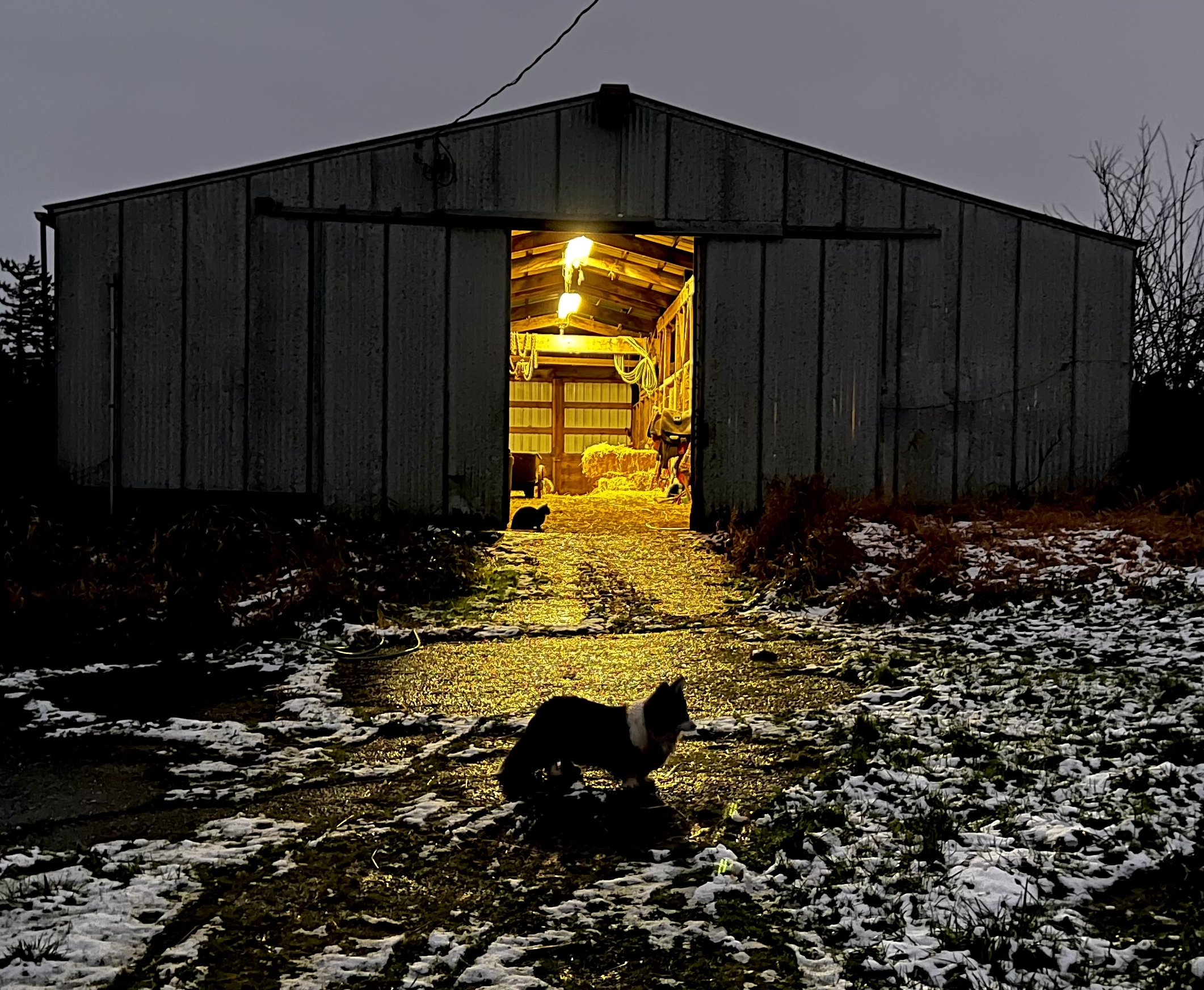
Samwise Gamgee and Homer, our two Cardigan Corgis, do barn chores with me twice daily. They run up and down the aisles as I fill the buckets and throw the horses hay. Then they explore the manure pile out back, have a happy roll in some really smelly stuff in the field, and have stand offs with the barn cats (which they always lose). 

We have our routine. When I get done with chores, I whistle for them and we all head back to their breakfast in their outdoor pen.

We always return home together.

Except this particular morning. I whistled when I was done and although Homer came running, Sam’s furry fox face didn’t appear as usual. I walked back through both barns calling his name, whistling. No signs of Sam. I walked to the fields, I walked back to the dog pen, I walked the road (where he never ever goes), I scanned the pond where he once fell in as a pup (yikes), I went back to the barn and glanced inside every stall, I went in the hay barn where he likes to jump up and down on stacked bales, worried about a bale avalanche he might be trapped under, or a hole he couldn’t climb out of. 

Nothing.

I’m really anxious about him at this point, fearing the worst. Even Homer seemed clueless about where his friend disappeared.

Sam was nowhere to be found, utterly lost.

Passing through the barn again, I heard a little faint scratching inside one Haflinger’s stall, which I had just glanced in 10 minutes before as a mare was peacefully eating hay. Sure enough, there was Sam standing with his feet up against the door as if asking what took me so long.  He must have scooted in when I filled up her water bucket, and I closed the door unaware he was still inside. He and his horse buddy kept it their secret.

Making not a whimper or a bark when I called out his name, passing that stall at least 10 times looking for him, he patiently waited for me to open the door and set him free.

The lost is found even though he never felt lost to begin with.  

Yet he was lost to me. And that is all that matters. We have no idea how lost we are until a determined Someone comes looking for us, doing whatever it takes to bring us back alongside them.

Sam was just waiting for that closed door to be opened. And this Holy Week, the door is thrown wide open and we’re welcomed back home.

photo by Nate Gibson

Let’s have a feast and celebrate. For this son of mine was dead and is alive again; he was lost and is found.
Luke 15: 23-24

This Lenten season I reflect on the words of the 19th century southern spiritual hymn “What Wondrous Love is This”

One-Time
Monthly
Yearly

Make a one-time or recurring donation to support daily Barnstorming posts

Make a monthly donation

Make a yearly donation

Choose an amount

$10.00
$25.00
$50.00
$5.00
$15.00
$100.00
$5.00
$15.00
$100.00

Or enter a custom amount

$

Your contribution is deeply appreciated.

Your contribution is appreciated.

Your contribution is appreciated.

DonateDonate monthlyDonate yearly
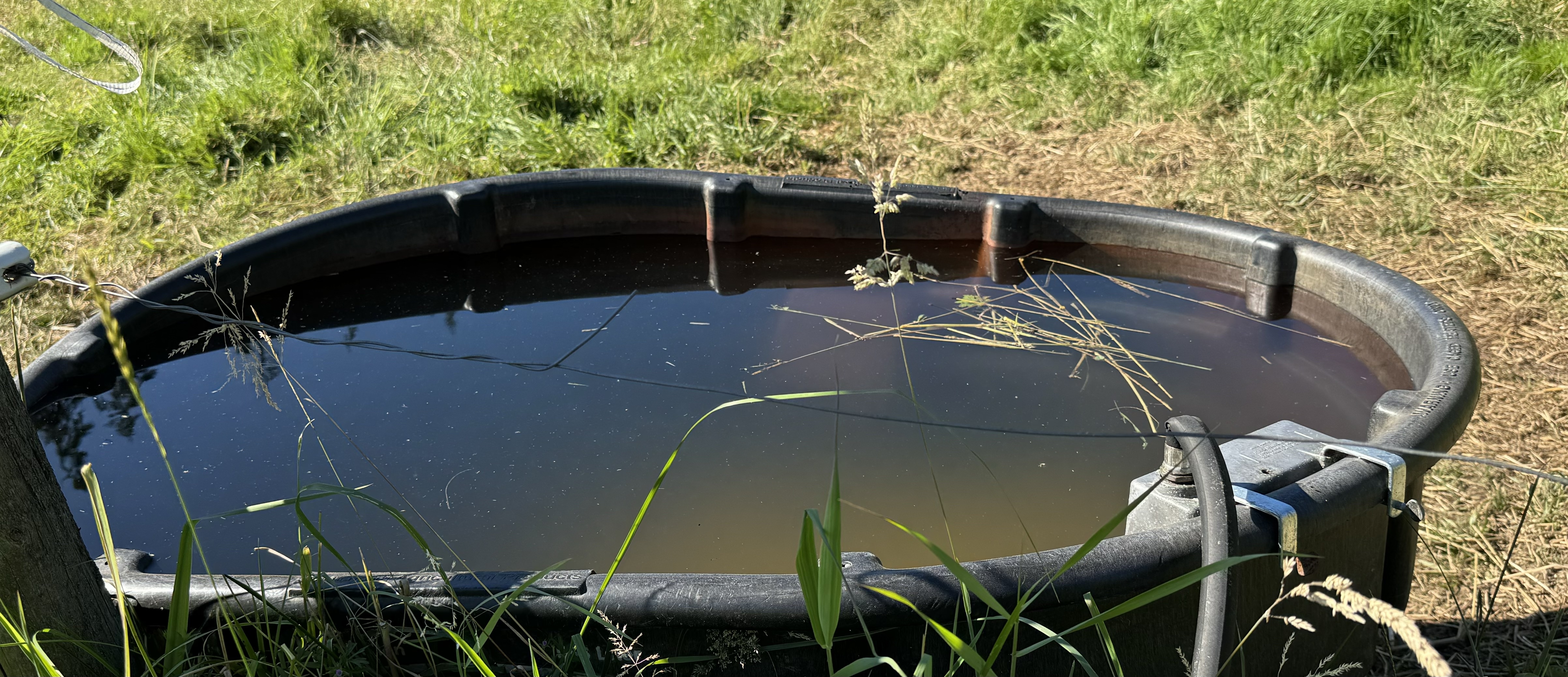
What I’m Looking For

For some reason we like to see days pass,
even though most of us claim we don’t want to reach our last one for a long time.

We examine each day before us with barely a glance and say,
no,
this isn’t one I’ve been looking for,
and wait in a bored sort of way for the next,

when we are convinced,
our lives w
ill start for real.

Meanwhile, this day is going by perfectly well-adjusted,
as some days are,
with the right amounts of sunlight and shade,
and a light breeze scented with a perfume made

from the mixture of fallen apples,
corn stubble, d
ry oak leaves,
and the faint odor of last night’s meandering skunk.
~Tom Hennen from “T
he Life of a Day”

I am ashamed to admit I squander time shamelessly,
waiting for that particularly special day I always dreamed of,
tossing off these mundane but precious hours
as somehow not measuring up nor exciting enough.

The shock is:
there have been over thirty-five years
of such days on this farm,
one passing by after another,
emerging fresh each morning from the duff and stuff of life,
and wouldn’t you know…
every single one has ended up being exactly what I’m looking for.


One-Time
Monthly
Yearly

Make a one-time or recurring donation to support daily Barnstorming posts

Make a monthly donation

Make a yearly donation

Choose an amount

$10.00
$25.00
$50.00
$5.00
$15.00
$100.00
$5.00
$15.00
$100.00

Or enter a custom amount

$

Your contribution is deeply appreciated.

Your contribution is appreciated.

Your contribution is appreciated.

DonateDonate monthlyDonate yearly
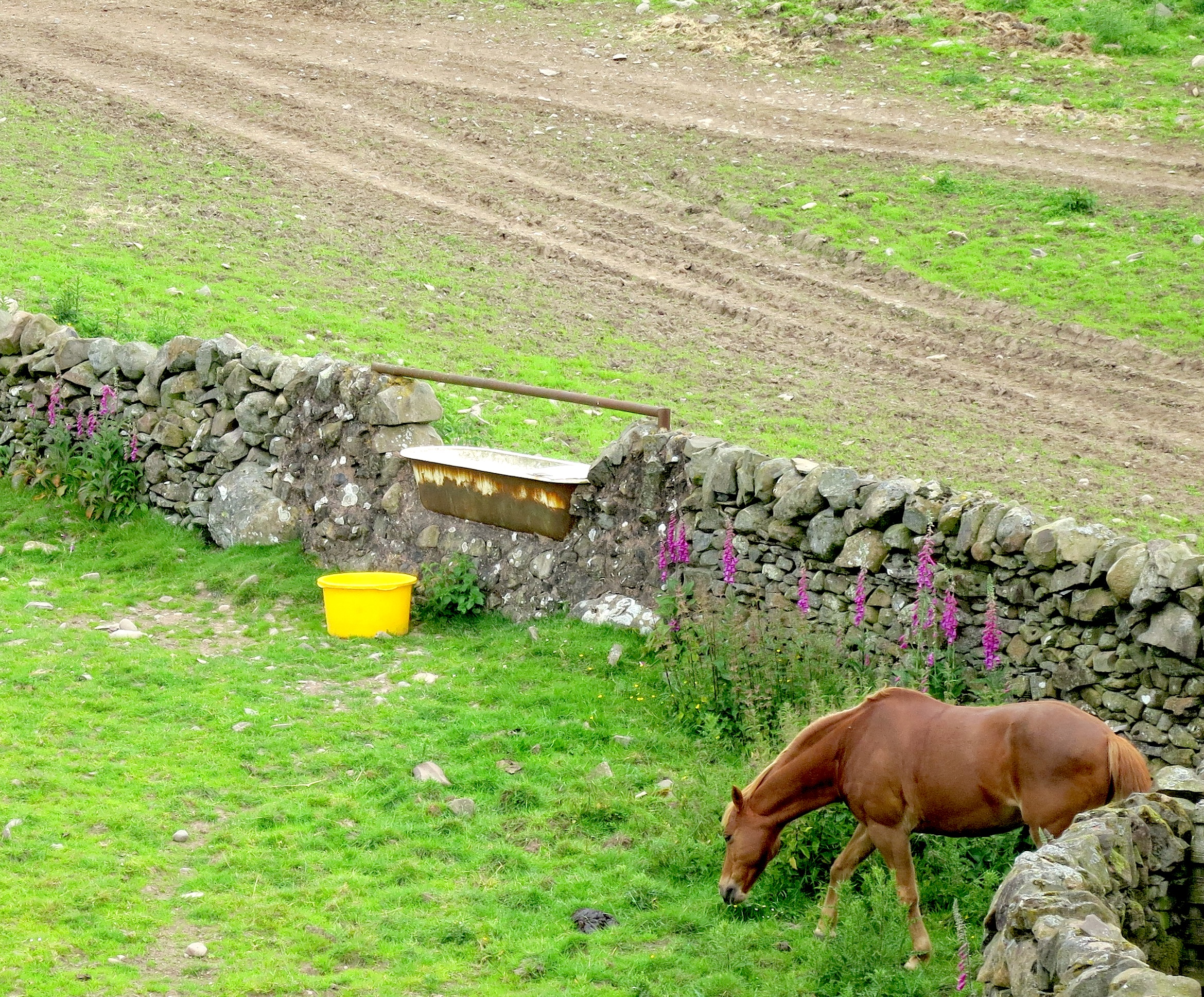
Everything is a Parable

Every happening, great and small,
is a parable whereby God speaks to us,
and the art of life is to get the message.
~Malcolm Muggeridge

I’ve banked nothing, or everything.
Every day

the chores need doing again.
Early in the morning,

I clean the horse barn with a manure fork.
Every morning,

it feels as though it could be
the day before or a year ago
or a year before that.

With every pass, I give the fork one final upward flick
to keep the manure from falling out,
and every day I remember

where I learned to do that and from whom.

Time all but stops.

But then I dump the cart on the compost pile.
I bring out the tractor and turn the pile,

once every three or four days.
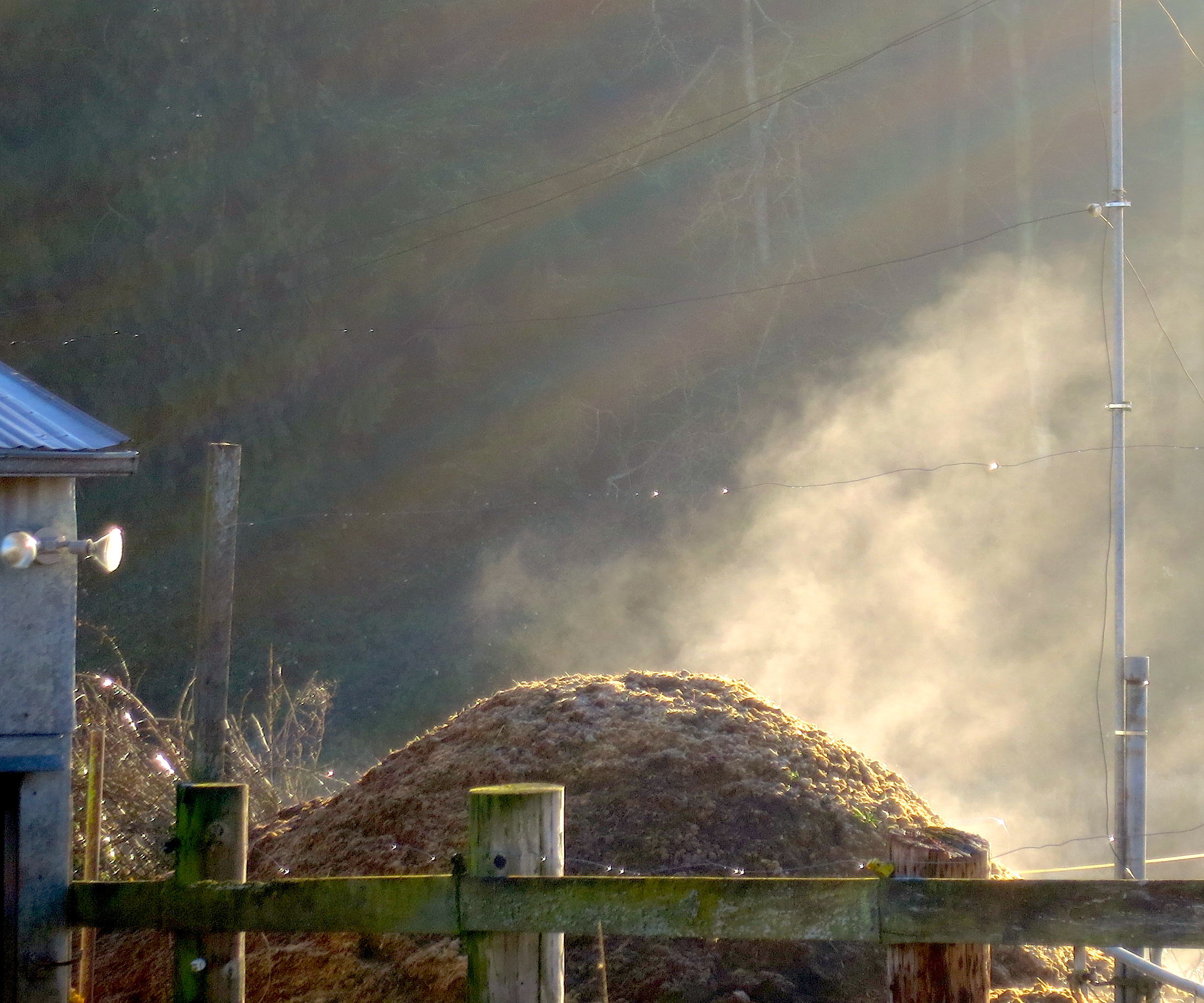
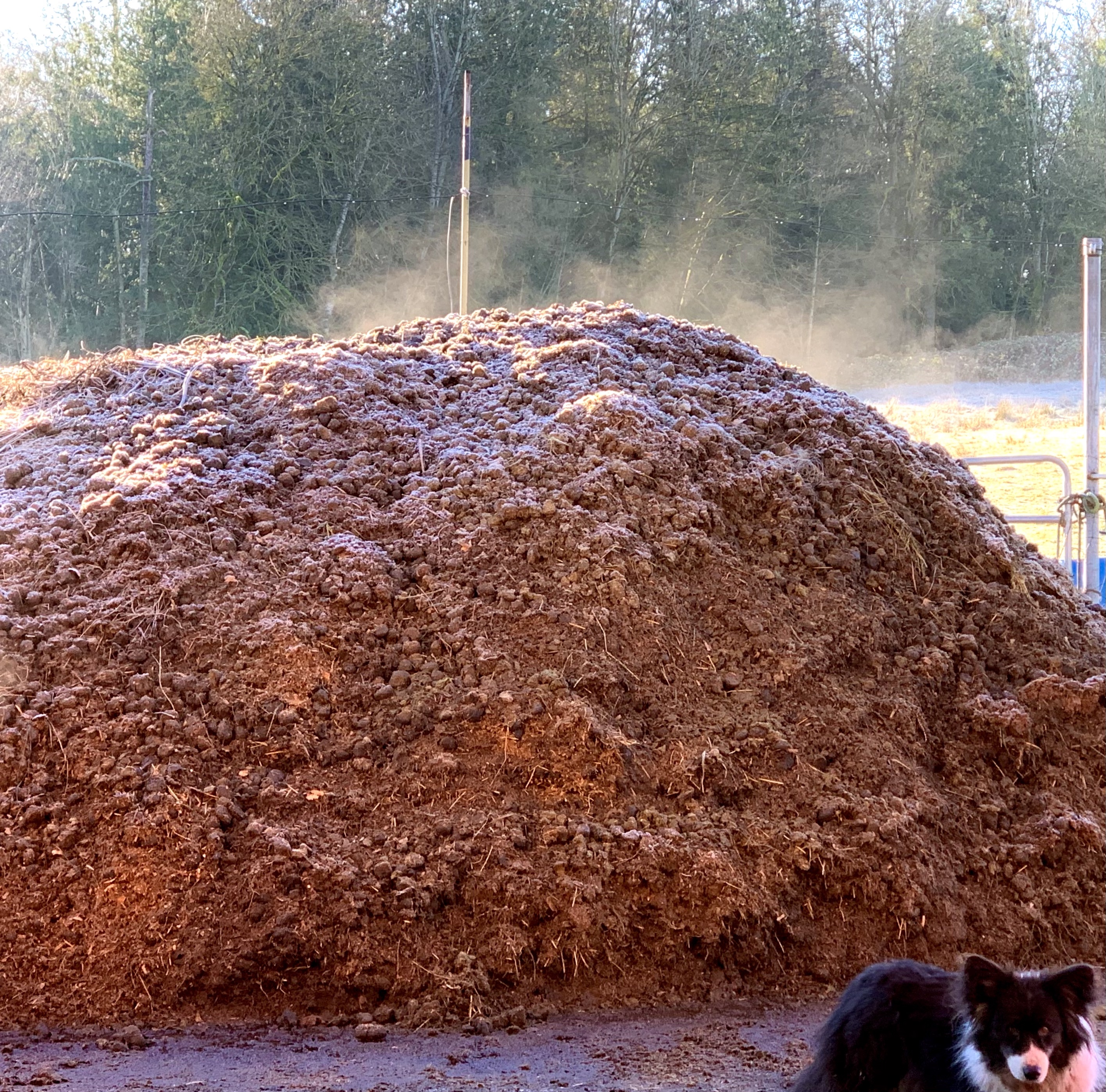
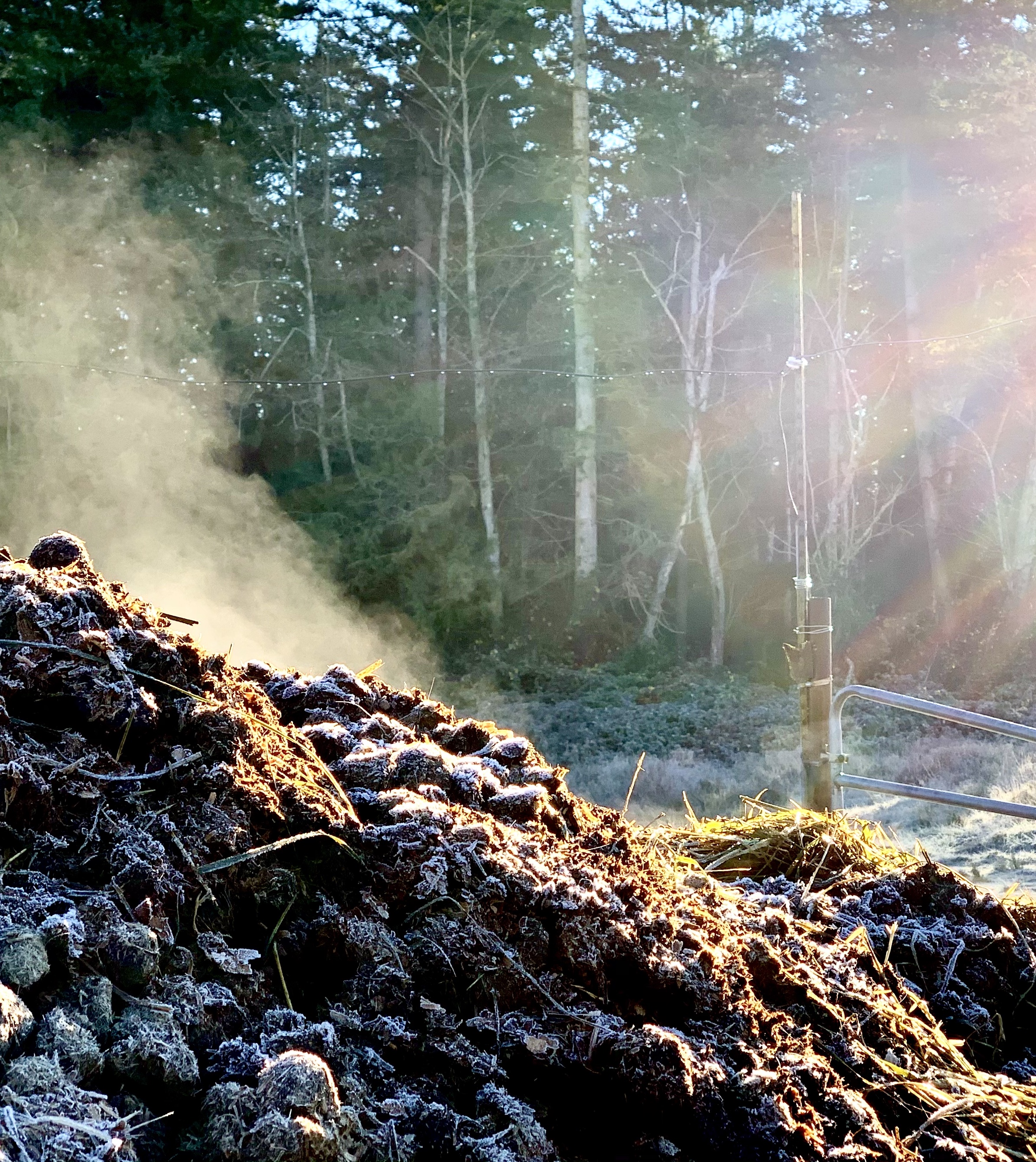
The bucket bites and lifts, and steam comes billowing out of the heap.
It’s my assurance that time is really moving forward,
decomposing us all in the process.
~Verlyn Klinkenborg from More Scenes from the Rural Life

He <the professor> asked
what I made of the other Oxford students
so I told him:
They were okay, but they were all very similar…
they’d never failed at anything or been nobodies,
and they thought they would always win.
But this isn’t most people’s experience of life.

He asked me what could be done about it.
I told him the answer was to send them all out for a year
to do some dead-end job
like working in a chicken processing plant
or spreading muck with a tractor.
It would do more good than a gap year in Peru. 

He laughed and thought this was tremendously witty.
It wasn’t meant to be funny.

~James Rebanks from The Shepherd’s Life
(how a sheep farmer succeeds at Oxford and then goes back to the farm)

It is done by us all, as God disposes, from
the least cast of worm to what must have been
in the case of the brontosaur, say, spoor
of considerable heft, something awesome.

We eat, we evacuate, survivors that we are.
I think these things each morning with shovel
and rake, drawing the risen brown buns
toward me, fresh from the horse oven, as it were,
or culling the alfalfa-green ones, expelled
in a state of ooze, through the sawdust bed
to take a serviceable form, as putty does,
so as to lift out entire from the stall.

And wheeling to it, storming up the slope,
I think of the angle of repose the manure
pile assumes, how sparrows come to pick
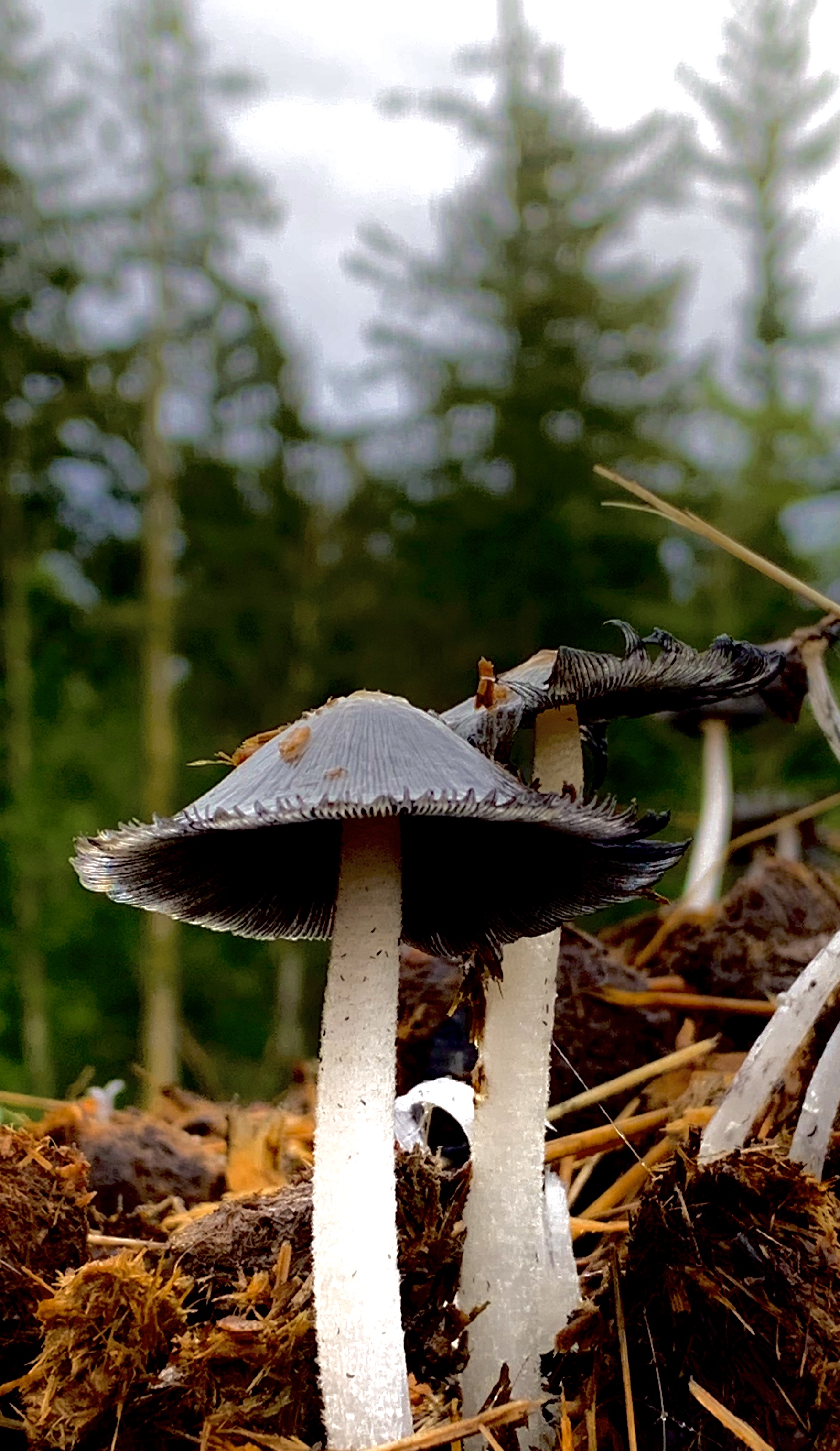
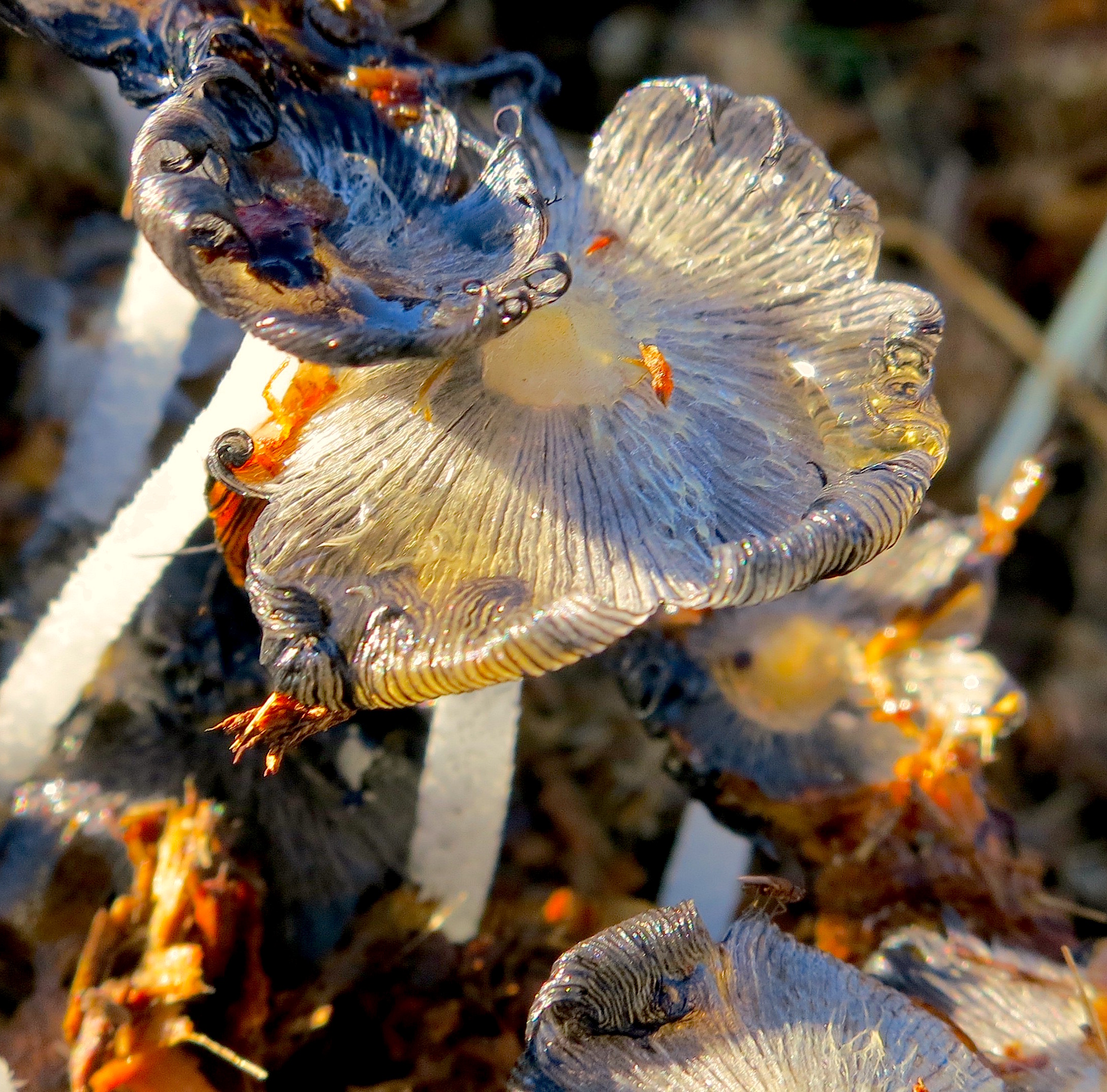
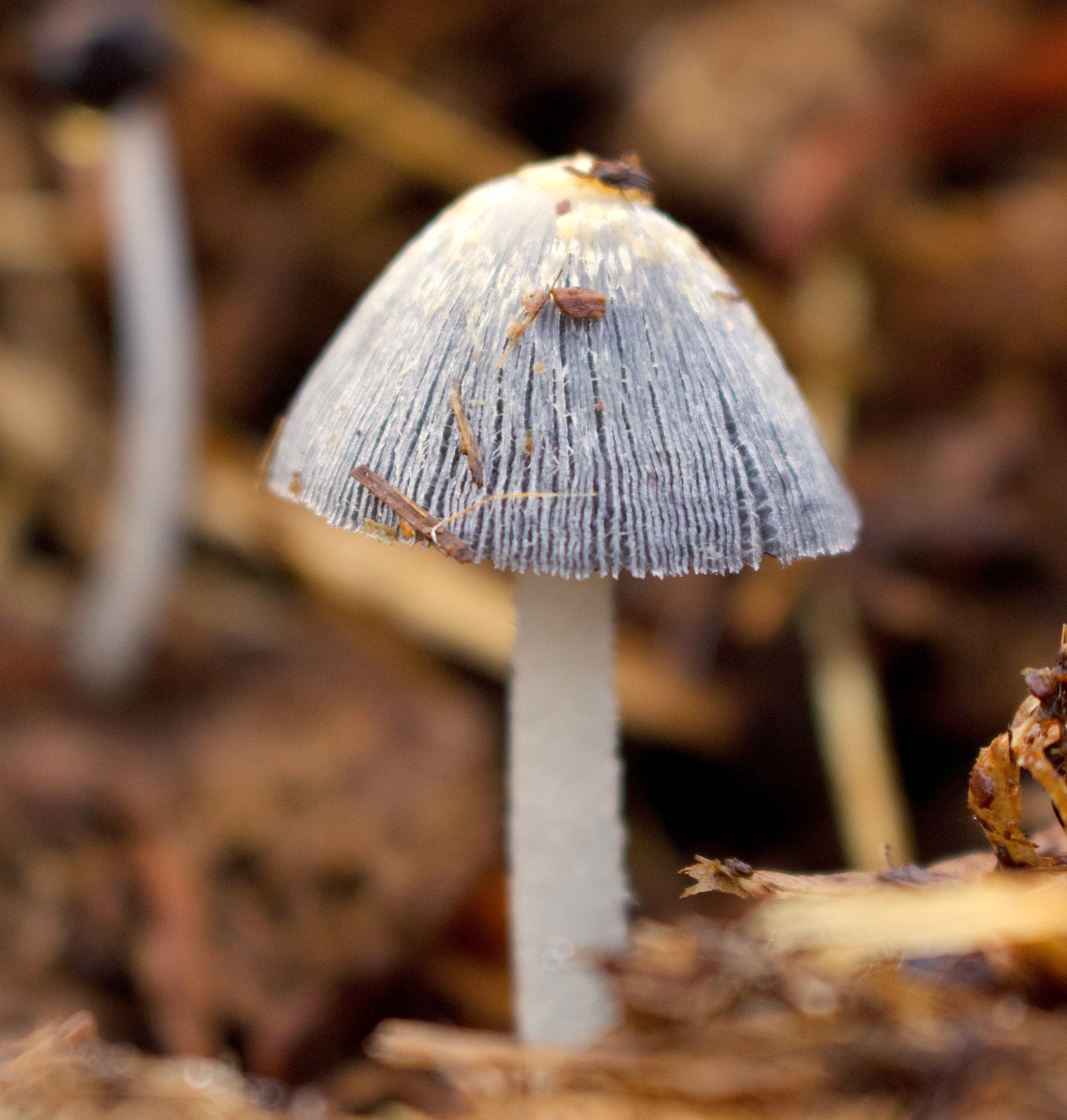
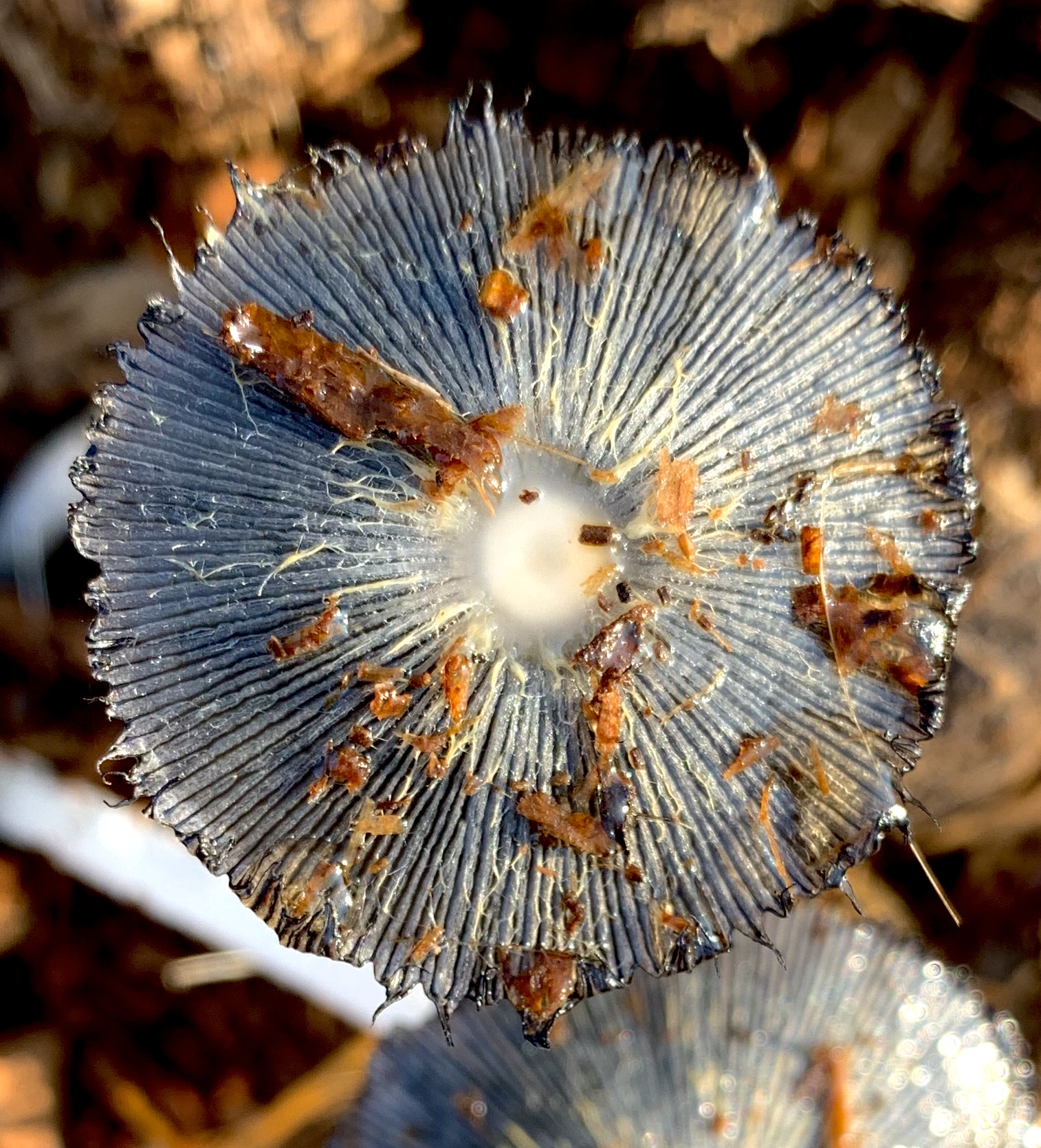
the redelivered grain, how inky-cap
coprinus mushrooms spring up in a downpour.

I think of what drops from us and must then
be moved to make way for the next and next.
However much we stain the world, spatter
it with our leavings, make stenches, defile
the great formal oceans with what leaks down,
trundling off today’s last barrow-full,
I honor shit for saying: We go on.

~Maxine Kumin “The Excrement Poem”

For well over thirty years, my husband and I have spent over an hour a day shoveling manure out of numerous horse stalls and I’m a better person for it. Wintertime chores are always a character-building experience. It feels like everything, myself included, is in a process of decomposition.

Everyone should spend time simply mucking out every day; I think the world would generally be a better place. I enlist any young person who happens to visit our farm as an object lesson in better living through composting the stinky stuff in our lives.

Wheeled to a mountainous pile in our barnyard,  our daily collection of manure happily composts year round, becoming rich fertilizer in a matter of months through a crucible-like heating process of organic chemistry, bacteria and earthworms.  Nothing mankind has achieved quite matches the drama of useless and basically disgusting stuff transforming into the essential elements needed for productive growth and survival.   This is a metaphor I can <ahem> happily muck about in.

I’m in awe, every day, at being part of this process — in many ways a far more tangible improvement to the state of the world than anything else I manage to accomplish every day.  The horses, major contributors that they are, act underwhelmed by my enthusiasm.  I guess some miracles are relative, depending on one’s perspective, but if the horses understood that the grass they contentedly eat in the pasture, or the hay they munch on during the winter months, was grown thanks to their carefully recycled waste products, they might be more impressed.

Their nonchalance about the daily mucking routine is understandable.  If they are outside, they probably don’t notice their beds are clean when they return to the stalls at night.  If they are inside during the heavy rain and frozen winter days, they feel duty-bound to be in our faces as we move about their stall, toting a pitchfork and pushing a wheelbarrow.  I’m a source of constant amusement as they nose my jacket pockets for treats that I never carry, as they beg for scratches on their unreachable itchy spots, and as they attempt to overturn an almost full load, just to see balls of manure roll to all corners of the stall like breaking a rack of billiard balls in a game of pool.

Wally, our former stallion, now gelded, discovered a way to make my life easier rather than complicating it.  He hauled a rubber tub into his stall from his paddock, by tossing it into the air with his teeth and throwing it, and it finally settled against one wall.  Then he began to consistently pile his manure, with precise aim, right in the tub.  I didn’t ask him to do this.  It had never occurred to me.  I hadn’t even thought it was possible for a horse to house train himself.  But there it is, proof that some horses prefer neat and tidy rather than the whirlwind eggbeater approach to manure distribution.  After a day of his manure pile plopping, it is actually too heavy for me to pick up and dump into the wheelbarrow all in one tub load, but it takes 1/4 of the time to clean his stall than the others, and he spares all this bedding.

What a guy.  He provides me unending inspiration in how to keep my own personal muck concentrated rather than spattering it about, contaminating the rest of the world.

Now, once I teach him to put the seat back down when he’s done, he’s welcome to move into the house.

One-Time
Monthly
Yearly

Make a one-time or recurring donation to support daily Barnstorming posts

Make a monthly donation

Make a yearly donation

Choose an amount

$10.00
$25.00
$50.00
$5.00
$15.00
$100.00
$5.00
$15.00
$100.00

Or enter a custom amount

$

Your contribution is deeply appreciated.

Your contribution is appreciated.

Your contribution is appreciated.

DonateDonate monthlyDonate yearly
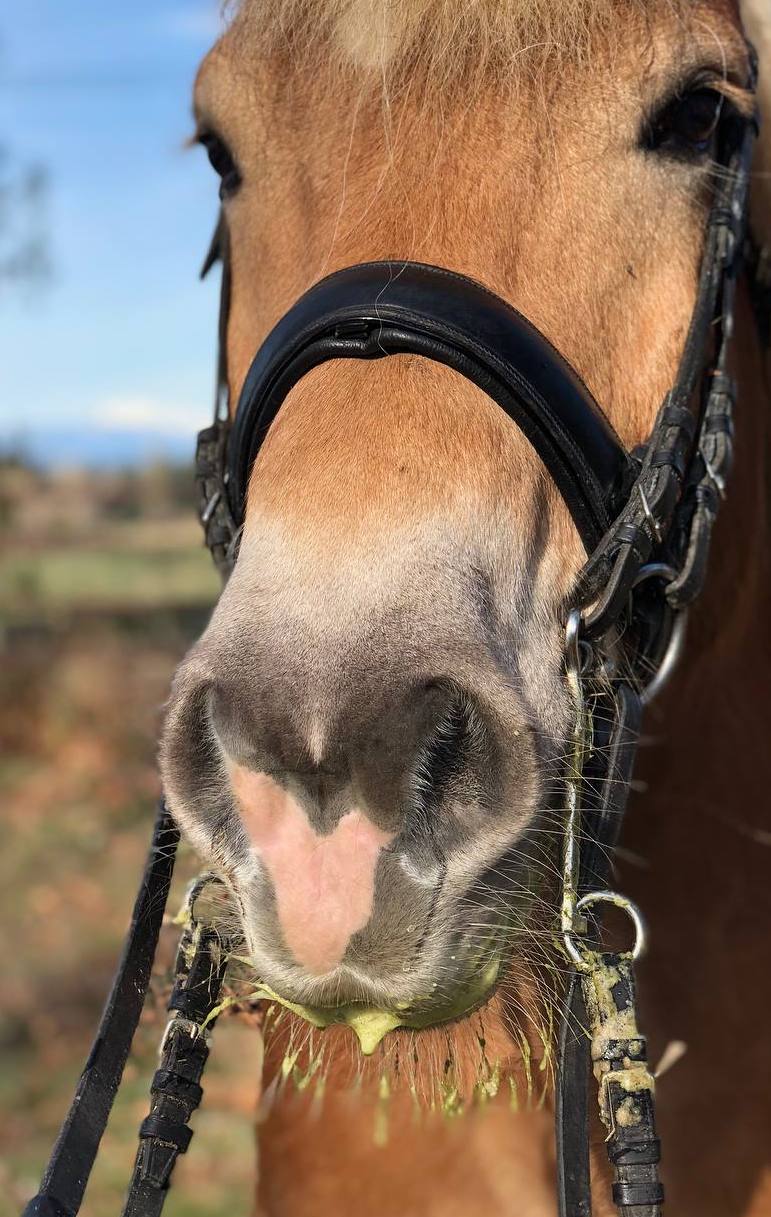
Been Gone So Long

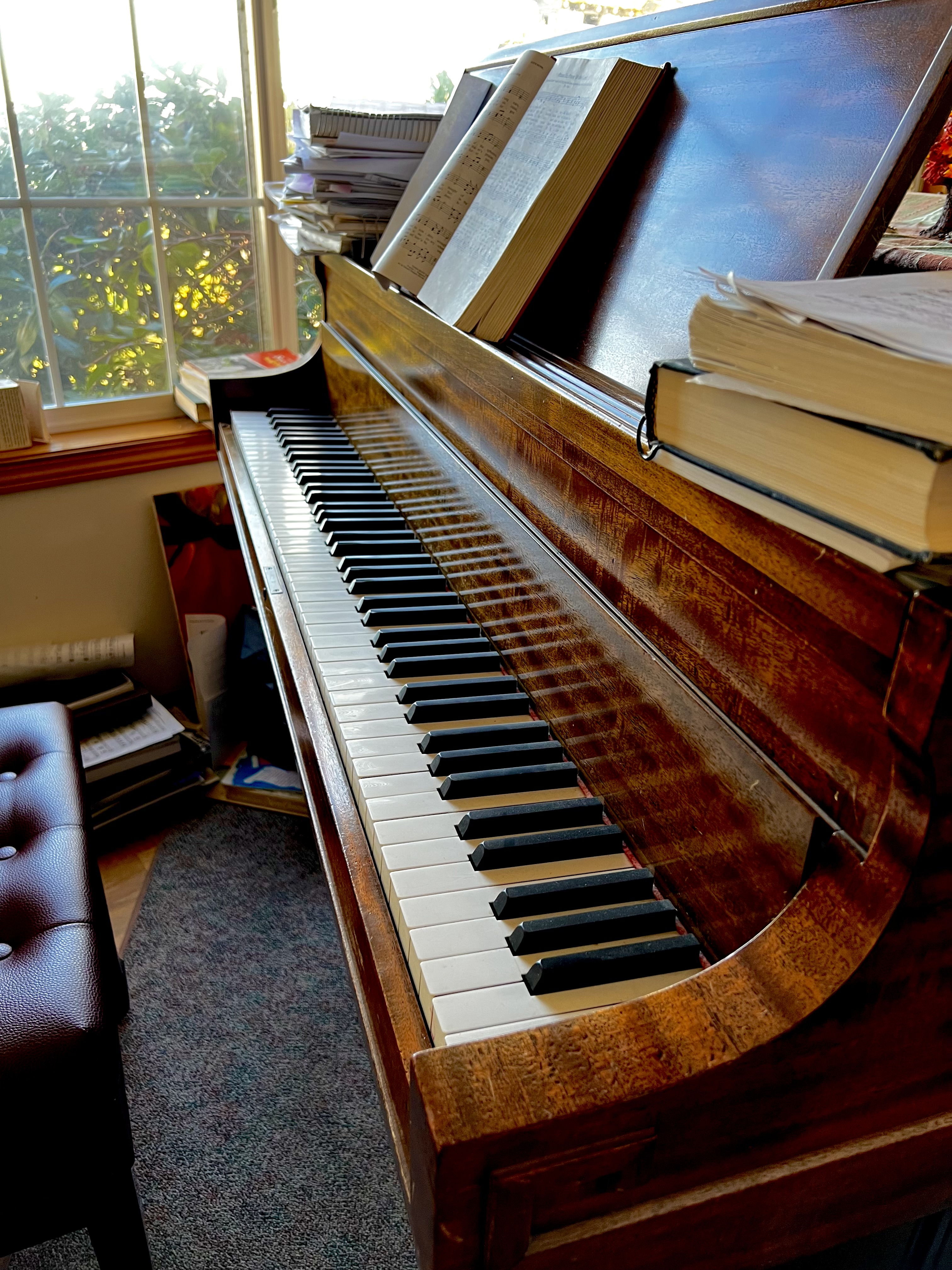
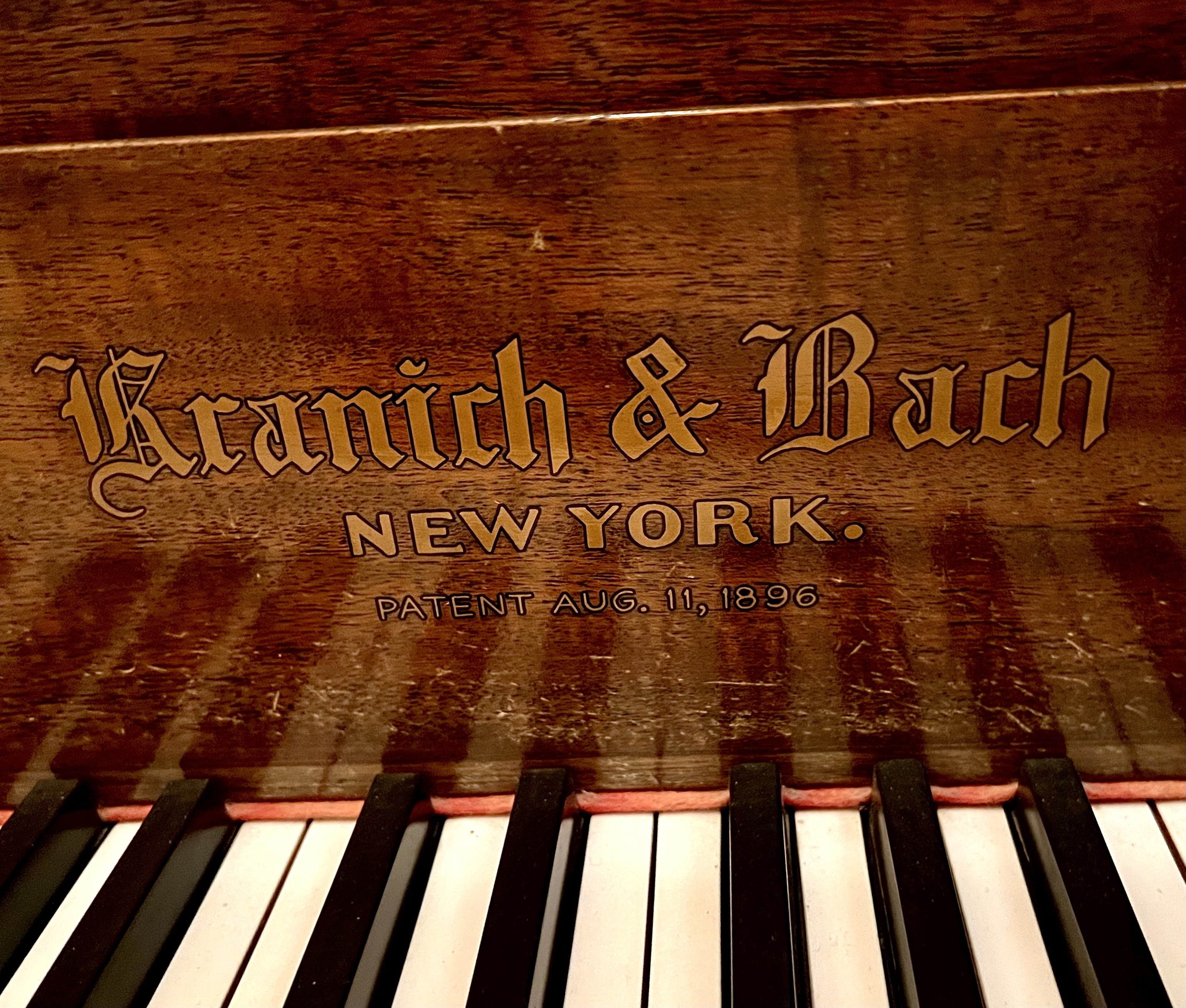
Just a piano playing plainly, not even for long,
and yet I suddenly think of fields of timothy
and how a cow and I once studied each other over a fence
while the car ticked and cooled behind me.
When I turned around I was surprised that it had not
sprouted tall grass from its hood, I had been gone
so long. Time passes in crooked ways in some tales,
and though the cow and I were relatively young
when we started our watching, we looked
a bit younger when I left. The cow had downed a good
steady meal and was full of milk for the barn.
I drove away convinced of nothing I had been
so sure of before, with arms full of splinters
from leaning on the fence. There was no music—
I was not even humming—but just now the piano
played the exact sound of that drive.

~Annie Lighthart “The Sound of It” from Iron String.

Our brains remember the past in odd ways – from a smell, a sound, a bit of music, a taste - it is as if we are teleported to another place.

Senses can distort time passage and slant the present moment:
Smelling cinnamon, I find myself in my grandmother’s kitchen with her apple pie.
Hearing the sad “cooing” of mourning doves, I’m waking up in my cousins’ farmhouse during a summer visit in the Palouse.
Listening to Joni Mitchell’s “River,” I’m deep in thick books in my study carrel at the library, melancholy and wishing myself to be anywhere else.

As our children were growing up on this farm, I wanted to intentionally “imprint” home on them in similar ways, with familiar smells and tastes and sounds, hoping they would mentally find their way back in myriad ways over the course of their lives. Now I find myself wanting to create the same brain memories for our visiting grandchildren. Perhaps this is why I invite them out to the barn with me as I clean stalls and throw hay and fill water buckets. I want them to never forget the smells and sounds and feelings of taking care of animals dependent on our care.

Which reminds me of long-ago sensations when I was four years old:
sitting on top of a bony Guernsey cow’s back as she chewed her grain,
listening to the shush shush shush of milk being squirted into a metal bucket as my dad milked her, the rich smell of the warm milk froth,
clucking hens searching the barn floor for dropped pieces of corn.

Every day, there is so much to see, to smell, to hear, to taste, to feel – all of which is worthy of space in our brain. I have been gone so long, thinking how much I’ve forgotten, yet it just takes a trick of time and sensation to bring it back and experience it anew.

One-Time
Monthly
Yearly

Make a one-time or recurring donation to support daily Barnstorming posts

Make a monthly donation

Make a yearly donation

Choose an amount

$10.00
$25.00
$50.00
$5.00
$15.00
$100.00
$5.00
$15.00
$100.00

Or enter a custom amount

$

Your contribution is deeply appreciated.

Your contribution is appreciated.

Your contribution is appreciated.

DonateDonate monthlyDonate yearly
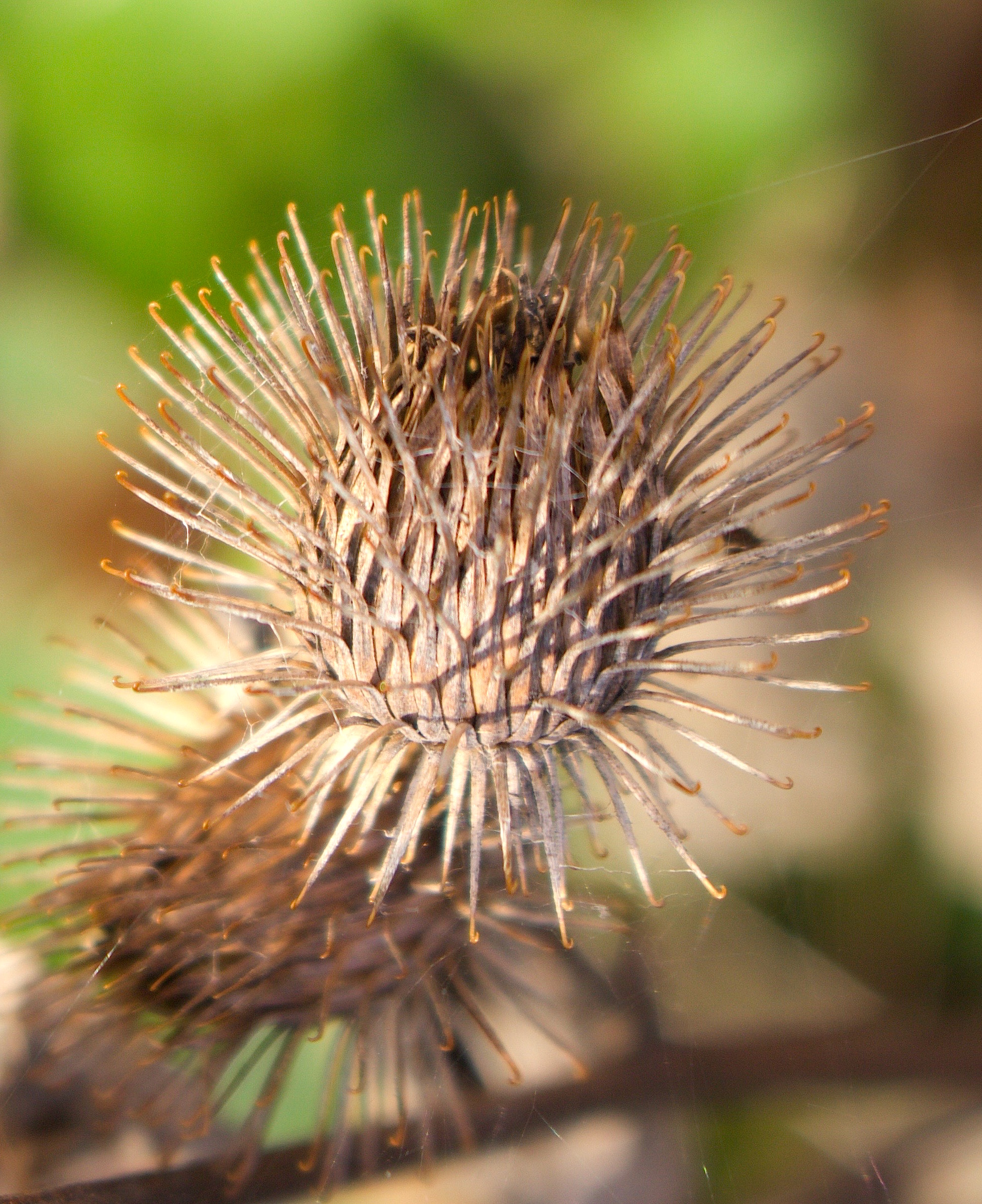
Holding on for Dear Life

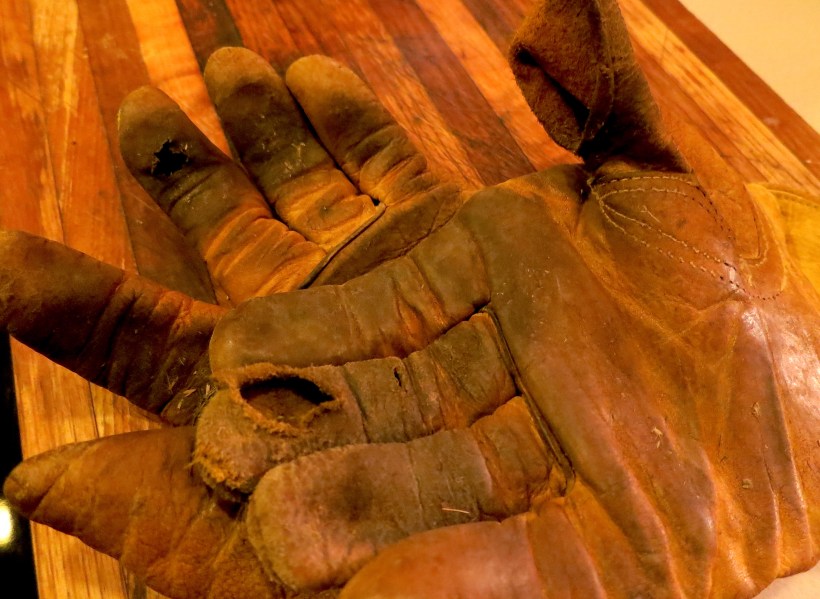
Nothing much to look at
lying on the shelf, one on
top of the other, an old man
resting his hands on a cane.
Dried-out yellow cowhide,
lines cut deep into the palms
from stones, weeds pulled.
Fingers crumpled, swollen
like grub worms shoveled
up in planting. An extra pair
of hands helping with lawn
work, flower beds, shrubs,
whatever else comes along.
A grief pulled on to bury
the old cat some kid in a
speeding pickup knocked
out of the street like he’d
kick a can. Or kneeling last
fall to unearth the blooming
rose suddenly plucked by
an ice storm, then shaking
rich compost loose from its
twisted fingers still clenched,
holding on for dear life.

~Ron Stottlemyer “Work Gloves”

My farm work gloves tend to look ragged at the end of a year of service. I always depend on being gifted a new pair at Christmas to start afresh. It can take awhile to break them in to the point where they feel like a “second skin.”

These gloves keep me from blistering while forking innumerable loads of smelly manure into wheelbarrows, but also help me unkink frozen hoses, tear away blackberry vines from fencing, pull thistle from the field and heavy hay bales from the haymow. Over the years, I’ve gone through a few dozen work gloves which have protected my hands as I’ve cleaned and bandaged deep wounds on legs and hooves, pulled on foals during the hard contractions of difficult births, held the head of dying animals as they fall asleep one final time.

Without wearing my protective farm gloves over the years, my hands would be looking very much scarred up like my tired gloves do, full of rips and holes from the thorns and barbs of the world, sustaining scratches, callouses and blisters from the hard work of life.

But they don’t.

Thanks to these gloves, before I retired, I was presentable for my “day” work as a doctor where I would don a different set of gloves many times a day.

But my work gloves don’t tell my whole story of gratitude.

I’m thankful to a Creator God who doesn’t wear gloves when He goes to work in our world:
-He gathers us up even when we are dirty, smelly, and unworthy.
-He eases us into this life when we are vulnerable and weak,
and carries us gently home as we leave this world, weak and vulnerable.
-He holds us as we bleed from self and other-inflicted wounds.
-He won’t let us go, even when we fight back, or try not to pay attention, or care who He is.

He hangs on to us for dear life.

And this God came to live beside us
with hands just like ours~
tender, beautiful, easy-to-wound hands
that bled
because He didn’t need or want to wear gloves
for what He came to do~

His hands bear evidence of His love…

One-Time
Monthly
Yearly

Make a one-time or recurring donation to support daily Barnstorming posts

Make a monthly donation

Make a yearly donation

Choose an amount

$10.00
$25.00
$50.00
$5.00
$15.00
$100.00
$5.00
$15.00
$100.00

Or enter a custom amount

$

Your contribution is deeply appreciated.

Your contribution is appreciated.

Your contribution is appreciated.

DonateDonate monthlyDonate yearly
The Sunrise Shall Visit Us: Now Realigned

Christmas sets the centre on the edge;
The edge of town, the outhouse of the inn,
The fringe of empire, far from privilege
And power, on the edge and outer spin
Of  turning worlds, a margin of small stars
That edge a galaxy itself light years
From some unguessed at cosmic origin.
Christmas sets the centre at the edge.

And from this day our  world is re-aligned
A tiny seed unfolding in the womb
Becomes the source from which we all unfold
And flower into being. We are healed,
The end begins, the tomb becomes a womb,
For now in him all things are re-aligned.
~Malcolm Guite “Christmas on the Edge”

When the barn doors opened
on a bright frosted Advent morning,
the inner darkness was illuminated by a beam of sunlight,
exposing an equine escapee.

His stall door stood ajar, the door mysteriously unlatched.
He meandered the unlit barn aisle lined with hay bales
munching his breakfast, lunch, and dinner
all of which lay strewn and ruined at his feet.

Not only did he somehow open his locked door
but also chose to leave poop piles
on every other horses’ breakfast, lunch, and dinner
as they watched helpless from behind their stall doors.

He had the run of the place all night~
obvious from countless hoof prints amid
overturned buckets, trampled halters, tangled baling twine,
twisted hoses, toppled bales and general chaos.

At least he didn’t reach up and start the tractor
or eat the cat food or pry open the grain barrel
or chew a saddle or two, or rip horse blankets apart,
but from the looks of things – I think he tried.

He nickered as the opened door highlighted his nocturnal escapade,
caught red-hoofed and boldly nonchalant, proclaiming his innocence.
Like a child asking for milk to go with a stolen cookie,
he approached me, begging for a carrot after feasting all night.

I grabbed a fist full of mane, pulled him back to double lock him in.
Surveying the mess, I was tempted to turn around, shut the barn doors
and banish it back to the cover of darkness,
to hide his sins now apparent in the light of day.

Instead, newly realigned in my wait for Christmas,
I remember all the messes I’ve made in my life.
So I clean his up, give him a hug,
and forgive as I’m forgiven.

Advent 2023 theme
because of the tender mercy of our God,
whereby the sunrise shall visit us from on high 
to give light to those who sit in darkness
and in the shadow of death,
to guide our feet into the way of peace.
Luke 1: 78-79 from Zechariah’s Song

One-Time
Monthly
Yearly

Make a one-time or recurring donation to support daily ad-free Barnstorming posts

Make a monthly donation

Make a yearly donation

Choose an amount

$10.00
$25.00
$50.00
$5.00
$15.00
$100.00
$5.00
$15.00
$100.00

Or enter a custom amount

$

Your contribution is deeply appreciated.

Your contribution is appreciated.

Your contribution is appreciated.

DonateDonate monthlyDonate yearly

Until There’s Nothing Left

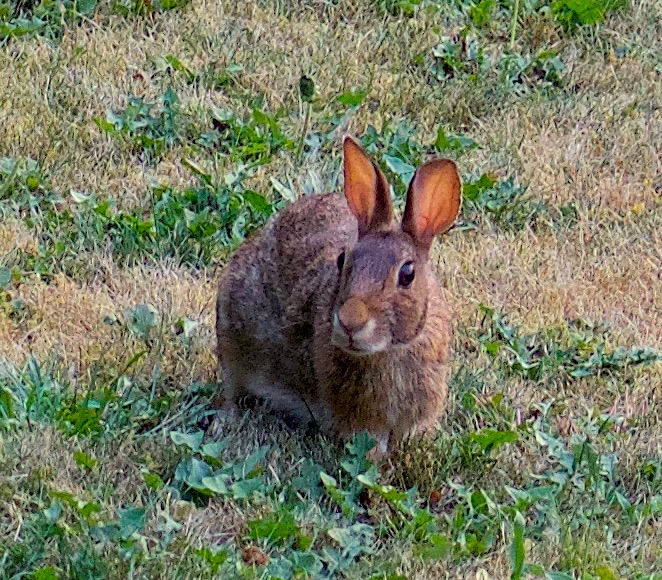
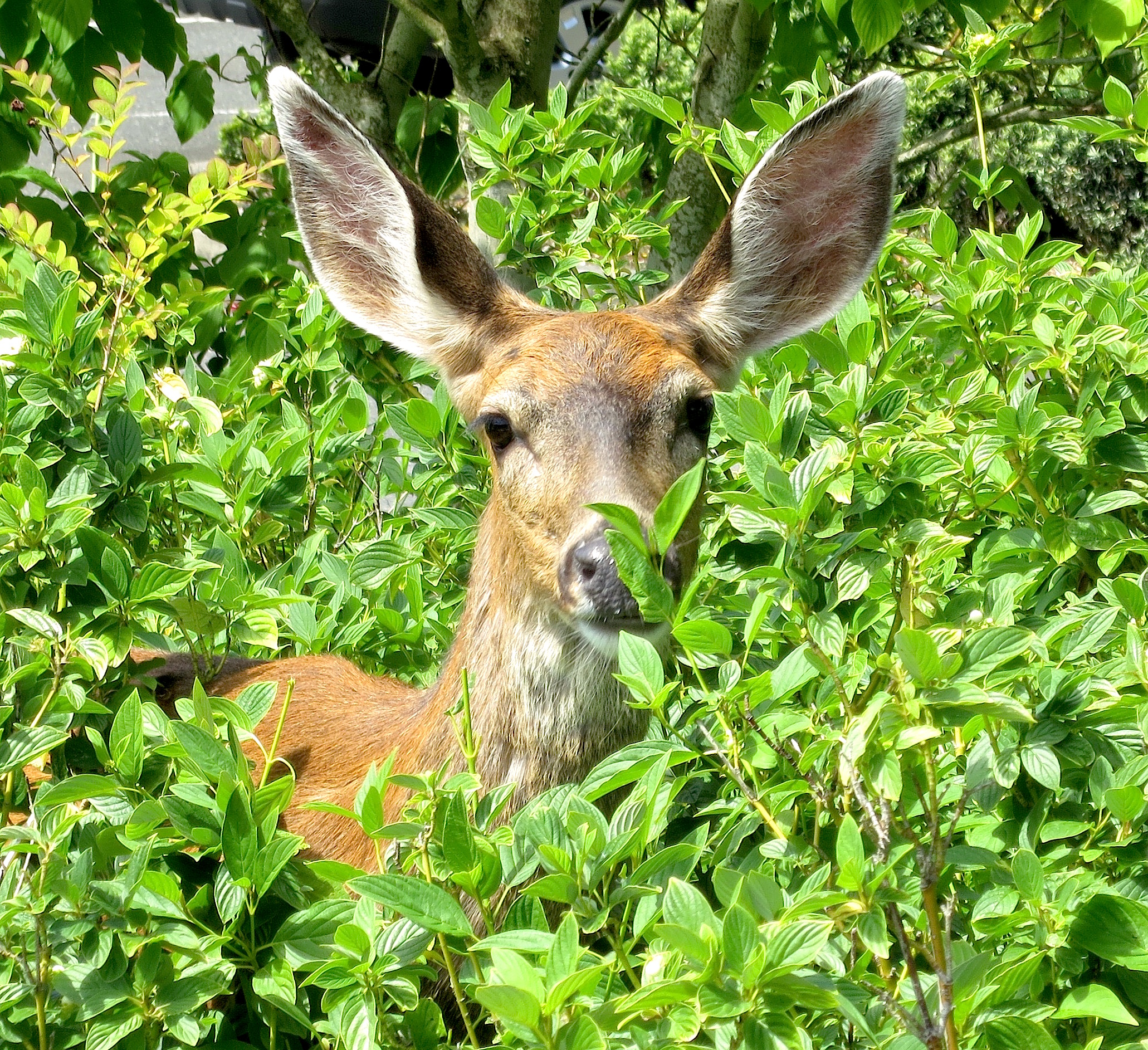
Walk noisily to declare your presence.
The rabbits and deer will leave
as soon as they hear you coming,
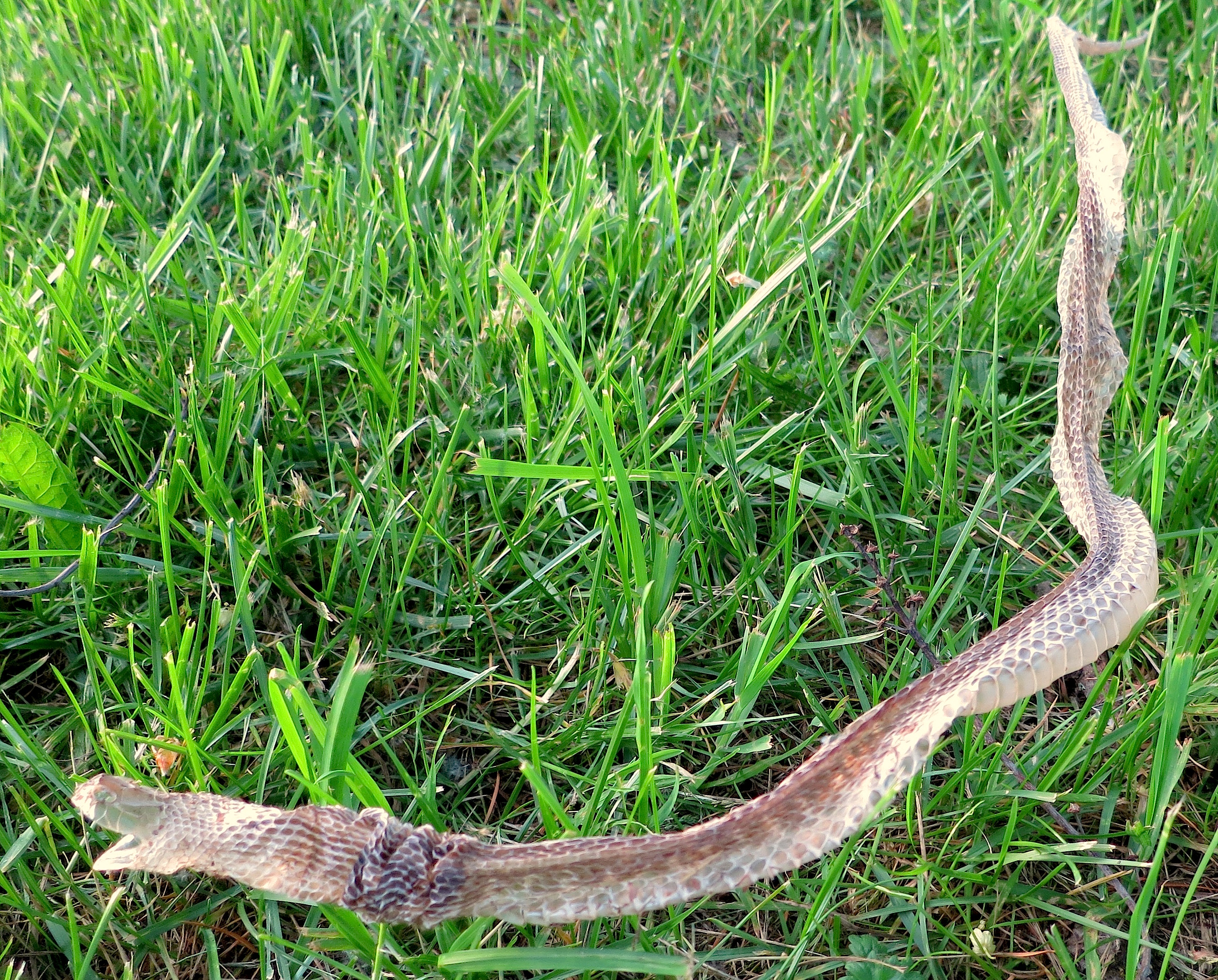
but the snakes need time
to process your intentions.

Take a moment to be certain
of what you’re cutting.
Many stems look alike
down close to the ground,
especially when they’re young.
Look up occasionally.

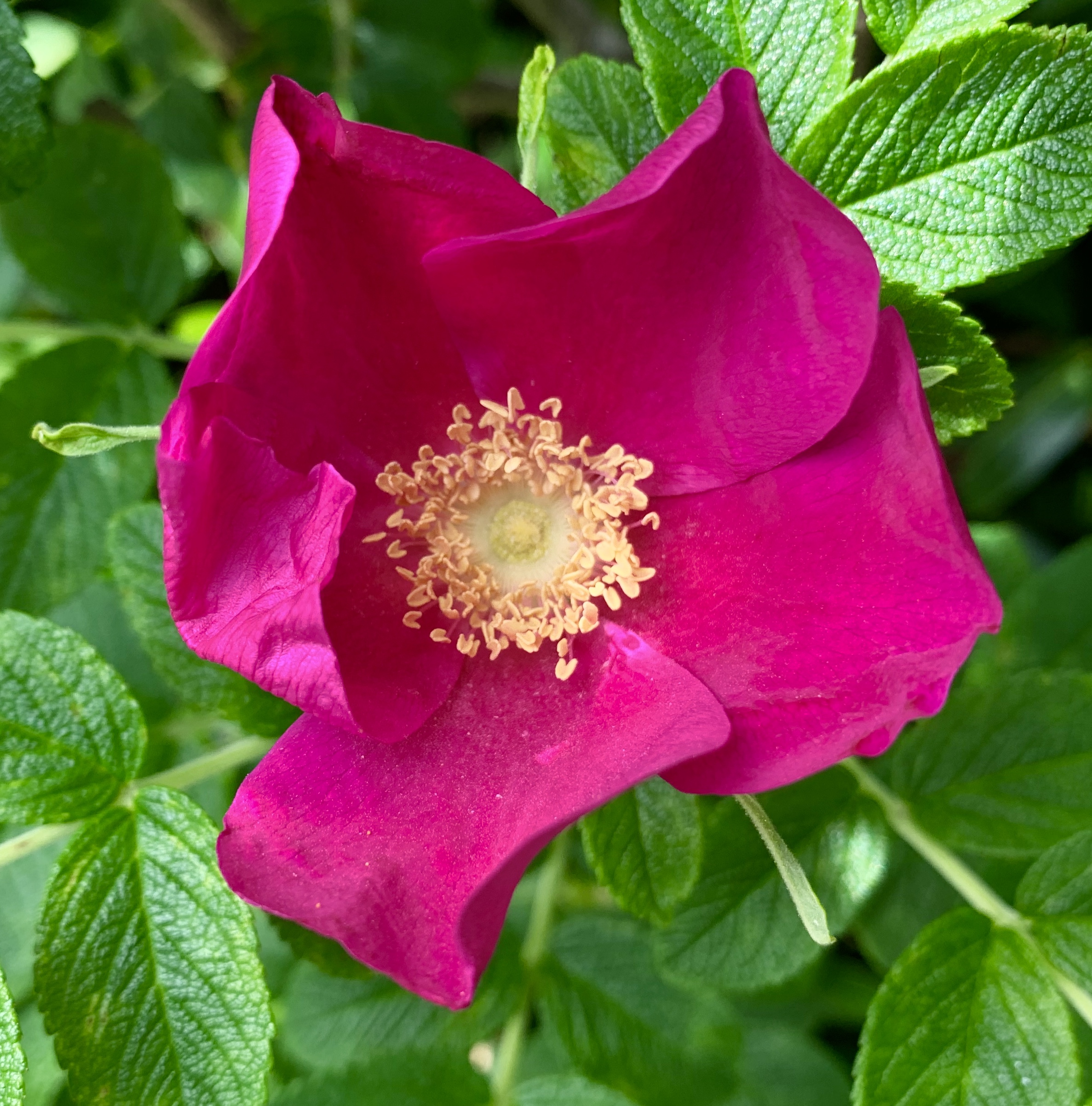
Don’t begrudge the wild roses
for whipping thorns across
your face and arms,
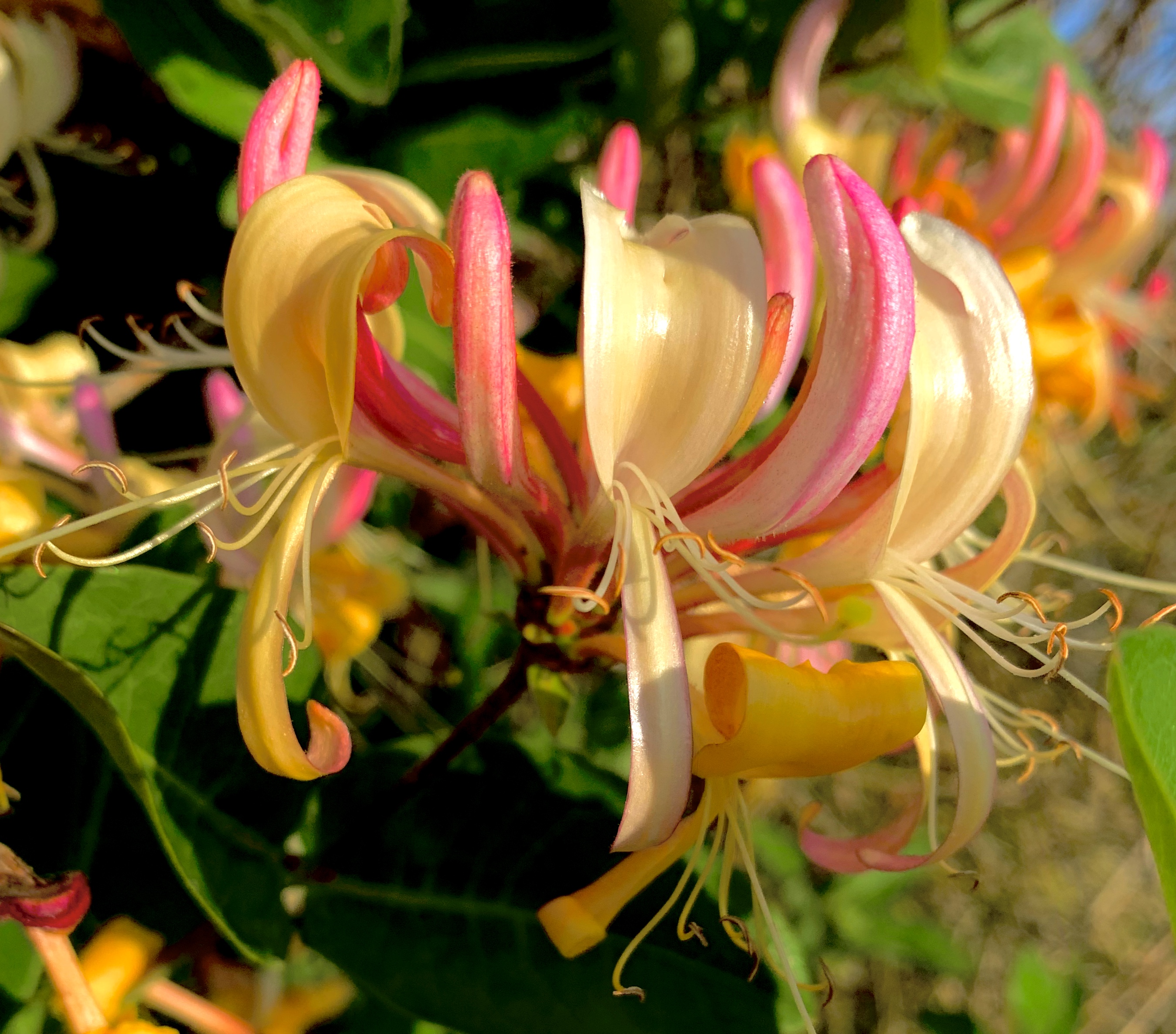
or the honeysuckle
for tangling your feet
and pulling the pruners
from your hands. You’d do
the same in their place.
Honor them with a clean cut.

Never begin when you’re angry
or you might not stop
until there’s nothing left
to hold the soil.

Always wear gloves
and keep your eye
on the blade.
~Jeff Coomer “Some Advice for Clearing Brush” from 
A Potentially Quite Remarkable Thursday.

photo by Josh Scholten

My father never quite adapted to his administrative desk job mid-career, working in a state job as a supervisor. He was a man of action, a former Marine and before that, a teenager whose young muscles were needed to tame the brush that grew out of control on his parents’ failing farm land. He learned young to swing a brush hook and later in life found it helped manage his desk-bound frustration to slash away at the vines and thorns and branches that stood between him and a sense of order on the land.

He would have been bemused, but impressed, that not just one, but two modern U.S. Presidents, Reagan and George W., found brush clearing to be therapeutic physical activity. Perhaps it helped them manage their anger impulses as well.

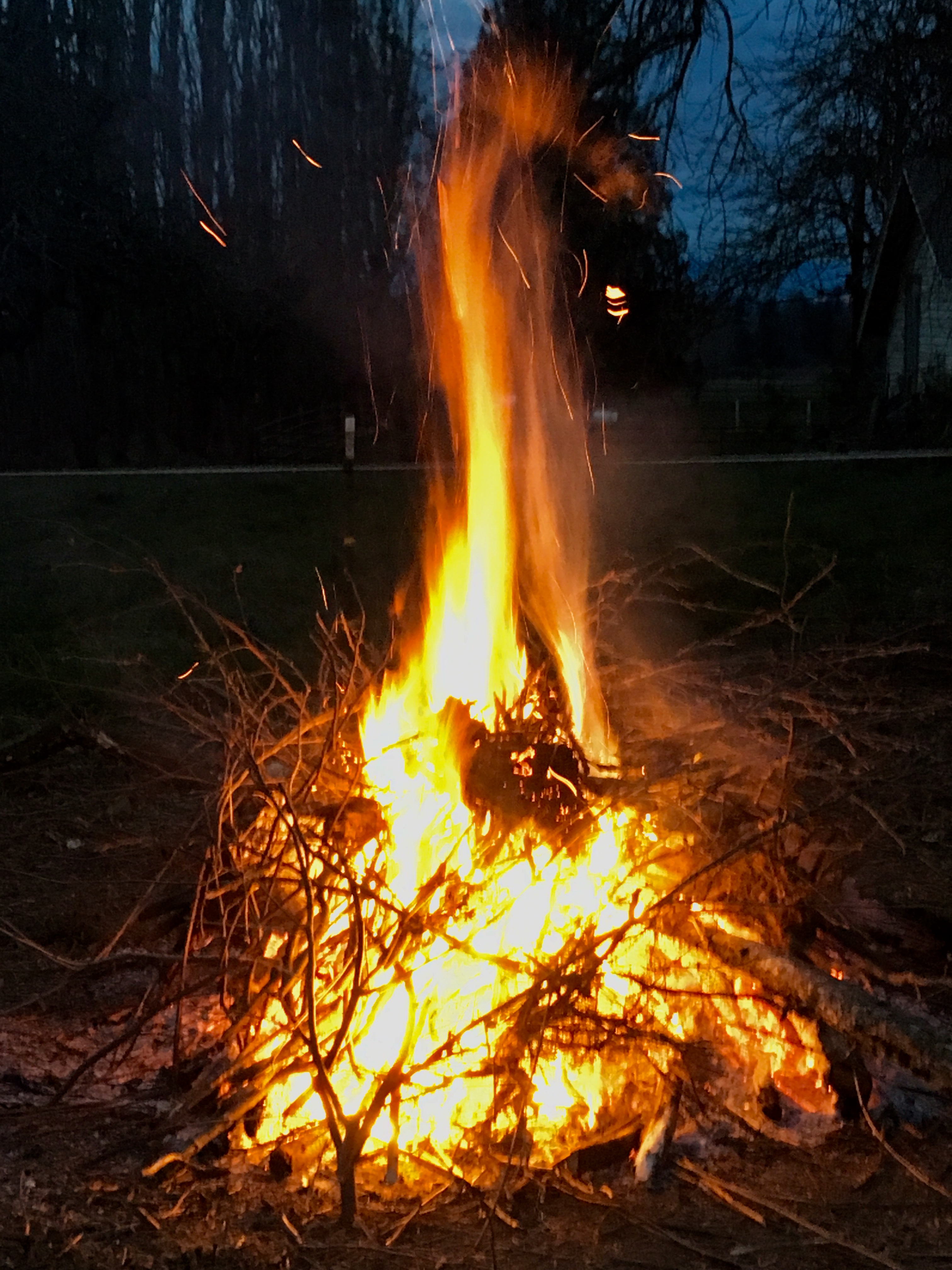
As soon as my dad got home from work, I remember him changing into denim overhauls and heavy duty gloves and boots. As long as there was daylight, he would head to our field and woods to battle back the brush thickets. He would swing his trusty brush hook, bringing down all manner of thick obstructing and unwanted plant life, then create numerous “brush piles” which he would let dry out and then burn in huge bonfires down to ashes in autumn until nothing was left but dust.

It was no small irony that he sometimes had to return in a few years to the same spot to clear it once again. It was a Sisyphean task, but yet somehow necessary for his general well-being.

I should have known there was something amiss when one year when I returned from college on a break, I found he had stopped clearing brush and chose instead to exercise on a stationary bicycle. Something in him had given up trying to make our fields and woods more habitable and useable. I figured he simply grew weary of perpetually ridding the land of thorn-bearing vines, thistles and weeds which had impeded his personal vision of the perfect park-like farmland.

Instead, he gave up and walked away from his marriage and his brush hook which he left hanging up in the barn. With nothing left to hold him there, he left, in search of something he felt was missing in his life.

We, my mom and his grown children, were left sifting through the ashes of what was left behind. It didn’t take long for the woods to become impenetrable in his absence.

We could not have known he would return a decade later, arising forgiven from the ashes he had left behind.

After all, there was more brush to clear and he was back to take care of it.

One-Time
Monthly
Yearly

Make a one-time or recurring donation to support daily ad-free Barnstorming posts

Make a monthly donation

Make a yearly donation

Choose an amount

$10.00
$25.00
$50.00
$5.00
$15.00
$100.00
$5.00
$15.00
$100.00

Or enter a custom amount

$

Your contribution is deeply appreciated.

Your contribution is appreciated.

Your contribution is appreciated.

DonateDonate monthlyDonate yearly

What Hard Work Yields


I look for the spade
I used when I was young,
when my grandfather said dig
and I dug holes
the depth I’d been taught
so the posts would stand,
hold the miles of barbed and hog wire
dividing our ground… Dig, he would say,

and all morning, afternoon,
until it rained, until dark,
until I couldn’t lift the spade and grub
and he said enough,
I dug through dry brown
until it turned yellow clay
or black earth caked
to the tip of the steel. He taught me to measure
strength by depth,
narrow the hole around the oiled post,
and sturdy the line he’d laid
before I was old enough
to blister from work,
acquire the knowledge of straight,
of strength, cool soil,
rusted staples and splintered wood,
the knowledge of bending spikes
new, splicing wire,
swinging a hammer down hard,
the ache from hours of digging,
calloused hands and sunburn.
He trained me to rake,
tamp, stomp, pack dirt and clay,
the weight of the earth around the post,
its strength into the line.

Now the hammers, pliers and cutters are gone.
No rolls of wire hang from the beams.
No boxes of staples and spikes jam the shelves.
The tamping stick is broken.
Someone has wrapped duct tape around the spade handle;
the steel has rusted brown and rough;
a crack climbs from the tip to the mud-caked neck.
He would say it is useless,
that things are not like they were
~Curtis Bauer from “A Fence Line Running Through It”

The old farmers in our county are dying off,
the ones who remember
when horse and human muscle provided the power
instead of diesel engines.
They have climbed down off their tractors
and into their beds
for a good night’s sleep.

Their machine sheds are cleared
in an auction,
their animals trucked away
for butcher,
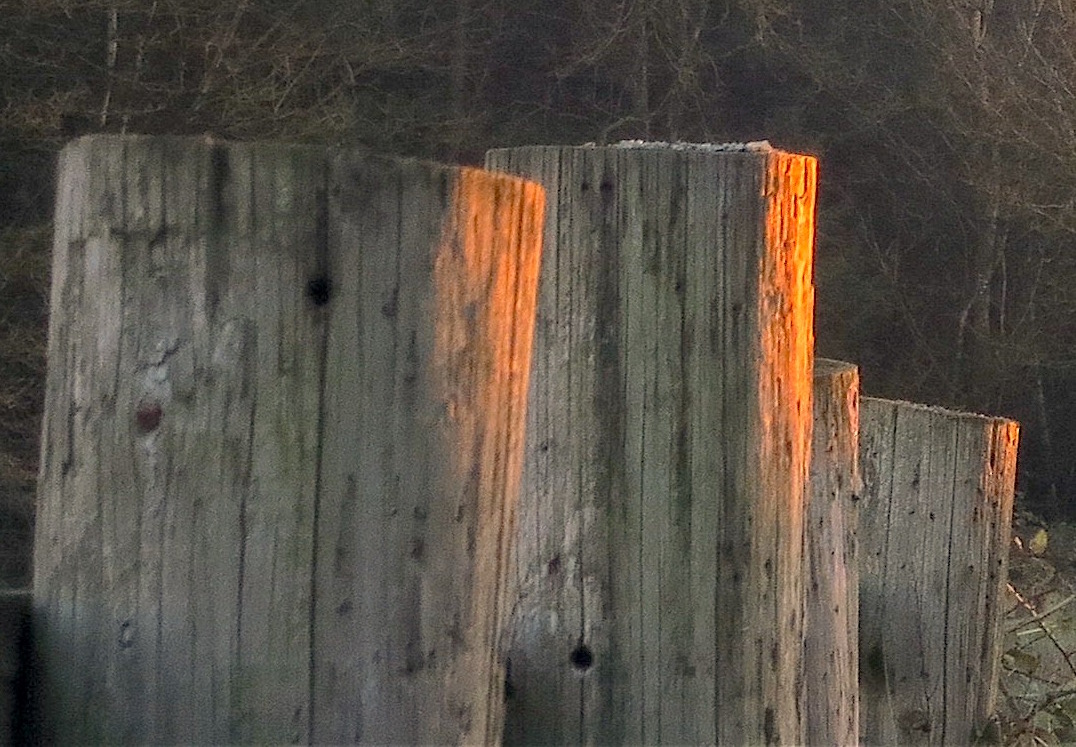
their fence lines leaning
yet the corner posts,
set solid and sure in the hard ground,
keep standing
when the old farmer no longer does.

These old farmers knew hard work.
knew there were no days off,
no shirking duty,
knew if anyone was going to do
what needed doing
it was them,
no one else.
Things are not like they were
yet the strong posts remain,
ready to hold up another fence line,
showing us few remaining farmers
what hard work yields.

One-Time
Monthly
Yearly

Make a one-time or recurring donation to support daily Barnstorming posts

Make a monthly donation

Make a yearly donation

Choose an amount

$10.00
$25.00
$50.00
$5.00
$15.00
$100.00
$5.00
$15.00
$100.00

Or enter a custom amount

$

Your contribution is deeply appreciated.

Your contribution is appreciated.

Your contribution is appreciated.

DonateDonate monthlyDonate yearly
Browsing and Chewing Sweet Hay

To Bring the Horse Home…

after Philip Larkin

Is all I’ve wanted past wanting
since I was six and delirious with fever,
an infinitive forged from a night
when giant ladybugs with toothpick
antennae patrolled my wicker nightstand.
Yes, I’ve been with horses since, 
travelled illegally with them in trailers,
known certain landscapes only framed
by alert ears, and with one in particular,
spent whole afternoons with her big jaw
heavy on my shoulder. Still, I hatched
plots to bring a horse to the house, to ride 
to school, to pasture one or even three
in the garden, shaded by that decorative
willow, which could have used a purpose.
But there were city bylaws in two languages,
and over the years, a dog, stray cats,
turtles, and many fish. They lived, they died.
It wasn’t the same. Fast-forward, I brought
the baby home in a molded bucket seat, but she
lacked difference, attuned as I was, checking
her twenty-four-seven. Now that she’s 
grown, I’m reduced to walking city parks
with this corrosive envy of mounted police,
though I’m too old for the ropes test,
wouldn’t know what to do with a gun.
If there’s a second act, let me live
like the racetrack rat in a small room
up the narrow stairs from the stalls,
the horse shifting comfortably below,
browsing and chewing sweet hay.
A single bed with blanket the color
of factory-sweepings will suffice,
each day shaped to the same arc, 
because days can only end when
the lock slides free on the stall’s
Dutch door, and I lead the horse in,
then muscle the corroded bolt shut.
That’s what days are for: I cannot rest
until the horse comes home.

~Julie Bruck “To Bring the Horse Home”

photo by Breanna Randall

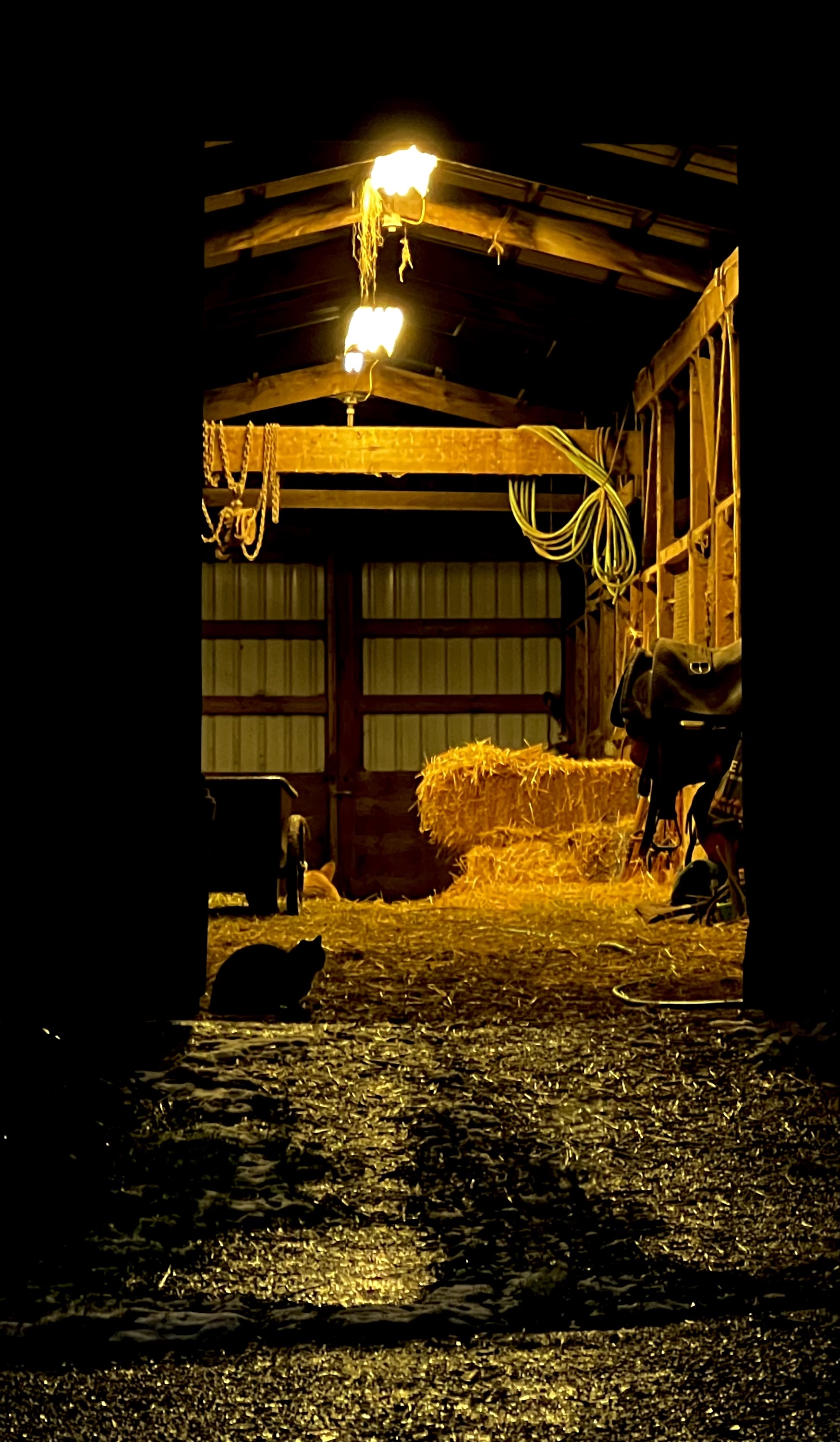
The best moment in the barn is in the evening just following the hay feeding, as the animals are settling down to some serious chewing. I linger in the center aisle, listening to the rhythmic sounds coming from six stalls. It is a most soothing contented cadence, first their lips picking up the grass, then the chew chew chew chew and a pause and it starts again. It’s even better in the dark, with the lights off.

I’ve enjoyed listening to the eating sounds at night from the remote vantage point of my bedroom TV monitor system set up to watch my very pregnant mares before foaling. A peculiar lullaby of sorts, strange as that seems, but when all my farm animals are chewing and happy, I am at peace and sleep better.

It reminds me of those dark deep nights of feeding my own newborns, rocking back and forth with the rhythm of their sucking. It is a moment of being completely present and peaceful, and knowing at that moment, nothing else matters–nothing else at all.

If I am very fortunate, each day I live has a rhythm that is reassuring and steady, like the sounds of hay chewing, or rocking a baby. I awake thinking about where my next step will bring me,  and then the next, like each chew of sweet hay. I try to live in each moment fully, without distraction by the worry of the unknown.

But the reality is:
life’s rhythms are often out of sync,
the cadence is jarring,
the sounds are discordant,
sometimes I’m the one being chewed on, so pain replaces peacefulness.

Maybe that is why this lullaby in the barn~~this sanctuary~~is so treasured. It brings me home to that doubting center of myself that needs reminding that pain is fleeting, and peace, however elusive now, is forever. I always know where to find it for a few minutes at the end of every day, in a pastoral symphony of sorts.

Someday my hope for heaven will be angel choruses of glorious praise, augmenting a hay-chewing lullaby.

So simple yet so grand.

One-Time
Monthly
Yearly

Make a one-time or recurring donation to support daily Barnstorming posts

Make a monthly donation

Make a yearly donation
Choose an amount

$10.00
$25.00
$50.00
$5.00
$15.00
$100.00
$5.00
$15.00
$100.00

Or enter a custom amount

$

Your contribution is deeply appreciated.
Your contribution is appreciated.

Your contribution is appreciated.

DonateDonate monthlyDonate yearly