We Are No Longer Alone: Just a Few More Weary Days

Today is my mother’s birthday,
but she’s not here to celebrate
by opening a flowery card
or looking calmly out a window.

If my mother were alive,
she’d be 114 years old,
and I am guessing neither of us
would be enjoying her birthday very much.

Mother, I would love to see you again
to take you shopping or to sit
in your sunny apartment with a pot of tea,
but it wouldn’t be the same at 114.

And I’m no prize either,
almost 20 years older than the last time
you saw me sitting by your deathbed.
Some days, I look worse than yesterday’s oatmeal.

It must have been frigid that morning
in the hour just before dawn
on your first December 1st
at the family farm a hundred miles north of Toronto
.

Happy Birthday, anyway. Happy Birthday to you.
~Billy Collins from “December 1”
December 1st is not my mother’s birthday but it was her death day eleven years ago.

Yet it felt a bit like a birth.

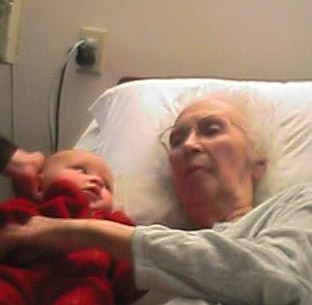
The call came from the care center about 5:30 AM on the Monday after Thanksgiving on a frozen morning: her breathing had changed, it wasn’t long now until she’d be gone.

My daughter and I quickly dressed and went out into bleak darkness to make the ten minute drive to where she lay. Mom had been wearily living since a femur fracture 9 months earlier on a cruel April 1st morning. Everything changed for her at 87 years of active living. These nine months had been her gestation time to transition to a new life. It occurred to me she was about to be born in her long-awaited long-feared transition to death.

Her room was darkened except for the multicolored lights on the table top artificial Christmas tree I had brought her a few days earlier. It cast colorful shadows onto the walls and the white bedspread on her hospital bed. It even made her look like she had color to her cheeks where there actually was none.

There was no one home.

She had already left, flown away while we drove the few miles to come to her. There was no reaching her now. Her skin was cooling, her face hollowed by the lack of effort, her body stilled and sunken.

I could not weep at that point – it was time for her to leave us behind. She was so very tired, so very weary, so very ready for heaven. And I, weary too, felt much like yesterday’s oatmeal, something she actually very much loved during your life, cooking up a big batch, enough to last several days.

I know Mom is no longer settling for yesterday’s oatmeal. I know she is eating well, sleeping soundly and her cheeks are full of color. I know she knows the glory of rebirth thanks to her Savior, flown to a land where joy will never end.

Happy Birthday, Mom. Happy December 1st Birthday to you.

I’ll fly away, oh glory
I’ll fly away in the morning
When I die hallelujah by and by
I’ll fly away

Some bright morning when this life is over
I’ll fly away
To that home on God’s celestial shore
I’ll fly away

I’ll fly away, oh glory
I’ll fly away in the morning
When I die hallelujah by and by
I’ll fly away

When the shadows of this life have gone
I’ll fly away
Like a bird from these prison walls I’ll fly
I’ll fly away

I’ll fly away, oh glory
I’ll fly away in the morning
When I die hallelujah by and by
I’ll fly away

Oh how glad and happy when we meet
I’ll fly away
No more cold iron shackles on my feet
I’ll fly away

I’ll fly away oh glory
I’ll fly away in the morning
When I die hallelujah by and by
I’ll fly away

I’ll fly away oh glory
I’ll fly away in the morning
When I die hallelujah by and by
I’ll fly away

Just a few more weary days and then
I’ll fly away
To a land where joys will never end
I’ll fly away

I’ll fly away oh glory
I’ll fly away in the morning
When I die hallelujah by and by
I’ll fly away
I’ll fly away

~Albert Brumley

God makes us happy as only children can be happy.
God wants to always be with us, wherever we may be –
in our sin, in our suffering and death.
We are no longer alone;
God is with us.
We are no longer homeless;
a bit of the eternal home itself has moved unto us. 
~Dietrich Bonhoeffer
The Pain I Feel

The pain I feel now is the happiness I had before. That’s the deal.
~C.S. Lewis
from A Grief Observed

I imagine one of the reasons people cling to their hates so stubbornly is because they sense, once hate is gone, they will be forced to deal with pain.  ~James A. Baldwin

We pay for hate with our lives, and that’s too big a price to pay.
~Brené Brown from Braving the Wilderness

We live in a world of hurt. We are consumed with hatred for all that is unjust and unfair yet underneath it all we are people who are in fear and in pain.

We get angry at what we don’t like or don’t understand
and that includes God.

We are a people struggling with a profound irritability of the spirit. We give no one the benefit of the doubt any more,
and that includes God.

We ask God why He doesn’t do something about the suffering we see everywhere, or the terrible hurt we feel ourselves. We want answers, now, and that includes answers from God.

Instead He asks us the same question right back. What are we doing about the suffering of others? What are we doing about our own misery?

God knows suffering and hurt.
He knows fear.
He knows what it is to be hated, far more than we do.
He took it all on Himself,
loving us so much because His pain was part of the deal
He made with us to rescue us.

With that realization,
we trade our pain for hope,
our fear for trust,
and our hatred gives way to His sacrificial love.
Only then are we ready to respond to His call.

There is no fear in love. But perfect love drives out fear..
1 John 4:18a

Renouncing fear
We stand in your glorious grace.

When the oceans rise and thunders roar
I will soar with you above the storm
Father, You are King over the flood
I will be still and know You are God

from “Still” Hillsong

Too Full of Blossom

She skimmed the yellow water like a moth,
Trailing her feet across the shallow stream;
She saw the berries, paused and sampled them
Where a slight spider cleaned his narrow tooth.
Light in the air, she fluttered up the path,
So delicate to shun the leaves and damp,
Like some young wife, holding a slender lamp
To find her stray child, or the moon, or both.
Even before she reached the empty house,
She beat her wings ever so lightly, rose,
Followed a bee where apples blew like snow;
And then, forgetting what she wanted there,
Too full of blossom and green light to care,
She hurried to the ground, and slipped below.
~James Wright “My Grandmother’s Ghost from Above the River: The Complete Poems 

I saw my grandma’s ghost once.

She was my only grandparent I actually knew and who actually knew me — the others were lost before I was born or too young to realize what I had lost.

She had lived a hard life: losing her mother when she was 12, taking over the household duties for her father and younger brother while leaving school forever, too young marrying an abusive alcoholic, losing her first child to lymphoma at age 8, taking her three remaining children to safety away from their father for a year to live above a seedy restaurant where she cooked seven days a week to make ends meet.

But there was grace too. A marriage that somehow got patched together after Grandpa found God and sobriety, her faith that never wavered, their soil that yielded beautiful flowers she planted and nurtured and picked to sell, children and grandchildren who welcomed her many open armed visits and hugs.

She was busy planning her first trip of a lifetime at age 72 when we noticed her eyes looked yellow. Only two weeks later she was bed-bound in unrelenting pain due to pancreatic cancer, gazing heaven-ward instead of Europe-bound. Her dreams had been dashed so quickly, she barely realized her itinerary and destination had changed.

I was 16 at the time, too absorbed in my own teenage cares and concerns to really notice how quickly she was fading and failing like a wilted flower. Instead I was picking fights with my stressed parents, worrying over taking my driver’s license driving test, distracted by all the typical social pressures of high school life.

Her funeral was unbearable as I never really said goodbye – only one brief hospital visit when she was hardly recognizable in her anguish and jaundice. I didn’t even get to hold her hand.

Soon after she had been lowered into the ground next to her husband and young daughter, she came back to me in a dream.

I was asleep when my bedroom door opened into the dark, wakening me as the bright hallway light pushed its way via a shimmering beam to my bed. Grandma Kittie stood in my bedroom doorway, backlit by the light surrounding her silhouette. She silently stood there, just looking at me.

Startled, I sat up in my bed and said to her, “Grandma, why are you here? You died and we buried you!”

She nodded and smiled. And then she said to me:

“I wanted you to know I’m okay and always will be. You will be too.”

She gave a little wave, turned and left, closing the door behind her. I woke suddenly with a gasp in my darkened bedroom and knew I had just been visited.

She hadn’t come to say goodbye or to tell me she loved me — that I knew already.

She had come to shine with her light blossoming around her, mending my broken heart by planting it with peace.

Don’t Look Back

A Wounded Deer—leaps highest—
I’ve heard the Hunter tell—
‘Tis but the Ecstasy of death—
And then the Brake is still!
~Emily Dickinson from “165″

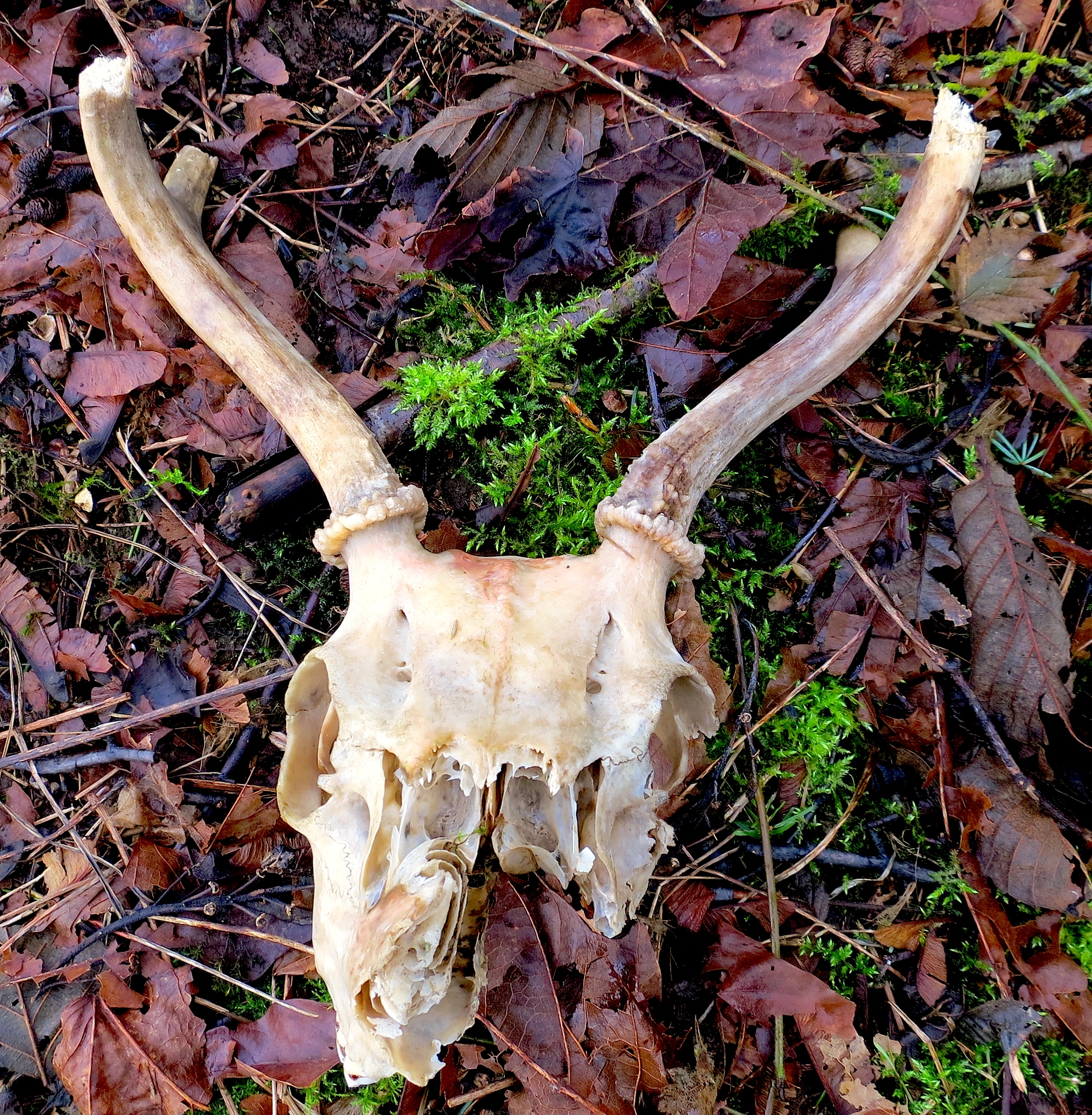
The deer in that beautiful place lay down their
bones: I must wear mine.
~Robinson Jeffers from “The Deer Lay Down Their Bones”

As the house of a person
in age sometimes grows cluttered
with what is
too loved or too heavy to part with,
the heart may grow cluttered.
And still the house will be emptied,
and still the heart.

Empty and filled,
like the curling half-light of morning,
in which everything is still possible and so why not.

Filled and empty,
like the curling half-light of evening,
in which everything now is finished and so why not.

Beloved, what can be, what was,
will be taken from us.
I have disappointed.
I am sorry. I knew no better.

A root seeks water.
Tenderness only breaks open the earth.
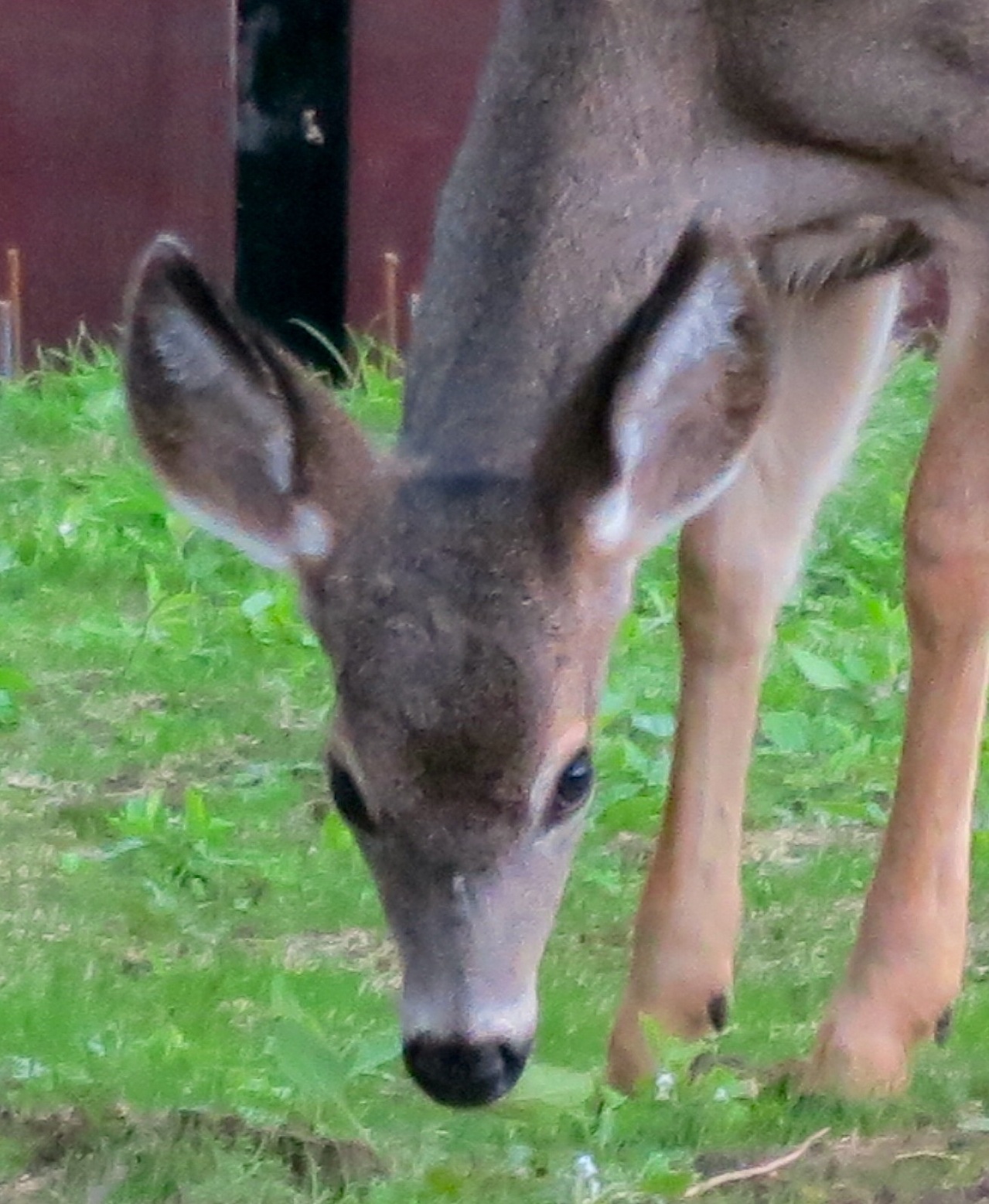
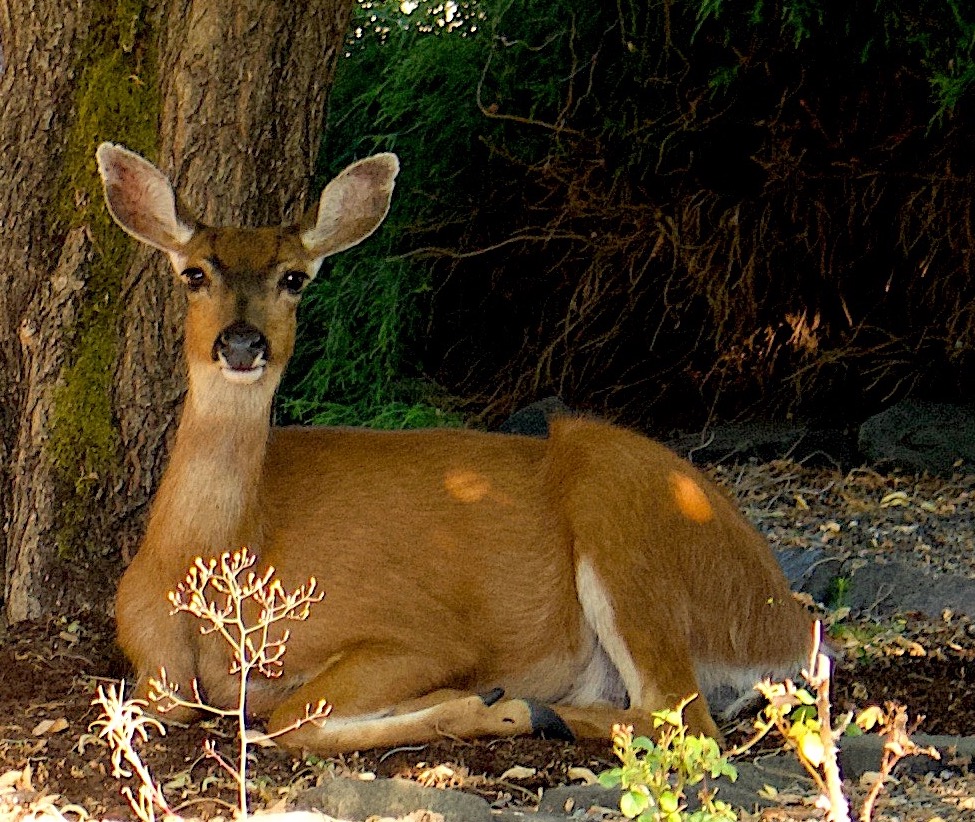
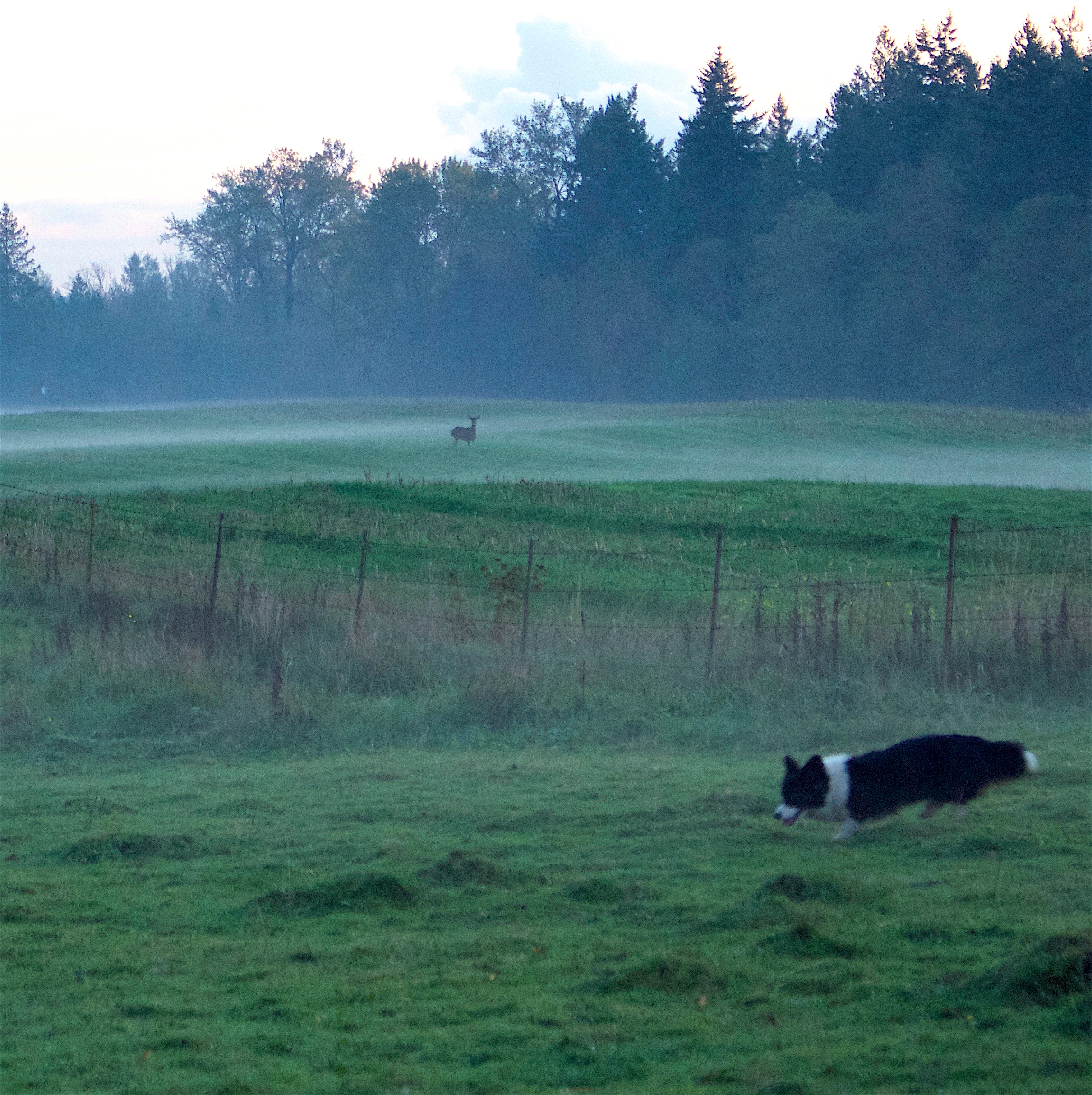
This morning, out the window,
the deer stood like a blessing, then vanished.

~Jane Hirschfield from “The Standing Deer”

My first time ever
seated next to my mother
in a movie theater, just
a skinny four year old girl
practically folded up in half
by a large padded chair
whose seat won’t stay down,
bursting with anticipation
to see Disney’s Bambi.

Enthralled with so much color,
motion, music, songs and fun
characters, I am wholly lost
in a new world of animated
reality when suddenly
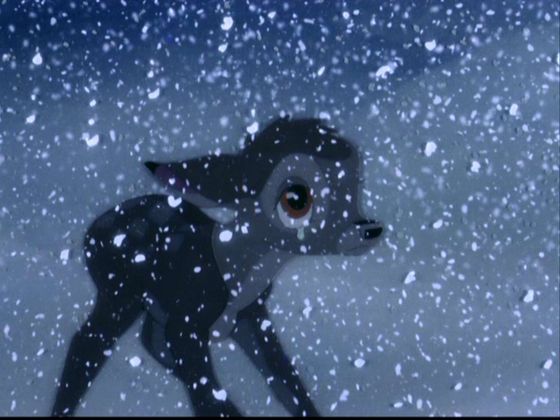
Bambi’s mother looks up,
alarmed,  from eating
a clump of grass
growing in the snow.

My heart leaps
with worry.
She tells him
to run
for the thicket,
to seek safety where
she has always
kept him warm
next to her.

She follows behind,
tells him to run faster,
not to look back,
don’t ever look back.

The gun shot
hits my belly too.

My stomach twists
as he cries out
for his mother,
pleading for her.
I know in my heart
she is lost forever,
sacrificed for him.

I sob as my mother
reaches out to me,
telling me not to look.
I bury my face
inside her hug,
knowing Bambi
is cold and alone
with no mother
at all.

She took me home
before the end.
I could not bear to watch
the rest of the movie for years.
His cries
still echo
in my ears.

Now, my children are grown
and have children of their own to protect.
My mother is gone from this earth,
my thicket emptying,
my heart full,
my stomach stronger,
I even keep the seat from folding
me up in a movie theater.

I now can look back
and weep inconsolably
once more.

The Full Ripe of Berrytime

I love to go out in late September
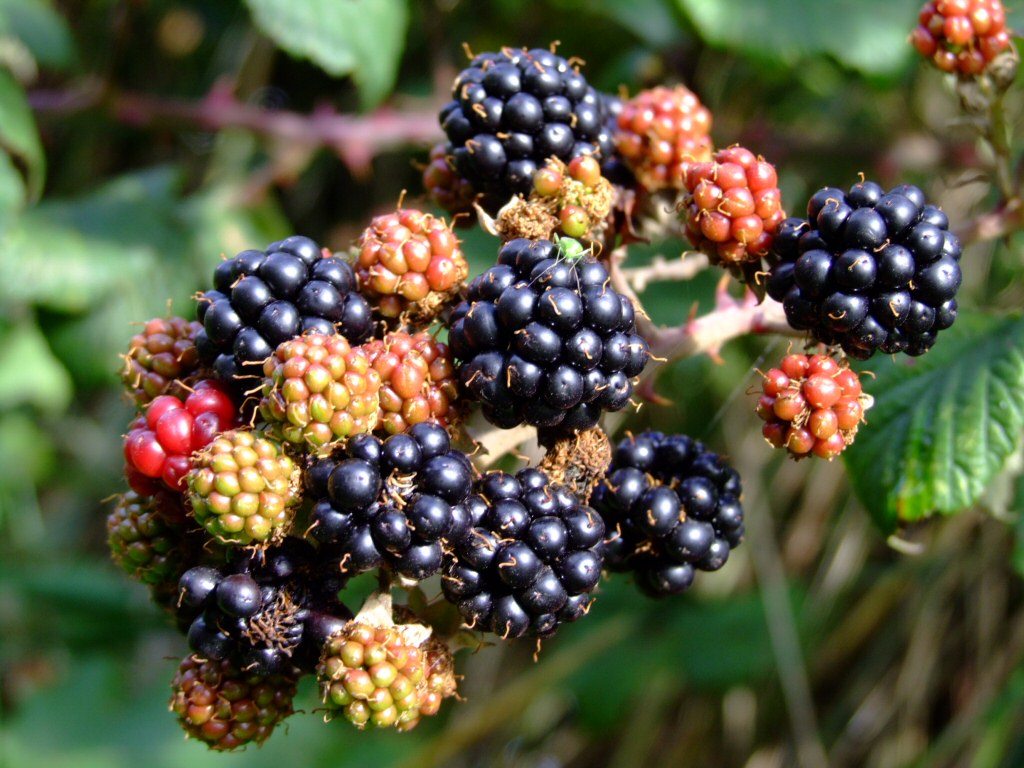
among the fat, overripe, icy, black blackberries
to eat blackberries for breakfast,
the stalks very prickly, a penalty
they earn for knowing the black art
of blackberry-making; and as I stand among them
lifting the stalks to my mouth, the ripest berries
fall almost unbidden to my tongue,
as words sometimes do, certain peculiar words
like strengths or squinched,
many-lettered, one-syllabled lumps,
which I squeeze, squinch open, and splurge well
in the silent, startled, icy, black language
of blackberry-eating in late September.

~Galway Kinnell “Blackberry Eating”

“In that year, 1914, we lived on the farm
And the relatives lived with us.
A banner year for wild blackberries
Dad was crazy about wild blackberries
No berries like that now.

You know Kitsap County was logged before
The turn of the century—it was easiest of all,
Close to water, virgin timber,

When I was a kid walking about in the
Stumpland, wherever you’d go a skidroad
Puncheon, all overgrown.
We went up one like that, fighting our way through
To its end near the top of a hill:
For some reason wild blackberries
Grew best there. We took off one morning
Right after milking: rode the horses
To a valley we’d been to once before
Hunting berries, and hitched the horses.
About a quarter mile up the old road
We found the full ripe of berrytime—
And with only two pails—so we
Went back home, got Mother and Ruth,
And filled lots of pails. Mother sent letters
To all the relatives in Seattle:
Effie, Aunt Lucy, Bill Moore,
Forrest, Edna, six or eight, they all came
Out to the farm, and we didn’t take pails
Then: we took copper clothes-boilers,
Wash-tubs, buckets, and all went picking.
We were canning for three days.”
~ Gary Snyder “6” from Myths and Texts.

Earth’s crammed with heaven
And every common bush afire with God
But only he who sees, takes off his shoes,
The rest sit round it and pluck blackberries~
–Elizabeth Barrett Browning in “Aurora Leigh”

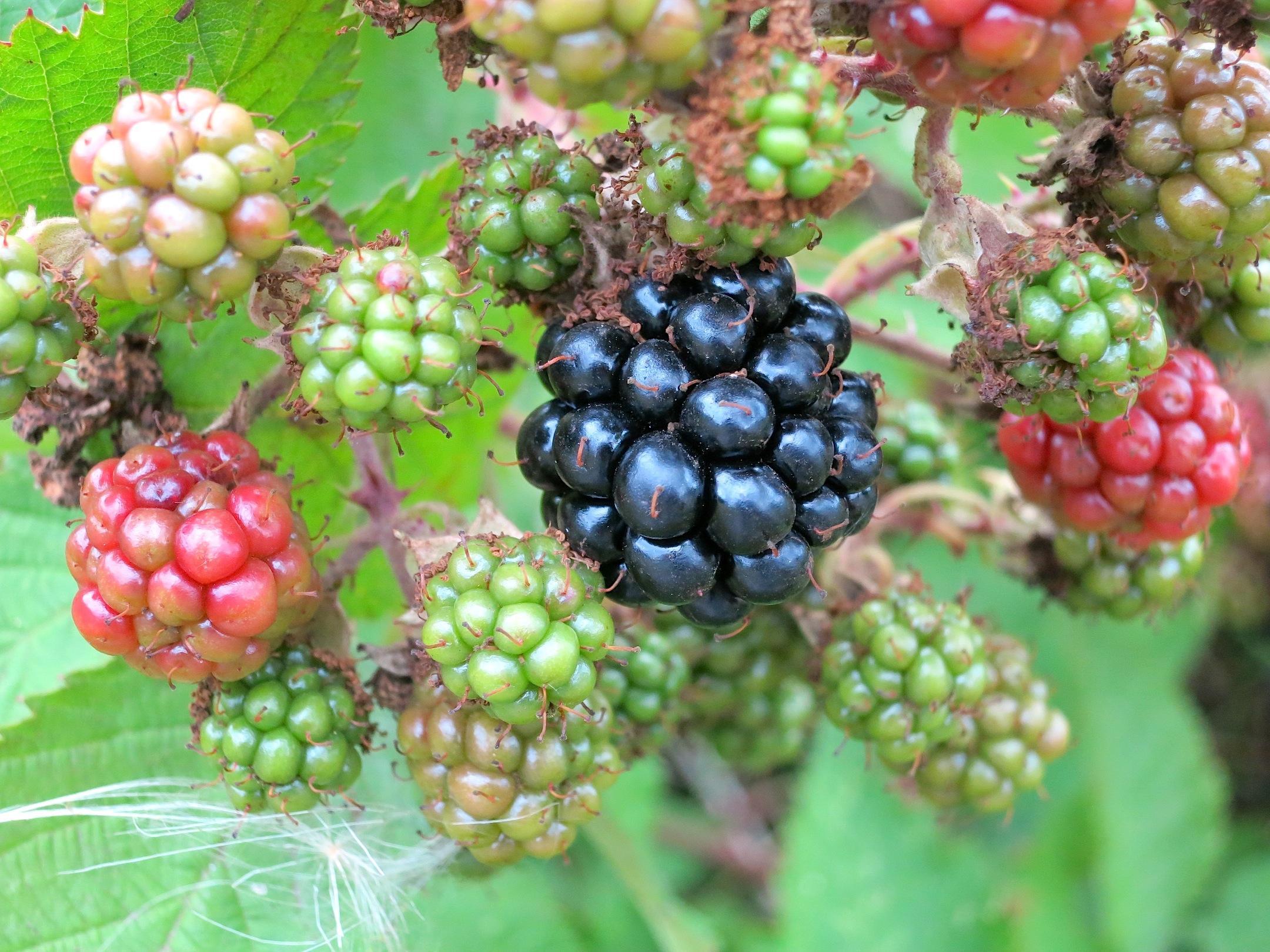
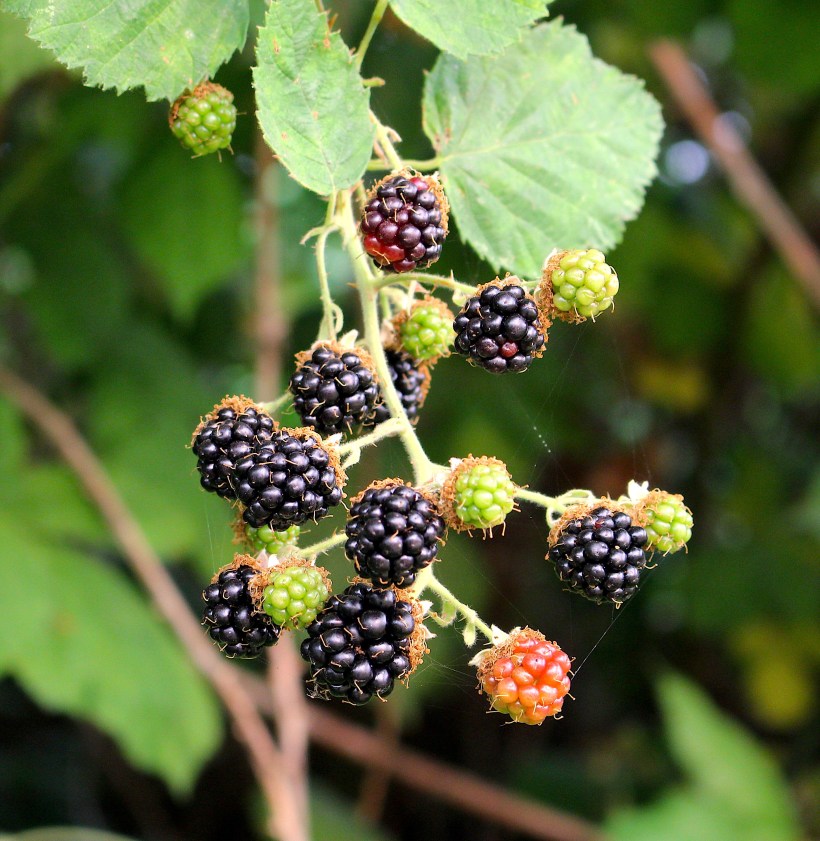
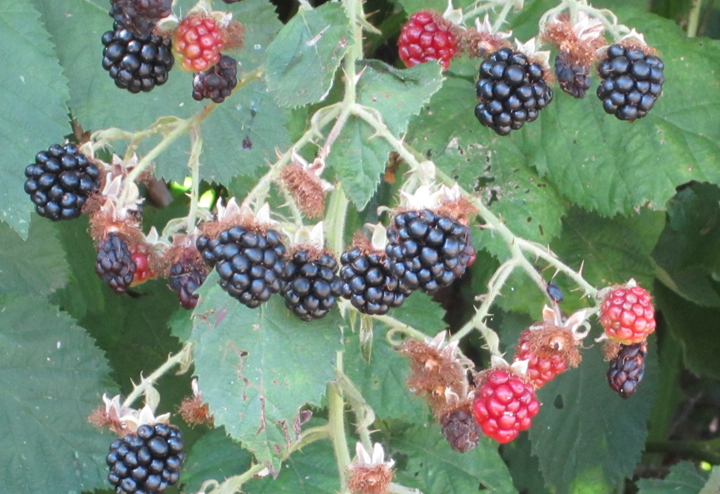
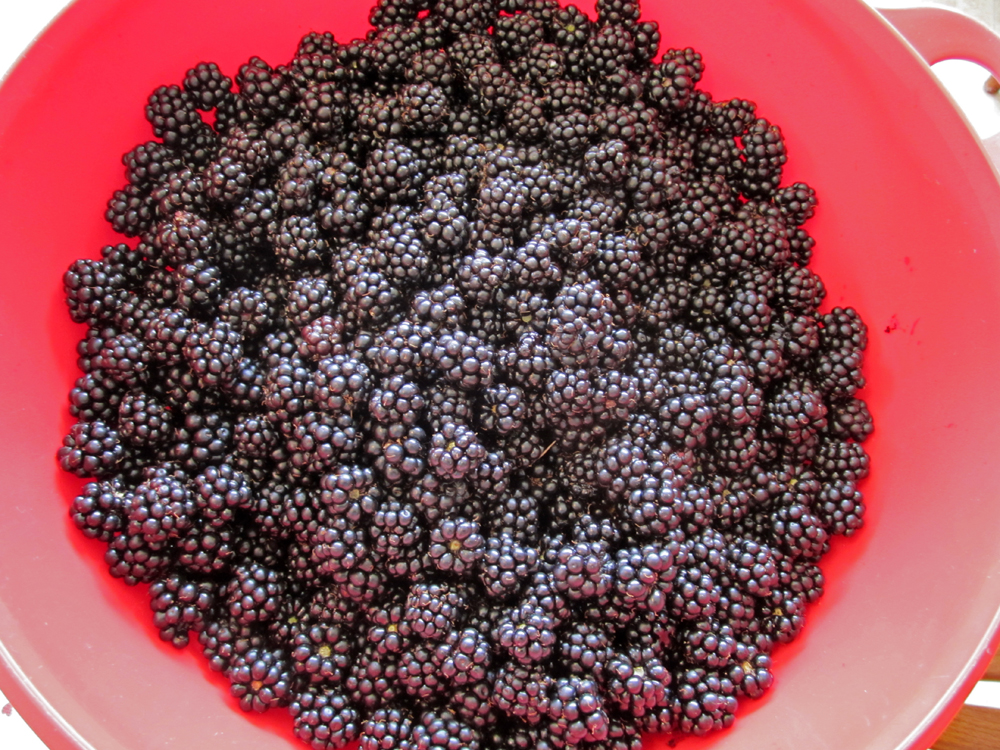
All I wanted was a few blackberries.

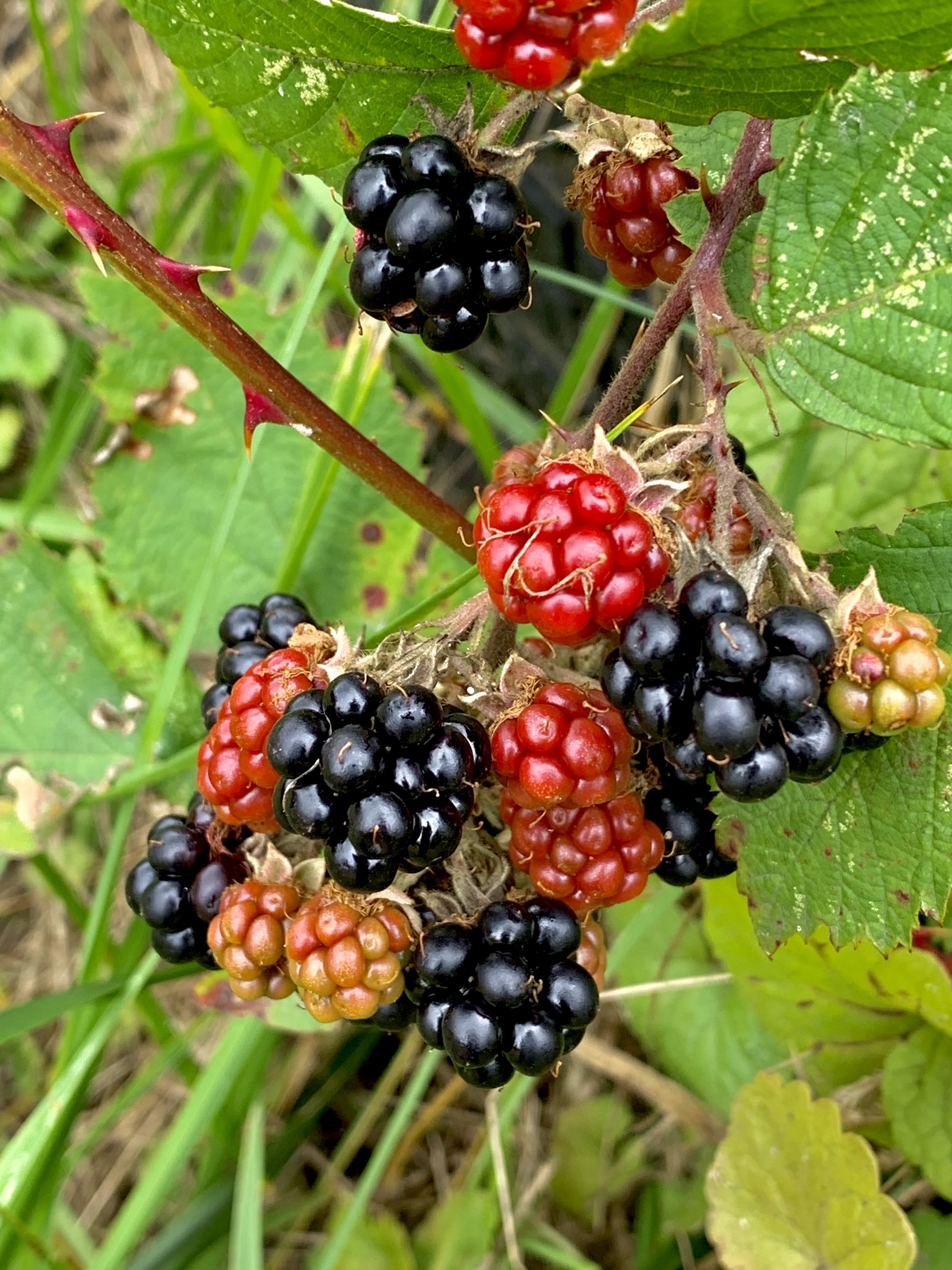
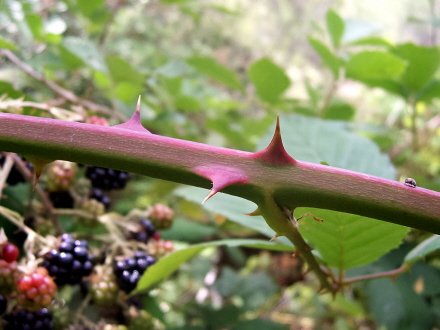
I admit my objective was just to pick enough for cobbler for today’s noon dinner after church, oblivious to God burning in the bushes towering over me, around me, snagging me at every opportunity.  If I had given it more thought, I would have realized the reaching vines hooking my arms and legs were hardly subtle.  The thorns ripped at my skin, leaving me bloody and smarting.  The fruit itself stained my hands purple, making them look freshly bruised.  I crushed fat vines underfoot, trampling and stomping with my muck boots in order to dive deeper into the bushes.  Webs were everywhere, with spiders crawling up my arms and dropping down into my hair.  I managed to kick up one hornet’s nest so I called it quits.

All I wanted was a few blackberries, so blinded to all the clues crammed in every nook and cranny of every bush.

All I wanted was a few blackberries, trampling on holy ground with well-protected feet, unwilling to be barefoot and tenderly vulnerable.

All I wanted was a few blackberries, the lure of black gold plucked at the cost of rips and scratches and tears.

What I got was burned by a bush…

and a few blackberries for today’s crammed-with-heaven cobbler.

We Are Forever Changed

there are no words there is no song
is there a balm that can heal these wounds that will last a lifetime long
and when the stars have burned to dust
hand in hand we still will stand because we must

in one single hour in one single day
we were changed forever something taken away
and there is no fire that can melt this heavy stone
that can bring back the voices and the spirits of our own

all the brothers, sisters and lovers all the friends that are gone
all the chairs that will be empty in the lives that will go on
can we ever forgive though we never will forget
can we believe in the milk of human goodness yet

we were forged in freedom we were born in liberty
we came here to stop the twisted arrows cast by tyranny
and we won’t bow down we are strong of heart
we are a chain together that won’t be pulled apart
~Kitty Donohoe “There are no words”
written on 9/1/11

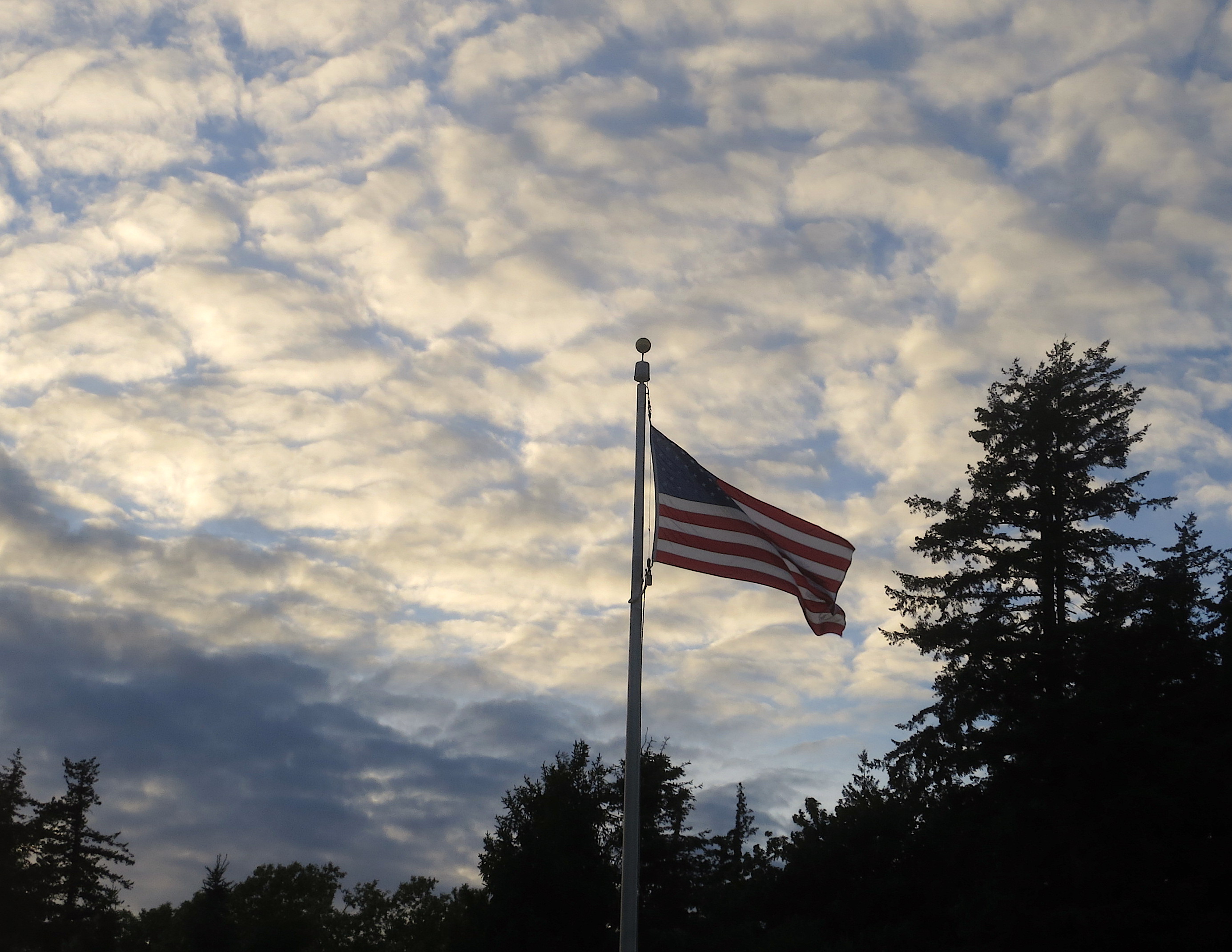
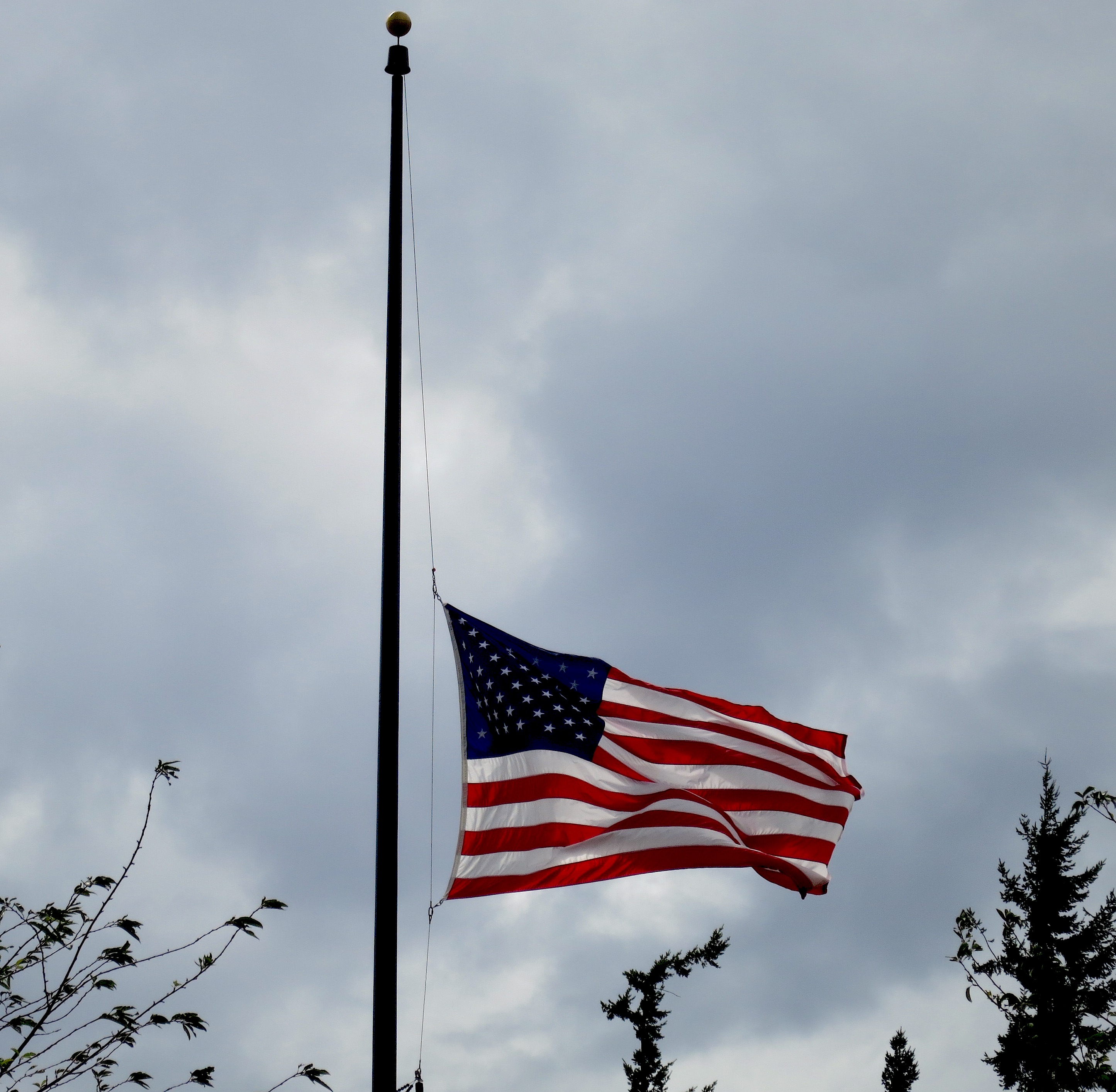
As a grade school child in November 1963, I learned the import of the U.S. flag being lowered to half mast in response to the shocking and violent death of our President. The lowering of the flag was so rare when I was growing up, it had dramatic effect on all who passed by — something very sad had happened to our country, warranting our unified silence and our stillness.

Since 9/11/01, our flag has spent significant time at half mast, so much so that I’m befuddled instead of contemplative, puzzling over what the latest loss might be as there are so many, sometimes all happening in the same time frame.  We no longer are silenced by this gesture of honor and respect and we certainly are not stilled, personally and corporately instigating and suffering the same mistakes against humanity over and over again.

There remains so much more sadness to be borne after that tragic day 18 years ago – such abundance of grief that our world has become overwhelmed and stricken and it seems we’ve lost all imagination for the “milk of human goodness.” Instead it seems we have become more divisive, pulling ourselves apart.

We must return, as people of faith, to that stillness to which we are called on a day such as today.  We must be still; we must be silent. We must let the bells toll and the names be read out. We must grieve the losses of this turning world and pray for release from the suffering we cause and we endure.  Only in the asking, only in the kneeling down and pleading, are we surrounded by grace.   A flag half lowered may have lost its power to punch our gut, but we are illuminated by the Light,  forged in freedom, born in liberty.

We must stop allowing our chain links from being pulled apart.

Holding My Feet to the Fire

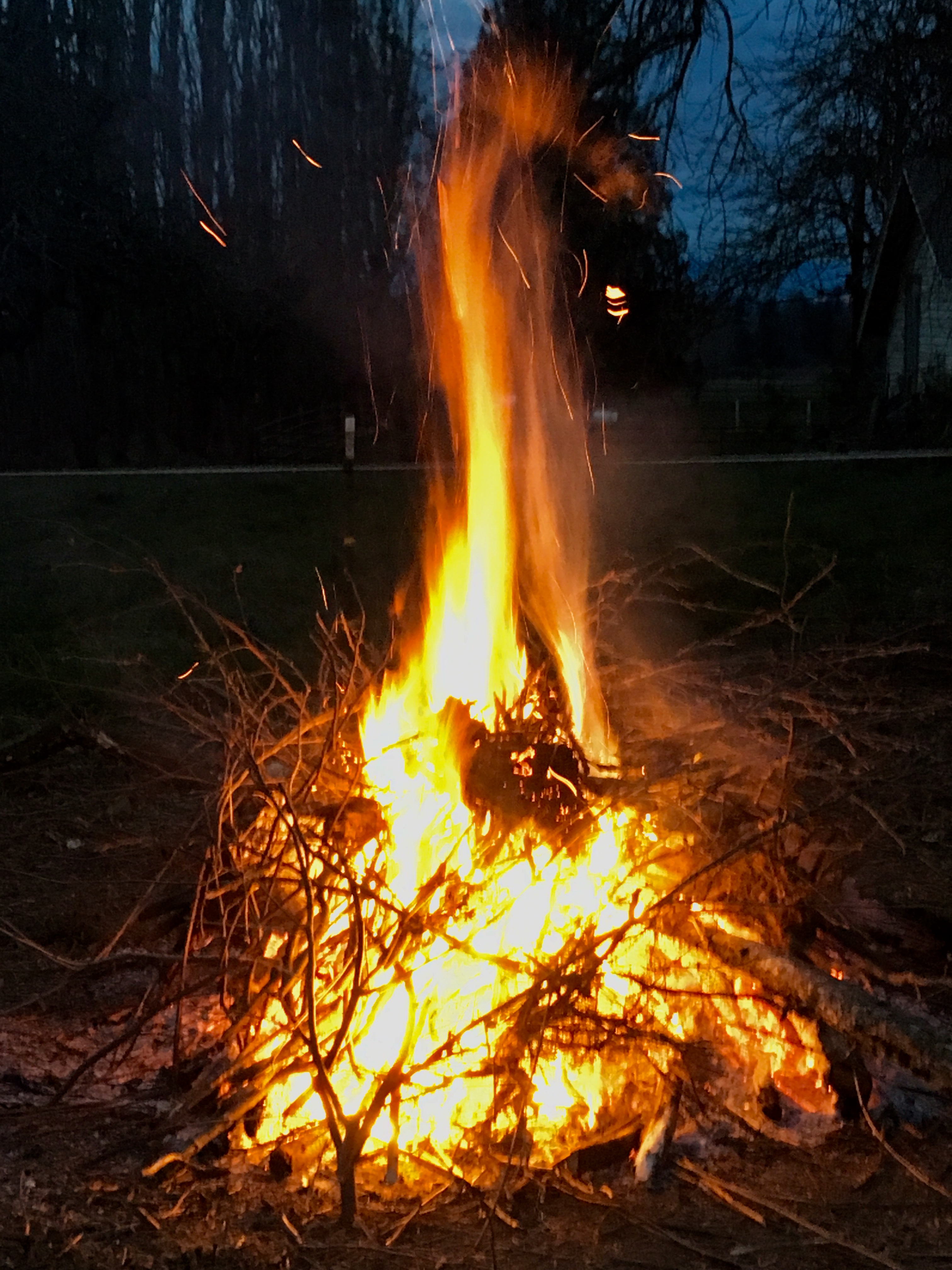
God is the fire my feet are held to.
~Charles Wright, from “Ars Poetica II” in Appalachia

If we think we’re going to get off easy in this life
because we do what we’re told to do:
keeping the Sabbath
and our noses clean,
saying what we ought to say
when we should say it
and keeping our mouths shut when
it is best to say nothing at all.

If we think our good deeds
and relative lack of bad deeds will save us,
we have another think coming
and a lot of explaining to do.

We walk through fire
because nothing about God’s glory
is easy. We are hidden in the cleft because He is too much for our eyes to behold.
We remove our sandals
to feel the hot coals of holy ground.
He burns without being consumed
so our hearts are scorched in His presence.

Yet His feet are blistered too.
He knows exactly how this feels.


Threshed to Death

If you go back to the etymology of the word “threshold,” it comes from “threshing,” which is to separate the grain from the husk. So the threshold, in a way, is a place where you move into more critical and challenging and worthy fullness.

There are huge thresholds in every life.

You know that, for instance, if you are in the middle of your life in a busy evening, fifty things to do and you get a phone call that somebody you love has suddenly died, it takes ten seconds to communicate that information.

But when you put the phone down, you are already standing in a different world. Suddenly everything that seems so important before is all gone and now you are thinking of this.

So the given world that we think is there and the solid ground we are on is so tentative. And a threshold is a line which separates two territories of spirit, and very often how we cross is the key thing.

When we cross a new threshold worthily, what we do is we heal the patterns of repetition that were in us that had us caught somewhere.
~John O’Donohue from an “On Being” interview with Krista Tippett on “Becoming Wise”

I emerge from the mind’s
cave into the worse darkness
outside, where things pass and
the Lord is in none of them.
I have heard the still, small voice
and it was that of the bacteria
demolishing my cosmos. I
have lingered too long on
this threshold, but where can I go?
To look back is to lose the soul
I was leading upwards towards
the light.
To look forward?
Ah, what balance is needed at
the edges of such an abyss.

I am alone on the surface
of a turning planet. What
to do but, like Michelangelo’s
Adam, put my hand
out into unknown space,
hoping for the reciprocating touch?
~R.S. Thomas “Threshold”

Yet three more “mass shootings of the week” making it 32 so far this year:
-garlic festival attendees, WalMart shoppers, entertainment venues –

so which of us will be next?

We are unwillingly forced to a threshold we must cross over. Yet we stand stubborn defending our second amendment rights, immobilized, frozen to tradition while dying on the spot, peering out in fear but never peering inward in self-examination.

What prevents us from stopping this insanity of violence from continuing?

The answer is not that more of us should bear arms so a shoot-out is possible no matter where we go. Mass shooters choose to die in their most public and heinous act of hatred and nihilism – being shot to death is no disincentive for them.

We sweep people into office from both parties who only voice platitudes in the face of this repetitive tragedy and offer no viable solutions. Yes, victims (including children!) and their families need our prayers, but they should never have become victims in the first place. We have failed them, again and again and again.
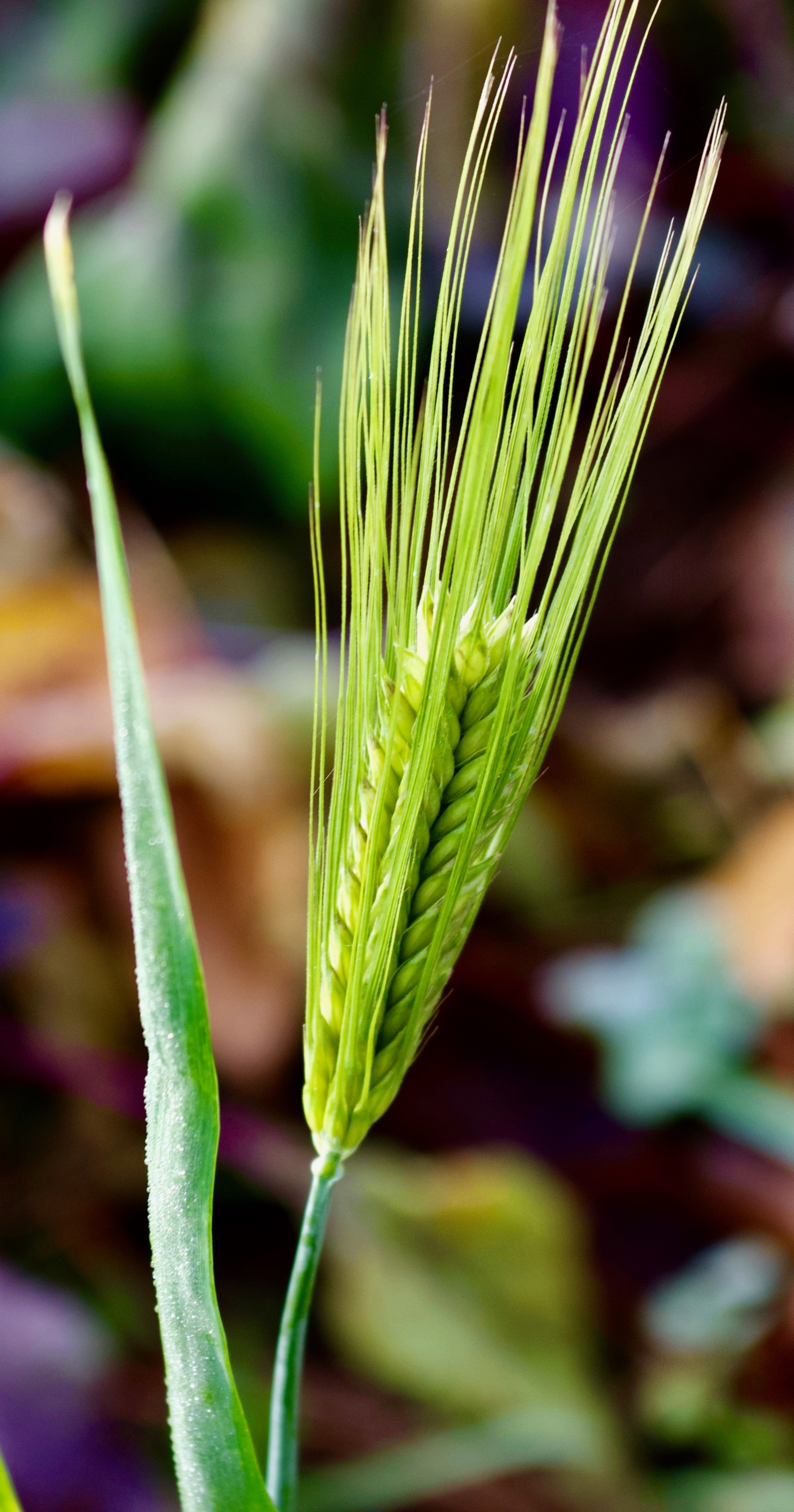
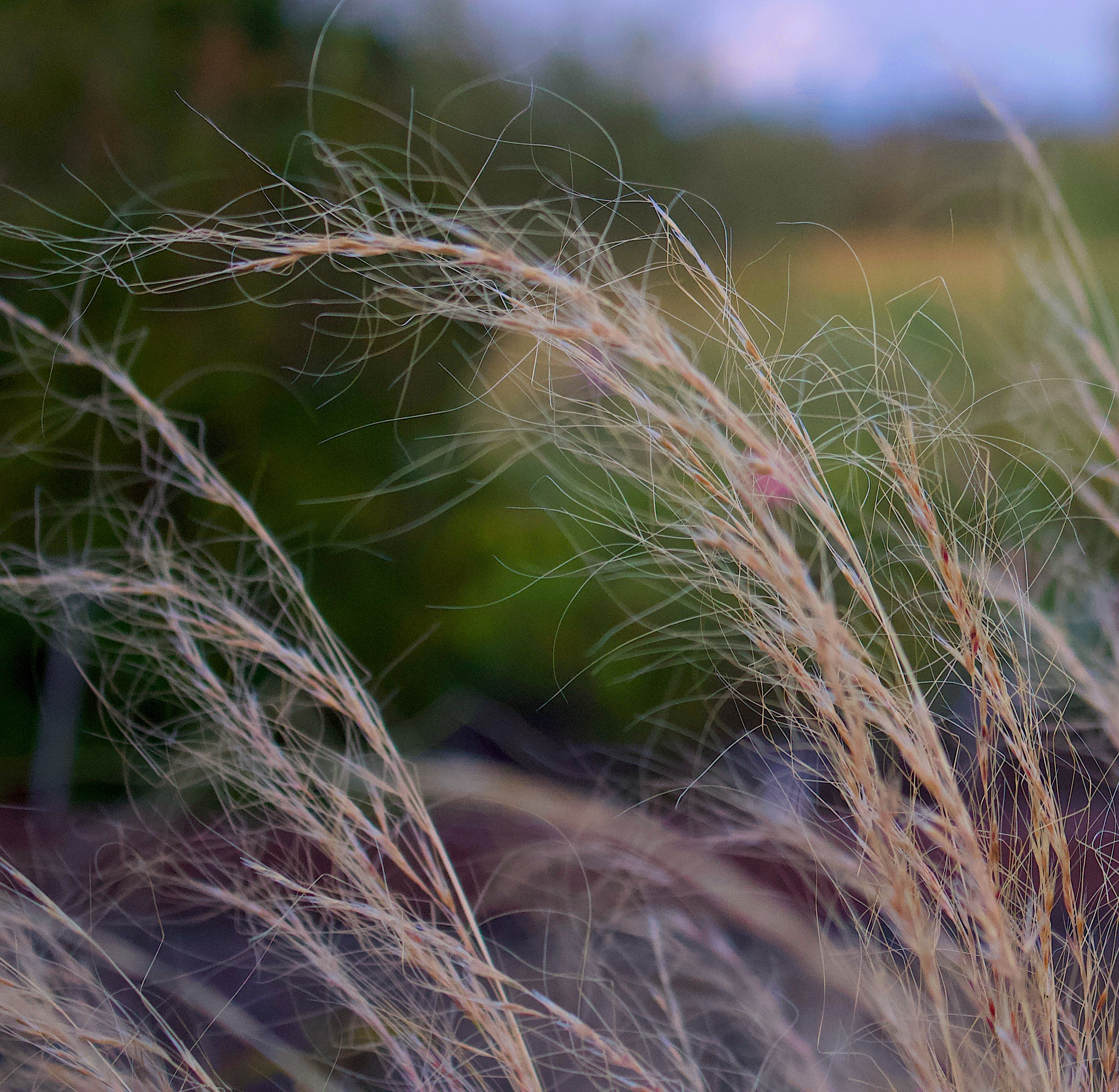
So how many more innocents need to perish? When is it our own turn to be gunned down while simply living out our daily routine? Instead of submitting to the necessary threshing- a crushing winnowing to blow away the chaff of our lives- we defend the status quo and somehow convince ourselves the next shooter will not come to our store, our church, our school or our neighborhood.

History will continue to repeat itself as we die every day, by our own hand or by others’. We must cross the threshold to sane policies together, arm in arm, united in the need to move forward beyond this mess we have made for ourselves.

We all need a good threshing, badly. We need to be worthy of our privileges. We need, in our desperation, to reach out our hands into an unknown space, searching for that reciprocating touch, hoping and praying Someone is there to grab hold and lead us across to a better day and a better way.


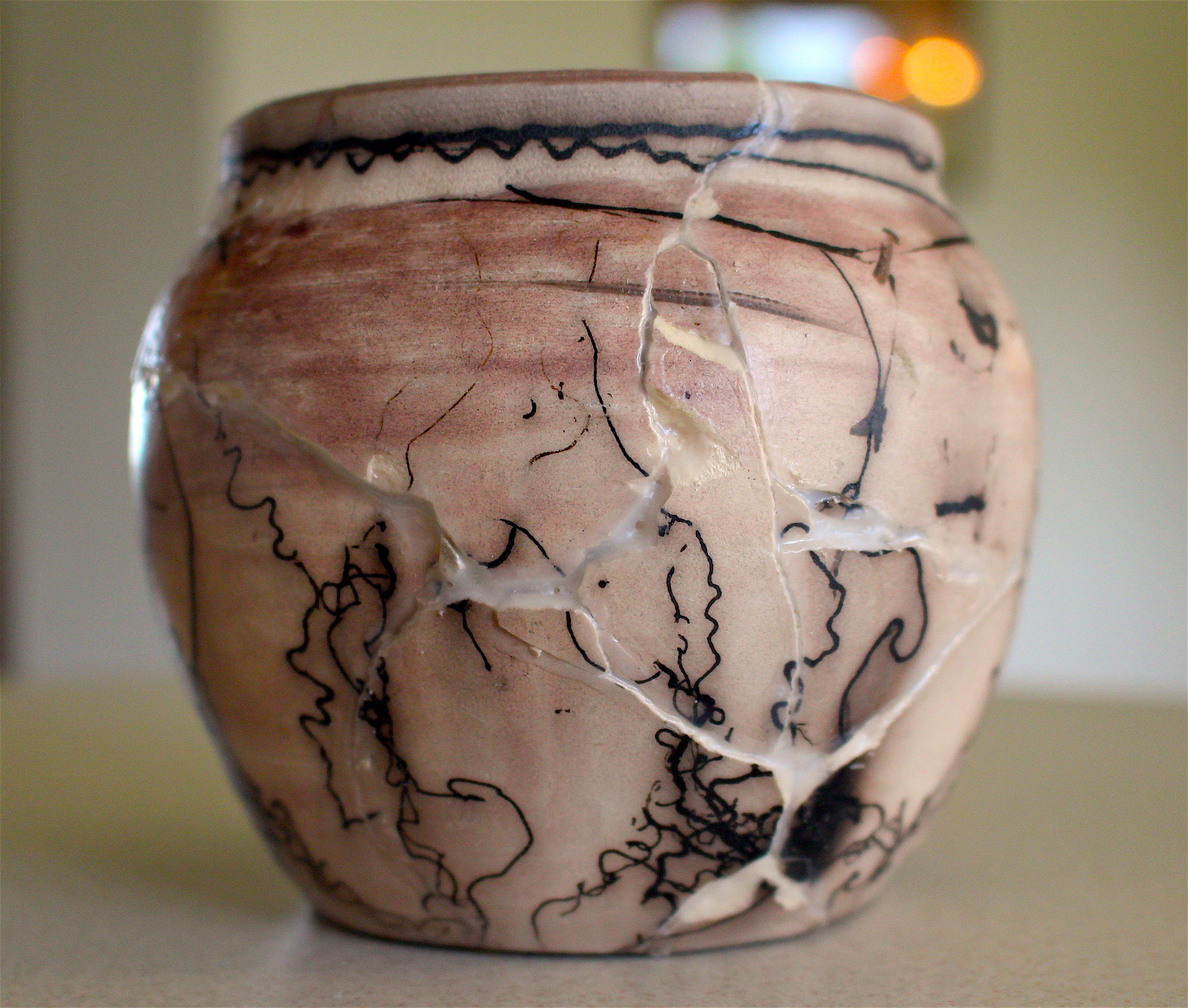
Grace is Glue

Man is born broken. He lives by mending. The grace of God is glue.
~Eugene O’Neill

We are born hollering,
already aware of our brokenness –
our emptiness evident
from the first breath,
each tiny air sac bursting
with the air of a fallen world
that is never quite enough to satisfy.

The rest of our days are spent
filling up our empty spaces:
whether alveoli
or stomach
or synapse hungry for knowledge;
still hollering and heart
broken.

So we mend and are mended
through healing another,
sewn up
by knitting together
the scraggly fragments of lives,
becoming the crucial glue
boiled from His gifted Grace,
all empty holes made holy
when filled to brimming
so wholly.

Way Out Beyond Us

My father would lift me
to the ceiling in his big hands
and ask, 
How’s the weather up there?
And it was good, the weather
of being in his hands, his breath
of scotch and cigarettes, his face
smiling from the world below.
O daddy, was the lullaby I sang
back down to him as he stood on earth,
my great, white-shirted father, home
from work, his gold wristwatch
and wedding band gleaming
as he held me above him
for as long as he could,
before his strength failed
down there in the world I find myself
standing in tonight, my little boy
looking down from his flight
below the ceiling, cradled in my hands,
his eyes wide and already staring
into the distance beyond the man
asking him again and again,
How’s the weather up there?
~George Bilgere “Weather”.

It was hard work, dying, harder
than anything he’d ever done.

Whatever brutal, bruising, back-
breaking chore he’d forced himself

to endure—it was nothing
compared to this. And it took

so long. When would the job
be over? Who would call him

home for supper? And it was
hard for us (his children)—

all of our lives we’d heard
my mother telling us to go out,

help your father, but this
was work we could not do.

He was way out beyond us,
in a field we could not reach.

~Joyce Sutphen “My Father, Dying”

Deep in one of our closets is an old film reel of me about 16 months old sitting securely held by my father on his shoulders. I am bursting out with giggles as he repeatedly bends forward, dipping this head and shoulders down. I tip forward, looking like I am about to fall off, and when he stands back up straight, my mouth becomes a large O and I can almost remember the tummy tickle I feel. I want him to do it again and again, taking me to the edge of falling off and then bringing me back from the brink.

My father was a tall man, so being swept up onto his shoulders felt a bit like I was touching heaven.

It was as he was dying 24 years ago this week that I realized again how tall he was — his feet kept hitting the foot panel of the hospital bed my mother had requested for their home. We cushioned his feet with padding so he wouldn’t get abrasions even though he would never stand on them again, no longer towering over us.

His helplessness in dying was startling – this man who could build anything and accomplish whatever he set his mind to was unable to subdue his cancer. Our father, who was so self-sufficient he rarely asked for help, did not know how to ask for help now.

So we did what we could when we could tell he was uncomfortable, which wasn’t often. He didn’t say much, even though there was much we could have been saying. We didn’t reminisce. We didn’t laugh and joke together. We just were there, taking shifts catching naps on the couch so we could be available if he called out, which he never did.

This man:
who had grown up dirt poor,
fought hard with his alcoholic father
left abruptly to go to college – the first in his family –
then called to war for three years in the South Pacific.

This man:
who had raised a family on a small farm while he was a teacher,
then a supervisor, then a desk worker.

This man:
who left our family to marry another woman
but returned after a decade to ask forgiveness.

This man:
who died in a house he had built completely himself,
without assistance, from the ground up.

He didn’t need our help – he who had held tightly to us and brought us back from the brink when we went too far – he had been on the brink himself and was rescued, coming back humbled.

No question the weather is fine for him up there. I have no doubt.