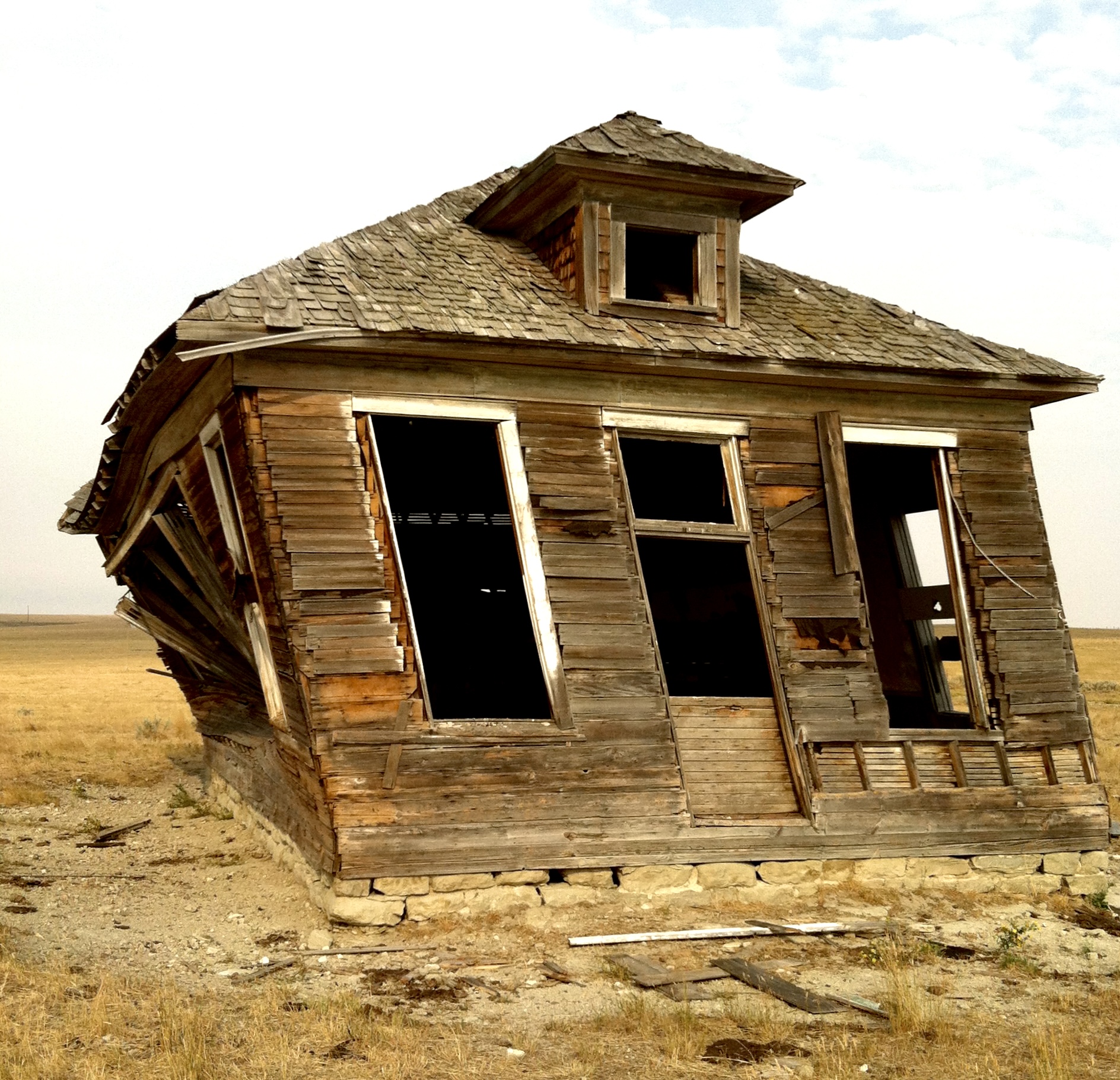
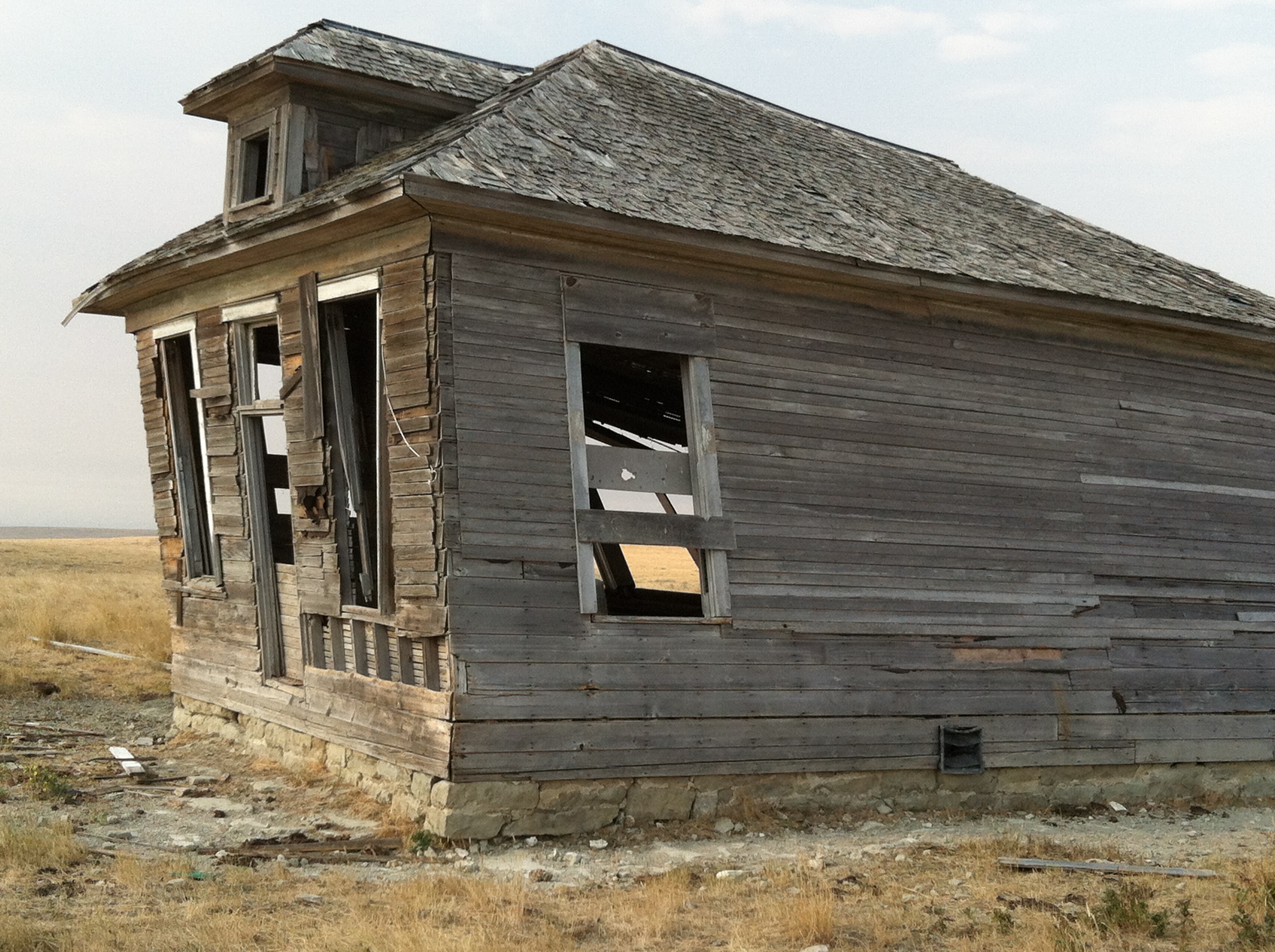
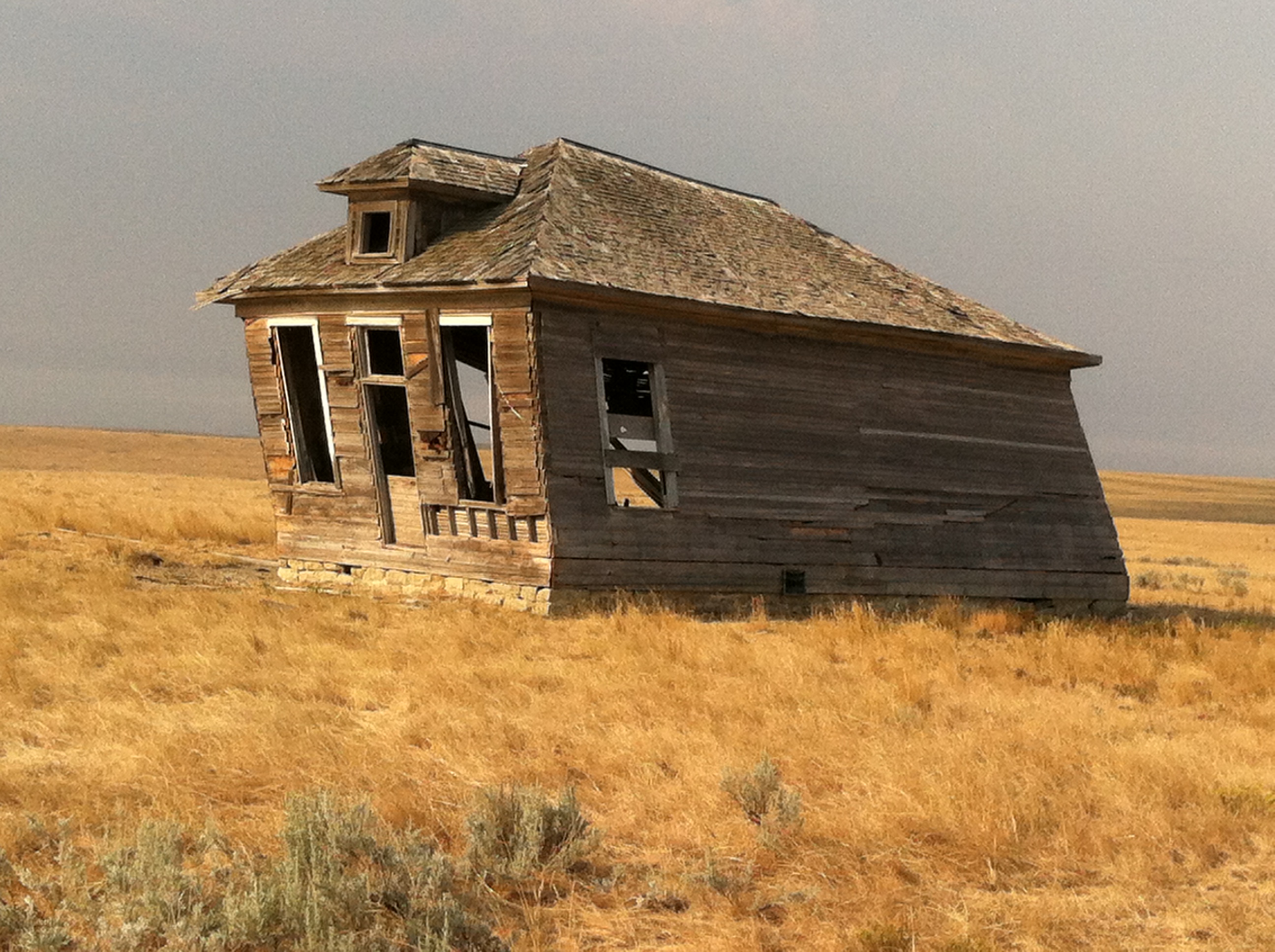
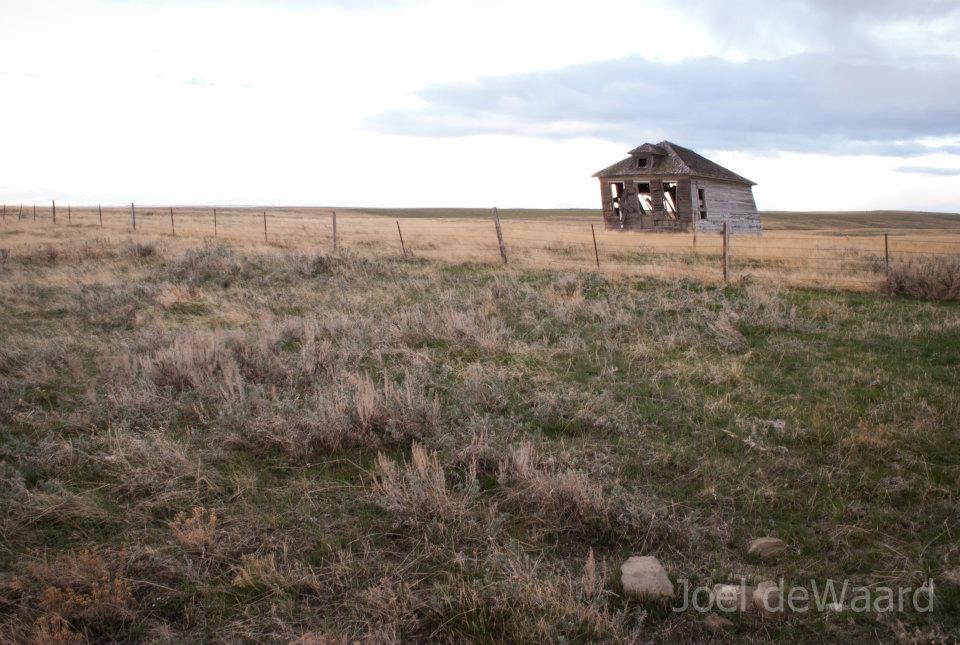
As through a long-abandoned half-standing house only someone lost could find,
which, with its paneless windows and sagging crossbeams, its hundred crevices in which a hundred creatures hoard and nest,
seems both ghost of the life that happened there and living spirit of this wasted place,
wind seeks and sings every wound in the wood that is open enough to receive it,
shatter me God into my thousand sounds.
~Christian Wiman “Small Prayer in a Hard Wind”from Every Riven Thing
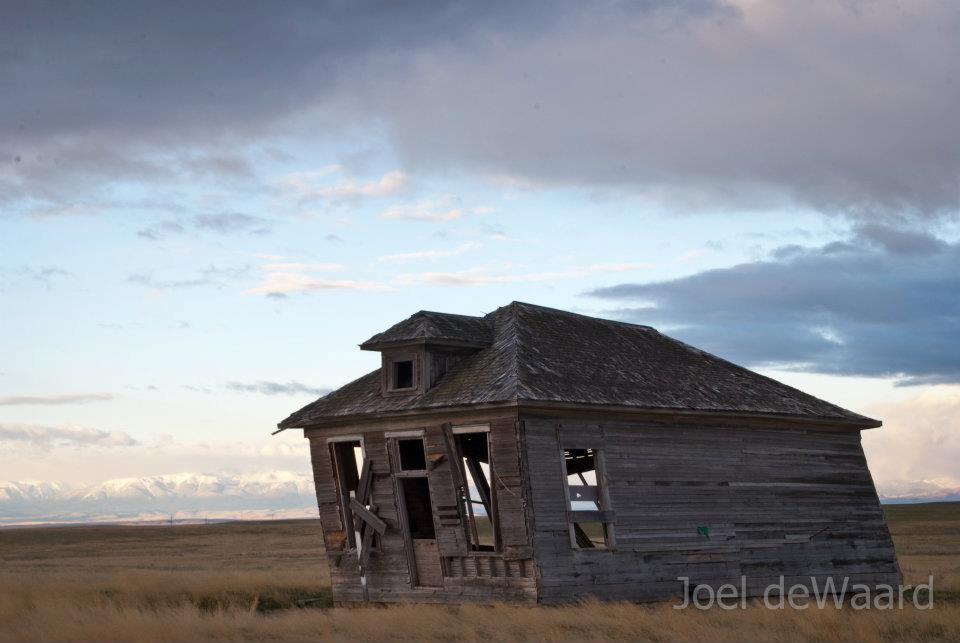
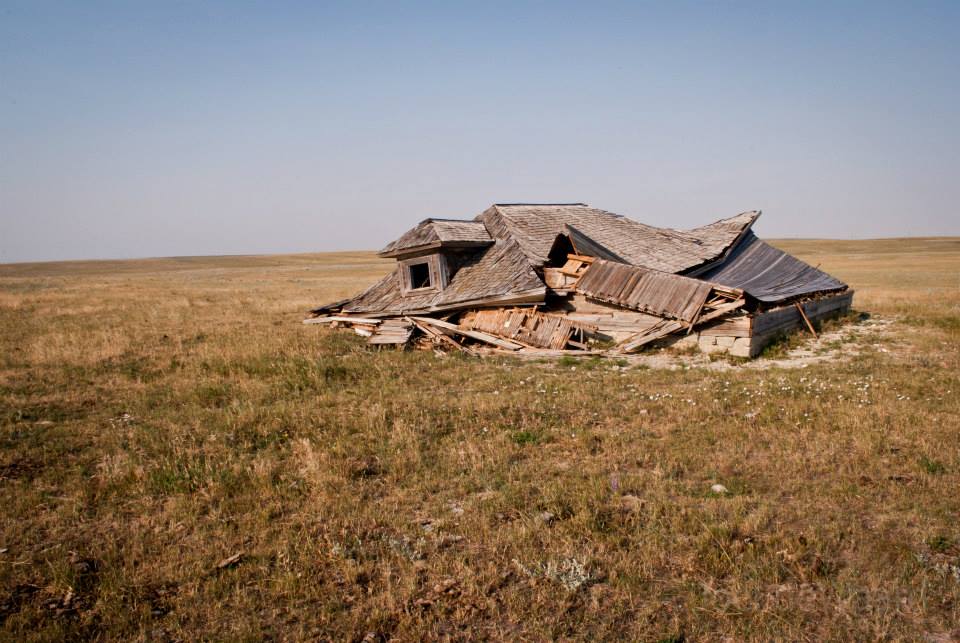
the same abandoned school house near Rapalje, Montana a few years later, this photo by Joel DeWaard
May I, though sagging and gray, perilously leaning, be porous enough to allow life’s gusts to blow through me without pushing me over in a heap.
The wind may fill my every crack, crevice, and defect, causing me to sing out.
Someday, when I do shatter, toppling over into pieces into the ground, it will be amidst a mosaic of praises.
photo by Joel DeWaard
‘I am not a prophet. I am a farmer; the land has been my livelihood since my youth.’ If someone asks, ‘What are these wounds on your body?’ they will answer, ‘The wounds I was given at the house of my friends.’ Zechariah 13: 5-6
But he was pierced for our transgressions, he was crushed for our iniquities; the punishment that brought us peace was on him, and by his wounds we are healed. Isaiah 53:5
photo by Joel DeWaard
This Lenten season I reflect on the words of the 19th century southern spiritual hymn “What Wondrous Love is This”
One-Time
Monthly
Yearly
Make a one-time or recurring donation to support daily Barnstorming posts
Now I become myself. It’s taken Time, many years and places; I have been dissolved and shaken, Worn other people’s faces, Now to stand still, to be here, Feel my own weight and density!
All fuses now, falls into place From wish to action, word to silence, My work, my love, my time, my face Gathered into one intense Gesture of growing like a plant. Now there is time and Time is young. Stand still, stand still, and stop the sun! ~May Sarton from “Now I Become Myself”
My grade school took part in an educational experiment in the early 1960’s. It was one of the first schools to mainstream special needs children into “regular” classrooms. At that time, the usual approach was to put kids with disabilities in separate rooms, if not entirely separate schools.
During those years, the average class size for a grade school teacher was 32-35 kids, with no teacher’s aides, rare parent volunteers, (except for field trips and room mothers who threw the holiday parties) and no medications or special accommodations for ADHD or dyslexia. I’m not sure how teachers coped with nearly three dozen noisy disruptive kids, but somehow they managed to teach in spite of the obstacles. Adding in children with mental and physical challenges without additional adult help must have been very difficult.
So some kids got recruited to help out the kids with disabilities. It helped the teacher by creating a buddy system for the special needs kids who might need help with class work or who might have difficulty getting around.
I was assigned to Michael so our desks were side by side for the year. He was a thin little boy with cerebral palsy and hearing aids, thick glasses hooked with a wide band around the back of his head, and spastic muscles never going where he wanted them to go. He could not remain still, try as he might. He walked independently with some difficulty, mostly on his tiptoes because of his shortened leg tendons, frequently falling when he got going too quickly. His thick orthopedic shoes with leg braces would trip him up. His hands were intermittently in a grip of contracted muscles, and his face was always contorting and grimacing. He drooled a lot, so perpetually carried a Kleenex in his hand to catch the drips of spit that ran out of his mouth and dropped on his desk, threatening to spoil his coloring and writing papers.
His speech consisted of all vowels, as his tongue couldn’t quite connect with his teeth or palate to sound out the consonants, so it took some time and patience to understand what he said. He could write with great effort, gripping the pencil awkwardly in his tight palm and found he could communicate better at times on paper than by talking.
I made sure he had help to finish assignments if his muscles were too tight to write, and I learned his speech so I could interpret for the teacher. He was brave and bright, with a finer mind than most of the kids in our class. He loved a good joke and his little body would shudder as he roared his appreciation. I was always impressed at how he expressed himself and how little bitterness he had about his limitations. He was the most articulate inarticulate person I had ever met.
As Michael appeared around the corner of the grade school building every morning, he would walk quickly in his careful tip-toe cadence, arms flailing, shoes scuffing, raising up dust with each step. He would wave at me and call out my name in his indecipherable voice.
Once, as he approached, a group of kids playing tag swooped past him, purposely a little too close, spinning him off his feet like a top and onto the ground. Glasses askew, he lay momentarily still, and realizing I was needed, I ran to help him up. Despite all he endured, I never saw Michael cry, not even once, not even when he fell down hard. When he got angry or frustrated, he’d get very quiet. His muscles would tense up so much he would go into even greater spasms.
I had no tolerance for anyone who bullied him. I could see the pain in his grimacing face. Although he would give me a huge toothy smile of thanks, his eyes, as usual, said what his mouth could not. Michael knew I needed him as much as he needed me. I relished my new role as the life preserver thrown to him as he struggled to stay afloat in a sea of classroom hostility.
There were many times when I resented being teased by other students about Michael being my boyfriend. Although he would blush bright red when he heard that, Michael really had become a good friend, who just happened to be a boy.
The following academic year, he moved to another school district, so I never saw Michael again. However, I heard him on local radio six years later, reading an essay he’d written for the county Voice of Democracy contest on what it meant to be a free citizen. His essay was one of the top three award winners that year. I was amazed at how understandable his speaking voice had become.
Years later, I went on to medical school, learning from patients who lived with even far greater limitations than Michael. I realized that my initial training in compassionate care had been as I sat by his side helping him navigate 5th grade. He showed me how important it was to take the time to understand his voice and his heart when others would or could not.
I didn’t appreciate it then as I do now, but he taught me far more than I ever taught him: patience, perseverance and respect for the journey through obstacles rather than focusing just on the destination.
He helped me surpass my own less visible limitations. I was his special friend – one who just happened to be a girl.
So let’s not get tired of doing what is good. At just the right time we will reap a harvest of blessing if we don’t give up. Galatians 6:9
This Lenten season I reflect on the words of the 19th century southern spiritual hymn “What Wondrous Love is This”
One-Time
Monthly
Yearly
Make a one-time or recurring donation to support daily Barnstorming blog posts
In the real world of pain, how could one worship a God who was immune to it? ~John Stott from “The Cross of Christ”
With all that happens daily in this disordered world, in order to even walk out the door in the morning, I fall back on what we are told in God’s Word, in 365 different scripture verses for each and every day of the year:
Fear not.
Do not be overwhelmed with evil but overcome evil with good.
And so – we must overcome — despite our fears in this world of pain.
As demonstrated by the anointing of Jesus’ feet by Mary of Bethany, we must do what we can to sacrifice for others, to live in such a way that death cannot erase the meaning and significance of a life. We are called to give up our own selfish agendas in order to consider the needs of others.
It is crystal clear from Christ’s example as we observe His journey to the cross next week: we are to cherish life -all lives- even unto death. As Christ Himself forgave those who hated and murdered Him, He forgives us as well.
Our only defense against the evil we witness is God’s offense through His Love. Only God can lead us to Tolkien’s “where everything sad will come untrue”, where we shall live in peace, walk hand in hand, no longer alone, no longer afraid, no longer shedding tears of grief and sorrow, but tears of relief and joy.
No longer overcome by evil but overcome with goodness, all to God’s glory.
This Lenten season I reflect on the words of the 19th century southern spiritual hymn “What Wondrous Love is This”
The Lord our God is good The Lord our God is good Full of kindness and compassion Merciful and just The Lord our God is good Who else knows our deepest pain Bears it as his own Finds us in our naked shame, Clothes and brings us home Who takes his inheritance And gives it all away Welcomes guests to feast with him Who never can repay
One-Time
Monthly
Yearly
Make a one-time or recurring donation to support daily Barnstorming posts
With wide-embracing love Thy spirit animates eternal years Pervades and broods above, Changes, sustains, dissolves, creates and rears
Though earth and moon were gone And suns and universes ceased to be And Thou wert left alone Every Existence would exist in thee
There is not room for Death Nor atom that his might could render void Since thou art Being and Breath And what thou art may never be destroyed. ~Emily Bronte from “No Coward Soul is Mine”The Complete Poems of Emily Jane Bronte
There is nothing else apart from God, There is nothing apart from His Breath and Being.
Not even death sets us apart in the already, but not yet.
Why then do we struggle to know Him and to be known?
Our DNA pulses His image~ our very atoms designed to celebrate and worship Him.
So let us listen for a change, to our atoms blossoming richly with the Breath of His Spirit.
It’s time already.
Again Jesus said, “Peace be with you! As the Father has sent me, I am sending you.” And with that he breathed on them and said, “Receive the Holy Spirit…” John 20: 21-22
This Lenten season I reflect on the words of the 19th century southern spiritual hymn “What Wondrous Love is This”
One-Time
Monthly
Yearly
Make a one-time or recurring donation to support daily Barnstorming posts
I rise today in the power’s strength, invoking the Trinity believing in threeness, confessing the oneness, of creation’s Creator.
I rise today in heaven’s might, in sun’s brightness, in moon’s radiance, in fire’s glory, in lightning’s quickness, in wind’s swiftness, in sea’s depth, in earth’s stability, in rock’s fixity.
I rise today with the power of God to pilot me, God’s strength to sustain me, God’s wisdom to guide me, God’s eye to look ahead for me, God’s ear to hear me, God’s word to speak for me, God’s hand to protect me, God’s way before me, God’s shield to defend me, God’s host to deliver me, from snares of devils, from evil temptations, from nature’s failings, from all who wish to harm me, far or near, alone and in a crowd.
Around me I gather today all these powers against every cruel and merciless force to attack my body and soul.
May Christ protect me today against poison and burning, against drowning and wounding, so that I may have abundant reward; Christ with me, Christ before me, Christ behind me; Christ within me, Christ beneath me, Christ above me; Christ to the right of me, Christ to the left of me; Christ in my lying, Christ in my sitting, Christ in my rising; Christ in the heart of all who think of me, Christ on the tongue of all who speak to me, Christ in the eye of all who see me, Christ in the ear of all who hear me.
For to the Lord belongs salvation, and to the Lord belongs salvation and to Christ belongs salvation. May your salvation, Lord, be with us always.
—”Saint Patrick’s Breastplate,” Old Irish, eighth-century prayer.
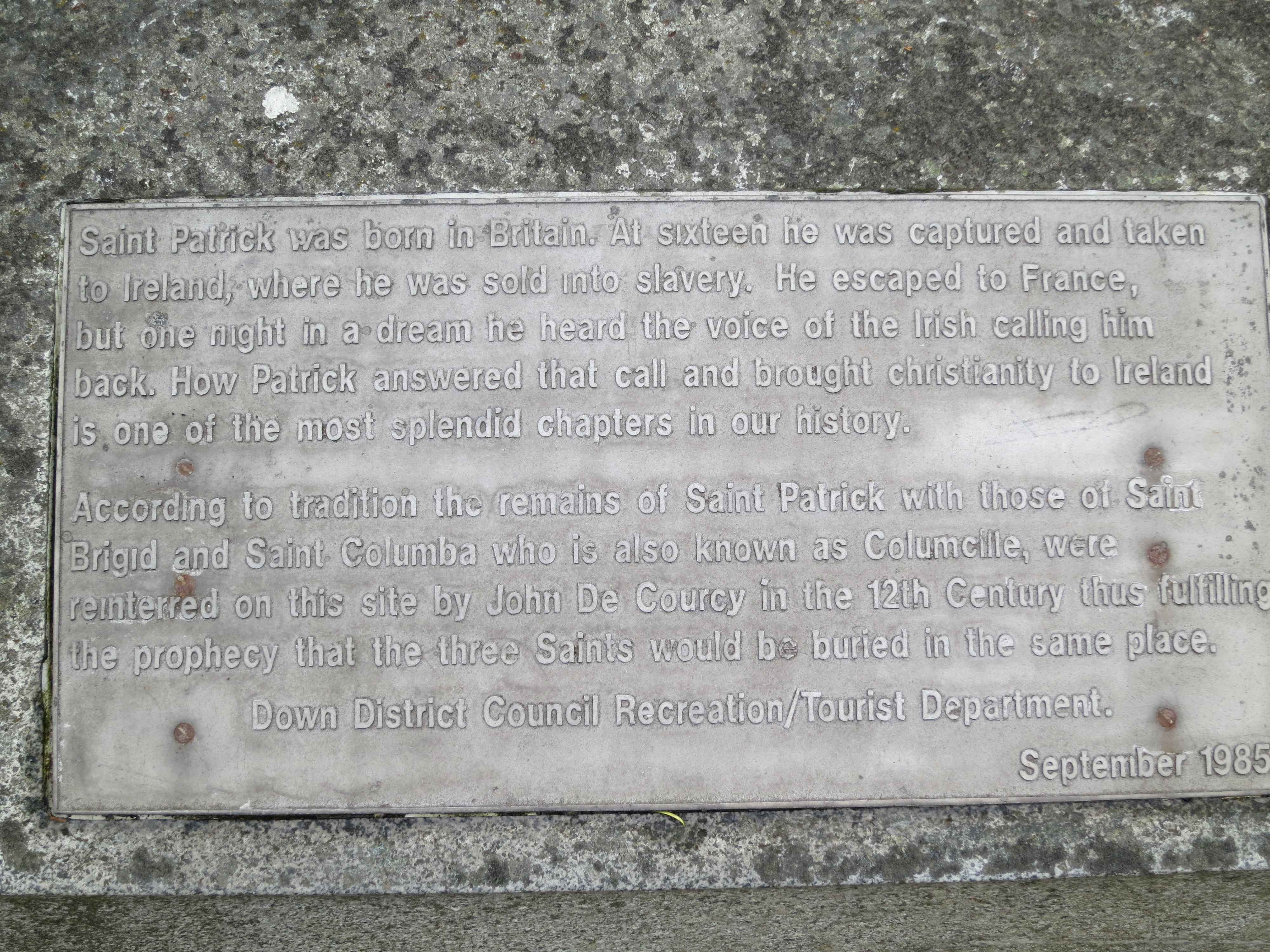
Six years a slave, and then you slipped the yoke, Till Christ recalled you, through your captors cries! Patrick, you had the courage to turn back, With open love to your old enemies, Serving them now in Christ, not in their chains, Bringing the freedom He gave you to share. You heard the voice of Ireland, in your veins Her passion and compassion burned like fire.
Now you rejoice amidst the three-in-one, Refreshed in love and blessing all you knew, Look back on us and bless us, Ireland’s son, And plant the staff of prayer in all we do: A gospel seed that flowers in belief, A greening glory, coming into leaf. ~Malcolm Guite — A St. Patrick Sonnet
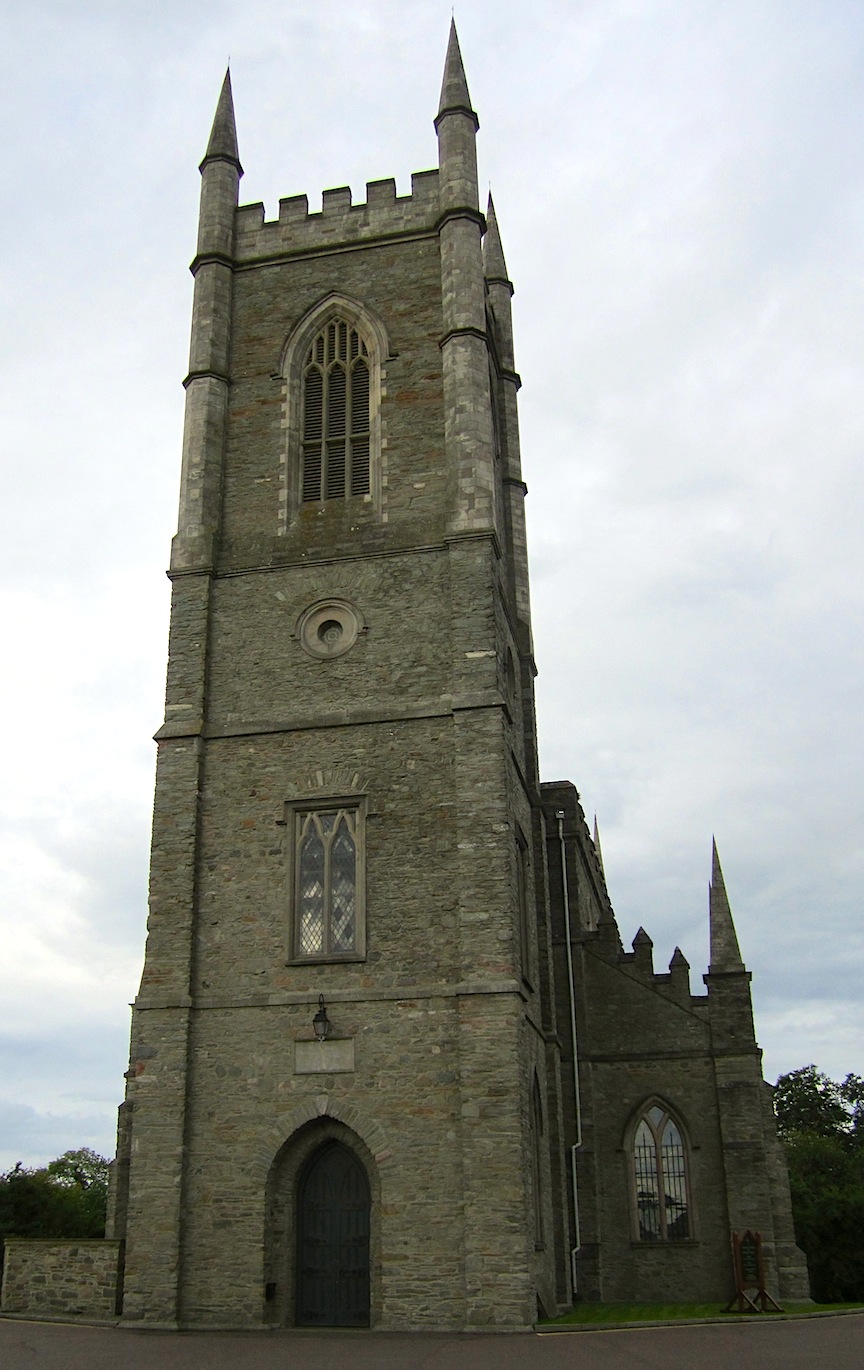
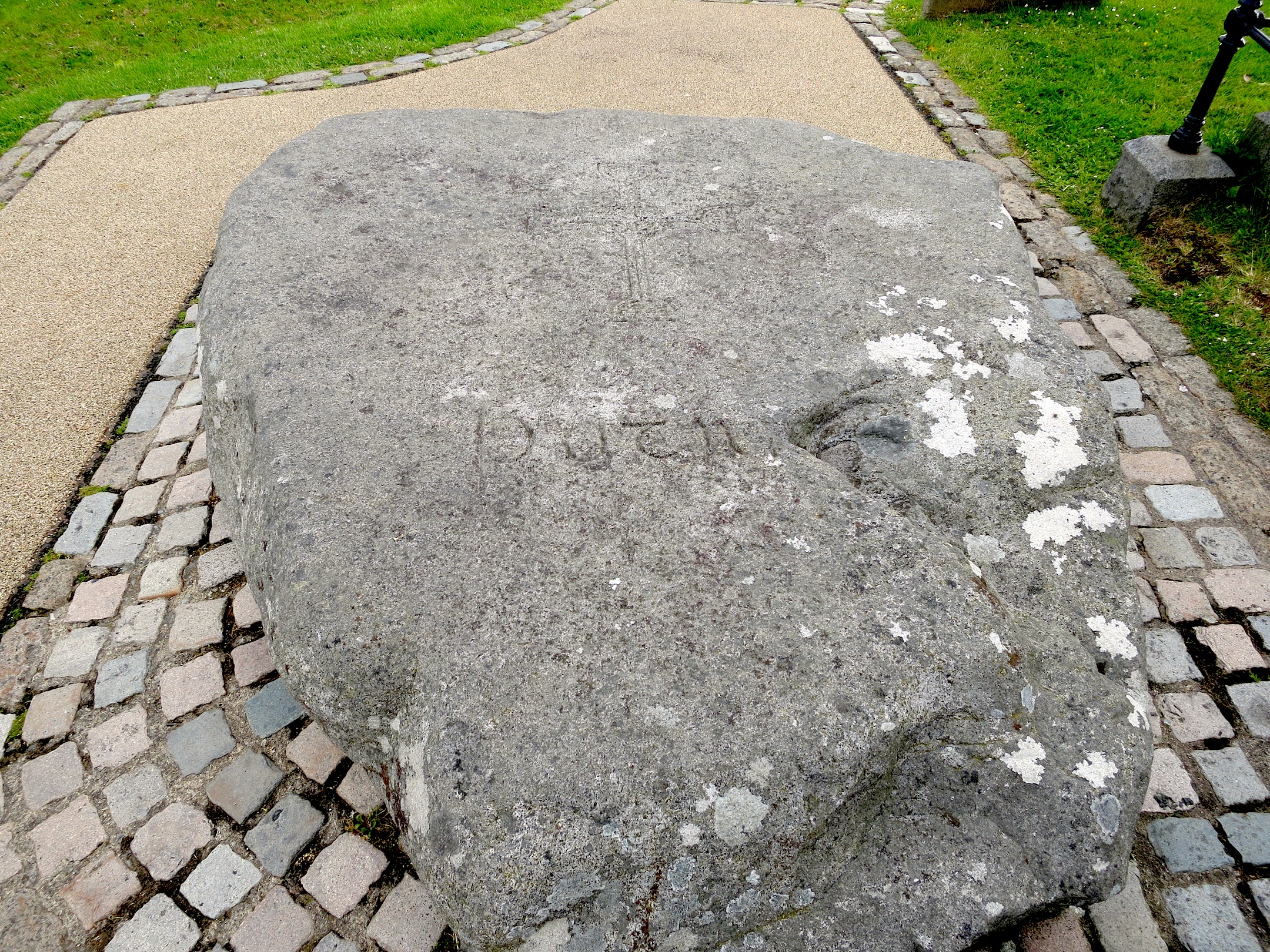
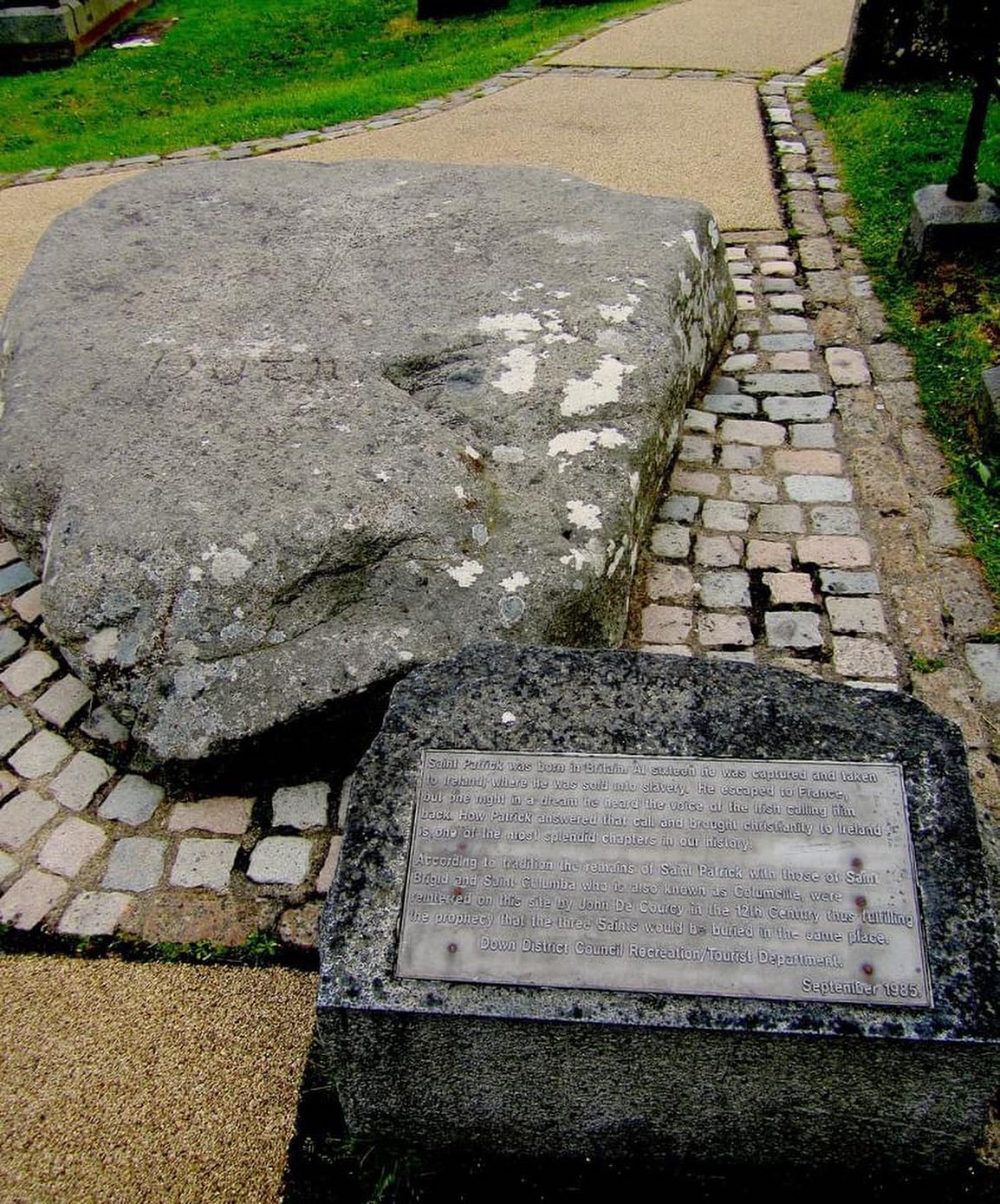
St. Patrick is little remembered for his selfless missionary work in Ireland in the fifth century, but rather has become a caricature of all the drunken silliness of this day. Visiting his grave in Downpatrick, Ireland, just a humble stone on a hill top overlooking the sea, I wondered what he would make of the modern March 17.
He would advise us to be still and know.
He would plant his staff in us and all we do; we would respond by flowering up from the green.
Be still, and know that I am God… Psalm 46:10
Be still and know that I am God. Be still and know that I am. Be still and know. Be still. Be.
St. Patrick’s Cathedral
This Lenten season I reflect on the words of the 19th century southern spiritual hymn “What Wondrous Love is This”
One-Time
Monthly
Yearly
Make a one-time or recurring donation to support daily Barnstorming posts
We were promised sufferings. They were part of the program. We were even told, ‘Blessed are they that mourn.’ The real problem is not why some pious, humble, believing people suffer, but why some do not. C.S. Lewis ~~writing on suffering in The Problem of Pain
The Christian has never been promised a pain-free existence. No one escapes suffering, no matter how strongly they believe in God. It is what we signed up for.
How could an all-powerful all-knowing God allow suffering, especially in innocent children? This is a standard argument used against the existence of a beneficent God. The reasoning is — if abundant suffering and evil is allowed in the world, no merciful God is in control.
Yet that reasoning sets aside gospel reality: God identifies so strongly with His Creation, He allows His own suffering and death.
He mourns. He weeps. He hurts. He bleeds. He dies. Just like us.
What all-powerful all-knowing God would do that? Our God would, because He is first and foremost a loving God who makes imperfection perfect again. Then He defeats death to ensure our eternal union with Him.
No, there isn’t a “no pain” guarantee –neither God nor even the natural world ever promised that. But only our God promises “no stain” –that we are washed clean for eternity by His shed blood.
In the midst of our sadness and mourning, that is our greatest comfort of all.
For just as we share abundantly in the sufferings of Christ, so also our comfort abounds through Christ. 2 Corinthians 1:5
I have told you these things, so that in me you may have peace. In this world you will have trouble. But take heart! I have overcome the world. John 16:33
This Lenten season I reflect on the words of the 19th century southern spiritual hymn “What Wondrous Love is This”
One-Time
Monthly
Yearly
Make a one-time or recurring donation to support daily Barnstorming posts
…the whole experience <of compline> is in some way a touching of the hem of Christ’s garment: something has been given, something disclosed. And the person holding a candle at compline may hear a call, and make a journey, as another stressed woman once did, from touching the hem of Christ’s garment to meeting him face to face.
… just occasionally, it opens into deeper things, on to more ultimate questions. Just occasionally, there is an opening of heart and soul, which in some sense the liturgy itself has made possible; and then it is that, just sometimes, someone takes a few more steps on that journey from the hem of his garment to the light of his countenance. ~Malcolm Guite from Poet’s Corner
Most of us are like that desperate woman hoping for healing by reaching out to touch the hem of His robe – ashamed to be so needy, hoping to go unnoticed, not actually wanting to bother anyone, but still helpless – so very helpless.
He knows when we reach out in desperation; He feels it.
So He lifts us up as we begin our journey to His light – from a touch of His hem to seeing His face.
It starts with reaching out. It starts with taking a few more steps.
And Jesus, perceiving in himself that power had gone out from him, immediately turned about in the crowd and said, “Who touched my garments?” And he looked around to see who had done it.But the woman, knowing what had happened to her, came in fear and trembling and fell down before him and told him the whole truth. 3And he said to her, “Daughter, your faith has made you well; go in peace, and be healed of your disease.” Mark 5: 30. 32-34
This Lenten season I reflect on the words of the 19th century southern spiritual hymn “What Wondrous Love is This”
Before the ending of the day, Creator of the world, we pray That with Thy wonted favour Thou Wouldst be our guard and keeper now.
From all ill dreams defend our eyes, From nightly fears and fantasies; Tread under foot our ghostly foe That no pollution we may know.
O Father, that we ask be done Through Jesus Christ, thine only Son, Who with the Holy Ghost and Thee Dost live and reign eternally.
One-Time
Monthly
Yearly
Make a one-time or recurring donation to support daily Barnstorming posts
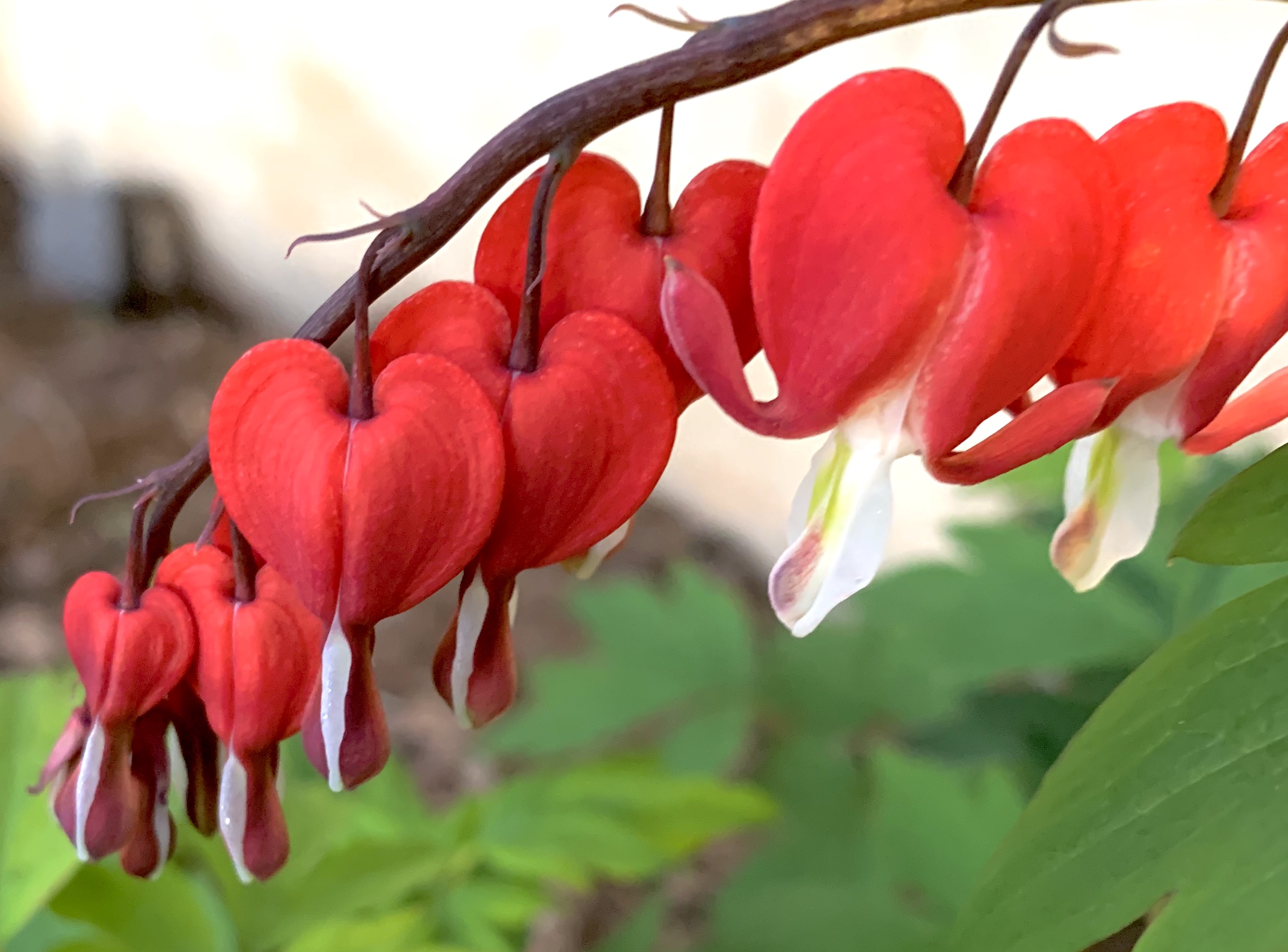
I know a bleeding-heart plant that has thrived for sixty years if not more, and has never missed a spring without rising and spreading itself into a glossy bush, with many small red hearts dangling. Don’t you think that deserves a little thought? The woman who planted it has been gone for a long time, and everyone who saw it in that time has also died or moved away and so, like so many stories, this one can’t get finished properly. Most things that are important, have you noticed, lack a certain neatness. More delicious, anyway, is to remember my grandmother’s pleasure when the dissolve of winter was over and the green knobs appeared and began to rise, and to cre- ate their many hearts. One would say she was a simple woman, made happy by simple things. I think this was true. And more than once, in my long life, I have wished to be her. ~Mary Oliver “The Bleeding-Heart”from New and Selected Poems Volume Two
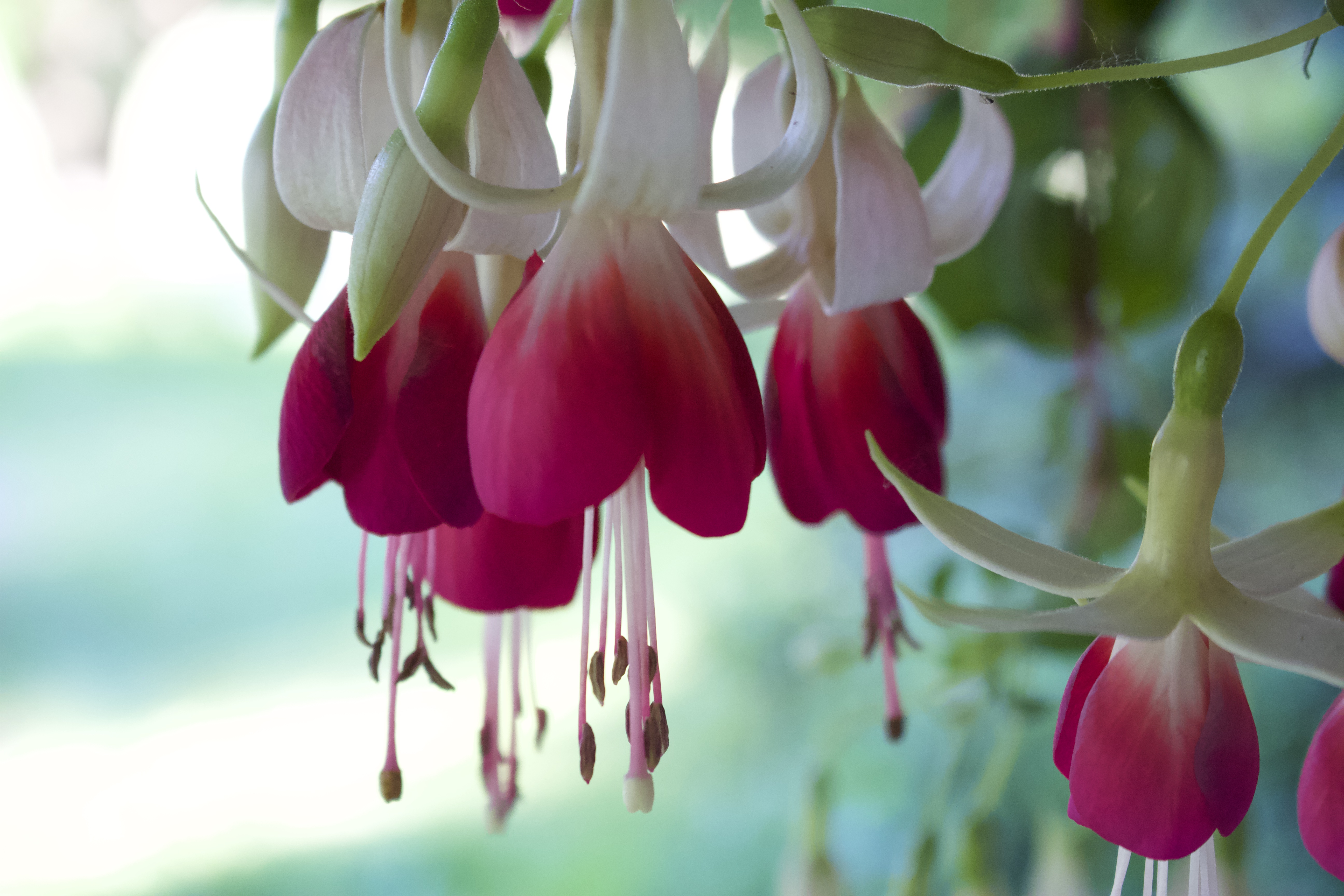
My Grandma Kittie grew flowers–lots of them. Her garden stretched along both sides of the sidewalk to her old two story farm house, in window boxes and beds around the perimeter, in little islands scattered about the yard anchored by a tree, or a piece of driftwood, a gold fish pond or a large rock. Wisteria hung like a thick curtain of purple braids from the roof of her chicken coop, and her greenhouse, far bigger than her home, smelled moist and mossy with hanging fuschia baskets. For her it was full time joy disguised as a job: she sold seedlings, and ready-to-display baskets, and fresh flower arrangements.
She often said she was sure heaven would be full of flowers needing tending, and she was just practicing for the day when she could make herself useful as a gardener for God.
Visiting Grandma meant spending summer evenings in her yard heavy with wafting flower perfume. She especially loved her bleeding hearts bushes that returned every spring, dripping their red blossoms over her unruly lawn.
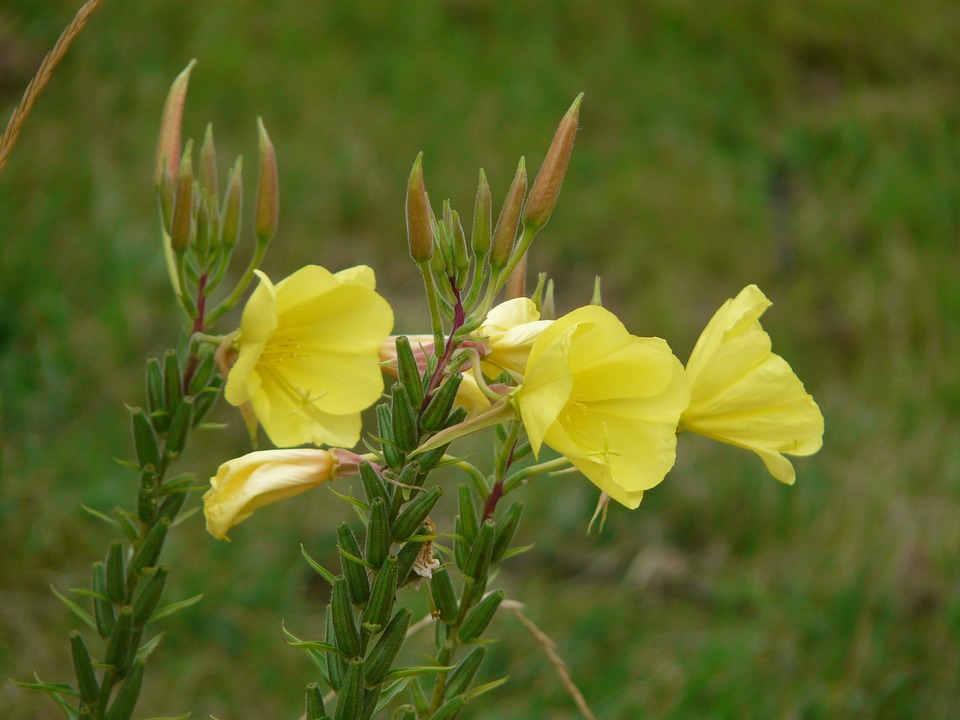
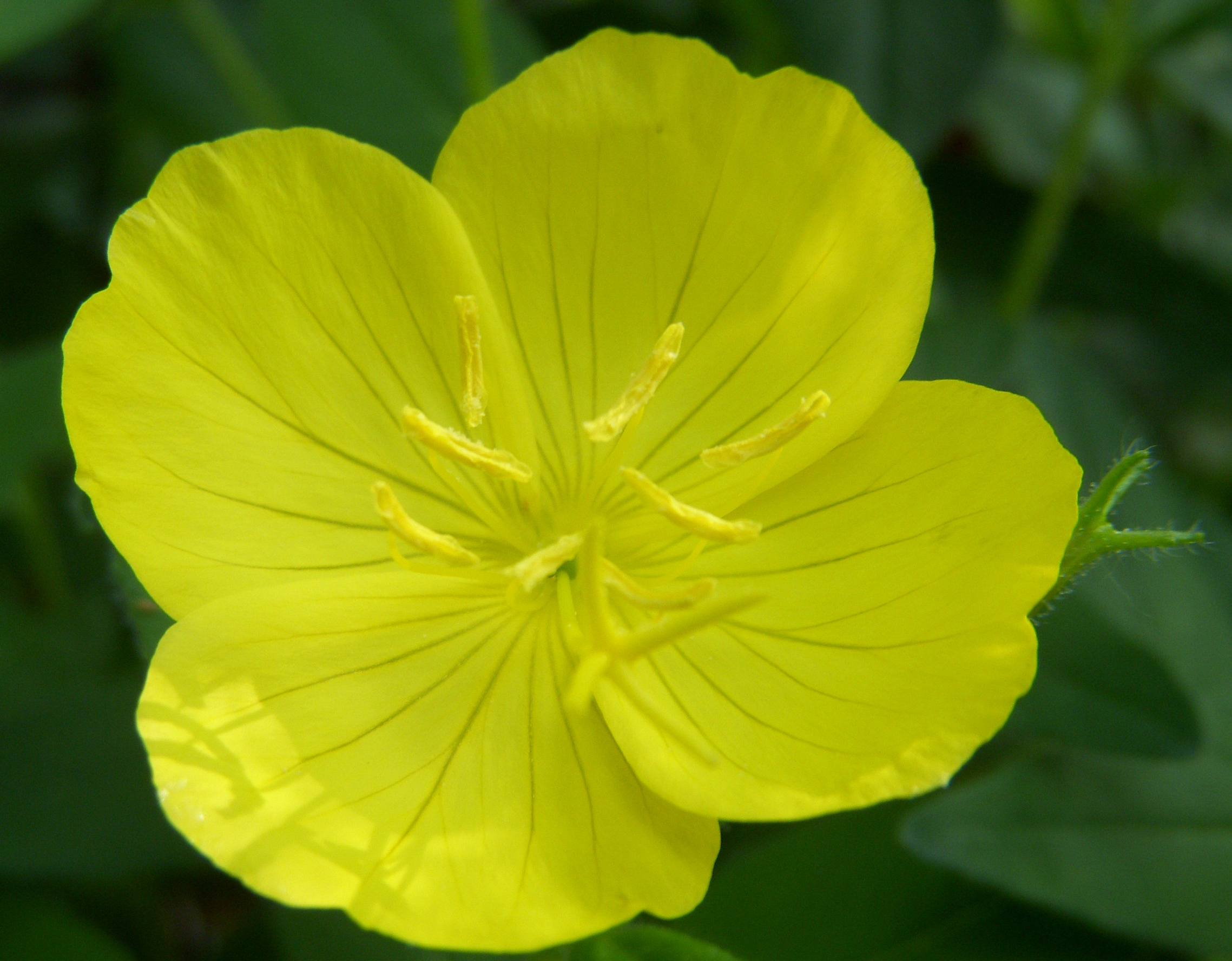
Another of her favorite flowers was the evening primrose. It was one of a few night blooming plants meant to attract pollinating moths. Its tall stems were adorned by lance shaped leaves, with multiple buds and blooms per stem. Each evening, and it was possible to set one’s watch by its punctuality, only one green wrapped bud per stem would open, revealing a bright yellow blossom with four delicate veined petals, a rosette of stamens and a cross-shaped stigma in the center, rising far above the blossom. The yellow was so vivid and lively, it seemed almost like a drop of sun had been left on earth to light the night. By morning, the bloom would begin to wither and wilt under the real sunlight, somehow overcome with the brightness, and would blush a pinkish orange as it folded upon itself, ready to die and drop from the plant in only a day or two, leaving a bulging seed pod behind.
I would settle down on the damp lawn at twilight, usually right before dusk fell, to watch the choreography of opening of blossoms on stem after stem of evening primrose. Whatever the trigger was for the process of unfolding, there would be a sudden loosening of the protective green calyces, in an almost audible release. Then over the course of about a minute, the overlapping yellow petals would unfurl, slowly, gently, purposefully, revealing their pollen treasure trove inside. It was like watching time lapse cinematography, only this was an accelerated, real time flourish of beauty, happening right before my eyes. I always felt privileged to witness each unveiling as Grandma liked to remind me that few flowers ever allowed us to behold both their birth and death. The evening primrose was not at all shy about sharing itself and it would enhance the show with a sweet lingering fragrance.
Grandma knew how much I enjoyed the evening primrose display, so she saved seeds from the seed pods for me, and helped me plant them at our house during one of her spring time visits. I remember scattering the seeds with her in a specially chosen spot, in anticipation of the “drops of sun” that would grace our yard come summertime. However, Grandma was more tired than usual on this particular visit, taking naps and not as eager to go for walks or eat the special meals cooked in honor of her visit. Her usually resonant laughing brown eyes appeared dull, almost muddy.
The day she was to return to her home, she came into the kitchen at breakfast time, wearily setting down her packed bags. She gave me a hug and I looked at her. Something was dreadfully wrong. Grandma’s eyes were turning yellow.
Instead of returning home that day, she went to the hospital. Within a day, she had surgery and within two days, was told she had terminal pancreatic cancer. She did not last long, her skin becoming more jaundiced by the day, her eyes more icteric and far away. She soon left her earthly gardens to cultivate those in heaven.
I’ve kept bleeding hearts and evening primrose in my garden ever since. Grandma’s heart dangles from the bushes and she is released from each primrose bloom as it unfolds precipitously in the evening. She wafts across the yard in its perfume. Her spirit, a drop of sun coming to rest, luminous, for a brief stay upon the earth, only to fall before we’re ready to let it go. But as the wilted bloom lets go, its seeds have already begun to form.
I’m sure Grandma is still growing flowers. And my soil-covered hands look more like hers every day.
The grass withers and the flowers fall, because the breath of the Lord blows on them. Surely the people are grass. The grass withers and the flowers fall, but the word of our God endures forever. Isaiah 40: 7-8
This Lenten season I reflect on the words of the 19th century southern spiritual hymn “What Wondrous Love is This”
One-Time
Monthly
Yearly
Make a one-time or recurring donation to support daily Barnstorming posts
I have seen the sun break through to illuminate a small field for a while, and gone my way and forgotten it. But that was the pearl of great price, the one field that had treasure in it. I realize now that I must give all that I have to possess it. Life is not hurrying on to a receding future, nor hankering after an imagined past. It is the turning aside like Moses to the miracle of the lit bush, to a brightness that seemed as transitory as your youth once, but is the eternity that awaits you. ~R.S. Thomas “A Bright Field”
The secret of seeing is, then the pearl of great price. If I thought he could teach me to find it and keep it forever I would stagger barefoot across a hundred deserts after any lunatic at all. But although the pearl may be found, it may not be sought.
The literature of illumination reveals this above all: although it comes to those who wait for it, it is always, even to the most practiced and adept, a gift and a total surprise.
I return from one walk knowing where the killdeer nests in the field by the creek and the hour the laurel blooms. I return from the same walk a day later scarcely knowing my own name.
Litanies hum in my ears; my tongue flaps in my mouth. Ailinon, alleluia! ~Annie Dillard from Pilgrim at Tinker Creek
Dear God, I cannot love Thee the way I want to. You are the slim crescent of a moon that I see and my self is the earth’s shadow that keeps me from seeing all the moon. The crescent is very beautiful and perhaps that is all one like I am should or could see; but what I am afraid of, dear God, is that my self shadow will grow so large that it blocks the whole moon, and that I will judge myself by the shadow that is nothing.
I do not know You God because I am in the way. Please help me to push myself aside. ~Flannery O’Connor from A Prayer Journal
Earth’s crammed with heaven, And every common bush afire with God… ~Elizabeth Barrett Browning
I am learning to step aside so my own shadow stops obscuring God’s gift of illumination. I can be so blinded by discouragement, busyness and distraction that I lose sight of God Himself.
I stand in the way and need a push to let the Light shine forth.
Surprise me, dear Lord. Cram this common bush with heaven.
Though I regularly lament in the shadows, help me lift my voice in praise and gratitude for your gift: the pearl of great price you generously hold for me to find each day.
The kingdom of heaven is like treasure hidden in a field. When a man found it, he hid it again, and then in his joy went and sold all he had and bought that field. Matthew 13: 44
This Lenten season I reflect on the words of the 19th century southern spiritual hymn “What Wondrous Love is This”
One-Time
Monthly
Yearly
Make a one-time or recurring donation to support daily Barnstorming posts
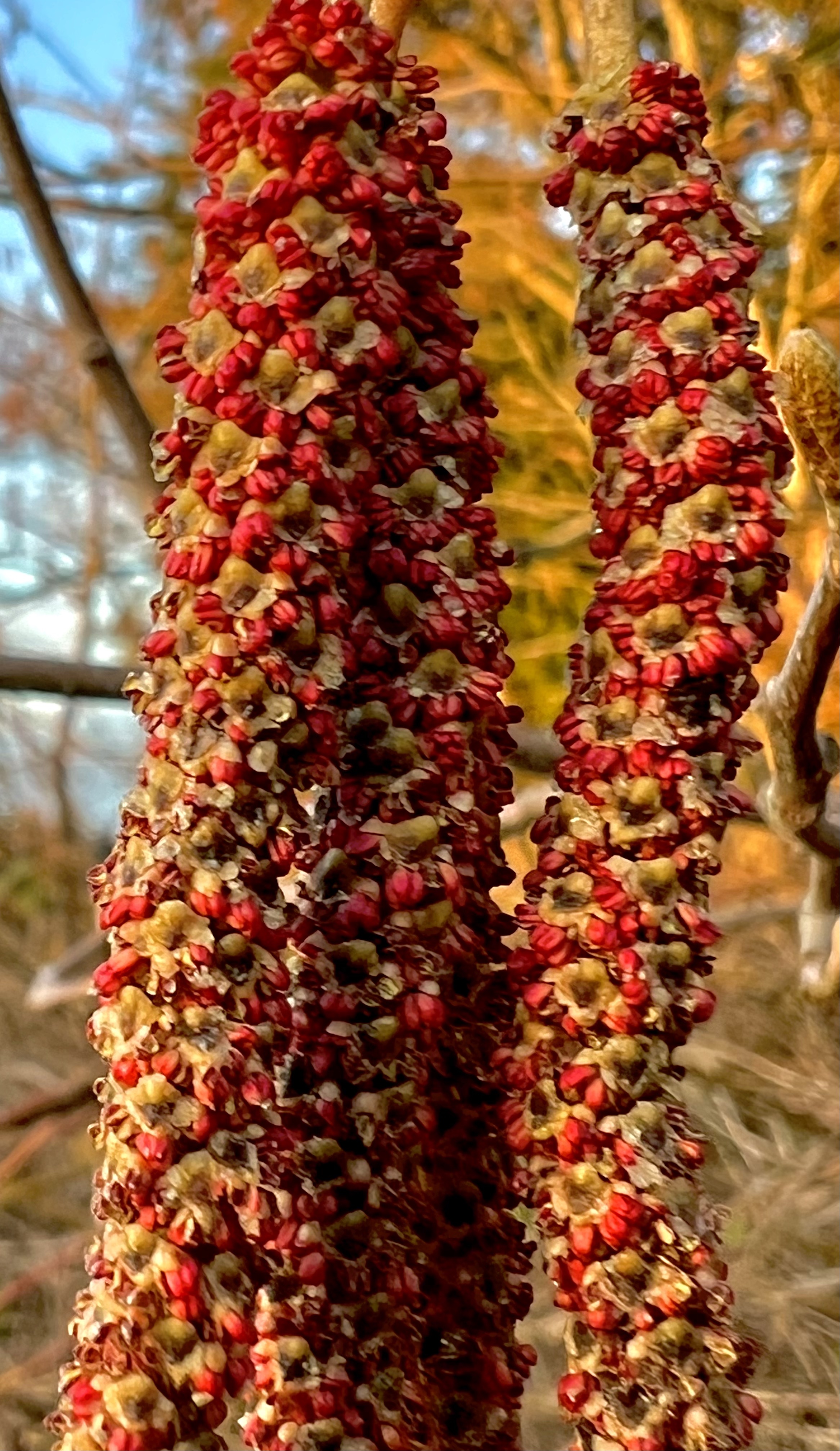
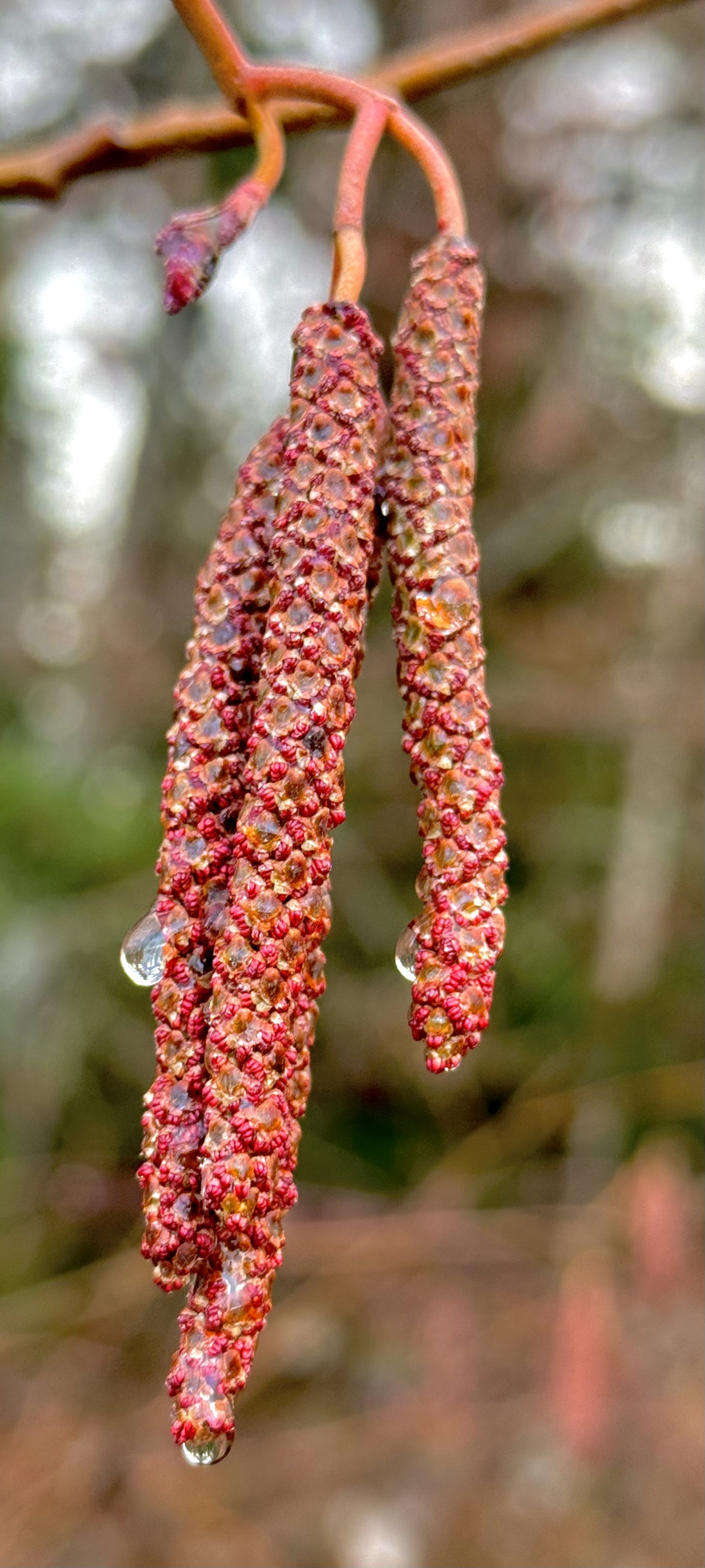
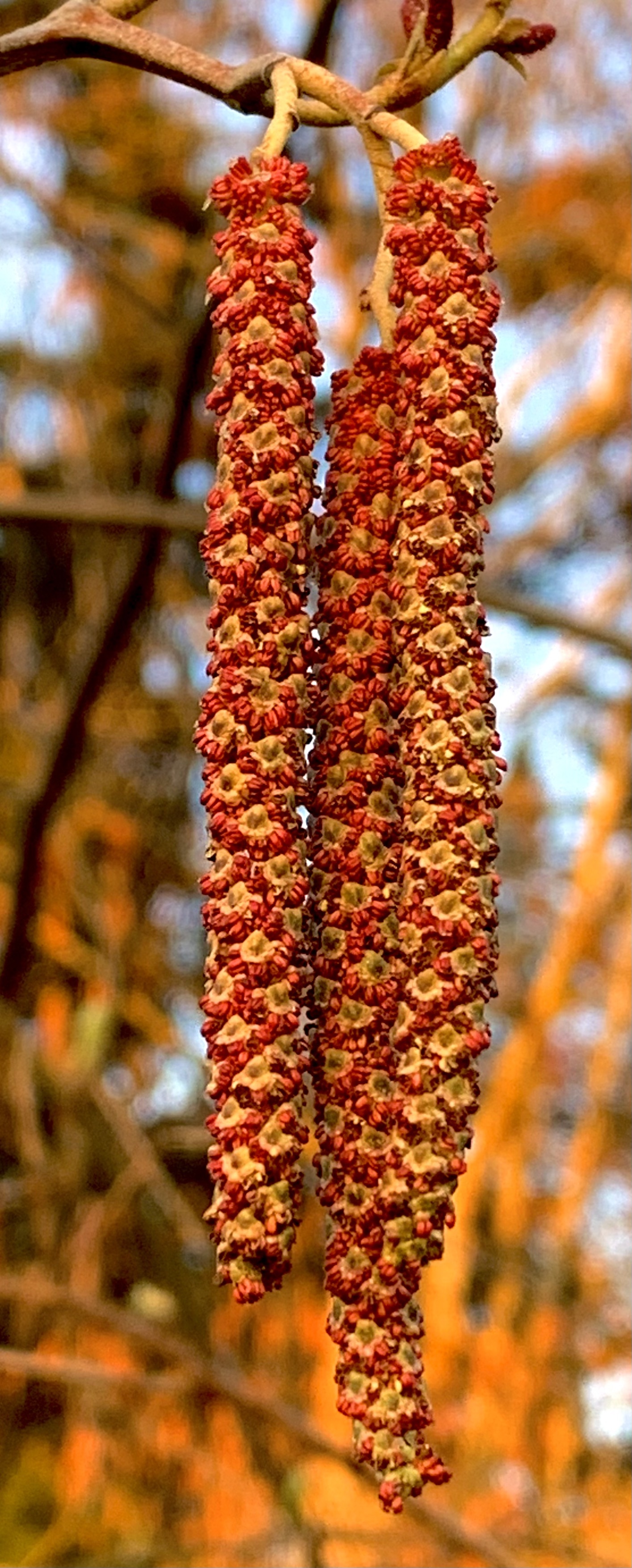
For the bark, dulled argent, roundly wrapped And pigeon-collared.
For the splitter-splatter, guttering Rain-flirt leaves.
For the snub and clot of the first green cones, Smelted emerald, chlorophyll.
For the scut and scat of cones in winter, So rattle-skinned, so fossil-brittle.
For the alder-wood, flame-red when torn Branch from branch.
But mostly for the swinging locks Of yellow catkins.
Plant it, plant it, Streel-head in the rain. ~Seamus Heaney “Planting the Alder”with an explanation of some of the poet’s poetic words here
I’ve worked in many medical settings, and have seen lots of illnesses and injuries over 40+ years of doctoring. Despite all that experience, I really don’t do well with badly broken bones. Basic wrists and fingers and ankles are no problem but open compound and comminuted fractures (i.e. “crushed bones”) are downright terrifying. It appears to me they can never be pieced back together. Even looking at the xrays makes me cringe. I avoided doing a surgical orthopedic rotation during my training because I knew I’d have issues with the saws and the smells involved in fixing bad fractures. And witnessing the pain is unforgettable – there are few things that hurt more.
In early spring 2008, my 87 year old mother shattered her lower femur trying to stand up after getting down on her hands and knees to retrieve a pill that had dropped to the floor and rolled under her desk. The pain was overwhelming until the paramedics managed to immobilize her leg in an air cast for transport to the ER. As long as her leg wasn’t moved, she was quite comfortable– in fact overjoyed to see me in the middle of a workday when I arrived at the hospital. She was so chatty that when she was asked by the ER doctor “how did this happen?” she launched into a long description of just how she had dropped the pill, where it had rolled, and what pill it was, what color it was, why she was taking it, etc etc. I started to get antsy, knowing how busy the Doc was and said, with just a *wee bit* of irritation, “Mom, he doesn’t need to know all that. Just tell him what happened when you tried to stand up.”
That did it.
Now it wasn’t just her leg that hurt, it was her feelings too, including her own sense of responsibility for what had happened, and her tears started to flow. The ER doc shot me a sideways glance that clearly said “now look what you’ve done” and then took my Mom’s hand tenderly, looking her straight in the eye and said, “That’s all right, these things happen despite our best intentions—you go right ahead and tell me the whole story, right from the beginning…”
So she did, completely reaffirmed and feeling absolved of her guilt that she had somehow done this to herself. Having been shown a caring and healing grace from a total stranger after her cherished physician daughter had totally blown Bedside Manners 101, she never really complained about the pain in her leg again.
Then it was my turn to feel guilty. Instead of planting the compassion she so badly needed in that moment, I guttered all her fear and pain together. It crushed her.
Her leg was quickly fixed with a rod and with physical therapy, she took a few steps with assistance. Sadly, she never again lived independently, and as happens so often with immobilized older people despite healed fractures, she died only eight months later. Bones heal but the spirit doesn’t. That spring day really was the beginning of the end for her, and in my heart, I knew that was likely to be the case. My irritation was about what I suspected was coming, and for what I knew it meant for her, but mostly for me.
What I had forgotten out of selfish self-concern and what I will not forget again: even the most horrendous pain can be relieved by compassionate grace. The crushed will stand, and walk, and thrive again with a gentle touch and a lot of love.
Let me hear joy and gladness; let the bones you have crushed rejoice. Psalm 51:8
This Lenten season I reflect on the words of the 19th century southern spiritual hymn “What Wondrous Love is This”
One-Time
Monthly
Yearly
Make a one-time or recurring donation to support daily Barnstorming posts
















 Barnstorming