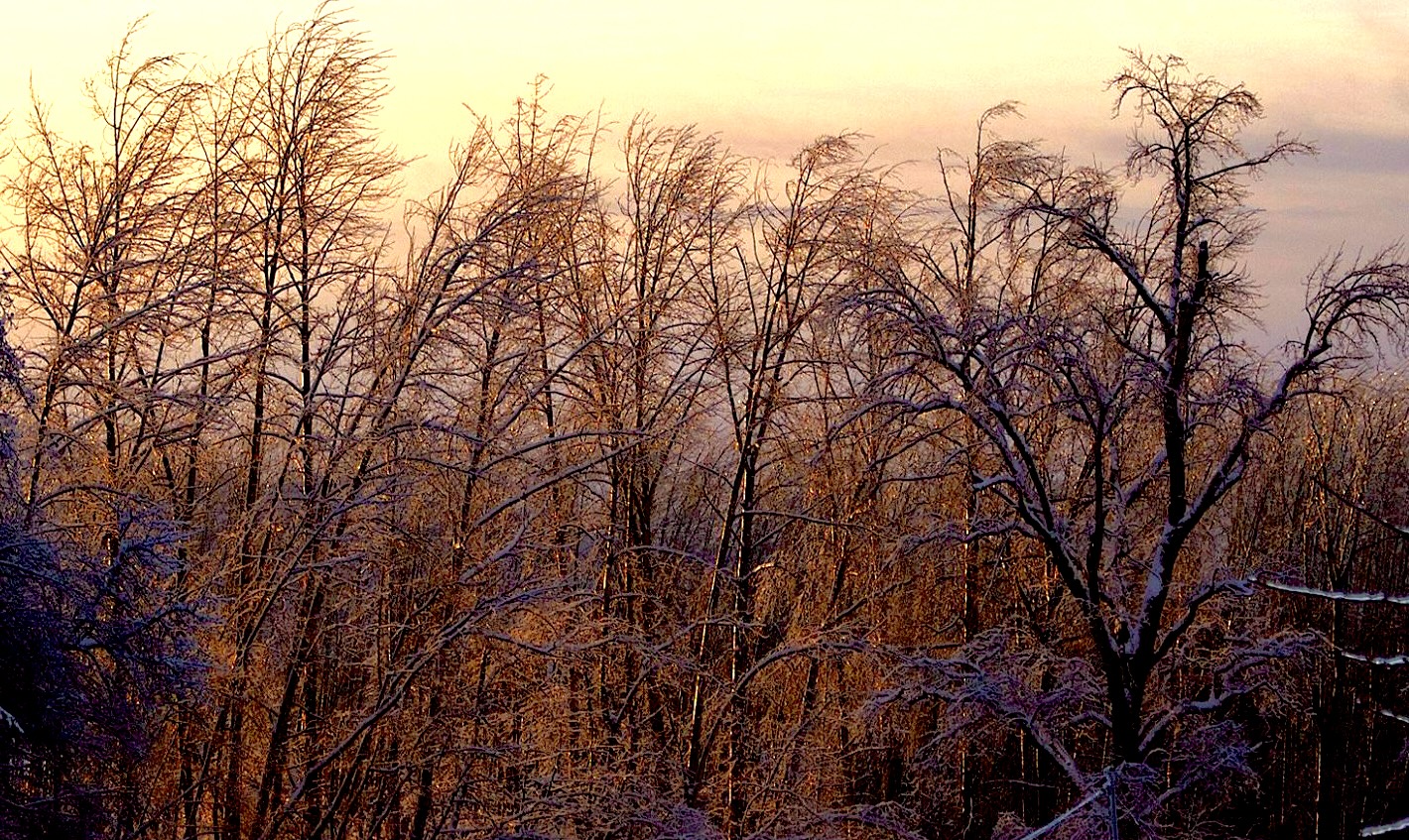
The Singers of Life, Not Death

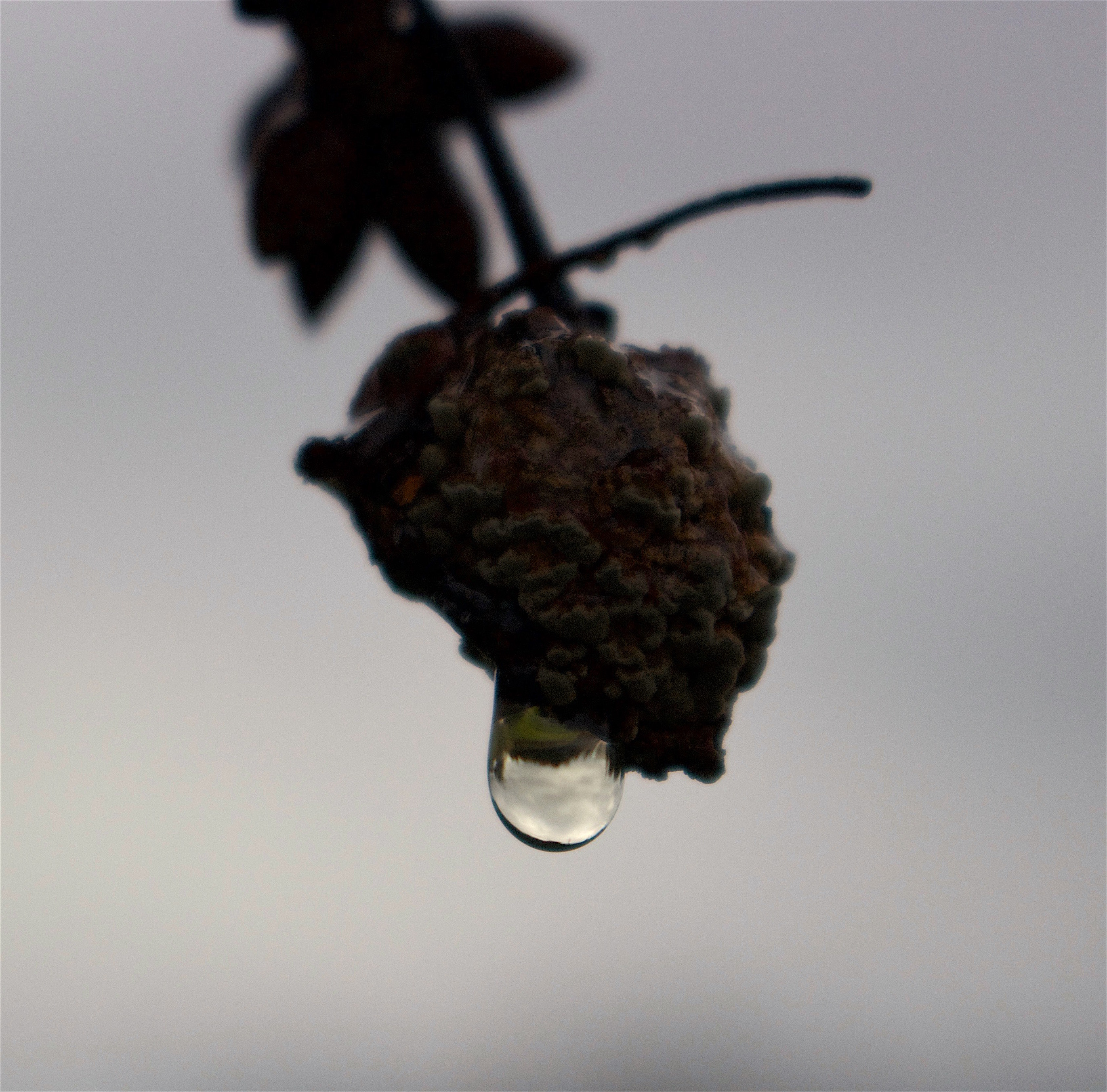
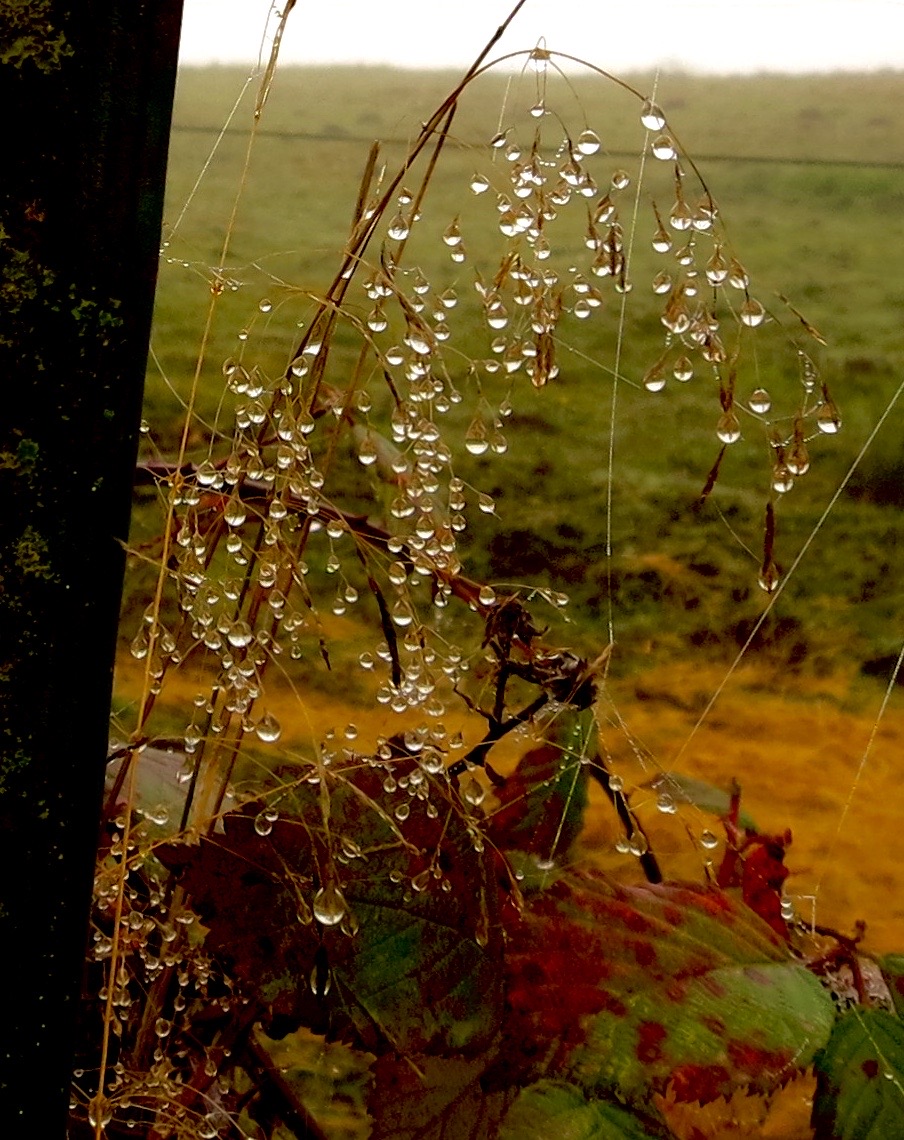
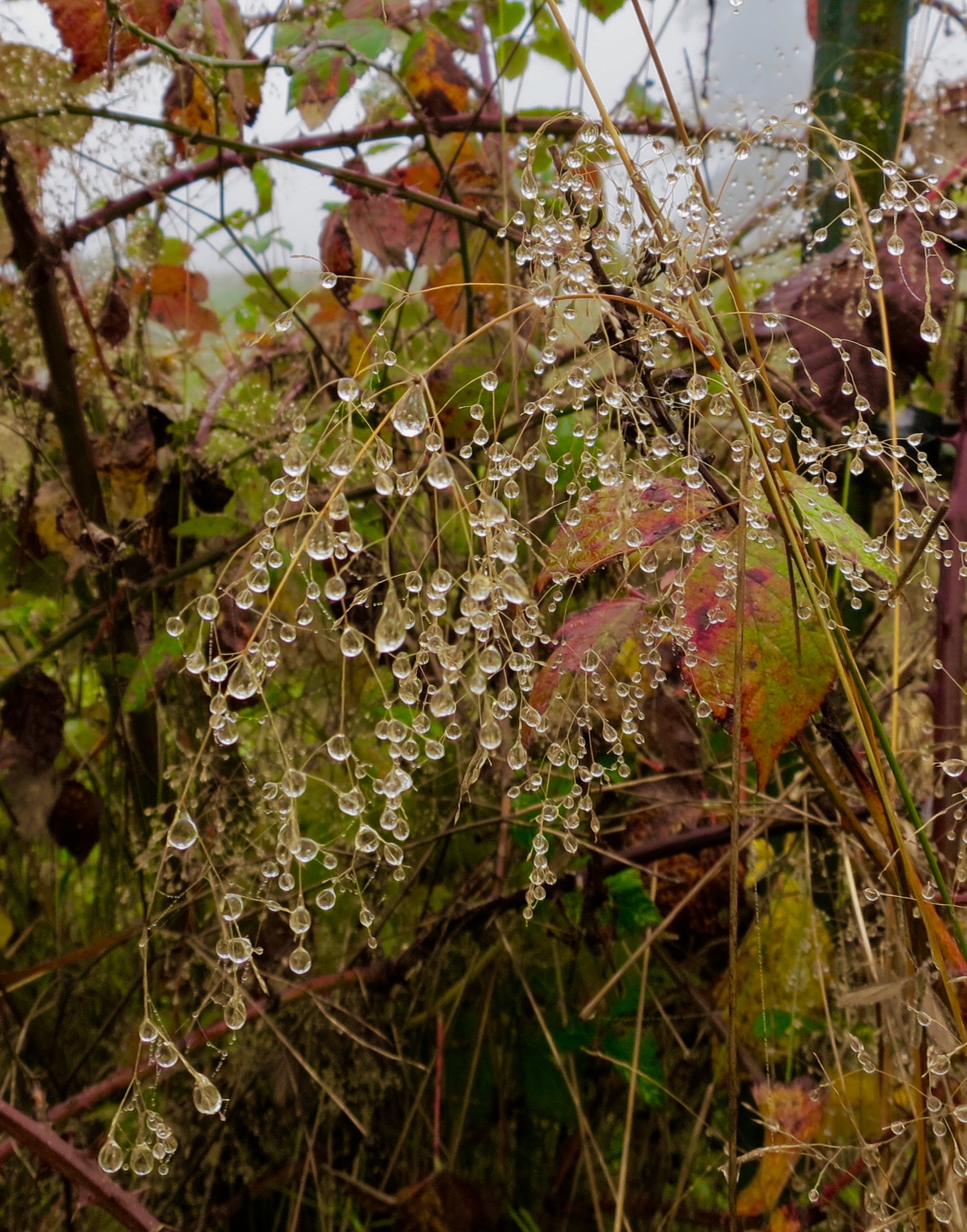
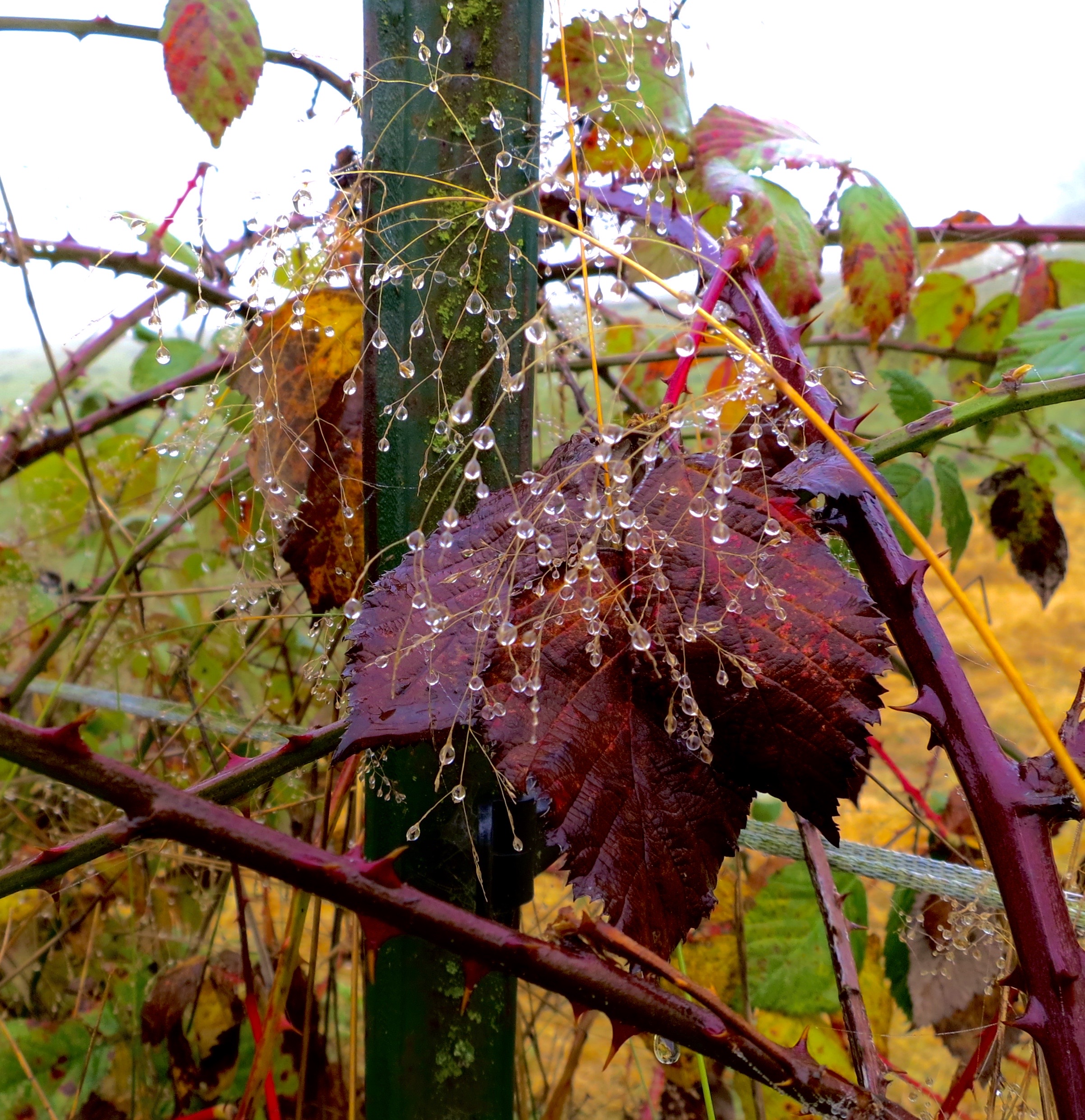
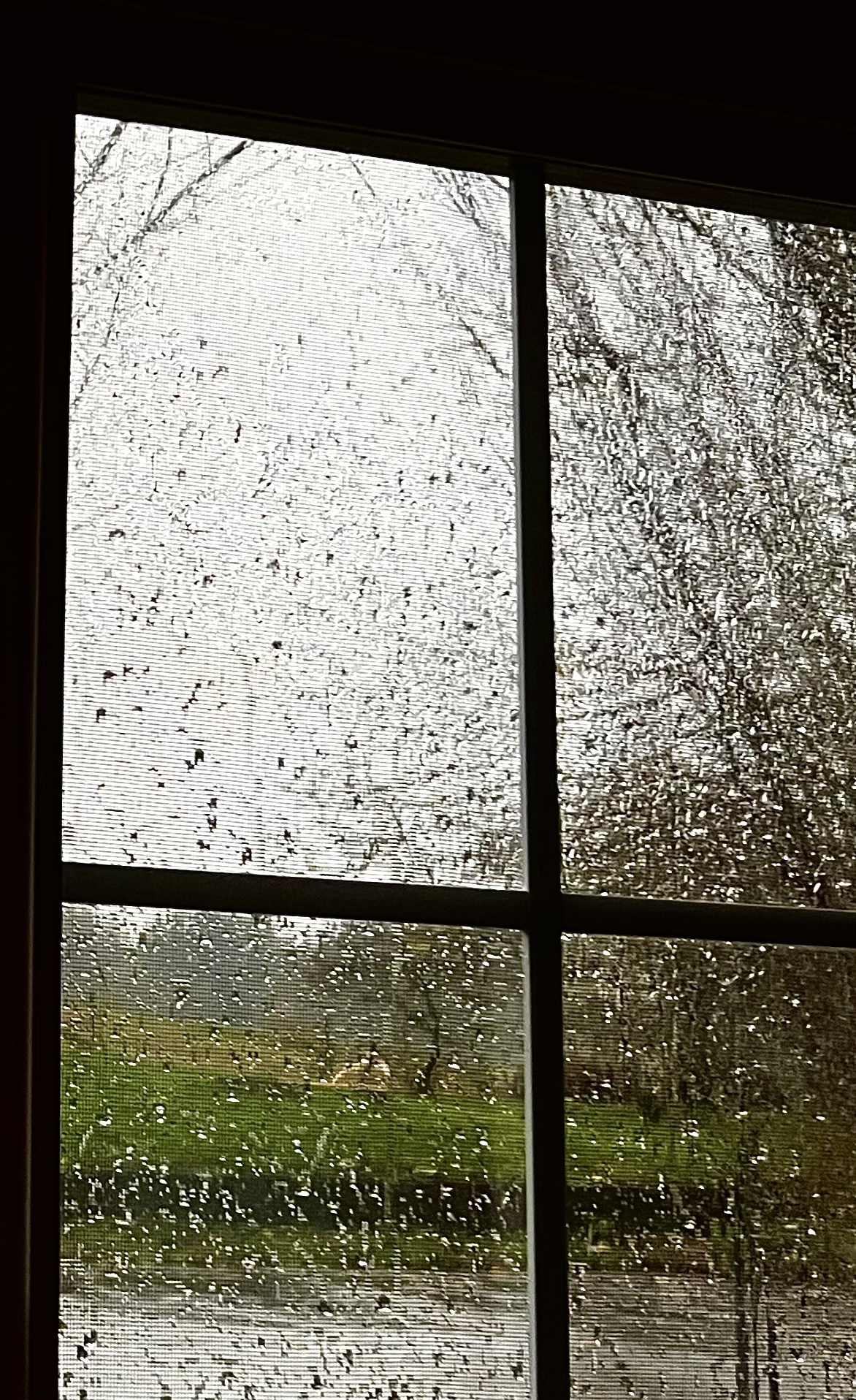
The rain falls and falls
cool, bottomless, and prehistoric
falls like night —
not an ablution
not a baptism
just a small reason
to remember
all we know of Heaven
to remember
we are still here

with our love songs and our wars…

Here too
in the wet grass
half a shell
of a robin’s egg
shimmers
blue as a newborn star
fragile as a world.

~Maria Popova from “Spell Against Indifference”

…I had sat down to rest with my back against a stump. Through accident I was concealed from the glade, although I could see into it perfectly.

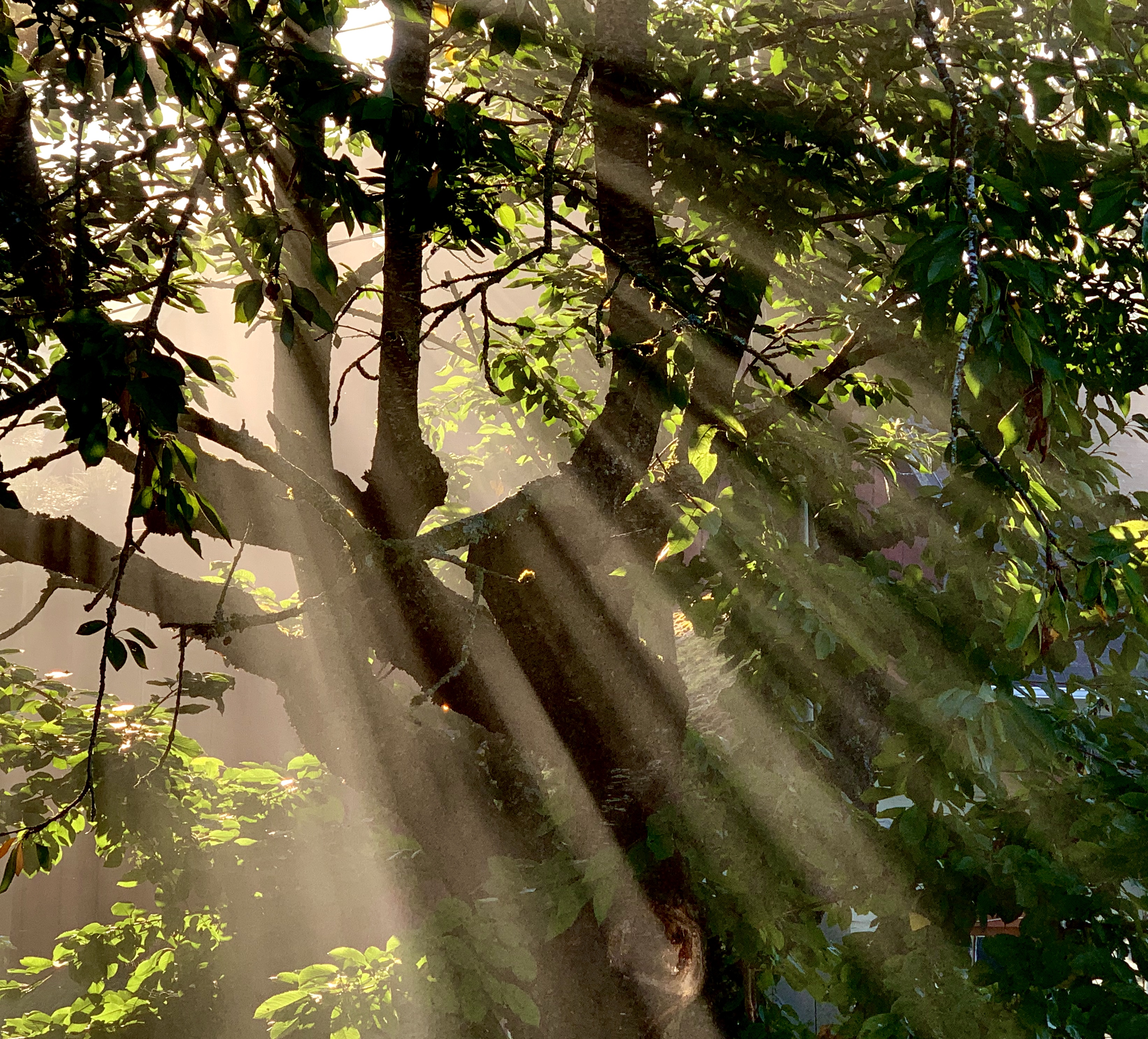
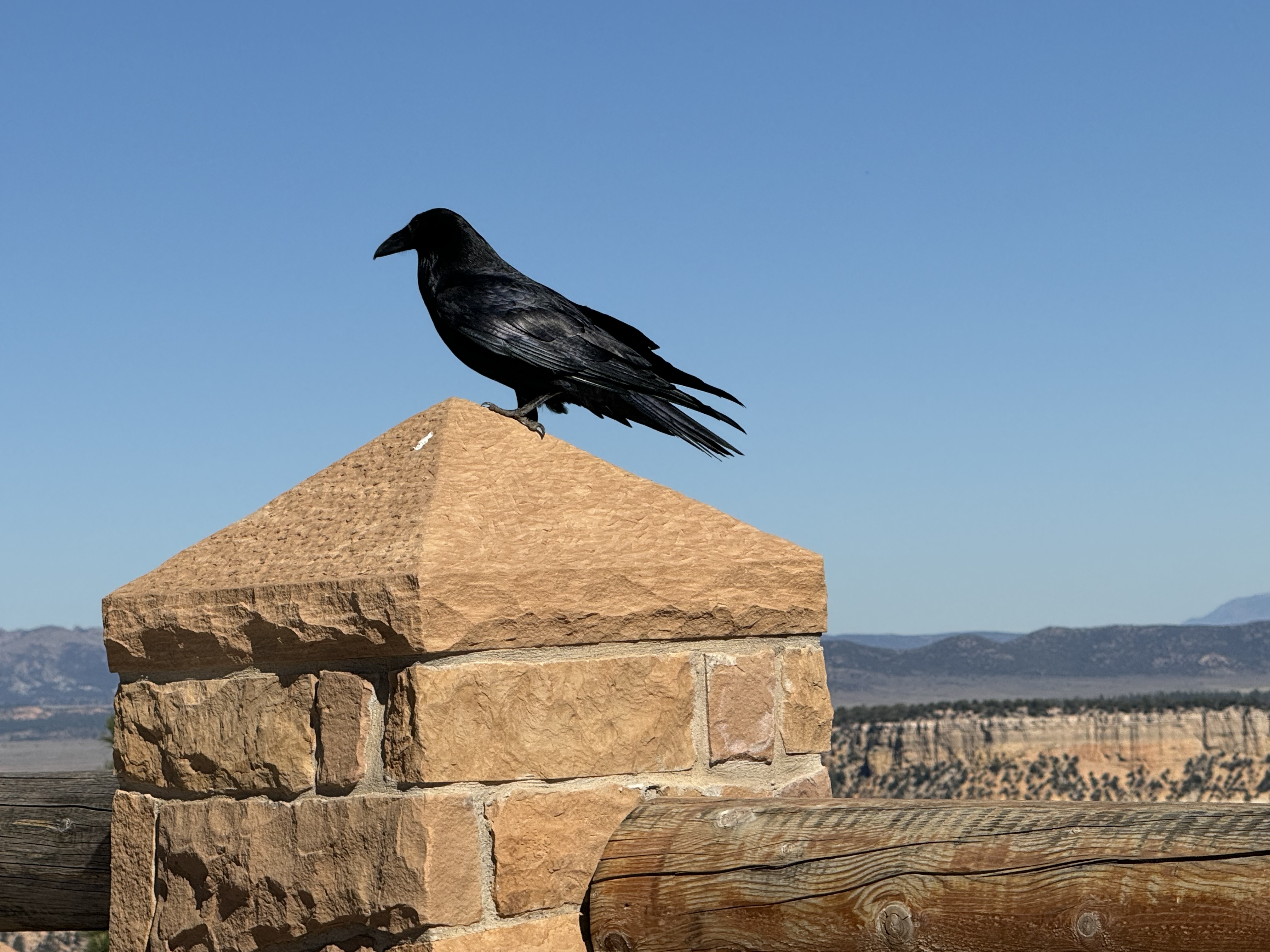
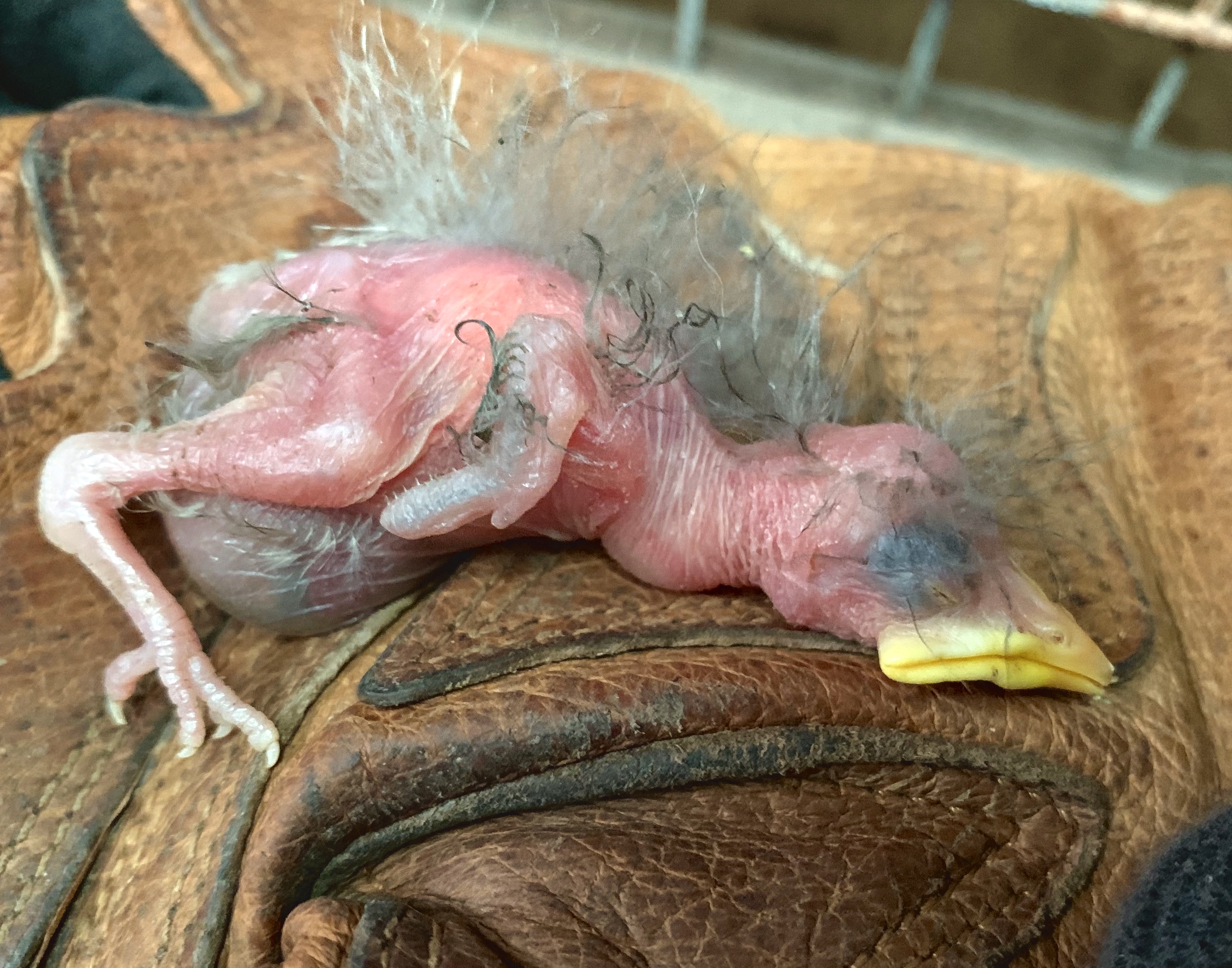
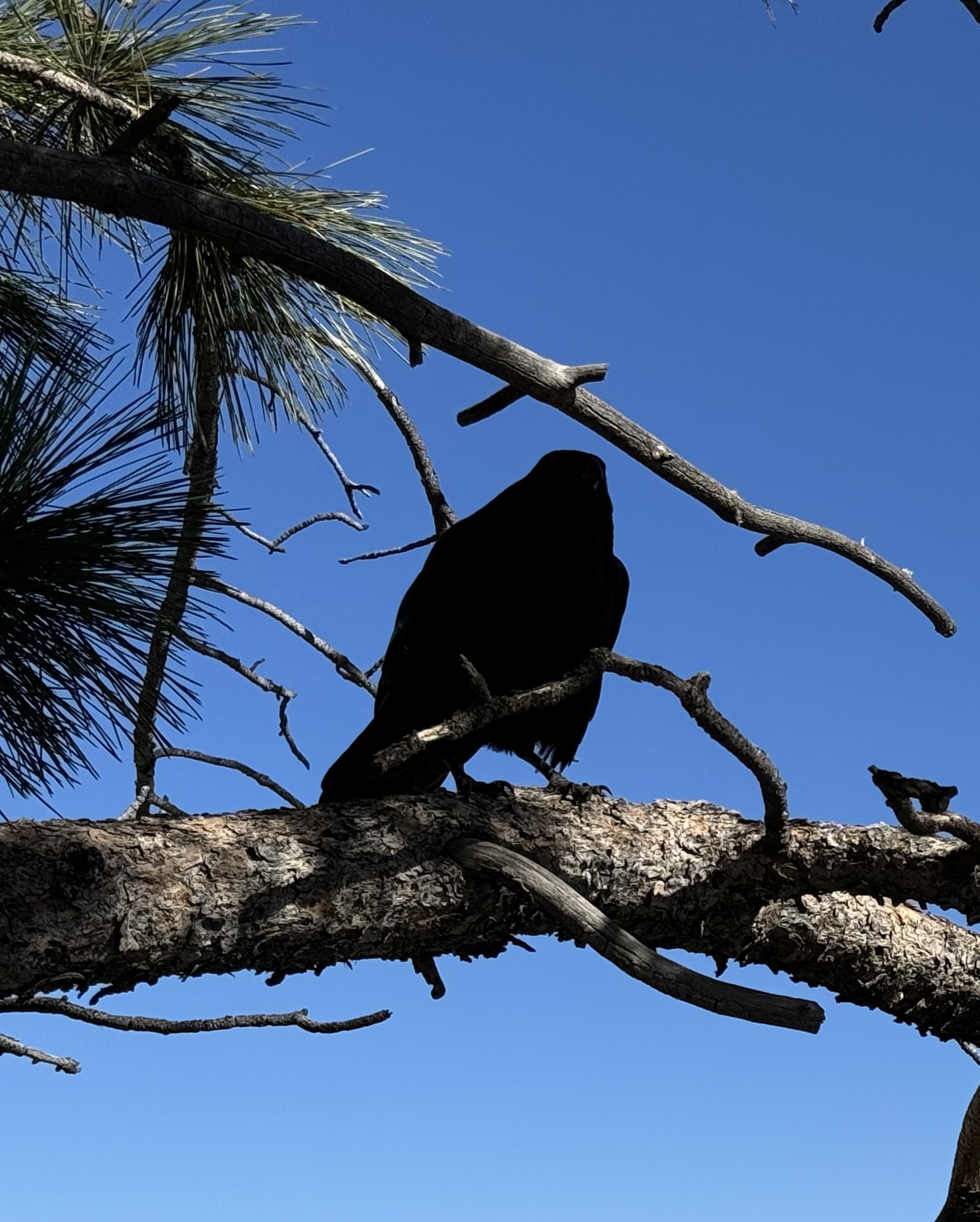
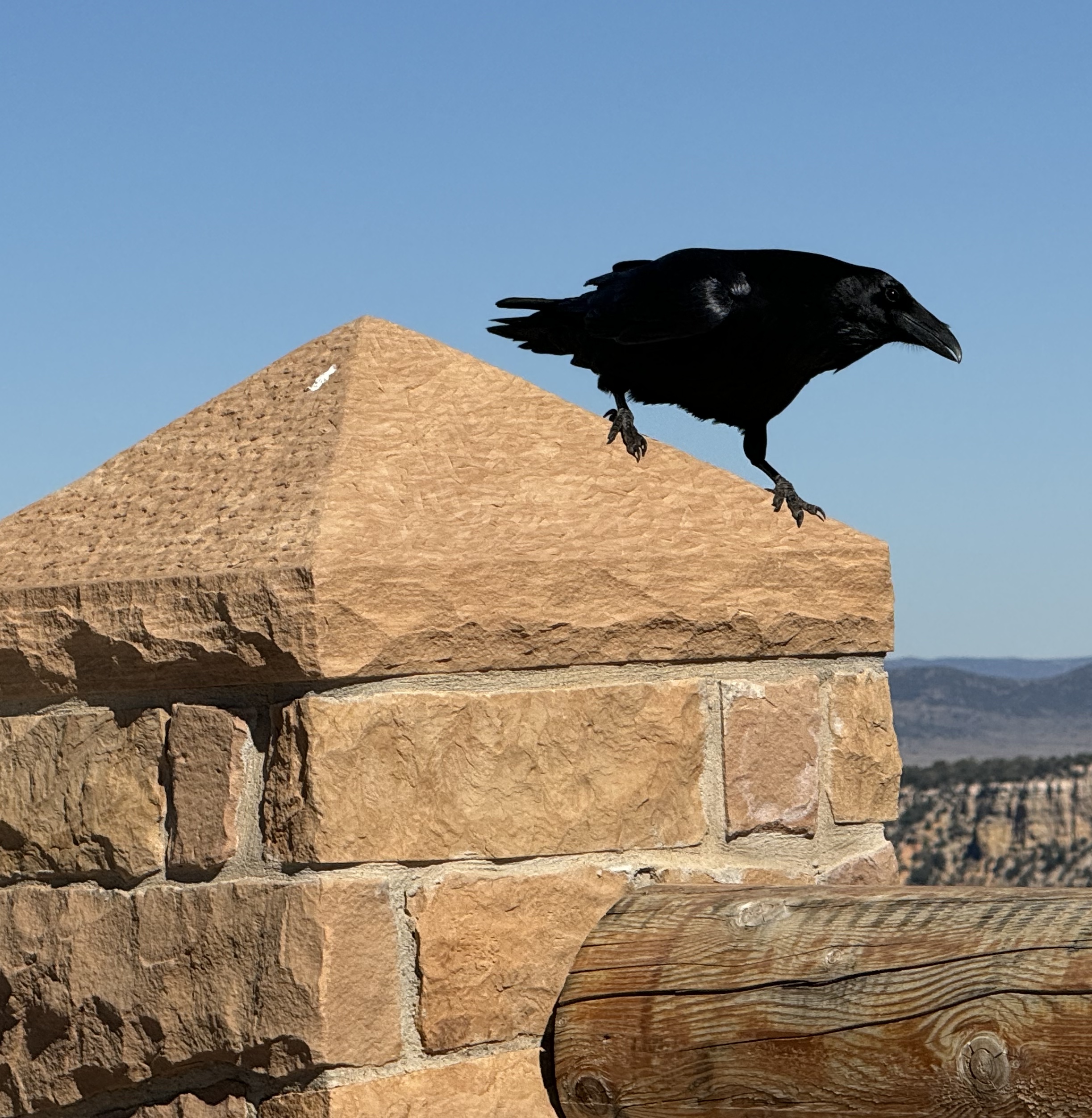
The sun was warm there, and the murmurs of forest life blurred softly away into my sleep. When I awoke, dimly aware of some commotion and outcry in the clearing, the light was slanting down through the pines in such a way that the glade was lit like some vast cathedral. I could see the dust motes of wood pollen in the long shaft of light, and there on the extended branch sat an enormous raven with a red and squirming nestling in his beak.

The sound that awoke me was the outraged cries of the nestling’s parents, who flew helplessly in circles about the clearing. The sleek black monster was indifferent to them. He gulped, whetted his beak on the dead branch a moment, and sat still. Up to that point the little tragedy had followed the usual pattern.

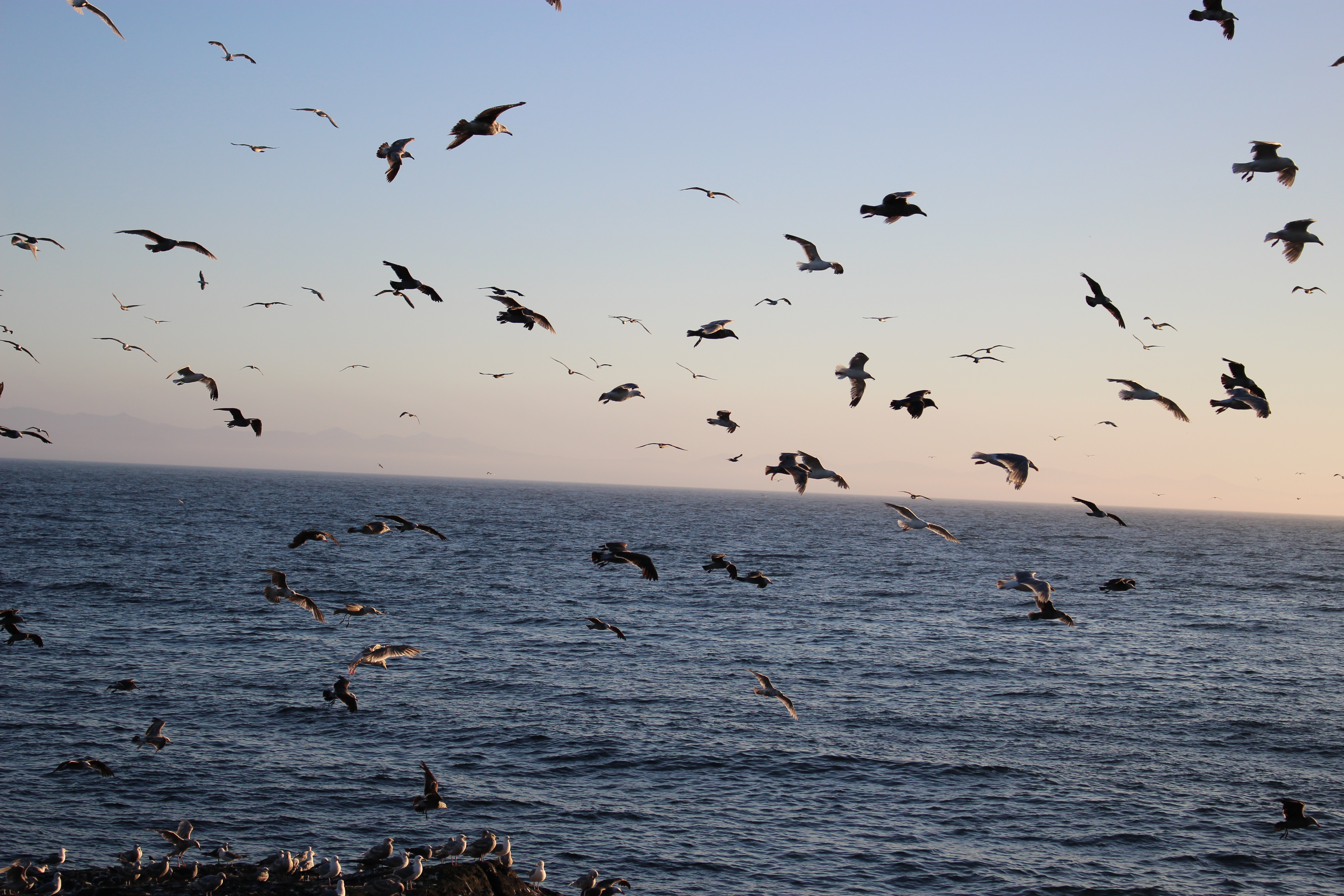
But suddenly, out of all that area of woodland, a soft sound of complaint began to rise. Into the glade fluttered small birds of half a dozen varieties drawn by the anguished outcries of the tiny parents.

No one dared to attack the raven. But they cried there in some instinctive common misery, the bereaved and the unbereaved. The glade filled with their soft rustling and their cries. They fluttered as though to point their wings at the murderer. There was a dim intangible ethic he had violated, that they knew. He was a bird of death.

And he, the murderer, the black bird at the heart of life, sat on there, glistening in the common light, formidable, unmoving, unperturbed, untouchable.

The sighing died. It was then I saw the judgment. It was the judgment of life against death. I will never see it again so forcefully presented. I will never hear it again in notes so tragically prolonged.

For in the midst of protest, they forgot the violence.

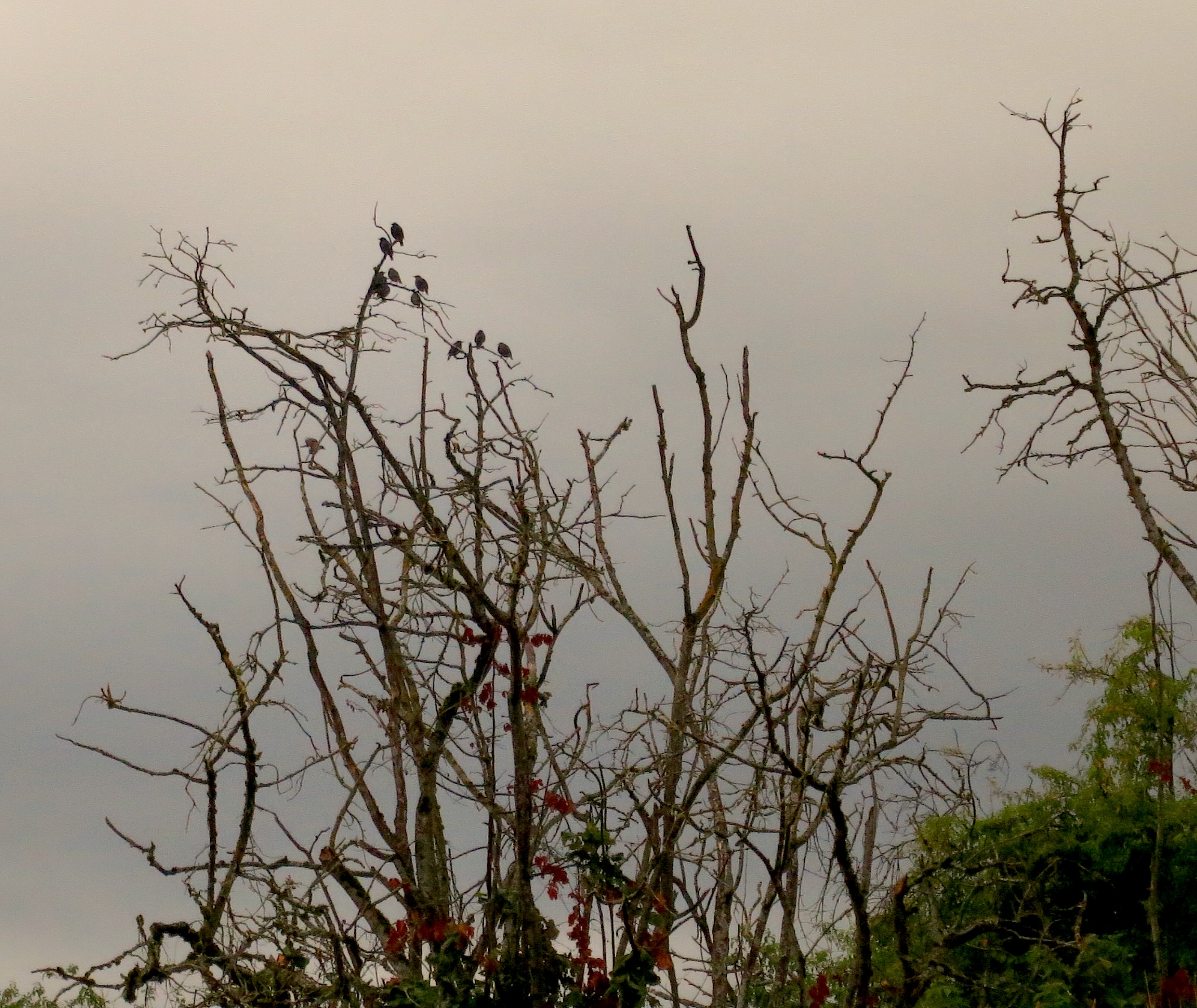
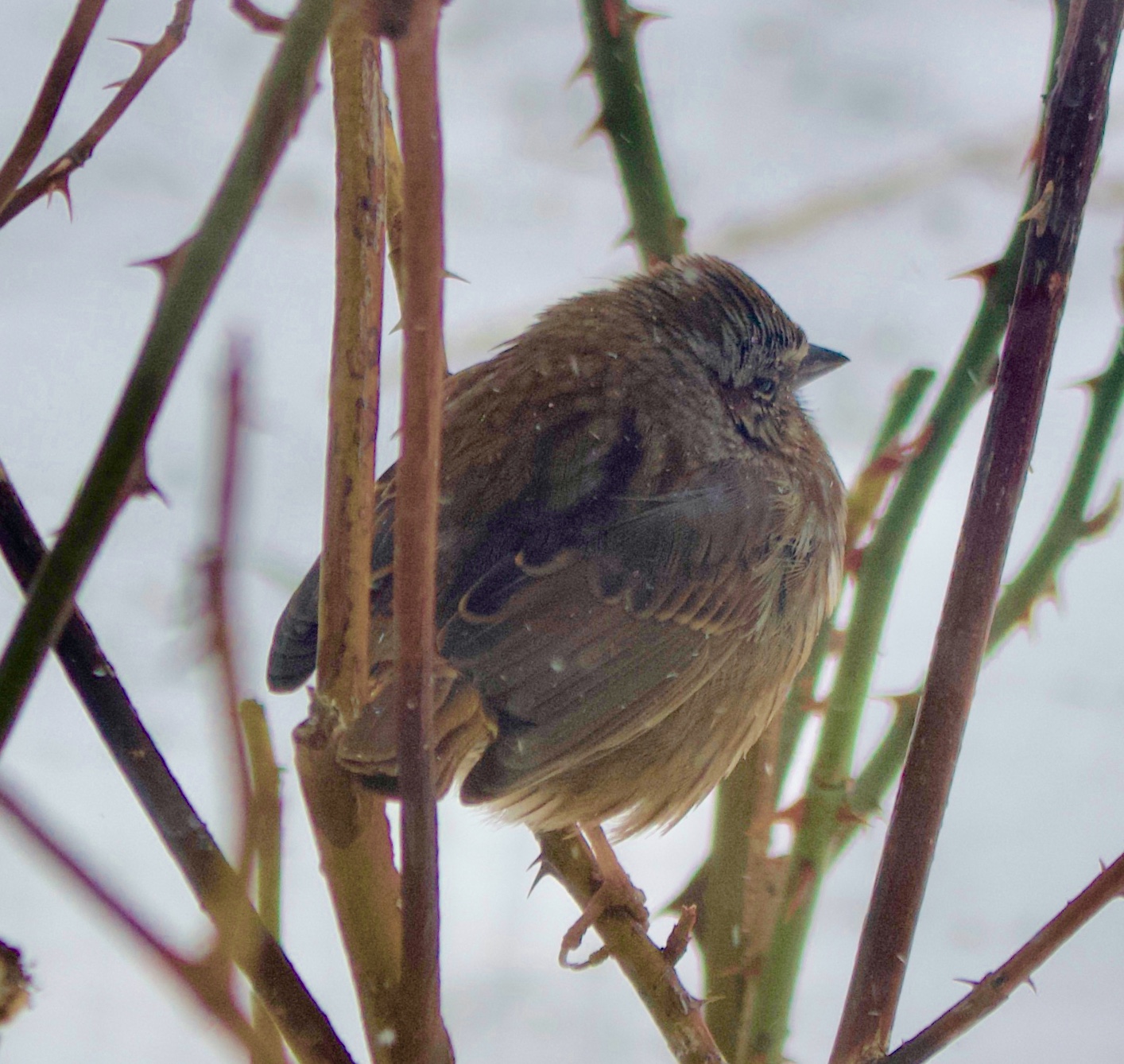
There, in that clearing, the crystal note of a song sparrow lifted hesitantly in the hush. And finally, after painful fluttering, another took the song, and then another, the song passing from one bird to another, doubtfully at first, as though some evil thing were being slowly forgotten. Till suddenly they took heart and sang from many throats joyously together as birds are known to sing.

They sang because life is sweet and sunlight beautiful. They sang under the brooding shadow of the raven. In simple truth they had forgotten the raven, for they were the singers of life, and not of death.
~Loren Eiseley from The Star Thrower

Each of us at times are as vulnerable as a nestling, just hatched.
The world is full of those who would eat us for lunch and do.

The world is also full of those who grieve and lament the violence that surrounds us, the tragedy of lives lost, the unending wars, the bullies and the bullied.

But the bird of death does not have the final word. He will soon be forgotten, forever sidelined as we reject what he and others like him represent.

Our cries of lament, our protests of violence transform into a celebration of life – we do not abandon all we have lost, but no longer allow any more to be stolen from us.

Only then may grief’s shadow be overwhelmed by joy.

One-Time
Monthly
Yearly

Make a one-time or recurring donation to support daily Barnstorming posts

Make a monthly donation

Make a yearly donation

Choose an amount

$10.00
$25.00
$50.00
$5.00
$15.00
$100.00
$5.00
$15.00
$100.00

Or enter a custom amount

$

Your contribution is deeply appreciated.

Your contribution is appreciated.

Your contribution is appreciated.

DonateDonate monthlyDonate yearly

Where Spirit Meets the Bone

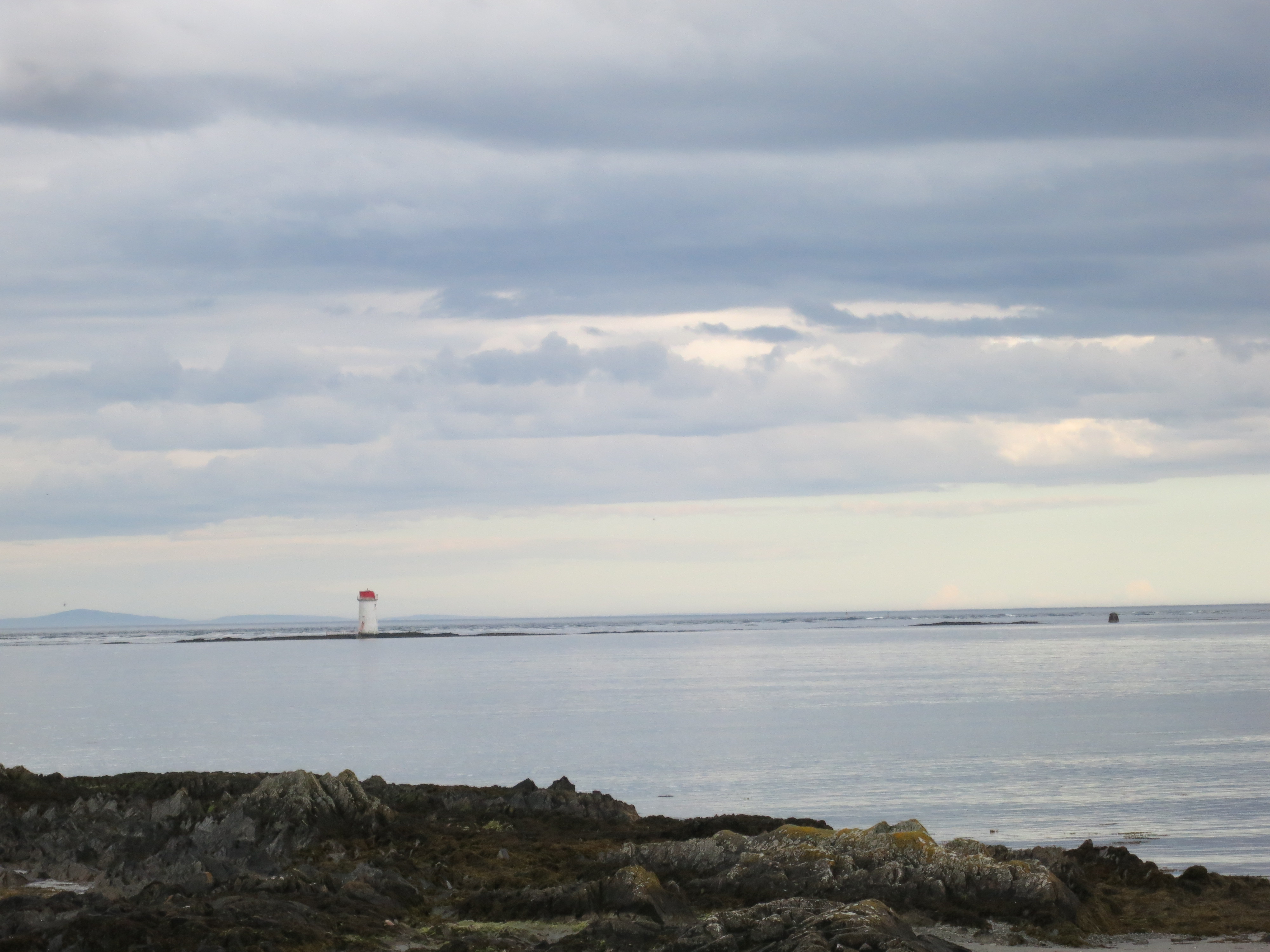
The mail truck goes down the coast
Carrying a single letter.
At the end of a long pier
The bored seagull lifts a leg now and then
And forgets to put it down.

There is a menace in the air
Of tragedies in the making.
Last night you thought you heard television
In the house next door.
You were sure it was some new
Horror they were reporting,
So you went out to find out.
Barefoot, wearing just shorts.
It was only the sea sounding weary
After so many lifetimes
Of pretending to be rushing off somewhere
And never getting anywhere
.

This morning, it felt like Sunday.
The heavens did their part
By casting no shadow along the boardwalk
Or the row of vacant cottages,
Among them a small church
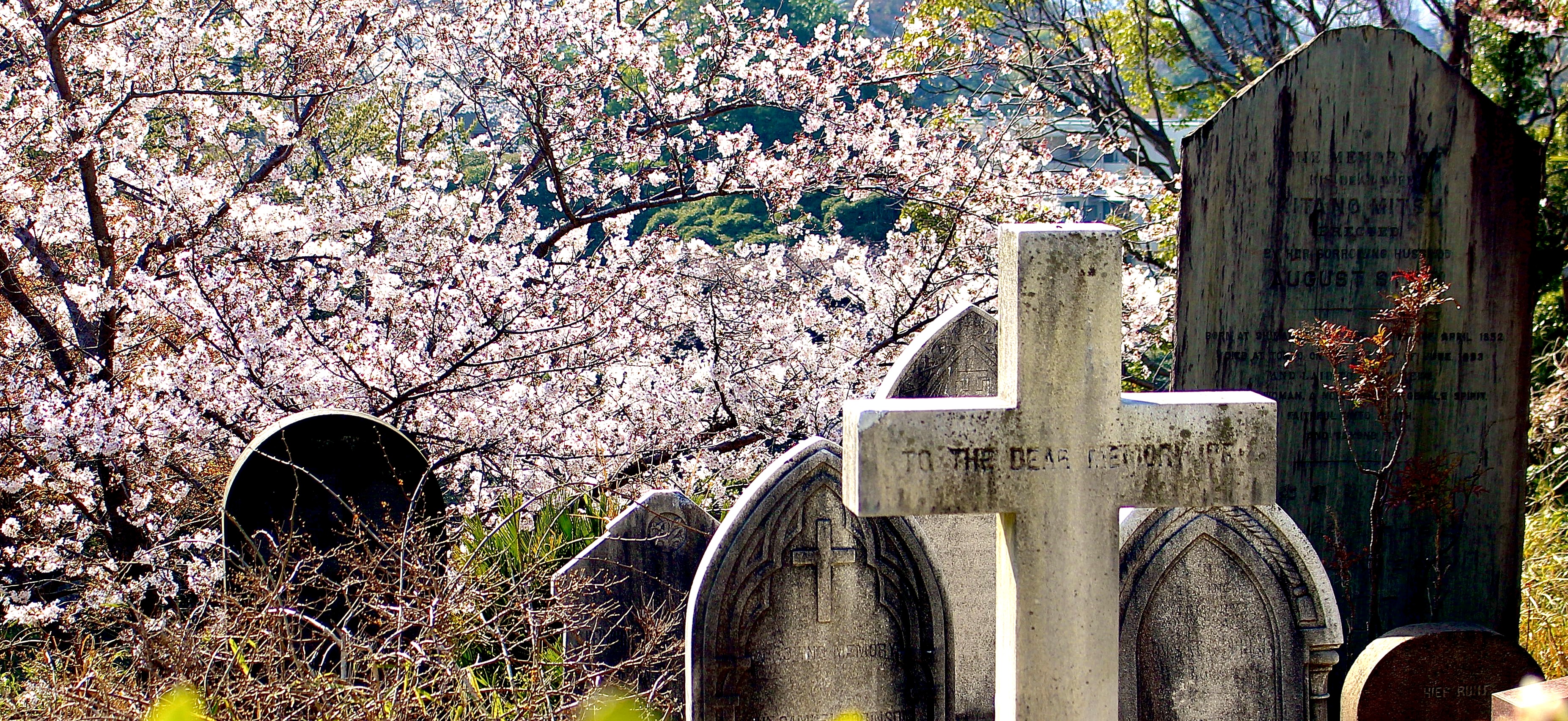
With a dozen gray tombstones huddled close
As if they, too, had the shivers.
~Charles Simic “Late September” from The Voice at 3:00 a.m.: Selected Late and New Poems 

Have compassion for everyone you meet,
even if they don’t want it. What seems conceit, 

bad manners, or cynicism is always a sign 
of things no ears have heard, no eyes have seen.
You do not know what wars are going on
down there where the spirit meets the bone.

~Miller Williams “Compassion” from The Ways We Touch: Poems

Christians are called by God to be living
so sacrificially and beautifully that the people around us, 
who don’t believe what we believe,
will soon be unable to imagine the world without us.
~Pastor Tim Keller

As we walk this life of trouble and suffering,
this Jericho Road together,
we cannot pass by the brother, the sister, the child
who lies dying in the ditch.

We must stop and help.
We cannot turn away from others’ suffering.

By mere circumstances of our place of birth,
it could be you or me there
bleeding, beaten, abandoned
until Someone, journeying along that road,
comes looking for us.

He was sent to take our place,
as Substitution
so we can get up,
cared for, loved,
made whole again,
and walk Home.

Maranatha.

One-Time
Monthly
Yearly

Make a one-time or recurring donation to support daily Barnstorming posts

Make a monthly donation

Make a yearly donation

Choose an amount

$10.00
$25.00
$50.00
$5.00
$15.00
$100.00
$5.00
$15.00
$100.00

Or enter a custom amount

$

Your contribution is deeply appreciated.

Your contribution is appreciated.

Your contribution is appreciated.

DonateDonate monthlyDonate yearly

For the Children…

If anyone, then, knows the good they ought to do and doesn’t do it,
it is a sin.
James 4:17

The rising hills, the slopes,
of statistics
lie before us,
the steep climb
of everything, going up,
up, as we all
go down.


In the next century
or the one beyond that,
they say,
are valleys, pastures,
we can meet there in peace
if we make it.


To climb these coming crests
one word to you, to
you and your children:


stay together
learn the flowers
go light

~Gary Snyder “For the Children” from Turtle Island.

After another school/church massacre;
how can there be nothing new to say?

We’ve learned nothing about keeping weapons
out of the hands of people bent on destruction –
taking themselves out after taking others with them.

To our children and grandchildren:
as a society, we have failed to keep you out of harm’s way
by failing to control the harm of modern weapons
in the wrong hands.

How can we be forgiven over and over
as shootings happen again and again.
Maybe we didn’t pull the trigger,
but we allowed someone else to.

Together, we share the responsibility
for each and every death that has happened,
and more bound to happen on our watch.

And that is a heavy burden to bear.

One-Time
Monthly
Yearly

Make a one-time or recurring donation to support daily Barnstorming posts

Make a monthly donation

Make a yearly donation

Choose an amount

$10.00
$25.00
$50.00
$5.00
$15.00
$100.00
$5.00
$15.00
$100.00

Or enter a custom amount

$

Your contribution is deeply appreciated.

Your contribution is appreciated.

Your contribution is appreciated.

DonateDonate monthlyDonate yearly

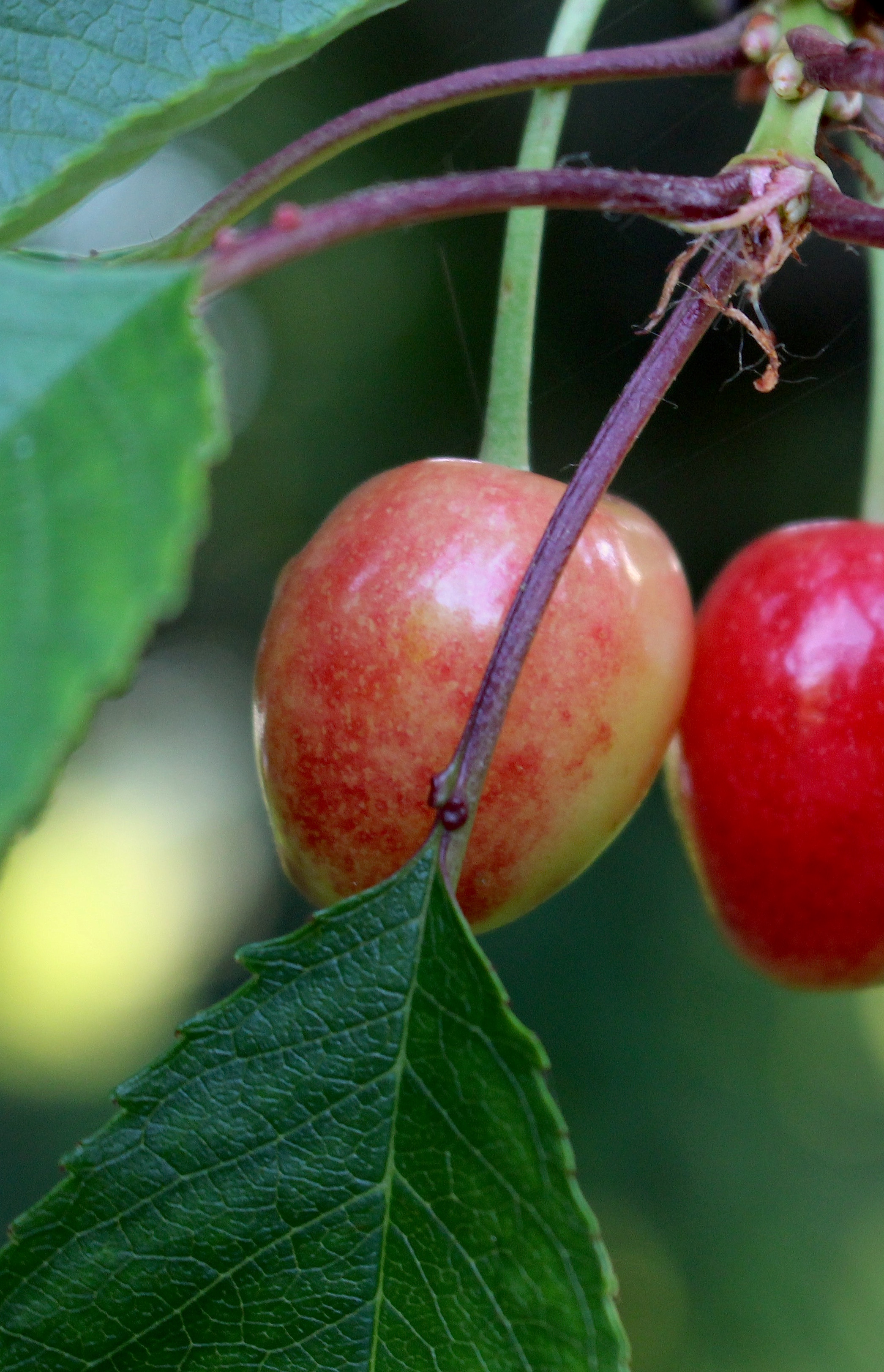
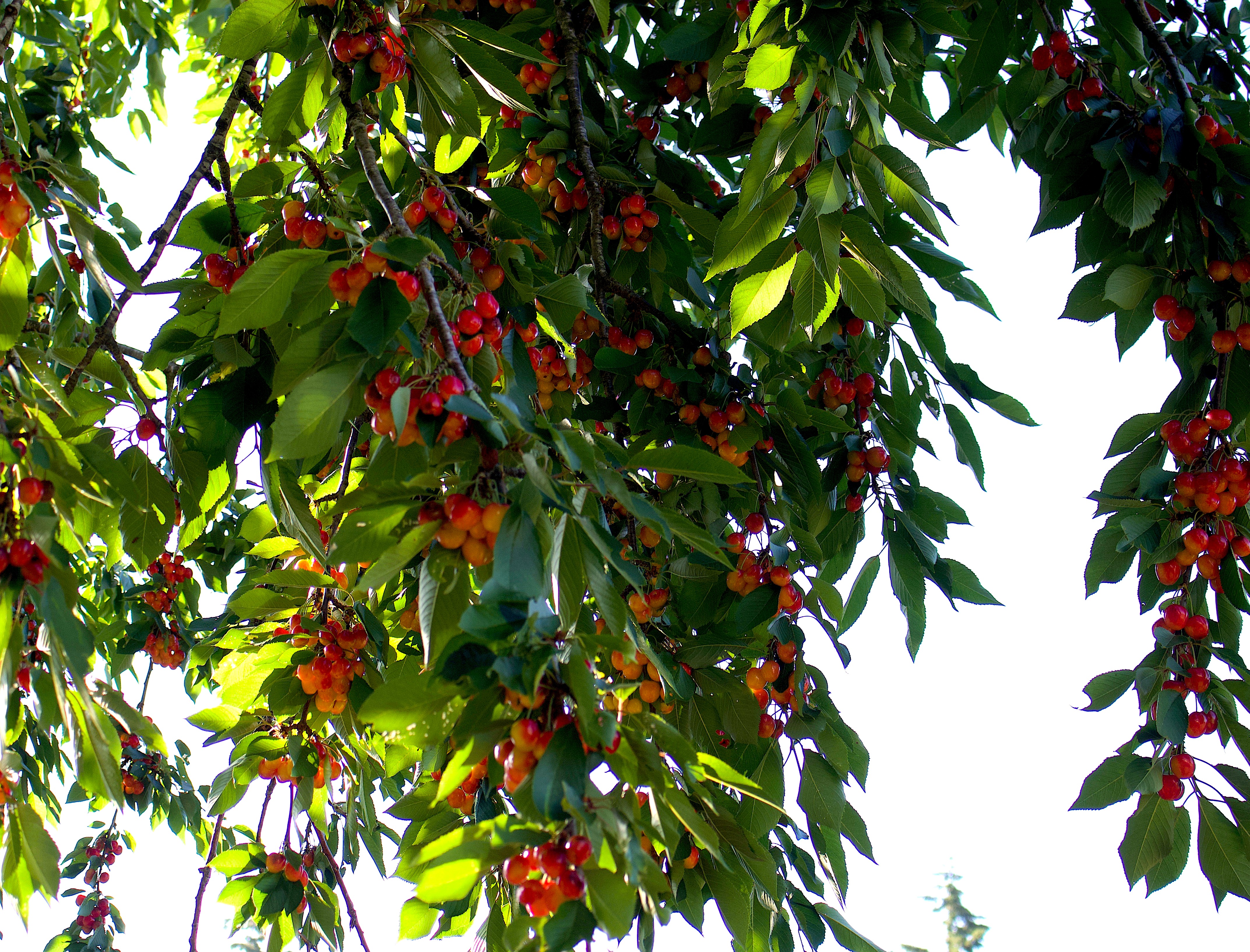
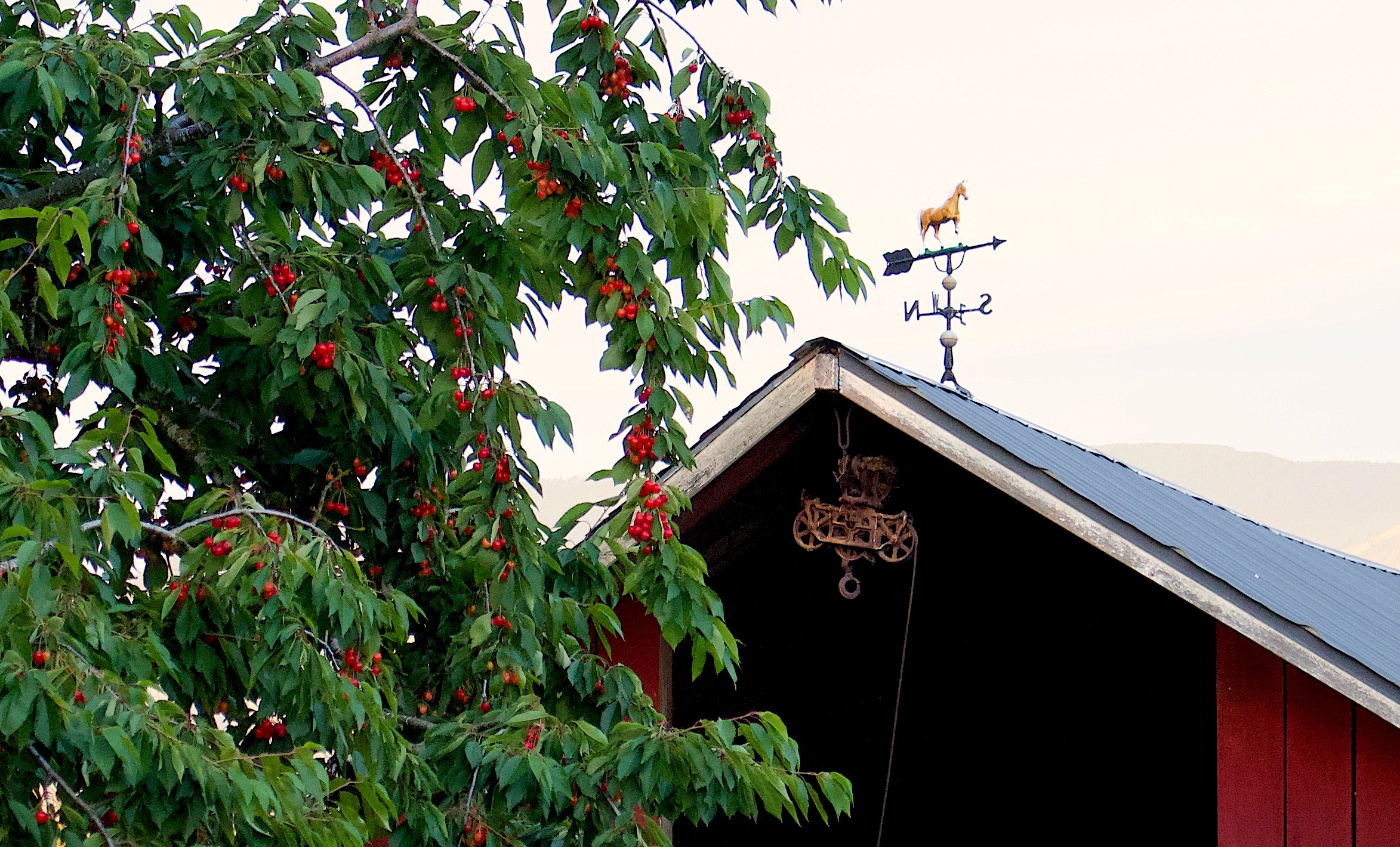
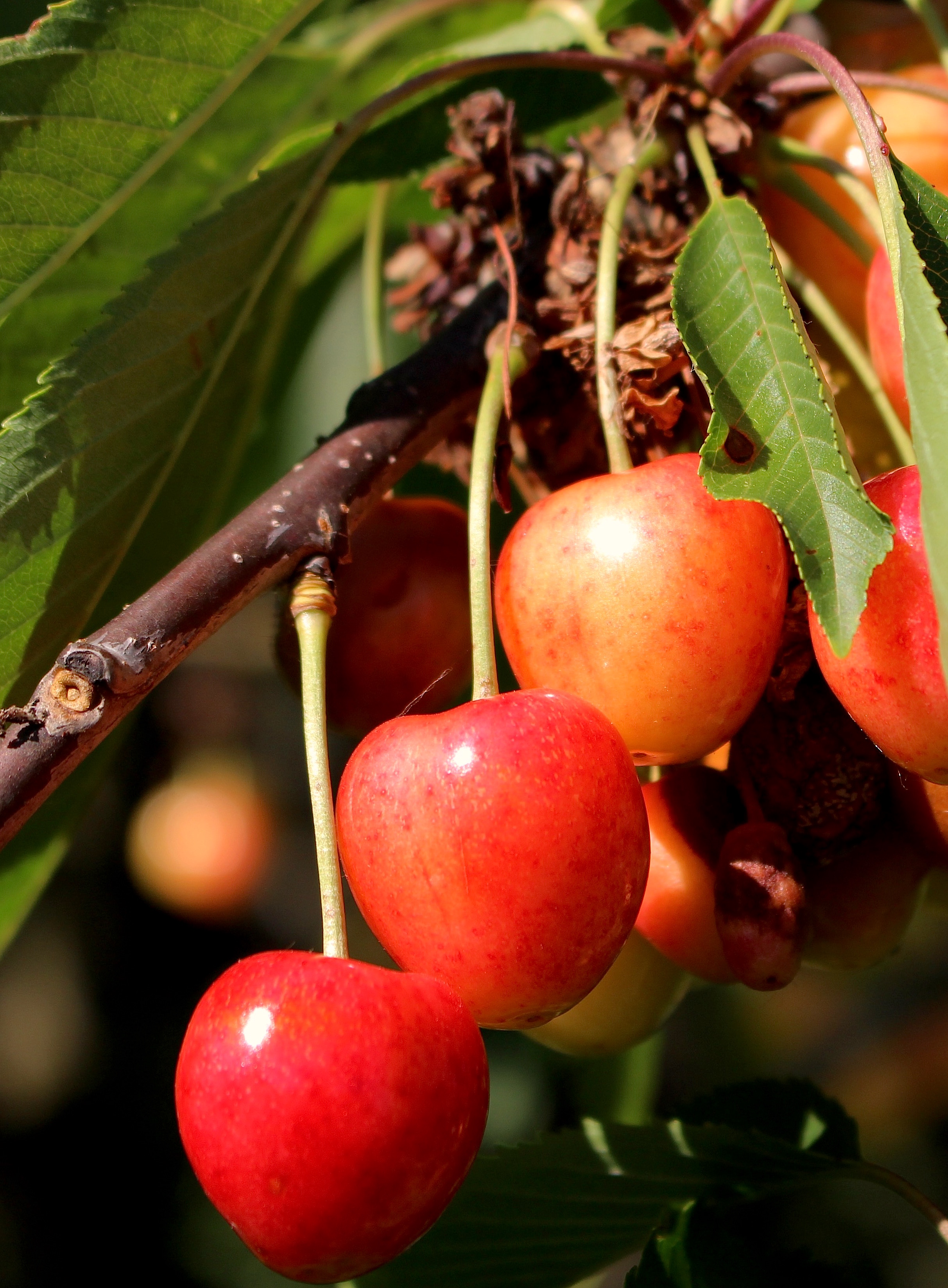
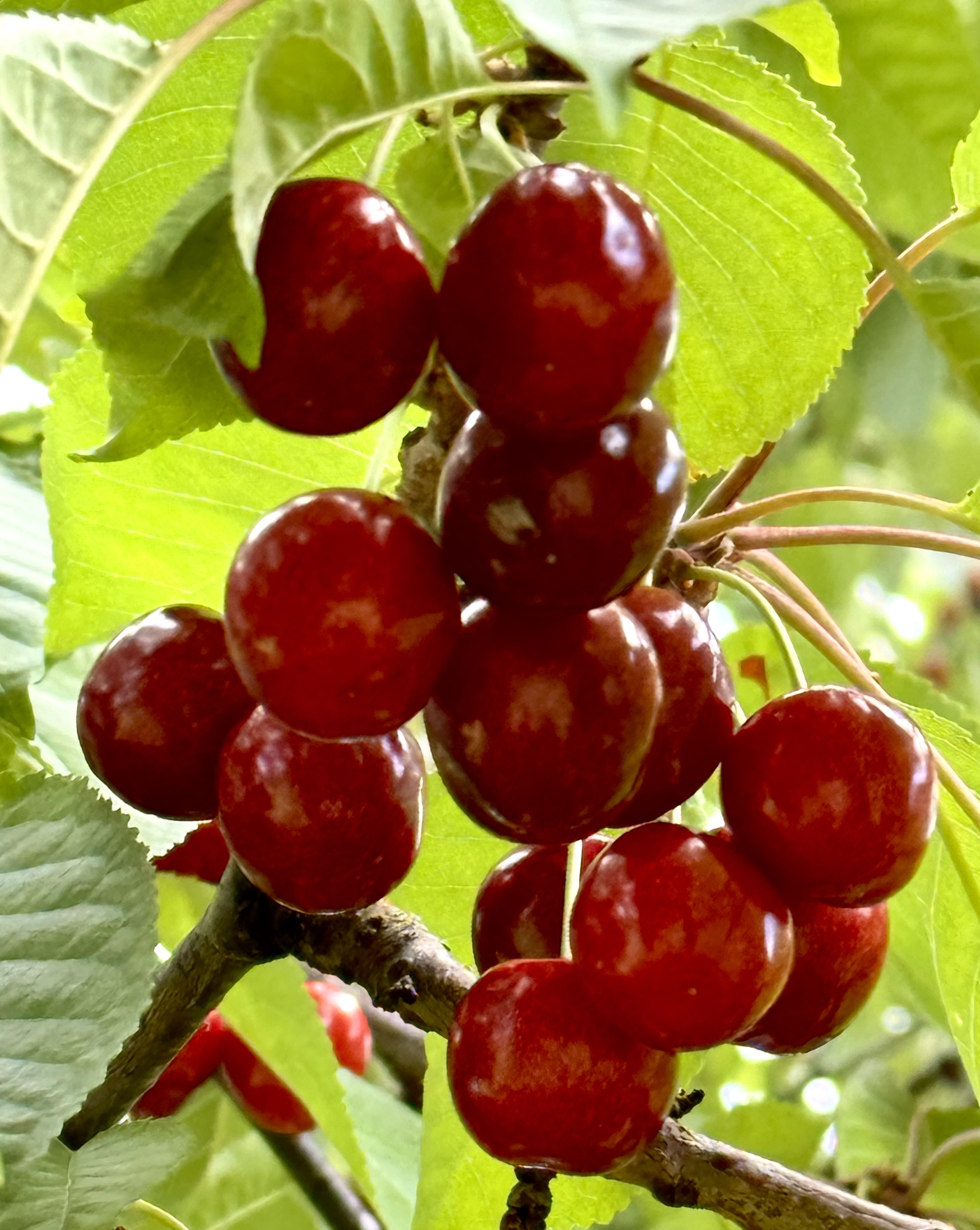
Holding a Memory of Cherries

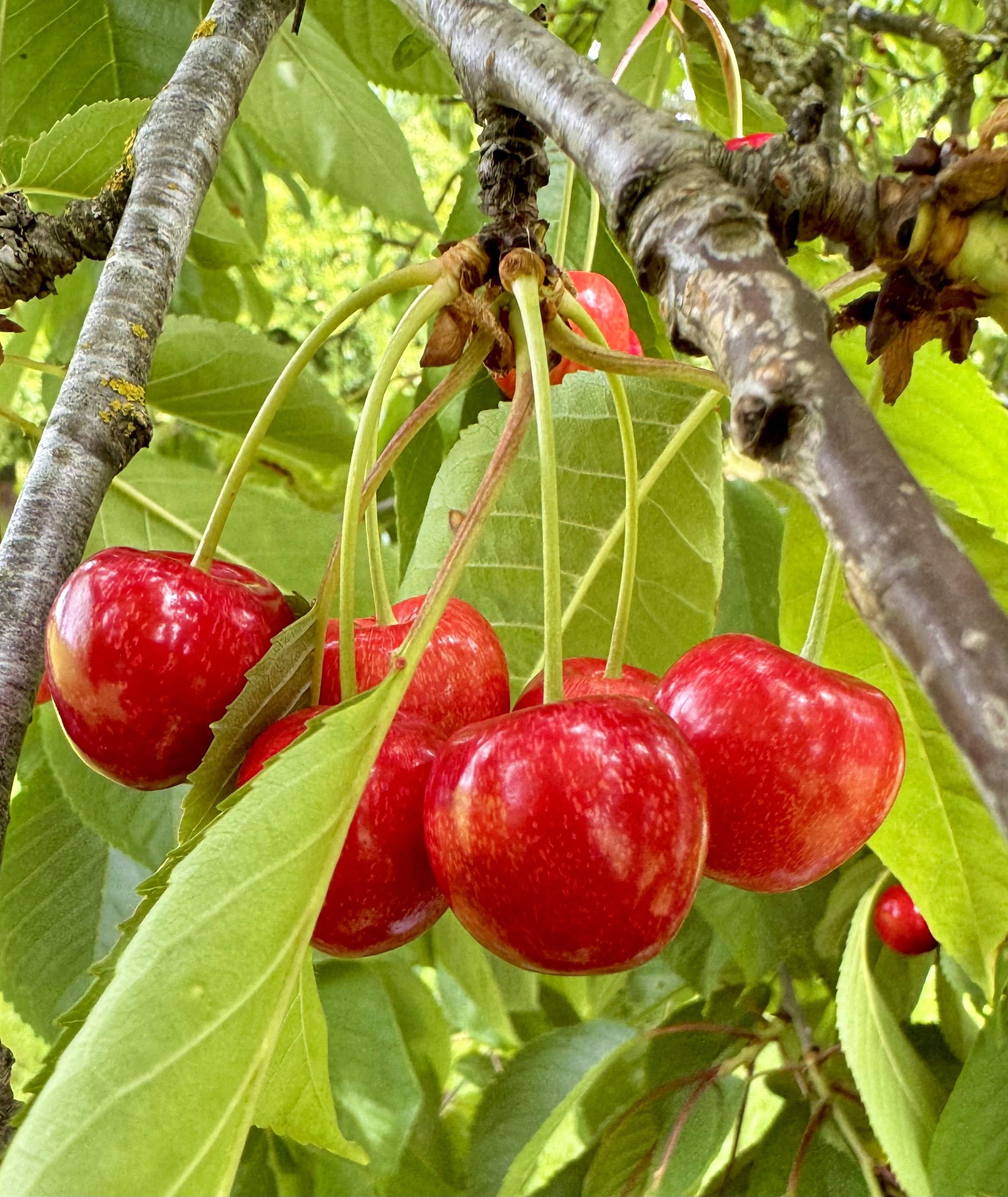
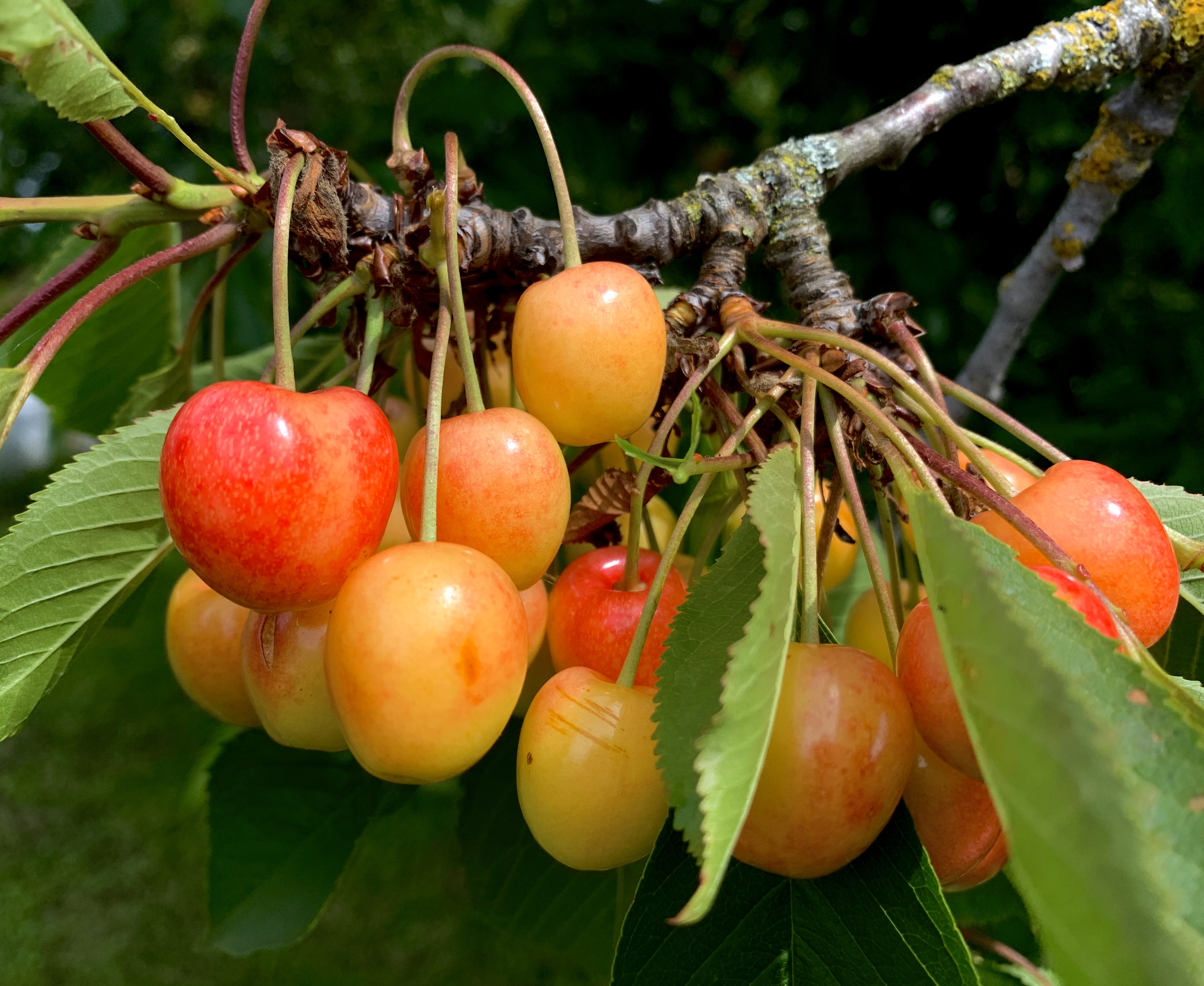
We used to pick cherries over the hill
where we paid to climb wooden ladders
into the bright haven above our heads, the fruit
dangling earthward. Dark, twinned bells
ringing in some good fortune just beyond
our sight. I have lived on earth long enough
to know good luck arrives only on its way
to someone else, for it must leave you to the miracle
of your own misfortune, lest you grow weary
of harvest, of cherries falling from the crown of sky
in mid-summer, of hours of idle. Let there be
a stone of suffering. Let the fruit taste of sweetness
and dust. Let grief split your heart so precisely
you must hold, somehow, a memory of cherries—
tart talismans of pleasure—in the rucksack
of your soul. Taut skin, sharp blessing.

Luminous, ordinary and acute.
~Danusha Laméris “U-Pick Orchards”

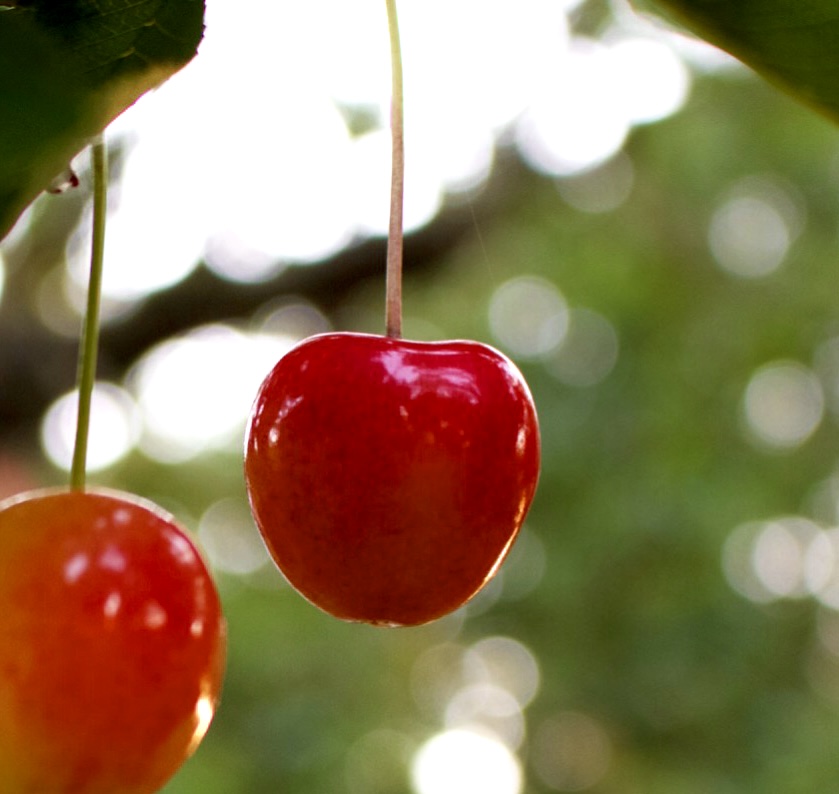
Life is not a bowl of cherries,
unless you count the ones
that aren’t yet ripe, or are over-ripe,
or have a squirrel- or bird-bite taken,
or have shriveled to raisins on the tree.

Yes, there are perfect cherries
that shine in the dark, glistening with promise,
tempting us to climb high to pick them.

Those we really want usually are out of reach.

How can we know what perfection is
unless we experience where life falls short?

The lingering taste of grief,
the agony of waiting for word in a tragedy,
the gnawing emptiness of indescribable loss.

Only the memory of what was nearly perfect,
remembering what could have been
knowing what will someday be our reality
can ease the bitter pit of suffering now.

May the families of those swept away in flooding,
those who live in the path of war and violence,
those who hunger for justice, or starving for food,
those who struggle with life-threatening and chronic illness
somehow know the comfort of God’s perfection awaits them.
The Light and Goodness is there for us to taste,
yet just beyond our reach.

AI image created for this post
One-Time
Monthly
Yearly

Make a one-time or recurring donation to support daily Barnstorming posts

Make a monthly donation

Make a yearly donation

Choose an amount

$10.00
$25.00
$50.00
$5.00
$15.00
$100.00
$5.00
$15.00
$100.00

Or enter a custom amount

$

Your contribution is deeply appreciated.

Your contribution is appreciated.

Your contribution is appreciated.

DonateDonate monthlyDonate yearly

Merging with the Shadows

For Nanda Devi Unsoeld: 1954–1976

Before the second summit party began the ascent
of the princess of mountains, an ominous black cloud
settled slowly around the summit block, persuading
us to take a rest day, but morale was good.
The next day at seven in the evening, my daughter
Devi was on her last pitch, and it took her until
midnight to haul up over the final lip. A long day.

Two days later, a blizzard kept us in our tents, but
the next morning, Devi was stricken, saying calmly,
“She is calling me. I am going to die,” before
she fell into unconsciousness.
I tried to revive her, mouth-to-mouth,
but felt her lips grow cold against mine.
We had lost her. My daughter was gone.
I and the other climbers wept.

Her fiancé Andy and I bundled her in her sleeping
bag and slipped her off the precipice of the North-
East face. I said we had committed her to the deep.
She had been the driving force behind this expedition,
as she was inexorably drawn to her namesake.
The Bliss-Giving Goddess had claimed her own.
An excerpt from her last diary is inscribed
on a stone placed in a high-altitude meadow of Patai:

“I stand on a windswept ridge at night with the stars
bright above and I am no longer alone but I waver
and merge with all the shadows that surround me.
I am part of the whole and I am content.”
~Eleanor Swanson, Last Light on the West Face of Nanda Devi
from Non Finito

Nanda Devi peak, courtesy of Stanford Alpine Club

The ripple effect from Nanda Devi Unsoeld’s arrival as a new junior in Olympia High School in 1970 reached me within minutes, as I felt the impact of her presence on campus immediately. One of my friends elbowed me, pointing out a new girl being escorted down the hall by the assistant principal. Students stared at the wake she left behind: Devi had wildly flowing wavy long blonde hair, a friendly smile and bold curious eyes greeting everyone she met.

From the neck up, she fit right in with the standard appearance at the time: as the younger sisters of the 60’s generation of free thinking flower children, we tried to emulate them in our dress and style, going braless and choosing bright colors and usually skirts that were too short and tight. There was the pretense we didn’t really care how we looked, but of course we did care very much, with hours spent daily preparing the “casual carefree” look that would perfectly express our freedom from fashion trends amid our feminist longings.

Practicing careful nonconformity perfectly fit our peers’ expectations and aggravated our parents.

But Devi never looked like she cared what anyone else thought of her.  The high school girls honestly weren’t sure what to make of her, speculating together whether she was “for real” and viewed her somewhat suspiciously, as if she was putting on an act.

The high school boys were mesmerized.

She preferred baggy torn khaki shorts or peasant skirts with uneven hems, loose fitting faded T shirts and ripped tennis shoes without shoelaces. Her bare legs were covered with long blonde hair, as were her armpits which she showed off while wearing tank tops. She pulled whole cucumbers from her backpack in class and ate them like cobs of corn, rind and all. She smelled like she had been camping without a shower for three days, but then riding her bike to school from her home 11 miles away in all kinds of weather accounted for that. One memorable day she arrived a bit late to school, pushing her bike through 6 inches of snow in soaking tennis shoes, wearing her usual broad smile of satisfaction.

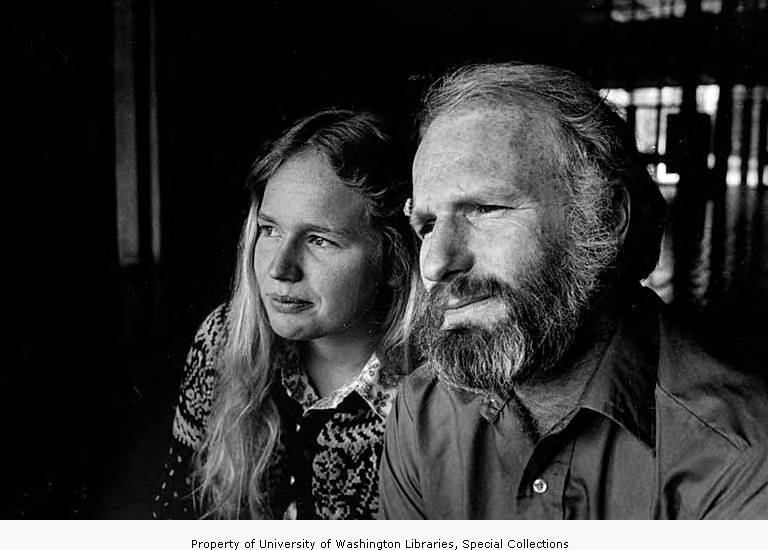
As a daughter of two Peace Corps workers who had just moved back to the U.S. after years of service in Nepal, Devi had lived very little of her life in the United States. Her father Willi Unsoeld, one of the first American climbers to reach the summit of Mt. Everest up the difficult west face, had recently accepted a professorship in comparative religion at new local Evergreen College. He moved his wife and family back to the northwest to be near his beloved snowy peaks, suddenly immersing four children in an affluent culture that seemed foreign and wasteful.

Devi recycled before there was a word for it simply by never buying anything new and never throwing anything useful away, involved herself in social justice issues before anyone had coined the phrase, and was an activist behind the scenes more often than a leader, facilitating and encouraging others to speak out at anti-war rallies, organizing sit-ins for world hunger and volunteering in the local soup kitchen. She mentored adolescent peers to get beyond their self-consciousness and self-absorption to explore the world beyond the security of high school walls.

Regretfully, few of us followed her lead. We preferred the relative security and camaraderie of hanging out at the local drive-in to taking a shift at the local 24-hour crisis line. We showed up for our graduation ceremony in caps and gowns while the rumor was that Devi stood at the top of Mt. Rainier with her father that day.

I never saw Devi after high school but heard of her plans in 1976 to climb with an expedition to the summit of Nanda Devi, the peak in India for which she was named. She never returned, dying in her father’s arms as she suffered severe abdominal pain and irreversible high altitude sickness just below the summit. She lies forever buried in the ice on that faraway peak in India. 

Her father died in an avalanche only a few years later, as he led an expedition of Evergreen students on a climb on Mt. Rainier, only 60 miles from home. Her mother, Jolene, later served in Congress from our district in Washington state.

Had Devi lived these last 50 years, I have no doubt she would have led our generation with her combination of charismatic boldness and excitement about each day’s new adventure. She lived without pretense, without hiding behind a mask of fad and fashion and conformity and without any desire for wealth or comfort.

I wish I had learned what she had to teach me when she sat beside me in class, encouraging me by her example to become someone more than the dictates of societal expectations. I secretly admired the freedom she embodied in not being concerned in the least about fitting in. Instead, I still mourn her loss all these years later, having to be content with the legacy she has now left behind on a snowy mountain peak that called her by name.

Mt. Shuksan, Washington state
One-Time
Monthly
Yearly

Make a one-time or recurring donation to support daily Barnstorming posts

Make a monthly donation

Make a yearly donation

Choose an amount

$10.00
$25.00
$50.00
$5.00
$15.00
$100.00
$5.00
$15.00
$100.00

Or enter a custom amount

$

Your contribution is deeply appreciated.

Your contribution is appreciated.

Your contribution is appreciated.

DonateDonate monthlyDonate yearly

Where You Go, I Will Go: The Mourning Bench

…we all suffer.
For we all prize and love;
and in this present existence of ours,
prizing and loving yield suffering.
Love in our world is suffering love.


Some do not suffer much, though,
for they do not love much.
Suffering is for the loving.
This, said Jesus, is the command of the Holy One:
“You shall love your neighbor as yourself.”
In commanding us to love, God invites us to suffer
.

Over there, you are of no help.
What I need to hear from you is that you recognize how painful it is.
I need to hear from you that you are with me in my desperation.


To comfort me, you have to come close.
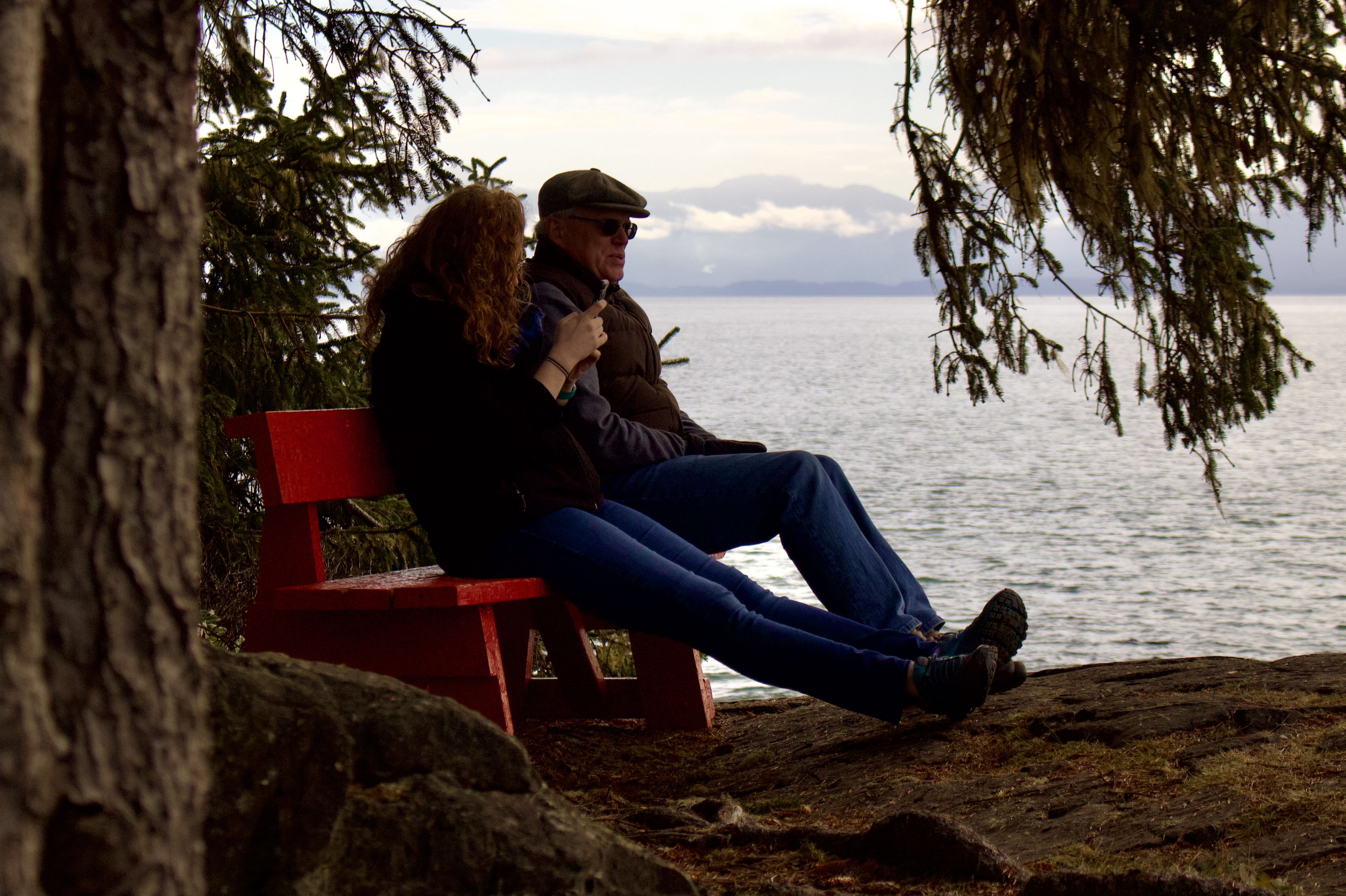
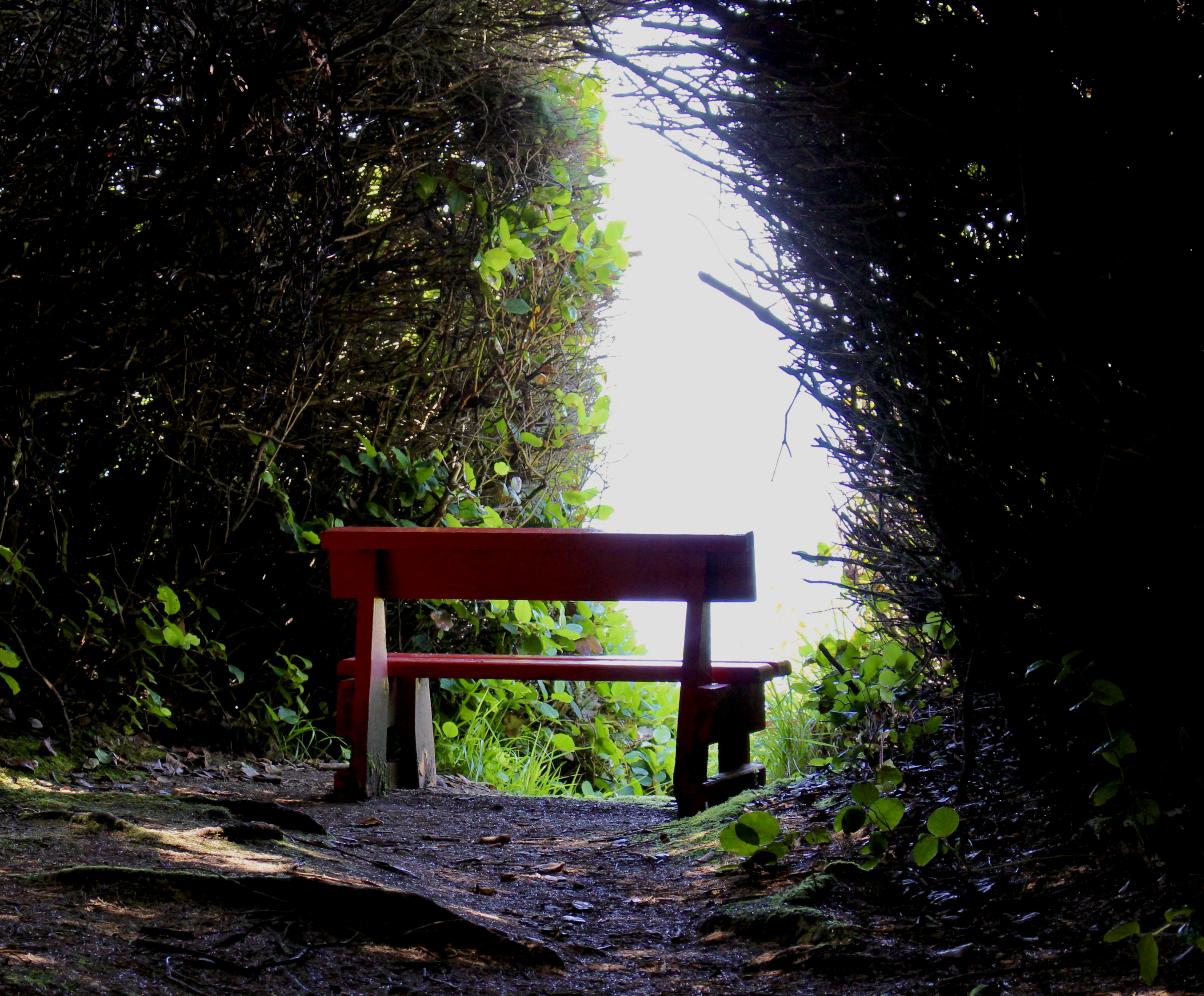
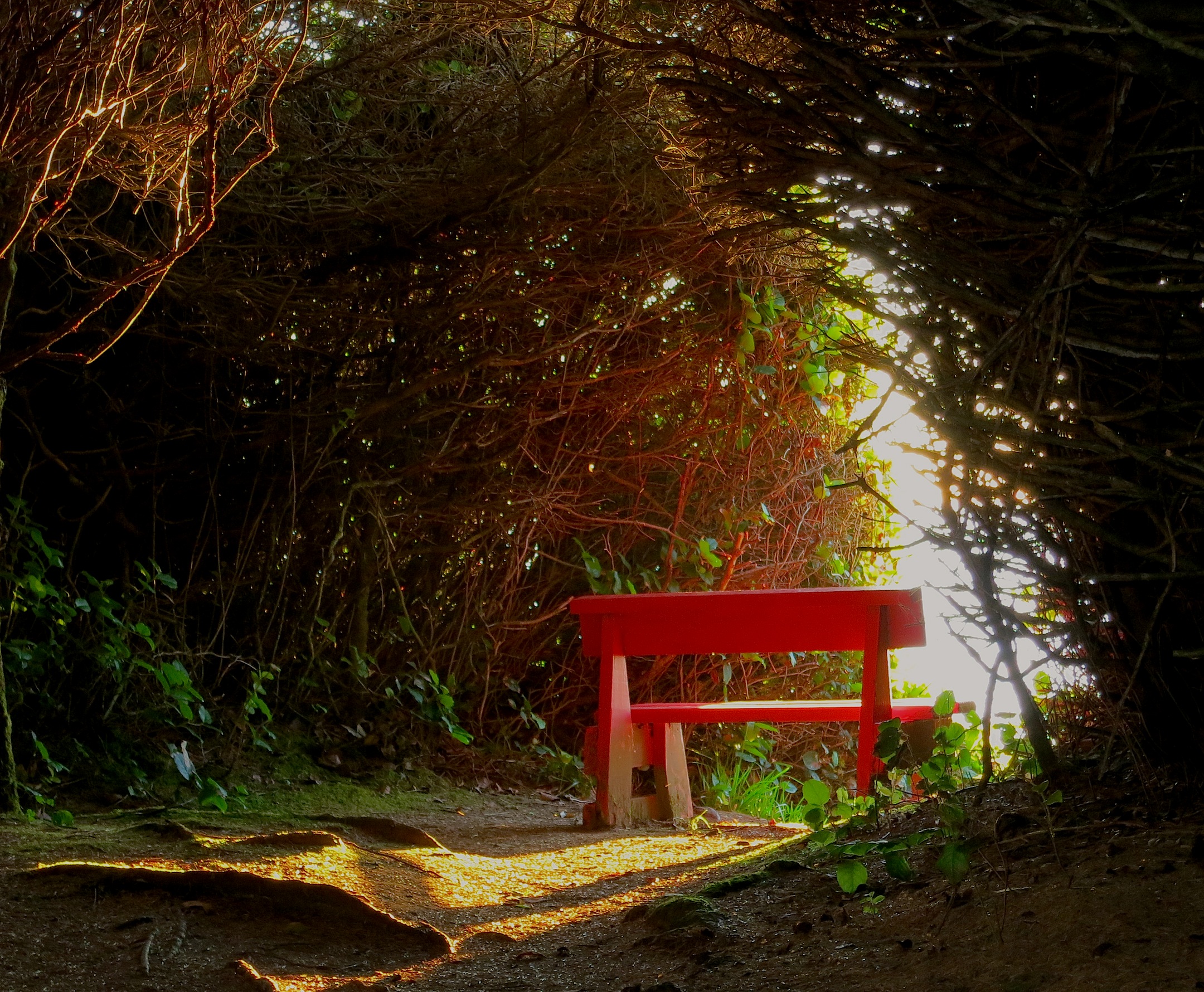
Come sit beside me on my mourning bench.
~Nicholas Wolterstorff from Lament for a Son

I wondered if 7:30 AM was too early to call her. As a sleep-deprived fourth year medical student finishing a long night admitting patients in the hospital, I selfishly needed to hear her voice.

I wanted to know how Margy was doing with the latest round of chemotherapy for breast cancer; I knew she was not sleeping well these days. She was wearing a new halo brace—a metal contraption that wrapped around her head like a scaffolding to secure her degenerating cervical spine from collapsing from metastatic tumor growths in her bones.

She knew, we all knew, she was trying to buy more time from a life of rapidly diminishing days.

Each patient I had seen the previous 24 hours while working in the Emergency Room benefited from the interviewing skills Margy had taught each medical student in our class. She reminded us that each patient had an important story to tell, and no matter how pressured our time, we needed to ask questions that gave permission for that story to be told. As a former nun now married with two teenage children, Margy had become our de facto therapist at a time no medical school hired supportive counselors.

She insisted physicians-in-training remember the suffering soul thriving inside the broken body.

“Just let the patient know with certainty, through your eyes, your body language, your words, that you want to hear what they have to say. You can heal so much hurt simply by sitting beside them and caring enough to listen…”

After her diagnosis with stage 4 cancer, Margy herself became the broken vessel who needed the glue of a good listener. She continued to teach, often from her bed at home. I planned to visit her that day, maybe help out by cleaning her house, or take her for a drive as a diversion.

Her phone rang only once after I dialed her number. There was a long pause; I could hear a clearing of her throat. A deep dam of tears welled behind a muffled “Hello?”

“Margy?”

“Yes? Emily? ”

“Margy? What is it? What’s wrong?”

Her voice shattered like glass into fragments, strangling on words that struggled to form.

“Gordy’s gone, Emily. He’s gone. He’s gone forever…”

“What? What are you saying?”

“A policeman just left. He told us our boy is dead.”

I sat in stunned silence, listening to her sobs, completely unequipped to know how to respond.

None of this made sense. I knew her son was on college spring break, heading to Mexico for a missions trip.

“I’m here, what’s happened?”

“The doorbell rang about an hour ago. Larry got up to answer it. I heard him talking to someone downstairs, so I decided to try to get up and go see what was going on. There was a policeman sitting with Larry on the couch. I knew it had to be about Gordy.”

She paused and took in a shuddering breath.

“The group was driving through the night in California. He was asleep in the back of the camper. They think he was sleepwalking and walked right out of the back of the moving camper and was hit by another car.”

Silence.  A strangling choking silence.

“They’ll bring him home to me, won’t they? I need to know I can see my boy again. I need to tell him how much I love him.”

“They’ll bring him home to you, Margy.
I’m on my way to help you get ready…

God is not only the God of the sufferers
but the God who suffers. …
It is said of God that no one can behold his face and live.
I always thought this meant
that no one could see his splendor and live.
A friend said perhaps it meant
that no one could see his sorrow and live.
Or perhaps his sorrow is splendor. …
Instead of explaining our suffering, God shares it.

~Nicholas Wolterstorff from Lament for a Son

This year’s Lenten theme:

…where you go I will go…
Ruth 1:16

One-Time
Monthly
Yearly

Make a one-time or recurring donation to support daily Barnstorming posts

Make a monthly donation

Make a yearly donation

Choose an amount

$10.00
$25.00
$50.00
$5.00
$15.00
$100.00
$5.00
$15.00
$100.00

Or enter a custom amount

$

Your contribution is deeply appreciated.

Your contribution is appreciated.

Your contribution is appreciated.

DonateDonate monthlyDonate yearly

Fresh Tears

When we have died,
and arms long empty of our memories,
reach to know love’s pure and sacred touch,
and to embrace a long sought, long anticipated place

when we have gone the way of all the earth,
and pain and sorrow are no more, not seen or heard or found,
no more the discontent of place or time or any lesser haste,
but only One whose love transcends our harsh and wearied days,

when we have died and gone and fallen fast asleep,
and found the settled light and our so much a sweeter sacral rest,
forever held in caring arms, yes,

held now everlasting in a wonder of it all,
then we have not gone down empty, we have not died alone.

~Henry Lewis from “When”

This event happened in 1975 while I was an undergraduate student researcher in Tanzania, East Africa, working alongside other researchers assisting Dr. Jane Goodall in her study of wild chimpanzees and baboons.

Several metal buildings were scattered along the shore at Gombe National Park, having been built over the years since Jane Goodall and her mother Vanne arrived on a bare beach in 1960. From the very beginning, one of the most powerful connections between these two British women and the Tanzanian villagers who lived up and down Lake Tanganyika was their provision of basic medical supplies and services when needed. Initially, under the cover of the camp tents, they tended to wounds, provided a few medications, and assisted whenever they were needed for help. 

Later, an actual dispensary was built as part of the park buildings, with storage for first aid supplies and medications, many of which were traditional Chinese medications, in little boxes with Chinese characters, and no translation. All we had was a sheet of paper explaining if a medication was to be used for headaches, fevers,  bleeding problems or infections.

There were “open” times in the dispensary and each of the research assistants took turns to see villagers as they came by to be seen for medical issues. We saw injuries that had never healed properly, some people with permanently crippled limbs, centipede bites that swelled legs, babies who were malnourished, malarial fevers.

It felt like so little to offer. None of us had medical training beyond first aid and CPR, but what small service we could provide was met with incredible gratitude. 

So it wasn’t a surprise when a villager arrived one afternoon, running and out of breath, asking that we come right away to help. There had been a terrible accident up the beach when a water taxi engine exploded while transporting two dozen villagers, along with their provisions, including goats and chickens. As people rushed to get away from the engine fire, the roofed boat overturned, with everyone trapped among the boxes, unable to escape. 

Even more tragic, Tanzanians were never taught to swim, so no one on shore could help in the rescue effort.

We dropped everything and six of us ran up the beach for a mile, and could see an overturned water taxi just off shore. The best swimmers went out and started searching for people who had been too long in the deep water. They began to pull the bloated bodies to shore, one by one, the lake water pouring from lifeless mouths and noses.  All we could do was line them up side by side on the beach, trying to keep the biting flies from covering them,  trying to make sense of what was so senseless. There were eight children of various ages, including two small babies, several older women, one pregnant woman, the rest men of all ages–twenty four souls in all, not a single survivor.

As a nurses’ aide, I had cared for the dying and helped to bathe their bodies after death, but I had never before seen so much death at once, and never a dead child.

Before long, relatives started arriving, their grief-stricken wails of loss filling the air on this remote African lakeshore. Husbands and wives wept, keening over a spouse. Children crouched, in shock, by a dead parent. Grandmothers clutched their dead children and grandchildren and would not let go. 

We had saved no one. We had no power to bring them back to life. 

We could only bear witness to the loss and grief with deep compassion for our neighbors who had come to depend on us to help. It became even clearer to me, in a way I had never understood before, how deep our need is for the mercy of God who is our only comfort when terrible things happen.

I have not forgotten those who were lost to the world that day fifty years ago. Still, all these years later, when I see photos of senseless violence and death, whether war or other disasters, I grieve for them anew with fresh tears, all over again.

Psalm 51:
Have mercy, O God…
according to your great compassion…

AI image created for this post
One-Time
Monthly
Yearly

Make a one-time or recurring donation to support daily Barnstorming posts

Make a monthly donation

Make a yearly donation

Choose an amount

$10.00
$25.00
$50.00
$5.00
$15.00
$100.00
$5.00
$15.00
$100.00

Or enter a custom amount

$

Your contribution is deeply appreciated.

Your contribution is appreciated.

Your contribution is appreciated.

DonateDonate monthlyDonate yearly

The Miracle of Each Morning

The staccato rain on the roof
The sudden parting of clouds


The silent worship of morning
The kettle’s steamy clicking on the stove


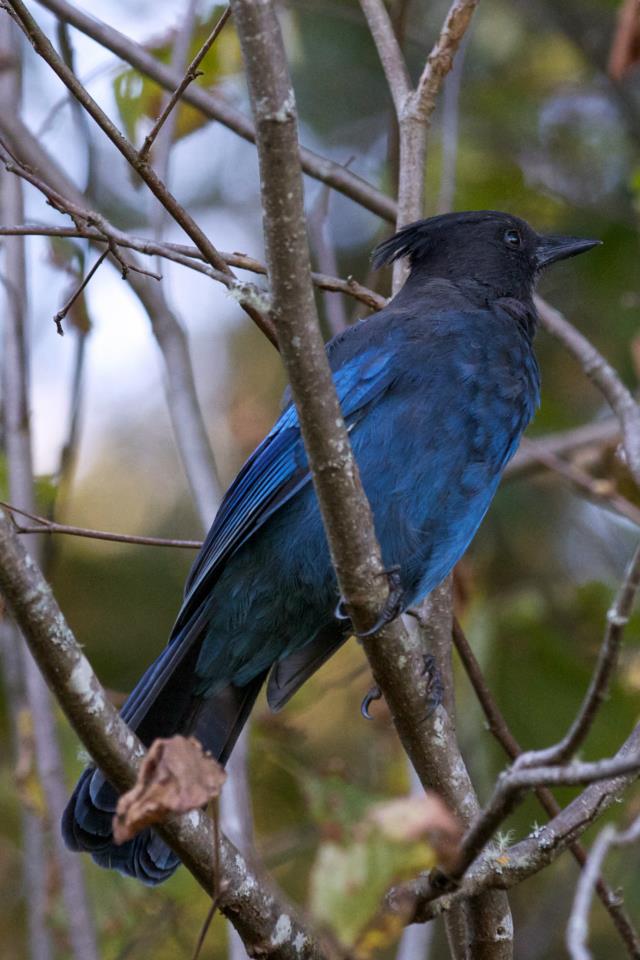
The stellar jay defending the nest
The gang of crows flying off


The 100 bones of feet
The climbing of mountains


The slenderness of throat
The fullness of hymns on Sunday


The meeting of you
The knowing of me


I tell you, it’s a miracle
~Peg Edera, “It’s a Miracle, I Tell You” from Love is Deeper than Distance

bluejay photo by Josh Scholten

How many times each day do I wonder at the miracle that is each breath, each step, each meal, each good night’s sleep, each wakening, each song, each hug?

That it happens at all is a miracle, I tell you.

And why do we notice it most when it is no longer a given – when we have suddenly lost the daily gifts we take for granted.

So we who wake on an ordinary Sunday today,
our home and church and family not in the path of a fire,
our communities not in danger,
we thank God for His daily miracles
and pray that His people will help
comfort and care for those who weep.

We Are No Longer Alone: Waiting for Rescue

In time the curtain-edges will grow light.   
Till then I see what’s really always there:   
Unresting death, a whole day nearer now,   
Making all thought impossible but how   
And where and when I shall myself die.  
 

…specious stuff that says No rational being
Can fear a thing it will not feel, not seeing
That this is what we fear—no sight, no sound,   
No touch or taste or smell, nothing to think with,   
Nothing to love or link with,
The anaesthetic from which none come round.

Slowly light strengthens, and the room takes shape.   
It stands plain as a wardrobe, what we know,   
Have always known, know that we can’t escape,   
Yet can’t accept. One side will have to go.

The sky is white as clay, with no sun.
Work has to be done.
Postmen like doctors go from house to house.
~Philip Larkin from “Aubade”

Sharing an essay I wrote during Advent in 2003:

We are in our darkest of dark days today in our corner of the world–about 16 hours of darkness underwhelming our senses, restricting, confining and defining us in our little circles of artificial light that we depend on so mightily.

It is so tempting to be consumed and lost in these dark days, stumbling from one obligation to the next, one foot in front of the other, bumping and bruising ourselves and each other in our blindness. Lines are long at the stores, impatience runs high, people coughing and shivering with winter viruses, others stricken by loneliness and desperation.

So much grumbling in the dark.

Yesterday, I had a conversation with a patient of mine from my clinic at the University Student Health Center, a young college student recovering at the local hospital after a near-death experience. Her testimony made me acutely aware of my self-absorbent grumbling.

Several days ago, she was snowshoeing up to Artist Point with two other students in the bright sun above the clouds at the foot of nearby Mt. Baker. A sudden avalanche buried all three–she remembers the roar and then the deathly quiet of being covered up, and the deep darkness that surrounded her. She was buried hunched over, with the weight of the snow above her too much to break through. She had a pocket of air beneath her and in this crouching kneeling position, she could only pray–not move, not shout, not anything else. Only God was with her in that small dark place. She believes that 45 minutes later, rescuers dug her out to safety from beneath that three feet of snow. In actuality, it was 24 hours later.

She had been wrapped in the cocoon of her prayers in that deep dark pocket of air, and miraculously, kept safe and warm enough to survive. Her hands and legs, blackish purple when she was pulled out of the snow, turned pink with the rewarming process at the hospital.

When I visited her, she glowed with a light that came only from within –somehow, it had kept her alive.

Tragically, one of her friends died in that avalanche, never having a chance of survival because of how she was trapped and covered with the suffocating snow. Her other friend struggled for nearly 24 hours to free himself, bravely fighting the dark and the cold to reach the light, then calling for help from nearby skiers to try to rescue his friends.

At times we must fight with the dark–wrestle it and rale against it, bruised and beaten up in the process, but so necessary to save ourselves and others from being consumed. At other times we must kneel in the darkness and wait– praying, hoping, knowing the light is to come, one way or the other. Grateful, grace-filled, not giving up to grumbling.

May the Light find and rescue you this week in your moments of darkness.

Merry merry Christmas.

The story of the avalanche and rescue is written here in the Seattle Times.

The first thing I heard this morning
was a rapid flapping sound, soft, insistent—


wings against glass as it turned out
downstairs when I saw the small bird
rioting in the frame of a high window,
trying to hurl itself through
the enigma of glass into the spacious light.


Then a noise in the throat of the cat
who was hunkered on the rug
told me how the bird had gotten inside,
carried in the cold night
through the flap of a basement door,
and later released from the soft grip of teeth.


On a chair, I trapped its pulsations
in a shirt and got it to the door,
so weightless it seemed
to have vanished into the nest of cloth.


But outside, when I uncupped my hands,
it burst into its element,
dipping over the dormant garden
in a spasm of wingbeats
then disappeared over a row of tall hemlocks.


For the rest of the day,
I could feel its wild thrumming
against my palms as I wondered about
the hours it must have spent
pent in the shadows of that room,
hidden in the spiky branches
of our decorated tree, breathing there
among the metallic angels, ceramic apples, stars of yarn,
its eyes open, like mine as I lie in bed tonight
picturing this rare, lucky sparrow
tucked into a holly bush now,
a light snow tumbling through the windless dark.

~Billy Collins “Christmas Sparrow” from Aimless Love

AI image created for this post
One-Time
Monthly
Yearly

Make a one-time or recurring donation to support daily Barnstorming posts

Make a monthly donation

Make a yearly donation

Choose an amount

$10.00
$25.00
$50.00
$5.00
$15.00
$100.00
$5.00
$15.00
$100.00

Or enter a custom amount

$

Your contribution is deeply appreciated.

Your contribution is appreciated.

Your contribution is appreciated.

DonateDonate monthlyDonate yearly

We Are No Longer Alone: Acquainted with Grief

And now, as the night of this world folds you in
its brutal frost (the barnyard smell strong as sin),
and as Joseph, weary with unwelcome and relief, his hands
bloody from your birth, spreads his thin cloak
around you both, we doubly bless you, Baby,
as you are acquainted, for the first time, with our grief.
~Luci Shaw from “A Blessing for the New Baby”

Grief like a cross
she will bear to her own dying—
she pauses under its gravity
before turning the corner
where she will see his tomb
and now wonders
at this sudden intimation
of something about to be born.

~Franchot Ballinger “Advent” from Crossings

The winds were scornful,
Passing by;
And gathering Angels
Wondered why

A burdened Mother
Did not mind
That only animals
Were kind.

For who in all the world
Could guess
That God would search out
Loneliness.
~Sr. M. Chrysostom, O.S.B. “The Stable” from Mary Immaculate: God’s Mother and Mine 

Shut out suffering, and you see only one side of this strange and fearful thing, the life of man. Christ saw both sides. He could be glad, he could rejoice with them that rejoice; and yet the settled tone of his disposition was a peculiar and subdued sadness. That gave the calm depth to the character of Christ; he had got the true view of life by acquainting himself with grief.
~Frederick Robertson from a 1846 sermon entitled Typified by the Man of Sorrows, the Human Race

The world is indeed full of peril and in it there are many dark places.
But still there is much that is fair. And though in all lands, love is now mingled with grief, it still grows, perhaps, the greater.
— J. R. R. Tolkien from The Fellowship of the Ring

A man of sorrows and acquainted with grief
Isaiah 53:3

Our sorrows fill a chasm so deep and dark that it is a fearsome thing to even peer from the edge. We join the helplessness of countless people in human history who have lived through times which appeared unendurable.

We don’t understand why inexplicable tragedy befalls good and gracious people, taking them when they are not yet finished with their work on earth.

From quakes that topple buildings burying people,
to waves that wipe out whole cities sweeping away thousands,
to a pathogen too swift and mean for modern medicine, 
to unconscionable shootings of innocents,
we are reminded every day: we live on perilous ground and our time here has always been finite.

We don’t have control over the amount of time, but we do have control over how extensively our love for others is heard and spread.

There is assurance in knowing we do not weep alone;
our Lord is acquainted with grief. 

Our grieving is so familiar to a suffering God who too wept at the death of a beloved friend, when He faced a city about to condemn Him to death and He was tasked with enduring the unendurable.

There is comfort in knowing
He too peered into the chasm of darkness;
He willingly entered its depths to come to our rescue.

His is an incomparable capacity for Light and Love that is heard and spread for an eternity.

AI image created for this post

This year’s Advent theme is from Dietrich Bonhoeffer’s sermon on the First Sunday in Advent, December 2, 1928:

The celebration of Advent is possible only to those who are troubled in soul, who know themselves to be poor and imperfect, and who look forward to something greater to come. For these, it is enough to wait in humble fear until the Holy One himself comes down to us, God in the child in the manager.

God comes.

He is, and always will be now, with us in our sin, in our suffering, and at our death. We are no longer alone. God is with us and we are no longer homeless.
~Dietrich Bonhoeffer – from Christmas Sermons

Angels, where you soar
Up to God’s own light
Take my own lost bird
On your hearts tonight;
And as grief once more
Mounts to heaven and sings
Let my love be heard
Whispering in your wings
~Alfred Noyes

One-Time
Monthly
Yearly

Make a one-time or recurring donation to support daily Barnstorming posts

Make a monthly donation

Make a yearly donation

Choose an amount

$10.00
$25.00
$50.00
$5.00
$15.00
$100.00
$5.00
$15.00
$100.00

Or enter a custom amount

$

Your contribution is deeply appreciated.

Your contribution is appreciated.

Your contribution is appreciated.

DonateDonate monthlyDonate yearly