Love means to learn to look at yourself The way one looks at distant things For you are only one thing among many. And whoever sees that way heals his heart, Without knowing it, from various ills— A bird and a tree say to him: Friend.
Then he wants to use himself and things So that they stand in the glow of ripeness. It doesn’t matter whether he knows what he serves: Who serves best doesn’t always understand. ~Czeslaw Milosz “Love” from New and Collected Poems: 1931-2001
Let him kneel down, lower his face to the grass, And look at light reflected by the ground. There he will find everything we have lost… ~Czeslaw Milosz from “The Sun”
It’s not easy to subdue the needy ego and let the life-giving soul take control, even though doing so saves us grief and serves the world well. So if you see me on the street one day, quietly muttering, “Only one thing among many, only one thing among many…,” you’ll know I’m still working on it, or it’s still working on me. ~Parker Palmer “The Big Question: Does My Life Have Meaning?”
It is always tempting to be self-absorbed; since my heart stent placement nearly 8 months ago, I tend to analyze every sensation in my chest, fuss over how many steps I take daily, and get discouraged when the scale doesn’t register the sacrifices I think I’m making in my diet.
In other words, in my efforts to heal my physically-broken heart, I become the center of my attention, rather than just one among many things in the days/months/years I have left. I need to look at myself from a distance rather than under a microscope.
It is a skewed and futile perspective, seeking meaning and purpose in life by navel gazing.
Instead, I should be concentrating on the ripeness of each day. I’ve been given a second chance to recalibrate my journey through the time I have left, focusing outward, gazing at the wonders around me, sometimes getting down on my knees.
I don’t fully understand how I might serve others by what I share here online, or what I do in my local community with my hands and feet. I now know not to miss the moments basking in the glow of loving those around me, including you friends I may never meet on this side of the veil.
May you glow in ripeness as well.
One-Time
Monthly
Yearly
Make a one-time or recurring donation to support daily Barnstorming posts
Every morning I walk through folds of fields searching.
Slants of sun sink through triangled bones of leaves: bold cold refuted.
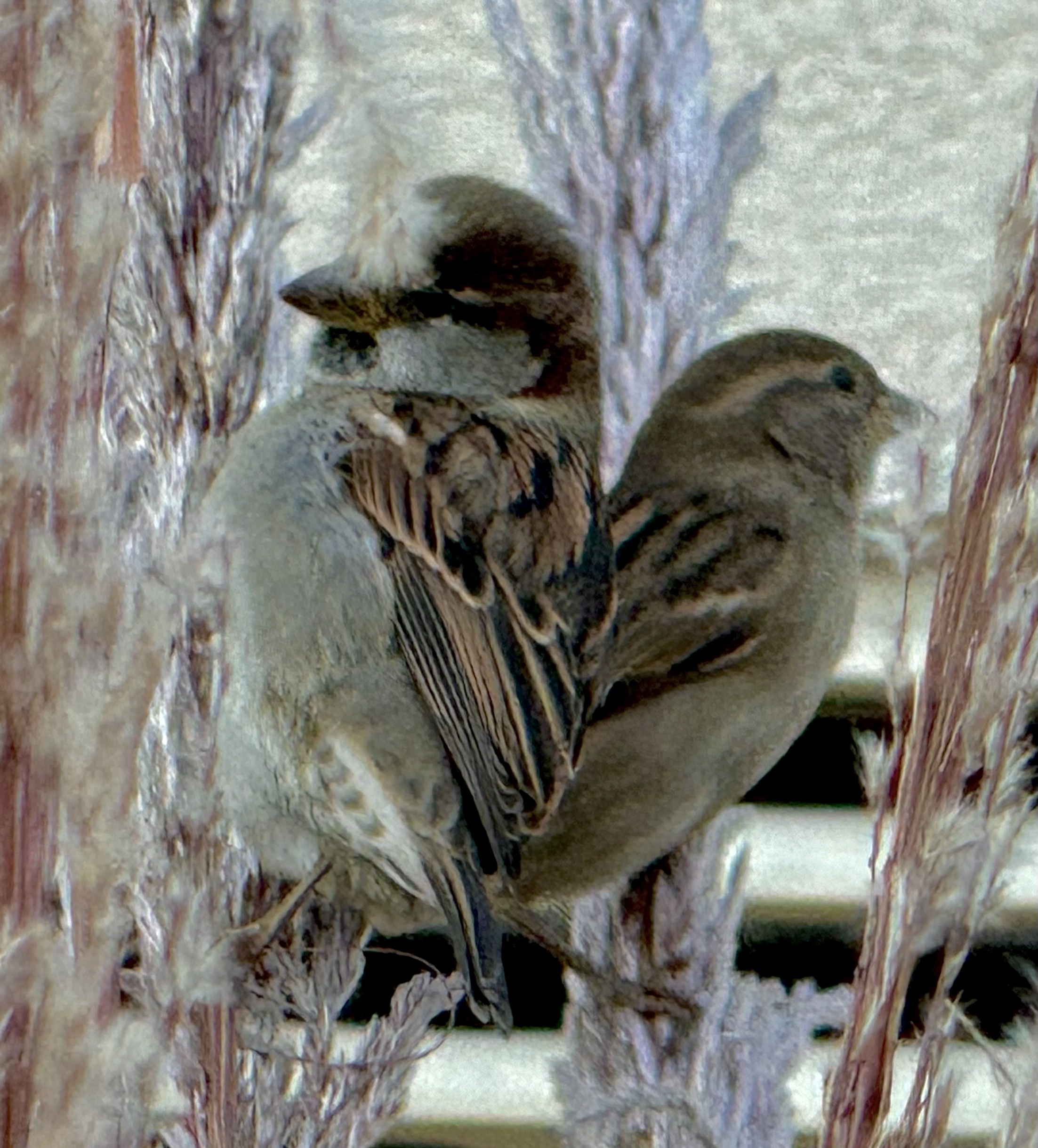
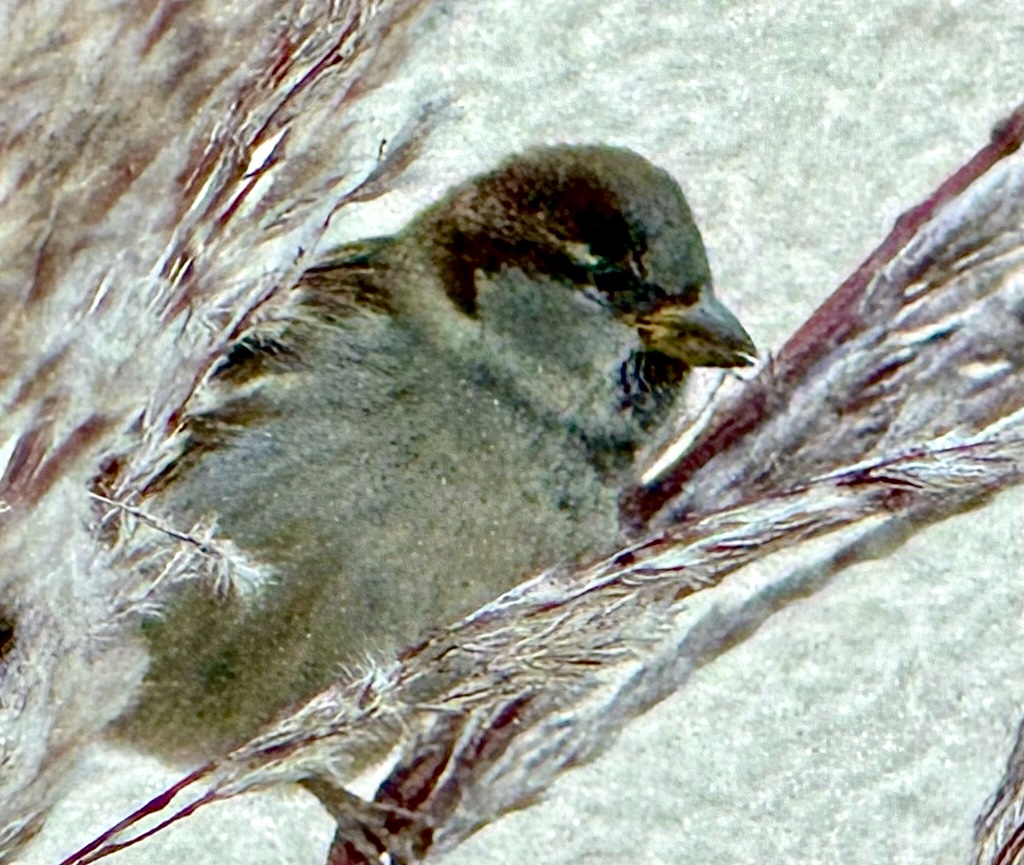
Sparrows flutter warm in given nests, ungriefed, caught, sustained by common grace.
Faith is the tenderness of banked coals in a grate, Braeburn apples on a windowsill, winding crisp with possibility. The steadiness of conversations embered over decades; a fire that has never left off crackling – on this my soul has warmed her hands. Divine ardor: too strong and sweet for the many years I’ve walked on earth.
Love without hesitation has swept my floorboards for seasons. Deep and longing in and out of time the soul reaches out – and He, grasps entire. Hold – and tender. Incandescent. ~Claire Hellar “A Search in Autumn”
The meaning of marriage begins in the giving of words. We cannot join ourselves to one another without giving our word. And this must be an unconditional giving, for in joining ourselves to one another we join ourselves to the unknown. ~Wendell Berry from “Poetry and Marriage” in Standing By Words
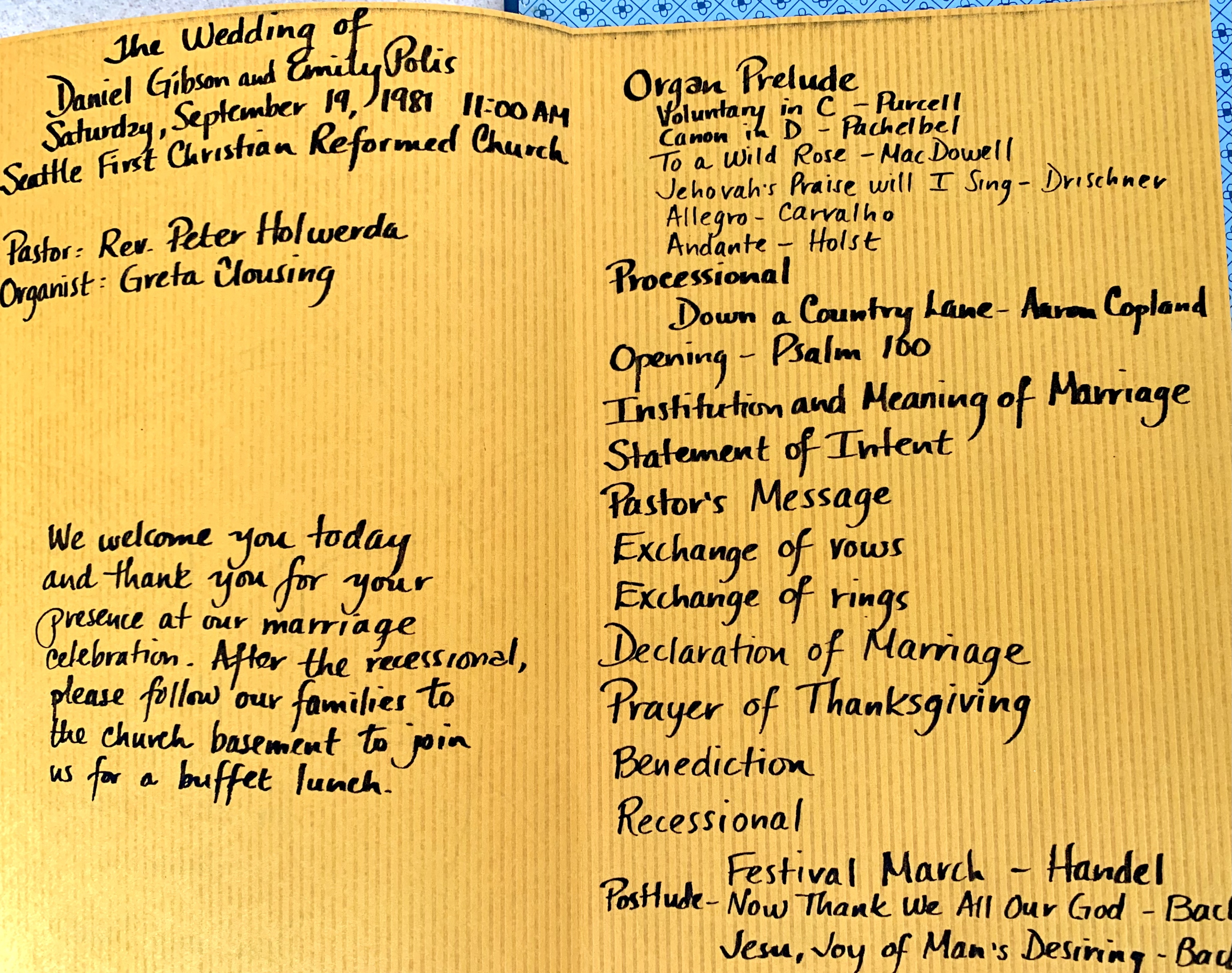
Our vows to one another forty-four years ago today:
Before God and this gathering, I vow from my heart and spirit that I will be your wife/husband for as long as we both shall live.
I will love you with faithfulness, knowing its importance in sustaining us through good times and bad.
I will love you with respect, serving your greatest good and supporting your continued growth.
I will love you with compassion, knowing the strength and power of forgiveness.
I will love you with hope, remembering our shared belief in the grace of God and His guidance of our marriage.
“And at home, by the fire, whenever you look up, there I shall be–and whenever I look up, there will be you.”
(our wedding vows for our September 19, 1981 wedding at First Seattle Christian Reformed Church — the last line adapted from Thomas Hardy’s “Far From the Madding Crowd”)
Sometimes our life reminds me of a forest in which there is a graceful clearing and in that opening a house, an orchard and garden, comfortable shades, and flowers red and yellow in the sun, a pattern made in the light for the light to return to. The forest is mostly dark, its ways to be made anew day after day, the dark richer than the light and more blessed, provided we stay brave enough to keep on going in.
We enter, willing to die, into the commonwealth of its joy. ~Wendell Berry from “A Country of Marriage”
…Marriage… joins two living souls as closely as, in this world, they can be joined. This joining of two who know, love, and trust one another brings them in the same breath into the freedom of sexual consent and into the fullest earthly realization of the image of God. From their joining, other living souls come into being, and with them great responsibilities that are unending, fearful, and joyful. The marriage of two lovers joins them to one another, to forebears, to descendants, to the community, to heaven and earth. It is the fundamental connection without which nothing holds, and trust is its necessity. ~Wendell Berry from Sex, Economy, Freedom and Community
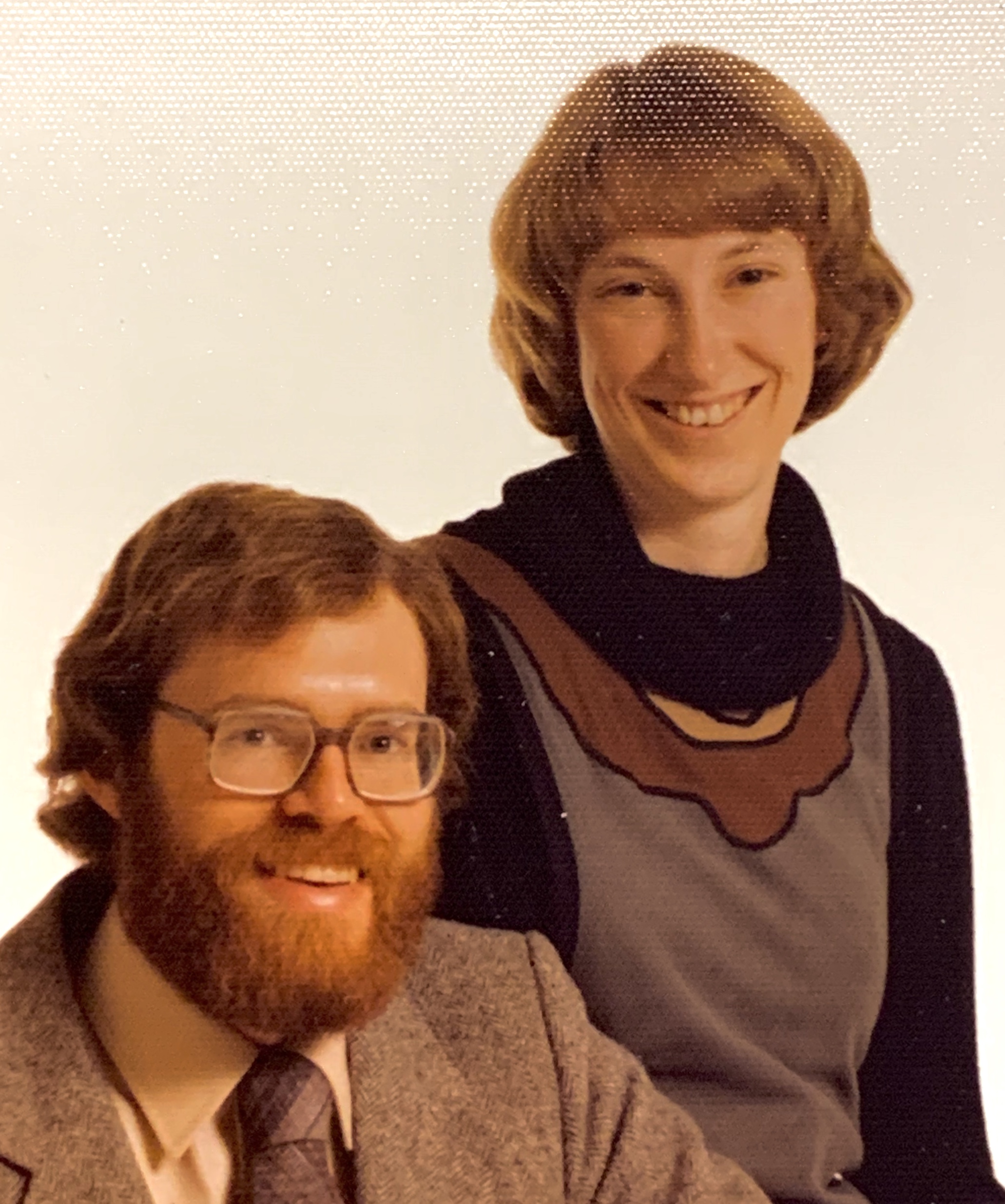
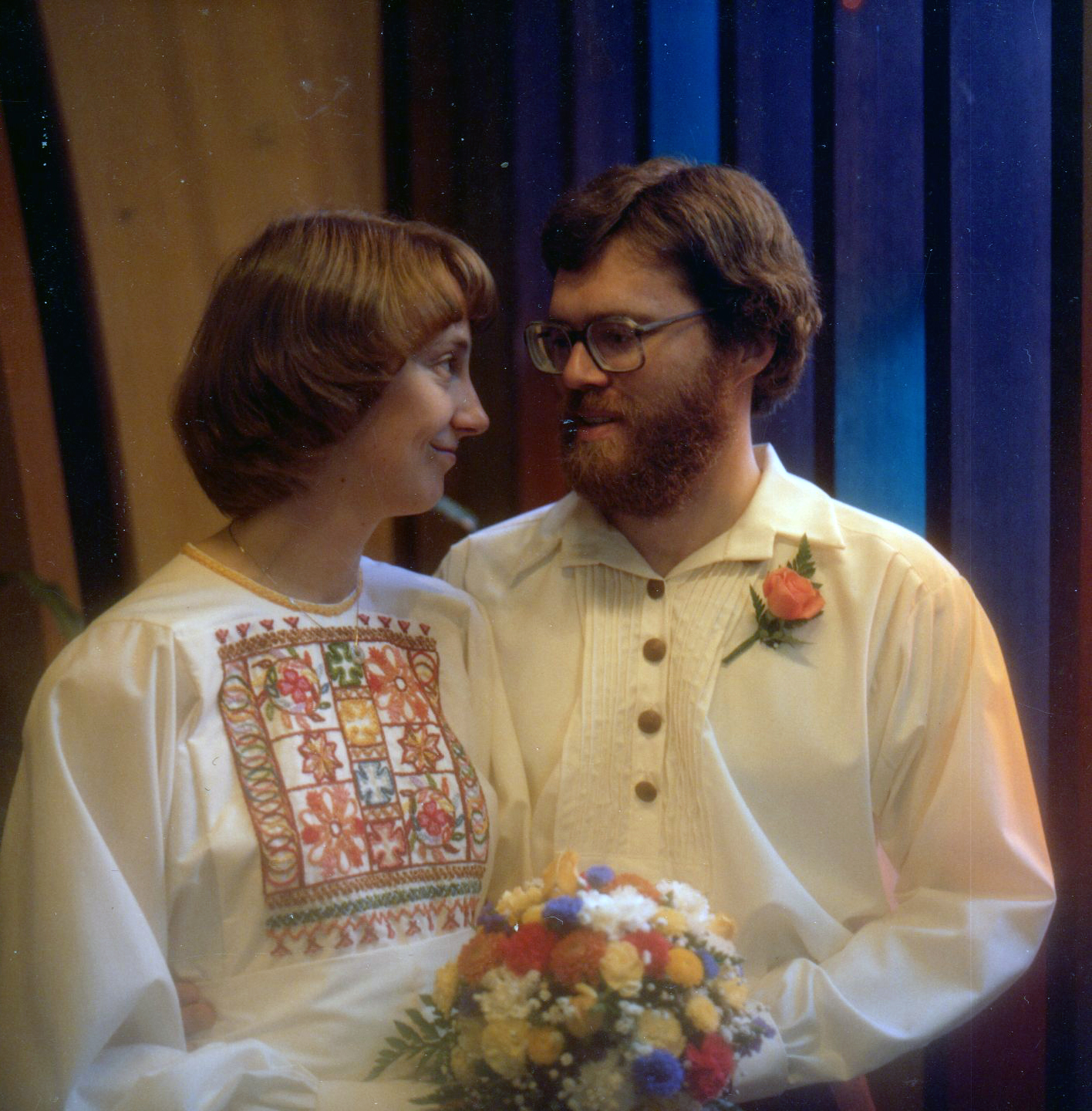
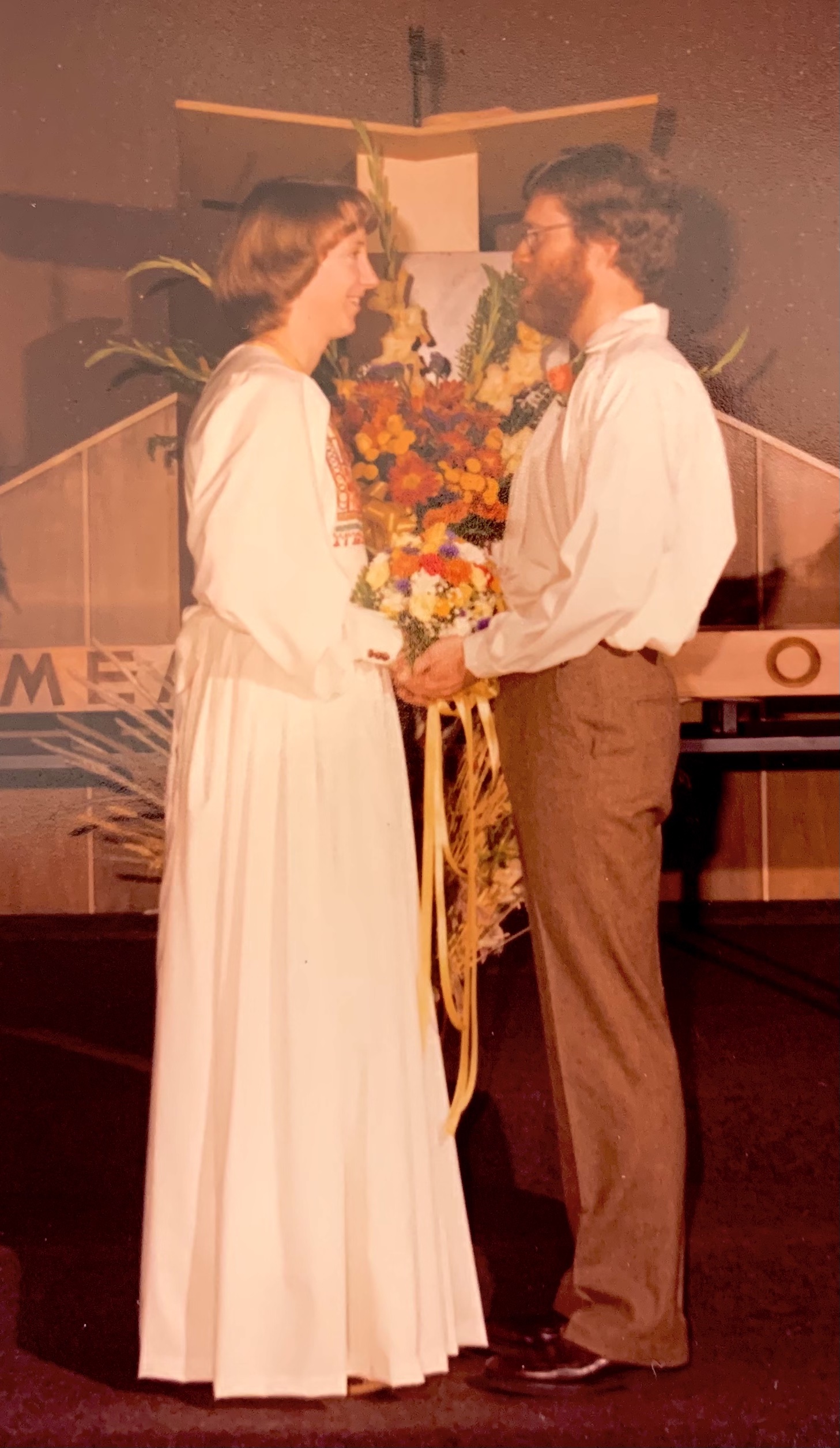
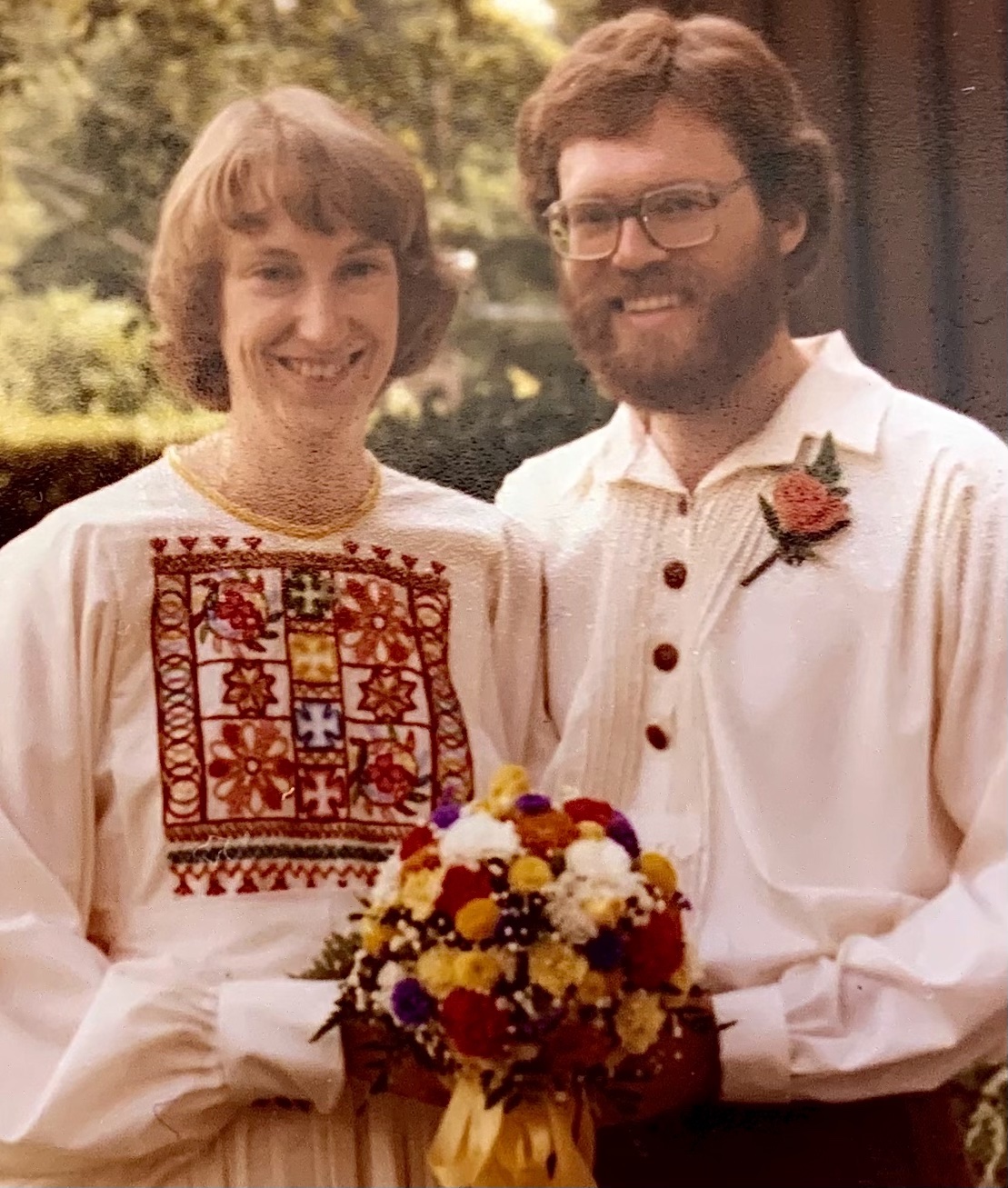
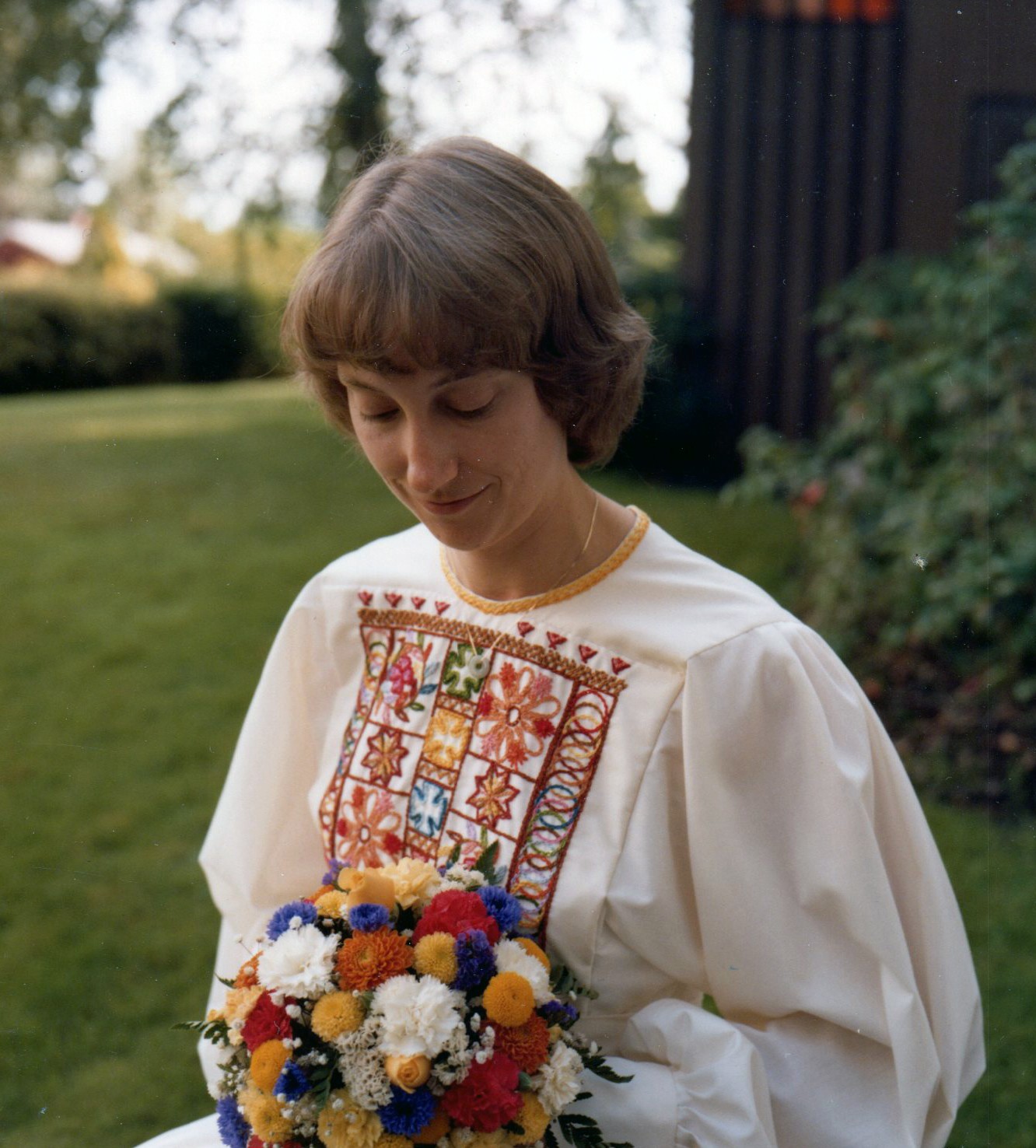
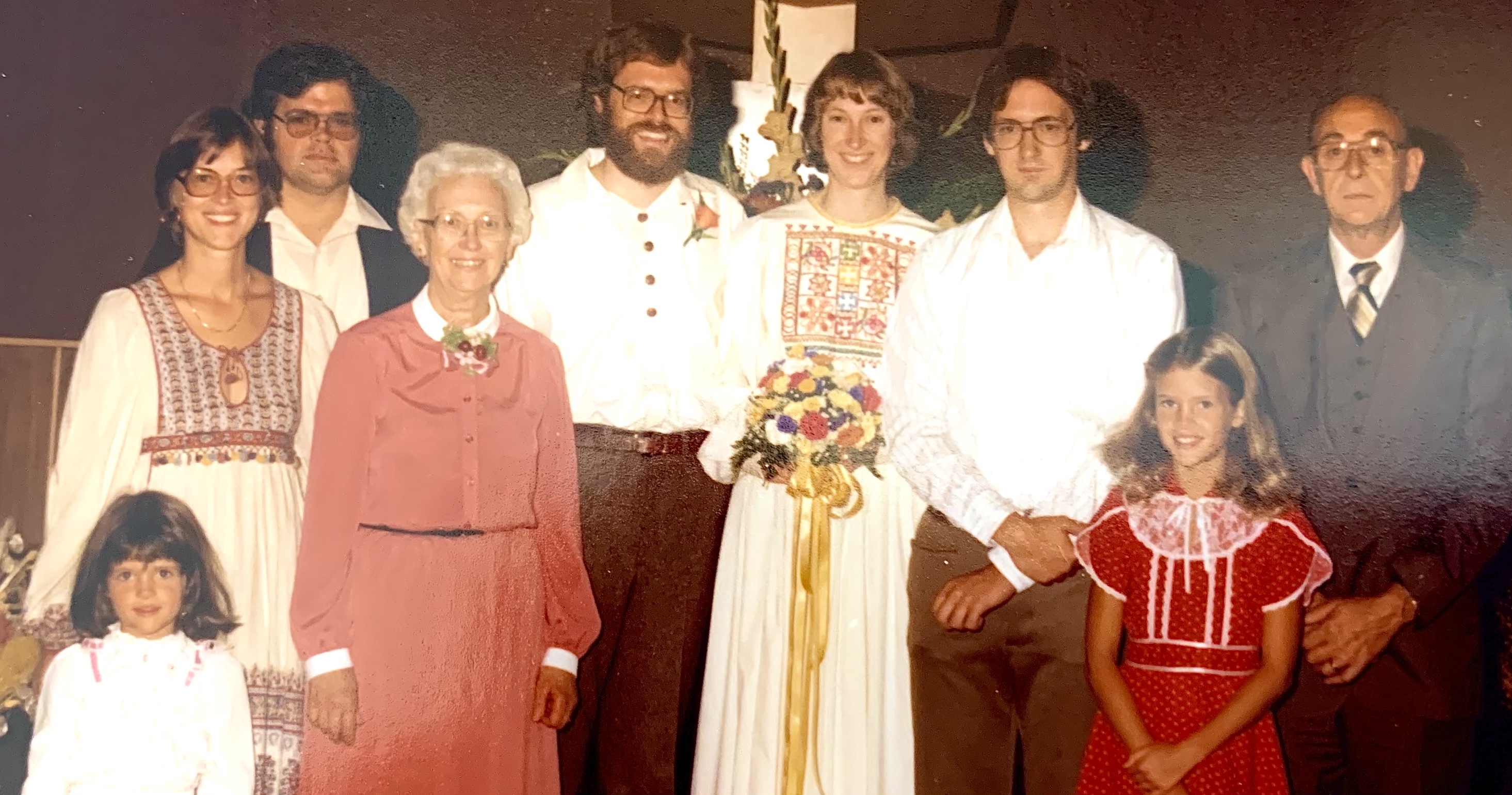
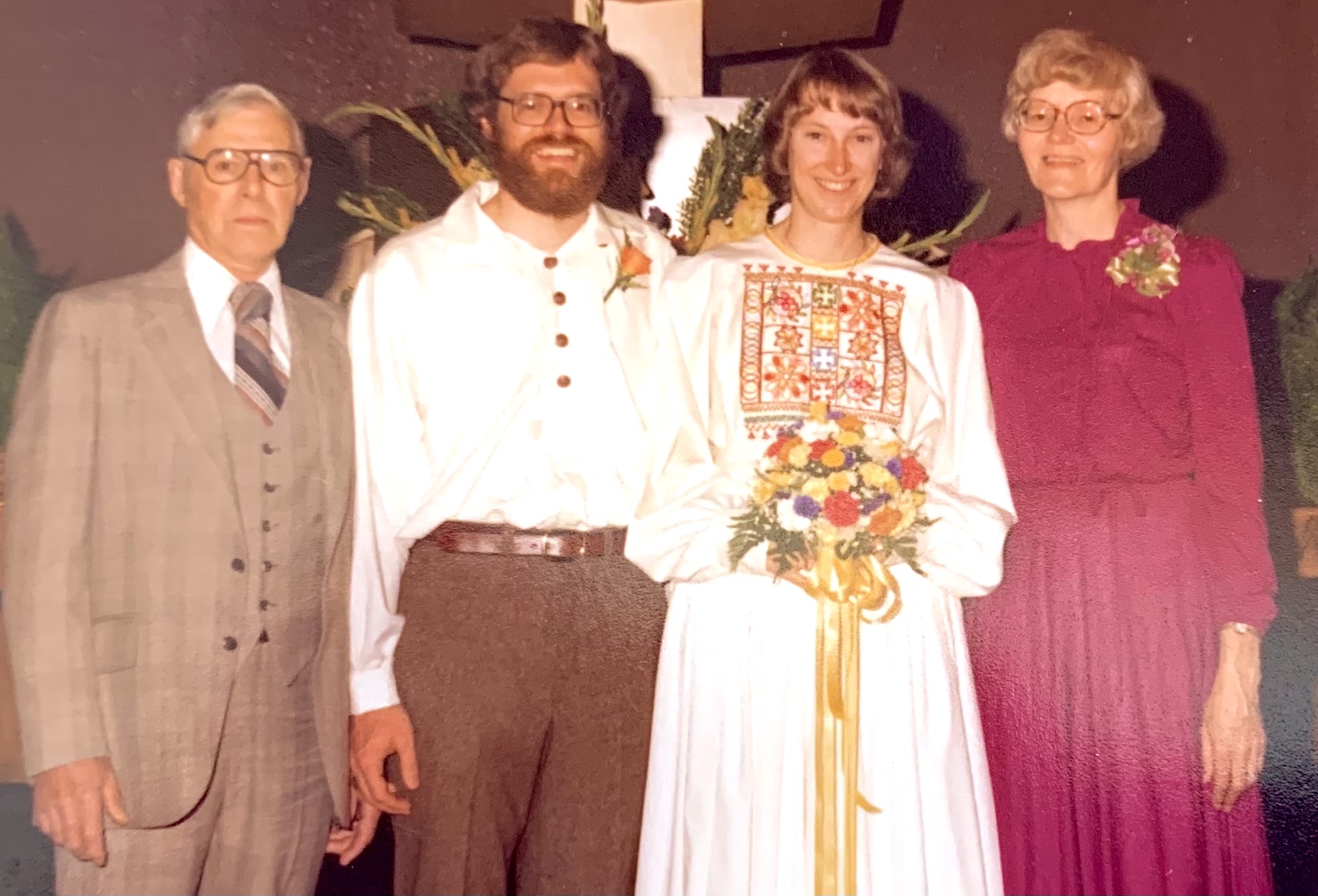
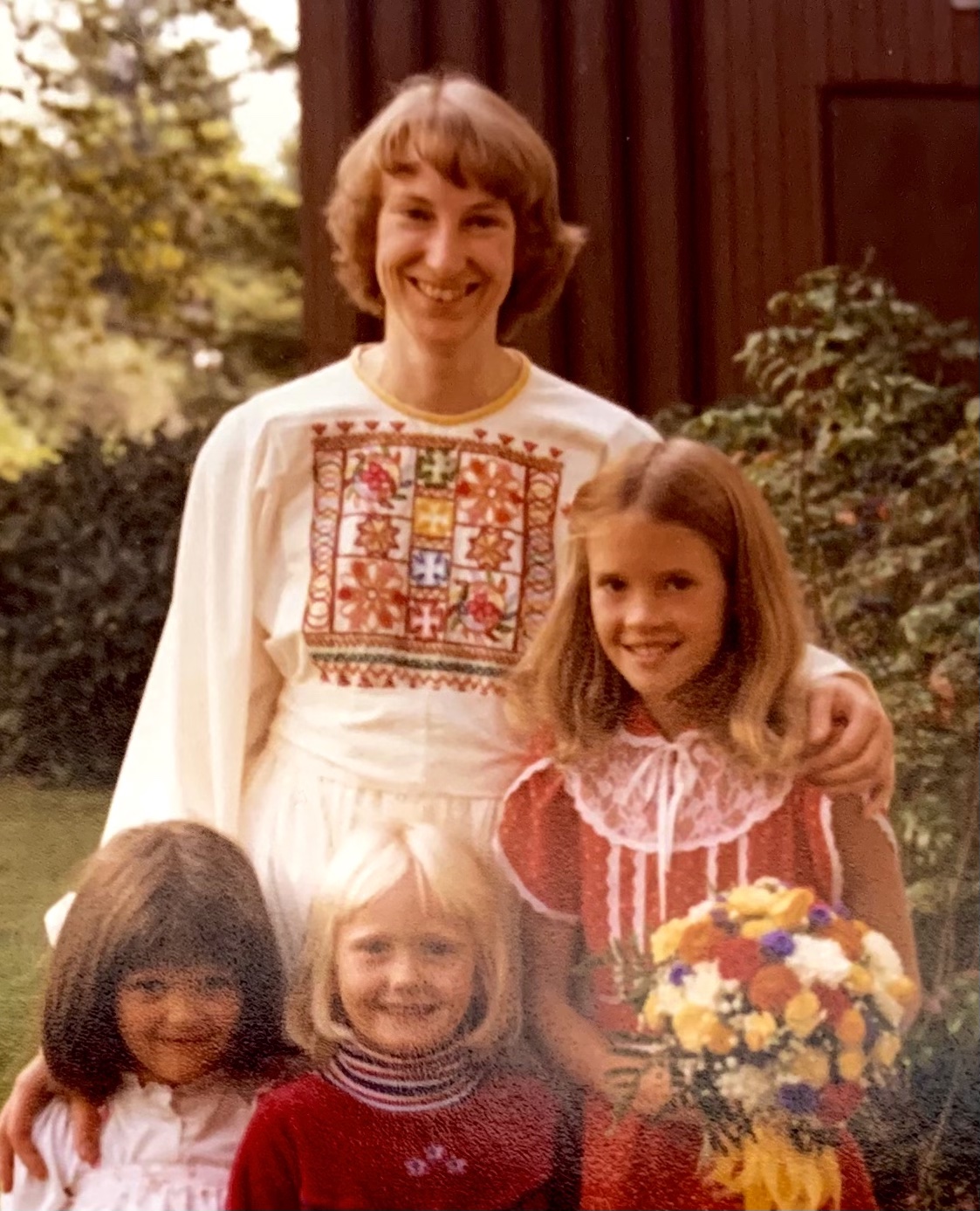
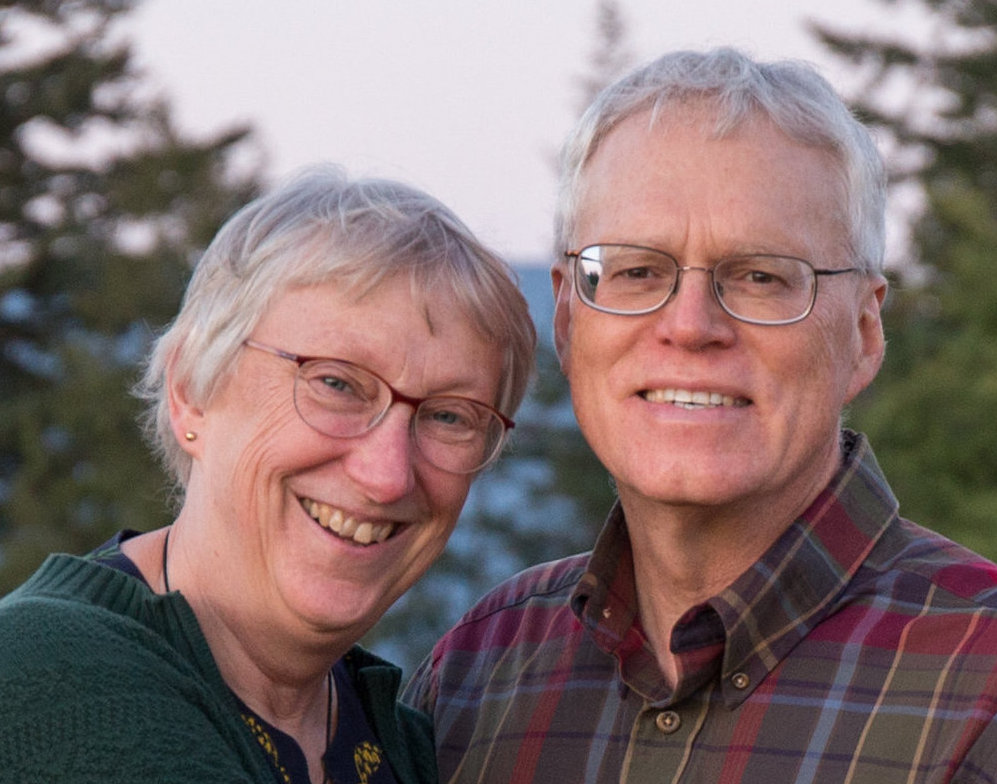
We married forty-four years ago today in our Seattle church with Pastor Peter Holwerda officiating, with a small group of family and friends as witnesses.
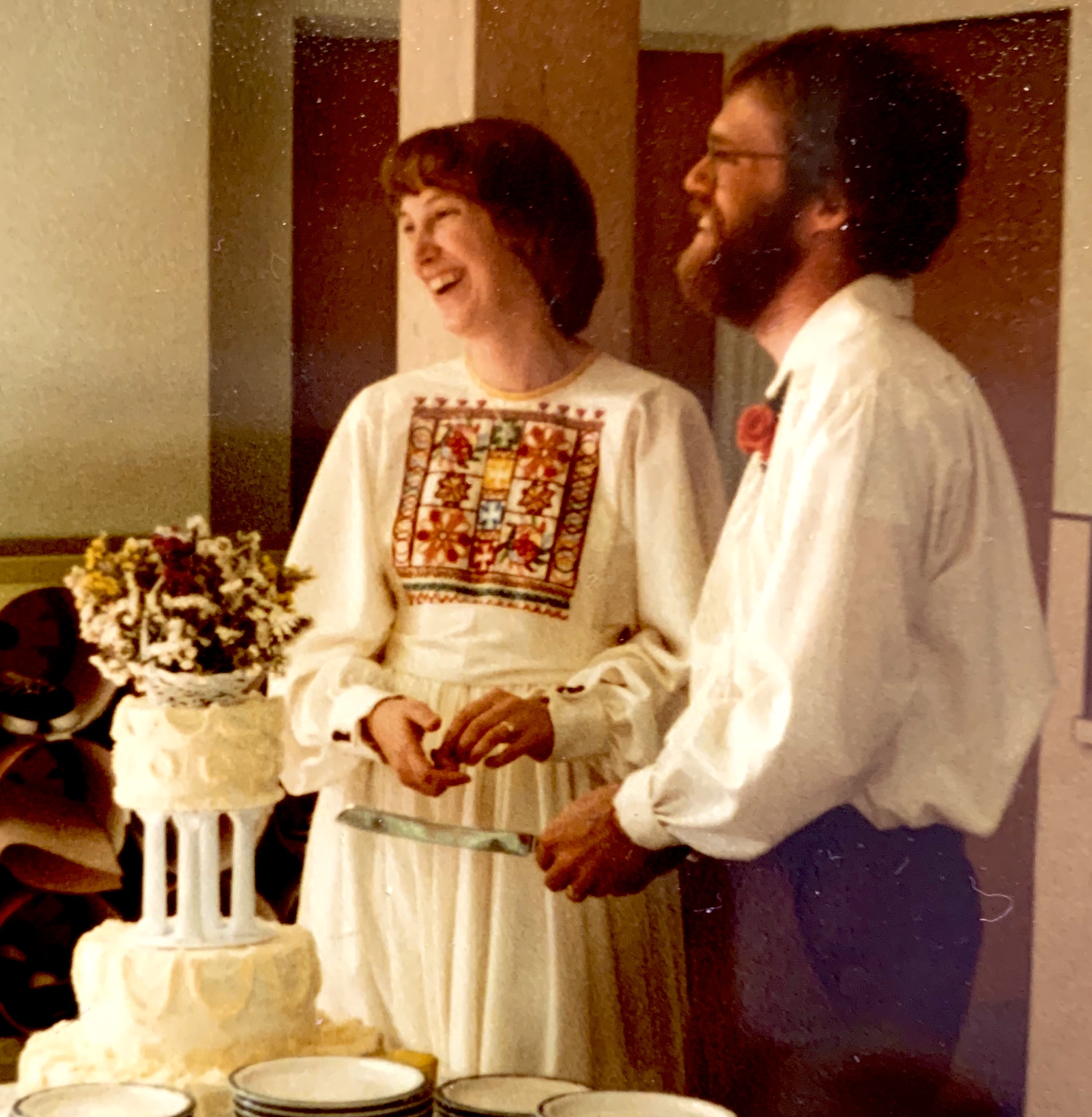
It was a wedding of two frugal people with little to spend – I sewed my dress and Dan’s shirt from muslin, we grew our own flowers, our families helped potluck the lunch afterward and our tiered carrot cake was made by a friend.
Yet our vows to one another were not frugal and held nothing back. They were extravagant and comprehensive, coming from our hearts and spirits. The music we asked our amazing organist to play (versions below) inspired us by its simplicity and complexity – very much like the families that raised us and the God we worship.
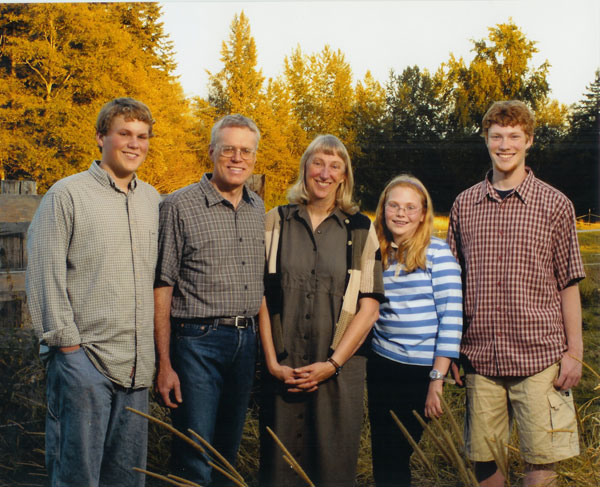
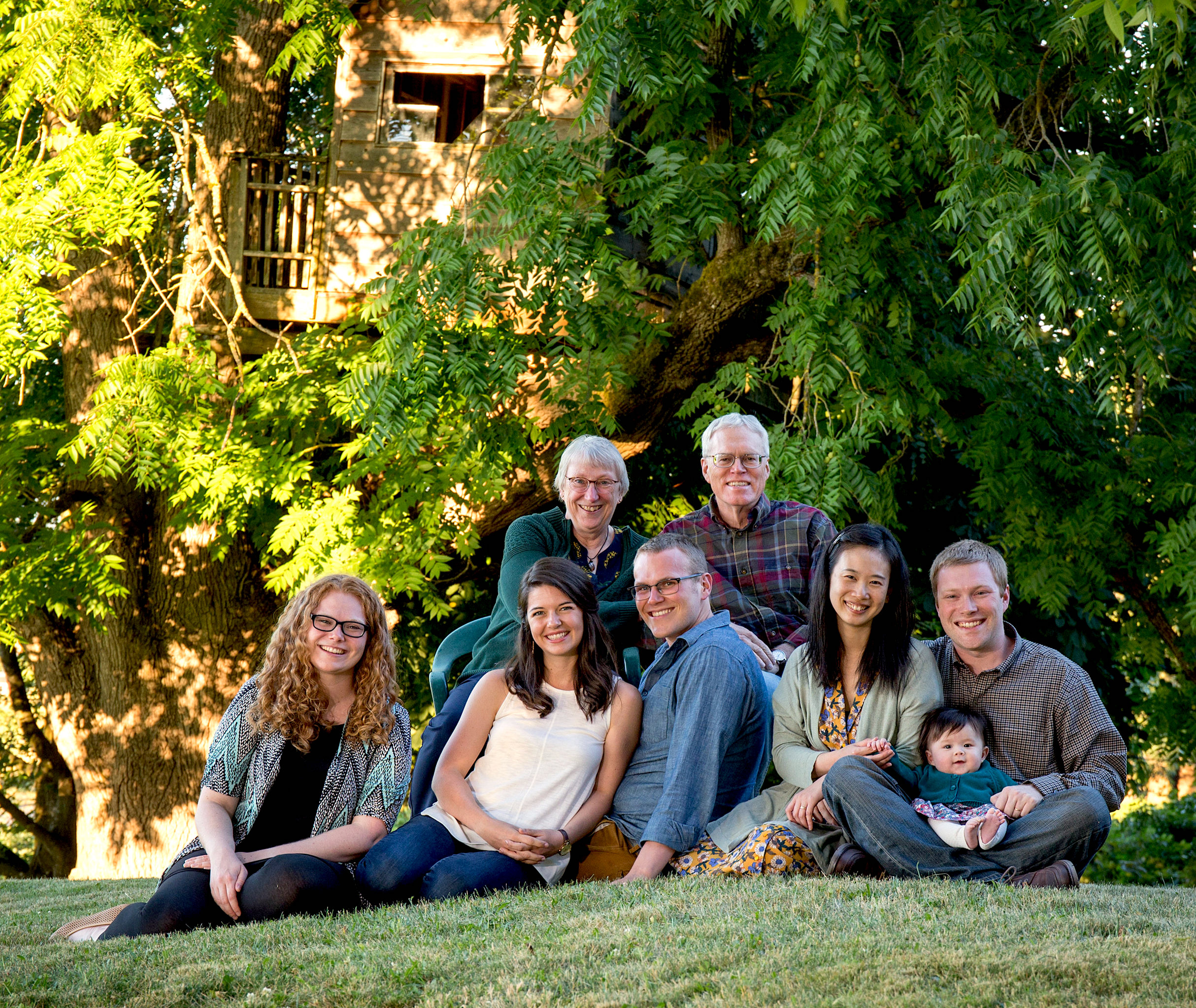
Our vows have taken us from the city to the countryside, to the raising and rejoicing in three amazing children and now six grandchildren. We both served more than forty years as a public-employed attorney and physician. We have laid down those responsibilities, and picked up the tools of farm and garden along with church and community service for as long as we are able.
We treasure each day of living together in faithfulness, respect, compassion and hope – knowing that how we love and find joy in one another mirrors how God loves and revels in His people.
We pray for many more days to fill us with what endures.
A pot of red lentils simmers on the kitchen stove. All afternoon dense kernels surrender to the fertile juices, their tender bellies swelling with delight.
In the yard we plant rhubarb, cauliflower, and artichokes, cupping wet earth over tubers, our labor the germ of later sustenance and renewal.
Across the field the sound of a baby crying as we carry in the last carrots, whorls of butter lettuce, a basket of red potatoes.
I want to remember us this way— late September sun streaming through the window, bread loaves and golden bunches of grapes on the table, spoonfuls of hot soup rising to our lips, filling us with what endures. ~Peter Pereira from “A Pot of Red Lentils”
Here are versions of the organ music we selected for prelude, processional, recessional and postlude
One-Time
Monthly
Yearly
Make a one-time or recurring donation to support daily Barnstorming posts
She wasn’t looking when they took this picture: sitting on the grass in her bare feet wearing a cotton dress, she stares off to the side watching something on the lawn the camera didn’t catch. What was it? A ladybug? A flower? Judging from her expression, possibly nothing at all, or else the lawn was like a mirror, and she sat watching herself, wondering who she was and how she came to be there sitting in this backyard, wearing a cheap, white dress, imagining that tomorrow would be like all her yesterdays, while her parents chatted and watched, as I do years later, too distantly to interfere. ~Dana Gioia, “Photograph of My Mother as a Young Girl” from Daily Horoscope
Seeing photos of ancestors a century past
is like looking at your own fingerprints—
circles and lines you can’t recognize
until someone else with a stranger’s eye looks close and says that’s you. ~Joseph Bruchac, “Prints” from Sing: Poetry from the Indigenous Americas.
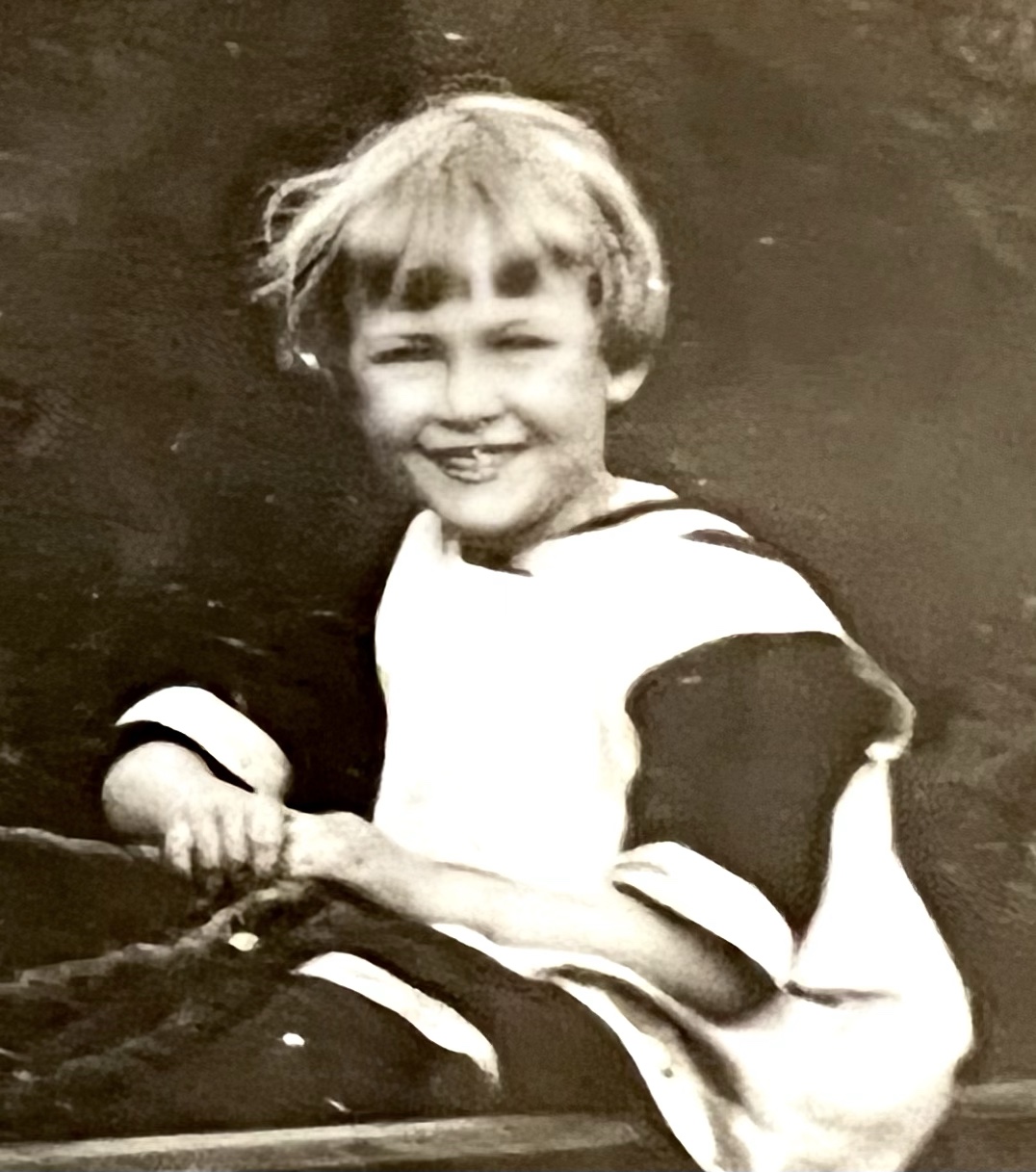
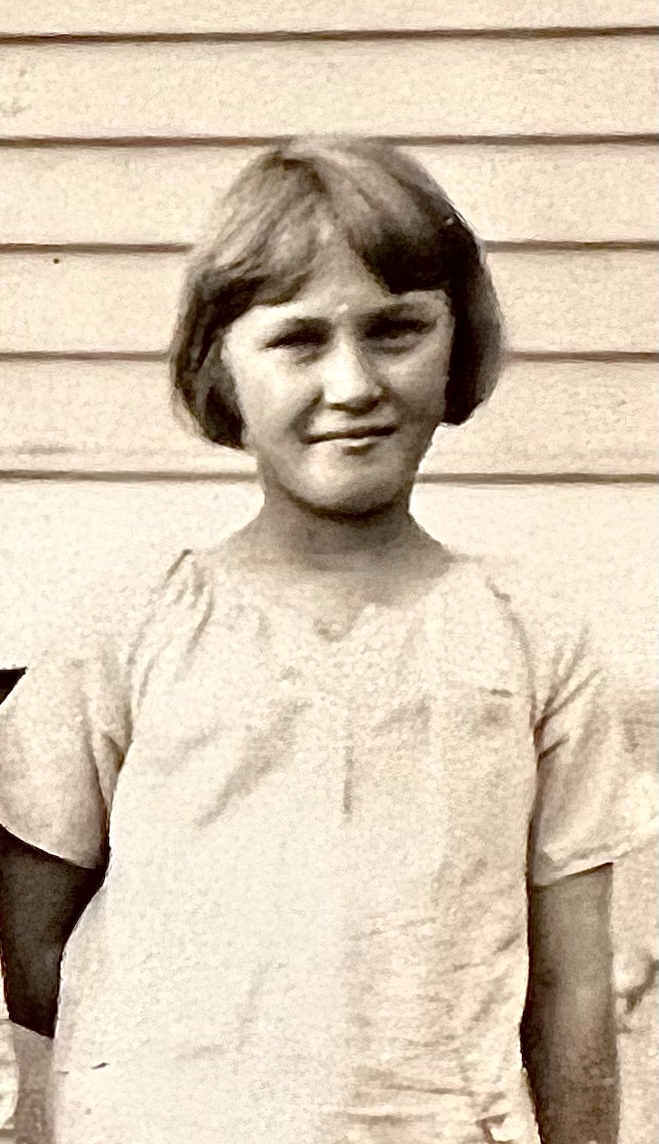
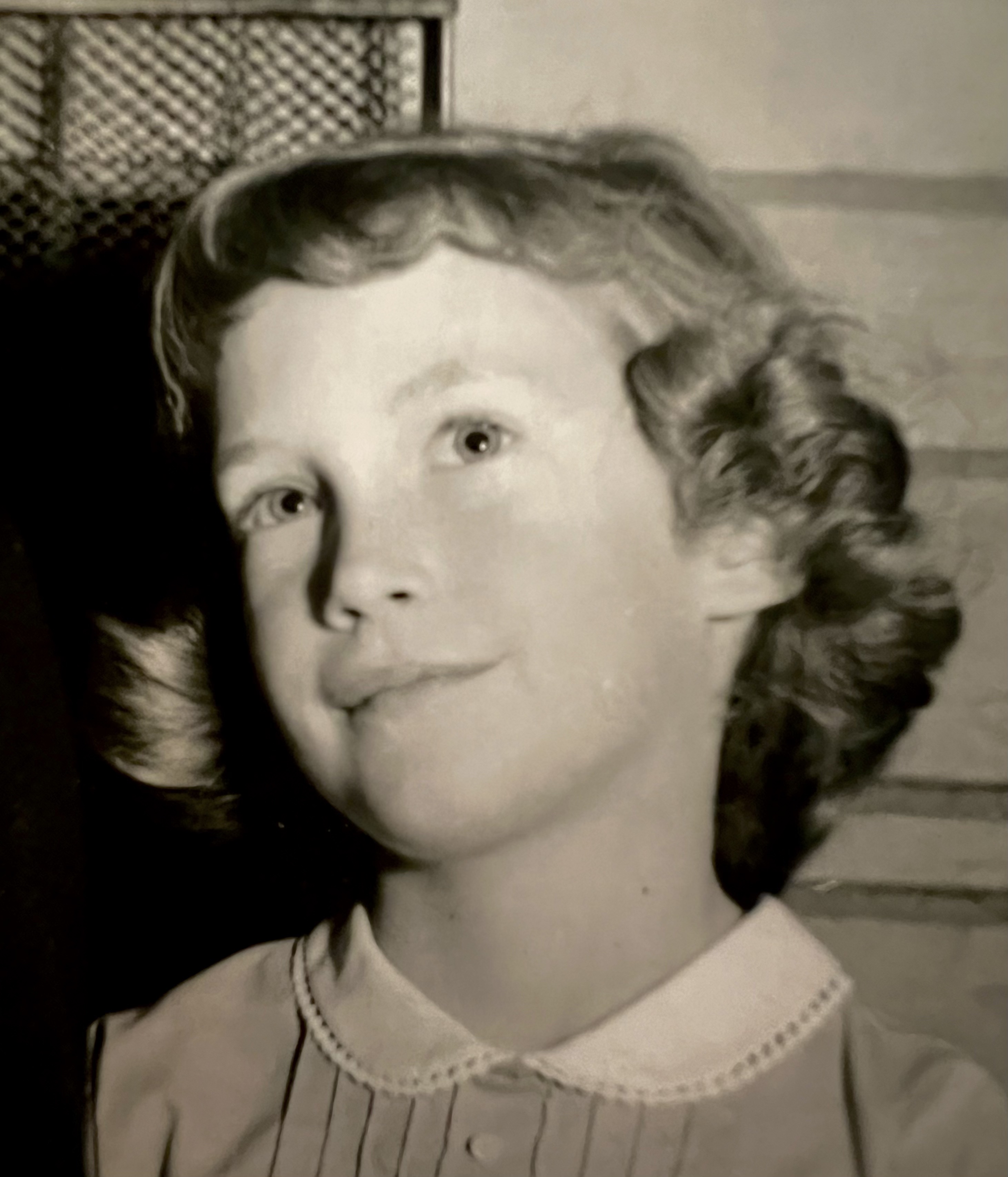
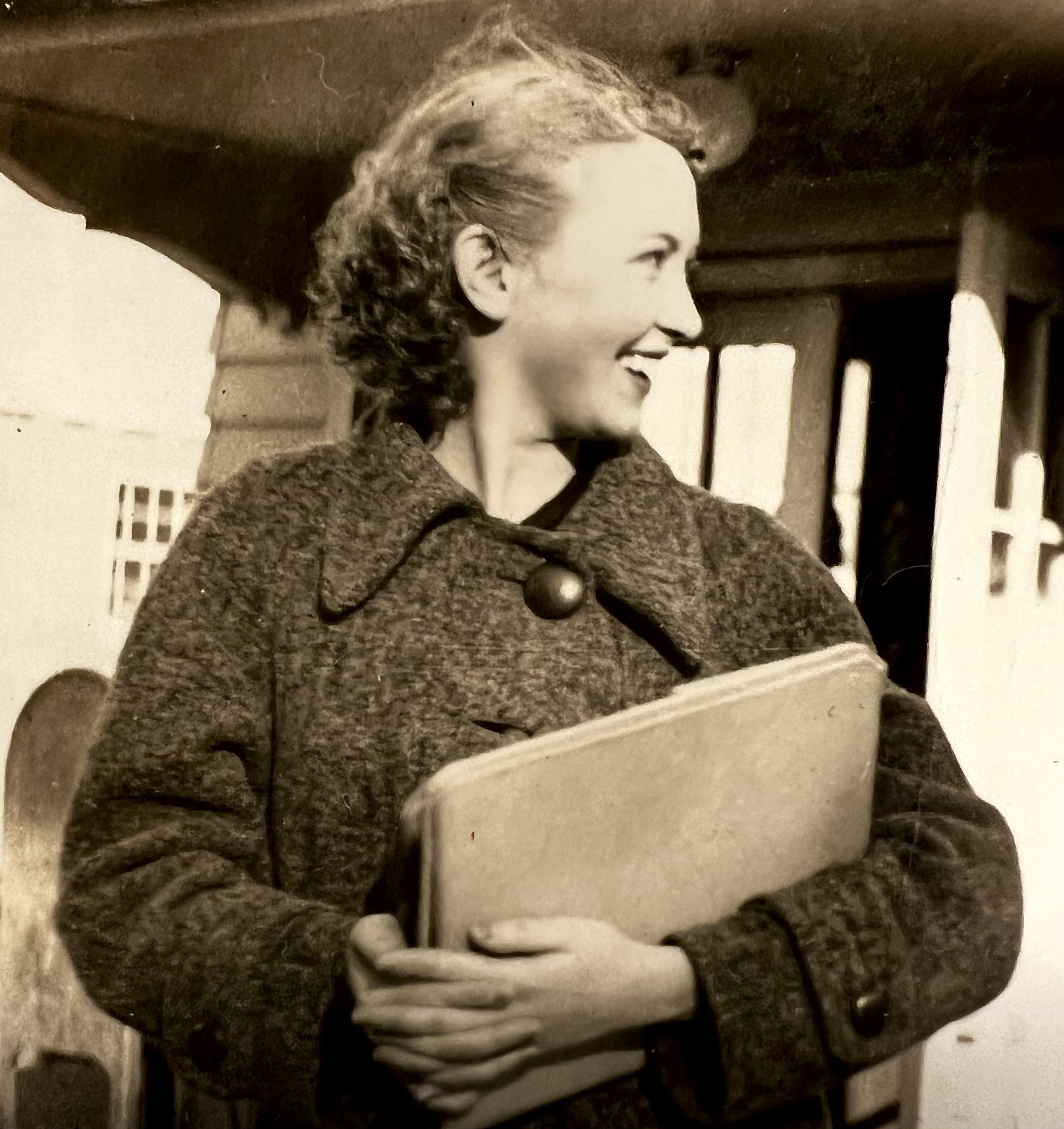
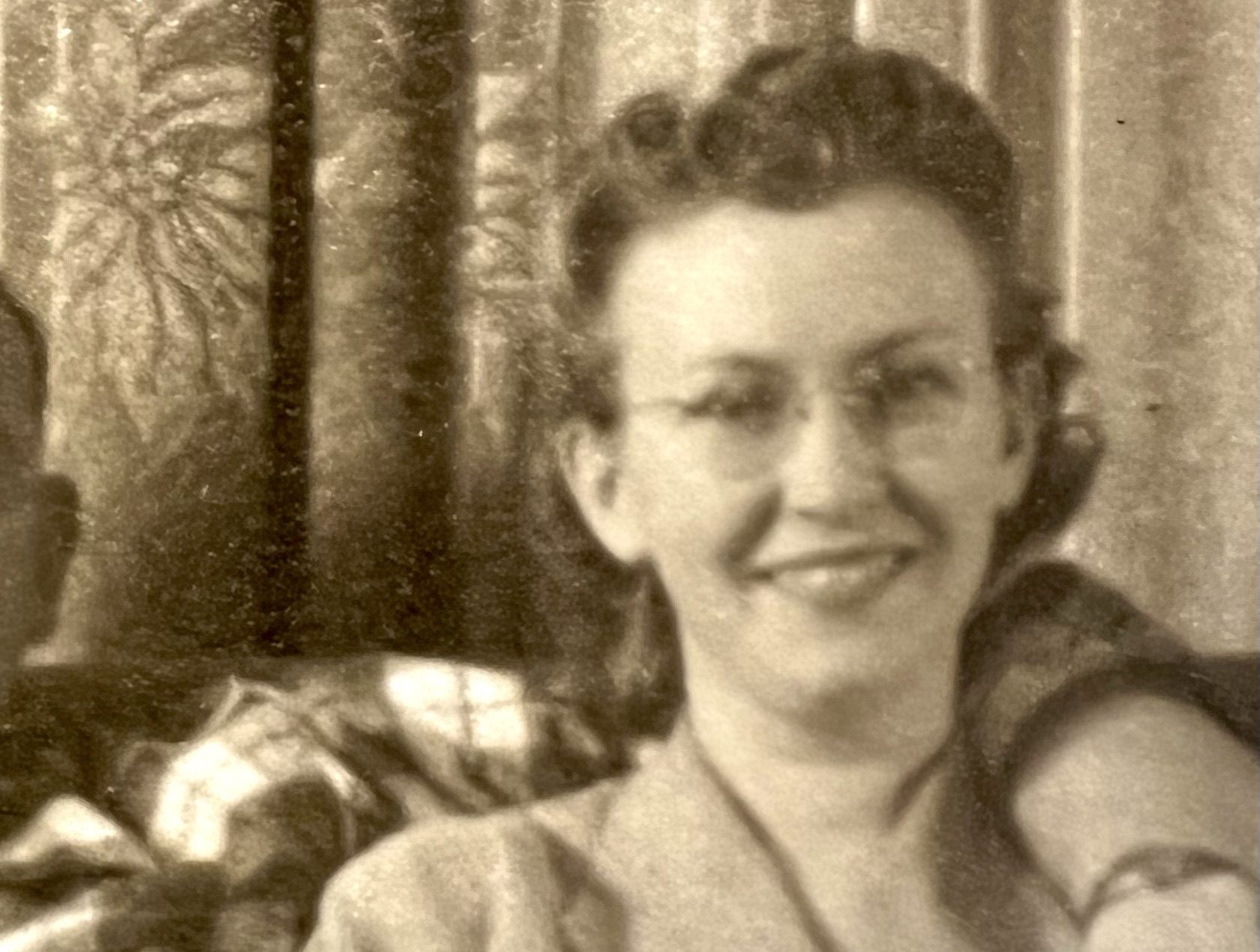
Growing up, it was never obvious to me that I looked like either one of my parents. Once, as a naughty kid, I told them I thought I was adopted as there wasn’t a single photo to be found of my mother looking pregnant (never mind that few women in the 50’s allowed themselves to be photographed pregnant).
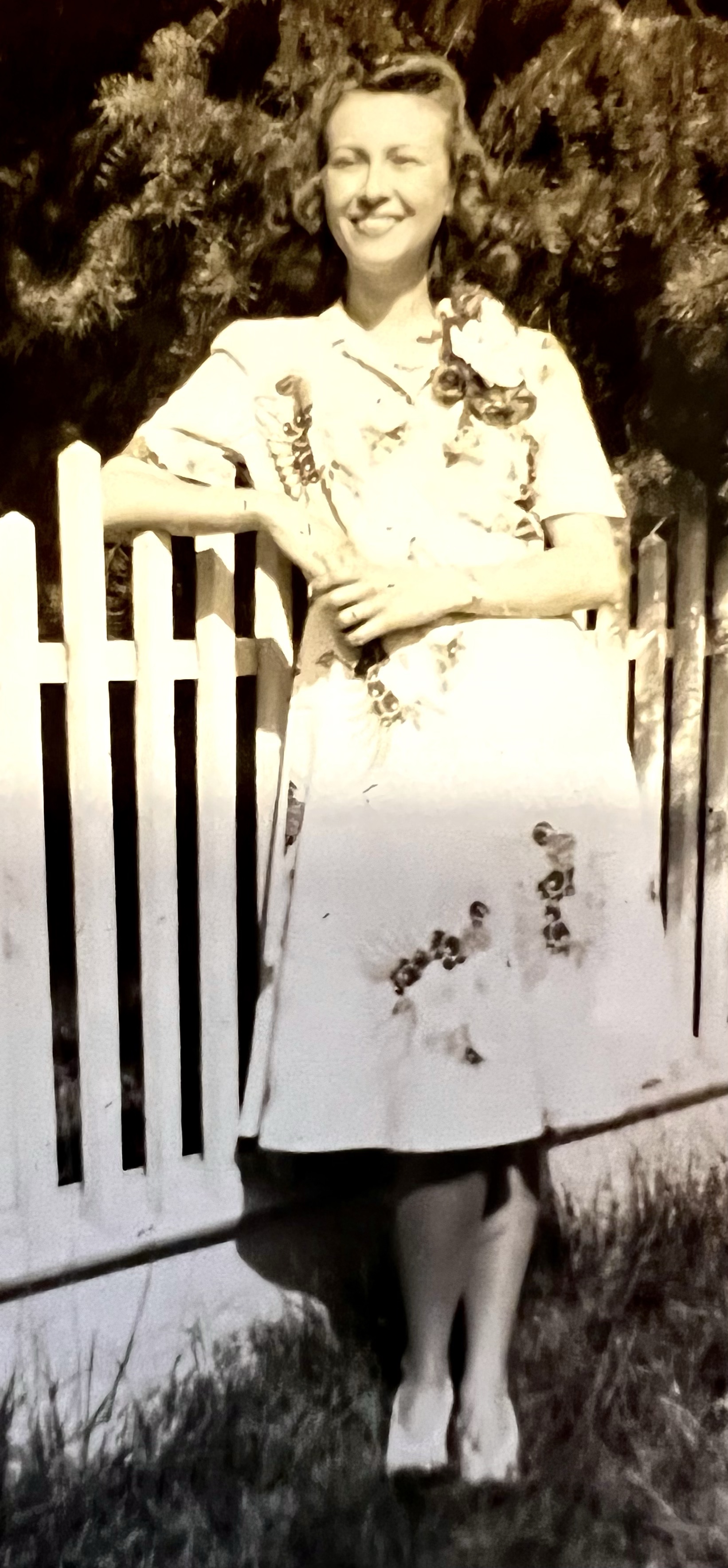
Searching the faces of extended family in old photographs, others would comment on the facial similarities between my young mother and me.
And indeed, the older I have become, the more I see my mother looking back at me in the mirror.
The characteristics I inherited from my father aren’t as obvious in the mirror: his persistence and problem-solving, his inability to ever fully relax, his drive to get things done and not give up.
So, yes, that is me in the photos of my mother taken nearly a century ago, as well as those taken not so long ago.
I now recognize me in those photos, grateful to resemble such a loving and lovely mom.
One-Time
Monthly
Yearly
Make a one-time or recurring donation to support daily Barnstorming posts
The thing is to love life, to love it even when you have no stomach for it and everything you’ve held dear crumbles like burnt paper in your hands, your throat filled with the silt of it. When grief sits with you, its tropical heat thickening the air, heavy as water more fit for gills than lungs; when grief weights you like your own flesh only more of it, an obesity of grief, you think, How can a body withstand this? Then you hold life like a face between your palms, a plain face, no charming smile, no violet eyes, and you say, yes, I will take you I will love you, again. ~Ellen Bass, “The Thing Is” from Mules of Love
...everything here seems to need us —Rainer Maria Rilke
It’s a hard time to be human. We know too much and too little. Does the breeze need us? If you’ve managed to do one good thing, the ocean doesn’t care. But when Newton’s apple fell toward the earth, the earth, ever so slightly, fell toward the apple. ~Ellen Bass from “The World Has Need of You” from Like a Beggar
Fallen leaves will climb back into trees. Shards of the shattered vase will rise and reassemble on the table. Plastic raincoats will refold into their flat envelopes. The egg, bald yolk and its transparent halo, slide back in the thin, calcium shell. Curses will pour back into mouths, letters un-write themselves, words siphoned up into the pen. My gray hair will darken and become the feathers of a black swan. Bullets will snap back into their chambers, the powder tamped tight in brass casings. Borders will disappear from maps. Rust revert to oxygen and time. The fire return to the log, the log to the tree, the white root curled up in the un-split seed. Birdsong will fly into the lark’s lungs, answers become questions again. When you return, sweaters will unravel and wool grow on the sheep. Rock will go home to mountain, gold to vein. Wine crushed into the grape, oil pressed into the olive. Silk reeled in to the spider’s belly. Night moths tucked close into cocoons, ink drained from the indigo tattoo. Diamonds will be returned to coal, coal to rotting ferns, rain to clouds, light to stars sucked back and back into one timeless point, the way it was before the world was born, that fresh, that whole, nothing broken, nothing torn apart. ~Ellen Bass “When You Return” from Like a Beggar
There is so much grief these days so much anger, so much loss of life, so much weeping.
How can we withstand this? How can we know, now, when we are barely able to breathe that we might know – at some point – we might have the stomach to love life again?
This time of year, no matter which way I turn, autumn’s kaleidoscope displays new patterns, new colors, new empty spaces as I watch the world die into itself once again.
Some dying is flashy, brilliant, blazing – a calling out for attention. Then there is the hidden dying that happens without anyone taking notice: just a plain, tired, rusting away letting go.
I spent this morning adjusting to the change in season by occupying myself with the familiar task of moving manure. Cleaning barn is a comforting chore, allowing me to transform tangible benefit from something objectionable and just plain stinky to the nurturing fertilizer of the future.
It feels like I’ve actually accomplished something.
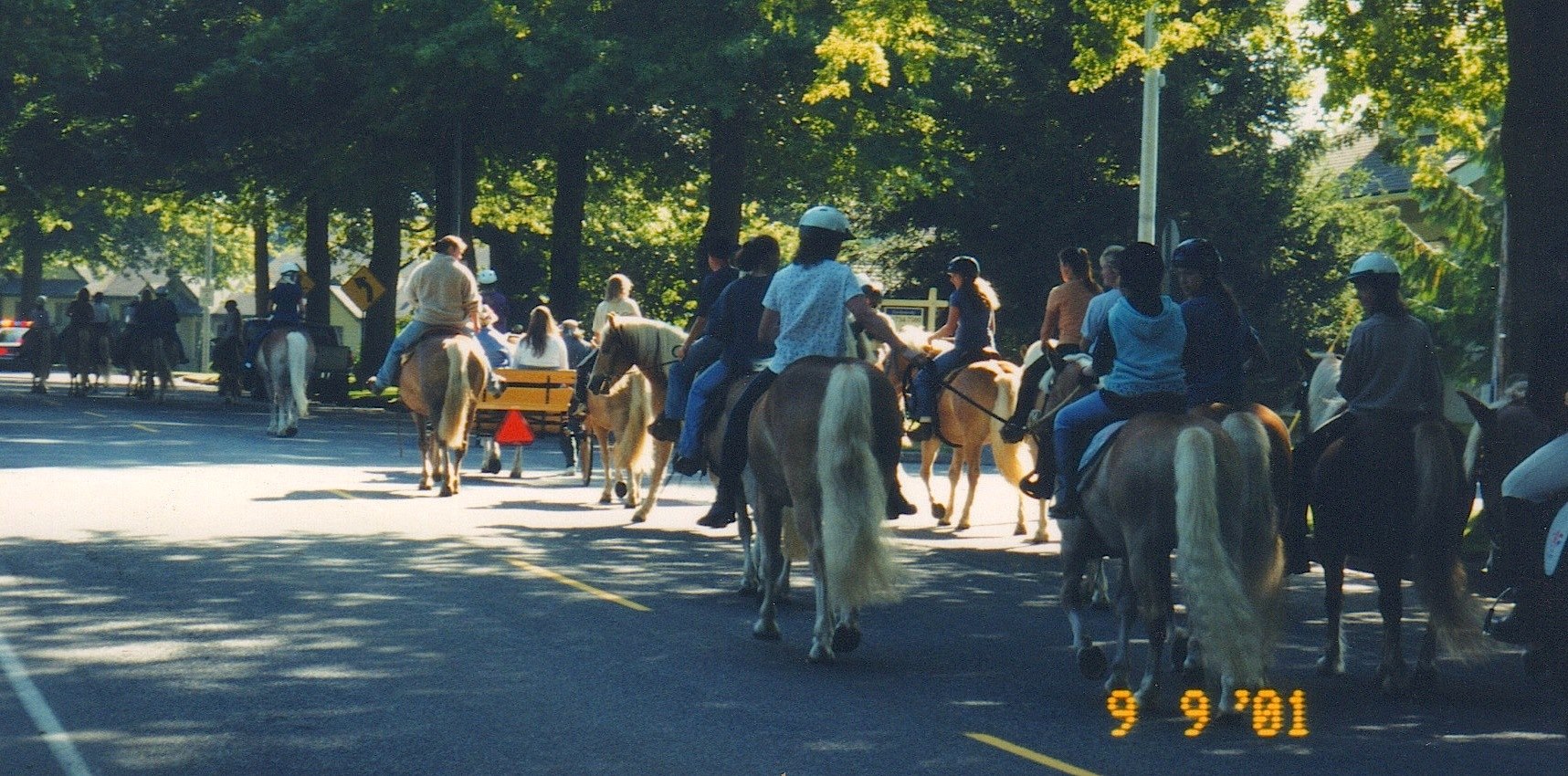
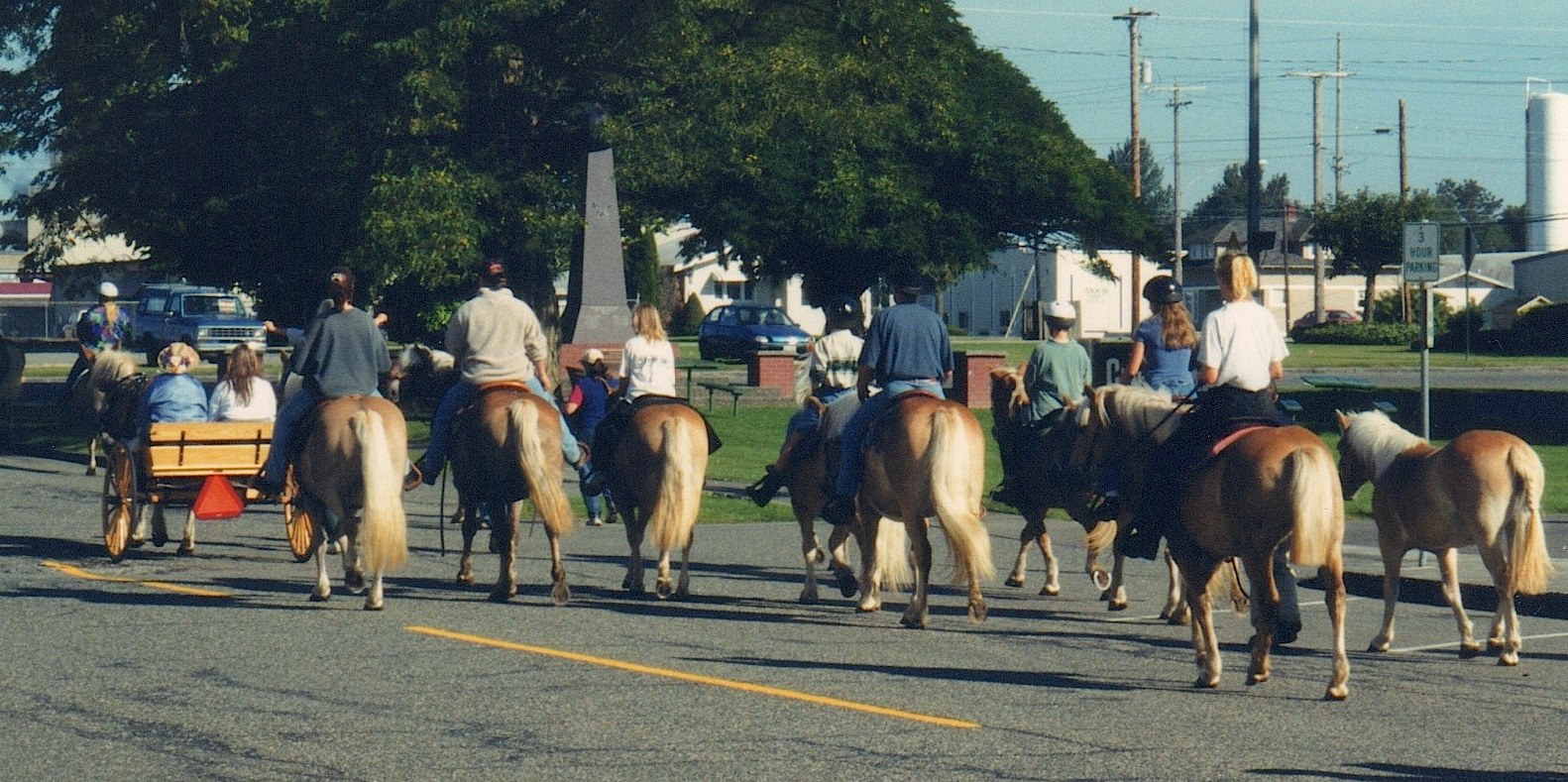
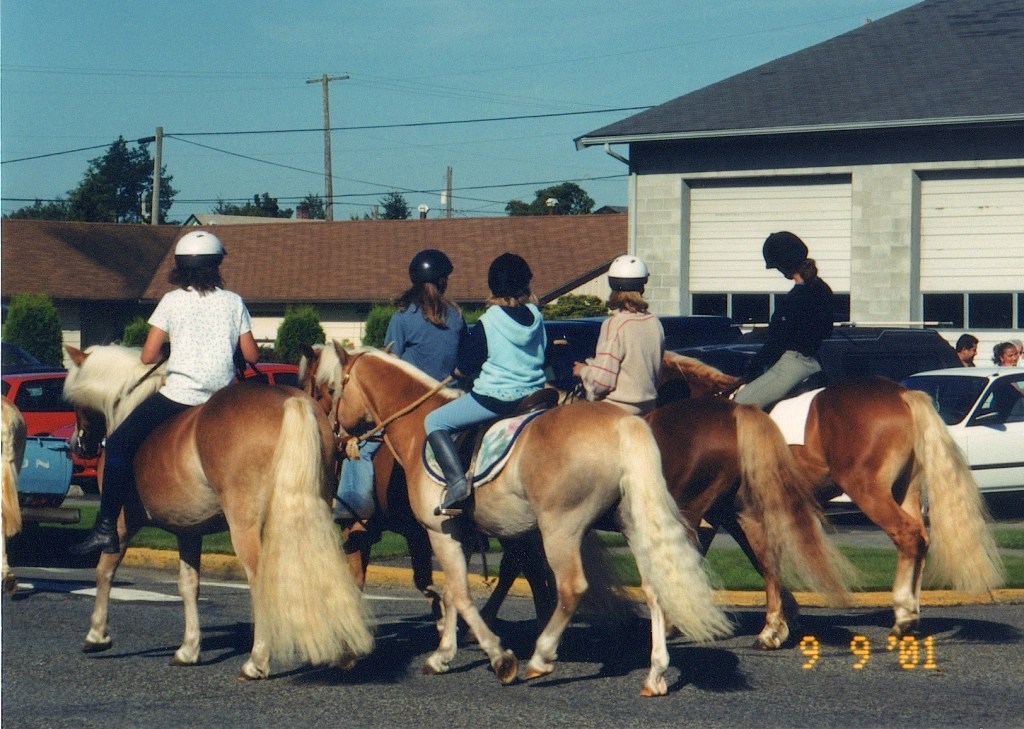
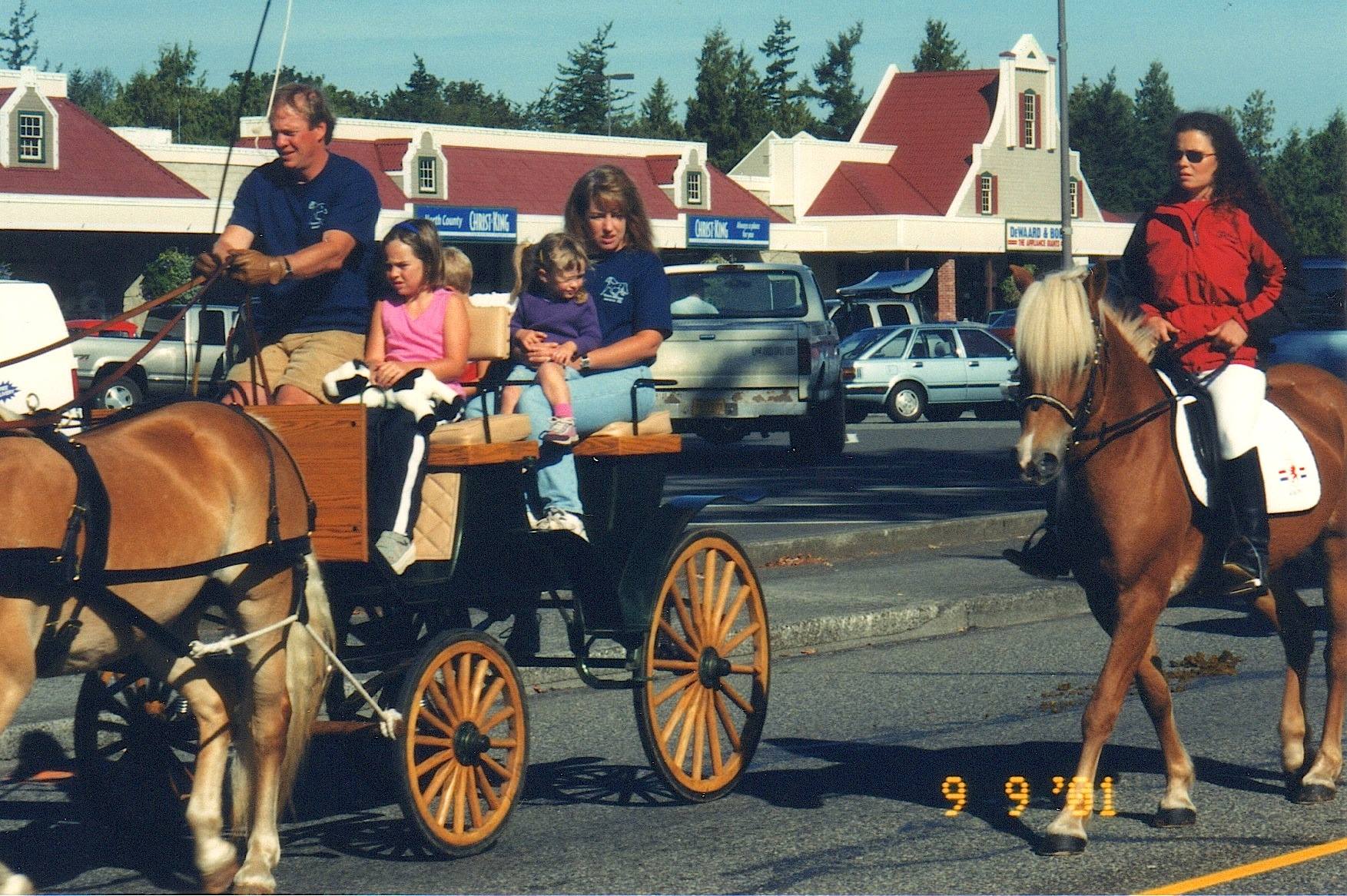
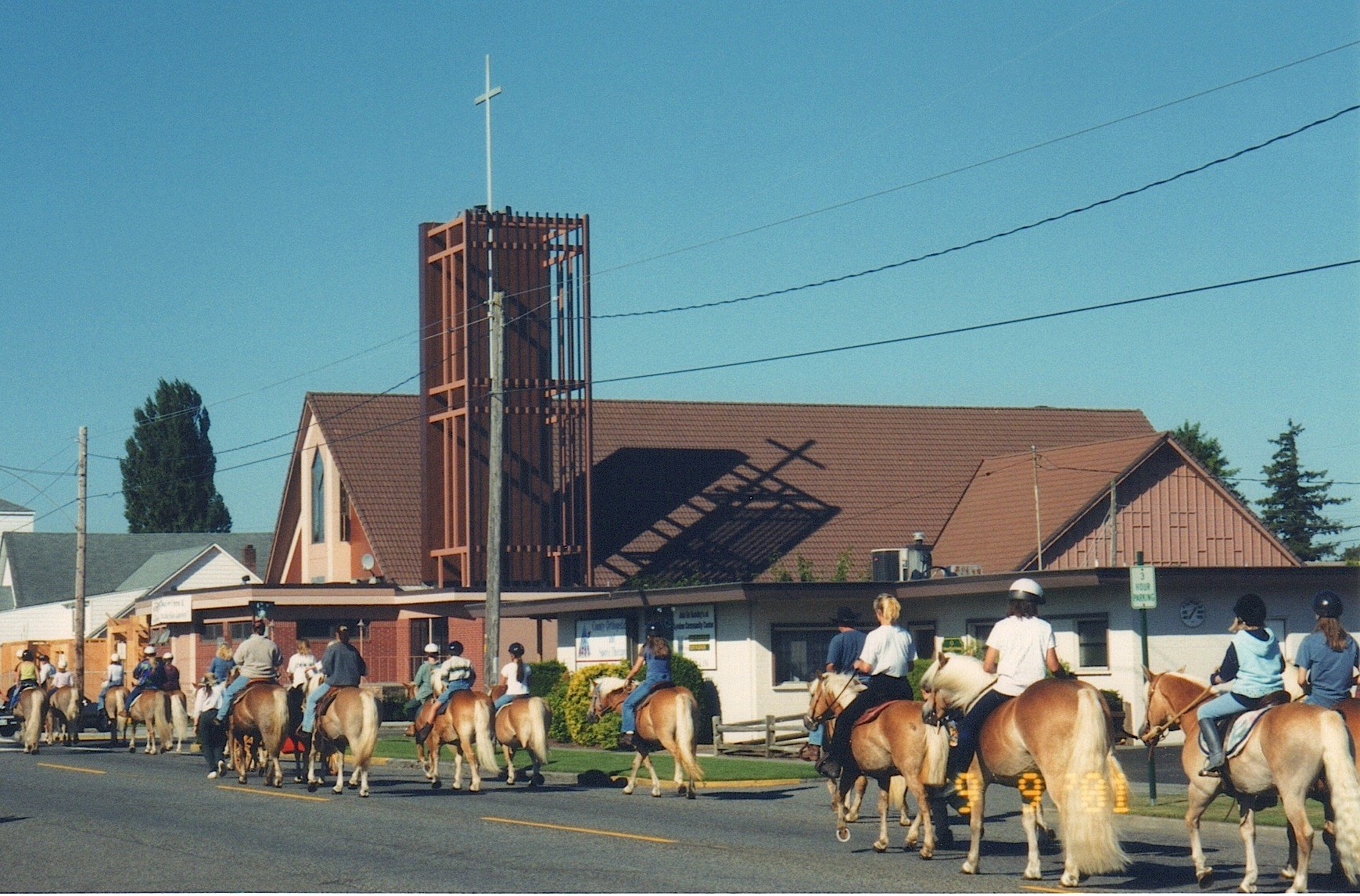
As I scoop and push the wheelbarrow, I recalled another barn cleaning 24 years ago, just days before the world changed on 9/11/01.
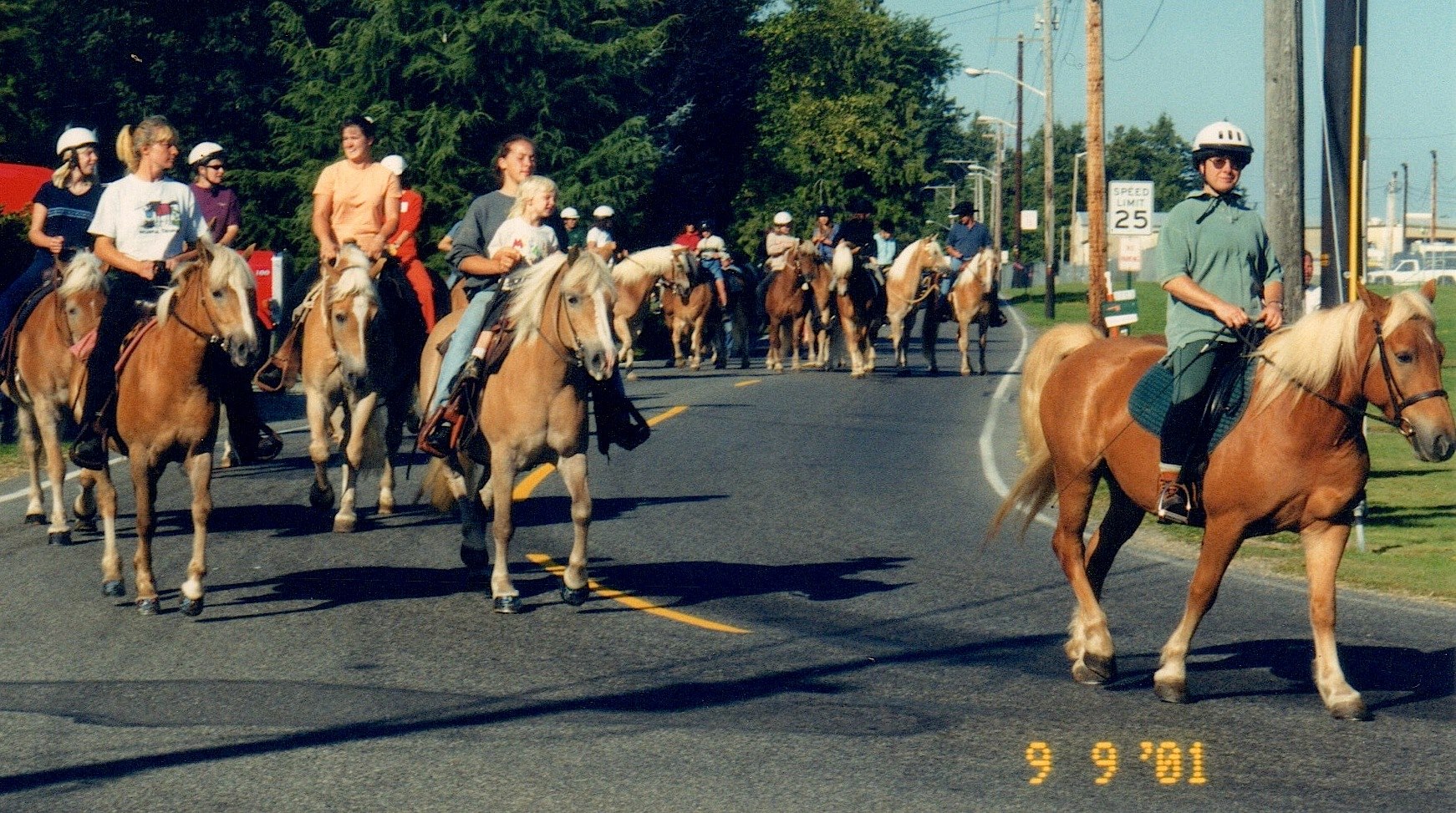
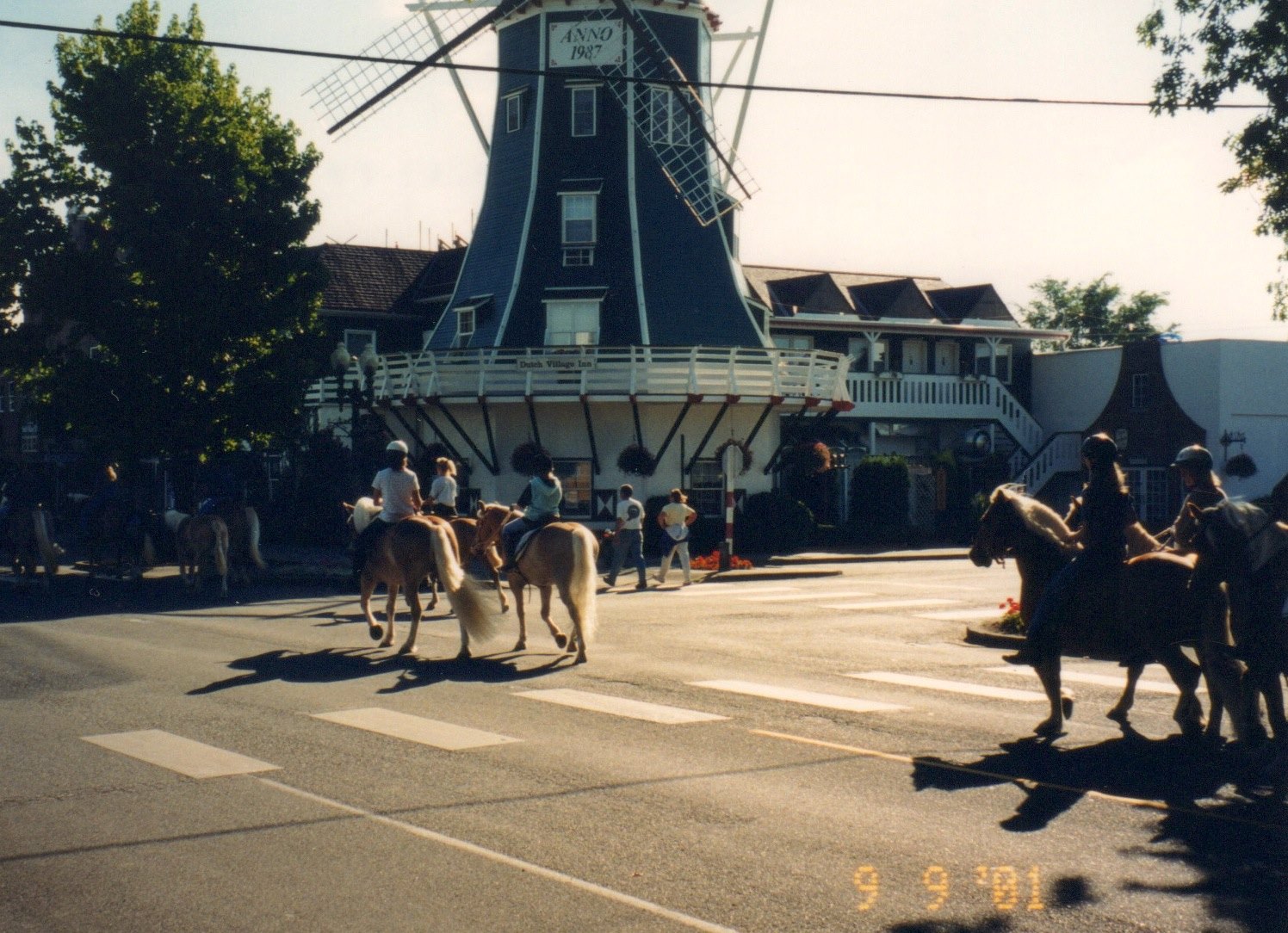
I was one of three or four friends left cleaning over ninety stalls after a Haflinger horse event that I had organized at our local fairgrounds. Some people had brought their horses from over 1000 miles away to participate for several days, including a Haflinger parade through our town on a quiet Sunday morning.
There had been personality clashes and harsh words among some participants along with criticism directed at me as the organizer that I had taken very personally. As I struggled with the umpteenth wheelbarrow load of manure, tears stung my eyes and my heart.
I was miserable with regret, feeling my work had been futile and unappreciated.
One friend had stayed behind with her young family to help clean up the large facility and she could see I was struggling to keep my composure. Jenny put herself right in front of my wheelbarrow and looked me in the eye, insisting I stop for a moment and listen:
“You know, none of these troubles and conflicts will amount to a hill of beans years from now. People will remember a fun event in a beautiful part of the country, a wonderful time with their Haflingers, their friends and family, and they’ll be all nostalgic about it, not giving a thought to the infighting or the sour attitudes or who said what to whom. So don’t make this about you and whether you did or didn’t make everyone happy. You loved us all enough to make it possible to meet here and the rest was up to us. So quit being upset about what you can’t change. There’s too much you can still do for us.”
Jenny had no idea how wise her words were, even two days later, on 9/11.
During tough times since (and there have been plenty), Jenny’s advice replays, reminding me to cease seeking appreciation from others or feeling hurt when harsh words come my way.
She was right about the balm found in the tincture of time. She was right about giving up the upset in order to die to self and self absorption, and instead to focus outward.
I have remembered.
Jenny herself did not know that day she would subsequently spend six years dying while still loving life every day, fighting a relentless cancer that was only slowed in the face of her faith and intense drive to live.
She became a rusting leaf gone holy, fading imperceptibly over time, crumbling at the edges until she finally had to let go. Her dying did not flash brilliance, nor draw attention at the end. Her intense focus during the years of her illness had always been outward to others, to her family and friends, to the healers she spent so much time with in medical offices, to her firm belief in the plan God had written for her and those who loved her.
So Jenny let go her hold on life here. And we reluctantly let her go. Brilliance cloaks her as her focus is now on things eternal.
You were so right, Jenny. The hard feelings from a quarter century ago don’t amount to a hill of beans now. The words you spoke to me that day taught me to love life even when I have no stomach for it.
All of us did have a great time together a few days before the world changed. And manure transforms over time to rich, nurturing compost.
I promise I am no longer upset that I can’t change what is past nor the fact that you and so many others have now left us.
But we’ll catch up later.
One-Time
Monthly
Yearly
Make a one-time or recurring donation to support daily Barnstorming posts
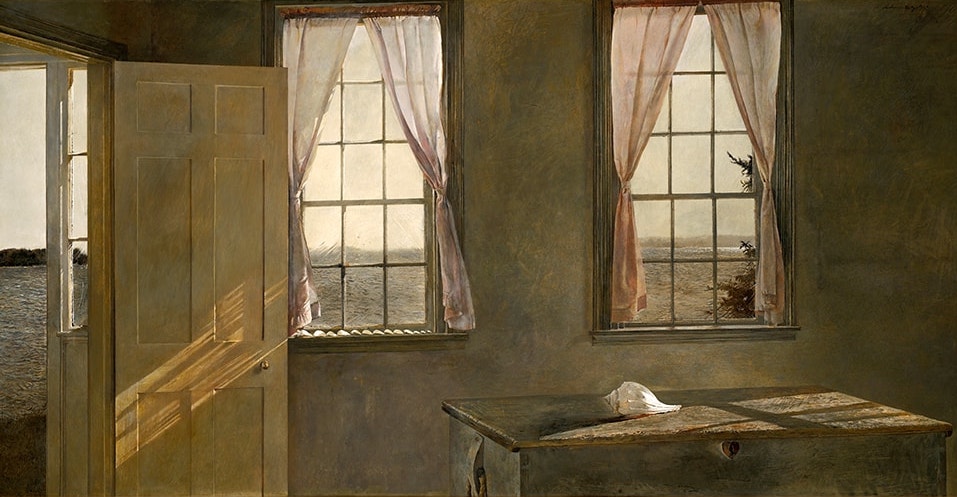
Needing them still, I come when I can, this time to the sea where we share a room: their double bed, my single. Morning fog paints the pale scene even paler. Lace curtains breathing, the chenille spread folded back, my father’s feet white sails furled at the edge of blue pajamas. Every child’s dream, a parent in each hand, though this child is fifty. Their bodies fit easily, with room to spare. When did they grow so small? Grow so small— as if it were possible to swell backwards into an earlier self.
“Her Room” by Andrew Wyeth in the Farnsworth Art Museum
My parents have been gone now for some time, my father 30 years, my mother, nearly 17 years. Their dying was a long process of counted breaths and pauses. I witnessed their bodies curling into themselves, shrinking smaller, worn down by illness and age.
I still miss them as I’m reminded of them by the events of my own life, still wanting them to take me by the hand as I navigate my own daily path.
After mom’s death, those possessions not distributed to family members have remained packed up and stored in our barn buildings. I know it is well past time to deal with their stuff as I become keenly aware of my own graying and aging.
In the house, next to where I write, is a box of over 500 letters written by my mother and father between 1941 and 1945. The letters began as they were getting to know each other at college, going from “pinned” to “engaged” and continue for three and a half more years after a hurried wedding Christmas Eve 1942. By mid-January 1943, my newly minted Marine officer father shipped out to spend the next three years of his life fighting on the battlefields of Saipan, Tinian and Tarawa in the Pacific Ocean, not to return again to the states until late summer of 1945.
My mother wrote her letters from the small rural eastern Washington community of Colville, living in a “teachers’ cottage” with other war wives who taught school while waiting for their husbands to return home – or not.
It took me a decade to find the courage and time to devote to reading these letters they treasured and never threw away. I sorted them unopened by postmark date into some semblance of order and sat down to start at the very beginning, which, of course, is my beginning as well. I opened each one with some trepidation and a lump in my throat about what I might find written there. I worried I may find things I didn’t want to know. I hoped I would find things that I desperately needed to know.
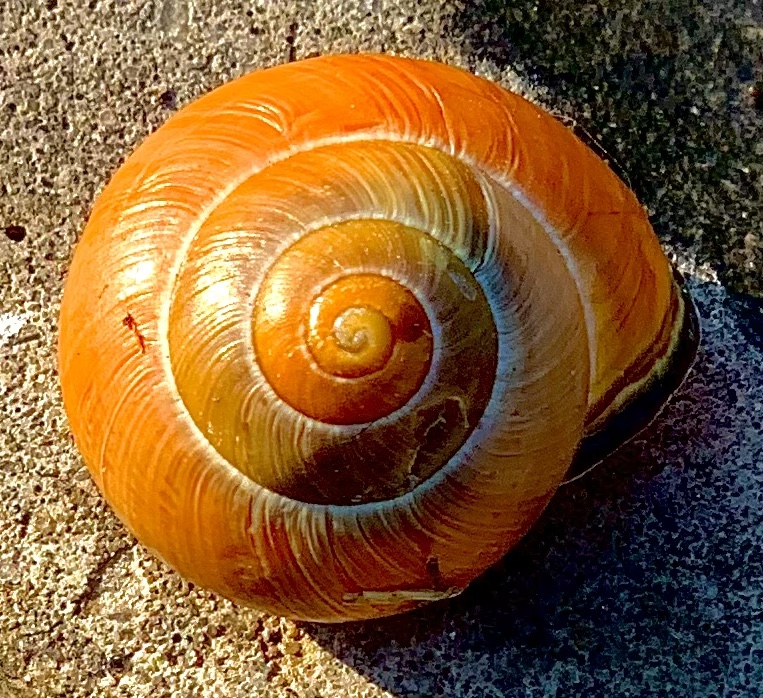
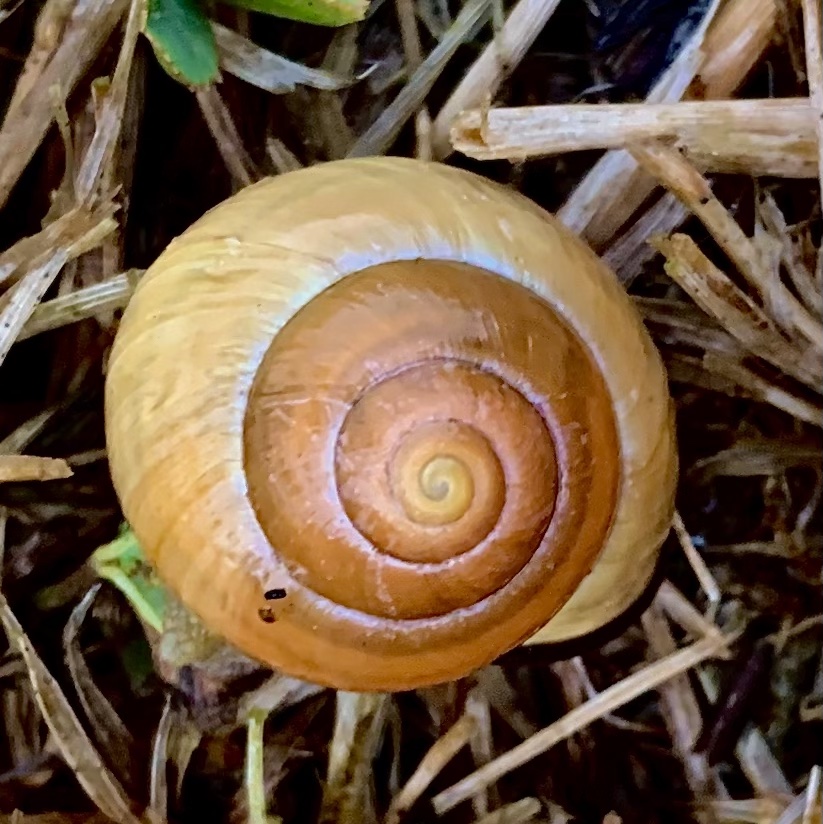
Most of all I wanted to understand the two people who became my parents within the coiled shell of their forty years together, though broken by a painful divorce which lasted a decade. Having lived through that awful time with them, I want to understand the origin of a love which eventually mended their cracked shell of companionship, gluing them back together for five more years before my father died.
As I ponder their words, I too cross a bridge back to them both, my ear pressed to the coiled shell of those fading voices, as if I might still hear the sea, at times bringing them closer, then pulling them farther away.
AI image created for this post
One-Time
Monthly
Yearly
Make a one-time or recurring donation to support daily Barnstorming posts
A voice had begun to sing. It was very far away and…. hard to decide from what direction it was coming. Sometimes it seemed to come from all directions at once. Sometimes he almost thought it was coming out of the earth beneath them. Its lower notes were deep enough to be the voice of the earth herself.
There were no words. There was hardly even a tune. But it was, beyond comparison, the most beautiful noise he had ever heard. It was so beautiful he could hardly bear it.
The earth was of many colors: they were fresh, hot, and vivid. They made you feel excited; until you saw the Singer himself, and then you forgot everything else. ~C.S. Lewis from The Magician’s Nephew
And did you get what you wanted from this life, even so? I did. And what did you want? To call myself beloved, to feel myself beloved on the earth. ~Raymond Carver “Late Fragment”
Beautiful things and varied shapes appeal to [the eyes], vivid and well-matched colors attract; but let not these captivate my soul. Rather let God ravish it; he made these things exceedingly good, to be sure, but he is my good, not they. ~St. Augustine
Every time I open my eyes and listen for the voice of the morning, I am reminded how precious is this moment, how welcome is each breath and each heartbeat.
We are created for this. We are, everyone of us, beloved by our Creator. We are meant to wonder breathless at this, without ceasing, through the long day.
One-Time
Monthly
Yearly
Make a one-time or recurring donation to support daily Barnstorming posts
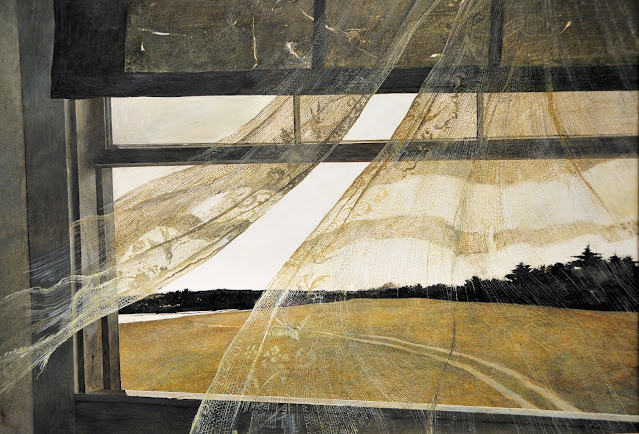
We lie back to back. Curtains lift and fall, like the chest of someone sleeping. Wind moves the leaves of the box elder; they show their light undersides, turning all at once like a school of fish. Suddenly I understand that I am happy. For months this feeling has been coming closer, stopping for short visits, like a timid suitor. ~Jane Kenyon “The Suitor”
Andrew Wyeth – Wind from the Sea, 1947
Happiness can be an elusive suitor and is altogether undependable.
I too have had glimpses of it throughout my life – a fleeting “this is it.” Then the clouds roll in and the ecstasy of the realization fades to mist.
I tend to trust the old reliable friends who show up regularly – like “hopeful” and “contented” and “being at peace” – plus moments when the sweetness of each breath brings tears of overwhelming joy.
Instead of pursuing happiness, (always a pursuit rather than a destination), I thrive on knowing I love deeply and am loved. That knowledge is what gets me through the really tough times when happiness doesn’t always put in an appearance.
Love shows up. Love has my back when I’m afraid and full of doubt. Love persists through sadness. Love doesn’t give up when everything hurts. Love is sufficient.
Love is enough to bring those happy tears to my eyes…
Love is patient, love is kind. It does not envy, it does not boast, it is not proud.It does not dishonor others, it is not self-seeking, it is not easily angered, it keeps no record of wrongs.Love does not delight in evil but rejoices with the truth.It always protects, always trusts, always hopes, always perseveres.
Love never fails. 1 Corinthians 13: 4-8a
One-Time
Monthly
Yearly
Make a one-time or recurring donation to support daily Barnstorming posts
My father would lift me to the ceiling in his big hands and ask, How’s the weather up there? And it was good, the weather of being in his hands, his breath of scotch and cigarettes, his face smiling from the world below. O daddy, was the lullaby I sang back down to him as he stood on earth, my great, white-shirted father, home from work, his gold wristwatch and wedding band gleaming as he held me above him for as long as he could, before his strength failed down there in the world I find myself standing in tonight, my little boy looking down from his flight below the ceiling, cradled in my hands, his eyes wide and already staring into the distance beyond the man asking him again and again, How’s the weather up there? ~George Bilgere “Weather”.
It was hard work, dying, harder than anything he’d ever done.
Whatever brutal, bruising, back- breaking chore he’d forced himself
to endure—it was nothing compared to this. And it took
so long. When would the job be over? Who would call him
home for supper? And it was hard for us (his children)—
all of our lives we’d heard my mother telling us to go out,
help your father, but this was work we could not do.
He was way out beyond us, in a field we could not reach. ~Joyce Sutphen “My Father, Dying”
Deep in one of our closets is an old film reel of me about 16 months old sitting securely held by my father on his shoulders. I am bursting out with giggles as he repeatedly bends forward, dipping his head and shoulders down. I tip forward, looking like I am about to fall off, and when he stands back up straight, my mouth becomes a large O and I can almost remember the tummy tickle I feel. I want him to do it again and again, taking me to the edge of falling off and then bringing me back from the brink.
My father was a tall man, so being swept up onto his shoulders felt a bit like I was touching heaven.
It was as he lay dying 30 years ago this summer that I realized again how tall he was — his feet kept hitting the foot panel of the hospital bed my mother had requested for their home. We cushioned his feet with padding so he wouldn’t get abrasions even though he would never stand on them again, no longer towering over us.
His helplessness in dying was startling – this man who could build anything and accomplish whatever he set his mind to was unable to subdue his cancer. Our father, who was so self-sufficient he rarely asked for help, did not know how to ask for help now.
So we did what we could when we could tell he was uncomfortable, which wasn’t often. He didn’t say much, even though there was much we could have been saying. We didn’t reminisce. We didn’t laugh and joke together. We just were there, taking shifts catching naps on the couch so we could be available if he called out, which he never did.
This man: who had grown up dirt poor, fought hard with his alcoholic father left abruptly to go to college – the first in his family – then called to war for three years in the South Pacific.
This man: who had raised a family on a small farm while he was a teacher, then a supervisor, then a desk worker.
This man: who left our family to marry another woman but returned after a decade to ask forgiveness.
This man: who died in a house he had built completely himself, without assistance, from the ground up.
He didn’t need our help – he who had held tightly to us and brought us back from the brink when we went too far – he had been on the brink himself and was rescued, coming back humbled.
No question the weather is fine for him up there. I have no doubt.
One-Time
Monthly
Yearly
Make a one-time or recurring donation to support daily Barnstorming posts
Had I the heavens’ embroidered cloths, Enwrought with golden and silver light, The blue and the dim and the dark cloths Of night and light and the half light, I would spread the cloths under your feet: But I, being poor, have only my dreams; I have spread my dreams under your feet; Tread softly because you tread on my dreams. ~William Butler Yeats from “Aedh Wishes for the Cloths of Heaven“
I know for a while again, the health of self-forgetfulness, looking out at the sky through a notch in the valley side, the black woods wintry on the hills, small clouds at sunset passing across. And I know that this is one of the thresholds between Earth and Heaven, from which I may even step forth from myself and be free. ~ Wendell Berry, Sabbaths 2000
John O’Donohue gave voice to the connection between beauty and those edges of life — thresholds was the word he loved— where the fullness of reality becomes more stark and more clear.
If you go back to the etymology of the word “threshold,” it comes from “threshing,” which is to separate the grain from the husk. So the threshold, in a way, is a place where you move into more critical and challenging and worthy fullness.
There are huge thresholds in every life.
You know that, for instance, if you are in the middle of your life in a busy evening, fifty things to do and you get a phone call that somebody you love is suddenly dying, it takes ten seconds to communicate that information.
But when you put the phone down, you are already standing in a different world. Suddenly everything that seems so important before is all gone and now you are thinking of this.So the given world that we think is there and the solid ground we are on is so tentative. And a threshold is a line which separates two territories of spirit, and very often how we cross is the key thing.
Over a decade ago, someone told me that my writing reflected a “sacramental” life — touching and tasting the holiness of everyday moments, as if they are the cup and bread of God’s eternal grace and gift.
I allow those words to sit warmly beside me during the hours I struggle to know what to share here.
It is all too tempting to focus on sacrament over the sacrifice it represents. As much as I love the world and the beauty in the moments I share here, we should explore the “thin places” between heaven and earth, through forgetting self, stepping forth through a holy threshold into something far greater.
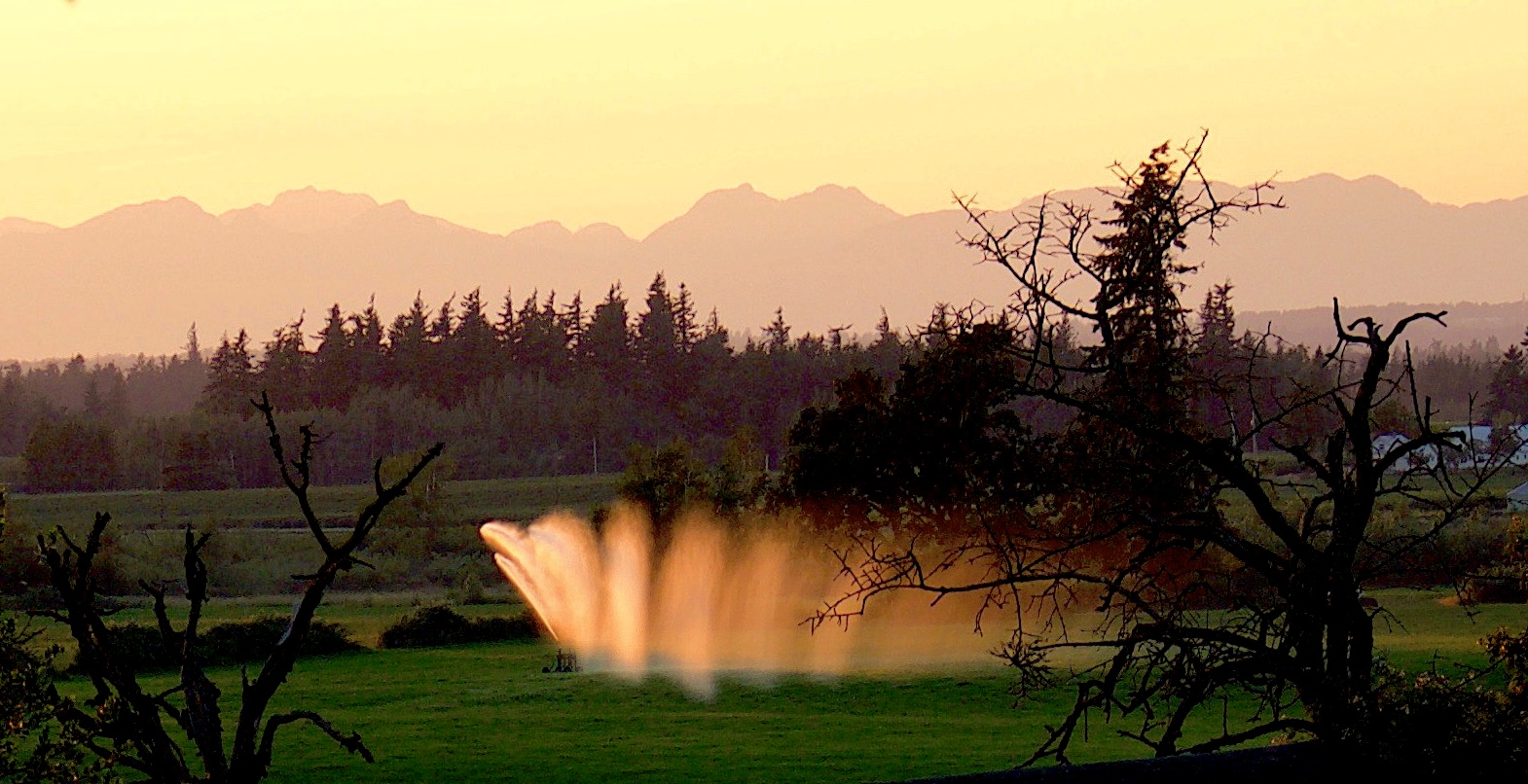
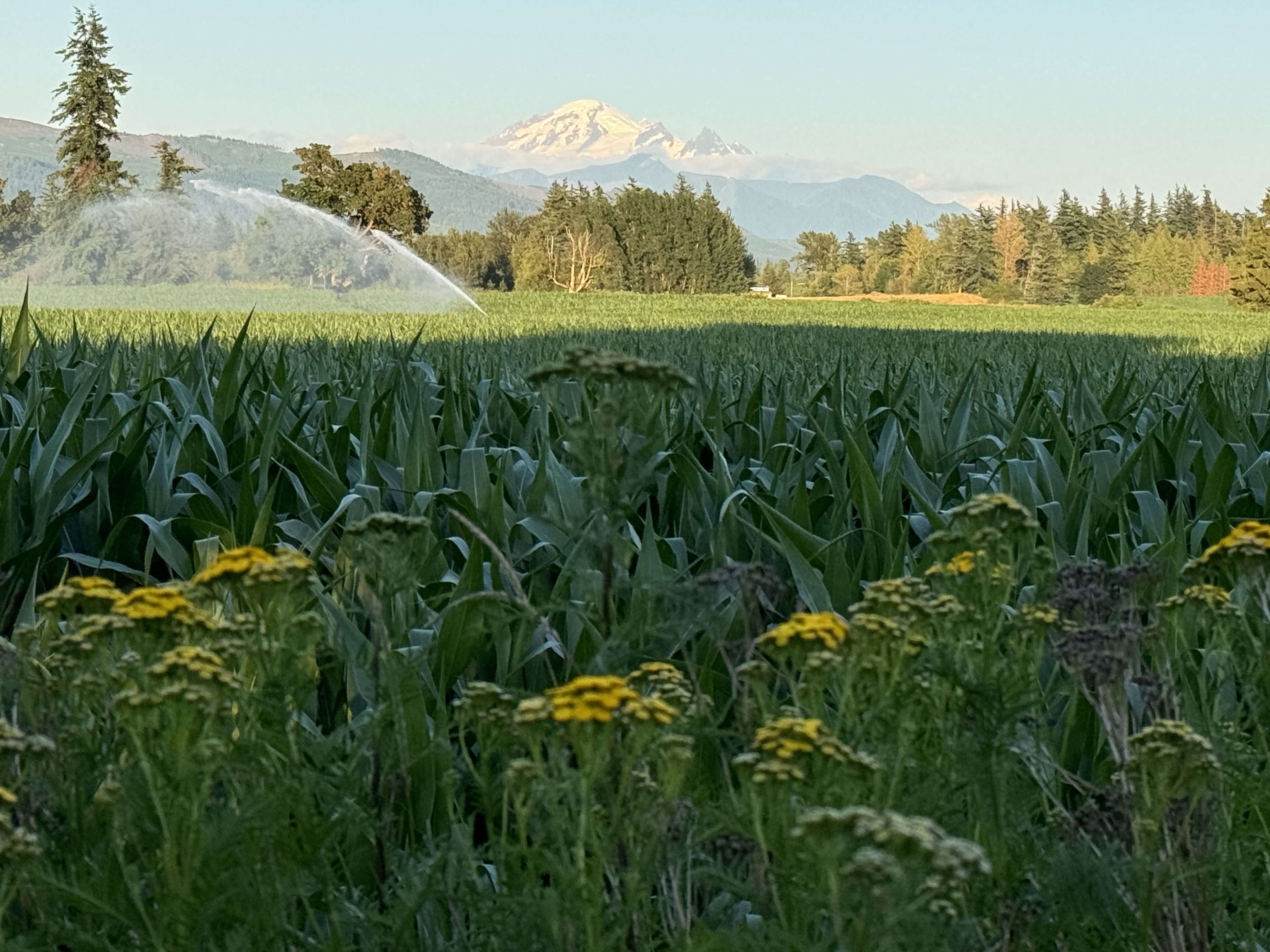
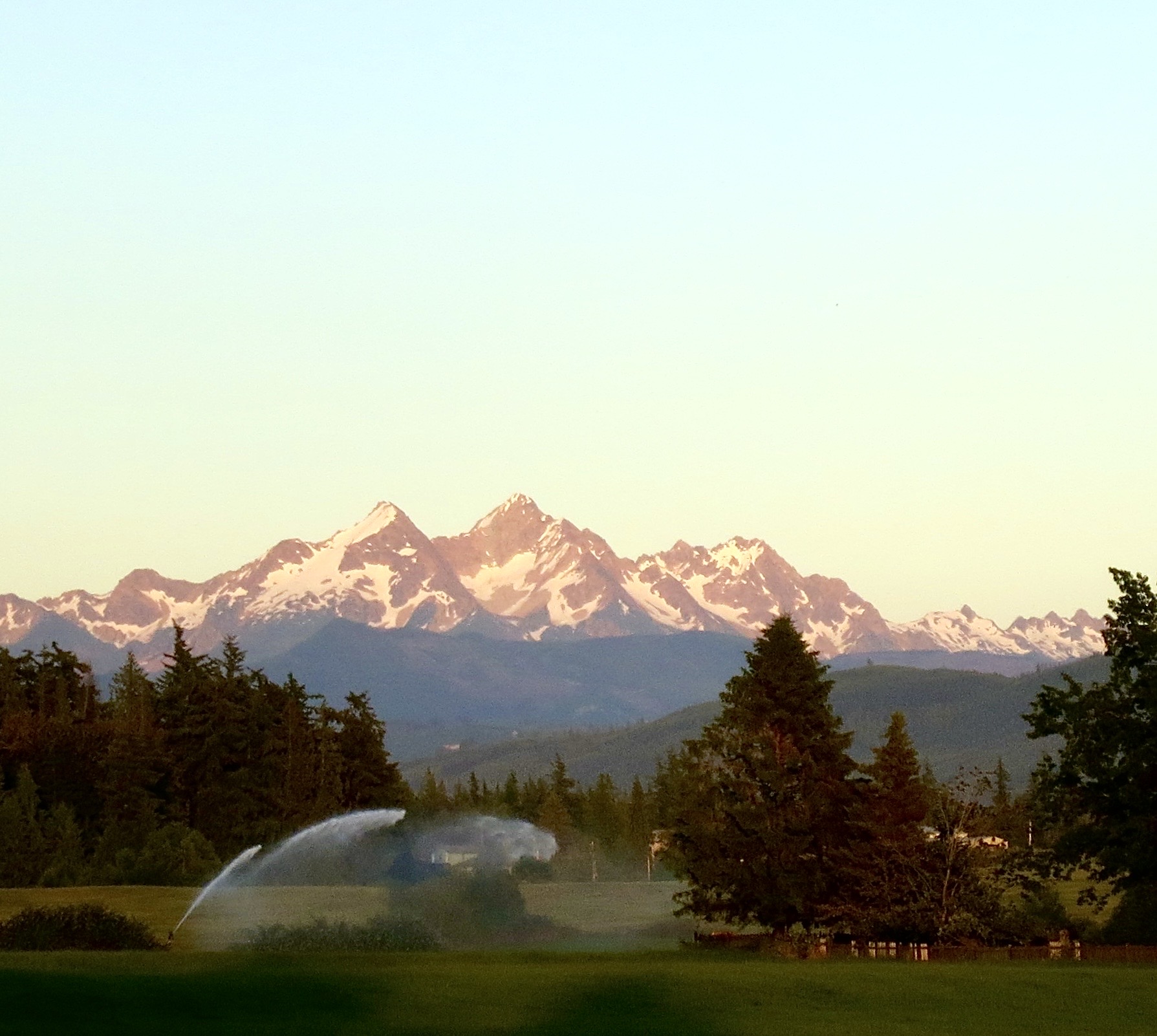
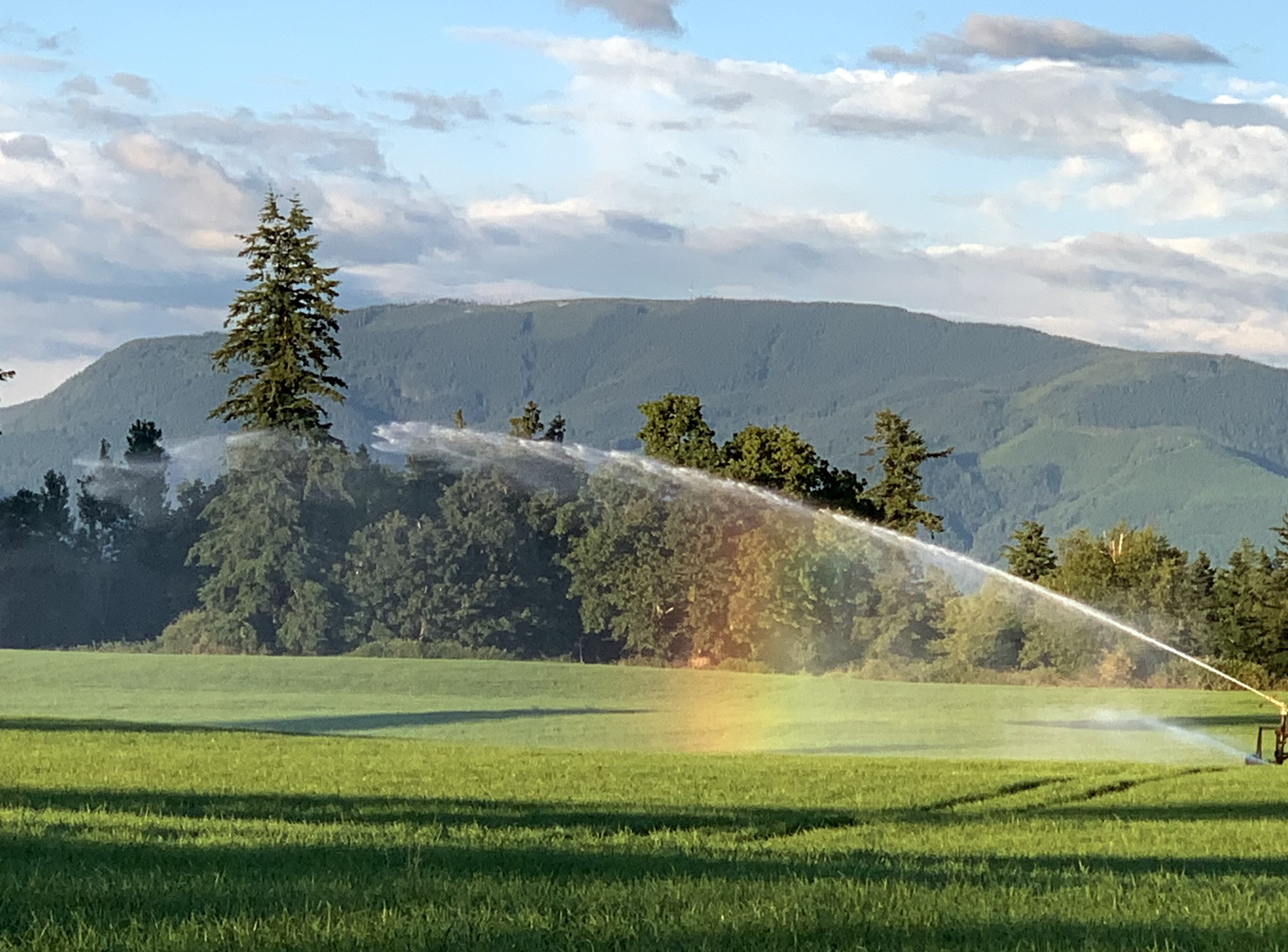
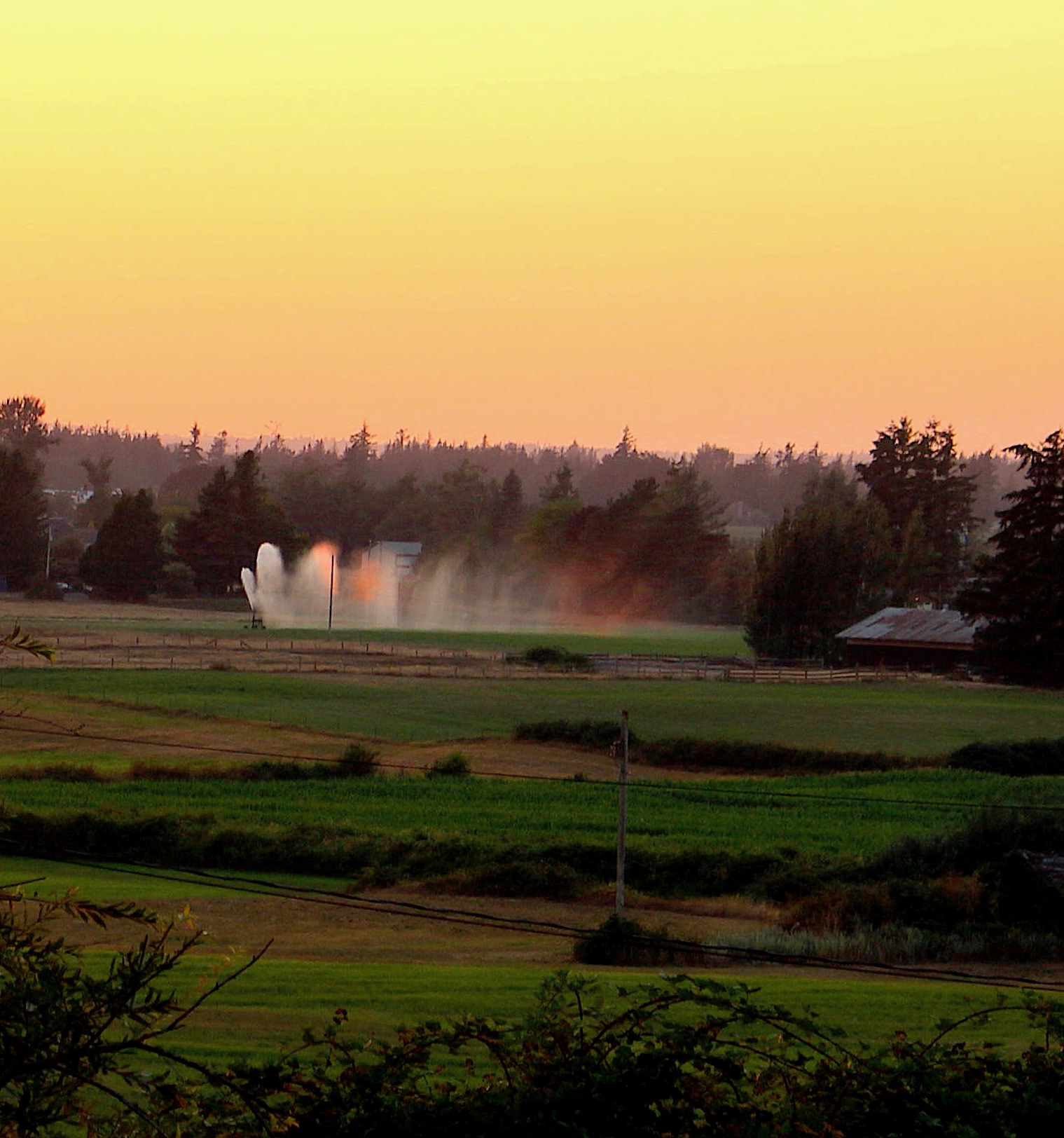
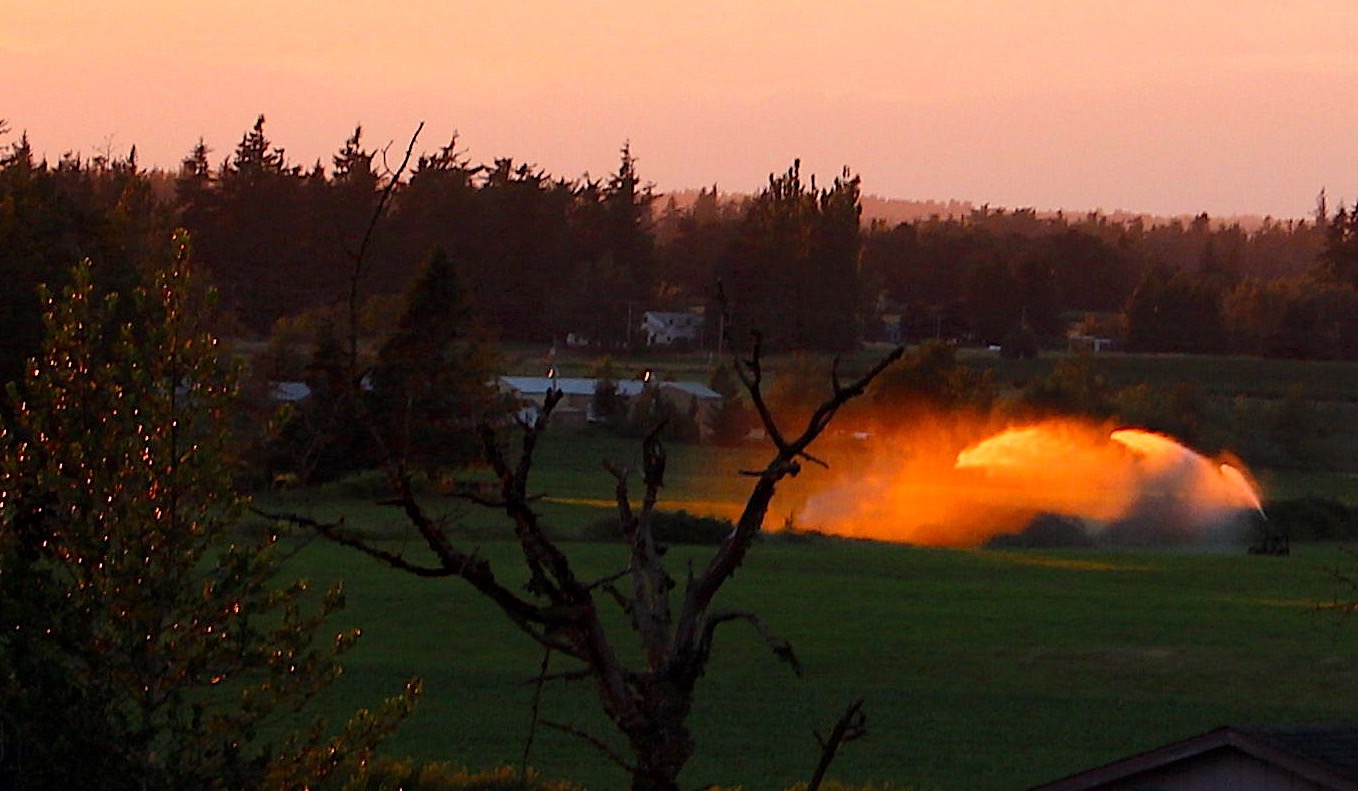
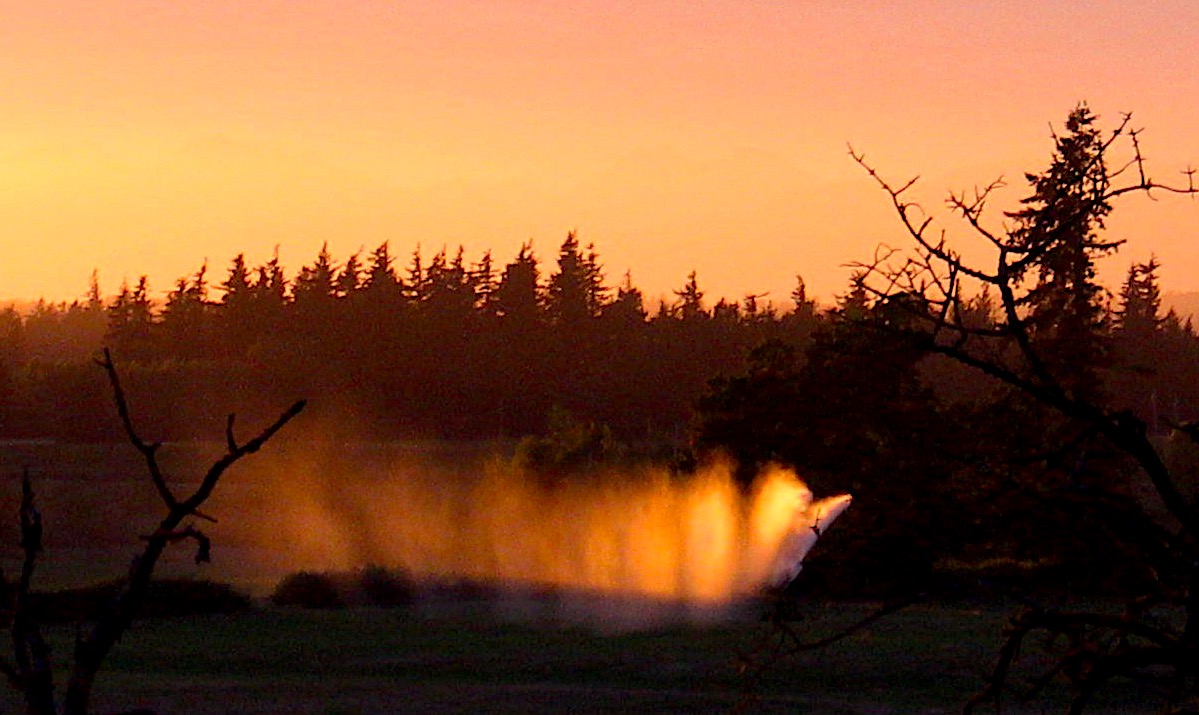
I feel so unworthy — in fact, threshed to pieces most days, incapable of thinking of anything but how I feel reduced to fragments. Perhaps those fragments are like the droplets coming from a farm sprinkler at sunset, sparkling and golden despite waning light, bringing something essential to someone feeling dry, parched and dusty.
I may even step forth from myself and be free.
Then we can walk each other home.
One-Time
Monthly
Yearly
Make a one-time or recurring donation to support daily Barnstorming posts


















 Barnstorming