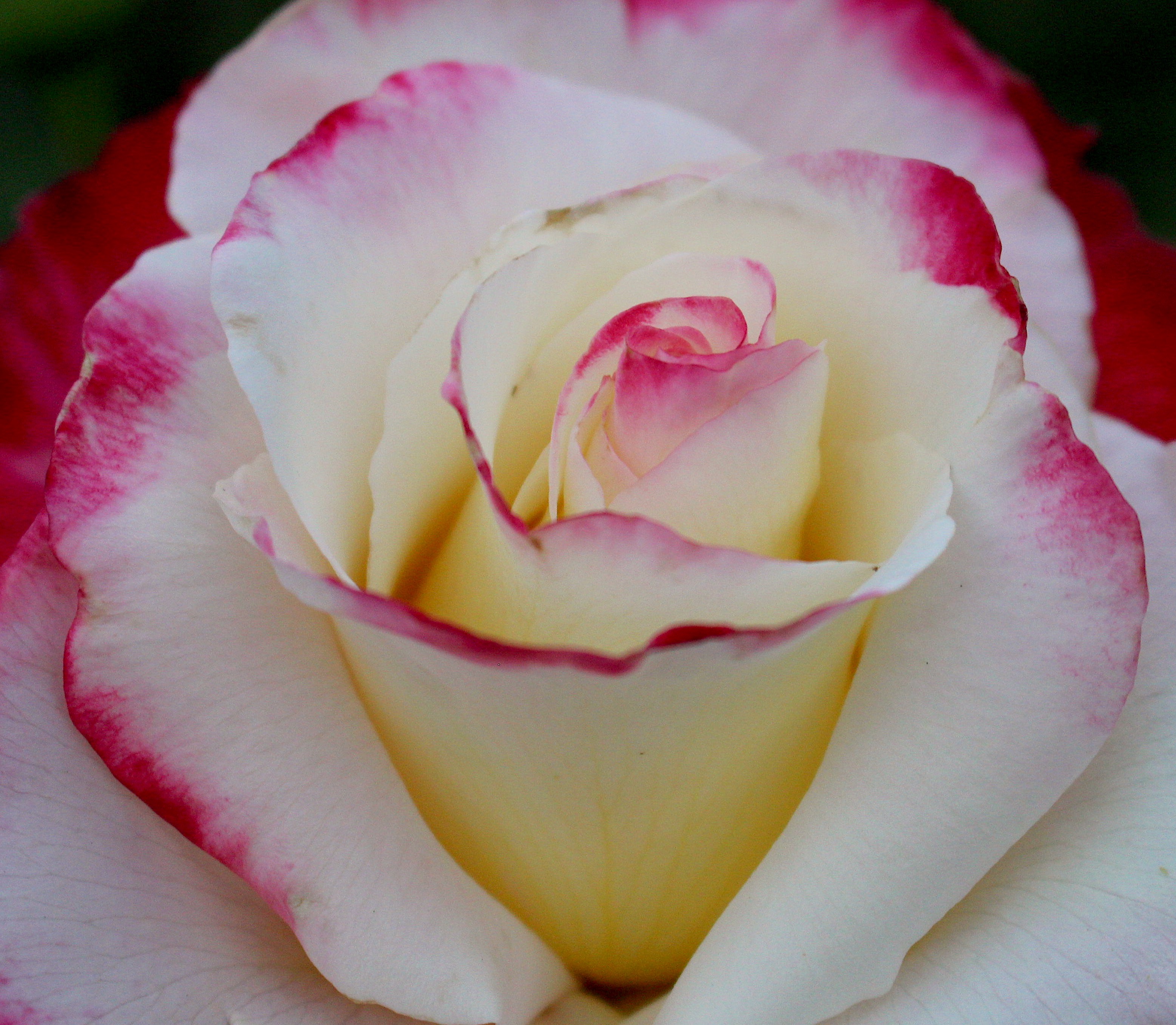
The fragility of the flower unbruised penetrates space ~William Carlos Williams from Spring and All (1923)
It is common to look for love only inside the heart of things, pulsing front and center as both showpiece and show off. We think of love reverberating from deep within, loud enough for all the world to hear and know it is so.
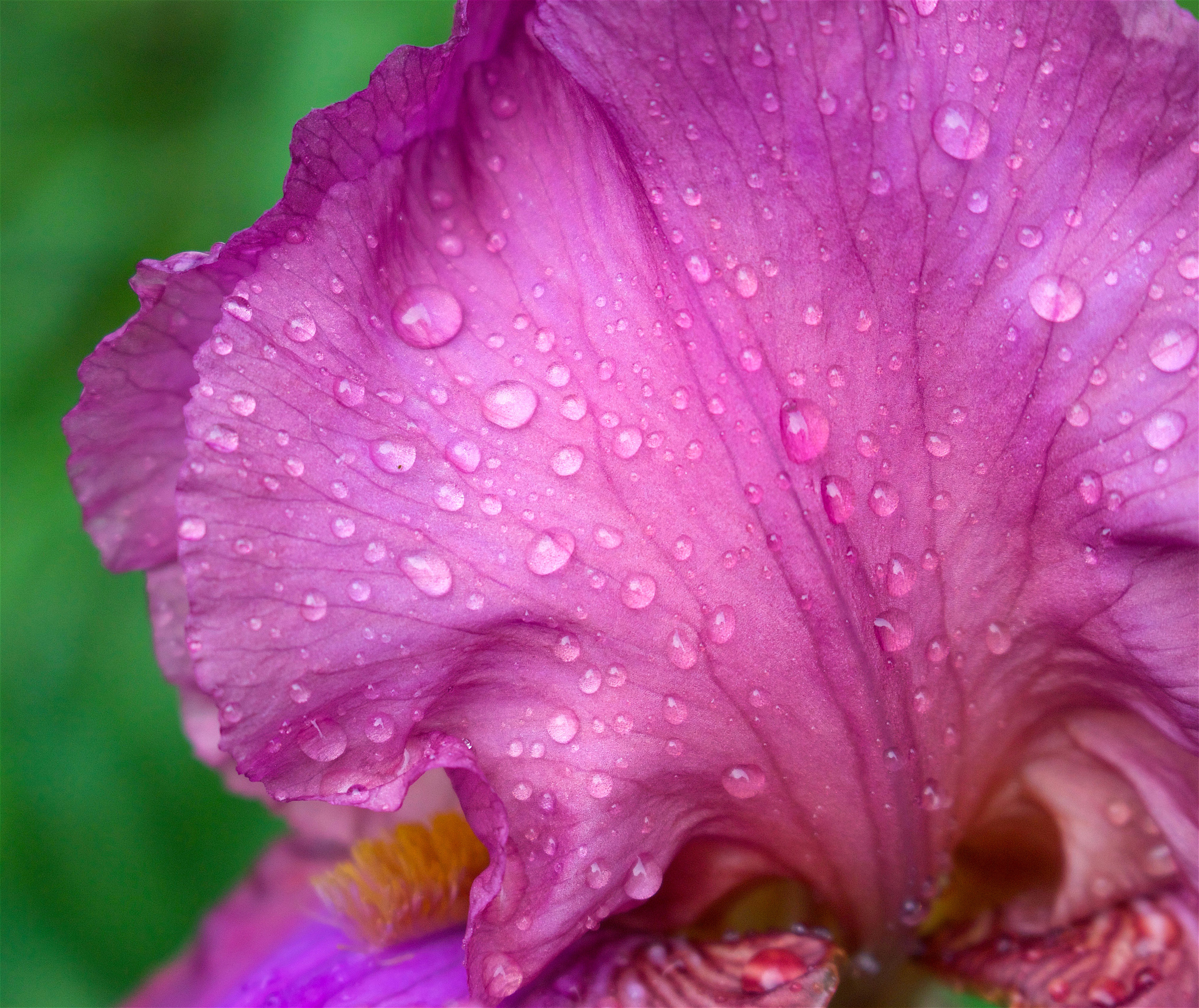
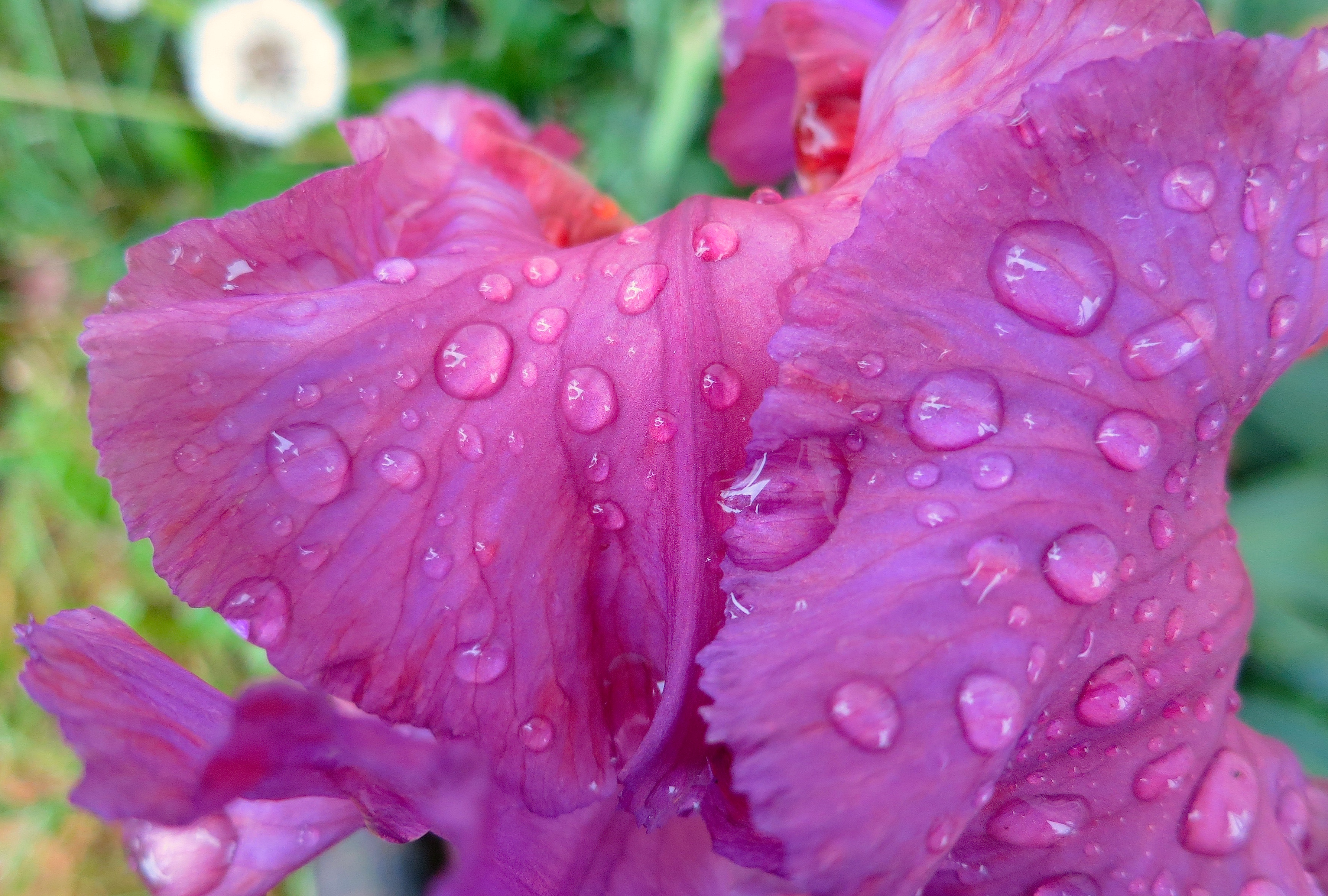
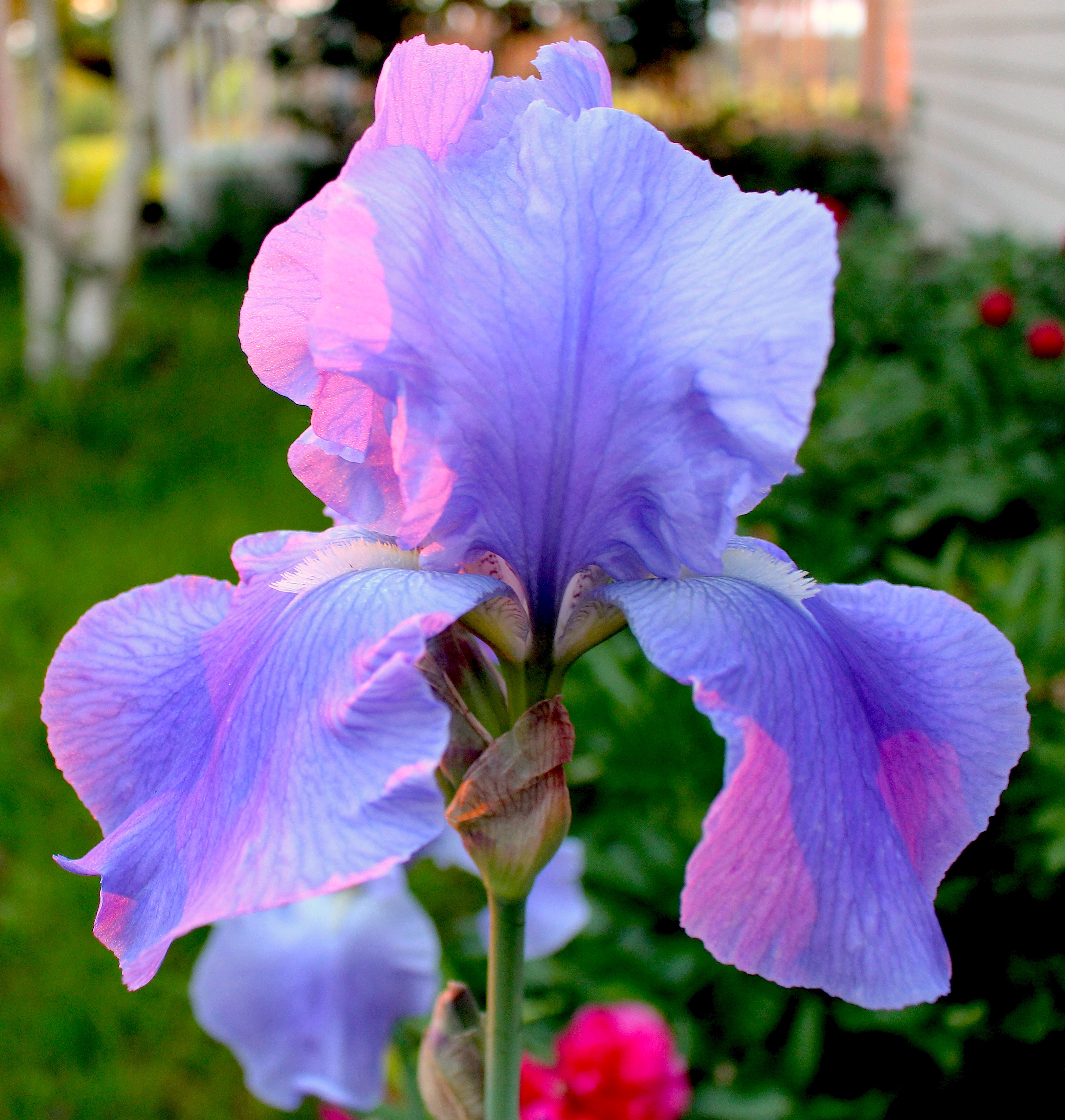
But as I advance on life’s road, I have found the love that matters lies quietly waiting at the periphery of our hearts, so fragile and easily torn as a petal, often drenched in tears – clinging to the edges of our lives and barely holding on through storms and trials.
This love remains ever-present , both protects and cherishes, fed by fine little veins which branch out from the center of the universe to the tender margins of infinity.
It is on that delicate edge of forever we dwell, our thirst waiting to be slaked and we stand ready, trembling with anticipation.
my heart panics not to be, as I long to be, the empty, waiting, pure, speechless receptacle. ~Mary Oliver from “Blue Iris”
Thou art the Iris, fair among the fairest, Who, armed with golden rod And winged with the celestial azure, bearest The message of some God. ~Henry Wadsworth Longfellow from Flower-de-Luce
May your blooms be floriferous and in good form, Distinctive, with good substance, flare, and airborne, With standards and falls that endure, never torn. May you display many buds and blooms sublime, In graceful proportion on strong stalks each day, Gently floating above the fans and the fray. May you too reach toward the moon and stars, Bloom after bloom, many seasons in the sun, Enjoying your life, health, and each loved one, Until your ‘living days are artfully done. ~Georgia Gudykunst “Iris Blessing”
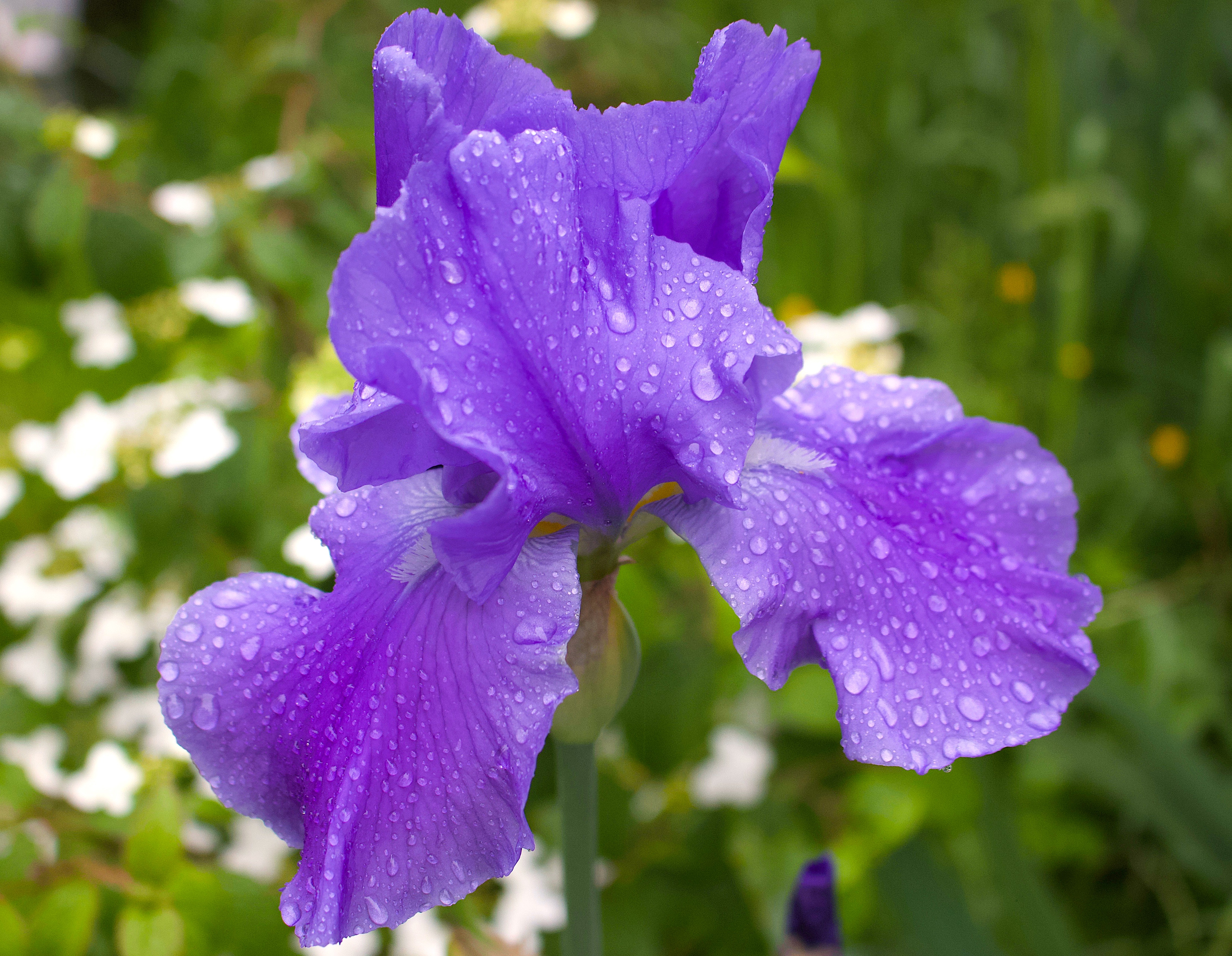
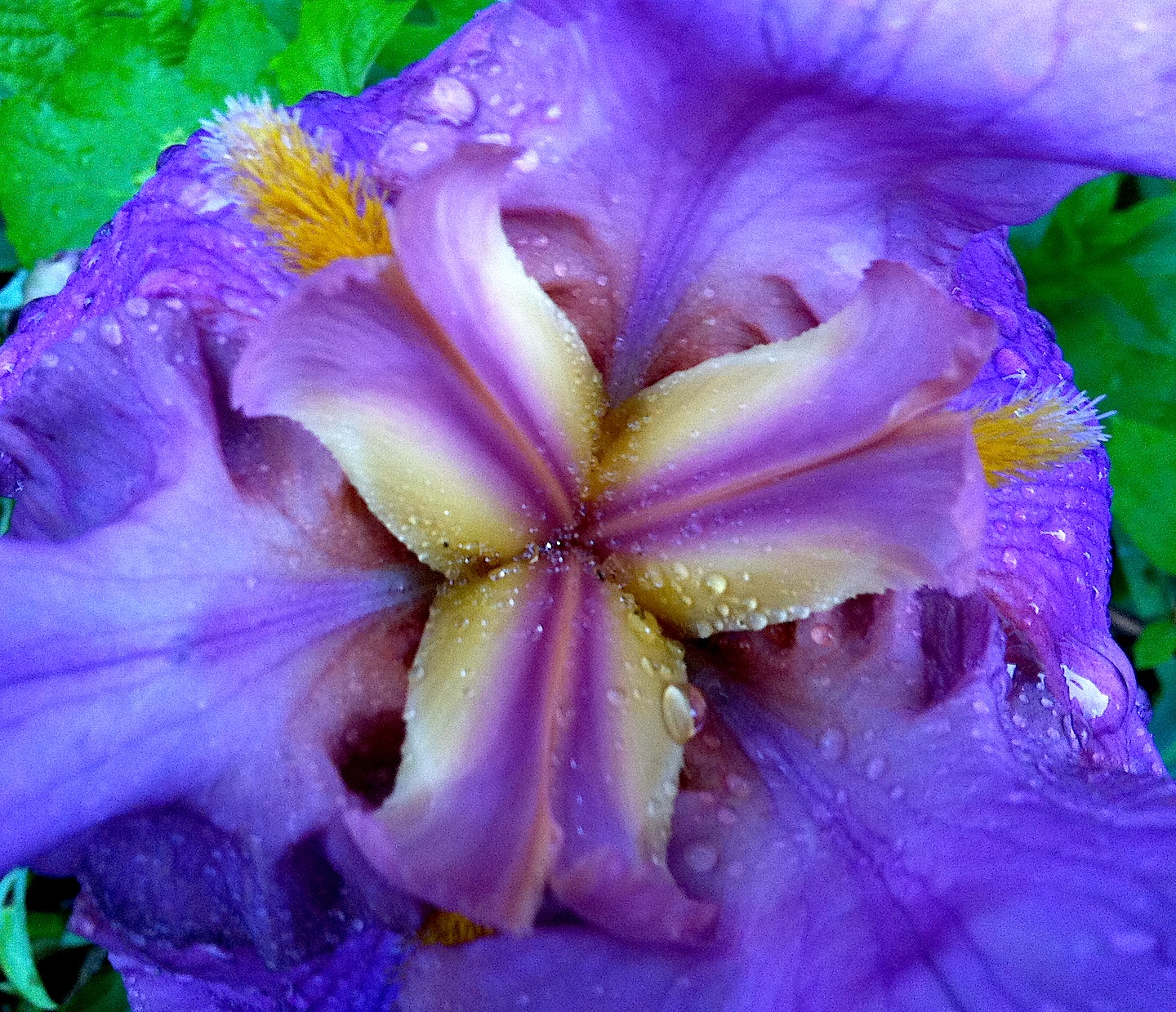
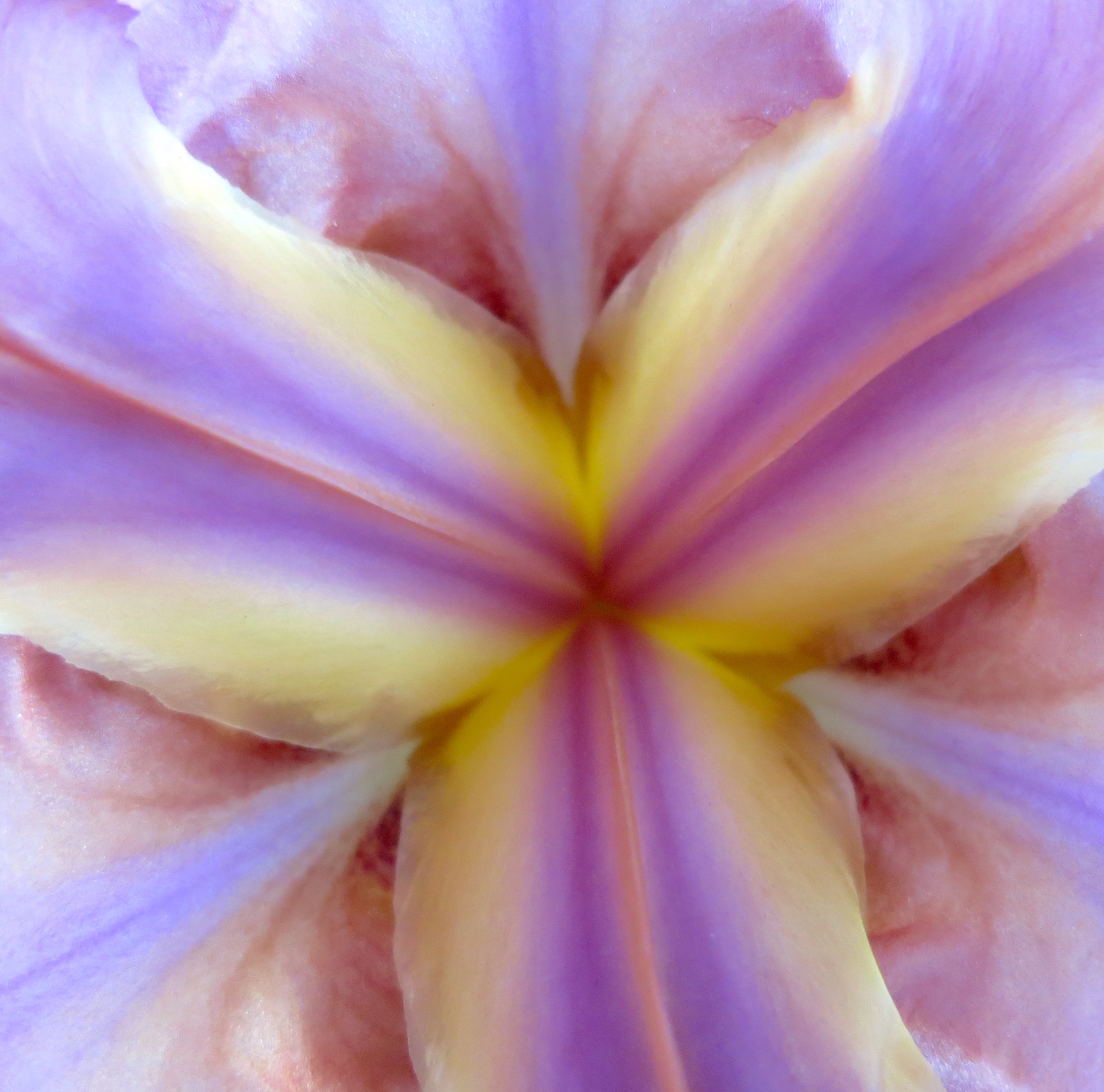
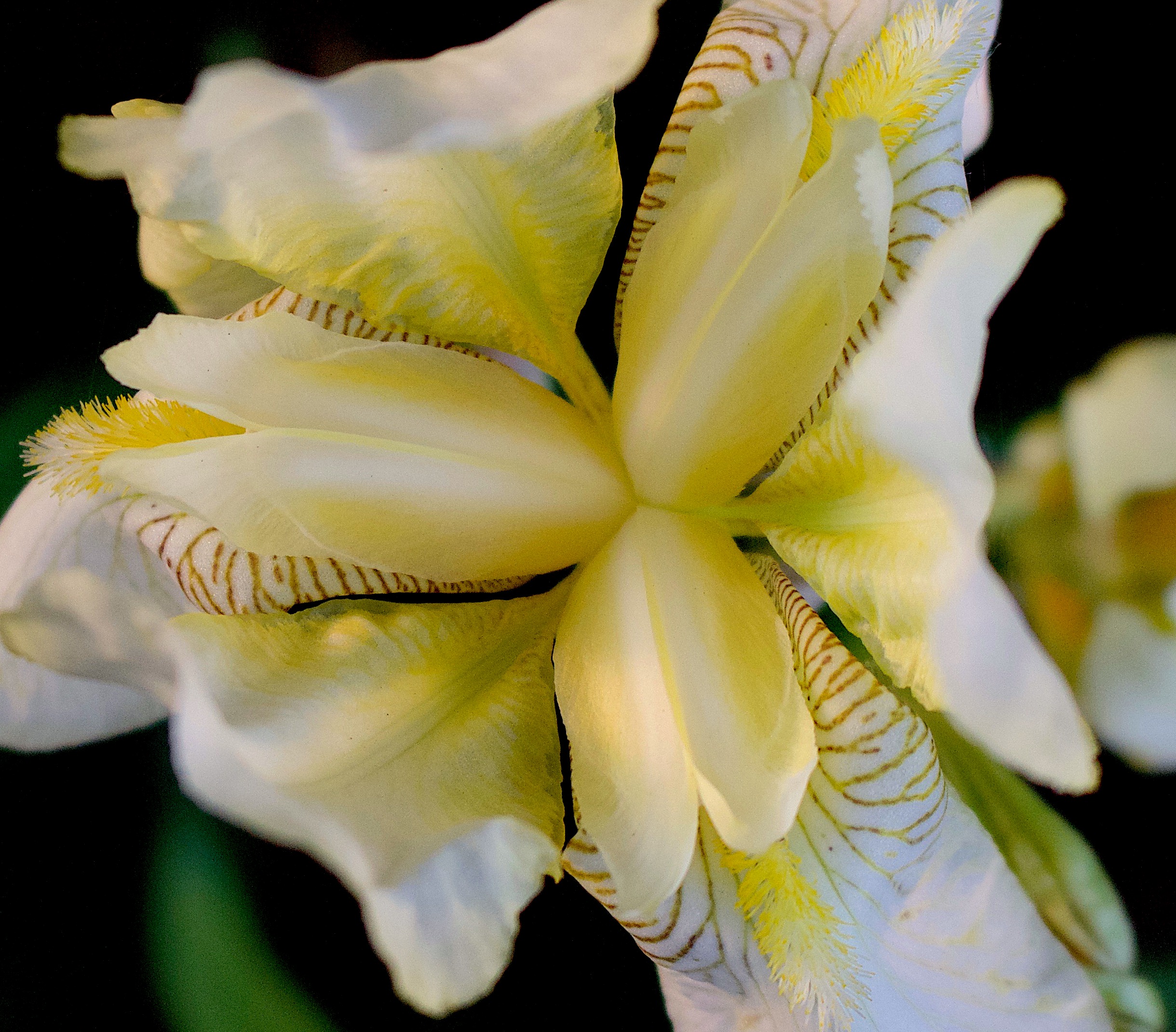
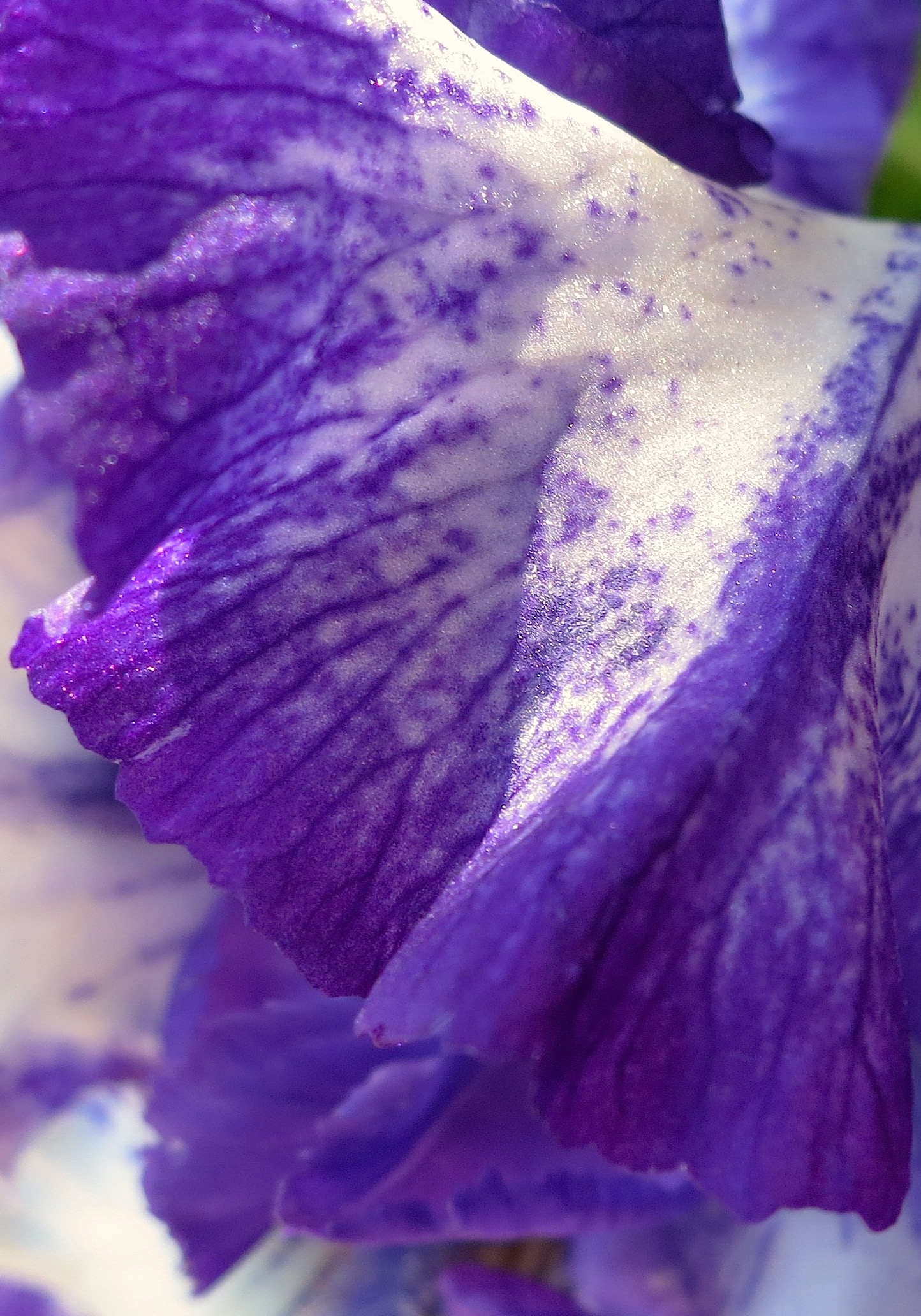
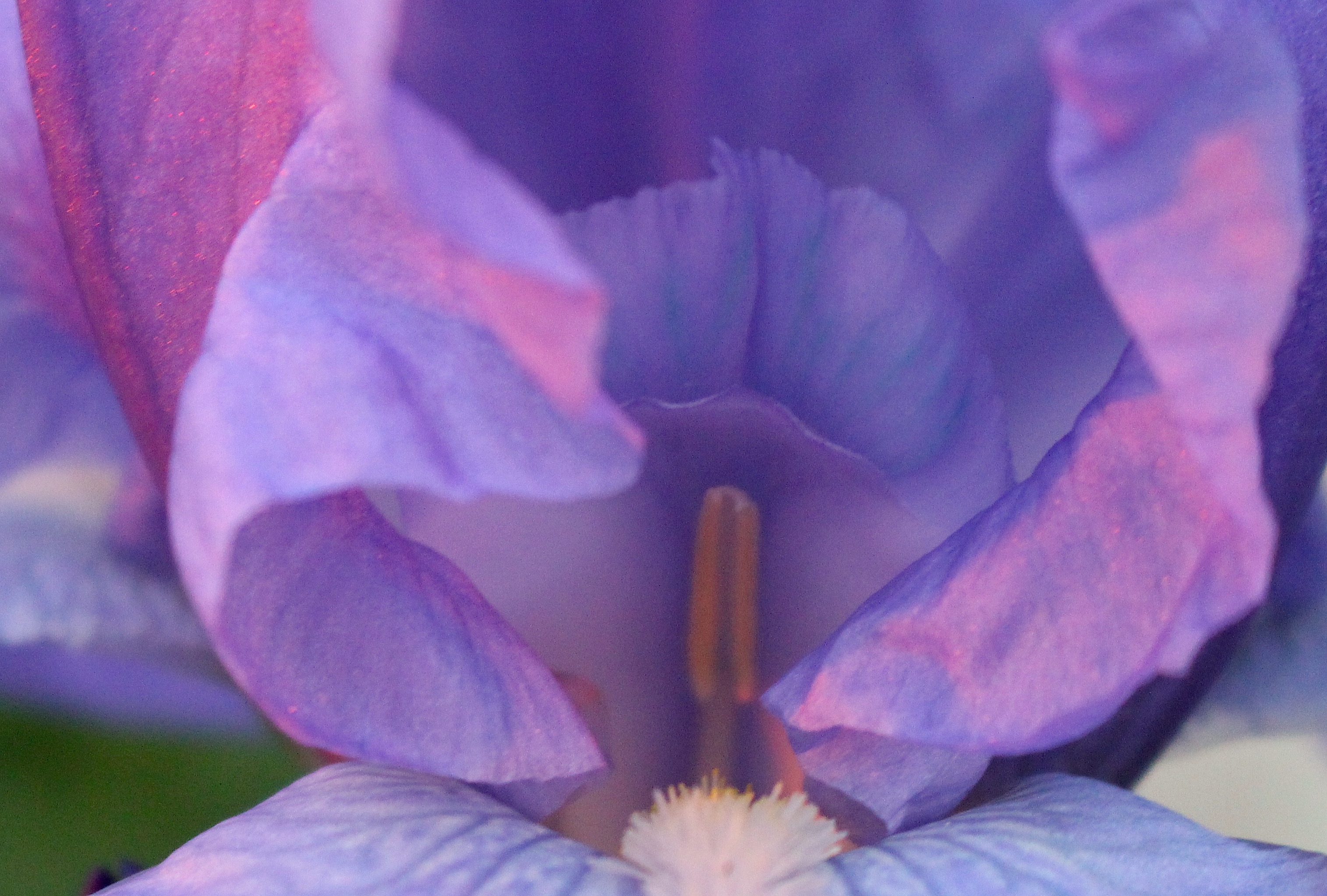
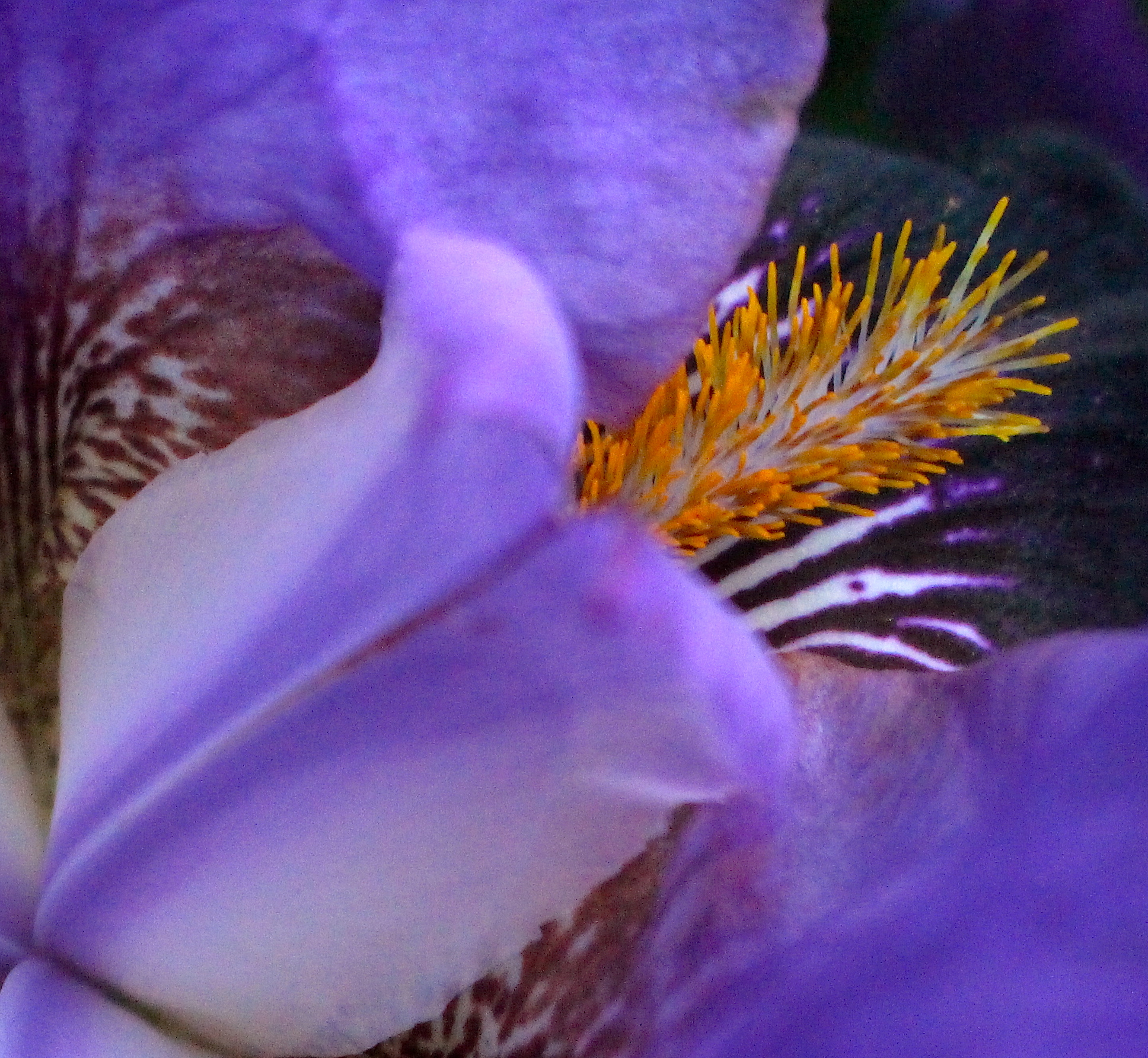
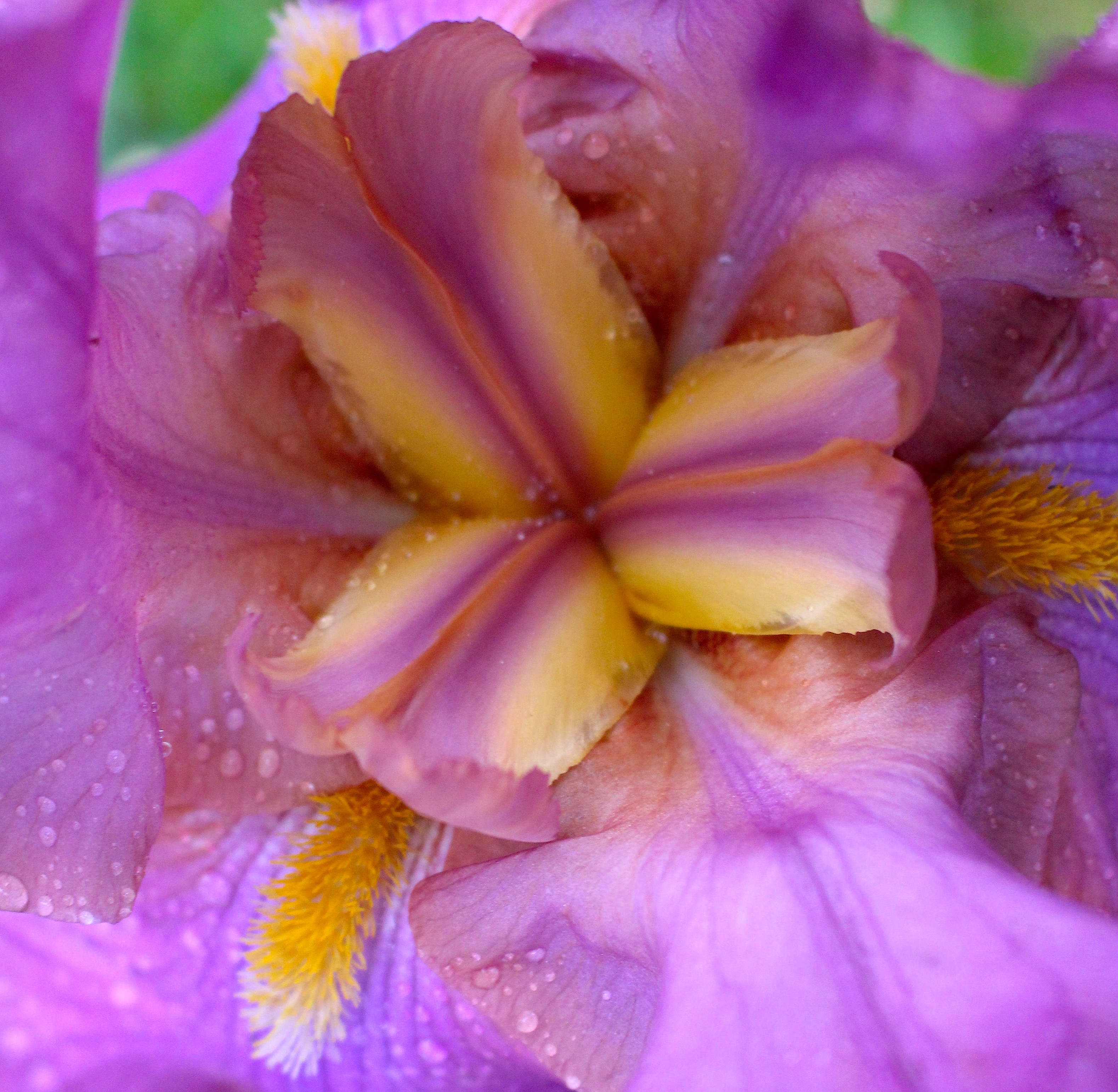
Whenever I allow my eye to peer into an iris, I need a flotation device and depth finder as I’m likely to get lost, sweeping and swooning through inner space of tunnels, canyons and corners, coming up for air and diving in again to journey into exotic locales draped in silken hues ~this fairy land on a stem~ so immersed in the possibilities of such an impossible blossom.
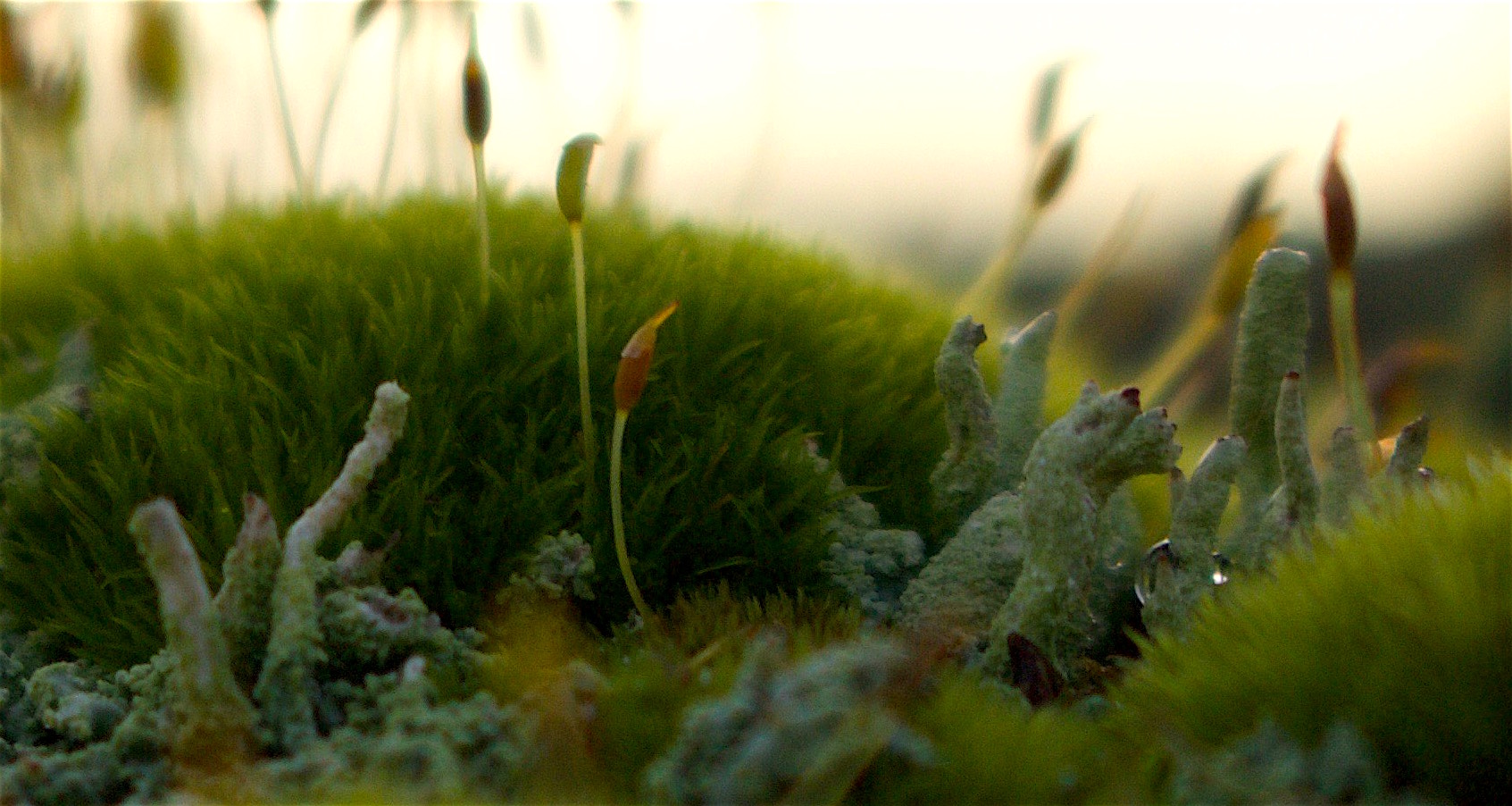
Flowers preach to us if we will hear: The rose saith in the dewy morn: I am most fair; Yet all my loveliness is born Upon a thorn. The poppy saith amid the corn: Let but my scarlet head appear And I am held in scorn; Yet juice of subtle virtue lies Within my cup of curious dyes. The lilies say: Behold how we Preach without words of purity. The violets whisper from the shade Which their own leaves have made: Men scent our fragrance on the air, Yet take no heed Of humble lessons we would read. But not alone the fairest flowers: The merest grass Along the roadside where we pass, Lichen and moss and sturdy weed, Tell of His love who sends the dew, The rain and sunshine too, To nourish one small seed. ~Christina Rossetti fromGoblin Market, The Prince’s Progress, and Other Poems
Some sermons are written bold with color, illustrated with powerful gospel stories of righteousness and redemption in the face of our sin.
Some sermon passages are fragrant with the scent of grace and forgiveness, lingering long after the words are spoken.
Some sermon stories remain subtle and hidden, cryptic messages like the blooms that grow close to the ground, barely visible.
We need to hear them all preached, but most of all we need those every day plain-to-the-bone sermons which are trampled and tread upon, springing back up to guide our feet to the best pathway home. No color, no fragrance, no hiding: just celebrating the ubiquitous lichens, mosses and grasses and weeds which exist solely to help cushion our inevitable fall and help us rise up again.
Life has loveliness to sell, All beautiful and splendid things, Blue waves whitened on a cliff, Soaring fire that sways and sings, And children’s faces looking up Holding wonder like a cup.
Life has loveliness to sell, Music like a curve of gold, Scent of pine trees in the rain, Eyes that love you, arms that hold, And for your spirit’s still delight, Holy thoughts that star the night.
Spend all you have for loveliness, Buy it and never count the cost; For one white singing hour of peace Count many a year of strife well lost, And for a breath of ecstasy Give all you have been, or could be. ~Sara Teasdale “Barter”
photo by Nate Gibson
Some days I wish to keep hold forever: when the light is just right in the trees, the breezes fill with blossom fragrance, the congregation sings with joy as I play accompaniment, a smiling child climbs up on my lap just because, a meal is enjoyed by all who join together.
I know I barter for these moments by giving up some piece of me, knowing the sowing of self will reap the rich harvest of an overflowing heart.
Jesus said to them, “Come and have breakfast.” None of the disciples dared ask him, “Who are you?” They knew it was the Lord. John 21:12
It’s so easy to look and see what we pass through in this world, but we don’t. If you’re like me, you see so little. You see what you expect to see rather than what’s there. ~Frederick Buechner from The Remarkable Ordinary
It is too easy by the next day to let go of Easter — to slide back into the Monday routine, managing our best to survive each day, teeth gritted, as we have before.
We were blind, thinking Him the Gardener as He passed by; we just don’t pay attention to Who is right before us, tending us.
God knows this about us. So He meets us for breakfast on Monday and every day thereafter and feeds us, a tangible and meaningful act of nourishing us in our most basic human needs though we’ve done nothing to deserve the gift. He cooks up fish on a beach at dawn and invites us to join Him though we have done nothing to deserve it.
The night before he shared a meal and broke bread in Emmaus to open the eyes and hearts of the blinded.
It is time to open our eyes, our minds, our hearts to Who this really is. This is no mere Gardener.
When He offers me a meal of His Word, I will accept it with open eyes of gratitude, knowing the gift He hands me is nothing less than Himself.
Deep in the grip of the midwinter cold The stars glitter and sparkle. All are asleep on this lonely farm, Deep in the winter night. The pale white moon is a wanderer, snow gleams white on pine and fir, snow gleams white on the roofs. Only tomten is awake.
Rubs his hand through his beard and hair, Shakes his head and his cap. Turns at his own command, Turns to the task at hand. He must appreciate what life he’s got By finding ways to tie time’s knot.
The ponies dream on in the cold moon’s light, Summer dreams in each stall. And free of harness and whip and rein, Tomten starts to twist and twirl each mane While the manger they drowse over Brims with fragrant clover.
Still is the forest and all the land, Locked in this wintry year. Only the distant waterfall Whispers and sighs in his ear. The tomten listens and, half in dream, Thinks that he hears Time’s endless stream, And wonders, how can its knots be bound? Where will its eternal source to be found? ~adapted from “Tomten” by Viktor Rydberg
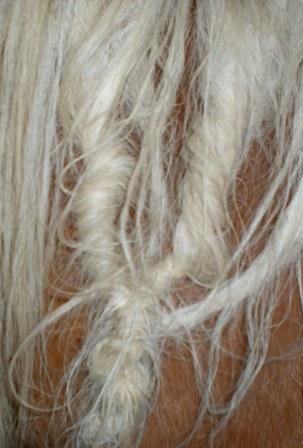
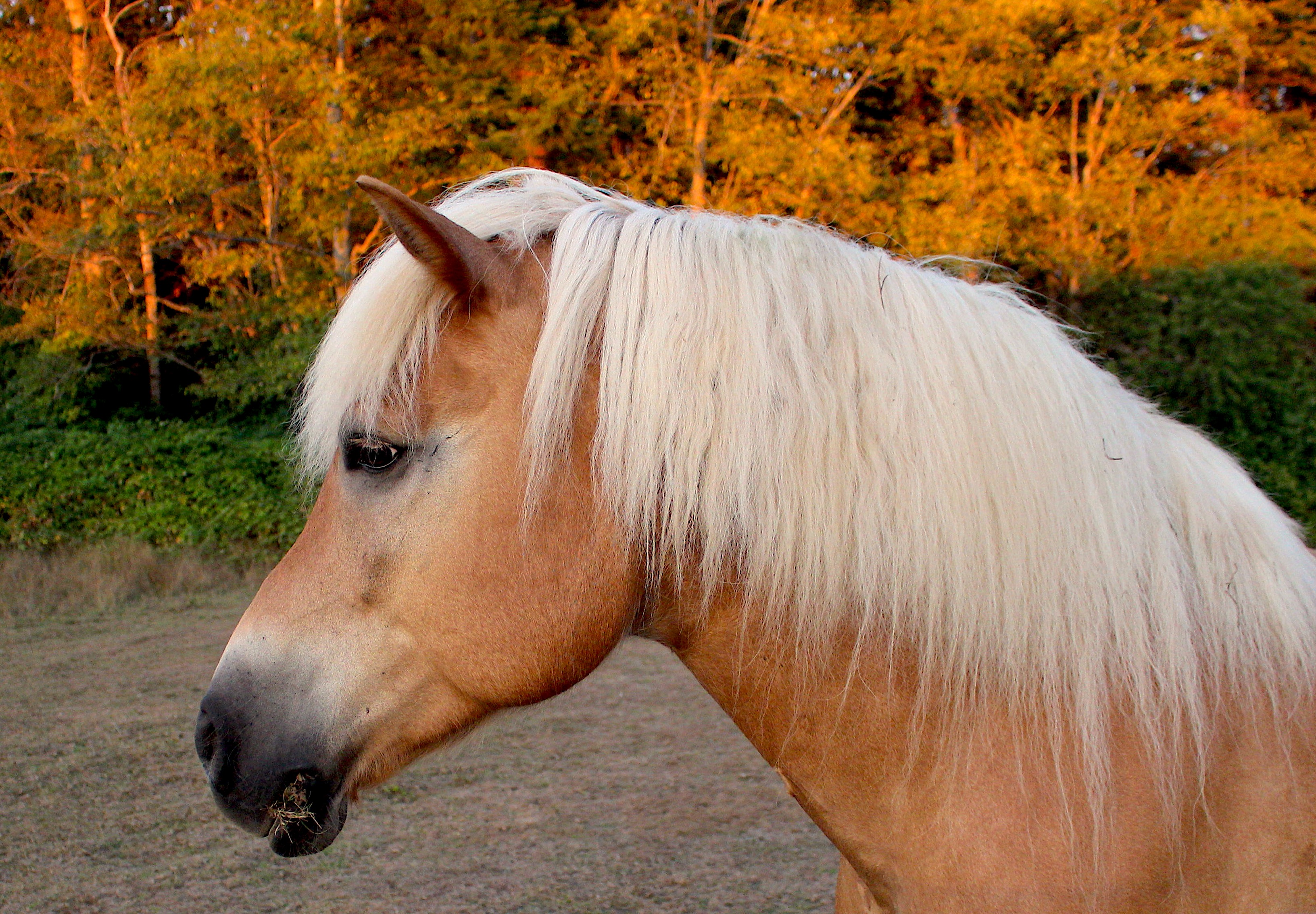
It is hard to say exactly when the first one moved in. This farm was distinctly gnome-less when we bought it, largely due to twenty-seven hungry barn cats residing here at the time, in various stages of pregnancy, growth, development and aging. It took awhile for the feline numbers to whittle down to an equilibrium that matched the rodent population. In the mean time, our horse numbers increased from three to seven to over fifteen with a resultant exponential increase in barn chores. One winter twenty years ago, I was surprised to walk in the barn one morning to find numerous complex knots tied in the Haflingers’ manes. Puzzling as I took precious time to undo them, (literally adding hours to my chores), I knew I needed to find the cause or culprit.
It took some research to determine the probable origin of these tight tangles. Based on everything I read, they appeared to be the work of Gernumbli faenilesi, a usually transient species of gnome called “tomtens” preferring to live in barns and haylofts in close proximity to heavy maned ponies. In this case, as the tangles persisted for months, they clearly had moved in, lock, stock and barrel. The complicated knots were their signature pride and joy, their artistic way of showing their devotion to a happy farm and trying to slow down time so they can stay in residence eternally.
All well and good, but the extra work was killing my fingers and thinning my horses’ hair. I plotted ways to get them to cease and desist.
I set live traps of cheese and peanut butter cracker sandwiches, hoping to lure them into cages for a “catch and release”. Hoping to drive them away, I played polka music on the radio in the barn at night. Hoping to be preemptive, I braided the manes up to be less tempting but even those got twisted and jumbled. Just as I was becoming ever more desperate and about to bring in more feral cats, the tangling stopped.
It appeared the tomtens had moved on to a more hospitable habitat. I had succeeded in my gnome eradication plan. Or so I thought.
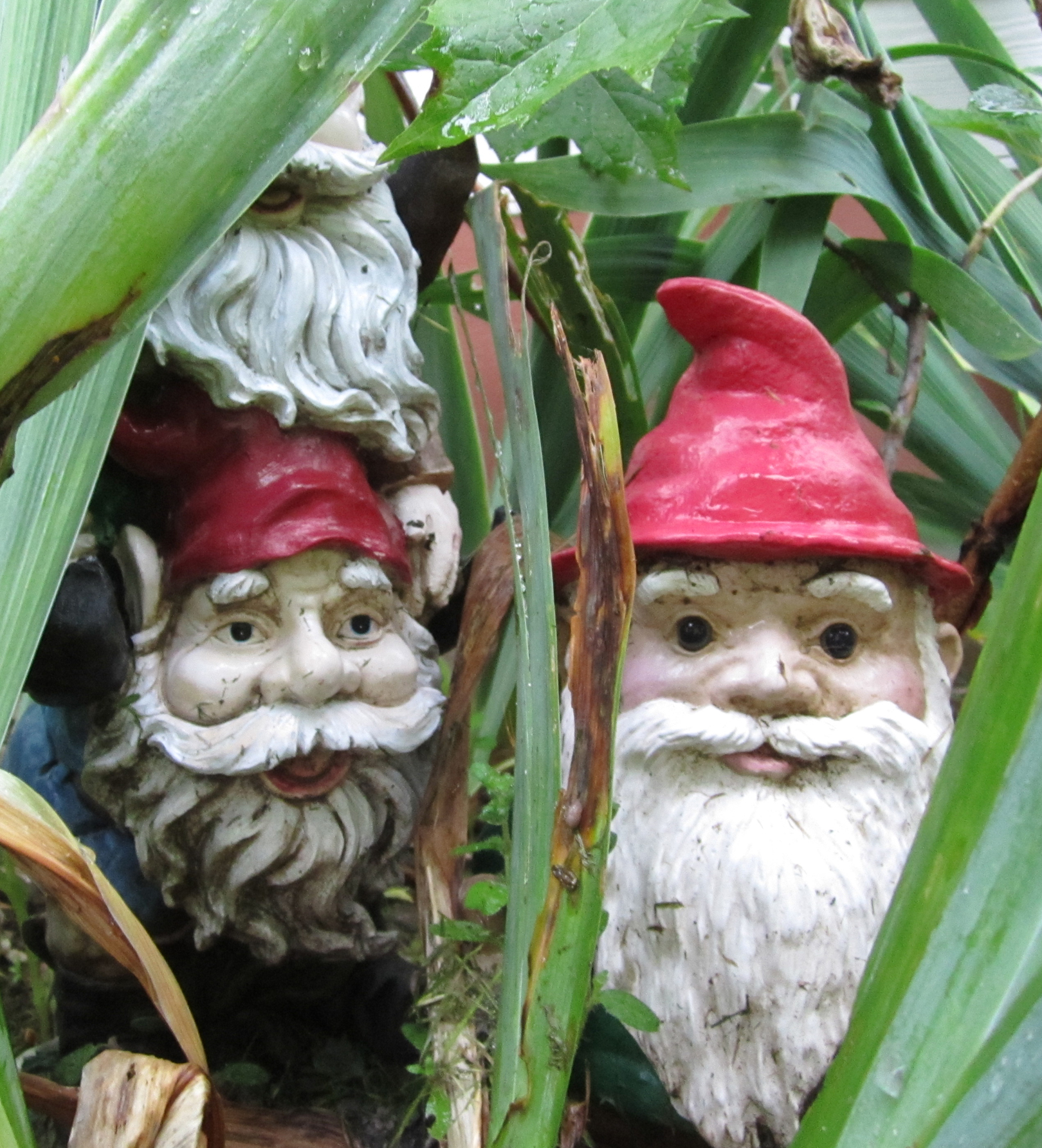
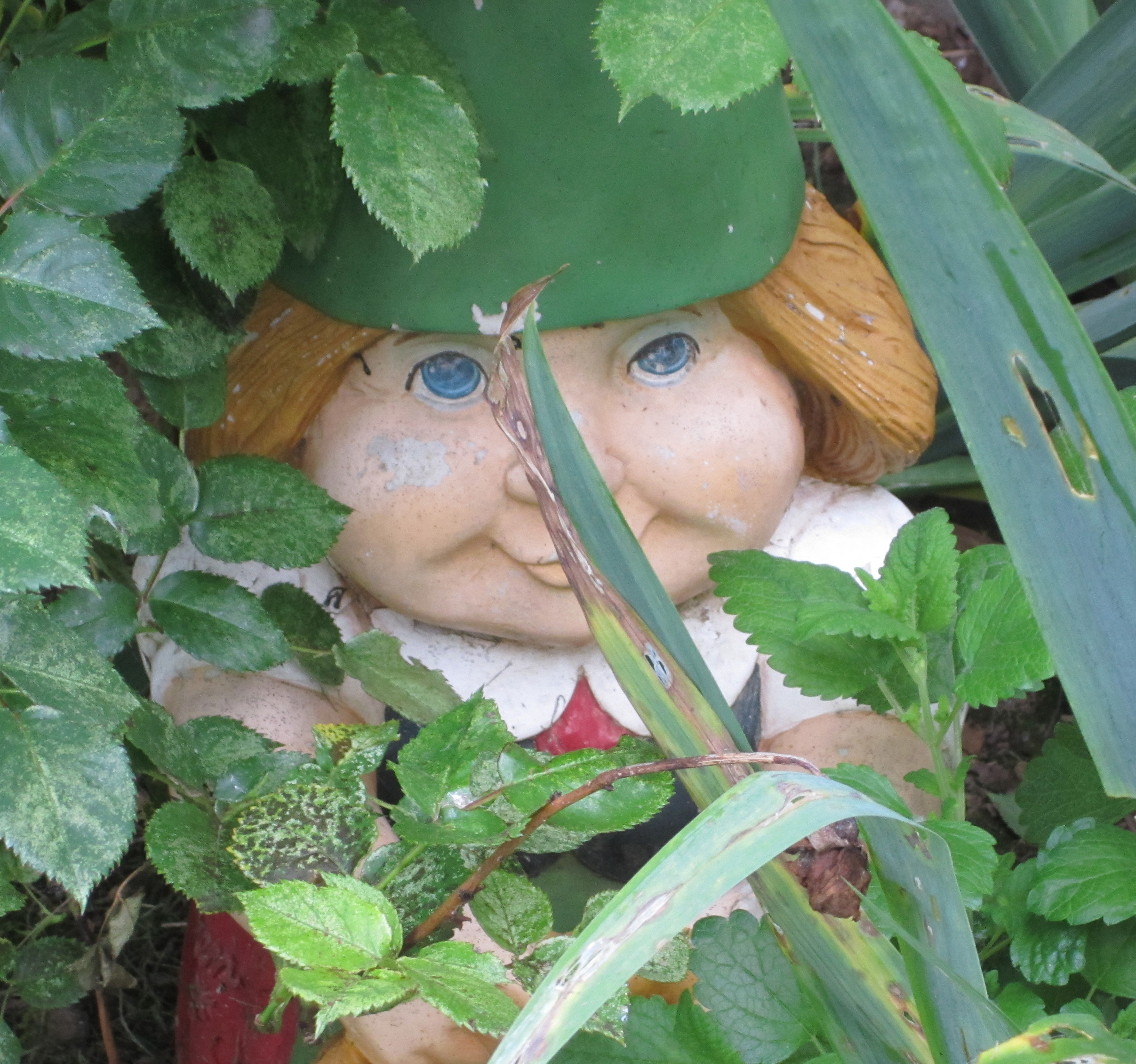
Not long after, I had the distinct feeling of being watched as I walked past some rose bushes in the yard. I stopped to take a look, expecting to spy the shining eyes of one of the pesky raccoons that frequents our yard to steal from the cats’ food dish. Instead, beneath the thorny foliage, I saw two round blue eyes peering at me serenely. This little gal was not at all intimidated by me, and made no move to escape. She was an ideal example of Gernumbli gardensi, a garden gnome known for their ability to keep varmints and vermin away from plants and flowers. They also happen to actively feud with Gernumbli Faenilesi so that explained the sudden disappearance of my little knot-tying pests in the barn.
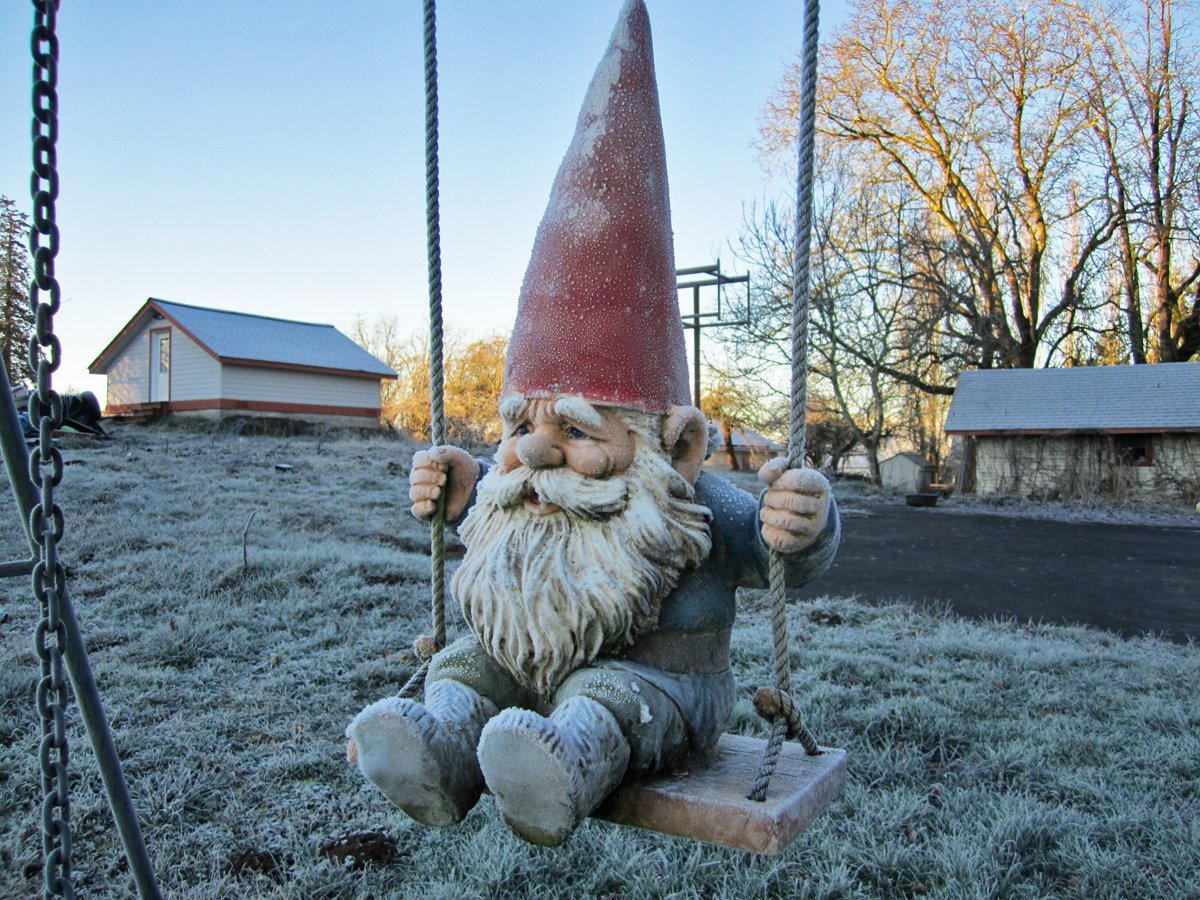
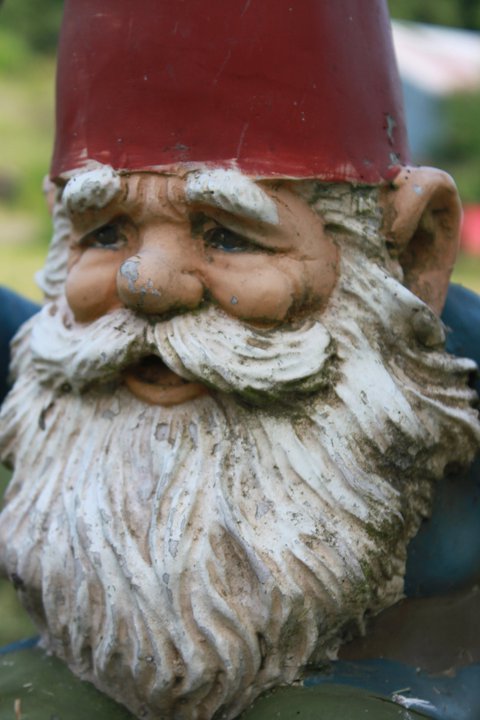
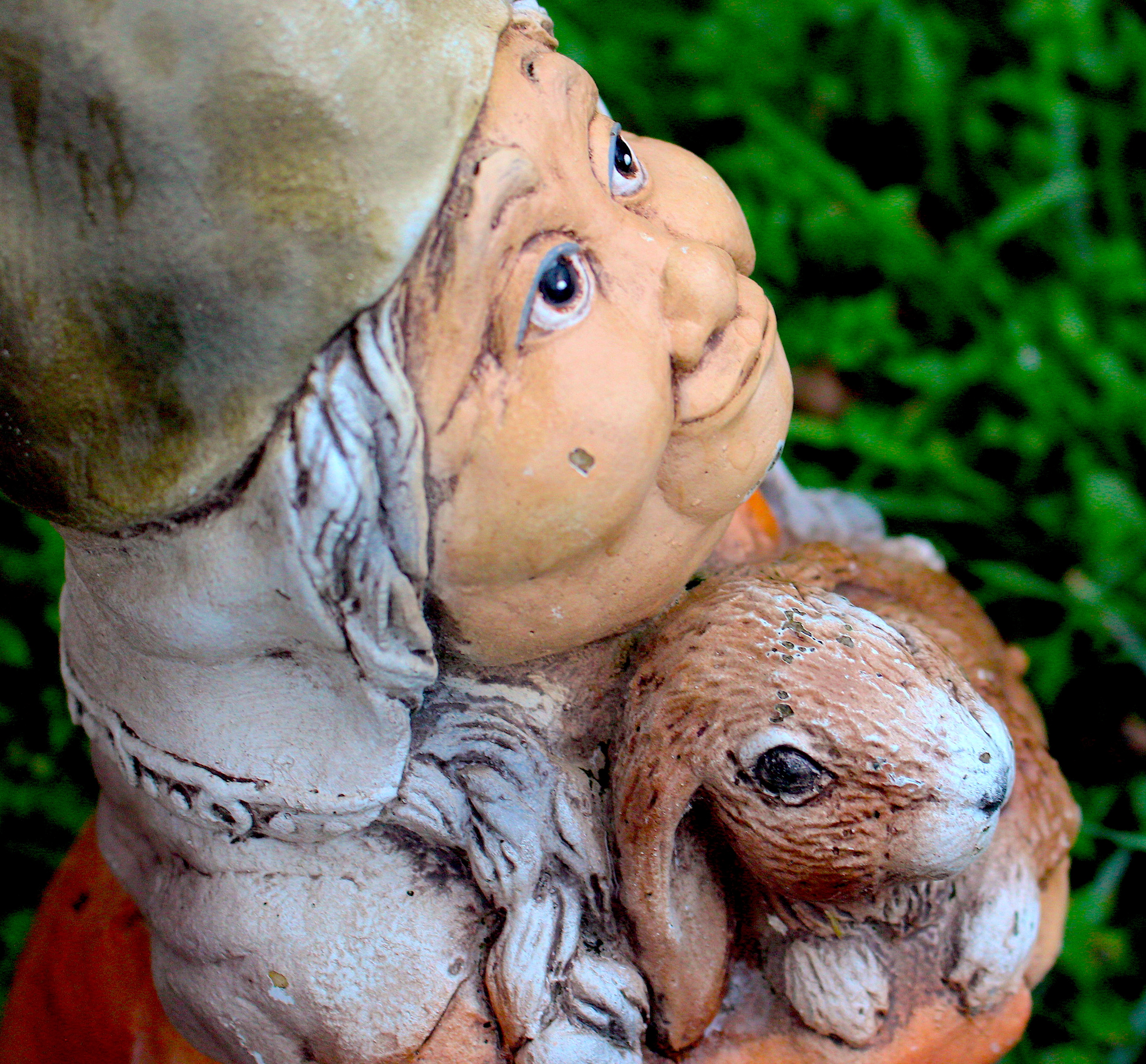
It wasn’t long before more Gardensi moved in, a gnomey infestation. They tended to arrive in pairs and bunches, liked to play music, smoked pipes, played on a teeter totter, worked with garden tools, took naps on sun-warmed rocks and one even preferred a swing. They are a bit of a rowdy bunch but I enjoy their happy presence and jovial demeanor.
As long as they continue to coexist peaceably with us and each other, keep the varmints and their knot tying cousins away, and avoid bad habits and swear words, I’m quite happy they are here. Actually, I’ve given them the run of the place. I’ve been told to be cautious as there are now news reports of an even more invasive species of gnome, Gernumbli kitschsi, that could move in and take over if I’m not careful.
I shudder to think. One has to consider the neighborhood.
She lingered in that charming little garden to say hello to the gnomes, such a glorious infestation! How few wizards realize just how much we can learn from the wise little gnomes-or, to give them their correct names, the Gernumbli gardensi. ‘Ours do know a lot of excellent swear words,’ said Ron… ~J.K. Rowling in Harry Potter and the Deathly Hallows
I have a small grain of hope–
one small crystal that gleams
clear colors out of transparency.
I need more.
I break off a fragment to send you.
Please take this grain of a grain of hope so that mine won’t shrink.
Please share your fragment so that yours will grow.
Only so, by division, will hope increase,
like a clump of irises, which will cease to flower
unless you distribute
the clustered roots, unlikely source–
clumsy and earth-covered–
of grace.
~Denise Levertov “For the New Year, 1981”
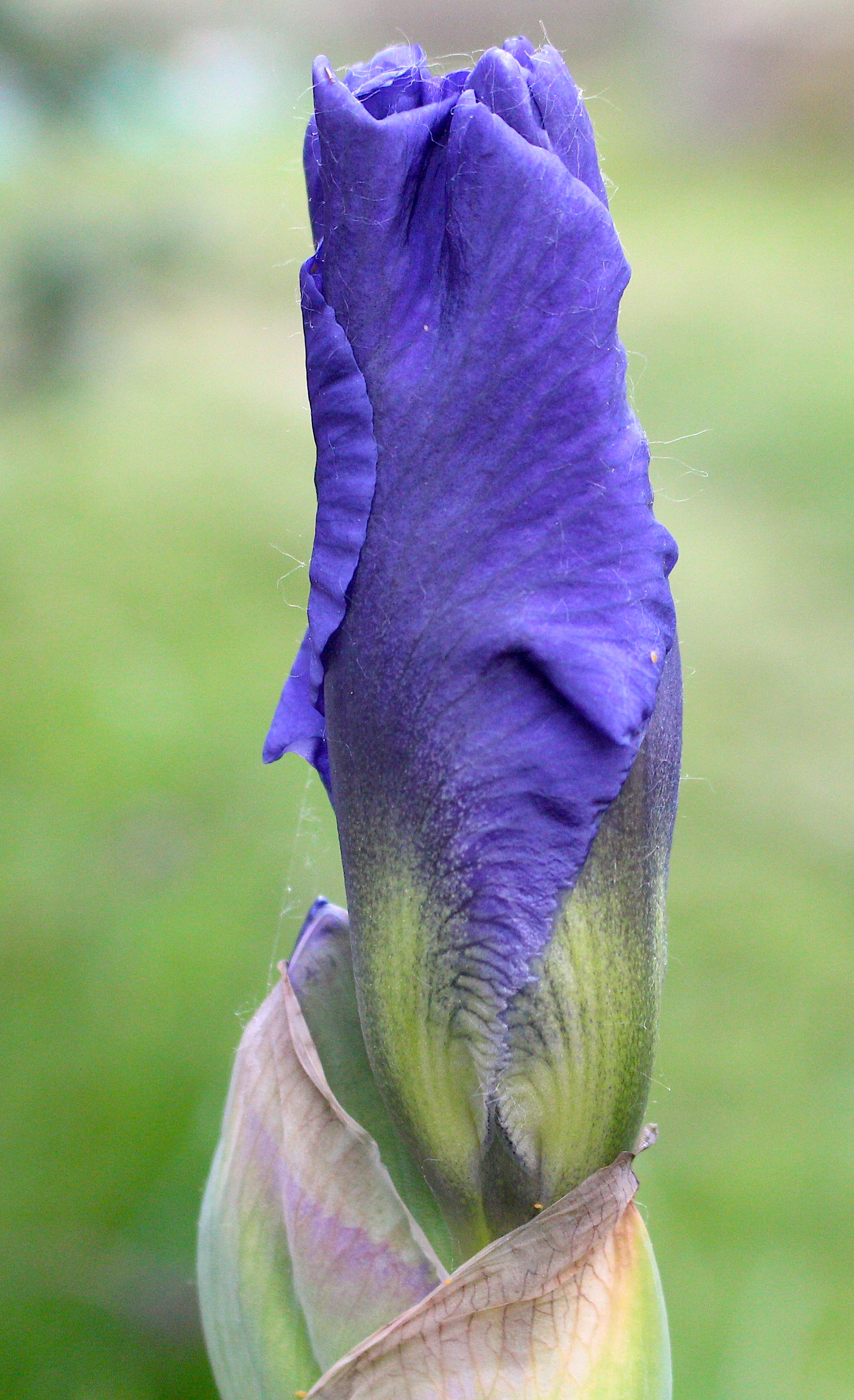
One autumn years ago, my sister-in-law brought several paper bags full of iris roots resting solemnly in earth-covered clumps: dirt–dry misshaped feet and fingers crippled with potential. Her garden had become overcrowded and for her iris to continue to thrive, she needed to divide and share the roots.
We were late getting them into the ground but their clustered grace rose up forgiving us our clumsiness. They took hold and transformed our little courtyard into a Van Gogh landscape.
These iris will continue to gladden our hearts until we too must divide them to pass on their gift of beauty to another garden. This act– “by division, will hope increase”–feels radical yet that is exactly what God did in sending His Son to become earth-covered.
A part of God was broken off to put down roots, grow, thrive and be divided, over and over and over again to increase the beauty and grace for those of us limited to this soil.
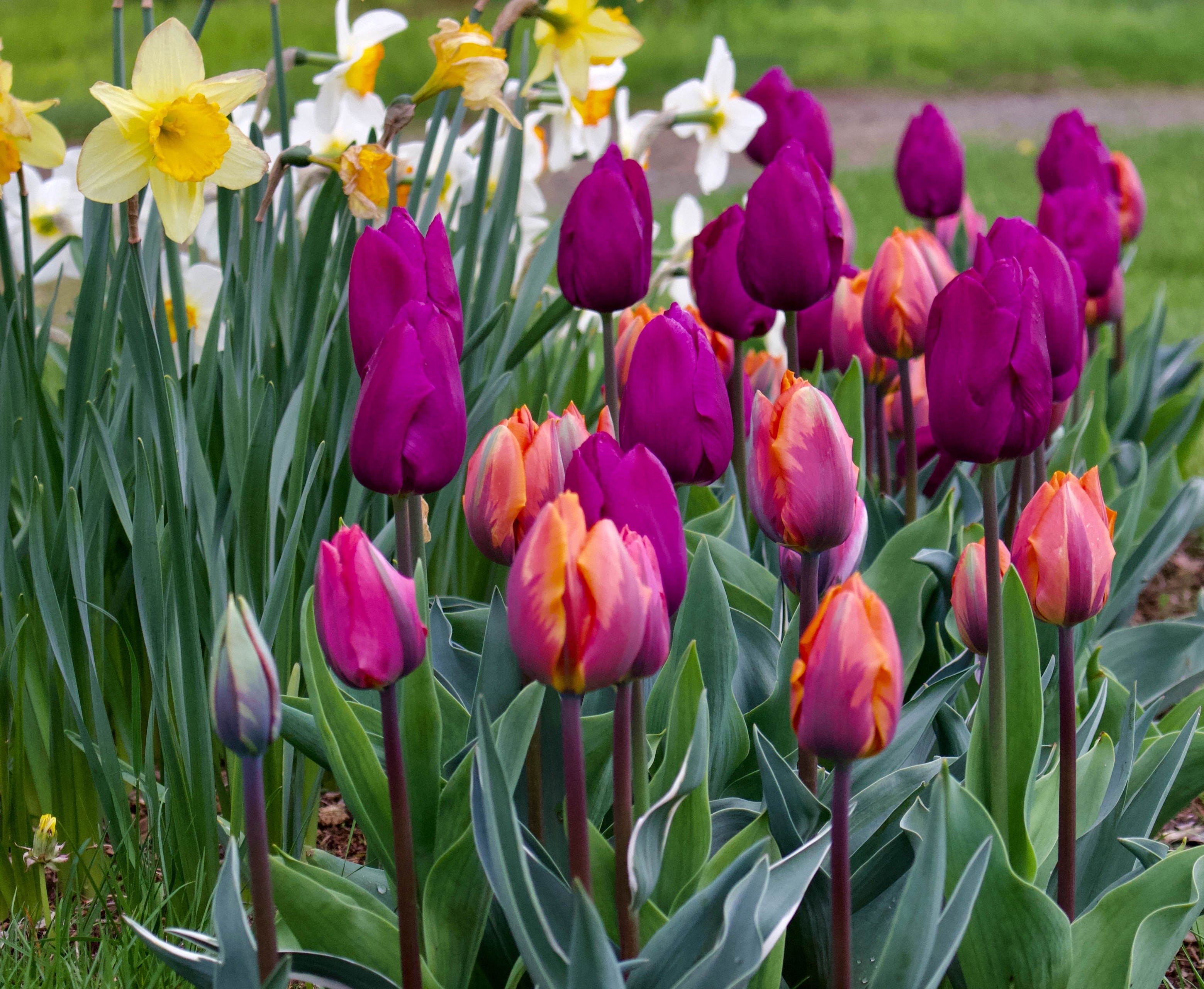
Each spring our garden blooms so all can see and know: hope lives here —
even in the last few hours of an old and tired year
passing haltingly, hesitantly
into something brand new.
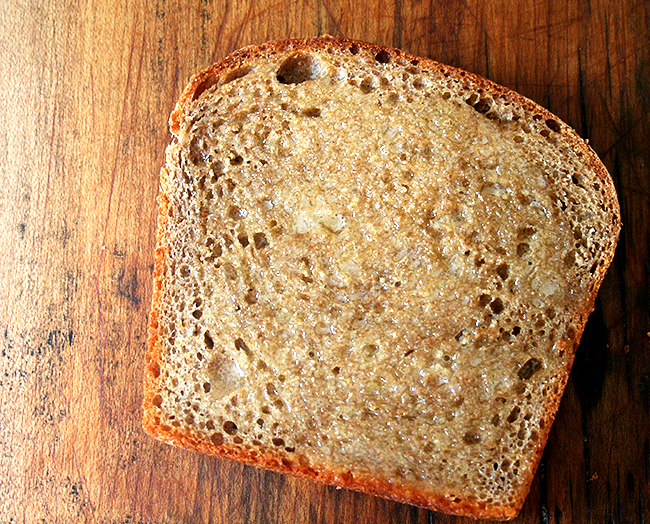
The smell of that buttered toast simply spoke to Toad, and with no uncertain voice;
talked of warm kitchens,
of breakfasts on bright frosty mornings,
of cozy parlour firesides on winter evenings,
when one’s ramble was over and slippered feet were propped on the fender;
of the purring of contented cats,
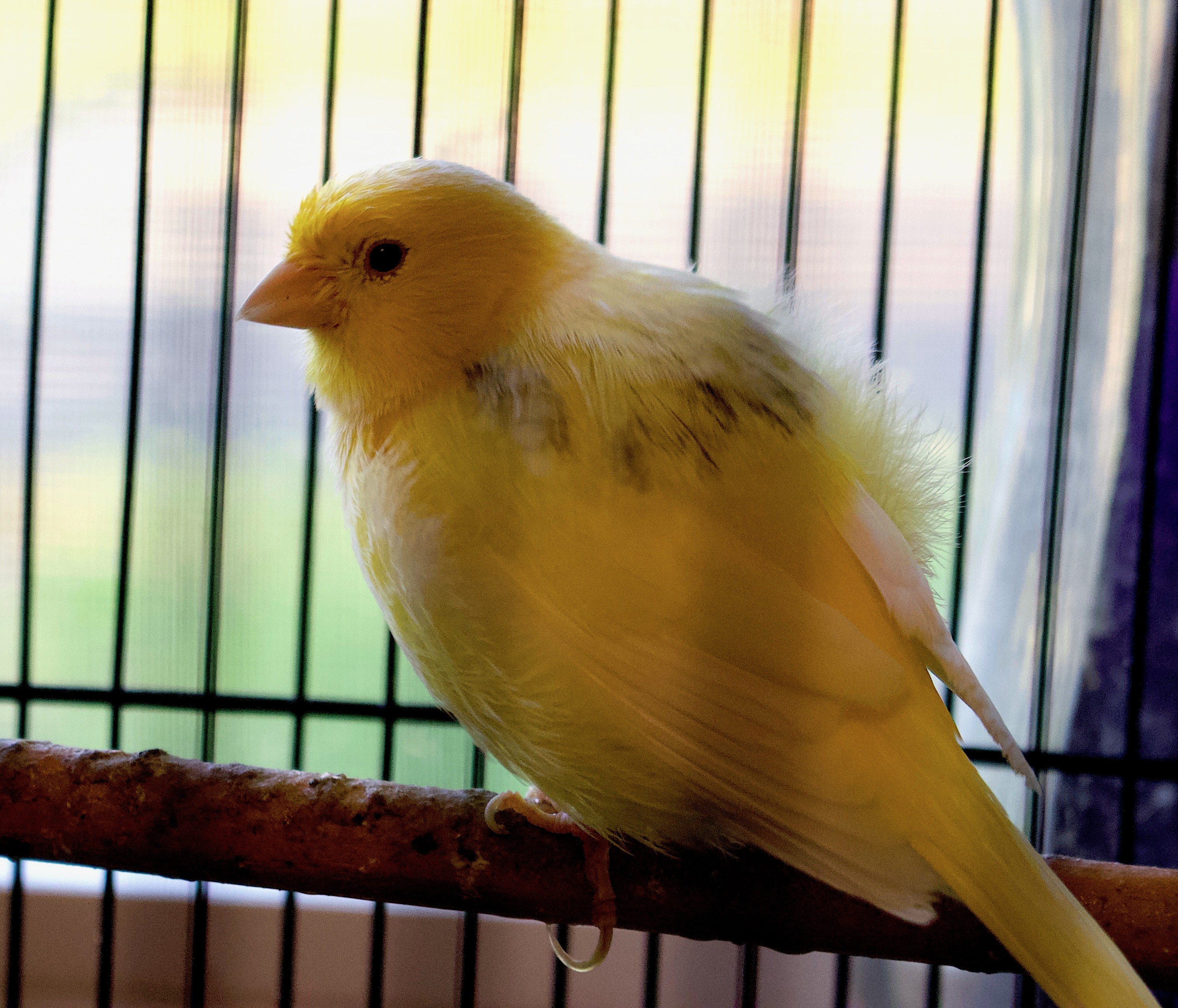
and the twitter of sleepy canaries. ~Kenneth Grahame, The Wind in the Willows
I’m not a practitioner of the ancient art of aromatherapy for medicinal purposes but I do know certain smells transport me more effectively than any other mode of travel. One whiff of a familiar scent can take me back years to another decade and place, almost in time traveling mode. I am so in the moment, both present and past, my brain sees, hears, tastes, feels everything just as it was before.
The most vivid are kitchen smells, to be sure. Cinnamon becomes my Grandma’s farm kitchen full of rising breakfast rolls, roasting turkey is my mother’s chaotic kitchen on Thanksgiving Day, fresh baked bread is my own kitchen during those years I needed to knead as therapy during medical training.
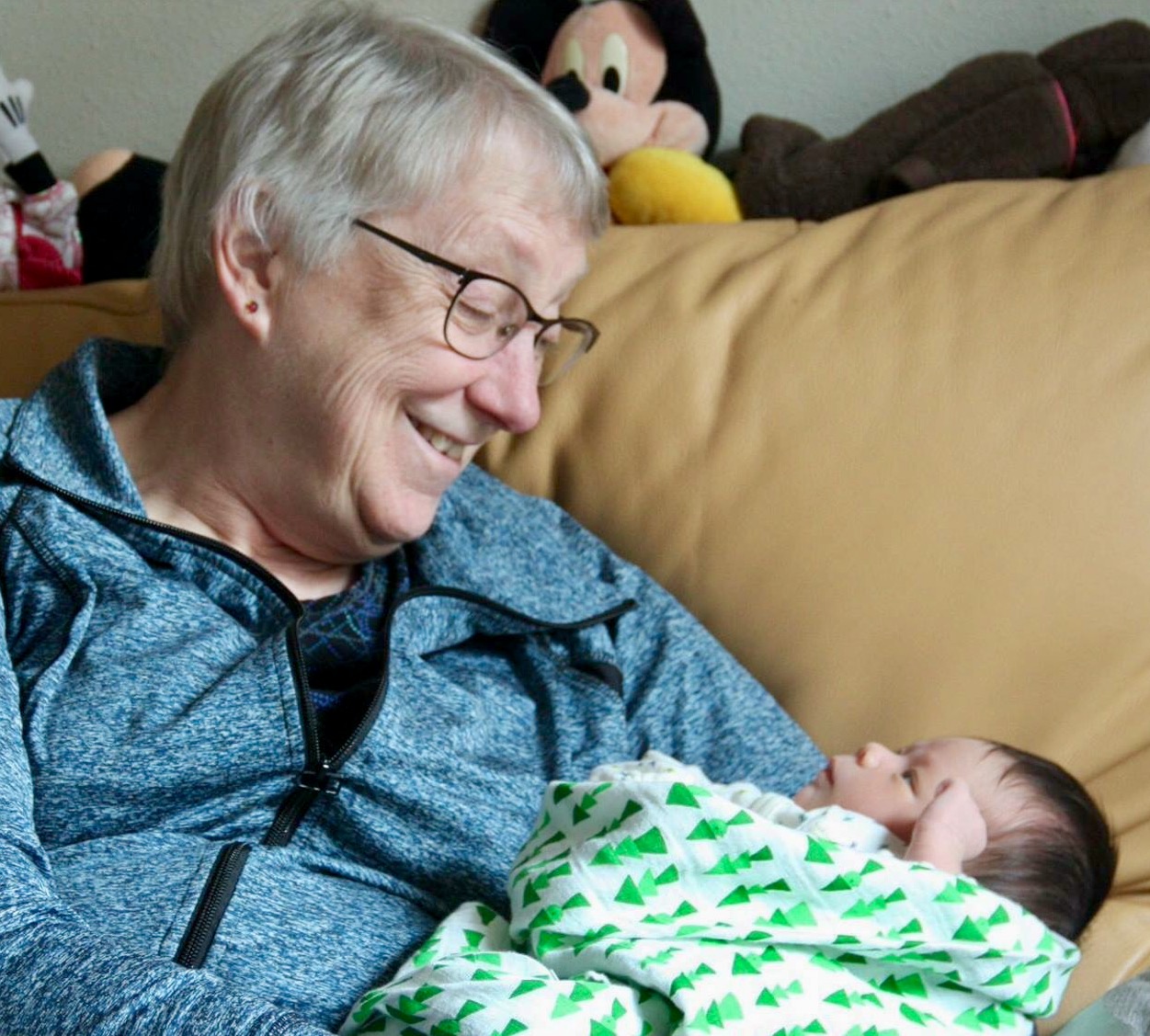
Sometimes I have the privilege of holding infants whose skin smells of baby shampoo and powder, so like the soft velvet of my own childrens’. The newly born wet fur of my foals carries the sweet and sour amnion that was part of every birth I’ve been part of: delivering others and delivering my own. My heart races at the memory of the drama of those first breaths.
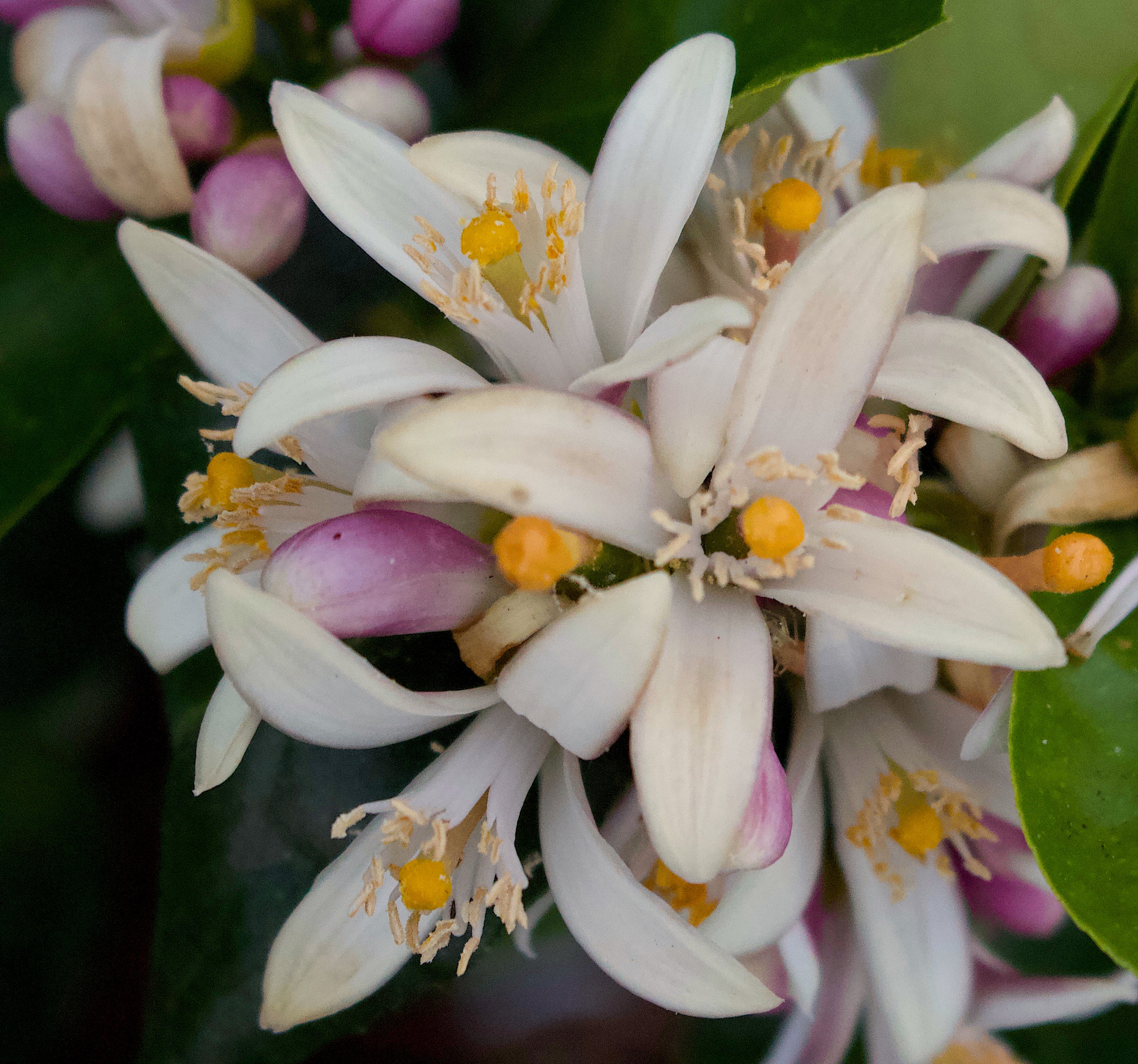
The garden yields its own treasure: tea roses, sweet peas, heliotrope, mint, lemon verbena and lemon blossom take me back to lazy breezes wafting through open bedroom windows in my childhood home. And of course the richness of petrichor: the fragrance of the earth after a long awaited rain will remind me of how things smell after a dry spell.
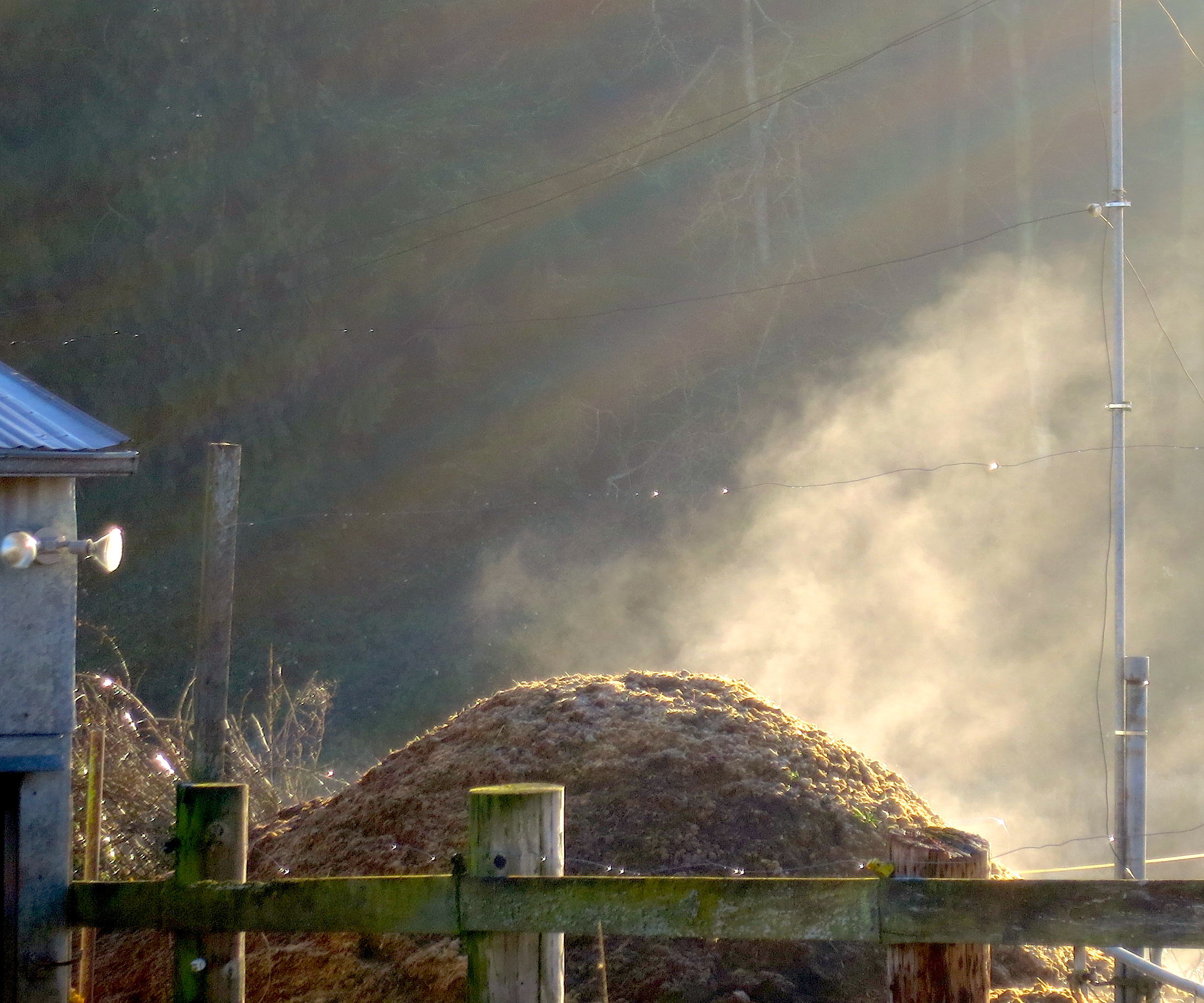
I doubt any aromatherapy kit available includes my most favorite farm smells: newly mown hay, fresh fir shavings for stall bedding, the mustiness of the manure pile, the green sweetness of a horses’ breath.
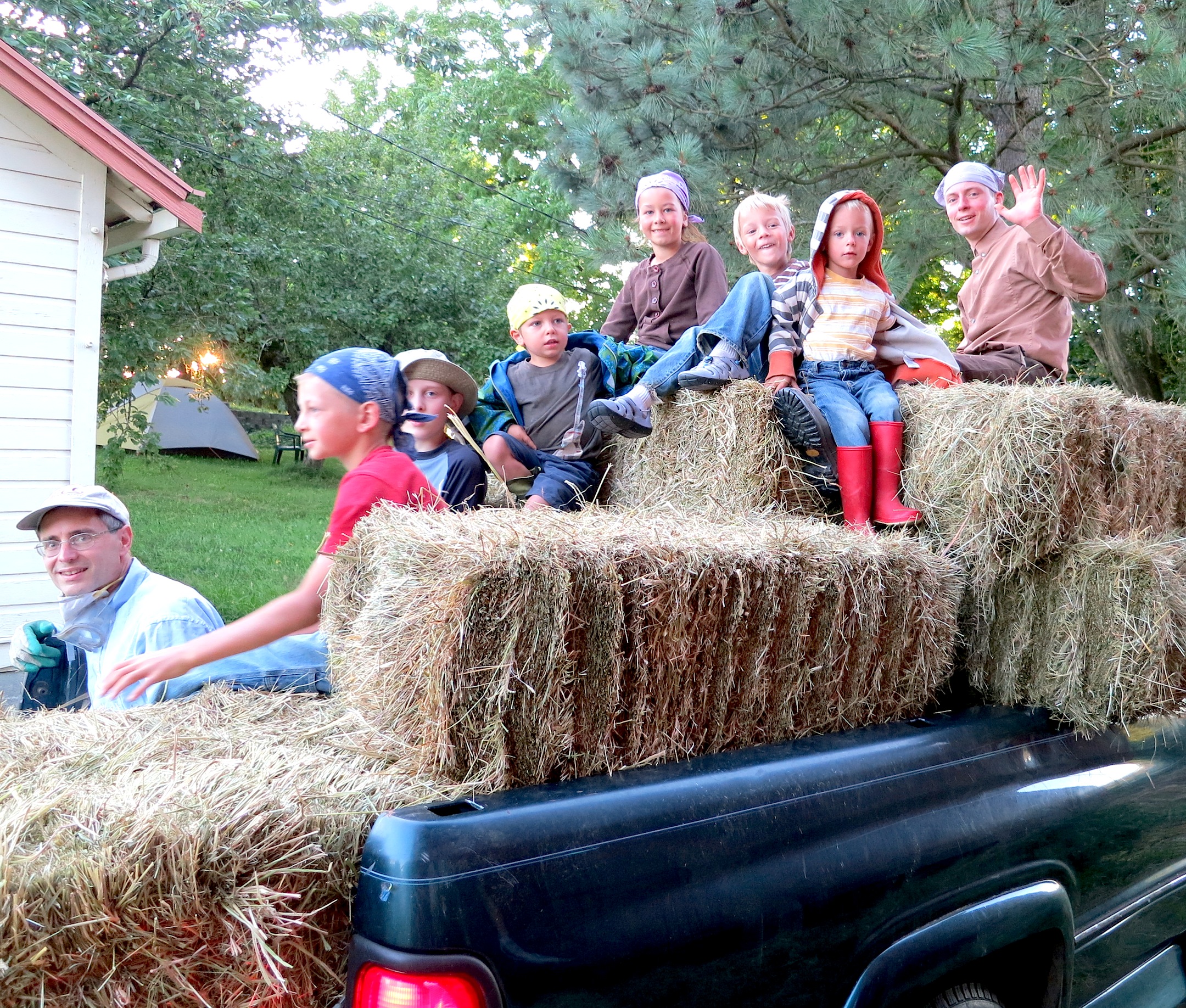
Someday I’ll figure out how to bottle all these up to keep forever. Years from now my rambles will be over, when I’m too feeble to walk to the barn or be part of the hay harvest crew any longer, I can sit by my fireplace, close my eyes, open it up and take a whiff now and then and remind me of all I’m grateful for. It’ll take me back to a day just like today when I cooked in the kitchen, held a friend’s sweet infant, moved hay to the horses and cleaned the barn:
I’ll breathe deeply of the smells that speak to me with no uncertain voice.
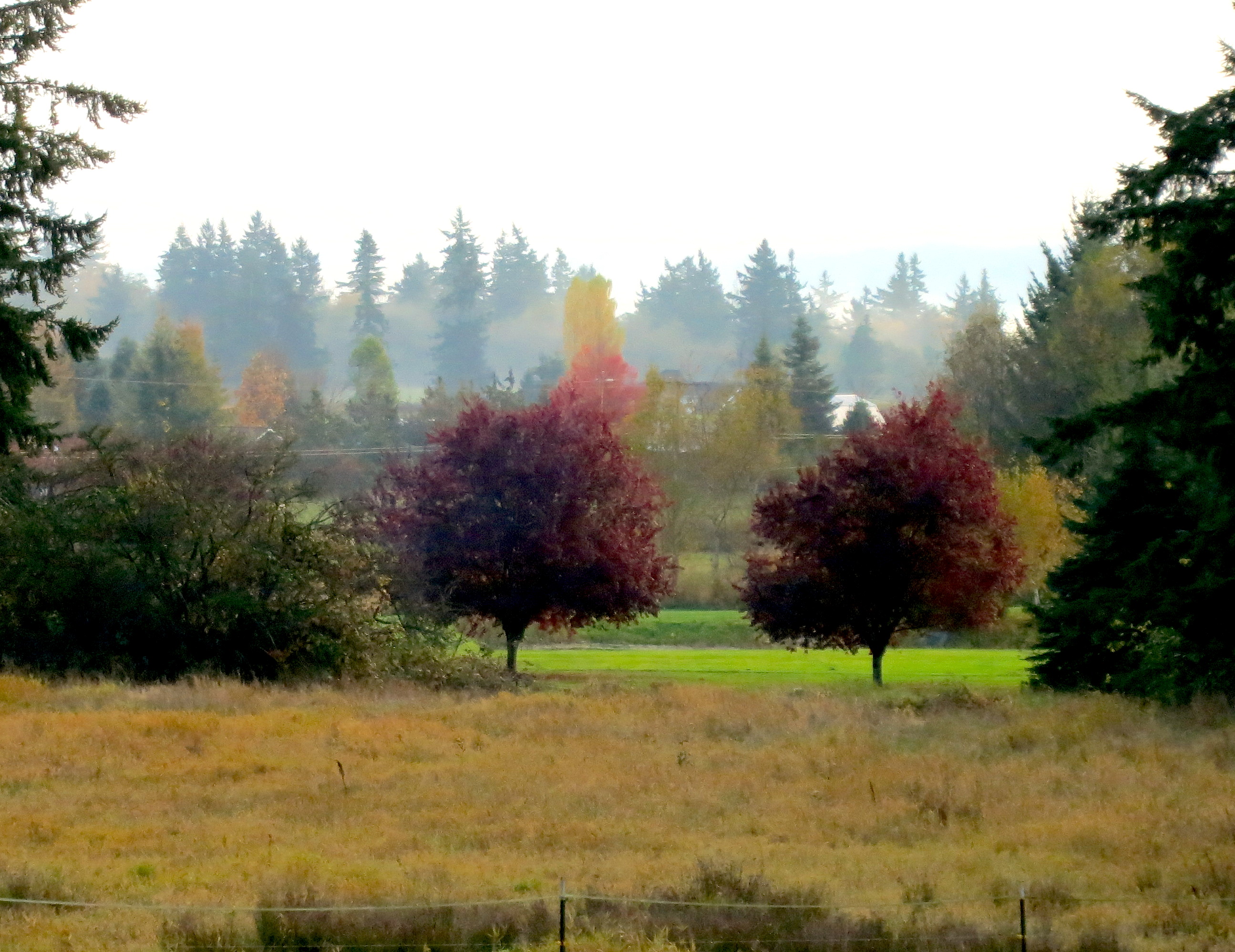
For today, I will memorize the two trees now in end-of-summer light
and the drifts of wood asters as the yard slopes away toward the black pond, blue
dragonflies in the clouds that shine and float there, as if risen
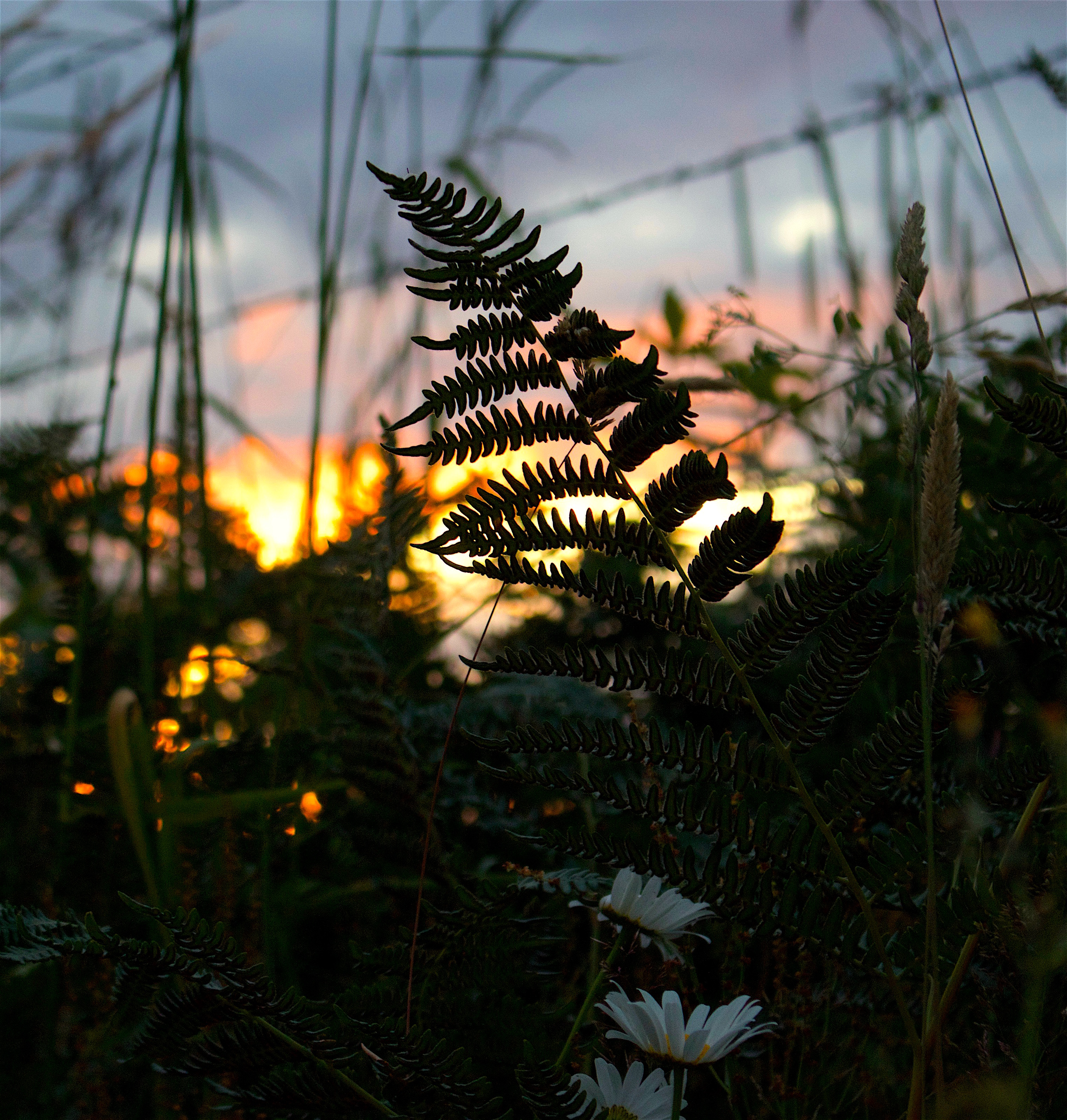
from the bottom, unbidden. Now, just over the fern— quick—a glimpse of it,
the plume, a fox-tail’s copper, as the dog runs in ovals and eights, chasing scent.
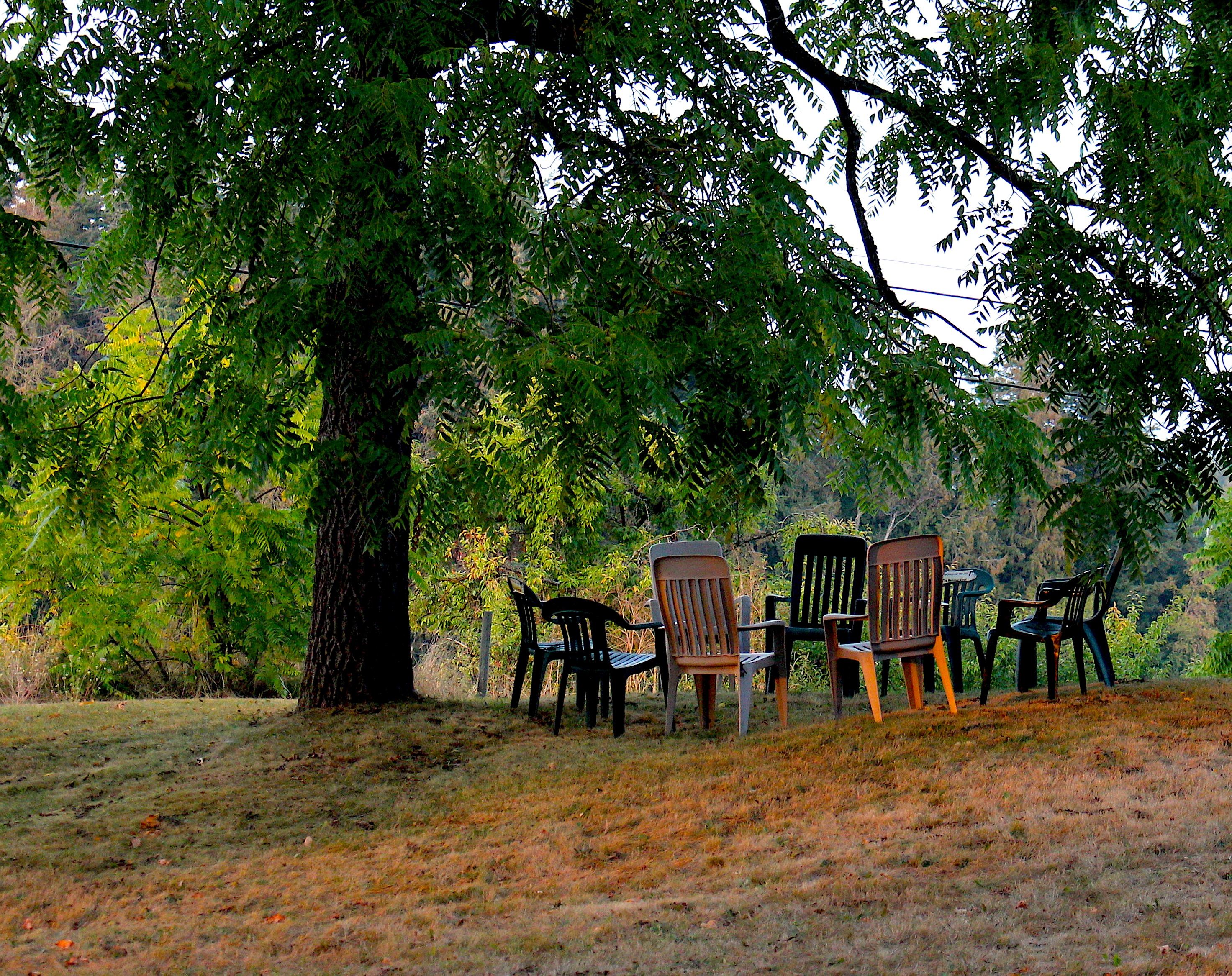
The yard is a waiting room. I have my chair. You, yours.
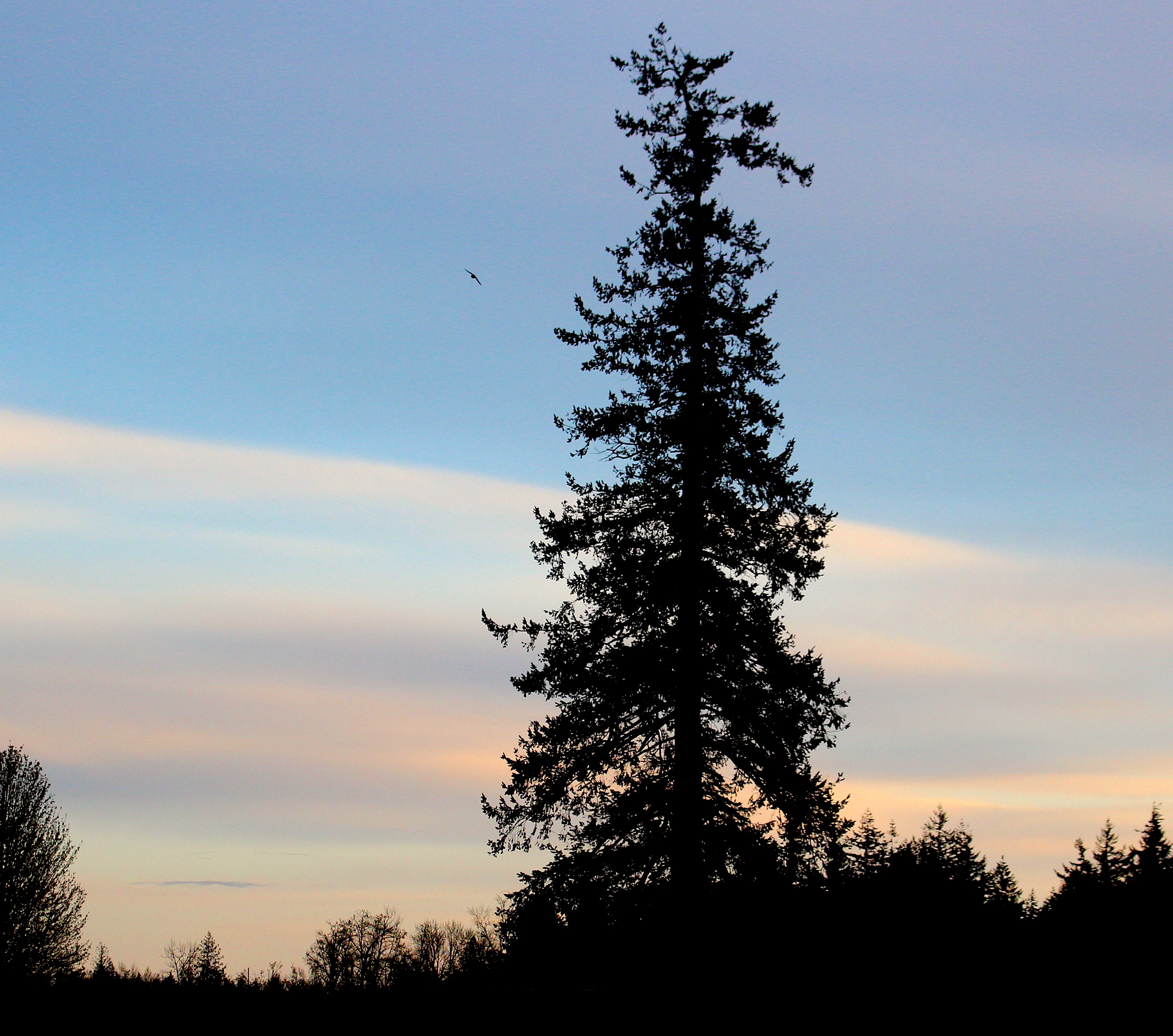
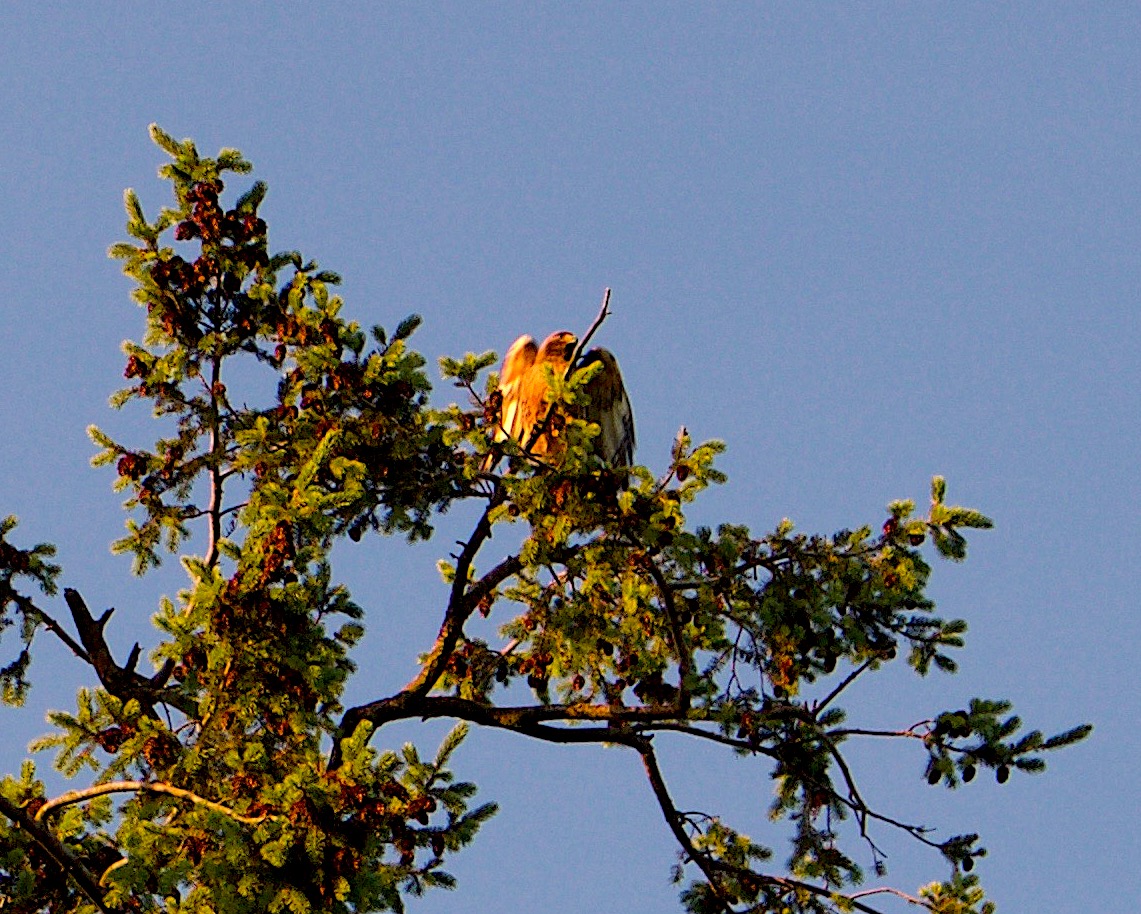
The hawk has its branch in the pine.
White petals ripple in the quiet light. ~Margaret Gibson from “Solitudes”
I want to memorize it all before it changes:
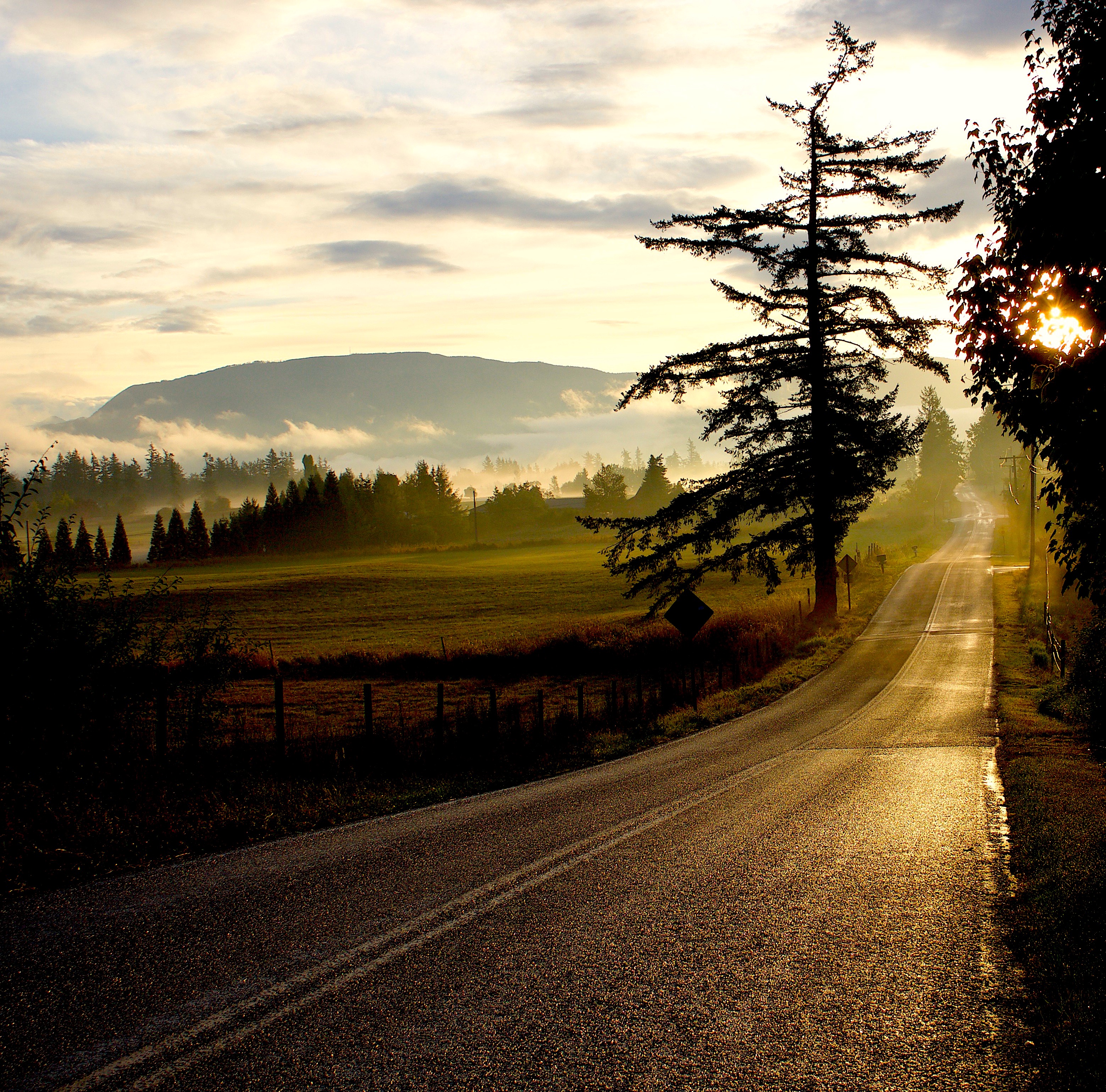
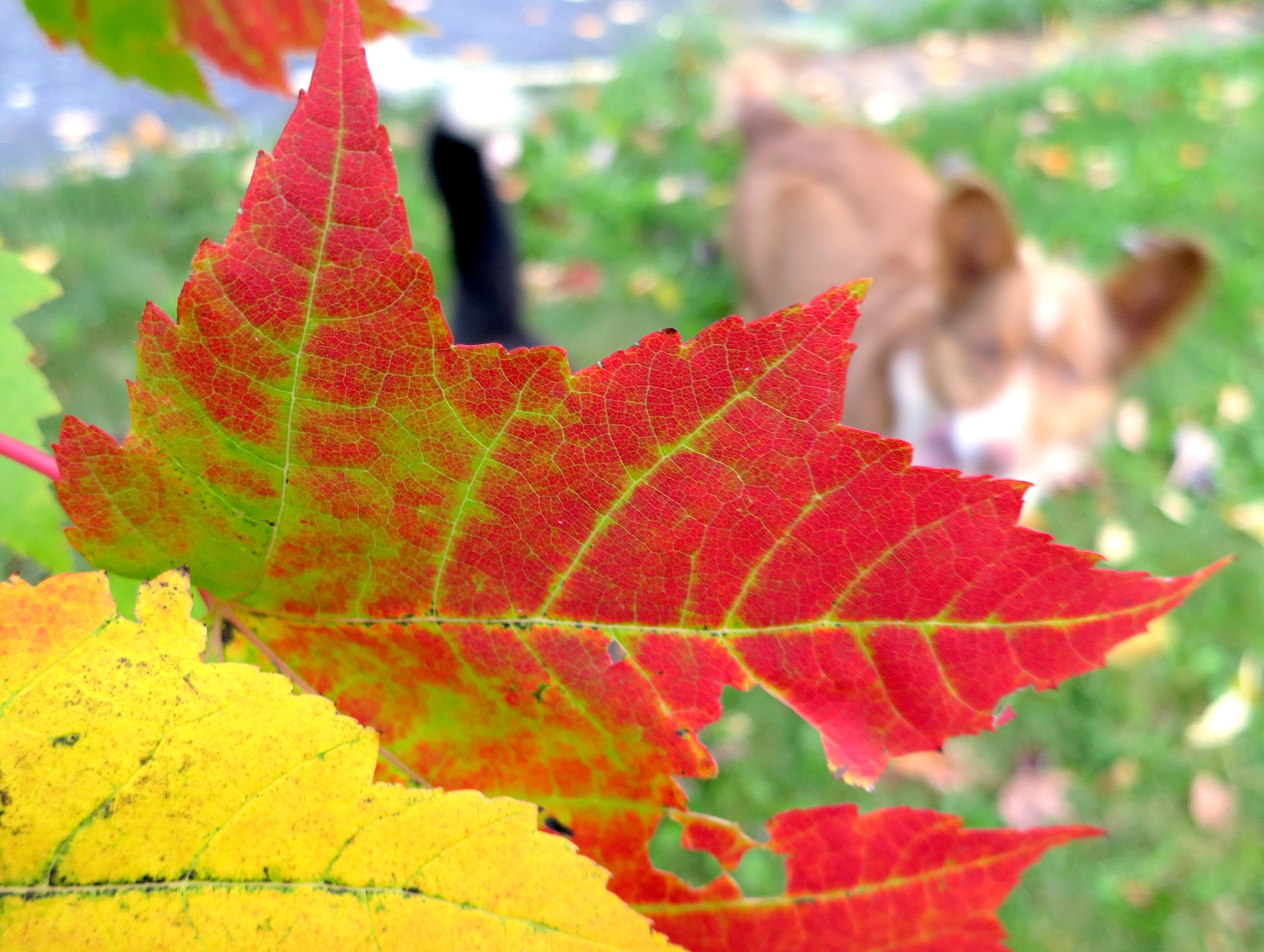
the shift of sun from north to south
balances on our east- west road at equinox.
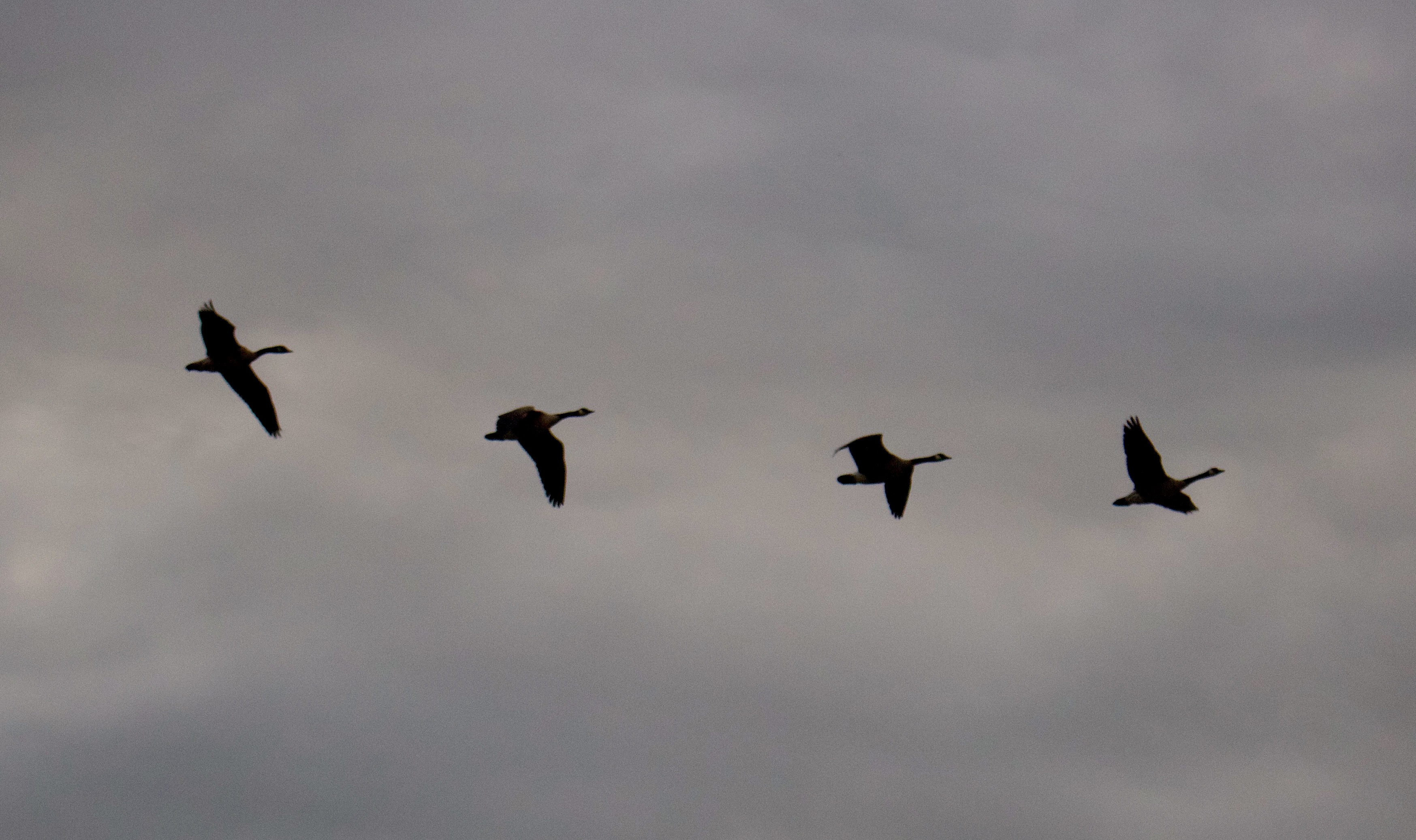
The flow of geese overhead, honking and waving farewell,
hawks’ screams in the firs,
dragonflies trapped in the barn light fixtures
several generations of coyotes hollering at dusk.
The koi pond quiets with cooler nights,
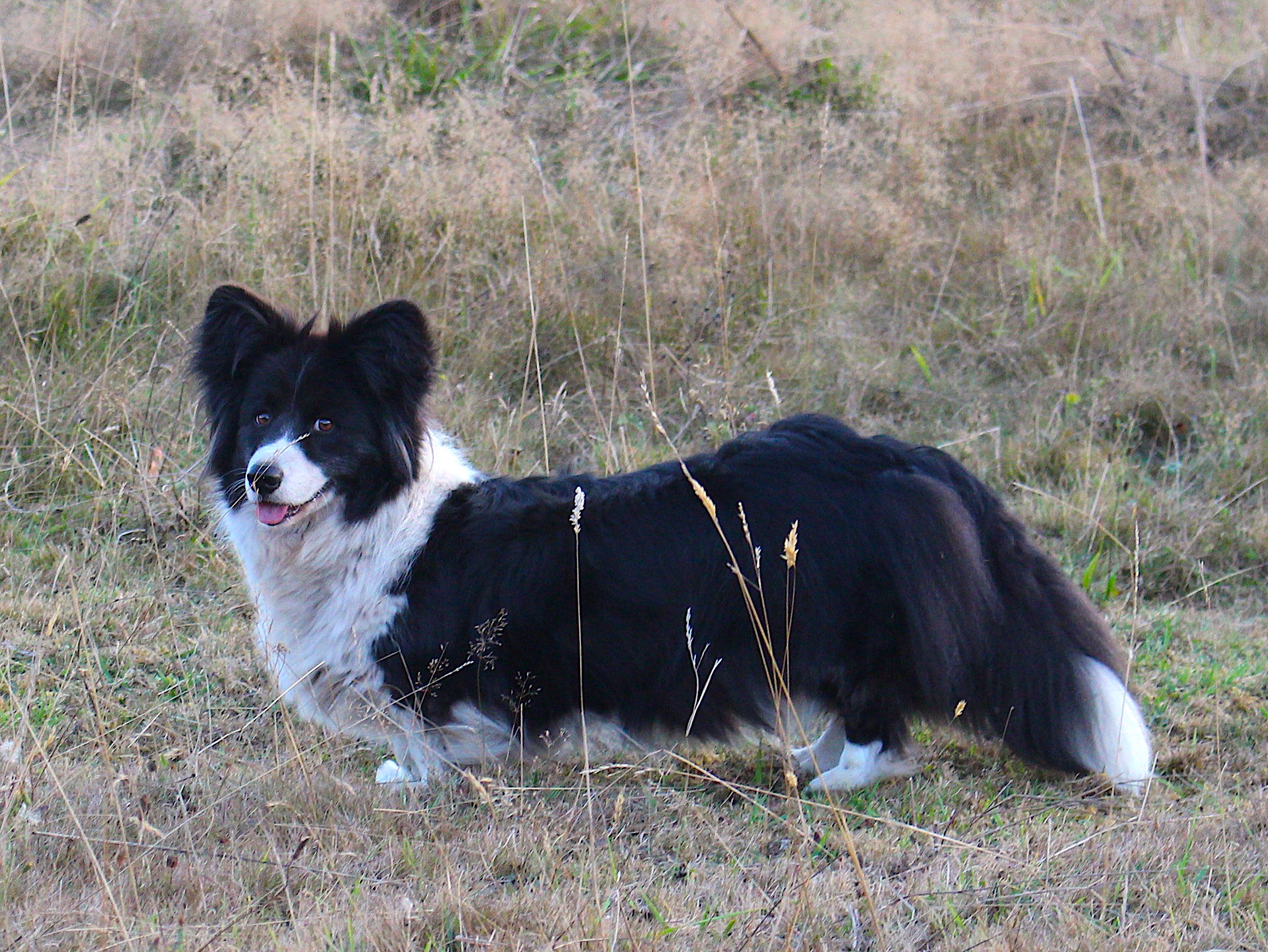
hair thickens on horses, cats and dogs,
dying back of the garden vines to reveal what lies unharvested beneath.
We part again, Summer –
your gifts were endless
until you ended.
I sit silenced and brooding, waiting for what comes next.
Well I know now the feel of dirt under the nails, I know now the rhythm of furrowed ground under foot, I have learned the sounds to listen for in the dusk, the dawning and the noon.
I have held cornfields in the palm of my hand, I have let the swaying wheat and rye run through my fingers, I have learned when to be glad for sunlight and for sudden thaw and for rain.
I know now what weariness is when the mind stops and night is a dark blanket of peace and forgetting and the morning breaks to the same ritual and the same demands and the silence. ~Jane Tyson Clement from No One Can Stem the Tide
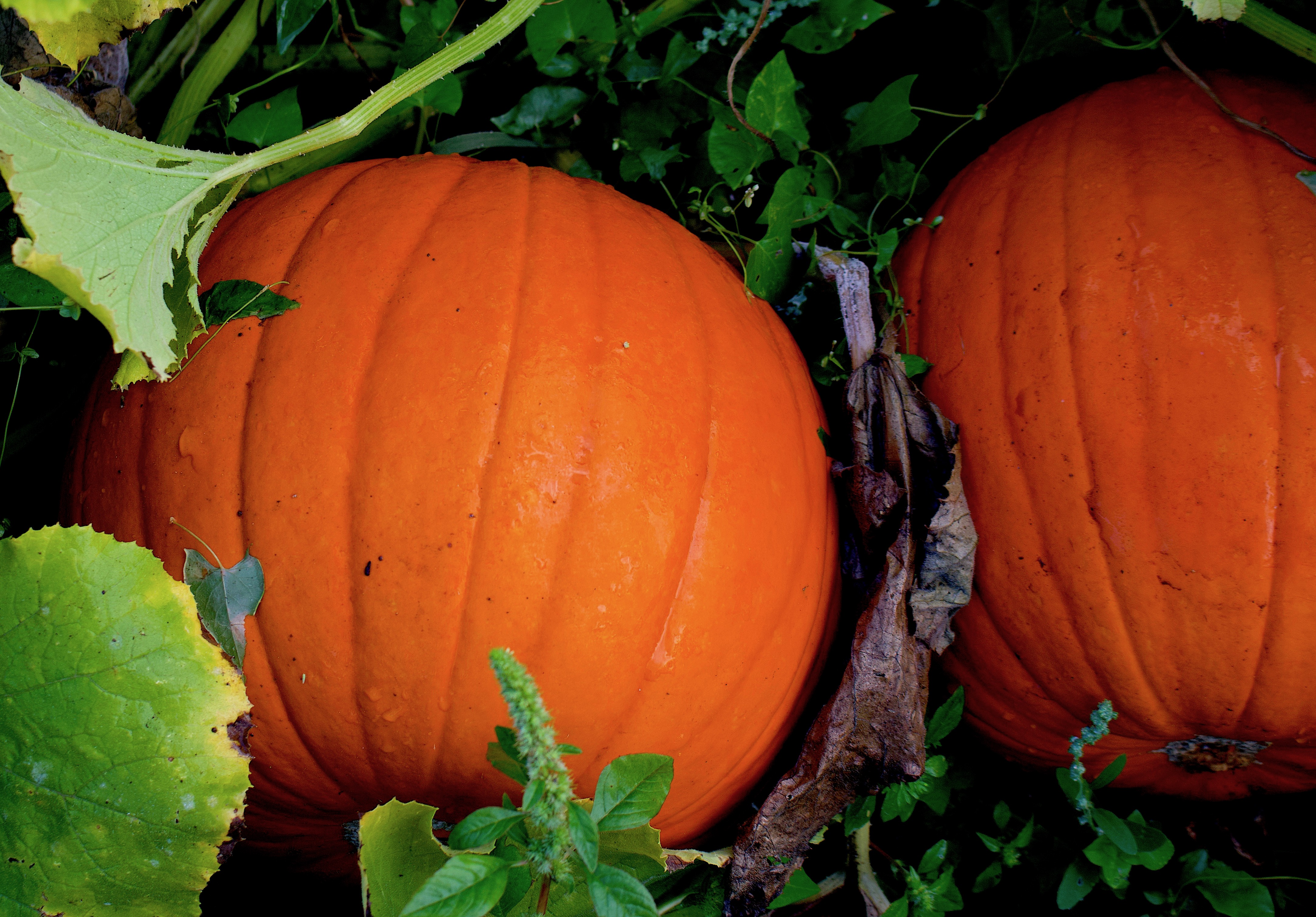
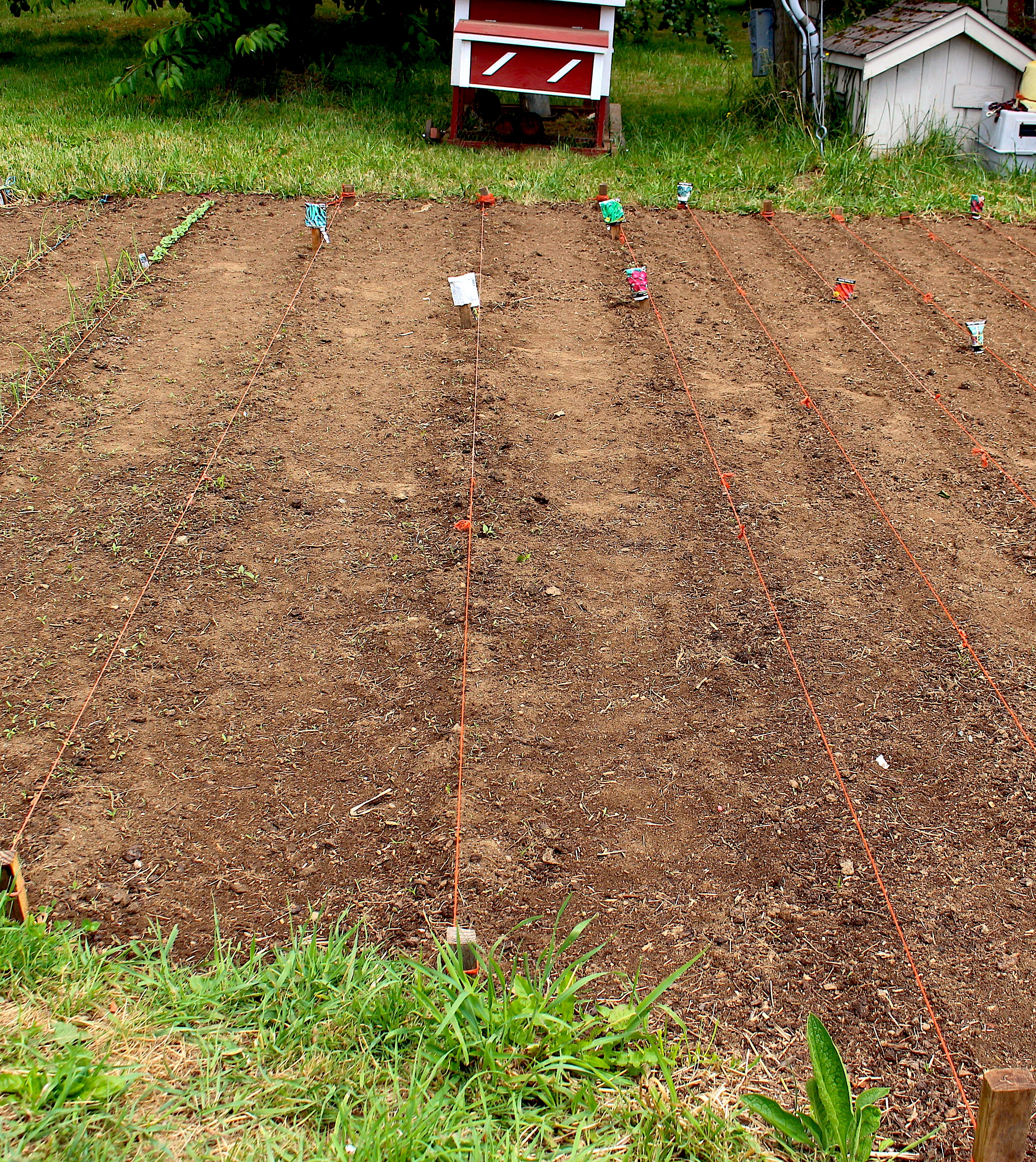
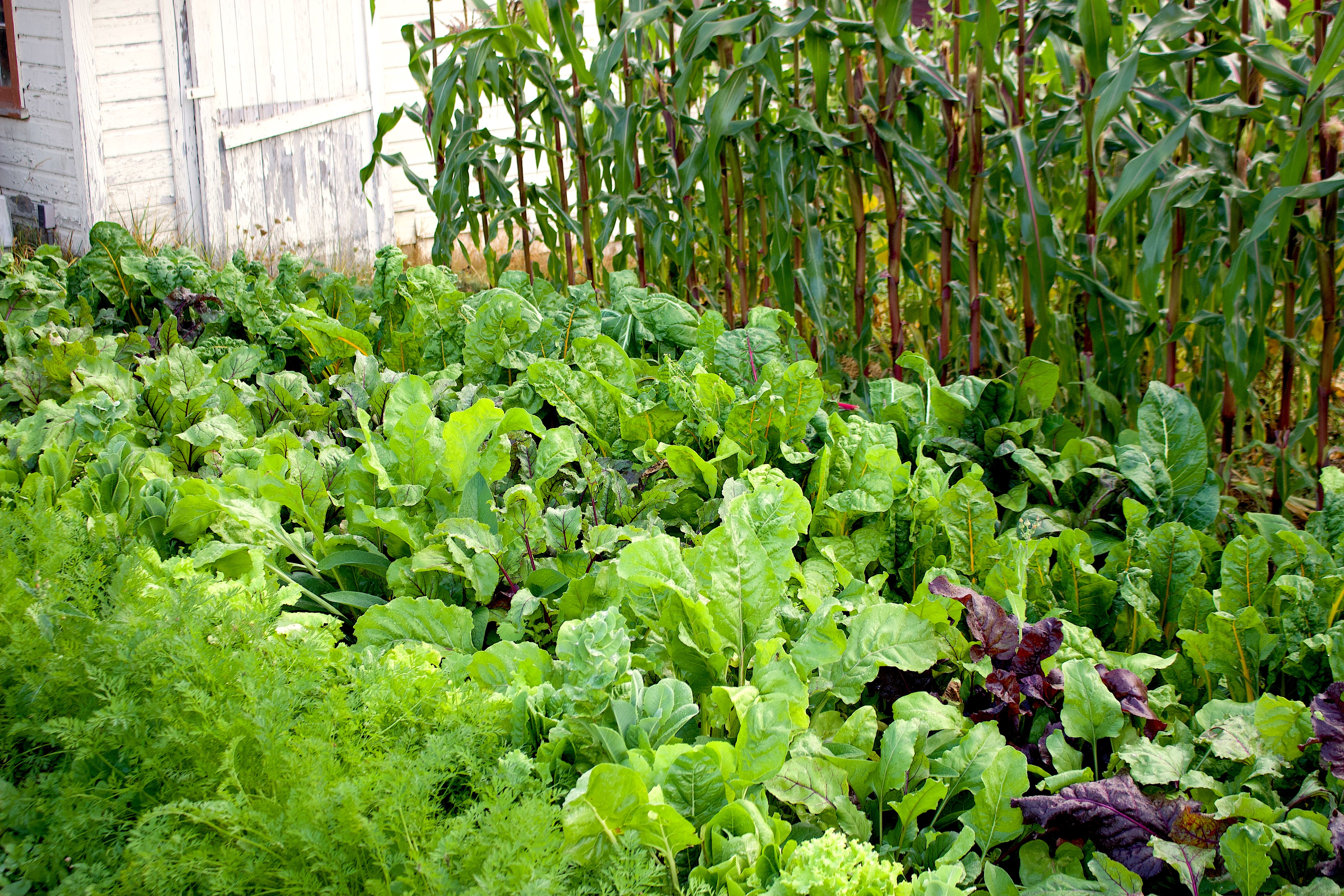
Our garden is over-producing so we freeze and dehydrate and give away and compost what we cannot eat now. It is a race to the finish before the first killing frost in less than a month.
Carrying dirt under fingernails is a badge of honor for the gardener. The soil that clings to our boots and our skin represents rhythm and ritual in every move we make – we know what is expected of us when we rise first thing in the morning and later as we settle weary under a blanket at night.
May there ever be such good work as we rise in anticipation every morning.
May there ever be such good rest as we sleep in peace, forgetting the demands of the new day.
















 Barnstorming