Any patch of sunlight in a wood will show you something about the sun which you could never get from reading books on astronomy. These pure and spontaneous pleasures are ‘patches of Godlight’ in the woods of our experience. ~C.S. Lewis
Each year, on the same date, the summer solstice comes. Consummate light: we plan for it, the day we tell ourselves that time is very long indeed, nearly infinite. And in our reading and writing, preference is given to the celebratory, the ecstatic.
What follows the light is what precedes it: the moment of balance, of dark equivalence.
But tonight we sit in the garden in our canvas chairs so late into the evening – why should we look either forward or backwards? Why should we be forced to remember: it is in our blood, this knowledge. Shortness of the days; darkness, coldness of winter. It is in our blood and bones; it is in our history. It takes a genius to forget these things. ~Louise Glück from “Solstice”
There is no controlling life. Try corralling a lightning bolt, containing a tornado. Dam a stream and it will create a new channel. Resist, and the tide will sweep you off your feet. Allow, and grace will carry you to higher ground. The only safety lies in letting it all in— the wild with the weak; fear, fantasies, failures and success. When loss rips off the doors of the heart, or sadness veils your vision with despair, practice becomes simply bearing the truth. In the choice to let go of your known way of being, the whole world is revealed to your new eyes. ~Danna Faulds “Allow” From Go In and In
A solstice moment when light replaces where darkness has thrived: this is a wounding that tears us open, cleaving us, so joy will enter the cracks where we hurt the most.
One-Time
Monthly
Yearly
Make a one-time or recurring donation to support daily Barnstorming posts
I hope my life was penned in such a way that when time comes to write my epitaph someone might think to say not that I was good so much as kind and that I wrote quite well beyond my means because it was the wind of grace blown down that gave me words and moved my sluggish hands, and that I always sought to know the unseen things and though I loved the breadth of language for my art, my heart always seemed fixed on a day when all the sound and words would fall away, and that I was quite hopeful to the last if anyone would choose one line to inscribe my memory in stone it surely should be the simple supposition I know right: there merely is no synonym for light. ~Margaret Ingraham “Epitaph” from Exploring This Terrain
This world can feel like a fearsome place with endless stories of tragedy and loss, so much pain and suffering, blinding me in darkness so I struggle to see each day’s emerging light.
How to describe a Light transforming all that is bleak?
With these Words:
Be not afraid Come have breakfast Touch and see Follow me Do you love me? Feed my sheep Peace be with you
I am mere breath and bone, a wisp in a moment of time, so His truths anchor my heart and illuminate my soul: I am called forth into a Light which needs no other words.
Lead, kindly Light, amid the encircling gloom, Lead thou me on; The night is dark, and I am far from home, Lead thou me on. Keep thou my feet; I do not ask to see The distant scene; one step enough for me.
Through love to light! Oh, wonderful the way That leads from darkness to the perfect day! From darkness and from sorrow of the night To morning that comes singing o’er the sea. Through love to light! Through light, O God, to thee, Who art the love of love, the eternal light of light!
One-Time
Monthly
Yearly
Make a one-time or recurring donation to support daily Barnstorming posts
He will wipe away every tear from their eyes, and death shall be no more, neither shall there be mourning, nor crying, nor pain anymore, for the former things have passed away. And he who was seated on the throne said, “Behold, I am making all things new.” Also he said, “Write this down, for these words are trustworthy and true. Revelation 21: 4-5
“Gandalf! I thought you were dead! But then I thought I was dead! Is everything sad going to come untrue?” ~J.R.R. Tolkien as Samwise Gamgee wakes to find his friends all around him in The Lord of the Rings
“The answer is yes. And the answer of the Bible is yes. If the resurrection is true, then the answer is yes. Everything sad is going to come untrue.” ~Pastor Tim Keller’s response in a sermon given in an ecumenical prayer service memorial in Lower Manhattan on the fifth anniversary of Sept. 11.
photo by Joel De Waard
In our minds, we want to rewind and replay the sad events of this week in a way that would prevent them from happening in the first place.
We want those in a broken relationship to come back together, hug and forgive. The devastating diagnosis would be proven an error and, in reality, only a transient illness. When a terrible tragedy happens, we want the dead and injured to rise up again. The destructive earthquake becomes a mere tremor, the flooding tsunami is only one foot, not over thirty feet tall, the hijackers are prevented from ever boarding a plane, the shooter changes her mind at the last minute and lays down her arms, the terrorist disables his suicide bombs and walks away from his training and misguided mission.
We want so badly for it all to be untrue. The bitter reality of horrendous suffering and sadness daily all over the earth is too much for us to absorb. We plead for relief and beg for a better day.
Our minds may play mental tricks like this, but God does not play tricks. He knows and feels what we do. He too wants to see it rewound and replayed differently. He has known grief and sadness, He has wept, He has suffered, He too has died in terrible humiliating and painful circumstances.
And because of this, because of a God who came to dwell with us, was broken, died and then rose again whole and holy, we are assured, in His time, everything sad is going to come untrue.
Our tears will be dried, our grief turned to joy, our pain nonexistent, not even a memory. It will be a new day, a better day–as it is written, trustworthy and true.
May it come.
Quickly.
photo by Nate Gibson
This year’s Lenten theme: So we fix our eyes not on what is seen, but on what is unseen, since what is seen is temporary, but what is unseen is eternal. 2 Corinthians 4: 18
“I wish it need not have happened in my time,” said Frodo. “So do I,” said Gandalf, “and so do all who live to see such times. But that is not for them to decide. All we have to decide is what to do with the time that is given us.”
The world is indeed full of peril, and in it there are many dark places; but still there is much that is fair, and though in all lands love is now mingled with grief, it grows perhaps the greater. ― J.R.R. Tolkien, from The Fellowship of the Ring
God is not only the God of the sufferers but the God who suffers. … It is said of God that no one can behold his face and live. I always thought this meant that no one could see his splendor and live. A friend said perhaps it meant that no one could see his sorrow and live. Or perhaps his sorrow is splendor. …
Instead of explaining our suffering God shares it.
How is faith to endure, O God, when you allow all this scraping and tearing on us? You have allowed rivers of blood to flow, mountains of suffering to pile up, sobs to become humanity’s song–all without lifting a finger that we could see. You have allowed bonds of love beyond number to be painfully snapped. If you have not abandoned us, explain yourself.
We strain to hear. But instead of hearing an answer we catch sight of God himself scraped and torn. Through our tears we see the tears of God. ~Nicholas Wolterstorffin Lament for a Son
“My God, My God,” goes the Psalm 22, “hear me, why have you forsaken me?” This is the anguish all we of Godforsaken heart know well. But hear the revelation to which Christ directs us, further in the same psalm:
For He has not despised nor scorned the beggar’s supplication, Nor has He turned away His face from me; And when I cried out to Him, He heard me.
He hears us, and he knows, because he has suffered as one Godforsaken. Which means that you and I, even in our darkest hours, are not forsaken. Though we may hear nothing, feel nothing, believe nothing, we are not forsaken, and so we need not despair. And that is everything. That is Good Friday and it is hope, it is life in this darkened age, and it is the life of the world to come. ~Tony Woodlief from “We are Not Forsaken”
Scratch the surface of a human being and the demons of hate and revenge … and sheer destructiveness break forth.
Again and again we read the stories of violence in our daily papers, of the mass murders and ethnic wars still occurring in numerous parts of our world. But how often do we say to ourselves: “What seizes people like that, even young people, to make them forget family and friends, and suddenly kill other human beings?” We don’t always ask the question in that manner. Sometimes we are likely to think, almost smugly: “How different those horrible creatures are from the rest of us. How fortunate I am that I could never kill or hurt other people like they did.”
I do not like to stop and, in the silence, look within, but when I do I hear a pounding on the floor of my soul. When I open the trap door into the deep darkness I see the monsters emerge for me to deal with. How painful it is to bear all this, but it is there to bear in all of us. Freud called it the death wish, Jung the demonic darkness. If I do not deal with it, it deals with me. The cross reminds me of all this.
This inhumanity of human to human is tamed most of the time by law and order in most of our communities, but there are not laws strong enough to make men and women simply cease their cruelty and bitterness. This destructiveness within us can seldom be transformed until we squarely face it in ourselves. This confrontation often leads us into the pit. The empty cross is planted there to remind us that suffering is real but not the end, that victory still is possible… ~Morton Kelsey from “The Cross and the Cellar”
I’m depending on others’ words right now. The maelstrom of emotions following this week’s latest school shooting silences everything but my tears.
Have mercy, Holy God, on your people.
This year’s Lenten theme: So we fix our eyes not on what is seen, but on what is unseen, since what is seen is temporary, but what is unseen is eternal. 2 Corinthians 4: 18
Oh let me fall as grain to the good earth And die away from all dry separation, Die to my sole self, and find new birth Within that very death, a dark fruition, Deep in this crowded underground, to learn The earthy otherness of every other, To know that nothing is achieved alone But only where these other fallen gather.
If I bear fruit and break through to bright air, Then fall upon me with your freeing flail To shuck this husk and leave me sheer and clear As heaven-handled Hopkins, that my fall May be more fruitful and my autumn still A golden evening where your barns are full. ~Malcolm Guite “Unless a Grain of Wheat Falls Into the Ground and Dies”
…new life starts in the dark. Whether it is a seed in the ground, a baby in the womb, or Jesus in the tomb, it starts in the dark. ~Barbara Brown Taylor from Learning to Walk in the Dark
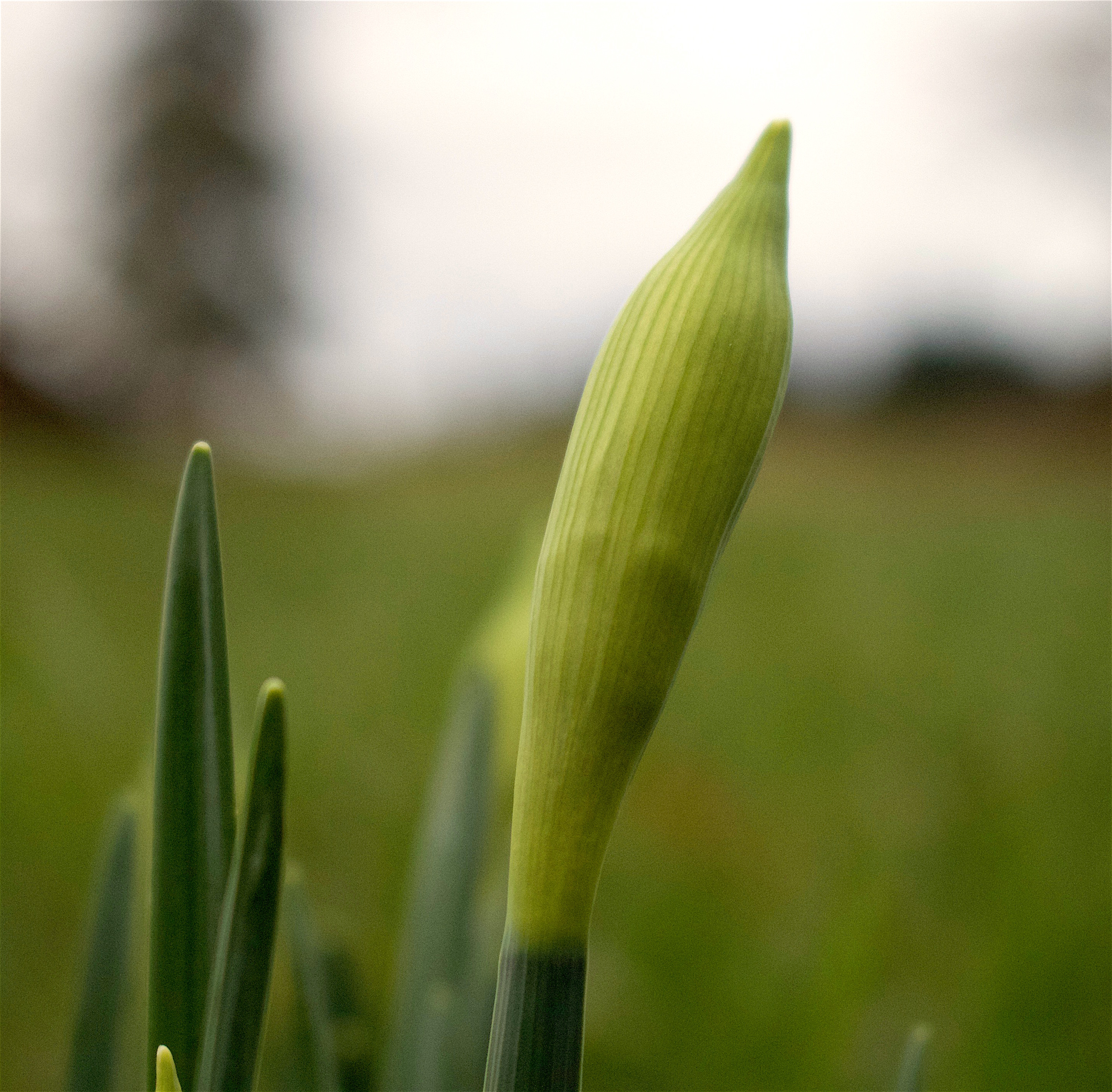
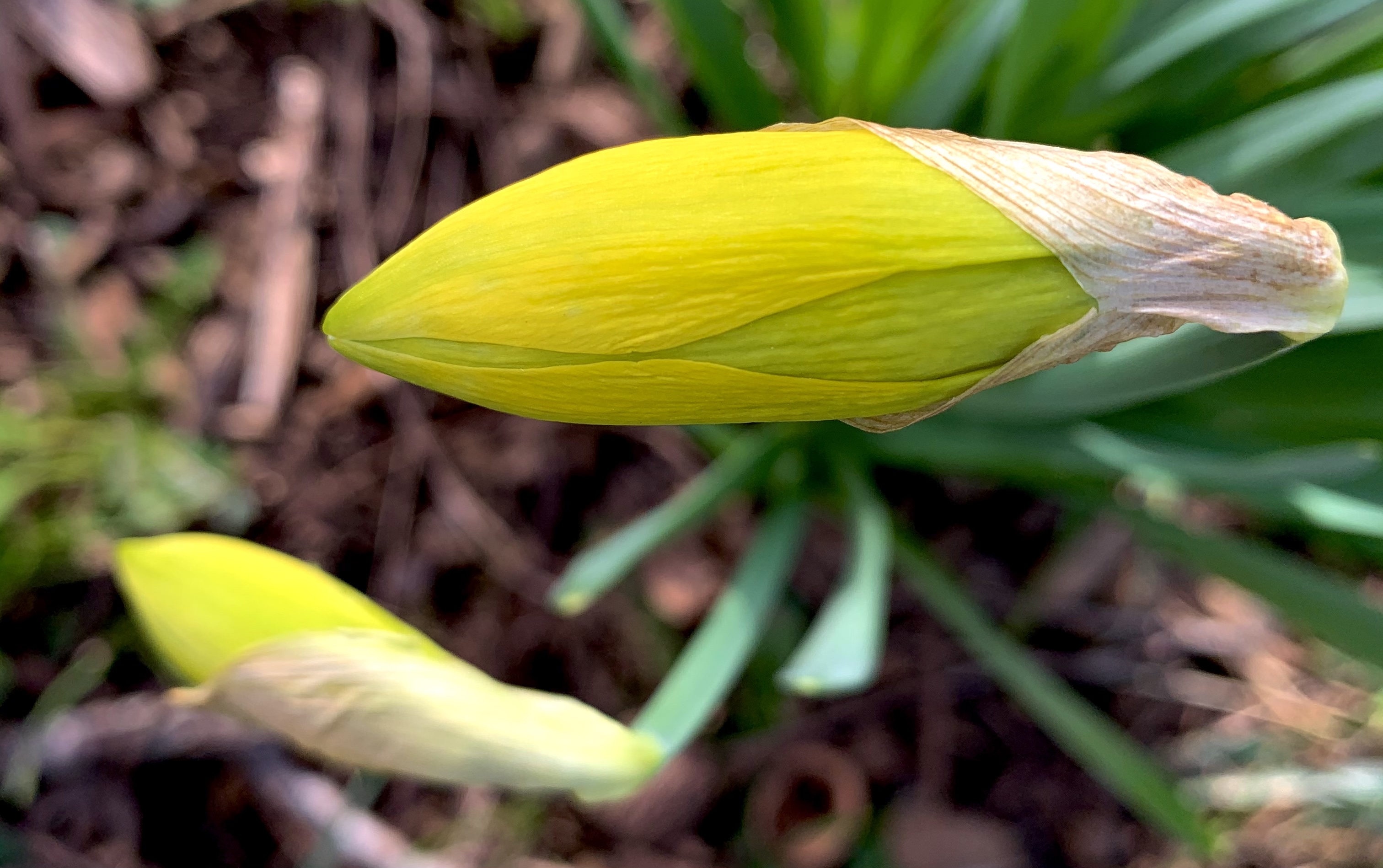
The ground is slowly coming to life again; snowdrops, crocus, and daffodils are surfacing from months of dormancy, buds are swelling, the spring chorus frogs have come from the mud to sing again and birds now greet the lazy dawn.
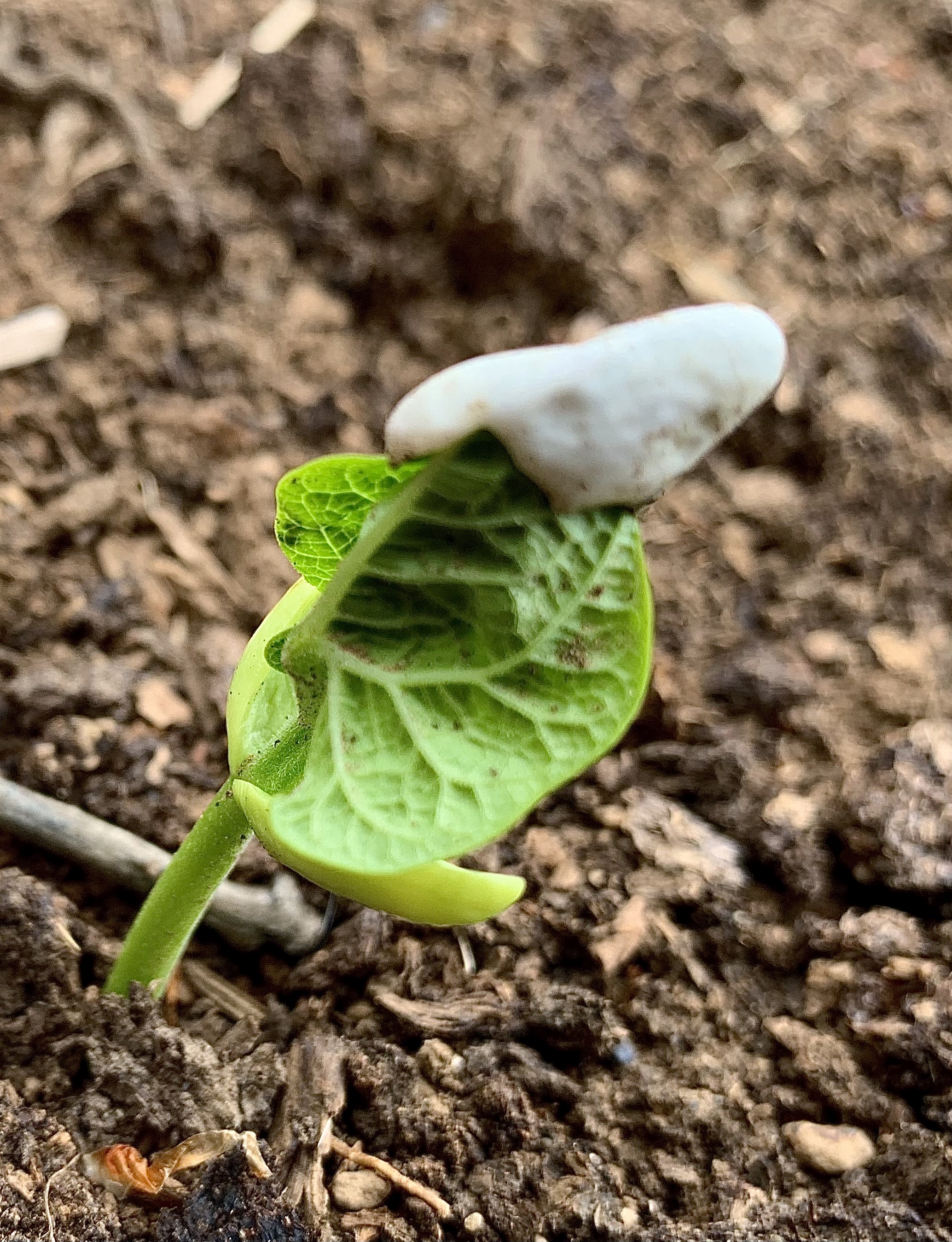
The seed shakes off the darkness surrounding it as growth begins.
I too began a mere seed, plain and simple, lying dormant in the darkness of my mother’s body.
Just as the spring murmurs life to the seed in the ground, so the Word calls a human seed of life to stir and swell, becoming at once both an animate and intimate reflection of Himself.
I was awakened in the dark to sprout, bloom and fruit, to reach as far as my tethered roots allow, aiming beyond earthly bounds to touch the light.
Everything, everyone, so hidden; His touch calls us back to life. Love is come again to the fallow fields of our hearts.
This year’s Lenten theme: So we fix our eyes not on what is seen, but on what is unseen, since what is seen is temporary, but what is unseen is eternal. 2 Corinthians 4: 18
Send me your light and your faithful care, let them lead me; let them bring me to your holy mountain, to the place where you dwell. Psalm 43:3
Lead, kindly light, amidst the grey and gloom The night is long and I am far from home Here in the dark, I do not ask to see The path ahead–one step enough for me Lead on, lead on, kindly light.
I was not ever willing to be led I could have stayed, but I ran instead In spite of fear, I followed my pride My eyes could see, but my heart was blind Lead on, lead on, kindly light.
And in the night, when I was afraid Your feet beside my own on the way Each stumbling step where other men have trod shortens the road leading home to my God Lead on, lead on, my God, my God, lead on, lead on, kindly light. ~Audrey Assad inspired by Ven. John Henry Cardinal Newman’s poem “Lead Kindly Light”
Once in awhile, I awake in a windstorm-tossed night, in pitch blackness with no flashlight within reach.
The familiar path to bathroom and kitchen becomes obstacle course, full of places to trip and stub my toes and bump my head.
Illumination for just the next step is all I need.
A small circle of light that shows where to safely put my foot.
You, Lord, come alongside You, Lord, make the dark less fearsome You, Lord, are that safe and kindly light that shows me where to step next. One step at a time, one again, and then another…
This year’s Lenten theme: So we fix our eyes not on what is seen, but on what is unseen, since what is seen is temporary, but what is unseen is eternal. 2 Corinthians 4: 18
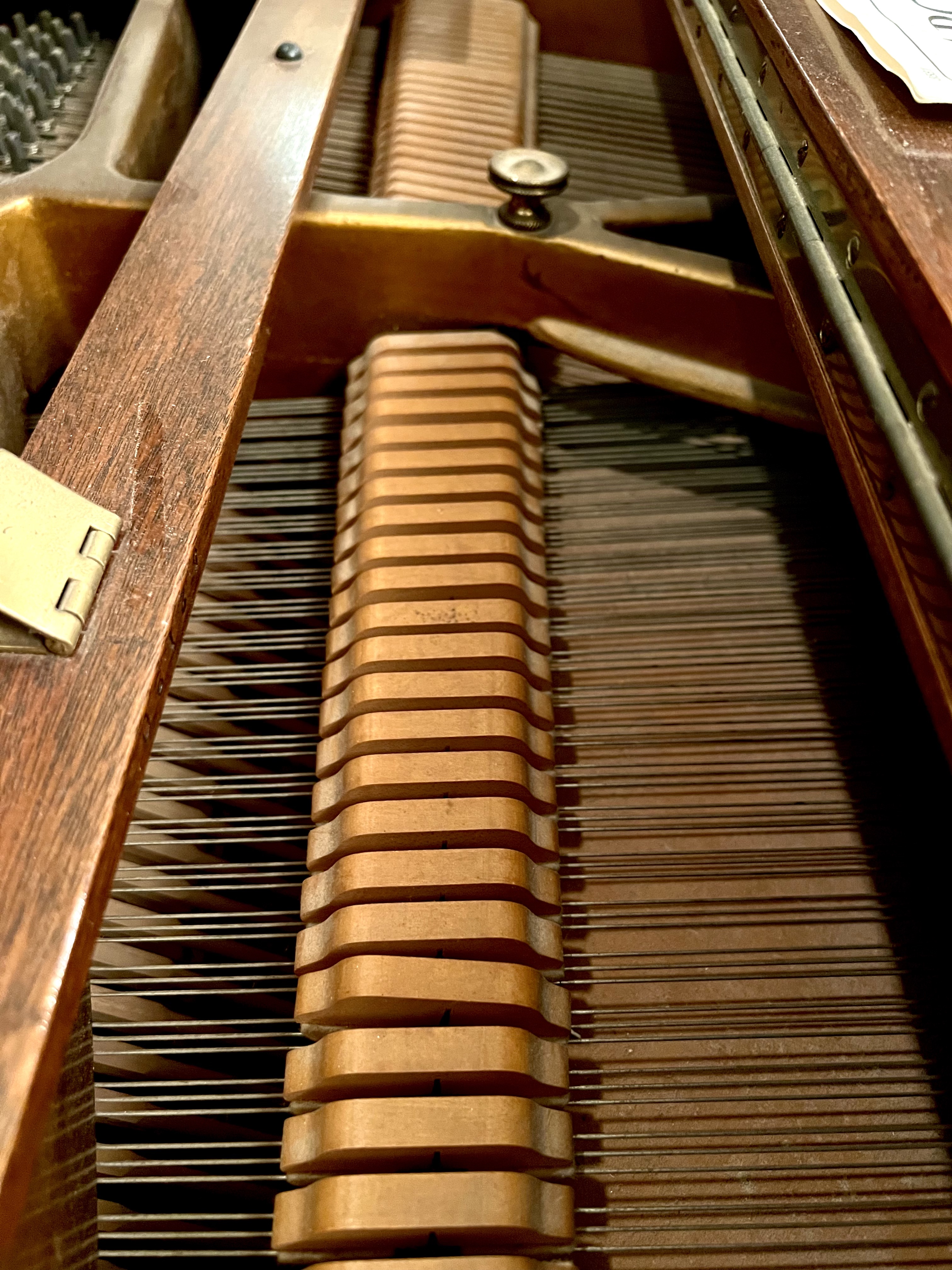
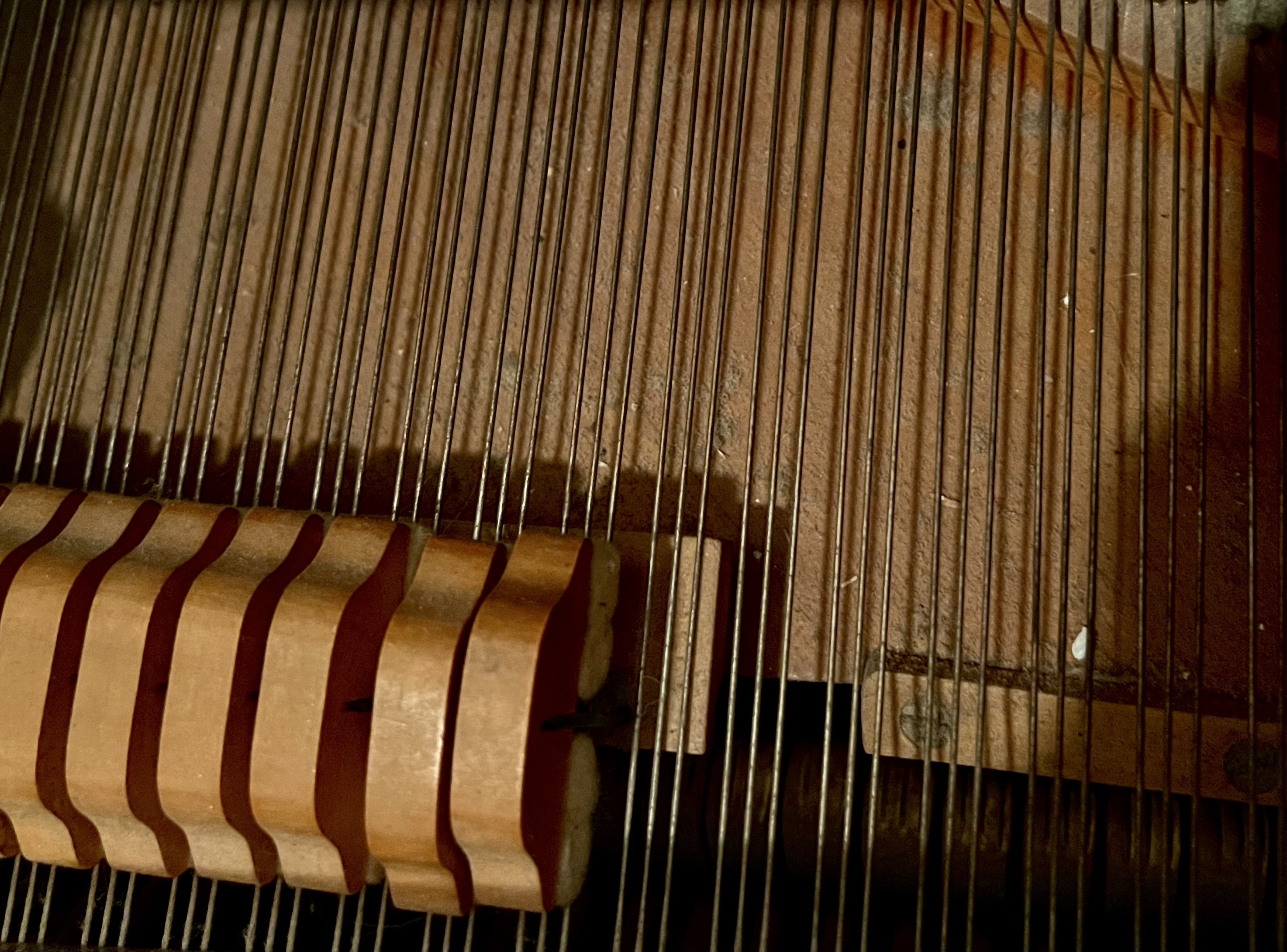
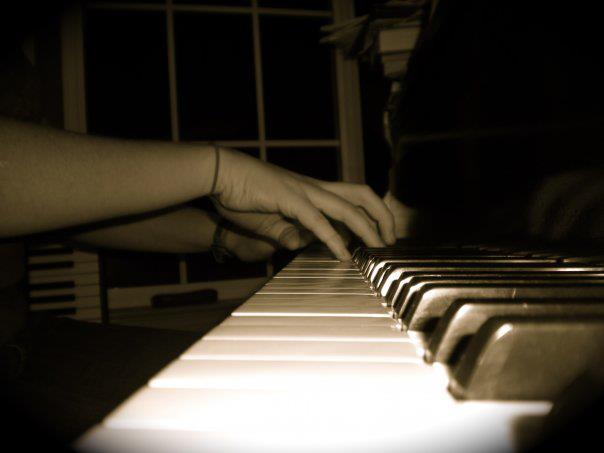
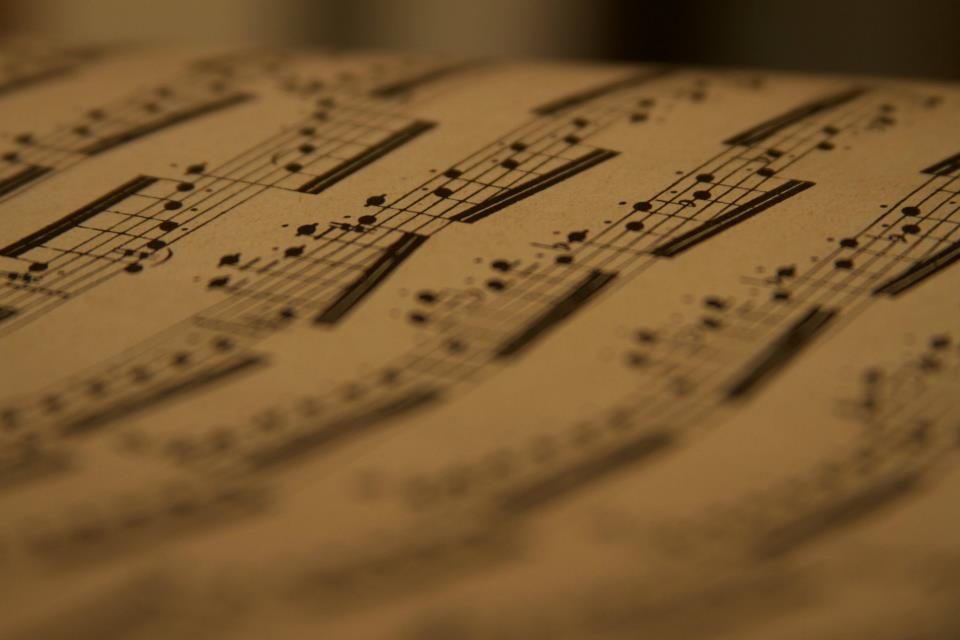
Holding the arms of his helper, the blind Piano tuner comes to our piano. He hesitates at first, but once he finds The keyboard, his hands glide over the slow Keys, ringing changes finer than the eye Can see. The dusty wires he touches, row On row, quiver like bowstrings as he Twists them one notch tighter. He runs his Finger along a wire, touches the dry Rust to his tongue, breaks into a pure bliss And tells us, “One year more of damp weather Would have done you in, but I’ve saved it this Time. Would one of you play now, please? I hear It better at a distance.” My wife plays Stardust. The blind man stands and smiles in her Direction, then disappears into the blaze Of new October. Now the afternoon, The long afternoon that blurs in a haze Of music…Chopin nocturnes, Clair de lune, All the old familiar, unfamiliar Music-lesson pieces, Papa’s Haydn’s Dead and gone, gently down the stream…Hours later, After the last car has doused its beams, Has cooled down and stopped its ticking, I hear Our cat, with the grace of animals free To move in darkness, strike one key only, And a single lucid drop of water stars my dream. ~Gibbons Ruark “The Visitor”
When I was a child I once sat sobbing on the floor Beside my mother’s piano As she played and sang For there was in her singing A shy yet solemn glory My smallness could not hold
And when I was asked Why I was crying I had no words for it I only shook my head And went on crying
Why is it that music At its most beautiful Opens a wound in us An ache a desolation Deep as a homesickness For some far-off And half-forgotten country
I’ve never understood Why this is so
But there’s an ancient legend From the other side of the world That gives away the secret Of this mysterious sorrow
For centuries on centuries We have been wandering But we were made for Paradise As deer for the forest
And when music comes to us With its heavenly beauty It brings us desolation For when we hear it We half remember That lost native country
We dimly remember the fields Their fragrant windswept clover The birdsongs in the orchards The wild white violets in the moss By the transparent streams
And shining at the heart of it Is the longed-for beauty Of the One who waits for us Who will always wait for us In those radiant meadows
Yet also came to live with us And wanders where we wander. ~Anne Porter “Music” from Living Things
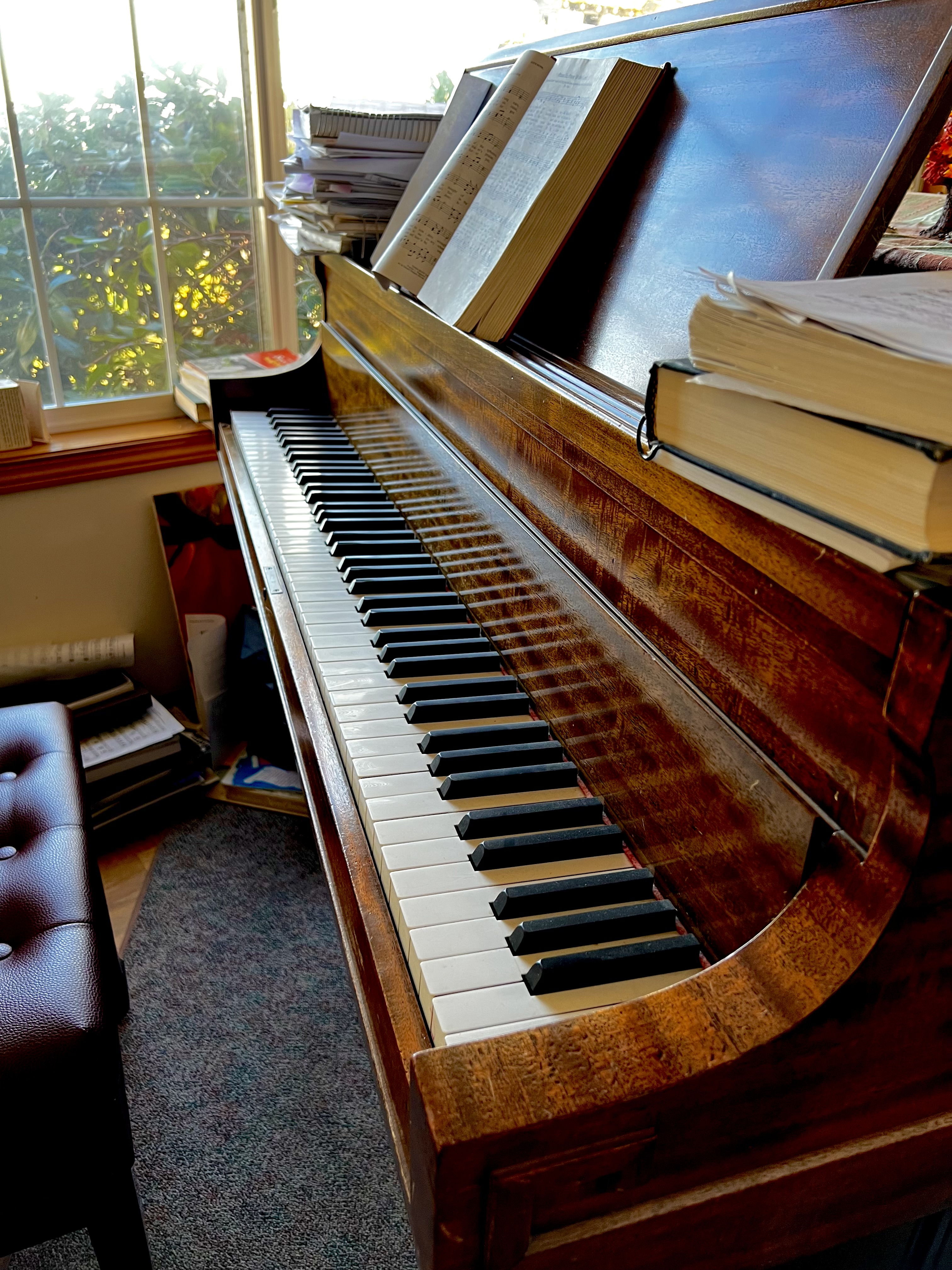
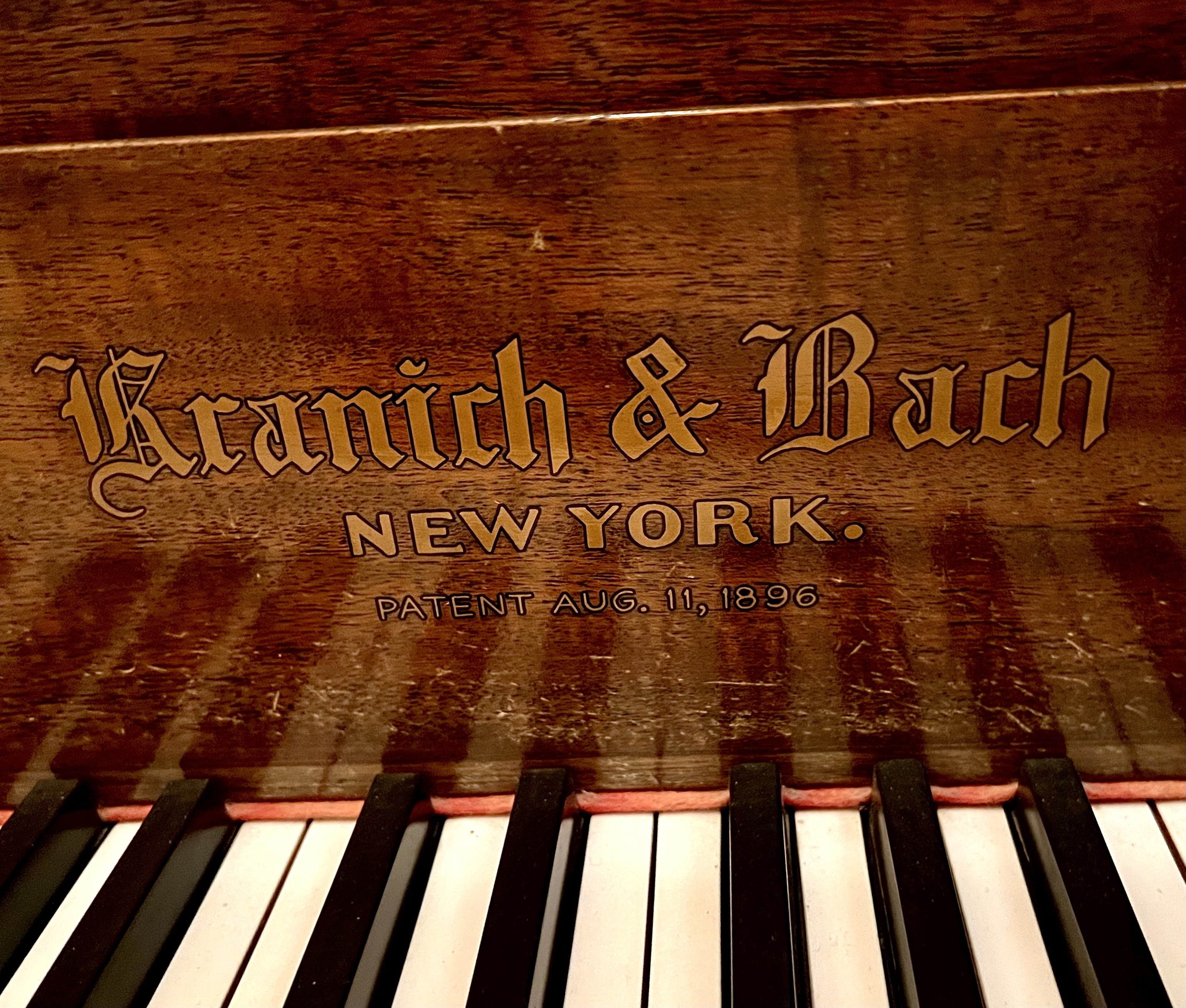
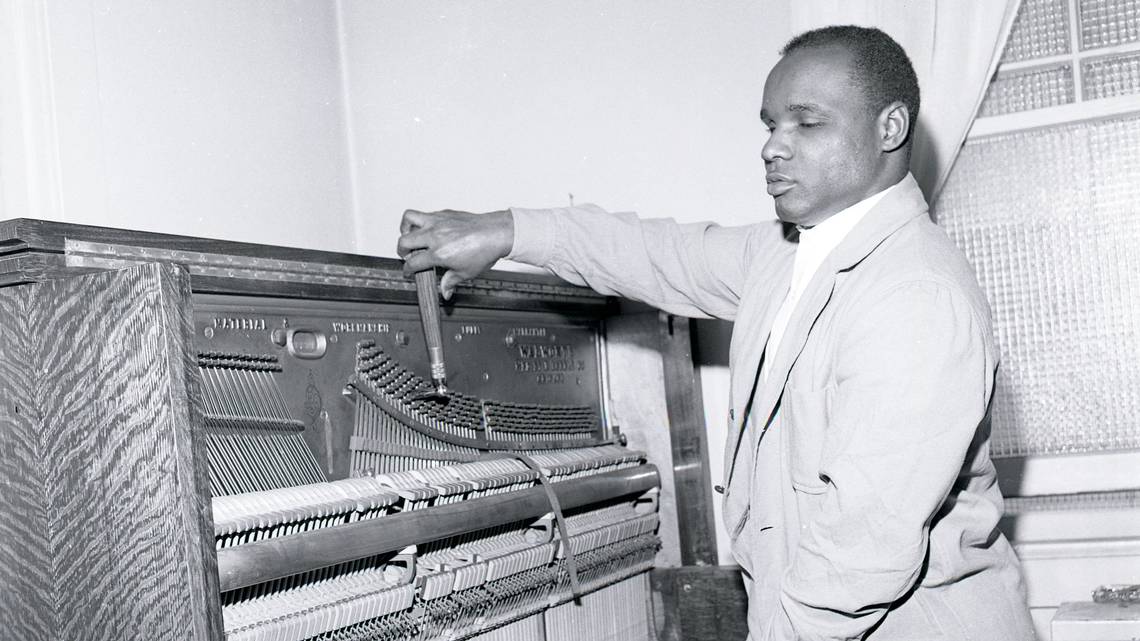
I learned today that John Grace recently died at age 92; John was the blind piano tuner who tended and tuned our family’s old Kranich & Bach baby grand through the 60’s and 70’s until it moved with me to Seattle. When I saw his photo online in The Olympian newspaper, it took me back sixty years to his annual visits to our home, accompanied by a friend who drove him to his jobs, who guided him up the sidewalk to our front door and then waited for him to finish his work.
I was the 8 year old reason my great Aunt Marian had given us her beloved piano when she downsized from her huge Bellingham house into an apartment. I was fascinated watching John make the old strings sing harmonically again. He seemed right at home working on the innards of our piano, but appeared to truly enjoy ours, always ending his tuning session by sitting down on the bench and playing a familiar old hymn, smiling a broad smile.
There was no doubt his unseeing eyes made him a great piano tuner. He was fixed on the unseen, undistracted by what was unimportant to his job. He could “feel” the right pitch, not just hear it. He could sense the wire tension without seeing it. He touched the keys and wood with reverence, not distracted by the blemishes and bleaching in the mahogany, or the chips in the ivory.
I learned something about music from John, without him saying much of anything. He built a successful business in our town during a time you could count the black citizens on one hand. He spoke very little while he worked so I never asked him questions although I wish I had. It was as if he somehow transcended our troubled world through his art and skill. Though blind, when he was with a piano, he could move freely in the darkness, hearing and feeling what I could not. Perhaps it was because he was visited by a beauty and peacefulness we all long for, seen and unseen.
It occurs to me now, sixty years after observing him work, John Grace was just a step ahead in recognizing the voice of Jesus in our midst through the music he made possible.
Though he was blind, there is no doubt in my mind – he could see.
Yea when this flesh and heart shall fail And mortal life shall cease. I shall possess within the veil, A life of joy and peace.
This year’s Barnstorming Lenten theme is taken from 2 Corinthians 4: 18: So we fix our eyes not on what is seen, but on what is unseen, since what is seen is temporary, but what is unseen is eternal.
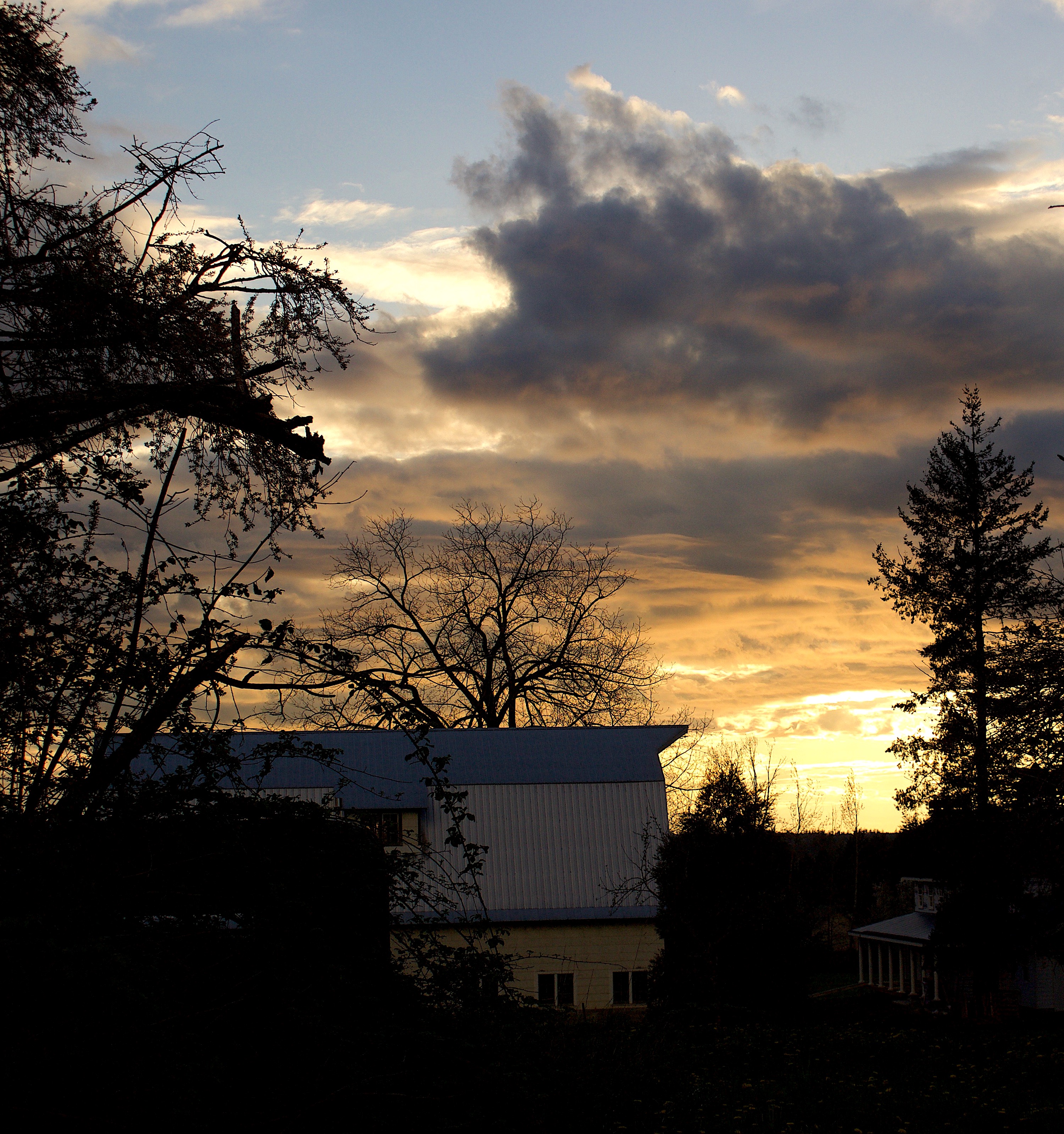
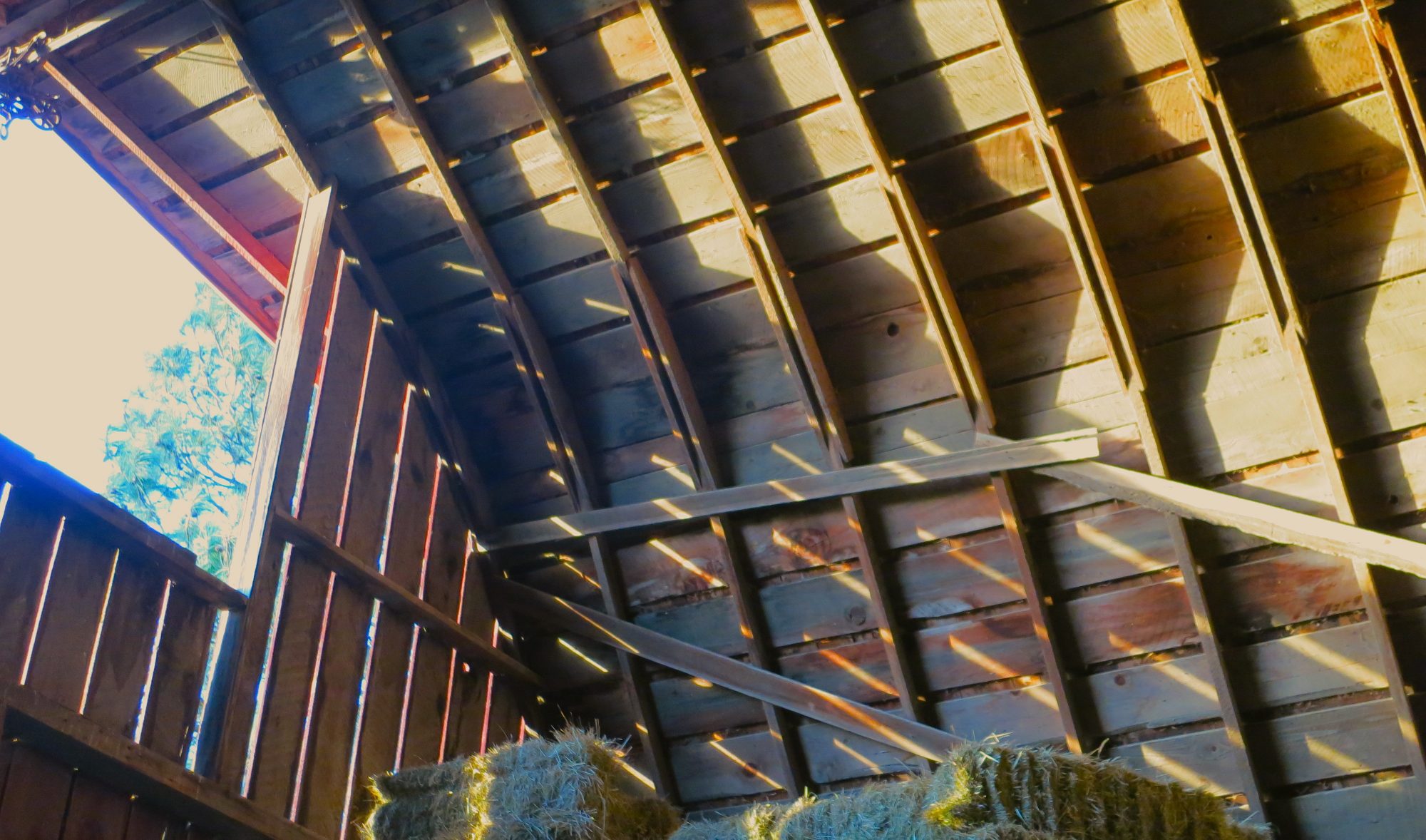
Let the light of late afternoon shine through chinks in the barn, moving up the bales as the sun moves down.
Let it come, as it will, and don’t be afraid. God does not leave us comfortless, so let evening come. ~Jane Kenyon “Let Evening Come”
And into nights when bats were on the wing Over the rafters of sleep, where bright eyes stared From piles of grain in corners, fierce, unblinking. The dark gulfed like a roof-space. ~Seamus Heaney from “The Barn”
The barn is awake, There is no mistake, Something wonderful is happening here. Yellow panes glowing, it begins snowing. Over rafters a hoot owl takes flight. A safe place to dwell—all here is well— when we’re in the barn at night. ~Michelle Houts from “Barn at Night”
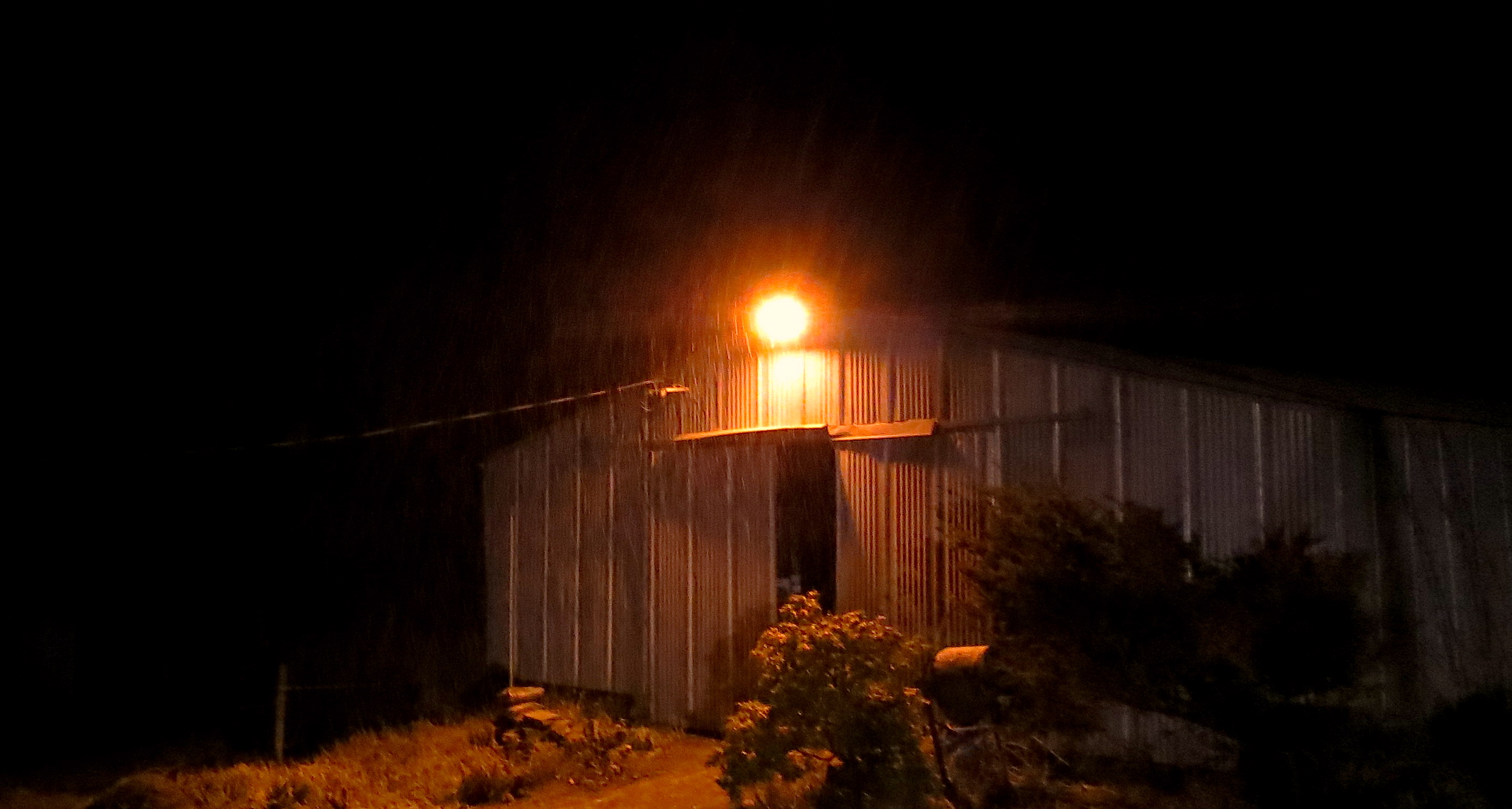
Usually, after turning out that forgotten barn light, I sit on the edge of the tractor bucket for a few minutes and let my eyes adjust to the night outside. City people always notice the darkness here, but it’s never very dark if you wait till your eyes owl out a little….
I’m always glad to have to walk down to the barn in the night, and I always forget that it makes me glad. I heave on my coat, stomp into my barn boots and trudge down toward the barn light, muttering at myself. But then I sit in the dark, and I remember this gladness, and I walk back up to the gleaming house, listening for the horses. ~Verlyn Klinkenborg from A Light in the Barn
Above us, stars. Beneath us, constellations. Five billion miles away, a galaxy dies like a snowflake falling on water. Below us, some farmer, feeling the chill of that distant death, snaps on his yard light, drawing his sheds and barn back into the little system of his care. All night, the cities, like shimmering novas, tug with bright streets at lonely lights like his. ~Ted Kooser “Flying at Night”
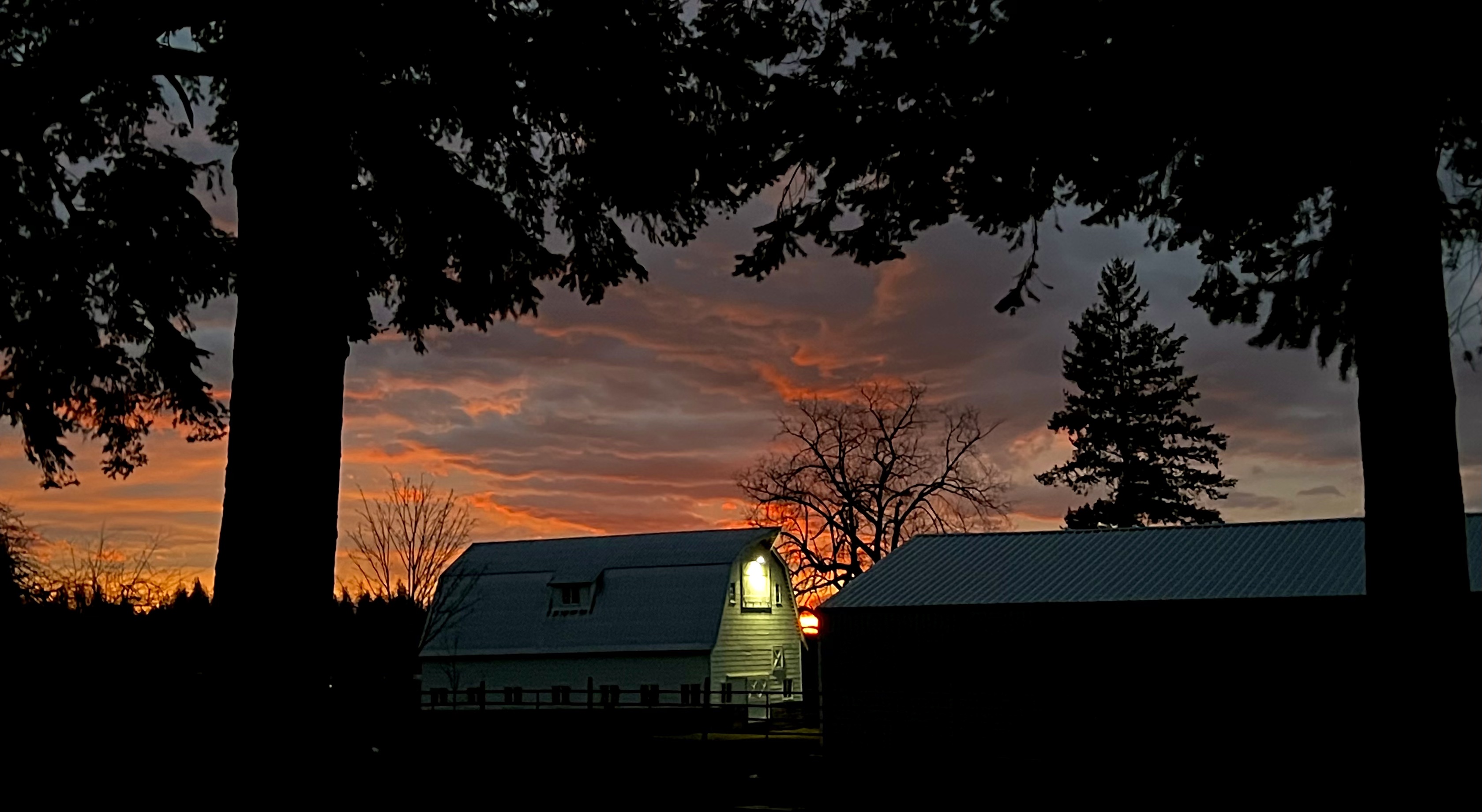
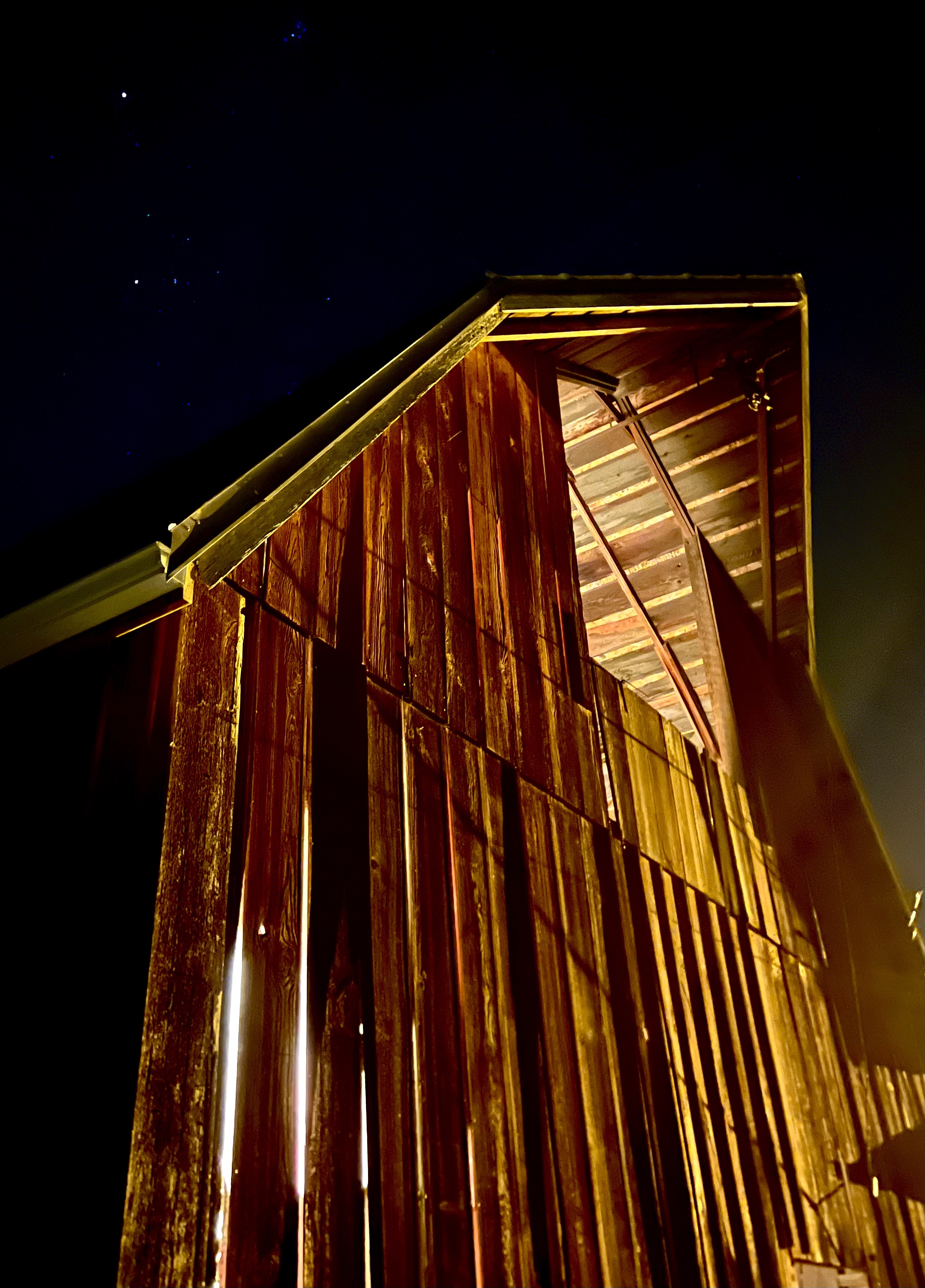
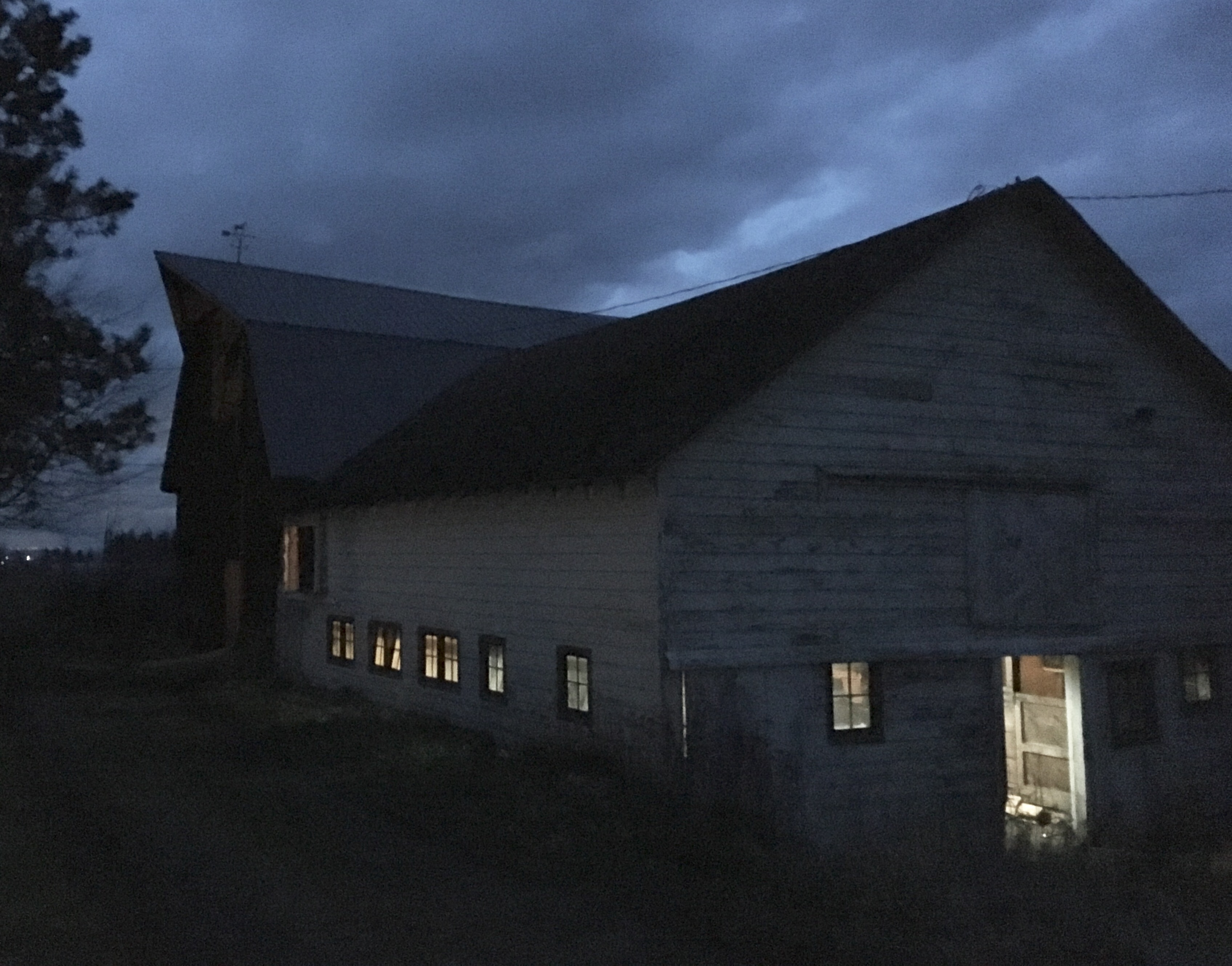
The night barn is a type of beacon as darkness falls. Light falls through the cracks to guide our footsteps. It becomes protection from wind and rain and snow. It provides creatures comfort so their keepers can sleep soundly. It is safe and warm – full of steaming breath and overall contentment. It is a kind of sanctuary: a cathedral sans stained glass grandeur or organ hymns.
Yet the only true sanctuary isn’t found in a weather-beaten barn of rough-hewn old growth timbers vulnerable to the winds of life.
An illuminated night barn happens within me, in the depths of my soul, comforted by the encompassing and salvaging arms of God. There I am held, transformed and restored, grateful beyond measure: all is well here.
One-Time
Monthly
Yearly
Make a one-time or recurring donation to support daily Barnstorming posts
How granular they feel—grief and regret, arriving, as they do, in the sharp particularities of distress. Inserting themselves— cunning, intricate, subversive—into our discourse.
In the long night, grievances seem to multiply. Old dreams mingling with new. Disappointment and regret bludgeon the soul, your best imaginings bruised, your hopes ragged.
Yet wait, watch. From the skylight the room is filling with soft early sun, slowly sifting its light on the bed, on your head, a shower of fine particles. How welcome. And how reliable. ~Luci Shaw“Sorrow”
(In my sleep I dreamed this poem)
Someone I loved once gave me a box full of darkness.
It took me years to understand that this, too, was a gift. ~ Mary Oliver “The Uses of Sorrow” from Thirst
We are given a box full of darkness by someone who loves us, and we can’t help but open it and weep.
It takes a lifetime to understand, if we ever do, we will inevitably hand off this gift to others whom we love.
Opening the box allows the Light in where none existed before. Light pours into our brokenness.
Sorrow ends up shining through our tears: we reach out from a deep well of need. Because we are loved so thoroughly, we too love deeply beyond ourselves.
One-Time
Monthly
Yearly
Make a one-time or recurring donation to support daily Barnstorming posts
I like the slants of light; I’m a collector. That’s a good one, I say… ~Annie Dillard from Pilgrim at Tinker Creek
How valuable it is in these short days, threading through empty maple branches, the lacy-needled sugar pines.
Its glint off sheets of ice tells the story of Death’s brightness, her bitter cold.
We can make do with so little, just the hint of warmth, the slanted light... ~Molly Fisk, “Winter Sun” from The More Difficult Beauty
There’s a certain Slant of light On winter afternoons — That oppresses, like the Heft of cathedral tunes. When it comes, the Landscape listens — Shadows hold their breath — When it goes, ’tis like the Distance On the look of Death. ~Emily Dickinson
During our northwest winters, there is usually so little sunlight on gray cloudy days that I routinely turn on the two light bulbs in the big hay barn any time I need to fetch hay bales for the horses. This is so I avoid falling into the holes that inevitably develop in the hay stack between bales. Winter murky lighting tends to hide the dark shadows of the leg-swallowing pits among the bales, something that is particularly hazardous when attempting to move a 60 pound hay bale.
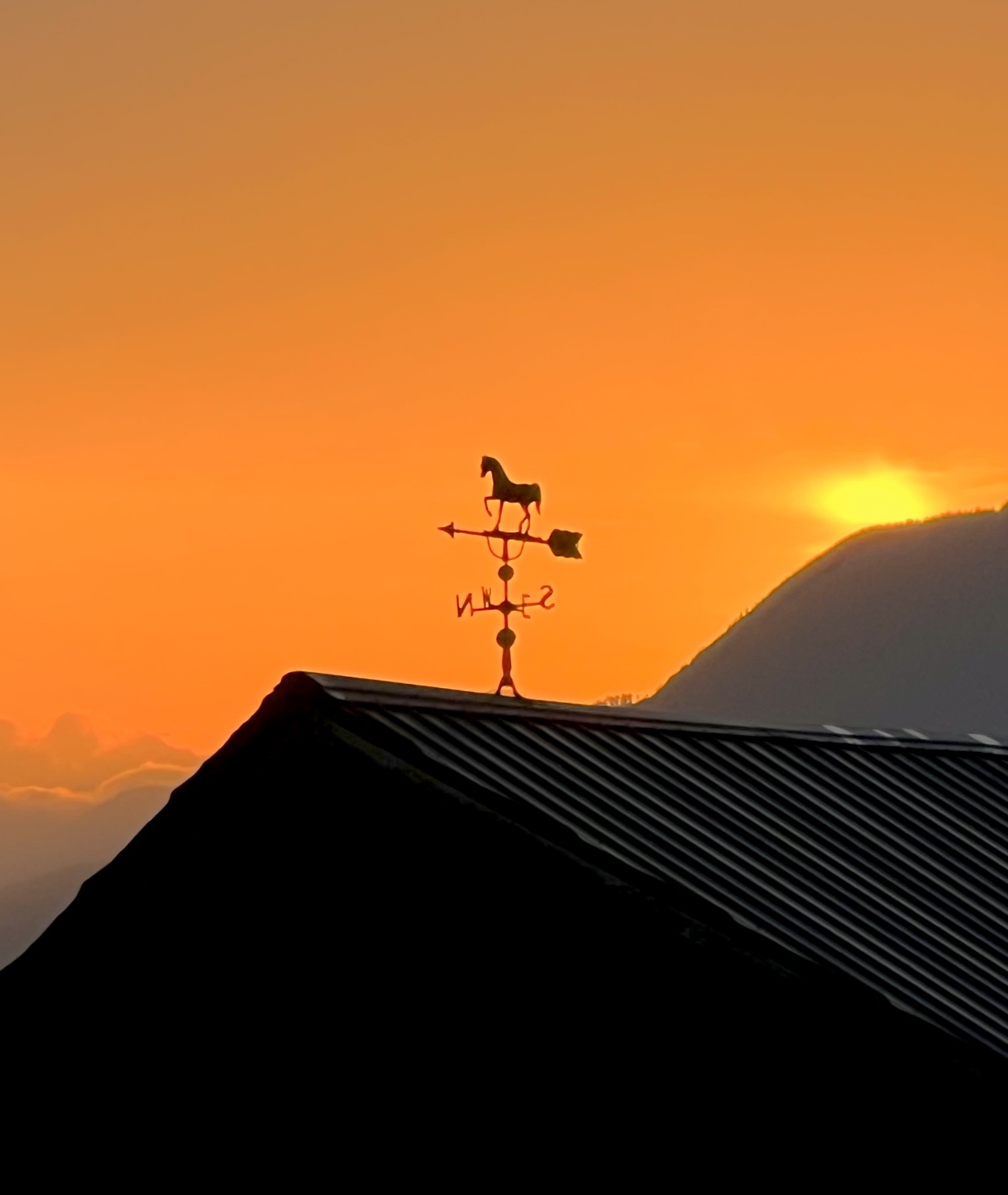
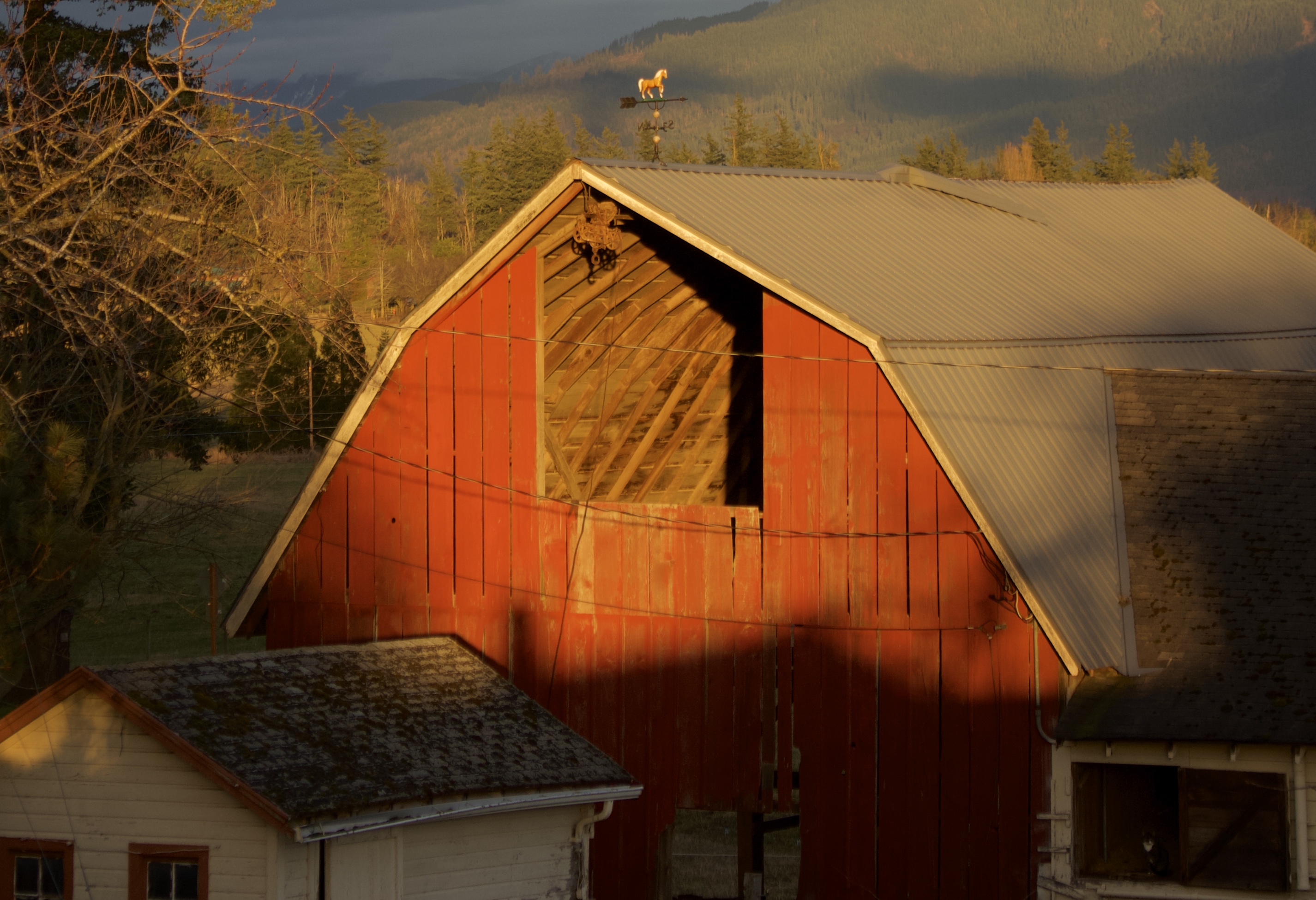
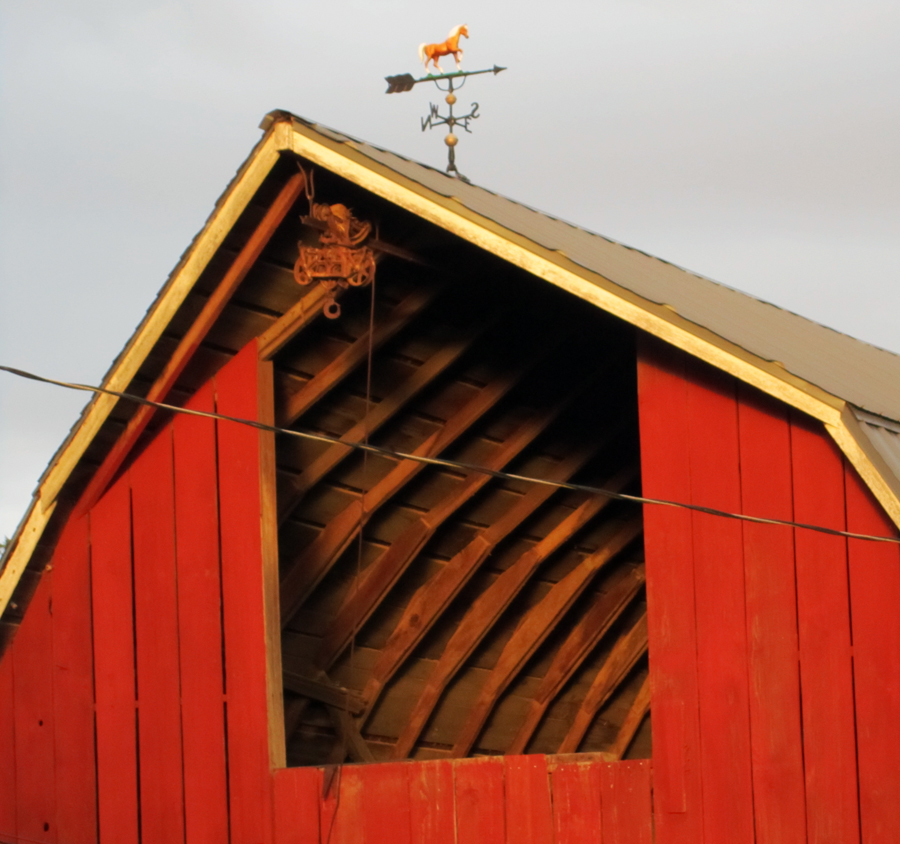
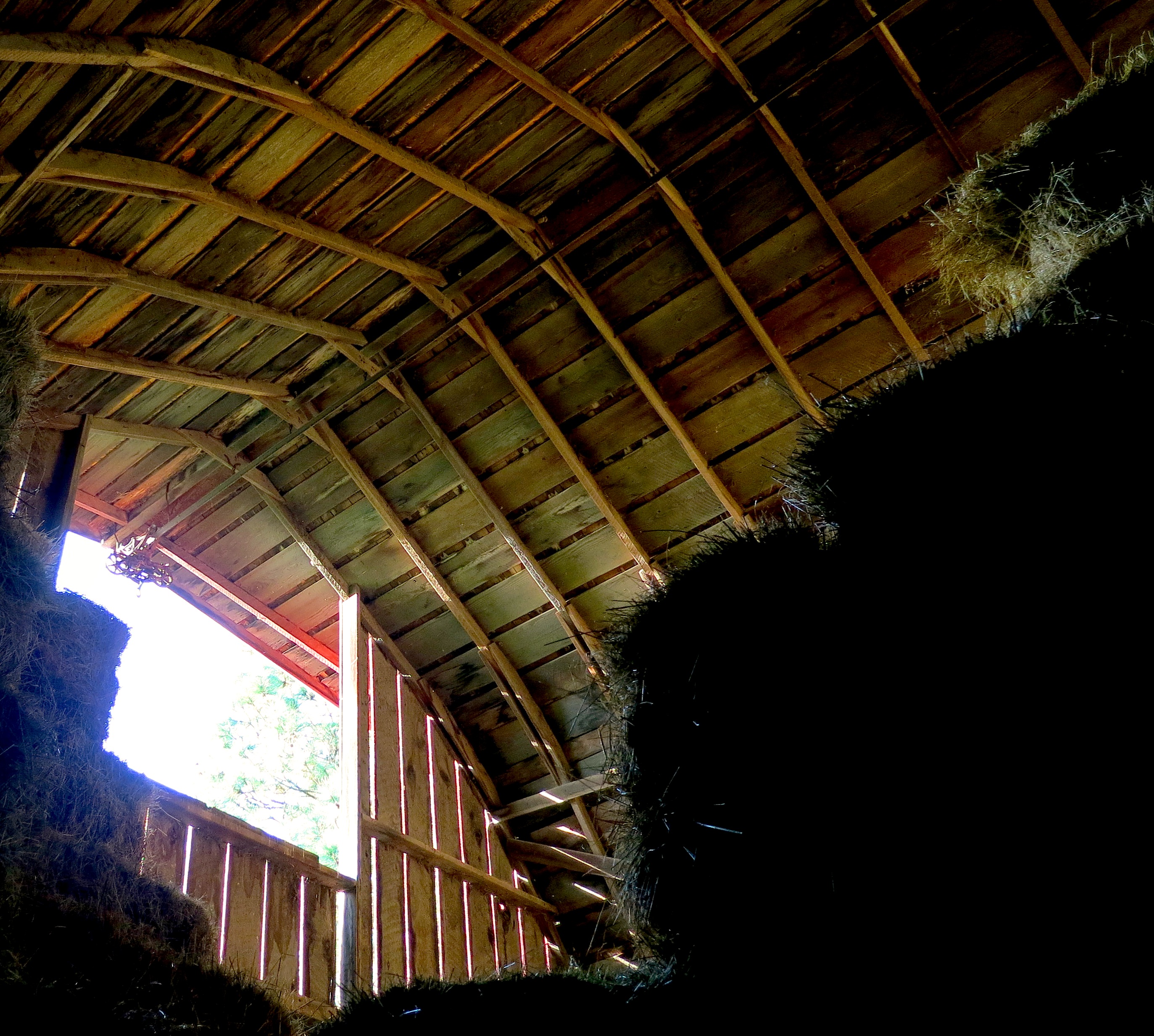
Yesterday when I went to grab hay bales for the horses at sunset, before I flipped the light switch, I could see light already blazing in the big barn. The last of the day’s sun rays were at a precise winter slant, streaming through the barn slat openings, ricocheting off the roof timbers onto the bales, casting an almost fiery glow onto the hay. The barn was ignited and ablaze without fire and smoke — the last things one would ever want in a hay barn.
Thanks to late afternoon winter light, I could scramble among the bales without worry.
It seems as I age I have been running into more dark holes. Even when I know where they lie and how deep they are, some days I will manage to step right in anyway. Each time it knocks the breath out of me, makes me cry out, makes me want to quit trying to lift the loads which need carrying. It leaves me fearful to venture where the footing is uncertain.
Then, on the darkest of days, light comes from the most unexpected of places, blazing a trail to help me see where to step, what to avoid, how to navigate the hazards to avoid collapsing on my face. I’m redirected, inspired anew, granted grace, gratefully calmed and comforted amid my fears. Even though the light fades, and the darkness descends again, it is only until tomorrow. Then it reignites again.
Yet another slant of light for my collection…
The Light always returns so I can climb out of any dark holes that want to swallow me whole.
Tell all the truth but tell it slant — Success in Circuit lies Too bright for our infirm Delight The Truth’s superb surprise As Lightning to the Children eased With explanation kind The Truth must dazzle gradually Or every man be blind — ~Emily Dickinson
One-Time
Monthly
Yearly
Make a one-time or recurring donation to support daily Barnstorming posts














 Barnstorming