The sweetest thing in all my life has been the longing — to reach the Mountain, to find the place where all the beauty came from — my country, the place where I ought to have been born. Do you think it all meant nothing, all the longing? The longing for home? For indeed it now feels not like going, but like going back. ~ C. S. Lewis, Till We Have Faces
The soul must long for God in order to be set aflame by God’s love. But if the soul cannot yet feel this longing, then it must long for the longing. To long for the longing is also from God. ~Meister EckhartfromFreedom from Sinful Thoughts
I tend to get distracted, losing my sense of purpose and the reason I’m here; I become too absorbed by the troubles of the moment, or dwelling on the troubles of the past, or anticipating the troubles of tomorrow.
My feelings end up overwhelming all else – am I uncomfortable? restless? discouraged? peevish? worried? empty?
When my spirit grows cold, I need igniting. I long for the spark of God to set me aflame again, even at the risk of getting singed.
We’re all His kindling ready to be lit. I long for longing at the beginning and ending of every day.
Lyrics: From the love of my own comfort From the fear of having nothing From a life of worldly passions Deliver me O God
From the need to be understood From the need to be accepted From the fear of being lonely Deliver me O God Deliver me O God
And I shall not want, I shall not want when I taste Your goodness I shall not want when I taste Your goodness I shall not want
From the fear of serving others From the fear of death or trial From the fear of humility Deliver me O God Deliver me O God
One-Time
Monthly
Yearly
Make a one-time or recurring donation to support daily Barnstorming posts
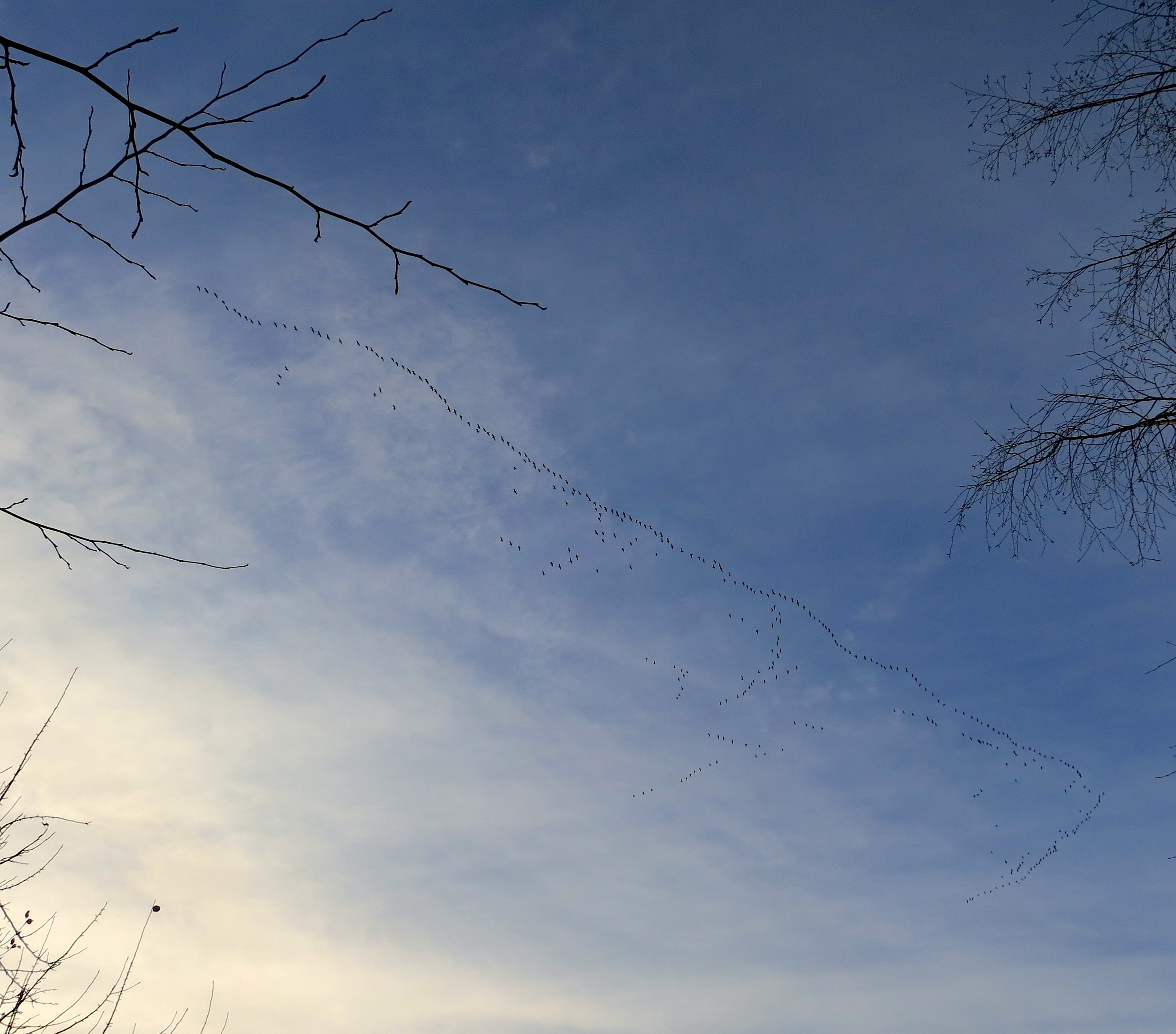
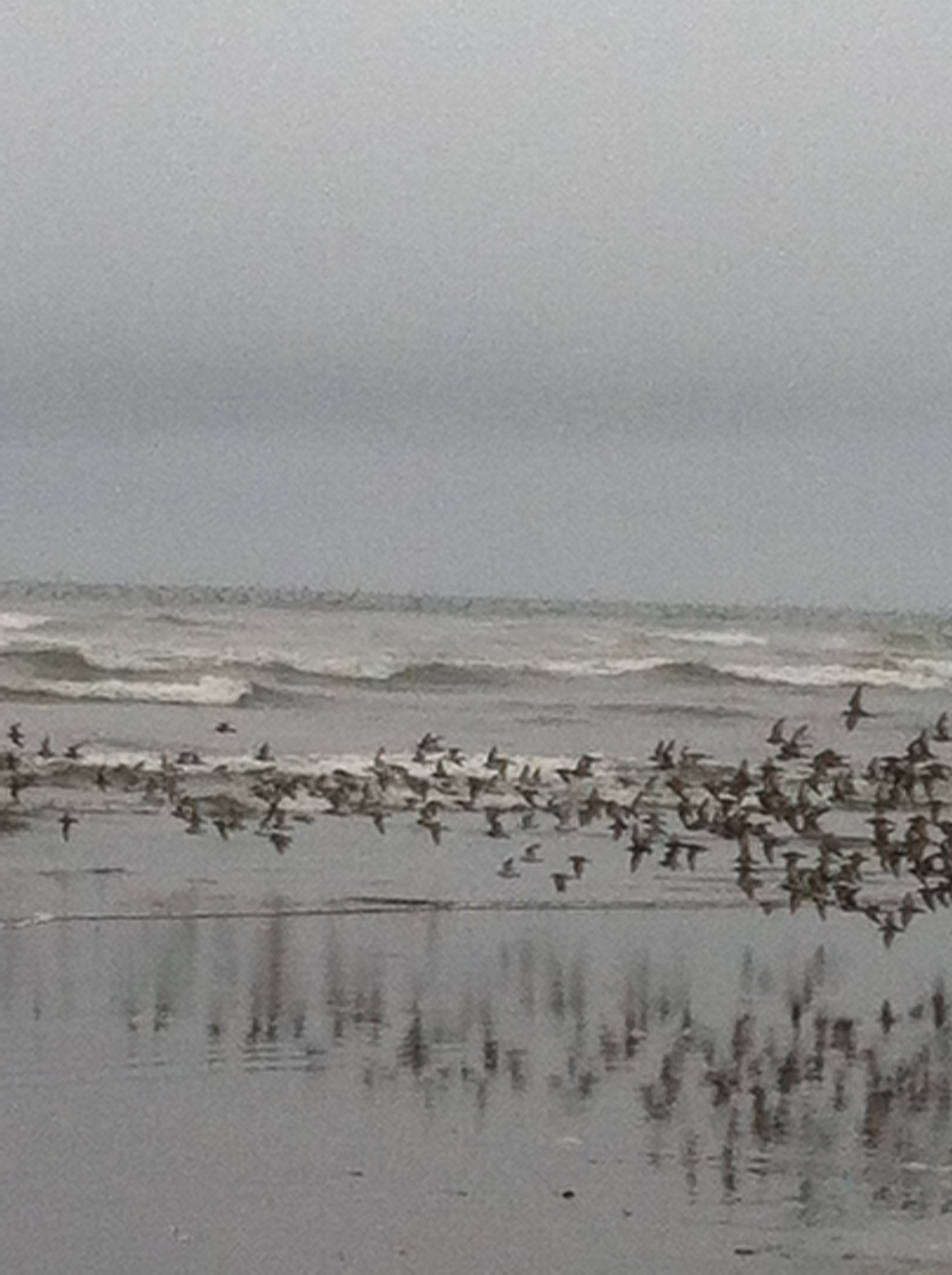
Once only when the summer was nearly over and my own hair had been white as the day’s clouds for more years than I was counting I looked across the garden at evening Paula was still weeding around flowers that open after dark and I looked up to the clear sky and saw the new moon and at that moment from behind me a band of dark birds and then another after it flying in silence long curving wings hardly moving the plovers just in from the sea and the flight clear from Alaska half their weight gone to get them home but home now arriving without a sound as it rose to meet them ~W.S. Merwin “Homecoming” from The Moon Before Morning
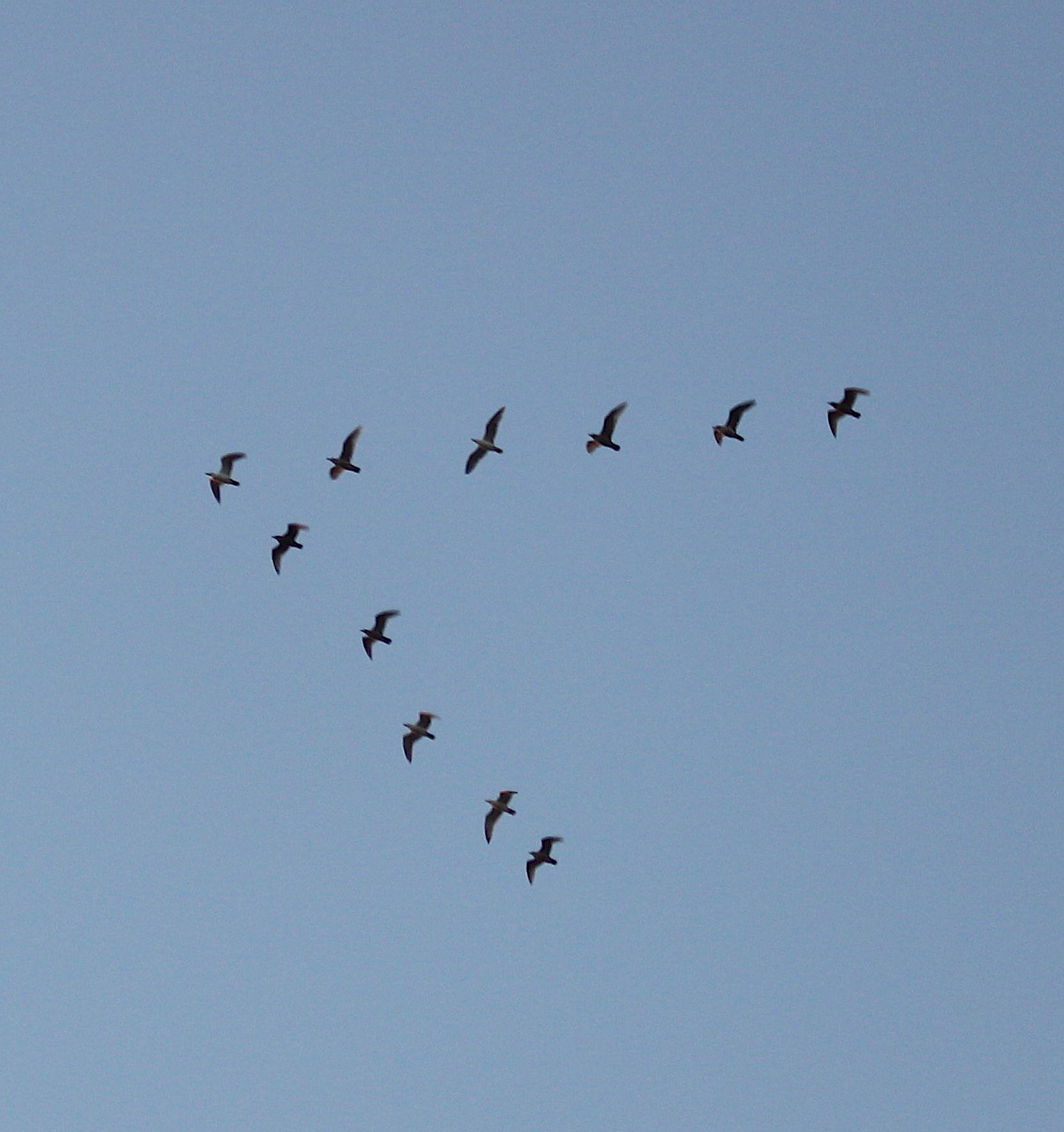
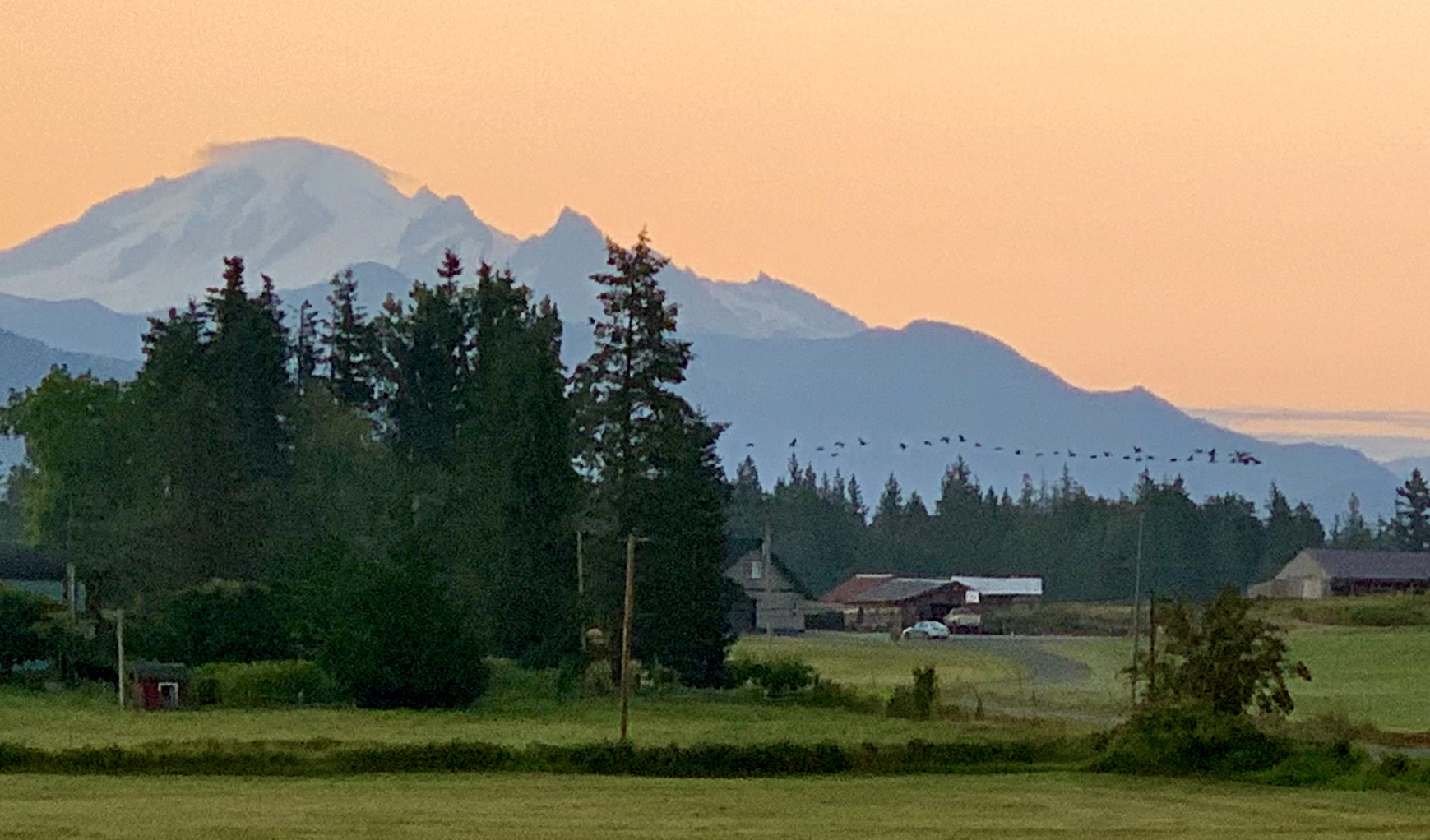
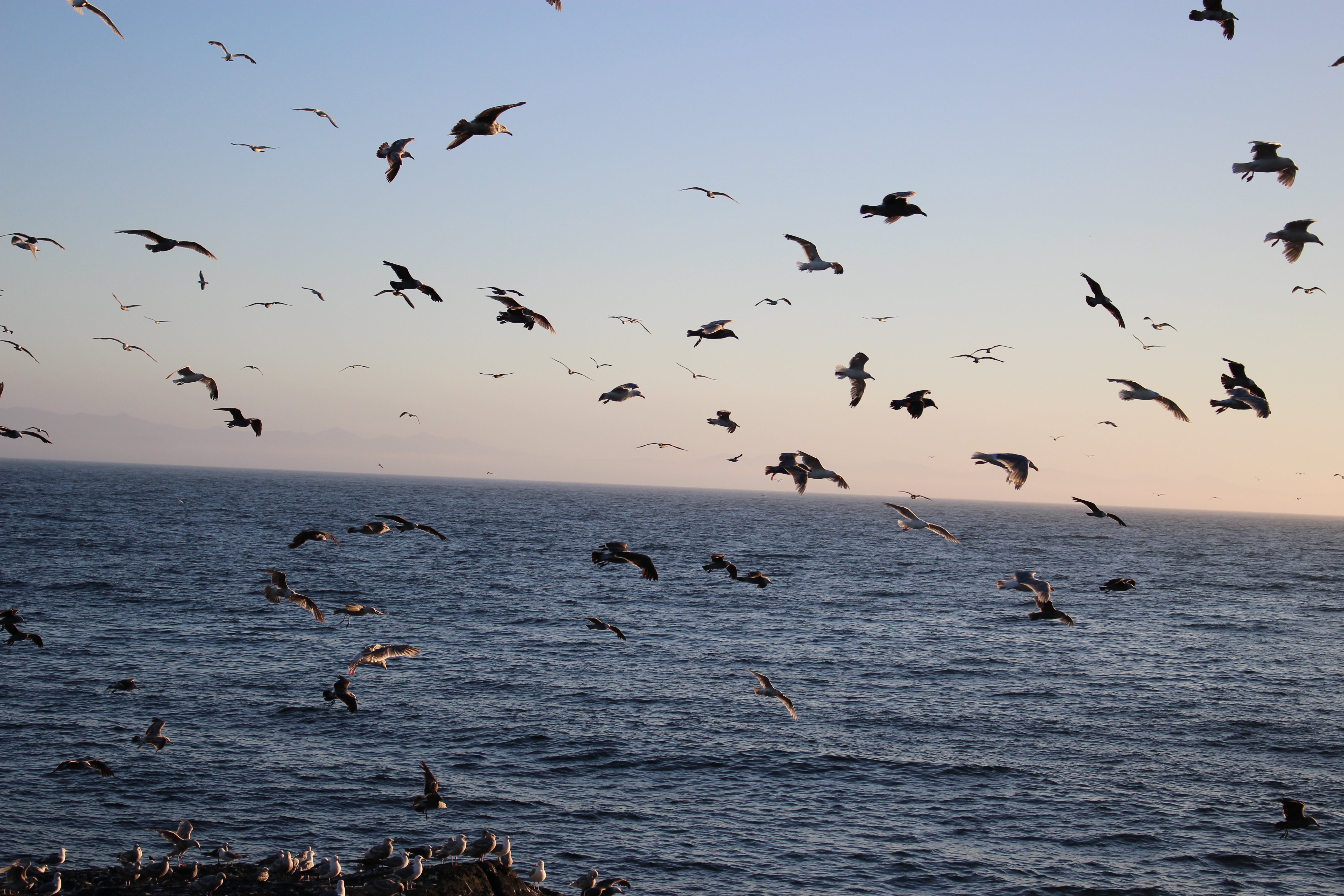
In late summer, the movement of birds above me has begun, like a prayer of promise among the clouds.
There are the noisy ones: geese, ducks, swans who can’t seem to travel without announcing it everywhere, like the booming basses from teenage vehicles speeding by.
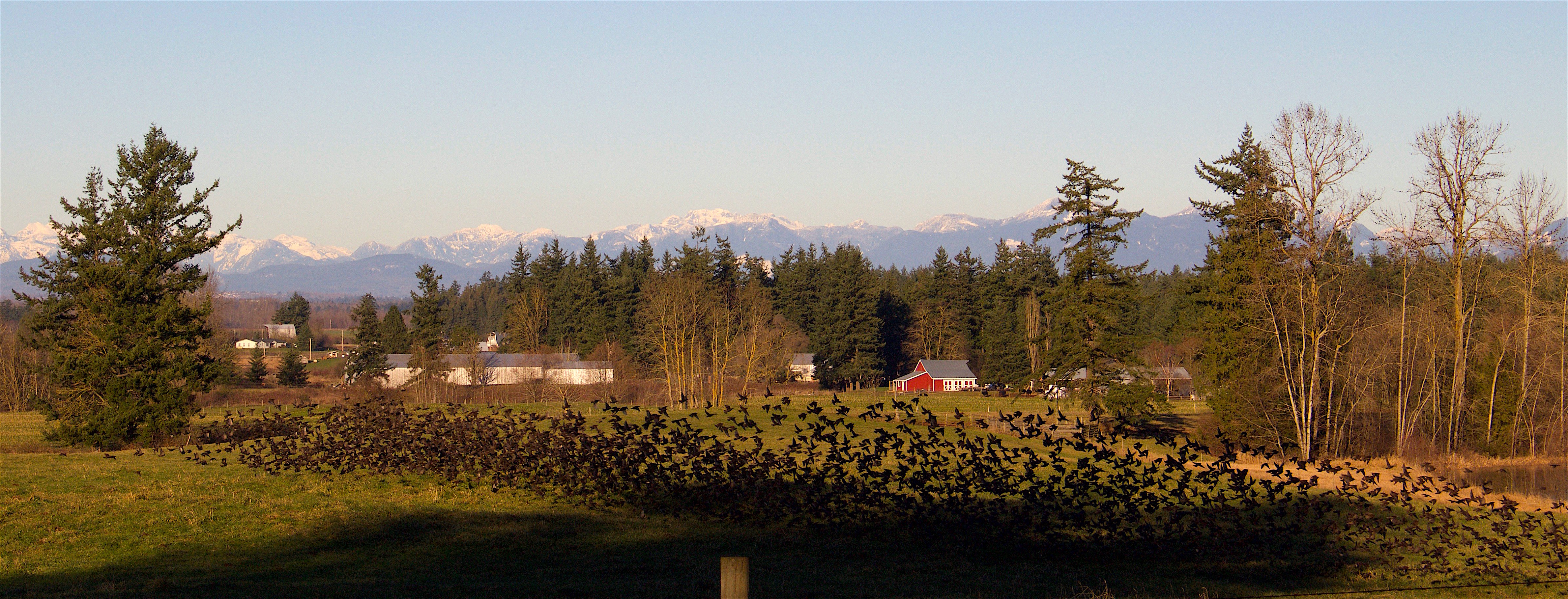
Then there are the starlings and others who murmurate with wing wooshes, forming and unforming as a choreographed larger organism.
The quietest and most earnest are the gulls and plovers, some traveling only a few miles from shore to cornfields, and others traveling half a continent without resting. They direct their energy to their wings to silently carry them home.
Some of our prayers for a safe return home are bold and loud. Others are expressed through feathered wings and forward progress. Most are prayed without a sound being made, becoming a constant through the rhythms of the heart, a quiet recognition that our true home will rise to meet us when we arrive.
I will have nothing to do with a God who cares only occasionally. I need a God who is with us always, everywhere, in the deepest depths as well as the highest heights. It is when things go wrong, when good things do not happen, when our prayers seem to have been lost, that God is most present. We do not need the sheltering wings when things go smoothly. We are closest to God in the darkness, stumbling along blindly. ~Madeleine L’Engle
One-Time
Monthly
Yearly
Make a one-time or recurring donation to support daily Barnstorming posts
At the edge of the city, at the edge of the world, at the edge between the earth and endless sky, the moonshining place, the place where we hung our long summer legs over the edge and fought the urge to drop a shoe or sneak a real first kiss, the place where we played hide-and-go-seek and Tag, you’re it! until we couldn’t breathe or the sun went down, the place where we came on the quietest nights to feel the moon kiss the edge between our skin and endless sky. ~Sarah Kobrinsky, from Nighttime on the Otherside of Everything
Once when we were playing hide-and-seek and it was time to go home, the rest gave up on the game before it was done and forgot I was still hiding. I remained hidden as a matter of honor until the moon rose. ~Galway Kinnell “Hide-and-Seek 1933” from Strong Is Your Hold.
Tomorrow there will be sun, scalloped by clouds, ushered in by a waterfall of birdsong. It will be a temperate seventy-five, low humidity. For twenty-four hours, all politicians will be silent. Reality programs will vanish from TV, replaced by the “snow” that used to decorate our screens when reception wasn’t working. Soldiers will toss their weapons in the grass. The oceans will stop their inexorable rise. No one will have to sit on a committee. When twilight falls, the aurora borealis will cut off cell phones, scramble the internet. We’ll play flashlight tag, hide and seek, decorate our hair with fireflies, spin until we’re dizzy, collapse on the dew-decked lawn and look up, perhaps for the first time, to read the long lines of cold code written in the stars…. ~Barbara Crooker “Tomorrow” from Some Glad Morning.
As a kid playing hide-n-seek, I always preferred to be the “seeker” as I was secretly afraid if I hid, I would be forgotten, everyone would go home and I wouldn’t be found.
Even so, I was too proud to quit the game and come out of hiding. Of course that never happened in real life. I was really lousy at hiding.
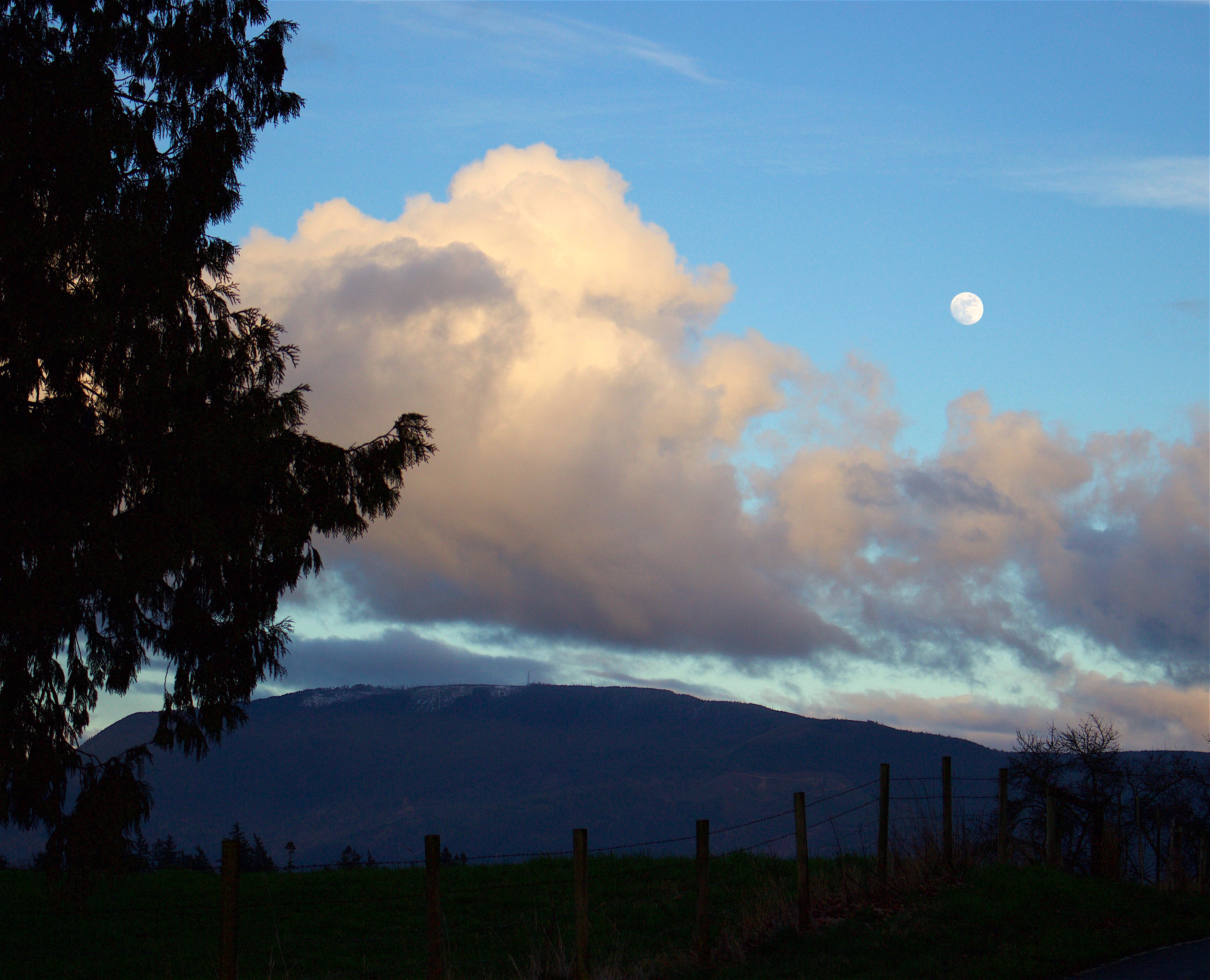
When I got older, I was no better at hiding, though I tried. God would always locate me, even without sending the tell-tale spotlight of the moon to find me.
I gave up hiding long ago. Once found, there is no point in trying to disappear from His sight.
His eye shines bright upon us all.
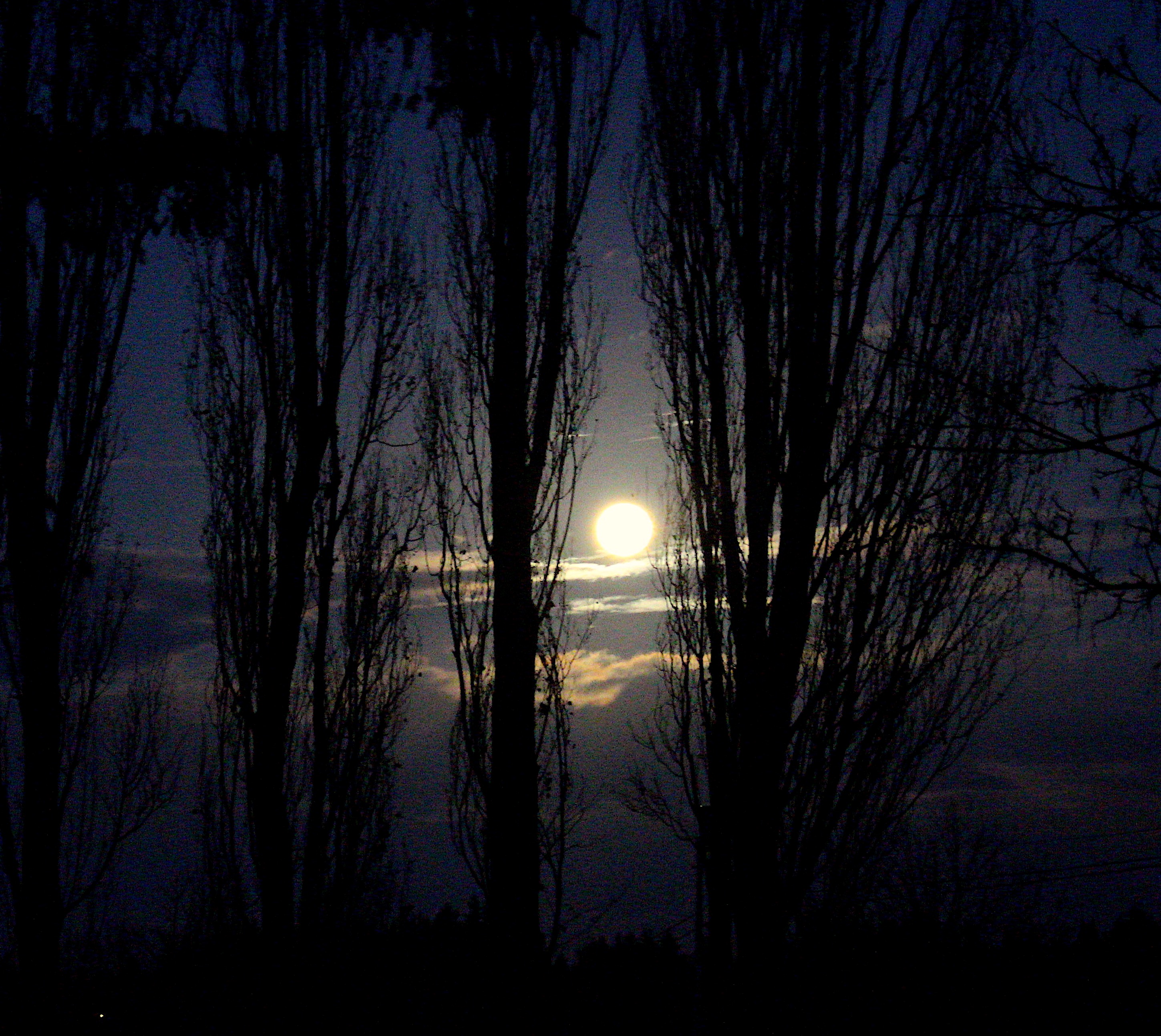
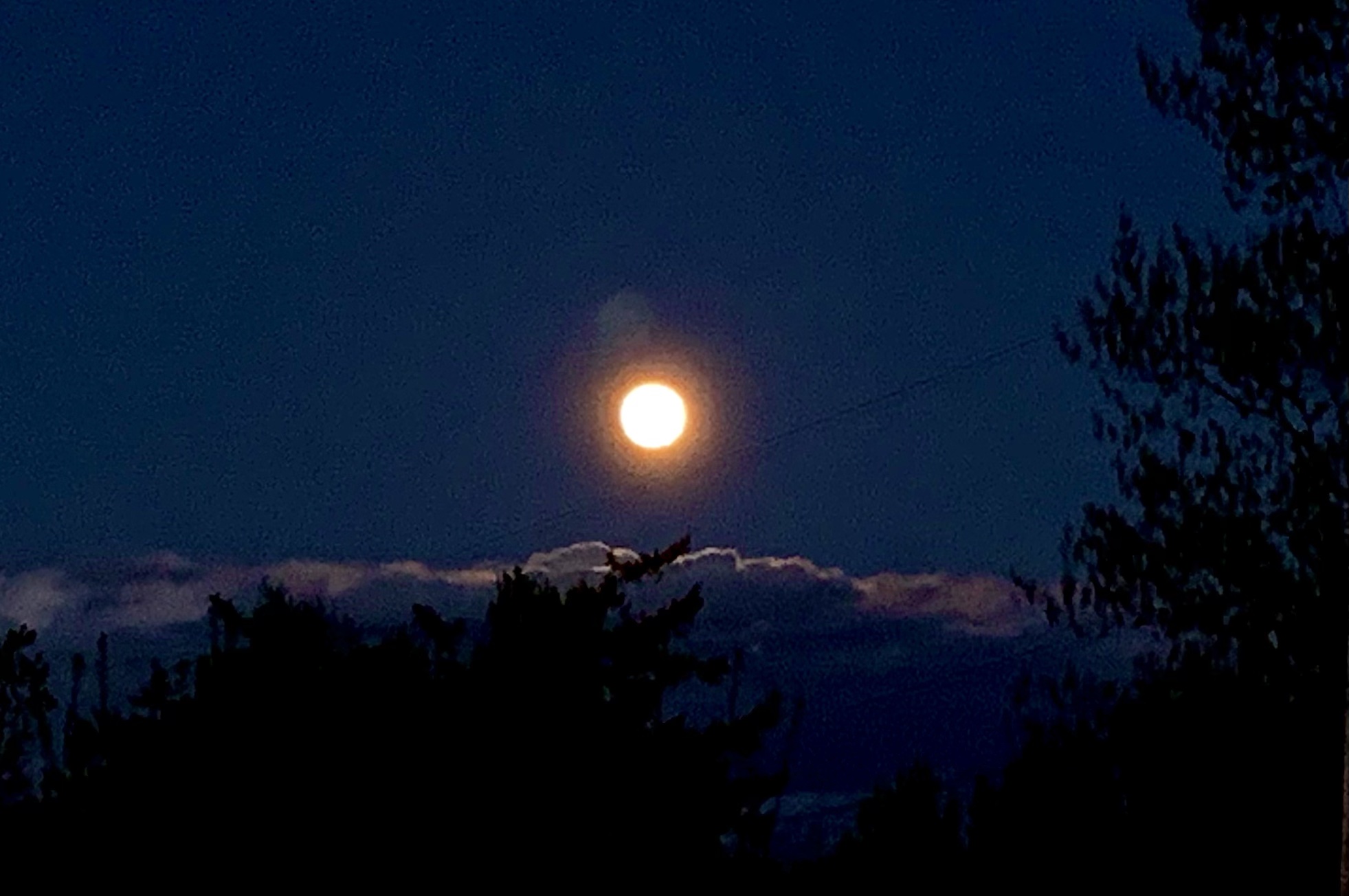
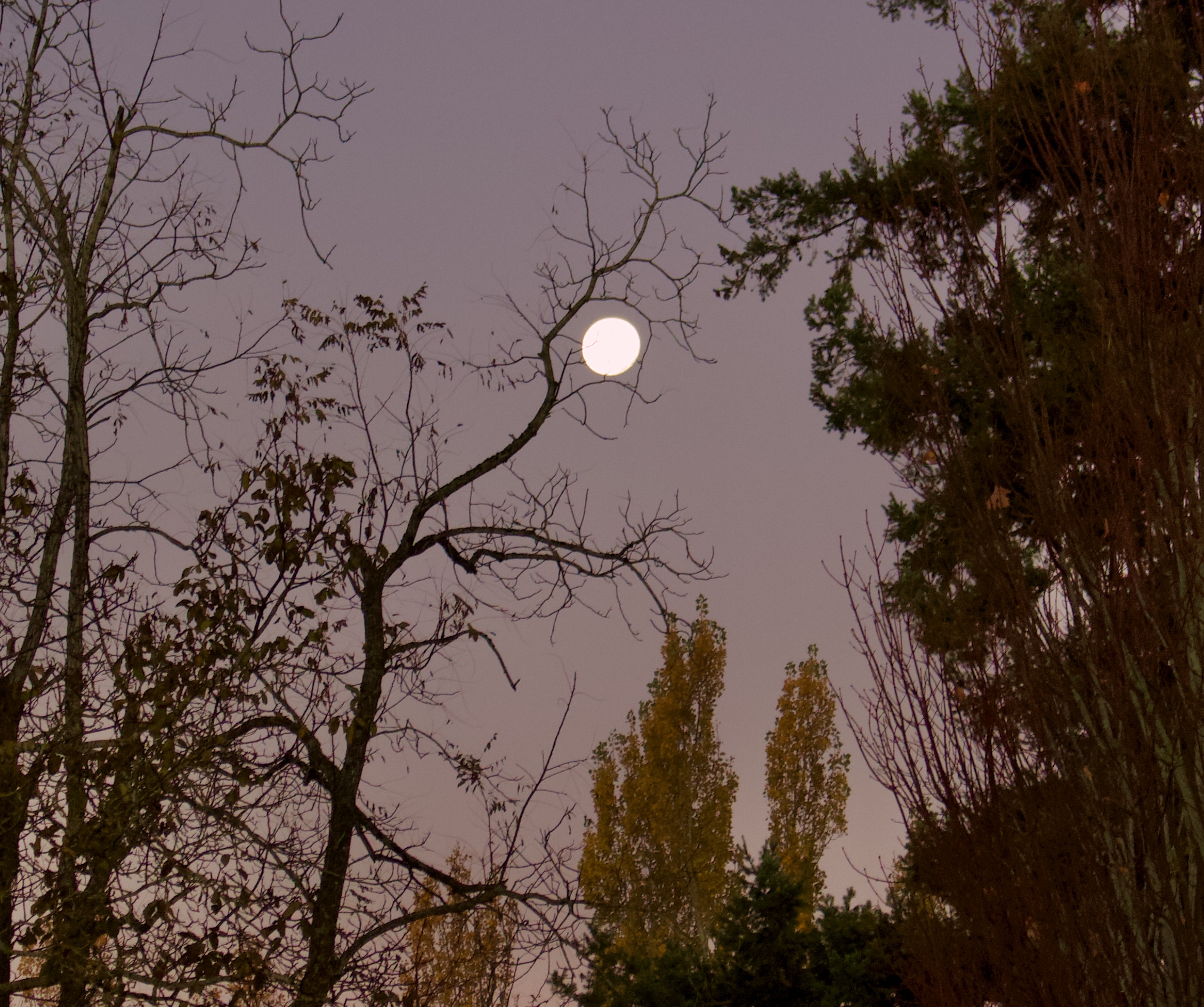
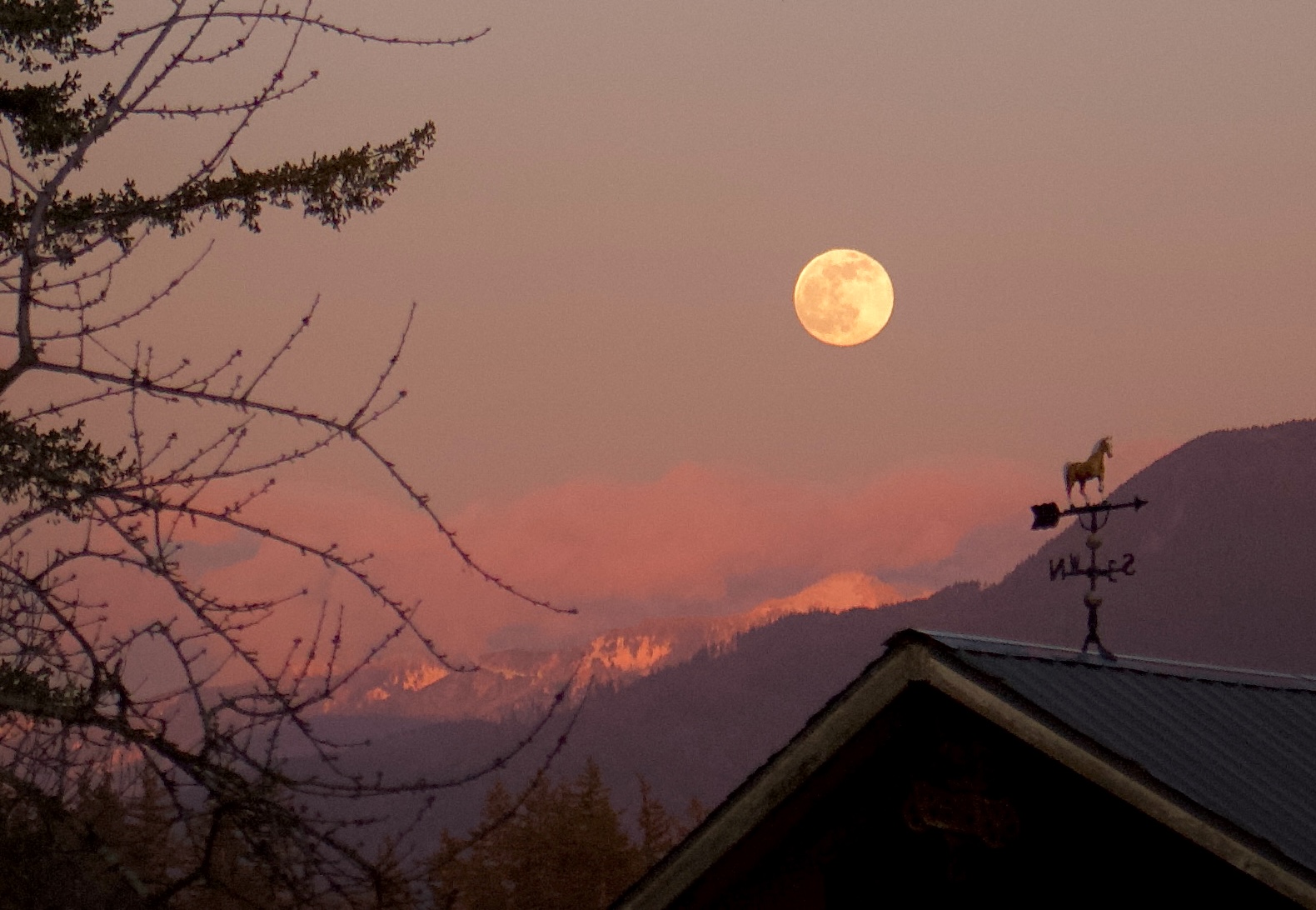
photo of supermoon by Harry Rodenbergerphoto of supermoon by Bob Tjoelker
One-Time
Monthly
Yearly
Make a one-time or recurring donation to support daily Barnstorming posts
A second crop of hay lies cut and turned. Five gleaming crows search and peck between the rows. They make a low, companionable squawk, and like midwives and undertakers possess a weird authority.
Crickets leap from the stubble, parting before me like the Red Sea. The garden sprawls and spoils.
Cloud shadows rush over drying hay, fences, dusty lane, and railroad ravine. The first yellowing fronds of goldenrod brighten the margins of the woods.
Schoolbooks, carpools, pleated skirts; water, silver-still, and a vee of geese.
*
The cicada’s dry monotony breaks over me. The days are bright and free, bright and free.
Then why did I cry today for an hour, with my whole body, the way babies cry?
*
A white, indifferent morning sky, and a crow, hectoring from its nest high in the hemlock, a nest as big as a laundry basket …
In my childhood I stood under a dripping oak, while autumnal fog eddied around my feet, waiting for the school bus with a dread that took my breath away.
The damp dirt road gave off this same complex organic scent. I had the new books—words, numbers, and operations with numbers I did not comprehend—and crayons, unspoiled by use, in a blue canvas satchel with red leather straps.
Spruce, inadequate, and alien I stood at the side of the road. It was the only life I had. ~Jane Kenyon from “Three Songs at the End of Summer”
Yesterday, my son taught me the sign for lockdown— different than locking a door, or the shutdown we invented at the start of the pandemic. Little fistfuls of locks swept quickly between us, a sign designed especially for school.
My son spent his first years a different kind of locked up—an orphanage in Bangkok, where he didn’t speak and they couldn’t sign. He came home, age four, silent. We thought being here could open doors. It has, of course. He’s learned so much at the deaf school; the speech therapist calls it a Language Explosion. I keep lists of the words he’s gathered: vanilla, buckle, castle, stay. And lockdown. He absorbs it like the rest. Now the schools he builds with Magna-Tiles have lockdowns. I worry in trying to give him keys, we’ve only changed the locks.
To lock down a deaf school, we use a special strobe. When it flashes, we flip switches and sign through darkness. The children know to stay beneath the windows. Every five minutes a robot texts: “Shelter in place is still in effect. Please await further instructions.” Then we pull the fire alarm, a tactical move to unsettle the shooter. Hearing people can’t think with noise like that. A piercing thing we don’t detect, to cover the sounds we make, the sounds we don’t know we’re making. ~Sara Nović “Lockdown at the School for the Deaf”
The first day back to school now isn’t always the day after Labor Day as it was when I was growing up. Some students have been in classes for a couple weeks already, others started a few days ago to ease into the transition more gently.
Some return to the routine this morning – school buses roar past our farm brimming with eager young faces and stuffed back packs amid a combination of excitement and anxiety.
I remember well that foreboding that accompanied a return to school — the strict schedule, the inflexible rules and the often harsh adjustment of social hierarchies and friend groups. Even as a good learner and obedient student, I was a square peg being pushed into a round hole when I returned to the classroom. The students who struggled academically and who pushed against the boundaries of rules must have felt even more so. We all felt alien and inadequate to the immense task before us to fit in with one another, allow teachers to structure and open our minds to new thoughts, and to become something and someone more than who we were before.
Growth is so very hard, our stretching so painful, the tug and pull of friendships stressful. And for the last two decades, there is the additional fear of lockdowns and active shooters.
I worked with students on an academic calendar for over 30 years, yet though I’m now retired, I still don’t sleep well in anticipation of all this day means.
So I take a deep breath on a foggy post-Labor Day morning and am immediately taken back to the anxieties and fears of a skinny little girl in a new home-made corduroy jumper and saddle shoes, waiting for the schoolbus on our drippy wooded country road.
She is still me — just buried deeply in the fog of who I became after all those years of schooling, hidden somewhere under all the piled-on layers of learning and growing and hurting and stretching — I do remember her well.
Like every student starting a new adventure today, we could all use a hug.
Lo! I am come to autumn, When all the leaves are gold; Grey hairs and golden leaves cry out The year and I are old.
In youth I sought the prince of men, Captain in cosmic wars, Our Titan, even the weeds would show Defiant, to the stars.
But now a great thing in the street Seems any human nod, Where shift in strange democracy The million masks of God.
In youth I sought the golden flower Hidden in wood or wold, But I am come to autumn, When all the leaves are gold. ~G.K. Chesterton “Gold Leaves”
One-Time
Monthly
Yearly
Make a one-time or recurring donation to support daily Barnstorming posts
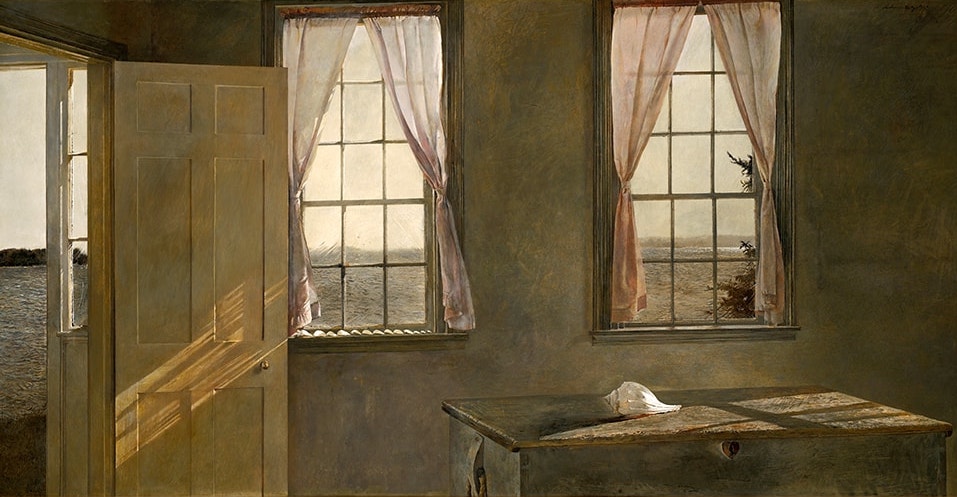
Needing them still, I come when I can, this time to the sea where we share a room: their double bed, my single. Morning fog paints the pale scene even paler. Lace curtains breathing, the chenille spread folded back, my father’s feet white sails furled at the edge of blue pajamas. Every child’s dream, a parent in each hand, though this child is fifty. Their bodies fit easily, with room to spare. When did they grow so small? Grow so small— as if it were possible to swell backwards into an earlier self.
“Her Room” by Andrew Wyeth in the Farnsworth Art Museum
My parents have been gone now for some time, my father 30 years, my mother, nearly 17 years. Their dying was a long process of counted breaths and pauses. I witnessed their bodies curling into themselves, shrinking smaller, worn down by illness and age.
I still miss them as I’m reminded of them by the events of my own life, still wanting them to take me by the hand as I navigate my own daily path.
After mom’s death, those possessions not distributed to family members have remained packed up and stored in our barn buildings. I know it is well past time to deal with their stuff as I become keenly aware of my own graying and aging.
In the house, next to where I write, is a box of over 500 letters written by my mother and father between 1941 and 1945. The letters began as they were getting to know each other at college, going from “pinned” to “engaged” and continue for three and a half more years after a hurried wedding Christmas Eve 1942. By mid-January 1943, my newly minted Marine officer father shipped out to spend the next three years of his life fighting on the battlefields of Saipan, Tinian and Tarawa in the Pacific Ocean, not to return again to the states until late summer of 1945.
My mother wrote her letters from the small rural eastern Washington community of Colville, living in a “teachers’ cottage” with other war wives who taught school while waiting for their husbands to return home – or not.
It took me a decade to find the courage and time to devote to reading these letters they treasured and never threw away. I sorted them unopened by postmark date into some semblance of order and sat down to start at the very beginning, which, of course, is my beginning as well. I opened each one with some trepidation and a lump in my throat about what I might find written there. I worried I may find things I didn’t want to know. I hoped I would find things that I desperately needed to know.
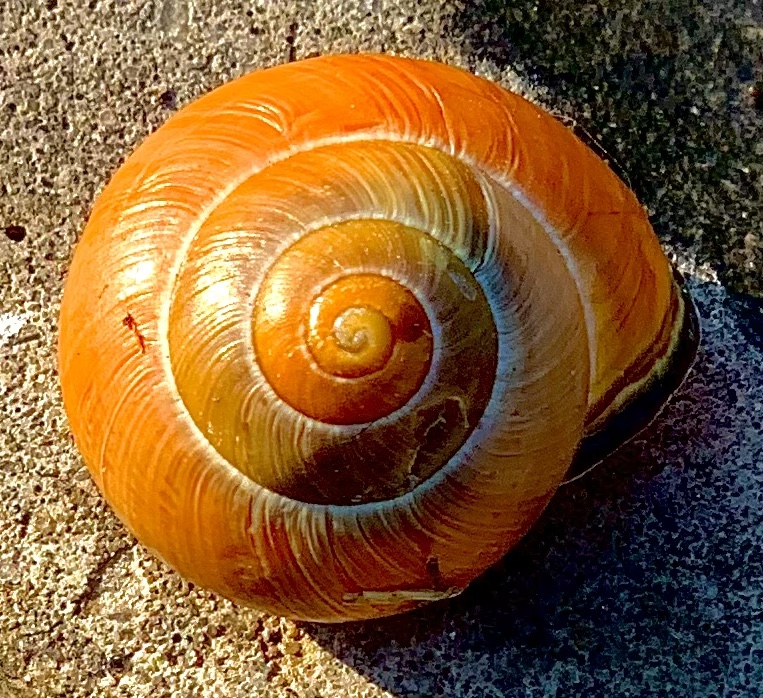
Most of all I wanted to understand the two people who became my parents within the coiled shell of their forty years together, though broken by a painful divorce which lasted a decade. Having lived through that awful time with them, I want to understand the origin of a love which eventually mended their cracked shell of companionship, gluing them back together for five more years before my father died.
As I ponder their words, I too cross a bridge back to them both, my ear pressed to the coiled shell of those fading voices, as if I might still hear the sea, at times bringing them closer, then pulling them farther away.
AI image created for this post
One-Time
Monthly
Yearly
Make a one-time or recurring donation to support daily Barnstorming posts
A voice had begun to sing. It was very far away and…. hard to decide from what direction it was coming. Sometimes it seemed to come from all directions at once. Sometimes he almost thought it was coming out of the earth beneath them. Its lower notes were deep enough to be the voice of the earth herself.
There were no words. There was hardly even a tune. But it was, beyond comparison, the most beautiful noise he had ever heard. It was so beautiful he could hardly bear it.
The earth was of many colors: they were fresh, hot, and vivid. They made you feel excited; until you saw the Singer himself, and then you forgot everything else. ~C.S. Lewis from The Magician’s Nephew
And did you get what you wanted from this life, even so? I did. And what did you want? To call myself beloved, to feel myself beloved on the earth. ~Raymond Carver “Late Fragment”
Beautiful things and varied shapes appeal to [the eyes], vivid and well-matched colors attract; but let not these captivate my soul. Rather let God ravish it; he made these things exceedingly good, to be sure, but he is my good, not they. ~St. Augustine
Every time I open my eyes and listen for the voice of the morning, I am reminded how precious is this moment, how welcome is each breath and each heartbeat.
We are created for this. We are, everyone of us, beloved by our Creator. We are meant to wonder breathless at this, without ceasing, through the long day.
One-Time
Monthly
Yearly
Make a one-time or recurring donation to support daily Barnstorming posts
You have brains in your head. You have feet in your shoes. You can steer yourself any direction you choose. ~ Dr. Seuss
You give the appearance of listening To my thoughts, O trees, Bent over the road I am walking On a late summer evening When every one of you is a steep staircase The night is slowly descending.
The high leaves like my mother’s lips Forever trembling, unable to decide, For there’s a bit of wind, And it’s like hearing voices, Or a mouth full of muffled laughter, A huge dark mouth we can all fit in Suddenly covered by a hand.
Everything quiet.
The sky at the road’s end cloudless and blue. The night birds like children Who won’t come to dinner. Lost children in the darkening woods. ~Charles Simic from “Evening Walk” in The Voice at 3 A.M.”
I wonder about the trees.
My feet tug at the floor And my head sways to my shoulder Sometimes when I watch trees sway, From the window or the door. I shall set forth for somewhere, I shall make the reckless choice Some day when they are in voice And tossing so as to scare The white clouds over them on. I shall have less to say, But I shall be gone. ~Robert Frost from “The Sound of Trees”
The voice of the trees urges me to move my feet while they stay rooted in place.
I am propelled forward by winds that strip away leaves, bend branches.
Tempted to simply stand and watch their motion, instead I walk among the rooted ones, grateful for my legs.
They clap their hands and wave as I pass by.
One-Time
Monthly
Yearly
Make a one-time or recurring donation to support daily Barnstorming posts
On Sundays, when the rain held off, after lunch or later, I would go with my twelve year old daughter into town, and put down the time at junk sales, antique fairs.
There I would lean over tables, absorbed by lace, wooden frames, glass. My daughter stood at the other end of the room, her flame-coloured hair obvious whenever— which was not often—
I turned around. I turned around. She was gone. Grown. No longer ready to come with me, whenever a dry Sunday held out its promises of small histories. Endings.
Spirit of irony, my caustic author of the past, of memory,—
and of its pain, which returns hurts, stings—reproach me now, remind me that I was in those rooms, with my child, with my back turned to her, searching—oh irony!— for beautiful things. ~Eavan Boland from “The Necessity for Irony” in The Lost Land.
How is it we look past the golden treasure right in front of us, the beauty gifted generously to us, to pursue the glittery with no value in the long run?
If my history of misplaced focus be forgiven, it is only because of your own golden and generous grace – ironically, always the most beautiful object of my searching.
One-Time
Monthly
Yearly
Make a one-time or recurring donation to support daily Barnstorming posts
…today, the unseen was everything. The unknown, the only real fact of life. All this he saw, for one moment breathless and intense, vivid on the morning sky; and still, as he looked, he lived; and still, as he lived, he wondered. ~Kenneth Grahame, The Wind in the Willows
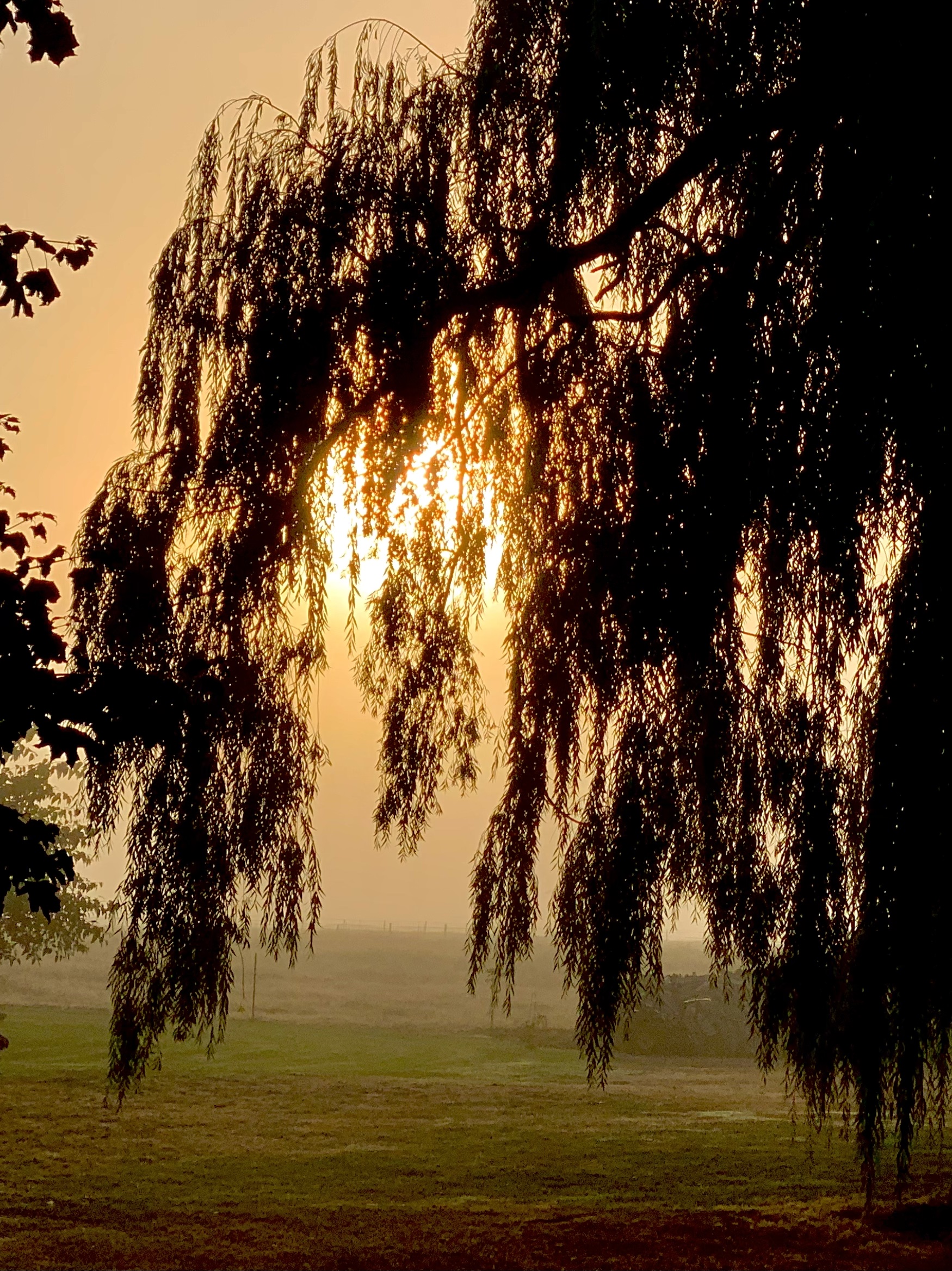
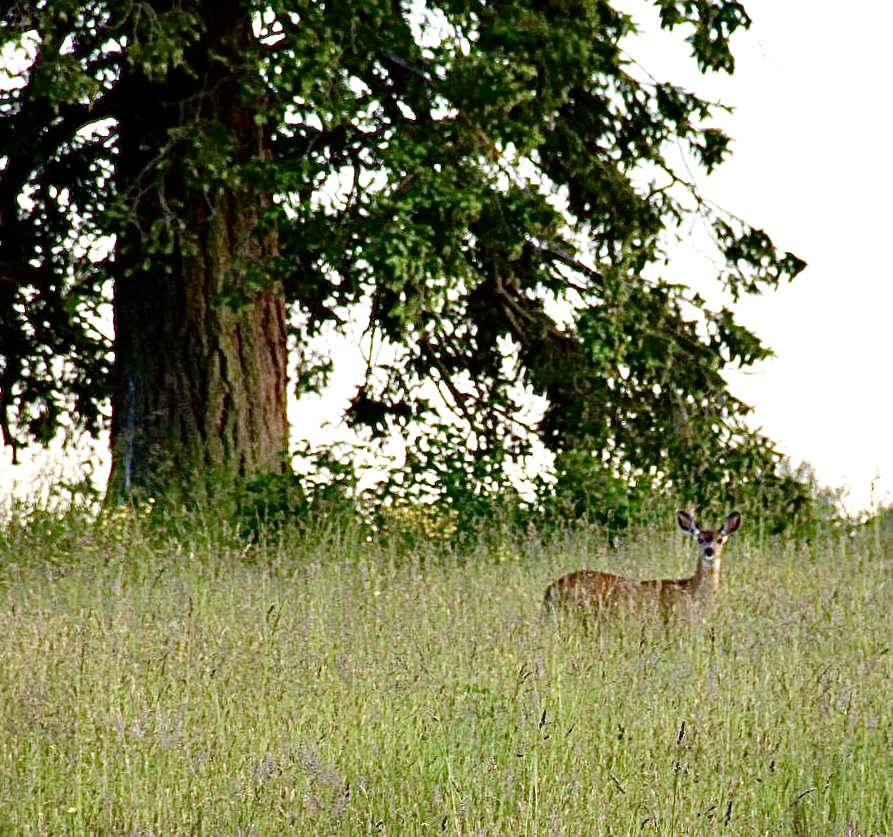
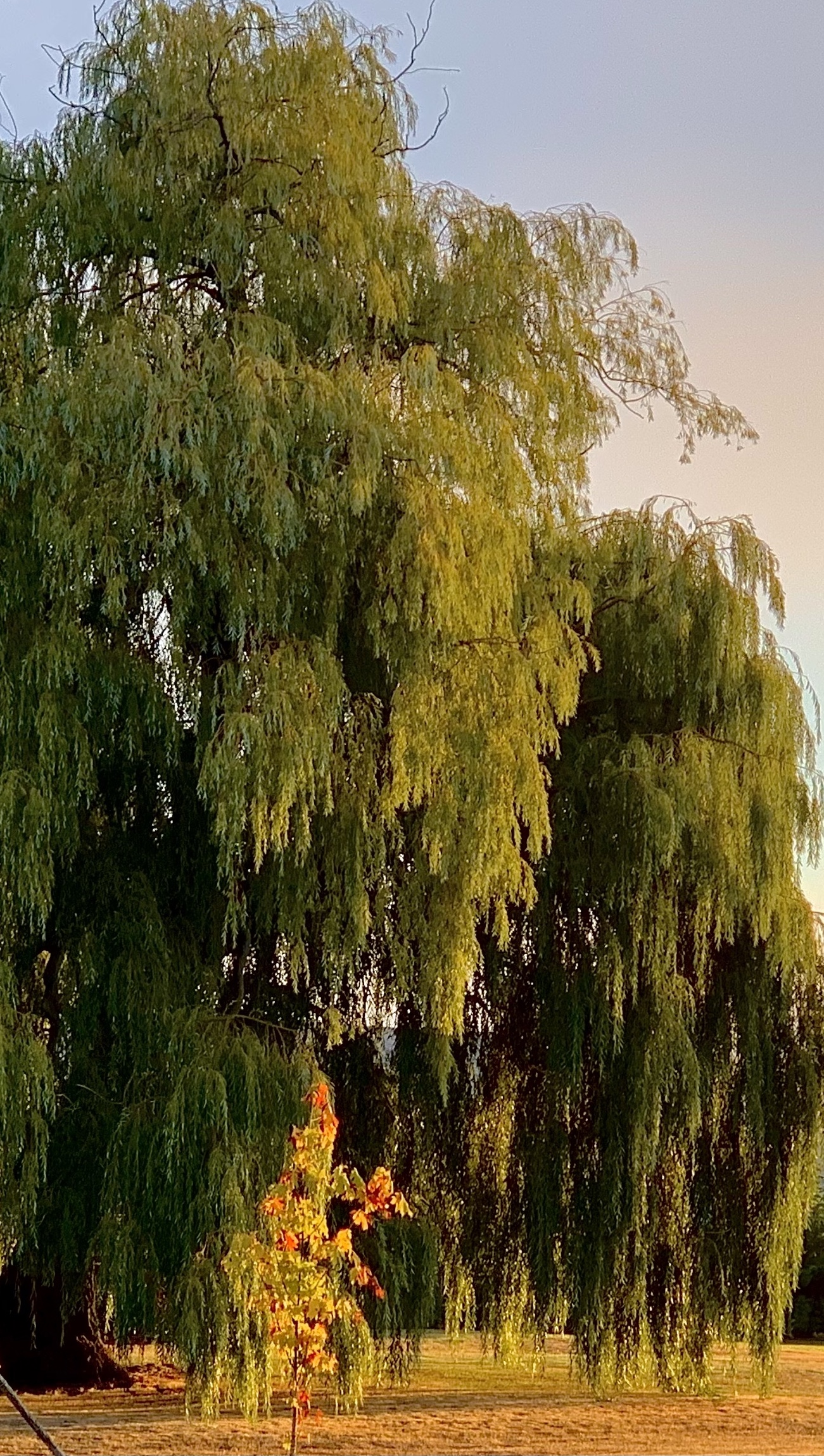
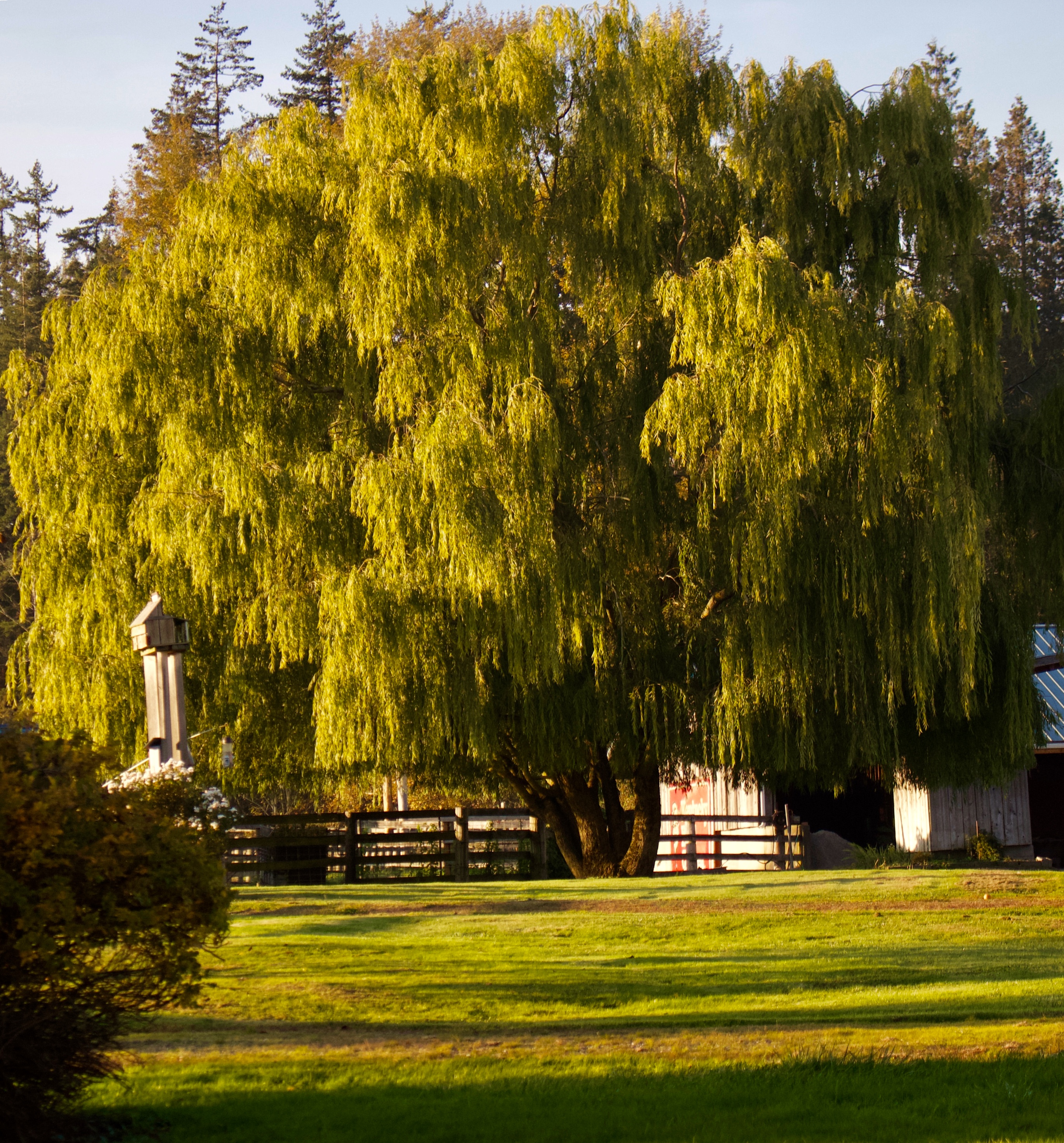
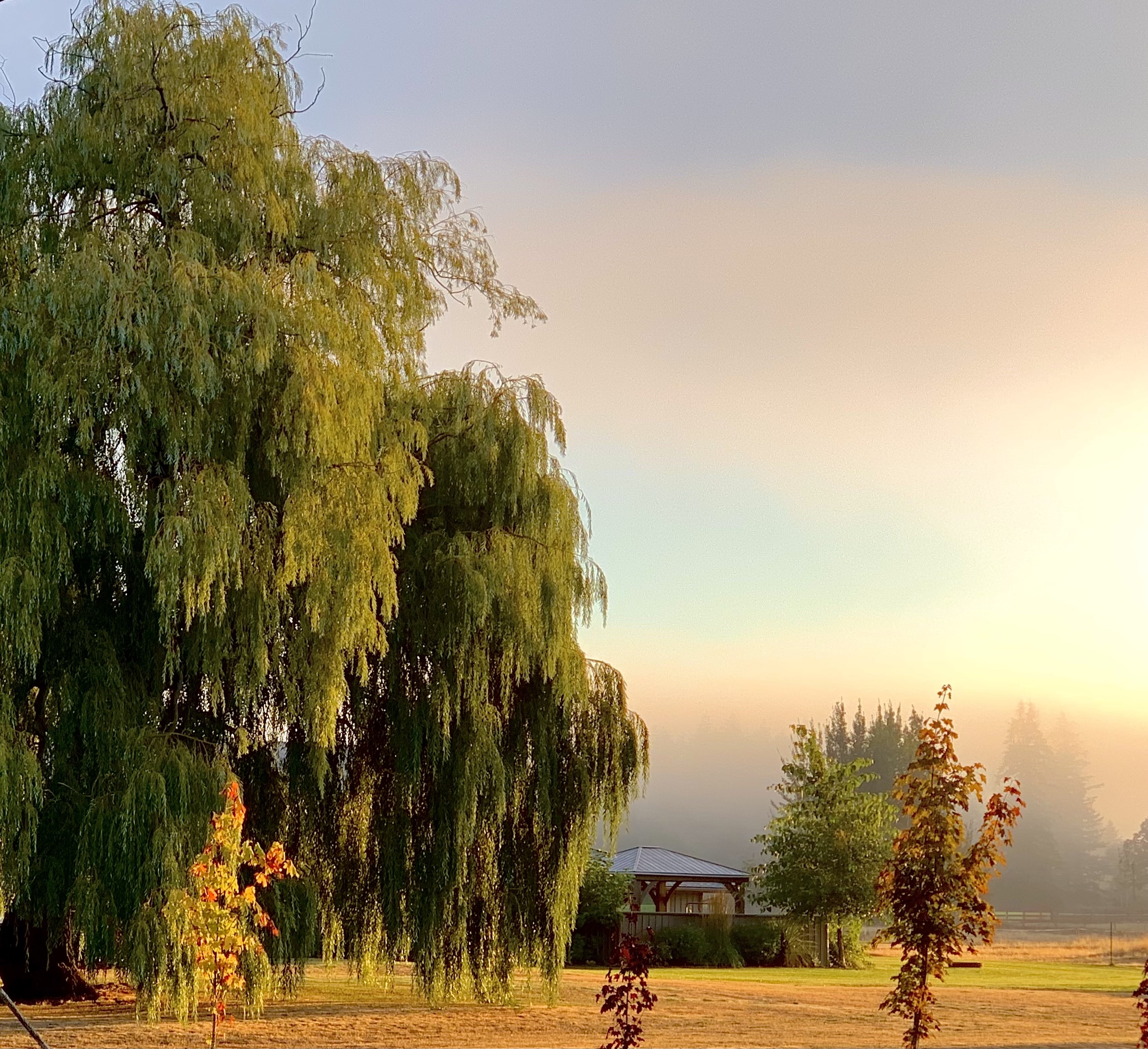
Purposefully lost in the willow stillness of a late summer meadow in the deer-filled dusk—a silver evening following a blue and amber day. ~Tim Hawkins “Purposefully Lost” from West of the Backstory
I search for the unseen, purposely lost, hoping to find meaning in the unknown.
I am bewildered by this life much of the time. Anyone looking at what I share here sees my struggle each day to discern how to make this sad and suffering world a little bit better place.
I have little to offer you other than my own wrestling match with the mysteries we all face.
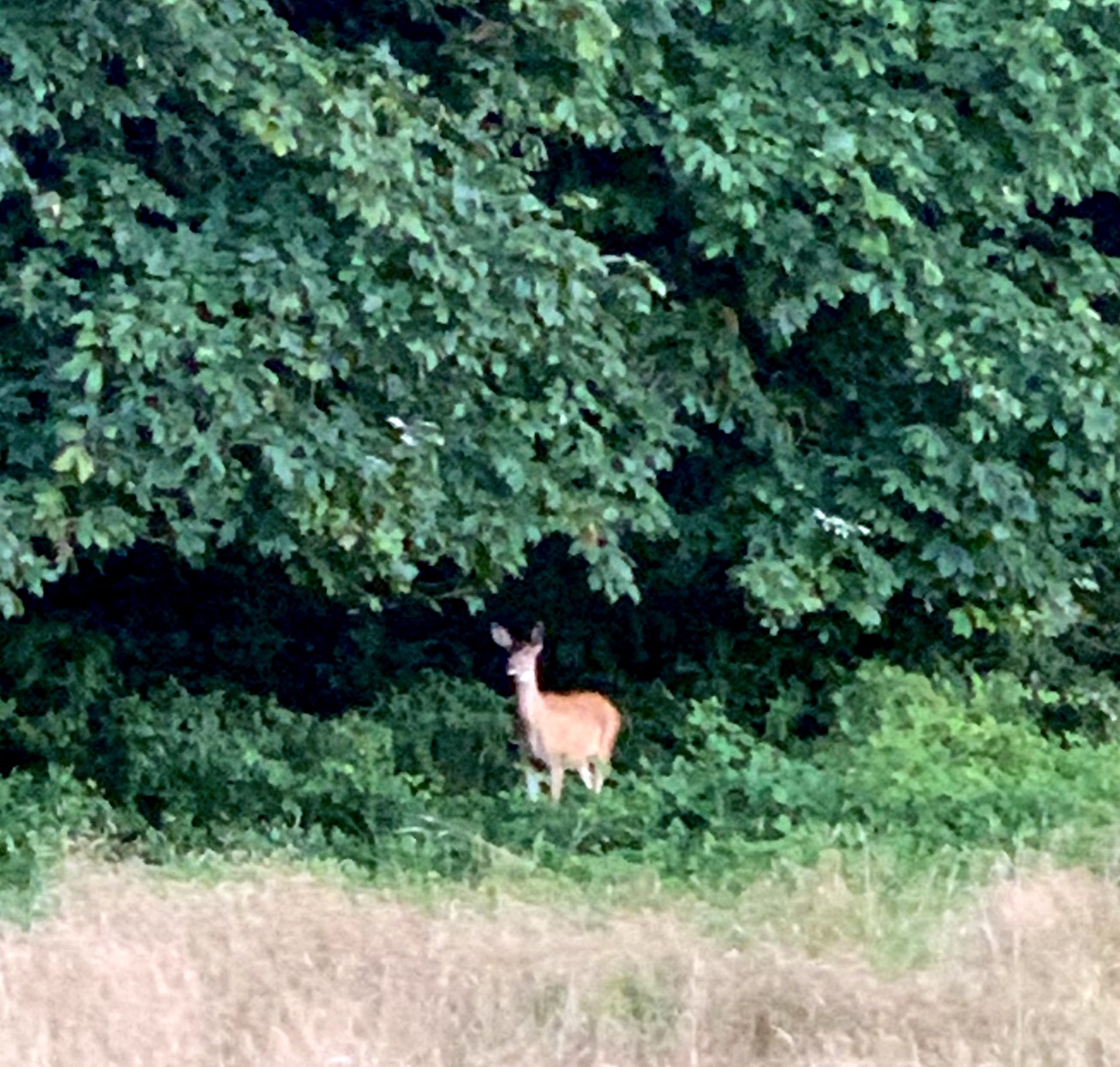
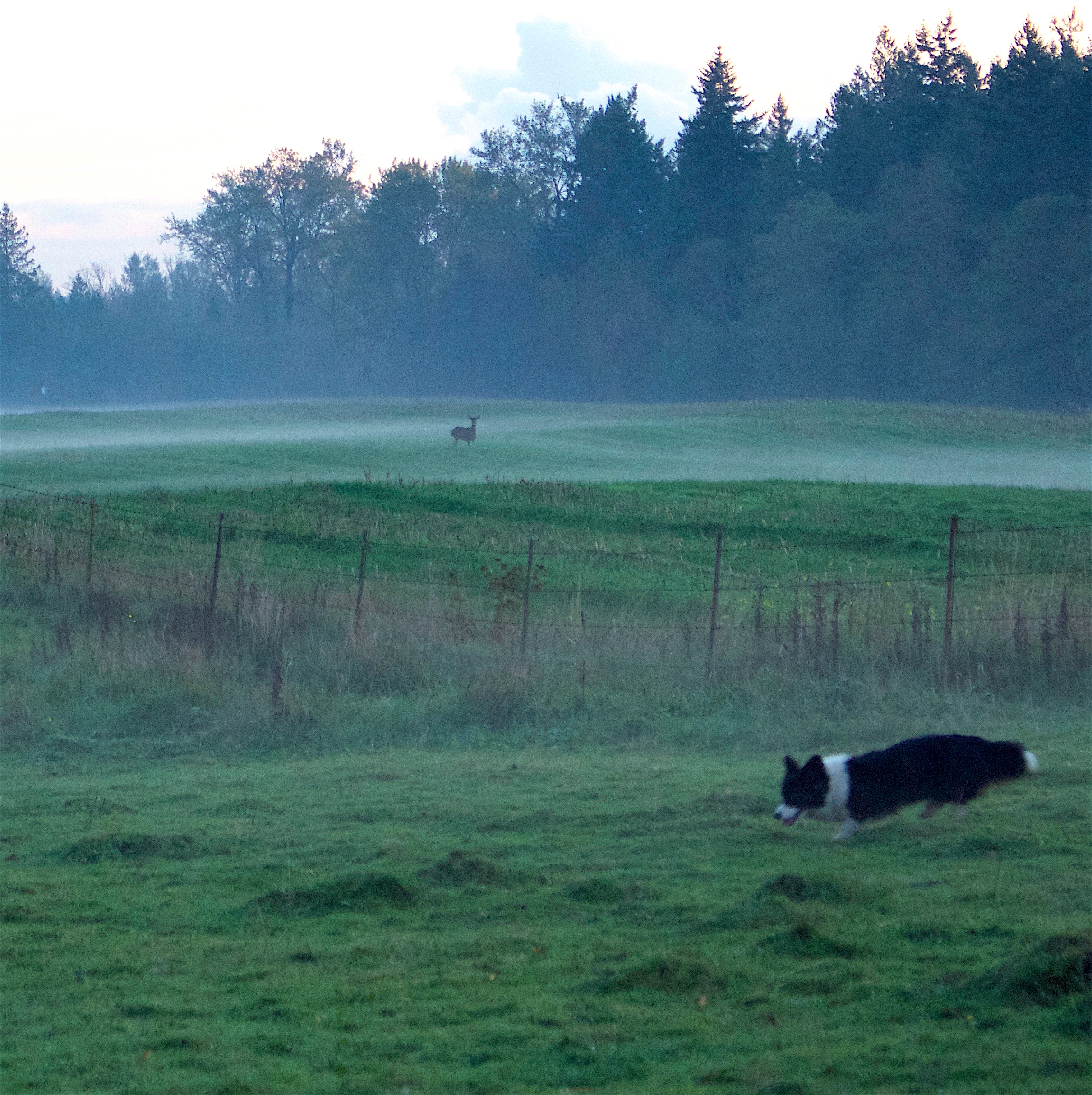
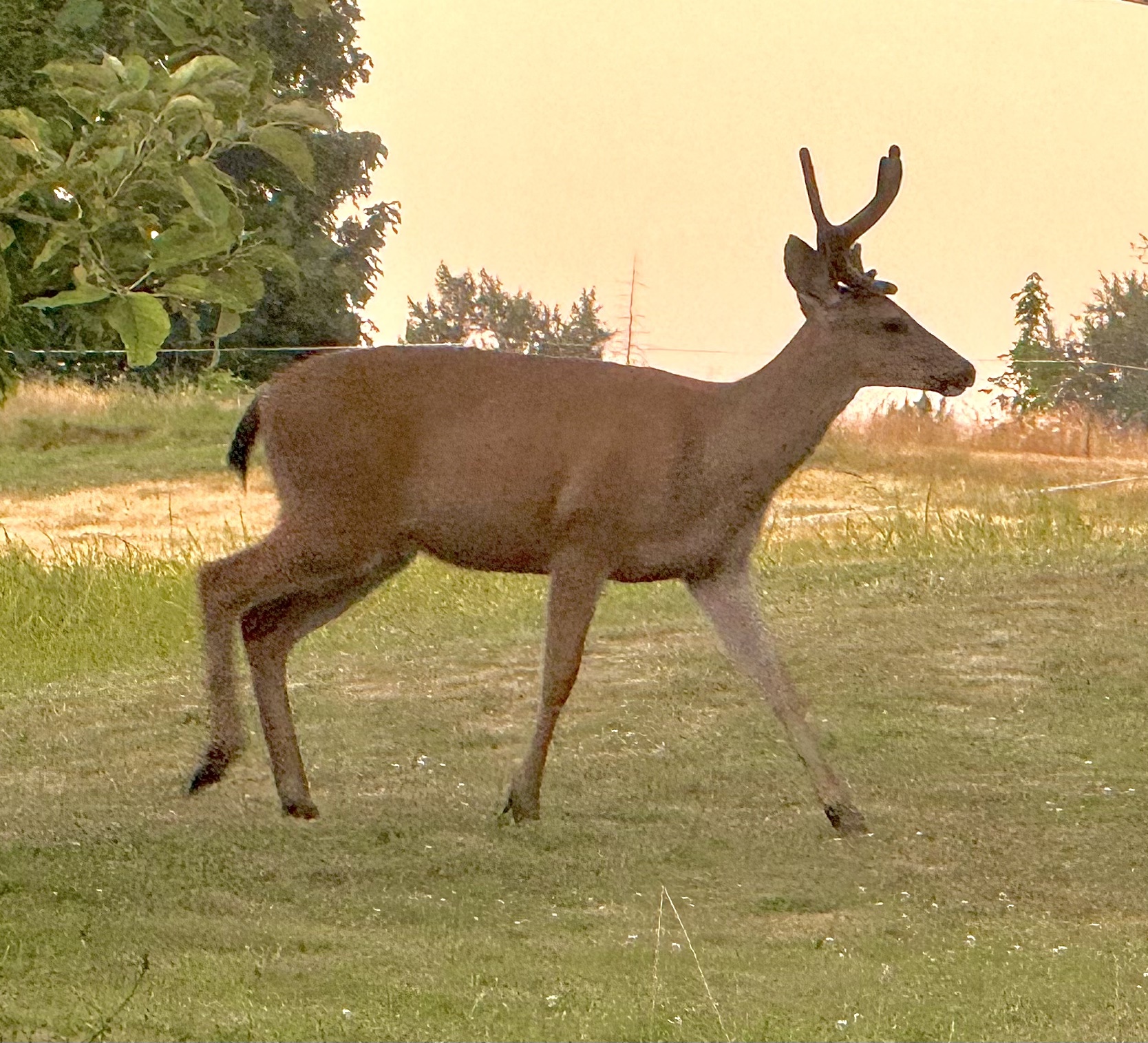
Then, when a light does shine out through darkness, when a deer steps out of the woods into the meadow, I am not surprised.
I simply need to pay attention. Illumination was there all the time, but I needed the eyes to see its beauty laid bare, brave enough to show itself even brighter in the light of day.
One-Time
Monthly
Yearly
Make a one-time or recurring donation to support daily Barnstorming posts
“They’re benign,” the radiologist says, pointing to specks on the x ray that look like dust motes stopped cold in their dance. His words take my spine like flame. I suddenly love the radiologist, the nurse, my paper gown, the vapid print on the dressing room wall. I pull on my radiant clothes. I step out into the Hanging Gardens, the Taj Mahal, the Niagara Falls of the parking lot. ~Jo McDougall, “Mammogram” from In the Home of the Famous Dead: Collected Poems
Outside the house the wind is howling and the trees are creaking horribly. This is an old story with its old beginning, as I lay me down to sleep. But when I wake up, sunlight has taken over the room. You have already made the coffee and the radio brings us music from a confident age. In the paper bad news is set in distant places. Whatever was bound to happen in my story did not happen. But I know there are rules that cannot be broken. Perhaps a name was changed. A small mistake. Perhaps a woman I do not know is facing the day with the heavy heart that, by all rights, should have been mine. ~Lisel Mueller “In November”
It does not escape me, especially on call-back mammogram days when I’m asked to return for a “closer look” at something that wasn’t there before.
which turns out to be a 1 cm. nonspecific solid something, maybe getting smaller over the past ten days.
Maybe a bruise. Maybe not. Check again in a month. A brief reprieve that some in the dressing cubicles around me don’t get.
I wake every day knowing: an earthquake happens somewhere else, a war is leaving people homeless and lifeless, a tornado levels a town, a drunk driver destroys a family, a fire leaves a house in ashes, a famine causes children to starve, a flood ravages a town, a devastating diagnosis darkens someone’s remaining days.
No mistake has been made, yet I wake knowing recently it was my turn to hear bad news, my heart was heavy, yet it still beats, still breaks, still bleeds, still believes in the radiance of each new day I’m given. I was reminded again today.
One-Time
Monthly
Yearly
Make a one-time or recurring donation to support daily Barnstorming posts
















 Barnstorming