May you see God’s light on the path ahead when the road you walk is dark. May you always hear even in your hour of sorrow, the gentle singing of the lark. When times are hard may hardness never turn your heart to stone. May you always remember when the shadows fall– You do not walk alone. Irish Blessing
God wants to always be with us, wherever we may be – in our sin, in our suffering and death. We are no longer alone; God is with us. We are no longer homeless; a bit of the eternal home itself has moved unto us. ~Dietrich Bonhoeffer
Over the years I have found I don’t do alone well. Never have. I’ve always preferred plenty of activity around me, planning gatherings and communal meals, and filling up my days to the brim with all manner of socializing.
Typically I don’t prefer my own company. There is no glossing over my flaws nor distracting myself from where I fall short. Alone is an unforgiving mirror reflecting back what I have kept myself too overly busy to see.
I’ve never even lived alone except for short times when Dan is traveling.
I didn’t like that either.
Now that we all are breaking free of our two years of COVID semi-isolation, we know we were not alone in our continued concern over the hard times happening in the troubled world around us. The headlines buzz on our phones; there is no ignoring the suffering too many are enduring.
So I remind myself of the certainty that I know is the truth:
We need not be afraid. We are not alone in the darkness of trouble. We are loved, especially when times are hard. And I won’t forget – God is with us always, even through this.
This year’s Lenten theme for Barnstorming is a daily selection from songs and hymns about Christ’s profound sacrifice on our behalf.
If we remain silent about Him, the stones themselves will shout out and start to sing (Luke 19:40).
In His name, may we sing…
One-Time
Monthly
Yearly
Make a one-time or recurring donation to support daily Barnstorming posts
God of the sparrow, care for us, Speak in our sorrow, Lord of grief. Sing us Your music, lift our hearts, Pour out Your mercy, send relief. ~Craig Courtney
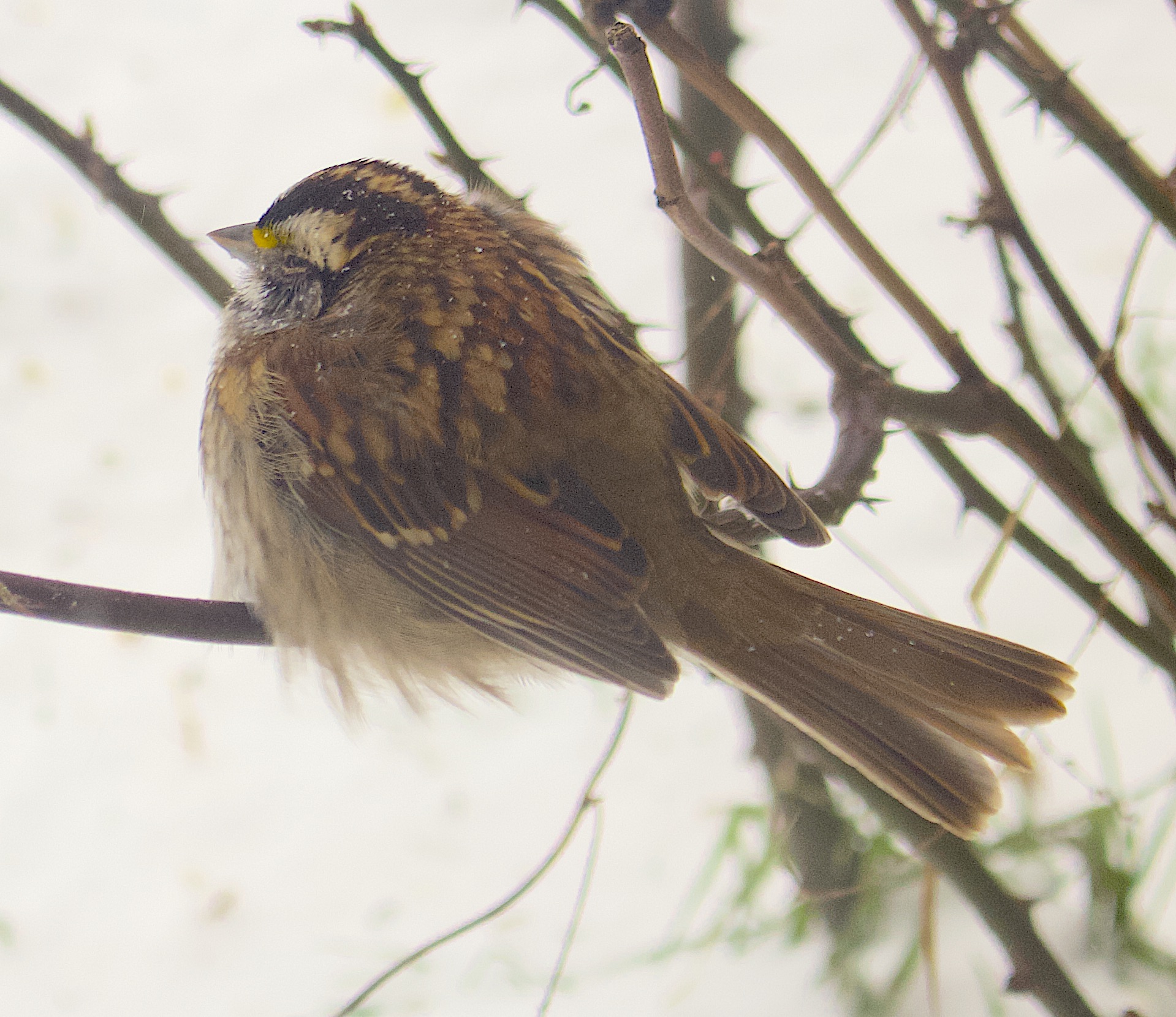
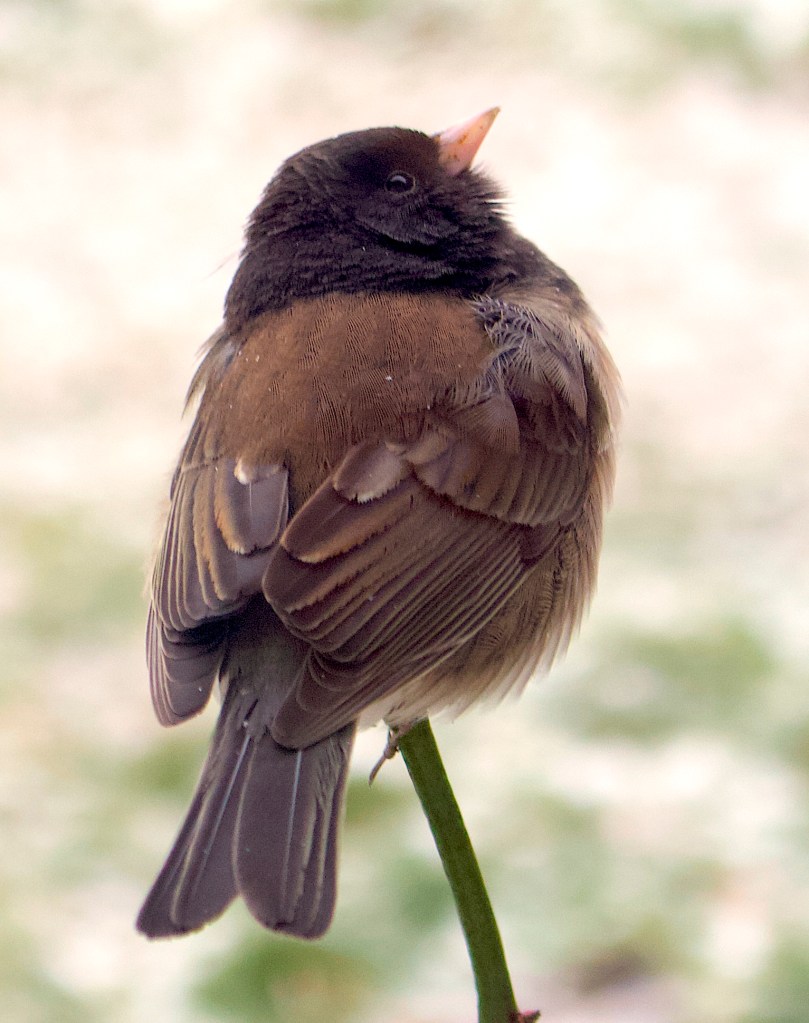
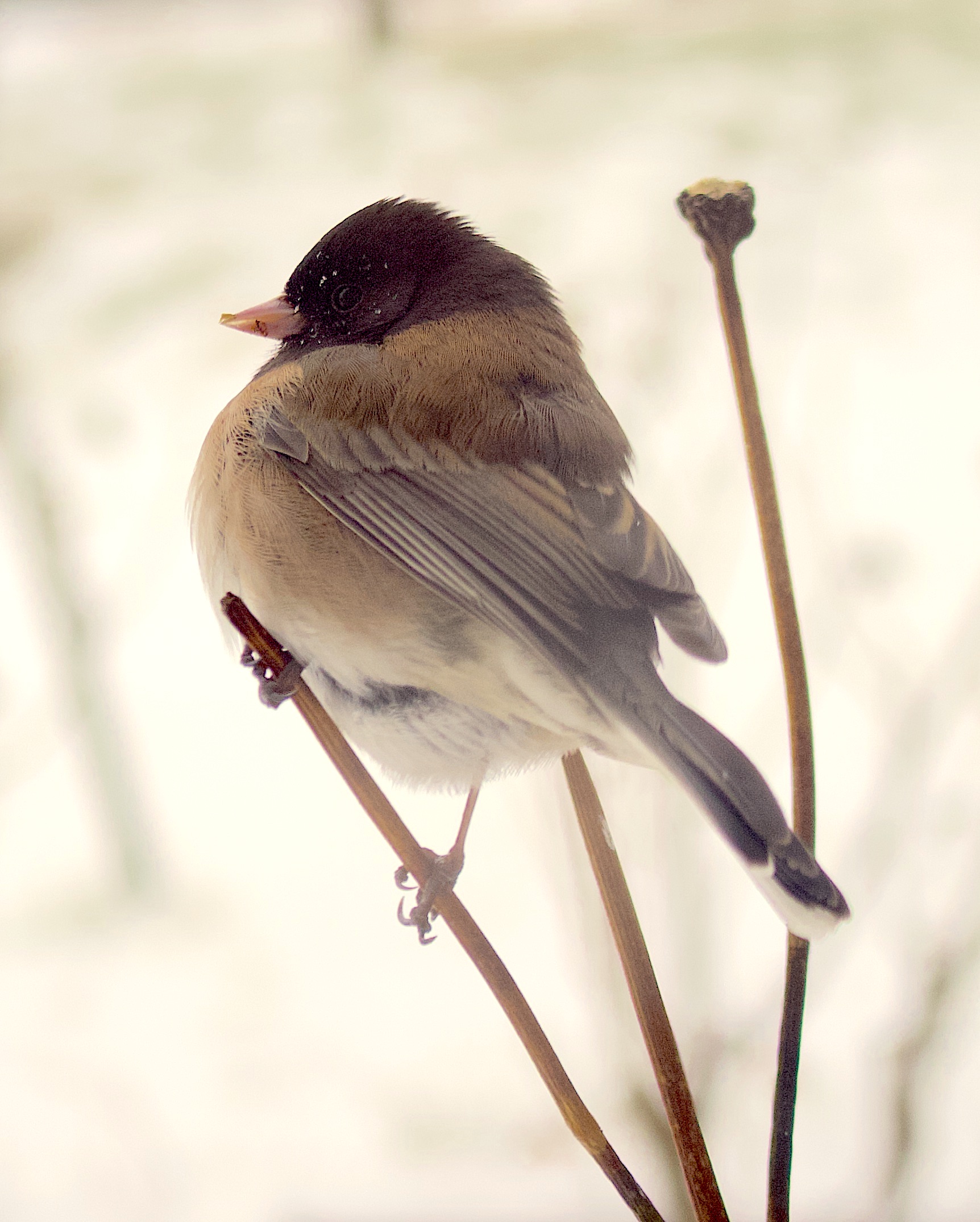
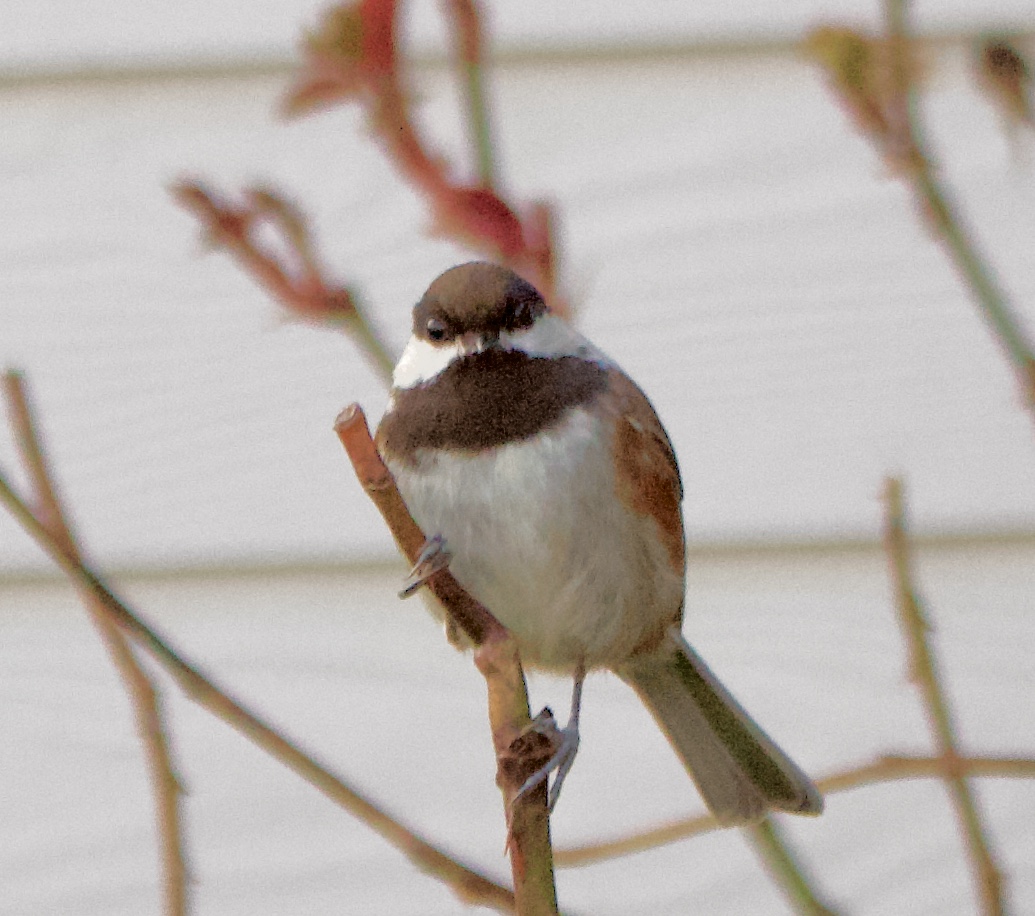
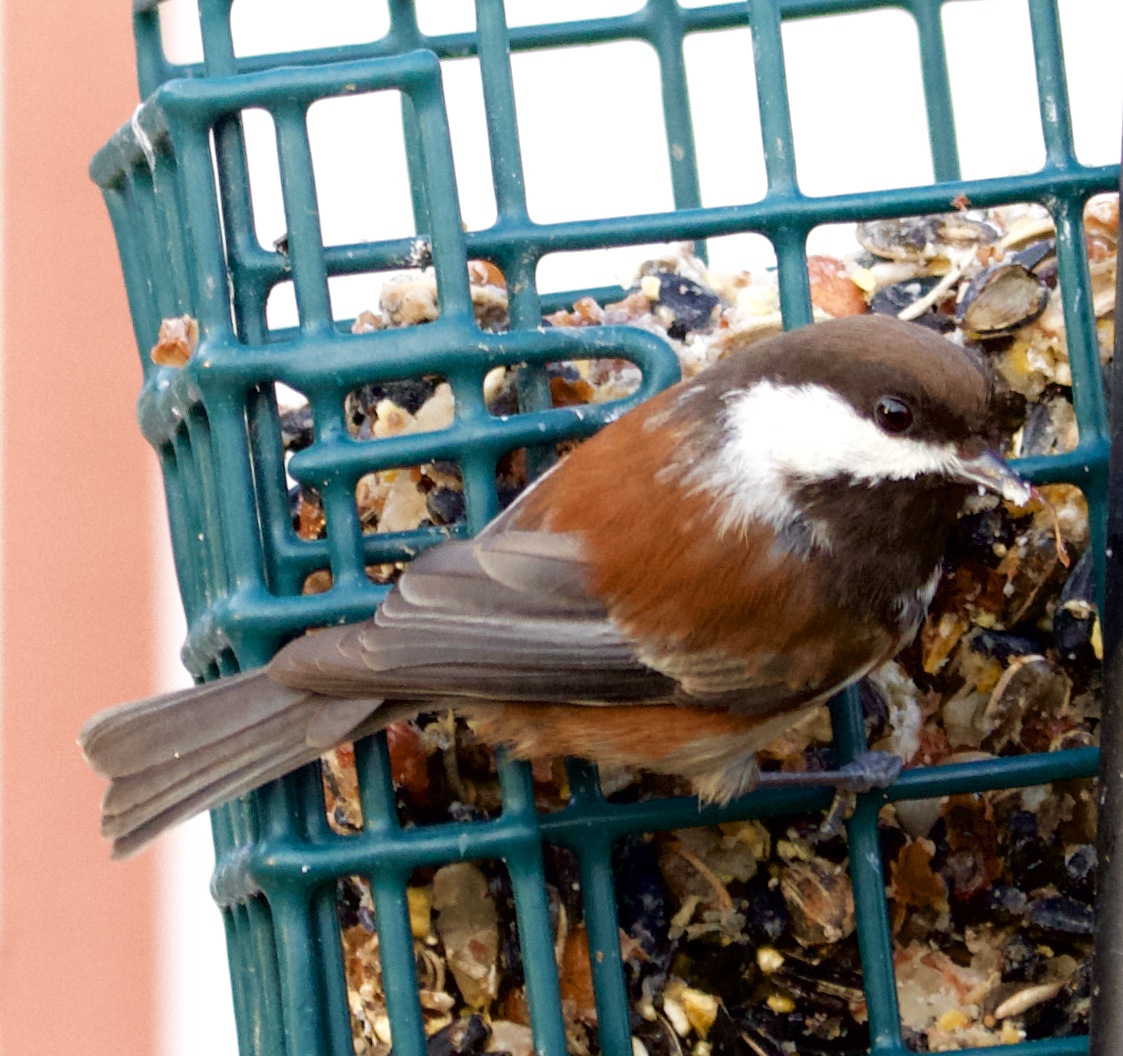
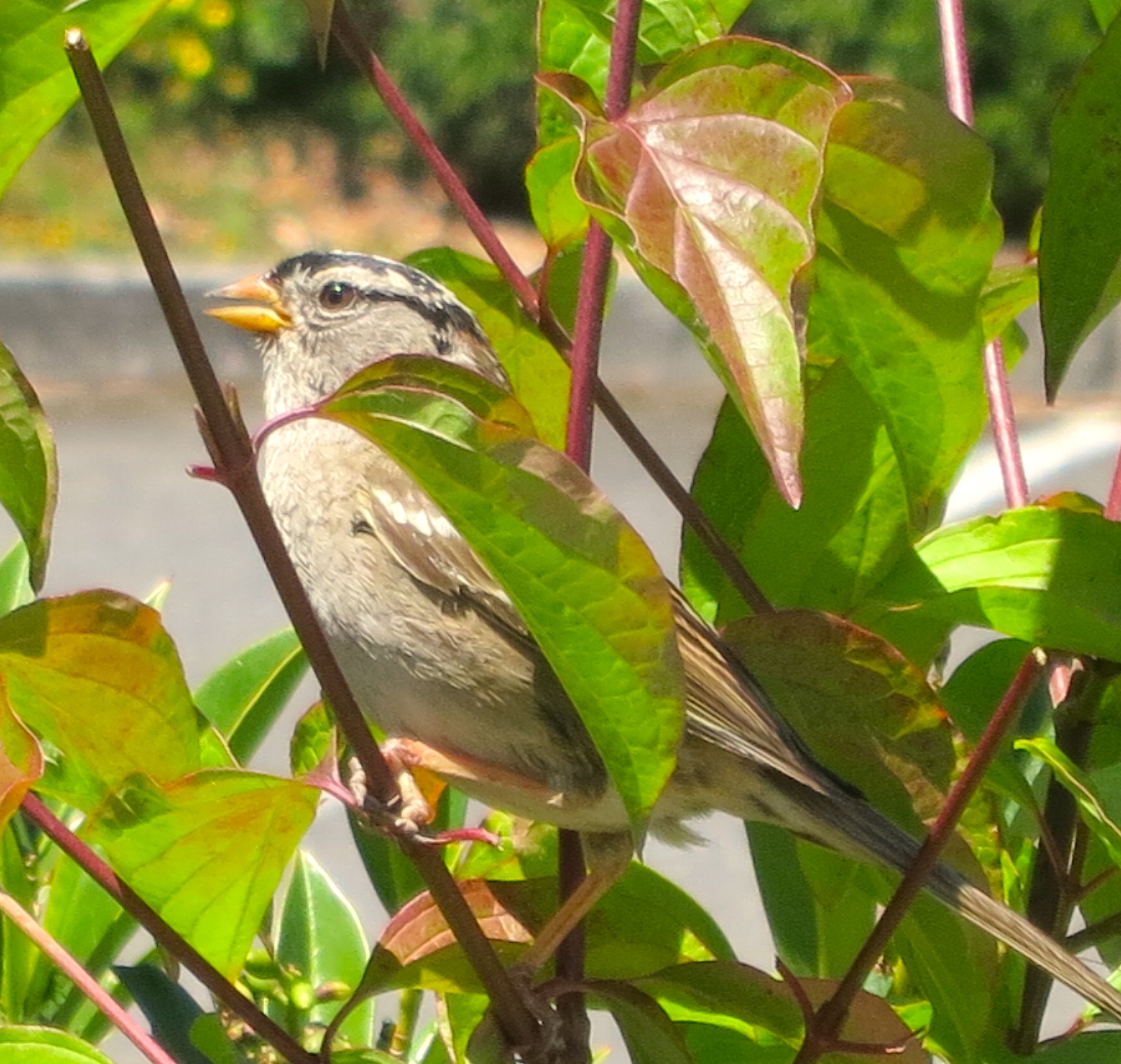
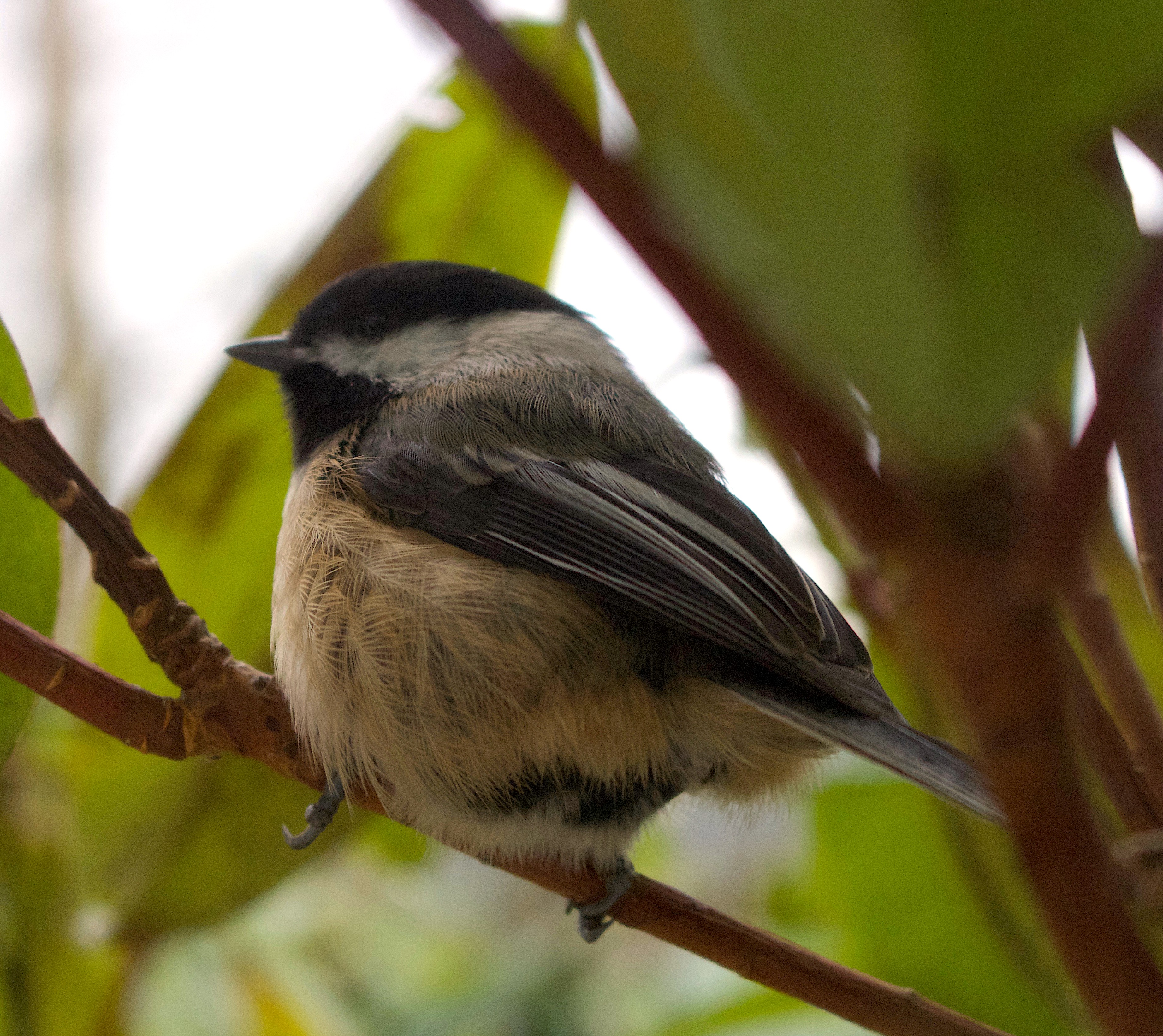
Through the winter, I feed the sparrows, the woodpeckers and chickadees, the juncos and finches, and yes — even the starlings. They would be fine without my daily contribution to their well-being, but in return for my provision of seeds, I am able to enjoy their spirited liveliness and their gracious ability to share the bounty with one another.
These birds give back to me simply by showing up, without ever realizing what their presence means to me.
How much more does God lay out for me on a daily basis to sustain me so I show up for Him? How oblivious am I to His gracious and profound gifts? How willingly do I share these gifts with others?
Unlike the birds, I could never survive on my own without His watchful care.
When life feels overwhelming, when I am filled with worries, sorrow, regrets and pain, I seek out this God who cares even for sparrows. He knows how to quiet my troubles and strengthen my faith and perseverance, a comfort that extends far beyond sunflower seeds.
photo by Harry Rodenberger
This year’s Lenten theme for Barnstorming is a daily selection from songs and hymns about Christ’s profound sacrifice on our behalf.
If we remain silent about Him, the stones themselves will shout out and start to sing (Luke 19:40).
In His name, may we sing…
God of the sparrow, sing through us Songs of deliv’rance, songs of peace. Helpless we seek You, God our joy, Quiet our troubles, bid them cease, Quiet our troubles, bid them cease. Alleluia.
God of the sparrow, God of hope, Tenderly guide us, be our song, God of affliction, pain and hurt, Comfort Your children, make us strong, Comfort Your children, make us strong. Alleluia, alleluia, alleluia.
God of the sparrow, care for us, Speak in our sorrow, Lord of grief. Sing us Your music, lift our hearts, Pour out Your mercy, send relief.
God, like the sparrow, we abide In Your protection, love and grace. Just as the sparrow in Your care, May Your love keep us all our days, May Your love keep us all our days. Amen. ~Craig Courtney
One-Time
Monthly
Yearly
Make a one-time or recurring donation to support daily Barnstorming posts
You came from dust and dust would be Without the Great Son’s victory. The gift is free yet must be claimed By goodness lived and evil tamed.
Prepared to walk this Lenten trail They face death’s dark and shadowed vale. Rememb’ring Christ who led the way They bravely march beneath his sway. ~Ash Wednesday’s Early Morn
And so the light runs laughing from the town, Pulling the sun with him along the roads That shed their muddy rivers as he goads Each blade of grass the ice had flattened down. At every empty bush he stops to fling Handfuls of birds with green and yellow throats; While even the hens, uncertain of their notes, Stir rusty vowels in attempts to sing.
He daubs the chestnut-tips with sudden reds And throws an olive blush on naked hills That hoped, somehow, to keep themselves in white. Who calls for sackcloth now? He leaps and spreads A carnival of color, gladly spills His blood: the resurrection—and the light. ~Louis Untermeyer from “Ash Wednesday”
May the light shine on our dusty darkness. May we be stilled, stunned to silence by the knowledge of the Lord, who sees us as we are, knows us as we are, and loves us anyway.
O people, we who are His loved children, who too often turn away from Him so only our ashes remain. His touch ignites us to light again, His blood has been spilled across the sky.
This year’s Lenten theme for Barnstorming is a daily selection from songs and hymns about Christ’s profound sacrifice on our behalf.
If we remain silent about Him, the stones themselves will shout out and start to sing (Luke 19:40).
In His name, may we sing…
One-Time
Monthly
Yearly
Make a one-time or recurring donation to support daily Barnstorming posts
when my father had been dead a week I woke with his voice in my ear I sat up in bed and held my breath and stared at the pale closed door
white apples and the taste of stone
if he called again I would put on my coat and galoshes ~Donald Hall “White Apples”
She skimmed the yellow water like a moth, Trailing her feet across the shallow stream; She saw the berries, paused and sampled them Where a slight spider cleaned his narrow tooth. Light in the air, she fluttered up the path, So delicate to shun the leaves and damp, Like some young wife, holding a slender lamp To find her stray child, or the moon, or both. Even before she reached the empty house, She beat her wings ever so lightly, rose, Followed a bee where apples blew like snow; And then, forgetting what she wanted there, Too full of blossom and green light to care, She hurried to the ground, and slipped below. ~James Wright “My Grandmother’s Ghost from Above the River: The Complete Poems
I saw my grandma’s ghost once.
She was my only grandparent I actually knew and who actually knew me — the others were lost before I was born or too young to realize what I had lost.
She had lived a hard life: losing her mother when she was 12, taking over the household duties for her father and younger brother while leaving school forever. She married too young to an abusive alcoholic, lost her first child to lymphoma at age 8 before treatment was possible and took her three remaining children to safety away from their father for a year to live above a seedy restaurant where she cooked seven days a week to make ends meet.
But there was grace too. The marriage somehow got patched together after Grandpa found God and sobriety – after his sudden death sitting in church, Grandma’s faith never wavered. Her garden soil yielded beautiful flowers she planted and nurtured and picked to sell, her children and grandchildren welcomed her many open armed visits and hugs.
She was busy planning her first overseas trip of a lifetime at age 72 when we noticed her eyes looked yellow. Only two weeks later she was bed-bound in unrelenting pain due to pancreatic cancer, gazing heaven-ward instead of Europe-bound. Her dreams had been dashed so quickly, she barely realized her itinerary and destination had changed.
I was 16 at the time, too absorbed in my own teenage cares and concerns to really notice how quickly she was fading and failing like a wilted flower. Instead I was picking fights with my stressed parents, worrying over taking my driver’s license driving test, distracted by all the typical social pressures of high school life.
Her funeral was unbearable as I had never really said goodbye – only one brief hospital visit when she was hardly recognizable in her anguish and jaundice. I didn’t even get to hold her hand.
Soon after she had been lowered into the ground next to her husband and young daughter, she came back to me in a dream.
I was asleep when my bedroom door opened into the dark, wakening me as the bright hallway light pushed its way via a shimmering beam to my bed. Grandma Kittie stood in my bedroom doorway, backlit by the light surrounding her silhouette. She silently stood there, just looking at me.
Startled, I sat up in my bed and said to her, “Grandma, why are you here? You died and we buried you!”
She nodded and smiled. And then she said to me:
“I want you to know I’m okay and always will be. You will be too.”
She gave a little wave, turned and left, closing the door behind her. I woke suddenly with a gasp in my darkened bedroom and knew I had just been visited.
She hadn’t come to say goodbye or to tell me she loved me — that I knew already.
She had come to shine with her light blossoming around her, mending my broken heart by planting it with peace.
Grandma Kittie and Grandpa Leslie in their courting days
You’re in a better place I’ve heard a thousand times And at least a thousand times I’ve rejoiced for you
But the reason why I’m broken The reason why I cry Is how long must I wait to be with you
I close my eyes and I see your face If home’s where my heart is then I’m out of place Lord, won’t you give me strength To make it through somehow I’ve never been more homesick than now
Help me Lord cause I don’t understand your ways The reason why I wonder if I’ll ever know But, even if you showed me The hurt would be the same Cause I’m still here so far away from home
In Christ, there are no goodbyes And in Christ, there is no end
So I’ll hold onto Jesus With all that I have To see you again To see you again
And I close my eyes and I see your face If home’s where my heart is then I’m out of place Lord, won’t you give me strength To make it through somehow
Won’t you give me strength To make it through somehow Won’t you give me strength To make it through somehow I’ve never been more homesick than now ~Millard Bart Marshall
One-Time
Monthly
Yearly
Make a one-time or recurring donation to support Barnstorming
Not every man knows what he shall sing at the end, Watching the pier as the ship sails away, or what it will seem like When he’s held by the sea’s roar, motionless, there at the end, Or what he shall hope for once it is clear that he’ll never go back.
When the time has passed to prune the rose or caress the cat, When the sunset torching the lawn and the full moon icing it down No longer appear, not every man knows what he’ll discover instead. When the weight of the past leans against nothing, and the sky
Is no more than remembered light, and the stories of cirrus And cumulus come to a close, and all the birds are suspended in flight, Not every man knows what is waiting for him, or what he shall sing When the ship he is on slips into darkness, there at the end. ~Mark Strand “The End,” from The Continuous Life
Write as if you were dying. At the same time, assume you write for an audience consisting solely of terminal patients. That is, after all, the case. ~Annie Dillard from “Write Till You Drop”
I began to write after September 11, 2001 because that day it became obvious to me I was dying, though more slowly than the thousands who vanished in fire and ash that day, their voices obliterated along with their bodies. So, nearly each day since, while I still have voice and a new dawn to greet, I speak through my fingers to others, who, like me, are dying.
We are, after all, terminal patients, some of us more prepared than others to move on, slipping away into darkness, as if our readiness had anything to do with the timing.
Each day we get a little closer. I write in order to feel a little more ready. Each day I want to detach just a little bit, leaving a trace of my voice behind, wondering what will be left to say or sing at the end. Eventually, through unmerited grace, perhaps so much of me will be left on the page there won’t be anything or anyone left to do the typing.
No words should go to waste nor moments allowed to lapse unnoticed. I dwell here for now, knowing Who will be waiting for me there.
One-Time
Monthly
Yearly
Make a one-time or recurring donation to support Barnstorming
…we all suffer. For we all prize and love; and in this present existence of ours, prizing and loving yield suffering. Love in our world is suffering love. Some do not suffer much, though, for they do not love much. Suffering is for the loving. This, said Jesus, is the command of the Holy One: “You shall love your neighbor as yourself.” In commanding us to love, God invites us to suffer.
Over there, you are of no help. What I need to hear from you is that you recognize how painful it is. I need to hear from you that you are with me in my desperation. To comfort me, you have to come close. Come sit beside me on my mourning bench. ~Nicholas Wolterstorff from Lament for a Son
Spring 1980
I wondered if 8:30 AM was too early to call my friend and mentor Margy. As a sleep-deprived fourth year medical student, I selfishly needed to hear her voice. I wanted to know how she was doing; she was not sleeping well either these days. She was wearing a new halo brace—a metal contraption that wrapped around her head like a scaffolding to secure her degenerating cervical spine from collapsing from metastatic breast cancer growth in her bones. When she was fitted into the brace, she named the two large screw-like fasteners anchored into her frontal skull her “Frankenstein bolts”. I had reassured her that with a proper white veil draped around the metal halo, she would be more suited to be Frankenstein’s bride.
Each patient I had seen the previous 24 hours while working in the Emergency Room benefited from the interviewing skills Margy had taught each one of us medical students. She reminded us that each patient had an important story to tell, and no matter how pressured our time, we needed to ask questions that gave permission for that story to be told. As a former nun now married with two teenage children, Margy had become our de facto counselor, and insisted physicians-in-training remember the soul thriving inside the broken and hurting body.
“Just let the patient know with certainty, through your eyes, your body language, your words, that you want to hear what they have to say. You can heal so much hurt simply by sitting beside them and caring enough to listen…”
Now with her recent diagnosis of metastatic cancer, Margy herself had become the broken vessel who needed the glue of a good listener. She continued to teach, often from her bed at home and I regularly visited, in need of her wisdom and she still needed her students.
That night I had felt uneasy about her all during my ER shift and felt compelled to visit her and her husband and daughter that day, maybe help out by cleaning their house, fixing them a meal or taking her for a drive as a diversion.
Her phone rang only once after I dialed her number. There was a long pause; I could hear a clearing of her throat. A deep dam of tears welled behind a muffled “Hello?” Something was deeply wrong.
Her voice shattered like glass into fragments, strangling on words that struggled to form. She sobbed out the words that their college son, Gordon, was dead. Earlier that morning, a police officer had knocked loudly on their door, awakening her and her husband with the news of a tragic highway accident.
I sat in stunned silence, listening to her sobs, completely unequipped to know how to respond. None of this made sense although I knew her son was on college spring break, heading to Mexico for a missions trip.
She paused and took in a shuddering breath.
“Gordy died as they were driving through the night. He was sleeping in the camper as they drove. They think he sleepwalked right out of the back of the moving camper, fell onto the highway and was hit by another car.“
I felt strangled by her words and could only imagine how difficult it was for her to keep breathing enough to say them.
“They’ll bring him home to us, won’t they? I need to know I can see him again. I need to tell him how much I love him.”
I assured Margy she would see him again, both in his broken body and, some day yet to be determined, whole.
Up until then, I knew in my head this life was full of sorrow, but I had been spared the full heart impact of grief until I witnessed such intensity of an acute unbelievable loss – how loving one so deeply meant suffering immeasurably.
I understood, for the first but surely not the last time, how it is the only way to love.
During the remaining few months of Margy’s life as she waited to join her son, she continued to teach me about how to come close in to the suffering and grief of others, and also how to sit together, even in silence, on that too-often lonesome mourning bench.
…for the Jude Veltkamp family who lost their teenage son, grandson, nephew, brother this week to a relentless cancer.
But our God is even more relentless in His love and comfort for His mourning children…
I knew this life was full of sorrow But still I believed That good times would follow That the evil would falter And true hearts would rise True hearts would rise That simple dream ended On the night that you died
And even the sound of a whistle fading Brings back the longing And stirs up the aching Peaceful companion that grounded my soul You grounded my soul The world spins without meaning Now that you’re gone
Sometimes I still think I will see you in New York And we will meet on the platform of the train And with your great leaning stride You’ll cross back to my side And my old life Will be my life again
You were quiet as a winter sky Where planets turn And the North Star rides My sweet brother, so reasoned, so calm My brother, my own The world spins without meaning Now that you’re gone ~Fernando Ortega
When I was a child I once sat sobbing on the floor Beside my mother’s piano As she played and sang For there was in her singing A shy yet solemn glory My smallness could not hold
And when I was asked Why I was crying I had no words for it I only shook my head And went on crying
Why is it that music At its most beautiful Opens a wound in us An ache a desolation Deep as a homesickness For some far-off And half-forgotten country
I’ve never understood Why this is so
But there’s an ancient legend From the other side of the world That gives away the secret Of this mysterious sorrow
For centuries on centuries We have been wandering But we were made for Paradise As deer for the forest
And when music comes to us With its heavenly beauty It brings us desolation For when we hear it We half remember That lost native country
We dimly remember the fields Their fragrant windswept clover The birdsongs in the orchards The wild white violets in the moss By the transparent streams
And shining at the heart of it Is the longed-for beauty Of the One who waits for us Who will always wait for us In those radiant meadows
Yet also came to live with us And wanders where we wander. ~Anne Porter “Music” from Living Things.
One evening, when our daughter was only a toddler, just learning the words to tell us what she needed, I was preparing dinner, humming along to a Celtic choral music piece playing in the background.
She sat on the kitchen floor, looking up at me, her eyes welling full with tears like pools of reflected light spilling over from some deep-remembered reservoir of sorrow.
At first I thought she was hurt or upset but then could see she was feeling an ache a desolation deep as a homesickness as she wept for wonder at the sad beauty of the music of the land her ancestors left long ago – it spoke for her the words she herself could not express:
Of the One who waits for us Who will always wait for us In those radiant meadows
Yet also came to live with us And wanders where we wander.
One-Time
Monthly
Yearly
Support Barnstorming with a one-time or recurring donation
Though I know well enough To hunt the Lady’s Slipper now Is playing blindman’s-buff, For it was June She put it on And grey with mist the spider’s lace Swings in the autumn wind, Yet through this hill-wood, high and low, I peer in every place; Seeking for what I cannot find I do as I have often done And shall do while I stay beneath the sun. ~Andrew Young “Lady’s Slipper Orchid”
My grandmother’s house where my father was born had been torn down. She sold her property on Fidalgo Island near Anacortes, Washington to a lumber company – this was the house where all four of her babies were born, where she and my grandfather loved and fought and separated and finally loved again, and where we spent chaotic and memorable Thanksgiving and Christmas meals. After Grandpa died, Grandma took on boarders, trying to afford to remain there on the homesteaded wooded acreage on Similk Bay, fronted by meadows where her Scottish Highland cattle grazed. Her own health was suffering and she reached a point when it was no longer possible to make it work. A deal was struck with the lumber company and she moved to a small apartment for the few years left to her, remaining bruised by leaving her farm.
My father realized what her selling to a lumber company meant and it was a crushing thought. The old growth woods would soon be stumps on the rocky hill above the bay, opening a view to Mt. Baker to the east, to the San Juan Islands to the north, and presenting an opportunity for development into a subdivision. He woke my brother and me early one Saturday in May and told us we were driving the 120 miles to Anacortes. He was on a mission.
As a boy growing up on that land, he had wandered the woods, explored the hill, and helped his dad farm the rocky soil. There was only one thing he felt he needed from that farm and he had decided to take us with him, to trespass where he had been born and raised to bring home a most prized treasure–his beloved lady slippers from the woods.
These dainty flowers enjoy a spring display known for its brevity–a week or two at the most–and they tend to bloom in small little clusters in the leafy duff mulch of the deep woods, preferring only a little indirect sunlight part of the day. They are not easy to find unless you know where to look.
My father remembered exactly where to look.
We hauled buckets up the hill along with spades, looking as if we were about to dig for clams at the ocean. Dad led us up a trail into the thickening foliage, until we had to bushwhack our way into the taller trees where the ground was less brush and more hospitable ground cover. He would stop occasionally to get his bearings as things were overgrown. We reached a small clearing and he knew we were near. He went straight to a copse of fir trees standing guard over a garden of lady slippers.
There were almost thirty of them blooming, scattered about in an area the size of my small bedroom. Each orchid-like pink and lavender blossom had a straight backed stem that held it with sturdy confidence. To me, they looked like they could be little shoes for fairies who may have hung them up while they danced about barefoot. To my father, they represented the last redeeming vestiges of his often traumatic childhood, and were about to be trammeled by bulldozers. We set to work gently digging them out of their soft bedding, carefully keeping their bulb-like corms from losing a protective covering of soil and leafy mulch. Carrying them in the buckets back to the car, we felt some vindication that even if the trees were to be lost to the saws, these precious flowers would survive.
When we got home, Dad set to work creating a spot where he felt they could thrive in our own woods. He found a place with the ideal amount of shade and light, with the protection of towering trees and the right depth of undisturbed leaf mulch. We carefully placed the lady slippers in their new home, scattered in a pattern similar to how we found them. Then Dad built a four foot split rail fence in an octagon around them, as a protection from our cattle and a horse who wandered the woods, and as a way to demarcate that something special was contained inside.
The next spring only six lady slippers bloomed from the original thirty. Dad was disappointed but hoped another year might bring a resurgence as the flowers established themselves in their new home. The following year there were only three. A decade later, my father himself had left farm and family, not looking back.
Sometime after the divorce, when my mother had to sell the farm, I visited our lady slipper sanctuary in the woods for the last time in the middle of May, seeking what I hoped might still be there, but I knew was no longer. The split rail fence still stood, guarding nothing but old memories. No lady slippers bloomed. There was not a trace they had ever been there. They had simply given up and disappeared.
The new owners of the farm surely puzzled over the significance of the small fenced-in area in the middle of our woods. They probably thought it surrounded a graveyard of some sort.
And they would be right – it did.
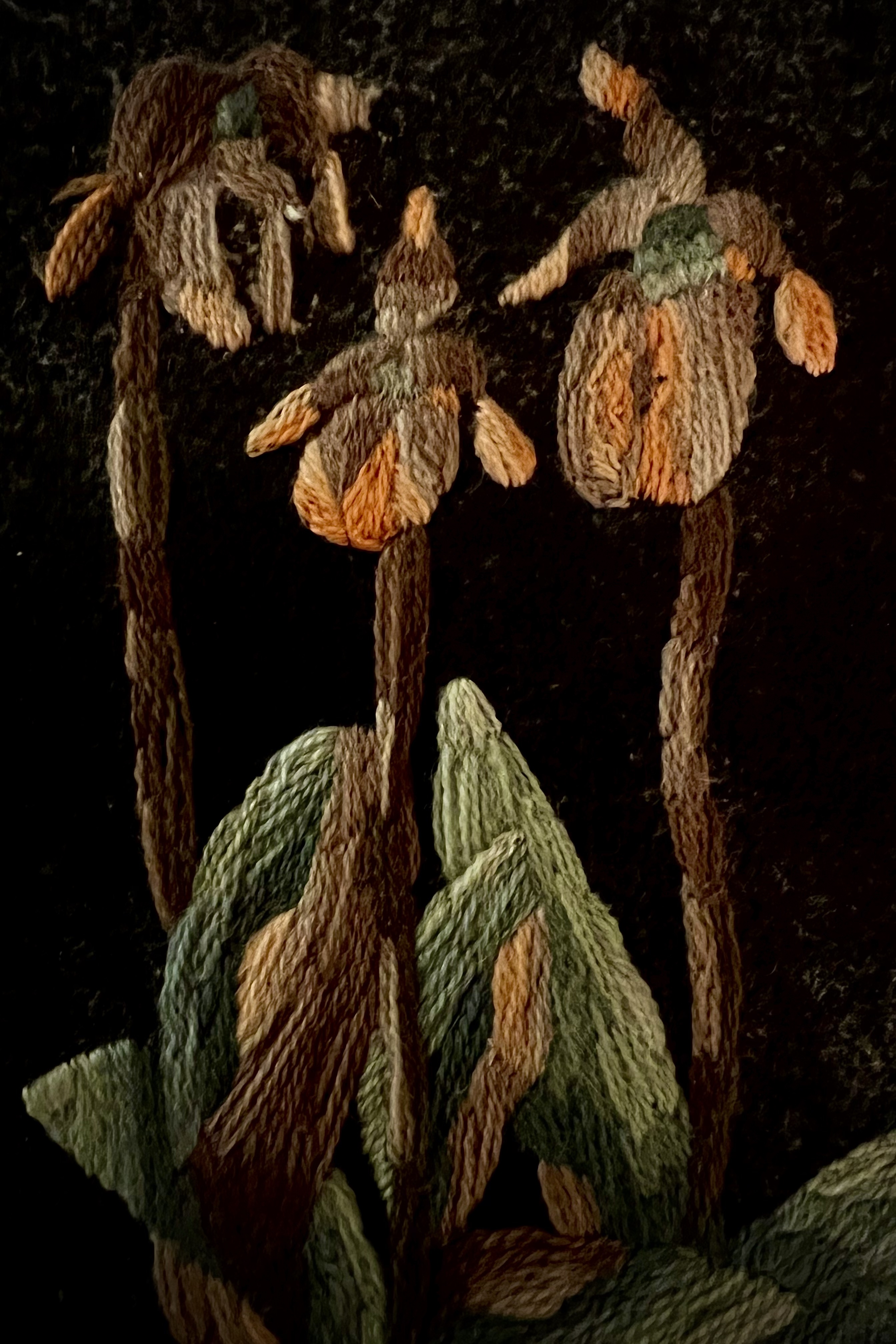
An embroidery I made for my father after he replanted the lady slippers — on the back I wrote “The miracle of creation recurs each spring in the delicate beauty of the lady slipper – may we ourselves be recreated as well…”
Once more, once more into the sunny fields Oh, let me stray! And drink the joy that young existence yields On a bright, cloudless day. Once more let me behold the summer sky, With its blue eyes, And join the wild wind’s voice of melody, As far and free it flies. Once more, once more, oh let me stand and hear The gushing spring, As its bright drops fall starlike, fast and clear, And in the sunshine sing. ~Frances Kemble“A Farewell”
One-Time
Monthly
Yearly
Make a one-time or recurring donation to support Barnstorming
Lord, now You are letting Your servant depart in peace, according to Your word; For my eyes have seen Your salvation. Luke 2:29-30 (Simeon’s Song)
Cards in each mailbox, angel, manger, star and lamb, as the rural carrier, driving the snowy roads, hears from her bundles the plaintive bleating of sheep, the shuffle of sandals, the clopping of camels. At stop after stop, she opens the little tin door and places deep in the shadows the shepherds and wise men, the donkeys lank and weary, the cow who chews and muses. And from her Styrofoam cup, white as a star and perched on the dashboard, leading her ever into the distance, there is a hint of hazelnut, and then a touch of myrrh. ~Ted Kooser “Christmas Mail”
the utterly unexpected a star, a light, a voice shakes us awake opens our sleepy eyes interrupts familiar routines as
our hearts tremble, muscles tighten; do we run to prepare for battle or do we freeze in place?
the animals also rustle and stand up- confused like us
they see the exploding sky and yet they sense no threat but instead merely listen,
huddled together for warmth as unearthly music fills their ears.
we quickly make plans to see this great thing, a revelation- word has become flesh and we have been invited to catch the first glimpse. ~Steve Bell “First Glimpse”
…Grant us thy peace. Before the stations of the mountain of desolation, Before the certain hour of maternal sorrow, Now at this birth season of decease, Let the Infant, the still unspeaking and unspoken Word, Grant Israel’s consolation To one who has eighty years and no to-morrow. According to thy word. They shall praise Thee and suffer in every generation With glory and derision, Light upon light, mounting the saints’ stair. Not for me the martyrdom, the ecstasy of thought and prayer, Not for me the ultimate vision. Grant me thy peace. (And a sword shall pierce thy heart, Thine also). ~T.S. Eliot from “A Song for Simeon”
Simeon had waited and waited for this promised “first glimpse” moment of meeting the Son of God face to face, not knowing when or how, not knowing he would be able to hold him fast in his arms, not knowing he would be able to personally bless the parents of this holy child.
He certainly could not know this child would be the cause of so much joy and sorrow for those who love Him deeply.
That sword of painful truth pierces into our soul, opening us with the precision of a surgeon under high beam lights in the operating room where nothing is left unilluminated. We are, by the birth of Jesus, bared completely, our darkness thrust into dawn, our hearts revealed as never before, no matter who we are, our place of origin, our faith or lack thereof.
God is an equal opportunity heart surgeon.
It is terrifying, this mountain of desolation, all cracks and crevices thrust into the light. And it should be, given what we are, every one of us.
We wait for this incarnate God, longing and hungry for His peace. We are tired, too tired to continue to hide within the darkness of our troubles and conflict of our sin. We, like Simeon, are desperate for a first glimpse of the promise of His appearance dwelling with us, when we can gather Him into our arms and He gathers us into His, when all becomes known and understood and forgiven.
His birth is the end of our death, the beginning of the outward radiance of His peace, and wide open to all who open themselves to Him.
Light upon Light.
Based on Psalm 74: 12 Salvation is created in the midst of the earth, O God. Alleluia.
One-Time
Monthly
Yearly
Make a one-time or recurring donation to support Barnstorming
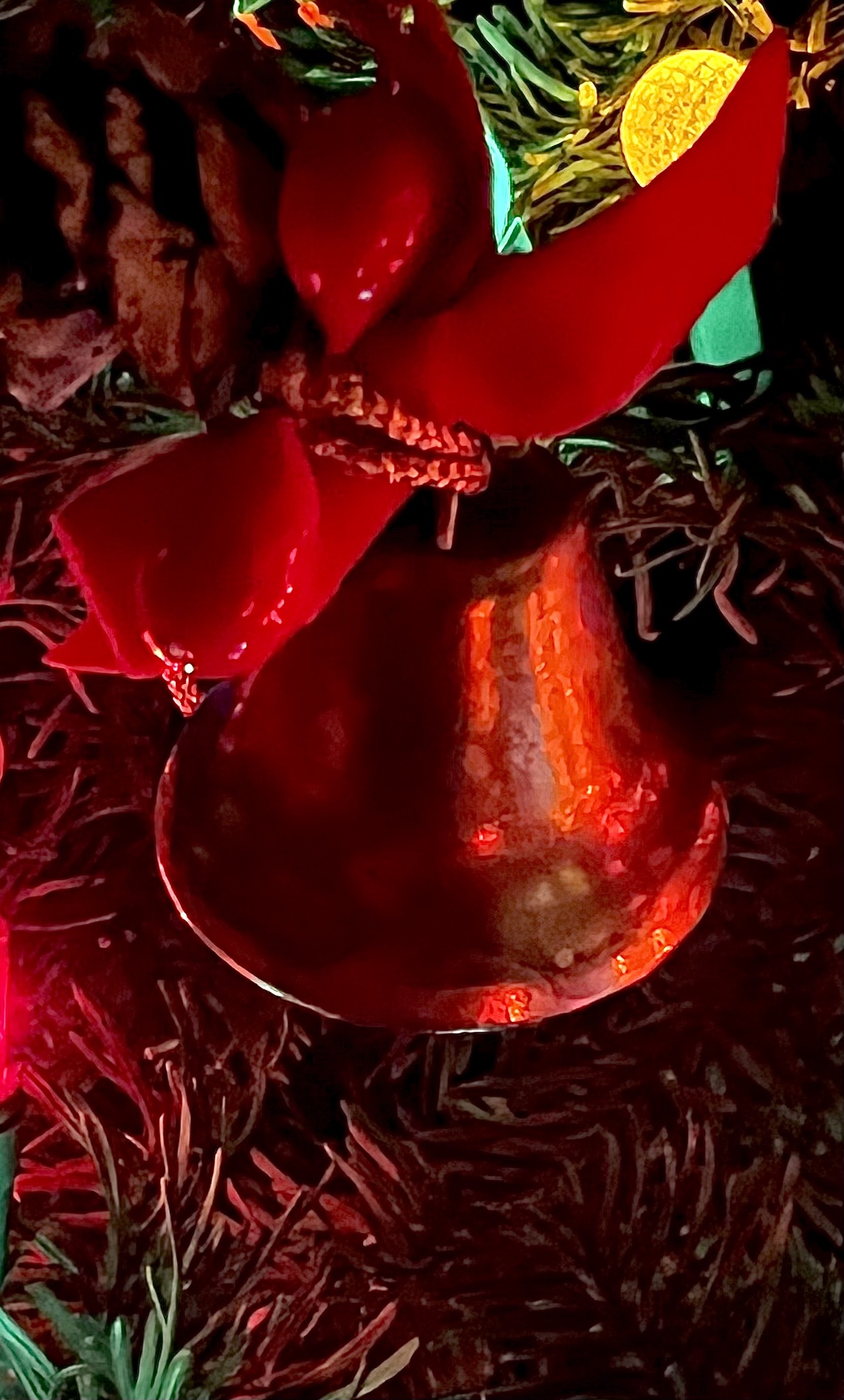
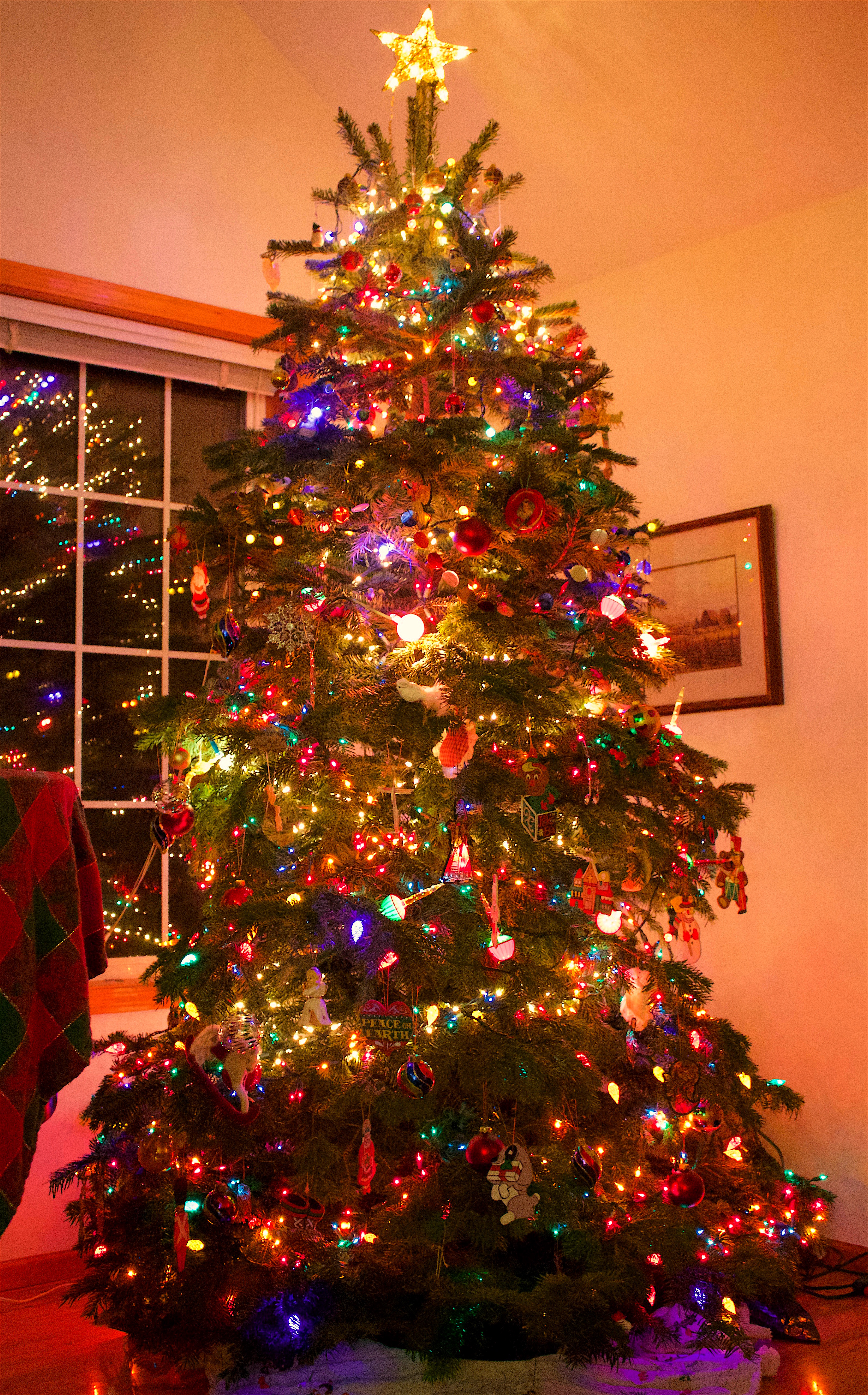
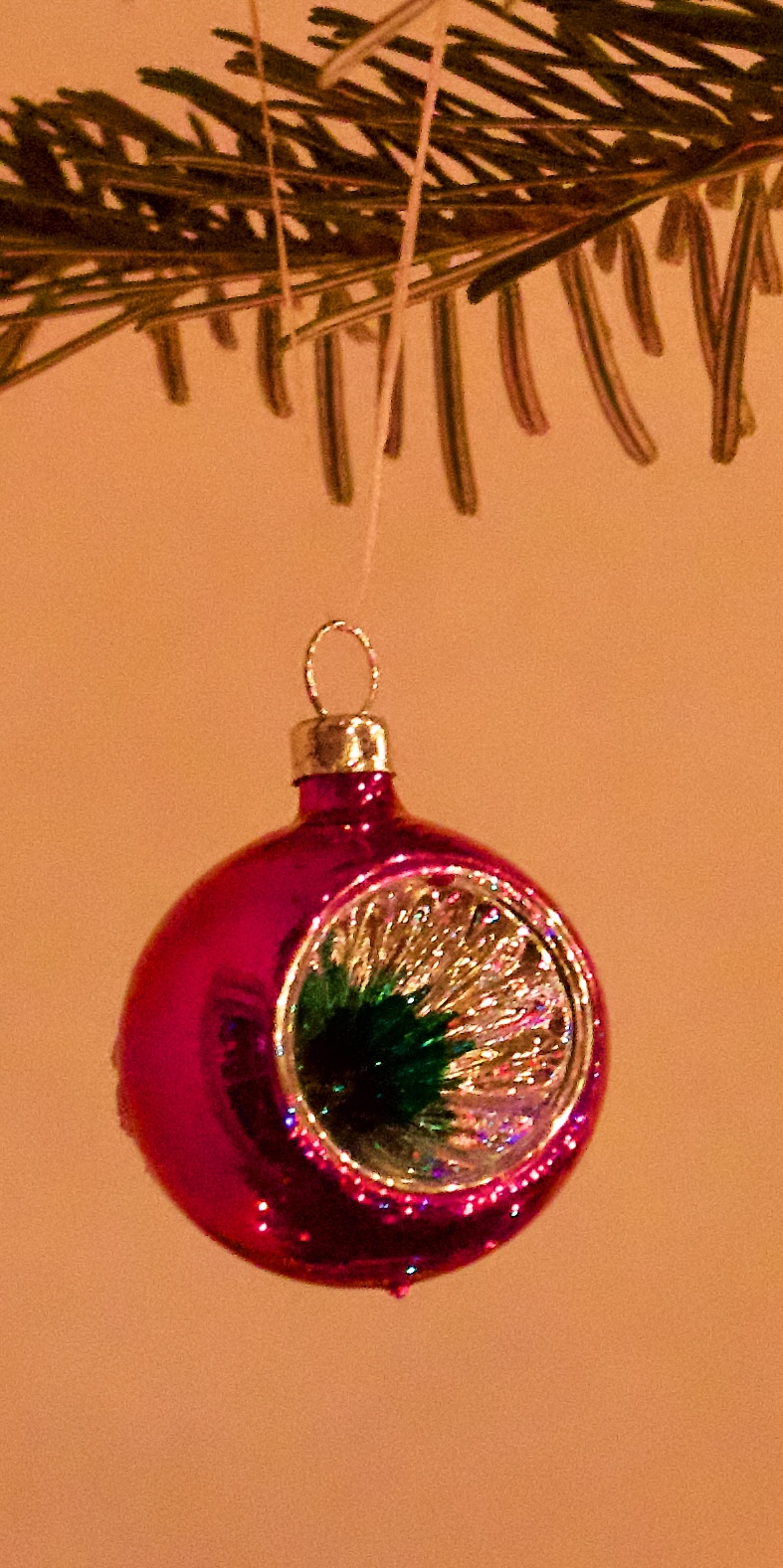
Here, the bells are silent, blown glass hung from branches of pine whose fragrance fills the room. It’s December, and the world’s run out of color. Darkness at five seems absolute outside the nine square panes of glass. But inside hundreds of small white lights reflect off fragile ornaments handed down from before the war. They’re all Shiny-Brite, some solid balls— hot pink, lime green, turquoise, gold—some striped and flocked. This night is hard obsidian, but these glints pierce the gloom, along with their glittery echoes, the stars. We inhale spruce, its resinous breath: the hope of spring, the memory of summer. Every day, another peal on the carillon of light. ~Barbara Crooker, “Bells” from Some Glad Morning
The time is ripe for looking back over the day, the week, the year, and trying to figure out where we have come from and where we are going to, for sifting through the things we have done and the things we have left undone for a clue to who we are and who, for better or worse, we are becoming.
We cling to the present out of wariness of the past. But there is a deeper need yet, I think, and that is the need —not all the time, surely, but from time to time— to enter that still room within us all where the past lives on as a part of the present, where the dead are alive again, where we are most alive ourselves to turnings and to where our journeys have brought us.
The name of the room is Remember— the room where with patience, with charity, with quietness of heart, we remember consciously to remember the lives we have lived. ~Frederick Buechner“A Room Called Remember”
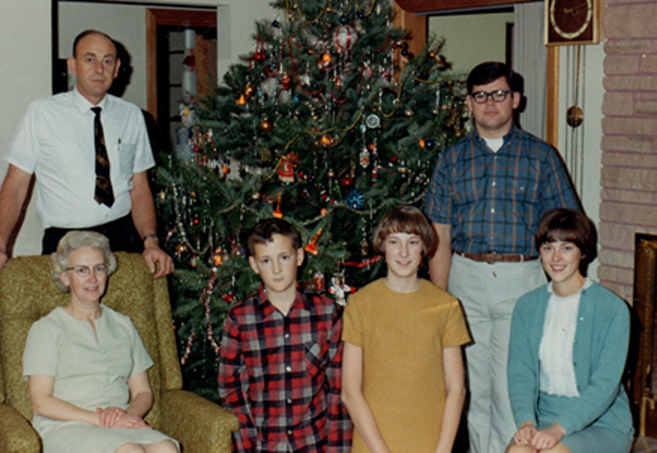
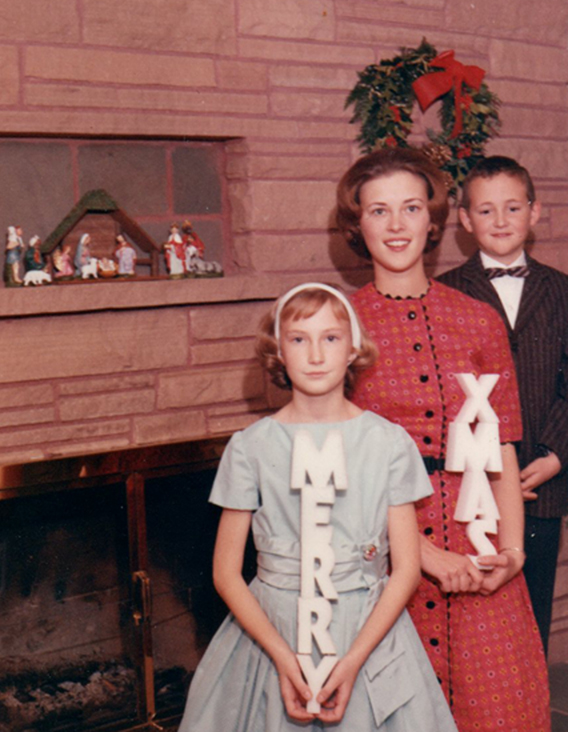
In 1959, when I was five years old, my father left his high school agriculture teaching position for a new supervisor position with the state. Our family moved from a large 3 story farm house in a rural community to a 1950’s newer rambler style home just outside the city limits of the state capitol. It was a big adjustment to move to a much smaller house without a basement or upper story, no garage, and no large haybarn nor chicken coop. It meant most things we owned didn’t make the move with us.
The rambler had two side by side mirror image rooms as the primary central living space between the kitchen on one side and the hallway to the bedrooms on the other. The living room could only be entered through the front door and the family room was accessed through the back door with a shared sandstone hearth in the center, containing a fireplace in each room. The only opening between the rooms had a folding door shut most of the year. In December, the door was opened to accommodate a Christmas tree, so it sat partially in the living room and depending on its generous width, spilled over into the family room. That way it was visible from both rooms, and didn’t take up too much floor space.
The living room, because it contained the only carpeting in the house, and our “best” furniture, was strictly off-limits for us kids. In order to keep our two matching sectional knobby gray fabric sofas, a green upholstered chair and gold crushed velvet covered love seat in pristine condition, the room was to be avoided unless we had company. The carpet was never to develop a traffic pattern, there would be no food, beverage, or pet ever allowed in that room, and the front door was not to be used unless a visitor arrived. The hearth never saw a fire lit on that side because of the potential of messy ashes or smoke smell. This was not a room for laughter, arguments or games and certainly not for toys. The chiming clock next to the hearth, wound with weighted pine cones on the end of chains, called out the hours without an audience.
One week before Christmas, a tree was cut down to fit in the space where it could overflow into the family room. I particularly enjoyed decorating the “family room” side of the tree, using all my favorite ornaments that were less likely to break if they fell on the linoleum floor on that side of the door.
It was as if the Christmas tree became divided, with a “formal” side in the living room and a “real life” face on the other side where the living (and all that goes along with that) was actually taking place.
The tree straddled more than just two rooms. Each year that tree’s branches reached out to shelter a family that was slowly, almost imperceptibly, falling apart like fir needles dropping to the floor, soon to be swept away.
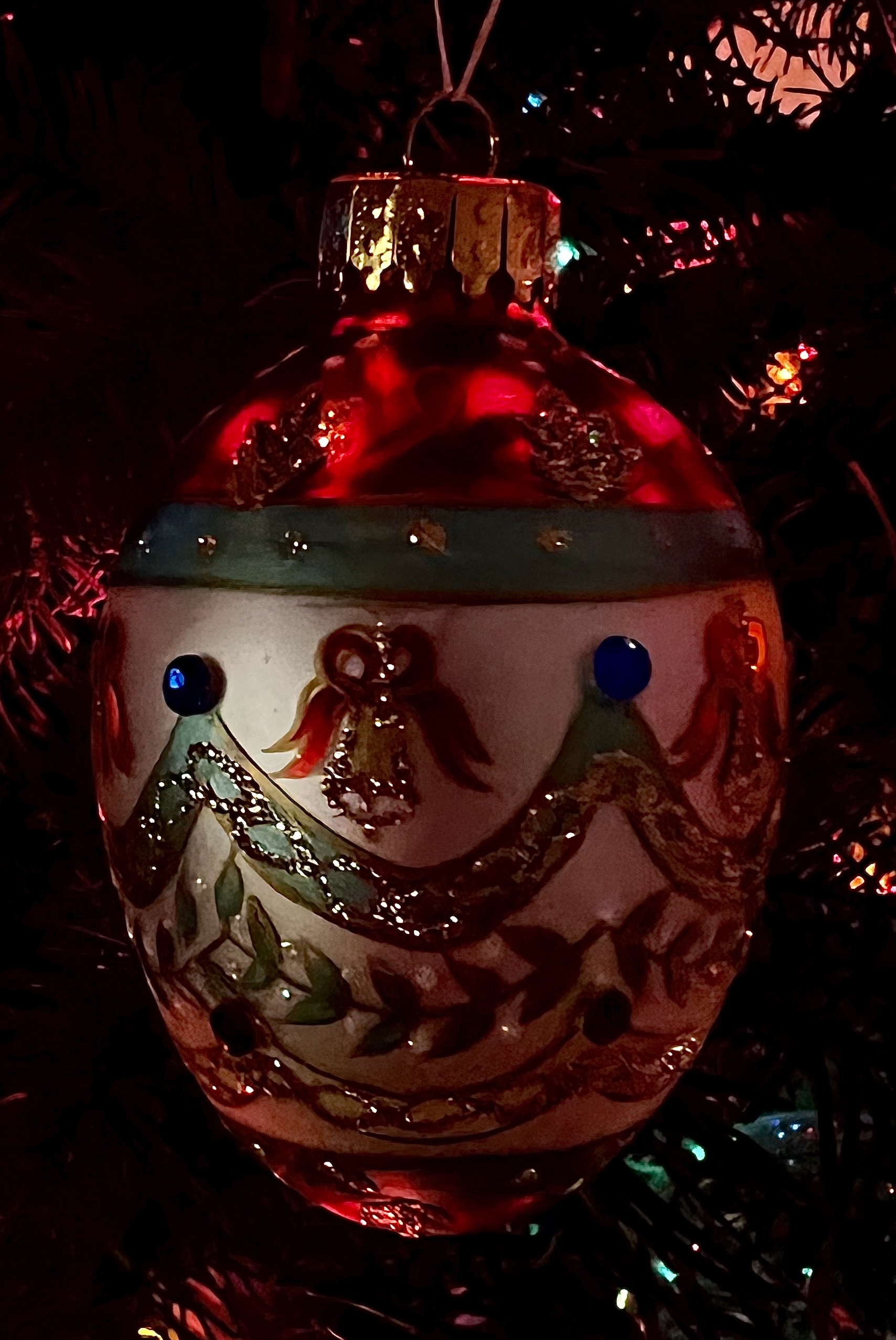
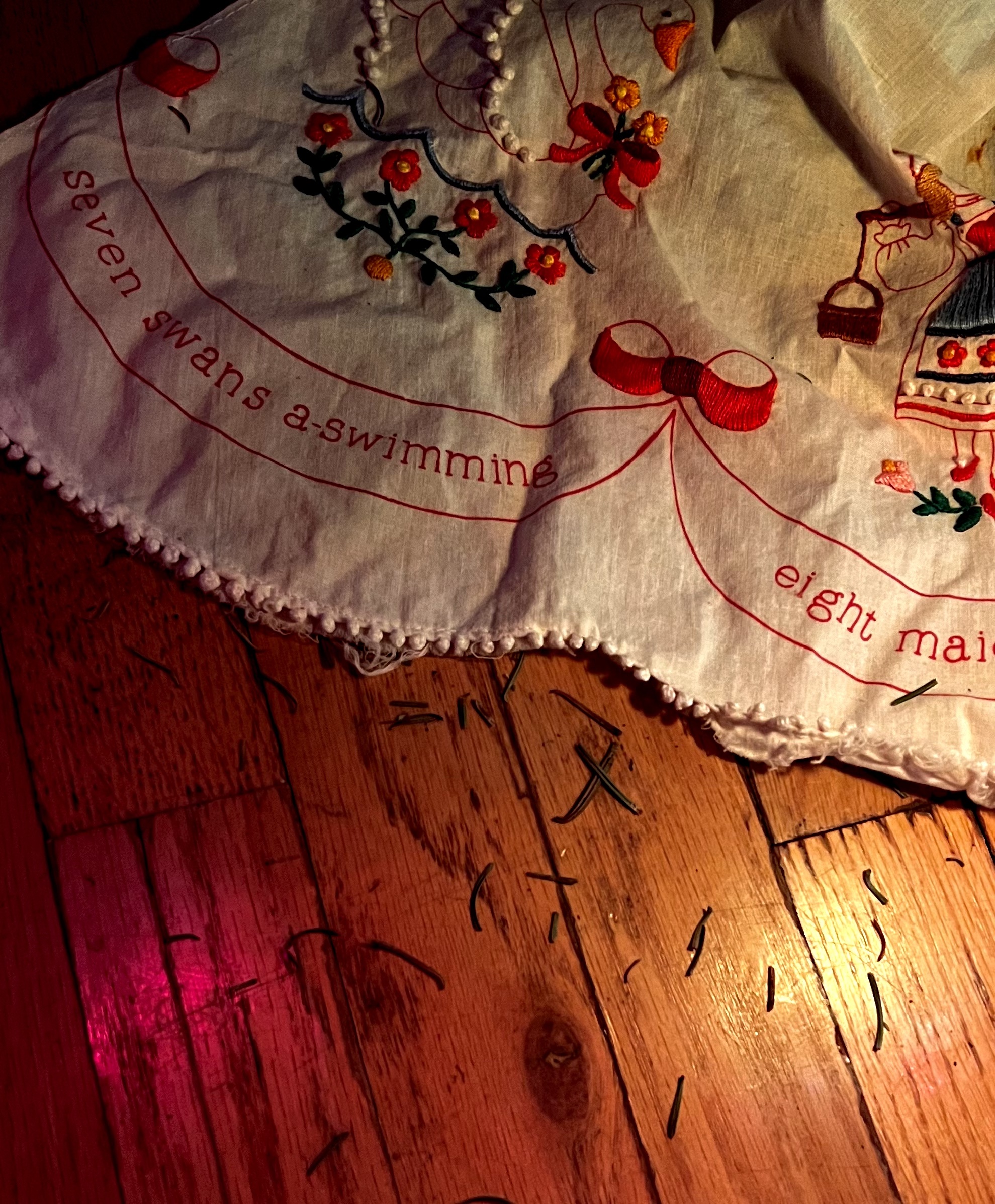
Each year since, our Christmas tree, bearing those old ornaments from my childhood, reminds me of that still room of memories. No longer am I wary of the past, and as I sweep up the fir needles that inevitably drop, I no longer weep.
One-Time
Monthly
Yearly
Make a one-time or recurring donation to support Barnstorming

































 Barnstorming