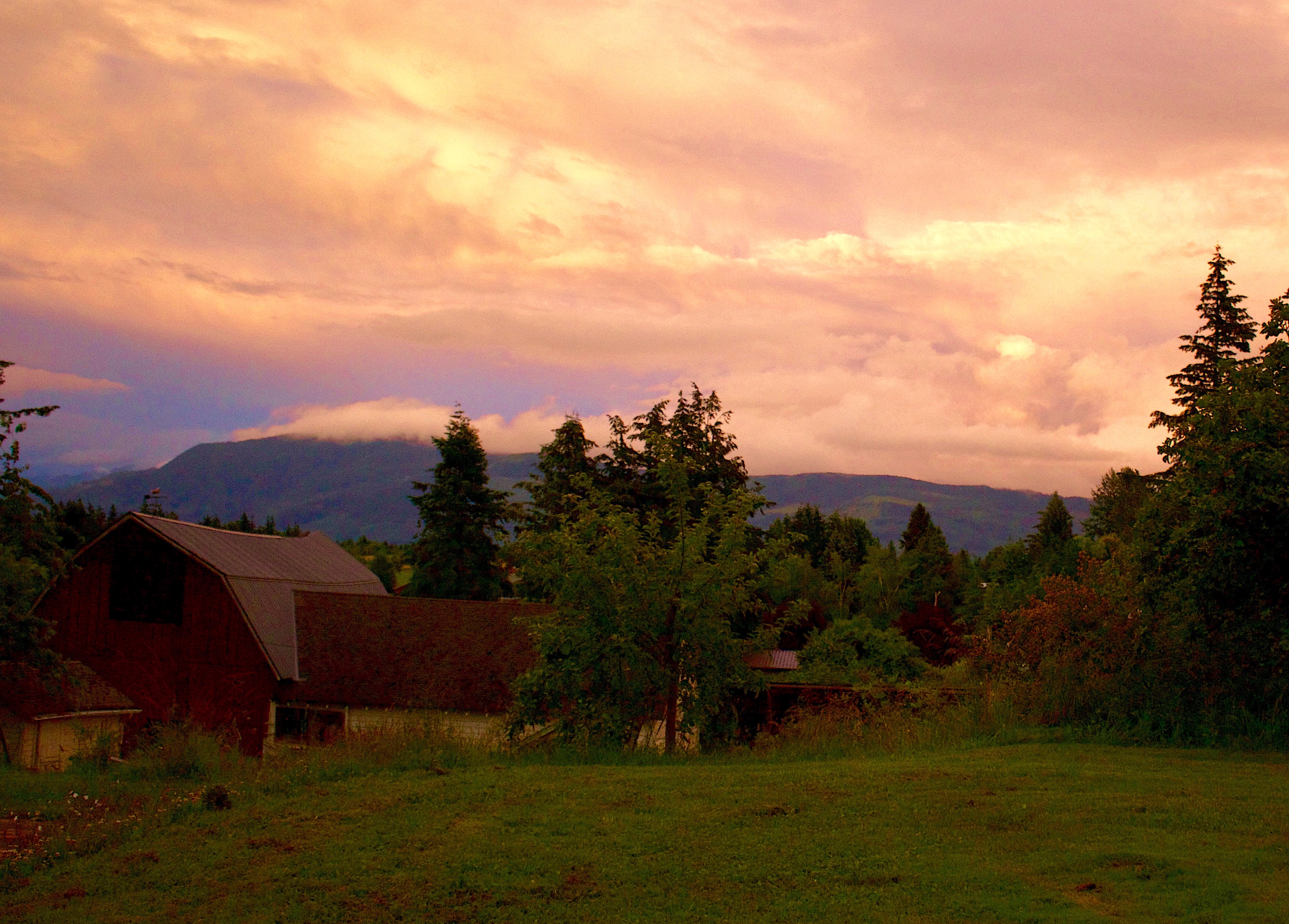
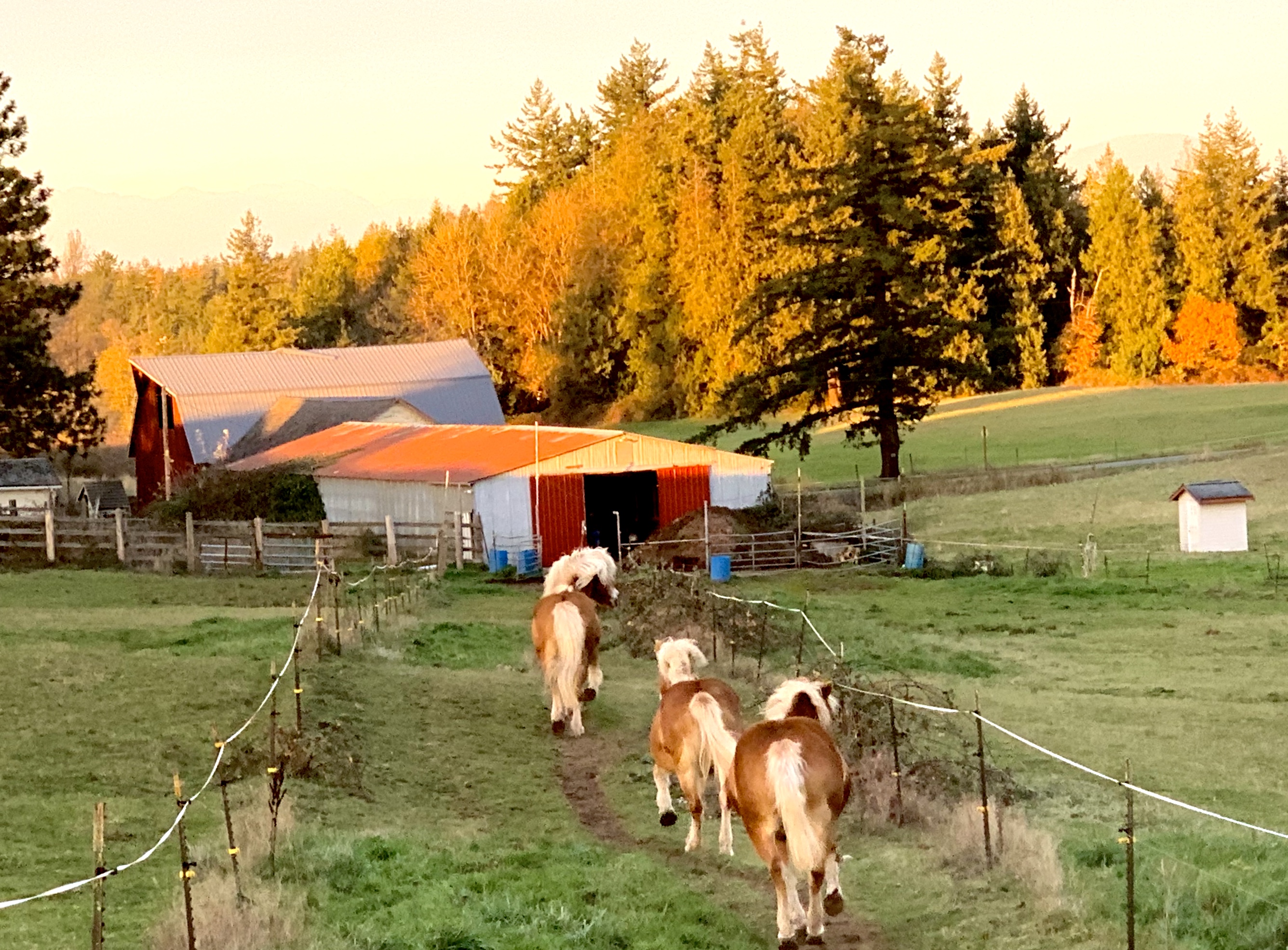
Seeking Out the Ache of Memory

Well-away and be it so,
To the stranger let them go.
Even cheerfully I yield
Pasture, orchard, mowing-field,
Yea and wish him all the gain
I required of them in vain.
Yea and I can yield him house,
Barn, and shed, with rat and mouse
To dispute possession of.
These I can unlearn to love.
Since I cannot help it? Good!
Only be it understood,

It shall be no trespassing
If I come again some spring
In the grey disguise of years,
Seeking ache of memory here.
~Robert Frost from “On the Sale of My Farm”
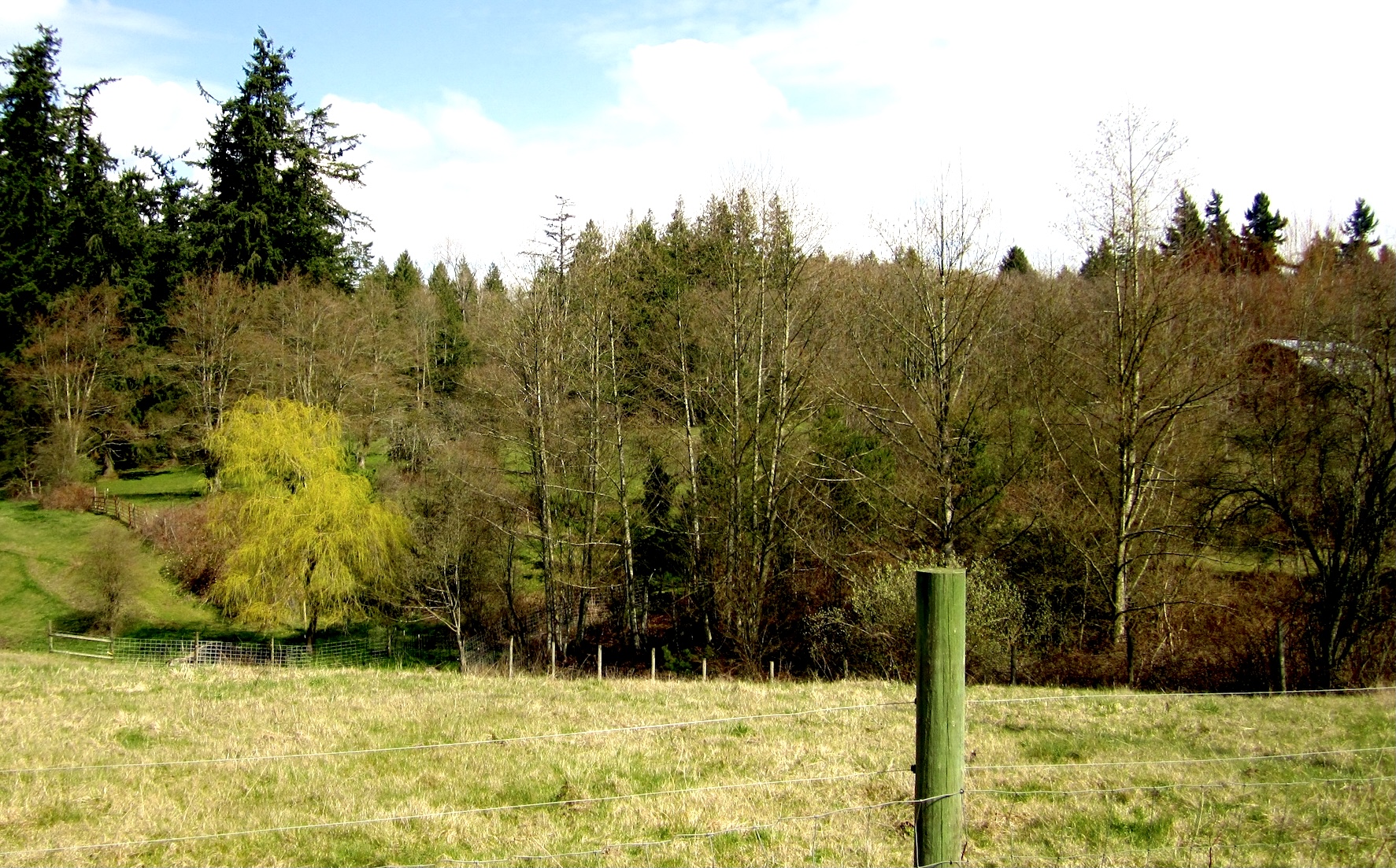
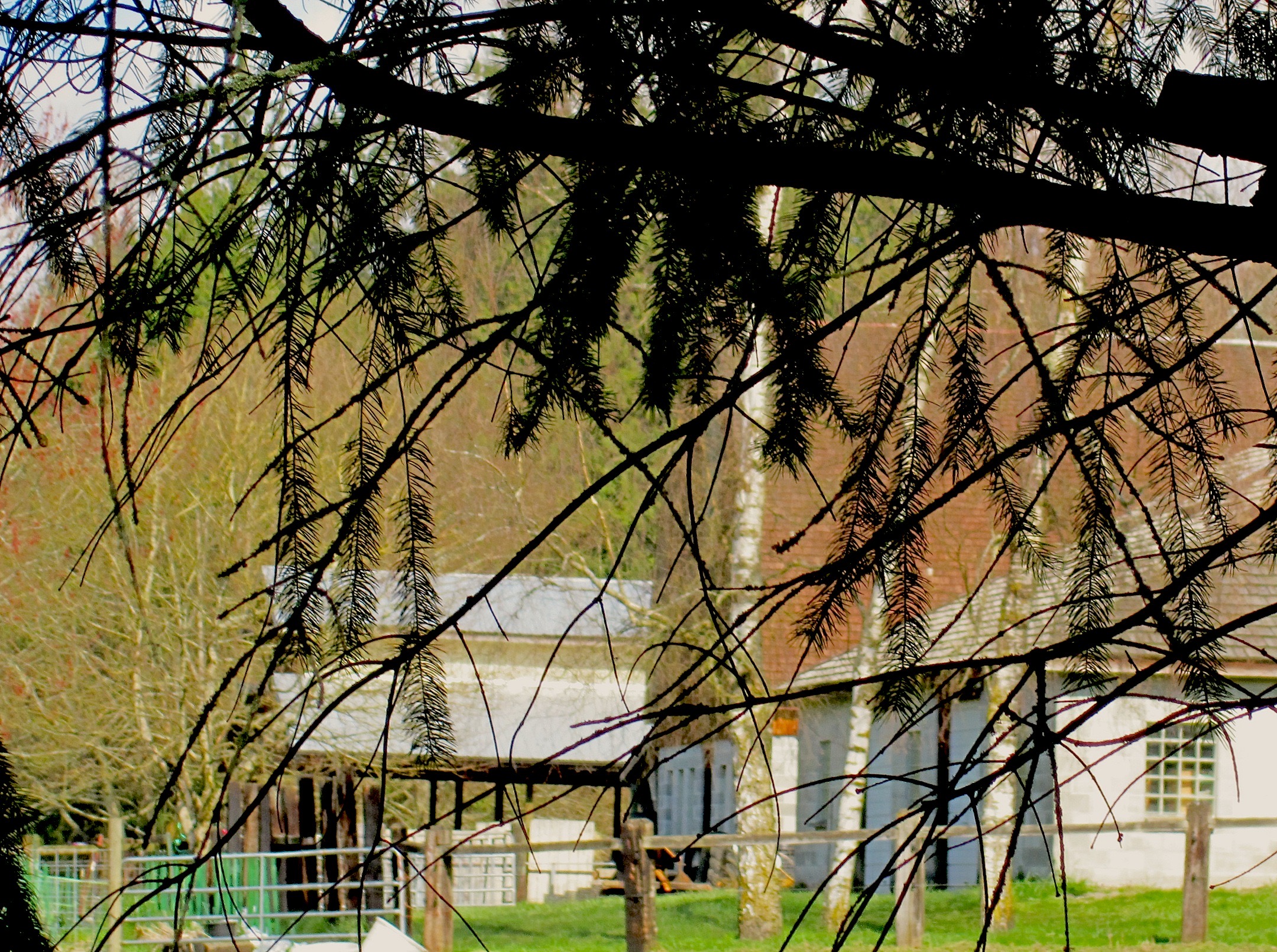
the farm where I grew up in east Stanwood
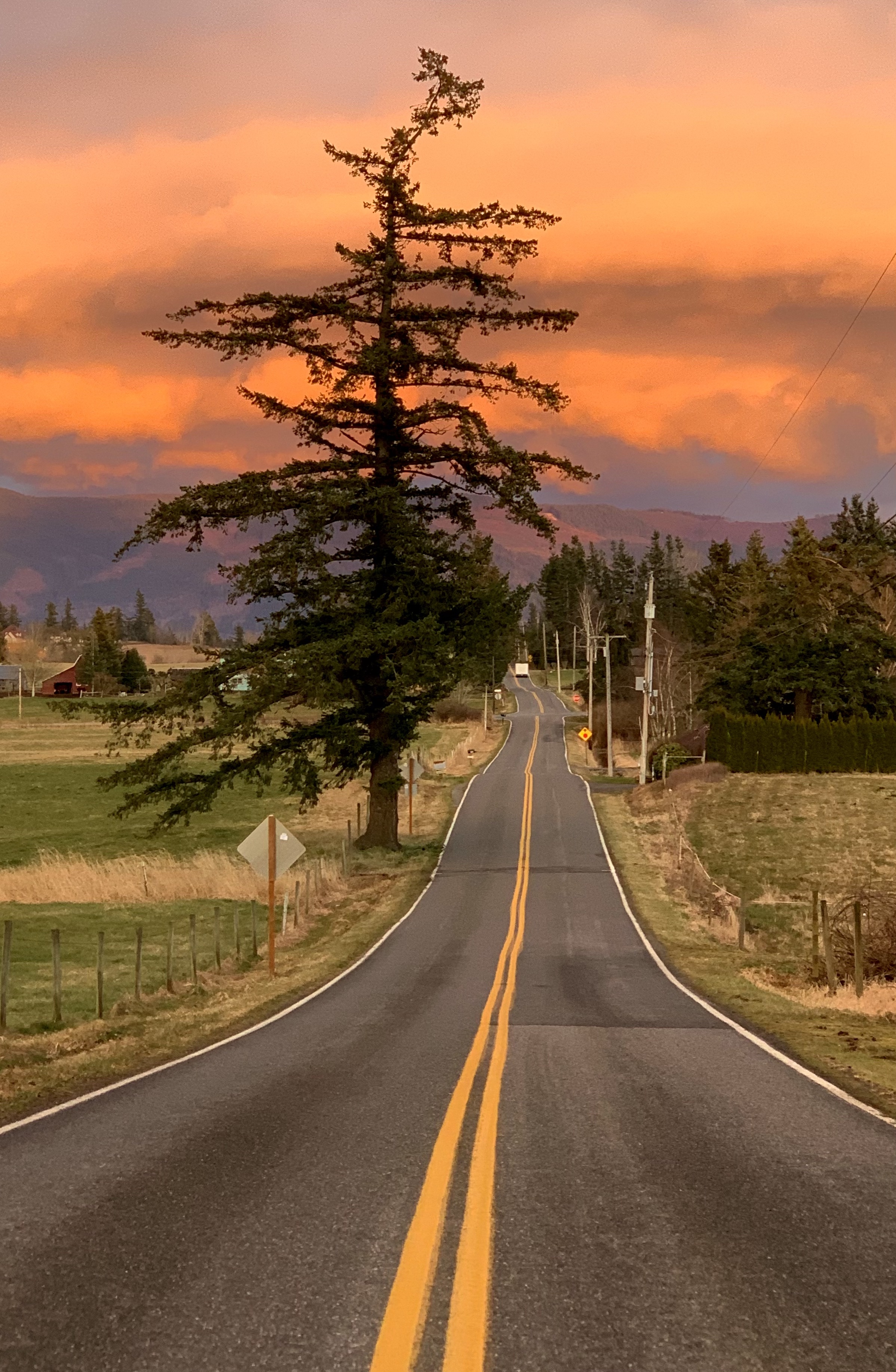
the Stanwood farm from the road

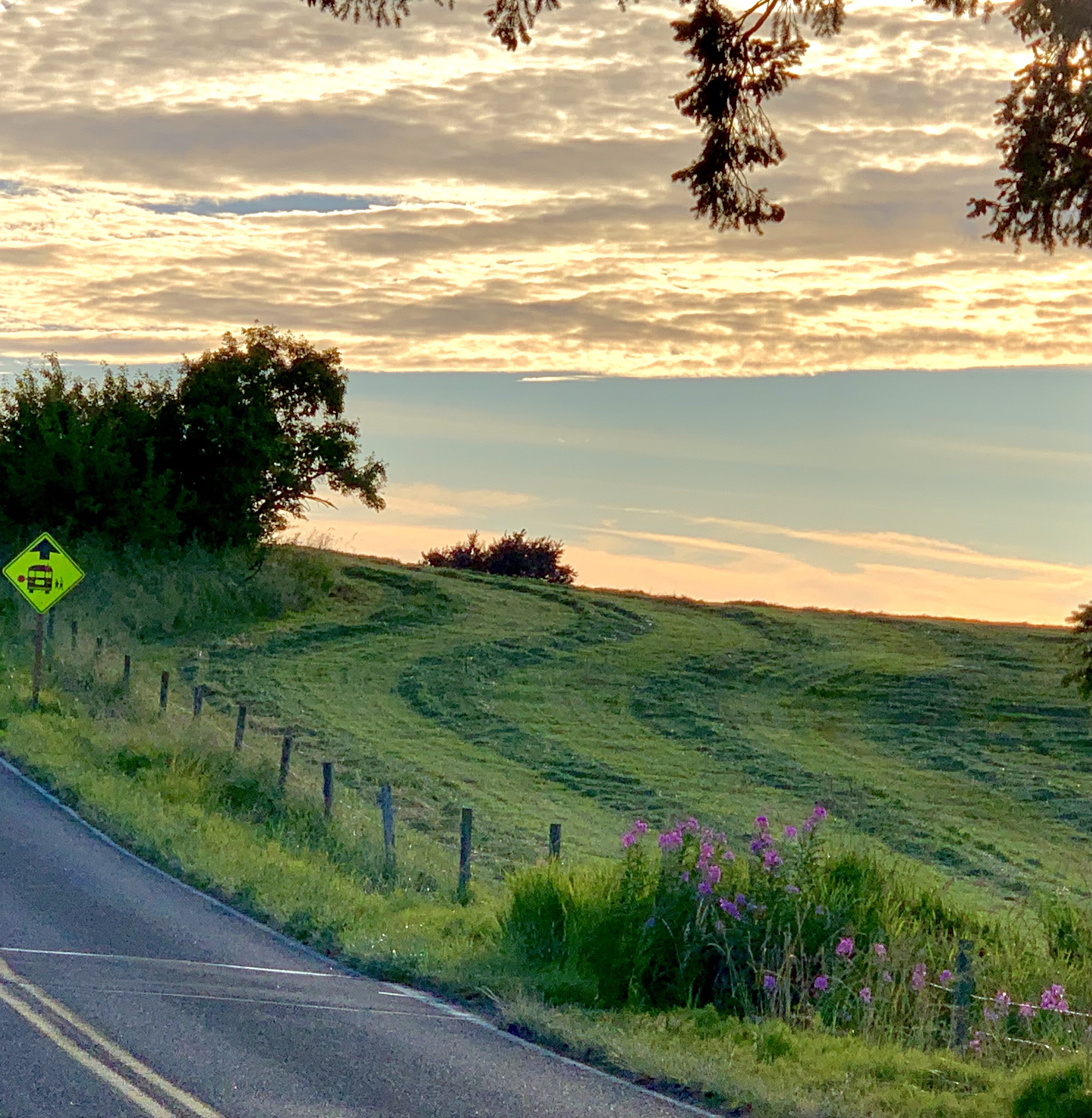
From the road, each of the two small farms where I grew up in western Washington state (Stanwood and Olympia) look nothing like they did in my childhood.  When I drive past now, whether on Google Earth virtual reality or for real , the outbuildings have changed and are unfamiliar, fences pulled down, the trees exponentially taller or gone altogether, the fields no longer well-tended. Instead the familiarity is in the road to get there, the lean into the curves, the acceleration in and out of dips, the landscape which triggers a simultaneous comfort and disquiet deep in my DNA.

Though my brother recently stopped and looked around our long-ago childhood home, and sent me pictures that looked barely recognizable, I myself have never stopped to knock; instead I have driven slowly past to sense if I feel what I used to feel in these places.  My memories are indeed triggered but feel a bit as if they must have happened to someone else.

I have the same feeling when driving past my parents’ childhood farms in Anacortes and in the Palouse wheat fields. Part of me belongs to these places even though they have never been truly “mine” – only part of sweet memories from my own childhood.
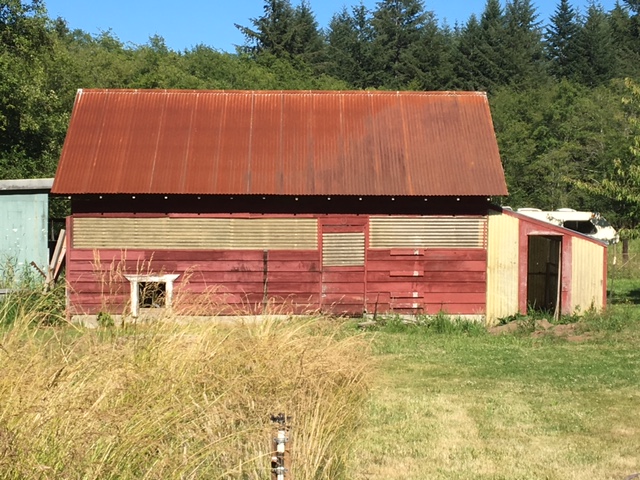
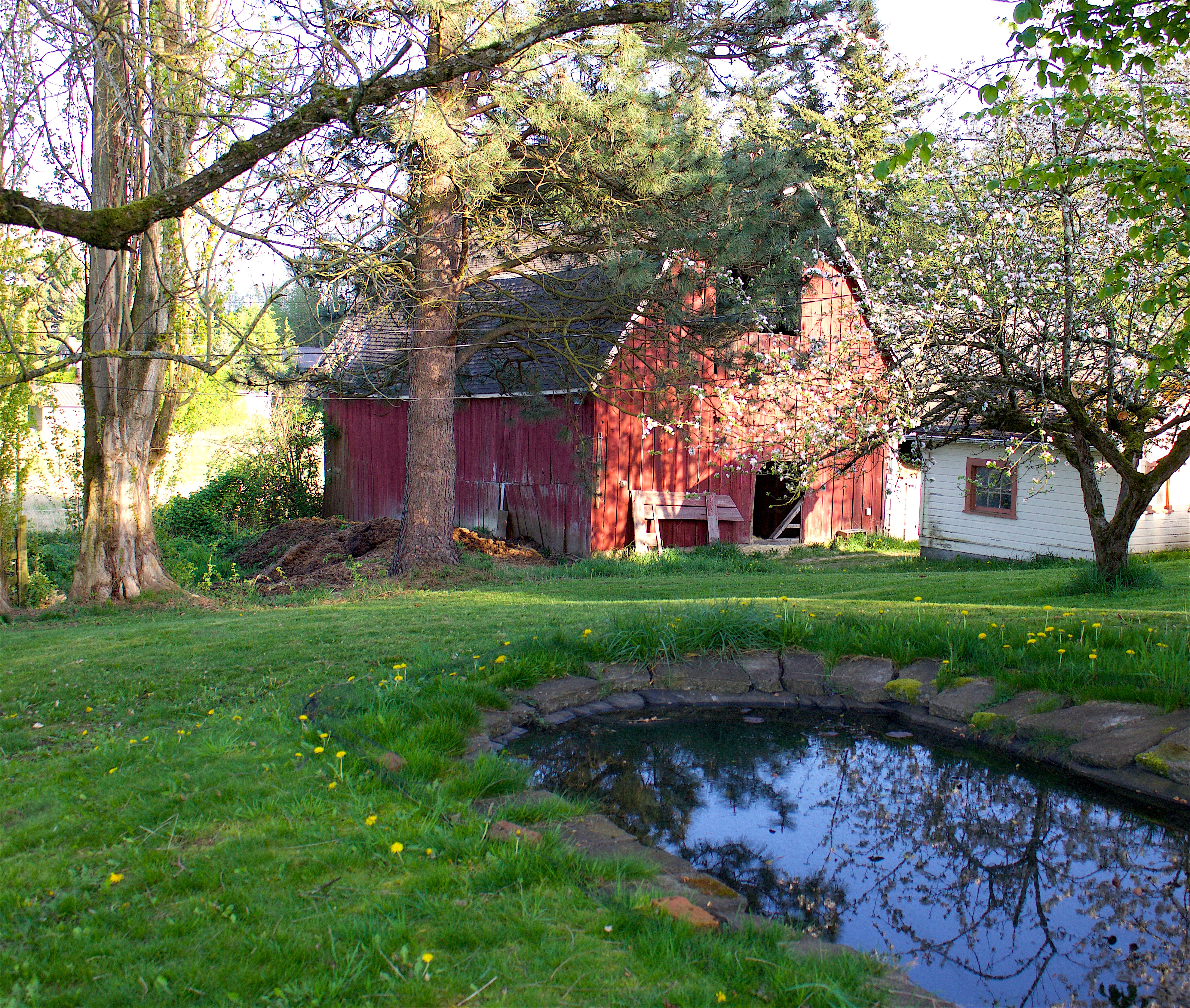
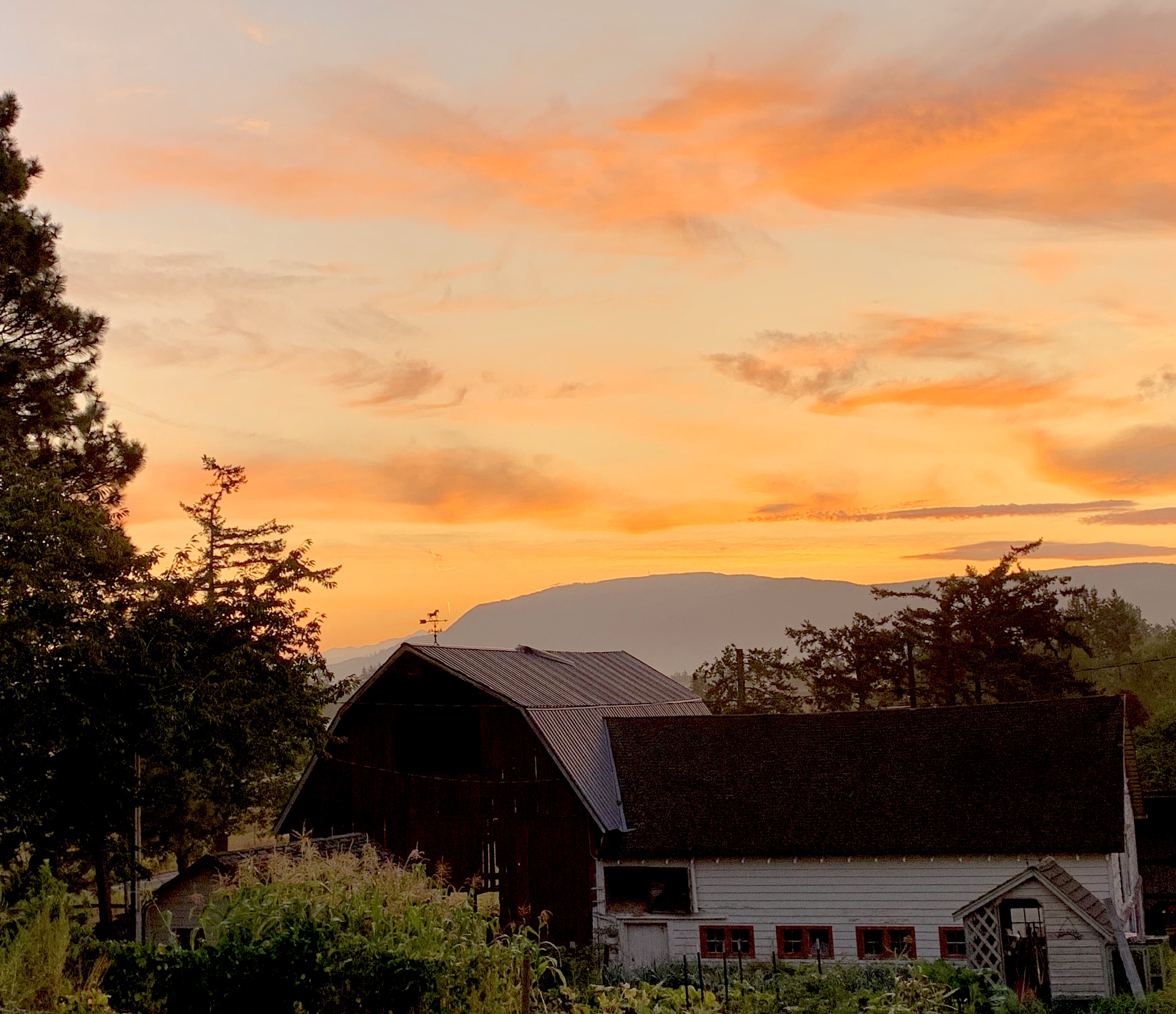
barn on Olympia farm
the driveway to my mother’s Palouse farm where she grew up

One clinic day a few years ago, I glanced at the home address of a young man I was about to see for a medical issue and I realized he now lived in my childhood home over 100 miles away.  When I greeted him I told him we had something in common: we had grown up under the same roof, inside the same walls, though children of two different generations.  He was curious but skeptical — how could this gray-haired middle aged woman know anything about his home?  He told me a bit about the house, the barn, the fields, the garden and how he experienced it felt altogether strange to me.  He and I had shared nothing but a patch of real estate — our recollections were so completely disparate.

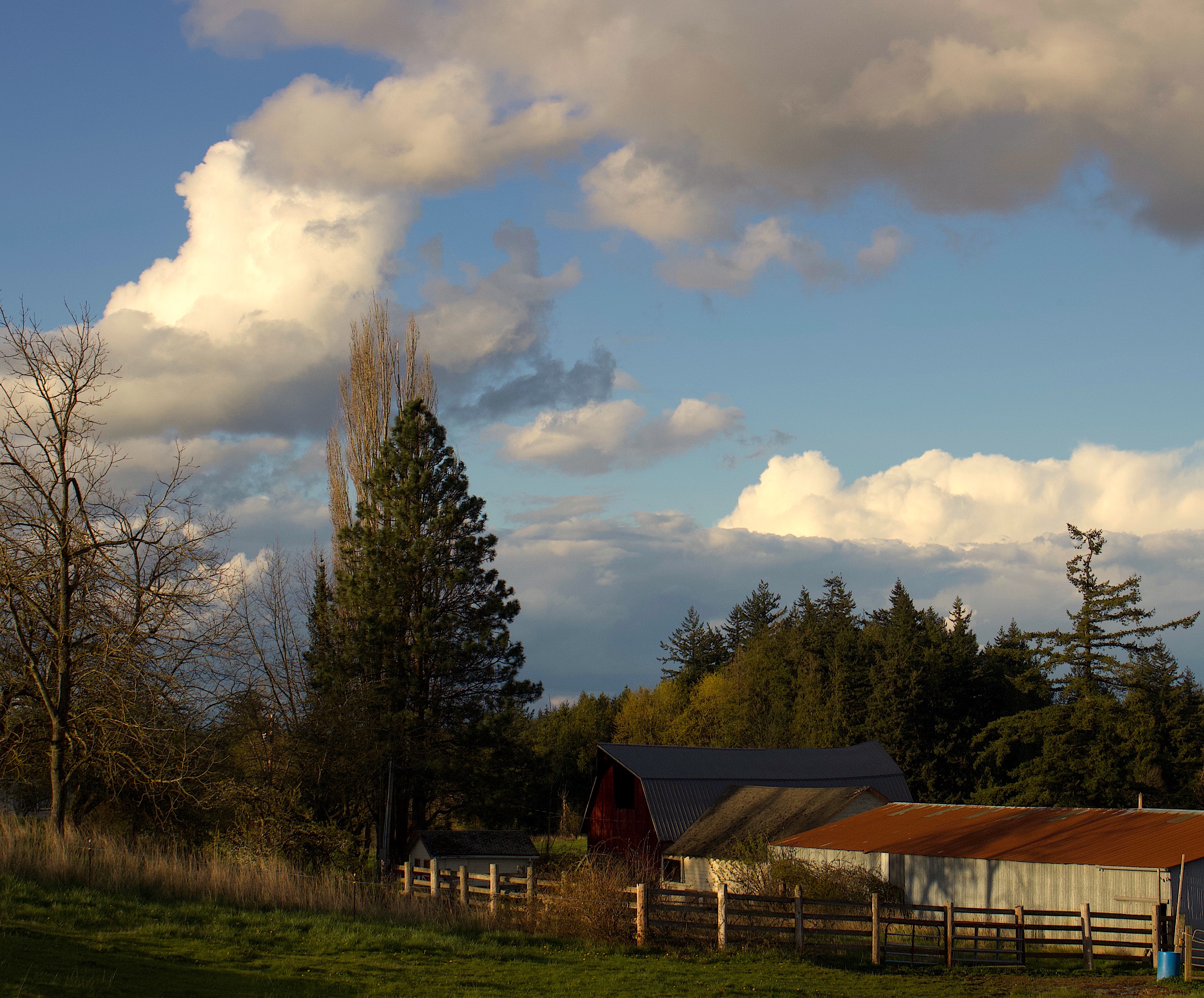
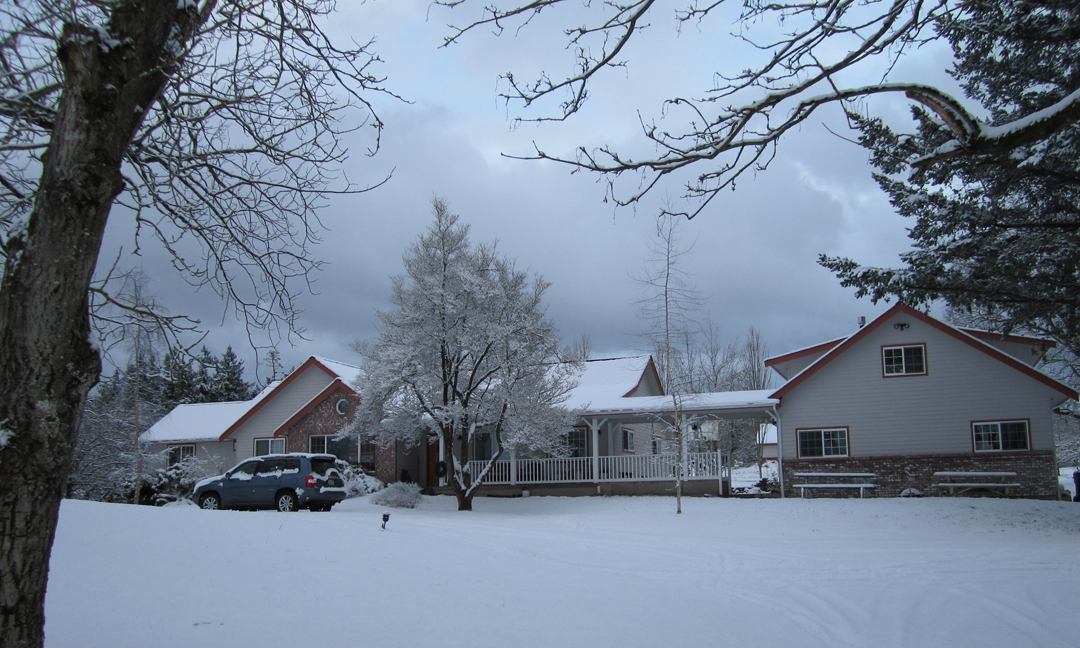
The two daughters of the family who sold our current farm to us over thirty years ago have been back to visit a time or two, and have driven by whenever they are in the area. Many things remain familiar to them but also too much has changed – it is not quite the same farm they remember from their childhood. I know it aches to visit here but they do let me know when a photo I post has a particular sweet memory for them.

I worry for the fearsome ache if someday, due to age or finances, we must sell this farm we cherish ~ this beloved place our children were raised, animals bred and cared for, fruit picked from an ancient orchard, plants tended and soil turned over. It will remain on the map surely as the other two farms of my past, visible as we pass by slowly on the road, but primarily alive in the words and photos I harvest here.

There will always be that sweet ache of hoping something will still remain familiar on the map of my memory. After all, there is no such beauty as the place where I belonged – now and forever ago.
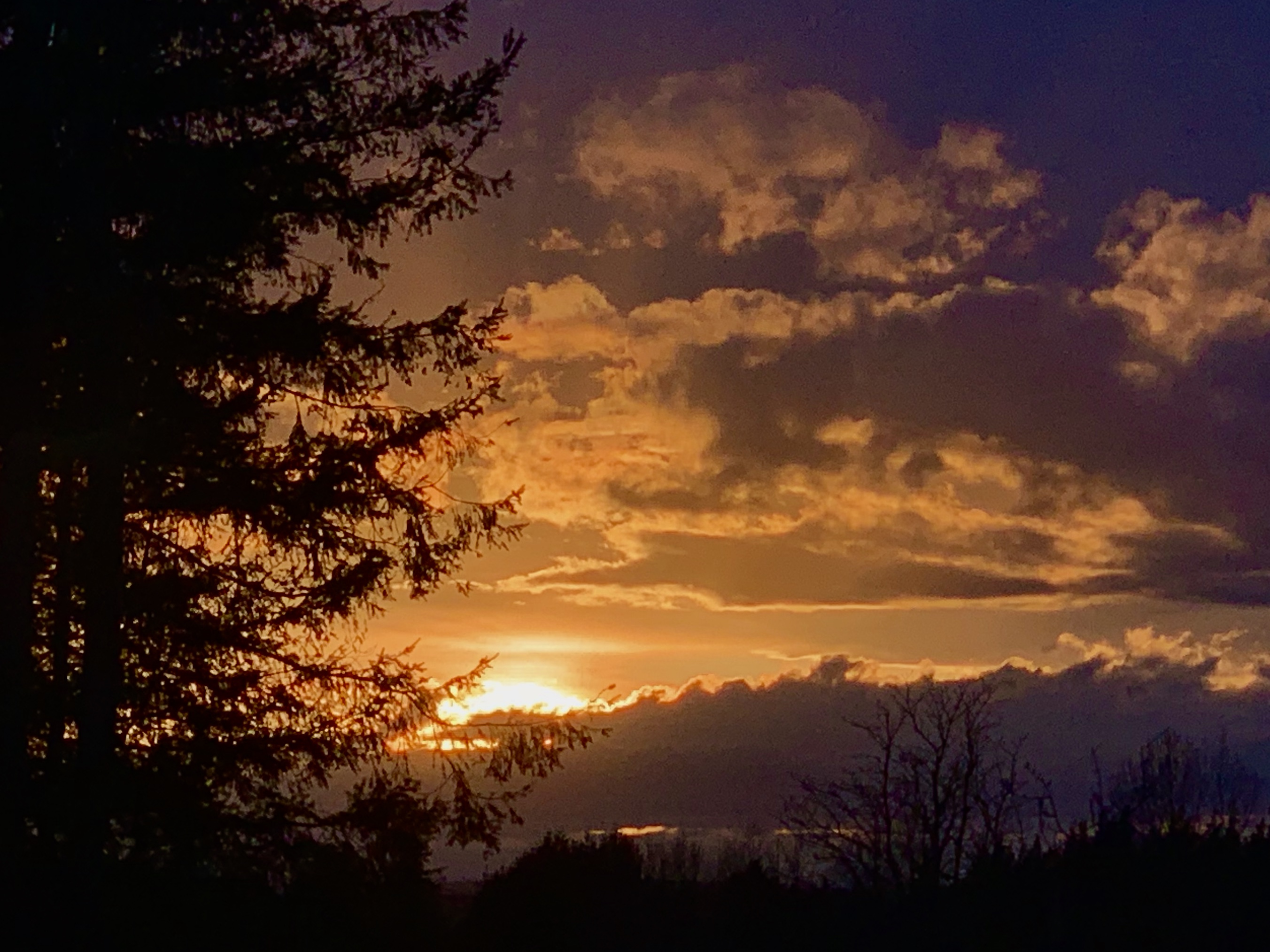
eveningporch51218
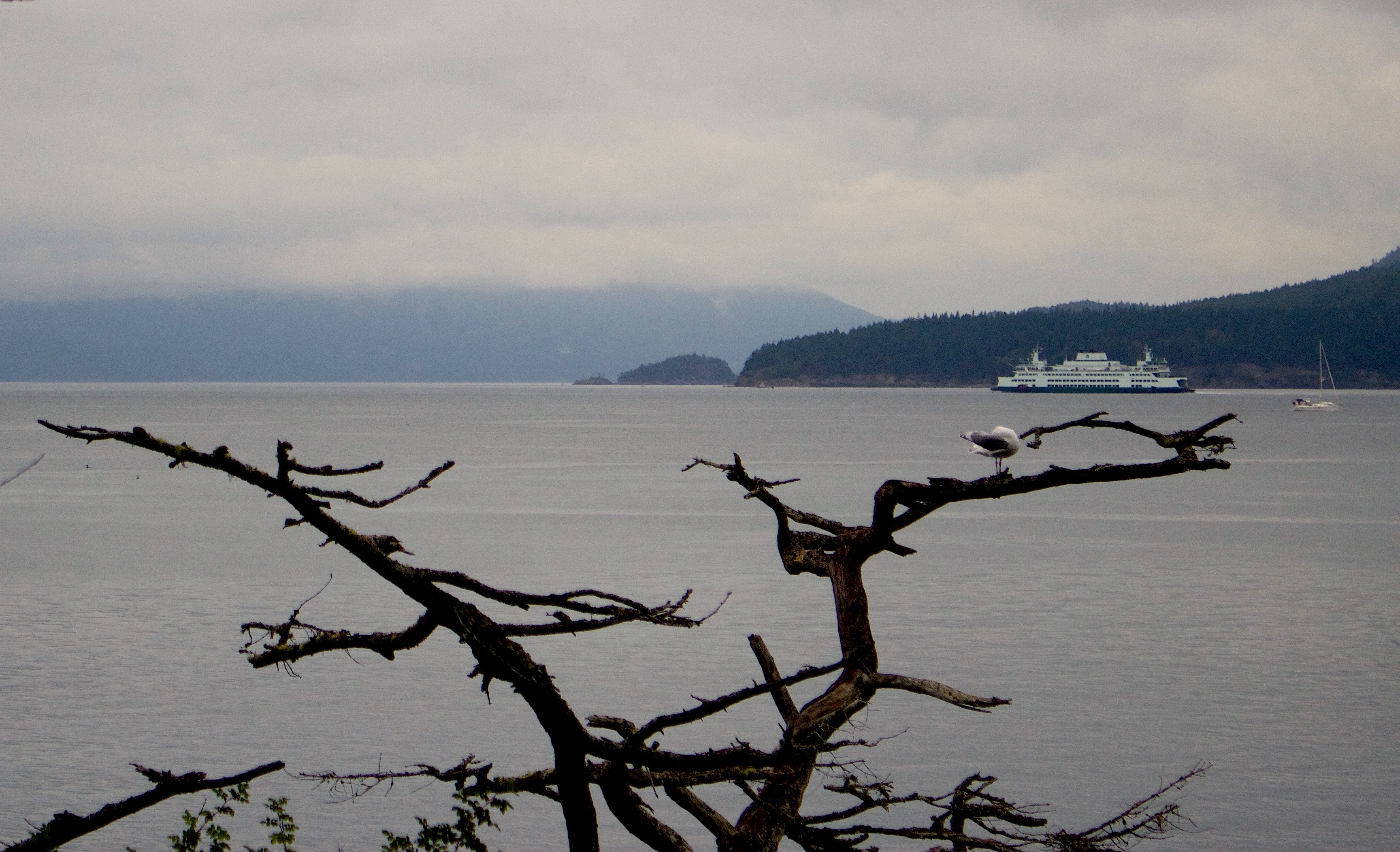
mowedyard
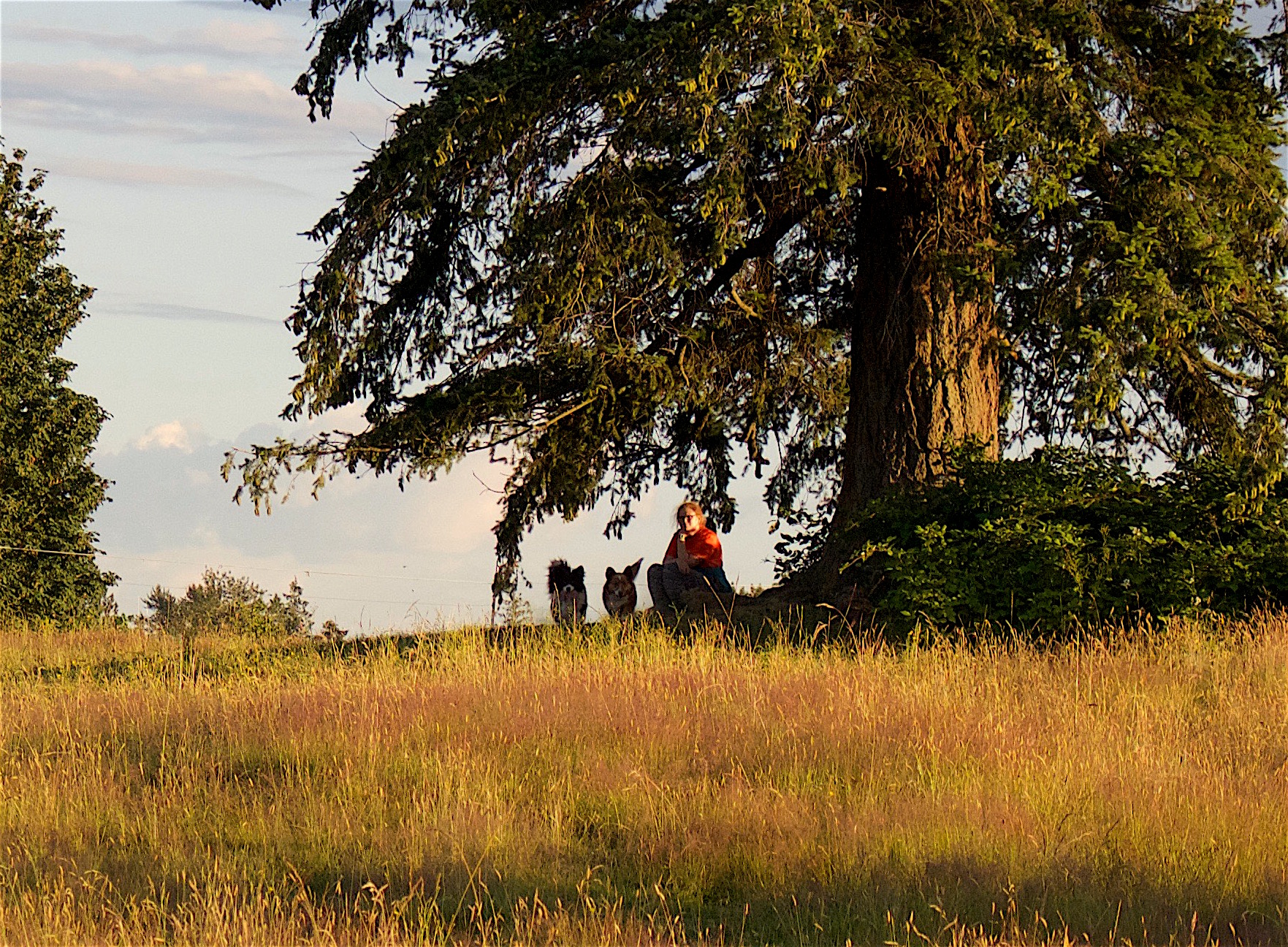
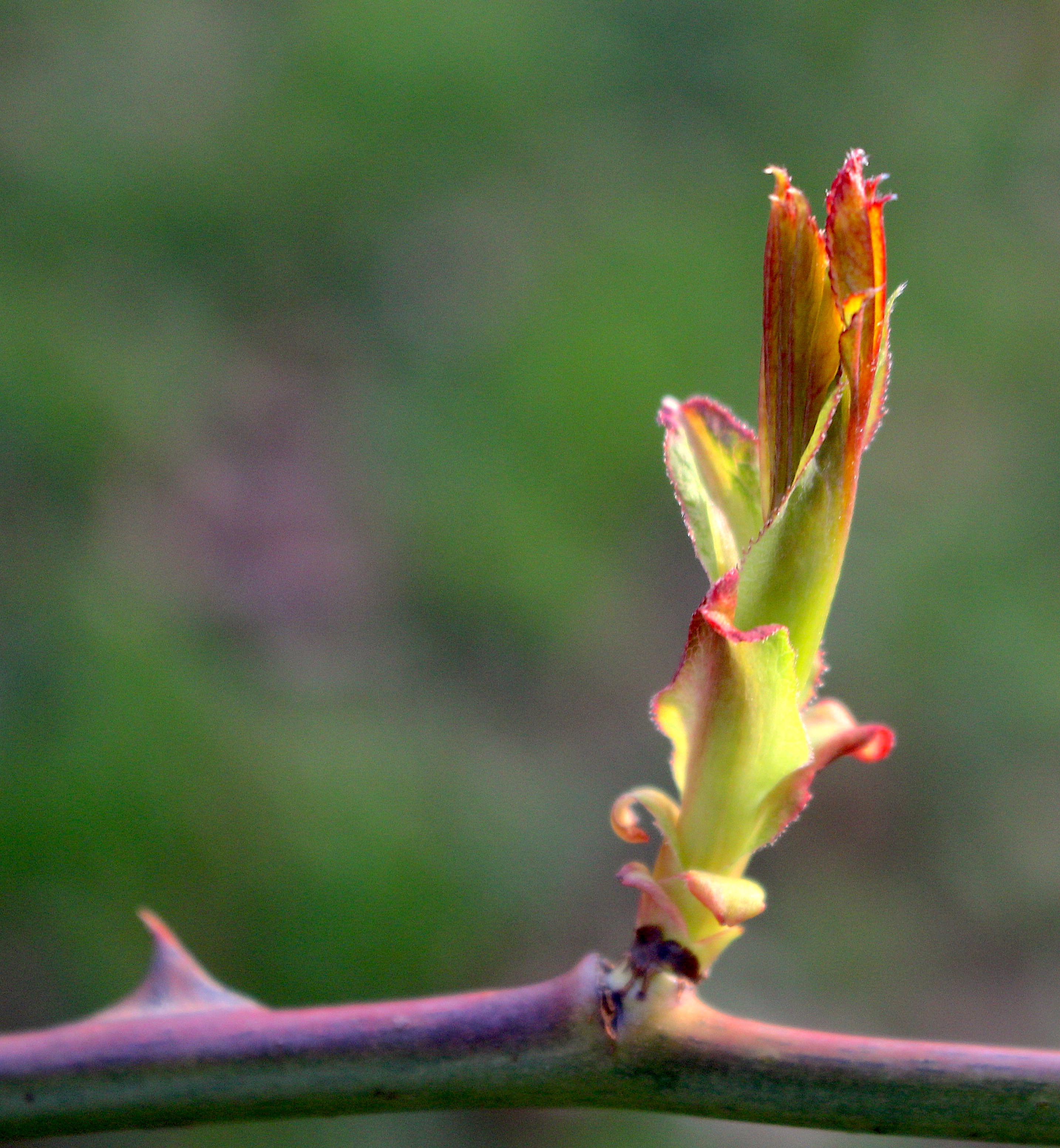
leadogtree
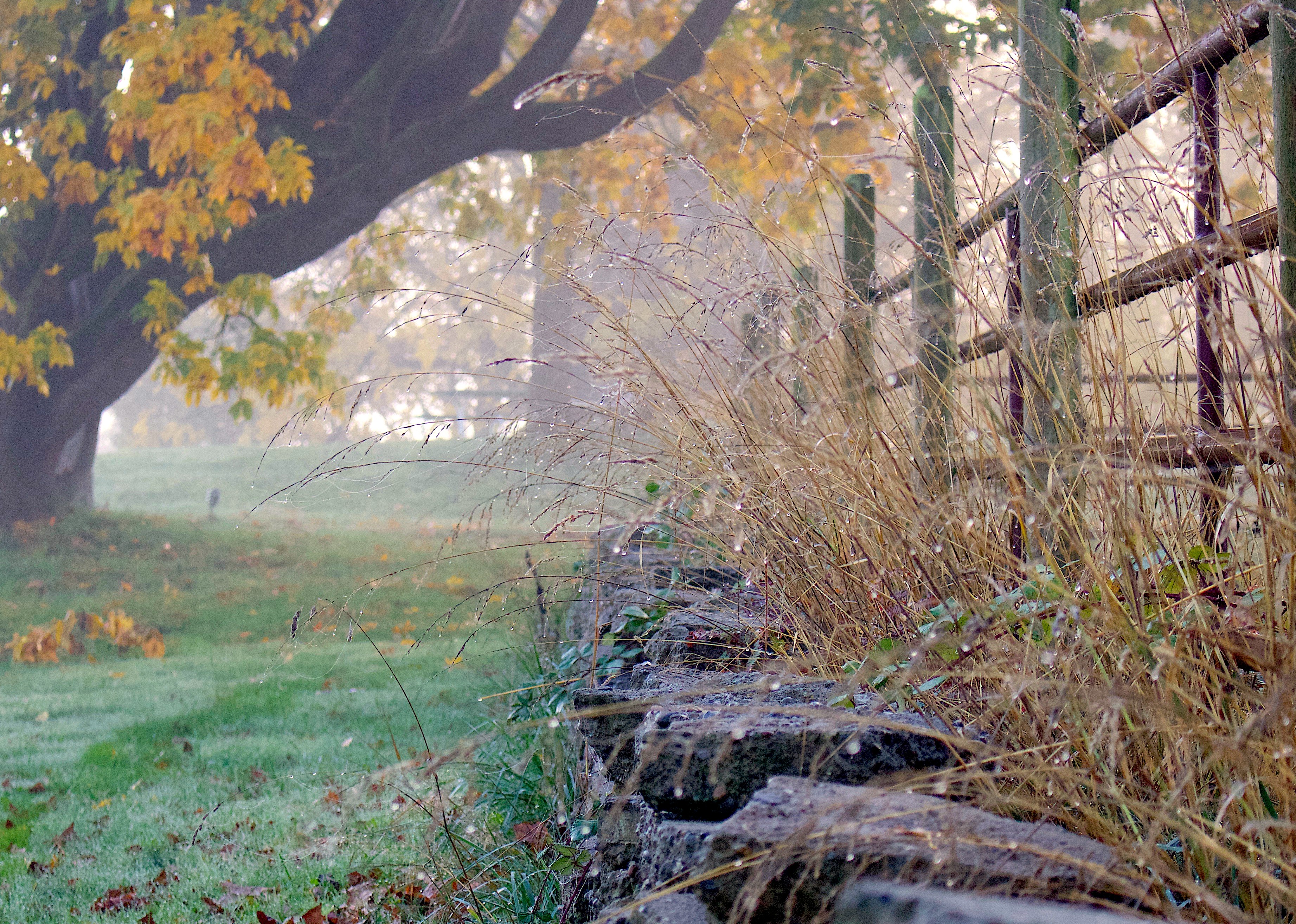
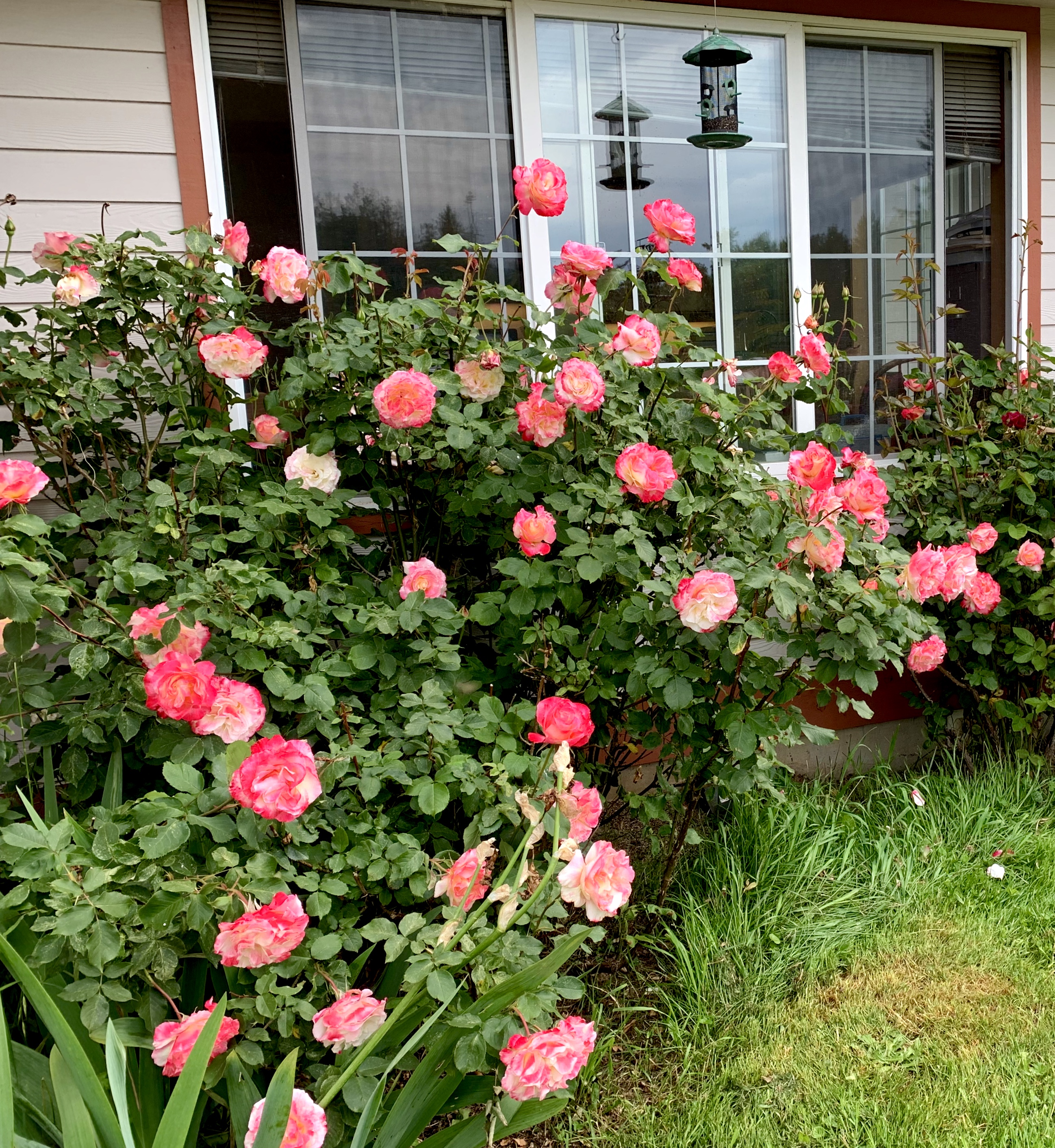
foggyfrontyard0

Tell me, where is the road
I can call my own
That I left, that I lost
So long ago?
All these years I have wandered
Oh, when will I know
There’s a way, there’s a road
That will lead me home

After wind, after rain
When the dark is done
As I wake from a dream
In the gold of day
Through the air there’s a calling
From far away
There’s a voice I can hear
That will lead me home

Rise up, follow me
Come away, is the call
With the love in your heart
As the only song
There is no such beauty
As where you belong
Rise up, follow me
I will lead you home
~Michael Dennis Browne

One-Time
Monthly
Yearly

Make a one-time or recurring donation to support daily Barnstorming posts

Make a monthly donation

Make a yearly donation

Choose an amount

¤5.00
¤10.00
¤20.00
¤5.00
¤15.00
¤100.00
¤5.00
¤15.00
¤100.00

Or enter a custom amount

¤

Your contribution is deeply appreciated.

Your contribution is appreciated.

Your contribution is appreciated.

DonateDonate monthlyDonate yearly
The Presence of Absence

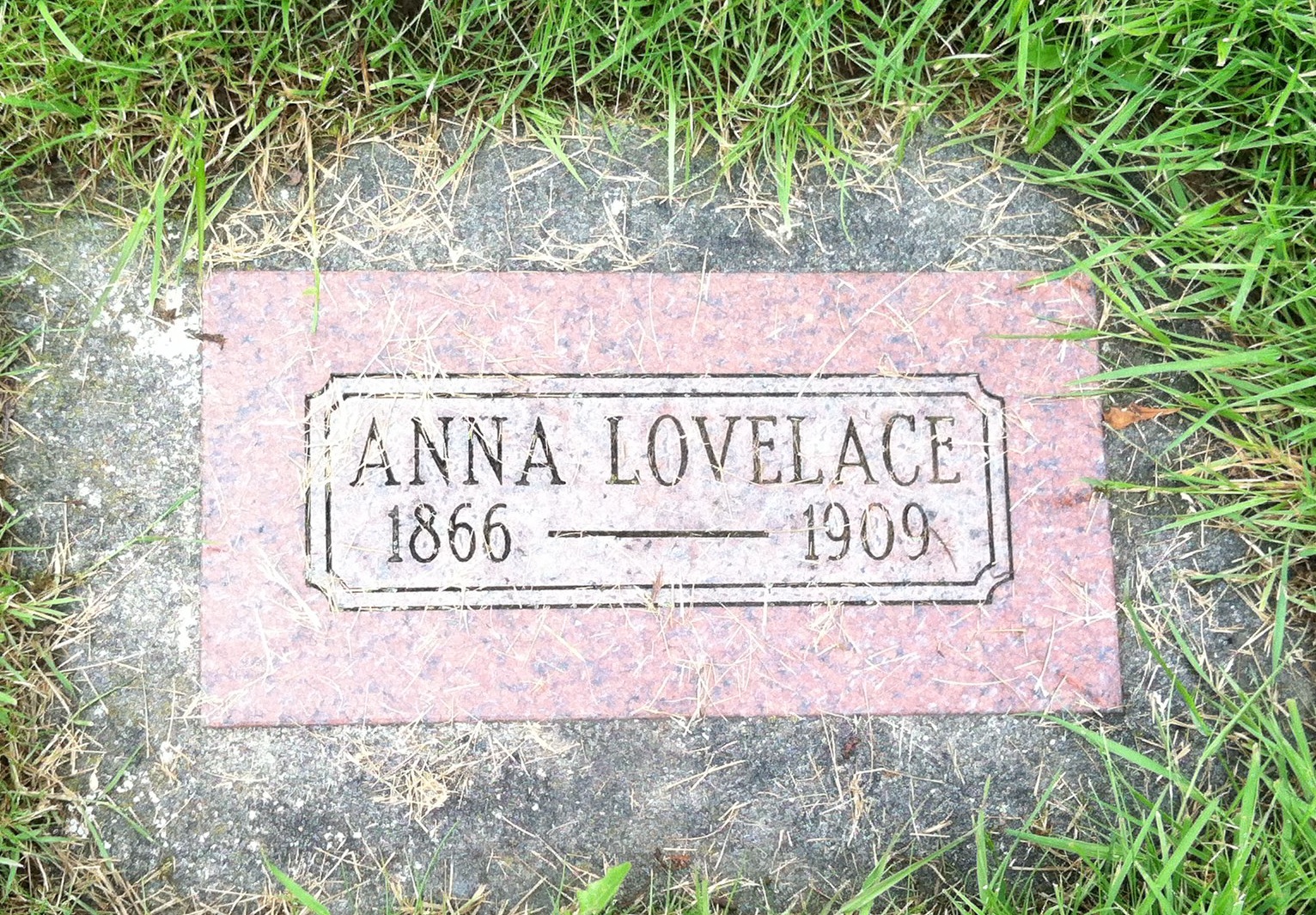
The sunlight now lay over the valley perfectly still. I went over to the graveyard beside the church and found them under the old cedars… I am finding it a little hard to say that I felt them resting there, but I did… I saw that, for me, this country would always be populated with presences and absences, presences of absences, the living and the dead. The world as it is would always be a reminder of the world that was, and of the world that is to come.
Wendell Berry in Jayber Crow

When it’s over, I don’t want to wonder
if I have made of my life something particular, and real.
I don’t want to find myself sighing and frightened
or full of argument.

I don’t want to end up simply having visited this world.
~Mary Oliver from “When Death Comes”

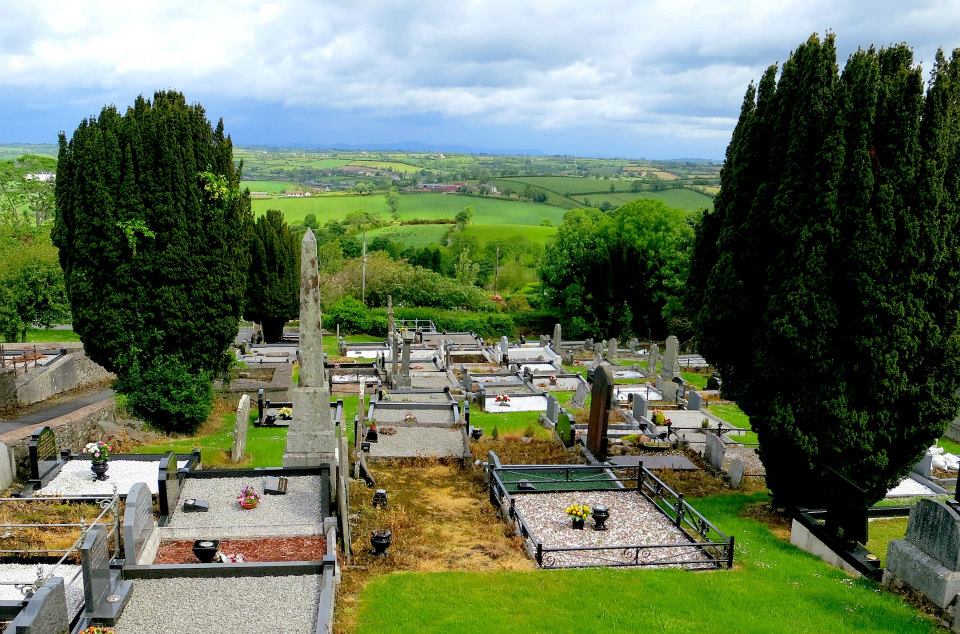
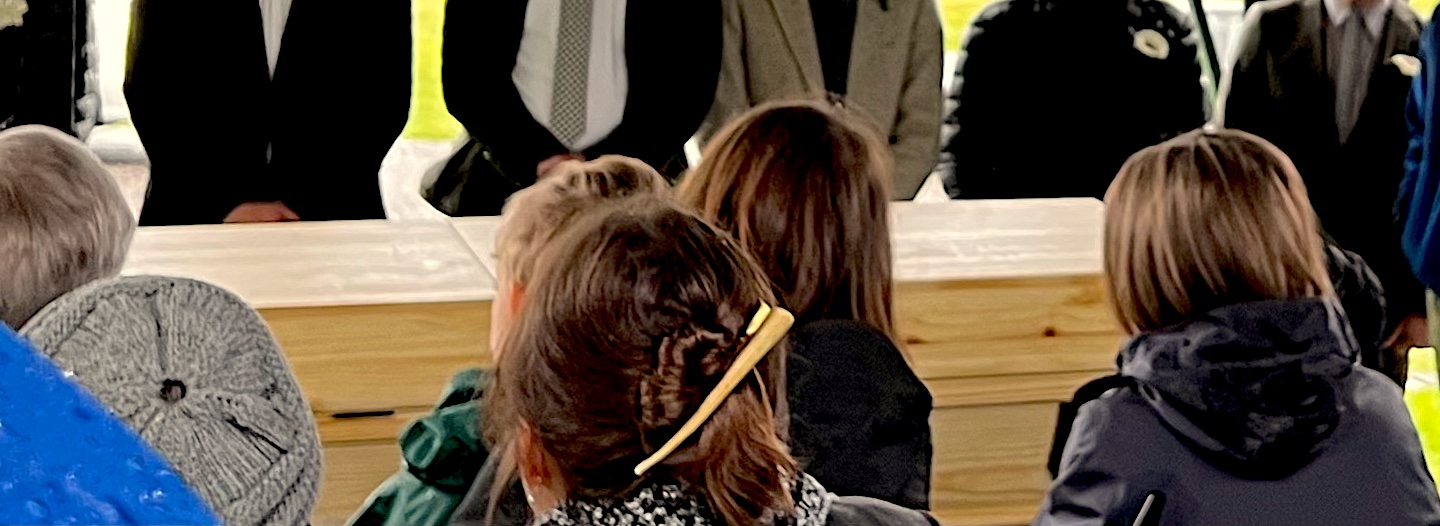
Today, as always over the last weekend of May, we have a family reunion where most turn up missing.  A handful of the living come together for lunch and then a slew of the no-longer-living, some of whom have been caught napping for a century or more, are no-shows.

It is always on this day of cemetery visiting that I feel keenly the presence of their absence: the great greats I never knew, a great aunt who kept so many secrets, an alcoholic grandfather I barely remember, my grandmother whose inherent messiness I inherited, an aunt who died of lymphoma as a young child, my parents who separated and divorced for ten years late in life, yet reunited long enough for their ashes to rest together for eternity.

It is good, as one of the still-for-now living, to approach these plots of grass with a wary weariness of the aging.  But for the grace of God, there will I be sooner than I wish to be.  There, thanks to the grace of God, will I one day be an absent presence for my children and grandchildren to ponder.

The world as it is remembers the world that was.  The world to come calls us home in its time, where we all will be present and accounted for — our reunion celebration.

All in good time.

One-Time
Monthly
Yearly

Make a one-time or recurring donation to support daily Barnstorming posts

Make a monthly donation

Make a yearly donation

Choose an amount

¤5.00
¤10.00
¤20.00
¤5.00
¤15.00
¤100.00
¤5.00
¤15.00
¤100.00

Or enter a custom amount

¤

Your contribution is deeply appreciated.

Your contribution is appreciated.

Your contribution is appreciated.

DonateDonate monthlyDonate yearly

Wondering How She Came to Be There

She wasn’t looking
when they took this picture:
sitting on the grass
in her bare feet
wearing a cotton dress,
she stares off to the side
watching something on the lawn
the camera didn’t catch.
What was it?
A ladybug? A flower?
Judging from her expression,
possibly nothing at all,
or else
the lawn was like a mirror,
and she sat watching herself,
wondering who she was
and how she came to be there
sitting in this backyard,
wearing a cheap, white dress,
imagining that tomorrow
would be like all her yesterdays,
while her parents chatted
and watched, as I do
years later,
too distantly to interfere.
~Dana Gioia, “Photograph of My Mother as a Young Girl” from Daily Horoscope

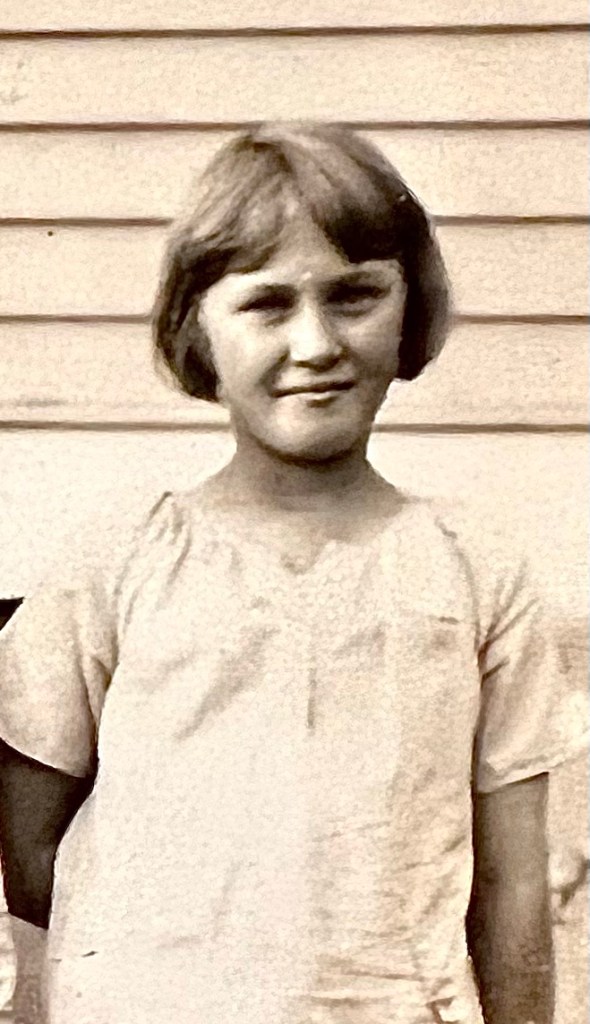
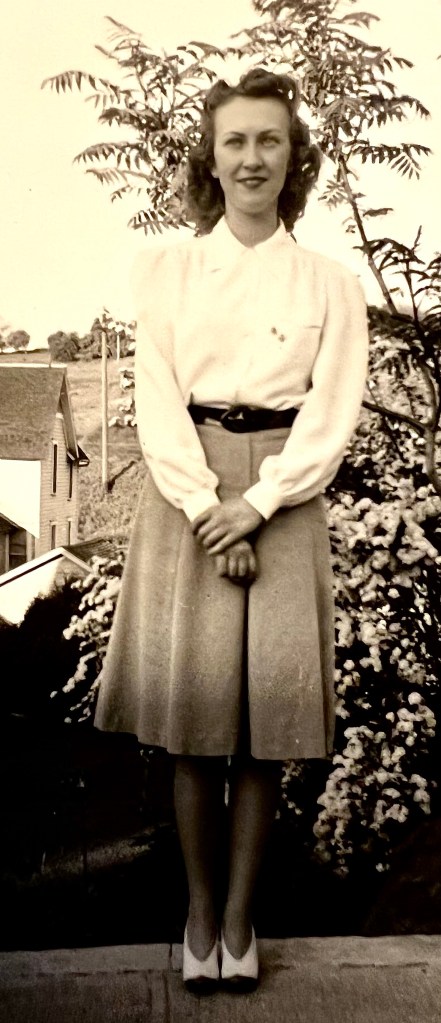
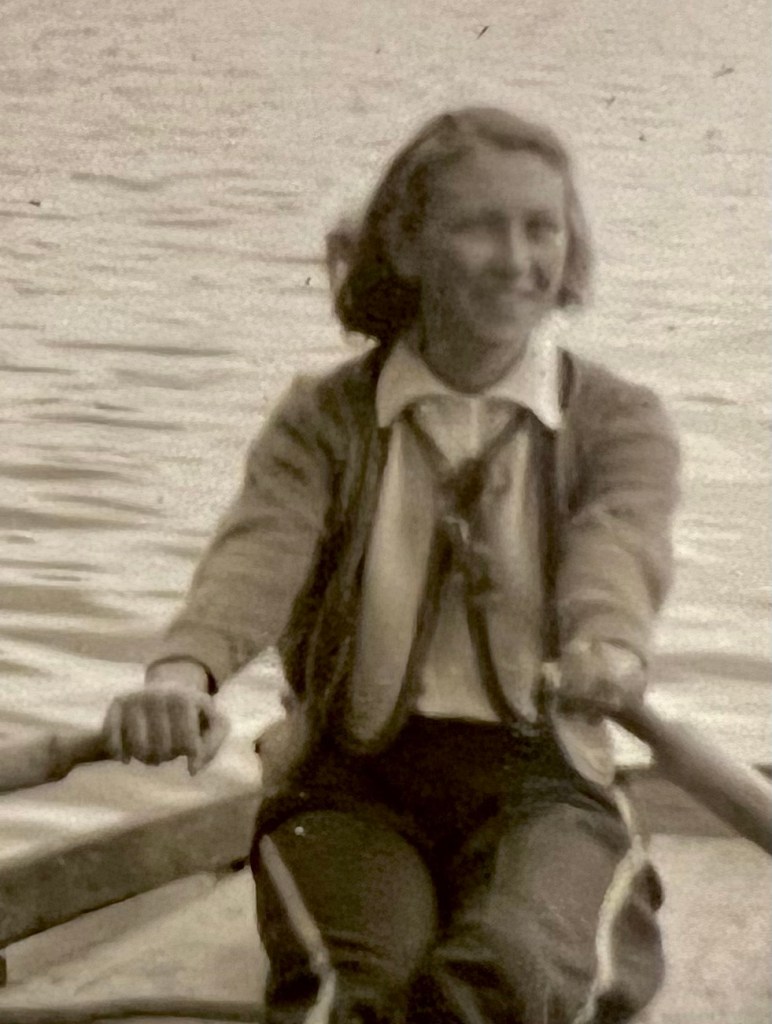
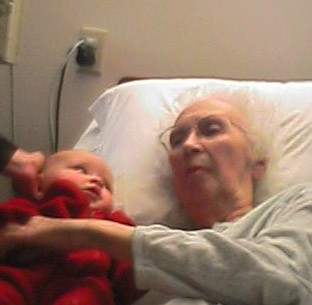
Yesterday was my mother Elna Schmitz Polis’ 102nd birthday though she left us behind nearly 14 years ago. I wrote the poem below while she was fading from this life.

Vigil at my mother’s bedside

Lying still, your mouth gapes open as
I wonder if you breathe your last.
Your hair a white cloud
Your skin baby soft
No washing, digging, planting gardens
Or raising children
Anymore.

Where do your dreams take you?
At times you wake in your childhood home of
Rolling wheat fields, boundless days of freedom.
Other naps take you to your student and teaching days
Grammar and drama, speech and essays.
Yesterday you were a young mother again
Juggling babies, farm and your wistful dreams.

Today you looked about your empty nest
Disguised as hospital bed,
Wondering aloud about
Children grown, flown.
You still control through worry
and tell me:
Travel safely
Get a good night’s sleep
Take time to eat
Call me when you get there

I dress you as you dressed me
I clean you as you cleaned me
I love you as you loved me
You try my patience as I tried yours.
I wonder if I have the strength to
Mother my mother
For as long as she needs.

When I tell you the truth
Your brow furrows as it used to do
When I disappointed you~
This cannot be
A bed in a room in a sterile place
Waiting for death
Waiting for heaven
Waiting

And I tell you:
Travel safely
Eat, please eat
Sleep well
Call me when you get there.

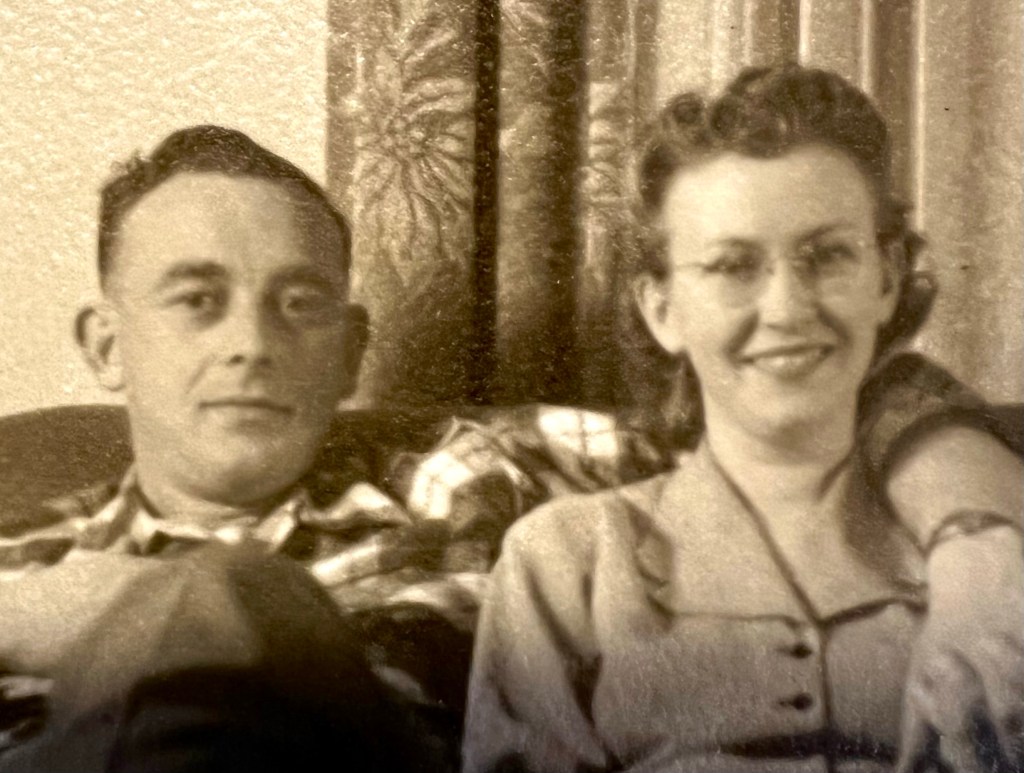
Dad and Mom in their early thirties
Mom’s favorite song to sing
One-Time
Monthly
Yearly

Make a one-time or recurring donation to support daily Barnstorming posts

Make a monthly donation

Make a yearly donation

Choose an amount

¤5.00
¤10.00
¤20.00
¤5.00
¤15.00
¤100.00
¤5.00
¤15.00
¤100.00

Or enter a custom amount

¤

Your contribution is deeply appreciated.

Your contribution is appreciated.

Your contribution is appreciated.

DonateDonate monthlyDonate yearly
A Humble and Silky Life

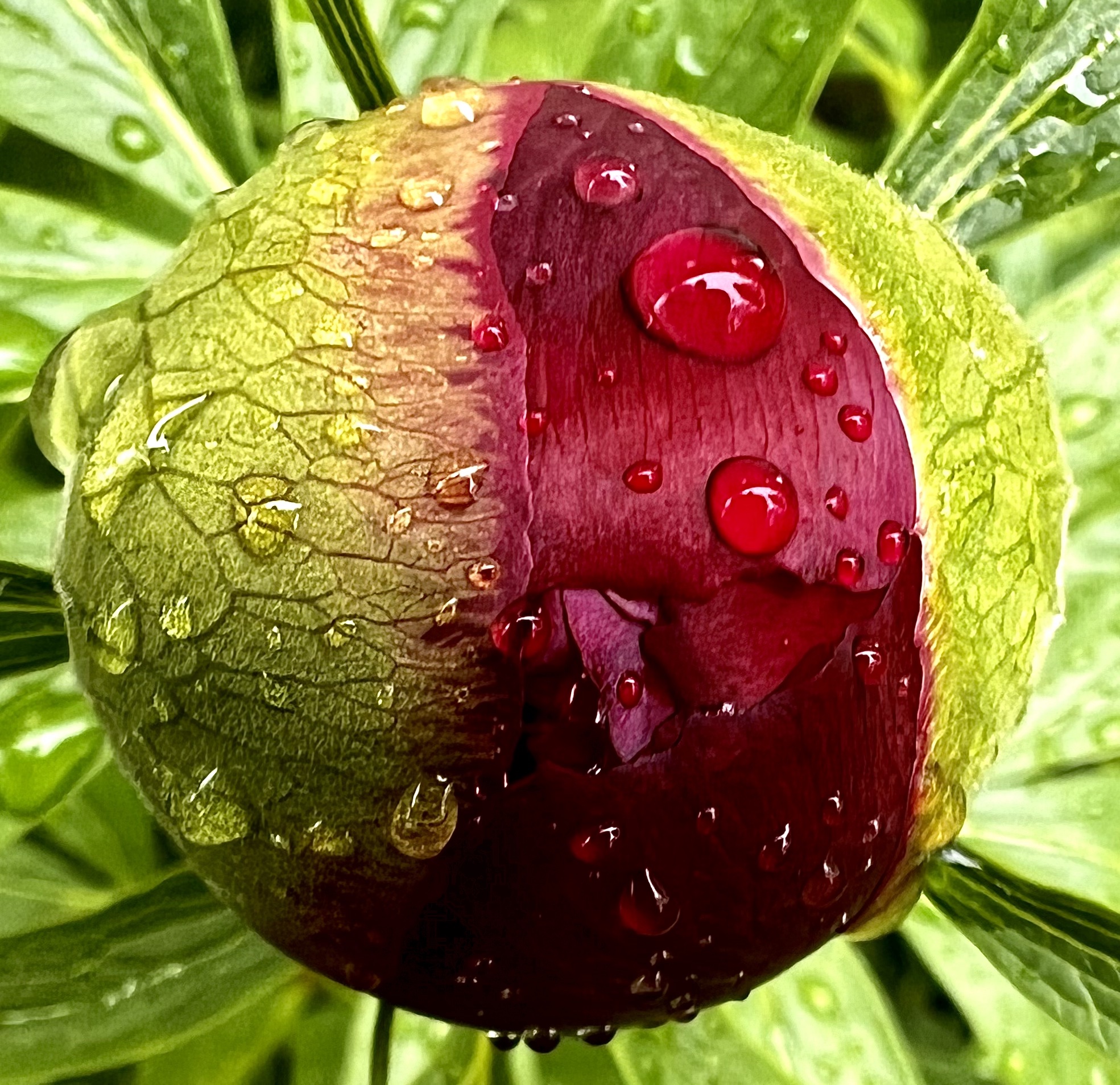
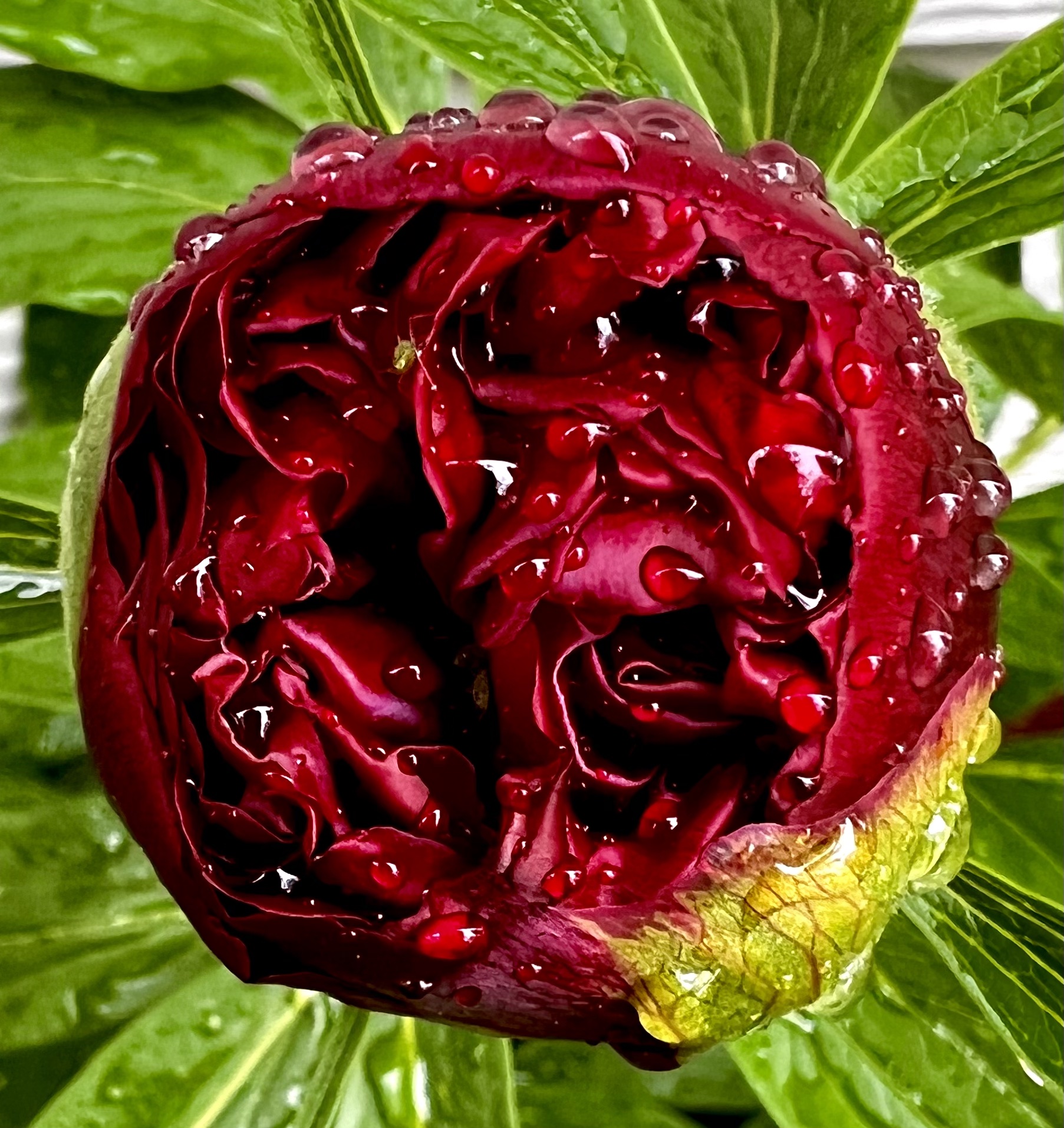
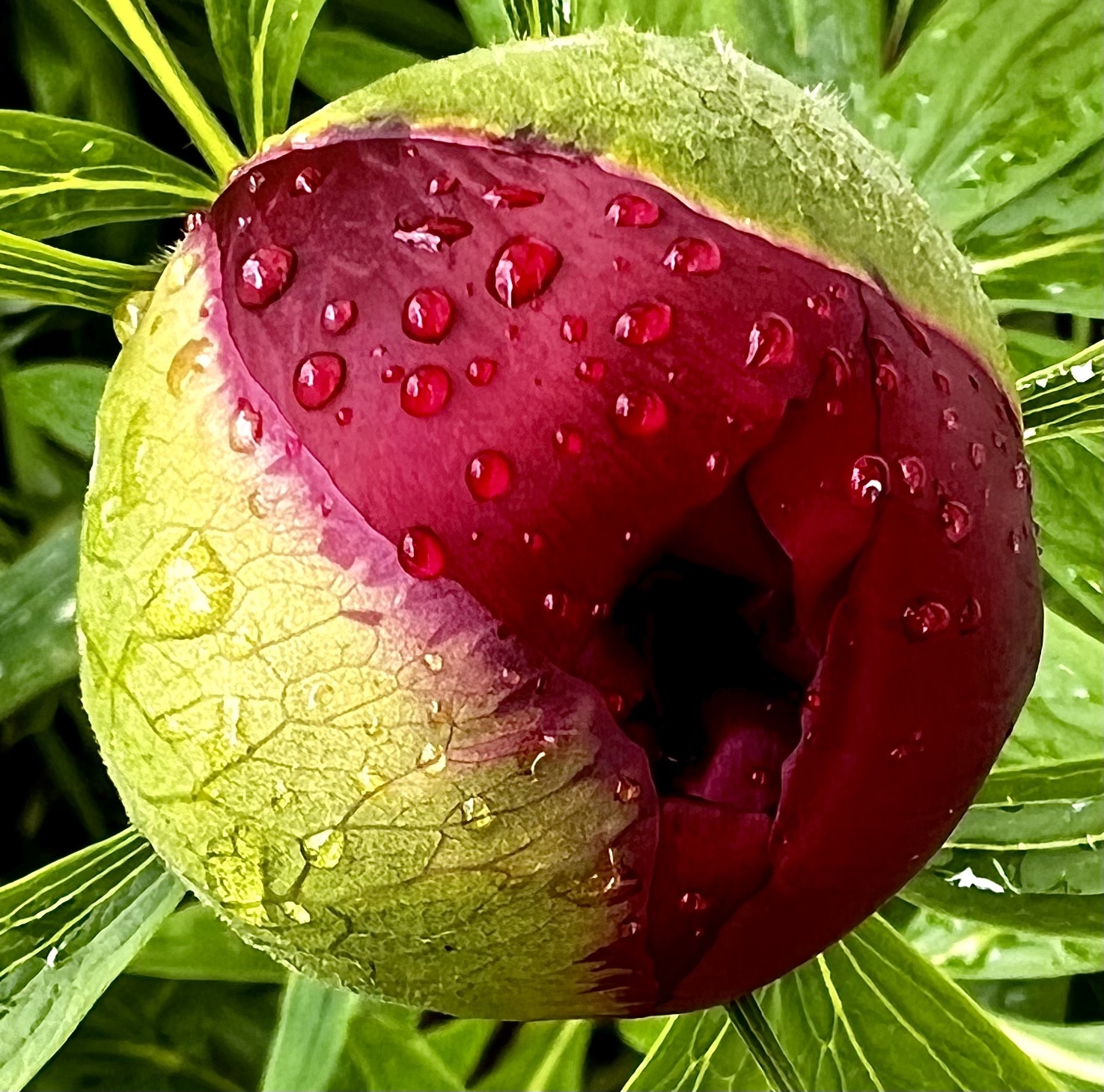
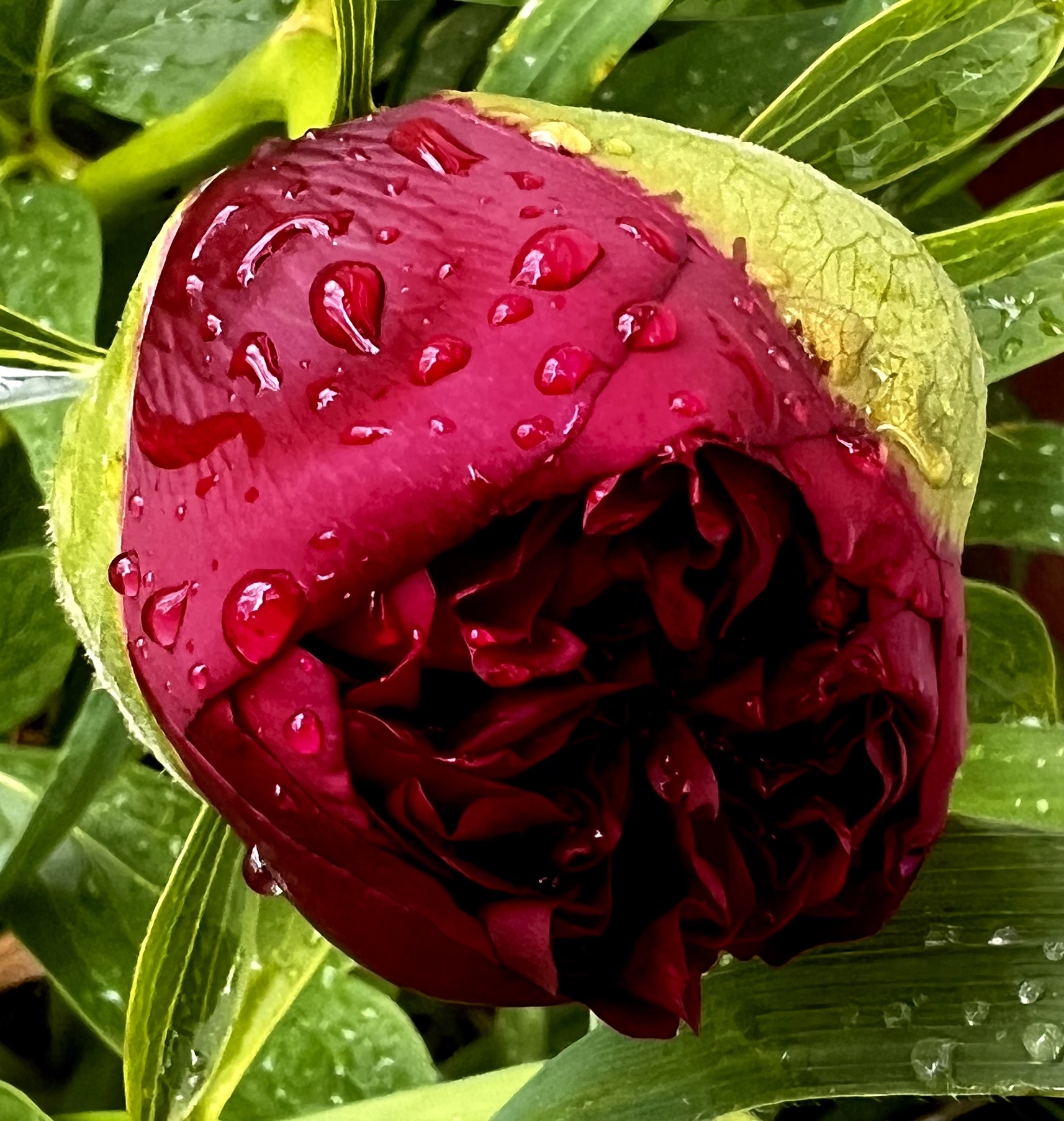
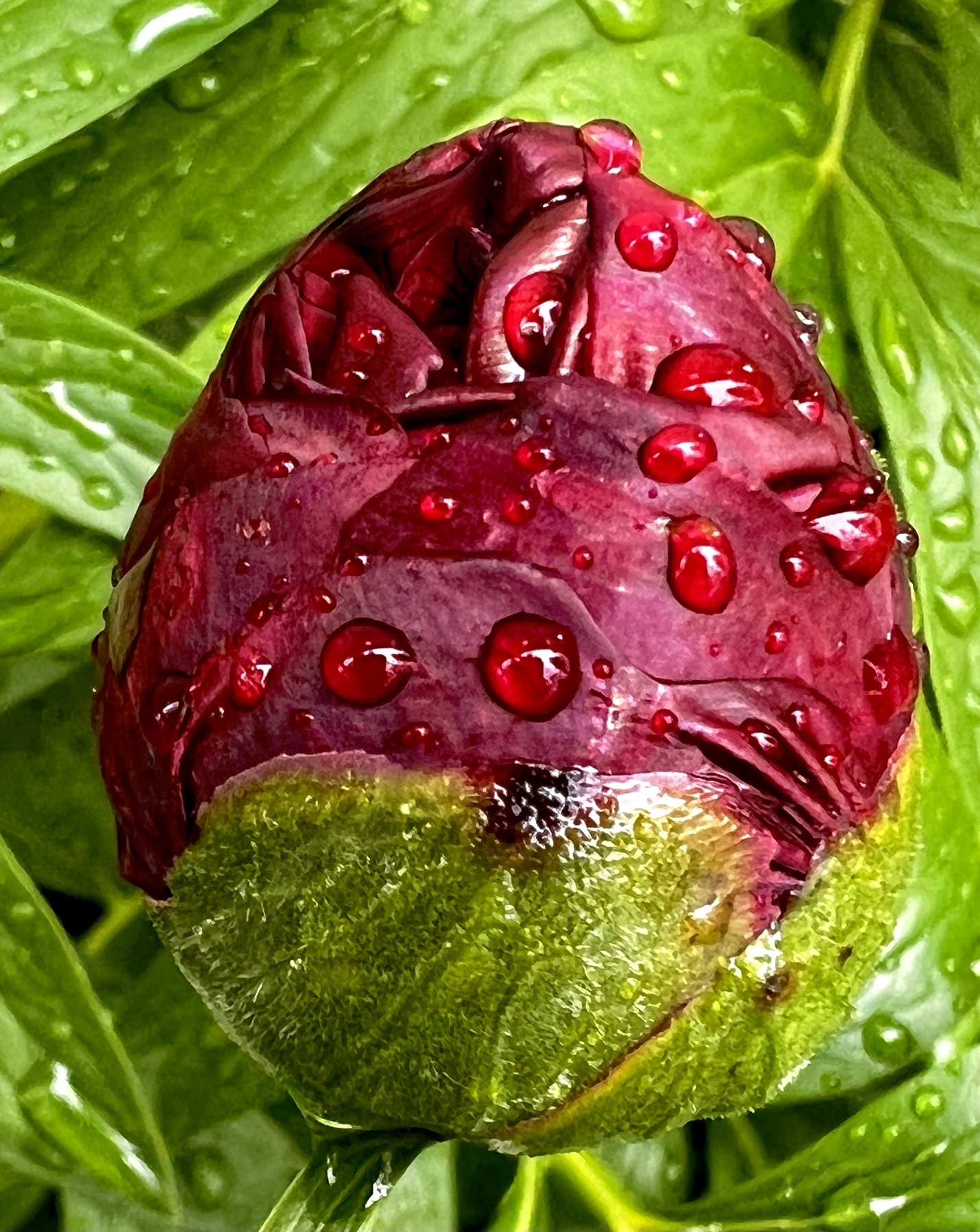
This morning the green fists of the peonies are getting ready
to break my heart
as the sun rises, 
as the sun strokes them with his old, buttery fingers

and they open —
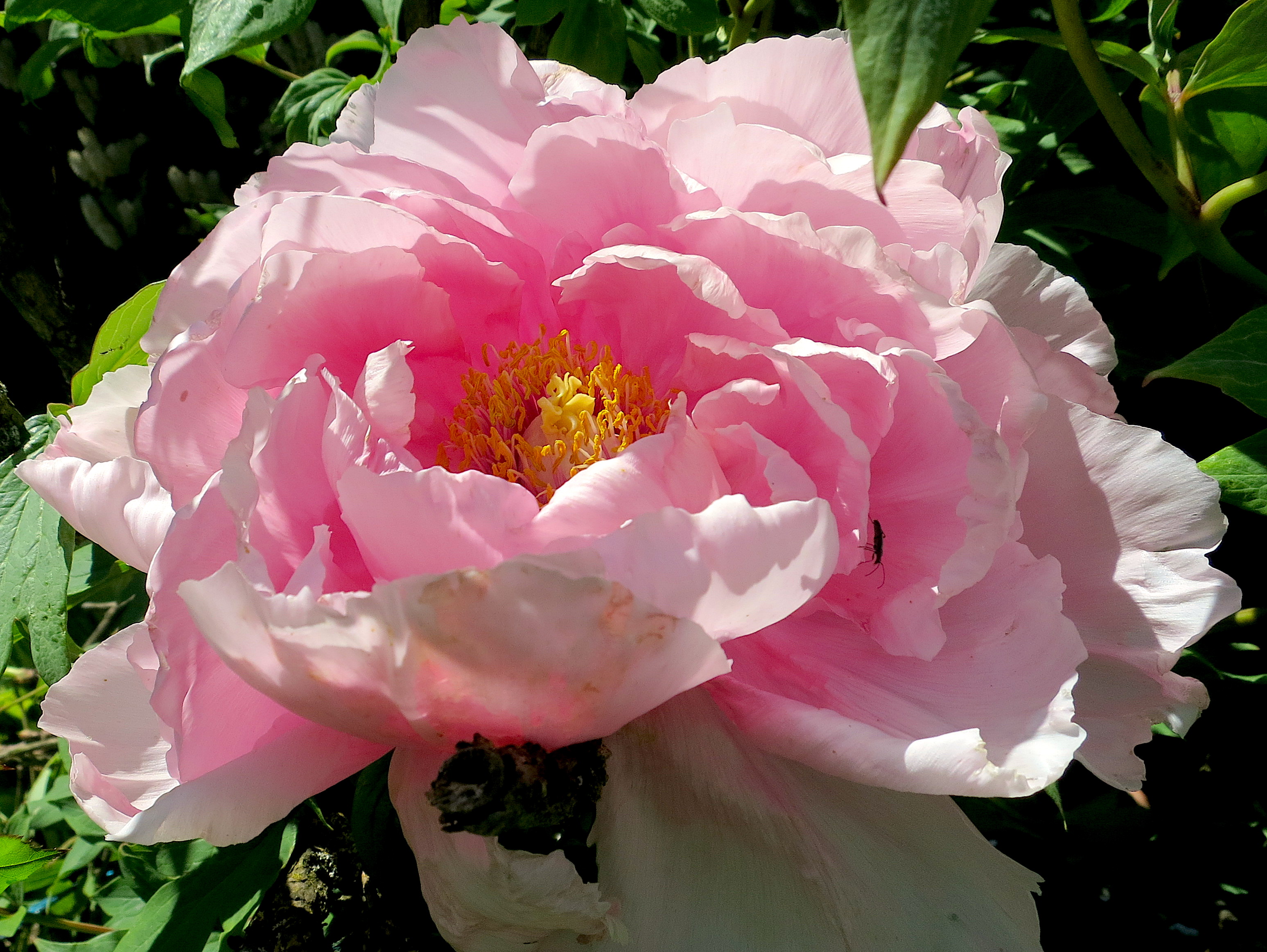
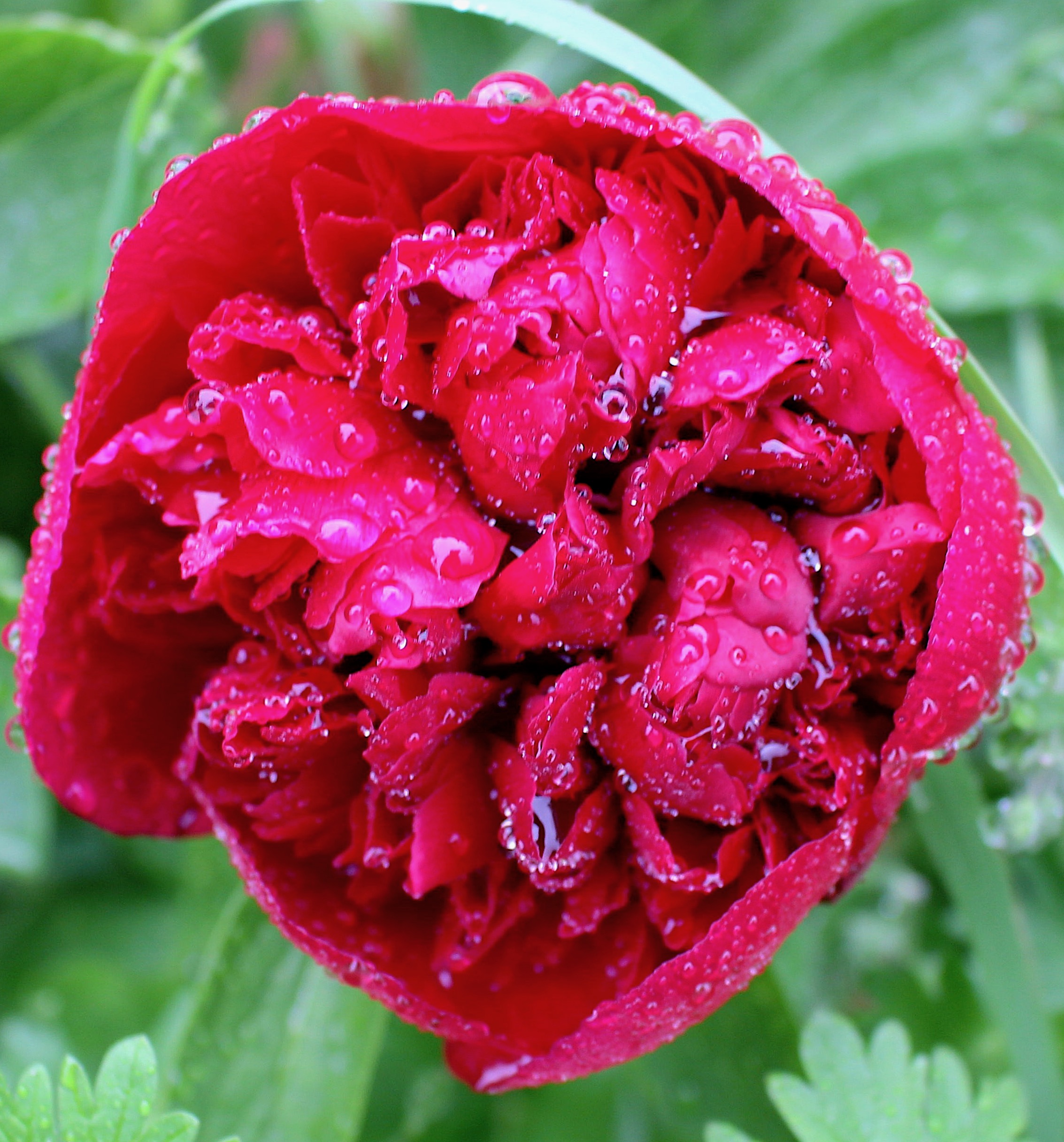
pools of lace, 
white and pink —

and all day
under the shifty wind, 
as in a dance to the great wedding,

the flowers bend their bright bodies, 
and tip their fragrance to the air, 
and rise, 
their red stems holding

all that dampness and recklessness 
gladly and lightly, 
and there it is again — 
beauty the brave, the exemplary,

blazing open. 
Do you love this world? 
Do you cherish your humble and silky life? 
Do you adore the green grass, with its terror beneath?

Do you also hurry, half-dressed and barefoot, into the garden, 
and softly, 
and exclaiming of their dearness, 
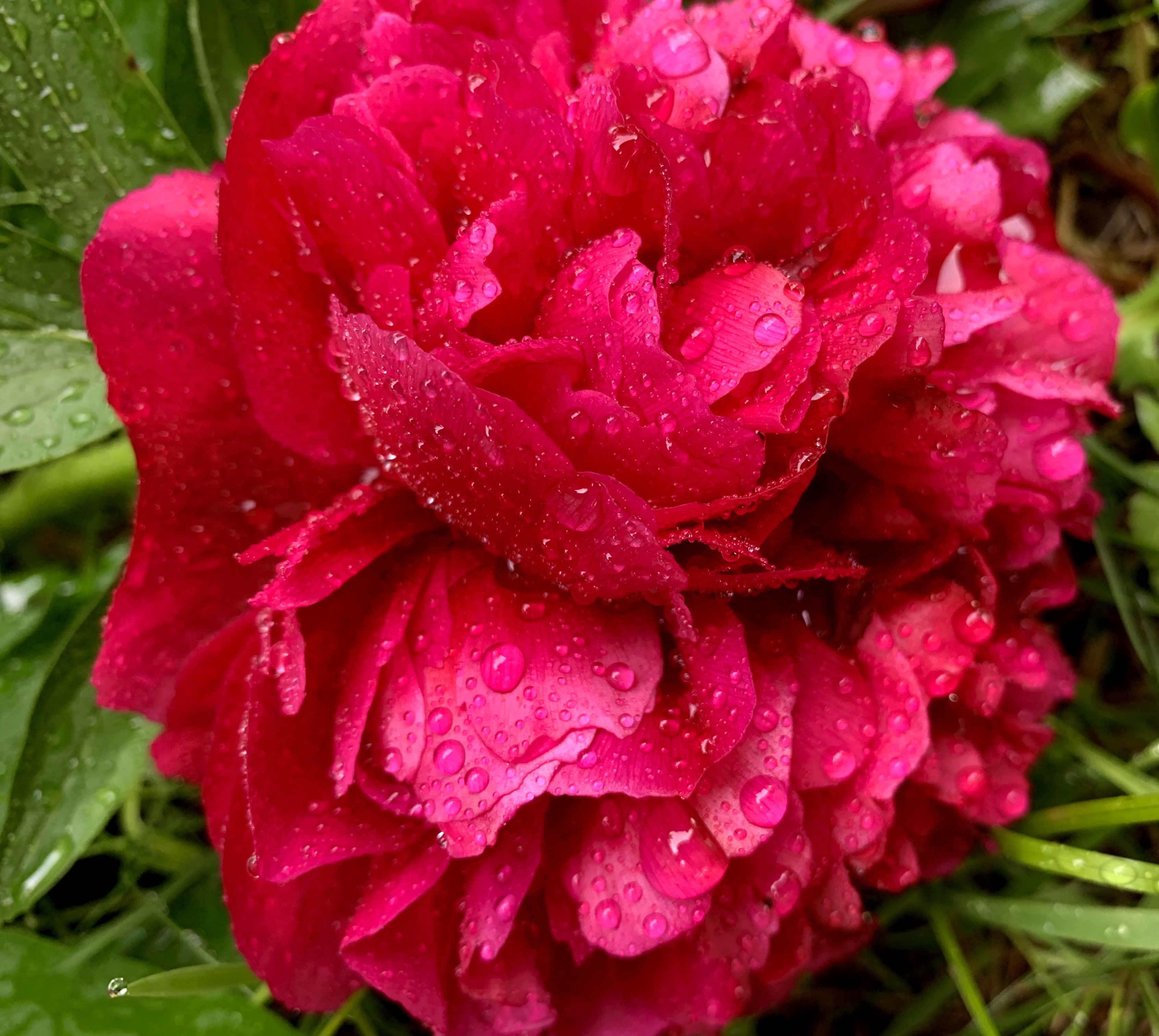
fill your arms with the white and pink flowers,

with their honeyed heaviness, their lush trembling, 
their eagerness
to be wild and perfect for a moment, before they are
nothing, forever?
~Mary Oliver 
from New And Selected Poems 

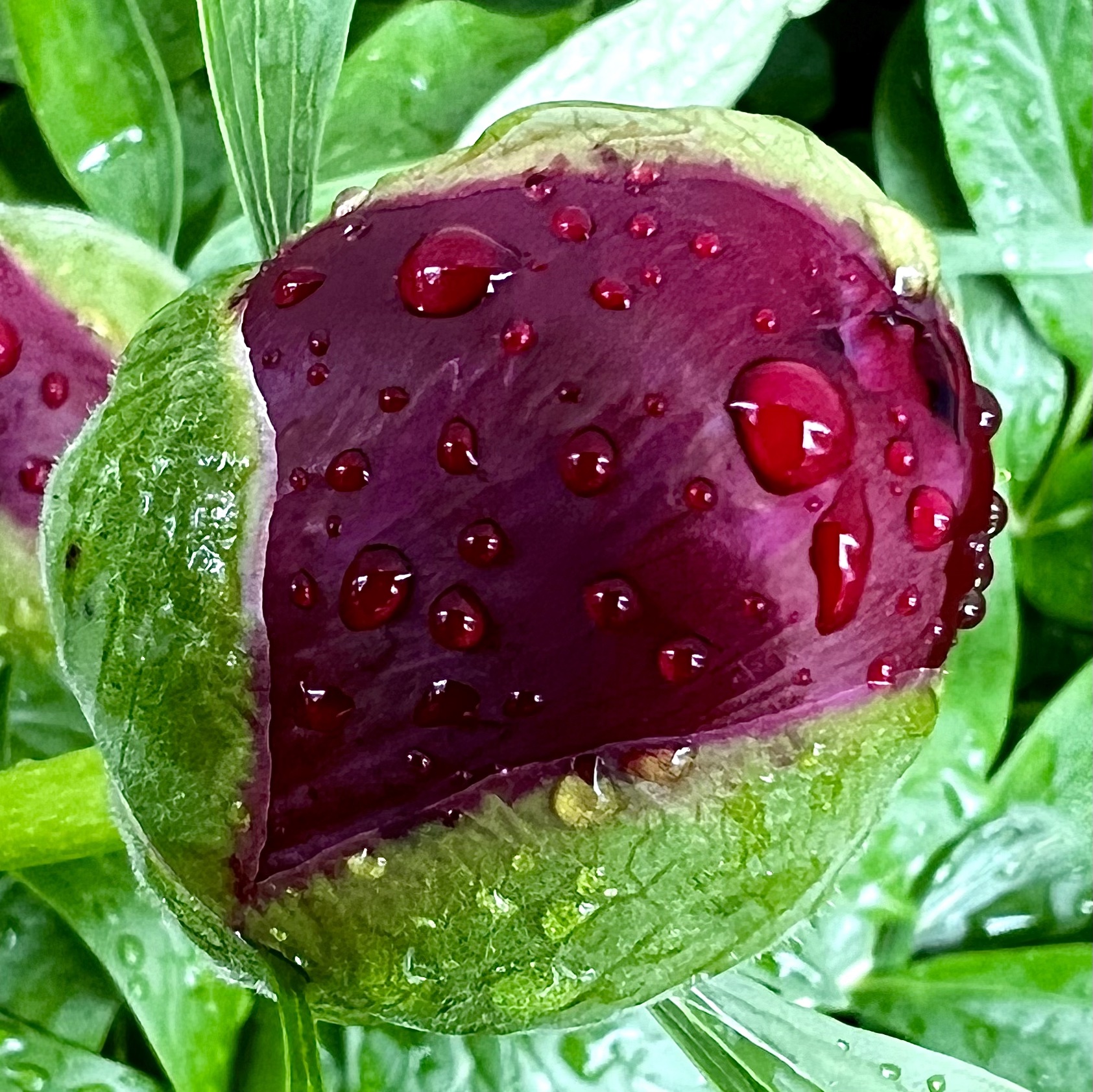
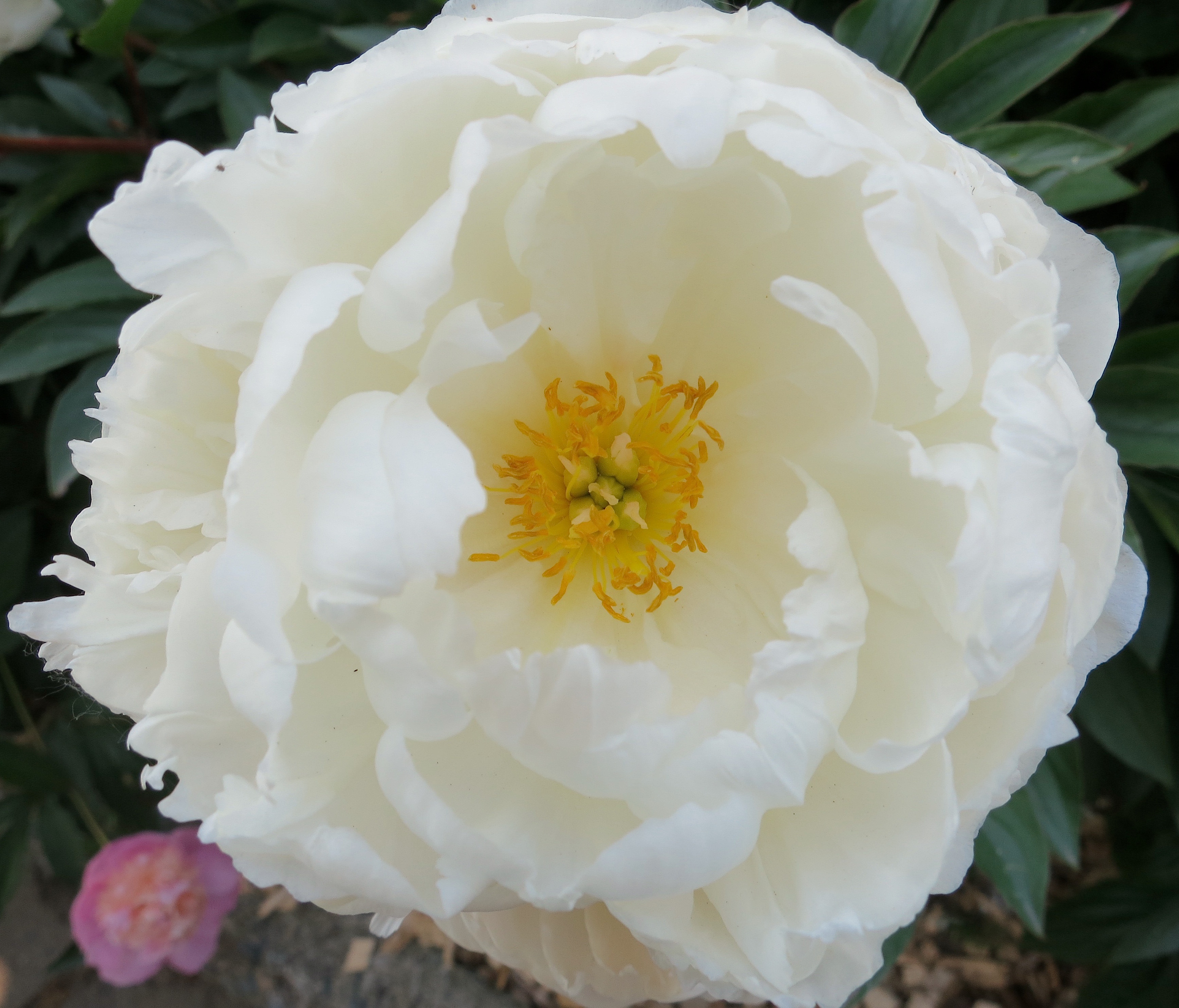
White peonies blooming along the porch
send out light
while the rest of the yard grows dim.
Outrageous flowers as big as human

heads! They’re staggered
by their own luxuriance: I had
to prop them up with stakes and twine.
The moist air intensifies their scent,

and the moon moves around the barn
to find out what it’s coming from.
In the darkening June evening

I draw a blossom near, and bending close
search it as a woman searches
a loved one’s face.
~Jane Kenyon “Peonies at Dusk”

This coming weekend, I will bring our peonies
to the graves of those from whom I came,
to lay one after another exuberant floral head
upon each headstone,
a moment of connection between those in the ground
and me standing above, acknowledging its thin space
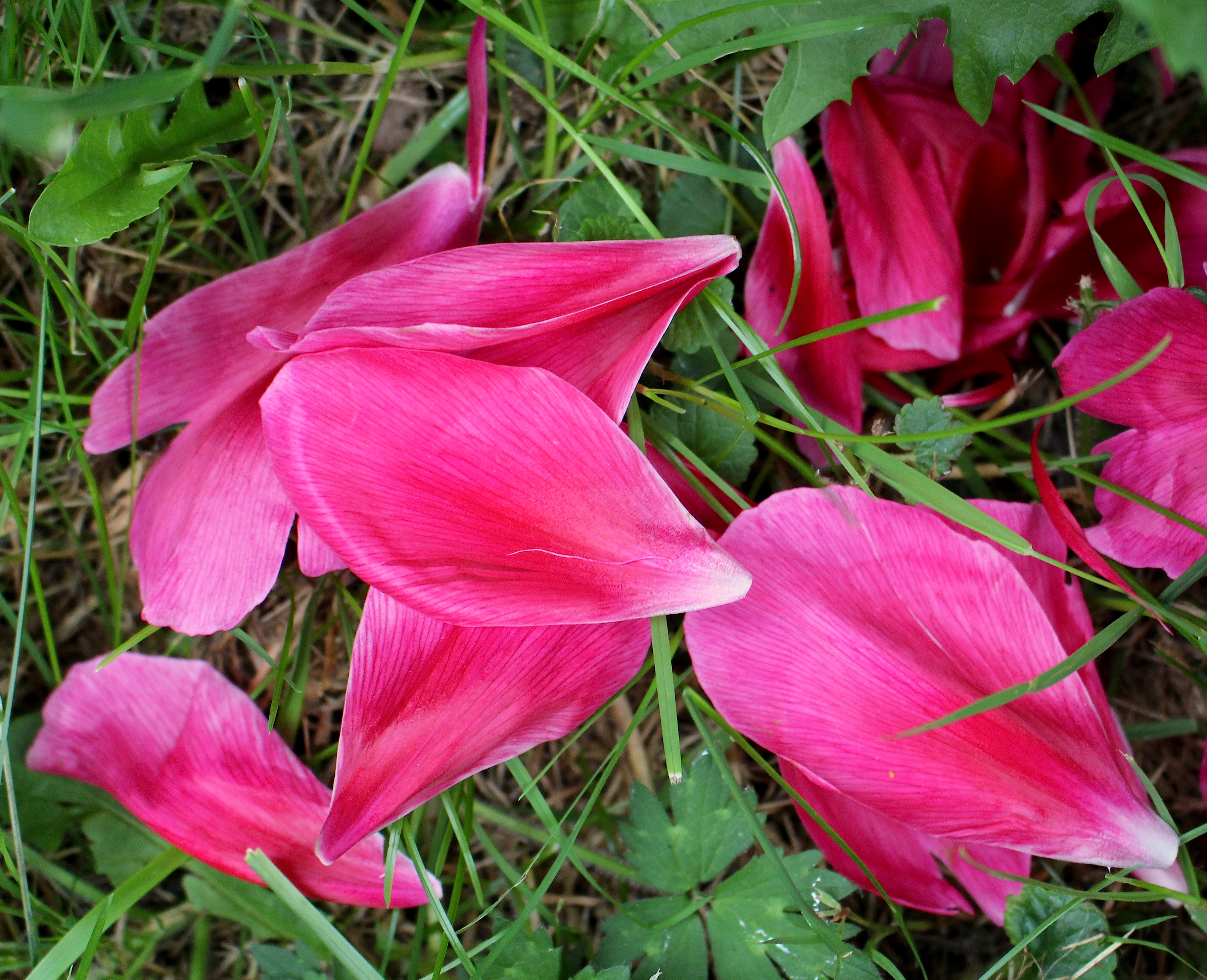
when one more humble and silky life shatters,
its petals slowly
scatter, lush and trembling,
to the wind.

Let my soul rise up to meet You
As the day rises to the sun
Let my soul rise up to meet You
Let that patient kingdom come

When’s the last time you felt steady in the chaos?
Hear the sound when the seed falls to earth
Is it time to give up your destination?
Slow me down, let love do its work
Let my soul rise up to meet You

As the trees and hummingbirds lead the chorus
They work so hard, and their center so still
Is it time for a change in direction?
Slow me down where I bend to Your will

Slow me down Slow me down
Let love do its work

One-Time
Monthly
Yearly

Make a one-time or recurring donation to support daily Barnstorming posts

Make a monthly donation

Make a yearly donation

Choose an amount

¤5.00
¤10.00
¤20.00
¤5.00
¤15.00
¤100.00
¤5.00
¤15.00
¤100.00

Or enter a custom amount

¤

Your contribution is deeply appreciated.

Your contribution is appreciated.

Your contribution is appreciated.

DonateDonate monthlyDonate yearly

Making the Best of What Remains

What is pertinent is the calmness of beauty, its sense of restraint. It is as though the land knows of its own beauty, its own greatness, and feels no need to shout it…

For a great many people, the evening is the most enjoyable part of the day. Perhaps, then, there is something to his advice that I should cease looking back so much, that I should adopt a more positive outlook and try to make the best of what remains of my day. After all, what can we ever gain in forever looking back and blaming ourselves if our lives have not turned out quite as we might have wished?
~Kazuo Ishiguro from The Remains of the Day

Life is a great big canvas, and you should throw all the paint you can on it.
~Danny Kaye

Every moment is a fresh beginning.
~T.S. Eliot

I am ashamed to admit I squander time looking back,
yearning for a day that has long since passed,
tossing off these present precious hours
as somehow not measuring up to what came before.

Even when I believe things will never change,
they will, and I will. 

There have been over thirty-six years
of such days in this farm country,
one flowing gently after another,
and every single one have been exactly what I’m looking for.

I shall toss my heart ahead and set out after it,
each moment a fresh beginning and blank canvas,
making the best of what remains of my day.

One-Time
Monthly
Yearly

Make a one-time or recurring donation to support daily Barnstorming posts

Make a monthly donation

Make a yearly donation

Choose an amount

¤5.00
¤10.00
¤20.00
¤5.00
¤15.00
¤100.00
¤5.00
¤15.00
¤100.00

Or enter a custom amount

¤

Your contribution is deeply appreciated.

Your contribution is appreciated.

Your contribution is appreciated.

DonateDonate monthlyDonate yearly
At the End

Not every man knows what he shall sing at the end,
Watching the pier as the ship sails away, or what it will seem like
When he’s held by the sea’s roar, motionless, there at the end,
Or what he shall hope for once it is clear that he’ll never go back.

When the time has passed to prune the rose or caress the cat,
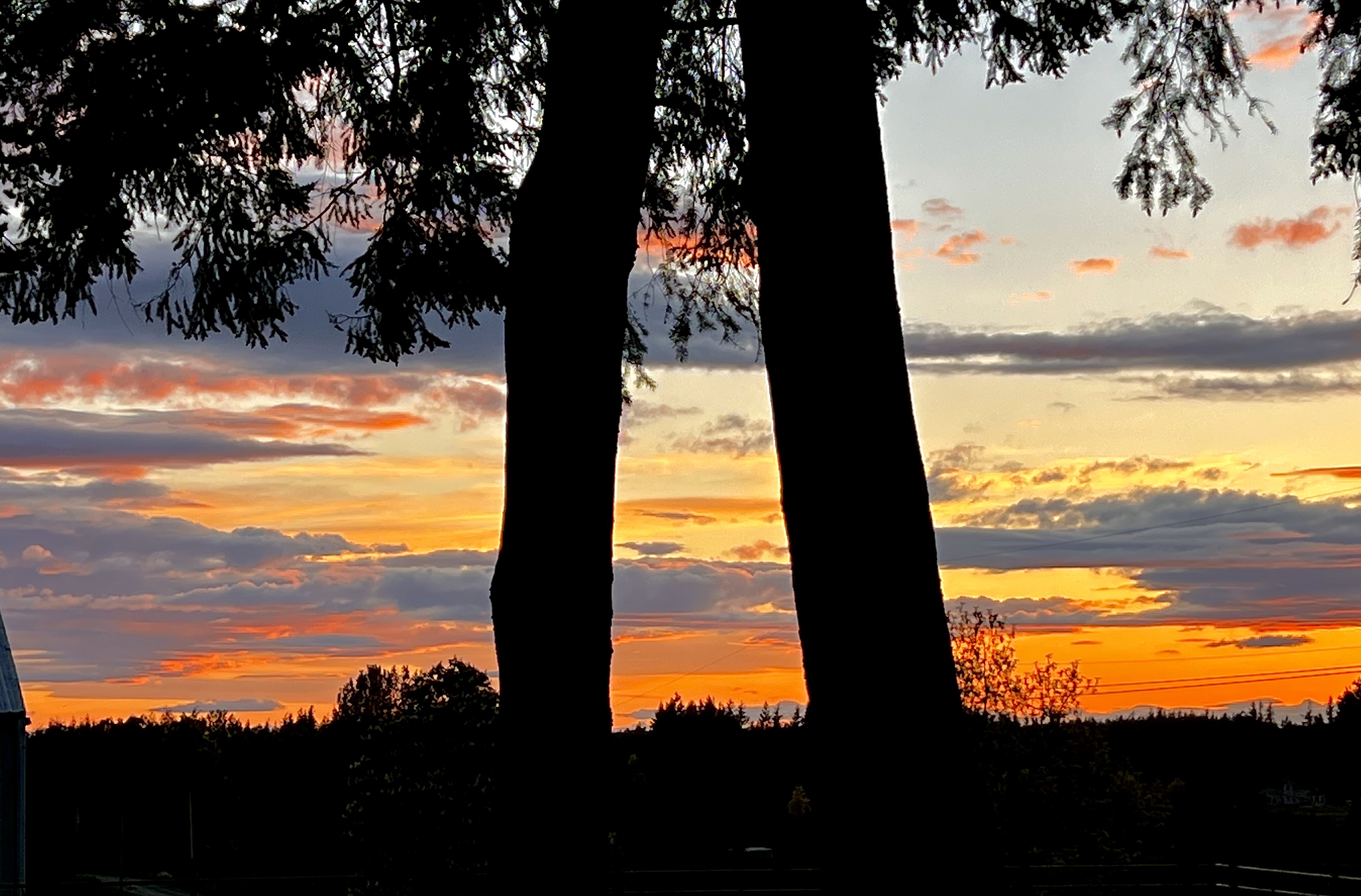
When the sunset torching the lawn and the full moon icing it down
No longer appear, not every man knows what he’ll discover instead.
When the weight of the past leans against nothing, and the sky

Is no more than remembered light, and the stories of cirrus
And cumulus come to a close,

and all the birds are suspended in flight,
Not every man knows what is waiting for him, or what he shall sing
When the ship he is on slips into darkness, there at the end.

~Mark Strand “The End,” from The Continuous Life

Write as if you were dying. At the same time, assume you write for an audience consisting solely of terminal patients. That is, after all, the case.
~Annie Dillard from “Write Till You Drop”

I began to write after September 11, 2001 because that day it became obvious to me I was dying, though more slowly than the thousands who vanished in fire and ash that day, their voices obliterated along with their bodies.  So, nearly each day since, while I still have voice and a new dawn to greet, I speak through my fingers to others, who, like me, are dying.

We are, after all, terminal patients, some of us more prepared than others to move on, slipping away into darkness, as if our readiness had anything to do with the timing.

Each day we get a little closer. I write in order to feel a little more ready.  Each day I want to detach just a little bit, leaving a trace of my voice behind, wondering what will be left to say or sing at the end.  Eventually, through unmerited grace, perhaps so much of me will be left on the page there won’t be anything or anyone left to do the typing.

No words should go to waste nor moments allowed to lapse unnoticed.
I dwell here for now, knowing Who will be waiting for me there.

One-Time
Monthly
Yearly

Make a one-time or recurring donation to support Barnstorming

Make a monthly donation

Make a yearly donation

Choose an amount

¤5.00
¤10.00
¤20.00
¤5.00
¤15.00
¤100.00
¤5.00
¤15.00
¤100.00

Or enter a custom amount

¤

Your contribution is deeply appreciated.

Your contribution is appreciated.

Your contribution is appreciated.

DonateDonate monthlyDonate yearly
Unravelling

How briefly a day
lasts, unravelling so fast
you can’t keep pace.
You are at the morning
bus stop, wondering
if you definitely
locked the hall door
when, what seems
like seconds later,
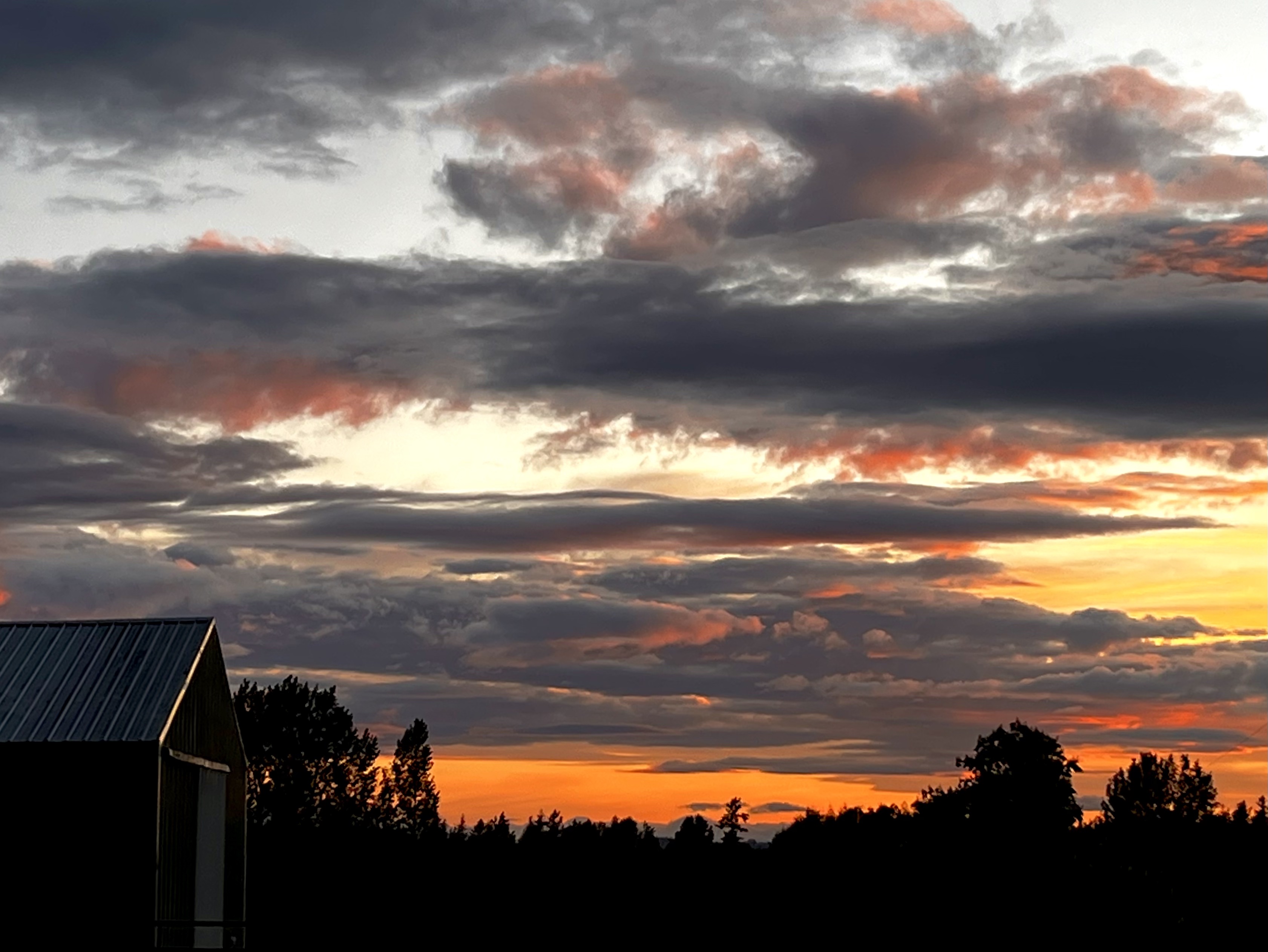
sunset struts by
in all its sky-draped
finery, its evening
wear, and you are
unlocking the hall door.
~Dennis O’Driscoll
“Time Pieces”

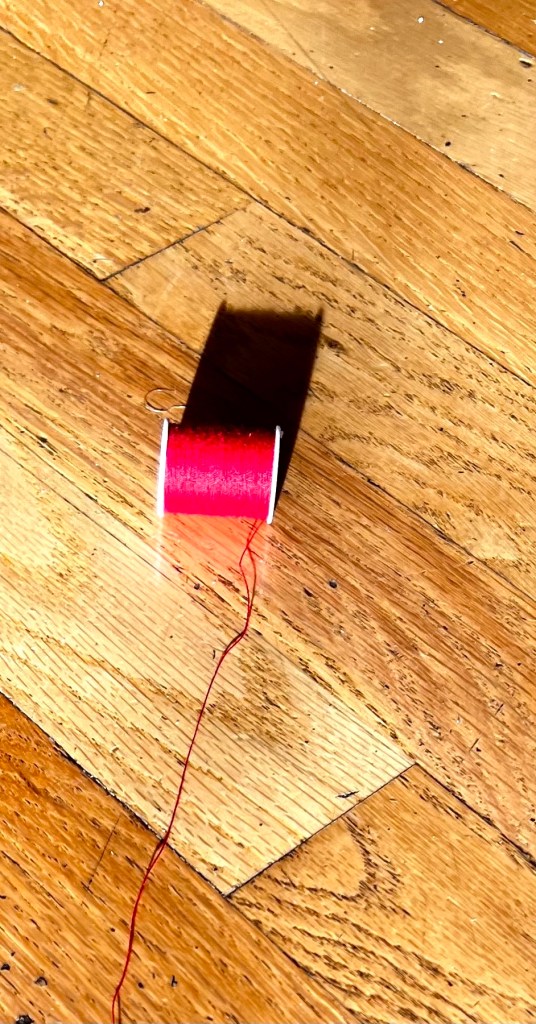
Time slips by faster and faster
like an unravelling spool of thread
fallen to the floor and racing away from me.

If I pull on the end to gather the thread
it leads me on a merry chase
through mornings and evenings
and everything in between.

I wind up missing the journey
when I only focus on what lies ahead,
wishing if I could only slow things down,
I would catch up.

For time has caught up with me,
reminding me once it leaves the spool –
it’s gone forever
and it is up to me to be sewing something
beautiful before it escapes completely.

One-Time
Monthly
Yearly

Make a one-time or recurring donation to support Barnstorming

Make a monthly donation

Make a yearly donation

Choose an amount

¤5.00
¤10.00
¤20.00
¤5.00
¤15.00
¤100.00
¤5.00
¤15.00
¤100.00

Or enter a custom amount

¤

Your contribution is deeply appreciated.

Your contribution is appreciated.

Your contribution is appreciated.

DonateDonate monthlyDonate yearly
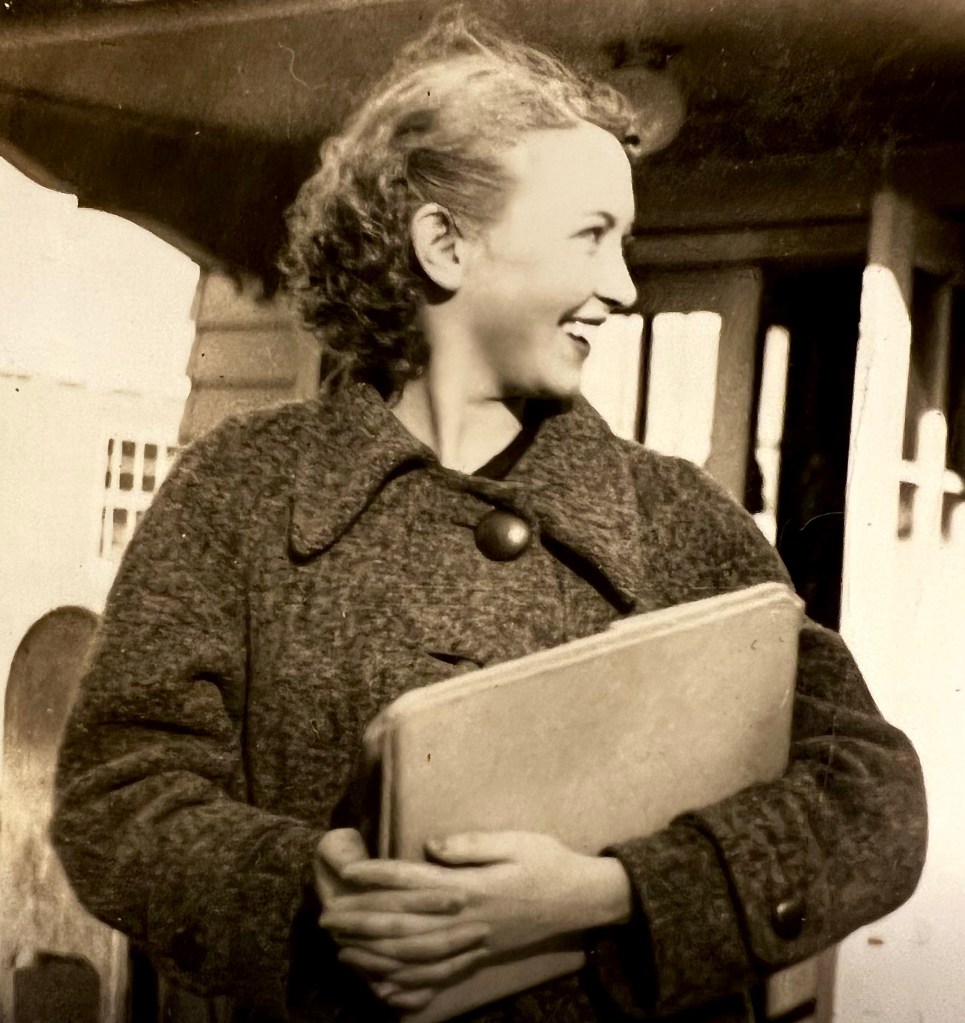
Seeking What Could No Longer Be Found

photo by Kate Steensma

Though I know well enough
To hunt the Lady’s Slipper now
Is playing blindman’s-buff,
For it was June She put it on
And grey with mist the spider’s lace
Swings in the autumn wind,
Yet through this hill-wood, high and low,
I peer in every place;
Seeking for what I cannot find
I do as I have often done
And shall do while I stay beneath the sun.
~Andrew Young “Lady’s Slipper Orchid”

My grandmother’s house where my father was born had been torn down. She sold her property on Fidalgo Island near Anacortes, Washington to a lumber company – this was the house where all four of her babies were born, where she and my grandfather loved and fought and separated and finally loved again, and where we spent chaotic and memorable Thanksgiving and Christmas meals.  After Grandpa died, Grandma took on boarders, trying to afford to remain there on the homesteaded wooded acreage on Similk Bay, fronted by meadows where her Scottish Highland cattle grazed.   Her own health was suffering and she reached a point when it was no longer possible to make it work. A deal was struck with the lumber company and she moved to a small apartment for the few years left to her, remaining bruised by leaving her farm.

My father realized what her selling to a lumber company meant and it was a crushing thought. The old growth woods would soon be stumps on the rocky hill above the bay, opening a view to Mt. Baker to the east, to the San Juan Islands to the north, and presenting an opportunity for development into a subdivision. He woke my brother and me early one Saturday in May and told us we were driving the 120 miles to Anacortes.  He was on a mission.

As a boy growing up on that land, he had wandered the woods, explored the hill, and helped his dad farm the rocky soil.  There was only one thing he felt he needed from that farm and he had decided to take us with him, to trespass where he had been born and raised to bring home a most prized treasure–his beloved lady slippers from the woods.

These dainty flowers enjoy a spring display known for its brevity–a week or two at the most–and they tend to bloom in small little clusters in the leafy duff mulch of the deep woods, preferring only a little indirect sunlight part of the day.  They are not easy to find unless you know where to look. 

My father remembered exactly where to look.

We hauled buckets up the hill along with spades, looking as if we were about to dig for clams at the ocean.  Dad led us up a trail into the thickening foliage, until we had to bushwhack our way into the taller trees where the ground was less brush and more hospitable ground cover.  He would stop occasionally to get his bearings as things were overgrown.   We reached a small clearing and he knew we were near.  He went straight to a copse of fir trees standing guard over a garden of lady slippers.

There were almost thirty of them blooming, scattered about in an area the size of my small bedroom.  Each orchid-like pink and lavender blossom had a straight backed stem that held it with sturdy confidence.  To me, they looked like they could be little shoes for fairies who may have hung them up while they danced about barefoot.    To my father, they represented the last redeeming vestiges of his often traumatic childhood, and were about to be trammeled by bulldozers.  We set to work gently digging them out of their soft bedding, carefully keeping their bulb-like corms from losing a protective covering of soil and leafy mulch.  Carrying them in the buckets back to the car, we felt some vindication that even if the trees were to be lost to the saws, these precious flowers would survive.

When we got home, Dad set to work creating a spot where he felt they could thrive in our own woods.  He found a place with the ideal amount of shade and light, with the protection of towering trees and the right depth of undisturbed leaf mulch.  We carefully placed the lady slippers in their new home, scattered in a pattern similar to how we found them.  Then Dad built a four foot split rail fence in an octagon around them, as a protection from our cattle and a horse who wandered the woods, and as a way to demarcate that something special was contained inside.

The next spring only six lady slippers bloomed from the original thirty.  Dad was disappointed but hoped another year might bring a resurgence as the flowers established themselves in their new home.  The following year there were only three.  A decade later, my father himself had left farm and family, not looking back.

Sometime after the divorce, when my mother had to sell the farm, I visited our lady slipper sanctuary in the woods for the last time in the middle of May, seeking what I hoped might still be there, but I knew was no longer.  The split rail fence still stood, guarding nothing but old memories.  No lady slippers bloomed. There was not a trace they had ever been there.  They had simply given up and disappeared.

The new owners of the farm surely puzzled over the significance of the small fenced-in area in the middle of our woods.  They probably thought it surrounded a graveyard of some sort.

And they would be right – it did.

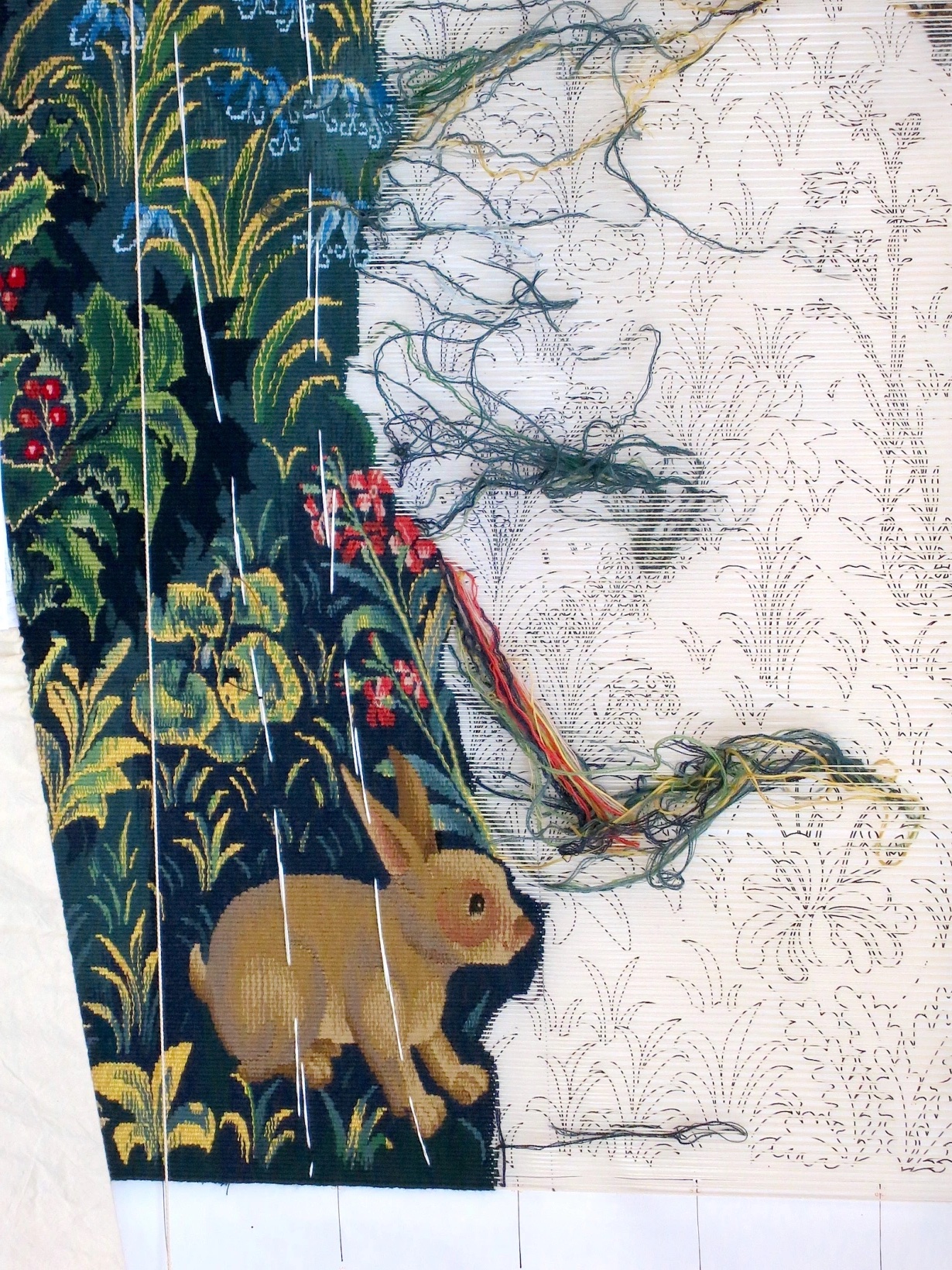
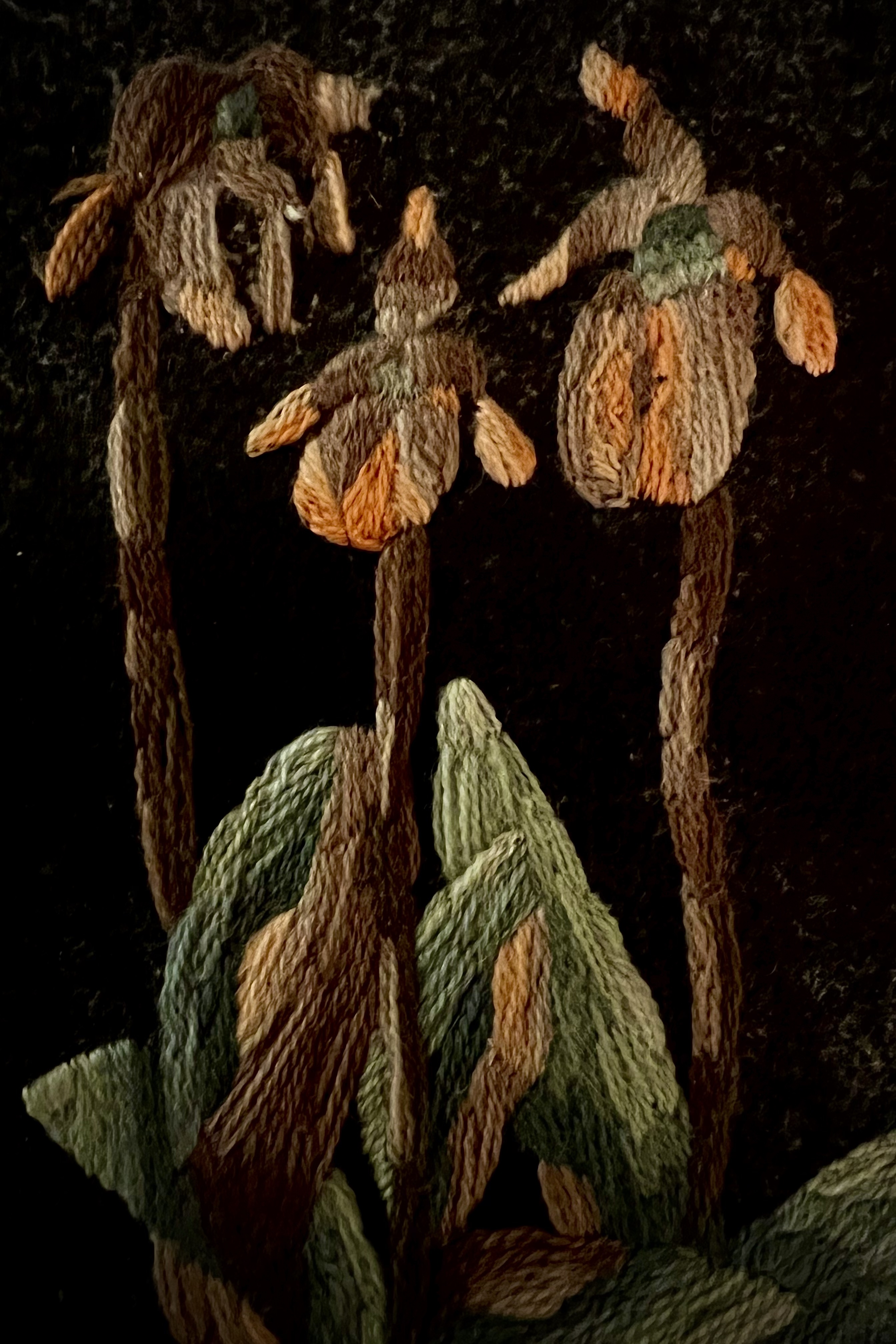
An embroidery I made for my father after he replanted the lady slippers — on the back I wrote “The miracle of creation recurs each spring in the delicate beauty of the lady slipper – may we ourselves be recreated as well…”

Once more, once more into the sunny fields
Oh, let me stray!
And drink the joy that young existence yields
On a bright, cloudless day.
Once more let me behold the summer sky,
With its blue eyes,
And join the wild wind’s voice of melody,
As far and free it flies.
Once more, once more, oh let me stand and hear
The gushing spring,
As its bright drops fall starlike, fast and clear,
And in the sunshine sing.
~Frances Kemble “A Farewell”

One-Time
Monthly
Yearly

Make a one-time or recurring donation to support Barnstorming

Make a monthly donation

Make a yearly donation

Choose an amount

¤5.00
¤10.00
¤20.00
¤5.00
¤15.00
¤100.00
¤5.00
¤15.00
¤100.00

Or enter a custom amount

¤

Your contribution is deeply appreciated.

Your contribution is appreciated.

Your contribution is appreciated.

DonateDonate monthlyDonate yearly
What Did I Know?

Sundays too my father got up early
and put his clothes on in the blueblack cold,
then with cracked hands that ached
from labor in the weekday weather made
banked fires blaze. No one ever thanked him.

I’d wake and hear the cold splintering, breaking.
When the rooms were warm, he’d call,
and slowly I would rise and dress,
fearing the chronic angers of that house,

Speaking indifferently to him,
who had driven out the cold
and polished my good shoes as well.
What did I know, what did I know
of love’s austere and lonely offices?
~Robert Hayden “Those Winter Sundays”

As a child growing up,
I was oblivious
to the sacrifices my parents made
to keep the house warm,
place food on the table,
teaching us the importance of being steadfast,
to crack the door of opportunity open,
so we could walk through
to a better life
and we did.

It was no small offering
to keep dry seasoned fire and stove wood always at the doorstep,
to milk the cows twice a day,
to grow and preserve fruits and vegetables months in advance,
to raise and care for livestock,
to read books together every night,
to sit with us over homework
and drive us to 4H, Cub Scouts and Camp Fire,
to music lessons and sports,
to sit together for meals,
and never miss a Sunday
to worship God.

This was their love,
so often invisible,
too often imperfect,
yet its encompassing warmth
splintered and broke
the grip of cold
that can overwhelm and freeze
a family’s heart and soul.

What did I know? What did I know?
Too little then,
so much more now
yet still – never enough.

One-Time
Monthly
Yearly

Make a one-time or recurring donation to support Barnstorming

Make a monthly donation

Make a yearly donation

Choose an amount

¤5.00
¤10.00
¤20.00
¤5.00
¤15.00
¤100.00
¤5.00
¤15.00
¤100.00

Or enter a custom amount

¤

Your contribution is deeply appreciated.

Your contribution is appreciated.

Your contribution is appreciated.

DonateDonate monthlyDonate yearly
A Still Room to Remember

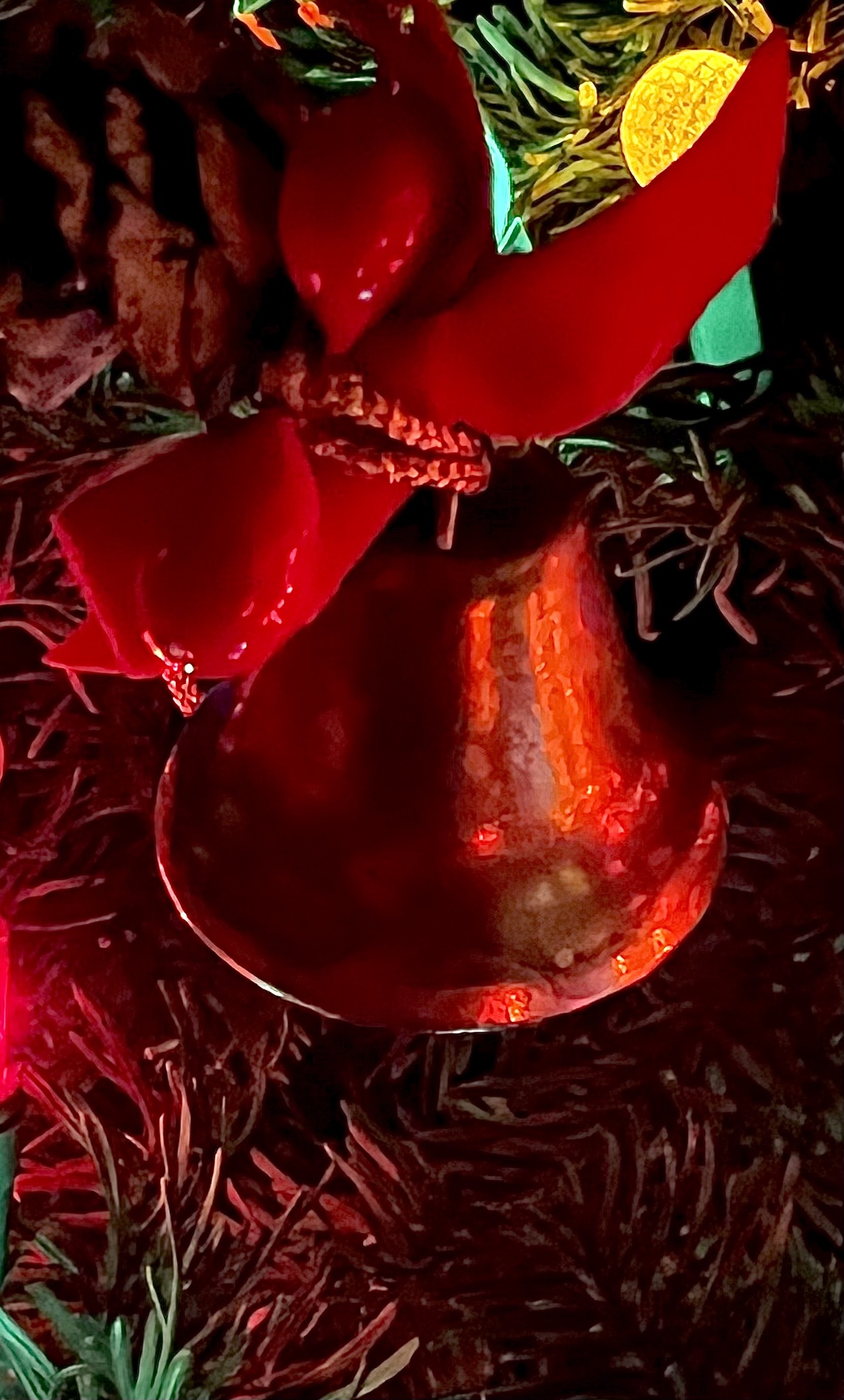
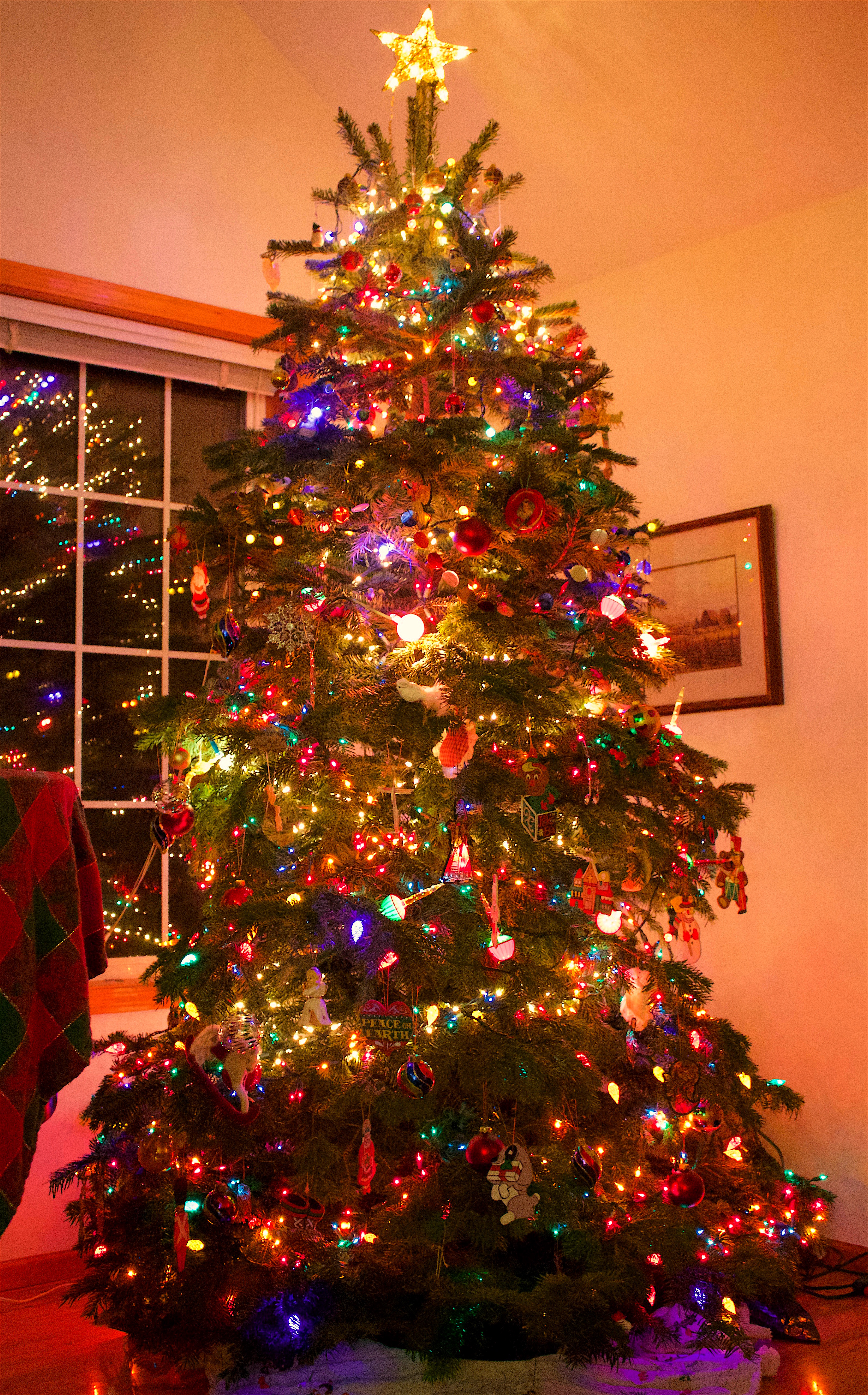
Here, the bells are silent, blown glass hung from
branches of pine whose fragrance fills the room.
It’s December, and the world’s run out of color.
Darkness at five seems absolute outside
the nine square panes of glass. But inside
hundreds of small white lights reflect off
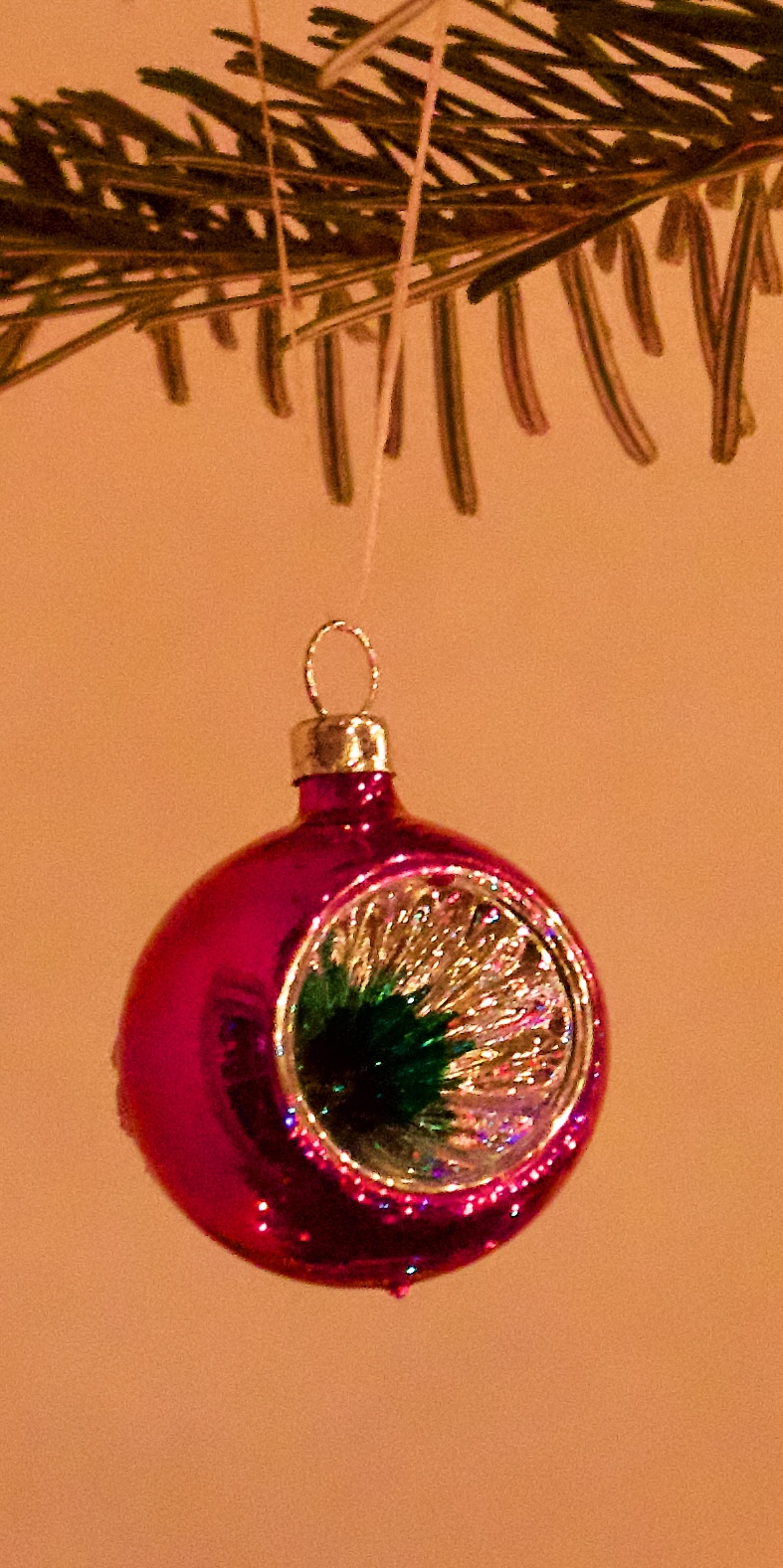
fragile ornaments handed down from before
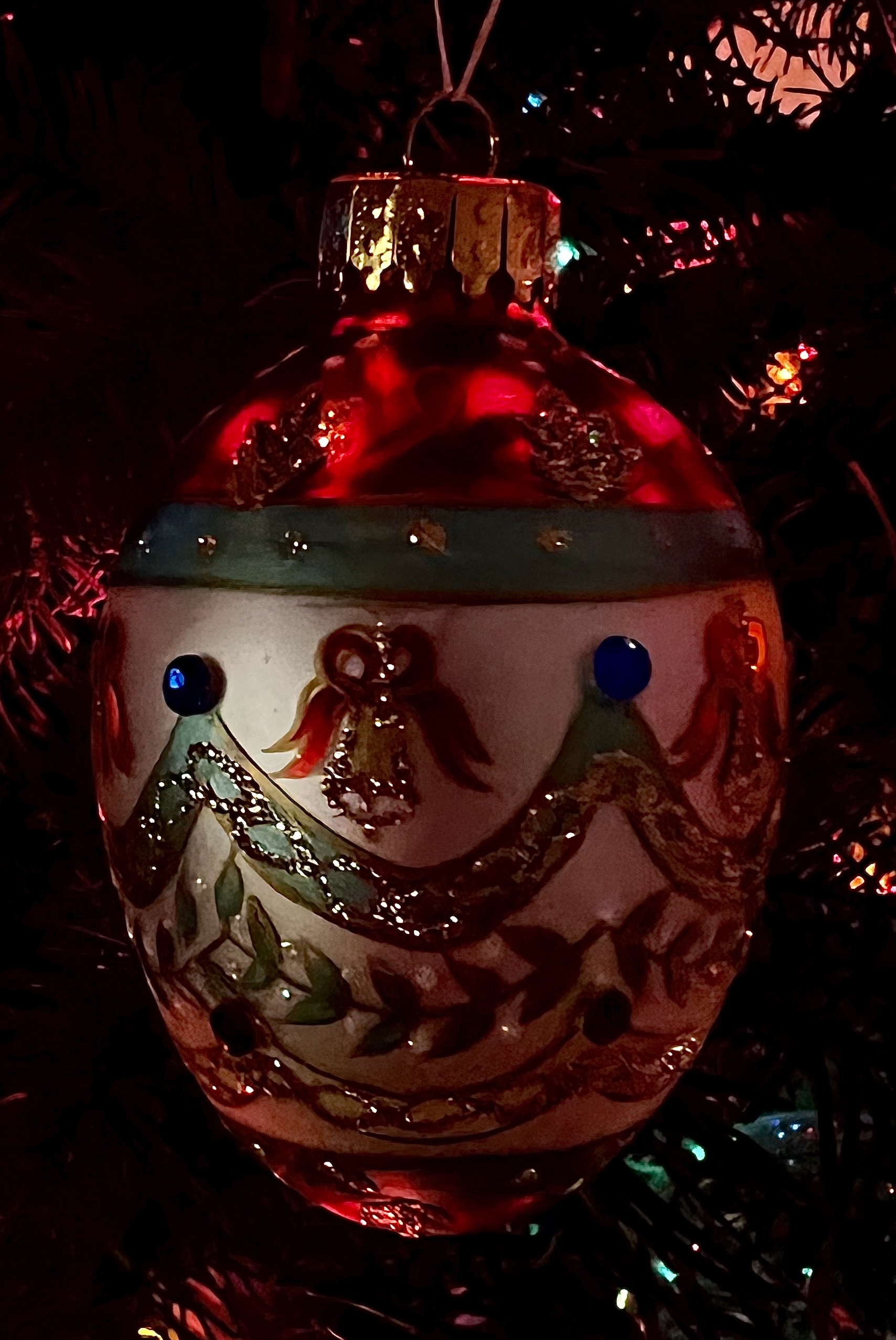
the war. They’re all Shiny-Brite, some solid balls—
hot pink, lime green, turquoise, gold—some striped
and flocked. This night is hard obsidian, but these glints
pierce the gloom, along with their glittery echoes, the stars.
We inhale spruce, its resinous breath: the hope of spring,
the memory of summer. Every day, another peal
on the carillon of light.

~Barbara Crooker, “Bells” from Some Glad Morning

The time is ripe for looking back over the day, the week, the year,
and trying to figure out where we have come from
and where we are going to,
for sifting through the things we have done
and the things we have left undone

for a clue to who we are and who,
for better or worse, we are becoming.

We cling to the present out of wariness of the past.
But there is a deeper need yet, I think, and that is the need
—not all the time, surely, but from time to time—
to enter that still room within us all
where the past lives on as a part of the present,
where the dead are alive again,
where we are most alive ourselves to turnings
and to where our journeys have brought us.

The name of the room is Remember—
the room where with patience, with charity, with quietness of heart,
we remember consciously to remember the lives we have lived.
~Frederick Buechner
“A Room Called Remember”

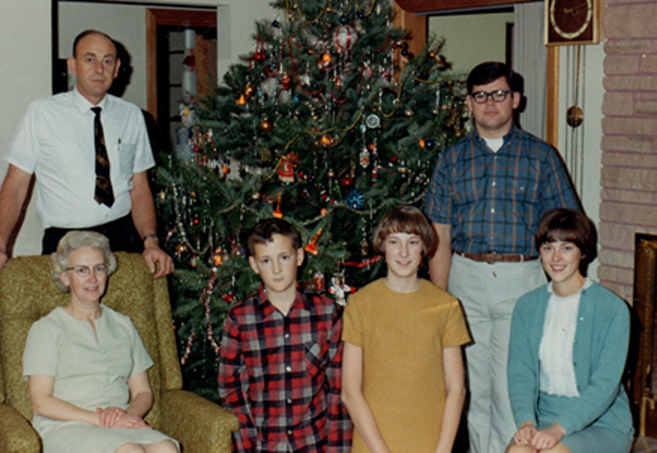
In 1959, when I was five years old, my father left his high school agriculture teaching position for a new supervisor position with the state. Our family moved from a large 3 story farm house in a rural community to a 1950’s newer rambler style home just outside the city limits of the state capitol.  It was a big adjustment to move to a much smaller house without a basement or upper story, no garage, and no large haybarn nor chicken coop.  It meant most things we owned didn’t make the move with us.

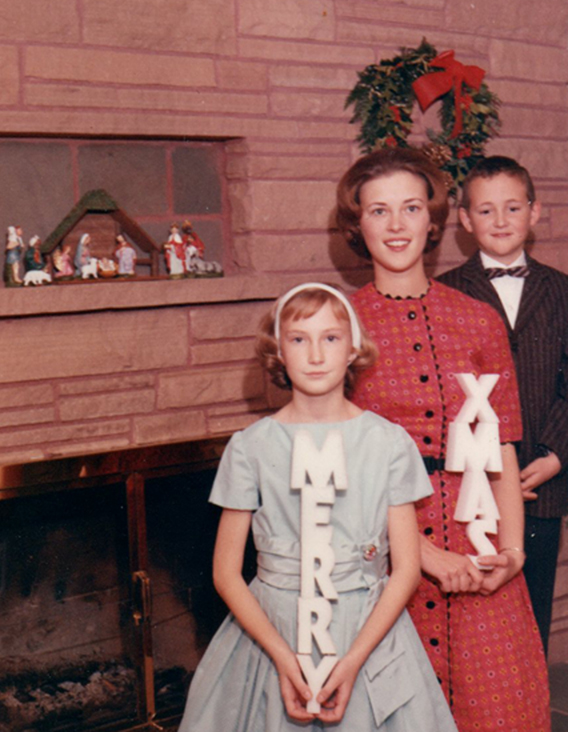
The rambler had two side by side mirror image rooms as the primary central living space between the kitchen on one side and the hallway to the bedrooms on the other.  The living room could only be entered through the front door and the family room was accessed through the back door with a shared sandstone hearth in the center, containing a fireplace in each room.  The only opening between the rooms had a folding door shut most of the year.  In December, the door was opened to accommodate a Christmas tree, so it sat partially in the living room and depending on its generous width, spilled over into the family room.  That way it was visible from both rooms, and didn’t take up too much floor space.

The living room, because it contained the only carpeting in the house, and our “best” furniture,  was strictly off-limits for us kids. In order to keep our two matching sectional knobby gray fabric sofas,  a green upholstered chair and gold crushed velvet covered love seat in pristine condition, the room was to be avoided unless we had company. The carpet was never to develop a traffic pattern, there would be no food, beverage, or pet ever allowed in that room, and the front door was not to be used unless a visitor arrived.  The hearth never saw a fire lit on that side because of the potential of messy ashes or smoke smell. This was not a room for laughter, arguments or games and certainly not for toys. The chiming clock next to the hearth, wound with weighted pine cones on the end of chains, called out the hours without an audience.

One week before Christmas, a tree was cut down to fit in the space where it could overflow into the family room.  I particularly enjoyed decorating the “family room” side of the tree, using all my favorite ornaments that were less likely to break if they fell on the linoleum floor on that side of the door.

It was as if the Christmas tree became divided, with a “formal” side in the living room and a “real life” face on the other side where the living (and all that goes along with that) was actually taking place.

The tree straddled more than just two rooms.  Each year that tree’s branches reached out to shelter a family that was slowly, almost imperceptibly, falling apart like fir needles dropping to the floor, soon to be swept away.

Each year since, our Christmas tree, bearing those old ornaments from my childhood, reminds me of that still room of memories.  No longer am I wary of the past, and as I sweep up the fir needles that inevitably drop, I no longer weep.

One-Time
Monthly
Yearly

Make a one-time or recurring donation to support Barnstorming

Make a monthly donation

Make a yearly donation

Choose an amount

¤5.00
¤10.00
¤20.00
¤5.00
¤15.00
¤100.00
¤5.00
¤15.00
¤100.00

Or enter a custom amount

¤

Your contribution is deeply appreciated.
Your contribution is appreciated.

Your contribution is appreciated.

DonateDonate monthlyDonate yearly