I have a brief confession that I would like to make. If I don’t get it off my chest I’m sure my heart will break.
I didn’t do my reading. I watched TV instead— while munching cookies, cakes, and chips and cinnamon raisin bread.
I didn’t wash the dishes. I didn’t clean the mess. Now there are roaches eating crumbs— a million, more or less.
I didn’t turn the TV off. I didn’t shut the light. Just think of all the energy I wasted through the night.
I feel so very guilty. I did a lousy job. I hope my students don’t find out that I am such a slob. ~Bruce Lansky “Confession”
Summertime visits to our cousin Joe’s farm were always greatly anticipated. We would be allowed several days of freedom exploring the fields and barns, playing hide and seek, reading comic books and Mad Magazines that we never had at our own house.
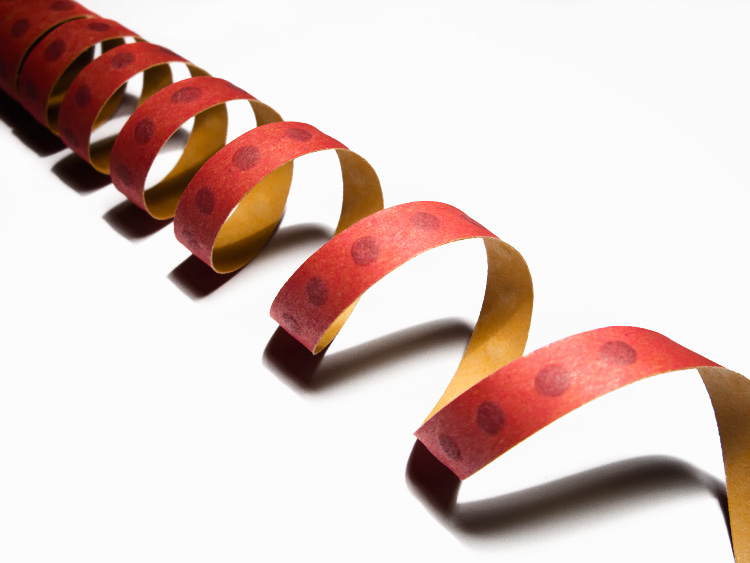
In addition, we got to play with Joe’s cap guns. These noisy little pistols had the ability to make a pop from the roll of “caps” inserted inside. They seemed far more authentic than any of the squirt guns we played with at home.
But I was a girl. I got tired of the cowboy or war shooting games quickly. There is only so much popping you can do and it just isn’t that fun any more. I was bored with my brother playing with the guns endlessly so one day I simply put an end to it by pocketing the last roll of caps in my jacket, thinking I’d slip them back into Joe’s bedroom the next day before we left for home.
It wasn’t until we were home several days later that I was reminded in the middle of breakfast about the roll of caps when my mother came out of the laundry room dangling the coil of dots up for me to see.
“What are these doing in your jacket pocket?” she asked. I swallowed my cheerios down hard, nearly choking.
“Guess they belong to Joe.” I said, not meeting her gaze.
“He gave them to you?”
“Um, not exactly.”
“You took them?”
“Guess so.”
“Does he know you have them?”
“Not exactly.” I started to cry. I didn’t even want the stupid things, had no way to use them and didn’t even like them. But I took them. In fact, I stole them.
She put the roll on the kitchen table in front of me, set a big envelope and a piece of paper and a pencil down in front of me and told me to write an apology to my cousin Joe, as well as my aunt and uncle. The note would be wrapped around the roll of caps and mailed to them that day.
I was mortified at being caught with ill-gotten gains. How could I confess this thing I did? How would I ever make it right with my cousin? How would he ever trust me again, and how would my aunt and uncle ever allow me to come visit again?
I wrote each word slowly and painfully, the note paper oozing the guilt I felt.
“Joe, I’m sorry that I took your roll of caps without asking you. I put them in my pocket where they didn’t belong and forgot about them. But that was wrong. I have never taken anything that wasn’t mine before and I never will again. I’m very very sorry.”
My mother read it, nodded, sealed up the envelope with the roll of caps inside, put on stamps and we walked out to the mailbox together to mail it. My stomach hurt and I didn’t think I’d feel okay ever again.
Three days later, my aunt wrote me back:
“Thank you for returning Joe’s caps. Sometimes we must learn hard lessons about doing the right thing. Joe accepts your apology and has learned from your example. He’s relieved he didn’t lose them as he has to earn the money to pay for them with his allowance. We’re looking forward to your next visit! Much love to you.”
Instantly I felt much better. I now understood the relief of apology and the healing of confession.
But most of all, I’ve never forgotten the sweetness of forgiveness.
One-Time
Monthly
Yearly
Make a one-time or recurring donation to support daily Barnstorming posts
For the bark, dulled argent, roundly wrapped And pigeon-collared.
For the splitter-splatter, guttering Rain-flirt leaves.
For the snub and clot of the first green cones, Smelted emerald, chlorophyll.
For the scut and scat of cones in winter, So rattle-skinned, so fossil-brittle.
For the alder-wood, flame-red when torn Branch from branch.
But mostly for the swinging locks Of yellow catkins.
Plant it, plant it, Streel-head in the rain. ~Seamus Heaney “Planting the Alder”with an explanation of some of the poet’s poetic words here
I’ve worked in many medical settings, and have seen lots of illnesses and injuries over 40+ years of doctoring. Despite all that experience, I really don’t do well with badly broken bones. Basic wrists and fingers and ankles are no problem but open compound and comminuted fractures (i.e. “crushed bones”) are downright terrifying. It appears to me they can never be pieced back together. Even looking at the xrays makes me cringe. I avoided doing a surgical orthopedic rotation during my training because I knew I’d have issues with the saws and the smells involved in fixing bad fractures. And witnessing the pain is unforgettable – there are few things that hurt more.
In early spring 2008, my 87 year old mother shattered her lower femur trying to stand up after getting down on her hands and knees to retrieve a pill that had dropped to the floor and rolled under her desk. The pain was overwhelming until the paramedics managed to immobilize her leg in an air cast for transport to the ER. As long as her leg wasn’t moved, she was quite comfortable– in fact overjoyed to see me in the middle of a workday when I arrived at the hospital. She was so chatty that when she was asked by the ER doctor “how did this happen?” she launched into a long description of just how she had dropped the pill, where it had rolled, and what pill it was, what color it was, why she was taking it, etc etc. I started to get antsy, knowing how busy the Doc was and said, with just a *wee bit* of irritation, “Mom, he doesn’t need to know all that. Just tell him what happened when you tried to stand up.”
That did it.
Now it wasn’t just her leg that hurt, it was her feelings too, including her own sense of responsibility for what had happened, and her tears started to flow. The ER doc shot me a sideways glance that clearly said “now look what you’ve done” and then took my Mom’s hand tenderly, looking her straight in the eye and said, “That’s all right, these things happen despite our best intentions—you go right ahead and tell me the whole story, right from the beginning…”
So she did, completely reaffirmed and feeling absolved of her guilt that she had somehow done this to herself. Having been shown a caring and healing grace from a total stranger after her cherished physician daughter had totally blown Bedside Manners 101, she never really complained about the pain in her leg again.
Then it was my turn to feel guilty. Instead of planting the compassion she so badly needed in that moment, I guttered all her fear and pain together. It crushed her.
Her leg was quickly fixed with a rod and with physical therapy, she took a few steps with assistance. Sadly, she never again lived independently, and as happens so often with immobilized older people despite healed fractures, she died only eight months later. Bones heal but the spirit doesn’t. That spring day really was the beginning of the end for her, and in my heart, I knew that was likely to be the case. My irritation was about what I suspected was coming, and for what I knew it meant for her, but mostly for me.
What I had forgotten out of selfish self-concern and what I will not forget again: even the most horrendous pain can be relieved by compassionate grace. The crushed will stand, and walk, and thrive again with a gentle touch and a lot of love.
Let me hear joy and gladness; let the bones you have crushed rejoice. Psalm 51:8
This Lenten season I reflect on the words of the 19th century southern spiritual hymn “What Wondrous Love is This”
One-Time
Monthly
Yearly
Make a one-time or recurring donation to support daily Barnstorming posts
Do you have hope for the future? someone asked Robert Frost, toward the end. Yes, and even for the past, he replied, that it will turn out to have been all right for what it was, something we can accept, mistakes made by the selves we had to be, not able to be, perhaps, what we wished, or what looking back half the time it seems we could so easily have been, or ought… The future, yes, and even for the past, that it will become something we can bear. And I too, and my children, so I hope, will recall as not too heavy the tug of those albatrosses I sadly placed upon their tender necks. Hope for the past, yes, old Frost, your words provide that courage, and it brings strange peace that itself passes into past, easier to bear because you said it, rather casually, as snow went on falling in Vermont years ago. ~David Ray “Thanks, Robert Frost” from Music of Time
I have yet to meet someone who lives without regrets about their past.
Each of us has things we have done or said, or left undone and unsaid, which we wish we could change. It can weigh heavily as guilt, or shame, or a depressing burden to be carried through life.
Yet even the past can be redeemed. There can be transformation over time. I do believe this.
This is why I spend time every day gathering up the stuff that stinks from our barn, piling it high outside where it no longer can offend. It’s not gone, but I trust God, in His divine design, to change it, in time, to something productive and fruitful and helpful to grow the future.
So when I feel overwhelmed by the past, I humbly pile up my regrets. I can confess them , apologize for them when possible and find courage to face them. I can’t change what happened, or the hurt caused, but I can allow myself to be changed in order to flourish.
In time, in God’s providence, there can be wondrous results.
There is a worthwhile podcast conversation about this poem on “Growing Edge” between poets Carrie Newcomer and Parker Palmer.
One-Time
Monthly
Yearly
Make a one-time or recurring donation to support daily Barnstorming posts
Do you know why this world is as bad as it is? It is because people think only about their own business, andwon’t trouble themselves to stand up for the oppressed, nor bring the wrong-doers to light. My doctrine is this: that if we see cruelty or wrong that we have the power to stop, and do nothing, we make ourselves sharers in the guilt. ~Anna Sewell from Black Beauty
A true revolution of values will soon cause us to question the fairness and justice of many of our past and present policies. On the one hand, we are called to play the good Samaritan on life’s roadside; but that will be only an initial act. One day the whole Jericho road must be transformed so thatmen and women will not be beaten and robbed as they make their journey through life. True compassion is more than flinging a coin to a beggar; it understands that an edifice that produces beggars needs restructuring. America, the richest and most powerful nation in the world, can well lead the way in this revolution of values. There is nothing, except a tragic death wish, to prevent us from reordering our priorities… ~Martin Luther King, Jr. from a speech April 4, 1967
We live in a time where the groaning need and dividedness of humankind is especially to be felt and recognized. Countless people are subjected to hatred, violence and oppression which go unchecked. The injustice and corruption which exist today are causing many voices to be raised to protest and cryout that something be done. Many men and women are being moved to sacrifice much in the struggle for justice, freedom, and peace. There is a movement afoot in our time, a movement which is growing, awakening.
We must recognize that we as individuals are to blame forevery social injustice, every oppression, the downgrading of others and the injury that man does to man, whetherpersonal or on a broader plane.… God mustintervene with his spirit and his justice and his truth. The presentmisery, need, and decay must pass away and the new day of the Son of Man must dawn. This is the advent of God’s coming. ~Dwight Blough from the introduction to When the Time was Fulfilled (1965)
I weep to see ongoing bitter divisions among our citizens as we fail to learn from history’s past errors. Here we are again, groaning against one another once more, ignited by front-running candidates for president whose ethics and values do not represent freedom and justice for all.
As we once again walk this hazardous Jericho Road together, we cannot pass by those who lie dying in the ditch, our brother, our sister, our neighbor, a stranger.
We must stop and help lest we share the guilt of their suffering.
It could be you or me there bleeding, beaten, abandoned until Someone took our place so we can get up and walk Home.
Maranatha.
At the edge of Jericho Road Beneath the street light’s yellow orange glow The feared and the fallen go In the way of predator and prey No one’s spared Because hate is too great a weight to bear
In a cage of shadows we meet Naked and bloodied in the street At the mercy, at the feet Of the way of predator and prey No one’s spared Because hate is too great a weight to bear
In the darkness on shattered pavement The better angels fade Blurred in slumber, murder by numbers Do you know my name? Do you know my name? I believe in you
Because everyone holds some part of the truth And now, I’m in your way Do we stay on Jericho Road, forever going nowhere Till hate is too great a weight to bear
One-Time
Monthly
Yearly
Make a one-time or recurring donation to support daily Barnstorming posts
I was still a kid interning at State he reminisces late in the meal— It was a young red-headed woman looked like my sister when the lines went flat I fell apart shook like a car with a broken axle Went to the head surgeon a fatherly man Boy, he said, you got to fill a graveyard before you know this business and you just did row one, plot one. ~Alicia Suskin Ostriker, “The Surgeon” from The Book of Seventy
As a physician-in-training in the late 1970’s, I rotated among a variety of inner city public hospitals, learning clinical skills on patients who were grateful to have someone, anyone, care enough to take care of them. There were plenty of homeless street people who needed to be deloused before the “real” doctors would touch them, and there were the alcoholic diabetics whose gangrenous toes would self-amputate as I removed stinking socks. There were people with gun shot wounds and stabbings who had police officers posted at their doors and rape victims who were beaten and poisoned into submission and silence. Someone needed to touch them with compassion when their need was greatest.
As a 25 year old idealistic and naive student, I truly believed I could make a difference in the 6 weeks I spent in any particular hospital rotation. That proved far too grandiose and unrealistic, yet there were times I did make a difference, sometimes not so positive, in the few minutes I spent with a patient. As part of the training process, mistakes were inevitable. Lungs collapsed when putting in central lines, medications administered caused anaphylactic shock, pain and bleeding caused by spinal taps–each error creates a memory that never will allow such a mistake to occur again. It is the price of training a new doctor and the patient always–always– pays the price.
I was finishing my last on-call night on my obstetrical rotation at a large military hospital that served an army base. The hospital, built during WWII was a series of far flung one story bunker buildings connected by miles of hallways–if one part were bombed, the rest of the hospital could still function. The wing that contained the delivery rooms was factory medicine at its finest: a large ward of 20 beds for laboring and 5 delivery rooms which were often busy all at once, at all hours. Some laboring mothers were married girls in their mid-teens whose husbands were stationed in the northwest, transplanting their young wives thousands of miles from their families and support systems. Their bittersweet labors haunted me: children delivering babies they had no idea how to begin to parent.
I had delivered 99 babies during my 6 week rotation. My supervising residents and the nurses on shift had kept me busy on that last day trying to get me to the *100th* delivery as a point of pride and bragging rights; I had already followed and delivered 4 women that night and had fallen exhausted into bed in the on call-room at 3 AM with no women currently in labor, hoping for two hours of sleep before getting up for morning rounds. Whether I reached the elusive *100* was immaterial to me at that moment.
I was shaken awake at 4:30 AM by a nurse saying I was needed right away. An 18 year old woman had arrived in labor only 30 minutes before and though it was her first baby, she was already pushing and ready to deliver. My 100th had arrived. The delivery room lights were blinding; I was barely coherent when I greeted this almost-mother and father as she pushed, with the baby’s head crowning. The nurses were bustling about doing all the preparation for the delivery: setting up the heat lamps over the bassinet, getting the specimen pan for the placenta, readying suture materials for the episiotomy.
I noticed there were no actual doctors in the room so asked where the resident on call was.
What? Still in bed? Time to get him up! Delivery was imminent.
I knew the drill. Gown up, gloves on, sit between her propped up legs, stretch the vulva around the crowning head, thinning and stretching it with massaging fingers to try to avoid tears. I injected anesthetic into the perineum and with scissors cut the episiotomy to allow more room, a truly unnecessary but, at the time, standard procedure in all too many deliveries. Amniotic fluid and blood dribbled out then splashed on my shoes and the sweet salty smell permeated everything. I was concentrating so hard on doing every step correctly, I didn’t think to notice whether the baby’s heart beat had been monitored with the doppler, or whether a resident had come into the room yet or not. The head crowned, and as I sucked out the baby’s mouth, I thought its face color looked dusky, so checked quickly for a cord around the neck, thinking it may be tight and compromising. No cord found, so the next push brought the baby out into my lap. Bluish purple, floppy, and not responding. I quickly clamped and cut the cord and rubbed the baby vigorously with a towel.
Nothing, no response, no movement, no breath. Nothing. I rubbed harder.
A nurse swept in and grabbed the baby and ran over to the pediatric heat lamp and bed and started resuscitation.
Chaos ensued. The mother and father began to panic and cry, the pediatric and obstetrical residents came running, hair askew, eyes still sleepy, but suddenly shocked awake with the sight of a blue floppy baby.
I sat stunned, immobilized by what had just happened in the previous five minutes. I tried to review in my foggy mind what had gone wrong and realized at no time had I heard this baby’s heart beat from the time I entered the room. The nurses started answering questions fired at me by the residents, and no one could remember listening to the baby after the first check when they had arrived in active pushing labor some 30 minutes earlier. The heart beat was fine then, and because things happened so quickly, it had not been checked again. It was not an excuse, and it was not acceptable. It was a terrible terrible error. This baby had died sometime in the previous half hour. It was not apparent why until the placenta delivered in a rush of blood and it was obvious it had partially abrupted–prematurely separated from the uterine wall so the circulation to the baby had been compromised. Potentially, with continuous fetal monitoring, this would have been detected and the baby delivered in an emergency C section in time. Or perhaps not. The pediatric resident worked for another 20 minutes on the little lifeless baby.
The parents held each other, sobbing, while I sewed up the episiotomy. I had no idea what to say, mortified and helpless as a witness and perpetrator of such agony. I tried saying I was so sorry, so sad they lost their baby, felt so badly we had not known sooner. There was nothing that could possibly comfort them or relieve their horrible loss or the freshness of their raw grief.
And of course, there were no words of comfort for my own anguish.
Later, in another room, my supervising resident made me practice intubating the limp little body so I’d know how to do it on something other than a mannequin. I couldn’t see the vocal cords through my tears but did what I was told, as I always did.
I cried in the bathroom, a sad exhausted selfish weeping. Instead of achieving that “perfect” 100, I learned something far more important: without constant vigilance, and even with it, tragedy intervenes in life unexpectedly without regard to age or status or wishes or desires. I went on as a family physician to deliver a few hundred babies during my career, never forgetting the baby that might have had a chance, if only born at a hospital with adequately trained well rested staff without a med student trying to reach a meaningless goal.
This baby would now be in his 40’s, likely with children of his own, his parents now proud and loving grandparents.
I wonder if I’ll meet him again — this little soul only a few minutes away from a full life — if I’m ever forgiven enough to share a piece of heaven with humanity’s millions of unborn babies who, through intention or negligence, never had opportunity to draw a breath.
Then, just maybe then, forgiveness will feel real and grace will flood the terrible void where, not for the first time nor the last, my guilt overwhelmed what innocence I had left.
One-Time
Monthly
Yearly
Make a one-time or recurring donation to support daily Barnstorming posts
Who was the guilty? Who brought this upon you? It is my treason, Lord, that has undone you. ’Twas I, Lord Jesus, I it was denied you; I crucified you. ~Oh Holy Jesus, How Have YouOffended?
Ah, when to the heart of man Was it ever less than a treason To go with the drift of things, To yield with a grace to reason, And bow and accept the end Of a love or a season? ~Robert Frost from “Reluctance”
We share in the guilt, you and I, turning away from Love freely given.
We are the treasonous souls who betrayed a suffering dying Savior, allowing Him to take on Himself the punishment we deserved ourselves.
It is we who abandoned Him as He loved us to death.
Still now, even knowing His sacrifice, we accept the drift of things in our daily lives, setting aside our responsibility to care for one another.
We yield when there is pressure threatening to knock us over. We bow and falter when our or others’ burdens become too much.
It just feels easier to not get involved.
Over this past week we are witnessing the profound cost of love: the citizens of Ukraine will not accept, yield or bow to evil. They are willingly becoming sacrifices by resisting enormous forces bent on their destruction. Ukraine is teaching the world what it means to stand up to a bully — to take the shots for what is right and good and pure, not assuming someone else will do it for them.
Anything less would be acting treasonous to Love: loving the heart of man and revering the face of God.
This year’s Lenten theme for Barnstorming is a daily selection from songs and hymns about Christ’s profound sacrifice on our behalf.
If we remain silent about Him, the stones themselves will shout out and start to sing (Luke 19:40).
In His name, may we sing…
Ah, holy Jesus, how hast thou offended, That we to judge thee have in hate pretended? By foes derided, by thine own rejected, O most afflicted!
Who was the guilty? Who brought this upon thee? Alas, my treason, Jesus, hath undone thee! Twas I, Lord Jesus, I it was denied thee; I crucified thee.
Lo, the Good Shepherd for the sheep is offered; The slave hath sinned, and the Son hath suffered. For our atonement, while we nothing heeded, God interceded.
For me, kind Jesus, was thy incarnation, Thy mortal sorrow, and thy life’s oblation; Thy death of anguish and thy bitter passion, For my salvation.
Therefore, kind Jesus, since I cannot pay thee, I do adore thee, and will ever pray thee, Think on thy pity and thy love unswerving, Not my deserving.
One-Time
Monthly
Yearly
Make a one-time or recurring donation to support daily Barnstorming posts
First day of February, and in the far corner of the yard the Adirondack chair, blown over by the wind at Christmas, is still on its back, the snow too deep for me to traipse out and right it, the ice too sheer to risk slamming these old bones to the ground.
In April I will walk out across the warming grass, and right the chair as if there had never been anything to stop me in the first place, listening for the buzz of hummingbirds which reminds me of how fast things are capable of moving. ~John Stanizzi “Ascension”
It has been a harsh and cold winter so far with more days of snow on the ground than not. For a couple weeks there was a constant challenge of finding safe footing when surfaces were snow and ice-covered; local orthopedists were busy putting together broken arms and legs and dislocated joints from too many unscheduled landings.
It seems sometimes winter will never be done with us. The saddest moment a week ago was the discovery as our iced-over fish pond was thawing that it had frozen solid during the sub-zero temperatures – and a dozen decade-old koi and goldfish frozen with it. Our sorrow at this loss is deeper than the pond proved to be; we assumed the depth of the water was sufficient to keep our fish safe from harm as it has for decades. Yet this winter stole them from us.
I know in my head that winter is not forever — February will wrap up its short stay on the calendar and once again I will traipse about with ease without worrying about iced-over walkways. But my heart is not so easily convinced about winter waning. The unexpected loss of our fish reminds me of my guilt from the past: times I have failed to help others when I could have – like the priest and Levite, seeing the dying man on the road to Jericho, cross to the other side and walk past.
So my heart and head and old bones need reminding: Those who traipse on ice always risk being broken. Those who have fallen will be righted and put together again. Those who suffer regret are forgiven even when pain is not forgotten. And time moves quickly on despite our efforts to hold on to now; my old bones and tender heart will heal so I can be of use to others.
From the love of my own comfort From the fear of having nothing From a life of worldly passions Deliver me O God
From the need to be understood From the need to be accepted From the fear of being lonely Deliver me O God Deliver me O God
And I shall not want I shall not want When I taste Your goodness I shall not want When I taste Your goodness I shall not want
From the fear of serving others From the fear of death or trial From the fear of humility Deliver me O God Deliver me O God ~Audrey Assad
One-Time
Monthly
Yearly
Make a one-time or recurring donation to support Barnstorming
‘Regret has to be useless or it’s not really regret.’ ~Simone de Beauvoir
Rescuers did not find my uncle’s body. But they found his axe at an icy altitude impossible to navigate without one.
A little higher up, they found my uncle ’s sleeping bag at an altitude unsurvivable without one.
You likely have a pen in purse or pocket. Take it out and write a list of all you need at your present altitude.
Next, change altitudes. Now, make another list: the two biggest regrets of your life. Take your time. Get it right. Because
here is all you need to know about need: That list of regrets—cross one off. You are going to need that space later. ~Jessica Goodfellow, “Unreachable” from Whiteout
I’ve known people who lost their lives while hiking/climbing in the mountains or due to some other tragedy – the cascade of decisions leading to their death are sources of regret for all who mourn them, even decades later. Somehow regret is a difficult feeling to let go; we cling to it as if it is somehow an essential part of us.
It is easy for me to come up with a long list of regrets in my life. They seem to grow like weeds – useless, unplanned, unwanted and prolific, threatening to take over any good fruit being produced.
Few of us volunteer to share openly about our current guilt or shame unless we are sitting in a therapy group or AA. Instead it gives us permission to beat ourselves up, going over and over in our minds how we could have done things differently. As a physician, I’ve heard about such heart-ache in my clinical encounters – a patient will regret an impulsive sexual encounter that turned out badly, or drinking and drugging too much, or regret an ongoing conflict with a family member, or wish they had decided to get that vaccine before becoming ill with a potentially preventable infection.
Our list of regrets can be endless and life-destroying.
I understand the pain of regret as I too am a flawed and fractured person with a seven decade history of things done and left undone, words said and unsaid. Even if I think I can somehow manage to cross a regret off my own list – perhaps I apologized and was granted forgiveness, or I tried to make right what I’d messed up — I still know a new regret will occupy its place before long.
I can’t simply fix my own regret list.
No matter what altitude we’re at — down in the pits in the lowest of the low, or up in the highest imaginable, I have come to realize that forgiveness is only possible through a knowledge of God Himself. He came to walk beside us in our low spots and our high spots, no matter where we find ourselves. His work on earth has crossed off our regrets and mistakes and wiped us clean of them.
He did this because He understood our desperate need; thanks to His sacrifice and love, our heart-aches are left at the Cross.
More beauty in words and photos are found in this new book from Barnstorming, available to order here:
If you have already read our book, your review of the book would be deeply appreciated here:
because we are all betrayers, taking silver and eating body and blood and asking (guilty) is it I and hearing him say yes it would be simple for us all to rush out and hang ourselves
but if we find grace to cry and wait after the voice of morning has crowed in our ears clearly enough to break out hearts he will be there to ask us each again do you love me? ~Luci Shaw “Judas, Peter” from Polishing the Petoskey Stone
Like Peter, I know the guilt of denying Him when questioned by those who would hurt me too. Like Judas, I think I know a better way because His way costs so much.
The morning crows the truth.
Like any one of us capable of betrayal, He knows my breaking heart better than I know myself: He knows everything about me including how much I love Him despite my brokenness.
To live coram Deo is to live one’s entire life in the presence of God, under the authority of God, to the glory of God. To live in the presence of God is to understand that whatever we are doing and wherever we are doing it, we are acting under the gaze of God.
There is no place so remote that we can escape His penetrating gaze. To live all of life coram Deo is to live a life of integrity. It is a life of wholeness that finds its unity and coherency in the majesty of God.
Our lives are to be living sacrifices, oblations offered in a spirit of adoration and gratitude.
A fragmented life is a life of disintegration. It is marked by inconsistency, disharmony, confusion, conflict, contradiction, and chaos. Coram Deo … before the face of God. …a life that is open before God. …a life in which all that is done is done as to the Lord. …a life lived by principle, not expediency; by humility before God, not defiance. ~R.C. Sproulfrom “What Does “coram Deo” mean?”
We cannot escape His gaze. Why is that?
We…all of us, all colors, shapes and sizes… are created in His image, imago dei, so He looks at us as His reflections in the mirror of the world.
And what would He see this week? Surely nothing that reflects the heart or face of God.
I cringe to think. I want to hide from His gaze. All I see around me and within me is: inconsistency, disharmony, confusion, conflict, contradiction, and chaos. And most of all: defiance.
Surely, surely I know best.
I’m not alone: so many others also each know best, calling hypocrisy on one another, holding fast to moral high ground when the reality is: we drown together in the mud of our mutual guilt and lack of humility.
It is past time for us to be on our knees pleading for mercy, certainly not on our knees leaning upon the neck of another imago dei, squeezing out their very life breath and right to exist.
We are miserable reflections, each and every one of us, surely not coram Deo.
All that we have done, we have done onto God Himself. Kind of takes one’s breath away.





















































 Barnstorming