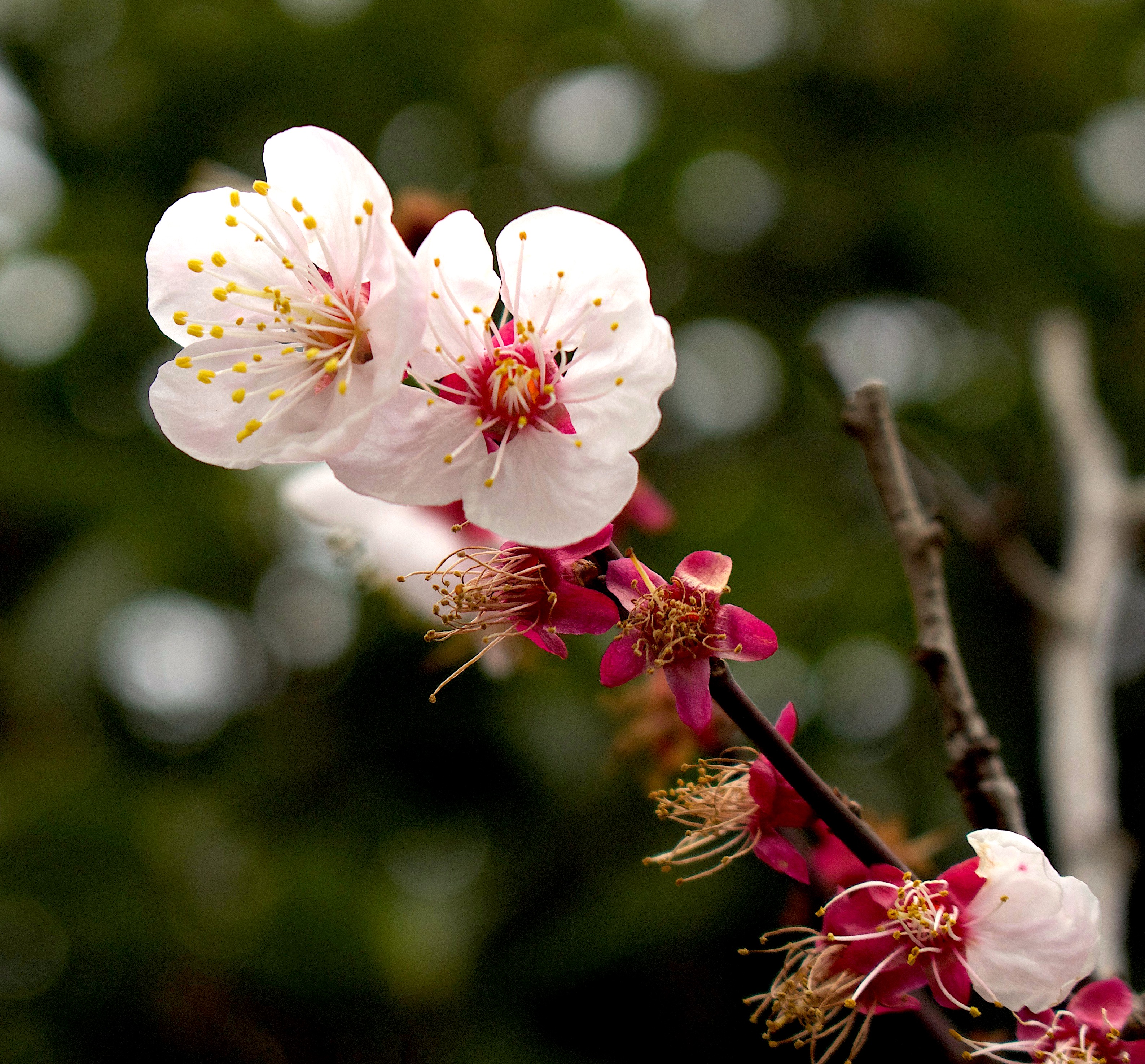
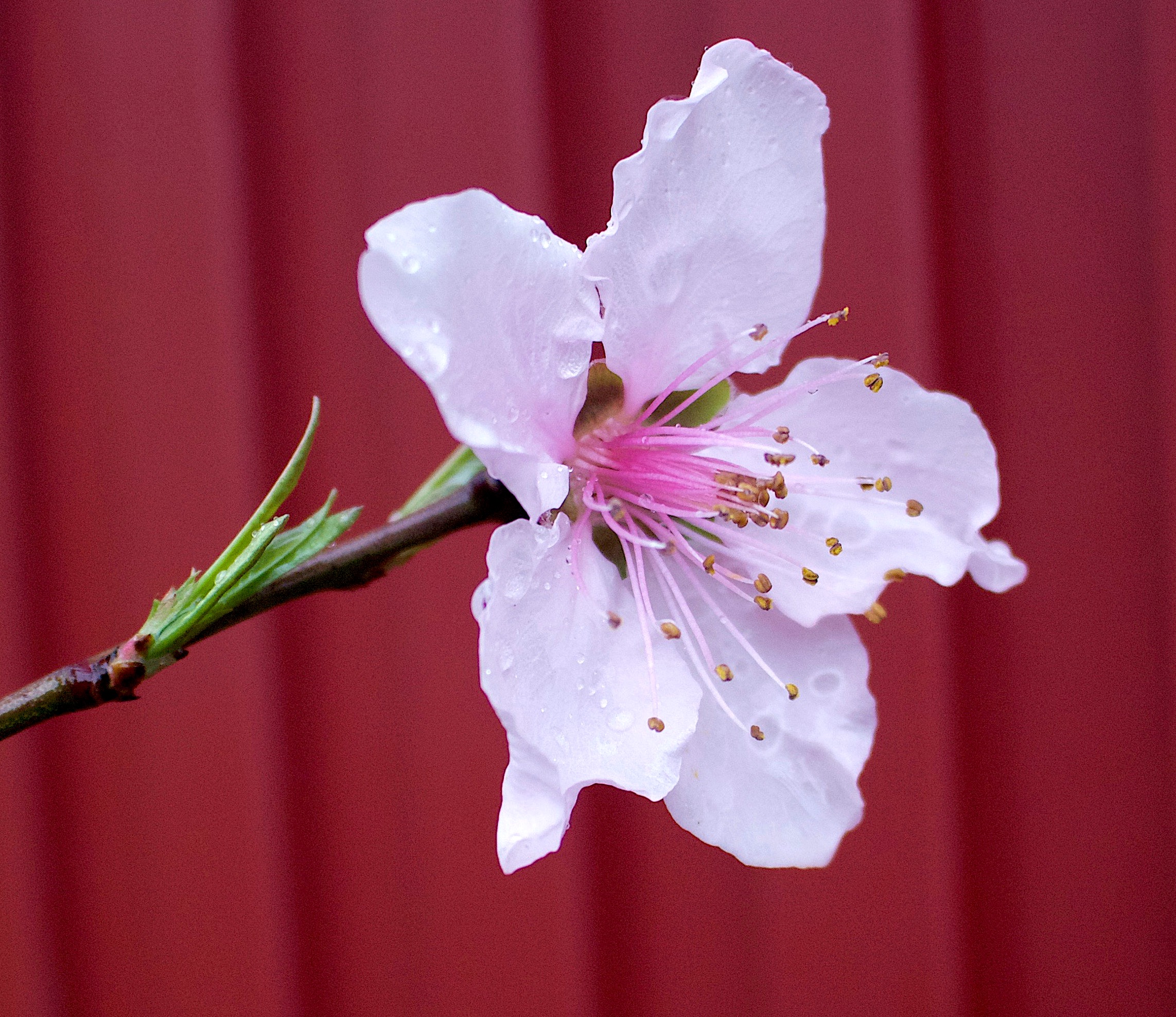
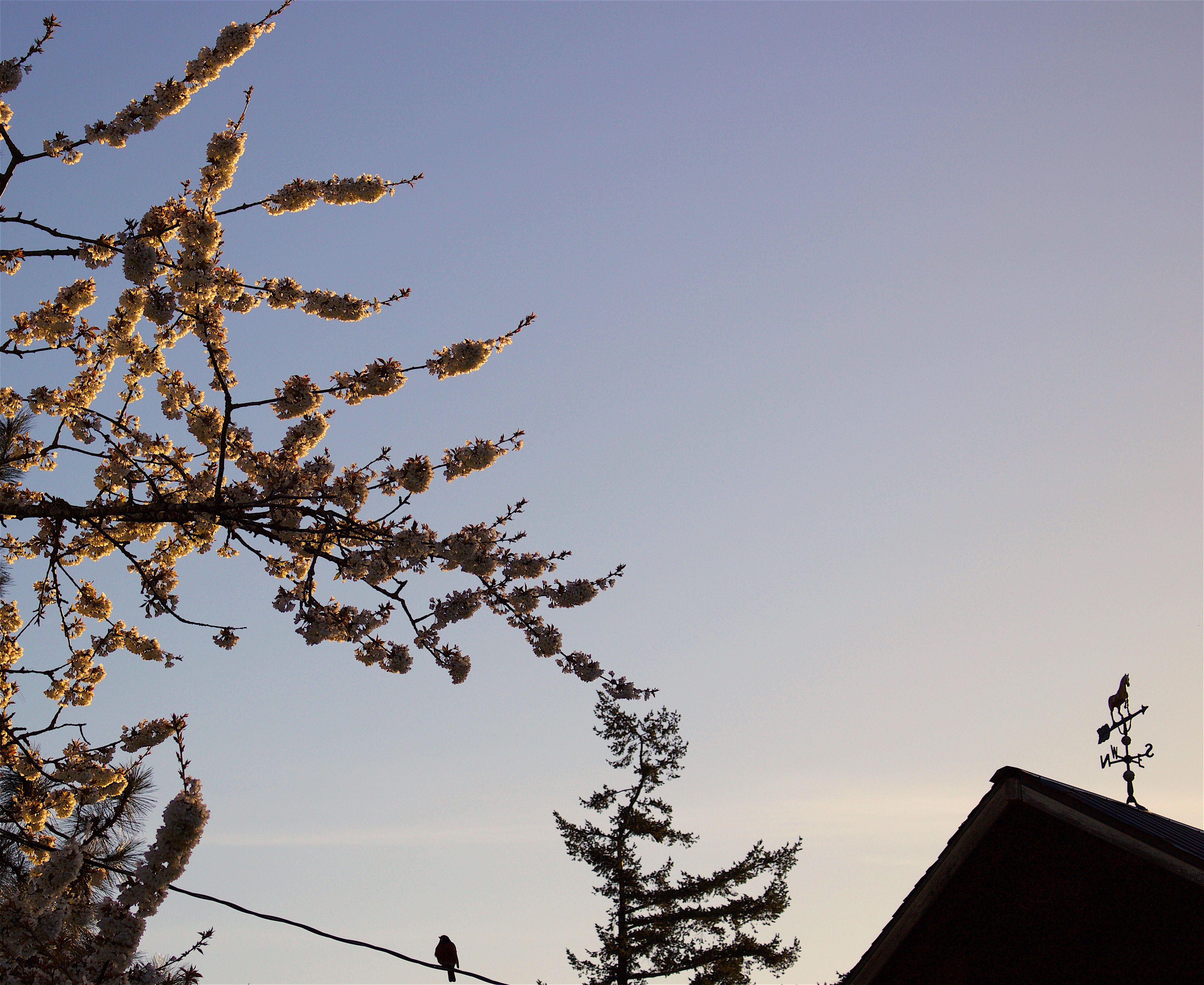
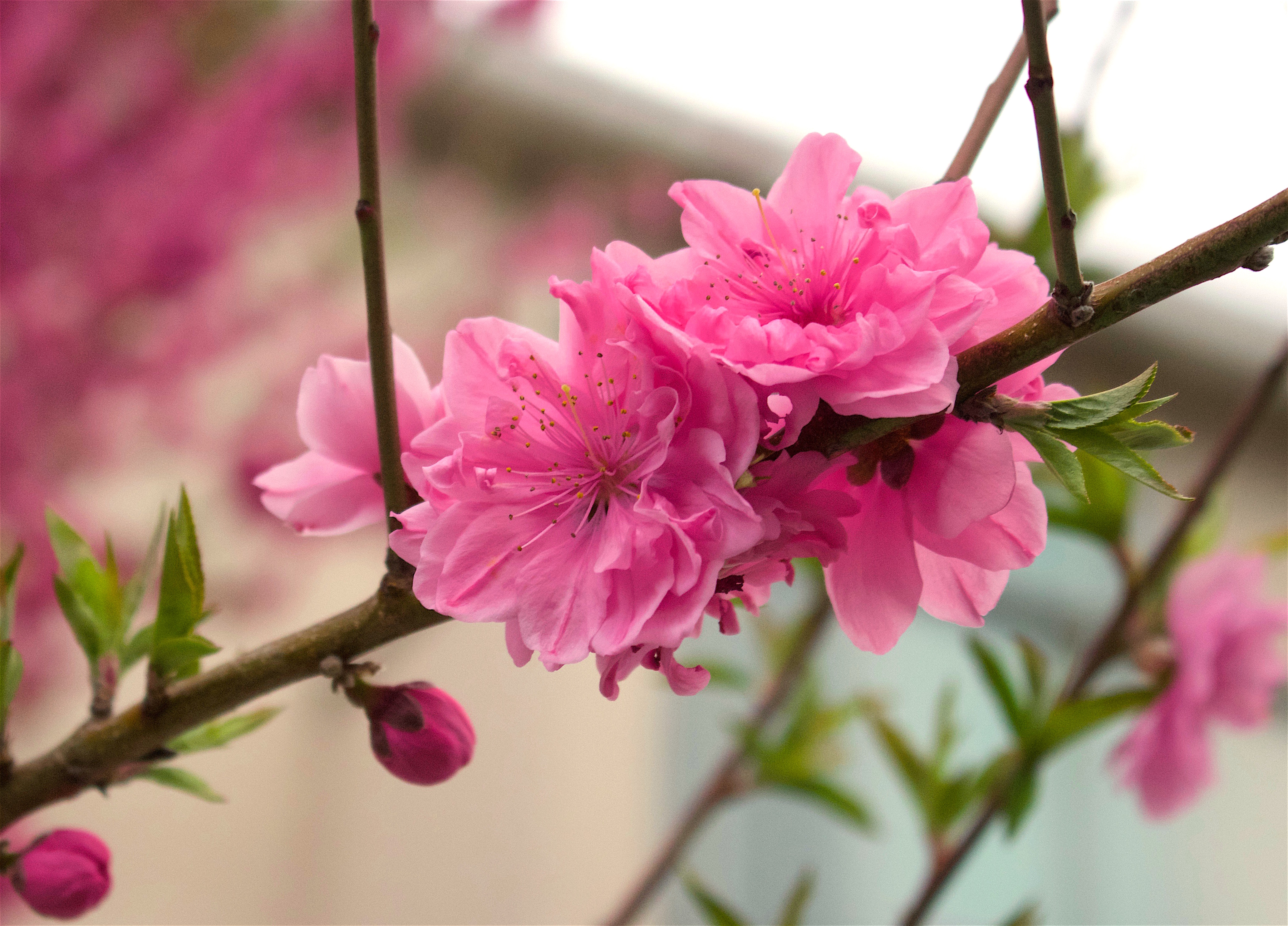
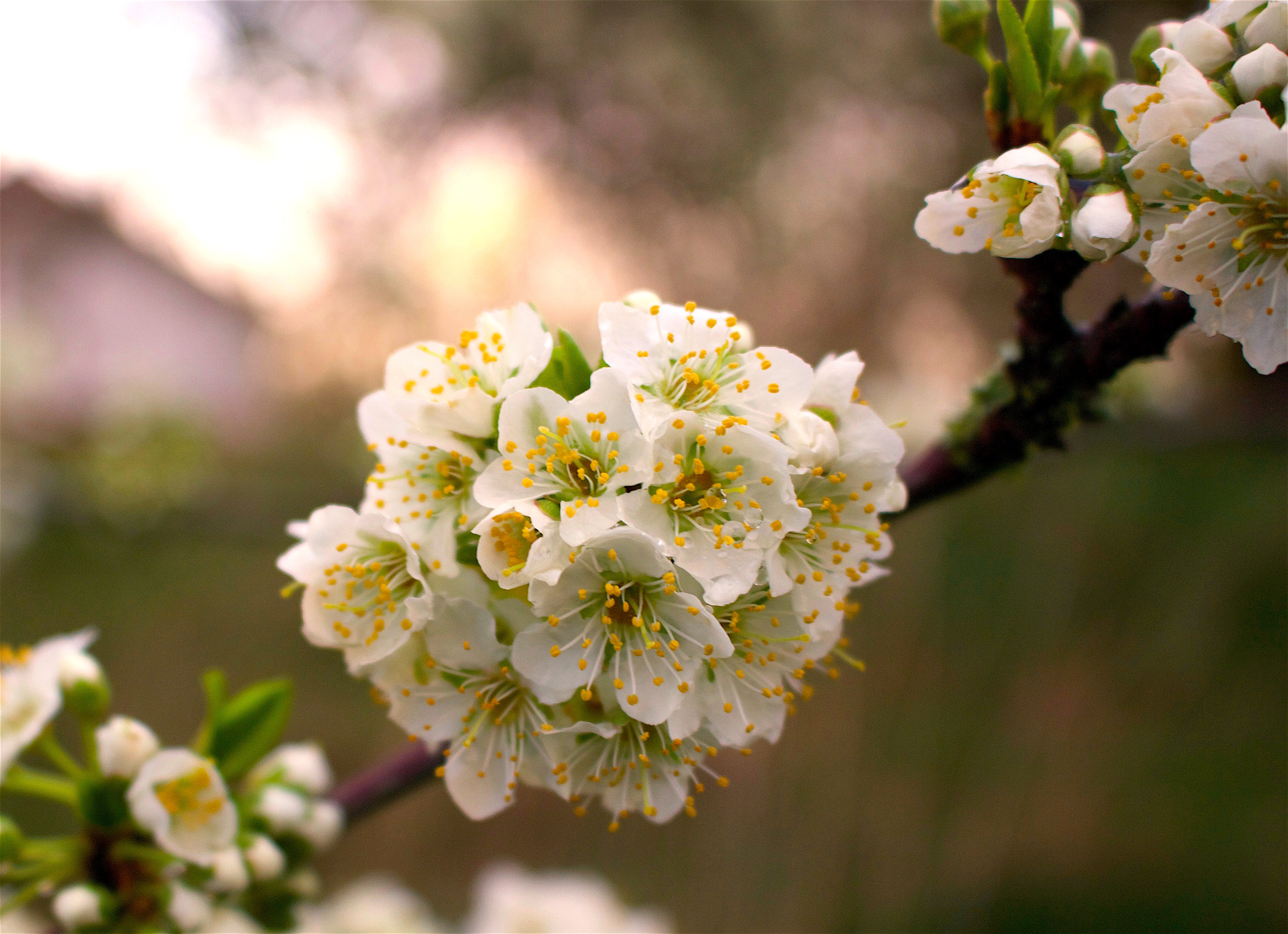
Spring comes quickly: overnight the plum tree blossoms, the warm air fills with bird calls.
In the plowed dirt, someone has drawn a picture of the sun with rays coming out all around but because the background is dirt, the sun is black. There is no signature.
Alas, very soon everything will disappear: the bird calls, the delicate blossoms. In the end, even the earth itself will follow the artist’s name into oblivion.
Nevertheless, the artist intends a mood of celebration.
How beautiful the blossoms are — emblems of the resilience of life. The birds approach eagerly. ~Louise Glück “Primavera”
Nothing is so beautiful as Spring – When weeds, in wheels, shoot long and lovely and lush; Thrush’s eggs look little low heavens, and thrush Through the echoing timber does so rinse and wring The ear, it strikes like lightnings to hear him sing; The glassy peartree leaves and blooms, they brush The descending blue; that blue is all in a rush With richness; the racing lambs too have fair their fling.
What is all this juice and all this joy? A strain of the earth’s sweet being in the beginning In Eden garden. – Have, get, before it cloy, Before it cloud, Christ, lord, and sour with sinning, Innocent mind and Mayday in girl and boy, Most, O maid’s child, thy choice and worthy the winning. ~Gerard Manley Hopkins “Spring”
And he who was seated on the throne said, “Behold, I am making all things new.” Also he said, ‘Write this down, for these words are trustworthy and true. ” Revelation 21:5
Given a choice, humanity chose sour over the sweetness we were created for ~ giving up walks together in the cool of the day to feed an appetite that could never be sated.
God made a choice to bring us back with His own blood as if we are worthy of Him.
He says we are. He dies to prove it.
Every day I choose to believe earth can be sweet and beautiful again. Each spring becomes a celebration of our resilience.
One-Time
Monthly
Yearly
Make a one-time or recurring donation to support daily Barnstorming posts
…yesterday I heard a new sound above my head a rustling, ruffling quietness in the spring air
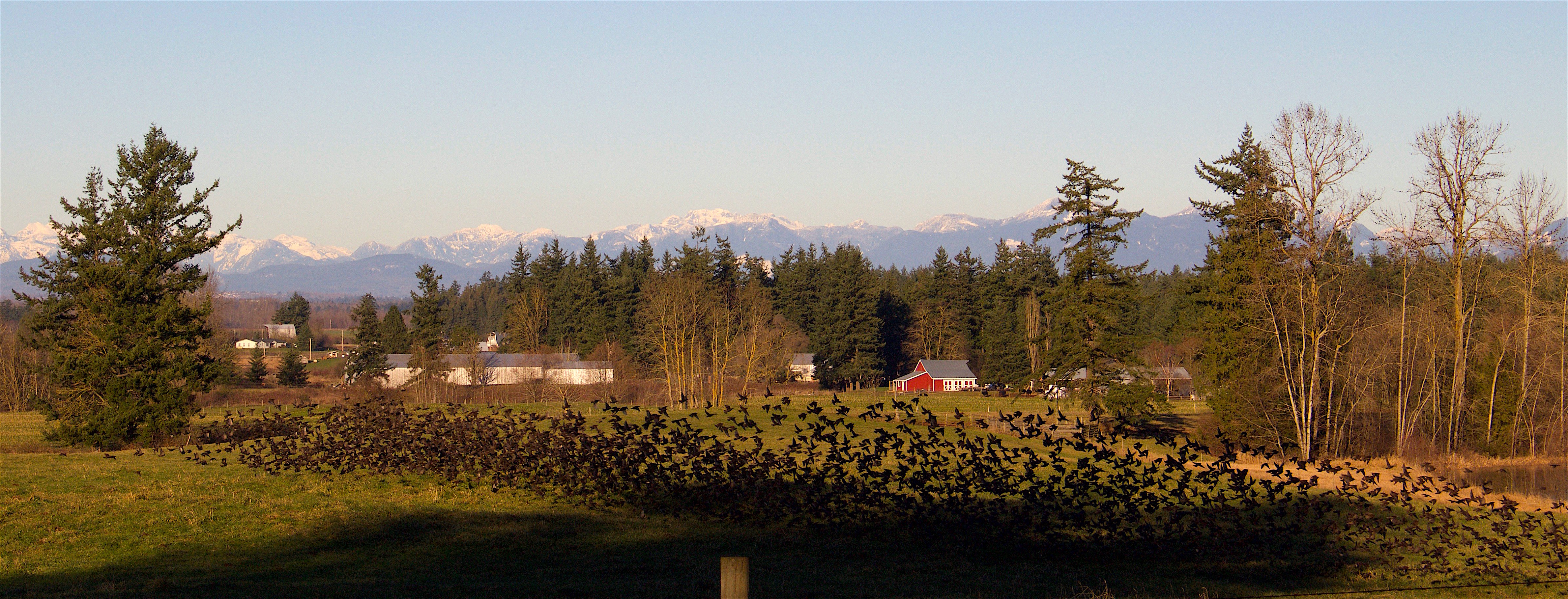
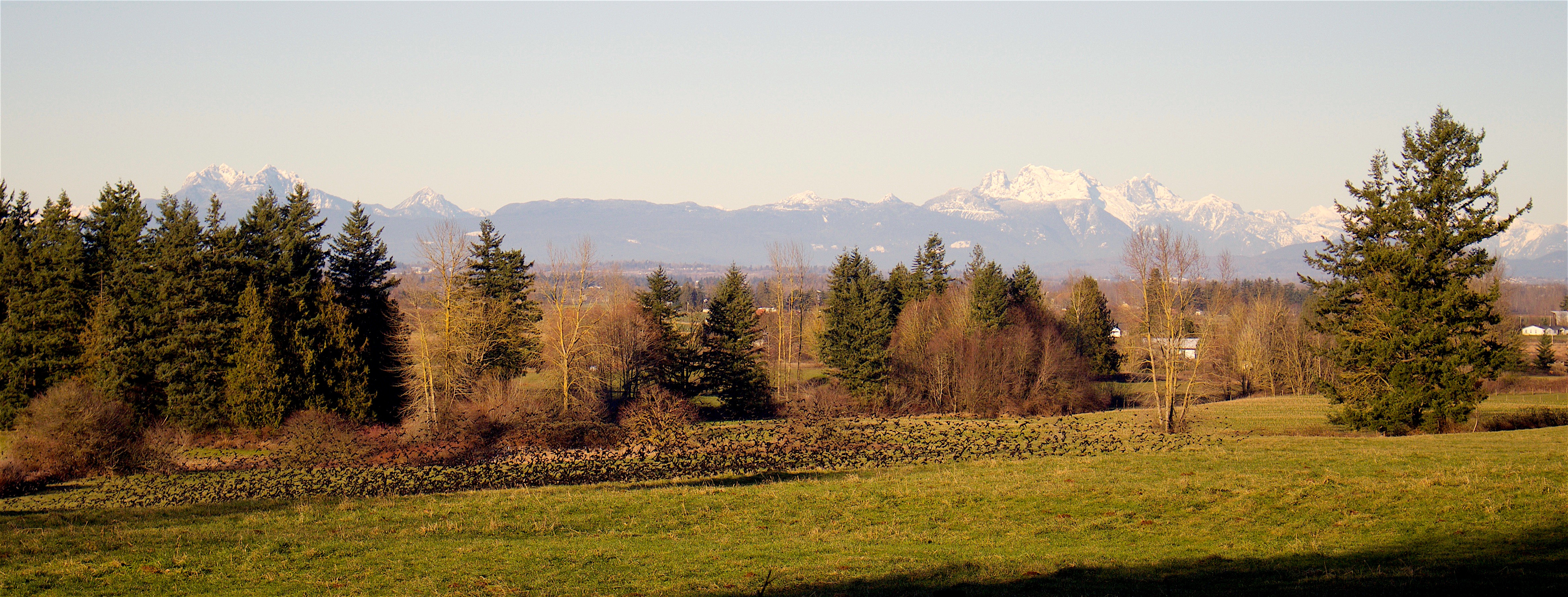
and when I turned my face upward I saw a flock of blackbirds rounding a curve I didn’t know was there and the sound was simply all those wings, all those feathers against air, against gravity and such a beautiful winning: the whole flock taking a long, wide turn as if of one body and one mind.
How do they do that?
If we lived only in human society what a puny existence that would be
but instead we live and move and have our being here, in this curving and soaring world that is not our own so when mercy and tenderness triumph in our lives and when, even more rarely, we unite and move together toward a common good,
we can think to ourselves:
ah yes, this is how it’s meant to be. ~Julie Cadwallader Staub from “Blackbirds” from Wing Over Wing
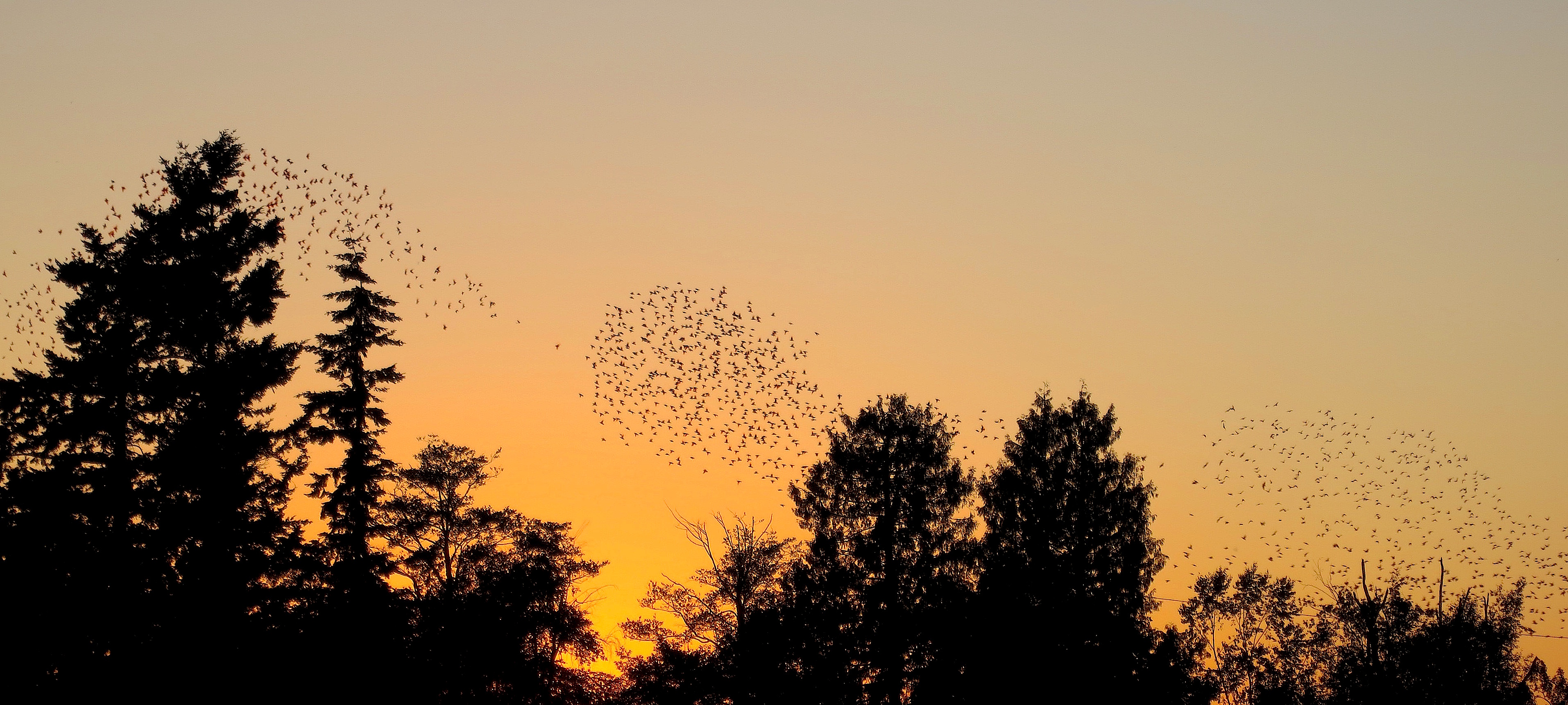
Out of the dimming sky a speck appeared, then another, and another. It was the starlings going to roost. They gathered deep in the distance, flock sifting into flock, and strayed towards me, transparent and whirling, like smoke. They seemed to unravel as they flew, lengthening in curves, like a loosened skein. I didn’t move;they flew directly over my head for half an hour.
Each individual bird bobbed and knitted up and down in the flight at apparent random, for no known reason except that that’s how starlings fly, yet all remained perfectly spaced. The flocks each tapered at either end from a rounded middle, like an eye. Overhead I heard a sound of beaten air, like a million shook rugs, a muffled whuff. Into the woods they sifted without shifting a twig, right through the crowns of trees, intricate and rushing, like wind.
Could tiny birds be sifting through me right now, birds winging through the gaps between my cells, touching nothing, but quickening in my tissues, fleet? ~Annie Dillard from Pilgrim at Tinker Creek
Chunky and noisy, but with stars in their black feathers, they spring from the telephone wire and instantly
they are acrobats in the freezing wind. And now, in the theater of air, they swing over buildings,
dipping and rising; they float like one stippled star that opens, becomes for a moment fragmented,
then closes again; and you watch and you try but you simply can’t imagine
how they do it with no articulated instruction, no pause, only the silent confirmation that they are this notable thing,
this wheel of many parts, that can rise and spin over and over again, full of gorgeous life.
Ah, world, what lessons you prepare for us, even in the leafless winter, even in the ashy city. I am thinking now of grief, and of getting past it;
I feel my boots trying to leave the ground, I feel my heart pumping hard. I want
to think again of dangerous and noble things. I want to be light and frolicsome. I want to be improbable beautiful and afraid of nothing, as though I had wings. ~Mary Oliver “Starlings in Winter” from Owls and Other Fantasies: Poems and Essays
Watching a winter starlings’ murmuration is a visceral experience – my heart leaps to see the looping amoebic folding and unfolding path.
Thousands of individual birds move in sync with one another to form one massive organism existing solely because each tiny component anticipates and cooperates to avoid mid-air collisions.
It could explode into chaos but it doesn’t. It could result in massive casualties but it doesn’t. They could avoid each other altogether but they don’t – they come together with a purpose and reasoning beyond our imagining.
Even the whooshing of their wing movements is exhilarating.
We humans are made up of similar cooperating component parts, deep in our tissues, programmed in our DNA. Yet we don’t exercise such unity from our designed and carefully constructed building blocks. We are frighteningly disparate and independent creatures, going our own way, bumping and crashing without care, leaving so much bodily and spiritual wreckage behind.
What has happened to our place in this curving, soaring world? To where has flown our mercy and tenderness, our compassion and caring for the position of others?
We have corporately lost our internal moral compass. Indeed, the sound of our movements is muffled weeping.
Therefore I tell you, do not be anxious about your life, what you will eat or what you will drink, nor about your body, what you will put on. Is not life more than food, and the body more than clothing?Look at the birds of the air: they neither sow nor reap nor gather into barns, and yet your heavenly Father feeds them. Are you not of more value than they? Matthew 6: 25-26
This Lenten season I reflect on the words of the 19th century southern spiritual hymn “What Wondrous Love is This”
One-Time
Monthly
Yearly
Make a one-time or recurring donation to support daily Barnstorming posts
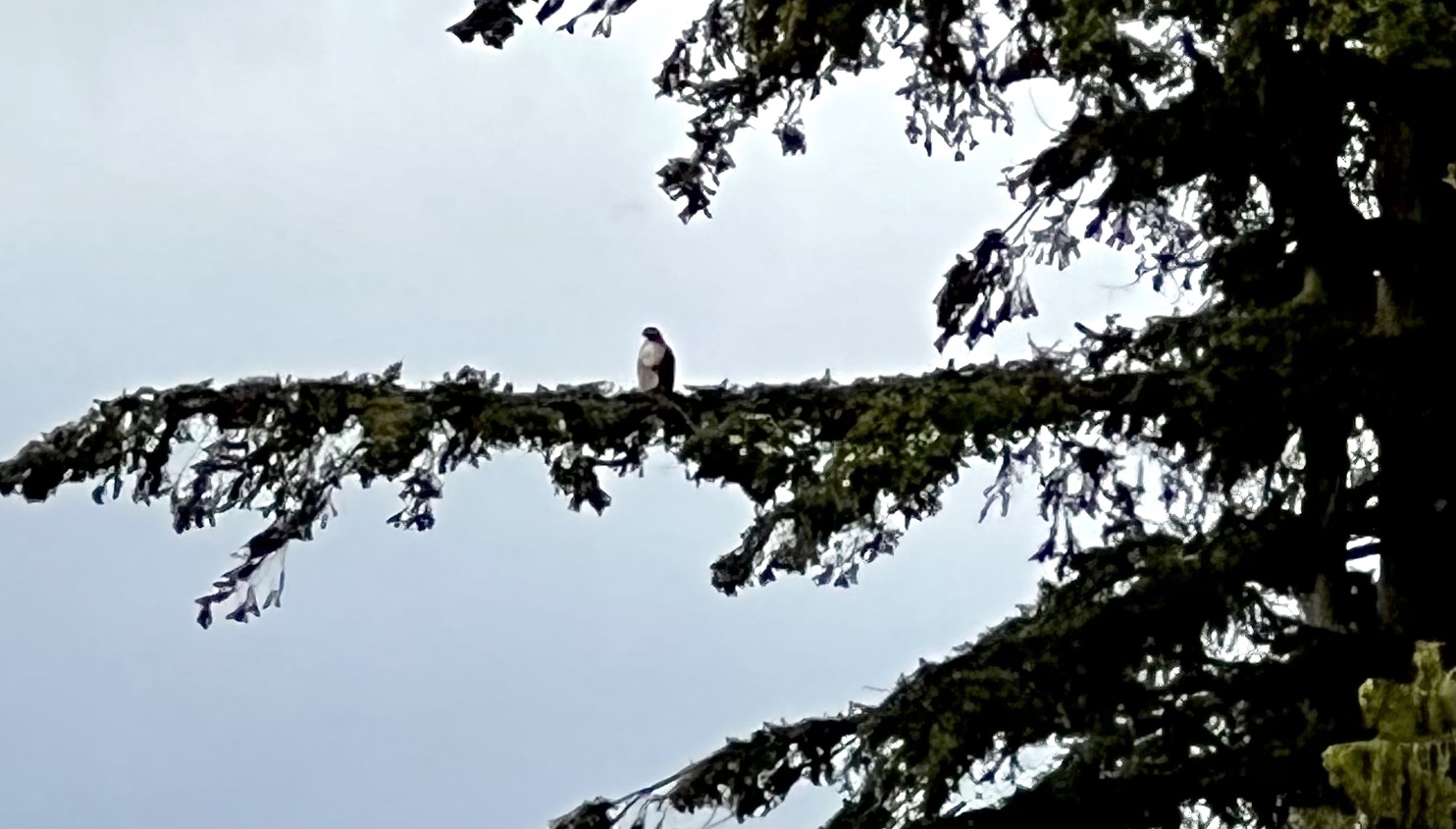
I caught this morning morning’s minion, king- dom of daylight’s dauphin, dapple-dawn-drawn Falcon, in his riding Of the rolling level underneath him steady air, and striding High there, how he rung upon the rein of a wimpling wing In his ecstasy! then off, off forth on swing, As a skate’s heel sweeps smooth on a bow-bend: the hurl and gliding Rebuffed the big wind. My heart in hiding Stirred for a bird, – the achieve of, the mastery of the thing.
Brute beauty and valour and act, oh, air, pride, plume, here Buckle! AND the fire that breaks from thee then, a billion Times told lovelier, more dangerous, O my chevalier!
No wonder of it: shéer plód makes plough down sillion Shine, and blue-bleak embers, ah my dear, Fall, gall themselves, and gash gold-vermilion. ~Gerard Manley Hopkins “The Windhover”
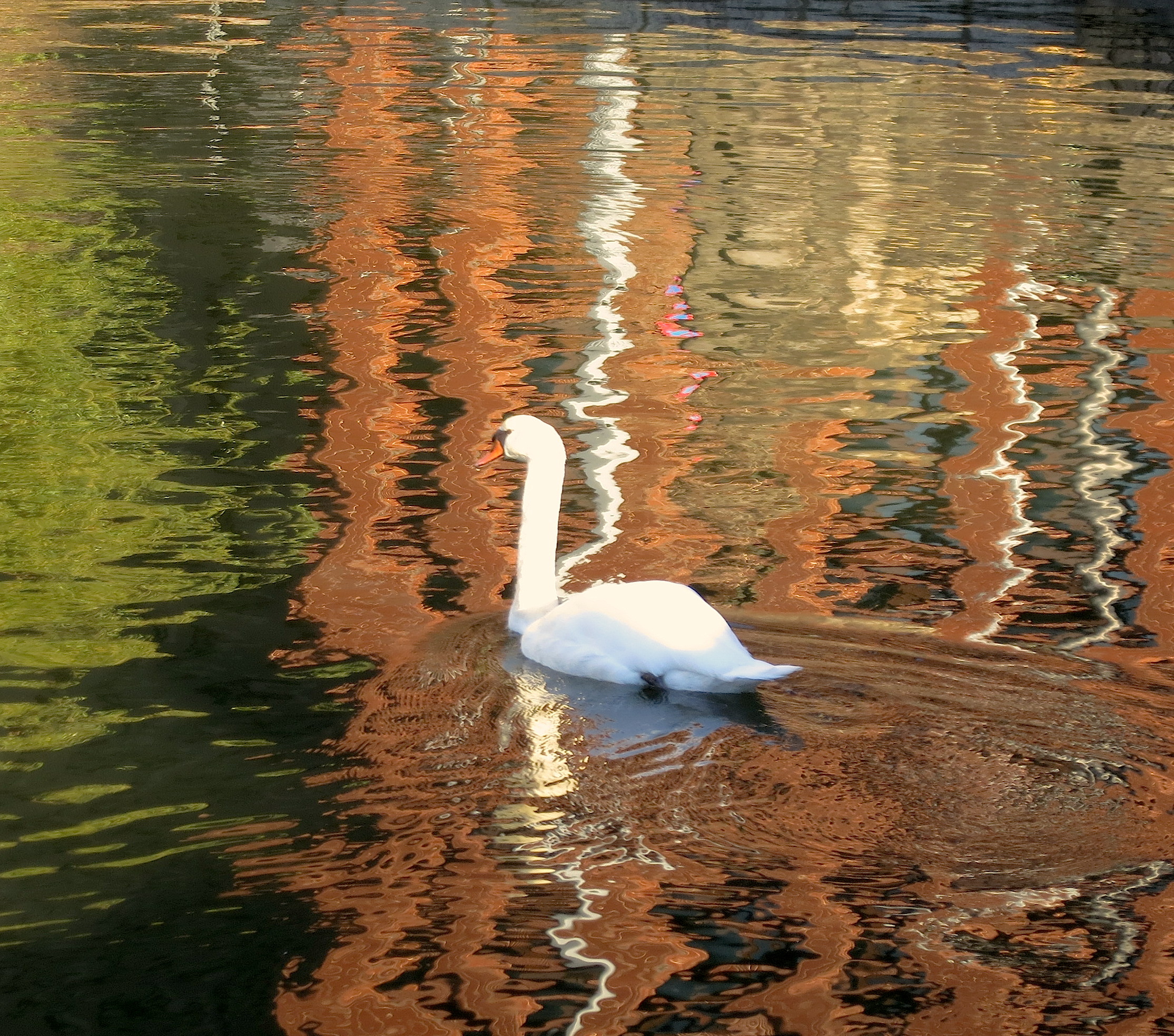
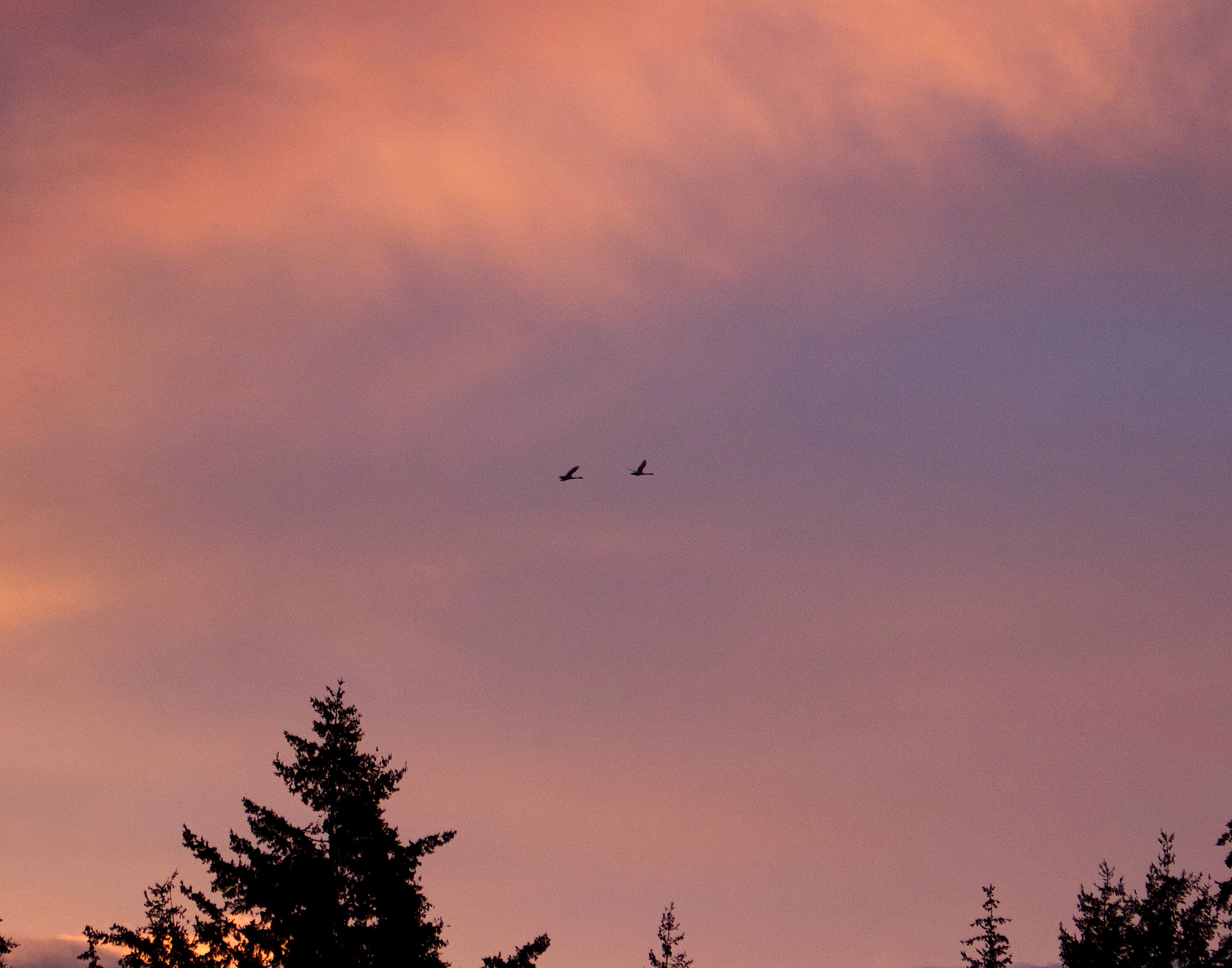
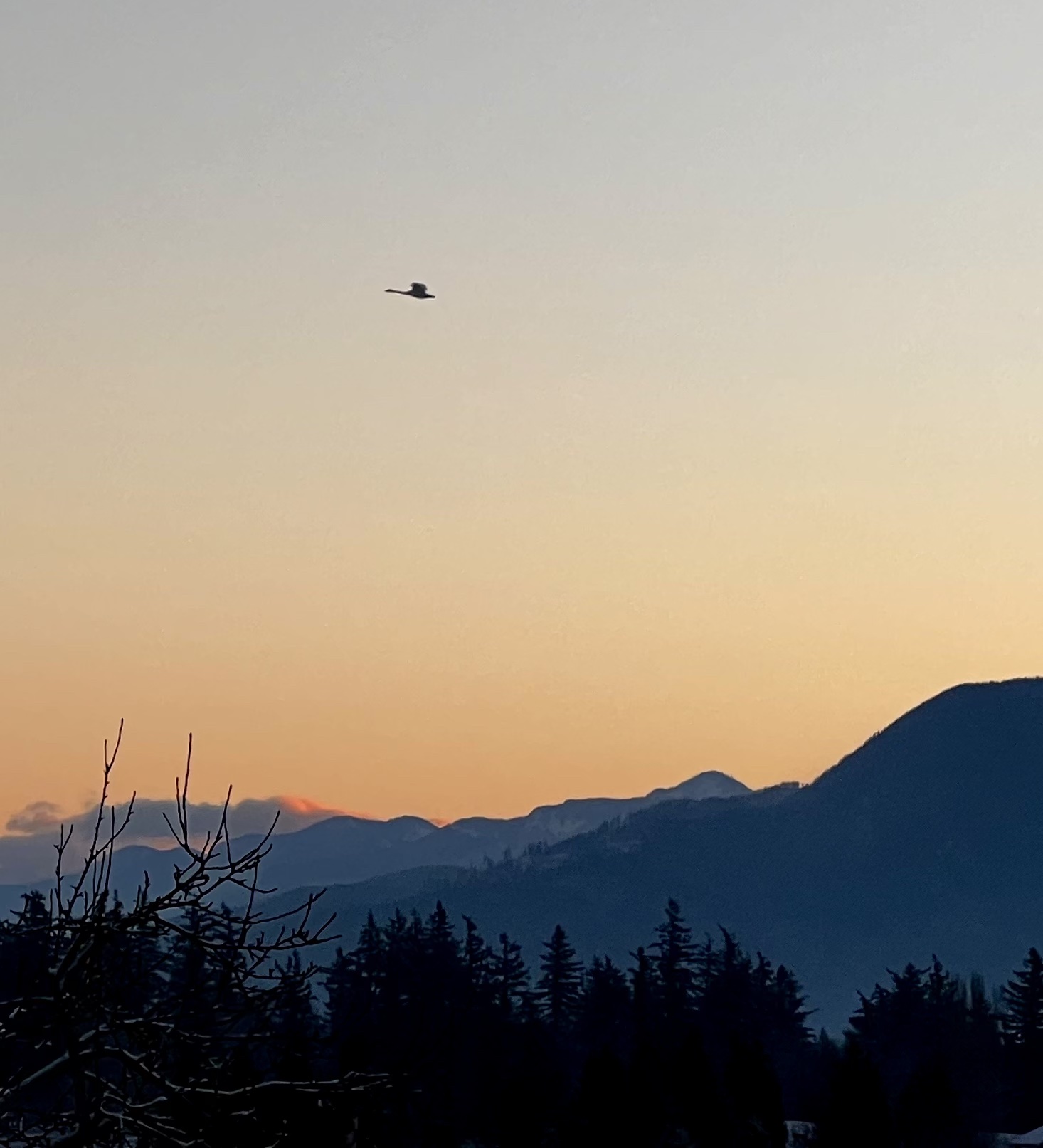
Did you too see it, drifting, all night, on the black river? Did you see it in the morning, rising into the silvery air – An armful of white blossoms, A perfect commotion of silk and linen as it leaned into the bondage of its wings; a snowbank, a bank of lilies, Biting the air with its black beak? Did you hear it, fluting and whistling A shrill dark music – like the rain pelting the trees – like a waterfall Knifing down the black ledges? And did you see it, finally, just under the clouds – A white cross Streaming across the sky, its feet Like black leaves, its wings Like the stretching light of the river?And did you feel it, in your heart, how it pertained to everything? And have you too finally figured out what beauty is for? And have you changed your life? ~Mary Oliver from “The Swan”
I hold my heart in hiding, trying to protect that tender core of who I am from being pierced and shredded by the slings and arrows of every day life. It can be a bruising and bumpy ride.
Yet to live fully, as I am created to live, I must fling myself into the open, wimpling wings spread, the wind holding me up, hovering and ready to soar.
To stay aloft, I must change as the wind changes around me.
I take my chances, knowing the fall will come. My wounds shall be healed, even as they bleed.
There is no lack of wonder. So stirred. So much beauty to behold. So much heart to take out of hiding and share freely, no matter the buffeting.
Ah… Ah, my dear.
One-Time
Monthly
Yearly
Make a one-time or recurring donation to support daily Barnstorming posts
The tree, and its haunting bird, Are the loves of my heart; But where is the word, the word, Oh where is the art, To say, or even to see, For a moment of time, What the Tree and the Bird must be In the true sublime?
They shine, listening to the soul, And the soul replies; But the inner love is not whole, and the moment dies.
Oh give me before I die The grace to see With eternal, ultimate eye, The Bird and the Tree. The song in the living Green, The Tree and the Bird – Oh have they ever been seen, Ever been heard? ~Ruth Pitter “The Bird in the Tree”
Then came a sound even more delicious than the sound of water. Close beside the path they were following a bird suddenly chirped from the branch of a tree. It was answered by the chuckle of another bird a little further off.
And then, as if that had been signal, there was chattering and chirruping in every direction, and then a moment of full song, and within five minutes the whole wood was ringing with birds’ music, and wherever Edmund’s eyes turned he saw birds alighting on branches, or sailing overhead or chasing one another or having their little quarrels or tidying up their feathers with their beaks. ~C.S. Lewis from The Lion, the Witch and the Wardrobe
Every day now we hear hunters firing in the woods and the wetlands around our farm, most likely aiming for the few ducks that have decided to stay in the marshes through the winter, or possibly a Canadian goose or a deer to bring home for the freezer. Our usual day-long serenade of birdsong from the forest is replaced by shotguns popping, hawks and eagles chittering from the treetops, with Stellar jays and squirrels arguing over the last of the filbert nuts.
In the clear cold evenings, when coyotes aren’t howling in the moonlight, the owls hoot to each other across the fields from one patch of woods to another, their gentle resonant conversation echoing back and forth.
During these chilly months, there are no longer birdsong arias in the trees; I’m left bereft of the musical tapestry of chirps and trills and twitters.
So it is too quiet, a time of bereavement. The frosty silence of darkened days, interrupted by gunshot percussion, is like a baton raised in anticipation after rapping the podium to bring us all to attention. I wait and listen for the downbeat to come — the return of birds and peeper frogs tuning their throats, rehearsing their spring symphony.
May their eternal and ultimate concert never end.
I hope you love birds too. It is economical. It saves going to heaven. ~Emily Dickinson in an 1885letter to Miss Eugenia Hall
Bird in a tree, bird in a tree What you doin’ way up there? Why do you sing, why do you sing? Are you looking for your lady fair? Did she fly away to another tree? Do you know not where she hides? All day you sing the same old song She must be hard to find
[Verse 2] Bird in a tree, bird in a tree What’s it like to be able to fly? I figure if I had wings like you Not a wasted day’d go by I’d fly above the mountaintops I’d do barrel-rolls and dives I’d snack upon the wiggly worms And be happy all my life
[Verse 3] Bird in a tree, bird in a tree What you doin’ way up there? Why do you sing, why do you sing? Are you looking for your lady fair? Did she leave you late in the summertime After such a lovely spring? Are afraid that come the winter You’ll be left in the cold and lonely?
[Verse 4] Bird in a tree, bird in a tree Who taught you to sing so well? Do you know that I am listening? Brother bird, can you even tell? And though your love might be far away Even another town You sing your song all through the day In case she comes around
[Verse 5] Bird in a tree, bird in a tree Oh, the sun is getting wide Soon the night will come And the morning won’t be for a while So fare thee well, dear friend of mine What a pleasure, I must say We both should prob’ly get some sleep Tomorrow’s another day
One-Time
Monthly
Yearly
Make a one-time or recurring donation to support daily Barnstorming posts
This is the moment when you see again the red berries of the mountain ash and in the dark sky the birds’ night migrations.
It grieves me to think the dead won’t see them— these things we depend on, they disappear.
What will the soul do for solace then? I tell myself maybe it won’t need these pleasures anymore; maybe just not being is simply enough, hard as that is to imagine. ~Louise Glück “The Night Migrations”
(Louise Glück died yesterday at age 80; she was both a Nobel and Pulitzer Prize winner for poetry)
All through August and September thousands, maybe tens of thousands, of feathered creatures pass through this place and I almost never see a single one. The fall wood warbler migration goes by here every year, all of them, myriad species, all looking sort of like each other, yellow, brown, gray, all muted versions of their summer selves, almost indistinguishable from each other, at least to me, although definitely not to each other, all flying by, mostly at night, calling to each other as they go to keep the flock together, saying: chip, zeet, buzz, smack, zip, squeak— those sounds reassuring that we are all here together and heading south, all of us just passing through, just passing through, just passing through, just passing through. ~David Budbill “Invisible Visitors”from Tumbling Toward the End
Some feathered travelers slip past us unseen and unheard. They may stop for a drink in the pond or a bite to eat in the field and woods, but we never know they are there – simply passing through.
Others are compelled to announce their journey with great fanfare, usually heard before seen. The drama of migration becomes bantering conversation from bird to bird, bird to earth, bird to sun, moon and stars, with unseen magnetic forces pointing the way.
When not using voices, their wings sing the air with rhythmic beat and whoosh.
We’re all together here — altogether — even when our voices are raised sharply, our silences brooding, our hurts magnified, our sorrows deep. Our route and mode of travel become a matter of intense debate.
The ultimate destination is not in dispute however. It isn’t simply enough to just be, but to be heading to where we belong, to that which we depend upon. We are migrating souls finding a way back home where all is solace, all is meaning, all is grace, all is peace.
We’re just passing through, just passing through, just passing through.
is taken by surprise as it speaks, are you sure this is the right street? for example—or just
cowpath—no more: a blurb, a bleep, really, out of the imagination, and then once again everything is
perfectly still, save, perhaps, a cow or two on the horizon,—
and the sound of cowbirds in sudden excellence, where
formerly there were none. ~Jane Mead“Sometimes the Mind” From The Usable Field
photo by Bette Vander Haakphoto by Bette Vander Haak
photo by Bette Vander Haak
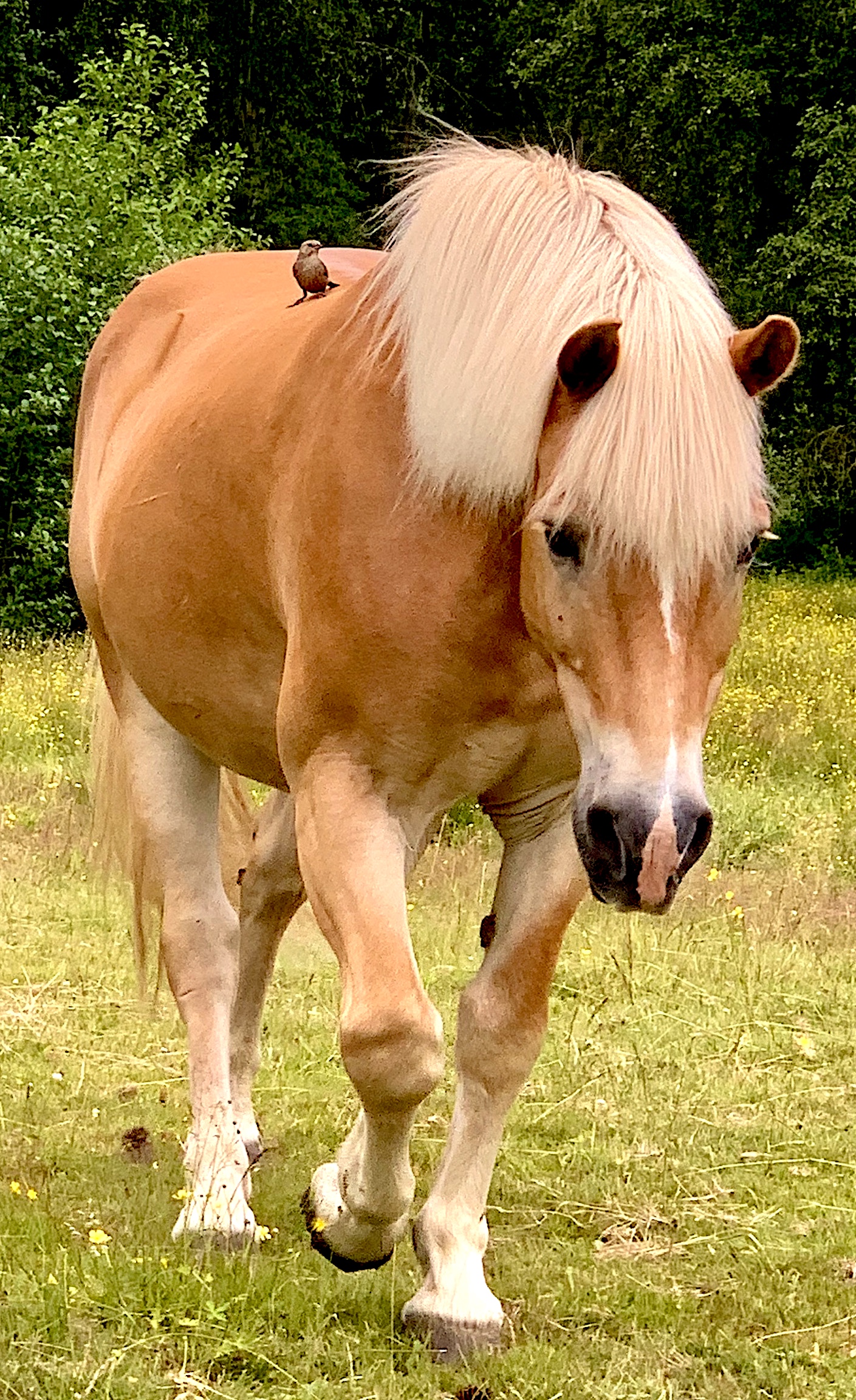
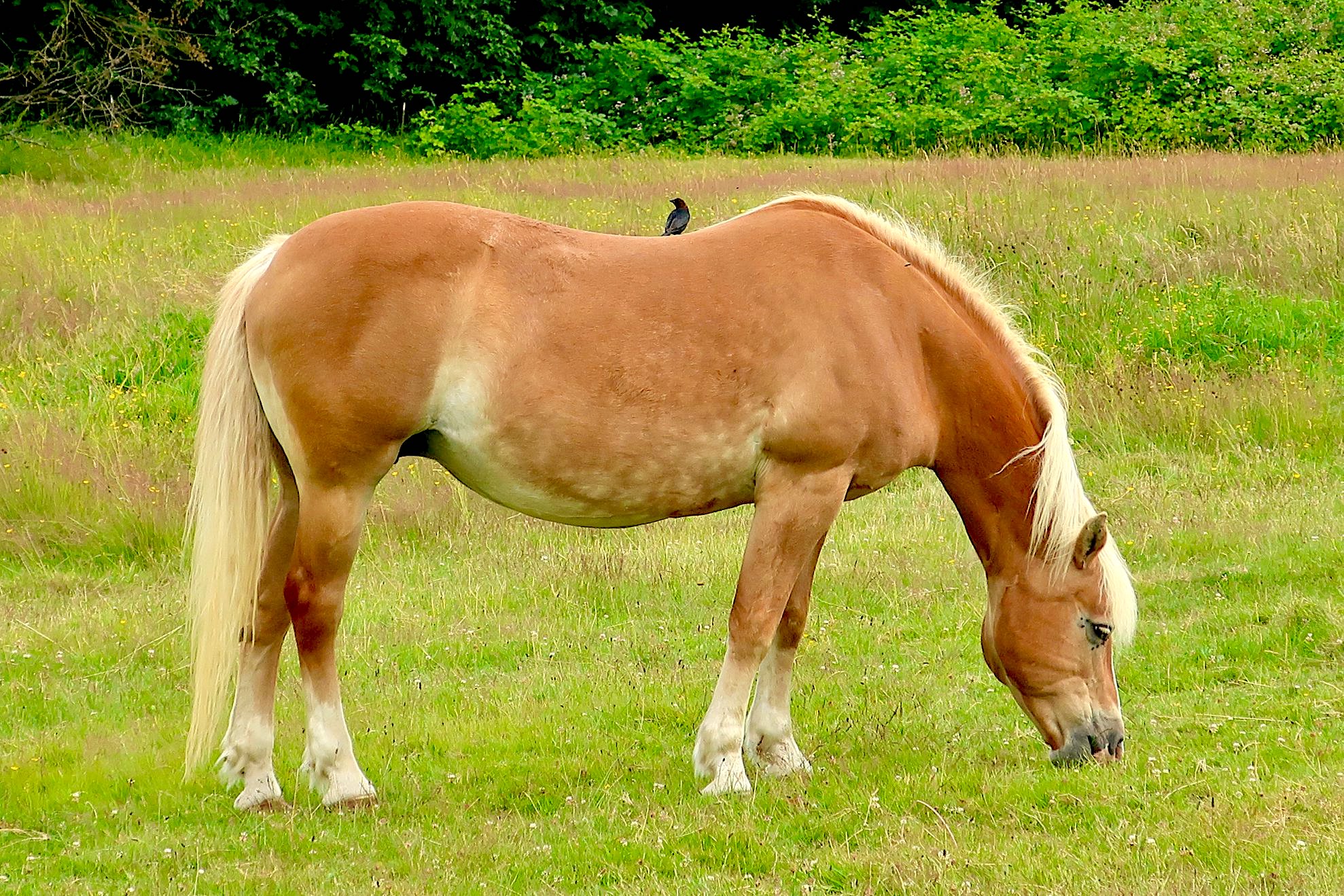
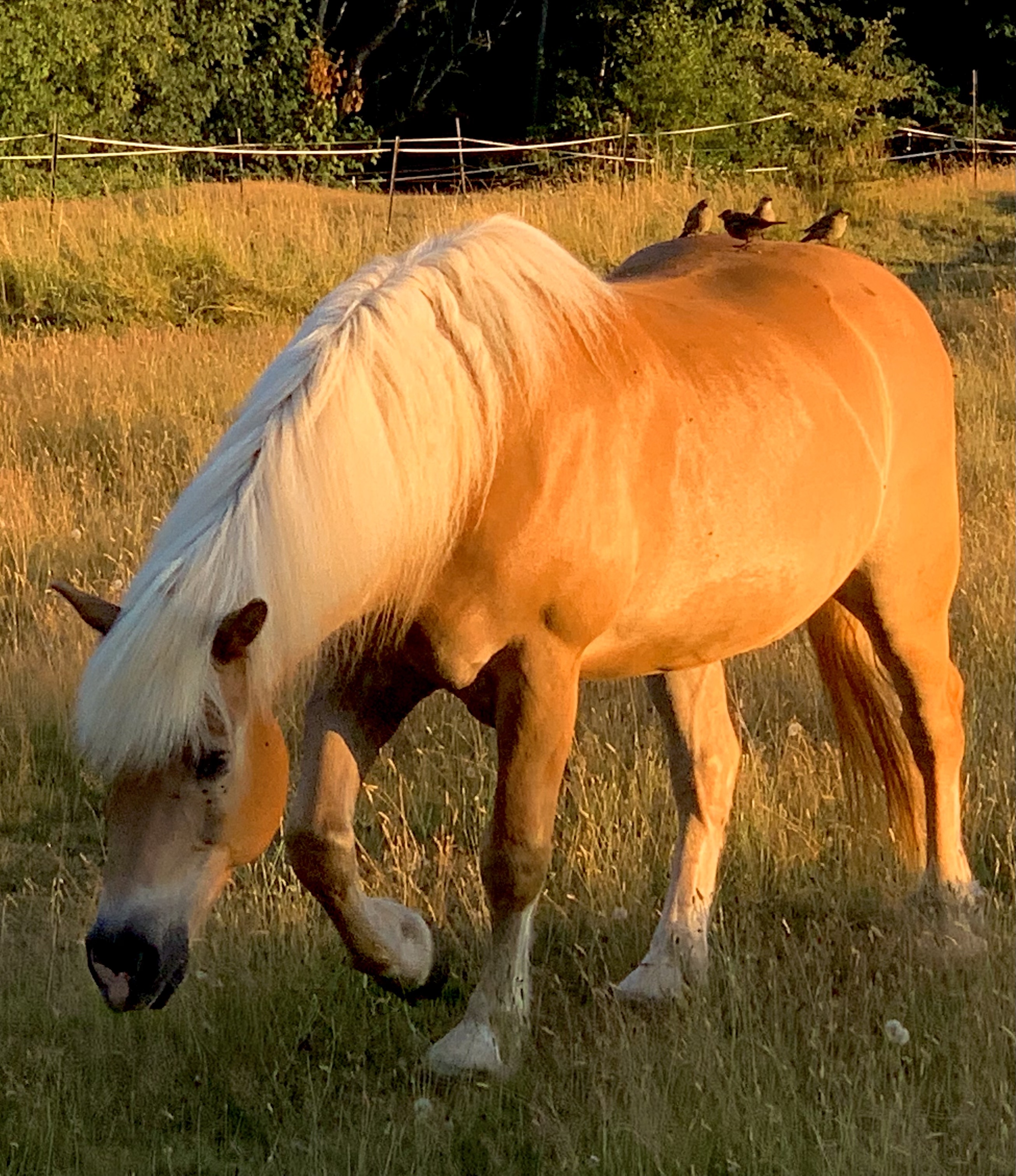
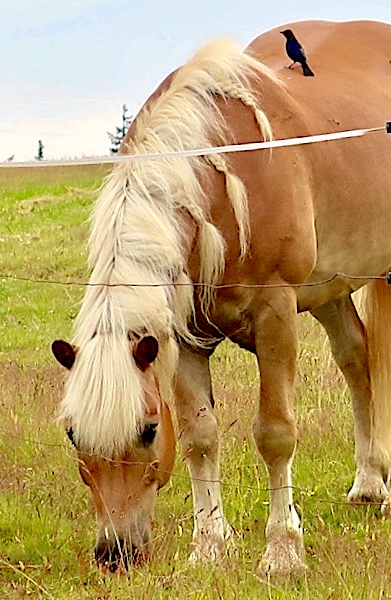
Many current roads started out as cowpaths decades ago. These meandering trails made sense to cows at the time. Subsequently, because people lack imagination, we tend to also follow those original twist and turns as we navigate life’s byways. Now paved with asphalt and good intentions, our roads accommodate more than a herd of cows giving hitchhiking cowbirds a free meal.
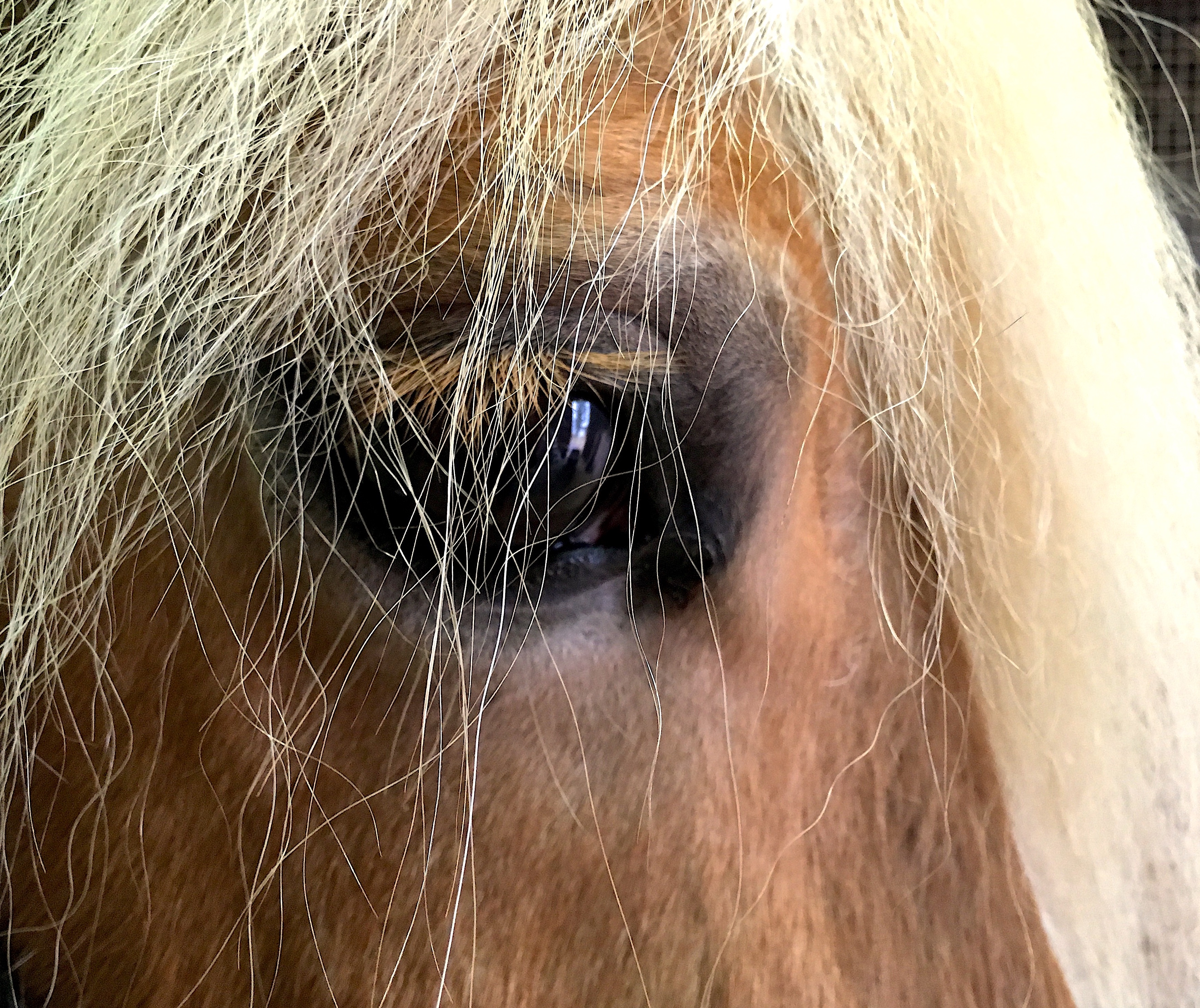
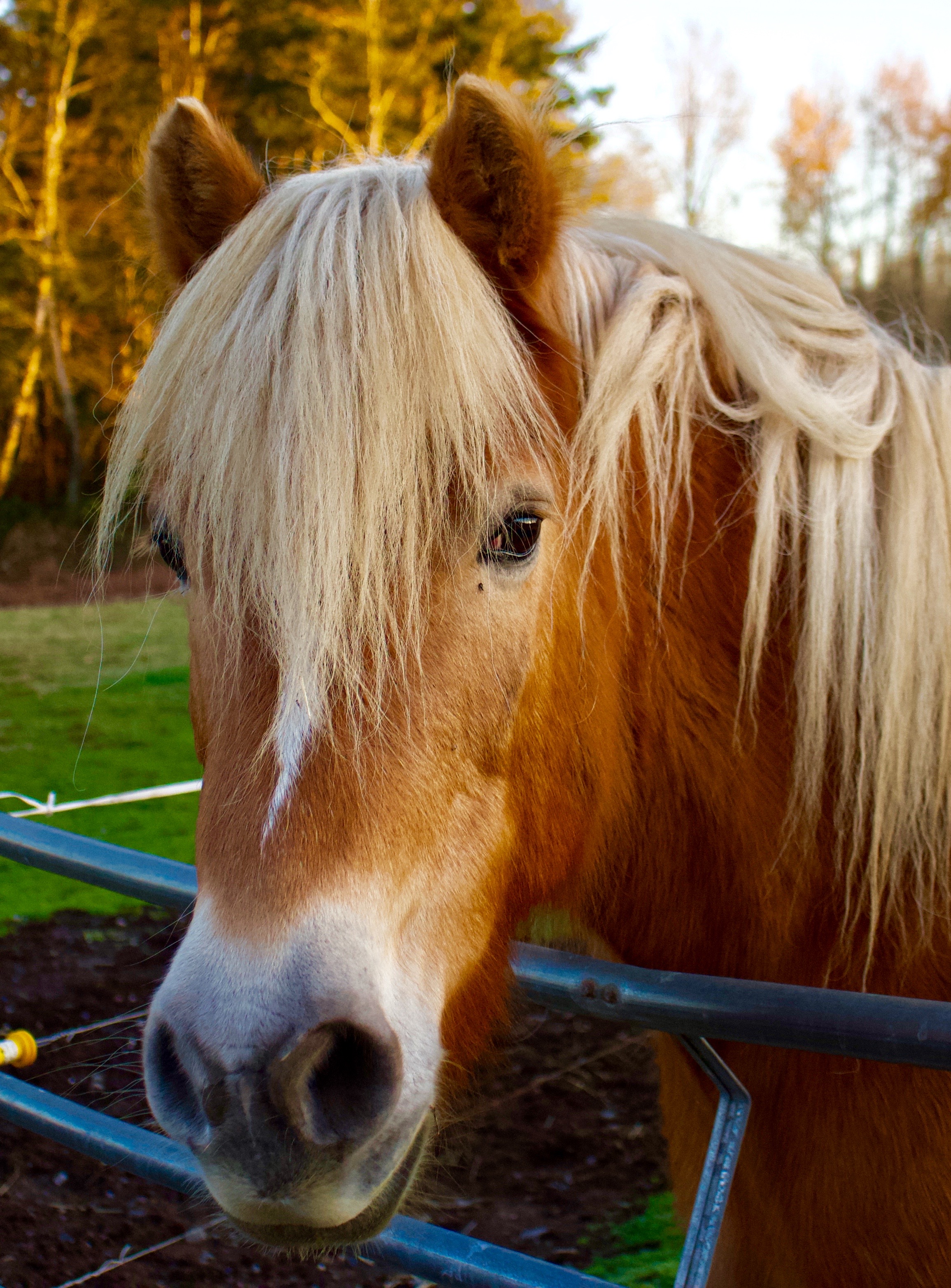
Cowbirds don’t lack imagination though; they are ready-made opportunists. They occupy any furry back that happens to attract tasty insects. The (horse?)birds happily set sail on a dinner cruise while doing their host a favor by gobbling irritating flies.
Imagine meandering through countryside pastures all day, unconcerned where the next meal will come from because it always comes to you.
Its easy if you try. You can say I’m a dreamer, but I’m not the only one. I hope someday you’ll join us and the world (horses, cows, birds) will live as one…
One-Time
Monthly
Yearly
Make a one-time or recurring donation to support daily Barnstorming posts
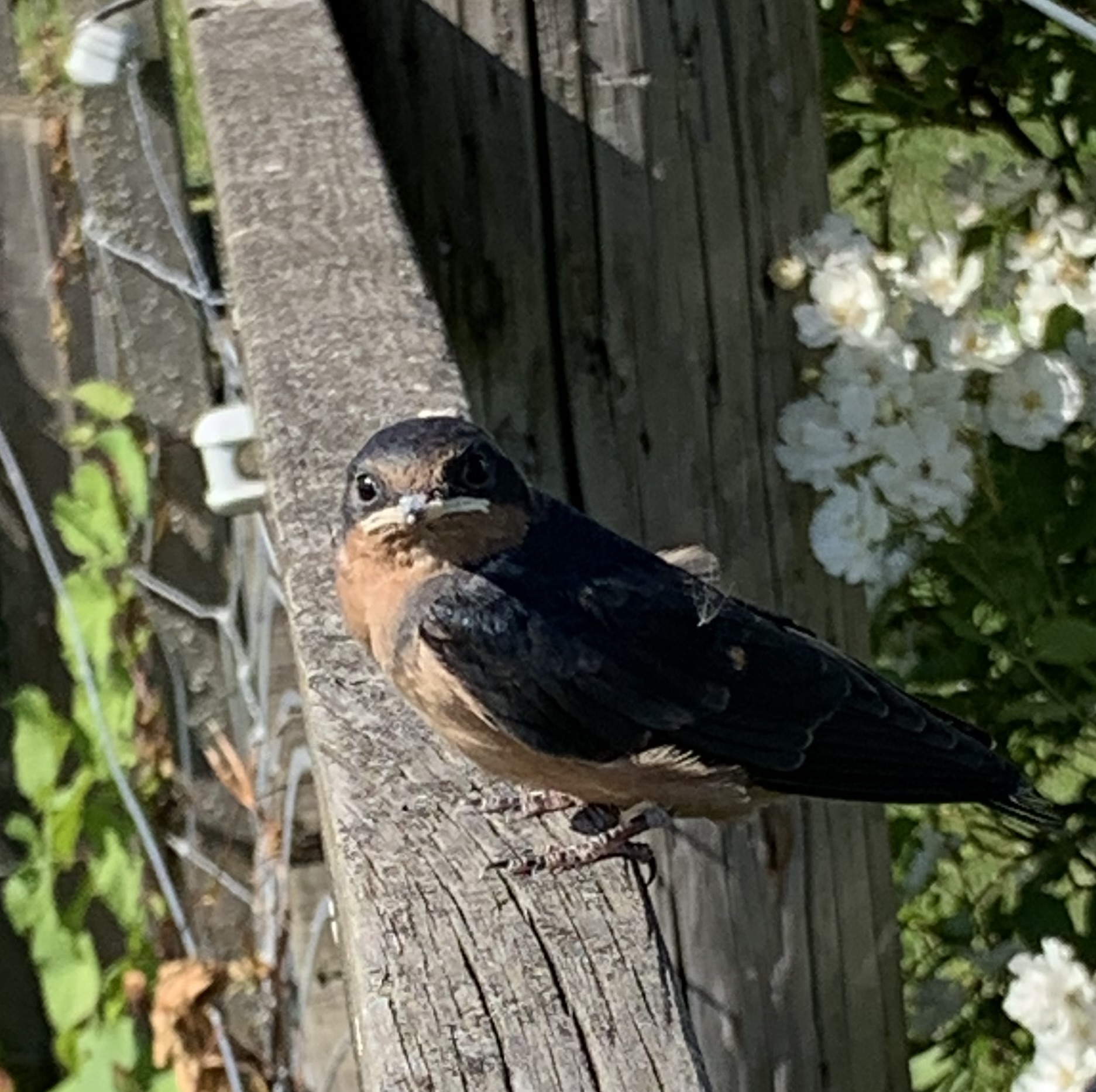
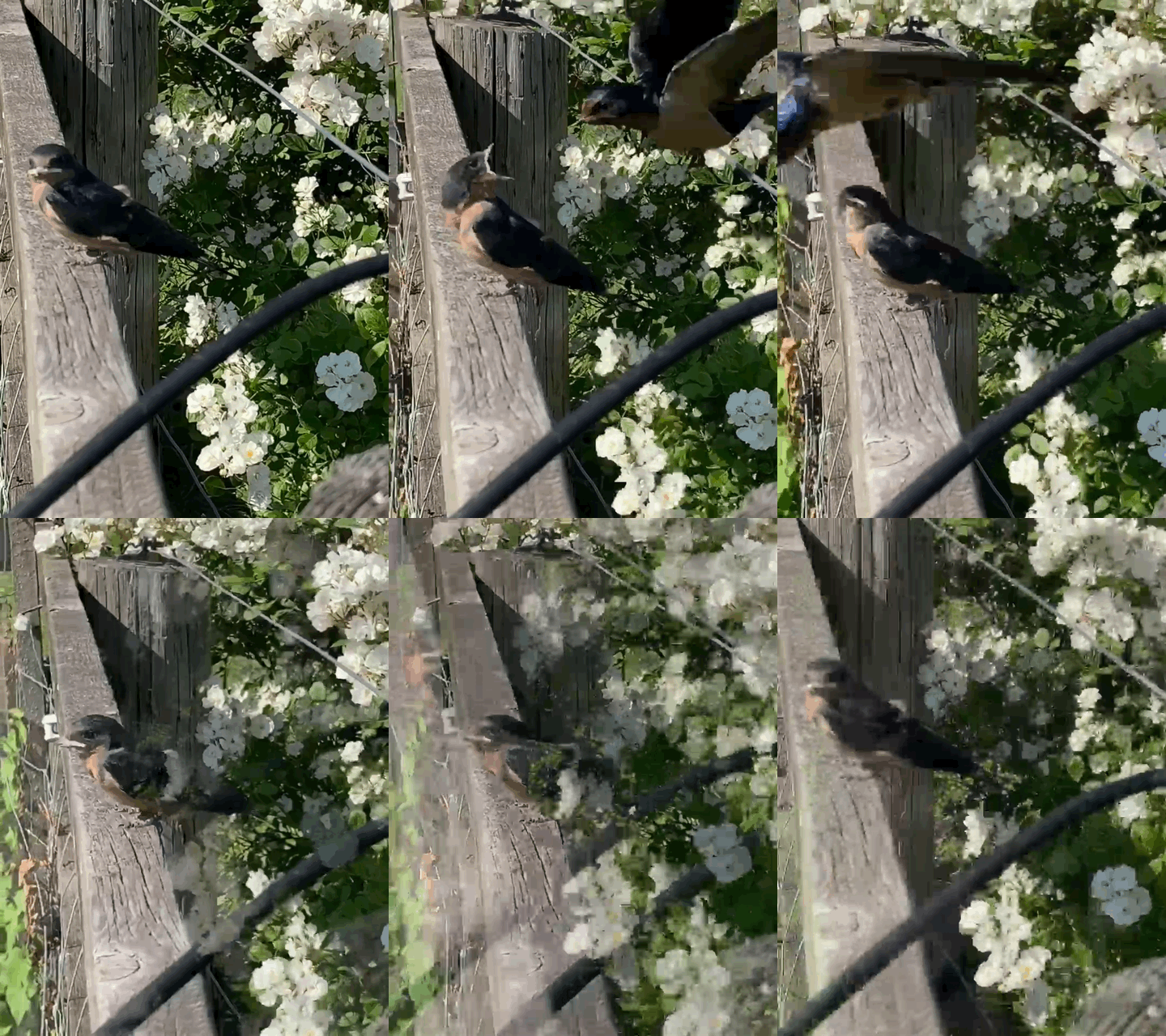
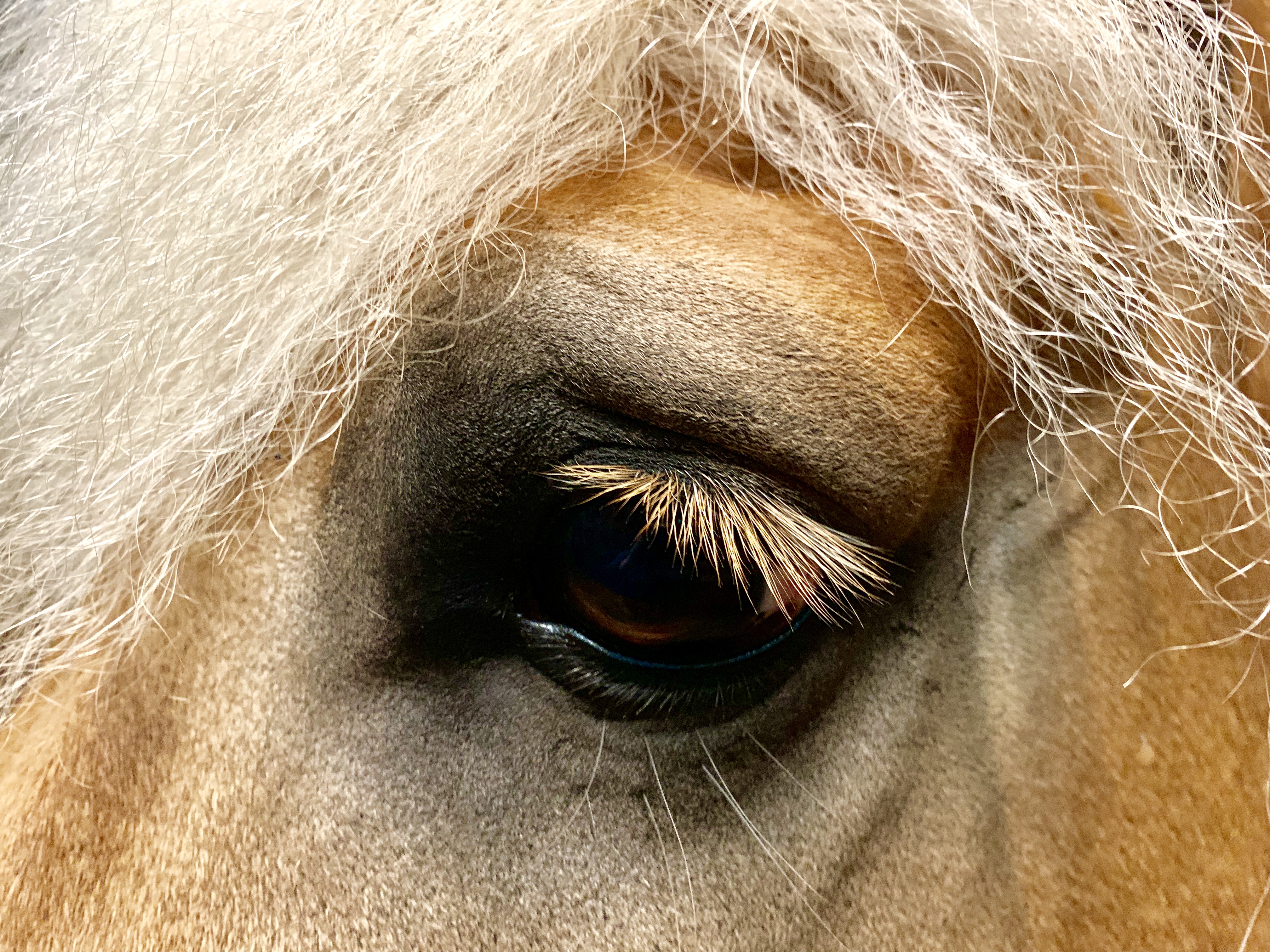
The squirrel sticks its head from the tree’s knot, shrieking directions, a village gossip with a huge plumed tail. It moves down the scalloped bark, swaying on tiny nails, and stops, eye-level with my swollen belly. A black blur of bird swoops, the velvet of its wing against my cheek. It nests among a ruckus of robins, less interested in being fed than being heard. Around the curve of the road, I near the farmer’s fence. His mare lowers her fan of lashes. In the pond, a fish flips, exposing its silver stomach. ~Tina Barry, “The Animals Know” from Beautiful Raft
photo by Harry Rodenberger
video by Harry Rodenberger
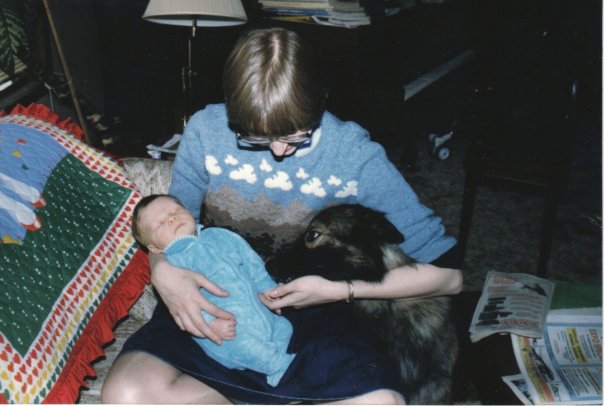
It has been over thirty years since I carried a child in my belly. Each time, I remember having the feeling our farm animals knew I was “expecting” even before it became obvious. Maybe it was because I was so overjoyed, I carried myself differently. After experiencing a miscarriage and two years of infertility workups, it felt almost magical being pregnant. It seemed as if our invisibly growing baby was already welcomed by all the creatures on our farm and were celebrating the anticipation along with us.
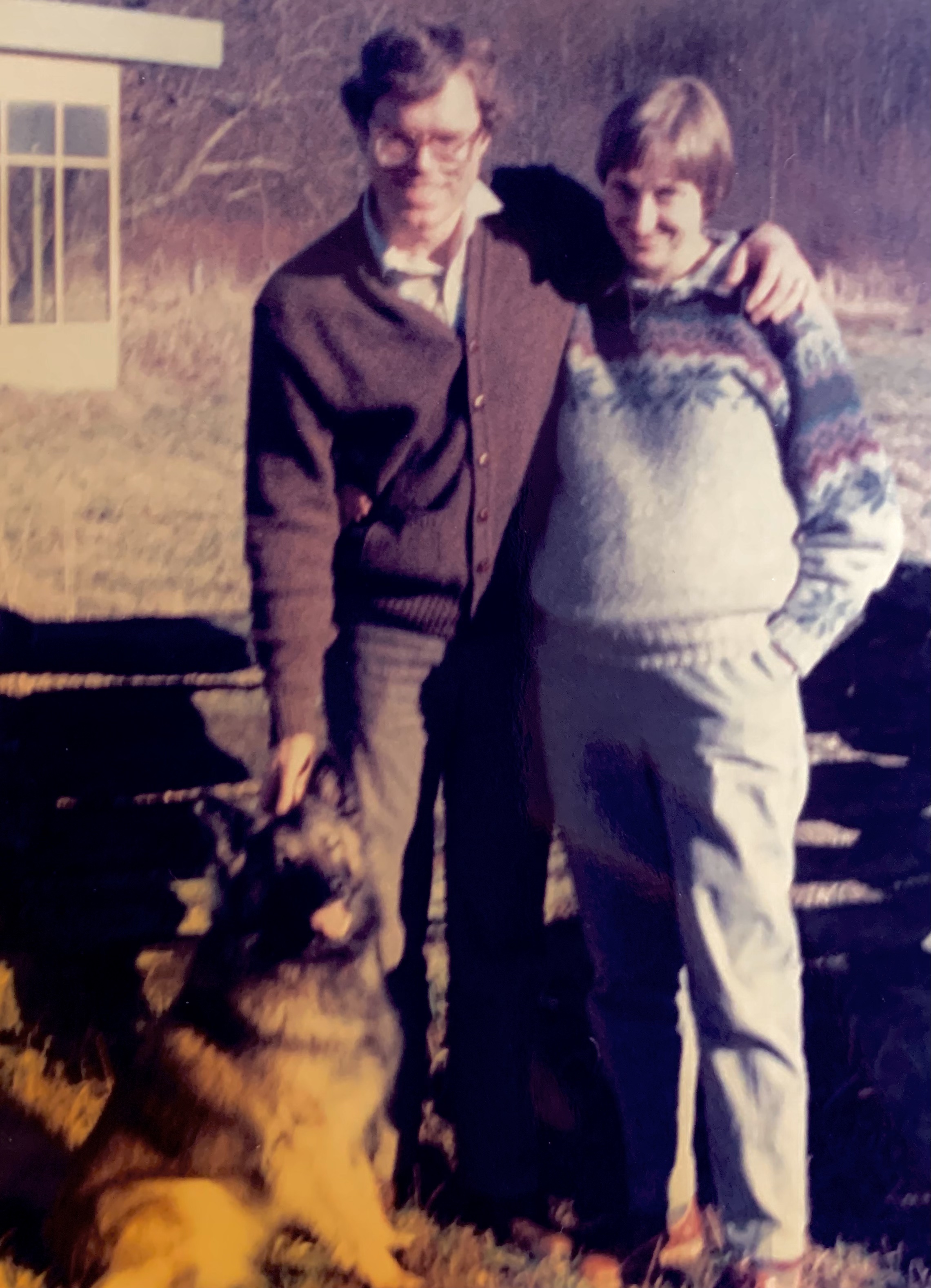
While I was pregnant with our first son, after such a long wait for parenthood, we bought a new dog, Tango and moved to a farm from the city. She was a year old and had never been around babies, so we weren’t sure how she would adapt to both new surroundings and new owners. As we drove six hours to her bring her to her new home, she happily settled in for the trip lying on my bulging tummy, pummeled by kicks from a baby she would soon meet face to face.
She loved him as soon as she saw him. She had known him and understood him as he grew inside.
Now, decades later, our family’s next generation is fulfilling their own hopes for the future: we have four cherished grandchildren in addition to the two we are now waiting to meet — one will be any day now.
The expectation of new life is so sweet. All that lives and breathes anticipates this new soul budding and about to bloom.
Somehow, they just know…
One-Time
Monthly
Yearly
Make a one-time or recurring donation to support daily Barnstorming posts
Here, I place a blue glazed cup where the wood is slightly whitened. Here, I lay down two bright spoons, our breakfast saucers, napkins white and smooth as milk.
I am stirring at the sink, I am stirring the amount of dew you can gather in two hands, folding it into the fragile quiet of the house. Before the eggs, before the coffee heaving like a warm cat, I step out to the feeder— one foot, then the other, alive on wet blades. Air lifts my gown—I might fly—
This thistle seed I pour is for the tiny birds. This ritual, for all things frail and imperiled. Wings surround me, frothing the air. I am struck by what becomes holy.
A woman who lost her teenage child to an illness without mercy, said that at the end, her daughter sat up in her hospital bed and asked:
What should I do? What should I do?
Into a white enamel bath I lower four brown eggs. You fill the door frame, warm and rumpled, kiss the crown of my head. I know how the topmost leaves of dusty trees feel at the advent of the monsoon rains.
I carry the woman with the lost child in my pocket, where she murmurs her love song without end: Just this, each day: Bear yourself up on small wings to receive what is given. Feed one another with such tenderness, it could almost be an answer. ~Marcia F. Brown “Morning Song”
I am comforted by rituals, as most of us are. The feeding, the cleaning, the washing, the nurture, smoothing of the wrinkled and ruffled, noticing who or what is near me, the sacred time of soothing rest.
It is those small things that get us through the day, that create holiness in each breath, each moment.
What should we do next? What might we do?
No need to wonder. With loving tenderness, we shall feed the hungry all our days.
Standing outside a non-descript door in a long dark windowless hallway of offices at the Stanford Medical Center, I took a deep breath and swallowed several times to clear my dry throat. I hoped I had found the correct office, as there was only a number– no nameplate to confirm who was inside.
I was about to meet a childhood hero, someone whose every book I’d read and every TV documentary I had watched. I knocked with what I hoped was the right combination of assertiveness (“I want to be here to talk with you and prove my interest”) and humility (“I hope this is convenient for you as I don’t want to intrude”). I heard a soft voice on the other side say “Come in” so I slowly opened the door.
It was a bit like going through the wardrobe to enter Narnia. Bright sunlight streamed into the dark hallway as I stepped over the threshold. Squinting, I stepped inside and quickly shut the door behind me as I realized there were at least four birds flying about the room. They were taking off and landing, hopping about feeding on bird seed on the office floor and on the window sill. The windows were flung wide open with a spring breeze rustling papers on the desk. The birds were very happy occupying the sparsely furnished room, which contained only one desk, two chairs and Dr. Jane Goodall.
She stood up and extended her hand to me, saying, quite unnecessarily, “Hello, I’m Jane” and offered me the other chair when I told her my name. She was slighter than she appeared when speaking up at a lectern, or on film. Sitting back down at her desk, she busied herself reading and marking her papers, seemingly occupied and not to be disturbed. It was as if I was not there at all.
It was disorienting. In the middle of a bustling urban office complex containing nothing resembling plants or a natural environment, I had unexpectedly stepped into a bird sanctuary instead of sitting down for a job interview. I wasn’t sure what I was supposed to do or say. Jane didn’t really ever look directly at me, yet I was clearly being observed. So I waited, watching the birds making themselves at home in her office, and slowly feeling at home myself. I felt my tight muscles start to relax and I loosened my grip on the arms of the chair.
There was silence except for the twittering of the finches as they flew about our heads.
After awhile she spoke, her eyes still perusing papers: “It is the only way I can tolerate being here for any length of time. They keep me company. But don’t tell anyone; the people here would think this is rather unsanitary.”
I said the only thing I could think of: “I think it is magical. It reminds me of home.”
Only then did she look at me. “Now tell me why you’d like to come work at Gombe…”
The next day I received a note from her letting me know I was accepted for the research assistantship to begin a year later. I had proven I could sit silently and expectantly, waiting for something, or perhaps nothing at all, to happen. For a farm girl who never before traveled outside the United States, I was about to embark on an adventure far beyond the barnyard.
(This essay was published in The Jane Effect in 2015 in honor of Jane’s 80th birthday)
I had no idea when I applied for this position in 1974 that a little more than a year later, on May 19, 1975, I would be hiding in a Tanzanian jungle alongside Jane and her eight year old son Grub – that story is found here.
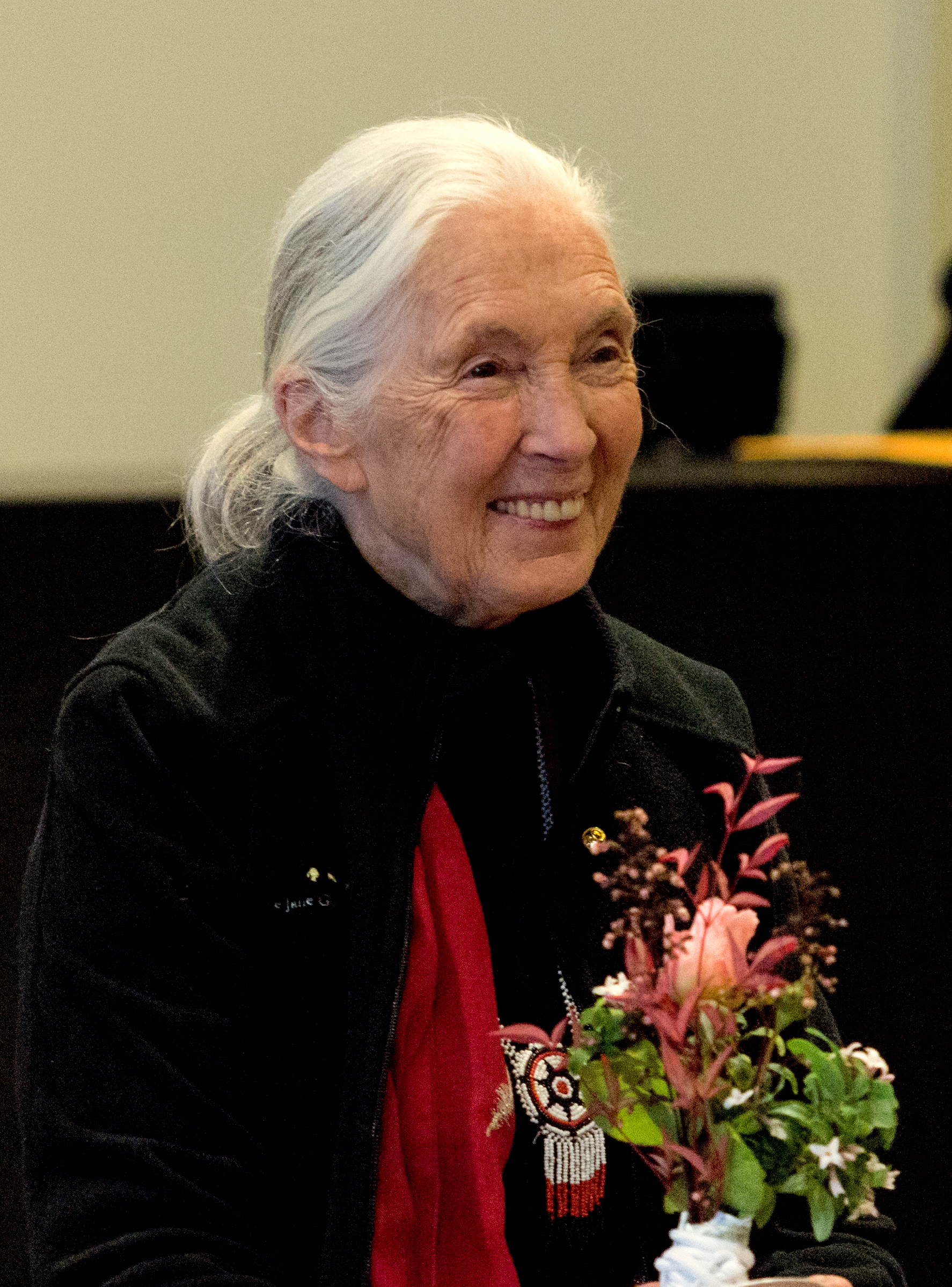
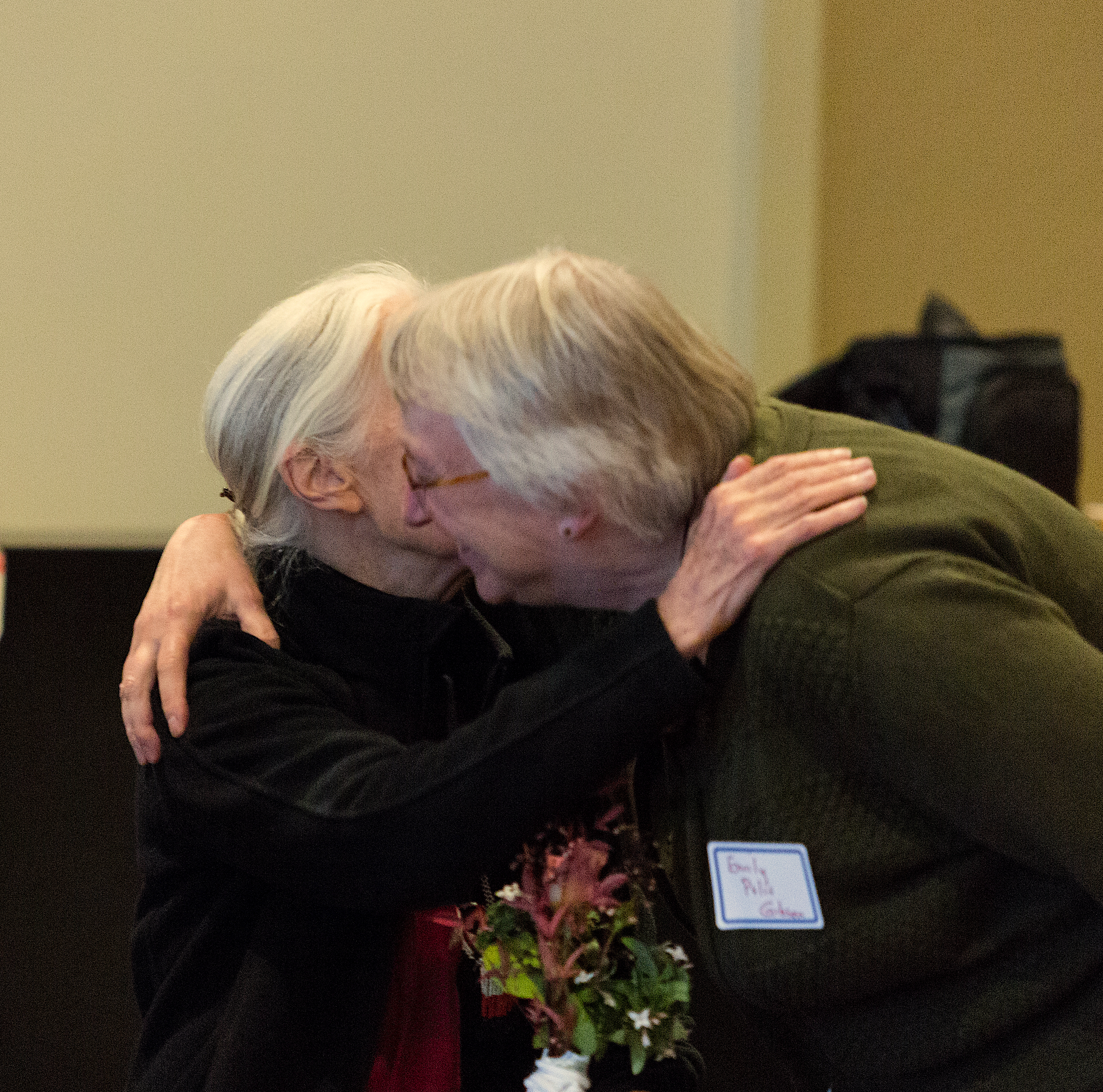
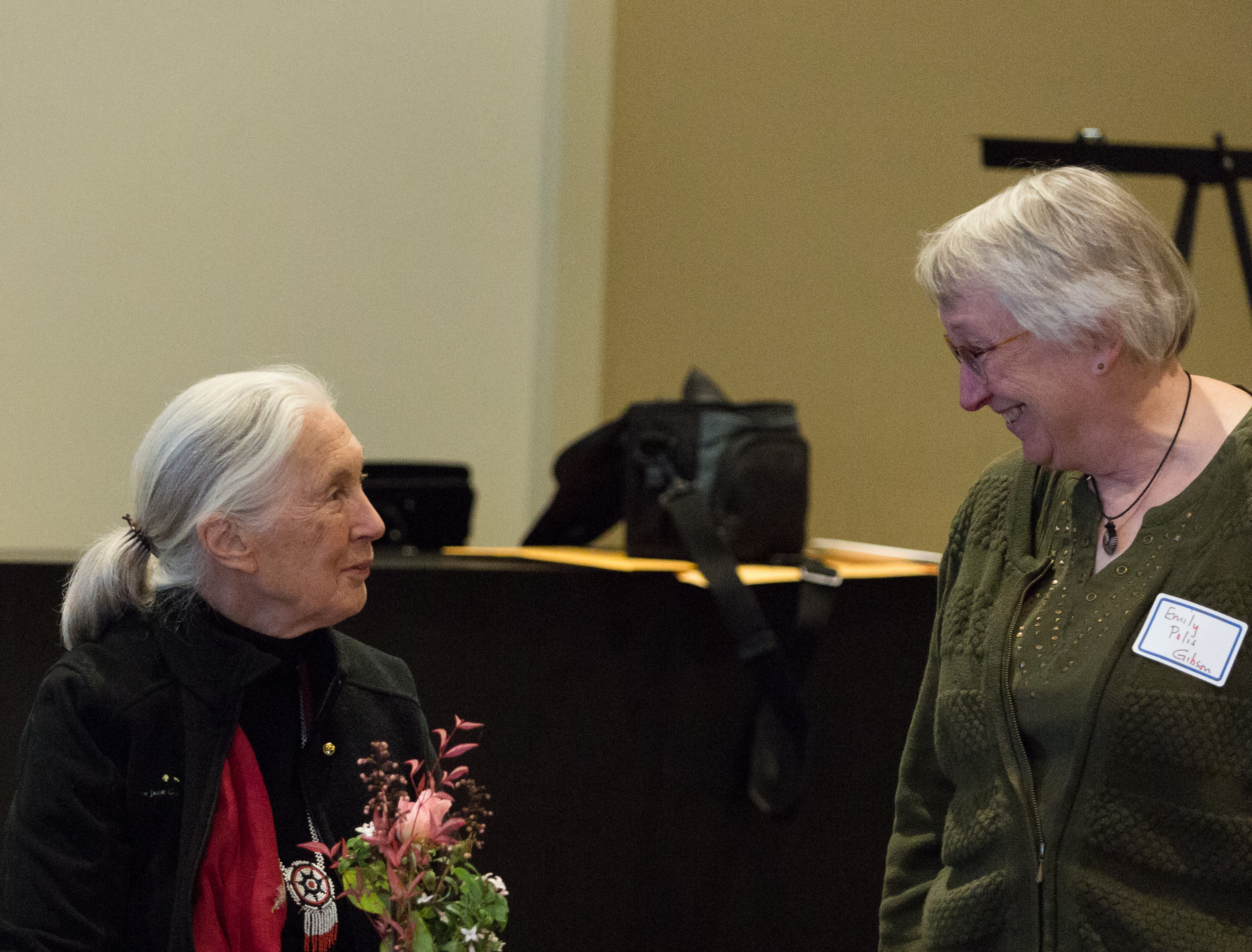
photo of Jane Goodall, smiling at me as I came up to give her a hug, courtesy of WWU University Communicationsgiving Jane a hug, courtesy of WWU Communications45 years since we met in her Stanford office full of wild birds
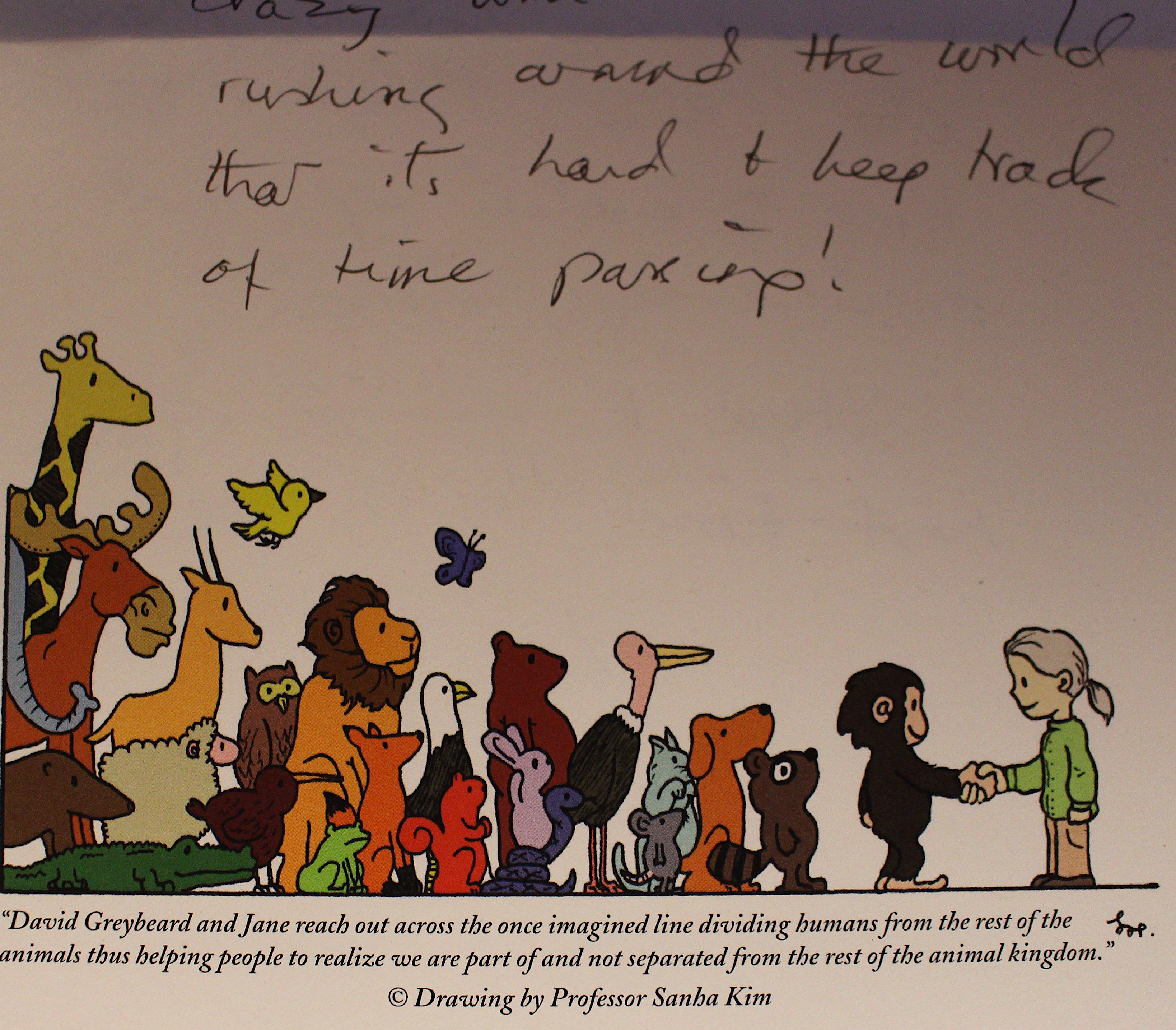
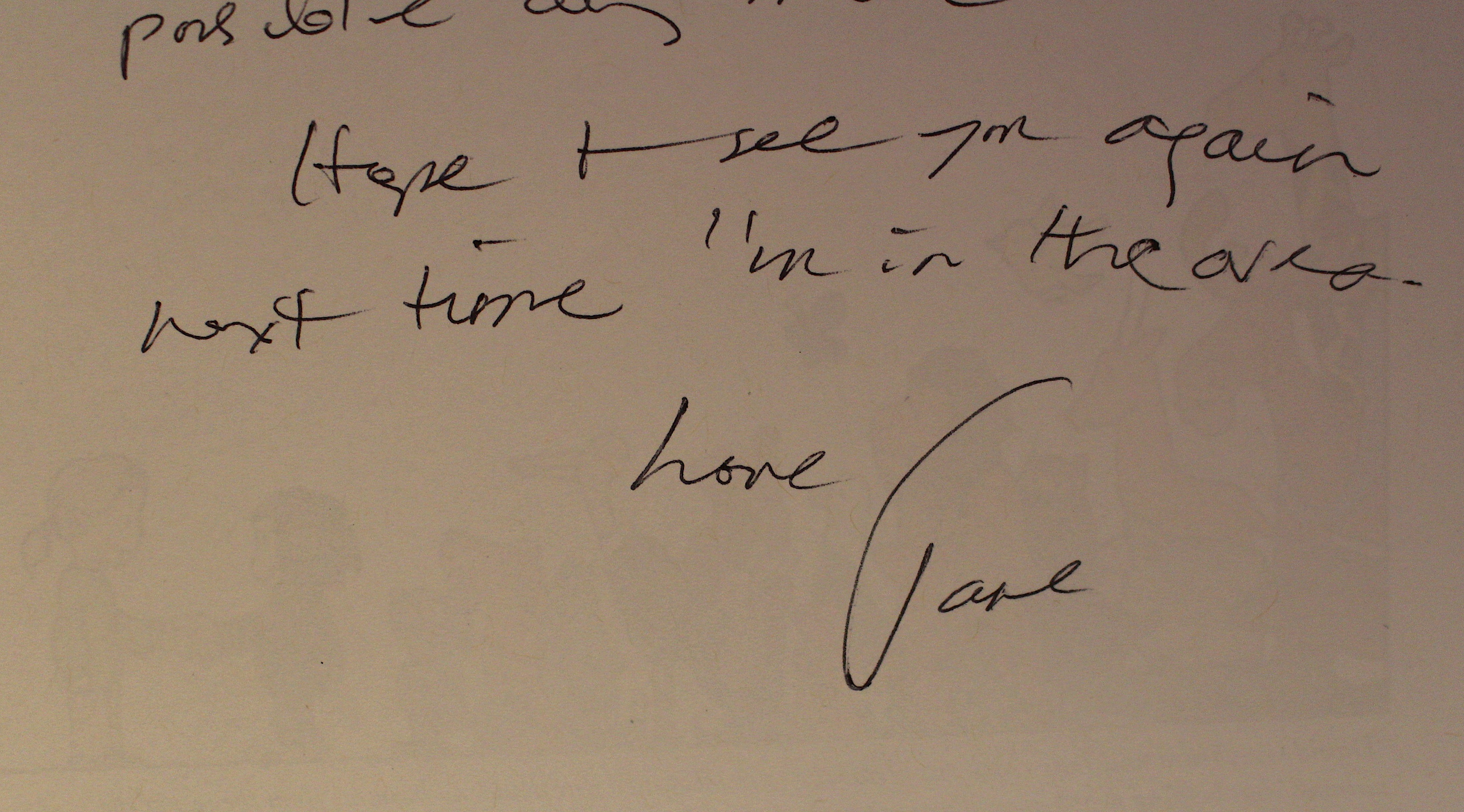
True to Jane’s tradition of impeccable graciousness, she sent me a hand-written note after her last visit in 2018 when she came to speak at Western Washington University in Bellingham.
One-Time
Monthly
Yearly
Make a one-time or recurring donation to support daily Barnstorming posts
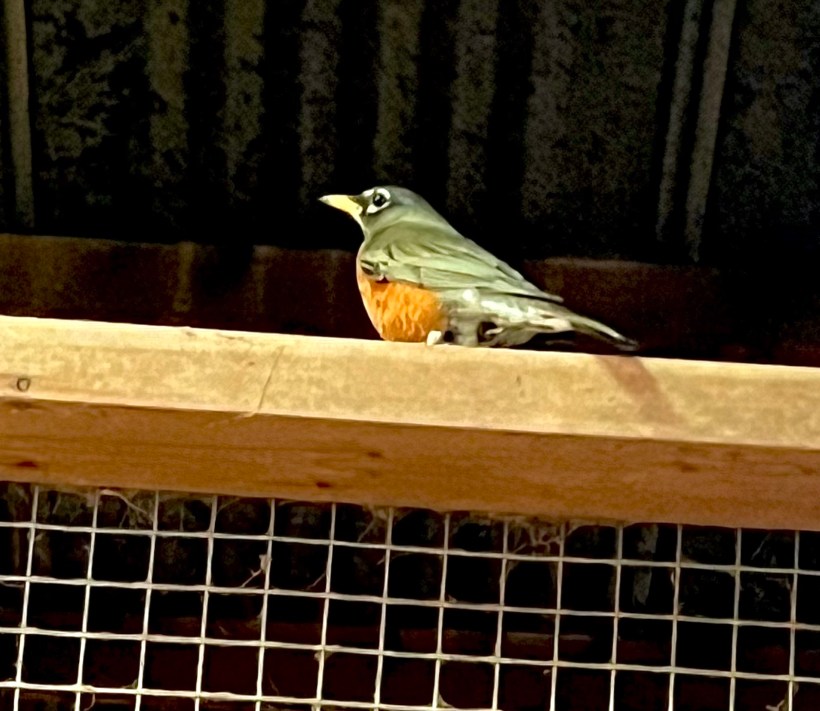
If I could peer far enough down a robin’s pulsing throat, would I see notes piled there waiting to be flung into freshness of morning?
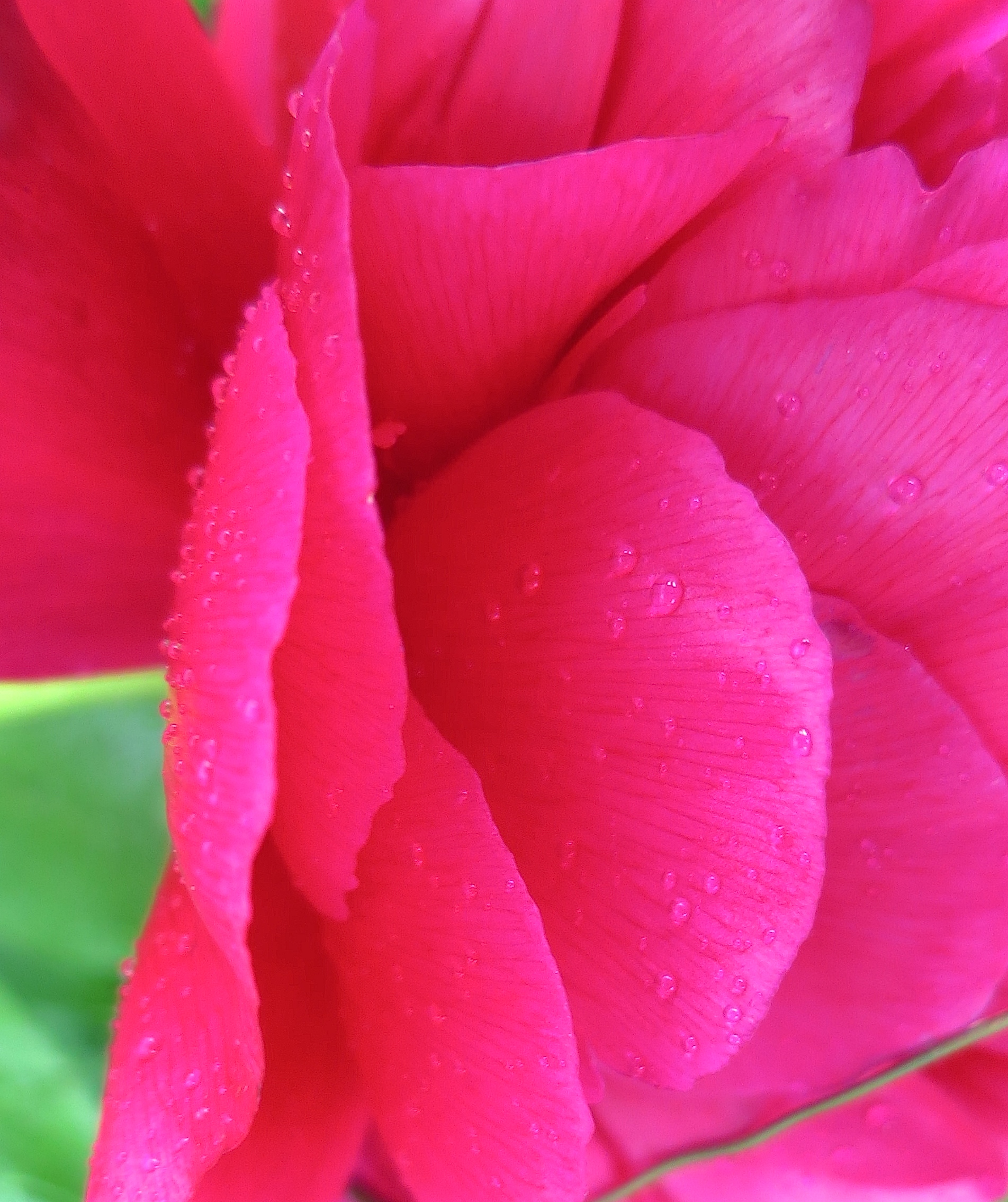
If I close my eyes and burrow my face into peony’s petals, would I discover the source of its scent, a sacred offering?
Can I plunge inside and find a lifetime of words spooled tightly inside my heart ready for a tug?
If I dig beneath the bedrock will I find love there, solid like iron or does it flow like magma filling in all of the empty spaces? ~Christine Valters Paintner “Origins”
photo by Harry Rodenberger
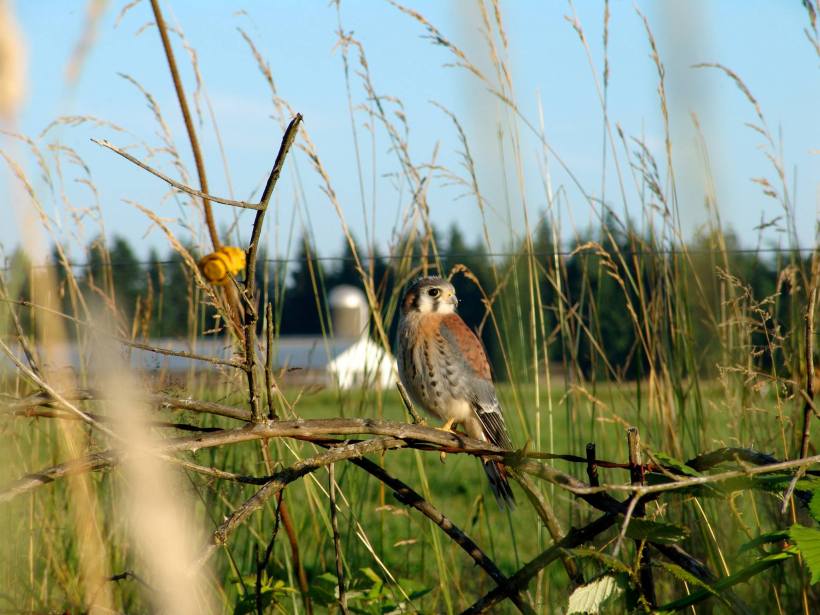
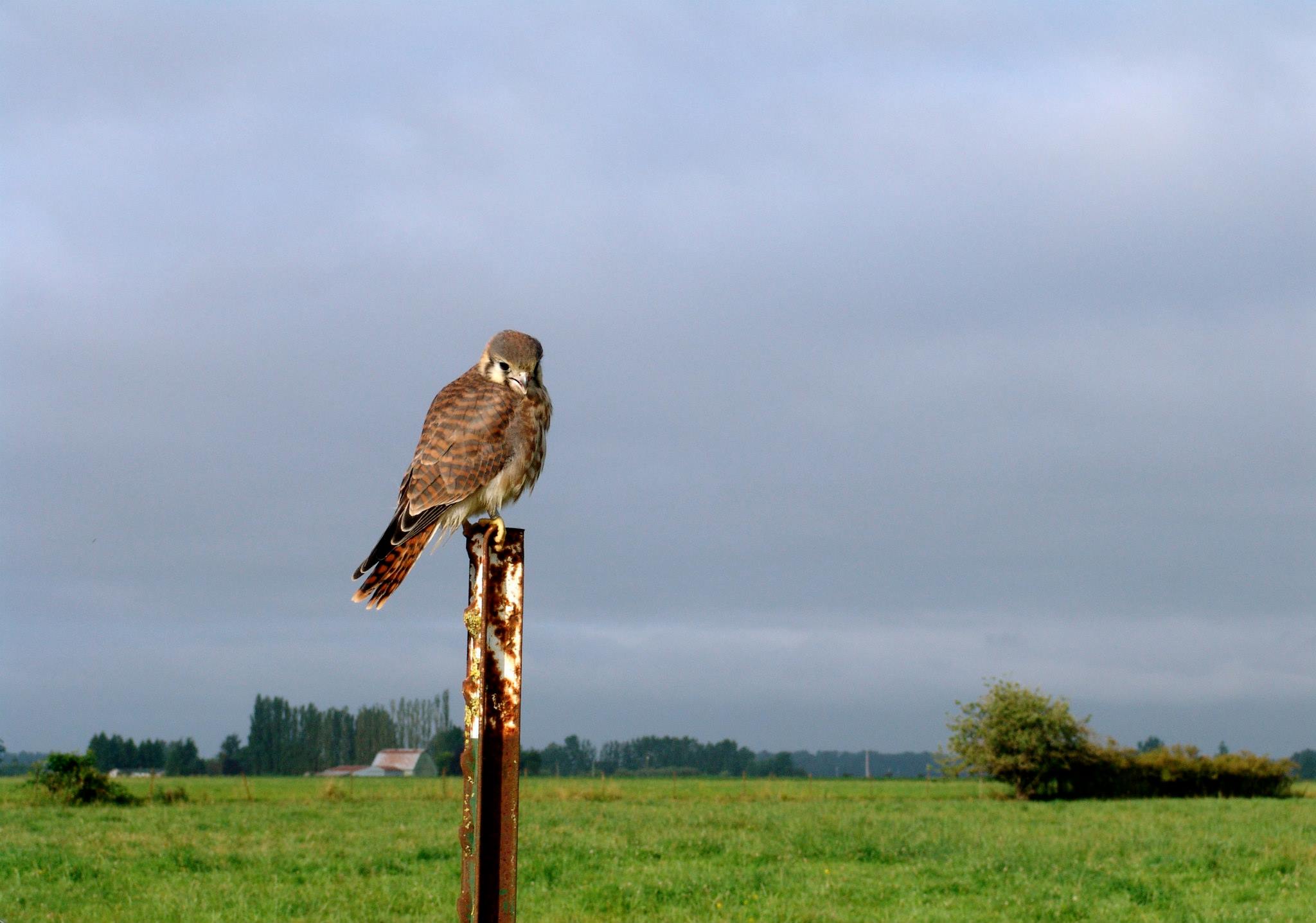
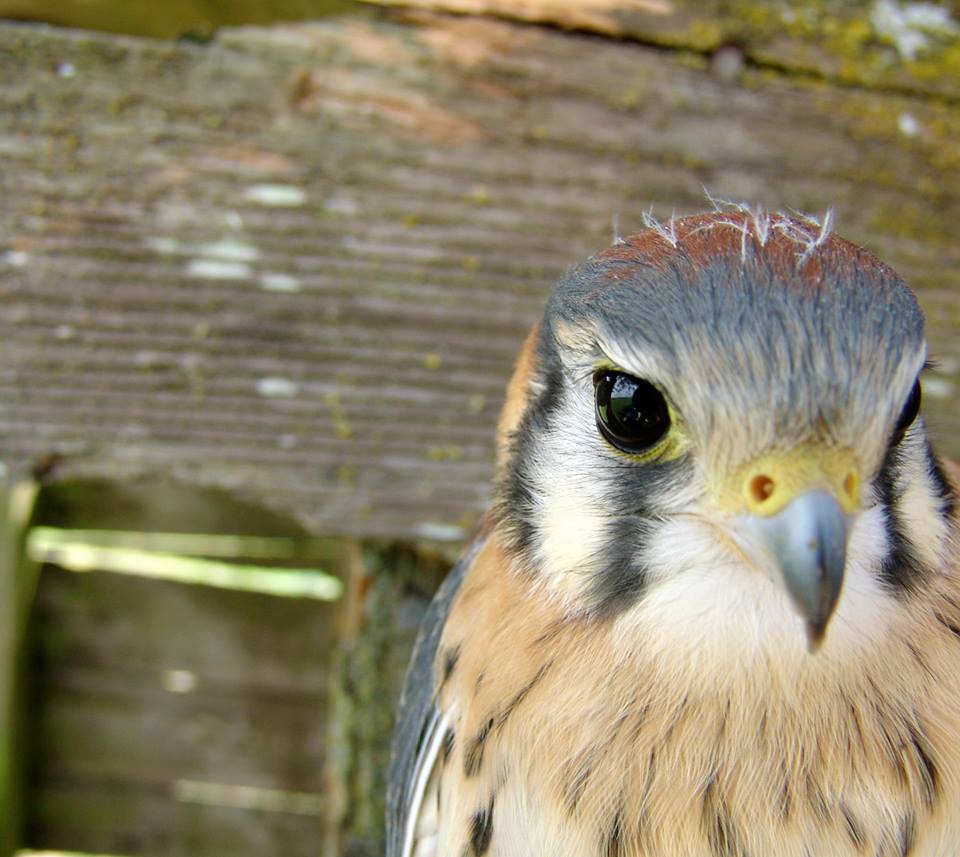
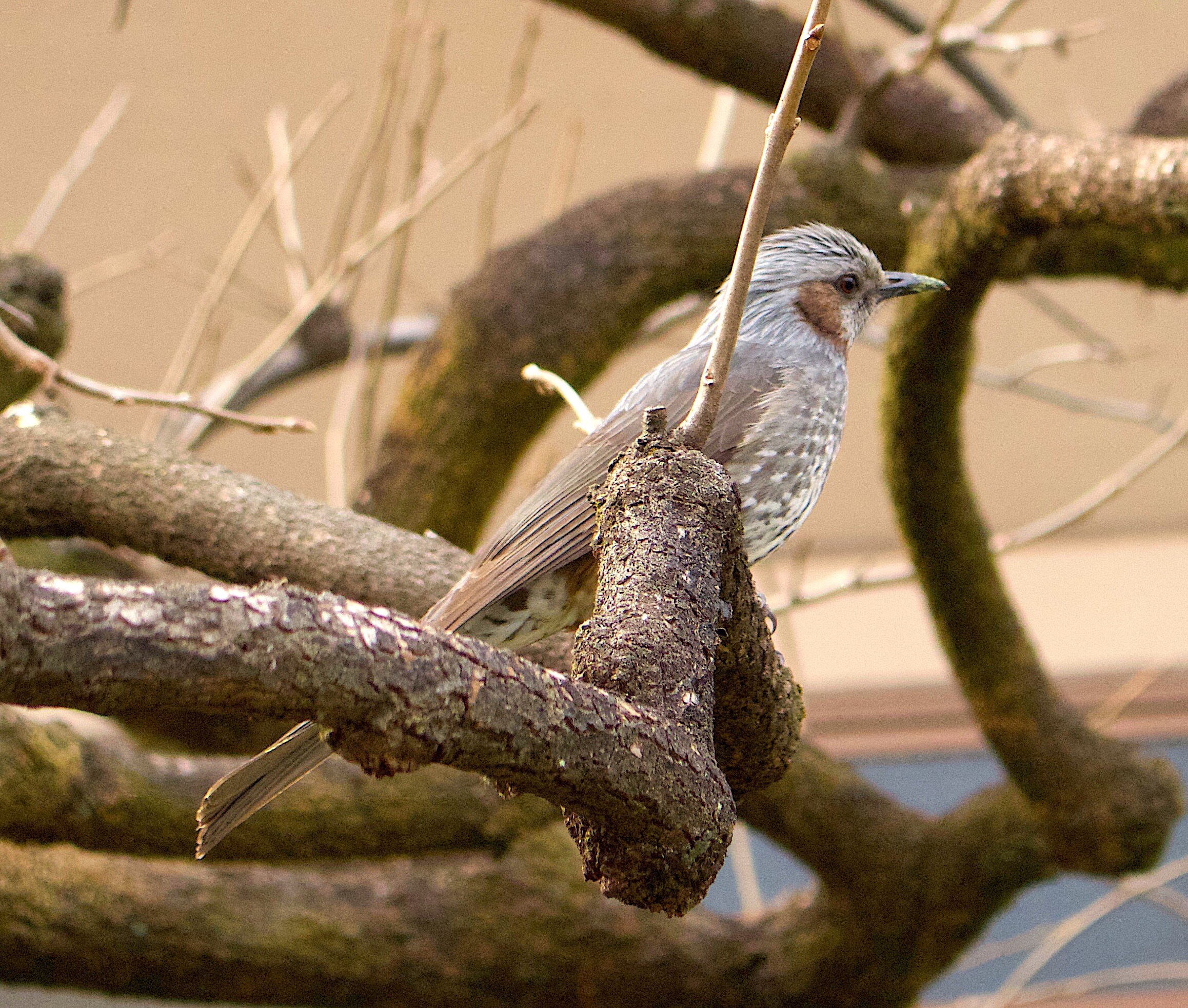
I do not know what gorgeous thing the bluebird keeps saying, his voice easing out of his throat, beak, body into the pink air of the early morning. I like it whatever it is. Sometimes it seems the only thing in the world that is without dark thoughts. Sometimes it seems the only thing in the world that is without questions that can’t and probably never will be answered, the only thing that is entirely content with the pink, then clear white morning and, gratefully, says so. ~Mary Oliver “What Gorgeous Thing” from Blue Horses
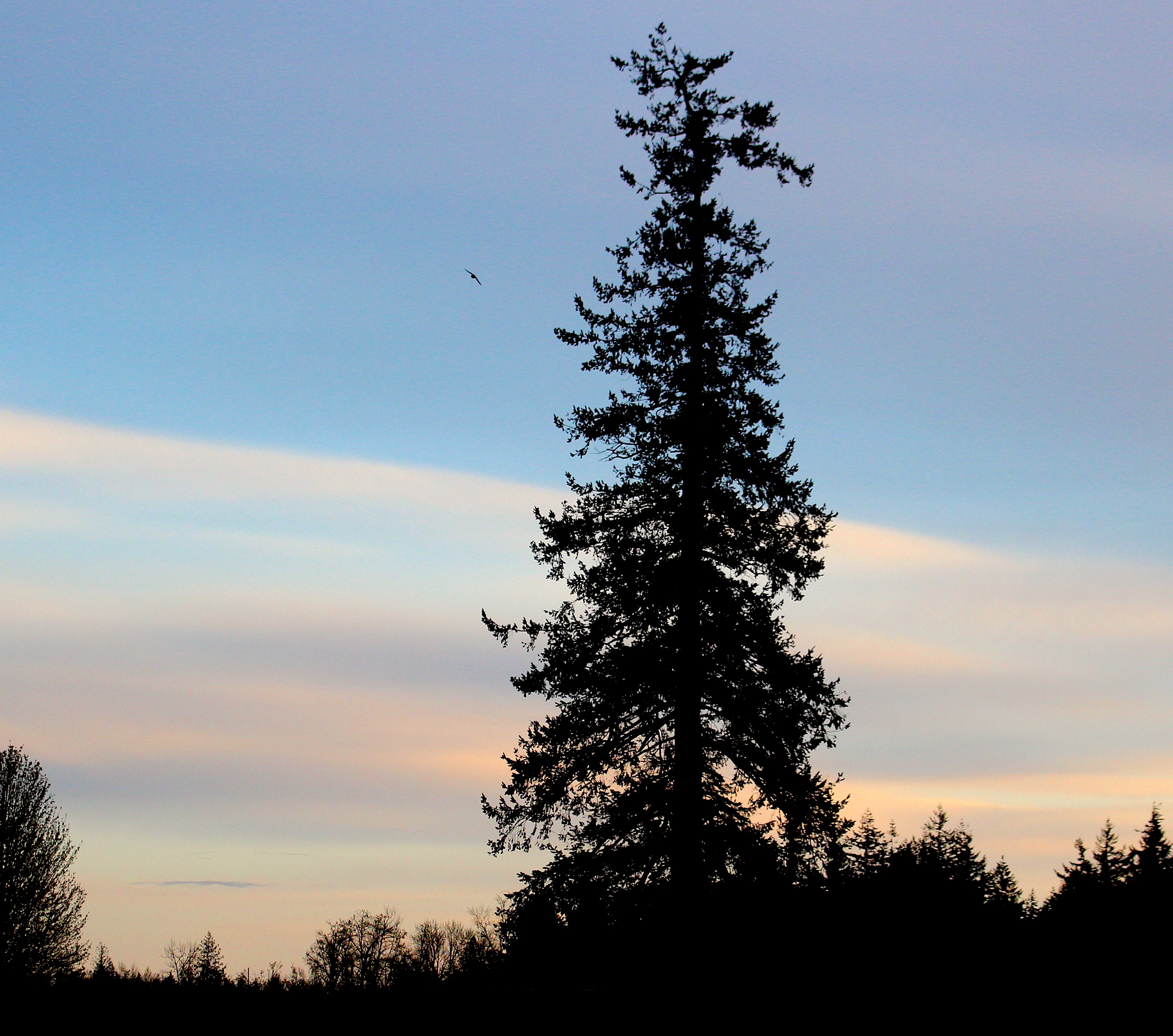
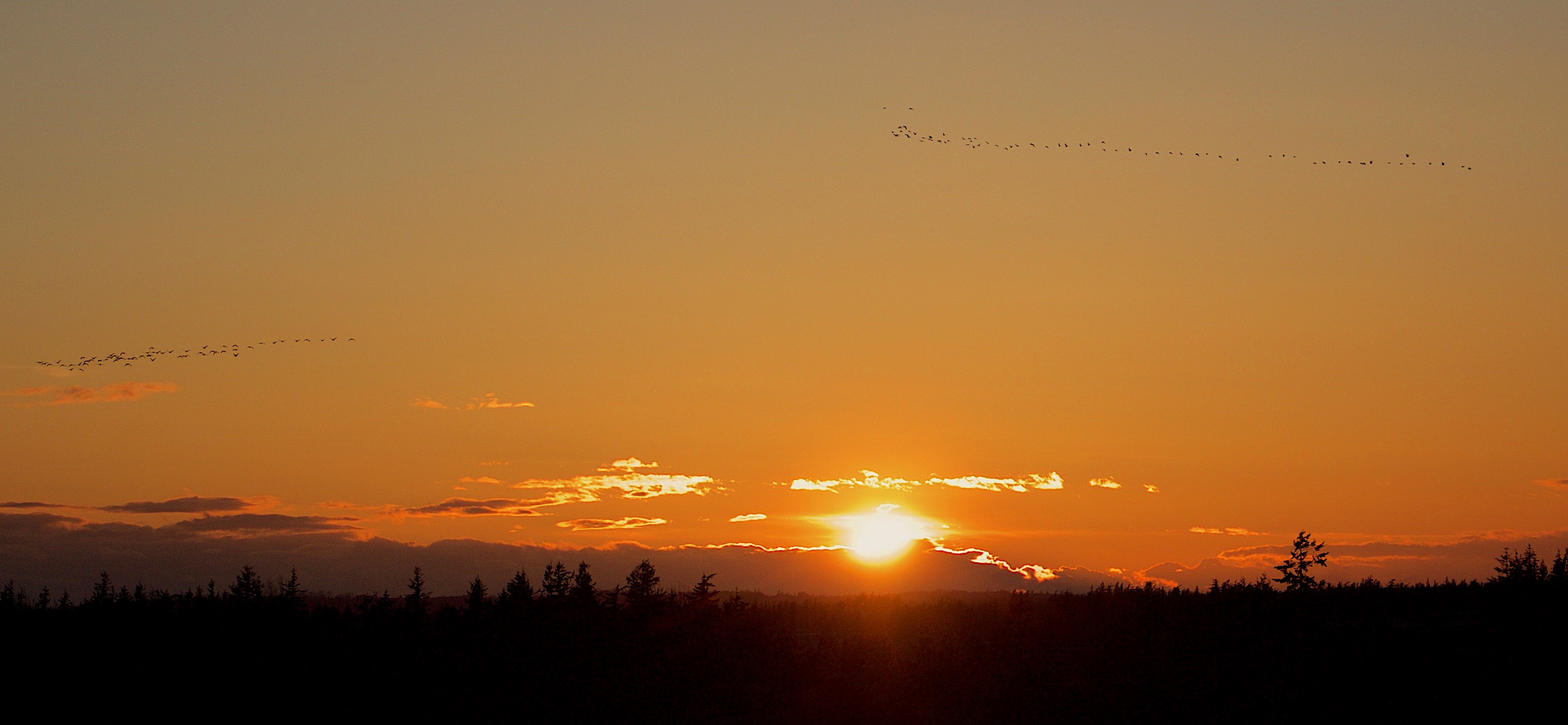
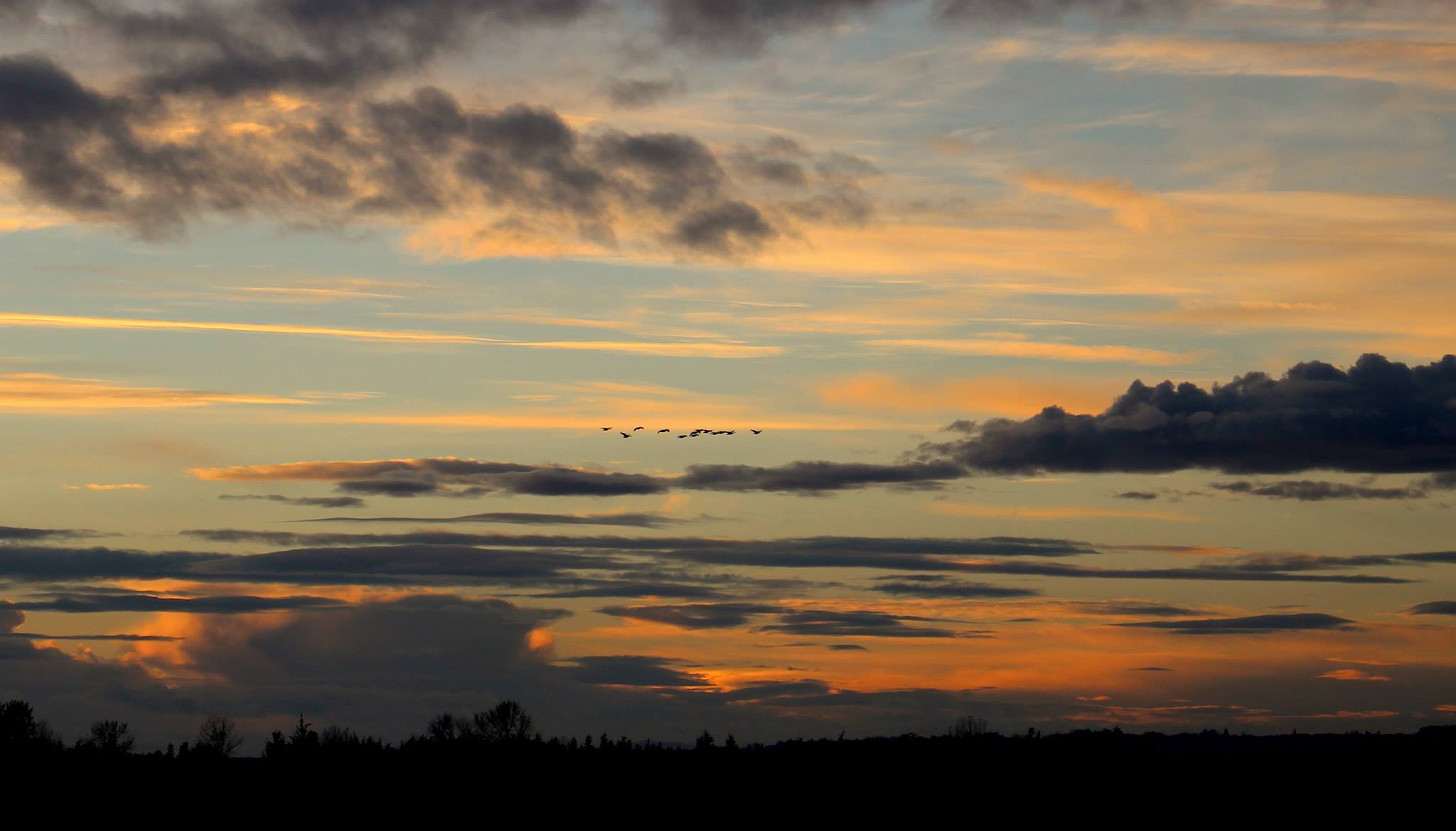
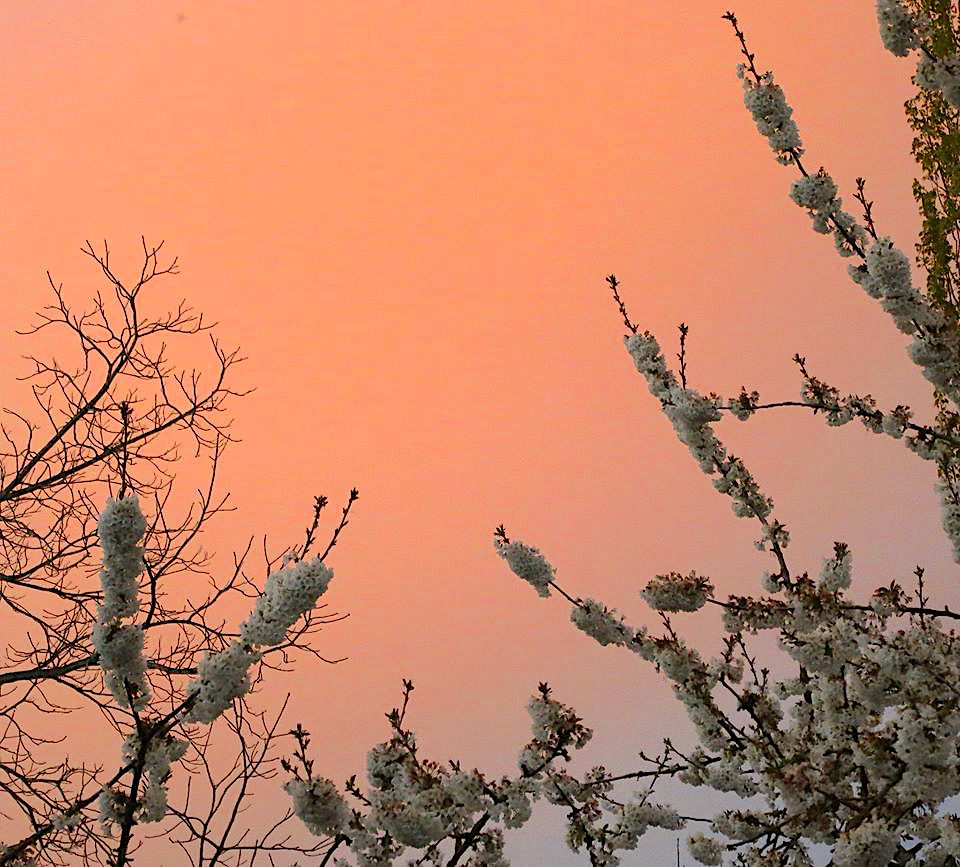
Slowly the west reaches for clothes of new colors which it passes to a row of ancient trees. You look, and soon these two worlds both leave you one part climbs toward heaven, one sinks to earth.
leaving you, not really belonging to either, not so hopelessly dark as that house that is silent, not so unswervingly given to the eternal as that thing that turns to a star each night and climbs–leaving you (it is impossible to untangle the threads) your own life, timid and standing high and growing, so that, sometimes blocked in, sometimes reaching out, one moment your life is a stone in you, and the next, a star. ~Rainer Maria Rilke “Sunset” (Trans. by Robert Bly) from The Soul is Here for Its Own Joy
We are born with one hand still grasping tight to the star-studded heaven from which we came, still dusty from creation. The other hand grabs hold of whatever it finds here on earth and won’t let go, whether the symphony of birds, the scents from the garden, the richness of relationship or the coldness of stone.
It can take decades, but our firm hold on heaven loosens so that we forget the dusty origins of our miraculous being. We tend to forget Who made us and why.
We can’t decide, tangled up in the threads of this life: dust of earth, stone heart? Or dust of stars, child of Heaven?
We are daily reminded by the Light which clothes us in new colors – early in the morning as it crests the eastern hills and late as it descends in the west. Heaven will still reach down once again to grasp our hand, making sure we know the way home.























 Barnstorming