People have said, “Don’t cry” to other people for years and years, and all it has ever meant is, “I’m too uncomfortable when you show your feelings. Don’t cry.” I’d rather have them say, “Go ahead and cry. I’m here to be with you.”
I cry easily, always have. Certain songs and hymns will trigger tears, and of course, any rituals surrounding baptisms, funerals, weddings, and graduations.
Tears don’t bother me, whether they are my own or someone else’s. My medical office and exam rooms were always well- stocked with boxes of tissues as a safe place to cry it out.
One of my routine mental health history questions was “what will bring tears to your eyes – dicing onions doesn’t count?”
Some patients would look at me blankly, not sure they ever remember crying, and others will weep at the mere suggestion.
No matter what the reason for someone’s tears, it is a powerful outward expression of human feeling, like a laugh or a grimace of pain. I watch for those cues and sometimes feel their emotion as surely as if it were my own.
Even tears can bring peace – like a river.
I am with you. And always intend to be.
One-Time
Monthly
Yearly
Make a one-time donation to support daily Barnstorming posts
Perhaps she came down for the apples, or was flushed out by the saws powering the far woods, or was simply lost, or was crossing one open space for another.
She was a figure approaching, a presence outside a kitchen window, framed by the leafless apple trees, the stiff blueberry bushes, the after-harvest corn, the just-before-rain sky,
a shape only narrow bones could hold, turning its full face upward, head tilted to one side, as if to speak.
Everything changing faster than we can respond: loss of jobs, research halting mid-study, inconsistency abounds, families shattered, uncertainty prevails.
What happened to of the people, by the people, for the people rather than dictated by just a few
We are so lost, how to find our way back to caring for the poor, the weak, the vulnerable with a spirit of commitment, compassion and sacrifice.
For God alone – no one else – remains our strength and shield. Lost and afraid, we want our lives back.
We need His Refuge where we may rest. We seek Sanctuary from this darkness, to once again awaken hopeful to a new morning.
AI image created for this post
One-Time
Monthly
Yearly
Make a one-time or recurring donation to support daily Barnstorming posts
Here at the centre everything is still Before the stir and movement of our grief Which bears it’s pain with rhythm, ritual, Beautiful useless gestures of relief. So they anoint the skin that cannot feel Soothing his ruined flesh with tender care, Kissing the wounds they know they cannot heal, With incense scenting only empty air. He blesses every love that weeps and grieves And makes our grief the pangs of a new birth. The love that’s poured in silence at old graves Renewing flowers, tending the bare earth, Is never lost. In him all love is found And sown with him, a seed in the rich ground. ~Malcolm Guite “Station XIV of the Cross”
The Holy Saturday of our life must be the preparation for Easter, the persistent hope for the final glory of God. The virtue of our daily life is the hope which does what is possible and expects God to do the impossible. To express it somewhat paradoxically, but nevertheless seriously: the worst has actually already happened; we exist, and even death cannot deprive us of this. Now is the Holy Saturday of our ordinary life, but there will also be Easter, our true and eternal life. ~Karl Rahner “Holy Saturday” in The Great Church Year
I said to my mind, be still, and wait without hope For hope would be hope for the wrong thing; wait without love For love would be love of the wrong thing; yet there is faith But the faith and the hope and the love are all in the waiting. Wait without thought, for you are not ready for thought: So the darkness shall be light, and the stillness the dancing. ~T. S. Eliot, from “East Coker” The Four Quartets
The happy ending has never been easy to believe in. After the Crucifixion the defeated little band of disciples had no hope, no expectation of Resurrection. Everything they believed in had died on the cross with Jesus. The world was right, and they had been wrong. Even when the women told the disciples that Jesus had left the stone-sealed tomb, the disciples found it nearly impossible to believe that it was not all over. The truth was, it was just beginning. Madeleine L’Engle from “Waiting for Judas” in Plough Magazine
This in-between day after all had gone so wrong: the rejection, the denials, the trumped-up charges, the beatings, the burden, the jeering, the thorns, the nails, the thirst, the despair of being forsaken.
This in-between day before all will go so right: the forgiveness and compassion, the grace and sacrifice, the debt paid in full, the immovable stone rolled away, our name on His lips, our hearts burning to hear His words.
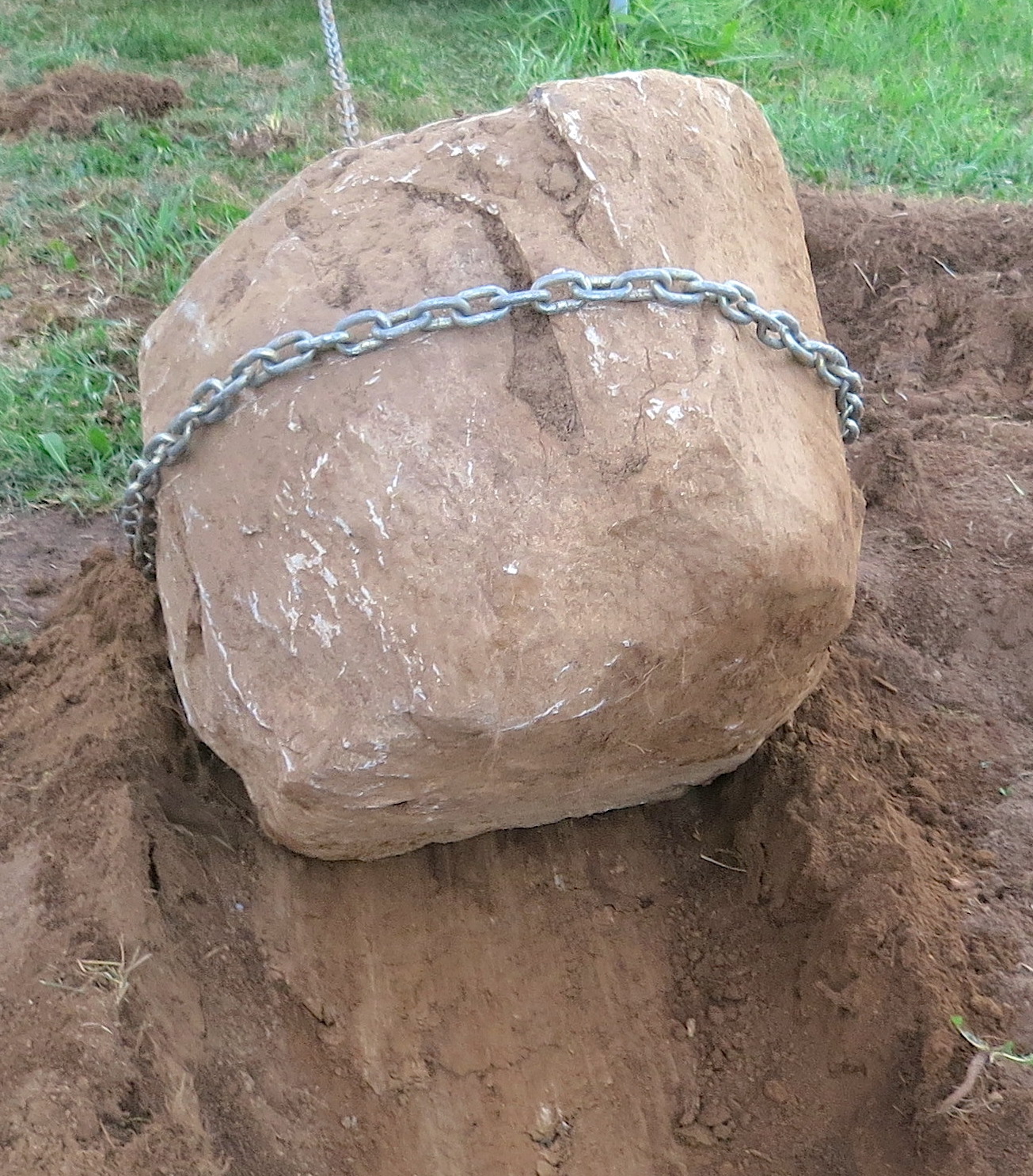
What does it take to move the stone? When it is an effort to till the untillable, creating a place where simple seed can drop, be covered and sprout and thrive, it takes muscle and sweat and blisters and tears.
What does it take to move the stone? When it is a day when no one will speak out of fear, the silent will be moved to cry out the truth, heard and known and never forgotten.
What does it take to move the stone? When it is a day when all had given up, gone behind locked doors in grief.
When two came to tend the dead, there would be no dead to tend.
Only a gaping hole left Only an empty tomb Only a weeping weary silence broken by Love calling our name and we turn to greet Him as if hearing it for the first time.
We cannot imagine what is to come in the dawn tomorrow as the stone lifted and rolled, giving way so our separation is bridged, darkness overwhelmed by light, the crushed and broken rising to dance, and inexplicably, from the waiting stillness He stirs and we, finding death emptied, greet Him with trembling and are forever moved, just like the stone.
This year’s Lenten theme:
…where you go I will go… Ruth 1:16
One-Time
Monthly
Yearly
Make a one-time or recurring donation to support daily Barnstorming posts
My God, my God, why have you forsaken me? Why are you so far from saving me, so far from my cries of anguish? 2 My God, I cry out by day, but you do not answer, by night, but I find no rest.
I am poured out like water, and all my bones are out of joint. My heart has turned to wax; it has melted within me. 15 My mouth is dried up like a potsherd, and my tongue sticks to the roof of my mouth; you lay me in the dust of death.
16 Dogs surround me, a pack of villains encircles me; they pierce my hands and my feet. 17 All my bones are on display; people stare and gloat over me. 18 They divide my clothes among them and cast lots for my garment.
19 But you, Lord, do not be far from me. You are my strength; come quickly to help me. ~Psalm 22: 1-2, 14-19
his appearance was so disfigured beyond that of any human being and his form marred beyond human likeness— so he will sprinkle many nations, and kings will shut their mouths because of him. For what they were not told, they will see, and what they have not heard, they will understand. Isaiah 52: 13-15
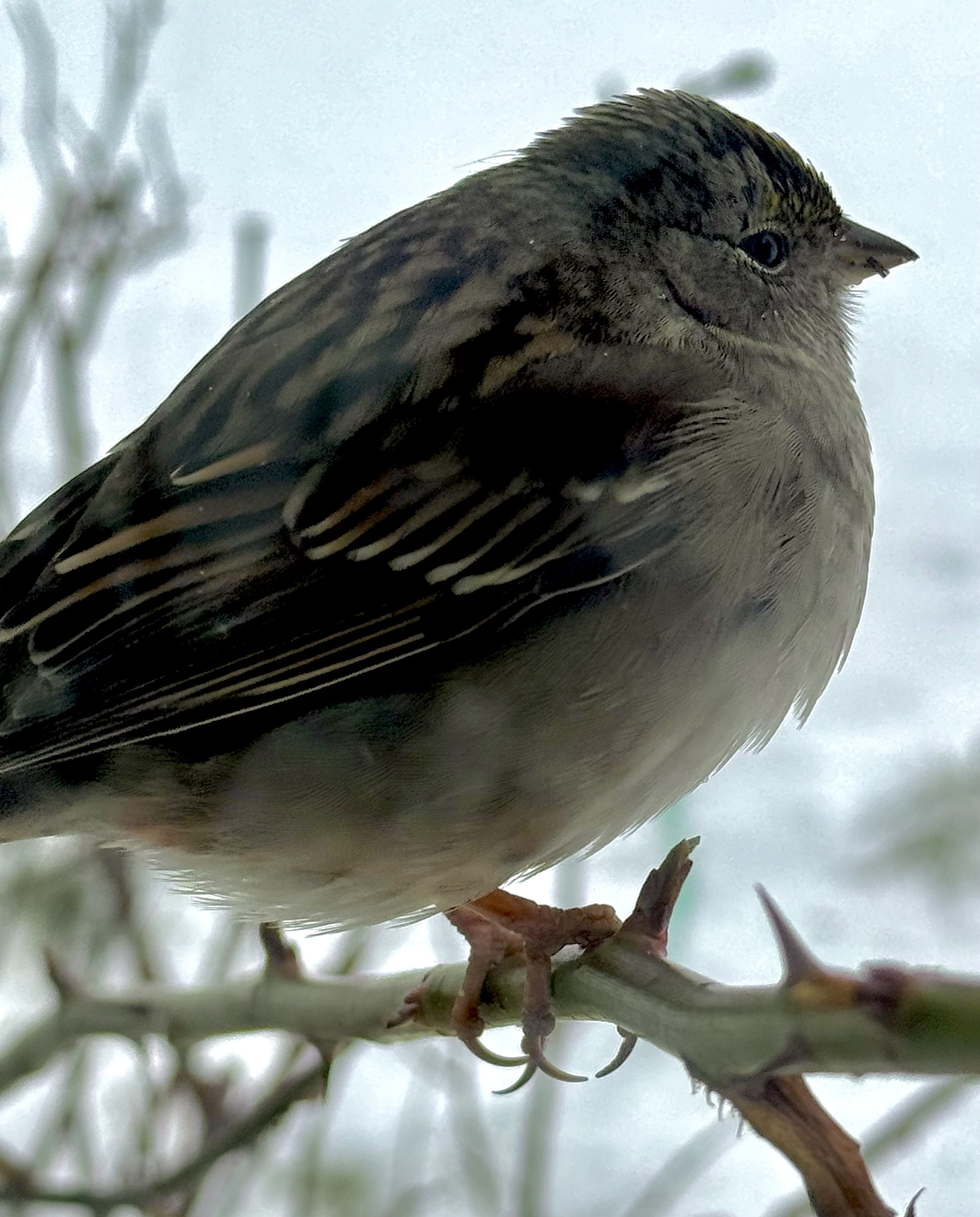
When I was wounded whether by God, the devil, or myself —I don’t know yet which— it was seeing the sparrows again and clumps of clover, after three days, that told me I hadn’t died. When I was young, all it took were those sparrows, those lush little leaves, for me to sing praises, dedicate operas to the Lord. But a dog who’s been beaten is slow to go back to barking and making a fuss over his owner —an animal, not a person like me who can ask: Why do you beat me? Which is why, despite the sparrows and the clover, a subtle shadow still hovers over my spirit. May whoever hurt me, forgive me. ~Adelia Prado “Divine Wrath” translated from BrazilianPortuguese by Ellen Doré Watson
*************************************
“My God, My God,” goes Psalm 22, “hear me, why have you forsaken me?”
This is the anguish all we of Godforsaken heart know well. But hear the revelation to which Christ directs us, further in the same psalm:
For He has not despised nor scorned the beggar’s supplication, Nor has He turned away His face from me; And when I cried out to Him, He heard me.
He hears us, and he knows, because he has suffered as one Godforsaken. Which means that you and I, even in our darkest hours, are not forsaken. Though we may hear nothing, feel nothing, believe nothing, we are not forsaken, and so we need not despair.
And that is everything.
That is Good Friday and it is hope, it is life in this darkened age, and it is the life of the world to come. ~Tony Woodlief from “We are Not Forsaken”
*******************************
Emmett Till’s mother speaking over the radio
She tells in a comforting voice what it was like to touch her dead boy’s face,
how she’d lingered and traced the broken jaw, the crushed eyes–
the face that badly beaten, disfigured— before confirming his identity.
And then she compares his face to the face of Jesus, dying on the cross.
This mother says no, she’d not recognize her Lord, for he was beaten far, far worse
than the son she loved with all her heart. For, she said, she could still discern her son’s curved earlobe,
but the face of Christ was beaten to death by the whole world. ~Richard Jones “The Face” fromBetween Midnight and Dawn
******************************
In a daring and beautiful creative reversal, God takes the worse we can do to Him and turns it into the very best He can do for us. ~Malcolm Guite from The Word in the Wilderness
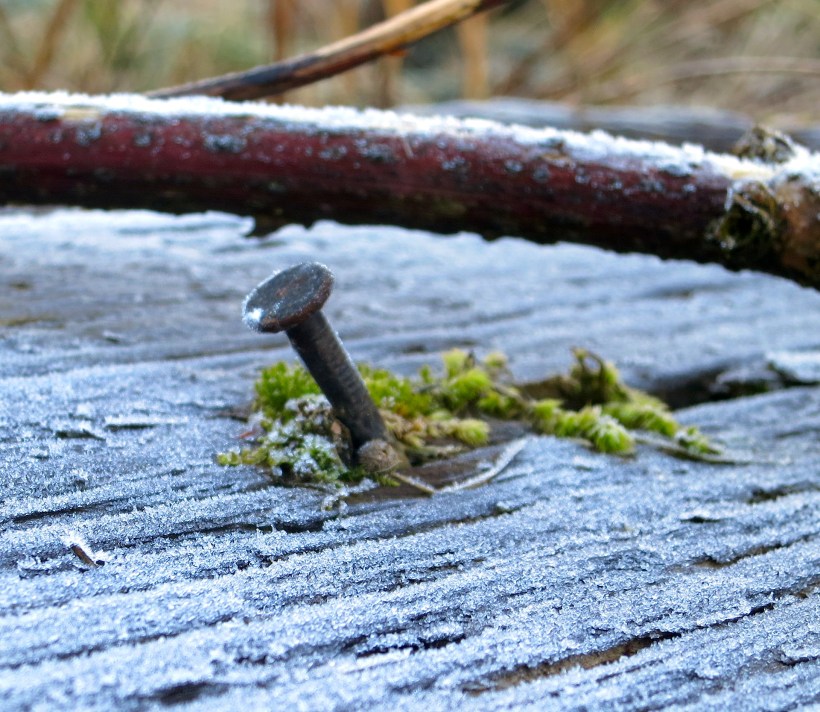
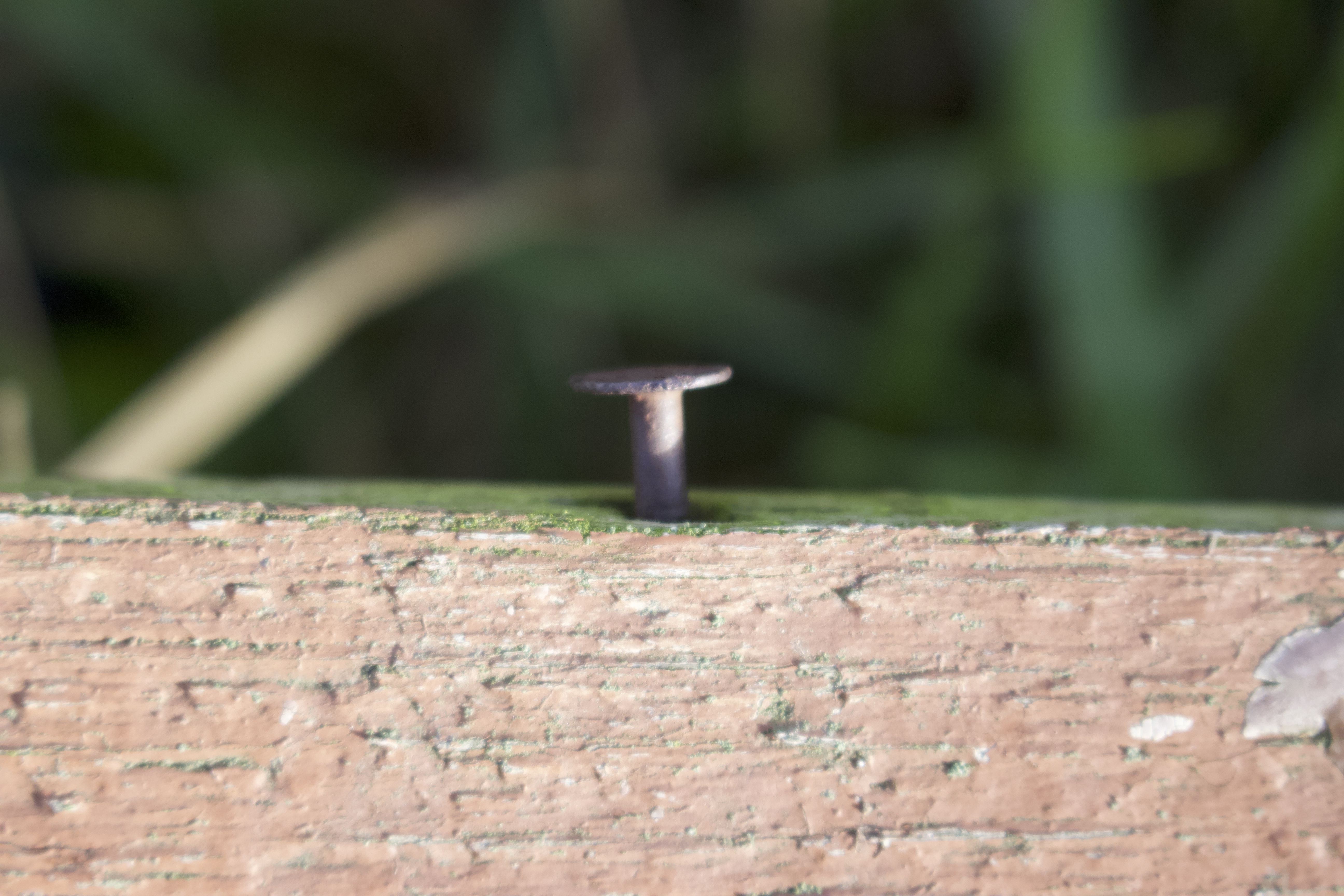
Strangely enough~ it is the nail, not the hammer, that fastens us together~ becoming the glue, the security, the permanence of solid foundation and strong supports, or protecting roof.
The hammer is only a tool to pound in the nail to where it binds so tightly; the nail can’t blend in or be forgotten, where the hole it leaves behind is a forever wounded reminder of what the hammer has done, yet, how thoroughly the hammer, and we, are forgiven.
This year’s Lenten theme:
…where you go I will go… Ruth 1:16
One-Time
Monthly
Yearly
Make a one-time or recurring donation to support daily Barnstorming posts
Jesus comes near and he beholds the city And looks on us with tears in his eyes, And wells of mercy, streams of love and pity Flow from the fountain whence all things arise. He loved us into life and longs to gather And meet with his beloved face to face How often has he called, a careful mother, And wept for our refusals of his grace, Wept for a world that, weary with its weeping, Benumbed and stumbling, turns the other way, Fatigued compassion is already sleeping Whilst her worst nightmares stalk the light of day. But we might waken yet, and face those fears, If we could see ourselves through Jesus’ tears. ~Malcolm Guite “Jesus Weeps”
When Jesus wept, the falling tear in mercy flowed beyond all bound; when Jesus groaned, a trembling fear seized all the guilty world around. ~William Billings
And when he drew near and saw the city, he wept over it, saying, “Would that you, even you, had known on this day the things that make for peace! But now they are hidden from your eyes. ~Luke 19:41-42
Commencing this holy week of remembrance, knowing how our world is in a terrible disarray, too many sleeping in the street, some in graves, many grieving losses, all wondering what comes next.
On this journey, we face our own fears of vulnerability and mortality, these days when thorns overwhelm emerging blossoms~~
To remember what He did this week long ago, and still does today to conquer the shroud and the stone, to defy death, makes all the difference to me.
Indeed Jesus wept and groaned for us.
To be known for who we are by a God who weeps for us and moans with pain we caused: we can know no greater love.
This week ends our living for self, only to die, and begins our dying to self, in order to live.
This year’s Lenten theme:
…where you go I will go… Ruth 1:16
One-Time
Monthly
Yearly
Make a one-time or recurring donation to support daily Barnstorming posts
I wake and feel the fell of dark, not day. Whathours, O what black hours we have spent This night! what sights you, heart, saw; ways you went! And moremust, in yet longer light’s delay.
With witness I speak this. But where I say Hours I mean years, mean life. And my lament Is cries countless, cries like dead letters sent To dearest him that lives alas! away.
I am gall, I am heartburn. God’s most deep decree Bitter would have me taste: my taste was me; Bones built in me, flesh filled, blood brimmed the curse.
Selfyeast of spirit a dull dough sours. I see The lost are like this, and their scourge to be As I am mine, their sweating selves; but worse. ~Gerard Manley Hopkins “I wake and feel the fell of dark”
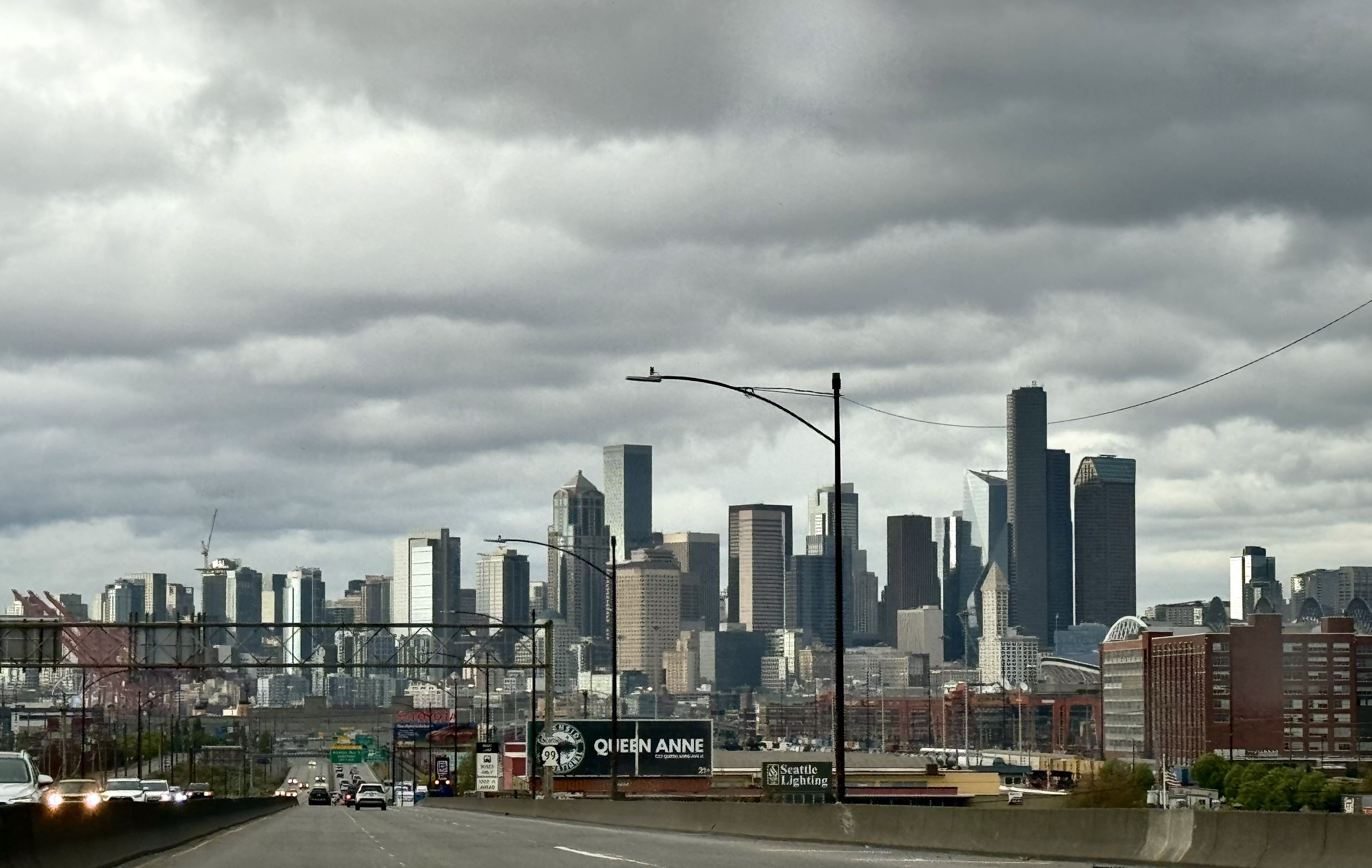
Surfacing to the street from a thirty two hour hospital shift usually means my eyes blink mole-like, adjusting to searing daylight after being too long in darkened windowless halls. This particular January day is different. As the doors open, I am immersed in a subdued gray Seattle afternoon, with horizontal rain soaking my scrubs.
Finally remembering where I had parked my car in pre-dawn dark the day before, I start the ignition, putting the windshield wipers on full speed. I merge onto the freeway, pinching myself to stay awake long enough to reach my apartment and my pillow.
The freeway is a flowing river current of head and tail lights. Semitrucks toss up tsunami waves cleared briefly by my wipers frantically whacking back and forth.
Just ahead in the lane to my right, a car catches my eye — it looks just like my Dad’s new Buick. I blink to clear my eyes and my mind, switching lanes to get behind. The license plate confirms it is indeed my Dad, oddly 100 miles from home in the middle of the week. I smiled, realizing he and Mom have probably planned to surprise me by taking me out for dinner.
I decide to surprise them first, switching lanes to their left and accelerating up alongside. As our cars travel side by side in the downpour, I glance over to my right to see if I can catch my Dad’s eye through streaming side windows. He is looking away to the right at that moment, obviously in conversation. It is then I realize something is amiss. When my Dad looks back at the road, he is smiling in a way I have never seen before. There are arms wrapped around his neck and shoulder, and a woman’s auburn head is snuggled into his chest.
My mother’s hair is gray.
My initial confusion turns instantly to fury. Despite the rivers of rain obscuring their view, I desperately want them to see me. I think about honking, I think about pulling in front of them so my father would know I have seen and I know. I think about ramming them with my car so that we’d perish all, unrecognizable, in an explosive storm-soaked mangle.
At that moment, my father glances over at me and our eyes meet across the lanes. His face is a mask of betrayal, bewilderment and then shock, and as he tenses, she straightens up and looks at me quizzically.
I can’t bear to look any longer.
I leave them behind, speeding beyond, splashing them with my wake. Every breath burns my lungs and pierces my heart. I can not distinguish whether the rivers obscuring my view are from my eyes or my windshield.
Somehow I made it home to my apartment, my heart still pounding in my ears. The phone rings and remains unanswered.
I throw myself on my bed, bury my wet face in my pillow and pray for sleep without dreams, without secrets, without lies, without the burden of knowing a truth I alone now knew and wished I didn’t..
Postscript: I didn’t tell anyone what I saw that day. My father never asked. He divorced my mother, and was remarried quickly, my mother and two families shattered as a result. Ten years later, his second wife died due to a relentless cancer, and he returned to my mother, asking her forgiveness and wanting to remarry. Within months, he too was diagnosed with cancer and Mom nursed him through his treatment, remission, recurrence and then hospice.
We became a family again, not the same as before, yet put back together for good reason – forgiving and forgiven.
This year’s Lenten theme:
…where you go I will go… Ruth 1:16
AI image created for this post
One-Time
Monthly
Yearly
Make a one-time or recurring donation to support daily Barnstorming posts
The first time I saw him it was just a flash of gray ringed tail disappearing into autumn night mist as I opened the back door to pour kibble into the empty cat dish on the porch: just another stray cat among many who visit the farm.
A few stay.
So he did, keeping a distance in the shadows under the trees, a gray tabby with white nose and bib, serious yet skittish, watching me as I moved about feeding dogs, cats, birds, horses, creeping to the cat dish only when the others drifted away.
There was something in the way he held his head, an oddly forward ear; a stilted swivel of the neck. I startled him one day as he ate his fill at the dish.
He ran, the back of his head flashing red, scalp completely gone.
Not oozing, nor something new, but recent. A nearly mortal scar from an encounter with coyote, or eagle or bobcat. This cat thrived despite trauma and pain, tissue still raw, trying to heal.
He had chosen to live; life had chosen him.
My first thought was to trap him, to put him humanely to sleep to end his suffering, in truth to end my distress at seeing him every day, envisioning florid flesh even as he hunkered invisible in the shadowlands of the barnyard.
Yet the scar did not keep him from eating well or licking clean his pristine fur.
As much as I want to look away, to avoid confronting his mutilation, I always greet him from a distance, a nod to his maimed courage, through wintry icy blasts and four foot snow, through spring rains and summer heat with flies.
His wounds remain unhealed, a reminder of his inevitable fate.
I never will stroke that silky fur, or feel his burly purr, assuming he still knows how, but still feed his daily fill, as he feeds my need to know: the value of a life so broken, each breath taken filled with sacred air.
The depth of his wounds shows how much he still bleeds.
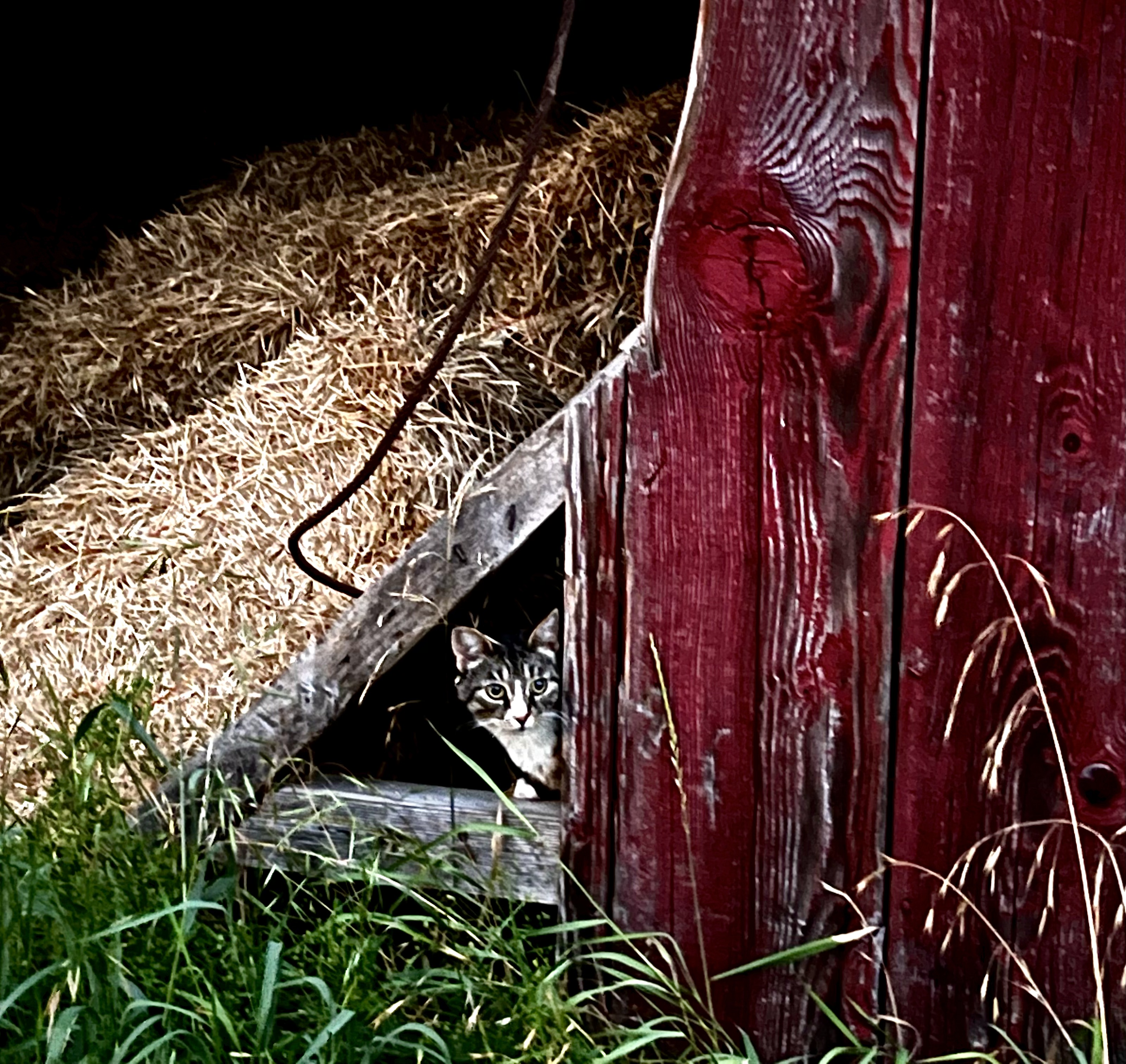
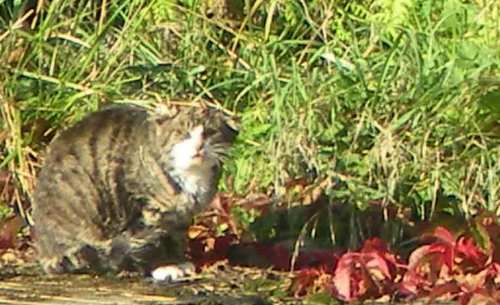
This is my only close photo of our wounded farm guest
This year’s Lenten theme:
…where you go I will go… Ruth 1:16
One-Time
Monthly
Yearly
Make a one-time or recurring donation to support daily Barnstorming posts
…we all suffer. For we all prize and love; and in this present existence of ours, prizing and loving yield suffering. Love in our world is suffering love. Some do not suffer much, though, for they do not love much. Suffering is for the loving. This, said Jesus, is the command of the Holy One: “You shall love your neighbor as yourself.” In commanding us to love, God invites us to suffer.
Over there, you are of no help. What I need to hear from you is that you recognize how painful it is. I need to hear from you that you are with me in my desperation. To comfort me, you have to come close. Come sit beside me on my mourning bench. ~Nicholas Wolterstorff from Lament for a Son
I wondered if 7:30 AM was too early to call her. As a sleep-deprived fourth year medical student finishing a long night admitting patients in the hospital, I selfishly needed to hear her voice.
I wanted to know how Margy was doing with the latest round of chemotherapy for breast cancer; I knew she was not sleeping well these days. She was wearing a new halo brace—a metal contraption that wrapped around her head like a scaffolding to secure her degenerating cervical spine from collapsing from metastatic tumor growths in her bones.
She knew, we all knew, she was trying to buy more time from a life of rapidly diminishing days.
Each patient I had seen the previous 24 hours while working in the Emergency Room benefited from the interviewing skills Margy had taught each medical student in our class. She reminded us that each patient had an important story to tell, and no matter how pressured our time, we needed to ask questions that gave permission for that story to be told. As a former nun now married with two teenage children, Margy had become our de facto therapist at a time no medical school hired supportive counselors.
She insisted physicians-in-training remember the suffering soul thriving inside the broken body.
“Just let the patient know with certainty, through your eyes, your body language, your words, that you want to hear what they have to say. You can heal so much hurt simply by sitting beside them and caring enough to listen…”
After her diagnosis with stage 4 cancer, Margy herself became the broken vessel who needed the glue of a good listener. She continued to teach, often from her bed at home. I planned to visit her that day, maybe help out by cleaning her house, or take her for a drive as a diversion.
Her phone rang only once after I dialed her number. There was a long pause; I could hear a clearing of her throat. A deep dam of tears welled behind a muffled “Hello?”
“Margy?”
“Yes? Emily? ”
“Margy? What is it? What’s wrong?”
Her voice shattered like glass into fragments, strangling on words that struggled to form.
“A policeman just left. He told us our boy is dead.”
I sat in stunned silence, listening to her sobs, completely unequipped to know how to respond.
None of this made sense. I knew her son was on college spring break, heading to Mexico for a missions trip.
“I’m here, what’s happened?”
“The doorbell rang about an hour ago. Larry got up to answer it. I heard him talking to someone downstairs, so I decided to try to get up and go see what was going on. There was a policeman sitting with Larry on the couch. I knew it had to be about Gordy.”
She paused and took in a shuddering breath.
“The group was driving through the night in California. He was asleep in the back of the camper. They think he was sleepwalking and walked right out of the back of the moving camper and was hit by another car.”
Silence. A strangling choking silence.
“They’ll bring him home to me, won’t they? I need to know I can see my boy again. I need to tell him how much I love him.”
“They’ll bring him home to you, Margy. I’m on my way to help you get ready…“
God is not only the God of the sufferers but the God who suffers. … It is said of God that no one can behold his face and live. I always thought this meant that no one could see his splendor and live. A friend said perhaps it meant that no one could see his sorrow and live. Or perhaps his sorrow is splendor. … Instead of explaining our suffering, God shares it. ~Nicholas Wolterstorff from Lament for a Son
This year’s Lenten theme:
…where you go I will go… Ruth 1:16
One-Time
Monthly
Yearly
Make a one-time or recurring donation to support daily Barnstorming posts
I slip, grabbing twigs as I fall, assaulting an innocent hemlock— skinning my palms, arms, legs, landing muddy-bruised and sore, taken down by a path I thought kind— a familiar wooded walk hiding its ice beneath a sheath of old, dried leaves. ~Laura Foley, “Spring Treachery” from It’s This
“Tell us please, what treatment in an emergency is administered by ear?” ….I met his gaze and I did not blink. “Words of comfort,” I said. ~Abraham Verghese from Cutting for Stone
I was walking a kind and familiar path, part of my usual daily walk, not paying much attention when I stepped on what appeared a solid and trustworthy surface.
The danger was hidden from my eyes; I had no idea it would take me down, put me on my knees, render me helpless.
I believed I couldn’t be rendered helpless by something I trusted like the back of my hand … or the interior of my heart vessels.
But treacherous surfaces are almost anywhere we are least expecting. And so are the helpers, ready and able and willing.
When I lost my grip, I felt hands and voices lifting and supporting me, pulling me to safety, encouraging me with hope and refuge.
And so I’m here to share this, richly blessed by those coming along side me – still walking this path I love, despite its hidden and sometimes deadly, dangers.
AI image created for this post
One-Time
Monthly
Yearly
Make a one-time or recurring donation to support daily Barnstorming posts
The main thing is this– when you get up in the morning you must take your heart in your two hands. You must do this every morning. Then talk softly to your heart, don’t yell. Say anything but be respectful. Say–maybe say, Heart, little heart, beat softly but never forget your job, the blood. You can whisper also, Remember, remember. ~Grace Paley from “The Art of Growing Older” in Just As I Thought
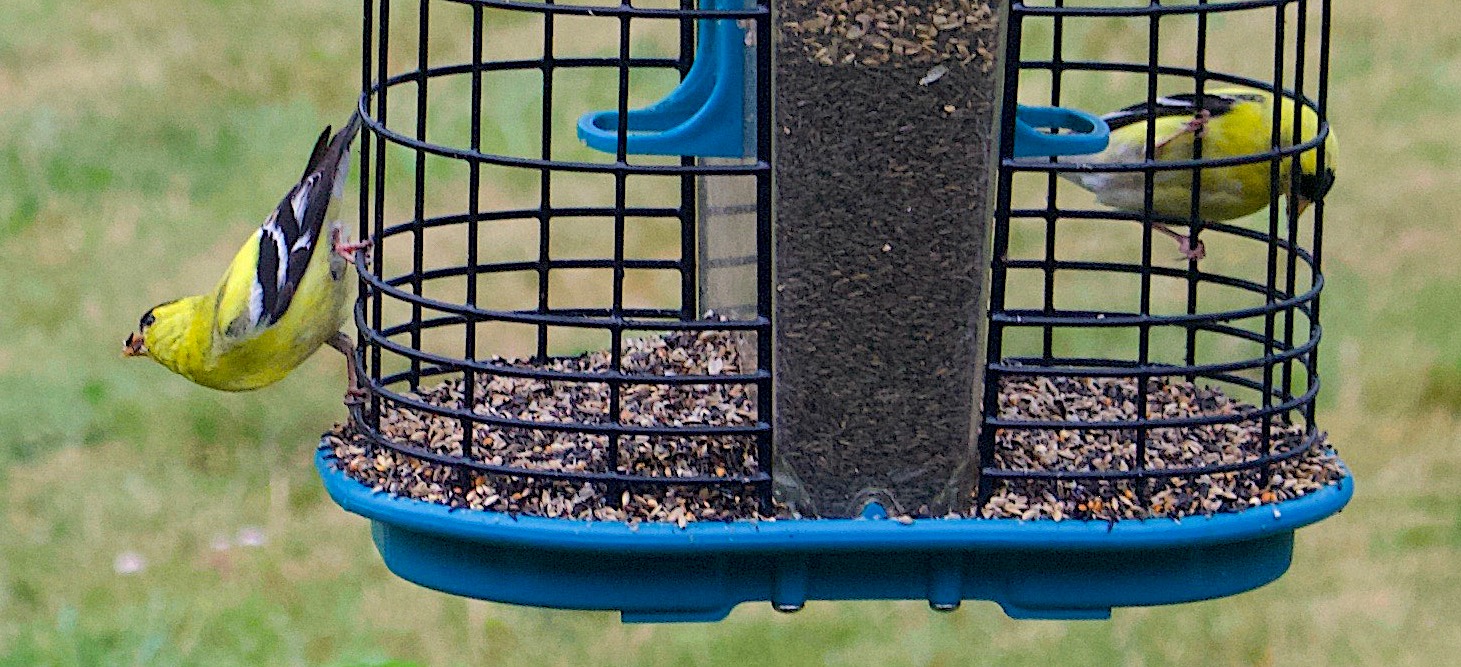
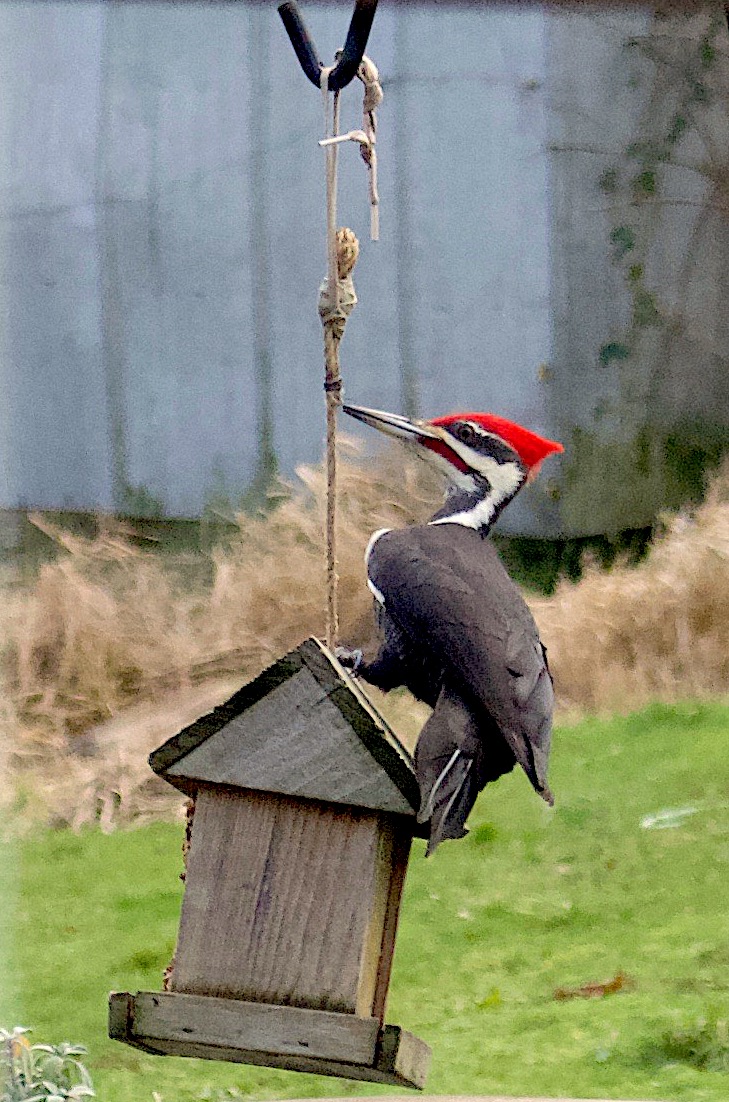
Approaching seventy, she learns to live, at last. She realizes she has not accomplished half of what she struggled for, that she surrendered too many battles and seldom celebrated those she won. Approaching seventy, she learns to live without ambition: a calm lake face, not a train bound for success and glory. For the first time, she relaxes her hands on the controls, leans back to watch the coming end. Asked, she’d tell you her life is made out of the things she didn’t do, as much as the things she did do. Did she sing a love song? Approaching seventy, she learns to live without wanting much more than the light in the catbird window seat where, watching the voracious fist-sized tweets, she hums along. ~Marilyn Nelson “Bird Feeder”
I’ve been learning in retirement to let go by relaxing my grip on the controls on the runaway train of ambition. This is a change for someone driven for decades to succeed in various professional and personal roles.
I’m aware who I am is defined both by what I haven’t gotten done and what I managed to do. And now, at seventy years old, I hope I still have some time to explore some of those things I left undone.
Except I haven’t been as robust and healthy as I wish to be. For the past month, during very chilly weather and after a prolonged bout of bronchitis, I found I couldn’t tolerate the cold air outside or in the barn while I did daily chores. My chest strangely hurt.
I finally took myself to a cardiologist who was concerned with a number of risk factors in my family and my own history and arranged testing, which I flunked yesterday.
I ended up with two stents to open blockages in my main coronary artery, plus a night in the hospital. I spent the night thinking about blessings and what needs to happen in my life now:
Reflecting with gratitude on being alive by the grace of our Lord. Holding my heart gently and treating it well. Humming as I go. Just sitting when I wish but walking when I must. Watching out the window for the real twitters and tweeters in this crazy noisy world. Loving up those around me.
It’s sweet to remember why I’m here. I’ve been given a new chance to enjoy every moment.
So after a lifetime of getting mostly A’s, flunking isn’t always bad.






















































 Barnstorming