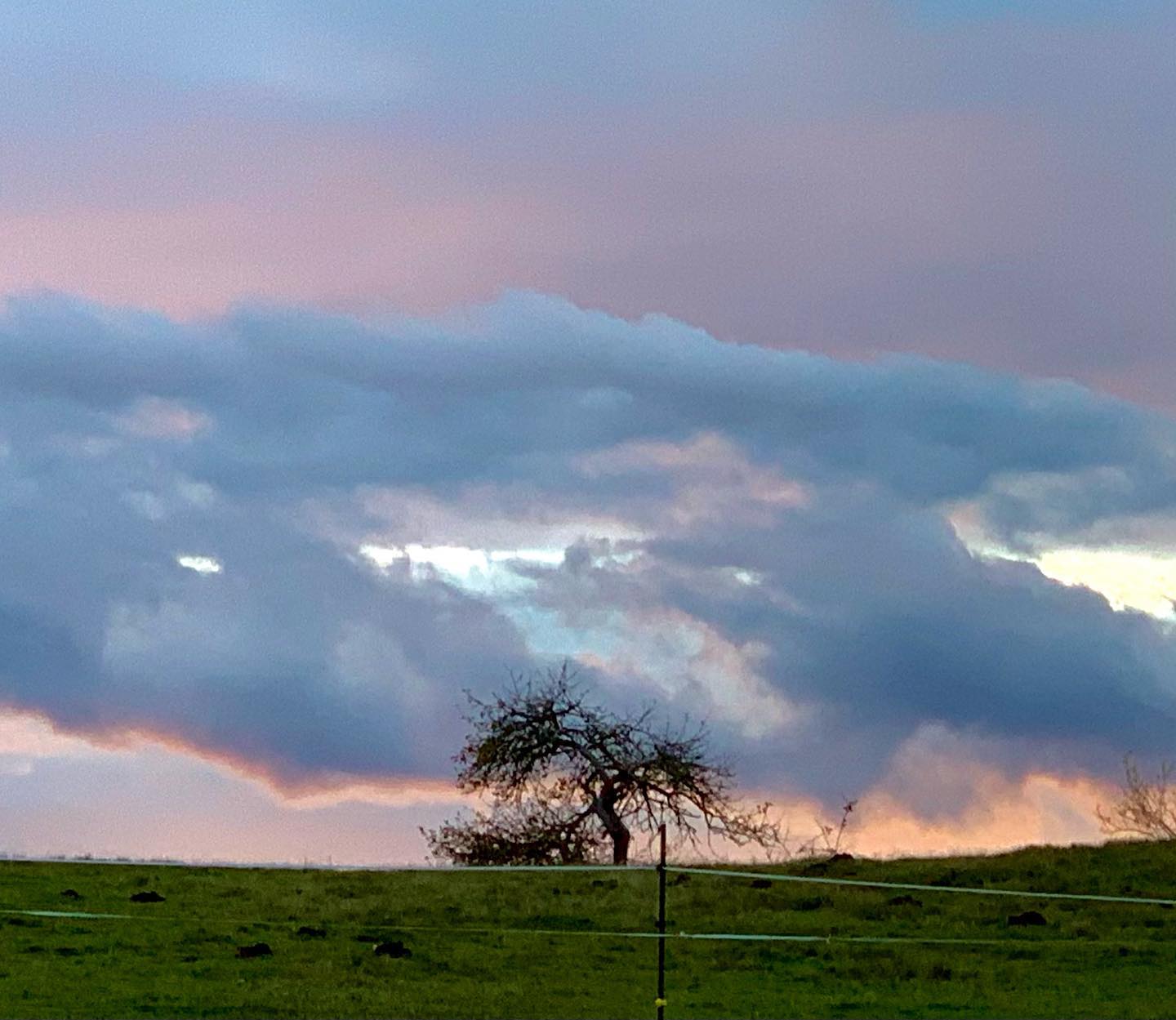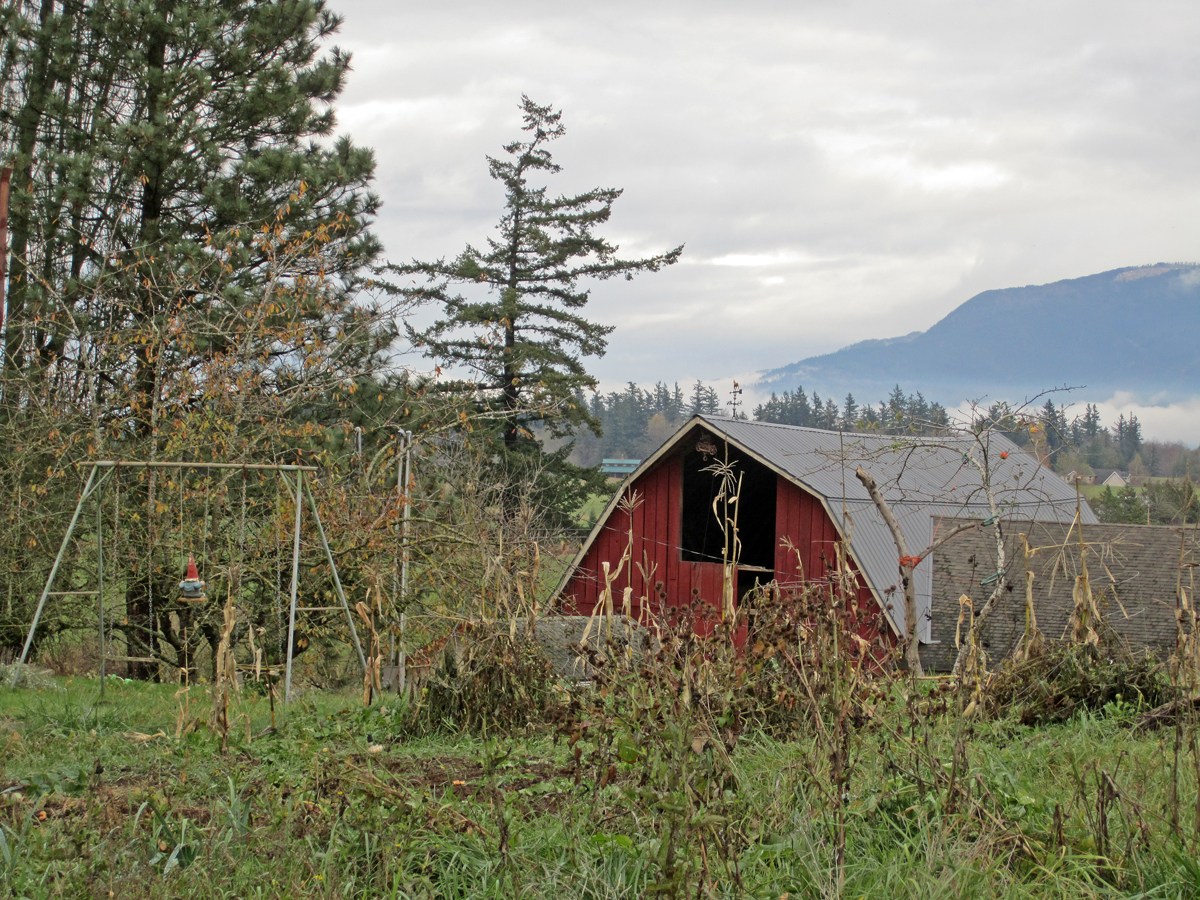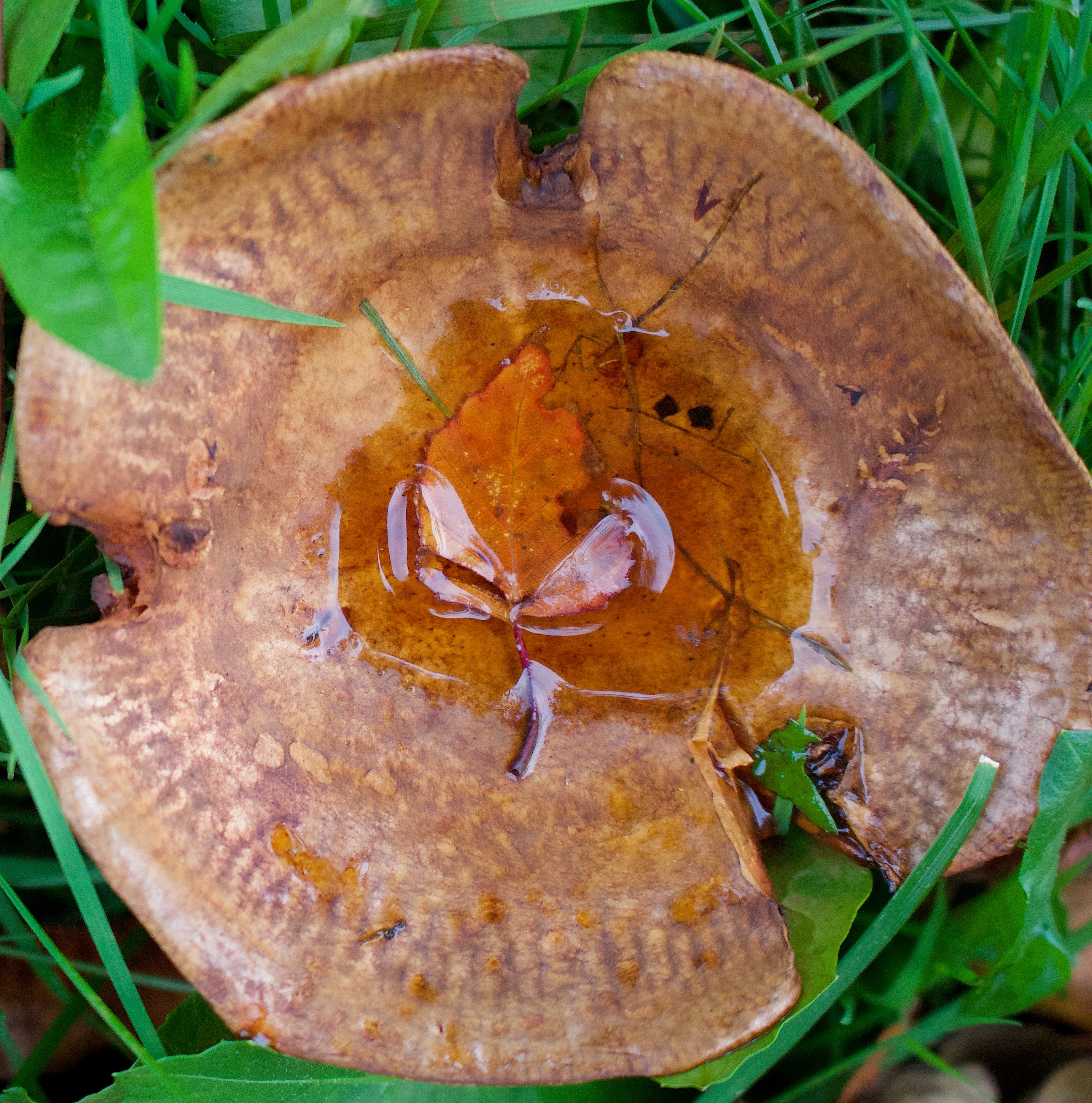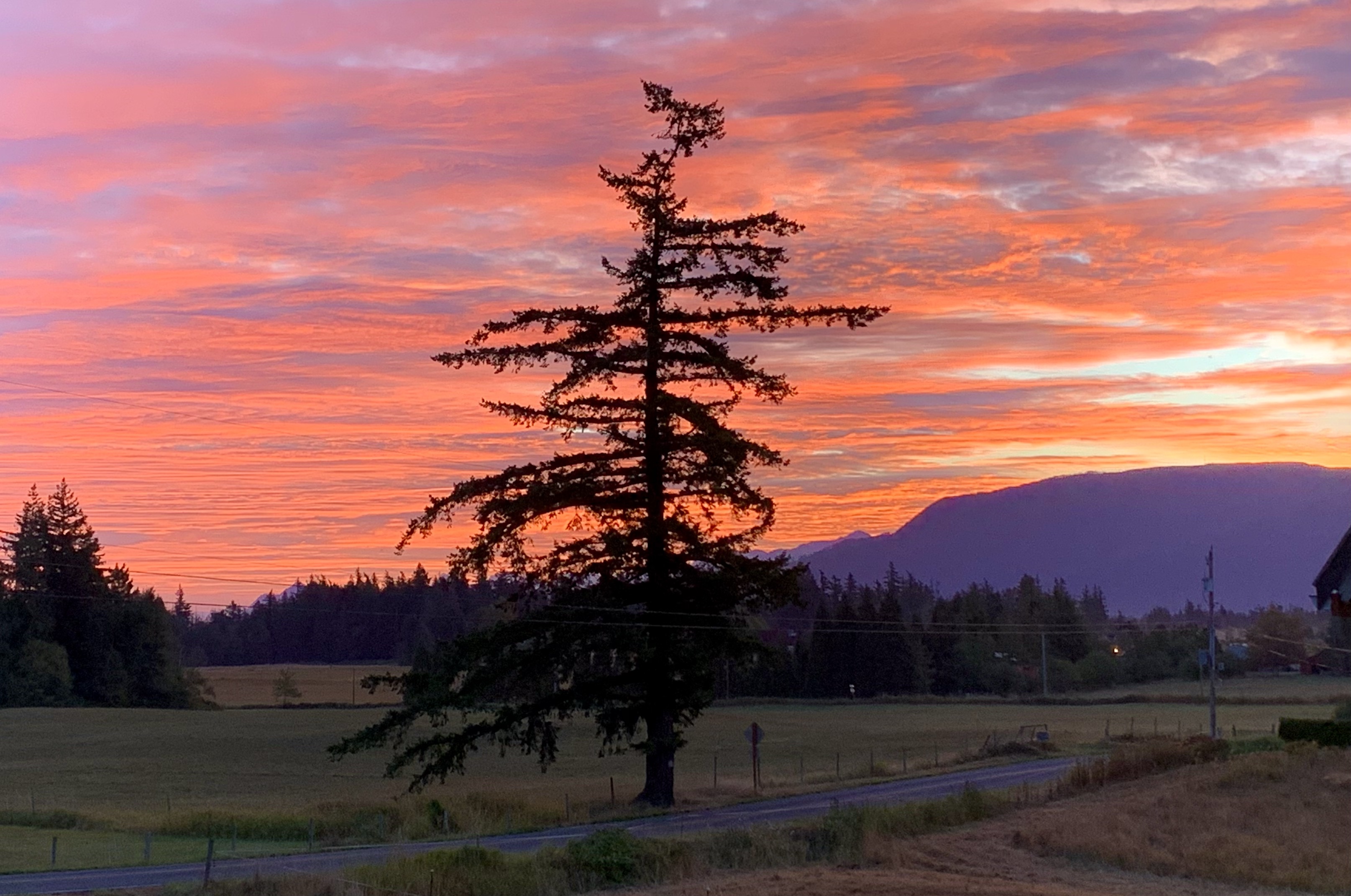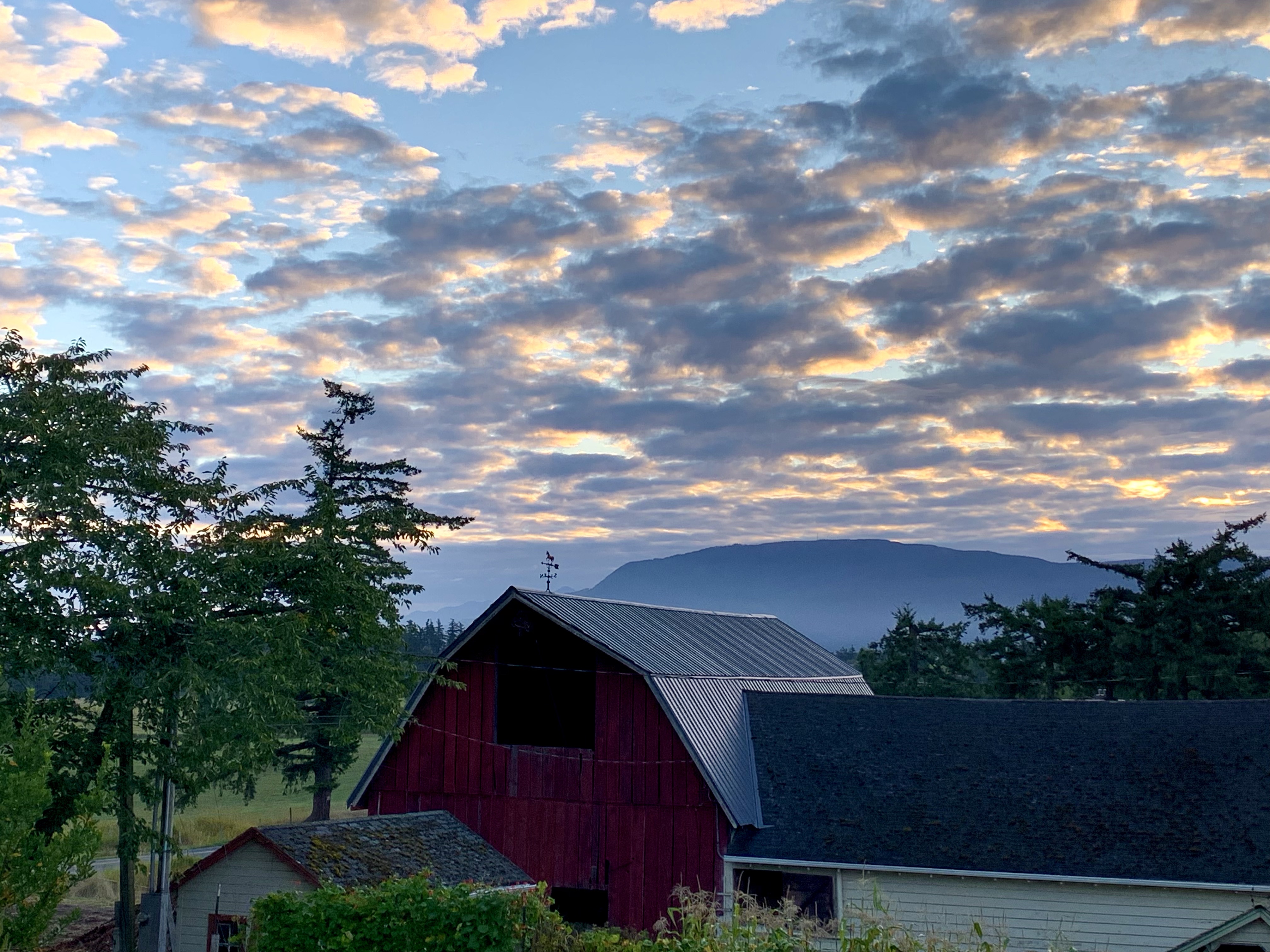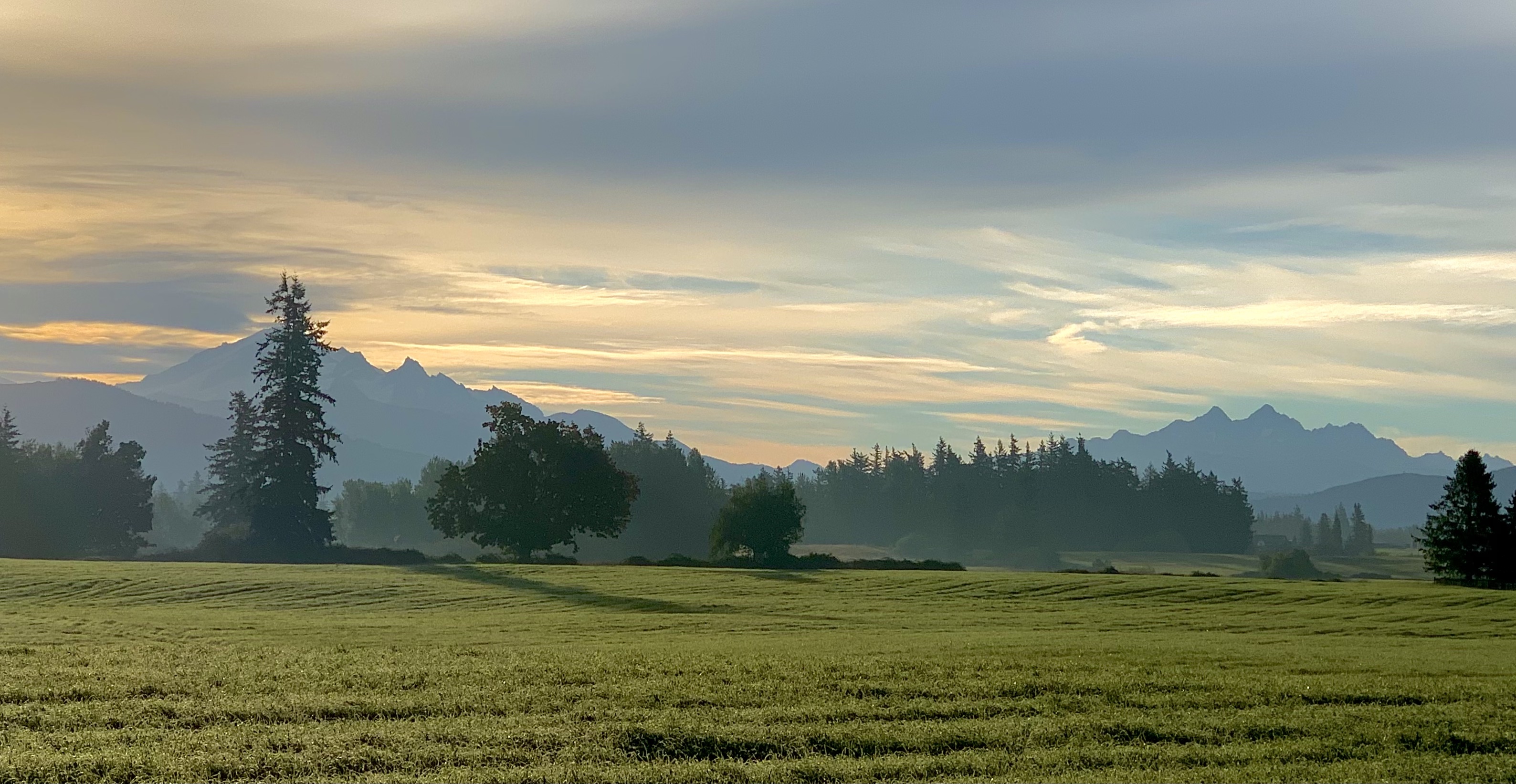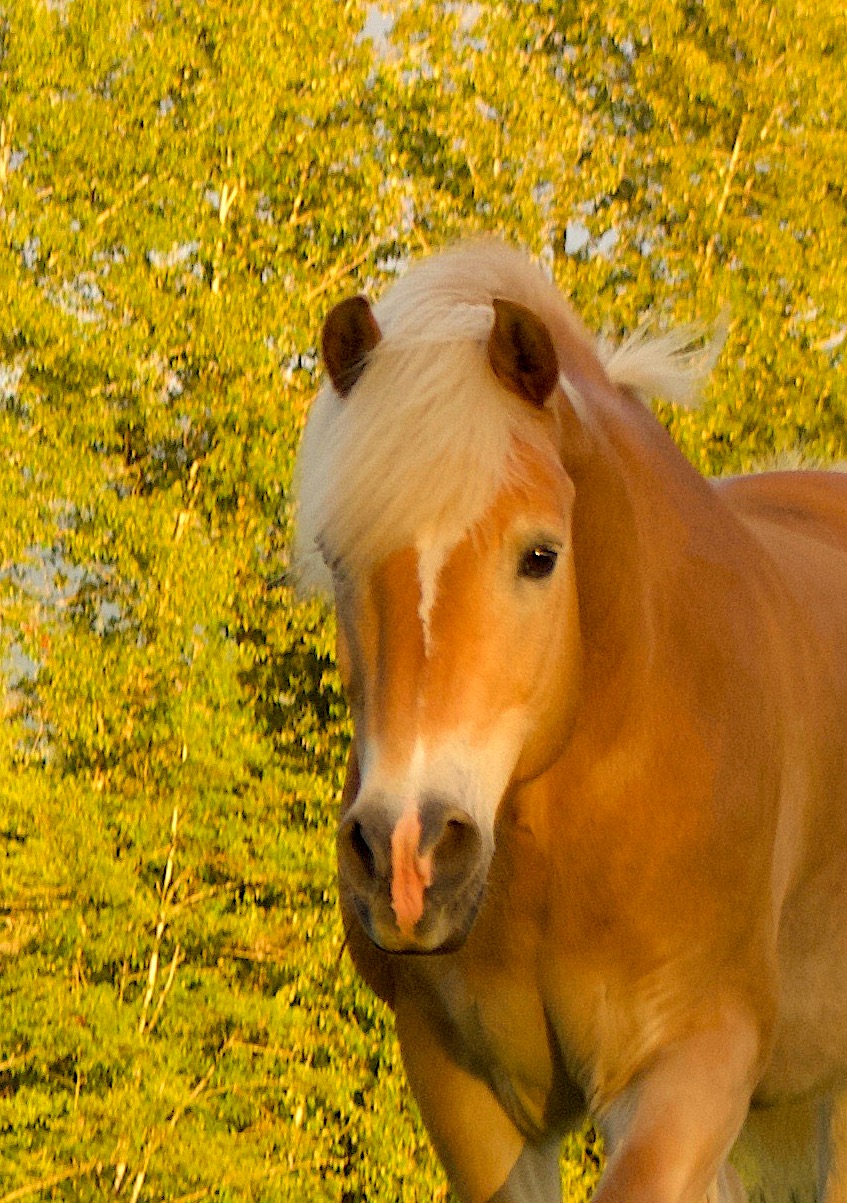
Time to Stand and Stare

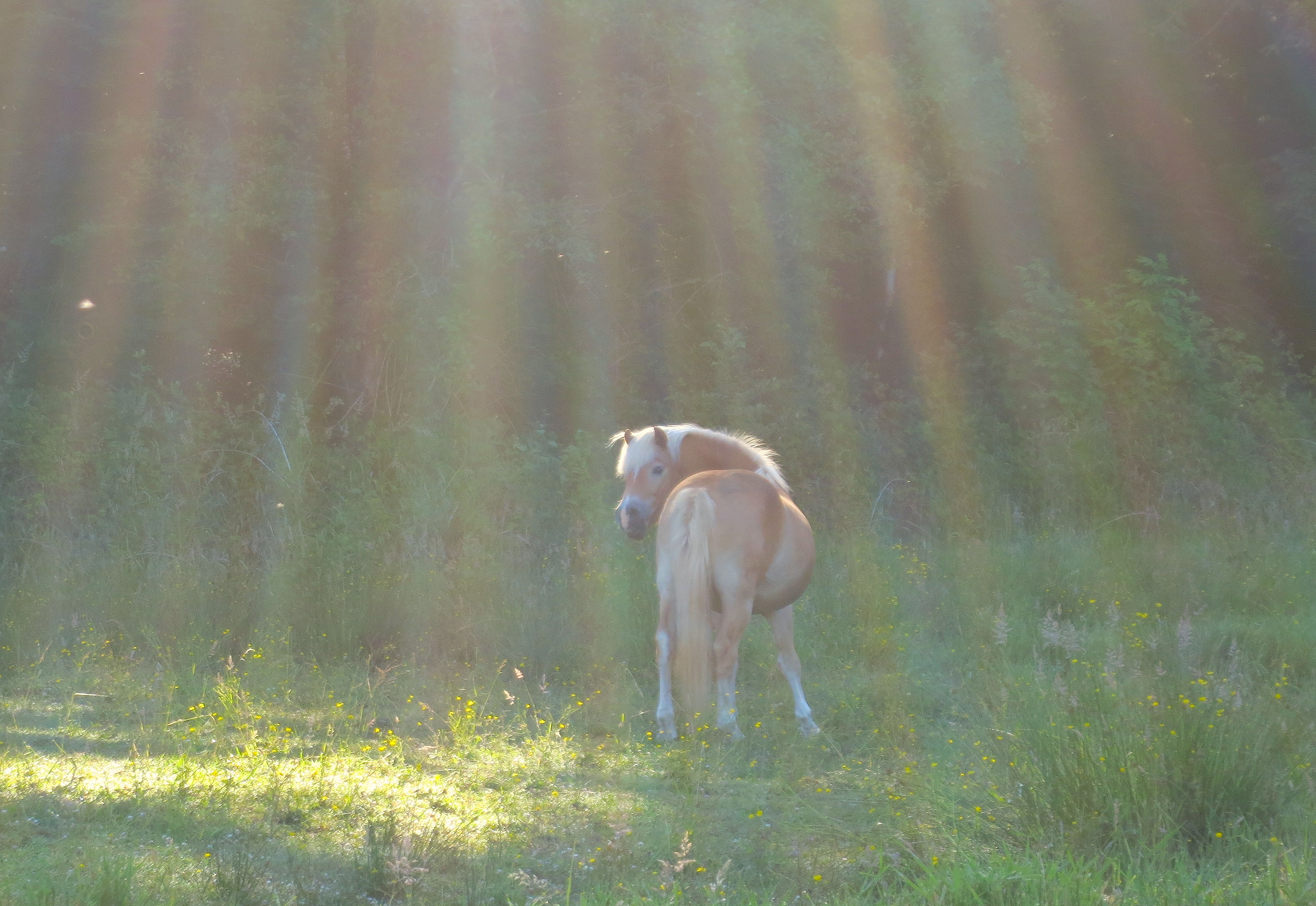
What is this life is, full of care
We have no time to stand and stare.
No time to stand beneath the boughs
And stare as long as sheep or cows.
No time to see, when woods we pass,
Where squirrels hide their nuts in grass.
No time to see, in broad daylight,
Streams full of stars, like skies at night.
No time to turn at Beauty’s glance,
And watch her feet, how they can dance.
No time to wait till her mouth can
Enrich that smile her eyes began.
A poor life this if, full of care,
We have no time to stand and stare.

~William Henry Davies “Leisure”
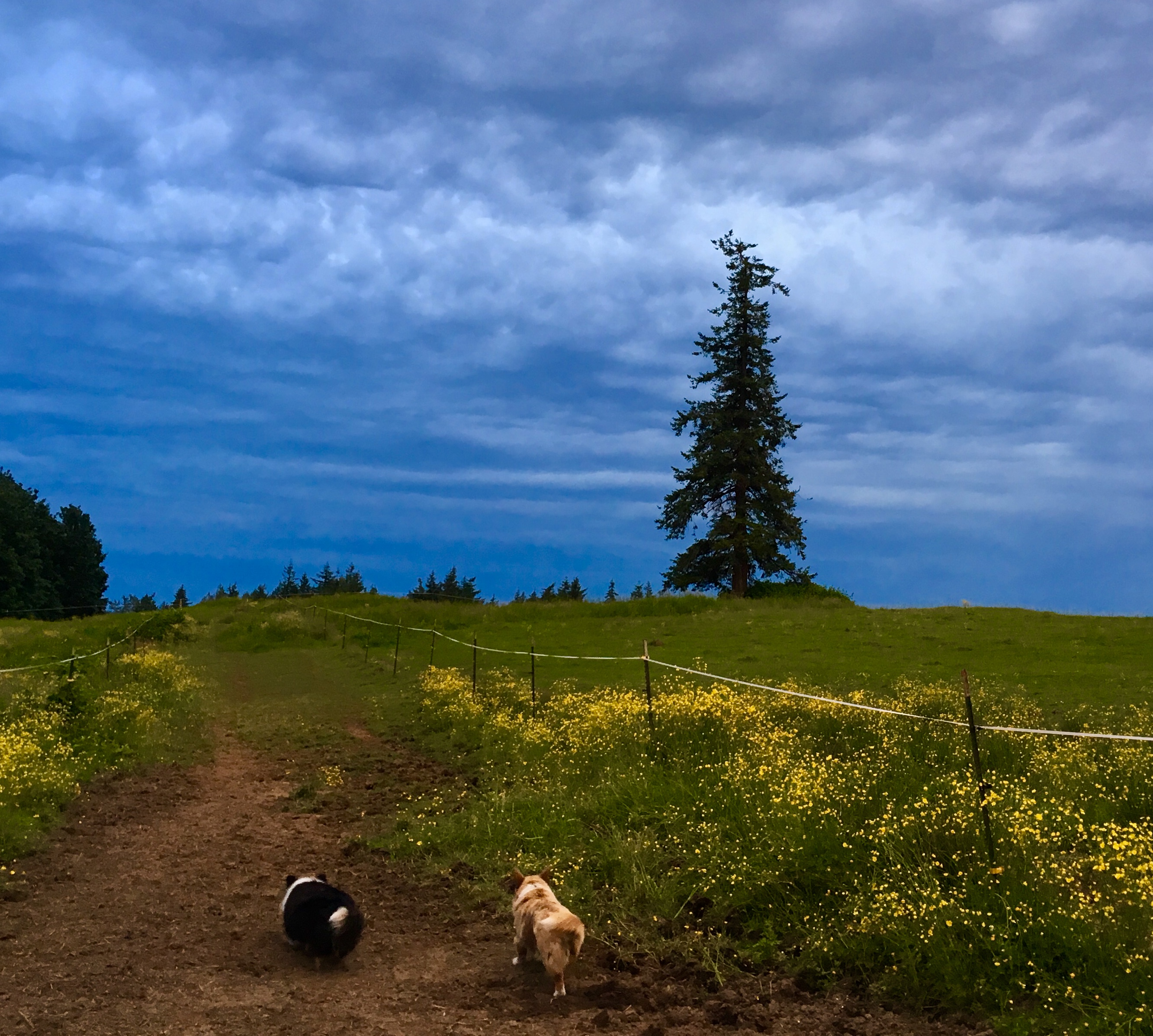
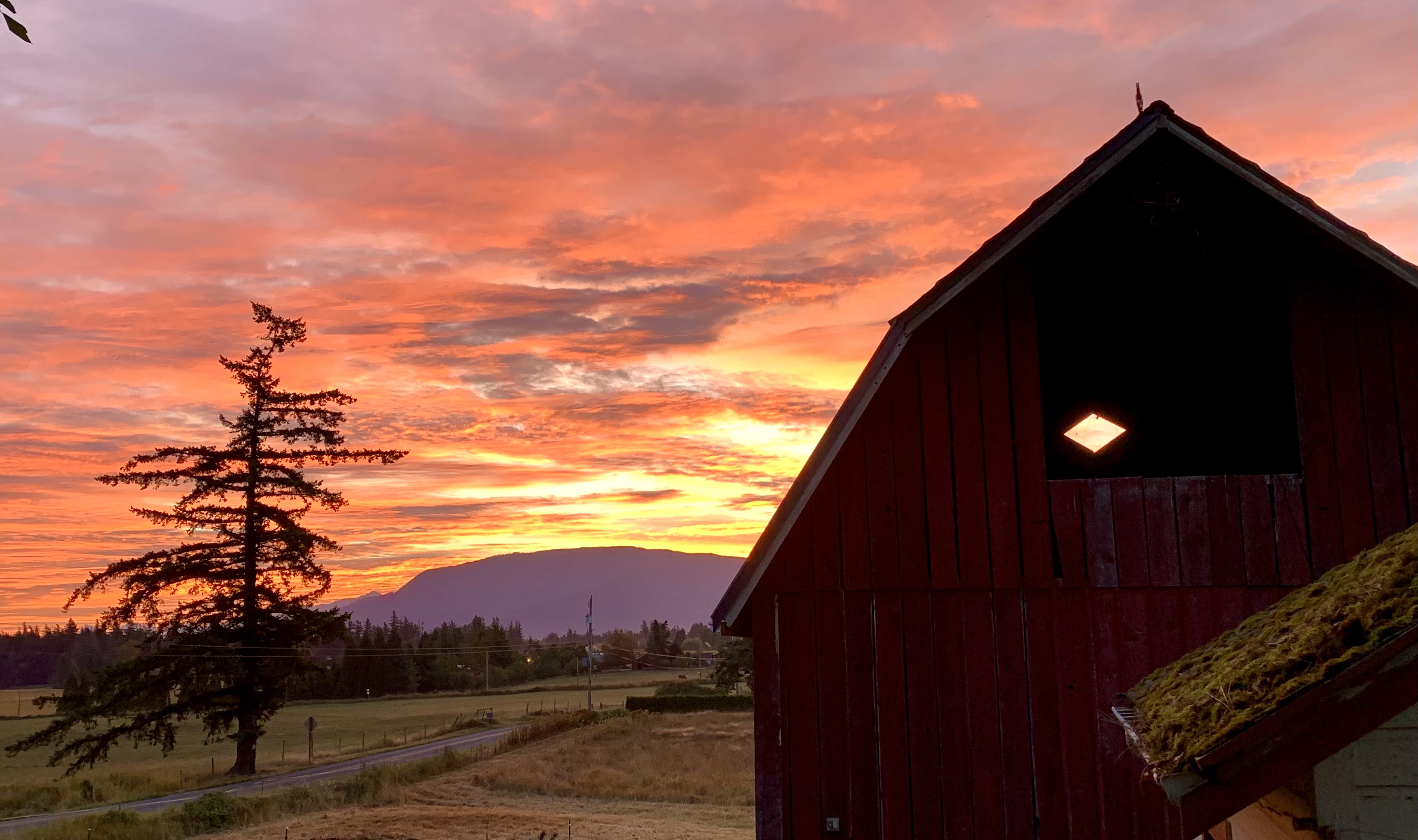
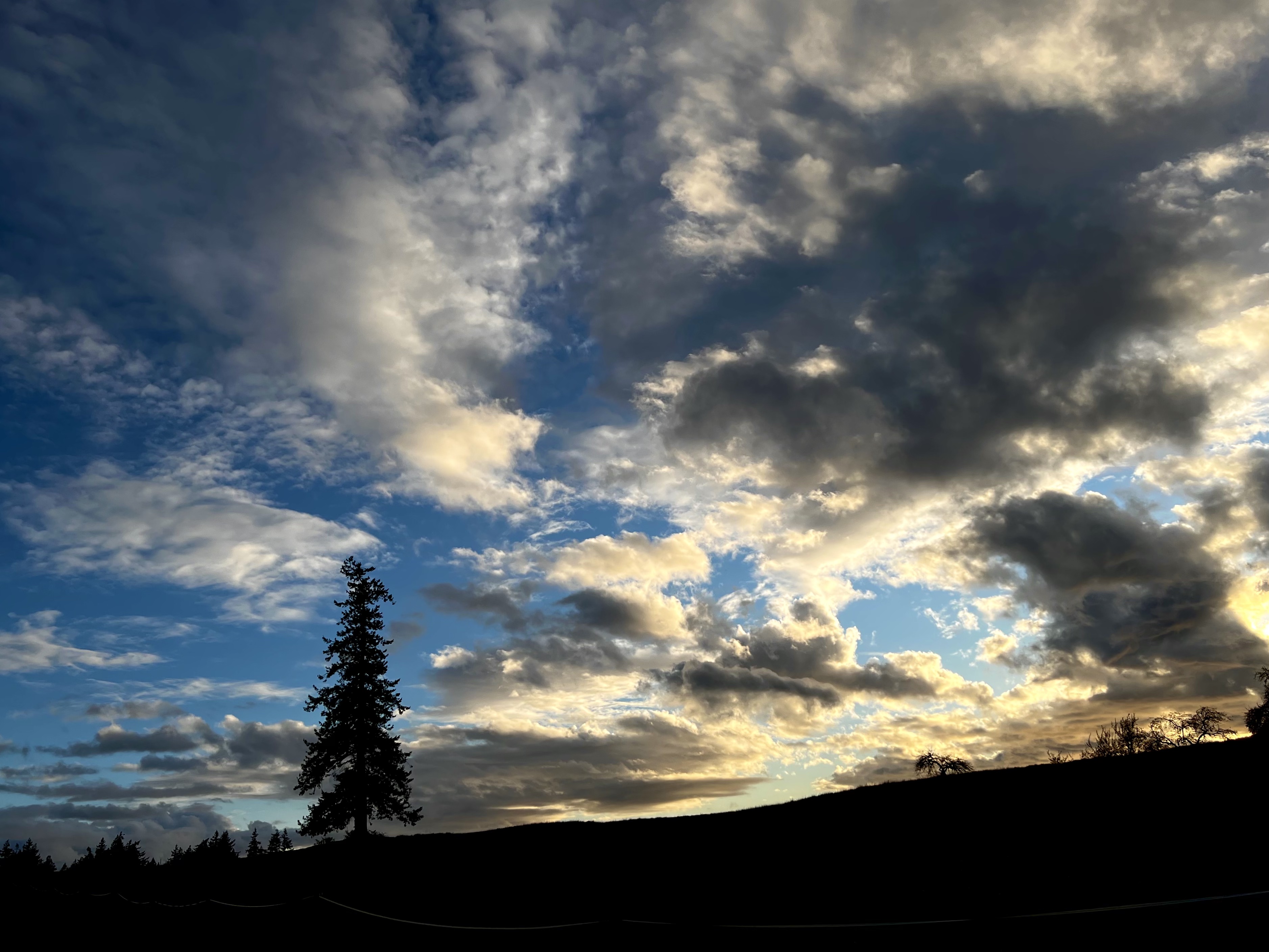
Fingers of twilight shadow
begin to reach over the hill
crawling down through the field
up unto the bank of blackberries
covering fences along the alder grove.

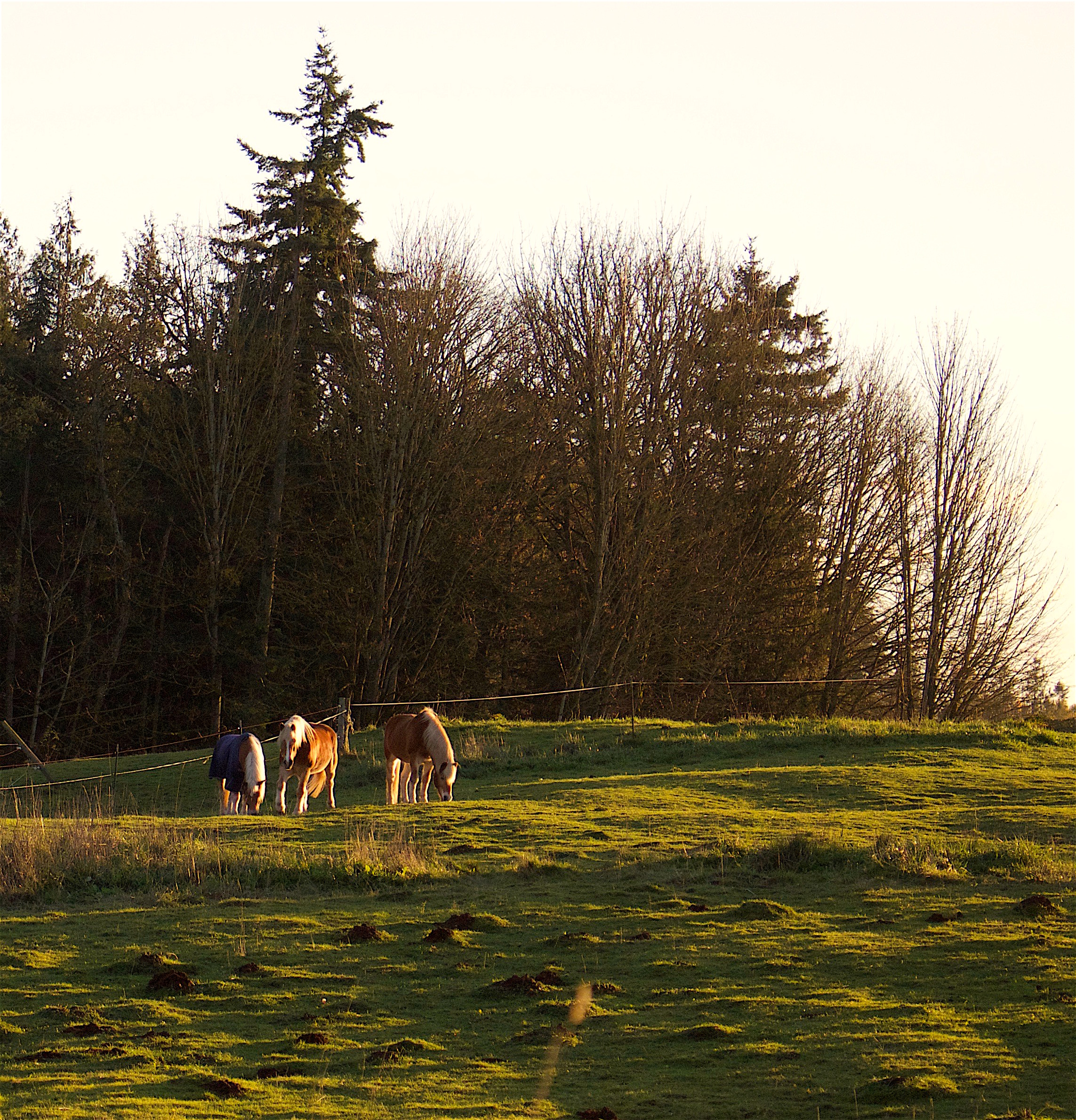
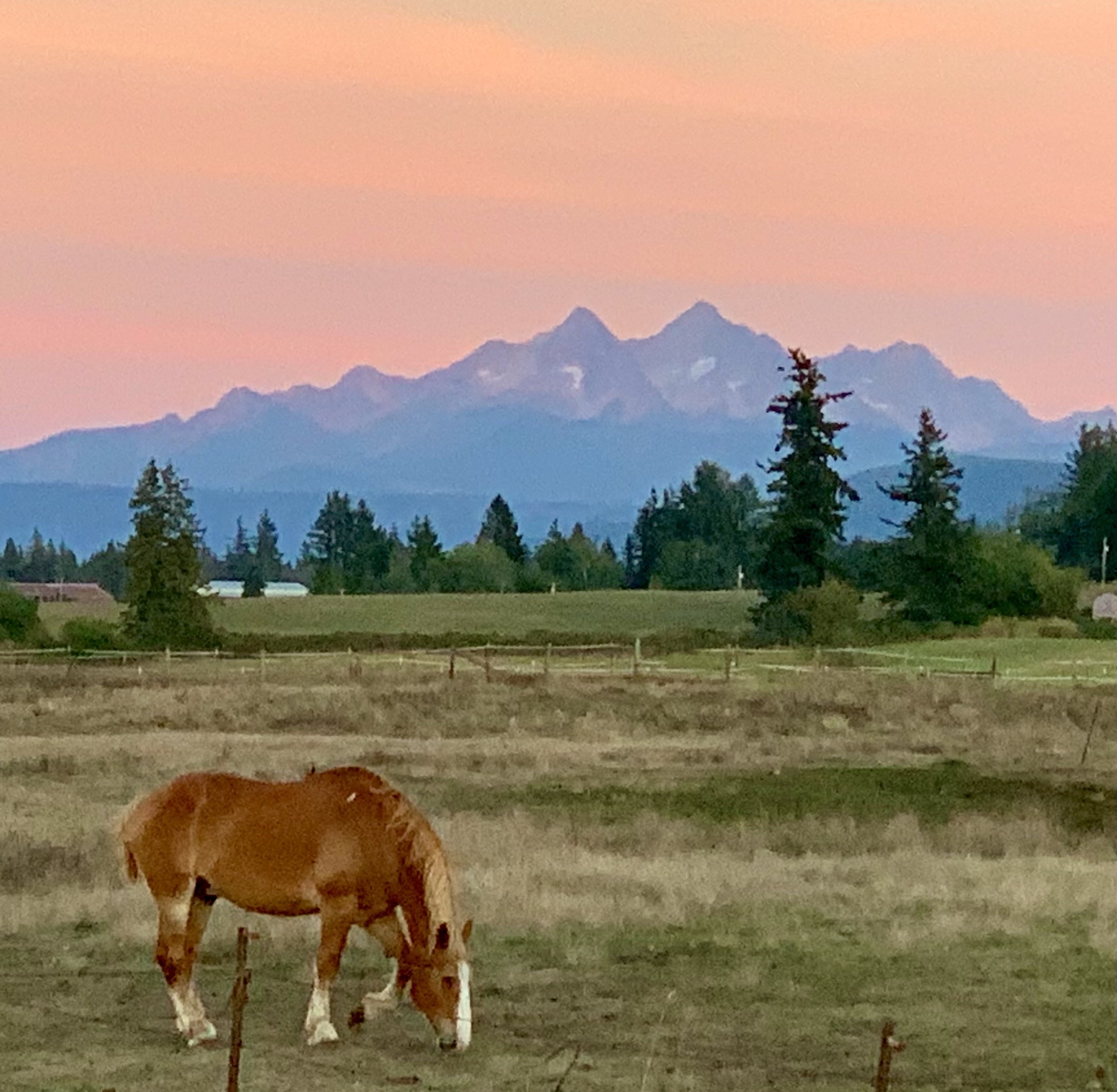
Our horses chew their last
clover leafs before
coming to the barn for night, eyelids heavy,
relaxed and full, drowsy with spring evening
peace at hand and hoof.

A sudden change in the air forces
their heads up and ears forward;
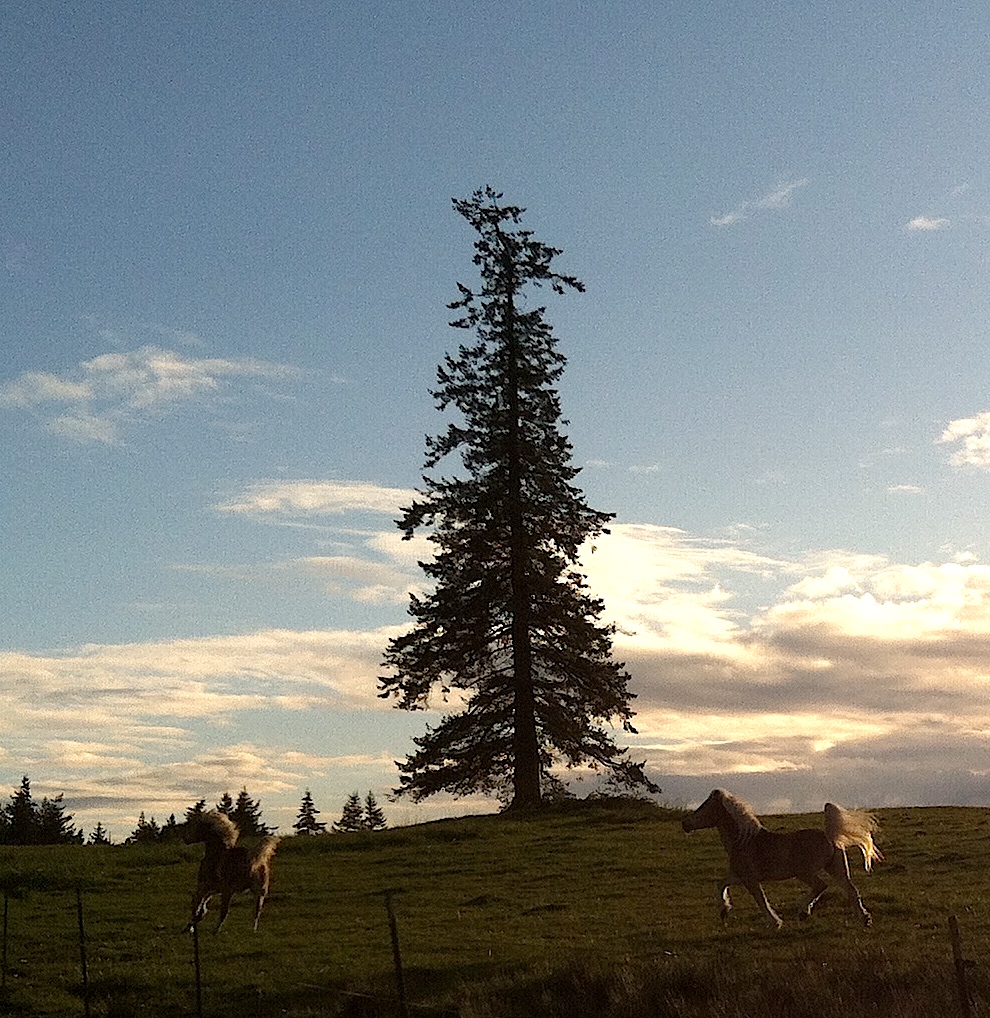
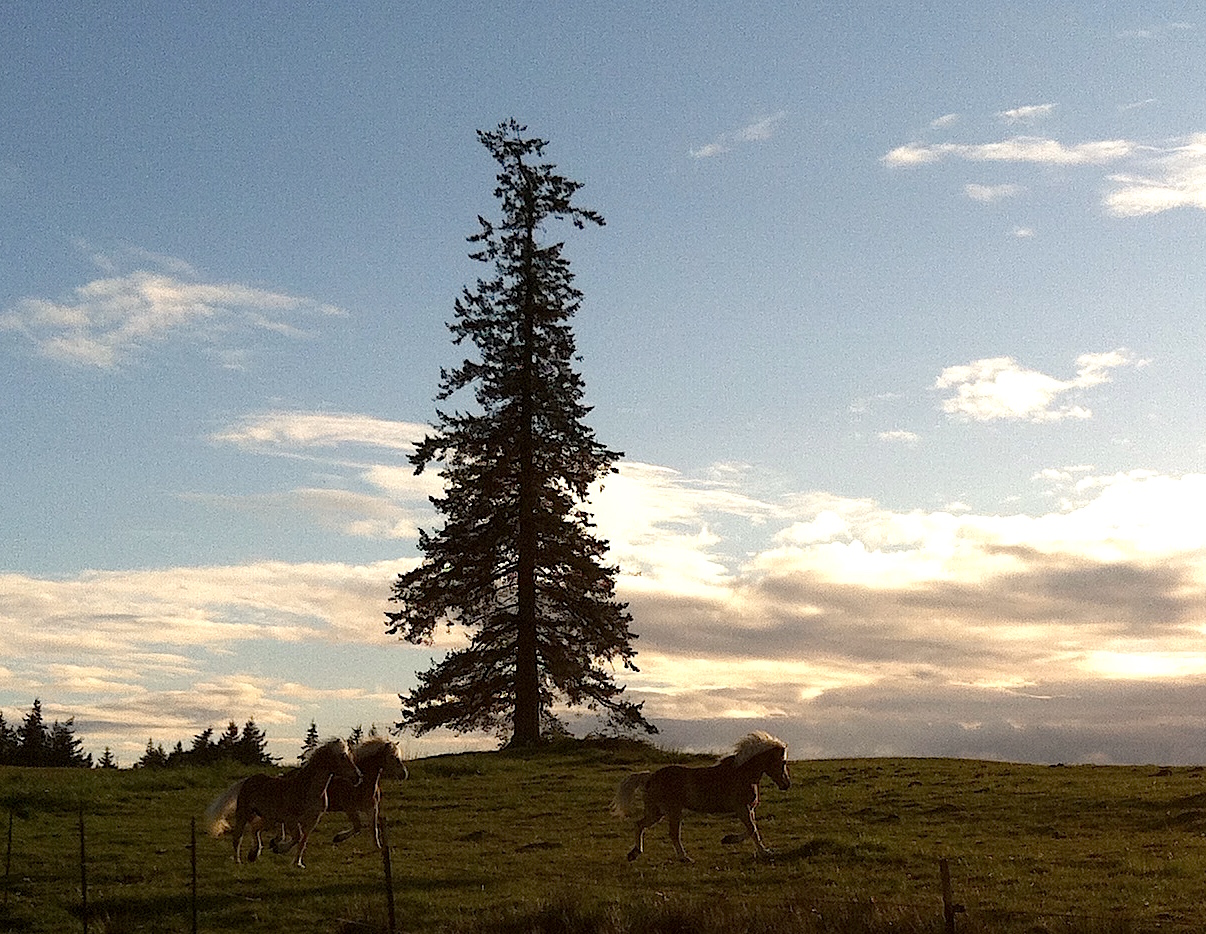
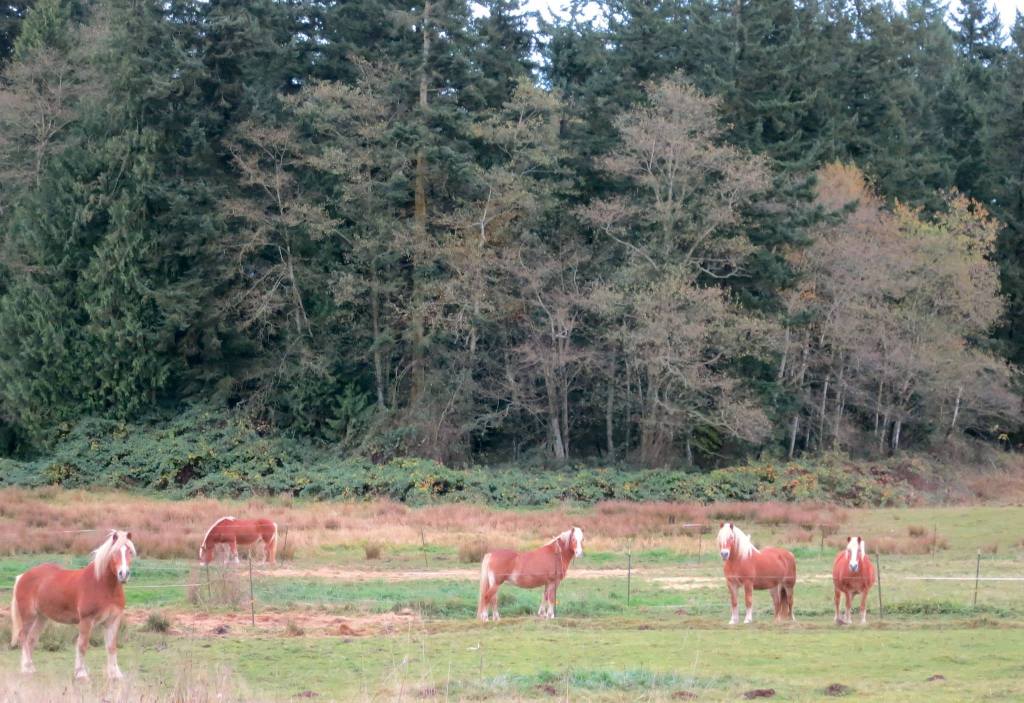
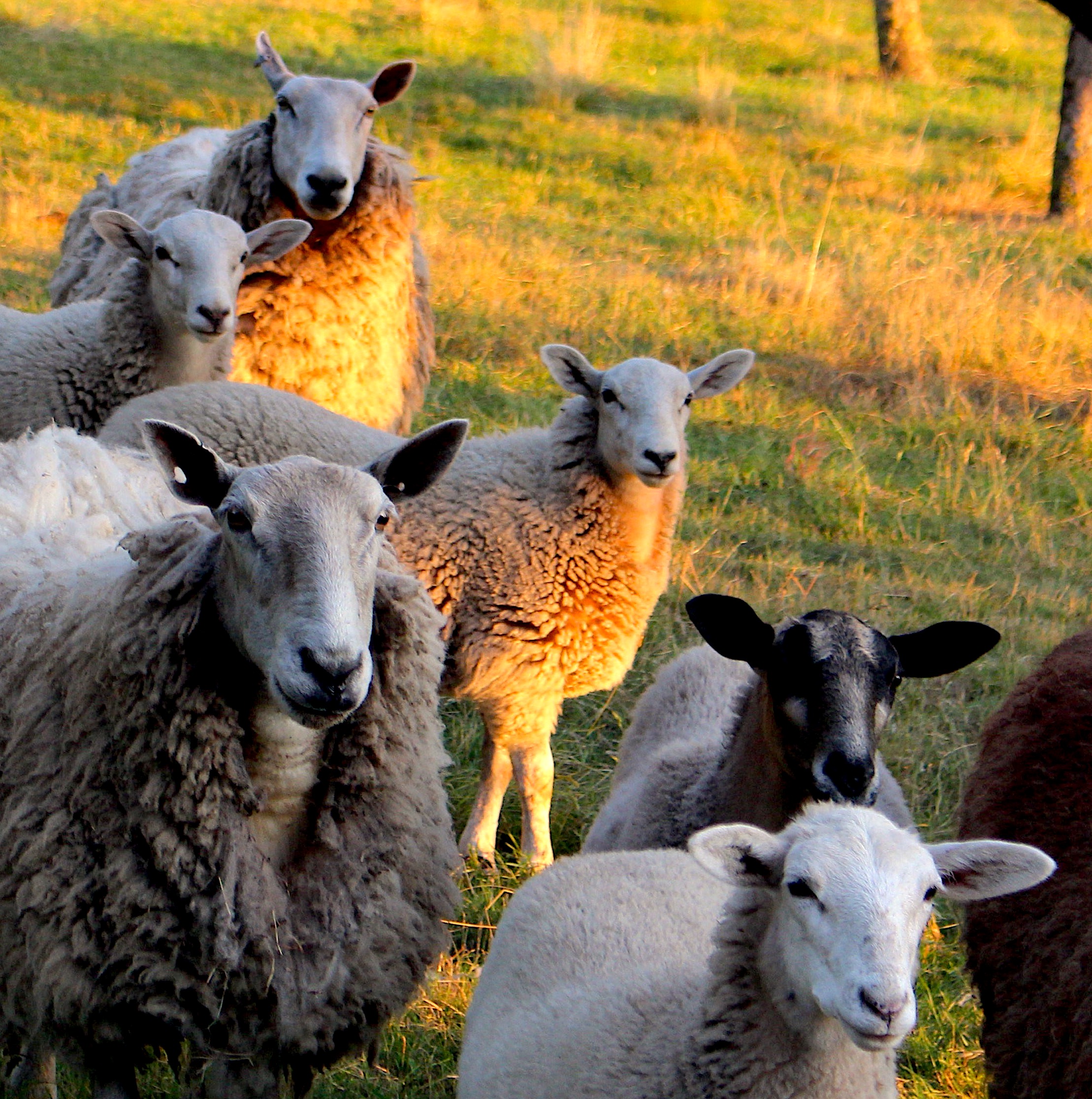
they form a line, standing and staring at the hilltop
above them, riveted to the spot, alert
to an coming intruder, unfamiliar and foreign.

The roar is intermittent, like a warm wind
rattling a barn roof, but inconstant;
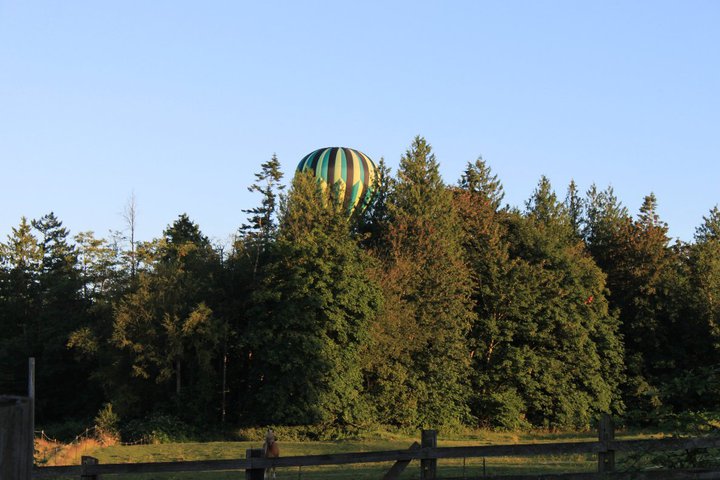
then peaking over the crest of the hill
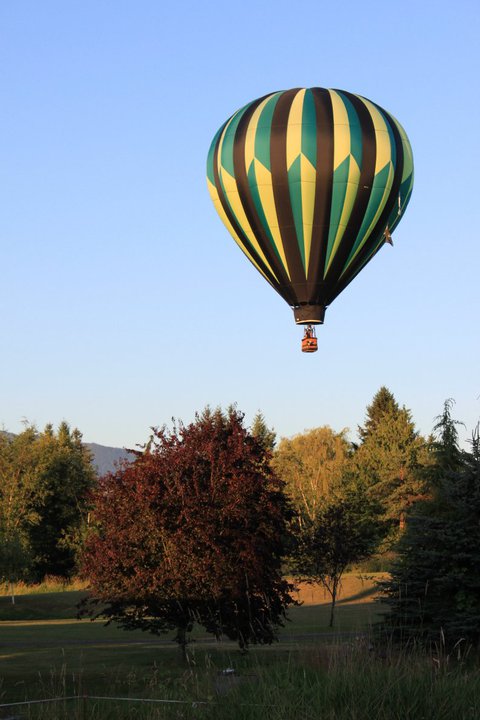
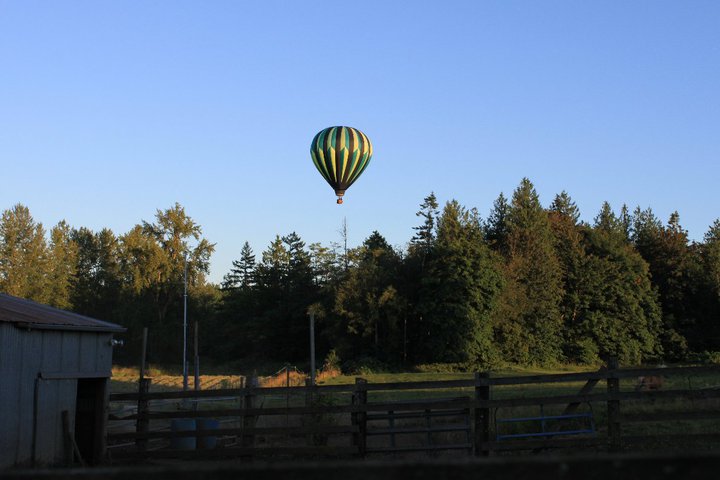
a rounded top of technicolor glory:
The hot air balloon rises.

The horses riveted, baffled, fascinated;
no wild instinct prepares their response
to this wizard’s act from Oz in their own backyard.
The basket riders wave and laugh at the equine audience below
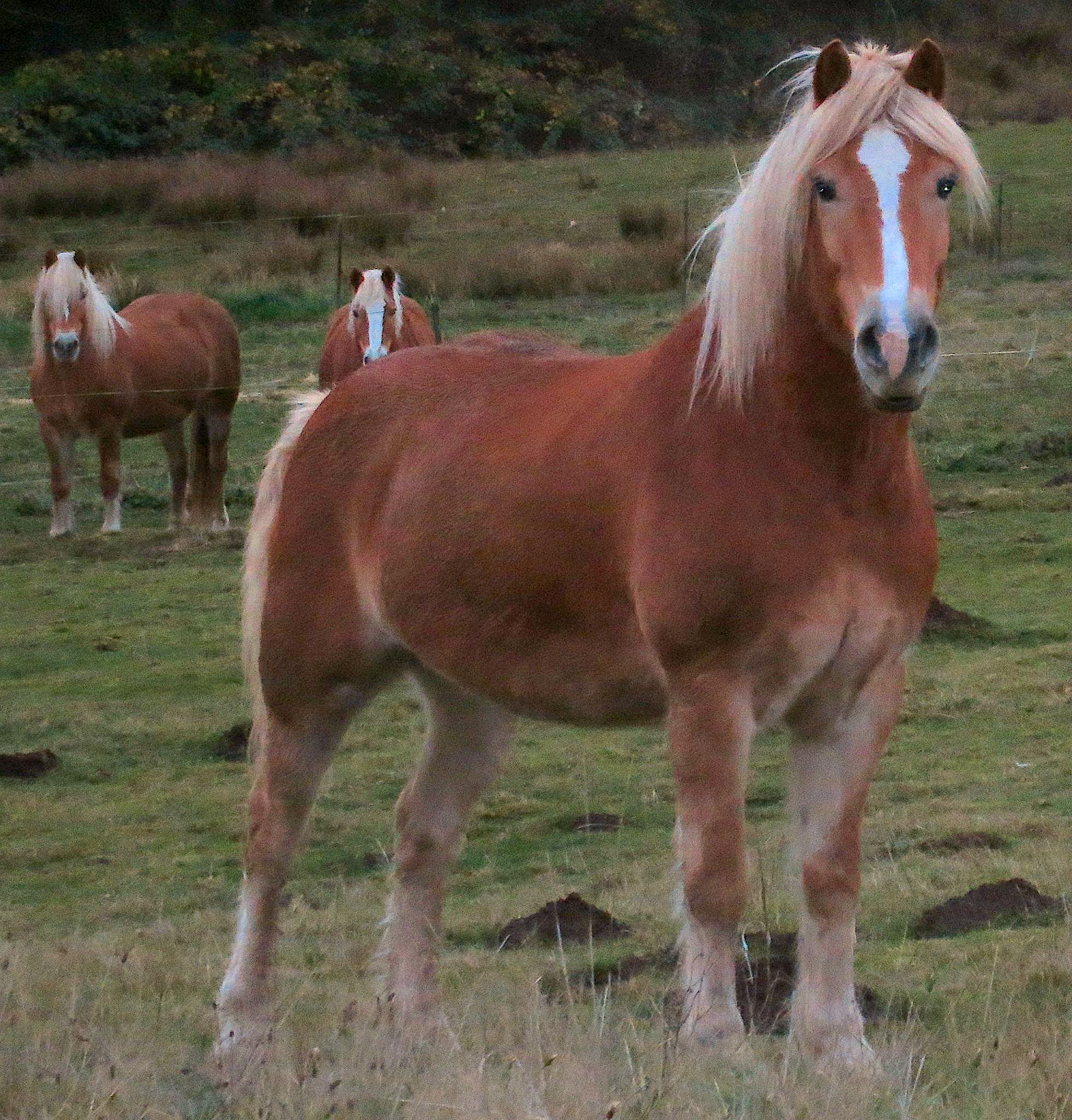
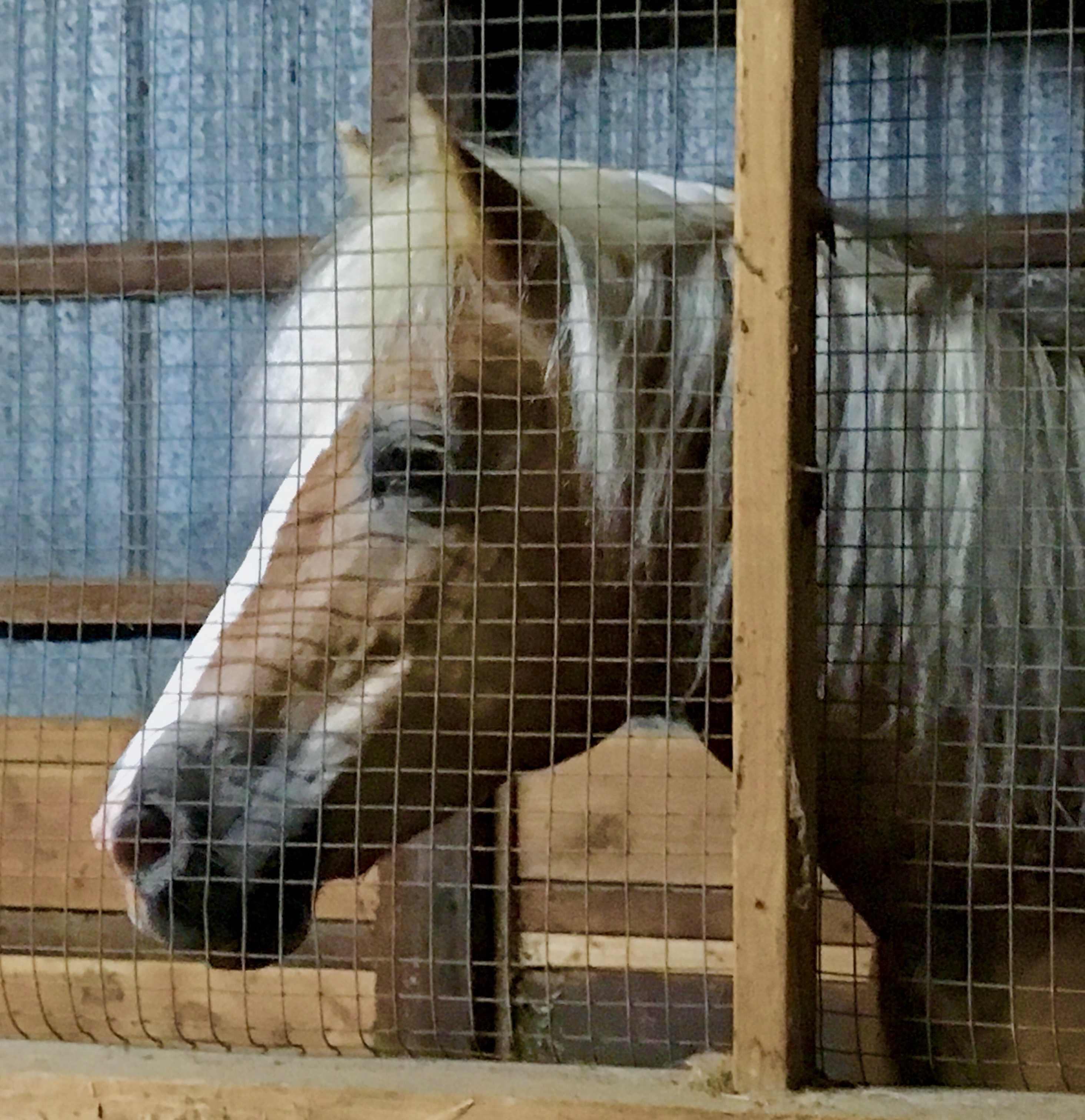
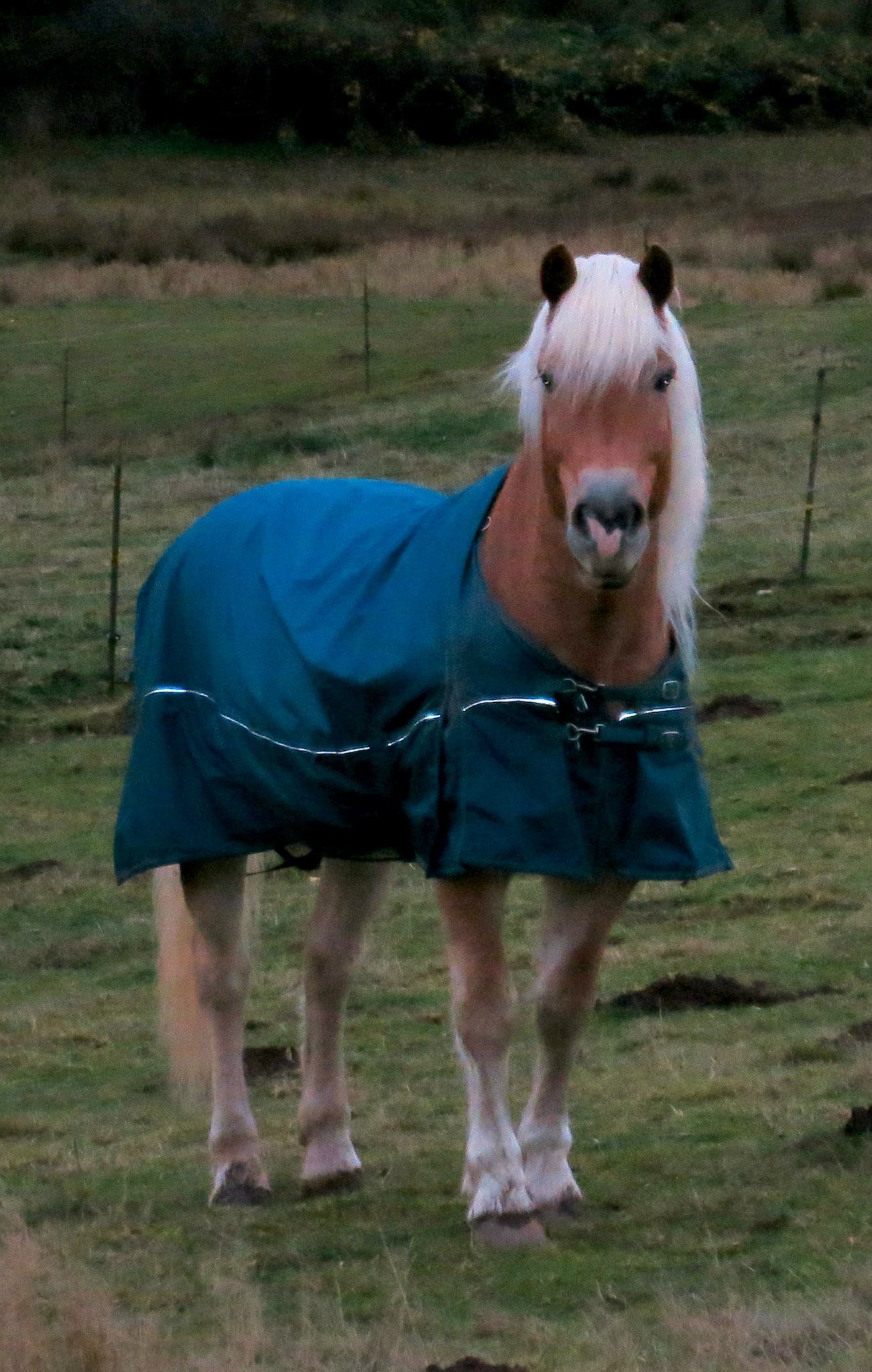
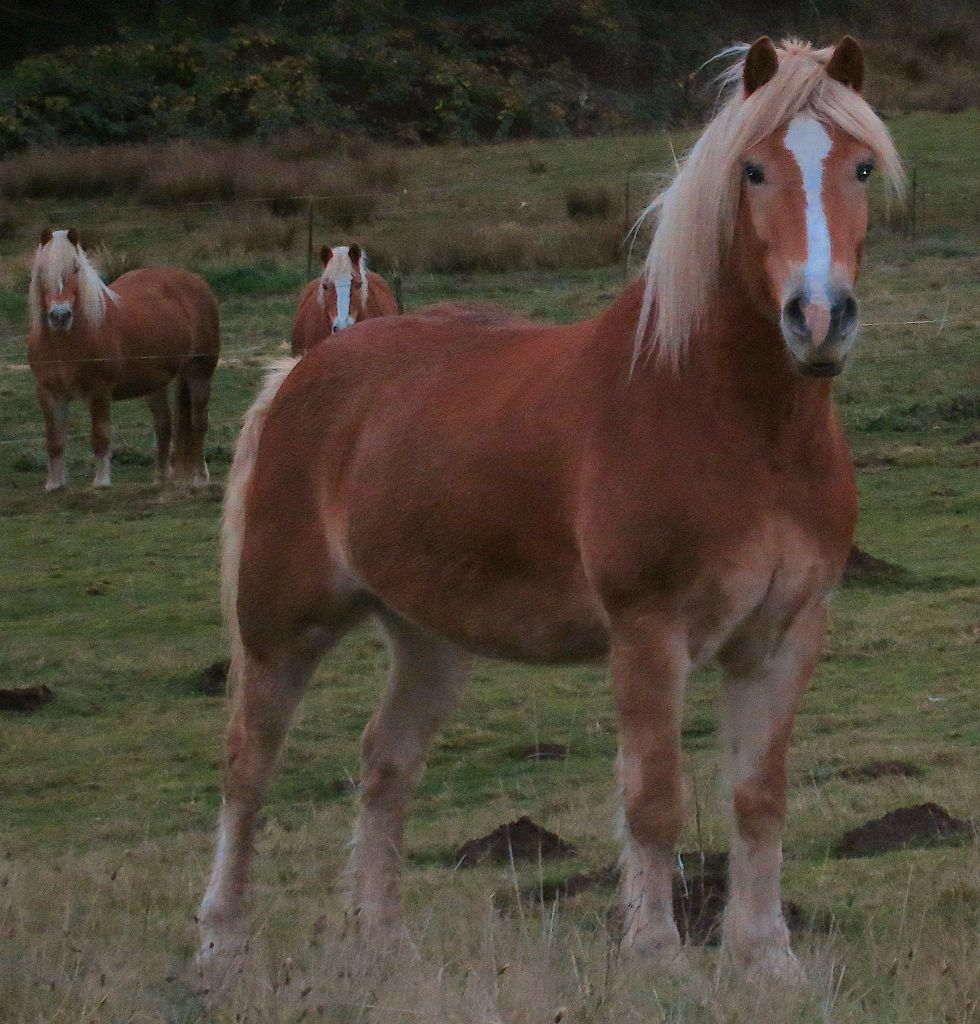
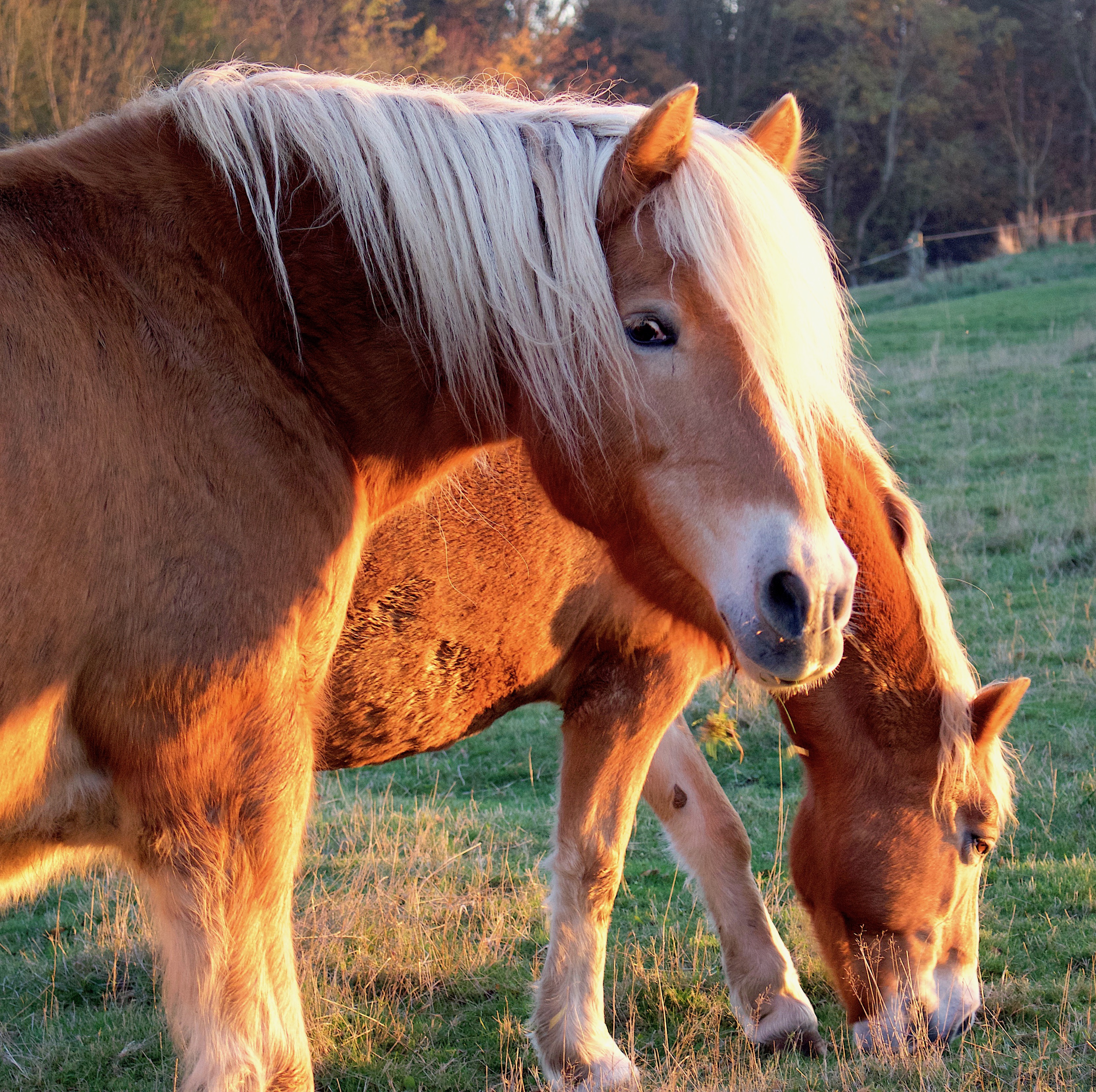
standing in formation with golden noses in the air
and white manes blowing in the breeze.

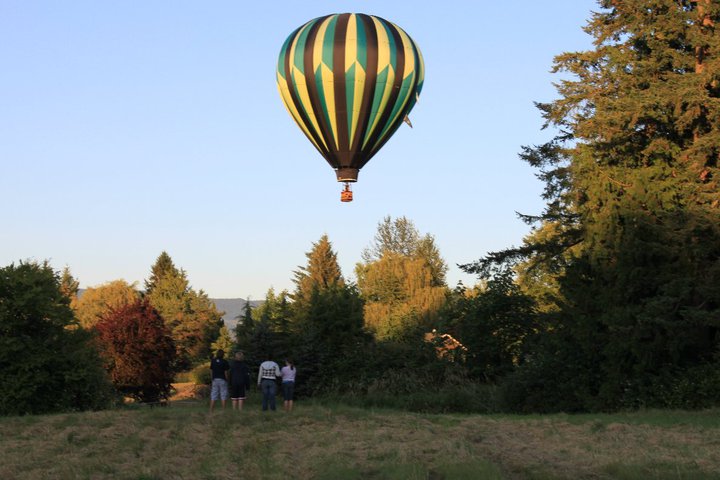
The balloon summits the hill, dipping low, almost touchable
before moving back up to race the sunset,
and search out other pastures, other valleys and hills.
The horses released from the spell of “stand and stare”
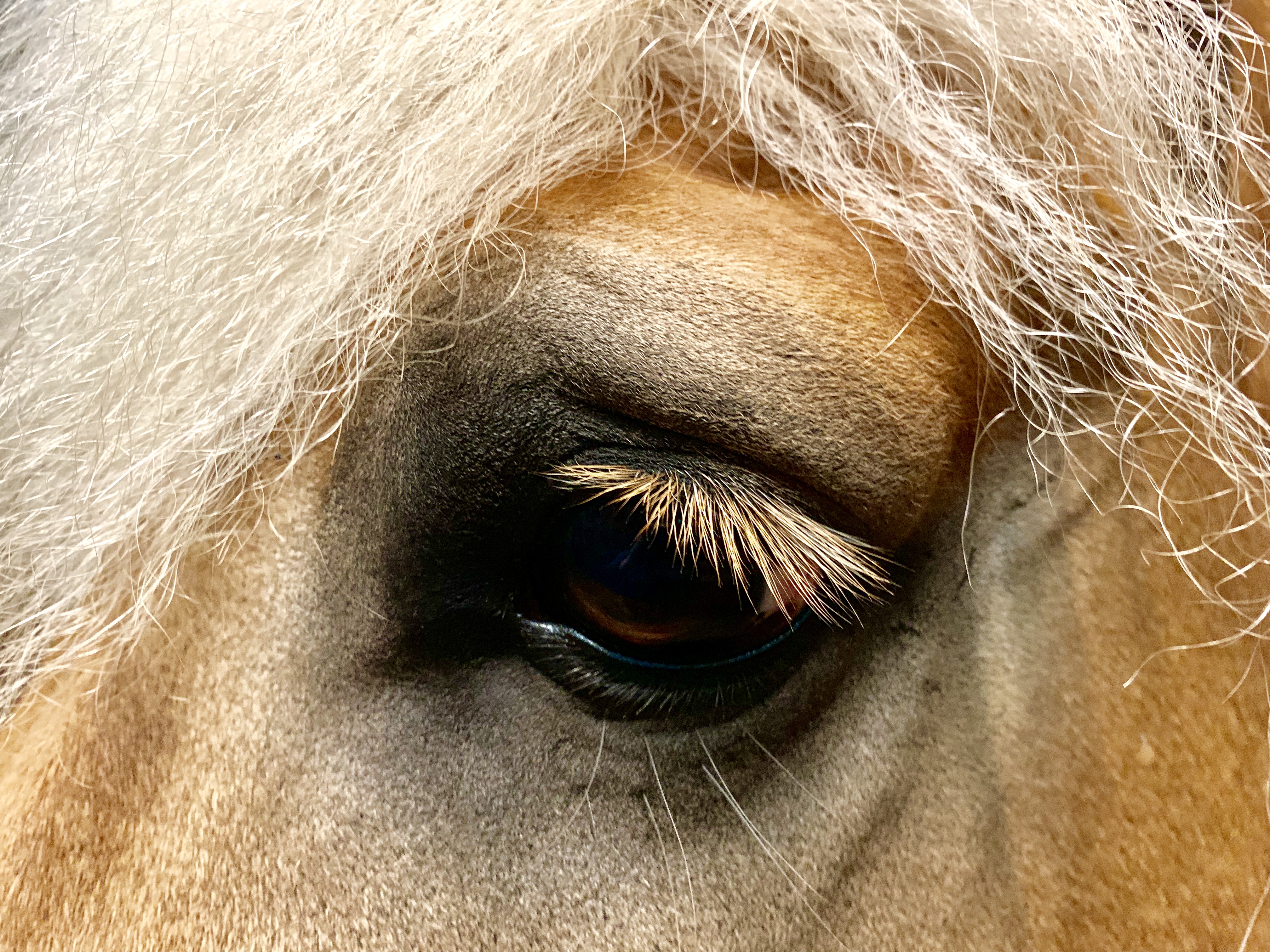
leap in response, snowy tails high, noses flared-

To race up the hill to catch impending darkness,
our night mares cavort, float suspended
until their air is let out, gently, in softening snorts,
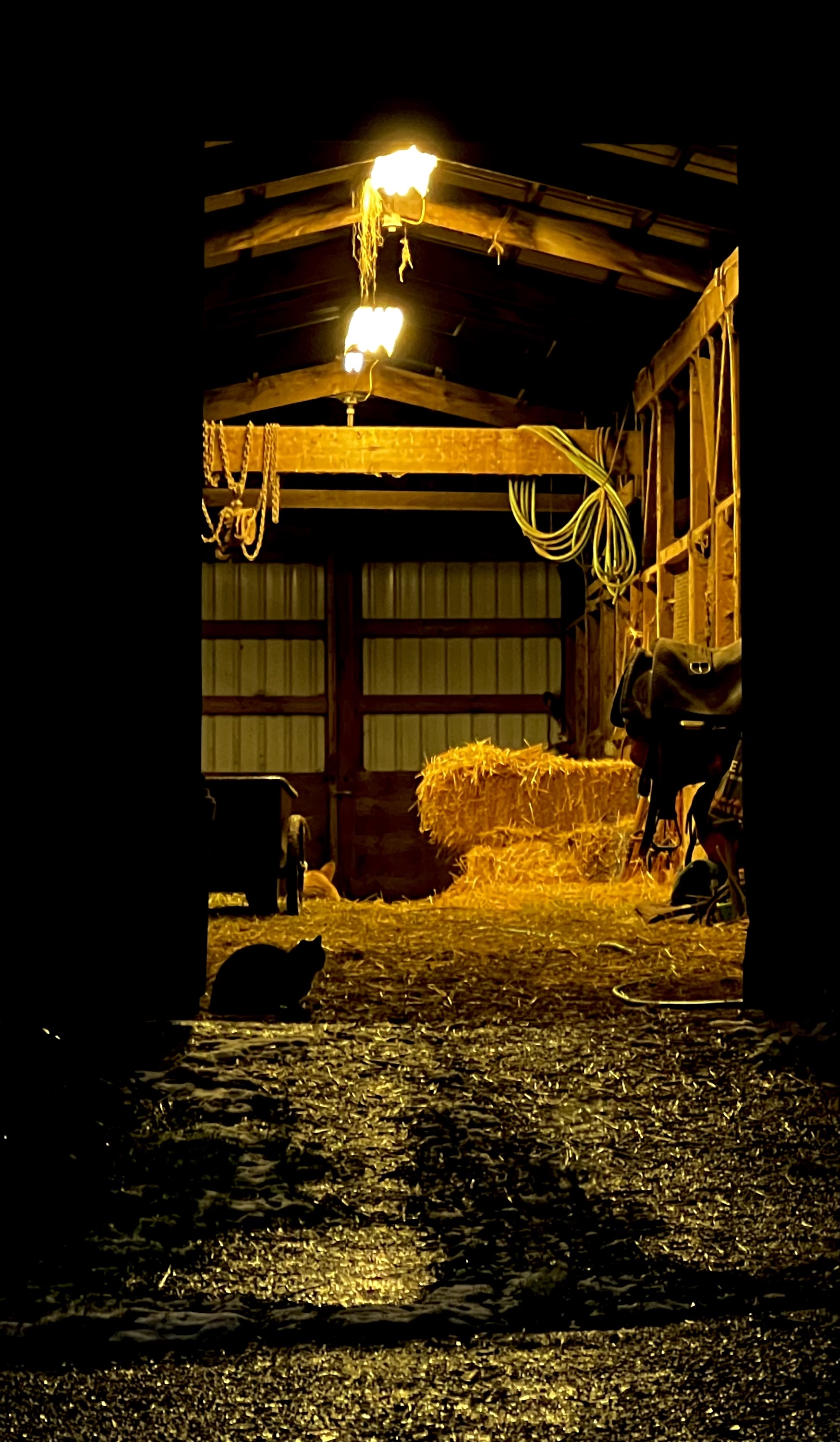
to settle down in a shavings bed in the barn
where night, blissful, becomes ordinary again.
One-Time
Monthly
Yearly

Make a one-time or recurring donation to support daily Barnstorming posts

Make a monthly donation

Make a yearly donation

Choose an amount

¤5.00
¤10.00
¤20.00
¤5.00
¤15.00
¤100.00
¤5.00
¤15.00
¤100.00

Or enter a custom amount

¤

Your contribution is deeply appreciated.

Your contribution is appreciated.

Your contribution is appreciated.

DonateDonate monthlyDonate yearly
The Stones Themselves Will Start to Sing: The Storm Will All Be Over

Soon we shall reach the distant shining shore,
Free from all the storms, we’ll rest forevermore.
Safe within the veil, we’ll furl the riven sail,
And the storm will all be over, Hallelujah!

~Last stanza of “The Storm is Passing Over” (below)

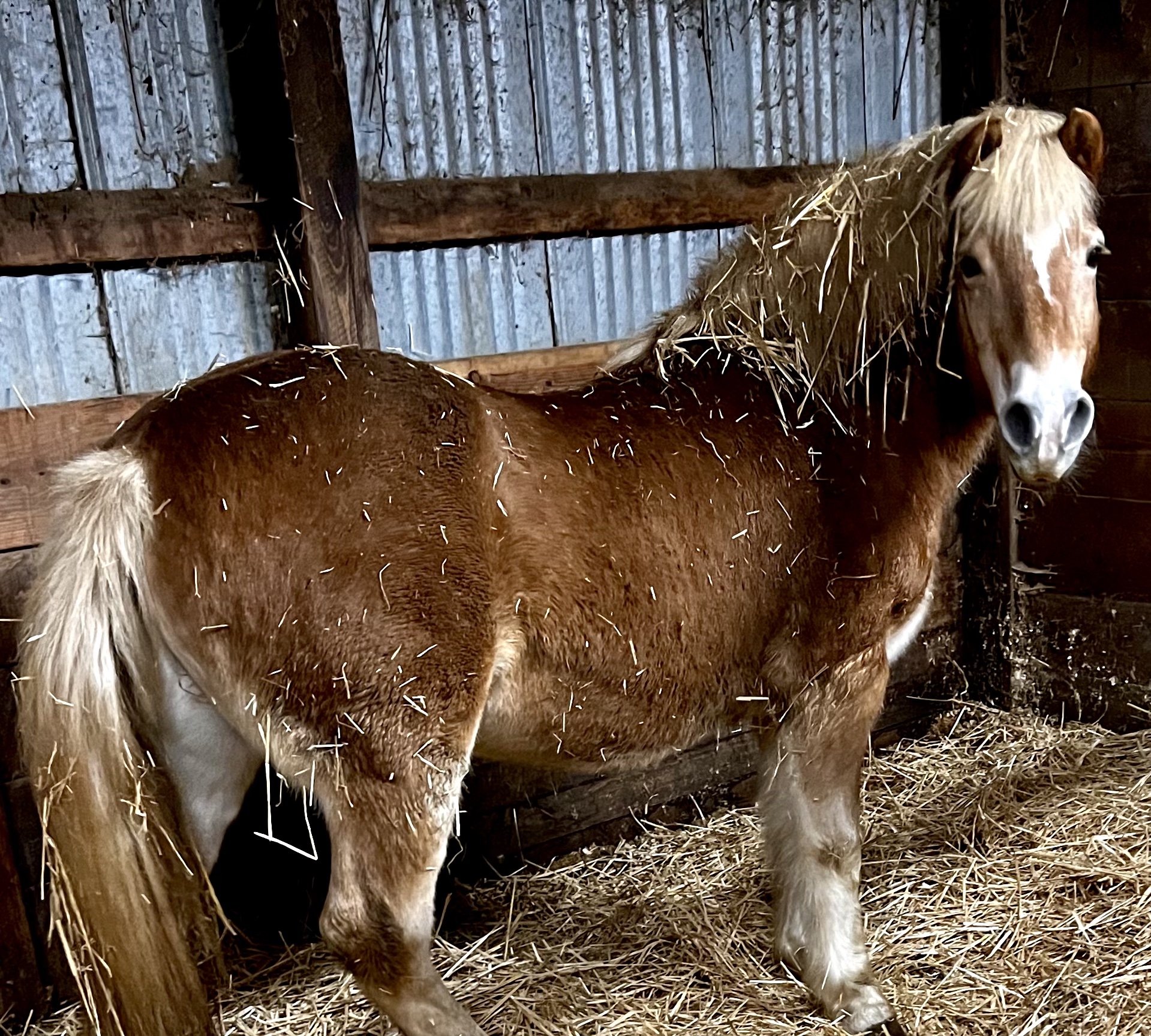
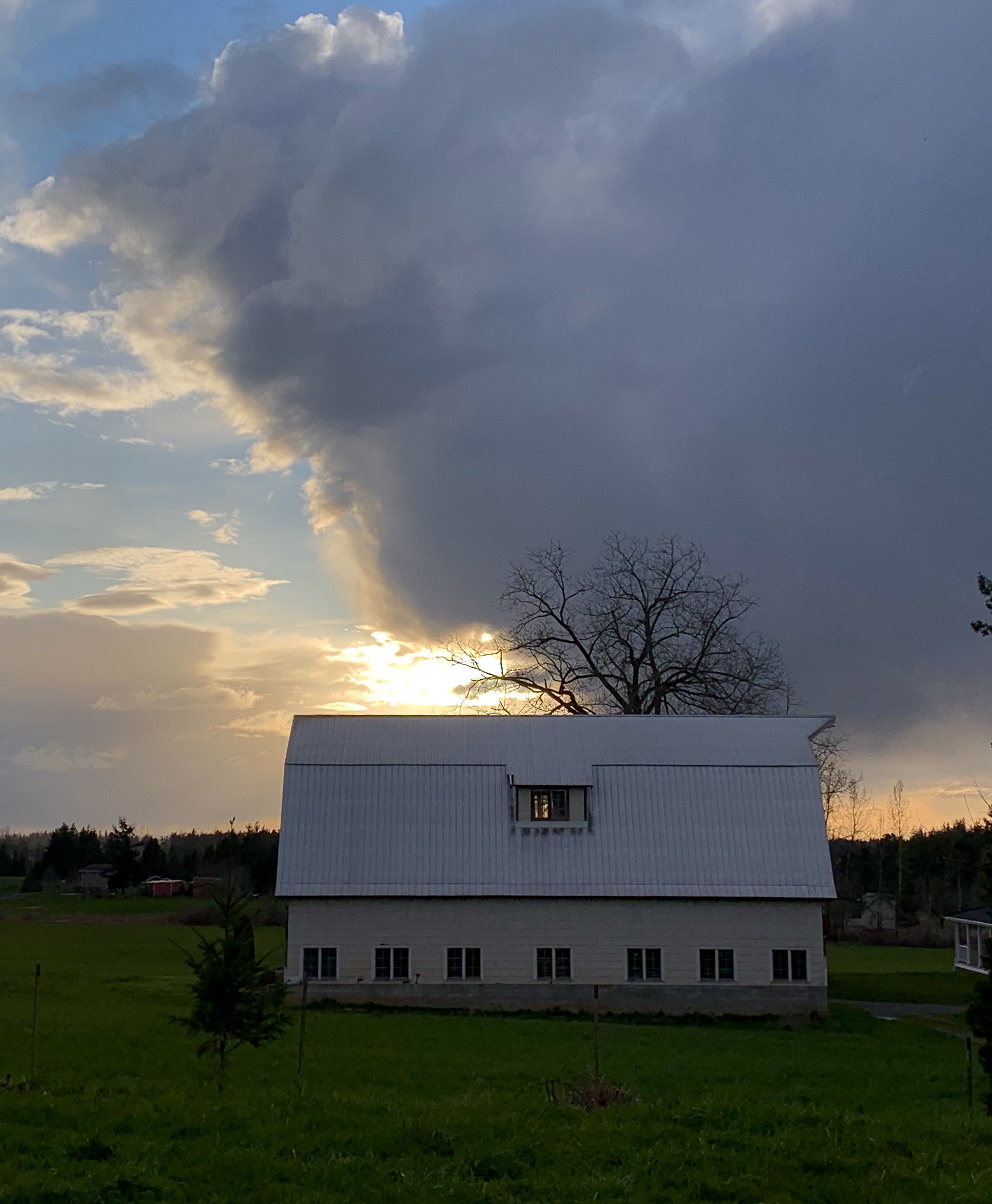
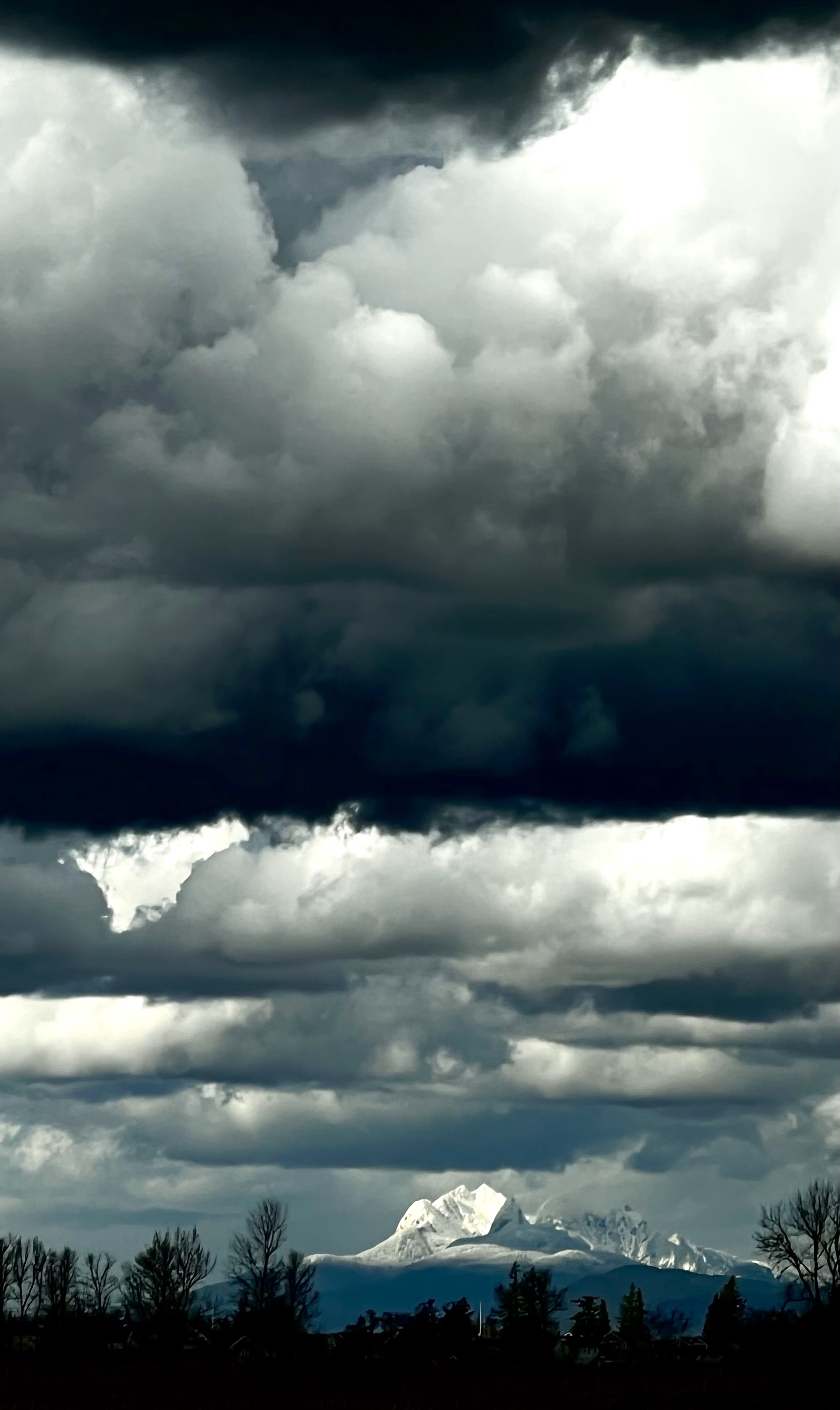
We’ve had two days of intermittent chilly winds with rain and noisy hale storms. I wish I had not left the barn doors wide open after morning chores, as the storm also blew through the barn. Hay, empty buckets, horse halters and cat food were strewn about. The Haflinger horses stood wide-eyed and fretful in their stalls as the hail on the metal roof was deafening.

Once I got the doors closed and secured, all was soon made right. The horses relaxed and got back to their meals and things felt normal again.

The barn is still standing with the roof still on, the horses are where they belong and all seems to be as it was before the barnstorming wind.

Or so it might appear.

This wind heralds another storm beginning this week that hits with such force that I’m knocked off my feet, blown away, and left bruised and breathless. No latches, locks, or barricades are strong enough to protect me from what will come over the next few days.

Today he rides in on a donkey softly, humbly, and wept at what he knew must come.

Tomorrow he curses the fig tree that is all show with plenty of leaves, and no fruit. Then at the temple, he overturns the money-changers’ tables in His fury at their corruption of a holy place.

Tuesday he describes the destruction of Jerusalem that is to happen, yet no one understands.

Wednesday, a woman boldly anoints him with precious oil, as preparation.

On Thursday, he kneels before his friends, pours water over their dusty feet, presides over a simple meal, and later, abandoned, sweats blood in agonized prayer.

By Friday, all culminates in a most perfect storm, transforming everything in its path, leaving nothing untouched, the curtain torn, the veil removed.

The silence on Saturday is deafening.

Next Sunday, the Son rises, sheds his shroud and neatly folds what is no longer needed. He is nearly unrecognizable in his glory.

He calls my name, my heart burns within me at his words and I can never be the same again.

I am, once again, barnstormed to the depths of my soul. Doors flung open wide, my roof pulled off, everything of no consequence blown away and now replaced, renewed and reconciled.

The storm is passing over, again and yet again, year after year, life after life.

This year’s Lenten theme for Barnstorming is a daily selection from songs and hymns about Christ’s profound sacrifice on our behalf.

If we remain silent about Him, the stones themselves will shout out and start to sing (Luke 19:40).

In His name, may we sing…

Courage, my soul, and let us journey on,
Tho’ the night is dark, it won’t be very long.
Thanks be to God, the morning light appears,
And the storm is passing over, Hallelujah!

Chorus: Hallelujah! Hallelujah! The storm is passing over, Hallelujah!

2. Billows rolling high, and thunder shakes the ground,
Lightnings flash, and tempest all around,
Jesus walks the sea and calms the angry waves,
And the storm is passing over, Hallelujah! [Chorus]

3. The stars have disappeared, and distant lights are dim,
My soul is filled with fears, the seas are breaking in.
I hear the Master cry, “Be not afraid, ’tis I,”
And the storm is passing over, Hallelujah!
[Chorus]

4. Soon we shall reach the distant shining shore,
Free from all the storms, we’ll rest forevermore.
Safe within the veil, we’ll furl the riven sail,
And the storm will all be over, Hallelujah! [Chorus]

One-Time
Monthly
Yearly

Make a one-time or recurring donation to support daily Barnstorming posts

Make a monthly donation

Make a yearly donation

Choose an amount

$5.00
$10.00
$20.00
$5.00
$15.00
$100.00
$5.00
$15.00
$100.00

Or enter a custom amount

$

Your contribution is deeply appreciated.

Your contribution is appreciated.

Your contribution is appreciated.

DonateDonate monthlyDonate yearly
Pull Open the Barn Doors

I like farming.
I like the work.
I like the livestock and the pastures and the woods. 
It’s not necessarily a good living, but it’s a good life. 
I now suspect that if we work with machines
the world will seem to us to be a machine,
but if we work with living creatures
the world will appear to us as a living creature. 
That’s what I’ve spent my life doing,

trying to create an authentic grounds for hope.
~Wendell Berry, horse farmer, essayist, poet, professor

The barn is old, and very old,
But not a place of spectral fear.
Cobwebs and dust and speckling sun
Come to old buildings every one.
Long since they made their dwelling here,
And here you may behold


Nothing but simple wane and change;
Your tread will wake no ghost, your voice
Will fall on silence undeterred.
No phantom wailing will be heard,
Only the farm’s blithe cheerful noise;
The barn is old, not strange.

~Edward Blunden from “The Barn”

When we pull open the barn doors,
every morning
and each evening,
as our grandfathers did
over a hundred years ago,
six rumbling voices
rise in greeting.
We exchange scents,
nuzzle each others’ ears.

We do our chores faithfully
as our grandfathers once did–
draw fresh water
into buckets,
wheel away
the pungent mess underfoot,
release an armful of summer
from the bale,
reach under heavy manes
to stroke silken necks.

We don’t depend
on our horses’ strength
and willingness to
don harness
to carry us to town
or move the logs
or till the soil
as our grandfathers did.

Instead,
these soft eyed souls,
some born on this farm
three long decades ago,
are simply grateful
for our constancy
morning and night
to serve their needs
until the day comes
they need no more.

And we depend on them
to depend on us
to be there
to open the doors;
their low whispering welcome
gives voice
to the blessings of
living on a farm
ripe with rhythms and seasons,
as if today and tomorrow are
just like one hundred years ago.

Click on this link for a typical barn moment: https://www.facebook.com/707166118/videos/10156035185231119/

Lyrics:

This is a barn and I know it’s haunted
The corn rattles and the shadows move
It’s just the way, it’s just the way I’m feeling
I want to lie down in a field of rain

This is a river and I pray for the bottom
Some kind of measure of the way things change
I’ve been stuck in the middle of a slow storm, counting the days, love

I know we’re in the dark, and the cold comes
Through the very cracks that let the light through
Bring me something back from that sunny coast, and keep us, moving on

These are the shadowlands, I’ve known them
And I think it’s going to be the long way down
But I’ll be the tiny flame, that you carry around, around, around

I know we’re in the dark, and the cold comes
Through the very cracks that let the light through
Bring me something back from that sunny coast, and keep us, moving on

This is a blessing and I don’t date doubt it
We built a boat out of willow trees
We caught the moonlight, like a mirror
Shine right through to the best of me
We’ve been living in abandoned houses
Sometimes we’re tending to abandoned fields
It’s just the way it’s just the way I’m feeling
I want to wake up with the sun in my head
~Chris Pureka

One-Time
Monthly
Yearly

Make a one-time or recurring donation to support Barnstorming

Make a monthly donation

Make a yearly donation

Choose an amount

¤5.00
¤10.00
¤20.00
¤5.00
¤15.00
¤100.00
¤5.00
¤15.00
¤100.00

Or enter a custom amount

¤

Your contribution is deeply appreciated.

Your contribution is appreciated.

Your contribution is appreciated.

DonateDonate monthlyDonate yearly
A World Without a Sky

Heaven-invading hills are drowned
In wide moving waves of mist,
Phlox before my door are wound
In dripping wreaths of amethyst.

Ten feet away the solid earth
Changes into melting cloud,
There is a hush of pain and mirth,
No bird has heart to speak aloud.

Here in a world without a sky,
Without the ground, without the sea,
The one unchanging thing is I,
Myself remains to comfort me.
~Sara Teasdale “White Fog”

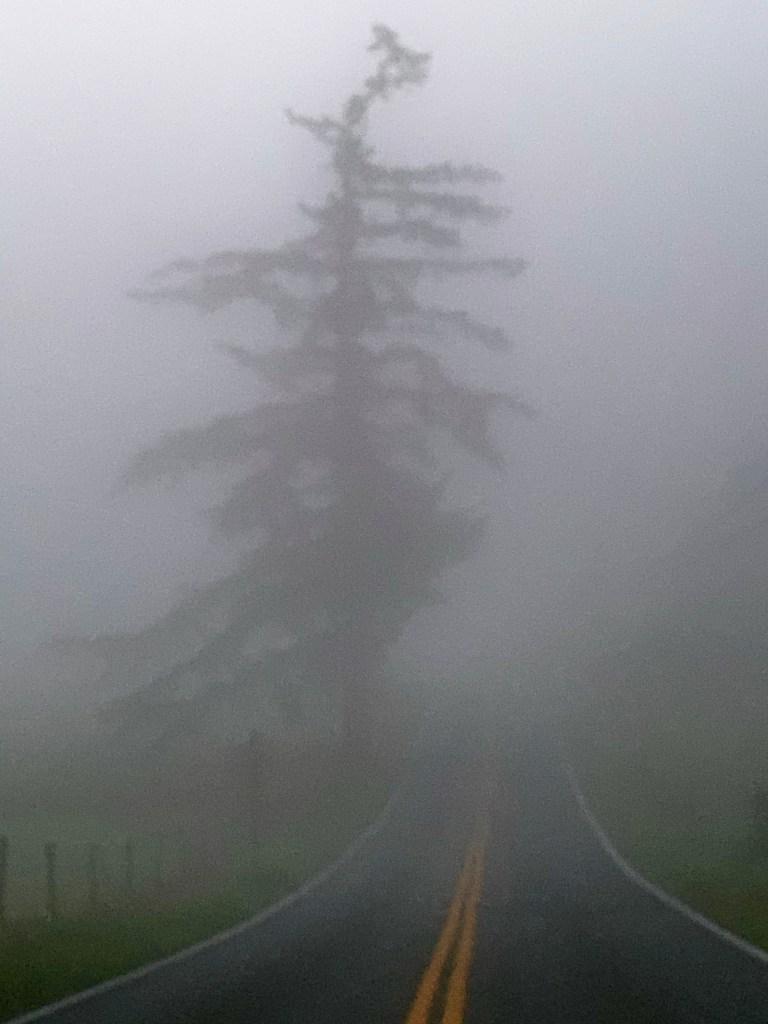
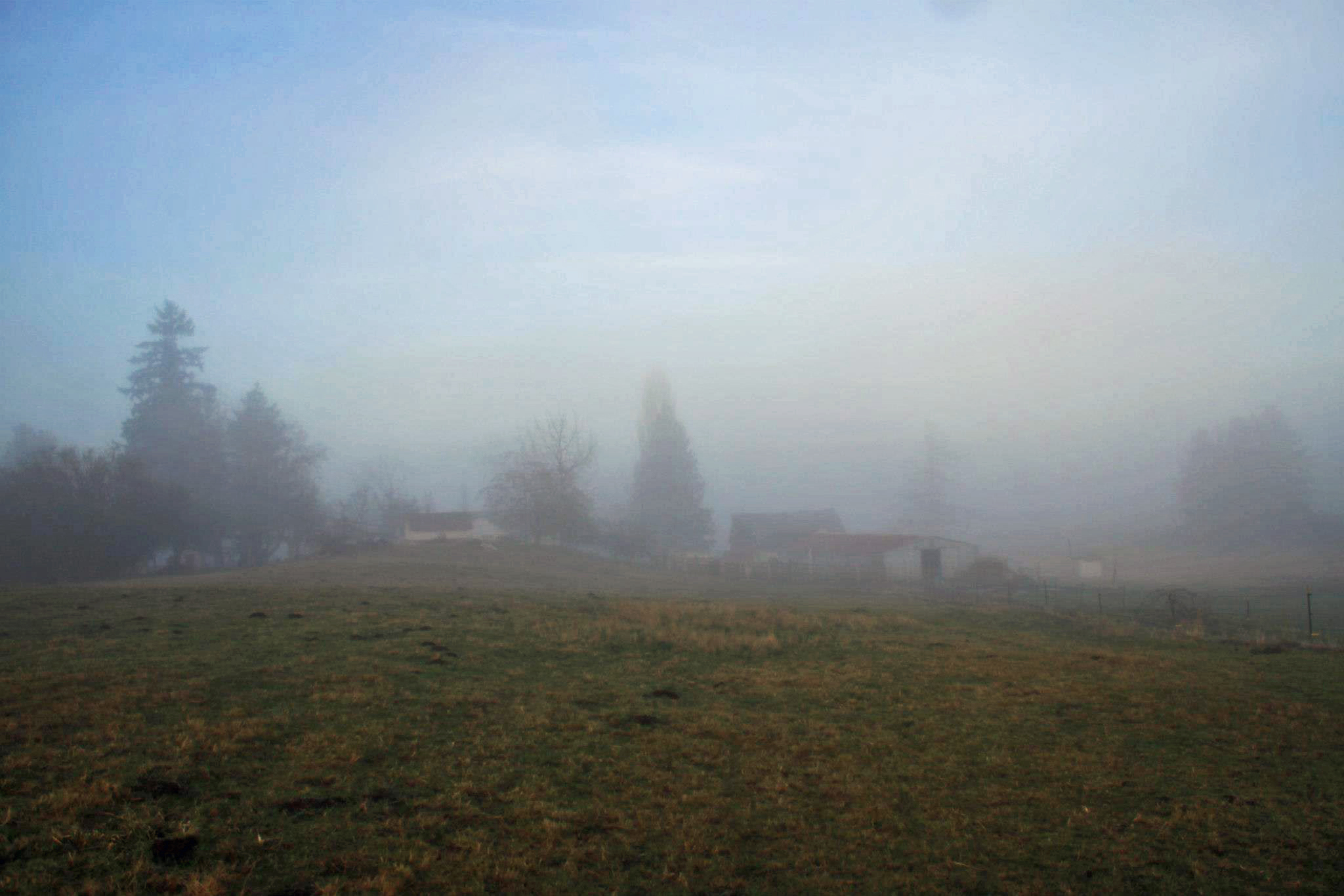
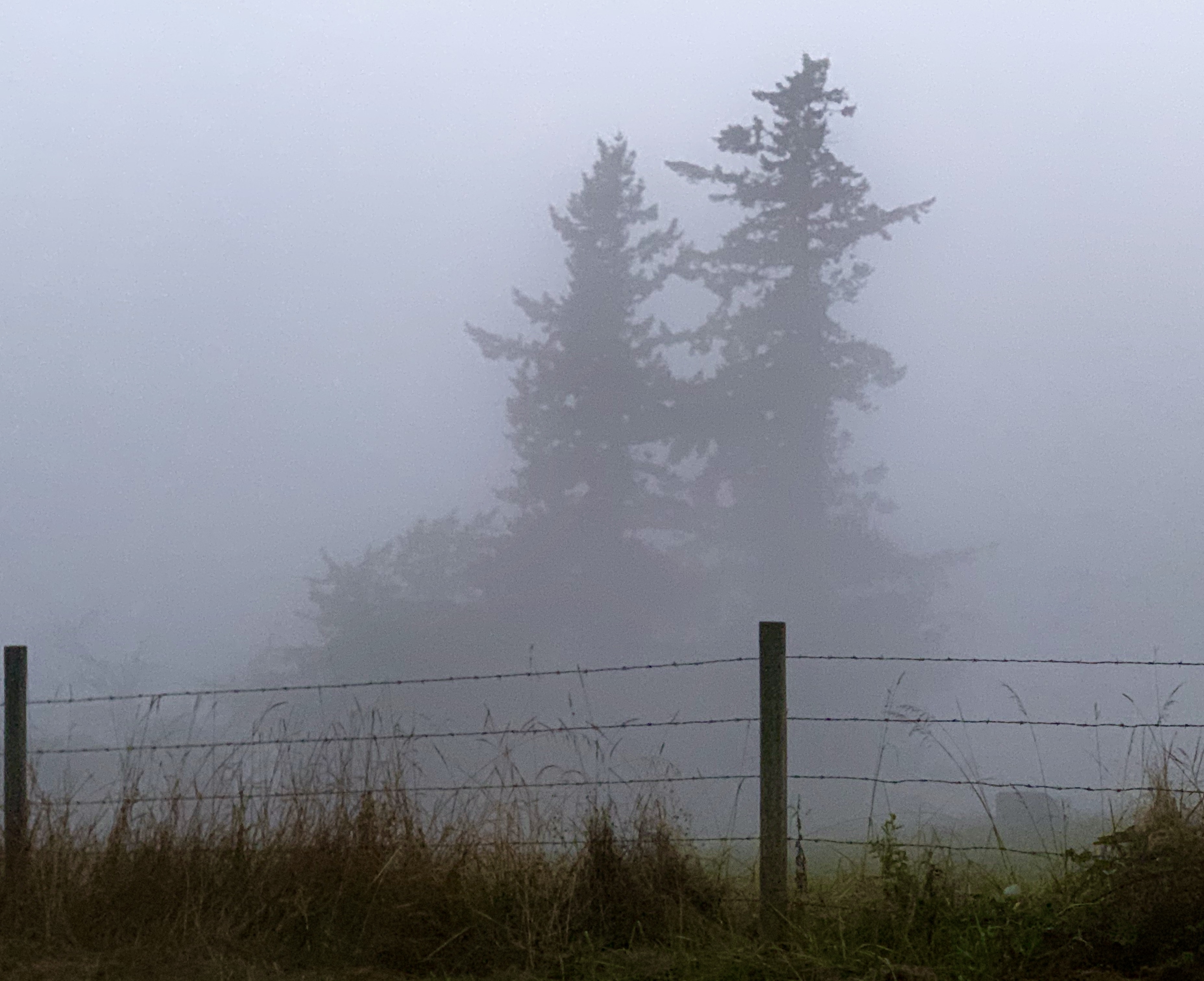
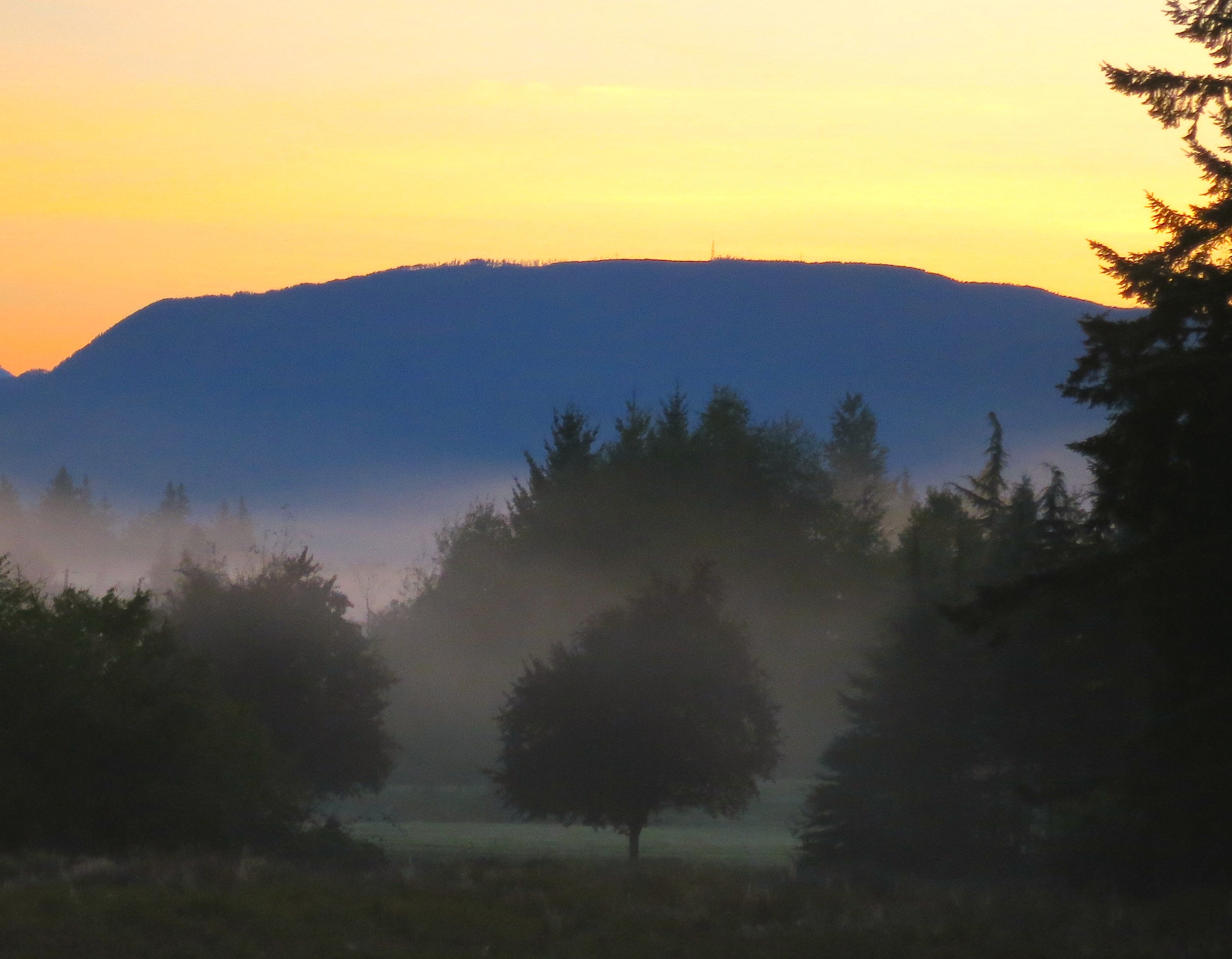
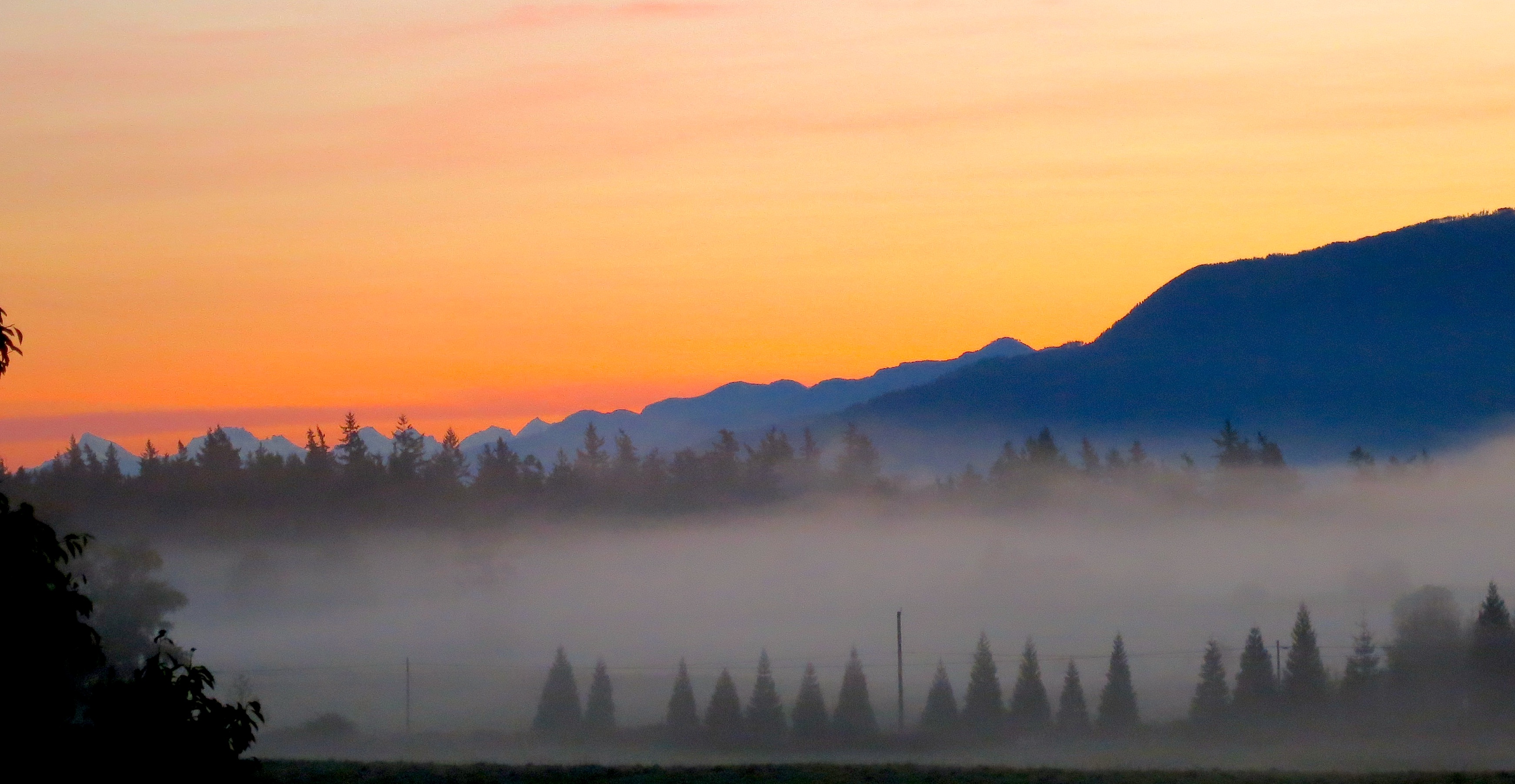
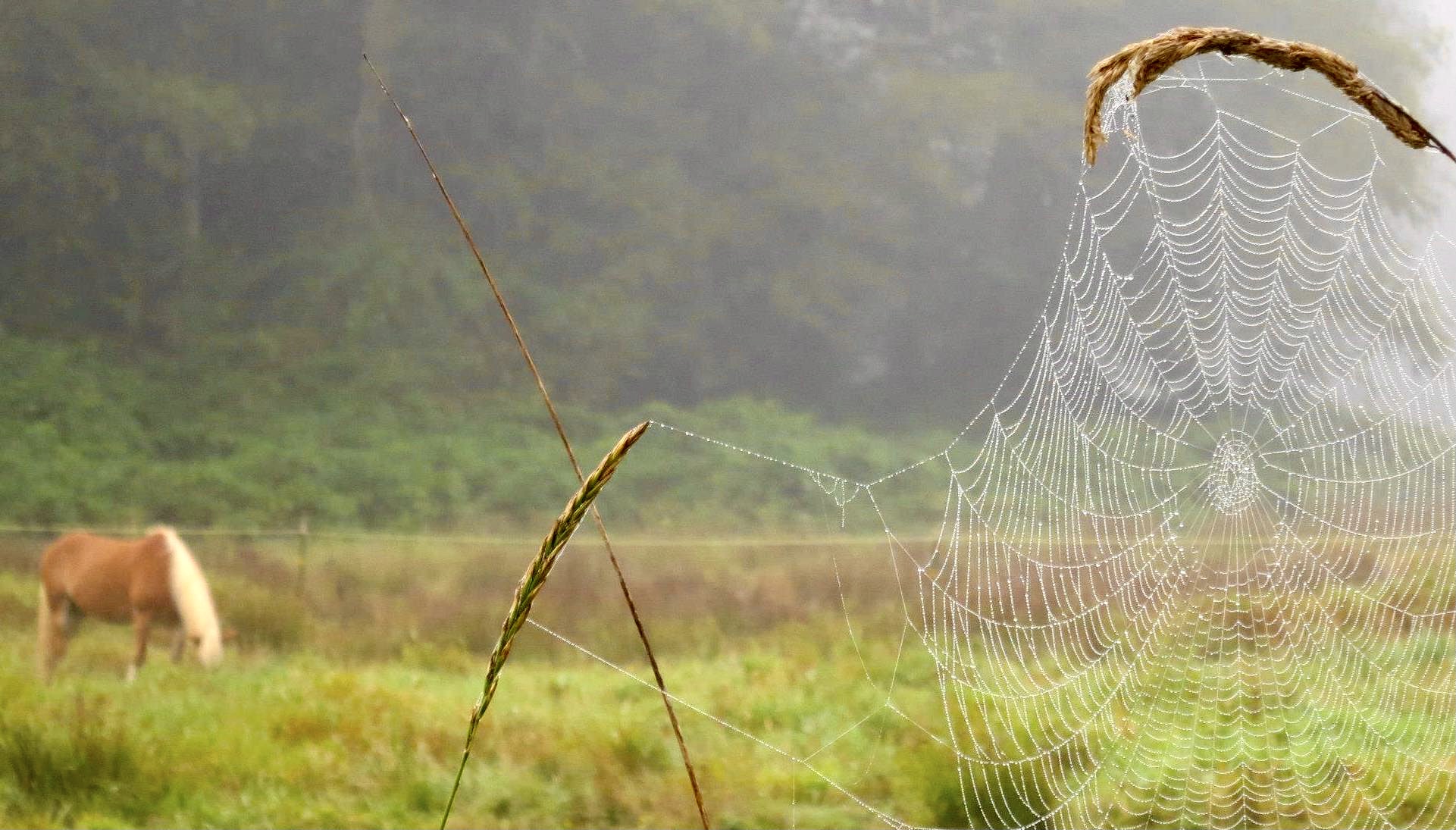
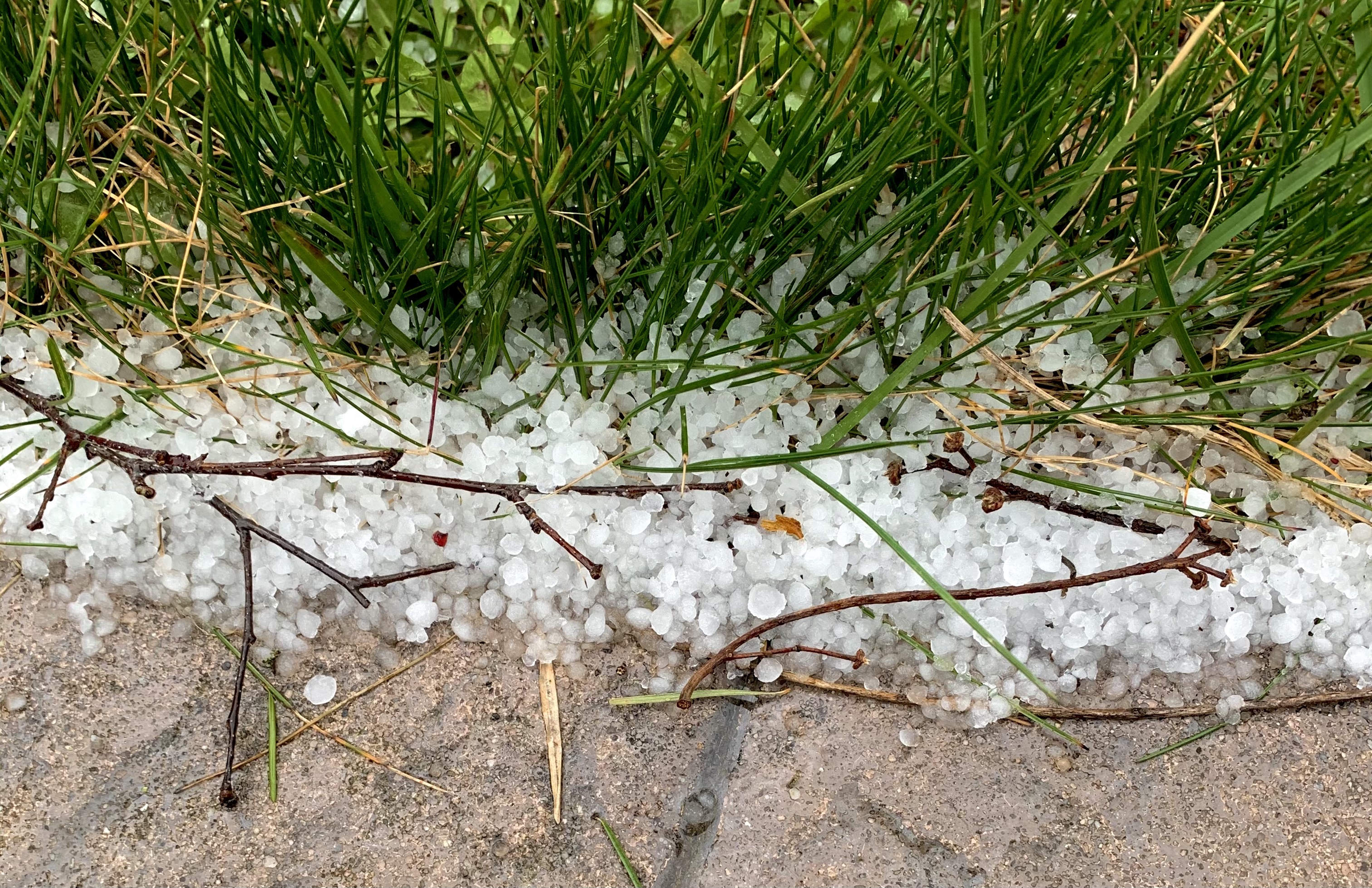
We’ve had all-day fog up and down Puget Sound over the past few days, atypical for a Pacific Northwest winter. This is fog that literally drips from the trees and soaks like rain, swallowing up visible landscape, hushing bird song, erasing all color by homogenizing everything.

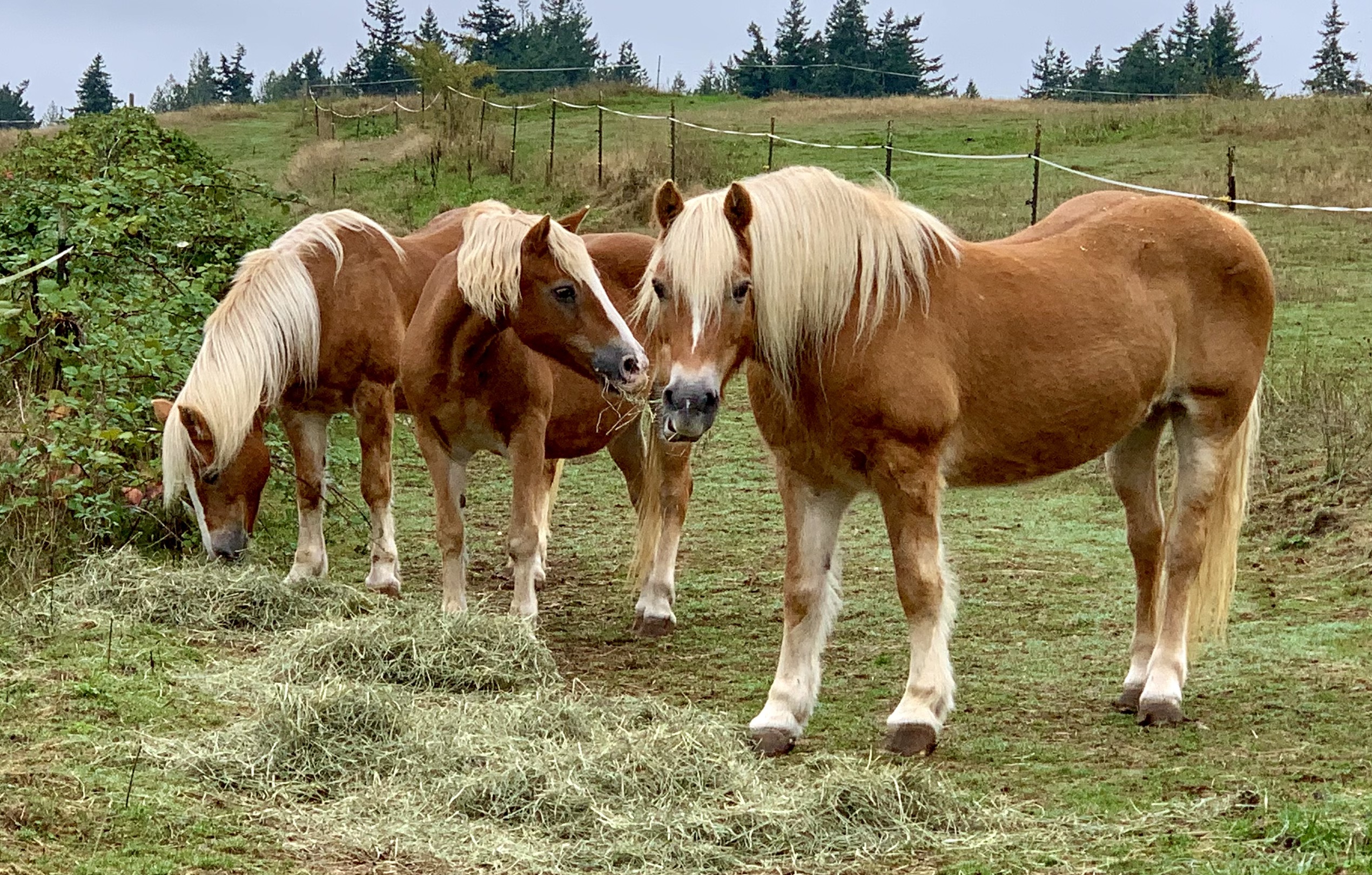
When not barn-bound in the winter, a foggy day means our horses are literally sucked up into the morning mist as I send them out one by one to the field from the barn. Stopping at the barn door, they sniff the wet air, hesitant to be turned out into the grey sea surrounding them. What could there be to eat out in this murk? Each one, when turned loose, would wander into the soup, disappearing, as if never to be seen again. One by one they wander out to look for their buddies, seeing nothing, hearing nothing, smelling nothing. They are lost and alone and bewildered until somehow they meet up out in the pasture, forming a pod of Haflingers.

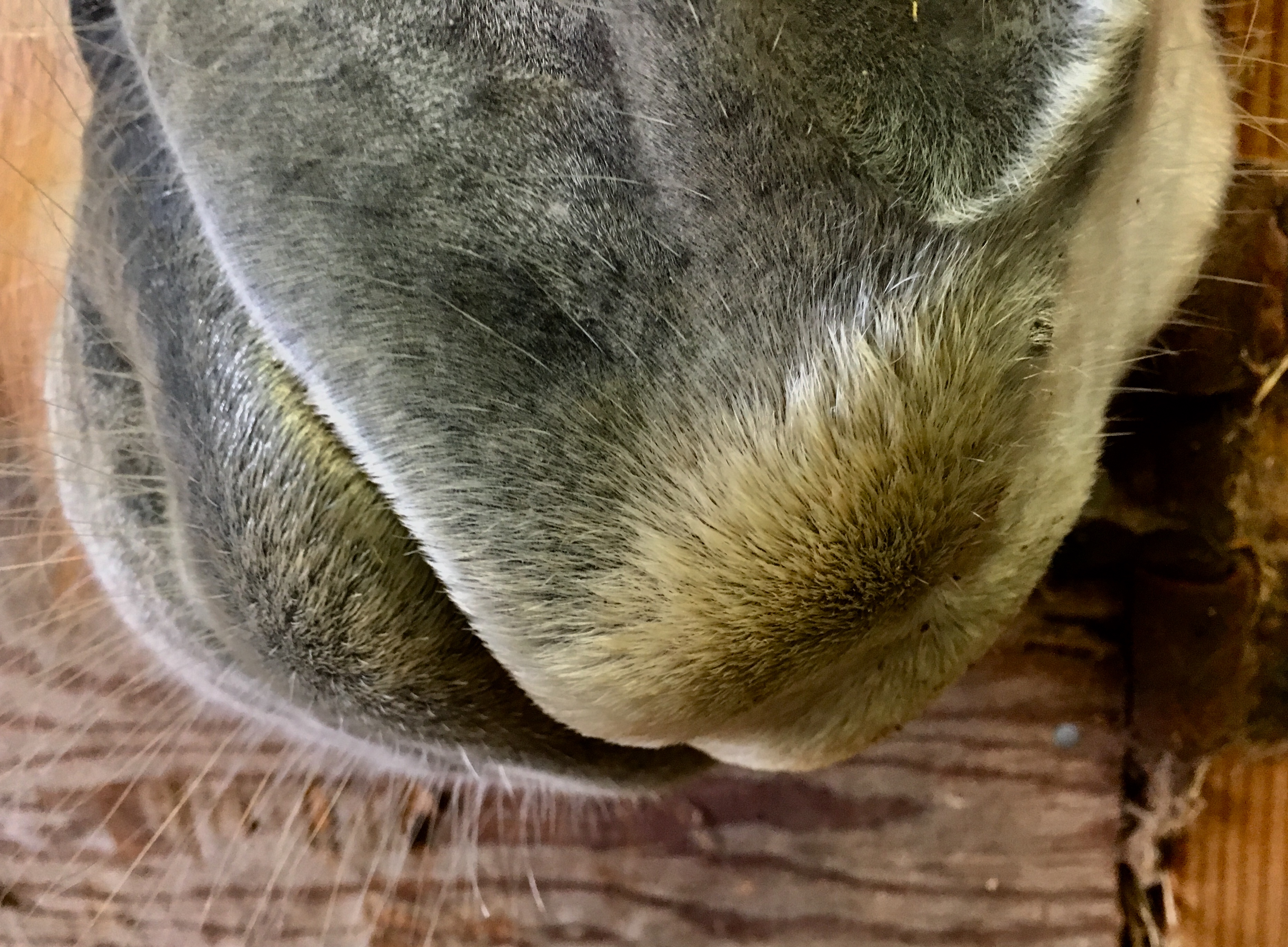
I muse at their initial confusion and then their utter conviction there must be “something out there” worth finding. They are dependent on the usual cues–visual, auditory, olfactory–all limited in the fog. Instead they rely on some inner sonar to find each other and bunch together in a protective knot, drops of fog dew clinging to their manes, their eyelashes and their muzzle whiskers. As day wears on, the fog usually dissipates, their coats drying under a warming sun, and the colors of the fields and trees and chestnut horses emerge from the cocoon of haze.

This winter, I have felt lost in fog too. I’m disconnected from a regular work schedule since retiring as a physician, so am helping as a volunteer in a variety of service opportunities. I am still feeling afloat and circling somewhat aimlessly, searching for a touch point of purpose and direction. Every so often I bump into a fellow fog wanderer and we’ll knot together for a bit, relieved to be connected to something solid and familiar.

My isolation is likely a combination of pandemic limitations and my own self-absorbed state of mind, sucking me in deep, separating me from others, distancing me from joy. At times, I feel soaked, dripping and shivering. If I only had the faith shown by my horses in the mist, I’d charge into the fog fearlessly, knowing there are others out there ready to band together for company, comfort and support, awaiting the sun. When warming and rejuvenation do come, I hope it will be enough to dry my whiskers, put color back in my cheeks and refresh my hopes and dreams.

Most importantly, I am reminded yet again — no fog is forever.

An absolute
patience.
Trees stand
up to their knees in
fog. The fog
slowly flows
uphill.
White
cobwebs, the grass
leaning where deer
have looked for apples.
The woods
from brook to where
the top of the hill looks
over the fog, send up
not one bird.
So absolute, it is
no other than
happiness itself, a breathing
too quiet to hear.

~Denise Levertov “The Breathing”

One-Time
Monthly
Yearly

Make a one-time or recurring donation to support Barnstorming

Make a monthly donation

Make a yearly donation

Choose an amount

¤5.00
¤10.00
¤20.00
¤5.00
¤15.00
¤100.00
¤5.00
¤15.00
¤100.00

Or enter a custom amount

¤

Your contribution is deeply appreciated.

Your contribution is appreciated.

Your contribution is appreciated.

DonateDonate monthlyDonate yearly

Mucking About

I’ve banked nothing, or everything.
Every day
the chores need doing again.
Early in the morning,

I clean the horse barn with a manure fork.
Every morning, it feels as though it could be

the day before or a year ago or a year before that.
With every pass, I give the fork one final upward flick
to keep the manure from falling out, and every day I remember

where I learned to do that and from whom.
Time all but stops.
But then I dump the cart on the compost pile.
I bring out the tractor and turn the pile,

once every three or four days.
The bucket bites and lifts,

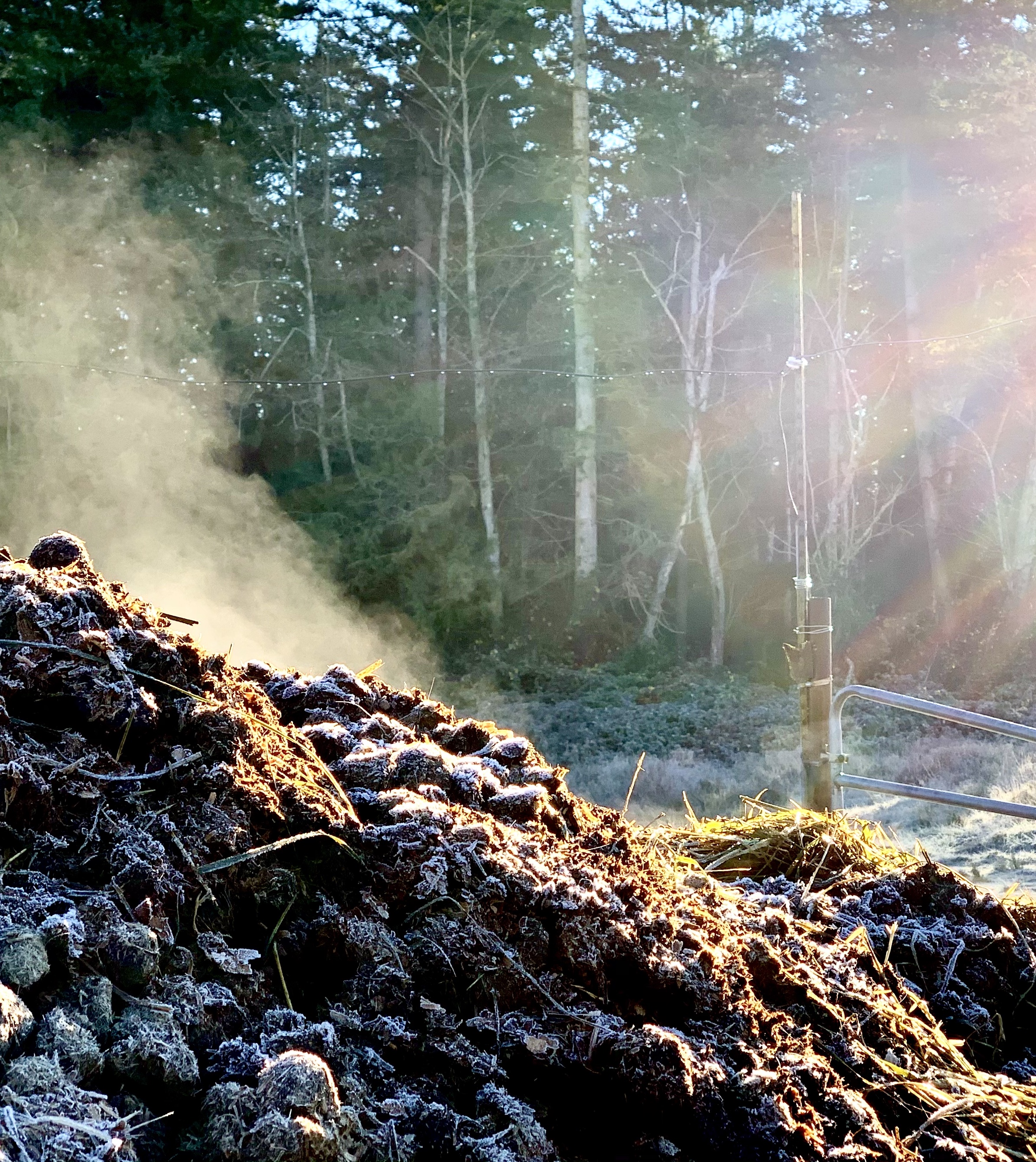
and steam comes billowing out of the heap.
It’s my assurance that time is really moving forward,
decomposing us all in the process.
~Verlyn Klinkenborg from More Scenes from the Rural Life

He <the professor> asked
what I made of the other Oxford students
so I told him:
They were okay, but they were all very similar…
they’d never failed at anything or been nobodies,
and they thought they would always win.
But this isn’t most people’s experience of life.

He asked me what could be done about it.
I told him the answer was to send them all out for a year
to do some dead-end job
like working in a chicken processing plant
or spreading muck with a tractor.
It would do more good than a gap year in Peru. 

He laughed and thought this was tremendously witty.
It wasn’t meant to be funny.

~James Rebanks from The Shepherd’s Life
(how a sheep farmer succeeds at Oxford and then goes back to the farm)

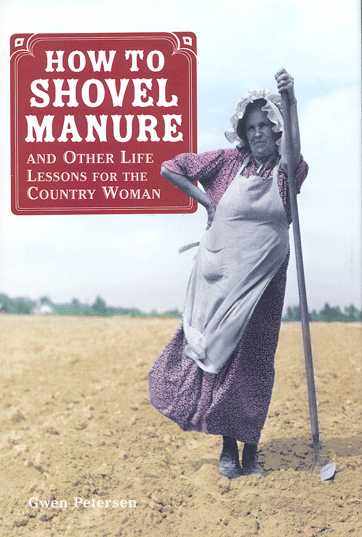
For well over thirty years, my husband and I have spent about an hour a day shoveling manure out of numerous horse stalls and I’m a better person for it. The last few weeks of sub-freezing snow/icy weather while running low on trucked-in supplies of shavings and straw bedding has been a particular character-building experience. It feels like everything, myself included, is in a process of decomposition.

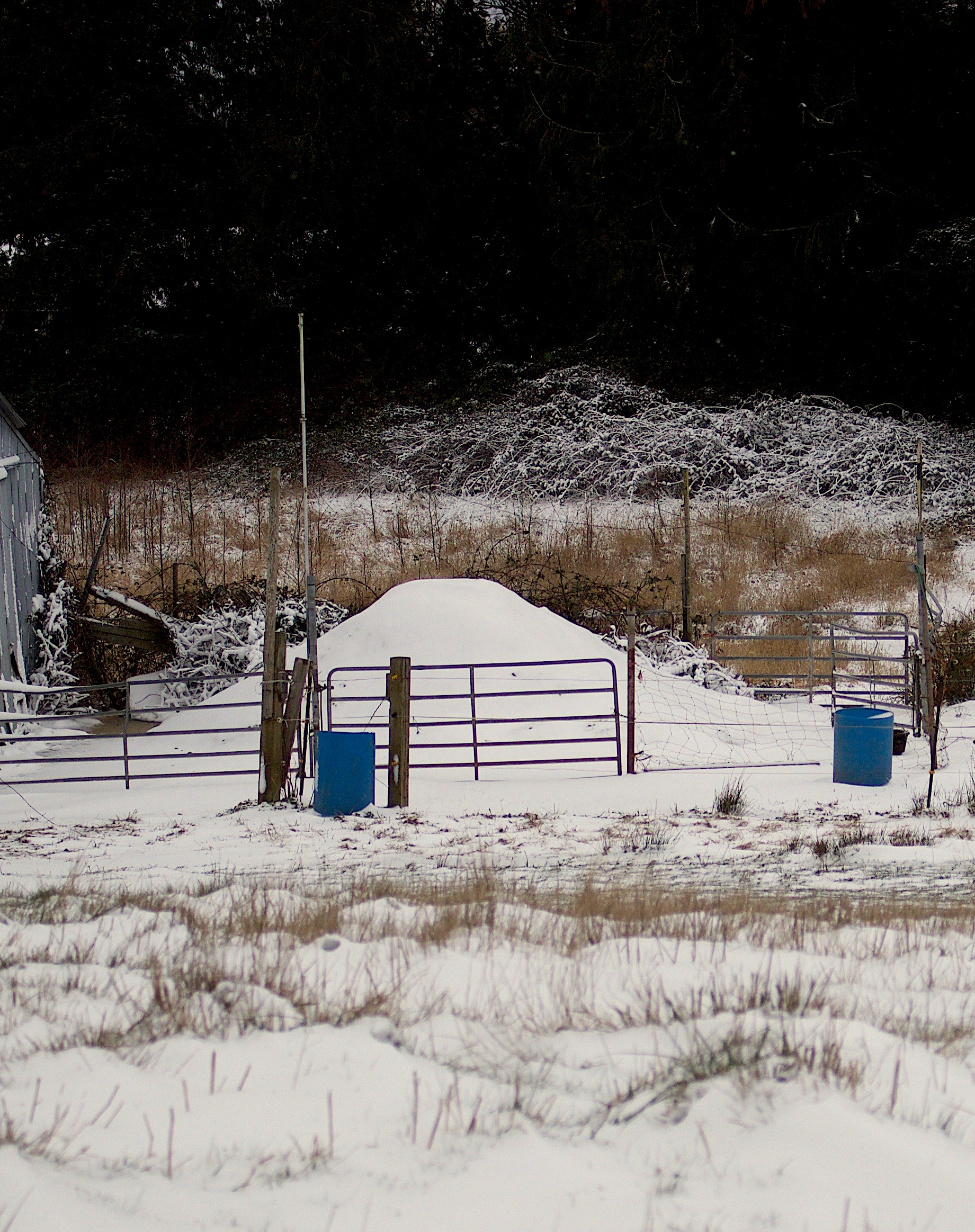
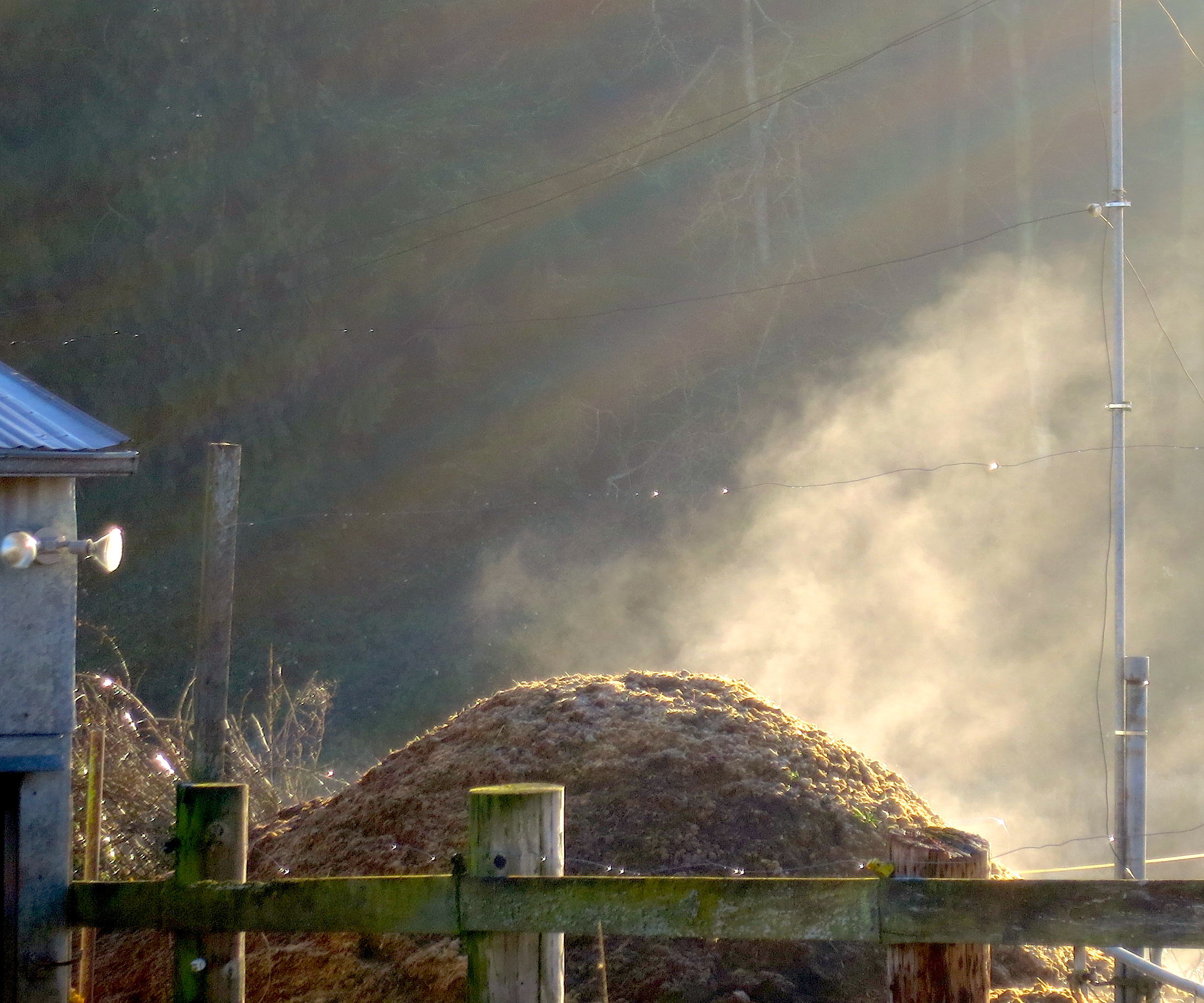
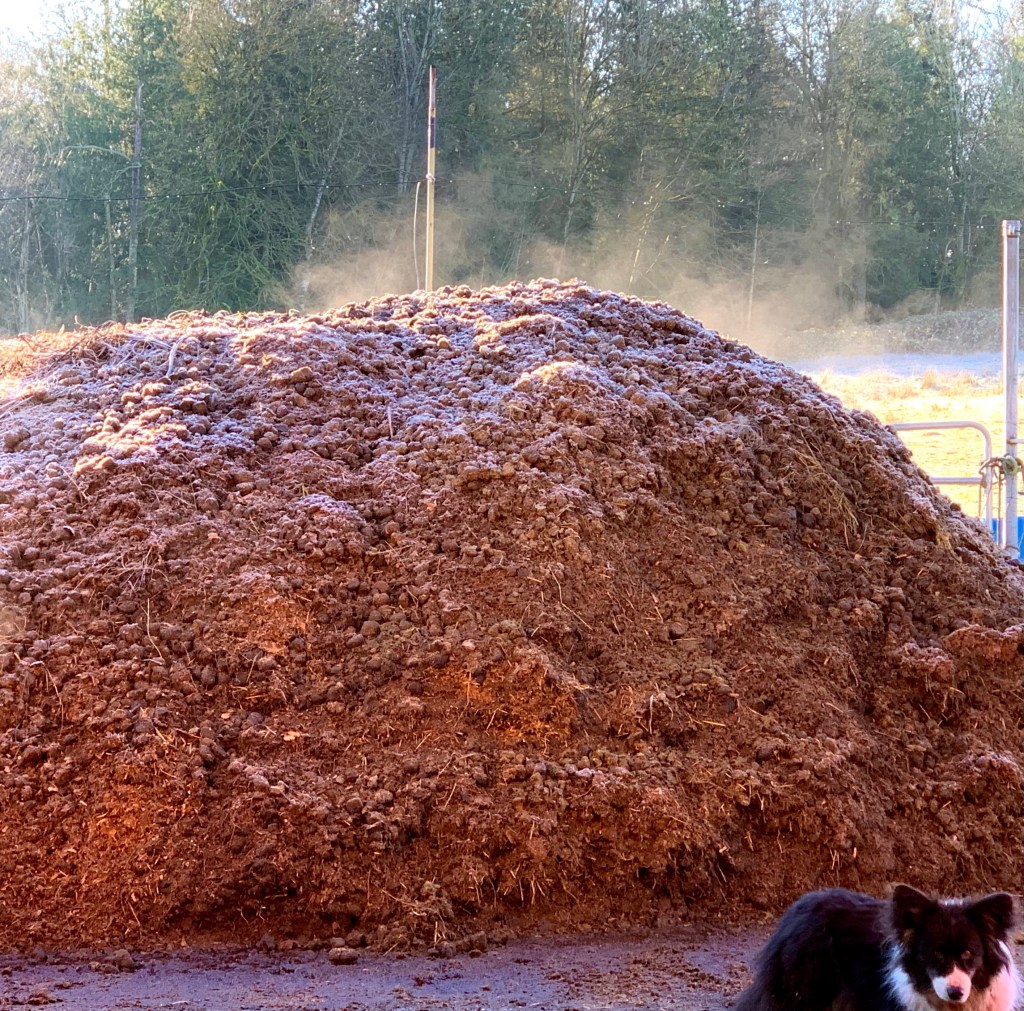
Wheeled to a mountainous pile in our barnyard,  our daily collection of manure happily composts year round, becoming rich fertilizer in a matter of months through a crucible-like heating process of organic chemistry, bacteria and earthworms.  Nothing mankind has achieved quite matches the drama of useless and basically disgusting stuff transforming into the essential elements needed for productive growth and survival.   This is a metaphor I can <ahem> happily muck about in.

I’m in awe, every day, at being part of this process — in many ways a far more tangible improvement to the state of the world than anything else I manage to accomplish every day.  The horses, major contributors that they are, act underwhelmed by my enthusiasm.  I guess some miracles are relative, depending on one’s perspective, but if the horses understood that the grass they contentedly eat in the pasture, or the hay they munch on during the winter months, was grown thanks to their carefully recycled waste products, they might be more impressed.

Their nonchalance about the daily mucking routine is understandable.  If they are outside, they probably don’t notice their beds are clean when they return to the stalls at night.  If they are inside during the heavy rain days, they feel duty-bound to be in our faces as we move about their stall, toting a pitchfork and pushing a wheelbarrow.  I’m a source of constant amusement as they nose my jacket pockets for treats that I never carry, as they beg for scratches on their unreachable itchy spots, and as they attempt to overturn an almost full load, just to see balls of manure roll to all corners of the stall like breaking a rack of billiard balls in a game of pool.

Good thing I’m a patient person always seeking an object lesson in whatever I see or do ~ mucking out stalls every day helps me tolerate the proverbial muck I encounter every day off the farm.  And spending an hour a day getting dirty in the real stuff somehow makes the virtual manure less noxious. 

Everyone should be spending time daily mucking out;
I think the world would generally be a better place.

Wally, our former stallion, now gelded, discovered a way to make my life easier rather than complicating it.  He hauled a rubber tub into his stall from his paddock, by tossing it into the air with his teeth and throwing it, and it finally settled against one wall.  Then he began to consistently pile his manure, with precise aim, right in the tub.  I didn’t ask him to do this.  It had never occurred to me.  I hadn’t even thought it was possible for a horse to house train himself.  But there it is, proof that some horses prefer neat and tidy rather than the whirlwind eggbeater approach to manure distribution.  After a day of his manure pile plopping, it is actually too heavy for me to pick up and dump into the wheelbarrow all in one tub load, but it takes 1/4 of the time to clean his stall than the others, and he spares all this bedding.

What a guy.  He provides me unending inspiration in how to keep my own personal muck concentrated rather than spreading it about,  contaminating the rest of the world.

Now, once I teach him to put the seat back down when he’s done, he’s welcome to move into the house…

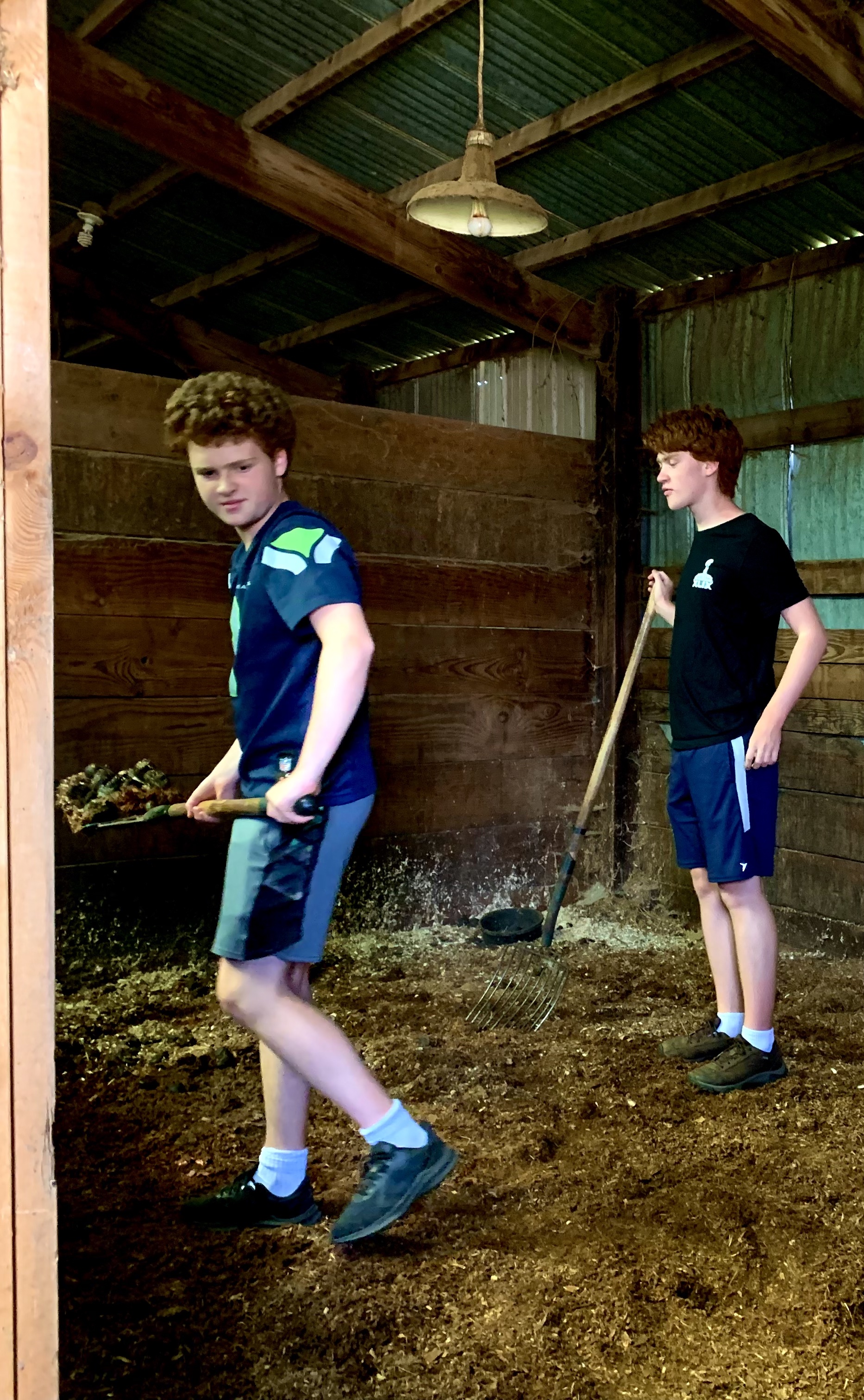
teaching my city nephews how to muck out a stall
Wally’s purposeful pile

One-Time
Monthly
Yearly

Make a one-time or recurring donation to support Barnstorming

Make a monthly donation

Make a yearly donation

Choose an amount

¤5.00
¤10.00
¤20.00
¤5.00
¤15.00
¤100.00
¤5.00
¤15.00
¤100.00

Or enter a custom amount

¤

Your contribution is deeply appreciated.

Your contribution is appreciated.

Your contribution is appreciated.

DonateDonate monthlyDonate yearly
The Scar of Proud Flesh

There are names for what binds us:
strong forces, weak forces.
Look around, you can see them:
the skin that forms in a half-empty cup,
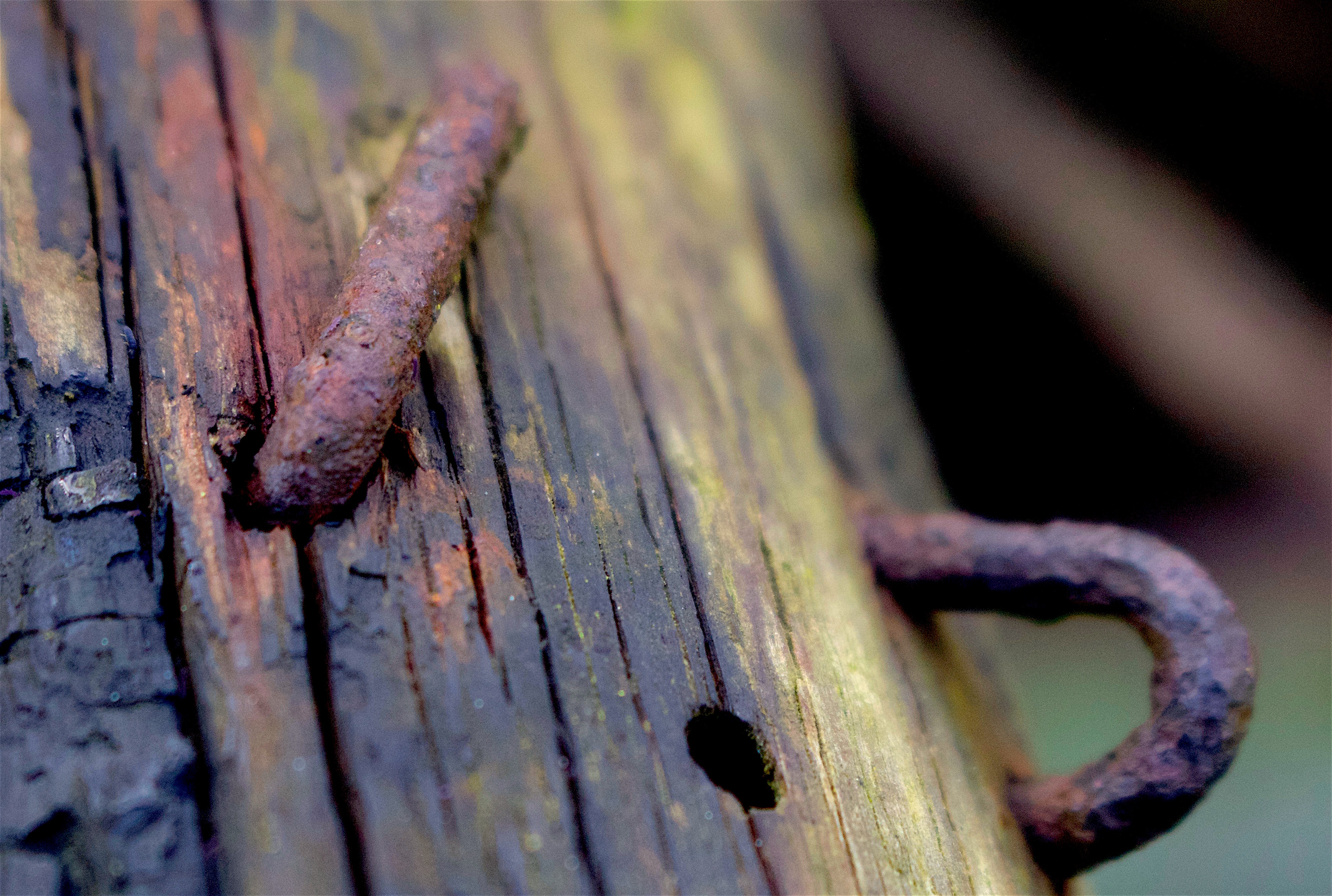
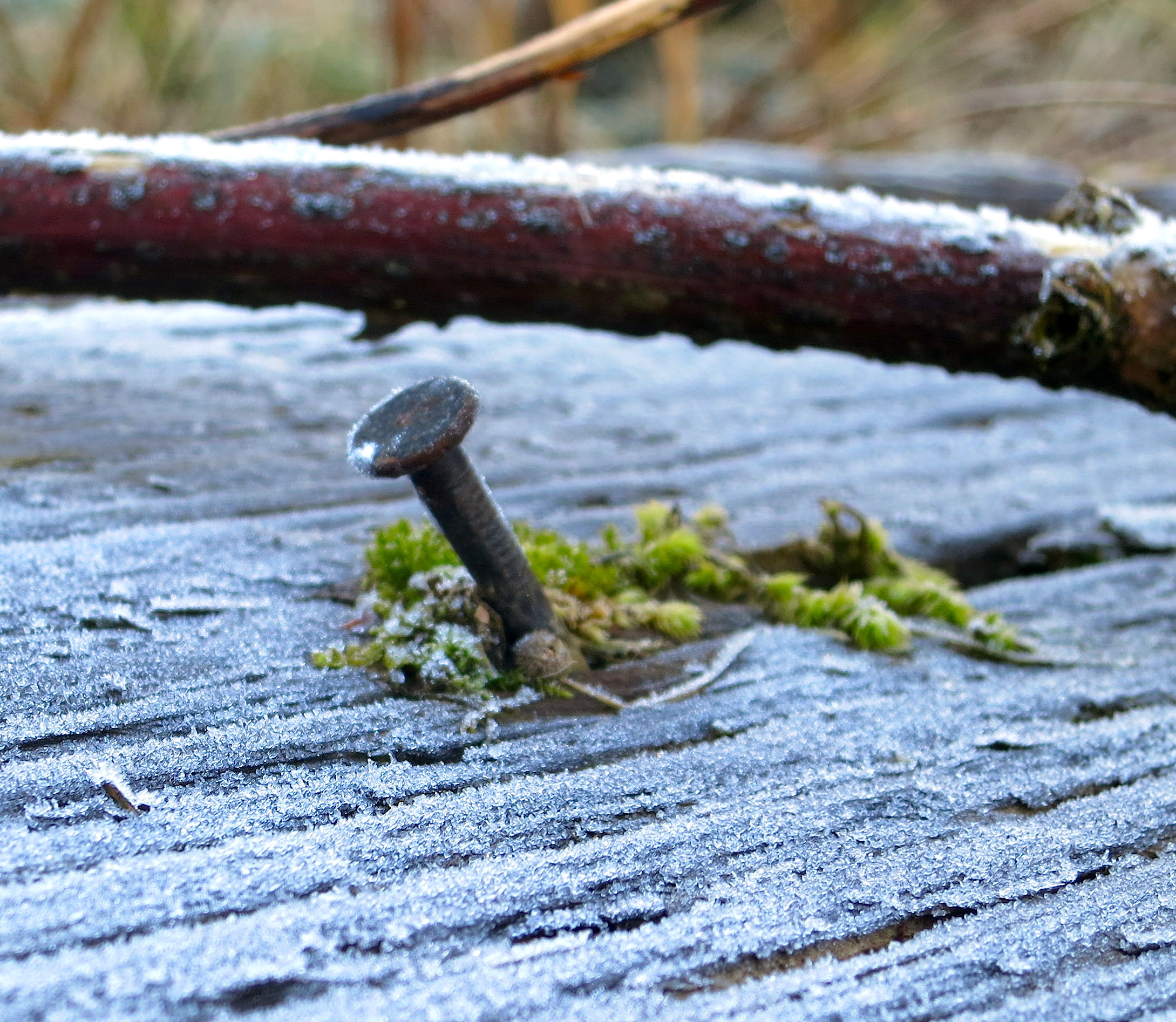
nails rusting into the places they join,
joints dovetailed on their own weight.

The way things stay so solidly whenever they’ve been set down –
and gravity, scientists say, is weak.

And see how the flesh grows back across a wound, with a great vehemence,
more strong than the simple, untested surface before.

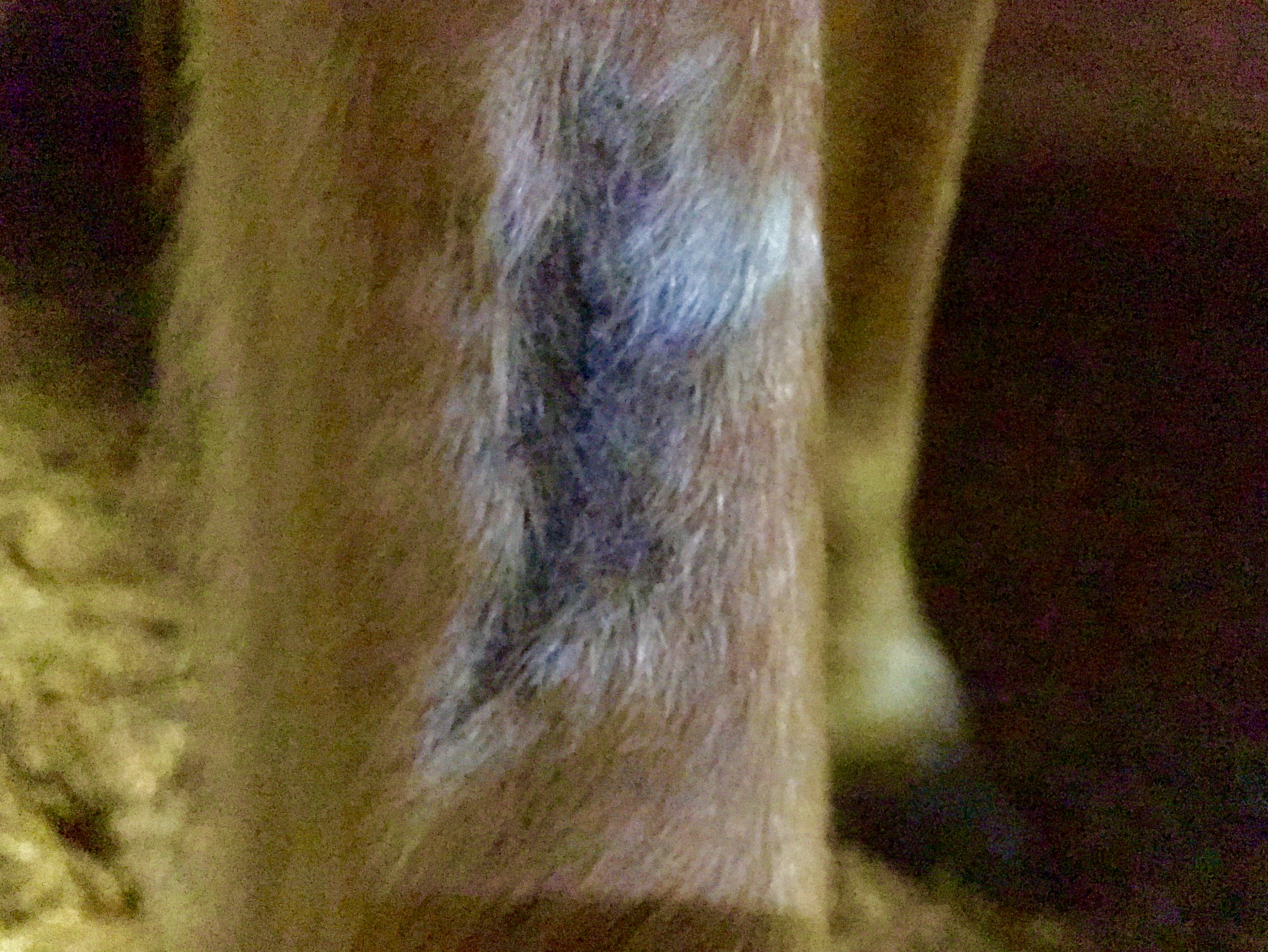
There’s a name for it on horses, when it comes back darker and raised:
proud flesh, as all flesh is proud of its wounds,
wears them as honors given out after battle,
small triumphs pinned to the chest –

And when two people have loved each other,
see how it is like a scar between their bodies,
stronger, darker, and proud;
how the black cord makes of them a single fabric
that nothing can tear or mend.
~Jane Hirshfield  “For What Binds Us”

Scars come in various sizes and shapes, some hidden, some quite obvious to all.  How they are inflicted also varies–some accidental, others therapeutic, and too many intentional. 

The most insidious are the ones so deep inside,  no one can see or know they are there.

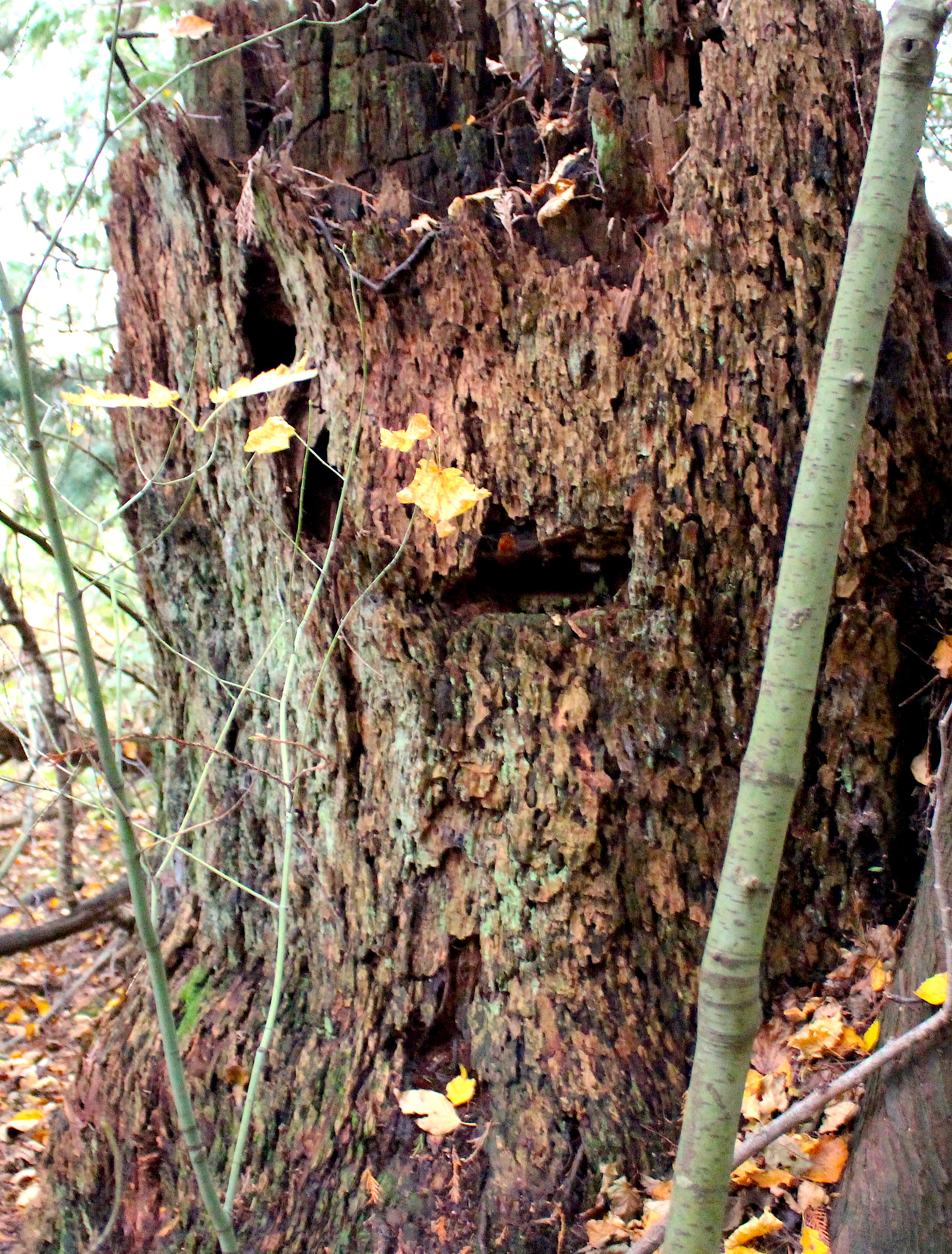
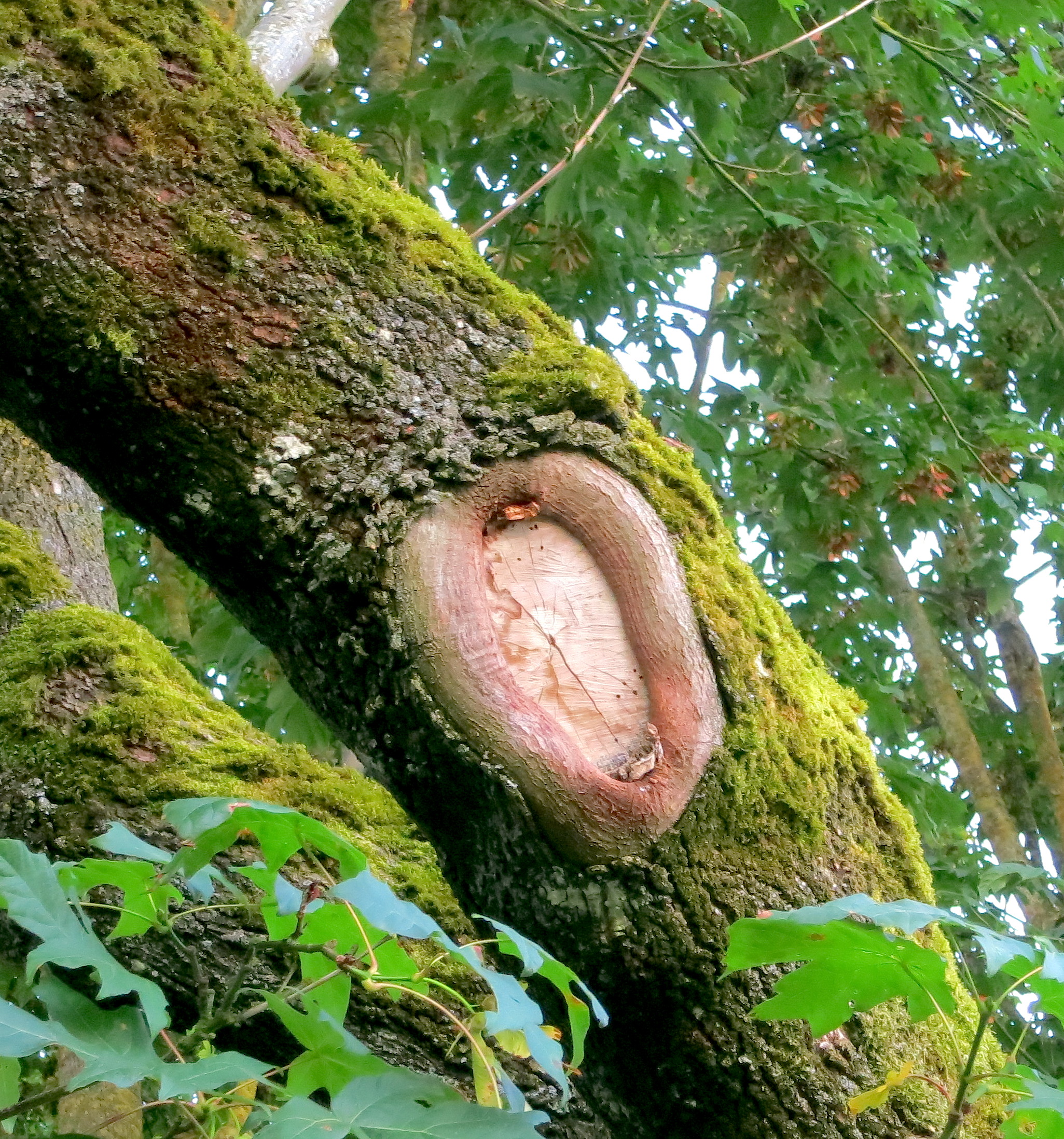
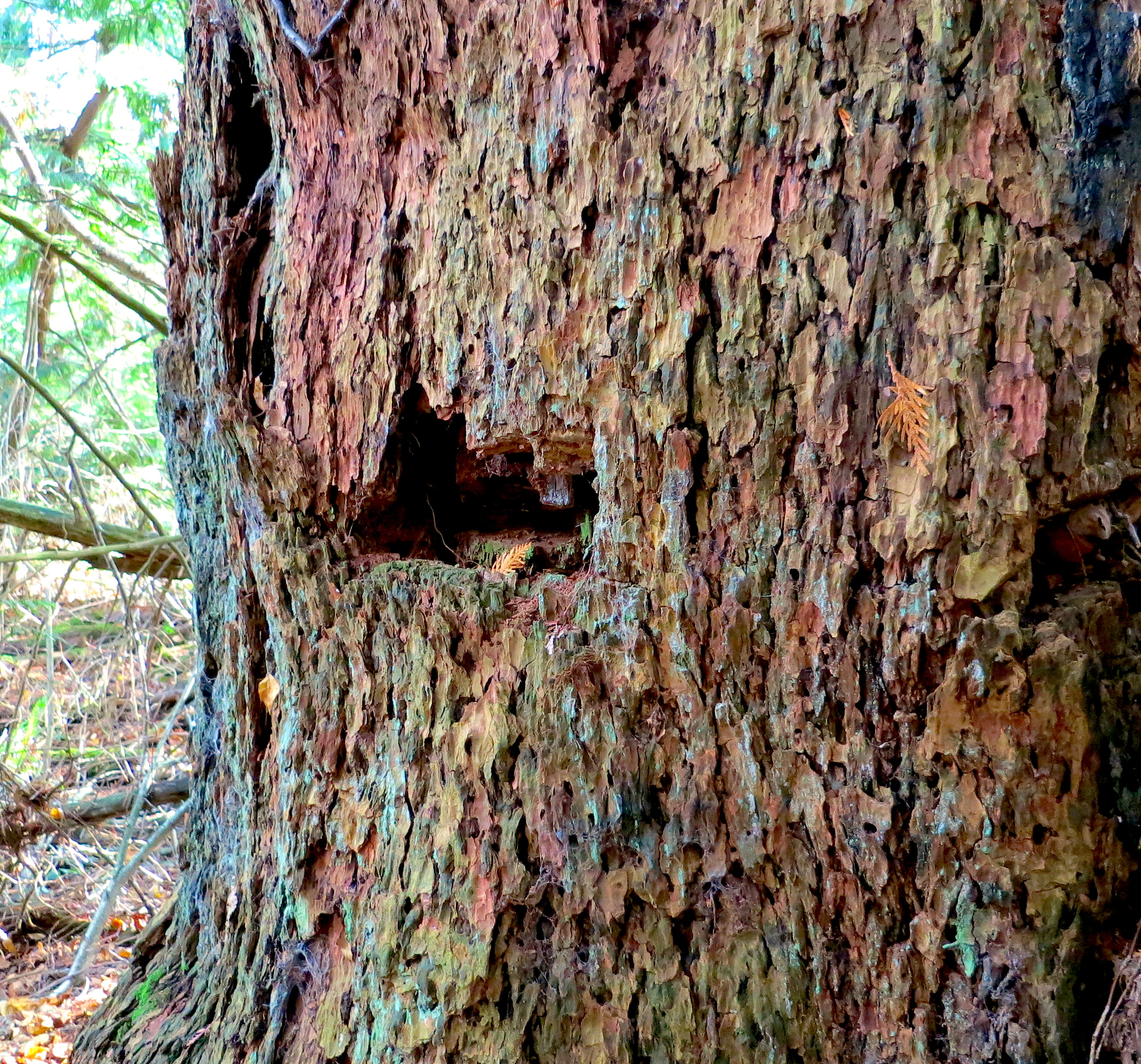
Back in our woodlot stands a sawed off stump of a cedar that was old growth in virgin forest over a hundred years ago.  One day clearcut loggers came through and took every tree they could to haul to the local sawmills to become beams and lumber for the growing homesteading population in the region.  This cedar once was grand and vast, covering an immense part of the forest floor, providing protection to trillium at its feet and finches’ nests and raptors hunting in its branches.   It nurtured its environment until other plans were made, and one day, axes fell on its sides to cut out the notches for the springboards where two loggers stood either side of the proud trunk to man the saw which brought the tree down. 

Where the wood went is anyone’s guess.  It could be one of the mighty beams supporting our old hay barn roof or it could have become the foundation flooring of a nearby one room school house.  It surely had a productive and meaningful life as part of a structure somewhere until rot or carpenter ants or fire brought it once again to its knees.

But this ghost of a stump remains, a tombstone of remembrance of a once grand tree, the notch scars embedded deep in its sides, nursing new seedlings from its center and moss, lichen and ferns from its sides.

I come from logger stock so I don’t begrudge these frontier settlers their hard scrabble living, nor minimize their dangerous work in order to feed themselves and their families.  It’s just I’m struck by those scars over one hundred years later — such a visible reminder of what once was a vital living organism toppled for someone’s need and convenience.

Trees are not unique.  It happens to people too.  Everyday scars are inflicted for reasons hard to justify.  Too often I see them self-inflicted in an effort to feel something other than despair.  Sometimes they are inflicted by others out of fear or need for control.

Sometimes they are simply the scars of living – on our horses they are a dark tough scar of leathery “proud flesh”. These are the wounds that accumulate on our journey through our numbered days.

None of them are as deep and wide as the scars that were accepted on our behalf, nor as wondrous as the Love that oozed from them, nor as amazing as the Grace that abounds to this day because of the promise they represent. 

These are scars from the Word made Flesh, a proud flesh that won’t give way, lasting forever.

As a result, that Tree lives, and so do we.

One-Time
Monthly
Yearly

Make a one-time donation to support Barnstorming

Make a monthly donation

Make a yearly donation

Choose an amount

¤5.00
¤10.00
¤20.00
¤5.00
¤15.00
¤100.00
¤5.00
¤15.00
¤100.00

Or enter a custom amount

¤

Your contribution is deeply appreciated.

Your contribution is appreciated.

Your contribution is appreciated.

DonateDonate monthlyDonate yearly

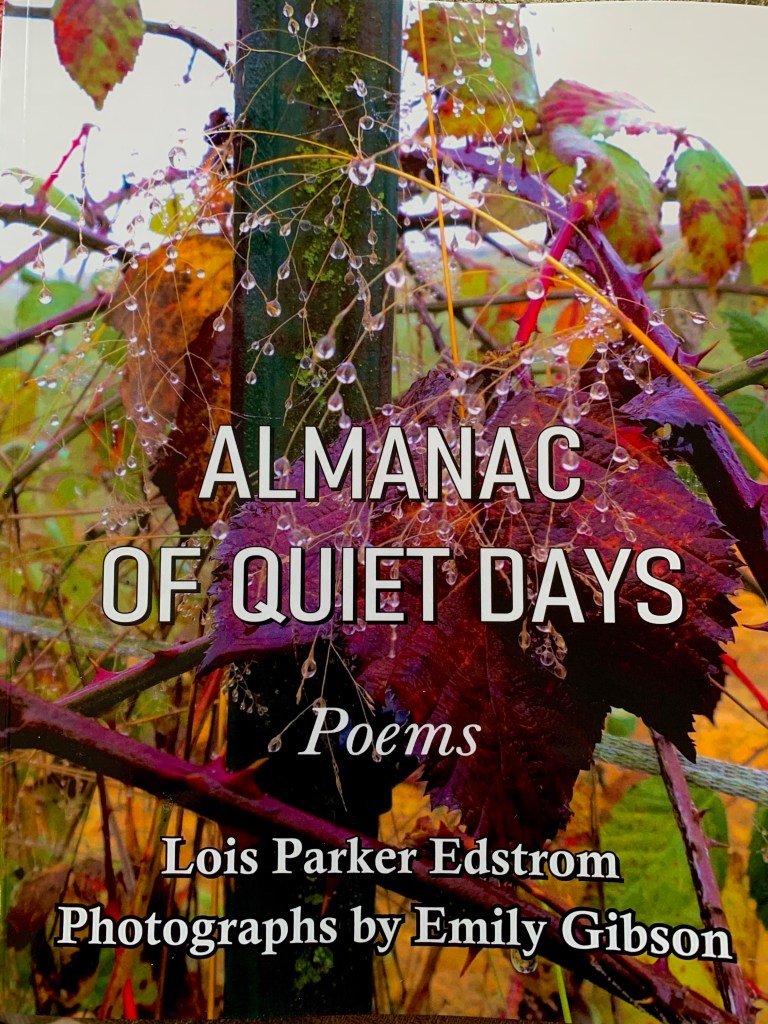
A book of beauty in words and photography, available to order here:

Never Enough Light in November

Taken from our farm–cornfield stubble and feeding swans

That country where it is always turning late in the year.
That country where the hills are fog and the rivers are mist;
where noons go quickly,
dusks and twilights linger,
and midnights stay.
That country composed in the main of cellars, sub-cellars, coal-bins, closets, attics, and pantries faced away from the sun.
That country whose people are autumn people,
thinking only autumn thoughts.
Whose people passing at night on the empty walks sound like rain.

~Ray Bradbury from The October Country

Just as a painter needs light
in order to put the finishing touches to his picture,
so I need an inner light,
which I feel I never have enough of in the autumn.
~Leo Tolstoy

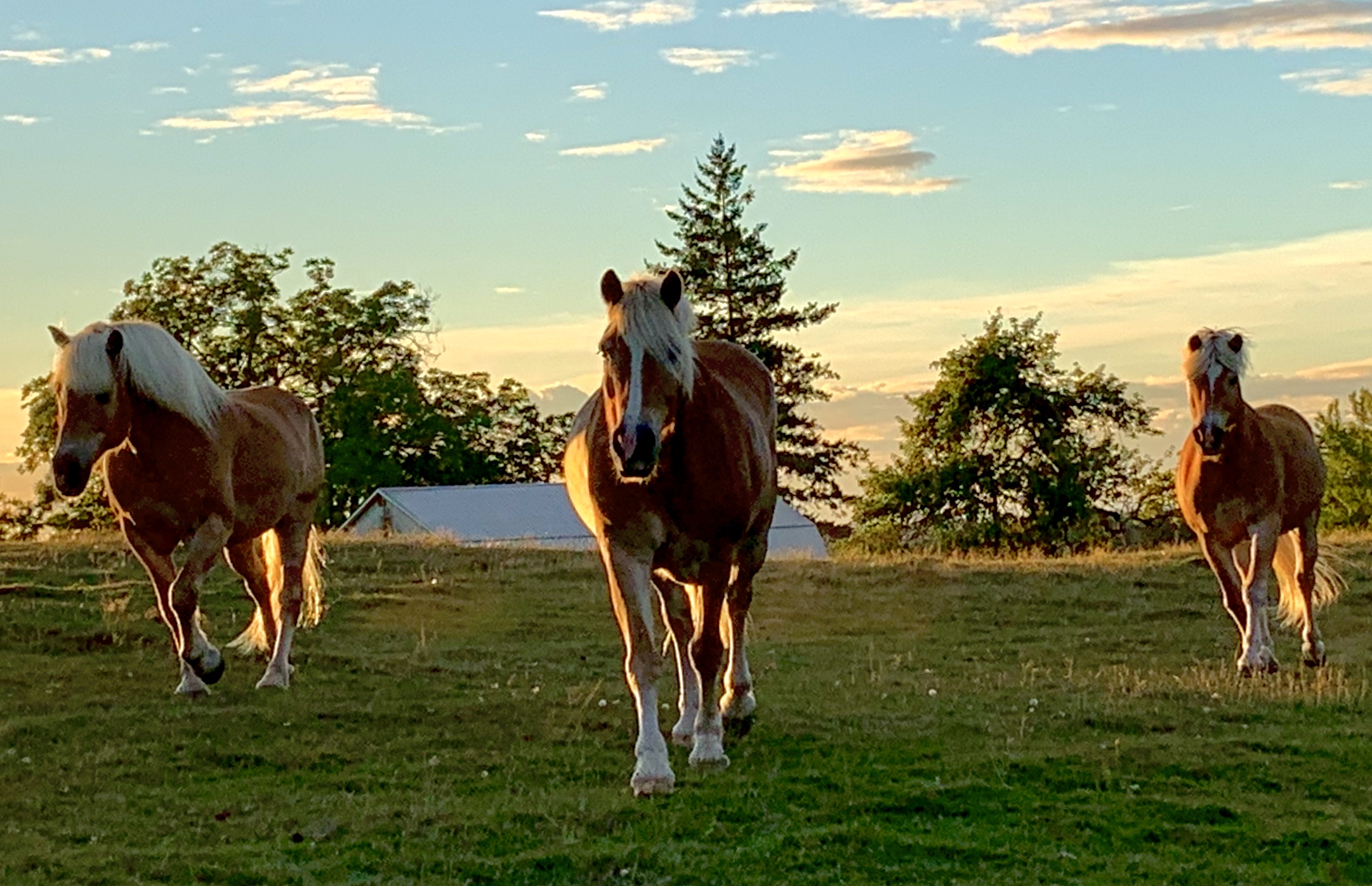
A few days of heavy rain in November transforms our farm to mush. Puddles are everywhere, the ground is saturated and mushrooms are sprouting in the most unlikely places. It’s ideal weather for the trumpeter swans and snow geese who glean in the nearby harvested cornfields, filling up on dropped corn kernels. They fly overhead to head out to the fields, noisily honking, their wings swooshing the air as they pass over.

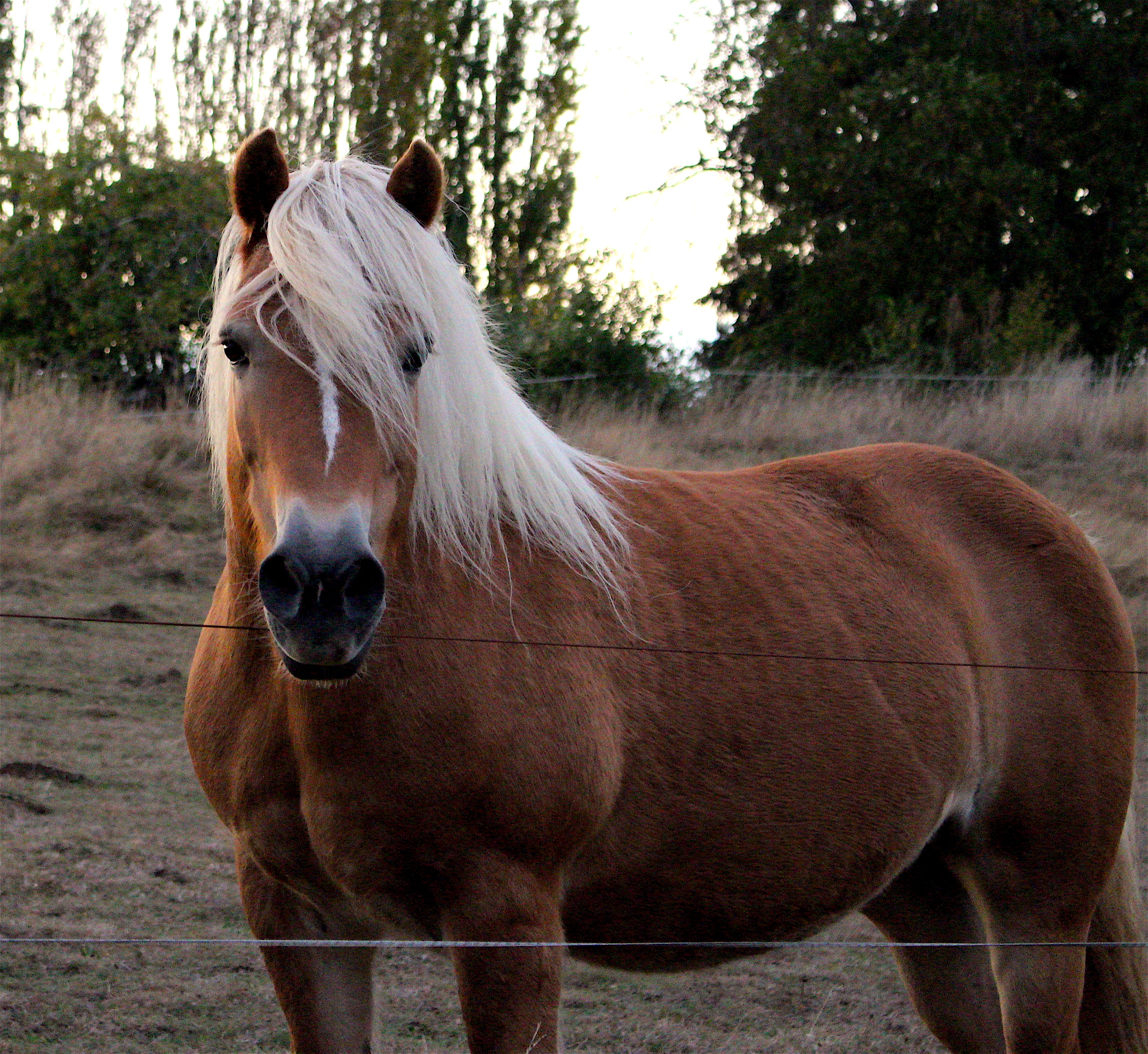
The wet weather means chores are more challenging on our farm. Some of the stalls in the barn have started to get moist from the rising ground water, so the Haflingers appreciate diving into fresh shavings for a good roll and shake. I can appreciate the relief they feel as I like getting back to solid footing too at the end of the day. Much of my day also seems to be spent navigating slippery slopes and muddy terrain, both real and figurative.

It isn’t always apparent what ground is treacherous from appearance alone. The grassy slope heading down to the barn from the house looks pretty benign until I start navigating in a driving rainstorm in the dark, and suddenly the turf becomes a skating rink and I’m finding I’m picking my way carefully with a flashlight. The path I seek is to find the patches of moss, which happily soak up the water like a sponge carpet-like, so not slick to walk on. Even if moss ordinarily is not a welcome addition to lawn or pasture–I appreciate it this time of year.

Another challenge is pushing a wheelbarrow with two 60 pound bales of hay back up that slope to the stalls for the day’s feeding. There is no traction underneath to help my feet stick to the ground for the push uphill. I can feel particularly foolish at this futile effort–my feet sometimes slide out beneath me, landing me on my knees down on the ground, soaked and humiliated, and the wheelbarrow goes skidding right back down to the barn door where it started.

Trusting the footing underneath my feet is crucial day to day. If I am to get work done most efficiently and make progress, I must have solid ground to tread. But the stuff of real life, like our farm’s ground, doesn’t come made to order that way. Some days are slick and treacherous, unpredictable and ready to throw me to my knees, while other days are simple, easy, and smooth sailing. Waking in the morning, I cannot know what I will face that day–whether I need my highest hip boots to wade through the muck or whether I can dash about in comfy house slippers. My attitude has something to do with it too–sometimes my “internal” footing is loose and slippery, tripping up those around me as well as myself. That is when I need most to plant myself in the solid foundation that I know will support me during those treacherous times. I need my faith, my need to forgive and experience forgiveness, my family holding me as I fall, and to help pick them up when they are down. Without those footings every day, I’m nothing more than a muddy soiled mess lying face down on the ground wondering if I’ll ever walk again.
There is good reason I end up on my knees at times. It is the best reminder of where I would be full time if it were not for stronger Hands that lift me up, clean me up and guide my footsteps all my days.

A book of beauty in words and photography, available for order here:

Simply Glad

I shall open my eyes and ears.
Once every day I shall simply stare

at a tree, a flower, a cloud, or a person.
I shall not then be concerned at all to ask what they are

but simply be glad that they are.
I shall joyfully allow them the mystery of what C.S. Lewis calls
their “divine, magical, terrifying and ecstatic” existence.
~Clyde Kilby in “Amazed in the Ordinary

An open heart is alive to wonder, to the sheer marvel of “isness.”
It is remarkable that the world is,
that we are here,
that we can experience it.
This world is not ordinary.
Indeed, what is remarkable is that
it could ever look ordinary to us.


An open heart knows “radical amazement.”
An open heart and gratitude go together.
We can feel this in our bodies.
In the moments in my life
when I have been most grateful,
I have felt a swelling,
almost a bursting in my chest.
~Marcus Borg from The Heart of Christianity

photo by Nicole Moore

Most of the time I’m sleep walking through each day, oblivious, as if in dense fog with unseeing wide-open eyes.  There is a slow motion quality to time as it flows from one hour to the next to the next. I stumble through life asleep, the path indiscernible, my future uncertain, my purpose illusive.

Am I continually dozing or shall I rouse to the radical amazement of each moment?

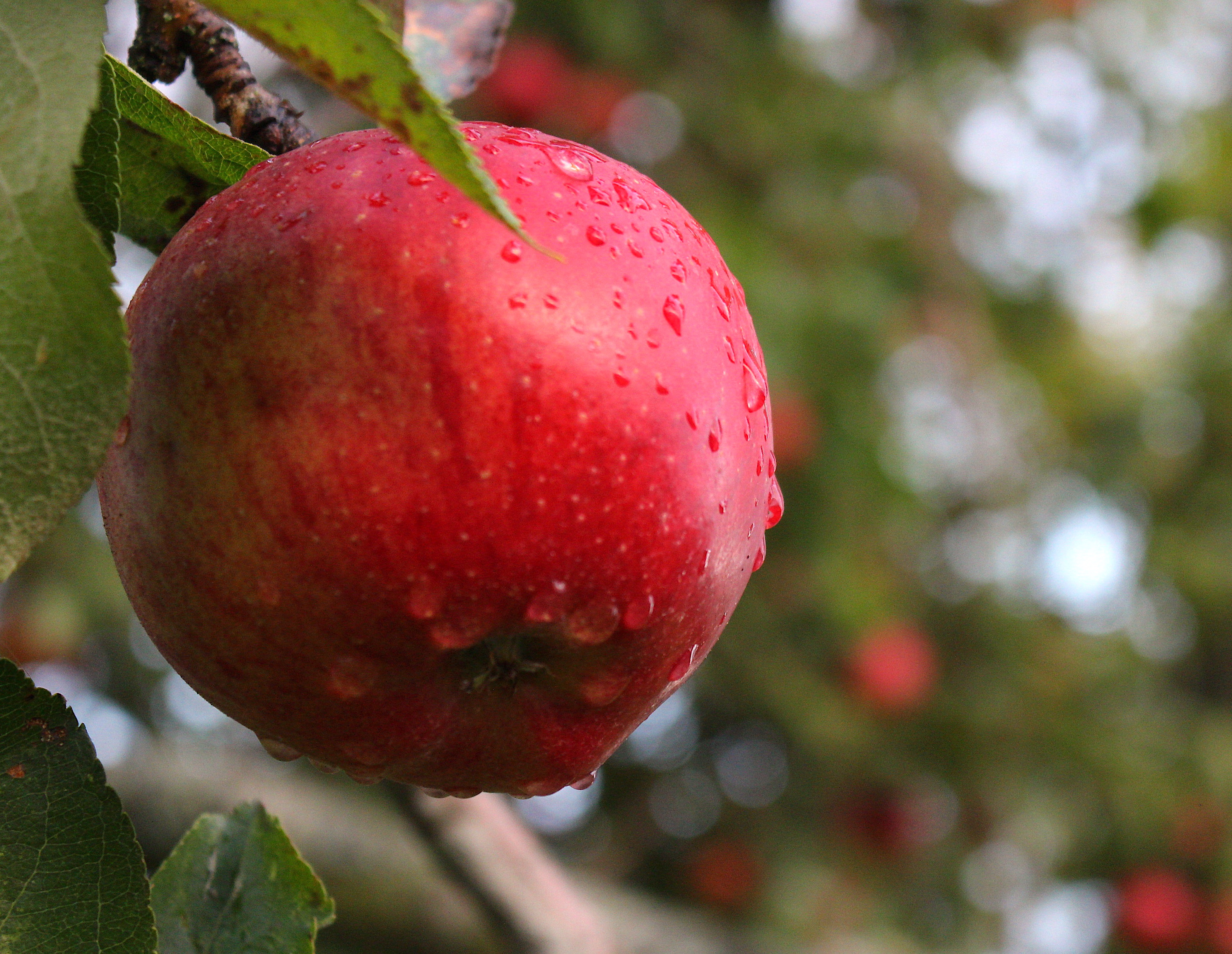
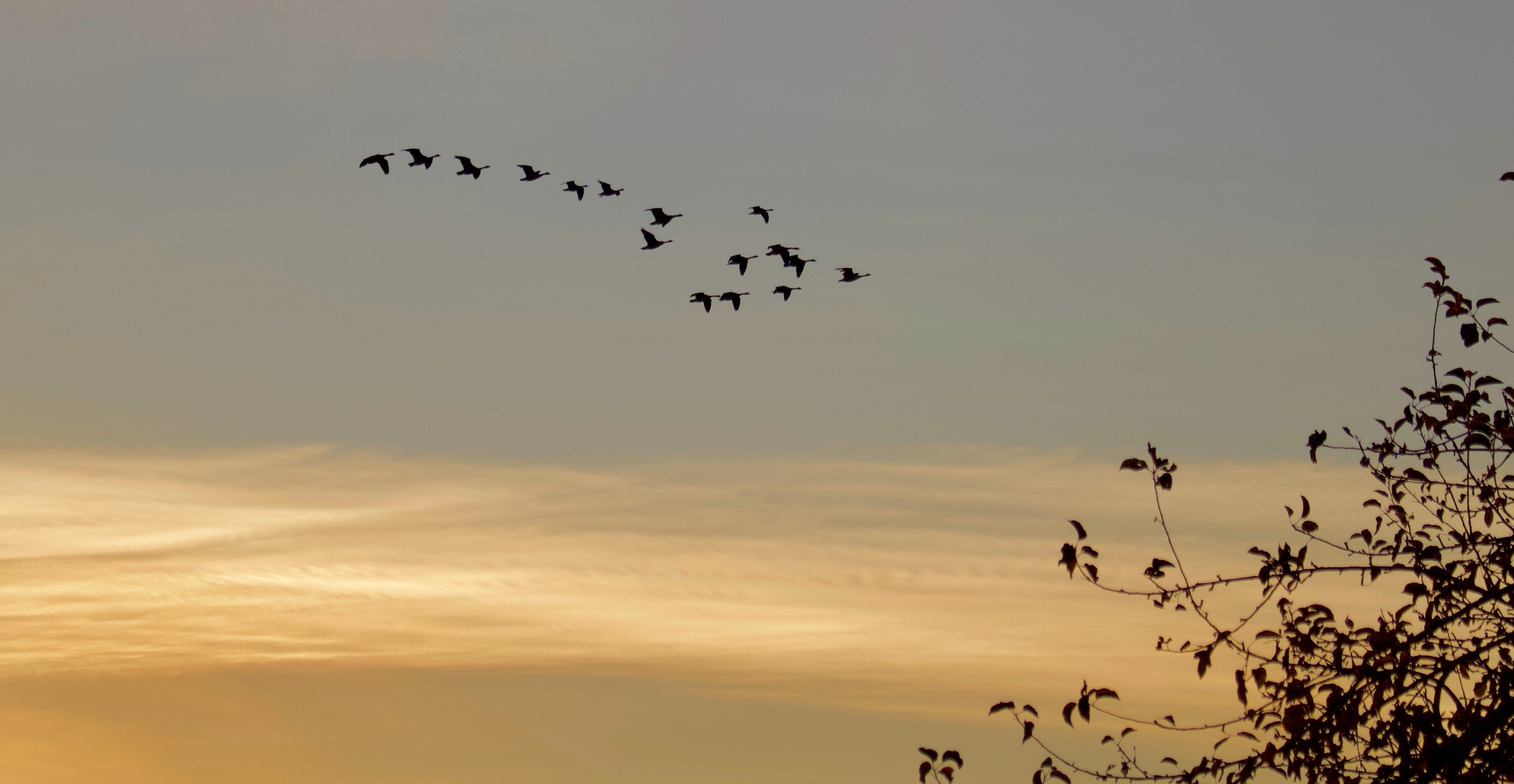
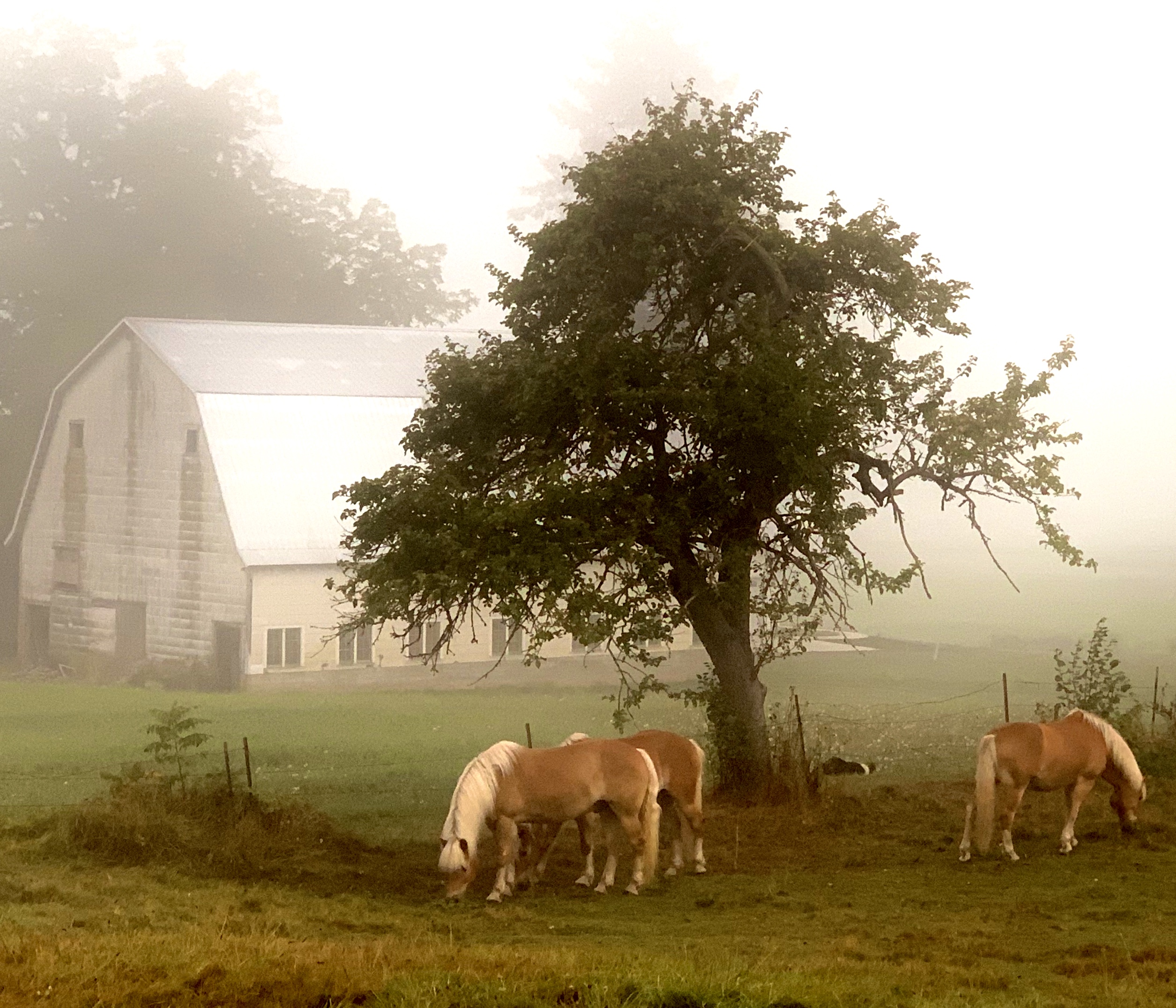
When I’m simply glad, everything becomes more vivid, as in a dream — the sounds of geese flying overhead, the smell of the farm, the layers of a foggy landscape, the taste of an autumn apple right from the tree, the string of fog-drop pearls on a spider web, the intensity of every breath, the purpose for being.

So wake me -please- to dream some more.   
I want to chew on it again and again, simply savoring and simply glad.

A book of beauty in words and photography, available to order here:

And It Was Autumn…

it rained in my sleep
and in the morning the fields were wet
I dreamed of artillery
of the thunder of horses

in the morning the fields were strewn
with twigs and leaves
as if after a battle
or a sudden journey
I went to sleep in the summer
I dreamed of rain
in the morning the fields were wet
and it was autumn
~Linda Pastan “September” from Carnival Evening

photo by Harry Rodenberger

The dogs eat hoof slivers and lie under the porch.
A strand of human hair hangs strangely from a fruit tree
like a cry in the throat. The sky is clay for the child who is past
being tired, who wanders in waist-deep
grasses. Gnats rise in a vapor,
in a long mounting whine around her forehead and ears.

The sun is an indistinct moon. Frail sticks
of grass poke her ankles,
and a wet froth of spiders touches her legs
like wet fingers. The musk and smell
of air are as hot as the savory
terrible exhales from a tired horse.

At evening a breeze dries and crumbles
the sky and the clouds float like undershirts
and cotton dresses on a clothesline. Horses
rock to their feet and race or graze.
Parents open their shutters and call
the lonely, happy child home.
The child who hates silences talks and talks
of cicadas and the manes of horses.
~Carol Frost – lines from “All Summer Long” from Love and Scorn: New and Collected Poems.

I was one of those lonely but happy youngsters who dreamt of horses all summer long, immersed in my own made-up stories of forest rides on hidden trails, of spending hours decorating long manes and tails of golden horses, of performing daring rescues and races, of battles and bravery I didn’t experience in real life. The imaginings took me beyond the mundane into the fanciful where I could be completely lost until I was called to come in for dinner or return to the confines of a school classroom.

Some dreams do come true when you want them badly enough: I’ve now had decades gazing out at fields of grass with those thundering hooves, back-dropped by endless skies of ever-changing clouds. I’ve also found that fairy tales can have broken fences and growing manure piles.

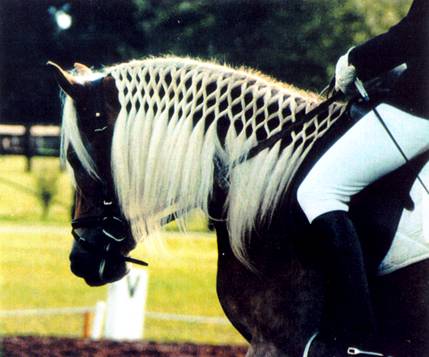
It has been worth it for a kid whose own story bloomed when I became a wife, a mother, a physician and a horse farmer. As this summer yet again has transitioned to autumn, so does my story: it is full of aging horses and tired fields, yet still I find myself dreaming like a kid as I comb out those long flowing manes.

Consider this book of beautiful words and photography, available to order here:

We May Or Might Never, Meet Here Again

My great grandfather had some fields in North Carolina
and he willed those fields to his sons and his sons
willed them to their sons so there is a two-hundred-year-old
farm house on that land where several generations
of my family fried chicken and laughed and hung

their laundry beneath the trees. There are things you
know when your family has lived close to the earth:
things that make magic seem likely. Dig a hole on the new
of the moon and you will have dirt to throw away
but dig one on the old of the moon and you won’t have

enough to fill it back up again: I learned this trick
in the backyard of childhood with my hands. If you know
the way the moon pulls at everything then you can feel
it on the streets of a city where you cannot see the sky.

I may walk the streets
of this century and make my living in an office
but my blood is old farming blood and my true
self is underground like a potato.

I have taken root in my grandfather’s
fields: I am hanging my laundry beneath his trees.
~Faith Shearin from “Fields”

It just isn’t possible to completely take me off the farm – I have generations of farmers extending back on both sides of my family, so I have dug myself a hole here, resting easy in the soil like a potato and ventured out only as I needed to in order to actually make a living.

A gathering of all my vaccinated clinic colleagues came to our farm yesterday to help me celebrate my retiring from office life. They brought beautiful flowers, plentiful food, kind and restoring words, thirty year old photos and lovely parting gifts, as well as my singing doctor buddy sharing a sea shanty about bittersweet parting. It is helping ease my sorrow at leaving regular doctoring behind, knowing there are more days to come, more time to grow things in the ground, more blissing out over sunrises and sunsets and more hanging laundry on the clothesline.

My dear friends know where they can find me – on the hill above our farm – we may or might never, meet here again but it was such a fine time together yesterday, thank you!

Kind Friend and Companions, Come join me in rhyme,
Come lift up your voices, In chorus with mine,
Come lift up your voices, all grief to refrain,
For we may or might never, all meet here again
Here’s a health to the company and one to my lass,
Let us drink and be merry, all out of one glass,
Let us drink and be merry, all grief to refrain
For we may or might never, all meet here again
Here’s a health to the dear lass, that I love so well,
For her style and her beauty, sure none can excel,
There’s a smile on her countenance, as she sits on my knee,
There’s no man in this wide world, as happy as me,
Here’s a health to the company, and one to my lass
Let us drink and be merry, all out of one glass,
Let us drink and be merry, all grief to refrain
For we may or might never, all meet here again,
Our ship lies at anchor, she’s ready to dock,
I wish her safe landing, without any shock,
If ever I should meet you, by land or by sea,
I will always remember, your kindness to me,
Here’s a health to the company and one to my lass,
Let us drink and be merry, all out of one glass,
Let us drink and be merry, all grief to refrain
For we may or might never, all meet here again
Here’s a health to the company and one to my lass,
Let us drink and be merry, all out of one glass,
Let us drink and be merry, all grief to refrain
For we may or might never, all meet here again

You may well love this book of Barnstorming photos, available to order here: