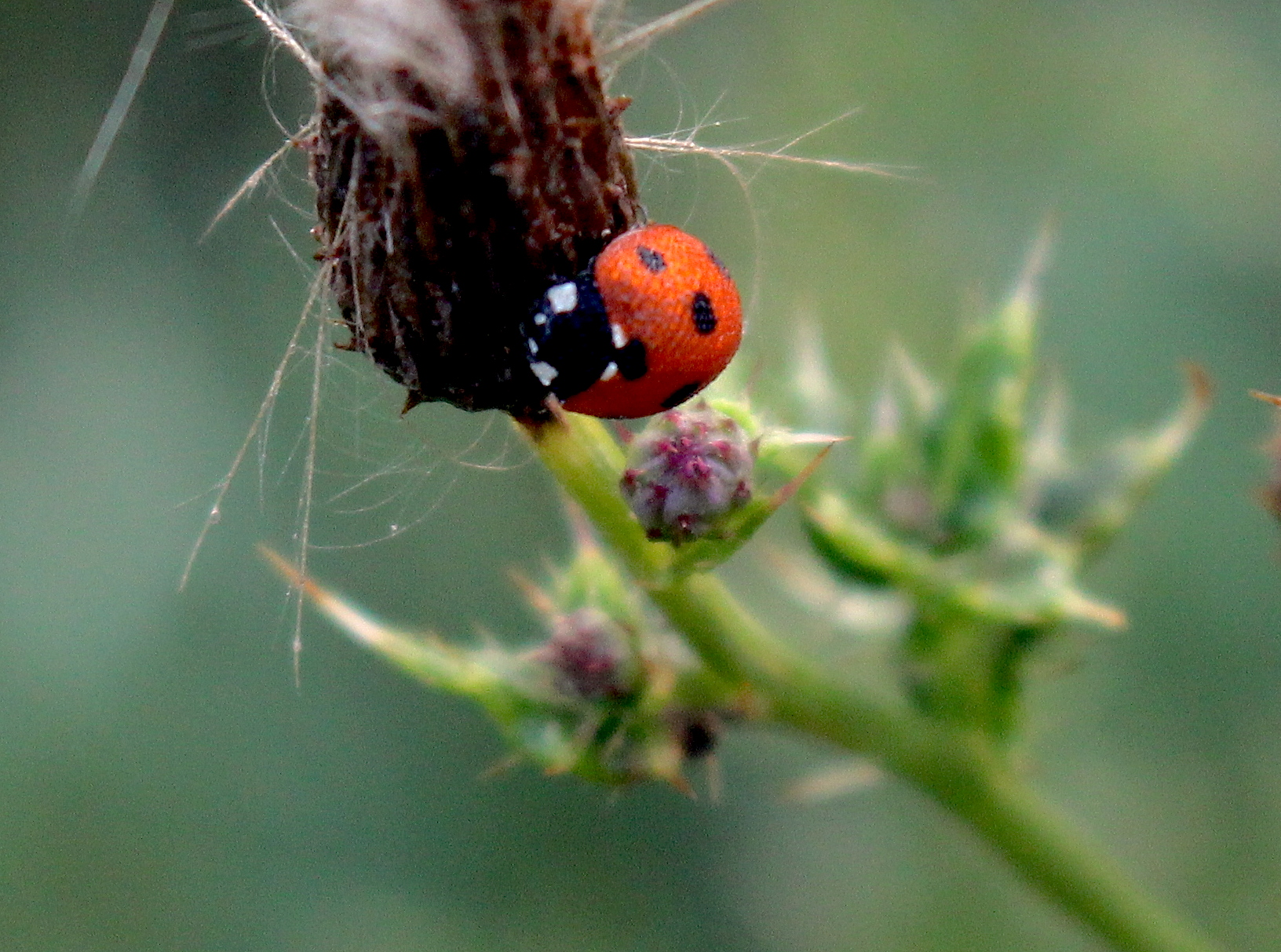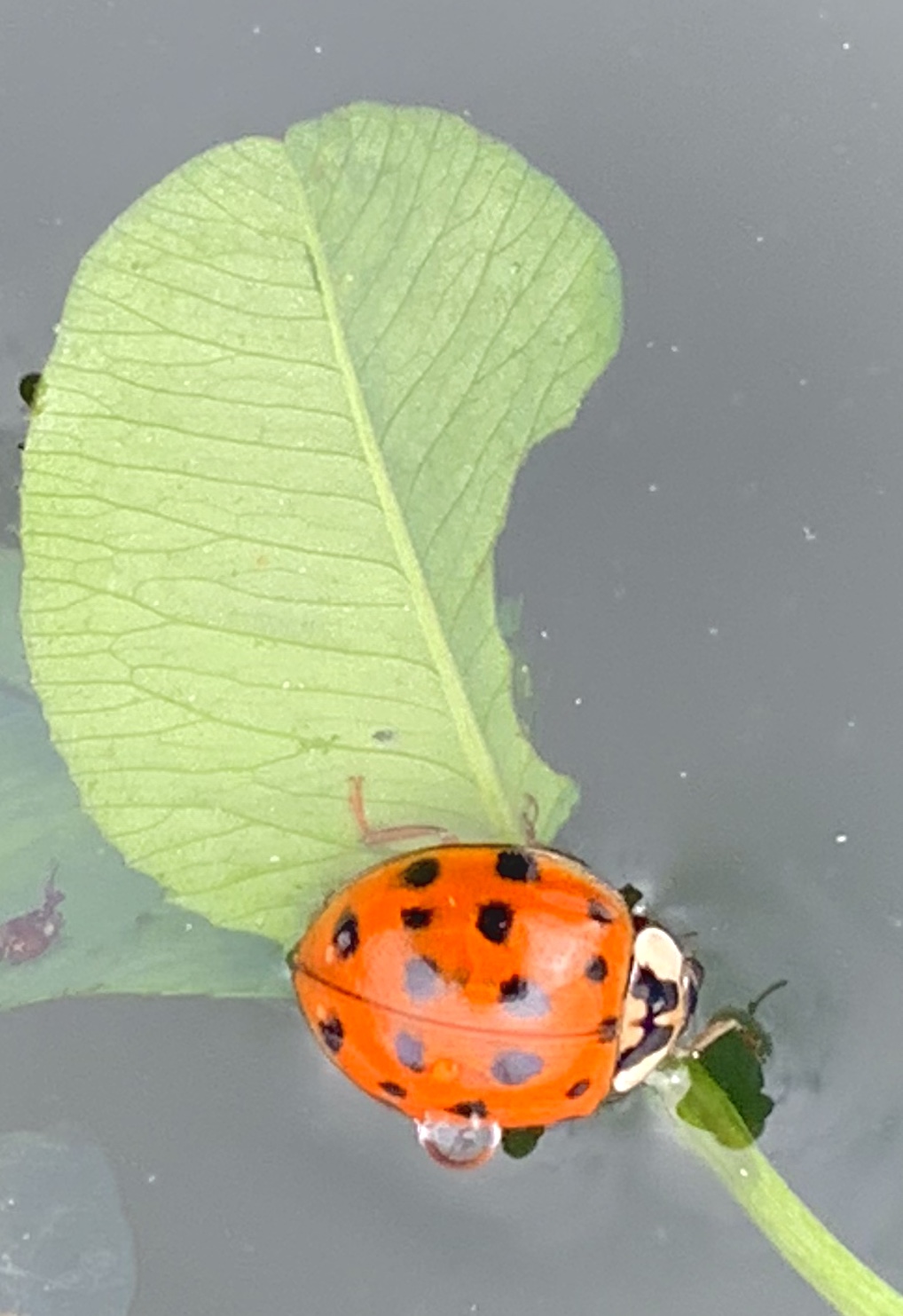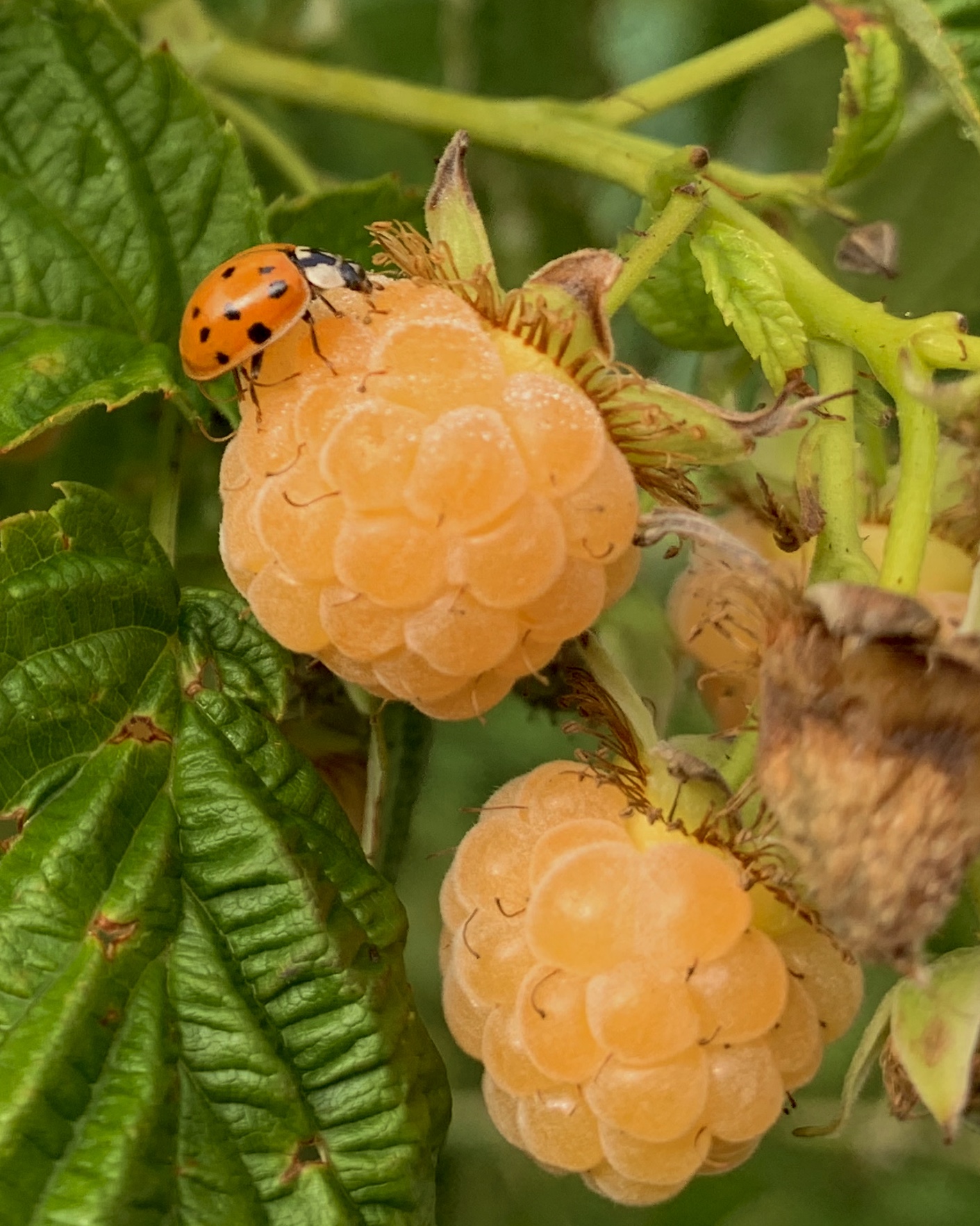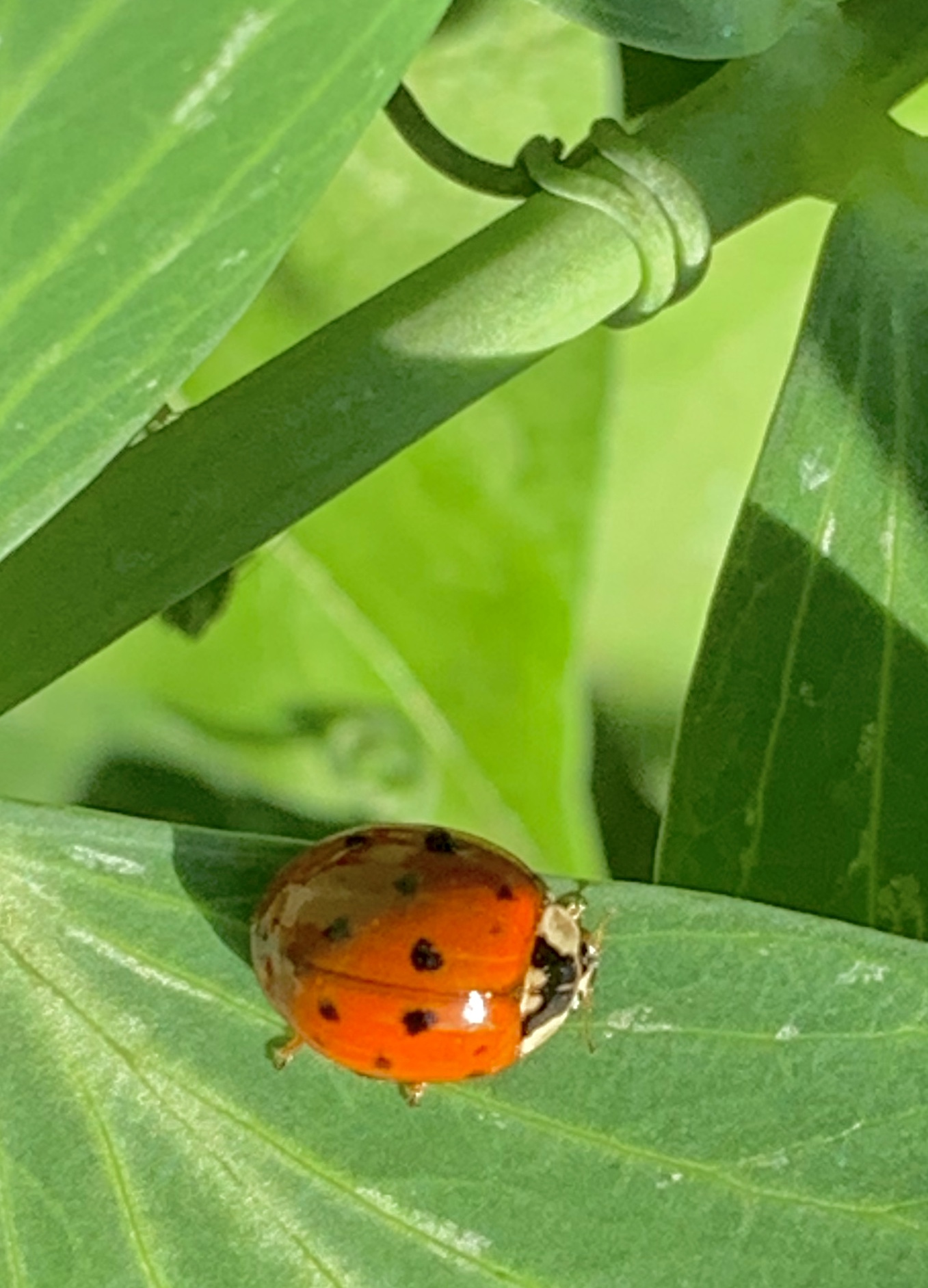
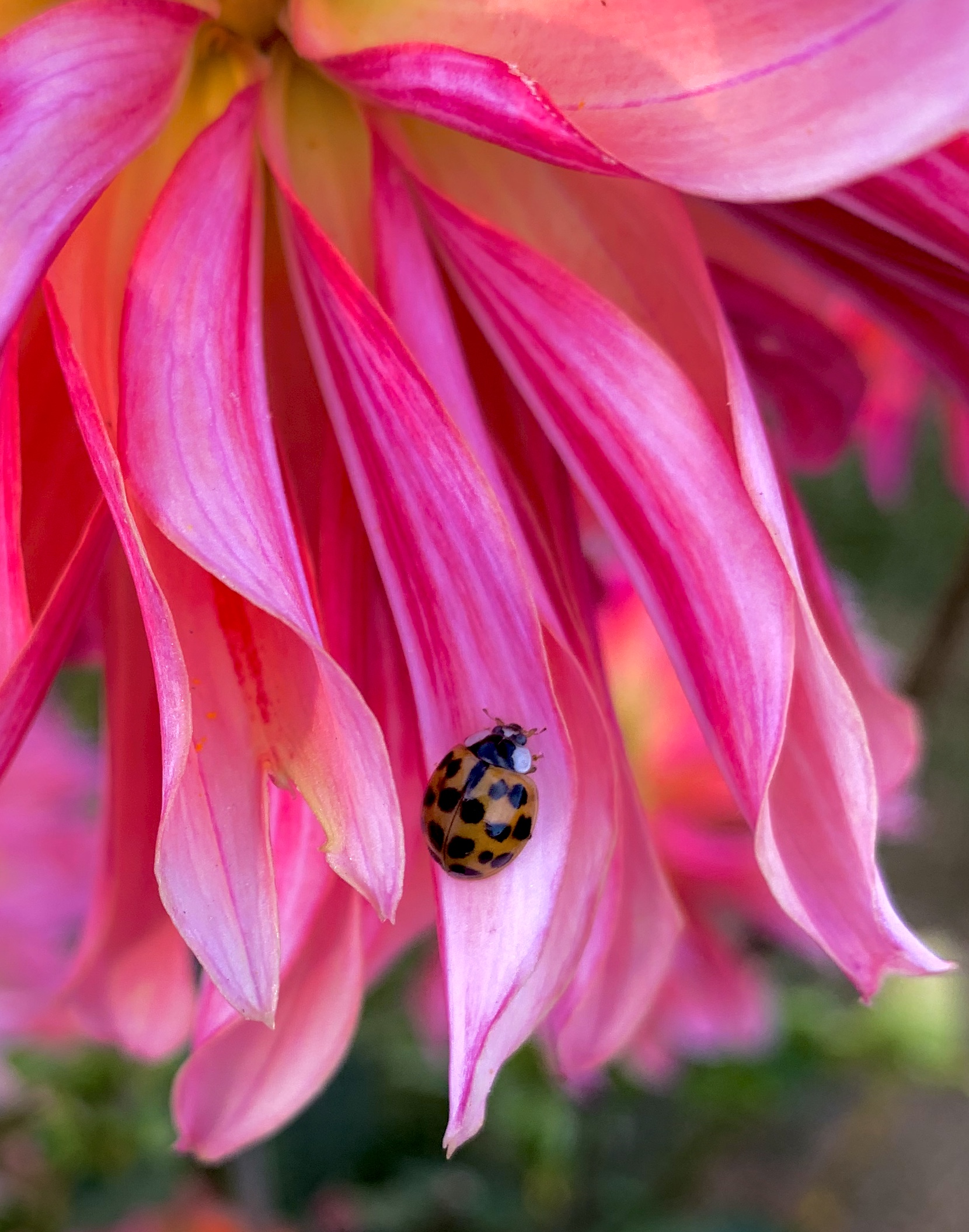
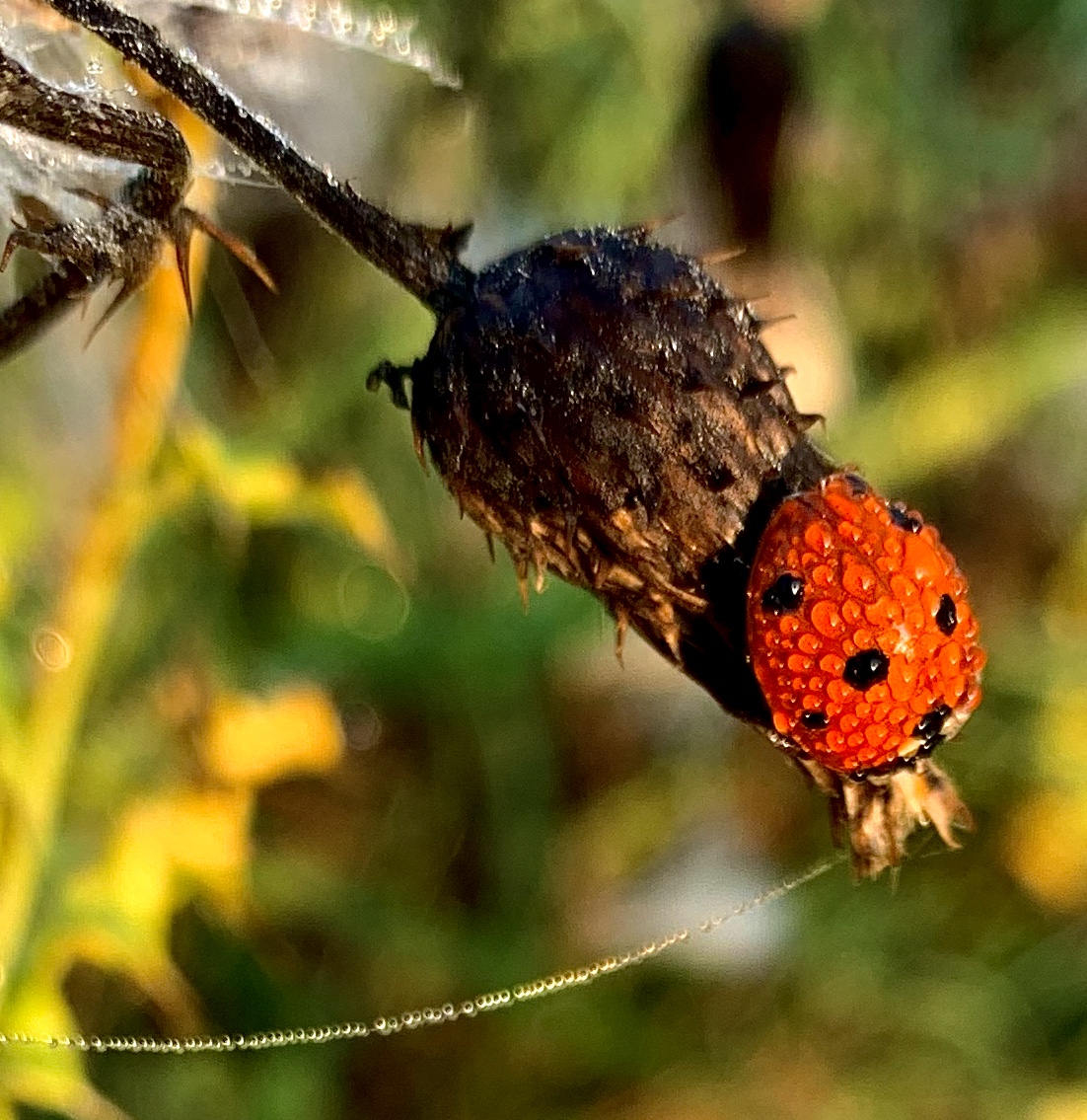
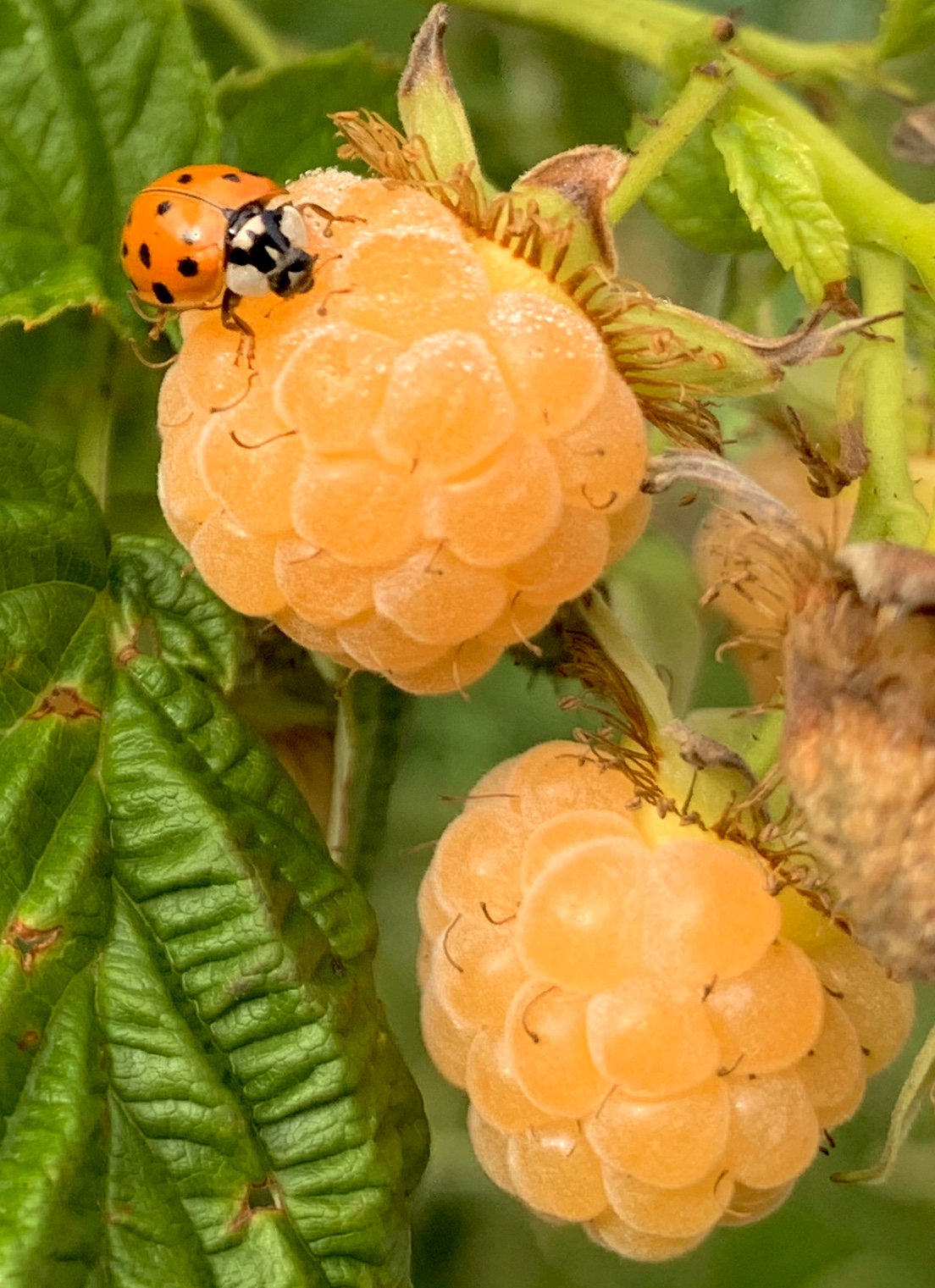
Trying to Make Sense of It

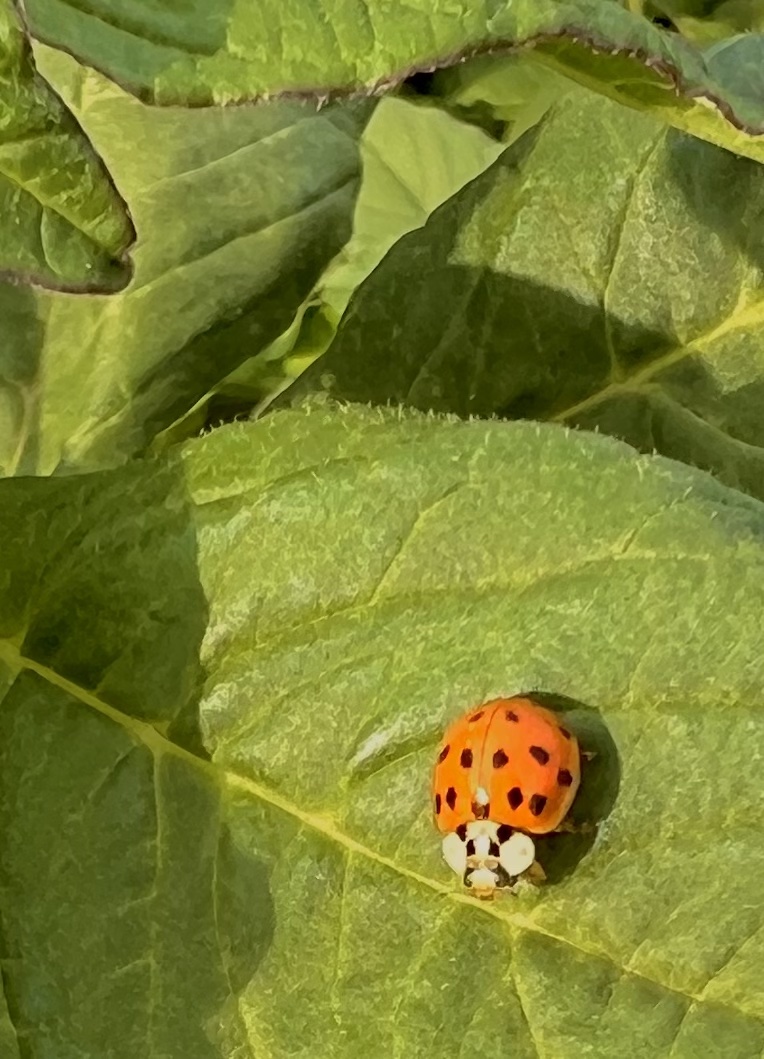
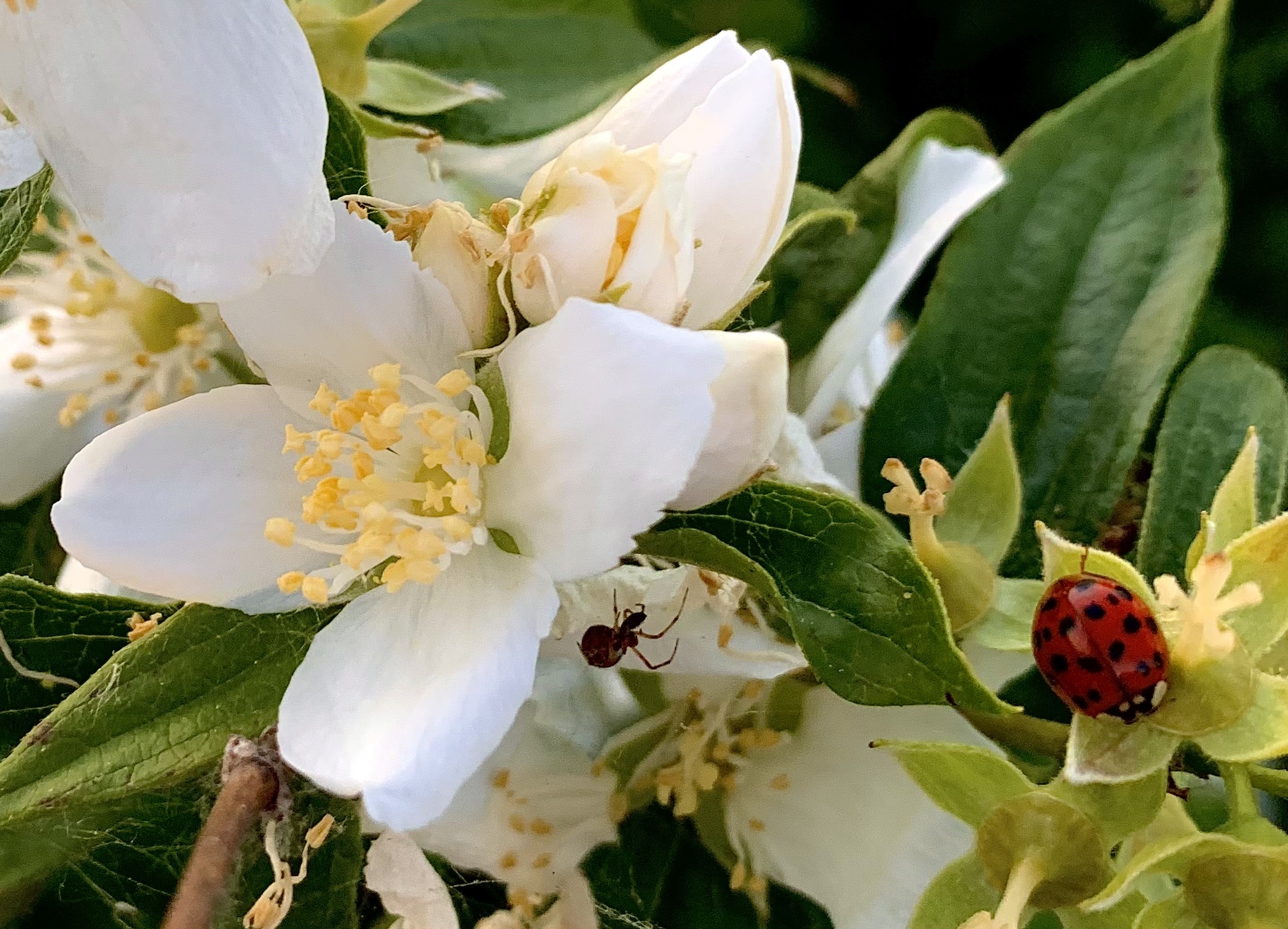
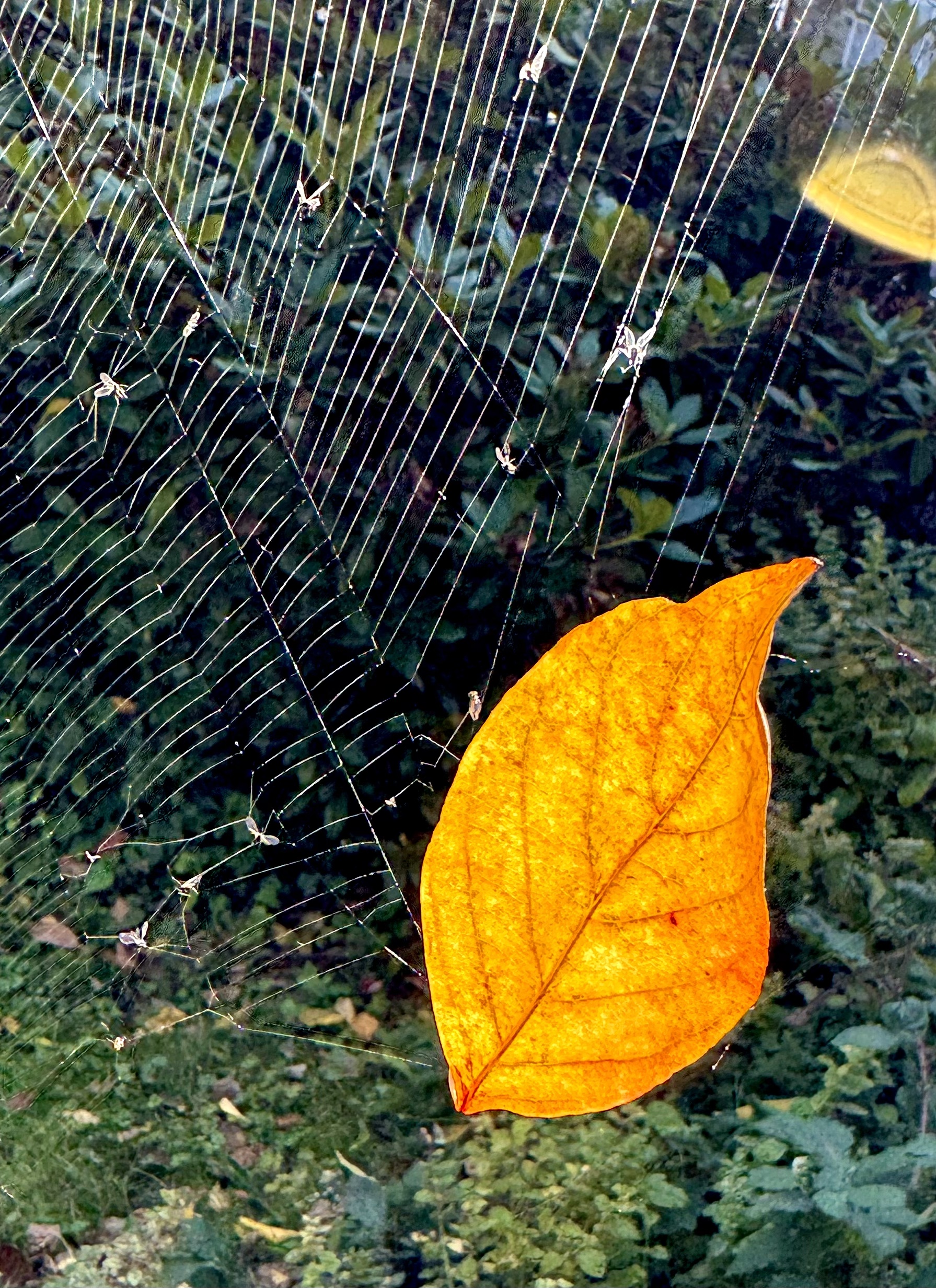
Mid-October and the calendar
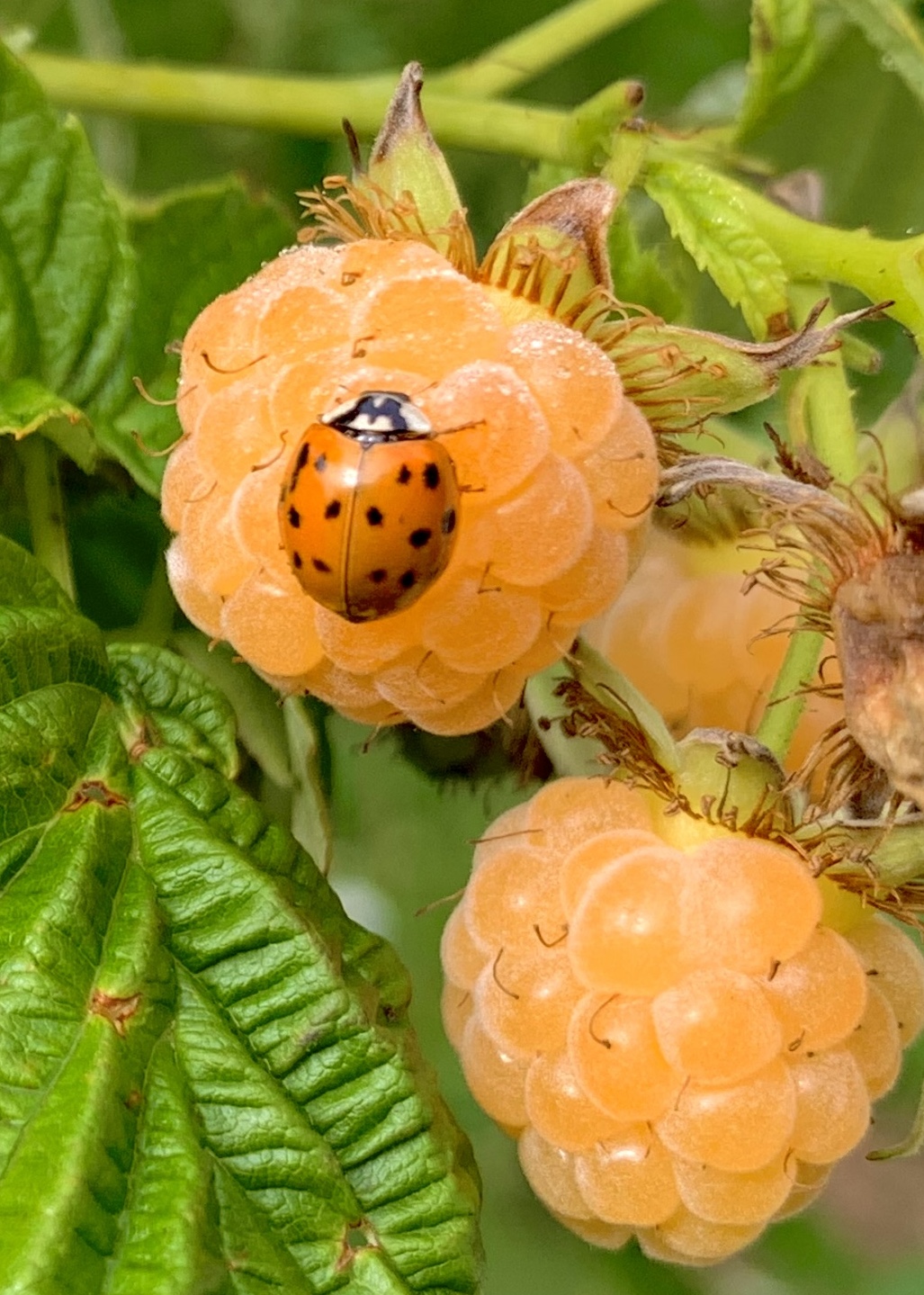
of ladybugs directs them to move inside.
Following some unwritten date, they form
colonies of strange ideograms on the walls
and ceilings, their orange-red lacquer
dotted with different combinations
of black spots roving in afternoon sunlight.

Each year they turn back memory’s clock—
thirty years ago, my wife is in Chicago,
I’m in Connecticut with our three children,
just home from a soccer tournament.
Our middle son, nine, flush with pride
of his team’s championship, finds them
that first time: hundreds and hundreds

of ladybugs crawling on windows, walls,
ceilings. And then, my wife’s voice on the phone
from Chicago—her father has died.
For an hour the keening whine of the vacuum,
the peppery smell of ladybugs still alive
or dying inside the bulging bag. After,
I tell our children: Their grandfather is dead.

It’s the first death for each of them,
but the crash of sorrow into happiness
overwhelms our middle son, a wave
of joy and grief roiling inside him.
And then, twenty-two years later,
he too would die in mid-October
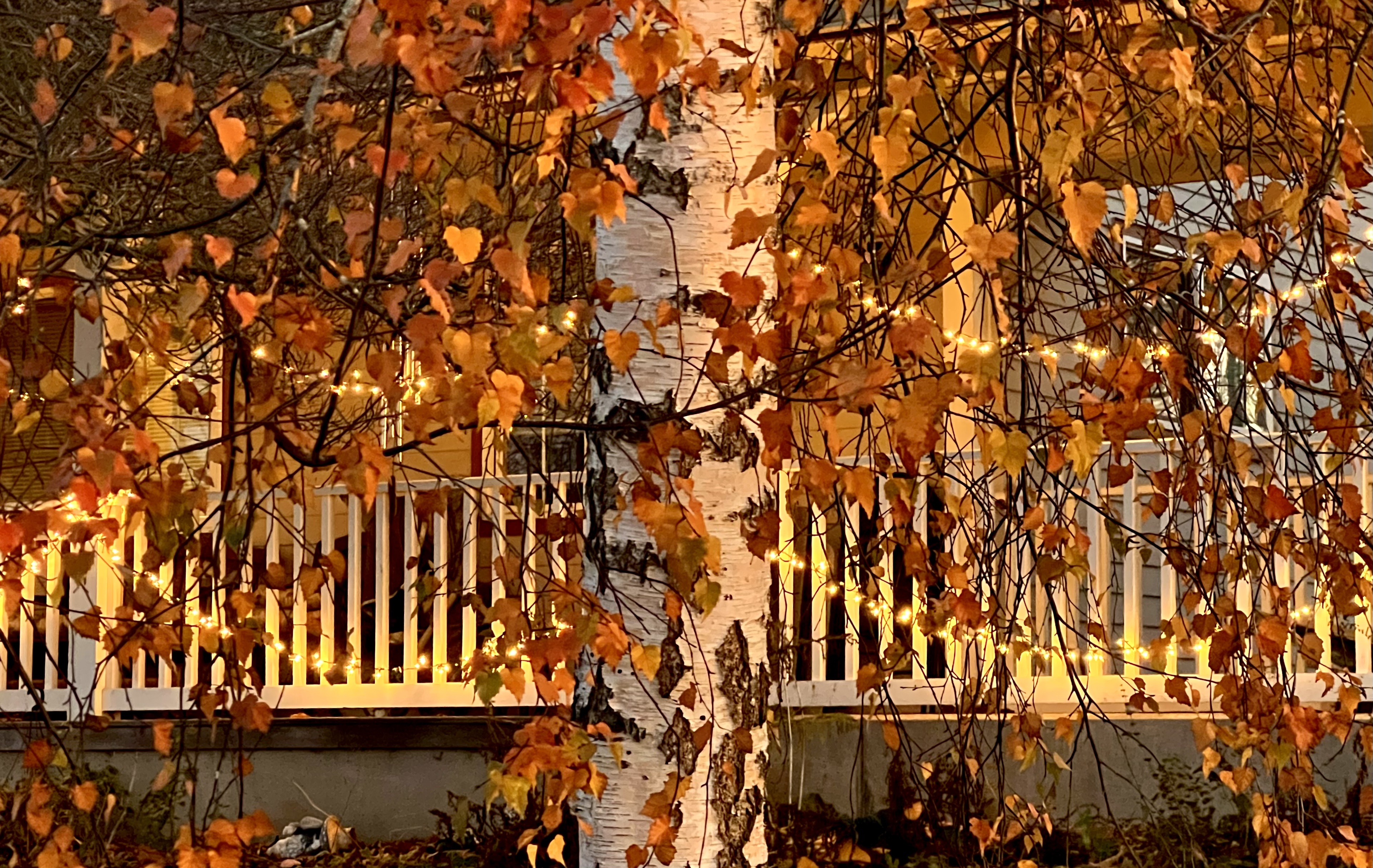
with the ladybugs’ arrival, with fall’s gold

leaf light and candelabras of sumac.
Don’t try to make sense of it, I told my son
back then. I thought: all these things,
inextricably but insensibly connected.
That’s what I tell myself every October,
the still unvacuumed ladybugs
like trails of language leading nowhere,
untranslatable and senseless.

~Robert Cording “Ladybugs”
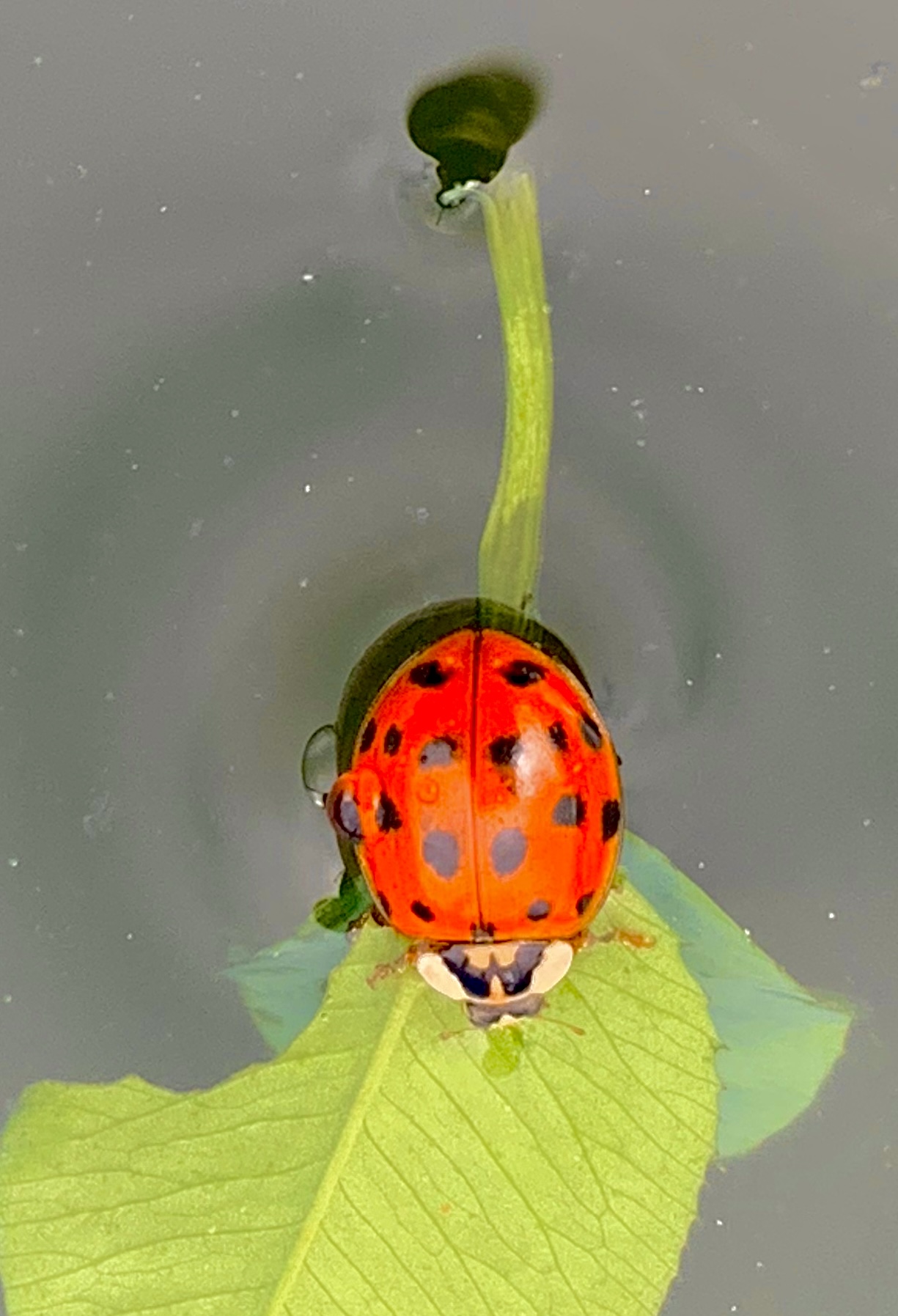
The little fly you squashed and put into the ashtray
—how it walked out later that same day, bold as
you like across the carpet, cold-shouldering your

botched attempt at homicide with the aloofness of a
hired gun to the extent you broke into guffaws then
fell, stricken, to your knees and sobbed, forgiving

every one of your murderous intentions, forgiving
yourself, letting the patch of sun claim its prize.

~Claudine Toutoungi “Lazarus” from Emotional Support Horse
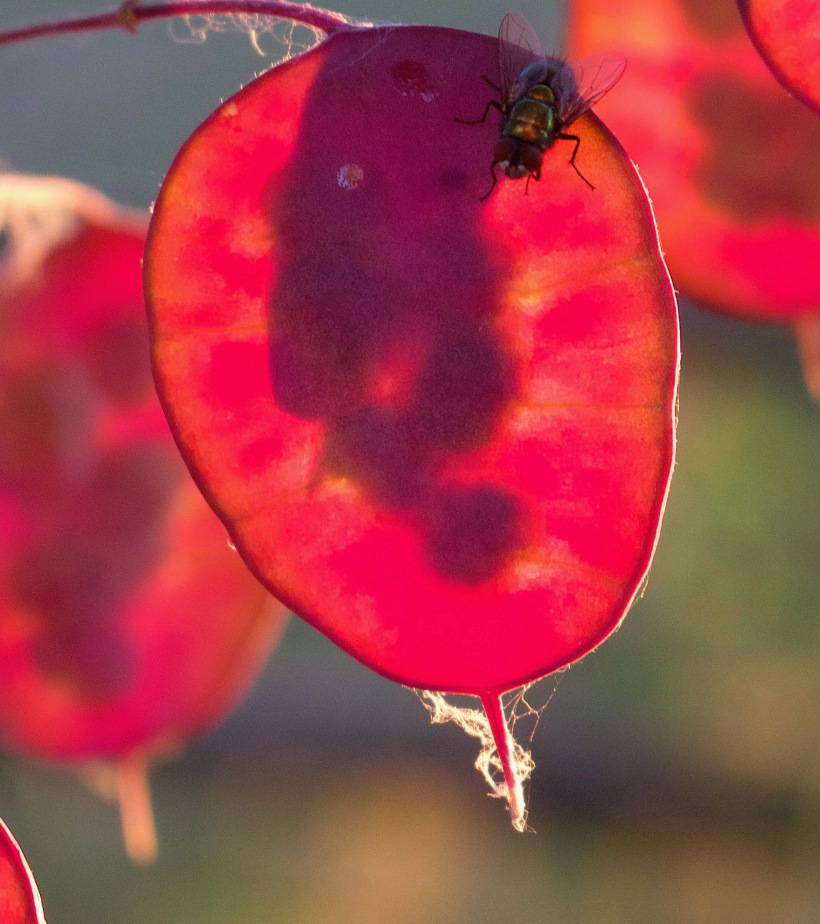
Humans have a love-hate relationship with insects. Mostly hate.

But bugs don’t like us any better when we attempt to swat, step on, smoosh and poison them to oblivion.

I’ve tried to understand the Creator’s design plan, making a place on this earth for mosquitoes, hornets, and scorpions and few other nasty bugs.

There must be some sense to their existence,
even if we fail to understand it.
There must be some sense to our own existence,
even if we fail to understand it.
Perhaps we humans exist just to make life difficult for the bugs.

all these things,
inextricably but insensibly connected

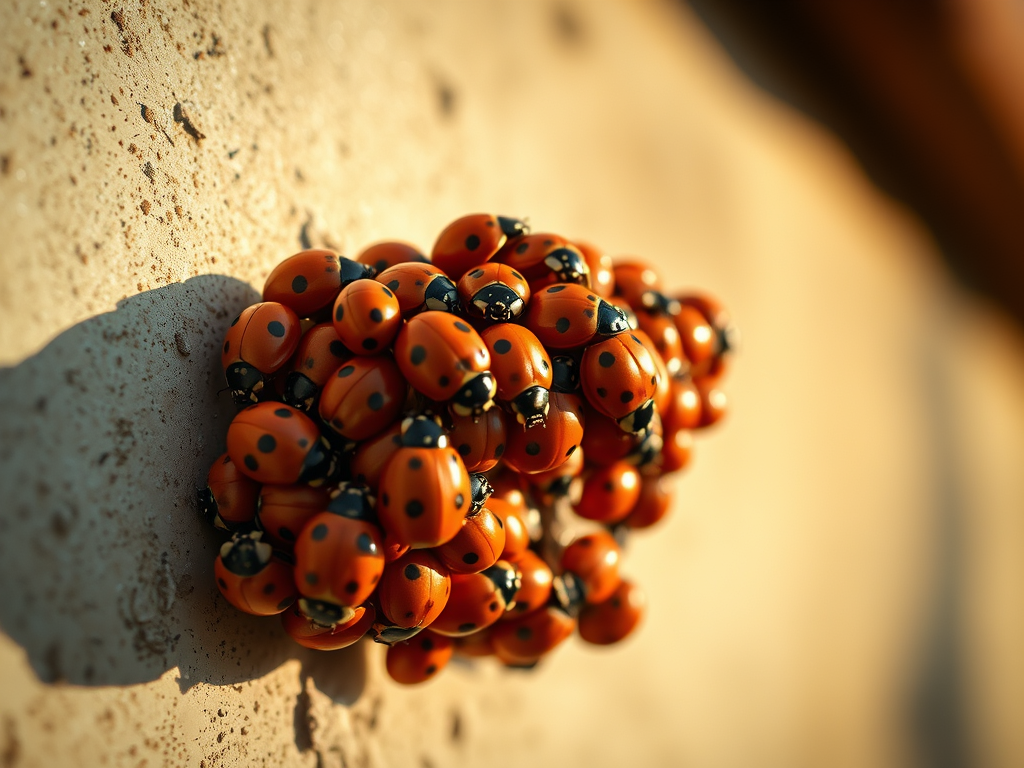
AI image of ladybug cluster
One-Time
Monthly
Yearly

Make a one-time or recurring donation to support daily Barnstorming posts

Make a monthly donation

Make a yearly donation

Choose an amount

$10.00
$25.00
$50.00
$5.00
$15.00
$100.00
$5.00
$15.00
$100.00

Or enter a custom amount

$

Your contribution is deeply appreciated.

Your contribution is appreciated.

Your contribution is appreciated.

DonateDonate monthlyDonate yearly

An Unshadowed Light

Within the ongoing havoc
the woods this morning is
almost unnaturally still.
Through stalled air, unshadowed
light, a few leaves fall
of their own weight.

                                       The sky
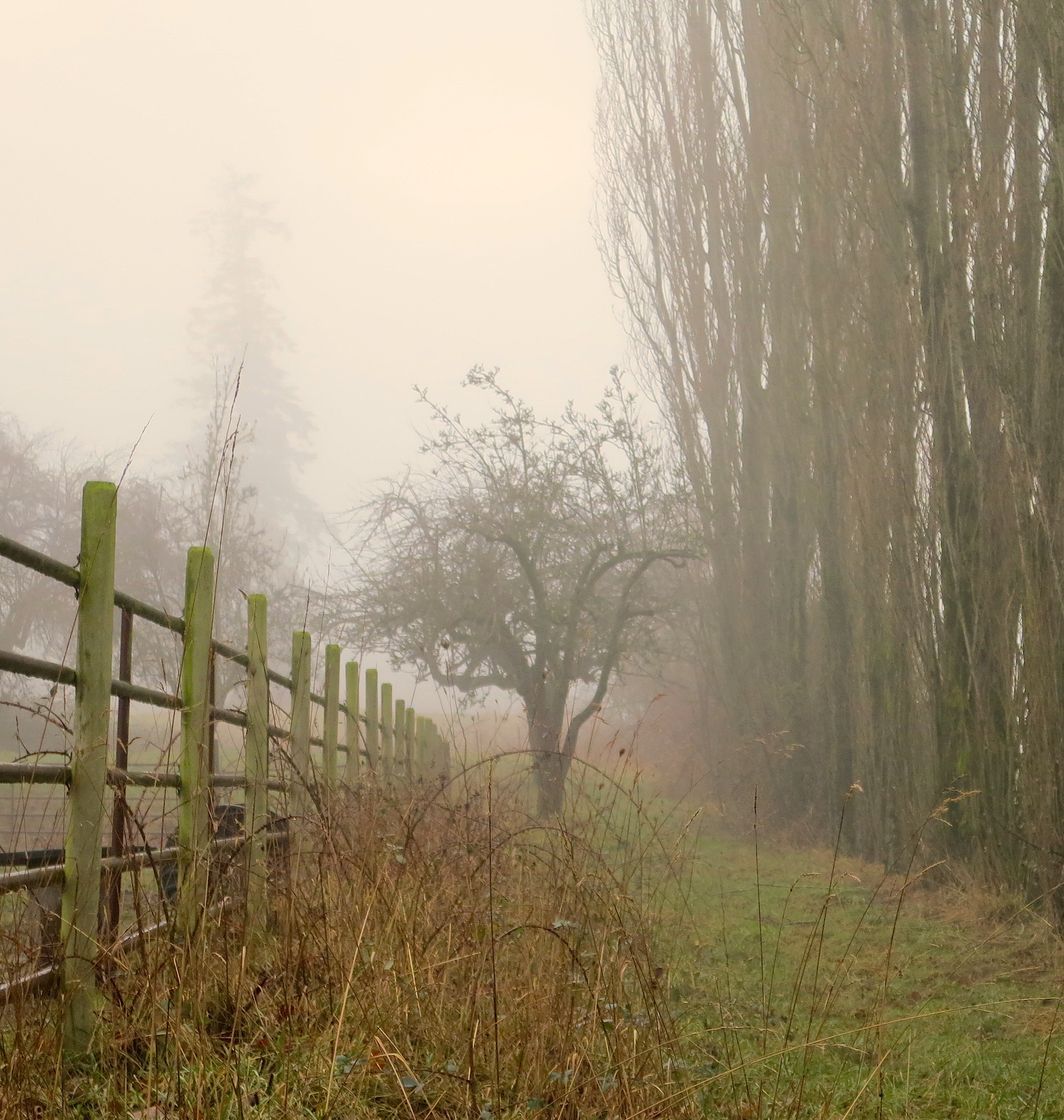
is gray. It begins in mist
almost at the ground
and rises forever. The trees
rise in silence almost
natural, but not quite,
almost eternal, but
not quite.


                      What more did I
think I wanted? Here is
what has always been.
Here is what will always
be. Even in me,
the Maker of all this
returns in rest, even
to the slightest of His works,
a yellow leaf slowly
falling, and is pleased.

~Wendell Berry “VII” from This Day

What more did I think I wanted?

What always has been and always will be:

Until I’m not able to hold on in the wind and rain,
may I be a spot of unshadowed light
in this dark and bleak world.

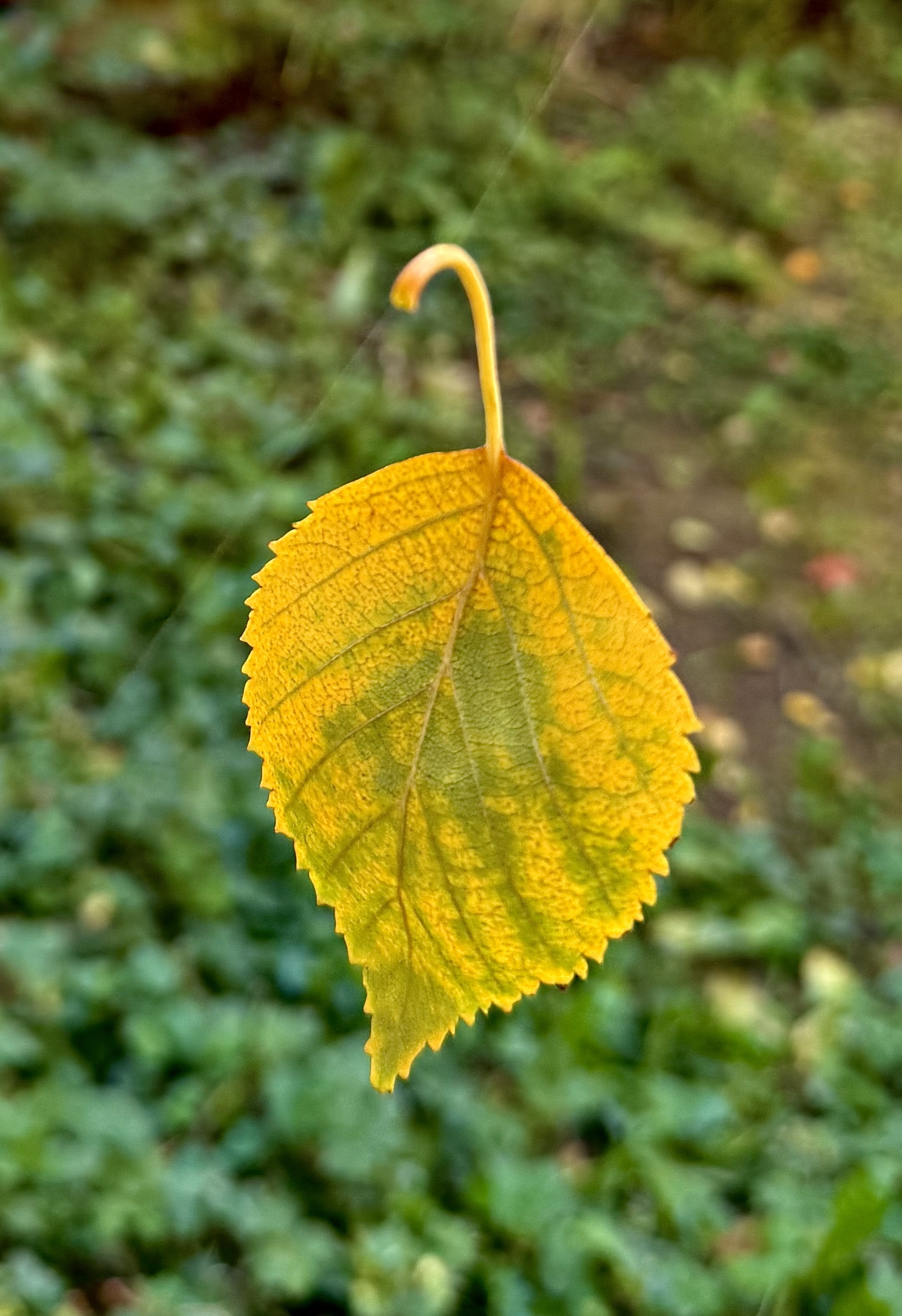
I’ll let go like a yellow leaf in autumn,
when the time comes,
if it pleases my Maker.

One-Time
Monthly
Yearly

Make a one-time or recurring donation to support daily Barnstorming posts

Make a monthly donation

Make a yearly donation

Choose an amount

$10.00
$25.00
$50.00
$5.00
$15.00
$100.00
$5.00
$15.00
$100.00

Or enter a custom amount

$

Your contribution is deeply appreciated.

Your contribution is appreciated.

Your contribution is appreciated.

DonateDonate monthlyDonate yearly
Horses Without Headlights

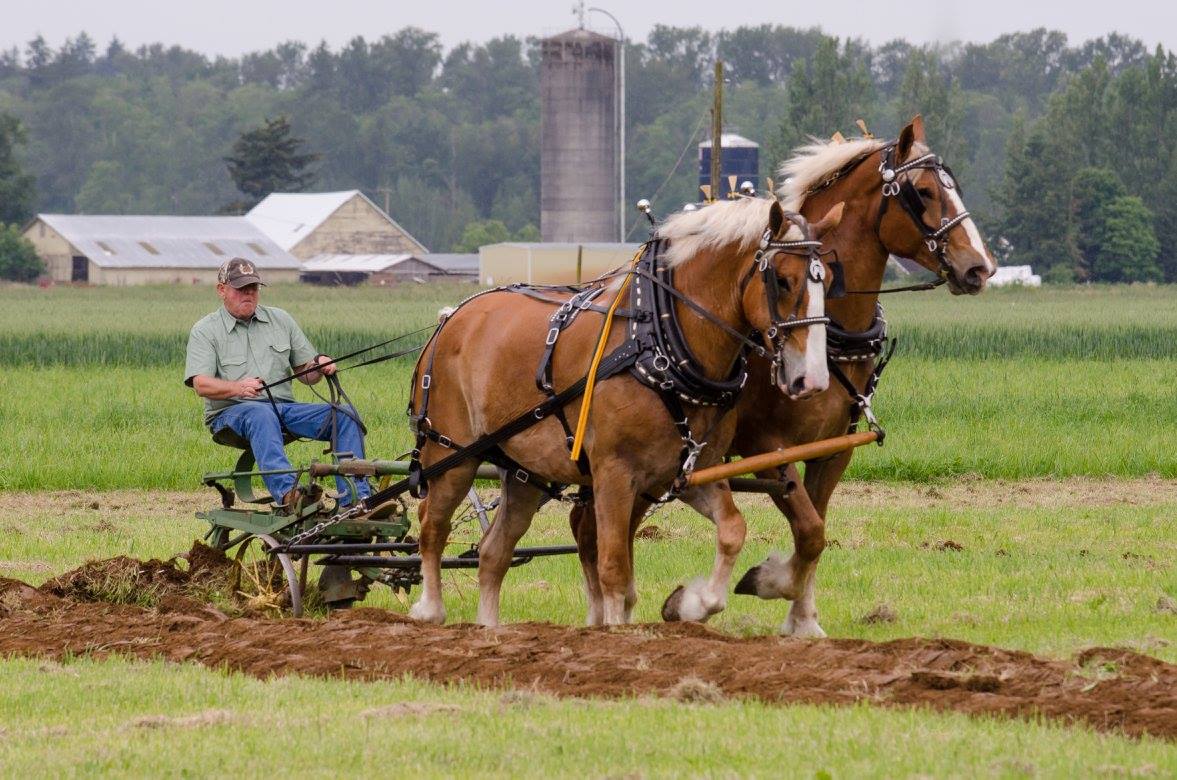
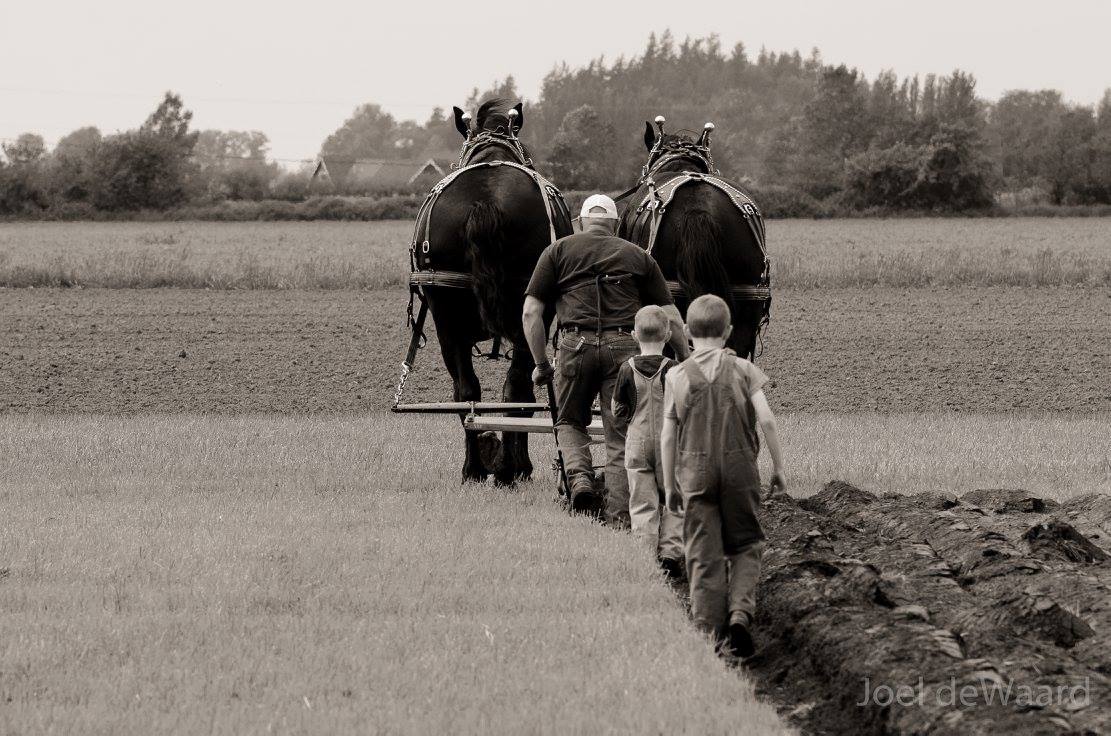
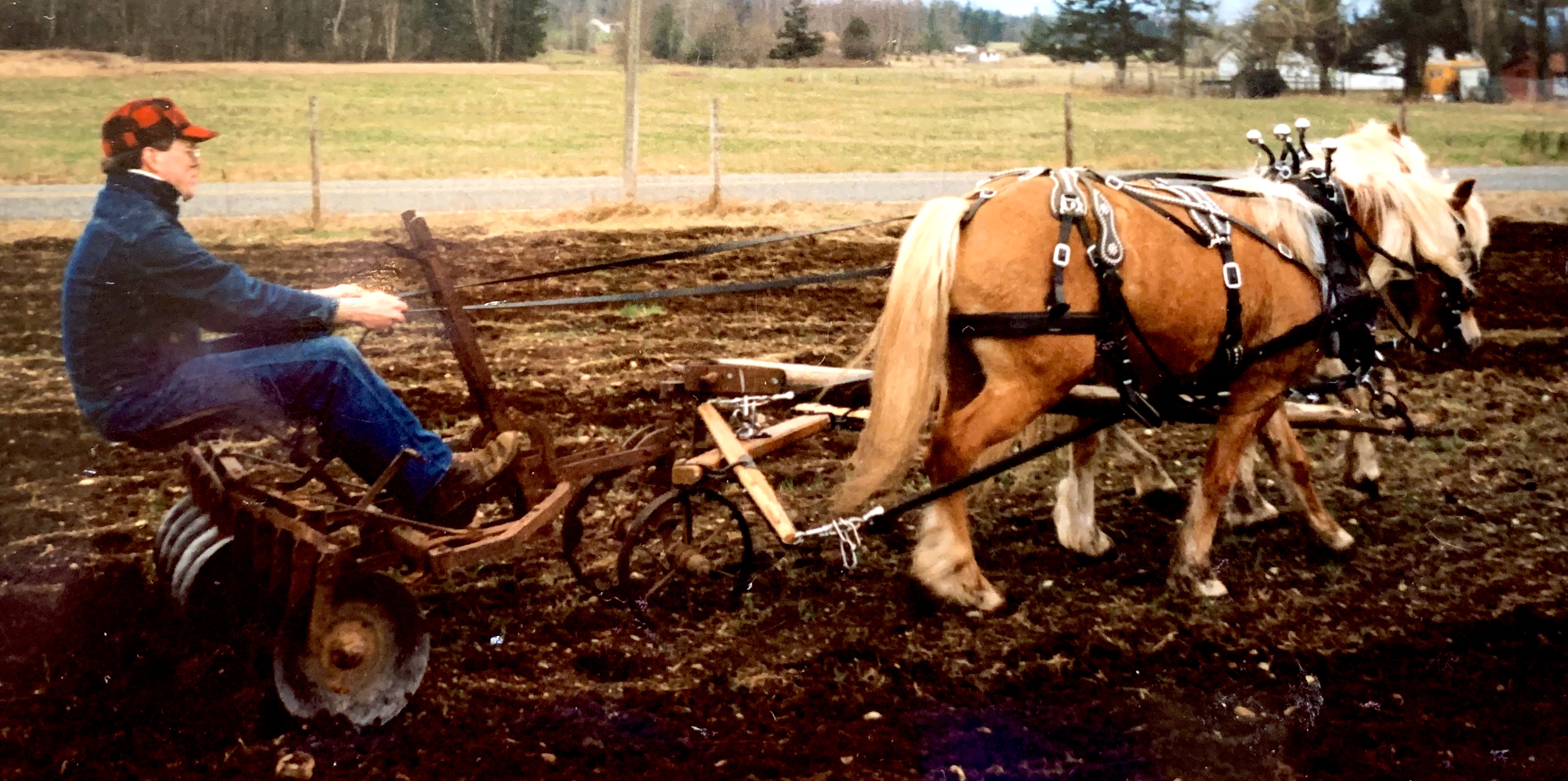
… The Amish have maintained what I like to think is a proper scale, largely by staying with the horse. The horse has restricted unlimited expansion.
Not only does working with horses limit farm size, but horses are ideally suited to family life.
With horses you unhitch at noon to water and feed the teams and then the family eats what we still call dinner. While the teams rest there is usually time for a short nap.
And because God didn’t create the horse with headlights,
we don’t work nights.
~Amish farmer David Kline in Great Possessions

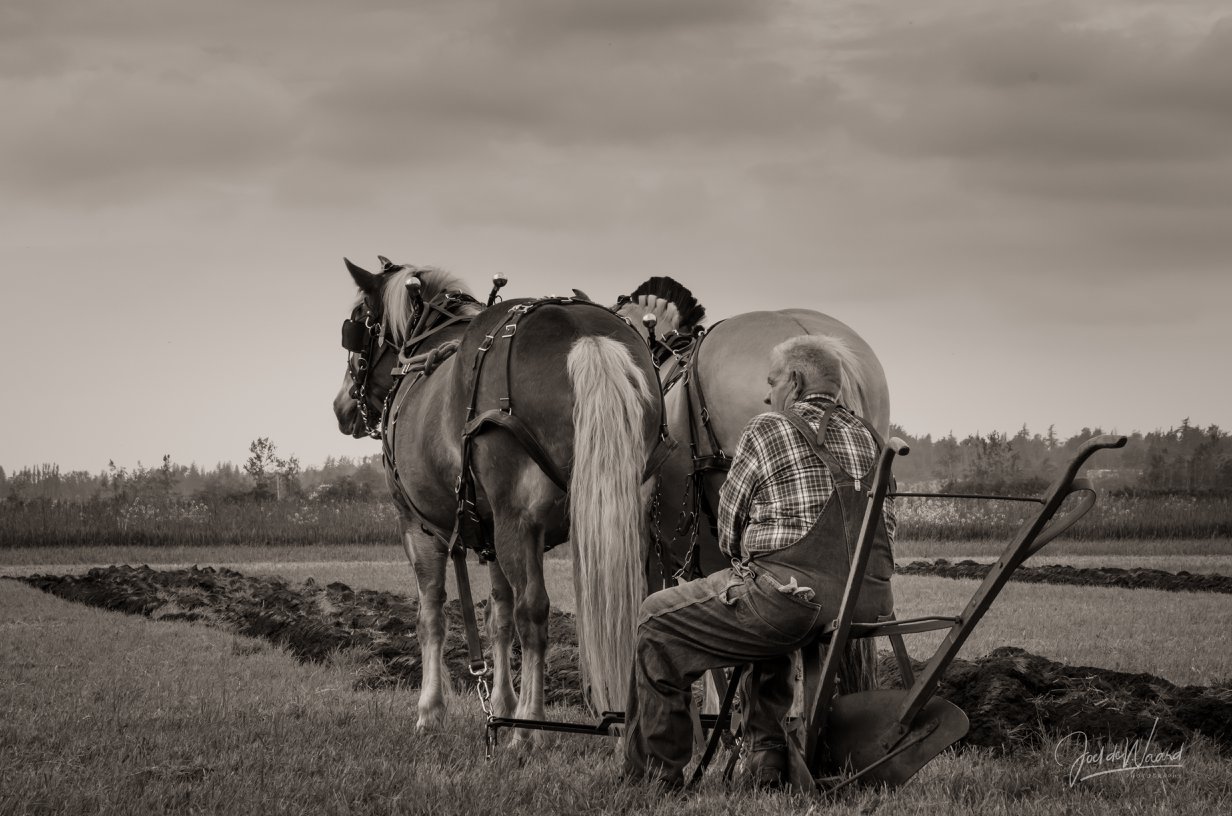
photo by Joel De Waard

You can’t have the family farm without the family.
~G.K. Chesterton from “The Unprecedented Architecture of Commander Blair,” Tales of the Long Bow

Photo of Aaron Janicki haying with his Oberlander team in Skagit County courtesy of Tayler Rae
Benjamin Janicki of Sedro Woolley raking hay with his team of Oberlanders

I’m 71 years old ~ old enough to have parents who grew up on farms worked by horses, one raising wheat and lentils in the Palouse country of eastern Washington and the other logging in the woodlands of Fidalgo Island of western Washington. The horses were crucial to my grandfathers’ success in caring for and tilling the land, seeding and harvesting the crops and bringing supplies from town miles away.  Theirs was a hardscrabble life in the early 20th century with few conveniences. Work was year round from dawn to dusk; caring for the animals came before any human comforts. Once night fell, work ceased and sleep was welcome respite for man and beast.

In the rural NW Washington countryside where we live, we’ve been fortunate enough to live near farmers who still dabble in horse farming, whose draft teams are hitched to plows and mowers and manure spreaders as they head out to the fields to recapture the past. They still gather together in the spring to have a well-attended and friendly competition plowing match.

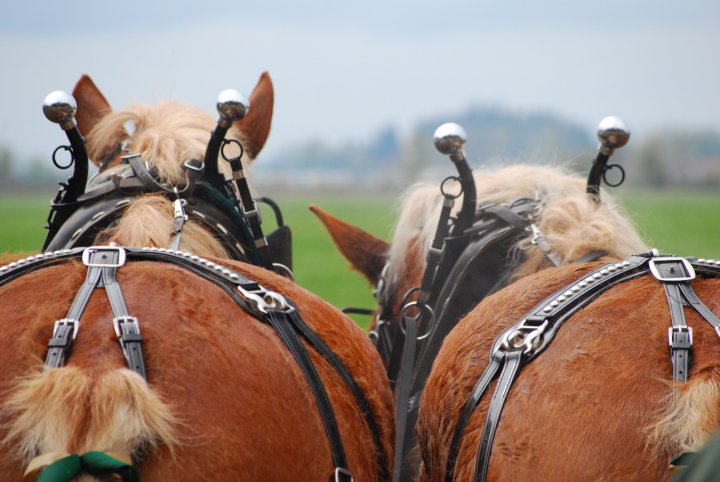
Watching a good team work with no diesel motor running means hearing bird calls from the field, the steady footfall of the horses, the harness chains jingling, the leather straps creaking, the machinery shushing quietly as gears turn and grass lays over in submission. No ear protection is needed. There is no clock needed to pace the day.  

There is a rhythm of nurture when animals instead of engines are part of the work day. The gauge for taking a break is the amount of foamy sweat on the horses and how fast they are breathing. 
It is time to stop and take a breather,
it is time to start back up to do a few more rows,
it is time to water,
it is time for a meal,
it is time for a nap,
it is time for a rest in a shady spot. 
This is gentle use of the land with four footed stewards who deposit right back to the soil the digested forage they have eaten only hours before.

Our modern fossil-fuel-powered approach to food production has bypassed the small family farm which was so dependent on the muscle power of humans and animals. In our move away from horses worked by skilled teamsters, what has been gained in high production values has meant loss of self-sufficiency and dedicated stewardship of a smaller acreage. Draft breeds, including the Haflinger horses we raised for forty years, now are bred for higher energy with lighter refined bone structure meant more for eye appeal and floating movement, rather than the sturdy conformation and unflappable low maintenance mindset needed for pulling work.

Modern children grow up with a different set of values as well, no longer raised to work together with other family members, as well as the animals on the farm for a common purpose of daily survival.

Still fascinated by the The Small Farmer’s Journal, I am encouraged when the next generation reaches for horse collars and bridles, hitches up their horses to do the work as it used to be done.  Although the modern world will never go back to the days of horse-drawn farming and transportation, we can acknowledge there were some benefits to the old ways of doing things, when progress meant being harnessed together as a team with our horses, tilling for truth and harvesting hope.

photo by Tayler Rae


I like farming. I like the work.

I like the livestock and the pastures and the woods. 
It’s not necessarily a good living, but it’s a good life. 
I now suspect that if we work with machines
the world will seem to us to be a machine,
but if we work with living creatures
the world will appear to us as a living creature. 
That’s what I’ve spent my life doing,
trying to create an authentic grounds for hope.
~Wendell Berry, horse farmer, essayist, poet, professor

photo by Tayler Rae
One-Time
Monthly
Yearly

Make a one-time or recurring donation to support daily Barnstorming posts

Make a monthly donation

Make a yearly donation

Choose an amount

$10.00
$25.00
$50.00
$5.00
$15.00
$100.00
$5.00
$15.00
$100.00

Or enter a custom amount

$

Your contribution is deeply appreciated.

Your contribution is appreciated.

Your contribution is appreciated.

DonateDonate monthlyDonate yearly
Surprising the Sky

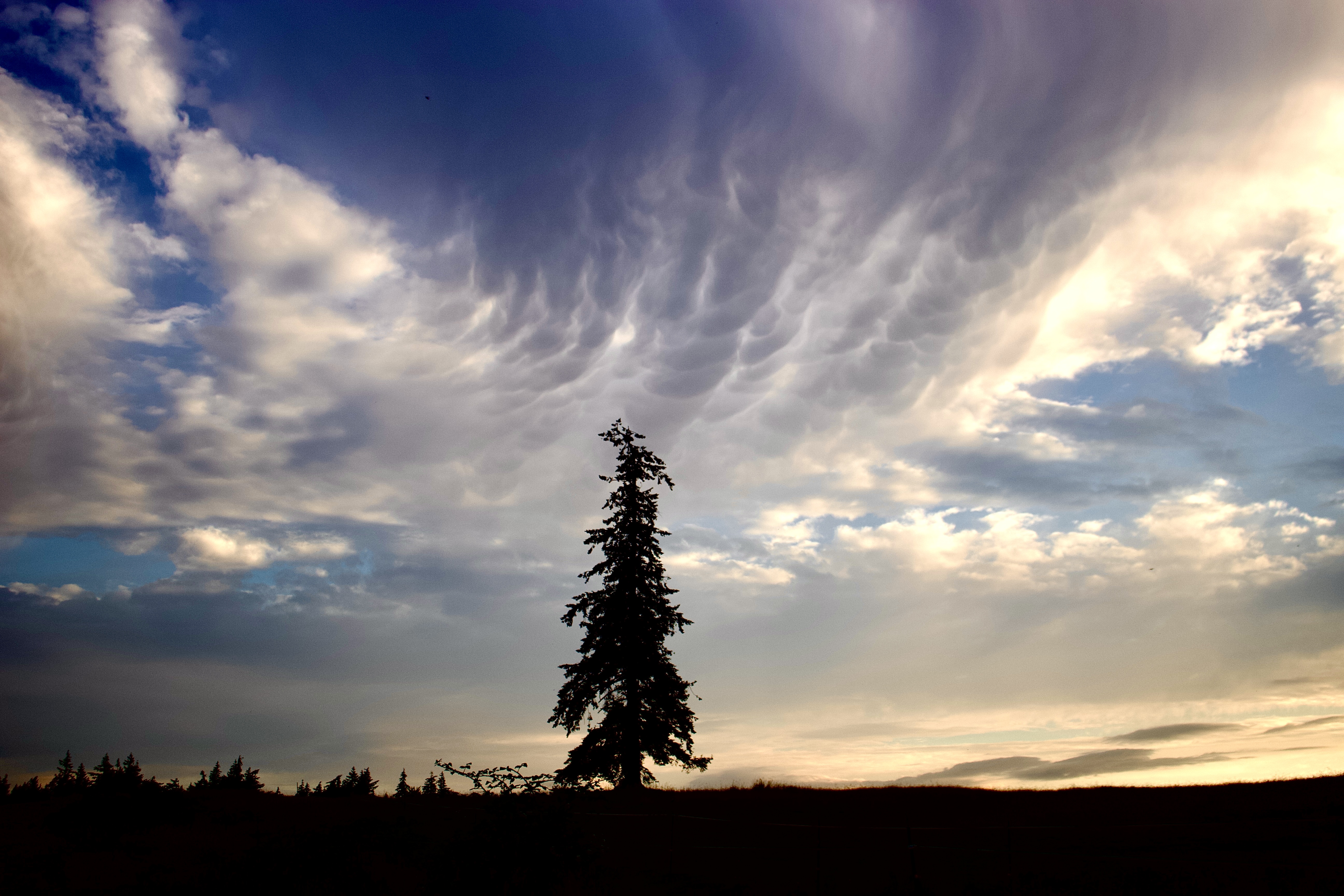
A curious Cloud surprised the Sky,
‘Twas like a sheet with Horns;
The sheet was Blue —
The Antlers Gray —
It almost touched the Lawns.

So low it leaned — then statelier drew —
And trailed like robes away,
A Queen adown a satin aisle
Had not the majesty.

~Emily Dickinson

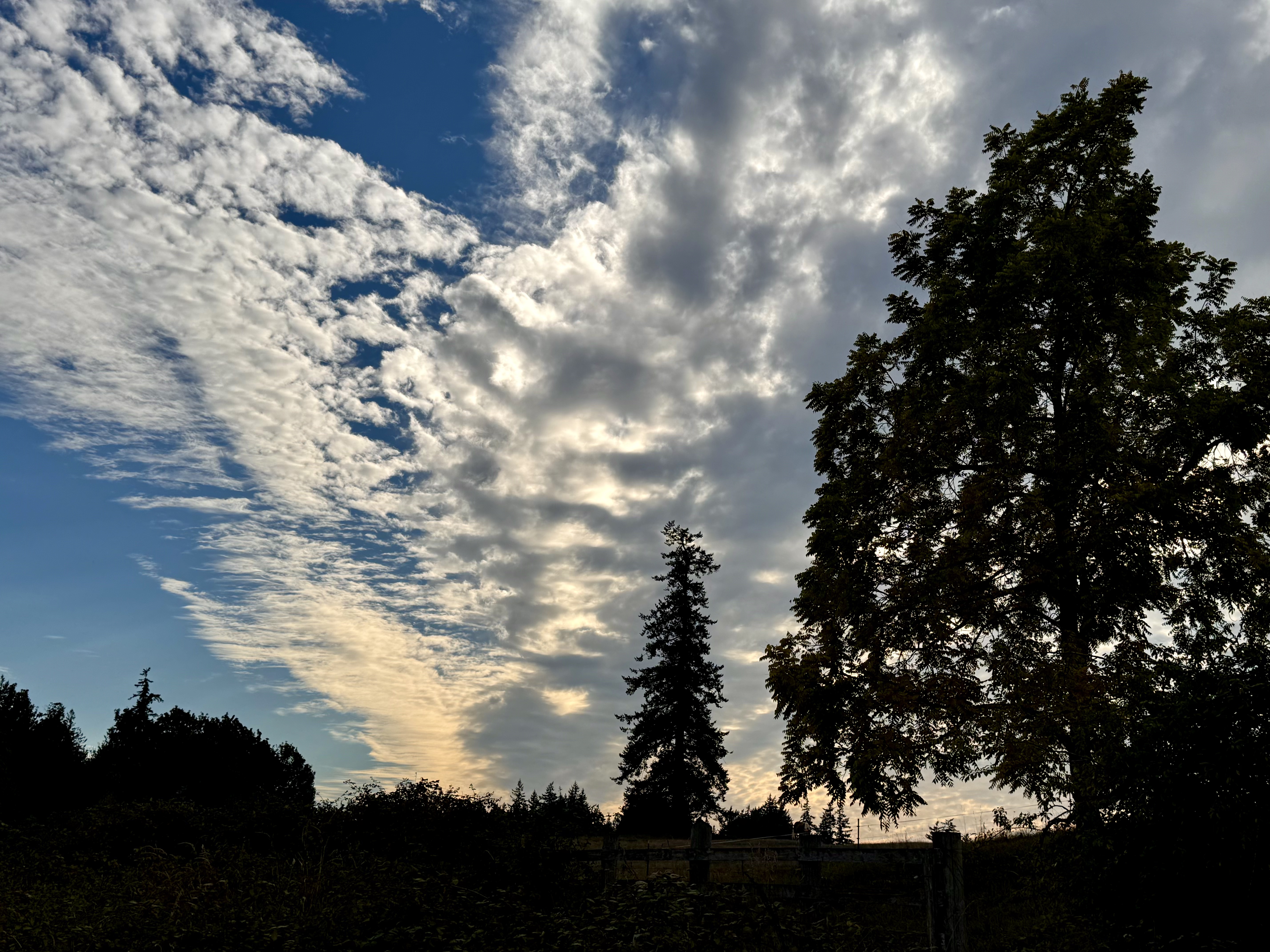
The sky is full of clouds to-day,
And idly, to and fro,
Like sheep across the pasture, they
Across the heavens go.
I hear the wind with merry noise
Around the housetops sweep,
And dream it is the shepherd boys,—
They’re driving home their sheep.

The clouds move faster now; and see!
The west is red and gold.
Each sheep seems hastening to be
The first within the fold.
I watch them hurry on until
The blue is clear and deep,
And dream that far beyond the hill
The shepherds fold their sheep.

Then in the sky the trembling stars
Like little flowers shine out,
While Night puts up the shadow bars,
And darkness falls about.

~Frank Dempster Sherman “Clouds”

White sheep, white sheep,
On a blue hill,
When the wind stops,
You all stand still.
When the wind blows,
You walk away slow.
White sheep, white sheep,
Where do you go?
~Christina Rossetti “Clouds”

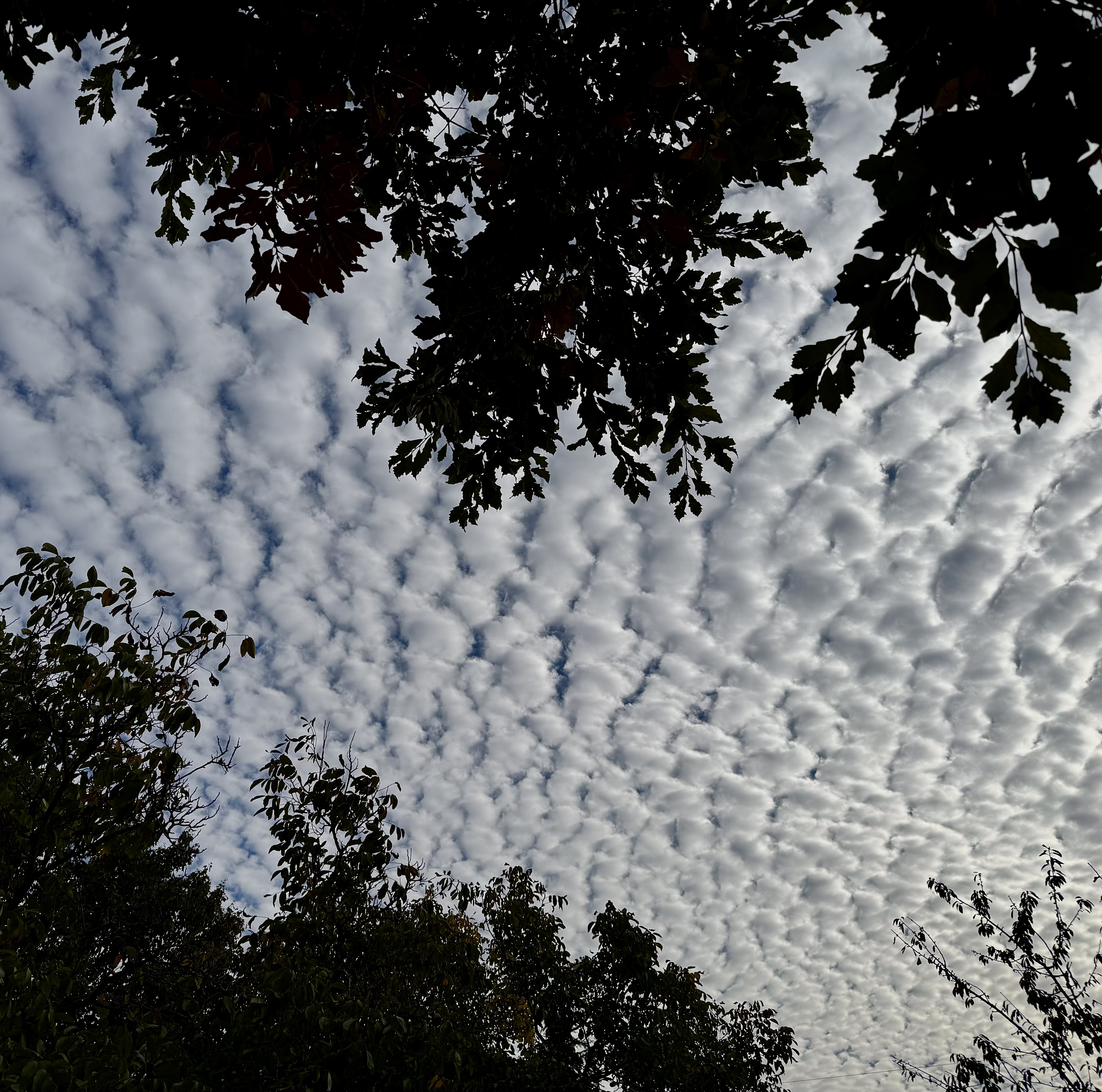
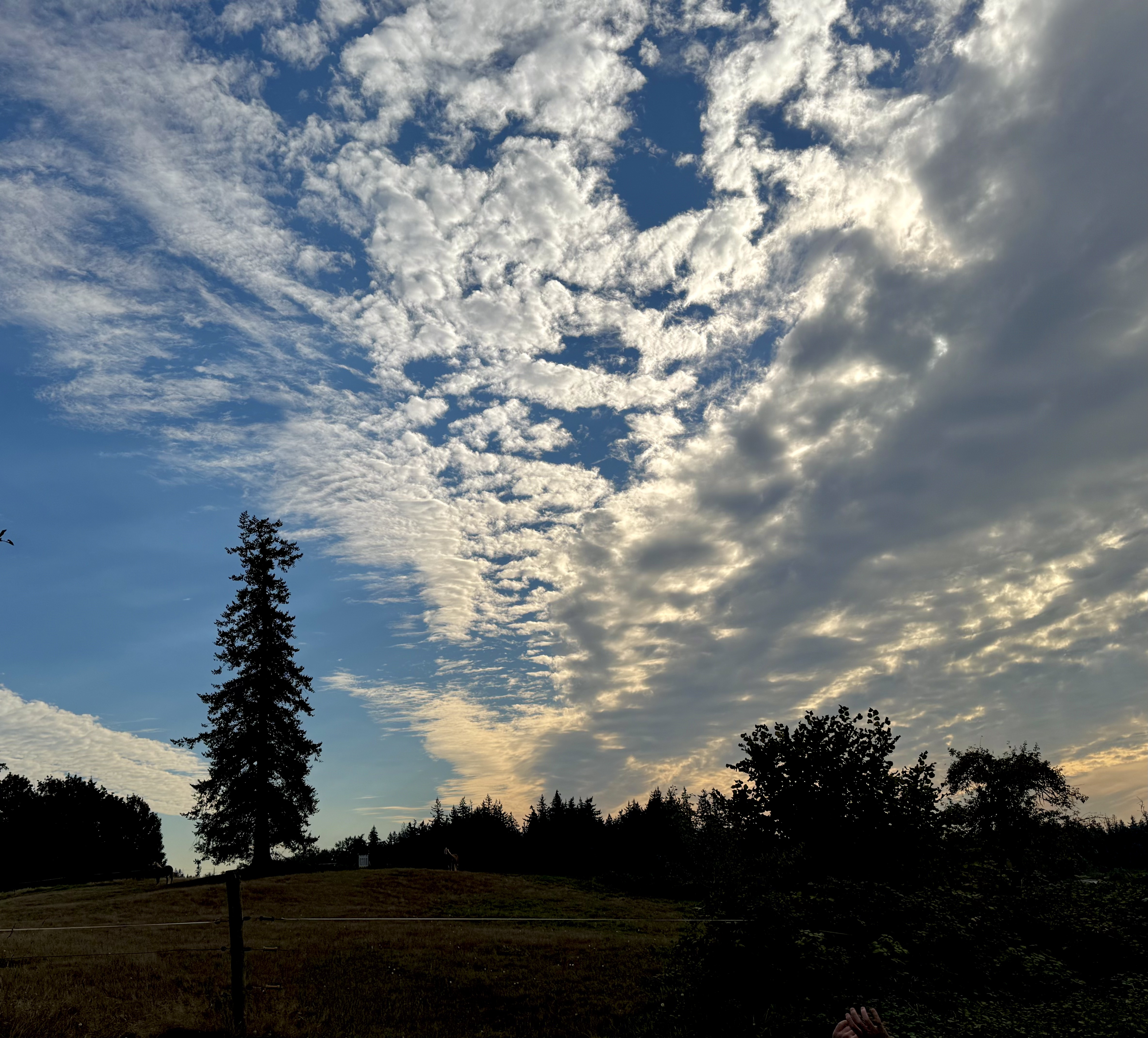
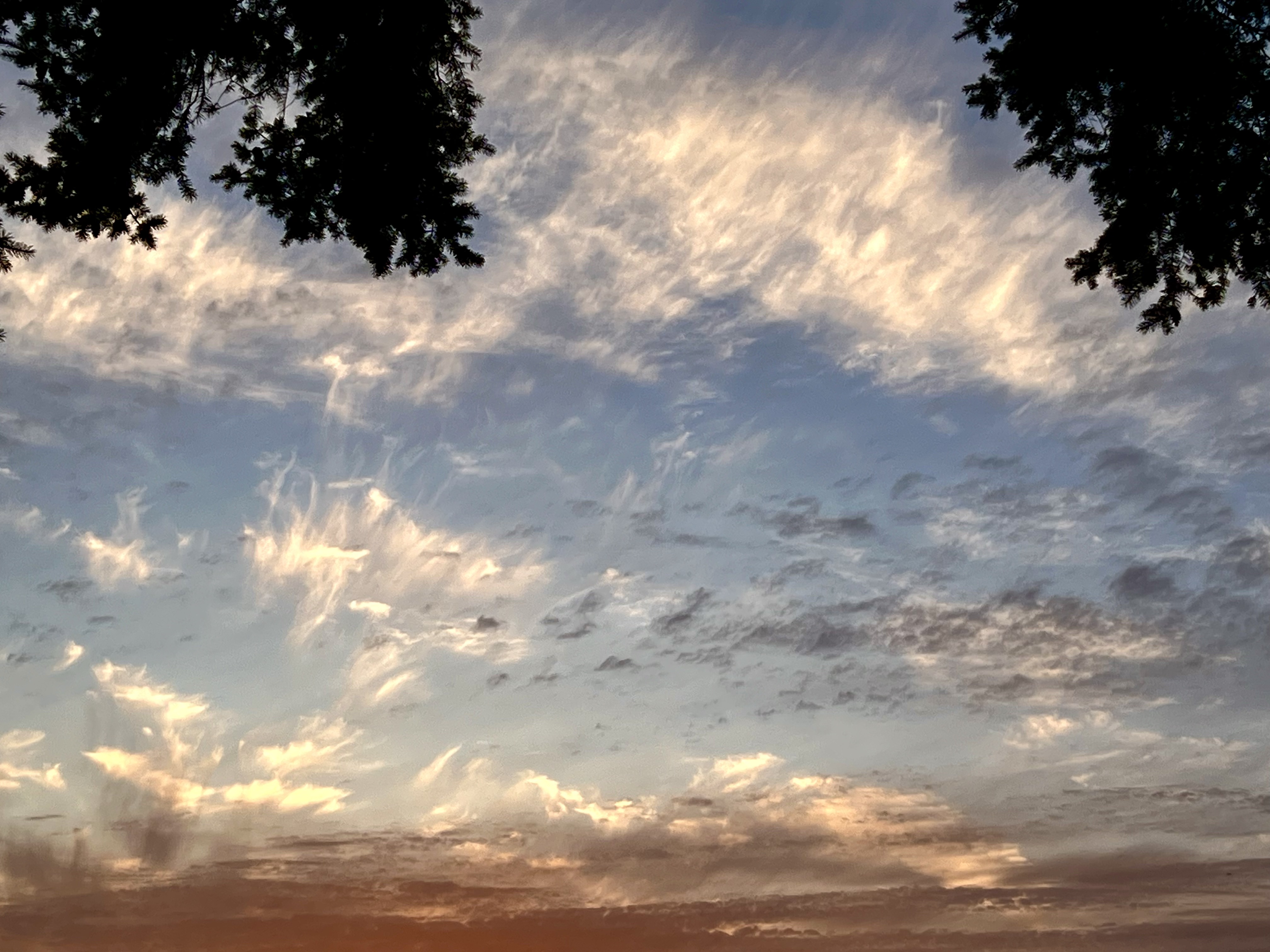
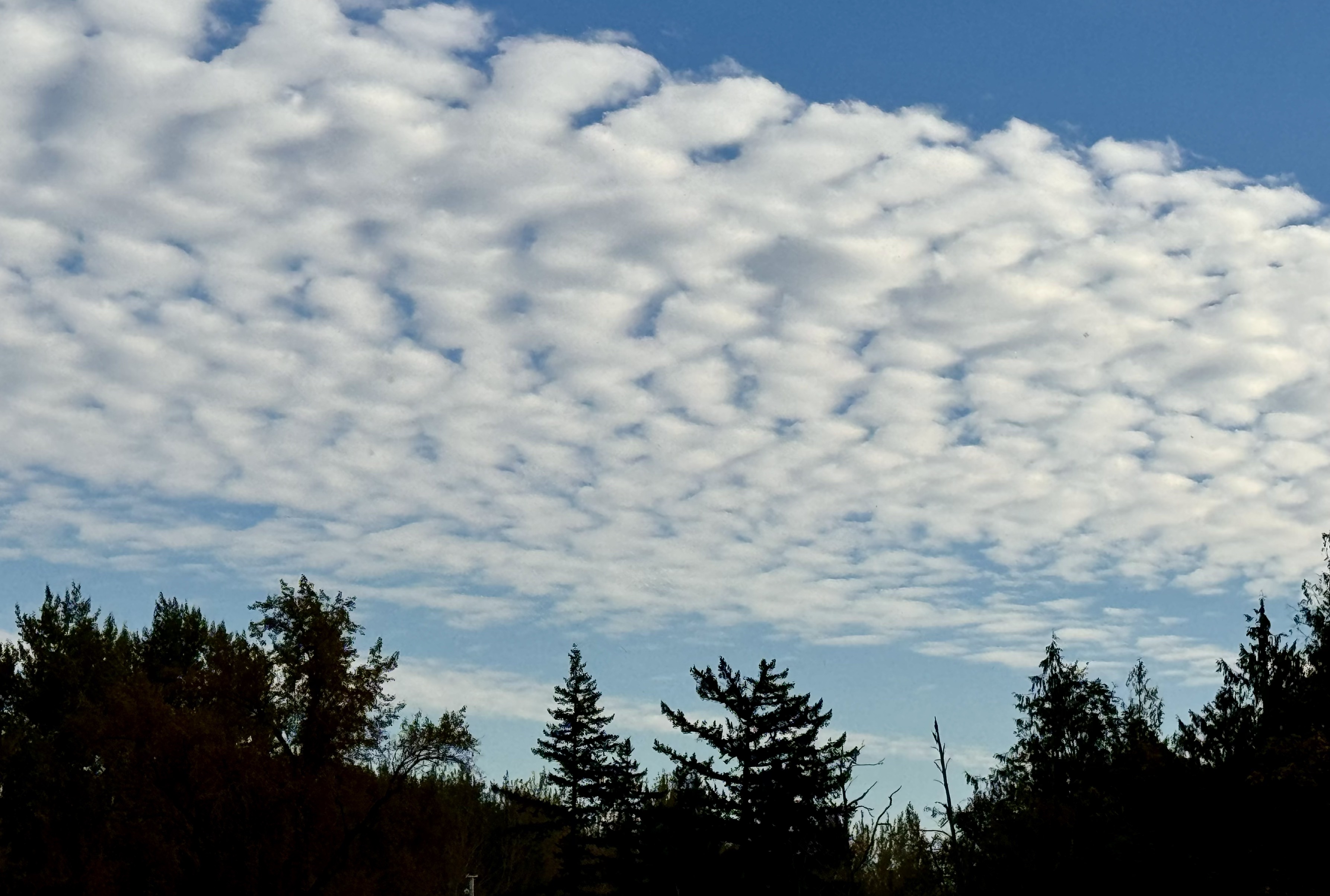
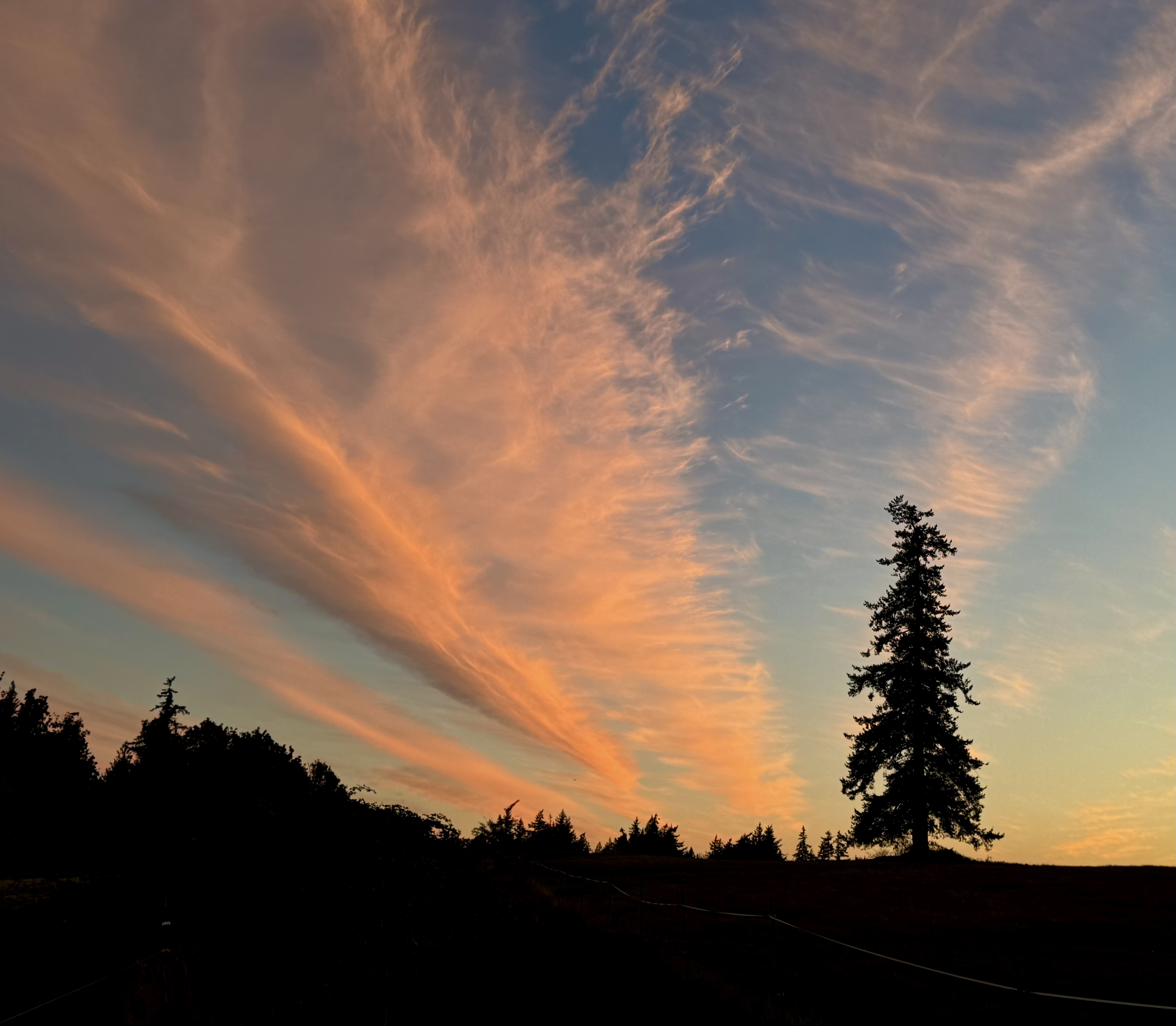
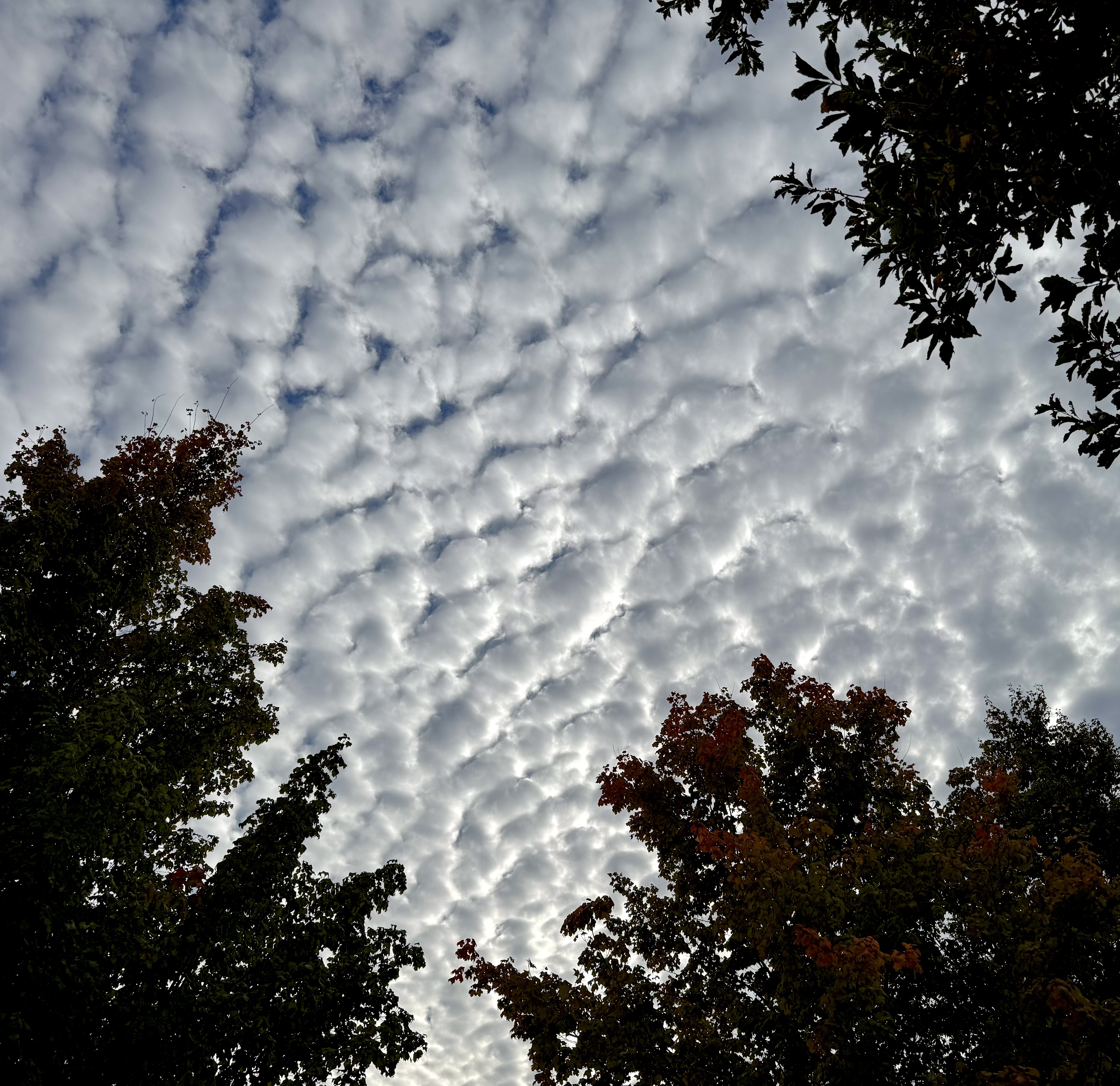
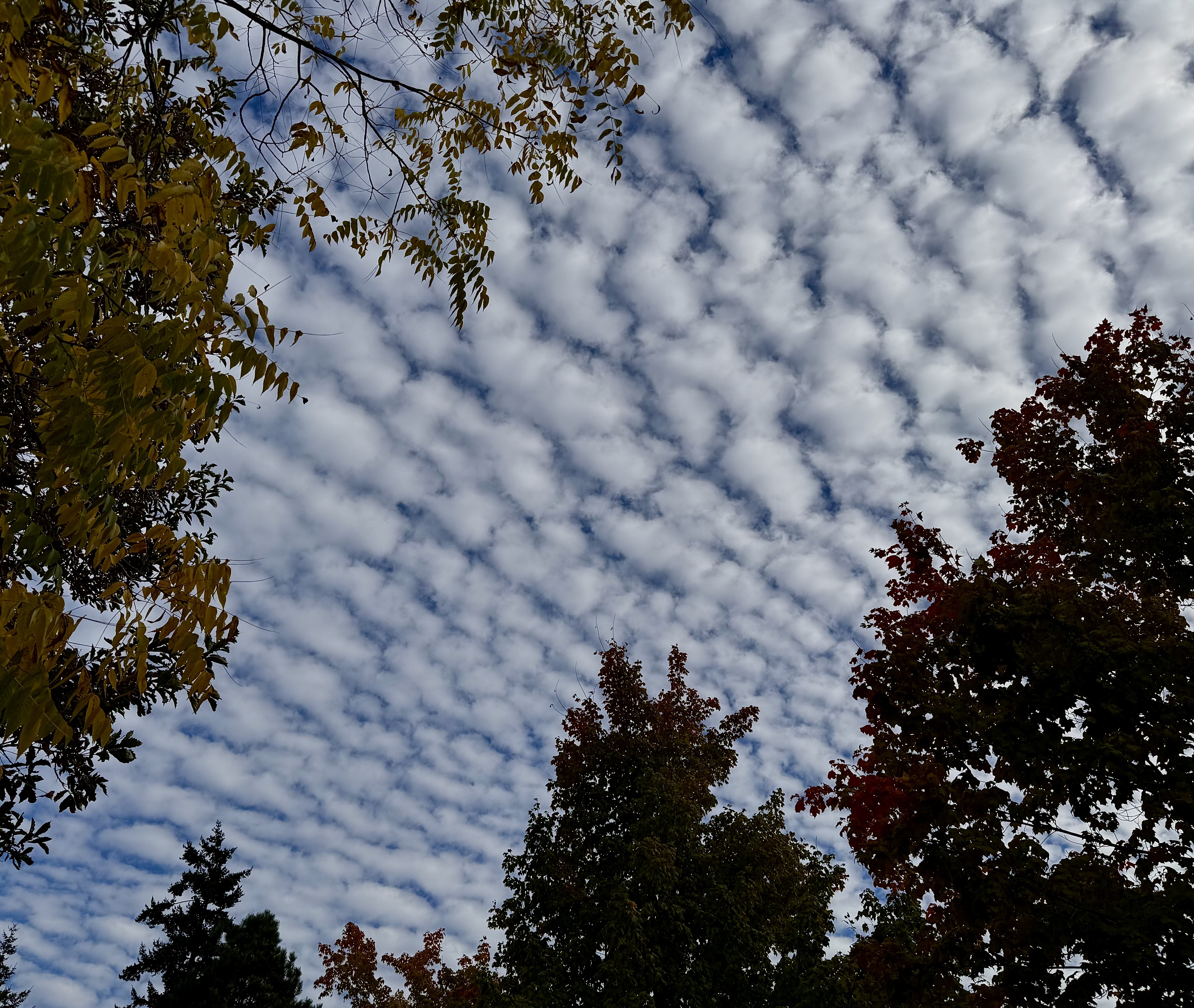
The afternoon sky becomes a chenille bedspread,
covering over a dying autumn landscape.

If only we could throw such a comforter
over our messy human lives.

We all might sleep a bit better…

One-Time
Monthly
Yearly

Make a one-time or recurring donation to support daily Barnstorming posts

Make a monthly donation

Make a yearly donation

Choose an amount

$10.00
$25.00
$50.00
$5.00
$15.00
$100.00
$5.00
$15.00
$100.00

Or enter a custom amount

$

Your contribution is deeply appreciated.

Your contribution is appreciated.

Your contribution is appreciated.

DonateDonate monthlyDonate yearly
Call Nothing Common

Begin the song exactly where you are,
Remain within the world of which you’re made.
Call nothing common in the earth or air,
Accept it all and let it be for good.

Start with the very breath you breathe in now,
This moment’s pulse, this rhythm in your blood
And listen to it, ringing soft and low.
Stay with the music, words will come in time.

Slow down your breathing. Keep it deep and slow.
Become an open singing-bowl, whose chime
Is richness rising out of emptiness,
And timelessness resounding into time.

And when the heart is full of quietness
Begin the song exactly where you are.

~Malcolm Guite “The Singing Bowl” from The Singing Bowl

In the center of my chest,
a kindling there in the hollow,
as if a match had just been struck,
or the blinds snapped up on a sealed room,
gold suffusing the air,
and through the wide windows,
a solstice unfolding,
mine for the lengthening days.
~Andrea Potts “On Reading John Donne for the First Time” from Her Joy Becomes

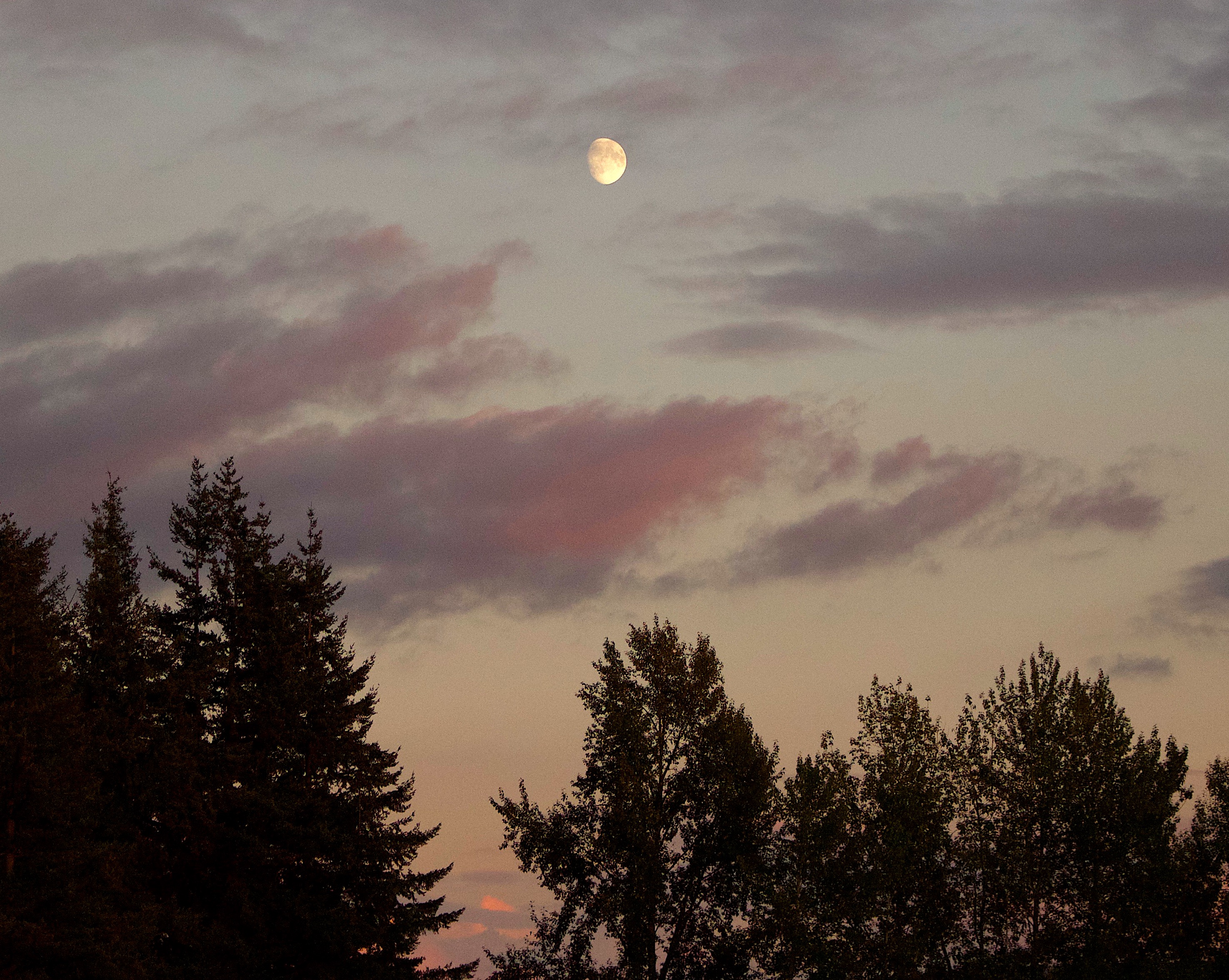
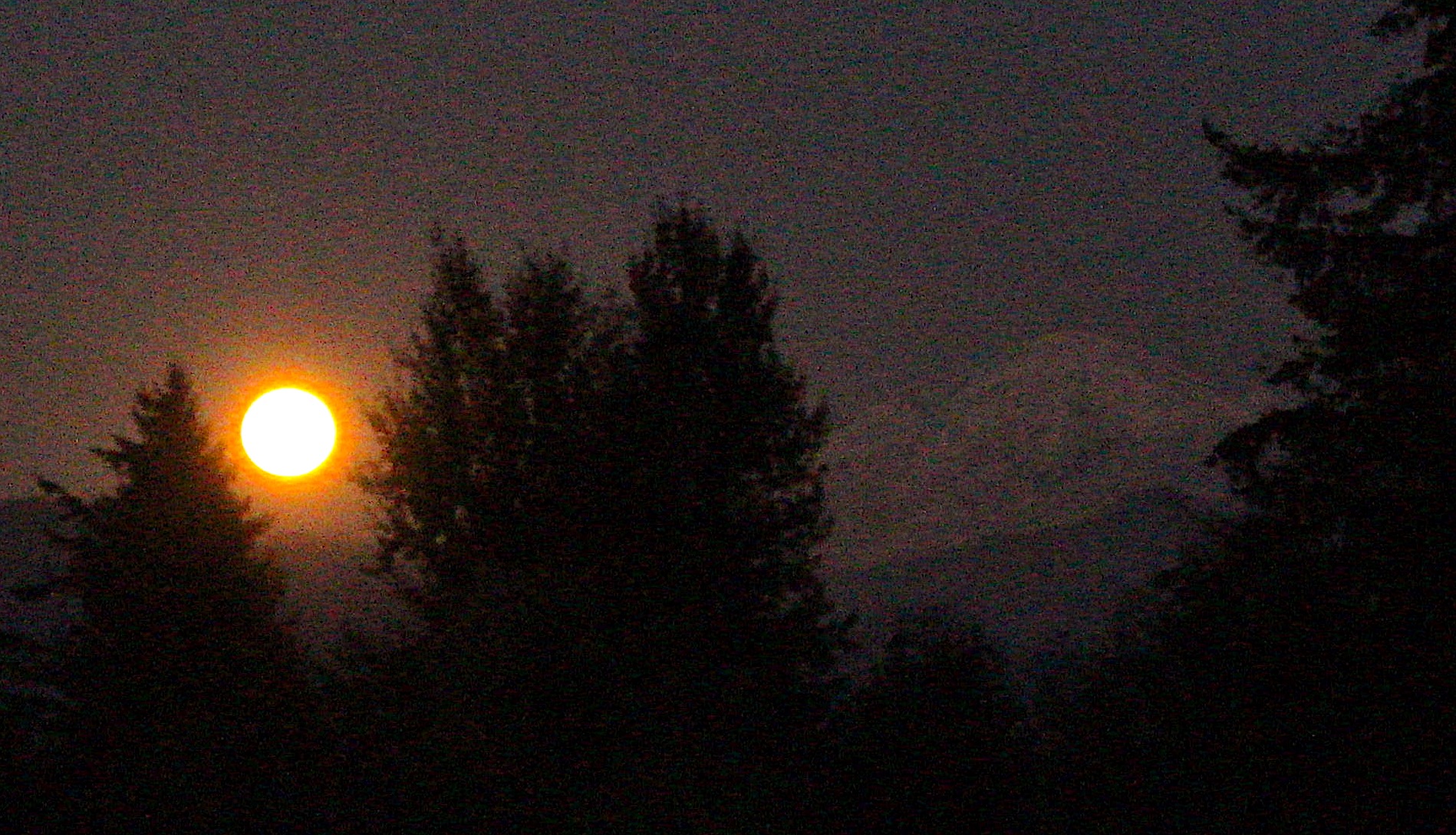
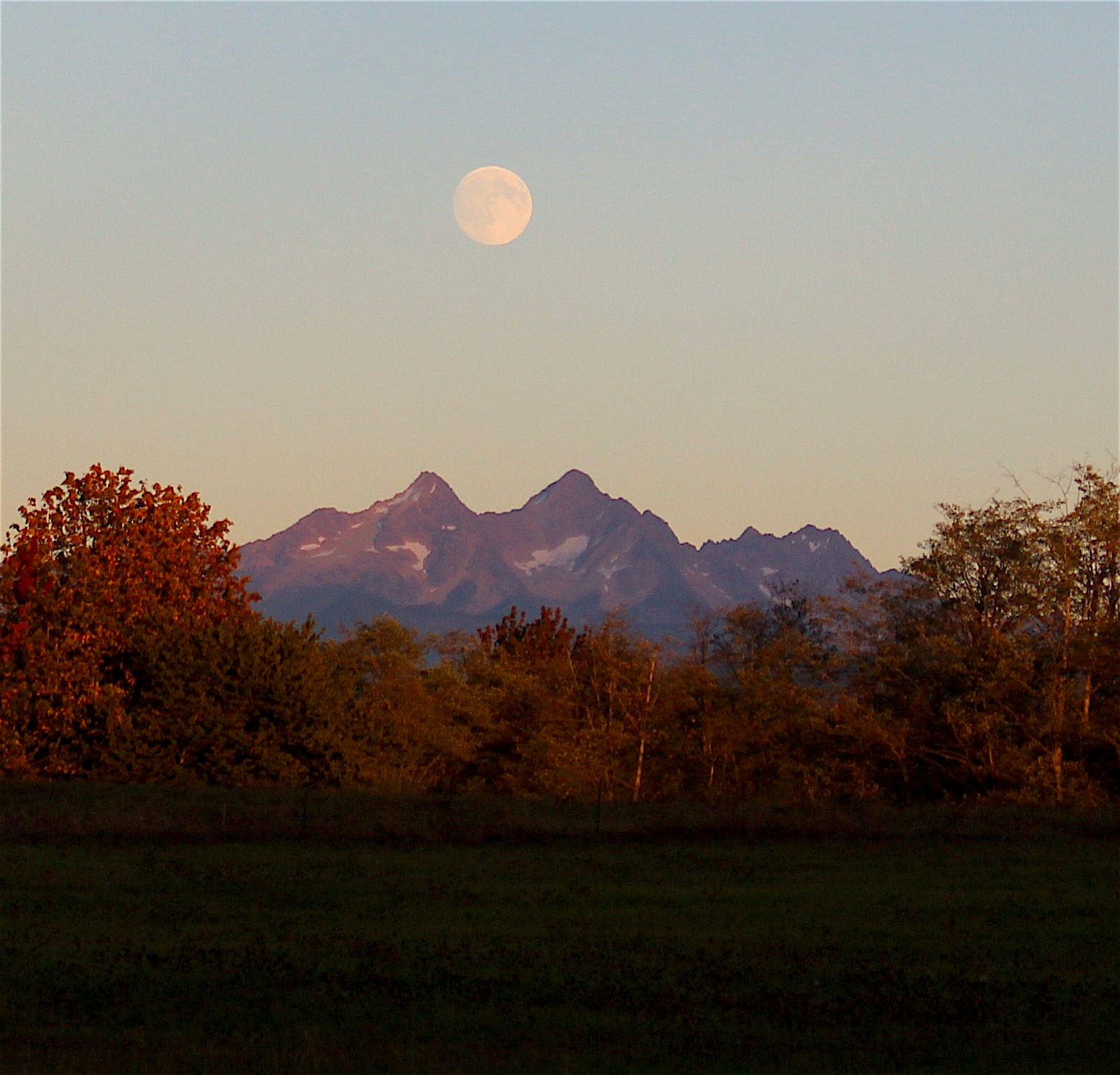
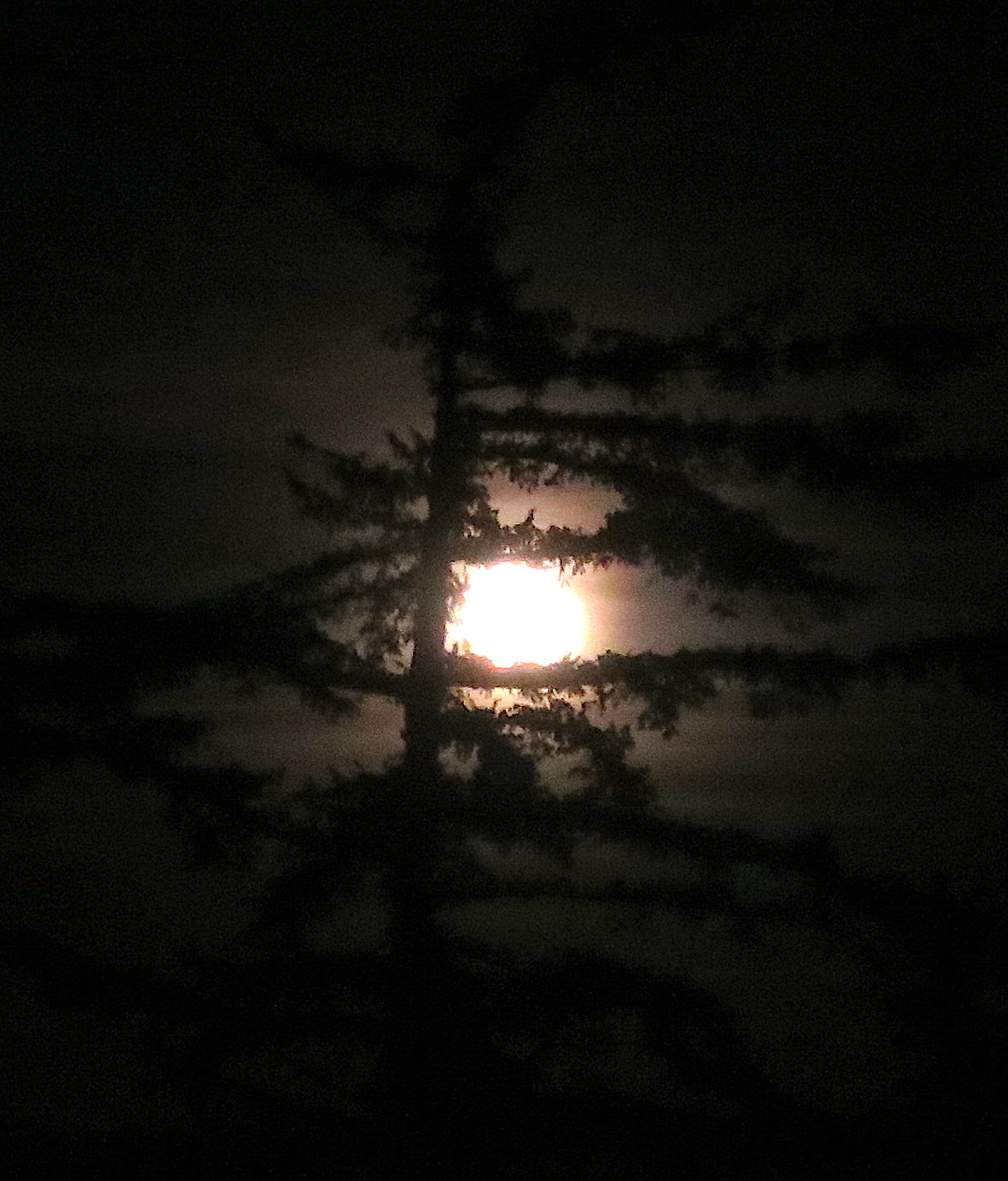
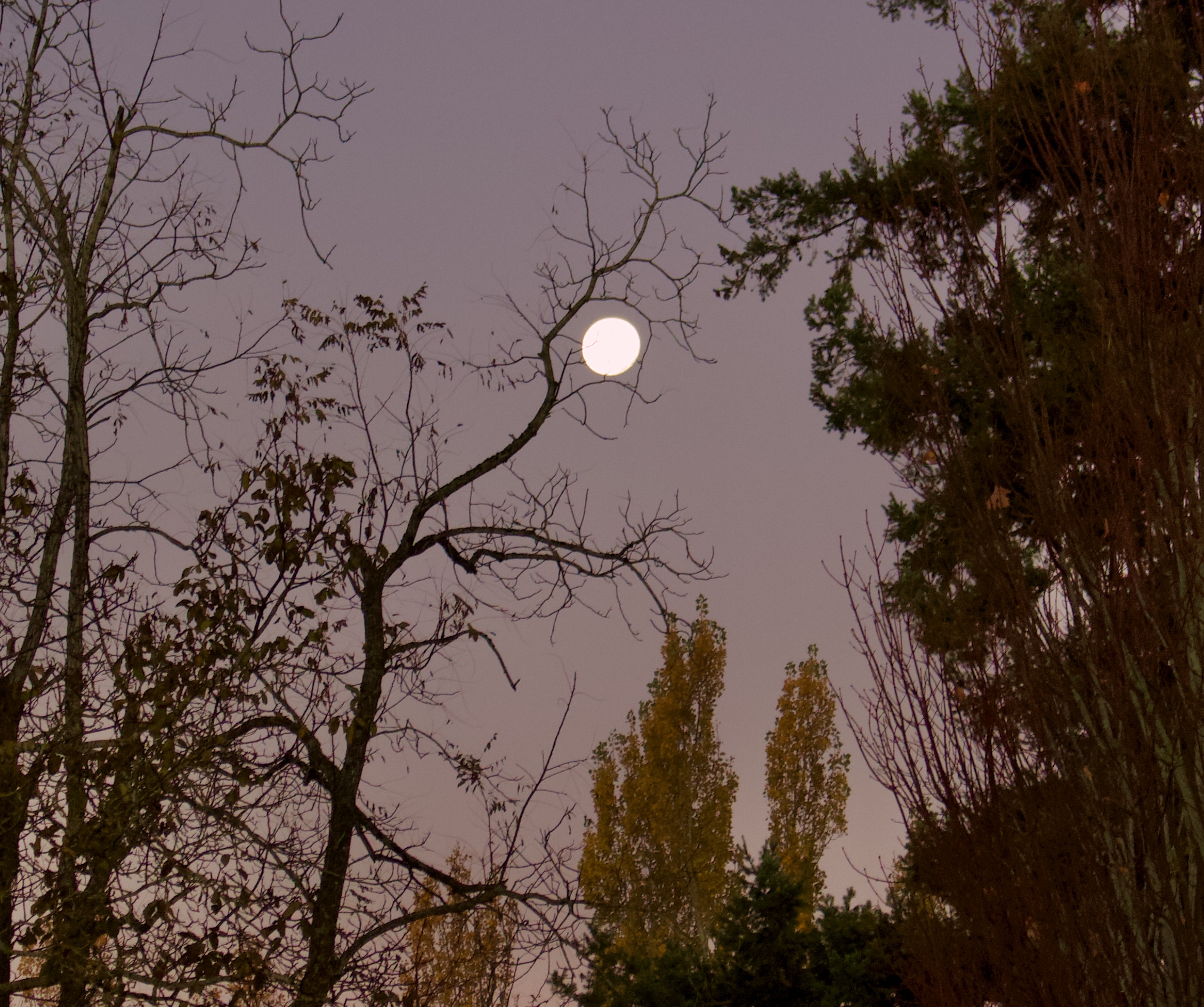
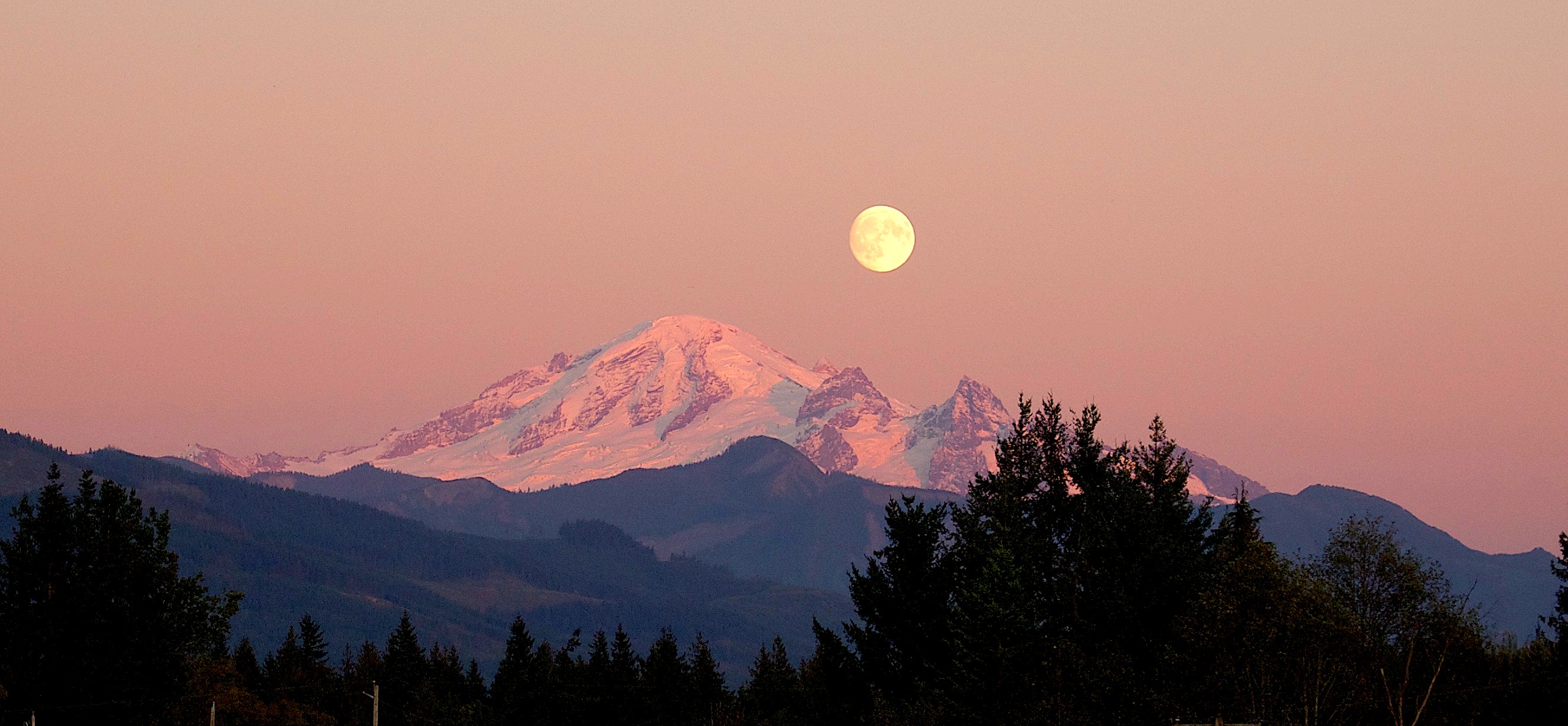
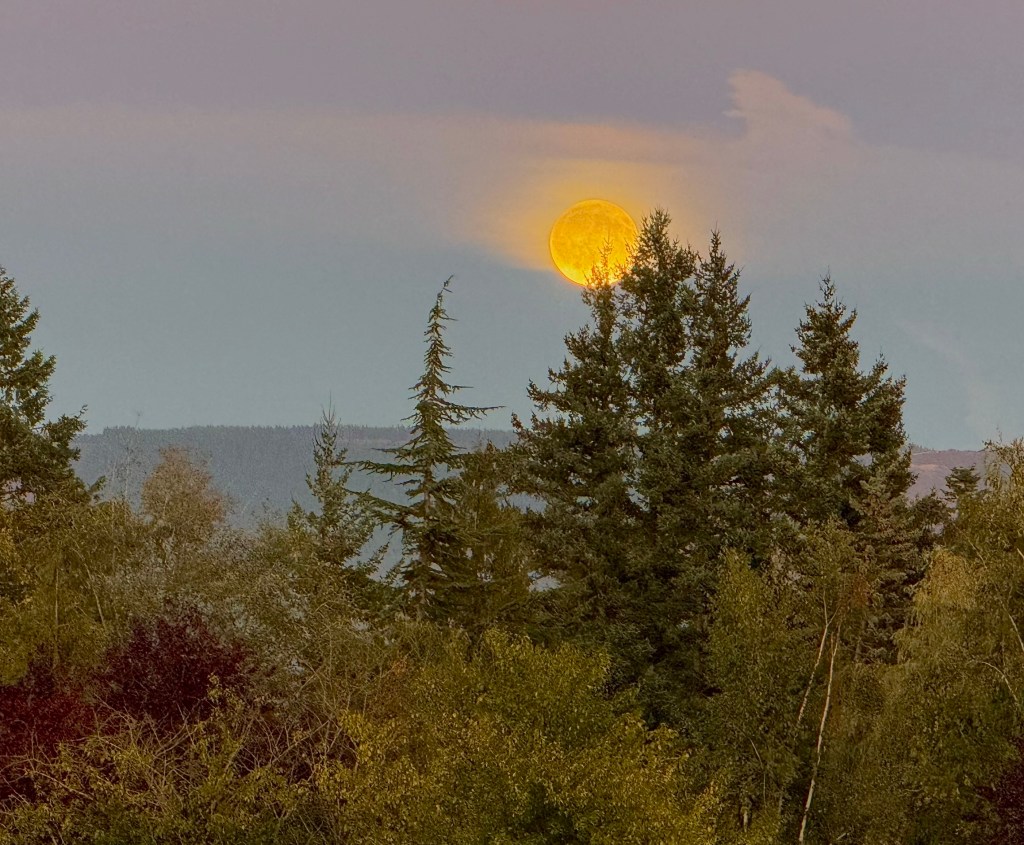
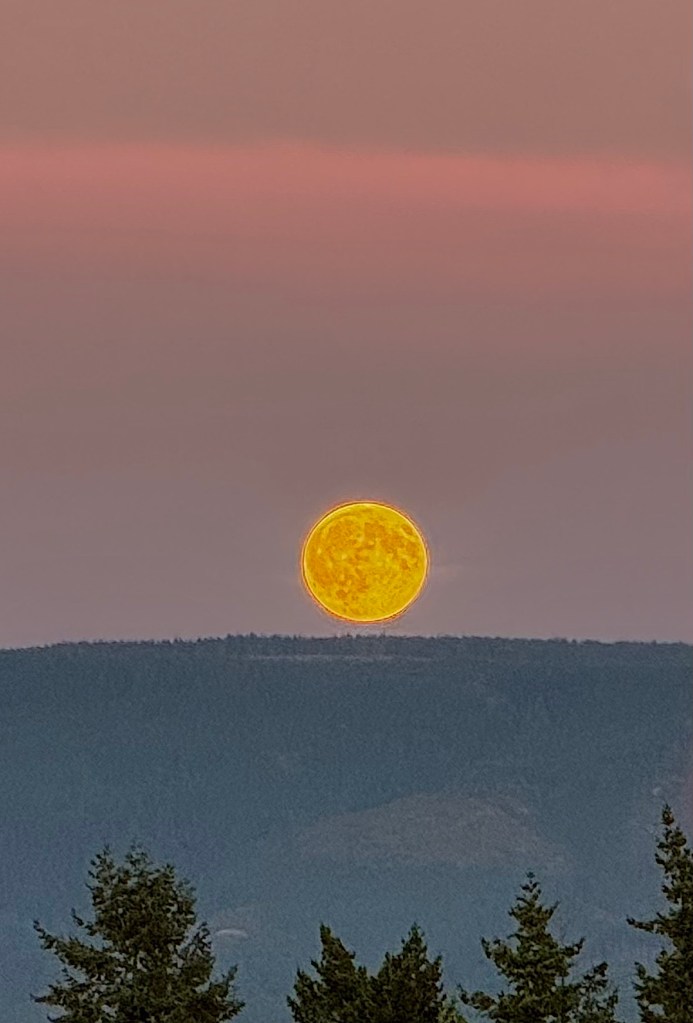
I will not forget, dear harvest moon,
to keep you as my singing bowl
where I can find your song months from now,
even when your reflected light leaks out
to tangle up in the weary trees of autumn.

Once the leaves fall, you illuminate
even the most humble branches
in their embarrassed nakedness.

Call nothing common in the earth or air,
Accept it all and let it be for good.

When I too need your warm light
in the center of my hollowed chest,
I’ll know exactly where to find you,
as you sing lullabies, waiting for me to empty.

I’ll not forget you,
because you never forget to
keep looking for me.

One-Time
Monthly
Yearly

Make a one-time or recurring donation to support daily Barnstorming posts

Make a monthly donation

Make a yearly donation

Choose an amount

$10.00
$25.00
$50.00
$5.00
$15.00
$100.00
$5.00
$15.00
$100.00

Or enter a custom amount

$

Your contribution is deeply appreciated.

Your contribution is appreciated.

Your contribution is appreciated.

DonateDonate monthlyDonate yearly
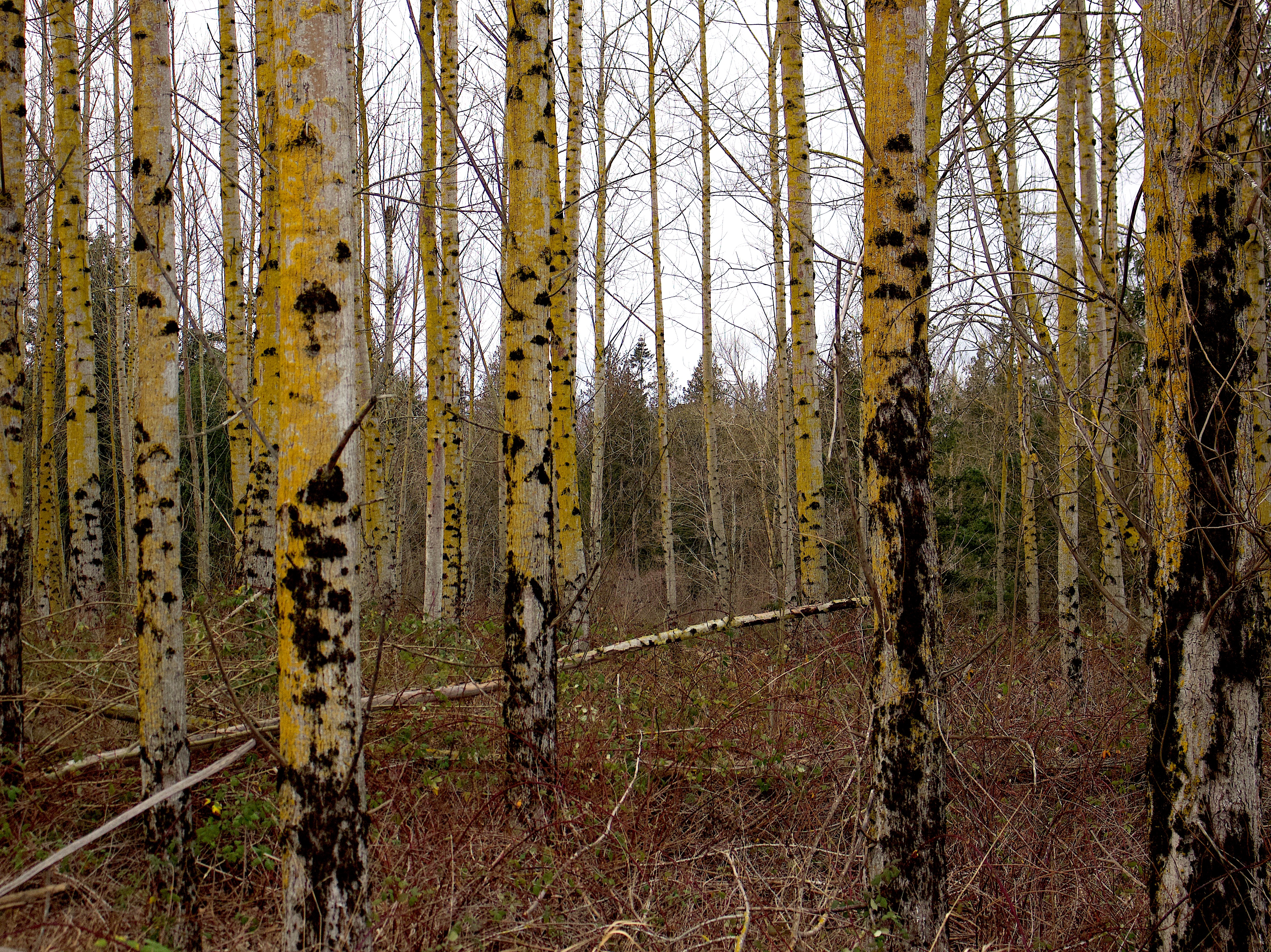
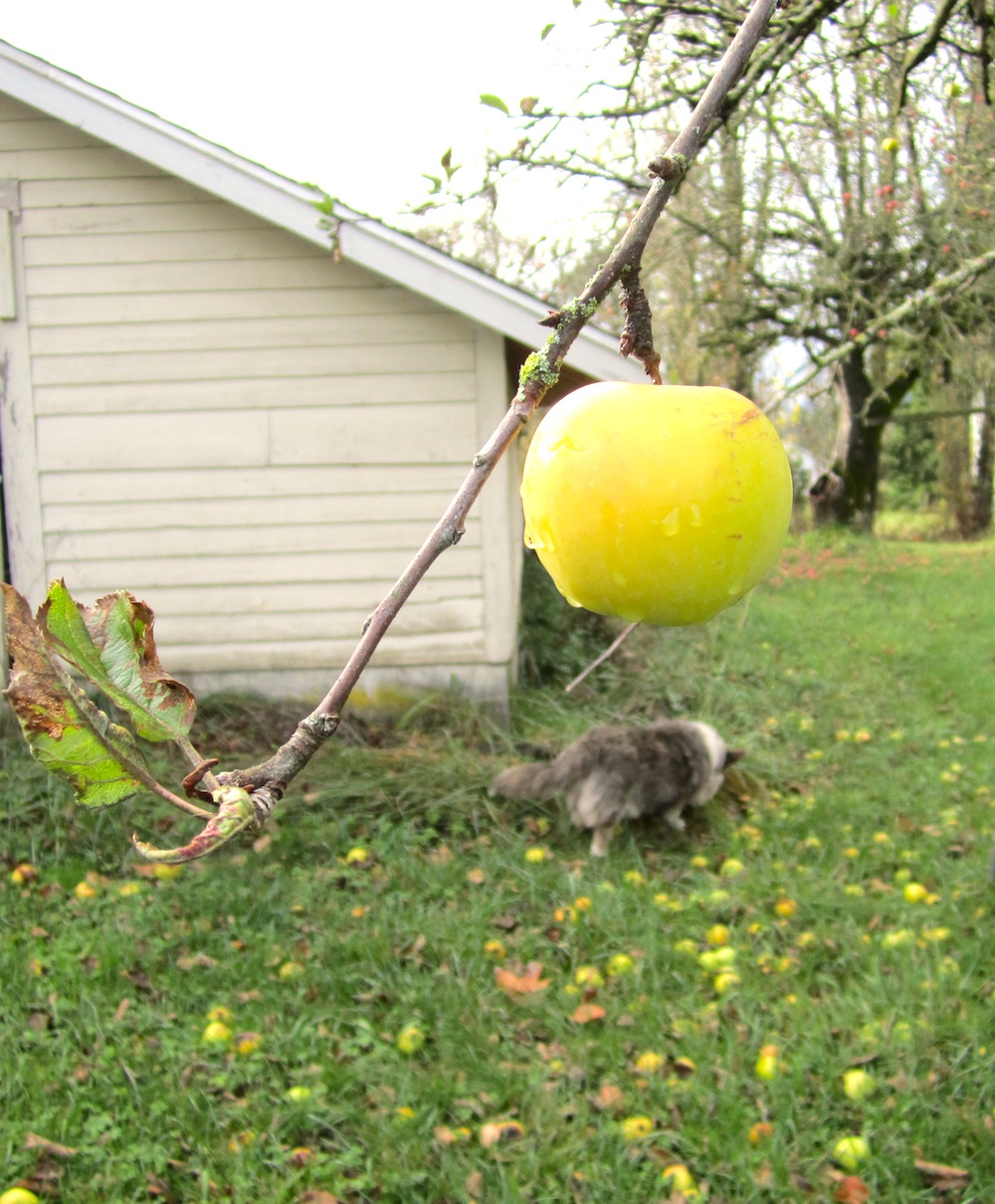
Unharvested

A scent of ripeness from over a wall.
And come to leave the routine road
And look for what had made me stall,
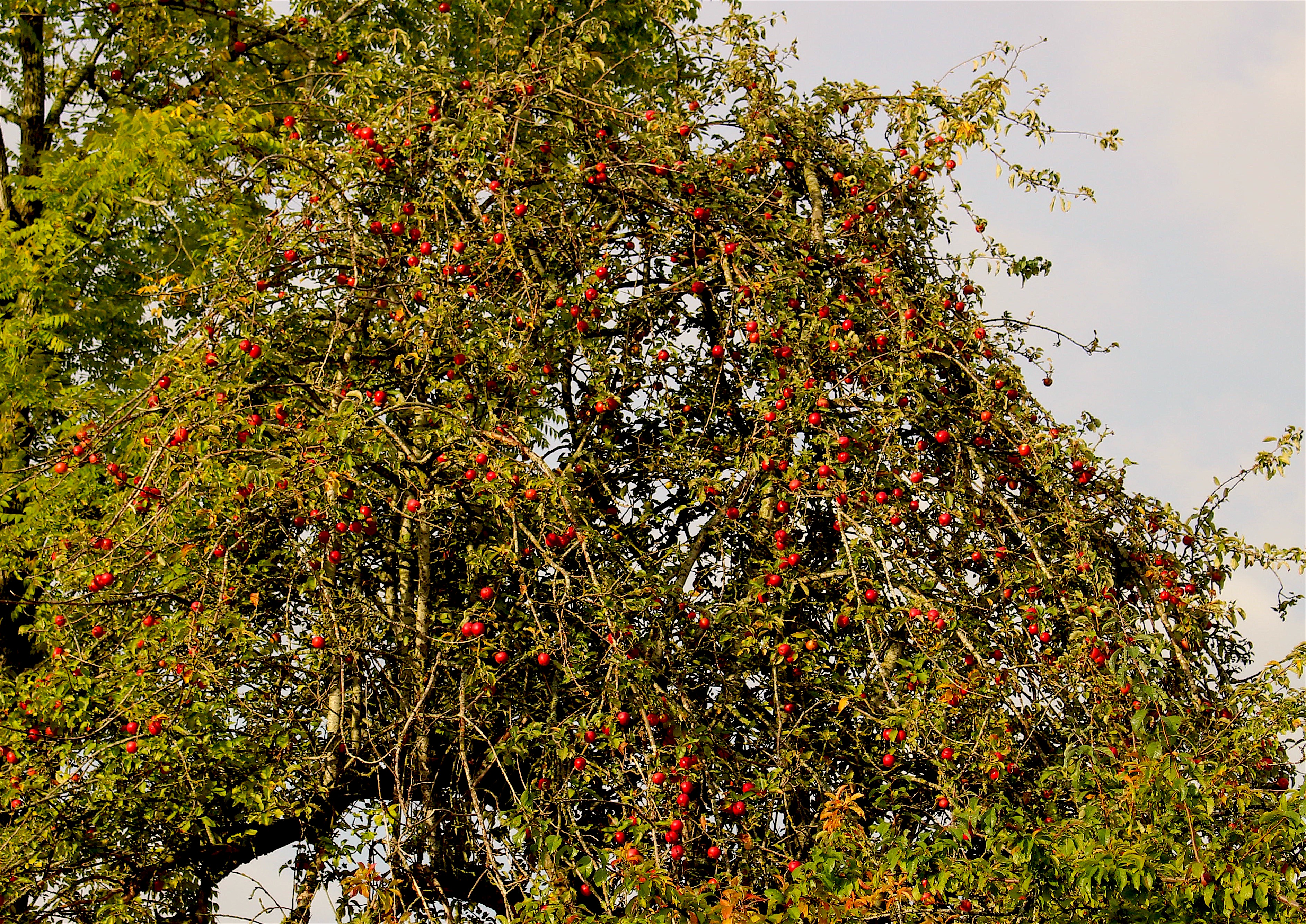
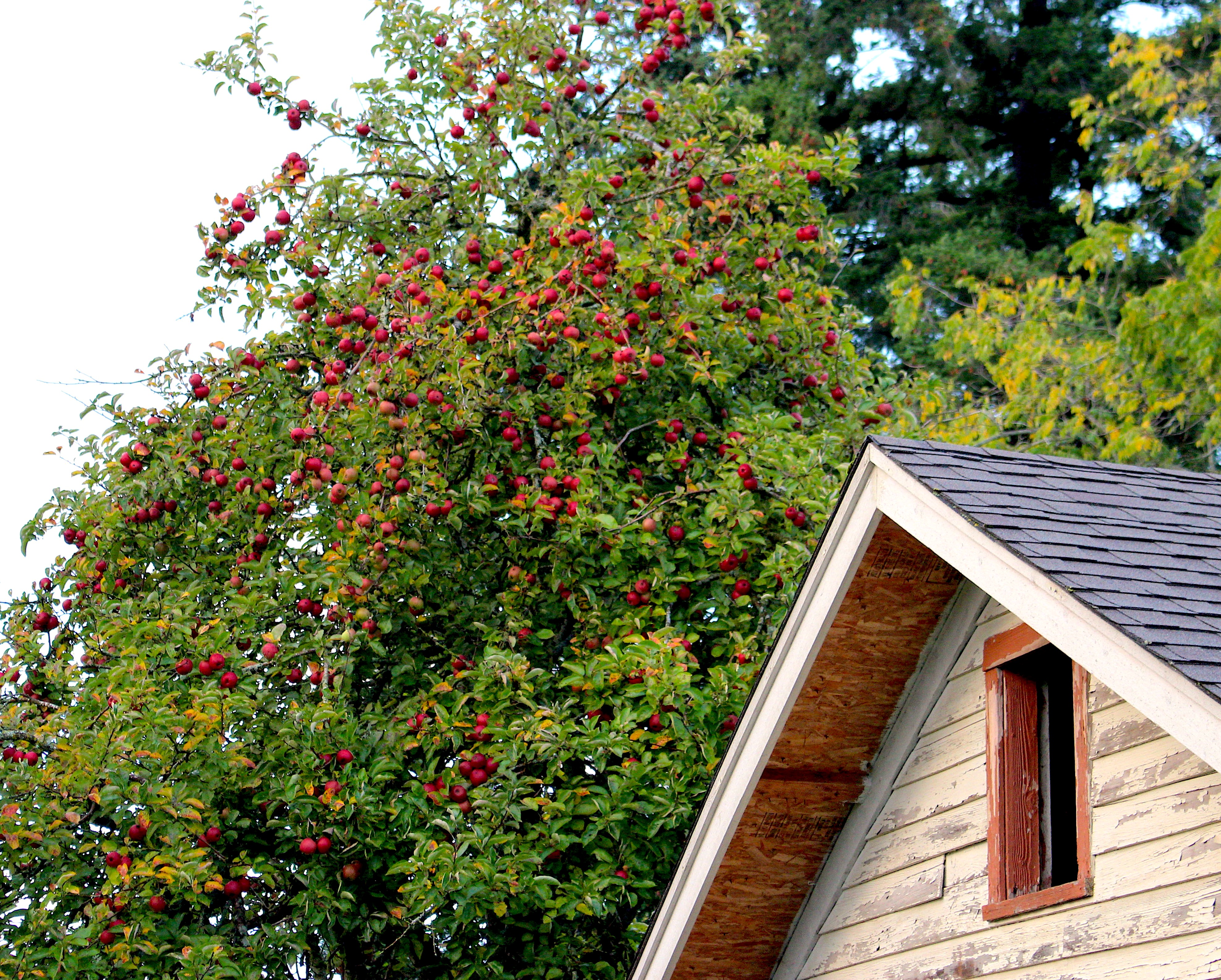
There sure enough was an apple tree
That had eased itself of its summer load,
And of all but its trivial foliage free,
Now breathed as light as a lady’s fan.
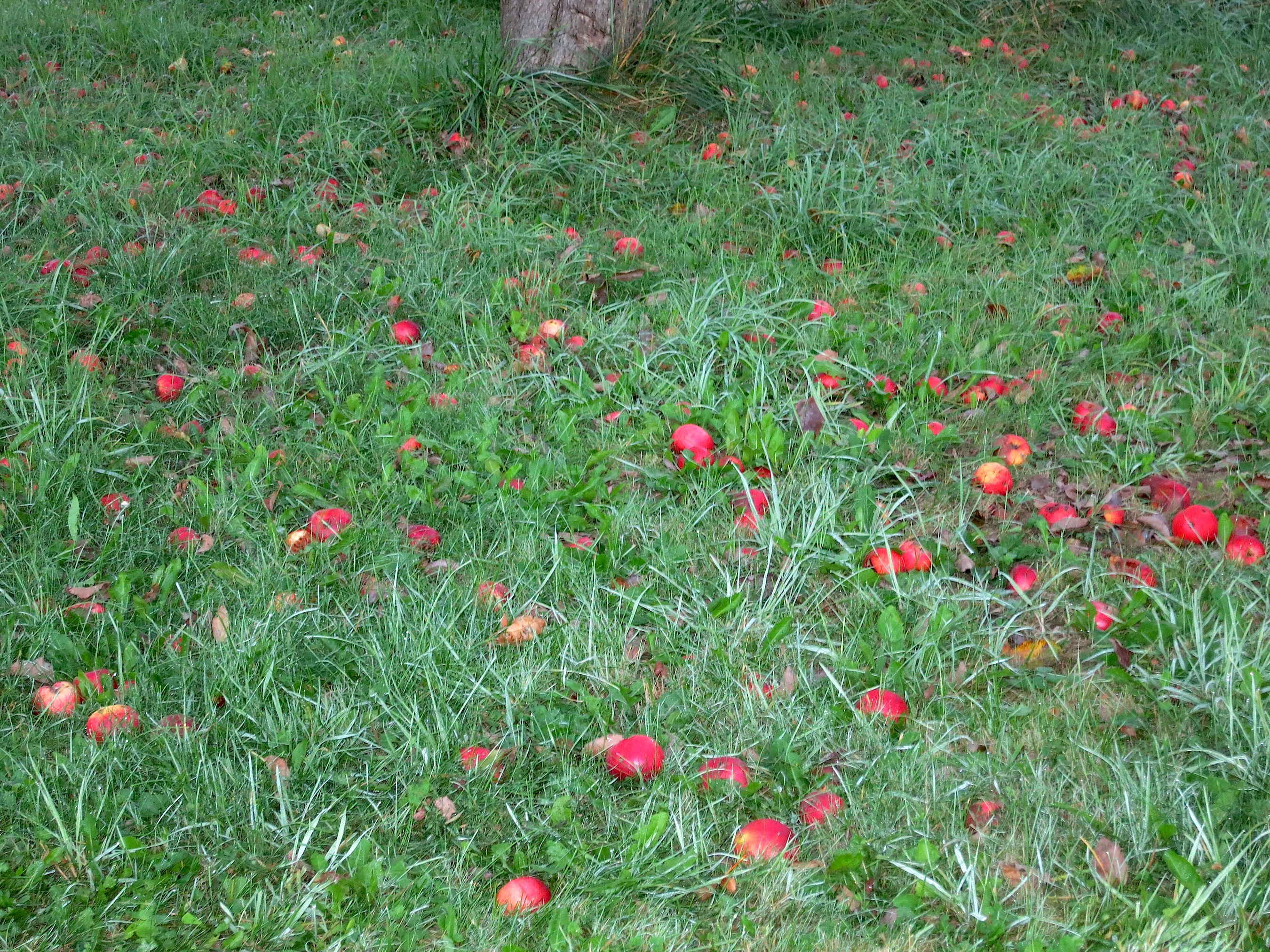
For there had been an apple fall
As complete as the apple had given man.
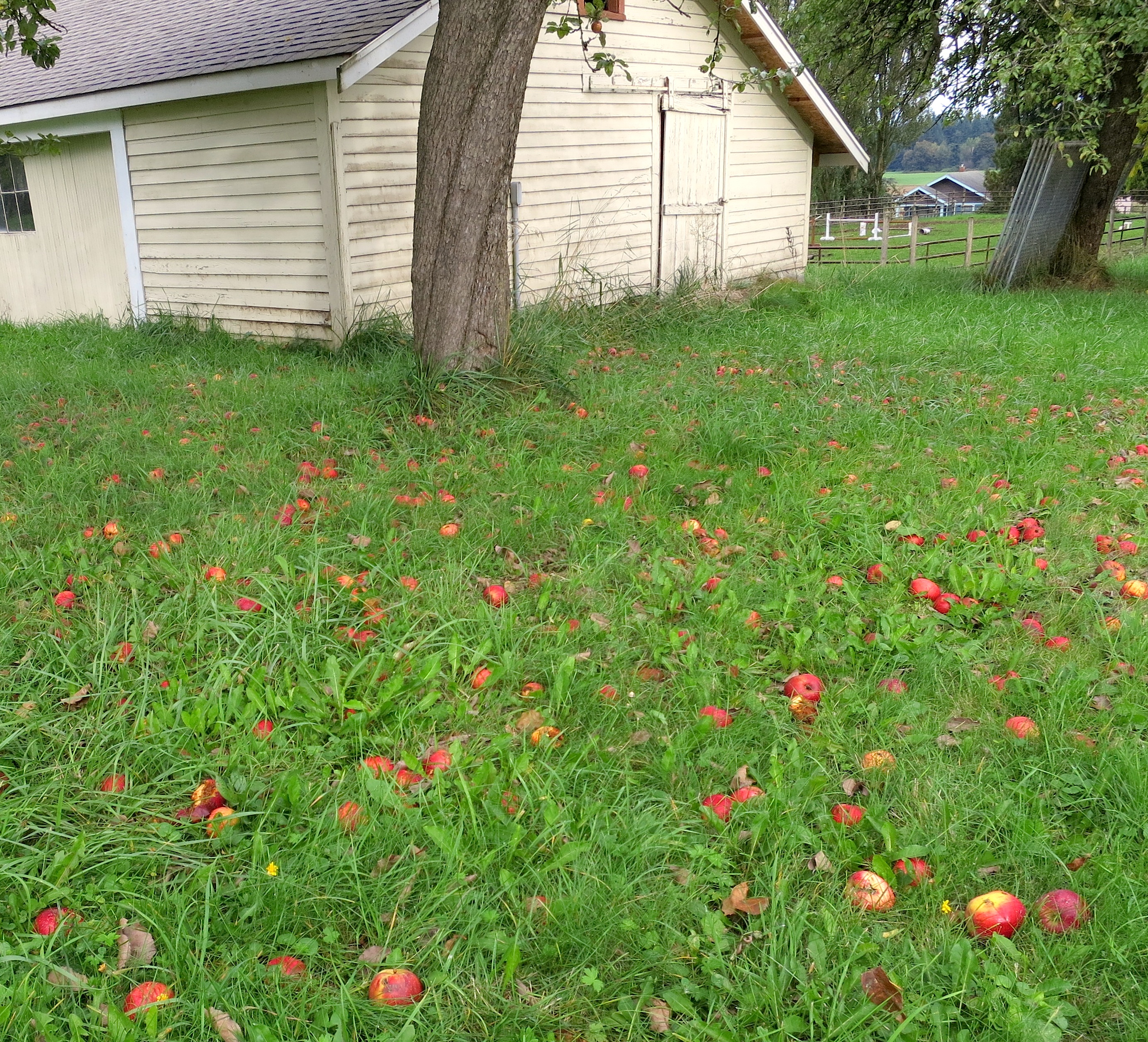
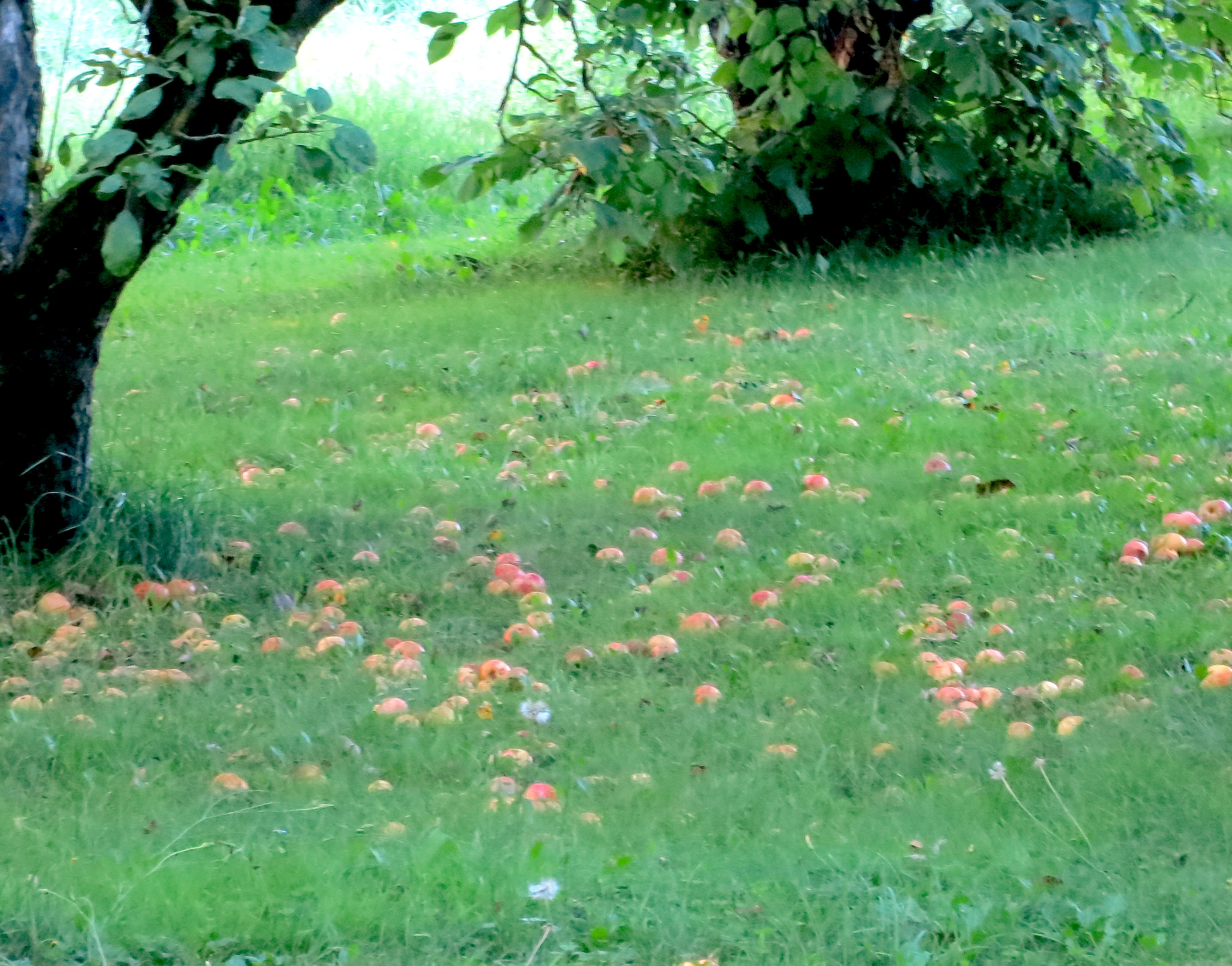
The ground was one circle of solid red.


May something go always unharvested!
May much stay out of our stated plan,
Apples or something forgotten and left,
So smelling their sweetness would be no theft.

~Robert Frost “Unharvested” from The Collected Poems

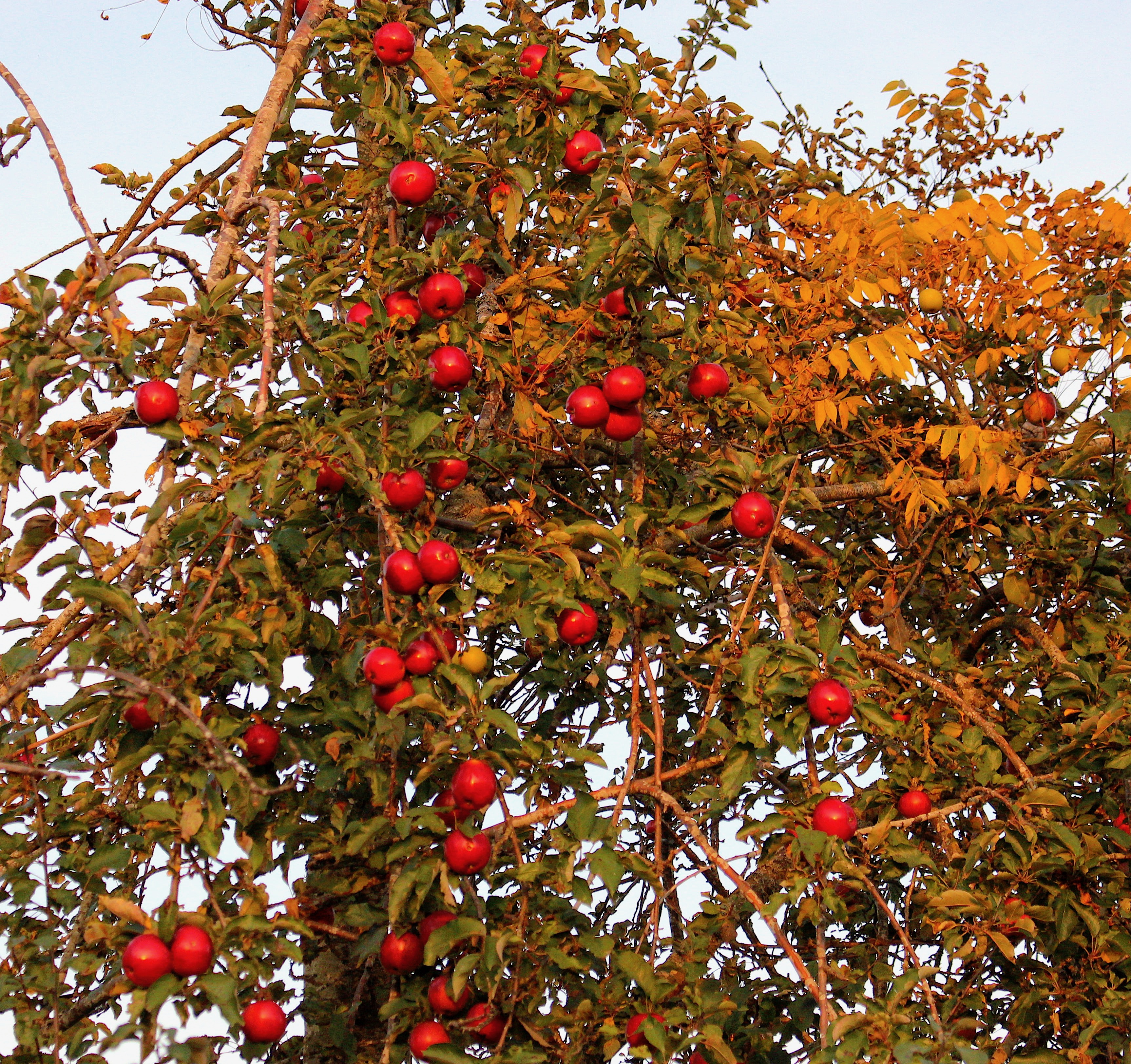
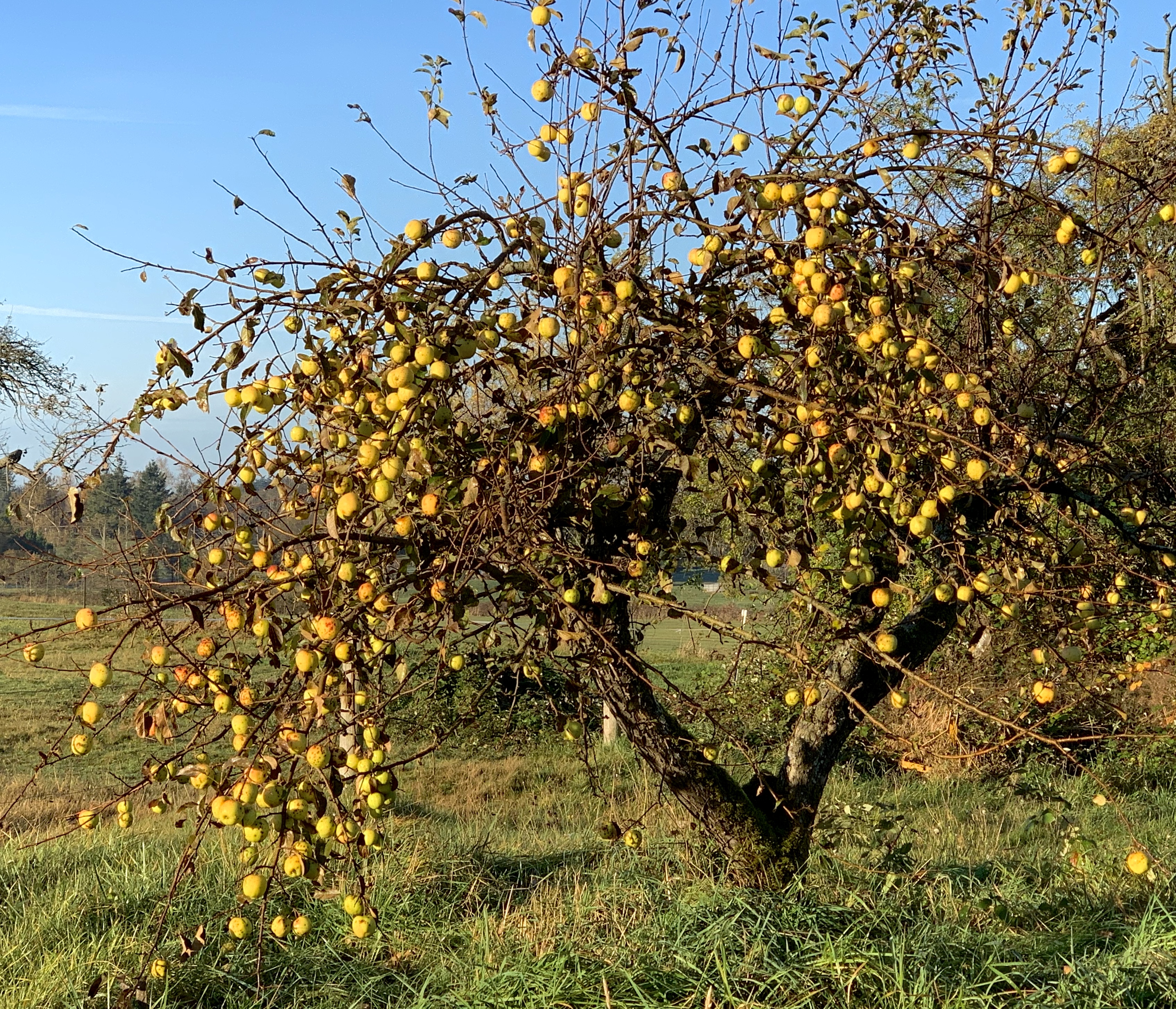
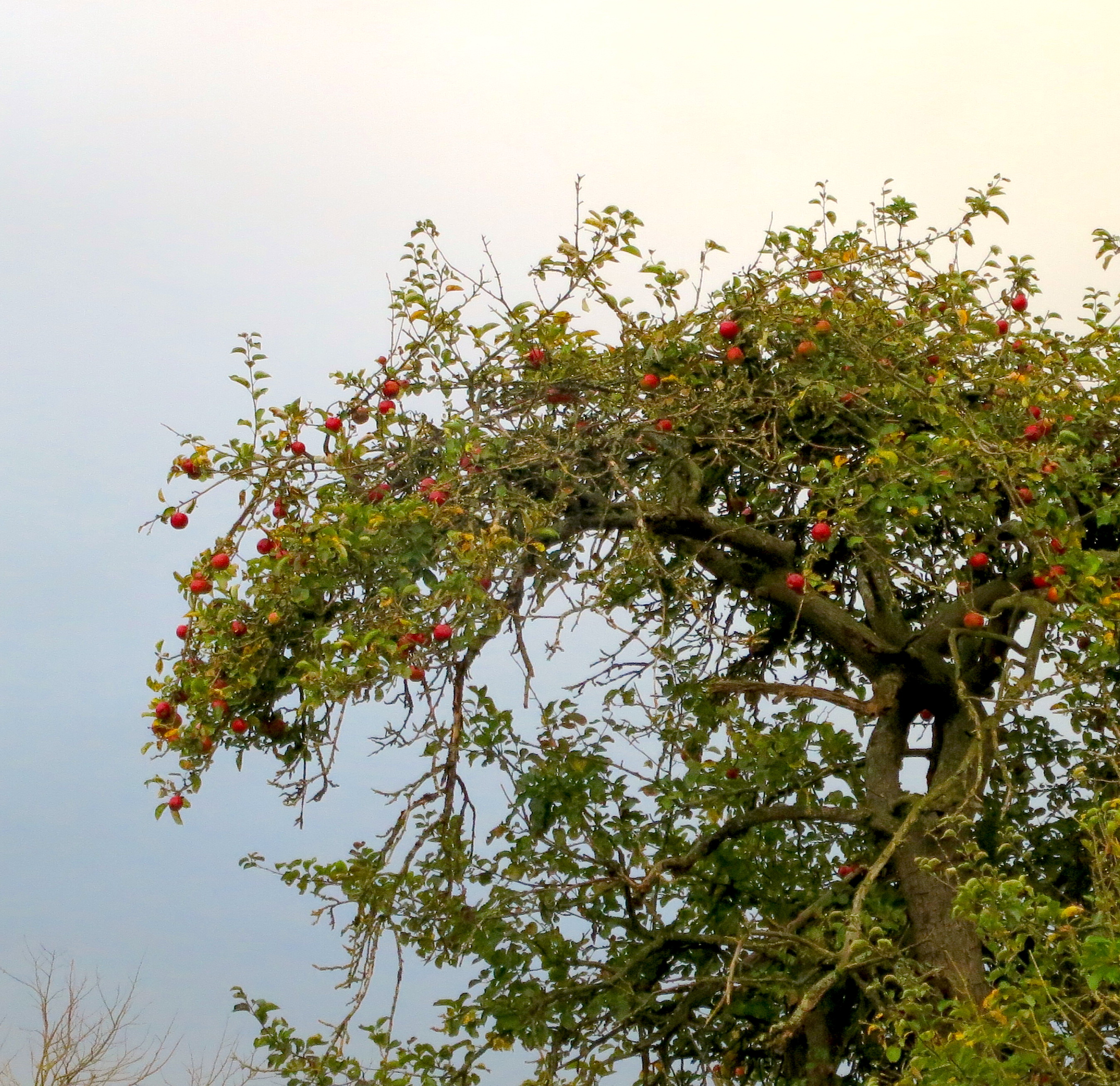
Our trees are heavy-laden until the wind comes — the dropping fruit thuds to the ground with such finality, it wakes me in the night and reminds me how far I too have fallen.

“Fall” is just that: nothing remains as it was.

Autumn replays our desire for an apple which
smells so sweet,
tempts with shiny sheen
lures with such color –
we fell hard and fast for just one taste.

We ignored the worm hole.

And ended up in a hole ourselves, unharvested,
hoping one day for sweetness to return.

One-Time
Monthly
Yearly

Make a one-time or recurring donation to support daily Barnstorming posts

Make a monthly donation

Make a yearly donation

Choose an amount

$10.00
$25.00
$50.00
$5.00
$15.00
$100.00
$5.00
$15.00
$100.00

Or enter a custom amount

$

Your contribution is deeply appreciated.

Your contribution is appreciated.

Your contribution is appreciated.

DonateDonate monthlyDonate yearly
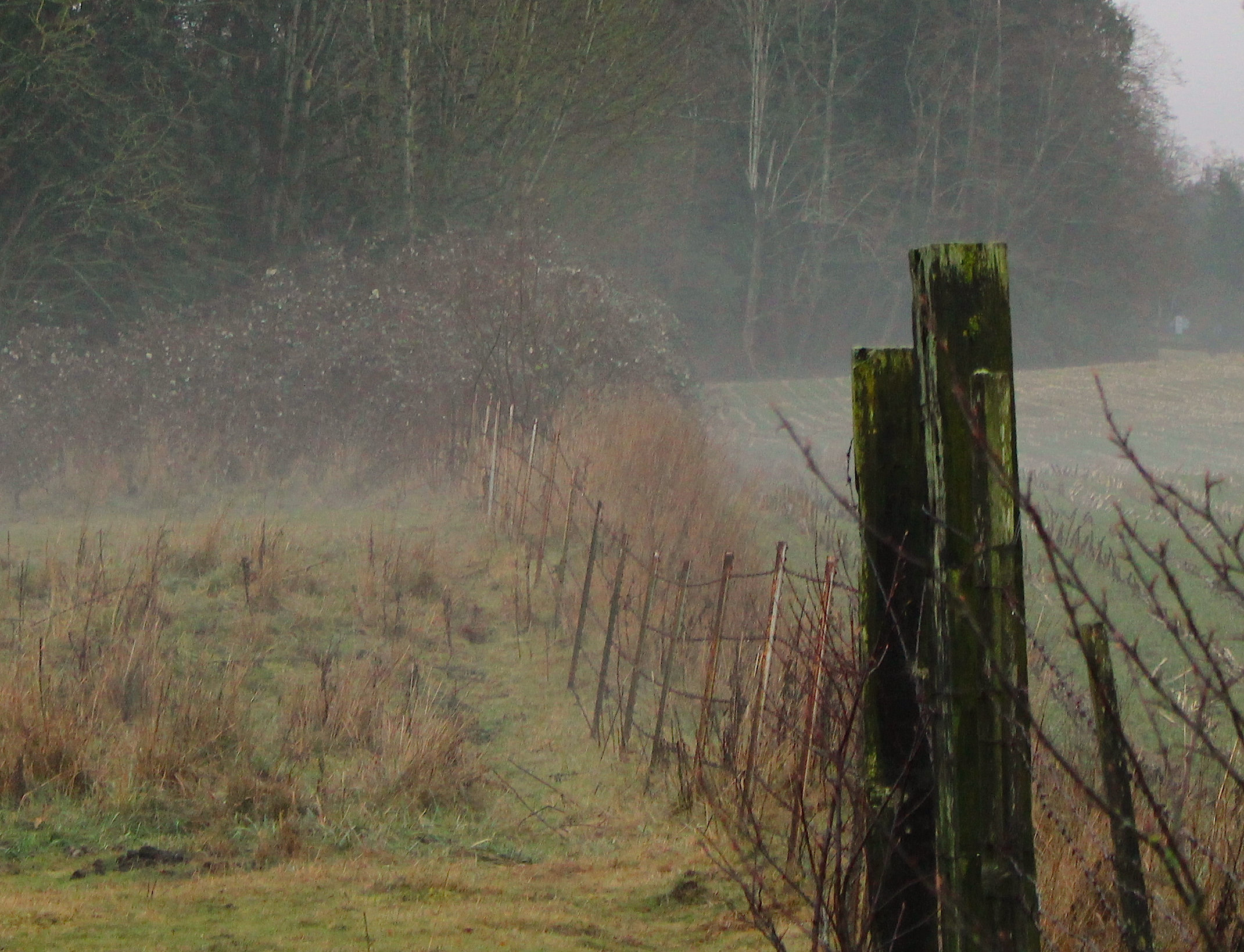
Love Without Hesitation

Every morning I walk through folds of fields
searching.

Slants of sun
sink through triangled bones of leaves:
bold cold refuted.

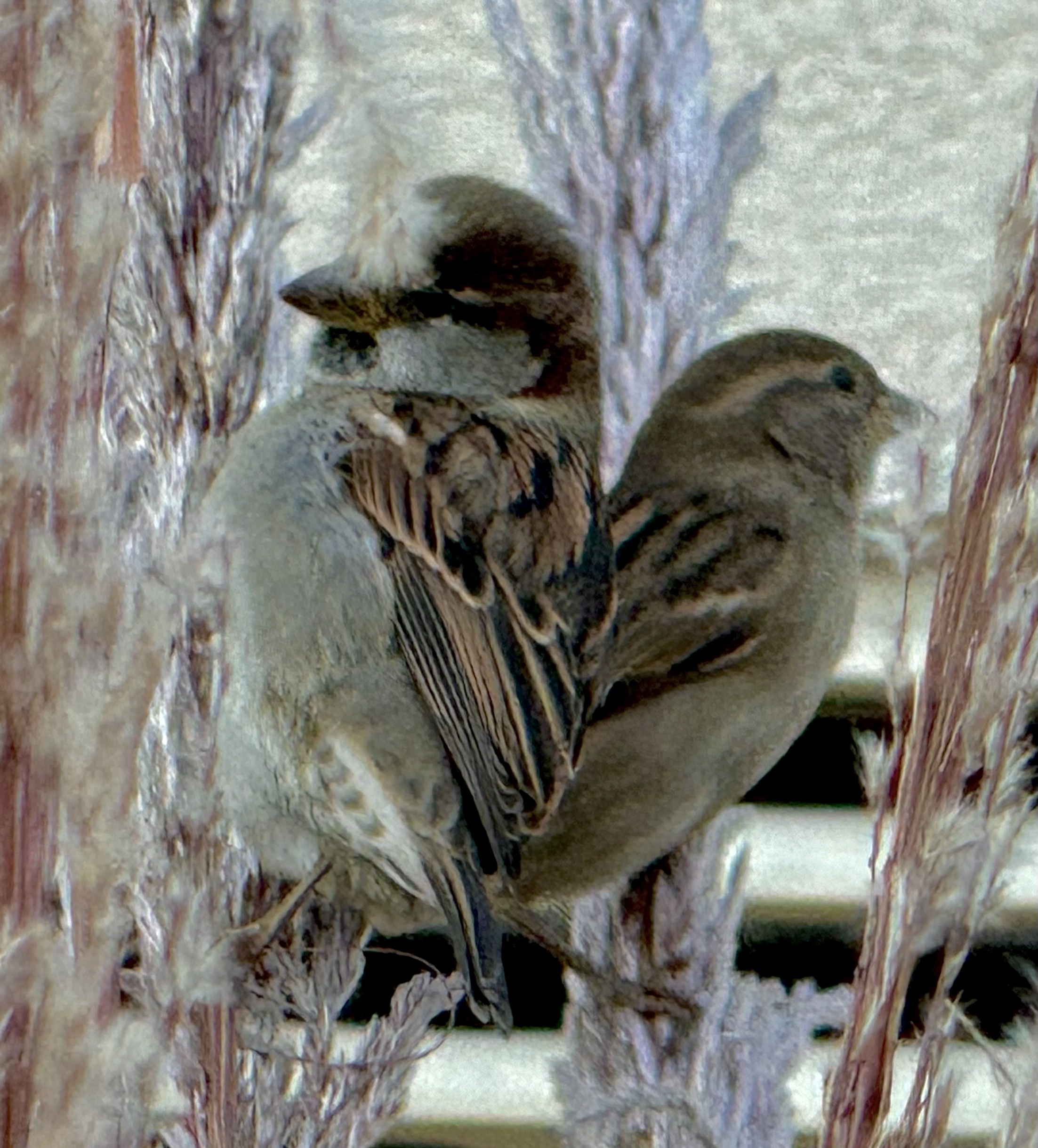
Sparrows flutter warm in given nests,
ungriefed,
caught,
sustained by common grace.

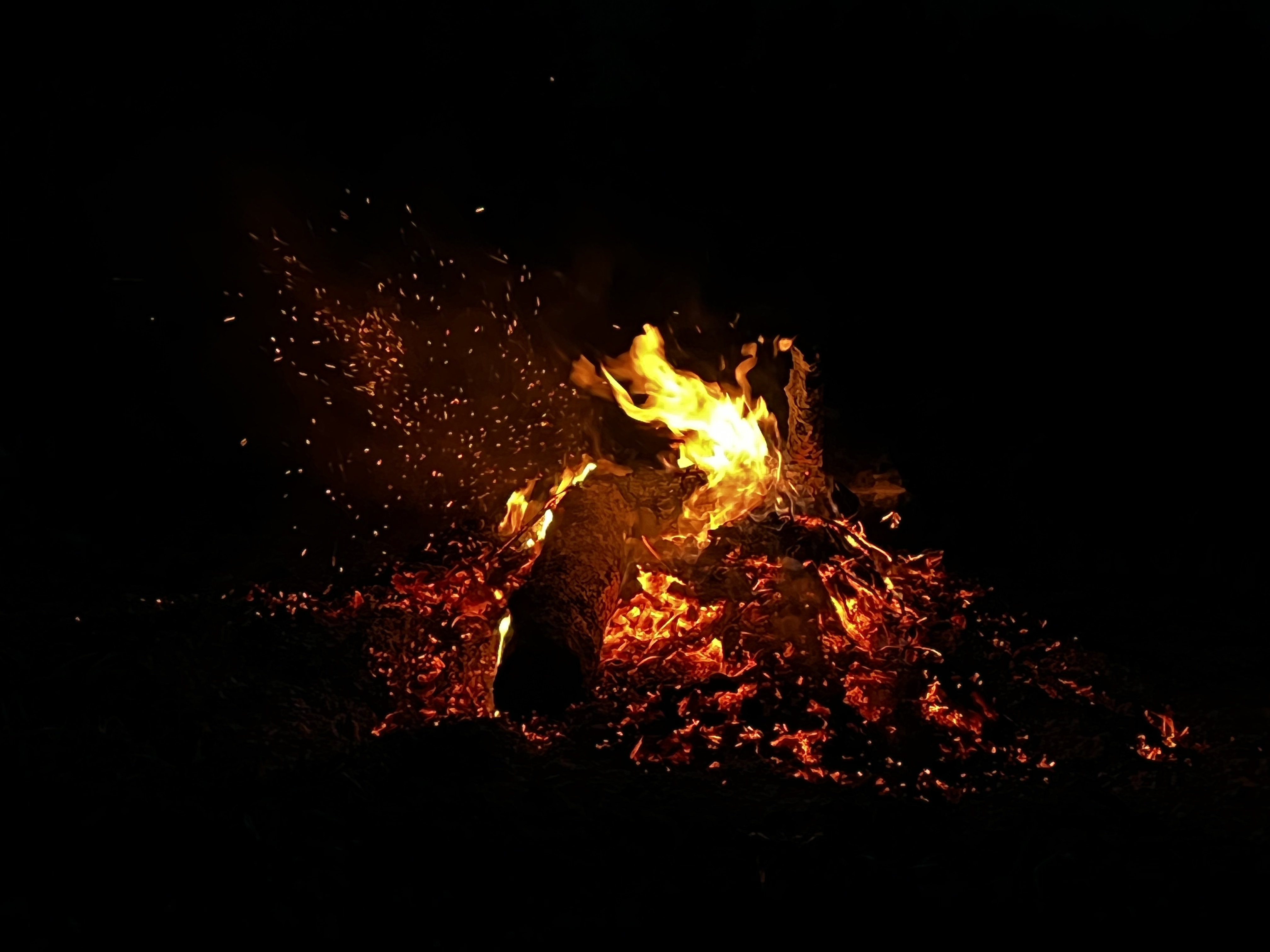
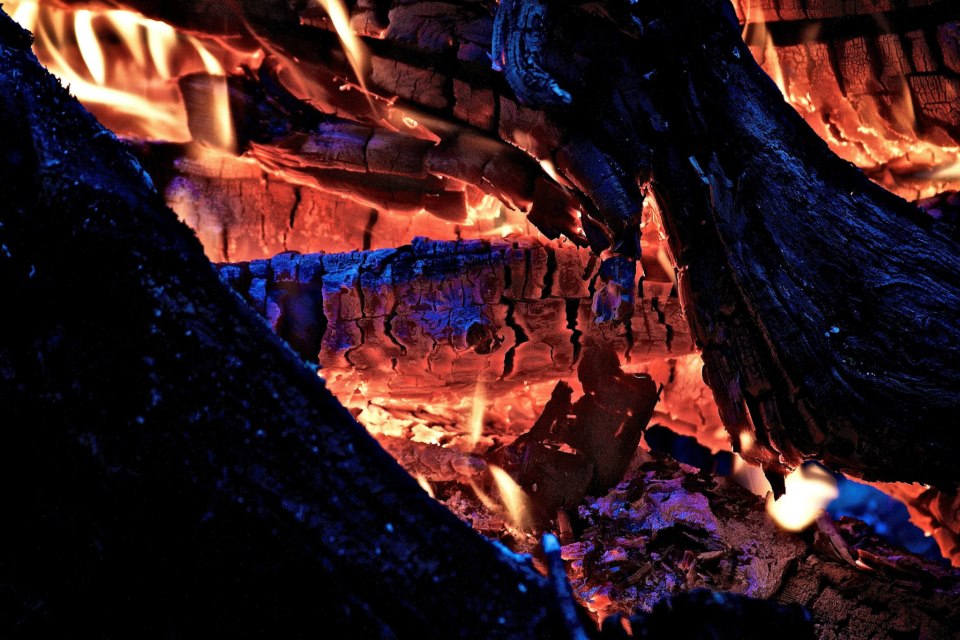
Faith is the tenderness of banked coals in a grate,
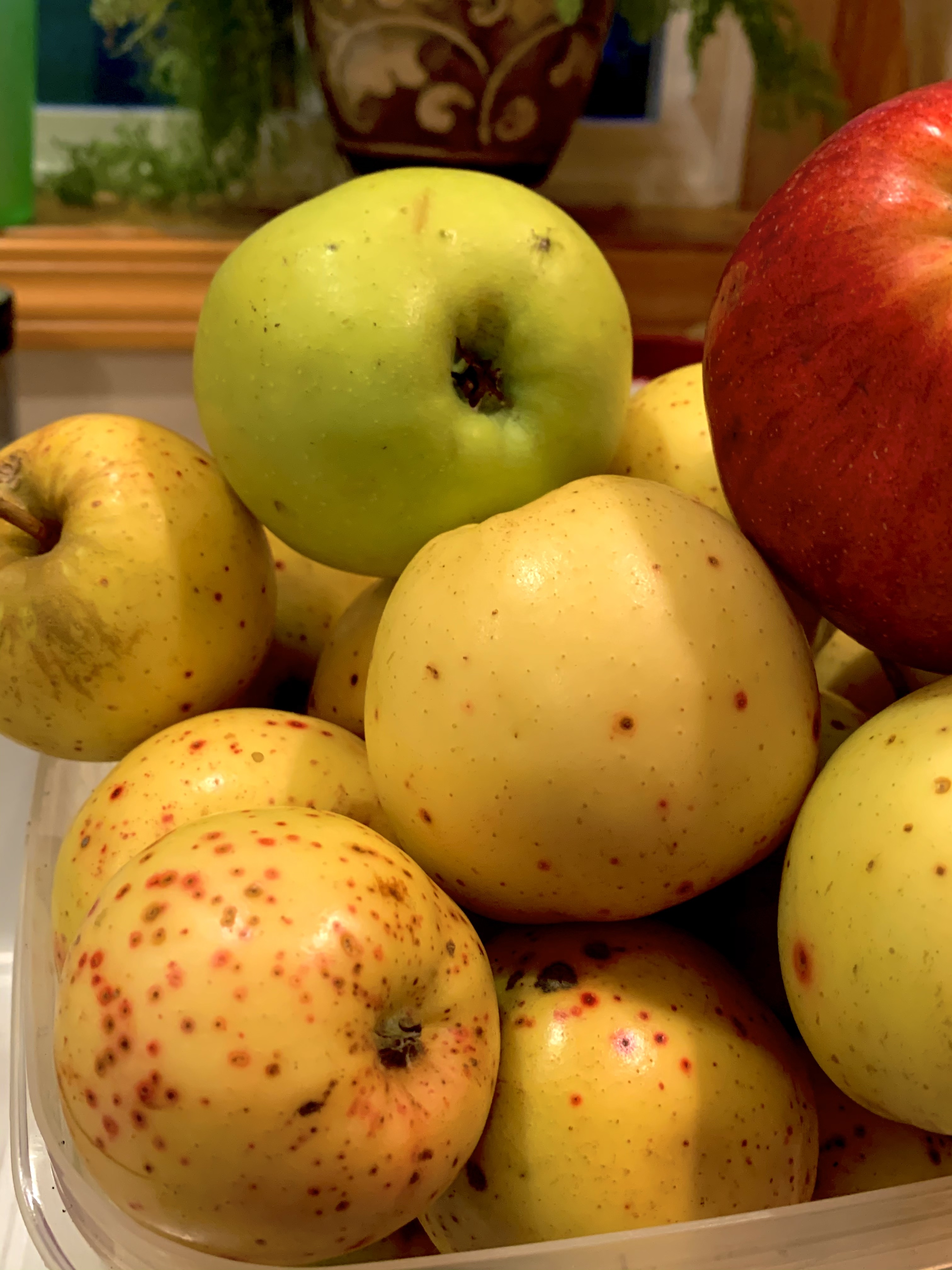
Braeburn apples on a windowsill,
winding crisp with possibility.
The steadiness of conversations embered over decades;
a fire that has never left off crackling –
on this my soul has warmed her hands.


Divine ardor:
too strong and sweet
for the many years I’ve walked on earth.

Love without hesitation has swept my floorboards for seasons.
Deep and longing in and out of time the soul reaches out –
and He, grasps entire.
Hold – and tender.
Incandescent.
~Claire Hellar “A Search in Autumn”

photo by Josh Scholten

This time of year a chill is in the air,
urging us to feed the embers still throwing heat.

Warmed while eating a meal
together with decades-long friends,
everything grown from our own farms and gardens,
prepared with care and gratitude.

A shared gathering of words and food
in the waning softness of autumn;
we grow older round the table,
incandescent with grace,
a blessed communion.

One-Time
Monthly
Yearly

Make a one-time or recurring donation to support daily Barnstorming posts

Make a monthly donation

Make a yearly donation

Choose an amount

$10.00
$25.00
$50.00
$5.00
$15.00
$100.00
$5.00
$15.00
$100.00

Or enter a custom amount

$

Your contribution is deeply appreciated.

Your contribution is appreciated.

Your contribution is appreciated.

DonateDonate monthlyDonate yearly
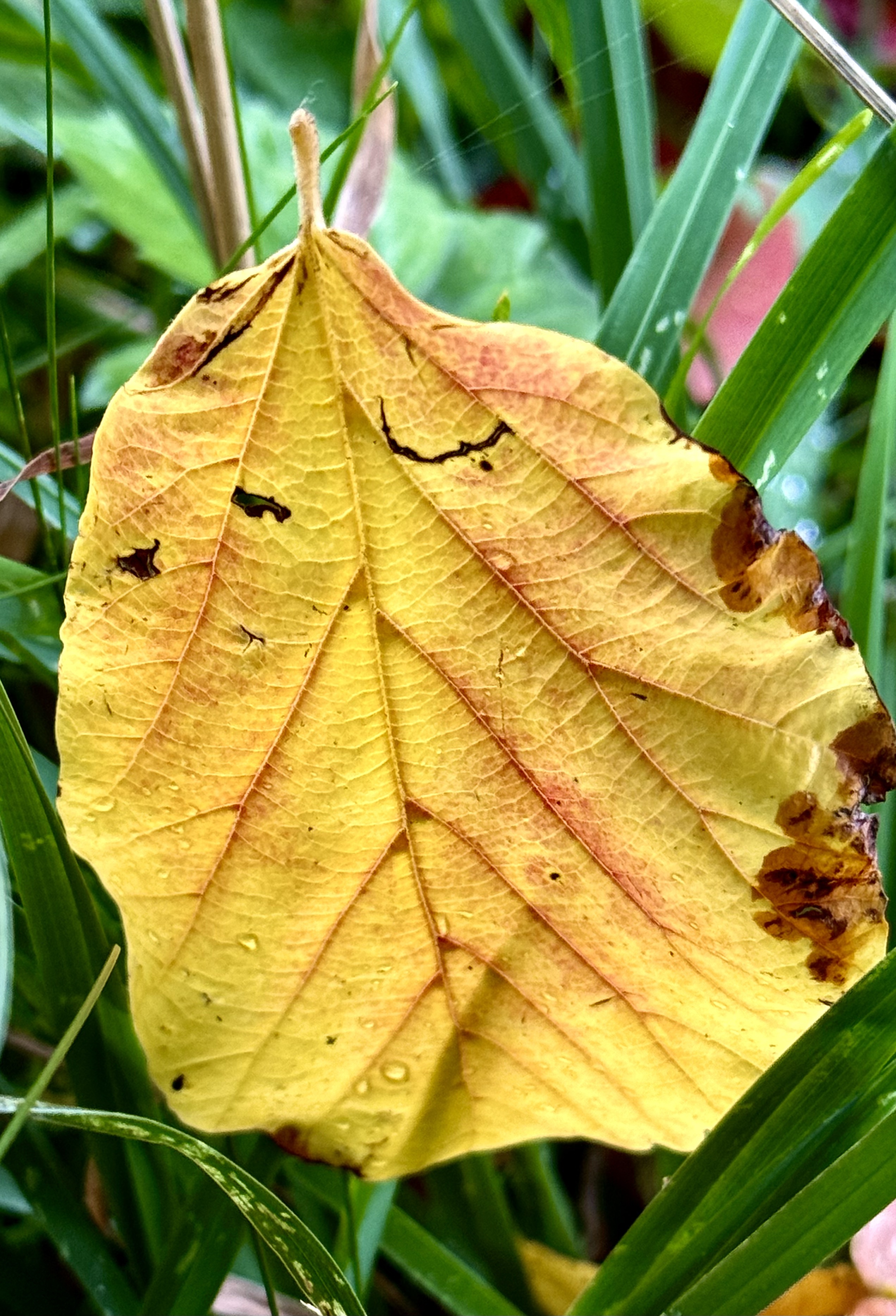
Living a Life to Die For

The sound of quiet. The sky
indigo, steeping
deeper from the top, like tea.
In the absence
of anything else, my own
breathing became obscene.
I heard the beating
of bats’ wings before
the air troubled above
my head, turned to look
and saw them gone.
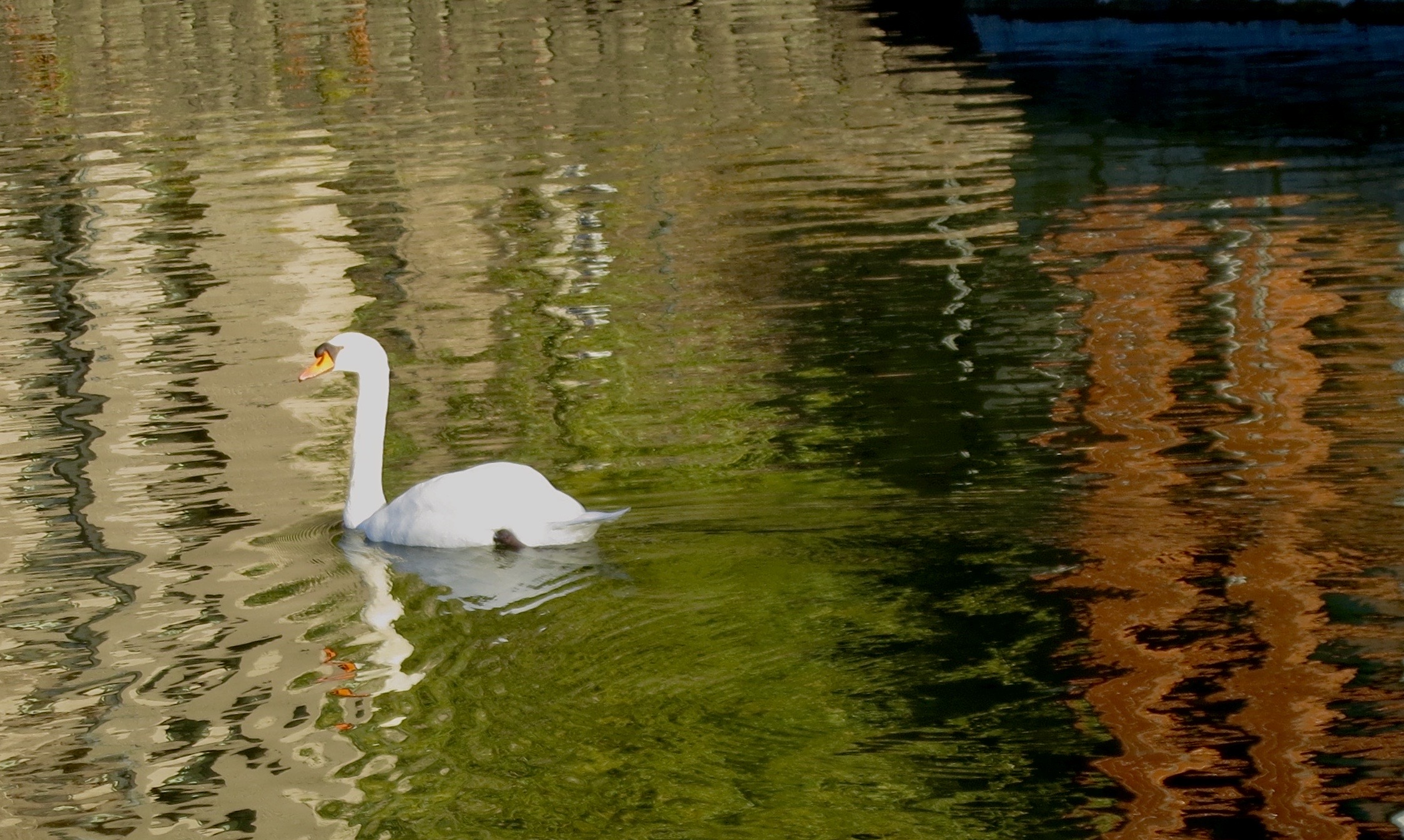
On the surface of the black
lake, a swan and the moon
stayed perfectly
still. I knew this was
a perfect moment.
Which would only hurt me
to remember and never
live again. My God. How lucky to have lived
a life I would die for.

~Leila Chatti “I Went Out to Hear” from Wildness Before Something Sublime  

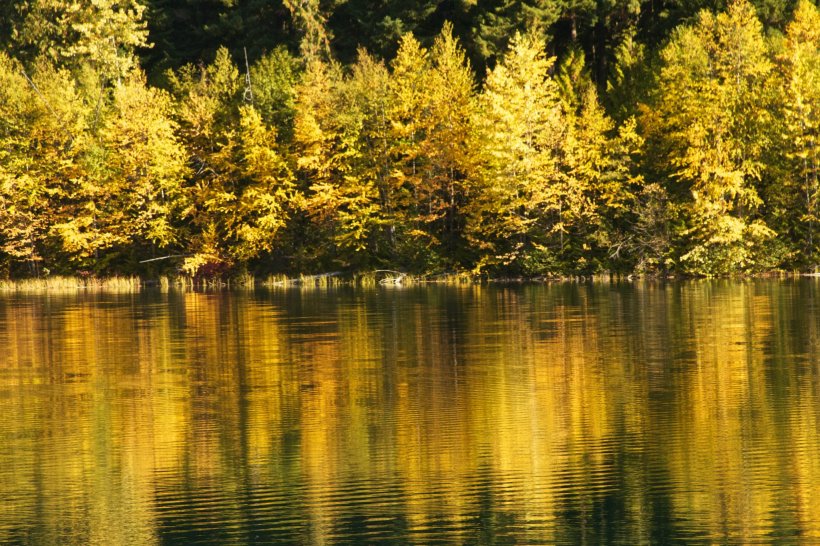
Look, the trees
are turning
their own bodies
into pillars

of light,
are giving off the rich
fragrance of cinnamon
and fulfillment,

the long tapers
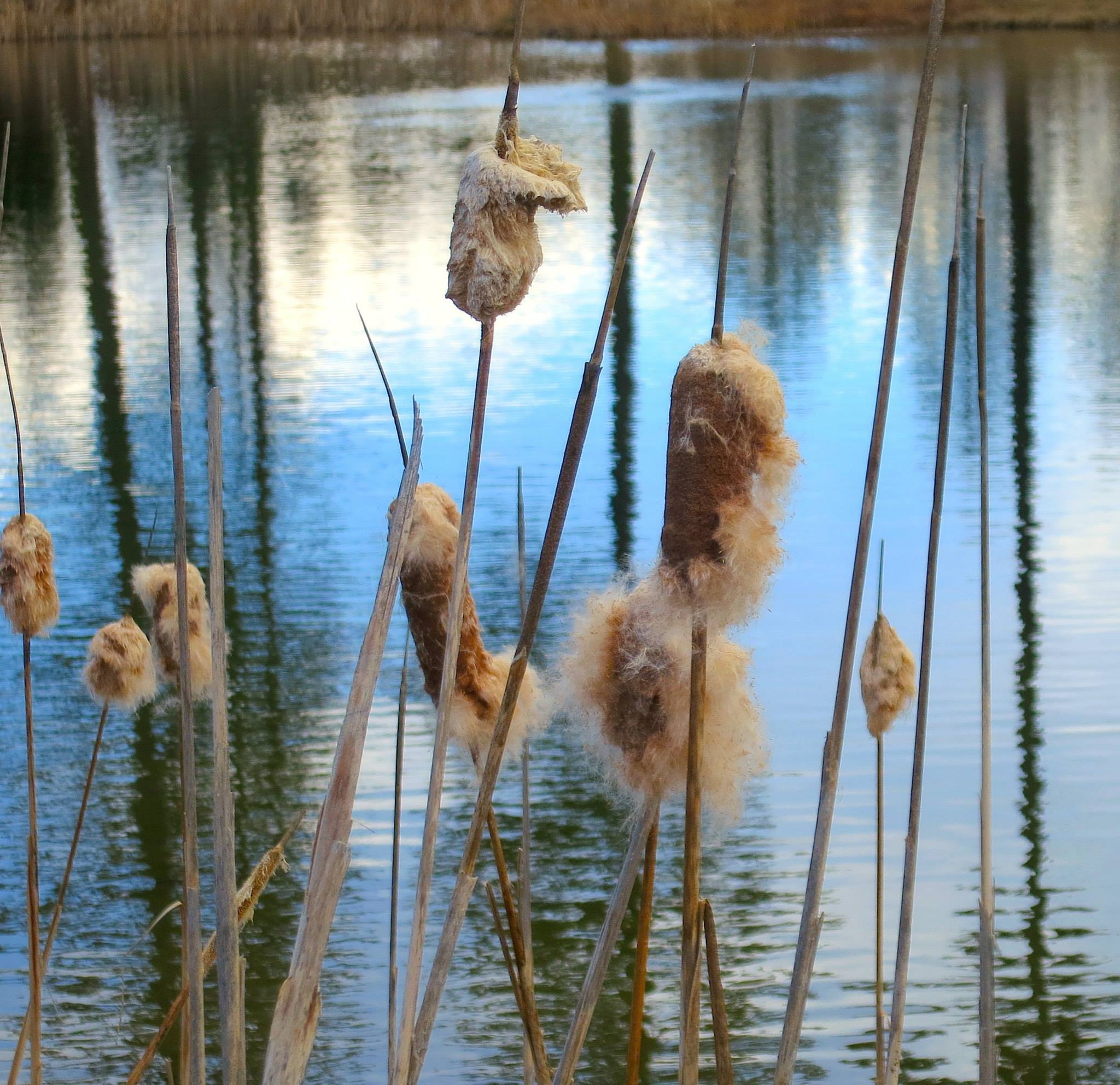
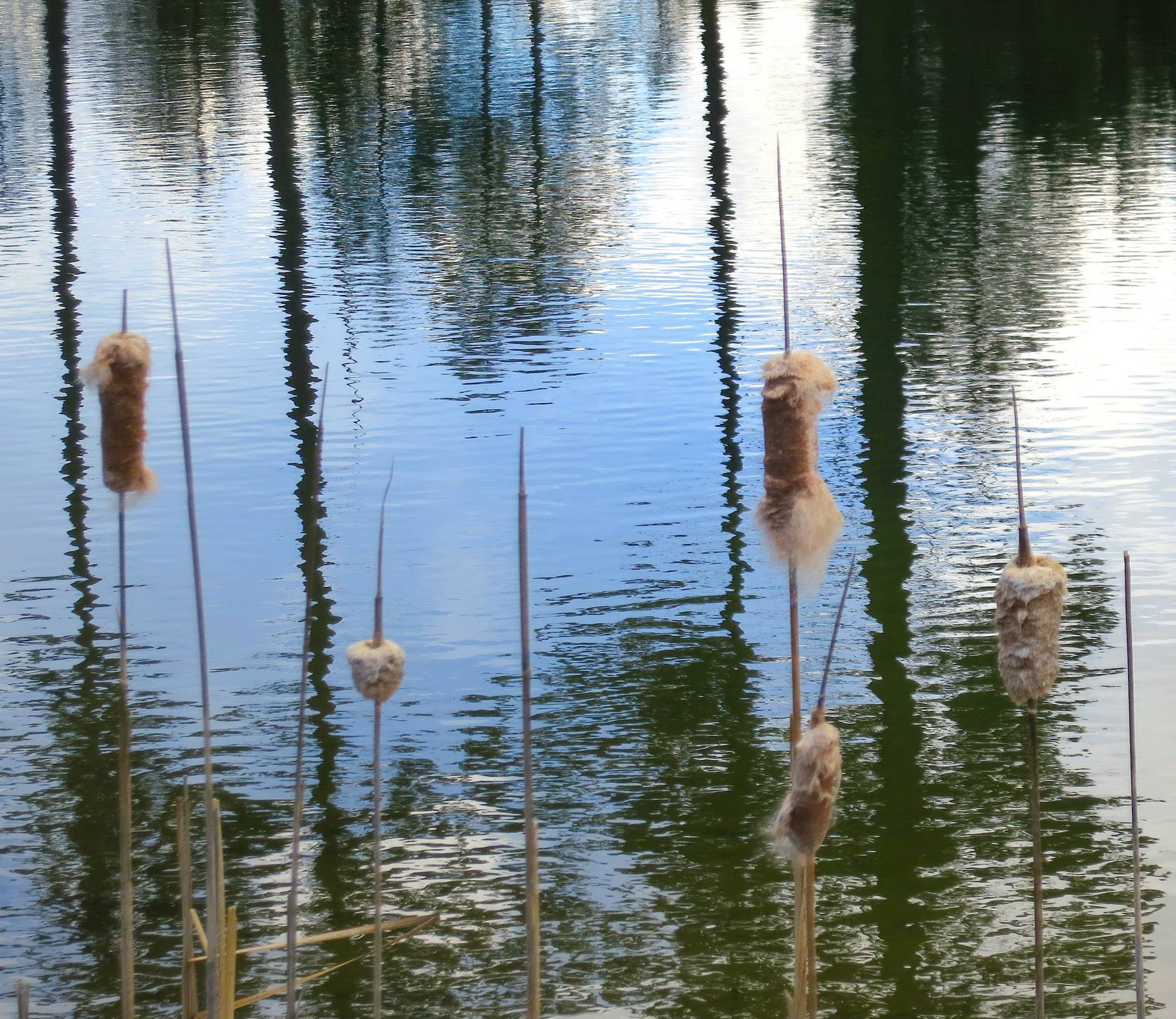
of cattails
are bursting and floating away over
the blue shoulders

of the ponds,
and every pond,
no matter what its
name is, is

nameless now.
Every year
everything
I have ever learned

in my lifetime
leads back to this: the fires
and the black river of loss
whose other side

is salvation,
whose meaning
none of us will ever know.
To live in this world

you must be able
to do three things:
to love what is mortal;
to hold it

against your bones knowing
your own life depends on it;
and, when the time comes to let it go,
to let it go.

~Mary Oliver “In Blackwater Woods” from Devotions

(thinking today of God’s gift to the world of Jane Goodall,
whose life was about keeping promises)

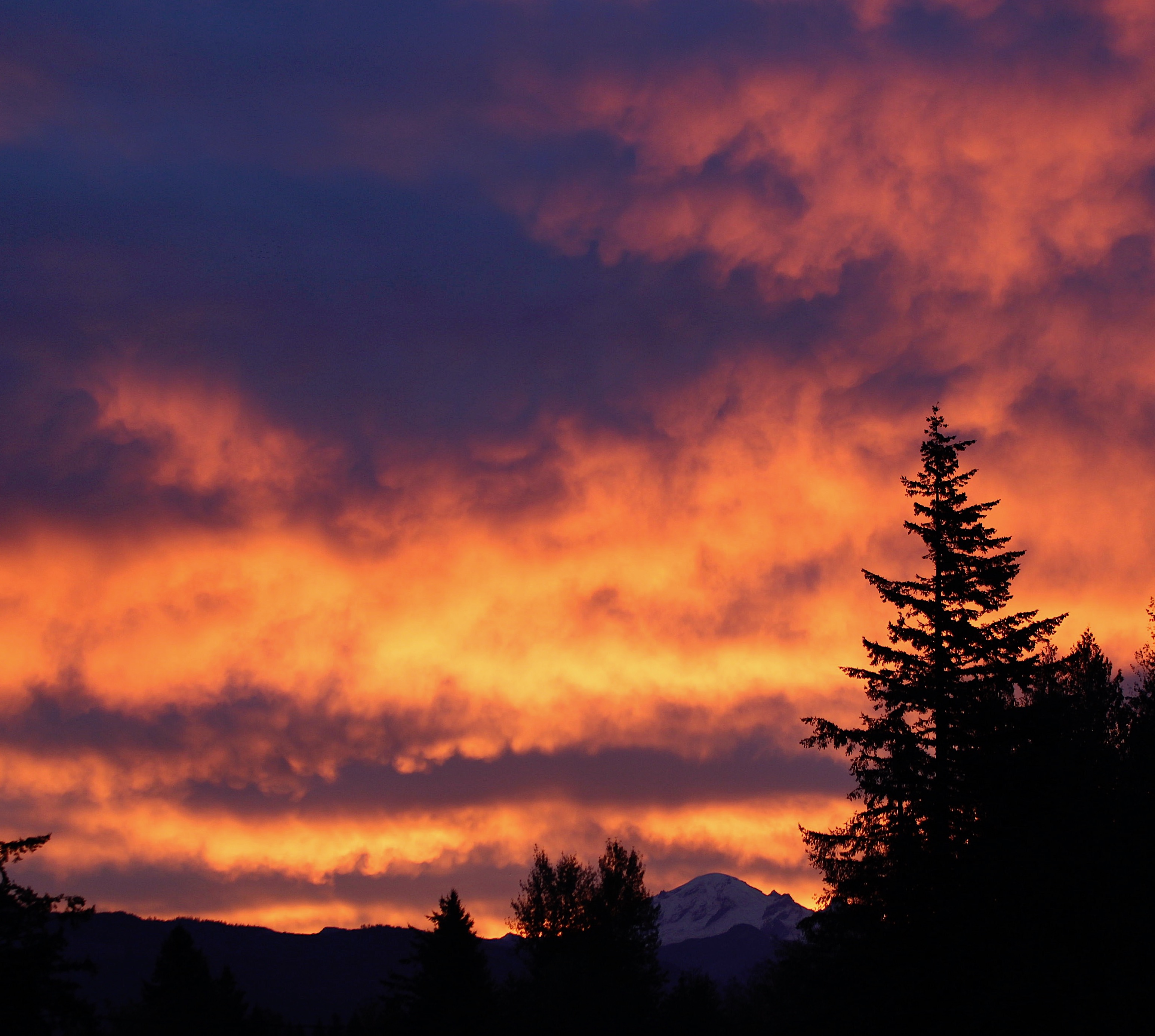
When the earth and all that is in it glows indigo
in the angled light of October;
opening my eyes as witness to beauty
takes my breath away.

I can’t imagine letting go this life,
yet the other side of ashes and loss is salvation.

My God.
I am so finite.
I hold this close to my bones
with miles to go before I sleep.

My life depends on realizing
I’m living a life I would die for.

photo by Josh Scholten
One-Time
Monthly
Yearly

Make a one-time or recurring donation to support daily Barnstorming posts

Make a monthly donation

Make a yearly donation

Choose an amount

$10.00
$25.00
$50.00
$5.00
$15.00
$100.00
$5.00
$15.00
$100.00

Or enter a custom amount

$

Your contribution is deeply appreciated.

Your contribution is appreciated.

Your contribution is appreciated.

DonateDonate monthlyDonate yearly
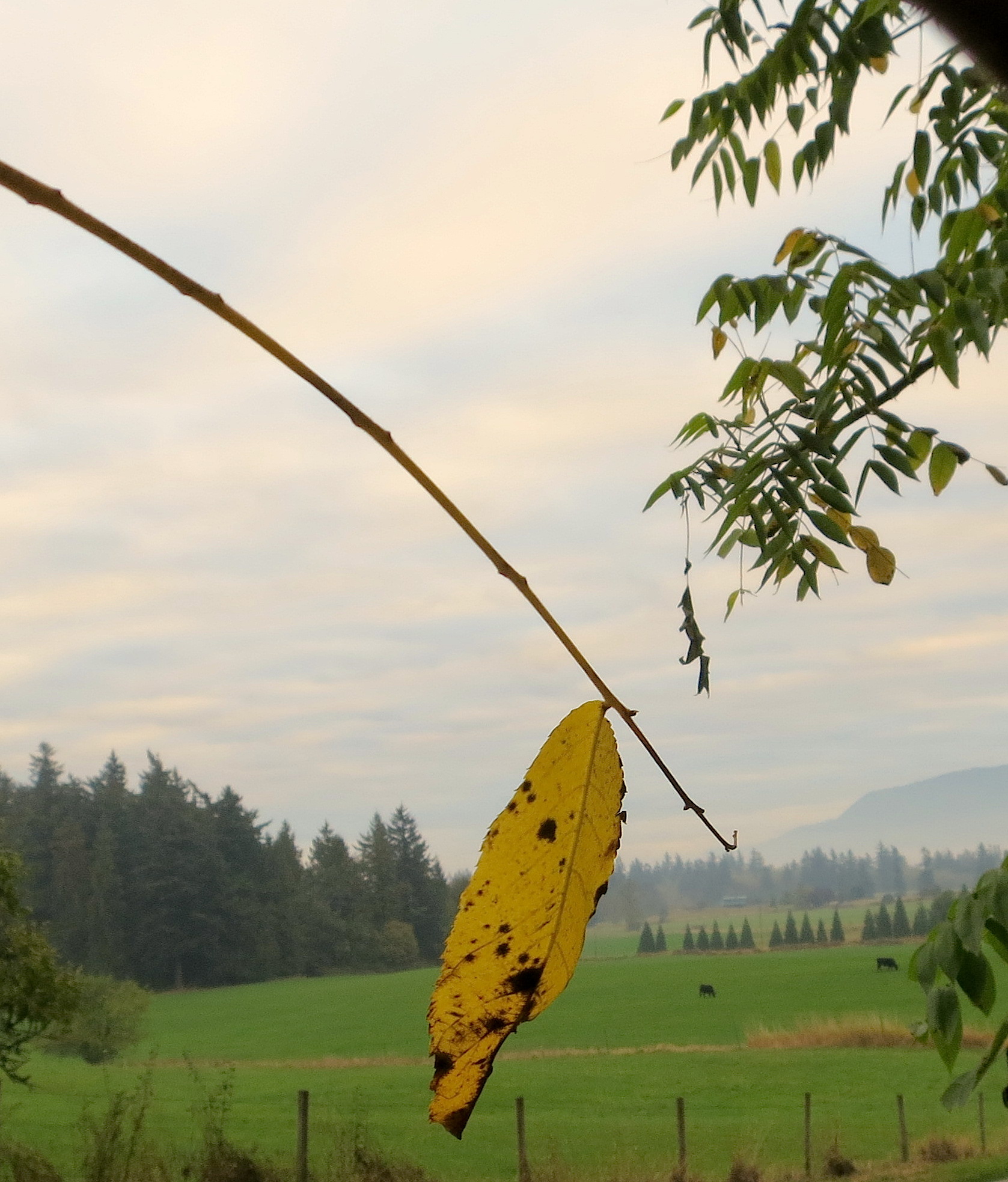
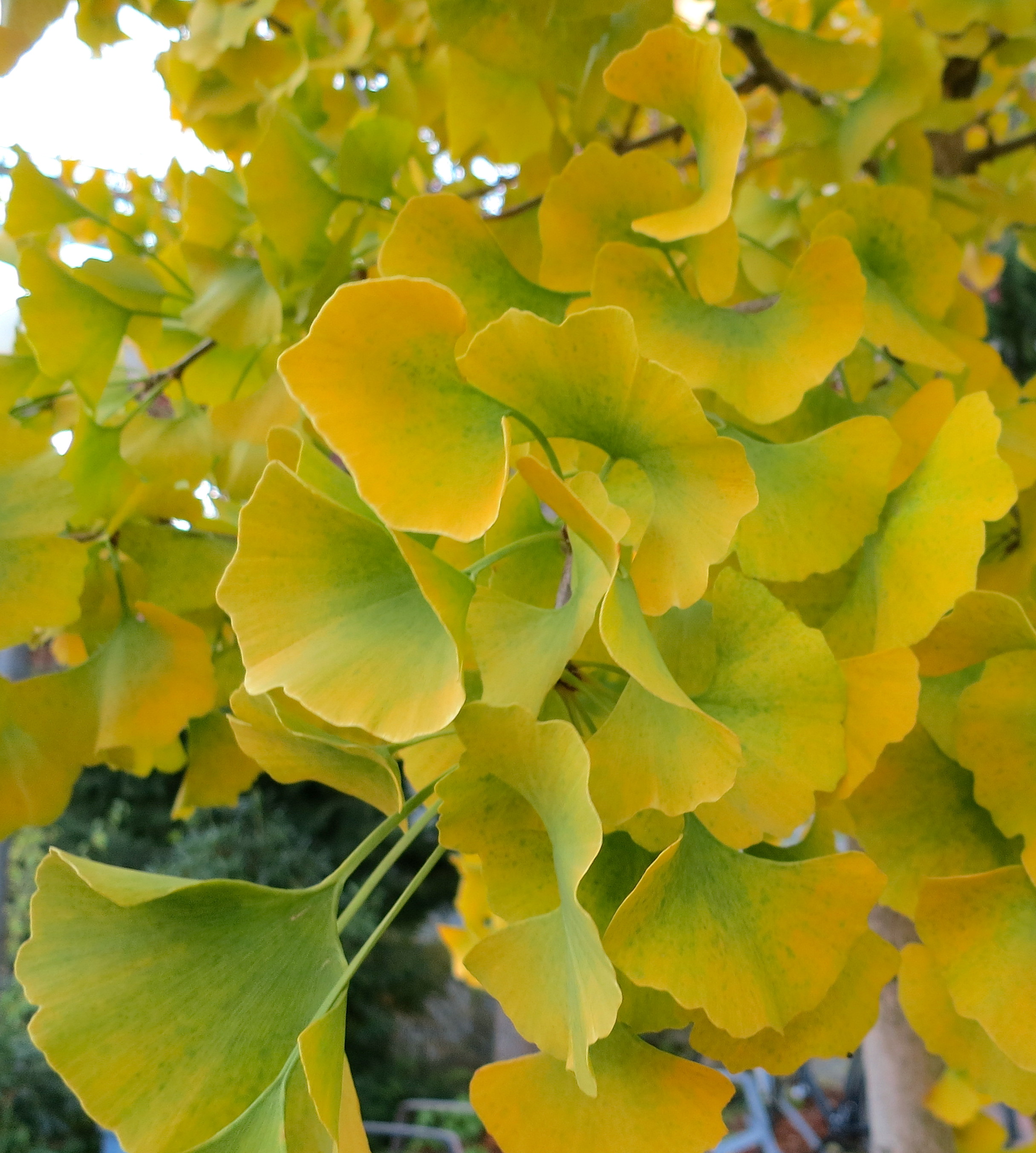
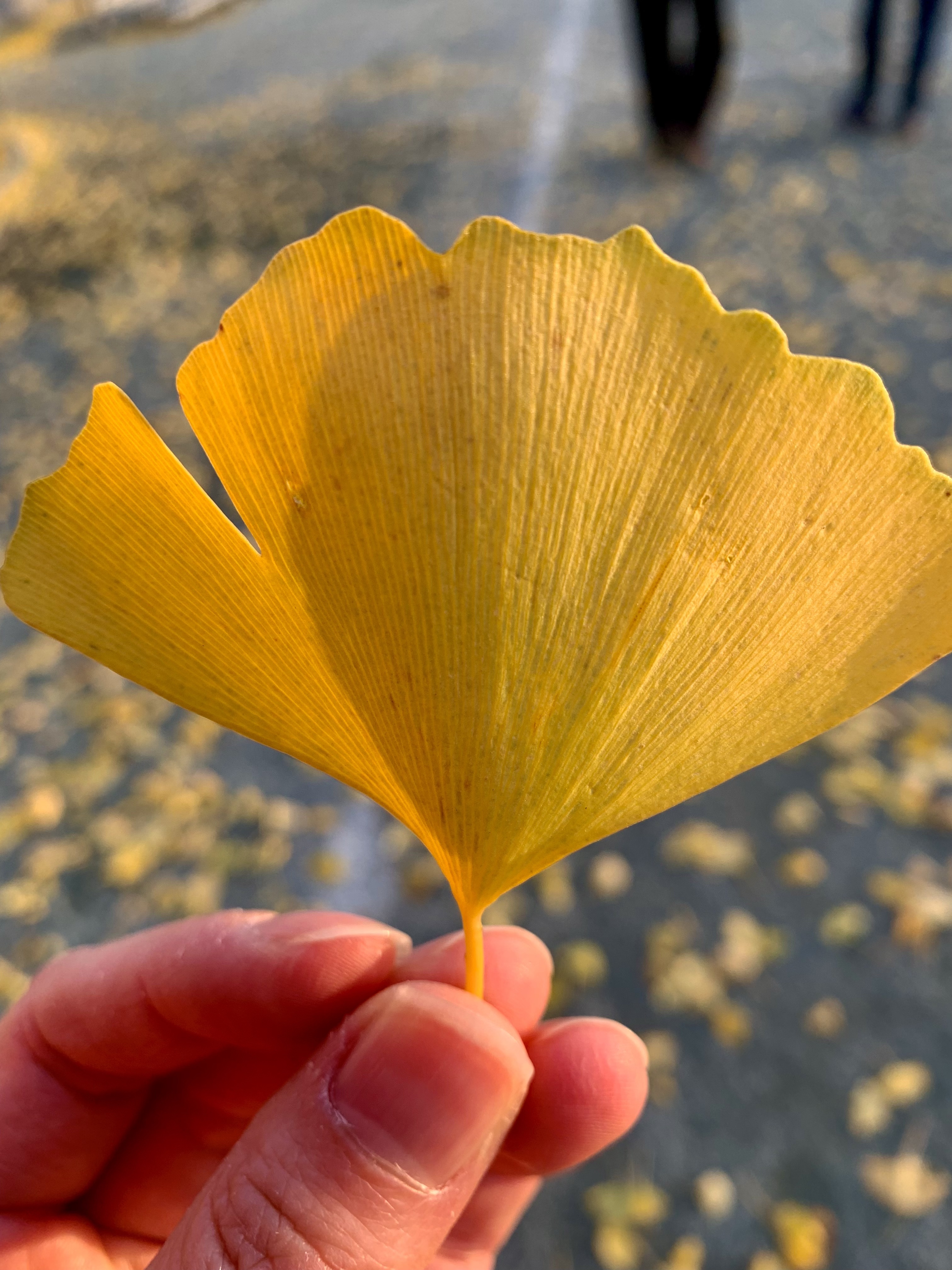
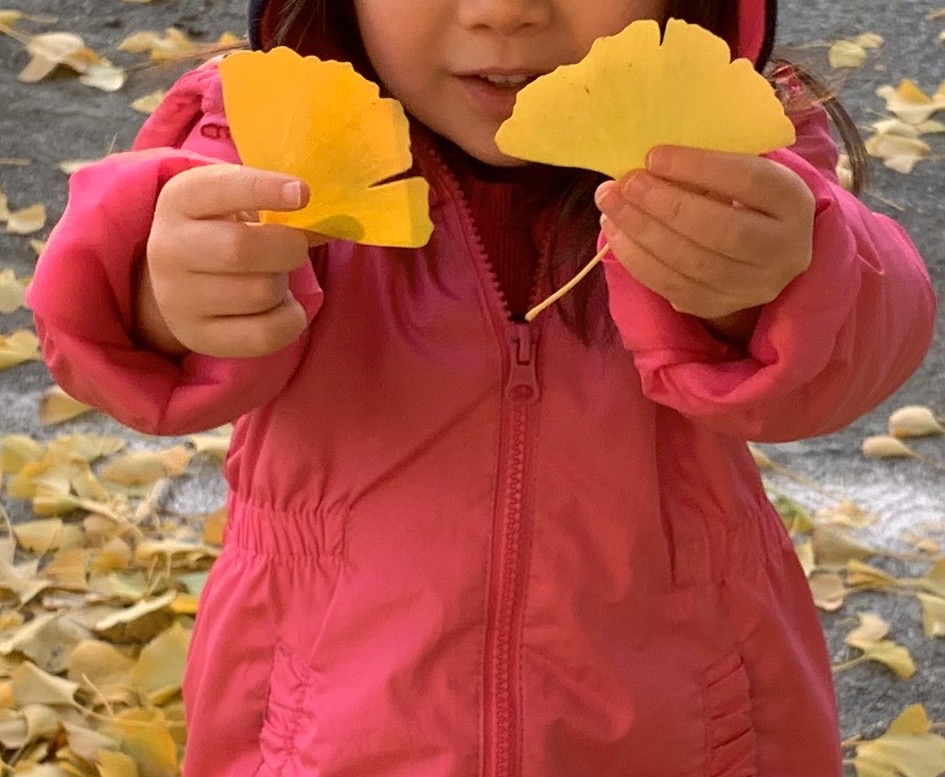
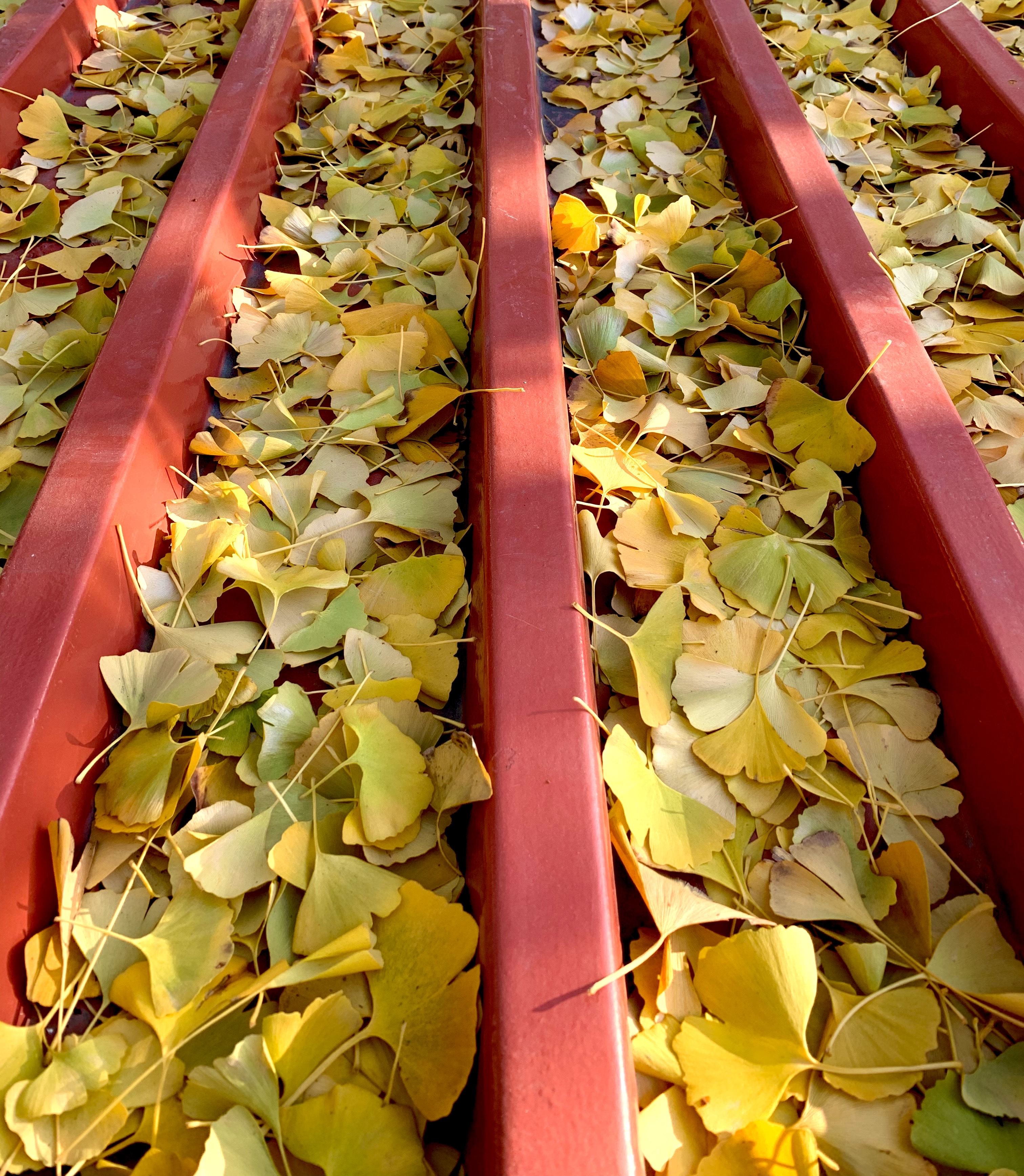
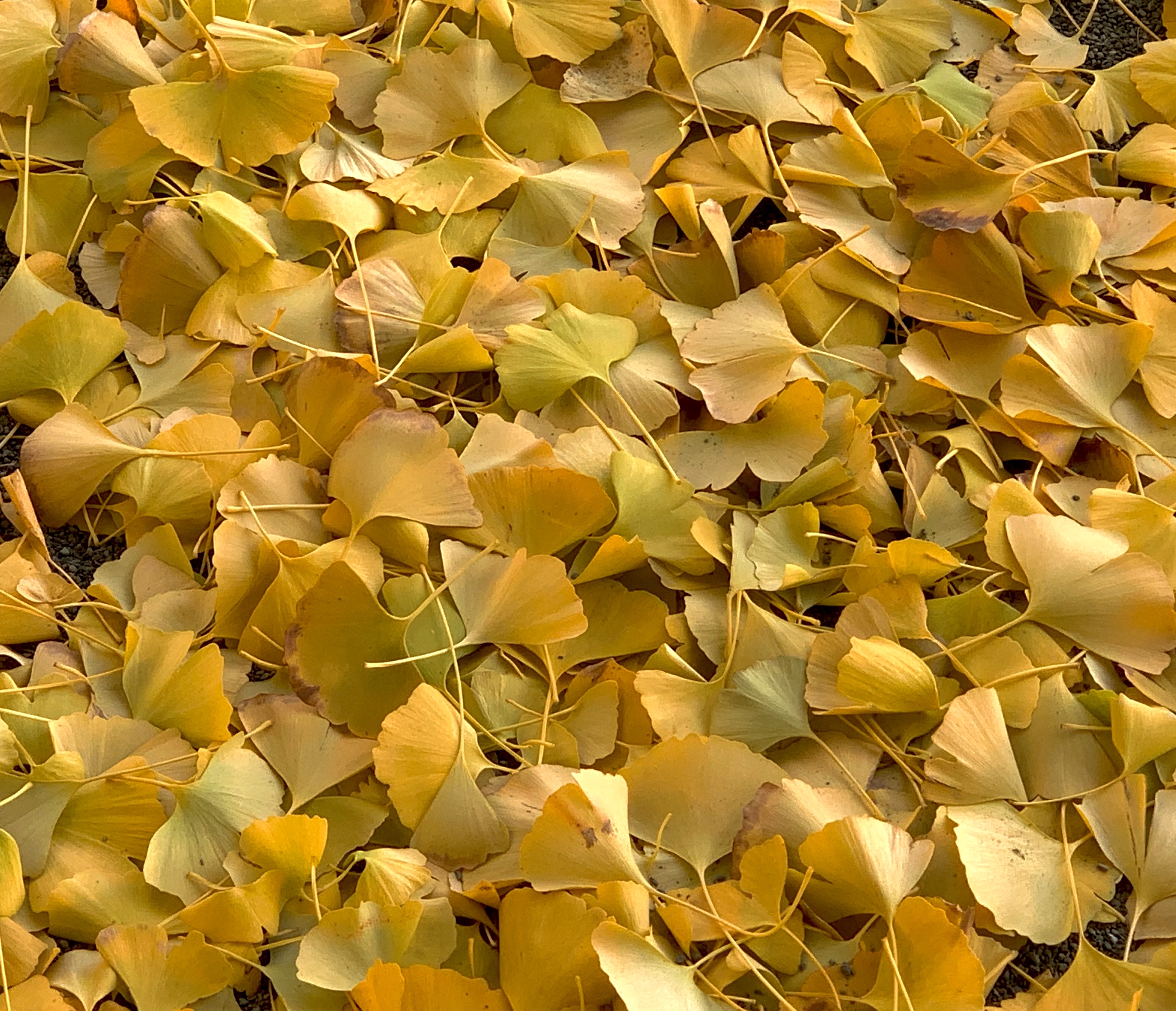
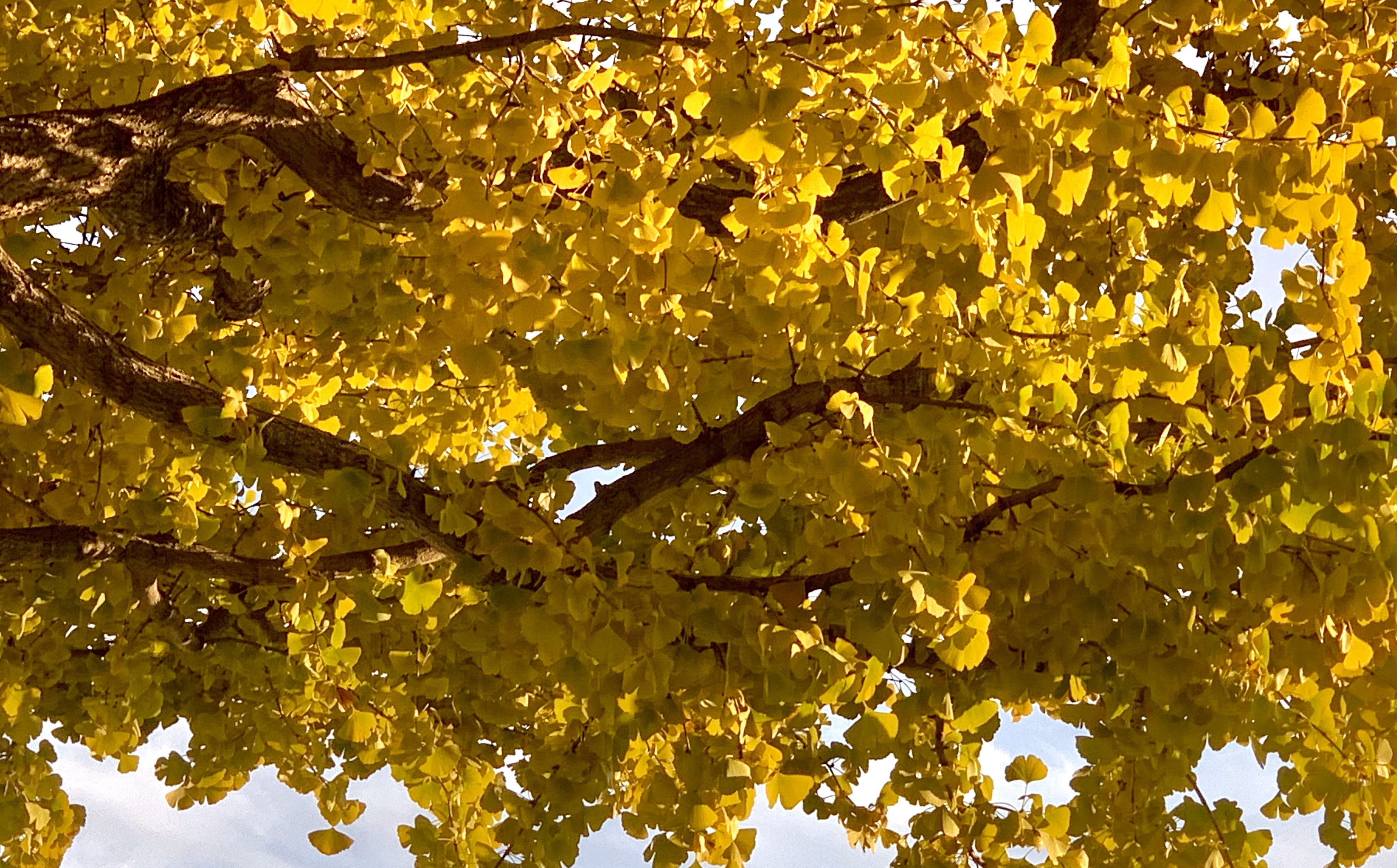
Dropping Leaves on Time

Late in November, on a single night
Not even near to freezing, the ginkgo trees
That stand along the walk drop all their leaves
In one consent, and neither to rain nor to wind
But as though to time alone: the golden and green
Leaves litter the lawn today, that yesterday
Had spread aloft their fluttering fans of light.

What signal from the stars? What senses took it in?
What in those wooden motives so decided
To strike their leaves, to down their leaves,
Rebellion or surrender? and if this
Can happen thus, what race shall be exempt?
What use to learn the lessons taught by time,
If a star at any time may tell us: Now.

~Howard Nemerov “The Consent” from The Collected Poems of Howard Nemerov

So many reasons these days to awake in the night,
eyes wide open, searching the dark seas of trouble
for some sign of hope,
for calm and peace in this stormy world.

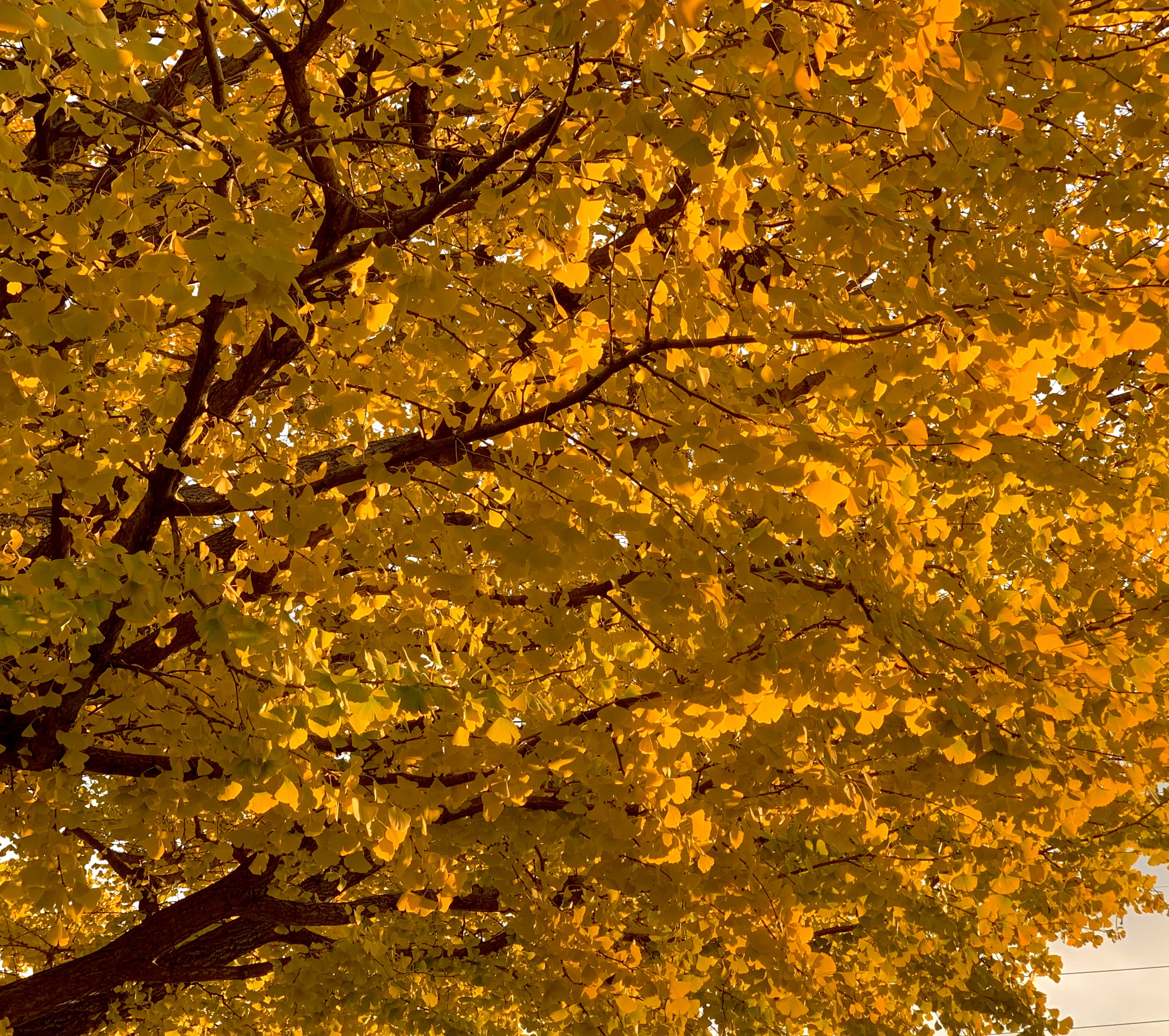
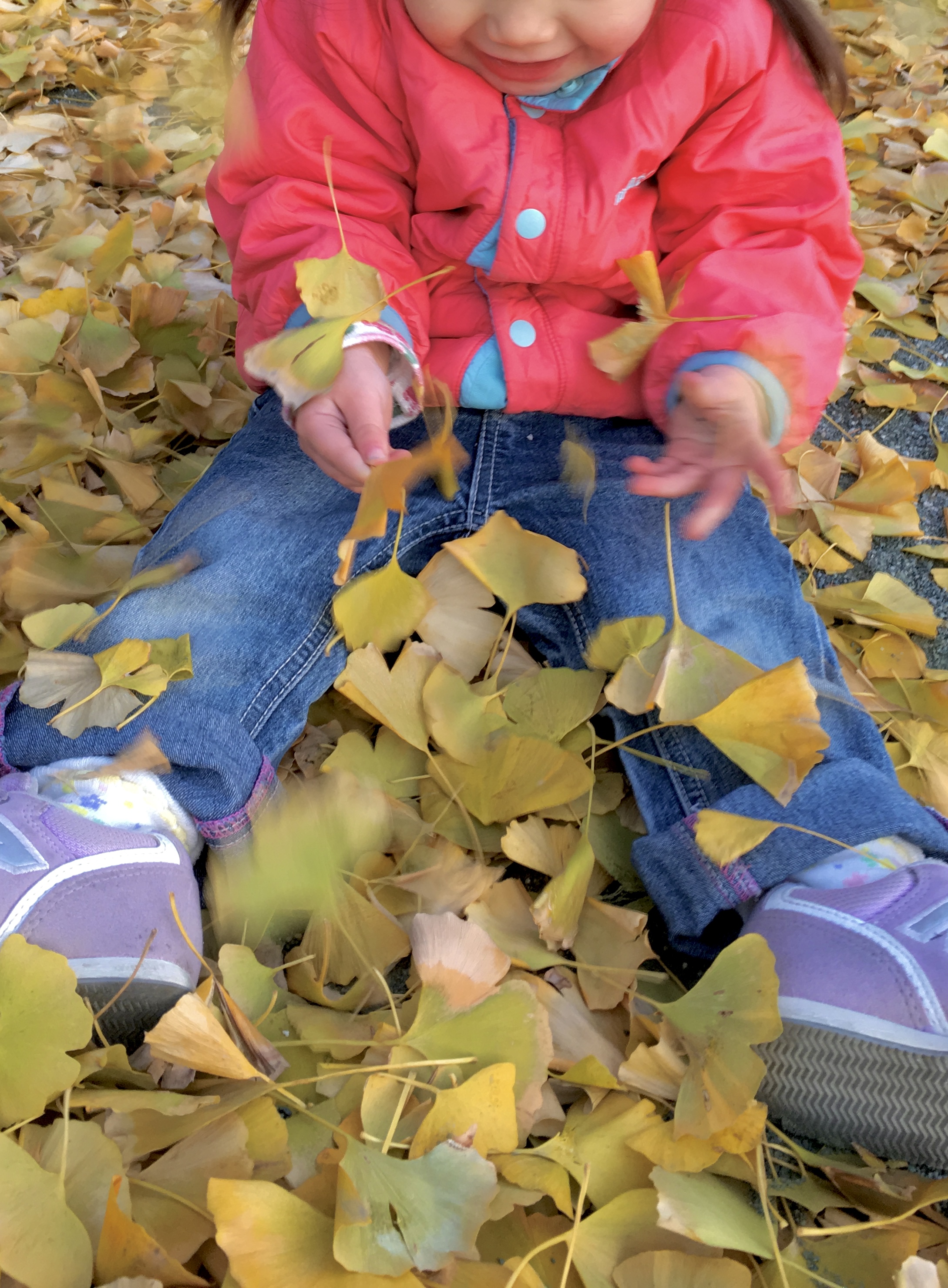
When asleep again, I float among abundant
golden gingko leaves, each waving like a sail in the breeze,
before they tumble, swirling, to the ground, forming
deeply cushioned and comforting pools of yellow.

Navigating these brutal times, I am meant to be
anchored within some safer harbor – I treasure
the old ginkgo as it reaches over each cherished child
with its golden cloak of love and protection.

One-Time
Monthly
Yearly

Make a one-time or recurring donation to support daily Barnstorming posts

Make a monthly donation

Make a yearly donation

Choose an amount

$10.00
$25.00
$50.00
$5.00
$15.00
$100.00
$5.00
$15.00
$100.00

Or enter a custom amount

$

Your contribution is deeply appreciated.

Your contribution is appreciated.

Your contribution is appreciated.

DonateDonate monthlyDonate yearly

Remembering Jane

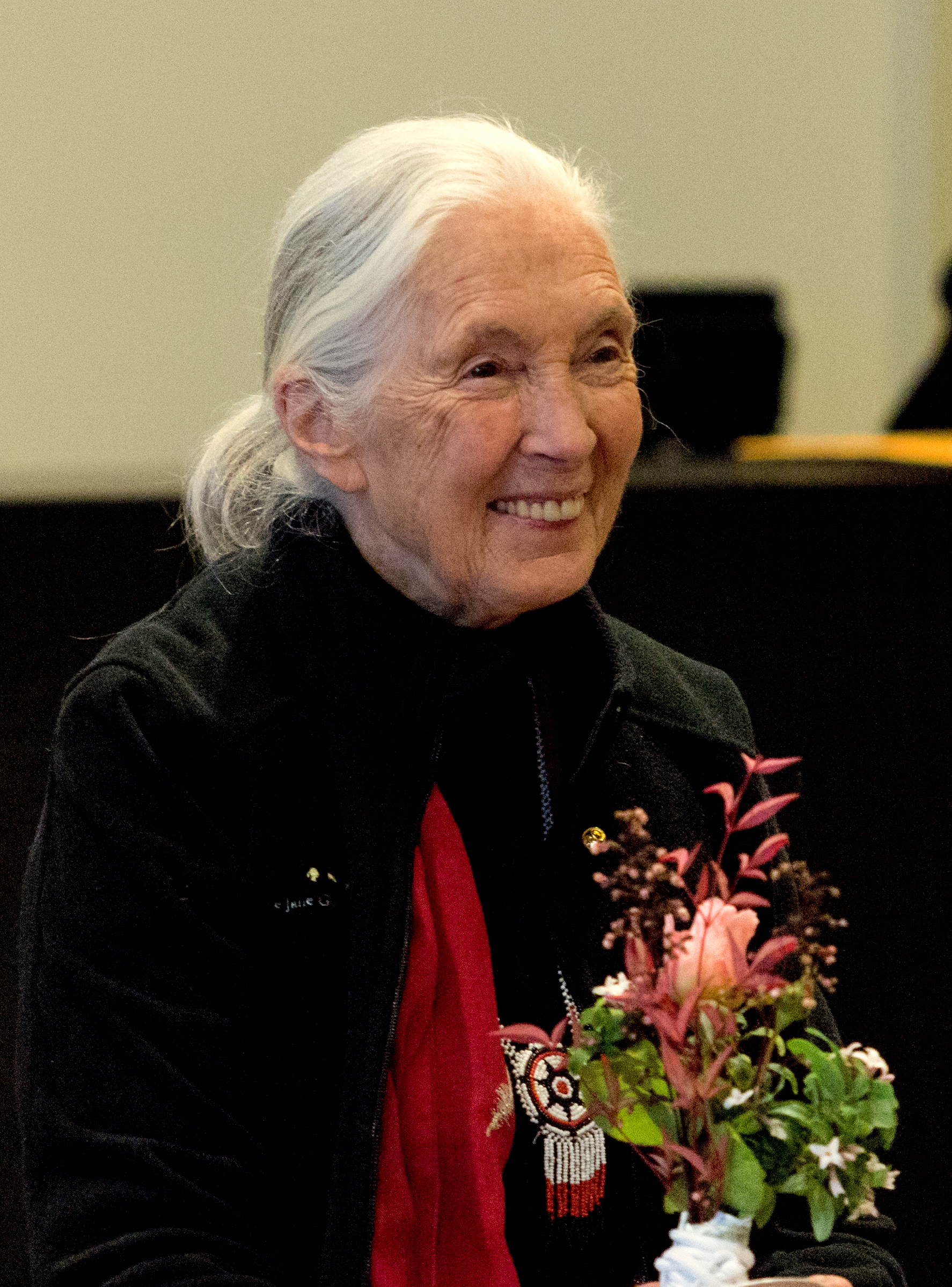
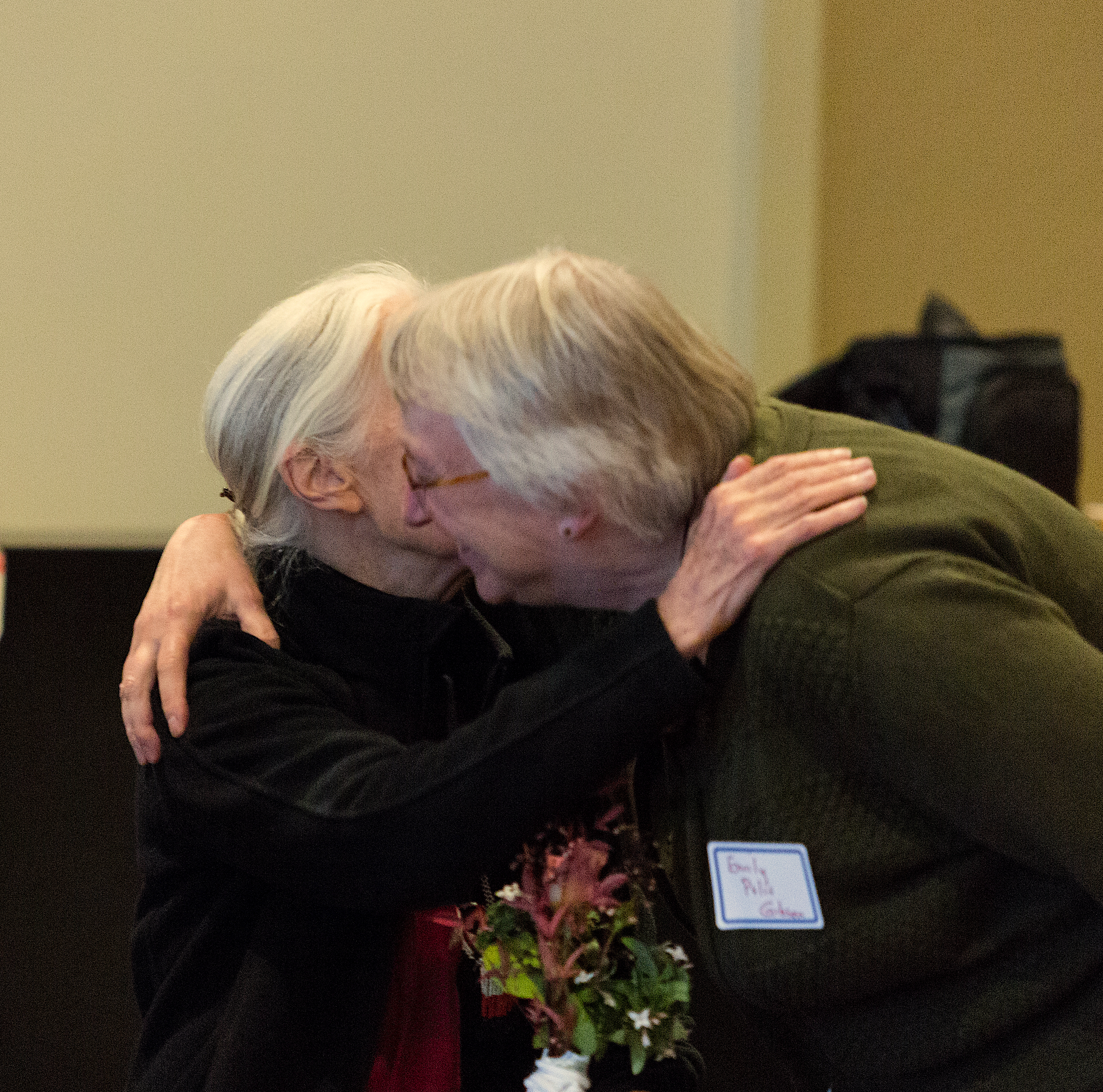
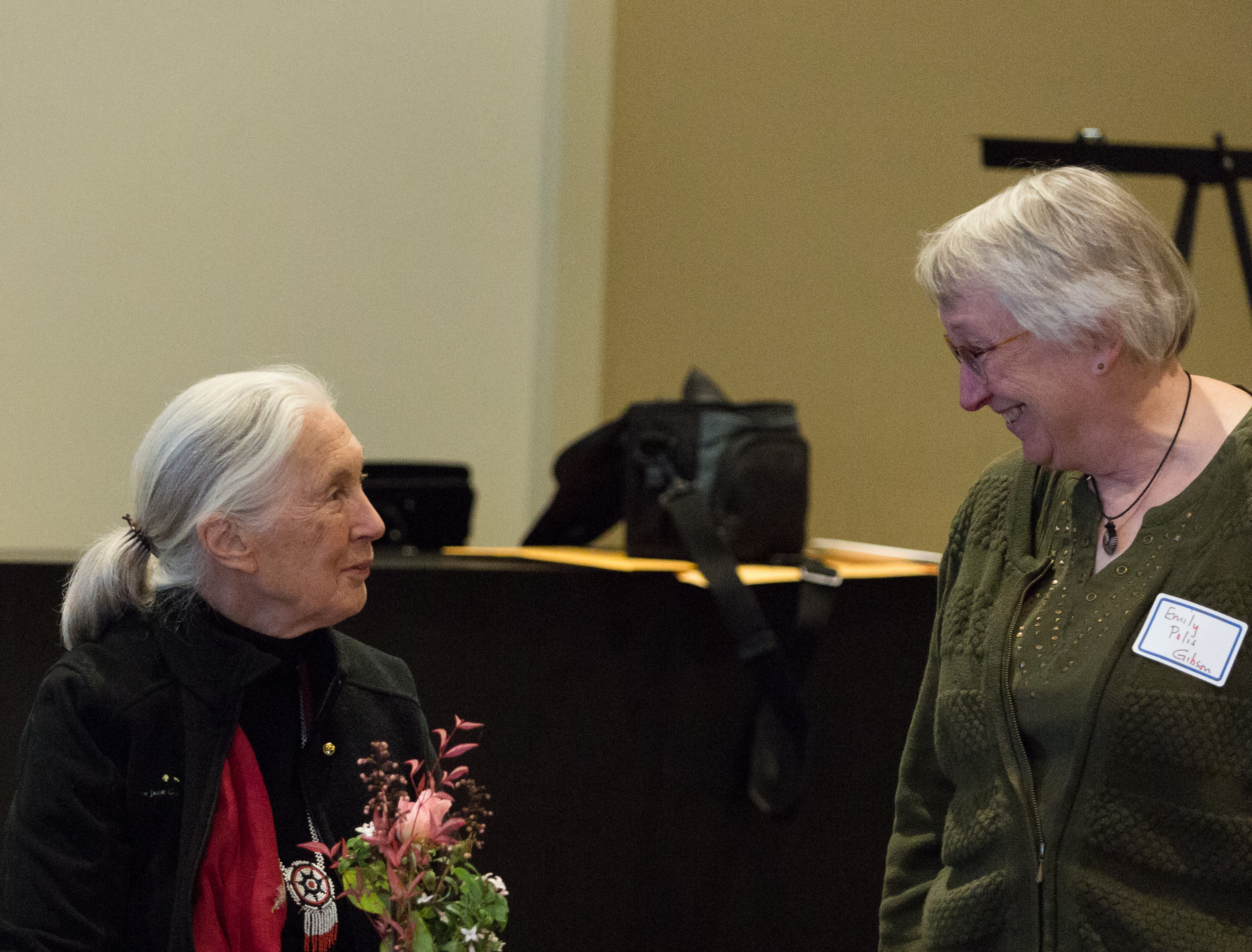
photo of Jane Goodall in 2018, smiling as I came up to give her a hug, courtesy of WWU University Communications

I wasn’t prepared to hear yesterday that my professor, mentor, and friend Dr. Jane Goodall had passed away at age 91, while in the midst of her lecture tour in the United States.

I nearly believed Jane would be immortal; she lived as if she were.
She had a message to deliver and as long as she could, she would. She truly “died in the harness” after decades and decades of traveling the world, recruiting people to her cause to save the world for the next generation of plants, animals and humans, and the next and the next…

She was a born observer and storyteller, able to reach and move us with her verbal and writing ability to help place us in her shoes in the wild as she witnessed what no one else had. This was, of course, aided by Hugo van Lawick’s compelling wildlife photography and video every child of the 1950s and 60s grew up watching.

As a college student taking her class on non-human primate behavior, I was riveted by the content of her course lectures about the work she was doing at Gombe. I hoped I could somehow help in the long-term study there, and was ready to commit to a year of training preparation: recording captive chimpanzee behavior at Stanford, while learning Swahili.

On a spring day in May 1974:

Standing outside a non-descript door in a long dark windowless hallway of offices at the Stanford Medical Center, I took a deep breath and swallowed several times to clear my dry throat. I hoped I had found the correct office, as there was only a number– no nameplate to confirm who was inside.

I was about to meet my childhood hero, someone whose every book I’d read and every TV documentary I had watched. I knocked with what I hoped was the right combination of assertiveness (“I want to be here to talk with you and prove my interest”) and humility (“I hope this is a convenient time for you as I don’t want to intrude”).

I heard a soft voice on the other side say “Come in” so I slowly opened the door.

It was a bit like going through the wardrobe to enter Narnia.

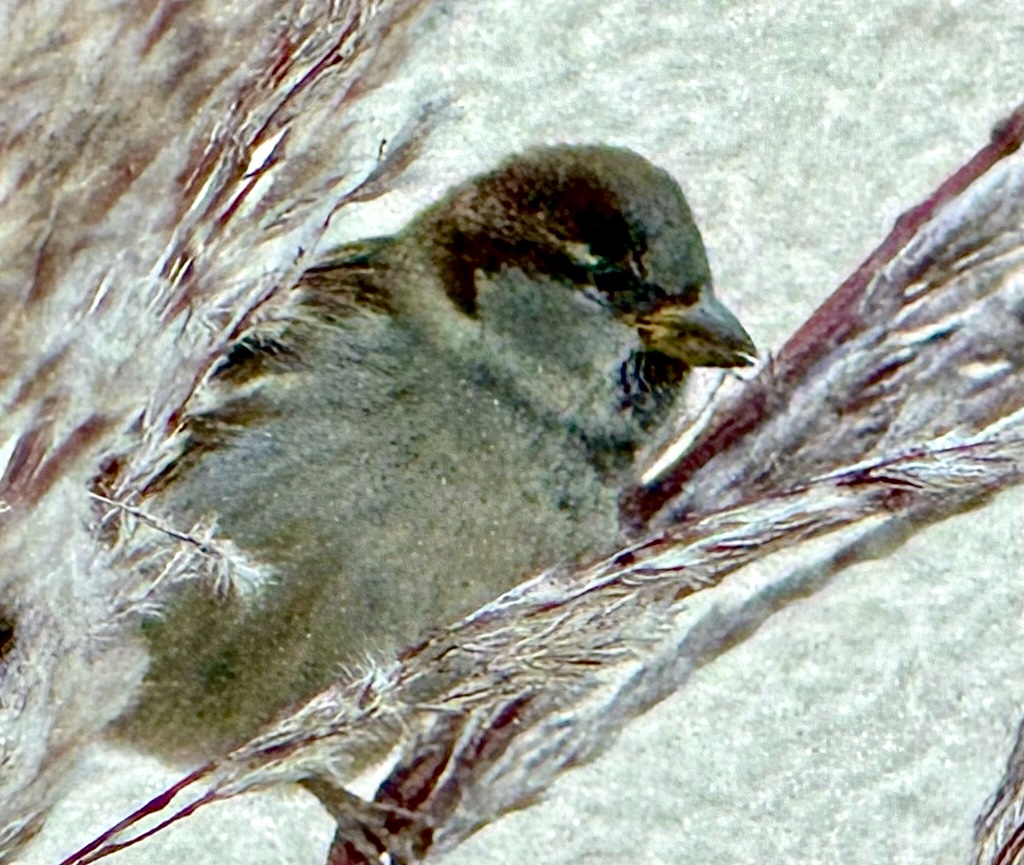
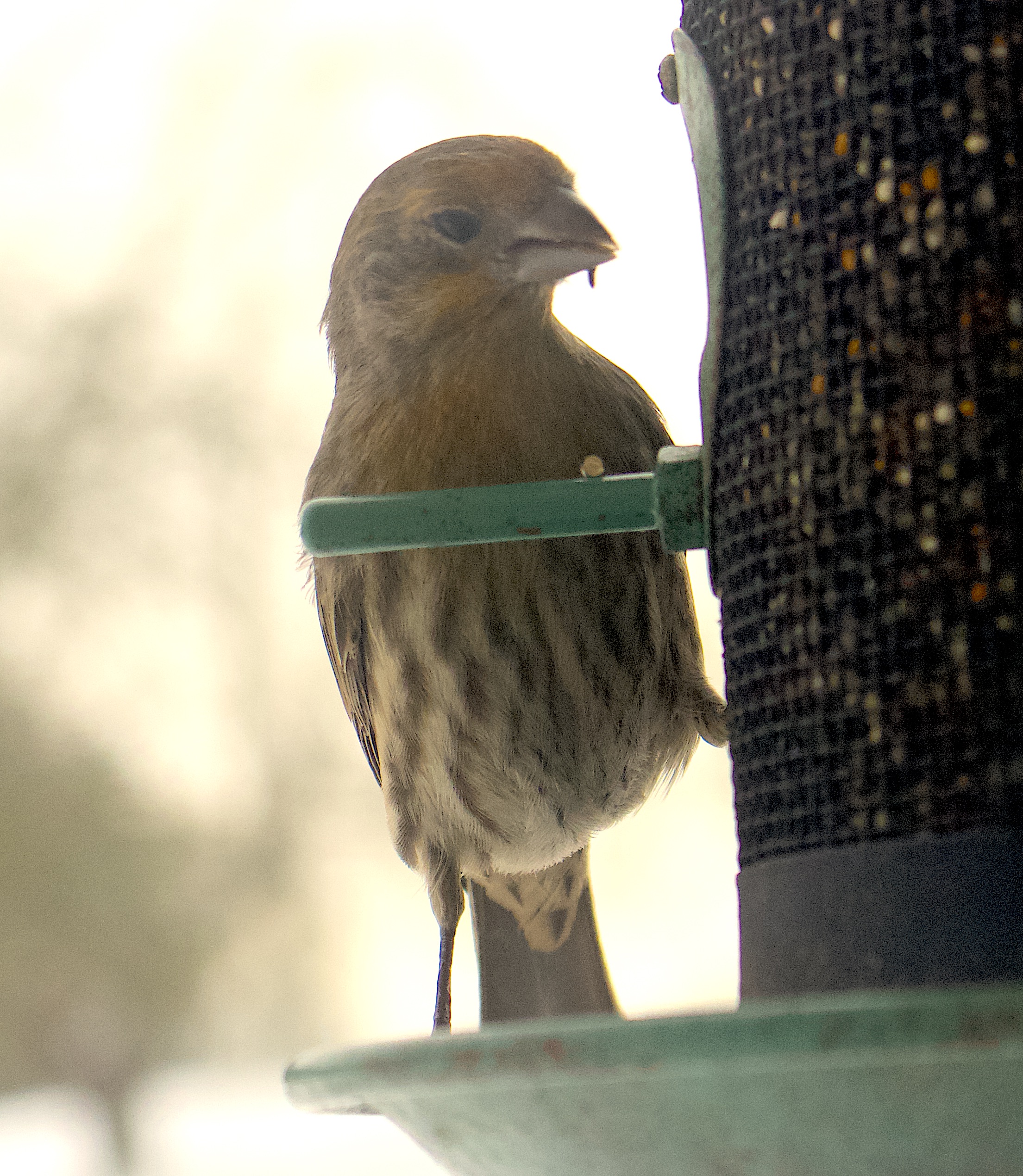
Bright sunlight streamed into the dark hallway as I stepped over the threshold. Squinting, I stepped inside and quickly shut the door behind me as I realized there were at least four birds flying about the room. They were taking off and landing, hopping about feeding on bird seed on the office floor and on the window sill. The windows were flung wide open with a spring breeze rustling papers on the desk. The birds were very happy occupying the sparsely furnished room, which contained only one desk, two chairs and Dr. Jane Goodall.

She stood up and extended her hand to me, saying, quite unnecessarily, “Hello, I’m Jane” and offered me the other chair when I told her my name. She was slighter than she appeared when speaking up at a lectern, or on film. Sitting back down at her desk, she busied herself reading and marking her papers, seemingly occupied for a bit and not to be disturbed.

It was as if I was not there at all.

It was disorienting. In the middle of a bustling urban office complex containing nothing resembling plants or a natural environment, I had unexpectedly stepped into a bird sanctuary instead of sitting down for a job interview. I wasn’t sure what I was supposed to do or say. Jane didn’t really ever look directly at me, yet I was clearly being observed.
So I waited, watching the birds making themselves at home in her office, and slowly feeling more at home myself. I felt my tight muscles start to relax and I loosened my grip on the arms of the chair.
There was silence except for the twittering of the finches as they flew about our heads.

Then she spoke, her eyes still perusing papers:
“It really is the only way I can tolerate being here for any length of time. They keep me company. But don’t tell anyone; the people here at the medical center would think this is rather unsanitary.”
I said the only thing I could think of:
“I think it is magical. It reminds me of home.”

Only then did she look at me.
“Now tell me why you’d like to come work at Gombe…”

The next day I received a note from her letting me know I was accepted for the research assistant-ship to begin a year later, once I had completed all aspects of the training.

I had proven I could sit silently and expectantly, waiting for something, or perhaps nothing at all, to happen. For a farm girl who had never before traveled outside the United States, I had stepped through the wardrobe into Jane’s amazing world, about to embark on an adventure far beyond the barnyard.

(This essay was published in The Jane Effect in 2015 in honor of Jane’s 80th birthday)

giving Jane a hug, courtesy of WWU Communications
45 years since we met in her Stanford office full of wild birds

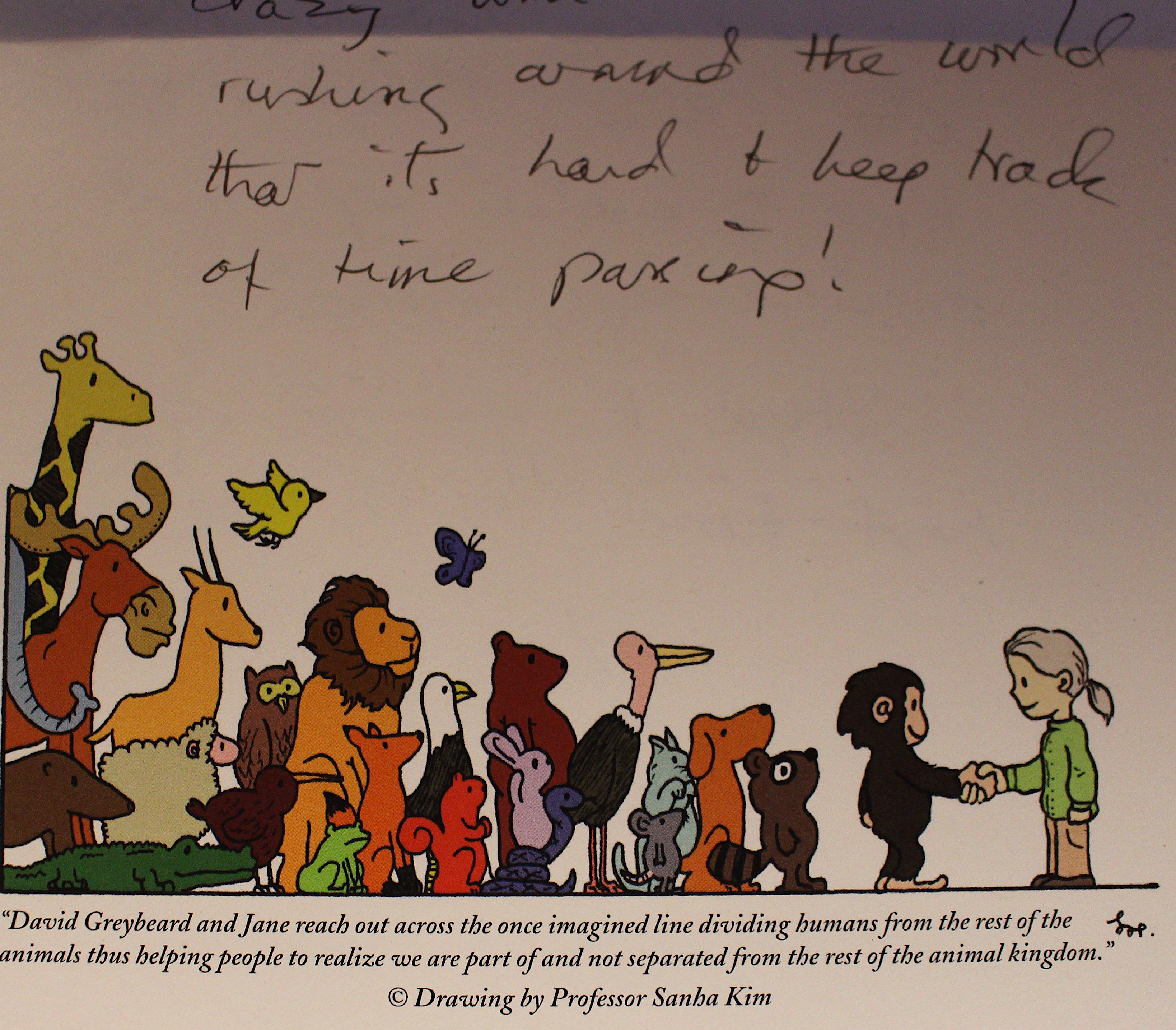
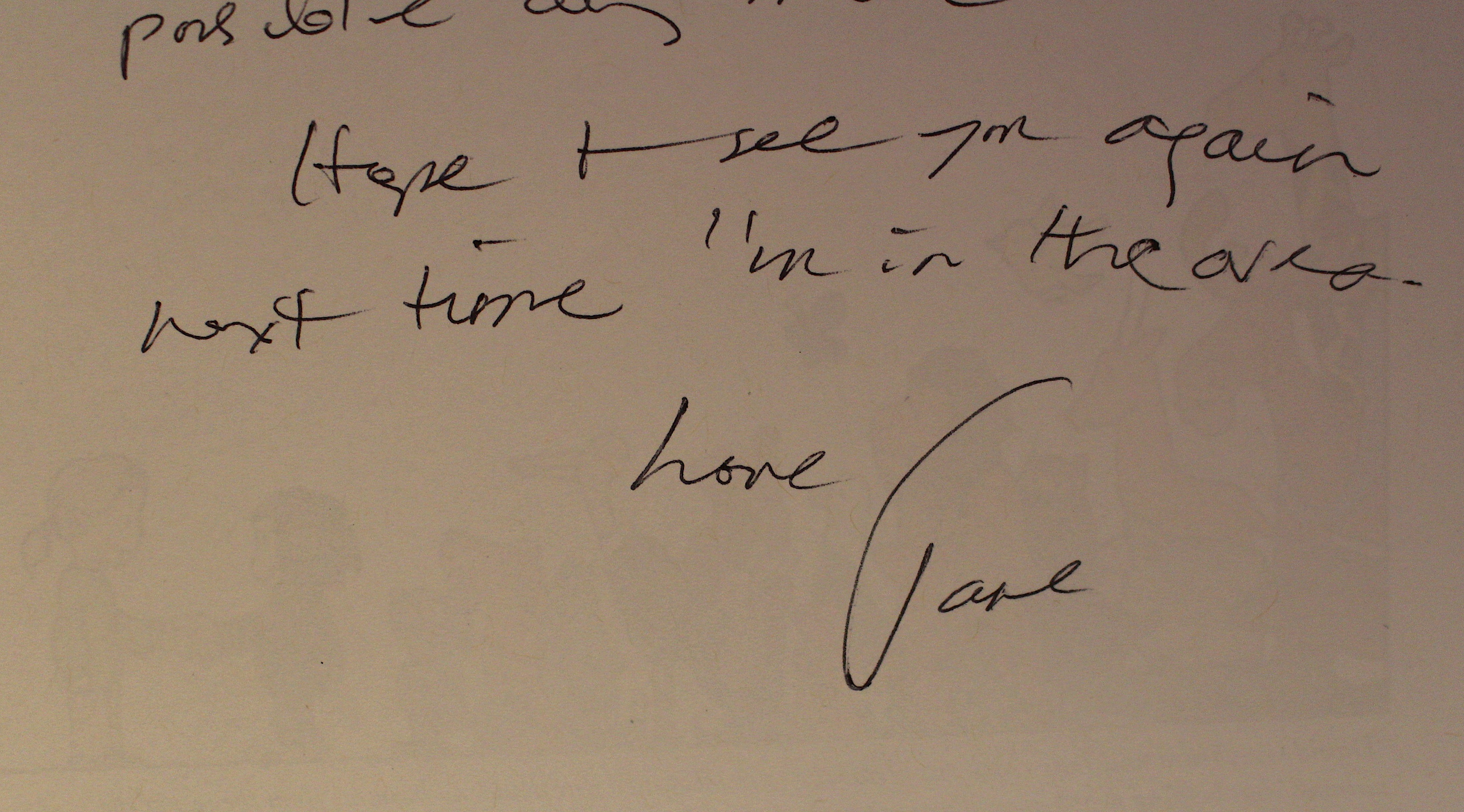
True to Jane’s tradition of impeccable graciousness, she sent me a hand-written note after her last visit in 2018 when she came to speak at Western Washington University in Bellingham.

I recommend the documentary “Jane” as the best review of Jane’s Gombe work. The Jane Goodall Institute will continue her legacy for decades to come.