Sure on this shining night Of star made shadows round, Kindness must watch for me This side the ground. The late year lies down the north. All is healed, all is health. High summer holds the earth. Hearts all whole. Sure on this shining night I weep for wonder wand’ring faralone Of shadows on the stars. ~James Agee
He who has come to men dwells where we cannot tell nor sight reveal him, until the hour has struck when the small heart does break with hunger for him;
those who do merit least, those whom no tongue does praise the first to know him, and on the face of the earth the poorest village street blossoming for him. ~Jane Tyson Clement from No One Can Stem the Tide
In the somber dark of this blustery solstice morning, when there seems no hope for sun or warmth, I hunger for comfort, knowing there is solace only He can bring.
He calls me forth from where I have hidden, buried face down in the troubles of the world, hiding amid my quilt and pillows, fearing the news of the day.
Only God can glue together what evil shatters. He just asks us to hand Him the pieces of our broken hearts.
If I grab hold His offered hand, I’m lifted, my emptiness filling in the light, reaching for a new day bursting fully into blossom.
This year’s Barnstorming Advent theme “… the Beginning shall remind us of the End” is taken from the final lines in T.S. Eliot’s poem “The Cultivation of Christmas Trees”
One-Time
Monthly
Yearly
Make a one-time or recurring donation to support Barnstorming
Well I know now the feel of dirt under the nails, I know now the rhythm of furrowed ground under foot, I have learned the sounds to listen for in the dusk, the dawning and the noon.
I have held cornfields in the palm of my hand, I have let the swaying wheat and rye run through my fingers, I have learned when to be glad for sunlight and for sudden thaw and for rain.
I know now what weariness is when the mind stops and night is a dark blanket of peace and forgetting and the morning breaks to the same ritual and the same demands and the silence. ~Jane Clement from No One Can Stem the Tide
Seven-thirty. Driving northwest out of town, the snowscape dusky, sky tinted smoky peach. In the rear view mirror, a bright orange glow suffuses the stubbly treeline. Suddenly a column of brightness shoots from the horizon, a pillar of fire! One eye on the road, I watch behind me the head of a golden child begin to push up between the black knees of the hills. Two weeks out from Solstice, the sun so near winter it seems to rise in the south. A fiery angel stands over his cradle of branches. And what strange travelers come to honor him? And what gift will I bring to him this day? ~Thomas Smith “Advent Dawn” from The Glory
And he shall be their peace. Micah 5:5
I tossed and turned last night — my thoughts too busy, my blankets twisted in turmoil, my muscles too tight.
The worries of the day required serious wrestling in the dark rather than settling silent and forgotten under my pillow after prayer.
Yet, as ever, morning dawns anew and once again I’m comforted by the rhythm of emerging light overwhelming the night. This ritual of starting fresh remembers the promises given to us again and again in His Word.
In the name of peace today, I will get my hands dirty digging a hole deep enough to hold the worries that kept me awake in the night.
And tomorrow, even if I try to remember, I will have forgotten where exactly I buried them.
This year’s Barnstorming Advent theme “… the Beginning shall remind us of the End” is taken from the final lines in T.S. Eliot’s poem “The Cultivation of Christmas Trees”
Peace, peace, peace on earth and good will to all. This is the time for joy This is the time for love Now let us all sing together of peace, peace, peace on earth.
One-Time
Monthly
Yearly
Make a one-time or recurring donation to support Barnstorming
The end of all things is at hand. We all Stand in the balance trembling as we stand; Or if not trembling, tottering to a fall. The end of all things is at hand.
O hearts of men, covet the unending land! O hearts of men, covet the musical, Sweet, never-ending waters of that strand!
While Earth shows poor, a slippery rolling ball, And Hell looms vast, a gulf unplumbed, unspanned, And Heaven flings wide its gates to great and small, The end of all things is at hand. ~Christina Rossetti “Sunday Before Advent”
Dawn was defeating now the last hours sung by night, which fled before it. And far away I recognized the tremblings of the sea. Alone, we walked along the open plain, as though, returning to a path we’d lost, our steps, until we came to that, were vain. Then, at a place in shadow where the dew still fought against the sun and, cooled by breeze, had scarcely yet been sent out into vapor, my master placed the palms of both his hands, spread wide, lightly and gently on the tender grass. And I, aware of what his purpose was, offered my tear-stained cheeks to meet his touch. At which, he made once more entirely clean the color that the dark of Hell had hidden. ~Dante from The Divine Comedy, II Purgatorio,Canto 1 lines 115−29
For God, who said, “Let light shine out of darkness,” has shone in our hearts to give the light of the knowledge of the glory of God in the face of Jesus Christ. 2 Corinthians 4: 6
God brings forth Light through His Word, not once but at least three times:
In the beginning, He creates the sun and the moon to penetrate and illuminate the creation of our hearts and our souls.
In the stable He comes to light the world from below as well as from above so our darkened hearts and souls could be saved from self-destruction.
In the tomb, He rolls back the stone, allowing the sun to penetrate the ultimate night – raising His Son from the dead, in an ultimate defeat of darkness.
He flings open the gates of heaven to the likes of me and in response, I fling my heart through, following the Light.
Showered with the cleansing dew of His light, I am lit by the glory of God reflected in the many faces of Jesus: as vulnerable newborn, child teacher, working carpenter, healer, itinerant preacher, unjustly condemned, dying and dead, raised and ascended Son of God.
Let the dark days come as they certainly will. They cannot overwhelm my heart now, as I am lit from within, cleansed inside and out, no matter how deep the darkness that oppresses on the outside.
I know His promise. I know His face. He knows I know.
This year’s Barnstorming Advent theme “… the Beginning shall remind us of the End” is taken from the final lines in T.S. Eliot’s poem “The Cultivation of Christmas Trees”
1. Hail the blest morn! when the great Mediator Down from the mansions of glory descends; Shepherds, go worship the babe in the manger, Lo! for his guard the bright angels attend.
Chorus: Brightest and best of the sons of the morning.
Dawn on our darkness, and lend us thine aid; Star in the east, the horizon adorning, Guide where our infant Redeemer is laid.
2. Cold on his cradle the dew-drops are shining; Low lies his head with the beasts of the stall: Angels adore him, in slumbers reclining; Wise men and shepherds before him do fall. Chorus
3. Say, shall we yield him, in costly devotion, Odors of Edom, and offerings divine, Gems from the mountains, and pearls from the ocean, Myrrh from the forest, and gold from the mine? Chorus
4. Vainly we offer each ample oblation, Vainly with gifts would his favor secure; Richer by far is the heart’s adoration, Dearer to God are the prayers of the poor. Chorus
How do you capture the wind on the water? How do you count all the stars in the sky? How do you measure the love of a mother Or how can you write down a baby’s first cry?
Chorus: Candlelight, angel light, firelight and star-glow Shine on his cradle till breaking of dawn Silent night, holy night, all is calm and all is bright Angels are singing; the Christ child is born
Shepherds and wise men will kneel and adore him Seraphim round him their vigil will keep Nations proclaim him their Lord and their Saviour But Mary will hold him and sing him to sleep
Chorus
Find him at Bethlehem laid in a manger Christ our Redeemer asleep in the hay Godhead incarnate and hope of salvation A child with his mother that first Christmas Day
Chorus ~John Rutter “Candlelight Carol”
One-Time
Monthly
Yearly
Make a one-time or recurring donation to support the Barnstorming blog
Autumn Was certainly not winter, scholars say, When holy habitation broke the chill Of hearth-felt separation, icy still, The love of life in man that Christmas day. Was autumn, rather, if seasons speak true; When green retreats from sight’s still ling’ring gaze, And creeping cold numbs sense in sundry ways, While settling silence speaks of solitude. Hope happens when conditions are as these; Comes finally lock-armed with death and sin, When deep’ning dark demands its full display. Then fallen nature driven to her knees Flames russet, auburn, orange fierce from within, And brush burns brighter for the growing grey. ~David Baird “Autumn”
We have become so accustomed to the idea of divine love and of God’s coming at Christmas that we no longer feel the shiver of fear that God’s coming should arouse in us. We are indifferent to the message, taking only the pleasant and agreeable out of it and forgetting the serious aspect, that the God of the world draws near to the people of our little earth and lays claim to us. The coming of God is truly not only glad tidings, but first of all frightening news for everyone who has a conscience. ~Dietrich Bonhoeffer from Watch for the Light
The shepherds were sore afraid. So why aren’t we?
The scholars say Christ was most likely born in the autumn of the year ~ so fitting, as our reds and oranges fade fast to grey as we descend into this wintering world crying out for resuscitation.
Murderous frosts and falling snow have wilted down all that was flush with life and we become desperate for hope for renewal in the midst of the dying.
And so this babe has come like a refiner’s fire to lay claim to us and we who have gotten too comfortable will feel the heat of His embrace – in the middle of the chill, in the middle of our dying – no matter what time of year.
Hope happens when conditions are as these…
This year’s Barnstorming Advent theme “… the Beginning shall remind us of the End” is taken from the final lines in T.S. Eliot’s poem “The Cultivation of Christmas Trees”
1. Father, enthroned on high—―Holy, holy! Ancient eternal Light—hear our prayer.
REFRAIN Come, O Redeemer, come; grant us mercy. Come, O Redeemer, come; grant us peace.
2. Lord, save us from the dark of our striving, faithless, troubled hearts weighed down. REFRAIN
3. Look now upon our need; Lord, be with us. Heal us and make us free from our sin. REFRAIN
One-Time
Monthly
Yearly
Make a one-time or recurring donation to support Barnstorming
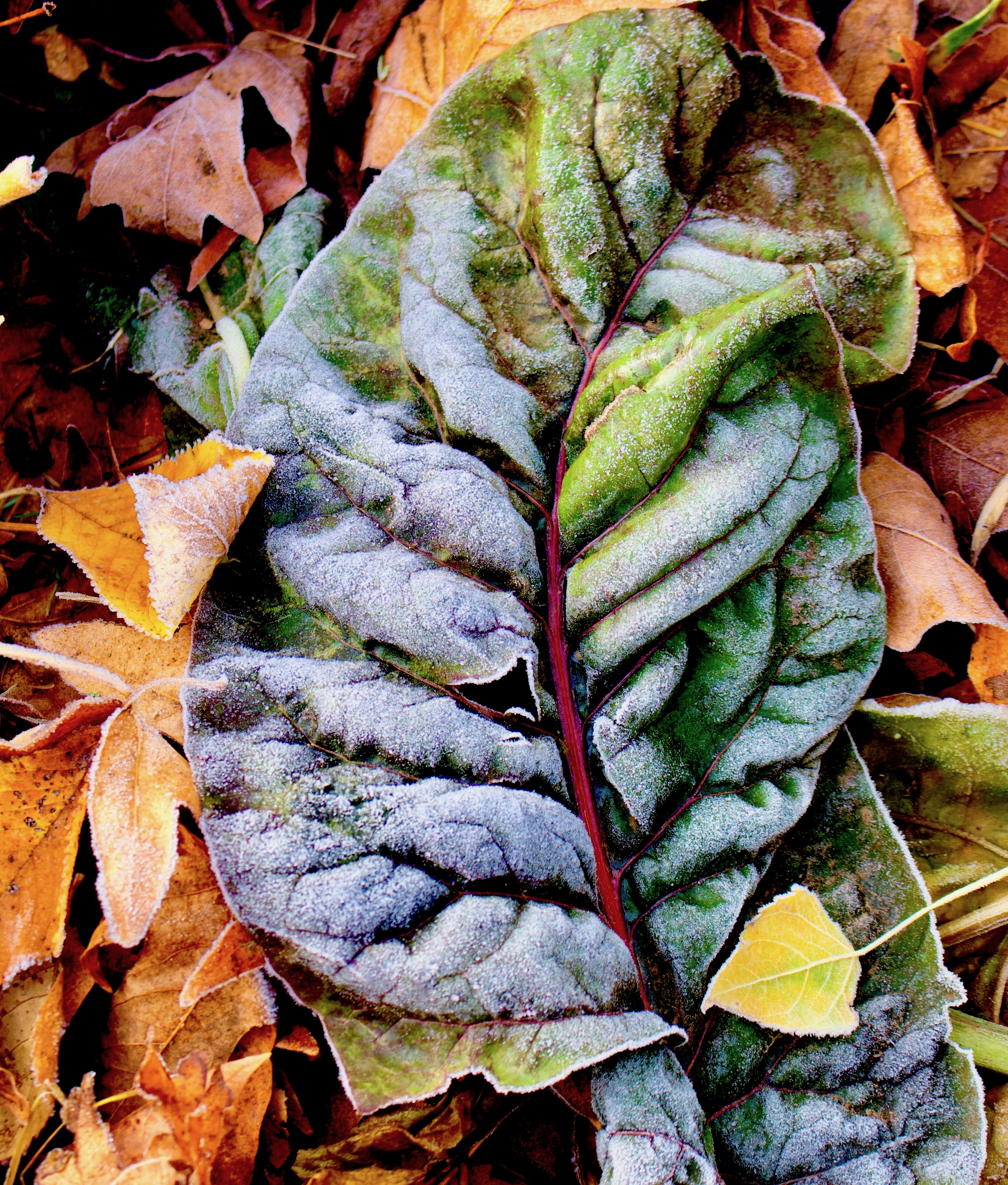
Something has descended like feathered prophecy. Someone has offered the world a bowl of frozen tears,
has traced the veins and edges of leaves with furred ink. The grass is stiff as the strings of a lute.
And, day by day, the tiny windows crack their cardboard frames seizing the frail light. The sun, moving through
these waxy squares, undiminished as a word passing from mind to speech. Every breath a birth,
a stir of floating limbs within me. I stay up late and waken early to feel beneath my feet the silence coming. ~Anya Silver “Advent, First Frost”
When I am weary, putting one foot in front of the other in the humble chores of the barn, feeling so cold at times, I no longer remember this was once sweaty summer work ~ now my hands ache in an arctic wind that shows no mercy.
Yet I know respite will come, refuge is near, salvation is imminent. Each breath I breathe a cloud of hope.
I will remember what our good God has prepared for us in such a place as this, what He has done to come down to dwell with us, melting our frozen tears, aching in silence alongside us.
This year’s Barnstorming Advent theme “… the Beginning shall remind us of the End” is taken from the final lines in T.S. Eliot’s poem “The Cultivation of Christmas Trees”
Good people all, this Christmas time, Consider well and bear in mind What our good God for us has done In sending his beloved son With Mary holy we should pray, To God with love this Christmas Day
In Bethlehem upon that morn, There was a blessed Messiah born The night before that happy tide The noble Virgin and her guide Were long time seeking up and down To find a lodging in the town
But mark right well what came to pass From every door repelled, alas As was foretold, their refuge all Was but a humble ox’s stall Near Bethlehem did shepherds keep Their flocks of lambs and feeding sheep
To whom God’s angel did appear Which put the shepherds in great fear Arise and go, the angels said To Bethlehem, be not afraid For there you’ll find, this happy morn A princely babe, sweet Jesus, born With thankful heart and joyful mind
The shepherds went the babe to find And as God’s angel had foretold They did our Saviour Christ behold Within a manger he was laid And by his side a virgin maid
Attending on the Lord of Life Who came on earth to end all strife There were three wise men from afar Directed by a glorious star And on they wandered night and day
Until they came where Jesus lay And when they came unto that place Where our beloved Messiah lay They humbly cast them at his feet With gifts of gold and incense sweet. ~Traditional Irish — the Wexford Carol 12th century
A little aside from the main road, becalmed in a last-century greyness, there is the chapel, ugly, without the appeal to the tourist to stop his car and visit it. The traffic goes by, and the river goes by, and quick shadows of clouds, too, and the chapel settles a little deeper into the grass.
But here once on an evening like this, in the darkness that was about his hearers, a preacher caught fire and burned steadily before them with a strange light, so that they saw the splendour of the barren mountains about them and sang their amens fiercely, narrow but saved in a way that men are not now. ~R.S. Thomas “The Chapel”
The journey begins when Christians leave their homes and beds. They leave, indeed, their life in this present and concrete world, and whether they have to drive 15 miles or walk a few blocks, a sacramental act is already taking place…
For they are now on their way to constitute the Church, or to be more exact, to be transformed into the Church of God. They have been individuals, some white, some black, some poor, some rich, they have been the ‘natural’ world and a natural community. And now they have been called to “come together in one place,” to bring their lives, their very world with them and to be more than what they were: a new community with a new life.
We are already far beyond the categories of common worship and prayer. The purpose of this ‘coming together’ is not simply to add a religious dimension to the natural community, to make it ‘better’ – more responsible, more Christian. The purpose is to fulfill the Church, and that means to make present the One in whom all things are at their end, and all things are at their beginning. ~ Father Alexander Schmemann from For the Life of the World
Unexpected God, your coming advent alarms us. Wake us from drowsy worship, from the sleep that neglects love, and the sedative of misdirected frenzy. Awaken us now to your coming, and bend our angers into your peace. Amen. ~Revised Common Lectionary
Sometimes the very walls of our churches separate us from God and each other. In our various naves and sanctuaries we are safely separated from those outside, from other denominations, other religions, separated from the poor, the ugly, the dying.… The house of God is not a safe place. It is a cross where time and eternity meet, and where we are – or should be – challenged to live more vulnerably, more interdependently. ~Madeleine L’Engle, from A Stone for a Pillow
Does anyone have the foggiest idea of what sort of power we so blithely invoke? Or, as I suspect, does no one believe a word of it? The churches arechildren playing on the floor with their chemistry sets, mixing up a batch of TNT to kill a Sunday morning. It is madness to wear ladies’ straw hats and velvet hats to church; we should all be wearing crash helmets. Ushers should issue life preservers and signal flares; they should lash us to our pews. ~Annie Dillard from Teaching a Stone to Talk
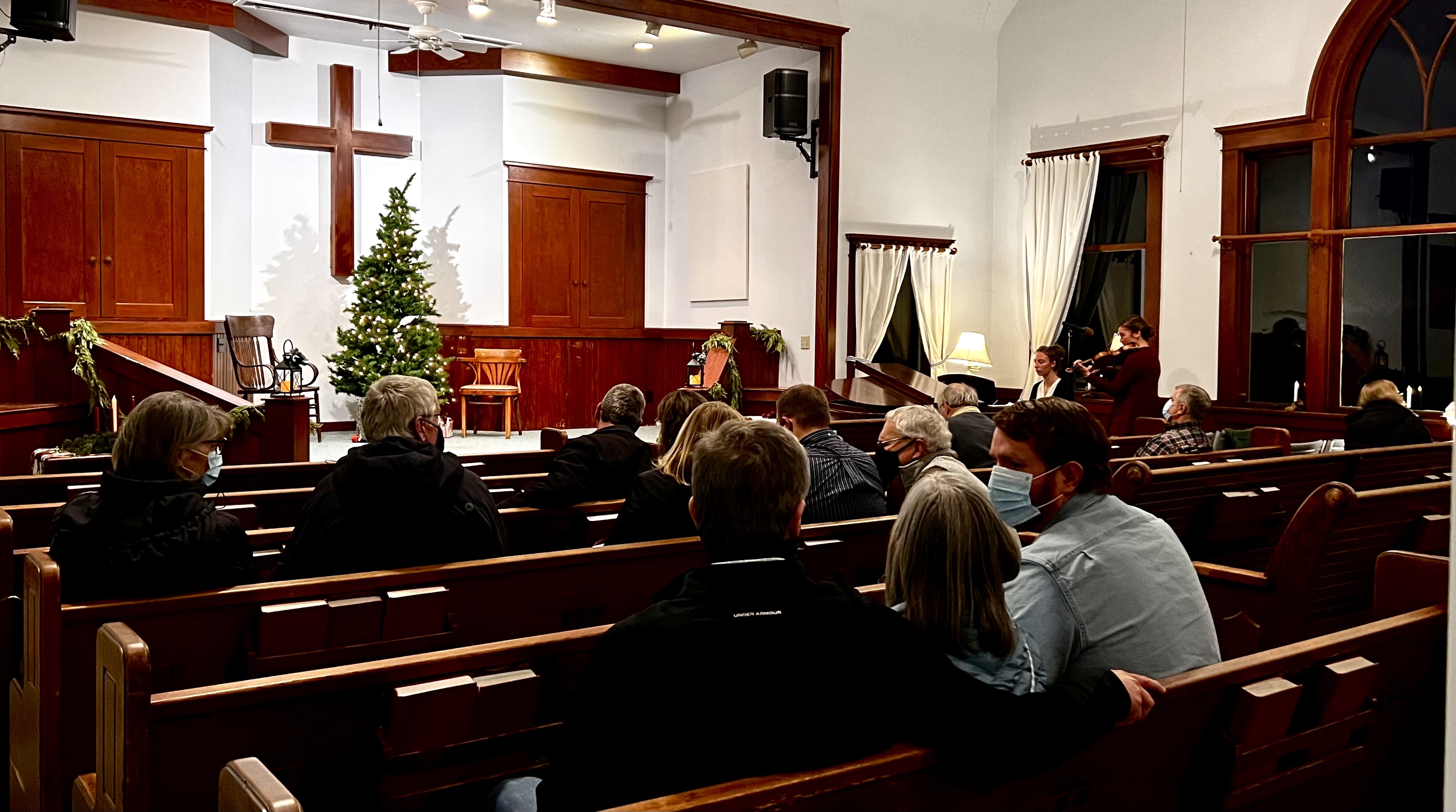
Being a Christian during a pandemic is nothing new in the history of the world. We’ve been through this again and again, on the frontlines caring for others during the Black Death, dying while serving unselfishly through plague after plague, and most recently during the killing influenza of the early 20th century.
Somehow the last two years of COVID-time feel different …
No one is happy that congregational singing takes place through masks. There are fewer handshakes and hugs and some of us feel safer worshiping while streaming a live feed on a screen. Some are flat out angry at having to worship with any restrictions and opt to stay away or move to churches with no such rules. Yet Christians are called to come together to raise our voices corporately in praise, prayer and thanksgiving despite potential health risks and physical inconvenience.
We are to love one another when we are most unloveable.
We tend to forget that walking into church on any Sabbath, not just during a pandemic, takes courage and commitment as we automatically become emotionally and spiritually vulnerable to one another. What one of us says and does can bless or hurt us all. This can be no drowsy worship: we are the poor, the ugly and the dying.
When I hear the secular folks in society scoff at attending church as a “crutch for the weak”, they underestimate what it means to admit a desperate need for salvation and grace that can only be found inside those doors. We who sit in a pew in the sanctuary cling to the life preserver found in the Word. We are lashed to our seats and must hang on. It is only because of God’s grace that we survive the tempests of temptation, guilt and self-doubt in order to let go of our own anger at the state of the world and the state of our own souls.
Exposing ourselves to the radical mystery and immense power of the living God is not for the faint of heart, yet all of us on the verge of heart failure need God’s deep roots to thrive and grow in our rocky soul soil.
So we must not forget our crash helmets… or our masks.
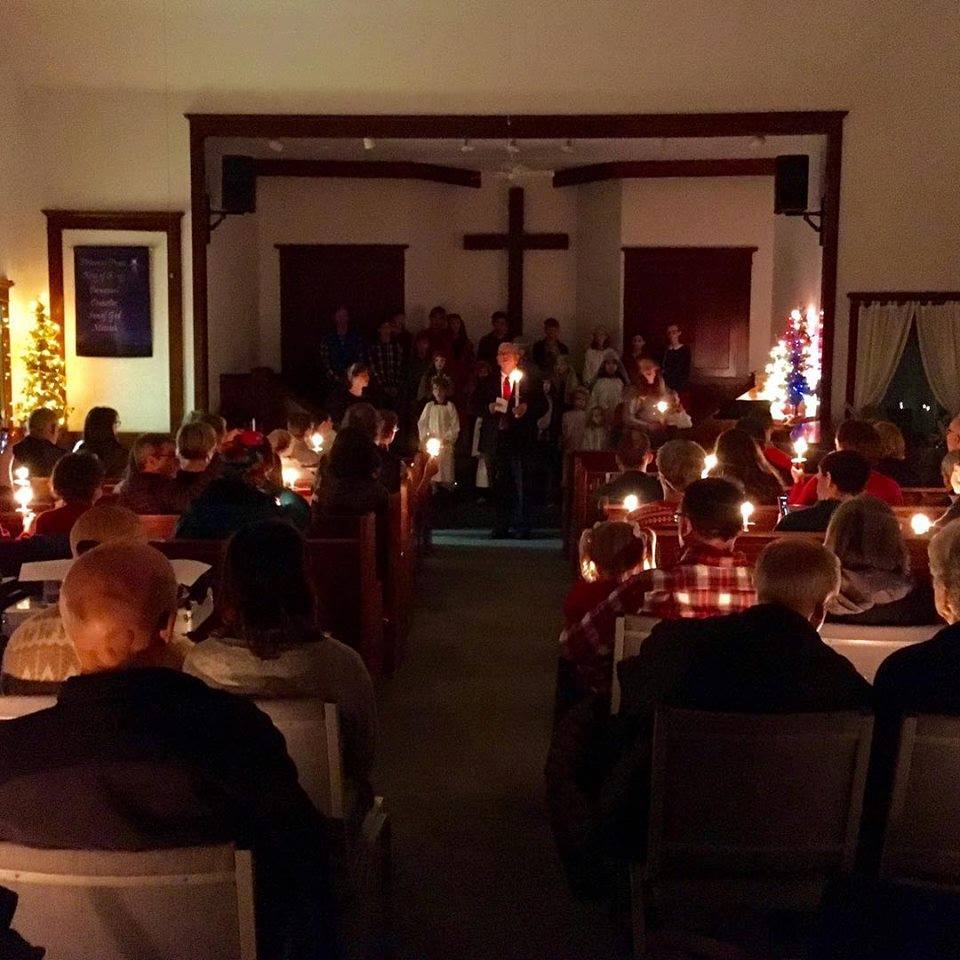
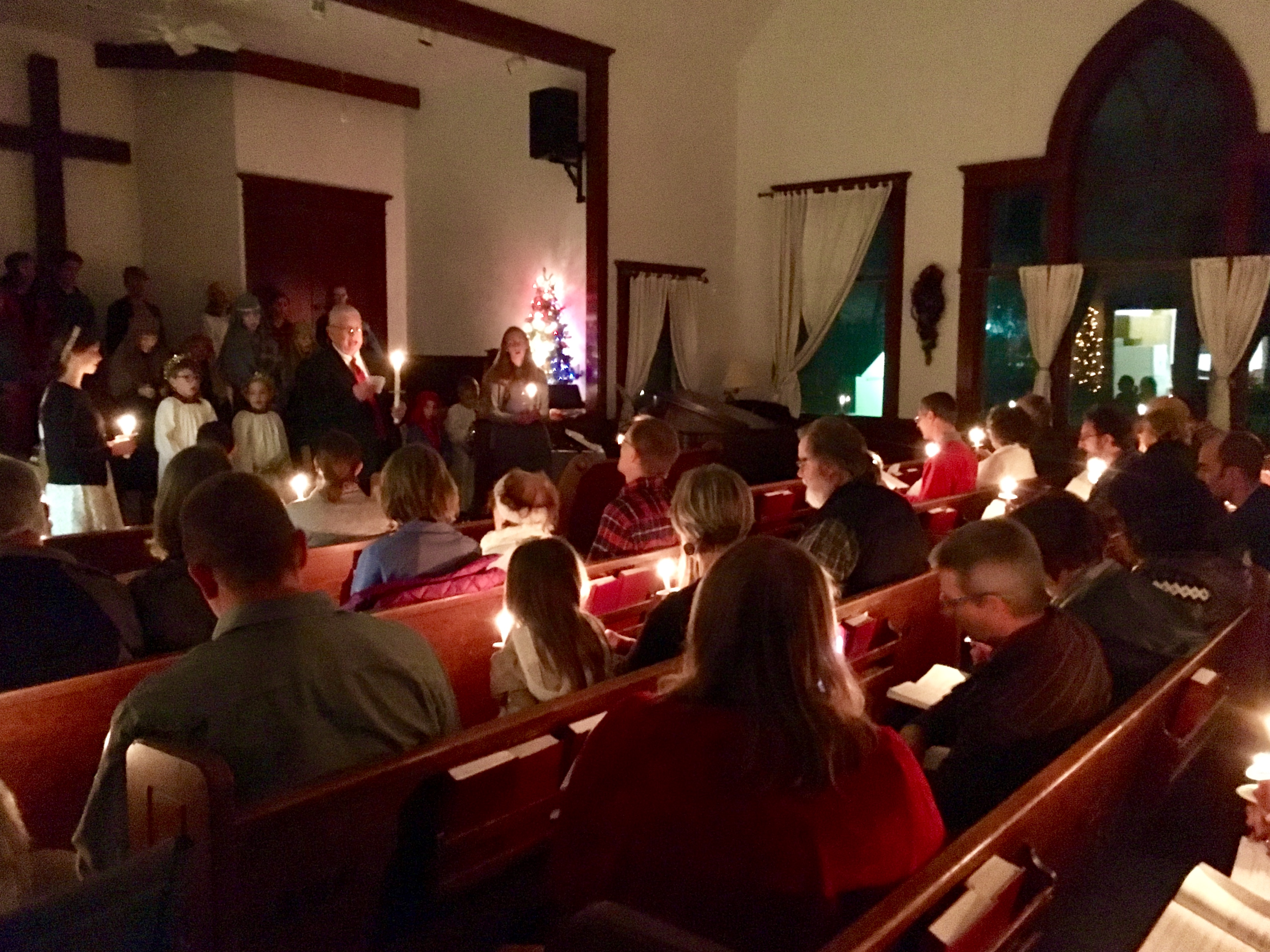
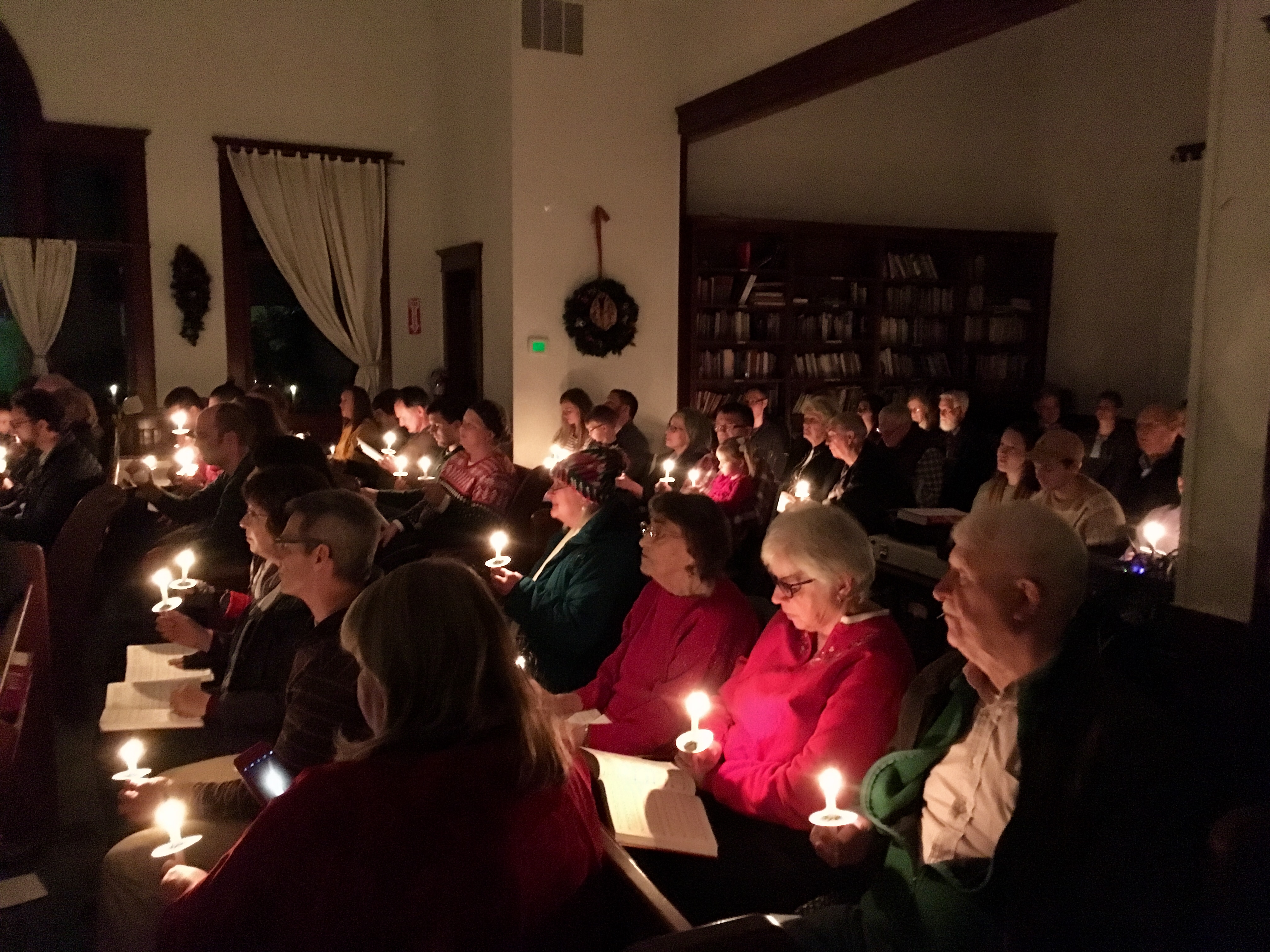
photo by Barb Hoelle
This year’s Barnstorming Advent theme “… the Beginning shall remind us of the End” is taken from the final lines in T.S. Eliot’s poem “The Cultivation of Christmas Trees”
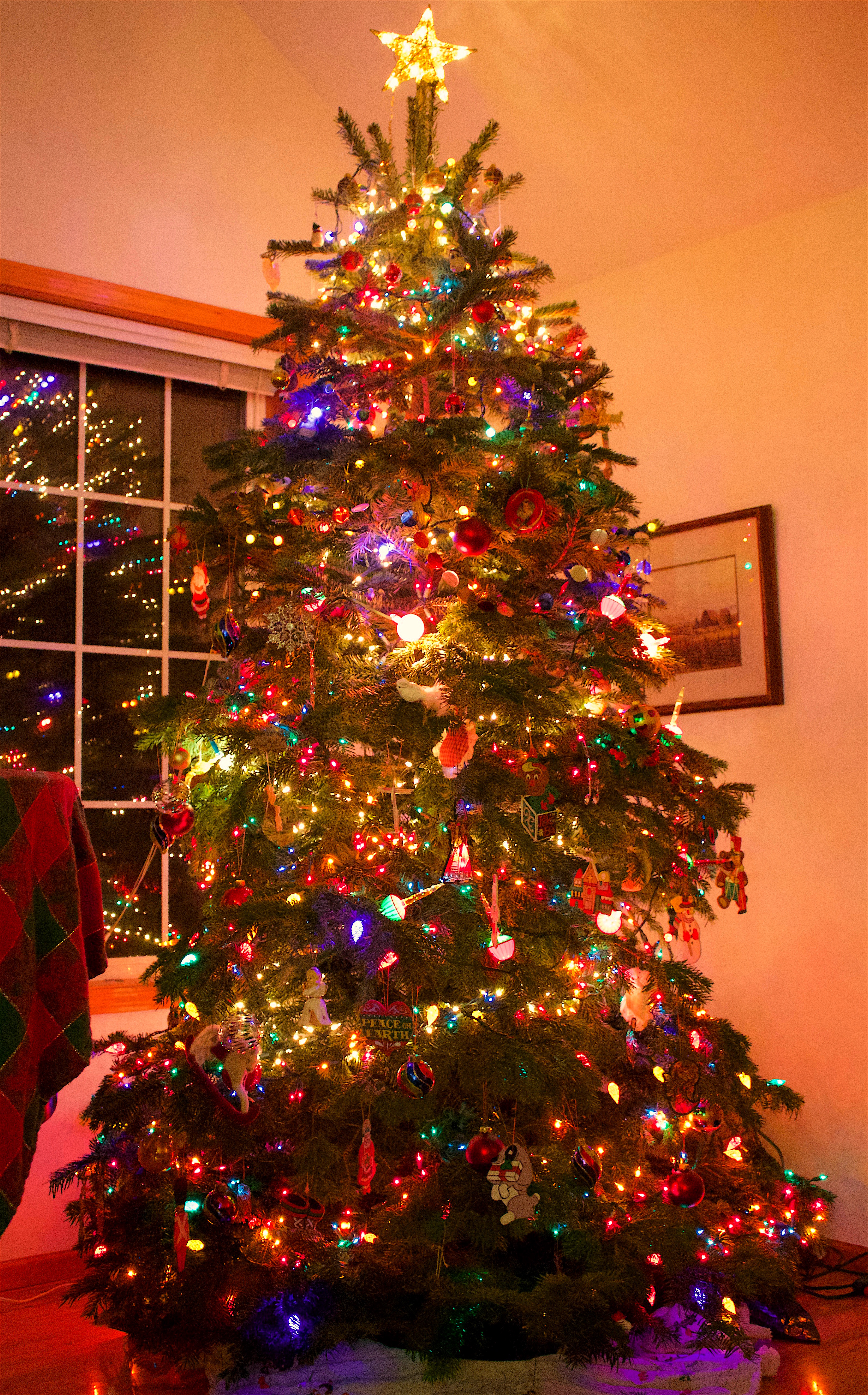
Hanging old ornaments on a fresh cut tree, I take each red glass bulb and tinfoil seraph And blow away the dust. Anyone else Would throw them out. They are so scratched and shabby.
My mother had so little joy to share She kept it in a box to hide away. But on the darkest winter nights—voilà— She opened it resplendently to shine.
How carefully she hung each thread of tinsel, Or touched each dime-store bauble with delight. Blessed by the frankincense of fragrant fir, Nothing was too little to be loved.
Why do the dead insist on bringing gifts We can’t reciprocate? We wrap her hopes Around the tree crowned with a fragile star. No holiday is holy without ghosts. ~Dana Gioia, “Tinsel, Frankincense, and Fir”
Whenthe song of the angels is stilled, when the star in the sky is gone, when the kings and princes are home, when the shepherds are back with their flocks, the work of Christmas begins: to find the lost, to heal the broken, to feed the hungry, to release the prisoner, to rebuild the nations, to bring peace among the people, to make music in the heart. ~Howard Thurman from The Mood of Christmas & Other Celebrations
There are plenty of ghosts hiding in the boxes of ornaments I place on our Christmas tree.
Closing my eyes, I can see my father struggling to straighten our wild cut trees from our woods, mumbling under his breath in his frustration as he lies prone under the branches. I can see my mother, tears in her eyes, arranging ornaments from her parents’ childhoods, remembering times in her childhood that were fraught and fragile.
Each memory, every scratched-up glass ball is so easily breakable, a mere symbol for the fragility of us all this time of year.
Our real work of Christmas isn’t just during these frantic weeks of Advent but lasts year-long — often very hard intensive work, not just fa-la-la-la-la and jingle bells, but badly needed labor in this broken world with its homelessness, hunger, disease, conflict, addictions, depression and pain.
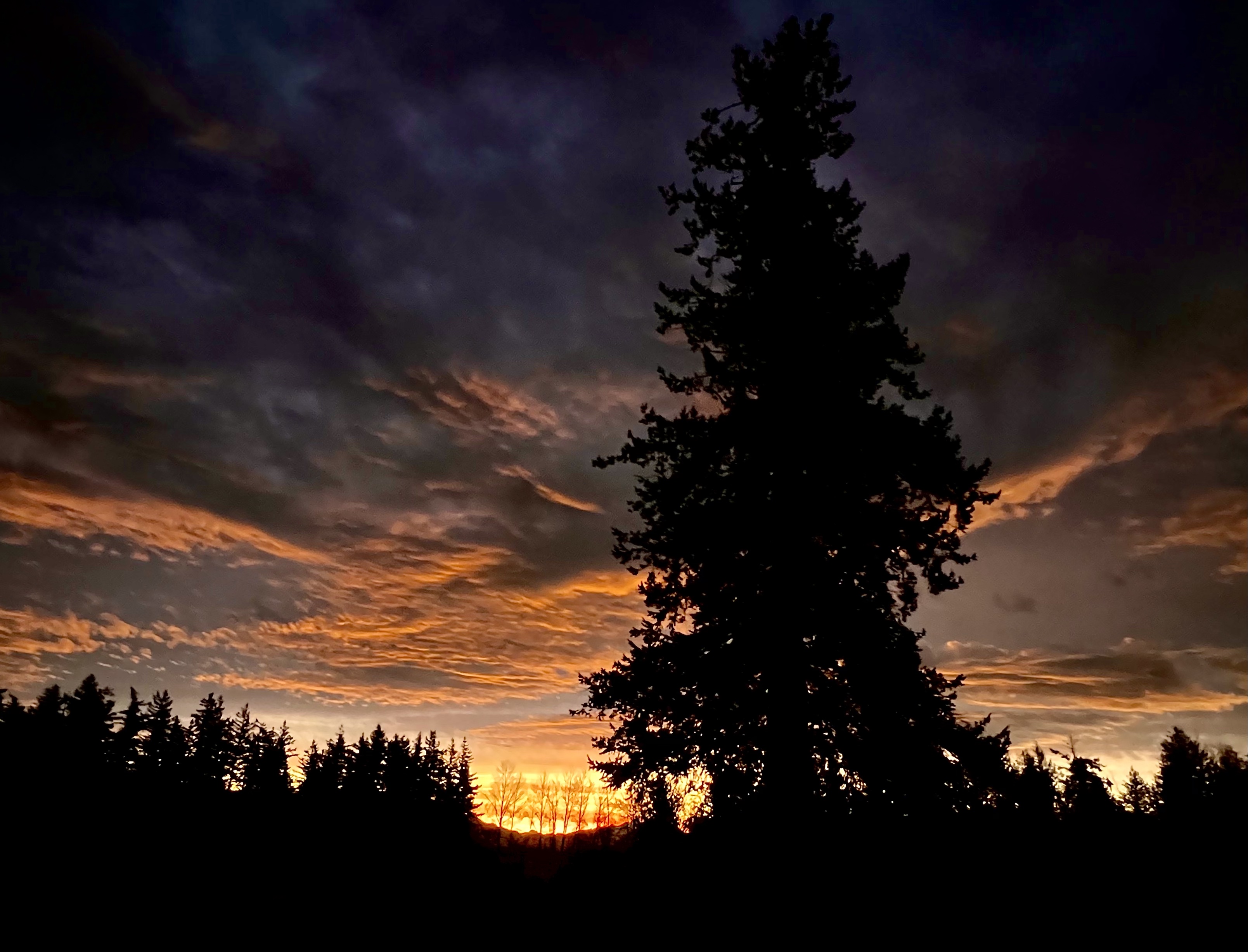
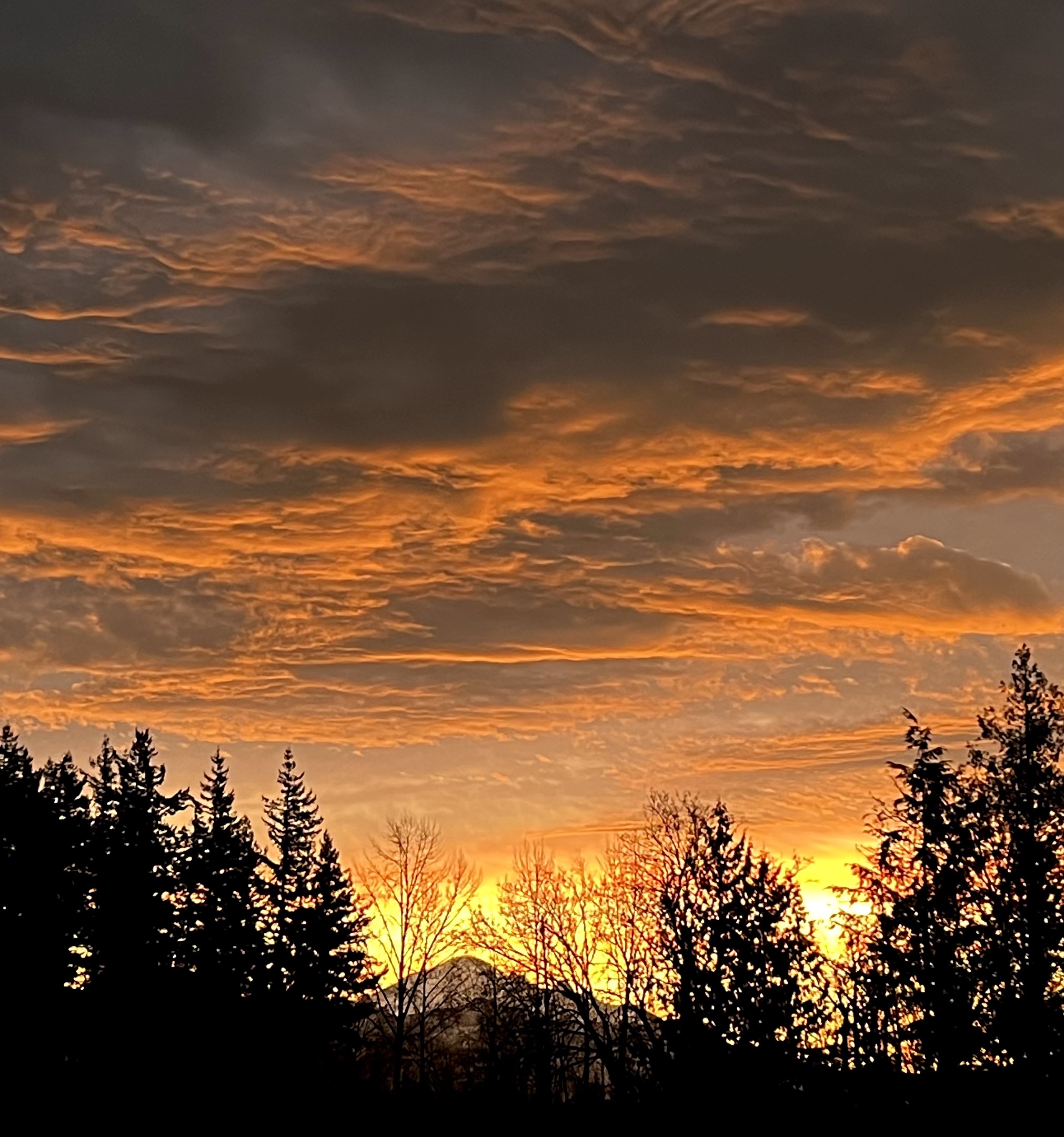
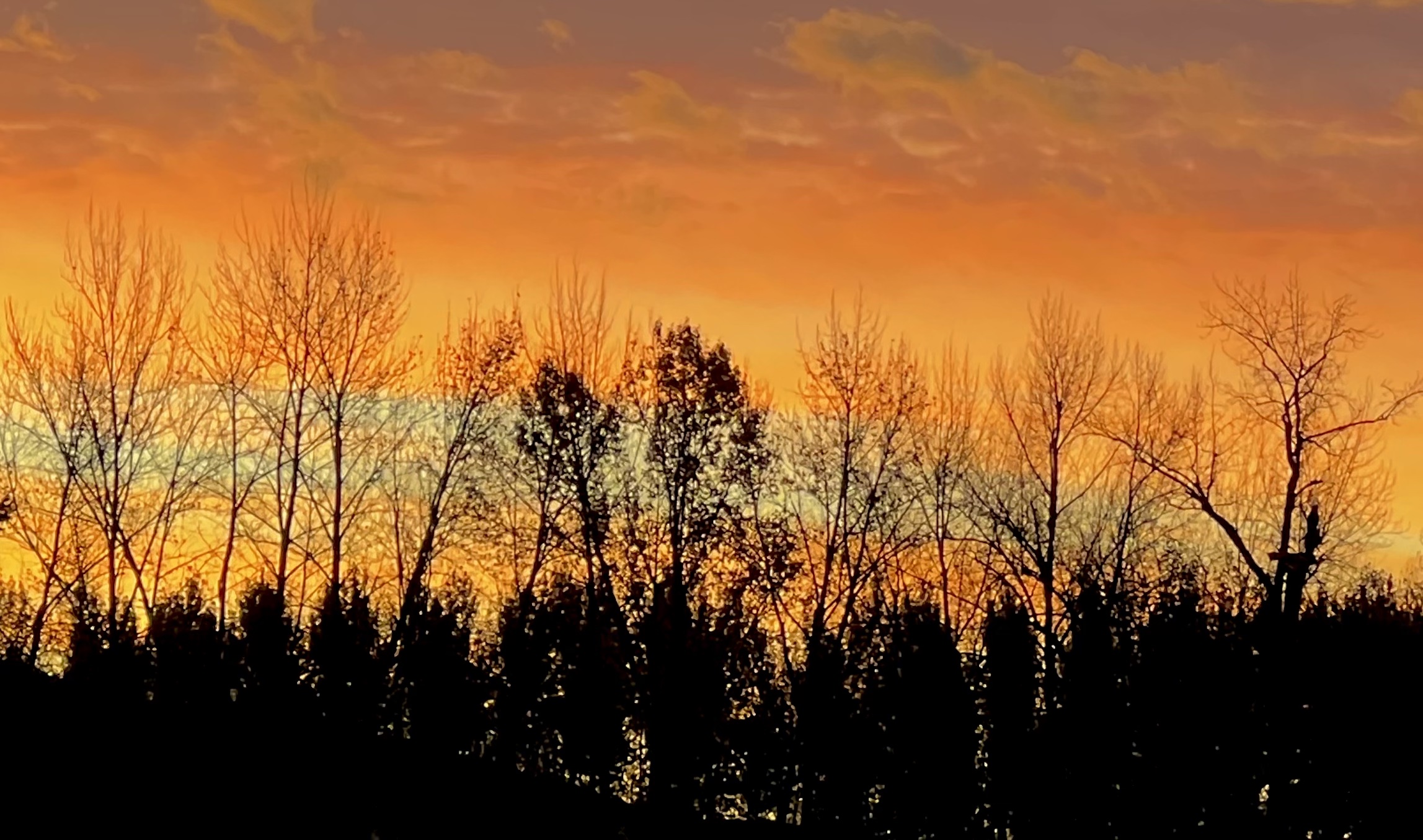
Even so, we enter winter next week replete with a startling splash of orange red that paints the skies in the evenings, the stark and gorgeous snow covered peaks surrounding us during the day, the grace of bald eagles and trumpeter swans flying overhead, the heavenly lights that twinkle every night, the shining globe that circles full above us, and the loving support of the Hand that rocks us to sleep when we are wailing loud.
Once again, I prepare myself to do the real work of Christmas, acknowledging the stark reality that the labor that happened in a barn that night was only the beginning of the labor required to salvage this world begun by an infant in a manger.
We don’t need a fragrant fir, full stockings on the hearth, Christmas villages on the side table, or a star on the top of the tree to know the comfort of His care and the astounding beauty of His creation, available for us without batteries, electrical plug ins, or the need of a ladder.
The ghosts and memories of Christmas tend to pull me up from my doldrums, alive to the possibility that even I, broken and fragile, scratched and showing my age, can make a difference, in His name, all year.
Nothing is too little to be loved…even me.
This year’s Barnstorming Advent theme “… the Beginning shall remind us of the End” is taken from the final lines in T.S. Eliot’s poem “The Cultivation of Christmas Trees”
…Do not be afraid, though briers and thorns are all around you… Ezekiel 2:6
<The ground> will produce thorns and thistles for you. Genesis 3:18
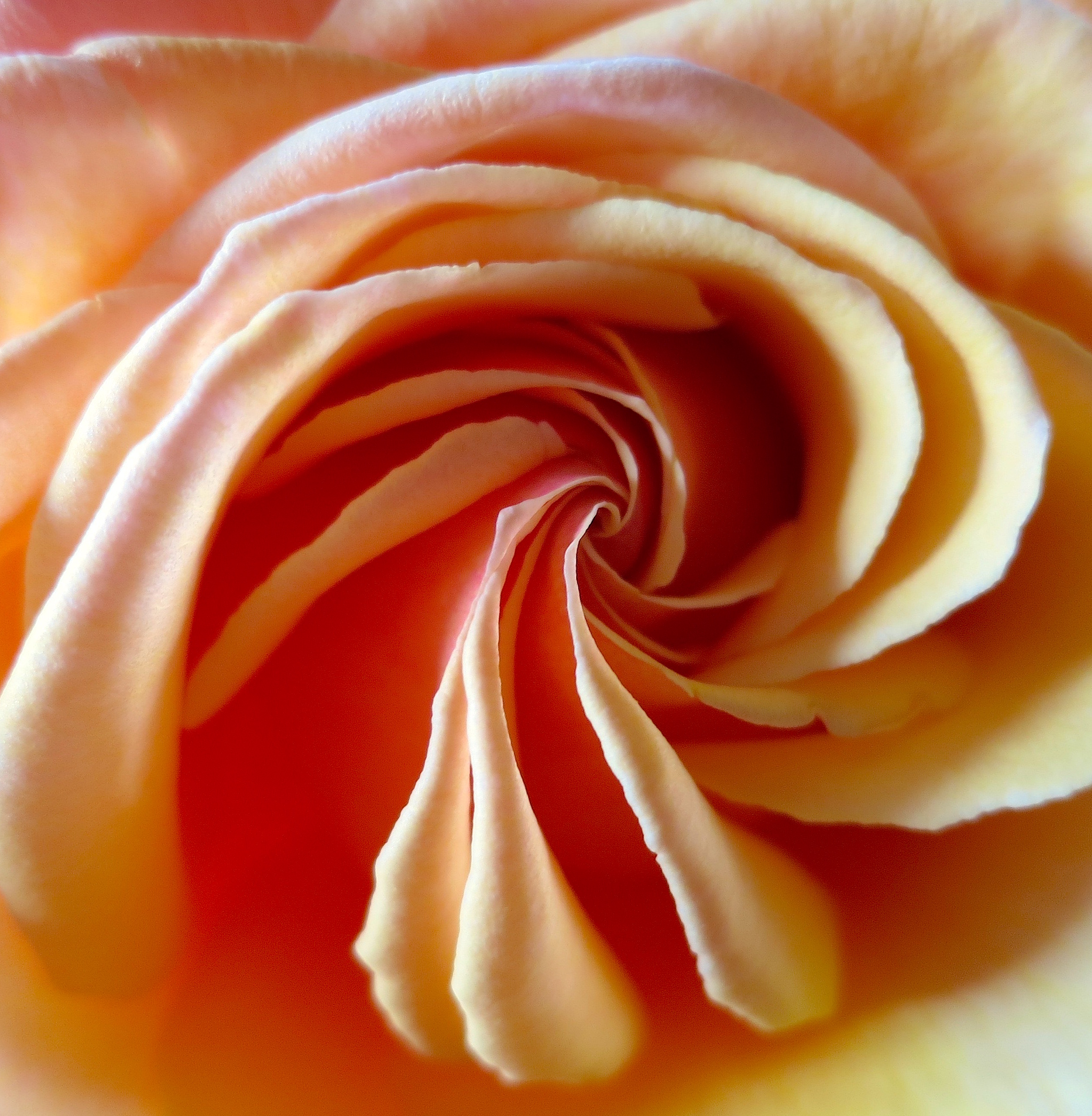
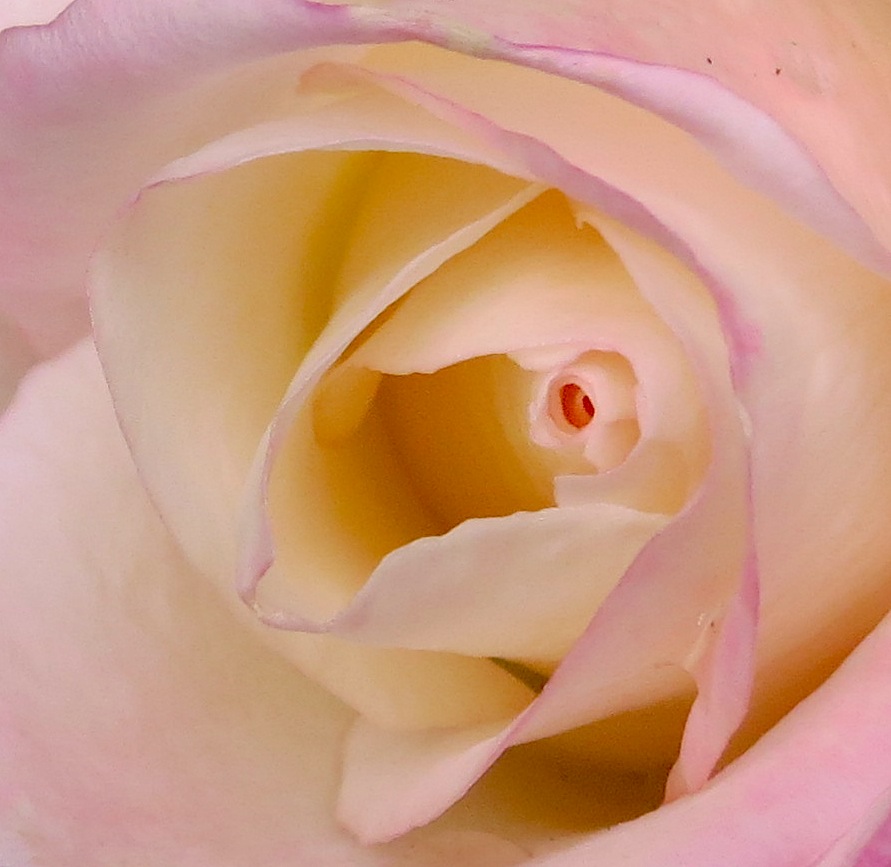
Perched on the high end of its spinal stalk the brain blooms like a pink cabbage rose Peel back the blunt bone like a bud— it will be meaty to touch, the corolla folding in, folding in to echo within the sepal skull a blink of light, logarithms, a view of ships in harbor, a word just now rescued by memory, clipped arbor vitae how it smells—spiced Here God lives, burrowing among the petals, cross- pollinating. Here is Christ’s mind juiced, joined, fleshed, celled. Here is the clash, the roil, an invasion, not gentle as dew; the rose is unfurled violently until the scent explodes and detonates in the air And oh, it trembles— thousands of seeds ripen in it as it reels in the wind ~Luci Shaw “Flower head”
Christ … is a thorn in the brain. Christ is God crying I am here, and here not only in what exalts and completes and uplifts you, but here in what appalls, offends, and degrades you, here in what activates and exacerbates all that you would call not-God. To walk through the fog of God toward the clarity of Christ is difficult because of how unlovely, how ungodly that clarity often turns out to be. ~Christian Wiman from Image Journal essay “Varieties of Quiet”
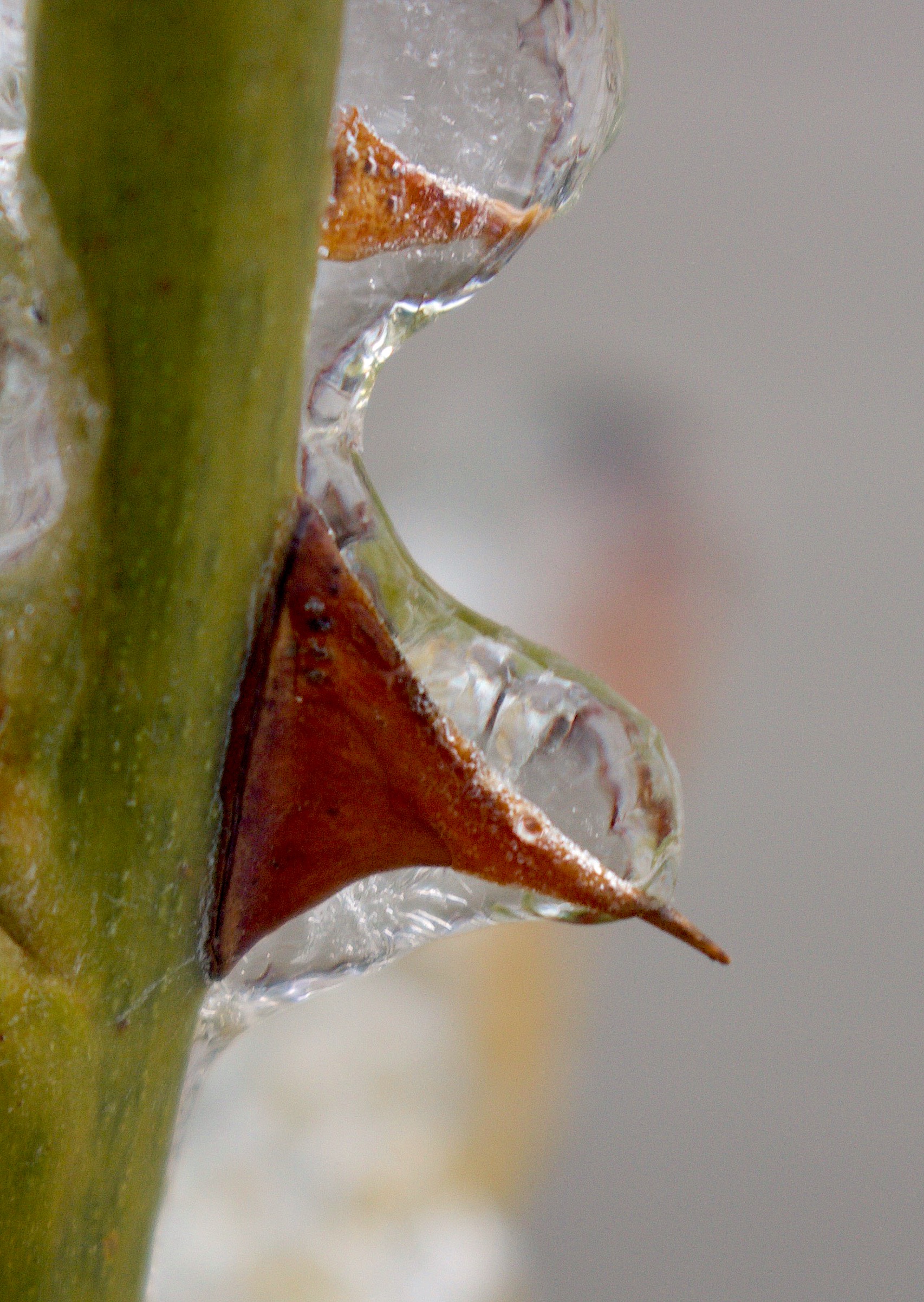
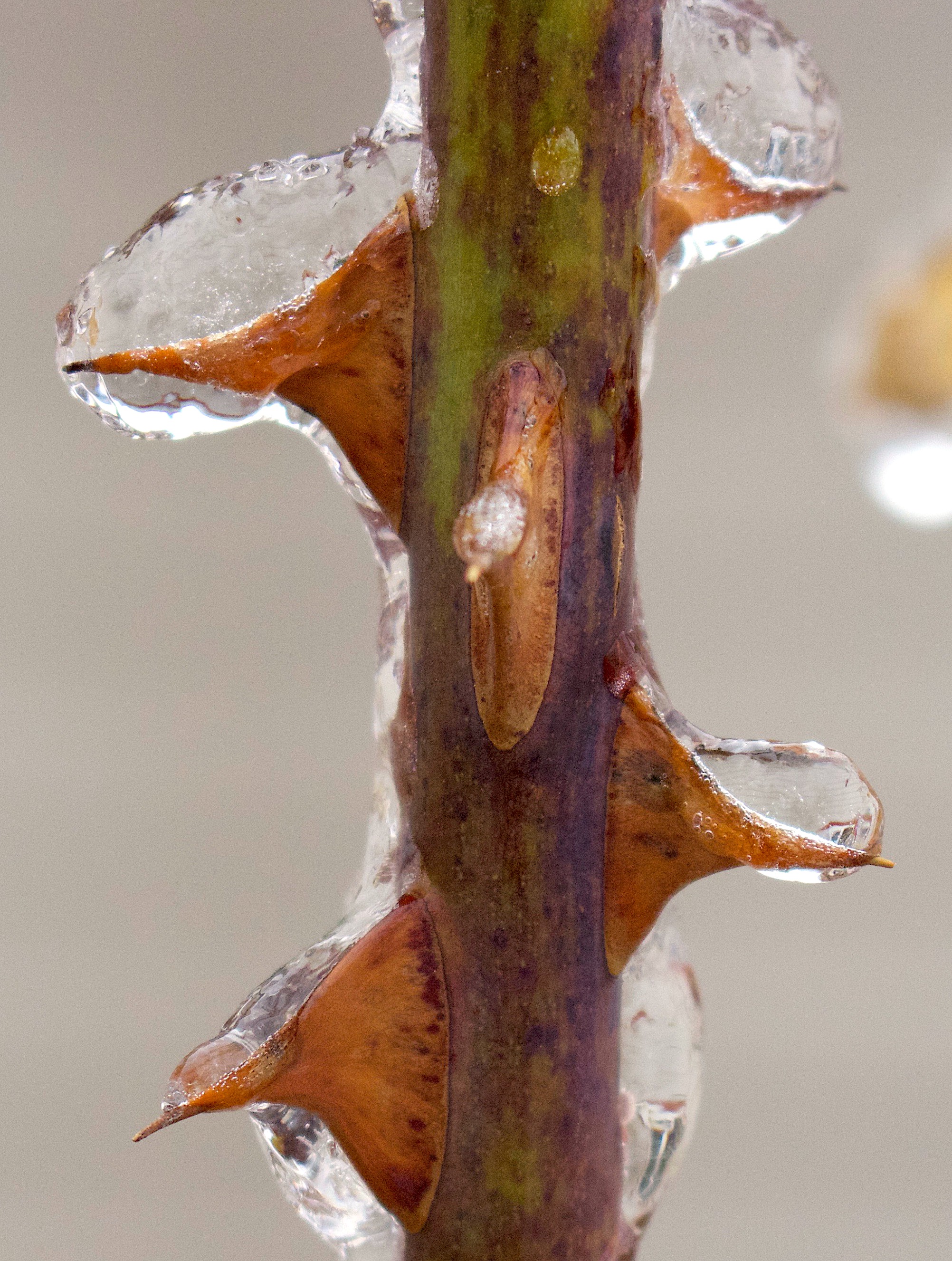
It was gardener/author Alphonse Karr in the mid-19th century who wrote that even though most people grumble about roses having thorns, he was grateful that thorns have roses. After all, there was a time when thorns were not part of our world, when we knew nothing of suffering and death, but pursuing and desiring more than we were already generously given, we received a bit more than we bargained for.
We continue to reel under the thorns our choices produce — indeed every day there is more bloodletting.
So a rose was sent to adorn the thorns and even then we chose thorns to make Him bleed. Yes, a fragrant rose blooms beautiful, bleeding amid the thorns, and will to the endless day.
This year’s Barnstorming Advent theme “… the Beginning shall remind us of the End” is taken from the final lines in T.S. Eliot’s poem “The Cultivation of Christmas Trees”
1. Maria walks amid the thorn, Kyrie eleison. Maria walks amid the thorn, Which seven years no leaf has born. Jesus and Maria.
2. What ‘neath her heart doth Mary bear? Kyrie eleison. A little child doth Mary bear, Beneath her heart He nestles there. Jesus and Maria.
3. And as the two are passing near, Kyrie eleison, Lo! roses on the thorns appear, Lo! roses on the thorns appear. Jesus and Maria.
A spotless Rose is blowing, sprung from a tender root, Of ancient seers’ foreshowing of Jesse promised fruit; Its fairest bud unfolds to light Amid the cold, cold winter; and in the dark midnight.
The Rose which I am singing, whereof Isaiah said, Is from its sweet root springing in Mary, purest Maid; For, through our God’s great love and might, The blessed Babe she bare us in a cold, cold winter’s night.
This Flower, whose fragrance tender with sweetness fills the air, Dispels with glorious splendour the darkness everywhere; True Man, yet very God, From sin and death He saves us, and lightens every load.
O Jesus, by being born out of this vale of tears, Let Thy help guide us to the hall of joy In your father’s kingdom, As we praise You eternally; O God, give us that.
When Jesus Christ was yet a child He had a garden small and wild Where-in he cherished roses fair And wove them into garlands there
Now as the summertime drew nigh There came a troop of children by And seeing roses on the tree With shouts they plucked them merrily
“Do you bind roses in your hair?”
They cried in scorn to Jesus there The boy said humbly “Take I pray All but the naked thorns away”
Then of the thorns they made a crown And with rough fingers pressed it down Till on his forehead fair and young Red drops of blood like roses sprung ~Plechtcheev, melody by Tchaikovsky
[The Incarnation is like] a wave of the sea which, rushing up on the flat beach, runs out, even thinner and more transparent, and does not return to its source but sinks into the sand and disappears. ~Hans Urs von Balthasar from Origen: Spirit and Fire
The Word became flesh. Ultimate Mystery born with a skull you could crush one-handed. Incarnation. It is not tame. It is not beautiful. It is uninhabitable terror. It is unthinkable darkness riven with unbearable light.
Agonized laboring led to it, vast upheavals of intergalactic space, time split apart, a wrenching and tearing of the very sinews of reality itself. You can only cover your eyes and shudder before it, before this: “God of God, Light of Light, very God of very God… who for us and for our salvation,” as the Nicene Creed puts it, “came down from heaven.” Came down. Only then do we dare uncover our eyes and see what we can see. It is the Resurrection and the Life she holds in her arms. It is the bitterness of death he takes at her breast. ~Frederick Buechner from Whistling in the Dark
Down he came from up, and in from out, and here from there. A long leap, an incandescent fall from magnificent to naked, frail, small, through space, between stars, into our chill night air, shrunk, in infant grace, to our damp, cramped earthy place among all the shivering sheep.
And now, after all, there he lies, fast asleep. ~Luci Shaw “Descent” from Accompanied By Angels
Perhaps it is the mystery of the thing that brings us back, again and again, to read the story of how God came down and disappeared into us.
How can this be? God appearing on earth first to animals, then the most humble of humans.
How can He be? Through the will of the Father and the breath of the Spirit, the Son was, and is and yet to be.
O great mystery beyond all understanding.
This year’s Barnstorming Advent theme “… the Beginning shall remind us of the End” is taken from the final lines in T.S. Eliot’s poem “The Cultivation of Christmas Trees”
O magnum mysterium, et admirabile sacramentum, ut animalia viderent Dominum natum, jacentem in praesepio! Beata Virgo, cujus viscera meruerunt portare Dominum Christum. Alleluia!
O great mystery and wondrous sacrament, that animals should see the new-born Lord lying in their Manger! Blessed is the Virgin whose womb was worthy to bear the Lord Jesus Christ. Alleluia!
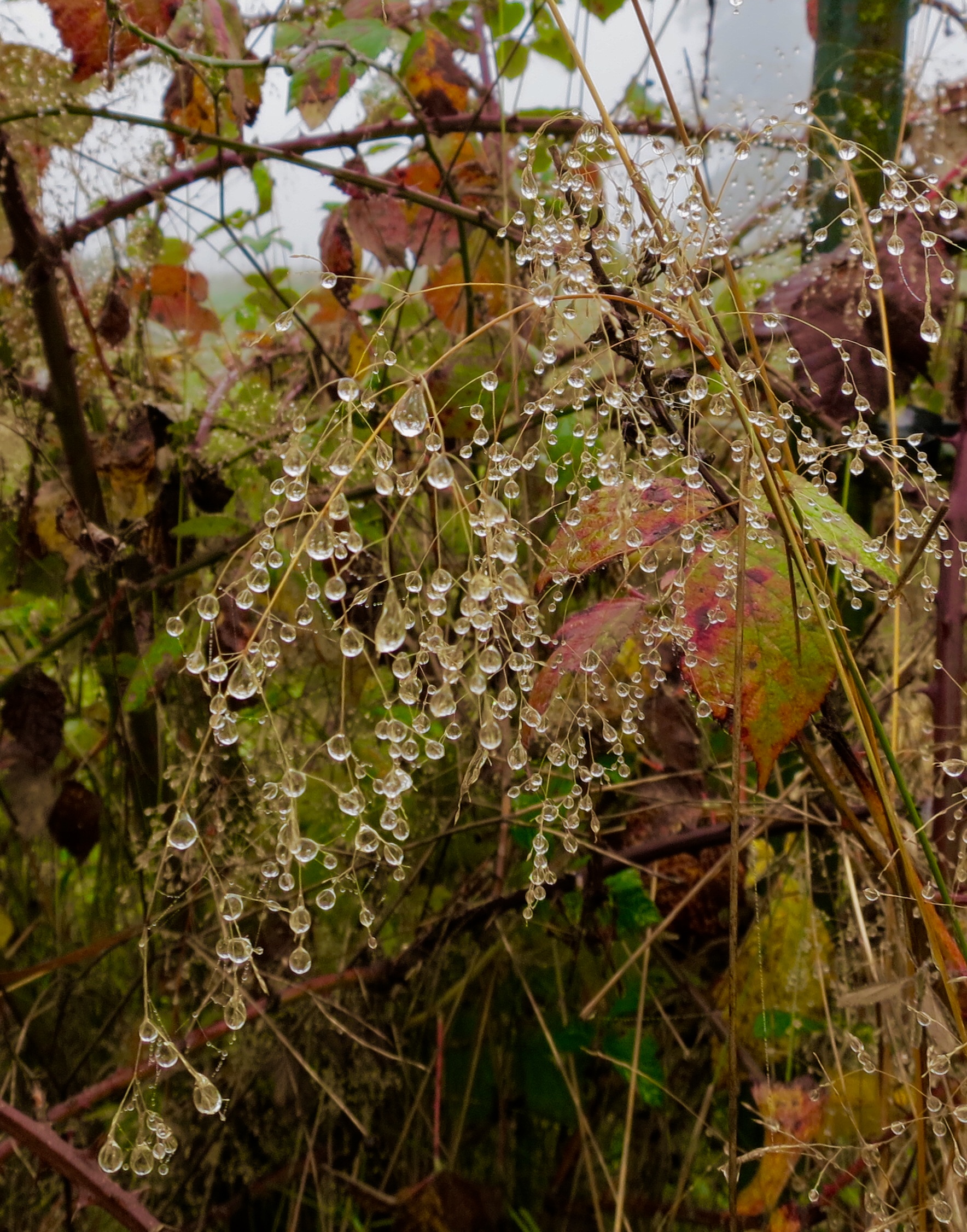
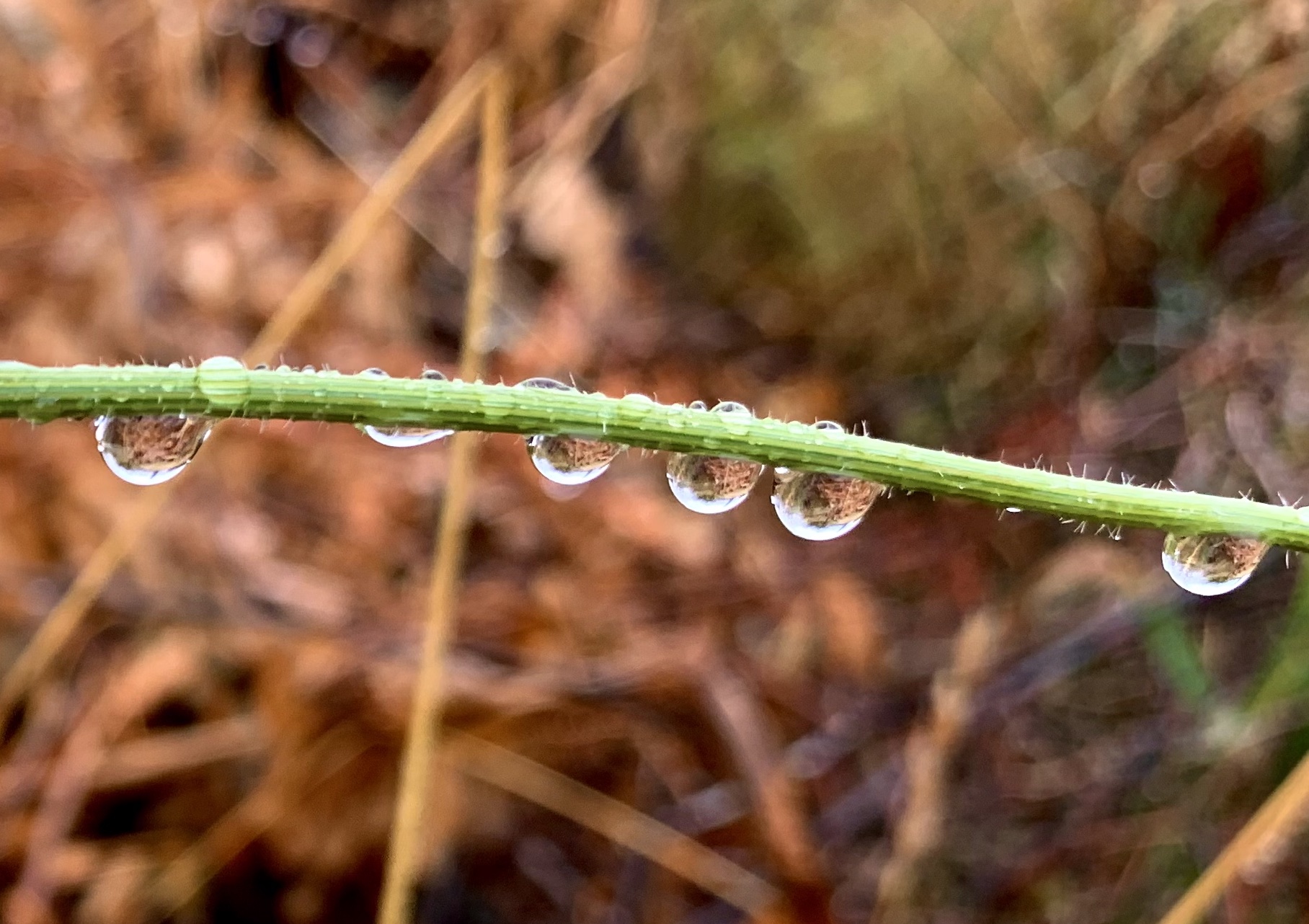
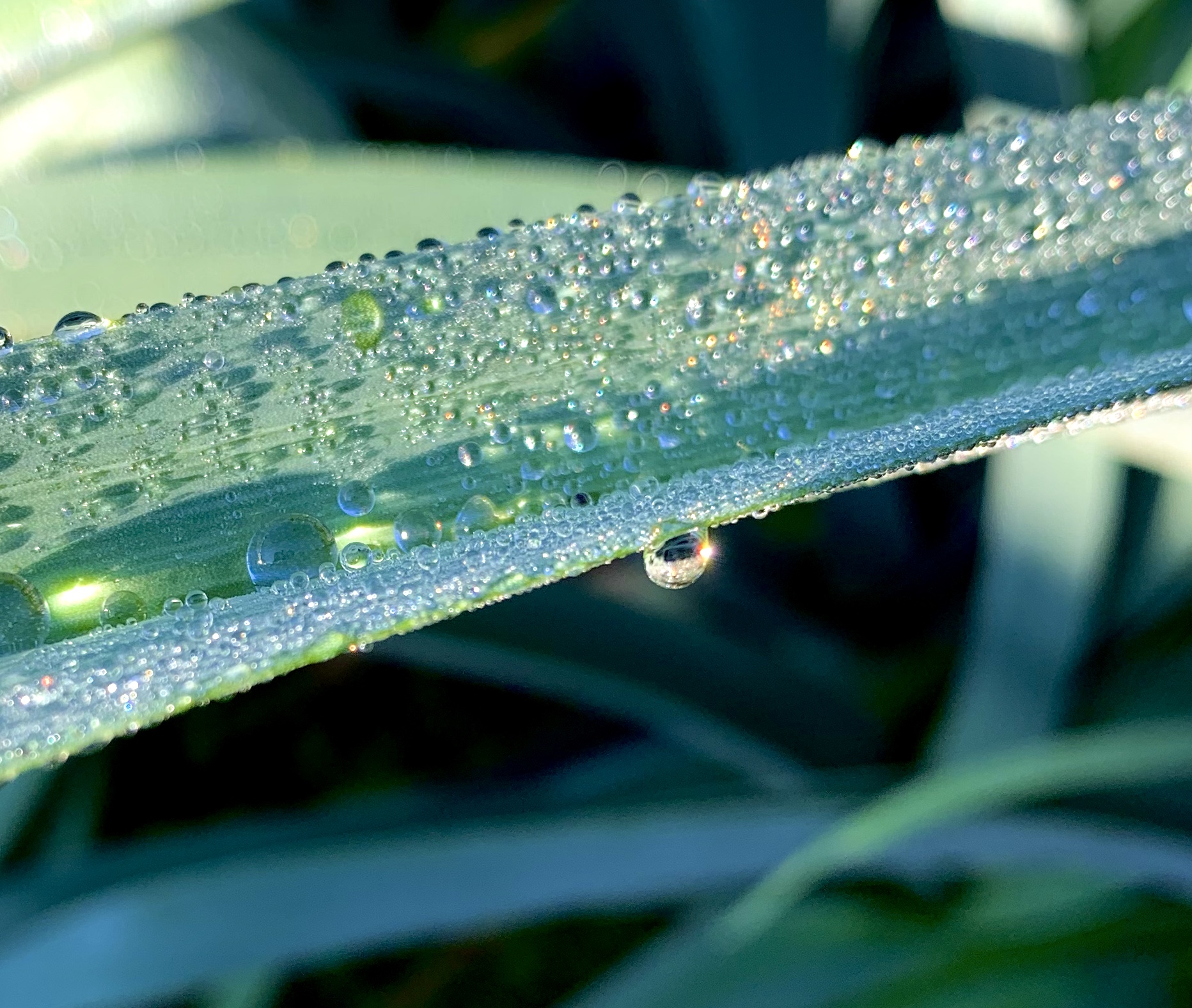
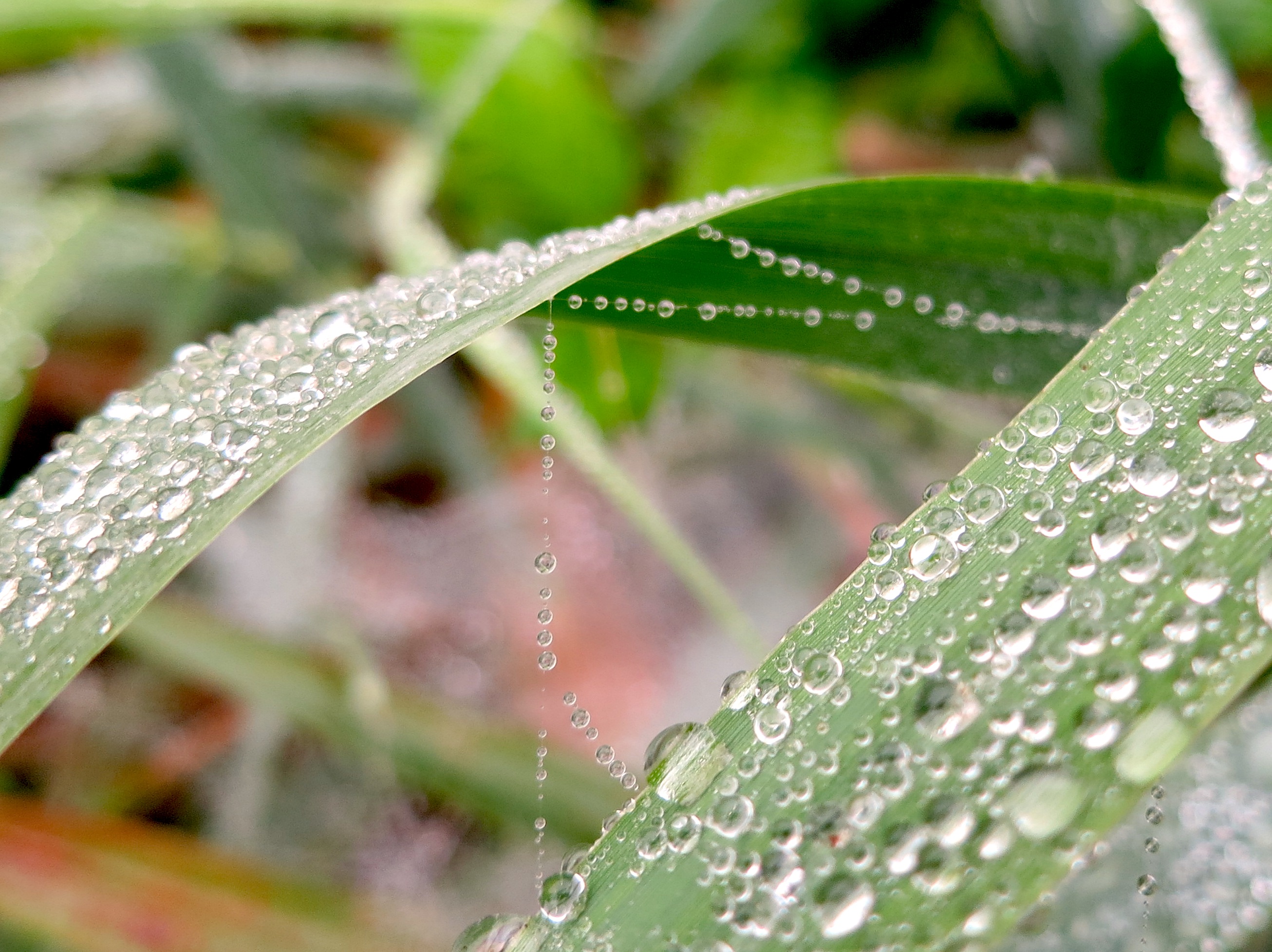
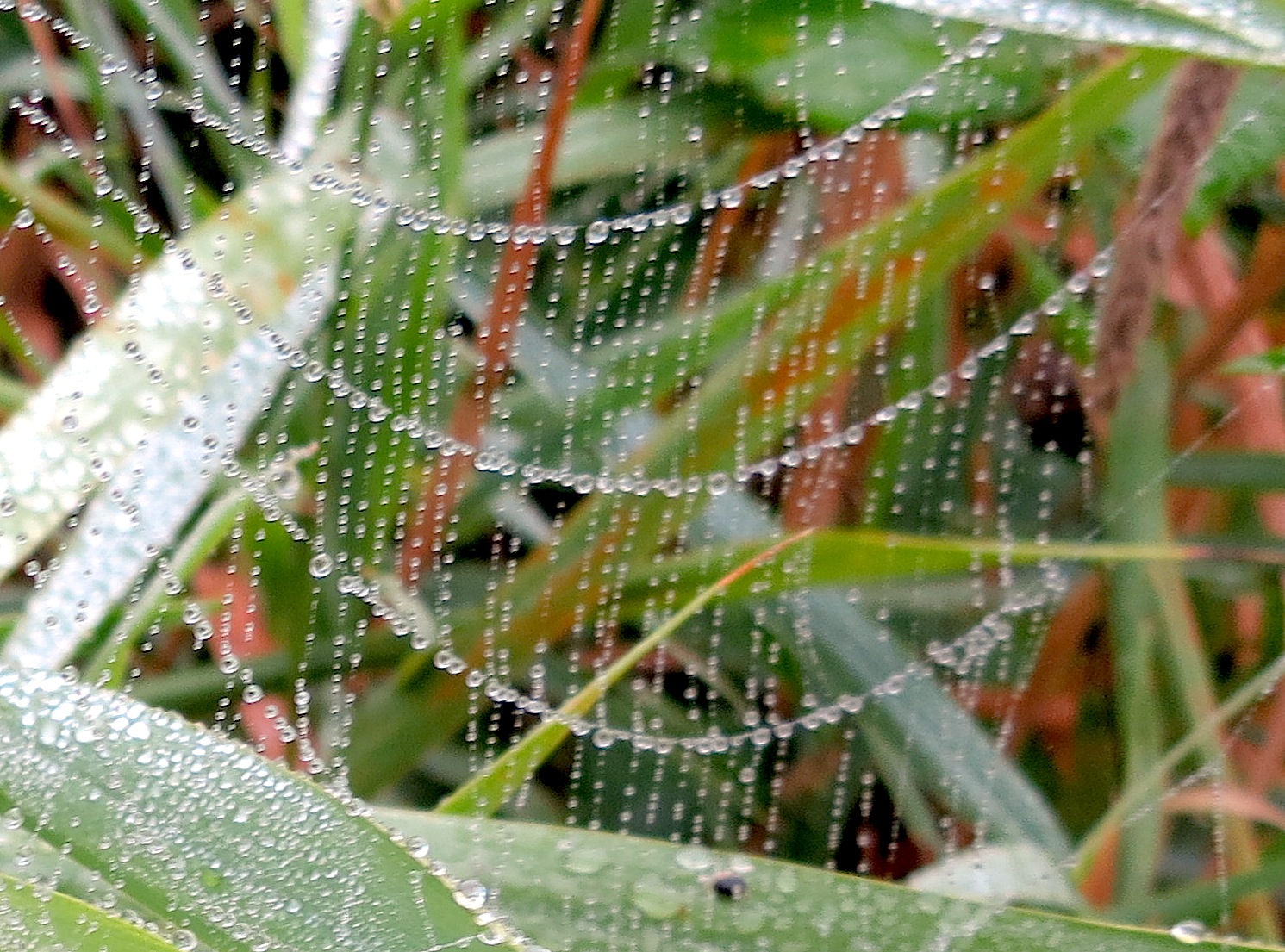
The seed will grow well, the vine will yield its fruit, the ground will produce its crops, and the heavens will drop their dew. I will give all these things as an inheritance to the remnant of this people. Zechariah 8:12
Listen, you heavens, and I will speak; hear, you earth, the words of my mouth. 2 Let my teaching fall like rain and my words descend like dew, like showers on new grass, like abundant rain on tender plants. Deuteronomy 32:1-2
He hath abolished the old drouth, And rivers run where all was dry, The field is sopp’d with merciful dew. The words are old, the purport new, And taught my lips to quote this word That I shall live, I shall not die… But I shall when the shocks are stored See the salvation of the Lord. ~Gerard Manley Hopkins“He hath abolished the old drouth”
To God’s people, wandering homeless in the desert for years before being allowed to enter the Promised Land, there is great hope in the possibility of words and teaching coming from heaven. The dew of heaven becomes the representation of God’s all-encompassing Spirit and gift of grace in this and other Old Testament scripture passages.
Ultimately, God’s Word descended like dew from heaven in the form of a newborn baby in a manger come to dwell among us.
Like dew, He becomes flesh at no cost to us, to be among us freely, coming in the night, into the darkness, as a gentle covering of all things dry and dying, to refresh, to restore, to soften, to make what was withered fruitful once again.
We live again because this Word of flesh quickens within us.
This year’s Barnstorming Advent theme “… the Beginning shall remind us of the End” is taken from the final lines in T.S. Eliot’s poem “The Cultivation of Christmas Trees”
Drop down ye heavens from above, And let the skies pour down righteousness. Come comfort ye, comfort ye my people; My salvation shall not tarry. I have blotted out as a thick cloud, Thy transgressions: Fear not, for I will save thee; For I am the Lord thy God, The holy one of Israel, thy redeemer.
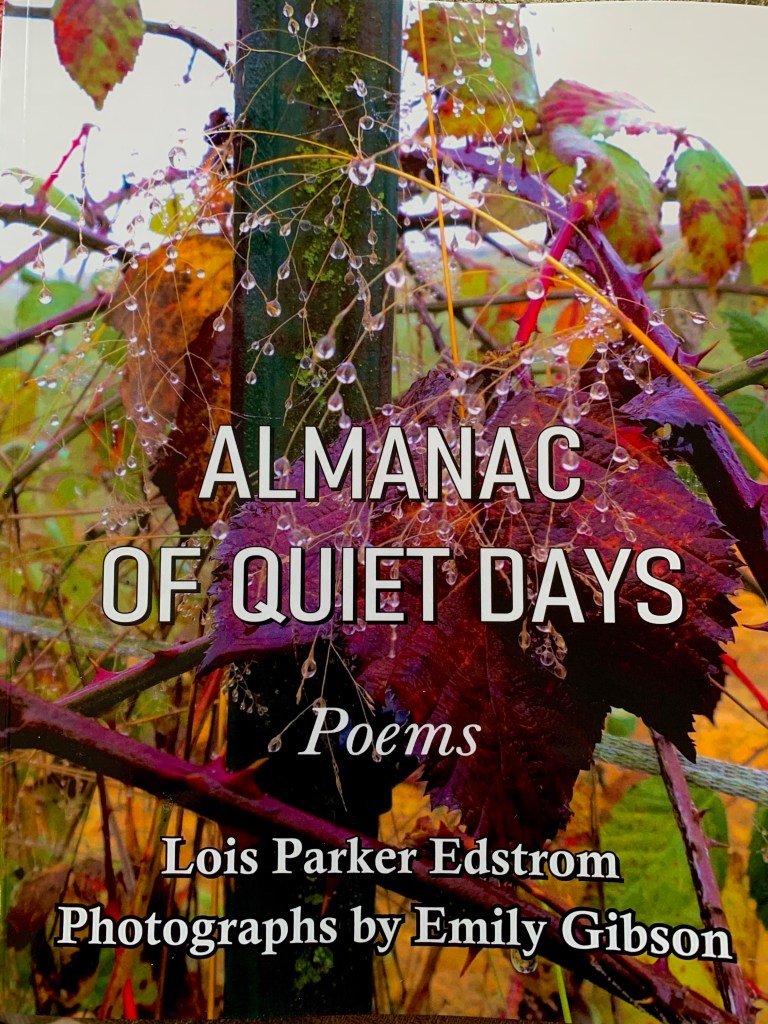
Give a gift of beauty in words and photography, available to order here:































 Barnstorming